Esca pe .
Expl o re .
E xpe rie n c e
2 631914 470863 EDITION
28
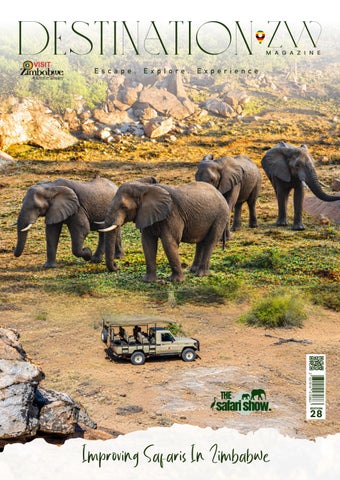
Improving Safaris In Zimbabwe
THE THE
safari safari show. show. 22 00 22 66 Theme: Bush Banter- Theme: Bush Banter wear your funniest shirt. wear your funniest shirt.
SSAATTUURRDDAAYY
$10admission admission $10
DECEMBER 55 DECEMBER
REDISCOVER REDISCOVER MATUSADONA MATUSADONA
’ S CCOOLLLLEEG GEE,, H HA AR RA AR RE E 00 9 :90: 0 0 0AA MM· ·SSTTJJOOHHNN’ S
Improvingsafaris safarisin inZimbabwe. Zimbabwe. Improving Cocktails· Food · Food&&Drinks Drinks· · Kids KidsFun Fun ·· & & More More Cocktails
INSURE INSURE
GO FURTHER. FURTHER. TRAVEL WITH WITH CONFIDENCE. CONFIDENCE. Wherever life life takes takesyou, you,travel travelinsurance insurancehelps helps you prepare prepare for you for the theunexpected. unexpected.
COVERS COVERS •• •• •• • • • •
Medical expenses Medical expensesincluding includinghospitalisation hospitalisation Luggage incidents Luggage incidents Flight cancellations Flight cancellationsor orcurtailments curtailments Baggage losses and delays Baggage losses and delays Repatriation expenses Repatriation expenses
Dial *227# or WhatsApp ‘‘Hi’’ to 0777 227 227 to sign up on Dial *227# or WhatsApp ‘‘Hi’’ to 0777 227or227 upon ontoll free 433, MyOldMutual, contact your broker, agent getto insign touch MyOldMutual, contact your broker, or agent get touch on toll free 433, email: contactus@oldmutual.co.zw visit or any of in our offices. email: contactus@oldmutual.co.zw or visit any of our offices. INSURE | BANK | INVEST INSURE | BANK | INVEST
Editors note This month’s spotlight falls on the people who make a Zimbabwean safari possible.
Behind every game drive in Hwange, canoe trip on the Zambezi and night in a Matusadona camp stands a long chain of guides, pilots, mechanics, medics, suppliers and lodge owners. On Saturday 5 December, many of them will gather at St John’s College in Harare when The Safari Show returns under the banner “Improving safaris in Zimbabwe.” It is a chance for the industry to meet, trade ideas and strengthen the links that keep visitors coming back. Harare’s hospitality scene offers its own reasons to linger. Kingsmead Guesthouse, on Kingsmead Road in Borrowdale, now holds the top spot among the capital’s guesthouses on TripAdvisor, a boutique address in one of the city’s most established suburbs. In Greendale, Maize & Mingle Café is built on a simple idea: good food tastes better when shared.
Morning coffee becomes brunch, family lunches are unhurried, and sourdough pizza is made for sharing with friends. Further afield, Tree Lodge at Sikumi, in the Dete Valley near Gwayi, pitches itself as an intimate treehouse retreat with bush luxury within easy reach of Hwange National Park. For a quieter escape closer to the city, Mazvikadei Leisure Resort & Conference Centre sits seventeen kilometres from Banket, just over an hour from Harare along the Kariba road. Its chalets and cottages nestle beneath indigenous trees, between the farming districts of Banket and Raffingora. From an industry gathering to a guesthouse, a café, a treehouse and a countryside retreat, these stories show how much Zimbabwe’s hospitality sector has to offer. In general news Robins Camp in northern Hwange has announced Robins House, a new self-catering option opening in March 2027. Self-drive travellers can celebrate the reopening of the road linking Spurwing Island to Matusadona National Park.
Follow, Like, Share, Retweet, read & Enjoy!!!
At Amagugu International Heritage Centre, Matobo women took the spotlight at the 2026 My Beautiful Home Painted Hut Contest. On the Zambezi, Little Mana Sands offers a barefoot, canvas-tent safari in Mana Pools. In Harare, blooming jacarandas are drawing fresh attention to the city’s walkable, nature-driven appeal. Northern Hwange, meanwhile, plays by different rules, with ancient rock and hidden springs instead of endless sand. We also look back at the sacred origins of Mosi-oa-Tunya, “The Smoke That Thunders,” and at Sango, a 60,000-hectare conservancy in the Save Valley that pairs wildlife protection with low-volume tourism.
MARKETING Newton Musara Prayer Murambiwa +263 789 532 918 +263 781 134 519 DESIGN, SOCIAL MEDIA AND WEBSITE Shumirai Shammar John Saul Chidakwa Kudiwanashe Venge Tapiwa Svondo Rumbidzai Ruwende JOURNALISTS Martin Chemhere CONTRIBUTORS Trauma Centre Kingsmead Guesthouse Tree Lodge at Sikumi PHOTOGRAPHY Caast Media Group ADMINSTRATOR Chipo Mubazangi DISTRIBUTION Gift Sepi EMAIL newton@destinationzw.biz admin@destinationzw.biz
Finally, Kariba will host the 2027 Sanganai/Hlanganani World Tourism Expo, Minister FIND US AT Barbara Rwodzi has confirmed, 31 Alexander Rd, Highlands, Harare continuing the push to spread tourism’s benefits beyond DESTINATION.ZW MAGAZINE: Victoria Falls, Harare and No part of this magazine may be reproduced Bulawayo.
or transmitted in any form or by any means electronic including photocopying or recording. While every effort has been made to ensure the accuracy of its content, neither editor nor publisher can be held responsible for any omissions or errors: or for any misfortune, injury, or damages which may arise thereof. All Rights Reserved. CAAST MEDIA GROUP Copyright 2026
Issue 28 Contents page 16 page 10
page 24
page 20
page 28
We serve delicious gourmet meals in a beautiful setting
41 Kingsmead Road, Borrowdale, Harare. Call 0789 569 806 to book.
HARARE'S MEETING PLACE
FOR THE PEOPLE BEHIND ZIMBABWE'S SAFARIS
10
Behind every game drive in Hwange, canoe trip on the Zambezi and night in a Matusadona camp stands a long chain of people: guides, pilots, mechanics, medics, suppliers and lodge owners. On Saturday 5 December, many of them will be in one place when The Safari Show returns to St John's College in Harare, under the banner "Improving safaris in Zimbabwe." An industry with deep roots Zimbabwe's wildlife industry has a proud history. Private landowners once invested heavily in wildlife, and the country became an example of what could be achieved. A 2016 industry paper says Zimbabwe has since lost some of that standing, but that the passion and determination of its people are helping it work to reclaim its place. The industry is also changing. Local ownership is growing, yet Black-owned businesses remain rare, with only about 15 percent of the safari businesses in one continental trade association owned by Black entrepreneurs. A platform that brings newer and established players together has plenty of work to do.
How the show began The first Safari Show was held in Harare on 1 December 2024. It was designed to bring together role-players in Zimbabwe's safari industry, to collaborate and improve the country's collective offering. One exhibitor described it as set to be the biggest local networking event the industry had seen. That exhibitor, a hospitality training company, saw it as a chance to show its work with thousands of learners. The reasoning is simple. A safari is only as good as its weakest link, whether that is a vehicle, a first-aid kit, a flight booking or a cold drink at sunset. Putting operators and the businesses that supply them in one place makes it easier to trade ideas, solve problems and build partnerships.
11
A link to NDS2 The show's purpose fits closely with national goals. Tourism Minister Barbara Rwodzi has called tourism a powerful instrument for economic transformation, investment, jobs and community empowerment under the National Development Strategy 2 (NDS2). NDS2 expects tourism to drive employment and foreign exchange, and the Zimbabwe Tourism Authority is pursuing a US$10 billion industry by 2030. The authority sees the strategy as a framework for mobilising both public and private players. The Safari Show is the private-sector side of that effort. The draft National Tourism Sector Strategy for 2026 to 2030 puts product development and diversification first, backed by stronger community participation. Better-connected operators and suppliers are one practical way to improve the product visitors experience.
12
The only one of its kind Organisers say the show remains the only event of its kind held in Harare, and in Zimbabwe. Large national tourism expos serve the wider sector, but this one is built around safaris themselves and the businesses that keep them running. What to expect in 2026 The day starts at 9:00 am with a relaxed, family-friendly mix of cocktails, food and drinks, and activities for children. This year's theme is "Bush Banter," and guests are invited to wear their funniest shirt. The supporters' list shows how wide the safari chain is. It includes aviation and medical providers, marine and vehicle businesses, a tyre specialist, an outdoor equipment brand, beverage companies, weather solutions, a healthcare consultancy and the Zimbabwe Professional Guides Association, alongside Rediscover Matusadona.
13
A fair view A one-day show is not a cure-all. Commentators note that many of Zimbabwe's tourism wonders remain hard to reach and need innovation to improve access. Better networking will not build roads or close the ownership gap by itself. Much of the show's early story also comes from participants rather than independent reviewers, and its real value will show in the partnerships, bookings and improvements that follow.
14
Still, the idea is sound. In an industry that depends on trust, reliability and teamwork, a place where everyone can meet is a practical step. For those who work in Zimbabwe's safari business, and for visitors curious about what lies behind it, The Safari Show offers a lively way to see the effort that goes into every sighting.
15
Greendale's Maize & Mingle Café Built on Connection
There are restaurants you visit simply because you are hungry - and then there are places you return to because of how they make you feel. Maize & Mingle Cafe was created to be the latter. Based in Greendale, Harare, Maize & Mingle is built around a simple idea: good food tastes even better when it is shared with good people.
16
It is a place for morning coffee that turns into brunch, a family lunch where nobody is in a hurry to leave, sourdough pizza shared between friends, a relaxed meeting, a celebration, or an evening filled with laughter. At the heart of it all is exactly what the name suggests - mingle. The name itself carries a quiet promise. Maize, the grain that has fed generations of Zimbabwean families around a shared table, and mingle, the simple act of coming together. Put the two side by side, and you have a café built on the belief that food and connection were never meant to be separated.
17
From coffee and daytime dining to pizza, events, activities and private functions in MySpace, Maize & Mingle is designed to give people different reasons to come together. Whether it's a first date over sourdough pizza, a business breakfast that outlasts its agenda, or a birthday celebration spilling into the evening, the café has quietly positioned itself as a space that adapts to whatever moment brings people through its doors. Its private functions space, MySpace, extends that flexibility further, offering a setting for gatherings that call for something a little more personal.
Because ultimately, restaurants are not only about food. They are about people, conversations, celebrations and memories made around the table. For a suburb like Greendale, long home to families and neighbours who know one another by name, a café built around gathering rather than simply eating feels less like a new addition and more like a natural fit. It is the kind of place where regulars become familiar faces, and familiar faces become part of what keeps people coming back. That, in the end, is the story Maize & Mingle hopes to tell, not just through what's on the menu, but through what happens around it: the conversations that linger, the laughter that carries past closing time, and the small, ordinary moments that quietly become memorable.
18
Visit the restaurant for the food, stay for the mingle.
Creating Delicious food with Love +263 786 484 161
MAIZEMINGLELECAFE_ZW
136 ARCTURUS ROAD
MAIZE & MINGLE CAFE
MAIZEMINGLELECAFE_ZW
Kingsmead Guesthouse Tops TripAdvisor’s Harare Guesthouse Rankings
20
Nestled on Kingsmead Road in the heart of Borrowdale, one of Harare’s most established and upmarket suburbs, Kingsmead Guesthouse stands as a masterclass in boutique hospitality. Today, it proudly holds the top ranking among guesthouses in the capital on TripAdvisor.
Over its 13 years of operation, the guesthouse has gracefully evolved to meet growing demand. What began as an intimate collection of 10 en-suite rooms has since expanded into a sophisticated 19-room property, all while retaining the charm and personal touch that defined its early days.
Guesthouses of this size occupy a specific niche. They offer something hotels often can't: a smaller scale, a more personal touch. For business travellers on extended stays, or leisure guests returning again and again, that consistency is often the deciding factor. Thirteen years on, it's clear where Kingsmead has chosen to compete. Not on scale. On the details.
At Kingsmead, management frames the guesthouse not just as accommodation to pass through, but as a sanctuary to slow down and properly disappear for a while.
Kingsmead Guesthouse was purpose-built from the ground up in 2013. This intentional design ensures that guest comfort, privacy, and functionality are seamlessly integrated into the property's architecture.
Every detail across the 19 en-suite rooms is meticulously considered to accommodate up to two adults in ultimate relaxation. Rooms include flexible king, queen, or twin bed options dressed in premium 100% cotton percale linen. Each room features bedside USB ports, universal power points, and a flat-screen smart TV loaded with a full DStv bouquet, alongside complimentary high-speed Wi-Fi.
21
Stays are kept perfectly comfortable with ceiling fans and heaters, supplemented by electric blankets during the crisp winter months and hot water bottles. Bathrooms are equipped with heated towel rails and a curated, high-end toiletry range. Guests enjoy a patio with either a pool or garden view, an electronic safe, a complimentary tea and coffee tray, and a minibar fridge stocked with items (available at an extra charge). The property transitions beautifully from a productive weekday corporate base to a relaxing weekend retreat. The beautifully manicured grounds feature an outdoor pool, a lush garden, a terrace area, and barbecue facilities. For relaxing evenings, guests can unwind at the on-site bar and lounge. A freshly prepared breakfast is served daily from 6.30am – 9.30am on the weekends and 7.30am – 10.00am on weekends.
22
For business travellers, the property removes the friction of travel with dedicated services: A 24hr airport shuttle service is available on-demand at an extra charge. Complimentary self-parking inside secure grounds is available. Daily laundry, dry cleaning services (extra charge) and luggage storage are also available upon request. Positioned perfectly for both business executives and leisure travellers, the guesthouse balances tranquil suburbia with exceptional accessibility. Both the prestigious St John's College (1.7 km) and the bustling Sam Levy's Village(1.9 km)—Harare’s premier shopping, dining, and lifestyle destination—are a mere five-minute drive away.
The serene National Botanic Gardens offer a peaceful escape into Zimbabwe’s indigenous flora. The property is remarkably well-positioned for golf enthusiasts and sports fans, offering quick access to Borrowdale Brooke Golf Club, Royal Harare Golf Club, Wingate Golf Club, the Country Club Golf Course, Harare Sports Club and Stable Sports. Steered by a dedicated management team including Nikita, Courtney, Edith, and Sharise, Kingsmead Guesthouse has built a reputation for consistency over more than a decade. It is this unwavering attention to detail that transforms first-time visitors into lifelong regulars, making Kingsmead their default base whenever they land in Harare.
For international travellers, the property provides a smooth transition, situated 23.8 km from Harare International Airport. Beyond its immediate vicinity, Kingsmead serves as an ideal launchpad for exploring the capital’s finest lifestyle and recreational offerings. Guests enjoy easy reach of the boutique Sam Levy’s and Village Walk Shopping Centre.
23
Tree Lodge at Sikumi Offers Treehouse Luxury on the Edge of Hwange
Tree Lodge at Sikumi, located at 2 Lot Dete Valley, Gwayi, in Zimbabwe, is positioning itself as an intimate wildlife retreat for travellers seeking bush luxury within easy reach of Hwange National Park. The lodge's marketing captures the pitch directly: "Elevate your wild escape, unforgettable bush luxury nestled in the heart of Hwange." The lodge sits within the Lions Paradise Game Reserve, a private concession that shares a border with Hwange, Zimbabwe's largest national park and one of the country's premier wildlife destinations. This positioning gives guests access to two distinct game-viewing zones, the private reserve and the national park itself, both home to elephant, lion, buffalo, leopard, kudu and giraffe, among a wide range of other species. The lodge's location also places it within easy reach of Victoria Falls, allowing guests to combine bush and waterfall in a single itinerary without long transfers between the two.What distinguishes Tree Lodge at Sikumi from many conventional safari properties is its accommodation style. Guest chalets are built high within the canopy of Mangwe trees, a hardwood species known locally in Ndebele, giving the lodge its distinctive treehouse character.
24
From their elevated decks, guests look out over the surrounding bushveld and straight down onto game pathways below, a vantage point that turns even quiet afternoons into an exercise in wildlife watching. Each chalet is en-suite, fitted with hot baths for cooler winter evenings and cold showers for the height of summer. Guests wake to birdsong from species nesting in the surrounding branches, with morning light filtering through canvas curtains rather than solid walls. Central to the lodge's appeal is its position overlooking the Sikumi waterhole, an active watering point visible directly from the property, where elephants, antelope and predators come to drink throughout the day and into the night. Guests can watch this unfold from their own decks, with no need to board a vehicle to witness the rhythm of bush life playing out below. As night falls, that immersion deepens, guests fall asleep to the sounds of the African wilderness, lions roaring in the distance or elephants feeding nearby, an authentic safari atmosphere built into the very structure of a stay. The property offers a mix of room types: nine single or double rooms and four larger family rooms, giving it flexibility to accommodate couples, families and travellers seeking quiet retreat in equal measure. Additional facilities include indoor and outdoor dining areas, a coffee and juice bar, and a well-maintained swimming pool.
25
Game drives form the core of the lodge's activity schedule, run in open vehicles both morning and afternoon across three to four hours, led by experienced guides who bring the surrounding ecosystem to life through their knowledge of tracking, behaviour and terrain. Beyond drives, the lodge offers guided game walks, allowing visitors to engage more closely with the bush, learning to read animal tracks, identify termite mounds, and understand the medicinal uses of indigenous trees and plants. Cultural content also features in the offering, with village visits, rural school and hospital tours, and a dedicated excursion to the Painted Dog Conservation centre in Hwange, tying the lodge's activities into broader regional conservation work. Evenings often centre on a bush braai dinner, served around the boma beside a glowing bonfire under the stars, home-style dining paired with the warmth and intimacy the lodge builds its hospitality around. Management describes a philosophy centred on valuing guests, staff and the surrounding community, with conservation framed as core to the business itself.Service is personal and attentive throughout, from porter to chef, designed to make every guest, whether a couple seeking romance, a family in search of a memorable wilderness connection, or a traveller escaping the pace of city life, feel genuinely looked after. Tree Lodge at Sikumi has built its identity around a clear niche: elevated, treehouse-style accommodation with sweeping canopy views, a resident waterhole, and dual access to both a private game reserve and Hwange National Park itself. That combination, paired with its easy reach of Victoria Falls and its emphasis on warm, personalised hospitality, positions the lodge as a distinctive sanctuary for travellers seeking an immersive, close-to-nature safari experience in one of Zimbabwe's most celebrated wildlife destinations.
26
ELEVATE YOUR WILD ESCAPE—UNFORGETTABLE BUSH LUXURY NESTLED IN THE HEART OF HWANGE.
Key Services & Offerings: Elevated treehouse and chalet accommodations overlooking natural waterholes. Guided 4x4 game drives in private and surrounding wildlife areas. Bush dinners, garden dining, conferencing and private event packages. Swimming.
2 Lot Dete, Zimbabwe +263 776 136 403
The Tree Lodge at Sikumi. bookings@treelodgesikumi.co.zw
The Tree Lodge at Sikumi. https://www.treelodgesikumi.co.zw
A Destination
for Healthcare, Discovery and Recovery From specialist medical care in Harare to the breathtaking landscapes of Victoria Falls and the tranquillity of private safari retreats, Zimbabwe offers an opportunity to rethink the medical travel experience. At Trauma Centre Borrowdale & Critical Care Hospital, healthcare and destination appeal come together in a distinctly African journey. For patients considering treatment beyond their home country, the decision involves more than clinical expertise. Accessibility, personalised attention, recovery arrangements and the environment in which healing takes place all matter. Zimbabwe brings a compelling combination of these considerations, offering regional and international visitors access to specialist healthcare alongside an extraordinary natural and cultural heritage.
28
At the heart of this proposition is Trauma Centre Borrowdale in Harare, a multidisciplinary hospital serving patients from Zimbabwe, across the SADC region and internationally. Its extensive services include 24hour emergency and casualty care, intensive and highdependency care, surgery, orthopaedics, neurosurgery, ophthalmology, ENT, maternity and neonatal support, paediatrics, dentistry and implantology, dialysis, burns and wound management, rehabilitation and specialist consultations.
29
Zimbabwe’s 1st cardiac capabilities include a CathLab supporting coronary angiography and minimally invasive procedures such as stenting, together with an openheart surgery programme. Modern operating theatres, including a hybrid theatre environment, support a range of complex and specialised interventions. Beyond conventional hospital services, Trauma Centre’s expanding portfolio encompasses regenerative medicine, wellness and aesthetics. Treatments and technologies include plateletrich plasma (PRP), selected regenerative therapies, hyperbaric oxygen therapy (HBOT), Extracorporeal Blood Oxygenation and Ozonation (EBOO), cryotherapy and aesthetic procedures. Its medically supervised Jet Fuel IV Drip Bar offers personalised intravenous infusions following appropriate clinical assessment. Yet Zimbabwe’s appeal extends far beyond its healthcare facilities.
Few destinations offer such a varied landscape within one country. The thundering spectacle of Victoria Falls, the wildliferich wilderness of Hwange National Park, the expansive waters of Lake Kariba and the ancient stone monuments of Great Zimbabwe reveal different dimensions of the country. From secluded safari lodges to tranquil retreats immersed in nature, Zimbabwe offers visitors opportunities to experience its wildlife, heritage, hospitality and distinctive sense of place. For medically suitable patients, these destinations may form part of a carefully planned stay before or after treatment, subject to the treating clinician’s advice, recovery requirements and fitness to travel. The intention is not to replace clinical recovery with tourism, but to create an integrated journey in which medical care, appropriate recuperation and the opportunity to discover Zimbabwe are thoughtfully coordinated.
30
Trauma Centre’s patientsupport approach can assist with consultation arrangements, treatment coordination, accommodation and transport. Its healthcare network also extends to the RGM Airport Clinic at Robert Gabriel Mugabe International Airport, which provides 24hour medical support, emergency stabilisation, aviation medicine, travel vaccinations, fittofly assessments and telemedicine services. For regional African patients in particular, Zimbabwe presents an opportunity to access specialised services closer to home, while discovering a destination renowned for its natural beauty and cultural richness. International visitors, meanwhile, can explore an alternative to conventional medical travel itineraries, with treatment in Harare potentially complemented by selected experiences elsewhere in the country. Every journey must be guided by individual medical needs, realistic recovery timelines and appropriate followup arrangements. Where these considerations align, the possibilities extend beyond the hospital setting.
Zimbabwe is more than the backdrop to a medical journey. It is part of the destination experience itself — a place where specialist healthcare, African hospitality and extraordinary landscapes can come together in a carefully coordinated approach to treatment and recovery.
Mazvikadei Leisure Resort Offers
Countryside Retreat Along Kariba Road For those preferring more space, the resort's double rooms feature Situated seventeen kilometres from Banket and just over an hour's generously proportioned beds set against wood-veneer headboards drive from Harare along the main Kariba road, Mazvikadei Leisure Resort & Conference Centre continues to draw visitors seeking a quiet trimmed with brass detailing, complemented by matching bedside tables and fitted double-door wardrobes. escape from city life. Several of these rooms open onto en-suite bathrooms, finished in tile and fitted with standing showers, while overhead pendant lighting gives the spaces a soft, unfussy glow in the evenings. Management describes the beds as "extraordinarily large and comfortable," designed to offer what it terms superior accommodation at accessible rates.
Twin rooms are furnished with two single beds set on wooden slatted headboards and dressed in warm ochre bedspreads, with mosquito nets suspended above to guard against insects during the warmer months. Terracotta tiled flooring runs throughout, and small framed wildlife prints lend the rooms a distinctly African character. Turndown touches, including folded towels and soap, are provided as standard.
Beyond the chalets themselves, the resort's amenities are geared toward both leisure and business travel. An open-air swimming pool provides a focal point for afternoon relaxation, while a network of nature trails allows guests to explore the property's indigenous woodland on foot.
32
Positioned between the farming districts of Banket and Raffingora, the resort has been shaped to blend with the surrounding African bush, its chalets and cottages sheltered beneath the filtered shade of indigenous trees. Accommodation at Mazvikadei is arranged to suit both individual travellers and families.
Conference facilities remain a core part of the offering, marketed as being sufficiently removed from the distractions of ordinary office routine to suit corporate retreats, government workshops, and other out-of-town functions. T he combination of daytime meeting space and after-hours relaxation is positioned as one of the resort's principal selling points for organisations planning residential events. The property's current identity as an open, commercially run hotel represents a considerable shift from its original purpose. Mazvikadei began life as a private club serving the surrounding white commercial farming community, established during a period of systemic racial segregation in Rhodesia. Membership and use of the accommodation and recreational facilities were restricted strictly to white farmers and their families; black Zimbabweans were permitted onto the grounds almost exclusively in the capacity of low-wage labourers, working as groundskeepers, cleaners, kitchen staff, and general maintenance workers. This arrangement mirrored the broader economic and racial divisions that characterised much of Mashonaland West's agricultural sector during that era. Changing land ownership patterns and shifting economic conditions in the decades that followed made the private club model increasingly unsustainable. In response, the property underwent a comprehensive conversion, transitioning from an exclusive members' club into a commercially operated hotel and conference centre open to the general public. The restrictions that had once governed entry to the grounds were dismantled entirely, and the site was repositioned as a destination accessible to all visitors regardless of background. That transition reflects a wider pattern seen across rural Zimbabwe, where colonial-era private assets originally built for exclusive use have been repurposed into public commercial enterprises. While the resort's history as a segregated enclave remains part of the local record, its present-day operations are centred on affordability, comfort, and open access. Today, Mazvikadei functions as a shared space along the Kariba road, offering travellers comfortable chalets, conference facilities, and natural surroundings in a setting once reserved for a select few.
33
Matobo’s Women
Take the Spotlight at 2026 My Beautiful Home Painted Hut Contest
Colour, culture and community came together at Amagugu International Heritage Centre as it hosted the 2026 My Beautiful Home Painted Hut Contest, celebrating a living tradition carried forward by generations of Matobo women. My Beautiful Home is a collaboration between Amagugu International Heritage Centre, Ekhaya Gaia My Beautiful Home in Zimbabwe and the Matobo community. It promotes the painted hut tradition of Matobo, in which women decorate the walls of their homes with distinctive designs. The programme opened with welcoming remarks from Amagugu Director Allington Ndlovu, who also co-hosted the day as master of ceremonies. Chief N.N. Masuku was represented at the official opening. The entertainment reflected the community's living heritage. Pupils from WhiteWaters Primary School performed a traditional dance, followed by the Painted Faces Bhudaza presentation and a performance by Maqedimbuzi. Lewis Ndlovu then led an interactive clapping session that brought the audience into the programme. Heritage also took to the runway. A fashion show showcased Matobo Cloth, and the Zimbabwe Tourism Authority presented the National Cloth to some of the winners. The moment placed two expressions of Zimbabwean identity on the same stage.
34
The women were central to the day. This year's edition drew growing support from companies in Zimbabwe's corporate sector, who contributed prizes to recognise and support the participating women. Winners received solar panels, solar lights, wheelbarrows, manual ox-drawn ploughs, nartjie trees and cooking pot sets, among other items. The practical nature of the prizes points to the contest's wider aim of linking cultural recognition to community development. Organisers described scenes of joy as the women collected their awards, with smiles, dancing and ululation filling the venue. They said the occasion showed what can happen when communities, cultural organisations, development partners and the private sector work together, allowing heritage to become a platform for empowerment as well as celebration.
Amagugu's message throughout the day was that heritage is not merely something to be preserved from the past. In the centre's words, it is lived, created, passed on and celebrated. The painted huts of Matobo, it added, remain some of the most beautiful canvases through which communities tell their stories. Amagugu thanked the women of Matobo, the wider community, partners at Ekhaya Gaia, the corporate sponsors and everyone working to keep the tradition alive.
35
Little Mana Sands
36
A Return to Simple, Barefoot Safari on the Zambezi
Canvas walls, sunlight filtering through the gauze, the Zambezi River close enough to hear and elephant tracks outside the tent in the morning. This is the experience on offer at Little Mana Sands, a boutique safari camp on the Zambezi River in Mana Pools National Park, Zimbabwe. The camp describes itself as safari "before it got complicated", a return to the essentials of life in the bush. Its approach is built on barefoot luxury and close wildlife encounters, in a setting where the river and the animals set the rhythm of the day. The tented accommodation is central to that idea. Canvas and gauze keep guests close to their surroundings, so the sounds of the Zambezi are part of the stay rather than something experienced from a distance. Waking to find elephant tracks around the tent is the kind of moment the camp promises, a reminder that guests are staying in the animals' territory. Mana Pools is among Zimbabwe's most celebrated wilderness areas and is a UNESCO World Heritage Site. Its floodplains, riverine forests and sandbanks along the Zambezi attract elephants, buffalo, hippos, crocodiles, lions, painted dogs and a rich variety of birdlife. The park is known for allowing visitors to explore on foot with a qualified guide, which gives it a more intimate character than many safari destinations.
37
Small camps suit that character. By keeping the scale modest, boutique operators can offer a more personal experience, with fewer guests, a quieter atmosphere and greater attention to detail. For travellers who want to escape crowded lodges and busy itineraries, the appeal lies in simplicity: time to watch the river, follow the wildlife and slow down. The camp's message also speaks to a wider trend in high-end travel, where many visitors are looking for authenticity and a closer connection to nature instead of elaborate facilities. "Barefoot luxury" captures this balance, with comfort and good service delivered in a deliberately unfussy setting.
For Zimbabwe, such camps support the country's tourism sector and the communities and conservation efforts that depend on it. Visitors who travel to remote parks like Mana Pools bring income to the areas that protect the wildlife. Little Mana Sands says its offering is about the experience first: canvas, sunlight, river and wildlife. Travellers interested in staying should contact the camp directly for availability and rates.
38
Robins Camp Unveils New SelfCatering Robins House Set to Open March 2027
Robins Camp, the historic safari lodge situated in the northern reaches of Hwange National Park, has announced the upcoming addition of Robins House, a new self-catering accommodation offering set to open its doors in March 2027. The announcement, shared on the camp's social media platforms, teased the development with a "Coming Soon" reveal before unveiling further details of what guests can expect from the new property. Robins House will offer three bedrooms, positioning it as an ideal option for families or small groups seeking a private, self-contained base from which to explore one of Zimbabwe's most storied wilderness areas. Among the amenities highlighted in the announcement are a private braai area, allowing guests to enjoy outdoor dining and evening gatherings away from communal camp spaces, along with a fully equipped kitchen fitted with a solar geyser, a nod to the growing emphasis on sustainable, off-grid solutions in Zimbabwe's tourism sector, where reliable power and water supply remain a key consideration for lodges operating in remote locations. 39
Robins Camp itself holds a distinctive place in Hwange's history, having originally been established in the early twentieth century as a private farmstead before being incorporated into the national park. Known for its more secluded, off-the-beaten-path setting compared to the park's southern camps, Robins Camp has long attracted visitors drawn to its quieter atmosphere and proximity to some of Hwange's most productive game-viewing areas, particularly around the Big Toms and Mandavu Dam vicinities. The addition of Robins House reflects a broader trend among Zimbabwean safari operators toward diversifying accommodation offerings within established properties, catering to travellers who prefer the flexibility and privacy of self-catering options alongside traditional full-board lodge stays. For families and independent travellers in particular, self-catering units have become an increasingly popular choice, offering a more personalised safari experience without sacrificing access to the surrounding wilderness and wildlife.
40
With Hwange National Park remaining one of Zimbabwe's premier wildlife destinations, home to large elephant populations, predators and diverse birdlife, the expansion of accommodation options at Robins Camp is likely to be welcomed by both repeat visitors familiar with the camp's heritage and new travellers exploring the park's lesser-visited northern sector.
As the March 2027 opening date approaches, further details on booking availability and rates for Robins House are expected to be released by the camp in the coming months, giving prospective guests time to plan their stay at this newly expanded corner of Hwange.
41
As Summer Season Opens
Gonarezhou Emerges from the Shadows as Zimbabwes Next Great Wildlife Frontier
As Zimbabwe's summer tourism season gets underway, safari operators and conservationists are turning fresh attention to Gonarezhou National Park, the country's least-visited park, but one increasingly tipped to become one of its most compelling wildlife destinations in the years ahead. Gonarezhou, meaning "place of the elephants" in Shona, sprawls across Zimbabwe's south-eastern lowveld and remains one of the last great wilderness areas in Southern Africa still relatively untouched by mass tourism. That obscurity, long a byproduct of historical neglect and limited infrastructure, is now beginning to shift, driven by the park's inclusion in the Great Limpopo Transfrontier Park, a sweeping conservation area linking Gonarezhou with Kruger National Park in South Africa and Limpopo National Park in Mozambique, alongside a public-private partnership overseeing both its commercial and conservation interests. The management arrangement, run jointly by the Zimbabwe Parks and Wildlife Management Authority and the Frankfurt Zoological Society through the Gonarezhou Conservation Trust, has been credited with turning around the park's fortunes over the past decade, funding anti-poaching operations, road rehabilitation and infrastructure development that have made the park significantly more accessible to visitors than in years past.
42
What awaits travellers making the journey this season is a landscape defined by dramatic diversity. The park's sandstone cliffs at Chilojo, rising in burnt-orange layers above the Runde River, rank among the most striking natural scenes in Zimbabwe, while its mix of riverine forest, mopane woodland, and open savanna supports an exceptional range of species, from large elephant herds and healthy predator populations to some of the country's last remaining black rhino. Birdlife is equally rich, drawing keen birders into a park that rewards patience with sightings increasingly hard to find elsewhere.
As the summer rains begin transforming the lowveld's dry-season browns into vivid green, the season traditionally brings a burst of new life to the park, newborn wildlife, migratory birds returning to the region, and dramatic afternoon skies that add further drama to the scenery, making it a particularly rewarding, if still wonderfully uncrowded, time to visit.With the transfrontier park's continued development and growing investment in tourism infrastructure, industry voices believe Gonarezhou's days as Zimbabwe's forgotten park are numbered. For now, though, that quiet remains part of its appeal, offering this summer season's visitors an increasingly rare thing in African safari tourism: vast, wild space, largely to themselves.
43
Tashinga Campsite
DRAWS RENEWED INTEREST AS WILDLIFE RETURNS TO LAKE KARIBA'S SOUTHERN SHORE
Lake Kariba's southern shore, bordered by vast tracts of protected wilderness, is seeing a resurgence in visitor interest, with Tashinga Campsite in Matusadona National Park emerging as one of the region's most sought-after retreats. Matusadona National Park sits on the shores of Lake Kariba, formed when the middle Zambezi Valley was flooded in the late 1950s. For years, the park's rugged terrain and limited resources made conservation difficult, and poaching severely reduced elephant numbers while wiping out the black rhino population entirely. In 2019, the Zimbabwe Parks and Wildlife Management Authority entered a twenty-year management partnership with African Parks, marking the conservation organisation's first mandate in Zimbabwe. Since then, improved law enforcement, community engagement and species reintroductions have supported a steady recovery of the park's wildlife and habitat. That recovery is now translating into renewed interest in accommodation.
44
Tashinga, the park's main campsite and headquarters, sits on a peninsula in the northwest, close to reception and the shop. Visitors are drawn by the rare experience of watching both sunrise and sunset over Lake Kariba from the same spot, surrounded by free-roaming elephant, impala and bushbuck, alongside squirrels, numerous bird species and a resident leopard. The camp offers a range of options for different travellers. Self-equipped campers have access to hot showers and bathrooms, while the Albida and Fig Tree campsites each come with a private kitchen. Albida additionally offers private ablutions and a sheltered veranda area. The entirely unfenced site places guests firmly within the rhythm of the surrounding wilderness. Activities on offer reflect the richness of the park's ecology. Birdwatchers can look out for around four hundred recorded species, including the Taita falcon, African pitta and Pel's fishing-owl, with the island heronry a popular boat excursion. Visitors may also explore independently by vehicle, join guided game drives or walking safaris, or undertake the multi-day Matusadona Trails hike across the park's rugged escarpment, a challenging route reserved for fit, experienced walkers.
Boating and fishing round out the experience, with Lake Kariba, the Ume River and the dramatic Sanyati Gorge all offering access to varied aquatic life. Purchases made at the on-site shop contribute directly to the development of the Tashinga Staff Village and Primary School, linking visitor spending to the wellbeing of the local community. Tashinga can be reached by an hour-long speedboat crossing from Kariba town, weather permitting, or by road from Harare, a journey of around ten hours. The site lies roughly three hours from the Chifudzi entrance gate, or a short fifteen-minute drive from the Ume ferry drop-off point. As conservation efforts continue to bear fruit, Tashinga's growing popularity signals a promising chapter for Matusadona National Park, offering travellers an increasingly rare opportunity to experience one of Zimbabwe's wildest and most scenic landscapes.
45
Sango: a 60,000-hectare success story in Zimbabwe's lowveld
46
In the southeastern lowveld of Zimbabwe, within the vast Save Valley Conservancy, Sango Wildlife Lodge and its surrounding 60,000-hectare conservancy have become one of Southern Africa's better-known conservation stories, combining wildlife protection with high-end, low-volume tourism. Sango sits within the Save Valley Conservancy near Birchenough Bridge, one of Africa's largest privately-owned wildlife areas. Established in 1993, the conservancy was set up as a working model for how conservation and community development could support each other rather than compete. Today it is home to lions, elephants, buffalo, leopards, painted wild dogs, black and white rhinos, cheetahs, hyenas and giraffes, among many other species. Rhinos have been at the centre of Sango's conservation work. Once pushed close to extinction by poaching, black rhinos on the property have shown signs of recovery in recent years, a result credited to sustained anti-poaching patrols and closer monitoring of the animals. Some of that monitoring now relies on newer tools, including GPS tracking used to follow wild dog packs and AI-assisted systems used to help identify individual leopards, alongside the more traditional work of rangers on the ground. Sango's conservation approach also leans heavily on the people living around it. Rangers, cattle herders and nearby villagers are involved in day-to-day protection work, while the conservancy runs community programmes covering education, farming support and job creation. Camps on the property are solar-powered, and water filtration systems have been installed to limit the impact of tourism operations on the surrounding environment.
47
For visitors, the appeal lies partly in how few of them there are at any one time. The conservancy hosts a maximum of 32 guests across its three accommodation options: Sango Dadiso Camp, made up of four tented suites; Sango Expedition Camp, with three seasonal tents aimed at a more rustic, back-to-basics safari experience; and Sango Ingwe Lodge, four private villas better suited to families or larger groups. Guests at the lodge can expect activities such as game drives, mountain biking and horseback riding, along with facilities including outdoor pools and a fitness area. Beyond its own boundaries, Sango is viewed as an example that has helped shape thinking on conservation policy more broadly in Zimbabwe, with backing from international conservation partners. Supporters of the project argue that its combination of strict wildlife protection, modern monitoring technology and direct community involvement offers a workable model for other conservancies grappling with similar pressures across the region.
48
For a country whose tourism industry leans heavily on its wildlife areas, Sango stands as one example of how a large, privately managed conservancy can function: protecting endangered species, supporting the communities around it, and offering an exclusive safari experience, all on the same stretch of land in Zimbabwe's lowveld.
49
Kariba to Host
2027 Sanganai-Hlanganani Expo
50
Tourism and Hospitality Industry Minister Barbara Rwodzi has confirmed that the 2027 edition of the Sanganai/Hlanganani World Tourism Expo will be hosted in Kariba, Mashonaland West province, continuing government's strategic push to rotate the flagship tourism showcase across the country's provinces and disperse economic opportunities beyond traditional tourism hubs such as Victoria Falls, Harare and Bulawayo.
The announcement was made during the Mashonaland West Amai's Provincial Traditional Cook-Out Competition held at The Odyssey, an event celebrating the province's culture, cuisine and heritage, with the province securing hosting rights on the back of its established tourism assets and readiness to welcome the world.
51
"The ministry has given Mashonaland West the nod to host the 2027 Expo because the province has the assets, the people and the readiness to host the world," Rwodzi said. The Minister highlighted Kariba's growing stature within Zimbabwe's tourism rankings, noting that Victoria Falls remains the country's top destination, followed by the Eastern Highlands, Great Zimbabwe, and Kariba Dam in fourth place. "Kariba's presence in the top four shows that the province already has world-class products to showcase," she said, pointing also to the Chinhoyi Caves as another key attraction strengthening the province's tourism profile. Rwodzi said hosting the expo would translate into direct economic opportunities for local businesses across the hospitality value chain, including hotels, transport operators, crafters and farmers. "For our people in Mashonaland West, this is a direct opportunity. The expo will open doors to markets and partnerships that can last long after 2027," she said. The decision continues a broader rotational policy government has adopted for the expo, moving it away from its historical concentration in Harare and Bulawayo toward a model that spreads infrastructure investment, visibility and tourism revenue across all of Zimbabwe's provinces.
52
This year's 19th edition is being hosted in Masvingo from 9 to 12 September 2026, anchored by the Great Zimbabwe Monument, following a similar rationale of heritage-led, devolution-driven tourism promotion. The Sanganai/Hlanganani World Tourism Expo, organised annually by the Zimbabwe Tourism Authority, remains Zimbabwe's premier tourism marketing platform, drawing exhibitors, buyers, investors and tour operators from across Africa and beyond.
With Kariba now confirmed as the 2027 host, attention will shift to the Zambezi Valley's tourism circuit, offering the resort town and surrounding communities a significant platform to showcase their offerings on the international stage while cementing government's commitment to taking tourism development to every corner of the country.
53
Great Zimbabwe to Gonarezhou: New Three-Day Safari Expedition Set for October
54
A new travel package combining two of Zimbabwe's most iconic destinations, Great Zimbabwe and Gonarezhou National Park, is set to run from 16 to 18 October, offering visitors a compact but immersive journey through the country's heritage and wilderness. Organised by Fabstar Travel and Tours Zw, the three-day, two-night expedition begins at Great Zimbabwe, the UNESCO World Heritage Site and largest stone structure in sub-Saharan Africa south of the Sahara, before heading into the rugged terrain of Gonarezhou National Park in the country's southeast. Billed as a Great Zimbabwe–Gonarezhou Safari Expedition, the itinerary is designed to give travellers a taste of both ancient history and untamed wilderness in a single trip. The tour opens with a guided walk through the Great Zimbabwe ruins, where visitors can take in the dry-stone walls and enclosures built by the Shona civilisation between the 11th and 15th centuries. From there, the journey continues into Gonarezhou, one of Zimbabwe's largest and most remote national parks, known for its dramatic landscapes and healthy elephant population.
55
At the heart of the Gonarezhou leg is a visit to the Chilojo Cliffs, the park's most recognisable landmark. The towering red sandstone formations rise above the Save River and are considered among the most spectacular natural sights in the country, offering sweeping views across the valley below. Game drives through the park will give participants the chance to spot Gonarezhou's diverse wildlife, including elephant, buffalo and a range of antelope species, while a dedicated excursion along the meandering Runde River is set to focus on crocodile and bird watching.
56
The river, which cuts through the heart of the park, supports a rich variety of birdlife and is a favoured habitat for Nile crocodiles, making it a highlight for nature and wildlife enthusiasts. The package covers transport to and from the destinations, meals, two nights' accommodation, and entrance fees to all listed attractions, along with a branded T-shirt for participants. Fabstar Travel and Tours Zw says the offering has been structured to appeal to both first-time visitors to the region and repeat travellers looking to explore beyond Zimbabwe's more commonly visited sites. By pairing Great Zimbabwe's cultural significance with Gonarezhou's raw, undeveloped wilderness, the expedition positions itself as a fuller picture of what the country has to offer, moving beyond the well-trodden circuits of Victoria Falls and Hwange to showcase lesser-visited corners of Zimbabwe's tourism landscape.
With the October dates fast approaching, interest is expected to grow among domestic and regional travellers seeking a short, immersive getaway ahead of the festive season.
57
Road to Matusadona National Park Reopens, Boosting Self-Drive Tourism from Spurwing Island
Lake Kariba – Self-drive travellers have reason to celebrate as the road linking Spurwing Island to Matusadona National Park has officially reopened, restoring access to one of Zimbabwe's most spectacular wilderness destinations. The reopening will be welcomed by tourism operators and holidaymakers who had been waiting for the route to become passable again. For visitors planning a trip to Spurwing Island on Lake Kariba, the news means the journey from the island to the park can once again be undertaken by road, opening up greater flexibility for independent exploration.
58
Matusadona National Park, which stretches along the southern shore of Lake Kariba, is renowned for its rugged escarpment, open lakeshore plains and abundant wildlife.
Spurwing Island, a private island retreat on Lake Kariba, has long been a favoured base for travellers seeking tranquillity, scenic sunsets and a gateway to Matusadona's wild landscapes.
Visitors can expect sightings of elephant, buffalo, lion, hippo and a wide variety of antelope, while the lake itself supports crocodiles and one of the richest bird populations in the country.
With the road open again, guests can combine relaxed island stays with self-guided game drives, day trips and photographic excursions into the park.
Fishing enthusiasts are also drawn to the area for the chance to catch the celebrated tigerfish.
Tourism stakeholders say the restored access is a timely boost for the local hospitality sector, particularly as travellers increasingly look for flexible, self-directed experiences.
59
Self-drive tourism has grown in popularity across Southern Africa, allowing visitors to set their own pace and discover destinations away from the crowds. Travellers are nonetheless advised to prepare properly before setting out. Roads in remote areas can be rough, and conditions may change with the weather, so a robust, high-clearance vehicle is recommended.
Visitors should carry sufficient fuel, drinking water, food and a spare tyre, and are encouraged to check the latest road conditions with local operators or park authorities before departure. Park entry fees and regulations should also be confirmed in advance.
60
As the country continues to promote its wildlife and lake destinations, the reopening of this route adds to the appeal of Lake Kariba as a premier holiday location.
For adventurers eager to combine island comfort with the thrill of the wild, the message is clear: the road is open, and Matusadona is waiting.
61
Bush Cuisine
Unveils Refreshed Identity, Launches Reimagined Zambezi
Origins Dinner Cruise
Bush Cuisine has unveiled a refreshed brand identity marking a new chapter for the company, which has spent over two decades creating memorable dining and hospitality experiences across Victoria Falls, Livingstone, and along the Zambezi River. The rebrand, introduced under the name Bush Cuisine Africa, reflects the company's history while signalling its ambitions for the future. According to the company, the new identity was designed to tell the story of Africa as it has always been experienced through its offerings, one shaped by inspiring natural landscapes, food and celebrations that bring people together, extraordinary destinations, and genuine hospitality.
62
At the centre of the new logo are two guests sharing a meal beneath an African tree, an image the company says serves as a reminder that the most memorable journeys are often built around great conversations, authentic flavours, and meaningful shared moments. The visual identity is intended to capture the essence of the brand's approach to hospitality, one rooted in connection and cultural authenticity rather than purely transactional dining experiences. Alongside the rebrand, Bush Cuisine Africa has also announced the launch of its completely reimagined Zambezi Origins Dinner Cruise, a sunset and dining experience inspired by the cultures, landscapes, and flavours of the Zambezi River. The relaunch of the cruise experience is positioned as a flagship offering under the new brand, aiming to give guests an immersive journey along one of Africa's most iconic rivers while showcasing local culinary traditions and storytelling drawn from the communities and landscapes along its banks.
The company has framed the rebrand and the launch of the reimagined cruise as complementary milestones, both centred on the idea that the Zambezi River carries its own story, one that Bush Cuisine Africa now aims to reflect more directly through its refreshed identity and experiences. This positioning suggests a deliberate effort to deepen the emotional and cultural resonance of the brand for both returning guests and first-time visitors to the region. As tourism operators across Victoria Falls and the wider Zambezi region continue to compete for the attention of international travellers, initiatives such as this rebrand and cruise relaunch reflect a broader trend of hospitality businesses investing in distinctive, story-driven brand experiences rather than relying solely on the natural drawing power of the destination itself. With its new tagline, "Extraordinary Experiences. Naturally.", Bush Cuisine Africa has signalled its intention to build on two decades of operation while stepping into what it describes as an exciting new era for the brand.
63
Treehouse Chimanimani Named World's Best Scenic Eco Lodge for 2026
6464
Nestled in the mountains of one of Zimbabwe's most breathtaking landscapes, The Treehouse Chimanimani has claimed the title of Best Scenic Eco Lodge in the world at the 2026 Travel and Tourism Awards, placing this Zimbabwean gem firmly on the global map of premier sustainable travel destinations. The recognition is a landmark moment not only for the lodge and its team, but for Zimbabwe's tourism sector as a whole — a powerful affirmation that world-class hospitality and ecological responsibility can coexist, and that the country's natural heritage holds genuine appeal for discerning travellers across the globe. Set against the dramatic terrain of the Chimanimani mountain range, the lodge offers an experience that is as immersive as it is restorative. Guests can explore the surrounding wilderness through world-class hiking, mountain biking and birding, or surrender to stillness with a soak in a forest bathtub or a session on the yoga and meditation deck, where panoramic views stretch all the way toward Mozambique. The combination of adventure and tranquillity, framed by the raw beauty of the Eastern Highlands, has proven to be a winning formula that resonates with visitors from around the world.
In acknowledging the award, the lodge's management expressed heartfelt gratitude to the team behind the experience, describing them as the soul of the establishment and crediting their dedication, warmth and commitment as central to what makes The Treehouse Chimanimani exceptional. Guests and long-standing supporters were equally recognised for their loyalty and belief in what the lodge has set out to achieve. What began as a vision rooted in the mountains of Chimanimani has, over time, evolved into something far greater than its founders imagined — a sanctuary that draws international visitors, supports conservation values and demonstrates that tourism built around the protection of wild places can thrive on the world stage.
The 2026 award arrives at a time when eco-tourism continues to gain momentum globally, with travellers increasingly seeking destinations that offer meaningful experiences without compromising the environments that make them extraordinary. The Treehouse Chimanimani, with its spa-like forest setting and commitment to the natural world, stands as a compelling answer to that demand. For Zimbabwe, the recognition is both a celebration and an invitation — a signal to the world that the country's wild places are open, extraordinary and very much worth the journey.
65
Kasambabezi Lodge Earns Four-Star ZTA Grading, Cementing Its Place Among Victoria Falls' Premier Hospitality Offerings
Kasambabezi Lodge has been officially graded a four-star lodge by the Zimbabwe Tourism Authority, a recognition that confirms what a growing number of travellers have already been saying: this quietly exceptional property on the edge of Victoria Falls belongs in the same conversation as the town's most celebrated places to stay. The ZTA grading system is the benchmark by which Zimbabwe's accommodation establishments are measured, with assessors evaluating properties across criteria including physical infrastructure, service quality, room amenities, food and beverage offerings, and the overall guest experience. Achieving a four-star designation is not simply a matter of having comfortable rooms — it demands a consistently high standard of delivery across every department, from first impression to departure, and across every interaction a guest has with the property and its team. Kasambabezi Lodge is a prestigious retreat nestled in the heart of Victoria Falls, just 2.9 kilometres from the Victoria Falls Rain Forest, 1.9 kilometres from the vibrant town centre, and 22 kilometres from Victoria Falls International Airport. The property features 34 meticulously appointed rooms, including 32 versatile deluxe rooms configurable as king or twin accommodations, with select rooms offering additional bedding options. Guests have access to a fine dining restaurant, a sophisticated bar, a lookout tower with panoramic views across the Zambezi landscape, a conference facility for business travellers, a luxurious pool, and tranquil landscaped gardens.
66
Guest ratings across booking platforms consistently hover close to perfect scores, with travellers regularly highlighting the lodge's location as ideal for accessing Victoria Falls activities without sacrificing serenity, and describing the property as a hidden gem that delivers far beyond expectations. For the Kasambabezi team, the ZTA grading reflects years of deliberate investment in the details that matter most to guests — the quality of the linens, the consistency of the food, the attentiveness of the service, and the care taken to ensure that every person who checks in leaves with memories that last well beyond their final morning on the Zambezi. In a destination as spectacular as Victoria Falls, it takes something genuinely special to stand out. Kasambabezi Lodge has earned the right to say that it does.
Travellers who have reviewed the lodge describe it in terms that speak directly to what the four-star grading rewards: canopy beds with flowing mosquito netting that create a romantic safari atmosphere while remaining modern, clean and comfortable; a dining experience where food presentation, menu variety, and open-air ambiance combine to make every dinner feel like a special occasion; and a staff team singled out by name in review after review for warmth, professionalism, and genuine care. One guest described the lodge as a reset button for the soul — high praise in a destination where competition for a visitor's attention is fierce and constant. The ZTA grading places Kasambabezi firmly within the upper tier of Victoria Falls accommodation, a market that ranges from world-famous luxury hotels to boutique guesthouses, each competing for a share of the millions of visitors the town attracts annually as the gateway to one of the seven natural wonders of the world. For a lodge that has built its reputation on barefoot luxury, intimate atmosphere, and the particular magic of being steps from the Zambezi, official four-star recognition adds an institutional endorsement to a guest-driven reputation that was already growing strongly on international booking and review platforms.
67
In a world where quality, hygiene, convenience, and elegance matter - Huletts SunSweet brown sugar sachets make all the difference.