
Establishing vicarious liability in Amazon delivery driver lawsuits.
Karen Koehler & Mo Hamoudi Stritmatter Law Seattle
Your client is severely injured or killed by a driver delivering Amazon packages. The insurance company notifies you that $1M in policy limits are available under the only available policy of insurance. You believe them and agree to settle for those limits. But this is not what you should be doing. In states where vicarious liability is available, you should obtain full coverage for way more.
Rigorous discovery will need to occur as Amazon will resist disclosure. In the case from which this sample briefing is derived, discovery required 28 conferences with defense counsel, multiple discovery motions, and resulted in two sanctions orders against Amazon.
Here is part of the factual basis to support a finding of vicarious liability. Each sentence was footnoted with the applicable exhibit but those have been removed.
THE NECESSARY FACTUAL BASIS (an excerpt)

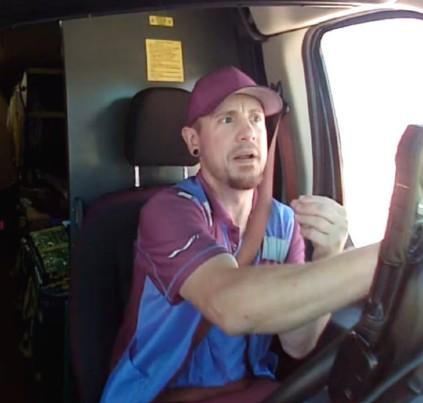
Amazon controlled all aspects of the drivers’ jobs.
Amazon dictated the uniforms of drivers. Amazon imposed multiple codes of conduct on DSP employees that regulated how drivers should look and act around colleagues and customers. Amazon mandated drivers use DSP owned cell phones loaded with its apps as delivery devices.
These mandatory apps controlled what, where, and when drivers like Defendant X would deliver packages.
The apps both instruct the drivers what to do and extensively monitor the drivers for compliance with Amazon policies.
Amazon Flex: Controls how drivers navigate their routes, deliver packages, call customers, and troubleshoot delivery issues. Also often referred to as “Rabbit.”
At the beginning of the day when drivers are loading their vehicles to prepare for delivery, the Amazon Flex app instructs them precisely which carts to retrieve and what aisles to retrieve them from. The driver must report to the Amazon Flex app each time they retrieve a cart until loading is complete. Then the app instructs drivers where to begin delivery.
Amazon trains drivers that the Amazon Flex app will instruct them which order their bags will be delivered on their routes, and that they should use that order to determine where to load items in their vehicles.
Amazon mandates that DA’s may only exit the station when the Amazon Yard Marshall permits them to exit. If a driver finishes loading their vehicle early, they are not permitted to exit as they have not received permission from the Amazon Yard Marshall. Effectively, drivers are only permitted to begin their delivery driving shift when Amazon tells them they can.
As the driver proceeds through their route throughout the day, Amazon Flex directs them to the precise GPS coordinates of where they are to drop off a package. A ring indicator will show where the driver precisely where to drop a package – within feet of the prior delivery.
Amazon requires drivers to record in great detail how they delivered a package in the Amazon Flex app, so the customer “and Amazon” know how and when the package was delivered. Drivers must report to Amazon if they delivered the package to a: customer or household member, receptionist or doorman, secure mailroom, front door/front porch, back door/back porch, or a different secure location. Drivers must “exhaust all resources” before declaring a package undeliverable. Drivers must attempt delivery twice. If they cannot deliver a package the first time, they have to return to the location that same day and reattempt the delivery.
Drivers must report and explain to Amazon why a package could not be delivered. Drivers must report a package as missing to Amazon if they are unable to locate a package in their vehicle. Drivers must reattempt delivery for any packages they thought were missing but later found in their vehicle. To do this, drivers must notify the Amazon delivery app that they are reattempting delivery for the previously missing package.
Drivers must call customers twice if they don’t answer the first time. Amazon mandates that drivers must conduct these calls through the Amazon delivery app. Amazon prohibits drivers from leaving a voicemail.
Amazon required DA’s to deliver “all packages by 10:00pm local time.” If drivers did not complete their job in ten hours, they would have to stay longer to complete their deliveries. If
drivers completed their deliveries early, they would be sent out on “rescue routes” where they would have to assist other drivers who needed help with their packages.
Mentor: A driver safety program that measures certain driving behaviors. If a driver braked too hard, accelerated too fast, took a corner too fast, looked at their phone, or traveled over the speed limit, Mentor tracked these behaviors through their phone and issued a score known as a “FICO” score. If a driver was flagged for a violation, they received a slip of paper at the end of their shift talking about safer driving and had to talk to a DSP supervisor. DA’s are taught by Amazon that “It is mandatory to keep the application running throughout your shift.” DA’s are also taught that “a good FICO score is 800.”
Amazon Chime: A communication application used for sending messages, holding conference calls, and video calls.
Mr. X testified that as a delivery driver, it was mandatory that he stay on top of the Chime app. One of the ways Chime was regularly used was to create “a competition amongst the employees” by posting results of everyone’s delivery progress multiple times per day. “If everybody, you know, gets their packages done quicker, it makes the bosses happier, and, also, they make more money, and the supervisors get bigger bonuses.” When Amazon issues weekly report cards or “Scorecards,” to DSPs, they instruct the DSP to “provide weekly visibility” of the report to DAs to “show them where they stand and what areas they should focus on for improvement. Amazon Chime is also used by Amazon Driver Trainers to communicate with DSPs and with other Amazon employees about what occurs and any concerns that arise during trainings.
Cortex: Tool used by DSPs on a day-to-day basis to understand where drivers are on their routes and track delivery progress.
Amazon installed an AI camera system called Netradyne in vehicles beginning around 2022 that monitors driver behavior at all times. If a driver exceeds the speed limit, the camera will give a command such as “driver speeding” or “driver infraction.” If a driver fails to come to a complete stop, the camera gives a voice command such as “failure to stop.” Netradyne data, is maintained by Amazon and used to generate driver FICO scores similar to the Mentor app.
What follows is the applicable legal formula. Amazon is the company specifically involved, but this formula works for uber, lyft et al.
A relationship between a superior business entity and a subordinate business entity can be characterized as principal and agent, establishing the superior business’ vicarious liability for the subordinate. Larner v. Torgerson, 93 Wn.2d 801, 804, 613 P.2d 780 (1980). The essential
1 The legal briefing was crafted by my law partner Shannon Kilpatrick.
elements of an agency relationship are control over the manner in which the work is performed and consent. Yong Tao v. Heng Bin Li, 140 Wn. App. 825, 831, 166 P.3d 12 63 (2007).
The right to control test has been called “[t]he bedrock principle” on which relationships are analyzed under the common law. Karstetter v. King Cnty. Corr. Guild, 23 Wn. App. 2d 361, 368, 516 P.3d 415 (2022) (quoting Dolan v. King County, 172 Wn.2d 299, 314, 258 P.3d 20 (2011)) (internal quotations omitted). Whether a party is an employee or independent agent can be determined as a matter of law if the facts are not in dispute and are subject to only one interpretation. Karstetter, 23 Wn. App. 2d at 369.
WPI 50.11.01 lays out the key factors used in Washington’s right to control analysis, based on Restatement (Second) of Agency § 220(2), that govern whether an agency relationship exists:
1) the extent to which, by their agreement, Entity B could exercise control over the details of performance of the work by Entity A;
2) whether or not Entity A was engaged in a distinct occupation or business;
3) the kind of occupation, with reference to whether, in the locality, the work is usually done under the direction of the employer or by a specialist without supervision;
4) the skill required in the particular occupation;
5) whether Entity A or Entity B supplied the tools, equipment, instrumentalities, and the place of work for the person doing the work;
6) the length of time for which Entity A was performing work for Entity B;
7) the method of payment, whether by the time or by the job;
8) whether or not the work is a part of the regular business of Entity B;
9) whether or not Entity A and Entity B believe they were creating an employment relationship or an independent contractor relationship; and
10) whether Entity B was or was not in business.
WPI 50.11.01 (modified to include bracketed information). The WPI clarifies that the factors are of “varying importance,” apart from the element of control, and all factors need not be present to determine agency. Massey v. Tube Art Display, Inc., 15 Wn. App. 782, 787, 551 P.2d 1387 (1976).2 The list of factors is not exclusive. WPI 50.11.01.
Washington appellate courts have long held that the right to control is more important than the actual exercise of that control for purposes of agency. Massey, 15 Wn. App. at 787; Jackson v. Standard Oil Co., 8 Wn. App. 83, 91, 505 P.2d 139 (1972). “It is the right to control another’s physical conduct that is the essential and oftentimes decisive factor in establishing vicarious liability.” Kroshus v. Koury, 30 Wn. App. 258, 264, 633 P.2d 909 (1981). To make the determination, the Court focuses “on substance and not on corporate forms, titles, labels, or paperwork.” Dolan, 172 Wn.2d at 314.
2 Note: my mother Mary Fung Koehler was the plaintiff lawyer in this case which is still good law in our state.
Further, the aspect of control need not be present everywhere. Massey, 15 Wn. App. at 787. Rather, agency is sufficiently established when “the plaintiff present[s] substantial evidence of . . . control or right of control over those activities from whence the actionable negligence flowed.” Id. (quoting Jackson., 8 Wn. App. at 91 (alteration in original)) (emphasis added). In other words, a principal can be vicariously liable because of its right to control the particular activity that caused the injury. Kroshus, 30 Wn. App. at 265. A finding of agency is proper when the evidence shows the principal controls the manner of performance. Stansfield v. Douglas County, 107 Wn. App. 1, 18, 27 P.3d 205 (2001).
For example, in Massey, the Court of Appeals held as a matter of law there was an agency relationship between a digger and a sign company, even though the digger was not an employee of the sign company. 15 Wn. App. at 788. There, the sign company set out the size and location for the hole to be dug for the sign. The digger struck a gas line while digging and injured the plaintiff. Despite being self-employed, the Court of Appeals pointed to the control exerted over the aspects of the digging. The sign company did all the discretionary work to prepare for the dig and provided the specifications to the digger about where to dig. The court noted that the company “in effect created the whole atmosphere in which [the digger] worked.” Id.
Recently, the Court of Appeals laid out a similar framework in Karstetter, where it affirmed the right to control test is the appropriate analysis. 23 Wn. App. 2d at 368. There, an attorney with a long-term client, the King County Corrections Guild, sought to be classified as the Guild’s agent regarding his breach of contract and wrongful termination claims. Id. at 366- 67. The parties moved on cross motions for summary judgment on agency. Id. at 366. The trial court determined that attorney Karstetter was an independent contractor, and the Court of Appeals affirmed. Id. at 374. The court noted that Guild did not control his work, did not advise him about the types of arguments to make or which authorities to cite; nor did it advise him how to prepare for hearings or review his briefing. Id. at 371. Because he was engaged in the distinct occupation of a lawyer without any direct supervision by the Guild, he supplied the instrumentalities, tools, and his place of work, and other reasons, the Court held as a matter of law he was an independent contractor of the Guild. Id. at 373-74. Notably, the court reached this decision even though the terms of his fee agreement “may have on their face stated he is an employee” of the Guild because that fact is “far from dispositive.” Id. at 373.
Here, the facts are not in dispute that DSP’s delivery of Amazon packages was highly regulated and controlled by Amazon. Amazon alone dictated the terms of the agreements between it and the DSP’s. Amazon alone had the authority to change the terms at any time for any reason. Amazon mandated which vehicles DSP had to use and where they were leased from. Amazon trained DSP and its drivers, including Defendant X—not DSP. Amazon required drivers, like X, to use the Amazon Flex app and other programs. Amazon required DSP’s and drivers to give it access to this data.
Amazon controlled the manner of in which DSP took trips for Amazon. Amazon’s technology functioned like a human manager of DSP and Delivery Associates, supervising and tracking their progress. It instructs them where to get their packages in the warehouse and which packages to get, what order they should take in their route, precisely where to drop the packages, and specifically how to drop the packages. It requires the drivers to report to it, like a human
manager, by taking a photo of their package after each delivery assignment. Mentor and Netradyne, surveillance tools, are used to control behavior of Delivery Associates during their 11+ hour shifts by monitoring and reporting their driving behaviors. Amazon monitored and scored DSP performance with weekly Scorecards. Amazon determined DSP’s ability to access work based on the Scorecard.
And it is undisputed that DSP consented to this level of control by Amazon, as the terms of Amazon’s control are all laid out in the various terms of service, program agreements, and policies Amazon required DSP to adopt.
Prong (1) of the agency analysis is WPI 50.11.01 has been established as a matter of law. Prongs (2), (5), (8) of the analysis also support this Court finding agency as a matter of law. It is undisputed DSP was engaged in the same business that Amazon Defendants were - the delivery of goods ordered on Amazon. DSP was prohibited from using its vehicles for any other purposes, so DSP’s existence depended on Amazon. This is not like a company that hired an outside accountant to do its taxes or a landscaper to maintain the exterior of its business. This is more like a company that hired employees to perform the core function of the business— transportation/delivery of Amazon goods.
Further, Amazon supplied the tools, equipment, instrumentalities, and the workplace for DSP and its drivers. Amazon provided the entire logistical system to allow DSP to deliver packages. Amazon required drivers to use Amazon Relay, Chime, and other software. Through this software, Amazon provided navigation tools that dictated routes and order of package delivery. Without using Amazon’s tools, DSP could not deliver Amazon packages and would not be paid.
This Court can grant Plaintiff’s motion even though some of the other prongs might favor the Amazon Defendants. Though the terms and policies express Amazon’s intent to establish an independent contractor relationship with DSP, that factor is not determinative.
An agency relationship may be express or implied. Stansfield v. Douglas County, 107 Wn. App. 1, 17, 27 P.3d 205 (2001). In other words, “[a]n agency relationship does not depend on an express understanding, but may arise out of the conduct of the parties.” Id. at 17-18. Thus, even when Amazon’s and DSP’s documents expressly disclaim an employer/employee relationship, the parties’ conduct is what truly matters. The Massey and Karstetter opinions demonstrate this basic fact.
Amazon controls the manner of DSP’s performance of its sole business purpose—to deliver products consumers bought on Amazon. The conduct here is that of an agent and a principal.