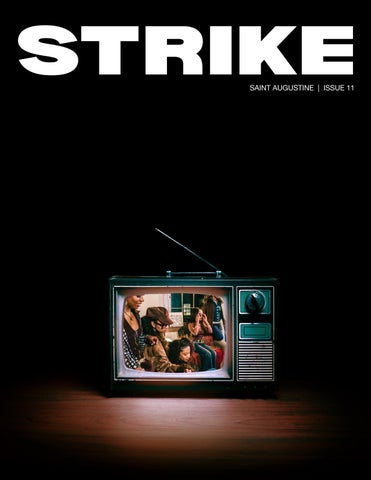
Cover Photo by Daisy Pflaum
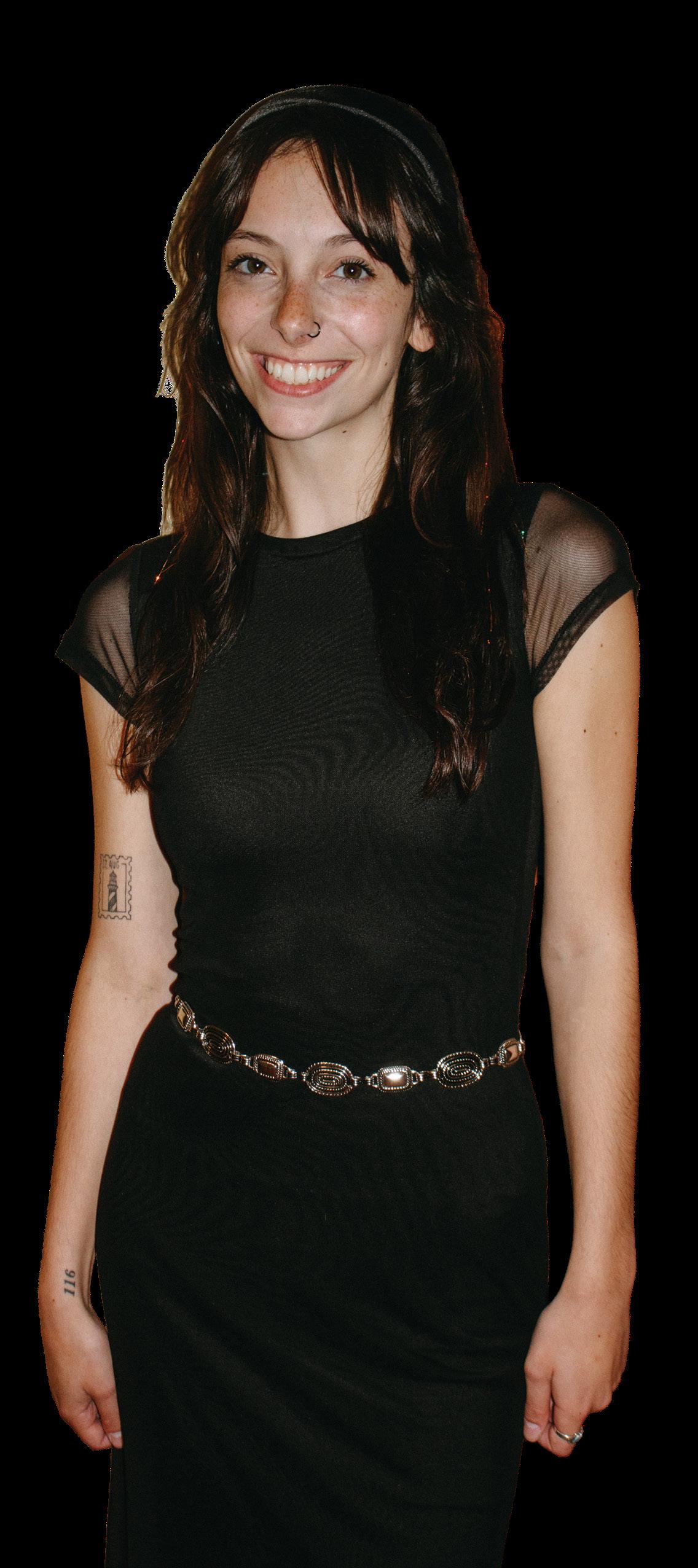
When I think of my time on Strike Magazine, I think about pink bedroom walls dressed top to bottom in J-14 magazine posters that have been torn from limb to boy band limb, and strung across my room like an art gallery of my 8-year-old brain.
When I think of my time on Strike Magazine, I think about the 16-year-old girl I once knew who thought the only artistic ability she was ever capable of would always be displayed on a stage as pink ribbons wrapped around her ankles or with fringe tassels hanging from her hips.
When I think of my time on Strike Magazine, I think about the 21-year-old girl I know now. How she has grown into a version of herself she never knew was possible. I think of all the wonderful people she has met in what feels like such a short period of time. How they inspire her every day to want to be a better, more creative, and more open person tomorrow than she is today.
When I think of my time on Strike Magazine after May 1st, 2026, these last 4 years will be frozen in time. Like a poster on my wall, like a handprint on my heart. I have literally grown up on the pages of this magazine. When I started on Issue 05 as a model, I never expected to be in the role of Editor-in-Chief. Thank you all for not only trusting me but inspiring me so much. Because I knew you, I have been changed, for good.
For one last time Strike Out,
Olivia PagliucaEditor-in-Chief
Dear Strike,
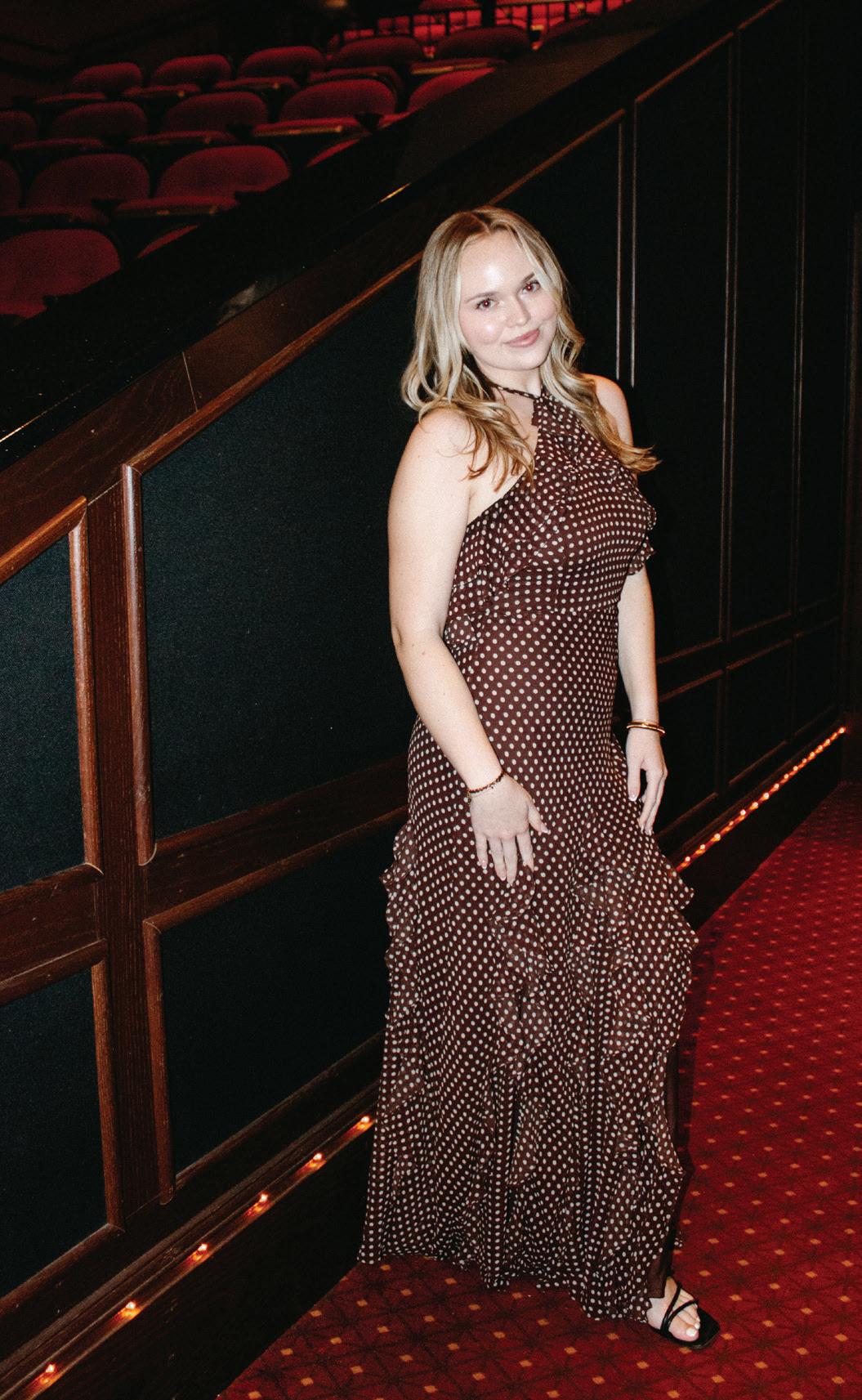
I feel so fortunate to have been part of a community where passion, inspiration, and impactful artistry come together. Strike Magazine St. Augustine has been that community for me for the past two and a half years, a team where creativity is not only expressed but truly felt.
When I first joined, I felt a little intimidated. Stepping into a room full of talented and confident creatives, I wasn’t sure where I belonged. However, by working alongside our staff and learning as I went, I found my place. What once felt unfamiliar has grown into something I’m deeply passionate about.
Having served as a Marketing Assistant, a model, and now this year’s External Affairs Director, I’ve had the opportunity to engage in so many rewarding experiences. Stepping into an executive board role this year was an exciting challenge, and I’m especially grateful for the guidance and support of our previous Editor-in-Chief, Daisy Pflaum, who gave me the freedom to explore my own ideas, which I’ve carried into Issue 11. Planning staff-bonding and open-invitation events this issue has allowed me to connect more deeply with my community and my home away from home, St. Augustine.
Strike has been more than a role to me; it’s given me unique experiences, lessons, and memories that I’ll carry with me long after graduation. I’m incredibly grateful to have been part of a publication so dynamic and inspiring, and I’ll always look back on this time with gratitude and admiration.
With love,
Kelsey Hearns External Affairs Director
Even after all these issues, my first shoot is still my favorite. I started as a model on Issue 07 in 2024. The warmth, passion, and creativity of this group of people truly struck me with the need to contribute something greater to Strike. Since then, I have been so privileged to continue working with this team to deliver the last four issues.
Since 2024, the world has rapidly shifted around us in ways that are often confusing. To gather with creative individuals in pursuit of something greater, a way to make sense of the chaos around us, is how I have survived these growing pains. Art survives when all else fades. To be able to look back on what we made together will be a beautiful thing.
Things at Strike are coming to an end for me and many of the people I began this journey with. I never thought I’d leave as the Creative Director of Strike when I started. I am beyond proud of Issue 11 and each and every member of this team. I’m so excited to see where Strike goes! It has been an honor to grow alongside you and share these very special years of life with you. Thank you for all the opportunities this magazine has given me and all the fun hours spent making things with my friends. Thank you for being young with me!
All my love,
Joelle PakesCreative Director
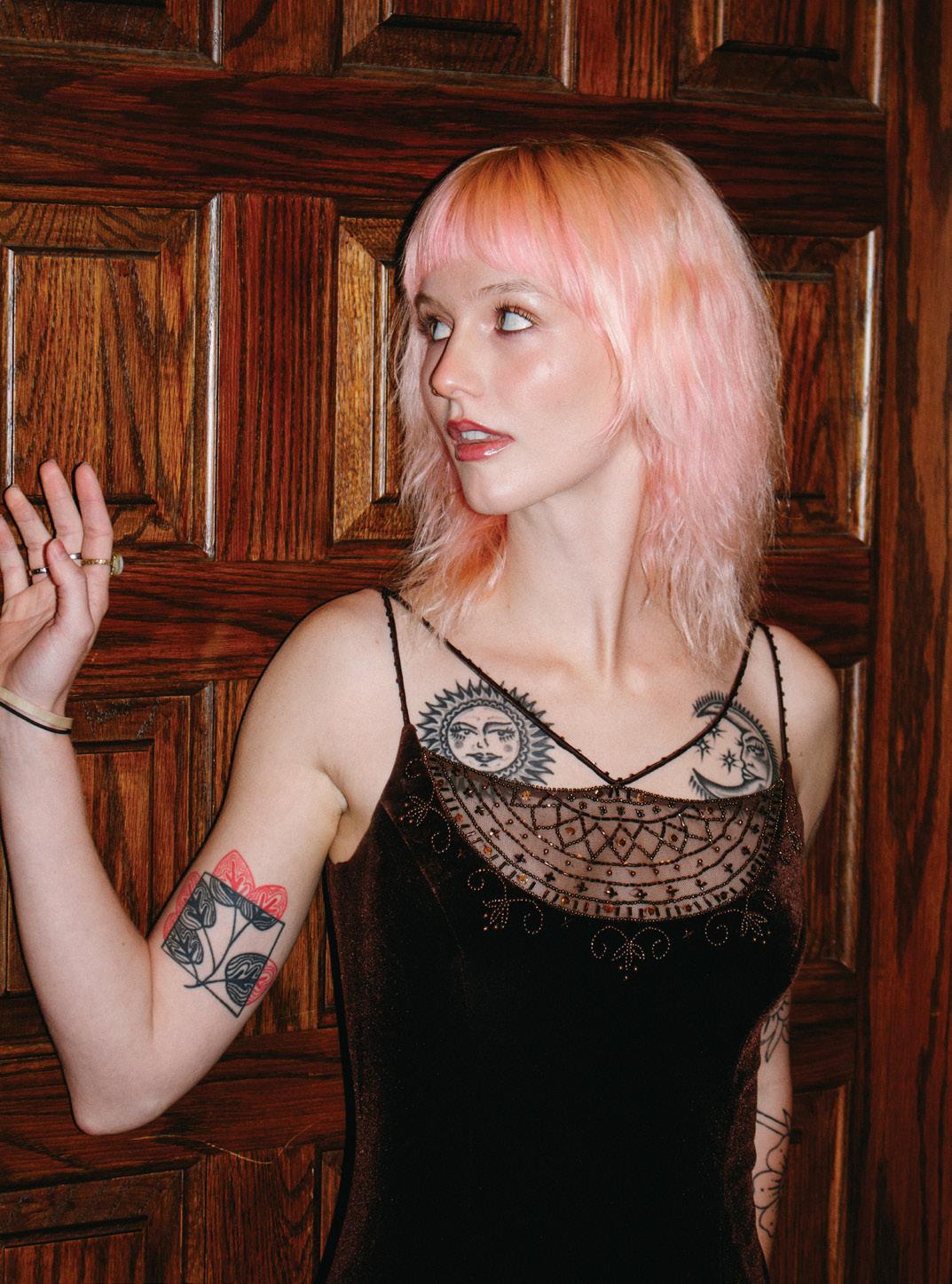
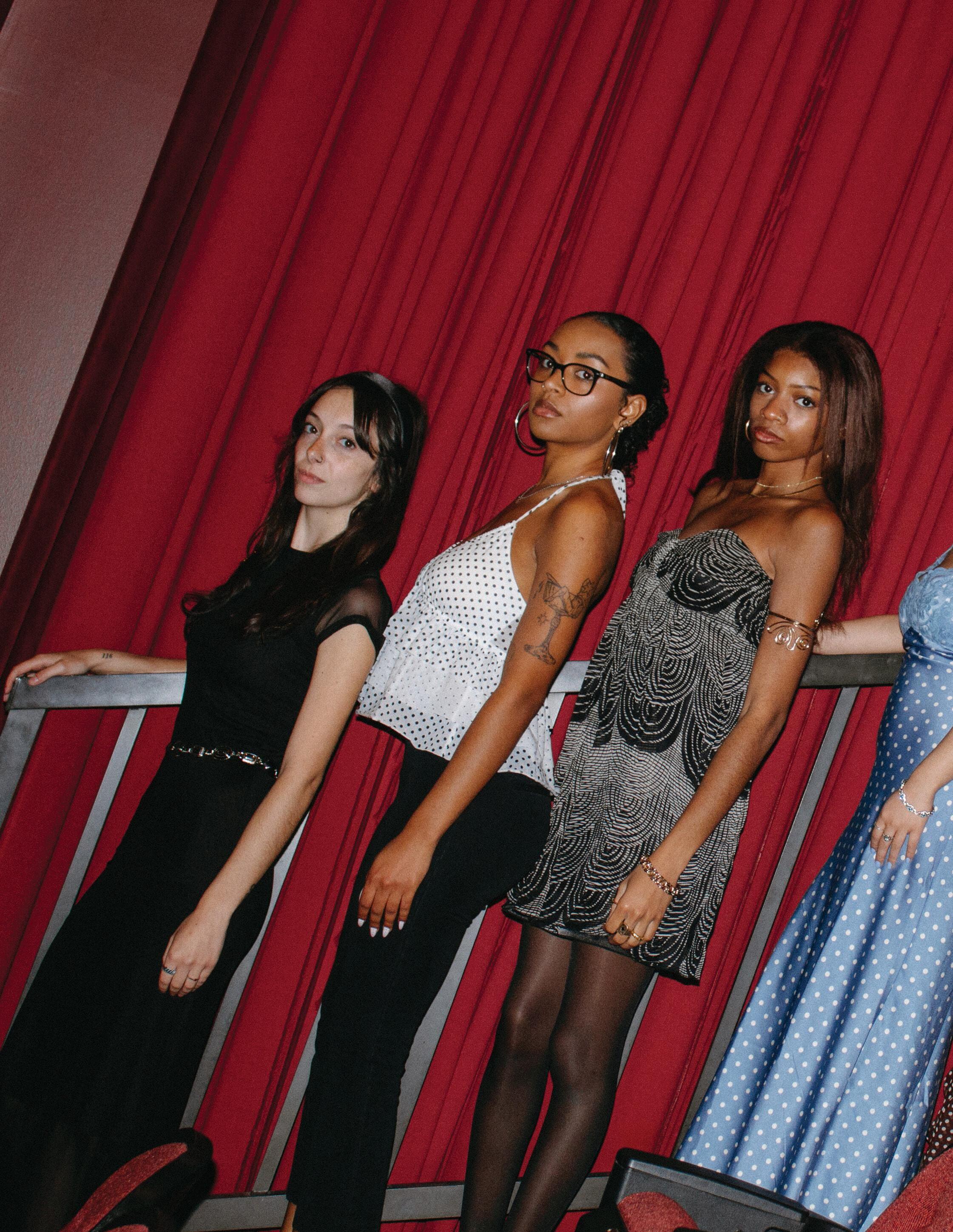
EDITOR-IN-CHIEF Kaya O’Rourke
Olivia Pagliuca
Kelsey Hearns EXTERNAL AFFAIRS DIRECTOR
EXTERNAL AFFAIRS
ASSISTANT
Nancy Huang
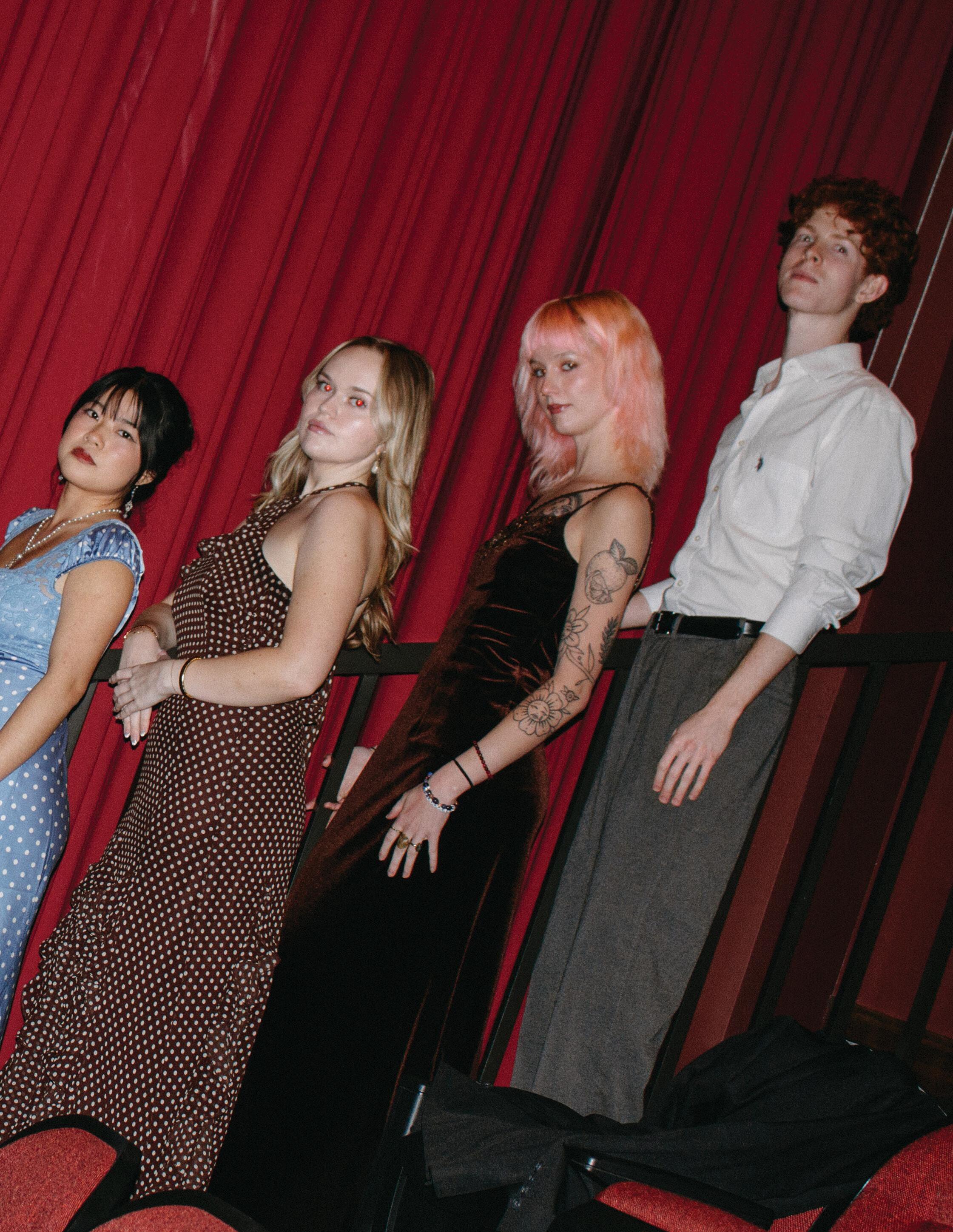
CREATIVE ASSISTANT
Ethan Stephens
CREATIVE DIRECTOR
Joelle Pakes
To look back at this early usage of incredible technology, no dialogue necessary, is to notice what remains. Film continues to breathe this wayquietly, persistently asking us, again and again, to see what unfolds before us.
As audience members, we find that the Silent Era is a return to that origin point. Not out of nostalgia, but out of recognition. The grammar of silent film still pulses beneath contemporary cinema: within the lingering close-ups, physical performance, and the spaces wher e words fall short. Even now, the most affecting images often echo that earlier restraint.
Characters stumble, recover, endure. They are reminders that to its very core, cinema is not built on dialogue but on presenceon the fragile choreography between light, motion, and emotion.
At the center of this stillness was The Entertainer himself, whose work balanced humor and ache with a precision that feels almost anatomical.
Before sound, there was breathvisible to everyone. A hand lifted, a glance held too long, a body moving through space as if language lived within our limbs. In the silent era, film did not speak, yet it understood. It asked its audiences to feel first, interpret later. And in that quiet, something intimate formed between screen and viewer.
“THE ENTERTAINER”
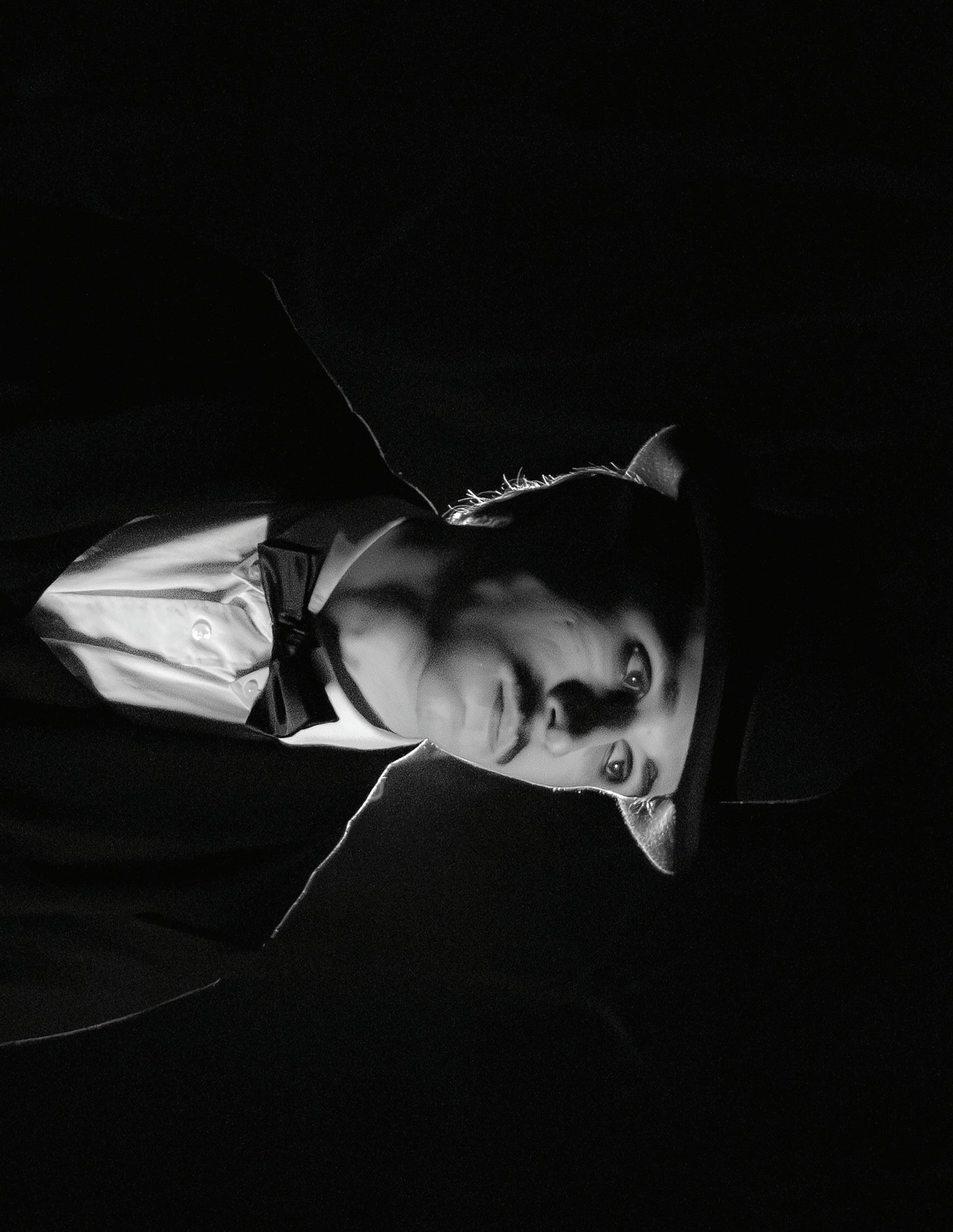
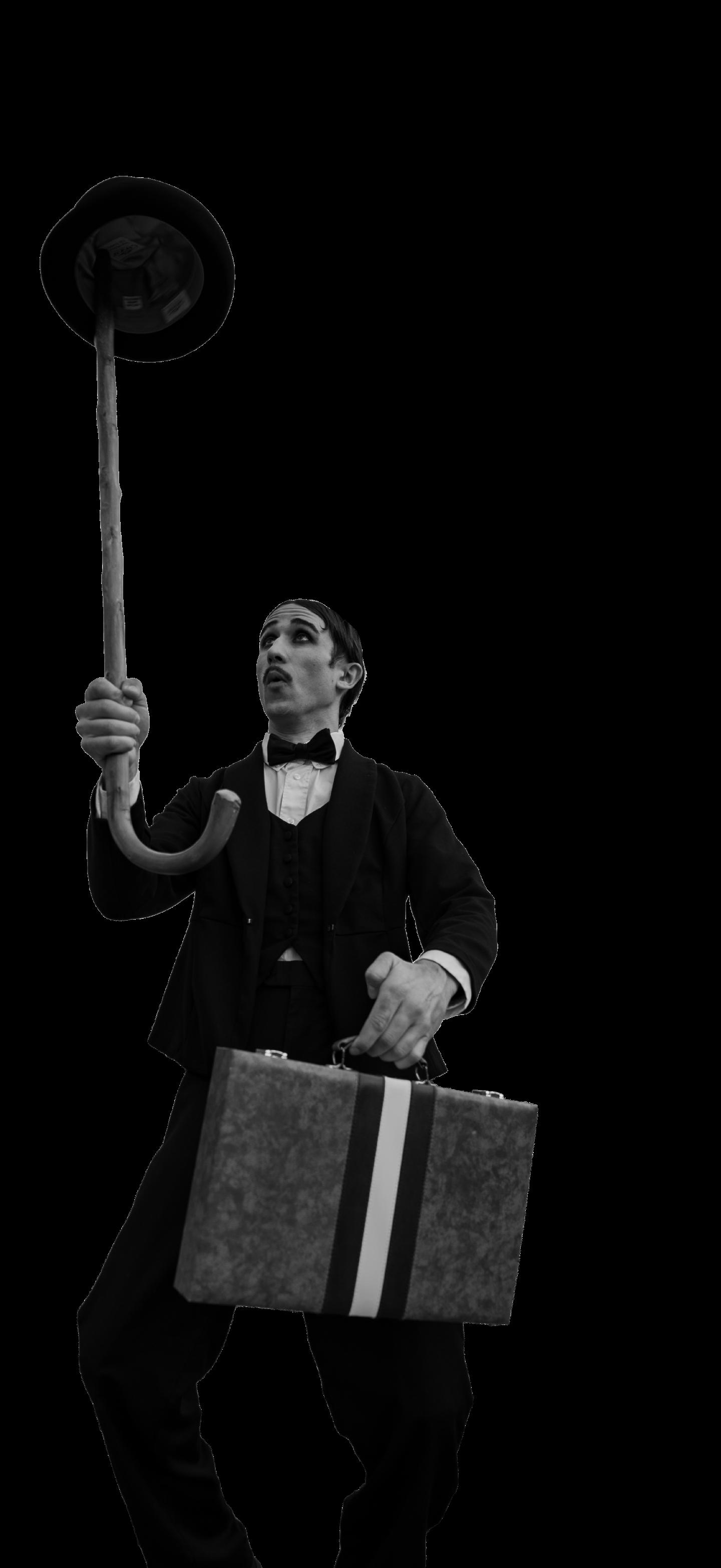
By Z.K. Domingo
I. Good Ol’ Charlie Chaplin makes us believe seldom this chap wins. It’s a paradox how you manage to laugh while all of your brothers die in the draft!
II. Oh General Buster Keaton–acting as if you’re some bumbling cretin. While the wise man thinks of himself as the fool, we funnel more and more money into the pockets of tools.
III. Harold Clayton Lloyd Sr. The stunts you pull could count as misdemeanors. As our foretold enemies only grow flighty, our entertainment is blessed in palaces, almighty.
IV. Plenty fellows pose as the original trolley problem, looking through the audience ever-so-solemn. Dancing with death all for a belly laugh, you will always split dear America in half.
By Natasha Chinea
Try to think of the last time you stubbed your toe, bumped your knee or hit your elbow when you didn’t mean to. Before you could say anything, your body reacted. You flinched. You reached for the pain. Your face changed instantly. That physical response is the kind of body language actors relied on in the Silent Era to communicate emotion. That instinctive reaction proves something simple: emotion doesn’t need dialogue.
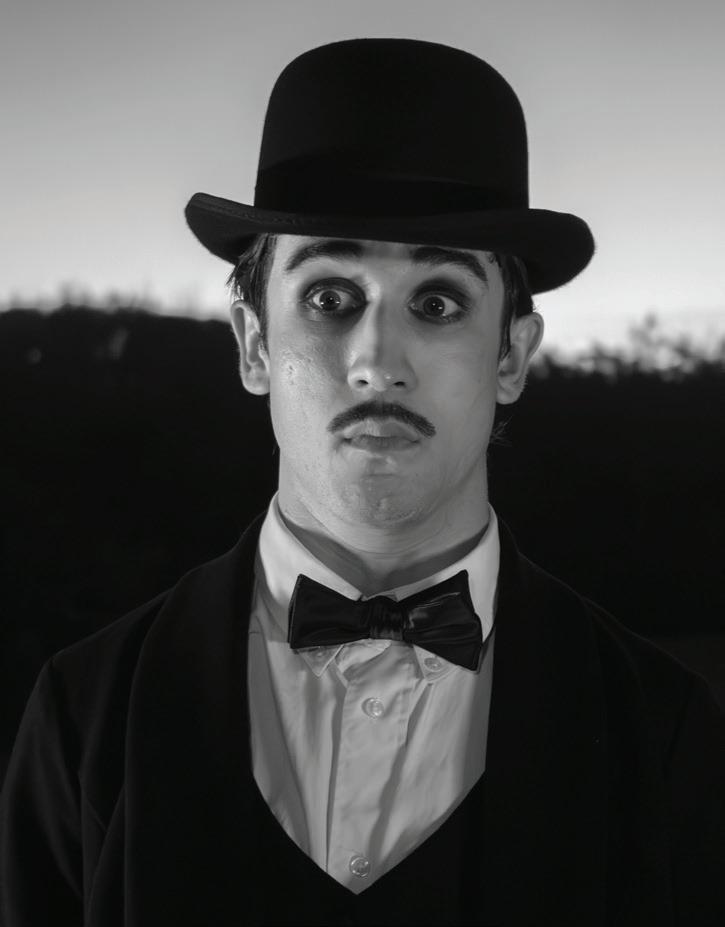
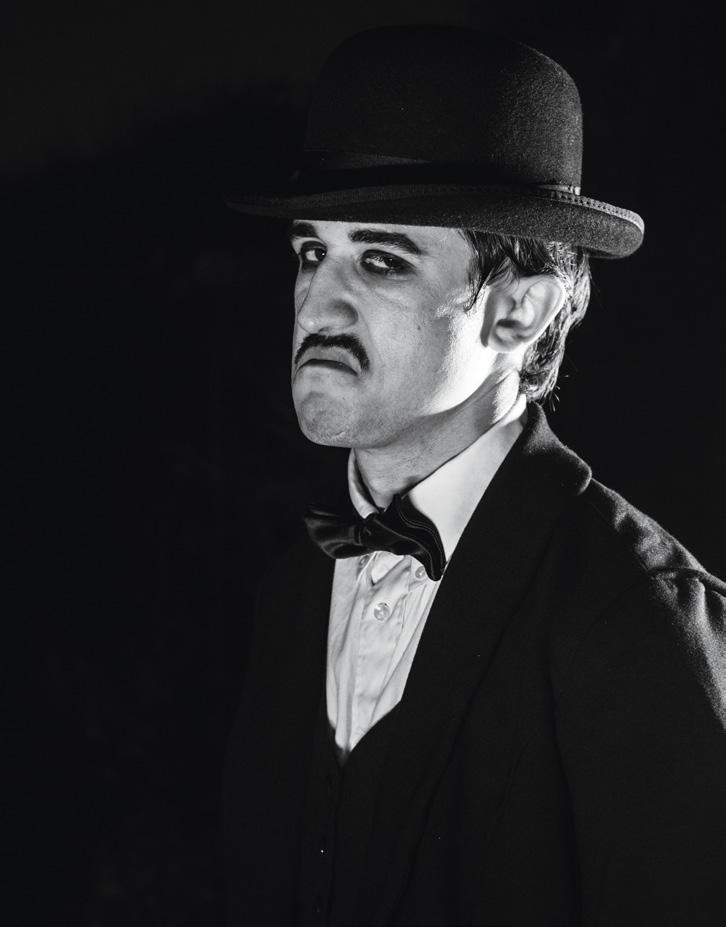
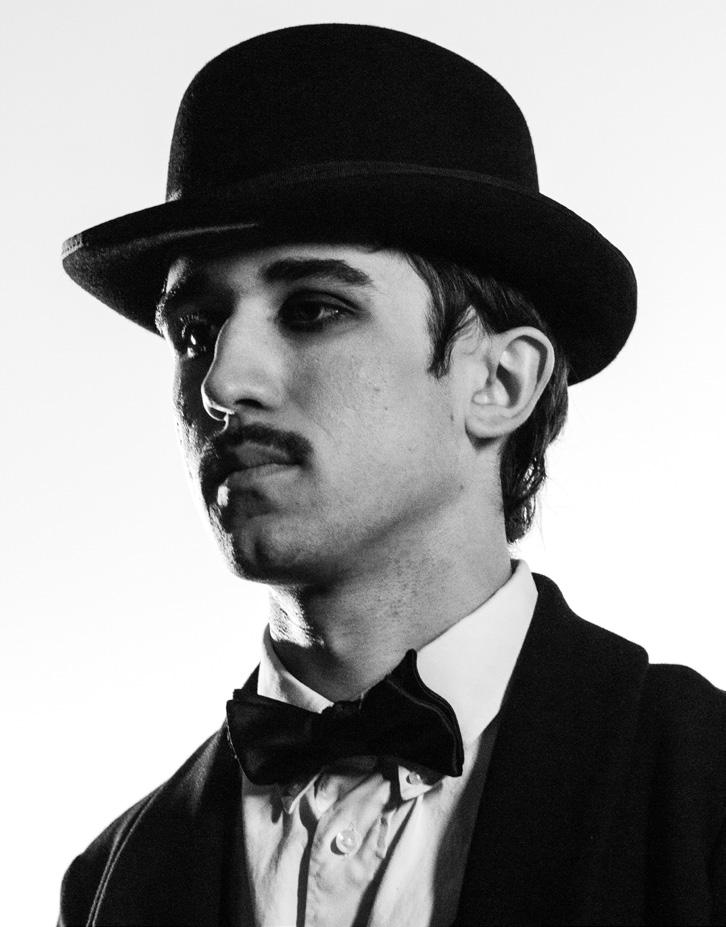
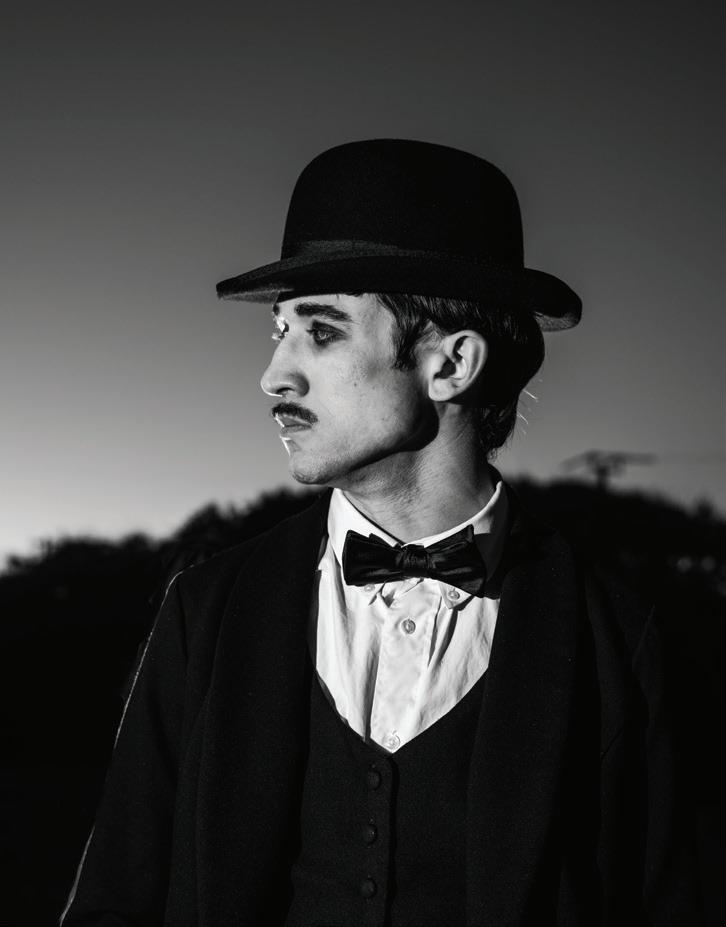
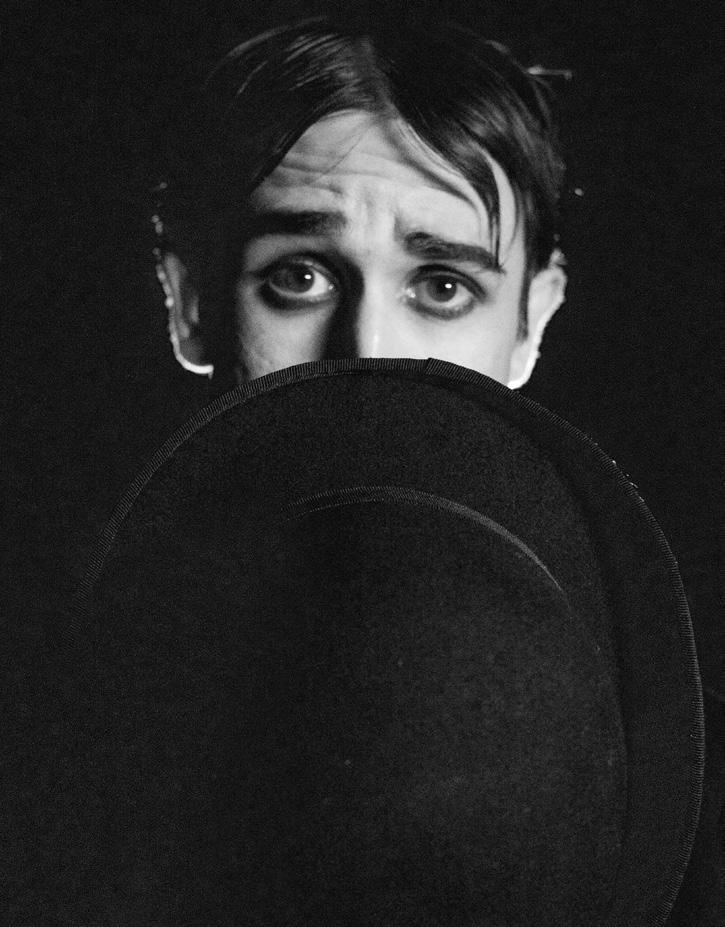
Long before scripts were full of monologues, actors depended entirely on movement and expression to tell a story. Every step had intention. Every gesture had meaning. Without dialogue to guide audiences, early filmmakers relied on the image. Silence wasn’t empty; it was deliberate. And no one understood that better than Charlie Chaplin.
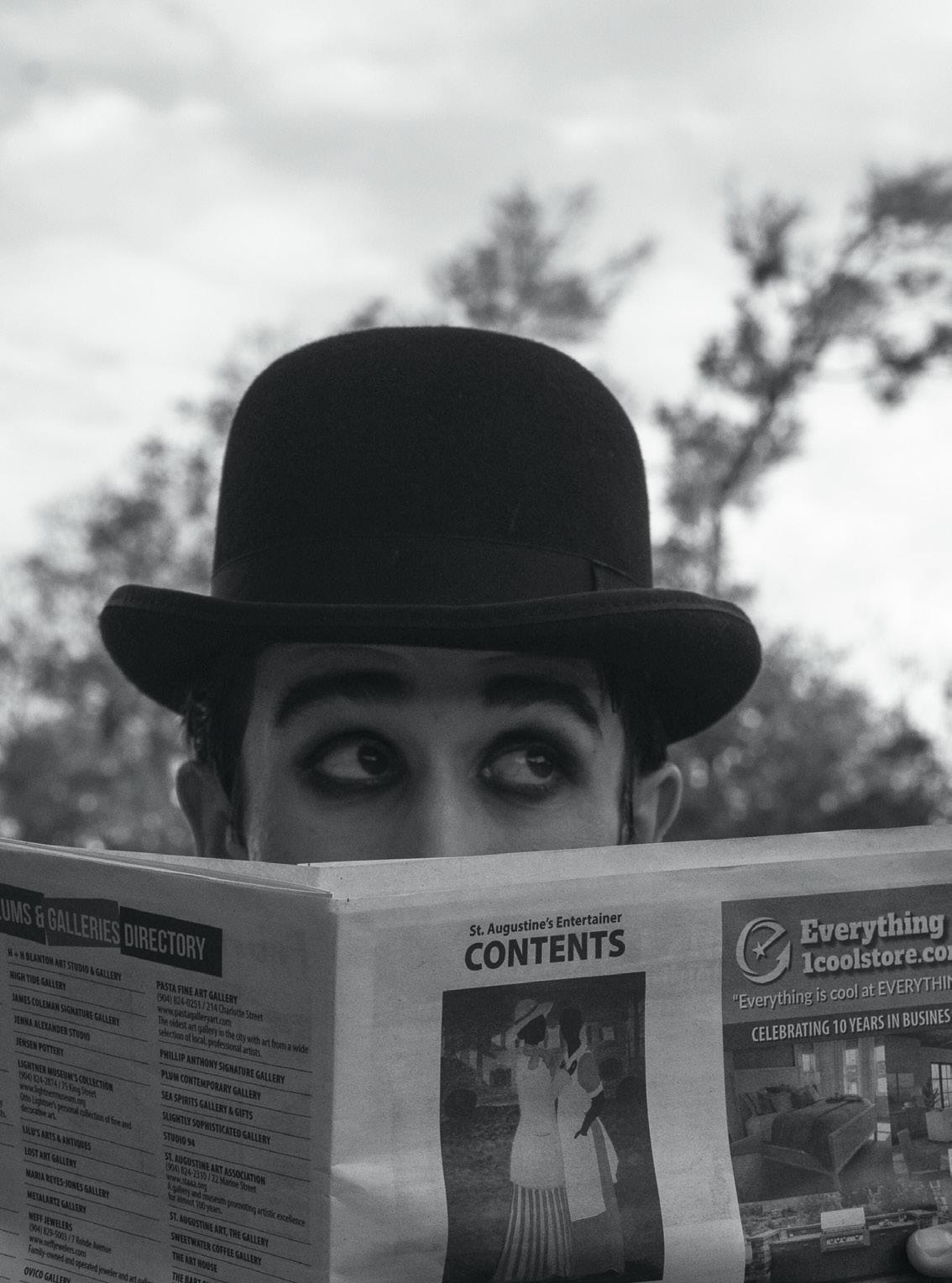
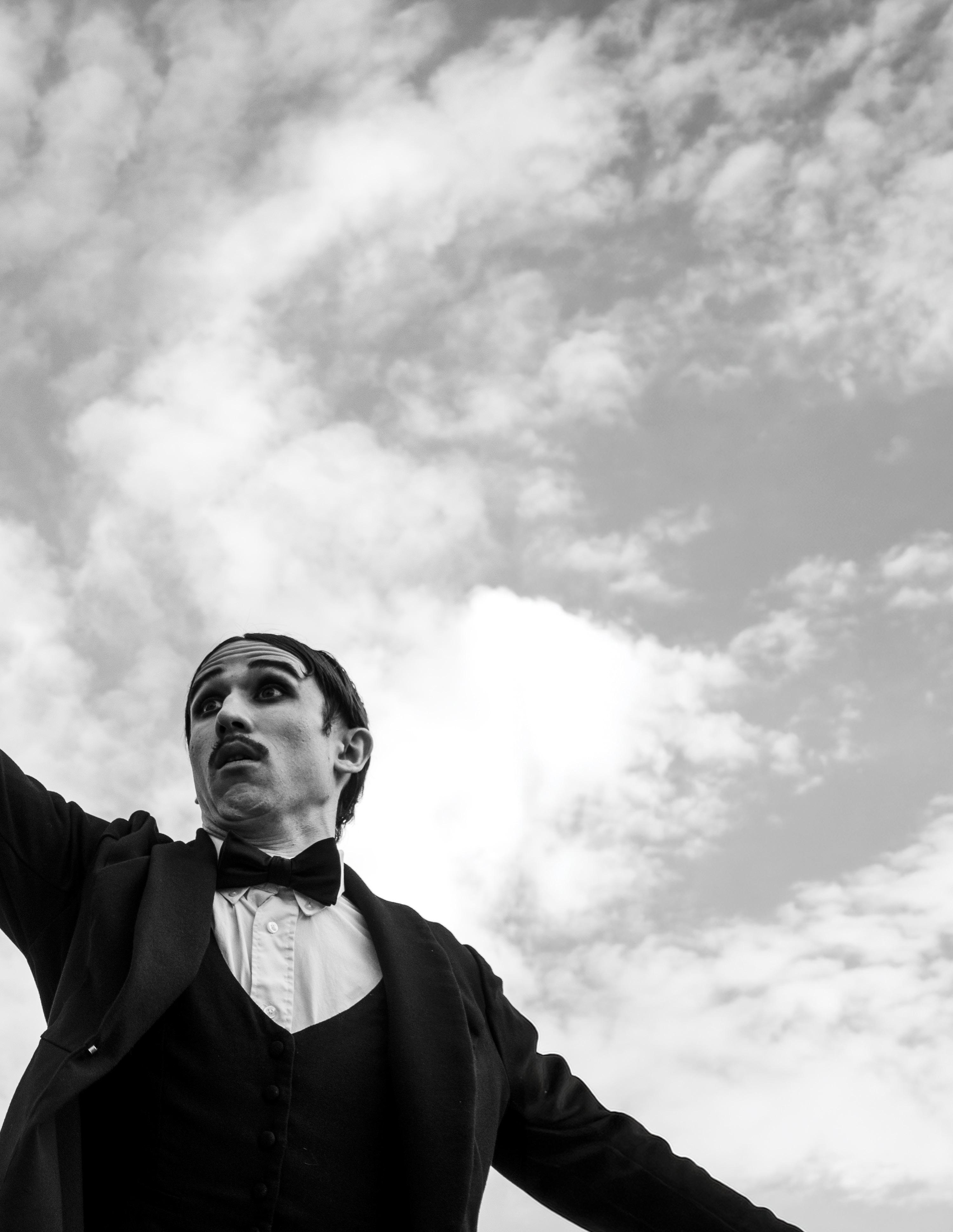
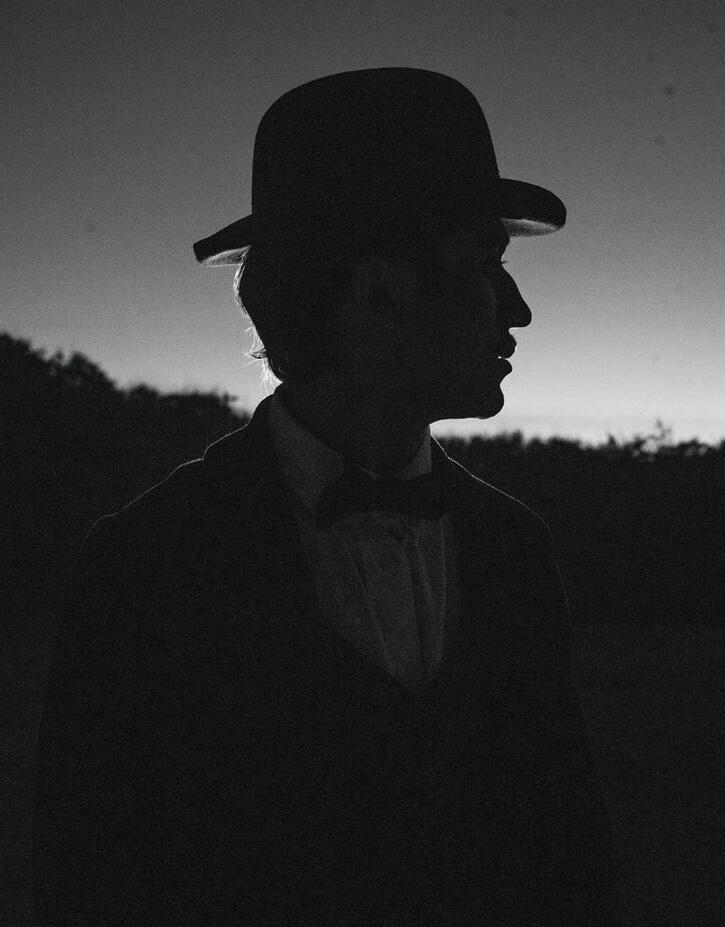
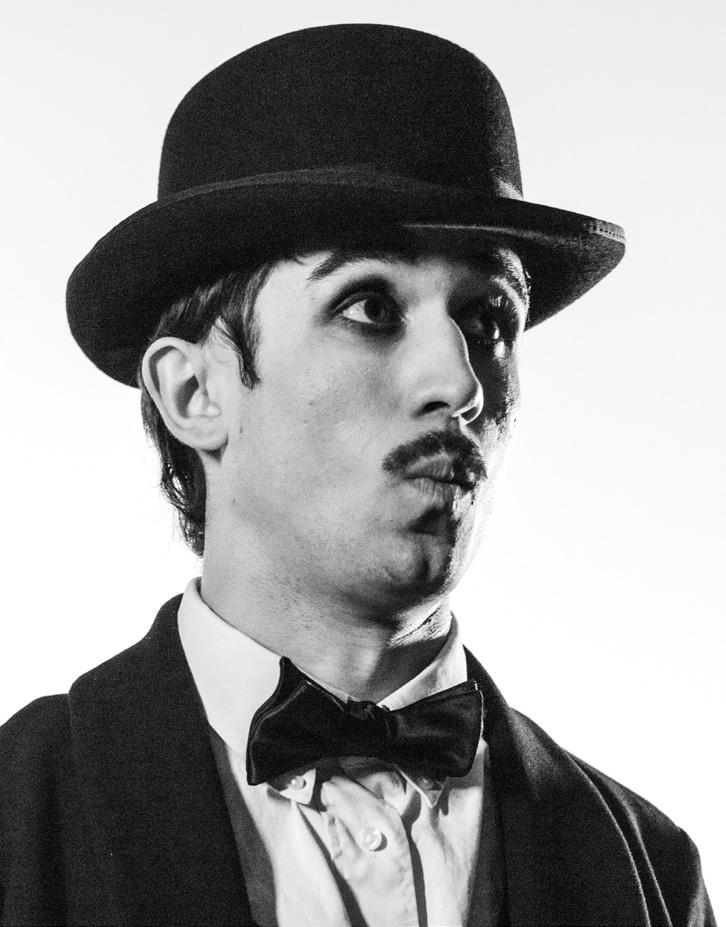
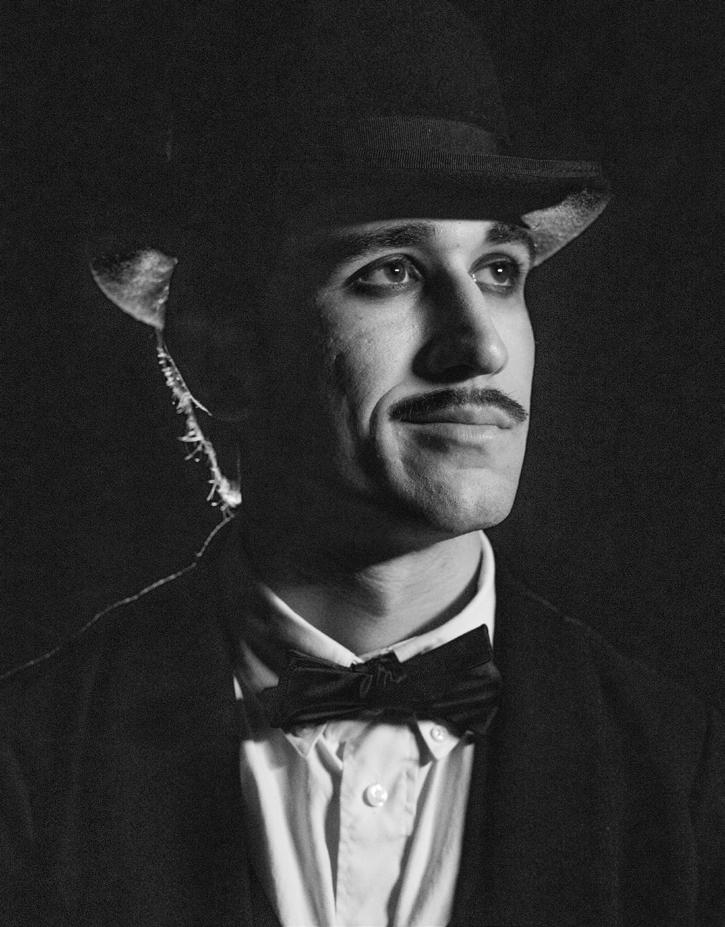
On screen, Chaplin wasn’t playing himself, but performing as the Tramp, a constructed persona that audiences anywhere could understand emotionally. His movements were calculated. His pratfalls added to the character.
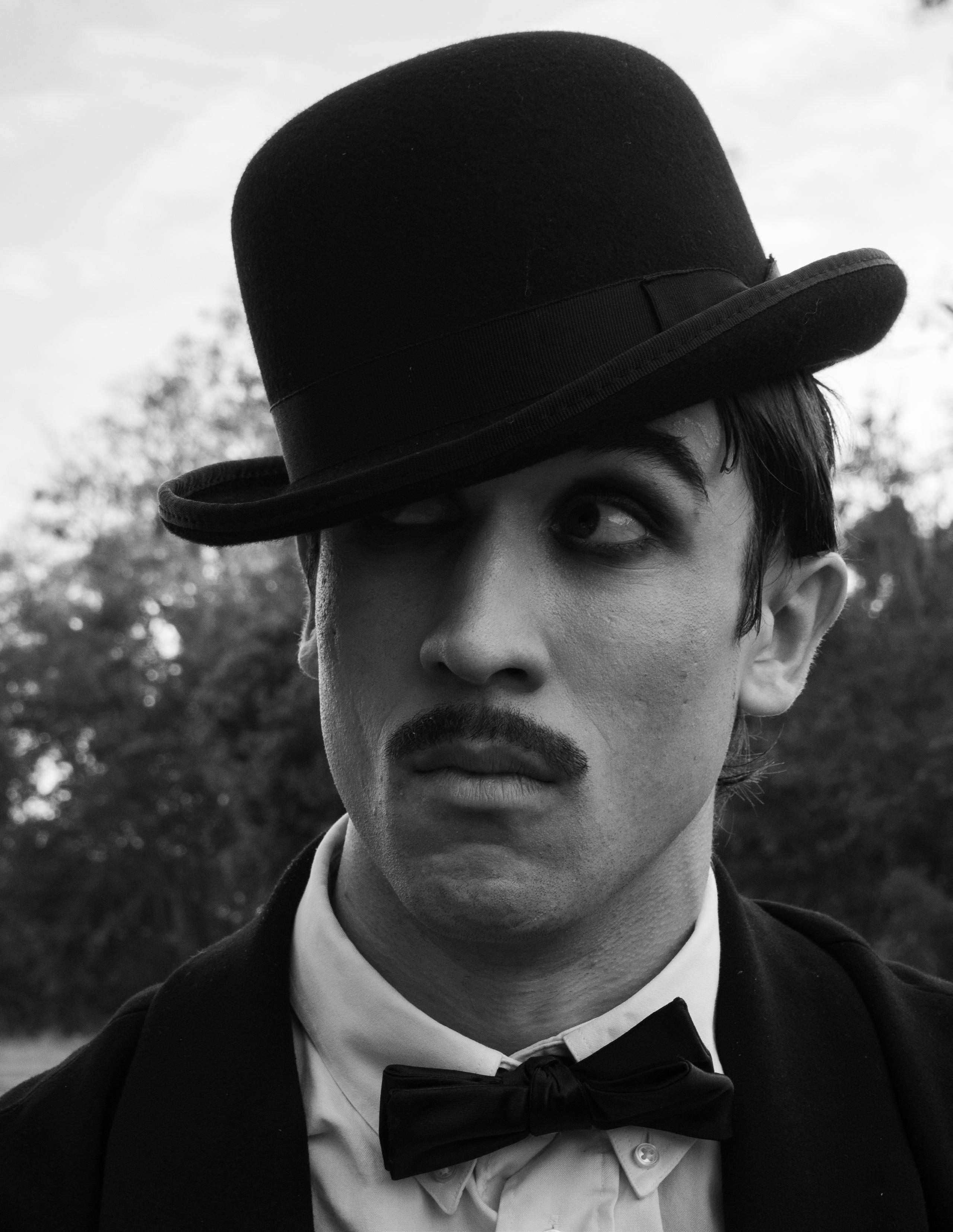
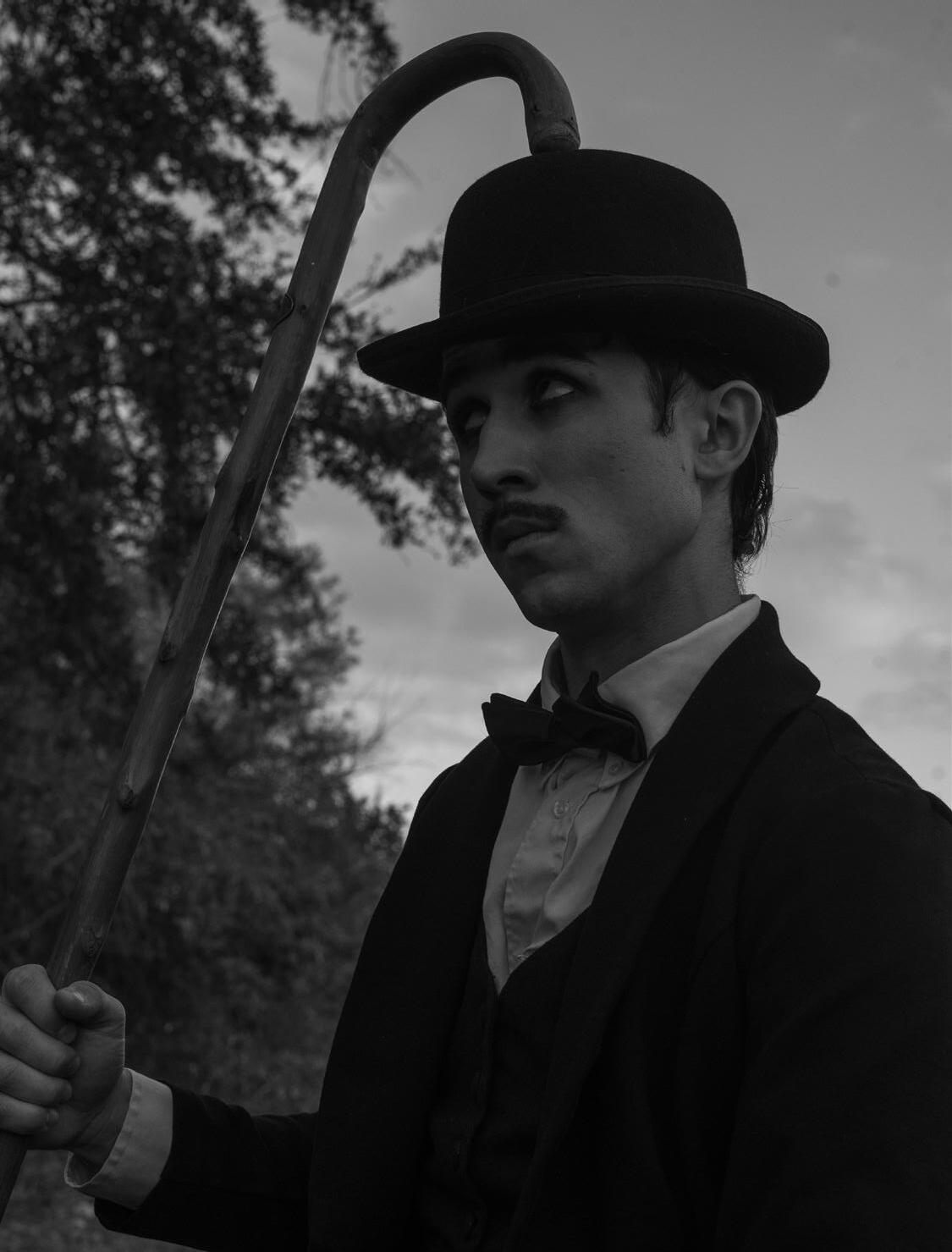
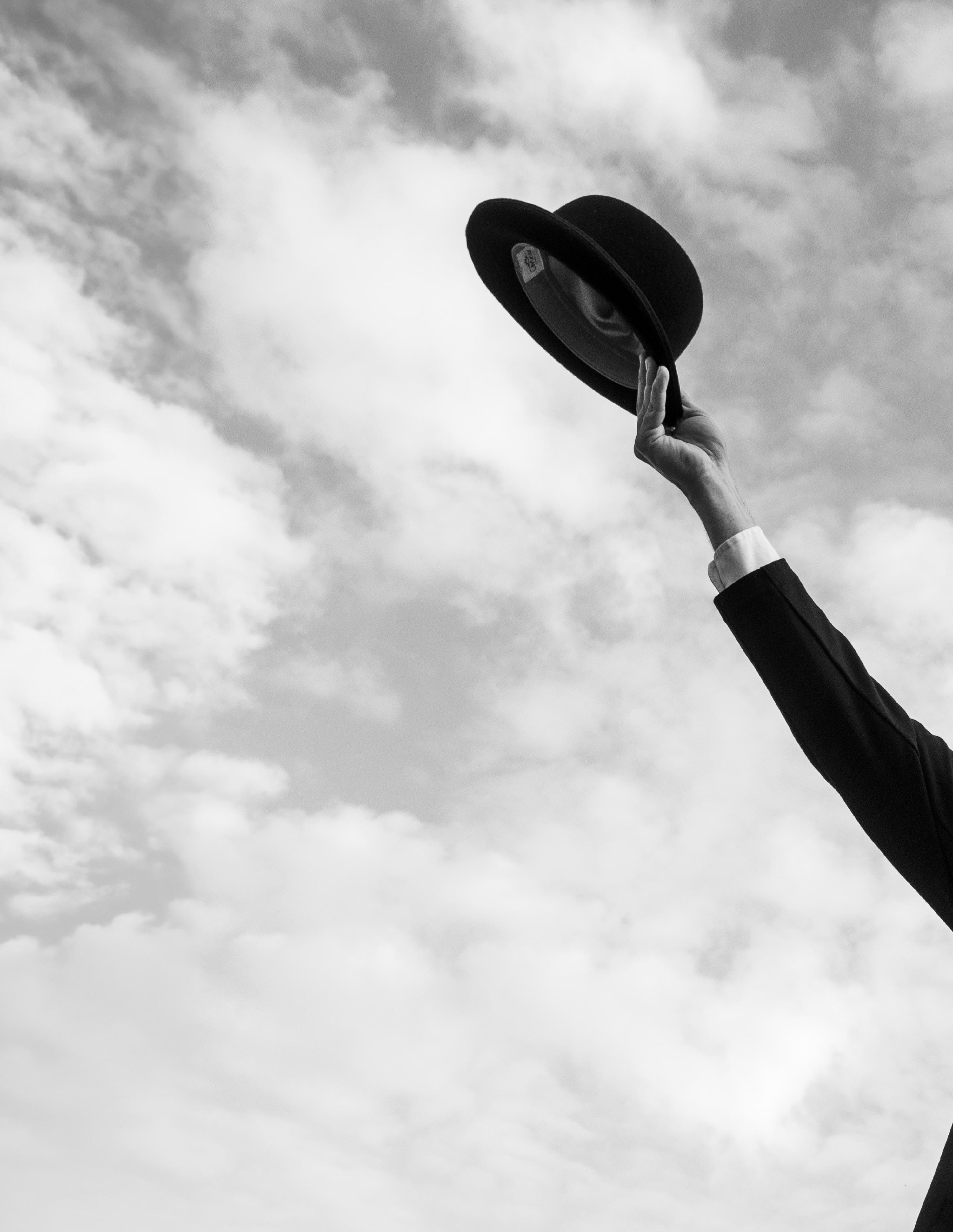
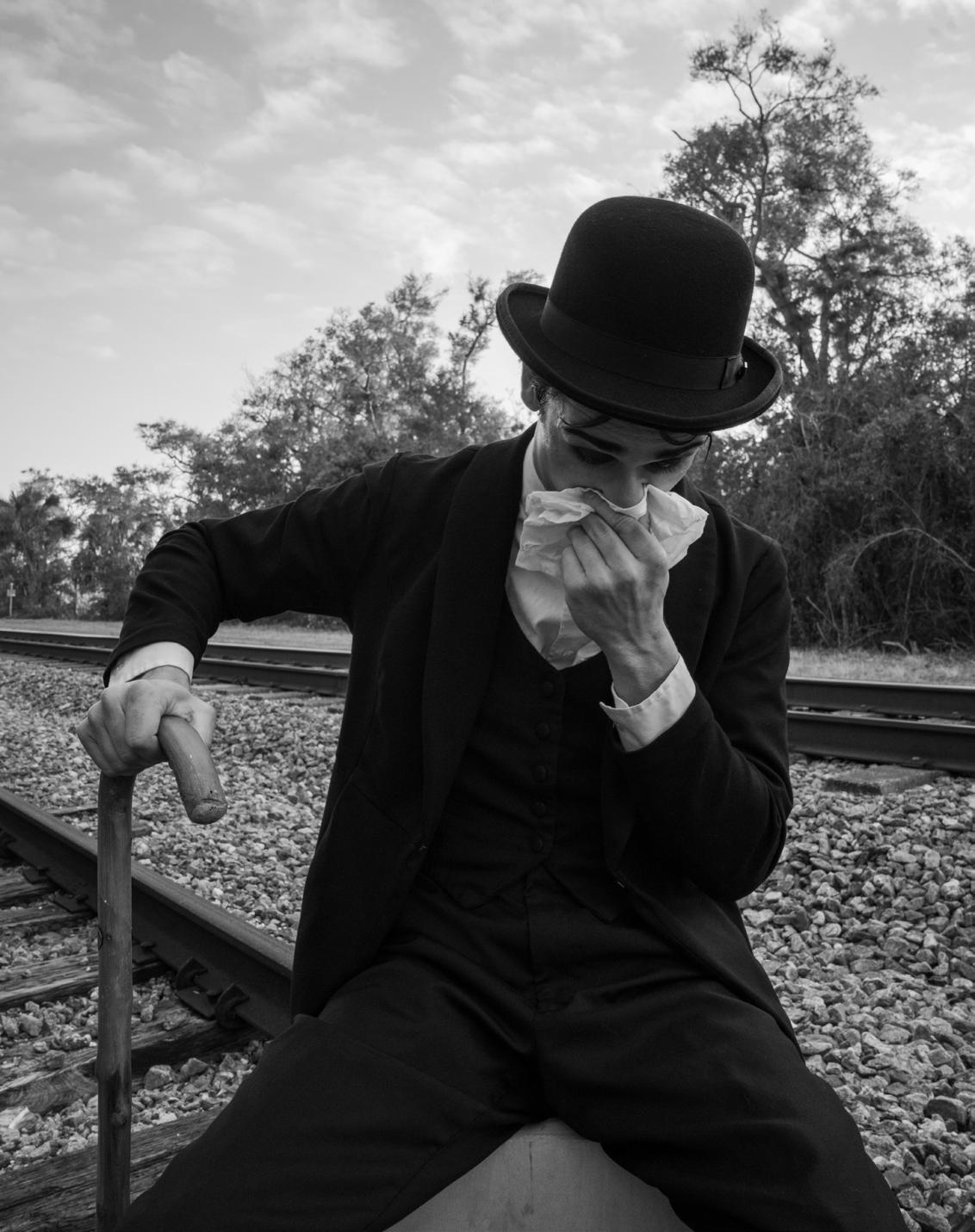
At the time, Chaplin was being funny, not even realizing the identity he was building for himself. His signature cane and bowler hat weren’t props; they were extensions of his personality. His exaggerated walk made him instantly recognizable. He walks with his feet outward, his body slightly off balance, as if he’s always adjusting to the ground beneath him. When he falls, it’s never graceful - he gets knocked aside, trips unexpectedly or collapses forward - only to stand back up and dust himself right off. Constantly doing this creates the impression that he may be easier
to push down but he will always get right back up; he is persistent. Audiences notice these patterns, and that builds empathy.
Looking at The Tramp (1915) by Charlie Chaplin, his character is seen wandering
along a rural road, taking tired steps, then stopping to look down at his feet showing they’re in pain. His shoulders are slightly slouched, and his clothes hang awkwardly on his frame. Moving slowly, he continuously gets knocked to the ground
by passing cars, then stands right back up and theatrically dusts himself off. Before the story even begins, the image establishes him as someone “living on the margins of society.” When he later sees a farmer’s daughter being robbed, he rushes forward to help despite his obvious lack of strength or authority. The Tramp isn’t introduced as a powerful hero. Instead, he’s a man with little to his name, doing what he can with what he has.
His comedy worked because it balanced
exaggeration and sincerity. The Tramp was funny, but he was also struggling. He was optimistic despite hardships. Audiences weren’t just laughing at him, they were recognizing something human.
Even in silence, Chaplin makes the Tramp’s social position clear. There’s no dialogue explaining his situation, his body language says everything. He adjusts his vest to look “put together,” tips his hat politely and quickly composes himself after every trip or fall. This
suggests someone trying to maintain dignity even when he’s constantly pushed aside.
At the time, audiences were living through social and economic uncertainty. Many working-class families faced poverty, unstable employment, and the pressure of a rapidly changing industrial world. Chaplin reflected those realities through the Tramp, a character who was often struggling, wandering, and searching for work or belonging.
His oversized pants, tight vest, large shoes and small bowler hat isn’t just for comedy, it also emphasizes the imbalance. The clothes don’t exactly fit, just like the character seems to not fit into the work around him. Yet instead of portraying him as a villain, which was common for “tramp” characters in early American films, Charlie Chaplin made the Tramp sympathetic.
The character’s costume created a figure that looked mismatched and vulnerable, but also determined. Even when the Tramp was knocked down or
rejected, he continued forward with humor and optimism. For audiences at the time, that resilience mattered. Chaplin turned everyday struggles into comedy, allowing people to laugh at situations that mirrored their own hardships. In crowded theaters, those moments of laughter became a temporary escape.
But Chaplin’s work wasn’t solely focused on humor. He shows themes of class struggle, poverty, and loneliness. That’s why his work still matters. Even in a film industry built on sound and dialogue, his performance proves that meaning doesn’t just depend on words. Through Chaplin’s movement alone, he was able to communicate class, hardship and resilience. The Tramp’s experiences still feel familiar and the silence makes the emotion more immediate. Using the Tramp, he essentially directed the story through his own social commentary and emotions. Without dialogue, those themes felt universal. The humor made difficult realities easier to confront.
By Camille Crawford
The haunting image of the frowning moon with a rocket in its left eye remains one of the most well-known emblems of the silent film era. This whimsical piece of media captures the imagination used in early cinema, captivating audiences with groundbreaking visual tricks. This moment in early film showcases the detail of hand-painted sets and editing techniques that defined this ambitious production. At a time when film was still young, such imagery felt like a dream.
Le Voyage dans la Lune (1902), directed by Georges Méliès, is arguably his most famous work and one of the most influential films ever made. Drawing inspiration from literary pieces such as Jules
Verne and H. G. Wells, Méliès crafted a fantastical narrative about adventurous astronomers who journey to the moon to encounter alien beings.
Unlike the popular films of the time, which documented everyday life, Méliès’ film transported the audience through elaborate storytelling,
theatrical staging, and otherworldly elements.
In early 20th century cinema, his work stood at the edge of film experimentation. Méliès pushed beyond the boundaries of the visible world, creating an extraterrestrial setting that invited viewers to imagine possibilities beyond the domestic. The film’s special effects, including jump cuts and multiple exposures, gave La Lune its place among the first sci-fi films. It also established cinema as an artistic medium capable of fantasy. Le Voyage dans la Lune not only entertained but expanded what film could achieve, cementing its place in cinematic history.
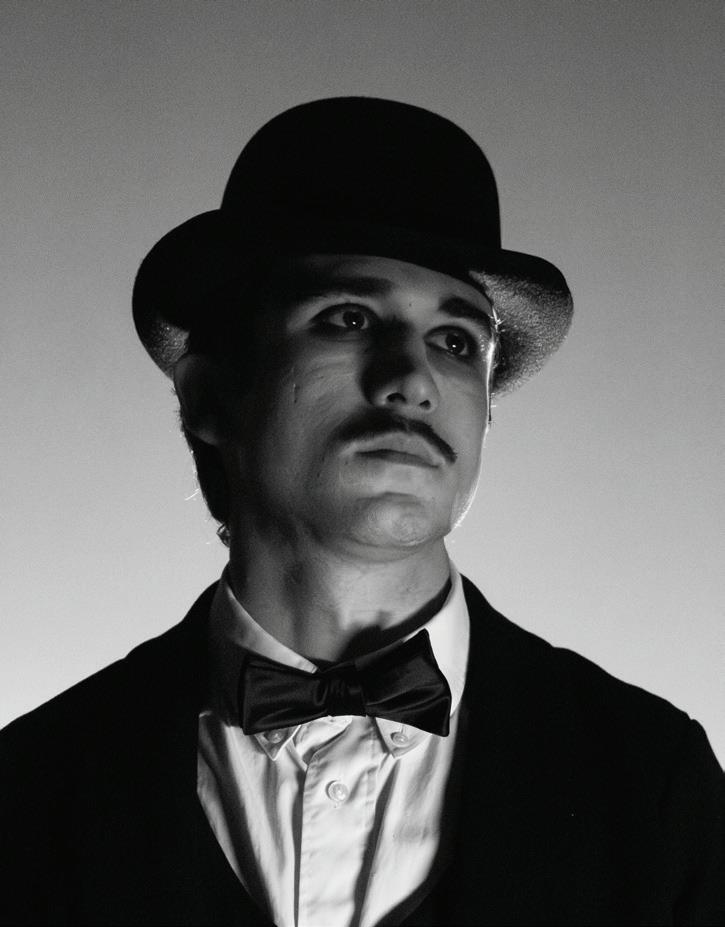
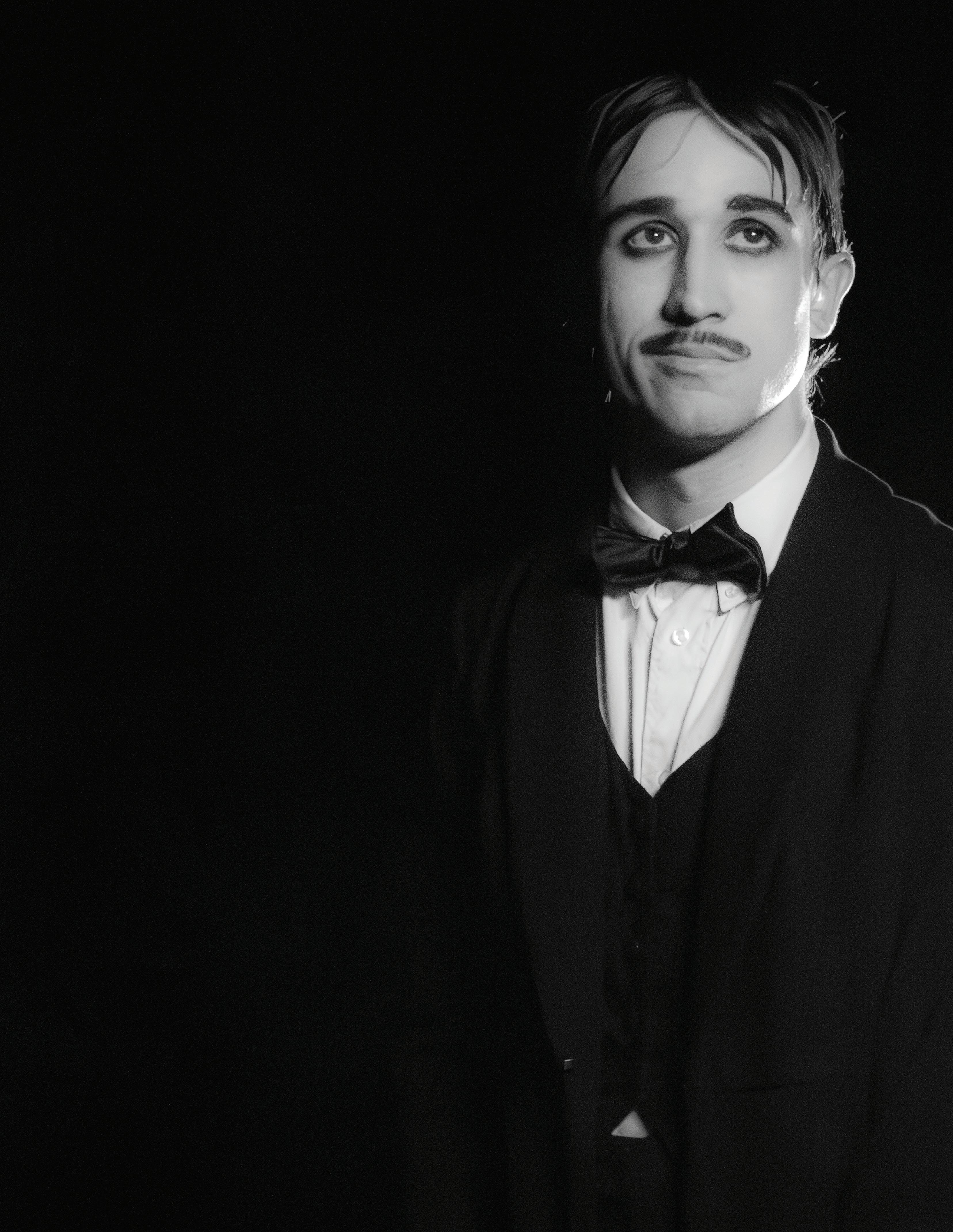
By Selah Hassel

i think of time in its passing like a white sheet snapping against a blackening sky every beat is a clean backhand from the wind
if you don’t feel something yet watch i will put a little more pep in my step add some sense to their sighs into the mouths of strangers or letters on silver screens
i hope to see a smile gently parting the herd’s darkness into a seam you see we see in color that is why we think too much and feel too little and why we must show you instead that there is silence in a movie scene
that is monochrome a man’s pale throat
convulsing with what should be unseen spilling blood like a stagehand in black c’mon laugh i’m a movie star i’m the butt of the joke the applause grows like the whistle from a runaway train
i cannot hear it when there is a score can’t you see we lost the way and with great speed whether here or on a faraway star time will not be remembered more than machinery humanity more than cleverness kindness gentleness
i say this with my eyes fixed wide what remains is the body offering itself to you
i tip my hat once more to whoever is still watching and capable of being moved because a fool’s honesty is the last respectable failure
There is a kind of quiet romance threaded through early horror filmssomething soft beneath the fear, lingering. They do more than construct monsters; they reveal them as figures of longing. Each of these beasts move through their world with a kind of ache, caught between instinct and desire. They are searching for connections in places that refuse to hold them. With the expansion of audible music and dialogue in film, we began understanding these Creature Features on a deeper, more human level. We sit with the tensions they experience, looking closely at how these stories frame horror as something beyond spectacle. It is intimacy distortedwhere love is unreachable and being seen comes at a cost. The fear is not only what these figures do, but in what they cannot have. Sadness is
By the time the New Hollywood Era emerged, that emotional weight had shifted closer to the surface. Filmmakers began centering ambiguity, fracture, and interior life, allowing the “monster” to exist within the human. That evolution still shapes film today, as we continue to tell stories that linger in that same spacebetween beauty and unease, desire and isolationreturning to what it means to be both feared and deeply alone.
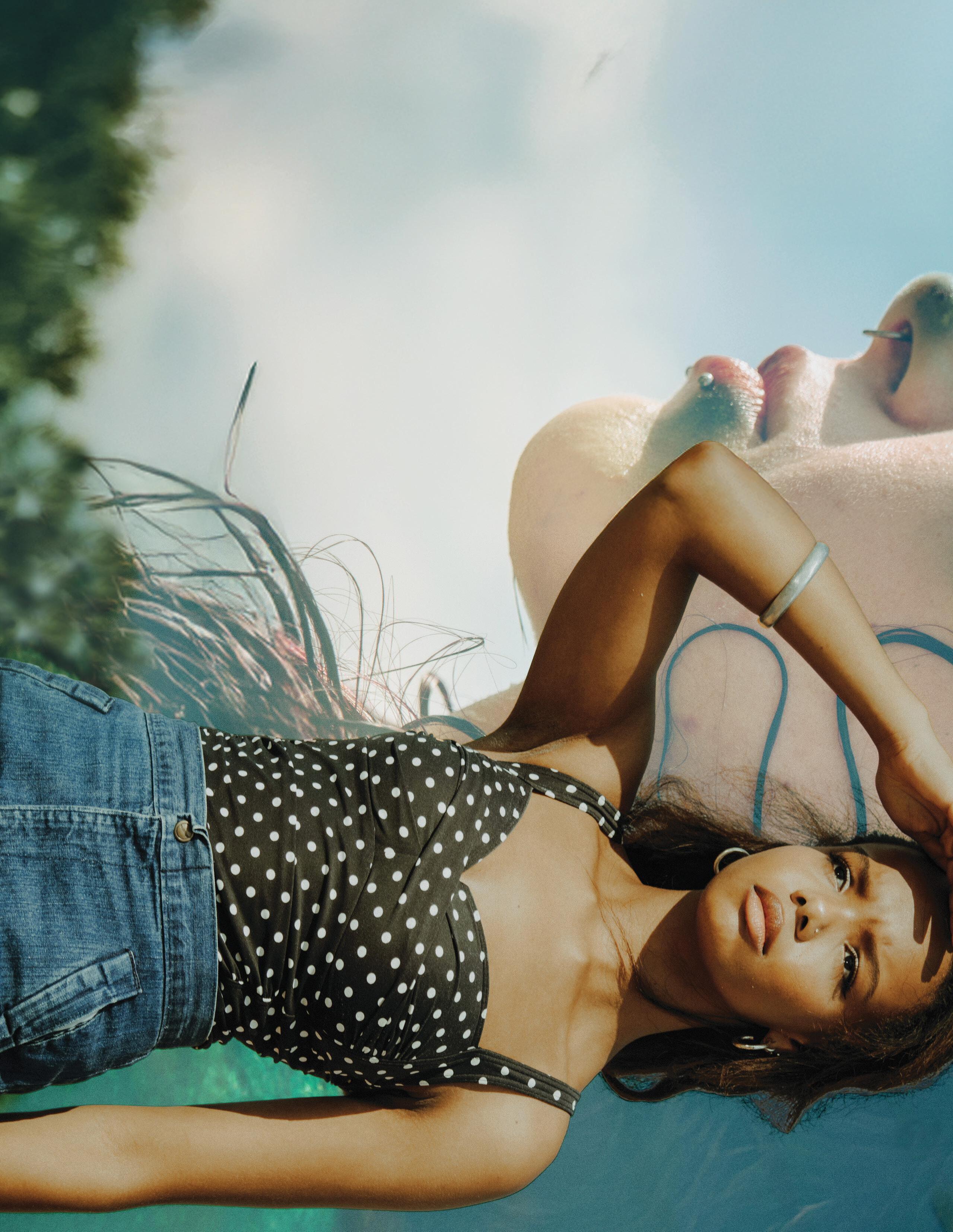
embedded in every gesture, with every outstretched hand being met with rejection.
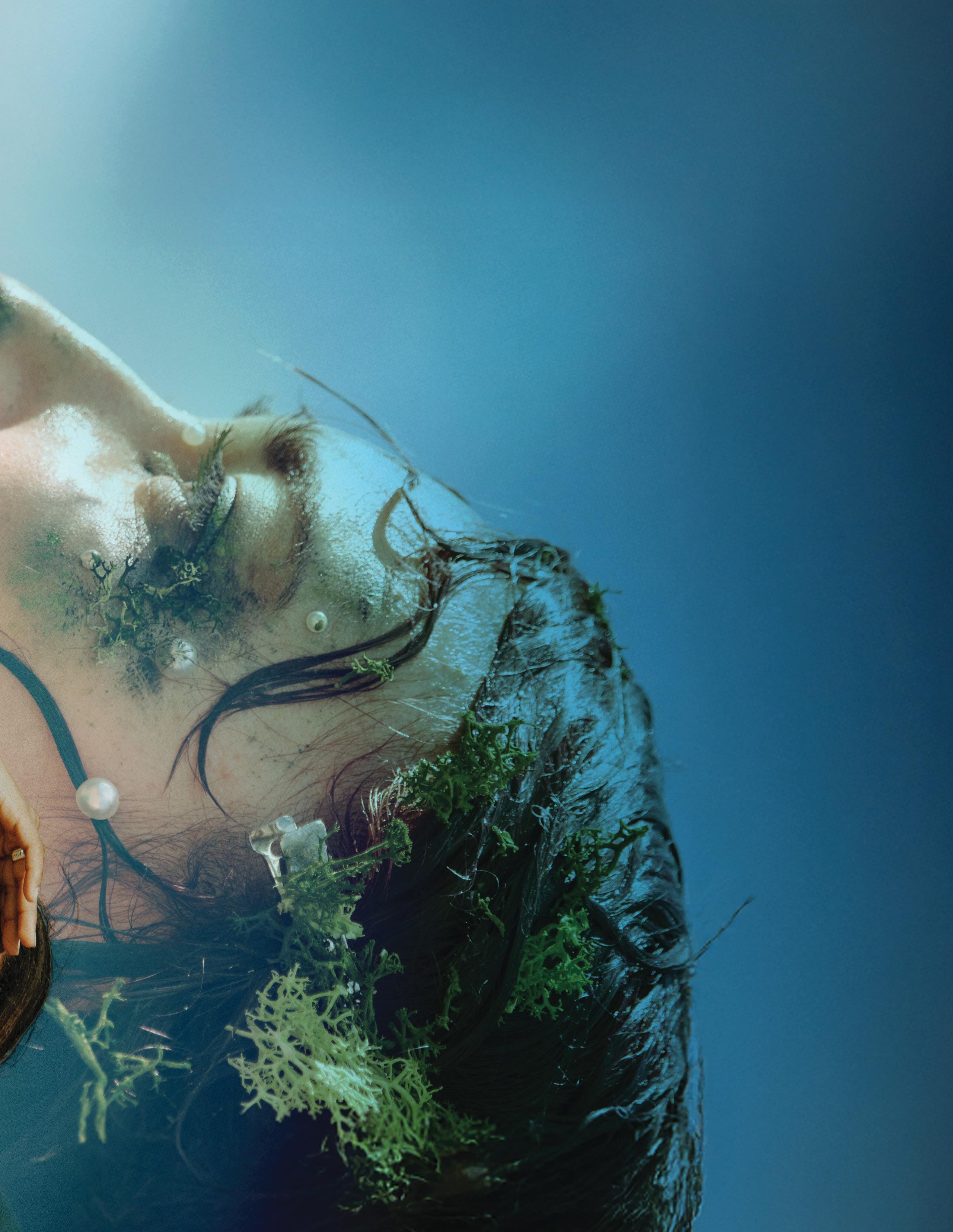
By Josephine Belliveau

Queer histories are often hidden ones, letters pressed between pages of dusty books or secret pieces of art stowed away. It becomes easy for people to deny that queer people have always been here because their existence has not always been outward. However, when expressions of queerness were far less than subtle, they were selectively forgotten. Silent films contain some of the earliest depictions of lesbians in movies, a history that is far too overlooked.
Many would be surprised to learn that the first lesbian movie premiered over 100 years ago and was set in St. Petersburg, Fl. In A Florida Enchantment (1914), heiress Lillian Travers gains the ability to change the gender of her lovers by consuming a powerful seed. She morphs into a butch version of
herself and proceeds to swindle every woman who is infatuated with her fiancé. Stealing your husband’s admirers for yourself could be considered a toxic trait, but I’m glad this comical film exists and depicts a myriad of sexual diversity and gender expressions.
When discussing early queer cinema, it would be remiss not to mention the shining star of this era, Marlene Dietrich. The actress is known for her behind the scenes sexually fluid affairs and the tendency of her roles to involve cross-dressing. In Dietrich’s early silent film career, she was often type-casted as the seductive femme, black and white jazz diva. The Woman Men Yearn For (1929) captures Berlin’s queer community in the 1920s. Though Dietrich would seldom speak about her silent film career, films like these prove that she was in queer projects for the entire span of her stardom. Many fell in love with her on and off screen, from her alleged affair with actress Greta Garbo to being hit on by Adolf Hitler just years before WWII – the very event that would hinder LGBTQIA+ stories from
appearing on screen.
As the silent film era ended, WWII began. As a result, gay communities became disconnected due to Nazi occupation. The lively gay and lesbian nightclubs that shone in Berlin during the 1920s, as seen in The Woman Men Yearn
and out of the media entirely for a barren period after the war. It was mostly gay men who were persecuted, meanwhile the female queer identity was hushed into invisibility. Any light of legitimacy the lesbian identity gained to silent film audiences was snuffed out in society, but
For, were raided by the Gestapo. Strict Nazi surveillance combined with book burnings of anything that went against the Nazi code of conduct forced many homosexuals into hiding, off screens,
stories full of yearning, limerence, and most of all, the unsaid. The formative silent film era has left a legacy of quiet in LGBTQ+ cinema. The feelings within viewers that were inexpressible due to lack of language or oppression are communicated in scenes as small as a glance or the grazing of hands. The absence of dialogue has become a storytelling device in films depicting queer love. Whether this is done consciously or not, it serves as a sweet homage to the silent era’s actors and filmmakers who were brave enough to tell queer stories.
burned bright in the hearts of those who they inspired.
Many modern films are considered hallmarks of 21st century queer culture, often characterized as love
Imagine the premiere of The Arrival of a Train at La Ciotat (1896), the 50 second silent film that felt so real to viewers that they jumped from their seats to escape an incoming train. The same surreal euphoria can be said for the LGBTQIA+ souls watching these early films unravel a part of themselves they never imagined could exist outside of the innermost corners of their hearts. Closer and realer than ever before, as if the feeling could run off the screen.
By Kaya O’Rourke
Film connoisseur or otherwise, there’s no denying the importance of the Universal Classic Monster movies. With source material dating back to the 19th century, the stories told in these films go far beyond horror, never feeling as though they’re just about the monsters. For me, they feel like the ache of wanting to be loved when you believe there’s nothing about

you worth loving. When you think there is something within you that makes love difficult. Dangerous. Impossible. Beneath the capes, bolts, fur, and shadows, these films are full of desire. Not clean, easy desire, but longing shaped by loneliness, shame, fear, and hope. This is what keeps them feeling so intimate, even now.
You see it exhibited throughout these
earlier films, those that are laden with vulnerability and startling intimacy. For every ounce of gothic spectacle, there is a reminder that the monsters carry private wounds beneath all of the makeup and myth. This is where the endearment shines through - their horror is inseparable from their tenderness. These creatures understand that romance is often bound up with fear: the
fear of rejection, of exposure, of being known too deeply.
Released on Valentine’s Day in 1931, Dracula showcases a fantasy of surrendering to a desire that feels irresistible and frightening. His presence is seductive because he represents the kind of attraction that breaks rules. It crosses boundaries, pulling viewers into parts of ourselves we’re not supposed to admit
to enjoying. So much of romance begins in the risky moment of being drawn towards what unsettles us, that you can’t help but see the humanity in it.
Frankenstein (1931) puts isolation at the forefront of its storytelling. The Creature, the electrifying amalgamation of human remains, finds himself learning about the world around him by reaching towards it with a need so raw and intense that it hurts to witness. He craves gentleness, recognition, someone who won’t recoil. He believes he finds it a few years

later, with the release of 1935’s Bride of Frankenstein. The unbearable longing turns into a bittersweet exploration, then eventually to demise. He wants what so many of us do: to be met with tenderness instead of fear. This is why his story lingers. It touches the private dread that if someone were to truly see us, they may turn away.
The Wolf Man is intimate in a different way. The 1941 film follows the titular character as his tragedy lives in the fear that loving someone
may expose the worst thing inside of him. His curse makes desire feel unsafe, as if closeness itself carries the possibility of harm. It sits with you, resonating with our most carnal impulses for love and acceptance. It makes you question if your wounds, temper, sadness, or history might make you too much for another person to hold.
This leaves me with the notion that these monstrous romances speak so powerfully. It gives shape to a secret hope: that love might
reach us not despite our shadows, but through them. These films understand that many of us feel monstrous in our own ways. We feel too needy, too strange, too scared, too intense. And yet we still ache to be chosen.
They’re reminders that romance is not only about beauty or innocence. Sometimes it’s about being seen at your most haunted and still being held in someone’s imagination as worthy of love. That, to me, is the real seduction of these films. They whisper that even our darkness longs for tenderness, and maybe, impossibly, deserves it.
Photo by Carmen Cochran
By Selah Hassel
Blue is the woman lowering the needle to the groove, lacquer-black on the Victrola face.
The bassline bumps soft against her ribs, as satin slides off in a pool at her waist.
One swing of her hip wakes the television screen; a square of light unspools across the room, rippling like an inlet under wind.
Yellow is the color seeping in, turning the dark over. Light creeps like honey down the calves until it warms the soles of her
On the screen a title card reads
In Technicolor.
Green is the money. Rough skin, bright teeth, hunger dressed sharply. A jealous figure. The two mix like oil on water, spilling across the lake.

She leans to the glass of the TV where fields open wide with more light, more meadows bleeding into one clear sky.
The reels turn. Thunder cracks the signal dry, static.
When Blue lifts the needle, the horns go quiet. She stands where the light had been, knowing those chemical colors burn too hard, flaring until they vanish.
There’s only an inch of Blue between the flame and air. It burns what is left when the film runs out and the room goes dark.
She watches her shadow trace every shade she has carried until it breaks apart the stranger in the mirror.
For a moment she rests in the space between colors.
Blue is the aerial view, where trumpets sing over the canyon. The river reins, it bears the weather of the world
as Green as the ground, men hiding inside it. They see the Lethe, feel the fever that feeds the bluebirds until the river runs red through the Earth, life’s darkness rocking her to sleep. Blue dreams, blue dreams.


By Lauren Boonstra
A glimpse of gills, and a flash of fin provokes a forward lean in my seat. I want a better look, I need a better look! The monster appears at first amputated by the screen. The only available image arrives in pieces; its obscurity begs investigation. When it emerges, ensconced in its curated inhumanity, I am relieved– so I fix these eyes of mine on the neatly monstrous.
There are no mushroom clouds, or lingering mutations in this film. No wandering stranger with a message of innocence’s defiling, no insect to speak through my mouth and crawl its way inside.
There is no parasite born from the blast to burrow into the furthest corners of my mind and rot. The monster dissipates at the end of the reel. Evil is finite, film’s last starving appeal.
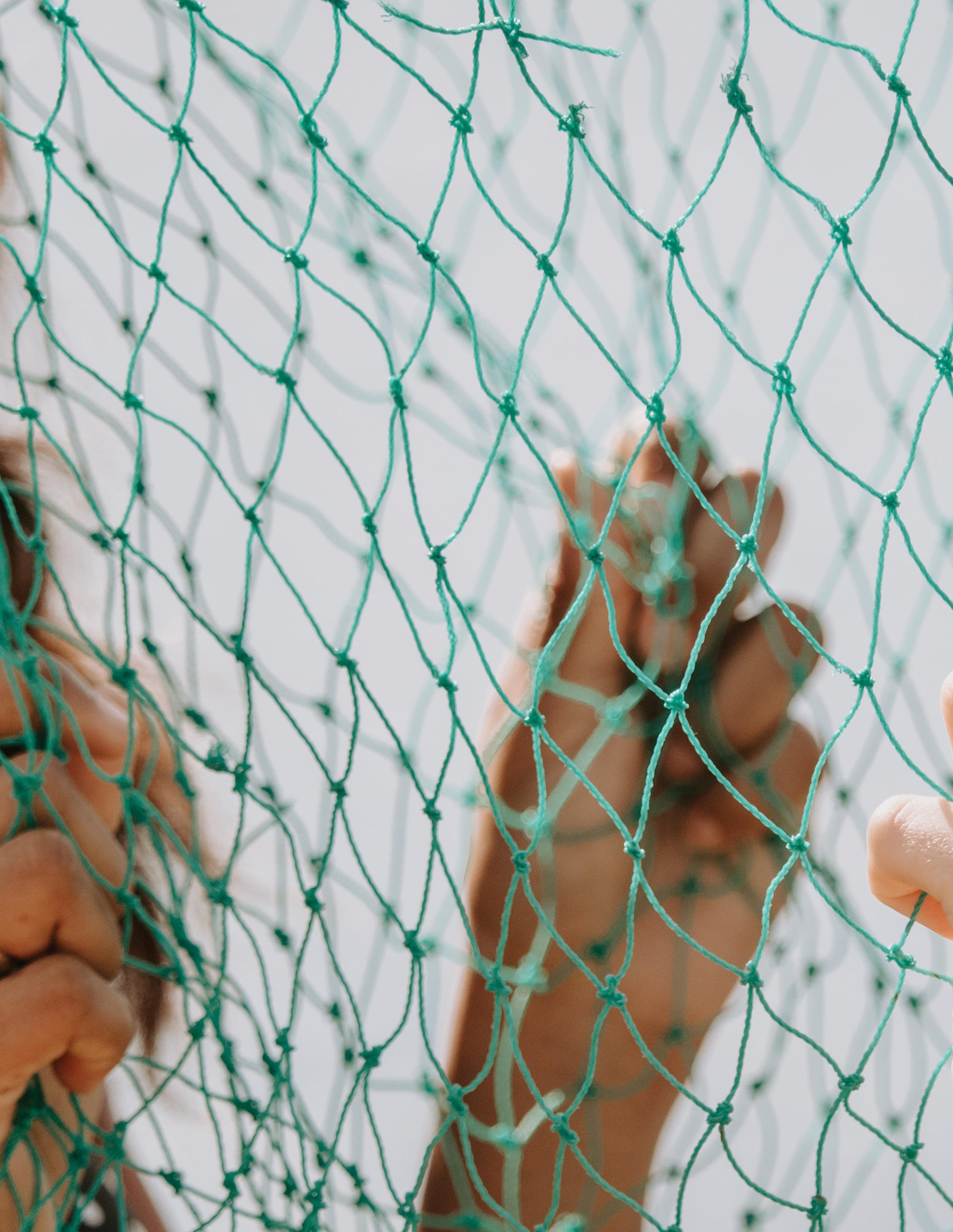
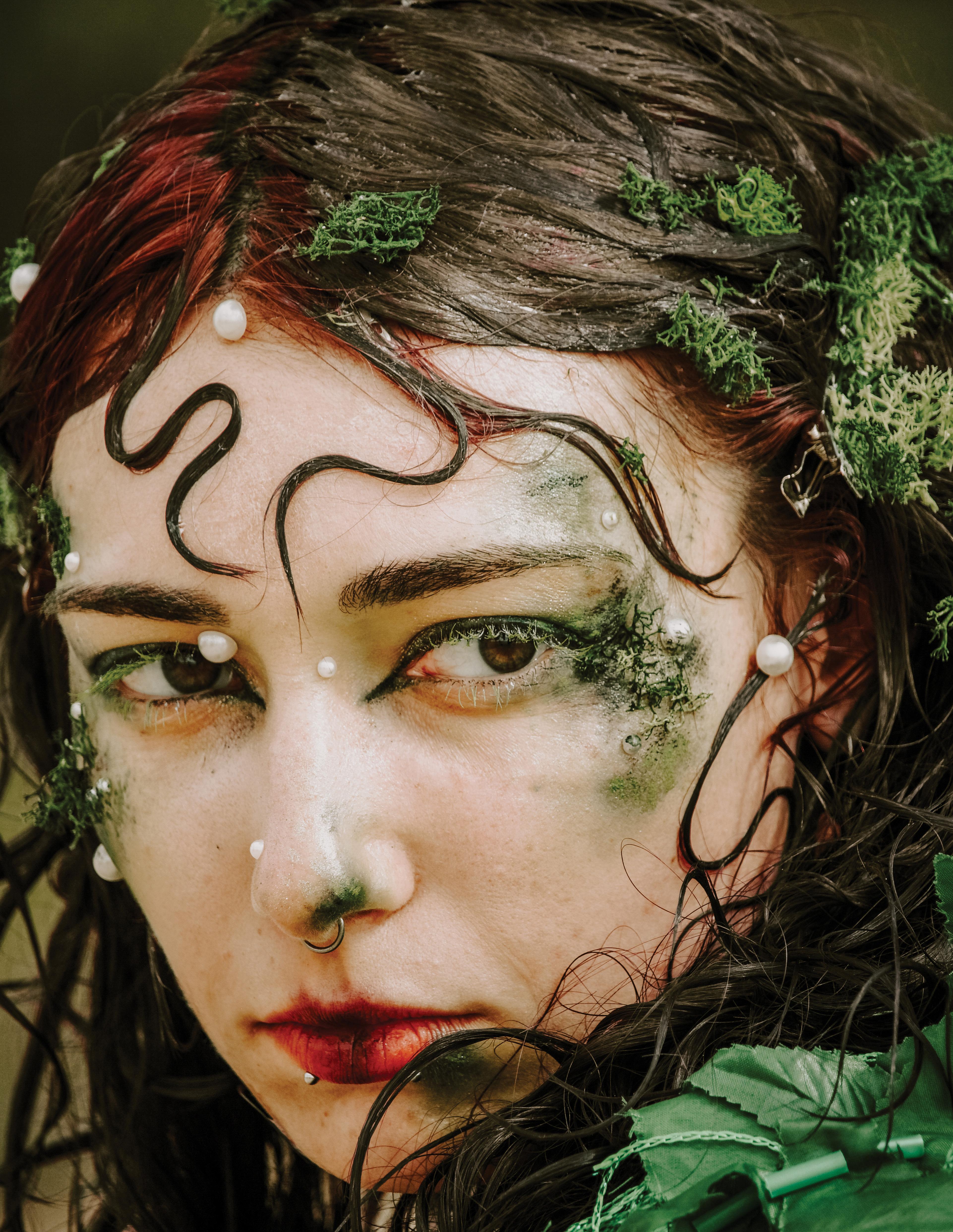
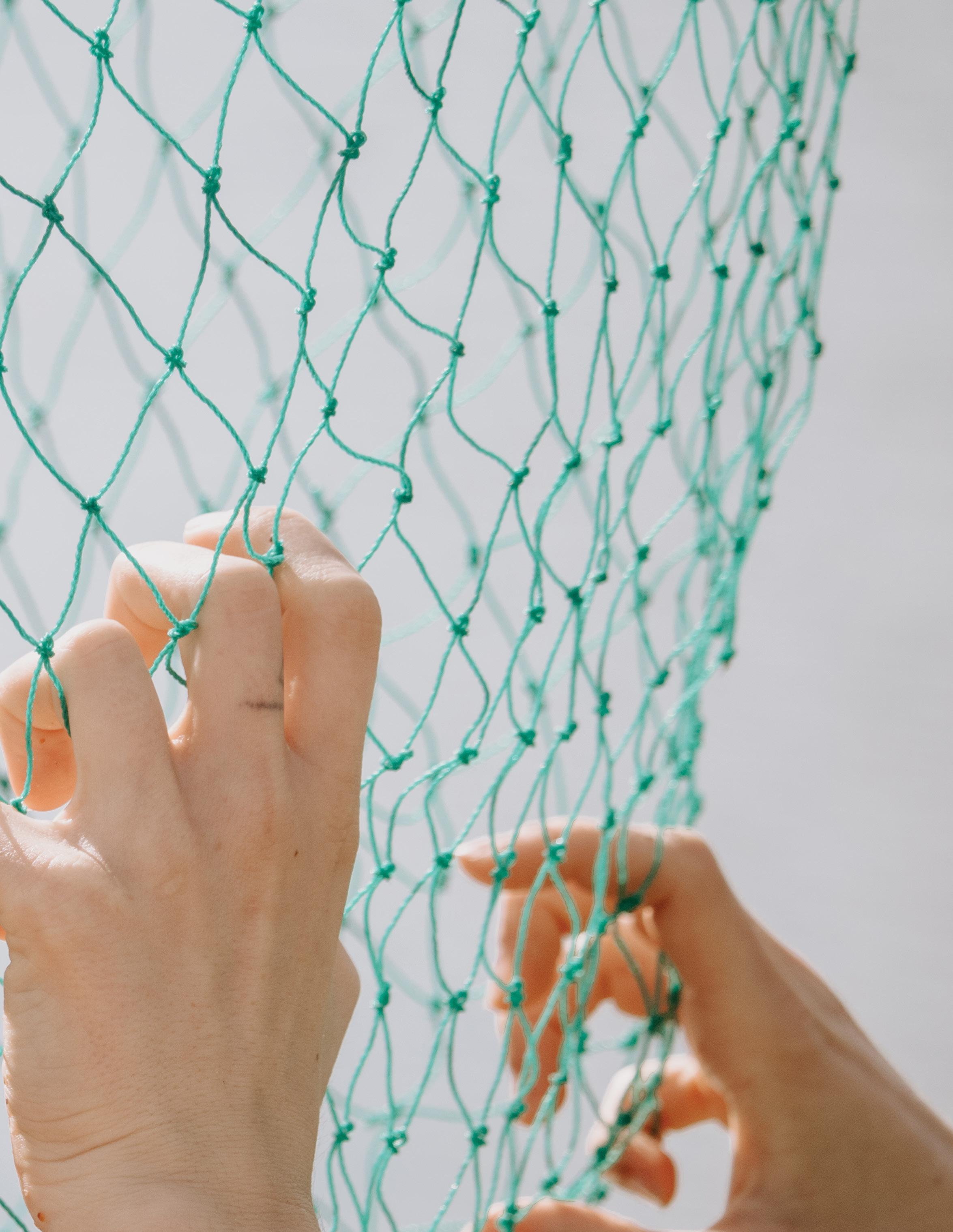
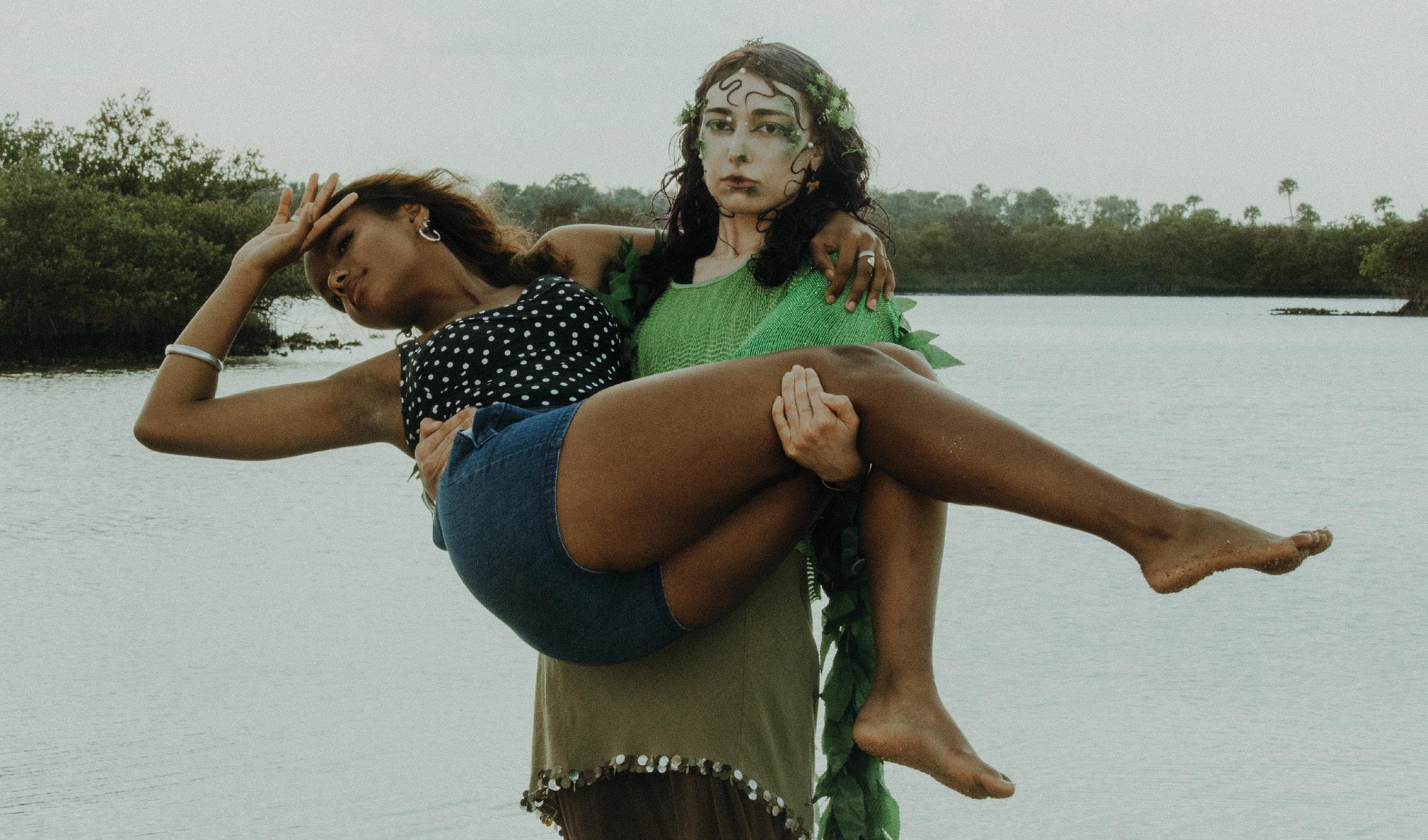
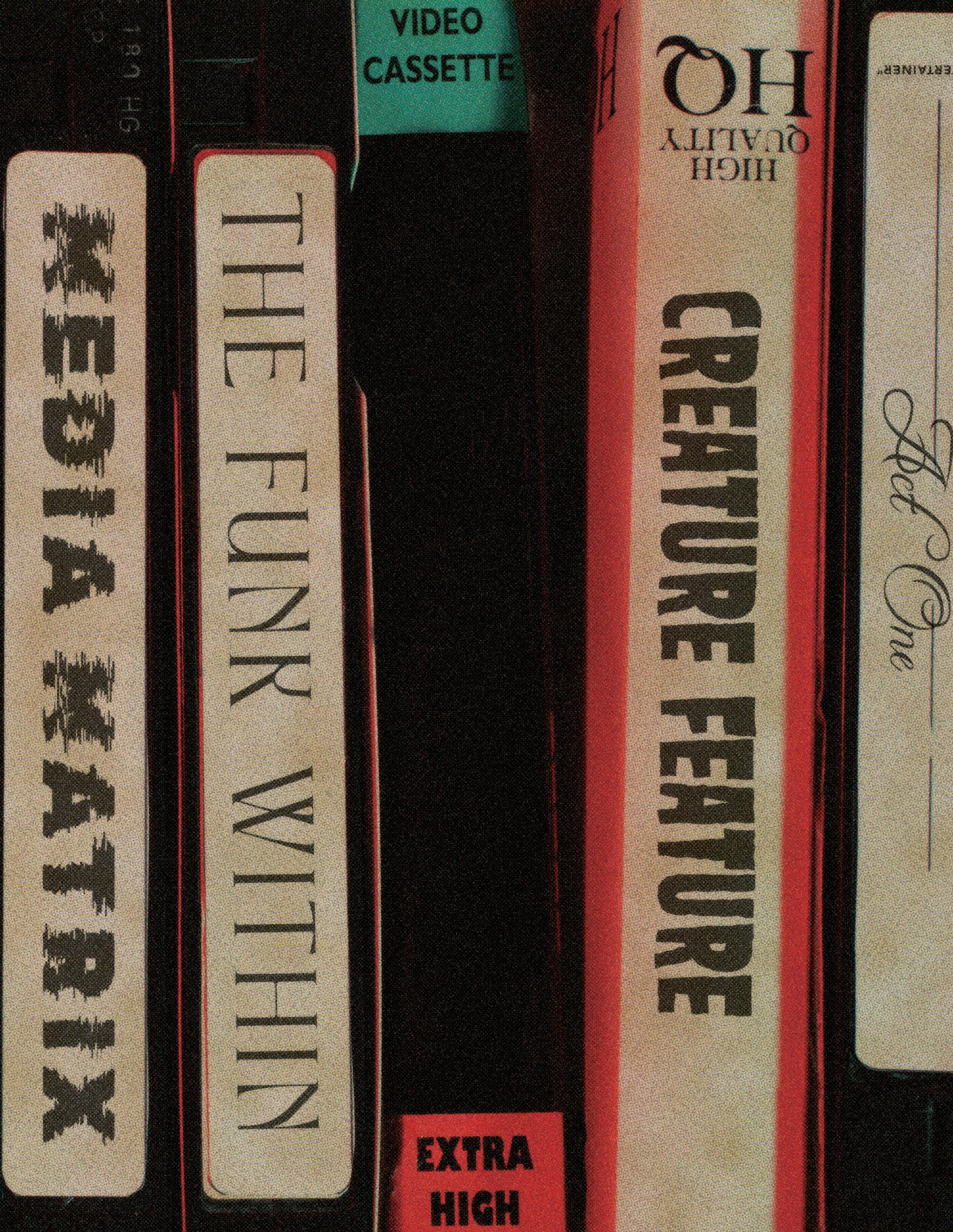
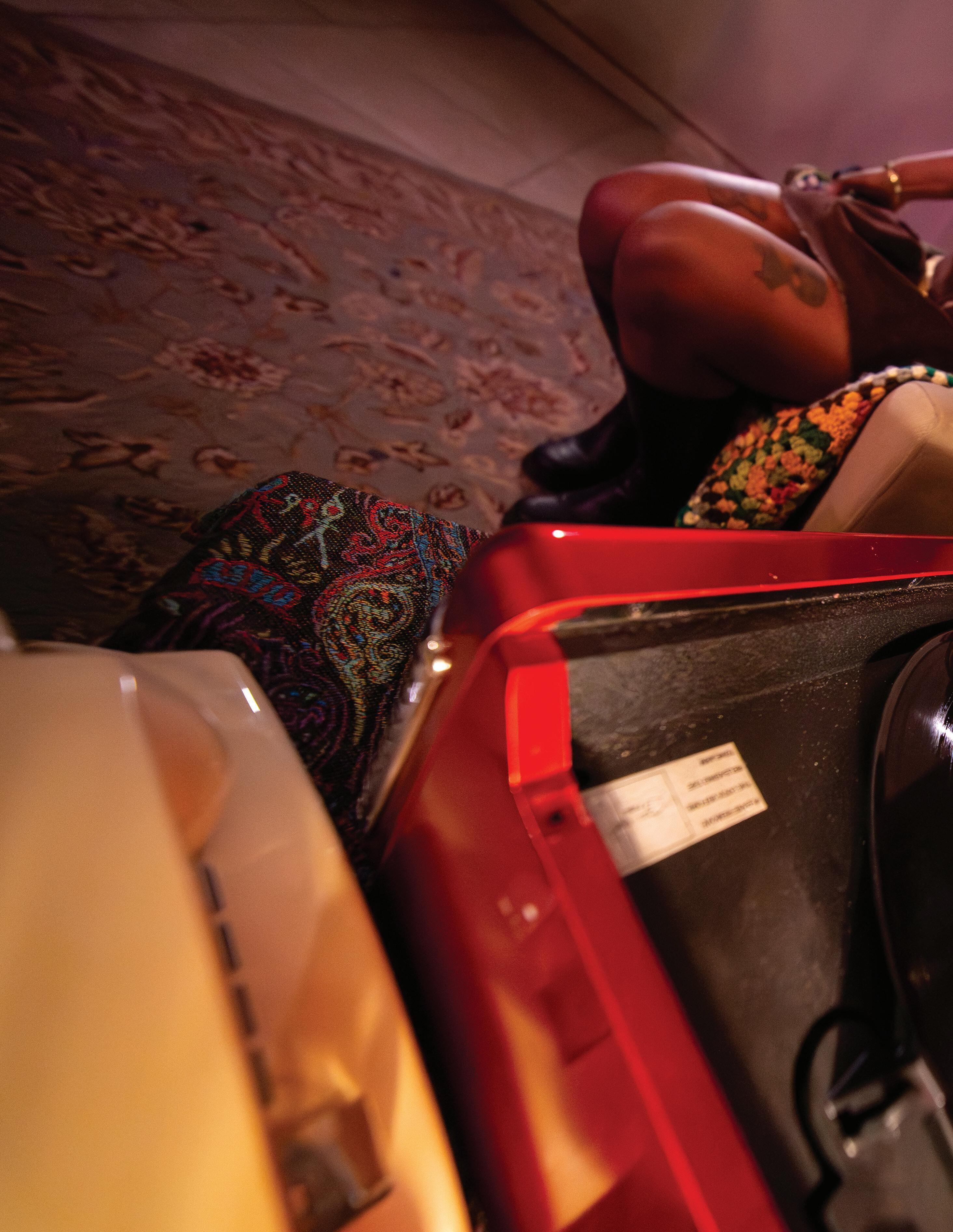
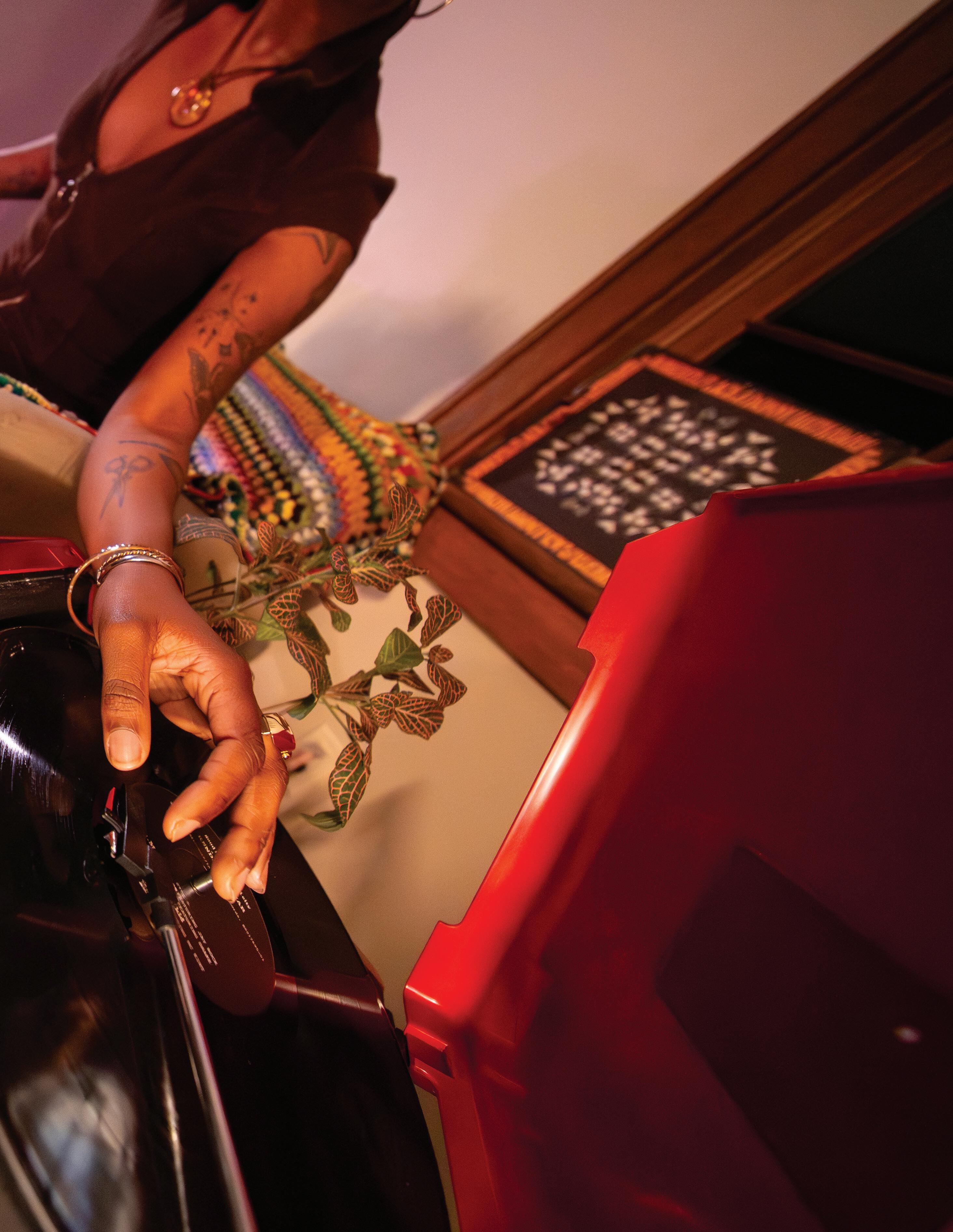
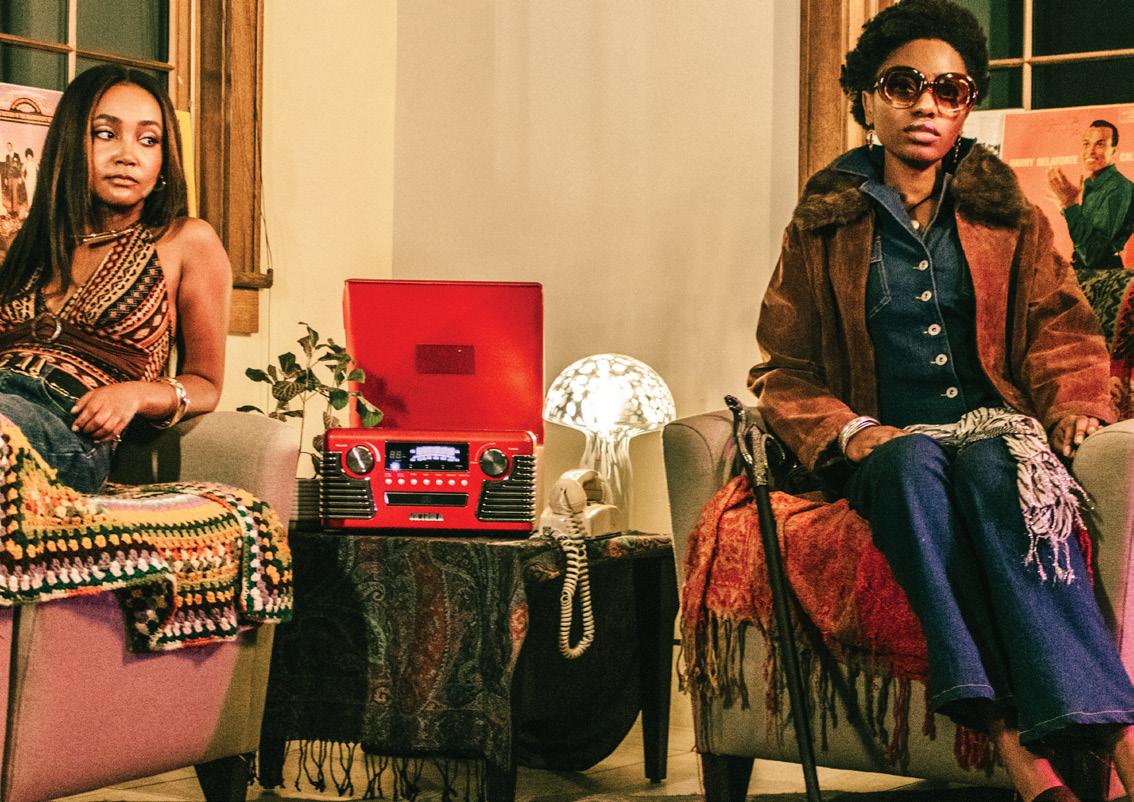
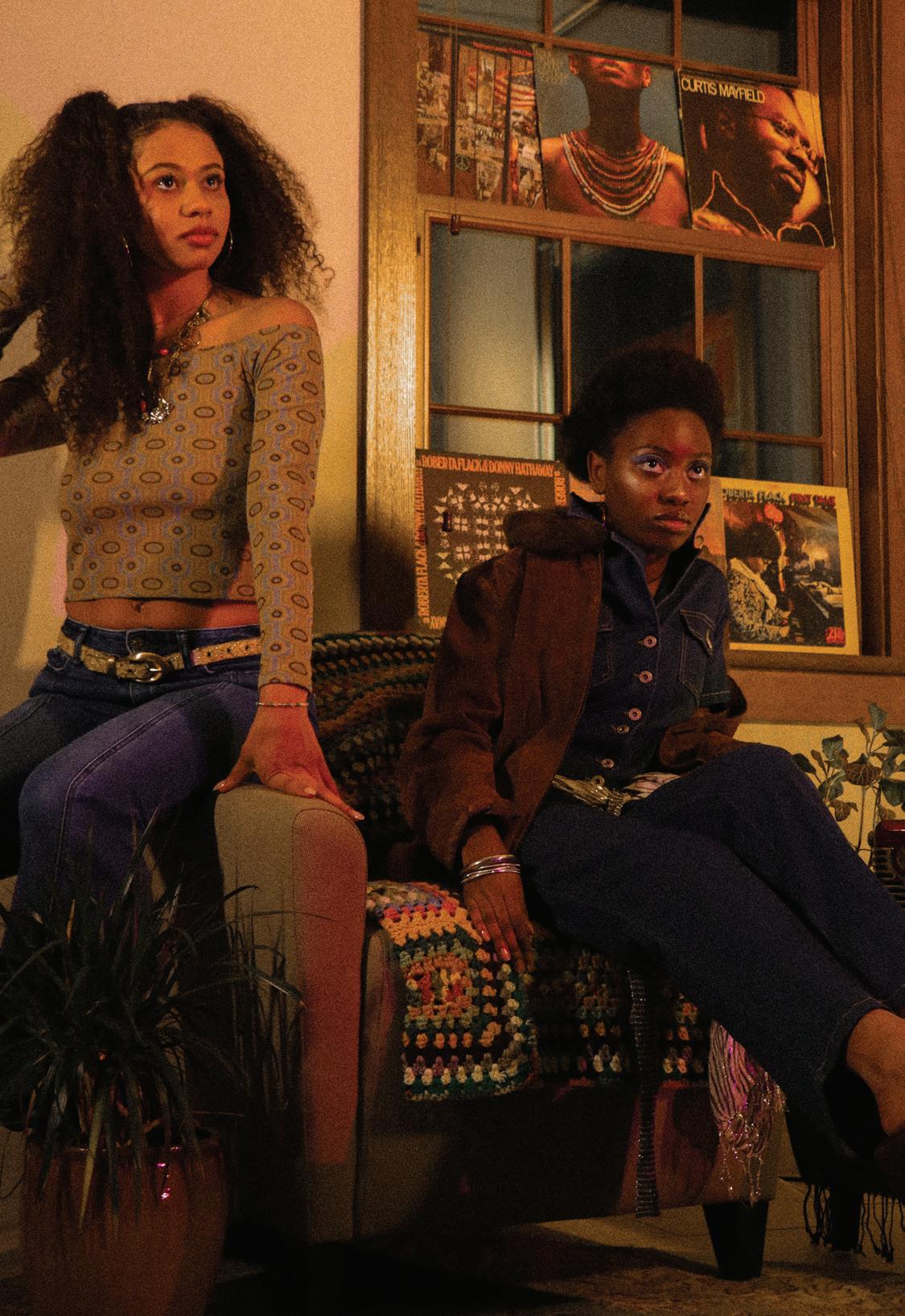
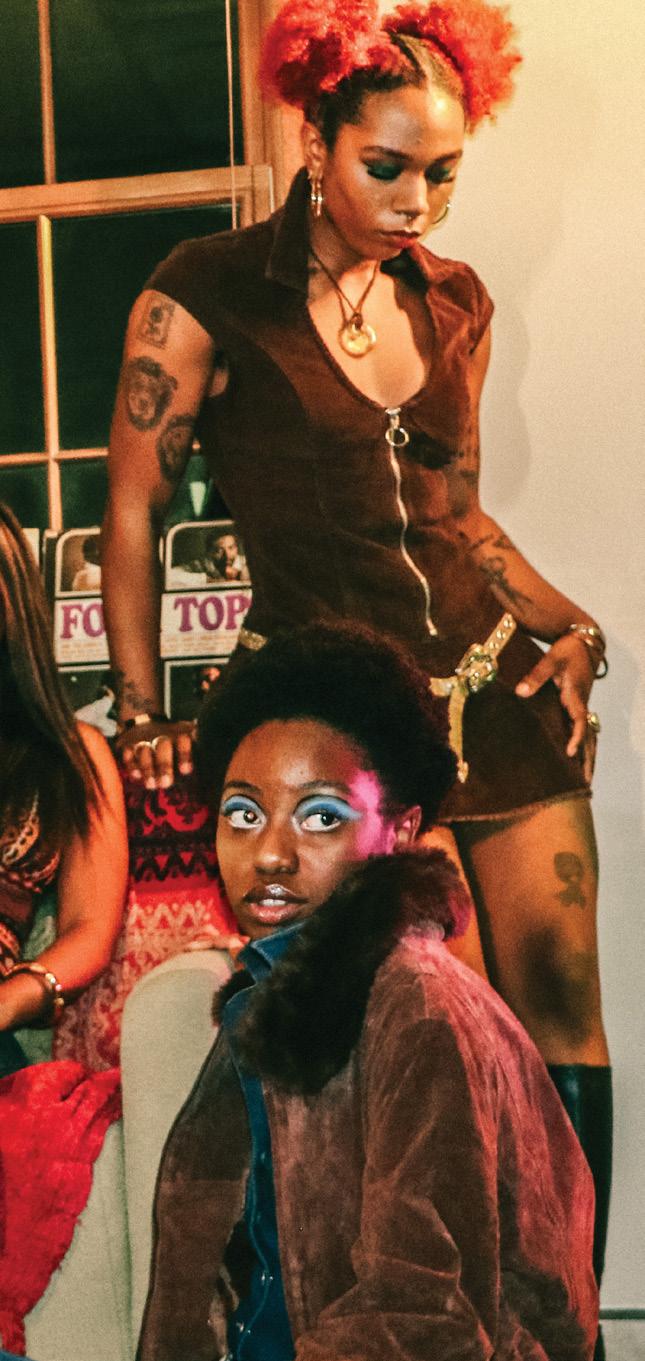
Rhythm. Soul. Life. The Blaxploitation Era exuded syncopation and electricity. It moves like bass through the body, like a pulse you don’t just hear but feel . It reshaped the cinematic landscape with a confidence so loud, so stylish, and so unapologetically alive that you couldn’t help but admire it. It knew its own cool. It walked with a strut. It turned attitude into language. Being consumers of both print and 35mm film, we lean into those feelings. The genre traces how the films carved spacethrough swagger, through soundtracks that thumped and shimmered, through characters who refused to be background. There is dynamite in that presence, in the way the camera lingers and the way the stories unfold with both grit and flair. But beneath the flash, there is a deeper current: a reckoning with identity, with power, with what it means to be finally be seen on your own terms, framed from an industry that was shifting in real time. As the Blaxploitation wave surged alongside the emerging Blockbuster Era of the 1970s, cinema itself was expanding to become bigger and more immediate. Yet these films held onto something tactile, rooted deeply in culture and sound. To revisit them now is to feel that pulse againsteady, defiant, unforgettableechoing through everything that followed and allowing us to find The Funk Within.
BY KAYA O’ROURKE
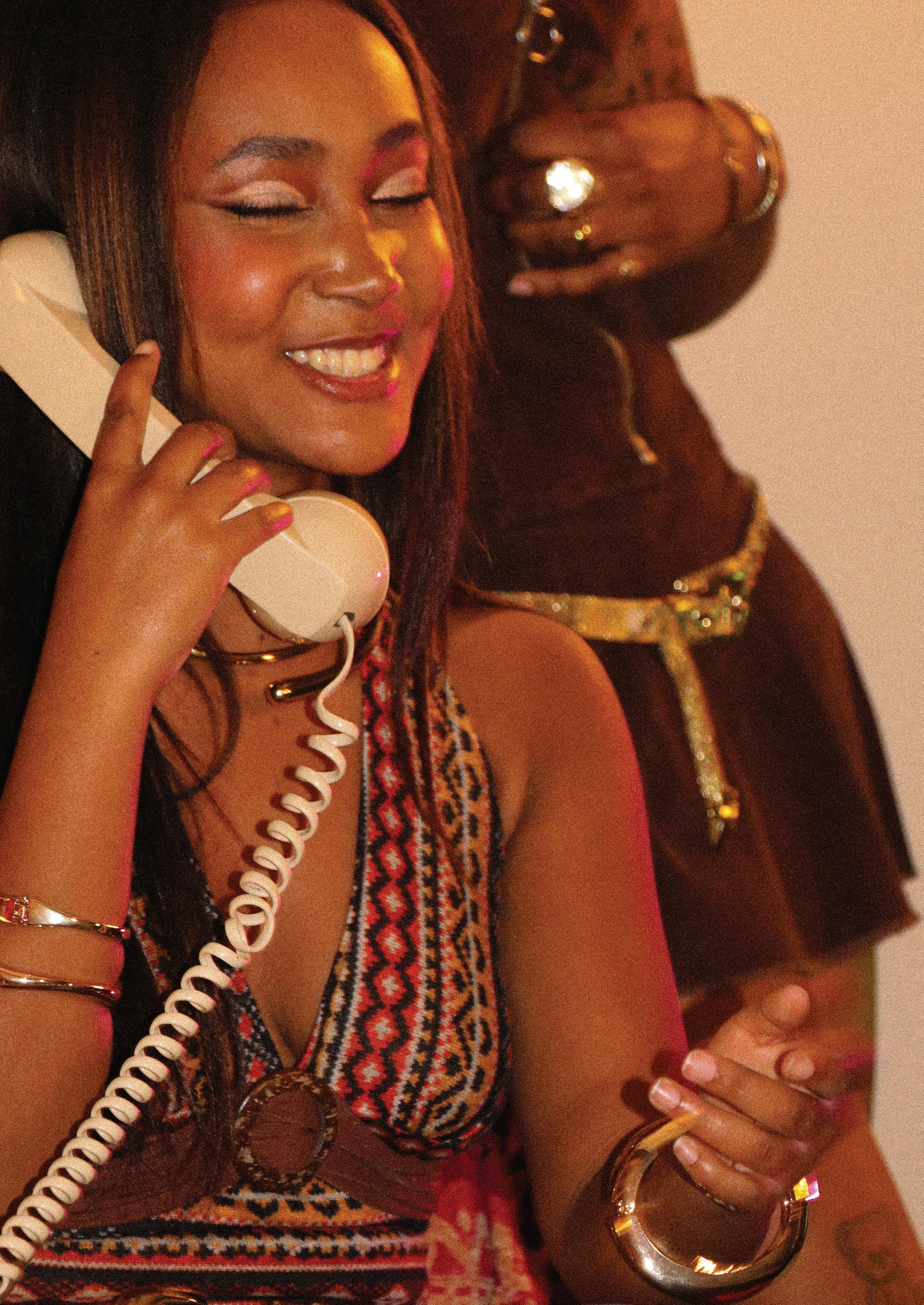
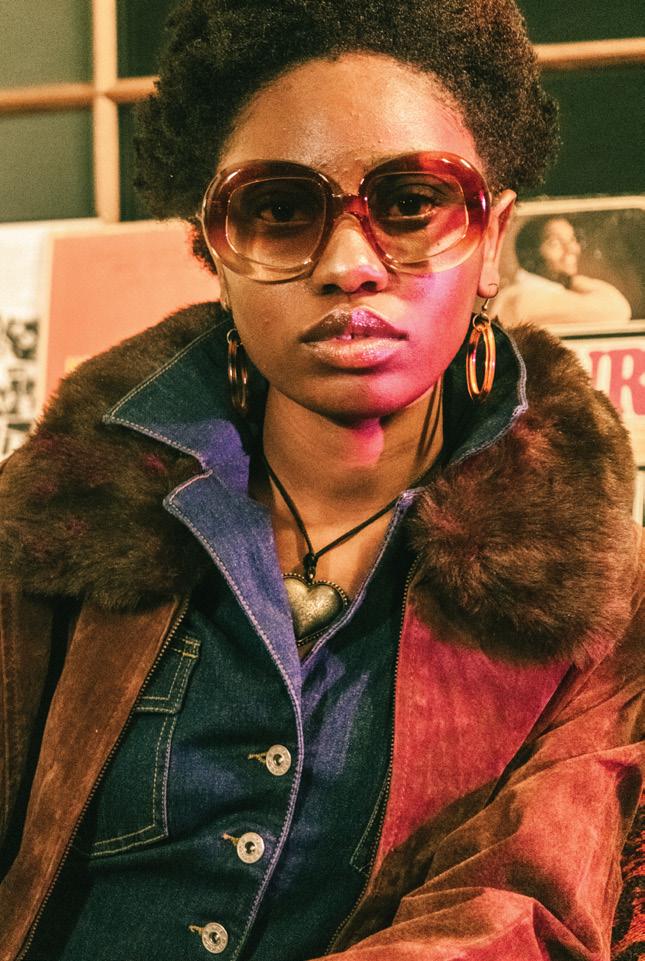
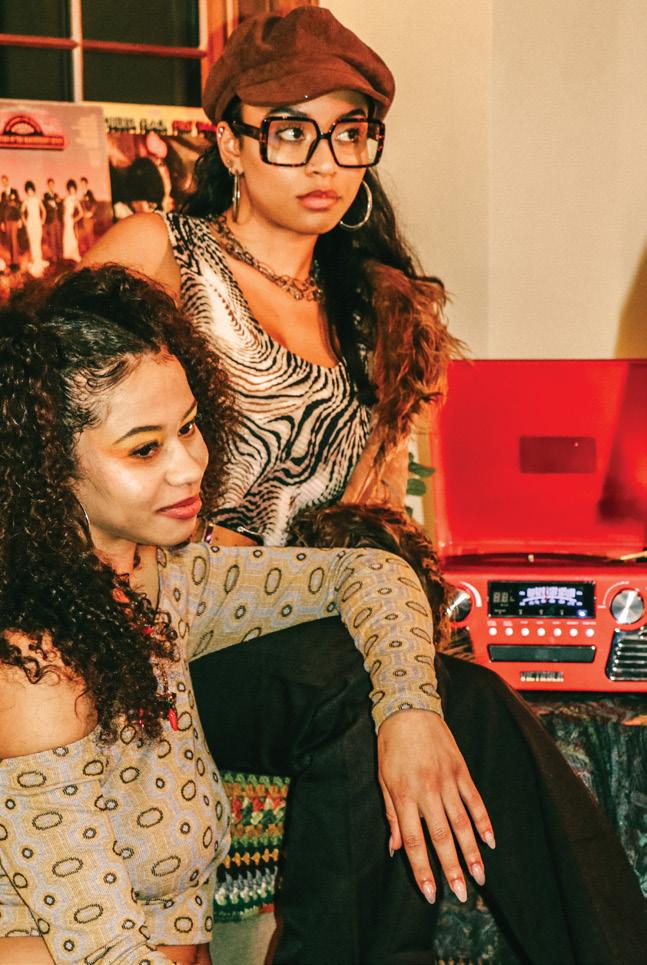
I don’t know that I’ve ever been able to explain what it meant to feel like the “awkward Black girl” during my adolescence, especially growing up mixed and being constantly aware of how I was perceived. Now, at 22 years old with dreams bigger than myself, I think about framing all the time - who gets centered, who gets softened, and who disappears into the background. For a long time, I felt as though I existed just outside the frame: visible, but never fully recognized.
The versions of Black and mixed race girls I saw onscreen felt narrow and predictable. Quiet, hesitant, a little out of place. That was part of who I was, masked by my big grin and loud voice, but it was never the whole picture. I began molding myself to fit the idea of who I was in the minds of my peers; not a care in the world about my own identity. It was easier than trying to explain the parts of myself that didn’t fit. All of a sudden I was 19 years old, unsure of
my clothes and music taste, unsure of if my friends liked me or not, unsure of my future. Then, in a dimly lit film class, I discovered blaxploitation films and something shifted. At first it was the style, the energy, the boldness that drew me in. But as I kept watching, I noticed something deeper: presence.
These women didn’t ask to be seen - they demanded it. They were loud, imperfect, magnetic, and completely rooted in their own stories. They didn’t wait for validation because they didn’t need it. Any and every decision they made was for the betterment of themselves and the worlds they exist within. After years of editing myself, smoothing out my imperfections, making myself more digestible, these women were exactly what I needed to see. It’s no secret that my heart lies with filmmaking. Representation onscreen isn’t just about being visible - it’s about how you’re allowed to exist on screen. Blaxploitation showed
me that Black women could be complex without explanation, bold without apology, and central without compromise. It had given me a visual language for a version of myself I hadn’t fully known how to imagine.
I still feel awkward more often than not. I still find myself questioning where I belong. But now, when I think about the stories I want to tell, I don’t see myself at the edges anymore. I see something bigger, louder, more honest. Blaxploitation didn’t erase my uncertainty, but it expanded what I believe is possible for me - both in front of the camera and behind it. And that matters, because filmmaking, like identity, is about choosing what to center. I’m learning to center myself, even in the messiness, even in the in-between. Maybe that’s where the most honest stories live. For the first time in a long while, I don’t feel like I’m standing outside the frame.
I feel ready to step into it.

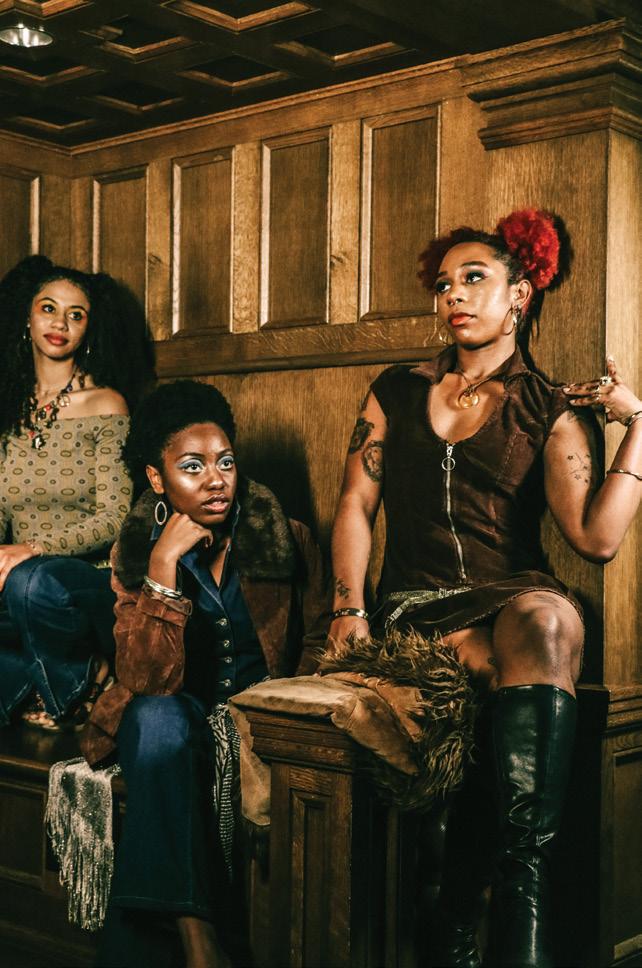
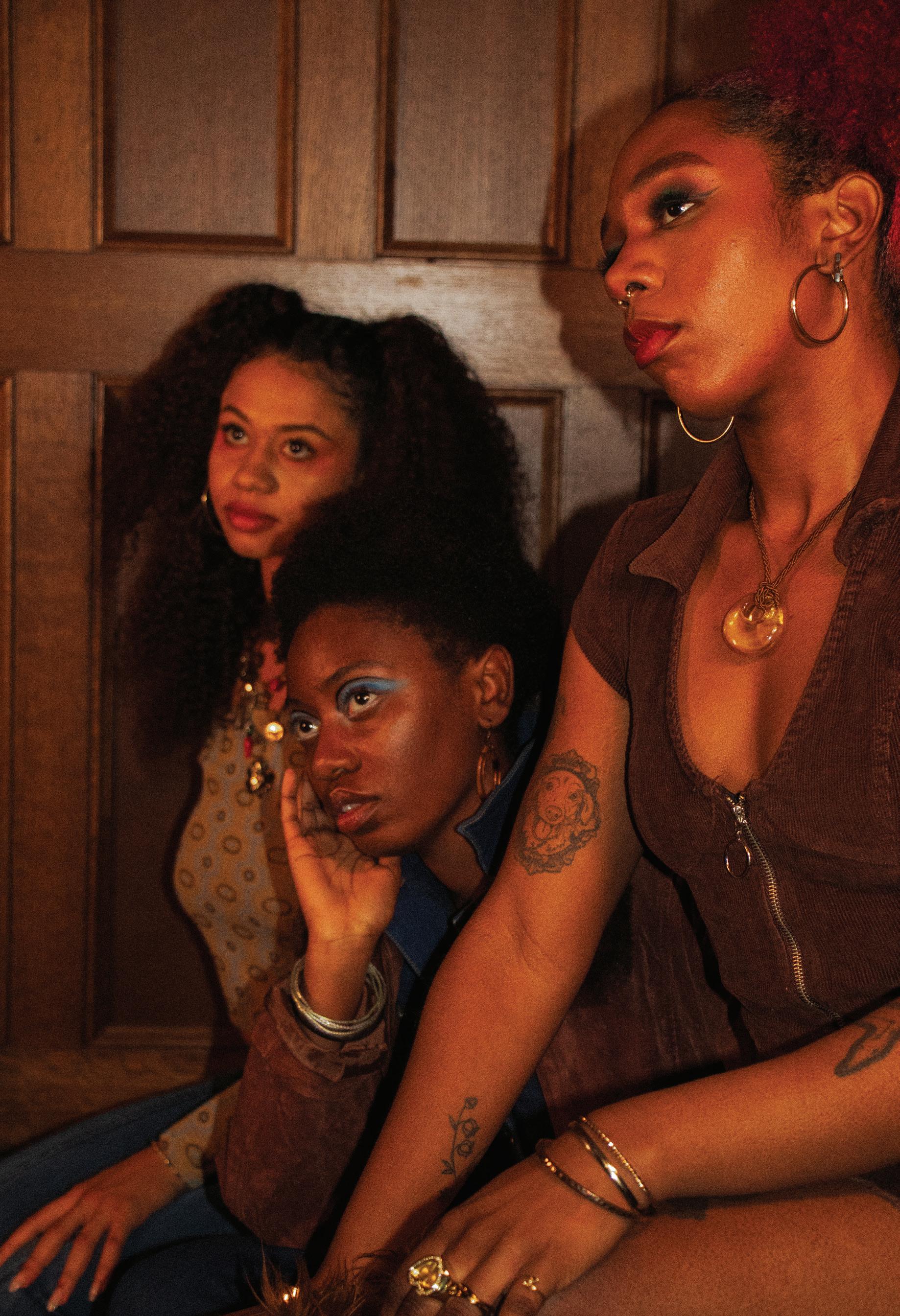
BY JAY CRUZ
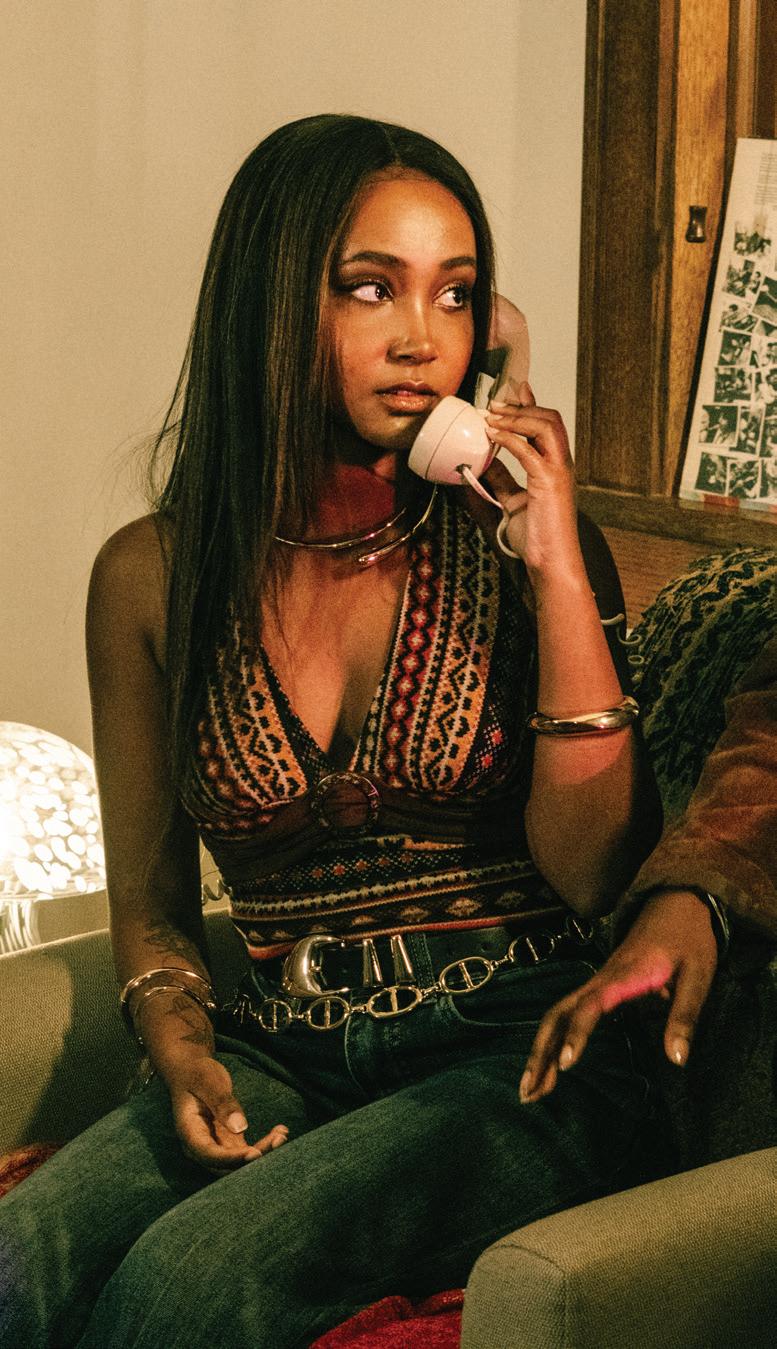
If they cast me, they would take my hair, stretch it out, and call it a “wild-do.” because it is too curly.
If they cast me, my chances of being a drug dealer, a gang member, or a side character to be stepped on would be ridiculously high.
If they cast me, my character would not last long, and the theater would say, “The black character always dies first.”
If they cast me, they would exaggerate the size of breasts, make me ooze sex appeal, and be nothing more than a symbol of someone else’s pleasure.
They would never cast me in something I had the potential of being the main character of.
And why?
Because the color of my skin is dark–
Dark enough to be the first character to die in a film, Dark enough to be someone’s drug dealer, Dark enough to inflict violence on another. DARK, DARK, DARK.
My character is fixed–the audience already knows the role I will play before I get the chance to speak.
BY TRINITY TALTON
The Blaxploitation era of film marked one of the first major shifts in the film industry. It was the first time black people were in the forefront of Hollywood, and the films showcased black life and were a symbol of resistance during the time. We have Melvin Van Peebles to thank for that. The first Blaxploitation film, Sweet Sweetback’s Baadasssss Song, came out in 1971 and showcased black life in a way we had never seen before. In the film, Peebles starred as a black male sex worker who was on the run for saving a Black Panther and killing racist cops. While most stories featuring black characters ended tragically, this one didn’t. Thanks to Peebles, a different side of Black American life was unlocked: one filled with much more mature elements than had ever been shown on screen, with sex, violence and crime. A Los Angeles Times article notes that Peebles’ film not only showcased Black people in a different light, but also
completely pushed back against current narratives during the time and threw respectability politics out the window.
Before this, black life in film was rarely shown, if at all. Many roles showcased black characters as maids and servants to white people, serving to push the white characters’ story forward. Before 1970, only six black people had been nominated for an Academy Award, and only two had won. One of the awards was to Hattie McDaniel, who won a best supporting actress Oscar in 1940 for her role as Mammy in Gone with the Wind. She was the first black actress to ever win an award. The film has since been criticized for its depiction and romanticization of slavery, and its portrayal of black characters in the film, who are shown to be satisfied with their lives and dedicated to helping the white protagonist, Scarlett O’Hara. Filmmaker John Ridley even published an op-ed in the LA Times
about the film and its stereotypes, he states “It is a film that glorifies the antebellum south. It is a film that, when it is not ignoring the horrors of slavery, pauses only to perpetuate some of the most painful stereotypes of people of color.”
To be fair, Blaxploitation films had their fair share of critiques as well. Although the films brought black life to the forefront in a way we hadn’t seen before, many argued that they actually perpetuated the stereotypes they sought to break. Civil rights groups like the NAACP claimed that the films portrayed black people in a harmful light. They even teamed up with National Urban League and the Southern Christian Leadership Conference to form the Coalition Against Blaxploitation, which strived to stop the films from being produced.
The impact of the Blaxploitation era helped to launch a new era of black filmmaking: The “Golden Era” from
the 90s with a whole new brand of cinema. Blaxploitation laid the groundwork for black people to tell their own stories, and twenty years later, black cinema experienced a major revival and completely changed the narrative about how black people were depicted in Hollywood. The impact from previous eras of black cinema can still be felt today. Black representation in Hollywood is everywhere, and black stories have received critical acclaim and become box office hits. Black cinema today can be fun and diverse, without being riddled with black stereotypes or negative depictions, and we have Blaxploitation to thank for that. The era paved the way for black culture to come to the forefront of the media and let black people be in charge of their own stories. It will continue to shape black storytelling in Hollywood and pave the way for more unique stories to come to our screens.









BY VICTORIA JACKSON
“Exquisite butterflies trapped in an evil honey, toiling away their lives in an era, a century, that did not acknowledge them, except as ‘the mule of the world.’”
- Alice Walker, In Search of Our Mother’s Gardens
I am sinking into a sea of honey, wings heavy by amber weight. The room in which I am bound by has no walls and yet, I fall into hazy oblivion. A man watches, slumped in his chair, eyes glazed with lust as I bite my lip and draw my sweet blood.
My sable body, a carcass of desire, vultures circle above my head. Devouring me whole, I am but a feast of body and soul. “Watch me, take me, seize me!”
I am gone, nothing but a mind soaring over mountains, oceans, across blankets of white snow.
In my paralyzed state of honey and waste, young girls stop to gawk at my beautiful display. Their eyes rehearse my ruin, their mouths indulge in the taste of fate; the kiss of an illusionary myth. Infantile mirrors that mimic the sway of my hips, the formation of the script that lines my lips.
An echo of what I am not, flickering like a corrupted reel. I am looped into their hunger,

toiling away my life trapped in a room that is not my own. The trip I booked to flee the sea of wasted time released its power in the forefront of my mind. I fell from snow-laced paradise into the sulk of my violated sack of bones. I crashed into a dark void nestled somewhere in my soul.
A memory pulses, cloaked in static, the iridescence of youth twinkles and blooms before my eyes.
A child made of gold, curls dancing in the wind, running in an open field, or perhaps her childhood home.
She rushes towards a winged beauty, faltering in the air–
Hands outstretched towards the endless sky, the creature falls into the palm of her hand. she smiles, and rubs off sticky sweet residue.
I gasp for air, eyes dilated and aware. The man is no longer there, only an empty chair. My mouth opens to speak and a name cascades, ancient and forgotten, the name of a child running, of curls and wanting hands, that reached for herself falling through the sky, and offered her a safe place to land.

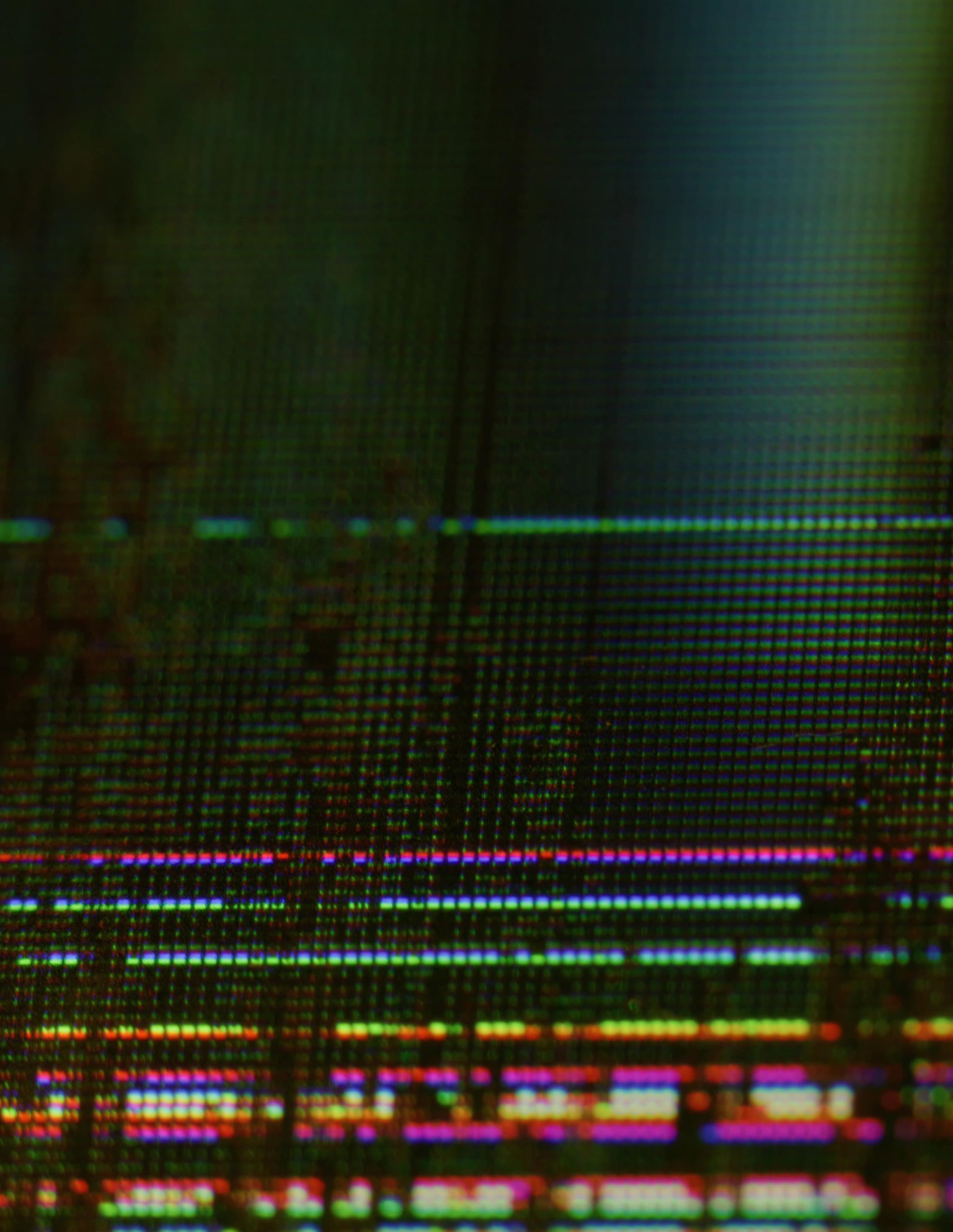
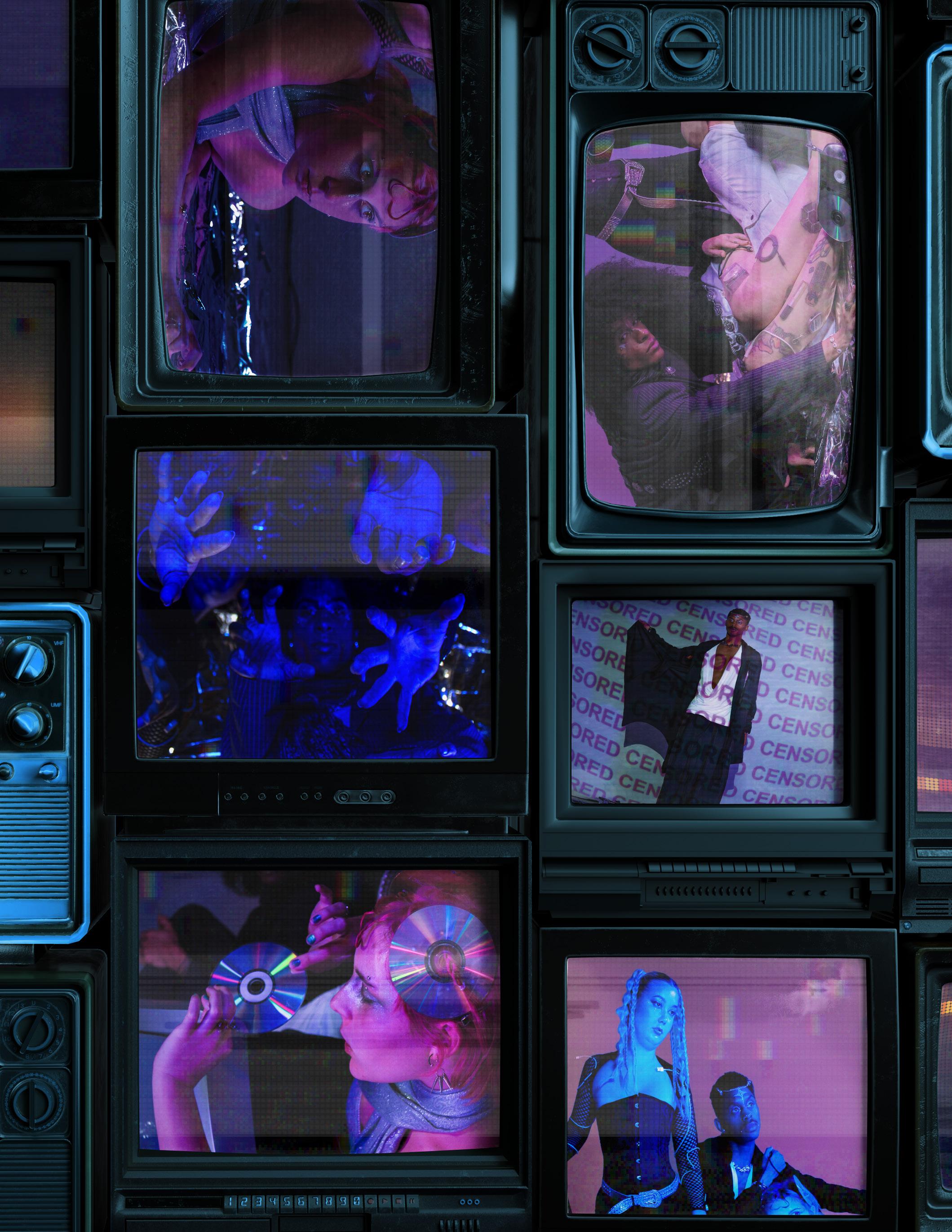
There is a certain kind of brightness that hums beneath these films, a weightless, saturated, electricity. The 1980s imagined the future rich with color: neon spilling across cityscapes, light bending through chrome, worlds glowing just beyond reach. It was a decade that didn’t just depict escape, but built it. Frame by frame, effect by effect. It invited audiences to step outside the gravity of the present and into something limitless. This Media Matrix moves through that sense of departure, tracing how science fiction became both escape and expression. It follows the way the genre held longing and possibility at oncea quiet
desire to outrun what feels fixed, to imagine something softer. Something beyond. Beneath the spectacle of lasers, vastness, and impossibility, there exists a deeper pull elsewhere. At the same time, film itself was shifting. Technology expanded what could be seen and felt, with practical effects, early digital experimentation, and evolving camera techniques that gave shape to visions that once lived only in the mind. That momentum carries forward. Even now, in an era of endless innovation, those films lingerbright, restless, still reachingreminding us that escapism is never just departure, but a way of understanding where we are.
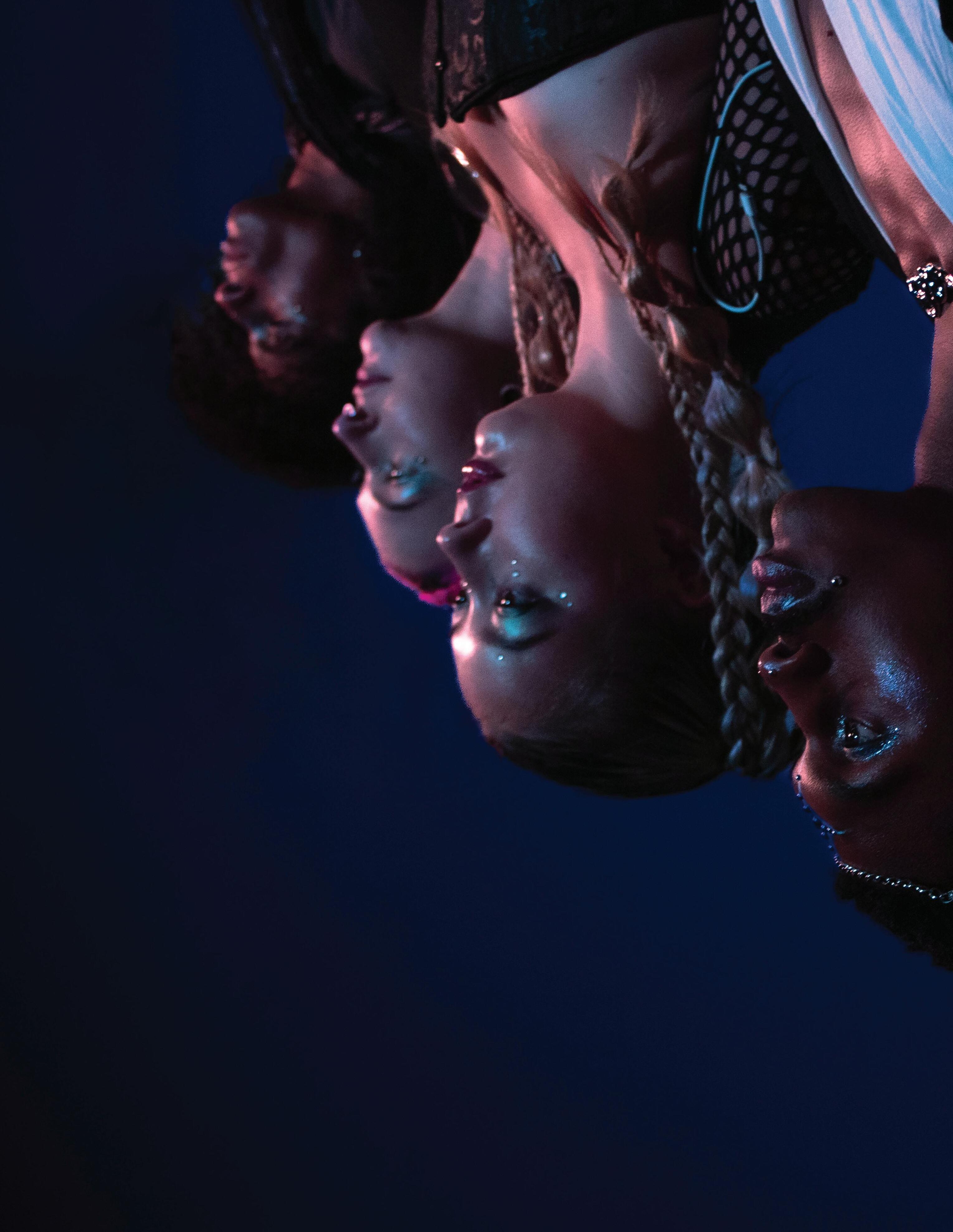
I live inside its collapsing matter; and I dream of laughter. My body is young, but my soul is ancient. I sing to dead stars, a soliloquy for creation.
By Victoria Jackson
“Hello from the children of Planet Earth” - The Golden Record, Voyager One.
I want to believe— is there more in the universe than just you and Are there worlds without war? Without the sloughed beast at their door?
If only I could touch what orbits these dark shores.
Oh, I want to believe.
I’ve heard there are places beyond the silver screen, I walk through the cosmos from my reclined leather Ecstasy—the static cascades, a dream washes over The TV is interstellar! Who knows what there could
I met a strange traveler without a proper name. His eyes, made of stardust, and his face prone to change. He told me of his people, an ancient race left to waste— a genocide, just outside, a few lightyears away.
He left me on a desert planet beneath twin, burning sand beneath my feet, prophecy written in the skies.
Whispers of empires, about a war to be won— a man that walked the stars, the savior, the chosen I recall the fall and the cross in its wake, always man and world’s weight.

then endless dust.
I stumbled back to the future, or somewhere in the distant
An unplaceable time on Earth where silence has fallen; where humanity has lapsed or hasn’t begun its path. There are rumbling in the trees, whispers in the breeze, Stars I’ve never seen form constellations, a message

INTERSTELLAR black alien laughter. ancient. creation. believe— and me? beast door? shores. believe. screen, seat. over me. could be? name. change. waste— away. eyes, skies. won— chosen one. and the weight. distant fallen; path. breeze, message that says,
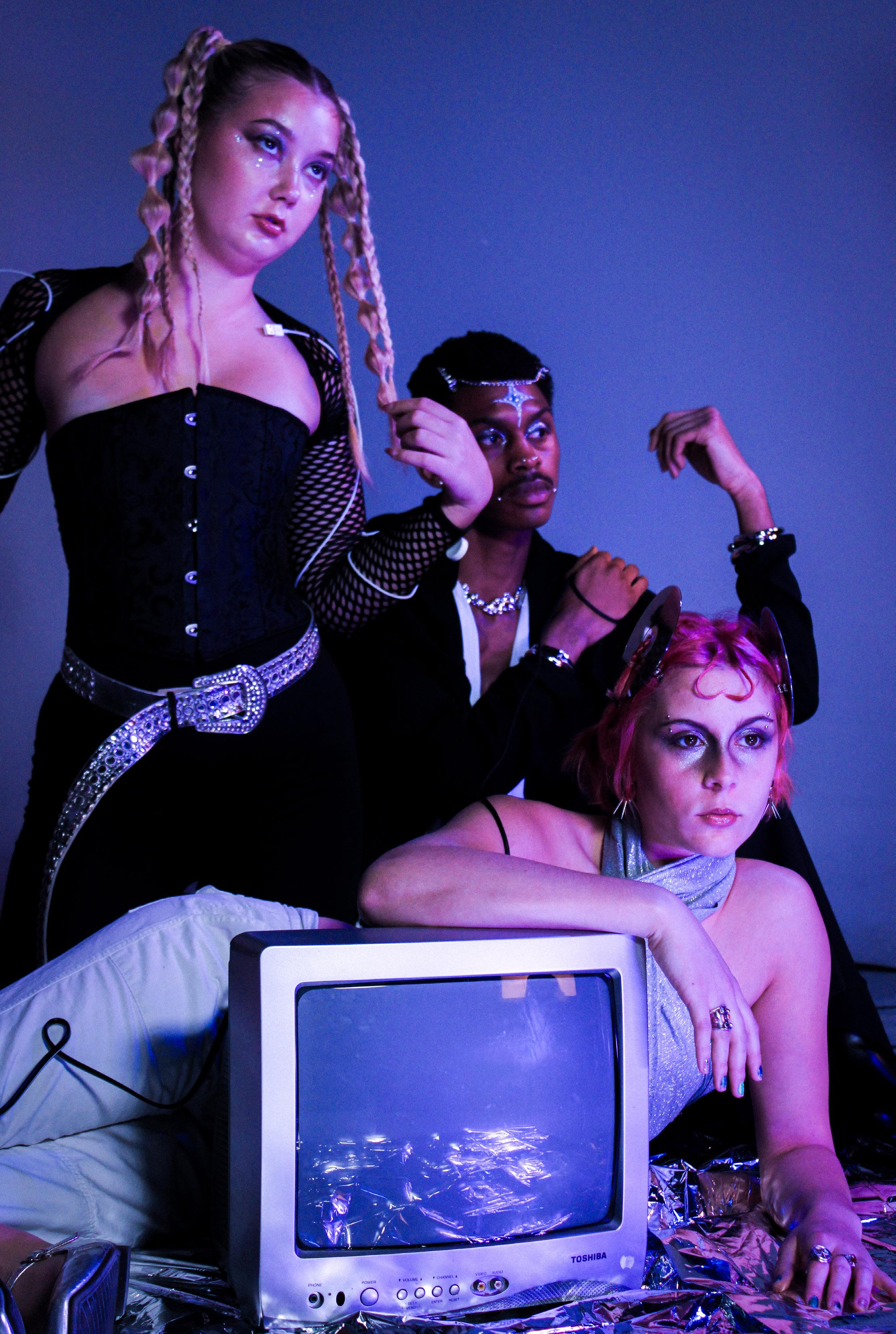








By Josephine Belliveau
“My wife’s cooking is so bad, I had to do the Heimlich maneuver on the dog!” A husband quips. The audience lets out a perfect eruption of laughter, emulating the rhythm of a pre-recorded, All-American sitcom. Bob Eubanks, Newlywed Game ring leader, is visibly pleased with the TV moment that took place. This is the punchy husband and wife banter that makes The Newlywed Game the show that it is. This simple question and answer style game between two recently hitched lovers features comedy that is so heavily gendered that surely it must be ironic. Yet this was the reality of a 20th century marriage, the roles of husband and wife were inflexible.

like The Newlywed Game and laugh at how the humor aged ridiculously. What’s most compelling in retrospect is how perfectly the show encapsulates the basic virtues that form gendered marital roles. The husband is allowed to make jokes at his wife’s expense, criticizing her failures to do the tasks of a housewife. Though less often, the wife can fight back, exposing the husband as “useless” at his manly duties.
Looking past the Hollywood smiles of these spouses, imagine the couples watching from home, cuddled on the couch watching a boxset TV. We look back at shows
In the 80s, being a husband or wife was something you become after “I do,” the mold does not bend to your shape. Reagan was fueling the rise of conservatism, and with the ongoing AIDs crisis, “traditional” love was as revered as ever. In other words, everyone was scared straight into the nuclear family structure once again. The more points you earn on The Newlywed Game, the better you were at fulfilling
the classic Husband and Wife. When the show suffered one of its many sporadic cancellations in 1974, Eubanks blamed lowered marriage rates and Watergate. Though the questions seem simple in nature, their volume was prolific. Staff writers recall producing over 600 questions a week. The casting of Hollywood couples came down to a science; scan recent Los Angeles marriage records, every couple must audition twice. Though the casted couples could be interracial, they were always heterosexual. A gay couple would not appear on the show until 2009.
There’s something terribly unromantic about the pursuit of these roles. The goal to be the perfect spouse is such a self consumed endeavor that it feels as though the other person in the couple has been forgotten altogether.
Any question involving sex rephrased, the act referred to “making whoopee.” It was always expected of the recently honeymooned couples to be intimate but not have any real conversation about it, and only the man was allowed to tease about wanting it.
Perhaps the show is not completely devoid of passion. A female contestant outed her husband for having an affair as the cameras were rolling, “I knew about it, but I wanted to wait until we got on national TV to tell everybody.” She cried. 10 points later, the couple was kissing and somehow in the throes of romance once more. Eubanks looked into the camera with a glint in his eye, knowing that the promise of everlasting marriage had enraptured the folks at home once more. “I’ve always said 10 points can solve a problem in any marriage,” he said, “Twenty-five can make it last forever.’’





VISITOR VISITOR VISITOR VISITOR VISITOR VISITOR VISITOR VISITOR VISITOR




by



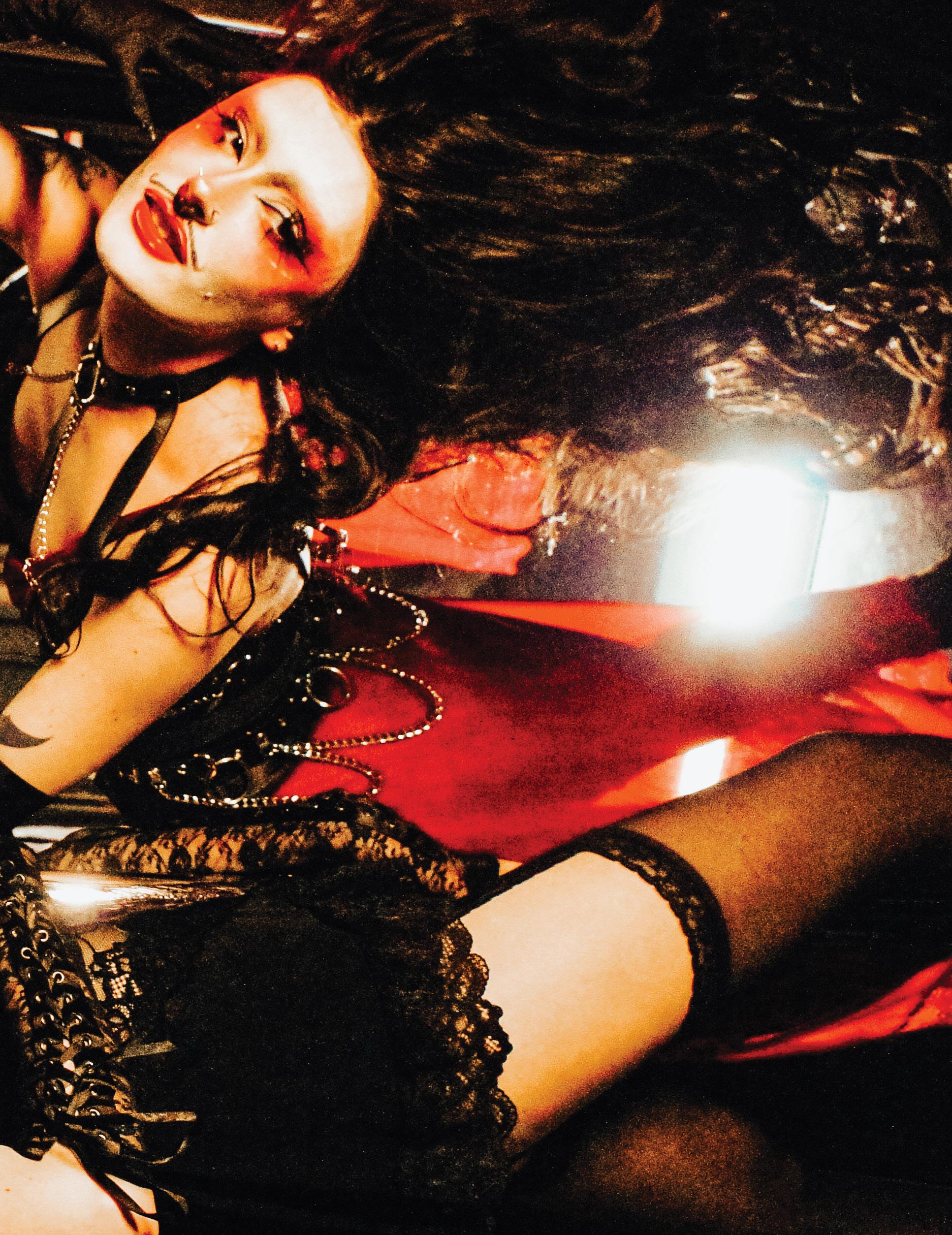
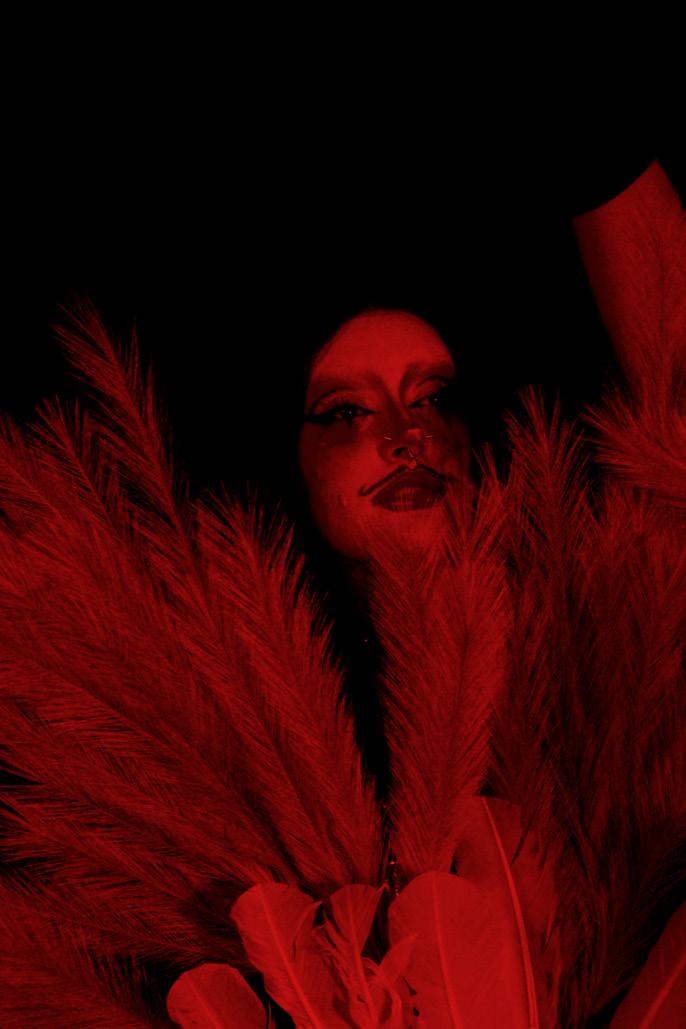
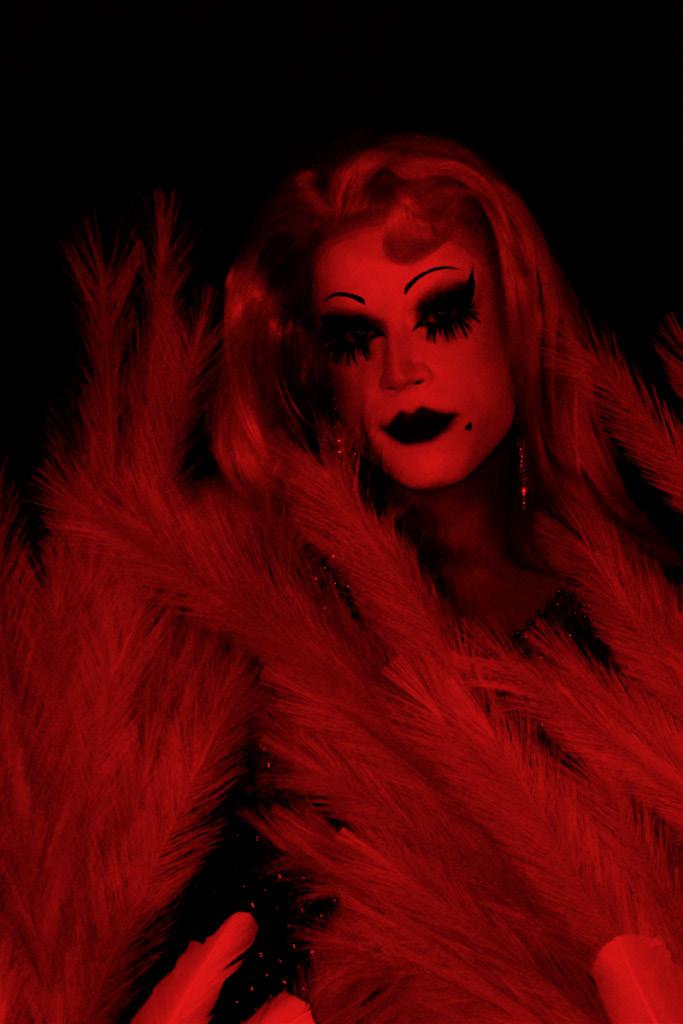
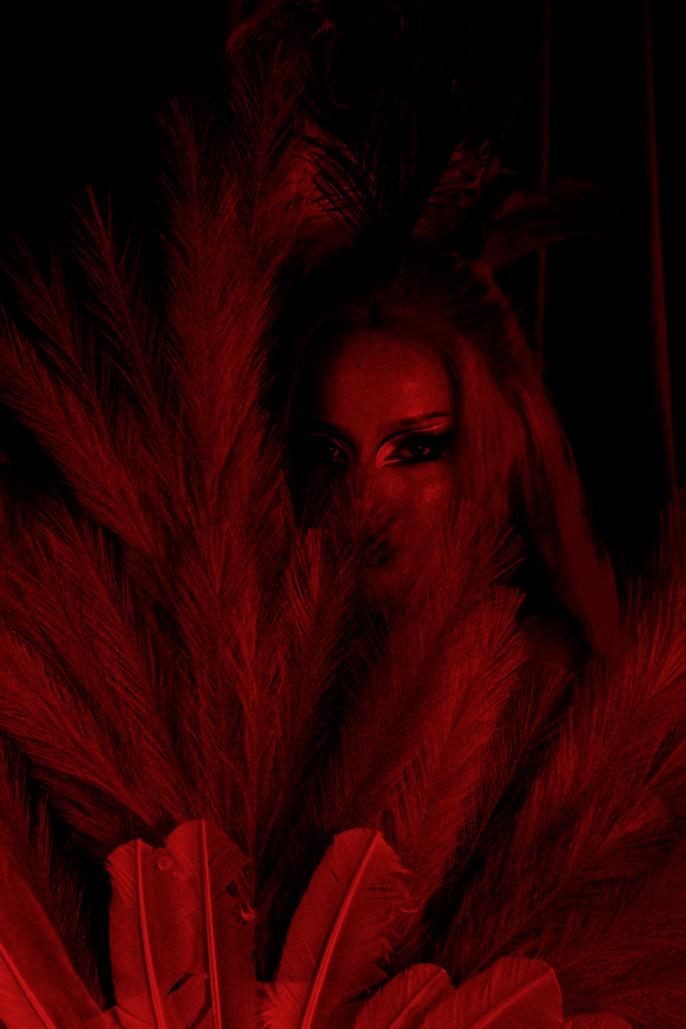
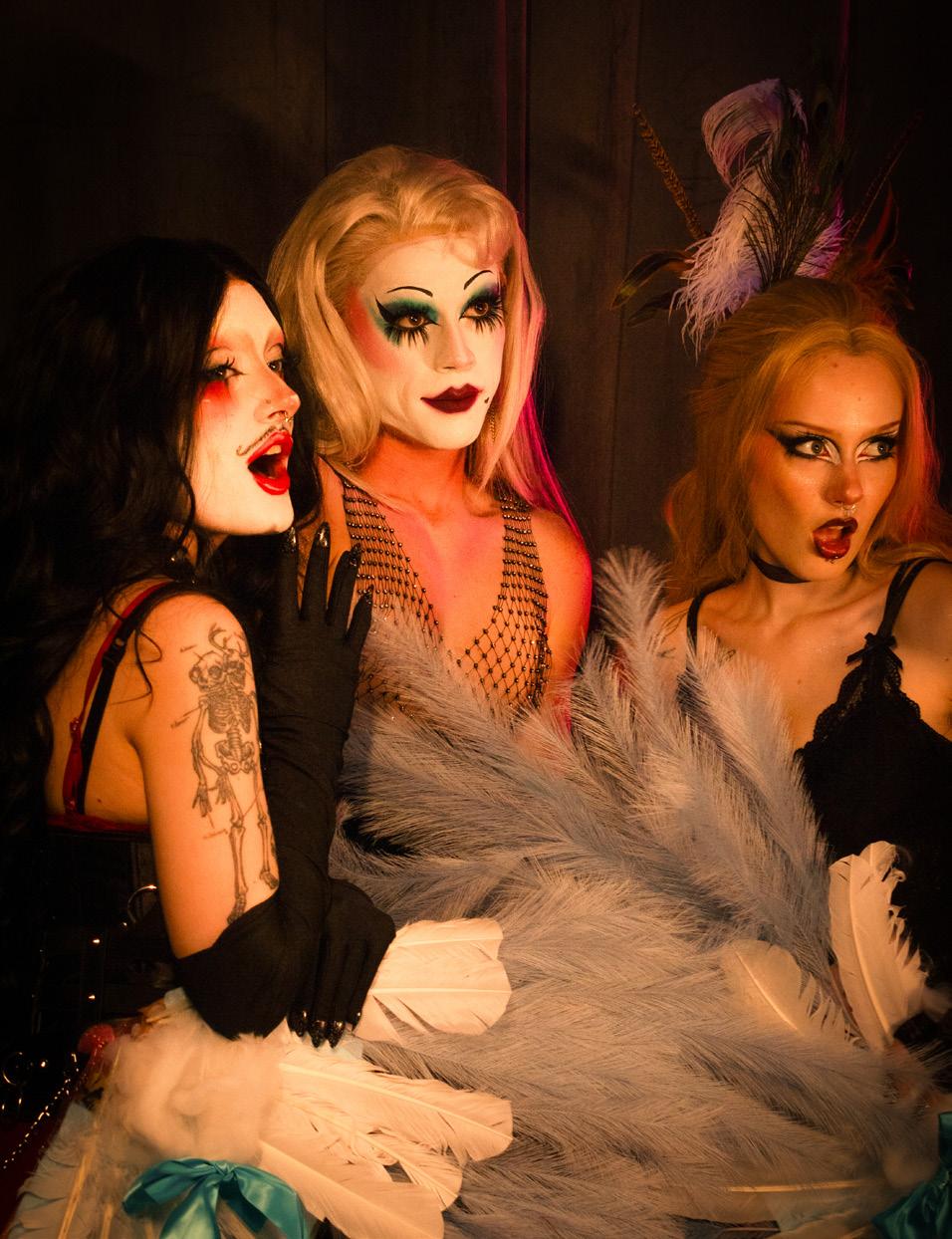
Drag is nothing if not bold, expressive, and alive. It doesn’t hide who a person is, but rather reveals something deeper, more selective. In film, that energy lingers. You can feel it in the way identity can stretch, bend, and become something new. As spectators we also move through that feeling. We get to explore how drag holds both extravagance and intimacy at oncebeing cacophonous and radiant while still remaining tender underneath. There’s care in the way a look is built, as well as in the way a persona comes to life. But there is also risk, because to

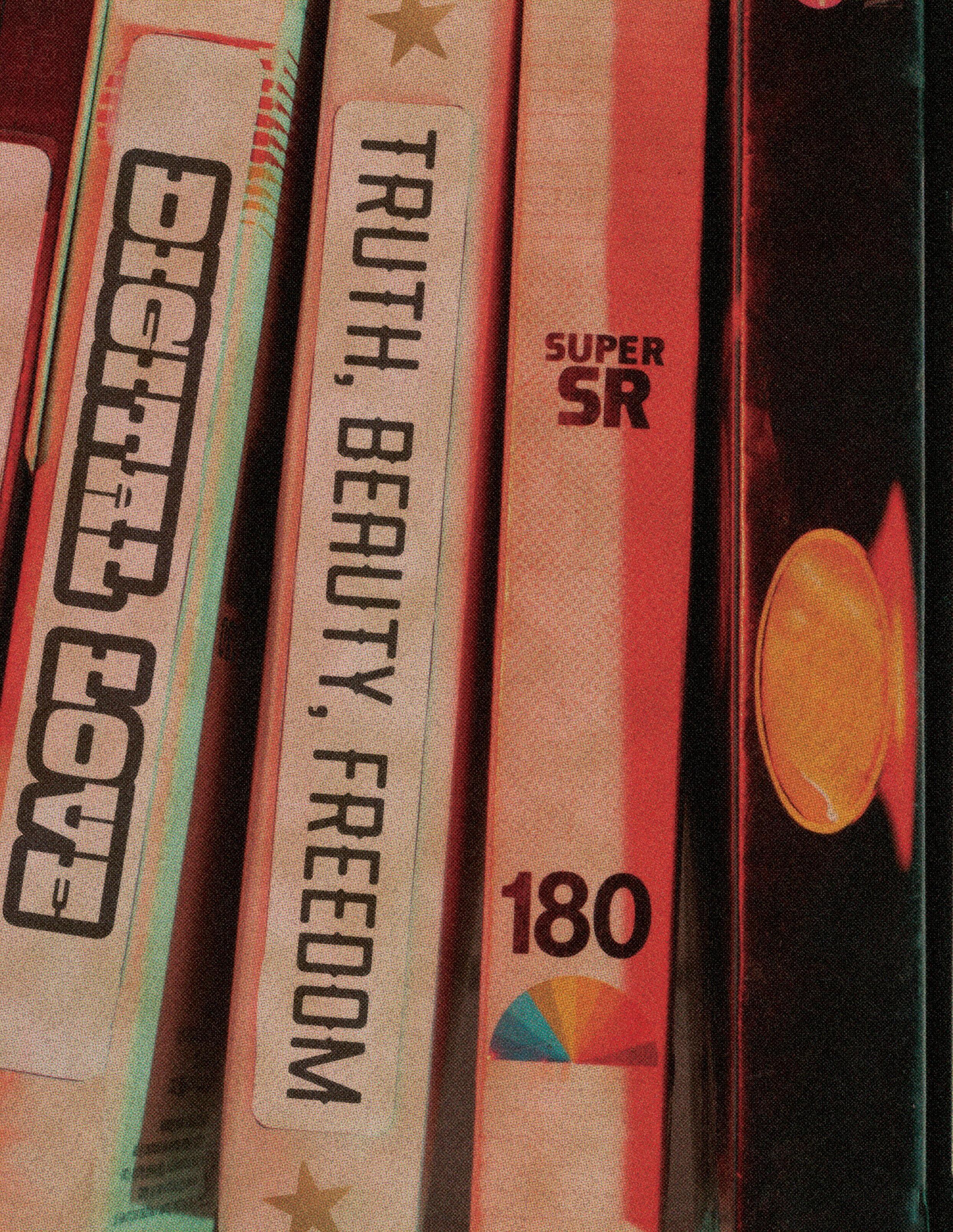
be seen so fully, so intentionally, means putting something real on the live. It’s not just performanceit’s personal. As film continues to evolve, that influence hasn’t gone anywhere. You can see it in the way stories play with gender and sexuality, in stylized characters, and in the performances that feel larger than life but still grounded in truth. Drag isn’t separate from cinemait’s part of how cinema understands Truth, Beauty, and Freedom. It’s how cinema understands transformation, identity, and what it means to be seen.




By Isa Pullen
Within the human interior is the urge to explore the body and the expression of the self. As children we experiment with costumes, and generally in our day-to-day wardrobe. We decide if we like stripes or polka dots more, mixing them together maybe, or perhaps despising both entirely and spitefully wearing only certain hues instead. We use costumes to display ourselves in different and often playful ways, typically to play the part of someone else.
As we develop, and we evolve further into ourselves, expression becomes political. Many of us use our wardrobes as an outlet to portray our interests and our own artistry. Clothes in themselves are an art form, allowing us to externally express our likes, interests, and sometimes values. Clothes remain a malleable part of human existence, giving us the choice of wearing what we feel most expressive or empowered in.
A prominent facet of this particularly in our modern age is drag. Drag began through costume in theatre; men would
dress as women and would depict them theatrically in plays. In the 20th century, drag began emerging in underground clubs and cabarets, but resided there for years to come until more light began to be shed on drag queens. As it became safer to express oneself
As we move forward as a society and attempt to dismantle gender norms, we dismantle a hierarchy of what makes people feel safe. In the exploration of the self, it encourages others to dive deeper into their own self, wondering if they’d like to change. I think what we find is
through drag, television shows, films, tours, and much more began to arise. However, with this came sickening language and disheartening treatment. Modernly, drag is pretty widely accepted, but they are still feeling the scalding heat beneath their feet from news outlets and close-minded individuals.
that many are resistant to that. To change. What drag queens create is a vibrant space that doesn’t contain pressure to change the self, but instead allows one to authentically present oneself without having to drape themselves in hostility for wanting to be different. It is beyond horrifying to want to change, or to
know you’re different, but these accepting spaces help us perpetuate ourselves forward towards self-acceptance and liberation for who we are. Drag is like armor, it’s this beautiful tapestry that is glittering and breathing. These people are alive, and they so graciously, selflessly even, subject themselves and their own safety to the world to help others not feel rejected or unvalued for who they are. To them, we owe more than a thank you.
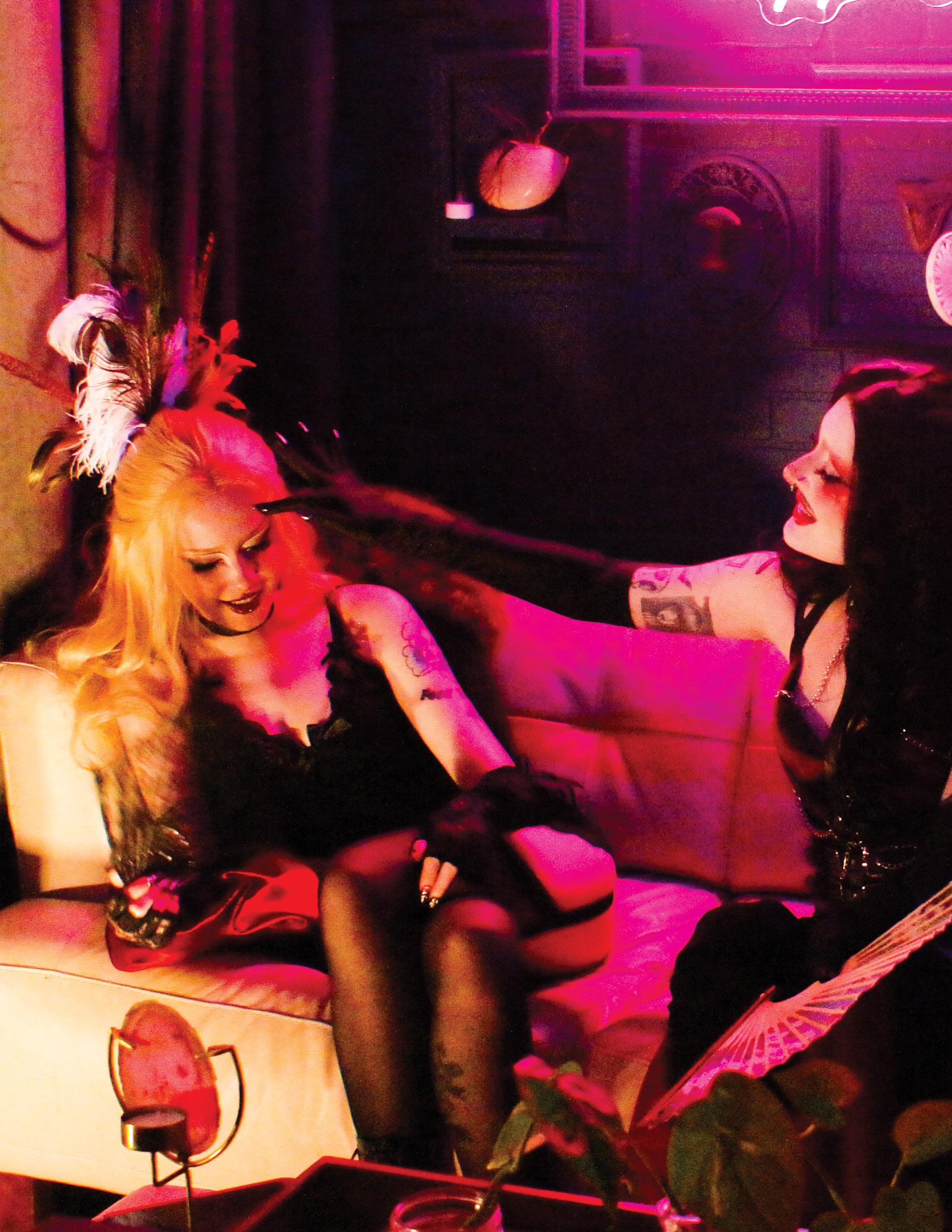
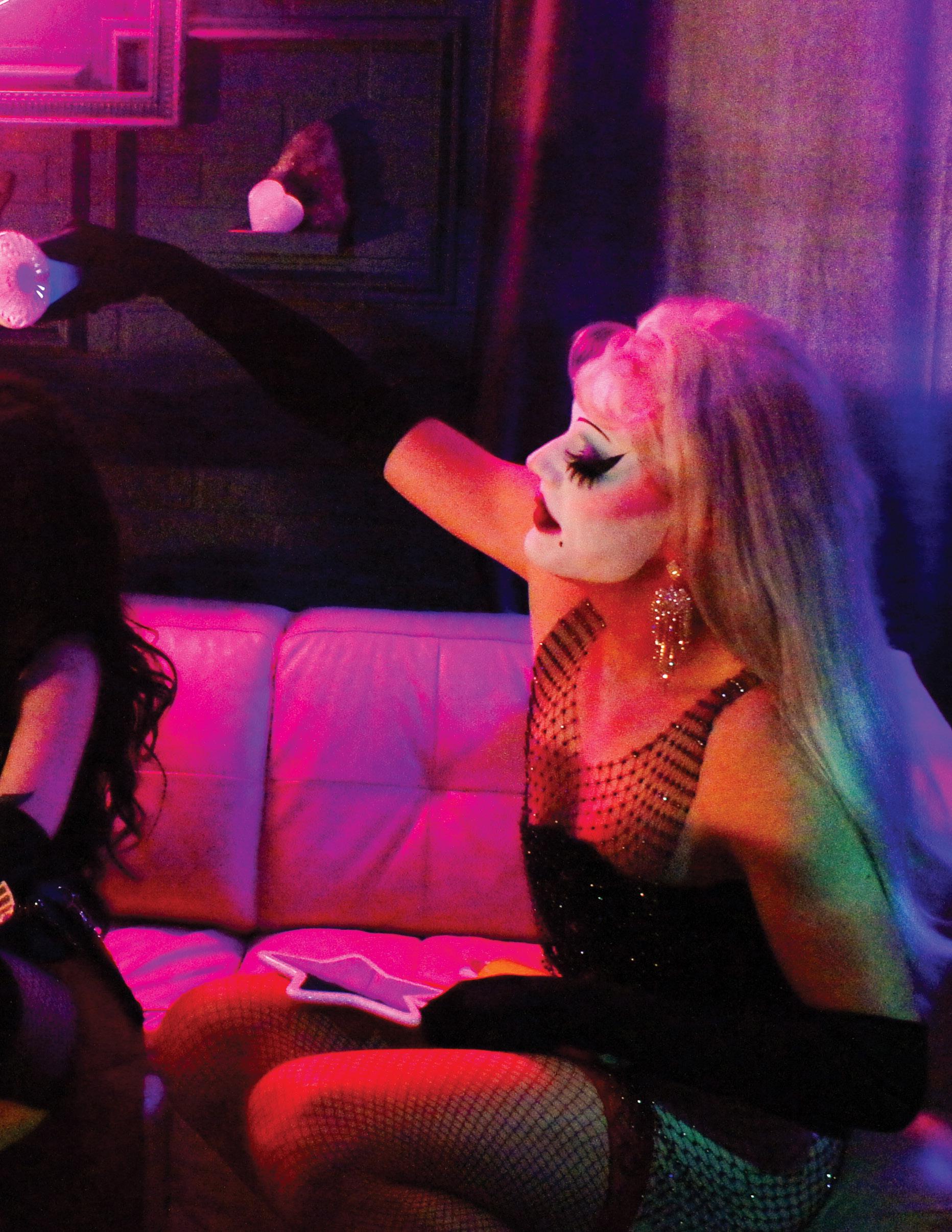
We are in a constant imbalance of hate and peace. We reside in a world where it is arguably more contentious to advocate for peace than it is to be spiteful towards those who are different. And so, we retreat into our conforming selves, and these effervescent drag queens stay colorfully involved, liberating others and creating safe spaces for us to continue to dance in. Sing in. Kiss in. Cry in. Love in. The walls of drag clubs are like ribs, and those who persevere are like the beating heart beneath it all.
By Natasha Chinea Control
As a kid, playing dress up was one of my favorite things. It was simple - plastic princess heels, random dresses, and whatever makeup I could get my hands on. Sometimes it was what I thought “fancy” looked like - bright lipstick for a birthday dinner, glittery eyeshadow that didn’t match, outfits that felt more exciting than practical. Other times, it felt like stepping into a character, something bigger and more exaggerated, like the kind of over-the-top confidence you’d see in someone like Fancy Nancy.
None of it had to make sense. It was just about putting something on and feeling different ; feeling prettier, feeling more, feeling seen. Dressing up wasn’t about anyone else. It was something I got to decide for myself. That same kind of joy - the kind where you can see it in someone’s face, in the way they carry themselves - is hard to ignore. When people are given the space to express
who they are, fully and unapologetically, there’s a lightness to it. A confidence. Something real. That instinct doesn’t disappear. It just evolves. Drag takes that same idea of self-expression and pushes it further - turning it into something intentional, exaggerated, and impossible to ignore.
The Human Rights Campaign says that at its core, drag is a performance art that uses makeup, costume, and character to play with and challenge ideas of gender. But it’s not just about appearance. It’s about control - deciding how you want to be seen in a world that is constantly trying to define that for you.
Tammy Lam, reporter for The Science Survey found that historian and author of The Prettiest Girl on Stage Is a Man: Race and Gender Benders in American Vaudeville, Kathleen Casey argues that drag cannot be reduced to a single meaning. “Drag
is about race, class and sexuality as much as it is about gender,” she writes, emphasizing that these performances are layered and complex. Drag isn’t just about how someone looks, it’s about identity, context and control.
In a world where appearance is constantly being posted and picked apart, most people learn to adjust quietly. They change small things to fit societal expectations without even realizing it sometimes. Drag does the opposite. Instead of blending in, they make the process visible. Every detail is intentionally chosen, turning selfpresentation into something bold and beautiful. They fully own it.
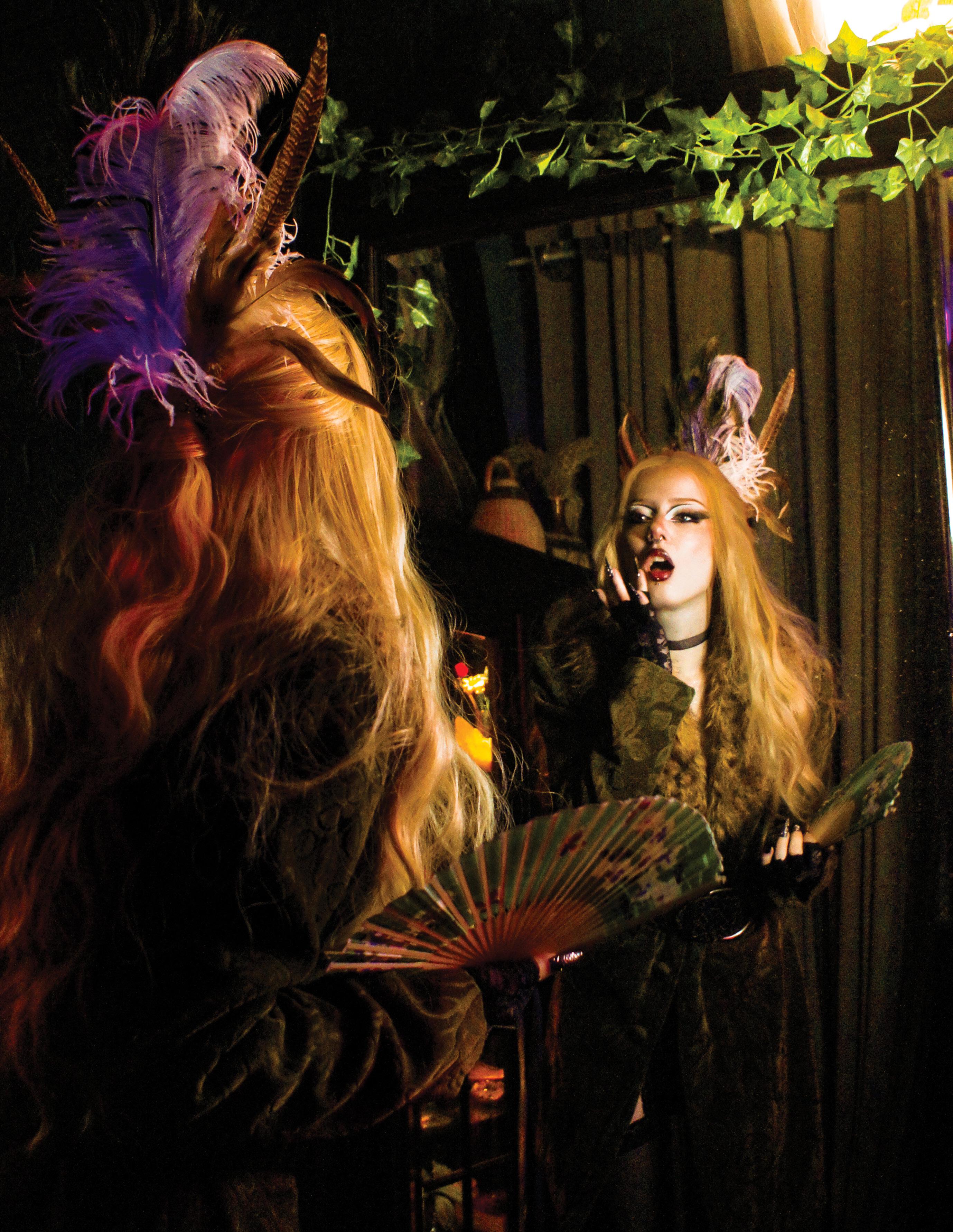
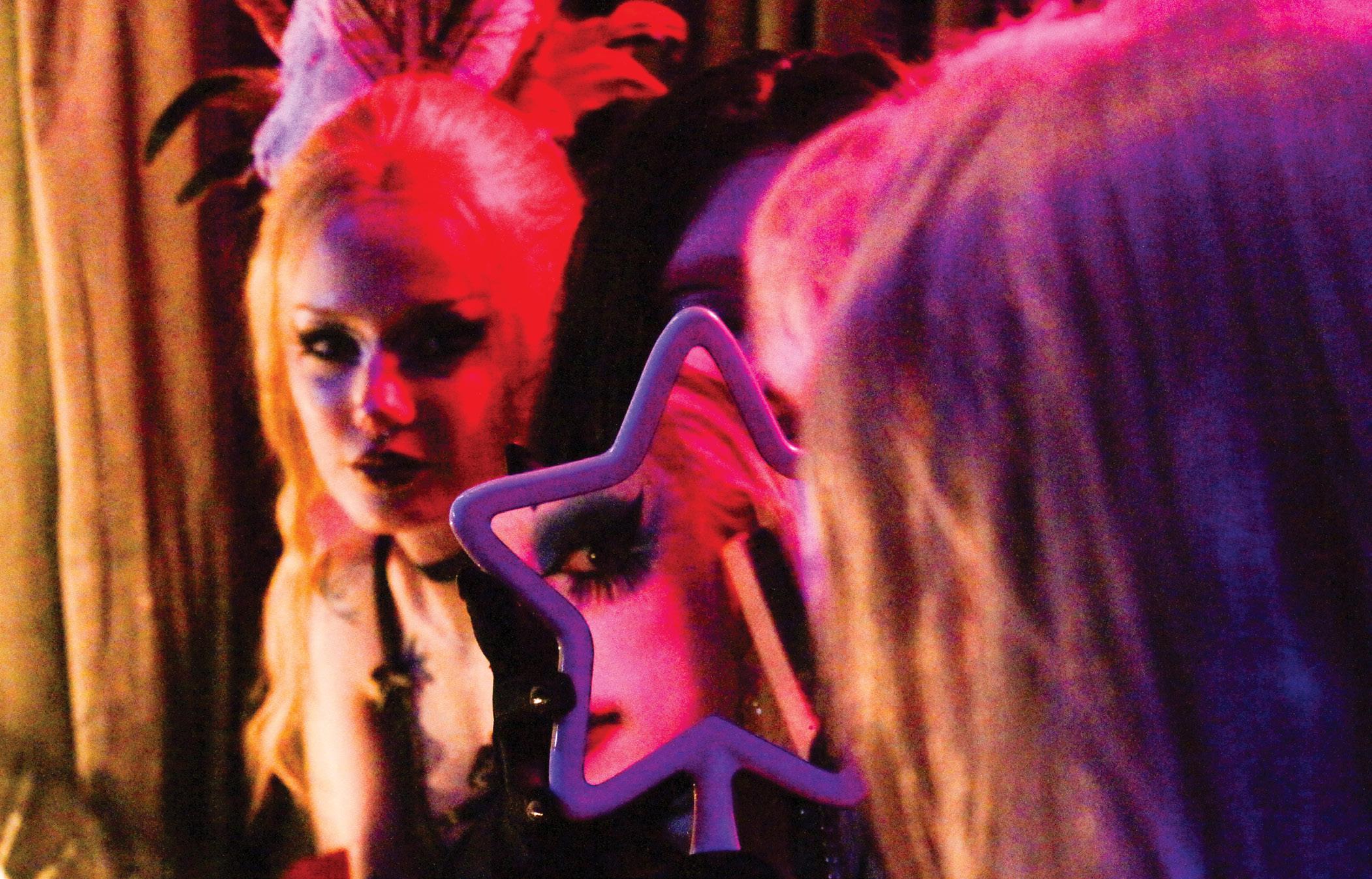
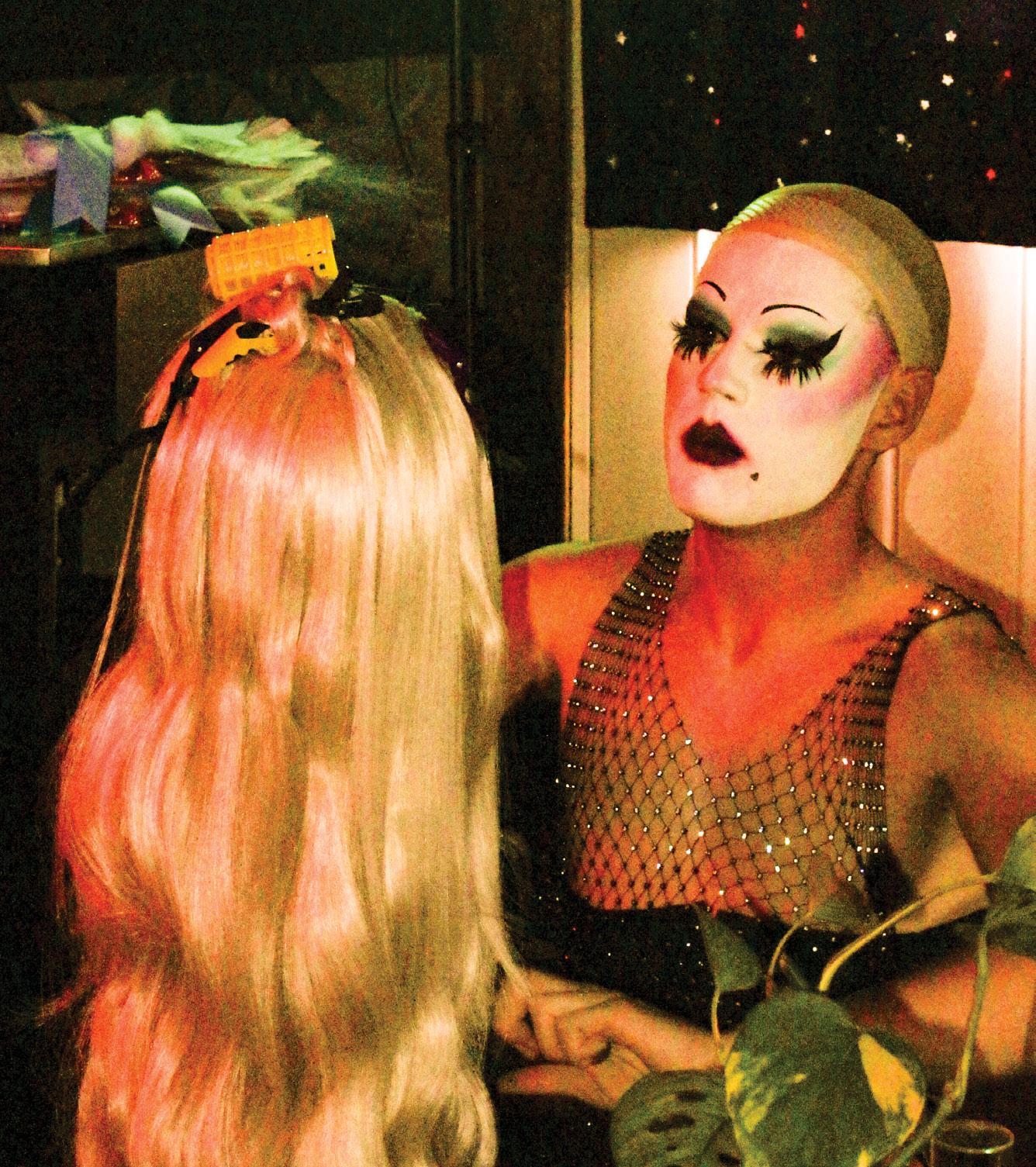
That control doesn’t just show up on stage, it starts long before in the process itself. The transformation in front of the mirror takes time. A bare face becomes a canvas. Brows are covered, then redrawn higher and sharper.

Contour reshapes the face. Glitter catches the light. Each step is deliberately chosen, nothing about it accidental.
Most people curate themselves in quieter ways - through what they wear, what they post, how they present themselves to the world. But in drag, that same instinct is pushed to its extreme. It’s no longer subtle. It’s visible. It’s intentional. And in that visibility, there’s a kind of power - one that comes from deciding, fully and unapologetically, how you want to be seen. Because in the end, drag isn’t just about becoming someone else. It’s about finally having control over who you are allowed to be.




By Jay Cruz
by Iyanna
When I was eight, I snuck into my grandmother’s walk-in closet and tried on her red 1940’s summer sandals. Her feet were so dainty that they already hugged mine tightly. I walked in a line whispering, ‘one, two, three, strut! One, two, three, strut! One, two, three, strut!’
By twelve years old, puberty hit me like a truck and I was no longer able to fit into my nana’s summer sandals. It was not only the glitz and glamour of her shoes that captured my attention, but the jewelry that hung proudly on my mother’s nightstand. When she left for work, I stole her glossy pearls and walked through the house as if it was my own runway. I could not fully understand what these moments of isolated silence meant, but I knew I wanted to revel in the euphoria forever.
At age fourteen, my mother had bought a multitude of brand-new makeup for herself. I would lock myself in the bathroom and smear her foundation, eyeshadows, and highlighters all over my face and stare at myself, wishing I never had to wash it away. I grabbed the bright red lipstick she used to wear and rubbed it all over my lips, but before I got the chance to pucker, my father walked in and unleashed the wrath of his scrutiny.
At age sixteen, he forced me into playing football–I was miserable. The closest to euphoria I have felt since then was the feeling of the warm lights on my skin at every game. I felt like I was preparing for a performance on the big stage; the spotlight shining on me.
I always knew I was destined for lights, cameras, glitter, and fashion, but the only runway I would ever walk was the football field.
By Trinity Talton
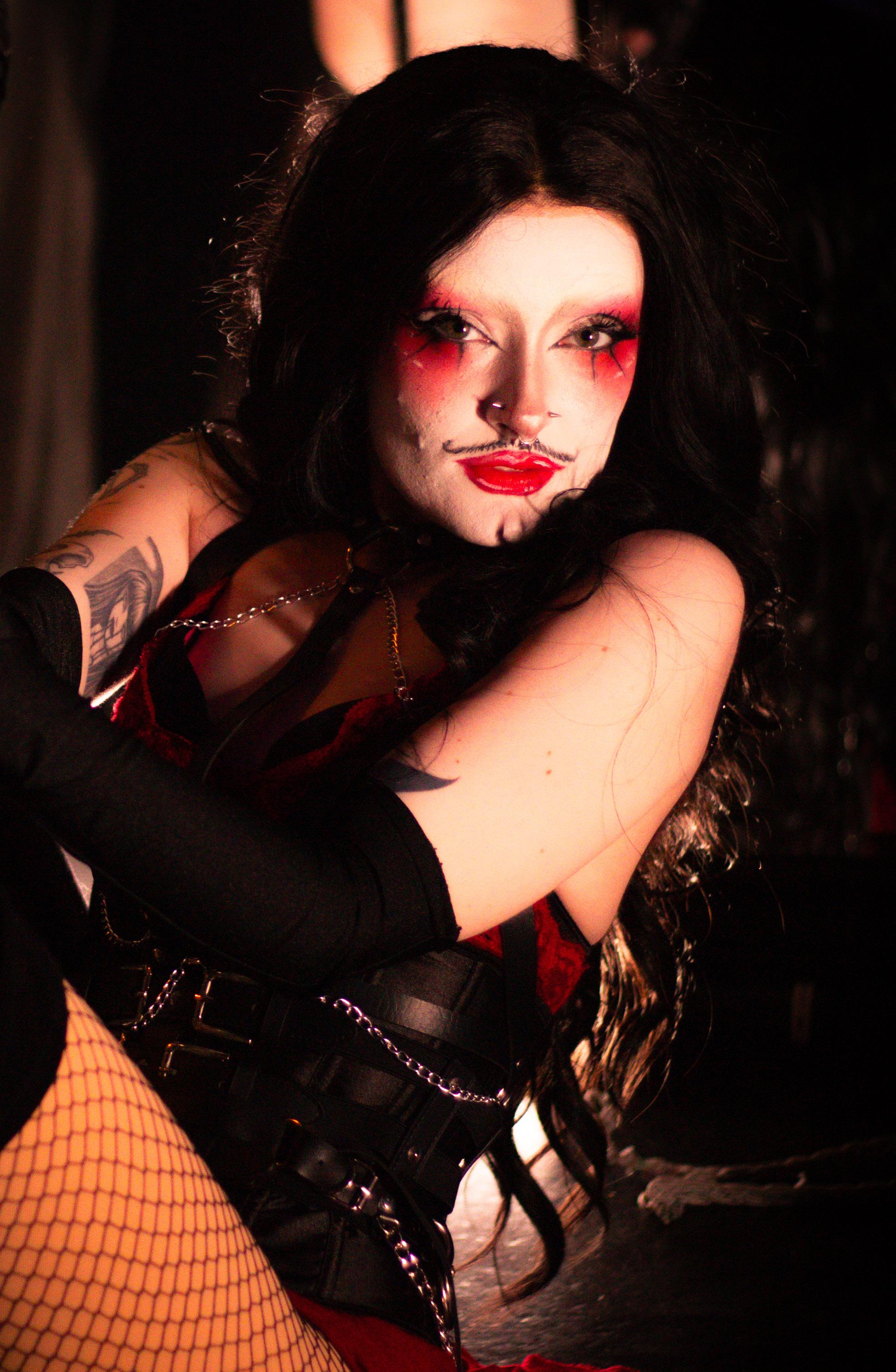
Drag has been a form of expression in the queer community for decades. It dates back to the 16th and 17th centuries in Great Britain when Shakespeare was at his peak. During that time, only men were able to be on the theater stage, including in female roles, which is where drag was born.
As time went on, drag evolved from men dressing as women to a form of artistic expression and political resistance. It eventually moved to the United States and was largely popularized by black queer people.
The real spread of drag in gay bars came during the Stonewall riots in 1969, which started the gay rights movement. Divine, one of the biggest drag queens of the 70s and 80s, took over the club scene with his performances. He brought something different to the drag scene. Instead of being a traditional female character, Divine embraced being outlandish, unorthodox, and larger than life. Author Jake
Hall said that Divine always “delighted in disgusting his audience, and he was truly unafraid of ugliness.”
Although drag became more well-known, it still came with a huge stigma not only in society, but in the gay community itself. Clinton Leupp, who has performed as Miss Coco Peru since 1992, said that early in his career, even gay friends considered drag “dangerous and dirty”. “Calling yourself a drag queen was the lowest of the lowest thing you could be in the gay community,” Leupp said.
But then came RuPaul Charles, who had a dream to bring drag to the mainstream. He got his start performing in bands in the 1980s, before his big break when his song “Supermodel (You Better Work)” reached number 2 on the Billboard dance charts and number 45 on the top 100. In the 90s, RuPaul broke into pop culture, having his own talk show, attending award shows, and was seen with popular celebrities such as
Kurt Cobain and Courtney Love.
The Drag Race seed was planted almost 40 years ago when RuPaul befriended the founders of World of Wonder Productions. The company took him on as a client and approached him with the idea of making a drag-themed reality show.
RuPaul’s Drag Race premiered in 2009, starting on LogoTV before moving to VH1 and then to MTV. It is now in its 18th season and has multiple spinoffs, including RuPaul’s Drag Race All Stars, RuPaul’s Drag Race: Untucked, and multiple other series around the world.
The show has seen huge viewership since it started airing. According to Deadline, the season 18 premiere was the top-rated entertainment telecast of the day, with ratings up 32% from the prior season. It also gained 24 million views and 1 million engagements on social media. The show has also received critical acclaim, winning 27 Primetime Emmy Awards, three
Producers Guild of America Awards, and MTV and GLAAD Media Awards.
Drag has always been part of mainstream culture, but RuPaul’s Drag Race brought drag culture to the forefront in a way never seen before. Slang like “Yas,” “Shade,” and “Sickening” had been in the black queer community for years, but suddenly became a part of popular culture and are now used by the masses. Drag race showed audiences how to “Read” and what it means to “Keep it Cute”. It gives people a look into drag culture and the lives and identities of the queer community.
Drag getting the recognition it deserves is long overdue.This art form, which thrived in the nightlife scene and is a huge part of the gay rights movement, is now available to everyone. Michelle Visage, one of the show’s judges, is glad that the drag is finally being seen. Visage states “This amazing art craft has gone far too long without being recognized and validated.”
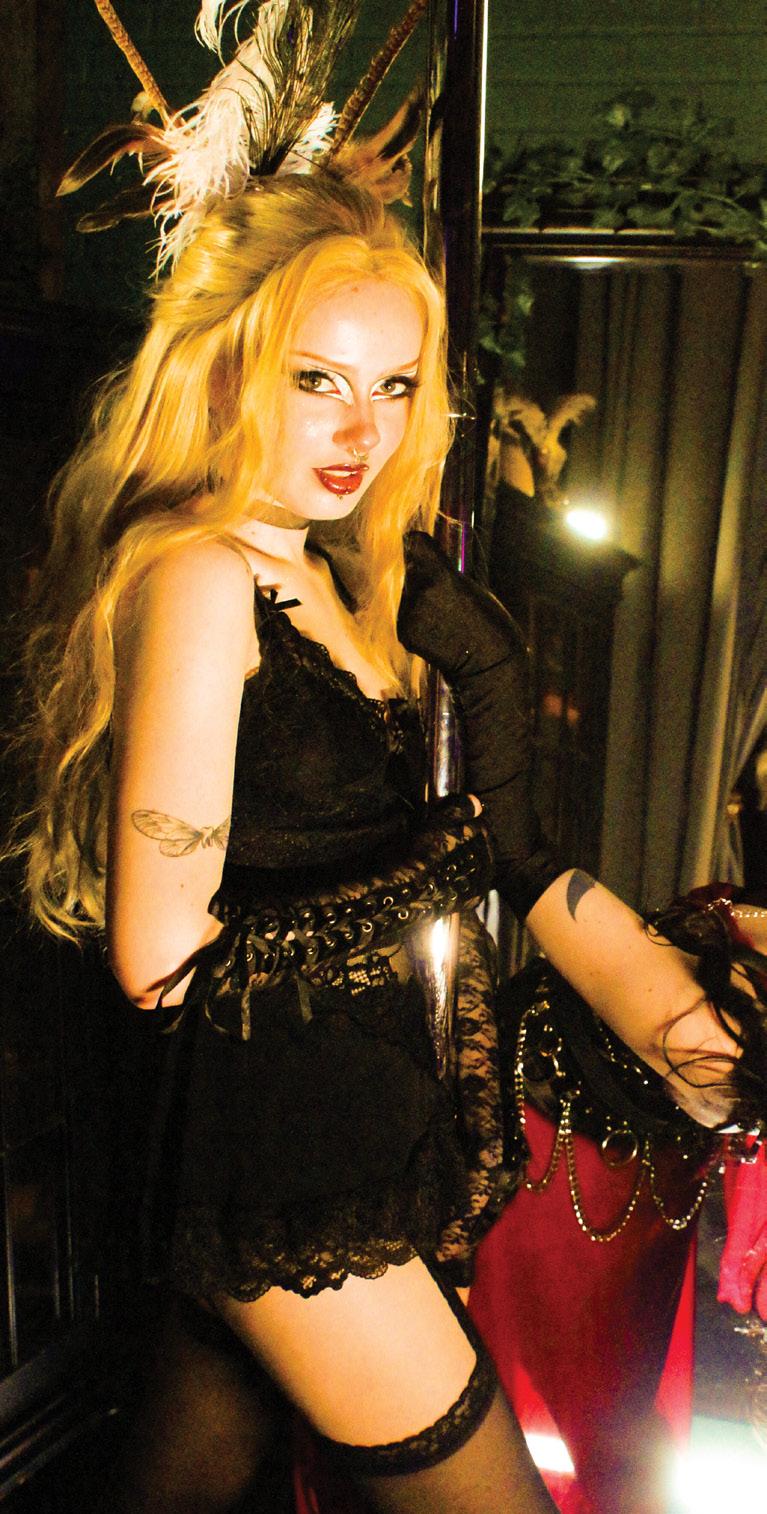

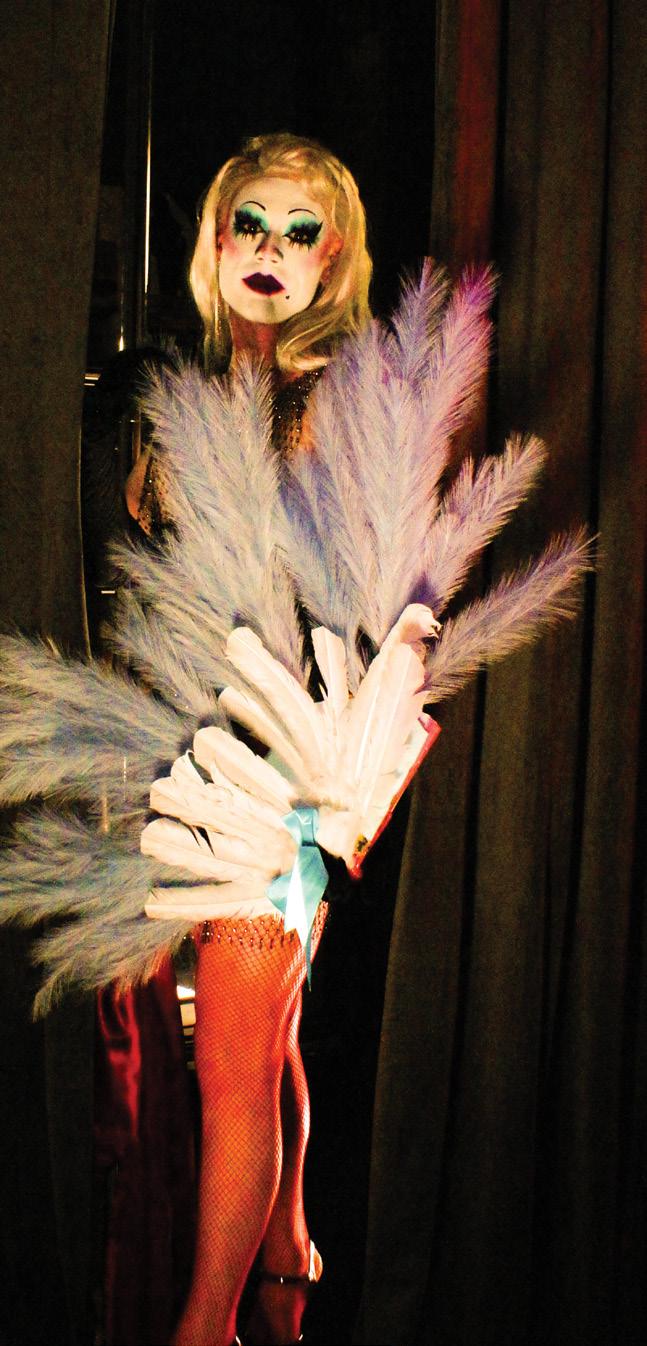
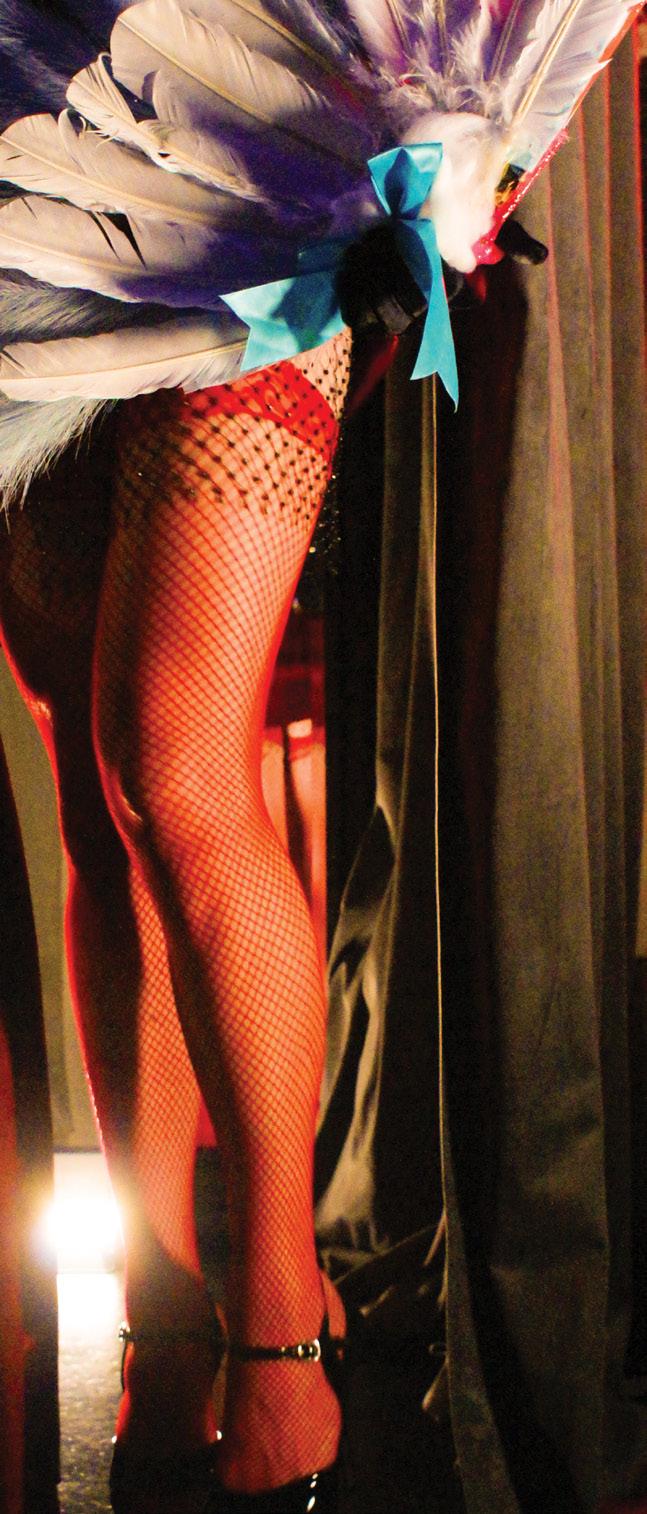
By Z.K Domingo
My taffeta robe slips off like a sheath as I glide my way on stage to perform; but I will keep the lipstick on my teeth.
I have spent too long hiding underneath, camouflaged by the audience, forlorn. My taffeta robe slips off like a sheath.
What once was small and meek is now beneath, I will still defy norms despite your scorn–and I will keep the lipstick on my teeth.
I have seen too many a flowered wreath within this taboo underground art form. My taffeta robe slips off like a sheath.
A house built on passion and zeal bequeathed unbeknownst to me as I wail and mourn, but I will keep the lipstick on my teeth.
Though you think I am innocence’s thief, my existence is not ill or bloodborne. My taffeta robe slips off like a sheath but I will keep the lipstick on my teeth.
Within the digital landscape exists a certain type of girl. She’s bright and unpredictable, almost too vivid to hold onto. She shows up like a spark, full of energy and possibility, often changing someone else’s world just by being in it. The Manic Pixie Dream Girl skips around cinema this way, more like a feeling than a fully formed person. She’s someone to be experienced, not always understood. With the changing cinematic landscape of the late 2000s and early 2010s, we begin seeing more “coming-of-age” stories that center around one character’s trek rather than an entire group’s expedition. There is both appeal and problem with this. The magnetism of the MPDG, with her spontaneity and scarcity of hesitation, and her (oftentimes) lackluster love interest exhibit behaviors normal people wouldn’t dare to dream of. We owe it to ourselves to both fail and prosper based on our own actions, not just because someone comes along to momentarily disrupt that journey. As film continues to evolve in a more digital, self-aware scope, the portrayal of the MPDG has shifted. The stories we tell now are making more room for complexity and contradiction, for characters who are fleshed out. Still, traces of the trope linger on. The landscape is changing, but the desire behind itfor a Digital Love worth all of the pain, joy, and everything in between.
By Camille Crawford
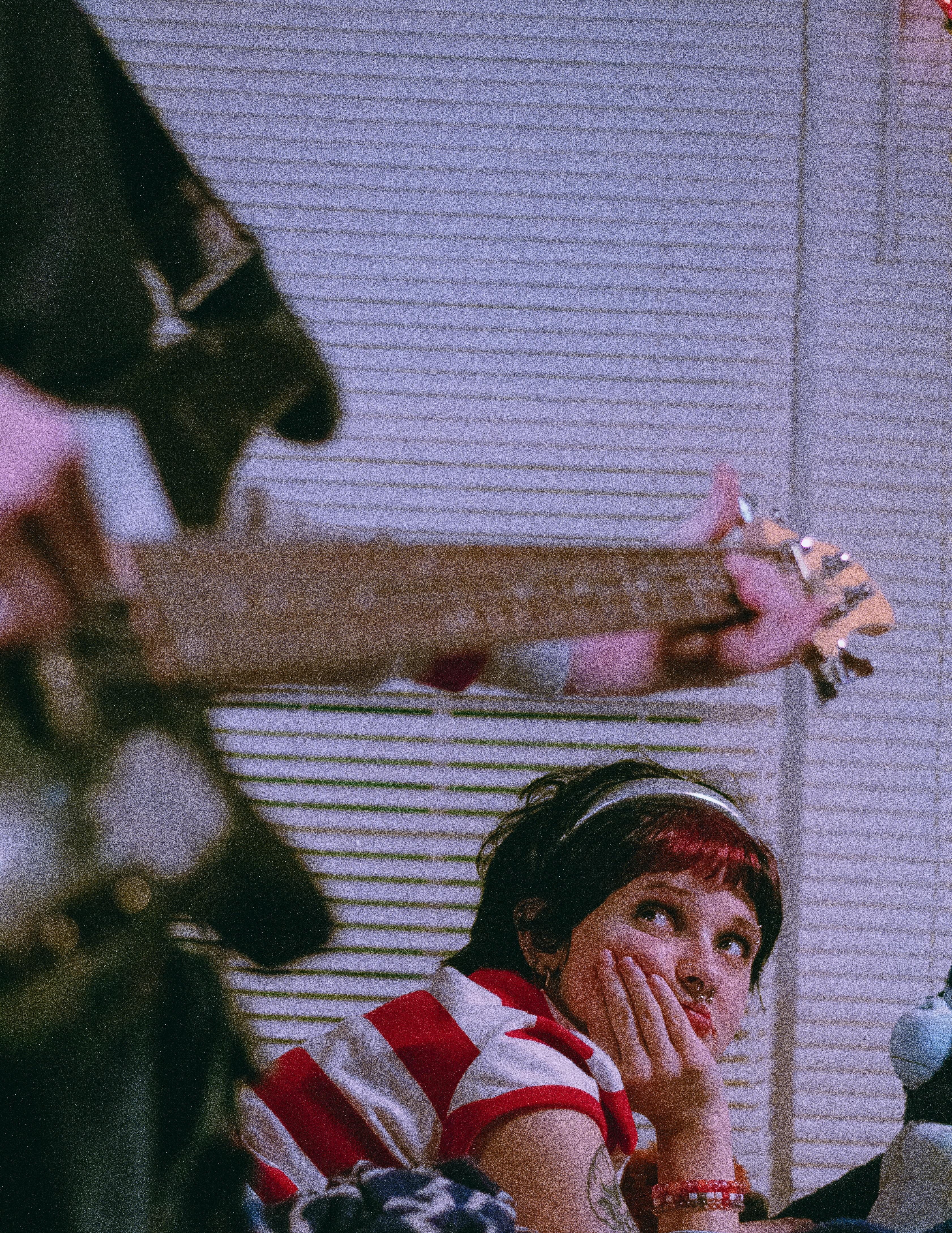
At first glance, the Manic Pixie Dream Boyfriend seems like a dream. He’s magnetic and attractive, with an atmosphere that draws you in. He notices the smallest details about the female protagonist, details he says “no one else sees.” He validates her in a style that feels rare, making
and bold gestures. While this can feel exciting at first, it often reveals a deeper unwillingness to hold any responsibility.
The MPDB doesn’t just ignore social rules, it dismisses them entirely. Jobs, commitments, and long-term planning are seen as tedious
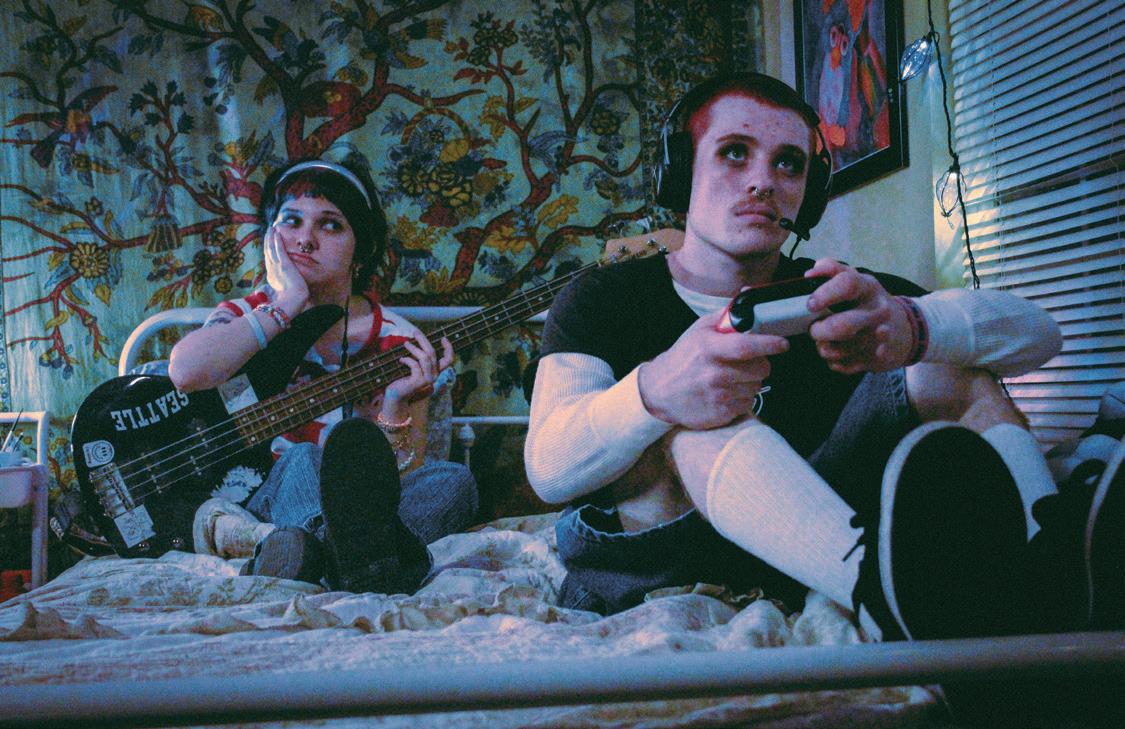
him seem like someone who truly understands her.
However, beneath that charm exists a more complicated reality. Unlike the traditional Manic Pixie Dream Girlfriend, whose role is generally to support and inspire the male lead, the Manic Pixie Dream Boyfriend is a complete contradiction. He may appear emotionally mature, but he ultimately rejects accountability. He thrives on impulse, rejecting routine and structure in favor of impulsive adventures
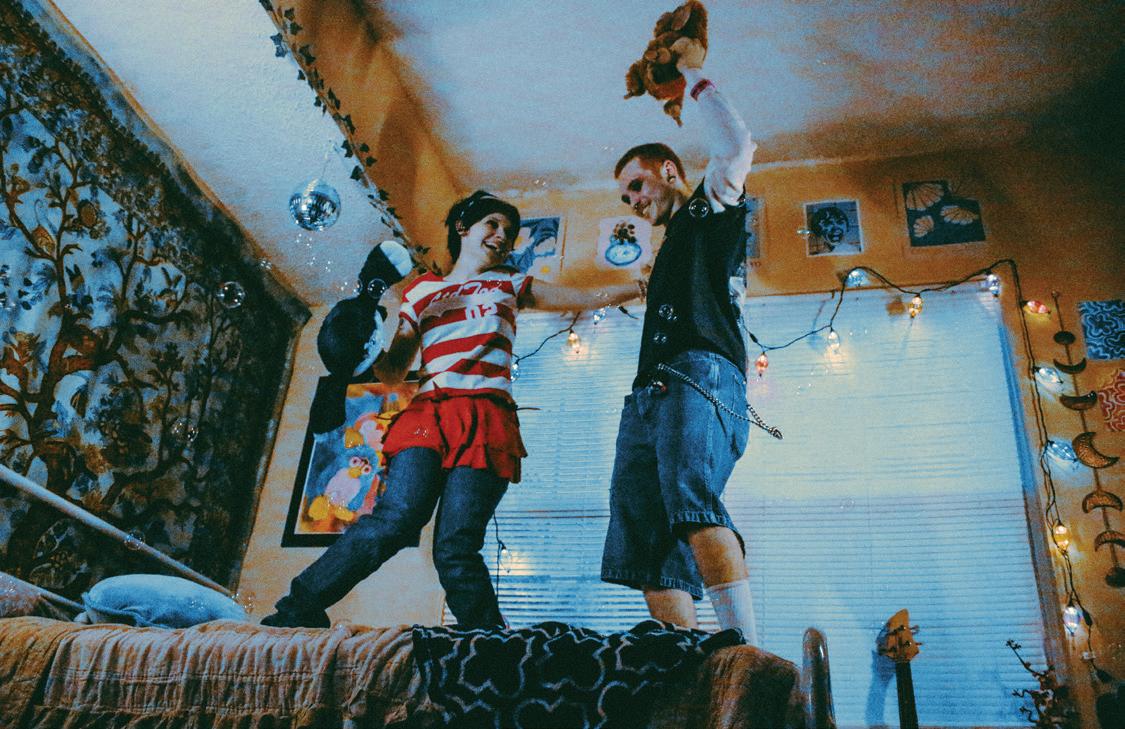
The relationship centers on his beliefs and his need for freedom, leaving the female protagonist to adapt, compromise, and carry the emotional load. In some ways, the Manic Pixie Dream Boyfriend expresses a cultural change in how heterosexual gender norms are developing. There’s growing
fascination with partners who are “different” or “unconventional,” often romanticizing behaviors that can be unhealthy in the long term. The MPDB embodies this tension. He is both the fantasy and the cautionary tale, the person who makes life feel cinematic but not necessarily sustainable.
tasks instead of necessities. He believes in living freely without restriction, which can be alluring to a protagonist seeking escape from her structured world.
This is where the dynamic becomes unbalanced. While the traditional MPDG is criticized for lacking depth in her function as a muse, the MPDB presents a different issue: he takes more than he gives. His chaotic validation draws the protagonist in but offers zero stability long-term.
By Lauren Boonstra
Viewer, I am not hard to find, my whole existence transcribed for you onto that disc in your cabinet, spinning round and round again. You watch me in record stores and in between bookshelves, speaking in bubbly, colorful phrases to a man recognizable. I am impulsive, uninhibited, and spontaneous. At least that is how you regard me, voyeuristically. But where is impulsivity when time’s circle is closed?
A pluck on the thread that binds my body together and the whole of me should unravel. A deletion of a letter that dictates my character and the figure should crumble..
A scratch on the flat circular surface I am burned onto and the world should stutter–but there is a strict refusal of chronology present in my world.
My tongue forms the same sloping syllables as yesterday but that awareness arrives unavoidably late. Familiarity is felt in the crook of my finger, the angle, muscle memory, as I beckon him backwards. Temporal dissonance drums at my temples, beating out an endless harsh procession of ‘wrong,’ ‘wrong,’ ‘wrong.’
Surely there is some divine director in that great beyond. Who waits for me there, but you in the audience? Belonging to a sea of replicators who may begin to jaunt in thunderstorms or listen to bands their male counterparts enjoy. Though they will be allowed to feel the water weighing down their skin and relish the thrill of response unscripted–consequence remains a novelty to me.
By Isa Pullen
The Manic Pixie Dream girl is a womanly entity that has been portrayed in various books and films. She is described as effervescent, adventurous–perhaps untamed with a fiery personality, ablaze with possibility. Oftentimes, this entity of a woman is misconstrued, and developed into something for male consumption. The manic pixie dream girl is obstructed in the view of many men, and certainly some women too. The manic pixie dream girl is stereotypically sexually
suggestive or seductive, charmingly quirky, and aestheticized for male perception. When we deconstruct the girl, stretching her apart thinner and thinner, disassembling her mind as a construct, we find she is the very antithesis of charming.
The very vessel of this dream girl’s being is a mere category of person, and undeniably fictional in the depiction of her in the media. She is portrayed as Penny-Lane in Almost Famous, or Clementine in Eternal Sunshine of the Spotless Mind. Although entirely different, both characters embody this charm that curtains over them, causing their male counterparts in the films to be awash with lust. The men in many of these films find these women to be attractive, but more sincerely, they are enticed by their authenticity and carelessness of judgment. They’re lured in by this line of enchantment and see these girls as constructs of their perfect woman. Unwittingly, they’re complacent under these girls’ tactics and evident flaws. The manic pixie dreamgirl, though alluring, is lacking in maturity. She is daydreamy and impulsive, but diluted into being extraordinary. The men in these films take these versions of women, and elaborately modify them to be what they are craving; they find these women cathartic and authentic, but face disappointment when the women are inevitably destructive and emotionally idle. They sculpt their ideal, dream-woman through these girls, and remain in this
limerence until the girls’ traits surface, inducing havoc. These men are entirely ignorant of the manic state of these girls, having reduced them to something far less dimensional than they are.
As a young woman who envies many traits of these characters, it becomes dehumanizing when women in film are watered down to their manic sex appeal. These women are complex and symbolize more than qualities
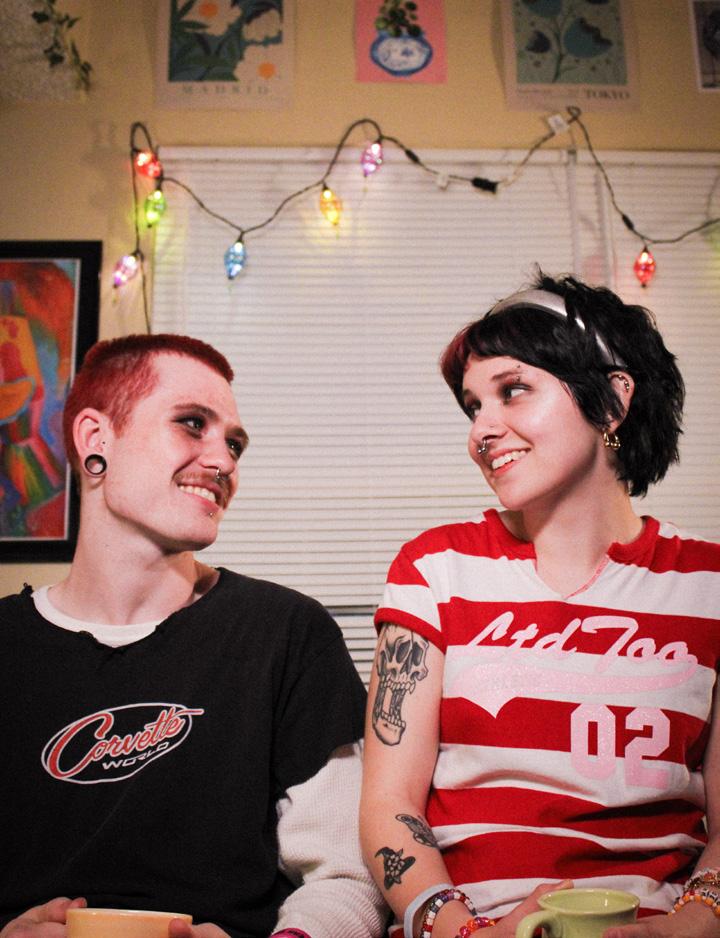
Photo by Joelle Pakes
revolving around their vanity. They are beautiful, yes, but they also illustrate what it feels like to be an ignorantly adventurous young woman. Rather than films focusing on these all-encompassing qualities, and what it can feel like trying to express rage and ache as a woman, it instead depicts them as wild and unique, their manic-state for men to consume because their bodies are abruptly sold into sexuality,
as opposed to female delirium. Women consume these characters as extensions of who they are, a mirror-like reflection of who they’ve been, dissecting the characters piece by piece searching for a morsel of themselves inside. While the male characters, and truly the filmmakers, whom we can’t exclude from the narrative, have washed away any complicated quality of them. Instead, they hint at the woman’s body and what she can offer to the male protagonist. How can she please him in this manic state? When she vanishes, she is villainized because the male character didn’t receive his compensation for handling her wild personality. When the woman doesn’t compromise herself, she becomes less and less, until viewers even perceive her as a mere instrument of wild sex.
Many manic pixie dream girls portrayed in films are misunderstood. Take Summer, from 500 Days of Summer, who is a character that is constantly in the middle of dilemma-based conversations. Is she right? Is she wrong? I daresay the complexity of a manic pixie dream girl is not the debate of whether she is right or wrong, but rather the conversation or dissection of her character to analyze her actions. However, we have consistently reduced these girls to “crazy,” or merely “quirky,” when, in reality, they are multi-faceted characters, undoubtedly more complicated than their diluted state in the media.
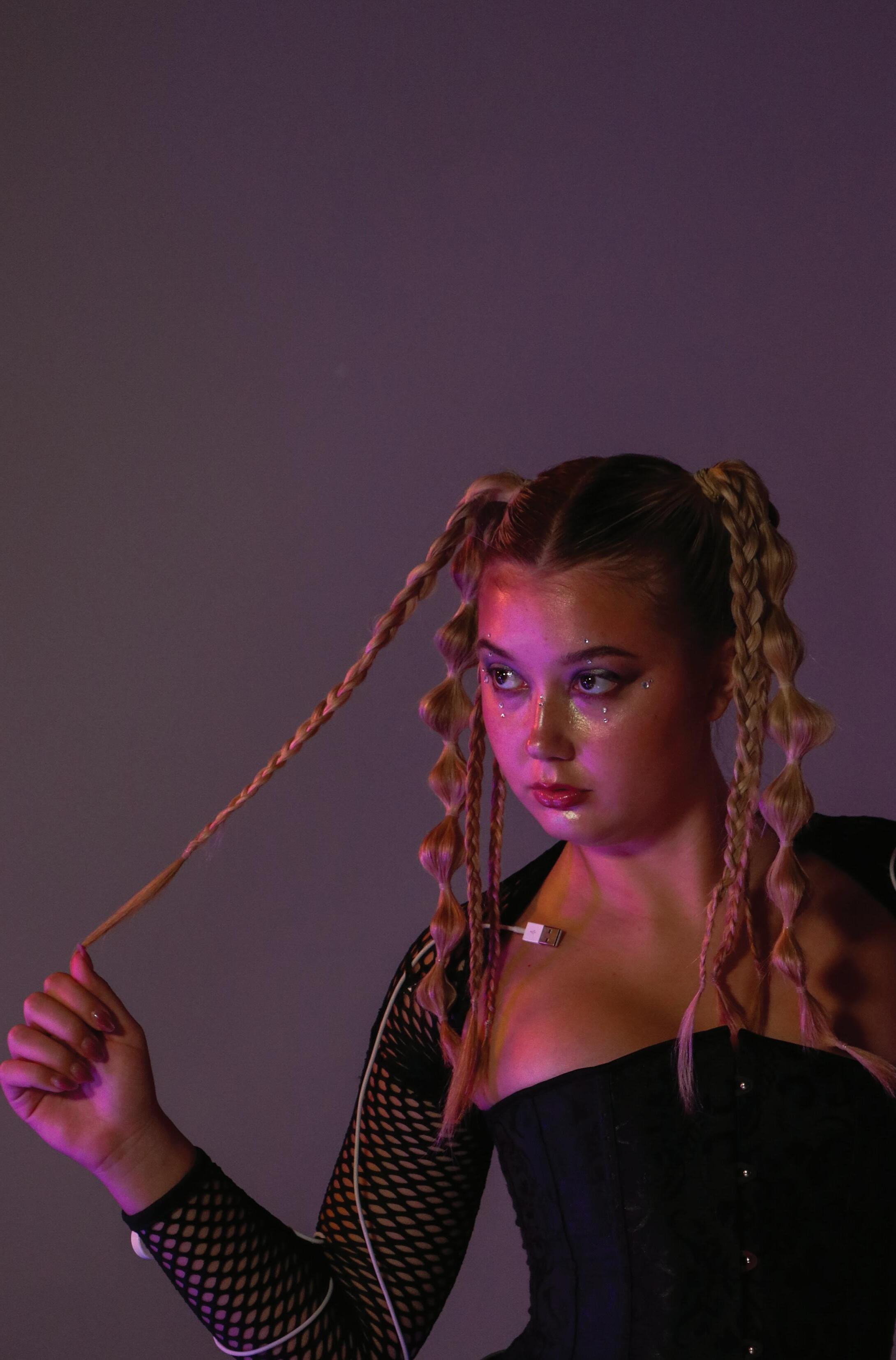
Ode to my hot pink iPod nano and the other tech of our youths
By Z.K. Domingo
Praise for hot pink nano squares serving as portals to untapped worlds; totems that reveal dancing silhouettes and rhythms in my ears through the wires snaked under my shirt.
For holographic discs that shine like the North Star from the comfort of a box TV, on the dark nights, uncomfortable nights, sad nights, bored nights, lonely nights and lively nights.
Praise for our first true unbreakable cellular saviors. One click, two click, three clicks– the holy trinity of my SMS prayers and gateway drug to a never-ending realm of connection.
For plastic remotes tethered to our wrists, keeping us grounded to the realities we designed ourselves.
Praise for portable handheld consoles dropped on hardwood floors and hidden under pillows and brought on long car rides and flaunted at school and stolen from siblings and borrowed from friends and gifted by relatives.
For the beacons of a slower youth while the future was held in our hands.
Praise for the lights and the screens of technological revolutions but a hot pink song of mourning for the digital sacrifices made along the way; for a time now lost to cyberspace.