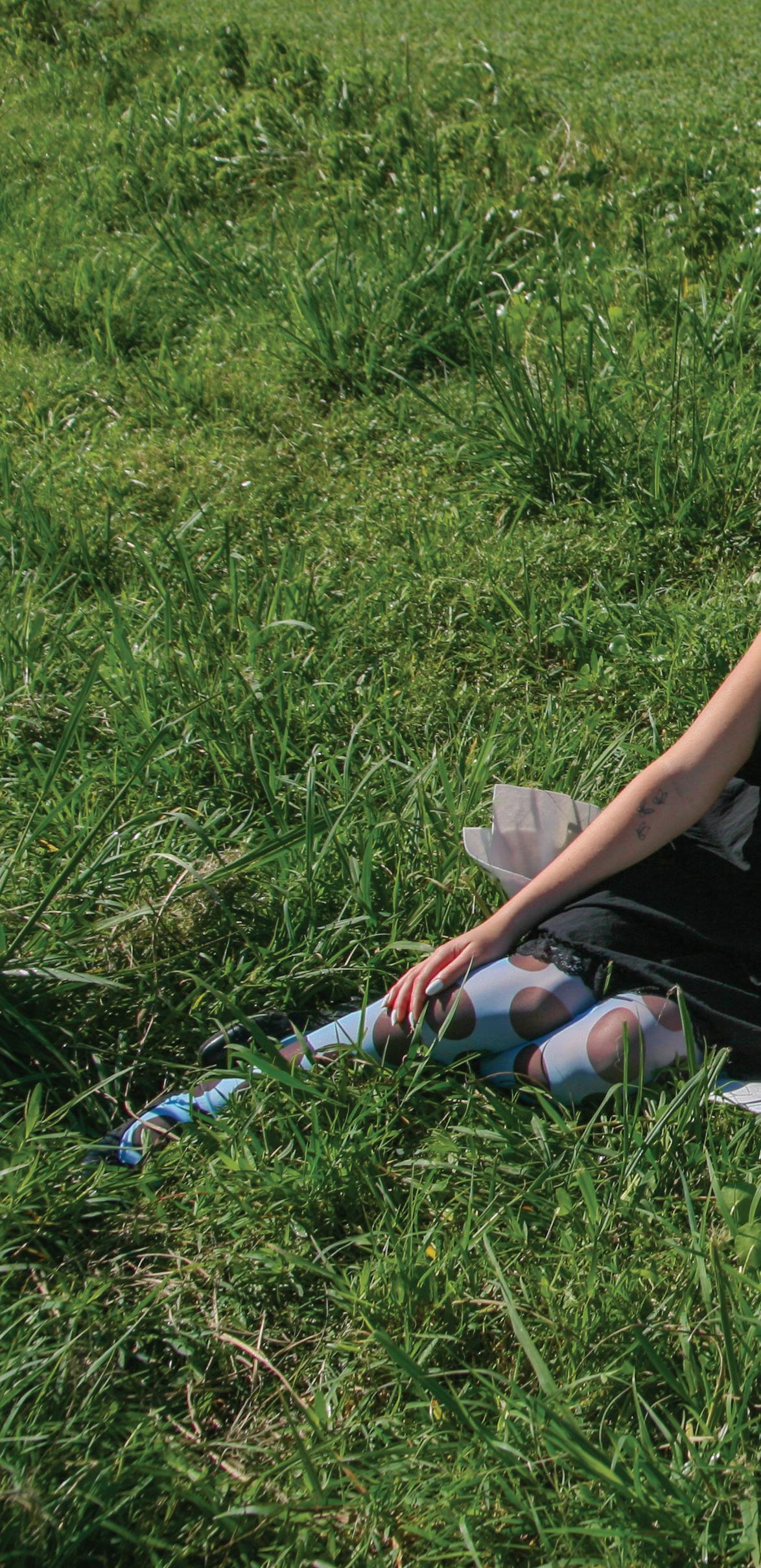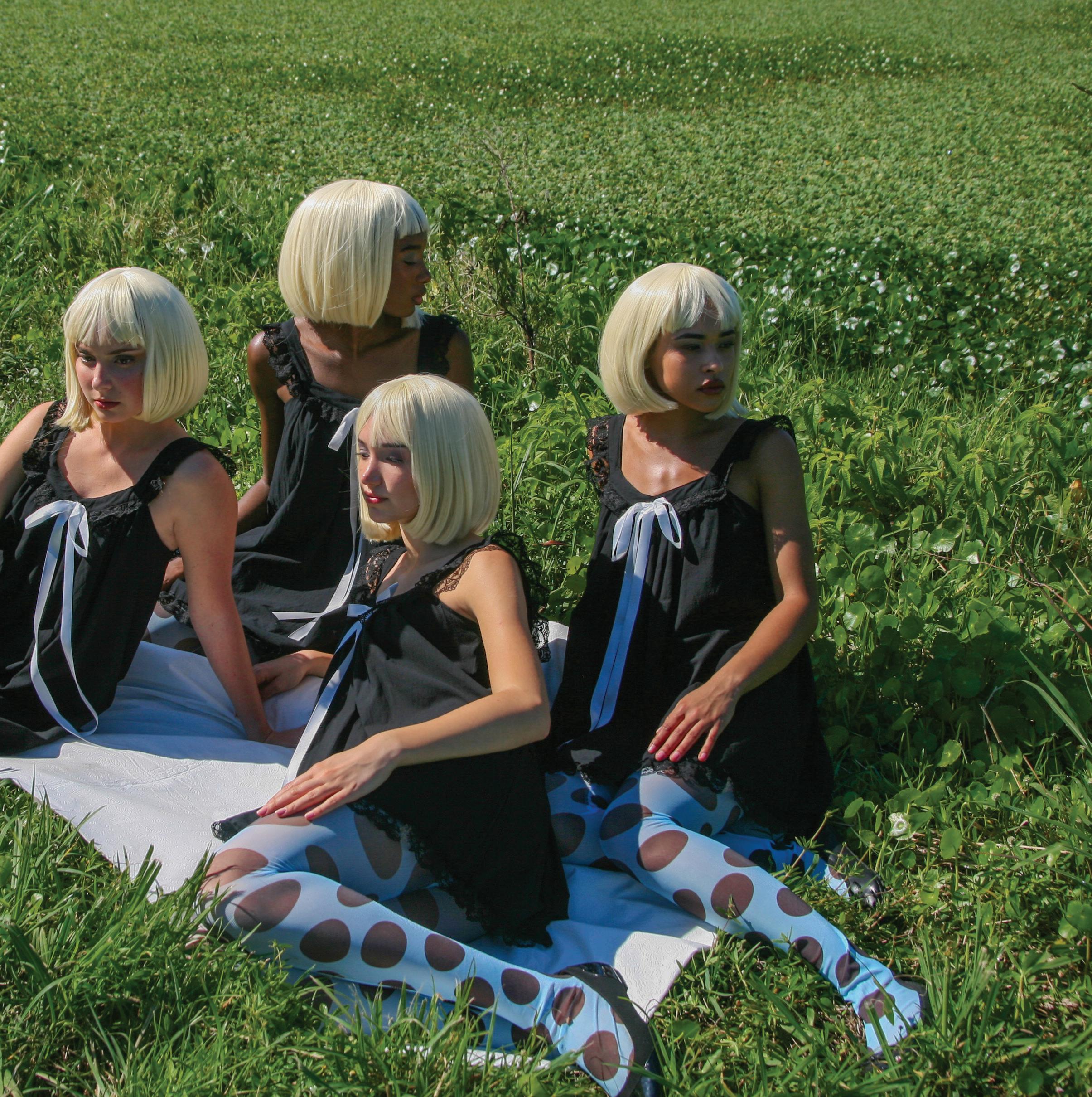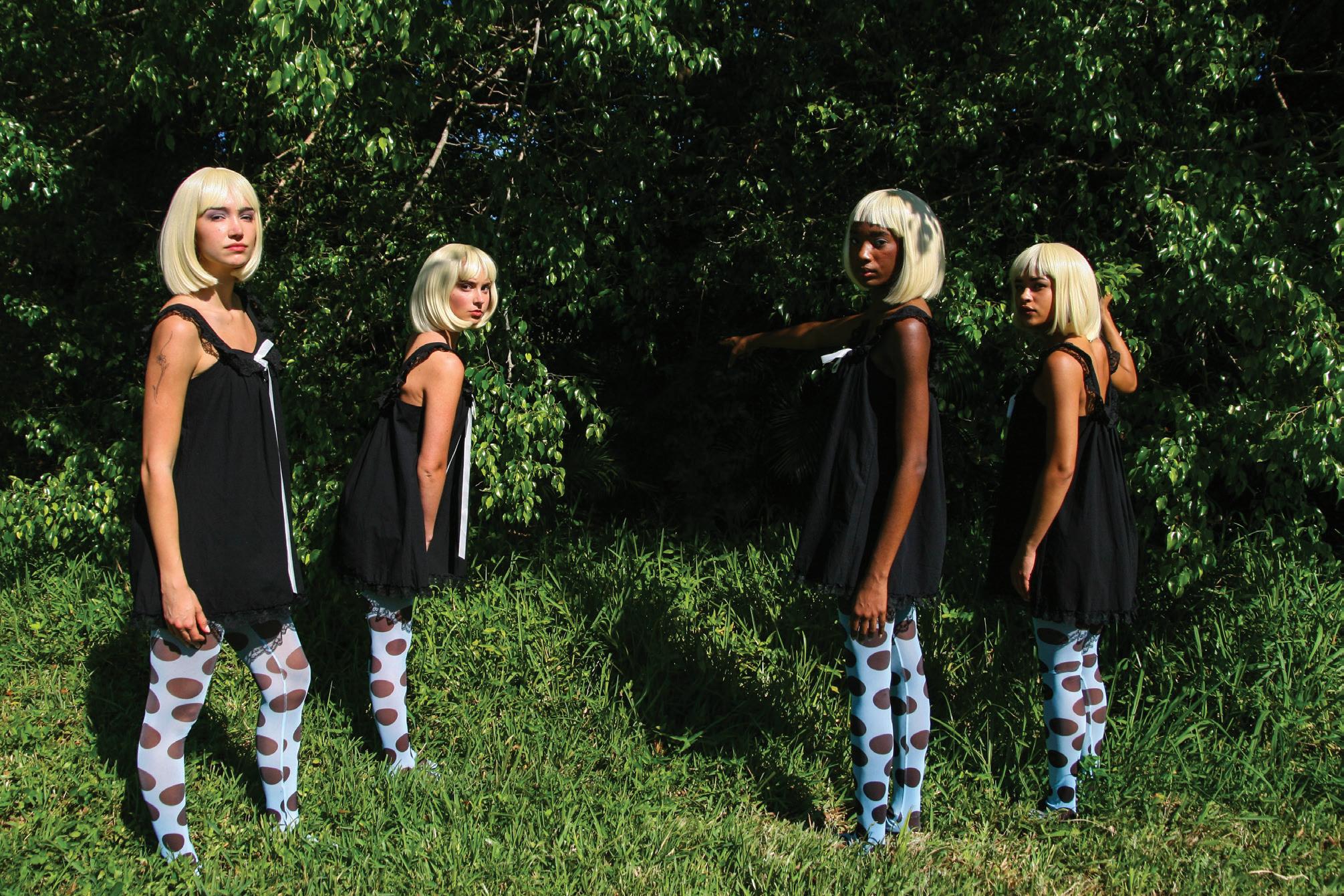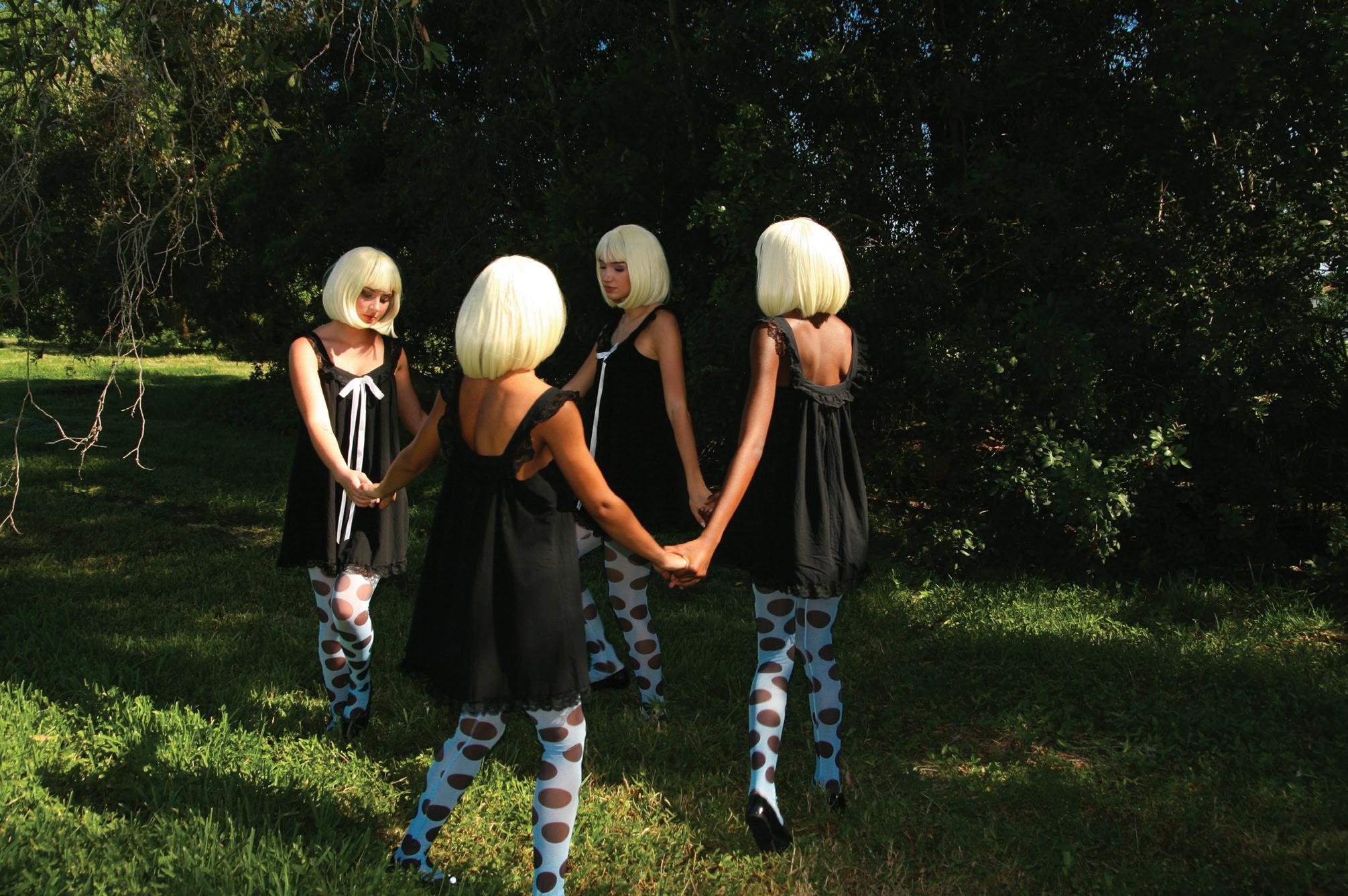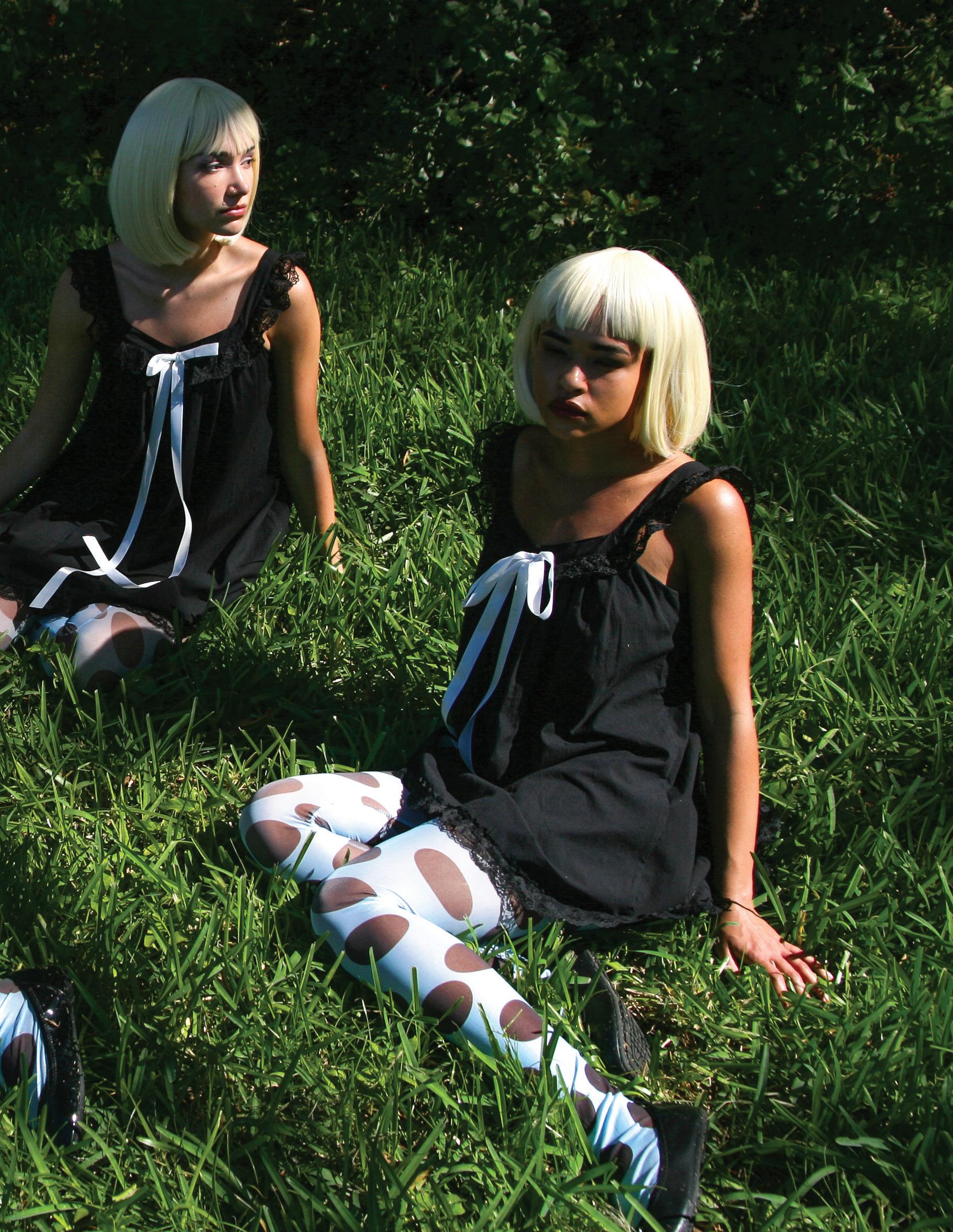

SHOT BY MARISA MCCABE


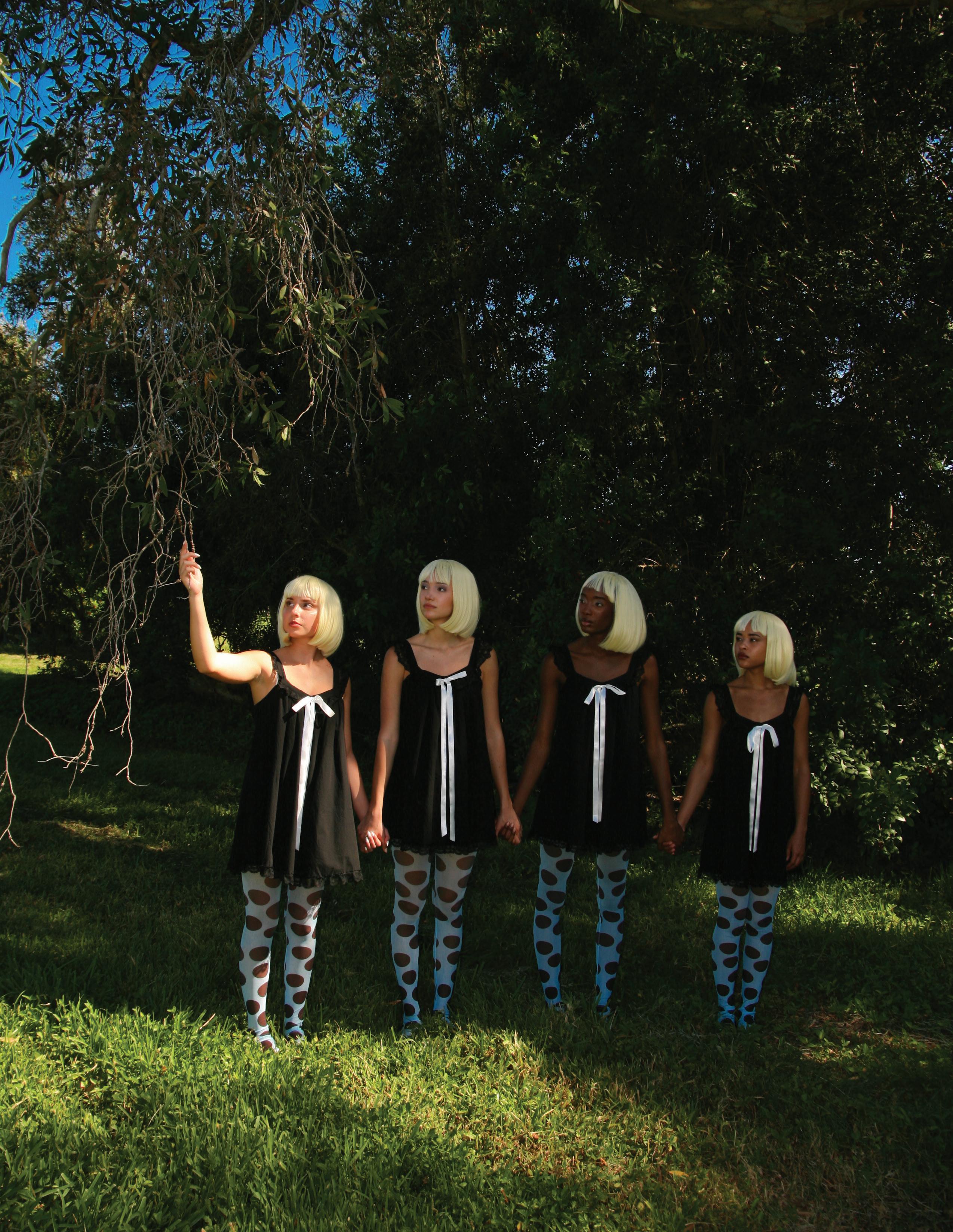
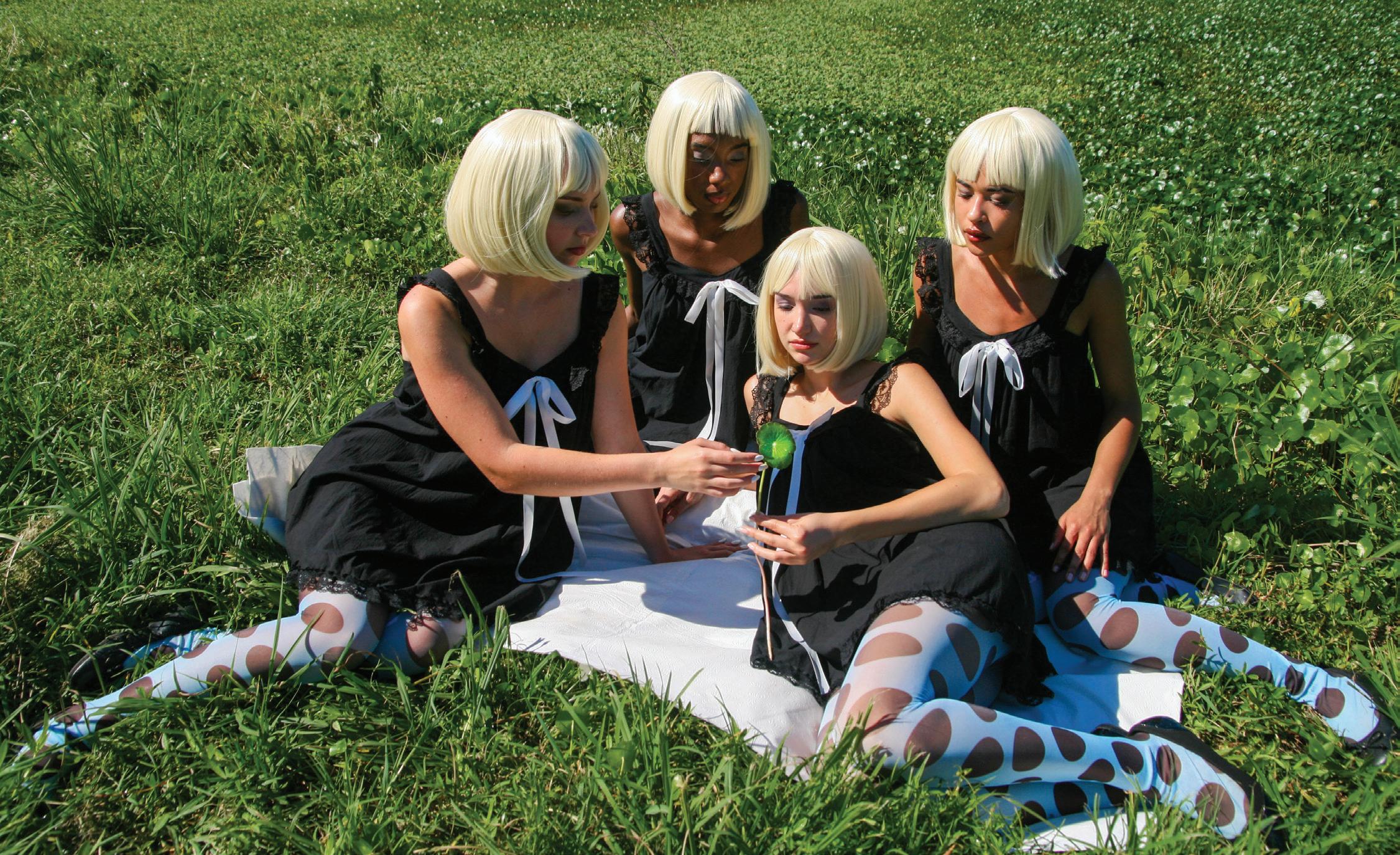
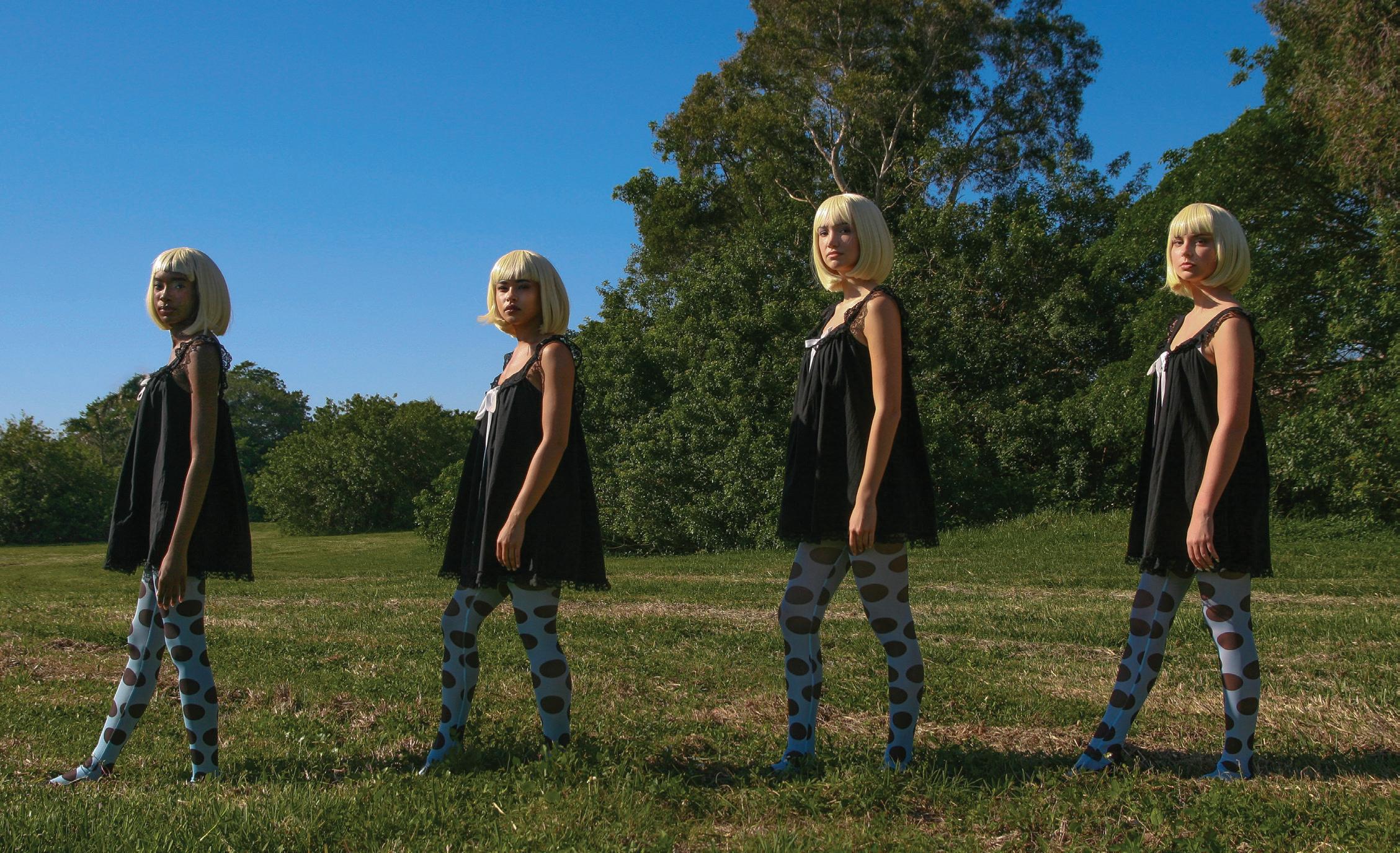
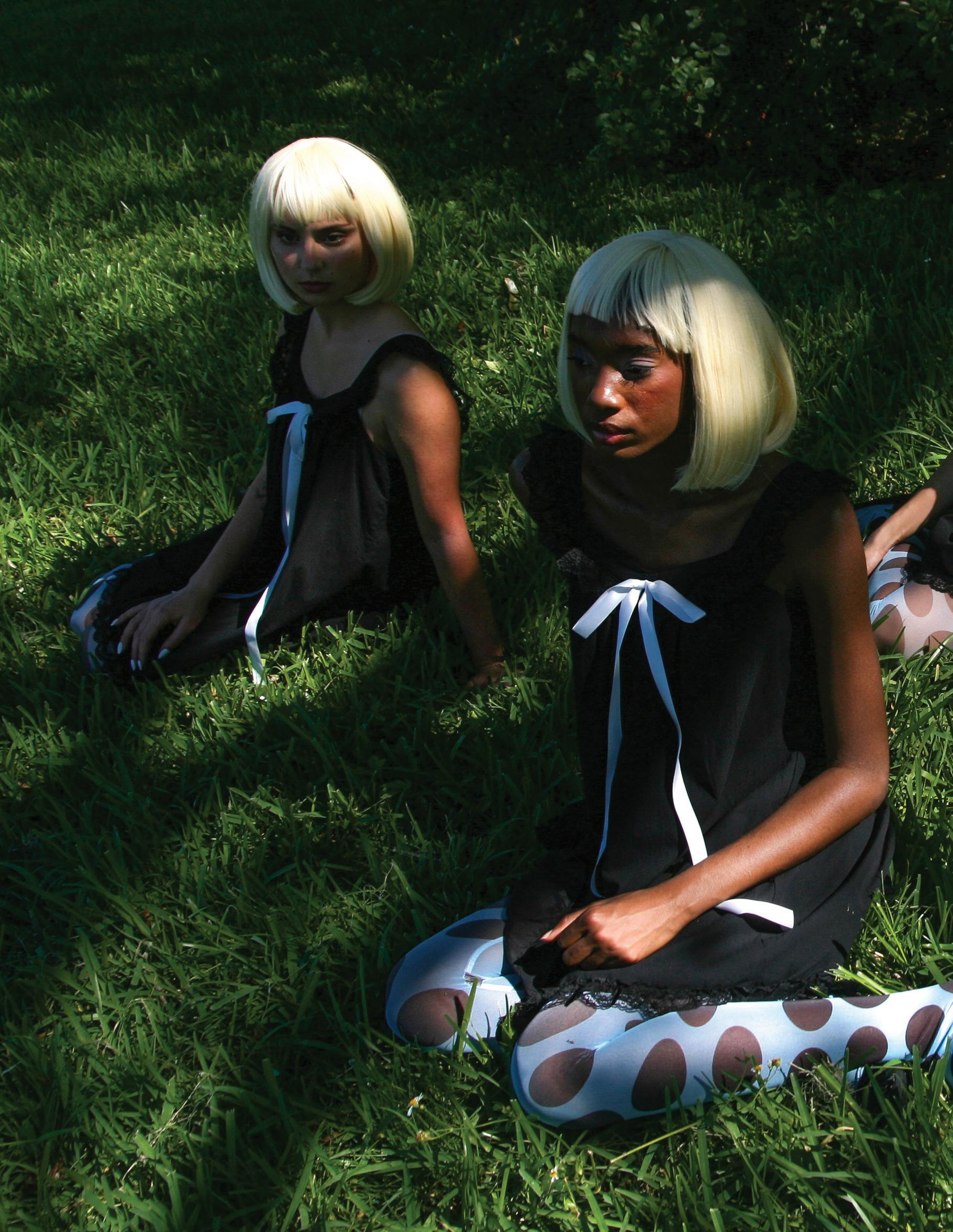
THE OBSESSION WITH BECOMING. BECOMING IS A WAY OF SAYING YOU FALL IN LOVE WITH ALL POSSIBILITIES. TRYING ON LIVES, CHASING EACH PASSION, HOPING THAT AT LEAST ONE OF THEM FEELS LIKE “HOME”. FLEETING PASSIONS, SHIFTING AESTHETICS, AND CONSTANT SELF-EXPERIMENTATION SHAPE IDENTITY EVEN IF THOSE THINGS DON’T STICK.
IN DOING SO, INFATUATION EXAMINES THE PUSH-PULL BETWEEN WHO YOU WANT TO BECOME AND WHO YOU REALLY ARE. AND IN DOING SO, WE ASK THE QUESTION, DOES THE CONSTANT SEARCH FOR WHO YOU COULD BE, BRING YOU CLOSER TO YOURSELF OR SLOWLY PULL YOU FURTHER FROM WHO YOU TRULY ARE?
EDITOR-IN-CHIEF
KIM NGUYEN
CREATIVE DIRECTOR
ARABELLA CAMPBELL
FASHION & BEAUTY
STYLING DIRECTOR
JORDAN CAMPBELL
STYLISTS
KIMONIE ALTIDOR
LILLIAN VAGONIS
EZRA DIXON
JAYNA LIPKIN
CARLIANA DELGUERCIO
BEAUTY DIRECTOR
TIANA MATHEW
BEAUTY ASSISTANT
ADRIAUNA EVERETT
PRODUCTION
PRODUCTION DIRECTOR
MARISA MCCABE
PHOTOGRAPHERS
SASHA CAMPBELL
SOPHIE MESSMER
DAVIS GOODLATTE
CADENCE WHITEHOUSE
VIDEOGRAPHERS
SASHA CAMPBELL
ARABELLA CAMPBELL
CREATIVE DIRECTOR ASSISTANT CHASTITY COOPER
EDITOR-IN-CHIEF ASSISTANT
ALISON MAY
EDITORIAL
EDITORIAL DIRECTOR
ROSEMARY AZIZ
SENIOR EDITOR
MATTHEW WOLFE
CONTENT WRITERS
MADISON DENIZARD
MATTHEW WOLFE
KADEN HORN
SOL MOYANO
JOHANN JONASSAINT
WEB DIRECTOR
MADISON DENIZARD
ART & DESIGN
ART DIRECTOR
KIM NGUYEN
GRAPHIC DESIGNERS
ANDREA MAES
MORGAN HALL
SARAH BOSS
ARABELLA CAMPBELL
CHASTITY COOPER
DIGITAL
DIGITAL DIRECTOR
ARABELLA CAMPBELL
DIGITAL ASSISTANTS CHASTITY COOPER
ALISON MAY MORGAN HALL
FAITH FOLTZ
PATRICIA JANSHESKI
LILLIAN VAGONIS
FALLON LANTEIGNE
ELISE ARCHER
ALEXANDRA LABOHN
JAYNA LIPKIN
NICOLINA DOLGETTA
EXTERNAL
MARKETING DIRECTOR
FALLON LANTEIGNE
MARKETING ASSISTANTS
ALISON MAY
PATRICIA JANSHESKI
JEAN FRANCO FIGALLO
TIZZIANA SCAVINO
GAELLE ALEXANDRE
VICTORIA DELEO
GIANNA CALASCIBETTA
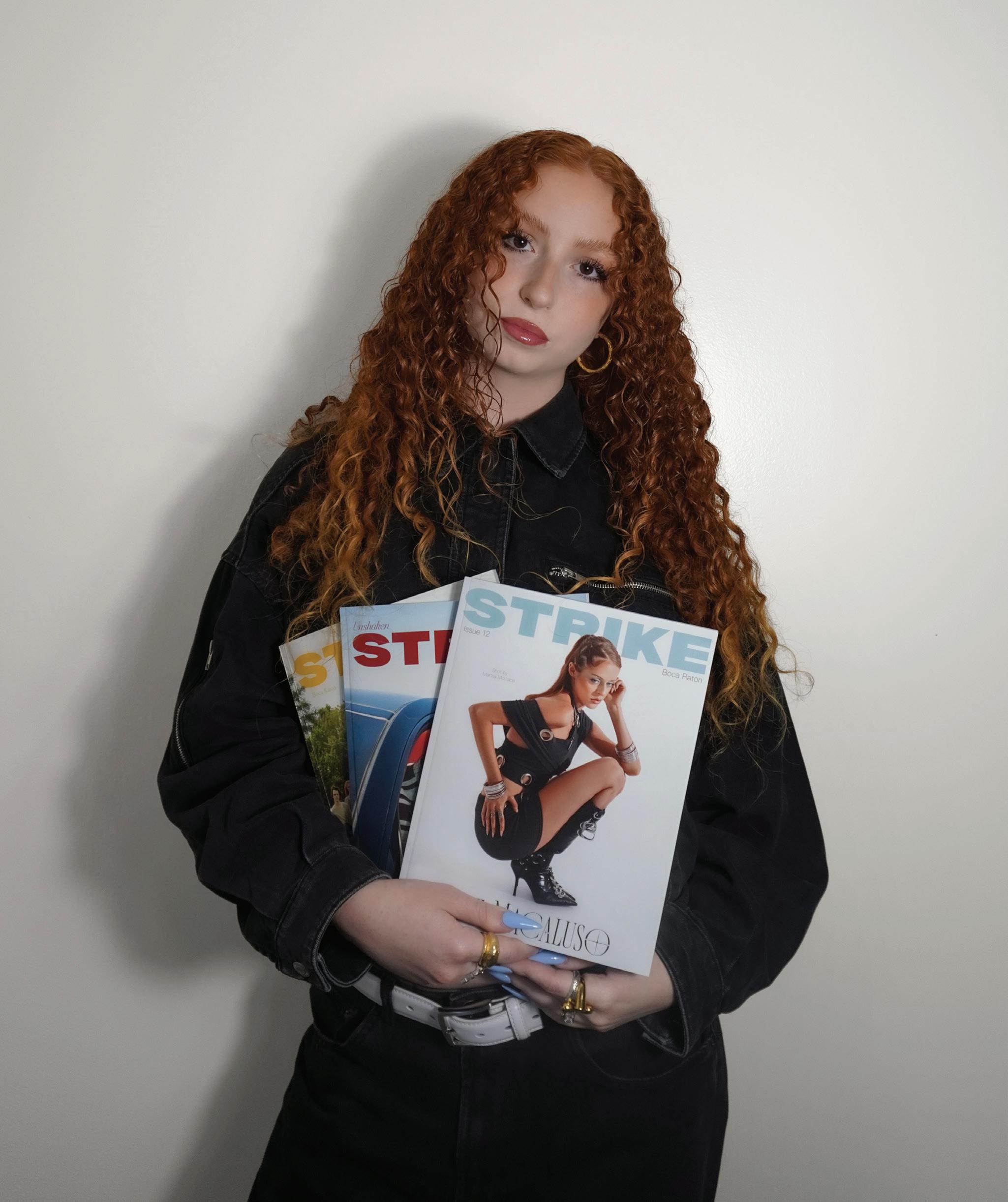
I’m officially putting in my two-week notice at Strike Magazine Boca. It’s been two and a half years, five issues, and two issues as Editor-in-Chief. In total, twelve shoots, twenty-two articles, and countless late nights.
Strike is a masochist’s dream with its ever-demanding schedule, tight deadlines, and even tighter budgets. Yet it’s truly passion that keeps this publication alive. Love for all things pop culture, fashion, and creativity. Not only has this role been something I’ve been unconsciously manifesting because it aligned with my personal interests, but also because its a creative challenge. I’ve learned how to put on so many hats during this journey, and each team plays such an integral part in producing this magazine each semester.
As an avid enjoyer of romantic comedies, many of the leading women in my favorite films were journalists and editors working at a fashion magazine. While I’m no Andie Anderson, Jenna Rinks, or especially Miranda Priestly, but why is no one ready? Strike has given me a slice of that life. I’ve lived on my laptop, sending emails, approving articles, and designing print layouts. Next time, I’m hoping it’s from a glamorous New York City office and not my bedroom.
More importantly, I’ve met the most incredible people, ones whose work inspires me every day, and those who I probably wouldn’t have met otherwise. And a special thanks to everyone who has supported this magazine and their local creatives. Whether you are a parent or a friend who has encouraged a staff member to apply, lent a helping hand, or bought a magazine, it truly means the world to us. It takes a village to keep this publication alive, and the love I’ve seen from this community has been truly heartwarming.
Lastly, thank you to everyone who has trusted me to lead them. It’s been truly an honor to call myself Editor-in-Chief of this amazing magazine. I’ve written this so many times at the end of my articles, and I can’t believe this is the last time, as it always seemed so far away, but
Photography by Sasha Campbell

From the moment I heard about Strike Magazine Boca at the end of my sophomore year, I knew it was something I needed to be a part of. Halfway through college, completely lost, having absolutely no clue what I wanted to do with my life. All I knew is that I wanted to do something creative, something fun, something that gave me a sense of belonging and direction.
Joining Strike in the fall of my junior year as a Digital Assistant was one of the best decisions I could have made. At the time, I was a very shy and nervous person, trying to open up and feel confident about my ideas and work. It took some time but I knew I was getting there. I have always been a very determined and motivated person, working hard and knowing what I want, and that eventually got me the roles of Digital Director and Creative Director Assistant for my second issue with Strike. Having these leadership roles were definitely challenging and something unfamiliar at first, but were the start of me finding my way.
Sitting here now writing this, wrapping up my fourth issue with Strike; third as Digital Director and second as Creative Director, I found a part of myself that I had only wished for a few years ago. Giving me confidence in myself to be able to move further and forward with a career that didn’t feel reachable before. It wouldn’t be possible without Kim, Chastity, and Alison by my side, navigating through this together, creating something unique. As I am about to graduate college, the one thing I would tell others who may feel lost or unsure, is to choose creativity to find your sense of self, and try something new even if it may be scary.



As a child, I began planning my life out. Not on purpose, but because it’s something that is thrust upon us. Have a plan. Have a purpose.
It all starts with one simple question: Where do you see yourself 10 years from now? It’s a question we get asked as 8-year-olds in primary school, as 17-year-olds in secondary school, and as 21-year-olds in college.
To kids, the question is a dream. A fun excursion that you look forward to every night before bed. I see myself as an astronaut, or as a veterinarian, or as my older brother. The child-like wonder makes possibilities feel endless, a trait that is forever missed as you get older.
As teenagers, the question is a mission. Twelve years of schooling to find our passions, our hobbies, what we’re good at. This mission grounds us, keeps us steady. It may not be our limitless dreams like before, but it sure is something to look forward to. In 10 years, I want to be in medical school, or getting married, or traveling the world.
In your 20s, the question brings fear. Not delight, or hopefulness, but a sense of dread that everything you’ve worked towards so far in life may not turn out the way you’d expect. We see it all around us, from family, friends, even strangers on the internet.
Not all dreams come true. Missions sometimes lose their appeal.
It gets tricky. Complicated. We, as humans, don’t like complicated things. We don’t want to be pushed or placed in difficult situations. We want to stay in our comfort zones where we know we can’t fail if we haven’t tried.
“WHERE DO YOU SEE YOURSELF IN 10 YEARS?”
My heart immediately starts racing at the question. I need to give an answer that’s ambitious, but not too optimistic, so that it stays in the realm of what’s realistic. I also don’t want to shoot my dreams down for the sake of realism, so I need to give a well-balanced answer.
It shouldn’t be that hard to come up with an answer, and maybe for some, it’s not. There’s just too much that can go wrong and too much uncertainty.
I’m not clairvoyant, I can’t tell the future. I barely know what I’m having for dinner.
This question becomes a new obsession. An infatuation. How will we get ourselves to where we want to be in 10 years? It’s something we think about every waking moment.
It’s not fair. It’s not fair that we’re cutting ourselves short if we have everything planned out. If humans have one thing going for them, it’s our impulsivity.
It’s like cutting your own bangs. It only happens impulsively, and it can either go very right or very, very wrong (usually the latter). However, it steers us from our path and into a new one, the same way obstacles do in our day to day. Instead of growing out your hair as you told yourself you were going to do, you have to wait a few more years to grow it out again. Who knows, maybe you’ll realize having bangs was more your style. And if you end up hating them, it’s another lesson learned.
Just like life.
I know we’re not just on the receiving end of that question. We somehow love asking it too. Hearing somebody else’s plan, or lack thereof, may help us solve our own problems. Or come up with a new path. There’s comfort in knowing your peers may be just as clueless as you.
The dreaded question can also be heard through different variations.
“DO YOU SEE YOURSELF IN A RELATIONSHIP WITH HIM 10 YEARS FROM NOW?”
“DO YOU SEE YOURSELF STILL PURSUING THIS CAREER 10 YEARS FROM NOW?”
“WHAT IF AI REPLACES YOU IN 10 YEARS?”

I wish I could just scream at the top of my lungs: “I DON’T KNOW!”
We can say whatever we wish will happen or are currently working towards, but logical thinking always pulls you back down to earth.
Sometimes the question acts as a guide. If you don’t see yourself in a relationship with a person 10 years from now, it may be a sign you’re in the wrong place. The same thing goes for a career. If you don’t see yourself still being passionate about something 10 years from now, maybe it’s time to try new things. Push yourself.
Find the balance between when the question serves you versus when it keeps you caged. Freedom doesn’t come easy if you don’t let yourself be present.
There’s no time for impulsive trips with friends, dating someone “for the plot,” or smoking a cigarette just for fun.
If it doesn’t fit the plan, it’s out. Even if the best memories may come from the plans you never made, or the outcomes you never expected. At 21, you’re supposed to have internships lined up. At 23, you should have a “real job.” At 25, maybe a ring. At 30, a house. The numbers stack themselves neatly in our heads like a checklist. And if you’re not hitting them in order, you start to wonder if you’re behind.
Behind who? Behind what?
There’s something almost ironic about trying to control a future that hasn’t asked for our permission yet. We build ten-year plans like we’re architects, drawing blueprints for a structure that hasn’t even been approved. And when life moves a wall or changes the foundation, we panic. We think we failed.
The truth is, you can make a plan for yourself, work at it, and move with your intentions clear. But life will throw you hundreds of obstacles that you can’t even begin to predict. Something may happen tomorrow that could change the trajectory of your life.

Getting distracted and letting things happen is how we grow. How we evolve. If we stay in the comfort zone that we’ve planned in our heads, we’d never know about the “what-ifs.” What if I became a writer instead of a doctor? What if I traveled the world for a gap year? What if I move out of my parents’ house?
Let the obstacles run their course. Let yourself move through the world unexpectedly. You never know the people or possibilities that may arise.
So, the next time I get asked the question: “Where do you see yourself 10 years from now?” I won’t try to come up with a false answer that would look good on a resume or that would make others feel satisfied.
My voice won’t shake when I admit my uncertainty, and my heart will stay open for new opportunities.





Loud, dark, overwhelming, daunting, dramatic. All words that can be used to describe the world we live in. And yet, there is light at the end of the tunnel. The question is: do you run towards it? Are delusions of grandeur what keep joy alive?
The phrase “protect your peace” has been repeated a plethora of times over the past few years. The same category as “turning a blind eye”, “stay in your lane,” and “ignorance is bliss.” What all these phrases have in common is the decision to focus your attention on your own social, emotional, and physical well-being; weeding out the “negativity” and toxic elements that might be in our lives.
Ultimately, concluding that when it comes to things that do harm, whether physically or mentally, or simply do not concern us, we choose not to look. Optimism, or simultaneously ignorance, becomes our saving grace, and we choose to focus our attention within.
Protecting our peace is a boundary-setting. Emotional, physical, and spiritual. When it comes to those projecting negativity onto your goals or life, protecting our peace is rejecting it. An article written by We R Native states: “Bound-
Written by Madison Denizard
aries are based on your relationship with yourself, so only you can set your boundaries. There are many different types of boundaries, like emotional, physical, spiritual, financial, or digital. Some examples of boundaries can be: ‘I’m ok with listening to you telling me how you’re feeling, but I don’t want to talk about my feelings right now.’”
These boundaries lie on a spectrum ranging from simple acts, such as eating a cleaner diet, to safety concerns, leaving a toxic relationship or dynamic. Being able to discern the difference is essential.
But how do we decide what needs to be rejected?
This can be determined by a multitude of things. Our bodies experience a range of emotions, and it can be difficult to determine when something could be affecting us negatively, especially if it disguises itself as something minor.
When it comes to aspects of our social lives, both friendships and relationships are prominent areas of our lives and have some of the largest impacts. Just within this area, there are various ways we can set boundaries that allow us to avoid unnecessary negativity. Sometimes, negativity

can be communicated silently, by small actions that have ill intentions toward our goals. Being observant of reactions received to good news and deciding who deserves that news is a practice in protecting our peace that can be implemented every day.
The concept of a distraction has become something villainized within today’s hustle culture society. That ladder-climbing mindset has seeped its way into our goals for our personal lives, for our identities, rather than just something that dominates corporate culture. Making “distractions” something that is an obstacle in improving. The distinction between distraction and essential building blocks to success can be easily enmeshed.
All over social media, things such as romance, friendships, and even hobbies have become seen as “distractions,” a desire to be ashamed of, a waste of time deemed precious rather than something that can aid in the discovery of your peace. Things labeled as distractions by society differ from those we decide on our own are unnecessary distractions. Some of these “distractions” can be beneficial to the discovery, as they are fibers that make up the quilt of who we are. Trial and error is essential to find the solution. Being able to discern that could be one of the biggest steps toward inward growth we strive for.
As stated by The Bioethics Podcast, in the episode Grey Matters: Turning a Blind Eye: An Ethical Assessment, “Some signals assist while others impede progress. To ne-
glect all signals is reckless, but to take notice of them all is to be encumbered in minutiae, if not stalled in doubt.” The idea that distractions divert from the goal or do more harm than good is misguided; distractions can actually be where we bloom.
In this life, growth is our constant companion. The only thing that doesn’t change is the fact that we are changing. A goal in which we run towards, constantly trying to climb the ladder to our highest selves. Within the continuous cycle of growth, we may become caught up in the never-ending journey, desperately seeking the reward at the top, and seeing that our work to weed out the negatives added up to a positive. A positive sense of self, external achievement, weight loss goal, etc.
But when does it become a necessary task? Is it possible that the act of “protecting our peace” in itself becomes what it fears– toxic? There is a slippery slope to falling into the trap of putting on blinders to the rest of the world, disguised as minding your own business or focusing on yourself.
In a society where moral polarization is one of the most prominent aspects of human interaction, “protecting our peace” can become an excuse to remain safe from confrontation or feeling uncomfortable. There is a difference between blocking out unsolicited negativity from your own dreams and goals and choosing to turn a blind eye to issues that affect humanity as a whole.



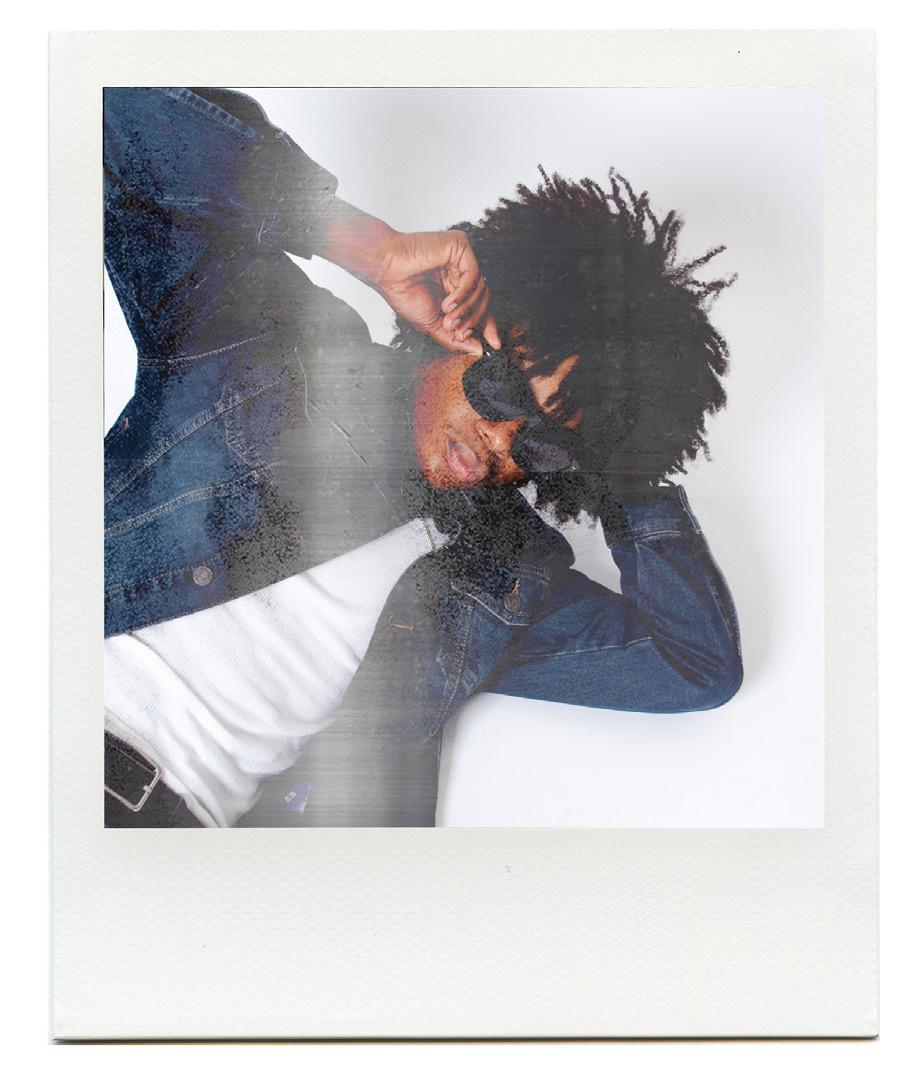

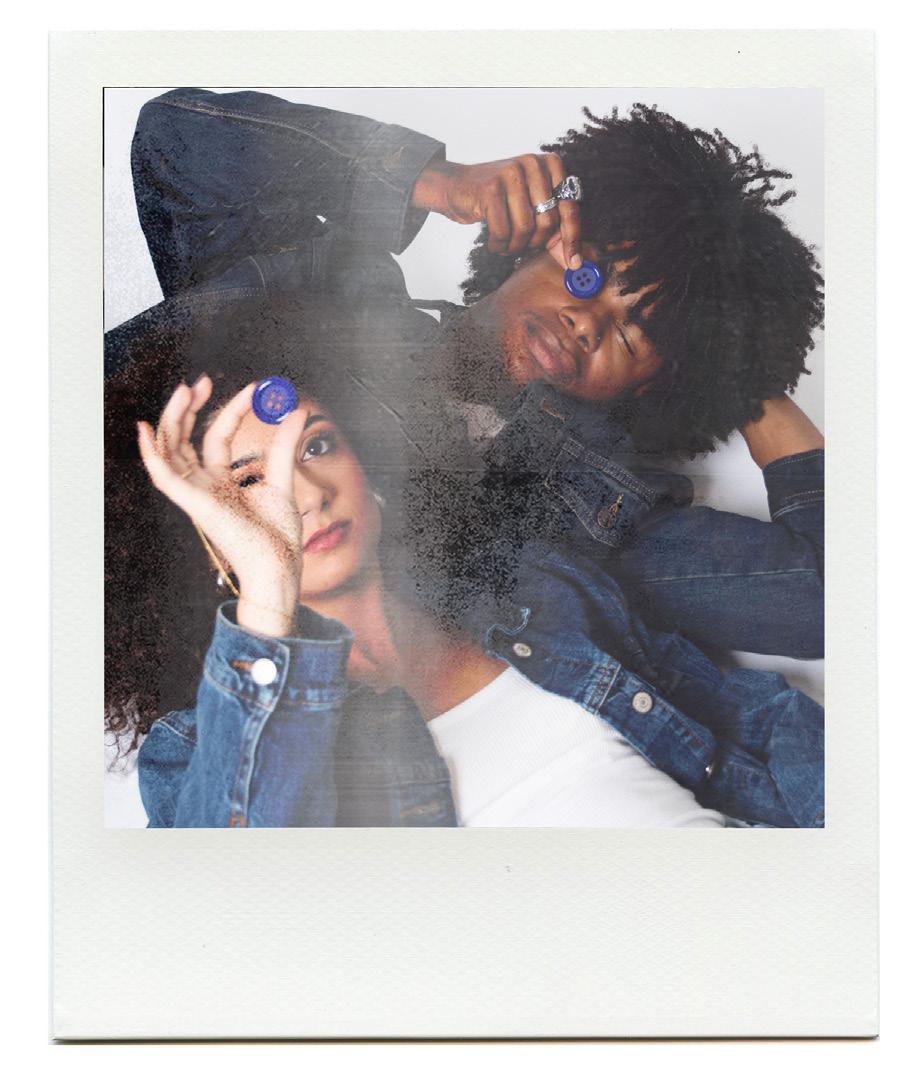


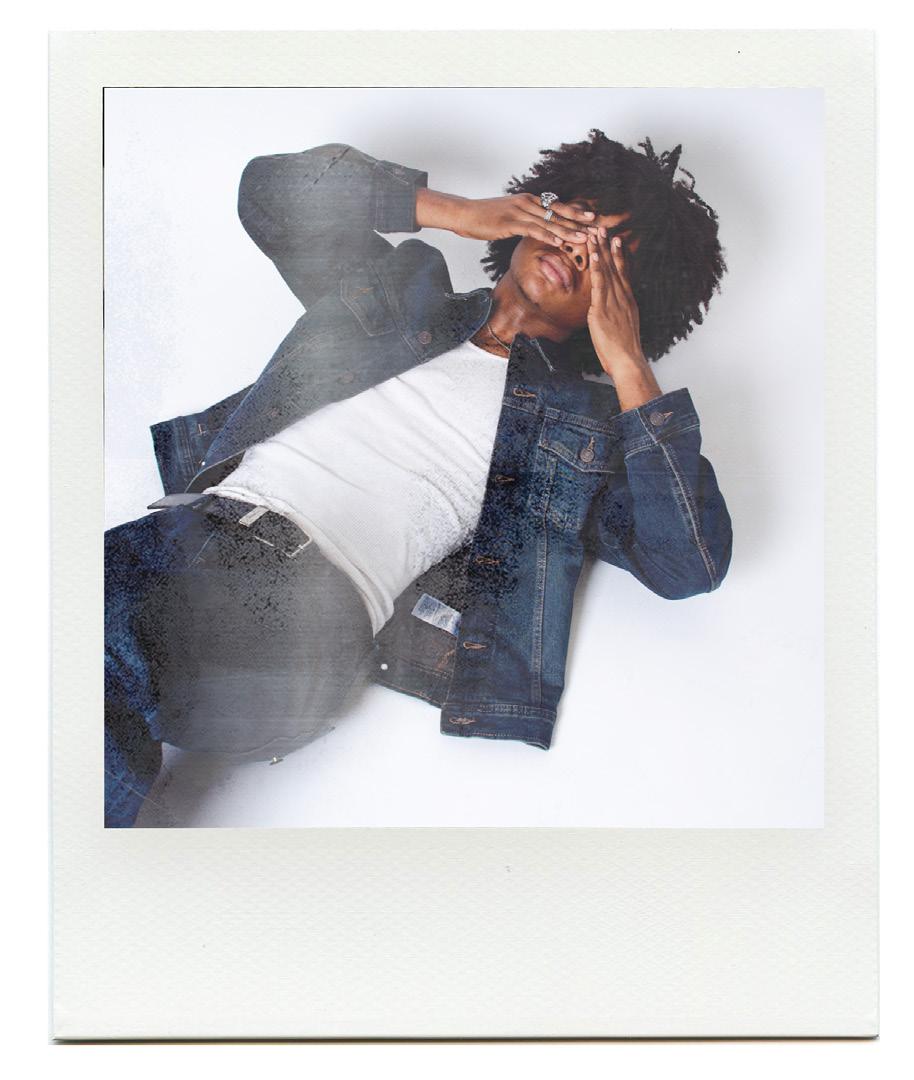

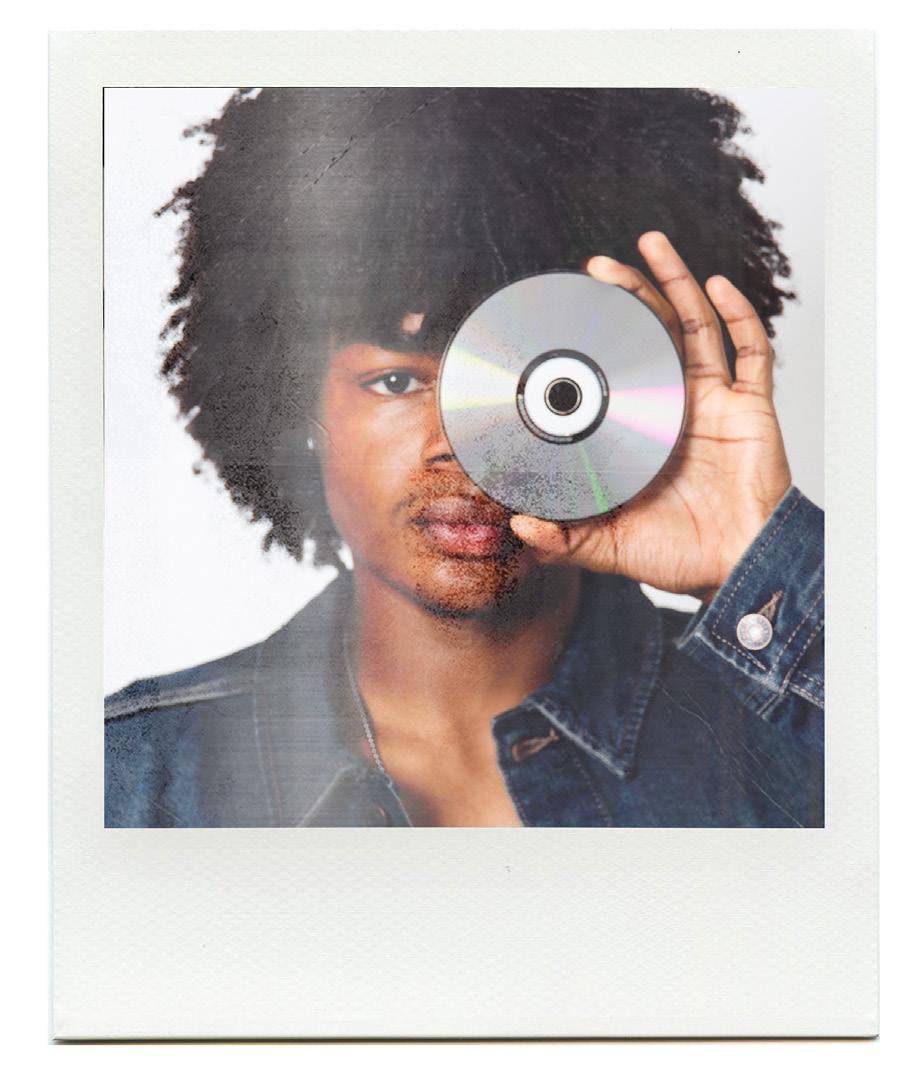



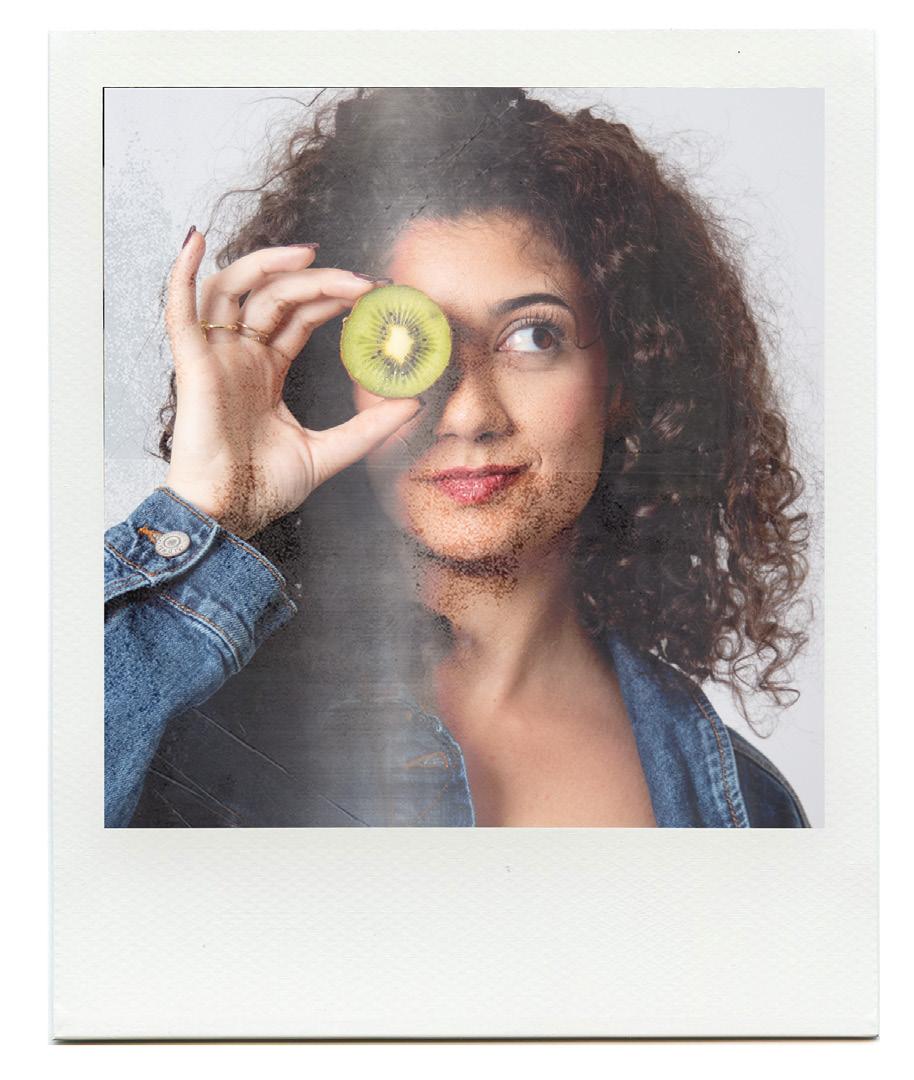
The ability to walk the line of seeing no evil without becoming evil to some extent– the loss of empathy, or lacking morality under the guise of self-prioritization– is where the peace that we long for lies. Empathy is both a blessing and a curse, an area of our lives that requires essential boundaries. However, a lack of empathy creates a bubble, pushing those around you away, making the constant self-improvement futile. It’s a balancing act; removing emotion from decision-making while remaining empathetic. Fall off, and it can do severe damage, but find balance, and it could get you the gold medal.
Empathy can be the backbone of our decision-making, deciding what deserves our energy and what doesn’t. Having empathy for others, but most importantly, empathy for ourselves. Taking a step back when things are doing us more harm than good. However, taking a step back does not
mean cutting off the world completely. If we were all completely individualistic, nothing productive would get done.
Discernment is a gift, and one to be used thoughtfully because with every action we take, there is always an equal and opposite reaction– a consequence. We are at the mercy of our decisions; the consequence is our perspective on the loss. i.e., leaving a relationship: you lose the person but perhaps gain pieces of yourself back. Concequence, or pivot?
When we are able to put all the pieces together, that is when we achieve the goal of protecting our peace.
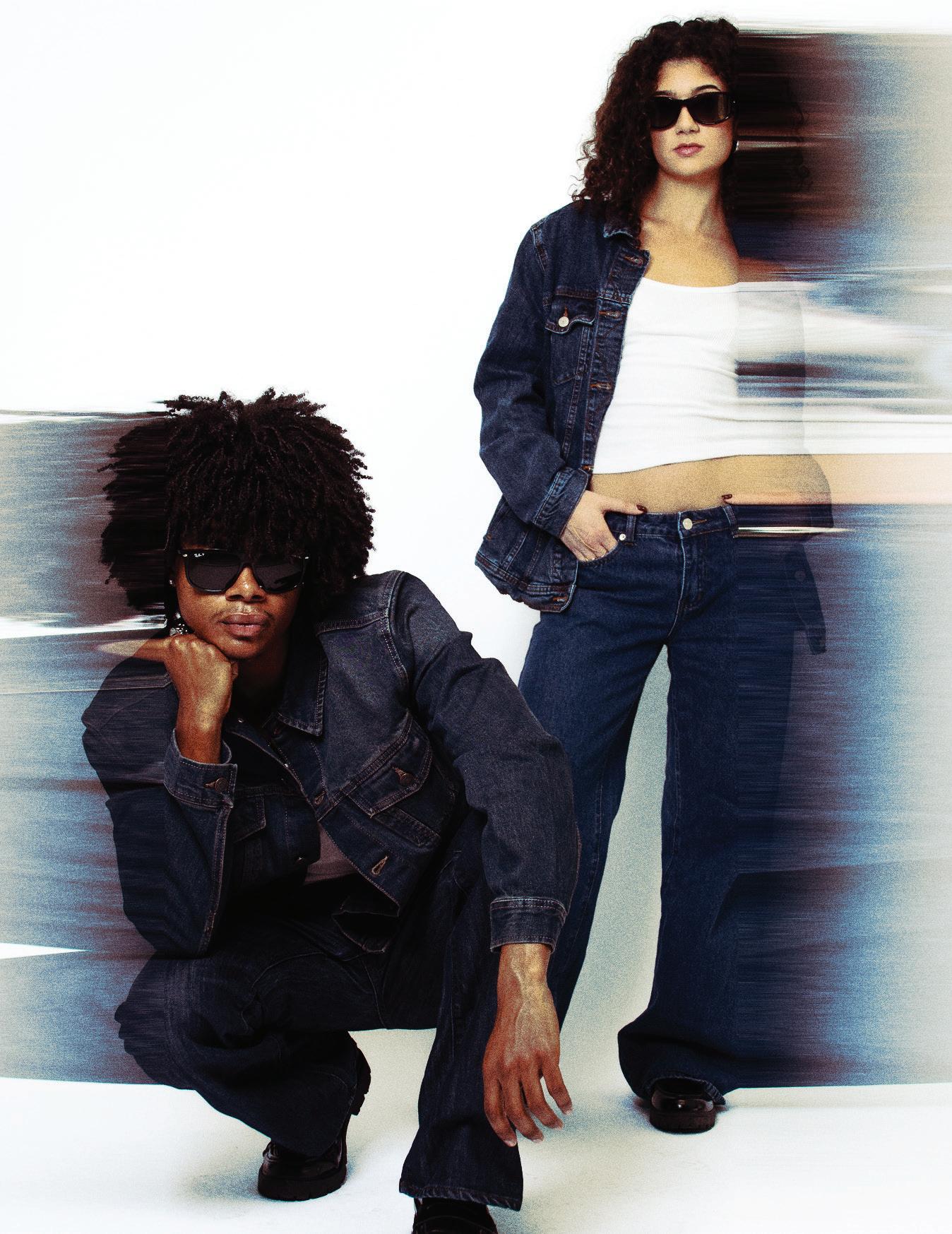


The intimacy without visibility: they love me because they don’t really know me.
My fate would be determined long before I could understand it. I felt like I knew I had to be someone from a young age, not sure who, but I knew I wanted to be known. My existence was built on these moments;
I wanted it all, I wanted the world.
When you are infatuated by a dream or something you want, it’s hard to see clearly. It was consuming, and I always needed more. Desires grew intensely, and my determination to have more grew strong. I was never really satisfied with what I already had, which would define my greed early on. Nothing was enough, and neither was I. I was already someone, yet I was the only one who couldn’t see it.


When did I finally lose myself? Was it when I told myself I wasn’t good enough yet? When I saw others do it, and knew I could do it too. Was it when I finally drove everyone away to fulfill my dream? Am I finally worthy now that I’ve made it to the top?
The top, the myth of success, and the abandonment of your true self. People know you, cameras want to capture you, and the whispers of validation from your dreams. The top felt like a perfect version of myself that I needed to achieve, just to look like I was enough, but never truly feel it. It was my expectations of myself, who I had to be before anyone or anything else. Eventually, I’d see that those dreams were not something out there to find and chase, but a reflection of something much deeper in myself.
Somewhere along the journey, you’ve managed to reject everyone because you convinced yourself that connection was a threat to success.
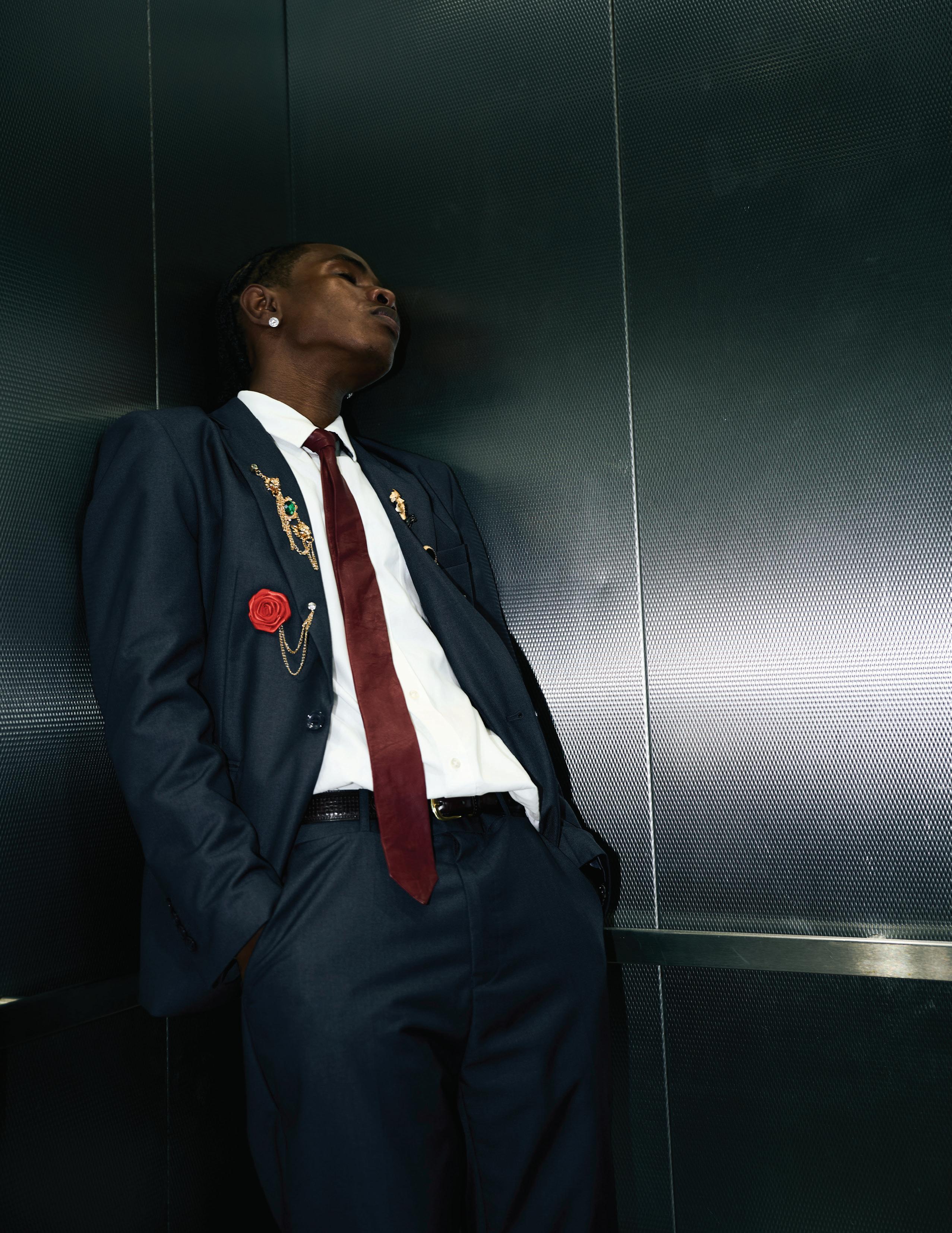
You told yourself you weren’t ready for that relationship, because you felt like you couldn’t offer what you could at your fullest potential, so why waste your time or theirs?
This kind of love is intoxicating.
The canon event, where having the mentality of “I’m not who I want to be yet,” as an excuse to abandon relationships and yourself, to fight for a nonexistent persona. You care so much about how people perceive you that you don’t even give them the chance to. Running away until you‘re ready, but you‘re just scared they won’t like what’s truly underneath it all.

The loneliness never left, successful or not, because it was a constant battle inside. You couldn’t reciprocate or accept a love that was right there because you felt undeserving. The people in your life didn’t choose you for what you could offer them; they just wanted your presence, not a performative act of who you thought you needed to be for them.


One of my favorite films, The Perks of Being a Wallflower, features the famous line “You accept the love you think you deserve,” which is widely acclaimed for its truth. We fabricated these personalities to fit the societal norms of belonging, and now we see it everywhere. Trying to be like everyone else is lame, so is being a follower and hopping on the bandwagon to ‘success’. A leader in your own personality and morality is something we all strive for, but knowing what society already accepts feels much easier for the average person to work toward. You lose your authenticity, and now you talk and move like everyone else, in the hope of earning their acceptance.
But by whom?
Who do you care to be accepted and receive love from?
That one girl who loved you with no car, money, or job that’s nowhere to be found. The guys who would come over and talk with your mom after school. Not them, it wasn’t enough for you back then. You needed more, and lost it all for the validation of those who know nothing about the real you. They love what they see, the image of yourself that you’ve created. Self-sabotage becomes your only friend because it is all you know how to love.
You pushed real love away, and now you can’t tell what people even love you for.
You exiled them all because you felt a superior motive to be someone or something better than them all, and maybe they would look up to you and respect you. You wanted to prove to them you were more, be above them. Their love would finally feel real because now you were deserving enough. But that intimacy you postponed is even further away because you pushed them away trying to feel it.




The want blinded you, the chase felt magnetic, and now that you are ‘there’, that love isn’t the same. Becoming who you always dreamed of being, who you needed to be, but it did not provide the life you were chasing. It was never going to be the thing that saved you. You didn’t go up; you got taken away. You fell for the lifestyle that proves you are ‘somebody,’ just because they recognize you.
You became so obsessed with becoming somebody that you stopped being anyone.
Insecurities took over your mind, ego overtook your heart, and now the only thing left is love that can’t be trusted. You ask yourself if they love you for you, or if they love you to use you. Now everything, even love, feels misconstrued because you lost the only real connections for the hope of love within yourself.
Does it feel good when random women and men take your pictures? Or when the fans tell you they look up to you and cry your name out? They want to be you, and now you ask yourself, how? The flashes and the love feel like validation, but they remain static. They know you for how you present yourself, which has become a mask for the acknowledgment and recognition you once dreamed of. So in love with the idea of who he could be, and now that love is costing him who he was.
Never lose sight of the people who always saw the good in you. We all want connection, and you shouldn’t feel like it will expose the unfinished part of you. When you’re obsessed with a future that doesn’t exist yet, you disassociate and lose the recognition of the people who already love you. This “I am not who I want to be yet” mentality could exist forever if we let it.
Will we ever truly be fully satisfied?
If we’re always faced with a new insecurity, something else that needs fixing or improvement. Why waste our time so wrapped up in who we are not, and what we don’t have?
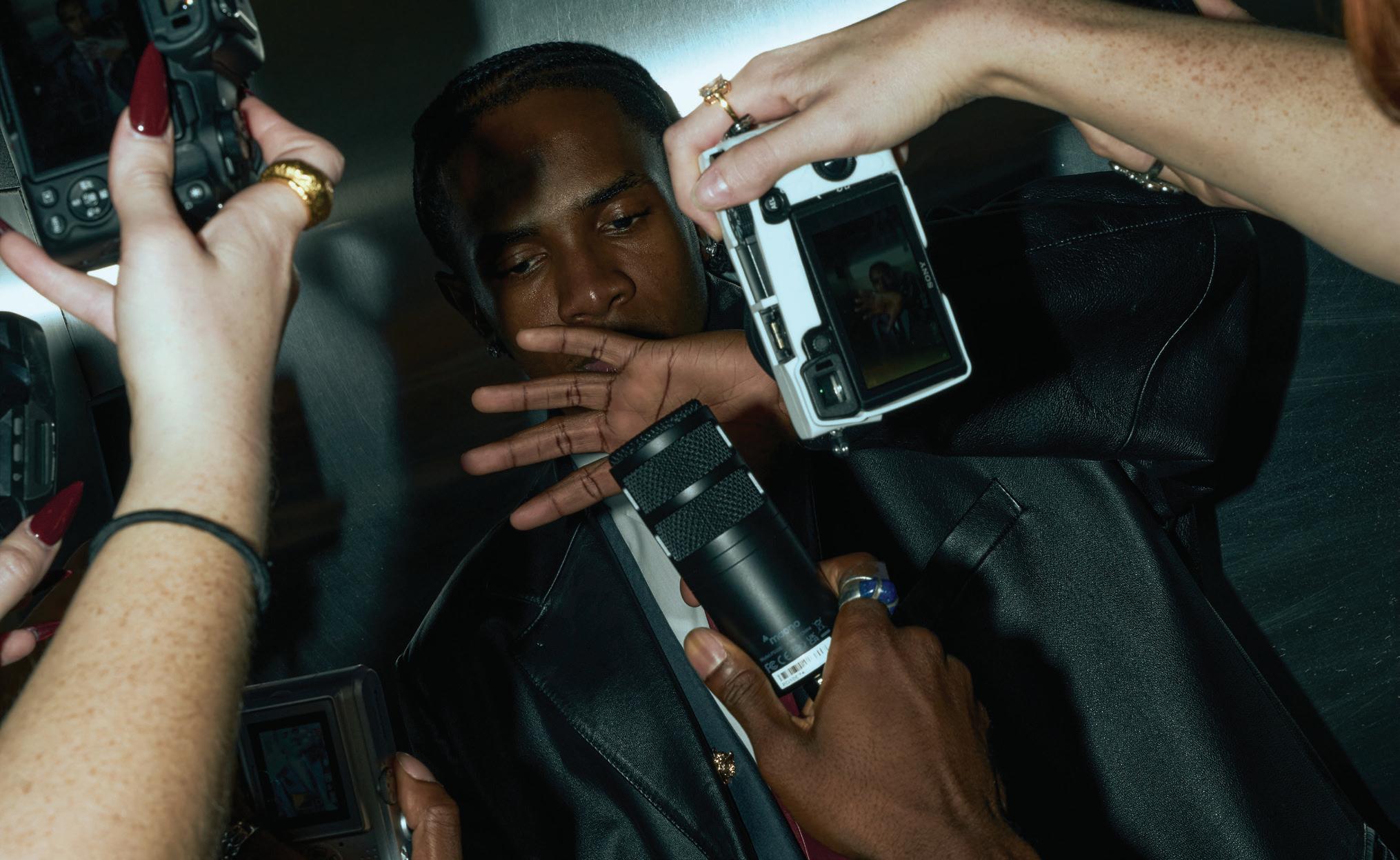


Greed fills our minds because we want it all, then we realize being selfish feels really shitty Success is not something that fills the voids you’ve been trying to fill within yourself. What does success in life even mean to you?
Is it fame, power, money, a family, happiness, love?
Once you have finally reached that destination where you thought you’d feel everything, only to feel the exact opposite, not all is ruined. You felt almost uplifted, because you finally realized what mattered and what you had been running from this whole time. Not the people, not the small house or the simple things, not the $5 you stretched for a week, or the girl you wanted to be better for. Just yourself
You are your own worst enemy.
Your mind is an endless battle that just wants to feel something good. Infatuation with a person who doesn’t exist is exhausting. Random people’s acceptance based on their perception of you only feels good for so long. How can we ever feel love if we never feel it for ourselves? An endless cycle of misery that projects into every connection you have until you feel that grace. When you can finally ask yourself if it was all worth it and say yes,
that’s
when you’ve really made it to the top.


WRITTEN BY KADEN HORN
LAYOUT BY ARABELLA CAMPBELL
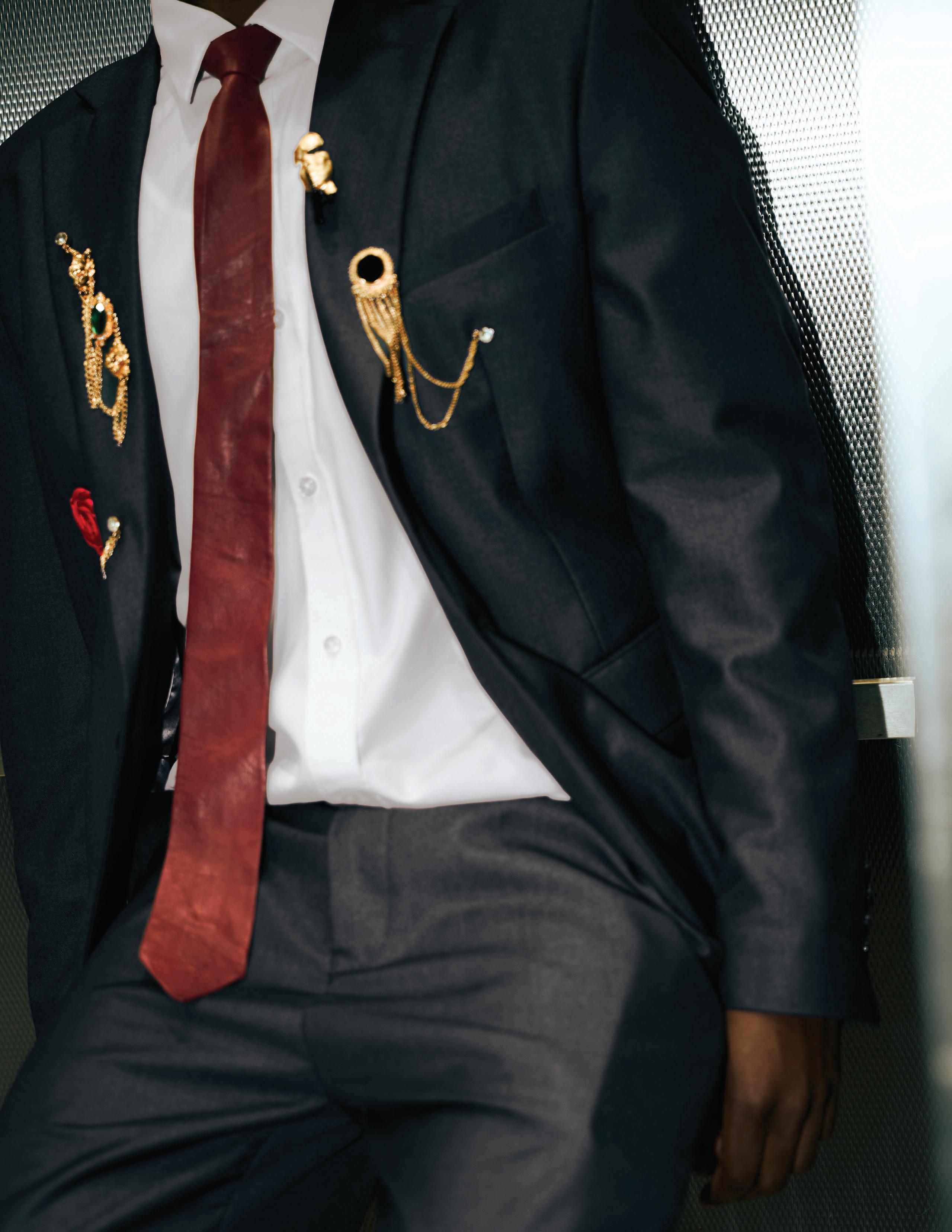
STYLING BY JORDAN CAMPBELL
PHOTOGRAPHY BY MARISA MCCABE
VIDEOGRAPHY BY SASHA CAMPBELL
TALENT BY NEHEMY FILIAS


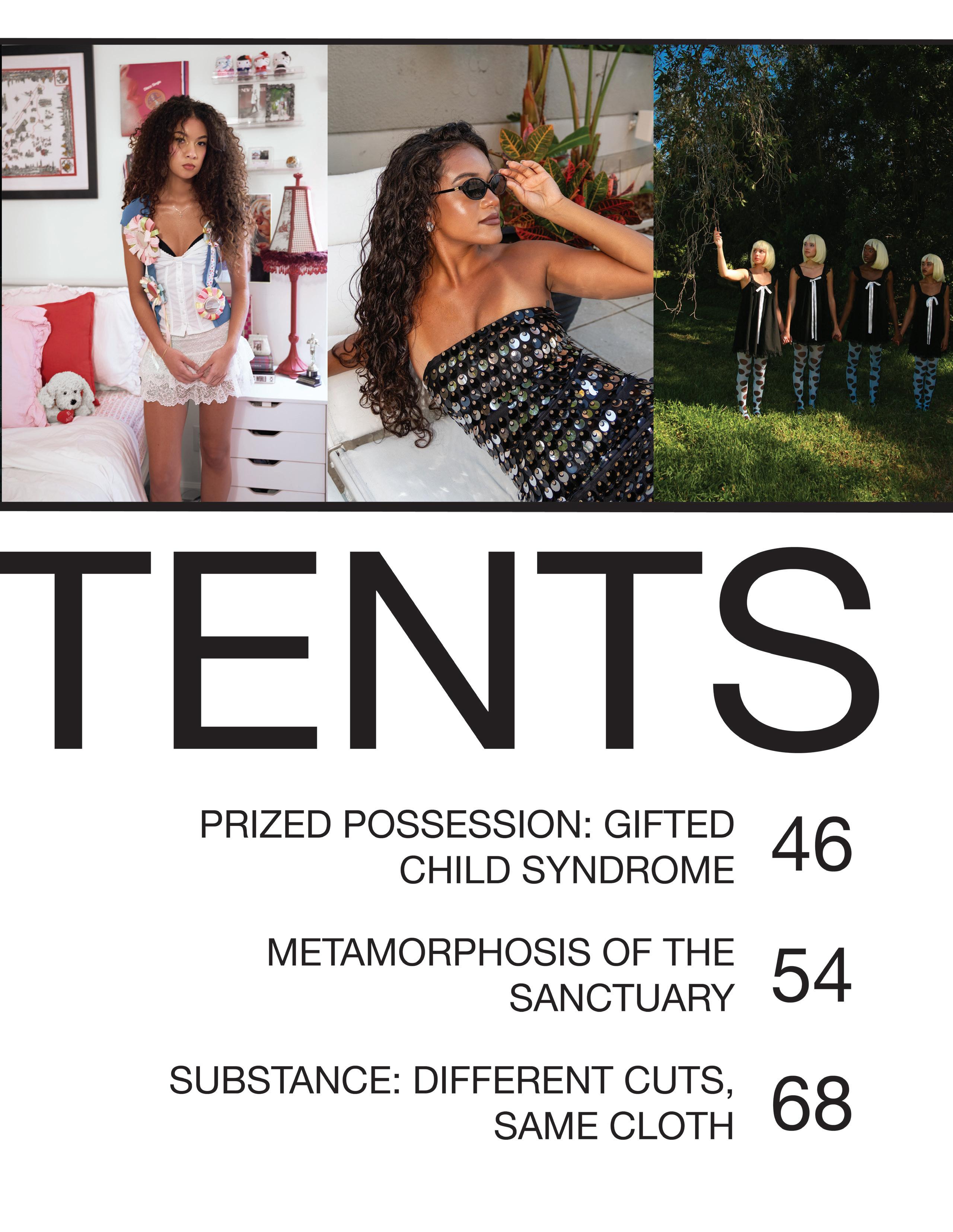
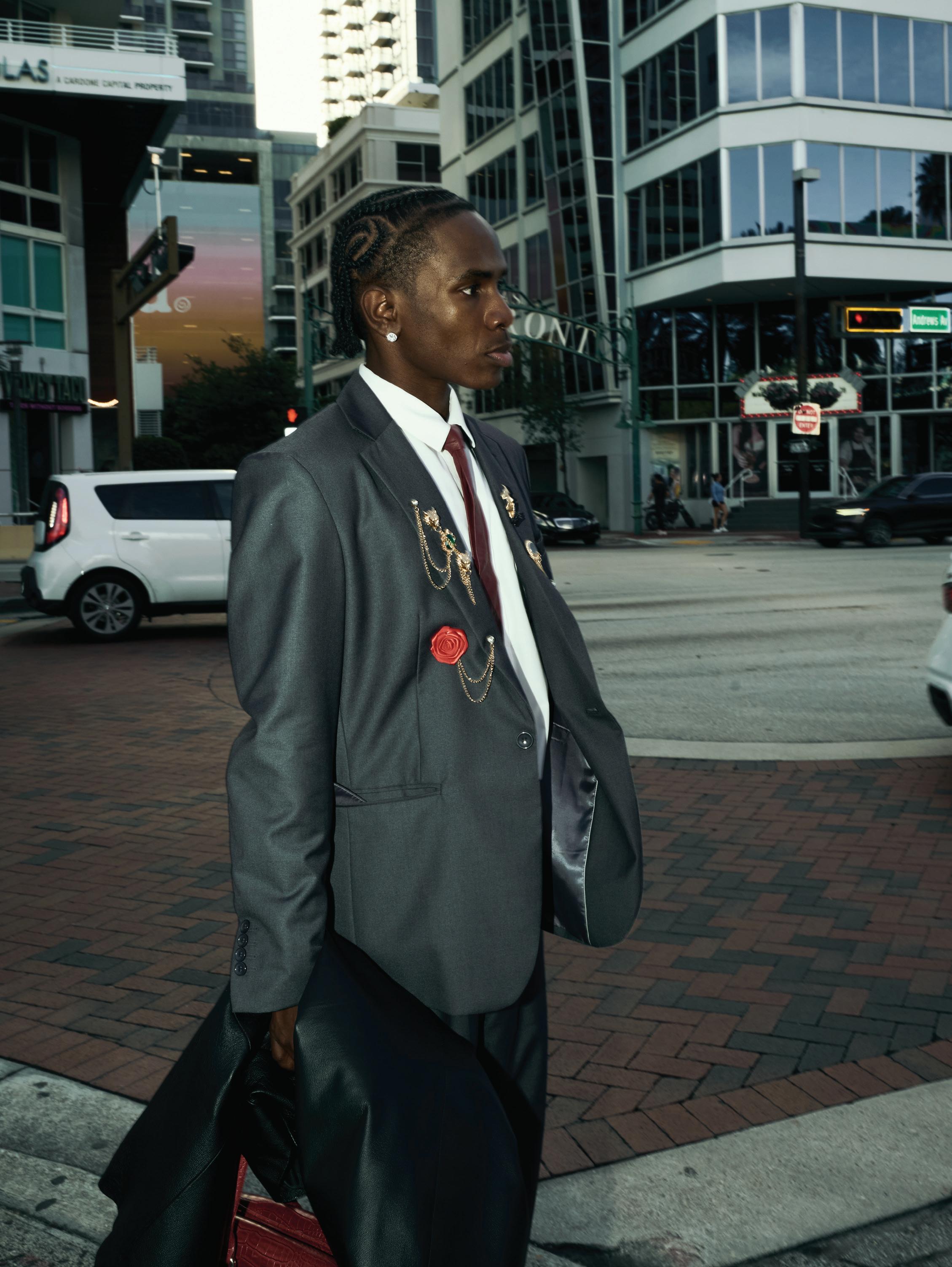
A bedroom with trophies lined up on the top shelf, medals hanging from hooks, and award certificates plastered on the wall as a constant reminder of every accomplishment. Parents proudly show off their kids’ awards with a “we’re so proud of you” post on Facebook or through word of mouth. Teachers leaving “pleasure to have in class” on the report card and choosing you to be the “Student of the Month”. That constant validation and being told that you’re going to be an extraordinary adult comes with an array of issues, specifically in pertinence to one’s identity. After the tassels have been turned, the pins and trophies stop mattering. For the high-achieving gifted kid, they soon learn that the prize is given when they choose themselves.
Written by Johann Jonassaint
Becoming the prize for many begins before they are brought into the world. It started off with the lifestyle of their parents, which later set the tone for how their child’s childhood would play out and the expectations they soon set on them. Noticeably, the two archetypes of parents that stand out in developing the golden child are the ones that experience scarcity and live through life in survival mode, and the second type, excellence is a requirement to uphold a standard that is established at birth. The parents in survival mode, oftentimes, raise their child to be a ticket to upward mobility. It shows when their fears limit the career options they’d favor for their child: law, engineering, or medicine, where stability is likely attainable. Their child is fueled by the labor-intensive jobs their parents do and the pressure of being “the

way out”. Thoughts like “they do so much for me,” or the feeling of being a burden builds them to be their family’s most prized possessions. The other archetype is built for success from the resources their parents give, as nepo babies have access to industries with the opportunity to excel faster than the average person. Their child is taught that the world has to fit them rather than for them to fit in the world. Both pathways leave kids who are raised with high standards, which is reflected in the advanced classes they are placed in and the extracurricular activities they attend. They are expected to be the leaders of the world, constantly met with praise that eventually ends up entangled with their self-worth and identity.
The highs of receiving awards and scoring well academically come with major falls. When labeled as “smart” or “the kid you don’t have to worry about,” it can cause one to have a closed mindset. A shot to their ego when they are being challenged by someone they believe to be smarter than them, or when things no longer come easily. Effort is now expected, and this is not the case with all, but for those who believed they were more insightful to the point where others’ input was just background noise to them.
As the years go on, life doesn’t put up the same amount of praise it once did. The questions surrounding how high you scored or what grade you got fade away. The trophies and pins from high school no longer matter to anyone. The pressure that once fueled you burned out. The days begin to blend, and life just seems to have a gray cloud trailing over it. Parents begin to wonder where things went wrong. It is the classic tale of the tortoise and the hare. Slow and steady does, in fact, win the race. The expectation to mature too soon makes life puzzling once you’re older, realizing shortly that there is no prize for growing up fast.
“WHAT DO YOU DO WHEN YOU WERE ONCE EVERYONE’S HOPE FOR THE FUTURE?”
It is a drastic change from being the one everyone asked questions to now having the questions. Feeling too embarrassed to ask how to go about the challenges life throws after having to depend solely on your talents or academics. No one taught them how to deal with hitting a dead end. It all would seem easier if it all disappeared. That feeling just means it’s time for a shift from being a people pleaser to pleasing yourself. To start, cut the expectations people set for you that no longer fit you. Being a disappointment to those who set high expectations on you like parents or teachers is not as easy as it sounds .It’s actually quite scary. But once you do it, it will set you free from being the version of yourself that was created by others and allow you to become the person you chose to be. The brain is shaped to protect us, so unfamiliarity may trigger it. Reas-
suring yourself that “the new” is safe provides some relief. Think of the person you want to be and know that the feeling you’ll get once you become that person surpasses the fears of being a let-down. It is crucial for everyone’s development to make space for learning about themselves and to experience new things, whether that’s moving away from home, detoxing from social media, or changing career paths. It is up to the person to carve out their path, not anyone else’s.
The trophies have now collected dust and become acquainted with the clutter on the shelves. They once represented someone who was treated as a prize, shown off on display for everyone to see and admire. Now that time has passed, this series of

life has required more than just something shiny to look at, but what someone has to offer from the inside and the experiences that shaped them to be one of good spirit.
Remaining in a headspace that others have created for you will cause you to feel stagnant when it no longer serves you. No one’s life journey is a straight path, and trying to live that way has a 100% fail rate.
So many people grow up to regret the life they lived because they lived it based on what people told them to be, without taking the time to figure out what they want. What you want. You can accumulate all the awards in the world, but all the awards mean nothing if they don’t serve you.




Written by Matthew Wolfe
“Within
you, there is a stillness and sanctuary to which you can retreat at any time and be yourself” - Hermann Hesse
A person’s sanctuary does not have to be a finite area, limited to a specific size, or confined to one place. We learn to understand sanctuaries as physical spaces to seek refuge, such as a cozy bedroom, a solemn chapel, or even the beach at night, hearing the waves crash.
A sanctuary is a much larger idea; an idea that can bring hope and safety to even the most troubled person, struggling to find a reason to keep persevering. The trials and tribulations of the world can be daunting to say the least, and the sanctuary is something anyone can carry with them.
It might not even have to be a place; someone’s sanctuary can be another human being, someone who truly understands them, or even an imaginary dream world where none of the stressors of the world can harm you. It can be the sound of a familiar laugh from a loved one, or even the sound of rain trickling down the windowpane. A sanctuary is not defined by walls. It is defined by safety.
Your sanctuary sees you at your highest moments. Times when you feel unstoppable, and the reflection you see in the mirror smiles back at you with honor and pride. More importantly, your sanctuary sees you at rock bottom. Times when the walls seem as though they are caving in on you. It witnesses the quiet breakdowns that happen when we purposely try to be invisible to others, needing a moment to be sorrowful in peace. It witnesses the seemingly endless nights when the expectations from others, and even ourselves, become too much to carry. All of this, and your sanctuary does not even flinch.
Your sanctuary sees you at your highest moments. Times when you feel unstoppable, and the reflection you see in the mirror smiles back at you with honor and pride. More importantly, your sanctuary sees you at rock bottom. Times when the walls seem as though they are caving in on you. It witnesses the quiet breakdowns that happen when we purposely try to be invisible to others, needing a moment to be sorrowful in peace. It witnesses the seemingly endless nights when the expectations from others, and even ourselves, become too much to carry. All of this, and your sanctuary does not even flinch.


It will never make you feel small. It will never make you feel incompetent. In a world of constant judgment, having a place, person, or even an imaginary dream world where you always feel safe can be the difference between longevity and cessation.
There is something sacred about being witnessed at your worst and still being handled with love and care.
The sanctuary, instead of being something to “escape to,” turns into a safe place to “return to.” It is a strong, yet quiet reminder to remember who you are, even when met with the loud noises of strong performance and demanding expectations. Instead of running away from our problems, the sanctuary reminds us to stand firm in our missteps, ready to tackle the long roads ahead.
There is also a quiet infatuation that we carry with us, sometimes without even realizing it. The obsession with being perfect, always romanticizing growth, is something that consumes our everyday subconscious. We fall in love with the idea of always improving, becoming stronger and more impressive than we were when we woke up in the morning. Having goals and ambitions can be a beautiful thing, until it turns ugly, forcing us to despise the person we are becoming quietly.
Having a sanctuary interrupts that thought process. It reminds us that existing without constantly enhancing ourselves is not only normal but can be more beneficial to our mental health. There is a time when we can rest without having to earn it first. In a way, a sanctuary is a place of tranquility, free from the noise of the world around us.
Growth in a sanctuary does not happen overnight. It is not loud. It is not performative. It does not demand applause. There will come a moment in your life where you realize a spark of resilience in your eye, one that was not there before. A moment when you realize the hardship was truly worth the stress and hassle. You may not have experienced this moment yet, which is even more exciting.
Being grounded in nature is the most important job of a sanctuary. With all the boisterous noise in the world, having a safe, quiet place can be the difference between safety and tranquility, or danger and commotion.
There is an unquestionable damage that comes with not having a sanctuary. Not having a place to escape to can hollow out even the strongest person you know.


THERE IS AN UNQUESTIONABLE DAMAGE THAT COMES WITH NOT HAVING
The beautiful part about a sanctuary is that even if there is not one bestowed upon you the moment you breathe life, you can always build one from the ground up. It never requires perfection, only the willpower to feel safe and protected from the outside world.
With this mentality, anyone can have a place, whether physical or not, to escape to.
For me, the sanctuary has worn many forms. For a long time, I remember feeling as though I had nowhere to run to when the world felt like it was turning its back on me. My childhood home, even to this day, is a place I subconsciously return to when feeling overwhelmed. Some of our first memories are attached to the palace where they happened, and I can speak for many when I say we hold these memories close to our hearts.




I no longer see the idea of a sanctuary as a “place”. Instead, I see it when I look towards the future. I have always had a fascination, and even a hopefulness, when pondering the future and what it looks like for me. The unknown can be so scary, especially when virtually nothing in this life is guaranteed.
It is because of this that, when the moment at hand is overwhelming, looking towards the unknown is surprisingly what calms you the most. And that is the beautiful part about a sanctuary; it looks different for everyone. There is no correct or incorrect answer, no one to tell you that you are wrong.
It might sound unbelievable that the idea of the unknown brings me the most peace. Envisioning the best-case scenario in life, even if it seems far-fetched, is truly what keeps me going. My sanctuary involves a quiet life, finally free from the remarks and opinions of others. A state of tranquility and happiness for the life I built around myself. A sacred place where my future children are safe.

LAYOUT BY: CHASTITY COOPER
STYLING BY: CARLIANA DELGUERCIO
PHOTOGRAPHY BY: CADENCE WHITEHOUSE
VIDEOGRAPHY BY: SASHA CAMPBELL
MAKEUP BY: TIANA MATHEW
TALENT: EZRA DIXON

“LISTEN; THERE’S A HELL OF A GOOD UNIVERSE NEXT DOOR. LET’S GO.” - E.E. CUMMINGS
TO ACCEPT OR DENY THEORY, THAT IS THE OPTION SCIENCE PRESENTS US.
TO
ACCEPT OR DENY, THAT IS THE OPTION.
TO ACCEPT OR DENY.
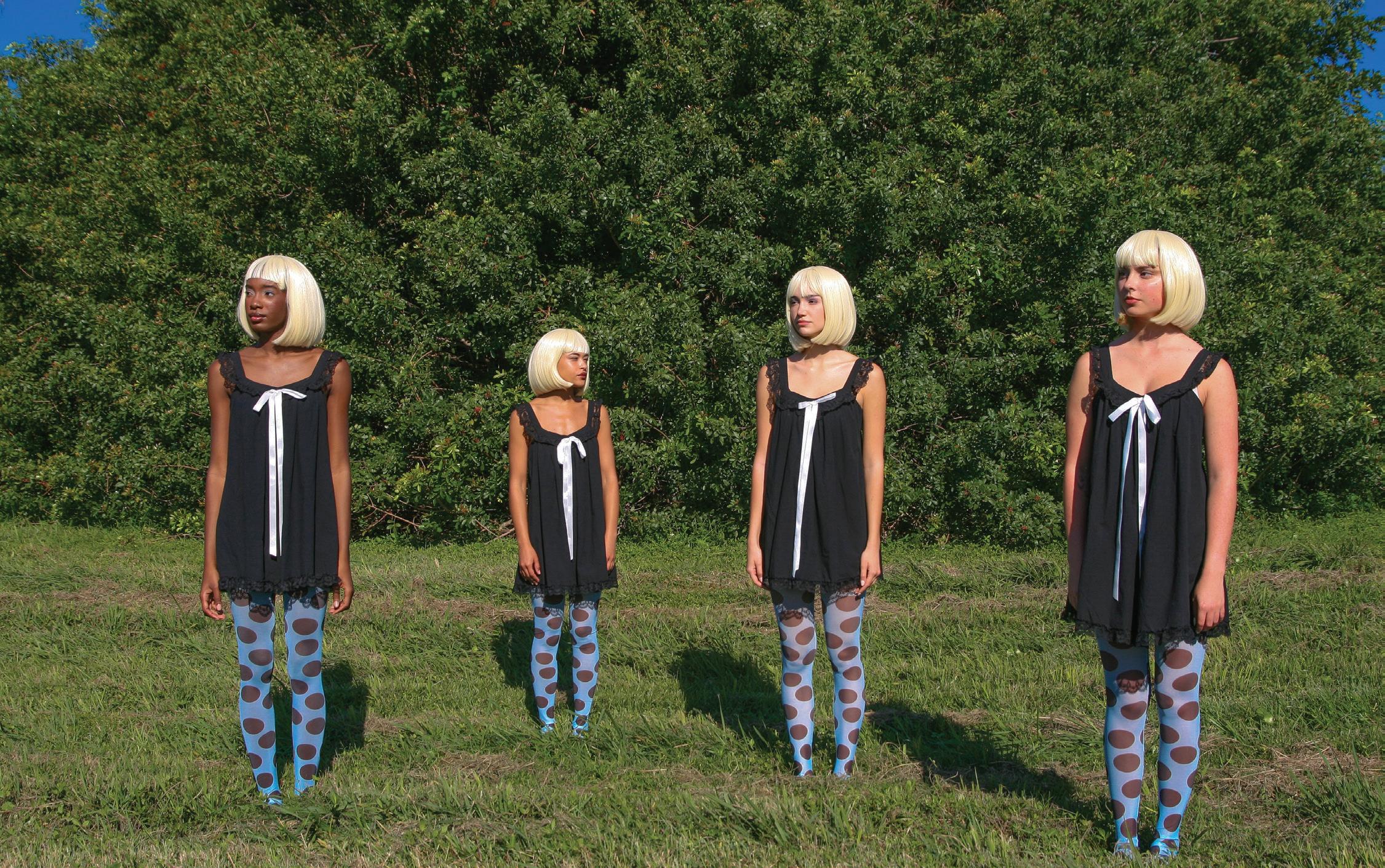
In science, they’ve coined the term ‘acceptance of theory’. This suggests that the theory in question, before it becomes fact, is rendered to evolving, but only exists in the realm of your acceptance. Gravity, for example, is both a theory and a law, equally factual as it is speculative. The law of gravity states that it exists, while the theory encourages questioning around how and why it exists. Alas, it can exist and be in constant question. Two things can be true at once.
Law: The apple will fall. Theory: Why will it fall?
They can and must exist at once; a theory can never graduate to a law. How peculiar. Despite all the evidence in the world, the why will never reach an ultimate explanation as to what is occurring. Our existence will always be law, but why and how we are who we are, well, that will be everevolving. You, my friend, are bound by nothing. Theory, nor law.
To be oneself is often the bravest act you can commit. An uncomfortable risk, a patriotic service to the world that resides inside of you. How did becoming yourself become so profound? So much so that everything is done in gratitude for who you once were, and in sacrifice of the person you’re becoming. Is it truly sacrificial if it is an investment in yourself?
Do you accept who you are, while still questioning
your existence? These two things can and should exist in tandem. You search and peer into different souls, prospective futures, and concrete pasts, find their cracks, likes, and dislikes, to find the acceptance of you, of your theory, of your law.
In a world where there is no such thing as luck, only chance and opportunity, you must recognize that your being is no mistake. The only ‘lucky’ things in this life are as real as leprechauns. You can realistically bet nothing on sheer luck. So we lean on other, more concrete, more tangible beliefs to assign meaning and truly find our substance. This can be where nuance fails us.
Law: You exist.
Theory: You’re still learning why.
There are layers to your substance, and we look for the framework, the infrastructure. To be so introspective while still experiencing the outside world is, well, liminal.
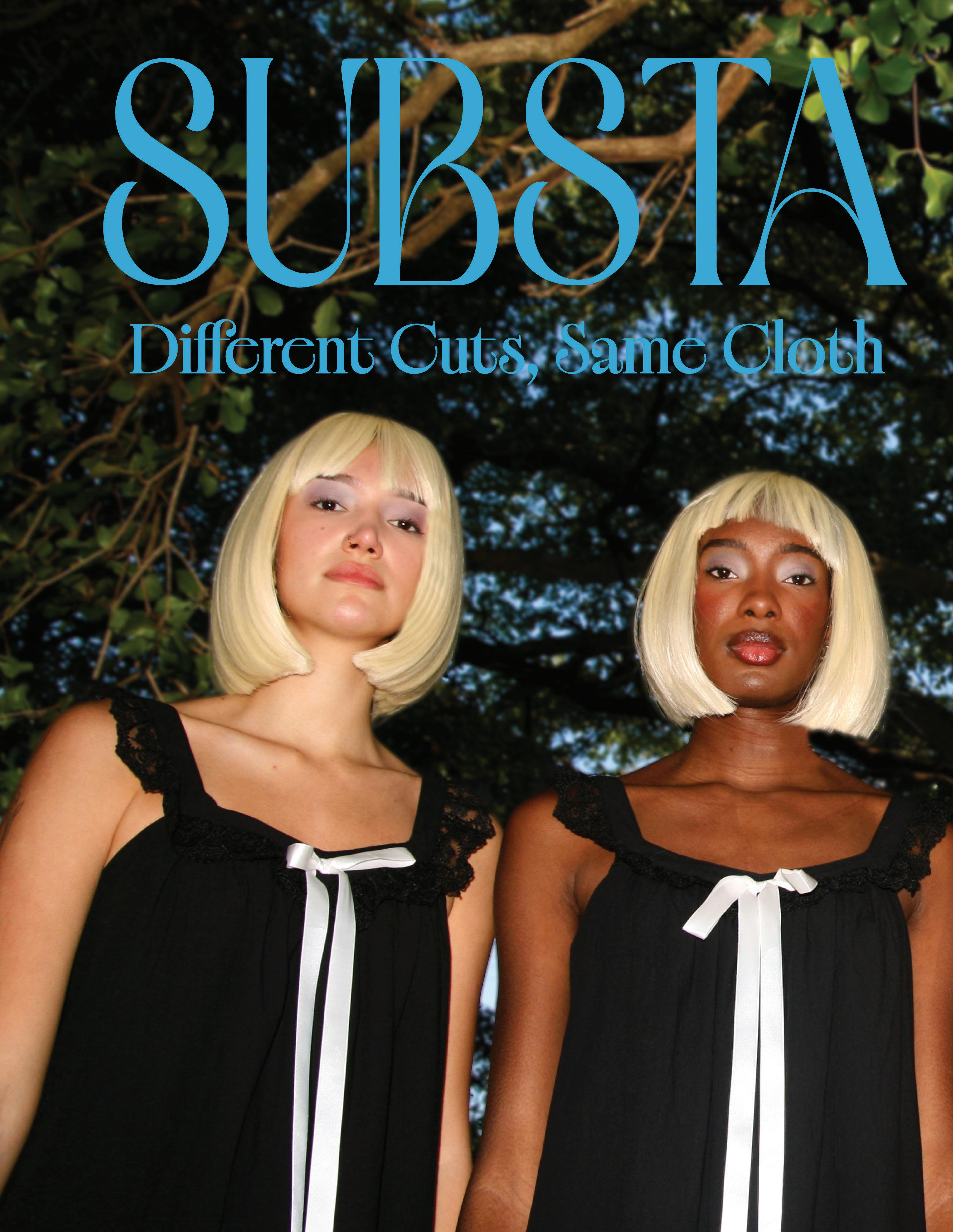
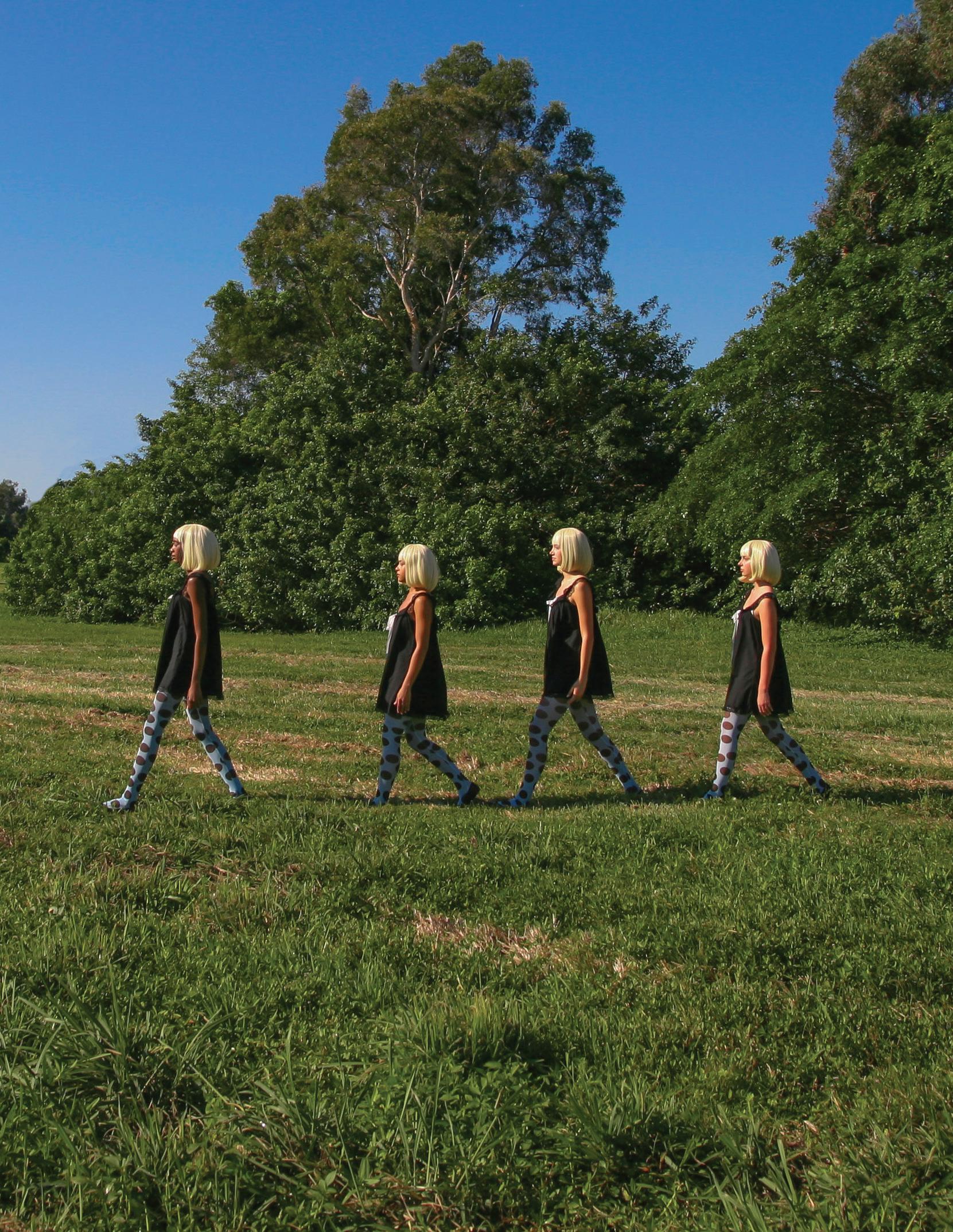
In terms of the fabric of the universe, we are all different cuts of the same cloth. These layers create intersections for connection and familiarity. We are all made from the same material, you see? How one internalizes something becomes an added layer.
Where law presents as fact, we find ourselves under an umbrella of possibilities in which we have yet to discern their truths from falsehood. I exist therefore… Therefore,
are you kind? Socially responsible? Do you demonstrate the pillars of character? Are you charitable? I exist, therefore. So yes, we have law, but our theory is up to us to accept or deny. Our actions serve as evidence, coloring in an outline, filling in the gaps of who we believe ourselves to be.
We have this idea that upon coming into this world, we are the pinnacle of purity, that we have yet to be offended by life’s austerity. I’d like to argue the point: we go from warmth and safety to an imminent introduction of loud noises, harsh lights, and the inability to tell where we are. Then we find peace again, once held. We have never not known, not lived, the dichotomy that is suffering and peace. We have, since birth, been at the center of both. That is human nature. That is the substance. The connection. The rise and the fall.
The human condition, however, is the pipeline that extends from these very roots. It offers us a bargain: the greater the suffering, the greater peace you may feel subsequently. Theory: accept or deny. It is, in fact, to say that you must know discomfort in its most curated and intimate form, to thereafter know what true peace feels like. Satisfaction can only thrive where dissatisfaction once lived. Our pain, no matter the depth of it, is what offers us the opportunity of further enlightenment. Of growth. Why is that?
Would you appreciate a meal to the same degree if you were never once starved? Think beyond the metaphor.
Time, your best teacher, and failure, your truest friend.
This extends to nearly every facet of life, whether it be in loving, in leaving, in grieving, or in hoping. All of it extends our threshold to feel each opposite end with the utmost fervency.
Our kindest sides were smoothed with sharp edges.
The depths themselves are ever-evolving, and that is why failure will always be your kindest teacher.
This helps assign purpose to otherwise hopeless and shocking life events. It is life’s most ironic gag with us: we must suffer to know happiness!? Yeah, right, catch you in the next lifetime.
Law: You can fail and succeed, but succeed only because you failed. One can only exist with the other. Failure extends the threshold for success; it stretches and pulls it, oftentimes very uncomfortably, but to lengths we would have otherwise never configured our expectations into. Equally, and in a completely opposite fashion.
You can know the scent of fresh air from making it to the top, but what is fresh air without once knowing its pollutants? It’s not so glamorous, hardly grandiose, this idea of the “bottom”, of “failure”. Alas, if there is anything left to impart to you, it is that two things can exist at once.
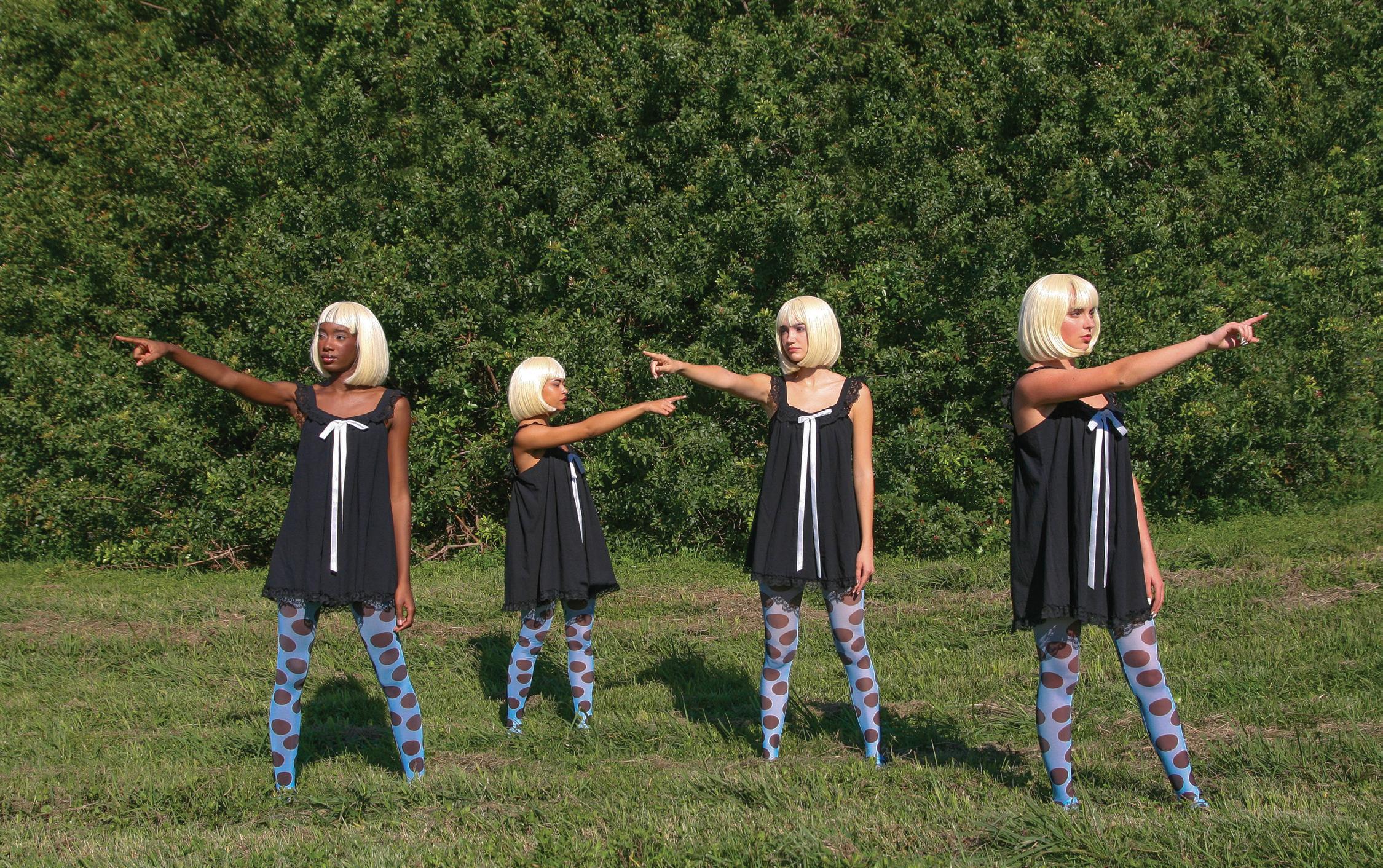
Ground zero looks awfully like the peak of life when your perspective shifts upside down. Sometimes, even in the light, squinting ever so slightly allows you to see more clearly. Maybe it was never what you were faced with, but how you were facing it, and that, my friend, is entirely in your control. Which means so is every subsequent outcome.
This becomes our substance, this human condition. Where time offers itself to live inside, and for our time here, it is the kindness we are paid for our labors of living.
So when I tell you there is a hell of a universe next door that comes with the acceptance of oneself, I implore you to theorize for a moment and peek around the corner. You never know how beautiful things can be, just by simply knocking.