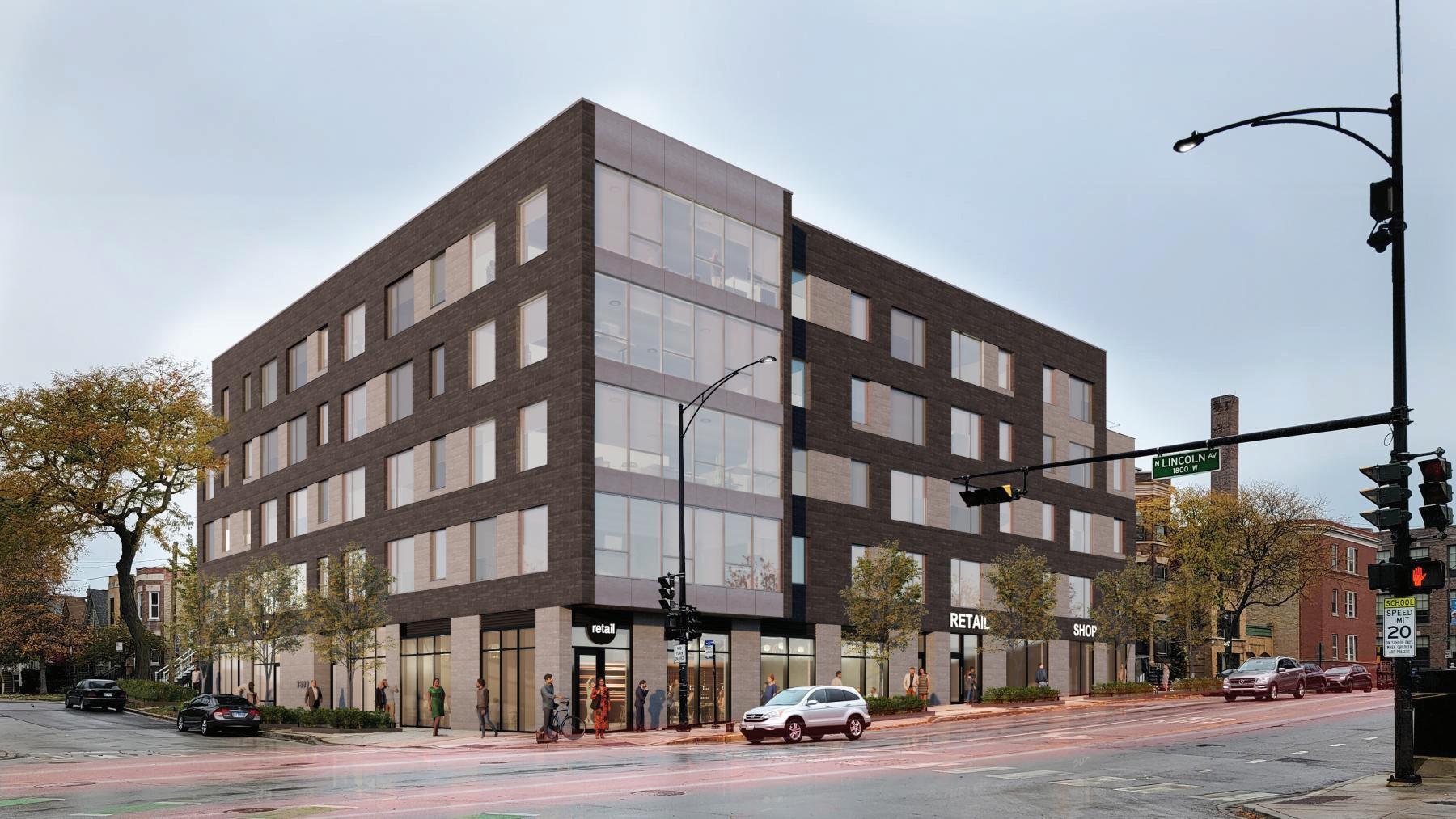
Seven two-bedroom two baths and a one bed one bath below market-rate rental units available at Five Points Lakeview, 3605 N Ravenswood!
Five Points Lakeview is a new construction rental building that features 52 residential units; a rooftop patio, gym, bike storage, and outdoor parking is available. Trader Joes, Loba Cafe, and the CTA Brown Line are within blocks of the property! The property is located within the Hamilton CPS School District
Affordable rents range from $849.00 to $1,659.00 a month. Must be income eligible. Households must earn no more than the maximum income levels below:
Unit 508, One Bedroom One Bath, 80% of Area Median Income: One person - $67,150; 2 persons -$76,750
Units 403 + 407, Two Bedrooms Two Baths, 70% of Area Median Income: 2 persons -$67,200; 3 persons - $75,600; 4 persons - $83,930
Units 303 + 307, Two Bedrooms Two Baths, 60% of Area Median Income: 2 persons -$57,600; 3 persons - $64,800; 4 persons - $71,940
Units 202 + 207, Two Bedrooms Two Baths, 50% of Area Median Income: 2 persons -$48,000; 3 persons - $54000; 4 persons - $59,950
Unit 203, Two Bedrooms Two Baths, 40% of Area Median Income: 2 persons -$38,400; 3 persons - $43,200; 4 persons - $47,960
Please contact the Five Points Lakeview for an application and more information at 773-308-6806 or info@fivepointslakeview.com or https://fivepointslakeview.com/
Applicants with vouchers or other third-party subsidies are welcome to apply. These units are subject to monitoring, compliance, and other restrictions by the City of Chicago’s Department of Housing. For more information visit https://www.chicago.gov/city/en/sites/affordable-requirements-ordinance/home.html
ADVERTISEMENTS
Arts & Entertainment
Event highlights of the week!
SportsWise
The SportsWise team recaps the disappointing seaons of the Chicago Bulls and Blackhawks.
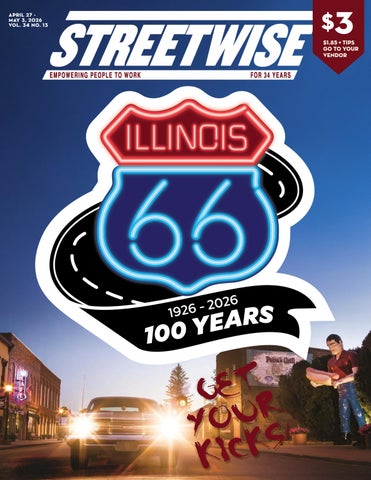
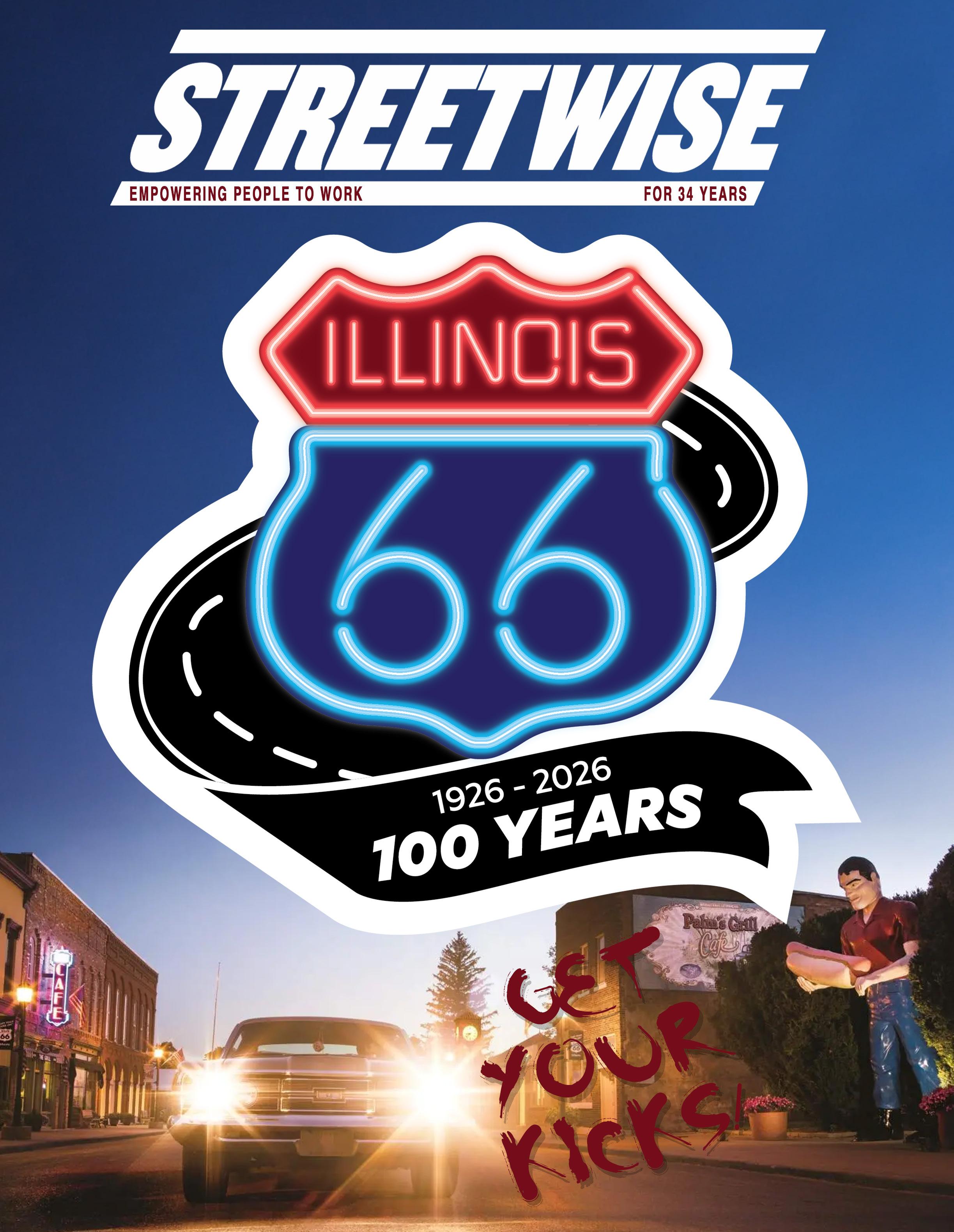
Cover Story: Route 66 centennial
Route 66 marks the centennial of its official designation on April 30, just in time for summer roadtrips. Although it's superceded by the interstate highway system, tourists have continued to seek out its landmarks that evoke a different time and place – many of them in Illinois restored by volunteers. Congress has recognized that Route 66 is a "symbol of the American people's heritage of travel and thier legacy of seeking a better life."
Voice of the Streets
Ahead of May Day, Dr. Victor Devinatz delves deeper into Cesar Chavez's legacy as leader of the United Farm
From the Streets
Public library workers, citing the vulnerable people they serve, ARISE Chicago, and a variety of other interests call for broader action on May 1.
The Playground
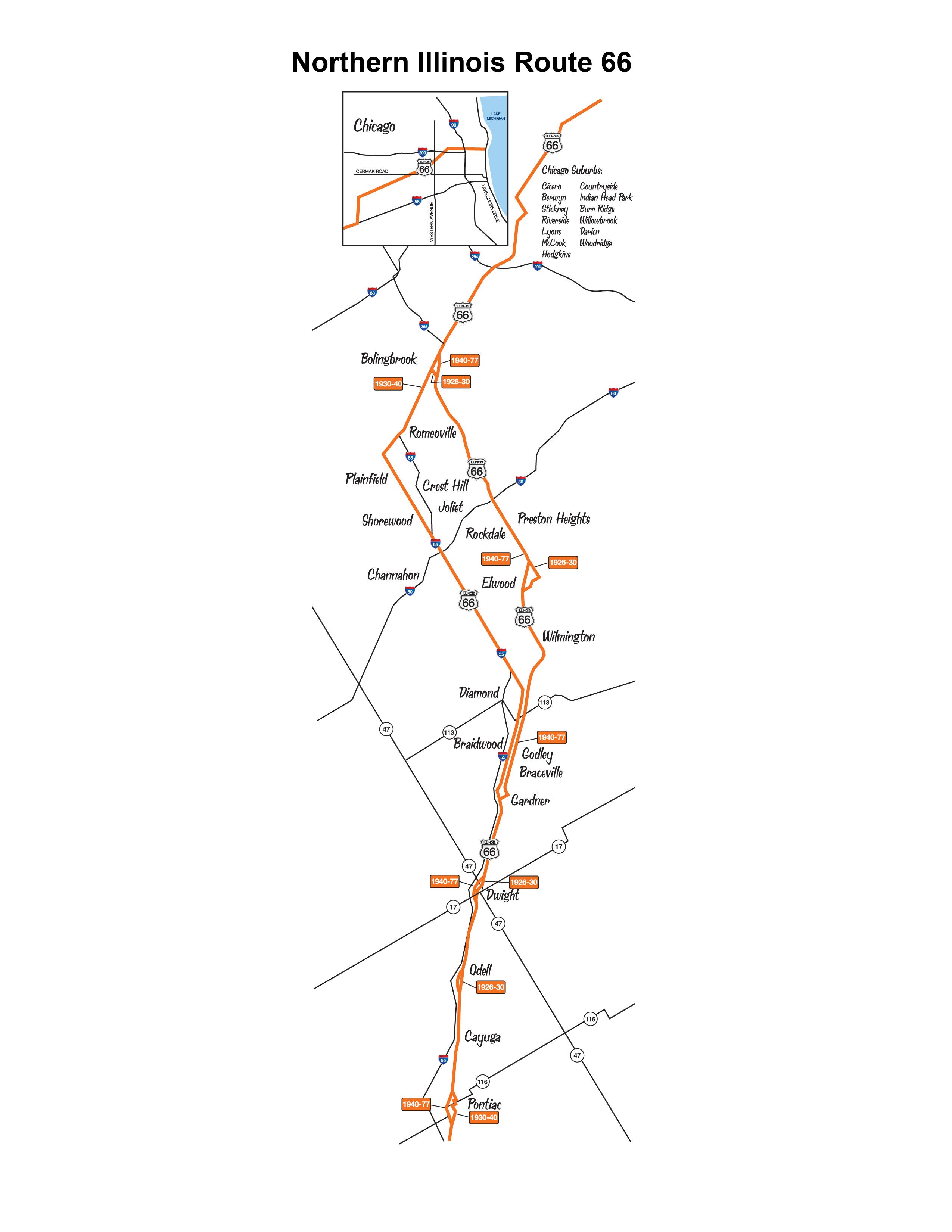
ON THE COVER: Downtown Atlanta, IL (Enjoy Illinois photo). THIS PAGE: Northern Illinois Route 66 map by www.illinoisroute66.org. DISCLAIMER: The views, opinions, positions or strategies expressed by the authors and those providing comments are theirs alone, and do not necessarily reflect the views, opinions, or positions of StreetWise.
Dave Hamilton, Creative Director/Publisher dhamilton@streetwise.org
Julie Youngquist, Executive director jyoungquist@streetwise.org
Ph: 773-334-6600
Office: 2009 S. State St., Chicago, IL, 60616
ARTS & ENTERTAINMENT RECOMMENDATIONS
Compiled by Dave Hamilton
‘Monumental: The Work of Dr. Charles Smith’
Paying Tribute!
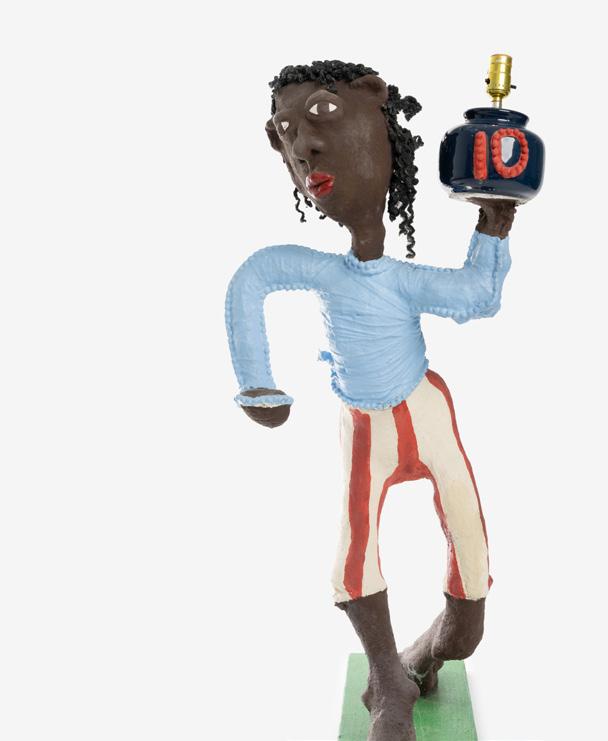
“Monumental” examines Dr. Charles Smith’s sculptures through the lens of anti-monumentalism, leaning on Smith’s critique of the lack of historical representation of African Americans and Black people in America. Smith began sculpting monuments and memorials to champion histories, cultural moments and portrayals of everyday life typically left out of historical narratives. His first sculpture was a memorial to his fallen Black Vietnam comrades in celebration of Black History Month, built in his Aurora yard, where he made more than 600 sculptures and opened The African American Heritage Museum & Black Veterans Archive (AAHM & BVA) as part of his work. The subject matter of Smith’s work ranges widely from memorials dedicated to the victims of hurricane Katrina, the Underground Railroad, and even to Chicago’s first Black postmaster, Henry McGee. Through his work, Smith recenters historical narrative by challenging who is commemorated, who is remembered and who gets to tell the story. On display April 29 - April 25, 2027 at Intuit Art Museum, 756 N. Milwaukee Ave. Intuit Art Museum is open 11 a.m.–6 p.m. Wednesday through Sunday and until 8 p.m. on third Thursdays. Admission is $20, or free for members, those 24 and younger, and those unable to pay. For more information, please visit www.art.org
Art Outdoors!
Art in Wilder Park
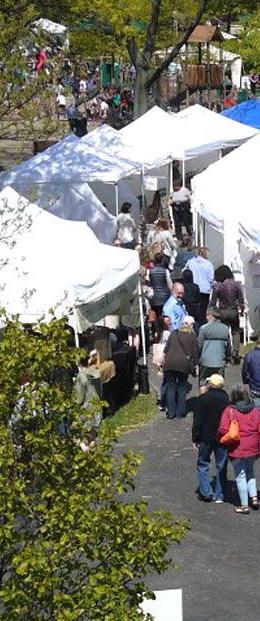
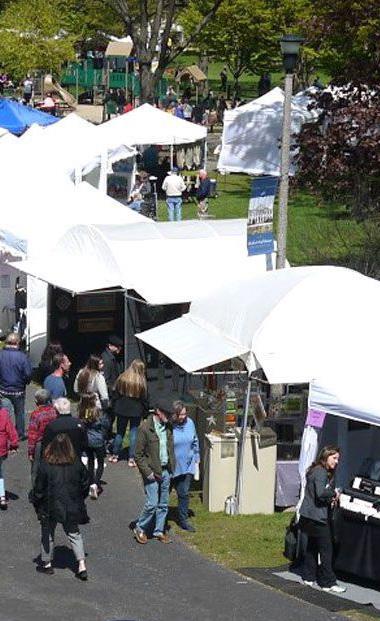
In partnership with the Elmhurst Park District, the Elmhurst Art Museum presents the return of Art in Wilder Park. The only festival of its kind hosted by an art museum, Art in Wilder Park features over 130 booths showcasing unique, handcrafted treasures including jewelry, paintings, sculptures, ceramics, photography, and fiber arts created by talented Midwest artists. Visitors can enjoy a variety of artisan food vendors, a dedicated Kids Court with creative hands-on activities, and community partner and sponsor displays. The free-to-the-public event attracts over 7,000 people annually to the museum campus and takes place rain or shine, May 2 & 3, 10 a.m. - 5 p.m., at 175 S. Cottage Hill Ave., Elmhurst.
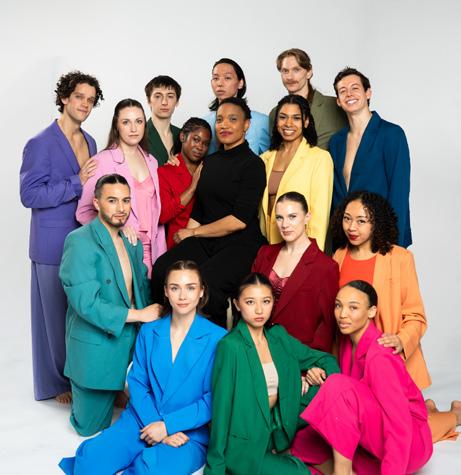
CRDT’s “Urgent Motion/Shared Ground” features performances of original dance and music by the company’s professional dance ensemble and jazz orchestra. The program will feature two new world premieres: “Immense World” by Shannon Alvis and Joe Cerqua and “We Intersect” by Monique Haley and Joe Cerqua. Also featured, and back by popular demand, “A Place Between Earth & Sky” by Shannon Alvis and Clarice Assad. In this program, the company meets a world in turmoil with movement and music that listens and reflects. This performance is an exploration of who we are, where we’ve been and where we’re headed, together. April 30 at 7:30 p.m.; May 1 at 7:30 p.m.; and May 2 at noon at The Dance Center of Columbia College Chicago, 1306 S. Michigan Ave. Tickets are $10-$30 at CirquaRivera.org
Music For All!
First Friday Music Series
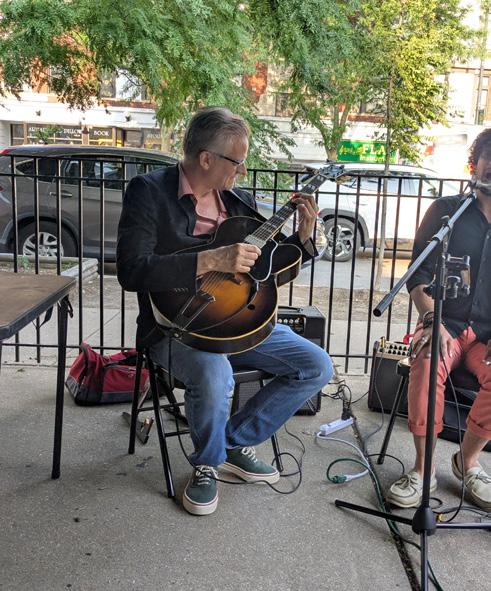
The Rogers Park Business Alliance and Sheridan Road Special Service Area #54 present the First Friday Music Series, with live performances by local musicians. Performances on May 1 include Four Star Brass Band at 6 p.m. and Urban Sound at 7 p.m. at Sister Jean Plaza (6536 N. Sheridan Road), the Joyce Renee Band including Beau Barry at 6 p.m. and Bob Gerics at 7 p.m. at Mama’s African Kitchen (6606 N. Sheridan Road), Casey Neilsen at 6 p.m. and Maja Rios at 7 p.m. at Khami Cambodian Fine Dining (6580 N. Sheridan Road), Nicholas Barron at 6 p.m. and Pierce Crask at 7 p.m. at Raising Cane’s (6568 N. Sheridan Road), and at 400 Theater (6746 N. Sheridan Road) Paul Velat - Sax Bike will perform at 7 p.m. During these performances, special activations and giveaways will be held at Sister Jean Plaza, located at 6536 N. Sheridan Rd., while supplies last. FREE.
The Perils of Fame!
‘Covenant’
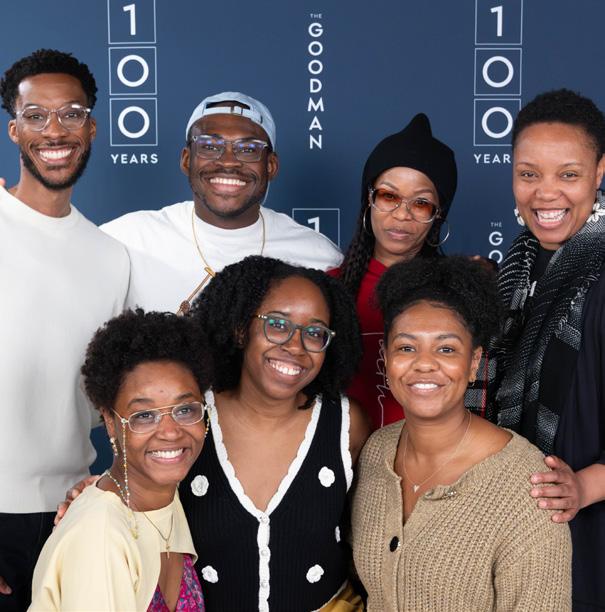
Expect one devilish twist after another in this “undeniably spooky (and) absolutely enjoyable” (TheaterMania) mythic and suspenseful new play. Johnny “Honeycomb” James left his small Georgia town a struggling guitarist—and returned a blues star, to the surprise of his sisters, mother, and their best friend Ruthie. As rumors of a darker deal abound, it becomes clear that he’s not the only one with a secret…or seeking salvation. This tense thriller explores the power of belief and the thin line between rumor and truth. Playing May 2 - 31 at Goodman Theatre, 170 N. Dearborn St. Tickets are $24 - $64 at goodmantheatre.org/covenant
All Ages Theater!
‘Farewell Opportunity’
“Farewell Opportunity” follows Halley, who visits the NASA Jet Propulsion Lab and meets the Opportunity Mars rover. The two share a curious spirit and a shortened life expectancy. Halley and the NASA scientist in charge of the Mars mission find themselves transformed by an unlikely friendship—with each other, and with a rolling robot millions of miles away. For ages 5+. Playing through May 17 at Filament Theatre, 4041 N. Milwaukee Ave. Tickets start at $21 for adults, $17 for children at filamenttheatre.org
Top of the Class!
The Music Institute of Chicago Academy 20th Anniversary Concert
The Music Institute of Chicago Academy, a nationally recognized pre-college conservatory program for gifted high school pianists and string players, kicks off its 20th anniversary with a performance by the Academy Orchestra and special guests on Saturday, May 30, at 7 p.m. at Nichols Concert Hall, 1490 Chicago Ave., Evanston. FREE.
The Driehaus Museum x Chicago Symphony Orchestra
Music & Setting!
The Driehaus Museum and the Chicago Symphony Orchestra Association (CSOA) present the return of their popular chamber concert series in the Murphy Auditorium, 50 E. Erie St. The series kicks off on Tuesday, April 28, from 6:30-8 p.m. with a captivating ensemble performance exploring the artistic movements that laid the groundwork for the design and aesthetics of the Museum’s historic buildings and collection. Tickets are $50 and include admission to the Museum during regular hours. Learn more at driehausmuseum.org
'Evolution: Asian American Arts Festival'
Culture on Display!
"Evolution: Asian American Arts Festival," a two-day celebration of the transformation and creativity of Asian American, Pacific Islander and Native Hawaiian, will include more than 125 artists and performers, from a variety of disciplines including dance, theatre, interactive art displays, film and music, and a food and craft market representing the community. May 2 & 3, at Water Tower Water Works, 163 E. Pearson St. (at Michigan Ave.) The schedule of events and tickets, $25$100, online, in-person and Festival passes, are available at AAAC.art
One Night Only!
South Chicago Dance Theatre
South Chicago Dance Theatre (SCDT) presents its ninth annual home season performance, featuring three electric world premieres by award-winning choreographers. The four-part mixed repertory program opens with a powerful work by renowned choreographer Donald Byrd. One night only at the Harris Theater for Music and Dance, 205 E. Randolph, on Friday, May 1 at 6 p.m. Tickets start at $31.10 at southchicagodancetheatre.com
the bulls' & Blackhawks' seasons
John: We are recapping very disappointing Chicago Bulls and Blackhawks seasons. The Bulls got off to a 5-0 start, but they faded fast. They went winless in much of February: 0-11, breaking a 1976 record of 0-10.
They also traded talent such as Coby White and Nikola Vučević. There were a few highlights: they beat the Boston Celtics 114-111 and the former playoff team, the Houston Rockets, 132-124 and went 105-103 at Phoenix. As far as the Blackhawks, each of the last two years they’ve improved their point totals: 52 in 2024, 61 in 2025 and at least 67 as of late March.
Connor Bedard is becoming a better player; he leads the Blackhawks with 65 points, 28 goals and 37 assists. Tyler Bertuzzi leads the Blackhawks in goals, with 32.
Allen: The Bulls went the whole second quarter last night without scoring. They have to step up their game. The Blackhawks? Connor Bedard is only 20 and is looking to be the next captain of the team, to carry the Blackhawks a long way.
Russell: I don’t know what’s going on with the Bulls. They traded Coby White, Ayo Dosunmu, Vučević – that’s the whole team. They can beat the Houston Rockets, (a playoff team) and then get smashed by Detroit.
Last time they had a decent team was when they had Derrick Rose and Luol Deng. It’s time to rebuild. Look at San Antonio, now they’re a playoff team.
As far as the Blackhawks are concerned, it’s hard to build a team like they had in 2010: Patrick Kane, Jonathan Toews, Duncan Keith.
Clinton: The Bulls started out one game 26-11, second half 11-26. It’s a lackadaisical problem. I think it’s the coach. He can’t get them to jell together.
I love the Blackhawks. Since they won the championship, I guess they’re in rebuilding mode.
John: Aren’t you impressed by how they were able to build a team the last two years?
Clinton: Yes. It’s not going to happen overnight. You got to work that chemistry together to jell a team. I met Patrick Kane downtown while I was selling StreetWise. He was waiting for a cab. Turned around and gave me [big] bucks.
John: Wow! That’s a helluva story. The Blackhawks are definitely a team on the rise. Next year is more hopeful for them because they got a nice nucleus in Bedard, Bertuzzi and Spencer Knight. With a couple of free agents and draft picks, they could be a force to be reckoned with. The Bulls are a mishmash. They beat Boston 114-111. They got whipped 157-137 by the Philadelphia 76ers – not the team of Dr. J – but a mediocre team, so they need to clean house.
Allen: The Bulls were 29-43 and in 12th place as of late March. They really have their work cut out for them.
Russell: I feel bad for Bulls coach [Billy] Donovan, because you’re only as good as your players. At OKC, he had Kevin Durant and Russell Westbrook.
Clinton: I think it’s the coaching staff, because when you go to a draft, you see a player, you have to make him fit your system.
John: The Bulls are not doing a good job. The Blackhawks I am a lot more optimistic about.
Any comments, suggestions or topic ideas for the SportsWise team? Email StreetWise Editor Suzanne Hanney at suzannestreetwise@yahoo.com
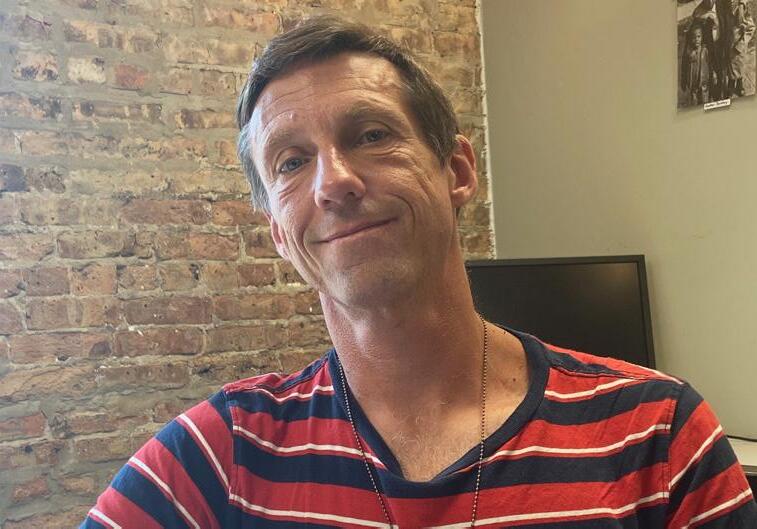
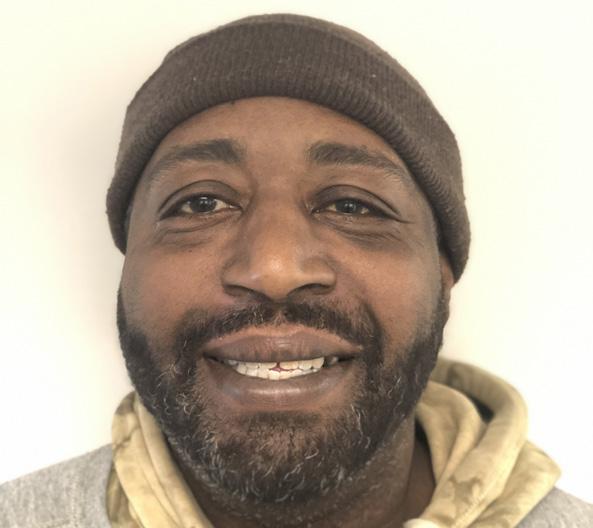
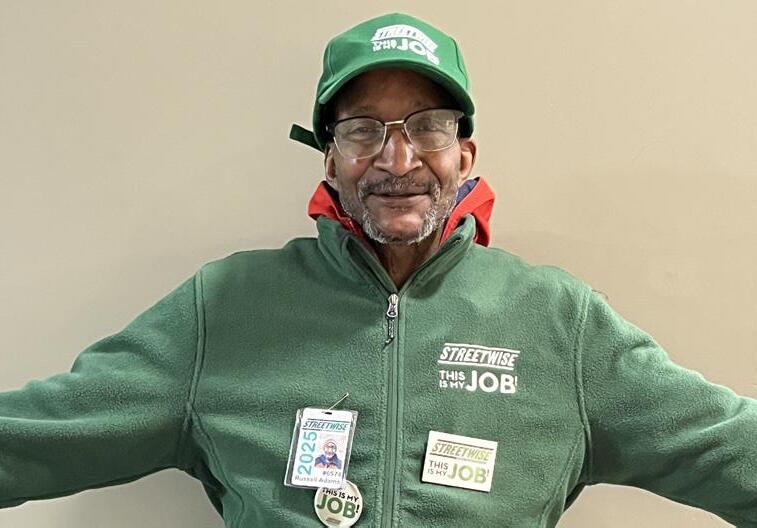
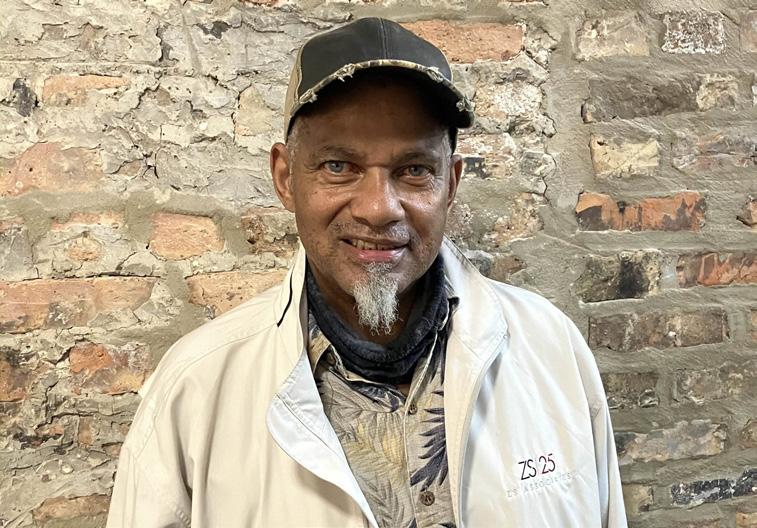
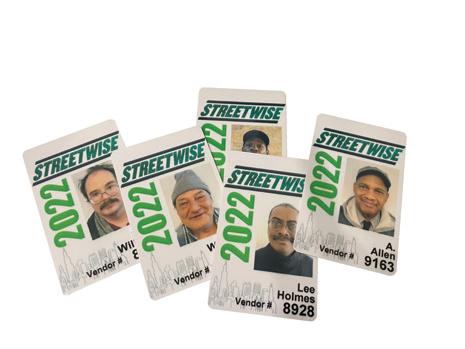
Vendors (clockwise from top left) John Hagan, Russell Adams, A. Allen and Clinton Scott chat about the world of sports.
A CELEBRATION
Route 66 celebrates its centennial, revitalized by activists and volunteers
by Suzanne Hanney
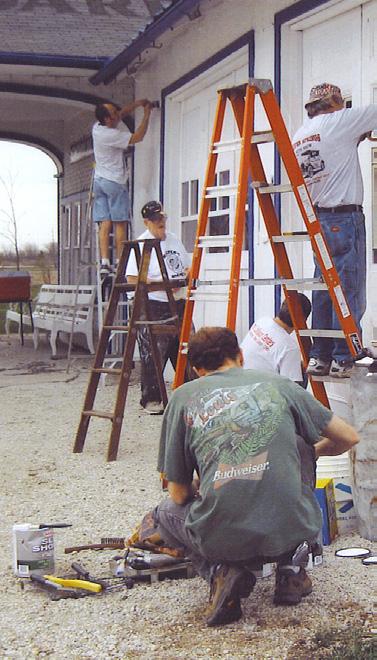
The 1930s canopied Standard Oil station on Route 66 in Odell (Pic #7), 87 miles from Chicago, was in disrepair, but “we saw people taking photos, so we thought we should save it as best we can,” says John Weiss, author/ publisher of the “Traveling the New, Historic Route 66 of Illinois,” the only Route 66 Illinois guidebook, and also preservation chairman of the Illinois Route 66 Association.
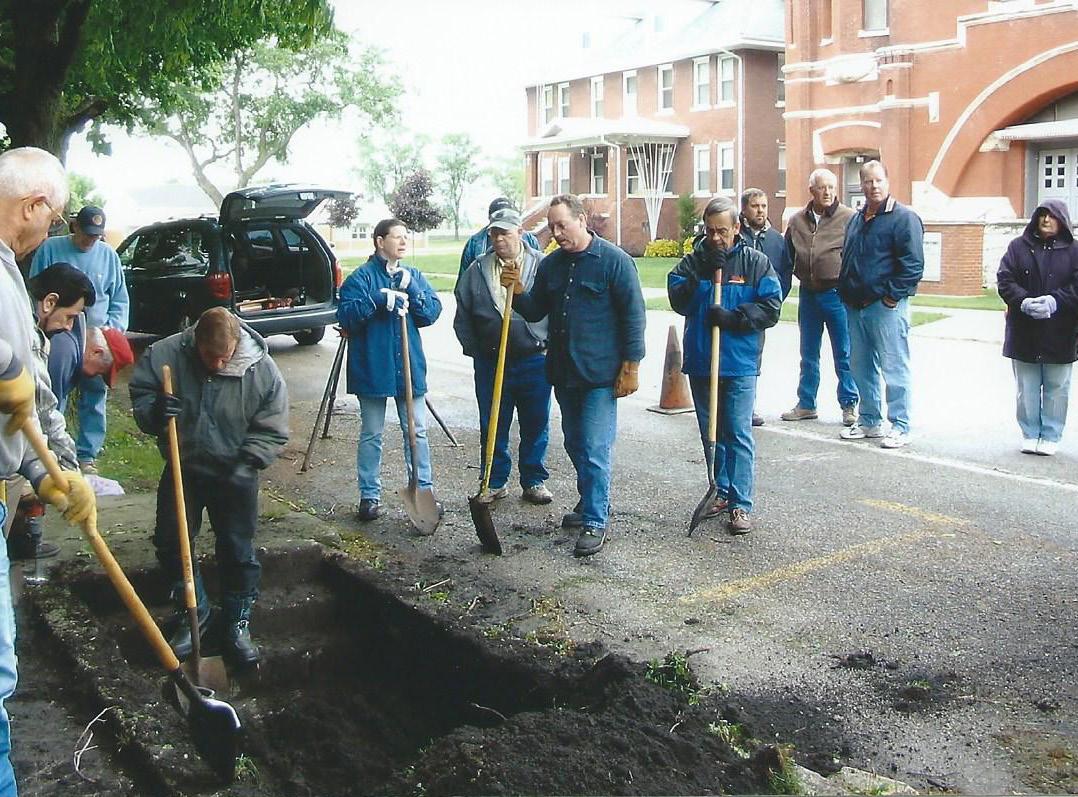
“There were only a handful of us to start with, so we did one little piece at a time,” Weiss said. “‘See that door? Yes, we can fix it. What about that window?’ Different tradespeople joined in – electricians, carpenters – and one thing led to another. Sometimes it’s good to be naïve. We didn’t know we couldn’t do it, so we did it to save our town.”
The volunteers ended up buying the gas station and taking out a loan, which was repaid by Save Our Station (SOS) fundraisers and a donation box inside the station. They gave it to the Village of Odell and it’s been on the National Register of Historic Places since 1997. Inside, there’s a vintage radio atop a Coke machine. Outside is a 1953 travel trailer.
Route 66 marks the centennial of its official designation April 30 in Springfield, MO. One of the original highways in the U.S. national system, Route 66 was intended to connect rural main streets and urban communities to a national thoroughfare. Chicago was the starting point of its 2,448 miles to Santa Monica, CA. Illinois was the first state to fully pave it – the first 300 miles.
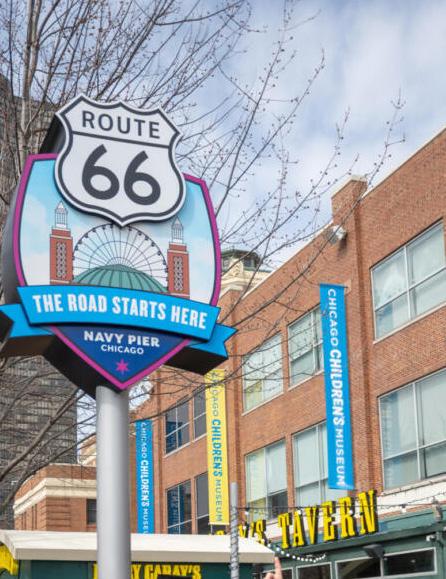
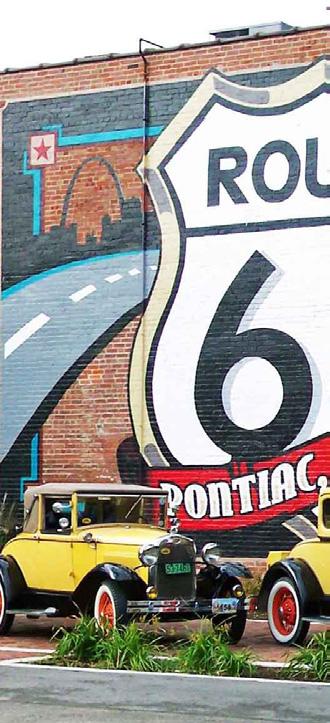
The original starting point of Route 66 was at East Jackson Blvd. and South Michigan Ave. Choose Chicago, the city’s official destination marketing organization, has installed a “Main Street of America” Pylon at Adams Street, (across the street from the Art Institute) to mark the spot for westbound drivers. For the centennial, the official origin has been moved – so that Route 66 goes from Navy Pier to Santa Monica Pier (Pic #1).
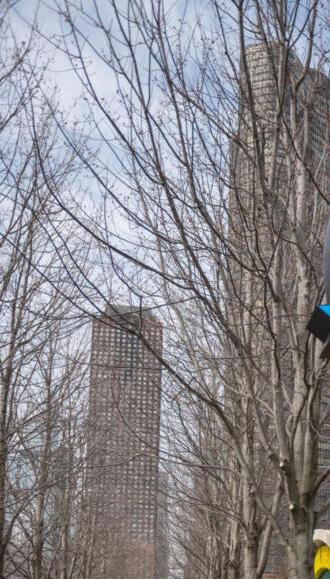
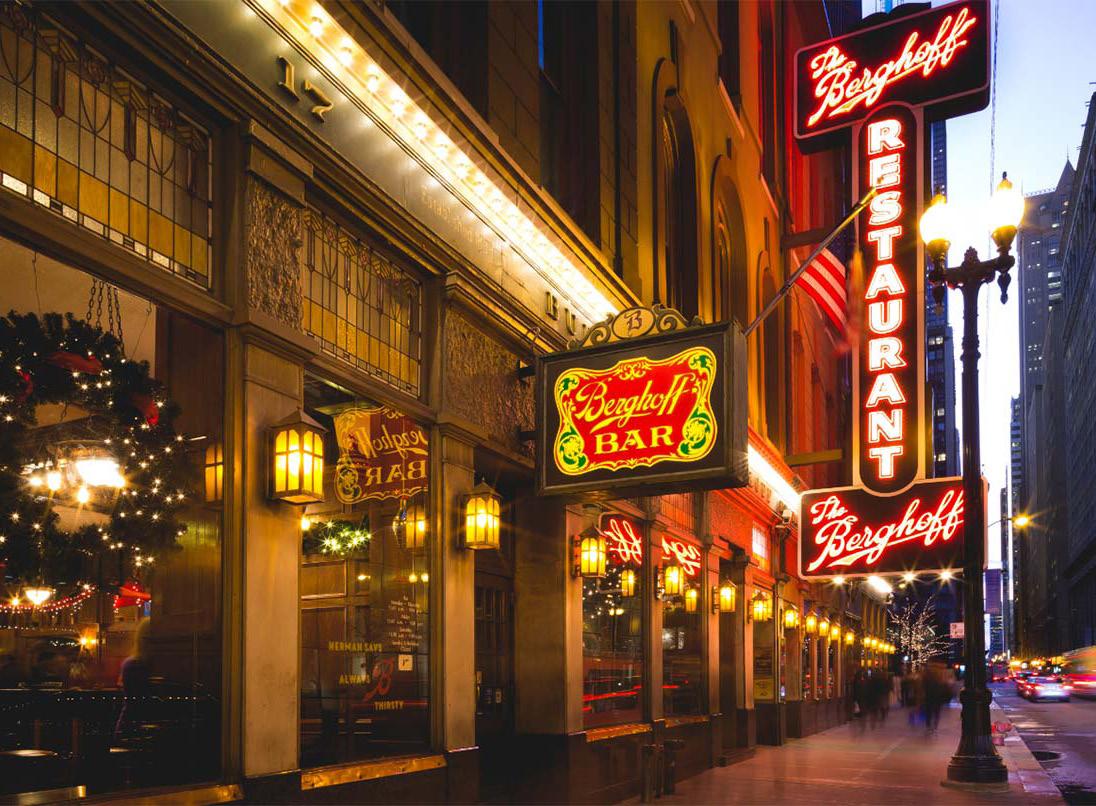
Following Route 66 westbound today, your first landmark is the Berghoff (Pic #2), serving German food and
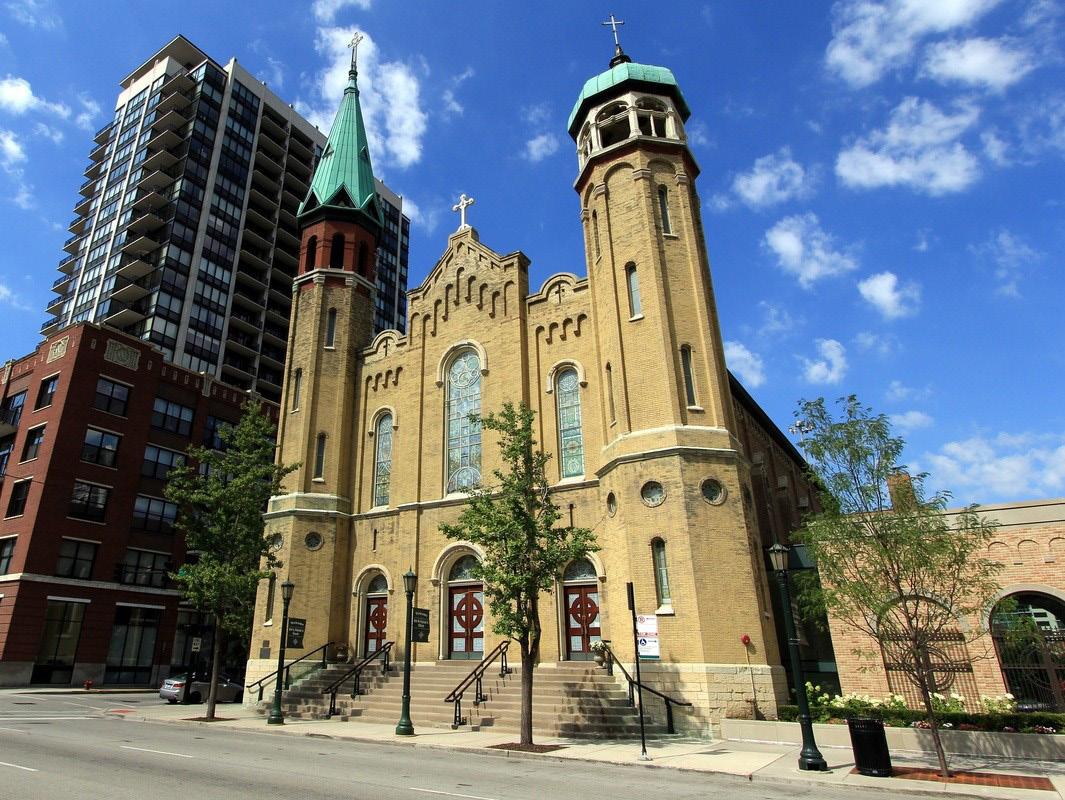
beer at 17 W. Adams St. since 1898. Further up at 700 W. Adams St. is Chicago’s oldest church, Old St. Patrick’s (Pic #3), with its Celtic-inspired stained-glass windows. When it was finished in 1856, you had only to sit on its steps to find someone from your Irish village, according to Ward Miller, Richard H. Driehaus executive director of Preservation Chicago.
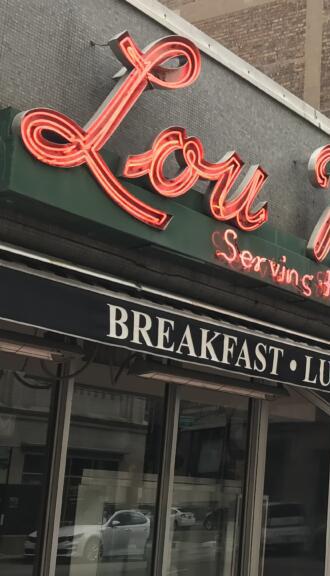
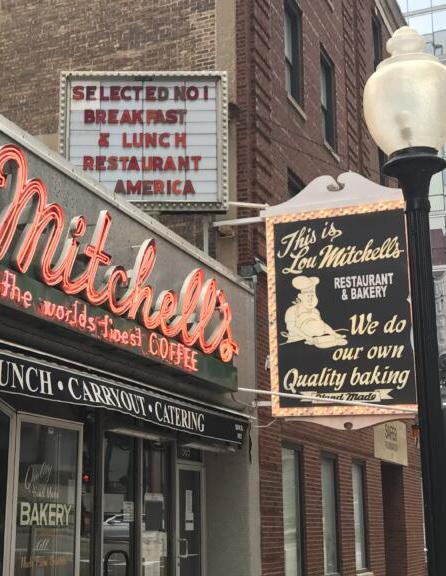
If you are taking Route 66 eastbound, you might instead stop for breakfast at Lou Mitchell’s (Pic #4), at 565 W. Jackson Blvd. since 1923.
Westbound again, stay on Adams past Ashland Avenue and then turn left onto Ogden Avenue, the original alignment for Route 66. The diagonal Ogden Avenue will carry you through Southwest Side neighborhoods, starting with the Tri-Taylor Historic District. Choose Chicago placed one of three interpretive Route 66 signs here at 1969 W. Ogden Ave. (and South Damen avenue).
1
4
7
Just as in John Steinbeck’s book, “The Grapes of Wrath,” Midwestern farmworkers who lost their jobs in the Dust Bowl of the 1930s took the “Mother Road” to California fields. Jobless youth in the Great Depression found work on its road gangs, so that it was continuously paved by 1938. During World War II in the 1940s, Route 66 was used to transport troops and supplies to California.
Peacetime in the 1950s and 60s meant the rise of leisure tourism, inspired in part by Nat King Cole’s singing of the Bobby Troup song, “(Get Your Kicks on) Route 66” and the television show “Route 66;” Martin Milner and George Maharis (then Glenn Corbett) traveled it in a Corvette while working odd jobs.
But steadily increasing traffic led to the interstate highway system of divided four-lane highways that were safer for
speed. By the 1970s, nearly all of Route 66 was bypassed by interstates. It was decommissioned in 1977 in Illinois and nationwide in 1983.
Tourists continued to seek out the old alignments, however, and in 1990 Congress recognized that Route 66 had “become a symbol of the American people's heritage of travel and their legacy of seeking a better life." Legislation was passed to help with research, education, economic development, and more.
A barber in Seligman, AZ (Radiator Springs in the movie, “Cars”) was already looking for ways to save his Route 66 town. The Illinois volunteers were right behind him, Weiss said; other organizations saw their work and their efforts “snowballed” into millions of tourist dollars.
“I am so super proud of all my volunteers,” Weiss said. “They’re a great batch of people, giving up the most precious thing – time -- to save history and make memories for people they will never meet.” il66assoc.org 2 3 5 6 8 9
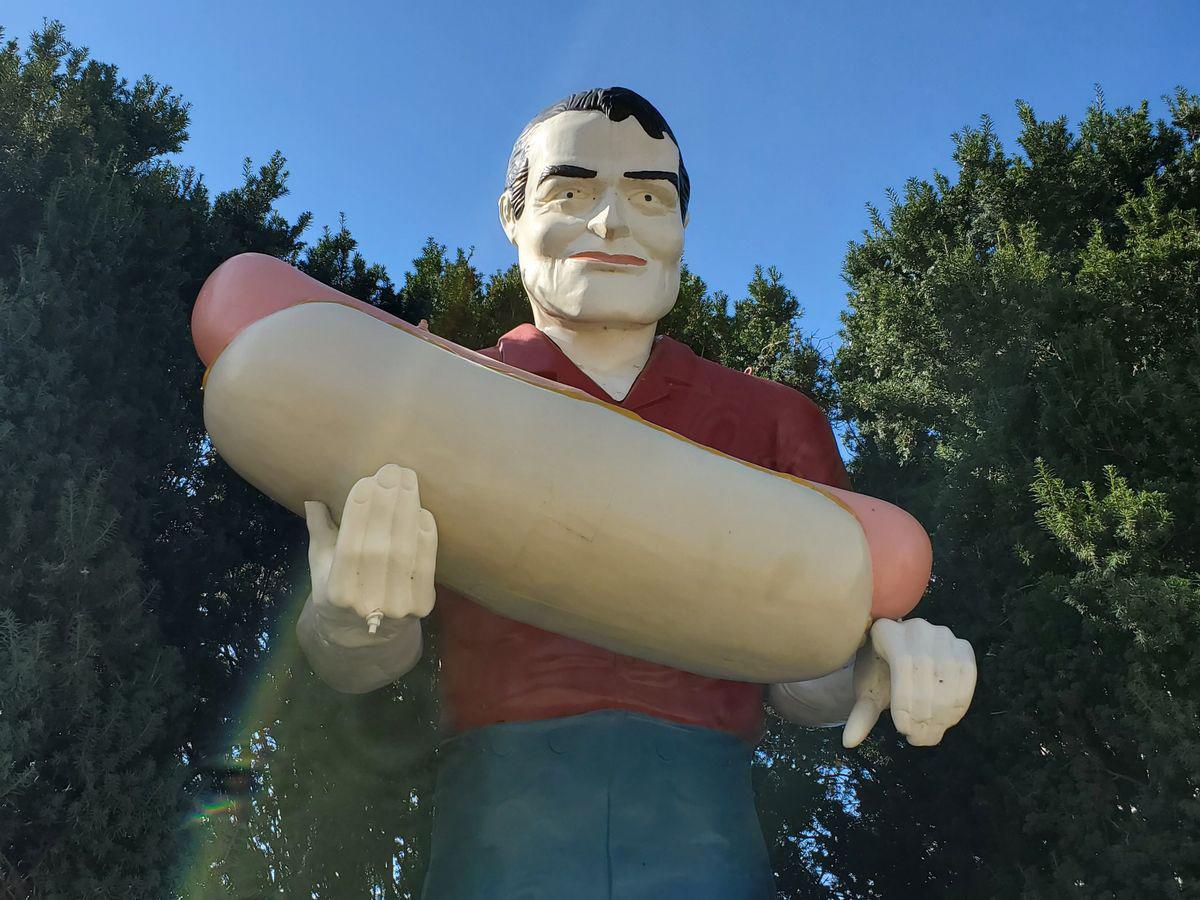
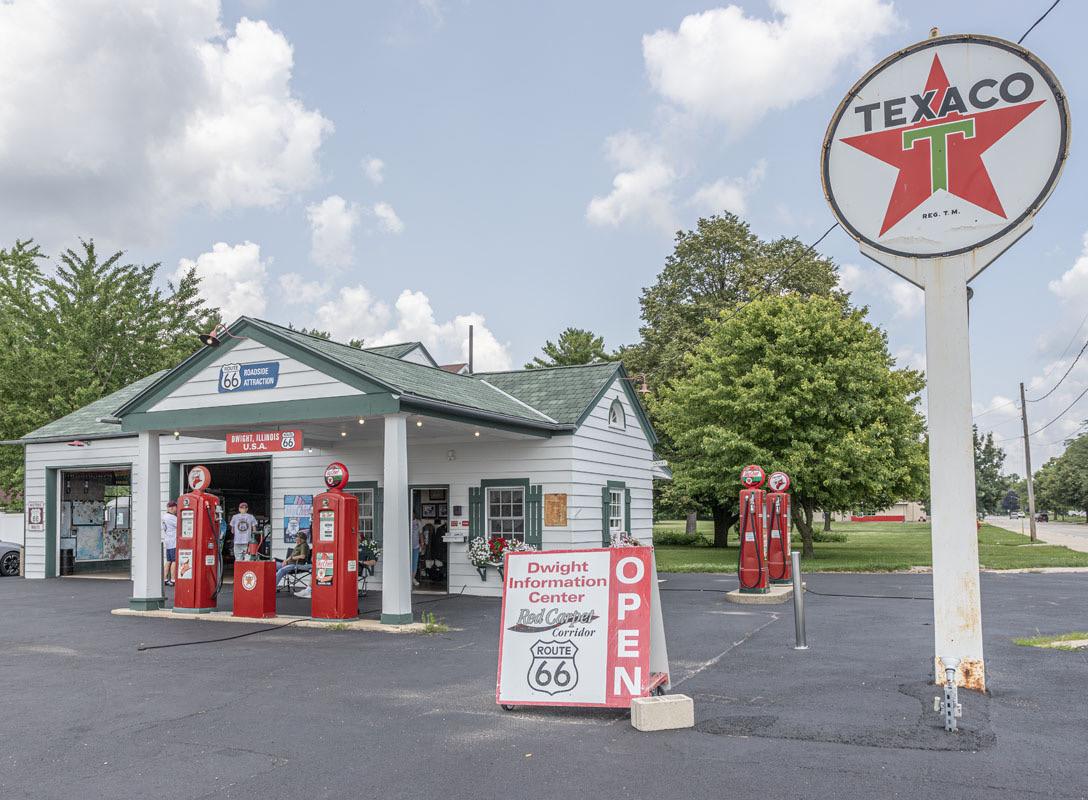
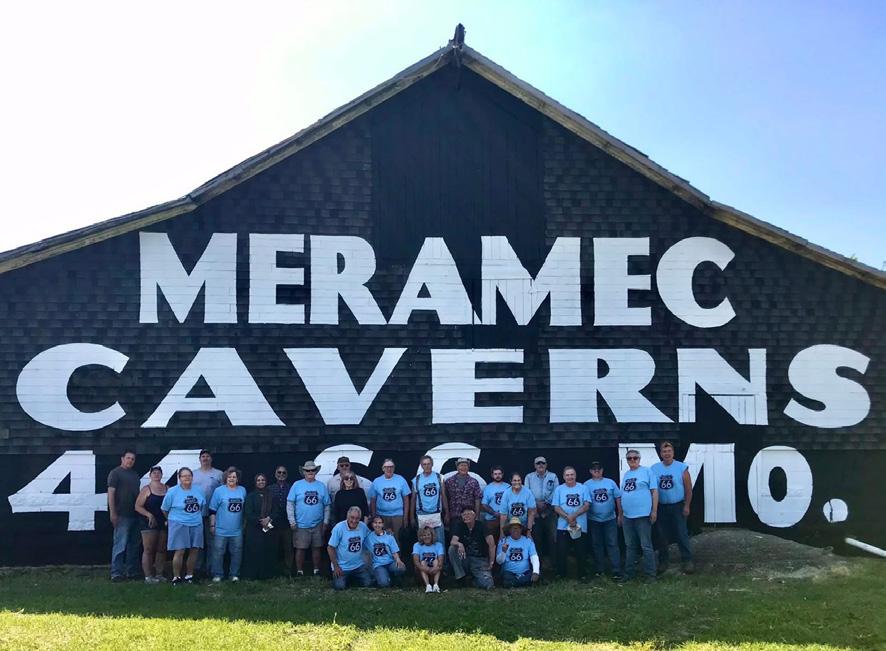
They restored sites that evoke a different time and place: the pedestrian subway in Odell (Pic #8), which was once needed to get across busy Route 66; and Ambler’s Texaco Gas Station in Dwight (Pic #6). There’s also the 1.4 miles of brick road near Auburn (originally hand-laid in 1931), The Mill restaurant in Lincoln (now used as tourism offices); the giant Paul Bunyan holding a hot dog in Atlanta (Pic #5)roughly 60 projects. Recently, they rejuvenated one: a barn in Cayuga that had been painted with an advertisement for Meramec Caverns further down Route 66 in Missouri (Pic #9).
Illinois Route 66 tourist spots
Lulu’s Hot Dogs 1000 S. Leavitt St. Family-owned and operated since 1968; Route 66 mural on the side. lulushotdogs.com
CinespaceChicago
Ferrara Bakery
2210 W. Taylor St. The first Italian pastry shop on Taylor Street in Little Italy, run by the same family since 1908. ferrarabakery.com
Cinespace Studios
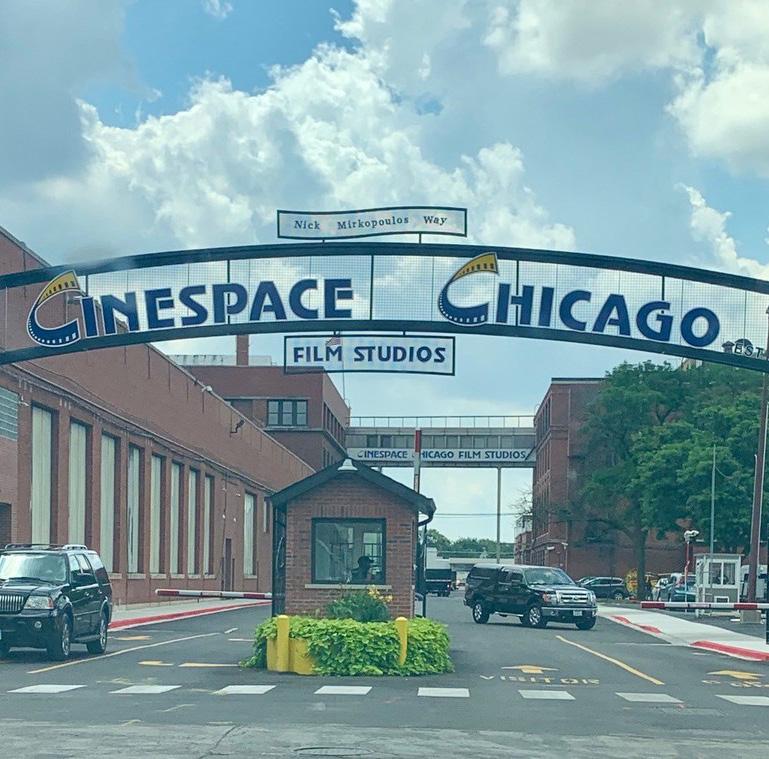
2652 W. Ogden (industry entrance). Former location of Ryerson Steel has facilitated two “Transformers” movies, also “Divergent” and “South Side with You;” TV shows “Chicago Fire,” “Chicago PD,” “Chicago Med” and “The Chi.” cinespace.com
Dorian Sylvain Route 66 mural
On maintenance building at Anna and Frederick Douglass Park, 1401 S. Sacramento. www.chicagoparkdistrict.com/parks-facilities/ douglass-route-66-artwork
Choose Chicago Interpretive Sign
Douglass Park western boundary, 3100 W. Ogden Ave. (at Albany). www.choosechicago.com
Douglas Park Auditorium
Choose Chicago interpretive sign
North Lawndale, 3801 W. Ogden Ave. (at Hamlin).
Castle Car Wash
3801 W. Ogden. Built in 1925, operated until early 60s as a Standard Oil Station. route66times.com
Lawndale Christian
Development Corporation
3843 W. Ogden, has led $118.55 million reinvestment in the neighborhood over the last 30 years: single family rehab and new construction, multifamily and commercial rehab and $900,000 of improvements on Ogden Avenue – including a Lou Malnati’s pizza. www.lcdc.net
Henry’s Drive In 6031 W. Ogden Ave., Cicero, since 1950. henrys66.com
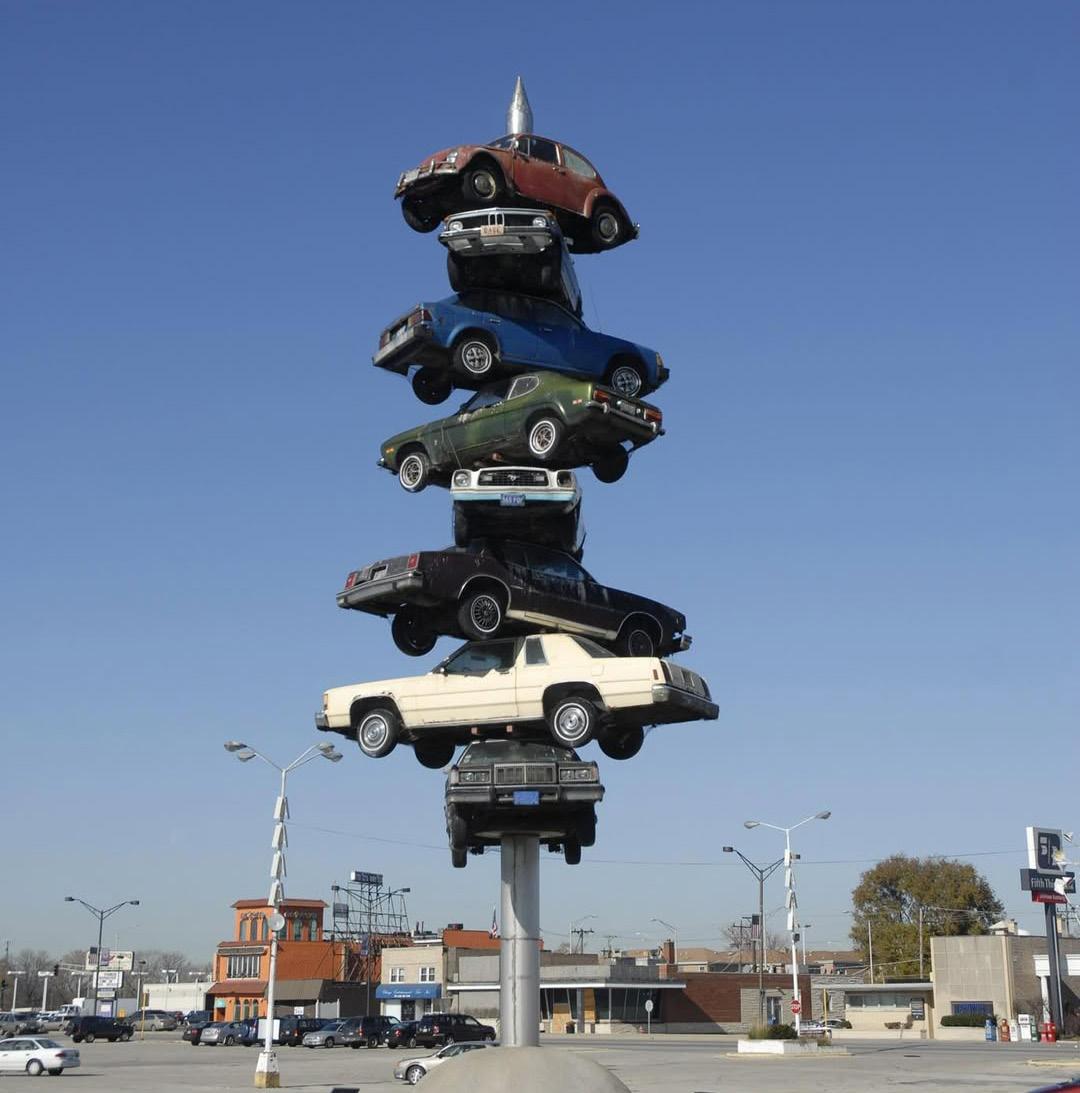
Car Spindle 6226 Ogden Ave., Berwyn, in parking lot of Paisan’s Pizza. Original was featured in the movie "Wayne’s World."
3200 W. Ogden Ave. Designed by Alexander Levy and built in 1910 for dances, receptions and Yiddish theater, when Chicago had the third highest Jewish population after New York and Warsaw. https://collections.carli.illinois.edu/digital/collection/ chm_pp/id/1153/
Farm on Ogden 3555 W. Ogden Ave. Chicago Botanic Garden (Windy City Harvest)/Lawndale Christian Health Center project brings urban agriculture jobs and affordable produce for people at risk of diet-related diseases. https://lawndale.org/farm-on-ogden
Dell Rhea’s Chicken Basket 645 Joliet Road, Willowbrook, since the 1940s. chickenbasket.com
White Fence Farm 1376 Joliet Road, Romeoville. Food served family-style; antique car museum, games, rides and petting zoo. whitefencefarm-il.com
Joliet Prison 1125 N. Collins St., Joliet. Built in the 1850s, its inmates have included Nathan Leopold and Richard Loeb, John Wayne Gacy, Richard Speck – and “Joliet Jake” of the Blues Brothers. www.jolietprison.org
Joliet Area Historical Museum 204 N. Ottawa St., Joliet. Exhibits include two movie-worn suits from “The Blues Brothers.” jolietmuseum.org
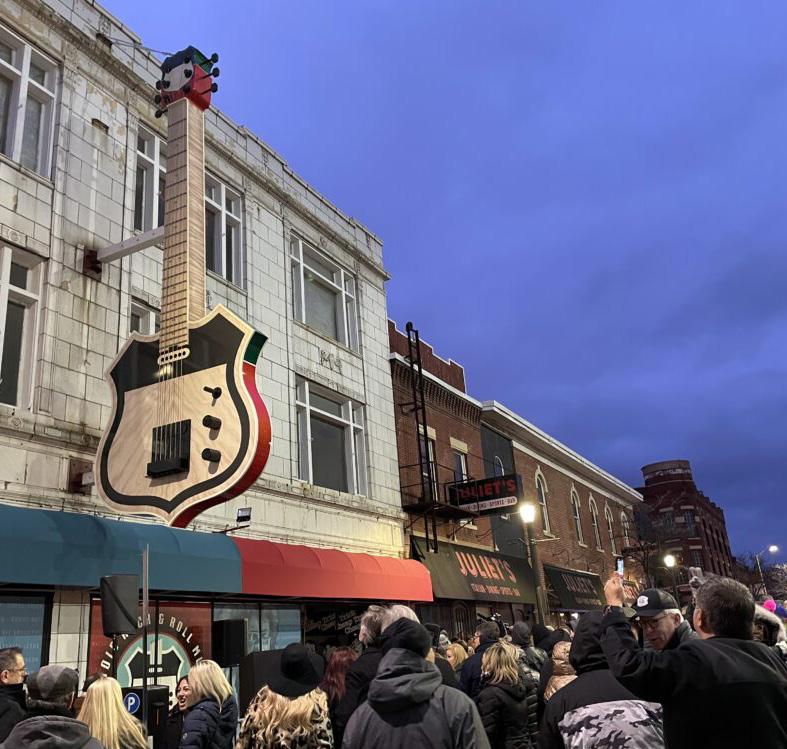
Illinois Rock and Roll Museum on Route 66, 9 W. Cass St., Joliet. roadtorock.org
Illinois RockandRollMuseum
Murals on MainStreet
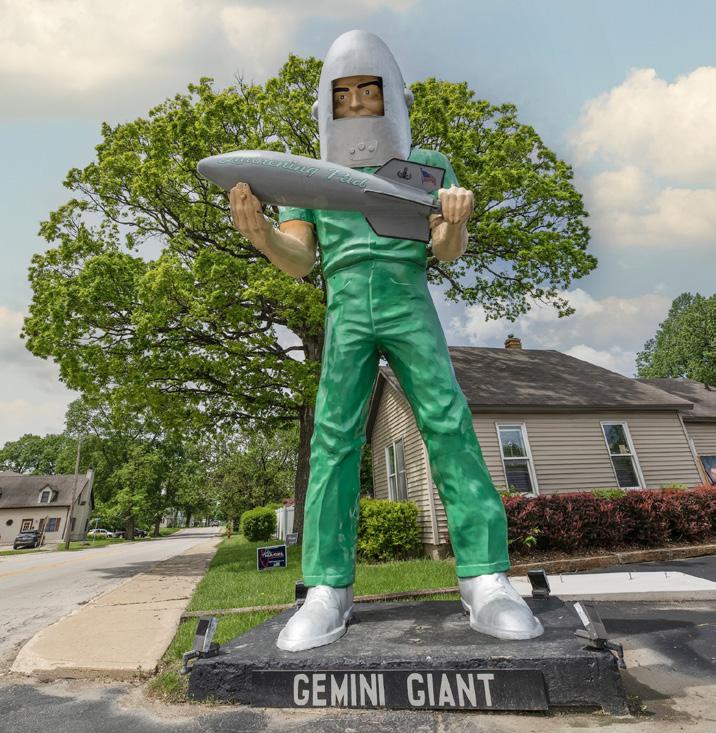
Gemini Giant South Island Park, 201 Bridge St., Wilmington. Bright green fiberglass giant sports a space helmet and rocket. www.il66assoc.org
Polk-a-Dot Drive In 222 N. Front St., Braidwood, has the same atmosphere as when it opened in 1956. www.enjoyillinois.com/explore/ listing/polk-a-dot-drive-in/
Two-cell jail 400 E. Mazon St., Gardner. Have your picture taken in this 1906 jail. www.il66assoc.org/destination/two-cell-jail/
Ambler-Becker Texaco 417 W. Waupansie, Dwight. Route 66 rest stop, restored to 1940s appearance. www.nps.gov/places/amblerstexaco-gas-station.htm
Odell Station 400 S. West St. Odell. Classic 1932 Standard Oil Station. www.nps.gov/places/standard-oil-gas-station.htm
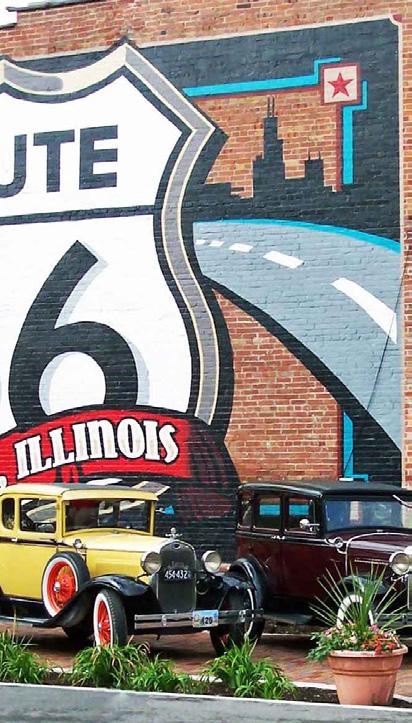
The Route 66 Hall of Fame and Museum 110 W. Howard St., Pontiac visitpontiac.org
Murals on Main Street Downtown Pontiac visitpontiac.org
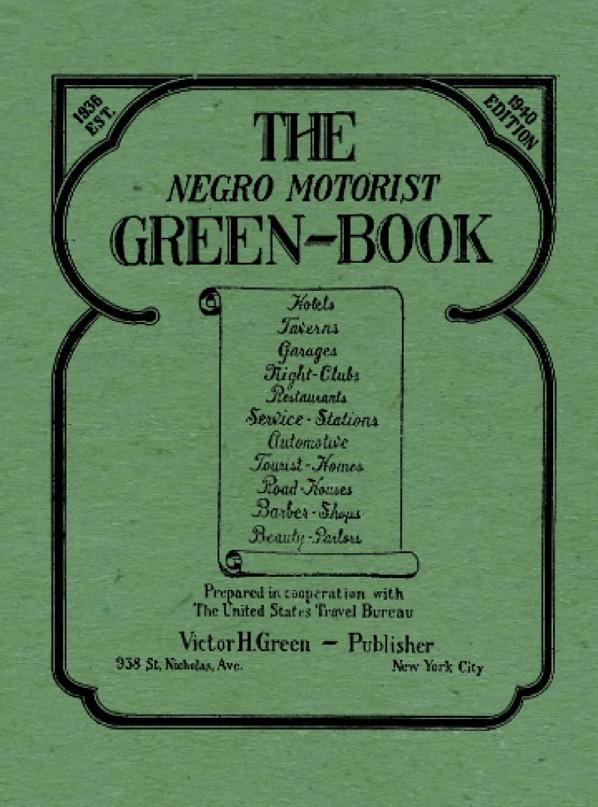
The Green Book Between 1936 and 1967, this guidebook told African American travelers where they could safely eat or stay. Sites included the Wabash Avenue YMCA at 3763 S. Wabash, private homes and Bronzeville hotels since demolished. The final, 1964-67 edition, after passage of national Civil Rights legislation, included the Conrad Hilton (now Hilton Towers), the Drake Hotel and the Ambassador East and West. The Route History Museum, 737 E. Cook St., Springfield, tells the story. www.routehistory.net
Rethinking Cesar Chavez’s Legacy and the Tragedy of the United Farm Workers
by Dr. Victor G. Devinatz
On March 18, The New York Times, after a five-year investigation by Manny Fernandez and Sarah Hurtes, published these reporters’ extensive story regarding United Farm Workers’ (UFW) leader Cesar Chavez’s sexual abuse of Ana Murguia and Debra Rojas, at 12 and 13 years old, respectively, from around 1972 to 1977; and the rape of Dolores Huerta, a UFW co-founder, in 1966. This shocking article devastated many people, including large segments of the Latinx community, who viewed Chavez as an infallible icon who was primarily responsible for building and leading the UFW from its 1965 formation until his 1993 death. However, what is largely unknown by the public is that Chavez ran the union in an authoritarian and bullying manner, viewing himself as the UFW’s embodiment.
On May Day 2026, while it is important to acknowledge US trade unions’ achievements, it also is imperative to recognize the labor organizations’ strategic and tactical weaknesses as well as union leaders’ failings in order to develop more effective trade unions.
While Chavez inspired both farm workers and volunteers to devote countless hours to achieve important gains, he utilized destructive tactics to maintain control of the UFW, which he viewed as his union. One example of these tactics was the Game, which Chavez adopted in the 1970s from Synanon, a drug rehabilitation program likened to a cult. The UFW leader viewed Synanon as an archetype for a poor people’s commune to ensure that volunteers and members remain dedicated to sacrificing for the farm workers’ cause. The Game, a ruthless variation of 1970s encounter group therapies, involved individuals ruthlessly insulting and criticizing one another, with the alleged objective of increasing group solidarity. By the middle of 1977, participants played the Game at UFW headquarters each week with everyone there taking part, including all California union staff. Chavez determined the individuals to be viciously attacked, which allowed Chavez to retain union control, even though many participants were aware that these charges were bogus.
Chavez also perceived the 1975 historic passage of California’s Agricultural Labor Relations Act (ALRA) as threatening his sole leadership of the UFW because the ALRA
institutionalized farm worker labor relations. The law established procedures for conducting union certification elections, collective bargaining, and labor contract administration falling under the jurisdiction of the pro-UFW Agricultural Labor Relations Board. Chavez wanted none of this, believing this would lead to the development of expert secondary union leaders who could eventually challenge him for UFW control.
Chavez desired to retain union control by promoting the UFW as a social movement among poor people rather than constructing a union that would organize farm workers, negotiate collective bargaining agreements, and administer contracts through processing grievances. To have an effective union, one needs paid staff, including lawyers, rather than depending on volunteers who merely exist on subsistence wages. Chavez opposed these things because he contended that higher pay would undermine union staff’s sacrifice and commitment to the organization.
From 1976 to 1981, the conflict over what the UFW should be resulted in Chavez’s purges and resignations of the organization’s secondary leaders, including Eliseo Medina, who eventually became the Service Employees International Union’s executive vice president. When the union’s outstanding legal team, which had been crucial in many union victories, demanded a pay increase from $750 a month, Chavez denied the request, resulting in the legal team’s 1981 departure. The union staff and the volunteers
and Workers Chicago Public Library workers seek may 1 as a day of action
who were purged or resigned did not come forward with their stories for fear of harming the UFW. Despite their negative experiences with Chavez, many felt that their time with the UFW was invaluable, stating that they would do it again.
Chavez’s leadership of the UFW provides important lessons for US trade unions. Even though Chavez viewed himself as the union, the UFW was much more than just one man. Rather, the UFW’s success was based on the crucial activities of the union staff, the volunteers, and the farm workers themselves, who engaged in direct actions and strikes when necessary. And for a labor organization to succeed in the long run, it must be democratically based on what the members desire from their union. The farm workers sought to improve their lives through attaining higher wages, better benefits, and improved working conditions, all worthy objectives.
The UFW’s weakness in 2026 is ultimately due to Chavez’s decision to purge internal opponents who were interested in organizing more workers and in obtaining collective bargaining agreements rather than in building a poor people’s movement. By not focusing on these important union issues that farm workers wanted, the union declined from a peak membership of 60,000 in 1975 to approximately 5,000 to 10,000 members in 2026.
Chavez’s sexual abuse and rape of young girls and women is an unspeakable tragedy for those involved. But the UFW’s tragedy, also due to Chavez’s decisions and behavior, has negatively impacted many farm workers for decades and will be difficult to reverse soon.
Dr. Victor G. Devinatz is Distinguished Professor of Management, specializing in labor relations, and was the Hobart and Marian Gardner Hinderliter Endowed Professor (2014-2015) at Illinois State University. He can be contacted at vgdevin@ilstu.edu.
by Suzanne Hanney, from preppared material CPL photo
AFSCME Local 1215, representing 1,000 Chicago Public Library workers, voted unanimously in March to call on Mayor Brandon Johnson and CPL Commissioner Chris Brown to declare May 1 a Day of Civic Action. They seek to join national political action on May Day because of their firsthand experiences serving Chicago’s most vulnerable residents.
Public libraries must continue to be critical sites for civic engagement, but challenges include unregulated AIdriven misinformation, deep fakes, censorship in the form of book bans and the removal of previously accessible federal web pages, officials said.
“We will not stay silent while billions of dollars are spent on illegal war, ICE terror, and expanding incarceration, instead of funding the institutions that are the backbone of this country - public schools, public libraries, and public services such as mental health," said AFSCME Local 1215 Vice President Adrienne Seely.
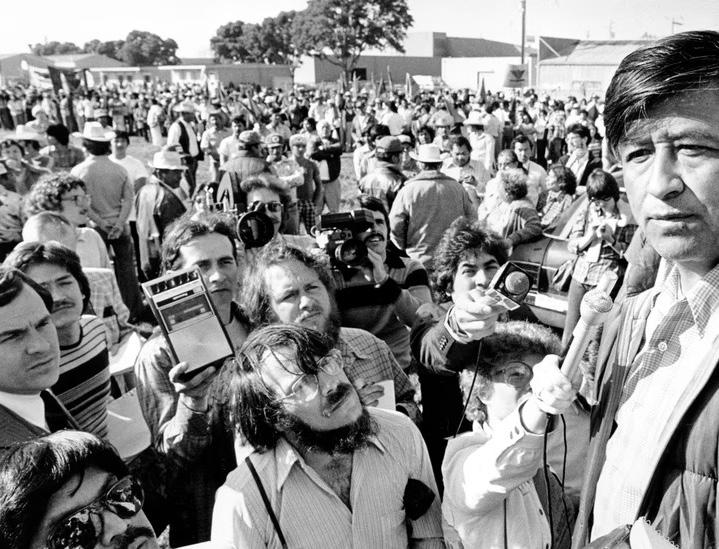
Cesar Chavez talks to striking Salinas Valley farm workers at a rally in 1979 (Paul Sakuma / AP photo).
Advocates rally for recordbreaking may day march
by Suzanne Hanney,
A year after the largest May Day protests in American history – and the 20th anniversary of the first immigrant marches – advocates are calling for an even broader coalition on May 1.
“Across the country people are protesting against threats to democracy, against attacks on voting rights, and against the diversion of public resources from schools, healthcare, food assistance and community services, while billionaires are growing richer and immigrant communities are facing intensified enforcement,” Laura Garza, executive director of Arise Chicago, said during a March 10 press conference at Casa Michoacan.
Joining Garza at the press conference were:
• Jorge Mujica and Omar Lopez of Consejo de Resistencia & Comité 10 de Marzo 2006
• Cook County Commissioner Tara Stamps
• Pastora Emma Lozano, Lincoln United Methodist Church
• Danae Kovac, executive director of the HANA Center
• Jose Artemio Arreola, director of community relations, Illinois Coalition for Immigrant & Refugee Rights
• Father Brendan Curran, OP, of the Community Organizing and Faith Partnership, The Resurrection Project
• Rabbi Bruce Elder of Congregation Hakafa
• Amber Turi of the National Nurses Union, who works at University of Chicago Hospitals
• Tania Unzueta, political director of MIJENTE and a student leader of the 2006 marches
• student walkout leaders from Lincoln Park High School
“One hundred and forty years ago, immigrant workers went out on strike for an eight-hour day and they were called criminals,” said Mujica. “Twenty years ago, the
Sensenbrenner bill would have made a criminal of anyone without documents in the United States as well as anyone who helped them. We defeated that bill by coming out a million strong. Today we are being treated as criminals even though there is no law that criminalizes immigrants. We have to defeat this again.”
Stamps said the United States is attempting to “relitigate the Civil War, to roll back the idea that America belongs to us.” Instead of spending on the basic needs of people living in America, money is going toward militarization and surveillance. Schools and hospitals are defunded in Black neighborhoods, affordable housing and SNAP assistance is being cut. “Families are told to survive with less while the cost of housing keeps rising and they are being threatened with punishment if they fail to prove that they are indeed poor.”
The May Day rally will begin with short speeches at 1 p.m. in Union Park, (Ashland Avenue and Washington Boulevard), after which marchers will proceed to the Loop. Route details are available at maydaystrong.org.
from preppared materials
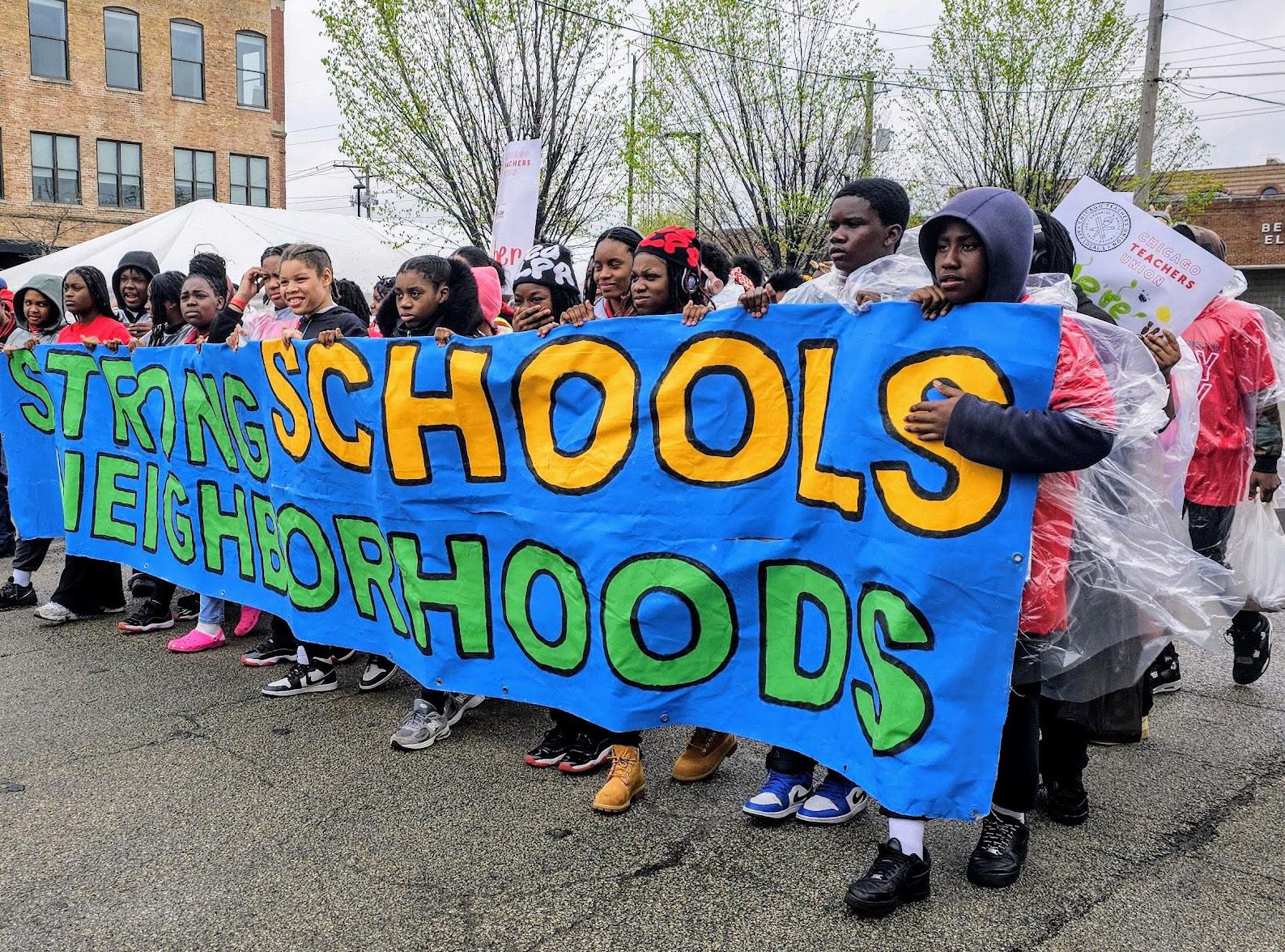
Chicago Teachers Union marches on May Day 2025 (CTU photo).