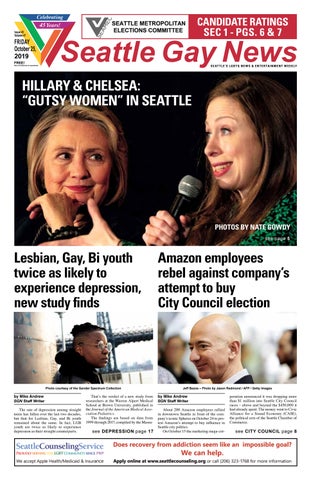
Seattle Gay News
HILLARY & CHELSEA: “GUTSY WOMEN” IN SEATTLE
Lesbian, Gay, Bi youth twice as likely to experience depression, new study finds
by Mike Andrew SGN Staff Writer
The rate of depression among straight teens has fallen over the last two decades, but that for Lesbian, Gay, and Bi youth remained about the same. In fact, LGB youth are twice as likely to experience depression as their straight counterparts.
That’s the verdict of a new study from researchers at the Warren Alpert Medical School at Brown University, published in the Journal of the American Medical Association Pediatrics
The findings are based on data from 1999 through 2017, compiled by the Massa-
Amazon
by Mike Andrew SGN Staff Writer
About 200 Amazon employees rallied in downtown Seattle in front of the company’s iconic Spheres on October 24 to protest Amazon’s attempt to buy influence in Seattle city politics.
poration announced it was dropping more than $1 million into Seattle City Council races – above and beyond the $450,000 it had already spent. The money went to Civic Alliance for a Sound Economy (CASE), the political arm of the Seattle Chamber of Commerce.
see CITY COUNCIL page 8 see DEPRESSION page 17
On October 15 the marketing mega-cor-
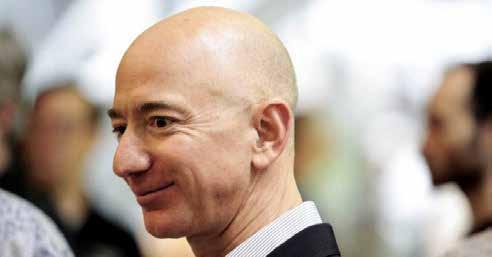
Jeff Bezos – Photo by Jason Redmond / AFP / Getty Images
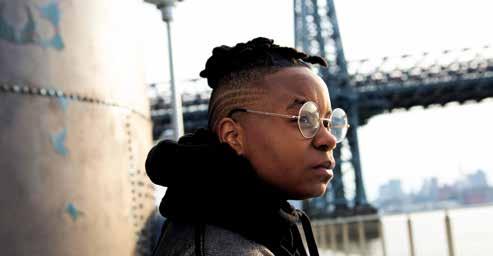
Photo courtesy of the Gender Spectrum Collection


by Matt Landers Public Policy & Government Relations Director Greater Seattle Business Association
One of GSBA’s top advocacy priorities for many years has been to increase opportunities for minority and underrepresented businesses to compete for public contracts. One of the principal targets of that work was to undo the harmful effects of Initiative 200, which was passed in 1998. I-200 made Washington one of only two states to explicitly ban outreach to historically marginalized communities to help determine outcomes in public education, contracting, and employment.
In 2019, GSBA supported Initiative 1000, an important policy that will restore fairness for small business owners, veterans, women, and people of color seeking to succeed in public employment, contracting, and university admissions – without the use of caps or quotas.
GSBA strongly supports the effort to APPROVE I-1000 / R-88, along with a strong coalition of other business organizations, labor, and civic leaders. We urge our membership to vote APPROVE under Referendum 88 on their ballots to retain I-1000 as the law. I-1000 successfully passed the Washington State Legislature and was signed by Governor Inslee; however it is being challenged on the November 2019 ballot under Referendum 88.
According to Washington’s Office of Women and Minority Business Enterprises, since the passage of I-200, state spending with certified minority and woman-owned businesses has dropped from 10% to 3%, resulting in a devastating $3.8 billion, 20-year loss of revenue. Diversity in our public university and college populations has declined statewide as well.
GSBA strongly endorses a NO vote on Initiative 976

The idea of $30 car tabs sounds appealing, but the cost will be too much for our state. All parts of Washington are growing, and some of the biggest frustrations are around commute times and transportation,
which will all get significantly worse if I-976 passes this November. I-976 threatens road, rail, and public transportation projects that connect millions of people to jobs, education, health care, and each other every year throughout Washington state. By repealing critical transportation funding, I-976 cripples our ability to fix
Approving I-1000 / R-88 would begin the process of reversing the inequitable trends resulting from I-200. More economic opportunities would be afforded to veterans, small business owners, women, and people of color through public employment and contracting. The student body of Washington’s universities would begin to better reflect the state as a whole. And, finally, the passage of I-1000/R-88 sends a critical message about how our shared values and beliefs should be codified into state law. We can take tangible, collective action to level the playing field for working families with the most urgent unmet needs, and we should strive to make Washington a place where someone’s race, ethnicity, gender identity or expression, sexual orientation, or other status isn’t a generational determinant of their ability to thrive or share equitably in the prosperity afforded to our region.
Please vote APPROVE on Initiative 1000 / Referendum 88 this November.
Courtesy of the Greater Seattle Business Association – www.thegsba.org
dangerous highways, retrofit bridges and overpasses, expand light rail, maintain ferries, build voter-approved projects, improve freight corridors, and invest in the Washington State Patrol. Even if you don’t ride public transit yourself, you will be impacted by experiencing higher traffic and worsening infrastructure. I-976 specifically targets funds that pay for special services for seniors, veterans, children, and the disabled. The initiative threatens to cut critical, voterapproved transit services across the state. Join GBSA and a strong coalition of business, labor, tribes, cities, and civic leaders in opposing Tim Eyman’s I-976. For any small business trying to get product to or from their location, for any employee who commutes to work, for any customer who is trying to get to a store, it is imperative to vote NO on I-976.
Courtesy of the Greater Seattle Business Assocation – www.thegsba.org
Three tough questions for Jim Pugel running for Seattle City Council District 7
by MK Scott SGN Contributing Writer
As a resident of District 7, I care what happens in my community. I was really interested in chatting with former interim Police Chief Jim Pugel after hearing him speak at the recent GSBA Candidate forum and how different he was to his opponent, Andrew Lewis. I had to reach to him personally.
MK Scott: What are the key differences between you and your opponent?
Jim Pugel: The single most significant difference I can tell is our take on public safety – both in policy and in practice and, more specifically, my commitment to and my experience with preventing gun violence. When I look at Andrew’s public safety plan, I see an understanding of public safety that is just too narrow. We need leaders who understand that “safety” is an everyday issue: from domestic violence to suicide to tragic accidents caused by reckless driving (this happened in District 7 just this summer: https://www.seattletimes. com/seattle-news/driver-hits-9-year-oldboy-on-sidewalk-crashes-into-power-polein-magnolia/), public safety is a broad issue and we need policy that reflects that.
I worked as Chief of Police and in law enforcement for 35 years. Public safety is not a theory or buzzword to me. I understand the issues and the nuances and have the connections to actually make progress on tackling this issue. I was the head of SPD’s Criminal Investigation Bureau working every day to address property crime, domestic violence, violent crimes, and hate crimes. And I was also a leader on police reform and making sure cops are held accountable and receive the de-escalation and crisis training they need to ensure constitutional policing.
Unlike anyone on the current City Council and unlike my opponent, I can bridge the chasm between the officers keeping us safe and the government in charge of overseeing them through reform and accountability measures. I have the experience and balance to bring new ideas to keeping people safe, while working in tandem with our police officers and ensuring they have the support they need to do their jobs. Summary: I will be an effective bridge and collaborator, not another divisive voice of the status quo.
That’s the public safety difference in how I will engage with stakeholders and communities and develop policy. But what that policy is also differs. The one that immediately comes to mind is my emphasis on preventing gun violence.
Andrew has not said one single word regarding gun violence prevention in his plan for “Safe Communities.” After everything we’ve seen from Las Vegas to Parkland to just a month ago in Westlake Station, we need, need, need elected leaders who will make gun violence prevention a top priority when addressing public safety, and leaders who know what the solutions are because they’ve been implementing them their whole careers – like keeping guns out of the hands of our kids, strengthening Extreme Risk Protection Orders, and testifying for safe storage and banning certain weapons. I’ve been shot at, I’ve been hospitalized on the job – I know the need is urgent: we cannot wait for “something” to happen in District 7. We need proactive public safety plans, not more of the same reactionary band-aids we’ve seen from the current City Council. And when it comes to guns – to our kids, our congregations, our neighborhoods – we need a Councilmember who is ready to go on day one.
MK: What would your plan to combat homelessness in your district (Belltown, Queen Anne) be?
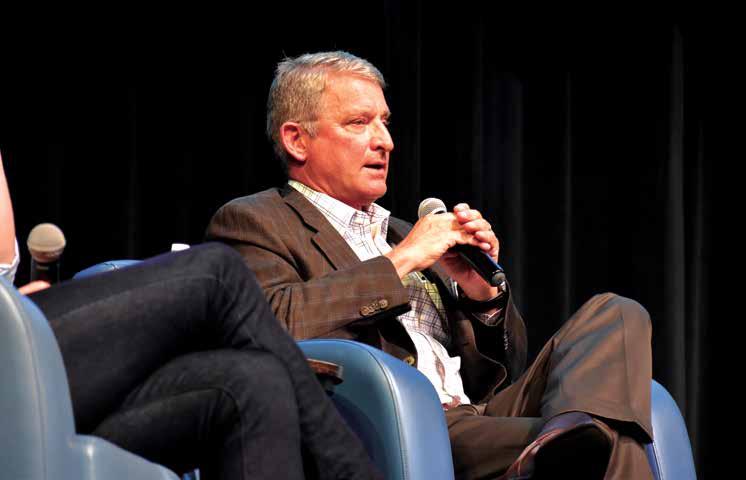
Pugel: Homelessness is perhaps the most recognized human needs issue in Seattle at present. To address the issue, I share the goal of my friend David Werthemier who strives to “make homelessness rare, brief, and one time.” To achieve this goal, it’s critical to recognize that homelessness is not just a Seattle issue. We must work collaboratively with homeless people, providers, neighborhoods, and the business community across the city, county, and entire region to implement long-term solutions for housing and critical services.
My core values on the issue of addressing homelessness are as follows – I refer to them as the “four pillars” approach: 1) Prevention (both long term and immediate), 2) Harm reduction for those currently experiencing homelessness 3) Housing (rapid rehousing, transitional housing, supportive housing and permanent housing) and 4) Enforcement (not criminalizing the status of homelessness but holding offenders responsible regardless of homeless status).
I adopted this approach/belief after being a founding member of the Law Enforcement Assisted Diversion (LEAD) initiative in the Belltown neighborhood of Seattle. The program focused predominantly on people who were homeless, addicted, had co-occurring physical and mental disabilities and were mostly unemployed. The scientifically based study showed a recidivism reduction of 66%, a significant increase in housing, significantly improved psycho/social qualities and no increase in cost compared to the “trail, nail and jail” approach used for the previous three decades.
I believe that the City’s role in addressing the homeless crisis – thus far unfulfilled – is to offer clear and unwavering leadership and a clear plan toward resolving the homeless crisis, all the while respectful of the fact that homelessness also impacts communities and businesses. We do substantially fund fragmented approaches to address chronic homelessness and its cooccurring conditions, specifically mental illness, emotional and substance abuse disorders, but we lack a consolidated, holistic strategy. The bottom line: We do not have a clear plan.
While there are important, data driven assessments at our disposal, we lack a comprehensive and courageous approach, which balances the objective to stabilize
the lives of homeless people with public safety and humanitarian objectives. Allowing car camping and other laissez faire approaches is not a “Program,” nor fair or effective to either the businesses and residents impacted, or the homeless Seattleites themselves. I have always been a strong supporter of preventing homelessness, rapid re-housing and the policy of “housing first.” I believe that the gold standard to address homelessness is permanent supportive housing.
While we invest a lot of tax dollars in this great city, we likely need more investments, but – unlike the current approach – they must be smart, effective and data driven.
MK: You mentioned at the GSBA Face2Face Forum that you want to bring back the Q Safety Patrol and you were very involved in this at the Capitol Hill East Precinct. Would you like to expand to other neighborhoods?
Pugel: Yes! We should have these collaborative relationships between communities and law enforcement everywhere they will do good – especially when it comes to hate crimes that can be particularly hard to prosecute. I believe this comes down to demonstrating we are serious about tackling these issues, which need to be solved both in the short-term and the long-term. We must first categorically disavow and prosecute hate crimes – especially violent hate crimes. We must make it clear that there is no excuse, no exception, and no political expediency when it comes to discrimination; if you commit a hate crime, you will be punished. If you bully or discriminate, that will not be ignored. We also need to take calls for help seriously and ensure that vulnerable and marginalized communities have the resources and services they need. But we will continue to suffer until we invest in long-term solutions – real education for our children that specifically teaches about our diversity. When kids of all backgrounds learn and play together, barriers will come down and we will all learn that arbitrary divisions, who you are, skin color, sexual orientation, where you were born, what neighborhood you live in, don’t have to tear us apart. They will bring us together and make us all stronger.
MK: And finally, what would you like to be your greatest accomplishment?
Pugel: The first piece of legislation I will introduce will be to work with the rest of the council to develop a school loan repayment program to attract more case managers to work with the numerous human service provider agencies that contract with the city. Certain amounts of student loans would be paid for based on the commitment the case manager makes toward working with our vulnerable populations. This kind of incentive has been effective with limited teaching programs throughout the country, and shows that we will put our money where our mouth is regarding our homelessness crisis. If we are serious about actually solving this challenge, and providing the necessary services to help people out of the cycle of poverty and homelessness, then we need the staff and capacity to bring those services to the folks who need them where they need them.
The second piece of concurrent legislation I will introduce is to expand the Law Enforcement Assisted Diversion (LEAD) initiative throughout the city and county to help reduce crime and incarceration. As an Assistant Chief of Police, I helped found LEAD in the Belltown neighborhood of Seattle. The program focused predominantly on people who were homeless, addicted, had co-occurring physical and mental disabilities and were mostly unemployed. The scientifically-based study showed a recidivism reduction of 61%, a significant increase in housing, significantly improved psycho/social qualities and no increase in cost compared to the “trail, nail and jail” approach used for the previous three decades.
These programs will directly address the homelessness and addiction crises, and they will be my first priorities because I feel they will make a significant difference and move Seattle forward. If I can get these two programs passed, funded, and signed into law, that will likely be my biggest accomplishment on the City Council.
For more information on Jim Pugel and his campaign for Seattle City Council District 7, please visit jimpugel.com.
MK Scott is a Seattle-based public affairs blogger. Check out his site at uniteseattlemag.com
Jim Pugel – Photo by MK Scott
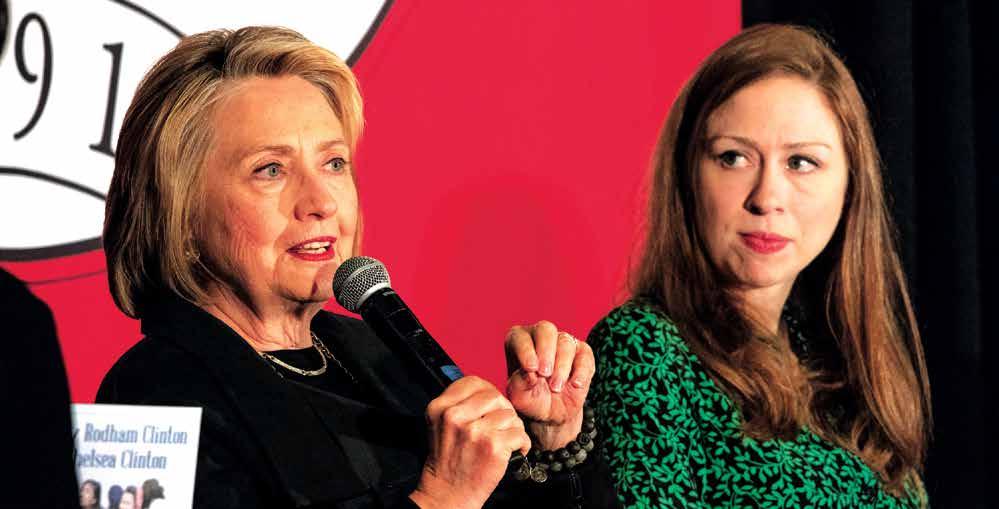
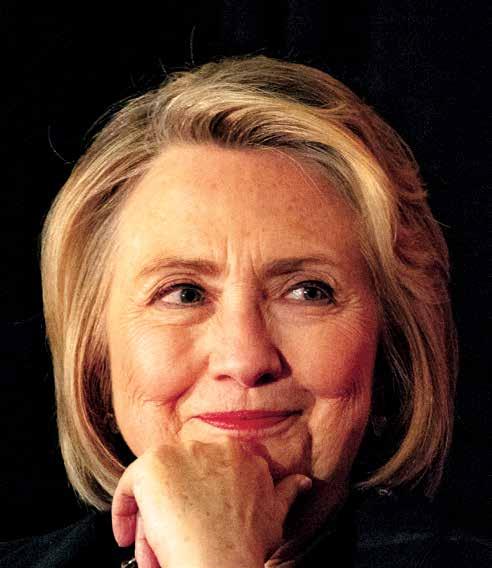
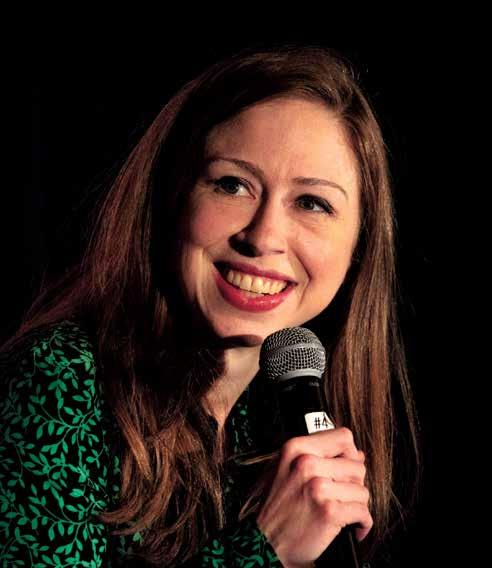
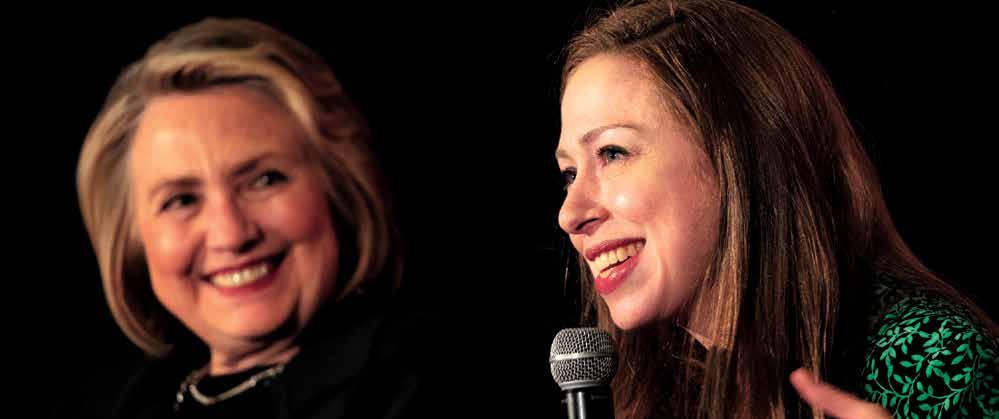
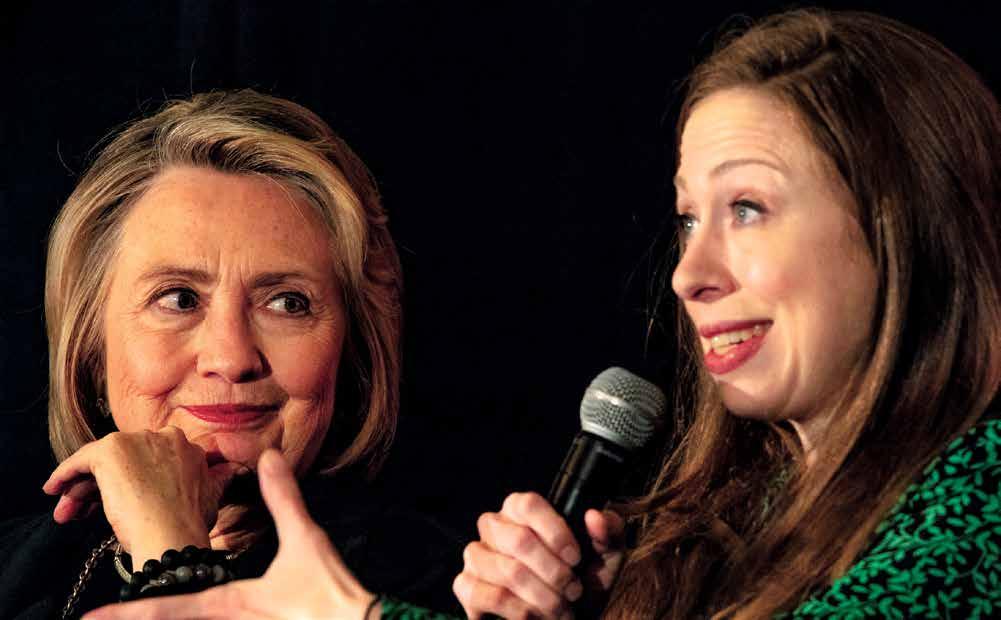
Hillary and Chelsea Clinton brought their book tour for "Gutsy Women" to Seattle University on Friday, Oct. 18th. Their appearance, along with Seattle Storm star Sue Bird, was sponsored by The Elliott Bay Book Company. – Photos by Nate Gowdy
CITY COUNCIL
continued from cover
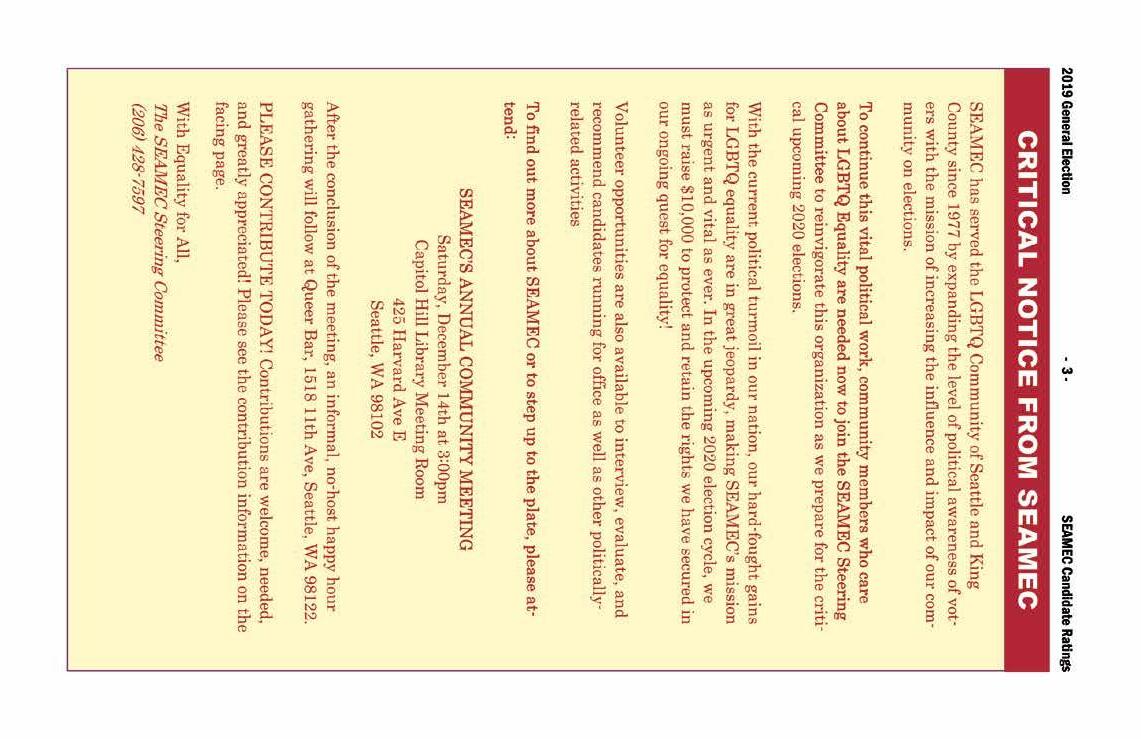
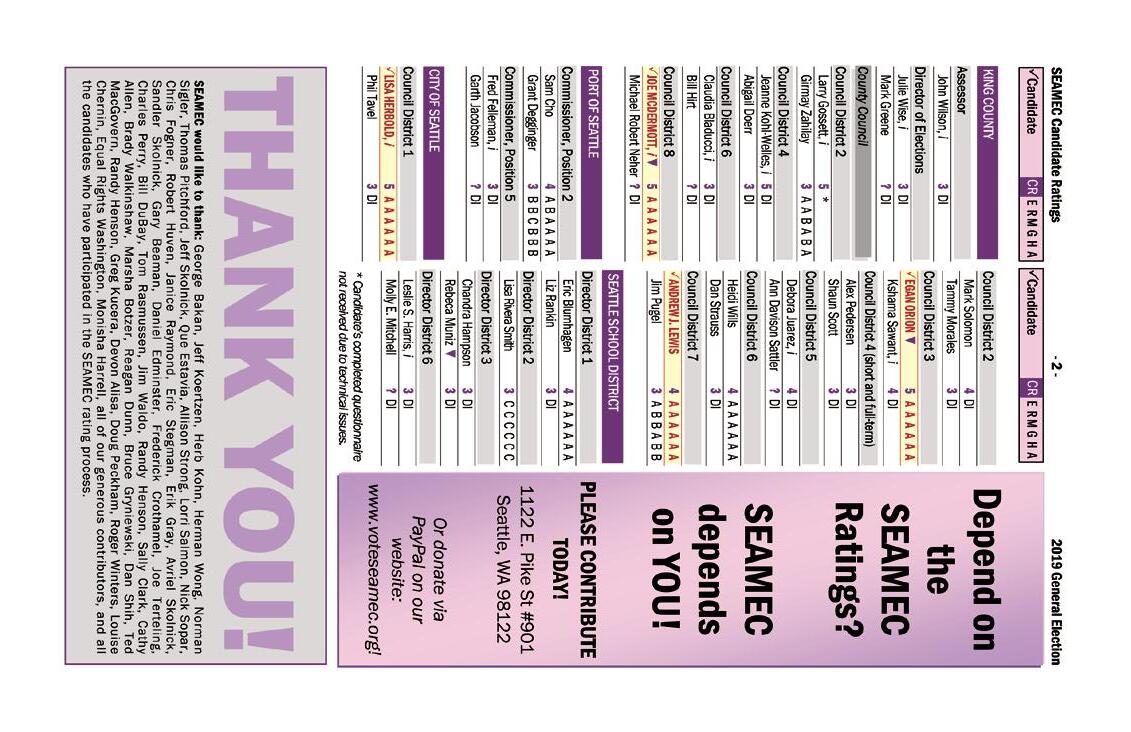
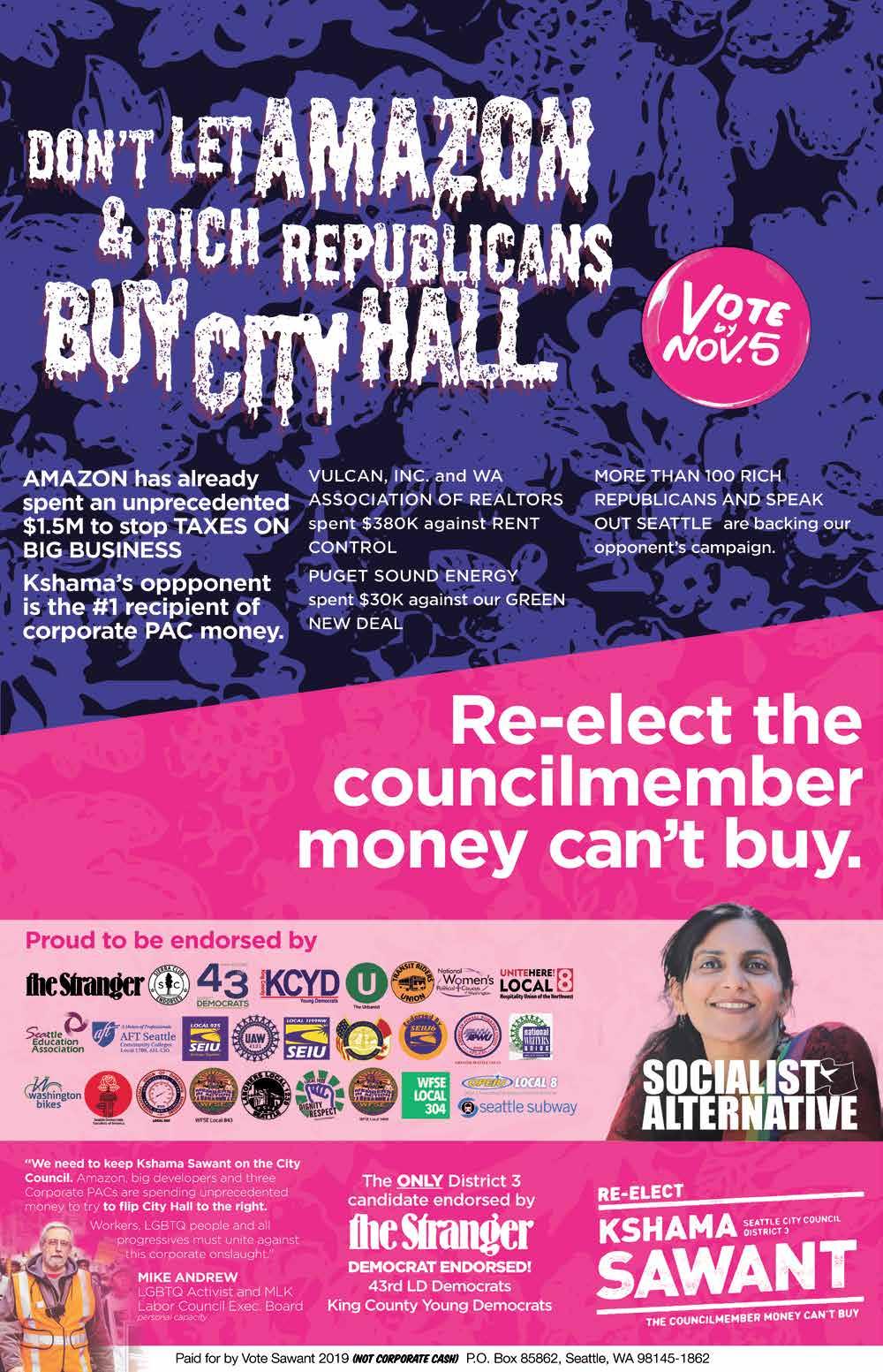
With the money, Amazon hoped to reshape the City Council, taking out progressive stalwarts like Lisa Herbold and Kshama Sawant and replacing them with Chamber-backed candidates.
“If [Amazon CEO] Jeff Bezos can do this here, he’ll try it again, in other cities,” Amazon employee Matt Smith told the SGN at the rally. “We have to stop Bezos right here!”
Smith, a worker at one of Amazon’s “fulfillment centers,” was one of the organizers of the rally.
“It’s outrageous,” he continued. “These big corporations buy politicians. It undermines our democracy. But on the progressive side, who funds the candidates? The employees.”
Smith’s statement is confirmed by data. According to Seattle Ethics and Elections –the watchdog agency that monitors political spending – progressive candidates report far more individual donors, but each one gives far less than donors backing CASE’s favored candidates.
In the closely contested District 3 race, for example – where incumbent Kshama Sawant is challenged by Amazon-backed Egan Orion – Sawant has gotten campaign donations from more than twice as many people, with the average donation being under $70. Orion’s average donation is more than twice as much.
Progressive unity
One consequence of Amazon’s bid to control the City Council has been newfound unity among Seattle’s progressive forces.
At the October 24 rally, incumbent City Councilmembers Teresa Mosqueda and Lorena Gonzalez called for support for what they called “the whole progressive slate” –Lisa Herbold (District 1), Tammy Morales (D2), Kshama Sawant (D3), Shawn Scott (D4), Dan Strauss (D6), and Andrew Lewis (D7).
Sawant also sounded a note of unity.
“I want to refute the lie promoted by corporate media that socialists and Democrats cannot work together,” she said.
In fact, Sawant became the first nonDemocrat in the city’s history to be endorsed by the 43rd District Democrats, Young
Democrats, and UW Democrats. She has now also gotten the support of Mosqueda and Gonzalez, who backed one of her primary opponents.
A representative of the 43rd District also spoke at the October 24 rally, supporting all the candidates targeted by Amazon.
National leaders weigh in
Even national progressive leaders have felt compelled to weigh in on Amazon’s extraordinarily aggressive political donations.’
On October 19, Sen. Elizabeth Warren, a foe of high-tech corporate monopolies, tweeted solidarity with Seattle’s progressive candidates.
“Surprise: Amazon is trying to tilt the Seattle City Council elections in their favor,” Warren wrote. “I’m with the Seattle council members and activists who continue standing up to Amazon. Corporations aren’t people, and I have a plan to get big money out of politics.”
On October 21, Bernie Sanders followed suit.
“In a city struggling with homelessness, Amazon is dropping an outrageous amount
of money to defeat progressive candidates fighting for working people,” Sanders said. “The way Amazon conducts itself in its hometown is a perfect example of the outof-control corporate greed we are going to end.”
Both Warren and Sanders got shout-outs from speakers at the Amazon rally.
Next steps for Amazon workers
“The day after the election, Amazon will still be here,” Smith told the SGN. “That’s why it’s really necessary to build a movement of workers.”
As part of that effort, he explained, Amazon workers had put together a list of demands:
A halt to all donations by Amazon to any corporate PACs
A stop to Amazon’s use of business resources to bully city council into enacting the company’s agenda
Amazon employee input on all political spending by Amazon.
Smith also asked SGN readers to go to the Amazon employees’ website, stopbezos.com, and sign its petition.
At House Judiciary Committee hearing, Jayapal calls on Trump administration officials to fight foreign interference in the 2020 election
WASHINGTON, DC (October 22, 2019)
– At today’s House Judiciary Committee hearing on US election security, US Rep. Pramila Jayapal, co-chair of the Congressional Progressive Caucus, called on senior Trump administration officials to fight foreign interference in the 2020 election.
Cyber actors affiliated with the Russian government conducted an “unprecedented level of activity against election infrastructure in the run-up to the 2016 US elections,” Jayapal said, citing a bipartisan report from the US Senate Select Committee on Intelligence.
The committee “called for sweeping action to protect our 2020 elections,” added Jayapal. “With election day just 378 days away, it’s crucial that we move quickly.”
Jayapal also called on the Senate to act on a House-passed bill that would require the use of backup paper ballots in federal elections.
“I wish our colleagues on the other side would be as concerned with election security,” Jayapal said.
Courtesy of Rep. Pramila Jayapal
Jayapal, Pascrell & colleagues call for action on refugees
WASHINGTON, DC (October 23, 2019) – US Reps. Pramila Jayapal (WA-07) and Bill Pascrell, Jr. (NJ-09) led more than 50 House colleagues in writing to President Donald Trump to blast the Trump administration’s decision to set American refugee admissions for fiscal year (FY) 2020 at just 18,000, a further drop from the already historically low figure set by the administration last year. The members demand the administration show greater charity to refugees fleeing war and famine and raise the number to 110,000.
“We write to encourage you to set the Presidential Determination (PD) for Refugee Admissions for Fiscal Year 2020 at 110,000. Your decision to set the cap at 18,000 is unconscionable in a world where nearly one person is forcibly uprooted every two sec-
onds,” the members wrote. “Our responsibility to help more of these victims is imperative. Throughout our history, the United States has been a beacon of hope and sanctuary for refugees fleeing for their lives.”
For several years now, the world has remained mired in what is the largest refugee crisis in recorded history. Over 70 million people spanning the earth have been displaced for terrible causes, ranging from violence and famine to persecution and war. Over 25 million refugees are included in that dreadful toll, including over half of whom are under the age of 18.
The United States screens refugees more stringently than any other traveler allowed to enter the country. The US Refugee Admissions Program has safely and successfully resettled more than three
million refugees from around the world to American communities across the country since 1975. Refugee applicants must undergo a robust and thorough screening process that takes roughly two years and involves our nation’s top security and counterterror experts. The exhaustive vetting process includes checking fingerprints and other biometric data against terrorist and criminal databases and multiple interviews through various federal agencies.
Since the enactment of the 1980 Refugee Act, the average annual goal for refugee admissions has been 95,000. In FY 2016, the US resettled approximately 85,000 refugees, and the PD for FY 2017 was 110,000. Since Executive Order 13769 was signed, the number of refugees coming to the United States each month has
dropped precipitously. The Trump administration’s prior PD of 30,000 for FY 2019 was already the lowest number ever set by a US executive, and the number for FY 2020 cuts that pathetic figure in half.
“Your decision to set this PD at 18,000 runs counter to these intonations and fulfill your predecessor’s worst fears about our national future. We reiterate our call for you to increase the Presidential Determination for Refugee Admissions to 110,000. Our future depends on that charity and farsightedness,” the members wrote.
The full text of the letter is […] available [at https://pascrell.house.gov/UploadedFiles/Refugees_letters_October_2019.pdf].
Courtesy of Rep. Pramila Jayapal
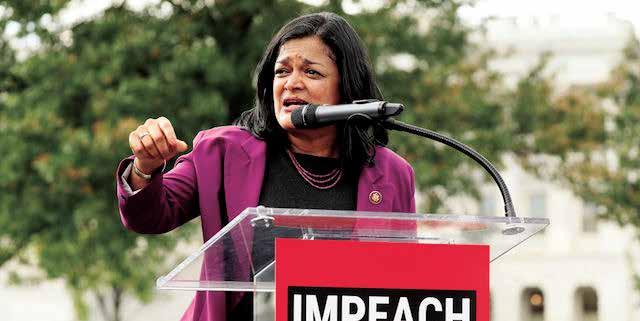
U.S. Rep. Pramila Jayapal – Photo by Paul Morigi / Getty Images






The 24th annual Hopelink Reaching
Out Luncheon (with a little help from Queen Latifah) raises $1.15 million
by MK Scott SGN Contributing Writer
This was my third year attending the luncheon and with past headliners like Dr. Jill Biden, and Dr. Tererai Trent this event is truly inspiring.
Now in its 24th year, Hopelink’s Reaching Out Luncheon (Monday, October 21st) is the premier fundraising gathering on the Eastside and one of the largest and most popular events of the year.
This year was no exception with the incredible Queen Latifah! Unlike the lecture format of the last few years, this year was different featuring an interview set up with lots of conversation about Latifah’s childhood growing up poor.
Also noteworthy was a performance by The Residency, a group created by Seattlebased hip-hop artist Macklemore and Ryan Lewis to create youth empowerment through hip-hop.
The Reaching Out Luncheon annually attracts up to 1,000 attendees and this year raised $1.15 million to provide food, shelter, family development, transportation, and job readiness skills for homeless and low-income families, children, seniors and people with disabilities in our area.
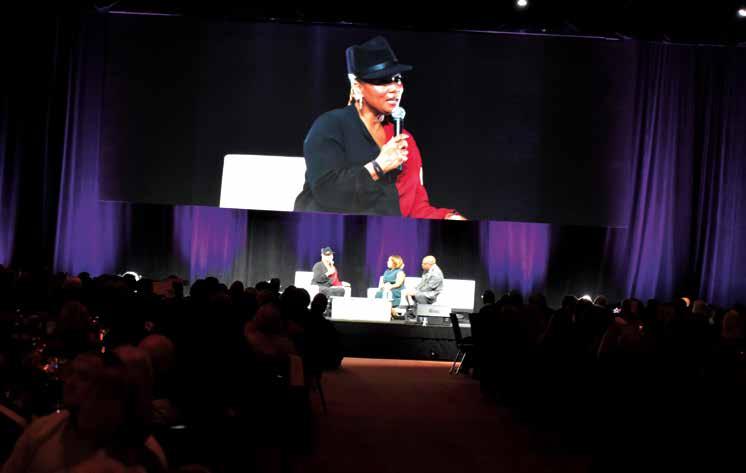

Photo by MK Scott
Communities across Washington prepare to commemorate the 2020 suffrage centennial
TACOMA (October 23, 2019) – Along with the Washington State Women’s Commission and the Women’s History Consortium, the Washington State Historical Society is providing local groups with funding to recognize and celebrate the 100-year anniversary of Congress recognizing women’s right to vote in America. Through several rounds of grant applications, organizations across Washington (listed below) have been selected to receive Votes for Women Centennial Grant funding for commemorative projects. Dynamic exhibitions, events, and programs will honor the suffrage centennial in a variety of engaging ways, and most are open to public participation.
Several programs have begun:
• The Women Veterans Advisory Committee [www.dva.wa.gov/women/womenveterans-advisory-committee] produced a recognition event featuring women veterans from different peacetime and war eras, such as WWII, Korea, Vietnam, the Gulf War, Iraq, and Afghanistan.
• The Washington Secretary of State’s Legacy Washington [www.sos.wa.gov/ legacy] program has launched “Ahead of the Curve,” celebrating the 100th anniversary of American women gaining the right to vote with an exhibition, online profiles, a published book, lesson plans, and a student contest.
• The Tacoma Historical Society [www. tacomahistory.org/exhibitherstory] presents the exhibition “Her Story: Tacoma’s Women of Destiny,” recognizing the passage of the 19th Amendment and highlighting over 75 women whose historic roles have been overlooked or who are now making and writing history.
• The Cowlitz County Historical Museum [www.co.cowlitz.wa.us/218/Museum] is interpreting the struggle for woman’s suffrage using artifacts from the museum’s collections and highlighting local Cowlitz County suffragists.
• The Olympia Historical Society and Bigelow House Museum [olympiahistory.org] have created online and printed materials, including an Olympia Women’s Suffrage Trail [olympiahistory.org/olympia-womenssuffrage-trail] to highlight the role of local places and people in the women’s suffrage movement.
These upcoming Votes for Women Grant–supported programs will take place during 2020:
Statewide
• Living Voices [www.livingvoices.org/ suff/suff.html] will tour “Hear My Voice,” a program on the fight for suffrage and the
passage of the 19th Amendment, with a customized slide show and discussion focusing on our state’s role in the amendment’s passage and current status with respect to equal rights.
• Washington’s online encyclopedia of regional history, HistoryLink.org, will produce content on women in technology, such as Roberta Williams, who co-founded Sierra Entertainment and created the first graphic adventure game ever made for personal computers.
Western Washington
• The Museum of History and Industry [mohai.org] will mark Women’s History Month in March with a series of programs that celebrate the centennial of women’s suffrage, using history as a framework for exploring issues that impact communities and democracy.
• The Historic Trust [www.thehistorictrust.org] will bring a National Women’s Party [www.nationalwomansparty.org] exhibit with customized Washington-specific displays to the Fort Vancouver National Historic Site and local libraries, and the League of Women Voters of Washington [www.lwvwa.org] will complement the exhibit with events.
• The Centralia Downtown Association [downtowncentralia.org] will present the exhibition “The Women Came Downstairs: The Movement of Women’s Power from Above the Shops to Owning the Buildings and Running Our Towns,” which features the accomplishments and contributions of Centralia and Lewis County women through a permanent and traveling display, social media storytelling, speakers, and more.
• The Clark College Foundation [www. clarkcollegefoundation.org], in partnership with Southwest Washington’s League of Women Voters [www.lwvclarkcounty. org], the Clark County History Museum [www.cchmuseum.org], and The Historic Trust [www.thehistorictrust.org], will host a series of women’s history classes and trainings, museum exhibits, art activities, and reenactments outlining the many decades of political action by women suffragists.
• The White River Valley Museum [www. wrvmuseum.org/the-museum] will present “Domestic Fantasy,” an exhibition that considers what the impact would have been if social media existed in 1919, featuring stories of Washington state suffragists alongside prominent taste makers of the time.
• The Wing Luke Museum’s exhibition “Asian Pacific American Feminism” and its associated public programs will reflect on the history of women, feminism, and civic
engagement in Washington’s Asian-PacificAmerican community. [www.wingluke.org]
• The Bellevue School District [bsd405. org] will present Living Voices’ “Hear My Voice” [www.livingvoices.org/suff/suff. html] performances, which explore the fight for women’s suffrage, at six high schools to raise student understanding of civic involvement and inspire students to participate in democracy.
• The Seattle Girls School’s seventh-grade class will experience Living Voices’ “Hear My Voice” performances on the long-term effects of the suffrage movement in advancing the roles for women in politics and society.
• The Whatcom Museum Foundation [www.whatcommuseum.org] will host the exhibition “Moving Forward, Looking Back: Washington’s First Women in Government” [www.sos.wa.gov/legacy/womenin-government], accompanied by related programming.
• Thurston Community Media’s Centennial Video Project will include video coverage of Women Vote NOW: Suffragists of Color Who Made a Difference [youtu.be/ JVdJkXFEZfw], a commemoration of the 99th anniversary of the passing of the 19th Amendment and the women of color who worked for suffrage, abolition, and civil rights, as well as a series of public service announcements, a 30-minute television history special, and a screening and voter registration event. [tcmedia.org]
• The Thurston County Courthouse [www. co.thurston.wa.us/clerk] will install an interpretative panel with information about the first all-woman jury in the state after most Washington women gained permanent suffrage in 1910.
• The Washington State Jewish Historical Society [www.wsjhs.org/welcome.html] will expand on the exhibit “Agents of Change” and continue efforts to collect stories by and about Jewish women in Washington.
• The Seattle Genealogical Society [www. seattlegenealogicalsociety.org] will produce an exhibit as well as educational events designed to teach the public how to access and use genealogical tools and techniques in order to discover their female ancestors and document their stories.
• The League of Women Voters of Bellingham/Whatcom County [www.lwvbellinghamwhatcom.org] will host an event with Elaine Weiss, author of The Women’s Hour, which recounts how women won the vote and tells the important story of how racial issues in 1920 impacted the suffrage fight.
• Pierce County Superior Court [www. co.pierce.wa.us/122/Superior-Court] will create educational materials about the his-
tory of jurors and voting rights in Washington, including a mural celebrating Washington’s first all-women “suffragist” jury installed at the County-City Building in Tacoma.
• The Snohomish County League of Women Voters [lwvsnoho.org] plans to honor Missouri Hanna, an Edmonds publisher and suffragist who started the West Coast suffrage newsletter Votes for Women, helping Washington women obtain the right to vote in 1910.
• The American Association of University Women-Port Townsend’s “Women Vote!” centennial celebration program will host free films, live performances, and exhibitions that celebrate the history of suffrage, to be held at locations in the community including the Port Townsend Library, local high schools, and the Jefferson County Historical Society. [pt-wa.aauw.net]
• The Island County Historical Society & Museum [www.islandhistory.org] will offer a professional historical reading and portrayal of suffragist Elizabeth “Lizzie” Ordway, by Jill Johnson of the Seattle Storytellers Guild [seattlestorytellers.org/ssg/home. html].
• The DuPont Historical Society [www. dupontmuseum.com] will present a traveling display in local schools and libraries chronicling and celebrating the women of the DuPont area throughout history.
• Shifting Gears [www.letsshiftgears.com] will conduct the Susan B. Anthony Relay Ride, a bicycling event where participants can pay homage to women change makers over the last 100 years.
• The Renton History Museum [www. rentonwa.gov/cms/One.aspx?portalId=7922 741&pageId=8565989] will present “What Difference Do Renton Women Make?,” an exhibition and associated programs that explore the impact of women on public life in Renton from the early 19th century to the present.
• The Washington State Daughters of the American Colonists [sites.rootsweb. com/~wadac] will place a marker on the Littlerock Elementary School grounds to celebrate the eight Littlerock women, along with seven women in Grand Mound that day, whose votes were the first women’s votes counted in Washington Territory.
• Politics of the Possible in Action [www. politicsofthepossible.com/projects/nextgenredistricting] will ignite civic engagement in high school students through theatrical performances and a dialogue with experts across Washington.
• The Lewis County Historical Society [www.lewiscountymuseum.org] will present
an exhibit featuring ten women change makers from Lewis County and highlight their influence on the community with a focus on local women’s suffrage.
• Seattle Globalist [www.seattleglobalist. com] will produce written profile stories and an audio podcast about the kinds of impacts and empowerment the suffrage movement has had for women of color and immigrant women.
• Azeotrope [www.azotheatre.dreamhosters.com/az/?page_id=451] will present a free public showcase of Say Our Names, a play with music about race relations and conflicts within the women’s suffrage movement, highlighting contributions from and barriers faced by suffragists of color.
Central Washington
• The Wenatchee Valley Museum and
Cultural Center [www.wenatcheevalleymuseum.org] will partner with the Women Painters of Washington (WPW) [womenpainters.com/wp] to host an art exhibit featuring historic paintings, highlighting the history of the WPW and vignettes on local women in state and national politics.
• The Yakima Valley Museum [www. yvmuseum.org] will host “Divergent Voices/ Common Ground,” an exhibition and program that shows the artwork of four Central Washington artists. It will also present Living Voices’ “Hear My Voice” performances, examining the fight for women’s suffrage.
Eastern Washington
• KSPS Public Television [www.ksps.org] will produce five one-minute messages that highlight present-day female heroes who impact daily life for eastern Washington res-
idents, focusing on women who have made a difference through civic engagement.
• The League of Women Voters of Pullman [lwvpullman.org] will host several performances and discussions at school campuses throughout the city in honor of the women’s suffrage centennial.
• The Ritzville Library [ritzvillelibrary. com] will create a presentation titled “Rural Suffrage: Winning the Vote for Women in Adams County,” which will celebrate local, state, and national women who shaped the movement.
• The Mid-Columbia Mastersingers [www.mcmastersingers.org] will host a collaborative concert by female choral ensembles that celebrates the history and impact of women’s suffrage through song.
For more information regarding Wash-
ington’s suffrage centennial activities, visit www.suffrage100wa.com, or follow @suffrage100wa on Facebook, Twitter and Instagram. The Washington State Historical Society partners with our communities to explore how history connects us all. The Society’s most visible activity, the Washington State History Museum, is located in Tacoma’s downtown core along Pacific Avenue in a thriving cultural scene. The museum features interactive permanent exhibitions in the Great Hall, unique rotating exhibitions highlighting the Society’s collections, dynamic feature exhibitions, and traveling exhibitions.
Courtesy of the Washington State Historical Society
Fourth Mississippi city enacts comprehensive LGBTQ-inclusive nondiscrimination protections
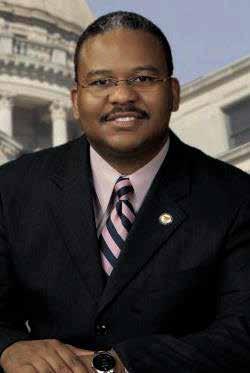
HOLLY SPRINGS, Miss. (October 18, 2019) – Today, the Human Rights Campaign (HRC), the nation’s largest lesbian, gay, bisexual, transgender, and queer (LGBTQ) civil rights organization, hailed Holly Springs Mayor Kelvin Buck and the Board of Aldermen for enacting citywide nondiscrimination protections that include sexual orientation and gender identity in housing, public accommodations, and employment. These protections will extend to nearly 8,000 residents in the city, nearly 80% of whom are black. Holly Springs is the fourth city in Mississippi to pass a fully inclusive comprehensive nondiscrimination ordinance, joining Jackson, Magnolia and Clarksdale.
“Holly Springs has sent a clear message that all people are welcome, and all people should be protected from discrimination and bias-driven crimes in this city,” said Rob Hill, HRC Mississippi state director. “With four cities in Mississippi now having passed LGBTQ-inclusive nondiscrimination ordinances, it is clear that Mississippians value
inclusion, fairness, and equality. We’re grateful to Mayor Kelvin Buck for his leadership on this issue and to the Board of Aldermen for voting in favor of this ordinance.”
The fully inclusive nondiscrimination ordinance (NDO) passed on September 17 and was enacted into law this week. It protects people from discrimination in employment, housing, and public accommodations, based on real or perceived race, color, religion, national origin, sex, sexual orientation, gender identity, age, disability, marital status, familial status, and veteran status. The new, inclusive provision equips Holly Springs to better address bias-motivated attacks within the city by requiring training for identifying, investigating, and documenting hate crimes. The provision, which includes the same classifications protected under the NDO, also mandates that the city report hate crime statistics to the FBI.
In 2014, the HRC launched Project One America, an initiative geared toward advancing social, institutional, and legal
Buy union-made candy this Halloween

Pride at Work Special to the SGN Halloween might be scary, but what’s really terrifying is the thought of a country without unions.
No 40-hour week. No weekends. No vacations. No family leave. No paid sick days. No minimum wage. No health and safety rules. And – especially frightening for people of color, women, and LGBT folks – no nondiscrimination rules.
This Halloween, give a treat to the union workers who stand up for all our rights. Buy union-made candy.
Here is a list, courtesy of the AFL-CIO Union Label and Service Trades Department, of union-made Halloween candy and treats:
• HERSHEY PRODUCTS – Hershey Kisses, Hershey Syrups, Hershey Milk Chocolate Bar, Hershey Milk with Almond Bars, Hershey Special Dark Bars, Hershey Nuggets, Rolo, Hershey Kissables, Kit Kat Bars, Carmello Bar, Cadbury Fruit & Nut Bar, Cadbury Roast Almond Bar, Cadbury Royal Dark Bar, Cadbury Dairy Milk Bar, Jolly Ranchers, Hershey Symphony Bar with Toffee.
• PEARSON’S CANDY CO. – Salted Nut Roll, Nut Goodie, Mint Patties, Bun Bars.
• AMERICAN LICORICE – Black & Red Vines, Strawberry Ropes.
• ANABELLES CANDY COMPANY
– Rocky Road-Smores Look, Big Hunk, Abba-Zaba – Peanut Butter/Raspberry,
equality in Mississippi, Alabama, and Arkansas. In 2019, Texas became a Project One America state, in recognition of the HRC’s long-term commitment to the state. HRC Mississippi continues to work to advance equality for LGBTQ Mississippians who have no state-level protections in housing, the workplace, or public accommodations. Through HRC Mississippi, we are working toward a future of fairness every day – changing hearts, minds, and laws toward achieving full equality.
The Human Rights Campaign is America’s largest civil rights organization working to achieve equality for lesbian, gay, bisexual, transgender, and queer people. The HRC envisions a world where LGBTQ people are embraced as full members of society at home, at work, and in every community
Courtesy of the HRC
U-No.
• SCONZA CANDIES – Jaw Breakers, Chocolate Covered Cherries, Chocolate, Boston Baked Beans Jordan, Almonds Yogurt Raisins, Chocolate/Yogurt Fruit & Raisins, Lemoncello Almonds.
• GHIRADELLI CHOCOLATES – All filled & nonfilled squares, all filled & nonfilled bars, Nonpareils, Chocolate Chips.
• BACHMAN – Pretzels, Jax Cheese Curls, Keystone Snacks Party Mix, Cheese Curls, Corn Chips.
• TOOTSIE ROLL INDUSTRIES –Tootsie Rolls, Blow Pops, Junior Mints, Charleston Chew, Sugar Daddy, Andes, Wack-O-Wax.
• JELLY BELLY’S CANDY COMPANY – Candy Corn, Fall Festival Mix, Sour Gummi Pumpkins, Mellocreme Pumpkins, Jelly Belly Disney Villains bags, Harry Potter Bertie Bott’s, Every Flavour Beans, Halloween Jelly Belly, Disney Mickey and Minnie Jelly Beans, Hello Kitty Halloween Deluxe Mix, Harry Potter Jelly Slugs Jelly, Belly BeanBoozled, Gummi Rats, Gummi Tarantulas.
• NESTLÉ – Peanut Butter Cups, Laffy Taffy, Baby Ruth, Butterfinger, Pearson’s Nips, Nestlé Crunch, Butterfinger Crisp.
• SEE’S CANDIES – Chocolate Assortment, Nuts & Chews, Truffles, Lollypops, Brittles & Toffees, Candy Bars.
• GUITTARD CHOCOLATE.
Pride at Work is an LGBTQ labor organization affiliated with the AFL-CIO.
Photo courtesy of Kelvin Buck for Mayor
Photo by John Block / Getty Images
One in five LGBT people in the US live in poverty
LOS ANGELES (October 22, 2019) –
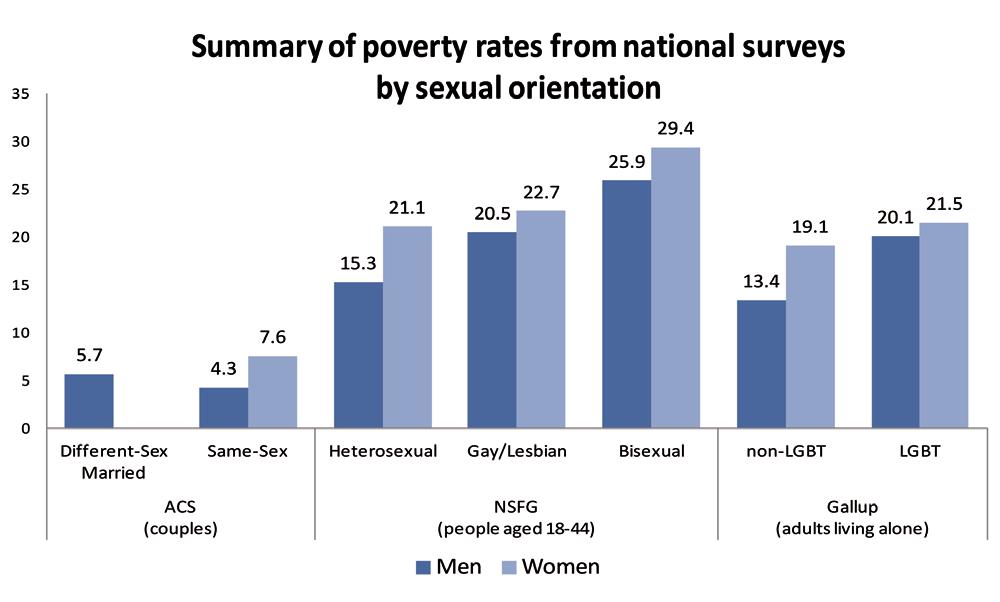
A new study by the Williams Institute at UCLA School of Law finds that 21.6% of LGBT people in the US experience poverty, compared to 15.7% of cisgender straight people. Among LGBT people, poverty rates differ by sexual orientation and gender identity, with transgender people and cisgender bisexual women faring the worst. Nearly one in three (29.4%) transgender people and cisgender bisexual women fall below the official poverty threshold.
Researchers analyzed data from the Behavioral Risk Factor Surveillance System survey, a representative sample of LGBT people in 35 states from 2014 to 2017, to assess poverty rates of LGBT people. In addition, they examined the effects [on poverty] of age, race, urbanicity, language, and disability, as well as education, marital status, employment status, and health.
continued from cover
chusetts Youth Risk Behavior Surveillance System.
Participants in the survey were asked, “During the past 12 months, did you ever feel so sad or hopeless almost every day for two weeks or more in a row that you stopped doing some usual activities?”
According to the data, rates of depression for straight teens fell rates fell from
“Our study shows that all subpopulations of LGBT people fare the same or worse than cisgender straight people,” said lead author M.V. Lee Badgett, a distinguished scholar at the Williams Institute. “And factors like living in a rural area can prove especially challenging to their economic stability. As a whole, LGBT people have at least 15% higher odds of being poor than cisgender straight people.”
Key findings
• Among LGBT people, poverty rates differ by sexual orientation and gender identity:
• Cisgender gay men: 12.1%
• Cisgender lesbian women: 17.9%
• Cisgender bisexual men: 19.5%
• Cisgender bisexual women: 29.4%
• Transgender people: 29.4%
• Cisgender straight men (13.4%) and gay men have similar rates of poverty, and their
29.3% in 1999 to 23.7% in 2017.
Over the same period, depression rates for LGB teens remained approximately the same: 51.4% in 1999 and 51.9% in 2017.
LGBT teens who reported being in same-sex relationships fared worse than the group as a whole. Of those in a relationship, 48.7% of respondents in 1999 said they experienced depression. The rate rose to 53.8% in 2017.
The authors concluded, “Despite decades of research on treatment for adolescent depression, sexual minority youths
poverty rates are lower than every other group.
• Cisgender lesbian women have similar rates of poverty as cisgender straight women (17.8%). However, women of all sexual orientations have significantly higher rates of poverty than cisgender straight men and gay men.
• LGBT people of most races and ethnicities show higher rates of poverty than their cisgender straight counterparts.
• One in five (21%) LGBT people in urban areas live in poverty, and one in four (26.1%) in rural areas are poor, compared to about 16% of cisgender straight people in both areas.
“LGBT people are more likely to be people of color, young, and disabled – all social statuses and characteristics that are known to be independently related to poverty rates,” said study author Bianca D.M. Wilson, the Rabbi Zacky Senior Scholar
remain a particularly at-risk group.”
Data from this latest study do not agree with other similar surveys – at least in respect to rates of depression among straight teens. A 2017 Pew Research Center poll, for example, found that found 13% of teens reported depression – a significantly lower rate – and that was reportedly up from 8% in 2007.
However, this study’s findings relating to LGB youth are confirmed by other research.
Another study published in JAMA Pedi-
of Public Policy at the Williams Institute. “Some LGBT groups, such as gay men, are more likely to have higher levels of education, fewer children, and live in urban areas, which can help protect them from poverty. However, even when we control for these factors, we find LGBT people are still more likely to experience poverty than their cisgender straight counterparts.”
Read the report [at https://williamsinstitute.law.ucla.edu/wp-content/uploads/ National-LGBT-Poverty-Oct-2019.pdf].
The Williams Institute at UCLA School of Law, a think tank on sexual orientation and gender identity law and public policy, is dedicated to conducting rigorous, independent research with real-world relevance.
Courtesy of the Williams Institute
atrics last year, which drew data from 35 other studies, concluded that LGBTQ youth are three times more likely to attempt to kill themselves.
This trend apparently extends to LGB youth in other countries as well. A University College London study found that “LGBQ young people [in the UK] were found to be four times more likely to self-harm with suicidal intent than heterosexuals.”