
by Mike Andrew SGN Staff Writer
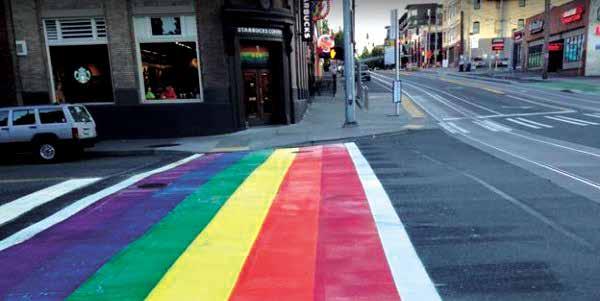
Seattle officials say local data contradicts assertions by the Trump administration that rainbow crosswalks are unsafe, and the ones that were installed here will remain in place.
Last week the city of Ames, Iowa, revealed it had received a letter from the Federal Highway Administration threatening to cut off federal money for roads unless its rainbow crosswalk – installed to mark Pride this year – was removed.
see CROSSWALKS page 7
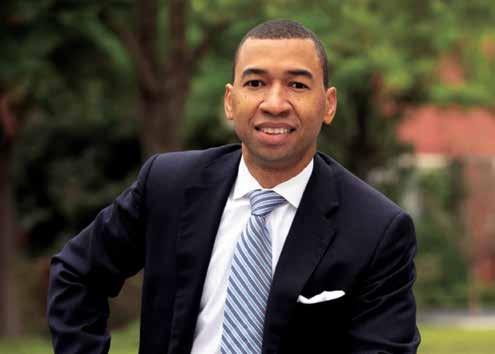
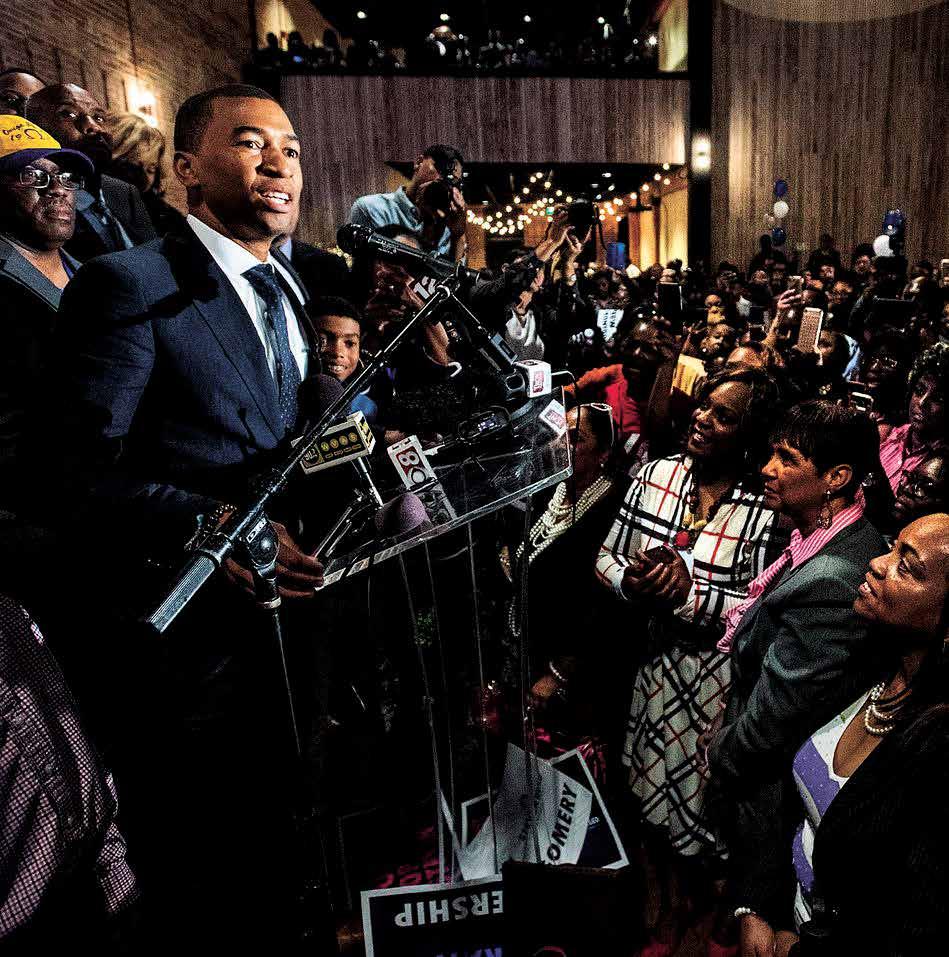
MONTGOMERY, Ala. (October 8, 2019) – Today, the Human Rights Campaign (HRC), the nation’s largest lesbian, gay, bisexual, transgender, and queer (LGBTQ) civil rights organization, released the following statement celebrating Probate Judge
Steven Reed’s election victory in the race for mayor of Montgomery, Alabama.
“Steven Reed is a longtime, unapologetic ally of the LGBTQ community, and last night, he made history as the city’s first
see ALABAMA page 13
by Mike Andrew SGN Staff Writer
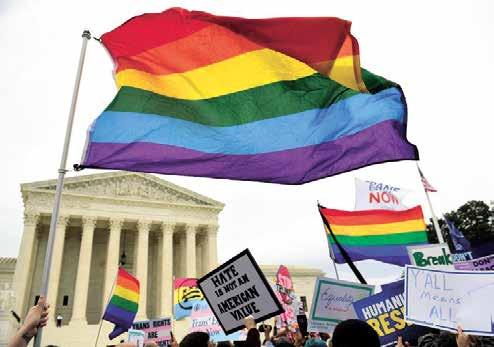
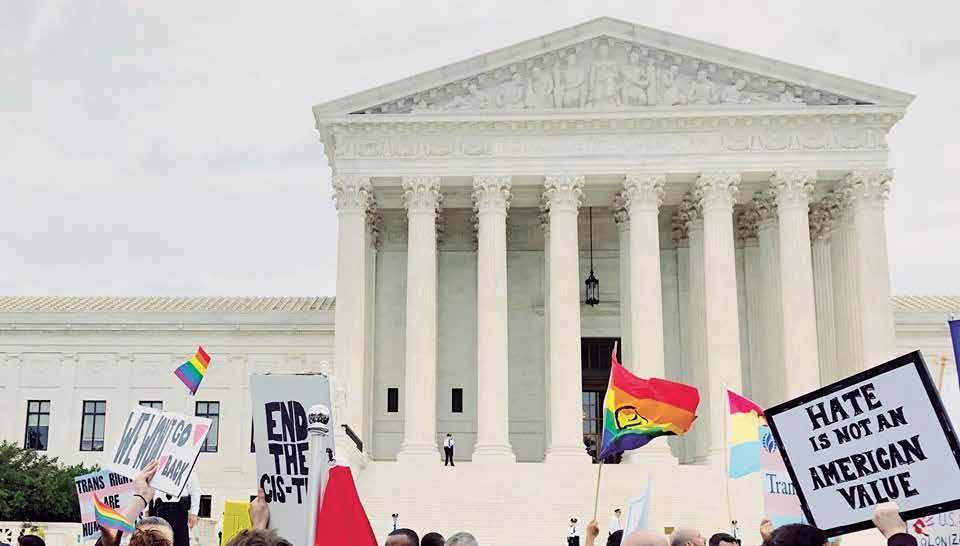
The US Supreme Court heard oral arguments in three LGBT employment discrimination cases on October 8.
Two – Bostock v. Clayton County, Geor-
gia and Altitude Express v. Zarda – involve men who were fired after their employers discovered they were Gay. The third – RG & GR Harris Funeral Homes v. EEOC –centers on a Trans woman who was fired when she transitioned at work.
see SCOTUS page 14
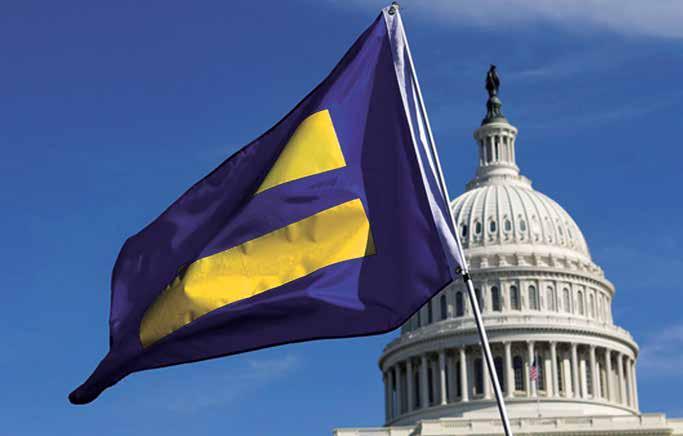
WASHINGTON, DC (October 4, 2019)
– Today, the Human Rights Campaign (HRC), the nation’s largest lesbian, gay, bisexual, transgender, and queer (LGBTQ) civil rights organization, announced it is expanding its legal efforts by joining with
law firms to bring strategic impact litigation in an all-out effort to combat the relentless attacks on LGBTQ equality by the Trump-Pence administration and other anti-equality activists at home and abroad.
see HRC page 13



Editor:
Voting matters! Civic engagement matters! We have heard all too often that “folks died achieving the vote” but, in today’s world, I would say, “folks are dying because too many of us did not vote”. The people in
office, at this very moment are responsible for rolling back voting rights, the border humanitarian crisis, women’s reproductive rights, LGBTQ rights being overturned, rise in discrimination and hate crimes and, a list of new wrongs popping up every day. It’s easy to be weary and wary of our political process, but deciding on whether or not your vote counts is not an option. It’s hard to complain with the outcome of elections, when we give up our most paramount duty as a citizen, which is to vote. If every eligible voter actually voted, we’d have elected officials who more fully represented our community. Let’s do an old-fashioned GOTV (Get Out The Vote) and make sure that you, your family, friends, co-workers and neighbors vote in this and every election. It’s never been easier, simply complete
and mail in your ballot, and you don’t even need a stamp. It’s not hyperbole to say, in today’s political climate, the future of our democracy is at risk. Please vote!
Louise Chernin, President & CEO (Pronouns She/Her)
Greater Seattle Business Association (GSBA) Washington State’s LGBTQ & Allied Chamber of Commerce 400 East Pine Suite 322, Seattle WA 98122 206.363.9188 theGSBA.org theGSBAscholarship.org traveloutseattle.com
Editor:
Yesterday [Tuesday, October 8, 2019] was a pivotal day for LGBTQ+ people in this country.
Based on the three cases they heard yesterday, the Supreme Court will decide whether Title VII of the Civil Rights Act protects LGBTQ+ people from being discriminated against by our employers.
While SCOTUS’s decision will not be issued until June 2020, we know two things for sure.
First, the outcome of this case will have reverberating impacts on our communities across the country for generations to come.

If the court votes to uphold our right to be our whole selves at work, it could mean that LGBTQ+ people in states like Alaska, Montana, and Idaho without statewide non-discrimination ordinances could gain protection from workplace discrimination federally – and could expand protections for LGBTQ+ communities beyond employment. If unfavorable, it will put every LGBTQ+ person at risk and could have
resounding effects that would set our movement back decades.
Second, regardless of the outcome, these cases are a stark reminder of just how tenuous the protections for LGBTQ+ truly are – and how much is at stake.
We encourage you to read the deeper background and analysis of these important cases. We have especially appreciated Movement Advancement Project’s brief [http://www.lgbtmap.org/ file/2019SCOTUSTitle%20VIICasesBrief. pdf?utm_source=MAP+Newsletter&utm_ campaign=23f963ef0b-EMAIL_ CAMPAIGN_2019_10_07_SCOTUS_RESOURCES&utm_ medium=email&utm_term=0_ ec825b19cf-23f963ef0b-45072523] and infographic [http://www.lgbtmap. org/file/Infographic-2019-Title-VII. pdf?utm_source=MAP+Newsletter&utm_ campaign=23f963ef0b-EMAIL_ CAMPAIGN_2019_10_07_SCOTUS_RESOURCES&utm_ medium=email&utm_term=0_ ec825b19cf-23f963ef0b-45072523],
and Lambda Legal’s series on Title VII [https://www.lambdalegal.org/blog/ topic/employment-and-rights-in-theworkplace?utm_source=newsletter&utm_ medium=email&utm_content=ut%2Ba].
While we wait for this life-changing outcome, Pride Foundation will continue our work with each of you with even more determination and resolve. Because every single person deserves to be able to live safely and openly as our full selves – at work, in our homes, in the doctor’s office, or walking down the street.
Regardless of how SCOTUS rules, we believe this vision with our whole hearts and we will never stop fighting alongside you to make it a reality.
With all my pride,
Katie Carter (She/Her) CEO Pride Foundation
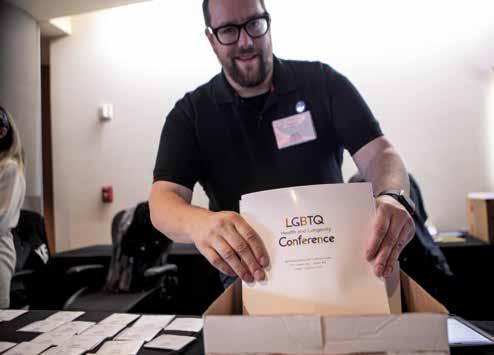
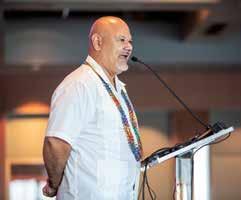
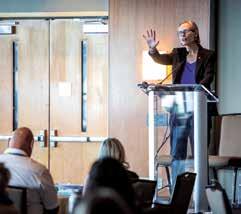
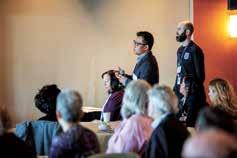
On Friday, October 4, 2019, the LGBTQ Health and Longevity Conference, presented by University of Washington’s Aging with Pride, Healthy Generations, and the National LGBTQ Health and Longevity Center, was held at the Bell Harbor International Conference Center in Seattle.
Highlights of the conference include the release of the groundbreaking Washington State LGBTQ Equity and Diversity Report, based on a survey of 1,845 LGBTQ adults throughout Washington state. Other highlights include a keynote presentation by Karen Parker, PhD, director of the Sexual & Gender Minority Research Office at the National Institutes of Health (NIH), and 16 breakout sessions by community members and researchers on subjects ranging from health among immigrants, to medical care for gender-diverse patients, HIV, and dementia, to sexual and reproductive health care.
The Washington State LGBTQ Equity and Diversity Project, funded by the University of Washington Population Health Initiative, was directed by Karen Fredriksen Goldsen, PhD, and included 45 advisory committee members from across the state. The ensuing report focused on the health, social, and economic disparities among LGTBQ Washingtonians aged 18 to 100, particularly in marginalized subgroups within the LGBTQ communities.
Key demographic findings of the participants include [that they were] 22% lesbian, 24% gay men, 22% bisexual, 32% queer/other; 22% trans/gender-diverse; and 25% people of color. Nearly all (90%) of the LGBTQ adult participants socially engaged with friends and family, and queer and sexually diverse, transgender, and gender-diverse adults reported higher community involvement. Some alarming findings are that sexual minority women (47%) and men (38%) have higher rates of poverty compared to heterosexual women (36%) and men (30%); half of the participants have difficulty paying bills and securing food; and 15% experienced homelessness multiple times.
Opening the sold-out conference was Tavares Terry, equity, diversity, and inclusion administrator for the Washington State Department of Social and Health Services’ Aging and Long-Term Support Administration. Terry discussed that social isolation is not only in the LGBTQ elder communities but also in the youth of the communities, as highlighted in the Washington State LGBTQ Equity and Diversity Report. He emphasized how we as a community need to use of these findings to help connect
LGBTQ youth with the “history and wisdom of their elders.”
Karen Parker, the director of the Sexual & Gender Minority Research Office at the National Institutes of Health, shared the history, mission, and strategic plan of the Sexual & Gender Minority Research Office and revealed research opportunities as well.
Reuben Rivera Jackman, from Imagine Housing and board member of Generations Aging with Pride, spoke of providing a legacy and support across generations –something that he did not have during his coming-of-awareness process as a gay man.
George Dicks, Geriatric Mental Health Specialist at Harborview Medical Center, asked the conference attendee what they have learned living on this planet and how they plan to integrate that learning with their various identities.
Marsha Botzer, who founded Seattle’s internationally known Ingersoll Gender Center and who has served the LGBTQ and progressive communities for over 40 years, closed the opening session of the conference by inviting the participants to… “go into the day impelled by hope, confirmed by fact, joined by colleagues and brilliance, and to raise ourselves as high as we dare.”
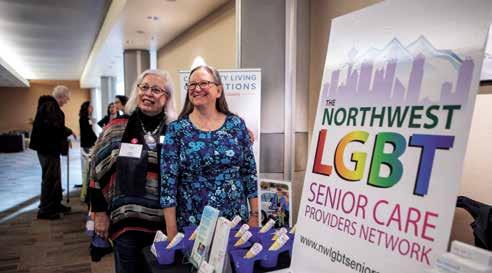
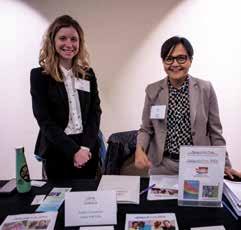
Many breakout sessions were held that brought together health professionals, human service and aging-related providers, researchers, scientists, educators, and advocates to highlight innovations and discuss best practices for promoting the health and well-being of the LGBTQ community and to reduce social isolation across the generations. Sessions included “Trauma-Informed Medical Care for Gender-Diverse Patients,” by Corrine Heinen, MD; “HIV and Health Equity Among LGBT People: Where Do We Go from Here” by Charles Emlet, PhD; and “Promoting Two-Spirit Health and Wellness” by Tessa Evans-Campbell, PhD. A resource fair was also well attended.
Going forward, we, as researchers, practitioners, mental health clinicians, community advocacies groups, and Washington state citizens and allies, need to support our LGBTQ population. This conference allowed us to celebrate and empower our unique identities and foster a belonging here in Washington.
The 2019 LGBTQ Health and Longevity Conference served as a conduit for sharing this groundbreaking research, and we invite our state into continued engagement and commitment to serving the LGBTQ community across lifespans.
Photos by Matt Hagen
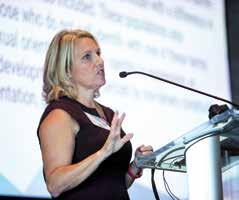
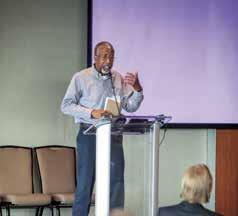
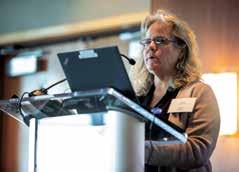
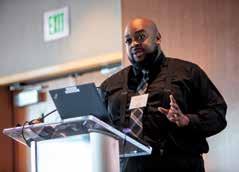
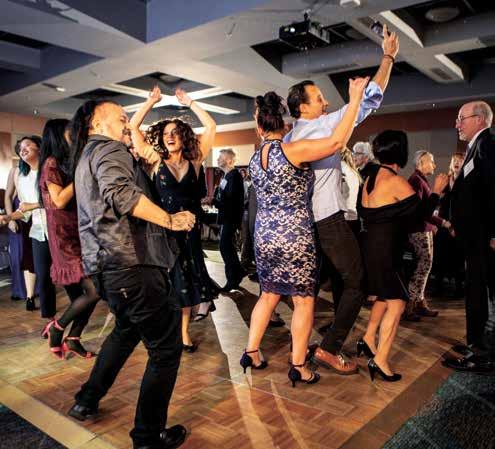
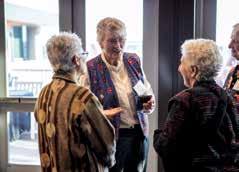
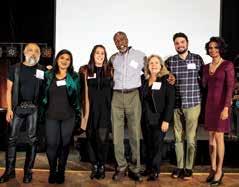
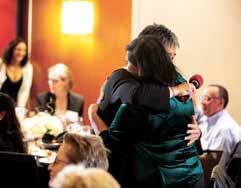
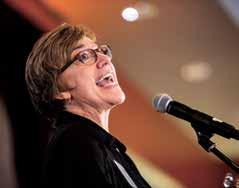
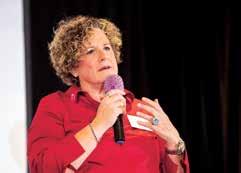
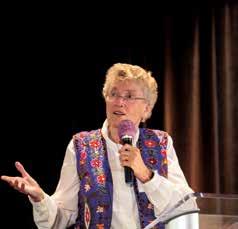
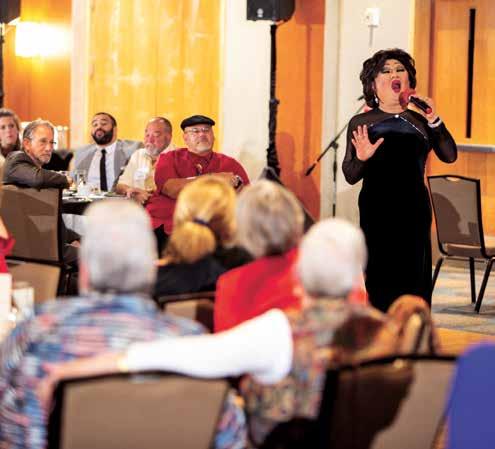
The inaugural Generations Celebration on October 5, 2019, presented by the University of Washington’s Aging with Pride, Healthy Generations, and the National LGBTQ Health and Longevity Center, with co-sponsor GenPride, was a gala to recognize and honor our LGBTQ elders, link lives, and build bridges across generations and allies.
The gala itself represented the unity of generations. It formed and nurtured a space of interconnectedness across generations and identities. People from all walks of life and experience came together in a welcoming and accepting environment with the purpose of breaking down what makes us different and embracing our commonalities. The purpose to embrace one another as individuals and provide a safe, loving, and honest environment for people to build connections with one another was achieved.
This sold-out community-forming event, emceed by Shellie Hart of Warm 106.9, was attended by adults of all ages, and stories, singing, food, laughs, and even dance moves were shared. Multiple speakers of different generations shared their experiences as an LGBTQ people, unifying the gala in solidarity.
A key part of this celebration was the dialogue between generations for all to hear, in an exercise called Building Bridges, wherein younger LGBTQ/allied adults shared their stories and asked an elder what they learned through their life in the LGBTQ/ allied communities, in order to make sense of their place in the world today. The young LGBTQ/allied people expressed their joy and gratitude at the opportunity to connect with LGBTQ elders.
Witnessing the generational exchange of care, of elders’ compassionate advice about being who they are in the context of one’s church, one’s family, and one’s society, centered the heart and soul of the gala. Building Bridges showed firsthand that although we have come a long way, there is still much more work to do. Charlene Strong captured this perfectly in her speech later in the night, “When marriage became legal we thought we were done. We are far from done. Listening to the young voices in this room and the insecurity people are feeling, we are not done.”
Wise words were spoken by Col. Grethe Cammermeyer regarding the value of intergenerational support: “If you are young enough, being out is part of you just being; those of us who are older and been through the closet in and out should not allow ourselves to be put back in by anyone else.”
A singing performance by Arnado! captivated the audience, bringing joy and laughter while Seattle singer and comedian Lisa Koch’s “Midlife Medley” skit highlighted the challenges of growing old to the melodies of Beatles’ songs.
Highlighting these narratives brought context to the oppressive and isolating experiences of growing older as an LGBTQ person, and what it can look like to combat the significant health, economic, and social disparities that LGBTQ people face across the lifespan, by bridging our generations, building community, and celebrating lives and the possibility of thriving (beyond survival).
As LGBTQ individuals age, they can face many problems, social isolation being a prominent one. Social isolation can impact an individual greatly and is linked to heart disease, high blood pressure, and premature mortality: 55% of LGBTQ older adults live alone, and more than 30% are socially isolated. LGBTQ elders may not feel as included in community as they did when they were coming of age. The Generations Celebration combated social isolation through celebrating, and helped emphasize the need to combat social the isolation of LGBTQ elders by building community.
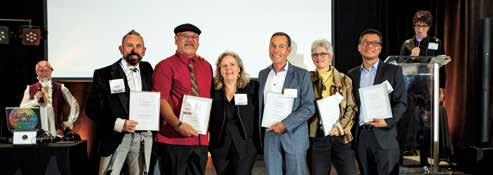
Seattle Mayor Jenny Durkan made a video appearance to congratulate the work done by and for the LGBTQ communities and to reiterate the city’s commitment to the LGBTQ population. Karen Fredriksen Goldsen presented the 2019 Inaugural LGBTQ/Ally Trailblazer Awards to David Haack, Ruben Riviera-Jackman, Tom Rasmussen, Sally Friedman, and Hyun-Jun Kim, all of whom have dedicated their careers to the LGBTQ/allied communities.
Building community through bridges at the celebration benefited both LGBTQ elders and younger generations, because it emphasizes the community and its accomplishments through struggles. The younger generations were able to listen to inspiring stories from Cammermeyer and Strong, who helped the LGTBQ community be more visible. This can inspire others through their own struggles as they age as LGBTQ individuals.
For the elders, they were recognized, honored, and celebrated so they can feel in community. This helps isolation and in turn helps their health.
The inauguration of the Generations Celebration marks a wonderful beginning of increasing community and helping elders through building bridges. As emphasized through the night, although the community was coming together to celebrate, much more work needs to be done. The celebration itself was just that, and hopefully newly formed bonds between people of different demographics and experiences will come together to advocate for true equity.
Photos by Matt Hagen
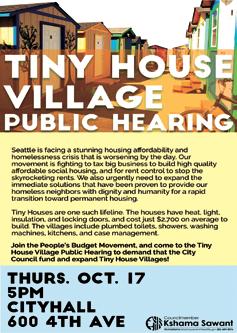
Please email City Council at council@ seattle.gov and ask them to continue and expand funding for more Tiny House Villages. You can also voice your support at a public hearing on October 17th at 5pm (see flyer below). We want City Council to pass an ordinance legalizing more villages. LIHI is requesting 10 new villages to provide shelter to the thousands that still have none. Reducing unsheltered homelessness should be our number one priority.
Tiny House Villages are a proven model that helps improve the lives of homeless residents more effectively than other styles of shelter, as evidenced by the City’s own report. The eight city-funded Tiny House Villages shelter close to 1,000 people per year and have high rates of exits to longterm housing compared with other shelters. They are cost effective compared to retrofitting the jail, Harborview Hall, and operating the Navigation Center.
Other important reasons to fund Tiny House Villages:
• Tiny houses are the preferred shelter for people being swept by the Navigation Team and for people living in vehicles.
• 196 people died living on the streets last year--no one should die from homelessness.
• Existing city-owned, private, and faithbased land exists to accommodate more villages.
• Tiny House Villages can be sited and put into service in months compared to years for traditional brick and mortar shelters.
Please also ask City Council to keep Georgetown Village open:
Georgetown Village is on city-owned land, home to 58 people and is self-managed with LIHI as operator and service pro -
vider. Referrals are made by the Navigation Team. We have a church that has offered to sponsor the village. Keeping it open will save $600,000 in costs, instead of shutting it down, moving, relocating everyone and setting up a new village.
The village is performing: 39% of those who exited moved into permanent housing (other shelters are at 4% to 20%).
The Georgetown Village Community Advisory Committee, the residents, and Georgetown neighbors want the village to remain. 71% of Georgetown neighbors surveyed support extending the permit.
Thank you for your support!
Sharon Lee
Executive Director
Low Income Housing Institute www.LIHI.org
by MK Scott
SGN Contributing Writer
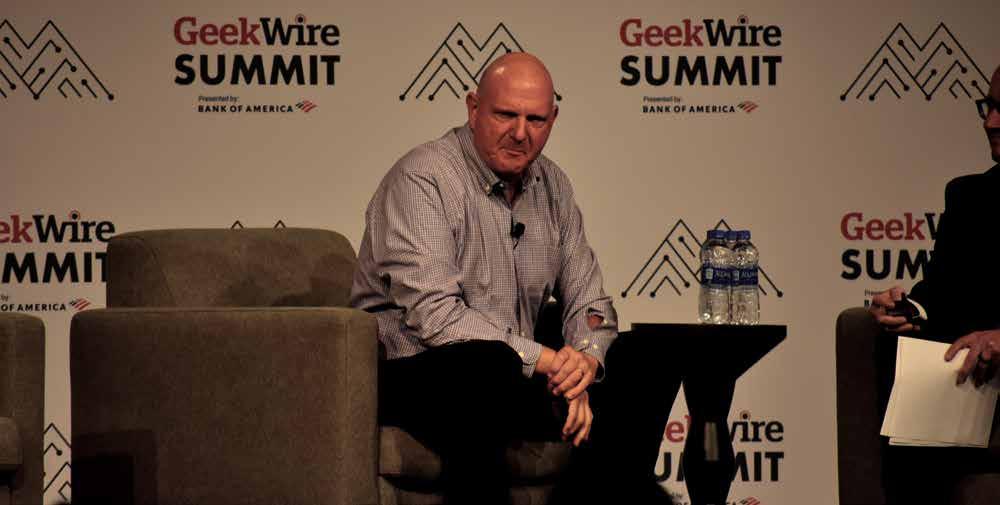
It was an intriguing two days at the new Seattle Hyatt Regency Hotel when GeekWire presented its 8th annual summit. One of the premier technology conferences in the U.S., the GeekWire Summit brings together 1,000 tech and business leaders for
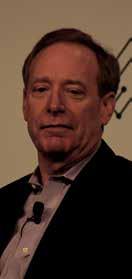
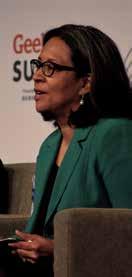
a conversation about the future. Now in its eighth year, the event draws attendees from across the globe to Seattle to explore what’s next in tech, business, science, and society.
The immersive event features on-stage Q&As, insightful talks, fun cocktail parties, and interactive product demos, as well as the hotly contested finals of the Elevator Pitch startup pitch competition. It’s live
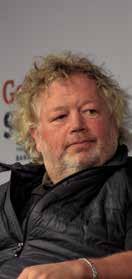


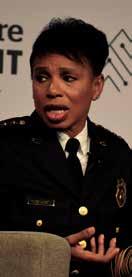
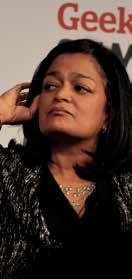
journalism on stage. You’ll walk away connected, informed and inspired. Former Microsoft head, Steven Ballmer opened the conference at 9am on Tuesday, Oct 8. Followed by two days of panels and discussions that brought out Seattle Police Chief, Carmen Best; US Congresswoman, Pramilla Jayapal; Microsoft president, Brad Smith; FTC commissioner, Rohit Chopra; Seattle Chamber President/CEO, Marilyn Strickland; Celebrity Chef, Tom Douglas; Former Seattle Seahawk, Doug Bawdwin, Jr; Expedia CEO, Mark Okerstrom and former Obama press secretary and current SVP of Corp. Communications, Jay Carney.
Photos by Brian Matt
The letter asserts that rainbow crosswalks don’t comply with federal safety standards and could be a distraction for drivers and pedestrians. Ames officials said they would ignore the letter.
Seattle has received a similar letter and is also ignoring the federal order.
According to Seattle City traffic Engineer Dong Ho Chang, Seattle has 11 rain-
bow crosswalks in the Capitol Hill neighborhood alone. Similar crosswalks painted in African Liberation colors adorn crosswalks in the Central District.
“They’ve been used other locations across the US and the world,” Chang said. “And when we were deploying them, we were very careful to make sure that they were located at spots that were very high profile and they were going to operate safely…
“We’re seeing a reduction in pedestrian collisions to the point that they’re not really happening,” Chang continued.
“We would not have installed these (had they not been safe). They are very vibrant; they are loved by the community, and people see them.”
In fact, the city has a Community Crosswalk program that allows neighborhoods to apply for a specially painted crosswalk, Chang added.
“Our records are telling us that these crosswalks are safer than before and we want to continue that,” Chang said.
The City says it shares safety information with the Federal Highway Administra-
tion, and for now the rainbow crosswalks can stay unless the intersections where they are located become part of a federal roads project. But even then they would hope to work with the FHA to show the crosswalks work.
Seattle received a similar letter in 2015, during the Obama administration, but officials said their data from three years before and three years after the crosswalks were painted show vastly improved pedestrian safety at those intersections.
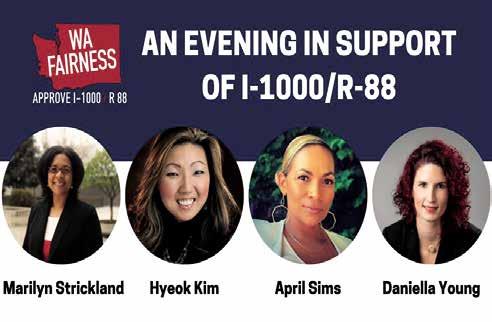
SEATTLE (October 8, 2019) – The Washington Fairness Campaign and the Seattle-King County League of Women Voters of Washington will host a public forum for members of the public to gather and learn more about the Initiative 1000 with featured Washington state leaders.
The Washington Fairness Campaign, a broad coalition representing hundreds of organizations, unions, and businesses in support of Initiative 1000, will hold a public forum in partnership with one of its endorsers, the Seattle-King County League of Women Voters of Washington, to discuss the Initiative 1000 campaign on Monday, October 14, at 6:00 p.m. at the Seattle First Baptist Fellowship Hall, 1111 Harvard Ave, Seattle.
CEO and president of the Seattle Metropolitan Chamber of Commerce Marilyn Strickland, Washington Fairness Cam -
paign co-chair April Sims, Washington Fairness Campaign co-chair and former Seattle Deputy Mayor Hyeok Kim, and veteran Daniella Young will be featured at this event to speak with community members to discuss Initiative 1000, which will be featured on ballots in November under the heading of “Referendum 88.”
The goal of this event is to provide a platform for current leaders to speak about the importance of the initiative to Washington state. This will be an opportunity for the public to come and participate in a conversation around the initiative. Doors open at 6:00 p.m.
Courtesy of the Washington Fairness Campaign
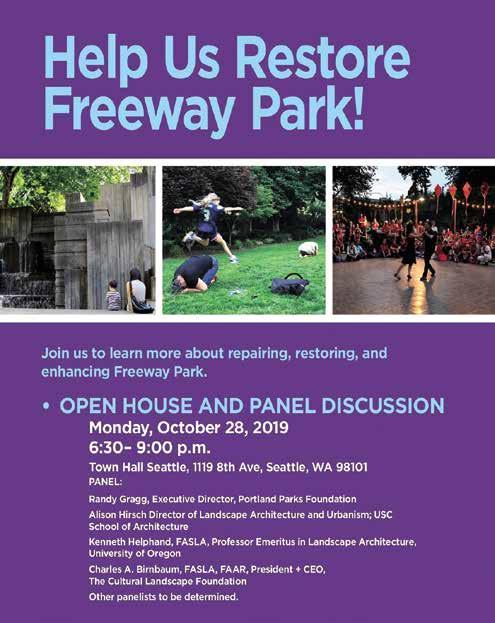
SEATTLE (October 8, 2019) – Seattle Parks and Recreation (SPR) and the Freeway Park Association invite the community to an open house and panel discussion on Monday, October 28, from 6:30 to 9 p.m. at Town Hall Seattle, in the Forum Room, 1119 8th Ave., Seattle 98101. This is an opportunity for the community to learn more about the history of Freeway Park and the proposed project improvements, and to share your ideas for repairing, restoring and enhancing Freeway Park. The audience will be invited to ask questions of the panel and provide feedback on the initial design ideas.
“Freeway Park is an internationally recognized masterwork of landscape architecture and one of Seattle Parks and Recreation’s treasured parks,” said Jesús Aguirre, Seattle Parks and Recreation Superintendent. “This park is the first of its kind in the world and demonstrates how innovation can bring together urban infrastructure and green open space to serve community.”
Designed by Lawrence Halprin and constructed in 1976, Freeway Park was the first to ever be built over an interstate highway. The park is a respite from the city’s urban environment and is a result of community activism, forward thinking, and Seattle’s civic process.
The first half-hour of the event will be an open house, followed by a moderated panel discussion starting at 7 p.m. with Randy Gregg, Portland Parks Foundation executive director; Alison Hirsch, USC School of Architecture director of landscape architecture and urbanism; Kenneth Helphand, University of Oregon professor emeritus in landscape architecture; Charles A. Birnbaum, president and CEO of the Cultural
Landscape Foundation; and other panelists.
SPR has $10 million in funding from the Washington State Convention Center Expansion Project as part of the public benefit package associated with the Convention Center expansion. The funding will repair, restore, and enhance Freeway Park. The majority of the funding ($9,250,000) is dedicated to capital improvements at the park, and the remainder ($750,000) is focused on activation within Freeway Park.
The initial scope of the capital improvements is based on the Finding Freeway Park concept plan, produced by the Freeway Park Association, and identifies infrastructure upgrades, lighting, wayfinding, and possibly a new restroom. The design phase is expected to be complete ,with all necessary permits/approvals and construction bid documents, by June 2021.
Thank you to everyone who participated in the project kick-off event on September 2019. To view the presentation from that event and to learn more about the project, please visit http://www.seattle.gov/parks/ about-us/current-projects/freeway-parkimprovements.
For additional questions or to request special meeting accommodations, please contact David Graves, Seattle Parks and Recreation, at 206-684-7048 or David. Graves@seattle.gov, or visit http://www. seattle.gov/parks/about-us/current-projects/ freeway-park-improvements.
Courtesy of Seattle Parks and Recreation
SEATTLE (October 8, 2019) – On Saturday, October 19, local 501(c)(3) Scarecrow Video continues its celebration of over 30 years as a world-renowned and locally treasured champion of physical media by hosting a Video Store Day party. This daylong festival at Scarecrow’s Roosevelt location will feature the following:
• Big sales, including 50% off all used items, 10-50% off select titles from the Criterion Collection, and the first-ever Psychotronic sale, with 50% off popular horror and genre new releases
• Games, with prizes and giveaways including DVDs, movie collectibles, event tickets, restaurant and brewery gift cards, and event tickets
• DJ No Retreat No Surrender spinning music soundtracks
• Food from El Cabrito and beer from local breweries
Video Store Day is an international effort to celebrate institutions that give film lovers the full freedom to curate their own cinematic experiences. As streaming catalogs continue to shrink and the price and complexity of maintaining multiple subscriptions grows, physical media is more important than ever. Scarecrow’s 135,000+ titles represent the world’s largest publicly available collection.
Scarecrow has been connecting people with their next favorite films since 1988. Becoming a nonprofit in 2014 created new opportunities to extend this mission through outreach programs like the Silver Screen-

ers film series, which delivers screenings and gathering opportunities to older adults in senior and community centers, and a free weekly Children’s Hour featuring stories, short films, and arts activities.
To raise funds for these programs, Scarecrow is holding an online auction in conjunction with Video Store Day. Items will include unique memorabilia and oneof-a-kind experiences. A full listing will be available on the event website on 10/16.
Whether you’re a longtime Scarecrow fan or a first-time visitor, Video Store Day is a perfect way to celebrate our shared love of cinema. Viva physical media!
• What: Video Store Day
• When: October 19, 11:00 am to 10:00 pm
• Where: Scarecrow Video, 5030 Roosevelt Way NE, Seattle, WA 98105
• Website: blog.scarecrow.com/vsd19
Scarecrow Video was established in 1988, and has been proudly nonprofit since 2014. It is home to 135,000 titles (nearly three times the combined offerings of major streaming services), the world’s largest publicly available archive of film and television. It is honored to serve over 10,000 movie lovers annually.
Nearly every night Scarecrow offers free films, lectures, and unique programming in the Screening Room. The space is also available to nonprofits and community groups, all in an effort to build communities around a shared love of film. Providing a physical space for all to convene around film arts and culture is just one way that Scarecrow gives back to the community. Other free programs in which Scarecrow fosters community through film include the following:
Children’s Hour: Using short videos from the Scarecrow archive, storybooks curated by the Seattle Public Library, and interactive activities centered on a theme, Children’s Hour offers auditory, visual, and tactile learning in a fun environment – all at no cost to families.
Silver Screeners: Scarecrow partners with Seattle senior and community centers to deliver film screenings and discussions for older adults who might otherwise be unable to access films from the collection. Movies in the Park: In partnership with Magnuson Park Community Center, the City of Seattle Office of Arts and Culture, and Seattle Parks and Recreation, Scarecrow hosted free, family-friendly movie nights. Hundreds of attendees explored other cultures through four unique films and children’s activities without needing to leave Seattle.
Courtesy of Scarecrow Video
You’re invited to read along with the 2019 Arts Gumbo Book Chat, an annual community book group. This year the group will read and discuss Where We Once Belonged by Sia Figiel, a coming of age story about the clash between Samoan and Western culture, from 6pm to 7:45pm, Thursday, Oct. 17 at the Columbia Branch, 4721 Rainier Ave. S., 206-386-1908. Library events and programs are free
and everyone is welcome. Registration is not required. Copies of the book are available at the Columbia Branch.
Each fall, Arts Gumbo presents the sights, sounds and flavors of world cultures during October and November. The program features local and regional performers from diverse cultures, as well as cultural dinners and audience participation events. Arts
Gumbo provides audiences with the opportunity to celebrate local cultures through music, dance, visual arts, food, books and discussions. For more information, visit www.rainierartscenter.org/arts-gumbo/.
The Library brings people, information and ideas together to enrich lives and build community. One of our guiding principles is to promote literacy and a love of reading. We accomplish this by finding creative
solutions like Arts Gumbo Book Chats, presented in partnership with SEEDArts, to meet the public’s changing needs and interests. For more information, call 206386-1908 or Ask Us. For ADA accommodations, please contact: leap@spl.org.
Courtesy of Seattle Public Library
The Seattle Public Library invites children, teens and adults to learn about and celebrate Día de los Muertos (Day of the Dead) by making crafts at the Library this month.
Milagro Box with Amaranta Sandys – Saturday, Oct. 12, 3pm to 4:30pm at the South Park Branch, 8604 Eighth Ave. S., 206615-1688. We will explore a variety of mixed media techniques to create a milagro box, including papel picado and handmade flowers. / Exploraremos una variedad de técnicas mixtas para crear un milagro, que incluye papel picado y flores hechas a mano.
Prepárese para celebrar el Dia de Los Muertos – Friday, Oct. 18, 3:30pm to 5:30pm at the Greenwood Branch, 8016 Greenwood Ave. N., 206-684-4086. Join us as we explore the history of Día de Muertos and explore the variety of ways it’s celebrated around the
world. Then create your own sugar skulls, skeleton puppets, paper flowers and more! / Venga con nosotros a explorar la historia del Día de Muertos y la variedad de maneras en que se celebra alrededor del mundo. Después podrá crear su propia calavera de azúcar, títeres en forma de esqueletos, flores de papel y más.
The Library brings people, information and ideas together to enrich lives and build community. We support universal access to information and ideas, and form strong partnerships with community organizations and artists to offer art that is accessible to all. For more information, call 206-386-4636 or visit https://www.spl.org/ and Ask Us. For ADA accommodations, please contact: leap@spl.org.
Courtesy of Seattle Public Library
The Seattle Public Library offers a monthly book and culture club for the Spanish-speaking community and those interested in talking about books and Latin American culture. Meetings take place in Spanish at the Central Library, 1000 Fourth Ave., Level 4, PACCAR Inc. Meeting Room 6, 206-684-0849.
• Sunday, Oct. 20, 3pm-5pm – El título de este mes es: Estrella distante de Roberto Bolaños.
• • Sunday, Nov. 17, 3pm-5pm – El título de este mes es: Gringo Viejo de Carlos Fuentes
• • Sunday, Dec. 15, 3pm-5pm – El título de este mes es: La búsqueda de un sueño de Reyna Grande Library events and programs are free
and open to the public. Registration is not required. Parking is available in the Central Library garage for $8. Spanish text describing El Club Latino is available in the Library’s Event Calendar.
The Library believes that the power of knowledge improves people’s lives. We promote literacy and a love of reading as we bring people, information and ideas together to enrich lives and build community.
For more information, call 206-3864636 or visit https://www.spl.org/ and Ask Us. For ADA accommodations, please contact: leap@spl.org.
Courtesy of Seattle Public Library
“If you want thoughts and prayers, there are many other offices to call. If you want action, Kshama's office is the one you need. ” LGBTQ community leader and activist Mac McGregor







continued from cover
The HRC, along with litigators from seven of the world’s top firms, will pursue strategic cases that will shape state and federal law and expand the application of constitutional principles. The HRC will work with Akin Gump Strauss Hauer & Feld, BakerHostetler, Linklaters, Sidley Austin, Steptoe & Johnson LLP, and Winston & Strawn for domestic litigation and global law firm Clifford Chance for international litigation. By working together, the organization and these firms will utilize the courts to hold accountable entities and governments that target us with discriminatory laws, regulations, and policies. This expanded effort by the HRC and these toptier firms will complement the organization’s existing and ongoing legal work and close partnerships with other legal and civil rights groups.
“As the largest LGBTQ civil rights organization in the world, it’s incumbent upon the Human Rights Campaign to fight against discrimination at every turn. By adding domestic and international impact litigation to our approach, we will wield a critical tool to fight against oppressive legislative and policy measures through the courts,” said HRC President Alphonso David. “Our new litigation strategy is a natural extension of the legal advocacy the Human Rights Campaign has been doing for nearly four decades, and it will help us better advocate for LGBTQ rights and our more than 3.5 million members and supporters.”
“Akin Gump has been proud to count the HRC among our most valued clients for many years and looks forward to pursuing litigation to affirm that LGBTQ rights are
human rights,” said Steven Schulman, pro bono partner at Akin Gump.
“Our shared value of inclusion is what drives our partnership. We look forward to helping the Human Rights Campaign further initiatives that will secure full equality under the law for all LGBTQ people,” said Edward J. Jacobs, partner and New York pro bono coordinator at BakerHostetler.
“At Clifford Chance we are committed to ensuring that LGBT people enjoy the same status and standing as everyone else. And when you believe in a set of values, then you have to be prepared to champion them and work for them. We are delighted to be partnering with the HRC. We share its deep commitment to equality and strategic campaigning, and we will continue to use our skills and knowledge to help deliver enduring change around the world,” said Tiernan Brady, global head of inclusion at Clifford Chance.
“We are proud to partner with the Human Rights Campaign and look forward to providing pro bono support to achieve full equality under the law for the LGBTQ community,” said Tom Shropshire, global head of Linklaters’ US practice.
“We’re looking forward to working with the Human Rights Campaign on strategic litigation that will take on discriminatory measures targeting LGBTQ people. The HRC is a long-standing pro bono client, and this next stage of collaboration reinforces Sidley’s deep commitment to advocating for diversity and equality,” said Carter Phillips, partner at Sidley Austin LLP and one of the most experienced Supreme Court and appellate lawyers in the country.
“Steptoe is proud to expand our partnership with the Human Rights Campaign by taking on complex litigation matters involving the rights of the LGBTQ community. Equal protection under the law is
continued from cover
Black mayor,” said HRC Alabama State Director Carmarion D. Anderson. “The HRC was proud to endorse Reed and help turn out the vote for this steadfast champion of equality. We congratulate Steven Reed on his win and look forward to working closely with him to keep moving Montgomery and Alabama forward.”
In 2015, Reed made clear his deep commitment to LGBTQ equality. When nowformer Alabama Supreme Court Chief Justice Roy Moore instructed probate judges and their staff to disregard a federal court’s ruling on marriage equality, Reed was the first of them to speak out against Moore and in favor of marriage equality. When Moore attempted the same stunt the next year, Reed said, “Judge Moore’s latest charade is just sad and pathetic. My office will ignore him and this [anti-equality ruling].” This August, Reed stated that he would support LGBTQinclusive protections.
In 2014, the HRC launched Project One America, an initiative geared toward advancing social, institutional, and legal equality in Alabama, Arkansas, and Mississippi. In 2019, Texas became a Project One America state, in recognition of the HRC’s long-term commitment to the state. HRC Alabama continues to work to advance equality for LGBTQ Alabamians who have no state-level protections in housing, the workplace, or public accommodations. Through HRC Alabama, [the HRC is] working toward a future of fairness every day – changing hearts, minds, and laws toward achieving full equality.
The Human Rights Campaign is America’s largest civil rights organization working to achieve equality for lesbian, gay, bisexual, transgender, and queer people. The HRC envisions a world where LGBTQ people are embraced as full members of society at home, at work, and in every community.
Courtesy of the HRC
a bedrock constitutional principle, and one we look forward to fighting for alongside the HRC,” said Paul Lee, pro bono counsel at Steptoe & Johnson LLP.
“For over 40 years, the Human Rights Campaign has worked to promote and defend the human rights of the LGBTQ community in our country and beyond. It has done so through education, grassroots organizing, [and] the political process and has never been afraid to bring its quest of equality for all people into the courts. We are honored to join with the HRC and be among those who will engage in strategic litigation to take on discrimination targeting LGBTQ people wherever it may occur,” said Abbe Lowell, co-chair, White Collar, Regulatory Defense and Investigations Practice at Winston & Strawn.
Throughout the HRC’s nearly 40-year history, HRC staff attorneys have written and analyzed legislation and regulations, directed and drafted amicus briefs, educated on the impact of court decisions, advised legislators at all levels of government, and worked in the trenches with partner organizations across the country on a wide variety of legal issues related to LGBTQ equality. The HRC is now taking this essential work to a new level by deepening relationships with law firms to join them in shaping and bringing strategic impact litigation to courts both domestically and internationally. To support this historic effort, the HRC will also be securing staff with expertise and experience in litigation strategy.
The HRC will be working with these seven firms to pursue strategic litigation in state and federal courts to aggressively address discriminatory actions by those who target the LGBTQ community. These firms already have a long history in engaging with the HRC on issues and
amicus briefs in important cases, including Obergefell v Hodges, G.G. v Gloucester (Va.) County, Masterpiece Cakeshop v Colorado Civil Rights Commission, and the Title VII cases currently before the Supreme Court of the United States.
The HRC will also be working with in-country partners (including local advocacy groups) and an international law firm to pursue strategic litigation in countries where we can make a difference. Bringing its decades of experience to the table, the HRC will work with the law firm and incountry advocates to thoughtfully identify change opportunities and support impact litigation efforts as part of broader efforts in the movement for LGBTQ equality. This new endeavor will be complemented by the HRC’s capacity-building efforts for local advocates through HRC Global’s Partnerships in Innovative Advocacy program.
In addition to strategic litigation, the HRC will work with organizations on topics ranging from designing advocacy campaigns [and] challenging discriminatory laws and policies [to] engaging allies and changing societal institutions to be more inclusive. The HRC will engage its global alumni network of more than 125 highly respected civil rights leaders and advocates from 80-plus countries to support this work.
The Human Rights Campaign is America’s largest civil rights organization working to achieve equality for lesbian, gay, bisexual, transgender, and queer people. The HRC envisions a world where LGBTQ people are embraced as full members of society at home, at work, and in every community.
Courtesy of the HRC
WASHINGTON, DC (October 8, 2019)
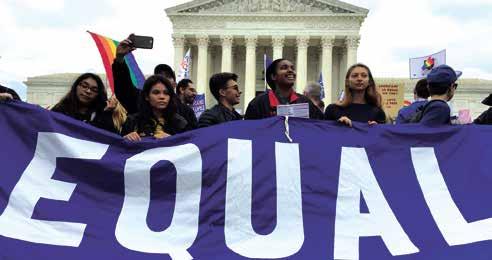
– The American Civil Liberties Union appeared before the Supreme Court today in oral arguments for R.G. & G.R. Harris Funeral Homes v. EEOC & Aimee Stephens and Altitude Express v. Zarda (a third case, Bostock v. Clayton County, Georgia, had been consolidated with Zarda), cases that could chart the future of workplace anti-discrimination protections in the United States.
Stephens, whom the American Civil Liberties Union and the ACLU of Michigan represent, was fired from her job after coming out as transgender, and the 6th Circuit Court of Appeals ruled that her firing was a form of sex discrimination that violates Title VII of the Civil Rights Act. Five federal appeals courts and dozens of federal district and state courts have affirmed that view, ruling that existing federal laws protect transgender people from discrimination.
Donald Zarda was fired from his job after a client learned he was gay, and the 2nd Circuit Court of Appeals ruled that his firing was a form of sex discrimination that violates Title VII of the Civil Rights Act. The 7th Circuit has also ruled that firing someone because of their sexual orientation is a form of sex discrimination, as has the federal Equal Employment Opportunity Commission, which investigates charges of work-
place discrimination nationwide.
Zarda died in an accident in 2014. His surviving partner, Bill Moore, and his sister, Melissa Zarda, have continued the lawsuit on behalf of the estate. The American Civil Liberties Union represents the estate as cocounsel with Greg Antollino of Antollino PLLC and with Pam Karlan and Jeff Fisher of the Stanford Law School Supreme Court Litigation Clinic.
This is a key judicial test of the Department of Justice’s efforts to deny LGBTQ
people protection from sex discrimination. Should the Supreme Court overturn the lower courts’ rulings, it would take away existing protections from lesbian, gay, bisexual, and transgender employees, saying that it is lawful under federal law to fire LGBTQ people for their gender identity or sexual orientation.
“These cases will have a profound effect on the lives of millions of people,” said David Cole, legal director of the ACLU, who argued today’s case on behalf of Aimee Ste-
phens. “The LGBTQ community has won hard-fought protections in courts before, and we are hoping the justices will not turn back the clock on equality and justice. No one should be fired because of who they are.”
Aimee Stephens had the following reaction to today’s arguments:
“I am thrilled to be at the highest court in the land today to remind the justices with my presence that women like me exist, and that trans people have every right to the same protections as everyone else. Firing me because I’m transgender was discrimination, plain and simple, and I hope the court rules that no one has to endure the harm and suffering my former employer forced me to experience.”
Melissa Zarda had the following response:
“My brother Don was my rock, my everything. I stood in the Supreme Court today to honor his memory and continue the fight for fairness that he would want me to continue. I believe that in this country, you should not be fired for being gay, and I hope that the court recognizes that what happened to Don was wrong and should never happen again.”
Courtesy of the ACLU
WASHINGTON, DC (October 8, 2019) –
As the US Supreme Court today hears arguments on cases concerning the application of Title VII of the Civil Rights Act of 1964 to anti-LGBT discrimination, hundreds of LGBTQ advocates from across the country are participating in the DC SCOTUS Discrimination Rally and calling out the efforts to legalize discrimination against marginalized communities. Among them is Nakisha M. Lewis, a speaker at the rally and an advocate with the National Black Justice Coalition (NBJC), the nation’s leading civil rights organization dedicated to the empowerment of Black LGBTQ/SGL people, including people living with HIV/AIDS.
In support of the rally, Lewis and David Johns, NBJC executive director, released the following statements. Nakisha Lewis, NBJC advocate, said, “Black people have known what it is like to have their humanity called into question since the founding of this nation. It is our pushing against a racist system that yielded the Civil Rights Act of
1964. So, for those of us who live at the intersection of Blackness and queerness or transness to be here defending our right to exist, as we are by protecting the Civil Rights Act, is particularly painful and reminds us that bigots will go to great lengths to deny our humanity. But today having inherited a legacy of fighting back, we will not back down until all Black lives, including those that are LGBTQ/SGL, are legally protected.”
Johns said, “The issue of employment protections against discrimination is something that matters deeply to Black people, especially Black LGBTQ/SGL people. Anyone who claims to care about democracy or humanity must be actively engaged in the effort to ensure that all parts of our intersectional identities are valued and protected.
“The ability for bigots to fire people based on actual or perceived sexual identity [or] gender orientation or expression is dangerous. We cannot allow the Supreme Court, the Trump administration, or lawmakers here on Capitol Hill to roll back the advance-
ments made by Title VII and threaten the strength and ability of our nation. It is not acceptable for any type of pernicious discrimination to be legal. In fact, any type of discrimination that we live with should be outlawed, especially in Southern states, where this type of discrimination is legal.
“For the LGBTQ community, particularly Black LGBTQ folks, there’s more at stake in the outcome of these Supreme Court cases being heard today – more than most of you care to acknowledge.
“While Black people continue to carry the weight, the lingering scars, and injustices of slavery, Jim Crow, and post-Civil Rights era discrimination, Black LGBTQ/SGL, trans, and gender-nonbinary individuals have the added burden of race- and genderbased violence and threats of violence in the United States[, which] too often goes undiscussed.
“Supreme Court justices, like Kavanaugh, are no doubt emboldened by the Trump administration, [which] also emboldened
white nationalism, fueled hatred and fear towards our immigrant brothers and sisters, and demonized LGBT advocates in Congress. But our will to protect each other and protect our collective futures is stronger than that.
“We must ensure equal protection of all Black people under the law, and that means protecting Title VII[, which] safeguards us against discrimination based on race, color, religion, sex, or national origin and has huge implications for the health and wellness of Black LGBTQ/SGL people, our families, and Americans.”
The National Black Justice Coalition is (NBJC) is America’s leading civil rights organization dedicated to the empowerment of Black lesbian, gay, bisexual, transgender, queer, and same-gender-loving (LGBTQ/ SGL) people, including people living with HIV/AIDS.
Courtesy of the NBJC
All three cases hinge on the interpretation of Title VII of the federal Civil Rights Act of 1964, specifically on how to interpret the law’s ban on sex discrimination. Under the Obama administration, the Department of Justice (DOJ), the Equal Employment Opportunity Commission (EEOC), and several federal judges agreed that Title VII protected LGBT people from discrimination in employment.
The Trump administration has reversed federal policy on this issue, and the administration’s lawyer, Noel Francisco, stated bluntly, “Sex means whether you’re male or female, not whether you’re gay or straight.”
The employers in the three cases are using the Trump administration’s reading of Title VII to ask the Supreme Court for a total reversal of EEOC and lower court rulings. Should the high court comply, it would mean that it is perfectly legal under federal law to fire workers because of their sexual orientation or gender identity.
That would have enormous consequences. Unlike Washington state, most states do not have anti-discrimination laws that protect LGBT employees, and if Title VII does not protect them, then there would be no federal legal protections either.
What did the Justices say during oral arguments?
The Supreme Court Justices were all over the map in their questions and comments during oral arguments.
Justice Neil Gorsuch, Donald Trump’s first Supreme Court appointee, sparked hopeful “swing vote” predictions when he commented that “Sexual orientation is surely in play here. But isn’t sex also in play here? And isn’t that enough?
“In what linguistic formulation would one say that sex – biological gender – has nothing to do with what happened in this case?” he continued.
But Gorsuch also worried that a ruling in favor of LGBT rights would touch off “massive social upheaval.”
“It’s a question of judicial modesty,” Gorsuch suggested.
David Cole, the ACLU lawyer representing fired Transgender funeral home director Aimee Stephens, said facts showed that such concerns were overblown.
“There are transgender male lawyers in this courtroom following the male dress code and going to the men’s room, and the court’s dress code and sex-segregated restrooms have not fallen,” Cole said.
Right-wing Justice Samuel Alito said that Congress did not envision covering sexual orientation or gender identity when it passed the Civil Rights Act in 1964.
“You’re trying to change the meaning of ‘sex,’” Alito said.
Alito also asked if employer who refused to hire a Gay person without knowing their gender was guilty of sex discrimination.
“So this is Saturday Night Live Pat, as an example, right?” Pamela Karlan, a Stanford University law professor representing the gay employees, replied.
“Well, I’m not familiar with that,” Alito said.
“You can never tell whether Pat is a man or a woman,” Karlan explained.
Karlan said repeatedly that such a case is merely hypothetical but eventually conceded it would not qualify as sex discrimination.
Chief Justice John Roberts seemed reluctant to tip his hand but did ask how employers with religious objections to hiring LGBT people might be affected by the outcome.
On the other side, the high court’s most “liberal” justices clearly leaned towards protecting LGBT rights.
“And we can’t deny that homosexuals are being fired merely for being who they are,” Justice Sonia Sotomayor said. “At what point do we say we have to step in?”
Justice Ruth Bader Ginsburg pointed out that the term “sexual harassment” was unknown in 1964 but now is considered sex discrimination.
Justice Elena Kagan suggested sexual orientation is a clear subset of sex discrimination, saying that a man who loves men cannot be treated differently by an employer than a woman who loves men.
WASHINGTON, DC (October 8, 2019)
– Today, the US Supreme Court heard oral arguments in three cases of workers that were fired because of their sexual orientation or gender identity. The court is considering whether the provision of Title VII of the Civil Rights Act of 1964 that prohibits discrimination because of the employee’s sex covers discrimination against gay, lesbian, bisexual, transgender, and gender-nonconforming workers. The cases are Altitude Express v. Zarda, Bostock v. Clayton County, and R.G. and G.R. Harris Funeral Homes v. EEOC
“It was quite a day. After hearing the Supreme Court justices’ questions today, we are hopeful and there are many reasons to be optimistic,” said Gregory Nevins, senior counsel and Employment Fairness Project director for Lambda Legal. “If the court simply applies the law as written, LGBTQ workers win. The text of Title VII is as clear as day: if an employer refuses to hire, dismisses, or mistreats an employee ‘because of’ that employee’s sex, they are in violation of the law. In these three cases, and in so many others, LGBTQ employees have been punished simply for not conforming to the employers’ sex-based stereotypes about how they should behave or who they should be attracted to. The court has the opportunity to set the record straight, and it’s time.”
In two cases, Altitude Express v. Zarda and Bostock v. Clayton County, the court is looking at whether Title VII ban of sex discrimination covers claims of sexual orientation discrimination. And in R.G. & G.R. Harris Funeral Homes v. EEOC, the court is considering whether Title VII’s sex discrimination provision protects transgender workers. A growing number of courts have agreed that Title VII does indeed prohibit discrimination on the basis of sexual orientation and gender identity. But if the Supreme Court rules against the employees, it will leave vulnerable
many LGBTQ workers who don’t have local or state-level protections.
“A lot is at stake here. The court effectively could take away rights from LGBTQ workers that have been established by multiple federal courts, confirmed by the EEOC, and accepted by the overwhelming majority of American people,” added Nevins. “We need the court to clarify once and for all that discrimination against LGBTQ workers is unlawful sex discrimination so that people everywhere can bring their whole selves to work and not be forced to hide. If they just follow the text of the law, that should be fairly easy.”
Editor:
We know that it’s wrong for a boss to fire someone because of who they are – to say “you can’t work here because you’re transgender.” Yet that’s what Aimee Stephens’s boss told her, in one of three LGBT cases being argued today [Tuesday, October 8, 2019] before the Supreme Court. The Justices on the Supreme Court know that what happened to Aimee is wrong and illegal, too. Several years ago, TLC won the first cases establishing that trans people are already protected under Title VII of the Civil Rights Act. Yet despite established law, the White House is lobbying the Supreme Court to push trans and queer people out of public life. If the Court rules against years of legal precedent and greenlights discrimination against LGBT people, it will be a clear sign that they’re under Trump’s thumb. Any independent court would see this for the illegal and cruel ploy it is.
We’re taking action by telling the Supreme Court that we’re watching. Add to public pressure by saving this graphic and sharing it on your Facebook, Twitter, and Instagram. [https://drive.google.com/file/d/1r_teD3wKyzcBb8pTQl4uQIkr2MUn1iyX/ view?emci=dc049e71-3de9-e911-b5e92818784d6d68&emdi=33f09f28-d9e9e911-b5e9-2818784d6d68&ceid=7233178]
As I shared this morning outside the Supreme Court, these cases are part of a bigger picture. Today, it’s the Supreme Court and our freedom to work, but we’ve seen this before. The Muslim ban that kicked off the Trump presidency.
The administration’s targeting of Black migrants. The deaths of Roxsana Hernandez and Johana Medina Leon at the hands of ICE and CBP. The murders of Muhlaysia Booker and Bee Love Slater and so many Black trans women whose deaths were fueled by our government’s cruelty and indifference. The heightened exclusion, criminalization, exploitation and oppression currently experienced by LGBT disabled communities.
Again and again, this administration has targeted our communities for violence and discrimination – and again and again, we have rallied together to demonstrate the power of living freely, authentically, and in full support of each other.
This is a moment for us – and particularly for trans people of color – to show the strength of our movement. No matter what the Court says, we are here for each other, and we always will be.
Will you show up for trans communities by voicing your support? Click this link to save and share a graphic that tells the Supreme Court: we are watching. [https://drive.google.com/file/d/1r_teD3wKyzcBb8pTQl4uQIkr2MUn1iyX/ view?emci=dc049e71-3de9-e911-b5e92818784d6d68&emdi=33f09f28-d9e9e911-b5e9-2818784d6d68&ceid=7233178]
Onward,
Kris Hayashi Executive Director Transgender Law Center
Lambda Legal has been at the center of this work for many years, serving as counsel of record in the landmark Hively v. Ivy Tech Community College before the 7th Circuit, which was the first federal Court of Appeals to rule that Title VII protects employees from discrimination on the basis of sexual orientation, and by arguing as amicus in Zarda v. Altitude Express before the 2nd Circuit. We were counsel of record in Evans v. Georgia Regional Hospital in the 11th Circuit, and won a landmark victory on behalf of a Georgia state employee, fired for being transgender in Glenn v. Brumby, also in the 11th Cir-
cuit. We have briefed coverage issues in the 1st, 3rd, and 4th Circuits, and were on the oral argument calendars of the 5th, 8th, and 10th Circuits in just the first five months of 2019.
Lambda Legal is a national organization committed to achieving full recognition of the civil rights of lesbians, gay men, bisexuals, transgender people, and everyone living with HIV through impact litigation, education, and public policy work.
Courtesy of Lambda Legal
NEW YORK (October 8, 2019) – [Today], the Supreme Court of the United States of America will begin hearing arguments in a case which will determine whether Title VII of the Civil Rights Act of 1964 that prohibits workplace discrimination on the basis of sex, race, color, national origin, and religion applies to cases of discrimination based on sexual orientation or gender identity.
The question in front of the justices is whether discrimination based on sexual orientation and gender identity is a form of sex discrimination and therefore prohibited by the Civil Rights Act. This is a landmark case for the USA, where more than half the states (26 in total) do not have explicit protection against discrimination for LGBTIQ people. It marks the first time the Supreme Court will hear a civil rights case concerning the rights of trans people, and it comes at a time when the Trump administration has rolled back numerous advances[, particularly] in the protection of trans people, made under the Obama administration.
In relation to this case, the Justice Department under the Trump administration has stated that Title VII doesn’t cover discrimination based on sexual orientation and gender identity.
Jessica Stern, executive director of OutRight International commented, “LGBTIQ people face discrimination on a day-to-day basis, including in the workplace. Hopefully the Supreme Court will confirm this basic protection for everyone, regardless
of sexual orientation or gender identity, across the US. But the decision – positive or negative – will have reverberations beyond US borders. Governments and movements are inspired by each other, and landmark judgments are quoted by courts across the world. The decision the Supreme Court makes in this case will have implications for LGBTIQ people everywhere.”
Every day around the world, LGBTIQ people’s human rights and dignity are abused in ways that shock the conscience. The stories of their struggles and their resilience are astounding, yet remain unknown – or willfully ignored – by those with the power to make change. OutRight Action International, founded in 1990 as the International Gay and Lesbian Human Rights Commission, works alongside LGBTIQ people in the Global South, with offices in six countries, to help identify community-focused solutions to promote policy for a lasting change. We vigilantly monitor and document human rights abuses to spur action when they occur. We train partners to expose abuses and advocate for themselves. Headquartered in New York City, OutRight is the only global LGBTIQ-specific organization with a permanent presence at the United Nations in New York that advocates for human rights progress for LGBTIQ people.
Courtesy of OutRight Action International
LOS ANGELES (October 9, 2019) –
Nearly nine million LGBT adults are registered to vote, according to a new analysis by the Williams Institute at UCLA School of Law. Half of registered LGBT voters (50%) are Democrats, 15% are Republicans, and 22% are independents. The remaining LGBT voters said they identify with another party or did not know with which party they most identify.
The Williams Institute and Reuters/ Ipsos conducted a national poll in 2019 to assess the characteristics of LGBT voters and their preferences for a presidential candidate. Researchers found that LGBT voters were significantly more likely than nonLGBT voters to say that they would support a seasoned political candidate. In addition, LGBT voters were significantly more likely than non-LGBT voters to say they would support candidates who are black, Latino/a, or LGBT. However, majorities of both LGBT and non-LGBT voters said that the race and sexual orientation of a candidate would not influence their vote.
“LGBT voters differ from non-LGBT voters in several ways. For example, they are more likely to be young, male, and live in urban areas,” said study author Christy Mallory, state and local policy director at the Williams Institute. “LGBT voters are also more likely to identify with the Democratic Party. Over four million LGBT Democrats are eligible to vote in the primaries next year.”
Key findings
• Half of LGBT voters (51%) said that they were more likely to support “a career politician who knows his or her way around the political process,” compared to 40% of non-LGBT voters.
• About a third of LGBT voters said they were more likely to support a candidate because the candidate was black or Latino/a (34% and 35%, respectively). By
comparison, 21% of non-LGBT voters said they were more likely to support a black candidate and 16% said they were more likely to support a Latino/a candidate.
• 41% percent of LGBT voters said they would be more likely to vote for a gay candidate, and 34% said they would be more likely to vote for a lesbian candidate, compared to 10% and 11%, respectively, of nonLGBT voters.
• Among LGBT voters, over one-quarter (28%) said they were more likely to support a candidate because the candidate was
transgender or gender-nonbinary. By comparison, 9% of non-LGBT voters said they were more likely to support a transgender or gender-nonbinary candidate.
• 22% of LGBT voters are Latino/a, 13% are black, 61% are white, and 4% are other races or multiracial.
• 57% of LGBT voters are men and 43% are women.
• One-fifth of LGBT adults (21%) and 17% of non-LGBT adults are not registered to vote.
Read the report [at https://williamsinsti-
tute.law.ucla.edu/research/the-2020-lgbtvote/].
The Williams Institute at UCLA School of Law, a think tank on sexual orientation and gender identity law and public policy, is dedicated to conducting rigorous, independent research with real-world relevance.
Courtesy of the Williams Institute
by Denise Pérez Lally, Elaine Ishihara, Fred Swanson, and Shelley Cooper-Ashford
The evidence is clear: teens and young adults in Washington believe that vaping is harmless. But dig a little deeper and the harm is evident. Youth that we work with recount that their schools’ all-gender restrooms, created as a safe place for trans and nonbinary students, are appropriated for their single-stall use to conceal vaping habits from administrators. Some peers even renamed the gender-neutral restroom as the “vape room.” Others vape in the classroom when the teacher isn’t looking.
The Centers for Disease Control and Prevention (CDC) recently announced more than 1,080 vaping-related lung injury cases, with 19 dead. The specific vaping chemical associated with lung injury is still unknown. Thirty-seven percent of the victims are 20 years old or younger. In Washington state, there are seven cases of vaping-related lung injury; two are under the age of 20.
In response, Gov. Jay Inslee signed an executive order asking the state Board of
Health for a ban on flavored vape products, which, along with THC and unregulated vape products, are linked to the lung injury cases.
As nonprofit organizations serving communities of color and the LGBTQ community, we know that a ban on menthol and other flavored vape products will decrease the initiation of vape and tobacco products among teens and young adults, improving health outcomes. We support the flavor ban.
But a ban on flavored vape products without additional resources for cessation and prevention is missing a key element. In the communities that we serve, we continually see public health policies with unintended consequences that criminalize youth of color and youth who identify as LGBTQ.
Earlier this year, Washington state raised the purchasing and possession age of tobacco and vaping products from 18 to 21. The state collects $552.6 million annually from tobacco taxes and fees but spends less than 1% toward prevention efforts. In both Tobacco 21’s and Inslee’s proposed vaping flavor bans, there are no additional resources allocated for prevention educa-
tion or cessation programs. Under Tobacco 21, ill-equipped retailers are burdened with educating consumers of the new age requirement, and anyone who “appears” to be under 21 can be stopped and subjected to invasive searches by law enforcement.
According to the 2018 Washington State Healthy Youth Survey, 21% of tenth graders vaped in the past 30 days. Higher than the state average, 24% of Hispanic and 28% of American Indian/Alaska Native students vape. Meanwhile, 16% of Black/African American students vape. Disaggregating the data on Asian and Pacific Islander youth, 22.7% of Native Hawaiian and other Pacific Islanders, 21.4% of Japanese, and 20.3% of Khmer/Cambodian students vape.
LGBTQ students have the highest vaping rate of any subpopulation, at 30.4%.
Banning flavored vapes alone is not a solution. The governor and the state health board must ensure that teens and young adults are not criminalized in the process but are instead given additional resources and education to prevent the adverse effects of vaping. What we’re seeing today with vaping is much the same as the tobacco industry 20
years ago. Vaping companies like Juul are owned by these same tobacco companies and are using the same marketing tactics, including flavors, to lure youth.
To improve health outcomes for the most marginalized, local public health agencies need control over tobacco and vape products, and policies rooted in communities of color and the LGTBQ community – not criminalization.
Denis Pérez Lally is the Human Services Director at El Centro de la Raza. dperezlally@elcentrodelaraza.org / www. elcentrodelaraza.org. Elaine Ishihara is the director of Asian Pacific Islander Coalition Advocating Together for Health. elaine@apicat.org / www.apicat.org. Fred Swanson is the executive director of Gay City: Seattle’s LGBTQ Center. Fred@gaycity.org / www.gaycity.org. Shelley Cooper-Ashford is the executive director of the Center for MultiCultural Health. shelley@ cschc.org / www.cschc.org
Courtesy of Gay City
NEW YORK (October 10, 2019) – In an interview with Thomson Reuters today, the ethics and integrity minister of Uganda, Simon Lokodo, announced plans to introduce to parliament a bill imposing the death penalty for same-sex relations and “promotion and recruitment” of homosexuality in order to curb a rise in “unnatural sex.” Local activists confirm that it is to be tabled on October 28, 2019.
The so-called “Anti-Homosexuality Act” was first passed by the parliament of Uganda in 2013 and signed into law by President Museveni in early 2014. It was invalidated by the Constitutional Court of Uganda on procedural grounds the same year. According to Thomson Reuters, the government now plans to resurrect the act in the coming weeks, with a death penalty foreseen not only for same-sex relations but also for “promotion and recruitment” of homosexuality.
Kasha Jacquelin, founder of the Uganda
LGBT Community, commented: “The timing of the resurrection of the bill is callous – LGBTIQ people are being used as a scapegoat as elections approach. Violence against us has escalated in recent months, countless community members have fled, and I fear it will only get worse. We urgently need support from the international community if we are to stand up against the witchhunt being launched against us.”
Jessica Stern, executive director of OutRight Action International, commented: “Same-sex relations are already criminalized in Uganda, with a maximum sentence of life imprisonment. Efforts to impose a death penalty constitute legal overkill, and only serve to increase hate and stigma against LGBTIQ people, putting them at risk not only of government persecution but also vigilante violence.
“More concerning still are Minister Lokodo’s remarks that ‘promotion’ of LGB-
TIQ issues should also be criminalized to the same extent. This is an extremely dangerous addition to the resurfacing anti-homosexuality bill, which would, in essence, put activists in grave danger not only for being LGBTIQ but also for engaging in any community support, awareness raising, or service provision activities.”
Same-sex relations have been criminalized in Uganda since British colonial times. Articles on “unnatural offenses” and “indecent practices” have been retained in the penal code since independence. “Carnal knowledge against the order of nature” between men carries a maximum sentence of life in prison.
Every day around the world, LGBTIQ people’s human rights and dignity are abused in ways that shock the conscience. The stories of their struggles and their resilience are astounding, yet remain
unknown – or willfully ignored – by those with the power to make change. OutRight Action International, founded in 1990 as the International Gay and Lesbian Human Rights Commission, works alongside LGBTIQ people in the Global South, with offices in six countries, to help identify community-focused solutions to promote policy for a lasting change. It vigilantly monitors and documents human rights abuses to spur action when they occur. It trains partners to expose abuses and advocate for themselves. Headquartered in New York City, OutRight is the only global LGBTIQ-specific organization with a permanent presence at the United Nations in New York that advocates for human rights progress for LGBTIQ people.
Courtesy of OutRight Action International
LYON, France (October 9, 2019) – At the opening of the Sixth Replenishment conference, the Global Fund announced a range of private sector partners that will spur innovation to accelerate the end to HIV, tuberculosis (TB), and malaria, the world’s deadliest infectious diseases.
Nine private-sector organizations are making new commitments to help solve critical challenges with innovative mobile and digital technology, consumer goods, and finance that provide crucial technical expertise and know-how.
“The Global Fund needs forwardthinking and innovative approaches if we are to end the epidemics of AIDS, TB, and malaria,” said Peter Sands, executive director of the Global Fund. “These commitments exemplify the private sector’s expertise to help break down barriers to access health services and accelerate the fight.”
The event in Lyon showcased how private sector commitments are supporting the development of new and better products, such as better formulations for children to treat HIV, TB, and malaria; simpler and cheaper diagnostics; and long-acting treatments, as well as reducing the time products take to reach patients.
“The private sector can play a transformational role when it comes to ending the world’s deadliest infectious diseases,” said Sherwin Charles, the Global Fund board member representing the private sector, and CEO of Goodbye Malaria. “We need continued investment in new technologies, health innovations and greater efficiency. This will accelerate access to newer and more effective tools.”
The new partnerships are framed to innovate solutions that improve access to medicines, products and health services, particularly for those in hard-to-reach areas and those that need them most.
The Thomson Reuters Foundation announced it will support the Global Fund’s “Breaking Down Barriers” initiative by facilitating pro bono legal research, support and advice, and capacity-building and training for nonprofit groups, civil society groups, health practitioners, and journalists in key countries supported by the Global Fund.
Société Generale, a leading international bank with a strong presence in Africa, has committed to put its expertise and resources at work to strengthen the financial and entrepreneurship skills of women in West and Central Africa in order to promote their empowerment and engagement in health programs.
The French Business Council for Africa

(Conseil français des investisseurs en Afrique - CIAN) announced the launch of its initiative for better health in Africa, known as “Programme Santé Entreprise Afrique.” This large-scale program will leverage the CIAN’s extensive membership of over 180 French companies to expand access to HIV, TB, and malaria prevention and access to health services within the workplace and surrounding communities.
MedAccess announced a $100 million increase in its own capital to accelerate new products to market.
To harness the expertise of technology companies, the Global Fund will work with MasterCard, Orange, and the Rockefeller Foundation, and also with Google Cloud and Microsoft to focus on identifying people with TB in India:
The Global Fund will leverage MasterCard’s expertise in deploying technology to support the digitization of patient records in Africa, ultimately helping patients access health services more easily.
Orange, one of the world’s leading telecommunications carriers, will provide its mobile technology to improve data collec-
tion and access to HIV and TB services, and build stronger health systems, with a joint investment of US$5 million to implement programs in Morocco, Cote d’Ivoire, and the Democratic Republic of Congo.
The Global Fund is also partnering with the Rockefeller Foundation to set up a Data Science Catalytic Fund to accelerate the use of data science to improve community health in low-income countries. The Rockefeller Foundation intends to make an investment of up to US$15 million to capitalize the fund.
The Global Fund will leverage Google Cloud’s data analytics and visualization expertise to help identify people with TB in India and explore how artificial intelligence (AI) can assist in faster and more accurate TB diagnosis.
Microsoft will use artificial intelligence and machine learning to improve active TB case findings and improve treatment adherence, initially in India.
Today’s pledges build on those made by private-sector partners earlier this year and during the World Economic Forum in Africa. These include Project Last Mile
(with Coca Cola, USAID, and the Bill & Melinda Gates Foundation), GBCHealth, Africa Health Business, PharmAccess, and Zenysis Technologies.
The Global Fund’s investment case underlines that more innovation in diagnostics, prevention, treatment and delivery models is needed to get back on track to ending the epidemics. Only through innovation can the threat of resistance be countered, the poorest and most marginalized be reached, and the root causes of concentrated epidemics be tackled.
French President Emmanuel Macron is hosting the Global Fund’s Sixth Replenishment pledging conference, being held today and tomorrow in Lyon. The Global Fund seeks to raise at least US$14 billion – US$1 billion from the private sector – for the next three years. The funds will help save 16 million lives, cut the mortality rate from HIV, TB, and malaria in half, and build stronger health systems by 2023.
Courtesy of the Global Fund