Editorial: Don’t build your identity around high school
It’s important to build versatile skills, a strong character, and a unique identity that won’t leave us when we leave high school.
The Editorial Board
The unsigned editorial represents the consensus opinion of the Editorial Board, which consists of the student editorial staff in the masthead on this page.
We’ve all heard the term “peaked in high school.” Maybe you’ve recognized this behaviour in adults in your life, and silently made fun of them, or you’ve been scared to death to become one of those people who talks about the “golden years.”
While the cliche is not universal, a loss of identity is something that can affect everyone. There are a lot of scary things about leaving high school, like having to leave your parents and childhood home, having to find new friends at college, or entering the workforce.
But an even scarier part about the transition is losing your sense of identity because you didn’t use your classes and extracurriculars correctly in order to build a real one in the first place.
The nature of the American high school system encourages students to build their lives around temporary roles. As a teen, high school takes up your entire life. This is not a battle cry to change the entire school
Take Five:
As the school year wraps up, seniors share suggestions for what made them successful.
Jane Yau ’29 Reporter
“I didn’t want to overcommit myself, but I learned that it’s better to join something and then stop later if you realize that you don’t have the room for it, rather than never do it in the first place.”
“You should check your top choice colleges and see if they accept [the AP test] or not, because when you get there, you’re testing out of all your [general education requirements], and it saves you so much money.”
Rather than seeing yourself as the president of Student Council, see yourself as someone who can lead and inspire others.
While it’s great to love the things you started doing in high school, you shouldn’t place your worth in a title.
system, but rather a different way to experience it.
We’re all collecting activities and accolades like infinity stones. We build our everyday lives around clubs, sports, AP classes and more. Maybe it’s for college applications, or maybe it’s because our lives revolve around high school, and it’s the only way we know how to build our identity, and figure out who we are.
The issue with this mindset is that these extrinsic identities don’t represent who we truly are. When you leave high school, they disappear almost instantly. Most people aren’t going to
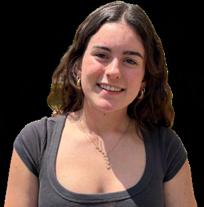
“My advice would just be to try a lot of new things. High school is a really great time to figure out what you want to do, take lots of different classes... you might find something you’re interested in doing later in
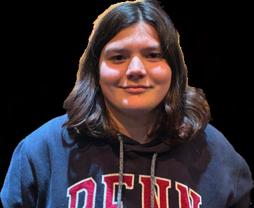
“Procrastination doesn’t do anything, it just takes more enjoyment out of your life.”
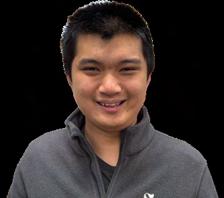
“I think a prerequisite to [worrying about classes] is making sure that you’re eating okay. If you have to pull an occasional allnighter, it’s fine, just make sure you have your rhythm.”’
play their sport competitively after school, you’re not going to see your high school friend group for lunch everyday, and the clubs you were in don’t exist anymore — or if they do, the culture you knew may have shifted.
Participating in activities in high school is still good. It’s just the way we let the titles define us that is unhealthy.
Continue to participate in those experiences, but instead of letting the simple fact that you are the leader of an activity define your identity, let what you took away from it define who you are.
Instead of defining yourself as a varsity starter on the basketball team, define yourself as a team player that performs well under pressure and has a passion for basketball. Feel free to take part in club sports at college or crush your friends in some pickup. Your basketball skills still matter, but you won’t be able to define yourself by them forever. In high school your entire life might be the basketball team, but for the rest of your life, it won’t be.
Rather than seeing yourself as the president of Student Council, see yourself as someone who can lead and inspire others. While it’s great to love the things you started doing in high school, you shouldn’t place your worth in a title.
You’re going to go a lot of places in life, through high school, through college, through
Report Card
« 2 hour delay schedules
« Posters are cute Extra stress No bells was kind of confusing Coffee + AP tests is a bad idea
C SCHOOL YEAR BEING EXTENDED
« At least it’s only one day Cuts our already short summer even shorter Snow days betrayed us A WEATHER
« So nice to not be cold all the time
« Feels like summer’s here already
« Lunchtime outside
If it’s this hot in May we’re going to be cooked in August
different jobs and internships, through different cities and homes.
In order to be happy and successful, your self-worth and identity cannot be dependent on your environment or the people around you because those things are usually not permanent. If you let your character depend on where you are physically or who surrounds you, and then those factors change, what do you have left?
It’s not that your identity itself will never change; temporary experiences and environments like high school will and should have an impact on your identity.
As your life experiences shape you, you’ll acquire skills, make memories, lose trust, and gain perspective — but all of these things are tied to who you are, nothing else.
So now, while you’re still in high school and have the comfort of your various titles and roles, try and define yourself differently, or — if you’re feeling extra brave — stop trying to define yourself at all. Rather, create, cultivate, and explore the person you want to be.
Let your activities, clubs, sports, and extracurriculars become a tool for developing your identity rather than becoming the identity itself.’
About
The Panther Press is the student-run publication of Strath Haven High School in Wallingford, PA. The Panther Press publishes 500 copies bimonthly in print and is distributed to classrooms and students at Strath Haven High School. The publication is also online at www. shpantherpress.com.
The goals of The Panther Press are to inform, educate, and entertain the student body, faculty and staff, and community readers.
We strive to report and analyze issues that concern students in a manner that is fair, objective, responsible, and accurate.
Through the use of journalism, technology, and workplace skills, the students who lead and create the newspaper develop as critical thinkers and communicators.
All content published in the newspaper and on the Panther Press website is created by Strath Haven students for a primary audience of students, with the understanding that our publication also reaches a broader audience that includes teachers and staff, families, and community members.
The views represented in The Panther Press, as well as the selection and curation of content by the editors, do not represent the views of the entire Panther Press staff, the adviser, the school, or the administration.
Submissions
All Strath Haven students are welcome to learn the basics of journalism and become contributors to The Panther Press. Interested students should speak to editors listed below to learn about upcoming meetings and training sessions.
Any reader may submit a letter to the editor via email to strathhavenpantherpress@gmail.com. Anonymous letters will not be published. Editors reserve the right to contact letter writers or edit submissions for reasons of space or clarity.
Our staff also welcomes feedback in the comments section of The Panther Press online or via our social media. Online commenters on our website must have a verified email address. Comments are reviewed for defamation, profanity, obscenity, libel, and invasion of privacy. Not all comments are published.
C- FINALS
« It’s the last thing we have to do before summer
It’s stressful
Less free time because we have to study
A WELLNESS
WEDNESDAYS
« Outdoor games were fun
« Opportunity to be crative during the school day
« Guests speakers are good resources
Not enough time to enjoy during lunch
B + SENIORS LEAVING
SOON
« Fun end of school year activites
« No more 6 A.M. wakeups!
« They get to go be real people now
They’re going to be far away from their friends
We’ll miss them!
Bylines
All contributors are listed in the bylines of stories that appear in print and online. Photography, graphics, art, illustrations, and other creative work will be given attribution. Unsigned editorials, when published, feature the byline of the Editorial Board
Social Media
The Panther Press maintains social media on Facebook (@shpantherpress) and Instagram (@shpantherpress). The editors-in-chief and social media editor manage the social media accounts in consultation with the adviser. Replies and comments are screened and not all responses are published.




Yuhang Li ’26
Eme Choi ’26
Melanie Foca ’26
Tess Kelly ’26
Maisie Strachan ’26
HAVEN HAPPENINGS
Ursillo retires after 34 years
After 34 years of teaching environmental science at Haven, Mrs. Sheryl Ursillo has decided to say goodbye.
Damini Mydur ’29 Reporter
After 34 years of explaining the difference between food webs and food chains and answering questions about the environment, Mrs. Sheryl Ursillo is saying goodbye to her position as a science teacher at Haven.
Ursillo taught Environmental Science throughout her time at Haven. Before teaching, she worked as a field biologist for an engineering company and did pre-assessments of living things found in a specific area. Her previous job is what sparked her interest in teaching environmental science.
“I found myself teaching adults and realizing that that particular generation at the time did not have a lot of knowledge on current situations with the environment,” Ursillo said. “So I ended up finding myself talking to people that were quite older than me, and trying to convince them of what the truths are versus their opinion of the environment, so there’s a lot of teaching involved [in that].”
Ursillo strived to make her classroom a place where students can have a personalized learning experience based on their needs. She also hoped to make her students more aware of their impact on the environment.
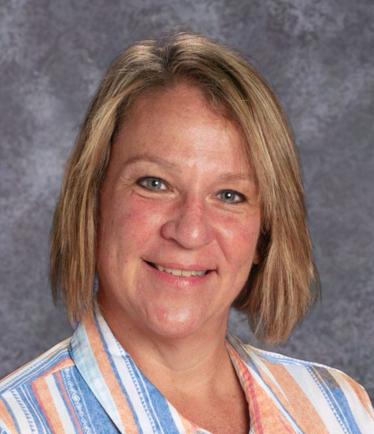
“ I feel she’s really passionate about teaching, and that’s something that’s hard to find with a teacher.
Jolin Chen ’29
“The other part of the lessons being learned is just to have students become more aware that it’s not just their specific environment that surrounds them, and that their actions are going to be compounding,” Ursillo said. “And then hopefully by their senior year they can take away the knowledge of saying, you know, how [we] could possibly find solutions to all of the problems that we have.”
Upon reflecting, Ursillo has seen herself change from a
grades-focused teacher to a teacher that focuses more on whether or not her students are understanding the content they learn.
“I think I have changed from ‘88% you’re getting a B+, no question about it,’” Ursillo said. “[But now,] I’m like, ‘all right, you have a B+, let’s see what we can do. Why aren’t you getting an A?’”
One thing she enjoyed about teaching at Haven was the freedom she had to teach the core curriculum in her own way. Ursillo especially likes that she had the opportunity to choose how to present the curriculum to her students, which made it easy for her to make the curriculum adaptable to everyone.
“[The school district] allows some leniency when it comes to choosing how we want to present [the curriculum] to the students, which is nice,” Ursillo said. “Not every school is like that.”
In addition to missing explaining how the environment works every day, Ursillo is going to miss the close bonds she has made with other teachers throughout her time at Haven. She is grateful to have had people who understand her situation, and to be able to get opinions and advice from them.
“That’s going to be sad [to leave], but I always say to people, if you look at your phone, then the people that are in your phone are the people you contact the most,” she said. “I have my whole entire department, so those people are in my phone, and I know I can count on all of them, which is a
Farewell from the President
Outgoing Student Council president reflects on the year.
Minori Saito ’26
Student Council President 2025-2026
Serving as Student Council
President has been a tremendous honor and one of my most cherished experiences from high school.
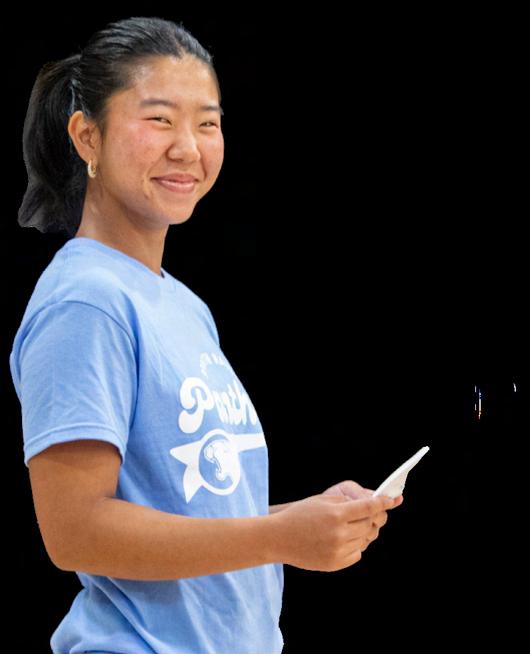
I recently heard a quote: “The point of life is to experience, not win.” From my four very fast years here at Strath Haven High School, I know that the only thing guaranteed is change, and that it comes very quickly and very unexpectedly. But life gets way lighter when you stop treating everything like it’s permanent. People, places, and things are meant to shape you, not always stay with you. So embrace change and lean into the uncertainty! Welcome it as an opportunity to grow, to feel, and to encounter and enjoy new things.
This year, I feel like Student Council was able to make some real impact. We had record-high numbers of Homecoming ticket sales (898!), and we were able to convince the
really nice place to be.”
Freshman Jolin Chen had Mrs. Ursillo as her teacher when she took Environmental Science and appreciates Ursillo’s academically focused mindset.
Chen believes she learned a lot in her class.
“It’s just the energy that she brings,” Chen said. “Even though her class might be a little bit challenging since it’s just work on top of work if you don’t finish, I feel she’s really passionate about teaching, and that’s like something that’s hard to find with a teacher.”
Ursillo is looking forward to not having to wake up early anymore after her retirement. However, she will be back to continue substitute teaching at Haven next year.
“My new verbiage is that I’m retiring from teaching, but I’m too young, in my opinion, to retire from working,” Ursillo said.
She hopes that any future teacher who fills her position will enjoy what they are teaching, and let that be expressed in the way they teach. Ursillo hopes they will also be active and involved with their students.
“I would tell the teacher to realize that when you’re fatigued at the end of the day, it shouldn’t be because of mental stress, it should be because you were physically involved with your class, and you’re fatigued because you put all of your energy into it,” Ursillo said.’
District considers reduction to high school renovation project
At the May 19 meeting of the school board’s Facilities and Finance Committee meeting, superintendent Dr. Russell Johnston announced that WSSD, due to a looming budget shortfall, has asked the architectural firm KCBA for a lower-cost version of a previously presented $99 million proposal for the high school renovation project.
The administration has asked the firm to present a proposal closer to $65 million at the June 9 Facilities and Finance Committee meeting, leading to a potential reduction in scope of the project.
Follow along at shpantherpress.com and @ shpantherpress on Instagram for further reporting.
Student Council 2026-2027
The @strathhavensc Instagram account released the 2026-2027 election results on Monday, May 11.
President
Noah White ’27
Vice Presidents
Astrid Beach ’27
Weiler Graham ’27
School Board
Representatives
administration to let us have a student DJ for the first time, at least in my time here at Strath Haven (thank you, Logan!)
Of course, we still did everything we’ve done in the past, including our signature pep rallies, our toy and blood drives, and our spirit days. We introduced Money Wars (inspired by Interact Club), surpassing our goal of $500 to raise money for MLK Day, and held a very successful Spring Fling, although it was cut a bit short by rain…
I can’t wait to see what the next council will do, and watch them continue to build this amazing school community that we have here at Haven. Passing the torch has made me sentimental about the special time I’ve spent here, and I know that they will fill our shoes just fine. Reflecting on my time here at Strath Haven, I know I will miss this school. A smile from a peer in the hallway on a particularly hard day, our beloved teachers
coming together to do fun dances at pep rallies, students advocating for changes they believe in, clubs running fun events for everyone to enjoy— these are the things that make Strath Haven a beautiful place.
I love seeing the way that the people here create a positive impact on their community and the rest of the world.
To the seniors—I’m grateful to have spent my youth with you all, and I can’t wait to see all the things you will do!
To the rest of you—keep making Strath Haven a better place! And don’t forget to have fun on the way :)
I will miss you all immensely, and it has been such a privilege to know you, serve you, and represent you.
With love,

Lavanya Dixit ’27
Joy Yang ’27
Representatives
Tess Berger ’28
Madeline Garson ’27
Nicholas Leggio ’28
Joshua Lund ’27
Kenji Melby-Griffin ’28
Sennen Motsch ’27
Joya Nath ’28
Ezra Peltzman ’28
Emery Sanfillippo ’28
Coco Sauve ’28
Roxanna Shelton ’27
Mia Taub ’28
Patrick Tolson ’27
Mae Valcich ’28
Milena Verdi ’27
MRS. SHERYL URSILLO • LIFETOUCH STUDIO

Saving files and memories: Why to back up your Google account
The process for saving school Chromebook files as a senior can be rewarding in the long run.
Cayla Gaffney ’29, Izzy Boland ’29 Reporters
At the end of the year, many seniors have a lot on their minds, from grad parties to AP exams. But who is thinking about the files on their school Chromebooks? The essays from their sophomore year? The science project they worked on for an entire quarter as a freshman?
Even though these things may have little significance to seniors amidst the busyness of graduation, there are values to saving files from high school.
All of the seniors’ files, along with their school Google accounts, will be permanently deleted on Friday, June 12. For seniors who wish to save their files, they have multiple options to do so.
“You can transfer your files from your district Google account to a personal Google account or download an archive to a personal computer or a USB Drive. If you would like to save any files, you have until the end of the day, Thursday, June 11, 2026,” stated an email sent by the WSSD Technology Department to seniors. These files can be helpful for students later on in the professional world.
“
I have heard students returning graduates say, ‘Oh, I wish I could go back and get some of my old work, because maybe it would help me with things that I’m doing in college.’
Mr. TJ Adams Social Studies Teacher
“Some of the files saved may be used for applications, resumes, and professional portfolios for use after graduation,” Director of Information Technology Mr. AJ Cetroni stated in an email. In art classes such as Graphic Design, students make a portfolio at the end of the year.
Art teacher Ms. Regina Iannello encourages students to save their files throughout the year for the portfolio, and to save their portfolio for the future.
“I recommend that they personally email [the files] to themselves, like their personal email, not their WSSD, so that way they can go back and at least look at them or share them on social media if they want,”
Iannello said.
Science teacher Ms. Amanda
King agrees that saving files can be good for looking back on. King also suggests that old work can be a baseline and starting point for identifying your interests.
“If you’re really interested in something, and it’s kind of where your mind is headed career wise, definitely hold on to it,” King said. “Because even if you end up [going on] a different career path, even going back to that and realizing how much you love it could just change where you are in the future.”
Many graduates have realized in college that their old work would be beneficial to see.
“I have heard students returning graduates say, ‘Oh, I wish I could go back and get some of my old work, because maybe it would help me with things that I’m doing in college,’” social studies teacher Mr. TJ Adams said.
English teacher Mr. Kevin Haney has also noticed this, and encourages students to save their files and work for the future.
“I always remind our seniors weeks before the end of the school year to make sure that they’re saving their documents, that they’re moving it over to a place that they can keep it safe, even if they don’t think they’ll use it. Just in case, just hang on to it,” Haney said.
Social studies teacher Mr. David Waldman believes that students can find value in looking back at old work, as it
can show the value of how far a student has come and what they have learned.
“It probably would be interesting for some students to look back when they are older, maybe in their third year in college, or they’re in grad school…They can look back at their writing in high school and say, ‘Man, I really learned some valuable things [at Haven] about how to construct an argument,’” Waldman said.
Previous work can also hold sentimental value for students.
While senior Julia Smirnova plans on saving some of her best essays and work, she also plans on saving fun things from when she was younger.
“I also have a lot of things from elementary school that are just cute to look back on, and I definitely want to save those too, because I would just play around on Google Slides and make presentations in fifth grade,” Smirnova said. “It’s really fun.”
Even with the sentimental value the work holds for Smirnova, it will also serve as a source of knowledge — in general and for her future education.
“For me, it’s mostly a memory,” she said. “I can look back on things that I did and remember them, but it’s also a resource for my future writing, because there’s a lot of specific things that teachers wanted from high school, and I can use them in college.”*
WSSD to adopt remote learning during snow days
The district has applied for flexible instructional days, an asynchronous mode of instruction offered by the state for cases like inclement weather, to compensate for excess snow days.
Clark
Kerkstra
’27 Managing Editor of Web
Snow days may be no more.
At the April 27 school board meeting, the board approved the district’s application for flexible instructional days (FID), a form of programming permitted by the state for circumstances like snow days, for the 2026-2027 school year.
At the same meeting, the board revised the calendar to extend the school year after three snow days this year exceeded the two days built into the calendar for inclement weather. For next year’s calendar, only one day is built in for inclement weather, meaning that after only one snow day the district would have to add days to the end of the school year or utilize flexible instructional days.
Superintendent Dr. Russell Johnston framed the idea as a way to avoid negative effects of adding days to the end of the school year, citing a middle school French exchange program that will now force students to miss school.
“Extending the school year becomes problematic on many, many levels,” Johnston said.
In the meeting, Johnston specified that the district will not be using Zoom or video call for remote learning. Instead, the district identified asynchronous learning as the way it would provide instruction for students at home.
The days will operate similarly to asynchronous Wednesdays during the pandemic, with students completing work assigned on Schoology on their own time. According to the district’s application to the state, students will be required to complete an online attendance check-in prior to 8 a.m. on the flexible instructional day and complete the assigned work in order to be marked present.
“Although the District’s primary instructional model is asynchronous, the combination of required realtime checkin, time-bound assignment
submissions, and ongoing teacher monitoring ensures that there is verifiable evidence of student participation on the FID,” the application states.
“This multi-measure approach allows the District to accurately account for attendance while maintaining flexibility for students and families.”
In addition to giving assignments in Schoology, the application requires that teachers host optional virtual office hours providing “live support, clarification, or additional instruction” during
SENIOR ACCOUNTS WILL BE DELETED FRIDAY, JUNE 12.
There are two ways for students to save their files. They can transfer files to a personal Google account or download an archive.
Transferring personal Google Accounts:
1. Login to your current WSSD Google Account
2. Follow steps from takeout.google.com/transfer
• Enter the name of your personal email account
• Find sent code in the inbox of this account
• Verify account name again
• Choose files to transfer
Downloading Archives:
1. Login to your current WSSD Google Account
2. Follow steps on Google Takeout to archive account data
• Select data to include
• Put a destination for the data (email, drive, dropbox, etc.)
• Pick how often it should be exported (not really applicable for graduating seniors)
• Pick type of file and size
3. Download the archive
4. WSSD Google Docs can be saved to personal computer or USB drive Schoology access for graduates closes at 12 p.m. on June 12. Files from assignments in current or archived courses can be downloaded and saved to Google Drive. Then follow steps to download an archive via Google Takeout above.
SOURCE: helpdesk@wssdgmail.org
Other students, however, were dismayed by the prospect of losing the typical snow day experience.
“It kind of takes away from the enjoyment of snow days, because a lot of times snow days can just be like little mental health cheats, where you don’t have to worry about stuff, or little breaks from school, because school can be stressful, and making everything online learning can still make it difficult,” junior Nico Hopkins said.
Hopkins also criticized online learning as a mode of instruction.
the block that students would have that class if normal school was in session.
Some students expressed support for the idea, seeing it as more convenient than regular coursework.
“It’s a lot more accessible for a lot of kids,” junior John Reilly said. “I think it’s easier for them to just get out of bed and just do whatever assignments on Schoology and then kind of be done for the day instead of having to put in the effort to actually go into school and be there.”
“Online learning is already difficult to navigate and then integrating it every now and then during the snow days when people are tired and looking for space to rest, I think, makes student performance worse and makes it harder to learn,” Hopkins said.
Johnston, though, emphasized the importance of flexibility and allowing the district to accommodate additional snow days without adding more days to the end of the year.
“Having it as an option is just a really good idea,” Johnston said.*
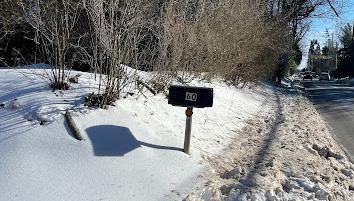
SLIPPERY SNOWFALL • Snow covers the Providence Road sidewalk on the way to the school, making it difficult for students who walk to get to school. Multiple snowstorms over winter this year resulted in three snow days and necessitated the extension of the school year.
PHOTO: CLARK KERKSTRA
Students say goodbye to Stress Haven, hello to summer
Whether it’s through international travels or staying home by the pool, students are finding ways to stay active this summer.
Gigi Detweiler ’28 Reporter
Flip flops clacking through the hallways while lunches outside resemble a mosh pit more than a parking lot can only mean one thing: summer is almost here.
As final exams approach and temperatures rise, students are preparing for summer jobs filled with lifeguarding shifts, landscaping jobs, international travel, and service work.
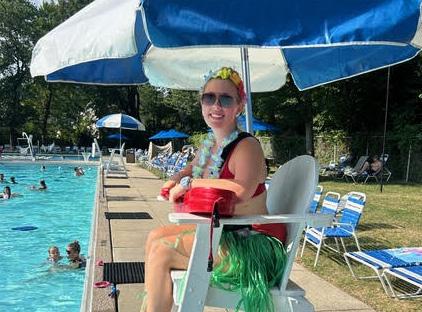
For sophomore Grey Burnheter, summer means returning to the pool deck as a lifeguard at Swarthmore Swim Club.
“I would say just try and work at a pool [over the summer],” Burnheter said. “It’s a really fun job, especially if your friends work there too.”
Although many students imagine lifeguarding as simply sitting in a chair all day, Burnheter says the job requires far more preparation than most people expect.
“People don’t realize that there’s a lot more training in it than you would think,” Burnheter said. “The class I took was like six hours one day, and then six hours the next two days too.”
Junior Kasey O’Sullivan will also spend much of her summer lifeguarding at Swarthmore
Swim Club and visiting Stone Harbor with her family.
Having attended the pool since childhood, O’Sullivan said becoming a lifeguard felt natural.
“I just kind of was always interested in being a part of that community,” O’Sullivan said. “It felt like lifeguarding was what I was meant to do over the summer.”
Beyond monitoring swimmers, O’Sullivan says that the friendships at the pool are what keep her coming back each summer.
“We have this cringy saying at the pool that we’re like a family,” O’Sullivan said. “It’s cheesy, but I think that the environment and the people make the place, because I can say for sure that I would not be as interested in working there again if it wasn’t those same types of people who are always friendly and make me laugh and we have a lot of fun together.”
While some students are spending the summer working, others are preparing for escapes that take them thousands of miles away.
Junior Georgia Graham will travel to Tanzania and Zanzibar this summer through the program MoonDance Adventures, a travel company designed specifically for teenagers.
“We’re scuba diving, spending a week and a half on safari, and then the other time we are going to be on the Indian Ocean, and we’re going to a baby elephant sanctuary,” Graham said. “We’re kind of just immersing ourselves
“
I can say for sure that I would not be as interested in working there again if it wasn’t those same types of people who are always friendly and make me laugh.
Kasey O’Sullivan ’27
in the culture.”
Graham has previously traveled through the program to Wyoming, Ecuador, the Galápagos, and Croatia.
Along with traveling internationally, Graham said one of the most meaningful parts of the experience is disconnecting from social media and daily stress.
“You’re able to go two weeks without your phone and not even worry about what’s happening or what party everyone’s at,” Graham said. “Meeting all these new people and kind of cleansing yourself from social media is really important for your growth, especially in high school.”
For Graham, the trip holds a greater meaning than just a getaway.
“I think it’s important because
you get a completely different view on life,” Graham said. “You realize how lucky you are to be able to do these things and meet new people.”
Sophomore Cal Winder will also travel internationally this summer, heading to Bali, Indonesia, through the National Leadership Council, a leadership program focused on service and growth.
During the trip, Winder will participate in marine conservation projects focused on endangered sea turtles and beach cleanup efforts.
“It’s going to be something that’s not close to anything I’ve experienced before,” Winder said. “We’ve learned a lot about the cultural norms there and things that are acceptable and things that aren’t, and that’s already very interesting to me.”
“You learn how to act in different situations,” Winder said. “It helps you be more respectful and learn how to treat people with the same respect that you would if they were from where you live.”
Not every student’s summer plans involve passports and long flights. Freshman Javier Celebre hopes to return to landscaping work this summer to earn extra spending money.
“I just did it a little bit last summer, and I was hoping to do it again just to save up some money,” Celebre said.
Whether students are spending their summer at the pool, on the job, or halfway across the world, many are looking forward to a season filled with new experiences and memories.*
The Wall: Attorney, Duke graduate discusses career, community involvement in service and athletics
Have you ever stopped to catch a glimpse at the Wall of Honor? We continue a series of interviews of noted alumni with a labor and employment attorney who served as the team manager for the Duke men’s basketball team.
Mark Ball ’26 Reporter
David Hackett knew he would never be a star athlete, but that never diminished his love for sports— especially basketball.
When Gary James, a retired social studies teacher at Strath Haven Middle School, needed a manager for the middle school basketball team, Hackett stepped up to the job. Later, when he attended Duke University after high school with a major in political science,

some of the teachers helped advocate for Hackett to be a manager for the Duke basketball team, which won the national championship in 1991.
In high school, Hackett served on Student Council and was elected president in his senior year. He was also the student manager for the basketball
team, a tennis athlete, and involved in TV and audio visuals where he announced football games and soccer games for the high school.
When Hackett returned to Delaware County after graduating from college, he worked for Congressman Kurt Weldon, who represented most of Delaware County and part of Chester County.
“As a legislative assistant, I was in charge of labor, education, taxes, and a number of issues for him. I would be up to date on those issues and work with the congressman to address those concerns,” Hackett said.
Hackett was selected to the Pennsylvania Super Lawyers 2017-2022 list. Now, Hackett works on the management side, representing employers in the labor and employment area.
“It can be dealing with unions, which is called traditional labor law. I also deal with advising employers to make sure that
they have the right policies in place to comply with labor laws and employment laws that apply to them,” Hackett said.
The many opportunities provided by Haven made Hackett a well-rounded person.
“A good public school makes you interact with people from different backgrounds, which I also thought was a great experience and made me understand people from different backgrounds and be able to respect them and honor them,” Hackett said.
James described Hackett as a top student in class whose work was always well done.
“A lot of kids are reluctant to raise their hands to provide an answer or volunteer to do something. Dave was just the opposite. He was quick to volunteer his services,” James said.
As a student at Strath Haven, Hackett was impressed by the ABC program, which provides
opportunities to minority students who show academic promise but don’t have strong educational opportunities where they live. When he came back to Delaware County after getting married in 1997, Hackett decided that he wanted to get involved with the ABC program.
“I joined the board and worked with the resident directors. I’m not on the board anymore, but I continue to financially support ABC because of the important role that it plays,” Hackett said.
Hackett also volunteers as the head usher at St John’s, is on the Civil Service Commission for hiring police at Nether Providence, and is on the chair of the Riddle Hospital Foundation.
“Dave deserves all the good things that have come his way because he’s worked. I know he’s a devoted family man. And when you get to know him and he gets to know you, you pretty much have a friend for life,” James said.*
SUMMER SMILES• Kasey O’Sullivan (11) poses at Swarthmore Swim Club, where she plans to spend much of her summer working as a lifeguard. PHOTO: PROVIDED BY ASHLEY ROBINSON
MR. DAVID HACKETT PROVIDED BY DAVID HACKETT
Reporting gave me hope in the world
Seventy stories and countless lattes later, I learned that people are worth believing in.
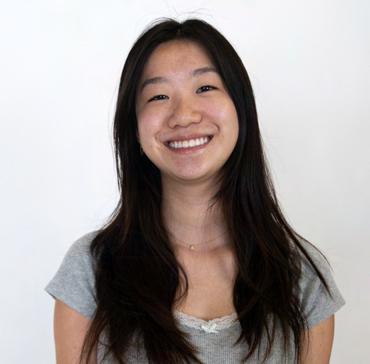
Kaitlyn Ho ’26
Editor-in-Chief
“ I started writing for my school’s newspaper. You won’t believe what happened next!!” is the clickbait headline I would have written, but it was a little too long. Like many others, I had no idea what I was getting myself into when I joined The Panther Press. I definitely imagined way more of those clickbait headlines. When I think back to freshman year, I remember eating lunch in the closet in 223, and hoping that I could be half as cool as 20222023 editors-in-chief Julia Gray and Matthew Chen one day.
I never thought I’d still be here four years later, but I’m so glad I am. Although I have thousands of words in me on how journalism changed my life, it really condenses down to this: The Panther Press taught me that my voice matters — that everyone’s voice matters. And the very worst thing we can do is say nothing. A lot of our editorials have some element of “in a(n) age/
world/era where things suck, we need to do something about it.” We walk around with the weight of the world’s problems; this generation is supposed to fix it all. It is a tall task. But being a part of this school newspaper has shown me the ways that students are fighting those problems already. Simply by exercising their creativity and compassion, they are creating stories of hope. Although journalism is all about fact, at its core, it seeks to humanize. The person who sits next to you in class, the kid on the other end of the world who has never known your name and likely never will — journalism has the power to bridge these people together.
I wrote about Mrs. Salvage’s wedding dress adventures. Without the chance to write it, I would have never known about that side of her. Same for so many student artists and their
I tried the school pizza for the first time
Why the best opportunities in high school often look ordinary at first.
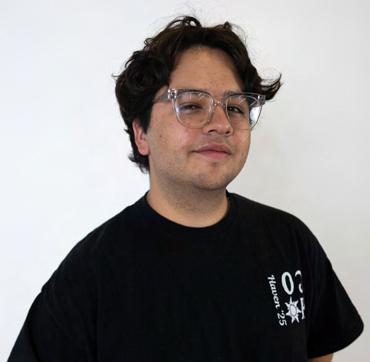
Matthew Ramirez ’26 Editor-in-Chief
Three years at Haven. I finally tried the school pizza last week. During lunch time, I have always walked past it without really thinking about it. It always sat there every day, predictable, with the same line of people who got it. I never really had a reason to try it. As I begin to leave high school, something motivated me to try it. So I finally got a slice, mostly out of curiosity. It was exactly what I expected: not bad, not great, just okay.
But I’m still glad I tried it.
Forgive me if I begin to sound preachy, but looking back on my high school years, I realize that high school is full of things like that pizza. Some opportunities sit quietly in front of you,
waiting, looking average most of the time, and because of that, it’s easy to just walk past them. For a while, that’s what I did. I did not join high school with a clear sense of direction, but I knew I wanted to be a part of something. So I decided that I would join the yearbook team. I had an interest in photography, so joining felt like a no-brainer. Then, a small decision came that did not seem super important at the time. I went on a trip to New York City to document the Cantata choir. After that, with
SENIOR SIGN-OFF
The Panther Press seniors share their closing reflections on student journalism and their experiences at Haven.
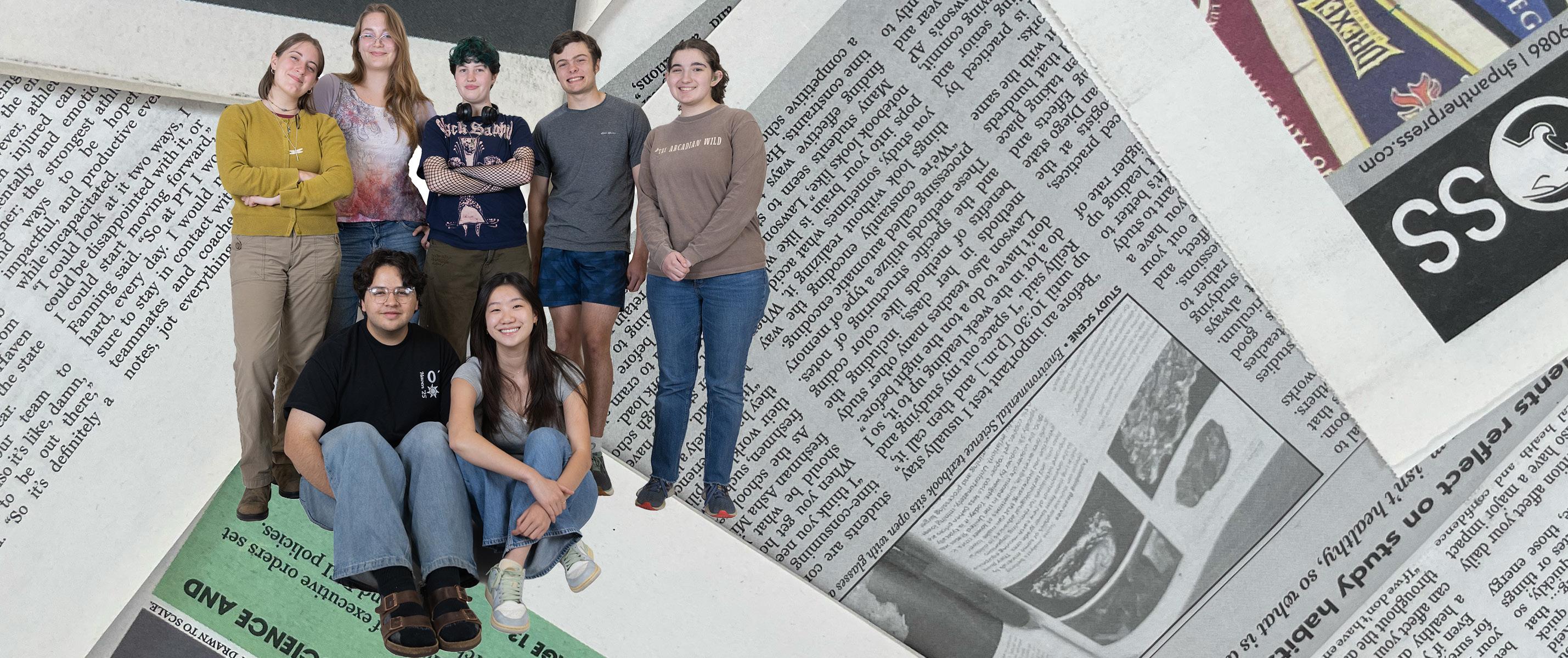
Kaityn Ho ’26, Matthew Ramirez ’26, Josie Wieland ’26, Eli Graves ’26, Mark Ball ’26, Mia Fagone ’26 Giana Gliko ’26
passions, whether it be the Black Student Union, girls lacrosse, or a person who I’ve seen every single day without knowing they dream of becoming a scientist. We don’t exist in isolation at this school, and we don’t exist in isolation in the world. It is storytelling that reminds us that isolation is something we create, and therefore have the power to destroy. Writing for The Panther Press made my high school years become less about getting the best grade and more about falling in love with the world Haven students want to see.
And without journalism, with its powerful ethical codes, I could never have imagined that world.
It’s a world where all stories are heard, no matter who they come from. It is a world where we lead with compassion before indifference. It’s one where being an idealist isn’t naive, and
some motivation, I showed up to a Panther Press meeting because I thought it might be interesting to share that story.
Me deciding to write about the trip was no big transformative realization; it felt like trying the pizza. It was something that I just decided to do. Panther Press became something that I kept coming back to.
Being a part of my high school newspaper gave me a space to grow in so many ways that I did not expect. I’ve learned how to communicate, ask better questions, and actually listen.
I’ve learned how to lead a team, problem solve, take initiative, and create something meaningful for my school community without a letter grade on my transcript.
That’s not to say that I did it all alone. I’m so grateful and blessed to have a strong support system of teachers, administrators, peers, and community members who understand the importance of learning in an extracurricular
environment like the Panther Press.
Looking back now, there never was a single defining moment that stood out; it’s the fact that I decided to push myself and try something new that was just there. It’s extracurriculars like Panther Press that don’t really announce themselves; they act more like open doors. You just have to be the one who walks through it, and keep showing up.
Opportunities don’t always look like much at first, as they don’t always come with guarantees. They don’t tell you what you’ll get out of them, though; if you give them a chance, you will find that out later on.
It’s easy to overstate things in hindsight, but the truth for me is that Panther Press was an important part of my high school experience, but not the only one. I was lucky to have time, encouragement, and support from the people around me who made it worth sticking with. Haven is such a unique and
being a cynic isn’t the default. I am grateful to every staff member on The Panther Press who has worked to tell the stories of Haven. I am particularly thankful to Ms. Plows for giving me the tools to see a better world and the space to decide if I wanted to look. Also, this entire year would have been impossible without my incredible awesome co-editorin-chief Matthew Ramirez. It takes courage to choose to believe in people, whether it be at their worst or their best — journalism shows it all. I hope that when Haven students see the news as adults, they don’t immediately fear it. I hope that because of one well-told story from The Panther Press, they decide to open that link or pick up that paper, because they believe in a better world, too.’
supportive community, and that’s a big part of why experiences like Panther Press are even possible. Panther Press gave me perspective. Journalism is such an altruistic act that forces you to look beyond yourself. It forces you to listen more closely and recognize that your experiences aren’t necessarily the ones that always matter. Being a part of a news staff has changed how I view things and think as a person. That is something I will always carry with me.
But I’m coming back to the pizza — it didn’t change my life, but I’m still glad I tried it. Value is based on the act of choosing something to try, showing up, and not letting something pass. It’s not always in how remarkable something is. Panther Press was that choice to me, and it made more of a difference than I expected.’
KAITLYN HO • PHOTO: KATE PLOWS
MATTHEW RAMIREZ • PHOTO: KATE PLOWS
Practicing the art of balance
How learning to manage my energy has given me peace.
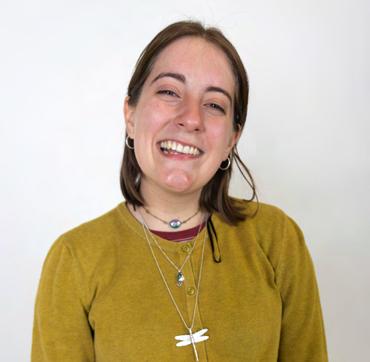
Josie Wieland ’26 Arts Editor
It’s time to take back your time.
In high school, our everyday schedule is chosen for us already: what time we have to arrive everyday, when we can eat lunch, how many classes we have in a given semester. But this is merely an outline; we can choose what fills the spaces in between.
Over the past four years, I learned that feeling fulfilled with my time didn’t have to just be about how many AP classes I’ve taken or the amount of extracurriculars lined up for me after the 2:05 bell rings. I found the importance of looking a little deeper, and asking myself what I truly wanted to focus my energy on.
With this new perspective, I felt myself stepping into a rhythm that wove together my passions and responsibilities as
a student, keeping in mind the components that truly matter in prioritizing balance while making the most of high school.
1. Pursue your passions
It is impossible to do everything all at once, so involve yourself in activities that feel like home to you. From testing the waters in Haven Yearbook during freshman year to being part of The Panther Press since sophomore year, journalism has been constant for me throughout high school. I initially tried to do both, but soon realized that just
being on The Panther Press staff was the best fit for me. It has allowed me to express my love for listening to and sharing the stories of others, and has given me a supportive community that always has my back. Since then, I’ve made other changes to my list of extracurriculars, and I couldn’t thank myself for it more. Making these decisions trained me to recognize when I started to feel overwhelmed by unnecessary stressors in my schedule and eliminated the pressure to stay somewhere just for the sake of it.
Letting go can be difficult at first, but I found that it was even more rewarding to be part of just a handful of activities that I could actually dedicate myself to. Without this, I wouldn’t have found such special homes in places like Marching Band, Interact Club, and The Panther Press; places that have helped me grow into the person I am today.
2. Rest is the key to success
Just as our chromebooks need to after seven long hours spent
How journalism saved my writing
Joining the Panther Press was the best choice I made, and I wish I had made it even sooner.
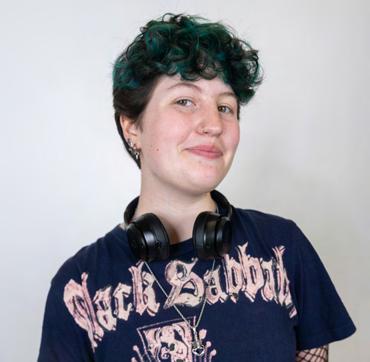
Eli Graves ’26 Reporter
Ijoined The Panther Press staff halfway through junior year. I never imagined I would be winning several awards for my journalism.
When COVID took over my life, writing was my refuge. I was a huge reader for years, and loved to write and craft my own stories. I was a private school kid, starting at Strath Haven in seventh grade, and the world of public school was a huge change. As the years went on, and I got accustomed to homework and my extracurriculars, writing wasn’t a hobby anymore; it was a requirement. I abandoned my short stories for essays, my novels for busy work. It wasn’t until junior year that my friend, Mia Fagone, told me I should consider joining The Panther Press. Many of my
friends were already on the staff, and in the second semester of junior year, I decided to join. Being thrust into the world of journalism like that is a wild experience; talking about deadlines, interviews, and potential stories was a world I was completely unfamiliar with.
I wrote my first article, about AI’s influence on art, and never looked back.
Being a journalist awakened something in me that I haven’t experienced in a long time. This writing didn’t feel like a chore; I was instead writing for fun again. The Panther Press brought back a passion I had completely forgotten about.
I learned so many things about myself as my writing skills began to grow again. I realized that I loved journalism, and
at school each day, we need the time to recharge.
Burnout is absolutely the last thing a high school student should have to juggle on top of a busy schedule, but unfortunately it can creep into our lives at the worst moments. This is especially true during college applications and testing season.
At these times, give yourself permission to take a break and don’t be afraid to cut yourself some slack. We live in a culture that is constantly switched on, but sometimes it is just as important to take a step back and flip that switch off.
Dedicating at least a few minutes for self care every night is a grounding part of my routine, and helps me start the next day feeling ready to take on anything that comes my way.
Read a few pages of that book you haven’t picked up in a while, take a walk through your neighborhood, journal down your thoughts; even the smallest reset makes a big difference.
3. Take a leap!
High school is only what you make of it, so spend some time outside of your comfort zone! It is always important to make time for trying new things, as this is a big part of a balanced schedule. Even within the activities you may be part of, there are always opportunities for growth waiting for you. When I wrote my very first center spread feature for the February issue of The Panther Press this year, the larger responsibility of the article felt like a daunting task. However, after getting all of my interviews and seeing my writing in print, I was so glad I made the effort to take on a bigger story.
With all Haven has to offer, you have the ability to take a class on something intriguing to you, check out a new club during fifth block, or even better yet, take it from me and stop by Mr. Z’s room in the morning to make a warm cup of tea.’
I loved even more that I felt that my, and the rest of the staff’s, reporting was actually incredibly important in the school community.
Journalism also gave me a chance to communicate directly with my peers in a way I had never experienced before. I felt like my writing finally had a purpose, and that people actually cared about what I had to say. That kind of presence in the kind of student body we have is so important to me. I felt that my reporting could give others the chance to speak through me, and I would act as their translator. That kind of power I was never given in my academic writing, and The Panther Press just ignited this spark in me that I didn’t even know I had.
What journalism teaches us about human thought and behavior
How working in the language of journalism reoriented my way of thinking about my role in the world.
Mark Ball ’26 Reporter
After completing summer journalism workshops and gradually learning more about it over these past four years of high school, I have come to realize that journalism is not just about communicating facts to the public. Instead, it is a way of viewing and interpreting the world that we as humans can learn from. As a journalist, we often request to interview our subjects. While I do this habitually now, how
often do we make similar requests in “normal” life? Usually, we don’t consider the precious time of others and just ask them whatever we need to know. Plus, it is rare that we ever request to hear about other people, as our own lives usually consume all of our daily
thoughts.
Additionally, journalists must constantly ask their interviewees to spell out their first and last names before an interview. How often do we as individuals pay that close attention to others?
And yes, these formalities exist because newspapers are published and people get upset if they are in the paper without warning or if a fact is incorrect. However, maybe if we treated every conversation like an interview and viewed every person like a subject for an article, then the world would be a much better place. Instead of getting caught up in individual thoughts and goals, we would start to realize that many people are far more interesting than we are and that’s okay. In fact, it is healthy.
I’ve interviewed many people for “The Wall” who have done far more extraordinary things than I likely ever will. I’ve interviewed an internationally renowned dancer who has traveled the globe, a free-throw record holder in the NCAA, and many other special individuals. While personal ambition is important, not valuing the rest of the world is how those goals dissipate into fantasies. We need other people to thrive and journalism is a bridge to form these connections.’
Now that I’m going to college and I’m going to be in a completely different environment, I can’t wait to keep reporting and keep improving as a writer. Even if journalism doesn’t remain a huge part of my life, the lessons I learned about my writing through it will always stay with me, through every academic or passionate pursuit of writing. Thank you, Panther Press, and thanks, Mia Fagone, for pushing me to join.’
was one of 16 news sites to receive a 2026 Online Pacemaker from the National Scholastic Press Associaiton in April 2026.
The National Scholastic Press Association has presented scholastic journalism’s preeminent award since 1927. This recognition places Haven’s student news website in the top 16 in the country.
The Panther Press is the only extracurricular program to receive the Pacemaker.
Our team is honored.

JOSIE WIELAND • PHOTO: KATE PLOWS
ELI GRAVES • PHOTO: KATE PLOWS MARK BALL • PHOTO: KATE PLOWS
Getting back in touch with reality
I stepped outside my room and rediscovered the things I love: how to find the world outside of your own head.
Mia Fagone ’26 Reporter
What’s worth your time, and how do we decide?
For a while, I believed that worrying about grades and class schedules and “which colleges will accept me?” was the only way to lock in on school and come out the other side with a place to go next.
Sure, I used to run outside every day after school and climb trees here and there as a kid, but how can I make time for that when I have articles to read for history and an AP Chem exam tomorrow morning?
And I did love to read novels,

watch movies, paint, and play guitar. I’m just too fatigued to do much else other than study, eat, and sleep when I get home.
None of this is healthy. I was so stuck in a cycle of worrying and working and then worrying more about my work that I never took time out of my day to imagine what all my work would amount to in the “real world.”
In my junior year, I began to combine all of my academic
curiosities: analyzing language in AP French, which connected with my newfound interest in linguistics; learning the processes of the brain in AP Psychology; and studying those chemical processes in Chemistry.
Even crafting up an academic future that encompassed a lot of my interests didn’t lessen my worries. It wasn’t my reality — yet, at least — so it didn’t feel satisfying to have a plan. What I soon realized was necessary for staying afloat were the things that grounded me in the present.
Nature has always been present. Every time I take a step outside, I feel like I’m human again and not just a student working towards a goal. Words flow easily here, and my problems become small.
Art has always been a reflection of how humans view the world. Every time I paint on a canvas, whether it be a
Lessons, stories, and an unexpected adventure
“Thinking ‘Here goes nothing’ could be the start of everything.”
Giana Gliko ’26 Reporter
These words, displayed on a sign in the media lab, have not only given me countless encouragement over the last few years, but accurately sum up my time in the Panther Press.
I never imagined myself anywhere near the world of journalism. I’ve always wanted to write fiction, but I was convinced to join the Panther Press my junior year assuming that some practice writing professionally — whatever kind — was better than nothing. I was seriously a fish out of water. But now, I look back on adventures that before I could
What
only read about.
The dictionary defines an adventure as “an unusual, exciting, and possibly dangerous activity.” Sounds about right.
But why would I just tell you?
Let me show you, with the help of a few quotes from some of my favorite books.
“Now is the time for courage. We must meet the enemy with steady hearts, for dawn has conquered dark since the Maker spoke the world. The night is deep, but light runs deeper.”
“The Warden and the Wolf King” by Andrew Peterson
Joining the Panther Press has pushed me out of my comfort zone in so many ways. Some of my favorite articles happened because I gained the confidence and courage to do things that sounded terrifying, like driving to Swarthmore and interviewing a business owner I’d never met, or, conversely, interviewing two freshmen actively throwing packaged snacks at each other. Sacrifice and struggle don’t need to be wholly negative. Sometimes dying to yourself and giving up what you want in a situation leads to the best kind of growth.
still life or something from my imagination, it feels solid and real and grounded to who I am as a person, as opposed to just some acrylic paint.
Journalism is an outlet for reality. Reporting on local businesses, researching the causes of northern lights when they passed over our skies, talking to new people to share new perspectives, and analyzing our own realities in opinion articles.
All of these, which I’ve adopted back into my sphere of activities, reflect my childhood hobbies and passions from way before I ever stressed about integrals or thermochem or a research paper deadline.
It’s good to get out of your head! Which is ironic, considering I’m going to college to study the brain. I hope to apply my future neuroscience knowledge to realworld situations, rather than attend more years of school for
“These are your presents…they are tools, not toys. The time to use them is perhaps near at hand. Bear them well.”
“The Lion, The Witch, And The Wardrobe” by C.S. Lewis We all have talents and passions. And while we may not be given swords, the charge is the same: bear them well. Don’t just fake your way through a class, take the chance to sharpen your intellect, even if you could care less about algebra. Give your all to your sport or performance, even if it feels like no one’s watching.
Peter has to carry that sword miles before he battles anyone. I may not end up a journalist, but I’ve found that doing everything with excellence — wherever you are right now — is fulfilling.
is a song that reminds you of your senior year?
As graduation quickly approaches, we asked this question to five seniors to help others start their graduation playlist.
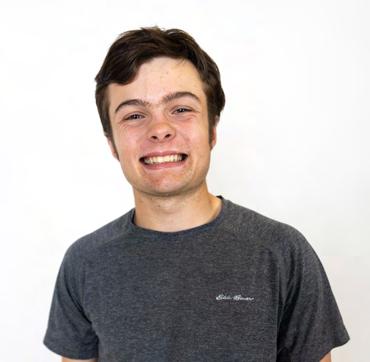
“‘Pomp and Circumstance’ for sure — bad memories. Played it twice for graduation, it’s not it. Not this year though.”
“I’m choosing ‘Don’t Dream it’s Over,’ because I’m really excited about graduating and what’s to come next year and moving on.”
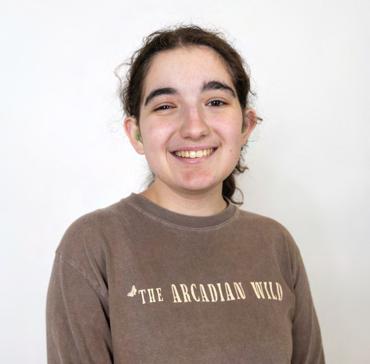
“‘We are Young,’ the Glee version. During that episode they were also celebrating graduation. It was really cute and graduation is going to be super exciting.”
the sake of a degree. So really, the routine doesn’t just have to be sleep, eat, school, and repeat. I achieve the most personal success when I allow myself time to stay connected with the world around me. Make something, whether it be a painting or food or piece of writing! Talk with other people! Read news stories! Thank you to all of my friends, family, and colleagues on the Panther Press who have grounded me in reality.’
“‘Walking on Sunshine,’ it makes me feel super good, like I’m celebrating the end of four special years of high school, and makes me look forward to what’s to come.”*
“‘1979’ by the Smashing Pumpkins. It’s about the singer’s childhood nostalgia. We both have feelings of missing our past but being excited for the future.”
“I wonder what sort of tale we’ve fallen into?”
“The Two Towers” by J.R.R. Tolkien
I never fully understood the Panther Press’ trademark “#thatsastory” until now. To me, it’s an example that all of us are a story waiting to be written. By being a part of something larger than myself and documenting the real-life stories of others, I’ve truly seen this in action. Everyone has a role to play, but that cannot happen by living passively. How would Haven look different if we viewed high school as a new adventure, and weren’t afraid to lose a little bit?
My advice: take a step into the unknown, and embrace the tale you’ve fallen into.’


Tune in for Season 4 in fall 2026.
MIA FAGONE • PHOTO: KATE PLOWS
GIANA GLIKO • PHOTO: KATE PLOWS
LISTEN TO THE FINAL EPISODE OF SEASON 3
Manny and Jasper are on the other side of the desk for the last episode as new hosts Patrick Tolson & Kenji Melby-Griffin ask some questions.
Julia Smirnova ’26
Vincent Dykes ’26
Morgan DeJarnette ’26
Tess Kelly ’26
Evie Fernandez ’27 • Managing Editor of Print
Katie Snyder ’26
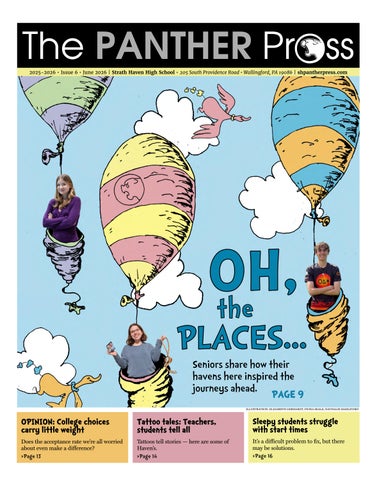
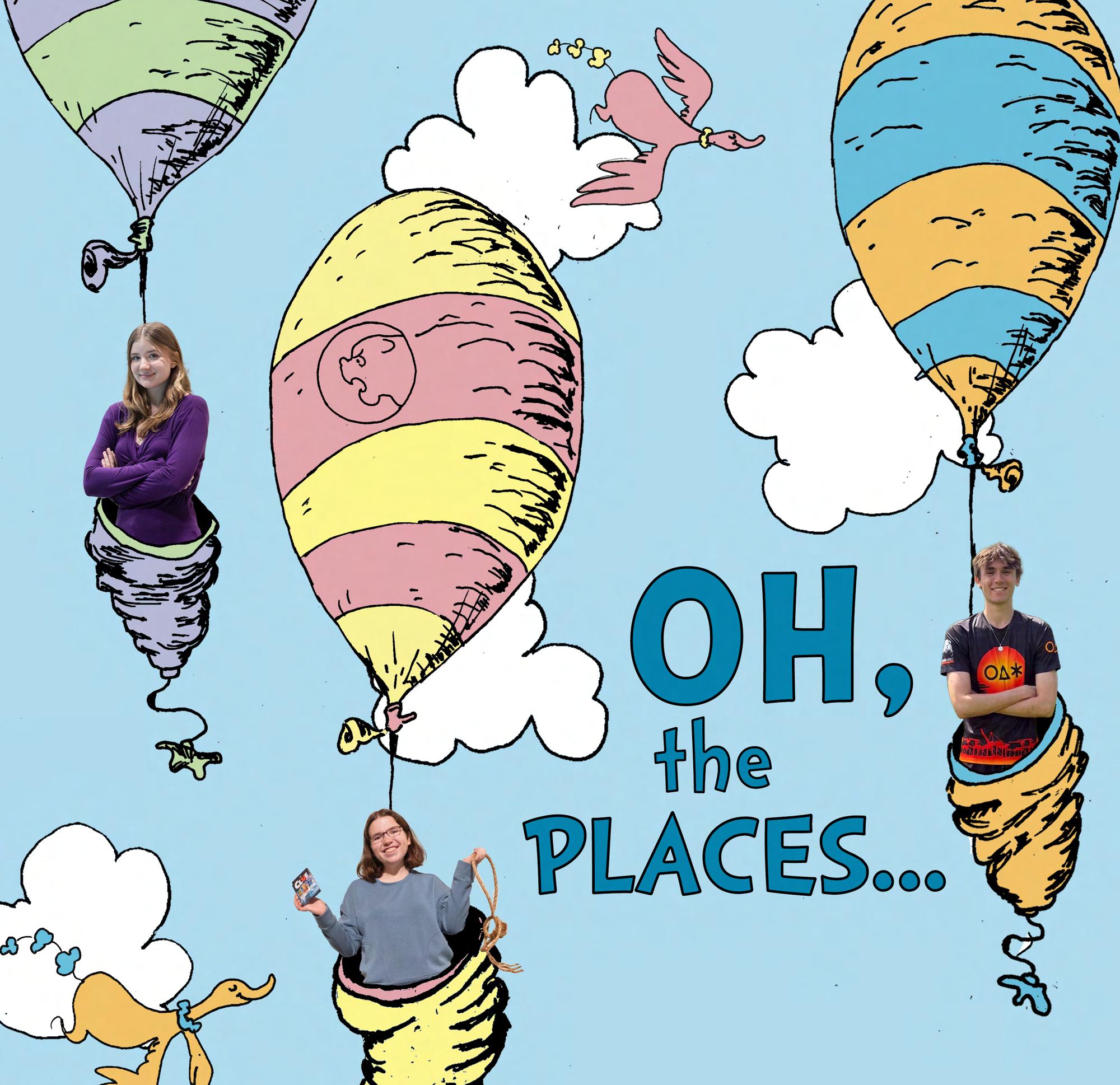
RENOVATION CHANGES MAY BE AHEAD, BUT THE CLASS OF 2026 WILL REMEMBER HAVEN THE WAY IT IS NOW. We feature eight seniors for their notable connection to places at our school. Whether it’s debate, swim and dive, or ceramics, these students share the meaning of their ‘havens’ here — and the impact they hope to make after graduation.
Story Design: Evie Fernandez ’27

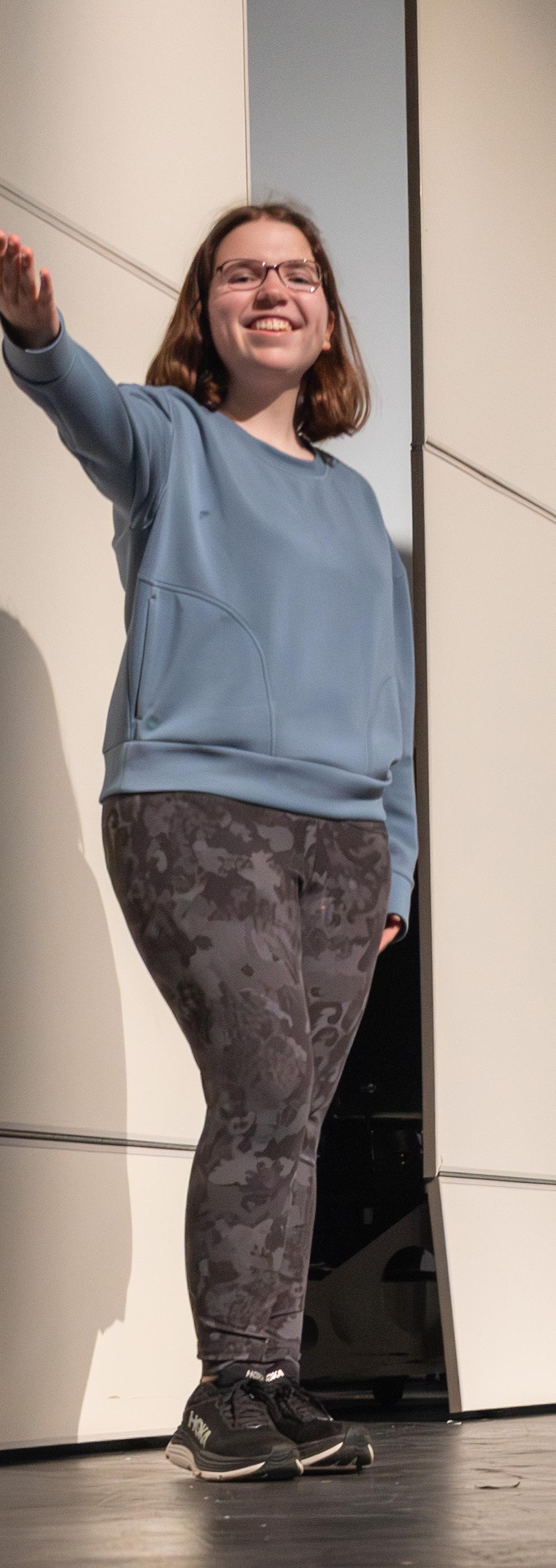
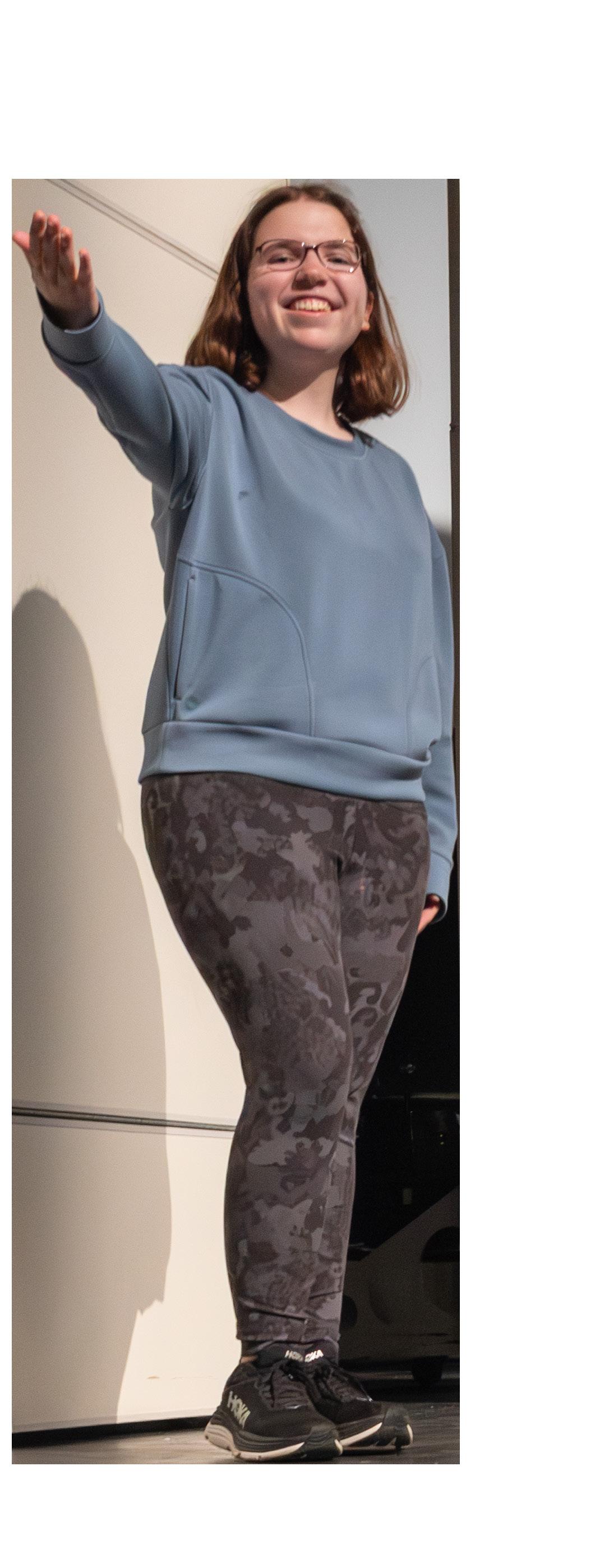
What makes the auditorium special to you?
“The auditorium is the place that we have all of our shows and all of our rehearsals, and it’s just a place where we can have people come together. It’s where the cast comes together with the crew, with the audience. It’s really where all the magic happens and bringing everyone together, which is what makes theater so
What is your favorite memory here?
“I had to say my favorite show to do was ‘Clue’ because it was such a fun show with the mystery, and it was so much fun playing Mrs. White. We had such a great group of suspects…we could really play off of each other, which was fun. My brother was in it, which is great that I could have that experience with him. It was just an awesome show.”
What made you interested in theater at Haven?
“I went to the community theater, and it was the best experience I ever had. So then I just continued Hedgerow Theater… and then I did it at the middle school, and then Next Generation Theater, and high school. It’s just a really great experience each year, just having done shows with people for so long. We’re really a close knit community which is great, and it brings me so much joy to have put on eight shows at the high school with an amazing group of
What kind of impact do you hope to make on the spaces you’ll be part of in the
“I really want people to just enjoy theater. It’s something that’s so fun and we live in such a stressful world now, and it’s just such a great outlet to have a good time. The magic of the stage, you can’t get it through a movie, you can’t get it anywhere else. So come enjoy theater. Act in it, be part of stage crew, play an instrument in the pit, or be an audience member because, [with] any of those roles, you’ll just leave feeling better.”
Cayla Gaffney ’29
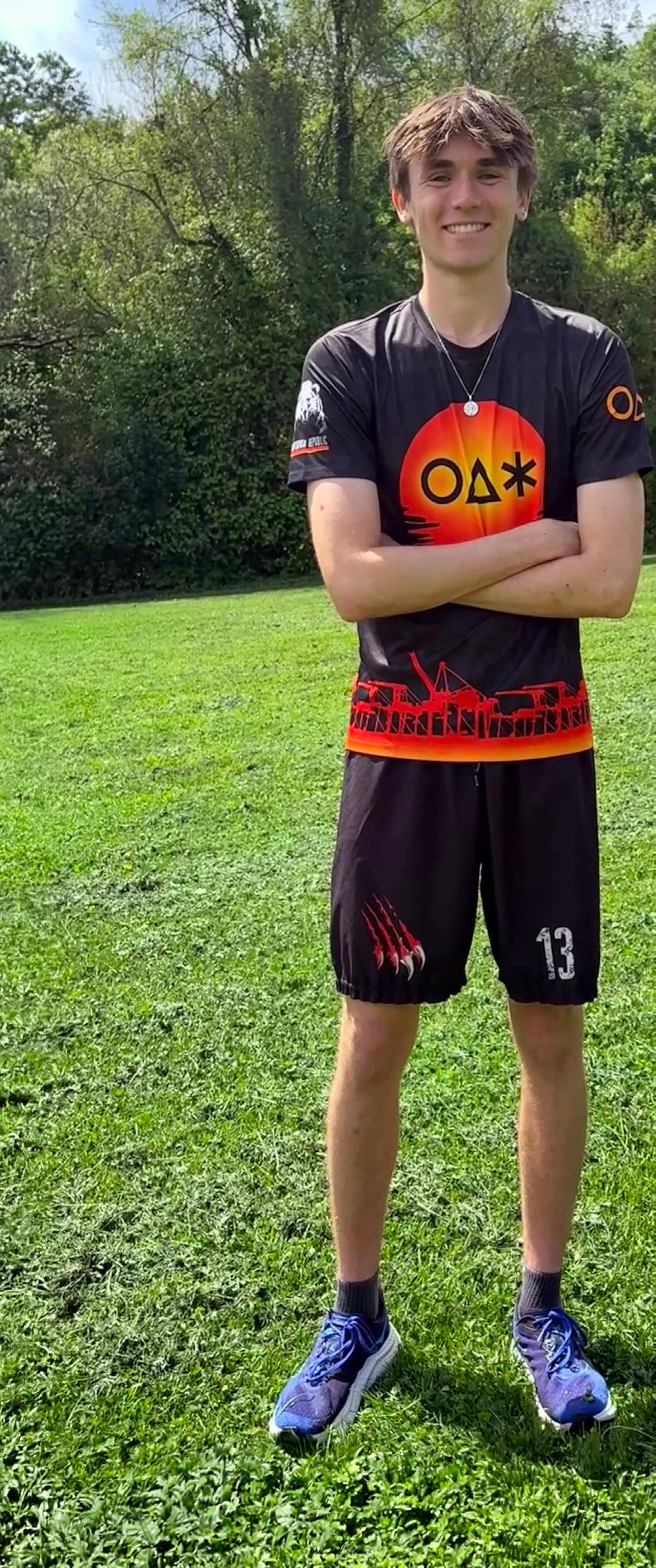
What is your favorite memory from this place?
“One of the things that is cool about ultimate [frisbee] is it’s super accepting. We try to emphasize relentless positivity on the team. I’ve come from other sports as well, but a really cool thing about ultimate is that we emphasize making a home for everybody on the team, more than winning.”
What impact has this experience had on you?
“It’s been a huge part of my life. I played in freshman year, but it wasn’t super important to me. This has risen to the top as my main activity, and it’s helped me grow so much as a player and a person. This past fall, I got invited to the USA Youth 20 tryouts. I didn’t make the team, but it was cool. Only 100 guys across the country get invited. It’s exciting to be able to play at such a high level.
What made you interested to start in this experience?
“My mom played frisbee in college, and she won a Callahan, which is an award that goes to the best college player in the country at the time. So I think I was sort of inspired by her. As I went into more competitive experiences I sort of embraced this, and I was like ‘this is what I want to focus on.’ When I’m working on improving, I focus on following in my mom’s footsteps, and trying to make her proud when I play.”
What kind of impact do you hope to make on the spaces you’ll be part of in the future?
“Next year, when I go [to college], I’ll be the little fish in the big pond again. As I grow in those spaces, I want to bring a positive impact to the team with spirit, energy and positivity. As I start to become more of a leader in those spaces, I’d like to mimic the experience that I bring to the people here. I hope to inspire others to join, feel comfortable, and make it a home for them.”
Damini
Mydur ’29

Illustrations: Nathalie Basilevsky ’28, Charlie Grueser ’28, Fiona Seale ’28, Cayla Gaffney ’29


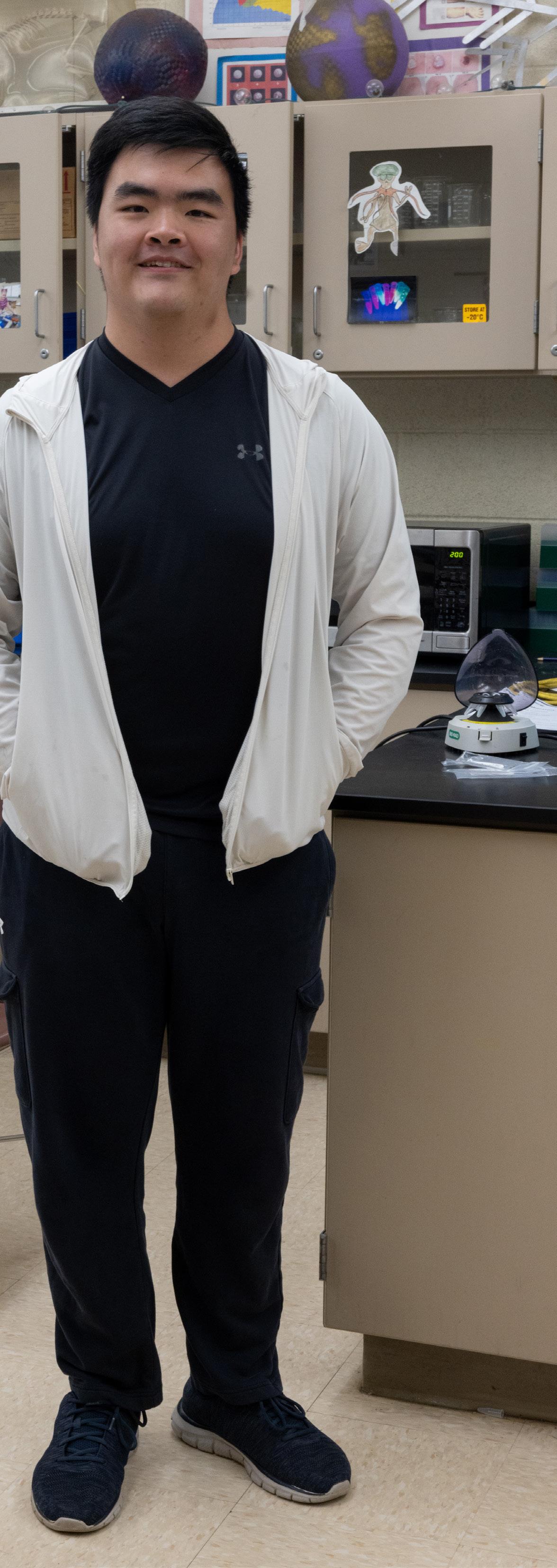
What are some things you have learned from this experience?
“The biggest thing that physics has taught me is problem solving. I think taking physics really teaches you how to approach problems. If you’re stuck at some point, it teaches you how to move past that. It teaches you how to apply math better as well in other aspects besides just taking calculus. I think it also teaches a lot that can help you in other STEM classes.”
What made you interested in physics?
“I don’t know if I really had an interest in physics immediately. I think I just decided to take physics classes, and then the style of the problems, how difficult they are [and] the challenge of trying to work through them and solve them, hooked me after I got into it.”
How do you think Strath Haven has been able to help you with your journey in STEM?
“There’s a big emphasis on STEM at Strath Haven, and that helps a lot. The ability to go through so many math courses, and take many STEM classes besides physics were really useful. As for clubs, Science Olympiad obviously helped me be engaged with STEM in general.”
How do you see yourself using your skills from STEM in the future?
“I’m trying to get a job in STEM and physics, which is a big thing, and I think the mindset that [you gain from] going through physics, math, and other subjects is really useful outside of school as well.”
Amber Fan ’29

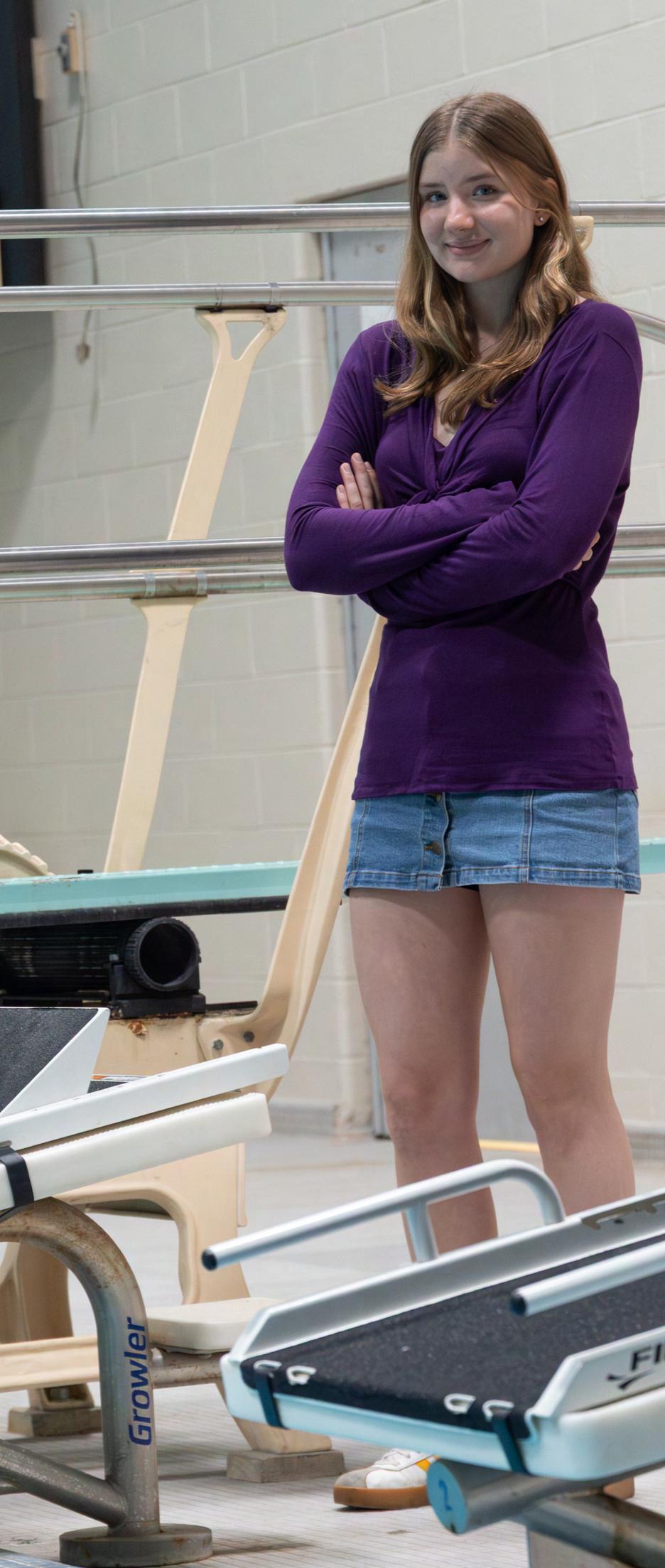
What is one of your favorite memories in this place?
“The last home meet that we had here against Springfield. I can’t even remember the outcome of that meet, but it was so memorable. Not only was it emotional as the last home meet, but because I had a really rough season this year, and that last swim in this pool really mattered. I got a really fast time that I was super happy with. The comfort and shock that I saw in my teammates and my coaches was so comforting. It was an awesome feeling.”
What impact has being a part of swim and dive had on you?
“It’s enabled me to grow so much... swimming is such a mentally difficult sport, even beyond the physical nature of it, and knowing how to be there for others, while receiving support from others, is such an enriching process. While we may not be the fastest or the strongest team, we’re definitely the most bonded.”
How did you get involved with swimming?
“I started swimming competitively when I was 7... the first time I was in a pool, I was probably around 3. My eldest sister started swimming when she was in elementary school, and then my middle sister did it. I kind of just did it for a while because they did, but eventually I found my own groove and rhythm, and was like, ‘wow, I really like this. I want to keep on doing this.”
What will you carry from swim and dive into your future?
“I know how to carry resilience and perseverance, and channel my being into everything I do, whether it’s mentally calming myself down, getting in the right headspace, or just having the work ethic to succeed. From this team specifically, it definitely has to do with being able to support other people and learning how to be there for people. Different people respond differently to situations, and so I’ve learned how to navigate that and know what to say in the right moment to best help people, and put them on the pedestal that they deserve to be on.”
Joya Nath ’28




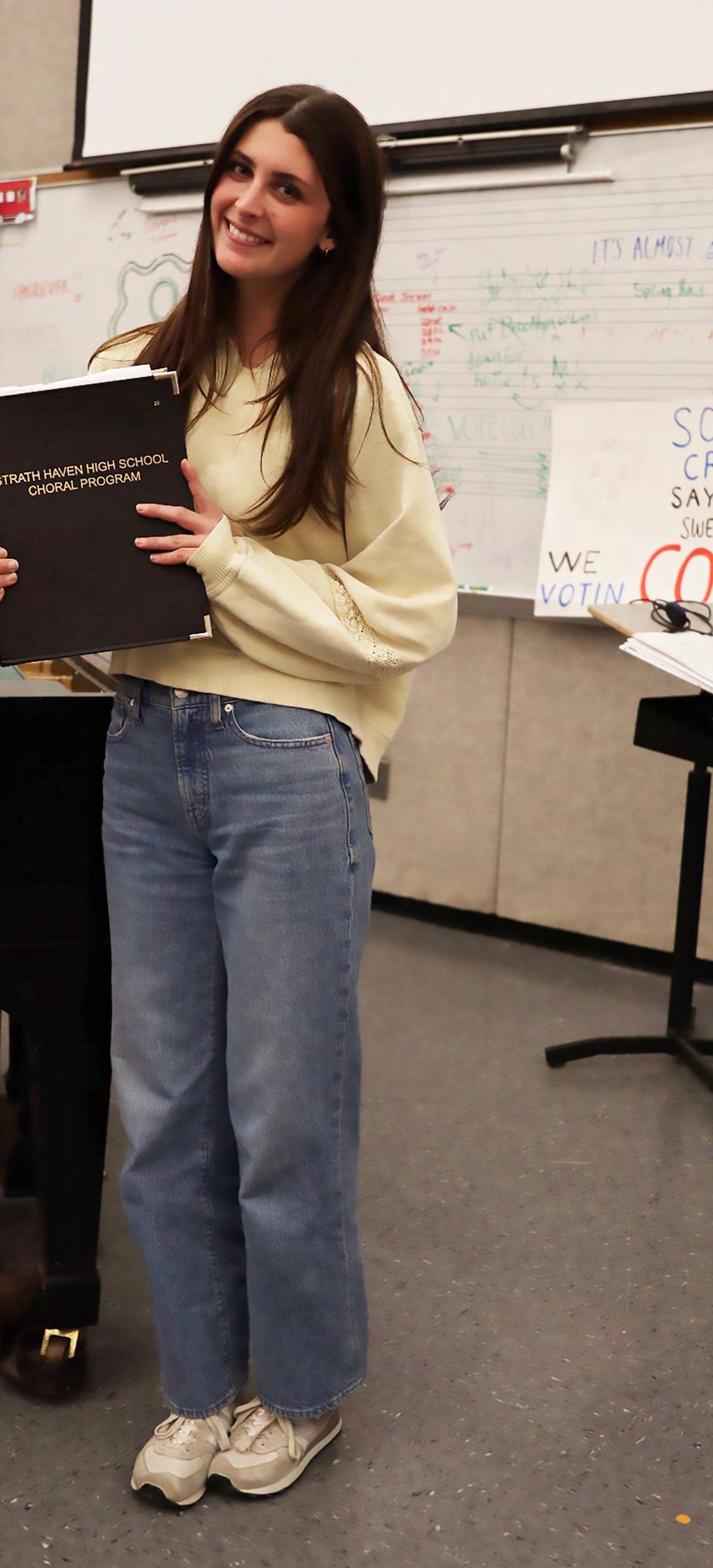
What makes this space special to you?
“The chorus room is somewhere that I have found myself through all four years of high school. My freshman year, I was in Theater Workshop with Mr. Shankweiler, so I had a class in there. I did Camerata for three years, and then my sophomore year I joined Cantata and Silvertones. I’ve had to come a lot of mornings at 7am and it’s a nice way to start my morning. Being able to talk to people, sing a little bit, [and] do what we love makes it such a nice environment.”
What is your favorite memory of this place and why?
“There was one time, it was my sophomore year. Mr. Shankweiler was walking across the chorus room and he slipped and fell, and it was so funny.”
What are some skills you have learned from this space?
“Bettering my singing experience in the morning and fifth block, and then some of our night rehearsals, so I am in here a lot. I had my first two years with Mr. Shankweiler and my last two years with Mrs. Silva. They both have pretty different teaching styles regarding singing and vocal music, so I am grateful that I did get to experience both of those different styles, which will definitely help me in the future.”
What kind of impact do you hope to make on the spaces you’ll be part of in the future?
“I want to be a nurse practitioner for pediatrics, and in the chorus room specifically, I do think I’m good at brightening the mood. I think [I] make people feel comfortable and welcome, especially now that I’m a senior and there’s someone who hasn’t been here before. I do like to think of myself as being welcoming. I want to have that same presence when I’m working in a hospital, especially with children. I want them to feel comfortable in the environment.”
Rowan Brown ’29
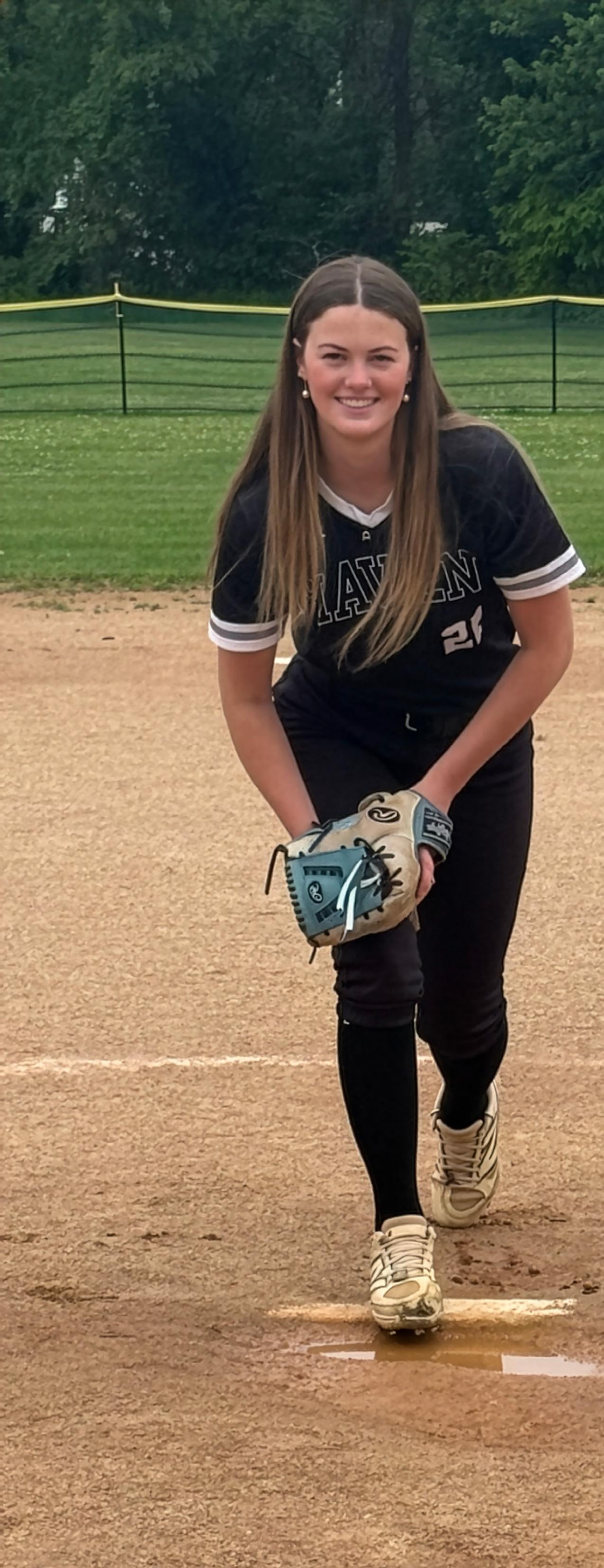
What makes this space special to you?
“I’ve made so many memories here over the [past] four years. I feel like the [new] dugouts represent the progress we’ve made within [softball]. I feel like it also [represents] all the memories we have. The space echoes a lot because it’s so enclosed so I think that helps during the game, keeping it noisy, and we need to have energy.”
What impact has this experience had on you?
“Softball [has] taught me a lot of resilience and leadership. I feel like it’s definitely the space and just softball as a whole that has taught me [those skills], but also how to build connections. I’ve always played [outside of school] and not [everyone] plays softball outside of school, so [I’ve] learned how to interact with every type of person. Softball is a pretty diverse sport in terms of who plays it, and I’ve talked to a lot of different people that I wouldn’t otherwise talk to, [and I’ve made] great friends here.”
What is your favorite memory of this place and why?
“I would say it’s not one specific memory, but all the practices with everybody in the dugout, getting to chat about whatever’s happening in our days, or if there was a big upset in the league. [The dugout is] a nice space to talk and the conversations are really reachable and easy.”
What are some of the skills/things you will carry with you into your future?
“I think it’s just that resiliency and being able to get through hard things. We’ve had some tough games, and being able to persevere through [them] and learn from losses. I feel like I have a lot more growing to do, but I’ve also had a lot of growth with figuring out how to deal with the losses. It’s such a packed season, so I think getting through those losses and getting through that with the team and learning how to lean on your teammates has been a really big part of that.”




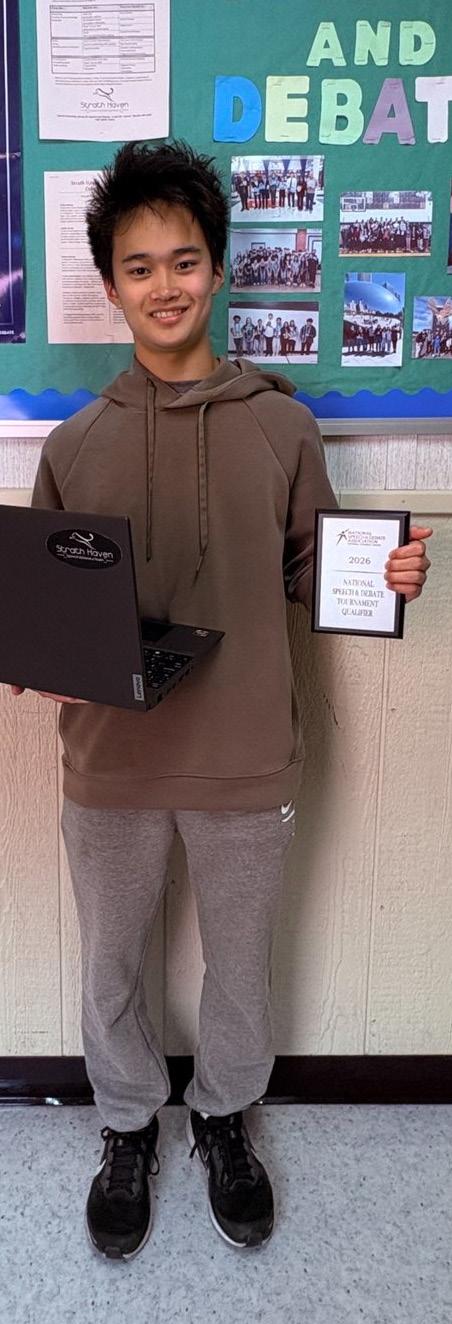
What made you interested in this activity?
“When I started doing it, I had no idea what it was about, and I was really only doing it because my friends were doing it. I thought it would be fun to go to tournaments with them. But, then as I actually started competing, it was really fun. It was like a game and I realized I was kind of good at it. I really found a passion for it.”
What are some of the skills you have learned from this experience?
“When people think of debate, they think it gives you good public speaking skills, which is definitely part of it, but the biggest skill I’ve found is the ability to process information really fast. In a debate round you have tons of information dumped on you and you have to be able to process all of this information in a short amount of time. [The] skill is applicable to any job and anything you want to do. It’s a unique and difficult skill to develop that is really only possible through debate.” What impact has this experience had on you?
“A pretty big impact, I’ve met lots of people who inspire me. It’s taught me a lot of things, I’ve learned more about the world, about what I value. I’ve learned what I’m good at [and] gained lots of skills. It has been a major part of my high school experience and influenced who I am.”
How do you see yourself using this skill/experience in your future?
“The skills it has given me will definitely be applicable for research I do in college, job interviews and even in the workforce later on. Talking to people who go to my school, I realized that I know some of them through debate and it’s introduced me to people from across the country and internationally. The general knowledge I have of the world now, of how states function, politics and all these things will be very useful to know.”
Siya Goindi ’29
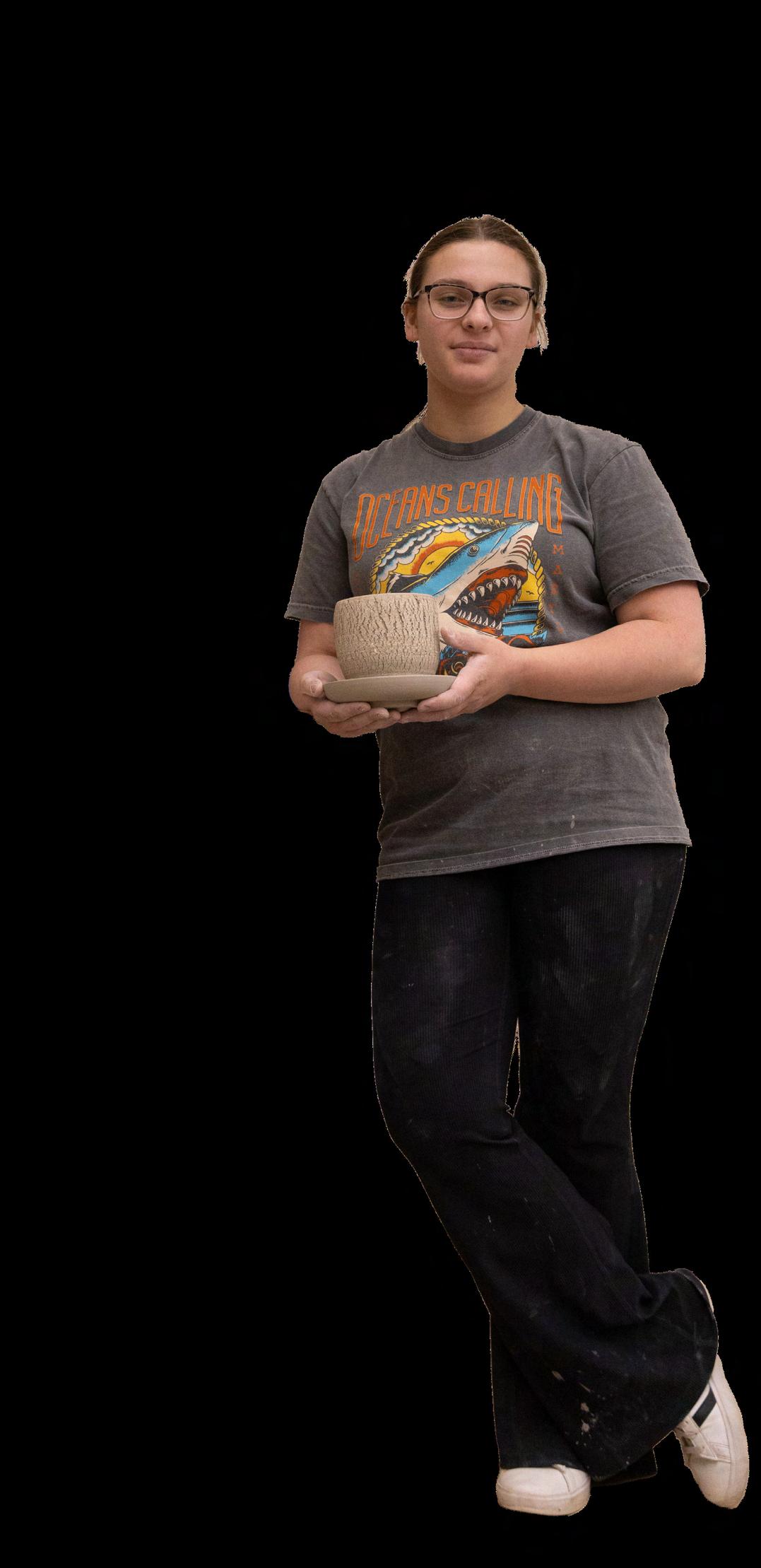
What makes this space special to you?
“Mainly just the atmosphere of the classroom. It’s not like any other classroom, you get to work hands-on. Especially fifth block, I think it’s really great that it’s a lot of different people. You’ll see people from every lunch table here, and it’s just like a really open and great environment.”
What impact has this experience had on you?
“I think it’s been really great over the last few years just to have a space that’s very relaxed and a nice environment compared to other classes. I get to come here at the end of the day and relax and work on something that I enjoy. It’s a contrast from ending your day in another class, say math or something that’s high stress. It’s a nice way to end the day.”
What is your favorite memory of this place and why?
“I feel like a lot of people in ceramics one just kind of take it because you can say it’s an easy-ish elective. But I really like coming in here in the fifth block when it’s just all the people who are really into it. I feel like there’s a group of us who are generally in here all the time at fifth block, and I think just coming in, being in that space, is really great.”
How do you see yourself using these skills in your future?
“I think it just builds creativity, especially in problem solving too. When it comes to clay, you come across a lot of problems and there’s only specific ways you can do things with clay. You have to take those and figure out how to make something work. So I think it’s a lot of problem solving skills, and then also just creativity.”
Fiona Seale ’28


It doesn’t matter
On decision day, it may feel daunting or shameful to pick the college that’s not the most prestigious, but I truly believe where you go does not matter.
Eli Graves ’26 Reporter
Iknow that the title probably upset quite a few of you, and while I do believe that it doesn’t matter where you go to college, it might take some convincing for you to believe it too.
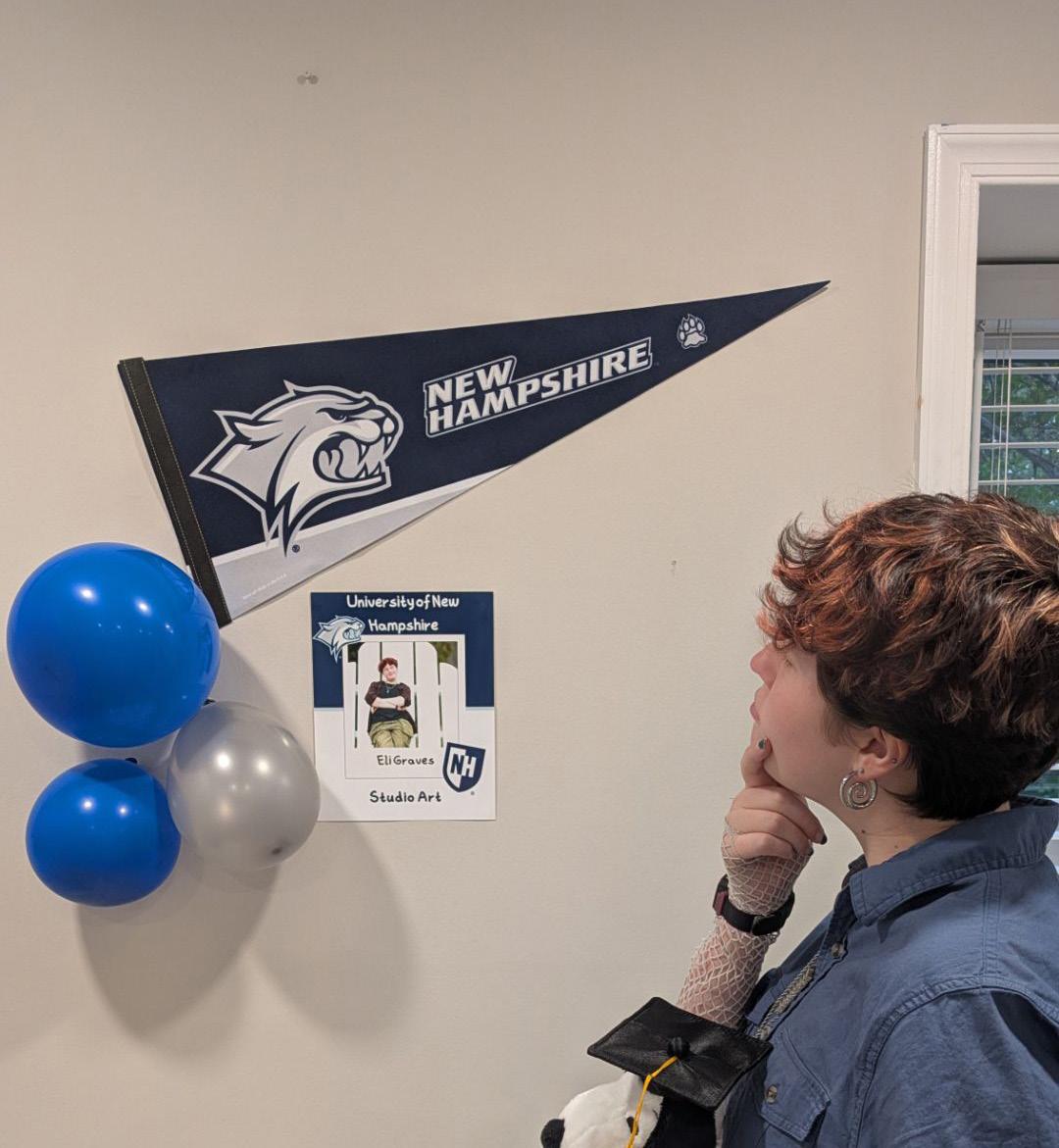
I’m attending the University of New Hampshire this coming fall as an art major. Right off the bat, I feel a desire to explain to you, as I explain to everyone, exactly how I ended up there: my grandma lives in New England and we have to move to be closer to her, I got into colleges with much lower acceptance rates, money was an important factor, etc.
But I dish out this kind of explanation every time someone asks me about where I’m going to school and, to be honest, it’s because I’m embarrassed.
I work hard and I’m a good student, but I didn’t take the hardest math classes or as many APs as I possibly could. You would be surprised at the amount of students here who are very judgemental of the path I decided to take. Because of that judgment, I wanted so badly to prove them wrong,

“
I felt shame about my commitment for a long time, until I realized that my education isn’t any less important just because my school has a high acceptance rate.
to prove that academics aren’t everything and you can still go somewhere “impressive,” except that that school rejected me.
I was crushed. My dream school didn’t want me, and now I have to go to the school dead last on my list. Rutgers, my second choice, gave me no financial aid, and Temple, my third choice, would become almost impossible to attend with my parents moving nearly eight hours away.
I appear to be the perfect candidate to be telling you that where you go to school doesn’t really matter.
Now, yes, it’s true that higher ranked schools have better networking opportunities, and they look very impressive on a resume. But I find the idea that somehow the education is just so much better than that of
A Harvard graduate is teaching at my state university. Do his teachings matter less because they’re coming from UNH? Absolutely not. My biggest problem with this idea that you have to go to a top school, is that we completely ignore the fact that so many other factors go into
Unlearning perfectionism
Perfectionism can prevent us from moving forward in our lives, so how can we deal with it?
Kaitlyn Ho ’26
Editor-in-Chief
For many years, I had a very precise vision of the person I wanted to be when I graduated high school. This vision has not come to fruition in almost any of the ways I expected, and for the first few months of senior year, I lay awake thinking about how I had failed my younger self.
To freshman year me, success was equivalent to perfection. It meant perfect grades, the perfect amount of sleep, the perfect balance between social life, family life, and studying. But I couldn’t have it all — knowing this, I told people that my main philosophy was the common adage, “Shoot for the stars and you’ll land amongst the stars.” If I could shoot for perfection, then maybe I wouldn’t achieve it, but I would get somewhere close, and thus,
my perfectionism was more optimistic overachieving than unhealthy motivation.
Secretly, despite saying I was fine with “landing amongst the stars,” anything short of perfection felt like settling. It felt like failure. I kept pushing off the realization that nothing would ever be good enough, especially because I knew I can’t be perfect; it’s impossible for anyone to be.
At first, it was easy to balance everything. But as I quickly learned, high school kind of sneaks up on you. After all, I had kept pushing myself far past my limits, and it began to manifest in tiny ways.
Activities deemed self care went first. I stopped reading. I stopped drawing. I joke that I need to touch grass, but there would genuinely be weeks where I wouldn’t be outside for more than ten minutes.
Then my grades started to slip. Suddenly, it felt like the most monumental task to simply pull out a book to study. Any assignment that was optional became invisible to me, where I used to go out of my way to ask for additional challenges.
“
I’ve discovered the best way to unlearn perfectionism is to end the playback.
Thus arrived the question that kept me up at night: for someone who had shot so hard for the moon once upon a time, how had I ended up nowhere near the stars? After giving all that sanity up?
It’s important to establish first, I am the most biased narrator of all time. By many metrics, I’ve been doing great — I am loved, I am healthy, and I learned a lot over the past four years. Perfectionism is a pro at making me forget those things, even though they’re the most important things to remember. (The Haven bubble is real.)
I had thought aiming high meant getting a checklist done. I’ve picked apart the last four
important or valid just because my school has a high acceptance rate. My bottom-of-the-list school was someone else’s top choice, and these kinds of experiences are ones that Haven often forgets. If you’re a senior, no matter where you’re going to college, or if you’re taking another
path, congratulations. If you’re younger, keep in mind that the most prestigious school schoolisn’t always right for you, and sometimes finding your fit means applying to schools ignoring others’ expectations to figure out what you can truly I know how this environment can be, but don’t let it overwhelm you or shy you away from the things you truly care about. Choose the college that’s right for you, not the one that will impress the most people. And yes, I truly do believe it doesn’t matter where you go to college; it matters what you make of it.’
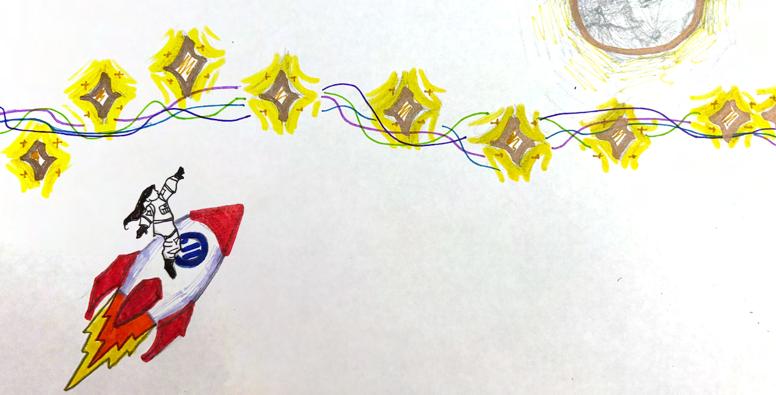
years over again and again, as if rewinding the tape of a game to figure out the enemy’s weakness, as if I could locate the exact moment I could turn to the camera in playback and say, “That was the moment everything went wrong and here’s what I would do differently.”
This too, is a form of perfectionism.
“I think your younger self would have been proud of you,” my mom said, after I told her how I felt. “I just think your metrics are more about the person you wanted to become than the things you had to accomplish.”
As the year closes out, and it becomes vividly clear how silly those arbitrary metrics are in the face of The World (a huge and truly unfathomable entity), I’ve discovered the best way to unlearn perfectionism is to end the playback. It’s over and it’s done.
After all that perfectionism, I know that I will continue aiming high. But this time, instead of being a checklist of achievements, it will be the person I wish my freshman self could have met: someone who is kind to everyone, but kindest to themselves.’
GO WILDCATS! • The reporter stands with their UNH setup at their graduation party on May 9. PHOTO: PEARL TWEEDY
ONE SMALL STEP FOR MAN... • An astronaut reaches above for the stars and the moon, propelled by a rocket. ILLUSTRATION: KAITLYN HO
Staff, seniors tell their tattoo tales
Whether it’s a first tattoo or a fifteenth, Haven is full of tattoos, with and without stories.
Fiona Seale ’28 Opinions Editor
People have been using tattoos to express themselves for hundreds of years. Clearly, this ancient practice is alive and well within the halls of Haven; where a community of teachers and seniors rock their ink.
From depictions of loved ones lost, to a triage of garden vegetables, to student-designed ink, some of Haven’s old guard and graduating class have tattoo journeys to share.
Many people view tattoos as a way to map the stories of their lives. For English teacher Mr. Kevin Haney, tattoos are a way to cope with grief.
“I went through a really horrific tragedy, [and] I was having difficulty coping with my buddy’s murder,” Haney said. “I didn’t want to seek out therapy, but I ended up going into the tattoo shop again, and I got something for my friend. I was still in a tough place but I found that there was something peaceful about being in that shop and getting that work done, there was something therapeutic about it.”
He also has tattoos dedicated to his deceased father and a student he was close with before her death.
“I was really tight with the kid, we had a special relationship, it broke me when she died,” Haney said.
Many of science teacher Ms. Elisabeth Bomstein’s tattoos are inspired by her love of science — she even has the symbol for chemical equilibrium on her wrist. A pair of land and sea cows and fig wasp tattoos are some of her favorites. Next, she’s hoping to add a radish to match the celery and carrot tattoos on her leg.
“Something that makes me happy in science is examples of mutualism in nature,” Bomstein said. “The idea of things evolving together over thousands and thousands of years, that kind of harmony that exists in nature is incredible. It’s just this beautiful gift that we’re surrounded by every day.”
Bomstein also notes how one tattoo can quickly evolve into an entire collection. Her nature inspired assortment now spans 16 tattoos, including a large floral piece covering her back.
“Once you get one and you realize that you like it, you’re like, ‘Well, I have all these other open spots, and now I need to create balance,’” Bomstein said. “I was often a kid who, when I would mess up something on an art design, I would just keep
adding to it. And I think my tattoos can be similar.”
While Bomstein’s tattoos don’t all have specific meanings, their main purpose is to make her happy.
“I spent a large portion of my life being a very unhappy person, and I do all that I can to surround myself with things that make me smile, even if they’re silly,” Bomstein said. “I put my kids’ art up, I put up things from students, I wear things that sometimes make me laugh. I feel the same with my tattoos.”
“
It’s kind
of like a
stamp on a time in my life. Even if I don’t like it anymore, I’ll look back in 20 years and be like, ‘Hey, I was 18 when I got this, and that was such a big milestone of being an adult.’
Eli Graves ’26
For English teacher Mr. Matthew Wood, tattoos serve both an aesthetic and emotional purpose. He cites a grayscale lighthouse as one of his favorites to look at, but a song title as one of the most meaningful.
“I have this script, ‘Love, Reign o’er Me,’ it’s one of my favorite songs,” Wood said. “I was at an angry place in my life when I got this and I was listening to that song, and ‘The Who’ a lot at that point, it was meant to be a message to myself to try and be less angry.”
Wood also notes society’s change in perception towards tattoos, referring back to when he was one of the only teachers at Haven with ink. According to Pew Research Center, 32% of all American adults now have at least one, and 56% of 18-29 year olds have one as well.
Haven seniors are among the community of young people embracing tattoo culture.
Senior Lilah Santore has a sentimental blueberry vine tattoo. Senior Eli Graves created a scorpion design. Each got their tattoo within three months of their 18th birthday.
For some, the idea of getting a tattoo that young might seem like an impulsive choice. But for many tatted teens, they get it as soon as they can because they’ve already thought it through and have been
waiting for a long time.
Santore and her mother have been planning a matching piece since Santore was in middle school.
“I’ve been planning mine since I was probably 12, and it’s a blueberry vine around my wrist,” Santore said. “My middle name is Blue, so my nickname growing up from my mom was Blueberry. I figured, I get it young, she gets it, and we get to wear it while I’m in college. It’s like a little bracelet. I look at my wrist and it’s like, ‘Oh my God, my mom has almost the exact same tattoo on her wrist.’”
Getting inked early can also contribute to the tattoo’s meaning. Graves emphasizes timing and memory as motivating factors towards his decision.
“It’s kind of like a stamp on a time in my life,” Graves said, “Even if I don’t really like it anymore, I’ll look back in 20 years and be like, ‘Hey, I was 18 when I got this, and that was such a big milestone of being an adult.’ I feel like it’s kind of a symbol of that for me.”
It’s accepted by all age ranges that it’s important to think before you act when it comes to tattoos. However, many people prioritize spontaneity and decisiveness as important steps on any tattoo journey.
“Don’t overthink it too much,” Graves said. “I know that it’s going to be on your body forever, and that’s a really big thing, but I feel like overthinking it is when people get in the trap of waiting forever and then never getting it.”
The primary fear that most people have when it comes to tattoos is the fact that they are permanent. While tattoo regret is a concern, many emphasize storytelling, expression, and the journey rather than absolute perfection.
“I have scars and various marks, we all do, you acquire them throughout life, and they just become a part of you,” Bomstein said. “I thought, ‘Even if I end up hating it, it will be a part of me.’”’
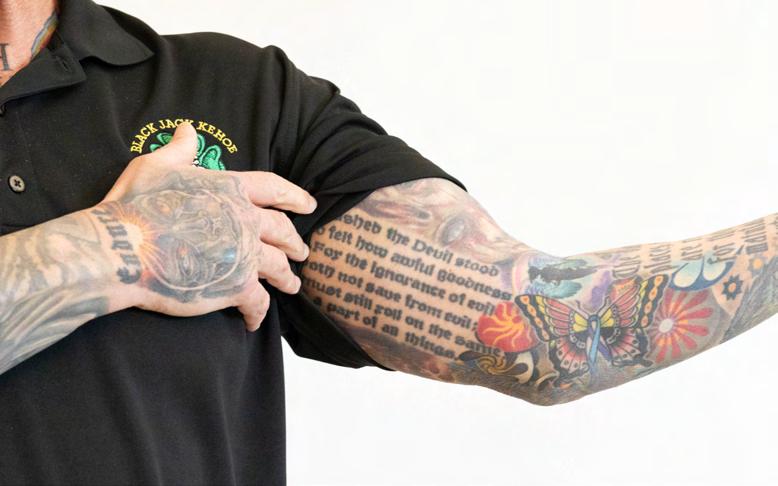
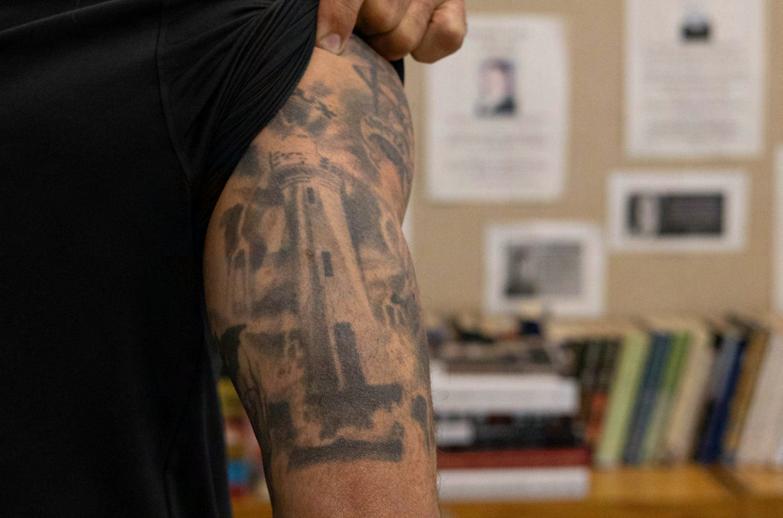
1: English teacher Mr. Kevin Haney showcases one of his tattoos. Each of his tattoos has a connection to his personal stories and experiences.
2: English teacher Mr. Matthew Wood shows his lighthouse tattoo, his favorite to look at.
3: Haney’s showcases detailed hand and knuckle tattoos.
4: Science teacher Ms. Elisabeth Bomstein shows off one of her favorite tattoos among a growing collection of 16 — a detailed fig plant and fig wasps. Bomstein has been inspired by nature and important experiences throughout here tattoo journey, with other noteable pieces including floral back piece and a commemoration of past dog.
PHOTOS: FIONA SEALE
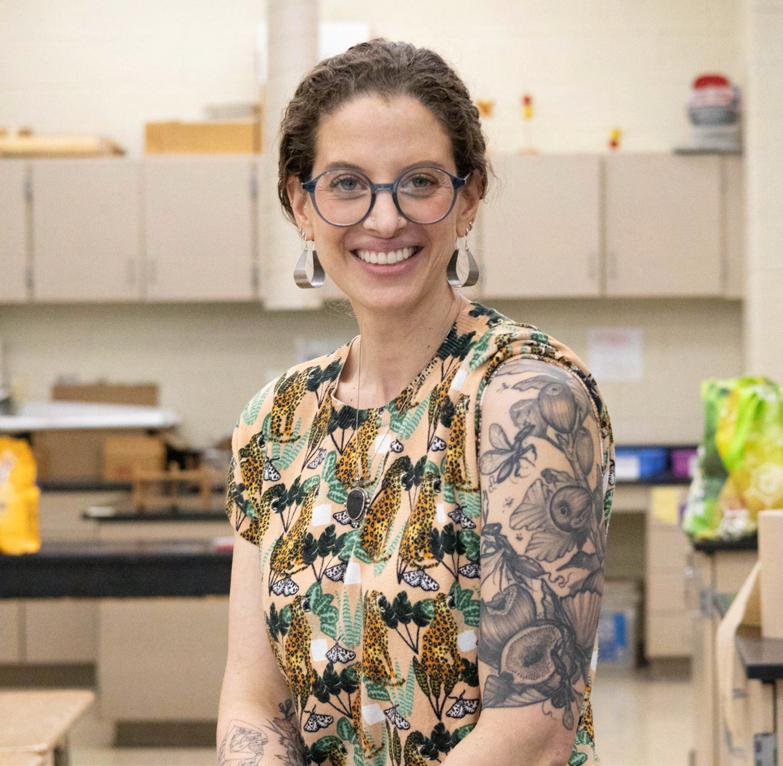

Upcoming Cappies gala provides opportunities for student recognition
Haven was nominated for several awards this year. Theatre enthusiasts will learn who receives them at the gala on May 31.
Josselyn Dixon ’29 Reporter
The lights dim. The curtain rises. Actors and actresses take their places on stage. And, somewhere in the audience, a few high schoolers are taking notes.
These students are the Cappies, a club that travels to other high schools to review their plays and musicals. At the end of each school year, their reviews are combined and used to recognize performers at an end-of-year gala.
Cappies advisor Mr. Matthew Morris compared the gala to the Tony Awards for high school students that participate in the Cappies program around Philadelphia.
“Every play and musical that’s nominated for the best play, or the best musical, or the best song of the year also performs at the gala, so it gives an opportunity for everybody who attends to see a snippet of some of the best performances from
“
It’s an opportunity for us to get to acknowledge our own critics and all the work we did, and in the end we get to see who won and celebrate everyone’s strengths, highlighting the different parts of the productions that we loved.
Madeline Garson ’27
the about 30 schools we have during the course of the school year,” Morris said.
The gala celebrates the Cappies themselves as well as the performers and crew that put on the productions through the year.
“It’s an opportunity for us to get to acknowledge our own critics and all the work we did, keeping up with seeing shows and writing reviews and giving scores, and in the end we get to see who won at the end of the day and to celebrate everyone’s strengths and highlight the different parts of the productions that we loved,” junior and head critic Madeline Garson said. Teacher advisor Ms. Roxie Everly agrees with the sentiment, particularly surrounding the gala’s festivities.
“There’s a red carpet, so there’s photo opportunities,” Everly said. “Everyone dresses up really nicely, and then there’s live performances from some of the schools that are nominated for best play, best musical, or best song. It’s really great to see all this great talent from across the area.”
This year, Haven received eight nominations for the fall play “Clue”, ranging from the costumes department to the actors themselves. The Cappies were able to score more behindthe-scenes aspects of the play.
“Before the Cappies come and see our show, we have to put together a ton of evidence, like how we did people’s hair, where we got our props from, or what the process was like to create the
set. Then we present that to the Cappies, and they analyze those technical elements to see and measure how [the crew] did, too,” Garson said.
The Cappies gala will be a chance for the six Cappies from Haven, as well as members of our theater program, to celebrate the shows they’ve put on and reviewed over the course
of the school year.
“It’s great to get to go see shows, and I’m really proud of our program for getting so many nominations,” Garson said. “They worked really hard.”’
Students show off creativity at Central League Writing Competition
Haven’s writers share their experiences with handling prompts under constraints and pressure.
Roland Rennick-Zuefle ’27 Reporter
Student writers from Strath Haven competed in the Central League Writing Contest on April 24. Two students from each grade were selected by Haven English teachers to participate in a competition between 12 local schools hosted at Conestoga.
Along with chaperones Ms. Lattari and Mr. Zakrzewski, Haven students Ava Wachtman, Aidan Davis, Bianca Blake, Claire Donovan, Pearl RicciUpin, Scarlett Rein, Kazi Bhuiya, and Roland RennickZuefle traveled to Conestoga for a morning of competition, networking, and fun.
“I have participated in writing competitions before. Technically, it was a poetry contest.” sophomore Scarlett Rein said. “I was very surprised when I got chosen for this competition because I don’t do a lot of creative writing outside of poetry, but I was very excited for the opportunity because it’s a
very interesting departure from what I’m used to.”
Students were given one hour to respond to a prompt in which they were instructed to start with the phrase “The message wasn’t meant for me” and include six selected words such as “clock” and “thread.”
The prompt inspired a variety of topics, ranging from murder, to mystery, to Russian conspiracies. The time constraint meant that students had to alter their writing process.
“Normally, I like to come up with the beginning, middle, end, characters, what those characters act like, and a lot of background information to include in the story,” Rein said, “But, due to there only being an hour, I just threw a bunch of words on a page and hoped they made sense at the end of the day.”
After the stories were submitted under provided pseudonyms, the English teachers judged them. The students in each grade competed against one another. Haven won first place in the eleventh grade category for junior Roland Rennick-Zuefle’s story. The prize was a Wawa gift card and an issue of Conestoga’s school literary magazine.
“
Just go with your gut. If you like writing, if you want to be here, I think it’s just a fun thing to do.
Pearl Ricci-Upin ’27
While judging took place, students watched a presentation from writer Steve Hanna. Hanna has worked in a variety of forms of writing including television writing and translation of Japanese literature. He gave a speech, provided advice, and took questions on writing as a broader career outside of the box of writing novels.
“I thought it was really cool,” sophomore Bianca Blake said, “I’m aspiring to be a screenwriter. I asked a question like ‘What is it like actually screenwriting?’ so I really took away all the information that he gave us.”
While stressful, many students also found the competition to be a fun opportunity, and would be open to going to it again.
“I think writing competitions are really cool. I definitely want to go for the gold next year,” Blake said. “So if I get picked to do this event again, then I’m going for first place in 11th grade.”
When faced with the pressure, students concluded that the best advice and strategy is to not overthink and simply write.
“It’s very low stakes and it’s supposed to be fun,” junior Pearl Ricci-Upin said. “Just go with your gut. If you like writing, if you want to be here, I think it’s just a fun thing to do.”’
DISCLAIMER: Reporter participated in the Central League Writing Contest.
HAPPY CAPPIES • Haven students pose for a picture at last years Cappies gala. “Harvey” won one Cappie, which went to then-senior Em Beck for best actor in a male role. PHOTO PROVIDED BY MS. ROXIE EVERLY
WRITERS RETURN • Writers pose for a photo outside the high school after returning from their competition. PHOTO PROVIDED BY MS. REAGAN LATTARI
HEALTH & SCIENCES
Students battle sleep deprivation in classroom, weigh start times
Teens at Haven are not getting the recommended amount of sleep each night, affecting their social and academic lives.
Kaitlyn Ho ’26, Clark Kerkstra ’27
Editor-in-Chief, Managing Editor of Web
At 7:30 a.m. on a Wednesday morning, students pour into the school, set for a day of learning. Yet only 1.1% of those students have gotten enough sleep.
According to an article by Johns Hopkins Medicine, teens should get at least nine hours of sleep per night. A Panther Press survey of 267 students found that 98.9% of students did not meet this benchmark, and 80.1% of students got less than eight hours of sleep.
For students to get a full nine hours of sleep on Haven’s current schedule, which starts school at 7:35, they would need to go to sleep at 9 p.m..
“No one is going to do that,” junior Sarah Zhang said. “At my house, we eat dinner at 8:30. It’s just not enough time. Every day I have to eat, shower, do work, feed my cat. I don’t think it’s possible.”
Some attribute students’ problems to lack of sleep.
“I feel like that’s always the number one answer, if people don’t seem like themselves, is that they’re just really tired,” senior and co-president of Mental Health Club Anna Warley said. “And I think it’s hard, especially as a high school student, to get a good sleep, balancing being so busy with homework, extracurriculars and just trying to get a break too.”
Some students like junior Roxy Shelton solve the problem by napping at home.
“You’re drained, you refuel, you drain again, just to force yourself to be refueled,” Shelton said. “But the thing is, it’s so hard to do that and get nine hours of sleep.”
During fall finals, Zhang went three days without any sleep trying to balance studying with recreational time.
“For me, I have to entertain myself for a certain amount of time, then I will be happy,” Zhang said. “Otherwise, I’d be really depressed if all I do is study — I need to have fun somehow, and I just need that time.”
Sleep deprivation can have academic impacts as well; 41.3% of students surveyed said they had fallen asleep in class
at least once in the last week. Junior Xander Cifelli tries to battle sleeping in class to the best of his ability.
“I don’t do it often, but lately I’ve been pretty tired. I don’t like to fall asleep because you usually miss a lot in class. But sometimes I can’t stay awake,” Cifelli said.
93.3% of students surveyed said they would want the school start times to be changed to a later time. Some students feel that the current schedule is not in alignment with their sleep schedule.
“It’s completely out of whack. I think if it was up to me, I’d be sleeping probably around [12 a.m.] and then waking up at like, 9 or 10 [a.m.],” junior Advaya Singh said.
In the Central League, Lower Merion and Radnor have changed their start times to 8:30 a.m., with Lower Merion making the change in 2024 and Radnor in 2019. The American Academy of Sleep Medicine recommends that schools start no earlier than 8:30 a.m.
“The school start time makes me wake up a lot earlier than I really want to, and my body needs to,” junior Tilly Gebhardt said. “I think that if it was moved back, even just a little bit, maybe to 8:00 or 8:30 [A.M.], that would make a huge improvement in my sleep schedule.”
According to superintendent Dr. Russell Johnston, changing the start times is something he is considering, though he has not had any formal discussions with the board yet.
“This is a topic that I think we have to continue to explore because of the science,” Johnston said.
Three ideas about adjusting school start times proposed in 2022 involved additional bussing costs, ranging from $125,000 to $250,000.
time by one hour. Some have raised concerns about this plan’s impacts on athletics.
I think we have to continue to explore because of the science.
However, Johnston identified other significant challenges.
“It’s not necessarily more expensive to shift start times… I think the challenge is more on how do we make sure that everything fits, particularly [getting] students to extracurricular activities, how this connects with the start time for the sports teams, clubs, and activities that happen after school, allowing students to get to work,” Johnston said.
Back when the discussion around school start times was originally tabled in 2022, the district identified multiple plans for how to change the start times. One plan that was rejected as part of the discussion around the topic was a plan to switch around the elementary and high school start times to better align with students’ circadian rhythms. A different plan that was tabled and set aside for further investigation was to simply push back both the start and end
According to Athletic Director Ms. Lynelle Mosley, most schools start their games too early for the shift, meaning some athletes would have to miss fourth block class time.
“Everyone else is not going to move the game times just because Strath Haven decides to start school a little bit later,” Mosley said.
However, a later start time may also benefit athletes. According to Mosley, more sleep could lead to better performance.
“If you’ve seen some of our games, they can be pretty intense. Having that appropriate recovery time is always important,” she said.
Although changing the start time might help athletes get more sleep, Mosley highlights the importance of healthy routines and not staying up late, no matter what the start time is.
“Are they still going to continue the same habits, where they’re not doing their schoolwork and they’re still waiting until after the game? Then you’re still in the same boat,” Mosley said.
Singh, who is on the soccer team and said he only gets six hours of sleep a night, is in favor of moving the start times later.
He believes that a later start time would help academic and athletic performance despite missed class time.
“If it translates to more sleep, I feel like that trumps any [loss of instructional time],” Singh said.
Another idea presented in 2022 would delay the start time
but end school at the current time by making fifth block mandatory and counting it for the state’s instructional hours requirement.
While the plan would allow students to sleep more, it would also decrease the amount of available class time. Junior Amar Wade, however, believes that better sleep could lead to better academic performance and compensate for the condensed classes.
“We would have a lot of cramming, possibly, but I think with more sleep we could do it,” Wade said.
Indeed, a majority of students surveyed said that a lack of sleep affects their academic performance from a moderate amount to a lot. Gebhardt maintained the importance of sleep for academics.
“I do better on tests. I feel better. I feel happier and my life is just better when I’m getting enough sleep,” Gebhardt said. While start times may be logistically challenging compared to other solutions, Zhang believes changing them would be worth it.
“I just feel like 6 a.m. is so early,” Zhang said. “A lot of times, the sun’s not even up. Why are we?”*
Haven students unsure about AI
According to a recent Gallup poll, Gen Z is less positive about AI now than they were below — a sentiment apparent at Haven.
Evie Fernandez ’27 Managing Editor of Print
Astudent opens up their math homework, sees a problem they are unfamiliar with, and screenshots it, about to feed it into ChatGPT. That student is more likely to feel negative about their AI usage now than they were a year ago, according to a recent Gallup poll.
The poll found that while there were just as many Gen Zers using generative AI (AI that generates new content in response to prompting) as before, there is now more negative sentiment surrounding AI.
This is in part due to the environmental effects of AI development and use. Building AI tools requires large amounts of energy, which can lead to more carbon dioxide emissions. Additionally, the water usage needed to cool the hardware that powers AI is substantial. The Environmental and Energy Study Institute found that large data centers can take up to five million gallons of water per day, and research has found that one ChatGPT prompt takes 5 times the amount of energy as a Google search.
“
As someone who’s active in the classroom and sees the amount that it’s used, it’s hard for me to imagine in a learning environment that encourages AI usage [that] a lot of learning would be done.
Calpurnia Fries ’27
Despite the amount of research on environmental impact on data centers as more than 3,000 went online in the U.S., some students are still not informed about the environmental costs of generative AI use.
“I was talking to a friend, asking for a rhyme for a word, and they said they would ChatGPT it. I was like, ‘Don’t do that, you’re going to drain an ocean!’ The person was like, ‘it doesn’t use water!’” junior Shelby Seidman said.
Another concern expressed by students and in the Gallup poll
is that AI use may undermine education. More students now believe that AI will be harmful to their abilities to come up with new ideas on their own and think carefully about information.
“If younger kids are coming in and they’re using AI to do writing and things like that for them, they’re not going to have the skills they need later in life,” junior Pearl Ricci-Upin said.
Several studies indicate that using generative AI decreases cognitive load, or the amount of work a student needs to do, and negatively impacts critical thinking skills.
Though there is a new AI policy that may mean AI being introduced by teachers in a classroom setting during next school year, some students see AI use in the classroom as bad for learning.
“I understand that it’s a new tool and that people are trying to find ways to adapt to it,” junior Calpurnia Fries said.
“But as someone who’s active in the classroom and sees the amount that it’s used, it’s hard for me to imagine in a learning environment that encourages AI usage [that] a lot of learning would be done.”
Students are also concerned by the idea of AI use in art or creative writing.
“I do a lot of creative writing… It’s very important to me, and I think it’s so stupid using AI to do that for you,” Seidman said. “If you’re not actually writing
“If you have an idea, don’t feed it into the machine that’s going to butcher it. That idea is you. It’s only real if it stays coming from you.
Shelby Seidman ’27
it, what are you getting out of this? If you don’t want to write something, then don’t write something. If you have an idea, don’t feed it into the machine that’s going to butcher it. That idea is you. It’s only real if it stays coming from you.”
Along with the issue of creativity in generative AI, some students have concerns about intellectual property. Because generative AI runs off of a base of real artists’ work, it is a concern that art may be fed into AI without the artists’ consent.
“It’s stealing from actual artists, because AI doesn’t create anything on its own,” Ricci-Upin said. “It just takes from something that already exists. I think this is going to put humans, who are making actual handmade work, out of
Students in Science: Senior embraces science courses
Senior Maya Hartung has spent high school exploring science through advanced coursework.
Lavanya Dixit ’27 Health & Sciences Editor
Coming into high school, senior Maya Hartung knew she was interested in science. But it was through her work in classes at Haven that she uncovered her true passion for biology.
Her interest in science was first piqued in freshman year environmental science.
“Going into ninth grade, a lot of people opted to skip environmental science, but I wasn’t here in middle school, so I just took environmental science and I actually ended up really, really liking it,” Hartung said. “It became a large passion of mine.”
Her initial interest led her to taking both biology and chemistry sophomore year. By doing so, Hartung opened up a new door: Advanced Placement level science courses.
Hartung took AP biology, taught by Ms. Katie Shepard, during her junior year.
“I liked Ms. Shepard’s class a
lot,” Hartung said. “She gives you a lot of opportunities for exploration. We had a lot of options to do projects outside, which I thought were really fun.”
One of these projects, in particular, was something that became extremely intriguing to Hartung. For her final project, she created a ten minute documentary about how intergenerational effects of trauma can cause epigenetic changes.
“It was really interesting, and I liked the freedom of it,” Hartung said. “We were able to interview a doctor at Penn Medicine and another college student. It was cool putting it all together and being able to research.”
During high school, Hartung also participated in Wildlife Leadership Academy, a weeklong retreat that focused on researching white-tailed deer.
“We did a research project at the end where I researched chronic wasting disease, which is a neurodegenerative disease in deer, elk, and moose,” Hartung said. “That pushed me more towards the biology aspect.”
Hartung hopes to continue fostering her love for research this summer at the University of Pennsylvania.
“I’m still finalizing it, but I’m probably going to be working in
“
APs can be very difficult classes, but I feel like at our school, the daily homework load is not as much. I don’t think it’s unsustainable, and I think it can be really helpful.
Maya Hartung ’26
the lab of a doctor there, doing some research about kidney diseases and expanding the disease portfolio by studying zebrafish, which is going to be really cool,” Hartung said.
Hartung will be attending the University of Pennsylvania this fall, majoring in biology at the College of Arts and Sciences. She hopes to spend her time exploring medicine and research to decide which she would prefer to pursue.
“Penn, especially, is really
jobs, because people are really starting to gravitate towards AI for the simplicity and convenience of it, rather than hiring an actual human artist to do things for them.”
One concern that students have with generative AI art is that it lets artists skip foundational work. Instead of learning how to work with media or practicing essential skills, a user can just enter a prompt to create visual art, music, or creative writing. “I think the [idea of saying], ‘I don’t want to put in this effort to make something,’ and you just type it in and get instant gratification could stop other people from becoming really great artists,” Fries said. “That gratification that’s available stops them from taking the effort to make some bad art, and I think making bad art is important. I think AI art is going to lose us a lot of artists.”
As AI becomes more common among students, for some, it is important to stay true to themselves.
“There needs to be authenticity, especially in school work,” Ricci said. “I’ve heard too many people say, ‘I just use AI,’ and I think that’s a cheat code. When I hear that, I think it means you don’t want to put in the effort, and that’s going to bite you in the butt in the future.”*
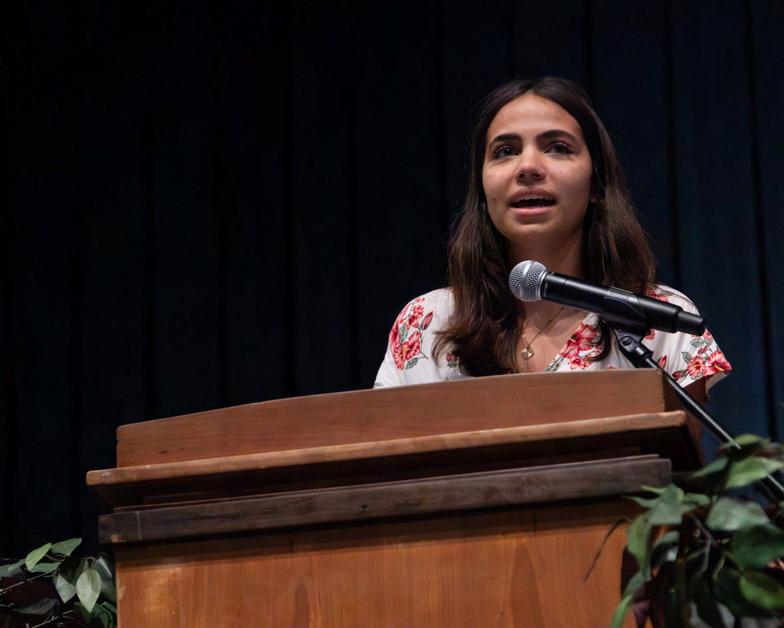
integrated with the hospital system in Philly,” Hartung said.
“There’s Penn Medicine, of course, and CHOP, so there’s a lot of good research opportunities and clinical experiences within those hospitals themselves.”
Hartung finds that advanced science classes at Haven can help students better understand their interests and discover new passions. She offers advice to underclassmen, encouraging
them to not limit themselves.
“I think APs can be very difficult classes, but I feel like at our school, the daily homework load is not as much,” Hartung said.
“I don’t think it’s unsustainable, and I think it can be really helpful.”*
LEADER AND SCIENCE SCHOLAR • Maya Hartung (12) speaks at the National Honor Society induction on Oct. 22. PHOTO: ABBEY MINTON
Seniors speak on athletic commitments
The college athletic recruiting process can vary greatly. A few Haven seniors shared their thoughts after the spring signing day.
Eddie Gebhardt ’26
Media for Publications, Spring 2026
Michael Spielman ’26
Harvard University Wrestling ’30
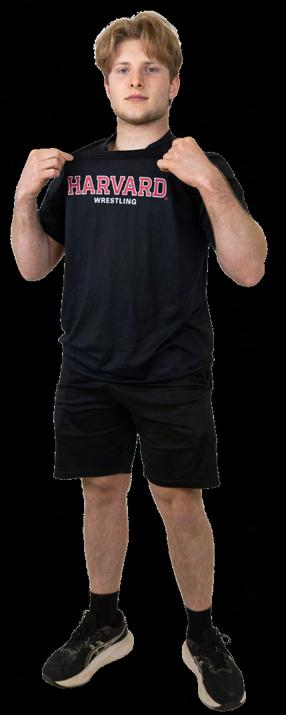
What made your school attractive as a student and as an athlete?
“It was the best school I had the opportunity to go to. In terms of athletics, it’s Division I which is the level that most people who want to play college sports want to play at. [Harvard is] a very tight-knit community and the wrestling team is much better operated than a lot of other schools I was around.”
What was your recruiting like?
“I got in contact with Harvard very late in the recruitment process. Two weeks after school ended junior year I had my first phone call with the coaches and we hit it off really well. I stayed in contact with them all summer and met them out at a national tournament in July. In September, they had me out for an official visit and I committed three weeks after that when I got into the school academically.”
How has wrestling at Haven shaped you as an athlete?
“It’s given me a desire to stand out. Haven [doesn’t have] a very prestigious wrestling program, and being in that environment but loving the sport and wanting to be good made me even more ambitious. You could say I wanted to separate myself from my surroundings.”
Avery Smith ’26 Union College Softball ’30
What made your school attractive as a student and as an athlete?
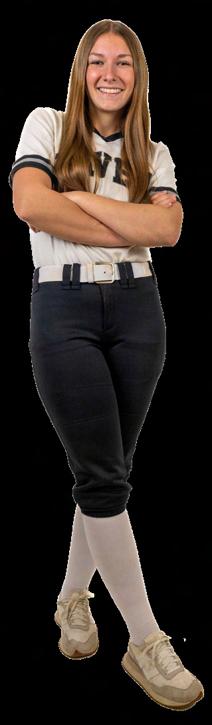
“As an athlete, all the schools I was looking at were equal in softball and coaching, but as a school, I liked Union better. They have really good research opportunities and overall I liked the more modern campus.”
What was your recruiting like?
“It started at the end of eighth grade. My travel team does a really good job with recruiting. They’ll have meetings about it. I sent schedules, trying to get coaches out to see me. That went on for about two or three years and then once I got some coaches’ attention, I kept talking with them and went to their camps. Once I had my offers, I just weighed my options and decided.”
How has playing softball at Strath Haven shaped you as an athlete?
“I think it’s done a lot. [Haven softball] didn’t have the numbers to have to really have competition for a spot on varsity as a freshman, but I think being exposed to seniors as a freshman and playing against them did a lot because I could see where I stood, where I should be and what I needed to work on.”
What parts of college athletics are you looking forward to?
“I’m most excited to be on a team again. I feel like the best part of all sports is being on a team because you have friendships and can get really close with girls. Playing with your friends is a ton of fun. The atmosphere of college sports is also very different from high school.” Interviews abbreviated for space. Read more at shpantherpress.com.
Gordon Morris ’26
Providence College Cheer ’30
What made your school attractive as a student and as an athlete?
“The cheer coach had reached out to me last fall when I was going on tours of colleges and invited me to a couple of their clinics. I went and I loved the environment of the school, and then when I was back there recently for one of their recruitment clinics in the spring, I really meshed with the team. As a student, it’s a smaller college, but it’s also Division I so I can get experiences like I’d get at big football schools in the south. At the same time, I get a smaller, more liberal arts focused education.”
How has cheerleading at Strath Haven shaped you as an athlete?
“If Strath Haven’s taught me one thing with cheer, it’s that you are responsible for your effort. What you put in is what you get out. I’ve been very fortunate to have such an amazing team and program to support me, but I would not have been where I am today without putting in the hours outside of cheer going to tumbling classes, working out, and putting in the effort off the mat to become who I am on the mat.”
What part of college athletics are you most looking forward to?
“There are two things I’m really looking forward to. The first one is college nationals. I loved going to Florida and competing in high school nationals. College nationals are bigger, better and you can do more skills and harder stunts. I’m also really looking forward to cheering at Providence basketball games.”.
Haven students selected for elite skimboarding team
The athletes make up half of the four-person 2026 team attending a mystery trip abroad to compete at a high-level skimboarding competition.
Elizabeth Gebhardt ’29 Reporter
Every year since 2008, Skim USA has chosen four athletes to be on their All-Star Team. This year, sophomore Willow Huellemeier and senior Tristan Barnes were both picked.
Skim USA directors can nominate one skimboarder each for the trip based on style, attitude, and performance. Athletes must apply to be nominated in the first place, and the final four are the best of the best.
“The Skim USA All-Star Team is an elite group, and an athlete must be at the top of their game both in and out of the water to make the cut,” the All-Star Team website states.
Skimboarding is similar to surfing, according to
What is Skimboarding?
Riding a thin, lightweight board over shallow water. A skimboarder runs from the beach carrying the board, throws it down on the shallow water breaking on shore, and rides the board towards the breaking surf.
Via jamieobrien.com

Huellemeier. A skimboard is lighter and smaller than a surfboard, and the athletes start on the sand and then skim smaller waves than surfboarders do.
“You can either go sideways, against the water, on flat water, or go out and then turn on waves and come in,” Huellemeier said. Huellemeier has been skimboarding seriously since she was 12, and has met several new people through the sport,
although competitions are technically individual.
“I’ve made so many friends with everybody,” Huellemeier said.
“You’re doing it by yourself, but you also have the community.”
The team has met online a couple of times, since the other two athletes competing are from Florida. The group connected quickly and will continue to develop their friendships throughout the preparation process for the trip.
“It would be different if everyone was kind of shy and held back and didn’t want to talk, but no one is really like that in the group, so it’s good,” Barnes said.
In order to apply for nomination, athletes have to come up with a plan to fundraise for the trip and write an essay about their personal experience with skimboarding.
“I just wrote about my experience and what it’s taught me. Like any other sport, you learn to be determined and to get back up and try,” Barnes said. While the lack of knowledge surrounding the competition’s time and place makes it more
interesting, it can also be frustrating.
“[Skimboarding] is very disorganized,” Barnes said. “I love the sport a lot, and the team and everything. It’s just that nothing has gotten any better with how they run the sport.”
Even though there are negative sides, it’s a huge honor to be selected for the AllStar Team.
“I’m very surprised,” Barnes said. “So many other people were [applying]. I’m very happy that I got in and I get to experience this with other people.”
Huellemeier feels the same as Barnes.
Being on the team is a unique experience that not many people have.
“It’s just a really fun opportunity,” Huellemeier said. “I’m really excited.”’
June Crossword
Morgan Matthews ’28
Detours Editor
Across
1. As the weather warms up, this choice of footwear has become more prominent
5. Popular campfire treat
6. Small-court paddle sport
9. Pioneer of radioactive technology
10. Recent outbreak of this on the MV Hondius cruise ship
11. Smallest US state
Down
2. Last name of Miranda in The Devil Wears Prada
3. I got a _____ full of sunshine
4. New album: The Great ______
7. Where the majority of AP tests have taken place at Haven
8. Largest marine animal
Answers at shpantherpress.com

Cheese
Corner: I can’t believe it’s Butterkäse!
This is the cheesiest column you’ll see in this issue!
Roland Rennick-Zuefle ’27 Reporter
We will wrap up the school year with Germany’s Butterkäse. Butterkäse literally means “butter cheese” in German. The cheese originates from Germany and Austria although it is also produced in the state most associated with both cheese and German culture, Wisconsin. Butterkäse can be melted or put into sandwiches and pizza, or eaten on its own.
Butterkäse has a smooth, creamy texture, a pale yellow color, and a taste that is remarkably similar to butter, hence its name, despite not actually containing any butter. You can definitely tell it’s cheese and not butter while tasting it, but it feels close.
While the buttery flavor isn’t exactly my personal favorite, I am sure anyone who loves butter on anything will find a variety of uses for this tasty German cheese. Alongside butter, butterkäse is also frequently compared to gouda cheese and muenster cheese.
Compared to some of the cheeses in this column, butterkäse’s history is fairly recent, having been created only a bit less than a hundred years ago in 1928. When a buttery Italian cheese called Bel Paese became widely popular across

Europe in 1908, its trademarked formula became highly desired.
Inspired by Bel Paese, the German cheese company Staatliche Molkerei Weihenstephan made their own spin on the cheese, becoming renowned in Germany as Butterkäse at a time when Germans craved alternatives to the more widespread stinky kinds. It would go on to become a renowned and widely popular cheese in Germany and the rest of the world in the coming years.
Butterkäse is produced through heating milk, adding rennet to it, then allowing the milk to coagulate, after which the curds are formed and separated. The curds are then salted and the aging process is able to begin.
Butterkäse has a relatively short aging process, only lasting about a month.
Butterkäse combines the flavors of butter with the versatility of cheese to create something very unique, very delicious, and very, very German.*
Car Talk:
Seniors share familiar chaos of senior lot
From battling crowded intersections to chilly morning walks, parking experiences define the senior year commute for many students.
Mia Fagone ’26
Reporter
Rain, snow, or shine, every day a herd of students treks towards the high school from Haven’s senior lot.
The “senior lot” refers to the student parking lot off of Brookhaven road where most seniors who drive to school park during the day. This parking lot is described as more preferable than the alternative — parking spots closer to the middle school and next to the orthodontists’ office.
“I love the senior lot, and I’m so grateful I’m not at the ortho,” senior Vincent Dykes said.
On July 28, the class of 2026 received an email regarding parking spots, one that gets sent out each summer to the incoming senior class. The email detailed the parking regulations and included a form for students to fill out information such as license plate, drivers license, and a written reason for wanting a parking spot.
There was not, however, a place for students to express their preference for where they wanted to park.
Senior Amelia Badura notes that the senior lot can be an inconvenient location for
students who live on the east side of Providence road due to the morning traffic.
“Obviously, it’s not always going to be perfect,” Badura said. “But even just a little bit of input from students on where they would like to park would be so helpful.”
It’s not only the 10 minute wait at stoplights that can make the commute to school longer.
“The walk can sometimes be brutal in the morning when you’re tired, especially when it’s cold or raining,” senior Atticus Bean said.
However, the sense of community that the senior lot provides can make the morning trek a more positive experience.
“I think that the whole vibe out there is pretty cool,” Bean said.
“It’s the culture of walking to school with some of your friends and walking out with some of your friends.”
Compared to driving into the lot in the mornings, exiting the parking lot is described by senior Leah Cohen to be “busy and stressful.”
“There’s only really one exit, and everyone’s trying to exit as fast as possible before the buses leave,” Cohen said. “You’ll make enemies trying to leave fast.”
Dykes also notes that fender benders aren’t uncommon at the end of a school day. He proposes an expanded amount of available parking spaces in the senior lot to combat overcrowding.
‘It needs to be bigger, that’s the main thing,” Dykes said. “I’m just grateful to be parked in the
back, so I never get hit.”
The congestion at the exit also differs depending on the time after school.
“For me, it’s actually very nice,” Snyder said. “I usually don’t leave until after theater rehearsal or fifth block, so it’s empty by then.”
For second semester seniors, the chaos is worth navigating for the comfort the senior lot provides.
“It’s just very fun,” Cohen said.*
CHEESY SPREAD • Butterkäse served alongside strawberries, crostini, and pecans. PHOTO: ROLAND RENNICK-ZUEFLE
PARKING PARTICIPATION • A line of cars parked in the senior lot in May. Though the parking spaces are close to the school, the walk to class is a big park of the morning commute for students. “It’s definitely a nice three to five minute walk to the school,” Katie Snyder (12) said.
PHOTO: MIA FAGONE


Evie Fernandez ‘27 Editor
in Chief
1: “I’ve learned a lot about the bird flu, and about the numbers of students coming to school sick.
I’ve also learned about some awesome athletes.”
2: “Honestly, I think hantavirus is going to come back, and probably bird flu. We love the bird flu here at the Panther Press.”
Clark Kerkstra ‘27 Editor-in-Chief
1: “I’ve learned that we’re going into debt–both this newspaper and the school.”
2: “The Panther Press will cover Strath Haven Hi-Q winning another national championship.”
Morgan Matthews ‘28
Managing Editor, Print
1: “You really learn how to manage your time efficiently. You have so many commitments that you have to do outside of the paper, and in order to get everything done, you just have to learn how to balance it out.”
2: “As more information gets revealed about the upcoming renovations, that’ll be a fun story to read for sure.”
Cayla Gaffney ‘29 Assistant

1: “I learned that there’s candy at every meeting, which is something to look forward to. Also, I learned a lot of really great communication skills.”
2: “We’ll probably continue to write about the renovations, because they’ll really impact the school community and be extremely relevant next year.”
1: “I learned how to deal with people who are not responsive and challenges with figuring stuff out on your own — definitely problem solving in a unique way.”
2: “I know we have done stuff on students and stress, but I think doing a big editorial thing would be cool.”
1: “ I learned a lot of things I would never have learned otherwise… for example, how much work and dedication the stage crew, costume design, and tech crew put into the musicals.”
2: “We’ll need to cover something about the renovations or phone policies, because that’s something super-relevant to students, especially because most of these conversations happen in board meetings that a lot of students don’t attend. I was so grateful to get a look inside of how much work they do behind the scenes.” Gigi
Elizabeth Gebhardt ‘29
Sports Editor
1: “Being able to talk to people who you don’t know, or just not being nervous about going after people you don’t know. Whether it’s an interview or taking pictures or whatever you’re doing, it really made me a lot more comfortable and confident.”
2: “I think the renovations are going to be really important if they do end up starting next year.”
Izzy
Boland ‘29
Assistant Editor Health & Sciences
1: “Panther Press helped me work on different writing styles, and while the main format is news writing, I think it really helped with my essays this year.”
2: “Anything with the renovations, that’s a huge thing that’s happening with school.”
Rowan Brown ‘29
1: “I didn’t expect to learn so much about how to use so many of the Adobe platforms, between Panther Press, Yearbook, and Photo 1. Like, almost every day, I’m editing in Lightroom.”
2: “I think it would be super-cool if we covered more clubs than we normally do, because I think there are a lot of students (myself included) who want to get involved, but don’t really know what’s out there, except for what you see at the activities fair, but let’s say you’re not there that day or you’re at a music makeup lesson or you just didn’t get a chance to look around.”
Joya Nath ‘28
1: “All of the work that goes on behind the scenes, in design and stuff. Once you hit submit, I guess I’ve just learned that there’s so much that goes on afterwards that you don’t really see.”
2: “I know there’s been some discussion on parking stuff. I feel like there’ll be more to come with that, and the way that it will impact students, because I feel like administration is like talking about it more.”
Josselyn Dixon ‘29
Opinions Editor
1: “I learned a lot about the content of my articles. For example, I wrote a profile on Andre Fan, and I learned a lot about immunology which is very interesting.”
2: “I think that a lot of people would be interested to learn about the course requirements for financial literacy.”
Siya Goindi ‘29
Assistant Editor Detours
1: “When we think of Haven, we think of all these sports and major clubs. But oftentimes we see that minor clubs go underrepresented. And I think it’s so important to cover these small things that make the Haven community what it is.”
2: “AI is definitely advancing and we’ve seen changes in the policy… I think that by covering how our school is going to handle AI, we can showcase true news that is rapid and changing.”
Lavanya Dixit ‘27
1: “I learned you cannot be reminded of your goals enough… because every single meeting, we heard about our three goals for this year.”
2: “The renovation stories. I can’t name an individual here who has not looked at the outlines in awe and shock because how is our school going to turn into that blueprint?”

Damini Mydur ‘29
Assistant Editor Opinions
1: “Throughout my school career, all of my teachers were a bit lenient, so I could get away with turning things in a bit after deadline, or having my work be a little sloppy. But now I learned that it’s actually serious — like, I need to lock in, and deadlines actually matter. I also learned how important it is to respect everyone’s time and not waste it.”
2: “The upcoming freshman class is the class of 2030, which is a whole new decade, so they are going to be different from us. I think we will have some really cool stories
Lexi Glass ‘29
1: “How to talk to people better, how to be able to make people open up, and how to be able to have productive conversations with people.”
2: “Definitely the renovations when we know more information. If you’ve been reading what’s been happening, the changes are huge, and they’re a lot bigger than I think anybody knows. Our entire school environment that we exist in is going to shift.”

Haven Happenings Editor
1: “Things can take a long time, like for design we’re there for long days, so kind of the importance of hard work.”

1: “I learned speaking skills and how to be able to go up to people and talk to them, especially people I’ve never met or talked to before.”
2: “Maybe something about renovations, and students’ thoughts on the renovations.”



2: “Maybe we’ll have a really good center spread next year that gets a lot of attention.”
Jane Yau ‘29 Social Media Editor
1: “The kind of community, because I came into Panther Press expecting to just write and not make friends out of it, but I’ve honestly made so many relationships with people.”
2: “I hope we cover the first marching band performance and football game. I think that was really interesting this year.”’

Detours Editor
Darcey Strachan ‘28
Arts Editor
Fiona Seale ‘28
Managing Editor, Web
Claire Salera ‘27