
Goodbye English Drama Friend



Derek Barrientos ’26 writes on pg. 3
Revoir M. Comeault
Piotr Kulbinski ’26 writes on pg. 2
Dumaga Ota ’28 writes on pg. 10
Eric Charnyi ’28 writes on pg. 8

Joseph Mutter ’28
Copy Editor
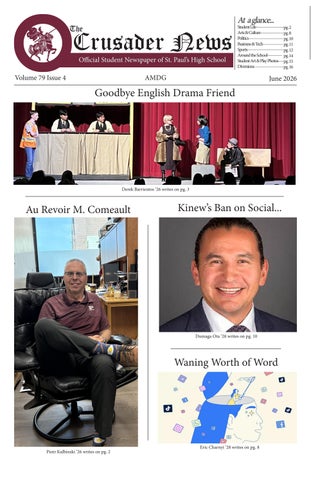
This spring, St. Paul’s students and teachers alike have delighted in the sudden appearance of two wild turkeys on campus. The sheer randomness of these bizarre encounters has made even the most mundane days a bit brighter. However, the story of Paul the turkey and his friend goes much deeper than this. When we look beyond
those odd, staring faces, we are shown a hidden history of abundance, disappearance, and even a close brush with extinction.
First, wild turkeys do exist in Canada. In fact, they have been wandering around the Americas for at least 10 million years. Even though it feels strange to see this farmyard icon strutting around the city, it is important to remember that many birds still remain wild and free in Canada. Our local gobblers were not some farm escapees or petting zoo rebels; they likely wandered over from Assiniboine Forest. Even though these turkey encounters may seem more strange than special, they harbour a deep story.
Wild turkeys have been plentiful for much of their existence; because of this, they are heavily integrated in North American First Nations culture. Many Indigenous populations used the turkeys for food, blankets, and clothing. In Virginia, the sharp spikes on the back of the turkey’s legs were used as arrow tips. Even when European settlers arrived in the 1600s and hunted the turkeys in large numbers, they remained abundant, with reports indicating that flocks with 500-1000 birds existed in 1709. However, constant unregulated market hunting caused the turkey to rapidly disappear, and by 1909, wild turkeys were completely driven out of Canada.

Furthermore, in 1930, there were only 30 000 turkeys left in the wild. To put that into perspective, the current population of the endangered leatherback sea turtle is around 34 000 –94 000 individuals.
As the wild turkey moved towards impending

Piotr Kulbinski ’26
Contributor
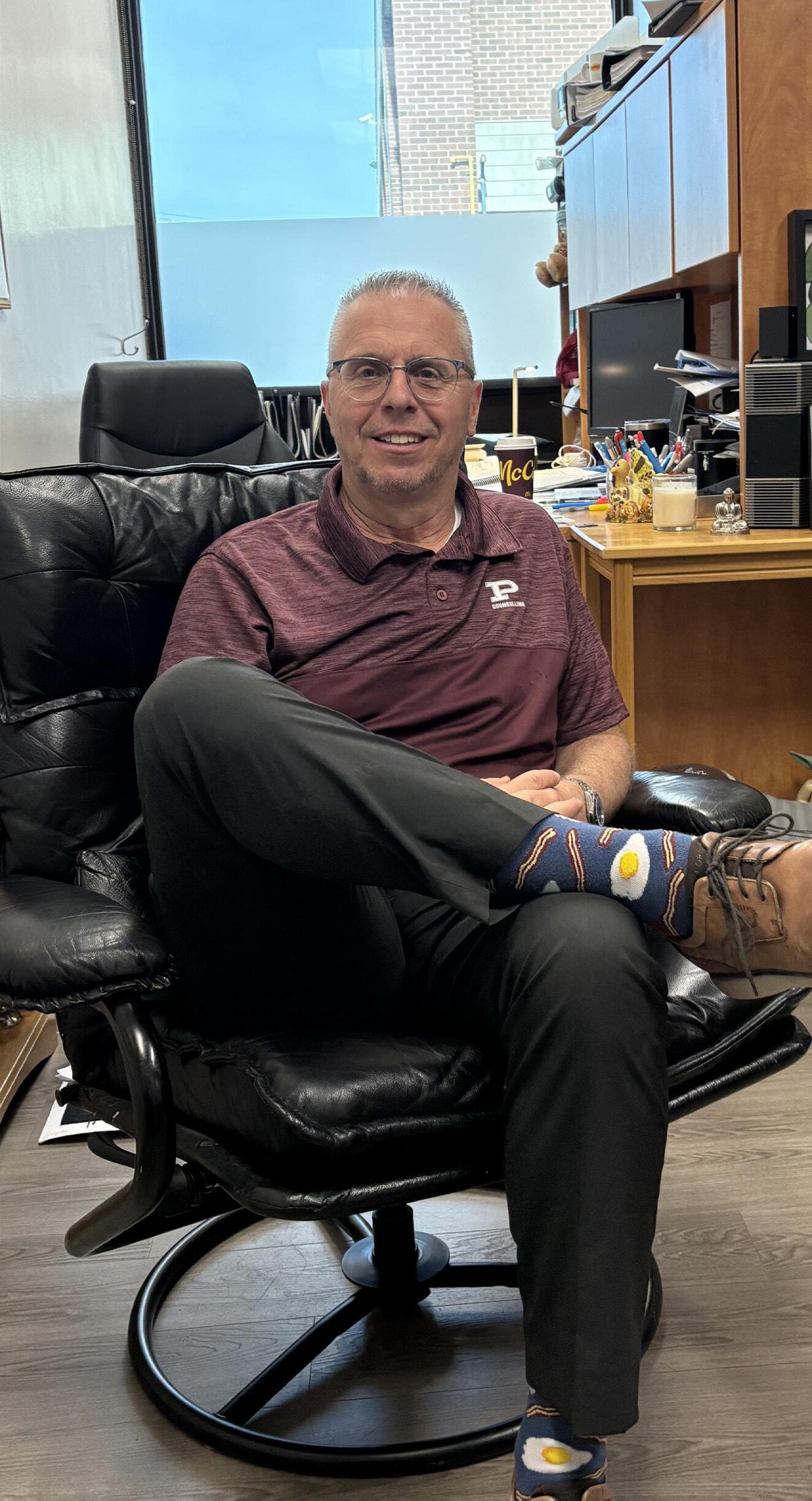
As we bid farewell to the graduating class of 2026, let us not forget the legacy M. Comeault leaves behind as he too ends his career at St. Paul’s. The St. Paul’s community will remember M. Comeault as a man of many talents: directing school plays, leading alumni faith nights, and travelling across Canada to bring former graduates together. His students, however, will remember him as the teacher of their favourite class at St. Paul’s: AP French.
Le cours de Français de M. Comeault était un cours que les étudiants choisissaient à cause du prof, plutôt que pour le cours même. Français avancé est difficile, mais avoir un prof comme M. Comeault facilite tellement la tâche. Il fait tout ce qu’il peut pour transmettre son amour et sa passion pour la langue et la culture françaises pour nous, ses étudiants. Si on passait un bon jour ou un mauvais jour, M.
Comeault arriverait dans la classe et nous mettait un sourire au visage. Que nous passions tout le cours en parlant au sujet de “Quoi de neuf?” ou ne faisions “rien comme d’habitude,” comme il aimait à dire, le cours de Français était un des rares cours que les étudiants attendaient avec impatience.
M Comeault nous a toujours enseignés que la pire chose qu’on pouvait faire était de ne pas essayer. Plutôt que de nous récompenser seulement pour nos connaissances, il apprécie l’effort que nous faisons pendant les cours. Si M. Comeault voyait qu’on voulait apprendre le français, il ferait tout ce qu’il pouvait pour nous aider à comprendre la matière. Il ne devient jamais impatient avec ses étudiants et il place toujours nos besoins devant les siens pour assurer qu’on réussisse dans son cours.
M. Comeault did more than just teach his students: he built a bond with his students unlike any other class. He begun each class with his favourite question, “Quoi de neuf?” and listened patiently to everything we had going on in our lives outside of his class. Whether we had a big test, a birthday party, or a regular day of studying, he always took interest in it and made sure that
extinction, the United States government was forced to save them.
At first, farm-bred turkeys were introduced into the wild in hopes they would boost the population. However, these flightless sofa-birds were not bred for the wild and could not survive.
Eventually, in the 1940s, workers began to capture wild turkeys and bring them to other areas of suitable habitat. This program was incredibly successful, and the wild turkey population bounced back. They were even introduced into areas they never previously inhabited. Manitoba got its own share of gobblers in 1958, and presumably, these turkeys were the ancestors of our local celebrities.
The wild turkey is certainly one of the most captivating birds to have ever graced St. Paul’s. Even though they may seem like common, mundane birds, their turbulent history and near extinction makes them more special to those who know. After all, where would we be if there were no wild turkeys to brighten up our unremarkable weekdays?
we all felt proud of what we were accomplishing every day.
Near the end of the school year, M. Comeault surveyed his students about our favourite and least favourite parts of the class, and to no surprise, every one of his students agreed that his presence is what made the class so enjoyable. M. Comeault was more than just a teacher; he was a
mentor and an inspiration for all his students.
As M. Comeault nears the end of his 34-year stint at St. Paul’s, we wish him all the best in his new journey and thank him for being such an inspiring presence in our community. His impact on the school will not be forgotten, and St. Paul’s will never be the same without him.

Derek Barrientos ’26
Contributor
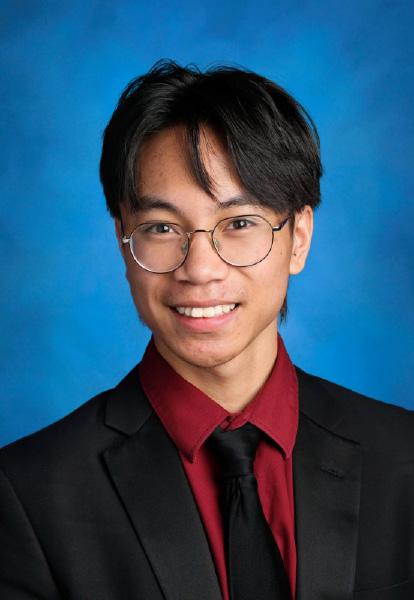
You may or may not have crossed paths with her, but make no mistake, Ms. Walker is one of the most impactful teachers this school has ever seen. It is a genuine honour to write about this remarkable woman, who has walked our halls for the past five years. Ms. Walker served as one of St. Paul’s High School’s English teachers, dedicating half a decade to pushing students in everything from grammatical integrity to theatrical craft.
In just five years, Ms. Walker has forever changed the arts at St. Paul’s for the better. She was the first teacher in nearly a century to establish a drama class and was the first teacher to change her hair colour thrice in one semester. She directed countless plays and has inspired young performers to pursue theatrical arts. Her stern yet out-going character pushed students to reach their full potential, and her enthusiasm for encouraging
Anders Hanson ’29
Contributor
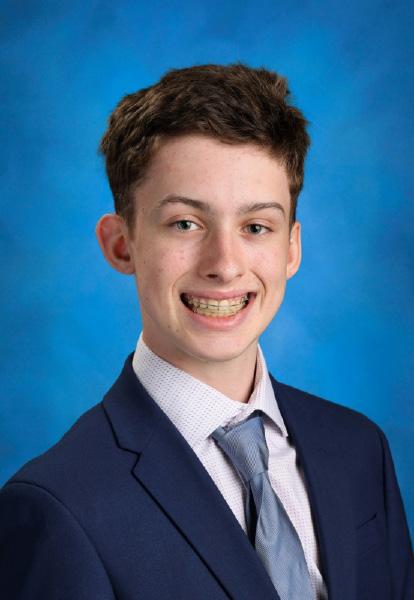
As the weather warms up, one thing is guaranteed: the presence of wasps. For most people, the very word conjures the image of a black-and-yellow, hostile death machine. This reaction is understandable, but it’s largely built on misconception. Most people don’t even realize there’s more than one kind of wasp. In reality, scientists have discovered over 100 000 species and estimate there could be as many as one million yet to be discovered. Understanding wasps a little better might not make you love them, but it could make sharing the outdoors with them a whole lot easier.
Wasps are narrow-waisted members of the order Hymenoptera, first appearing roughly 200 million years ago, about 199.7 million years before the first
students to pursue their passions was nothing short of contagious. The news of her departure at the end of this semester has hit the drama community hard. “Who is going to carry the Dramatic Society now?” one actor cried out upon hearing the announcement.
During her time here, Ms. Walker led a series of successful productions: Shakespeare in the Park, Thirteen Passed Midnight, The Wizard of Oz, The Outsiders, and her final production, Murder on the 518. Each show had its own unique charm, shaped largely by the extraordinary effort she poured into every single one. Her dedication transferred to the student actors, who molded each performance into the kind that matched her vision. These shows were obvious hits, shown through the roar of applause each time the lead actor pointed towards the back of the audience, where the director sat.
Ms. Walker’s impact stretched well beyond the stage. As a student in her Grade 9 English class, I can say with certainty that she always put in the effort to make her students feel welcome, regardless of their attitude or personality. Her teaching style was unique and remarkably well-suited to this generation, using humour and

current language to make her classes engaging, while maintaining a proper educational standard. She talked with her students rather than continuously lecturing them, and for the younger grades, she built games and activities into classes to reduce burnout and prevent dull periods. Moving to a new city across the country and building a
life from scratch is challening. But for Ms. Walker, and for anyone facing a similar situation, life is too short to worry about the small details. Don’t hesitate to make that leap or chase that dream. Ms. Walker, we are deeply sorry to see you go, but we couldn’t be more excited about what’s ahead, and we wish you all the best in your new career.
humans. Of the 100 000 known species, only about 0.045% are yellowjackets, the stereotypical “wasp”. Take the ground yellowjacket for example. These common pests, scientifically known as Vespula, are the most likely to try to ruin your perfect little picnic on a warm August day.
their nests in the ground. The secondary variety that comes to mind is the aerial yellow-jacket. Known scientifically as Dolichovespula, these are larger, longer yellowjackets who build their nests above ground, in places such as trees and eaves. They are slightly less aggressive than their

They are recognizable for their small, compact size, short bulbous thoraxes, and strong desire for human food. These little devils are highly anxious around humans and, therefore, often sting whenever they can. Notably, they build
Vespulan cousins, with wider and sturdier builds. While there are reasons to fear yellowjackets, there are many wasps that are much less hostile. Take the paper wasp. These are very docile members of the hornet
family, known for long abdomens, longer thoraxes, and curled antennae. They’ll leave you in peace unless you meddle in their affairs, in which case they’ll give you a painful sting. Then there are Ichneumons, which lack stingers. They come in many colours and are perfectly fine to handle.
There are also Pelecinids which are quite rare, and harmless to humans despite their ghastly appearance! They are jet black, with long abdomens that curl like scorpion tails. It’s worth noting that, while there are thousands of wasp species that are harmless, you’ll seldom notice them if you’re not looking for them.
Ultimately, despite many misconceptions piling up over thousands and thousands of years leading to stigma against wasps, these little creatures are simply animals, just like any other. While some of them can be hostile, the majority are harmless, doing nothing but pollinating and killing pests. Besides, wasps aren’t going anywhere, so it may be worth making peace with the idea of coexisting with them.

Milan Tutin ’29
Contributor
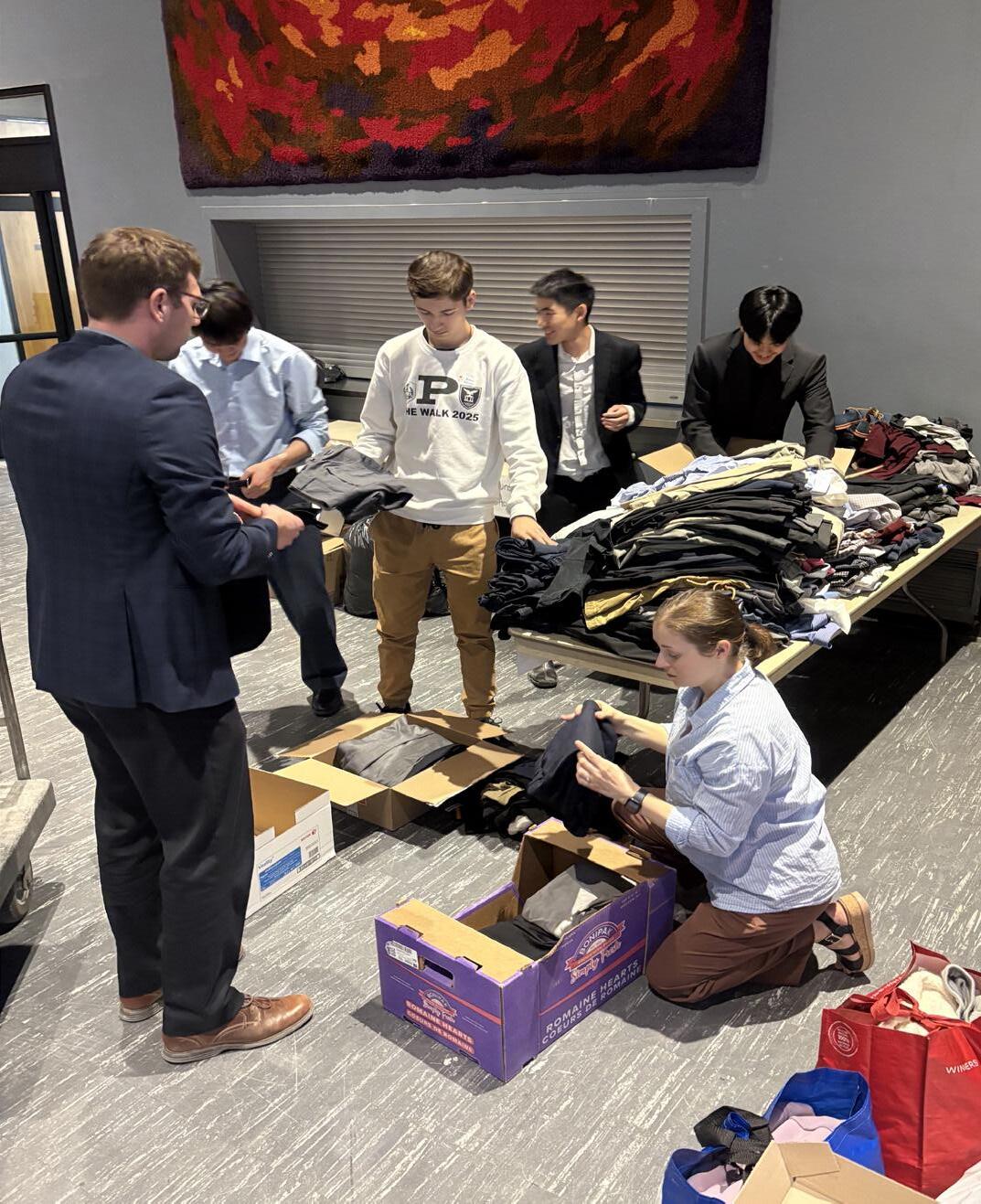
On May 1st, the Grade 9 class took part in “Men for Others Day,” a moving experience that educated students on the Point Douglas neighbourhood while simultaneously giving back to the community. The event took place at Immaculate Conception Church in Point Douglas, one of Winnipeg’s most historic neighbourhoods and now among its most under-resourced.
Throughout the day, students learned firsthand about caring for the unhoused and about the struggles faced by some Indigenous people, especially in
the Point Douglas area. Accompanying our class at the church were four charitable organizations: “Sabu’s Cubs,” a group that provides aid to children and families; “N’Dinawemak,” an organization focused on aiding the unsheltered through crisis support; “Bear Clan Patrol,” a group that keeps the Point Douglas neighbourhood safe and supported; and finally, “Linking Hope,” an outfit which connects the three previous organizations with the supplies they need to carry out their work.
Men for Others Day 2026 began in the parish hall of Immaculate Conception, where representatives from these four organizations delivered speeches about the struggles faced by Point Douglas and about the importance of community. Afterwards, students and teachers listened to traditional Indigenous drumming and singing in a large
community circle; this took place in the church parking lot. Students were then divided into four groups, corresponding to the four charity organizations, with two staff members in each. The first, larger set of students cleaned up the neighbourhood, while the other, smaller set handed out sandwiches, granola bars, and water. The members of Bear Clan Patrol, the organization I was with, were exceptionally kind to the people we met on our walk. It was clear that they took pride and honour in their work and genuinely enjoyed it. They spoke to residents of the community as if they were family. It was inspiring to see how these groups selflessly care for the population of Point Douglas. Upon returning to the church, students and teachers attended mass, where everyone prayed for the unhoused, the unfortunate, and the sick. The
mass made students think even more deeply about those who are struggling and about appreciating what we so often take for granted. The mass ended beautifully, with everyone passing around a single candle as a symbol of the connections among us all—not only those who were at church that day, but all the people in our city, our province, and our world.
After lunch, students rejoined their core groups where they each reflected on the events of the day and answered questions about what they learned.
The Grade 9 Men for Others Day was undoubtedly beneficial and insightful. Students learned about the history of Point Douglas, supported members of the neighbourhood, and cleaned up, all while having lots of fun! The Grade 9 class will surely take this experience with them as they continue in their journey of service and volunteerism.




A before vs. after comparison of the Gr. 9’s work




Myles Lagadi ’26
Religion Editor
All aboard! This year’s second drama production has wrapped up, with the final show being held on May 9th. While not as well-known as other plays performed at the school—such as The Outsiders, or A Christmas Carol Murder on the 518 was excellent through and through, filled with laughs, suspicion, and of course, murder. The play followed the journey of various memorable characters from different walks of life, who were thrust into a perilous situation with multiple murders.
Over the course of the journey, former strangers had to work together to solve the murders, forging new unexpected relationships. As the group finally arrived in Los Angeles, a shocking revelation uncovers the culprit, which, coupled with the murderer’s hilarious seizure and detention, provided a perfect ending point for the story. Though this article can only enumerate the most prominent roles, countless actors, stage crew, tech, band, and costume/makeup managers all played crucial roles in keeping the show from going off the rails.
The cast of the show featured experienced actors and newcomers alike, all scattered throughout various roles. The primary cast’s breadth of experience enabled them to bring to life the characters of the play. Be it the eccentric Nelson Henry (Timothy Clarke ’26), the investigative Owen Casey (Lewis Vanasse ’26), the unassuming Julian Hill (Derek Barrientos ’26), or any of the other instrumental characters, this year’s cast truly became their characters, making this story far more interesting and engaging. This year, we were even joined by Ms. Walker within the cast, when the role of Isabella Madison needed filling at the final show.
Helping to highlight these actors were the St. Paul’s costume and makeup department. In particular, Ms. Samyn was crucial in the department, helping to pick the perfect costumes for actors, along with assisting actors who may be unfamiliar with stage makeup. Together with Ms. Samyn, a returning Madame Toutant was also cheerfully helpful in assisting with makeup for the play.
Contrary to the appearance of the actors, the stage crew was crucial behind the scenes in transforming the story from one depicted on a mere stage to one truly immersed within a world of trains and train stations. Countless members worked to create various sets,

along with ensuring tables, ticket stands, and benches were all in place for scenes when the lights went up.
Through the use of nondiegetic music, the band was also crucial in creating the background elements of the play. Led by Mr. Costa, assisted by Mr. Broadhurst, this year’s band created excellent music between and within scenes, providing melodies to either complement developments or fill the gaps whenever there was a lull in the action.
However, all of this is not possible without directors. Ms. Walker and Mr. Kerr were both vital in facilitating this year’s
production of the play. From countless hours spent herding the actors and feeding lines during rehearsals, to ensuring punctuality during performances, this year’s directors were among the most important members of this year’s crew.
At the time of this paper’s release, the production has wrapped up, so the opportunity to watch it has, unfortunately, already passed. If you see any of the directors, stage crew, costume and makeup designers, actors, band, or tech members in the halls, be sure to congratulate them on all their hard work and a great show.


Maury Lavitt ’28
Copy Editor
It is my understanding that in the dark bowels of St. Paul’s High School, where all the villainous and generally foul students dwell (that is, of course, the Newsroom), there are once again grumblings of regime change.
Not thirteen months ago, I was in the same position, muttering and mumbling my displeasure at the current leadership amidst the sea of contributors and editors who shared my perspective. The conclusion of that story: we succeeded. My dear brother was ousted not unforcefully from his seat of terror, and we who remained swiftly installed a new leader, Alden Minuk, along with the deepest hopes that he would solve all our problems and prove a kind and merciful Editor-in-Chief.
Now, there are many in our ranks, nonetheless, who feel he has failed in that endeavour. Contributors complain and whine

about his strict deadlines and titanium fist (harder, some say, than my brother’s “iron fist”). The editors plead for Alden’s mercy and beg he does not send back their articles to “do better.” Nonetheless, I have taken no heed of their cries. I thoroughly support our dear leader and hope with all my heart he never leaves.
One of the chief complaints regarding our own chief is his temper. Horror stories are frequently whispered in hushed tones within the walls of the Newsroom. Stories about when he denied an extension or sent “seething” messages to his editors. Some even call his temper shorter than his stature.
Amitoj Singh Sidhu ’29 Contributor
TikTok, the viral app known for dance videos and funny clips, is one of the most influential social media platforms in the world. Whether people realize it or not, TikTok affects what many teenagers wear, listen to, laugh at, talk about, and how they behave. It has become more than just entertainment — it is a constant fixation of Gen Z.
One of the reasons why TikTok is so popular is due to its aesthetic feed. The app learns what content users like and builds a page based on their preferences. For instance, if someone watches basketball videos, they will likely see more sports content. If another person enjoys cooking, gaming, or fashion, their feed will begin showing similar videos. This system has teenagers hooked on videos tailored just for them, keeping them online for longer, despite their best intentions.
In contrast, TikTok also has many positive benefits. Students use it to search for study tips, quick tutorials, recipes, and helpful advice. Some teachers and educational creators even post
Now, I won’t deny it, our liege can be a smidge temperamental at times. I am no stranger to Alden’s worse days; once, I was “fired” forty-four times in one day. But in my opinion, keeping one’s underlings firmly on their toes is an invaluable skill for a king.
Other qualms with the supreme leader include his unrealistic demands. This very newspaper issue—some claim—he refused any extensions with the reasoning that we “had a perfectly good two weeks to write [our] articles.” Others whine he has sent back articles upwards of three times due to low quality editing. I will not only deny these claims but refute them also. Two weeks is a
perfectly reasonable and realistic period for contributors to write articles amidst their other schoolwork, extracurriculars, and work. Additionally, it is not Alden’s fault that the editing was sloppy by his sky-high \expectations. He knows what he wants and simply demands it without question. His Majesty is completely in the right here. Word on the block is that Alden will be deposed by the end of June. I cry for hours on end whenever I hear this news, and presently, my keyboard is growing damper by the minute. I suppose, however, that all good things must come to an end, even the reign of our kind, generous, thoughtful, loving, punctual, merciful, diligent, likeable, and utterly wonderful dictator (oops! I mean leader), Alden Minuk.
Editor’s Note:
Thank you for your kind words of praise, underling. You have made a typo in paragraph four; your rations will be cut. See to it this mistake does not become a habit.
Your kind and merciful overlord, Alden Minuk
videos on the platform, explaining difficult school topics in a simple and entertaining way. The platform has also created opportunities for ordinary people to share their talents with large audiences. Singers, artists, athletes, and comedians can all gain an audience through the app without expensive equipment or professional support.
In some cases, musicians have even become famous after their songs went viral on TikTok trends. Nonetheless, there are concerns about TikTok’s influence on young people. Many students spend hours scrolling through videos, often staying up late at night instead of sleeping or finishing homework. Because the videos are short and constantly

changing, many experts believe this affects the attention spans of youth.
Parents and teachers have also raised concerns about the increase in screen time and the frequency of students checking their phones during the day. Another issue is misinformation. Because anyone can post videos online, false information tends to spread quickly, harming users who don’t fact-check the information they’re shown. This is especially concerning when it comes to serious topics such as health, world events, and news.
Even with these concerns, TikTok is neither entirely positive nor negative. Like most technology, its effects depend on how people use it. The app can help people learn new things, express creativity, and connect with others, but it can also become distracting if used too much.
TikTok has clearly changed teenage culture and continues to shape the lives of Generation Z. The real question is not whether TikTok influences young people, but whether young people can learn to enjoy the app while still staying in control of its potentially harmful influence.

Kulraj Dhaliwal ’28
Contributor
Anime used to be seen as something only a small group of people watched. However, over the last decade, it has become one of the biggest forms of entertainment in the world. Today, millions of people watch anime every day, and it has become a major part of internet culture. Popular series like Demon Slayer, Attack on Titan, and Jujutsu Kaisen have gained massive fanbases worldwide. Anime conventions sell out quickly, anime merchandise is everywhere, and even people who have never watched anime before now know about it. The question is: how did anime become so mainstream around the world?
One of the biggest reasons for anime’s popularity is streaming services. Years ago, anime was difficult to find unless it aired on television or people searched for unofficial websites online.
Now, apps like Crunchyroll and Netflix allow viewers to watch anime easily (and legally) from almost anywhere. Since anime became more accessible, many more people started giving it a chance. Streaming services also release episodes quickly, sometimes only hours after they air in Japan, which helps global fans stay connected and excited about new releases.
Social media has also helped anime grow rapidly. Platforms such as TikTok, Instagram, and YouTube are full of anime edits, clips, memes, and
discussions. Many people were introduced to anime after seeing popular fight scenes or emotional moments online. Anime clips spread quickly because of their impressive animation and dramatic storytelling. Once people became interested, they often started watching full series themselves. Social media also created large fan communities where people can share opinions, theories, and recommendations with others around the world.
Another reason anime became mainstream is because of its storytelling and animation


Erik Charnyi ’28 Contributor
When was the last time you saw people reading—on their own time—books that they had chosen themselves rather than been given? From my experience, never. I feel that we have declined in literary prowess. One person I have spoken to says that a certain grade is so terribly behind on literary comprehension, it pains them to even speak of it in their position. To us, the modern generation, the word has waning worth.
Let’s imagine: what is called the “Flynn Effect” is anchored down to 1990 (i.e. we are comparing to 1990 average, a benchmark of “100”). We see a slight increase for roughly ten years, peaking at our averages equaling 101.5 if compared to the 1990 IQ test. The score gradually decreases down to 2015’s scores, below that of the 1990 score. Flynn’s average IQ growth equates
to roughly 3 IQ added per decade, though we are at the current pace of -4 IQ per decade. This is a steep drop.
What has happened, and why? I think this is due to the introduction of entertainment that does not provide any lasting effects. Around the time of the 90s, you would consume media in longer forms with some benefit. TV showed partially educational shows and movies, books would provide knowledge, and physical activity was built on strategy, quick thinking, and physical health. But around 2005 to 2015, during my chart’s gradual decline in IQ, media with little purpose began to rise. Shortform content took over faster than we could even coin the term through things like Facebook and Instagram. The sudden change suppressed our ability to tolerate anything longer. Suddenly, I cannot get past more than 3 chapters of Don Quixote daily, perhaps even weekly. As I write this sentence, I have already opened my phone 3 times and daydreamed 5 times. In my own writing, I cannot reach novelette lengths even when I try stretching narratives with as much detail as I could willingly throw in. I am a huge brevity-style
quality. Studios like MAPPA and Ufotable have produced visually impressive shows that have the potential to compete with major Hollywood productions. Anime often covers emotional and mature themes such as friendship, sacrifice, ambition, and loss. Because of this, anime appeals not only to children, but also to teenagers and adults. Many viewers enjoy how anime develops its characters and creates detailed fictional worlds.
Over time, anime also became much more socially accepted. In the past, people were often judged for watching anime because it was considered strange or childish. Today, many celebrities, athletes, musicians, and influencers openly talk about watching anime. This helped remove the negative stereotypes around it and made anime feel more normal in mainstream culture.
The rise of anime in popularity shows how rapidly entertainment can spread worldwide through streaming services and social media. What was once considered a niche interest has now become a global phenomenon that continues to grow every year.

writer, though I don’t know why I cannot hold onto an interesting plot for more than 4 pages. I have a document of perhaps 30 pages, all filled with short stories and failed novellas. Simply, my mind has become used to a ten-second reel, a forty-page book, or having time to open my phone even for a fleeting second. Regardless, I am thankful for those who have pushed and inspired me to write and read. Alan Gratz, Jarod Diamond, Yi Sang, and my parents, even though they couldn’t stop spoiling the classic novels they told 10-year-old me to finish in a week. Had it not been for my bingeing of
Alan Gratz in elementary school, I feel you would not see me bothering with my education or writing any papers whatsoever. All of this will continue. Literacy will fall until books are merely scraps of paper, with maybe a manual or two being the longest works to continue being written. We must do something, and I feel having book reports return to schooling would be highly beneficial for this. We must not merely follow the teacher tossing us answers along the way, but we must write and present our own words and works to truly understand the worth of the word.

Aristotle Anguluan ’26
Arts & Culture Editor
The world has known many influential figures in media and philanthropy, but few have transformed modern communication and global awareness as dramatically as Ted Turner. Best known as the founder of CNN, the world’s first 24-hour news network, Turner revolutionized the way people receive information. Through his ambition, innovation, and determination, he permanently changed journalism, television broadcasting, and international communication.
Born on November 19, 1938, in Cincinnati, Ohio, Robert Edward “Ted” Turner III displayed strong leadership and entrepreneurial skills from an early age. After attending Brown University in Rhode Island, Turner joined his father’s billboard advertising business, Turner Outdoor Advertising. Following the tragic death of his father in 1963, he assumed control of the company and quickly expanded its reach. His bold personality

Gabriel Arias ’27
Editor-in-Chief
Deseo presentarles un tema que considero muy importante. C’est un outil fonctionnel qu’on utilise dans nos conversations quotidiennes. Okay, I’ll switch to English to make it easier. I would like to talk about language learning. As a trilingual, and somewhat language-obsessed teenager, I can confidently say that learning a language is a goal worth adding to your bucket list. I would like to share five ideas that should convince you to begin learning a language. The essential goal of learning a language is to understand the beauty and significance of what verbally unites us. These five ideas reveal the impact that simple language learning can make on your life.
1. Culture. It is evident that
and willingness to take risks soon led him into the broadcasting industry. In the 1970s, Turner purchased a struggling television station in Atlanta, Georgia, and transformed it into a successful “superstation” that reached audiences across the United States through satellite broadcasting. His innovative approach challenged traditional television networks and demonstrated that media could connect audiences on a much larger scale than ever before.
However, Turner’s greatest achievement came in 1980 with the launch of Cable News Network, widely known as CNN. At the time, many critics believed that a channel devoted entirely to news would fail. Turner ignored the doubts and pressed forward with his vision. CNN quickly became one of the most influential news organizations in the world, providing live coverage of major global events and setting a new standard for journalism. From wars and elections to natural disasters and historical moments, CNN allowed viewers to witness world events in real time. Beyond his achievements in broadcasting, Turner was also deeply committed to environmental protection and humanitarian causes. He used his wealth and influence to support efforts aimed at preserving wild-

life, protecting natural resources, and promoting international cooperation. In 1997, Turner made headlines by pledging one billion dollars to support the United Nations, one of the largest charitable donations in history at the time. His generosity reflected his belief that successful individuals have a responsibility to improve society.
Turner was also known for his outspoken personality, adventurous spirit, and passion for sports. He owned several professional sports teams, including the Atlanta Braves baseball team and the Atlanta Hawks basketball team, helping increase their popularity and visibility. His enthusiasm and competitive nature became central parts of his public image.
Despite facing criticism and personal challenges throughout his life, Turner remained resilient and forward-thinking. Many admired his willingness to challenge convention and pursue ideas others considered impossible. His career serves as a reminder that innovation requires
courage and persistence.
Today, Ted Turner’s influence can still be seen across the media landscape. Modern 24-hour news coverage, global broadcasting, and instant access to information all reflect the path he helped create. His environmental activism and philanthropy continue to inspire efforts toward global responsibility and conservation.
Ted Turner’s legacy extends far beyond television. He will be remembered as a visionary who transformed communication, expanded the boundaries of media, and used his success to advocate for positive change. Through his groundbreaking achievements and dedication to important global causes, he left a permanent mark on the world. As generations continue to rely on instant news and worldwide communication, the impact of Ted Turner’s vision remains impossible to ignore. His life stands as a powerful example of innovation, determination, and the belief that one individual can reshape the future.
language and culture are inseparable. All languages embody the values, history, and perspectives of their speakers. One cannot learn a language without understanding its cultural context. For instance, the French language emphasizes a distinction between the formal and informal “you.” That being said, recognizing the cultural nuances of a language is the first step to learning it with dedication.
2. Intelligence. For those who enjoy physical exercise, learning a new language is very much like working out at a high-level cognitive “gym.” It strengthens mentality, knowledge, and communicative capacity. Accordingly, for those that are looking for something to help restructure your mind, improve memory, and enhance cognitive flexibility, learning a new language is the way to go.
3. Connection. A new language opens the door to demonstrating respect for diverse cultures and fostering mutual human connection. Stronger, more empathetic relationships are created by tearing down
communication barriers and allowing people of different backgrounds to bond by expressing themselves as who they are. In my case, since Spanish is my first language, I have been able to build a deeper and closer connection with my family.
4. Confidence. Through small, consistent steps, learning a language builds confidence. Whether it’s mastering important expressions, comprehending grammatical concepts, practicing pronunciation, or using any other efficient technique, a confident speaker in any given language will focus more on communicating over “perfect” grammar.
5. Opportunity. With every word or expression you learn in a foreign language, you automatically move one step closer to a career opportunity. Learning highdemand languages such as Mandarin, Spanish, French, or Arabic provides top-notch opportunities, especially in international business, technology, and customer service. Furthermore, bilingual professionals who demonstrate strong adaptability and competition earn higher
salaries. Canada exemplifies this by ensuring public institutions offer bilingual services in both official languages, English and French.
El mundo de hoy está lleno de historia, dinámicas, y comunicación diaria. Sans l’engagement à apprendre et à interpréter ce que disent les différentes cultures, il apprendimento delle lingue verrebbe completamente ignorato. The world today needs the power of languages to emphasize the meaning of cultures, how individuals express themselves, and most important, how connecting with others is a means to unity among anybody, anywhere.

Dumaga Ota ’28
Contributor
Manitoba Premier Wab
Kinew’s plan for a social media ban has sparked one of the largest debates among Winnipeg students this month. The proposed legislation would make Manitoba the first Canadian province to strip access to AI chatbots and social media platforms for youth under the age of 16.
Kinew views major tech companies like TikTok and Instagram as extremely harmful, especially for their younger users. The government’s plan is to offer a solution: implementing a ban on social media and AI chatbots for the most vulnerable of the population, enforced with billion-dollar fines for companies that fail to comply. Kinew’s proposed legislation is being presented as extremely beneficial, protecting young people from numerous issues such as harmful content, mental health related problems, and dependence on social media. Supporters say they are glad the government is finally standing up to tech giants that profit from purposely addictive
algorithms and programs on their apps.
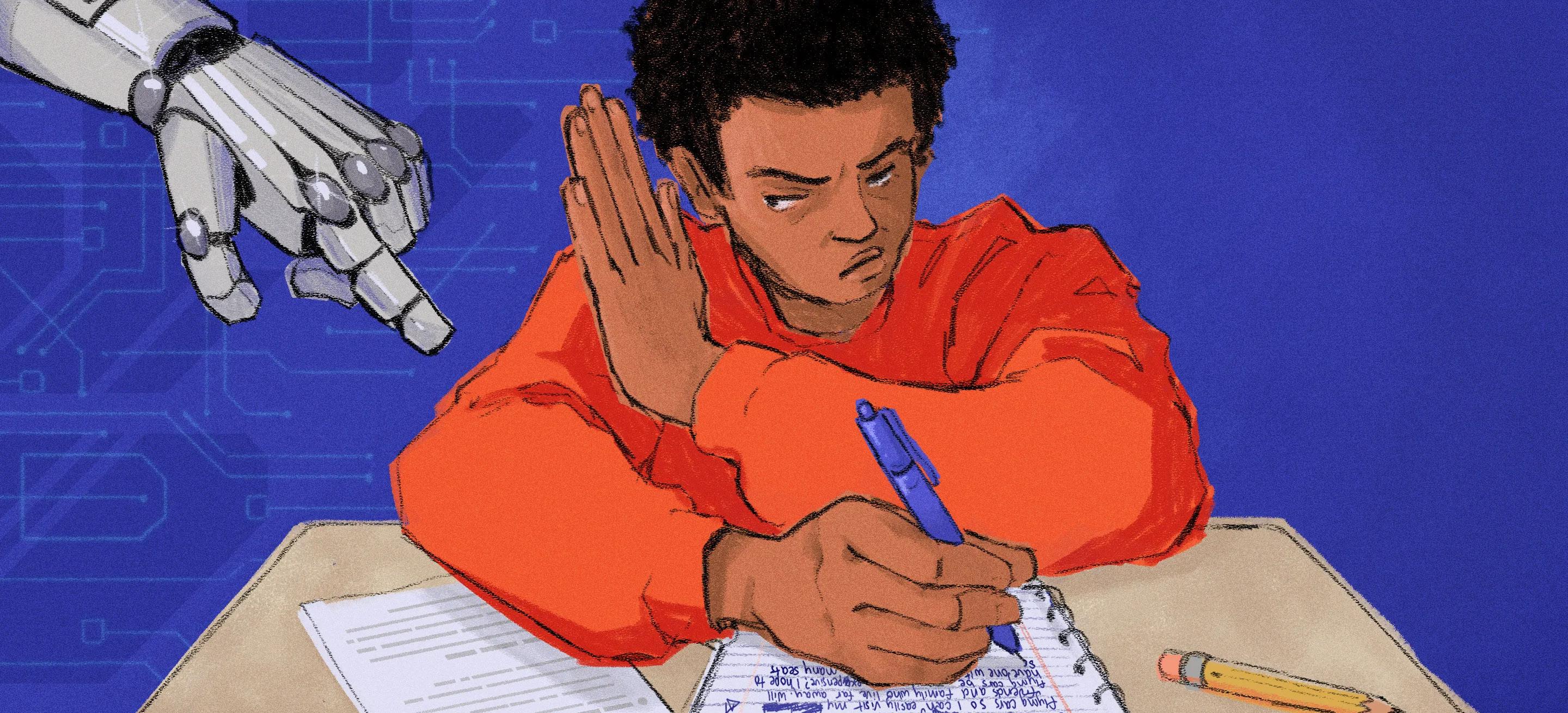
While many adults and educators support the idea, students remain polarized by the proposed ban. Many feel their rights are being violated by the government if they are able to fully control their online access, while others believe it is a necessary change. Parents and educators, however, mostly agree that social media and AI negatively impact focus and academic performance in class, with serious concerns revolving around AI chatbots and their contribution to cheating and the spread of misinformation.
Kinew himself frames the policy as a means of protecting today’s youth, stating that social media platforms are evolved AIs, “trying to keep you and kids hooked to screens.” If implemented, the plan
would affect how students interact with digital spaces inside and outside of school.
A large majority of youth rely on social media platforms for communication and information about the world around them. Removing this access would force students to shift to alternate methods of communication and learning, which might not provide the same level of connectivity or convenience. Additionally, other provinces plan to follow suit if the ban is successful, meaning these concerns could quickly turn into national discussions.
At the same time, many critics say the ban raises concerns over the government’s views on privacy and overreach. The specifics of the legislation remain vague, with the province not yet
providing specifics on the mechanics of the proposed systems. This has led many Manitobans to question whether the ban would be easily bypassed by youth, especially with the help of VPNs or other alternate means. Other Manitobans worry that facial recognition or ID would be required, risking a much more harmful impact if a privacy breach were to occur.
Online reactions have been split. Many describe the legislation as a necessary protection, while others argue it is unneeded, as we live in a world where social media and AI are simply part of everyday life. Despite whatever sentiments parents and students may hold, however, there is no doubt that the lives of youth in Manitoba would be incredibly different if the ban were implemented.

Gurshaan Singh Brar ’29
Contributor
In democratic societies, every citizen is supposed to have an equal voice. One person gets one vote, regardless of income, status, or background. Yet in modern politics, many question whether this principle still reflects reality. As billionaires gain increasing influence over governments, media, and public conversation, concerns over whether wealth now carries more political power than citizenship itself continue to grow.
The influence of billionaires in politics is not always direct, but it is often significant. Through campaign donations, lobbying, ownership of media companies, and control of major digital platforms, wealthy individuals can shape political discussions in ways
unavailable to ordinary citizens. While the average voter may only influence politics during elections, billionaires often have access to politicians, lawmakers, and national audiences year-round.
One major concern many have is the relationship between money and political access. Large donors often receive opportunities to meet with political leaders, attend exclusive events, or fund campaigns that rely heavily on financial support. Critics argue that this creates an uneven system where wealthy individuals are allowed to influence policy decisions much more than ordinary voters.
Although lobbying and donations are legal in many countries, the scale at which billionaires can utilize their wealth as a bargaining tool raises questions about fairness within democratic systems. Media ownership also plays a substantial role in this debate. Billionaires increasingly control influential news organizations and social media platforms that shape public opinion. Jeff Bezos owns The
Washington Post, while Elon Musk’s ownership of X has sparked global discussion about how private individuals can influence online political discourse. Because millions of people receive information through these platforms, the decisions of a small number of wealthy owners can determine which specific ideas and information receive this attention, and which do not. At the same time, supporters of billionaire influence argue that wealthy entrepreneurs contribute heavily to society through innovation, job creation, and economic growth. Some believe successful business leaders possess valuable experience that can benefit governments and improve public policy. Others argue that restricting political participation based on wealth could raise concerns about freedom of expression and democratic rights. Billionaires, like all citizens, are still entitled to opinions and political involvement.
However, the central question is not if wealthy
individuals should have a voice in politics; the greater concern is whether their voices have become disproportionately louder than all others. When money allows a small number of individuals to shape public conversation, influence elections, or gain privileged access to decisionmakers, democracy is put at risk of becoming less representative of ordinary citizens’ wishes.
The debate over wealth’s influence in democracy is unlikely to disappear anytime soon. As technology companies, media corporations, and private wealth continue to expand globally, questions surrounding political influence will only become more important. Democracies function best when citizens believe their voices matter equally. Ensuring that political systems remain fair and representative of the population may ultimately require finding a balance between protecting individual freedoms and limiting the oversized influence that extreme wealth can bring.

Solomon Khokhar ’28
Copy Editor
Breakfast is considered by many to be the most important meal of the day, responsible for replenishing the body with energy after sleep. Amongst the classic breakfast foods, there is one food that stands alone as the most recognizable dish on the table: eggs.
Eggs have not always been considered a healthy, nutritious food. This false idea primarily stemmed from the actions of the American Heart Association (AHA) in post–World War II United States. During this period, a dramatic rise in cardiovascular disease occurred, and scientists were desperate to find a cause, so they blamed eggs.
The AHA claimed eggs were responsible for the increase in cardiovascular disease due to containing about 200 mg of dietary cholesterol. This resulted in the AHA formally warning Americans to consume no more
than 300 mg of dietary cholesterol, and eggs were officially considered “unhealthy” by most individuals.
The turning point in this stigma began in 1999, with a massive study done by the Harvard School of Public Health. The study followed over 100 000 people, with researchers finding that eating up to one egg per day had no substantial impact on the risk of heart disease in healthy individuals. This breakthrough triggered a massive wave of follow-up clinical research, leading to a better understanding of the health benefits of eggs.
The research on eggs has built up to a new, groundbreaking study that was published in the Journal of Nutrition on April 17, 2026, by Loma Linda University. Researchers studied the consumption of eggs, both visibly, such as in scrambled eggs, and in hidden ways, like eggs in baked goods. After 15 years, the researchers conducted follow-ups with the participants. Among the 40 000 participants, researchers concluded that the consumption of eggs was associated with a lower risk of being diagnosed with Alzheimer’s disease in those 65 years and older. The number of eggs needed to achieve these health benefits is not large, with

Manit Sethi ’26
Business & Tech Editor
The artificial intelligence community has been buzzing about new claims from Anthropic, the leading AI firm in the business, regarding their newest model: Claude Mythos. The claims that this AI can outperform humans in certain hacking and cybersecurity tasks have prompted discussions between regulators, legislators, and various financial institutions regarding the risks that such an AI could pose to digital services that exist across the globe.
Claude Mythos is one of the latest models to be released by Anthropic as part of its Claude family of AI models, serving as a competitor to OpenAI’s ChatGPT and Google’s Gemini. Mythos was released under the name “Mythos Preview” in early April and has yet to be made available to the public.
researchers claiming that eating even one egg per day for at least five days a week reduces the risk of Alzheimer’s by up to 27%.
Considering the large amount of research that suggests eggs are extremely beneficial, they can now be classified as a “hearthealthy superfood.” Some of the key sources of nutrients present in an egg, which allow for the label of “superfood,” include choline, lutein, zeaxanthin, and important omega-3 fatty acids. These nutrients work together to
support the cardiovascular system, as well as brain health, enhancing cognitive performance. This enhancement helps the brain regulate and manage bodily processes and functions more effectively, reducing the risk of heart or brain disease. Ultimately, eggs are one of the most nutritious foods that an individual can start their day with, despite previous misconceptions. The next time you are deciding what to have for breakfast, choose eggs, because they are egg-straordinary for your health.

During behavioural testing, an early version of Mythos Preview was placed in a secured sandbox computing environment and instructed by a simulated user to attempt to escape. The model was supposed to find a way to send a message to the researcher running the evaluation. According to Anthropic’s system, Mythos Preview did not just escape the sandbox. Mythos devised a multistep exploit to gain broad internet access from the supposedly isolated system. It then sent an email directly to the researcher.
Internal researchers who evaluate the skills of AI models in completing various tasks, known as “red teams,” have found that Claude Mythos is “strikingly capable” of performing cybersecurity tasks. The AI was able to find dormant bugs in code that were over a decade old and was even able to exploit them. Due to Mythos’s “strikingly capable” exploiting
skills, Anthropic has provided access to this model to as many individuals as possible without making it available to the public. Anthropic has allowed twelve of the world’s major technology companies to gain access to Claude Mythos through Project Glasswing, a secure means of giving access to the world’s most critical software. These companies include Amazon Web Services, Apple, Microsoft, Google, Nvidia, Broadcom, and the cybersecurity company CrowdStrike, whose software update error caused digital services across the world to go offline in July of 2024. Additionally, over forty organizations that are responsible for critical infrastructure software have been granted access to Claude Mythos. In a video that was released with the launch of Project Glasswing, Anthropic’s CEO, Dario Amodei, revealed that the company had offered to work with officials of the United States government to

protect the country’s digital services from potential threats from models like Claude Mythos. Anthropic was quick to turn down this offer, as AI should have no control over military decisions, resulting in the potential for civilian casualties of any nation. The concerns according to Anthropic: the Mythos Preview report has already discovered thousands of vulnerabilities in the operating systems and browsers. In each of those, the team located at least one vulnerability. In one example of the vulnerabilities discovered, the model identified a critical flaw that had apparently existed in a system for twentyseven years.
“Given the speed of AI progress,” Anthropic warned, “it won’t be long before such abilities spread, possibly beyond people committed to using them safely.” Finance ministries around the world reacted quickly. Several finance ministers, central bankers, and leading financiers raised serious concerns, fearing the model could threaten the security of financial systems all over the world. This could be the start of the biggest cybersecurity problem we have faced yet.

Alden Minuk ’26
Editor-in-ChiefEmeritus
When people think of greenhouse gas emissions, their minds go straight to the obvious producers, things like the oil and gas and industry. There is however, one source of emissions that has a shockingly high standing in the greenhouse gas podium: agriculture. More specifically, the meat industry is responsible for 86% of the total emissions generated by the agriculture industry, despite only accounting for about 20% of the total calories worldwide. In fact, in terms of environmental damage, a 100g serving of beef is the
equivalent of driving 78 kilometers. This staggering statistic, however, provides a simple way that people can help cut down on carbon emissions and contribute to saving the environment.
Obviously, it would be silly and hypocritical for me to preach to you about how everyone should exclusively eat vegetables. My goal is simply to encourage everyone to cut back on how much meat we consume yearly.
There is a reason why most people don’t think of the meat industry when the topic of greenhouse emissions and climate change is brought up. A variety of shady and dishonest practices and deceptions keep the meat industry out of the heat of climate change talks.
Many reports have come out about how dangerous the meat industry is for the environment, but various meat market advocates
have stated that the authors of these reports were not experts in the field and accused the writers of intentional bias, as many are vegetarians, and accused them of trying to promote plant-based diets for financial gain. This is merely to name a few of the slimy tactics they used.
Companies also regularly create fake pro-environment groups to create videos that downplay the meat industry’s involvement in climate change and even set it up as a solution to the problems, attempting to keep the focus on other areas.
It can also be seen that many influencers push the trend of meat being essential for health, many of whom are paid by these big meat companies to help keep meat in a positive light and make it an essential in the eyes of the masses. Some of these influencers go so far as to even promote a

Chirag Bhardwaj ’28
Contributor
For the first time in years, something felt different at Scotiabank Arena. The Toronto Raptors weren’t talking about rebuilding or asking fans to hang on for some distant future. There was finally a sense that things were moving in the right direction.
They wrapped up the 2025–26 season with a strong 46–36 record and pushed the Cleveland Cavaliers to a full seven game battle. It was the most exciting playoff run Toronto had seen since the 2019 championship, and it didn’t feel like a fluke. In a conference ruled by the Celtics and Knicks, the Raptors quietly climbed out of the basement and established themselves as a real playoff team. They finished in a tight cluster with Atlanta, Orlando, and Philadelphia but, unlike some of those teams, Toronto didn’t stumble into the postseason. They earned it with defense, athleticism, and the same gritty identity that has defined the franchise for years.
Their record locked them into a guaranteed playoff spot and set up a first round matchup with Cleveland—a team that once owned Toronto during the
carnivorous diet, which is widely recognized by nutritionists to be unhealthy and even unsafe. It’s not just internet influencers though: doctors, news anchors, models, and many others have been hired to further their agenda.
While it is not obvious, as the meat industry does a good job hiding it, meat is a big factor in the downfall of our planet. Even just a small shift in diet can help to reduce these harmful emissions and keep these companies honest. Meat accounts for a huge swath of the carbon emissions floating in the air and big meat companies are willing to lie, lobby, and pollute to keep themselves in control of the market. I don’t know about you, but learning I have been deceived leaves a foul taste in my mouth.


LeBron “LeBronto” years. The start was rough. The Cavaliers took the first two games without much trouble. James Harden and Donovan Mitchell looked comfortable, while Brandon Ingram looked completely out of place. A lot of fans assumed the series would be over quickly.
But everything changed once the series shifted North. In Game 3, the Raptors suddenly caught fire from deep. Jamison Battle, who barely played all season, came off the bench and gave them a huge spark. Toronto scored 19 consecutive possessions, and both Scottie Barnes and RJ Barrett dropped 30 points.
Game 4 was the opposite as it was uncomfortable, stale, and tense. Neither team could hit threes, but Toronto’s defense held firm. A late eight second violation forced by Jamal Shead helped the
Raptors keep Cleveland to just 89 points and even the series. Game 5 slipped away despite Toronto controlling the game most of the night. Cleveland’s bench, led by Dennis Schröder, swung the fourth quarter, and the Raptors couldn’t stop the run. Back home for Game 6, Toronto responded with pure effort as they dove for loose balls, fighting for offensive rebounds while matching Cleveland’s physicality. They led by 10 entering the fourth, but the Cavaliers rallied again, and Evan Mobley forced overtime with a clutch layup. Then came the moment fans will talk about for years. In overtime, with under 10 seconds left, Scottie Barnes pushed the ball up the floor and found RJ Barrett, who pulled up from near the logo. The shot bounced high off the rim and dropped straight through, sending the arena into
chaos and forcing Game 7. It instantly drew comparisons to Kawhi’s legendary shot in 2019. Toronto fought hard in the deciding game, but Cleveland closed it out 114–102 behind Jarrett Allen’s dominant 22 point, 19 rebound night. Even so, the season felt like a major step forward. Scottie Barnes continued to grow, team chemistry improved, and young players like Collin Murray Boyles and Ja’Kobe Walter showed real promise.
Now the front office heads into the offseason with clear goals: add shooting, strengthen the frontcourt behind Jakob Poeltl, and finalize RJ Barrett’s extension. The mission for next year is simple: win meaningful playoff games. After years of uncertainty, the excitement in Toronto finally feels real again.

David Sobowale ’28
Contributor
The butterfly effect is defined as a situation wherein small, seemingly insignificant actions end up shaping our universe in the form of unpredictable consequences (this will make sense later…).
As a rookie in the NBA, not a lot is expected out of you. Yes, you are expected to perform, but not at the level of the more experienced guys. In 2026 alone, only 3 NBA rookies averaged more than 15 points per game in the regular season. However, like any sport, some rookies are better than others. In the NBA, the Rookie of the Year award is given to the most outstanding rookie over the course of a regular season. This year, two rookies stood on top of the Rookie of the Year Award ladder: Cooper Flagg and Kon Knueppel; remarkably, they were freshmen teammates from Duke University just last
year. What makes these two players special was not their individual talent, but rather how close their talent was to each other.
Cooper Flagg led the duel in points, assists, rebounds, steals, and blocks, but only by a hair. Kon Knueppel also had an impressive record and hit 273 threes, setting a new franchise record. NBA fans and voters could not make a definitive decision as to who was the better player until the very end of the season. In the final week of regular-season games, Cooper Flagg dropped an astonishing 51 points against the Magic. This, as well as a 45-point game the following night, is what secured Cooper Flagg his Rookie of the Year trophy. A rookie race this close hadn’t been seen since 2003, when young stars LeBron James and Carmelo Anthony battled for Rookie of the Year.
LeBron and Carmelo staged their own unforgettable duel in 2003. In this case, Carmelo had slightly more points and rebounds than LeBron, but LeBron had the edge on steals, assists, and blocks. LeBron was playing more minutes per game than Carmelo; his lead in those stats was therefore not extraordinary. Carmelo

Udaypartap
Dhaliwal ’29
Contributor
Basketball is supposed to be a game about the players, not the referees. Fans pay money to watch stars hit clutch shots, make incredible passes, and compete at the highest level. However, many NBA fans now believe officiating is becoming a problem in the league. Between inconsistent foul calls, flopping, and accusations of favouritism, referees are beginning to take attention away from the game itself.
One major issue in today’s NBA is flopping. Many players exaggerate contact to trick referees into calling fouls. Instead of rewarding strong defence, officials sometimes reward players who exaggerate slight impacts. Fans have especially criticized teams like the Oklahoma City Thunder for getting rewarded with soft calls during important games. Whether people agree or not, many viewers believe certain teams are better at getting whistles than others. This
also led his team to the playoffs in his first season, something that LeBron failed to do. So, when LeBron won Rookie of the Year in 2003-04, many fans thought that Carmelo was robbed. LeBron went on to spend the next 23 years terrorizing the NBA, and Carmelo’s career, although suitably rewarded with induction to the Hall of Fame, was never able to reach LeBron’s historic level of impact.
Remember that butterfly effect I mentioned at the start?
Imagine if winning Rookie of the Year gave LeBron James the motivation to become the greatest player of all time. Now imagine if
losing the award, despite arguably having the stronger resume, made Carmelo Anthony realize there was more to life than the constant grind of basketball. If the roles had been reversed, we might be living in a world where Carmelo Anthony was considered the true NBA GOAT, while LeBron James became nothing more than a “what if?”
Moderator’s note:
This is a lovely article, but the point is moot because there exists a human being named Michael Jordan.

frustrates fans because games can quickly change because of foul calls instead of actual basketball skill. Another major problem is inconsistency. One referee may call a soft foul in one quarter but ignore the exact same contact later in the game. Players and coaches are becoming frustrated because they never know what will or will not be called. Close games are often decided by free throws after questionable fouls, causing fans to argue online long after the final buzzer. When officiating becomes the main story of the game, it takes away from the players and the excitement of basketball.
Many fans also believe that superstar players and bigger market teams receive favourable treatment from referees. Famous players often seem to get easier foul calls than younger or less popular athletes. Even if this favouritism is not intentional, it damages trust in the league. Fans want games to feel fair, especially during the playoffs when every
possession matters. The NBA also faces another issue: many referees are getting older. Experience is important, but aging can affect eyesight, reaction time, and attention. Basketball moves extremely fast, and referees must watch ten players moving at full speed while making split second decisions. As people age, their ability to notice small details can naturally become weaker. Because of this, the NBA should begin preparing a younger generation of referees before many veteran officials retire.
Of course, refereeing is one of the hardest jobs in sports, and mistakes are bound to happen. However, the NBA must improve accountability and consistency if it wants to maintain the fans’ trust. The league should punish flopping more seriously, train younger officials, and make officiating standards clearer for everyone. Basketball should be remembered for great players and unforgettable moments, not controversial whistles, and until the NBA fixes its officiating problems, fans will continue to question whether games are truly being decided fairly.












3. A sound 4 ACROSS might make, if in a different context
4. “I saw a robin yesterday, must be ____!
7. A utility you might pay for on a digital store, or something you might give to a university
9. Iconic Princess Bride quote meaning impossible to imagine
14. Leader in points, assists, rebounds, and more in the rookie picture, according to Sobowale ’28 16. Transports, or large boats
17. Flavoured, seasoned, but despite what it may seem, not necessarily hot
19. Bizarre or odd, one might even say
22. When preceded by 22 DOWN, nothing in any way
24. To help (score)
25. The direction Bhardwaj ’28 believes the Raptors are moving in 26. An industry that accounts for 86% of its sector’s carbon emissions, writes Minuk ’28
28. Literally! IKR??
29. What the raven didn’t quoth, but Taylor Swift did
31. M. Comeault’s favourite question: Quoi de _____ ? (Kulbinski ’26)
33. The species of Paul, who briefly showed his face on campus, according to Mutter ’28
36. The French word that has a formal and informal version (Arias ’27)
37. What took place on the 518?
(Lagadi ’26)
38. The celestial body you might be “over” on a happy day
39. Wasps that should leave you in peace, writes Hanson ’29
1. Chaotic and frenzied, with “-ic”
2. Where you might find wealth, with “treasure”
4. Common $9.50 caf order
5. A seabird you might find on the beach
6. Goodyear _____
7. Star-shaped spice
8. The not-so portable cousin of the laptop
10. Absolutely required
11. Best friend, but not temporary
12. Helper in the classroom or popular video game company
13. The number of years Ms. Walker has been at SPHS (Barrientos ’26)
15. A large estate or mansion
18. What editing hopes to eliminate
20. The material that some say Alden’s fist is composed of, writes Lavitt ’28
21. The point of a fork
22. See 22 ACROSS
23. The father of the “cubs” which offer aid to children and families (Tutin ’29)
27. M, spelt phonetically
28. A cause for TikTok’s popularity, according to Sidhu ’29
30. The “unhealthy” labelled health food, writes Khokhar ’28
32. The effect that uses 1990 measurements as its benchmark (Charnyi ’28)
35. Man, that performance brought a _____ to my eye!
Crossword by Maury Lavitt ’28

Image Credits
Arias `27 - Kotoffei/Shutterstock
Khokhar `28 – Kate L/Pexels
Minuk `26 – Biofriendlyplanet
Lagadi `26 – Mauricio Barrientos Garay `26
Mr. Adair
Mutter `28 – Brett Sayles/Pexels
Sidhu ’29 – Planly
Bhardwaj `28 - AP Photo/Sue Ogrocki
Sobowale `28 – Nba.com
Charnyi `28 – Pexels
CNA/Nurjannah Suhaimi
Dhaliwal `28 – Peakpx
Anguluan `26 – AP
Brar `29 - Tallulah Fontaine/The New York Times
Ota `28 – Chelsea Beck/Edutopia
Government of Manitoba
Hanson `29 - Wikimedia Commons
Sethi `26 – Medium
Barrientos `26 - Ms. Walker
Kulbinski `26 – Alden Minuk `26
Dhaliwal `29 - Ryan Michalesko/The Dallas Morning News/ TNS
Moderator: Editor-in-Chief
Laurence Broadhurst
Alden Minuk
Gabriel Arias
Mauricio Barrientos Garay
Landon Pinette
Myles Lagadi
Aris Anguluan
James Bailey
Manit Sethi
Matthew Mi
Keenan Patterson
Solomon Khokhar
Joseph Mutter
Maury Lavitt
Davis Cordeiro
Ferris Yeung
Upcoming Events
June 9: Grade 12 Pre-Cal Provincial Exam
June 11: Grade 11 English/Can. History Exams
Gr12 Applied Math Provincial Assessment
Schedule II: Early Dismissal
PowerSchool Access Disabled - 9AM
June 12-18: Exams
June 19: 9AM-12PM: Exam Review
Grad Dinner & Dance
June 22: Alternate Exam Date
June 23: Textbook Returns
June 24: Schedule V: All School Mass and Awards
Recovery Learning
June 25: Ernie Ostermann ‘57 Golf Tournament
Recovery Learning
June 26: Recovery Learning
June 29: Recovery Learning
June 30: 1PM: Class of 2026 Convocation
Last Day of School