
Crusader News University Rankings



Myles Lagadi ’26 writes on pg. 9
Maury Lavitt ’28 writes on pg. 4
Keenan Patterson ’26 writes on pg. 6
Ferris Yeung ’27 writes on pg. 7

Myles Lagadi ’26
Section Editor
Con icts ravage the earth virtually every waking hour. Be it over petty land and resource disputes, or an attempt at revolution, human nature ensures there is constant ghting amongst populations. As with many other aspects of life, these con icts o en inspire artistic expression, particularly from those inhabiting the areas most a icted. Even in such dire circumstances, active combat zone art is (still) created most o en for the purpose of protest and activism.
For instance, consider the con ict within Gaza. ousands of Palestinians, including many women and children, all killed in the mere pursuit of land. From an outside perspective, this seems to be one of the most depressive reasons for civilian slaughter.
Yet even within such a dreadful environment of starvation and death, art still springs forth. While admittedly not inherently hopeful, gra ti and protest art exist when sought a er. One such example exists of a missile graftied onto rubble, depicting the

degree of weaponry being used for the decimation of innocent bystanders. is situation perfectly exhibits how even the most desolate environments still provide a source of artistic passion.
Another prominent global con ict exists within Ukraine. Beginning in 2014 and becoming particularly ampli ed during the 2020’s, the con ict along the Russia-Ukraine border has been ongoing for over a decade. During this time frame, various works of art have been created. Most signi cantly, Banksy, a prominent street artist, has been accredited with creating seven pieces, all incorporating the rubble and
Alden Minuk ’26 Editor-in-Chief
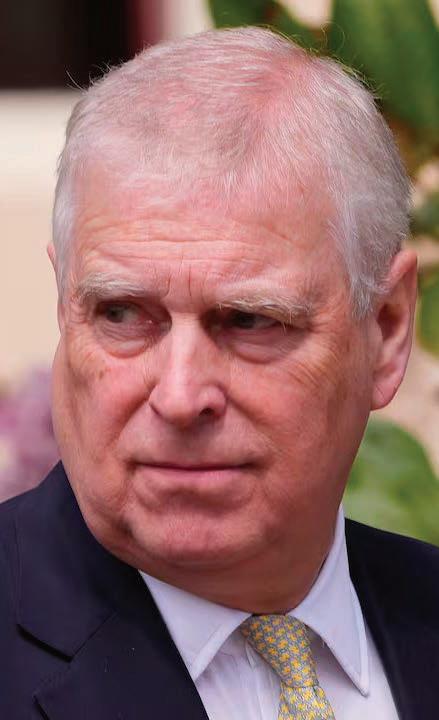
On the 19th of february, Andrew Mountbatten-Windsor was arrested and subsequently released from custody for suspicion of misconduct in public o ce. He is suspected of leaking classi ed documents to Je rey Epstein when he served as the UK trade envoy. e Epstein Files, which were recently released by the US, have brought more suspicion on the former prince’s dealings with Epstein. Additionally, Andrew claimed he had never met Virginia Giu re, the woman who sued the then-royal of sexually assaulting her as a teen. His arrest is huge news, since Andrew is the rst senior British royal to be arrested in over 400 years.
Andrew was the trade envoy for the UK for over a decade
before he stepped down in 2011 over criticism of his friendship with Epstein, who was convicted of the prostitution of a minor in 2008. In an interview, the former prince claimed he went to see Epstein in person to end their friendship in 2010; this somehow led to him staying at Epstein’s mansion for days a erwards.
He also claimed he had not met Virginia Gui re despite being clearly photographed with her in 2001. In 2022, Gui re sued Andrew for sexual assault; in response, he reportedly paid millions to ensure the trial was settled without his taking blame. In late 2025, King Charles III removed Andrew’s title as “prince” and began the process of evicting him from the royal estate. Later, in 2026, the release of the Epstein Files included photos of Andrew kneeling over a woman or girl lying on the oor, in addition to documents that caused suspicion about his time as trade envoy.
In February, Andrew was arrested and released from custody under investigation, with police
damaged terrain as a form of protest. With these pieces, Banksy successfully captures the essence of active combat zone art.
Active combat zone art is most pronounced through two distinct themes and styles. Most evidently, the art o en utilizes the otherwise unfortunate destruction created by war to create a new purpose. Whether it be simply using a well-angled slab of concrete as a canvas, or cleverly creating images with surrounding terrain, the repurposing of destruction is a fundamental part of war art. Additionally, the art conveys a message of de ance, protest, or activism in some regard.
is is the most e ective way of exhibiting the humanity of the artist and creating a more resounding impact. It is almost exclusively intertwined with the previously mentioned style of repurposed terrain.
rough these two artistic choices, active combat zone art succeeds in illustrating a message of human resistance. As seen in Gaza and Ukraine, art is common yet extraordinary in nature, being a spark of hope in seemingly dispirited areas. ough the various examples cannot be justi ably depicted with mere words, a simple search will yield bountiful results of powerful active combat zone art.
having searched his former home and current residence. e charge he faces carries a maximum penalty of life imprisonment. Furthermore, King Charles is attempting to remove Andrew as a successor for the throne using new legislation.
Contained in the les was evidence showing that the former prince shared documents about o cial visits to many Asian cities and a con dential brief on investment opportunities in Afghanistan. Police are looking into his reported sex-tra cking and assault charges; however, they reported that was not the cause of his arrest. Other forces are also investigating ight logs and Epstein’s ties with the UK. e case will be a lengthy one, but Andrew is unlikely to be convicted of misconduct in public o ce. It is near impossible to prove, as there is little standard for what constitutes many of the terms needed to get a conviction. ere is a high likelihood that Andrew was doing shady business with Je rey Epstein; however, there seems to be a low
chance of serious charges sticking. is could be massive nonetheless, as a conviction would show that not even the royal family can get away with anything, contrary to the widespread public belief. e UK needs to show that even holding power and money is not an excuse for behaving as Andrew Mountbatten-Windsor did.
David Sobowale ’28
Contributor
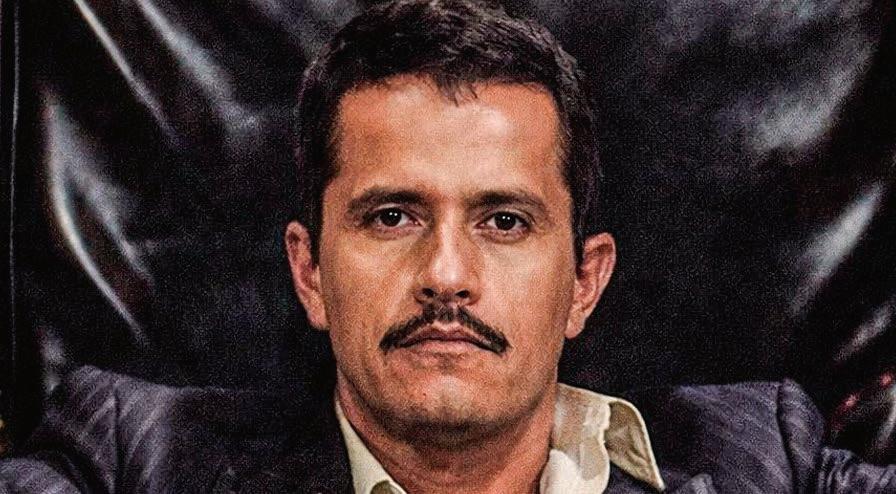
Mexico has awoken to chaos. Nemesio Oseguera Cervantes, better known as “El Mencho,” took part in a confrontation with the Mexican Special Forces on February 22, 2026. He sustained severe injuries and eventually passed away, triggering a wave of cartel violence across multiple states.
Cervantes was the leader of the Jalisco New Generation Cartel (CJNG), which is widely regarded by analysts as the most powerful and dangerous criminal syndicate in Mexico. e announcement of his death was met with widespread surprise and violence that prompted concerns in communities.
Schools began to close, tourists ended their trips early, and members of the CJNG were reported to have responded with retaliatory attacks against the Mexican government.
Within 24 hours of his death and with the military operation ongoing, 25 members of the National Guard were killed, as well as one bystander. More, the cartel began torching cars and buses on busy streets, creating over 250 roadblocks which disrupted transportation and increased security concerns.
In addition to this, buildings were set on re, the most notable ones being large banks and pharmacies. BBC News reporter Ottie Mitchel described how “in Guadalajara—one of the host cities of the forthcoming FIFA World Cup—travellers at the airport could be seen running and crouching on the oor in panic.”
is has raised questions about whether Mexico will still be able to host the event. Many streets and even small towns appear largely empty in a ected areas, since security concerns make it di cult for families to nd places where they can feel protected. e scenes that unfolded found many drawing comparisons to 2019, when Ovidio Guzman Lopez, better known as the son of “El Chapo,” was captured in the State of Sinaloa.
Yet despite the unrest, o cials have stated that “his killing has been heralded as a victory in both Mexico and the United States.” Both countries’ intelligence agencies described the operation as a success, highlighting important
cross-border cooperation in an e ort to take down the cartel leadership. Mexican analyst David Mora said, “El Mencho was a very powerful gure who ran a very centralised organisation. ere is no clear direct heir or successor.” In essence, this means the absence of a successor may weaken the organization’s structure, giving greater control back to the authorities.
Attempts to eliminate drug lords have o en resulted in even further violence. Whether his death weakens the cartel or ignites further uproar remains uncertain, but as of now, Mexico faces a nationwide crisis.
Gabriel Arias ’27
Deputy Editor
On 3 January, 2026, the U.S. Army Delta Force launched a military strike in Venezuela and captured dictator Nicolás Maduro and his wife Cilia Flores. e operation, code-named “Operation Absolute Resolve,” took place at 2:00 a.m. local time when explosions bombarded the president’s compound in Fort Tiuna, Caracas. Maduro and Flores were promptly own to New York City by U.S. Forces to face American justice. ousands of Venezuelans around the world celebrated the successful operation. us, the question is posed: is Venezuela nally at its turning point?
Since 1998, the United Socialist Party of Venezuela held power in the country, initiating under the leadership of the late Hugo Chávez. In 2013, Nicolás Maduro was elected president,

becoming Chávez’s successor. Following this, Venezuela su ered a profound socio-economic and political collapse led by government corruption, widespread shortages, failing oil prices, and hyperin ation, with annual rates exceeding 130 000% to over 900 000% of original costs. ese problems led to over 50% of citizens falling into poverty and roughly 8 million others eeing the country, according to Gallup statistics. Apart from that, U.S. authorities have accused Maduro of conspiring with several Central American groups residing in Colombia and Venezuela, as well as other countries, to tra c illegal drugs into the U.S., leading to the suspicion of narco-terrorism and drug tra cking.
Back in March 2020, the former U.S. administration led by Joe Biden o ered up to $15 million for information leading to the
arrest of Maduro and several of his associates. Fast forward to 2024, the U.S. and other Latin American countries would view Venezuela’s opposition leader, Edmundo González, as the rightfully elected president of the country, following fraudulent elections that same year.
In 2025, tensions began to unfold across the Western Hemisphere as U.S. President Donald Trump continuously threatened Maduro against playing ‘tough,’ sending dozens of warships to destroy ships accused of transporting drugs and surrounding the country as a nal warning for Maduro. His negligence and damaging policies against Venezuela and the U.S. would ultimately justify his capture and prosecution in the eyes of top American o cials.
With Maduro and his wife
now in custody and facing trial for their international crimes, all eyes remain on Venezuela. Delcy Rodríguez, who was vice president before the U.S. raid, was immediately sworn in as acting president of the country. Despite that, Trump said his administration would run Venezuela until a “safe, proper, and judicious transition” could take place. So far, Rodríguez is complying well with the Trump administration, having changed the law to allow foreign investment in the country’s oil industry, which holds the world’s largest proven oil reserves—an estimated 300 billion barrels. U.S. oil rms plan to invest at least $100 billion to restore Venezuela’s oil industry to its former glory. Meanwhile, under U.S. pressure, hundreds of political prisoners have been released and had their “political crimes” erased under a newly dra ed amnesty law. Several legal, economic, and social issues still need to be addressed in the country. Many people around the world continue to celebrate, while others condemn the events that took place. Regardless, a er nearly 30 years of struggle, Venezuela is nally at the brink of its historic and long-awaited turning point.
Maury Lavitt ’28
Copy
Editor
With university rankings more popular than ever, e Crusader News decided to add its own two cents on the best universities in the world. While other publications rank universities based on the donations they receive from them, we’ve received none. So, here is St. Paul’s absolutely unbiased top ve list:
5. Canadian Mennonite University
De nitely a solid choice, this school outshines nearly all others in the world in terms of campus and class size. Located on the famed and picturesque Shaesbury Boulevard, this university o ers free dorm rooms and welcomes multiple international students every single year. As their motto aptly puts it, CMU pushes students to “expect more” from their education. Plus, who would ever want to be more than 50 metres away from St. Paul’s?
4. Université de Saint-Boniface Également située à Winnipeg, cette université est très vielle. Juste comme elle est la plus ancienne université de l’Ouest
du Canada, son site web est une vraie fouille archéologique où on ne peut rien trouver. Si tu es un fan de M. Falvo, tu adoreras le campus—les deux sont anciennes et français. D’ailleurs, l’Université de Saint-Boniface est bien connue pour ses programmes distingués au sujet de français. Only catch is, if you didn’t understand a lick of that, USB might not be the best option. ey teach in French.
3. Red River College Polytech Boasting 150 full- and part-time degree options—that is, one for each student—Red River Polytech rightfully takes its place as the third best university in the world. Staying rmly “in front of what’s ahead,” it adheres to its motto, always leading the pack, especially when it comes to the link between its logo and anything whatsoever. ey employ multiple technologies to educate students, from phones to laptops to tablets, using only the most up-to-date tech to earn their name: Polytech. ey are so cutting-edge,
they slashed the customary “-ic” from “polytechnic”. Conveniently located near the Winnipeg airport, international students can make their decision quickly and con dently, knowing they can y right back home should the need arise. It probably won’t though.
2. University of Winnipeg
What can I say about the U of W? So, so, so much. Not only are they on the brink of paying students to attend their classes, with free applications being the newest addition to their policy, but they apparently even have a whole building dedicated to grains (Rice Centre, anyone?). Inhabiting the area the U of M ed in the ’50s, the University of Winnipeg is located in our famously welcoming downtown core. Its sports teams are quite remarkable as well. e teams’ unique approach and interesting tactics are re ected in their equally creative name: Wesmen. Whilst seemingly meaning nothing, the name sprouted from Wesley College and Manitoba

Leo Sun ’29
Contributor
Teachers and students, if you were to think of the most widespread pop culture phrase a few months ago, the expression “six-seven” would likely come to mind. As one of the longest lasting internet jokes—commonly known as a “meme”—those two infamous numbers have been engraved in
everyone’s minds. Yet as 2025 came to a close and 2026 began, the once-popular phrase started to fade away. So why did this happen? How did one of the most popular memes die out in just a few months? Let’s take a closer look.
e six-seven meme began in late 2024 on the social media app TikTok, originating from a song titled “Doot Doot” by rapper Skrilla. In his song, Skrilla repeats the phrase six-seven. At rst, the song wasn’t widely recognized. However, in early 2025, the song became associated with an NBA player LaMelo Ball, who stands at
six feet seven inches tall. Clips of Ball’s highlights with the song in the background went viral, and that was when the phrase sixseven started getting remembered.
In March 2025, a video of a young boy saying six-seven while making a hand gesture also went viral, marking the moment when the meme really took o . Combining the humour of a typical Gen Z teenager and a Gen Alpha kid, the phrase quickly caught on. Its absurdity and randomness made it especially funny among younger generations. For the rest of 2025, six-seven continued to be used,

College (Wes Man). From there, Methodist missionaries le to spread the gospel, and so, just like their predecessors, the Wesmen strive to be as peaceful and passive as possible. If the unique name wasn’t enough, just wait until you meet its exceptional women’s team: the Winnipeg Wesmen Women. Try saying that ve times fast.
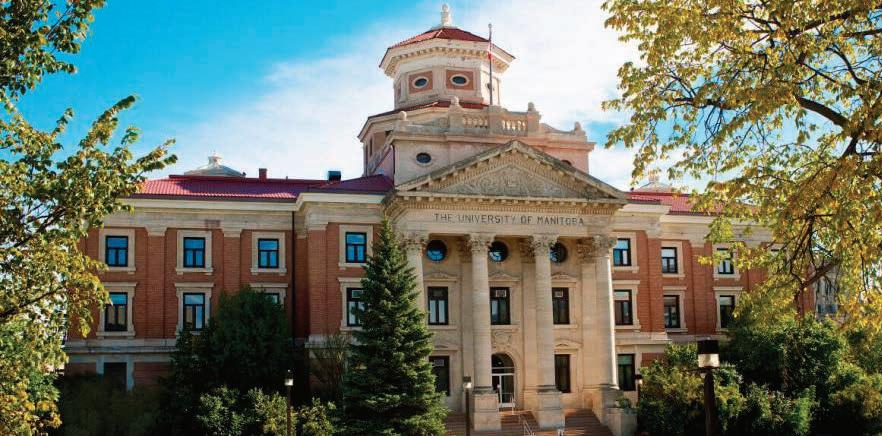
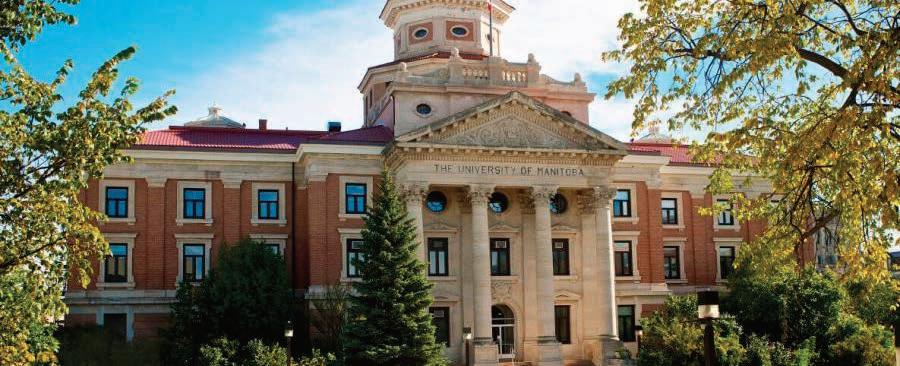
1. University of Manitoba
Finally, the coveted rst place must certainly go to the University of Manitoba, indisputably the best university in the world. Boasting 31 000 Bisons, almost the largest herd in existence, the University of Manitoba makes its applicants scream “UM...” in excitement to attend. eir marketing and networking are unparalleled, using the Mini U program to rope in future students before they learn how to protest. Moreover, the state of the buildings o ers a unique challenge for its skilled engineering majors. e best part of all, though? Students can at any time expect a gi from the sky in the form of a stray Princess Auto Stadium football to the head.
Looking back on what I just wrote, I’m only now noticing the prominence of a certain Manitoban city in these rankings. I guess that means we’re the best, because there’s absolutely no way any bias crept into my rankings.
proving itself to be one of the longest lasting internet pop culture jokes in recent memory. Variations, such as the SCP-067 or politicians using it, boosted the in uence of the joke, and teens found it funny that adults knew about it too. It was not until late 2025 that the meme started to lose its appeal.
All jokes eventually lose their freshness, and a er such a long time in the spotlight of internet culture, the use of sixseven began to decline. Rising new memes and the search for jokes that weren’t non-sensical “brainrot” contributed to the fall of the once-beloved and glori ed phrase. As students, we can all agree that those two numbers just don’t hit like they used to. Teachers, too, can nally breathe a sigh of relief. As the saying goes, all great things must come to an end. e meme of six-seven reminds us that even the most popular jokes eventually fade away. From an internet song to a globally popularized meme, in 2026 we can nally retire these two numbers once and for all.
Derek Barrientos ’26
Contributor
Something that bothers students at St. Paul’s is minor inconvenience. It’s true—in fact, it’s getting worse each year. Fi een years ago, a snowstorm delaying an already long bus ride would only be a minor inconvenience for the average student. Now that 2026 has rolled around, sorting your own trash into compost, recycling, and garbage bins feels equivalent to managing an entire company all by yourself.
In this day and age, getting a lunch special is one of the most treacherous tasks a student may struggle to accomplish. Students rush to the lunch line and must wait for a su ocating 20 minutes before nally obtaining “the plate of the gods”. With the food successfully in hand, they then helplessly try to nd a seat in the already bustling cafeteria, which becomes another tedious adventure. Simply being able to sit down a er such a long and di cult journey feels like a su cient reward.
Lunch duties for St. Paul’s students are “the scum of the earth,” as one student has described them. Some may say this is a bit of a reach, but this claim is not entirely wrong. Having barely taken a bite out of your food, a teacher walking around the lunchroom may suddenly assign you a tray to pick up garbage. is will no doubt ruin your appetite. e sour mood that follows o en translates into the poor e ort students put into their assigned lunch duty.
Now, let’s get to the point. Most students are either: a) too lazy to sort their own trash, or b) have no idea on how to sort it properly. Don’t believe me? Check the nearest compost bin and you will realize how easy it is to nd plastic utensils that were not disposed of in the correct bin. So, here’s a step-by-step tutorial on how to sort your trash.
First, let’s begin with trash items. It may be surprising to some people, but certain items, such as small plastic wraps, actually belong in the garbage unlike recycling and compost which go in their respective bins. Crazy, right?
I don’t blame students who are rushing through their lunch duty, but because of this carelessness, the trash bins end up lling up much faster than the rest of the bins, resulting in a “stank” linger-
anav Mannem ’27
Contributor
e summer of 2026 could be one of the most exciting in recent years. A er a long four-year wait, the global sporting tournament returns: the FIFA World Cup. Bringing billions together, the greatest sporting event in history returns in June. Many Canadians aren’t interested in the World Cup, as Canada does not have a strong record at the tournament. ankfully, this year, Canada has a major advantage: they are a co-host of the 2026 World Cup. In nearly a century of existence, the Canadian team has never advanced to the knockout stage. If there was ever a time for Canada to rise at the global level, it is now. Can Canada nally break their curse on home soil?
e Canadian national team had a di cult World Cup

ing across the cafeteria. In order to improve the days of both students and janitorial sta , we should start by thinking more carefully about what we throw into the trash.
Next is recycling. When it comes to carton containers, such as chocolate milk cartons, it is essential that you rinse out the insides before throwing them away. Doing so will keep the bins from smelling bad and makes cleanup easier for the custodial sta . Crushing drink cartons or juice boxes also allows more items to be recycled in a single bin, which helps prevent the bins from overowing.
Composting, I will admit, is a bit more tedious. Many juice-box companies have slowly transitioned to using eco-friendly paper
straws instead of the plastic transparent ones. When you nish your drink, the straw should go into the compost bin while the container goes into the recycling bin. e small piece of plastic that sticks to the side of the juice box, however, should be thrown into the trash.
Every year, about 36.5 million tonnes of waste is produced, with a devastating 9.9 million tonnes of that being improperly recycled. Putting just the tiniest bit of e ort can contribute to a global change, cliché or not. So, instead of rolling your eyes at the thought of having to separate your straws and your juice boxes into the correct bins, think about the bigger picture.
campaign in 2022. Qualifying was impressive, but unfortunately, they lost all their group stage games once the tournament was underway. eir group consisted of the powerhouse Belgium, and the semi- nalists Morocco and Croatia. Placed in arguably (in hindsight) the strongest group, Canada stood little chance. As a nation, it was exciting to see the team compete against the strongest teams in the world, but it was equally devastating to nish without a single win or draw.
Now, however, Canadians can begin to look ahead with optimism toward the 2026 World Cup. Rather than facing giants to open their campaign, Canada has been drawn into a far more manageable group. Canada’s group consists of Switzerland, Qatar, and last to qualify, Bosnia-Herzegovina. While no team can be underestimated, Canada’s opposition is weaker on paper compared to 2022, as several key Swiss players are past their peak and Qatar lacks experience on the global stage. As a result, Canada’s chances of making history at home have signi cantly increased.
e Canadian national team has never succeeded on the global stage. Since 1958, Canada has quali ed only twice. Although qualifying is no mean achievement [Moderator’s note: just ask Italy…], the celebrations have always been short-lived. In both 1986 and 2022, the Canadian team lost every single game. For the rst time in history, however, they are set to appear in back-to-back World Cups. Although they quali ed automatically as hosts rather than through the rigorous quali cation process, they cannot be dismissed. Prior to the 2000s, Canadian footballers were o en considered “not good enough,” with only a handful playing at top international clubs. Today, that narrative has changed. e 2026 roster has most of its players playing for famous clubs
recognized worldwide. With stars Alphonso Davies (Bayern Munich) and Jonathan David (Juventus), can a new story be written? e stage is set for Canada to go further than ever before. With a roster nally capable of competing on the international stage, the question is no longer if they can make an impact but how far can they go? Familiar surroundings, supportive crowds, and friendly time zones all work in their favour. Even a single victory would echo through history, while a place in the knockout stage would signal Canada’s arrival as a true footballing nation. For the rst time, success feels within reach. Now is the moment to rise, to believe, and to stand united in support. Bring it home Canada!


Keenan Patterson ’26
Copy Editor
On January 31st, this year’s professional wrestling Royal Rumble took place at the Riyadh Season Stadium in Saudi Arabia. With only four matches on the card, there is still plenty to break down. I’ll review the results, highlight key moments, and give my opinion on whether the decisions made were sensible.
First, there was the women’s rumble. e result had Liv Morgan as the winner, and I believe that this was a realistic, if not right, move for Creative. At one point in the match, Liv turned on her faction members, setting up what could be a compelling solo road to WrestleMania. Along with that, Liv has a decent history with one of the current champions; that o ers an opportunity for that rivalry to be renewed for WrestleMania. All in all, I believe it was the appropriate decision. However, there was a questionable moment at the
end of the match, where a wrestler attempted her nishing move in a way that could have led to her own elimination. Regardless, Creative went ahead with the spot, and the wrestler ended up speaking out about it a er the show.
if he was going to retire anyway, why not use that to help develop a new star? Gunther is now in the position that he retired two modern legends, shades of 20052007 Randy Orton. is creates a very real possibility for that match
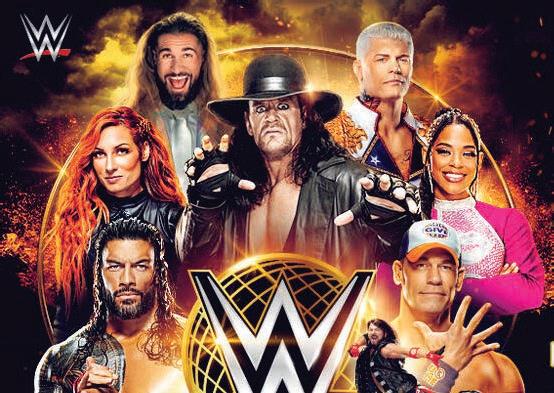
Next on the card was Gunther vs. AJ Styles. e stipulation on the match was that if Gunther won, Styles would have to retire from the WWE. is notion came to be roughly a month earlier, when Gunther retired John Cena. is match ultimately saw Gunther win, which I completely agree with. Styles had voiced many times before that 2026 would be the year he retired, and
Joseph Mutter ’28
Copy Editor
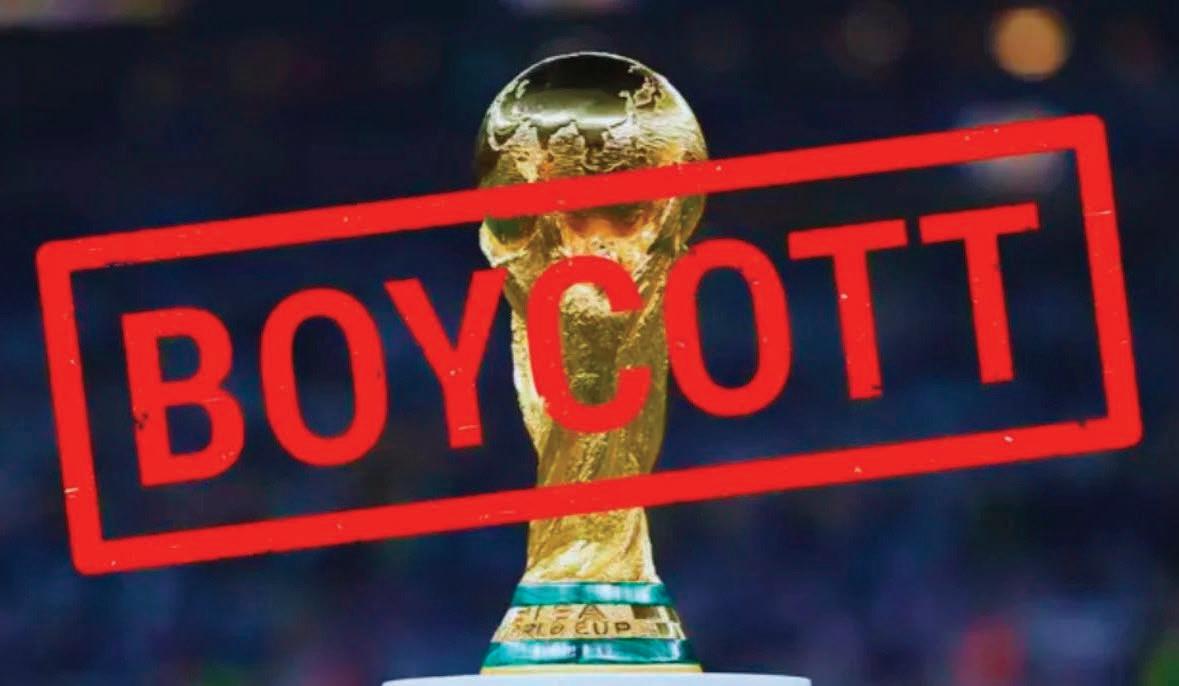
e FIFA World Cup, the largest sporting event in the world, is coming to Canada this June. Yet as the excitement builds, a crippling shadow looms over the tournament. Numerous soccer federations, including France, Denmark, and the United Kingdom, have suggested the idea of
boycotting the U.S.-hosted World Cup. eir concerns stem from the U.S. government’s violent immigration policies, expansionist views towards Venezuela and Greenland, travel bans on World Cup participants like Haiti, widespread tari s, and the growing friendship between FIFA President Gianni Infantino and U.S. President Donald Trump. As soccer and politics collide, it is clear this World Cup will be di erent from any others previously held. roughout the history of the FIFA World Cup, there have been few boycotts, most including only a couple of nations. Among
to headline at WrestleMania. Drew McIntyre vs Sami Zayn for the WWE title followed. is was an ordinary match, requiring not much to say. Drew retained, and Sami’s dream of being a world champion still eludes him.
Finally, there was the Men’s rumble. is match had Oba Femi as entrant #1, making his main roster debut. en, he went on to
“clean house,” eliminating the next 5 entrants. Later in the rumble, he would have multiple stare-downs with Brock Lesnar. Both these events helped Oba to gain a big presence when moving up to the main roster and set up a potential match at Mania with Lesnar. Roman Reigns went on to win the rumble; I see this as a poor decision. Roman is possibly the biggest star in the company, and the rumble is used to give out main event matches on big stages, something Roman can get just by asking.
us, placing Roman over young or mid-card talent seems like an unwise decision, especially when you look at the top 4 of Logan Paul, Gunther, and Randy Orton, who could all use the spotlight more than Roman, yet that is who Creative picked. e rumble also had a distinct lack of Finn Balor, who was competing for a world championship in the two weeks prior to the rumble. Even if he were to lose, it would have made way more sense for him to be in the rumble than not.
Overall, this year’s Royal Rumble was a solid event, showcasing some talent from NXT and development for stars who just barely couldn’t break into the main event.
the most notable are the 1934 and 1938 World Cups, both of which were boycotted by Uruguay. ey were upset over many European nations’ snubbing of Uruguay’s World Cup in 1930 and refused to attend the European-hosted contests in the following years.
e largest boycott took place in 1966, when the entire continent of Africa abstained from quali cation. ey were protesting the Eurocentric quali cation system, which le only one tournament spot for all African, Asian, and Oceanic countries to ght for.
However, no boycott of this scale has been considered since then. Although it seems hard to believe a World Cup boycott could happen, political climates and the current state of FIFA keep the possibility alive. Many countries are displaying similar frustration to Uruguay in 1934, upset by the actions of the hosts as FIFA is dealing with corruption and is led by a president who lacks political neutrality. is puts them in a controversial position, as it was for Africa in 1966. ere is no doubt there are good reasons for a boycott. But despite these factors,
many countries consider a boycott a last resort.
One of the major obstacles is the stance of FIFA in the USA and the power they possess over the national soccer federations. FIFA President Gianni Infantino has been quick to support President Trump’s actions as he inaugurated the FIFA Peace Prize just to give to him. If a federation were to defy this support by boycotting the World Cup, the implications could be severe. For instance, if Denmark were to boycott, FIFA could ban them from the Euros, the Women’s World Cup, and any of the numerous age-group tournaments they host, as well as cut o critical funding to the federation. is is a big price to pay for any soccer federations and will likely discourage any boycotts. e World Cup is a highly anticipated event for many soccer fans, but political tensions will be a signi cant obstacle to success. Even though the threat of a boycott looms, unlimited power and political alliances will likely shut down any withdrawal attempts.
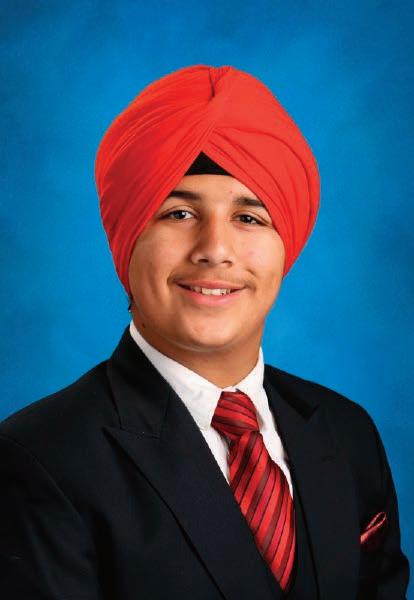
Udaypartap Dhaliwal ’29
Contributor
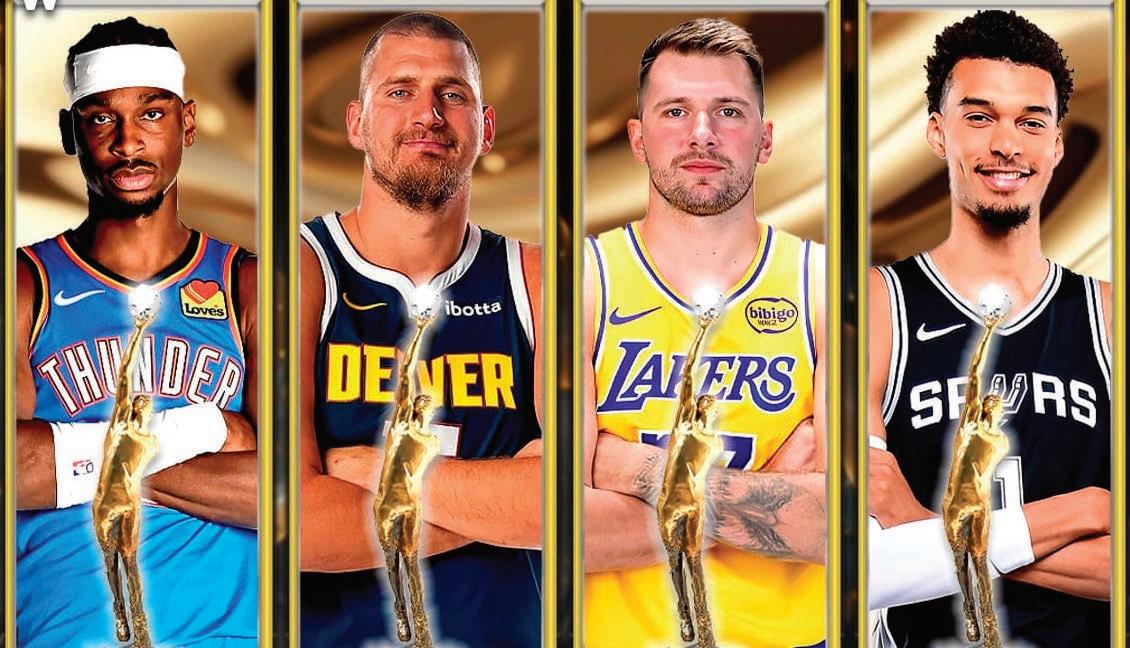
As of April 2026, the NBA MVP race has been decided. With the league now fully enforcing the 65-games minimum rule for major awards, several top contenders have played themselves out of the race simply by missing too many games. Stars like Giannis Antetokounmpo, Nikola Jokić, and Luka Dončić all started the season as MVP favourites. When healthy, they’ve been dominant; however, injuries and load management have kept them o the oor too o en. As a result, they no longer qualify for MVP or All-NBA First Team consideration.
In today’s NBA, greatness only counts if you’re actually on the oor. at’s why availability is more important than ever. Victor Wembanyama was a clear example of this just last season. Despite being one of the strongest defenders in the league, he did
not win Defensive Player of the Year because he missed too many games. His case proved the league is serious: if you don’t meet the games threshold, you don’t get the award, no exceptions. at same rule is now shaping the MVP race in an even bigger way. ere are countless other examples from past years that I could discuss, but this one is clearly the most impactful example. With many stars eliminated, Shai Gilgeous-Alexander has become the clear MVP favourite. Shai has checked every
box: elite scoring, strong defense, leadership, and most important, consistency. He shows up night a er night, plays within the ow of the game, and leads his team to wins. In a season where staying on the court matters just as much as performance, Shai has clearly separated himself. Anthony Edwards has taken another leap as a scorer, while Cade Cunningham has gained recognition for improving as a playmaker.
Wembanyama himself is also rmly in MVP and AllNBA First Team talks this season,
showing how dominant he can be when healthy. Additionally, Jaylen Brown has stepped into a bigger role and delivered consistent, high-level performances that have put him back into major award discussions.
e new game-played rule has completely changed the award landscape. Talent alone isn’t enough anymore; you have to be available. And in February 2026, that reality has already decided the MVP race, with Shai on top and a new generation of stars rising faster than ever.
Ferris Yeung ’27
Copy Editor
In an action-packed Champions League campaign, upsets have become almost routine. is year, however, one team stood out, sweeping through the competition like a yellow blizzard. One upset might be dismissed as a uke, two as luck, yet one team, Bodø/Glimt, has done it three times! Manchester City at home, away at Atletico Madrid, and, nally, Inter Milan at home.
It is far more likely that Bodø ends up on a vacation pamphlet than on global sports news. eir presence on this stage feels unfamiliar, and even the sight of a Norwegian club crest is something new for many fans. In fact, they are the rst Norwegian team ever to reach the knockout stages of the Champions League.
Bodø/Glimt’s unique topography is an anomaly in
Champions League football. Very rarely do players pack for a -10 °C trip. For some players, playing in that environment, even for a night, feels like a nightmare. Champions League’s format allows Bodø/ Glimt to host half of their matches at home. Bodø/Glimt’s players train, eat, and sleep in Norwegian weather; they are fully accustomed and physically equipped to play 90-minutes in the brutal conditions. Interestingly, the Norwegian season wraps up before the Champions League knockout round begins, meaning that the risk of the loss of match sharpness stands strong. Yet this can be considered a blessing for many people. Without any domestic xtures to manage, their focus can be entirely dedicated to long European trips.
Away players, however, are not so fortunate and might have their performance hindered. For professional athletes, every small detail matters; even the lack of sunlight in Norway can a ect their performance! While no club blames the conditions, very rarely do they train or prepare for a match in the snow.
Home advantage only accounts for 50% of the success;

Bodø themselves account for the other half. If Bodø/Glimt were only a weather gimmick, they would crumble the second they stepped into a foreign land. But that has not been the case. In the match against Atletico Madrid, Bodø showed their tactical maturity. With their counter-attacking scheme, they managed to secure a 2-1 victory in one of European Football’s most hostile environments.
Underdog stories occur o en, but they rarely last. What di erentiates Bodø from your regular quarter nalist? It’s that they keep on winning. In the Sahara,
North Pole, away or home. ere is, however, one team that has beaten them home and away three times a year. Tottenham Hotspur, currently sitting 16th in the Premier League. is makes no sense, right? It never does… football math never works out.
e run of Bodø/Glimt doesn’t even qualify as a uke anymore. It is a Cinderella story with a theme: you don’t have to be the prince to have a dance with Cinderella! Sometimes, the king of football isn’t exclusive to Madrid, Turin, London, or Manchester; sometimes it belongs to a city far away from pollution and noise.
Matthew Bartman ’28
Contributor
e Lego Company has just made a new product known as “Lego Smart Play.” ese new products were meant to foster interactions between the user and the set. ey did this by including a device inside a black 2x4 brick that was able to light up, create sounds, and interact outside your imagination. e Smart Brick was not alone: it had Lego gures with mechanisms that would react to the brick, and small 2x2 tile pieces that, when a Smart Brick was in a relative proximity to the tile, it would react to it, creating sounds, and noises. ese three pieces make up the Lego “Smart Play” theme, yet collectors do not believe this was their best idea.
e Smart Brick was rst introduced on January 5, 2026, in Las Vegas at the Consumer
Electronics Show. ey were presented in three Lego Star Wars sets labeled as “Darth Vader’s TIE Fighter,” priced at 69.99 USD, “Luke’s Red Five X-Wing,” priced at 99.99 USD, and the “ rone Room Duel & A-Wing,” priced at $159.99 USD, which was released on March 1st, 2026. Not only were people questioning the price of each set considering how many pieces they come with, but also their dubious designs. e most common point about the X-Wing was how the wings on the ship are noticeably short, which looks unnatural. People also noticed Luke’s X-Wing R2D2 mini gure had a 2x2 smart tile attached to the front of its body so that it could act similarly to the other smart minigures. Additionally, the Darth Vader’s TIE Fighter and Luke’s X-Wing set both have a space near the back of the ships to place Smart Bricks in, making the proportions on the ships strange and inaccurate, leaving fans disappointed.
e Lego Company will also be releasing ve more sets which will not include Smart Bricks, but will have smart mini-
Gurshaan Brar ’29
Contributor
e tragedy in Tumbler Ridge has forced an uncomfortable but necessary conversation about arti cial intelligence, platform responsibility, and the limits of digital intervention.
Following the February 2026 shooting that devastated the small British Columbia community, attention quickly turned to a previously unknown dimension of the case which was the suspect’s reported use of ChatGPT prior to the attack. Subsequent disclosures con rmed that OpenAI, the system’s developer, had identi ed and banned an account associated with the individual months earlier. e company stated that automated safety systems agged the account for policy violations involving violent content, triggering an internal review and eventual suspension. What makes the situation particularly contentious is not simply that the account was banned, but that no report

gures, and the 2x2 smart tiles. e sets include: the “Millenium Falcon,” “ATST Attack on Endor,” “Mos Eisley Cantina,” “Luke’s Landspeeder,” and “Yoda’s Hut and Jedi Training.” A major issue with these sets is that a smart brick is needed to experience “Smart Play” with these other sets, meaning one must spend at least $70 USD on a Smart Brick. e Lego Smart Bricks had potential in their design, but were
not executed to their full appeal. SVP of Creative Play Lab, Tom Donaldson, claimed that “we see it as a new dimension to the iconic bricks”, showing that they believe in the potential of Smart Bricks. e only issue is that the sets are expensive, and do not yet look satisfying. e Lego Smart Play system is a unique concept; even so, it will need modi cations to hold customers’ attention and keep collectors happy.
was made to the Royal Canadian Mounted Police at the time.
OpenAI later explained that while the interactions raised concerns under platform safety rules, they did not meet the company’s threshold for what it characterized as an “imminent and credible threat.” In other words, the system detected problematic behaviour, warranting removal from the platform, but not behaviour that clearly justi ed law enforcement noti cation. at distinction—technical, legal, and ethical—now sits at the center of public debate.
For many observers, the sequence of events is unsettling. If an AI system identi ed conversations serious enough to trigger a ban, why was that not considered serious enough to alert authorities? Critics argue that this gap exposes a potential weakness in how technology companies assess risk. From this perspective, banning a user may limit platform misuse but does little to address possible real-world dangers.
Yet the issue is far from simple. AI moderation systems operate by detecting patterns, probabilities, and policy violations, not certainties about human intent. A agged interaction does not automatically signal that violence is planned or imminent. Reporting

users based on ambiguous signals could lead to unwarranted investigations, privacy intrusions, and signi cant civil liberties concerns.
is tension reveals a deeper structural problem. Technology companies are increasingly positioned as gatekeepers of vast amounts of human communication, yet they are neither courts nor law enforcement agencies. Deciding when concerning digital behaviour crosses the line into a reportable threat requires judgments that blend technical assessment with legal standards and ethical reasoning.
e Tumbler Ridge case illustrates how di cult those judgments can be. In hindsight, any warning sign appears more consequential. In real time, however, platforms must evaluate incomplete information while respecting privacy
obligations and avoiding overreach.
While the broader implications for AI governance are signi cant, the heart of the debate remains rooted in this speci c dilemma: what should a platform do when its systems detect troubling but non-de nitive signals? Is removing access su cient, or does a duty of care require escalating uncertainty to authorities?
As AI tools become embedded in everyday life, such scenarios will become more common, not less. e challenge for policymakers and technology companies alike is to develop frameworks that neither ignore credible risks nor normalize pervasive surveillance. Too cautious an approach may miss opportunities for prevention; too aggressive an approach may erode fundamental expectations of privacy.
Solomon Khokhar ’28
Contributor
An overwhelming amount of silence lls the room, as you twist and turn in your comfy bed. It’s the night before Easter, and your eyes seem to have a mind of their own, refusing to shut. e clock ticks down as you squeeze
your eyes closed, waiting anxiously for that crisp morning sun. Not a moment later, when the sun comes out, you awake in a ash, heart pumping purely from excitement. Looking around, something feels di erent—something seems to have “hopped by” whilst you were asleep. Jumping out of bed, you frantically search to see what’s changed. In the corner of your eye, you see something: an Easter egg. Full of joy, you think to yourself, “ e Easter Bunny came!”
e Easter Bunny, more commonly recognized as the Easter Hare in older European

Myles Lagadi ’26
Section Editor
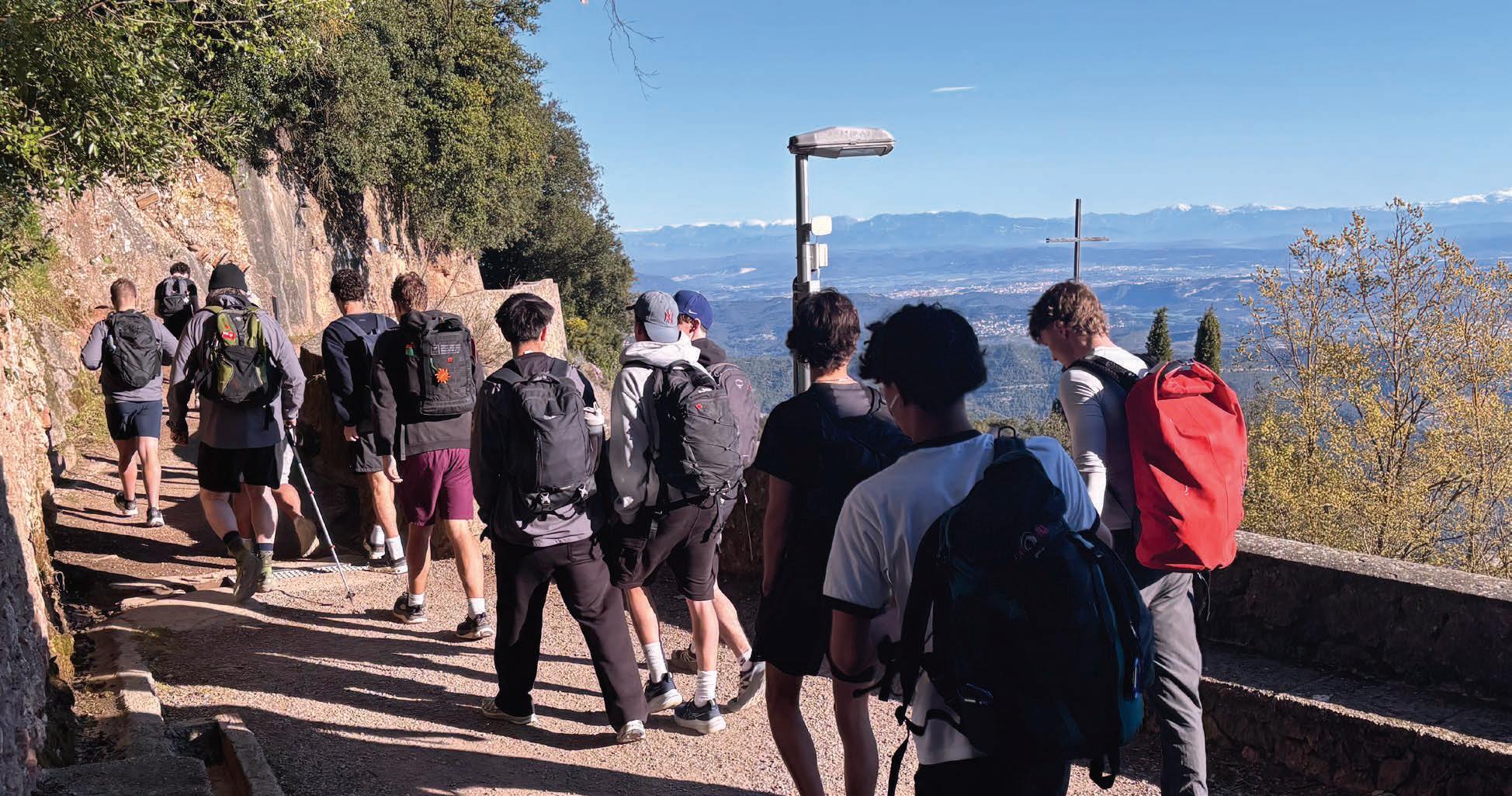
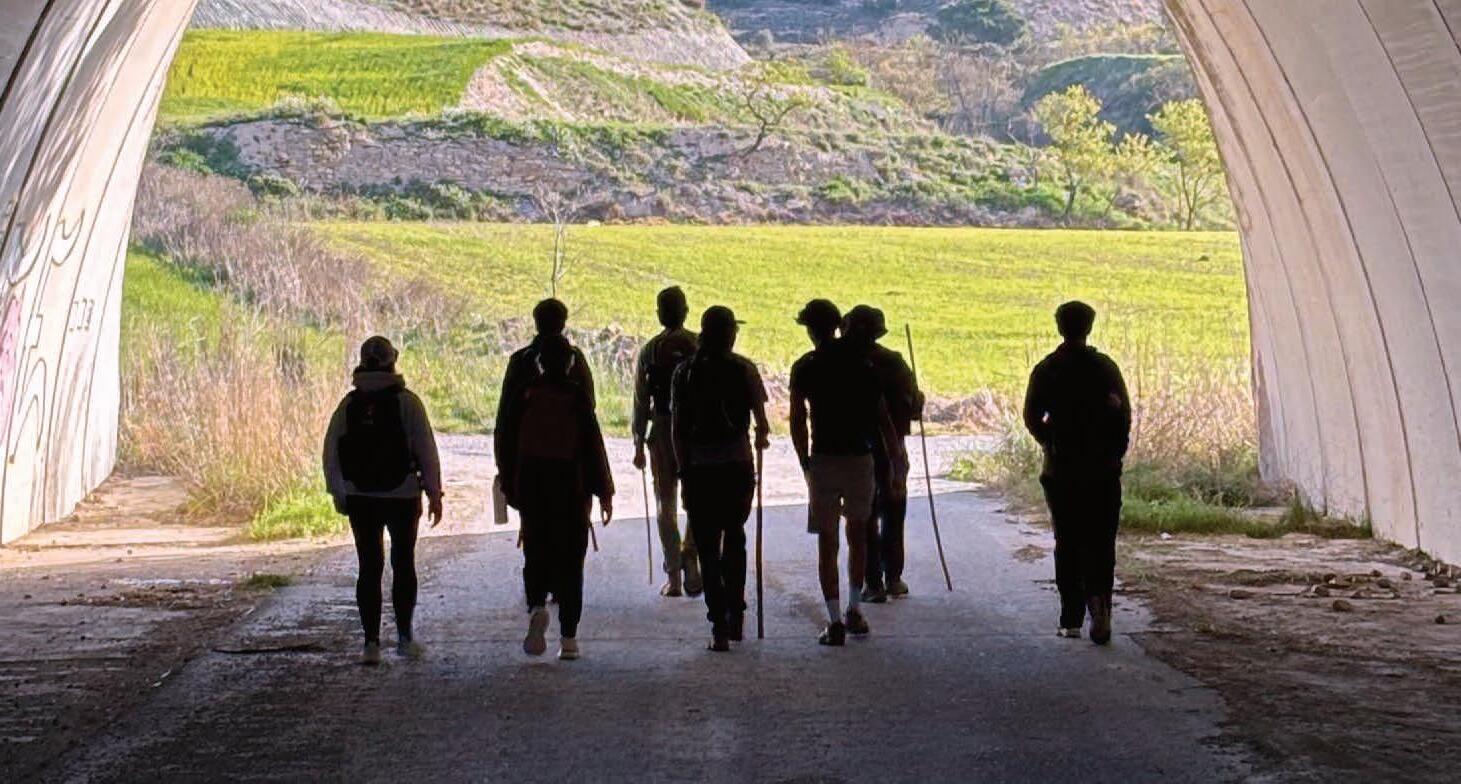
Over spring break (and a few days before and a er), a group of twenty-one grade 12 St. Paul’s students and four sta members (Ms. Janzen, Mr. Laping, Dr. Puchniak, and Ms. Walker) embarked on a pilgrimage to Spain, completing an abbreviated version of the Camino Ignaciano. e pilgrimage began in the Basque region of Spain. Prior to arrival, the group made a stop in Zaragoza, visiting the Cathedral-Basilica of Our Lady of e Pillar. e group then spent three nights at a hostel in Azpeitia, travelling to various places in the region over the course of a few days. Among these places, one of the most notable was e Sanctuary and Basilica of Loyola, where the pilgrims went inside the former home of St. Ignatius. ere was also an 18kilometre hike from Arantzazu up to Urbia, then down to Araia,
traditions, is a peculiar symbol associated with Easter, having an even more interesting history that comes with it. e history of the Easter Hare begins with the traditions and festivities of the Anglo-Saxons.
e Anglo-Saxons are a cultural group that inhabited and ruled parts of England from the 5th century CE until the Norman Conquest in 1066. e traditions and festivities of the Anglo-Saxons is rooted in Germanic polytheism. One of those gods is Ēostre, the goddess of Spring.
Ēostre, as an Anglo-Saxon goddess, has long been debated by historians, debating whether its existence is historically accurate or not. e only record of this goddess being mentioned is in e Reckoning of Time by the medieval cleric known as St. Bede the Venerable. In his work, Bede speaks of the Anglo-Saxons once holding feasts in Ēostre’s honour during Ēosturmōnaþ [Eosturmonath], in modern-day April.
Yet, there was no mention made by Bede connecting hares (or bunnies) to the goddess Ēostre. e rst real connection made between Ēostre and bunnies came in 1874, when the German
mythologist Adolf Holtzmann wrote, “ e Easter Hare is inexplicable to me, but probably the hare was the sacred animal of Ostara [Ēostre].” is claim made by Holtzmann of the hare being the sacred animal of Ēostre had no real merit, but it still gained traction amongst people and is o en cited as a possible origin of the Easter Bunny. However, the rst actual mention of the Easter Bunny, and a speci c link to Easter, comes from Europe. Records from Germany describe children “hunting for Easter eggs hidden by the Easter Hare,” resembling the more modern traditions of Easter found in many modern day, Christian-in uenced nations, such as Canada. At the same time, accounts from England also mention the “Easter Hare,” which was traditionally hunted and eaten during the Easter feast.
Ultimately, the story of the Easter Bunny hopped around: from the Anglo-Saxons to the Europeans, and is now the most recognizable symbol of Easter. As the days hop by, and Easter approaches, make sure to be ready for the Easter Hare to hop into your very own home.
where pilgrims got a taste of high elevation and mountainous topography.
A er resting for three days in Azpeitia, the group le and, for the next few days, stopped in various towns for one night each. Before stopping in Verdu, students and sta had the opportunity to visit Javier Castle, the former home of St. Francis Xavier. A er a brief stop in Verdu, another somewhat lengthy walk of just over 16km found the pilgrims in Cervera, where there was time to explore the town.
From Cervera, the longest walk of the journey began. Lasting over 32-kilometers from Cervera to Jorba. It was both treacherous and beautiful, with scenic views coupled with tired legs. Once arriving in Jorba, another wellearned rest awaited.
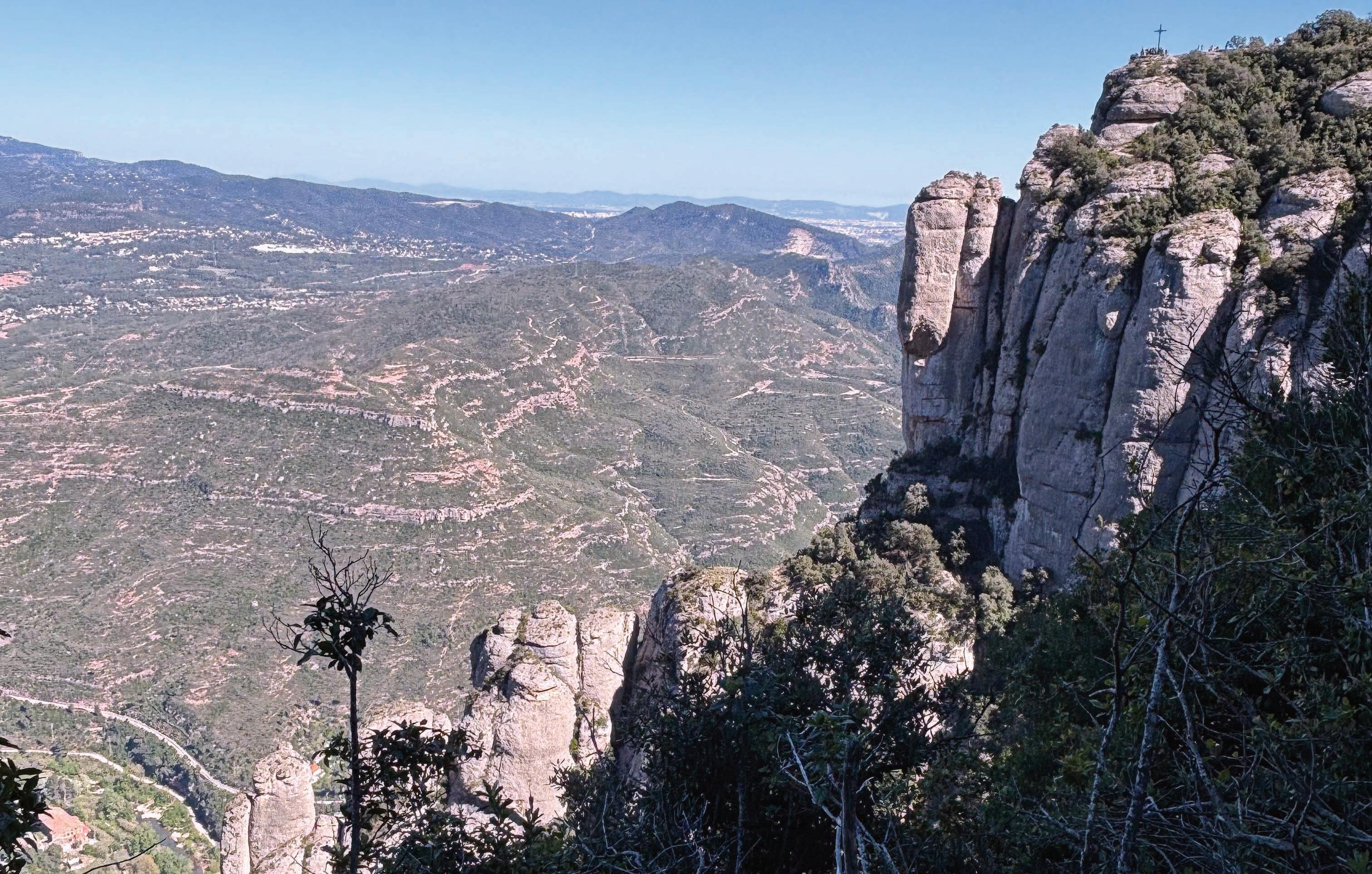
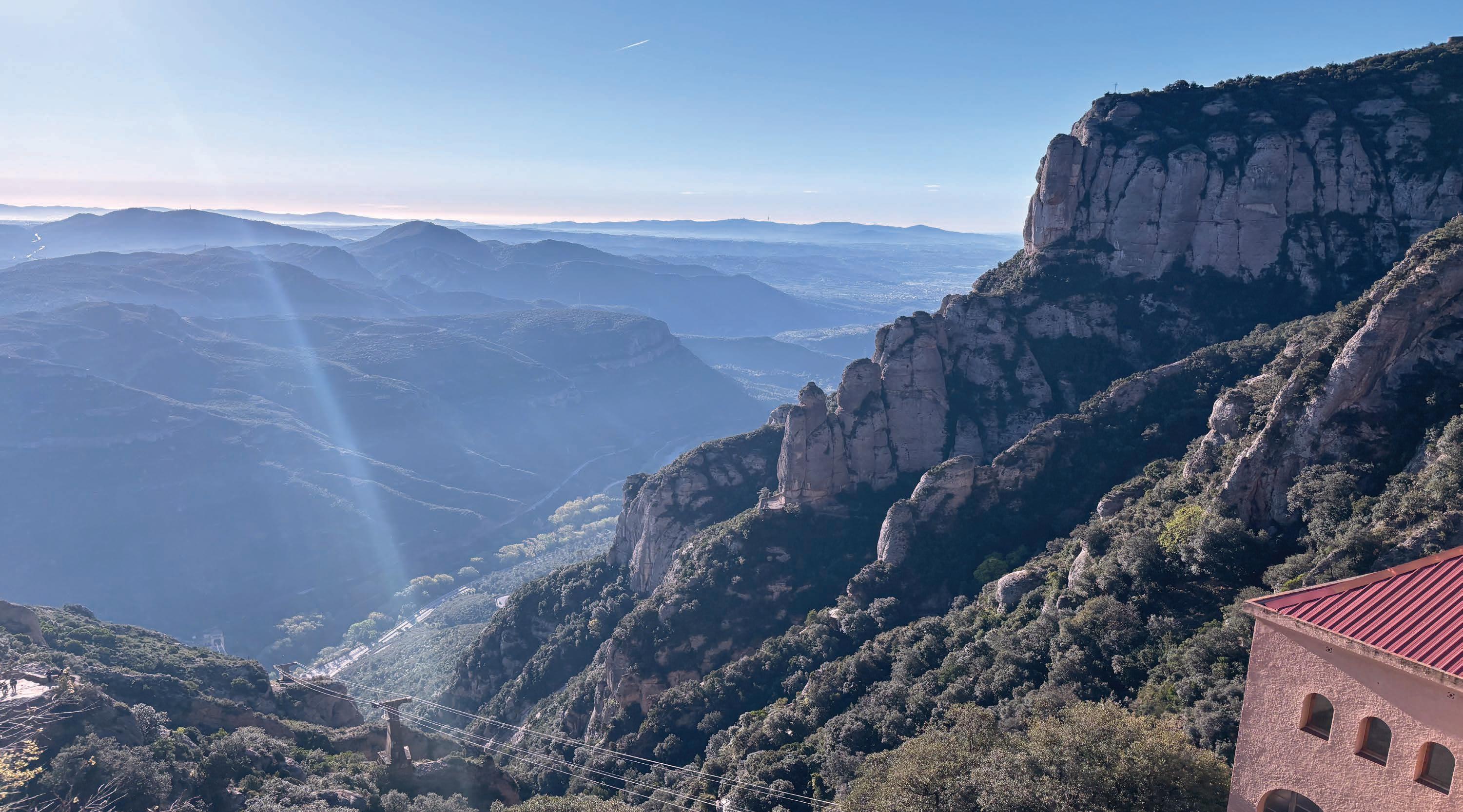
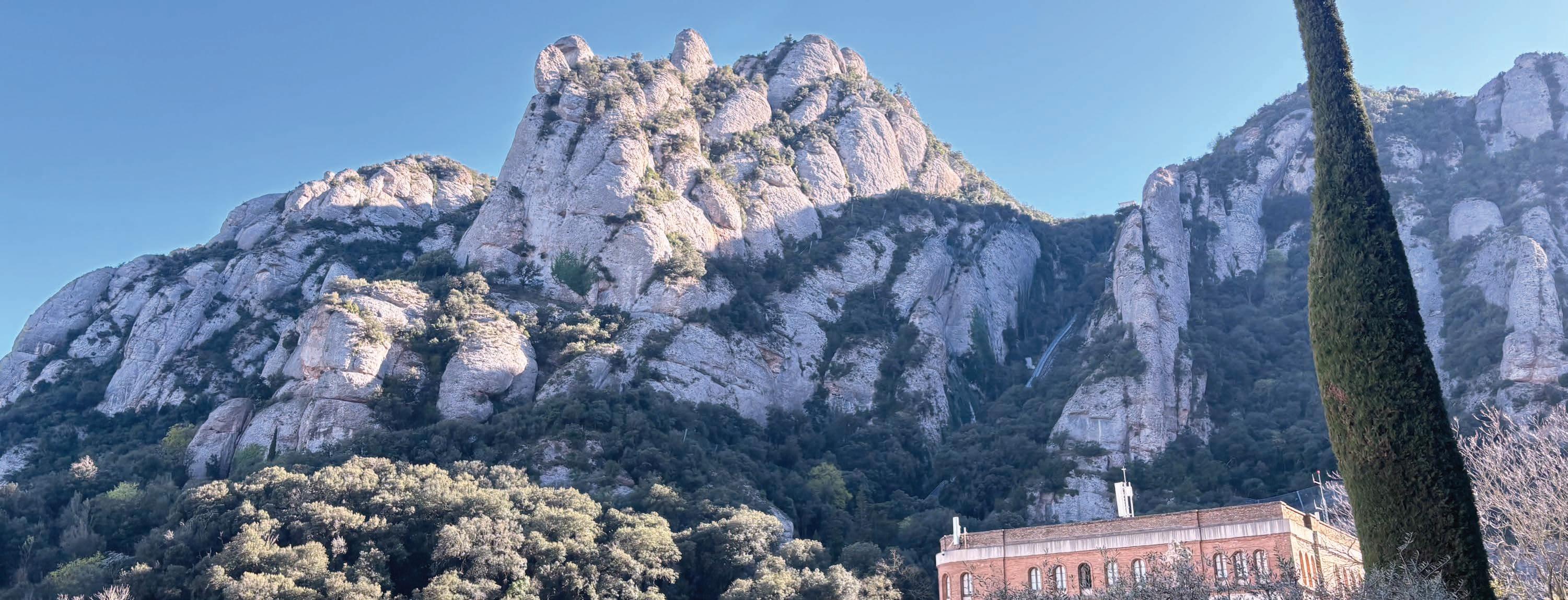
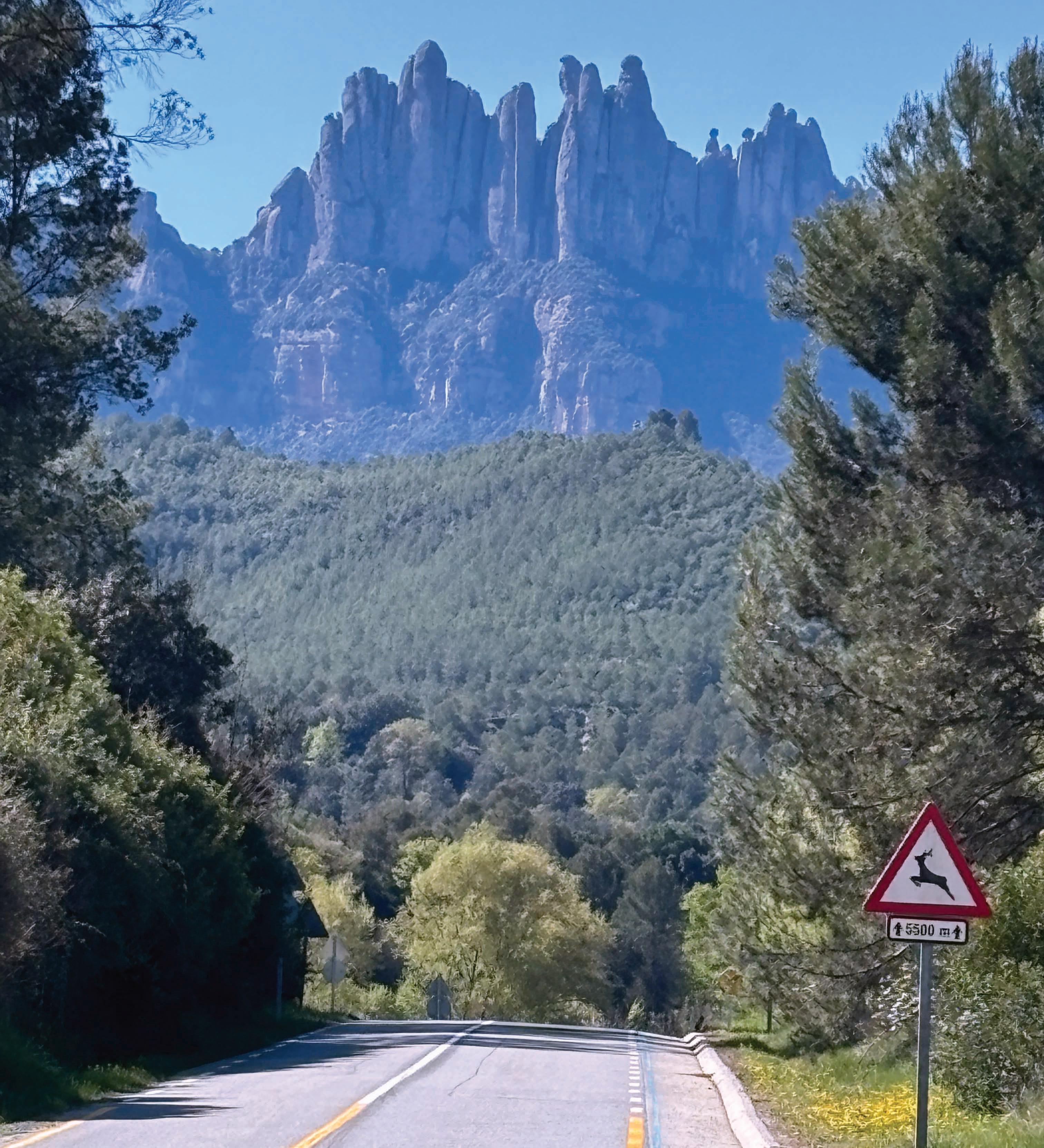
From Jorba, there was a brief walk, then a bus to Montserrat, where the group began their ascent of the mountain. Going up, the views were incredible, especially so upon reaching the ledge at level with the town of Montserrat. Stopping to eat lunch and take in the scenery, a horizon featuring the French Pyrenees and the Mediterranean Sea, along with scattered towns and rolling elds,
was a new experience to many, and a most memorable one for the whole group.
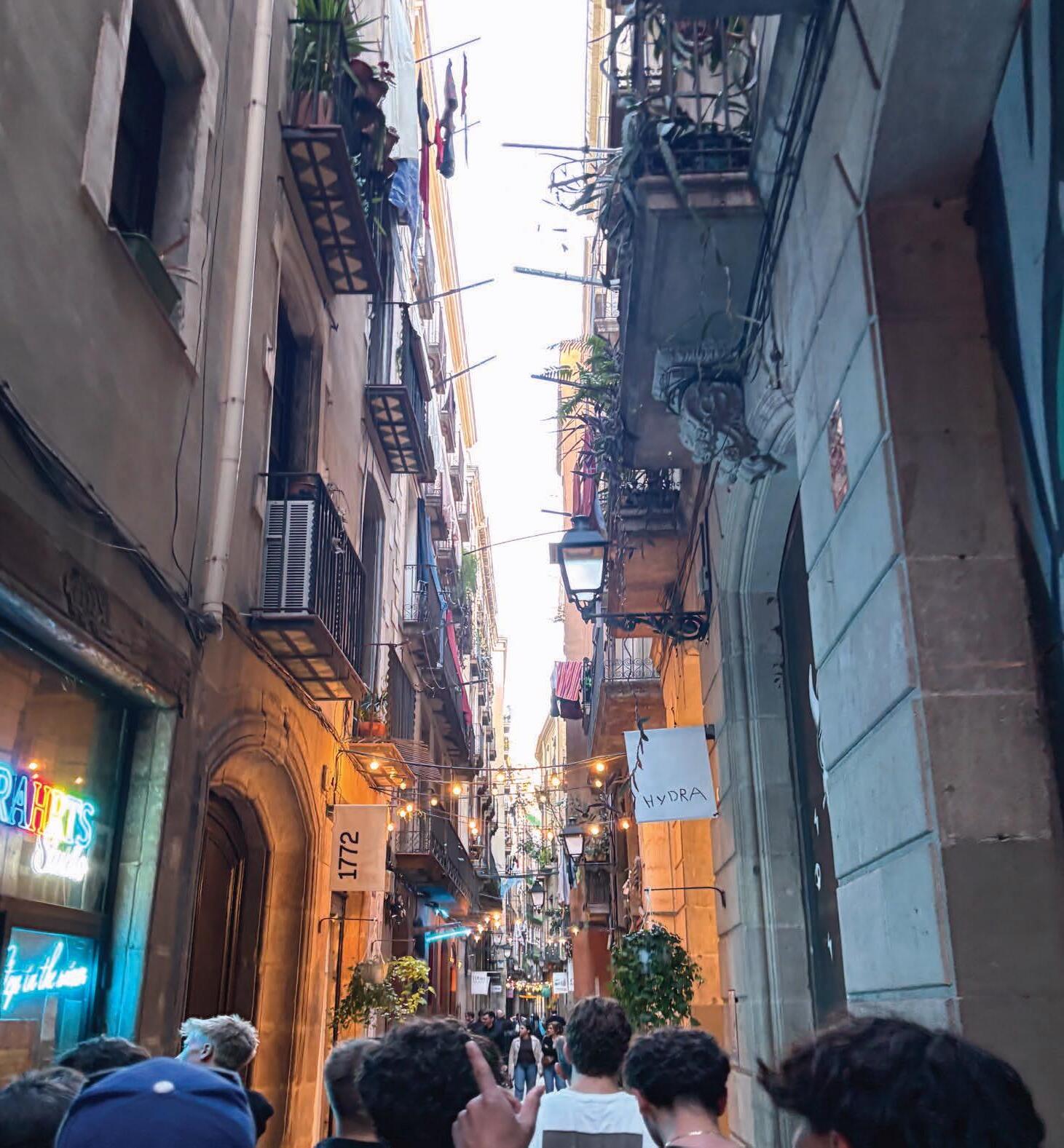
From Montserrat, there was another fairly lengthy descent all the way to Manresa. Walking along the same path Ignatius trod, the pilgrims arrived at the nal stop of the o cial Camino. A er a night’s rest, there was a brief tour of the city featuring the cave of Ignatius, and the group received their o cial Camino certi cates. e last few days were spent in Barcelona. A er Father Iriberri showed the pilgrims around the city, he le , having served as an incredibly trustworthy and reliable guide throughout the groups’
journey. During this tour, the group got the chance to see the Sword of Ignatius, a second-class relic of St. Ignatius. On the last day, the group went to see the Basilica Sagrada Famila, an absolutely breathtaking church that has been under construction for well over a century. A er this, the group had some free time to go about the remainder of the day, exploring the various parts of the city.
e group then ew home, a er an incredible physical and spiritual journey. From mountains to churches and relics, it was a new and transformative experience for all who attended.


3. e purpose of SPHS in Latin
8. Taxi! _____ that car!
11. Artist of 7 murals protesting the Russo-Ukrainian war (’26 Lagadi)
12. A good “back and forth” or protest
13. e minimum game total to win an MVP award in the NBA, says ’29 Dhaliwal
14. “Buy my stu !”, for one 15. Top, lid, or b
16. A rare variety of knowledge, or NBA player famed for being 6’7” (’29 Sun)
19. e nickname of Nemesio Oseguera Cervantes, according to ’28 Sobowale
22. A round not meant just for fun
23. e preferred tool of a no good, rootin’ tootin’ cowboy
25. Household vermin possibly cuter than a rat
28. “Not happening. Absolutely not. Not today”
30. Enchanted, spellbound, or a 1970s sitcom
32. U of W campus building named a er grains, according to ’28 Lavitt
34. Quite untidy, but a tad more eloquently put
35. e “scum of the earth” say St. Paul’s students and ’26 Barrientos
37. Dramatically faint from
1. Not yesterday… or tomorrow…
2. Popular candy bar name derived from “twin sticks”
4. Butter y, or what some wish Andrew Mountbatten-Windsor never
emotion becomes (Minuk ’26)
7. Possible nickname for the father of Judaism
9. e “maybe this, maybe that” conjunction
10. Each good home should aspire to have at least four of these
13. e newest product from LEGO, according to ’28 Bartman
14. Course variety for French, English, Math, Physics, and more
15. A word meaning unemotional that might give Bodø/Glimt an advantage on the home pitch (’27 Yeung)
17. One battle a er this might earn you the 2026 Best Picture Oscar
18. A tting onomatopoeia for scissors
19. Supposed true winner of the 2024 Venezuelan election (’27 Arias)
20. e bouncy friend who may leave a chocolate treat for you come April 5th (Khokhar ’28)
21. Winner of the WWE women’s rumble, according to ’26 Patterson
24. Shortage or meagerness
26. e continent which boycotted the 1966 FIFA World Cup, says ’28 Mutter
27. All dressed and salt and vinegar, for one
29. A chillier version of your favourite beverages
31. e “other” large ightless birds
33. What you might wish someone “bon voyage” for
36. at’s all, _____!


Image Credits
Lagadi `26 – Tu s University
Myles Lagadi `26/ Jennifer Walker
Minuk `26 - Kirsty Wigglesworth/ e Associated
Press
Khokhar `28 – e Golden Falcon
Barrientos `26 – Duong i Hai Yen/Vecteezy
Lavitt `28 – University of Manitoba
Sun `29 – Gator Gazette
Mannem `27 – Fifa World Cup
Mutter `28 – e News International
Patterson `26 – WWE
Dhaliwal `29 - Fadeaway World
Yeung `27 – ESPN
Brar `29 – Getty Images
Lagadi `26 – Myles Lagadi `26/ Jennifer Walker
Bartman `28 – LEGO
Arias ’27 - CBC

Mauricio Barrientos Garay
Landon Pinette
Myles Lagadi
Aris Anguluan
James Bailey
Manit Sethi
Matthew Mi
Keenan Patterson
Solomon Khokhar
Joseph Mutter
Maury Lavitt
Davis Cordeiro
Ferris Yeung


Teacher Confrences
Speech/Paul
April 28: Parent Retreat
April 30: All School Assembly

May 1: Gr12 Mother-Son Liturgy
Dress Code 2 in E ect (Polos)
Gr9: Men For Others Day

May 5: National Day of Awareness for MMIWG2S
School Assembly
May 6: AP Physics I Exam
Gr12 AP ELA Exam
Grad Photo Retakes
May 7: AP Physics II Exam
May 7-9: Drama Production: Murder on the 518
May 11: AP Calculus AB Exam
May 12: Gr12 AP French Exam
May 13 Gr11 AP ELA Exam
May 15: PD day