
Introduction

Every year, St Patrick’s Mental Health Services (SPMHS) publishes an Outcomes Report relating to clinical care pathways, clinical governance processes, clinical programmes and service user experience surveys. This summary provides some highlights in relation to analysis of the clinical outcomes for services provided by SPMHS in 2025.
The comprehensive Outcomes Report is the fifteenth of its type published by SPMHS and is central to the organisation’s promotion of excellence in mental healthcare. By measuring and publishing outcomes of the services we provide, we strive to understand what we do well and what we need to continue to improve.
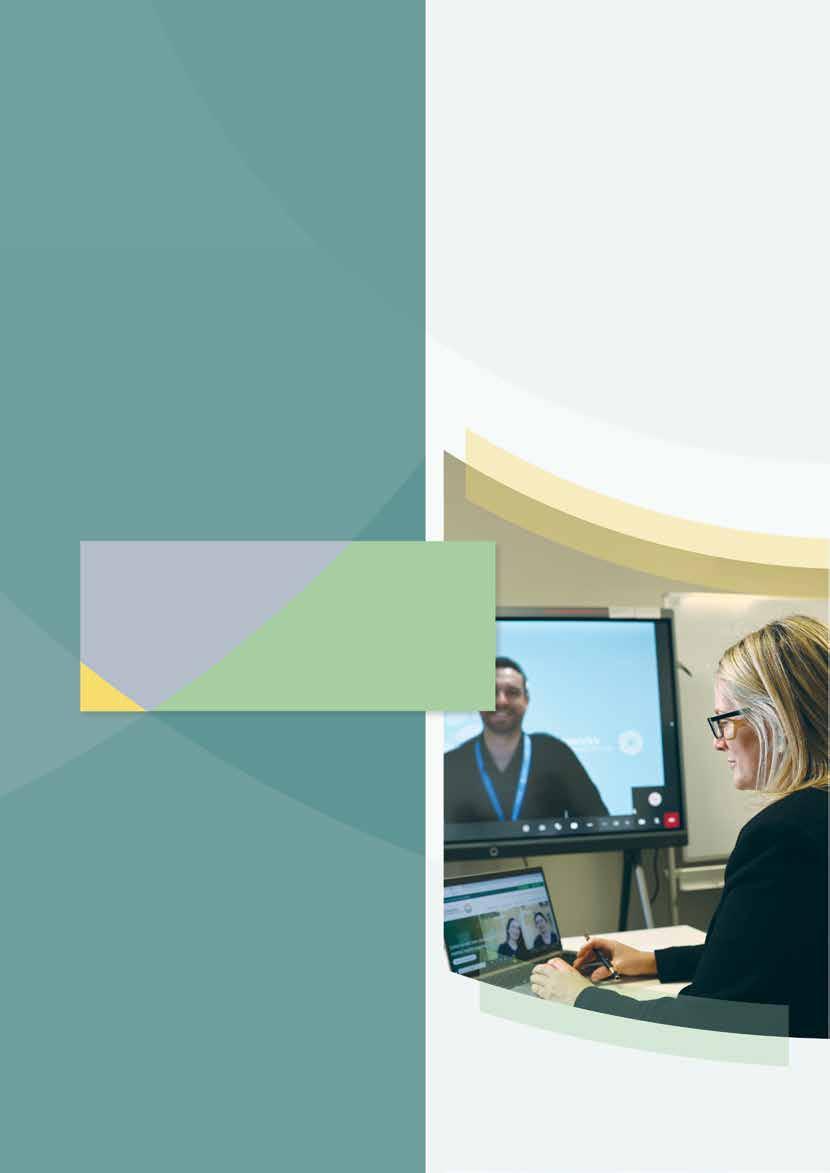
Since 2020, some of SPMHS’ services have been available through remote channels such as video, phone and email. Remote delivery of care is offered across a range of SPMHS services, based on a service user’s assessment of needs. Technology-enabled care has not replaced inpatient admission or other in-person care delivery where needed.
For the purpose of this Outcomes Report, the term ‘in-person’ admission is used when referring to our inpatient services where the service user is physically present in one of SPMHS’ hospital campuses.
This is to distinguish it from our homecare service, which offers almost all the elements of inpatient services, but is delivered through frequent contact daily over videocall and other technological channels.
Clinical outcomes
Clinical Global Impression and Children’s Global Impression Scales
The Clinical Global Impressions Scale (CGI) is a clinicianrated mental health assessment tool used to establish the severity of illness at point of assessment (CGIS) and global improvement or change scored following care, treatment or intervention (CGIC). The CGIS is rated on a 7-point scale, with the severity of illness scale rated from 1 (normal) through to 7 (most severely ill). CGIC scores range from 1 (very much improved) through to 7 (very much worse).
The Children’s Global Assessment Scale (CGAS) is used in our child and adolescent service. It provides a global measure of level of functioning in children and adolescents, scored by the multidisciplinary team (MDT) on a scale of 1 to 100, which reflects the individual’s overall functioning level.
Clinical Global Impression Scale (CGIC) - Final global improvement or change score (Adult inperson inpatient and homecare services)

Children’s Global Assessment Scale (CGAS) - Baseline and final assessment scales (Willow Grove Adolescent Unit)
Children’s Global Assessment Scale
Alcohol and Chemical Dependency and Dual Diagnosis Programmes: Clinical outcomes
The Alcohol and Chemical Dependency Programme (ACDP) is designed to support individuals with alcohol and/or chemical dependency or abuse to achieve abstinence by enabling them to develop an increased awareness of the implications and consequences of their drinking or drug-taking. The staged recovery programme is delivered by psychiatrists, addiction counsellors and ward-based nursing staff, with input from other disciplines including psychology, social work and occupational therapy.
The Dual Diagnosis Programme is designed for adults with a dependency on alcohol or chemical substances, and in addition, who have a co-morbid diagnosis of a mental health difficulty such as depression, anxiety or bipolar disorder. The aim of this programme is to enable service users to not only achieve abstinence and recovery in relation to substance use, but also to facilitate awareness, understanding and provide practical support and knowledge in relation to their mental health difficulties.
Since 2014, both the ACDP and Dual Diagnosis programmes have used the Leeds Dependence Questionnaire (LDQ) to measure the clinical outcomes of these multidisciplinary stepped-care programmes. The LDQ is a 10-item questionnaire, designed to screen for mild to severe psychological dependency on a variety of different substances, including alcohol and opiates. This measure was completed by service users pre and post-programme participation, and showed significant improvements in service users’ mean scores following completion for both programmes.
Total scores on Leeds Dependency Questionnaire 2025 Addiction and Chemical Dependency Programme: LDQ mean scores

Note: Higher scores indicate greater dependency
Diagnosis Programme: LDQ
Note: Higher scores indicate greater dependency
Acceptance and Commitment Therapy Programme: Clinical outcomes
Acceptance and Commitment Therapy (ACT) is an evidence-based psychotherapy that aims to teach people mindfulness skills to help them live in the “here and now” and manage their thoughts and emotions more effectively. ACT supports service users to identify and connect with their core personal values and integrate them into everyday action. Though ACT does aim to reduce symptoms, it primarily aims to change people’s relationship with anxiety and depression and to increase value-led behavioural activation.
During the 12-week programme, participants engage in a range of experiential exercises to help them develop the six core processes of ACT; mindfulness, thought defusion, acceptance, perspective-taking, values and committed action. The essential aim of this programme is to help people connect with what matters most to them and develop skills to help overcome the obstacles that get in the way of living a value-guided life. The programme aims to foster a key shift in terms of helping people to look at their lives in terms of workability; what helps them move closer towards who and where they want to be, and what brings them further away. This programme is primarily facilitated by an experienced counselling psychologist who also trains other clinicians in the ACT approach. The graphs below show the results from the core measures pre and post-completion of the ACT programme for participants in 2025.
Acceptance and Action Questionnaire (AAQ-II)
The Acceptance and Action Questionnaire (AAQ-II) is a seven-item measure of experiential avoidance or the tendency to avoid unwanted internal experiences – the opposite of which is psychological flexibility. Service users are asked to rate statements on a seven-point Likert scale from one - ‘never true’, to seven - ‘always true’. Scores range from one to 70, with higher scores indicating reduced psychological flexibility/increased experiential avoidance.
Mean scores on the AAQ-II decreased significantly, indicating greater psychological flexibility following completion of the programme.
Total mean psychological flexibility (AAQ-II) scores
Psychological flexibility mean scores comparison 2025

Note: Decreased scores indicate greater psychological flexibility
Behavioural Activation for Depression Scale (BADS)
Behavioural Activation for Depression Scale (BADS) measures behaviours hypothesised to underlie depression and examines changes in activation, avoidance/rumination, work/school impairment and social impairment. Scores range from 0 to 150, with higher scores representing increased behavioural activation.
Mean BADS scores increased significantly indicating greater behavioural activation.
Total mean behavioural activation (BADS) scores
Behavioural activation mean scores comparison 2025
Note: Higher scores indicate increased behavioural activation
Five Facet Mindfulness Questionnaire (FFMQ)
Five Facet Mindfulness Questionnaire (FFMQ) assesses the tendency to be mindful in daily life, including five facets of mindfulness: observing; describing; acting with awareness; non-reactivity to inner experience; and non-judging of inner experience. Scores range from 39 to 195, with higher scores suggesting higher levels of mindfulness.
Total mean FFMQ scores increased significantly, indicating greater levels of overall mindfulness.
Total mean FFMQ scores
Total FFMQ mean scores comparison 2025
Note: Higher scores indicate higher levels of mindfulness
Work and Social Adjustment Scale (WSAS)
Work and Social Adjustment Scale (WSAS) is a brief five-item service user self-report measure, which assesses the impact of a person’s mental health difficulties on their ability to function in terms of work, home management, social leisure, private leisure and personal or family relationships. Total scores for the measure can range from 0 to 40, with higher scores indicating greater impairment in functioning.
The total WSAS scale score was used to assess functioning pre and post-participation in the ACT programme in comparison to previous year. Mean scores decreased significantly, indicating that those who completed the ACT programme showed significantly less functional impairment postintervention.
Total Work and Social Adjustment Scale (WSAS) scores
The Self-Compassion Scale (SCS)
The Self-Compassion Scale (SCS) is a 26-item self-report scale which was designed to assess an individual’s levels of self-compassion. Selfcompassion is measured through six domains: self-kindness; self-judgement; humanity; isolation; mindfulness; and identification or over-identification with thoughts. Each item is rated on a 5-point Likert scale, from 1– ‘almost never’, to 5 – ‘almost always’.
Total SCS scores increased significantly, indicating higher overall levels of self-compassion postintervention.
Total Self-Compassion Scale scores pre and post-intervention Total self-compassion mean scores comparison 2025
Note: Higher scores indicate higher levels of self-compassion
Dialectical Behaviour Therapy Programme: Clinical outcomes
The Dialectical Behaviour Therapy (DBT) programme aims to teach emotional regulation, distress tolerance, mindfulness and interpersonal effectiveness skills for individuals who experience out of control behaviour in the context of ‘emotional dysregulation’. DBT is a multimodal staged psychotherapeutic approach. The DBT programme at SPMHS is a Stage 1 DBT programme, with a focus on learning skills aimed at increasing behavioural control, focusing on moving from out-of-control behaviour to behaviour control in the context of high-intensity emotions. Service users’ behaviours determine the stage of treatment, and this determination is done via assessment (not just based on reports of diagnostic status).
DBT Stage 1 targets life-threatening behaviours, severe therapy-interfering behaviours and severe quality of life-interfering behaviours. SPMHS delivers two streams of the DBT programme; the ‘Comprehensive’ DBT stream consists of four DBT modes (skills training; one-to-one therapy; phone coaching; and weekly therapist consultation team meetings). The ‘Skills Only’ stream seeks to support individuals with emotional and behavioural dyscontrol who do not have a recent history of suicidal behaviour or deliberate self-harm. Both streams consist of 24 group sessions over a three-month period and eight one-to-one sessions are offered during the ‘Comprehensive’ stream. The DBT Programme also introduced and reported on a new pilot DBT Graduate Group for the first time in 2025.
The three outcome measures for this programme were the Difficulties in Emotion Regulation Scale (which assesses emotion dysregulation); the Five Facet Mindfulness Questionnaire (which measures five aspects of mindfulness – observing, describing, acting with awareness, non-judging and nonreactivity); and the Ways of Coping Checklist (measuring the thoughts and acts that people use to deal with the internal and/ or external demands of specific stressful encounters). Significant improvements were observed in use of mindfulness, coping styles and emotion regulation. The graphs on the right show the results for the DBT programme.
Difficulties in Emotion Regulation Scale (DERS) Total scores 2025
Note: Higher scores indicate greater difficulties with emotion regulation
Five Facets Mindfulness Questionnaire (FFMQ) Total Scores 2025 FFMQ total mean scores comparison
Note: Higher scores indicate more effective use of mindfulness
Ways of Coping Checklist Subscale (DBT-WCCL) scores
DBT-WCCL scores

Note: Higher scores indicate more effective use of DBT coping skills
Total WCCL dysfunctional coping scores
Note: Decreased scores indicate improved coping skills
Note: Decreased scores indicate reduced tendencies to attribute blame to other people
Overall views of St Patrick’s Mental Health Services
St Patrick’s Mental Health Services is committed to listening to, and acting upon, the views of those who use and engage with its service. The Service User Experience Survey was developed to gather feedback, and it is distributed to service users following inpatient, outpatient, day patient or homecare treatment.

Those who completed and returned the Service User Experience Survey within our adult inpatient and homecare services demonstrated a high level of satisfaction with the care they received.
The tables below outline respondents’ ratings of care and treatment while attending SPMHS and their overall experience of SPMHS, where 1 = lowest and 10 = highest.
Inpatient respondents’ ratings of care and treatment and overall experience of SPMHS in 2025
Homecare respondents’ ratings of care and treatment and overall experience of SPMHS in 2025
Report strengths:
SPMHS continues to provide detailed insights into service accessibility, efficacy of clinical programmes and service user experience. Reporting this breadth of routinely collected clinical outcomes demonstrates a willingness to constantly re-evaluate the efficacy of clinical programmes and services in an open and transparent way.
A detailed service user experience survey, encompassing all service delivery modes within SPMHS, is now well established; reinforcing the organisation’s commitment to service user-centred care and treatment.
In 2025, overall Service User Experience Survey response rates remained strong. The results presented in this annual Outcomes Report are reflective of the continued achievement of excellent levels of compliance on annual Mental Health Commission inspections.
The 2025 Mental Health Commission’s annual inspections of SPMHS’ three approved centres confirmed 100% compliance with all applicable rules, codes and regulations as operationalised within the Judgement Support Framework.
The organisation delivered a full and comprehensive Outcomes Report in 2025, demonstrating the commitment of all SPMHS staff to continuously measure and improve our services.
In keeping with efforts to expand the number of services incorporated in this report, an additional two programmes were added to the Outcomes Report this year: The Temple Formulation Group and the Brief Group Schema Therapy Programme. Further details on outcomes for both of these programmes are available in the long-form Outcomes Report here. The DBT Programme also introduced and reported on their new pilot DBT Graduate Group for the first time in 2025.
Technology-enabled care continues as an effective option for clinical service delivery and providing access and convenience to service users.
Report challenges:
We continue in our efforts to expand the number of services included within the Outcomes Report, but as yet we do not have all areas of service delivery included. Efforts to benchmark the results of this report remain difficult. In order to best capture the efficacy of clinical programmes and services, there have been changes in the outcome measures used, which can create difficulties when comparing results to previous reports. The report’s clinical outcome results cannot be solely attributed to the service or intervention being measured and are not developed to the standard of randomised control trials.