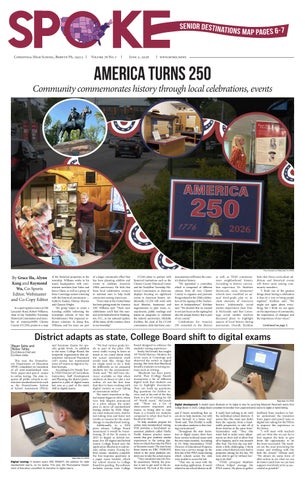
America turns 250
Community commemorates history through local celebrations, events
By Grace Hu, Alynn Kang and Raymond Wu, Co-Sports Editor, Webmaster and Co-Copy Editor
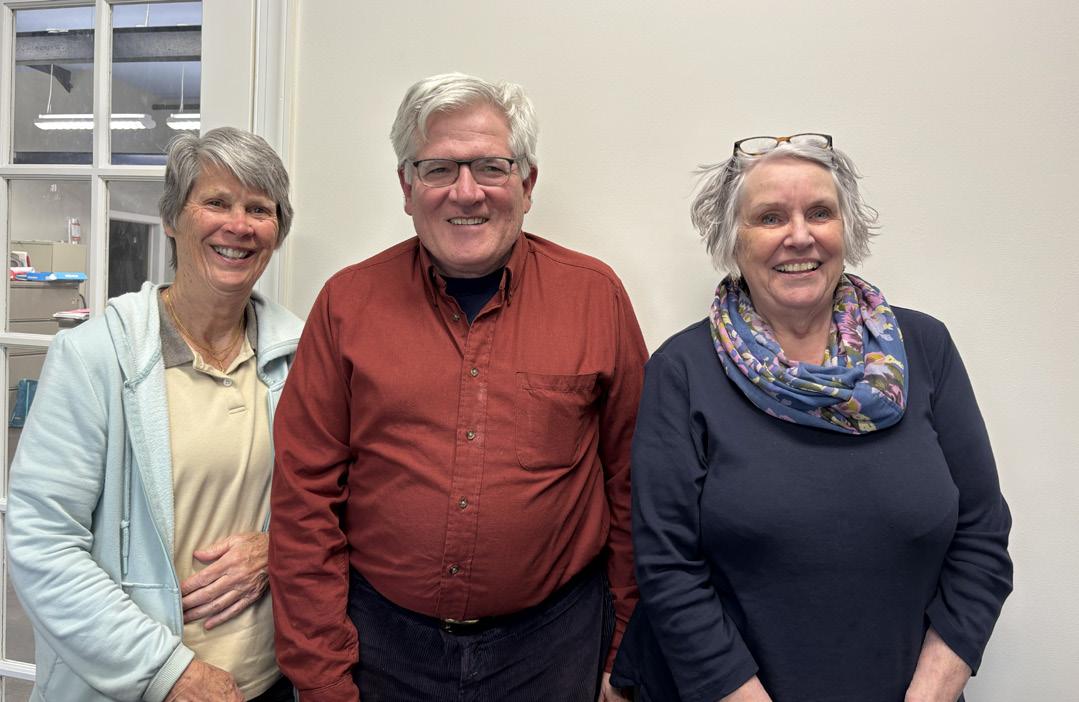
In a
(CC250), points to a map
of the historical properties in the township. Williams works in his team’s headquarters with commission members Jean Faber and Janice Olsen, as well as a group of three Conestoga seniors interning with the historical commission — Kathryn Kaskey, Ehimay Sharma and Clayton Wright.
The group hopes to create a traveling exhibit informing the township’s schools of how the Revolutionary War impacted ordinary colonists. In doing this, Williams and his team are part
of a larger community effort that has been planning exhibits and events to celebrate America’s 250th anniversary. He feels that these local celebrations connect to national ones to help build connection among Americans.
“Every state in the United States has been getting ready for America 250,” Williams said. “There (are) celebrations you’ll find this summer at the federal level in Washington, D.C., at our national (parks), all the states, all the counties, down to our township.”
CC250 plans to partner with historical institutions such as the Chester County Historical Center and the Tredyffrin Township Historical Commission to showcase displays focusing on significant events in American history. Additionally, CC250 will work with local libraries, businesses and organizations to plan tours, reenactments, public readings and hands-on programs to celebrate the nation’s anniversary. Michelle Kichline, the chair of the CC250 commission, feels that these com-
memorations will honor the county’s distinct history.
“We appointed a committee which is comprised of different citizens from all over Chester County to organize and promote things related to the 250th celebration of the signing of the Declaration of Independence,” Kichline said. “We decided that we wanted to not just focus on the signing but also the unique history that is part of our county.”
Celebrations for America 250 extended to the district
as well, as TESD commemorates neighborhood history.
According to district curriculum supervisor, Dr. Matthew Sterenczak, some elementary schools have modified an annual third-grade play to include elements of American history. Additionally, social studies department chair Emily McGready said that Conestoga social studies teachers discussed plans to highlight aspects of local history during instruction. Overall, Kichline
feels that these curriculum additions and historical events will foster unity among community members.
“I think one of the greatest things about having a celebration is that it’s a way to bring people together,” Kichline said. “We might not agree about everything, but I think we can agree on the importance of community, the importance of dialogue and the importance of our voices.”
District adapts as state, College Board shift to digital exams
This year, the Pennsylvania Department of Education (PDE) completed its transition of all state-standardized tests from paper-and-pencil exams to online testing. The state requires all public schools to administer standardized tests such as the Pennsylvania System of School Assessment (PSSA) and Keystone Exams for specific grade levels. In addition to the state, College Board, the nonprofit organization that administers Advanced Placement (AP) exams, has transitioned most AP exams to digital or hybrid formats.
According to Dr. Wendy Towle, TESD Director of Curriculum, Instruction, Staff Development and Planning, the district participated in a pilot of digital exams last year as a part of the state’s shift to digital exams.
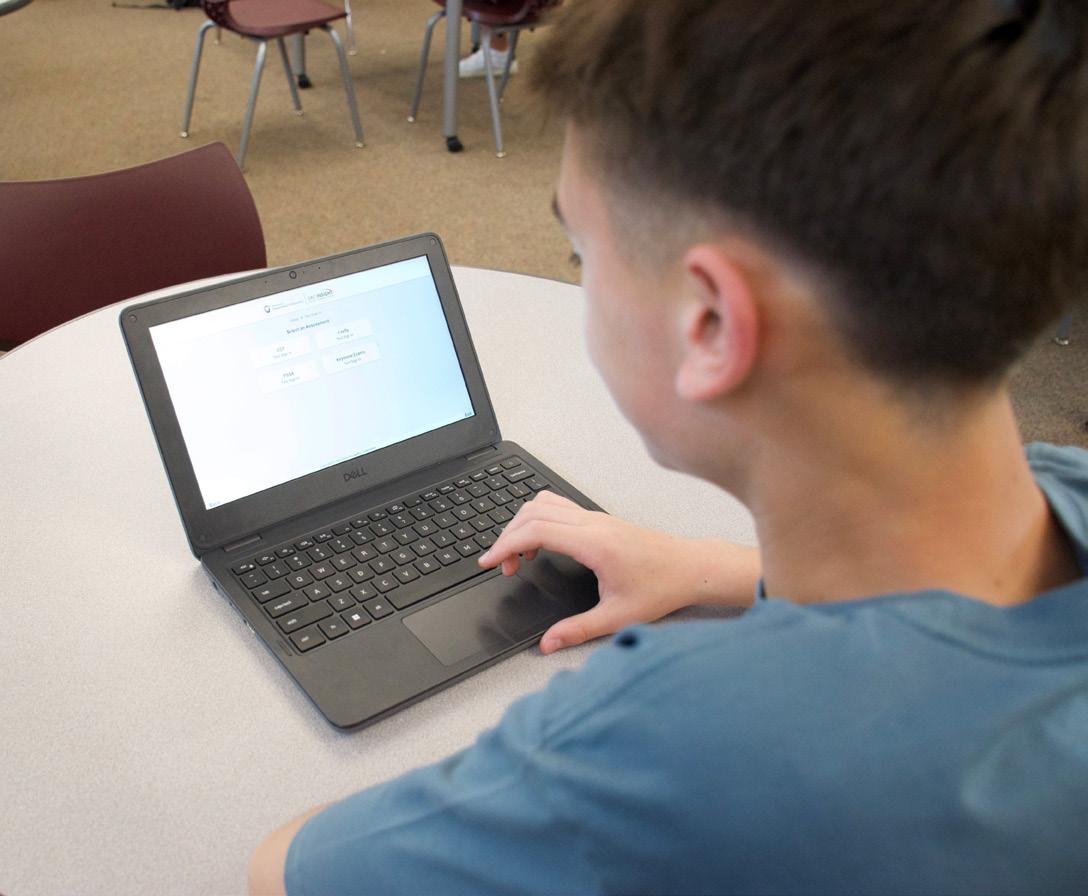
“We had various grade levels as part of the pilot. (We were) really trying to learn as much as we could about what the actual assessment itself would look like, things that we might need to do a little bit differently as we prepared students for the assessments,” Towle said. “We still have (devices) available so that when students sit down to take a test online, it’s not the first time that they’ve been working with digital content or even taking an assessment online.”
The state’s transition to digital exams began in 2024, when Gov. Josh Shapiro announced in a press release the state’s plan to move all standardized testing online by 2026. Shapiro cited reduced costs, shorter test-taking time and faster test results as reasons for the state’s change in standardized testing.
Additionally, in a 2024 press release, College Board announced it would be transitioning 28 of the 36 exams in 2025 to digital or hybrid formats. For AP digital and hybrid exams, College Board uses the application Bluebook to administer online exams. During hybrid exams, students complete the free-response questions in a paper exam booklet, which the school returns to College Board for grading. The software includes various tools College
Board designed to enhance the students’ testing experience.
Emily McGready has taught AP World History: Modern for seven years at Conestoga and observed the switch to digital testing. She feels that Bluebook benefits students in testing sections such as writing.
“Bluebook has been pretty useful. They (College Board) incorporate a lot of different digital tools that students can use to highlight documents. They can mark up questions, flag questions for further review, and at the end of the day, there is a lot of writing for the AP World exam,” McGready said. “There are a lot of short-answer responses and essays, so being able to type them is a benefit for students compared to when they had to handwrite them.”
To help students prepare for online state-standardized testing, PDE provides a benchmark assessment platform called Firefly. Firefly features practice assessments that give students similar experiences to the testing platform on which they take the PSSA or Keystone exams. The state hosts these exams on DRC INSIGHT, which is the same platform students use to take the actual exams.
“They (students) take the Firefly assessment. Mainly, the practice is just to get used to the environment. We look at the scores

and if there’s something that we can do to help students, (we will) move forward in a better way,” Towle said. “But (Firefly) is really to introduce students to this (testing) environment.” Throughout the state transition to digital exams, there have been various technical issues with the new exam systems. According to Dr. Mike Szymendera, TESD Director of Educational Program, there was a service outage on the first day of the PSSA exam during which schools across the state were unable to access the test.
“That was an issue with the state testing application. It wasn’t related to our school district at all.
It really had nothing to do with the individual school districts. It seems like (the state) just didn’t have the capacity, from a bandwidth perspective, to take all of those sessions at the same time,” Szymendera said. “They (the state) had to make some adjustments on their end to allow that all to happen, and it was smooth after that. The first day was definitely a little challenging. I think some school districts even had to postpone testing for the day. We were able to get by without having to do that.” VFMS principal Matthew Gibson helped manage the PSSA exams. He plans to gather
feedback from teachers to better understand the transition from paper-and-pencil tests to digital test-taking for the PSSAs
quiet upstairs room on Old Lancaster Road, Robert Williams, chair of the Tredyffrin Township Historical Commission and member of America250PA Chester County
Conestoga
Photo illustration by Tvisha Jani/The SPOKE
Rajan Saha/The SPOKE Rajan Saha and
TESD announcES aDminiSTraTivE changES
On May 26, the TESD school board announced administrative changes for the 2026-27 school year via an email to families. The email announced the identity of the new Bear Hill Elementary School principal. In addition, the email stated that Beaumont Elementary School, Devon Elementary School and Hillside Elementary School will have new principals, with additional changes occuring in administrative roles.
On May 27, Tredyffrin Township started construction of new park features on a 5-acre property near 355 Chase Road. Developers originally planned to develop upscale condos on the property. However, the township delined the zoning change that would permit the construction and later siezed the property.
SEPTa PlanS SErvicES
With the Philadelphia matches of the World Cup starting in June, SEPTA is offering extra services for fans to travel to and from Lincoln Financial Field. There will be an overnight service on train lines B and E1, while busing will increase to drive more frequently.
El niño PoSES ThrE aT of incrE aSED flooDing
As sea levels have risen in past years, the threat of flooding in coastal areas due to this year’s El Niño has increased. El Niño is a climate phenomenon with warm temperatures and weak winds in the Pacific Ocean and increased rain in the Atlantic Ocean. This summer, widespread flooding could occur even without storms.
Tredyffrin responds to local AI data center proposal
Signs stating “No data center” sprawl across lawns in East Whiteland Township, reflecting opposition to the planned construction of Sentinel Green Fig Data Center on Swedesford Road. According to a March 13 news release by Suburban Realtor’s Alliance, the East Whiteland Board of Supervisors approved a proposal from developers Sentinel Data Centers and Green Fig Land LLC in 2024 for a 1.5 million square feet data center to power the growing use of artificial intelligence. However, the recent opposition largely stems from an updated proposal by developers in December 2025, which included expanding the size of the data center by around 60%.
“Imagine that all of a sudden, if you’re in East Whiteland and suddenly you feel like you have this airport that’s moved in next door to you because of all the jet engines about,” said Tredyffrin Township Board of Supervisors member KS Bhaskar.
Following continued community discontent, a May 8 East Whiteland Township Board of
Supervisors FAQ release states that the developers renounced the 2025 land development plan and are planning to move forward with the approved plan from 2024. The situation in East Whiteland prompted legislation regarding data centers in townships across Chester County, such as Tredyffrin, while also sparking continued community
response against the data center’s construction. On April 20, the Tredyffrin Board of Supervisors passed a motion to begin drafting regulations for data center construction.
“I think eventually we would have gotten around to (creating legislation) with data centers, certainly from a timing point of view. The fact that there was
this issue happening in East Whiteland kind of added a certain amount of urgency to it,” Bhaskar said. “We don’t want to be caught flat-footed when someone comes to us and says, ‘We want to build a data center.’”
According to Bhaskar, while drafting the legislation, the township will reference a data center ordinance guide created by Chester County and the Montgomery County Planning Commission. Bhaskar said the goal of the legislation is to address public concerns by establishing specific areas where developers can construct data centers and setting requirements for size, electricity, energy, cooling systems, stormwater management and traffic near the data center during construction.

Chester County Peer Ambassador Program strives
to improve veteran support


In an April 15 news flash, the Chester County Department of Veteran Affairs (CCDVA) launched the Peer Ambassador Program (PAP). The program stems from Innovate Chester County, an organization that seeks to improve the lives of citizens living in Chester County. According to the CCDVA, PAP focuses strictly on the livelihoods of veterans in the area and aims to inform veterans of benefits gained through their service, such as educational assistance, healthcare and assisted living. To manage the organization, PAP has selected three ambassadors, Sarah Mears, Vincent Perez and Eric Stetson, to manage the organization. One of these ambassadors, Stetson, served as a U.S. Army Lieutenant Colonel, joining the force in 1991 and retiring in 2015. The primary role of peer ambassadors like Stetson is to advocate for the program and expand its outreach. By hosting one-on-one and small group meetings, peer ambassadors can help support veterans through adversities.
“I work with some others in the community on formulating the program and just talking about what the ambassadors would or would not do and how to prepare them,” Stetson said. “I want to help expose the Chester County Veterans Program to more veterans in the area and to the services provided by the Chester County Veterans’ Office.”
According to the CCDVA, PAP serves as a way for veterans to connect with each other through shared experiences and reflect on the abilities they have gained through service. Stetson feels that veterans often develop many lifelong skills from their service, such as resiliency and strength.
“It’s a demanding and unique lifestyle,” Stetson said. “I wish more people would realize that these folks that serve in the military really are highly developed people, and their family members are as well.”
According to Stetson, the best way for family or community members to help veterans reorient themselves into normal life is to coach or introduce them to new
people. The CCDVA said that PAP aids veterans by educating them on opportunities to pursue support for issues, such as housing, mental health and employment.
“Veterans don’t want a hand out,” Stetson said. “They want a hand up into returning to society, like finding a good job, starting a new career and learning how things happen in the civilian world.”
Dave Heimbach, a Conestoga parent and former veteran, served as a radio operator and communication center operator in the United States Marine Corps. Heimbach feels that PAP and the general community should focus on providing better support for veterans’ mental and physical health in veteran administration facilities that are typically underfunded.
“Life in the military can be very difficult, and many veterans have lived through experiences that would be impossible for a non-veteran to understand,” Heimbach said. “These experiences have a lasting impact and it is important to respect a veteran’s boundaries when discussing their service with them.”


“You can’t say no to data centers, but what you can say is, ‘If you’re going to have data centers, we’re going to restrict them to places like (where) you’ve already zoned for heavy industry,’” Bhaskar said. “Then what you need to do is also make sure that when the data center comes in, there are ways of managing it. Instead of saying you’re using water, we can say things like you must have a geothermal cooling system.”
Bhaskar said that data centers have existed for years, though more recently, companies are constructing data centers specifically for AI-related purposes and to meet the demands of increasing use.
“We’ve been living with data centers for a long time. Anytime if you’re using Gmail or you’re
using a search engine or anything like that, you’re basically using a data center,” Bhaskar said. “So now people are building these giant data centers specifically for the purposes of doing AI, and anytime you have computers, you’re going to have electricity consumption, heat generation, you’re going to need network access and all of those things. Those are things that any data center has to deal with, except that when you have a hyperscaler-type data center, then it just means that you need all of these in much larger quantities, to the point that people get concerned about it.”
According to Bhaskar, the Tredyffrin Board of Supervisors will likely pass the final legislation next year, following a public review. Junior Jack Myers feels that the legislation is critical for Tredyffrin because of the community impact of a data center.
“I think it’s important because it’s very essential that we make sure (the data centers) aren’t having a negative environmental impact,” Myers said. “And that these companies are building the data centers ethically with the community in mind.”
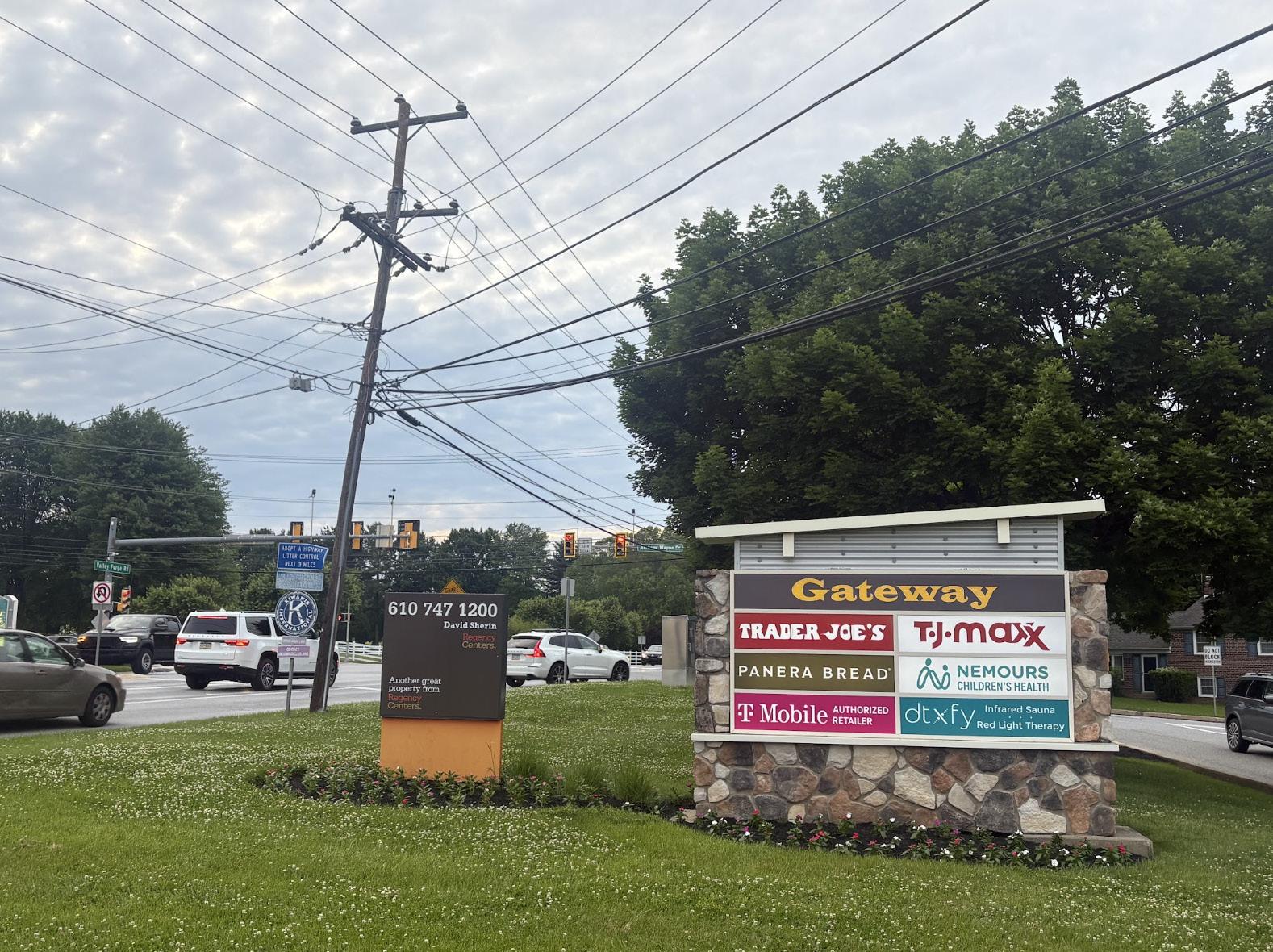
On May 12, Tredyffrin Township received $1.3 million in Transportation Alternatives Set-Aside grants. According to a news release by state Rep. Melissa Shusterman, the township will allocate the funds to the Gateway Multimodal Connections Project. The project aims to construct 1,550 feet of sidewalk across Valley Forge Road and Swedesford Road, connecting Valley Forge Middle School, Gateway Shopping Center and the Chester Valley Trail. According to MyChesco, Shusterman said the goal behind the sidewalk addition is to increase the safety of pedestrians and the accessibility between residential areas, shopping centers and public infrastructure.
The news release states that the Pennsylvania Department of Transportation (PennDOT) allocated the funding to the municipality as part of the federal Bipartisan Infrastructure Law of 2021. According to MyChesco, the law supports projects involving pedestrian and bicycle infrastructure, trail development, school safety initiatives and transit access improvements.
“I am grateful to PennDOT for providing funding for this project and for (its) continued support of our growing community,” Shusterman wrote in her news release. “I am also thankful to Tredyffrin Township for continuing to prioritize the safety of our children and neighbors. This is a much-needed update that will connect our communities!”
Many students from VFMS actively visit the Gate -
way Shopping Center after school, and these sidewalks will provide a safer route for them. Currently, no sidewalk directly connects the two locations, causing some students to walk along the street. Freshman Lucy Kwon attended Valley Forge Middle School and often walked to the Gateway Shopping Center after school.
District to keep iPads at elementary schools
On April 16 during the T/E Education Committee meeting, school board members decided that students in grades K-4 will no longer be allowed to bring their iPads home starting the 2026-27 school year. As a result of the COVID-19 pandemic, the T/E School District issued take-home devices for elementary and kindergarten students. According to the Education Committee minutes linked on the district website, kindergarten students will no longer have their own individual iPads. Instead, kindergarten classes will have a few iPads kept in the classroom for station work. The district will continue to issue individual iPads for elementary school students in grades one through four, however they will not be allowed to take them home. Dr. Michael Szymendera, TESD Director of Educational Program, helped shape TESD’s new elementary school iPad policy and said the
policy change occured after conversations with community members and school staff that raised concerns such as increased screen usage.
“We’re increasingly hearing voices in the parent community that would like students to have less time or less access to devices,” Parker said. “So if we can teach intentionally and in meaningful ways without needing to send home those devices, we’re doing our part to reduce (the) time that students spend in front of them.”
According to Dr. Todd Parker, principal of Devon Elementary School, TESD consulted administrators and teachers when it decided to change the iPad policy.
“I think mostly conversations with parents and getting more of a sense from the community that this was an issue that they would like to see some change (inspired T/E to revise its iPad policy),” Szymendera said. “Then also talking with teachers and building administrators about what they’re experiencing in their classrooms and in the
school, this seemed like a good time to make some changes.”
In addition, the board proposed a packet plan for flexible-instruction days (FID), or when students are not

iPad use, freshman Naomi Lee worries about the impact a lack of take-home devices will have on homework. Lee regularly helps her sister in third grade with homework.
“I think (homework will) be a little bit harder because a lot of the stuff is done online. They make you read books online. They also have a bunch of apps where you watch videos for homework,” Lee said. “So, that’s obviously very different.”
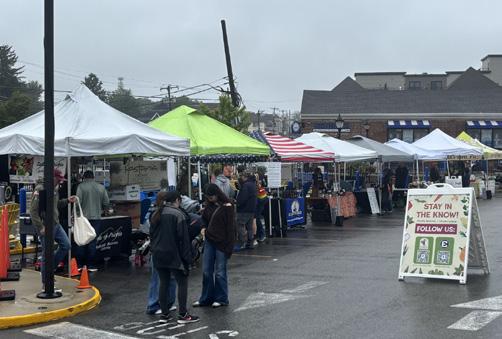
Sidewalks for safety: The Gateway Shopping Center entrance serves
walking path for students at Valley Forge Middle School.
Tvisha Jani/The SPOKE
Seeking support: The Chester County Government Services Center in West Chester provides support to local veterans. The Chester County Department of Veteran Affairs launched the Peer Ambassadors Program to further this mission.
Teagan Penny/The SPOKE
County reflects on history, recognizes historical significance
Continued from page 1.
Chester County holds 250 years of historical significance
CC250 and its partners aim to organize celebrations to highlight the county’s role in the nation’s history. According to the CC250 calendar, these events will focus on how major historical events — including the American Revolution, French and Indian War, Civil War and Women’s Rights Movement — played out in the local area.
In particular, CC250 will explore the county’s significance during the American Revolution through traveling exhibits such as the “Forged In Freedom” display at Springton Manor Farm County Park and The American Revolution Experience Traveling Exhibit. These displays will move to various public spaces such as libraries and historical societies throughout the county. Michelle Vintson, educational program manager at the Chester County History Center, feels that historical displays can help immerse viewers in the past.
“When you grow up, you may not know that history happens in your own backyard. We are lucky here in Chester County that we have all of our local history that we have with the Battle of Brandywine (and) the Battle of the Clouds, and we do learn about the Paoli Massacre,” Vintson said. “You learn about these things, but if you don’t go out and see these exhibits, then they’re nothing but words on a page. By coming to these exhibits, you’re able to actually take a step forward into that time period.”
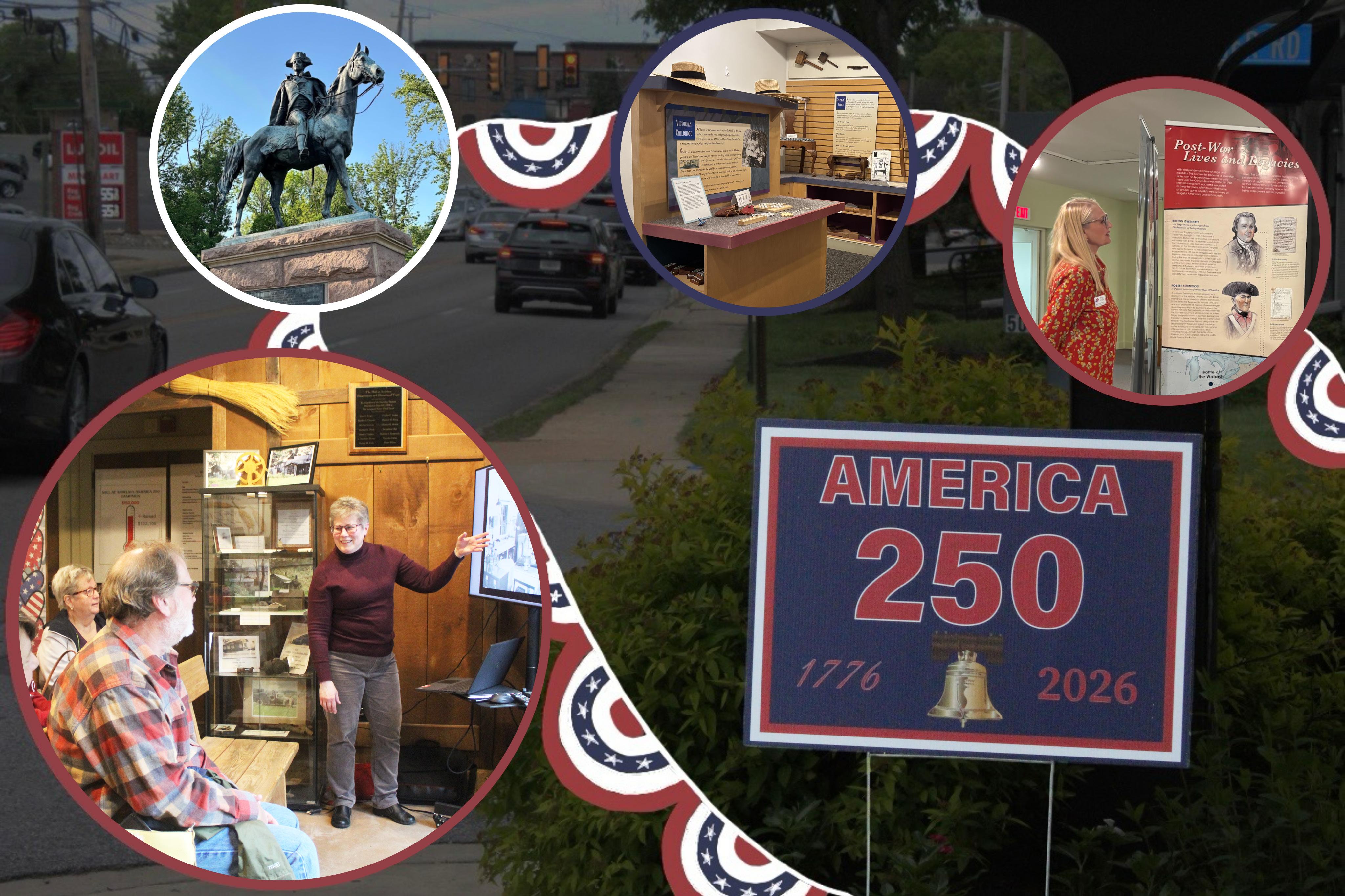
CC250 hopes to highlight meaningful individuals and events during the American Revolution, connecting them to the area. According to the Chester County Historical Society, in 1777, Gen. George Washington led the Continental Army for a winter encampment in Valley Forge, and notable generals such as Marquis de Lafayette and Louis Lebègue Duportail stayed in local houses, which the Tredyffrin Township Historical Commission marks as historical sites today.
“Washington perched himself in Valley Forge because it was close enough to Philadelphia that if he was needed, he could spring into action,” Olsen said. “I think Tredyffrin played a big role in that (the continental victory), because part of Valley Forge is right here in Tredyffrin Township.”
As Chester County grew, it continued to reflect notable movements occurring throughout the nation, such as the 1932-34 school fight that was a part of the larger civil rights movement. According to the Tredyffrin Township Historical Society, Black children in the township successfully boycotted the district’s segregation of schools, reflecting nationwide attitudes towards integration. CC250 will work with townships in the county, public libraries, local businesses and historical societies to commemorate such events.
As a student, Wright feels that learning history is necessary to become informed in modern life. He believes that reflecting on the past can help Americans form goals for the present and future.
“By focusing on local history and things that were happening directly here, a lot of our goals are to try and make it so that the community is thinking more about how history plays a role in our society today,” Wright said. “We have lots of different things happening technologically (and) politically. Just being able to look at the past and be able to transpose or compare that to the future allows us to get a better idea of our place within our society and what we want to do to make things better for ourselves.”
Local communities bring America 250 to life
Historical commissions and sites across Chester County are planning events to mark America’s 250th anniversary with community celebrations and historical programs. These efforts aim to engage residents and visitors in reflecting on the region’s role in the nation’s founding while making local history more accessible and meaningful to the public.
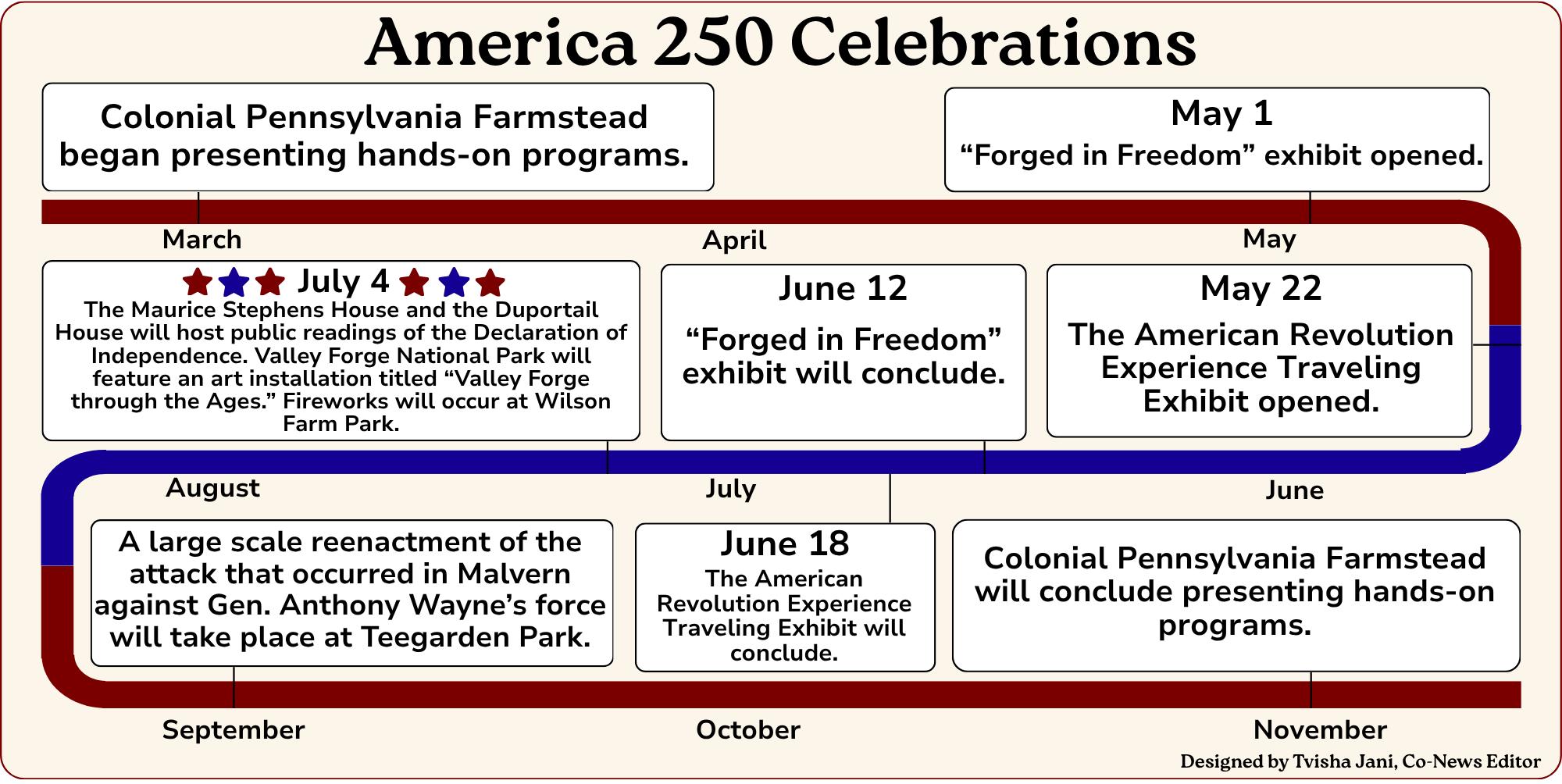
Sarah Lerch, Director of Colonial Pennsylvania Farmstead in Newtown Square, said that while the farmstead continues its usual programming, staff are expanding workshops, public events and outreach this year as part of the America 250 commemoration.
She explained how activities such as hearth cooking, weaving and blacksmithing help visitors engage more closely with the county’s history.
“People being able to have a tangible connection to the past through the act of doing these skills is really important for us,” Lerch said. “When you’re doing, as opposed to reading about it or seeing it on TV, you’re learning the challenges and struggles or triumphs that come along from actually doing something.”
The surrounding community encourages broader participation in America 250 celebrations by commemorating the nation’s Declaration of Independence. The Maurice Stephens House and the Duportail House will host public readings of the Declaration on July 4. Local libraries, including the Tredyffrin, Easttown and Paoli libraries, are also planning public Declaration reading events throughout the summer. Additionally, CC250 is organizing “Dare to Declare” events for local students and teachers. According to Stacey Ballard, liaison of CC250, the project encourages students to film themselves reciting a “Gen Z version” of the Declaration of Independence.
The community further expands its celebration with reenactments that interactively showcase the county’s history. Williams is helping organize a large-scale reenactment in September at Teegarden Park, where participants will rec-
reate a British military camp and stage an attack that occurred in Malvern against Gen. Anthony Wayne’s forces.
Alongside these initiatives, historical sites and public spaces such as Valley Forge National Historical Park prepare for July 4 celebrations. Festivities include “Valley Forge through the Ages,” a memorial art installation depicting Washington and his military leadership during the Revolutionary War. The program also features live band performances spanning music from the late 19th through 20th centuries, and reenactors conducting cannon-firing demonstrations at the Muhlenberg Huts. Historical commissions of Chester County are working to ensure that smaller towns and township-led events stay visible as part of the broader regional celebration. According to Williams, the emphasis across the county remains on showing how local communities helped shape Revolutionary War history.
only to the big cities and the important people, then people like us don’t have buy-in.”
District integrates American history into events, curriculum
Students are celebrating America 250 as the district introduces various events and activities.
Third graders at VFES, BES and DES participate in an annual end-
others. The play will also feature landmark documents, including the Declaration of Independence and Lincoln’s Emancipation Proclamation.
“‘Under Billy Penn’s Hat’ is a show that we’ve been doing for many, many years. This year, we decided that because it’s America 250, we’re still going to do the same thing with Pennsylvania, but we want to spotlight events through U.S. history,” said Devon Elementary third-grade teacher Sean Axel.
By focusing on local history and things that were happening directly here, a lot of our goals are to try and make it so that the community is thinking more about how history plays a role in our society today.”
tour sites into classes, featuring events and locations such as the Berwyn School Fight and the Nike Missile Site.
“We’ve been learning more about some of these local sites and connecting them for students.” McGready said.
As part of “Read Across America” week, VFES students engaged in various activities that celebrate American literature. According to Sterenczak, many elementary school spring fairs this year incorporated themes of America 250 in events and celebrations. He said that schools across the district embedded elements of America 250 into the school environment by selecting concert pieces that carry historical significance, as well as publishing daily “America 250 Facts” that inform students of important events and historical figures from that specific date in history.
Intern
Clayton Wright Senior and Tredyffrin Historical Commission
“Bringing it down to a grassroots level in all the communities around us is really important because it gives buy-in and ownership to the idea that we are celebrating 250 years of making a democracy more perfect all the time,” Williams said. “If we leave it
of-year play as part of their Pennsylvania curriculum. The play, titled “Under Billy Penn’s Hat,” highlights Pennsylvania’s history and features a variety of songs and notable historical figures from Pennsylvania. In light of America’s 250th anniversary, the DES production on June 3 will extend its focus to further spotlight events through the lens of U.S. history. In addition to Pennsylvanian songs and characters, this year’s production will contain key historical figures such as Thomas Jefferson, Abraham Lincoln and Martin Luther King Jr., among
“We’ve never done it before — it’s something new this year and probably only this year. Hopefully, it’s going to give them (the third graders) a different look. They’re going to see that it’s not just Pennsylvania and (that there are) these other famous (people and events) that happened in U.S. history.”
At the high school level, McGready said that teachers look to incorporate elements of local history into social studies classes, allowing students to make connections between historical events and their everyday lives. Earlier in the spring, T/E teachers and administrators partnered with the Tredyffrin Township Historical Commission and embarked on a bus tour to visit local historical landmarks. Teachers discussed how to integrate information from
As America 250 events continue throughout the summer and into the 2026-27 school year, the local community continues to find ways to celebrate. Sterenczak feels that America 250 celebrations allow people to recognize America’s accomplishments while also looking towards fulfilling future aspirations. “For some people, (America 250) can be celebratory. For others, it might be reflective. There’s a lot of different ways people are going to come at this idea of America 250,” Sterenczak said. “I hope that it’s an opportunity to reflect. To take stock of where we are. What are the successes that we want to celebrate? What are the goals we still have that we want to achieve? I think (it) is a time for thoughtful reflection — a chance to take in where we are.”
Chester County Prison leadership participates in FBI training
Recently, Chester County Prison began participating in the Federal Bureau of Investigation (FBI) Law Enforcement Executive Development Association (LEEDA) Trilogy Leadership training program. According to FBI-LEEDA, the program includes three courses that focus on leadership at different levels: the Supervisor Leadership Institute, the Command Leadership Institute and the Executive Leadership Institute.
George Roberts, deputy warden of treatment services at Chester County Prison, has completed all three parts of the training. He said that only a select group of staff members, including the prison’s warden and acting warden, initially received the training before the prison decided to expand it to all supervisors.
“The warden and acting warden have police backgrounds, which was FBI-LEEDA’s initial target audience,” Roberts said. “They believed in what FBI-LEEDA offered to develop leaders and that it can be applied across all law enforcement agencies.”
The training now covers the prison’s entire command staff that oversees daily operations, including captains, corporals and other officials. According to Roberts, each part of the program focuses on teaching a set of skills to help law enforcement and correctional leaders strengthen professionalism, improve organizational management and better respond to challenges in a correctional environment.
“One of the main skills taught in the program is emotional intelligence. It stresses self-awareness, emotional control and understanding others’ behavior,” Roberts explained. “This helps us avoid unnecessary escalation and respond appropriately during tense situations.”
Christopher Przemieniecki, a criminal justice professor and practicum coordinator at West Chester University, helps coordinate his students’ handson training experiences and internship placements. He has worked closely with FBI-LEEDA over the years and has had many students complete internships with the organization.
“They (FBI-LEEDA) have a whole team of experts that work for them that teach var-
ious topics, whether it’s law enforcement, corrections, police administration or more specific topics within law enforcement,” Przemieniecki said. “They would provide educational opportunities and resources for leadership classes on how to do a better job in administrating a prison.”
Przemieniecki feels that leadership is crucial in corrections work as it benefits both staff and inmates. According to Przemieniecki, stronger leadership can help correctional officers feel more supported while also improving opportunities for growth and rehabilitation for incarcerated individuals.
“Everyone either wants to be a cop or wants to be a lawyer. No one ever aspires to work in prison,” Przemieniecki said. “But (those who do) get there and actually love it. They love it because there’s great leadership supporting them, and that’s what’s important. When you have great leadership, the inmates, those incarcerated, also feel that positive sort of vibe within the administration. They’re going to benefit from having
better programs and just a better lifestyle.”
Roberts explains that FBI-LEEDA is developing a corrections-specific training program, which will like -
ly become part of Chester County Prison’s broader effort to strengthen leadership development and improve management. The prison also plans to have more than 25
additional supervisors complete the program by the end of 2026.
“The goal is to have all supervisors — corporals, sergeants and lieutenants — com-
plete the program,” Roberts said. “All command staff, including captains, manager, director, major, deputy wardens and the warden, have already completed this program.”
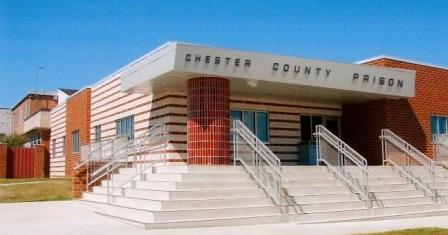

Building prison leadership: Chester County Prison continues to expand leadership development efforts through the Federal Bureau of Investigation Law Enforcement Executive Development Association Trilogy Leadership training program. The prison’s entire command
Courtesy Chester County Prison
Emily Wang Co-Managing Editor
Rediscovering the past: Rob Williams (middle), Tredyffrin Township Historical Commission chair, stands next to his team members: Jean Faber (left) and Janice Olsen (right). The three worked to plan celebrations for America 250.
Grace Hu/The SPOKE
ASA members attend tea ceremony, develop cultural respect
Students delicately pour tea from handmade cups to each other, following the instructor’s directions. On May 29, around 10 Asian Student Alliance (ASA) club members attended an interactive tea workshop where they made tea, learned tea ceremony etiquette and acquired cultural respect. Tea artist and scholar Bin Wu guided students in the demonstration and organized the event at Conestoga.
“These opportunities aren’t very frequent, and we welcome any opportunity with open arms,” said junior and ASA president Jocelyn Huang. “We (were) really excited, especially to connect back to tradition. It (was) just (a) really interesting (experience) for us.”
At the tea workshop, students paired up and took turns learning the etiquette of being a host and guest at a tea ceremony. Wu showed students how to drink and make tea following traditional Japanese Cha Dao tea ceremony decorum. Wu also taught club members the four principal elements of tea sharing: harmony, purity, tranquility and
respect. Cha Dao embraces these elements through its emphasis on acceptance and peace between people.
“I’m inviting people from all kinds of backgrounds to share the essence of the tea ceremony. That’s the mutual respect (part of the ceremony). The respect to each other regardless of our cultural background and regardless of (the) language we use,” Wu said.
“And then based on that mutual respect, we can understand each other and appreciate each other, and then we can collaborate with each other. That’s the beauty of (a tea ceremony).”
Wu began teaching tea ceremonies to communities 10 years ago. She has set up tea experiences at museums, senior centers, universities, libraries, art centers and schools, including one at NEES. When Wu received an email requesting volunteers for an art program at Conestoga, she took the opportunity to reach out about her passion for tea ceremonies and interest in organizing a tea workshop and got in touch with ASA. Wu feels that through sharing and teaching tea ceremonies to the community, she can build cultural respect among participants.
“Through conducting cultural-heritage-associated workshops or events, it really reminded me who I am and the cultural heritage we inherited from our ancestors,” Wu said. “It’s (the tea ceremony is)
something (that) really builds up who we are, and that’s always given me pride to present this (ceremony) to the audience, to the communities.”
ASA has planned many events to celebrate Asian cul -
ture this year, including a Lunar New Year potluck and Chinatown trip. The club recently went to BES on May 26 to read Desi and Korean picture books to kids for Asian American and Pacific Islander
Heritage Month. Huang feels it is important to commemorate Asian culture through events such as the tea ceremony that club members attended.
“Right now, it’s really easy to forget where we go back to
— our roots, our traditions, especially our cultural values,” Huang said. “I believe that it’s really important to go back to that, to remember where we came from, who we are and what we really are celebrating.”

Respected retiree: Tech specialist retires after 27 years in district

Teachers and staff rise in a standing ovation as Conestoga tech specialist Katrinia Stokes walks down the auditorium aisle to receive a commemorative 25-year pin. The school recognized Stokes during a ceremony held to commemorate staff who reached their 25th year of service. This year marks Stokes’s 25th and final year serving as the tech specialist of Conestoga.
“It (receiving the pin) was a feeling of such gratitude from the wonderful people that I work with,” Stokes said. “I can say I absolutely felt like my whole entire family was coming together (at the commemoration). It (was) a great feeling.” Stokes was originally from North Carolina, where she worked as an insurance agent for around 20 years before moving to Pennsylvania. Stokes then found an open tech aide position and began working in the T/E school district in 1999. She worked as a tech aide at TEMS, and in 2001, the district invited her to be a tech specialist at Conestoga. As a tech specialist, Stokes supervises the tech deck, troubleshoots classroom issues, and handles all laptops, projectors and printers in the school.

Ashley Du Co-Editor-in-Chief
intricate lights and wall pieces. The floor consisted of smooth, polished pebbles before transitioning into brown wood further inside. A light gray plume of smoke flowed through the air, at first to our confusion, before we noticed the charcoal grill in the back where the chefs were diligently cooking.
When a hostess seated us 10 minutes later, we noticed the beautiful Greek paintings that embellished the walls and the various olive trees and orchids in each corner. This evening the restaurant was somewhat packed, and the chatter of voices surrounded us as we began ordering.
We started with the mezedes, small dishes to be shared with friends or family, and ordered Crispy Calamari. When the Grilled Calamari
“My first impression is that she runs around this building like a wild woman because she has so many things. So many. So many people calling on her and so many things that need to be tended to,” school guidance counselor Jennifer Kratsa said. “But I think the thing that sticks in my mind the most is that she’s really there for you morning, noon and night. I feel like when I reach out to her, she always responds. She’s always here for me. Whether I’m coming in really early in the morning at Conestoga or if I have an ACT (exam to proctor) and I’m calling on a Saturday, she’s always there to help.”
Among the staff, Stokes is known for her dedication to her job. She works long hours, usually arriving at school to begin working at 5 a.m. Managing all the technology at Conestoga, Stokes always strives to take care of the needs of every student, staff and classroom. Kathy Polites, a library aide who began working at Conestoga the same year as Stokes, has been a good friend of Stokes and appreciates her selflessness and work ethic.
“She (Stokes) does come in before anybody’s here so she can get her work done. She’s always there for everybody. She makes (staff) less stressed because she
can take care of all their problems,” Polites said. “She just works diligently. She keeps her head down. She doesn’t look for accolades. She’s not looking for any attention at all.”
When she retires, Stokes plans to travel back to North Carolina to visit family and catch up on sleep. Even during retirement, Stokes looks forward to finding another career to pursue.
“I also am looking forward to going into another field. I don’t know what that is. It could be strictly volunteering, but I enjoy serving, so it’ll be a field of service. This is not the end. This is just retiring from this job,” Stokes said. “So on to the next one, whatever that holds. I’m looking forward to whatever’s ahead.” With Stokes’s retirement calling for a new tech specialist at Conestoga, many staff feel that things will be different without her. While anyone could take care of the technology, Stokes’s genuine and beloved personality will be missed by staff.
“We (staff) fear that (things will) never be the same again because it’s hard to find somebody like (Stokes). She’s fun and she’s funny and she’s teasing and adorable. Nobody can fill her shoes,” Polites said. “The essence of who she is can never be replaced.”

arrived instead, the waitress quickly brought back the correct dish. Served with fresh lemons and a lemon dill aioli sauce on the side, the Crispy Calamari offered a wonderful combination of flavors to begin our meal with. It was nicely chewy, and the fried part did not easily fall off like some other calamari. Although it could have been crispier, the dish was still generously seasoned and appetizing. For our mains, we selected the Grilled Chicken Gyro Platter and the Pastichio, or Greek lasagna. Our entrees took 30 minutes to arrive, which is worth noting for diners on a time constraint. The chicken platter featured grilled pita bread, fresh tomatoes, red onions, cucumbers, fries, a side of tzatziki sauce and stuffed grape leaves. The chicken was deliciously juicy and had a distinct charred flavor, pairing well with the refreshing tzatziki sauce. While the large-cut vegetables were aesthetically pleasing, their larger size made them quite difficult to eat with the chicken in a single bite. The second entree, the Pastichio, had a rich and buttery flavor. The dish consisted of a three-layer casserole filled with Greek noodles, seasoned Angus sirloin and creamy Mornay sauce, all served with a side of soft, stretchy pita bread. The pasta was long and round, and a subtle nutmeg flavor elevated the lasagna. Although the shape of the pasta and the separate parts of the dish made it hard to
Tranquil tea room: Light pours through the tea room, a serene
to Conestoga and taught members of the Asian Student Alliance
Courtesy Kristen Shabe
Sophia Cui Co-T/E Life Editor
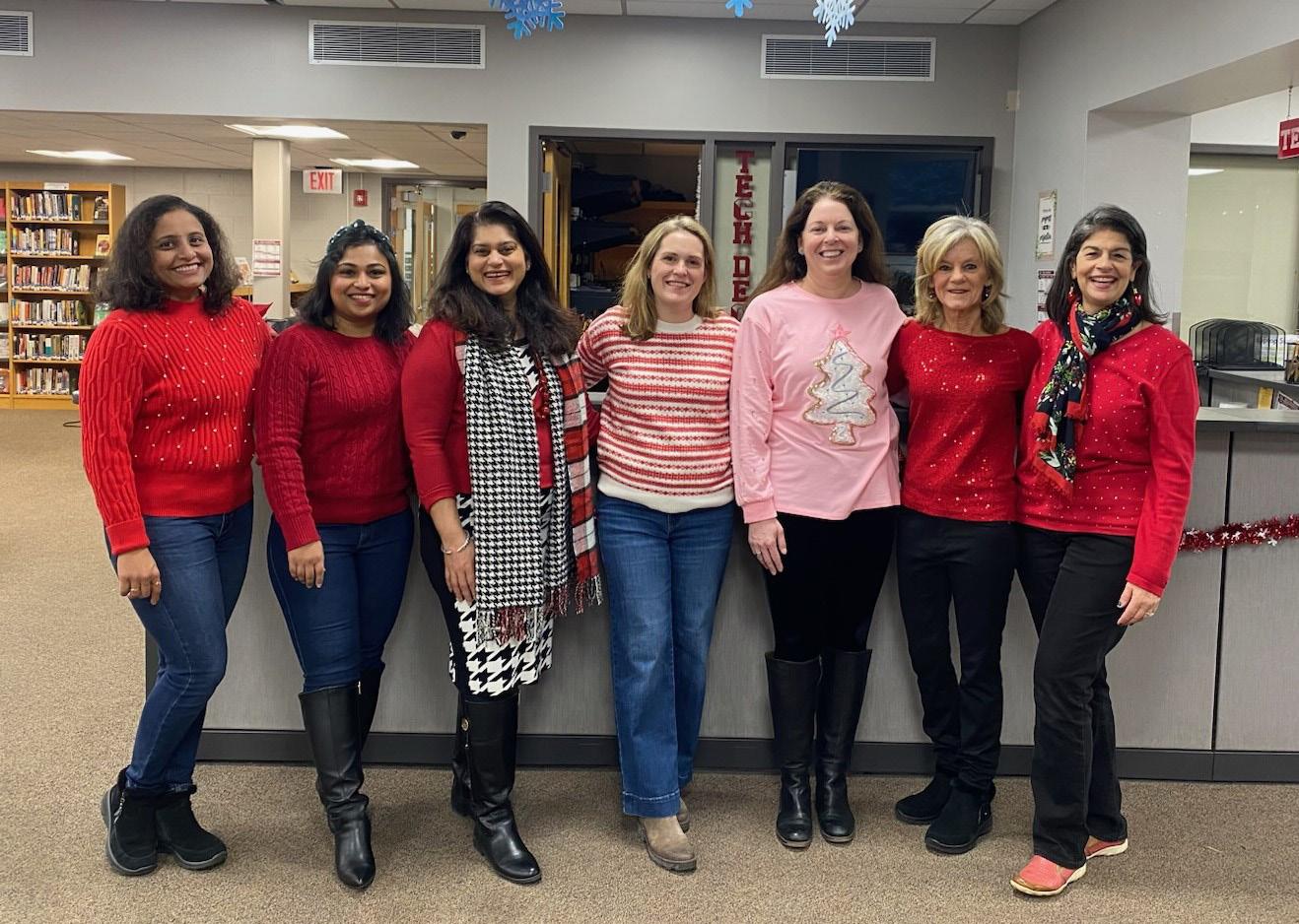
Lasting legacy: Conestoga tech specialist Katrinia Stokes (second from right) stands with her coworkers in the school library for a picture, including library aide Kathy Polites (right). In 1999, Stokes worked as a tech aide at TEMS and then became a high school tech specialist in 2001.
Courtesy Katrinia Stokes
Picnic with the Ponies: Gateway HorseWorks organizes community event, demonstrates equine therapy treatment
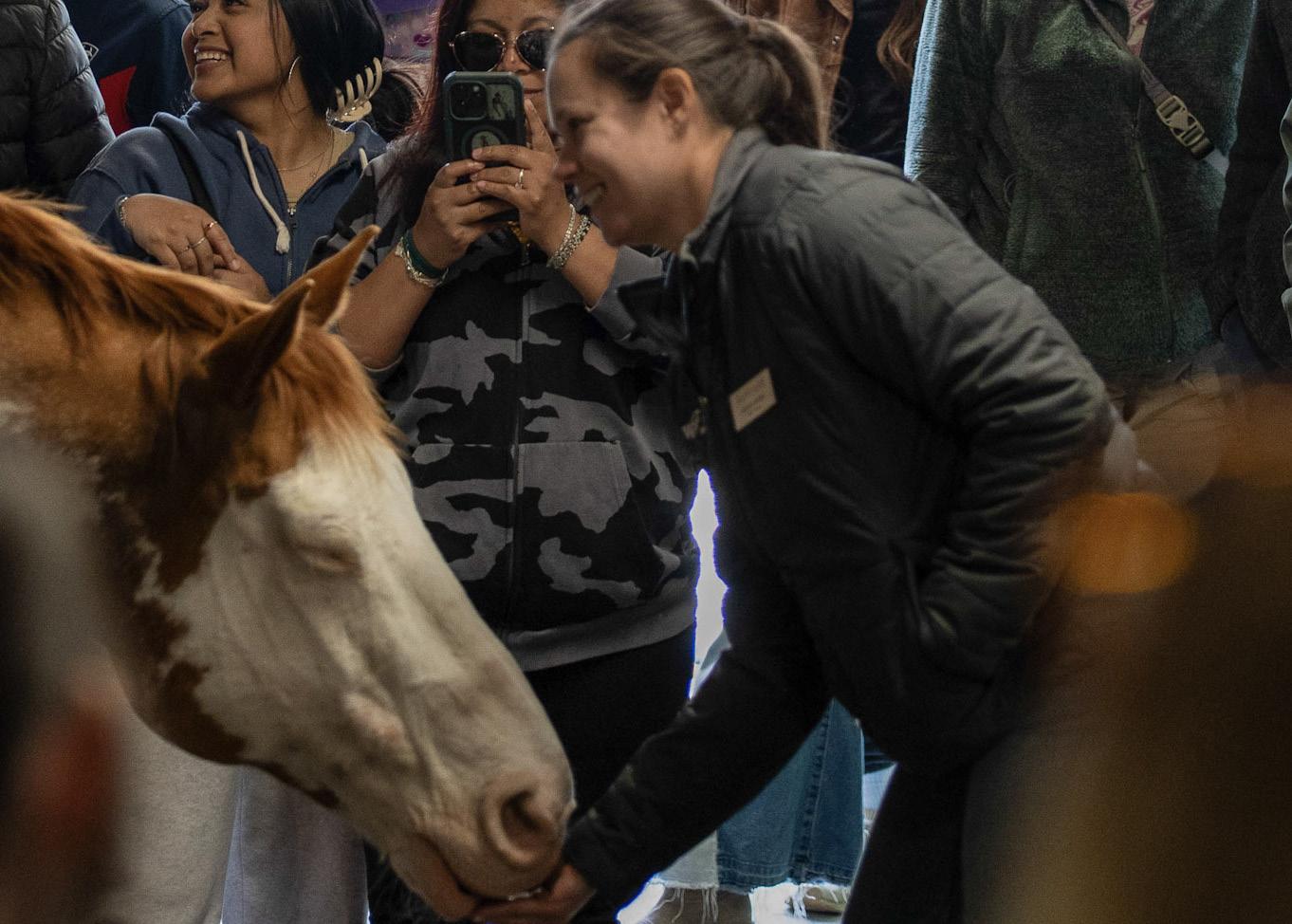
On a sunny afternoon, families gather on a farm to enjoy a picnic and watch an equine specialist groom a horse in a demonstration of equine therapy. On May 3, the nonprofit Gateway HorseWorks invited community members to its farm in Malvern for Picnic with the Ponies. This community-focused event showed how equine therapy, in which patients interact with horses therapeutically for mental health support, can assist people struggling with mental health issues.
“I think a lot of times being able to sit down and tell somebody about what we’ve experienced or what happened to us is overwhelming and sometimes traumatizing. Sometimes we don’t have the language or the words to describe that. I think that’s especially true for young people,” said Kristen de Marco, founder of Gateway HorseWorks and equine specialist.
“The ability to connect with (horses), to build relationships with them and to explore hard topics that are oftentimes beyond language really (allows) people an emotional safety that we don’t necessarily get in other circumstances.”
This was the first year Gateway HorseWorks organized an event showing the community the behind-the-scenes of how a treatment team helps
someone struggling with mental health problems through horse interaction. Picnic with the Ponies was a three-hour event, featuring live treatment demonstrations from Gateway HorseWorks treatment teams, horse care demonstrations, free lunch from a food truck, a stick horse race, and the opportunity for community members to explore the farm and meet the horses. Admission to the event cost $25 and all the proceeds contributed to the nonprofit’s five-year-long goal of raising $5 million to support people struggling with mental health problems. Attendees learned of Picnic with the Ponies on social media, community pages, emails and newsletters. Around
120 people attended the event.
“I heard really positive feedback (from) people that they loved being able to spend time on the farm (and) bring their kids,” de Marco said. “They loved the food and really enjoyed getting to have a little bit of a deeper dive into the how-itworks of our (therapy) sessions.”
De Marco grew up around horses and developed a deep connection with the animal.
She discovered equine therapy during a difficult time in her life and decided to become an equine specialist, a process requiring 6,000 hours of training. In 2015, de Marco founded Gateway HorseWorks, working with a treatment team of equine specialists and mental health
professionals to make equine therapy accessible to people in need of mental health support.
In addition to Picnic with the Ponies, which Gateway HorseWorks hopes to continue hosting every spring, the organization runs other annual fundraisers like Boots and Barbecue in September and Winter Wonder Farm in December. Funds from these events help the nonprofit organize free community programs helping incarcerated individuals, supporting youth on juvenile probation, serving veterans with post-traumatic stress disorder, and assisting patients in drug and alcohol recovery.
“I think everybody will struggle with mental health (issues) at some point in their lives, whether it’s through grief and loss or through an illness or through addiction in their family. I think that it’s really important to have a portfolio of treatment options available to people because what works for one person may not work for another,” de Marco said. “Making sure that mental health remains accessible and that there are varied approaches to helping people feel supported is paramount to our community’s health and wellness and especially for our own loved ones.”
Similarly, junior and equestrian Haasya Putumbaka has developed appreciation for the friendly and joyful nature of horses. Having started horse-
back riding around six and a half years ago, Putumbaka feels that being around horses has improved her own mental health.
“Horses can’t really talk to you and so they’re never really gonna judge you. They just automatically love you if you’re
friendly to them,” Putumbaka said. “I feel like that really helps with your mental health, especially when sometimes you
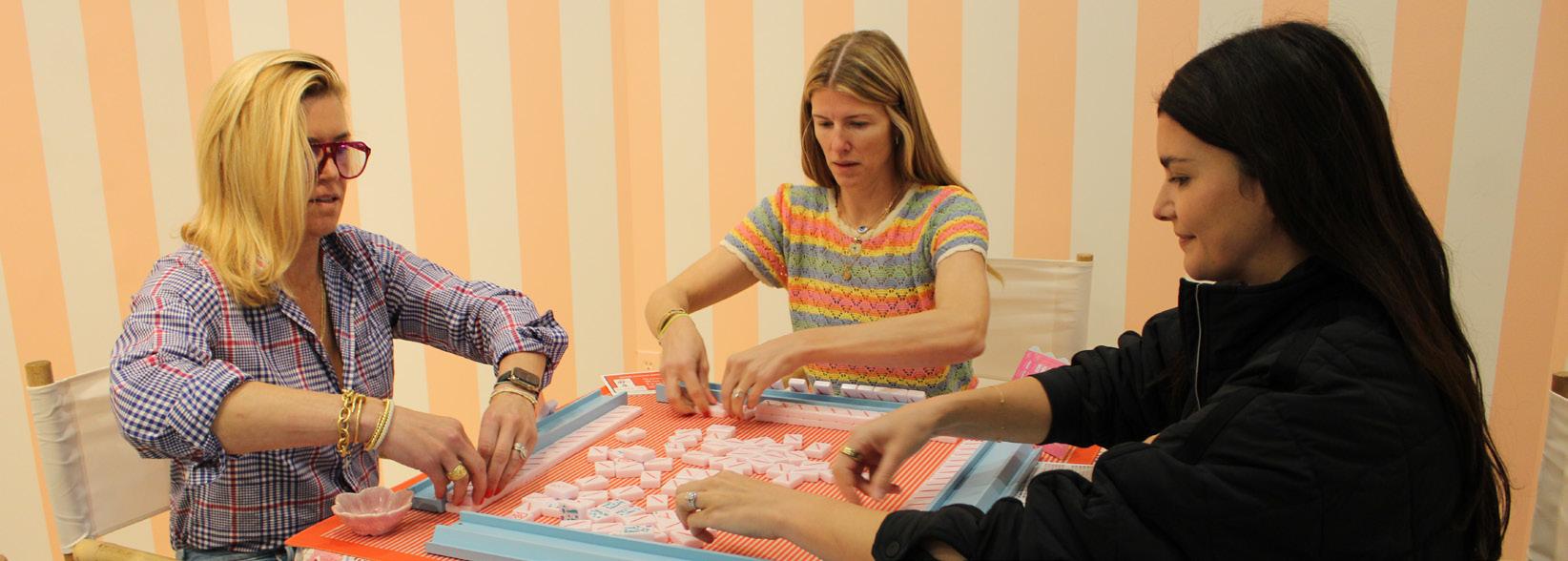
Tiles click together as community members play mahjong at the first-ever studio on the Main Line at Eagle Village. Main Line Mahjong opened on April 13 to provide the community a space to learn mahjong and play with friends. Meghan Boss, Karla Crockett and Suzett Hamilton started the studio to create a dedicated setting for mahjong instruction and play.
Main Line Mahjong teaches and specializes in American mahjong, a four-player tile game that uses a set of 152 tiles and an annually released card determining official winning hands. Each player begins with 13 tiles and cycles through drawing and discarding tiles. The tiles feature different symbols, suits and numbers which players consolidate to create a winning hand.
“I was teaching friends of friends, and I started teaching strangers, and it was occupying
much demand. (The owners of the studio and I) had to find a place that we could afford to rent. We had to accommodate everyone that wanted to learn and there were way more people that wanted to learn than we had time to teach.”
Boss, Crockett and Hamilton had been playing American mahjong for years before they began teaching in private homes. As demand increased, they decided to create a formal studio space. The studio offers classes for both beginner and experienced players, including instruction on techniques such as the Charleston and guided play sessions for less experienced players.
“I think that ladies are coming in and meeting new people, which is overwhelmingly positive. People are looking for a place to connect with other people and it doesn’t have to do with sports or athletics. It’s not around eating or drinking and that’s what’s nice about it,” Hamilton said. “The most rewarding
hosts a variety of community-focused events such as occasional fitness workshops and jewelry-making sessions. Visitor Caitlin Craven enjoys coming to the unique sessions, playing mahjong with community members and engaging in everything else the studio has to offer.
“Karla, Suzett and Meghan have started this wonderful studio here in Wayne, Pennsylvania and it is just so lively and wonderful. I wanted to come with my friends and play mahjong,” Craven said.
“It (spending time at the studio) really is like a brain camp, so it makes you feel like you’re working, and then also you do build this wonderful community and you get to gossip and hang out and just have the time of your life.”

Trainer
Science Olympiad places top
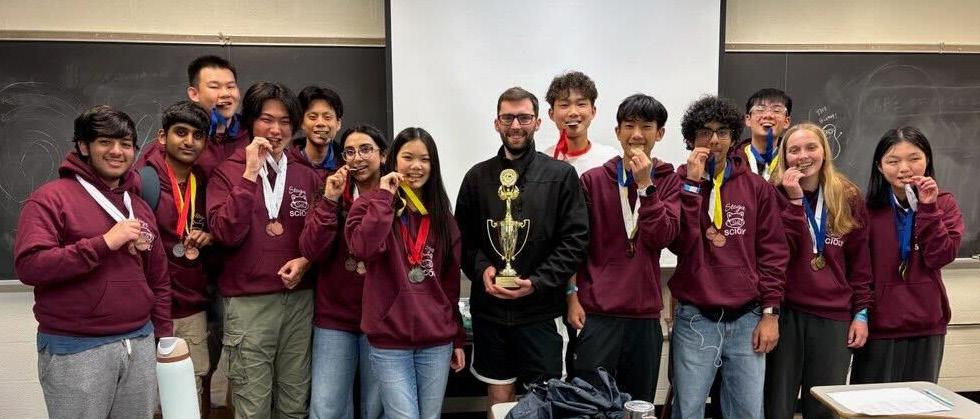
Cheers erupt loudly on the bus ride back from Penn State Altoona as members of Conestoga’s Science Olympiad team watch a livestream of the state competition awards ceremony. Their excitement reflected months of studying and preparation that led the team to place ninth out of 36 teams at the state competition on April 25.
Last year, Conestoga placed 16th at states, and this is the first year since 2022 that the team placed top 10 at the state competition. They ranked high in many events, including second in Machines, fourth in Disease Detectives, fifth in Dynamic Planet, sixth in Astronomy and seventh in Experimental Design. The team placed second at the regional competition, allowing them to compete at the state level.
10 at state competition
This year, the Science Olympiad co-captains allowed members more flexibility in choosing their events. Previously, the club grouped events in packages and members could only compete in events in one package. However, this year the club allowed students to try out for a main package and one event outside the package. According to senior and co-captain Victor Pan, this year’s team also had a stronger bond.
“I think this year as a team we were more cohesive,” Pan said. “We had a lot more team bonding and chemistry, and in a team competition like Science Olympiad I think that’s really important.” Science Olympiad is a teambased competition in which pairs or groups of three compete in different science-related events and earn rankings based on their performance. The sum of students’ rank-
ings for each of 23 events is a school’s overall score, and the school with the lowest score ranks the highest. Conestoga amassed a total of 296 points, placing ninth in the state.
“It feels nice that (my teammates and I) were able to get that team medal in my last year and my year as captain,” said Vivian Peng, senior and co-captain. “I’ve been here since freshman year, and I really see how far we’ve come as a team. I really love this group of people (on the) team for this year.”
Students tried out for the team by taking mock exams.
The co-captains assigned qualified members to teams A, B and C, and 16 students from A team competed at states. Junior Charlotte Jones, a member of A team who competed in three events, appreciates the team-based nature of Science Olympiad.
“I’m very proud of us, honestly. I felt so good about (our
performance), especially in Disease Detectives,” Jones said.
“We (My partner and I) came fourth, which was a really great placement for us. Honestly, my favorite part of Science Olympiad is just the team spirit in general because it’s so teambased. You can’t do well overall without everyone else really being good.”
According to Peng, success in Science Olympiad depends on every member’s contributions. She believes new members should remember that their effort is important, even if they do not earn a high placement in their individual events.
“I hope that this achievement can let new members know that what they did matters,” Peng said. “Even if they don’t necessarily place as high in their individual events, they still have very meaningful contributions, and they really do a lot for this competition.”
don’t really always want people to tell you something. You just have something next to you to help you out and be friendly.” Scan the QR
Elizabeth Lu Staff Reporter
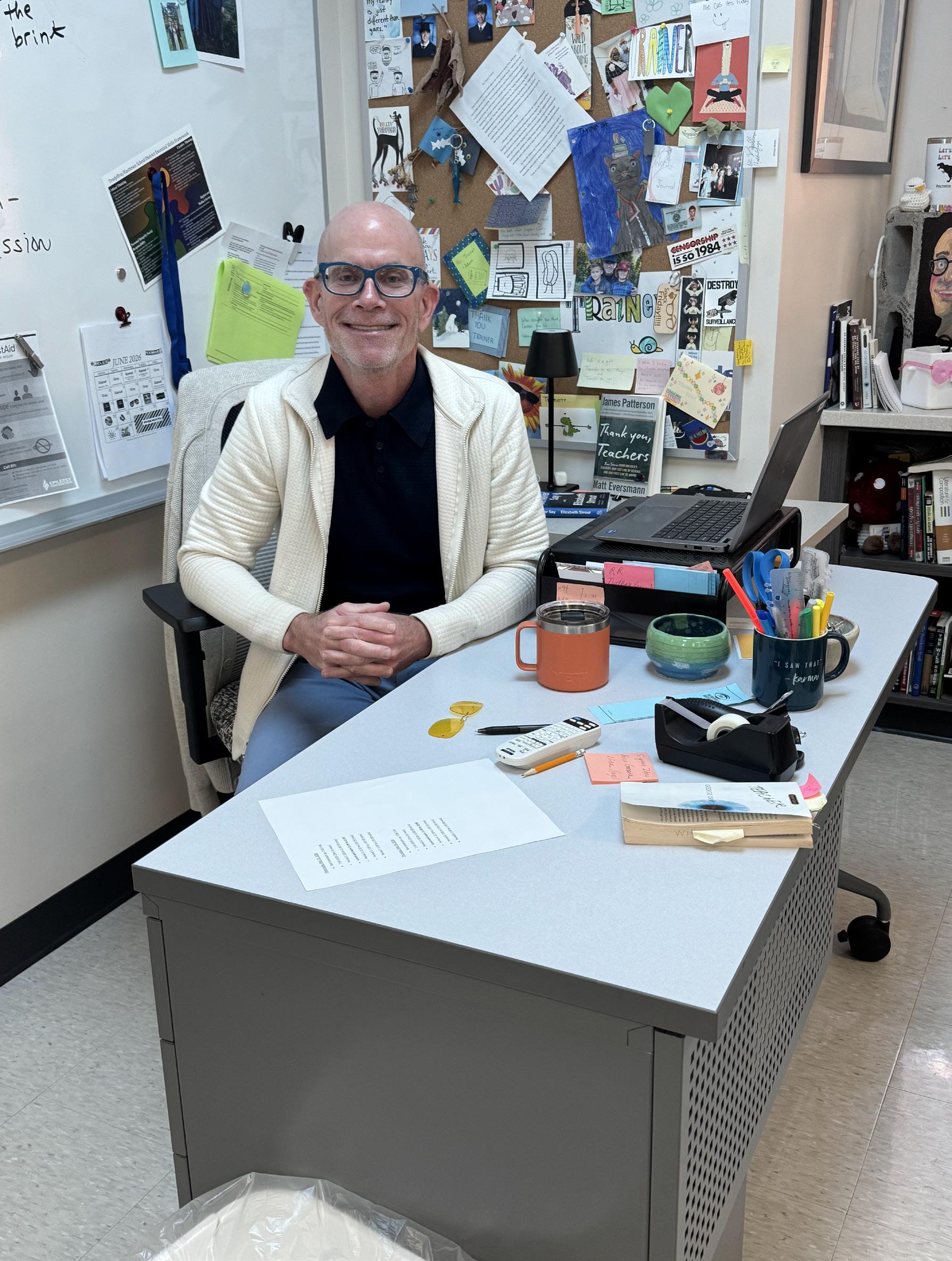
English teacher Michael Trainer attended the University of Scranton as a communications major and English minor in 1991. Afterwards, he attended Temple University for his master’s in English and became a teacher. He began teaching at Conestoga 20 years ago and currently teaches Advanced Placement Language and Composition and Comparative Literature: Mayhem. In addition, he has emceed at the Pep Rally, Unity Fair and Best Buddies Talent Show annually. He plans to retire this year after 32 years of teaching.
Q: Do you have a favorite book from the courses that you have taught?
A: “1984” is kind of a seminal text that we do, and I’ve taught it pretty much my whole career. I used to teach it in a ninth grade class at my other school to honors students, but what I can’t be-
lieve is how each year it becomes more relevant. First, I thought, ‘This book is a warning about the future, but we’re okay.’ And then with technology, information, media and what is truth, that book remains so relevant.
Q: Do you have any advice for students when it comes to AP courses or English in general?
A: English is about reading, writing and speaking. So no matter what you’re doing in life, it involves those three things. There is a way to understand how we communicate in any English course you have. Even (though) some kids think they don’t like literature, literature is a mirror that holds up an image of ourselves. So it’s important to understand that you, through a character or a conflict, are given tools of how to handle things in your own life.
Q: What is your favorite book?
A: It changes all the time. I loved the book “I Know This Much is True.” It’s a beautiful book. I also loved “Little Fires Ev-
erywhere” because I like a book where you’re judging a character and then you learn more about their story and you’re like, ‘Oh my gosh, I was really hard on that character, but look at their situation.’ It’s just cool when you get different characters’ perspectives.
Q: What are your thoughts on your retirement?
A: Recently, I still love teaching. I love the students. I love the energy that it brings to me. But I just feel there’s something else I have to do. I want to work or do


something beyond this, and not just go off into retirement. I’m not just going to go and garden or go to Florida and sit in a lounge chair and read. I have an adventure coming, but I don’t know what it is.
Q: What will you miss about Conestoga?
A: I find each year the kids help me grow as a person and a learner. I think through teaching, I’ve learned that we are all lifelong learners. I never stop learning, and that’s so cool.

Rishika Bhattacharya
Co-Copy Editor
Peaceful pony: People watch as a barn manager feeds a horse after demonstrating a trick. On May 3, the nonprofit mental health service Gateway HorseWorks hosted its first Picnic with the Ponies event, where community members gathered
Triumphant together: Members of Conestoga’s Science Olympiad team gather together with the medals and team trophy they won at the regional Science Olympiad competition, where they placed second and qualified for the state competition. Conestoga placed ninth overall
Charlotte Liao Staff Reporter
Meticulous mahjong: Main Line Mahjong Studio owners Meghan Boss (left) and Suzett Hamilton (middle) organize their tiles in a round of American Mahjong. The studio opened in April and is the first location on the Main Line to provide a space for community members to learn and play Mahjong.
Rishika Bhattacharya/The SPOKE
Erin Zhang Co-T/E Life Editor
code to watch an accompanying package

The Title Paige: Being negative doesn’t make you deep

‘Michael’ didn’t quite ‘Beat it’

Rating:
Michael Jackson, widely regarded as one of the greatest pop artists of all time with more than 500 million records sold worldwide according to the Guinness World Records. The biopic shows Michael Jackson’s struggles with living up to his father’s expectations and the grueling practice ses-
sions he and his four brothers would face daily. Eventually, their hard work paid off and the Jackson 5 entered the public eye, earning No. 1 on America’s Billboard Hot 100 for their song “ABC.” From there, Michael Jackson’s life became a series of performances, interviews and signing events, gaining popularity with each show. Overall, the movie does a great job of recreating some of Michael Jackson’s most famous moments, such as the moonwalk and the “Thriller” music video. Each performance has viewers on the edge of their seats and tapping along to the beat. Jafaar Jackson, actor for Michael Jackson and Jackson’s actual nephew, effectively portrayed the essence of the singer. However, there are some serious problems with the movie’s refusal to show anything besides his polished persona. “Michael” stops in the year 1988, completely cutting out
his serious pedophilia scandal. Additionally, the filmmakers mainly cut out Michael Jackson’s skin bleaching and numerous plastic surgeries, except for one scene where he gets nose surgery and someone compliments him on it afterwards. These missing scenes make the movie come across as too scared to show what his life was actually like, removing the mistakes and problems that changed him. The movie shows a highlight reel of Michael Jackson’s life, opting to focus more on his flashiest moments rather than look deeply at the issues that plagued his life. So, should you watch “Michael?” If you want a fun movie to tap your feet to and relive Michael Jackson’s golden days, then go for it. But if you are looking for a movie that shows what Michael Jackson was really like behind the spotlight, then maybe “Michael” isn’t for you.


Paige Vachris Co-Opinion Editor
Throughout history, there have always been those who reject the hype and go their own way. But since the rise of social media — where any opinion can be made public — going against the grain has become its own status symbol. Those who choose to enjoy popular, “basic” media are often looked down upon, with social media amplifying voices on both sides of the argument. When did embracing mainstream media become an indicator of intelligence?
The human urge to stand out and carve a place for oneself transcends time. In the age
of the internet, how does one distinguish themselves from the faceless crowd? For some, especially among Gen Z, individuality comes in the form of gaining supposed intellectual high ground. However, our obsession with looking down upon popular media has led to an often-performative display of negativity rather than encouraging productive criticism.
Cynicism is too often equated with nuance or depth; the line between a thoughtful critique and an unnecessarily negative review has been blurred. Social media is not all to blame — the inherent tendency in humans to fixate on the negative could be a significant factor. According to a 2021 study published in the National Library of Medicine, the psychological phenomenon of the “negativity bias” causes people to focus much more heavily on the negative events in our lives rather than the positive, affecting almost all humans. We are hardwired to think negatively, but this does not have to
impact how we consume media and interact with others. As we spend more time on social media and allow it to impact us, the negativity we express online bleeds into our daily lives. When we surround ourselves with negativity, it affects the way we interact with each other and the world. Whether you’re discussing a new pop album or current affairs, it’s neither productive nor healthy to only enforce pessimism. Facing the world with stubborn cynicism does not make you more intellectual.
Criticism is beneficial for how we consume media, especially in the age of artificial intelligence and fake news. But there is nothing wrong with harmlessly enjoying things, even if it’s “basic.” The negativity that we spread in order to make ourselves seem more interesting is impacting our ability to enjoy media or critique it productively. Engage in criticism if you wish, but don’t instantly “hate on” something because it’s popular. Negativity benefits no one.
My dupatta isn’t Scandinavian

Nikhisha Arjun Staff Reporter
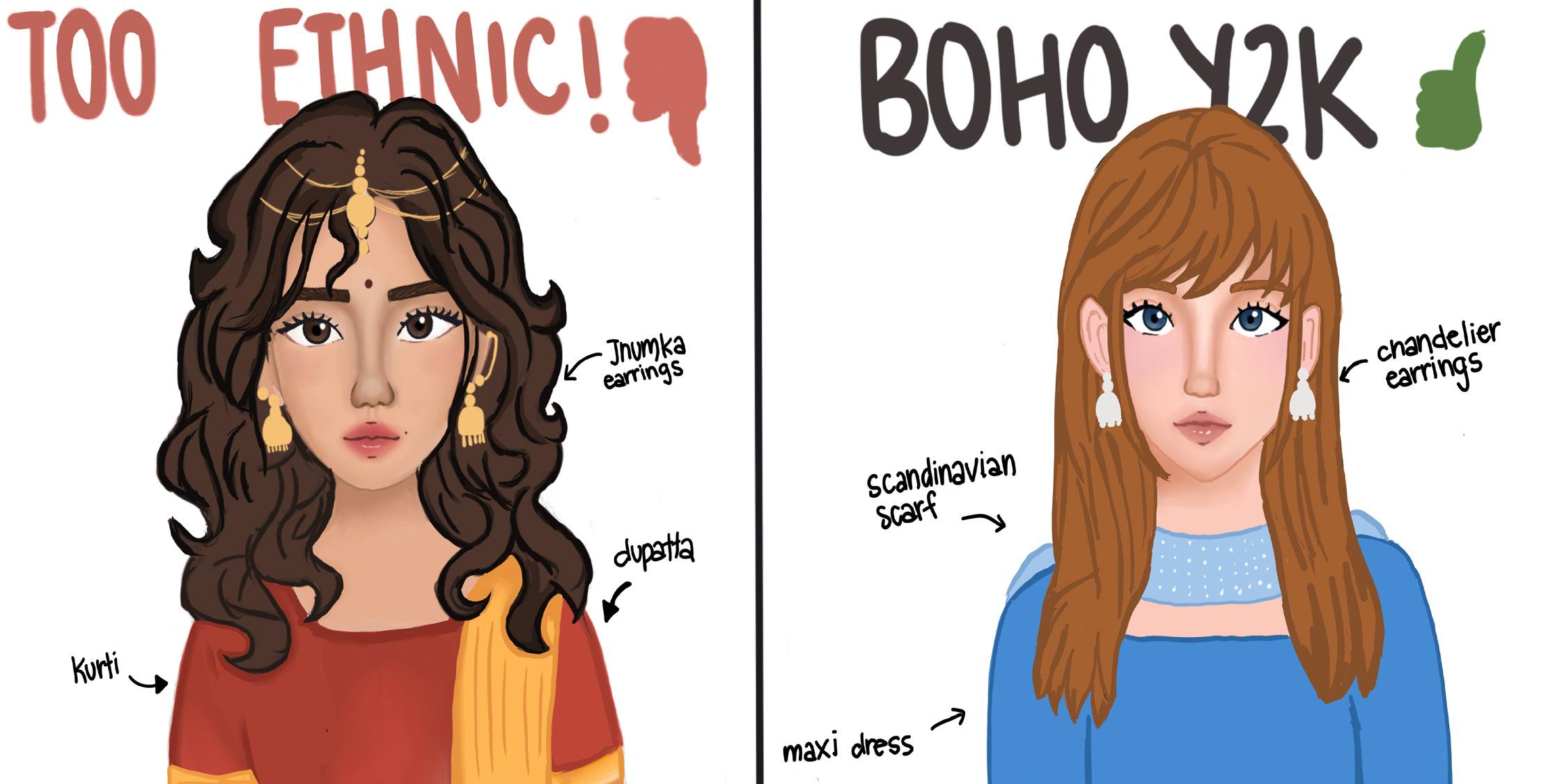
In elementary school, I was told my salwar kameez looked like a pair of pajamas. Now, the same silhouette of flowing fabric and embroidered jewel-studded trim, draped and graceful, is selling for $120 on a fast-fashion website with the name “bohemian wrap set.” There is no origin, no credit; just labeled as couture. This phenomenon reflects the quiet, discriminatory nature of cultural erasure. It doesn’t always show itself. Sometimes it manifests as a TikTok trend, or as a Y2K throwback. Sometimes, it looks like a dupatta. A thin scarf-like garment worn across South Asia for centuries, it represents occasion and identity throughout all Desi cultures. This same traditional identity is now being repackaged and sold for dou -
ble its price to a Western audience as a “Scandinavian scarf.”
South Asian students know this experience thoroughly. We grew up switching our wardrobes for the crowd by hiding our chudidars and dupattas until cultural events occurred, because walking through the hallway in a kurti would’ve invited weird looks. The smell of our food was “too strong,” our jewelry was “too loud,” our clothes were “too foreign,” and even our names were “too difficult.”
The message, delivered in many small ways, was simple: Our culture didn’t belong. But almost overnight, it did start to belong. Just without us in it.
The pattern is not new and not accidental. Brands like Ralph Lauren have sold chunky “chandelier” earrings, practically identical to the famous jhumkas of South Asia.
Mehndi has been recycled as “boho body art,” turmeric as a “wellness superfood,” and chai mixed in with coffee sold as a “chai tea latte” (literally meaning “tea tea coffee”). Yoga, one of the most profound physical and philosophical exercises in history, is now associated with $100 Lululemon leggings. In each case, the aesthetic has
always traveled from East to West, while the culture and credit stayed behind. Social media has only sped up this process. Algorithms reward clean, light and aestheticized content. When a Western influencer posts a dupatta draped loosely over a linen outfit and captions it “Scandinavian minimalism,” it garners thousands of likes. When a Desi creator wears the same garment and calls it by its name, the engagement is gone. The erasure only represents the internalized racism of consumers and the resentment in associating something “aesthetic” with a culture that has been a laughing stock for decades. This racism happens in comment sections, trend cycles and even the language used to describe the clothing.
Some argue that fashion has always traveled. That cultural exchange is inevitable and in some cases, beautiful. And that’s true. But there is a clear difference between the exchange of culture and the extraction of one. Exchange requires respect and appreciation. Cultures that borrow from others and show credit display respect and the beauty of sharing tradition. Extraction is taking and re -
branding, leaving the origin community to be mocked for what was stolen from them. When South Asian children are still being told their traditional dress is “too ethnic” for a school photo when the same style is being sold under a designer label, there is no exchange. There is only hierarchy displayed as a trend.
This doesn’t mean that a group of diverse people can’t share cultures. Anyone can wear a dupatta, jhumka earrings or a lehenga. And anybody can love the taste of chai, enjoy drawing designs with mehndi and relax with yoga. The only ask is to acknowledge where these traditions came from. To credit cultures that created them and to think critically before buying into a trend that has been scrubbed of its history. If you love the dupatta, love it by its true name. Love it knowing it belongs to a rich history that precedes Instagram by hundreds of years and love it in a way that makes room for the people who have always worn it and been ridiculed for it.
My dupatta is not a European scarf. It’s not a trend. It’s a piece of my culture that was never ready to be renamed and it’s time we started saying so.
Sonja Dziegielewska Staff Reporter
Nikhisha Arjun/The SPOKE
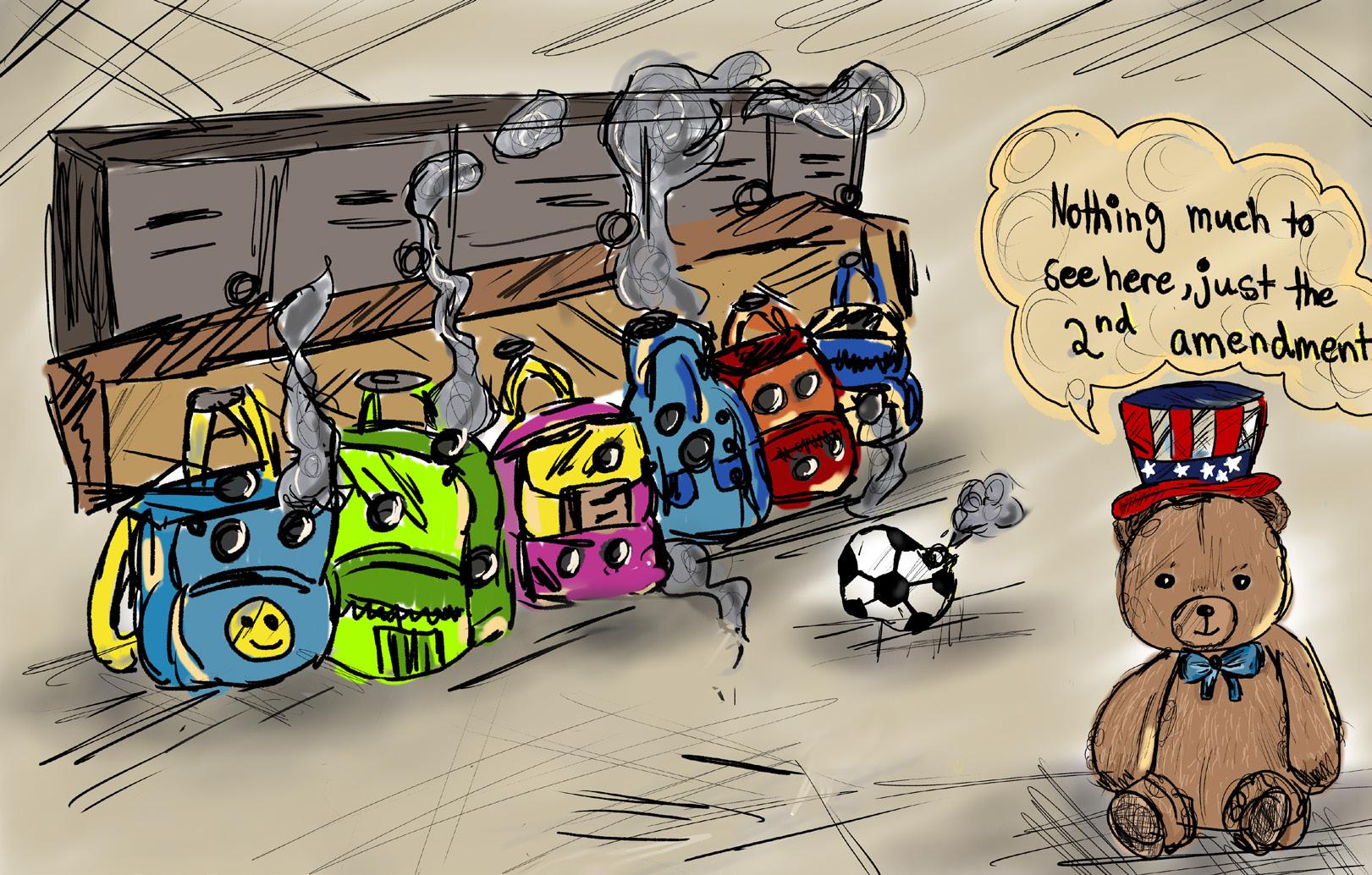
Recently, multiple schools in the greater Philadelphia area, including Conestoga, received swatting phone calls indicating threats that were later determined to be false. The threats were a hoax designed to trick emergency services into sending police forces to the schools. An hour later, Conestoga students were able to return to their usual school schedule. Unfortunately, many similar incidents in the U.S. escalate beyond false alarms, involving real threats of gun violence or bomb attacks that place students and staff in serious danger.
According to the K-12 School Shooting Database, there were 34 school shootings in 2003, a number that has grown to 352 incidents in 2023. This 930% increase in gun violence is not being publicized enough and begs the question: why are the American people normalizing gun violence, and what should we do to address gun violence? One example of this normalization can be seen in the Penn Wynne April community newsletter, which was largely filled with cheerful summer plans but abruptly included a short line on an elementary school robbery at gunpoint. The contrast between
Unsigned: Stop normalizing gun violence
lighthearted community news and an act of violence in a school was deeply jarring. Yet, the newsletter presented the incident with little explanation and only brief details, highlighting how accustomed and desensitized society has become to violence.
A 2020 scientific public opinion survey by Gallup found that 44% of adults live in households containing guns anywhere on their property and 32% of adults personally own a gun. The accessibility of firearms, as well as the high volume of gun ownership, heavily influence gun violence and school shootings in America by increasing the availability of deadly weapons and making violent acts easier to carry out. Additionally, households containing firearms pose a threat
to children and their communities, as Healthy Children by the American Academy of Pediatrics
depression or periods of mental instability. Having firearms or weapons in the house can lead to
estimates that in 2026, 4.6 million kids nationwide live with unlocked, loaded guns in their homes. This is especially scary for adolescents who are developing mentally and might go through
a higher risk of suicide, accidental firing and injuries, as proven by a 2022 Johns Hopkins study. One would believe that the next logical step to prevent these unexpected outbreaks of vio-
lence and tragedy would be to implement a law that limits firearms and requires background checks on buyers. However, a 2024 Gallup poll found that 79% of people do not think there should be a law that would ban the possession of handguns except for authorized persons. This resistance to stricter gun control contrasts sharply with countries such as Ireland, where strict handgun regulations implemented in the 1970s have contributed to the zero gun-related homicides recorded in 2025, according to Irish media. The difference between these two countries demonstrates how firearm accessibility directly influences gun violence. If we continue to allow people to have uncontrolled
possession of firearms, then we are endangering our community.
The Second Amendment of the U.S. Constitution states that “A well regulated Militia, being necessary to the security of a free State, the right of the people to keep and bear Arms, shall not be infringed.” This specific amendment was ratified in 1791 to protect America against both foreign invaders and domestic tyranny. However, we are no longer part of a revolution or rejecting the monarchy. Moreover, our Constitution has gradually evolved with our lifestyles and values; it has also been modified to abolish slavery and give women the right to vote. Therefore, it can be amended to prioritize safety and reflect the current social landscape.
We as a country must realize that gun violence is an issue and that many people lose loved ones or face tragedies each day. Addressing this problem or caring about public safety should not be a controversial issue nor affiliate a person with a political party. We must publicize and stop the desensitization of dangerous situations relating to gun violence.
You’re not niche — and you don’t need to be

For the past year, it’s been difficult to walk through the school hallways without hearing the word “niche.” It has evolved from a biology class vocabulary term to an everyday phrase.
“I’m niche.”
“That’s so niche.” “You’re not niche.” But what does it even mean?
According to MerriamWebster, its dictionary definition is “a place, employment, status, or activity for which a person or thing is best fitted,” but that is almost certainly not how people use it today. In slang, niche has become an adjective synonymous with “special,” something that everyone seems to strive for. But are you really “niche” at all? Everyone is guilty of attention seeking once in a while, subtly or otherwise. Although this is a common and understand-
able human occurrence, we are now going to further lengths to achieve uniqueness, acting in a way that could affect our own happiness or that of others. With social media increasing the accessibility of projecting and encountering opinions, users feel more obligated to share theirs, taking on unnecessarily hateful opinions for the sake of standing out. They crave the attention they get from it, savor the outbursts from peers or

strangers online about anything from movies to books to musical artists. The downside to this, other than the rise in negativity as a whole, is the loss of genuine thoughts and honest relationships. If everything is a ploy for originality, what can we trust anymore? Eventually, these “hot takes” will become unoriginal too, won’t they? Still, this desire to be distinctive makes sense. Based on a study by the USC Annenberg x
ACC Think Tank research program that looked at 149 Gen Zers, 78% reported that they were part of sub-communities based on their non-mainstream interests, and 74% wanted brands to cater to their interests in a way that made them feel special. College applications require students to be different from everyone else, to craft a life that stands out. Being seen in general requires people to not just be clones of everyone else. And, of course, we’ve been given the “don’t change yourself to fit in” speech. However, we shouldn’t change our selves to be unique, either. Ultimately, the motivation behind ev ery action and opinion should be our own en joyment, not bragging rights about being “deep” because we don’t follow trends. In building our personalities around doing whatever isn’t a trend, the same consumerism that we pride ourselves in not caring about is technically leading us, too. Read that BookTok romantasy novel because it draws giggles. Watch that trashy TV show even if it has no real quality. Listen to that singer that your friends complain is overhyped. You don’t have to be niche, and although it’s perfectly acceptable if you are, you shouldn’t have to perform opinions to get there.


’Stoga spirit (spiritually nonexistent)

Grace Lu Photography Editor
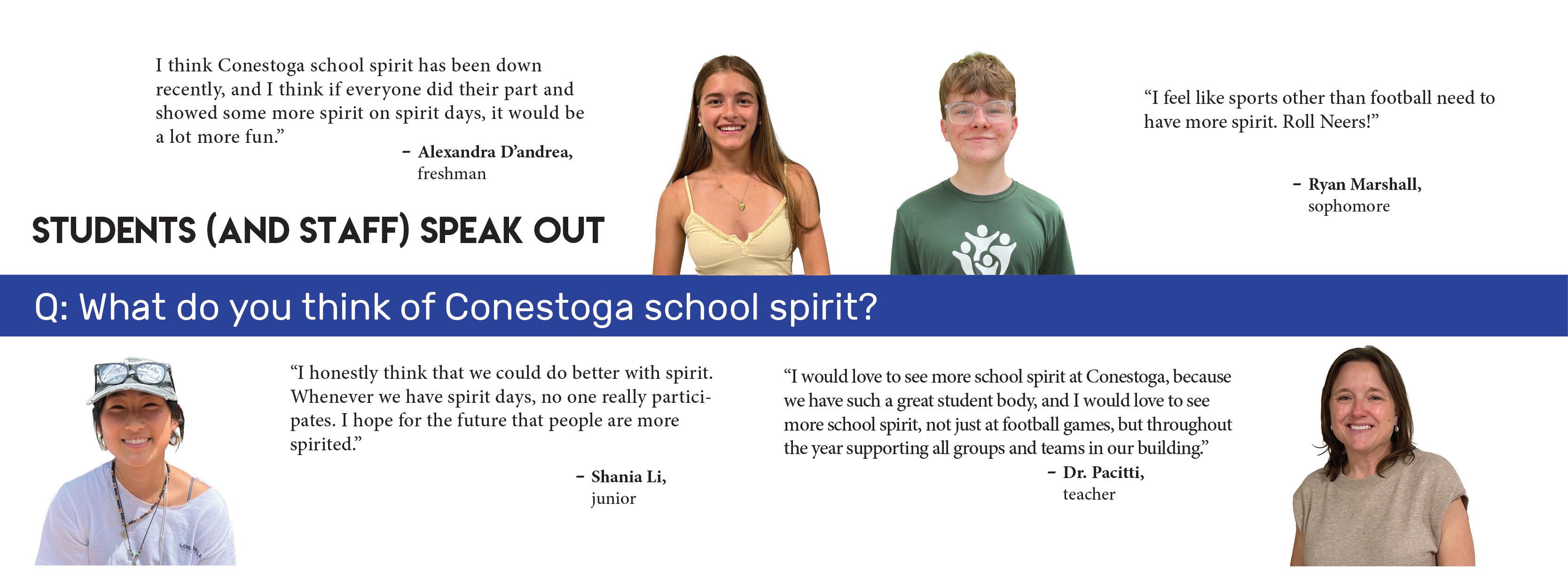
As the two-year anniversary of my first glorious Battle of the Bulldogs approaches, I’ve been reminiscing about the storm of sweaty maroon that swept our middle school gym. However, reflecting on my first year at Conestoga, I’m ashamed to say that our ’Stoga school spirit is lackluster, if not completely nonexistent.
To those who didn’t previously boast the TEMS Bulldog title, Battle of the Bulldogs was a beloved June tradition for the upperclassmen of TEMS. A daylong
battle for superiority between seventh grade (maroon) and eighth grade (gray) would rage in the humid gym to determine the victor of field games, chants and spirit. Anyone present that day can recall the chaos of gray and maroon that painted the hallways. The annual Pink Day’s rosy hues and whiffs of hairspray chemicals would waft through the hallways as bracelet-covered arms reached for donuts to support breast cancer research.
But now, during our spirit days or pep rallies, I struggle to find that same level of dedication. My friends never wear a jersey on Jersey Day, nor do they take note of the occasional color wars events. Not only is our interest in small acts of spirit faltering, but so is the number of these hosted events. Are we losing our sense of community while falling into a trend of social assimilation?
Conestoga is undeniably an academically focused school, so it’s reasonable to get caught up in the whirl of adolescence – juggling part-time jobs, music rehearsals, sports practices and more is no easy feat. It’s fair to say some spirit days are more applicable to your interests than others or that it’s possible to simply forget sometimes. But, small actions such as wearing a colored shirt shouldn’t take away from your greater priorities or ability to succeed. There’s a deeper reason at hand.
When I asked a classmate why they didn’t wear a shirt for color wars, they said it was because none of their friends brought it up or were participating. Aha! The issue wasn’t time or interest, but rather the prospect of being visible without social cover. Spirit days are designed to be a form of social gathering that can unite a school to an impenetrable degree. Yet, it seems that we are so
entrapped in the fear of judgment, that instead of having a school community connected through camaraderie, our coalition is through indifference. Having fun shouldn’t threaten your social status or friend groups. And if it does, we should break through the social barrier of being a constant follower. We’re trained to walk in a single file – follow the syllabus, follow your sibling’s footsteps, follow your friend’s social media. But a duckling at any point can simply choose to lead those behind it to a bigger, or in this case, more spirited pond. So don’t be afraid to participate in spirit days or school community events. Taking part in whimsical activities to have fun with your classmates isn’t embarrassing; it’s admirable. Now, I won’t go too far to say that you have to start wearing sparkly tutus again, but please do consider embarking on the little moments that bring our school together.

Kimberly Wang Staff Reporter
Nishta Subramanian/The SPOKE
Kimberly Wang/The SPOKE
Grace Lu/The SPOKE
The Spoke Editorial Board voted unanimously in favor of this editorial.
National champion: Freshman wins US Open Wrestling Championship
As the shrill sound of the referee’s whistle echoes through The Expo at World Market Center in Las Vegas, Nevada, freshman Walker Martin rises from the mat after defeating his final opponent. Winning this match gave him the 2026 U.S. Open Wrestling Champion title in the 52 kg 15U Greco-Roman wrestling division. Additionally, Martin placed seventh in the 52 kg 15U freestyle wrestling division.
“Walker is excellent in Olympic-style wrestling,” Martin’s coach Gary Baker said. “Walker specializes in Greco-Roman (wrestling), and we knew he was really good.”
Greco-Roman wrestling is a style of wrestling that limits wrestlers to using their upper bodies to attack their opponent.
In contrast, freestyle wrestling allows wrestlers to use both their upper and lower body to attack. Both styles are a part of Olympic-style wrestling. Martin began wrestling at age five after a neighbor who wrestled inspired him to try the sport. When he is not preparing for a tournament, he practices five
times a week at various wrestling clubs such as the PA Greco Factory. Leading up to tournaments like the 2026 U.S. Open Wrestling Championship, his first U.S. Open, Martin cuts weight by eating healthy and running. Prior to his first-place finish at the tournament, he captured a youth state title in seventh grade, and this year in the PIAA 3A boys’ wrestling tournament, he placed first at districts and third at regionals.
“I had a pretty good season this year. I went 41 and six, ultimately not placing in states, which was kind of upsetting, but I was able to bounce back and win the U.S. Open,” Martin said. Martin also recently participated in the Pennsylvania USA Wrestling State Championship held from May 15–17 at the Nittany Valley Sports Centre in State College, Pennsylvania. Competing in a new age bracket, he won first in the 16U 120 lbs Greco-Roman division and placed fifth in the 16U 120 lbs freestyle division. Martin’s performance in the U.S. Open Wrestling Championships qualified him to represent the United States at the Pan American Games in Mexico City, Mexico from July 23–26. He earned his spot by receiving 10 points for his
first-place finish in the Greco-Roman wrestling division and an additional two points for placing seventh in the freestyle wrestling division. Typically, one wrestler per weight class and style combination is selected to represent the U.S. at the Pan American Games.
Since Martin achieved the highest total number of points and won first place in the Greco-Roman wrestling division, he was able to secure his spot in the Pan American Games.
“There are a lot of competitors from Puerto Rico, Cuba and (other) Central American and South American countries that are really, really good, so (the Pan American Games) is going to be very competitive.
But it’s, again, another chance for Walker to showcase himself to the wrestling world and to college coaches,” Baker said.
Next year, Martin will compete in the 17U division for wrestling while also moving up to a heavier weight class. Martin looks forward to competing in more tournaments throughout high school and in college.
“It’s always so fun having good teammates and wrestling in college is going to be fun,” Martin said. “I just love wrestling matches and everything.”
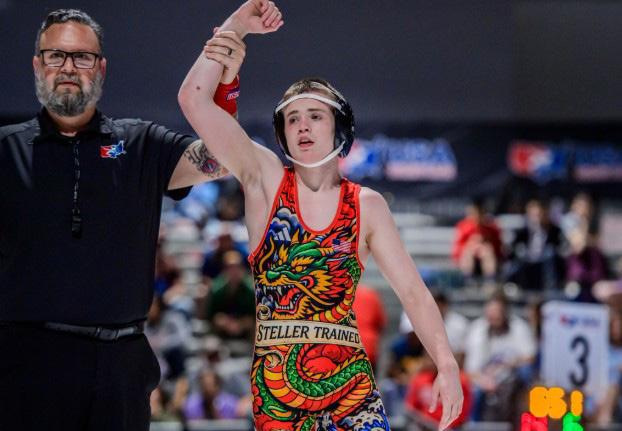

After 36 years of coaching the Conestoga girls’ swim and dive team, Robert Kirkby retired this April. Kirkby was a guidance counselor at TEMS before he retired last year and has worked with the swim team to earn several Central League titles, including a 10year streak from 2015 to 2025. Before coaching at Conestoga, Kirkby coached at West Chester University and the Waynesborough Country Club.
“I have been thinking about retiring from coaching for a while, but I was never ready to give it up,” Kirkby wrote in an email. “I really enjoy the interactions with the team and they have always made it easy to keep coaching.” Junior Joyce Chen has been on the team since freshman year, and when she initially learned of Kirkby’s retirement, she was disappointed that he would not be able to coach her throughout the rest of her high school career. Reflecting on the time she spent with Kirkby, Chen feels that Kirkby’s ability to understand and communicate with each swimmer was helpful in his coaching.
“I think (Kirkby’s) biggest (strength is) his flexibility. He’s
always been able to make an accommodation for me and a bunch of other swimmers,” Chen said. “If we can’t attend the practices (or) the meets, he’s super understanding, but he’s just a very well-rounded coach.”
Chen feels that Kirkby supported her and her teammates throughout the regular season and led them through meets. As a coach, Kirkby adjusted to each swimmer’s conditions accordingly, making sure that each team member could compete to the best of her abilities and aim for success. Sophomore and team member Sophie Norris feels that Kirkby’s retirement will be a big change for the team.
“I was going into my freshman year, and I didn’t have a specific event that I felt (best) at,” Norris said. “I did well enough and liked (distance events) enough that he said ‘this is going to be your thing,’ and him doing that actually helped me in (choosing events). Now I swim distance events almost every meet I go to.”
According to both Chen and Norris, Kirkby’s ability to connect with swimmers was one of his greatest strengths. Assistant coach and chemistry teacher Leah Roberts coached alongside Kirkby for about 12 years and feels that she learned from him.

“He had this incredible stretch where for 20 years the team had won the Central League (championship) for 19 of the 20 years, so he built this program into a powerhouse,” Roberts said.
“Then impressing that legacy (onto me) as both a friend and a mentor, he has certainly made an impact on me.”
Following the boys’ coach’s retirement two years ago, the team went through a significant change in leadership and the girls’ team will see a similar transition between coaches in the upcoming season. As Kirkby’s leadership has guided the girls’ swim and dive team, he is excited to see what it will do in the future.
“I have been privileged to work with amazing student athletes for many years. Their love of swimming and dedication to the team has inspired me to keep coaching,” Kirkby said. “I will miss the daily interactions, the small things (and) seeing swimmers achieve their goals when they didn’t think it was possible.”
Viktor Wang Staff Reporter
According
with the 2025 All-Star Game drawing a peak viewership of 8.1 million on FOX Sports. The last All-Star Game hosted by the Phillies was in 1996 at Veterans Stadium. According to Noah Herbert, freshman and Conestoga baseball team catcher, the All-Star Game allows for greater community involvement in Philadelphia.
“There’s going to be a lot of tourism around the city with all these people coming into Philadelphia,” Herbert said. “Around here, the (All-Star Game) is going to have an impact because people are going to want to watch the
game and maybe go to the city. If they’re with their family, they might stay at a friend’s house and then go to the game.”
Leading up to the All-Star Game, All-Star Week from July 10-14 includes a variety of fan events. The Phillies venue will host All-Star Village, a fan festival featuring interactive baseball attractions, from July 11-14. On July 12, All-Star Sunday will feature top minor league prospects on a Major League stage in the Futures Game and the new MLBx, a 3-on3 knockout baseball competition. The Home Run Derby, where players compete to hit the most home runs in a timed contest, will take place on July 13, and All Star Week will culminate with the MLB All-Star Game the day after.
“I would go to the (Home Run Derby). It’s fun. You get to see guys hit a bunch of home runs, and you might be able to catch the ball,” Herbert said.
studies
The MLB American League and National League play against each other at the All-Star game, which consistently features Phillies players in the lineup. Former Phillies players like Steve Carlton and Ryan Howard are expected to take part in All-Star Village.
fan Brian Gallagher expects several current Phillies players to participate in the All-Star Game.
“Right now, (Bryce Harper) is having an amazing year, so I’m hoping to see him in (the All-Star Game),” Gallagher said. “As for other players, (the Phillies) got a few. Kyle Schwarber could be (playing). They have some really great players playing for them who’ve been good for the sport and great for (Philadelphia) as well.”
The All-Star Game is usually held in the middle of the baseball season, giving fans a break from the 162 games of the MLB season. According to Gallagher, the AllStar Game promotes baseball to a wider audience.
“I think the (MLB All-Star Game) is important for baseball fans as it gets a group of players who are potential Hall of Famers and very famous to market the sport to a bigger population. They control the TV in July in terms of sporting events,” Gallagher said. “To get (the sport) out to a wider population, to market the game, is really important for baseball.”
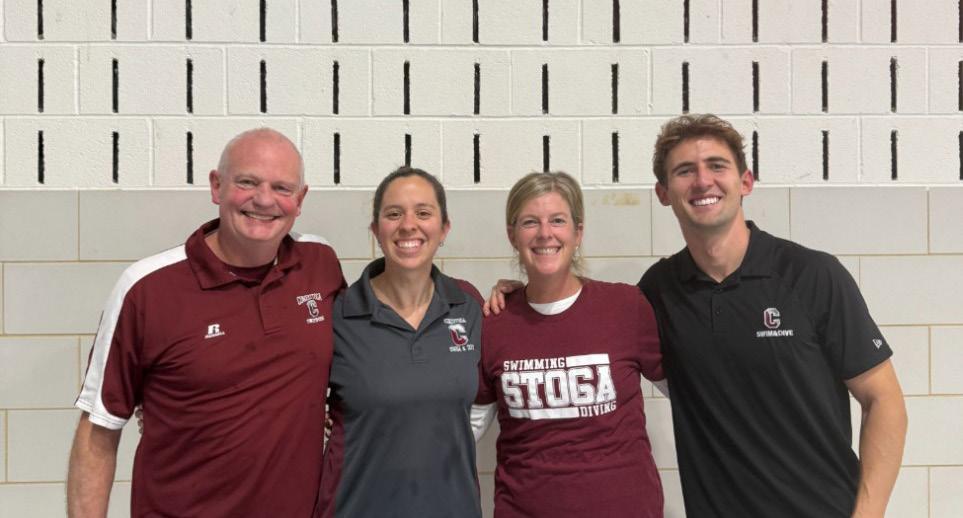

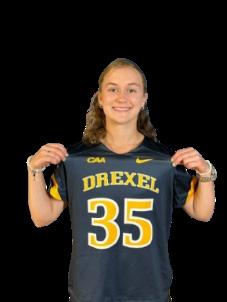
Anvita Mohile Co-Staff Development Director
Coaching crew: Coach Rob Kirkby (left) and Leah Roberts (second from left) pose with the rest of the swim coaches. Kirkby coached the girls’ swim team for 36 years before retiring. Kirkby looks forward to seeing the team continue its success in upcoming seasons.
Written by Fryashti Mishra, Co-Sports Editor
Designed by Talia Roth, Co-Design Editor
IN-SCHOOL SPORTS TOURNAMENTS
This year, Student Council and Peer Mediation hosted several in-school tournaments. For Wellness Wednesdays, Student Council hosted its 3v3 basketball tournament on March 25 and its oor hockey tournament on April 29. Students registered online and made their own teams of three for the basketball tournament and six for the oor hockey tournament. They competed in two separate brackets in each tournament. The rst bracket was for freshmen and sophomores, and the second bracket was for juniors and seniors. The winners of each bracket played against each other, and the nal winning team played against a faculty team.

Additionally, during Unity Fair on May 22, Peer Mediation hosted its pickleball tournament. Students from various grades participated in this tournament in pairs, with many registering online and some lling in open spots during the day. These tournaments helped to raise school unity, as several students who did not participate in Conestoga athletics had the chance to compete with their friends at school.
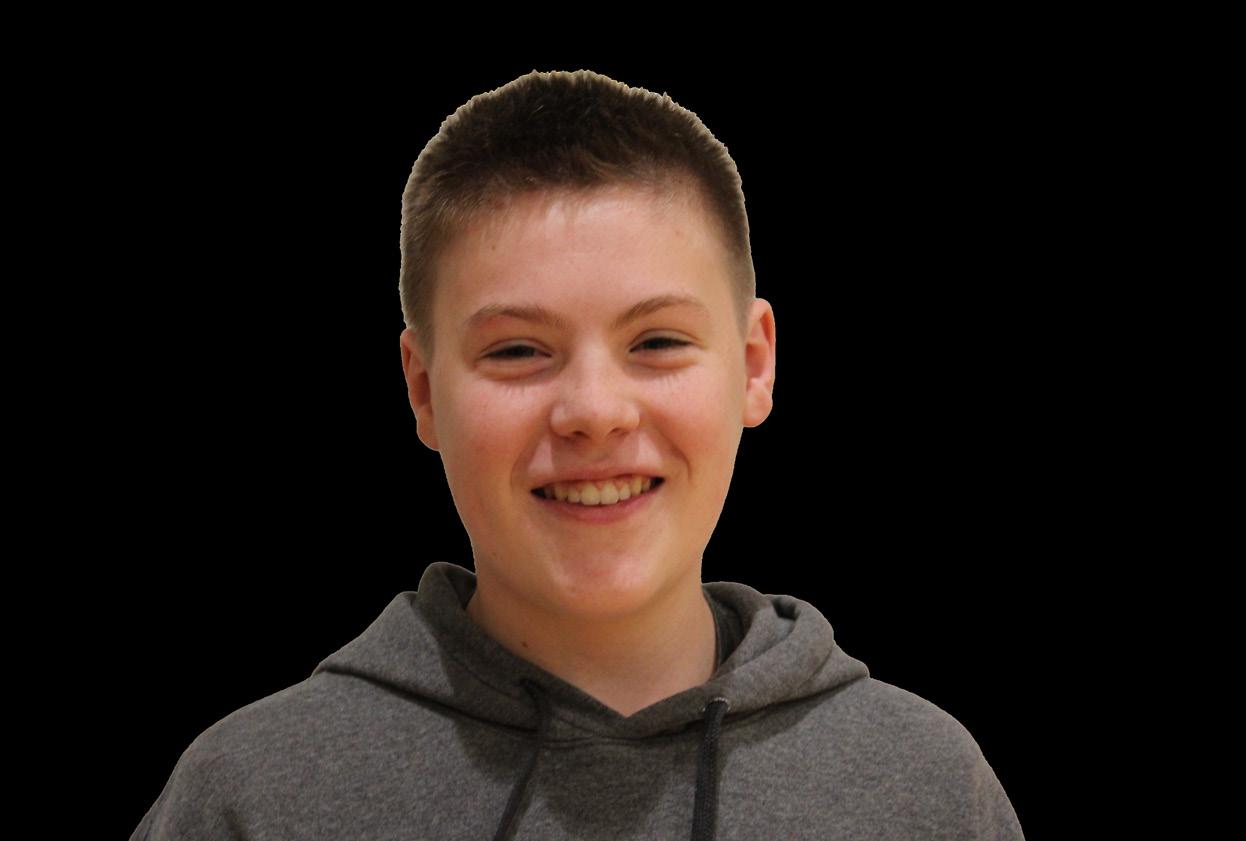
Q: Why did you join the tournament and how was your experience?
A: Conestoga doesn’t do stu like that too o en and I wanted to play basketball with my friends. I enjoyed my time especially since I got to be with my friends instead of sitting in class.
Hogan, freshman
Q: Why did you join the tournament and how was your experience?
A: It seemed like a fun opportunity to just play some pickleball with my friend, Dylan, and some good competition. Everyone's super excited, so it's good energy.

2 4
Q: How was it organizing the pickleball tournament and Unity Fair?
A: In Unity Fair, I served as the head of the outdoor activities committee. In this role, I decided to embrace the sports in the gym. I heard from students that they wanted a tournament of some type. I asked them what type of tournament they wanted, and I heard overwhelming excitement for pickleball, so I decided to do the pickleball tournament.

Making waves: Crew succeeds in medal season
The Conestoga crew team participated in the Philadelphia Scholastic Rowing Association on May 2-3 and the Mid-Atlantic Youth Regional Championships on May 9-10, marking the start of its medal season. Conestoga qualified seven boats to compete at the Scholastic National Championship which the Scholastic Rowing Association of America (SRAA) hosts. It also qualified four boats for the U.S. Rowing Youth National Championships, where they will be competing in Sarasota, Florida from June 11-14. The women’s and men’s teams improved with the 2026 season, shifting from one boat qualifying last season for the U.S. Rowing Youth National Championships to four boats qualifying this year.
Senior Sophia Daams has been on the crew team for four years and qualified to compete at the Scholastic National Championship this year. She said that the shift in mentality has helped with the team’s success. According to Daams, the team is moving towards a new coaching staff that encourages engaged work to earn the results that the team wants.
“We kind of had a new coaching staff and they came in with a new mindset for what they wanted from this team,” Daams said. “A big phrase that was used this year, especially amongst the girls’ team, was that we had to earn it. Everybody has just been really pushing harder and doing 110% instead of 100%.”
Austin Burke, the team’s assistant coach, created an atmosphere of team collaboration and trust, allowing the girls to push themselves. The team has shifted its focus from Grace Yao Staff Reporter just practicing to be fast in its workout using the rowing machine, or erg, to actually implementing its exercises and training on the water to further improve its performance during races. Additionally, the boys’ team significantly improved this year
team, was under immense pressure due to the team’s tough previous season. However, Chick was able to turn it around this season, making sure to build a safe community for the rowers and driving them to work to the best of their abilities in practices and competition.
“The

The team’s training
Conestoga competes in Penn Relays
On April 23-25, Conestoga participated in the Penn Relay Carnival. The University of Pennsylvania has annually hosted the Penn Relays since 1895 at the Franklin Field. Over 1,000 high schools from 30 different states in the U.S. and nine international regions, such as Jamaica, participated in the race. Additionally, approximately 190 collegiate teams from the NCAA divisions took part in the relays as well. Combined, there were more than 20,000 competitors and 100,000 spectators. Conestoga made many notable performances on the competitive field. The girls’ 4x100 team, made up of freshmen Alexandra D’Andrea, Tenley Wilbers, Luiza Marques and Evie Jordan, had a combined time of 55.60. In addition, the boys’ 4x100 team, consisting of sophomores James Adams and Justin Smith, freshman Will Camara, and sophomore Owen Wenner had a combined time of 44.13. The girls’ 4x800 team of sophomore Reagan Herrell, seniors Jenna Khalil and Laila Dogum, and junior Sarah Crill had a combined time of 9:45.58. Furthermore, the Conestoga girls’ 4x400 team consisted of senior Maddie Fox, freshmen Grace Lu and Christabel Harris and senior Nicol Bovanova. The girls had a combined time of 4:08.58, earning them seventh place in the Suburban Central Heats, a subsection of the relays.
“It (Penn Relays) was honestly structured similar to a regular track meet. But since
it was so huge, I know that instead of being categorized by events, there were also categories within the events. So we really only went against schools in our area,” Harris said. The Conestoga boys’ 4x800 team also turned in a strong performance. The boys’ 4x800 team is made up of seniors Parker Warkentine and Howard Shui, sophomore Caz Przybylowski and senior Jake Foster. They had a combined time of 7:57.32 in the heats, earning them 28th place overall. The student-athletes noted the crowds of spectators and fellow athletes that packed the track and stadium.
“Seeing everyone in the crowd was so cool. I don’t think I’ve ever been in an event that big, because I was running against 20 other guys,” Przybylowski said. In addition to the individual race achievements, the Conestoga track team qualified for the district championships through its overall performance at the Penn Relay Carnival. The 2026 PIAA District 1 Championships took place from May 15-16, where Bovanova and senior Alexia Tubbs further qualified for the PIAA State Championship. At the state championship, Bovanova placed ninth and Tubbs placed eighth.
“We didn’t have a lot of other opportunities to qualify,” Herrell said. “So, we really wanted to hit the time,
William Simon/The SPOKE
Priyanka Paxula Staff Reporter
Carter
Caz Przybylowski, sophomore
Kendall Wry, junior, Peer Mediation PALS Director
National champion: Freshman wins U.S. Open Wrestling Championship Page 10
SPORTS
Hometown heroes: Citizens Bank Park to host 2026 MLB All-Star Game Page 10
In-School
Sports Tournaments Page 11
Making waves: Crew succeeds in medal season Page 11

Juniors excel at US Open Pickleball Championships
Over 3,700 pickleball players and over 55,000 spectators from 53 countries swarm Naples, Florida over the course of a week. From April 10-18, US Open National Pickleball Center, the world’s largest outdoor pickleball facility, hosted the 10th Franklin US Open Pickleball Championships. Among those on court were juniors Chelsea Bachman and Isabel Laroque. When they were not playing, the girls watched other players compete.
“It (the tournament) was nothing like I would have imagined,” Bachman said. “There were more than 60 courts, and it was really cool. We watched all the pros and senior pros there every day.”
Near the start of her pickleball journey, Laroque attended the 2025 Franklin US Open Pickleball Championships with her mom and owner of a pickleball club called Forward Pickleball, Keca Ward. The tournament sparked Laroque’s interest in playing at the championships in 2026, and she soon began playing with Bachman at Forward Pickleball in Audubon, Pennsylvania. Ward helped Bachman and Laroque drill and practice throughout the year leading up to the tournament. The girls drilled for hours, perfecting various shots and techniques. Additionally, they participated in open play to practice competing together.
“On the court, they are very athletic, very engaging, excellent pickleball players. They compete at the very highest level in my
club, and people love competing against them,” Ward said. “They’ve just excelled so quickly in their game. Both are highly skilled players at this point, and it’s been exciting, not only as the owner, but to members and the community, to watch them grow.”
In February, Bachman and Laroque signed up to play at the tournament and entered through a registration lottery system called the US Open Player Lottery. After they were selected, the girls entered the Women’s Doubles 3.5 Double Elimination 9-29 bracket. They credit their teamwork on the court to their friendship outside of pickleball.
“I feel like both of our energies are normally on the same page,” Laroque said. “When -
ever we’re either winning by a lot and we want to keep going or it’s a really close game and we need to be locked in, we feed off each other’s (energy), which really helps.”
Bachman and Laroque won the bronze medal in their bracket. Although the girls had a lead on their opponents early in their last match, they narrowly won the game with a final score of 16-14. Their families and Ward went down to Naples to watch and support them.
“We were cheering them on. The parents were there, the grandparents were there, and then members of the community were there, and everyone was really hyped that they were winning,” Ward said. “They (Bachman and Laroque) stay focused on the
court. You have to mentally prepare, which I think they did, and physically prepare, which they did as well.”
Last year, in addition to playing outside of school, Bachman and Laroque also started the Pickleball Club at Conestoga and hope for its growth as well.
“What we really love about pickleball is how it brings us together both on and off the court,” Laroque said. “It’s such a fun and social sport, and we enjoy being able to stay friends while also competing. The competitiveness makes it exciting, but our friendship helps us communicate well and makes us a really strong team when we play together. (Pickleball) is fast paced, engaging and a great way to challenge ourselves while still having fun.”
Sports
opinion: Why FIFA’s failure to act is a threat to ‘the beautiful game’
Flags of every color dance through the wind unwaveringly, people unite in pride for their country. As the World Cup offers a unique atmosphere for fans to come together and players to prove themselves, one thing stands in the way: FIFA’s failure to respond to racism.
A 2024-25 report from Kick It Out, an organization that works with soccer’s governing bodies to raise awareness against discrimination and serves as a platform to report abuse, cited 245 instances of racism in professional soccer. That’s a 10% increase from last season’s 223 reported instances. Disturbingly, the organization also reported a six-fold increase in racist mass chanting. Although such statistics seem absurd for many, they represent the harsh reality players of color are forced to endure every time they step foot onto the turf. Several players immediately come to mind when con -
sidering racial discrimination across soccer. Vinícius Júnior of Real Madrid, for one, recently engaged in an altercation with Benfica’s Gianluca Prestianni, who covered his mouth with his jersey while speaking. Vinícius Júnior accused Prestianni of calling him a racist slur. Mouth-covering hinders the ability of cameras to capture speech; now, this has become a widespread practice as players attempt to conceal racist remarks. Liverpool’s Mohamed Salah is no stranger to this abusive behavior either, with several soccer fans receiving three-year bans from all U.K. stadiums for racist, islamophobic outcries against him. These aren’t simply isolated incidents, but common patterns of racial abuse in soccer. So, where does FIFA stand?
On May 17, 2024, current FIFA president Gianni Infantino solidified the governing body’s strict anti-racist stance, presenting a universal “Global Stand Against Racism” approach at the 74th an -
nual FIFA Congress. Despite Infantino’s moving promises, one thing remains clear: FIFA prioritizes profit over the safety of its players. According to a report by The Athletic, the sports journalism branch of The New York Times, the governing body did not permit displays or advertisements with anti-racist messaging to be exhibited in domestic venues for the 2025 FIFA Club World Cup. In addition, the U.S., where FIFA plans to hold three-quarters of World Cup, is currently withstanding a “human rights emergency,” as described by major human rights movement Amnesty International. Why would FIFA select the U.S. to co-host the largest global sporting event amid its tense political climate, you may ask? The North American bid assured FIFA $11 billion in profit; as usual, the answer boils down to how much money FIFA officials can fit in their pockets. Some argue that FIFA has taken the proper steps to combat discrimination, especially
after Infantino’s aforementioned speech and the implementation of the “Global Stand Against Racism.” Key components of this initiative include the crossedarm gesture, which enables players to signal accounts of racism to referees and the three-step protocol that requires referees to stop, suspend or abandon a game if abusive behavior continues. Nevertheless, these measures aren’t sufficient and can’t protect players; if FIFA is truly committed to its anti-racist stance and seeks to make a change in the sport, it doesn’t get to choose only certain instances in which to intervene.
As a co-host of the World Cup, the U.S. has a major responsibility to cease acts of racially profiling and unlawfully detaining individuals. FIFA too, needs to step up its efforts to enforce its anti-racist protocol and allow anti-discriminatory slogans in these defining moments. We have an obligation to protect what Pelé, a popular Brazilian professional soccer player, once referred to as “the beautiful game.”

Playing pickleball: Juniors Chelsea Bachman (left) and Isabel Laroque (right) compete in the 10th Franklin US Open Pickleball Championships, earning bronze in the Women’s Doubles 3.5 Double Elimination 9-29 bracket. The girls competed at the US Open National Pickleball Center. Bachman and Laroque hope to compete in the championships and in local tournaments next year.
Courtesy Bruce Yeung
Fryashti Mishra Co-Sports Editor
Sophia Seyedian Staff Reporter