
Rooted in a deep passion for Oklahoma youth and the agricultural way of life, this publication was created to celebrate, support, and elevate the next generation of agriculture. From the show ring to leadership opportunities, from pastures and barns to greenhouses, crop fields, and the classroom, today’s youth are shaping the future of our industry in countless ways. Our mission is to serve all young people involved in agriculture—whether their passion lies in livestock, crops, ag mechanics, leadership, education, or innovation.
This magazine exists to tell the stories that deserve to be heard. Through compelling features, industry insights, youth spotlights, operation profiles, sale and event coverage, and show results, we aim to inform, inspire, and connect our agricultural community. Just as importantly, we are committed to recognizing those ag youth whose dedication may not always be seen in the show ring but is just as vital to the strength and sustainability of agriculture.
We believe agriculture is built on opportunity, hard work, and community. By highlighting the achievements of students, educators, families, and mentors, we strive to create a platform that encourages involvement, fosters pride, and opens doors for the future. This publication is more than a magazine— it is a reflection of the people, values, and passion that drive agriculture forward.
As we launch our first issue, we are proud to stand behind Oklahoma’s ag youth and those who support them. We look forward to serving this community for years to come, sharing stories that matter, celebrating success in all its forms, and helping cultivate the future of agriculture—one story at a time.
“
“ These lessons will continue to guide me long after my jacket is hung for the final time.
-Heath Laubach
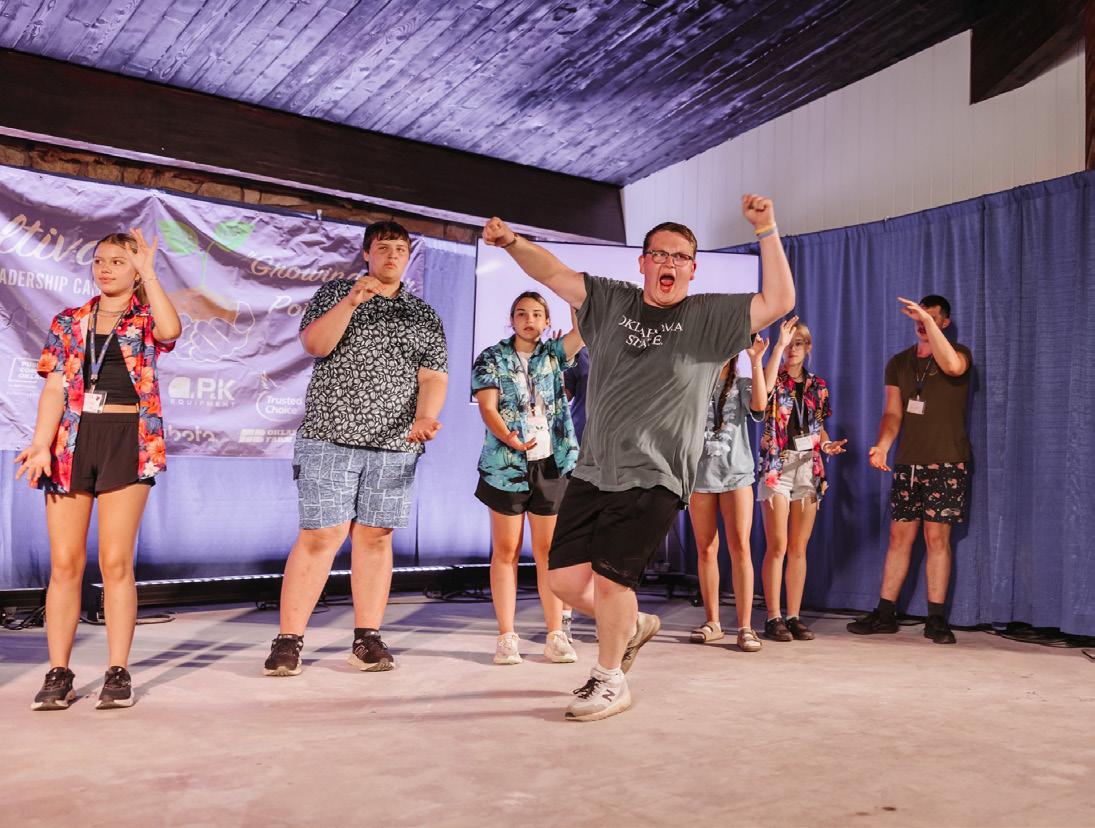
“FFA has taught me lessons that extend far beyond agriculture.”
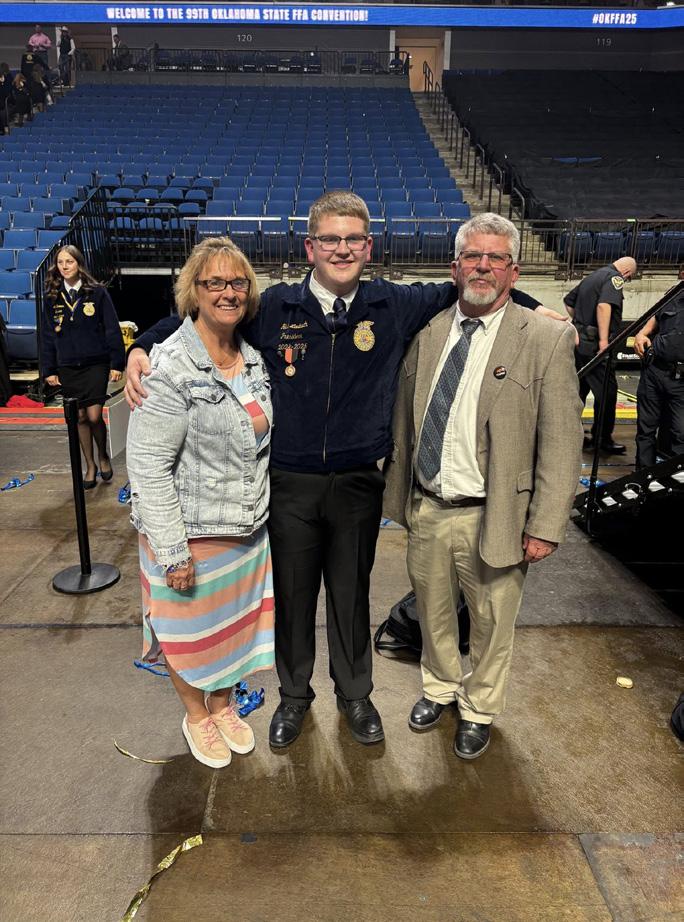
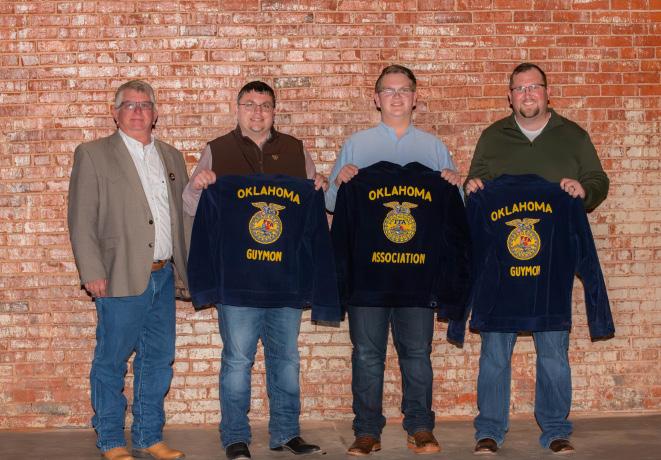
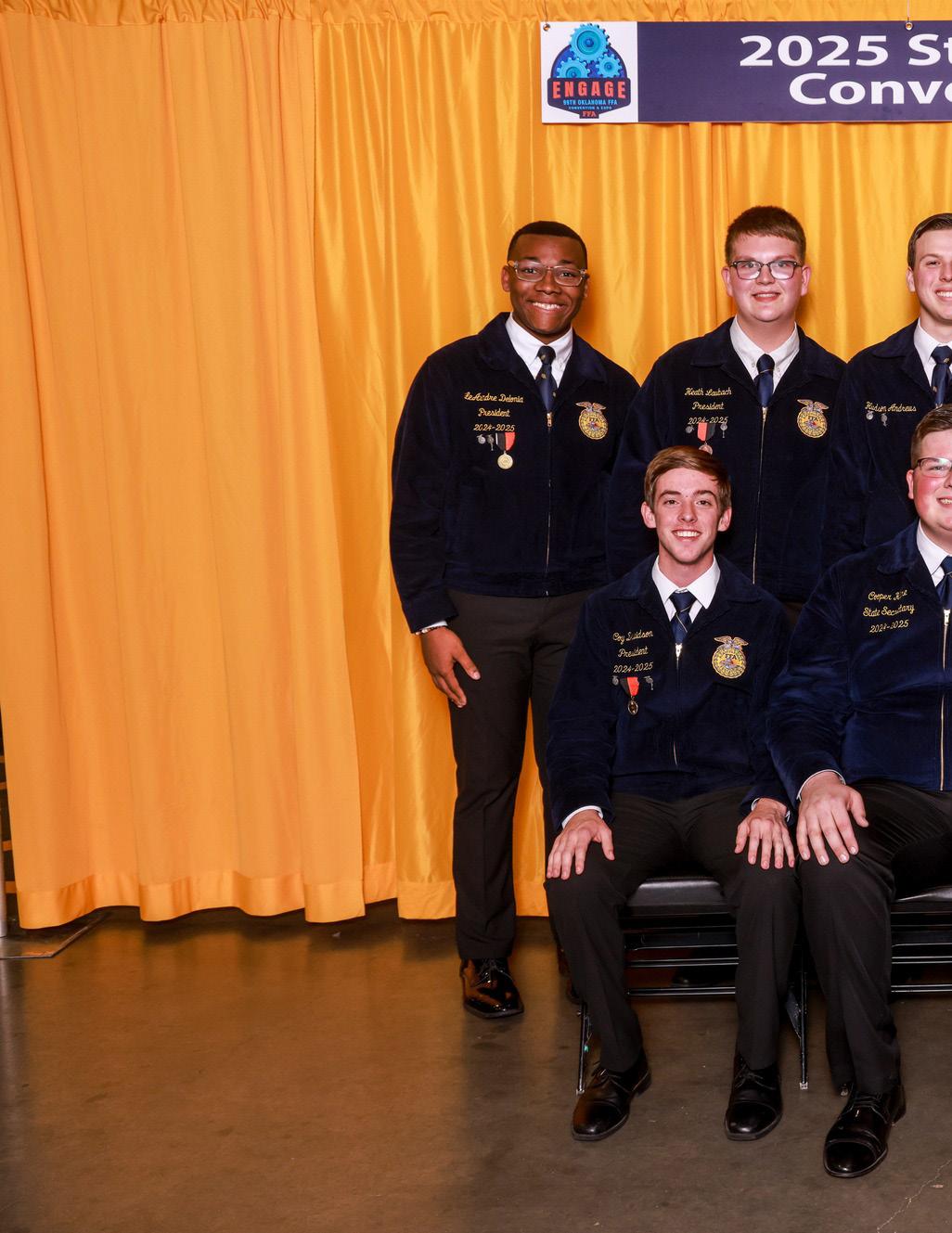
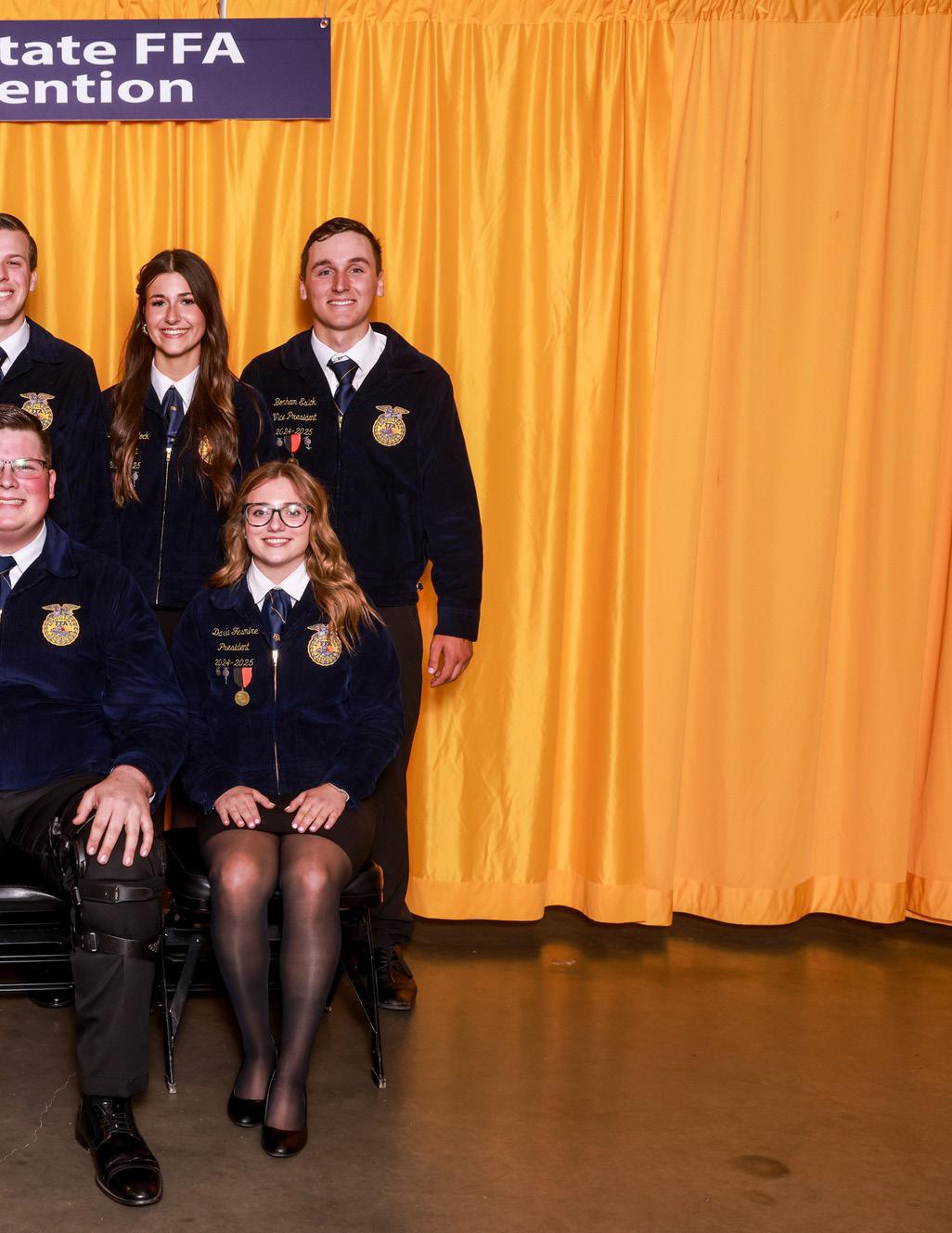
Some stories do not begin with a moment, but with a legacy passed quietly from one generation to the next. For Heath Laubach, involvement in FFA was never something discovered later in life — it was present long before he could understand what the organization represented. Long before a blue jacket was zipped or an officer title was imagined, the principles of agricultural education were shaping his world. Leadership, service, and commitment were not lessons learned in a classroom; they were modeled daily by the people closest to him. As Heath explains, “My FFA story began well before I was born. My grandpa served many years of his life as an agricultural education teacher (Ag Teacher), laying the foundation for a family tradition rooted in service and leadership. When he retired, that legacy did not fade. Instead, it passed forward through my dad, who has spent nearly four decades teaching agriculture and mentoring students across the state.”
In many families, careers are discussed. In Heath’s family, they were lived. His grandfather’s classroom formed the first chapter, and his father’s nearly forty years in agricultural education ensured that the influence of that legacy continued. From chapter banquets and leadership conferences to late-night conversations centered on students, agriculture education was never confined to school hours. It followed the family home, quietly shaping daily life in ways that felt ordinary at the time but would later prove extraordinary.
Growing up in that environment offered a perspective few recognize while living it. Heath reflects that “growing up as an Ag Teacher’s kid is a unique experience. For much of my early childhood, I did not fully understand who my dad was or why so many people knew his name. At the time, it felt normal. Looking back, I realize how rare and meaningful it
was.” As a child, it was easy to overlook the significance of constant travel, phone calls from former students, and weekends spent supporting FFA events. Only later did the weight of that influence become clear — the quiet impact a teacher can have across decades of students and communities.
Surrounded from a young age by leadership conferences, chapter meetings, and agricultural education, Heath began absorbing lessons long before he realized it. “Being surrounded by high school students, leadership conferences, and agricultural education from a young age taught me lessons many do not encounter until much later in life,” he shares. “Growing up in this environment brought my dad and me closer during my middle and high school years and
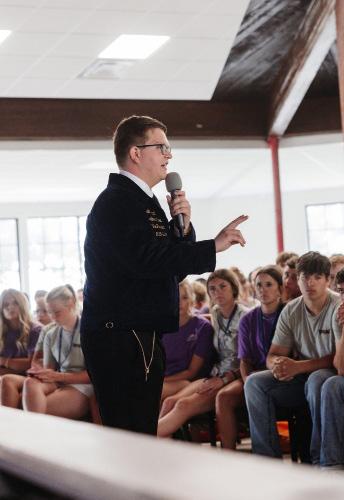
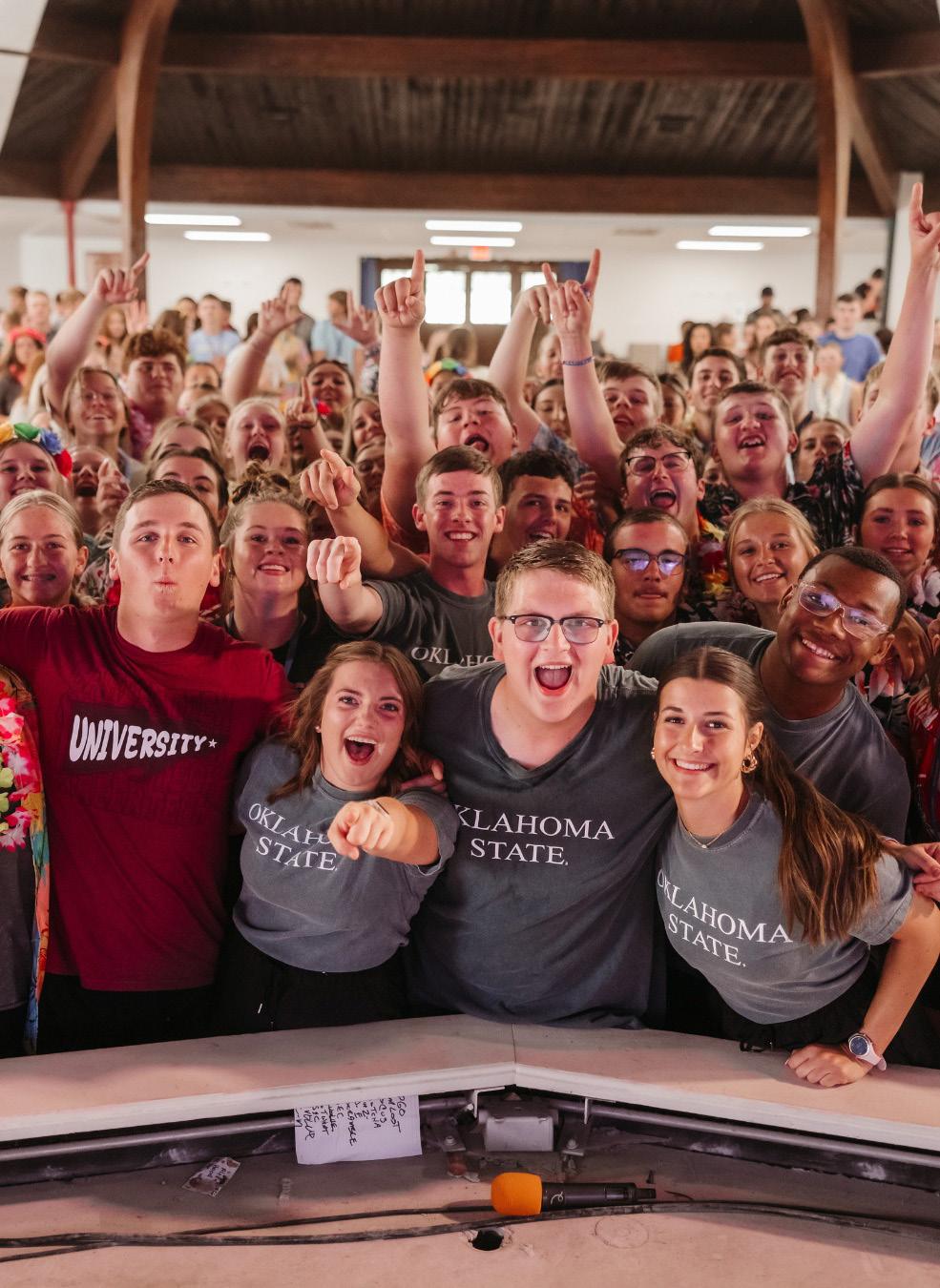
and shaped my appreciation for the impact a teacher can have.” Those lessons were not taught through instruction but through example — by watching consistency, humility, and dedication modeled day after day.
Some of Heath’s most vivid memories were formed at a place familiar to thousands of Oklahoma FFA members. “Some of my earliest memories revolve around the Oklahoma State FFA Convention.” Each year, the trip to Oklahoma City represented anticipation and excitement, a few days that felt larger than life. “Every year, if I did well on my end-of-year tests, I got to travel with my dad and his FFA members to Oklahoma City for the State FFA Convention. Since I was three years old, the convention has been the highlight of my year.” From the stands, Heath watched sessions unfold, listened to speakers who challenged members to believe in themselves, and observed leadership in action. “I watched my brothers receive their State FFA Degrees, sat in awe of the sessions, and dreamed quietly in the crowd.”
At the time, those dreams were distant — quiet hopes rather than expectations. Yet those moments planted a foundation that would later shape his own journey. Years passed, involvement deepened, and eventually the moment arrived when admiration turned into responsibility. “Years later, I heard my own name called as the newly elected Northwest Area Vice President.That moment tied together every memory that came before it.” Childhood wonder met reality, and the experiences of years past suddenly formed a clear picture of purpose.
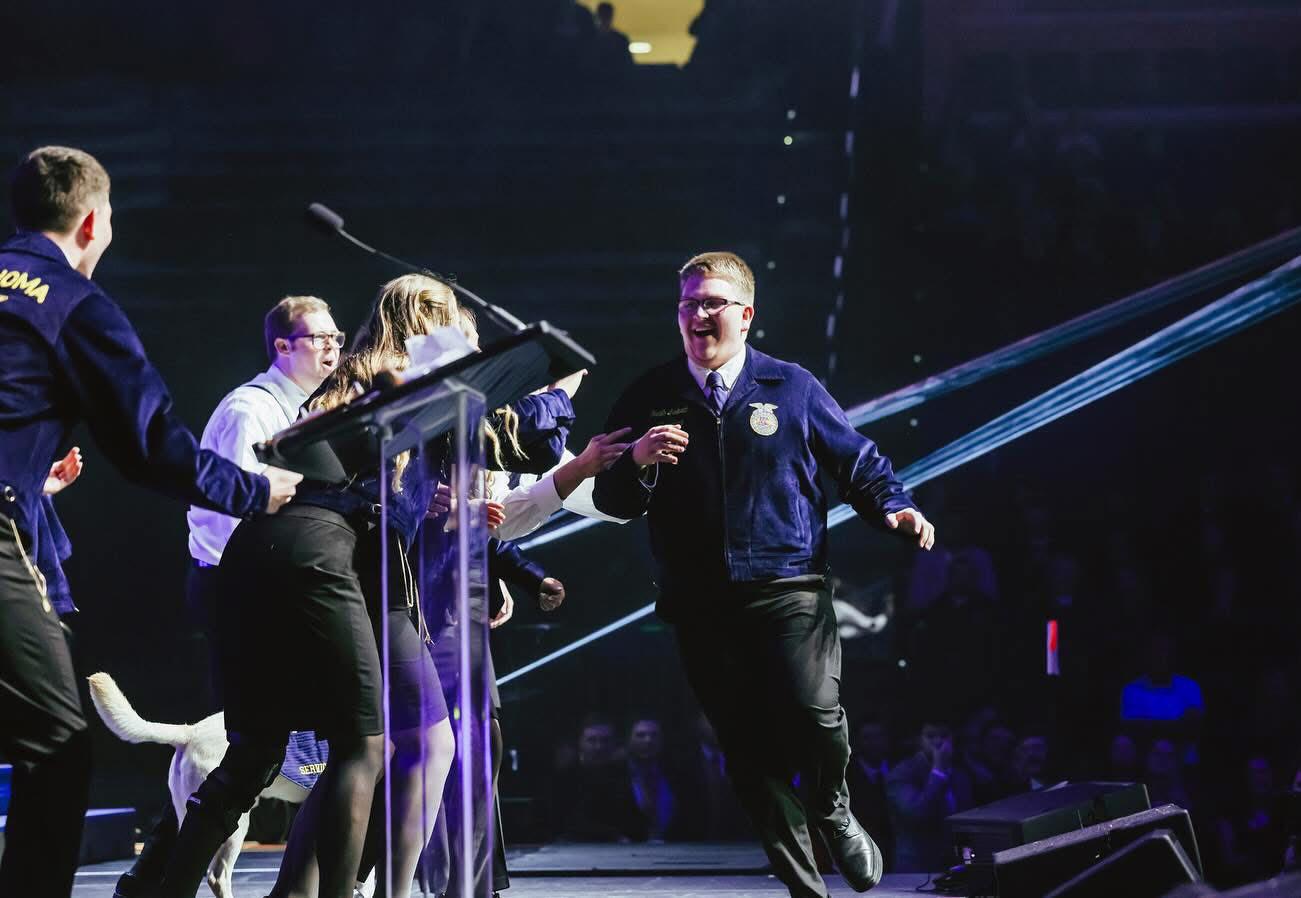
Today, Heath stands at a moment few ever experience — serving during a historic year for the organization that shaped him. “Now, as I prepare to help lead the 100th Oklahoma State FFA Convention and complete my term on the 100th Oklahoma FFA Officer Team, the weight of that milestone is not lost on me.” The centennial year represents far more than a celebration; it serves as a reminder that FFA is built on generations of commitment. “This moment represents generations of dedication, including my own family’s story within the organization.” From his grandfather’s classroom to his father’s decades of teaching and now to his own leadership role, the Laubach family’s story mirrors the story of Oklahoma FFA itself — one built on continuity, mentorship, and service.
Throughout his journey, the lessons learned extended far beyond agriculture. Heath explains that “FFA has taught me lessons that extend far beyond agriculture. From managing pressure in the show ring to thinking on my feet while presenting a speech, these experiences built confidence, discipline, and integrity.” Those experiences prepared him not only for leadership roles but for life beyond the jacket — moments requiring composure, adaptability, and faith. “They taught me how to lead with humility and serve with purpose. These lessons will continue to guide me long after my jacket is hung for the final time.”
Like every member, Heath’s path through FFA was uniquely his own. “My path in FFA may have looked different from others, but the experiences, knowledge, and relationships I have gained made every step worthwhile.” Serving as a state officer deepened that understanding of responsibility and representation. “Serving as a state officer allows me to represent more than myself. I represent my chapter, my family, and the legacy my grandfather started decades ago.” That responsibility is carried with humility, gratitude, and an awareness that leadership is not about recognition but stewardship.
At the center of his journey lies thankfulness. “Above all, I thank God for the opportunity to serve, and I remain committed to giving back to an organization that has given me so much.” As Oklahoma FFA celebrates its 100th year, Heath Laubach’s story stands as a reminder that the organization’s strength does not rest solely in milestones or ceremonies, but in the people who carry its mission forward — teachers who dedicate their lives to students, families who support the journey, and members who choose to lead.
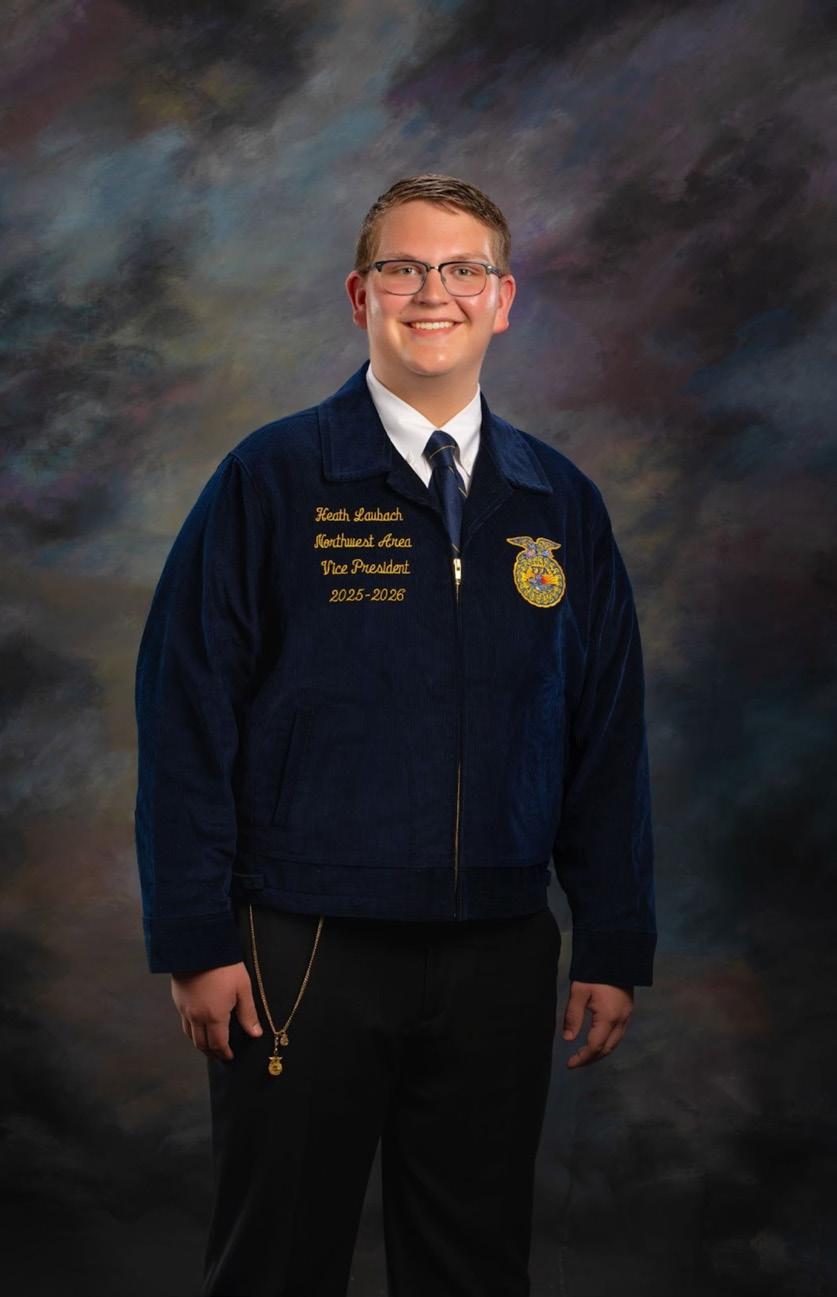
His story did not begin with the jacket, and it will not end when it is hung for the final time. It continues through the lessons passed on, the lives influenced, and the legacy entrusted to the next generation — proof that sometimes the most meaningful journeys begin long before we ever realize we are on them.
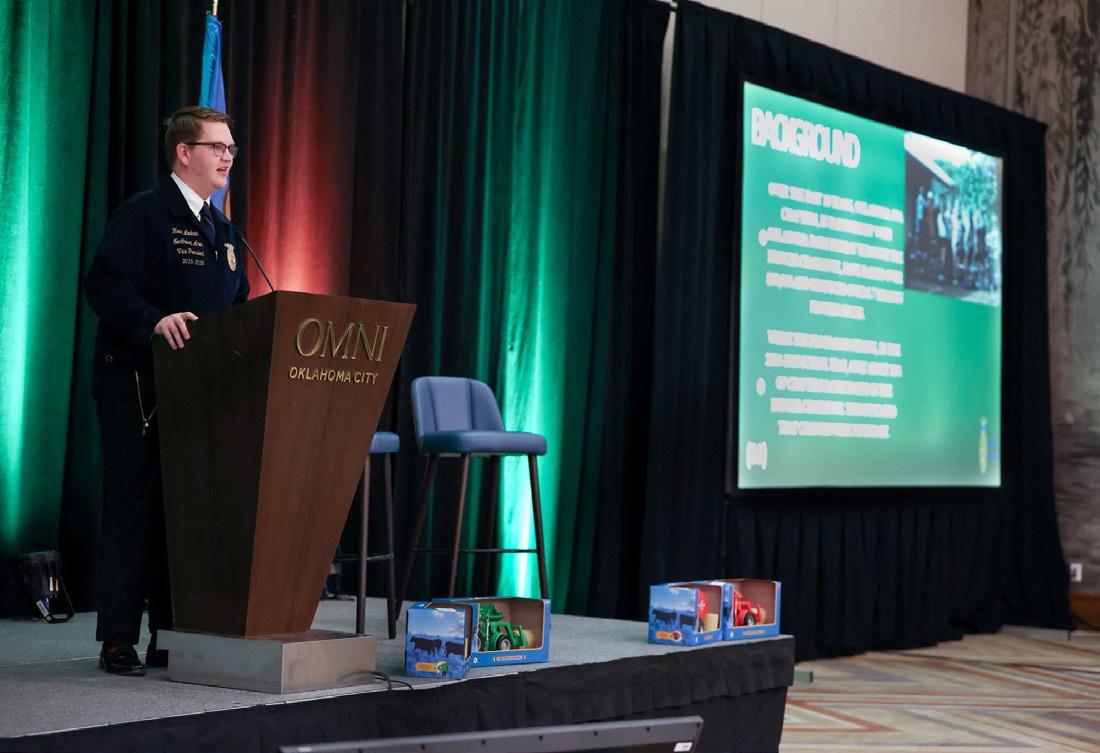
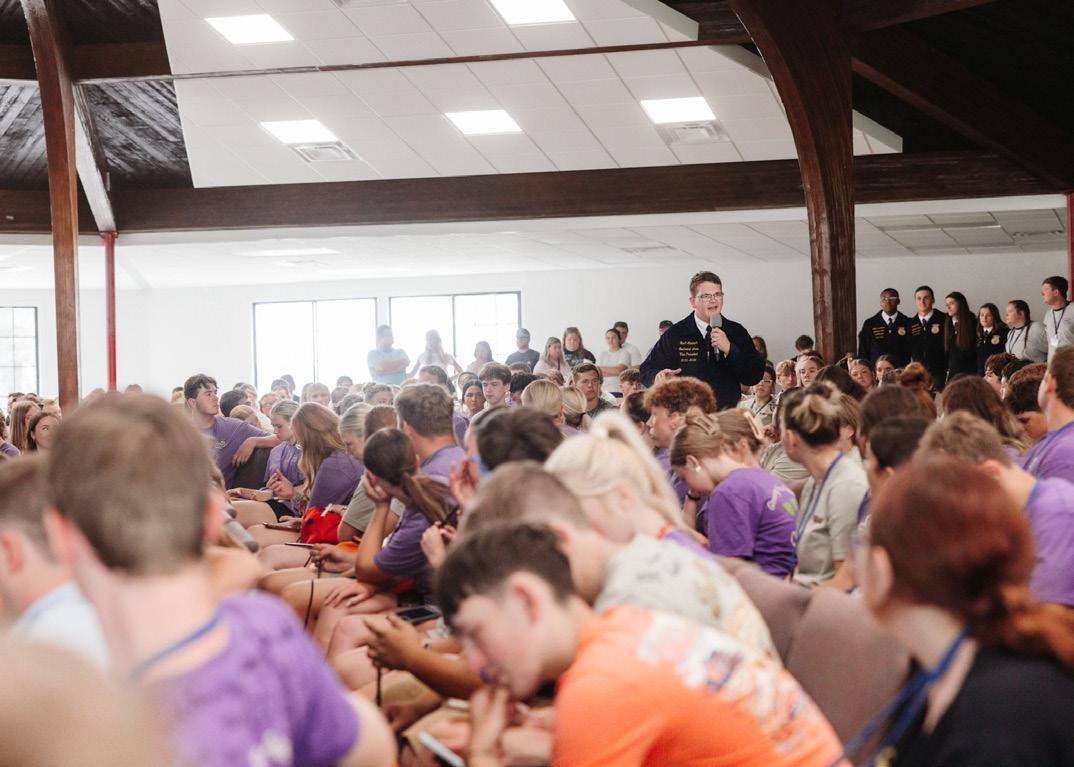
Photo Credits : FFA Alumni Camp Photo : Griffie Dee Photography State Convention : Final Drive Photography

EVERY ‘LAST’ CARRIES MORE MEANING. “ “ CARRIES MORE MEANING.
Senior year arrives quietly, almost unexpectedly. One day, you’re loading the trailer like you always have. The next, you realize how few times you’ll do it again. For livestock exhibitors, senior year isn’t just another season—it’s a chapter filled with lasts. The last first show. The last early morning haul. The last time tying the same knot, brushing the same animal, walking into a ring that feels like home. Suddenly, everything feels different.
Early in the year, it’s easy to treat shows the same way you always have. The routine is familiar: feed, wash, practice, load, repeat. But somewhere along the way, it hits you— this won’t last forever. Every banner, every mistake, every quiet moment in the barn carries more meaning. The pressure isn’t just about winning anymore; it’s about soaking it all in before it’s gone. Senior year has a way of slowing time, even when the schedule feels faster than ever.
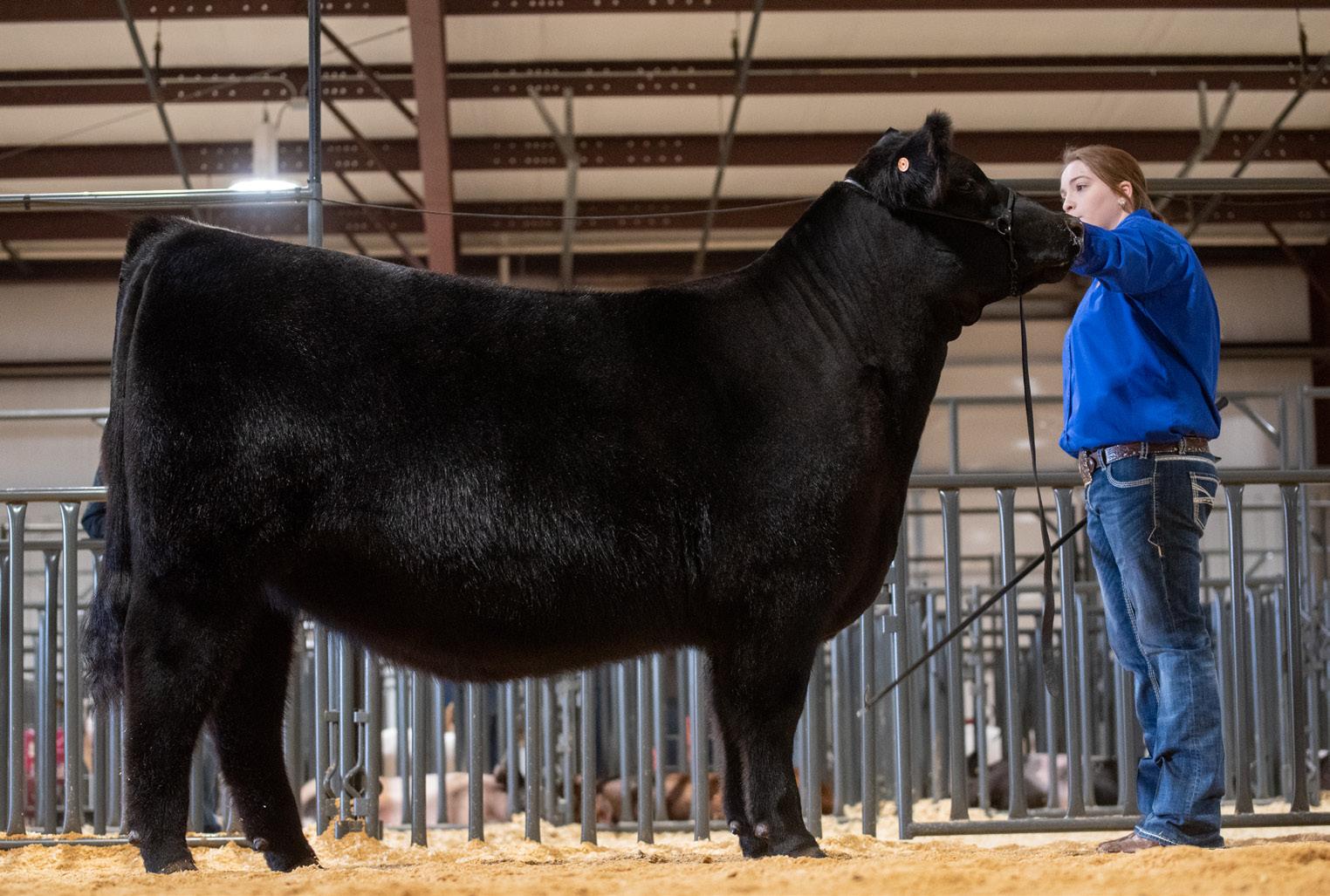
By this point, exhibitors carry more than animals into the ring—they carry experience. Years of early mornings, tough losses, small wins, and long drives home shape the way seniors handle themselves: calmer, more confident, and more intentional. Seniors often realize they aren’t just showing for themselves anymore. Younger kids are watching how they prepare, how they lose, and how they respond under pressure. Whether they know it or not, seniors become leaders simply by example.
It’s also a season of transition. While livestock projects still demand daily commitment, thoughts naturally begin to shift toward the future—college applications, careers, and next steps. Balancing those decisions with barn responsibilities isn’t easy. But livestock youth are uniquely prepared for it.
Years of managing schedules, meeting deadlines, and handling pressure have built skills that matter far beyond the show ring. Senior year teaches exhibitors how to stand in two places at once—honoring where they’ve been while preparing for where they’re going.
There’s a moment every senior experiences: walking into the ring and realizing it feels different than before. Not heavier, necessarily—just more meaningful. Win or lose, seniors often show with a deeper sense of appreciation. They understand how much effort goes into getting there, how many people helped along the way, and that it won’t always feel like this. That awareness
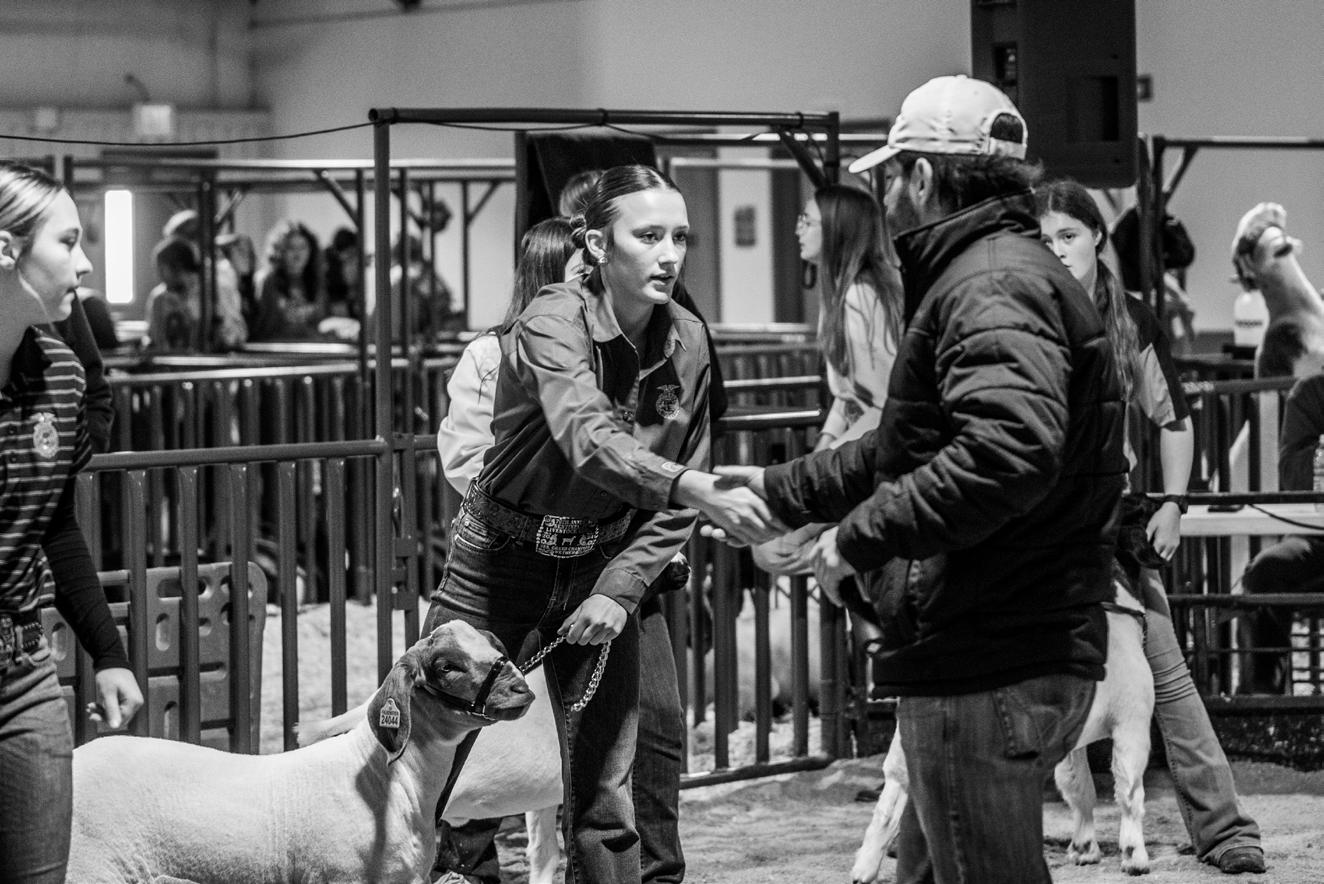
changes everything.
With senior year comes expectation, sometimes self-imposed and sometimes external. The desire to go out on a high note can add pressure that wasn’t there before. But senior year isn’t about perfection—it’s about presence. The best senior exhibitors aren’t defined by banners; they’re defined by consistency, sportsmanship, and respect—for their animals, their competitors, and themselves. How they finish matters just as much as how they started.
Some of the most meaningful moments don’t happen in the ring. They happen late at night in the barn, early in the morning before school, or on the drive home after a long weekend. Those moments bring gratitude—for parents who hauled trailers, siblings who helped with chores, advisors who offered guidance, and animals that taught responsibility and patience. Senior year brings clarity. It shows exhibitors just how much it took to get here.
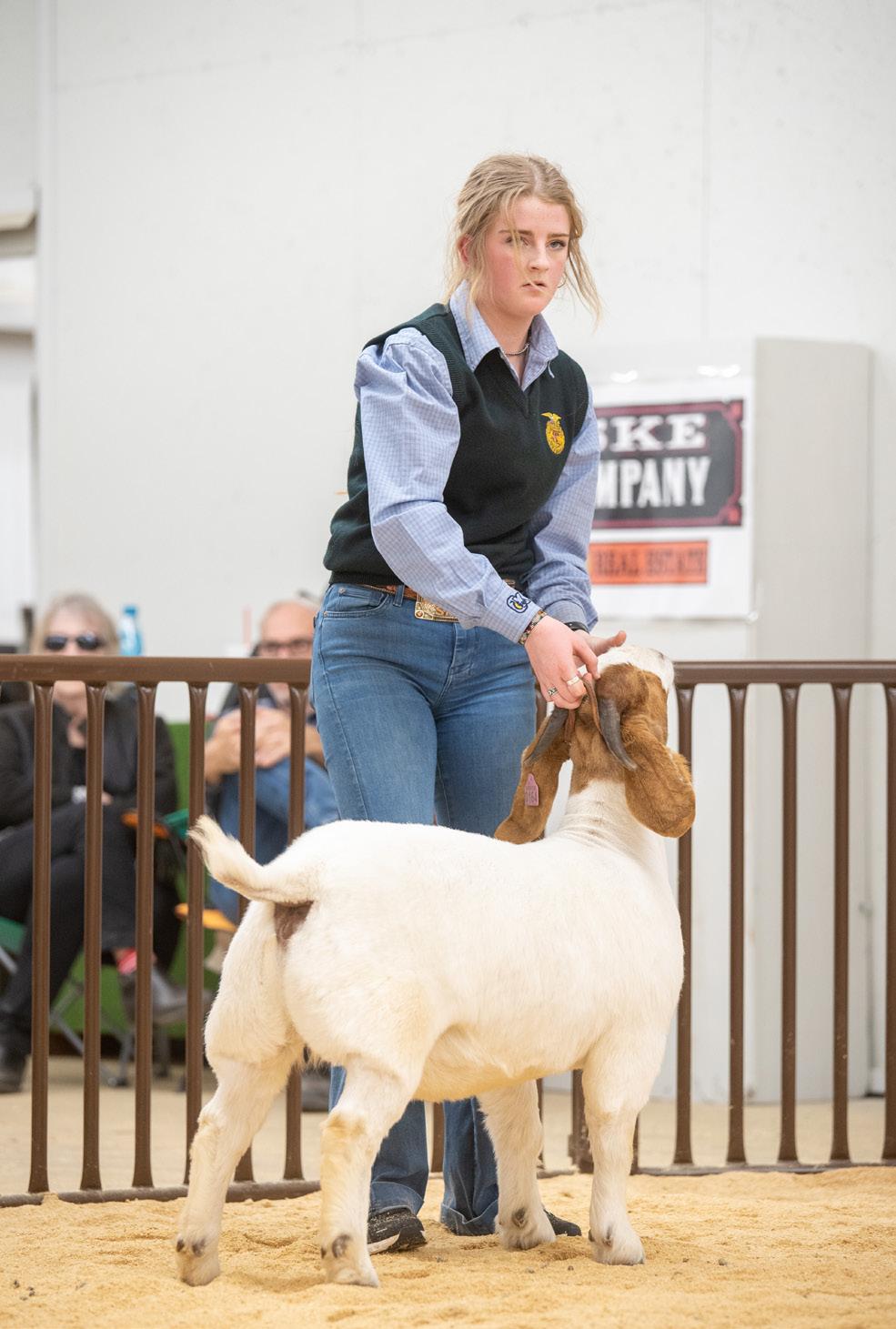
When the final show ends and the barn grows quieter, it can feel like some-
“
thing is missing. For many seniors, livestock wasn’t just an activity—it was identity. But senior year doesn’t mark the end of that identity. It marks its foundation. The lessons learned—discipline, work ethic, resilience, leadership—don’t disappear when the halter comes off. They show up in classrooms, careers, relationships, and life.
Senior year is emotional because it matters. It matters because of the time invested, the sacrifices made, and the person shaped along the way. Showing livestock one last time isn’t about closing a door—it’s about recognizing how far you’ve come before stepping through the next one. And long after senior year ends, the lessons remain, steady, reliable, and ready for whatever comes next.
“ THE BARN MAY GET QUIETER BUT THE LESSONS DON’T LEAVE.


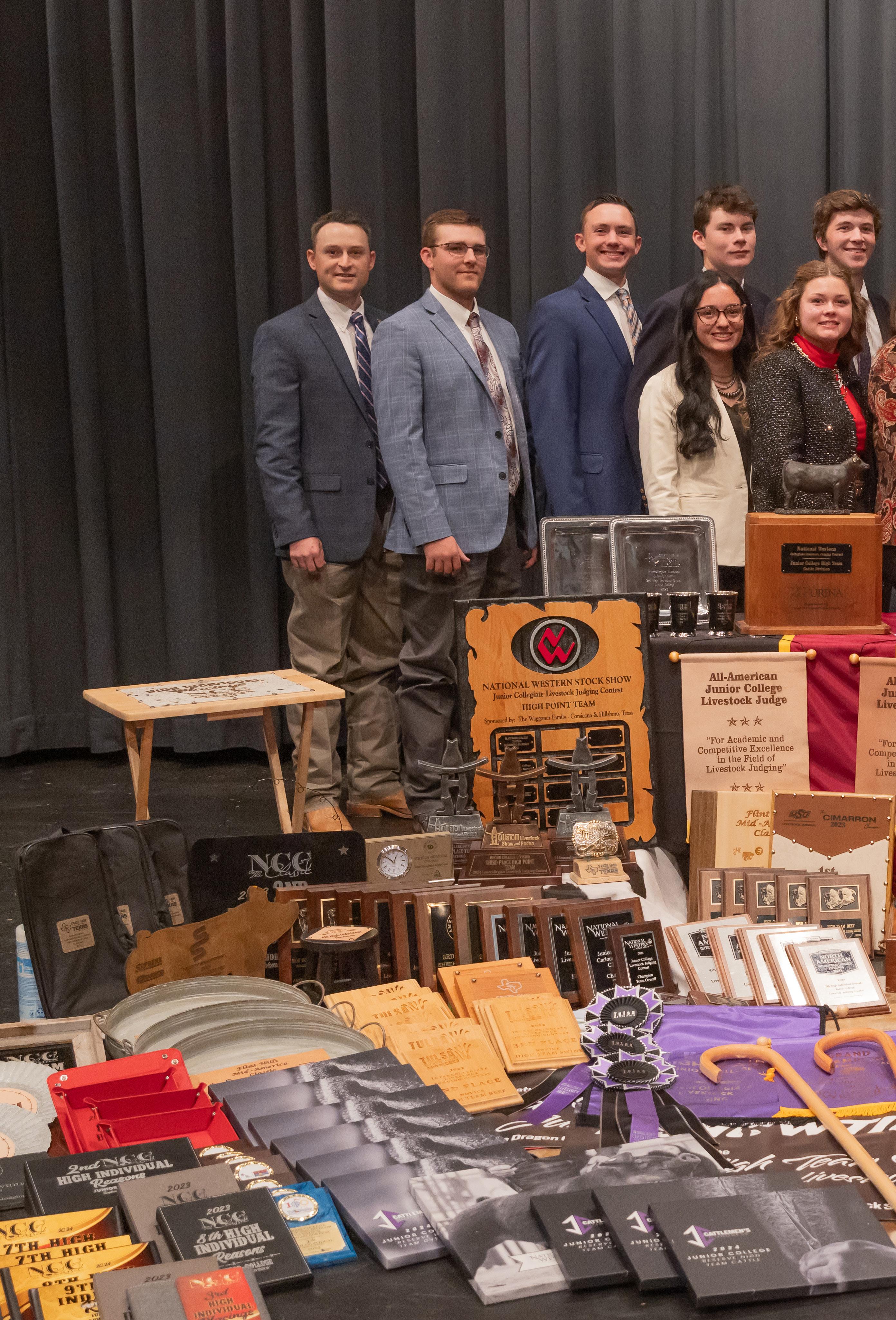
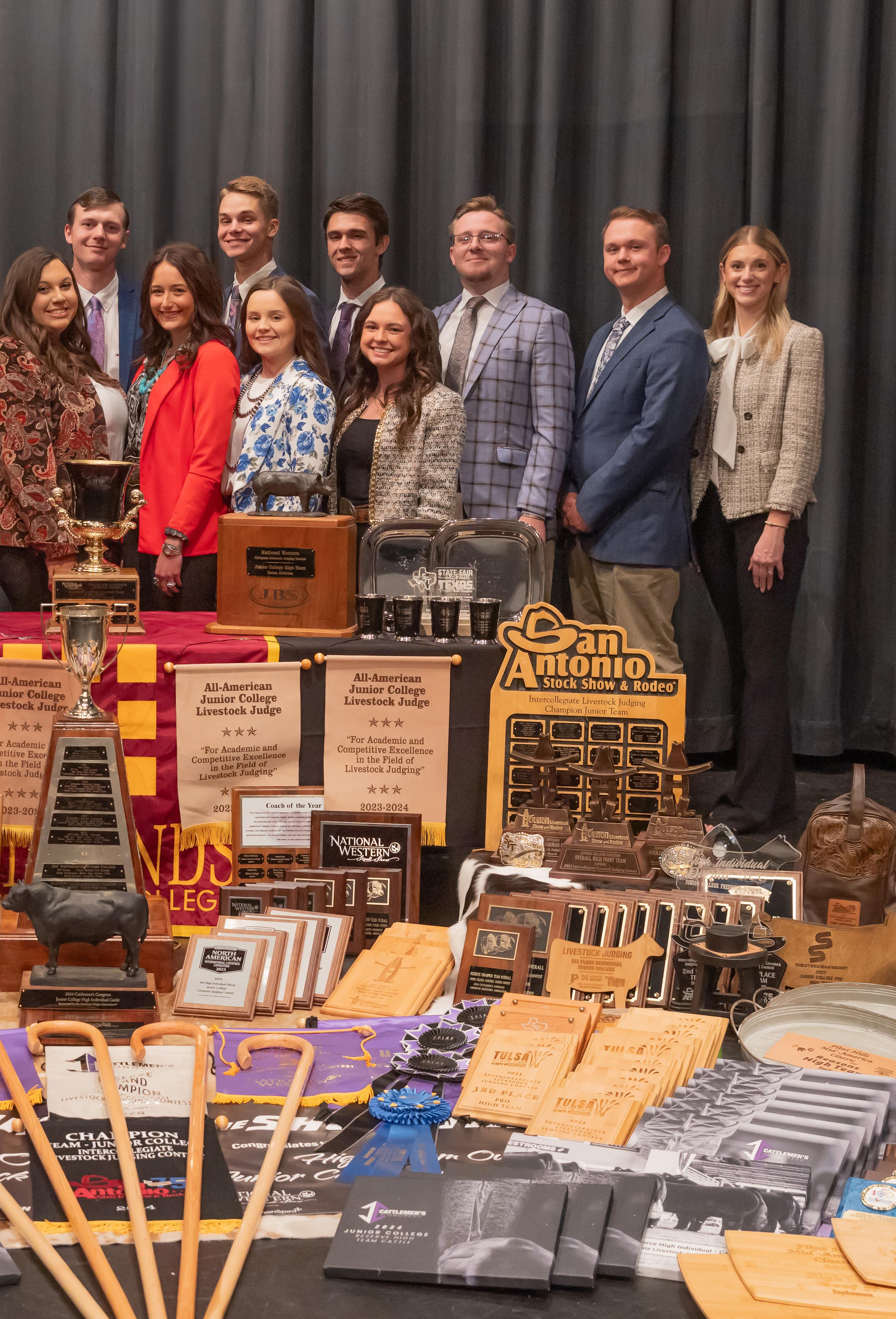
How Spencer Scotten and Redlands Community College continue a tradition built on students, support, and excellence.
“They come to Redlands not only to attend school, but to grow as individuals.”
Livestock judging is more than a contest — it is an experience that shapes character, confidence, and commitment within agricultural education. Beyond evaluating animals in a competitive setting, students develop discipline, accountability, communication skills, and decision-making abilities that extend far beyond the show ring. What begins as learning how to sort livestock quickly becomes a process of learning how to think critically, speak with confidence, and stand behind decisions with professionalism.
Junior college programs play a vital role in this process, guiding young people during a formative stage of life and serving as a bridge between youth livestock involvement and longterm careers in the industry. For many students, this level of education represents their first experience away from home, their first exposure to high expectations, and their first opportunity to discover who they are becoming both personally and professionally. Across the country, junior college judging teams continue to raise the bar of excellence. Competition has grown stronger, expectations higher, and opportunities more expansive than ever before. As the livestock industry evolves, so too does the responsibility placed on judging programs to prepare students for careers that demand adaptability, leadership, and effective communication.
These programs not only prepare students for four-year universities, but also for careers that require confidence under pressure, the ability to make timely decisions, and the skill to communicate those decisions clearly. Whether students pursue education, production agriculture, agribusiness, animal health, or sales, the lessons learned through judging continue to shape their professional paths.
Among those programs is Redlands Community College, an institution known for its deep agricultural roots and long-standing commitment to student success. For decades, Redlands has built a reputation for developing knowledgeable, hardworking students prepared to excel both academically and professionally. Its agriculture department has long served as a foundation for hands-on learning, industry involvement, and leadership development.
Among those programs is Redlands Community College, an institution known for its deep agricultural roots and long-standing commitment to student success. For decades, Redlands has built a reputation for developing knowledgeable, hardworking students prepared to excel both academically and professionally. Its agriculture department has long served as a foundation for hands-on learning, industry involvement, and leadership development.
At the heart of that reputation stands the livestock judging team — a program grounded in tradition and strengthened by opportunity. The program reflects years of commitment from faculty, alumni, and students who have helped build a culture centered on accountability, preparation, and pride in representing Redlands Community College.
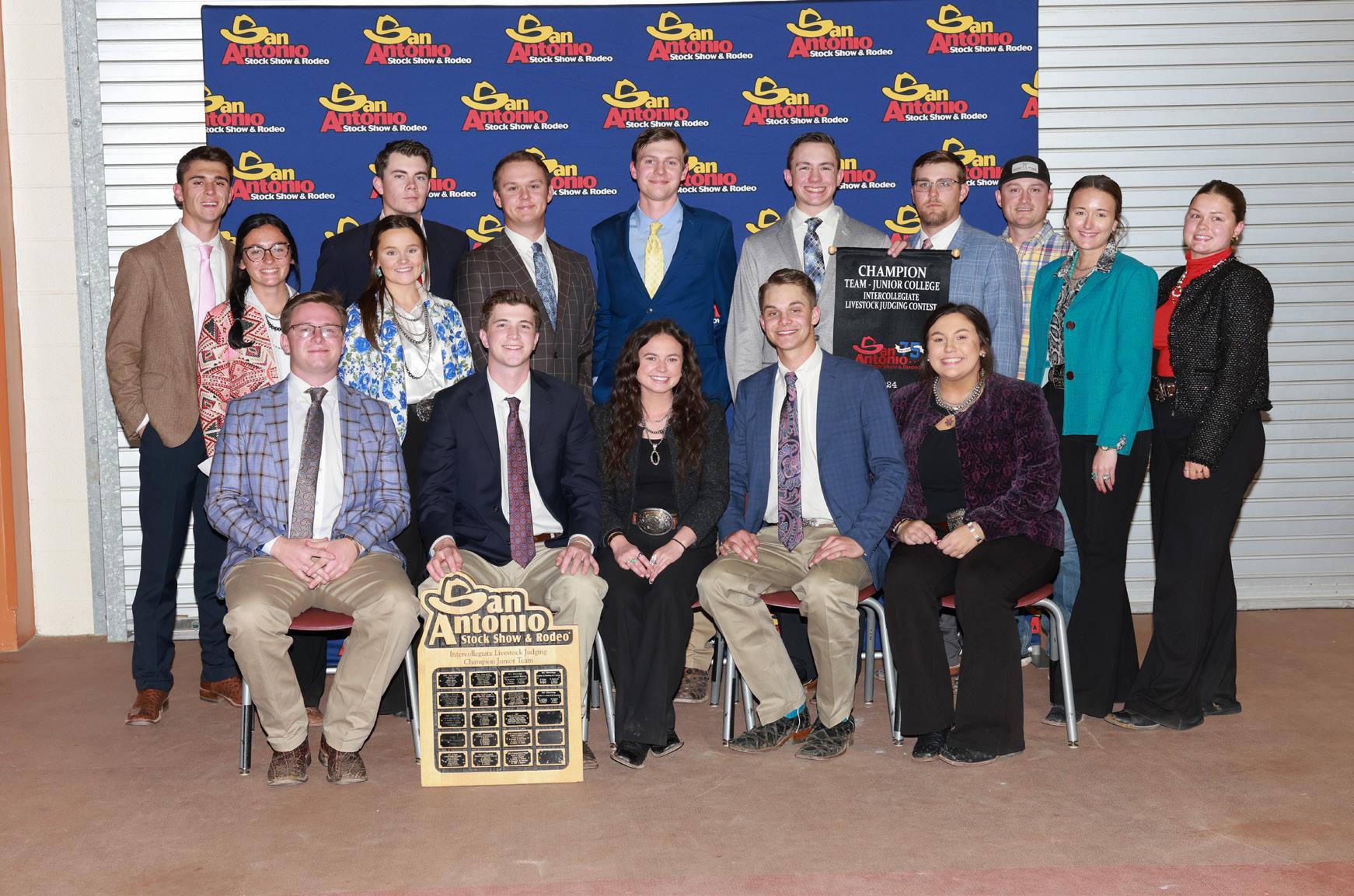
Under the leadership of Spencer Scotten, the Redlands judging team continues to uphold the standard established by generations before him while adapting to the evolving expectations of modern collegiate judging. That balance — honoring tradition while embracing progress — has become a defining characteristic of the program.
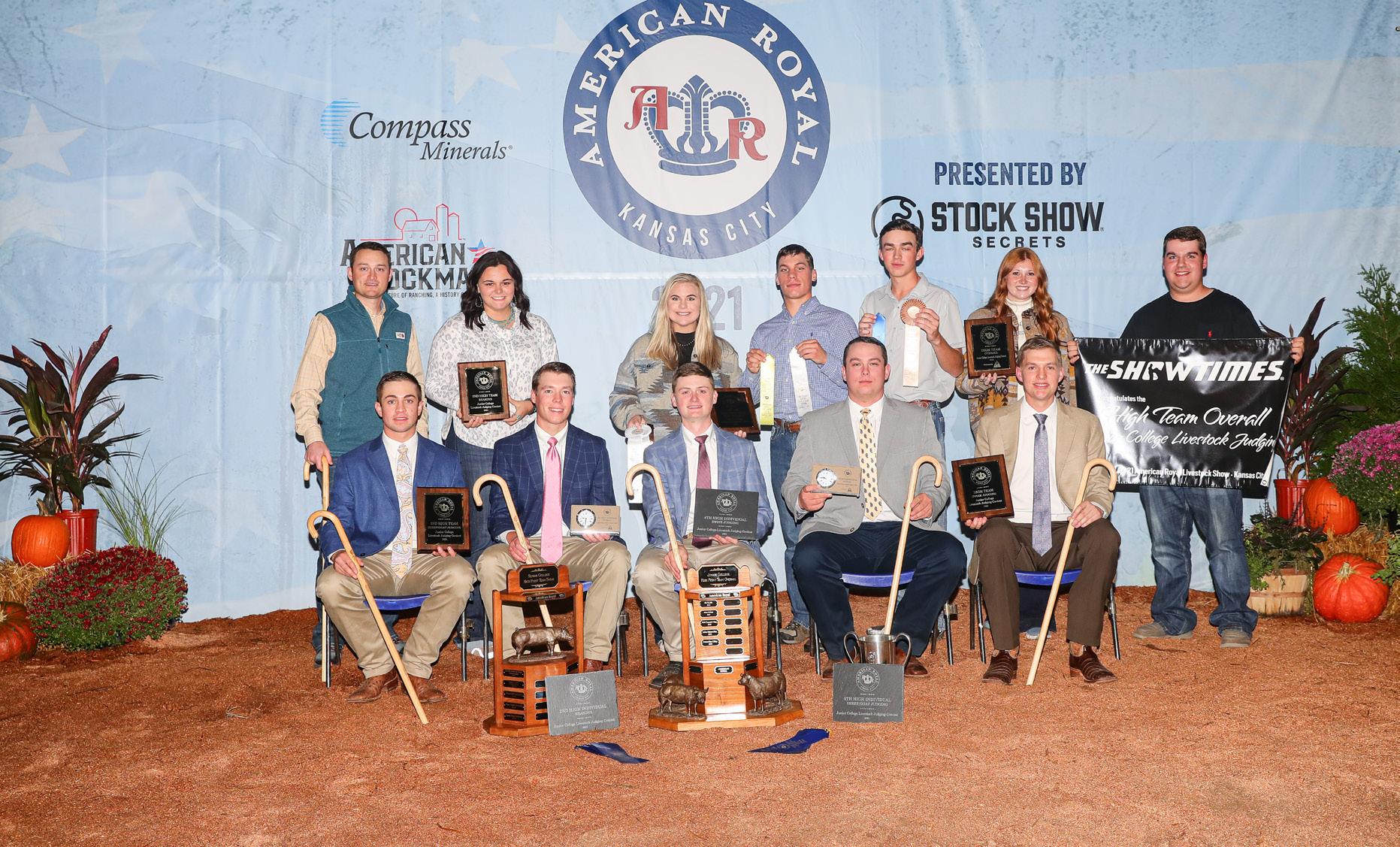
That dedication was recently recognized with the program’s nomination for Best of the Barns Junior College Judging Team.
As Scotten explains, “It is certainly an honor to have our program nominated for the Best of the Barns Junior College Judging Team. There are so many outstanding coaches and successful teams right now—honestly, as many strong programs as I’ve seen since I started—so to have our program recognized as one of the best truly means a lot.”
The recognition places Redlands among the nation’s leading junior college programs and reflects far more than contest placings. It represents years of consistency, long days of preparation, and a collective belief in doing things the right way — even when no one is watching.
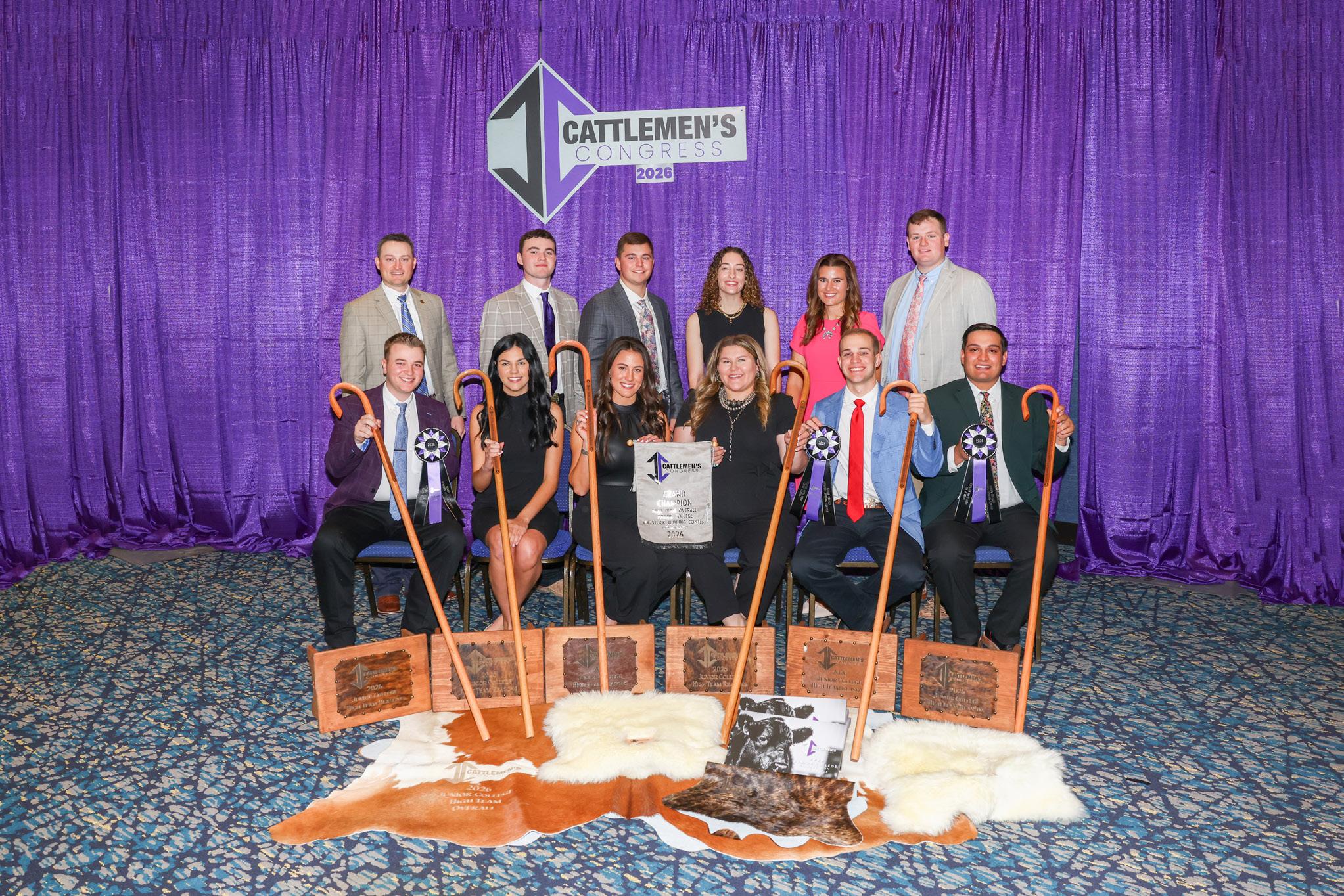
Photos : Next Level Imaging
Scotten has been at Redlands since 2019, and with that role comes responsibility. “Carrying on the tradition of excellence at Redlands has been a significant responsibility,” he says. “I’m incredibly thankful for the young people who have believed in our program and chosen to be a part of it.”
That responsibility extends beyond competition weekends. It includes mentorship, leadership, and helping students navigate challenges both inside and outside the classroom. For Scotten, success is not measured solely by banners or rankings, but by the growth he witnesses in students throughout their time at Redlands.
Students remain the foundation of everything the program accomplishes. Each year, young men and women arrive on campus from across the country, bringing diverse backgrounds and experiences. Some grew up immersed in livestock production, while others discovered agriculture later through youth programs. Some enter college with years of judging experience, while others are stepping into the process for the first time. Regardless of where they started, they share a desire to learn, improve, and challenge themselves in an environment that demands accountability.
“Our team is only as good as our students,” Scotten explains, noting that the program has been extremely fortunate to work with some of the best up-and-coming young adults in the livestock industry from across the country.
For many of those students, Redlands represents more than simply attending classes. As Scotten describes it, “They come to Redlands not only to attend school, but to be involved with the livestock judging team and grow as individuals.”
Participation on the judging team demands dedication. Students balance full academic course loads with daily practices in the barns, extensive travel schedules,and countless hours evaluating livestock and preparing oral reasons. Early mornings, long nights, and time on the road become routine. Through that process, students learn responsibility, discipline, and how to manage competing priorities.
They also gain confidence — not just in judging livestock, but in their ability to speak clearly, think critically, and represent themselves and their institution with professionalism. The most rewarding part of coaching, Scotten says, comes later. “One of the most rewarding parts of my job is watching those students succeed here and then continue that success after they move on—whether they transfer to a university or enter the workforce— becoming leaders in their respective fields and applying what they learned at Redlands throughout their careers.”
Former Redlands judging team members can now be found across every sector of the livestock industry — from education and production agriculture to animal health, sales, marketing, and agribusiness leadership — carrying with them the work ethic and professionalism developed during their time on campus.
Behind the scenes, the program’s success is reinforced by strong faculty support. “What truly sets our program apart, in my opinion, is the incredible faculty at Redlands,” Scotten shares. “The level of support our students receive is second to none.”
One of the most distinctive aspects of the agriculture department is that every class is taught by someone who has been a member of a collegiate judging team. That shared experience creates understanding and flexibility within the classroom, allowing instructors to better support the demands placed on judging students both academically and competitively.
Judging itself, however, is a discipline that requires patience. Scotten is quick to encourage young people not to become discouraged early in their careers. “Judging is an activity that requires time, effort, and patience,” he explains. “It’s okay if you’re not the high individual at your first contest.”
Throughout his coaching career, he has worked with numerous All-Americans who never judged a contest until their freshman year of college and whose first sets of reasons came well after they began. Their success, he notes, came not from shortcuts, but from persistence and commitment.
Progress, he emphasizes, looks different for every student. “It’s important to set realistic goals, focus on improving yourself, and not worry about what others around you are doing.”
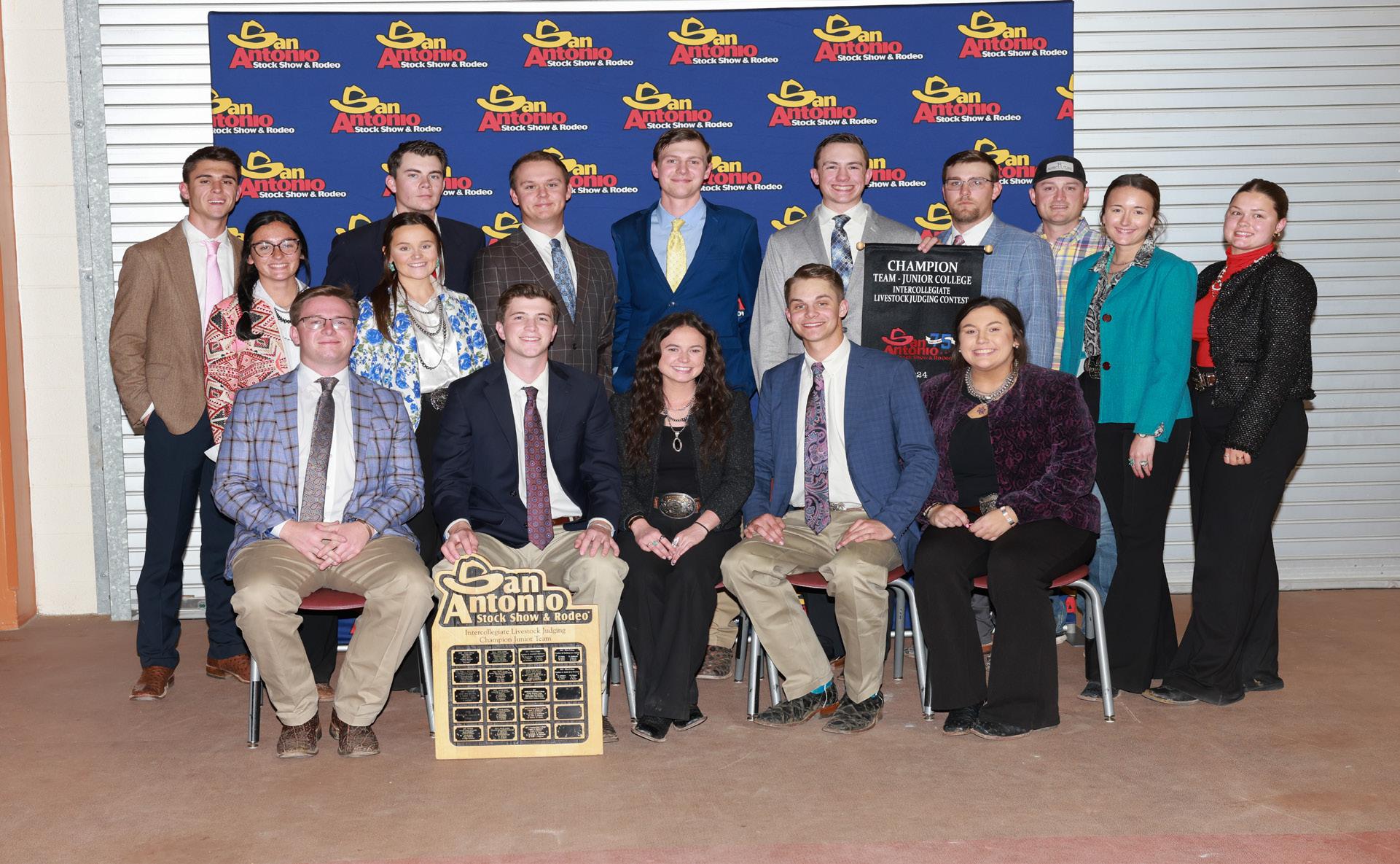
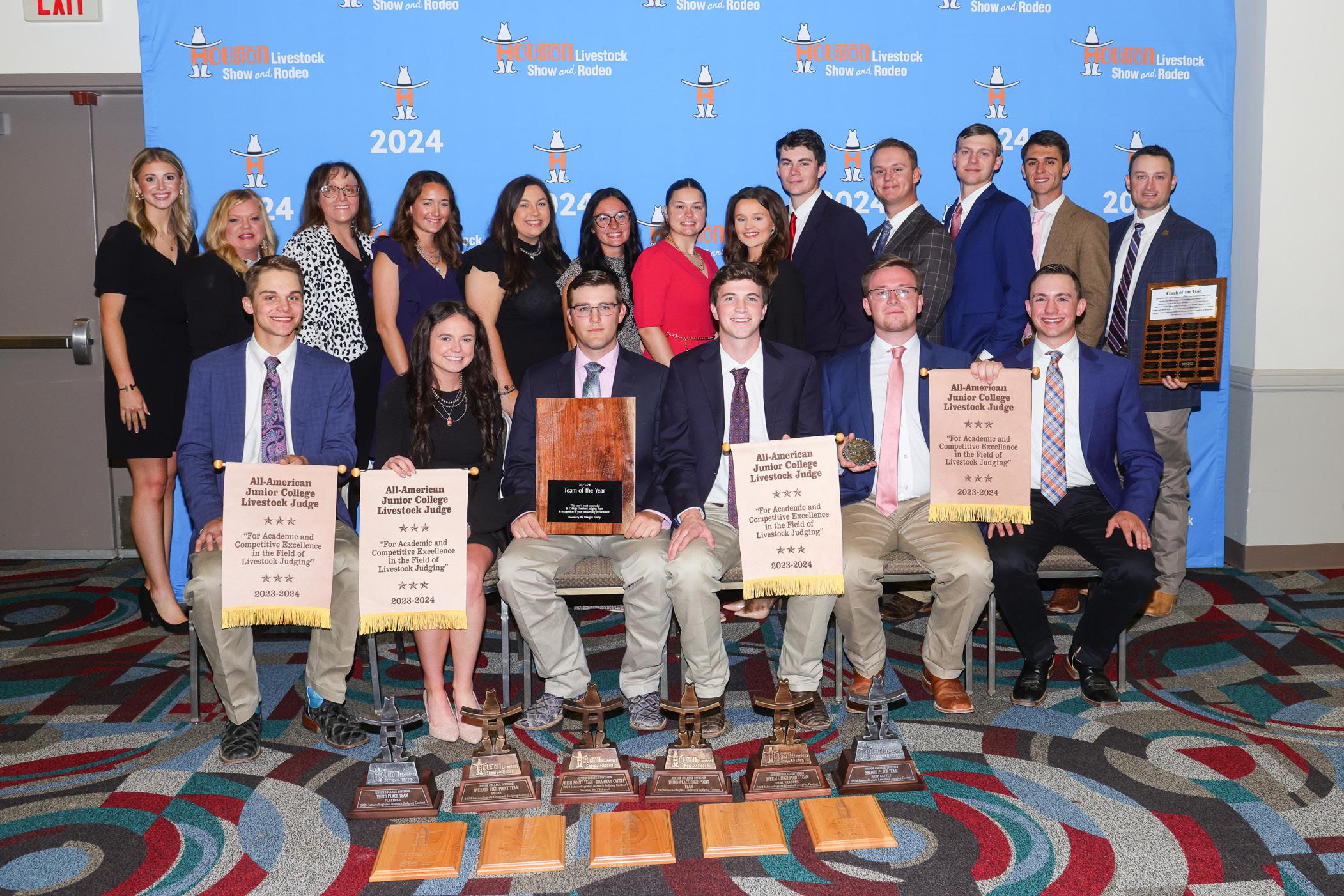
There are no shortcuts in the process. “If you want to be better than everyone else,” Scotten says, “you have to be willing to put in more time and effort than everyone else.” Today, the Redlands Community College livestock judging program stands as a reflection of dedication, mentorship, and belief in young people. The Best of the Barns nomination recognizes competitive achievement, but more importantly affirms a culture rooted in integrity, accountability, and opportunity.
Through strong leadership, committed faculty, and driven students, Spencer Scotten and the Redlands judging team continue shaping the future of the livestock industry — one contest, one classroom, and one student at a time.



“We’re
here molding minds and making them better for tomorrow.”
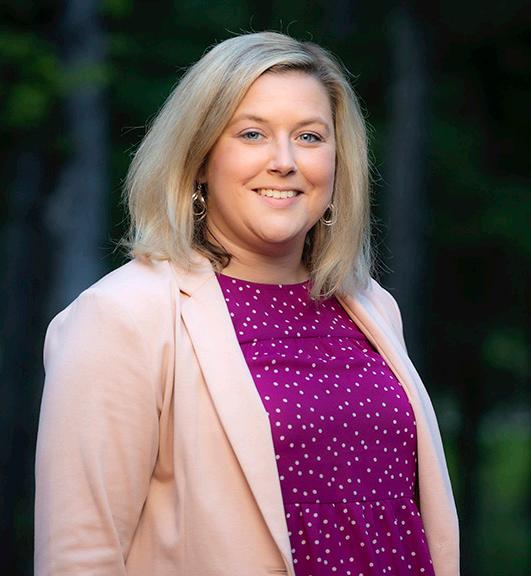
Across Oklahoma, 4-H continues to shape confident leaders and lifelong learners. Behind every opportunity is a network of educators and volunteers working to ensure youth are prepared not only for today, but for the future — and at the heart of that effort in the Northeast District is Leslie Lewis.
Across Oklahoma, the impact of 4-H reaches far beyond meeting rooms, competitions, or project work. For more than a century, the organization has provided youth with opportunities to grow into confident leaders, effective communicators, and engaged members of their communities. While the green clover remains one of the most recognizable symbols in youth development, the true strength of 4-H lies in the people behind the program — those who dedicate their careers to guiding the next generation.
For the Northeast District of Oklahoma, that responsibility rests with Leslie Lewis.
Serving 24 counties stretching from I-35 East to I-40 North, Leslie works as the NE District 4-H Specialist. Her role places her at the intersection of education, leadership development, program planning, and youth advocacy. While much of her work happens behind the scenes, the ripple effect of her efforts reaches thousands of 4-H members, families, volunteers, and educators each year.
“My role isn’t always directly with youth,” Leslie said. “But through the educators and programs we support, I still get to be part of their growth.”
At the core of her position is supporting county Extension educators as they manage and grow their local 4-H programs. Leslie serves as a resource when educators have questions, encounter challenges, or are seeking guidance on how to strengthen their programs. One of her largest responsibilities is onboarding new educators — helping them understand not only what their job entails, but how to successfully build programming that meets the needs of youth in their counties.
From planning events and organizing contests to developing long-term program goals, Leslie works closely with educators to ensure consistency and quality across the district. For many new professionals, she becomes a mentor during their first years in Extension, offering reassurance, direction, and support as they learn to navigate the many moving parts of a county 4-H program. While administrative support is a major part of her role, Leslie also coordinates some of the Northeast District’s most impactful youth experiences.
One of those opportunities is Youth in Action, held each October. The three-day conference brings together seventh through twelfth grade students from across the district for leadership development and life-skill training. Youth participate in workshops focused on communication, teamwork, decision-making, and personal growth — all designed to help them gain confidence and recognize their leadership potential. For many participants, Youth in Action becomes a turning point. It is often the first time youth step into leadership roles, speak in front of groups, or begin to envision themselves as future leaders within their schools and communities.
Leslie also oversees District Contest Days, where educational contests are conducted over a three-day period. Coordinating such a large event requires months of preparation, extensive volunteer involvement, and strong collaboration with committees. Leslie works to ensure contests are organized, rules are followed, and youth are provided positive, educational experiences regardless of the outcome.
Another major component of her work is leading the Veterinary Science Short Course, a program that was established in 2021. Held on the Oklahoma State University campus, the two-day experience was designed to introduce high school students to careers in veterinary medicine through hands-on learning.
The program is a collaboration between OSU Extension, the OSU College of Veterinary Medicine, and the Animal and Food Science Department. Ninth through twelfth grade students from across the state are selected to attend, offering them an immersive look at what life as a veterinary student truly entails.
Participants engage in laboratory work, demonstrations, and instruction similar to what college students experience. The second day of the course focuses heavily on reproduction, allowing students to explore reproductive anatomy, learn artificial insemination techniques, participate in fetal dissections, and work with calving dystocia simulators.
For many students, the short course is their first exposure to advanced scientific instruction in a university setting.
The results have been powerful. Several students who participated in the first year of the program are now in their first year of veterinary school — a clear reflection of the program’s long-term impact.
“That’s when you really see why these opportunities matter,” Leslie said. “You’re helping kids see what’s possible.”
Leslie’s path into Extension began during her senior year of college, when personal life changes prompted her to reevaluate her future. With a strong desire to give back to her community and a heart rooted in service, she began considering a career within Extension.
After beginning her master’s degree, an opening became available for a 4-H Educator position in Tulsa County. Leslie applied and accepted the role, beginning what would become nearly seven years of service in the county. During that time, she worked closely with youth and families, helping build strong programs and mentoring members as they progressed through 4-H.
She later moved to Okmulgee County as the Agriculture and 4-H Educator, becoming the first female agriculture educator in that office. The position came with challenges, including the need to establish credibility and earn trust within the agricultural community. However, those experiences strengthened her confidence and leadership abilities.
After five years in Okmulgee County, Leslie transitioned to the district office, serving as the Interim 4-H Program Specialist from July 2019 through November 2020. That experience allowed her to view programming from a broader perspective and consider the larger impact district-level leadership could have.
Although she returned to the county office for a period, the permanent specialist position opened again in December 2021. Encouraged by mentors and fellow educators, Leslie applied and officially began her role on March 1, 2022.
At the time, she admits she did not feel fully qualified.
“But others believed in me,” she said. “They reminded me that sometimes the places we feel least prepared for are exactly where we’re meant to be.”
Leslie firmly believes 4-H plays a vital role in youth development today. She views the program as a place where youth learn how to serve others, give back, and develop skills that extend far beyond childhood.
Through 4-H, members gain experience in decision-making, leadership, interviewing, and public speaking. These opportunities help youth become confident individuals prepared to contribute meaningfully to society.
Many families may not realize how expansive modern 4-H programming has become. At the state level, Oklahoma 4-H awards over $200,000 in scholarships annually through State Record Books, with continued efforts to expand scholarship availability.
Beyond traditional project work, 4-H offers a wide range of contests youth can participate in including Cupcake Wars, Food Showdown, Dutch Oven Cooking, and Job Readiness, where members apply for jobs and complete formal interviews. Shooting Sports continues to grow statewide and remains one of the program’s most popular opportunities.
4-H continues to evolve to meet the interests of today’s youth. STEM education has become a major focus, extending far beyond robotics to include nutrition, engineering concepts, applied science, and problem-solving skills.
The state 4-H office employs a STEM Specialist who developed the STEM Innovators program, allowing youth to attend a weekend experience, select a specialized track, and then teach others what they learned — reinforcing leadership and peer education.
Interest has also grown in educational livestock programming. Leslie and a statewide committee are currently developing a State Livestock Skillathon, designed to provide livestock-involved youth with opportunities beyond the show ring.
Volunteers remain the backbone of the entire 4-H program. Without them, clubs, contests, and events would not be possible. Volunteers assist with leadership, coordination, mentoring, and countless behind-the-scenes responsibilities.
Helping new educators understand the importance of volunteers is a key part of Leslie’s role. Volunteers are not simply helpers — they are leaders who guide clubs and shape the direction of county programs.
While enrollment across Oklahoma has increased in recent years, challenges remain. Funding and access to resources continue to affect programming, making county fundraising and community partnerships especially important.
Leslie encourages communities to begin with a simple question: “What can we do to help?”
By contacting local Extension offices, individuals and organizations can identify meaningful ways to support youth and strengthen programming.
Some of Leslie’s most rewarding moments have come from watching youth succeed. One year in Tulsa County, nine members crossed the stage at State 4-H Roundup Honors Night. Eight earned scholarships, and one was named a State 4-H Hall of Fame recipient.
Another defining experience came while mentoring a district officer who set a long-term goal of becoming State 4-H President. Through planning, encouragement, and persistence, that goal became reality — a journey Leslie was proud to support.
Now in her fourth year as NE District 4-H Specialist — and her fifteenth year serving within the district — Leslie continues to watch youth grow from middle division members into confident senior leaders.
Looking ahead, she is excited about the future of Oklahoma 4-H. Her focus remains on identifying opportunities that matter most to members, expanding learning experiences, and ensuring every youth has a place where they belong.
Her message to families, supporters, and alumni is simple: 4-H is still here, still growing, and still committed to youth — even if the program looks different than it once did.
When asked to describe 4-H in one sentence, Leslie said:
“We’re here molding minds and making them better for tomorrow.”
For families considering joining 4-H, her advice is clear — DO IT. Visit multiple clubs, find the right fit, and become involved.
“4-H has something to offer every family and every kid,” she said. “And it’s so much more than showing animals.”



In small towns, the county fair is more than a show. It’s a tradition, a gathering place, and a starting line for countless ag stories.
For many kids in agriculture, the county fair is the first place they step into a show ring. It’s where nerves kick in long before their name is called, where parents pace the barn aisles pretending not to be more anxious than their kids, and where friendships are built one early morning feed bucket at a time. The fairgrounds come alive before the sun is fully up, with the sound of gates opening, fans humming, and the steady rhythm of boots on concrete as exhibitors start their routines. In those quiet morning hours, when the barns are still half-asleep and the air smells like fresh shavings and feed, the fair feels less like a public event and more like a world of its own.
For a few days each year, the barns become a second home. Coffee cups sit on railings, and families settle into a rhythm that revolves around feedings, wash times, and show schedules. The fair is exhausting in ways only those who have lived in a barn
for a week can understand, but it is also grounding. It creates a temporary pause from everyday life, replacing normal routines with something shared and familiar. Even those who only attend the fair as spectators can feel the shift in energy when the fair rolls into town.
While major shows and state fairs often get the spotlight, county fairs remain the foundation of livestock showing and youth development. They are where many exhibitors learn how to walk into the ring for the first time, how to answer a judge’s questions, and how to keep their composure when the outcome isn’t what they hoped for. County fairs are the starting point for many, the main stage for some, and a tradition passed down through generations of families who return year after year. In a world where competition continues to grow larger and more intense, the county fair remains a reminder that the
heart of showing livestock is rooted in community, consistency, and care.
There is a certain kind of magic in the familiarity of fair week. The barns don’t change much from year to year, and neither do the faces that fill them, though those faces grow older, more confident, and more capable with each passing summer. Kids measure time not just by birthdays or school years, but by how many fairs they have shown at. Parents remember when their kids were the ones who could barely hold a show stick, and now watch them quietly step in to help younger exhibitors get ready for the ring. In those small, ordinary moments, the county fair becomes more than just a competition. It becomes a place where confidence is built, character is shaped, and the love for agriculture quietly takes root.
For families rooted in agriculture, county fair is often one of the few traditions that remains unchanged year after year. No matter how busy life becomes, fair week has a way of anchoring people back to the same place at the same time. Grandparents who once walked these barns as exhibitors now walk them more slowly, pointing out stalls they once filled and recalling stories their grandchildren have heard more than once. Parents juggle work schedules, school activities, and livestock chores to make sure their kids have the opportunity to be present, not just physically, but fully engaged in the experience.
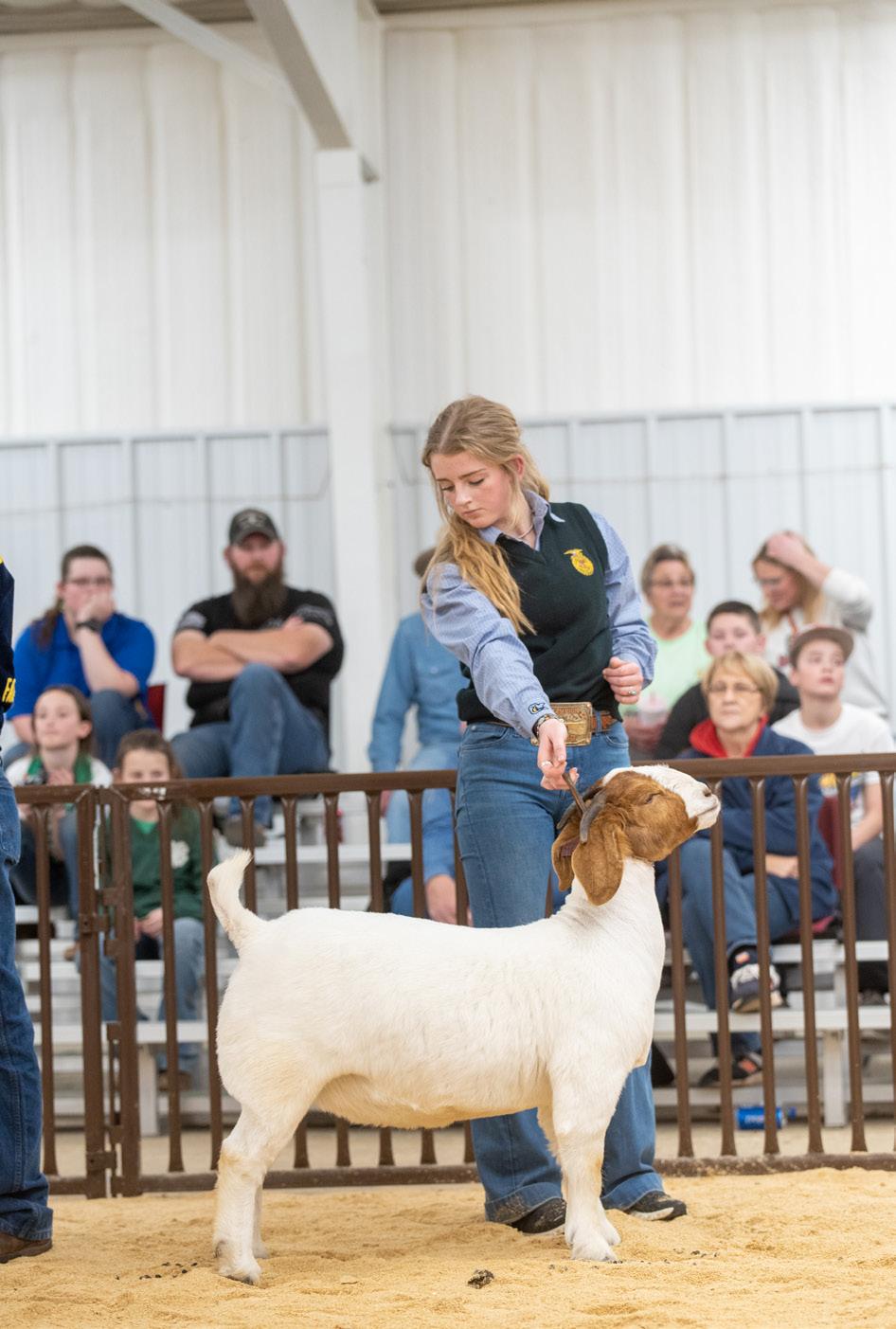
There is a unique sense of community that forms within the barns during fair week. Families who may not interact much throughout the year find themselves borrowing fans, sharing clippers, and watching each other’s animals during show times. Rivalries exist, of course, but they are often softened by the understanding that everyone is navigating the same long days, early mornings, and emotional highs and lows. County fair creates a space where competition and cooperation coexist, teaching young exhibitors that success in agriculture rarely happens in isolation.
The fair also serves as a cultural touchpoint for rural communities. It is one of the few times each year when agriculture is placed front and center in a way that is visible to the public. Families come out to walk the barns, ask questions, and reconnect with people they may not see often. For many community members, the fair is their primary exposure to youth livestock projects, making it an important bridge between agricultural families and the broader public. These interactions, though often brief, help shape how agriculture is understood and appreciated within the community.
Tradition plays a powerful role in why county fairs continue to matter. The rituals of fair week— washing animals at dawn, lining up for showmanship classes, gathering in the stands to watch the grand drives—create a shared rhythm that connects past and present. These traditions are not simply habits; they are the threads that tie generations together. Each fair becomes part of a larger story, one that families carry forward year after year, even as the details change.
As exhibitors grow older and gain experience, their paths begin to diverge. Some families pursue larger stages, traveling across the state or country to compete at district, regional, and national shows. These shows come with bigger barns, tougher competition, and higher expectations, often demanding significant time and financial investment. For those families, county fair becomes one stop on a much longer road, a place to test progress and build momentum before heading to the next event.
For many others, county fair remains the primary or only opportunity to show livestock. Not every family has the resources, flexibility, or desire to compete beyond the local level. For these exhibitors, county fair is not a stepping stone—it is the destination. Their goals are shaped by what is achievable within their circumstances, and their success is measured by personal growth as much as by placings. This reality underscores the importance of county fairs as accessible entry points into livestock showing, ensuring that youth from a wide range of backgrounds can participate.
In rural communities especially, the county fair often holds more local significance than larger, more distant shows. It is the event people plan around, the one that fills local newspapers and social media feeds, and the one that brings neighbors together in a shared space. Winning at the county fair may not carry the same weight within the broader livestock industry as winning at a major show, but within the community, it often means everything. The pride associated with representing one’s hometown, club, or family at the local fair carries a value that cannot be measured solely by the size of a banner.
Recognizing these different paths is essential to understanding why county fairs still matter. They provide a common starting line for exhibitors with vastly different journeys ahead. Whether a young person goes on to compete nationally or never shows beyond their county, the lessons learned at the local level form the foundation of their experience. County fairs ensure that no matter where an exhibitor’s path leads, it begins with the same core values of responsibility, effort, and respect.
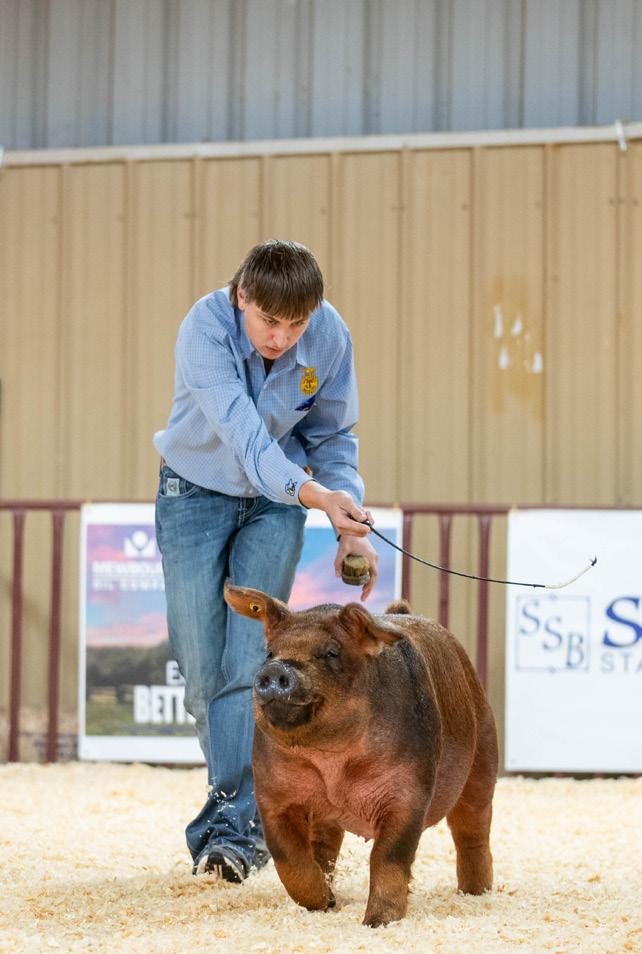
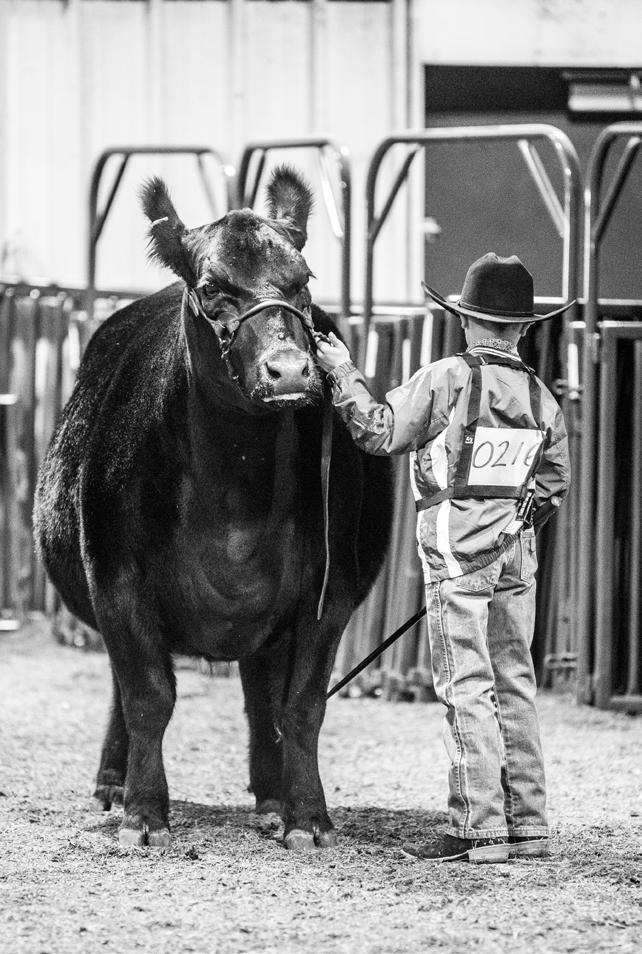
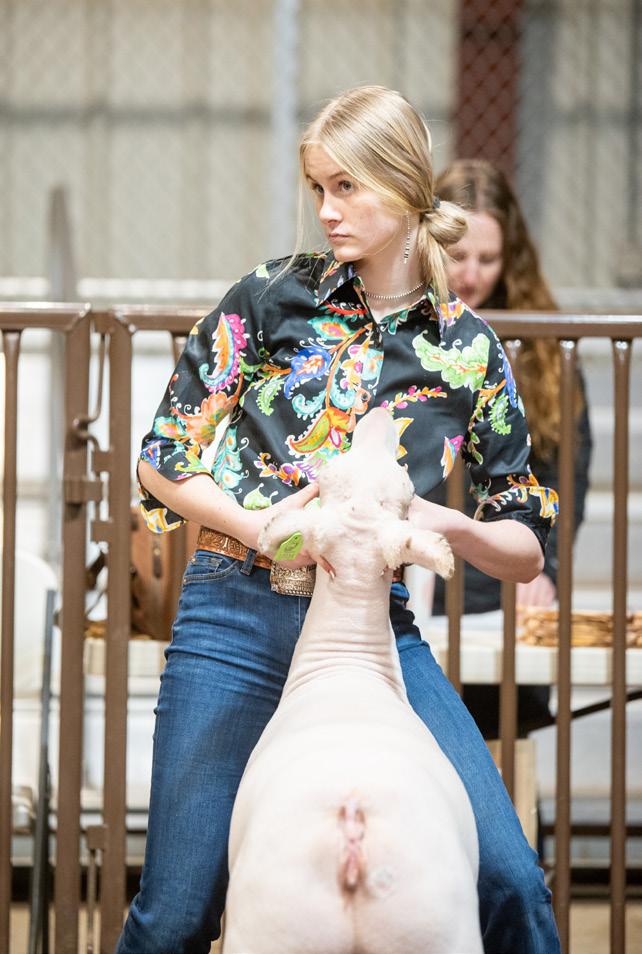
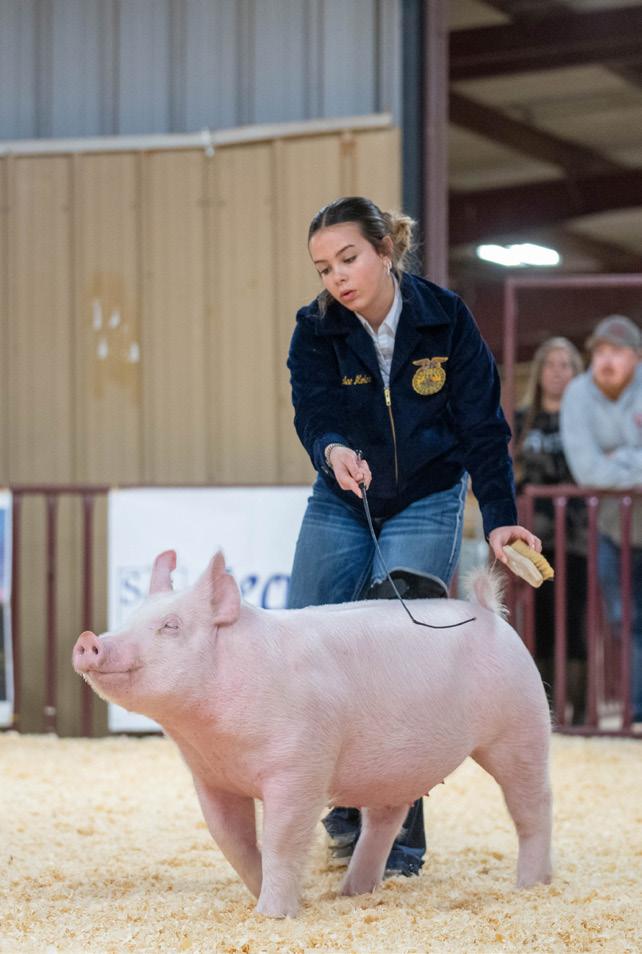
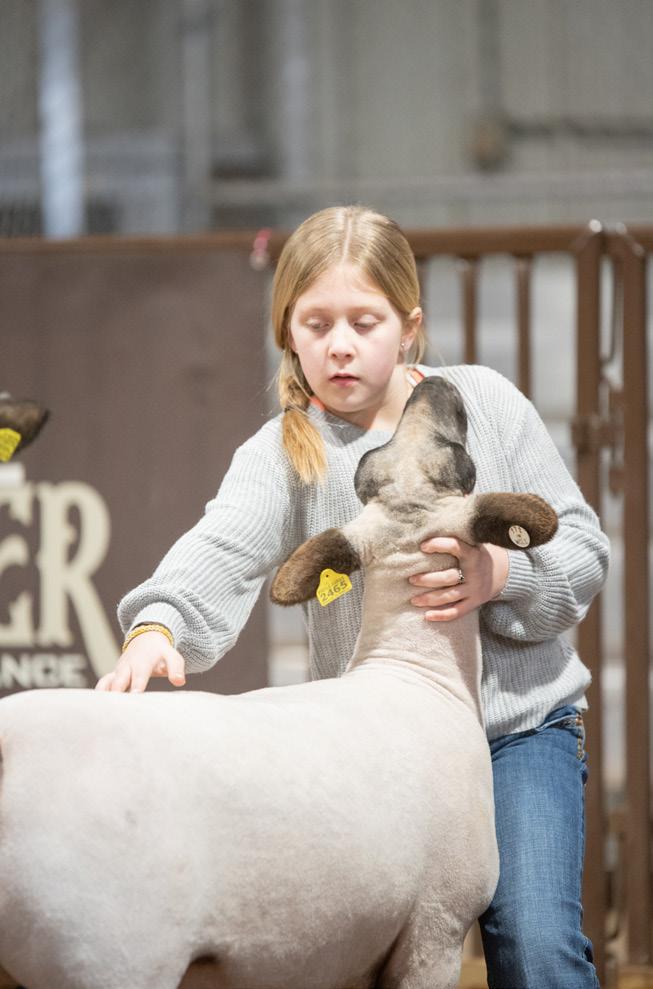
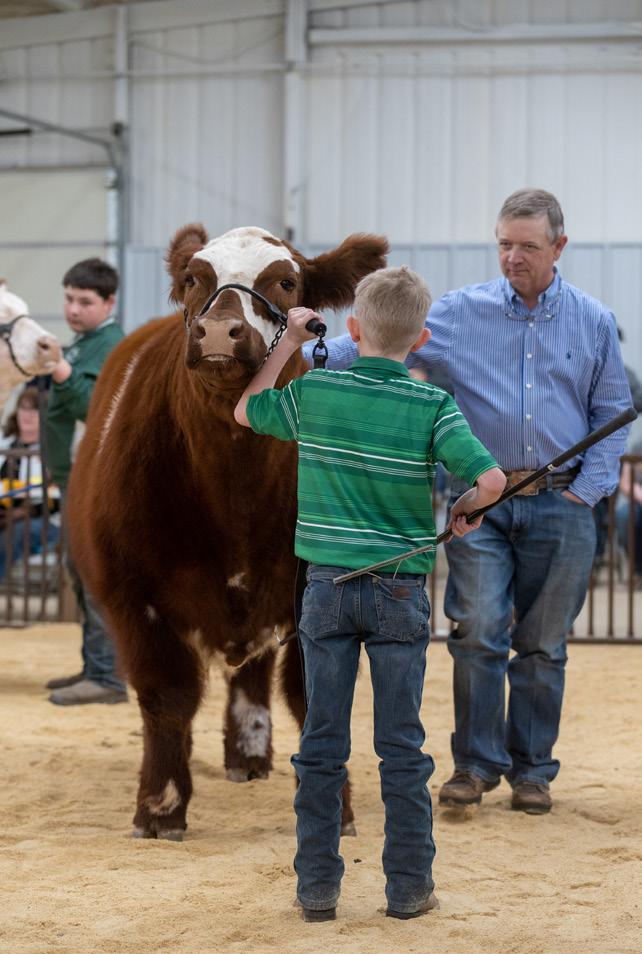
County fairs serve as living classrooms, offering lessons that extend far beyond what happens in the show ring. Behind every few minutes of competition are months of preparation—feeding schedules, daily care routines, and countless small decisions that shape the final outcome. Exhibitors learn to observe their animals closely, adjust when things are not working, and take ownership of the results, whether positive or negative. These experiences foster a level of accountability that is difficult to replicate in other youth activities.
For first-time exhibitors especially, county fair can be a defining experience. The nerves of walking into the ring, the uncertainty of how they will be judged, and the vulnerability of putting their hard work on display can be overwhelming. Yet within the supportive environment of a local fair, these challenges become manageable. Judges often take time to explain placings, mentors step in to offer encouragement, and peers share in both disappointment and celebration. Through these interactions, young exhibitors learn that growth often comes from discomfort and that resilience is built through experience.
County fairs also play a role in keeping agriculture visible to those who may have little direct connection to it. Visitors see the end result of months of work and dedication, gaining insight into the responsibilities that come with raising livestock. Conversations sparked in the barns—about feed, care, and daily routines—help demystify agriculture for the public. These moments of connection, though brief, contribute to a broader understanding of the role agriculture plays in the community.
The lessons learned during fair week often extend into other areas of life. Time management, communication skills, and the ability to handle pressure are all cultivated through the responsibilities of exhibiting livestock. Young people learn to balance school, extracurricular activities, and livestock care, developing habits that will serve them well beyond their years in the show ring. County fairs, in this way, become training grounds not just for livestock exhibitors, but for future leaders within and outside of agriculture.
Beyond the visible aspects of competition, county fairs teach responsibility in ways that are deeply personal. Animals require consistent care, regardless of weather, fatigue, or the emotional highs and lows of the show. Exhibitors must show up every day, often multiple times a day, to ensure their animals are fed, watered, and properly cared for. This level of commitment instills a sense of discipline and dependability that carries over into other responsibilities young people take on throughout their lives.
There is also an emotional weight to fair week that is often overlooked. For some exhibitors, the fair marks the culmination of months of effort and anticipation. For others, it represents a bittersweet ending, particularly when animals are sold at the conclusion of the event. Saying goodbye to a project that has become part of daily life is not easy, and these moments can be some of the most formative for young people. They learn about
gratitude, closure, and the reality that growth often requires letting go.
The emotional experiences of county fair—pride, disappointment, joy, and loss—mirror the broader realities of life within agriculture. Young exhibitors come to understand that not every outcome is within their control and that effort does not always guarantee success. These lessons, though challenging, help build resilience. They teach young people how to process disappointment, celebrate progress, and continue striving forward, even when the results are not immediately visible.
Fair week often becomes a time of reflection for families as well. Parents witness their children navigating challenges with increasing independence, while children begin to recognize the support systems that have helped them along the way. These shared experiences deepen family bonds and create memories that extend far beyond the show ring. In this way, county fairs contribute not only to individual growth, but to the strengthening of family connections within agricultural communities.
As the fairgrounds quiet down and the trailers pull away, what lingers are not just the results posted on the barn walls, but the moments that unfolded in between. The early mornings when the barns were still quiet, the late nights spent talking with friends, and the small victories that came from mastering a new skill or overcoming a personal fear all become part of a larger story. County fairs may last only a week, but their impact stretches across seasons and years.
County fair still matters because it offers a space where every exhibitor, regardless of background or resources, can find belonging. It provides a starting point for those just discovering agriculture and a meaningful stage for those who may never compete beyond the local level. In an era where competition often emphasizes scale and prestige, county fairs remind us that the true value of youth livestock programs lies in the development of character, community, and confidence.
The future of agriculture depends on young people who understand responsibility, resilience, and the importance of showing up for something bigger than themselves. County fairs play a vital role in cultivating these qualities, offering experiences that shape how young people see their place within agriculture and within their communities. Long after the banners are taken down and the barns return to their quiet state, the lessons of county fair continue to influence the lives of those who walked its aisles.
County fair still matters because it is where many agricultural stories begin, where traditions are carried forward, and where young people learn that success is not defined solely by what happens in the ring, but by who they become through the journey.
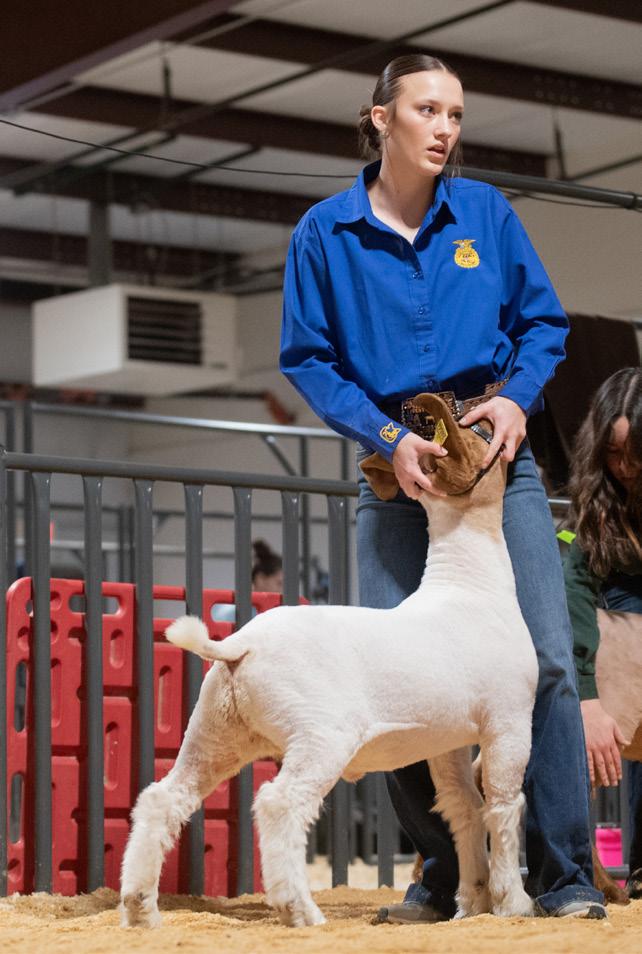
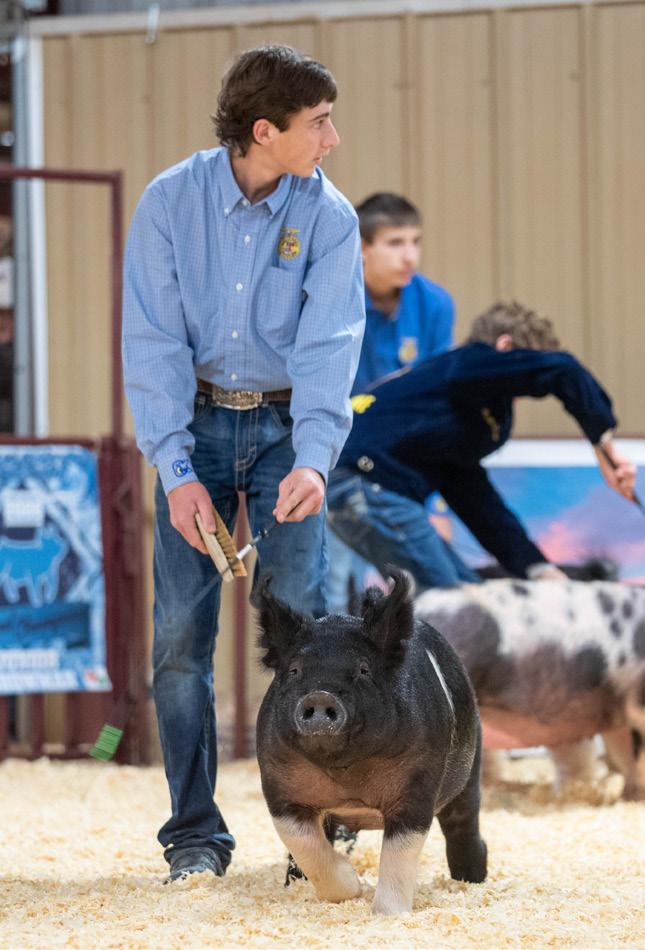
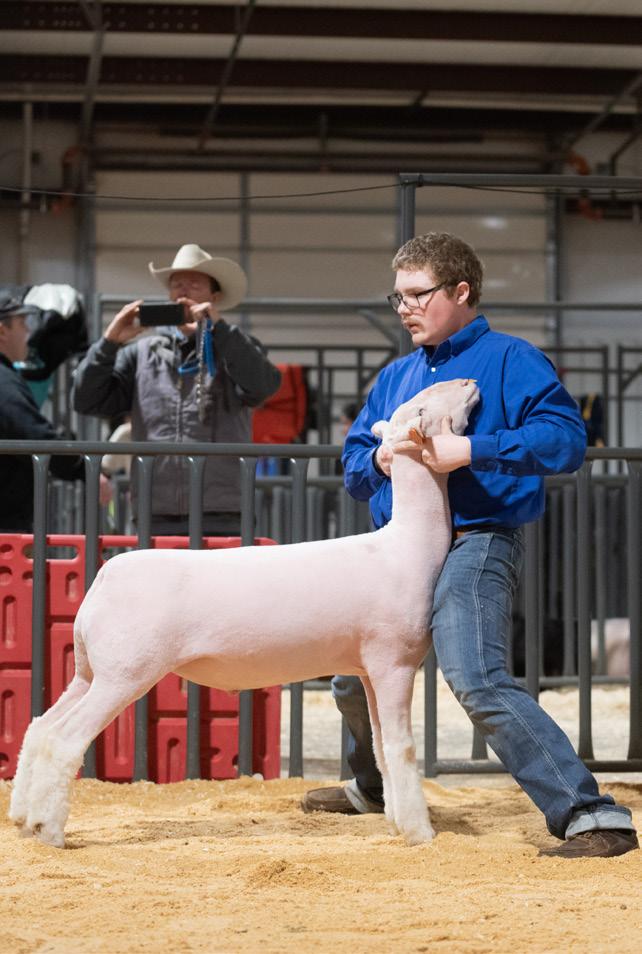




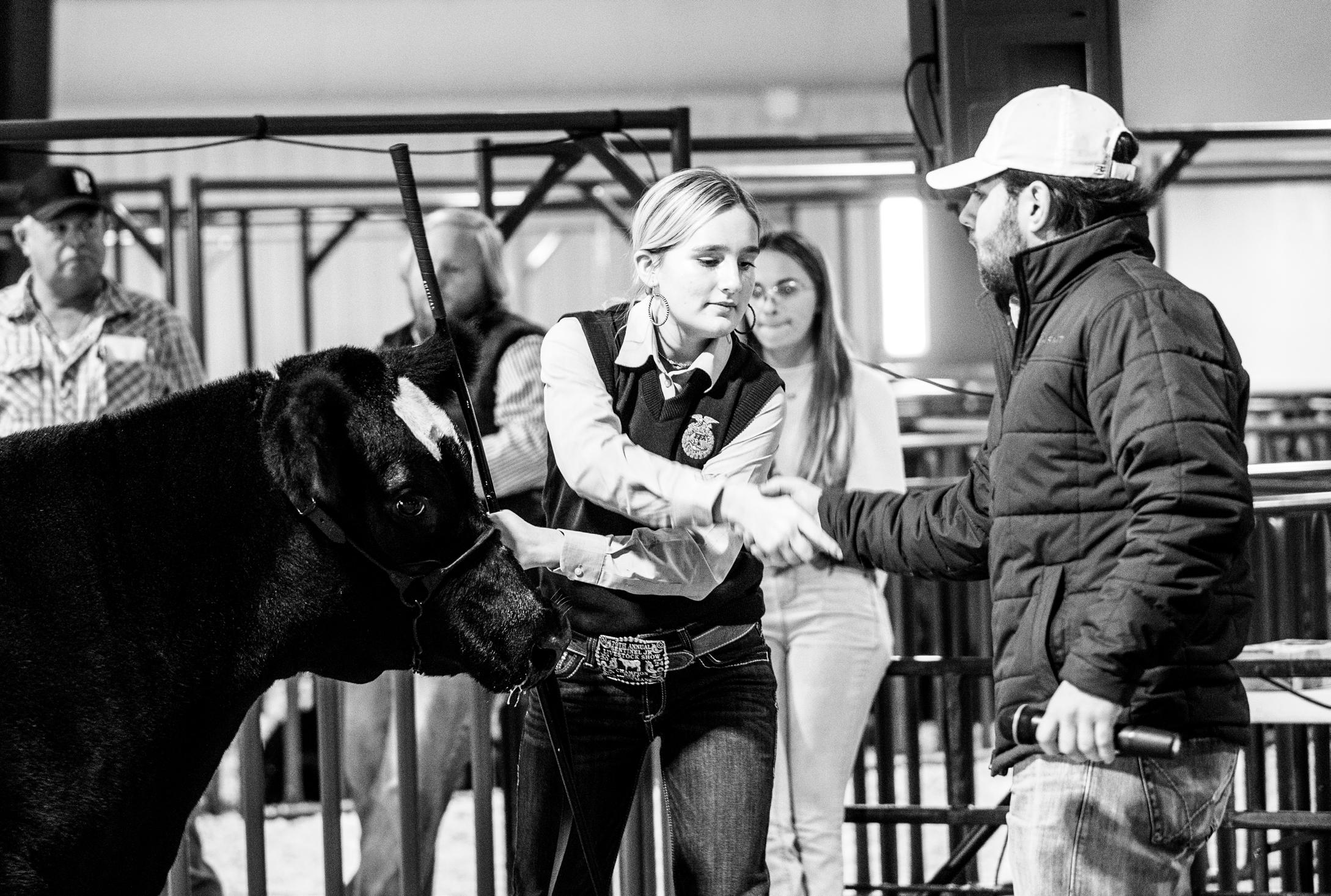
Not every lesson in the ring comes with a purple banner.
The ring goes quiet in that strange way it always does right before placings are announced. Exhibitors stand a little taller, trying to read the judge’s body language, pretending their heart isn’t beating faster than usual. In that moment, everyone is still in it. There’s still hope. Then the banners are handed out, names are called, and reality settles in. For some, the color they were hoping for never comes.
There’s a certain heaviness that comes with walking out of the ring when the banner isn’t purple. It’s not always about wanting to win—it’s about the hours spent feeding, washing, practicing showmanship, and believing you did everything right. The disappointment doesn’t always show on the surface. Sometimes it looks like a forced smile, a quick nod, and the quiet walk back to the stall where emotions finally catch up.
In a culture that celebrates champions and highlight reels, it’s easy to forget how often most exhibitors leave the ring without a win. For every purple banner hung on a stall wall, there are countless red, white, and yellow ribbons that never make it into a photo. This story isn’t about the wins everyone sees—it’s about the losses that shape young exhibitors just as deeply.
In today’s show world, the pressure to win starts earlier than ever. Social media is full of backdrop photos, champion banners, and highlight videos that make success look constant and effortless. Scroll through any feed during show season and it can feel like everyone is winning except you. What those posts rarely show are the losses, the tough drives home, or the nights spent questioning whether the work was worth it.
For many young exhibitors, winning becomes tied to validation. A purple banner feels like proof that the long days and early mornings mattered. When that validation doesn’t come, it can be hard not to internalize the result. Kids begin to wonder if they failed, if their animal wasn’t good enough, or if they themselves weren’t good enough. These thoughts can linger long after the show is over, especially when comparisons are constantly within reach.
Parents feel this pressure too, often without meaning to. The investment of time, money, and energy into a project can quietly raise expectations. While most families emphasize effort and growth, the emotional weight of wanting to see a child succeed is real. Navigating that balance—supporting high goals while protecting mental well-being—is one of the most challenging parts of being involved in competitive youth livestock programs.
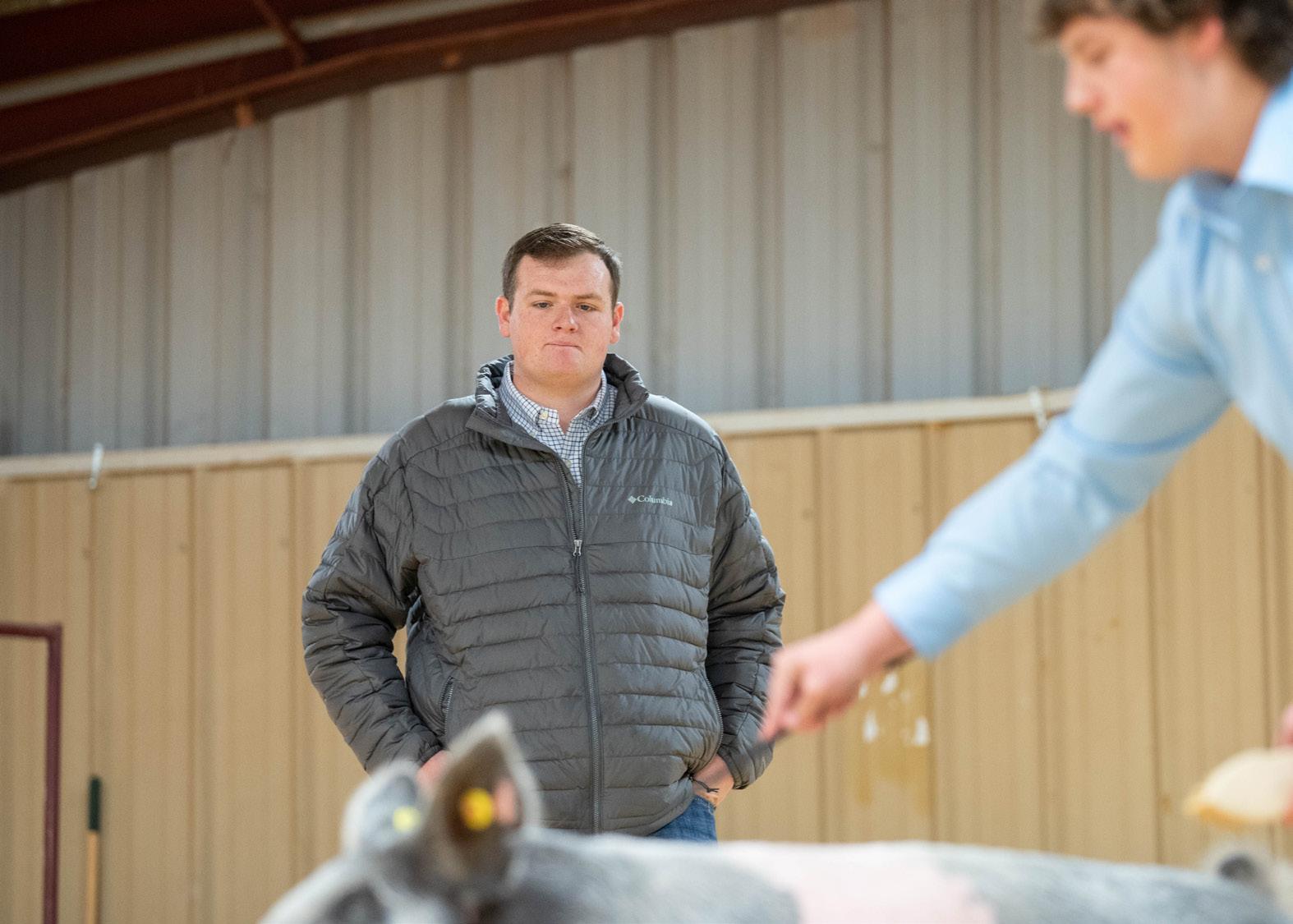
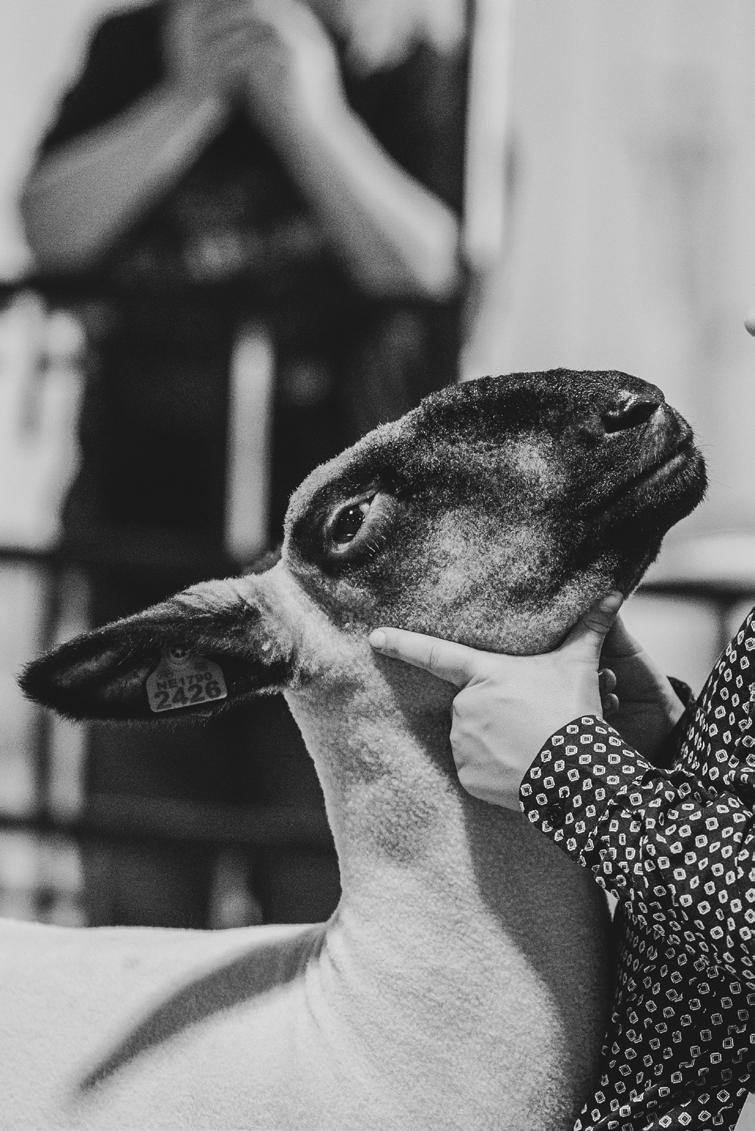
There are lessons in losing that no purple banner can teach. Walking out of the ring without the result you hoped for forces you to reflect on what you can control and what you can’t. Exhibitors learn that preparation does not guarantee outcome, and that effort doesn’t always come with immediate reward. These realizations, while uncomfortable, build resilience.
Loss also teaches perspective. Over time, many exhibitors begin to see that one placing does not define their abilities or their potential. The kids who stay in the barn after a tough class, still caring for their animals with the same level of commitment, often develop a deeper sense of responsibility. They learn to show up even when the outcome isn’t glamorous, a skill that carries into school, careers, and relationships.
Some of the most respected stockmen and women in the industry will admit that their toughest losses shaped them more than their biggest wins. Those moments of disappointment become reference points—reminders of growth, humility, and perseverance. Winning feels good in the moment, but losing often leaves a longer-lasting imprint.
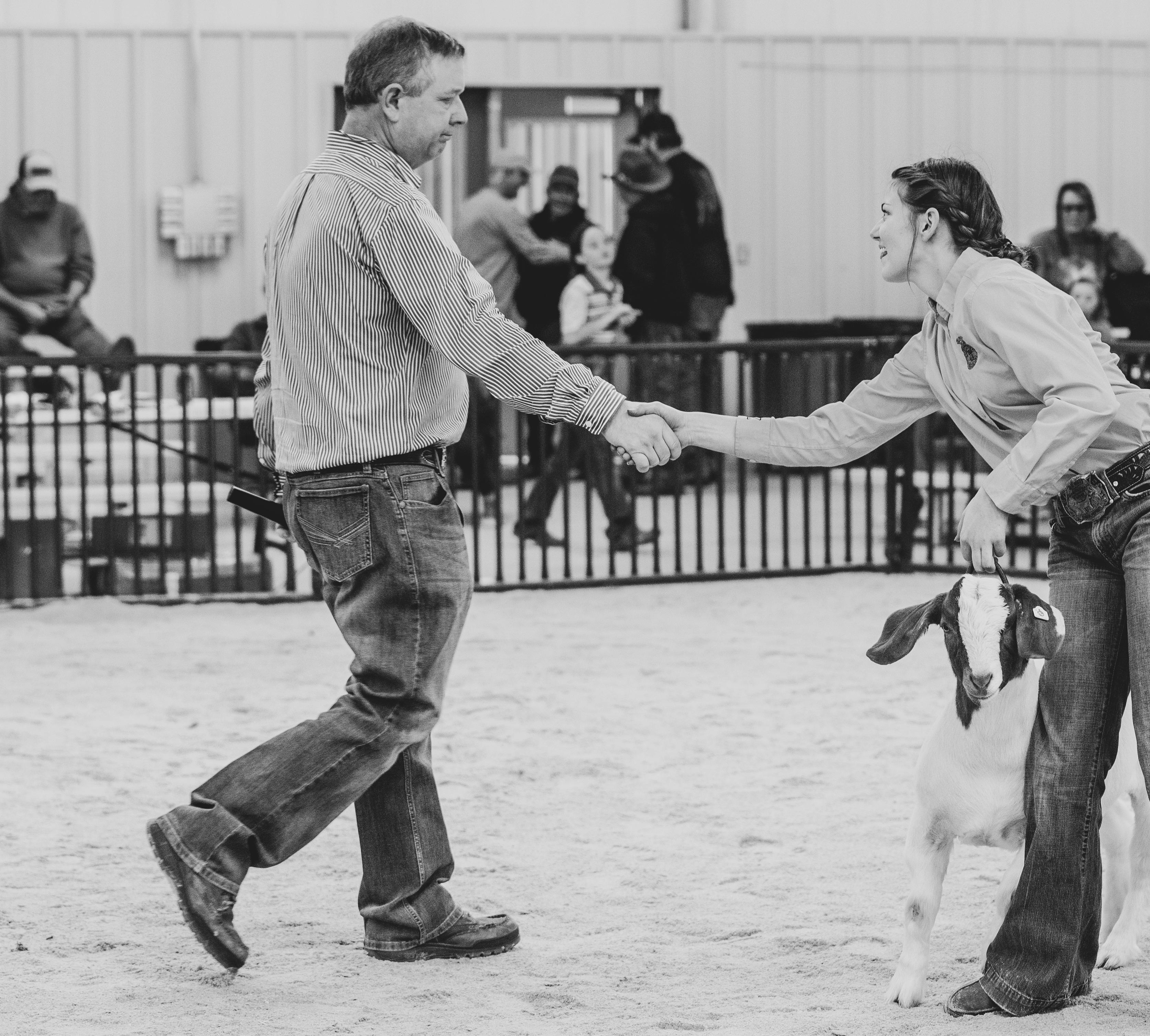
How an exhibitor handles loss is often more telling than how they handle success. The way someone leaves the ring—whether they shake the judge’s hand, congratulate the winner, and return to their stall with professionalism, speaks volumes about their character. These moments are watched closely, not just by judges and barn crews, but by younger exhibitors who are quietly learning what it looks like to handle disappointment with grace.
Good sportsmanship doesn’t mean pretending disappointment doesn’t exist. It means acknowledging the feeling without letting it define behavior. It means understanding that every exhibitor in the ring worked hard to be there, and that someone else’s purple banner does not diminish your own effort. Learning this balance takes time, and local shows often become the first places where kids practice navigating these emotions in a public setting.
Mentors, coaches, and parents play a huge role in shaping how young exhibitors process loss. The conversations that happen in the barn aisle after a tough class often matter more than the placing itself. Encouragement, honesty, and perspective in those moments can determine whether a kid walks away discouraged or motivated to grow.
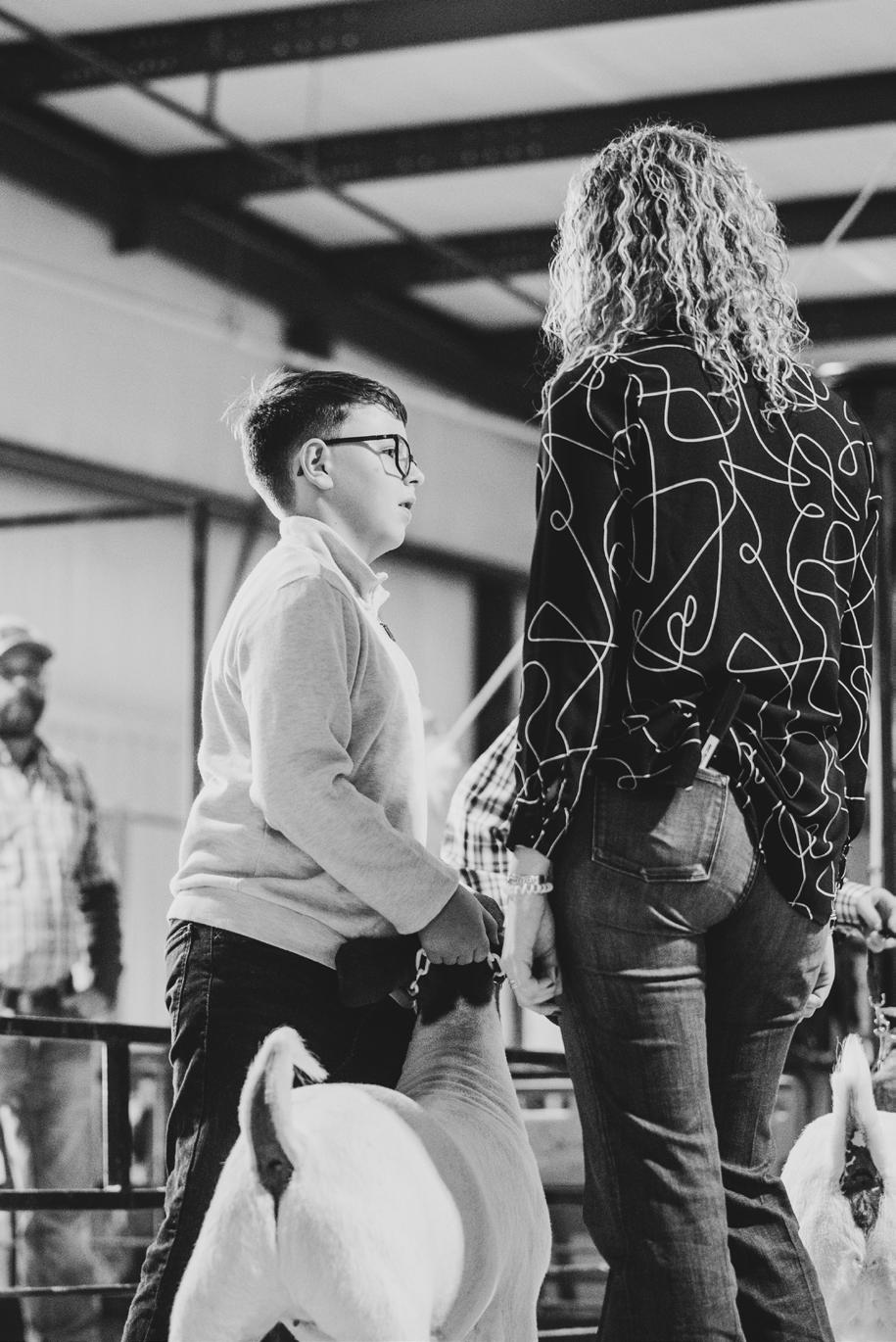
One of the hardest lessons for young exhibitors is learning to zoom out. It’s easy to define success by one class, one judge, or one show. But growth in livestock showing happens over seasons, not moments. Progress can be seen in improved animal care, better ring presence, stronger confidence, and a deeper understanding of the industry. These improvements often go unnoticed in the rush to chase purple banners.
Over time, many exhibitors begin to recognize patterns. The animals get better. The showmanship improves. The nerves lessen. Even when the banner isn’t purple, there is still evidence of growth. Learning to celebrate those small wins—improved handling, cleaner presentation, stronger mindset—can change the way young people experience competition altogether.
There’s also freedom in realizing that no one show defines a career in the ring. Some of the most meaningful milestones in livestock showing are invisible to the crowd: the first time a kid clips their own animal, the first confident lap around the ring, the moment they help a younger exhibitor instead of focusing solely on themselves. These moments rarely come with banners, but they mark real progress.
When the banner isn’t purple, the lessons don’t disappear. In many ways, they become clearer. Loss teaches young exhibitors how to handle disappointment, how to regulate emotions, and how to keep showing up when recognition doesn’t come easily. These are skills that matter far beyond the show ring.
The livestock industry—and life in general—is filled with moments where effort doesn’t immediately pay off. Learning to navigate those moments at a young age prepares kids for the realities of adulthood. It teaches them that value isn’t found only in outcomes, but in consistency, character, and the willingness to keep going.
The show ring is temporary, but the habits built there are not. Long after the banners fade and the animals move on, the lessons of handling loss with humility and resilience remain. When the banner isn’t purple, the experience still matters—sometimes even more than when it is.

Gestation Table Based on 283 Days
1-Jan 10-Oct 1-Mar 8-Dec 1-May 7-Feb
2-Jan 11-Oct 2-Mar 9-Dec 2-May 8-Feb
3-Jan 12-Oct 3-Mar 10-Dec 3-May 9-Feb
4-Jan 13-Oct 4-Mar 11-Dec 4-May 10-Feb
5-Jan 14-Oct 5-Mar 12-Dec 5-May 11-Feb
6-Jan 15-Oct 6-Mar 13-Dec 6-May 12-Feb
7-Jan 16-Oct 7-Mar 14-Dec 7-May 13-Feb
8-Jan 17-Oct 8-Mar 15-Dec 8-May 14-Feb
9-Jan 18-Oct 9-Mar 16-Dec 9-May 15-Feb
10-Jan 19-Oct 10-Mar 17-Dec 10-May 16-Feb
11-Jan 20-Oct 11-Mar 18-Dec 11-May 17-Feb
12-Jan 21-Oct 12-Mar 19-Dec 12-May 18-Feb
13-Jan 22-Oct 13-Mar 20-Dec 13-May 19-Feb
14-Jan 23-Oct 14-Mar 21-Dec 14-May 20-Feb
15-Jan 24-Oct 15-Mar 22-Dec 15-May 21-Feb
16-Jan 25-Oct 16-Mar 23-Dec 16-May 22-Feb
26-Oct 17-Mar 24-Dec 17-May 23-Feb
18-Jan 27-Oct 18-Mar 25-Dec 18-May 24-Feb
19-Jan 28-Oct 19-Mar 26-Dec 19-May 25-Feb
20-Jan 29-Oct 20-Mar 27-Dec 20-May 26-Feb
21-Jan 30-Oct 21-Mar 28-Dec 21-May 27-Feb
22-Jan 31-Oct 22-Mar 29-Dec 22-May
23-Jan 1-Nov 23-Mar 30-Dec 23-May 1-Mar
2-Nov
25-Jan 3-Nov 25-Mar 1-Jan 25-May 3-Mar
26-Jan 4-Nov 26-Mar 2-Jan 26-May 4-Mar
27-Jan 5-Nov 27-Mar 3-Jan 27-May 5-Mar
28-Jan 6-Nov 28-Mar 4-Jan 28-May 6-Mar 28-Jul 6-May 28-Sep 7-Jul 28-Nov 6-Sep
29-Jan 7-Nov 29-Mar 5-Jan 29-May 7-Mar 29-Jul 7-May 29-Sep 8-Jul 29-Nov 7-Sep
30-Jan 8-Nov 30-Mar 6-Jan 30-May 8-Mar 30-Jul 8-May 30-Sep 9-Jul 30-Nov 8-Sep 31-Jan 9-Nov 31-Mar 7-Jan 31-May 9-Mar 31-Jul 9-May
1-Feb 10-Nov 1-Apr 8-Jan 1-Jun 10-Mar 1-Aug 10-May 1-Oct 10-Jul 1-Dec 9-Sep 2-Feb 11-Nov 2-Apr 9-Jan 2-Jun 11-Mar 2-Aug 11-May 2-Oct 11-Jul 2-Dec 10-Sep
3-Feb 12-Nov 3-Apr 10-Jan 3-Jun 12-Mar 3-Aug 12-May 3-Oct 12-Jul 3-Dec 11-Sep 4-Feb 13-Nov 4-Apr 11-Jan 4-Jun 13-Mar 4-Aug 13-May 4-Oct 13-Jul 4-Dec 12-Sep
5-Feb 14-Nov 5-Apr 12-Jan 5-Jun 14-Mar 5-Aug 14-May 5-Oct 14-Jul 5-Dec 13-Sep
6-Feb 15-Nov 6-Apr 13-Jan 6-Jun 15-Mar 6-Aug 15-May 6-Oct 15-Jul 6-Dec 14-Sep
7-Feb 16-Nov 7-Apr 14-Jan 7-Jun 16-Mar 7-Aug 16-May 7-Oct 16-Jul 7-Dec 15-Sep
8-Feb 17-Nov 8-Apr 15-Jan 8-Jun 17-Mar 8-Aug
8-Oct 17-Jul 8-Dec 16-Sep 9-Feb 18-Nov 9-Apr 16-Jan 9-Jun 18-Mar 9-Aug
10-Feb 19-Nov 10-Apr 17-Jan 10-Jun 19-Mar 10-Aug 19-May 10-Oct 19-Jul 10-Dec 18-Sep 11-Feb 20-Nov 11-Apr 18-Jan 11-Jun 20-Mar 11-Aug 20-May 11-Oct 20-Jul 11-Dec 19-Sep
12-Feb 21-Nov 12-Apr 19-Jan 12-Jun 21-Mar 12-Aug 21-May 12-Oct 21-Jul 12-Dec 20-Sep
13-Feb 22-Nov 13-Apr 20-Jan 13-Jun 22-Mar
13-Oct 22-Jul 13-Dec 21-Sep 14-Feb 23-Nov 14-Apr 21-Jan 14-Jun 23-Mar
15-Feb 24-Nov 15-Apr 22-Jan 15-Jun
25-Nov 16-Apr 23-Jan 16-Jun
26-Nov
18-Feb 27-Nov 18-Apr 25-Jan 18-Jun 27-Mar
19-Feb 28-Nov 19-Apr 26-Jan 19-Jun
20-Feb 29-Nov 20-Apr 27-Jan 20-Jun 29-Mar
21-Feb 30-Nov 21-Apr 28-Jan 21-Jun 30-Mar
22-Feb 1-Dec 22-Apr 29-Jan 22-Jun 31-Mar
23-Feb 2-Dec 23-Apr 30-Jan 23-Jun 1-Apr
5-Dec
6-Dec 27-Apr 3-Feb