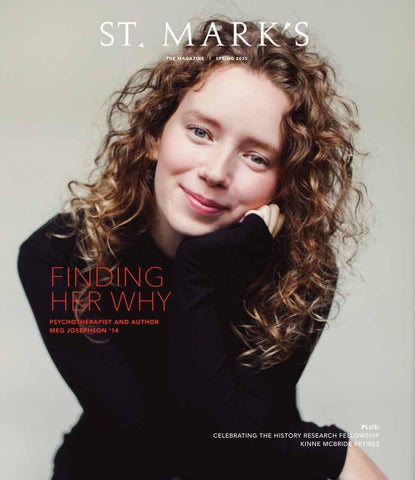
FINDING HER WHY
PSYCHOTHERAPIST AND AUTHOR
MEG JOSEPHSON ‘14
PLUS:
CELEBRATING THE HISTORY RESEARCH FELLOWSHIP KINNE MCBRIDE RETIRES

CALCULATING A LEGACY

PSYCHOTHERAPIST AND AUTHOR
MEG JOSEPHSON ‘14
PLUS:
CELEBRATING THE HISTORY RESEARCH FELLOWSHIP KINNE MCBRIDE RETIRES
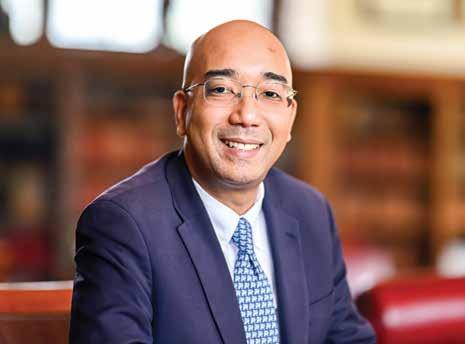
AS SCHOOLS STRIVE to prepare their students for the future, they need to ask themselves “Are we doing a good job?” They might use any number of metrics to answer that question to their satisfaction. Some of these parameters are easily measured and others less so. Ultimately, the school can place its performance on a spectrum: poor - fair - good - great. Since this self-ranking is difficult to identify in absolute terms, schools tend to play a game of relative ranking versus other schools they deem their competitive-comparators. I have observed this to be an sometimes amusing exercise, given that some so-called rivalries are not perceived as mutual!
I would argue there is one notch above great on the spectrum of ranking schools—excellent. However, this notch doesn’t quite fit on a relativistically constructed spectrum, since one does not get to excellence by being better than the competition. Ironically, independent
schools achieve excellence not by outpacing rivals, but by focusing solely on their own mission and context. We can all be excellent, if we focus on playing the hand we’ve been dealt to the best of our abilities.
St. Mark’s is fortunate to have been dealt a strong hand. However, there is no rest for the weary and we need to work hard to be our best every day. How do we do this?
• We focus, by being deliberate about what we pursue and what we ignore, such as possibly choosing depth over breadth in our curriculum.
• We align, by allocating our resources so that they mutually reinforce each other. For example, we should intentionally hire faculty and admit students who are excited by and committed to our unique program.
• We improve, by evaluating what we do, considering feedback, and using this information to change our practices for the better.
The above may sound simple. It is; however, it is not easy, since it requires grappling with a minor paradox. We need to be self-confident, believing that we are doing great things, attentively and deliberately guiding our students into their future. However, we can’t be complacent. In this space lies excellence. It is the ongoing effort of any school to best serve its students, by focusing on its mission, aligning its resources, and improving day by day. This approach is one that should be quite familiar to our community. Age Quod Agis is the school’s framework for purposeful action and our real competitor is ourselves as we strive to do whatever we do well. Excellence, then, is not a finish line, but a commitment to adopting an attitude that compels us to become the best versions of ourselves.
Go Lions,

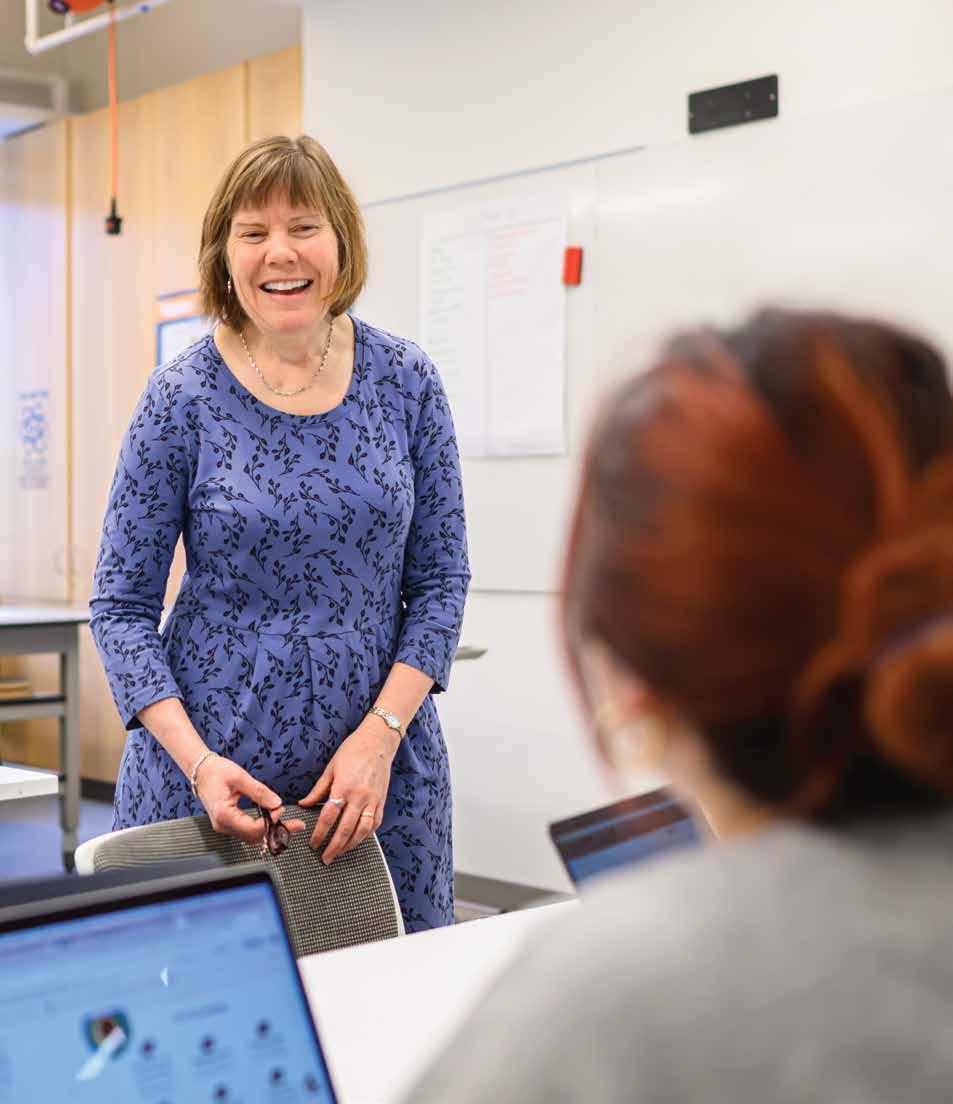
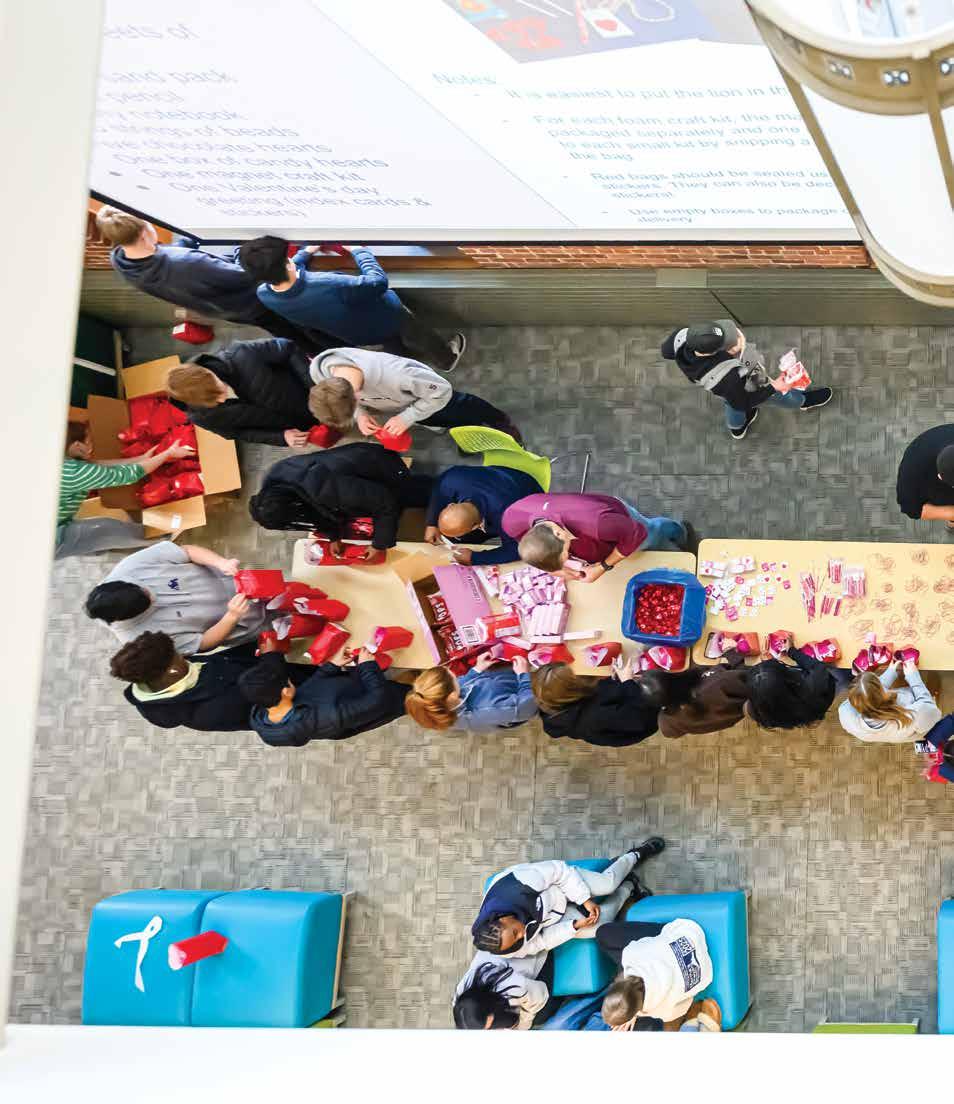
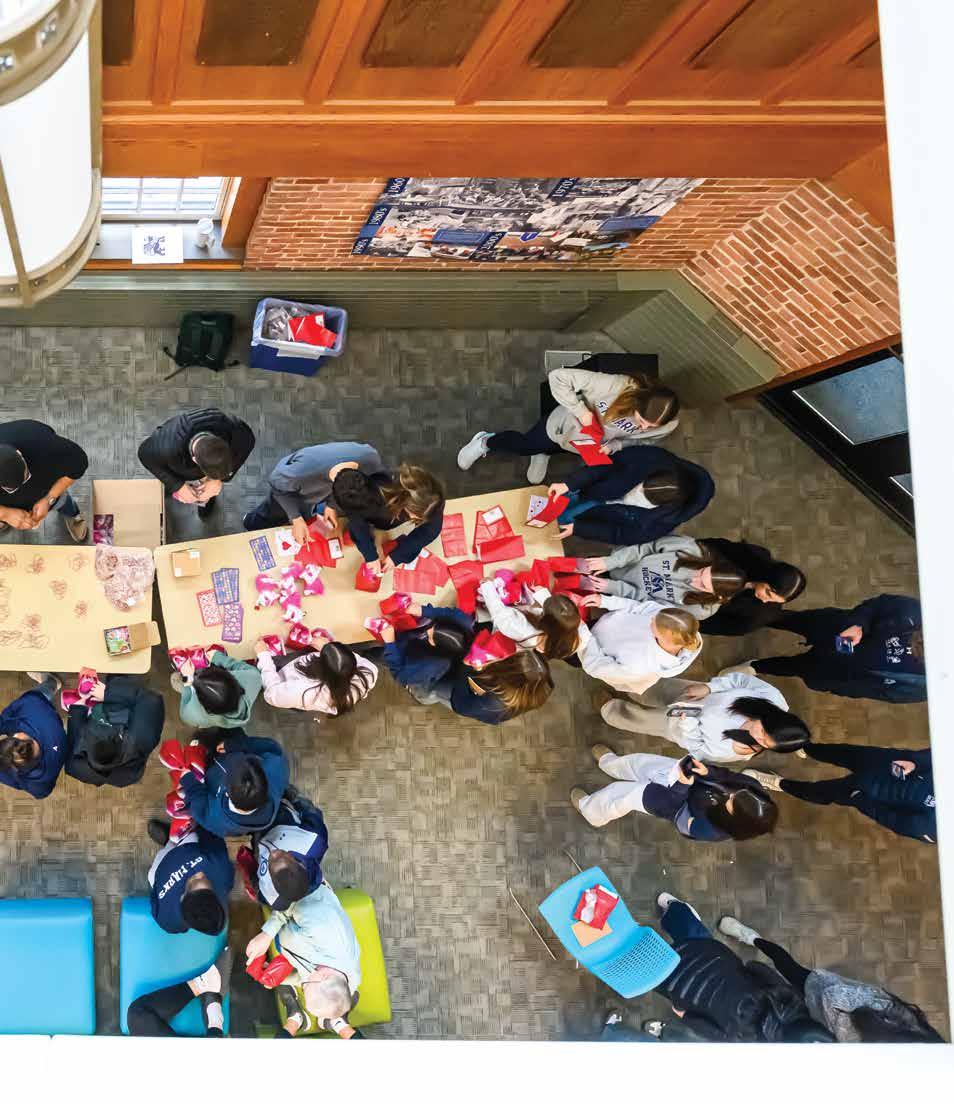
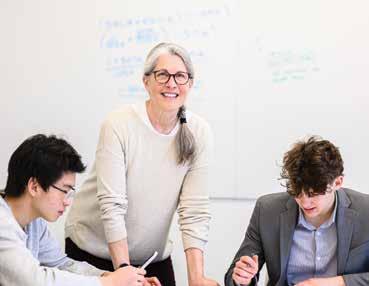
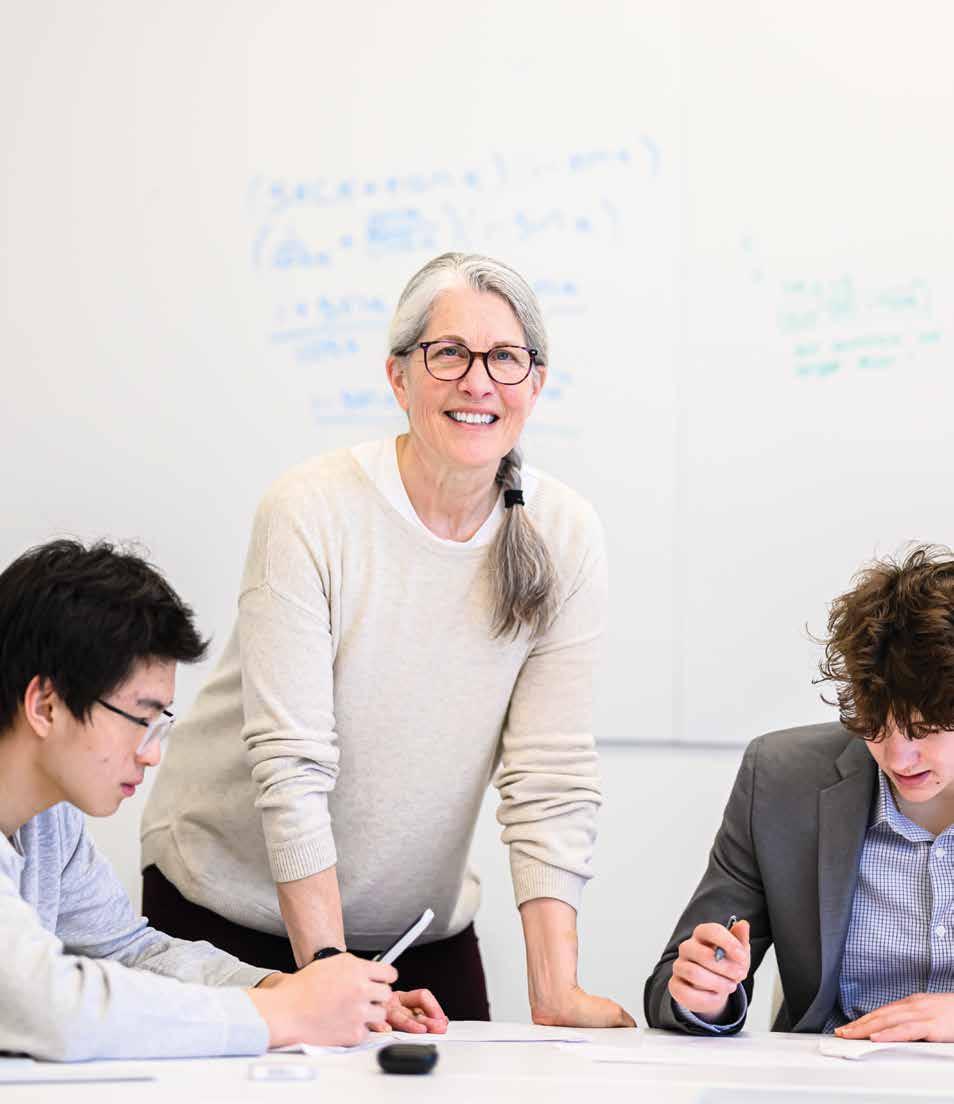
“YOU ARE A STUDENT at Harvard and have decided to open a coffee cart in the yard. You want the cart to be as convenient as possible for the students as well as in a place where you will get a lot of business. Where should you place the cart?”
This problem is not from a business, entrepreneurship, or even hospitality course. It’s an example from one of Karen Bryant’s mathematical modeling classes, which she has offered at St. Mark’s since 2015.
(CONTINUED...)
(CONTINUED FROM PREVIOUS PAGE)
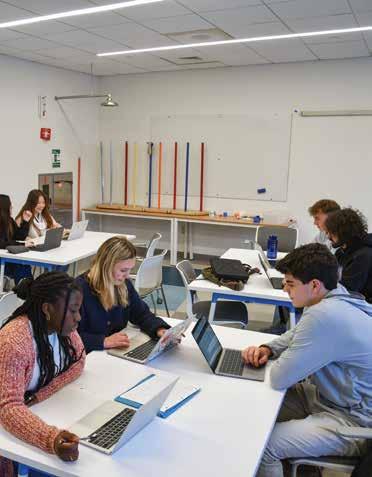
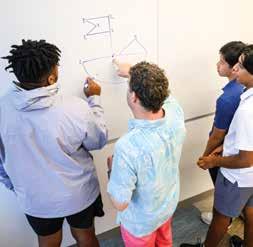
“Math modeling is really problemsolving, using math to explain situations,” Bryant explains. “It’s different from a word problem because with word problems, there’s one right answer, and all of the information is given to you. Modeling is much broader and open-ended, and you have some choice in how you attack it.”
Considerations for the Harvard coffee cart problem, for example, include distances to the proposed location from dorms and classrooms, as well as visibility. Pricing of area competitors is also a factor. The final deliverable? A four-slide presentation to a Harvard dean, including justification for the cart’s proposed location.
“The best thing about modeling is there isn’t one way to do it and there are many answers to the same problem,” Bryant explains. “You can use any math level that you want. So it’s fairly accessible to a lot of different people.”
Bryant’s interest in math modeling goes back to 1993, when she attended the Woodrow Wilson National Fellowship Foundation’s Summer Mathematics Institute at Princeton University, where the theme was “the mathematics of change.” There, she was inspired by Dan Teague, an instructor at the North Carolina School of Science and Mathematics, and Henry Pollak, a Bell Laboratories mathematician and Columbia University professor who was a trailblazer in the field of math modeling and in math education in general.
“Pollak always said, ‘Math modeling is where you use math to attack a problem where both the problem and the math are taken seriously and you use it to predict or explain future phenomena,’” Bryant says.
Bryant now serves on a joint committee of the National Council of Teachers of Mathematics (NCTM), the Society for Industrial and Applied
Want to try some math modeling problems? Check out these links:
https://m3challenge.siam. org/resources/sampleproblems/
https://www. contest.comap.com/ highschool/contests/ himcm/2024problems.html
Mathematics (SIAM), and the Consortium for Mathematics and its Applications (COMAP) on “modeling across the curriculum.” The committee is charged with “providing national leadership for the inclusion of modeling in the K-16 mathematics curriculum.” Bryant is currently the only high school teacher on the committee.
At St. Mark’s, Bryant has connected math modeling to other disciplines. The Math Department currently offers two one-semester electives, one focused on finance and economics, the other on the business of social justice.
Ife Lawore ’25, a student in Bryant’s social justice-focused class, has enjoyed the real-world application of her work.
“Because we research every problem we tackle rather than simply producing solutions,” she says, “we educate ourselves on
the injustices in the varying social justice topics, such as student-loan forgiveness and food deserts, to create solutions that benefit the majority of people.”
“This course has challenged me to find the math in everything, from a commute to the grocery store to student loans,” adds Luke Hallenbeck ’25. “Not only have I learned and practiced new concepts, but we then applied those new concepts to much larger, real-world problems.”
The student-loan forgiveness problem challenged students to create a model to predict the amount of student loan debt in the next 20 years, present the benefits of debt forgiveness, and develop a new model for student loans that would prevent the current issues around debt and inequity.
Lawore sees the skills she has developed in math modeling as valuable in college and beyond.
“I am interested in pursuing operations research, an analytical method of problem-solving and decision-making,” she says. “This course was a gateway to my learning about different strategies and techniques for analyzing a set of data to produce the most accurate, effective, and efficient results that help the most people.”
One reason Bryant loves math modeling is because it’s a reminder that math is everywhere. As part of her committee work, she was involved in offering a workshop last year in Chicago at NCTM’s national meeting. As participants filed in, they were encouraged to start thinking about modeling right away.
“We want you to jot down how you planned your travels and your hotel stay for this conference,” she recalls instructing the attendees. “You did modeling to figure this out. Should I take the train? Should I fly? Should I drive? What hotel should I stay in? When you’re doing all of this, you’re making choices based on math.” —Caleb Cochran
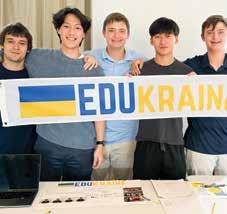
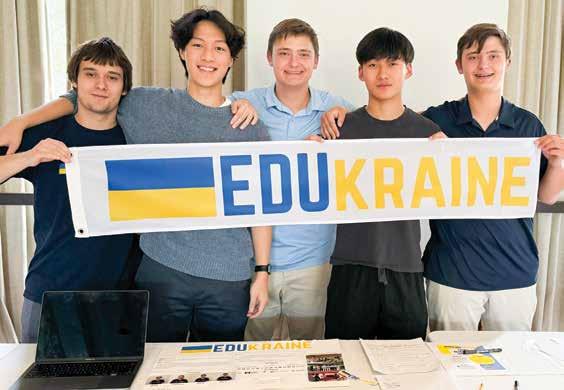
FOUNDED IN 2023 by Jayden Yoon ’25, Taras Yaitskyi ’24, Vladyslav Mishyn ’25, and Eli Zahavi ’24, EDUkraine.foundation is a 501(c)(3) nonprofit organization dedicated to bridging the language gap for Ukrainian refugees. Recognizing that limited English proficiency is a barrier to employment, education, and social integration for refugees, EDUkraine provides free, one-on-one Englishspeaking lessons tailored to each student’s needs.
Launched initially as a school club at St. Mark’s, EDUkraine quickly realized that demand far outpaced what fellow student volunteers could provide. What started as a small initiative soon expanded into a global movement. Today, EDUkraine has more than 500 volunteers across over 40 countries and more than 25 U.S. states, serving over 500 students in the U.S., Canada, and Europe. The organization has established more than 10 chapters,
partnered with five NGOs, and has raised over $2,500 to support its mission.
The organization connects refugees with dedicated mentors—from high school and college students to working professionals and retirees— who guide them through conversational English practice, cultural adaptation, and career-related language skills. Through virtual sessions, EDUkraine empowers its students with the confidence and fluency needed to navigate their new environments.
Whether as tutors, event organizers, or donors, members play a crucial role in EDUkraine’s mission to rebuild lives through language. For those interested in joining or learning more, EDUkraine welcomes new mentors and supporters year-round. Please visit their website at EDUkraine.foundation.
—Jayden Yoon ’25
OVER HIS 24 YEARS at St. Mark’s, Scott Dolesh has worn many hats (including his favorite–a blue knit St. Mark’s beanie with earflaps). In addition to his work as a math teacher and advisor, Scott has coached five sports at various levels. Here, he reflects on what makes St. Mark’s such a special place for him.
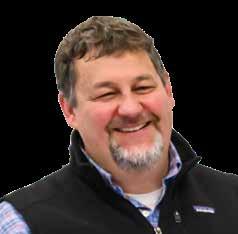
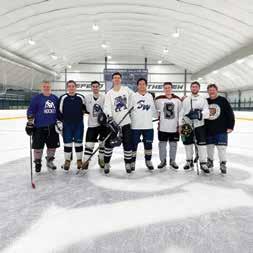
“A highlight of my life at St. Mark’s is our Friday night pick-up hockey. It’s an amazing tradition where faculty, staff, alums, and current and former parents come together for some friendly competition. It’s a fantastic way to unwind and connect with the St. Mark’s community, and it’s one of the many things that makes St. Mark’s feel like a true family.”
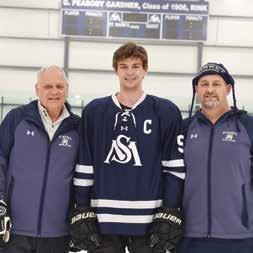
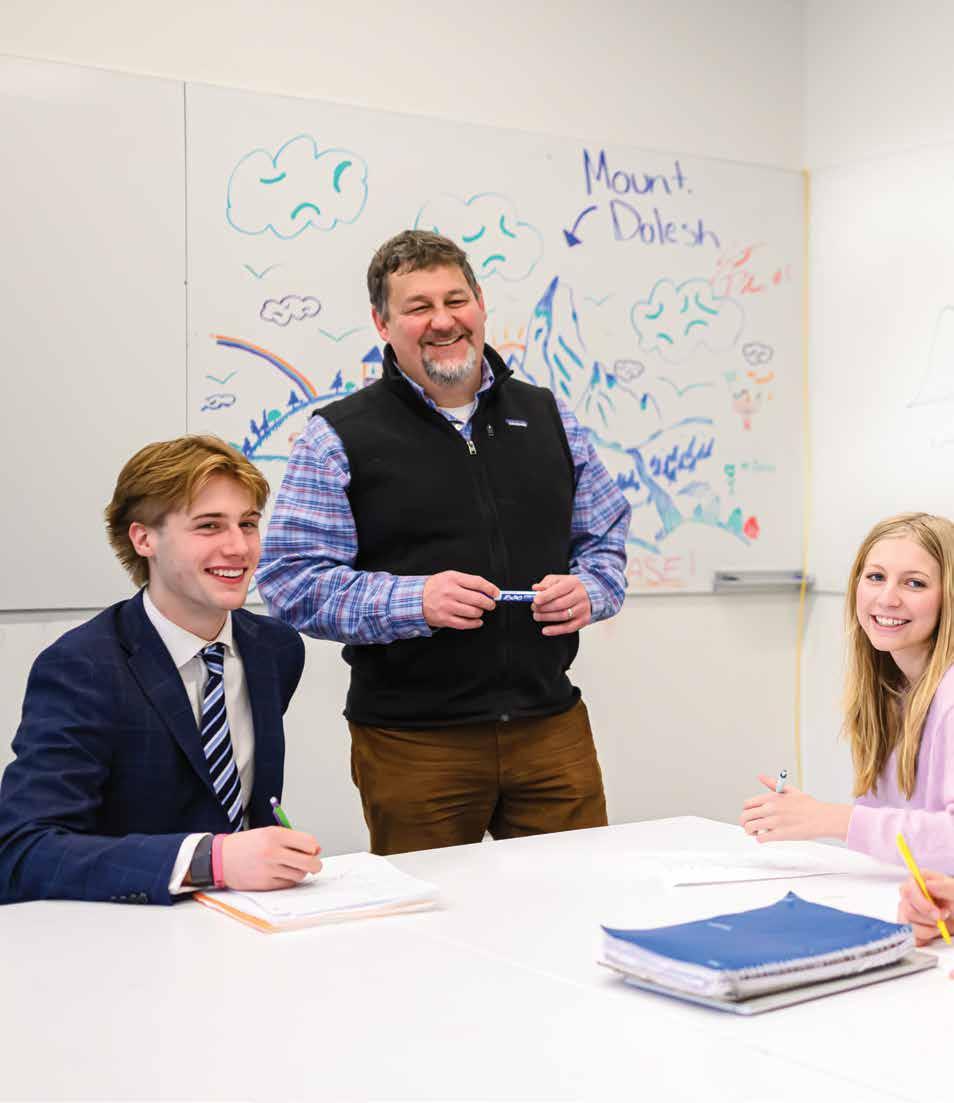
“When I first joined St. Mark’s I served as the head coach for the boys’ varsity soccer team and the assistant coach for the boys’ varsity hockey team. My wife is an ER physician, and when our three kids were young, I often had to bring them to my late hockey practices, where our team managers would look after them while I was on the ice. Over time, I transitioned to coaching JV, thirds, and recreational sports. About 11 years ago, my parents retired and moved from Michigan to Marlborough, and since then, my dad and I have been coaching the JV boys’ hockey team together. My dad was my coach in hockey, soccer, and baseball when I was a kid, so it has been a dream come true to share this coaching experience with him. A major highlight was coaching my son, Finn, when he was a III Former.”
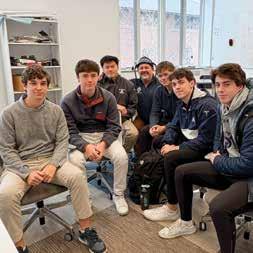
“Advising can be an overlooked part of our job at boarding schools, but I have found it to be incredibly rewarding. I have truly enjoyed watching my advisees grow into young men and women, and I still keep in touch with many of them today. Being able to witness their personal development, academically, athletically, and socially, has been one of the most fulfilling aspects of my role. I’m especially grateful for the special connection I have with my current group of advisees, as many of them are friends with my son, Finn. Watching the students interact with Finn gives me a unique perspective on their personalities and makes my time with them even more meaningful.”

“I believe my greatest strength as a teacher lies in my patience and my ability to connect with students. I especially enjoy teaching students who have faced challenges with math in the past but are eager to learn. Over the years, I’ve felt the most pride when a student who initially disliked math tells me at the end of the year that my class was their favorite.”
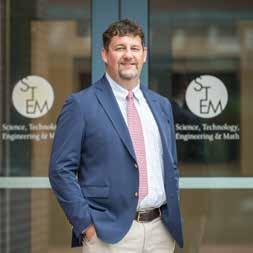
“St. Mark’s is such a special place to me! I have spent the last 24 years of my life here, and I have zero regrets. I met my wife during my first year here, and our three children have all been born and raised on campus, making this place feel like home in every sense.”
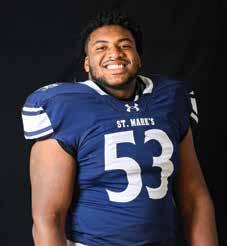
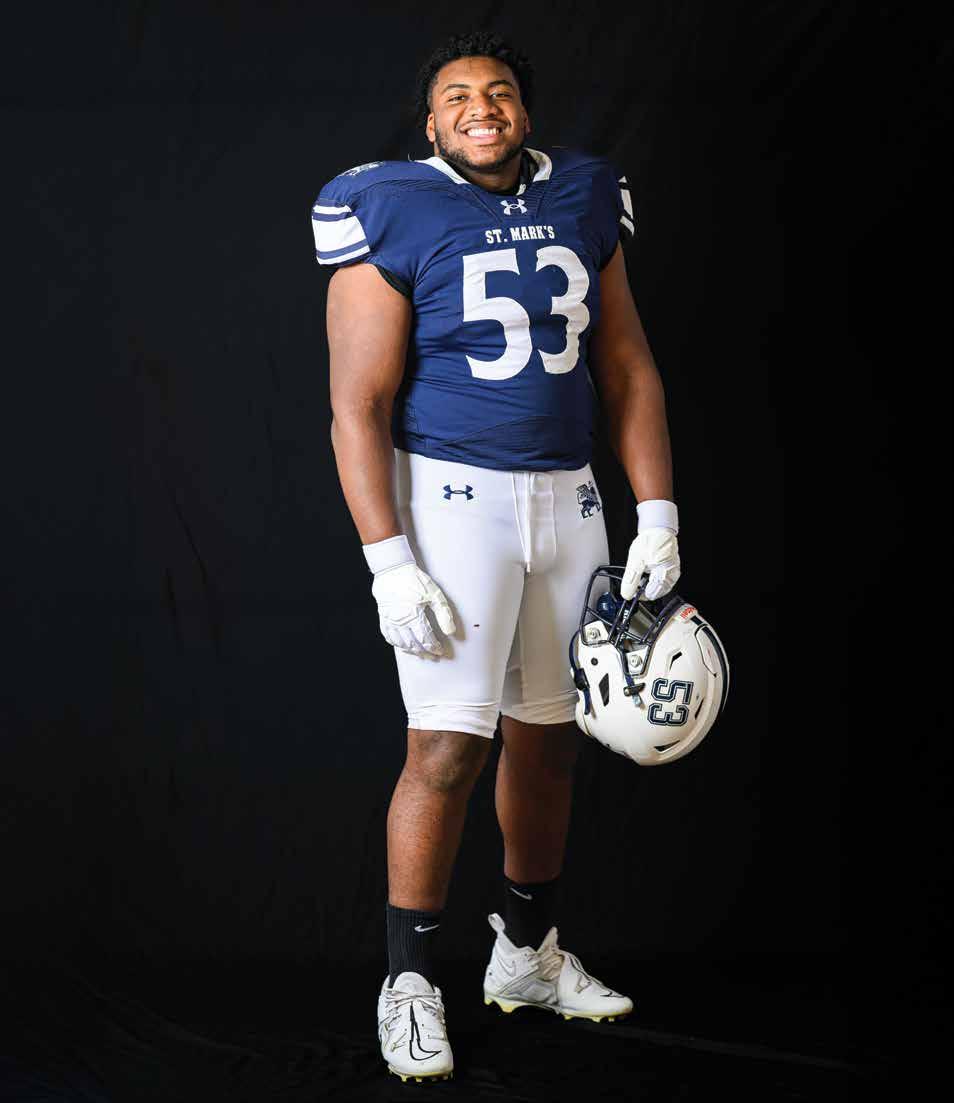
JARED VILCINA BROWN ’25 made quite an impact on the football field in 2024, a season that concluded with All-ISL honors for Jared and a 5-3 team record, tops among all St. Mark’s fall teams. Jared’s off-field achievements are just as impressive. The co-Head Monitor was awarded the Walter Clair ’73 Prize at Convocation, presented to a VI Former who embodies the intellectual and community service priorities characterized by Dr. Clair’s life and career. Jared heads to Cornell University in the fall, where he will play football.
WHAT APPEALED TO YOU ABOUT ST. MARK’S?
The community. That’s really what drew me in, especially a year after the big COVID shutdown, I think what drew me was the fact that people in the St. Mark’s community were able to bounce back so quickly from something like that.
HOW HAS ST. MARK’S PREPARED YOU FOR COLLEGE?
St. Mark’s has helped me reflect on how I influence others and how others influence me, most importantly. The level of independence given to me is very different from other schools I’ve been a part of, and that has helped me in realms of problem-solving, working in groups and with teachers, and with my overall communication skills.
WHAT ARE SOME OF YOUR FAVORITE MEMORIES FROM YOUR TIME AT ST. MARK’S?
Two years ago when the football team won against Middlesex. I wouldn’t say it’s because of the win. I would say it’s more because of the student section, and everybody storming the field after we won. When people come together like that, it truly is something to behold, and knowing that we’re capable of that gives me hope.
HOW DO YOU PREPARE ON A GAME DAY?
If I have time, I go out to the field that I’m playing on and just warm up there, most likely with music playing in my headphones just to acclimate to that space, to the atmosphere. I do my warm-ups, and then get back into the locker room, change, and I’m ready to go.
WHAT IS YOUR FAVORITE PLACE ON CAMPUS?
Belmont Chapel. I love that place. I spend a lot of time in there. I’ve gone back into the church, into the religion, since coming to St. Mark’s. I’ve felt like it’s been calling me ever since I got here. So, I spend time in the chapel just to pray or read my Bible. I think it’s a place to just calm down and take away some stress.
WHAT WOULD YOU TELL AN INCOMING III FORMER IF YOU HAD TO GIVE SOME ADVICE?
I would tell them to manage their time well but also just to go outside. Although it may seem simple, just take the time to appreciate the things around you. We have a beautiful campus. But just taking a walk, spending time with friends—I would tell them to appreciate the little things, because those little things make up the bigger picture.
—CALEB COCHRAN
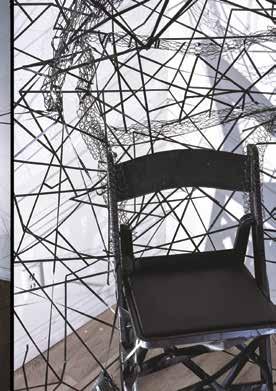
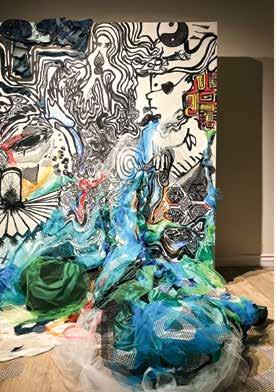
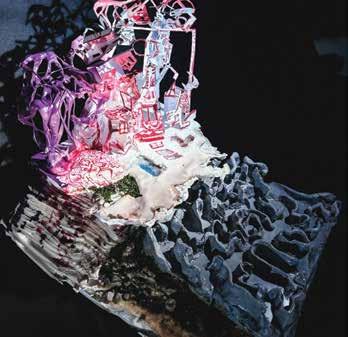

LAST NOVEMBER, Jihu Choi ‘25 was named a recipient of a prestigious YoungArts award in the category of Visual Arts.
“I’m very grateful to be selected for Young Arts, not only for its prestigious recognition but for the lifelong artistic support and community of professional artists I can connect to,” Choi says.
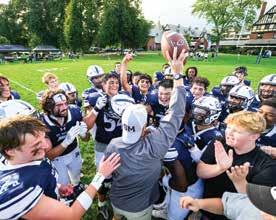
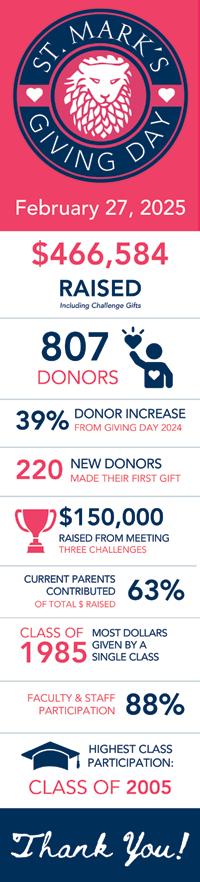
The St. Mark’s varsity football team earned their first win since the 2022 season with a 21-6 victory over Brooks, finishing 5-3 overall and defeating Groton 54-14 on Groton Day.
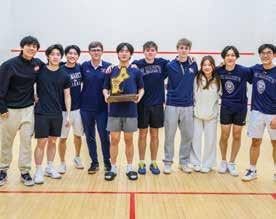
The St. Mark’s varsity boys’ squash team captured the 2025 New England Class C Championship, beating Dexter Southfield in the final by a score of 4-3. St. Mark’s was the fourth seed and defeated the numberone seed in the semifinals before their tight win in the finals.
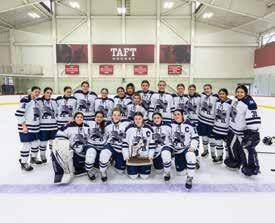
Varsity girls’ hockey had an outstanding year, making it all the way to the NEPSAC championship game. Congratulations on a great season!
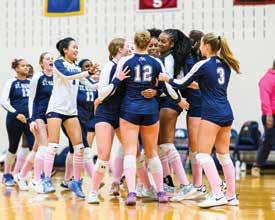
The St. Mark’s varsity volleyball team saw their first-ever ISL win against Brooks at the end of September. This past fall was our first year of playing a full league schedule in volleyball.
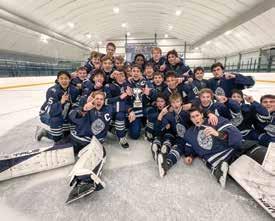
Varsity boys’ hockey had an excellent season, finishing 22-5-2. The Lions earned a second seed in the Elite Eight.
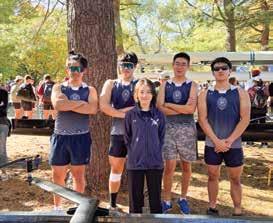
St. Mark’s earned a spot for a boys’ varsity boat to compete in the Head of the Charles Regatta, the world’s largest three-day rowing competition, on Sunday, October 20. The St. Mark’s boat, which included Nick Zhang ‘26, Max Wang ‘26, Ray Gao ‘26, Ryan Kim ‘26, and Seoyeon Kim ‘26, competed in the Men’s Youth Fours.
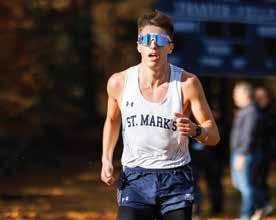
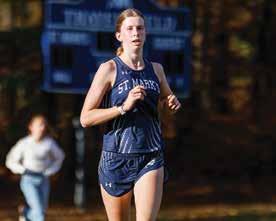
In the Division II New England Cross Country Championships in November, Hayden Gobron ‘25 finished second overall, and Julianne Kelly ‘28 finished 10th overall, leading our girls’ team to a seventh place finish. Julianne and Hayden earned spots in the Race of Champions hosted by St. Mark’s the following weekend, and Hayden won the race with a time of 16:21.
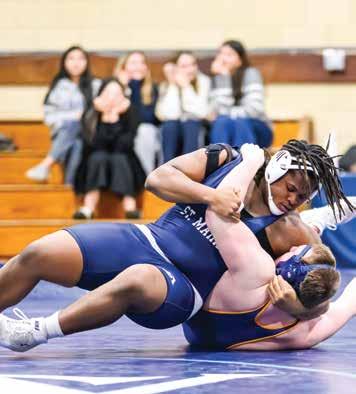
Seedi Sheriff ’26 won his second consecutive ISL Championship in the heavyweight division on Saturday, February 8. The St. Mark’s varsity wrestling team finished in fourth place overall, marking the School’s best finish at the ISL Championships in well over a decade. St. Mark’s finished as the top boarding/co-ed school in the league. The following wrestlers placed in the top five: Franklin Wright ’26: 3rd Place; Jared Vilcina Brown ’25: 3rd Place; Kevin Han ’26: 3rd Place; Max Wang ’26: 3rd Place; Ryan Kim ’26: 3rd Place; Rohan Athawale ’28: 5th Place; Justin Lu ’25: 5th Place; Nikhil Tati ’28: 5th Place.
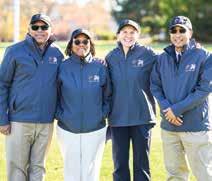
(L to R): Groton Headmaster Temba Maqubela, Vuyelwa Maqubela, Chrissy Kopp, and St. Mark’s Head of School Ivory Hills donned their rivlary gear for Groton Day in November.
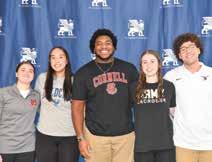
Congratulations to VI Formers Jackie Wright (ice hockey, Boston University), Annabelle Wang (crew, Villanova), Jared Vilcina Brown (football, Cornell), Thais Jackson (lacrosse, Army), and Levy DaSilva (baseball, Delaware State), who have committed to college athletic programs at the Division I level. Go Lions!




independent project—a process that was typically unsatisfactory for both the student and the assigned faculty member because of a lack of structure and dedicated time.
“The department decided we should have a structured way for kids to have a chance in their curriculum to really dive into something of great interest to them and to do

From there, students begin the process of researching and writing, framed by four submission periods during the semester when six to nine pages of work are due. The final project is a 25-page (minimum) paper—certainly a heavy lift, though not one that students generally have difficulty completing, given the series of checkpoints throughout the course.

FOR ELIZA VISCONSI ’25, the inspiration for her research topic came during Women’s History Month in March 2024, when a social media post led her to the National Gallery of Art’s exhibition of the work of American photographer Dorothea Lange, “Seeing People.” At the time, Visconsi wasn’t familiar with Lange, who documented the Great Depression through her work for the Farm Security Administration (FSA), but she had always had an interest in photography, and Lange’s work made a striking first impression.
“I’ve always been interested in art and art history,” Visconsi says, “so I had the idea that I would want to do something for the History Fellowship relating to artistic expression in some way.”
In Visconsi’s paper, “Dual Lenses: Art and Documentation in the Photography of Dorothea Lange,” she examines the ideas of reality and artifice in Lange’s work for the FSA, which was designed to elicit sympathy for poor American farm workers in the 1930s. While the

photos in the FSA project were certainly journalistic, subjects were sometimes asked to pose to increase an image’s impact.
“Like propaganda, artifice has a bad reputation,” Visconsi argues in her paper. “The inherent nature of photojournalism implies duality, and that duality was essential to the FSA’s mission,” she writes. She goes on to state that FSA photography was “undeniably propaganda,” but that it was used to “help people, repair damaged health, and heal and restore hope.”
Visconsi appreciated the opportunity to focus on a topic that held such personal interest.
“You don’t always get the opportunity to just explore something you’re completely interested in,” she says. “Having a great amount of support from Mr. Lyons but also having the independence to explore what you’re interested in is a really good combination.”


THINK OF THE UNITED STATES in the 1960s, and a handful of events are bound to quickly come to mind, some inspiring (Martin Luther King Jr.’s “I Have a Dream” speech, the Apollo 11 moon landing), and some tragically violent (the assassinations of King, the Kennedys, and Malcolm X). Without question, 1969’s Woodstock Music & Art Fair—known to all simply as “Woodstock”—belongs on any short list of indelible memories from the decade. But what exactly is the legacy of this festival held in rural New York, attended by more than 400,000 people?
Linda Li ’25 examined coverage of Woodstock and another 1969 music festival—the Altamont Speedway Free Festival—in her paper, “Peace or Chaos: The Media’s Legacy of Woodstock & Altamont.”
Li was intrigued by Woodstock because it “epitomized all the great things about counterculture, but also so many things went wrong with it,” she says. In researching the media’s interpretations of Woodstock, she found that even in real time, portrayals varied widely. The New York Times initially painted a picture of “a nightmare at Catskill,” Li says, “all these hippies just trying to get drugs.” Just days later, The Times called Woodstock “a phenomenon of innocence.”


While interpretations and memories of Woodstock continue to range widely, Altamont, held five months later, carries a much darker legacy due to the killing of Meredith Hunter and three accidental deaths. But in the days following the concert, it wasn’t terribly clear, even to those in attendance, what exactly took place. It was only after a series of articles and the documentary Gimme Shelter came out “that people really understood the gravity of what happened,” Li says.
In her paper, Li discusses the narratives of Woodstock and Altamont in the context of a much more recent event—the January 6, 2021, breach of the U.S. Capitol. “Liberal-leaning outlets such as CNN and MSNBC emphasized violence, chaos, and threats to democracy,” Li writes, noting the contrast to Fox News reports, which characterized the majority of the protestors as “peaceful,” “orderly,” and “meek.”
“The January 6th riot serves as another example of how media can shape public memory through biased reporting,” Li writes in her conclusion.

JIHU
’25 is an artist and has always enjoyed visiting museums in the U.S., Japan, and her home, South Korea. For her fellowship project, “Democratization of American Art Museums: The Changing Admission Policies of the Metropolitan Museum of Art,” she explored the admission policies of the Met, how they have changed over time, and how the changes “influenced the Museum’s audience and public access to art.”
At the time of its founding, admission to the Met was free. The fee structure has changed over the years, and the museum currently has a “pay-what-you-wish” policy for residents of New York, New Jersey, and Connecticut (others pay $30 for adult general admission tickets).

“As a large cultural organization, the Met has an educational obligation to provide accommodations to all students and researchers, not just ones from these three states,” Choi writes. “In a world of ever-changing societal values, the Met should strive to foster a space for all its audience and surrounding communities to feel welcomed.”
Choi says, “I never really thought I was a humanities person until I came to St. Mark’s and took courses here.”
The award-winning artist now has her sights on a college major in visual arts, creative writing, or sociology, and says her “dream job” would be to work in a museum “once in my lifetime.”




RESEARCH AT THIS LEVEL, Lyons says, “is applicable way beyond college, because if you’re going to be an analyst in the financial world or a lawyer, for example, a big part of your job is doing research projects. A lot of what you’re going to be paid for is: Can you find and present information to answer certain questions?”
For Justin Lu ’25, who explored the WWII Japanese biological warfare Unit 731 in his paper, “Japan’s Transition to Ultra-Nationalism,” the fellowship has provided an opportunity not only to closely examine an area of real interest, but also, he adds, to hone his skill as as writer. “I’ve definitely gotten so much better at being able to write, and to structure a research paper,” he says. “I would definitely recommend it for anyone who is interested in history or writing.”
Mandy Hui ’23, a student at Northeastern University, can testify to the impact that the fellowship has had on her college experience.
“Before enrolling in the history fellowship, I had very little experience with extensive research and writing,” she says. “This class prepared me well for college as I discovered the many nuances that come with diving deeper into a subject I’m passionate about. It challenged me to question my own

perspectives and acknowledge that there are always two sides to a story, both of which deserve thorough research with an unbiased lens. The course also pushed me to develop good habits, because I had to consistently churn out pages each week to keep up with the workload—an incredibly useful skill for adjusting to college.”
Marianne Lyons ’22, now at the University of Virginia, adds, “The most valuable part of my fellowship was the confidence it instilled in me to direct my own research and writing. It was the first time I had the opportunity to choose the historical topics I wanted to explore, and I fully embraced it. This experience has been instrumental in my college career, especially as I work on my senior thesis. I’ve learned that pursuing the history I’m most passionate about leads to the most meaningful and impactful work.”
For Visconsi, as she looks toward college next year, the fellowship has provided a “different lens” on history.
“I’m doing my own research and trying to find something out, and it feels new and exciting,” she says. “I think it’s a really cool way to engage with history as a subject.”
BY JACKIE WATERS | PHOTOGRAPHS BY ADAM RICHINS
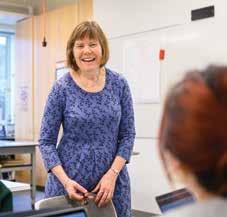
WHEN A BELOVED MATHEMATICS TEACHER RETIRES, it seems fitting to share some numbers. This summer, Academic Dean and Assistant Head Kinne McBride will depart St. Mark’s after 24 years—and more than three decades on three different boarding school campuses. Born in California when her father worked at the Cate School, she was raised in New Jersey at the Lawrenceville School, where he taught science for more than 40 years.
“It was a pretty spectacular childhood,” Kinne says of growing up as a faculty kid on campus. At the time, Lawrenceville was an all-boys school, so she didn’t attend, but her younger brother did, and he played matchmaker one weekend when Kinne was home from college at Mount Holyoke, introducing her to his algebra teacher at the time: Bob McBride. Not only did Bob and Kinne (now married for 40 years) meet at an independent school, but they chose to raise their three children—Teddy ’06, Shelby ’08, and Liza ’11—on an independent school campus.
“One of the most compelling things about being on campus and being at St. Mark’s is you get to meet so many people from all around the world,” Kinne says. “You also have to share your parents,” she adds with a laugh, recognizing that it’s not always easy to serve as a parent figure to students while simultaneously raising your own children.
Although Kinne’s father was a role model for her as a teacher, she made a conscious decision not to go straight into education after college. Instead, she became a commercial lender for two banks, Bank of Boston and Bank of New England. Working with clients in the entertainment industry and traveling was fun, she says; plus, “It was the ’80s, so you got to give out millions and millions of dollars!”
When her children were young, Kinne decided to take a break from banking, then re-entered the workforce part-time as an adjunct instructor at Framingham State University, and a math teacher and tutor at Hopkinton High School. “It really kind of crept up on me,” she says of teaching.
The same is true of her career at St. Mark’s. After learning that the School was looking for a math teacher, Kinne quickly connected with Tim Pettus (a former dean of faculty) and found herself “all of a
sudden” on campus for an interview.
“One of the days that I can remember so clearly was literally that first day when I walked in the door,” Kinne says. “Tim gave me a tour—I remember thinking, Oh, what a maze!—and then I went up to teach Karen Bryant’s geometry class. Fortunately for me, Karen was department head. From day one, she took me under her wing,” Kinne recalls.
As many teachers can attest, the first year on the job often feels like a roller-coaster ride, but Kinne quickly found her footing with support from Karen in the classroom and former faculty member Andy Harris on the water, as assistant coach for the crew team. “They were my two big mentors,” she says.
“Since Kinne arrived at St. Mark’s, she has always been all in and done whatever the School needed,” observes Karen. “She was a dorm head, then moved off campus when the School needed housing, then back on when they needed a dorm head again. She took over doing the scheduling and now has been academic dean. She has done every job with skill, patience, compassion, and an amazing attention to details.”
“In the classroom, I want to do my best to inspire students and encourage them to be curious, but I mostly want them to have fun with math and not feel intimidated by it,” Kinne says. “I think that all hinges on how you can build a relationship with kids.”
“Kinne is a great teacher because she is so good at truly getting to know her students and finding ways to reach each one,” Karen adds. “I have stood next to her at reunions where alum after alum comes up to talk to her. She is one of the first people they seek out.”
After nearly two-and-a-half decades teaching and advising hundreds of students—including her children’s friends and a current advisee (Chloe Duran
’26) who is the daughter of a former advisee (Scarlen Martinez ’06)—Kinne has formed countless tightknit relationships with alumni, who she affectionately refers to as “friends for life.”
“I think that’s been most rewarding, those relationships, keeping them going,” she says. “I’m so excited to see how they turn out!”
“She supported me through everything, whether it was answering academic questions, providing me with day-to-day moral support and encouragement, or helping me navigate the college recruiting and application process,” says Kinne’s former student and advisee Sophie Haugen ’18. “St. Mark’s has been lucky to have her.”
“Kinne taught us math, she taught us how to row, and she taught us how to be better people,” shares Liz Cavanaugh Motsonelidze ’04. “The lifelong learning from Kinne has only continued as a friend, colleague, and professional mentor. She continuously inspires us to lead with empathy, kindness, and confidence. Generations of St. Mark’s students and faculty are better learners and educators thanks to Kinne.”
When she moves to Jamestown, R.I., this summer, Kinne knows St. Mark’s is in good hands.
“I am incredibly proud of the work, accomplished and ongoing, we’ve done in the Academics Office. I am grateful and feel privileged to work with such an amazing team. Our focus in everything we do has been to work to create a program that is student-centered, relevant, equitable, and challenging. The dedication and collaboration with everyone on the team has been a highlight.”
Of her time at St. Mark’s, Kinne says, “I felt like I came full circle. It was, without a doubt, the right move for me.”

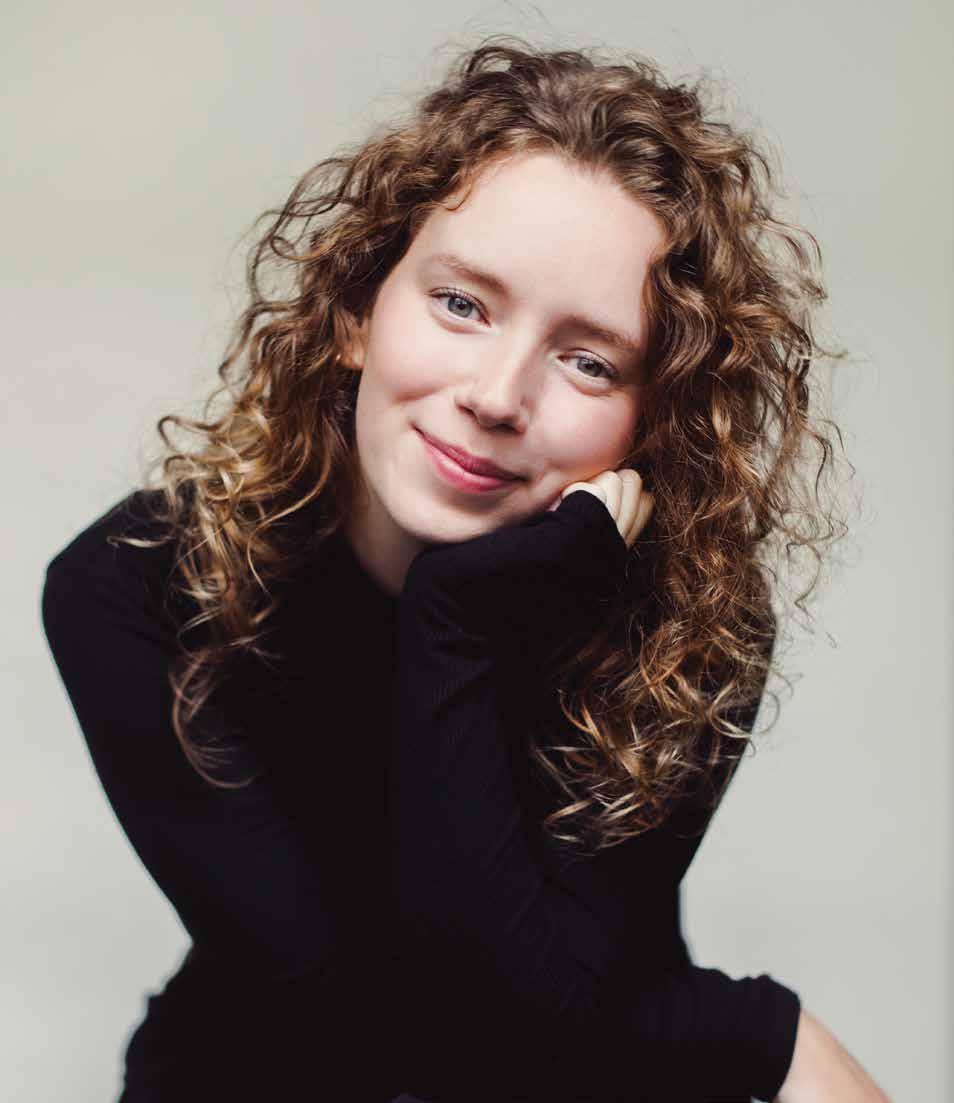
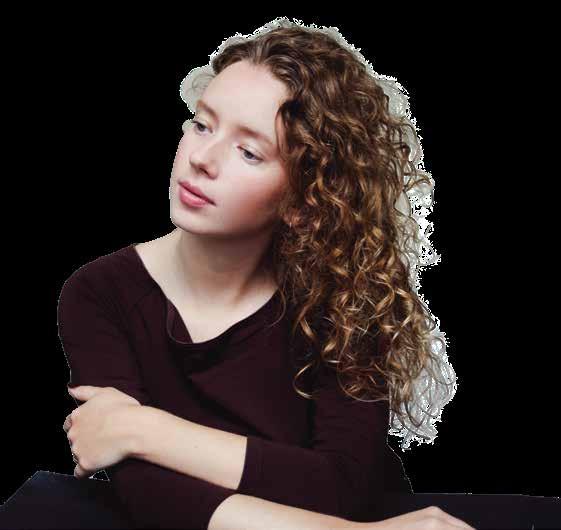
Meg Josephson ’14 makes people feel “less alone”
BY JENNA MARINA LEE PHOTOGRAPHS BY DAVID GODDARD
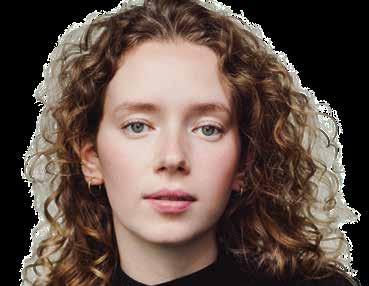
PSYCHOTHERAPIST AND SOON-TO-BE-PUBLISHED author Meg Josephson ’14 feels it is important to point out she doesn’t have all the answers.
Judging by the comments of her social media followers, it sure does seem like she has at least some of them.
“Thank you for helping to give vocabulary to us to understand ourselves.”
“Meg you’re opening the door to healing for us all, one reel at a time.”
“A great reminder that we could all practice sitting with our emotions rather than avoiding them.”
Thanks to a combination of her personal experiences, education, and spirituality, the 29-yearold has steadily grown over the last decade into a sought-out source of insight, advice, and comfort for hundreds of thousands of individuals worldwide every day.
“This is my why—making people feel less alone in something they feel very alone in,” Meg says.
Meg grew up in Minnesota and Charlottesville, Va., and became familiar with St. Mark’s through her cousins, who attended the School.
She couldn’t tell you what she was thinking at 14 years old when she decided to deviate from the norm around her to pack her bags and head north to boarding school. Perhaps it was her independent streak. Perhaps she was intrigued by the romanticism of the idea.
“I felt like I was just sharing from my own open blistering wounds, and I noticed people were resonating. I never want to come off as ‘I know everything and I’m an expert.’ Rather, I have some expertise and I’m also going through it too, and figuring it out, as well.”
When she looks retrospectively, however, through the therapeutic lens she has become so skilled at in her adult life, she hypothesizes that growing up in a home where addiction was present might have played a significant part.
“I do think there was something there about just freeing myself,” she says. “As a child and teenager, we’re often powerless in our settings, so I think that was maybe one thing that was in my control that I could do.”
After a brief adjustment period, she came into her own at St. Mark’s. She was actively involved as an athlete, Head Monitor, and member of the choir.
“I was just so immediately comfortable with the people around me at St. Mark’s. My best friends are from St. Mark’s, still,” Meg says. “I feel like it really allowed me to come into myself in terms of leadership. I felt like I could do everything. That was a special feeling.”
Meg went on to graduate from Hamilton College and pursued opportunities in editorial writing, public relations and multimedia fields, learning a lot of the skills that she uses today in her social media accounts.
A bad concussion led her to find meditation— the only activity she could handle because it didn’t involve screens or focusing too intently on homework or studying.
She had also recently found her way to therapy, and the combination led to a lightbulb moment.
“Blending this heavy, dense trauma work with lighter mindfulness-based practices felt like my calling,” she says.
She earned her certification in meditation teaching and decided to return to school in 2020 to pursue a graduate degree from the Columbia School of Social Work.
During this time, Meg was processing her mother’s early onset Alzheimer’s diagnosis and coming to terms with trauma in her own life as she learned more about it clinically in her graduate studies. She says she was going through a deep grieving period when she started posting mental health-related content on social media.
“I felt like I was just sharing from my own open blistering wounds, and I noticed people were resonating,” she says. “I never want to come off as ‘I know everything and I’m an expert.’ Rather, I have some expertise and I’m also going through it too, and figuring it out, as well. I didn’t know what my niche was at that point. I just knew I was drawn to early attachment trauma and integrating mindfulness-based practices into that.”
As her following grew, she started to experiment with free weekly newsletters and guided meditations via Substack. She hosted online workshops; her first two centered on inner-child healing and people pleasing.
And that, she realized, was the niche.
“Other people were really, really, really resonating with it, specifically these feelings of, ‘Are you mad at me?’ ‘Am I in trouble?’ ‘Am I bad?’ ‘Is something wrong with me?’ Overthinking social interactions. Walking on eggshells, just constantly worrying what other people think, feeling like you don’t know who you are. Feeling like you don’t know who you are because you’ve spent your whole life pleasing other people to keep the peace,” Meg says. “And I realized, this is my thing.”
Today, Meg is a force with more than 330,000 Instagram followers and 256,000 TikTok followers. Her workshops have extended to 23 countries. Her newsletter subscribers list is up to 14,000, representing all 50 states and 143 countries—and led to
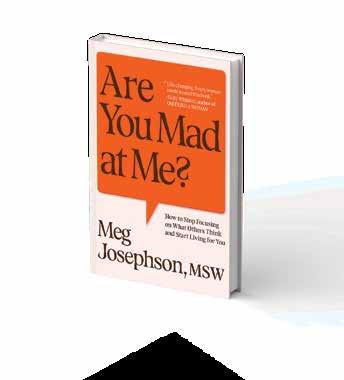
PART MEMOIR, part self-help book, Meg Josephson’s Are You Mad at Me?, set to be published on August 5, is already gathering accolades.
literary agent Rebecca Gradinger contacting her to ask, “Have you ever considered writing a book?”
That simple question manifested into Are You Mad at Me?, which Simon and Schuster (U.S.) and Penguin Random House (U.K.) are set to publish on August 5. The book will be translated into more than a dozen languages.
Meg describes the work as part memoir, part prescriptive self-help, exploring people pleasing as an under-recognized but common survival mechanism called the fawn response, a term coined by psychotherapist Pete Walker.
She wrote it at a blistering speed, completing a draft in four months while still juggling her fulltime schedule in San Francisco as a therapist, seeing 20 clients weekly. She dedicated it to those who have kept the peace but lost themselves.
“Writing a book, even as a child, has been a lifelong dream,” she says. “I wrote this from a place of truly, what did I need to hear when I was 20? That’s
who I was writing it for. I really wanted it to feel like I’m with the reader. I know what you’re feeling. I feel it, too.”
As she looks toward the future, she is rooted by her life’s mantra to “be here now” and stay in the present. She is committed to deepening her clinical practice and continuing her work on social media, newsletters and workshops. And ultimately continuing to do the work on herself while being a source of support, understanding and encouragement for others along the way.
“I love the balance that I’m finding of therapy and creativity,” she says. “I love writing, and I want to keep writing. I’m just really interested in building community and helping people heal, reflect, and feel more empowered to return to themselves. Because I think that’s what a lot of trauma and conditioning does—disconnects us from who we are. I hope that we can all come back a little bit.”
Katherine Morgan Schafler, psychotherapist and author of The Perfectionist’s Guide to Losing Control says, “If you struggle with that screensaver type of anxiety that’s always on…this book will feel like coming up for air. Read it and get free.”
“Hallelujah—at last, salvation for all of us who’ve ever agonized over an awkward text exchange, wondered if we embarrassed ourselves at a party, or become convinced that a friendship cooling meant we’d unwittingly committed some grave sin,” says Ada Calhoun, bestselling author of Why We Can’t Sleep. “Meg Josephson’s instant self-help classic is wise, actionable, and could change your life.”
Are You Mad at Me? is available for pre-order now through Amazon, Barnes & Noble, and other booksellers.
36: CLASS NOTES
42: IN MEMORIAM
I.
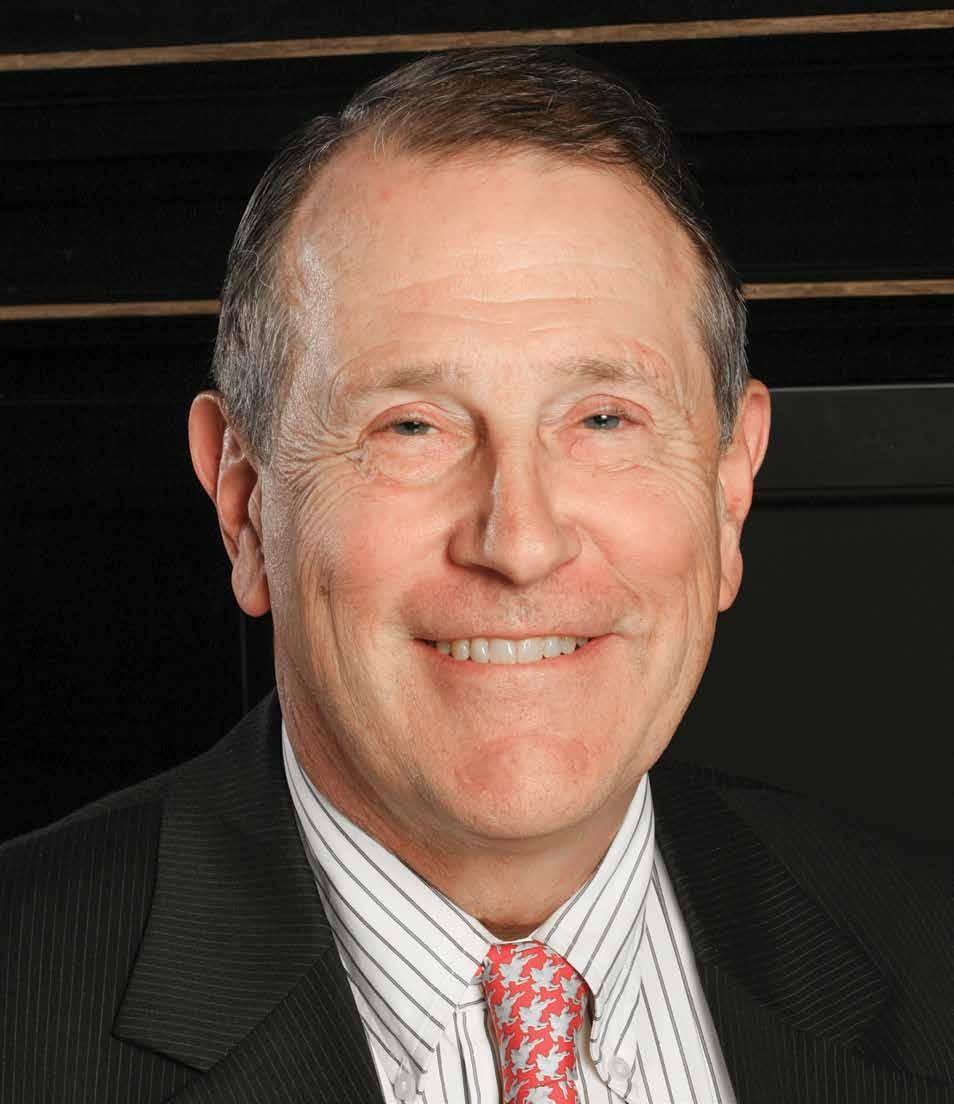
THE VALUE OF HIS St. Mark’s School education first became clear to Wistar Morris ’60 shortly after graduation.
“I recognized I was way ahead of friends of mine from back home,” says Morris, a Villanova, Penn., resident. “That enabled a very successful experience at Cornell University.”
The head start led into a career he might not have guessed at back then. His interests migrated from chemical engineering to a potential career in medicine while he was an undergrad, but he ultimately diverged from that path to gain success as an investor.
Morris is also prolific in making investments of another type, with openhanded giving for biomedical research and for education. His philanthropy has included support for St. Mark’s for more than 30 years, and a recent gift establishes a substantial legacy for Morris at his alma mater. His family’s Cotswold Foundation has committed $1 million for an endowment, an
unrestricted gift that will supply St. Mark’s with flexible resources year after year.
“I view St. Mark’s as a wonderful school that gives people great experiences and teaches them how to work hard,” Morris said. “It sets them on the path to achieve in higher education and their careers. To me, that is something obviously worthwhile to support.”
Morris nurtured his quantitative skills and passion for STEM during his time at St. Mark’s. He has especially vivid memories of hands-on experiences in V Form biology lab, the first inkling of his lifelong penchant for learning about the health sciences. At the time, though, he was simply savoring the joy of learning.
“I was interested in learning what I was learning,” he says. “I didn’t know yet what I wanted to do for a living, but I just found science and math to be fascinating.”
Looking back at St. Mark’s, Morris recalls good friendships and caring,
dedicated mentors. His latest gift, which added him to the ranks of generous supporters in the Pillars of St. Mark’s, aims to make a difference for students of the future. The endowment provides discretionary funding in perpetuity, empowering St. Mark’s to pursue special opportunities or fulfill emerging needs that advance education and improve the student experience. Morris also intends the choice as a vote of confidence in the school’s potential.
“I want to leave a legacy,” he says. “I’m trying to help out a few generations down from me.”
After graduating from Cornell with a chemistry degree, Morris worked in investment banking. In search of advancement, four years later he paused to attend Harvard Business School. His time in Cambridge also included a blind date that introduced him to the love of his life, Martha Hamilton.
“Aside from being bright and talented,
48: LAST LOOK (CONTINUED...)
she’s just nice,” Morris says with a smile.
The two wed right after commencement and settled in Morris’ hometown of Philadelphia, where he set up his own investment advisory firm. Over nearly 30 years, Morris and his team established a track record of identifying fruitful opportunities others let pass.
He sold the company in 1997 and retired—a condition that would last less than five years. In the meantime, he was inspired to capture stories from his career for his three daughters, a project that ultimately resulted in a book—Adventures in Investing privately published in 2002.
Morris aims to be astute in his philanthropic choices. He often looks to boost smaller organizations where his giving might have an outsized impact. The Cotswold Foundation has given about $50 million over the years for the biosciences. Morris is a trustee of the Lankenau Institute for Medical Research, the Lankenau Medical Center Foundation, and Mt. Desert Island Biological Laboratory. “I’m back to my interest in medicine,” he says.
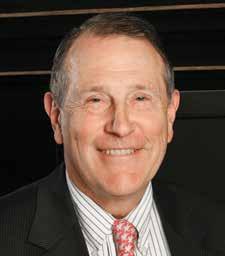
Morris is grateful for the role that St. Mark’s played in preparing him to make an impact in finance and philanthropy. He finds satisfaction knowing that his gift will help to create similar opportunities for others, for a long time.
“St. Mark’s is a great education and a great start on life,” he said. “It’s a powerful experience that lasts alumni through their total education and their total being.”
—Wayne Lewis
1945
Michael Carter writes, “I think I’m the last member of my class still alive. My wife Lillian and I are in the Health Center at RiverMead, a retirement community in Peterborough, N.H. We are happy and are taken care of very well.”
1955
Peter Ringgold shares, “After living in Evergreen Colo., since 1972, I am trying to spend as much as I can in Appleton, Wis., with my son and family. My days of playing golf and paddle tennis are over, and 2026 will be a big year for me. I have enjoyed volunteering with our rec. district in the old days and today exercise involved vacuuming and raking. I had a wonderful career in the paper business but have been retired since 2000 and I think of my wonderful five years at St. Mark’s and those who have passed. My best to those of us left from Class 1955.”
1956
Robert (Bob) Jackson writes, “Diane and I have moved from Williamsburg, Va., to North Branford, Conn. We are in a senior living facility near Diane’s family.”
1958
Charlie Buell shared an update on classmate Carl Bredahl, Jr. ’58 after the Asheville floods: “Thanks, Charlie, for asking about me. Physically, I’m fine, but just now power is trying to come back but no water for three weeks. So many people are in much
worse shape than I am...so I’m fortunate but exhausted.”
1959
Dr. David DiCicco writes, “I am trying to outwit advancing age and keep as healthy as possible. Vicki and I continue to play golf and ski with friends. We are planning on doing a river cruise in Europe next fall.”
1961
Philip Armour shares, “My wife Gillian and I moved to Ghent, Belgium, last year, fulfilling a lifelong dream of living in Europe. Reason? If not now, when? To my 1961 classmates: Please feel free to contact me at my email address parmour3@ yahoo.com if you are visiting Ghent.”
1962
Derek Schuster writes, “My book, Youth in Jeopardy, was published by Red Penguin Books in July. It focuses on the techniques our program has used to help kids stay out of trouble. Those who are interested in ordering a copy can do so at ShopBooksDirect.”
1963
Classmates David Harris and Albert Stickney shared a photo from the St. Mark’s Untapped Event in Connecticut.
1967
Alfred Maclay shares, “Jill and I returned to Evergreen, Colo., from a 12-day trip to the Puget Sound area in July to a break-in at our house.
I have lived in this abode for 51 years, but we were ‘bearglarized’ by a very large black bear (since named ‘Bluto’) who broke in through a storm door on the back deck. He pushed a glass insert out of the door, broke open the Dutch door to the living room, climbed in, and raided the kitchen. He ate all our cookies, crackers, Lindors, five pounds of white sugar I make hummingbird nectar with, dragged a 30-pound can of sunflower seeds out over the bottom part of the Dutch door into the yard, and tracked mud all over the kitchen and living room floors. He opened the fridge, but it was mostly empty because of our trip, and even closed the door behind him. He took the top off a butter dish on the counter, ate the butter, and did not break the cover or the dish. The dog was on a special diet for digestive issues, and while Bluto tore open the bag of kibble, even a hungry bear refused to eat the stuff. Upon hearing our story, Purina refunded our money as neither the dog nor the bear would touch it. This bear left muddy paw prints on a shelf six and a half feet off the floor, and he rubbed his shoulder against the corner of the fridge and left hair 39 inches off the floor, so he is a very big bear. To dissuade further raids, I fabricated a ‘bear board’—a 48-inch square piece of plywood with 1.5inch screws sticking up every six inches which I put in front of the door. Additionally, we recorded a mountain lion nosing around our garage in October. That’s the most interesting news from Evergreen and I hope all my classmates have fun stories to tell as well.”
1968
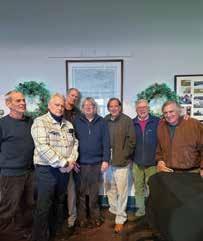
Bob Masland shares a photo from a Class of 1968 holiday lunch in Newport, R.I. Left to right: Michael Kinnicutt, Chuck Choate, Moses Goddard, Paul Szapary, Jim Pingeon, Tack Eddy, and Bob. Michael, Paul, Tack, and Bob also dined in Newport over the summer with classmate Reeve Fritchman, who flew in from Seattle for a family wedding. Finally, Derick Iselin and Sallie have moved to Kiawah Island, S.C. The new home has plenty of room for their five grandchildren who live nearby.
Leif Rosenberger is publishing two chapters on U.S.-China economic relations for the Global and National Security Institute’s publication The Great Power Competition Volume 6: The Rise of China, released in February. Leif also reports that he is now chief economist and a member of the three-person team leadership group for ACERTAS, a Los Angelesbased think tank.
1970
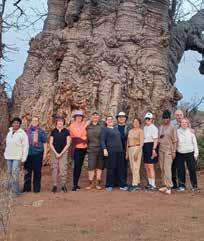
Chris Albertyn writes, “I keep working as a mediator-arbitrator of labor disputes. This past year I became a vice president of the National Academy of Arbitrators and a fellow of the College of Labor & Employment Lawyers. I took a delegation of Canadian and U.S. arbitrators to South Africa and we attended the annual conference of the South African Association of Labour Lawyers, with visits to Cape Town, Durban, the Kruger Park, and Johannesburg.”
Wilder Bellamy has been involved with Wattpad for the past several
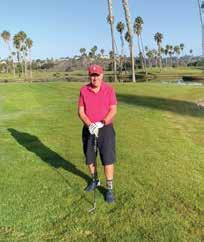
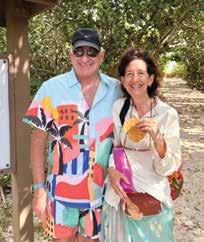
years. This publishing venue is popular with younger and adult readers interested in dystopia, and boasts Margaret Atwood’s involvement. Wilder also writes that his deep interest in AI, combined with his recent career in IT, have led him to his continued use of Canva, and an education program called Fictionary and its lead product called Storyteller. He looks forward to launching a new edition of “Wolf 3.0,” possibly on Wattpad or Amazon.
Jimmy Collins writes in to share: “Spent five weeks away from home, avoiding the reconstruction of our master suite. Went to California and Hawaii, where I had a great time surfing and playing music with my friends on the west side of O’ahu.”
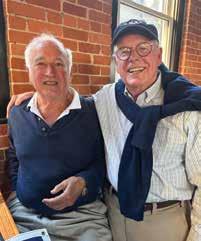
Neal Stone writes, “It was an honor to attend the St. Mark’s reception in November at the Morgan Library and Museum, meet Dr. Ivory Hills, and host him for breakfast at our home the next day. I took advantage of the time to discuss our different visions for secondary school education and non-traditional funding opportunities. The company I started in 2012, Triopsy, just submitted my new biopsy needle to the FDA for approval. This device could radically change the way prostate cancer and other solid tumors are diagnosed. After approval comes the heavy lifting with the need to train the more than 20,000 urologists who do prostate biopsies. Fortunately, my other company is starting to use the VioVision extended reality headset we developed (and was highlighted at Career Day) to provide remote instruction. Also in November we got
to celebrate my brother Marshall’s 70th birthday in Jupiter, Fla. Fellow St. Markers may remember him as the pitcher for our baseball team while at St. Mark’s when he was in III Form. Unfortunately, he switched to Milton after one year (traitor!). Marshall will be retiring from pediatric surgery in 2025. The photos here are from the celebration of me with Marshall’s wife Ellen and Marshall.
Horace (Hod) Irvine III and Trisha McGovern have moved from St. Paul, Minn., and Vancouver, British Columba, to Jensen Beach, Fla. “Been a year now as a Florida resident,” he writes. “Amazing how happy people are living in a free state. It’s such a difference from Minnesota and British Columbia. We just gotta escape humid Florida mid-July to mid September!”
Garrett Lowe writes, “First, I have to say that I had such a wonderful time seeing everyone that showed up for the reunion and only wished there were more hours in those days or simply more days. As for me, I am still in the world of being a test prep tutor, which is really fun and always slightly absurd, since no one ever goes to college with that as the endgame. However, I really like it and am closing in on 20 years of doing it. In my spare time, I am working on a book that is a series of mini-biographies of people buried in the oldest urban extant African-American cemetery in the U.S., which is right here in D.C. (actually Georgetown). It all started when a childhood buddy and I put
together a course based on those in the cemetery that aimed to teach local and African-American history through the lives of individuals who lived it. The writing and research are great fun, so hopefully the book will be valuable and interesting! Other than that, my daughter is a junior in college in Ireland and my son, who is like 6’ 4,” is a freshman in high school. I am completely delighted with my children and feel like I should be singing along with Maria Von Trapp, ‘Somewhere in my youth or childhood...’ My wife Stephanie is still a therapist, and we have three different hounds to keep us busy and to make sure we never sleep in past 6:00!”
Betsy Hamm shares, “I won’t be able to attend reunion, but I did visit the St. Mark’s campus last year with my now 16-year-old daughter so she could see what a unique high school experience I had. She fell in love with the campus! Incredibly, the week after our reunion, she will be rowing in a girls four in the Head of the Charles, exactly 40 years after I did with St. Mark’s!”
Over the past two years, Edward Bovey II has found himself immersed in the world of dog showing. His greater Swiss mountain dog “Tux” finished 2023 as the #5 ranked Swissy in the country and received an invitation to show at the Westminster Kennel Club show. Ted and Tux competed at Westminster in May against a stellar lineup and while they didn’t receive a ribbon, they had a fantastic experience participating in the
“Super Bowl” of dog shows. Video of their breed judging can be found on YouTube.
Jed Raymond shares, “Having returned from five amazing years living in London from 2017 to 2022, I and my family have settled in Topsfield, Mass., just a stone’s throw from my extended family in Ipswich. Both of my daughters fell in love with St Mark’s last fall when we brought my father (Ted Raymond, Class of ’62) back to Southborough for the Groton game. Work still brings me back and forth regularly to London, Amsterdam, and Munich, so give a shout if you call any of these wonderful cities home, it’d be great to catch up.”
Julie Merritt writes, “I currently live in Wellesley, Mass., with my wife and our two pups. This year, we were lucky to do a lot of traveling. We visited the Galapagos Islands, Sonoma, Mexico, and Sedona, Ariz., for Thanksgiving. It was an unforgettable year of adventure!”
Allison Blackman (Cappella) shares, “It’s been a while. My daughter Zelda Grace Blackman was born on September 11, 2020, and her dad, Burke, and I got married. I’m still in Newburgh, N.Y. My husband and I met working in affordable housing development and continue to do so. I’m happy to be starting new construction of 11 apartments for formerly homeless women with a substance use disorder using $5 million of funding I worked to secure
from New York State. Burke, Zelda and I love to hike and camp in the Adirondacks if anyone wants to join us.”
Patricia Branch writes, “Greetings from Nairobi, Kenya! I’m excited to announce that after almost a decade in management consulting (Bain) in New York and Boston, I recently joined the NBA as head of strategy for Africa. In this exciting new role, I’ll be driving our efforts to make basketball the clear number-two sport in Africa, and to establish the Basketball Africa League (BAL) as a premiere global league. I relocated to Kenya in November 2024 and it’s been an amazing experience so far. If your travels bring you to Kenya this year, or to any of the major cities of the BAL tournament this spring (e.g. Rabat, Dakar, Kigali, Johannesburg), please let me know. I look forward to seeing some more Lions on the continent!”
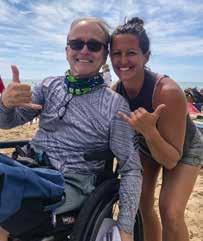
David Ellis , a proud St. Mark’s alumnus, recently made his mark in the film industry as an associate producer on Good Bad Things , a film by Shane D. Stanger. The story follows Danny, a young man with muscular dystrophy who, disillusioned by failed relationships, ventures into the world of online dating. When he unexpectedly matches with Madi, an enigmatic photographer, Danny is challenged to embrace vulnerability, leading to a profound journey of selfacceptance and the discovery of the extraordinary beauty in his unique body. David contributed to the

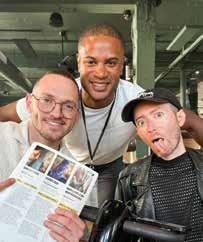
film’s success by helping finalize the script, shooting a pivotal scene, and even appearing as an extra. Good Bad Things has been showcased in AMC theaters nationwide, featured at seven prestigious film festivals, and has won three major awards, including both the Audience and Grand Jury Awards at the 2024 Slamdance Film Festival. You can watch Good Bad Things now on Apple TV.
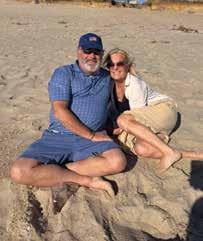
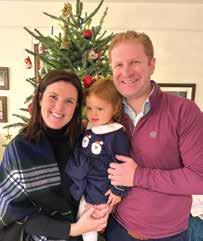
Katie (Ijams) Povinelli shares, “We welcomed the birth of our second daughter, Hadley, on September 6. She joins big sister Caroline. Both girls love spending time with their ‘Poppy’ (Jack Ijams ’75).”
2006
Lindsey Marie Fitzsimons writes, “Just wanted to share with you that I recently found out I was selected as a winner for the ThermoFisher 2024 Scientific Imaging contest! I am SOOOOOOO excited and proud about this, so naturally, I wanted to also share my joy with my SM family! See link below: https://www. thermofisher.com/blog/life-in-the-lab/ photomicrography-winners-capture-the-beauty-of-research/.”
2008
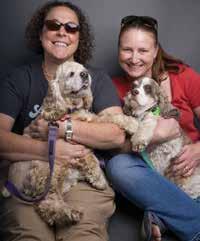
Hoitt McAllister III shares, “Better late than never! Kennedy Mary McAllister was born on May 9, 2023, and will be celebrating her second birthday this upcoming May 9, 2025.”
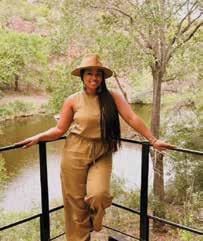
On August 31, 2024, Peter Smithy married Emily Swann in Tarrytown, N.Y., with groomsmen Hoitt McAllister ’08, Bill Holm ’08, and
Bennett Judge, husband of Addison Hunt ’08. Peter and Emily are currently living in Manhattan near the Flatiron building. Emily, originally from the Chicago suburbs, has been in NYC for 10 years working for Alliance Bernstein. Peter just completed five years at Merck in N.J. and currently works in business development.
2010
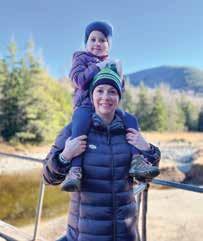
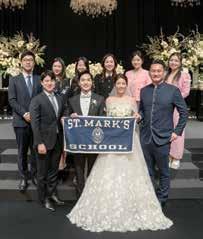
Rachel Minjung Sohn was married on March 31, 2024. From the left in the back: Inyoung Baek ’09, Sarah Lee ’09, Katie Kim ’09, Angela Koh ’13, Amanda ’08, and Peony, Alex’s wife. In the front row are Patrick Lim ’09, us, and Alex!
2012
Meg (Giblin) Upton will graduate from Tufts University with her doctorate in occupational therapy in May 2025
2017
Victor Imparato II was married to Abigail Merritt on November 10, 2024 at Fordham University. They celebrated the occasion with Mike Alfieri ’17, Anna Braman ’17, Liam Busconi ’17, Nick Drepanos ’17, Harry Kuperstein ’17, Julian Ortiz ’17, and Jasen Ripley ’16. Go Lions!
2024
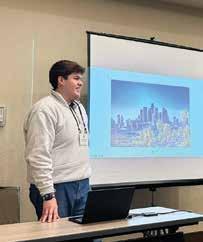
Jonathan Hernandez shares, “I recently presented two research papers for the first time at the Hawaii International Conference on Education in Oahu this January, in which I shared research that I conducted at St. Mark’s through the Class of 1968 V Form Fellowship and History Fellowship.”
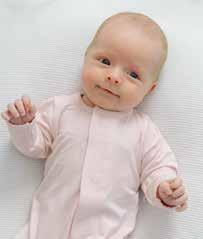
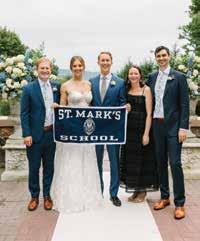
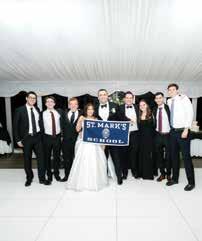
1. Katie (Ijams) Povinelli ‘05
2. Hoitt McAllister III ’08
3. Peter Smithy ’08
4. Rachel Minjung Sohn ’10
5. Victor Imparato II ’17
6. Jonathan Hernandez ’24
George Browne Post passed away peacefully on December 5, 2024, at the age of 102, shortly after a joyful Thanksgiving with family. George was born in New York City to George B. Post III and Irene Emery (née Gibson) on October 7, 1922, and educated at the Buckley School, St. Mark’s, and Harvard College. His maternal grandparents were suffragist Irene Langhorne and Charles Dana Gibson, the illustrator who created the iconic Gibson Girl, a symbol of the independent, modern woman of the early 20th century. His great-grandfather was George B. Post, Beaux-Art architect of the New York Stock Exchange and Wisconsin State Capitol. He temporarily left his studies to enlist in the Army Air Forces, serving as a lieutenant in the Pacific Theater during World War II. After the war, he was a writer for Time magazine and Reader’s Digest and left behind volumes of illustrated journals about his fascinating life. He was also a talented singer whose career was bookended by performances at Carnegie Hall: first as a boy soloist and later with a performance of “The World Beloved: A Bluegrass Mass” at the age of 95. An avid traveler, he delighted in showing his children and grandchildren the world. He brought back remarkable tales. As a child, he visited Germany with his family, where they accidentally found themselves trapped in an early Nazi rally. As the story goes, Hitler himself touched young George’s head, which George
maintained was the reason for his later hair loss. In 1965, he traveled to Alabama to march with civil rights leaders at Selma, where he witnessed Dr. Martin Luther King, Jr. address the protesters, an encounter that reaffirmed his commitment to equality and opportunity for all. As a trustee of the New Canaan Country School, George helped start the City and Country Vacation Group. This program grew into Horizons, which brings academic and enrichment programs to underserved children and youth. He also served as trustee and then chairman of the American Farm School in Thessaloniki, Greece, and was a member of the Century Association and the Tarratine Club of Dark Harbor. George was predeceased by his wife of 60 years, Linda Moore Post, and their son, George [Sally Skeele]. He leaves behind children Diana [Lily Milroy], Juliana [Roy Pfeil], Christopher [Jennifer Fortenbaugh], and Joel [Valerie Brazill]; seven grandchildren, who lovingly called him Mamoo: Samar, Alexandra, Charles, Olivia, Ben, James and Luke; and four great-grandchildren: Noor, Devens, Eulalie, and Seymour. George’s life was abundant in music and laughter, and most of all love. Before passing, he said, “I’m just going to walk into a greater, brighter light, knowing I’ve left behind the most wonderful people on the whole earth.”
1946
Charles Saunders died on December 11, 2024. He was 95. The son of
Charles Baskerville and Lucy Carmichael Saunders, Charles, Jr. attended St. Mark’s and Princeton University on scholarship, graduating in 1950. He devoted his career to expanding access to higher education through improved financing options for students, beginning with work on the National Defense Education Act of 1958 as a Senate legislative assistant. From 1961, he was assistant to the president at the Brookings Institution and authored books on policy issues. In 1969, he joined the U.S. Department of Health, Education, and Welfare, where he played a key role in education legislation, including federal assistance to desegregating school districts, and established the program now known as Pell Grants. By 1971, he was named deputy commissioner of the U.S. Office of Education. In 1975, he became director of government relations for the American Council on Education (ACE), where he worked to increase support for federal education programs and to expand student financial aid. He retired as ACE’s senior vice president in 1992. Locally, he was elected to a four-year term on the Montgomery County, Md., Board of Education in 1966 and served on the Montgomery College Board of Trustees. After retirement, he was appointed by Maryland Governor Schaefer to the state’s Higher Education Commission and served three terms (1989–2002). In 1950, he married Marnie MacIntire Shafer of Brackney, Penn. For more than 50 years they were active members of
Bradley Hills Presbyterian Church. His beloved wife of 62 years predeceased him in 2012. He is survived by his sister, Susie McClatchey of Cleveland, Ohio; his brother, Ashby Saunders of New Hope, Penn.; five children: Charles B. Saunders III (Mary) of Reston, Va.; George Carlton Saunders (Cyntia Matossian) of New Hope, Pa.; Margaret Keyser Saunders (Stephen Spector), of Chevy Chase, Md.; Lucy Saunders-Kish (Glenn Kish) of Norway, Maine; and John Rolfe Saunders of Port Republic, Va.; eight grandchildren, and three great-grandchildren.
1952
Anthony “Tim” Thacher died on October 27, 2024, in Hanover, N.H. Tim was a resident of Kendal at Hanover, a retirement community. He was 89. Born in Boston on December 17, 1934, Tim was the son of Thomas Chandler Thacher ’14 and Vera Morgan Thacher. He had three older sisters (now deceased): Anne (Nancy) Andreae of Chattanooga, Tenn., Sally Amory of South Freeport, Maine, and Lee Tevis of Carmel, Calif. Tim grew up in Boston, but he spent many childhood summers surrounded by cousins in a family compound on one of the Thousand Islands in the middle of the St. Lawrence River. This experience gave him not only an appreciation of family but also a sense of the wonders of nature. Birdwatching became a hobby. Fishing, sailing, and a variety of sports were lifetime pursuits. Starting
in the I Form in 1946, Tim spent six years at St. Mark’s, graduating in 1952. He was on the football, hockey, and baseball teams, sang in the choir, Glee Club, and octet, acted in several plays, was a counselor at Brantwood Camp, and was yearbook business manager. He also spent most Saturday mornings shoveling coal, raking leaves, and similar penalties for a habit of breaking too many school rules. Tim received a B.A. in English literature from Harvard in 1956. At Harvard, he was on the sailing and ski teams and treasurer of the Lampoon , the undergraduate humor magazine. Having been in ROTC at college, Tim served on active duty as a lieutenant in a Seventh Army artillery battalion stationed at Dachau, Germany. In 1960 he received an MBA from Harvard Business School. From his schooling and his family, he drew two conclusions: First, education is a lifelong adventure; Second, the most rewarding life is often one of service to others. In 1961, Tim married Barrett (“Barrie”) Van Dyke of Hopkinton, N.H. Over 60 years of married life, they raised three daughters, Camilla, Antonia ’84, and Jennifer ’86. Jennifer and her grandfather Thomas Thacher both won the Fearing Athletic Prize while at St. Mark’s. Tim chose investment management as his career, working first in New York and later Boston. His responsibilities included personal and common trust funds, employee benefit plans, mutual funds, and insurance company assets. He was a chartered financial analyst. When the family moved from Greenwich, Conn., to Dedham, Mass., in 1975, Tim
became an elected representative town meeting member and chair of Dedham’s finance committee. Tim was a trustee of Dedham Country Day School and a board member of the Faulkner Hospital in Jamaica Plain for several years. He also was treasurer and trustee of St. Mark’s for a decade, helping eliminate operating losses and participating in the school’s transition to co-educational status. Upon his retirement in 1996, Tim and Barrie started a new chapter by moving to Pomfret, Vt. Tim served on several town and local committees and became an instructor in Ski Runners, the children’s ski program at the local hill, Suicide Six. In addition to visits to a summer home in North Haven, Maine, there was increasing travel for both sightseeing and birdwatching. Tim and Barrie enjoyed taking courses at Osher/ILEAD, nearby Dartmouth College’s excellent adult education program. Tim also taught several ILEAD courses, chaired its study travel committee, and served on its curriculum and executive committees. After Barrie and Tim moved to the Kendal at Hanover in 2013, Tim served with several Kendal committees, including the resident finance and facilities committees and the board investment and finance committees.
John Sergeant Wise, Jr. passed peacefully on February 5 at his Kiptopeke Aviaries Farm in Summerdale, Ala. He was the son of John Sergeant Wise and Elizabeth Thompson Wise of Charlottesville, Va., and was a retired wildlife biologist and consultant forester. He attended high school at St.
Mark’s before earning a B.A. from the University of Virginia, where he participated in five varsity sports. He later earned a B.S. degree in Forestry and an M.S. degree in wildlife biology from the University of Georgia. He was one of the original Green Berets, serving in the Korean War. Later, he served as the Commander of V.F.W. Post 5850. He was an alligator biologist in the Everglades and was instrumental in having alligators placed on the U.S. Fish & Wildlife Service Endangered Species List. He worked for the Alabama Department of Conservation and retired in 1984. John was a tennis professional, where he brought the enjoyment of the sport to hundreds of students, both young and old. He worked in Georgia and Alabama as a consultant wildlife biologist and forester, being licensed in both states for more than 30 years. He became renowned for his work in this field and has supported more than 20 conservation organizations during his lifetime. He spent the last 30 years as an agriculturalist, raising numerous species of exotic pheasants and waterfowl. John was a direct descendant of Martha Washington and the great, great, grandson of Henry A. Wise, governor of Virginia (1857–1860). He is survived by one daughter, Hannah Wise Orlowski (David) of Albany, Georgia, and two sons, John S. Wise, III (Connie) of Chattanooga, Tenn., and Henry A. Wise, IV (Paige) of Fairhope, Ala., as well as nine grandchildren, Maddox (Patrick), Sergeant, MaryLocke, Hayden, Hannah, Carson, Parker, Harper, and one great grandchild, Lily. He was predeceased in death
by one grandson, Henry. Other survivors include two brothers, Dr. Henry A. Wise, II (late Joshan) of Columbus, Ohio, and E. Tayloe Wise (Donna) of Leo, Ind., and dear friend and companion, Patricia Sanders.
1953
Bruce Manning Reeves, 88, died on September 15, 2024. Bruce was the tenth child of 11 born to Minna and Charles Reeves in Providence, R.I., the same year that his mother received her law degree from the Portia Law School, now the New England School of Law. Bruce attended St. Mark’s for six years, graduating with honors in 1953. While at St. Mark’s, he served as editor of The St. Marker and played varsity hockey. He maintained a lifelong interest in St. Mark’s and kept in close touch with several of his classmates, reminiscing about the School and attending reunions. Bruce graduated from Harvard College in 1957, with a B.A. in English. In college, he enjoyed working for the Harvard Crimson, Harvard’s undergraduate daily newspaper. Soon after graduation, Bruce met John F. Kennedy, who was running for president. He was so impressed by Kennedy that after the election, Bruce moved to Washington, D.C. with his wife and daughter to join the Peace Corps staff. Bruce recruited volunteers for the Peace Corps in the historic Black colleges around the South. He became committed to civil rights and served as a C.O.R.E. Marshall at Martin Luther King, Jr.’s historic March on Washington for Jobs and Freedom in 1963. After Kennedy
was assassinated, Bruce moved with his wife and children to Venezuela, where he served as the Peace Corps staff director. Bruce and his family returned to the United States and lived in several cities around the country where he worked as a consultant for the Poverty Program, helping to develop and implement programs to assist low income communities and individuals. He and his family lived in Maine, Nevada, and Florida during this time. In Daytona Beach, Fla., Bruce joined forces with the State and local N.A.A.C.P. and worked aggressively to racially integrate city services, including organizing a highly successful bus boycott, restaurant sit-ins and picketing white only hotels. After returning to live in Maine with his family in 1970, they settled in Pittston where he raised beef cows, sheep, chickens, geese, and horses and grew organic fruits and vegetable gardens. When Bruce was elected to the Maine State Senate, he chaired the Maine Joint Select Committee on Jobs and served on the legislative committee that recommended passage of the “Bottle Bill,” which was controversial at the time. During his time in the State Senate, Bruce intervened on behalf of the ratepayers in several Central Maine Power Company electricity rate cases where he earned a reputation as a public utility “watchdog” and advocate for ratepayers. After leaving politics, Bruce worked as a consultant and grant writer for many years for the Portland West Neighborhood Planning Council, and also as a consultant and grant writer for several other states around the country, including the George Gervin Youth Center in San Antonio, Texas.
Bruce loved the beach where he could fish, collect shells, and watch birds. Among Bruce’s many talents were making fresh pizza and apple and wild Maine blueberry pies from scratch. After becoming a grandfather, Bruce enjoyed helping care for his grandchildren. Bruce always was a family man and became more so as he got older. He loved family parties with all of his kids and grandkids around him. Bruce is survived by his wife Polly; his two children, Phoebe and Charlie; and his three grandchildren, Elliott, Nicholas, and Tessa.
1955
St. Mark’s has learned that Thomas Bell Sweeney III passed away. He had been living in Pittsburgh and was married with two children. No further information was available at the time the magazine went to print.
1956
William Jenkins “Jenks” Gibbs , 85, of Charleston, S.C., husband of Penelope Morton “Jenny” Gibbs, died on October 15, 2024. Jenks was born December 9, 1938, in Charleston, S.C., son of the late Coming Ball Gibbs and Dorothy Seay Gibbs. He attended the Craft School, Charleston Day School, St. Mark’s, and Washington and Lee University. Following a career in the banking industry, he spent many years associated with Atlantic Services Group, Inc. At an early age, Jenks acquired his passion for outdoor life. Throughout the years, he passed along his love and wisdom of hunting and fishing to younger generations that surely have stories to tell. After his active hunting and fishing days were over, he continued
to enjoy the outdoors watching the deer and birds from his back porch on Wadmalaw Island. His past memberships include St. Philips Church, Carolina Yacht Club, Sea Island Yacht Club, South Carolina Society, Huguenot Society, among others. He is survived by his wife of 63 years, Jenny; his children, Tess Gibbs Craddock (Clay), Lee Gibbs Depret-Bixio (Christian); his grandchildren: William Gibbs Craddock, Cecilia Depret-Bixio Hyndman (Justin), Anne Claiborne Craddock, and Emma Lee Depret-Bixio; his sister, Elizabeth Lee Gibbs; and several cousins, nieces and nephews. He was preceded in death by his parents and brother, Coming Ball Gibbs, Jr.
George Gardner Herrick died on December 25, 2024. A former senior CIA operations officer, he had postings amounting to 11 years in Brussels and London. He narrowly survived a dangerous mission in Tehran, Iran, in 1979 at the onset of the Islamic Revolution. He was awarded the Career Intelligence Medal. He found his career challenging and richly fulfilling. He was an intelligence officer, bibliophile, avocational historian, and amateur naturalist. He will be greatly missed and long remembered by all who knew and loved him. He was preceded in death by his brother, Myron T. Herrick. He is survived by his sister, Anita G. Herrick of Washington, D.C. Following his retirement in 1988, Herrick dedicated his efforts to the management of a family property in Maine and the development of its conservation program. That experience led to his founding in 1996 of and
thereafter leading the Eastern Maine Conservation Initiative, a nonprofit organization focused on conservation programs on the eastern Maine coast for 22 years. In an effort to revive and to promote a favorite literary product, Herrick compiled 15 commonplace books, becoming an acknowledged master and historian of that humorous and sometimes esoteric form. A longtime interest in book collecting led to membership in the Club of Odd Volumes in Boston and the Grolier Club in New York. A passion for the game resulted in The Origins of Croquet in America, 1859-1873. He also wrote Journey Into Newport, 1990-2010. Born on April 8, 1938, in New York City, Herrick spent most of his formative years in the Boston area, graduating from St. Mark’s School cum laude, winning the top athletic prize as a three-letter man while captaining the league-winning ice hockey team and batting .552 in baseball. When his parents, the late Parmely W. (an international banker) and Katherine Gardner Herrick, moved to Paris, France, he spent two years at Le Rosey School in Switzerland before returning to resume his education at Harvard College, where he earned a magna cum laude in European History. After Harvard, he spent two years at Balliol College, Oxford, earning an M.A. degree in politics, philosophy and economics. The Oxford experience shaped his intellectual outlook and formed his aesthetic sensibility. The years of schooling abroad as well as travel in Europe inspired his interest in international affairs. After a year at the Harvard Business School, he worked three years in the international department of a Wall Street investment firm before embarking
on his career in intelligence. He was a born raconteur. Diaries, journals, and letters were his main literary interest, and he enjoyed writing all three. Together with conversation, he considered them among the fine arts. His writings are full of little histories and literary references to subjects that took years of reading to assemble. He read about 5,000 books in a busy life. A lover of words, he contributed over a dozen new words and definitions to the O.E.D. Charitable interests included education, wildlife conservation, libraries, and historical societies. Bird watching (456 American species seen) was another skill and a lifelong passion. He also enjoyed ice hockey, tennis, and golf. Later, he became president of the Newport Croquet Club, the oldest croquet club (1864) in America. His political and philosophical sympathies were grounded in the rich conservative philosophical tradition. In Newport he was variously a member of the boards or committees of the Redwood Library, the Preservation Society, the Aquidneck Land Trust, the Newport Historical Society, the Island Cemetery, and the Newport Hospital, through which he touched many people with his charm and intelligence. He worshiped at Trinity (Episcopal) Church. He is survived by his second wife, Nannette C. Cavanagh, of 31 years, the love of his life and source of his happiness, for whom his love and admiration knew no bounds, and three sons, Jason Herrick (Lindsay), Adam Herrick, and Timothy Herrick (Katie) from his first marriage to Katryna R. Brett, as well as three stepchildren John H. I. Brokaw Jr. (Jenny), Christina Brokaw Bassett (Todd) and Justin A. Kreizel (Catherine). Altogether, there are nine
grandchildren from the combined team and their admirable spouses. Being a husband, father, stepfather and grandfather were joys of his life. Long-running friendships were a silver lining to a golden privilege. He descended from Theodore W. Phinney, who came to Newport in 1832, and through his granddaughter Rose Dimond Phinney to the extensive William Grosvenor family in Newport and from G. Peabody and Rose Gardner of Boston. He was a great-grandson of Myron T. Herrick, the celebrated American ambassador to France, and a great nephew of Isabella Stewart Gardner, the famous Boston art collector.
1958
Dr. Peter Churchill Saccio died on August 19, 2024. He was 83. The Leon Black Professor Emeritus of Shakespearean Studies and Professor of English at Dartmouth College, Peter was “a sought-after luminary for countless Dartmouth students, colleagues, and alumni, as well as friends from across the country and abroad, over the course of more than four decades on the faculty and for many years after,” Dean Elizabeth F. Smith wrote in a message to the Arts and Sciences community. “With his remarkable erudition, spirited wit, and deep sense of humanity, Peter made a lasting impact on our campus, the Upper Valley performing arts community, and far beyond.” Peter was born in 1941 in Brooklyn, N.Y., and grew up in Bethlehem, Conn. He discovered his love of Shakespeare as a child and chose to attend Yale University to pursue a career in drama. Although he persuaded Yale’s drama depart-
ment to produce Henry VI, the king role went instead to his classmate, Sam Waterston—an experience that prompted Peter to recognize his relative strengths and set his sights on scholarship. He earned a B.A. in philosophy at Yale, followed by a Ph.D. in English from Princeton University, where he held Woodrow Wilson and Jacobus fellowships. Peter joined the faculty at Dartmouth in 1966, teaching primarily Shakespeare and modern British drama. He served as vice chair and chair of the Department of English, and was successively given two endowed chairs at Dartmouth, the Willard Professorship in Oratory and Drama and the Leon D. Black Professorship in Shakespearean Studies. He retired in 2007. In addition to many scholarly articles on Shakespeare and reviews of professional productions, Peter authored two books, The Court Comedies of John Lyly: A Study in Allegorical Dramaturgy (1969) and Shakespeare’s English Kings: History, Chronicle, and Drama (1977). The latter became a classic in the field, and to Peter’s delight, a popular resource for actors and directors seeking to understand their characters. He also edited Thomas Middleton’s comedy A Mad World, My Masters, for the Oxford Complete Works of Thomas Middleton. In 1990, the Teaching Company (now Great Courses) began recording and marketing scholarly lectures, and Peter’s lectures on Shakespeare were among the original eight that were offered and distributed on CDs and DVDs. The lectures brought Peter to audiences around the world, who sang his praises. Peter was also regularly invited to deliver lectures at major theatrical venues, including
Shakespeare’s Globe in London, the Oregon Shakespeare Festival, the New Jersey Shakespeare Festival, and the Great River Shakespeare Festival in Minnesota. He gave lectures to Dartmouth Alumni Clubs across the country, often collaborating with the late Charles Wood, Daniel Webster Professor of History, and on alumni cruises in Europe. He also lectured extensively in public libraries for the Vermont Humanities Council. Among Peter’s most active commitments at Dartmouth was the welfare of gay and lesbian students. He was faculty advisor to the gay student organization (which had several different names during the 1980s and 1990s) and chair of the Board of Trustees of the Edward Carpenter Foundation, a private foundation established with alumni gifts at a time when Dartmouth did not choose to accept donations for gay and lesbian causes. In 1992, he taught the English department’s first course in gay literature. Peter’s late partner, James Steffensen, was a professor of drama at Dartmouth beginning in 1980. The pair often collaborated professionally, including in the leading of students and alumni to London for theater-focused study and tours, often in association with the Hopkins Center for the Arts. With Steffensen and after his death, Peter regularly kept in touch with many former Dartmouth students, often serving as a patient listener and trusted advisor both professionally and personally. When Vermont’s Northern Stage was founded in 1997, Peter quickly befriended its founding director and became an ardent supporter. In addition to serving as an artistic advisor and acting in several produc-
tions, Peter was on Northern Stage’s board of directors for several years and remained connected long after he stepped down. Peter’s own acting credits include the Shakespearean roles of Casca, Angelo, and Bassanio, as well as various parts in ancient and modern plays. And it was at Dartmouth, finally, when he played the role of the king in a production of Henry IV in the Moore Theater. Peter is survived by his sister, Mary Anne Gateley of Searcy, Ark.; his brother and sister-in-law Edward and Joyce Saccio of Havana, Fla.; four nieces and nephews, four great-nieces, and a great-nephew.
1959
Richard Tobin Thieriot died on September 27, 2024. He was 82. Richard ran the San Francisco Chronicle as editor and publisher from the late 1970s to the early 1990s. Richard was born into the newspaper profession. His great-grandfather co-founded the Chronicle in 1865, he learned the business from the time he could write, and the day before he died on Sept. 27, he was working hard in his office. In his 82 years of life, Richard was also many other things: an environmentalist, a rancher, a farmer, a combat Marine, a wrestler on his college team at Yale. But it was all rooted in that ink-stained trade his family blessed him with, and when he ran the San Francisco Chronicle as editor and publisher from the late 1970s to the early 1990s, he left his imprint on every corner. Under Richard’s reign, the Chronicle ’s print circulation rose to 600,000, its peak. He expanded the paper’s business to include
cable television and newspapers in other parts of the country. He hired high-profile talent including Gary Larson, who started his “The Far Side” cartoon at the paper, pioneering gay journalist Randy Shilts, and crusading columnists Phil Matier and Andy Ross, and the paper won a Pulitzer Prize in criticism. Richard retired in 1993 and devoted himself to ranching and environmental causes. One of his greatest environmental victories came when he worked with state and federal agencies over the past several decades to place most of his family’s 17,000-acre Llano Seco Ranch in Butte County—in the family since 1861—in conservation easements to preserve the natural habitat there. The Environmental Law Institute National Wetlands Award he won in 2009 lauded him for protecting the “wetlands, grasslands and oak woodlands that support a uniquely rich and diverse array of wildlife,” including 500,000 ducks and 50,000 geese. Richard was born in San Francisco on Jan. 18, 1942, the first child of Charles and Barbara Thieriot. After graduating from St. Mark’s, he earned a bachelor’s degree in English at Yale University, he served in the Marine Corps from 1964 to 1967, doing combat duty in Vietnam. After being honorably discharged as a captain, he earned an MBA at Stanford University and began working at the Chronicle , holding several positions in news and business. In 1972, he married Angelica “Angie” Reynal Withers, an Argentinian visiting San Francisco on her way to Palm Beach, Fla. Richard served on many boards and commissions, including the Cali -
fornia Wildlife Foundation, State Fish and Game Commission and the Leakey Foundation. A lifelong golfer, he also was a member of the San Francisco, Cypress Point, and Burlingame golf clubs. Richard is survived by his wife, Angie Thieriot of San Francisco, and their five children, J.P. Thieriot and his wife, Fabiola, of San Francisco; Simon Thieriot of San Francisco; Charlie Thieriot and his wife, Marissa, of San Francisco; Richard Thieriot and his wife, Natalie, of Brooklyn, N.Y.; daughter Justine of San Francisco and Paris; and nine grandchildren.
1962
Arch Walker Cummin died on August 6, 2024. No additional information was available at the time the magazine went to print.
Michael M. de Rham, 77, passed away at his home in Rutherfordton, N.C., on September 30, 2024. Born in Tuxedo Park, N.Y., to Frederic Foster de Rham, Jr. and Frances (Blagden), he attended the Tuxedo Park School, Fay School, and St. Mark’s before graduating from Lake Forest College in 1969. He was a star athlete, a master gardener, a man of faith, and a lifelong Yankees fan. He was predeceased by his brother, Frederic Foster de Rham, III in 2004. He is survived by his wife, Faye Edwards de Rham, his two sons, Collin and Meredith (Morgan), and four grandchildren, Lion, Theobald, William, and Augustus, his step daughter, Maranda Christie Baird and her husband Jerry Michael Baird, step-grandchildren, James Riley Baird, William Ryan Baird all of Danville, Calif.
1970
On January 17, 2025, John Manchester died peacefully of pancreatic cancer in Richmond, Virginia with family by his side. Friends and family rallied around John in recent months, as none could imagine a world without John’s sense of humor, pragmatic advice, or mischievous smile. Born July 29, 1952, in Haleyville, Ala., John was the son of the late John and Jean Manchester. In addition to his parents, he was preceded in death by his wife of 41 years, Constance (Connie) Palmer Manchester, son Nathan Palmer Manchester, and brother, Robert Edwin Manchester. John grew up in Massachusetts, graduated from St. Mark’s, Brown University (AB in American Civilization, 1975), and West Virginia University (M.Ed., 1977, with a focus in energy education). John claimed to lack a clear professional direction after college. However, his varied career speaks of a man who jumped two feet first into life and used his many talents to make a difference. After college, John hitchhiked 23,000 miles across the U.S. and Canada, a formative journey he would later describe at a TEDxLewisburg event entitled “Everything I Know About Public Service I Learned Hitchhiking.” John moved south to join the Solar Energy Division of the Tennessee Valley Authority, where he taught energy conservation and led solar energy projects. Returning to West Virginia, he ran a sawmill, built his own house with his family, edited the Mountain Messenger newspaper, served 16 years as the communications director of West Virginia School of Osteopathic Medicine, and was elected to the Lewisburg City Council in 2001. John successfully ran for
mayor of Lewisburg in 2003, with Connie championing him along the way. He served 16 years as mayor; the longest-serving mayor in Lewisburg history to date, and retired in 2019. John received many awards and recognitions over his years of public service including the Wilderness Society’s Environmental Hero Award, the West Virginia Municipal League’s Mayor of the Year for 2011-2022, the State of Virginia’s Distinguished Mountaineer Award, and the West Virginia Municipal League’s James C. Hunt Lifetime Achievement Award. John loved writing, storytelling, summers as a child at Lake Sunapee, N.H., hiking and travel, including visits to national parks and trips to Greenland, Iceland, and the Galapagos. He visited all 50 states, finally checking Alaska off the list in 2021 on a cruise with sister Peggy and sister-in-law Judi. He had the great fortune to share 41 years with wife Connie, with whom he managed the ups and downs of life while reminding us that love is best when tended to and with a dose of humor on the side. John was twice lucky in love, reconnecting a year ago with Claudia Balivet, his first sweetheart from 1970. They shared a year of adventures together, followed by quieter moments in which she offered great comfort. John will be remembered for his love of his family, especially Johnna and her daughters, the many long drives he took to keep up with college friends, family and many others he met along the way, his sharp wit, community spirit, and for being able to build consensus among competing factions to keep Lewisburg moving forward. Left to cherish his memory are: his daughter Johnna Barlowe, her husband Chris Barlowe
and granddaughters Gemma and Arianna of Henrico, Va., Johnna’s fatherin-law Robin Barlowe of Richmond, Va., sisters Margaret (Peggy) Clark of Pinehurst, N.C., and Joan Slaney of Dracut Mass., sister-in-law, Judi Manchester of Shelburne, Vt., and many cousins, nieces, and nephews.
Charles H. “Chip” Collins, 70, died peacefully on November 29, 2024, after a long illness with dementia. He was a beloved husband, father, son, brother and friend. Chip was a visionary leader whose life and work left a lasting impact in land and wildlife conservation. Chip was born October 20, 1954, in Pittsburgh, to Francis H. Collins and Nancy C. Collins. After graduating from St. Mark’s, he went on to study history at Colorado College, earning his bachelor’s degree in 1977. In 1992, Chip earned a master’s degree in environmental studies from the Yale School of Forestry & Environmental Studies. Chip’s job at the Western Pennsylvania Conservancy marked the start of a distinguished 40-year career dedicated to protecting the natural world. He served in several influential roles, including Colorado state director for the Nature Conservancy and vice president of the Chesapeake Bay Foundation. In 1986, Chip was named the first executive director of the National Fish and Wildlife Foundation. After graduate school, Chip moved to Massachusetts to serve as vice president of Winslow Management, an environmental investment management firm. In 1995, Chip co-founded the Forestland Group, a timberland investment management organiza-
tion, where he served as managing director until his retirement in 2014. Chip married Anne Childs in 1989 and together, they raised three children, Teddy, Caroline, and Alice, in Watertown, Mass. Being a dad was Chip’s most cherished role in life. In addition to his professional work, Chip served on the board of directors for the Land Trust Alliance, the Theodore Roosevelt Conservation Partnership, the Institute for Ecosystem Studies, Great Mountain Forest, the Student Conservation Association, the Quebec-Labrador Foundation, Shady Hill School, and the Jane Coffin Childs Fund for Cancer Research. Chip’s dedication to the environment was matched only by his deep love for wild places and the species that inhabit them. An avid outdoorsman, Chip traveled widely on fishing and hunting trips. He loved growing up on the eastern shore of Maryland, calling waterfowl with his dad and two brothers and spending his summers on Lake Muskoka and Deer Lake in Ontario. He loved exploring the mountains of Colorado and the woods of northwestern Connecticut. Chip received exceptional care from many compassionate caregivers as his health declined. He never lost his love for the outdoors. Chip is survived by his wife, three children; daughter-in-law, Tory Collins; his mother; and his siblings, Alice Collins, Francis “Pat” Collins and Edison “Eddie” Collins; along with many loved family members.
Theodore R. Bryant-Nanz passed away peacefully at home on January 1, 2025, at the age of 64, surrounded
by his loving family. He was born on August 13, 1960, in Waukesha, Wis., to Robert William Nanz and Miriam Kay Stauff. On January 23, 1993, he married Noëlle Bryant at St. Edmund’s Episcopal Church in Elm Grove, Wis. After graduating from St. Mark’s he earned his bachelor’s degree from Colgate University in Hamilton, N.Y., and obtained his J.D. from Marquette University Law School in 1986, where he was on Law Review. He operated his own law office until his retirement. He was also a devoted member of St. Mary’s Episcopal Church in Dousman for many years. Theodore is survived by his beloved wife, Noëlle Bryant-Nanz, and their two children, Anya Grace (Marques Seib) Bryant-Nanz of the town of Ottawa, and Leah Theodora Bryant-Nanz of Minneapolis. His legacy continues through his granddaughter, Jada Lee Bryant-Nanz. He is also survived by his mother, Miriam Kay Stauff of Wauwatosa, Wis.; his parents-inlaw, Anthony and Andrea Bryant of Waukesha; and his brothers, Robert William (Catherine) Nanz, Jr. of Escondido, Calif., and Stephen Ralph (Heidi Steiner) Nanz of Brooklyn, N.Y.. Additionally, he leaves behind a nephew, August (Sheila Lo) Nanz of Sunnyvale, Calif.; nieces Rosa Nanz of Escondido, Calif., and Veery Nanz of Brooklyn, N.Y.; grand-niece Emma Nanz, and many cousins, relatives, and friends. He was preceded in death by his father, Robert Nanz, and his son, Noel Bryant-Nanz.
2014
Alexander Snowdon of Charlottesville, Va., passed away unexpectedly on January 12, 2025, at the age of
33. He was deeply loved by his wife, Hayden (McCall), his parents, Catharine “Katie” and Richard “Dick” Snowdon, and so many others. Alexander was born on November 30, 1991, in Washington, D.C., and grew up in the District’s Georgetown neighborhood. He was baptized and confirmed in the Episcopal Church and attended St. Albans School, where he was both an exceptional student and a standout cross country runner. During his childhood, Alexander developed what became a lifelong love for the outdoors, inspired most by hunting and fishing with his father, friends, and dogs at Seth Point, his parents’ property on the eastern shore of Maryland. Following high school, Alexander enrolled at Vanderbilt University, earning a degree in history and graduating with honors. As was the case throughout his entire life, Alexander balanced an impressive number of commitments at Vanderbilt, most notably competing for the varsity cross country team, joining the Sigma Alpha Epsilon fraternity, and pursuing a summer study program at the London School of Economics. After a brief postgraduate period working as a researcher at the Brookings Institution, Alexander attended the University of Virginia School of Law, where he focused on transaction law. Shortly after law school, Alexander met the love of his life, Hayden, who is also a UVA graduate. Their mutual tie to UVA and shared affinity for Charlottesville drew them to marry and establish their first permanent home there. Alexander had a successful start to his law career at Hogan Lovells, but decided to use his legal expertise and natural business acumen to pivot into real estate investing. He
founded his own investment firm in January 2020; his work ranged from serving as an activist shareholder to more recently focusing on commercial real estate development projects. It was a surprise to no one who knew him that Alexander excelled in every endeavor he tackled. Alexander’s accomplishments paint an important but incomplete story of the life he led. His family and friends will most frequently look back on the laughter and goofy behavior that he brought into so many occasions. Not one to take himself too seriously, Alexander encouraged others to see humor in the most random corners of life. He disliked pretense in all forms and infamously wore a bright orange, sleeveless “Panama City” T-shirt underneath his Vanderbilt commencement gown as a comedic counterpoint to the pomp and circumstance of the event. Beyond laughter, Alexander provided a constant source of advice and support to those closest to him. He was a loyal and gifted thought partner, and his judgment, candor, and selflessness invariably made him the first person to whom his friends turned in times of adversity or ambiguity. The rare combination of qualities that Alexander possessed— humor, wisdom, and empathy, among others—will be sorely missed but never forgotten. Alexander is survived by his wife Hayden, his parents Dick and Katie, his siblings Ashley Blanchard, Elizabeth Bonner, Andrew Snowdon, and their spouses, his aunts Meyra Green, Roberta Puschel, and Margot Snowdon, his uncle Ted Snowdon, his cousin Ariana Snowdon, his beloved in-laws, 10 nieces and nephews who he adored, and his loyal labrador retriever, Birdie.
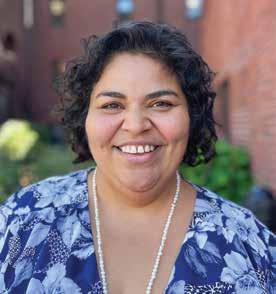
passed away unexpectedly on Thursday, October 31, 2024. She was 45.
A member of the St. Mark’s community since 2023, Ms. Agosto quickly became a beacon of strength and support for students, faculty, and staff. Liz took a holistic approach to educating young people, with an emphasis on wellness, and had extensive leadership experience working with students. Before coming to St. Mark’s, Liz served as dean of students and chief student affairs officer at Amherst College and in a number of student affairs roles at her alma mater, Dartmouth College.
During her time at St. Mark’s, Liz was known for her kindness, humor, empathy, and enthusiasm. She excelled at designing structured programming to support the development of students and guiding teams toward a common purpose. Liz was also exceptionally skilled at personal conversations, possessing remarkable listening skills and ending every interaction with care. Liz took her role as a school leader very seriously, believing passionately in the power of residential education, and she always found time to laugh, smile, and make others smile. She made a significant impact during her time at St. Mark’s, and we are profoundly grateful for her contributions to our community.
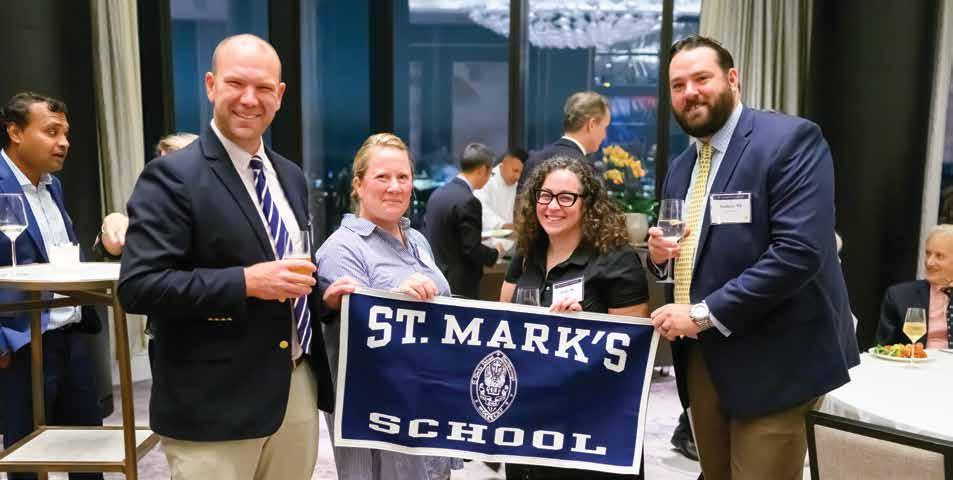
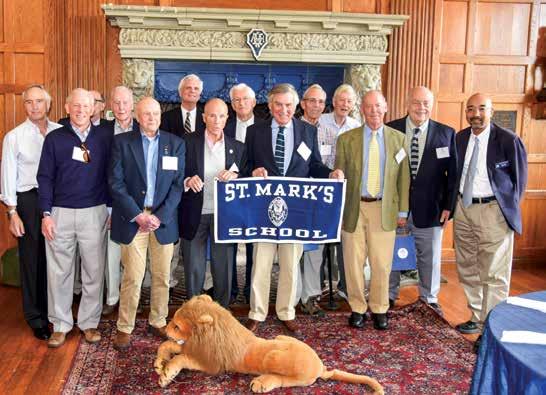
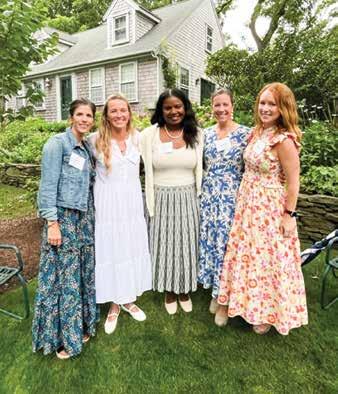
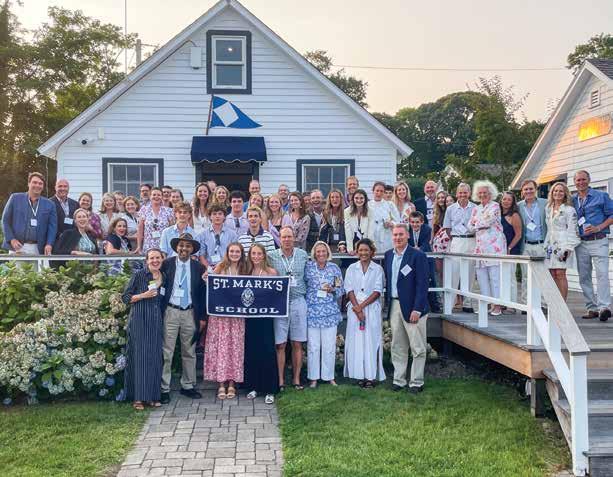
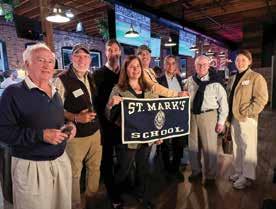
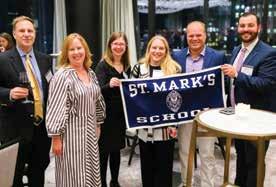
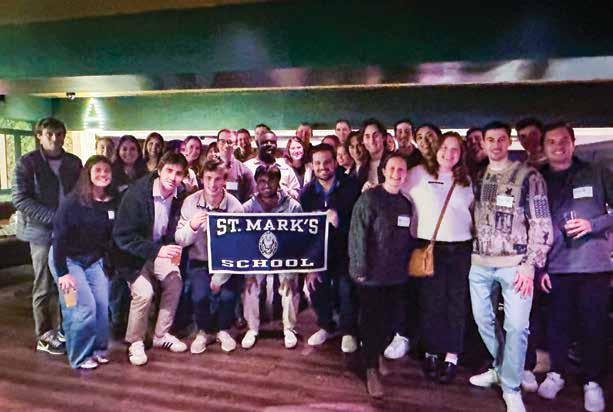

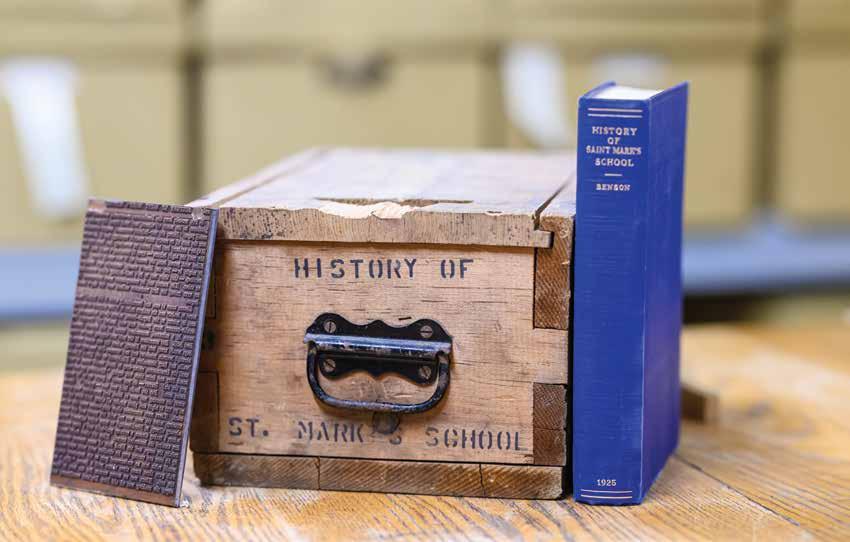
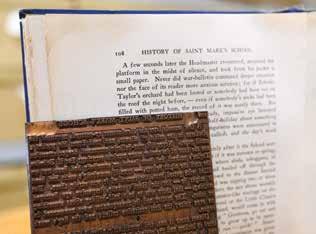
WOODEN BOXES containing sets of metal plates used to print the century-old History of Saint Mark’s School, written by Albert Emerson Benson, Class of 1888, were recently found in the St. Mark’s archives. The book was privately printed for the Alumni Association by the Plimpton Press in 1925. Along with a narrative report of the School’s history to that point, the book includes appendices that catalog, among other trivia goldmines, a detailed record of St. Mark’s-Groton baseball games from 1886 to 1924 (tally of wins: St. Mark’s 23, Groton 14).
ST. MARK’S SCHOOL
25 Marlboro Road
Southborough, MA 01772-9105
www.stmarksschool.org