Evergreen Autumn



OUTDOOR SAUNAS · SHOWERS · O D UN ES · A ESSOR ES
The ultimate luxury outdoor sauna experience . Beautifully crafted . Canadian made .


It is hard to open a newspaper, attend a conference, or even sit around the dinner table at the moment without the conversation turning to artificial intelligence and the rapidly changing world our young people are stepping into. With each new headline, it is understandable that some parents are asking a pressing question: What will the future hold for my daughter? Will the pathways ahead be fewer? Narrower? Less certain than those we once imagined?
At St Margaret’s, we see something different. Yes, the world is changing quickly, and in ways we are still only beginning to understand. But history reminds us that periods of disruption are also periods of extraordinary opportunity. New industries emerge, old ones evolve, and those who are prepared (not just with knowledge, but with adaptability, creativity, and confidence) are the ones who flourish.
This edition of Evergreen offers a glimpse into how we are embracing these changes. From our exploration of artificial intelligence to the integration of emerging technologies across the curriculum, we are committed to ensuring our girls are not simply passive users of technology, but thoughtful, ethical, and capable shapers of it.
But just as importantly, we remain grounded in what has always mattered, and always will:
• The ability to think deeply rather than superficially.
• The confidence to ask good questions, not just find quick answers.
• The courage to lead, to collaborate, and to care for others.
• The integrity to use powerful tools wisely.
These are the qualities that no algorithm can replicate, and they sit at the heart of a St Margaret’s College education.
Our aim is not to prepare girls for a single, fixed career path because, increasingly, no such path exists. Rather, we prepare them for a lifetime of possibility. A future in which they can navigate change, seize opportunities, and contribute meaningfully to the world around them. While the landscape ahead may look different from the one we once knew, it is no less full of promise, and we have every confidence that our girls will not only find their place within it, they will help to shape it - for good.
Diana Patchett, Executive Principal
On behalf of the St Margaret’s College Old Girls’ Association, it is my great pleasure to share with you the story behind the Descendants’ Breakfast.
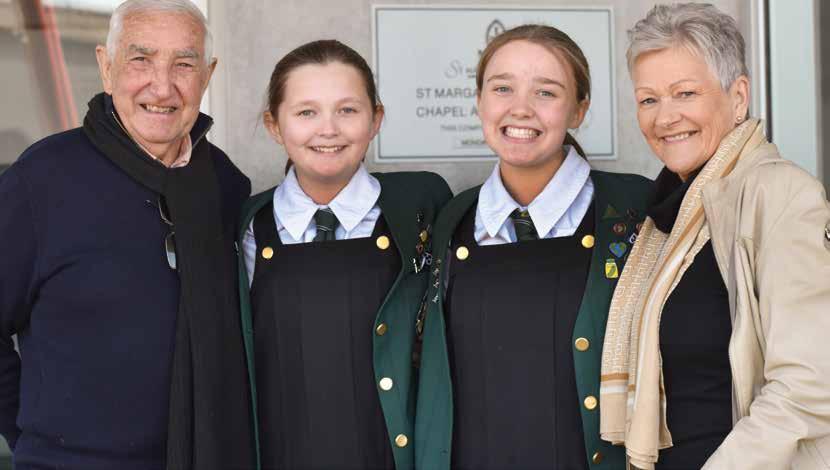
Many of our families have a long connection to St Margaret’s, with mothers, daughters, and granddaughters sharing the experience of being part of the SMC community. The Descendants’ Breakfast was created to recognise and celebrate those intergenerational ties in a simple but meaningful way.
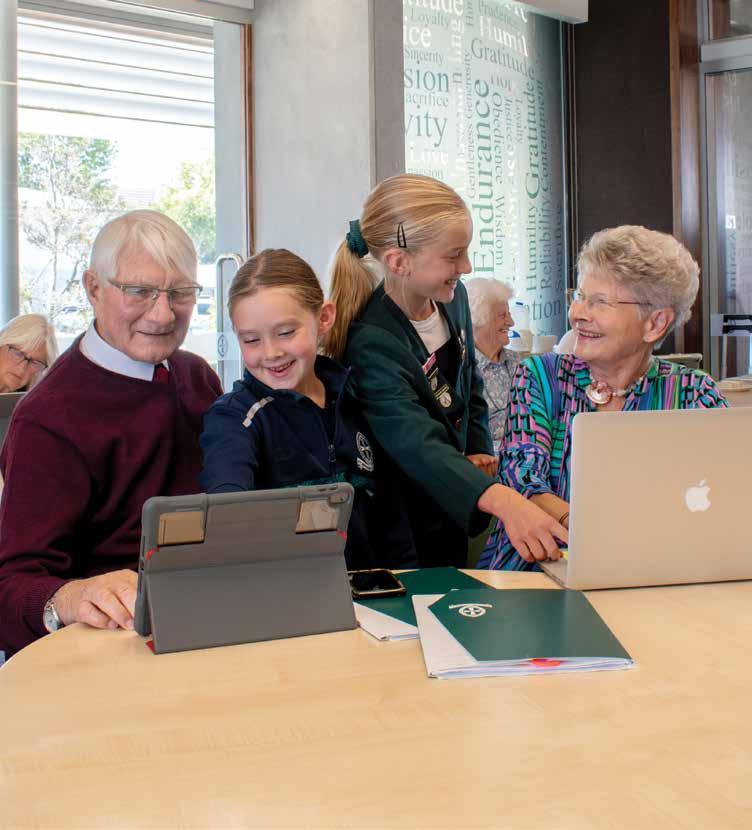
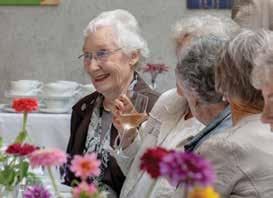
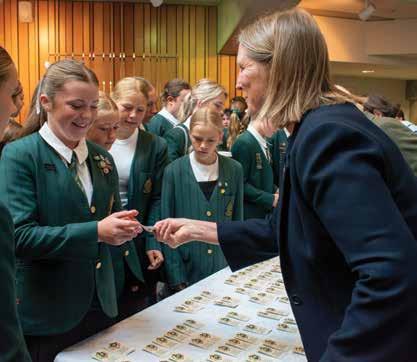
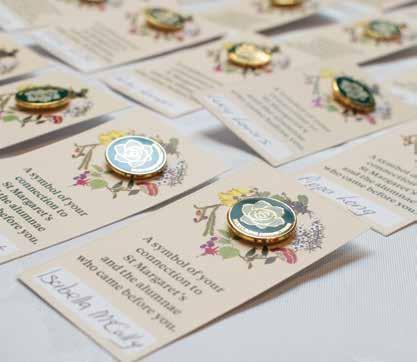
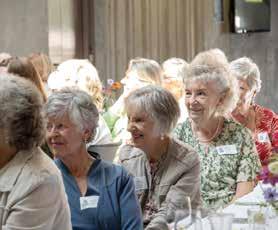
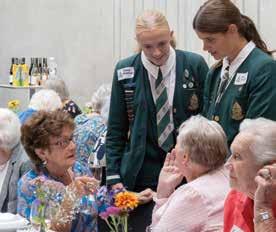
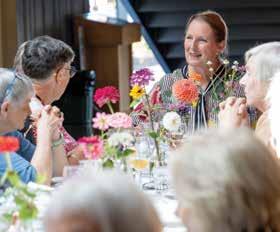
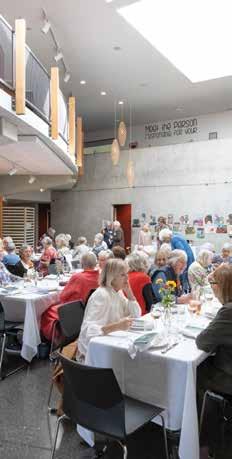
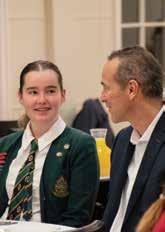
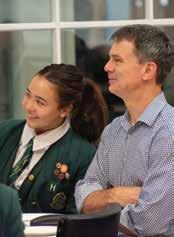
This year, we held our inaugural Descendants’ Breakfast, hosted by SMCOGA in the Old Girls’ Atrium. Current students descended from St Margaret’s alumnae were warmly invited to gather with the women who came before them. The morning offered an informal breakfast, creating space for guests of all ages to move freely and connect across the generations, demonstrating the special sense of belonging we feel at St Margaret’s. At the heart of the occasion was the presentation of our customdesigned Descendants’ Pin. Each pin, worn proudly on the school blazer, is a tangible symbol of intergenerational connection and a small but meaningful reminder that our students are part of a much larger story. When a girl wears

her Descendants’ Pin, she carries with her the heritage of those who have gone before her.
The Descendants’ Breakfast reflects something we are deeply committed to as the Old Girls’ Association: building connections that last well beyond the school years. Our work is guided by a belief that the relationship between St Margaret’s and its alumnae should be lifelong and relevant at every stage, from those who graduated decades ago to the young women still writing their St Margaret’s story today. Events like this one are how we bring that belief to life, and none of it happens without the dedication of our committee. I want to take a moment to sincerely thank each of them for their enthusiasm, their energy, and their commitment to keeping our association vibrant and strong.
It is also wonderful to see our reach growing. Over the past six months, our presence on social media and SMC Connect has expanded significantly, and with it, we are seeing more and more alumnae getting involved. It is exciting to watch. We encourage you all to ensure your details are up to date and the best way to do this is by visiting smcconnect.school.nz
Sophie Fitzsimons, Old Girls’ Association President
Get involved and help us flourish
We’re looking for SMC Old Girls to join our committee. You don’t have to have a daughter at the school. All you need is a bit of enthusiasm and a willingness to attend meetings once a month, plus a couple of events each year. SMCOGA is a fun team of women with varied skills. Whether you have specific expertise or just want to help keep our community vibrant and relevant, we’d love to welcome you on board.
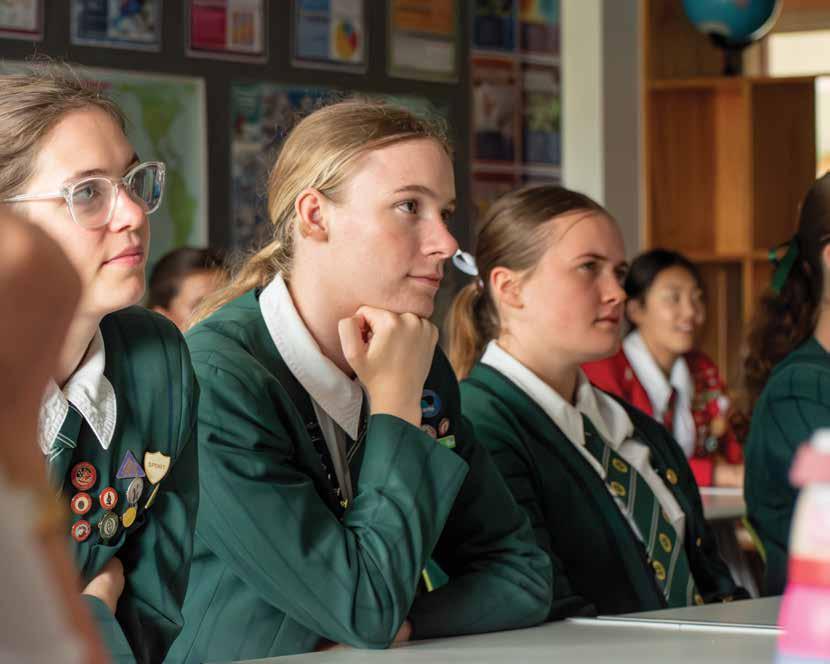
Over the past year, artificial intelligence has moved from the margins of educational conversation to the centre. Tools that once felt speculative are now part of everyday life, shaping how information is found, interpreted, and created. At St Margaret’s, we have chosen to meet this moment thoughtfully rather than hastily, with our girls firmly at the centre of our attention.
Early last year, the College established a cross-faculty AI Steering Group to guide thinking and practice. That group has since developed a shared playbook for AI at St Margaret’s, grounded in our values and our longstanding commitment to excellent teaching and learning. During Professional Development Week, the group led staff through practical and principled conversations about how AI intersects with teaching, learning, and assessment, before faculties spent dedicated time considering what this means in their own subject contexts.
This work reflects an important belief: there is no single “AI solution” for schools. There is only good professional judgement, applied locally, carefully, and with purpose.
As AI tools become more visible in everyday life, it is tempting to frame the conversation in extremes, as either something to fear or something to fully embrace. Neither position serves young people well. What matters most is understanding that AI is not neutral. It reflects the data it is trained on, the values embedded by its designers, and the choices made by its users. It can be powerful and persuasive, but it is not inherently truthful, fair, or wise.
Schools must not simply respond to a new technology; they should respond to a shift in how knowledge itself is produced and consumed. In a world where answers can be generated in seconds, the skills that matter most are no longer just recall and reproduction, but also judgement,
questioning, and ethical reasoning. At St Margaret’s, we believe young people must learn not only how to use these tools, but how to interrogate them, challenge them, and understand their limitations.
Our responsibility is not simply to prevent misuse or to “catch” students out, but to teach girls to act with integrity in the world they are entering, not the one we may wish still existed. That means helping students understand authorship, attribution, and responsibility in an age where human and machine work increasingly sit side by side. It means designing learning and assessment that value thinking, processes, and ethical decision-making, alongside knowledge and skills.
As learning changes, so too does assessment, with greater emphasis on how students think, reflect, and make decisions rather than on the final product alone.
This shift invites deeper conversations with students about what learning really looks like. It asks them to explain

their reasoning, to reflect on their choices, and to take ownership of their work in new and visible ways. In doing so, it reinforces the habits we value most: curiosity, honesty, resilience, and intellectual courage.
AI, paradoxically, makes education more human, not less. Discernment, ethics, and responsibility now matter more than ever. When used well, these tools can support learning, creativity, and accessibility. When used uncritically, they can distort truth and undermine confidence. Our role as educators is to hold that tension and to teach our girls to do the same.
We will continue to engage parents and students in these conversations throughout the year, not out of alarm, but out of confidence in what a St Margaret’s education offers: thoughtful teaching, strong relationships, and a commitment to developing young women who can navigate complexity with clarity and integrity.
AI Steering Group
Sunday 13 September 12:00–3:00pm
The Christchurch Club 154 Worcester Street Christchurch
Brought to you by Treasure Box by Biani, Merivale
Limited number of tickets available, please book at: smcconnect.school.nz
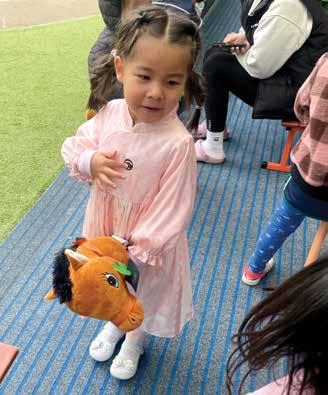
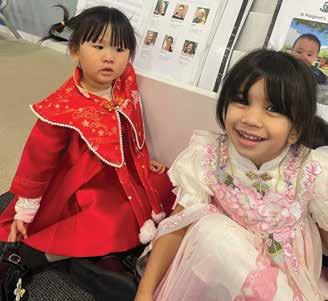
St Margaret’s Preschool recently welcomed the Lunar New Year with colour, creativity and plenty of excitement as the children celebrated the Year of the Horse together.
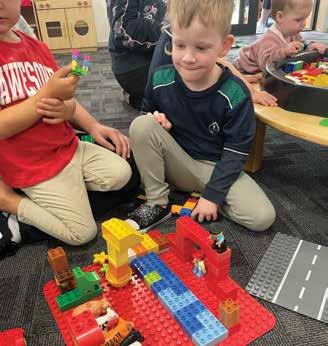
The day was filled with activities that introduced the children to Lunar New Year traditions in a playful and meaningful way. Many arrived dressed in beautiful traditional clothing, bringing a festive splash of colour to the preschool. One highlight of the day was creative play with the Chinese zodiac. The children worked together to build a colourful Lego display featuring the animals of the zodiac. Carefully placing pieces and figures, they recreated a scene celebrating as many animals as they could from the traditional Lunar New Year calendar. The activity sparked lots of conversation about the animals and the story behind the zodiac.
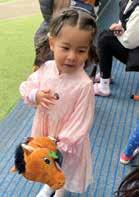
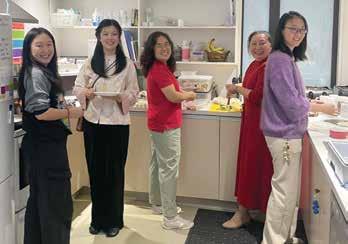
Outside, the festivities continued with imaginative play inspired by the Year of the Horse. A series of hobby horse races got underway, with children galloping around the playground as friends watched and joined in the fun. Families also helped bring the celebration to life by sharing food and traditions. In the preschool kitchen, parents worked together preparing delicious dumplings for the children to enjoy, creating a warm and welcoming atmosphere that reflected the community spirit of the Lunar New Year.
Throughout the day, the children explored cultural games, puzzles and storytelling. Some sat with teachers and parents learning about Chinese characters and symbols through hands-on activities and picture puzzles. The celebration offered a wonderful opportunity for the children to learn about different cultures while sharing traditions with their friends. With music, laughter and lots of creative play, the preschool community welcomed the Lunar New Year in an engaging way.
Sarah Bradley, Director of Preschool


Scan the QR code to learn more about New Entrants at St Margaret’s.
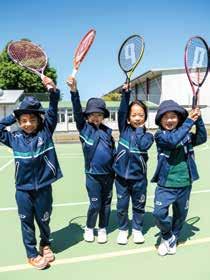
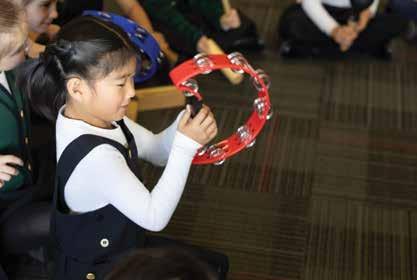
Over my years as both an educator and a parent, I’ve had many conversations with families about what they truly want for their daughters during the foundational primary school years. The phrase I hear most often is “I just want her to be safe and happy.” It is a beautiful, essential sentiment, and one we support. However, at St Margaret’s, we believe that “safe and happy” shouldn’t be the final destination; it should be the starting line.
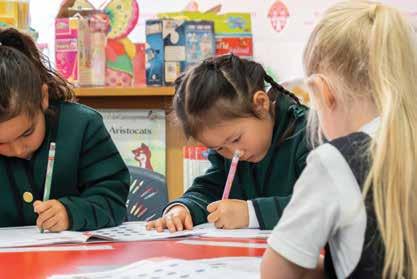
We are deeply committed to ensuring our girls are safe, happy, and learning. From their very first days as New Entrants, our girls enter an environment grounded in the science of how children actually learn. Our explicit “I Do, We Do, You Do” teaching model means girls always know what success looks like, with the support to attain it every single day.
St Margaret’s began its Structured Literacy journey in 2019, long before it became mandated across New Zealand schools, and our programme begins on our girls’ very first day in Junior School. Grounded in cognitive science, this systematic approach to teaching reading and writing replaces outdated guesswork with clarity and intention. The impact on our girls’ literacy foundations is evident from the earliest years.

Our maths programme, Maths No Problem, is based on the Singapore Maths Mastery approach and adapted by our Junior School teachers for a New Zealand context. Daily practice, spiralled review, peer discussion, and real-world problem solving work together to build confidence and enjoyment of maths from day one.
Beyond their core learning, our entire Junior School enjoys specialist teachers in PE, digital technology, and the arts, with access to the wider College facilities and the learning relationships that come with them. From their first term, girls also join in Kapa Haka and choir, with regular opportunities to perform and grow in confidence.
Alongside academic progress, the happiness and safety of every girl matters deeply to us. Our Junior School community is intentionally small, close-knit, and often described by visitors as the most joyful school they have seen. Every girl is known and supported by her teachers, her peers, and by the wider College community, from her very first day of school.
Bridget Compton-Moen, Head of Junior School
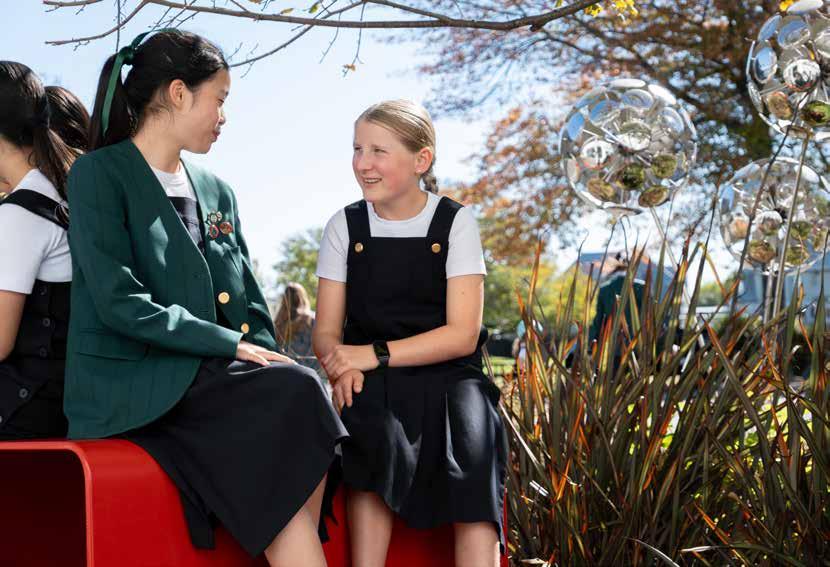
Head of Middle School Kathryn Gray reflects on the first term of the new ‘Gate to Gate’ mobile phone policy.
It’s 8:15am and I’m drawn to an escalation of noise from the breakout space. There is, of course, no cause for concern – it’s just our girls, connecting with each other. Weekend exploits are being dissected, the merits of various NeeDoh colours are under serious debate, and a Year 10 student is carefully rebraiding her friend’s plait. It is slightly chaotic, and completely lovely.
It is also, I’ll admit, a little startling. This time last year, the same room at the same hour was a different scene entirely - girls side by side on their phones, scrolling in silence, technically together but somewhere else altogether.
The difference is Gate to Gate, our new policy that keeps phones in bags and lockers from the moment students arrive until they leave the school grounds at the end of the day. We’d had a phone-free hours policy since 2020, which gave students an ‘island of time’ away from their devices. Gate to Gate goes further; it creates an ‘island of space.’
The phone isn’t just off, it isn’t there at all.
After school, students once moved down the staircase in near-silence, heads down, phones out. Now they leave
talking to each other. They’re on their phones the moment they clear the gate, of course - we’re under no illusions about that - but for those extra minutes, they’re present. It sounds like a small thing. It doesn’t feel like one.
What strikes me is how quickly they adapted. There was an initial ripple of anxiety from students and, honestly, from some parents too. How will I reach her? What if something happens? Parents can still call the office at any time and a message will be passed on directly. But the urgency of that worry has faded, because the urgency was partly manufactured by the phones themselves. The expectation of instant contact creates an anxiety of its absence.
One moment has stayed with me. A few weeks into the new policy, a Year 7 student came to the office visibly upset - the familiar wobble of a younger girl having a hard day. Our admin coordinator sat with her, talked it through, and by the end of the conversation she was fine. No drama, no escalation.
Before Gate to Gate, that same girl might have slipped into the bathrooms and called her mum in tears.
Her mum would have spent the day worried. Instead, she found an adult on site, worked through it, and got on with her morning. There’s value in letting young people discover they’re more capable than their phones allow them to believe. There are details that make me smile. Our senior students, deprived of their phone cameras, have taken to bringing digital cameras to school - clunky, retro, and enormously fun. Teens adapt: when you remove one thing, they’ll find another.
I was at camp with our Year 9s recently when I watched a group of girls, activities finished for the day, fill the time by making friendship bracelets, picking up a ball, staging an impromptu table tennis competition. Nobody suggested it. Nobody organised it. The space was simply there, and they filled it. Likewise at lunchtimes in the library, where what used to be prime laptop time has become jigsaw and board game territory.


Over summer, I watched two teenagers try to play Monopoly and give up, not because they were bored, exactly, but because the slow build of it felt unbearable. They switched to Monopoly Deal, the ten-minute version. I recognised the feeling. The tolerance for sitting with something slow and uncertain has eroded in all of us.
Gate to Gate won’t fix that on its own. But it gives our girls a few hours each day where the fast, loud, urgent world is at the gate, and they are, just briefly, without it. If the noise and the laughter I’m seeing in those breakout spaces is anything to go by, I think they’re doing just fine.
Kathryn Gray, Head of Middle School











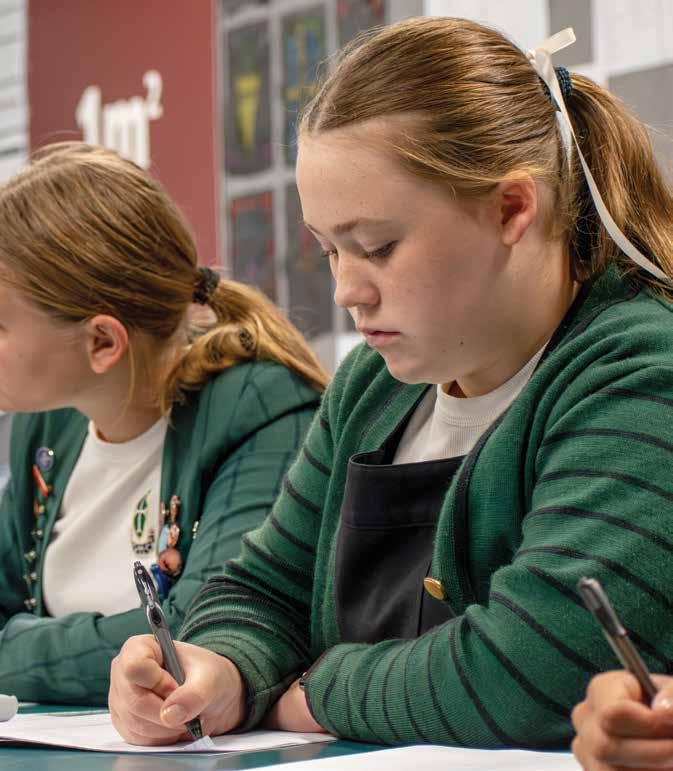
For many students, the shift into senior school is not just about new subjects or higher expectations. It is about learning how to manage time, attention, and motivation in a way that feels sustainable.
Over the past year, St Margaret’s has been gradually developing a Smart Study programme for Year 11, shaped through a small pilot in 2025 and conversations with schools in Australia running similar initiatives. In 2026, it has become a regular part of the week for all Year 11 students.

Rather than adding more content, the programme explores how learning actually works. Each short session introduces practical strategies that students can apply both in class and when studying independently, alongside an understanding of how the brain processes, stores, and retrieves information.
There is a strong emphasis on building what educators often refer to as “academic buoyancy”, the ability to stay engaged, recover from setbacks, and keep moving forward. It is less about perfection and more about developing habits that make learning feel manageable and, at times, even enjoyable.
Students are supported through a shared Google Classroom, where resources are added throughout the year, as well as a weekly 20-minute session built into their study time. Teachers across Year 11 also have access to the material, allowing these ideas to be reinforced naturally within everyday lessons rather than sitting alongside them.
The programme began with a simple but telling exercise. Students were asked how they see themselves as learners. That snapshot provides a starting point, something to return to later in the year as their confidence and habits begin to shift.
From there, the focus moved to a few small, practical changes. Three “Power Moves” were introduced as a starting point. Clearing desks to only what is needed, helping reduce distraction. Taking a moment to recall something learned the previous day, strengthening memory through retrieval. And noting the learning intention at the beginning of each lesson, giving a clearer sense of direction.
None of these ideas are particularly complicated. That is part of the point. The aim is not to overwhelm, but to build a toolkit of strategies that students can return to, refine, and make their own over time.
As the year unfolds, the hope is that these small shifts begin to add up. Not just in improved results, but in a quieter kind of confidence, where students feel more in control of their learning and better equipped for what comes next.
Sian Evans, Head of Senior School
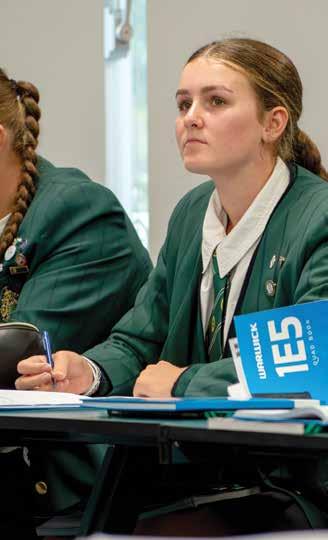

“There is nothing like a dream to create the future.”
– Victor Hugo, Les Misérables
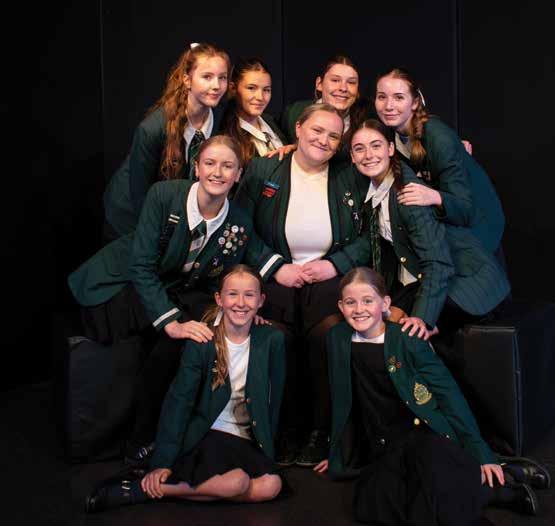
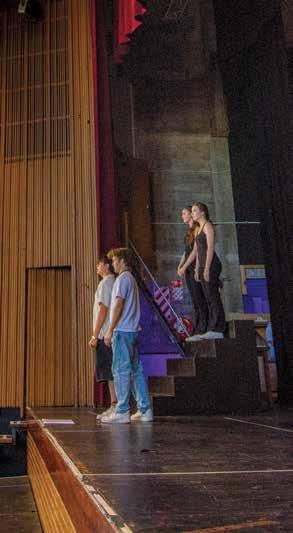
On 12 May, St Margaret’s College and Christ’s College will open their joint production of Les Misérables stage musical in the Christ’s College Auditorium, with performances running until 16 May.
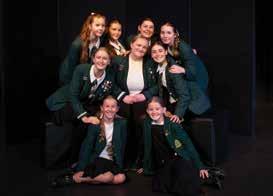
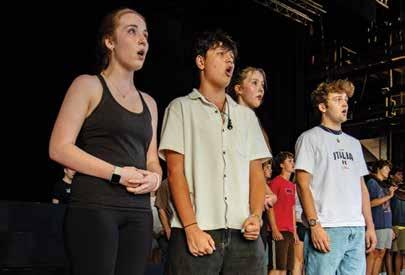
With a cast of seventy students, the two schools have embarked on an ambitious effort to bring this iconic musical to the high school stage. Rehearsals began in February, and since then the cast has been working intensively under the guidance of Co-Directors Anna Turner and Hannah Clarkson, alongside Musical Directors Amanda Woods and Peter De Blois. Together, they are taking on sweeping music, commanding characters, and a powerful ensemble story set against the backdrop of revolution.
During auditions, the production team was fortunate to encounter such a deep pool of talent that several of the principal roles have been double cast. Audiences are encouraged to see both casts throughout the run, as each performer brings their own interpretation and energy to the stage.
Fantine — Jess Erasmus
“Being a part of this iconic show means so much to me! The opportunity to make new connections, play a dream role and immerse myself in everything Les Misérables has been so exciting. I look forward to showcasing all the mahi that has happened behind the scenes.”

Cosette — Matilda Abbott and Rose Martin
“I’m so excited to play Cosette in Les Misérables because the musical is so special to me and I’ve wanted to be in it since I was very young. I also love singing the songs with my friends in rehearsal and seeing everybody’s hard work.” – Matilda
“I’m so excited to perform Les Misérables this year, it’s such a fun production to be a part of. I fell in love with the songs and story the moment I watched it, and I love my character Cosette so much as she is such a relatable girly character to play.” – Rose
Éponine — Phoebe Jones and Tessa De Wit
“I am so excited for Les Misérables to come to life on stage. Every so often, I see a special moment during rehearsal that reminds me how powerful this story is and how lucky I am to bring Éponine, a character who is emotional, honest, and real, to life alongside such a talented cast.” – Phoebe
“Being a part of the cast of Les Misérables is already such an honour but getting to call myself Éponine makes the little girl inside me who grew up watching the show, so very proud. Throughout the rehearsal process it’s been so exciting to see everyone gaining confidence and growing into their characters. I cannot wait to perform as the passion the whole cast shares for this show is so special and admirable.” – Tessa
Madame Thénardier — Isabel Marsh and Susanna Tully
“I really love the show Les Misérables, as it has amazing and emotional songs and scenes. It means so much to me to be a part of something so big, as all of the cast is so supportive, as well as the staff involved, and everyone genuinely wants to be there to put this show on as best as we can!” – Isabel
“I love this show, as it has a fun side with amazing songs. I like how the production shows many different intertwining storylines, you get to see so many different characters and struggles. I love my character as she is, in my opinion, the most fun character to play. She’s the polar opposite of who I am normally, and that is what makes it so much fun.” – Susanna
Although this is a senior production, the company is also delighted to include two Middle School students. Romilly Comyn (Year 7) and Lola Brinson (Year 9) will alternate the roles of Little Cosette and Young Éponine, and have impressed the cast and creative team with their enthusiasm and talent in rehearsals.
“It is a very beautiful story, based around the French revolution, which I find very interesting. I like my characters because they are fun to play! I get to be with the seniors and feel like I am a part of something big. I love meeting all the new people and working with them. It means a lot to me because, as a new student, I feel like I am part of something that I enjoy and I am proud of.” – Lola
“I am so excited to perform this amazing story on such a big stage. This is my first big production and it is exciting to work with senior students. I love learning from them. Cosette’s solo Castle on a Cloud is beautiful and I love singing it. – Romilly
Anna Turner, Director of Co-curricular Arts
We invite audiences to “join in our crusade” and experience this powerful production between 12–16 May
Tickets are available through Eventfinda
Christ’s College and St Margaret’s College present





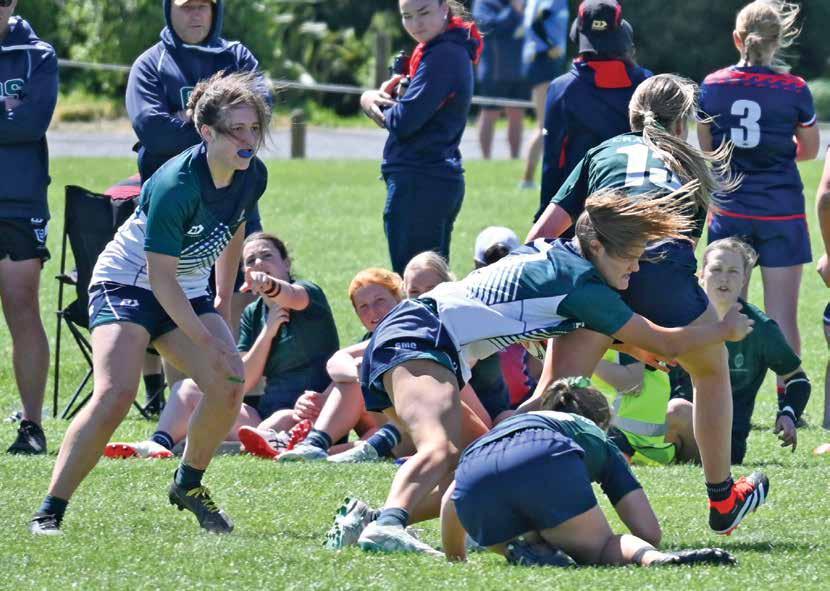
Girls’ rugby at St Margaret’s College has seen exciting growth over the past few years, evolving from a small but determined group into a thriving programme that continues to attract new players each season. Many years ago we began with a few keen girls wanting to get into the game. Through continued passion and dedication from both staff and students this group grew to ten students playing both 7’s and 15’s. Now the rugby programme has expanded to more than 40 students involved in the sport, highlighting the growing enthusiasm for girls’ rugby within the school.
In those early days, the small squad meant players often had to step outside their comfort zones, learning the game quickly and taking on multiple roles on the field. Despite the challenges, the original group showed tremendous commitment and helped establish the foundations of a rugby culture built on teamwork, resilience, and enjoyment of the game.
Each year a dedicated core group of players continues to drive the programme forward, with many having been involved since its early stages. Their experience and
passion for the game has helped mentor newer players joining the squad, creating a strong sense of camaraderie and shared purpose within the team while also building their skill base and experience. The current team is made up of girls from Year 9 to Year 13 with experience ranging from never having played to those that have many years of experience. Many of the group also balance other sports as well as rugby and all are welcome to join and play as their individual needs dictate.
As the programme has developed, interest among students has also steadily increased. Rugby has provided an opportunity for girls to challenge themselves physically and mentally while being part of a supportive and encouraging team environment. The steady rise in participation reflects the positive experience players have had and the welcoming nature of the programme. Beyond the field, rugby has played an important role in building confidence, leadership, and lasting friendships among the players. The sport encourages resilience, discipline, and teamwork, qualities that extend well beyond the game itself.
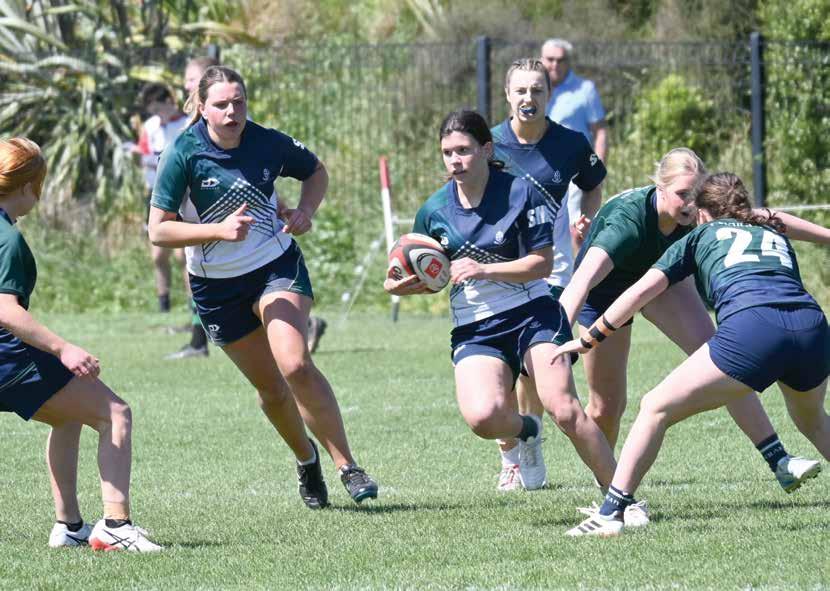
A huge part of this has been the commitment of the staff involved to help coach and teach skills needed while also balancing enjoyment and the love of the game. We have been fortunate enough to have input from an Old Girl, Lucy Jenkins, who has been a role model for our current players. Her wealth of experience and knowledge has been invaluable to the girls she has helped coach. With numbers continuing to grow, players now gain experience across multiple formats of the game. St Margaret’s has combined with neighbouring school Rangi Ruru to ensure girls have the opportunity to play competitive rugby and continue developing their skills in the 15-a-side format.
We also have a dedicated St Margaret’s 10-a-side team which plays weekly against other schools and in a South Island 10’s tournament in Buller. We have seen particular growth in the 7-a-side format, fielding both senior and junior squads. Each format allows players to develop different aspects of their skills, from structured team play to speed, agility, and game awareness.
From just ten players in 2022 to a growing squad of more than 40 today, girls’ rugby at St Margaret’s College continues to build momentum. With the passion, dedication and support shown by the players, staff, whānau and wider school community, the future of the programme looks incredibly promising.
Helen Belcher, Director of Sport

Rosa Guild
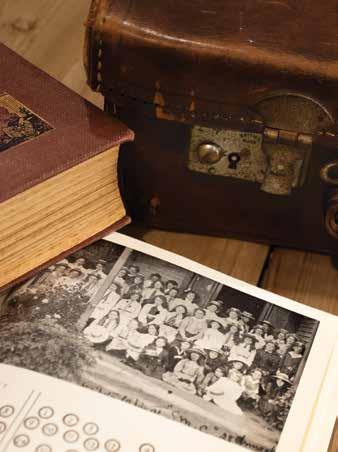
Christabel Grigg and some first day pupils on 8 February 1910
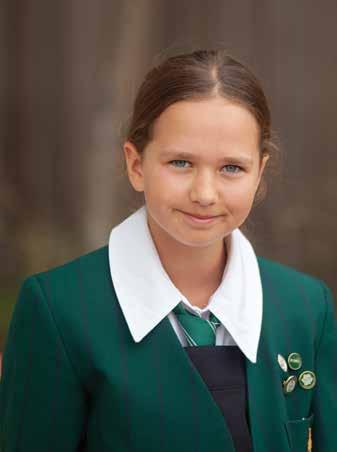
When Year 7 student Rosa Guild walks through the boarding house doors at St Margaret’s College, she carries more than a suitcase and schoolbooks - she carries a legacy.
Her story is woven into the very foundations of the College. More than a century ago, her great-grand aunt, Christabel Nattle Shawe (née Grigg) - known as Chrissie - became the very first pupil registered at St Margaret’s College. In 1910, Chrissie went on to serve as the College’s first Head Prefect, setting a standard of leadership and character that would shape generations to come.
Now, more than 115 years later, Rosa is continuing that proud family tradition, adding her own chapter to a legacy that has spanned over a century.
Christabel was born on 5 August 1893 at Longbeach, Ashburton, the daughter of John Charles Nattle Grigg and Alice Montgomerie Grigg. Her childhood was shaped by life at Longbeach Station, one of New Zealand’s most significant farming estates. Established in 1854 by her grandfather, John Grigg, Longbeach grew into one of the largest and most impressive farms in the country. At its height, it employed up to 200 people and operated almost like a small self-contained village, complete with its own school, church, store and post office. Bricks for the estate buildings were even fired on site.
Christabel had previously attended St Hilda’s Collegiate before joining the newly established St Margaret’s College. As the first girl formally registered, she stepped into something entirely new. Boarding in the early 1900s meant leaving rural Canterbury for a city school, navigating independence and leadership at a young age.

In many ways, it is a familiar story. Today, Rosa has made that same journey from rural roots at High Peak Station to boarding life at St Margaret’s.
In 1916, Christabel married Captain Charles Shawe at St Peter’s, Eaton Square, London. The marriage was reported in the New Zealand press, noting that the groom had recently returned from Gallipoli. The ceremony reflected the global upheaval of the time, with war service shaping the lives of many young New Zealanders abroad. Christabel herself served in the Red Cross during the war. She went on to live a long and full life, passing away in Alton, Hampshire, in 1994 at the remarkable age of 100.
The connection between the Grigg family and St Margaret’s did not end with Christabel. In the generations that followed, several of her great-great-nieces also walked the College corridors, including Amanda Hewson, Gemma Guild and Nicola Grigg - now the Member of Parliament for Selwyn and Minister of State for Trade and Investment, Minister for Women, Associate Minister of Agriculture and Associate Minister for ACC.
Across more than a century, the family’s ties to St Margaret’s have remained strong, marked by leadership, service and a deep sense of connection to the College community.
Now, Gemma’s daughter, Rosa, is part of the current generation of boarders. More than a century separates Christabel and Rosa, yet their experiences echo each other. Both stepped into boarding life from the wide skies of Canterbury farmland. Both became part of a school community that values leadership, service and connection. Both represent families who believe in education as a bridge between rural life and wider horizons.
With headlines filled with stories about artificial intelligence, automation, and rapidly changing industries, many families are naturally wondering what all of this means for the next generation entering the workforce. It is a question that is increasingly being discussed around dinner tables, among friends and across the media.
For Jenni McLaughlin, these conversations are a familiar part of her work with students as they begin thinking about life beyond school. Rather than trying to predict a single career path, Jenni’s focus is on helping young people develop the skills, mindset and confidence to navigate a world of work that will continue to evolve.
St Margaret’s College is home to a diverse community of students, each bringing different ambitions and aspirations. As a result, Jenni hears a wide range of questions from both students and their families. “Families are always interested in how the world of work is evolving and what that might mean for young people,” she says.
Many parents and alumnae are themselves experiencing change within their own industries and are generous in sharing their experiences with current students. Those conversations, Jenni says, help make the future of work feel tangible and real. “Having our community share their stories gives students insight into how careers actually unfold, rather than what they imagine from the outside.”
While artificial intelligence has dominated recent discussions about the future of work, Jenni is quick to point out that technology has been reshaping careers for decades. “This is not a completely new conversation,” she says. “Technology has always influenced the way we work.”
Rather than focusing solely on the tools themselves, St Margaret’s approach centres on developing the skills that allow students to thrive alongside technological change. Critical thinking, creativity, communication, and collaboration sit at the heart of that preparation. Students are encouraged to think deeply about the issues and problems in the world that matter to them and to explore how their own values align with potential career paths. “Helping our girls understand what matters to them and align their aspirations with their values is central to building a fulfilling career.”
One of the most common questions Jenni hears from families is whether there are still careers that can be considered “safe”. Her response is refreshingly pragmatic. “Careers have always evolved,” she explains. “Rather than focusing on safe jobs, we focus on building strong foundations.”
Those foundations include resilience, adaptability and the interpersonal skills that technology cannot easily replicate. Roles that rely on empathy, human connection and communication remain essential across almost every sector. “These skills are valuable in any pathway and will continue to be needed regardless of how industries change.”
At St Margaret’s, the curriculum is designed to give students as many options as possible as they move through their senior years. A tailored Year 11 programme provides a broad academic foundation before students move into the College’s dual pathway of International Baccalaureate or NCEA. Across both pathways, students develop the ability to think critically and creatively, communicate effectively and work collaboratively. In Jenni’s view, those transferable skills are the real currency of the future. “Curiosity, adaptability and the willingness to keep learning are vital,” she says. “Those are the things that allow young people to move with the world rather than feel limited by it.”
As students begin selecting subjects for their senior years, Jenni encourages families to think strategically but also realistically. Her advice is to keep options open. “Encourage your daughter to choose a range of subjects that allow flexibility,” she says. “Understand the difference between required and recommended subjects for tertiary courses, but balance that with subjects they genuinely enjoy.”
That enjoyment matters more than many people realise. “If students are engaged and curious about what they are learning, they are far more likely to succeed and continue learning throughout their lives.”
In a world where change is inevitable, that mindset may be the most valuable preparation of all.
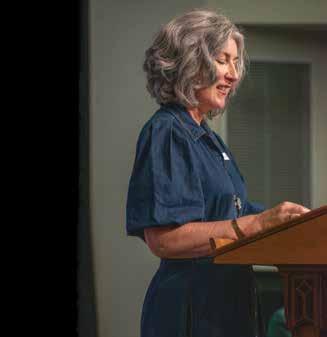
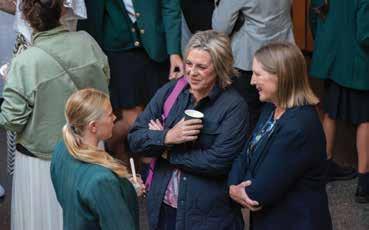
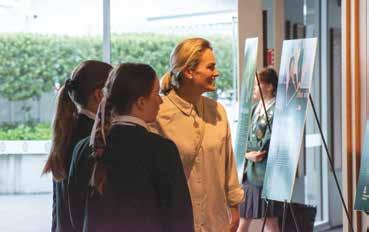

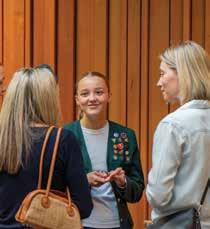
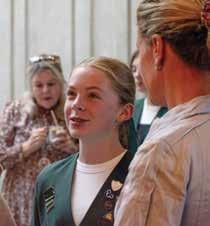
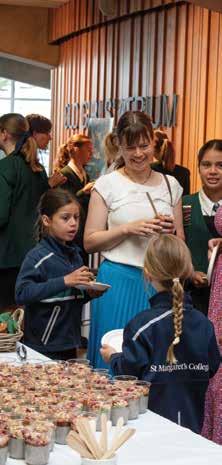
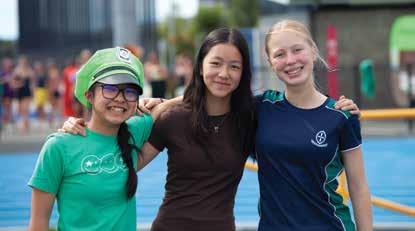
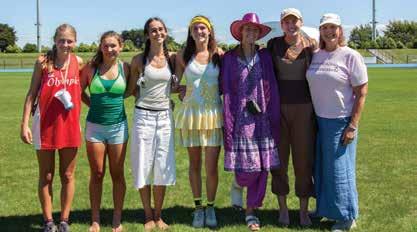
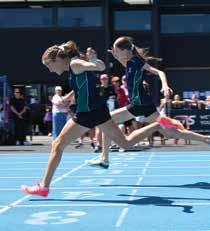
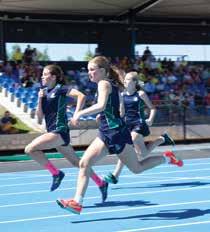
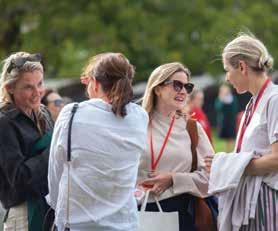
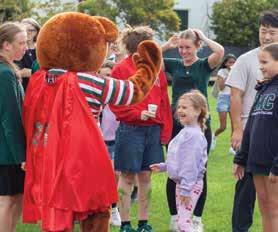
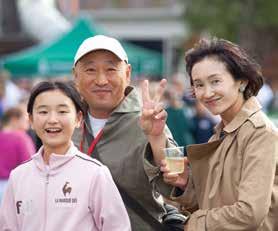
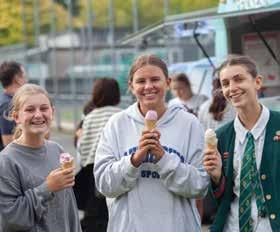
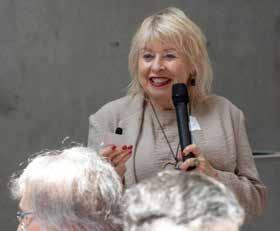

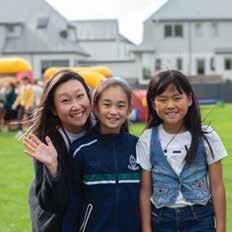
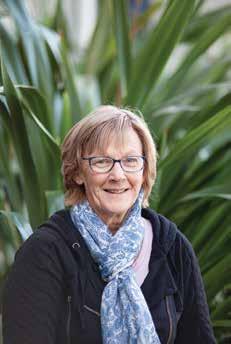
The year has begun on a vibrant note for the Parents and Friends Association, a time marked by both change and continuity. We extend our sincere thanks to outgoing President Cheryl Cordier for her generous commitment to strengthening engagement within the PFA and across our wider community. Cheryl concluded her presidency in true PFA style with the much-loved Family Picnic, an event that warmly welcomes new families while offering a relaxed opportunity for our community to reconnect after the summer.
We are delighted to welcome Anna Coulthart as our new President. With a background spanning financial control, arts funding, and business ownership, Anna brings a breadth of experience across New Zealand and internationally. She combines this with a deep understanding of the not-for-profit sector and a genuine passion for building strong, connected communities, an approach that aligns closely with the PFA’s mission to foster meaningful connections among parents and whānau in an active and inclusive




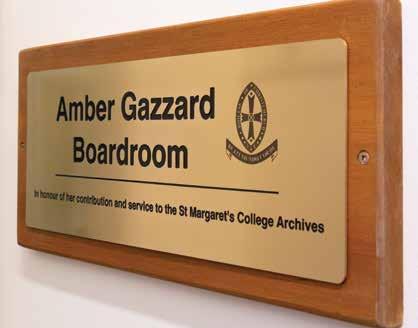
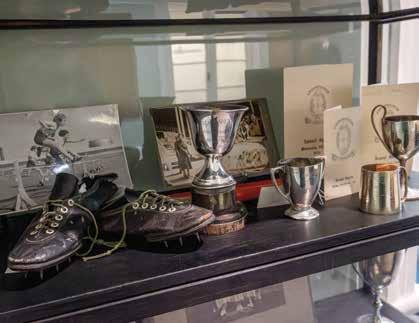
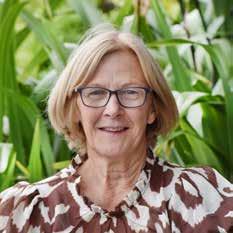
There’s something quietly powerful about the way a school holds its history, and thanks to a remarkable act of generosity from Old Girl Amber Gazzard (class of 1956), those stories at St Margaret’s College will continue to be preserved in a way that ensures they will be shared for generations to come.
Amber was a much-loved member of the St Margaret’s community whose connection to the College extended far beyond her years as a student. In later life, she became a familiar and valued presence in the Archives, volunteering twice a week. Amber understood that the past is not something static. It needs care, attention and, occasionally, a bit of rescuing.
In her Will, Amber left a sizeable bequest to the College, with a clear purpose. She wanted to support the preservation and accessibility of the Archives she had spent so many hours helping to organise.
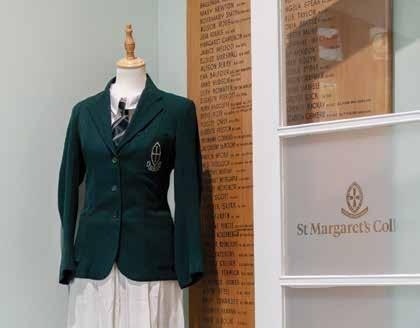
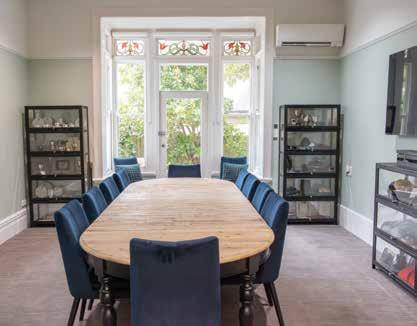
Through the St Margaret’s College Foundation, Amber’s legacy is now being brought to life in meaningful and lasting ways. Her bequest has enabled the development of a new boardroom space designed to showcase elements of the College’s archival collection.
Her gift is also driving a significant digitisation and scanning project, ensuring that fragile materials are preserved and made more accessible for future use. This work is opening up new possibilities for storytelling, research and connection across generations of Old Girls.
The Foundation is privileged to steward this generous gift, ensuring that Amber Gazzard’s legacy is honoured exactly as she envisioned - guided by care, driven by purpose, and grounded in a profound respect for the stories that define St Margaret’s.
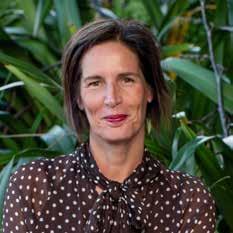
Erin Reeve, Foundation Manager
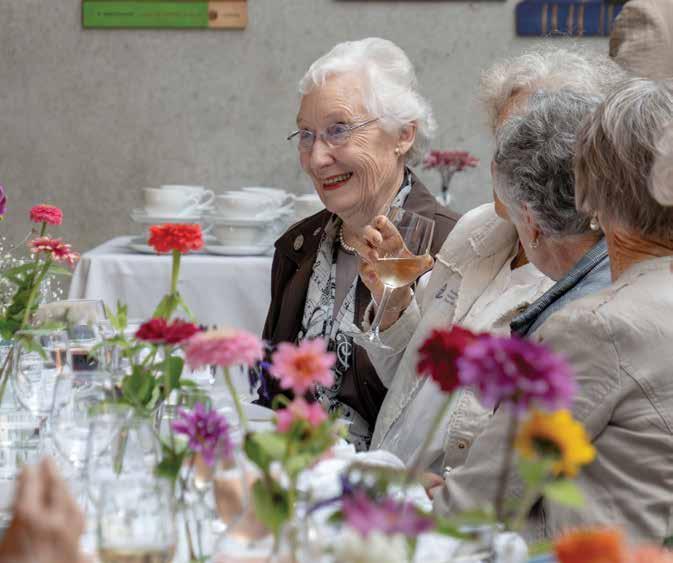
If you were lucky enough to be taught by Jill Kerr, chances are you still sit up a little straighter when the music starts.
This New Year, the St Margaret’s College alumna was named in the King’s New Year Honours List, recognising a lifetime devoted to music, education and service. For those who know her, it feels less like a surprise and more like a long-overdue round of applause.
Jill’s story is closely woven into the fabric of St Margaret’s College. An Old Girl herself, she returned as a young teacher and stayed for more than 40 years, shaping the sound, spirit and standards of music at the school. Choir rehearsals were focused, performances were polished, and expectations were high. But so was the care she showed for her students.
Music under Jill was about commitment, pride and learning how to work as part of something bigger than yourself. Many students went on to professional careers in music; others simply carried a lifelong appreciation with them. Both mattered equally.
Beyond the school, Jill became a cornerstone of Christchurch’s church music community. Her work at Christchurch Cathedral, including her role as the first female Precentrix, shifted long-held norms. She led choirs,
shaped services and ensured that music remained central to worship, not as background, but as something meaningful and alive.
Her reputation reached well beyond New Zealand. Invitations to study and work in the United Kingdom, including a visiting role at Christ Church Cathedral in Oxford, reflected the esteem in which she was held internationally. Yet she always returned home, back to her students, her choirs and her city.
Colleagues speak of Jill’s clarity, integrity and no-nonsense approach. She was demanding, yes, but fair. Organised to the minute, but deeply human. She expected the best, largely because she believed people were capable of it.
Even now, Jill continues to share her knowledge through teaching, church music and her work at the Ngaio Marsh Literary House, where storytelling takes a different form but remains just as powerful.
This King’s Honour recognises a life lived in service, not loudly, not for recognition, but with consistency, purpose and care. For the St Margaret’s community, it’s a moment to pause, listen, and say thank you to someone who set the tempo for generations.
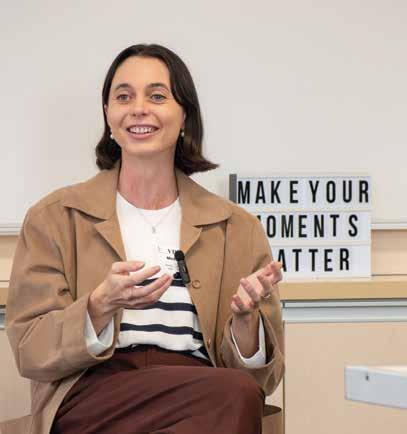
If there is one theme that runs through Maddi Ingham’s career so far, it is this: she did not have it all mapped out. “I genuinely had no idea what I wanted to do,” she says.
At school, she chose the International Baccalaureate to keep her options open. She thought she might become a lawyer. Or an accountant. Or something in business. She wasn’t sure. What she did know was that she liked solving problems.
After landing a graduate role at global consulting firm BCG in Sydney, Maddi found herself working with some of Australia’s largest organisations. Consulting, she explains, means being brought in to solve a company’s biggest issue. “It’s intense,” she says. “You’re constantly thrown at new problems and expected to figure them out quickly.”
The work was high pressure, but after two years, she realised she did not want to stay there forever. So she began looking again. Government? Impact consulting? Something entirely different? Startups won. “I knew almost nothing about startups at the time,” she admits. “But I joined a programme that exposed me to the ecosystem, and I loved it.”
Unlike traditional small businesses, startups are designed to scale exponentially. Think Canva or Xero. The ambition is global growth. Maddi discovered she thrived in early-stage environments where ideas move quickly, and structure is still forming. “I like it being scrappy,” she says. “It’s easier to turn a kayak, not a cruise ship.”
That appetite for impact and experimentation ultimately led her to co-found GreenPay, an Australian payments company that redirects 50 percent of its profits to environmental restoration.
Around $4 trillion flows through Australia’s payments ecosystem each year. Most of it runs through major banks, whose lending book includes fossil fuel projects and further deforestation, or large US tech companies. GreenPay’s model is to capture a portion of those transactions and redirect company profits toward environmental initiatives instead. “If we can redirect even a small slice of that system,” Maddi says, “we can fund restoration at scale.”
The early days were daunting. Incorporating the company. Building partnerships. Defining their vision. Creating a product they could actually take to market.
There were financial realities, too. Maddi took a significant pay cut to join the venture. Every month meant tracking
burn rate, forecasting revenue and watching the bank balance carefully. Has she doubted whether it would work?
“Every day,” she laughs.
But she keeps coming back to three anchors: belief in the idea, belief in the model, and belief in her co-founder. Building a startup, she says, requires resilience, problemsolving and strong communication skills. On any given day, she might be closing sales, reviewing margins, responding to accelerator programmes, integrating new partners or building internal systems. There is no typical schedule. What has surprised her most is how often earlier experiences resurface in unexpected ways. While at university, Maddi led the annual fundraising appeal for Te Whare Pounamu, the Dunedin Women’s Refuge. What began as helping with a fundraising auction grew into managing multiple events and more than 100 volunteers, ultimately raising just over $100,000. “It taught me leadership, organisation and how to grow something,” she says. “I use those skills every day.”
Her advice for young people considering business or entrepreneurship is both practical and urgent. Learn how to use AI beyond the basics. Understand how the global economy affects you. Ask for what you want. “Most people are more willing to help than you think,” she says.
“The worst they can say is no.”
As for the future, Maddi’s vision is ambitious. In the short term, she wants GreenPay to be a resilient, self-sustaining business making meaningful environmental donations. Long term, she hopes it will expand into new markets and fund significant restoration work on the scale of other successful social enterprises that are now donating millions annually. Looking back, she laughs at the idea that she once felt pressure to find the perfect first job. “Your first job doesn’t have to be your dream job,” she says. “It just needs to move you one step closer.”
St Margaret’s College and New Zealand’s skiing pioneers
2026 is the year of the Milano Cortina Winter Olympic Games; it is a moment to reflect not only on the athletes competing today, but also on the remarkable women who helped place New Zealand on the world’s alpine stage. Across decades of Winter Olympic competition, five St Margaret’s College alumnae have represented New Zealand in alpine skiing, placing the College firmly within the country’s Olympic history. In fact, since New Zealand first entered Olympic alpine skiing, only sixteen women have represented the nation. Five of them began their journeys at St Margaret’s College.
In 1932, a group of adventurous St Margaret’s College students travelled to Temple Basin at Arthur’s Pass to learn to ski. At the time, alpine sport in New Zealand was still developing, and a school ski trip into the Southern Alps was no small undertaking. Yet the enthusiasm stuck. Just five years later, St Margaret’s College won the South Island Secondary Schools Skiing Championships, establishing the school as an early force in competitive skiing.
What began as a winter adventure soon grew into a pathway that would eventually lead several Old Girls to the highest stage in world sport. One of the first to blaze that trail was Jean Nelson, née Adams (Old Girl 1937–1949). Jean represented New Zealand at the 1952 Winter Olympics in Oslo, becoming one of the very first women to ski for the country at the Games. At a time when international travel was far from simple and alpine skiing was still developing in New Zealand, the journey itself was extraordinary. There were no large teams, no major support crews, and certainly none of the high-performance structures modern athletes benefit from today. What those early Olympians had instead was determination, resilience, and a love of skiing that carried them halfway around the world.
Jean’s Olympic appearance marked the beginning of New Zealand women’s alpine story. In the decades that followed, more St Margaret’s alumnae continued the tradition. At the 1976 Winter Olympics in Innsbruck, two Old Girls represented New Zealand. Janet Reeves née Wells (Old Girl 1972–1974) competed in the Giant Slalom, while Sue Robson née Gibson (Old Girl 1962–1972) completed all three alpine disciplines: Downhill, Giant Slalom and Slalom. Robson delivered the best New Zealand alpine result at those Games, finishing 19th in the Slalom.


Another Old Girl to reach the Olympic stage was Anna Archibald (Old Girl 1973-1975), whose early success on the domestic circuit earned her selection for the New Zealand team at the 1980 Winter Olympics in Lake Placid. At those Games, she was one of only five athletes representing the country. Anna competed in the women’s Downhill and Giant Slalom events. Her performances formed part of a strong showing by the New Zealand alpine team, which achieved several top-30 finishes during the Games.
Four years later, another St Margaret’s skier stepped onto the Olympic start line. Kate Rattray (Old Girl 1976–1979) competed at the 1984 Winter Olympics in the Downhill at Sarajevo. Her Olympic journey did not end there. Four years later, she returned to compete at the 1988 Winter Olympics in Calgary, becoming New Zealand’s first female alpine skier to compete at two Winter Games.
From the Temple Basin ski trips of the 1930s to the Olympic slopes of Oslo, Innsbruck, Lake Placid, Sarajevo and Calgary, St Margaret’s students have embraced the mountains with determination and courage. For these pioneers, skiing was never only about medals or results. It was about pushing boundaries, representing their country, and proving that New Zealand athletes could compete alongside the world’s best.
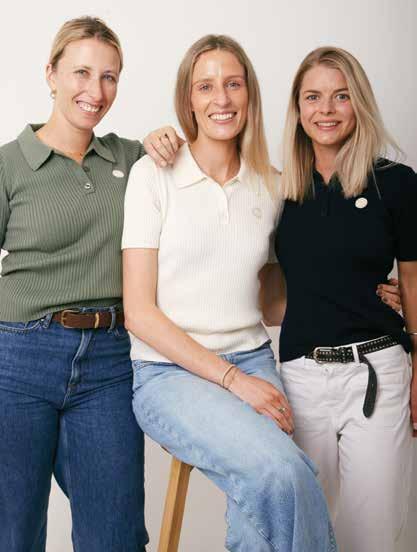
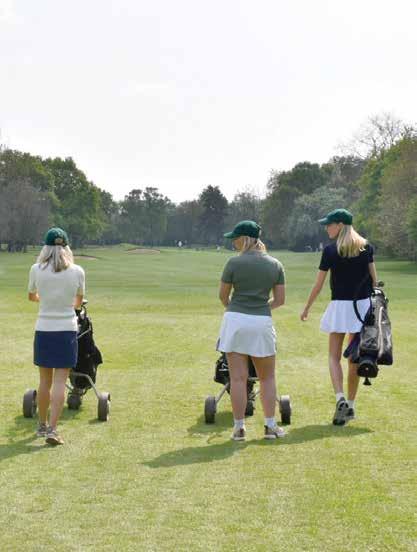
What started as a casual conversation at the 19th hole has quickly become one of the more exciting new names in women’s golf apparel. St Margaret’s College alumnae Alex Tipene-Matua (Year 9 2008), Emma Henderson (2010), and Prue Murdoch (2010) founded Fox & Birdie with a clear point of view: women’s golf wear has not kept up with the modern game.
The trio set out to challenge both the style and function of traditional apparel, which often feels outdated and, at times, exclusionary. Fox & Birdie was built to offer something different, clothing that performs on the course while fitting seamlessly into everyday life.
Since launching in New Zealand, the brand has moved quickly. Now onto its second collection, Fox & Birdie continues to refine its focus on performance, fit, and wearability. As Emma puts it, “We wanted to create pieces you’d reach for just as easily for a round of golf as you would in your day-to-day.” This evolution has been driven by a considered approach to product development, where material choice, construction, and function are treated as a form of design-led technology.
A key differentiator is the use of merino wool, a material long associated with New Zealand’s textile heritage. Acting as a natural performance technology, merino regulates temperature, remains breathable, and resists odour, making it ideally suited to long days on the course while still feeling premium enough for everyday wear.
Beyond the product, Fox & Birdie reflects a broader shift within the sport. By creating apparel that feels contemporary and accessible, the founders are helping to lower the barriers that have historically limited female participation, building a brand shaped by women, for women.
Currently sold online, the brand is expanding across New Zealand into pro shops and retail partnerships, with ambitions to grow globally and be worn by leading players such as Dame Lydia Ko.
For Alex, Emma, and Prue, Fox & Birdie is a considered response to an overlooked category, executed with clarity and purpose. For those curious, the collection is available to explore online, designed to be worn wherever the day takes you.


As a software engineer in Blockchain & Digital Assets at Sydney’s Commonwealth Bank, Lucy Hadden (Year 9 2016) is rethinking how money moves at the highest levels of global finance - and she is doing it less than two years out of university.
Lucy recently worked on Project Acacia, a collaboration with JP Morgan, the Reserve Bank of Australia, and the ASX, exploring how digital blockchain currencies could improve the way large financial institutions settle transactions. Lucy led a sub-project within Acacia using artificial intelligence to help treasury teams work smarter, potentially freeing up billions of dollars currently held as overnight buffers. “It was pretty cool, and so interesting,” she says, with characteristic understatement.
Staying curious is, for Lucy, less a professional strategy than a personality trait. She traces it directly to her upbringing, with parents who encouraged her to question things from a scientific perspective. That disposition found a natural home at St Margaret’s, where Lucy credits the International Baccalaureate programme with changing her perception of herself.
“The IB gave me the opportunity to choose topics I was genuinely interested in and pursue them for individual assessments. It gave me the confidence to back my own interests.” She was strong in biology, physics and maths, and describes the programme as shaping how she thinks.
That confidence would prove important, because Lucy’s path into technology was anything but direct.
She began university studying International Business with Mandarin alongside Politics, Philosophy and Economics. Then, after her first year, changed course to Computer Science. “I really missed science. My older brother was doing computer science and showed me his work. He said: ‘You’re given these problems and you can solve them any way you want.’ That really resonated with me.”
She ultimately completed a Bachelor of Arts & Science in Computer Science and Philosophy.
The pace of change in her field is, she says, excitingly fast-moving.
“When I started, you wrote every single line of code by hand. Now, if you’re not using AI to help you build, you’re probably twenty times slower than everyone else,” she says. Lucy believes the nature of her role will continue to shift dramatically.
“What employers now prize above all else is not a specific skill set, but a willingness to stay curious, embrace new tools, and resist the comfort of doing things the way they’ve always been done.”
Lucy is candid about the barriers that almost kept her from her field. She also challenges the assumption that technology is something you either grow up knowing about or miss entirely.
“There’s a stereotype about what someone in technology is like, and it can seem really intimidating if you don’t fit that mould. There are still few women in this field of work, and I never thought of myself as a ‘tech person’. But it’s just about giving it a go.”
“Software engineering is tricky in a day-to-day sense - every problem is different, you never know if you’ll be able to solve something, and you have to have an inherent faith in yourself that you’ll figure it out. You don’t have to be coding from a young age. You can start at university, as I did, and be absolutely fine.”
Lucy believes that taking risks is where real success stems from.
“Give something a chance and see if you like it, and if you don’t, that’s perfectly fine. But get comfortable with risktaking, because that’s where you find out what you’re capable of. You only get there by pushing yourself. What have you got to lose?”

Artificial intelligence is rapidly becoming part of everyday life as we have read through this edition of Evergreen. Used thoughtfully, it can be a powerful learning tool. AI can help students explore ideas and clarify difficult concepts in ways that support independent thinking, it can be helpful when disseminating key points from a document and even come up with interesting lesson plans.
However, with this opportunity comes responsibility. As families and educators, it is worth asking what boundaries we should put in place around its use, particularly for young people. AI can assist with learning, but it should never replace the process of thinking, struggling, and discovering ideas for us. If people rely too heavily on AI to produce answers, they risk missing the very learning experiences that can help develop understanding, creativity and most importantly resilience.
There are also wider ethical questions to consider. AI systems require enormous computing power, which in turn consumes significant amounts of energy and water. While technology can be helpful, it also carries an ecological cost that reminds us to use it thoughtfully rather than constantly!
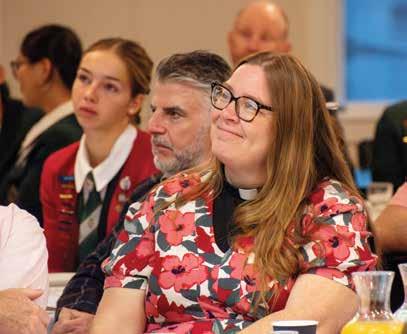
Perhaps the most important boundary relates to our human need for connection. AI can simulate conversation, but it can never replace genuine relationships. Learning, growth, and wellbeing are deeply rooted in our interactions with other people, we are hardwired relational beings.
These questions connect closely with discussions we have been having in all my Year 9 Religious Education classes where we have been exploring: What make us human? Are we simply brains processing information, physical bodies interacting with the world, emotional beings capable of empathy or do we possess something deeper, a soul? While AI can imitate language, reasoning, and even certain emotional responses, it raises the question of whether these deeper aspects of humanity can truly be replicated.
As AI becomes more present in our lives, these reflections will become increasingly important. Rather than asking only what AI can do, perhaps the more meaningful question is what is means to be human, and how technology can serve that humanity rather than replacing it.
Aroha and blessings, Rev. Steph Clay, Chaplain
Thursday 14 May
Melbourne Community Event
Thursday 14 May Combined Bridge Tournament, Christchurch
Wednesday 27 May
Thursday 28 May
Tuesday 16 June
Auckland Margaritas
Auckland Community Event
Wellington Margaritas
To stay up to date and register for our events, visit smcconnect.school.nz/events
SMC Connect is a platform designed to unite our vibrant St Margaret’s College community of Old Girls, parents and supporters, no matter where in the world they may be.
SMC Connect is more than just a website; it’s a journey back to your roots, a bridge to new opportunities, and a celebration of our shared legacy. Join us at smcconnect.school.nz Our global, dynamic community.