STAFF PROFESSIONAL LEARNING JOURNAL

Colleen Wilcox
Sunata Edition 16
Principal: Ros Curtis AM
Editors: Wendy Johnston, Nicole Devlin, Nikki Townsend
Graphic Designer: William Pascoe
Photography: Victoria Nikolova


Michelle Alexander Senior Psychologist
In 1987, at John Abbott College in Sainte-Anne-de-Bellevue, Quebec, Canada, I undertook my first introductory course in psychology. The theoretical knowledge and practice of psychology subsequently became my lifelong passion and career, spanning almost four decades. This paper discusses two specific professional areas of interest: disabilities and developmental theory, with a particular focus on attachment theory and its relevance to relationships; and collaboration and student voice within educational settings.
Bowlby (1982), widely recognised as the founder of attachment theory, theorised that infants and children develop an internal working model of themselves based on their early experiences with primary caregivers. This emotional bond is foundational to relationships across the lifespan and provides the child with a secure base from which to explore their environment. These early relational experiences shape children’s perceptions of themselves and others, influencing how relationships are formed and maintained throughout life.
Ainsworth et al. (1978) expanded on Bowlby’s theory through the Strange Situation research, identifying four attachment styles: secure, insecure-avoidant, insecure-ambivalent (resistant), and disorganised attachment. These patterns have since been validated by subsequent research (Cassidy & Shaver, 2016). Disorganised attachment is strongly associated with trauma and is often characterised by emotional confusion and behavioural dysregulation (Van der Kolk, 2014).
Students learn to co-regulate their emotions when learning environments are consistent, safe, and predictable. Teachers support co-regulation by modelling emotional regulation, implementing structured routines, and providing visual supports, movement breaks, and opportunities for sensory regulation. Proactive behaviour management strategies are critical in preventing emotionally dysregulated behaviour before it escalates (Barbetta et al., 2005).
In my professional practice, sessions are intentionally structured and predictable, with consistent greetings, clear expectations, and defined endings. Students are offered choice within sessions, supporting agency while reducing anxiety associated with uncertainty. I provide informed consent regarding privacy and confidentiality in developmentally appropriate ways and maintain consistency in behaviour and expectations. Evidence-based strategies, including cognitive behavioural techniques, psychoeducation, mindfulness, grounding, and relaxation, are utilised to support emotional regulation.
Attachment theory highlights the fundamental importance of relationships with students, staff, and families in establishing inclusive and emotionally safe learning environments (Ainsworth et al., 1978). Research suggests that early negative relational experiences with teachers can predict future student–teacher attachment difficulties and behavioural challenges (McGrath & Van Bergen, 2015). Teachers may unintentionally perpetuate negative relational cycles if challenging behaviour is interpreted personally rather than as a manifestation of unmet needs or emotional dysregulation (Davis & Hayes, 2011).
I believe that relationship building begins with approachability, respect for cultural identity, predictability, and genuine interest in others’ lives. Rather than viewing behaviour as attentionseeking, it is more helpful to understand it as connectionseeking (Carrington, 2019). This relational lens promotes equity, trust, and belonging within the school community.
Children learn within relational contexts, and early relationships significantly influence cognitive, emotional, and social development (National Scientific Council on the Developing Child, 2004). Positive school environments promote belonging, acceptance, and emotional safety, benefiting both students and staff (Allen et al., 2021). Such environments are protective factors for vulnerable students (McDonald et al., 2001) and mitigate teacher burnout (Spilt et al., 2011).
I advocate for reasonable adjustments through collaboration with Learning Enhancement teams to support diverse learners across multi-tiered systems. Inclusive practices that foster belonging and psychological safety benefit the entire school community (Crespo et al., 2013).
Breakdowns in communication between schools, parents, and students can undermine trust and collaboration. Effective partnerships require shared goals, clear agendas, and respectful communication. Strong teacher–student relationships predict higher motivation and engagement (Sethi & Scales, 2020).
Saggers et al. (2023) highlight the importance of reducing social isolation for autistic students through evidence-based teacher training and improved collaboration across school and allied health contexts. Student voice is a critical enabler of positive relationships; when students have agency in their learning, democratic values and equity are strengthened (Mitra, 2018).
A student presented with significant school-related anxiety that impaired her ability to attend and remain at school. A coordinated, whole-school approach involving the student, family, teachers, school leadership, Learning Enhancement, and school psychologists was implemented to support
her wellbeing and engagement.Through collaborative planning and regular review, the student exercised agency in identifying effective strategies to support her learning. Guided by ecological systems theory (Allen et al., 2022) and self-determination theory (Ryan & Deci, 2017), the student successfully completed Year 12, achieved strong academic results, and demonstrated improved emotional regulation and resilience.
This reflection underscores the central role of safe relationships, collaboration, and student voice in educational settings. For some students, school may represent their only secure attachment environment, making predictability, consistency, and authentic relational engagement essential. Parents and caregivers, like students, bring their own attachment experiences, which influence trust and partnership with schools. As a psychologist, I recognise that relational safety is foundational to positive mental health and educational outcomes for all learners, parents, and staff.
References
Ainsworth, M. D. S., Blehar, M. C., Waters, E., & Wall, S. (1978). Patterns of attachment: A psychological study of the strange situation. Lawrence Erlbaum Associates.
Allen, K. A., Kern, M. L., Rozek, C. S., McInerney, D., & Slavich, G. M. (2021). Belonging: A review of conceptual issues, an integrative framework, and directions for future research. Australian Journal of Psychology, 73(1), 87–102. https://doi.org /10.1080/00049530.2021.1883409
Barbetta, P. M., Norona, K. L., & Bicard, D. F. (2005). Classroom behavior management: A dozen common mistakes and what to do instead. Preventing School Failure, 49(3), 11–19. Bowlby, J. (1982). Attachment and loss: Vol. 1. Attachment (2nd ed.). Basic Books. (Original work published 1969).
Carrington, J. (2019). Kids these days: A game plan for (re)connecting with those we teach, lead, and love. Impress.
Cassidy, J., & Shaver, P. R. (Eds.). (2016). Handbook of attachment: Theory, research, and clinical applications (3rd ed.). Guilford Press.
Crespo, C., Jose, P. E., Kielpikowski, M., & Pryor, J. (2013). On solid ground: Family and school connectedness promotes adolescents’ future orientation. Journal of Adolescence, 36(5), 993–1002.
Davis, D. M., & Hayes, J. A. (2011). What are the benefits of mindfulness? Psychotherapy, 48(2), 198–208. https://doi. org/10.1037/a0022062
McDonald, L., Hayes, A., & Caswell, A. (2001). Evaluation of the families and schools together (FAST) program. The University of Queensland.
McGrath, K. F., & Van Bergen, P. (2015). Students at risk of negative student–teacher relationships. Educational Research Review, 14, 1–17.
Mitra, D. L. (2018). Student voice in secondary schools: The possibility for deeper change. Emerald Publishing.
National Scientific Council on the Developing Child. (2004). Young children develop in an environment of relationships (Working Paper No. 1).
Ryan, R. M., & Deci, E. L. (2017). Self-determination theory: Basic psychological needs in motivation, development, and wellness. Guilford Press.
Saggers, B., et al. (2023). Removing educational barriers in Australian schools for autistic students. Autism CRC.
Sethi, J., & Scales, P. C. (2020). Developmental relationships and school success. Contemporary Educational Psychology, 63, Article 101904.
Spilt, J. L., Koomen, H. M. Y., & Thijs, J. T. (2011). Teacher wellbeing: The importance of teacher–student relationships. Educational Psychology Review, 23(4), 457–477.
Van der Kolk, B. A. (2014). The body keeps the score. Viking.

Karen Andrews-Close Primary Mathematics Specialist/Numeracy Coach/Lead Teacher

Dr Ralph Covino GPS Humanities Coordinator
GPS-St Margaret’s Faculty Exchange Fellow 2024
My time at Girls Preparatory School (GPS) in Chattanooga, Tennessee, took place through the Amanda Minotti Fellowship, a program established in honour of a former staff member and Old Girl whose courage and commitment to girls’ education continue to shape the partnership between St Margaret’s and GPS. From the moment I stepped onto their campus, it was clear that something deeper than routine school life was at play in a series of vivid images hinting at a culture shaped by voice, confidence, and belonging: the brightness of rainbowcoloured uniforms moving with purpose through the corridors; the warmth of greetings from students and staff that felt both genuine and unforced; the laughter spilling from the cafeteria at lunchtime; the emotionally driven chapel talks; and the rising energy across the campus as May Day preparations gathered momentum, binding the community together.
In Advisory and Help Classes, conversations were honest and unguarded, suggesting the girls knew their voices mattered. On the sporting fields and sidelines, there was a strong spirit of ‘Bruiser’ teamwork with voices calling encouragement and shared effort! Within classrooms, this same culture revealed itself: questioning not out of hesitation but curiosity, listening intently as peers built on their thinking, and students interrupting themselves to rethink an idea. Repeatedly, I observed girls articulating strategies, challenging reasoning, and embracing uncertainty with a confidence grounded in shared experience.
Why are students at GPS so willing to question and advocate for their own understanding? What is it about their culture that enables them to do so?
If you were to ask GPS faculty why the girls feel empowered to ask questions, they would undoubtedly say that it is a function of the school’s culture. As Ilana DeBare discovered on her visit to GPS over twenty years ago prior to founding California’s Julia Morgan School for Girls, the legacy of a school’s founders, long-held traditions, and other elements unique to girls’ schools are certainly factors to consider (DeBare, 2005, Chapter 1). Yet this is only part of the picture. A culture of questioning can instead be created intentionally and sustained through repeated practice, as a substantial body of teaching and learning research suggests.
The adolescent drift towards silence
Clinical psychologist Lisa Damour, director of the Laurel School’s Center for Research on Girls, observes that adolescent girls can at times appear allergic to questioning (Damour, 2017, pp. 15-18). And while it may be tempting to interpret observed student confidence as an inherent disposition, with some
girls being naturally articulate and questioning and others less so, such is not likely the only factor. Girls’ use of voice in this context is better understood as learned behaviour, reflecting the norms, expectations, and relationships that shape school culture. Rather than asking why some girls speak and others do not, the better question might be what makes speaking possible? In classrooms where questioning is routine, girls are more likely to have been socialised into forms of participation in which their voices are both expected and valued (Deal & Peterson, 2016, pp. 98-132).
Previous work in this area suggests that such environments deliberately normalise uncertainty. Girls are positioned not as passive recipients of knowledge, but as active participants in the construction of understanding, with questioning framed as an essential component of learning rather than a deviation from it (see, for example, Covino, 2024 & Saxon, 2024).
This becomes particularly significant in the context of adolescent development. While early childhood is often marked by a relative openness in expression, adolescence introduces new social pressures that can complicate the act of speaking. As Dr Randy Testa observed in the 2023 Girls’ Day School Trust’s Girls’ Futures Report:
As they then move into adolescence, girls start to pick up on what the culture is asking them to do and to be, in exchange for being ‘successful’. What we then see is a move towards psychological resistance – a reluctance to know what one knows and a fear that one’s knowledge, if spoken, will endanger relationships and threaten survival.
Here, silence is not necessarily a deficit, but a strategy – a means of navigating the perceived risks of social belonging. A willingness to ask questions, seek clarification, or challenge ideas can therefore run counter to some of the social pressures adolescent girls may experience. In this sense, classrooms in which girls continue to speak openly are not merely maintaining earlier habits of curiosity, they are actively resisting a broader drift towards self-silencing.
For a culture of questioning to flourish, students must trust that their voices will be received with respect. Researchers involved in the International Coalition of Girls’ Schools’ Global Action Research Collaborative have repeatedly emphasised the importance of psychological safety and relational trust in classroom participation. Girls are more likely to take intellectual risks when uncertainty is not penalised and error is understood as part of learning.
This is one of the often-overlooked strengths of girls’ schools such as GPS and St Margaret’s. School cultures are not formed solely through curriculum or stated values, but through repeated and shared practice. Common language, routines
of participation, and shared expectations gradually become embedded within the fabric of the school.
Over time, questioning itself becomes socially recognised not as disruption, but as evidence of engagement. What emerges is a culture in which girls do not merely feel permitted to speak but increasingly feel expected to do so.
Conclusion
A culture of questioning is not accidental, nor is it dependent on a particular cohort of naturally curious girls. It can be cultivated intentionally when we consistently align relational trust, classroom practice, institutional expectations, and even ritual. Such an aim resonates powerfully with the enduring symbolism of St Margaret of Antioch and with the legacy of the Amanda Minotti Fellowship, which continues to honour a legacy of courage and commitment to the education of girls. As the St Margaret’s school hymn reminds us:
‘If a girl defeats a dragon In legend or in a fact, Then a girl can fight for justice When God gives her strength to act.’
The courage to ask a question in a classroom may appear a small thing. Yet rehearsed over time, supported by a culture
and reinforced by a community, it can become something greater – the kind of confidence often regarded as one of the defining strengths of an all-girls’ education: the confidence not only to speak, but ultimately to act with courage on behalf of others.
References
Covino, R. (2024). ‘If it’s Tuesday, it Must be Group Work!’: Steps to Confident Collaborative Culture Creation. ICGS GARC Report. https://research.girlsschools.org/s/home/item/904
Damour, L. (2017). Untangled: Guiding Teenage Girls through the Seven Transitions into Adulthood. Ballantine.
Deal, T.E., & Peterson, K.D. (2016). Shaping School Culture. (3rd ed.). Jossey-Bass.
DeBare, I. (2005). Where Girls Come First: The Rise, Fall, and Surprising Revival of Girls’ Schools. Penguin.
Girls’ Day School Trust (2023). The girls’ futures report: Shaping skills, driving confidence and creating leaders. https://www.gdst. net/wp-content/uploads/2023/09/Girls-Futures-Researchupdated-01.08.23.pdf
International Coalition of Girls’ Schools (2020-present). Global Action Research Collaborative Action Research Reports. https:// research.girlsschools.org/s/home/page/garc
Saxon, C. (2024). Fostering engagement in a Year 10 girls’ biology classroom through development of a collaborative culture. ICGS GARC Report. https://research.girlsschools.org/s/home/item/932




Rhea Barber Secondary Teacher
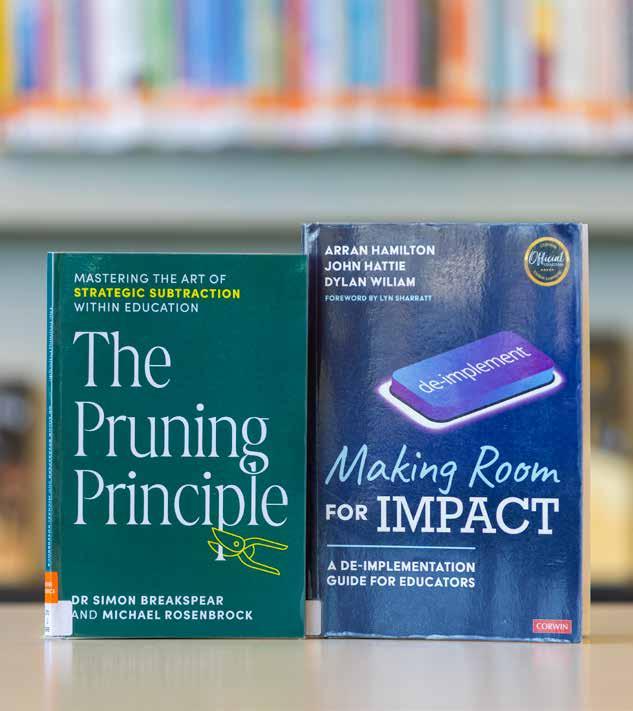
In education, saying ‘yes’ comes naturally. Yes to new ideas, yes to innovation, yes to anything that might help students succeed. Yet the accumulation of good intentions can quietly erode effectiveness. As argued in Making Room for Impact (Hamilton et al., 2024) and The Pruning Principle (Breakspear & Rosenbrock, 2024), improvement requires a different kind of courage: the willingness to say ‘no’ in order to protect what matters most.
Across many schools, the challenge is not a lack of effort to commitment. Quite the opposite. Teachers and leaders are working harder than ever, engaging with research, trialling new approaches, and responding to evolving expectations. This issue is not energy, but direction. When improvement efforts multiply, attention fragments. When priorities expand, depth can be lost.
This is where the idea of ‘doing less, better’ becomes not a retreat from ambition, but a more disciplined expression of it.
From accumulation to deliberate focus
It is easy to see how schools arrive at a crowded improvement agenda. Each initiative is typically well-intentioned, often evidence-based, and frequently introduced in response to genuine needs. Over time, however, these layers accumulate.
Making Room for Impact (2024) highlights a simple but powerful truth: impact depends on what we choose not to do as much as what we choose to pursue. When everything is prioritised, implementation becomes shallow and inconsistent. Hamilton et al. suggest instead to focus on a deliberate process of de-implementation to make room for more meaningful initiatives to have impact.
The shift, therefore, is not about doing less because schools are doing too much ‘wrong’, but about creating the conditions, or making room, for what is ‘right’ to actually take hold.
Why doing less is so difficult
If the case for focus is so compelling, why is it so hard to achieve?
Part of the answer lies in professional identity. Educators are problem solvers by nature. Faced with a challenge, the instinct is to act, to introduce a strategy, adopt a program, or implement a new approach. Saying ‘no’ or even ‘not yet’ can feel like inaction. Educators tend to have a strong belief that ‘caring more’ equates to ‘doing more’ (Breakspear & Rosenbrock, 2024). Educators can get stuck in the trap of adding more and more because we feel deeply about outcomes for our students. It is almost a fundamental flip in logic that ‘to do less is to achieve more in the long run’ (Breakspear & Rosenbrock, 2024, p. 28).
The challenge in education is not knowing what to do but doing what we know well. This requires sustained attention, repetition, and refinement, conditions that are easily disrupted by the introduction of new priorities.
There are also structural pressures. Accountability demands, policy changes, and community expectations can all push schools toward visible action. Adding something new is often more tangible than deepening what already exists.
The Pruning Principle captures this tension through the metaphor of pruning. Growth, the authors argue, depends not just on what is added, but on what is removed (Breakspear & Rosenbrock, 2024). Without pruning, even strong initiatives can become crowded out. Just as plants require regular pruning to ensure healthy growth and best use of resources, schools too should regularly prune and cut back on what they are doing to ensure a healthy and productive future. The process of deliberately cutting back is essential for long term vitality. The key therefore to unlocking our growth is to ‘do less, better’ (Breakspear & Rosenbrock, 2024).
The case for depth over breadth
At the centre of both texts is a shared proposition: depth drives impact.
Many high impact practices, such as effective feedback, clear learning intentions, and formative assessment, are not new. Their power lies in how well they are understood and enacted. These practices are deceptively complex. Doing them well requires more than awareness; it requires ongoing professional learning, collaboration, and reflection. When schools attempt to implement multiple priorities simultaneously, this depth becomes difficult to achieve.
Focusing on fewer areas allows for:
• greater clarity about what matters most
• stronger alignment across classrooms and teams
• more meaningful professional dialogue
• increased consistency for students.
In this sense, doing less is not about reduction for its own sake. It is about making space for the kind of work that actually changes practice.
Pruning redirects energy and resources, stimulates new growth, reshapes for health and longevity, and can be applied at any level of focus (Breakspear & Rosenbrock, 2024).
Pruning as a leadership practice
Adopting a ‘less, better’ approach depends heavily on leadership. As Breakspear and Rosenbrock (2024) argue, pruning is an intentional act of leadership, not a passive process.
This involves asking difficult but necessary questions:
• Which initiatives are making the greatest difference for our students?
• What is currently diluting our efforts?
• Where are staff experiencing overload or fragmentation?
Importantly, pruning does not mean abandoning improvement. It means sequencing it. Some priorities may be paused, others scaled back, and a few selected for sustained focus. In the process of pruning, schools should work within their ‘seasons’, identifying the best times for major pruning versus light pruning, that fits in with the timing of the school (Breakspear & Rosenbrock, 2024).
Done well, this approach can be energising rather than limiting. Clarity reduces cognitive load. Shared priorities strengthen collective efficacy. Staff are more likely to see the impact of their efforts when they are not spread too thin.
A key idea in Making Room for Impact is that schools must actively ‘make room’ for improvement. Time, attention, and professional energy are not unlimited resources – they must be protected. The authors emphasise a sustained focus on efficiency, and outline several ways to ‘de-implement’, such as assessing an innovation’s worth to ascertain whether we should Remove, Reduce, Re-Engineer, or Replace (Hamilton et al., 2024). The suggested four stage focus to make more room for impact is as follows:
1. Discover areas for de-implementation.
2. Decide the best fitting strategy (e.g. Reduce, Remove, Re-Engineer or Replace).
3. De-Implement by bringing plans/strategy to life.
4. Re-Decide or decide where to next.
This conscious approach to ‘making room’ has practical implications for schools, including:
• streamlining meeting structures to focus on core priorities
• aligning professional learning with a small number of goals
• reducing competing initiatives within the same timeframe
• creating space for teachers to collaborate and reflect.
These actions may appear modest, but their cumulative effect can be significant. They signal that focus is not just a slogan, but a lived reality within the school.
Conversely, in The Pruning Principle, the steps of the Pruning Cycle require us to critically examine pruning targets, consciously remove things, and then carefully nurture what remains (Breakspear & Rosenbrock, 2024).
One of the most compelling aspects of the ‘do less, better’ approach is its sustainability. Schools are not short-term projects; they are ongoing communities of practice. Improvement, therefore, must be maintainable over time.
When schools attempt to do too much, too quickly, the result is often fatigue. Initiatives are introduced with enthusiasm but fade before they are fully embedded. In contrast, a focused approach allows practices to become part of the fabric of the school.
This is where restraint becomes a form of professionalism. Choosing not to act immediately, or to limit the number of priorities, reflects a deep understanding of how change actually happens.
For teachers, this approach offers both reassurance and responsibility.
It acknowledges the reality of workload and the limits of attention. It affirms that doing fewer things well is not a compromise, but a mark of expertise.
At the same time, it calls for commitment to depth. When priorities are clear, the expectation is not minimal effort, but meaningful engagement. This might involve revisiting familiar strategies with fresh eyes, seeking feedback, and refining practice over time.
Teachers also play a vital role in shaping focus. Their insights into what is working, and what is not, are essential for informed decision making at the school level.
For school leaders, the message is both simple and demanding: focus is a choice that must be continually defended. As argued in Making Room for Impact, teachers need a mandate or permission to de-implement and also require the organisational foundations to focus on efficiency of impact (Hamilton et al., 2024).
It requires moving from a mindset of accumulation to one of curation. Not every good idea can be pursued at once. Not every initiative needs to be adopted immediately. Breakspear and Rosenbrock (2024) argue that pursuing an unrealistic number of things to do leads to less effective schools and less motivated staff.
This does not mean resisting innovation but sequencing it thoughtfully. It means being clear about what matters most now, while keeping an eye on what comes next.
Perhaps, most importantly, it involves communicating this approach with clarity and purpose. When staff understand why certain decisions are made, why some things are stopped, paused, or delayed, they are more likely to commit to the shared direction.
In a profession defined by care and commitment, doing less can feel counterintuitive. Yet, as The Pruning Principle and Making Room for Impact make clear, focus is not the enemy of ambition; it is its foundation.
The real challenge for schools in not whether to improve, but how. By choosing depth over breadth, clarity over complexity, and discipline over diffusion, schools can create conditions for meaningful, lasting impact. De-implementation allows us to focus on practices that have more supporting evidence and a higher probability of positive impact on students (Hamilton et al., 2024). Ultimately, through the ‘pursuit of less, we actually achieve far more’ (Breakspear & Rosenbrock, 2024, p. 136), which results in a much more sustainable impact long term.
Doing less, in this sense, is not about lowering the bar. It is about finally giving our best ideas the space they need to succeed.
References
Breakspear, S., & Rosenbrock, M. (2024). The Pruning Principle Amba Press.
Hamilton, A., Hattie, J., & Wiliam, D. (2024). Making Room for Impact Corwin Press.

Sophie Boller Head of Year
In October 2025, I was fortunate to spend a week in Sydney at Kambala. Situated in the harbourside suburb of Rose Bay in Eastern Sydney, Kambala has been educating girls since its foundation in 1887. With a mission that aligns closely with that of St Margaret’s, to assist every girl to reach her full potential while embracing Anglican traditions, it was a seamless transition into the new environment. The community embraced me with open arms, willing to share their knowledge, pride and love for the school.
My trip began with a move into the school’s boarding house – a beautifully refurbished home perched above Sydney Harbour. The school markets its boarding experience, which accommodates no more than 50 girls, as a ‘home away from home’, and it is a promise genuinely kept. Girls share twin rooms from Years 7 to 11 before earning a single room in Year 12; the lucky few even wake to a view of the Harbour Bridge. Mealtimes are calm and intimate, with a boutique quality that would feel like a striking contrast to the experience of our own boarders, with over 185 communing in our dining hall. Throughout the weekend, students were offered an array of activities, though group sizes were a fraction of what our girls experience on St Margaret’s boarding trips.
Once school started for the day, I was greeted warmly by friendly staff and students in the upper primary and secondary schools, all of whom welcomed me to their classrooms with genuine openness. I also had the privilege of meeting with Kambala’s pastoral care team to share and exchange ideas,
as well as participating in think-tanks centred on broader school-wide initiatives such as experiential and service learning. Each day brought exposure to a range of classroom routines and school structures, some reassuringly familiar to those at St Margaret’s, and others offering fresh perspectives I had not previously encountered.
Throughout my time at Kambala, I had the privilege of sitting in on History, English, Science and Geography classes ranging from Years 8 to12. Observing these lessons for the week offered valuable insight into the pedagogical approaches to teaching at Kambala and provided an opportunity to reflect on the varied ways in which learning was facilitated. One of the first things brought to my attention upon entering the English classroom was that in Term 4, Years 7 to 10 students participate in what is known as a ‘passion project’ – a unit of work which is not assessed. All formal assessment is completed within Terms 1 to 3, freeing students in the final term to engage in low-stakes learning and discover genuine enjoyment in acquiring new, relevant skills that will serve them in the years ahead.
Another initiative run by the English Department across the junior-secondary years was the CCC workshops, which allow students to self-select into either a cohort, challenge or consolidation session once a fortnight, developing their capacity for complex critical thinking. The aim is to familiarise students with sophisticated ideas and thought patterns at an accessible level, so that they can begin building the foundations of these skills ahead of the senior years.


At a classroom level, the school adopts the ‘Project Zero’ approach to learning. Project Zero is a teaching framework developed at Harvard University that promotes deep, meaningful learning using structured thinking routines. Its aim is to cultivate students’ capacity for critical and creative thought, encouraging them to make their thinking visible and to develop as independent, reflective learners. Project Zero was demonstrated in all of the classrooms into which I was welcomed, exposing me to a range of different thinking routines, from ‘Circles of Action’ in Geography to ‘Plus 1’ in History. What was great to observe was the fluency of the students in being able to enact these thinking routines in a variety of contexts, confidently unpacking complex ideas and making them more accessible. The purpose of these skills is to continue empowering students to build resilience as they move through secondary school and into tertiary education.
A commitment to preparing students for life beyond the classroom was a thread that ran throughout everything I observed at Kambala. For example, one of the overarching frameworks they have adopted to ensure a well-rounded education is the Global Citizen Diploma, which is compulsory for students in Years 7 to 9 and available as an elective from Year 10 onwards. The Global Citizen Diploma (GCD) is a high school credential, facilitated by a consortium of international
schools, that provides a framework for students to reflect on and document their growth across areas like multilingualism, community engagement, leadership, and intercultural communication – recognising learning that goes beyond traditional academic grades. With the idea to build a ‘Global Sisterhood’, this program encourages students to engage in meaningful action, often away from the classroom, that can bridge the gap between learning and daily life.
Ultimately, both schools are united by a common purpose: preparing young women to face an uncertain future with confidence and capability. I feel incredibly grateful to have experienced teaching and learning within a school of Kambala’s calibre. Students and staff alike were remarkably welcoming and generous, opening not only their classrooms to me, but also their home in the case of the boarding community. Naturally, comparison between our two schools underpinned many of my experiences, enriching them with fresh perspective and a strengthened belief in St Margaret’s approach. The experience is one which I could recommend to any staff member at St Margaret’s, especially someone who is interested in growing a network of like-minded educators, and I very much look forward to welcoming a member of Kambala’s staff to St Margaret’s and hearing their insights on the work we are doing here.

Annette Box
Assistant Head of PrimaryWellbeing and Operations
Prep – Year 3 Drama Teacher
What have you always wanted to do, but never been game to try?
What happened on the best day of your life? What would you like to be most famous for and why?
These are just three examples of questions posed to contestants on the 1980s dating show Perfect Match to ascertain someone’s values and whether they might be a suitable companion. Contestants then accessed the famed robot Dexter, who helped reveal the contestants’ outlooks. Young people today are navigating a similar process, seeking guidance to make decisions about their future, identity, and aspirations. A Dexter or a ‘Perfect Match’ to help them navigate through decisions would surely have a place in this AI-driven world. Yet, instead of a single guiding voice, there are multiple ‘contestants’ shaping these decisions, each influencing the paths young people consider possible or desirable. However, would it change the path traditional schooling is propelling young people down? To understand this, it is important to consider the key ‘contestants’ influencing decision-making about career pathways, particularly in relation to the pursuit of creative careers. Consider a few contenders who may influence the choices being made about career paths and futures, which are impacting the pursuit of creative careers today.
Contestant Group Number One have been described as ‘both the bearers of the flame or the crippling negative influence’ by Australian actor and director John Bell (2013, p. v), who also notes their dedication and generosity (Bell, 2013, p. vi), while arts educator, author and academic John O’Toole acknowledges their ability to ignite a love of theatre, thus enabling their participation in the arts, more than some theatre companies may realise (2014, p. 10).
Contestant Group Number Two want to attract young audiences to their productions with some stating that ‘engaging with young people is central to their mission’, while others view them ‘in more mercantile terms’ (Ewing, Fleming & Hughes, 2014, p. 99). Former artistic director and film maker John Sheedy offers some comfort to Contestants Number Two, noting that ‘making work for young people is way tougher than adult audiences and that they are the most painfully honest audience on the planet’ (2014).
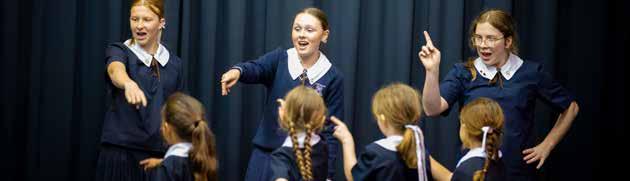
Contestants Number One represent the performing arts educators, inclusive of the world of arts education beyond the classroom – private Speech and Drama tutors who facilitate exams and eisteddfods, leaders of Drama clubs, co-curricular activities and amateur theatre troupes. But as part of the arts-school partnership, which truly paves the way for creative careers to become a reality, Contestants Number Two, the performing arts companies and industry professionals, must also be seen as essential workers.
You may wonder why Dexter, the love-matching robot, has any business being referenced in an arts education discussion, but what is evident is that young people and schools need a match-maker, a hand-shaker, and, at times, rule breakers to prise open the reality of a future in the arts. As Ewing et al., 2014, stated in the publication Young Audiences, Theatre and
the Cultural Conversation, ‘the Australia Council’s call for more engagement between arts organisations and schools is timely’ (p. 111). Sheedy supported this view in a keynote address at a Drama Queensland event, observing that ‘the value of our performing arts companies in the education system is a social and economic imperative’. Contestants from Groups One and Two are simply better off with each other. The arts, and more specifically, theatre for young people is a ‘landscape … [which] is slippery and malleable and will shift again’ (Gattenhof, 2005, p. 27). Indeed, in the past 20 plus years since this statement, the landscape has evolved enormously through the ATAR transition, new Drama syllabus, and introduction of compulsory arts study in the Australian Curriculum, but now it seems to be in crisis mode with universities across the country abandoning some of their creative courses altogether and reducing or removing the capacity to specialise in an art form as an educator. Bodies such as the National Advocates for Arts Education (NAAE, 2025) are petitioning to save the future of the Arts in our country, yet part of the crisis is a disconnect between schools and performing arts companies.
All parties must first note the difference between what they do know about each other, what they think they know, what they do not know, and what they should know; they need to ‘mind the gap’. The more care and respect demonstrated for the differences between these two worlds, the better the chance of fulfilling Bell’s belief that young people can remain ‘turned on by the liveness and immediacy of the theatre experience’ (2013, p. v). Ewing et al. stated that ‘schools – and teachers – are highly important to theatre companies and venues concerned with developing new audiences’ (2014, p. 111). Sinclair and Adams, in the same text, view the teacher and the school context as crucial in the establishment and development of theatre confidence (2014, p. 139). Bell further sympathises with teachers as, in his opinion, things have become much more challenging for teachers wanting to take students to the theatre during school as part of their curriculum programs (2013, p. vi). Teachers carry the torch and pass on a love for the arts; they are crucial to the creation of young people as the next stakeholders, whom Sheedy also sees as ‘the sponsors of the future…the media of the future, they are, in every way, the future’ (2014). The performing arts industry benefits from their guidance of young people into the arts, of young people as artists, and of current professional artists through patronage, theatre attendance, workshops, masterclasses, artist-in-residence models and more.
However, educators also have some criticisms, with one of the key informants of the Young Audiences, Theatre and the Cultural Conversation publication believing that ‘curriculum demands could lead to an over-analysis of the production at the expense of an aesthetic and emotional response’ (2014, p. 109); others again believed that the future of young people as theatre goers was limited by teachers often making ‘safe decisions’ and feeling more drawn to the works of established writers or classics (2014, p. 101). It seems that contestants from Group Number One have some work to do. Does theatregoing and the experience of live performing arts need to be less prescriptive and methodical? Do teachers err on the side
of caution too often, or even worse, are they restrained by the ever-present extra pressures of time and the increase in red tape? (Bell, 2013, p. vi). Looking to the future, educators should embrace Sheedy’s challenge to ‘not educate (the students) into creativity but ensure that we don’t educate them out of it’ (2014).
The performing artists and passionate company personnel deserve their standing ovation too. As Ewing et al. perceive, these organisations are, by and large, attempting to make their productions more accessible to young people, and are turning their focus more towards young people in the artistic decisions they make (2014, p. 110). Others were sincerely concerned that ‘key creative decision makers associate their artistic visions with their perceptions of performance and young people’ (2014, p. 107). But research finds that ‘mainstream theatre companies often fail to connect to the cultural interests and stories of young people’ (2014, p. 107). One former Brisbane artistic director claimed when programming a season of work, ‘we don’t aim it at anyone. I always think as soon as you start aiming a thing at anybody, you’re not going to get them. You do what you think is right, and people will come: that’s my view’ (Gow, as cited in Ewing et al., 2014, p. 108). For many of the companies in question, young people are not necessarily their core business. So, should educators not be glad that they are given the chance to interact with such a broad range of companies, within which they can surely find their ‘Perfect Match’? And how wonderful it is, that arts industry professionals can pursue their organisational and creative agenda but still benefit from the interest, ticket sales and buzz generated by young audiences? Sinclair and Adams see the ‘theatre excursion in which young people are scaffolded into new understanding through careful preparation and productive post-show discourse’ (2014, p. 139) as pivotal in the future of the theatre landscape. Gattenhof said that contemporary theatre for young people has the potential to be ‘considered to be at the cutting edge of performance and theatre practice in this country’ (2005, p. 27).
There can be a ‘Perfect Match’. But arts educators and industry professionals need to be respectful of the differences existing in the challenges faced in these overlapping, similar and undoubtedly reciprocal and beneficial arenas. Just because everyone went to school does not mean they understand the ever-evolving terrain of education. While progressive in many ways, the school setting is still a product of the industrial revolution. Educators know about the bureaucracy, politics and limitations that prevent them from engaging with performing arts companies and teaching artists at times. But they want to. When they have the funds, the time, the support and creative followers, Contestants from Group Number Two will never find more loyal followers than Contestants Group Number One. And Contestants Group Number Two representing the artists and organisations, need to be aware that schools know the challenges the arts face regarding resourcing, funding, space and personnel cuts.
In this post-covid recovery phase, educators know artists are battle weary, worn down by juggling production,
administration and marketing duties even before addressing the artistic aspects of their roles. But this creative light, which to an artist may merely be a sparking ember, can, to educators or to students and young people, be a fire that burns and sparks the love for the arts as a profession and viable future, and can often be what propels creatives through school. So, while Dexter the Robot may seem like the ultimate pin-up boy for performing arts organisations and education settings, one who computes the suitability of a match and spews forth a percentage-based result on Z-fold, perforated edged paper, a different metaphor may be needed. Perhaps a hybrid inspired by not just Dexter but the 1950s cartoon icon Gumby. Half Gumby, half Dexter; a flexible, malleable being, with a desire to be green, dedicated to arranging the most suitable pairings between education and arts contexts to create matches nothing short of ‘perfect’.
Despite Ewing et al. insisting that tensions are rife between artistic and educational goals (2014, p. 100), this is a worthy pursuit. While far from new, these deliberations are crucial. The relationship between arts educators and industry professionals has never been more important, nor more fragile. It demands transparency, respect, and a genuine resistance to stereotyping the other party. Above all, it requires the capacity to ‘mind the gap’. When both groups commit, the rewards are significant, not just for the health of the arts sector, but for the young people moving through it. As Sheedy reminds us, the goal is not simply to create ‘theatre goers and makers for the future’ (2014), but to ensure young people are inspired to pursue creative studies throughout their schooling, into the tertiary arena and, for some, into their life’s work. In finding each other, arts educators and industry professionals do more than sustain their respective worlds, they open the door for young people to find their own perfect match.
References
Bell, J. (2013). Theatre and young audiences. In J. O’Toole, R. Adams, M. Anderson, B. Burton, & R. Ewing (Eds.), Young audiences, theatre and the cultural conversation (pp. v–vii). Springer.
Ewing, R., Fleming, J., & Hughes, J. (2014). The industry partners’ perceptions. In J. O’Toole, R. Adams, M. Anderson, B. Burton, & R. Ewing (Eds.), Young audiences, theatre and the cultural conversation (pp. 99–114). Springer.
Gattenhof, S. (2005). Drivers of change. Journal of Queensland Drama Educators, 38(2), 26–33.
National Advocates for Arts Education. (2025). Creative arts and arts education: A national tertiary snapshot (2018–2025). https:// naae.org.au/news/creative-arts-and-arts-education-anational-tertiary-snapshot-20182025
O’Toole, J. (2014). Introduction. In J. O’Toole, R. Adams, M. Anderson, B. Burton, & R. Ewing (Eds.), Young audiences, theatre and the cultural conversation (pp. 1–13). Springer.
Sheedy, J. (2014, October 25). What’s our new contract? [Keynote address]. Revitalise, Drama Queensland, Brisbane, Australia.
Sinclair, C., & Adams, R. (2014). Building theatre confidence. In J. O’Toole, R. Adams, M. Anderson, B. Burton, & R. Ewing (Eds.), Young audiences, theatre and the cultural conversation (pp. 129–144). Springer.
Jessica Braham Acting Assistant Head of Faculty – Sociocultural Studies

As a teacher of History and English, I teach colonialism, gender and class divides, the Vietnam War, and complex historical and thematic debates – content that is frequently challenging, often confronting, and consistently demands intellectual rigour. I am someone who naturally invests deeply in students’ wellbeing, and, as such, I have at times worried about balancing genuine care with these intellectual demands. What has become clear through both practice and research is that warmth is not the opposite of academic rigour. Rather, it is the foundation that makes rigorous thinking possible.
False binaries
There is a persistent false binary in education between the ‘rigorous academic teacher’ who maintains high standards and the ‘warm relational teacher’ who prioritises relationships. The truth is that rigorous academic work demands both: students best engage in genuine intellectual work when they feel safe enough to take risks. When they are able to foster close connections with their teachers, students exhibit higher levels of academic interest, dedication, achievement, self-efficacy, and motivation (Hattie, 2009; Wang et al., 2023). For girls in highachieving environments, this need intensifies. Achievement pressure, perfectionism, and fear of failure create environments in which being wrong can feel catastrophic, rather than being viewed as a key stage of the learning cycle (Yeager & Dweck, 2020; Stentiford, Koutsouris & Allan, 2023). By infusing warmth into our daily interactions, classrooms can become counter-cultural spaces where struggle is normalised and safe, and intellectual risk-taking is celebrated.
Educators often resist the language of warmth because it can be seen as personality dependent and is frequently associated with lowering professional boundaries and becoming ‘a friend’ to students. It is associated with sacrificing academic standards and accepting mediocre work. For some, it implies offering only praise and toxic positivity. When considering what warmth truly is, Lemov’s (2021) ‘warm/strict’ framework offers a helpful lens to help reframe our understanding: effective teachers uphold high standards, while also engendering trust and creating warm, fair, and predictable relationships within professional boundaries (Australian Institute for Teaching and School Leadership, 2021).
With this in mind, there are several ways to effectively balance the warm/strict dynamic.
Building relationships through daily interactions
Relationships are built on the small details: greeting students at the door – by name, with eye contact – establishes belonging in thirty seconds (Evidence for Learning, 2023). Asking about students’ interests ensures they know that they are seen as individuals (Australian Education Research Organisation, 2024). Noticing participation in extra-curricular activities shows students we see them beyond our classes – go to their games, ask about their rehearsals, watch the films they recommend. Often, these moments of connection might be embedded within classroom routines at the start of a year but fade away as we become more familiar with our classes; however, it is vital to maintain these, even in the following years when they are no longer in your class, to ensure students feel supported to strive at school (Arslan et al., 2024).
When active engagement in the lesson is patchy, students exist at the fringes of the learning community; participation itself creates belonging, and warmth enables participation. RyrieJones (2025) advocates for the use of Mini Whiteboards and Turn and Talks as core routines that provide students with low-stakes, yet meaningful, means of participation. Teachers can then move onto Cold Calling – or rather, Warm Calling – because their students are primed; they know that this is a class they participate in, and they have already had experience sharing their thoughts with their peers (Metzger & Via, 2022; Ryrie-Jones, 2025).
Making the classroom safe for intellectual risk-taking requires deliberate practice. Willingham (2021) explains the importance of never punishing students for asking what might seem like a ‘silly’ question. Instead, take all questions at face value and move on. When students offer ideas that misread evidence, responding with ‘That’s interesting thinking, let me show you where the evidence suggests something different’ maintains dignity while redirecting learning. Pearsall (2024) describes these as ‘low-key interventions’: preserving relationships during correction. Normalising mistakes and questions through these interventions enables the coexistence of both challenge and support in your classrooms (Willingham, 2021).
Cognitive load theory demonstrates that structured support built into every lesson leads to high success rates. Ashman (2021, 2023) makes clear that this structure is in itself an act of care. Creating consistent routines establishes the safety that allows students to take intellectual risks (Bennett, 2020; Lemov, 2021). This involves clear entry and exit routines, visual and verbal cues that become familiar signposts for your students, and the normalising of revision to consistently emphasise that struggle indicates learning.
Feedback
Feedback that assumes competence (‘here’s what you’re doing well ... here’s your next challenge’) positions students as capable learners on a trajectory of growth. Timely, genuine, specific praise and criticism strengthen relationships and infuses warmth into a stage of learning that students can find worrisome (Di Lisio et al., 2025).
Conclusion
These strategies form the foundation of my classroom practice; they underpin rigorous work on challenging and confronting topics. What results is students who take bigger intellectual risks because they can trust that errors will not define them. They participate more fully when they believe their thinking, interests, extra-curriculars, and questions genuinely matter. Warmth is not personality: it is professional practice that builds cumulatively through small, consistent actions. In an
increasingly digital and disconnected world, classrooms in which students feel genuinely known become radical spaces of human connection. Really, the question is not whether we can afford to prioritise relationships alongside content, it is whether we can afford not to.
References
Arslan, G., Allen, K.-A., & Tanhan, A. (2024). Adolescent school belonging and mental health outcomes in young adulthood: Findings from a multi-wave prospective cohort study. School Mental Health, 16, 112–124. https://doi.org/10.1007/s12310023-09626-6
Ashman, G. (2021). The power of explicit teaching and direct instruction. Sage.
Ashman, G. (2023). A little guide for teachers: Cognitive load theory. Sage. Australian Education Research Organisation. (2024). Positive teacher–student relationships: Their role in classroom management. https://www.edresearch.edu.au
Australian Institute for Teaching and School Leadership. (2021). Australian professional standards for teachers. https://www. aitsl.edu.au
Bennett, T. (2020). Running the room: The teacher’s guide to behaviour. John Catt Educational.
Di Lisio, A., Longobardi, C., & Prino, L. E. (2025). Nurturing bonds that empower learning: A systematic review of the significance of teacher-student relationship in education. Frontiers in Education, 10, 1522997. https://doi.org/10.3389/ feduc.2025.1522997
Emslander, V., Holzberger, D., Ofstad, S. B., Fischbach, A., & Scherer, R. (2024). Teacher-student relationships and student outcomes: A systematic review of meta-analyses and second-order meta-analysis. Psychological Bulletin
Evidence for Learning. (2023). Behaviour interventions. https:// evidenceforlearning.org.au
Hattie, J. (2009). Visible learning: A synthesis of over 800 meta-analyses relating to achievement. Routledge.
Lemov, D. (2021). Teach like a champion 3.0. Jossey-Bass.
Metzger, K. J., & Via, Z. (2022). Warming Up the Cold Call: Encouraging Classroom Inclusion by Considering Warm & Cold-Calling Techniques. The American Biology Teacher, 84(6), 342–346. https://www.jstor.org/stable/48737793
Pearsall, G. (2024). Classroom dynamics: Practical strategies for dealing with off-task behaviour (Revised ed.). Amba Press.
Ryrie-Jones, B. (2025). Participation and responsive teaching. Educational Leadership.
Stentiford, L., Koutsouris, G., & Allan, A. (2023). Girls, mental health and academic achievement: a qualitative systematic review. Educational Review, 75(6), 1224–1254. https://doi.org /10.1080/00131911.2021.2007052
Wang, Y., Derakhshan, A., & Pan, Z. (2023). Exploring positive teacherstudent relationships: The synergy of teacher mindfulness and emotional intelligence. Frontiers in Psychology, 14. Willingham, D. T. (2021). Why don’t students like school? (2nd ed.). Jossey-Bass.
Yeager, D. S., & Dweck, C. S. (2020). What can be learned from growth mindset controversies? American Psychologist, 75(9), 1269–1284.
Kylie Briggs Learning Enhancement Case Manager
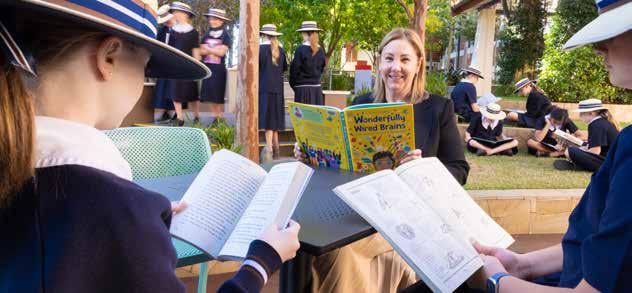
Dyslexia affects approximately 10% of the Australian population, and an estimated one in five children in Australian classrooms are thought to have the condition (Australian Dyslexia Association, 2023). That means, in a class of 25 students, it is statistically likely that five students are navigating the written world in a fundamentally different way. So, if you are teaching in an Australian classroom, you are almost certainly teaching dyslexic students, diagnosed or not. For these students, dyslexia poses significant challenges to reading development (Shaywitz & Shaywitz, 2005) and wider academic achievement across key learning areas. As the most prevalent of all Specific Learning Disorders (SLD), dyslexia touches every classroom, every year group, and every school community, but remains one of the most misunderstood.
Dyslexia is not a lack of effort or low intelligence.
Dyslexia is a neurological learning condition and a languagebased disorder. It is not due to poor teaching, lack of effort, or low intelligence. Dyslexia is also not a vision problem or about reading letters backwards, a common and persistent misconception. Building a shared understanding of what dyslexia is, what it looks like in the classroom, and how we can teach to the very real strengths of dyslexic learners means we can move from frustration to empowerment for both students and teachers.
The International Dyslexia Association (IDA, 2025) offers one of the most widely cited and scholarly endorsed definitions:
Dyslexia is a specific learning disability characterised by difficulties in word reading and/or spelling that involve accuracy, speed, or both and vary depending on the orthography. These difficulties occur along a continuum of severity and persist even with instruction that is effective for the individual’s peers … underlying difficulties with phonological and morphological processing are common but not universal, and early oral language weaknesses often foreshadow literacy challenges. Secondary consequences include reading comprehension
problems and reduced reading and writing experience that can impede growth in language, knowledge, written expression, and overall academic achievement.
This definition is supported in the Diagnostic and Statistical Manual of Mental Disorders, Fifth Edition (DSM-5; APA, 2022), which classifies dyslexia under Specific Learning Disorder with impairment in reading (SLD-R). Additionally, Carroll et al. (2025), through a Delphi consensus study involving experts from across academia and practice, confirm that dyslexia is best characterised as a continuum, not a distinct category, with no clear cut-off points.
While dyslexia is characterised primarily by a deficit in phonological processing, its implications extend far beyond difficulties with reading and spelling. Not only can it be a barrier to literacy acquisition, but it is also indicative of a fundamentally different pattern of brain organisation and cognitive processing (Edie & Eide, 2023), which contributes to the complexity and frequent mischaracterisation of the impairment.
Leverage prior knowledge to build understanding.
The classroom presentation of dyslexia is varied and can manifest across multiple domains. Teachers may identify difficulties in decoding, fluency, spelling, and phonological processing, as well as secondary behavioural indicators such as task avoidance, slow written output, difficulty with sequencing, and a discrepancy between oral and written performance. Students will often struggle with procedural and rote learning, memory, and rule-based tasks.
Importantly, these challenges frequently coexist with significant cognitive strengths. Many students with dyslexia demonstrate strong big-picture thinking, narrative and three-dimensional spatial reasoning, and creative and lateral problem-solving abilities – capabilities that can easily be overlooked when assessment primarily focuses on their deficits (Armstrong, 2012).
Phonological processing
Difficulty decoding letter-sound relationships
Working memory and processing speed
Struggles with rote memory and procedural learning
Written output and spelling
Lifelong difficulty; slow written production
Sequencing and rule recall
Symbol reversal; difficulty retaining patterns
Reliance on background clues and context
Comprehension breaks down when context is removed
Multiple choice assessments
Format disadvantages students who think holistically
Oral-written discrepancy
Ideas expressed verbally far exceed written work
Sound substitution
May say ‘ant colony’ instead of ‘add column’
Sources: Eide & Eide (2023); Armstrong (2012).
The dyslexic brain processes language differently, not deficiently.
When a student struggles to read aloud fluently, it is easy to assume the problem is comprehension or ability. In most cases, neither is true (Wolf, 2007). Research into dyslexic brain function suggests the challenge lies in the mechanical decoding process. The dyslexic brain processes written language differently, not deficiently. Where neurotypical readers decode text automatically, dyslexic learners use more cognitive effort on the mechanical demands of reading and writing, leaving fewer resources for the higher-order thinking that the task is actually meant to assess. This means that slow or effortful decoding is not a signal of low comprehension or low intelligence; it is a signal of high cognitive load.
This is an important distinction for teachers. When we understand how the dyslexic brain works, we can stop interpreting difference as a deficit and start designing classrooms and curricula that reduce unnecessary barriers and unlock genuine strengths. The goal is not to lower expectations, but to remove the cognitive noise that prevents students from demonstrating what they actually know.
Big picture and global thinking
Strong conceptual and systems-level understanding
Visual and spatial reasoning
Three-dimensional thinking and problem solving
Creative and lateral thinking
Finding unexpected connections and ambiguities
Oral storytelling and narrative
Strong verbal and declarative memory
Empathy and perseverance
Leadership and collaborative strengths
Project-based and discussion learning
Thrives when assessment goes beyond written tasks
General knowledge and curiosity
Often highly informed and engaged with the world
Perspective shifting
Ability to see problems from multiple angles
It is easy to feel overwhelmed by the complexity of learning diversity in our classrooms, but supporting dyslexic learners does not require overhauling your entire practice overnight. The Universal Design for Learning (UDL), developed by CAST (2024), provides a research-based framework for designing flexible learning environments to meet the needs of all students, including those with dyslexia from the outset, rather than retrofitting accommodations after the fact. UDL does not ask teachers to create separate programs for students with dyslexia; it asks them to design with variability in mind from the start. The strategies below are not accommodations for the few – they are quality teaching for all. When we reduce cognitive load, offer flexible means of expression, and build classroom cultures that normalise different ways of knowing, we create conditions where dyslexic learners, and every learner, can demonstrate what they are genuinely capable of.
What is good for dyslexia is great for everyone! Multiple means of Representation
• Provide text and audio
Offer text-to-speech tools as standard
• Use visuals and graphic organisers
Diagrams, charts, and concept maps, alongside text
• Pre-teach vocabulary
Build word knowledge before reading tasks
• Chunk instructions
Break tasks into steps; check for understanding
• Allow oral responses and video
Verbal explanation, recording, or presentation
• Offer diagrams and mind maps
Visual alternatives to extended writing
• Use assistive tech as standard
Speech-to-text and word prediction for all
• Reduce timed pressure
Allow extended time as a universal default
• Clarify success criteria visually
Verbal and written rubric so expectations are clear
• Normalise different ways of learning
Avoid cold reading or writing 'on the spot'
• Reframe tools as smart behaviours
Checklists, spellcheck, and audio are learning tools
• Provide written scaffolds
Step-by-step guides for complex written tasks
The goal is not to fix the dyslexic brain but remove barriers and build on strengths.
Supporting dyslexic learners is never a solo act. Effective practice requires genuine collaboration – with families, with learning support teams, with specialists, and most importantly, with the student themselves. Inviting students into conversations about their own learning (‘What helps you? How do you think you learn best?’) is not just good pedagogy; it is the foundation of metacognitive development and self-advocacy. At the same time, teachers need to see themselves as part of a team, not the sole expert in the room. The relationship with a child’s family is daily, intimate, and foundational to everything else.
Research consistently shows that family engagement is one of the strongest predictors of academic success and wellbeing (ARACY, as cited in CAST, 2024), and when a child has a disability or learning difference, this relationship becomes more intensive still. Parents of children with dyslexia are often navigating far more than their child’s classroom experience. They are managing diagnoses, service systems, funding applications, and the emotional weight of watching their child struggle in environments not designed for them. As a result, many have become fierce and tireless advocates.
Teacher aides are an enormously valuable part of the support team, yet their potential is not always fully realised in classroom practice. They assist individual students with reading and writing tasks, support AAC use, and provide the kind of sustained one-on-one attention that a single teacher cannot always offer in a class of 25. Ultimately, the strongest predictor of success for a dyslexic learner is not any single strategyor resource; it is the quality of the relationships that surround them.
Conclusion
Variability is the norm, not the exception.
Dyslexia is not a deficit to be fixed, nor a problem to be managed quietly at the back of the classroom. It is a different and well-documented pattern of brain organisation that calls for a different approach to teaching. As Ainscow (2020) argues, supporting diverse learners is not a matter of bolting on individual adjustments after the fact; it requires a fundamental shift in how we design learning from the outset. Learner variability is not the exception in contemporary Australian classrooms; it is the norm. With one in five students likely experiencing dyslexia, the question is no longer whether you are teaching dyslexic learners. You are. The question is whether your classroom is designed to let them succeed.
Understanding what dyslexia is, and what it is not, is the starting point. From there, understanding how the dyslexic brain works shifts the lens from deficit to design. UDL provides the framework for that design: flexible, strengthbased, and built for variability rather than retrofitted for it.
Genuine collaboration with students, families, specialists, and teacher aides sustains it. A classroom culture that normalises different ways of knowing makes it possible for every learner to demonstrate what they are truly capable of.
You do not need to overhaul your entire practice tomorrow. Begin with one change such as letting a student respond verbally or pre-teaching the vocabulary before reading. These small, consistent acts accumulate, and over time, they become classroom culture. For a dyslexic learner who may have spent years wondering why reading and spelling feel impossibly difficult, that culture can be the difference between shutting down and thriving. It can be the difference between a student who believes they are not capable and one who finally has the conditions to show that they are.
References
Ainscow, M. (2020). Promoting inclusion and equity in education: Lessons from international experiences. Nordic Journal of Studies in Educational Policy, 6(1), 1–10. https://doi.org/10.10 80/20020317.2020.1729587
American Psychiatric Association. (2022). Diagnostic and statistical manual of mental disorders. Diagnostic and Statistical Manual of Mental Disorders, Fifth Edition, Text Revision (DSM-5TR), 5(5). https://doi.org/10.1176/appi.books.9780890425787
Armstrong, T. (2012). Neurodiversity in the classroom: Strength-based strategies to help students with special needs succeed in school and life. ASCD.
Australian Dyslexia Association. (2023). Dyslexia in Australia. https:// dyslexiaassociation.org.au/dyslexia-in-australia/
CAST. (2024). CAST universal design for learning guidelines version 3.0 https://udlguidelines.cast.org
Carroll, J. M., Holden, C., Kirby, P., Thompson, P. A., & Snowling, M. J. (2025). Toward a consensus on dyslexia: findings from a Delphi study. Journal of Child Psychology and Psychiatry, 66(7), 1065–1076. https://doi.org/10.1111/jcpp.14123
Eide, B. L., & Eide, F. F. (2023). The dyslexic advantage: Unlocking the hidden potential of the dyslexic brain (New ed.). Plume.
International Dyslexia Association. (2025). 2025 dyslexia definition project https://dyslexiaida.org/2025-dyslexia-definitionproject/
Shaywitz, S. E., & Shaywitz, B. A. (2005). Dyslexia (Specific Reading Disability). Biological Psychiatry, 57(11), 1301–1309. https:// doi.org/10.1016/j.biopsych.2005.01.043
Wolf, M. (2007). Proust and the squid: The story and science of the reading brain. HarperCollins.
Louise Brown Head of FacultySociocultural Studies
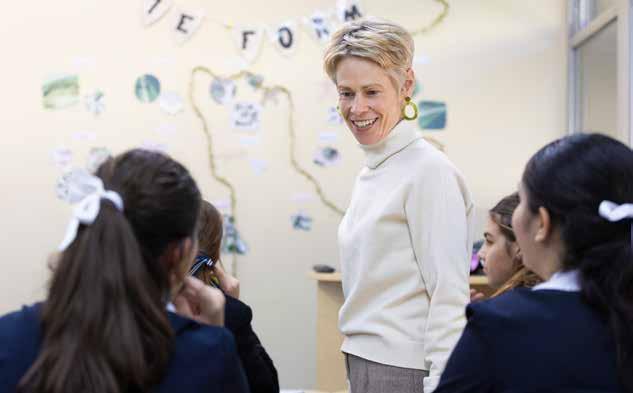
A sunny March morning, the well-appointed grounds of Ballarat Clarendon College, a welcoming conference registration team and a coffee van ready to take my order.
My ResearchEd day couldn’t have got off to a better start.
ResearchEd began in the UK in 2013. Its founder and director, Tom Bennett, was challenged to find a solution to the difficulties teachers faced in accessing high quality professional development, when most conferences happened during the school week and school budgets were squeezed. He also recognised the burgeoning grass-roots interest in evidencebased instruction – teachers eager to see how theory could become real classroom practice.
So began ResearchEd – now a worldwide (and weekend) movement. Speakers donate their time so ticket prices are democratically low, workshop proposals must be grounded in a robust evidence base, and the day has a relaxed but purposeful atmosphere – a gathering of people committed to making a difference, one lesson at a time.
What follows is a summary of my key takeaways.
Keynote 1. David Didau: Two rules for great teaching (and how to apply them)
British educator, writer and former English teacher David Didau shared two rules for great teaching:
Rule 1. Know what your students know
Why is it so important to know what’s inside our students’ heads? If learning is a change in long-term memory (Kirschner et al., 2006), we can’t see it in the moment; it will happen ‘elsewhere and later’. But what our students currently understand, are currently holding in their heads, determines our next steps. Teaching without regular assessment is guessing.
So, what can we assess? First, attention. David reminded us that it is normal for our attention to waver. But if attention is the gateway to learning, we must firstly seek that attention (‘tell and show stuff’), and second, sample it (‘ask lots of questions’).
Sampling must be frequent. It can include lots of closed and more open-ended questions. Closed questions have a bad reputation (‘low level thinking!’), but they respect the natural tendency of the mind to wander. Asking the equivalent of ‘did you catch that?’ or ‘are you with us?’ pulls everyone back into the room. David was keen to emphasise this shouldn’t be a ‘gotcha’ for the daydreamers. A lapse in focus is normal; checking in every few minutes brings everyone back into the room.
How can we check?
‘Cold Calling’ is a powerful way of maintaining attention and checking for understanding. We all laughed at the clarification: ‘yes cold, but not chilly! It’s not freezing!’. In fact, cold calling communicates the opposite: this is an inclusive classroom. We don’t exclude people because they don’t have the confidence or prior knowledge to immediately raise their hand.
Mini whiteboards elicit information quickly, and from everyone, on the ‘current state of play’. Teaching whiteboard routines is important (so boards are not waved like flags), as is teacher circulation, so minor errors can be picked up and addressed.
Asking ‘did you get it?’ requires humility. It may well be that what is in our heads didn’t land at all with our students. But proceeding without addressing misconceptions only widens the attainment gap. Students who knew anyway will continue to do well. Those who didn’t will fall further behind.
Rule 2: The curriculum determines success, not innate ability
Rule number two was a brief but powerful end to the keynote. Ability is a consequence, not a cause, of what happens in the classroom. When a student does not make expected progress, we should evaluate our teaching: another moment of humility, but one which empowers rather than blames teachers. It is our passion and skill as educators – and our commitment to evidence-based practice – which drives us to constantly ask how we could do better. Fittingly for ResearchEd, we left this first keynote reminded of our purpose and ready to raise our game.
Greg Ashman, Deputy Principal at Clarendon and conference host, addressed the challenges of teaching young people to spot misinformation in the age of ‘fake news’. Critical thinking has never been as important, but Greg challenged us to consider the evidence behind ‘what works’. Although teaching flaws in reasoning such as the ad hominin and straw man fallacies can make students slightly better at spotting misinformation, the gains are usually small.
What does make a difference is highly contextualised information which directly counters the false claims. Interventions need proximity, that is, knowledge that is closely aligned with the misinformation. A 2025 classroom-based intervention in India for 13,500 adolescents targeted healthrelated misinformation. The curriculum included general media literacy, advice on evaluating sources, and how to understand media bias. Participants were also taught more accurate scientific knowledge on vaccination, using local examples of vaccine hesitancy to explain the risks.
After four months, the authors found that respondents were ‘significantly better [than the control group] at discerning true from false information, altered their health preferences, relied more on science, and reduced their dependence on unreliable news sources’ (Amar et al., 2025, p. 725). The effects persisted another four months post intervention. The authors contrasted this face-to-face, iterative, knowledge-based and context specific intervention with the one off, hour-or-less
online courses on media literacy, for which they note ‘credible evidence of these causal effects remains absent’ (Amar et al., 2025, p. 727).
A 2018 study investigating participants’ ability to spot fake online images found that expertise in internet and social media use and experience in photo editing was a better predictor of the ability to evaluate image credibility than social and cognitive heuristic cues such as the origin of the source or the number of times it was shared (Shen et al., 2018).
All of this should lead us to think more critically about – critical thinking. How, for how long, and in what context should critical thinking be taught? It helps to remember that, like any broad skill, critical thinking can look very different across subject domains. Measuring its impact can also pose problems: how (and when) will we know if our students are better, overall, critical thinkers?
There are no magic wands. But the role of knowledge can be easily overlooked because as experts in our field we recall facts so easily. I can easily assess a claim on a period of history I know well, because errors will jar against my existing schema. In another topic on which I am less well informed, I may be more gullible, despite having a strong grasp of a range of logical fallacies.
Greg finished with a line pertinent to experts as well as novices: knowledge is what you think with.
Keynote 2. Bronwyn Ryrie-Jones: Opportunities to respond: Pure gold for engagement
Responsive teaching expert and instructional coach Bronwyn Ryrie-Jones set checks for understanding (CFUs) in the cycle of teach–check–respond, emphasising the importance of 100% participation.
Having previously attended Bronwyn’s sessions, two things particularly resonated this time. First, consider the intentionality of how we choose our CFUs. For example, cold calling is a good ‘sampler’ and a way to probe for deeper thinking, but it invites individuals and not the group into conversation. Choral response might be more superficial but involves the whole class and builds fluency with key terms.
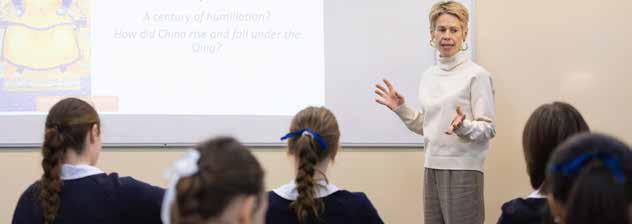
Second, I loved Bronwyn’s approach to teaching new vocabulary, really dwelling on the introduction of a new word such a ‘apprehensive’. Sharing a clear definition and then inviting students to consider a time when they felt apprehensive was a great way to ‘spend some time with the word’, as literacy experts Beck et al., (2002) emphasise in their book Bringing Words to Life. I recently trialled this in my Year 7 Humanities class. Having learnt the word ‘legitimate’ to lay the groundwork for a study on female pharaohs, I asked students to name an action which would not be legitimate in the exam hall. Thankfully, their answers – from out-and-out cheating to calling out or chewing gum – confirmed that their knowledge of the word and St Margaret’s non-negotiables was secure.
These techniques bring an added benefit to checking in so frequently: warmth and inclusivity. Every opportunity for students to respond is an opportunity for praise. Our aim should be to set students up for success, not by making the questions too easy, but through well-planned scaffolds that push students just enough. Classroom culture becomes one in which challenge is expected and effort is rewarded. Everyone wants to feel successful, and a classroom full of CFUs and OTRs is one where these opportunities come thick and fast.
My session: Explicit vocabulary instruction for secondary students in the Humanities.
An ISQ-funded Action Research Project in 2020 allowed me to explore the relationship between vocabulary and achievement. Word knowledge secures academic success across the disciplines. As Emeritus Professor of Humanities E.D. Hirsch (2013) has written: ‘Vocabulary is a convenient proxy for a whole range of educational attainments and abilities – not just skill in reading, writing, listening and speaking but also general knowledge of science, history and the arts.’ Professor of Evidence-Informed Learning and Teaching Carl Hendrick (2026) recently confirmed the importance of intentional vocabulary instruction that moves beyond a glossary definition and teaches the knowledge that sits behind a word: ‘The size of a child’s vocabulary is not a measure of how many words they have memorised but of how much of the world they have been taught.’
By their nature, history source extracts include a range of academic and sometimes archaic vocabulary. I asked my workshop participants to imagine a text with even 5% of the words blacked out and the resulting disjointed and disfluent experience – the frustration and demotivating impact on a struggling reader. It reminded me of Greg Ashman’s point about the invisible nature of expertise. Words like ‘exacerbate’ or ‘dissent’ and concepts such as ‘progressive’ or ‘liberal’ may barely be noticed by our expert eyes but are significant barriers to our students.
These issues are indeed exacerbated (!) when we see skills such as analysis and synthesis as domain neutral. My ability to analyse a source depends on knowledge – word and world knowledge – to unlock its meaning. In a recent blog post,
author of Teach like a Champion Doug Lemov wrote about teaching universal ‘analysis’ tools as a way to analyse any future source as an ‘educational chimera’. Using ‘chimera’ to describe an instructional illusion in itself reminds us of the privileged world occupied by those who know more words.
To develop our students into articulate, expressive, confident human beings, we should make vocabulary building both explicit and implicit. My session shared a range of strategies: choral response, retrieval practice, explorations of etymology, and ‘odd one out’ activities to check depth of understanding. We can make sophisticated language the norm by using it ourselves in our questioning. The important point is active practice: repeated exposure in different contexts. Students need to encounter a word many times to fully ‘know it’.
This year my own pedagogy goal, inspired again by Doug Lemov in his most recent book The Science of Reading, is to build opportunities for whole class reading of longer extracts, and building vocabulary knowledge as well as familiarity with more complex syntax through shared teacher and student read-alouds. ResearchEd is a grassroots movement for change. A community is developing of teachers committed to evidencebased practice. It has the potential to be transformative for our profession and the lives of our young people.
References
Amar, P., Badrinathan, S., Chauchard, S., & Sichart, F. (2025). Countering Misinformation Early: Evidence from a Classroom-Based Field Experiment in India. American Political Science Review, 120(2), 1–21. https://doi.org/10.1017/ s0003055425101184
Beck, I. L., McKeown, M. G., & Kucan, L. (2002). Bringing words to life: robust vocabulary instruction (2nd ed.). Guilford Press.
Hendrick, C. (2026, March 5). Reading Comprehension is not a skill. The Learning Dispatch https://carlhendrick.substack.com/p/ reading-comprehension-is-not-a-skill
Hirsch, E. D. (2013). A Wealth of Words. City Journal. https://www. city-journal.org/article/a-wealth-of-words
Kirschner, P. A., Sweller, J., & Clark, R. E. (2006). Why Minimal Guidance during Instruction Does Not work: an Analysis of the Failure of constructivist, discovery, problem-based, experiential, and inquiry-based Teaching. Educational Psychologist, 41(2), 75–86. https://doi.org/10.1207/ s15326985ep4102_1
Lemov, D. (2024, November 13). The Science of Reading: It’s About Knowledge not 'Transferable Skills'. Teach like a Champion https://teachlikeachampion.org/blog/the-science-ofreading-its-about-knowledge-not-transferable-skills/
Lemov, D., Driggs, C., & Woolway, E. (2025). The Teach Like a Champion Guide to the Science of Reading: Translating Research to Reignite Joy and Meaning in the Classroom (1st ed.). Jossey-Bass.
Shen, C., Kasra, M., Pan, W., Bassett, G. A., Malloch, Y., & O’Brien, J. F. (2018). Fake images: The effects of source, intermediary, and digital media literacy on contextual assessment of image credibility online. New Media & Society, 21(2), 438–463. https://doi.org/10.1177/1461444818799526

Erin Buckingham Head of Year and AI Champion
With the release of St Margaret’s 2026-2030 Strategic Plan, our school specifically committed to Future Focused Learning, with an objective to ‘nurture a learning culture which inspires and challenges students to excel, while supporting them through their school journey and preparing them for their futures’ (St Margaret’s Anglican Girls School, 2026). In doing so, we understand that, with the rise of Artificial Intelligence (AI), particular skills – some traditional, some more novel – will ensure our students are well placed to excel in a rapidly evolving world. Public speaking is often considered an important leadership skill, and perhaps even more so with the rise of AI. Arruda (2026) suggests that ‘the leader who runs a compelling meeting, delivers a sharp client pitch or leads a high-energy virtual session will always be remembered more than the person who wrote another article’. So, what does this mean for us as educators?
In the Castlereagh Statement (Castlereagh Summit, 2026), a call to action on Australian Education from several sectors in response to AI, it’s recognised that ‘rapid advancement of generative AI has necessitated deep interrogation of our assumptions about education and training, in particular what we value and what we measure’. Although, anecdotally, there has been a decline in recent decades in the presence and frequency of live oral assessments and school-based public speaking competitions, the ability to construct a well-developed argument and engage and persuade an audience of your stance continues to be a valued skill. This is particularly so when we consider the factors that positively influence girls’ leadership development (Archard, 2013). If anything, public speaking continues to be both feared and revered in equal measure, perhaps for its ability to either undermine one’s credibility or, alternatively, to garner respect and establish one’s reputation. Even if AI can be used to help with the development of a speech, the ability to deliver it convincingly and genuinely connect with an audience (in real life) is a uniquely human skill. In our increasingly complex and unpredictable world, we need leaders who offer hope, trust, compassion and stability (Gallup, 2025), all of which can’t be fostered without the ability to effectively communicate and genuinely connect with others.
A report from Deloitte in 2019 about the skills needed for the future included verbal communication skills, with 70 per cent of the then jobs in Australia requiring these (Deloitte,
2019). Moreover, a more recent report on generative AI and its implications for work and skills (Australian Government, 2024) reveals that, in an analysis of job advertisements, roles involving high exposure to and use of AI also demanded more human-centric qualities such as leadership, critical thinking and, crucially, communication skills. The 2026 Skills Horizon report from the University of Sydney (2026) expands on this further, suggesting that ‘The Grounded Leader’ will be best positioned to respond to ongoing ambiguity and uncertainty. This type of leader can turn ‘messy info and ideas into messages that make sense’, knows ‘that how you say things is just as important as what you say’ and has ‘empathy and respect’ for their audiences. Perhaps this explains why the World Economic Forum (2025) has identified ‘leadership and social influence’ as a skill on the rise in 2025-2030. Clearly, prioritising opportunities for students to develop their communication skills – with public speaking being a prime example – should be of pivotal importance when we consider how to best prepare them for future study and work, and especially for equipping them with the leadership skills needed in AI-enabled contexts. Furthermore, given that extracurricular activities are an important place for students to learn and practise their leadership skills (Wright et al., 2025), opportunities for students to hone their abilities in public speaking should warrant greater attention.
Currently, St Margaret’s provides two organised activities for students to practise the skill of public speaking – the annual interschool English-Speaking Union’s Public Speaking Competition, and Maggies Corner, a more informal schoolbased event informed by London’s Speakers’ Corner in Hyde Park (The Royal Parks, n.d.). Nevertheless, further school-based opportunities should be considered to involve more students in practising this important skill (as well as expose them to different styles, tones, formats and audiences), including:
• speeches at assemblies and year level assemblies
• offering Acknowledgement of Country or prayer at official events
• expressions of thanks at the conclusion of events
• team building ‘pep talks’ at sporting fixtures
• classroom activities involving sharing of individual or group responses.

When considering public speaking opportunities for students and the development of their skills, attention should also be paid to fostering the following capabilities, which are key attributes of successful public speaking (BBC Bitesize, n.d; Harvard Division of Continuing Education, 2024). These include:
• strategies for managing nervousness
• understanding and acknowledging the audience in both the crafting and delivering a speech
• researching and collating interesting, relevant, and discerning ideas
• organising ideas into a logical structure with clear signposting and cohesive devices
• managing scripts, palm cards, microphones, and/or supporting multimedia
• employing good stance and posture
• including gestures and movement (if appropriate)
• incorporating silence and pausing for impact
• using facial expressions
• projecting and maintaining an audible volume
• maintaining an appropriate pace and varying pace for effect
• using intonation for emphasis
• keeping to set time frames.
As we look ahead, confident that change and complexity await as AI adoption increases, we can be reassured that learning certain knowledge and skills today will help our students to navigate their futures and be the leaders of tomorrow. With AI already transforming and disrupting the way we live and learn, public speaking is a powerful skill and an effective means of cutting through, influencing others, and inspiring hope – all attributes of successful leaders.
References
Archard, N. (2013). Female leadership framework: Developing adolescent girls as future women leaders through the formation of a female leadership identity. Leading and Managing, 19(1), 51-71. https://search.informit.org/ doi/10.3316/informit.569463423607984
Arruda, W. (2026, April 1). The most powerful way to grow thought leadership in the age of AI. Forbes. https://www.forbes.com/ sites/williamarruda/2026/04/01/the-most-powerful-way-togrow-thought-leadership-in-the-age-of-ai/
Australian Government. (2024). Our gen AI transition: Generative AI and its implications for work and skills https://www.dewr.gov.au/ sites/default/files/2024-10/our_gen_ai_transition.pdf
BBC Bitesize. (n.d.). KS3: How to deliver a speech https://www.bbc.co.uk/ bitesize/articles/z6vq7yc
Castlereagh Summit. (2026). The Castlereagh statement: A call to action on Australian education https://castlereagh.ai/wp-content/ uploads/2026/04/The-Castlereagh-Statement-v1.00-1.pdf
Deloitte. (2019). The path to prosperity: Why the future of work is human https://cica.org.au/wp-content/uploads/90572c4f-4bb54b54-bf27-cc100d86890d_20190612-btlc-inbound-futurework-human-report.pdf
Gallup. (2025). Global leadership report: What followers want. GallupGlobal-Leadership-Report-What-Followers-WantReport.pdf
Harvard Division of Continuing Education. (2024, January 8). 10 tips for improving your public speaking skills. Harvard University https://professional.dce.harvard.edu/blog/10-tips-forimproving-your-public-speaking-skills/
St Margaret’s Anglican Girls School. (2026). Our strategic direction 2026–2030. https://www.stmargarets.qld.edu.au/discover-stmargarets/our-school/strategic-direction
The Royal Parks. (n.d.). Speakers’ Corner. https://www.royalparks.org.uk/ visit/parks/hyde-park/speakers-corner
University of Sydney. (2026). 2026 skills horizon report. https://www. sydney.edu.au/content/dam/corporate/documents/newsand-opinion/media-and-news/2026-skills-horizon.pdf
World Economic Forum. (2025). Future of jobs report. https://reports. weforum.org/docs/WEF_Future_of_Jobs_Report_2025.pdf
Wright, E., Lee, M., Walker, A., Bryant, D., Choi, S., & Hassan, K. (2025). Developing the next generation of leaders: A global study of student leadership. Educational Studies, 51(3), 327347. https://doi.org/10.1080/03055698.2023.2216331

Courtney Burton Academic Flyers Coordinator International Pastoral Care Coordinator
Know students and how they learn. Know the content and how to teach it. Sounds simple, right?
Yet, research consistently shows that gifted students risk being overlooked in mixed-ability classrooms, where teaching tends to focus on students with learning difficulties; that is – some of the students, or on meeting standardised curriculum benchmarks – some of the content (Nicholas et al., 2024; Ardenlid et al., 2025). Without intentional, evidence-informed strategies, gifted students can disengage, underachieve, and fail to reach their potential. The assumption that they can look after themselves, combined with cognitive pressures on the teacher, means that high-ability learners are the group most likely to be under-served (Kalobo & Setlalentoa, 2024; Ardenlid, 2025).
There are plenty of enrichment programs offering interventions that expose students to new disciplines, complex ideas, and real-world challenges, but extra-curricular activities are only part of the solution (Reis et al., 2021; Gül & Ayık, 2023). So, what can we do to meet the needs of these students at a classroom level?
First, the evidence base emphasises Differentiated Instruction.
Yet, this is one of the most cognitively complex spaces for educators. Time and resourcing are required to design genuinely challenging differentiated lessons for all students. To meet each student’s learning profile, we need to adjust the content, process, product and learning environment (VanTassel-Baska et al., 2020).
The complexity and, let’s be honest, anxiety, lie in how to cater to all the students all the time and whether this is even possible. Even in an accelerated classroom – another evidence supported intervention for gifted and talented students enhancing both cognitive development and academic performance without negative social consequences when implemented thoughtfully – there is no standard one-size-fits-all solution (GarcíaMartínez et al., 2021; Olszewski-Kubilius & Subotnik, 2023).
Thankfully, Science of Learning (SoL) strategies can ‘point us in the right direction of practices that work with most students most of the time’ (Breakspear & Jones, 2021). By filtering research-backed methods for gifted and talented students through the lens of SoL strategies that we know work, we can find some clarity in our approach.
Curriculum compacting
Curriculum compacting is the process by which a teacher assesses what gifted students already know, eliminates repetition of mastered content, and replaces it with more appropriately challenging activities, thus respecting students’ existing knowledge and creating the time and space for deeper learning (Reis et al., 2021). We can then ask: Which SoL strategies help us to compact the curriculum?
1. Diagnostic pre-assessment. Meet your students where they are to avoid spending precious class time on material that students have previously mastered (Renzulli & Reis, 2014). Carefully designed pre-tests and tasks provide invaluable insight into your students’ knowledge and abilities before moving into the curriculum content.
2. Retrieval practice and spaced practice. This is particularly useful to confirm genuine mastery versus surface familiarity. Brief retrieval-based checks (low-stakes quizzes, oral recall, worked examples from memory) spaced over a few sessions following initial pre-testing give a much more reliable picture of whether a student has genuinely consolidated a concept versus merely recognising it in a familiar format. This also applies when ‘bridging forward’. Success in accelerated courses depends on retention from lower-level courses, making long-term memory consolidation especially critical in sequential disciplines (Bego et al., 2024).
3. Metacognition. The capacity to monitor, evaluate, and regulate one’s own thinking and learning is particularly important for gifted learners who are being accelerated into unfamiliar territory. The Education Endowment Foundation (2018) recommends teachers explicitly model how to approach unfamiliar problems, support students in planning and monitoring their own progress, and build in structured reflection. All these help to scaffold the transition to advanced content.
Continuous, low-stakes formative assessment through observation, dialogue, pre-tests, and checking in during tasks allows teachers to identify gifted students’ entry points and adjust instruction accordingly. Regular, personalised feedback that connects to students’ prior work and encourages metacognitive awareness is particularly valuable for gifted learners (Ardenlid, 2025; VanTassel-Baska et al., 2020). Again, we can ask, what does this look like in the classroom?
1. Learning intentions and success criteria. Clearly sharing learning intentions and success criteria is a prerequisite for meaningful checking for understanding, since students cannot demonstrate understanding of goals that have not been made explicit to them (Hattie & Yates, 2013). For gifted students, this allows for self-monitoring, and when the success criteria establish the base, students can easily identify what goes beyond that, enabling meaningful extension tasks that are anchored to the same learning intention (Wiliam, 2011).
2. Cold calling. Cold calling, combined with Sherrington’s (2017) ‘add, build, challenge’ (ABC) technique, means gifted students can be prompted to extend or critique peers’ answers rather than simply waiting for the next topic. The technique’s power for this group lies in pairing it with deliberately higher-order, open-ended, or evaluative prompts (Ryrie-Jones, 2026).
3. Hinge-point questions. For teachers, carefully designed questions placed at a critical juncture in a lesson provide clarity in which instructional path to take next, as they demonstrate how the student is thinking rather than whether they simply got it right (Wiliam, 2006). They can expose gaps in understanding that would otherwise stay hidden behind a facade of high performance and provide real-time evidence-based justification for differentiation (Wiliam, 2011; Reis & McCoach, 2000).
Grouping gifted students together for at least part of their learning, whether within a mixed-ability or accelerated class, provides access to intellectual peers who can challenge and extend each other’s thinking. Tasks that allow students to contribute at varying levels of complexity all support inclusion while still meeting gifted learners’ needs (Ardenlid, 2025; Nicholas et al., 2024). Here, we can use:
1. Think-pair-share. This strategy can allow all students to be involved in meaningful dialogue to support thinking; however, the questions must be genuinely open and challenging, and pairs must be carefully selected, otherwise there is a risk of surface-level thinking and process over depth (Sherrington, 2019).
2. Peer assessment. Pairs act as verifiers for each other using exemplars, fact sheets, or mark schemes as reference, greatly increasing the volume of retrieval practice and
feedback (Sherrington, 2019). These can help gifted students develop a deeper understanding of complex concepts, enhance metacognitive capacity, and support learner self-efficacy (Power & Tanner, 2023).
The research is clear: gifted students in mainstream classrooms are frequently under-served, and generic differentiation strategies, such as more of the same tasks and extra worksheets, do not meet their needs. But the same body of research also offers genuine reasons for optimism. Classroom strategies such as curriculum compacting, providing feedback, and collaborative learning alongside school-wide interest-based enrichment and acceleration have solid evidence behind them and can be implemented incrementally, without overturning a teacher’s entire practice overnight (Reis et al., 2021; VanTasselBaska et al., 2020).
What is required is a shift in orientation: from coverage to depth, from uniformity to responsiveness, from output to potential. Gifted students do not need teachers who treat them as low-maintenance or self-sufficient. They need teachers who see their capacity, name it, and design experiences worthy of it (Olszewski-Kubilius & Subotnik, 2023).
That starts not with a policy or a program, but with a question asked at the beginning of every lesson: What will challenge my most capable learners today, and how will I know?

References
Ardenlid, F. (2025). Differentiated instruction for gifted students and their peers in Swedish mixed-ability classrooms: Teachers' principles and practices. Cogent Education, 12(1). https://doi. org/10.1080/2331186X.2025.2520560
Ardenlid, F., Lundqvist, J., & Sund, L. (2025). A scoping review and thematic analysis of differentiated instruction practices: How teachers foster inclusive classrooms for all students, including gifted students. Teaching and Teacher Education. https://www.sciencedirect.com/science/article/pii/ S2666374025000056
Bego, C. R., Lyle, K. B., Ralston, P. A. S., Immekus, J. C., Chastain, R. J., Haynes, L. D., Hoyt, L. K., Pigg, R. M., Rabin, S. D., Scobee, M. W., & Starr, T. L. (2024). Single-paper meta-analyses of the effects of spaced retrieval practice in nine introductory STEM courses: is the glass half full or half empty? International Journal of STEM Education, 11(1). https://doi. org/10.1186/s40594-024-00468-5
Breakspear, S., & Jones, B. R. (2021). Teaching sprints: How overloaded educators can keep getting better. Corwin, A Sage Company. Education Endowment Foundation. (2018, April 27).
Metacognition and Self-regulated Learning. EEF https:// educationendowmentfoundation.org.uk/educationevidence/guidance-reports/metacognition
García-Martínez, I., Gutiérrez Cáceres, R., Luque de la Rosa, A., & León, S. P. (2021). Analysing educational interventions with gifted students: Systematic review. Children (Basel, Switzerland), 8(5), 365. https://doi.org/10.3390/ children8050365
Gül, M. D., & Ayık, Z. (2023). Enrichment studies in gifted education: A bibliometric analysis with RStudio. Participatory Educational Research, 10(3), 266–284. https://doi.org/10.17275/ per.23.55.10.3
Hattie, J., & Yates, G. (2013). Visible learning and the science of how we learn. Routledge.
Kalobo, L., & Setlalentoa, W. (2024). Navigating challenges in gifted education: A teacher's perspective on overcoming barriers. Athens Journal of Education https://files.eric.ed.gov/fulltext/ EJ1448528.pdf
Nicholas, M., Skourdoumbis, A., & Bradbury, O. (2024). Meeting the needs and potentials of high-ability, high-performing, and gifted students via differentiation. Gifted Child Quarterly, 68(2). https://doi.org/10.1177/00169862231222225
Olszewski-Kubilius, P., & Subotnik, R. F. (2023). Transforming gifted education in schools: Practical applications of a comprehensive framework for developing academic talent. Education Sciences, 13(7), 707. https://doi.org/10.3390/ educsci13070707
Power, J. R., & Tanner, D. (2023). Peer assessment, self-assessment, and resultant feedback: an examination of feasibility and reliability. European Journal of Engineering Education, 48(4), 615–628. https://doi.org/10.1080/03043797.2023.2185769
Reis, S. M., & McCoach, D. B. (2000). The underachievement of gifted students: What do we know and where do we go? Gifted Child Quarterly, 44(3), 152–170. https://doi. org/10.1177/001698620004400302
Reis, S. M., Renzulli, S. J., & Renzulli, J. S. (2021). Enrichment and gifted education pedagogy to develop talents, gifts, and creative productivity. Education Sciences, 11(10), 615. https://doi. org/10.3390/educsci11100615
Renzulli, J. S., & Reis, S. M. (2014). The schoolwide enrichment model: A how-to guide for educational excellence (3rd ed.).
Prufrock Press.
Ryrie-Jones, B. (2026, March 20). researchED Keynote: OTRs. Cargill’s Classroom. https://cargillsclassroom.wordpress. com/2026/03/20/bron-ryrie-jones-researched-keynote-otrs/ Sherrington, T. (2017, May 28). Teaching to the top: Attitudes and strategies for delivering real challenge. Teacherhead. https:// teacherhead.com/2017/05/28/teaching-to-the-top-attitudesand-strategies-for-delivering-real-challenge/
Sherrington, T. (2019). Revisiting Dylan Wiliam’s five brilliant formative assessment strategies. Teacherhead. https://teacherhead. com/2019/01/10/revisiting-dylan-wiliams-five-brilliantformative-assessment-strategies/
VanTassel-Baska, J., Hubbard, G. F., & Robbins, J. I. (2020). Differentiation of instruction for gifted learners: Collated evaluative studies of teacher classroom practices. Roeper Review, 42(3), 189–201. https://eric.ed.gov/?id=EJ1263838
Wiliam, D. (2006). Assessment for learning: Why, what and how. [Conference keynote transcript]. Cambridge Assessment Network. https://dylanwiliam.org/Dylan_Wiliams_website/ Papers_files/Cambridge%20AfL%20keynote.doc
Wiliam, D. (2011). Embedded formative assessment. Solution Tree Press. https://cloudfront-s3.solutiontree.com/pdfs/Reproducibles_ EFA/The-Main-Idea-Embedded-Formative-AssessmentMarch-2013.pdf

Emma Cameron-Murray Secondary Teacher
Where would our society be without creativity in education? Have we begun to devalue the arts?
Art is not a new idea. We created the arts to communicate emotions, passions, conflicts, and jealousies, and to dramatise the passing of seasons, daily events, and rituals (Nathan, 2008). We created theatre that questioned our morals and proposed solutions; we drew and painted our histories and commemorated events with song and dance (Nathan, 2008). Our traditional artistic culture may very well be disintegrating quickly. Langer (1966) outlines the conviction held by most artists: Art is the epitome of human life. This conviction should be upheld in our schooling systems, as creative subjects need to hold a place in the education of our young people.
What are the arts?
Art can be defined as creating perceptive forms of expressing a particular human feeling or range of feelings (Langer, 1966). Furthermore, it is the truest record of feeling and is a spearhead to human development (Langer, 1966). The arts brighten up part of our existence as a community and our individual humanity. Thus, artistically centred subjects should be part of every child’s instruction and part of a core curriculum program (Lee, 1985). Therefore, the arts affect the ‘culture of learning’ within a school, with the subjects having a positive impact on the student’s wellbeing and creative and critical thinking (Winner & Hetland, 2000).
Education in the arts is widely practised through painting, sculpture, music, drama, film, dance, literature, and poetry. These practices are experimental and explore pushing the boundaries of making and creating (Frank, 1960). The essential ingredients of an arts subject are ‘creation’, ‘making’ or ‘construction’ in animated forms. Additionally, imagination and self-expression are integral in this creation of forms to create dynamic pieces of art that question the world in which they exist. Hence, imagination and self-expression are superpowers for understanding and viewing the world through a critical lens.
Innovative practices and fostering creativity
The arts subjects educate students in innovative practices and encourage students to push the boundaries of their ideas. There has always been a strong link to this approach and science, as the innovations of both science and art have a lasting effect on the work of other producers (Whitley & Gläser, 2019). Thus, the arts and sciences are leaders in cultural production and contributors to society (Whitley & Gläser, 2019). Creative thinking is the key to the development of innovative practices; thus, it is essential this is a priority in a young person’s education.
Furthermore, fostering creativity is a focus of the arts subjects, and it is of the utmost importance to the development of a well-rounded learner. Purposefully and deliberately fostering creativity is a beneficial practice for our students to develop
confidence and problem-solving abilities (Cropley, 1995). The arts are about engrossing yourself in the world of creation, learning ways of expressing thoughts, knowledge and feelings beyond words on the confinement of a task (Upitis, 2010). Therefore, fostering creativity brings benefits for all students and not just the ones who will go on to have a career in the arts or become creators (Cropley, 1995).
Enjoyment is very much in evidence in the arts classrooms, as the subjects give rise to satisfaction, happiness and a sense of playfulness and fun (Harland et al, 2000). This enjoyment adds another dimension to the students’ lives and their experience in the schooling system. The arts can offer a sense of achievement to all students, regardless of their levels of ‘abilities’ in the curriculum areas. This accessibility to opportunities to both create and perform encourages high levels of participation.
Repetitions, rules and rituals are the three ‘Rs’ experienced in the arts curriculum, which prepare students for shaping a well-rounded future and benefit their wellbeing (Upitis, 2010). This is due to the safety and security that the three ‘Rs’ provide, which reduce stress and create predictability in the lessons. Moreover, therapeutic effects emanate from the arts approaches to learning, as they craft a calming effect on a student’s temperament, offer a release of tension, or create an escape for a student (Harland et al., 2000). Students who select a subject in the arts curriculum have the benefit of becoming a calmer person and can build greater resilience through coping with their own emotions more effectively (Harland et al., 2000).
Emotional, social, physical and spiritual aspects of our learning are essential to our humanity (Upitis, 2010) – a humanity that is defined by ethical behaviour and qualities of compassion, kindness, and empathy.
In the arts subjects, students are given the opportunity to look at and around problems, thus using lateral and divergent thinking (Harland et al., 2000). Reflection and expansive thinking are at the forefront of the arts education; therefore, the encouragement and development of challenging ideas and perceptions help to encourage young people to construct their own meaning of the world (Harland et al., 2000).
We need to value the arts to have a community that continues to embrace history and culture. The arts guide us to question our society and the choices and decisions we are making on a local and global scale. Young people need to experience what the arts subjects can offer them, as the importance of continuing arts education is crucial to the human experience.
References
Cropley, A. J. (1995). Fostering creativity in the classroom: General principles. In M. Runco (Ed.), The creativity research handbook (Vol. 1, pp. 83–114). Hampton Press.
Frank, L. K. (1960). Role of the arts in education. Studies in Art Education, 1(2), 26–34. https://doi.org/10.2307/1319845
Harland, J., Kinder, K., Lord, P., Stott, A., Schagen, I., Haynes, J., Cusworth, L., White, R., & Paola, R. (2000). Arts education in secondary schools: Effects and effectiveness. National Foundation for Educational Research.
Langer, S. K. (1966). The cultural importance of the arts. Journal of Aesthetic Education, 1(1), 5–12. https://doi. org/10.2307/3331349
Lee, R. T. (1985). The expanding role of the arts in education. Music Educators Journal, 72(2), 28–33. https://doi. org/10.2307/3396548
Nathan, L. (2008). Why the arts make sense in education. Phi Delta Kappan, 90(3), 177–181. https://doi. org/10.1177/003172170809000304
Upitis, R. (2010). What is Arts Education good for? Education Canada, 43(4). https://www.edcan.ca/
Whitley, R., & Gläser, J. (2019). Changing conditions for innovation in different arts and science. Sociology of Science Discussion Papers, 1, 1–40.
Winner, E., & Hetland, L. (2000). The arts in education: Evaluating the evidence for a causal link. Journal of Aesthetic Education, 34(3/4), 3–10.

Ciara Cescotto Secondary Teacher
Highly Accomplished Teacher
During a demanding school term, when competing priorities accumulate and the immediate needs of students command constant attention, structured reflection is readily displaced by more pressing concerns. However, research consistently demonstrates that reflection is not a peripheral addition to professional practice; it is a foundational habit through which experience is converted into insight and insight into purposeful action. Reflective practice supports continuous learning, deepens pedagogical understanding, and strengthens decision-making (Bleicher, 2014). In high-performing schools where collaboration and evidence-informed practice underpin professional culture, embedding reflective routines is essential to sustaining both individual and collective growth (Ward et al., 2023).
Reflective practice encompasses the capacity to critically examine one’s own actions and experiences as part of an ongoing cycle of professional learning. Through deliberate self-inquiry and thoughtful critique of past events, practitioners develop a deeper understanding of their own behaviours and underlying assumptions (Bleicher, 2014). This intentional process of conscious reasoning is central to transformative learning, enabling individuals to broaden their perspectives and make more informed decisions in future practice (Schön, 1983; Mezirow, 1990).
Within a few years of classroom experience, most teachers develop a strong intuitive understanding of their practice. As Schön (1983) describes, practitioners frequently rely on knowledge-in-action, making rapid judgements, adjusting explanations, and reading the learning environment instinctively. While this implicit expertise is professionally valuable, it carries an inherent risk: when effective strategies become automatic, they may drift outside conscious awareness. Teachers continue employing what appears to work until a shift in context, cohort, or learner profile disrupts the established pattern. Reflective practice serves to surface the underlying reasoning behind these intuitive choices, enabling practitioners to interrogate assumptions, refine approaches, and respond adaptively to evolving needs (Bleicher, 2014).
Importantly, reflective practice functions as the primary mechanism through which experience is transformed into improvement (Bleicher, 2014). Through deliberate cycles of analysis and evaluation, educators can convert classroom events into meaningful professional learning, strengthening both future practice and pedagogical judgement. This position is well-supported in the literature, which frames reflection as an essential bridge between action and learning, facilitating sustained professional growth and adaptability (Ward et al., 2023).
To move from intuitive practice toward intentional improvement, teachers may draw upon a concise three-part reflective structure originally developed by Driscoll (1994):
1. What? Describe the event or practice without judgement. What occurred? What did students do? What evidence was visible (exit tickets, conversations, work samples)?
2. So what? Analyse the significance of the event. Why did it matter? What does it reveal about student learning? Which assumptions were challenged or confirmed?
3. Now what? Identify a next step. What will be continued, adjusted, or discontinued? What evidence will indicate improvement in the next lesson or cycle?
This streamlined model (Driscoll, 1994) aligns with a broader tradition of established reflective frameworks, including Borton’s (1970) original questioning structure, Schön’s (1983) concept of reflection-on-action, and Gibbs’s (1988) staged reflective cycle. Each of these frameworks shares a common orientation: guiding practitioners toward deeper, evidenceinformed professional insights. Over time, small and frequent reflective acts accumulate into a coherent and meaningful professional narrative.
Acknowledging the time constraints inherent to teaching, the following routines are designed to integrate reflection into existing professional workflows without creating additional burden:
• Micro-reflections: At the close of each lesson, record three brief observations: what was kept, what was tweaked, and what was dropped.
• Weekly synthesis: At the end of each working week, note five brief points: one success, one challenge, one unexpected outcome, one unresolved question, and one focus area for the following week.
• Integration with existing systems: Where possible, reflections should be connected to established professional goals, reducing duplication of effort and embedding reflection within existing accountability structures.
While the primary beneficiaries of reflective practice are students, the literature equally recognises its role in sustaining teacher wellbeing and professional identity (Ward et al., 2023).
• Clarity and confidence: Explicitly naming effective strategies reduces cognitive load in planning and promotes consistency in delivery.
• Professional agency: Incremental, intentional adjustments to practice are more sustainable and less destabilising than large-scale reinvention.
• Collegial capital: Reflection shared in professional forums builds collective expertise and strengthens learning cultures.
Reflective practice is not simply a tool for improvement; it is a professional disposition that, when cultivated consistently, enables educators to respond with greater precision, confidence, and adaptability to the ever-evolving demands of contemporary teaching (Bleicher, 2014).
References
Bleicher, R. E. (2014). A collaborative action research approach to professional learning. Professional Development in Education, 40 (5), 802–821. https://doi.org/10.1080/194152 57.2013.839541
Borton, T. (1970). Reach, touch and teach: Student concerns and process education. McGraw-Hill.
Driscoll, J. (1994). Reflective practice for practise. Senior Nurse, 13, 47–50.
Gibbs, G. (1988). Learning by doing: A guide to teaching and learning methods. Further Education Unit, Oxford Polytechnic. Mezirow J. (1990). Fostering critical reflection in adulthood: how critical reflection triggers learning. In: A.B. Knox (Ed.), Fostering critical reflection in adulthood. (pp. 1–20).
Jossey-Bass.
Schön, D. A. (1983). The reflective practitioner: How professionals think in action. Basic Books.
Ward, L., Jesuorobo, Y., Budd, M., & Callaghan, J. (2023). Building Conscious Awareness through Reflective Practice in Education: A Literature Review. Educational Psychology Research and Practice, 9(1), 1-14.
Describe an event or action or experience
Demonstrate learning from the experience by explaining how you will use that information to inform practice in the future
Reviewing the experience and explaining why that action or event was significant

Jake Compton Acting Head of Year
For any student, starting a new school is one of the biggest things in their world, more so when it is compounded with starting a new phase of schooling, like those students moving from Year 6 to Year 7. It is exciting and frightening in equal measure: new friends, new subjects, new teachers, and a new and much bigger campus. The research is clear, too: difficult transitions during this period are associated with disengagement and, further down the line, dropout. More concerningly is that those students who struggle most are often those who were already vulnerable beforehand (Hanewald, 2013; Langenkamp, 2010; Roberts, 2015). Done well, effective transition programs can become an opportunity to lift outcomes for every child, and particularly for those most at risk (Beatson et al., 2023).
This is why so much thought goes into the transition planning and processes. Transition programs tend to rest on three pillars: social and emotional wellbeing, the administrative handover of student information, and teaching and learning –the academic pillar (Beatson et al., 2023; Coffey, 2013). Schools have, overall, become proficient at the first two. The orientation days and information evenings, the transfer of records, and the pastoral structures that help students find their feet are real and well-developed achievements (Galton et al., 2003). However, evidence suggests it is the third pillar – academic – where the picture is the least complete.
When researchers look for transition programs with a genuinely academic focus, they find comparatively few. A systematic review of school-based transition interventions across high-income countries found that the majority were built around the social-emotional pillar rather than the academic one, and that the academically focused programs were more often studied after students had already arrived in secondary school (Beatson et al., 2023). The pattern that emerges is one in which the academic side of transition tends to be addressed by the secondary school once students are in the building, rather than built by the two schools together beforehand (Beatson et al., 2023; Evans et al., 2018; Topping, 2011).
Why might this be?
Two explanations sit side by side in the literature, and both are plausible.
The first is that programs reasonably respond to what students and parents are most concerned about. Asked what worries them about high school, Year 6 students tend to raise friendships, fitting in, and coping in an unfamiliar place rather than curriculum continuity. It is these social-emotional concerns that appear to dominate beforehand and ease within the first year for many students (Rice et al., 2011; Zeedyk et al., 2003). It would be understandable, on that basis, for programs to address the most pressing anxiety first – hence the focus on socio-emotional wellbeing practices first.
The second explanation is that the academic pillar is simply harder to build. Wellbeing and administrative programs transfer well between any two schools; aligning what is taught, and how, depends on the relationship between particular schools, which is more demanding work (Langenkamp, 2010).
However, an important limitation should be acknowledged. The social-emotional approach, valuable as it is, appears to do the least for the students who can least afford it. Langenkamp’s (2010) research on academic vulnerability found that warm peer and teacher relationships do help ease the transition, but that they are least protective for students already struggling academically, because a positive relationship does not, on its own, dislodge the academic reputation that can follow a student into the new school. The wider literature suggests the students most exposed to a difficult transition include girls, students from low socio-economic backgrounds, and minority students (Anderson et al., 2000; Benner & Graham, 2009), with heightened transition concern also associated with female students specifically (Rice et al., 2011). Based on this evidence, the support that is easiest to provide is not necessarily the support that reaches those who need it most.
More recent research complicates this neat division of transition program pillars, because the academic and socialemotional dimensions are not as separable as a ‘pillars’ framing implies. A large Australian study linking Year 6 self-reports to Year 7 NAPLAN results found that students’ primary-school social-emotional competencies, particularly self-awareness and self-management, significantly predicted later reading and numeracy achievement (Carpendale et al., 2025). Wellbeing work, in other words, is part of academic preparation, not a distraction from it. A recent theory similarly treats transition as multiple interacting changes rather than discrete pillars (Jindal-Snape et al., 2023). With this in mind, it is worth explicitly stating that the social-emotional pillar is not currently over-resourced, but that one specific mechanism, continuity of curriculum and pedagogy across the move, remains comparatively under-built, and is not delivered or offset by social-emotional support alone. A confident, well-adjusted student can still meet a discontinuous curriculum and find the academic transition to high school more difficult than it could be.
If the academic pillar is where the gap lies, what does the research suggest closes the gap?
One promising answer is a deceptively simple idea: vertical teaming, in which teachers collaborate across year levels and across the primary–secondary gate rather than only within their own subject or grade (Gilmer, 2010; Langenkamp, 2010; Schlosser, 2015). Writing about one American district’s experience, Schlosser (2015) offers a useful practitioner distinction, where they present the dual ideas of planning for transition and planning toward it. Planning for transition describes the one-off orientation activities most schools already
run; planning toward transition describes the sustained work of teachers from both schools building a common approach to academic language and compatible ways of teaching, so that a student moving up meets continuity rather than wholly new expectations that add to the cognitive load of day one, week one, term one, and year one (Schlosser, 2015).
What does the evidence suggest this offers a school?
When teachers across subjects and year levels understand each other’s courses, they gain a clearer picture of what arriving students already know and can do. The research associates this with less of the demoralising relearning of already-covered material that secondary pupils report (Topping, 2011), and with fewer rounds of re-testing that arise when secondary schools are uncertain about the data arriving with students (Evangelou et al., 2008). It is also associated with teachers developing a richer understanding of their own subject as seen from the year levels either side of them (Gilmer, 2010), and with the broader benefits to students of strong collaboration within a school (Griffiths et al., 2021). Alignment of curriculum and pedagogy across year groups is similarly identified as supporting smoother transitions (NIET, 2020; OECD, 2019). The literature is explicit about the main limitation schools face in developing this aspect of their transition program: vertical teaming is easiest where the pathways between primary and secondary are simple and hardest where they are tangled (Langenkamp, 2010). It is also fair to say the evidence base for academic transition interventions is still maturing; the most recent systematic review calls for more replication and more rigorous evaluation before strong claims are made (Beatson et al., 2023), providing scope for schools to be mediators of educational research and take a leading hand in bridging the gap between theory and practice (MacMahon et al., 2022). Where the structural condition is met, such as a P–12 school, or a secondary school drawing on a small feeder catchment, much of the groundwork is already in place.
None of this displaces the wellbeing or administrative work, both of which the wider evidence base values. The point the research raises is more focused: a transition is not necessarily complete the moment the pastoral scaffolding is up, and the records have moved across. The academic pillar is less visible, harder to build, and, on the evidence, disproportionately important for exactly the students transition programs most want to protect (Langenkamp, 2010). It is also, unlike a single orientation day, work that begins well before a student sets foot in a secondary classroom, and that is done by both schools together (Schlosser, 2015).
Schools have learned to welcome students well. What the research increasingly points to is the value of being ready, academically, to receive them, and of that readiness beginning long before they arrive.
This piece began as a literature review I wrote during my postgraduate study at The University of Queensland. In adapting it for a staff readership, I used an AI assistant (Claude) to reframe the academic writing for this audience, format the references, and check the argument against more current research, which surfaced some recent sources, including the Australian study cited above. The core argument and conclusions are my own; the adaptation was a collaboration with the tool.
Reference List
Anderson, L. W., Jacobs, J., Schramm, S., & Splittgerber, F. (2000). School transitions: Beginning of the end or a new beginning? International Journal of Educational Research, 33(4), 325–339.
Beatson, R., Quach, J., Canterford, L., Farrow, P., Bagnall, C., Hockey, P., Phillips, E., Patton, G. C., Olsson, C. A., Ride, J., McKayBrown, L., Roy, A., & Mundy, L. K. (2023). Improving primary to secondary school transitions: A systematic review of school-based interventions to prepare and support student social-emotional and educational outcomes. Educational Research Review, 40, Article 100553. https://doi. org/10.1016/j.edurev.2023.100553
Benner, A. D., & Graham, S. (2009). The transition to high school as a developmental process among multiethnic urban youth. Child Development, 80(2), 356–376.
Carpendale, E. J., Green, M. J., White, S. L. J., Williams, K. E., Tzoumakis, S., Watkeys, O. J., Harris, F., O’Hare, K., Carr, V. J., & Laurens, K. R. (2025). Promoting effective transitions: Primary school social–emotional competencies predict secondary school reading and numeracy achievement. British Journal of Educational Psychology, 95(2), 496–512. https://doi.org/10.1111/bjep.12735
Coffey, A. (2013). Relationships: The key to successful transition from primary to secondary school? Improving Schools, 16(3), 261–271.
Evangelou, M., Taggart, B., Sylva, K., Melhuish, E., Sammons, P., & Siraj-Blatchford, I. (2008). What makes a successful transition from primary to secondary school? Findings from the Effective Pre-school, Primary and Secondary Education 3–14 (EPPSE) project (DCSF Research Brief No. RB019). Department for Children, Schools and Families.
Evans, D., Borriello, G. A., & Field, A. P. (2018). A review of the academic and psychological impact of the transition to secondary education. Frontiers in Psychology, 9, Article 1482. https://doi.org/10.3389/fpsyg.2018.01482
Galton, M., Hargreaves, L., & Pell, T. (2003). Progress in the middle years of schooling: Continuities and discontinuities at transfer. Education 3–13, 31(2), 9–18.
Gilmer, P. J. (2010). Rural research brief by Larry G. Enochs: Vertical teaming: K–12 teachers engaged in scientific research in rural settings. The Rural Educator, 31(3). https://doi. org/10.35608/ruraled.v31i3.955
Griffiths, A.-J., Alsip, J., Hart, S. R., Round, R. L., & Brady, J. (2021). Together we can do so much: A systematic review and conceptual framework of collaboration in schools. Canadian Journal of School Psychology, 36(1), 59–85.
Hanewald, R. (2013). Transition between primary and secondary school: Why it is important and how it can be supported. Australian Journal of Teacher Education, 38(1).
Jindal-Snape, D., Bradshaw, P., Gilbert, A., Smith, N., & Knudsen, L. (2023). Primary–secondary school transition experiences and factors associated with differences in these experiences: Analysis of the longitudinal Growing Up in Scotland dataset. Review of Education, 11(3), Article e3444. https://doi. org/10.1002/rev3.3444
Langenkamp, A. G. (2010). Academic vulnerability and resilience during the transition to high school: The role of social relationships and district context. Sociology of Education, 83(1), 1–19.
MacMahon, S., Leggett, J., & Carroll, A. (2022). Partnering to learn: A collaborative approach to research translation for educators and researchers. Mind, Brain, and Education, 16(2), 79–88. https://doi.org/10.1111/mbe.12317
National Institute for Excellence in Teaching. (2020). High-quality curriculum implementation: Connecting what to teach with how to teach it. https://files.eric.ed.gov/fulltext/ED608992.pdf.
Organisation for Economic Co-operation and Development. (2019). Curriculum alignment and progression between early childhood education and care and primary school: A brief review and case studies (OECD Education Working Papers No. 193).
OECD Publishing.
Rice, F., Frederickson, N., & Seymour, J. (2011). Assessing pupil concerns about transition to secondary school. British Journal of Educational Psychology, 81(2), 244–263.
Roberts, J. (2015). Improving school transitions for health equity. UCL Institute of Health Equity.
Schlosser, L. (2015). Transition by design: The power of vertical teams. AMLE Magazine, 2(8), 18–20.
Topping, K. (2011). Primary–secondary transition: Differences between teachers’ and children’s perceptions. Improving Schools, 14(3), 268–285.
Zeedyk, M. S., Gallacher, J., Henderson, M., Hope, G., Husband, B., & Lindsay, K. (2003). Negotiating the transition from primary to secondary school: Perceptions of pupils, parents, and teachers. School Psychology International, 24(1), 67– 79.


Professional development in educational settings extends far beyond traditional classroom training and theoretical workshops. True leadership development requires immersive experiences that allow aspiring leaders to witness firsthand the complexities, challenges, and rewards of educational leadership roles (Kumar, 2025). My recent shadowing experience with Reverend Jazz Dow as part of St Margaret’s Leadership Shadowing Program exemplified this philosophy, providing invaluable insights into faith-based educational leadership that no textbook or seminar could have delivered.
The foundation of professional growth
St Margaret’s commitment to nurturing future leaders through their shadowing program demonstrates a sophisticated understanding of professional development. Rather than relying solely on formal training modules, the school recognises that leadership is best learned through observation, participation, and reflection (Tulowitzki et al., 2024). The program’s structure, allowing up to three days of shadowing spread across time periods, acknowledges that leadership understanding develops gradually through repeated exposure and deepening comprehension.
The flexibility built into the program, where timing is determined collaboratively between the leader and ‘shadow’, reflects the personalised nature of effective professional development. This approach recognises that each aspiring leader brings unique backgrounds, interests, and professional goals that require tailored experiences to maximise learning outcomes (Green, 2023).
Aligning personal interests with professional opportunities
My journey toward this shadowing experience was deeply rooted in my academic and professional interests. Having completed a Master of Educational Leadership with a major in Religious Education, I had developed both theoretical knowledge and practical curiosity about faith-based leadership in educational settings. The suggestion to shadow Reverend Jazz Dow was not merely a random assignment but a thoughtful alignment of my interests with available learning opportunities identified through my professional review.
This alignment highlights the importance of self-awareness in professional development. Understanding one’s passions and areas of interest allows for more meaningful engagement with learning opportunities. When professional development activities connect with personal interests and career aspirations, the learning experience becomes more authentic and impactful (Dhar, 2024).
The day began at the newly renovated Community House, where the warmth of the welcome immediately set a positive tone for the entire experience. This initial interaction revealed an important aspect of effective leadership: the ability to create environments where people feel valued and included. The genuine warmth displayed by both Reverend Jazz and the Community House staff demonstrated how organisational culture is shaped by consistent, authentic interpersonal interactions (Widodo, 2024).
Our initial sit-down conversation proved equally illuminating. Rather than launching directly into scheduled activities, Reverend Jazz took time to understand my expectations and goals for the day. This approach revealed a crucial leadership principle: effective leaders prioritise understanding before seeking to be understood (Harris, 2008). By exploring what I hoped to gain from the experience, she could tailor the day’s activities to maximise learning opportunities while ensuring alignment between my professional goals and the available experiences.
The preparation for the evening’s Confirmation Ceremony provided concrete examples of how faith-based educational leadership operates in practice. Observing the meticulous attention to detail required in preparing gifts and certificates revealed the behind-the-scenes work that ensures meaningful ceremonies proceed smoothly. This preparation phase demonstrated how effective leaders balance big-picture vision with attention to practical details.
The rehearsal with confirmation candidates offered insights into pastoral care and mentorship aspects of faith-based leadership. Watching Reverend Jazz guide young people through this significant religious milestone illustrated how educational leaders in faith-based institutions serve multiple roles – educator, mentor, spiritual guide, and ceremonial leader. The patience, encouragement, and gentle guidance she provided during the rehearsal exemplified the multifaceted nature of her leadership role.
The observation of the Year 7 On Being Human (OBH) lesson provided perhaps the most direct connection to my professional interests and future aspirations. Witnessing how complex concepts such as conflict resolution and communication skills were woven together with scriptural study demonstrated masterful curriculum integration. The lesson’s structure, beginning with prayer and bible reading from Romans, followed by line-by-line unpacking through responsive discussion, illustrated how effective religious education creates bridges between ancient wisdom and contemporary human experiences.

The pedagogical approach I observed was particularly noteworthy for its inclusivity and engagement strategies. Rather than delivering content through traditional lecture methods, Reverend Jazz facilitated discussions that encouraged students to connect personally with the material. This approach recognised that meaningful religious values education occurs when students can relate spiritual concepts to their own lived experiences.
Our post-lesson discussion about implementing OBH in the primary school revealed another dimension of educational leadership: the ability to think strategically about program expansion and curriculum development. The ideas we shared during this conversation demonstrated how experienced leaders approach innovation, by building on successful practices while adapting to new contexts and age groups.
This collaborative approach to planning highlighted the importance of seeking input from various stakeholders when developing new programs. Even though I was there as a shadow, Reverend Jazz valued my perspective and experience, illustrating how effective leaders recognise that good ideas can come from anyone within the educational community (De Jong et al., 2023).
The power of reflection
The day’s conclusion returned to its beginning – a sit-down conversation focused on reflection. This circular structure reinforced the importance of processing experiences to extract maximum learning value. The reflective conversation allowed me to articulate observations, ask clarifying questions, and connect the day’s experiences to my broader professional goals. This emphasis on reflection demonstrates sophisticated understanding of how learning occurs. Experience alone does not guarantee learning; it is through thoughtful reflection on experience that insights emerge and understanding deepens (Dewey, 1904). By prioritising both the experience itself and the reflection upon that experience, the shadowing program maximises its developmental impact.
This shadowing experience has provided invaluable insights into faith-based educational leadership that will inform my future professional practice. I observed how effective leaders balance multiple responsibilities, maintain authentic relationships, deliver excellent instruction, and facilitate meaningful experiences for their communities. Perhaps
most importantly, I witnessed how personal faith and professional excellence can be integrated seamlessly in our educational setting.
The day reinforced my commitment to pursuing leadership opportunities in faith-based education while providing concrete examples of what such leadership looks like in practice. This experience has not only confirmed my professional interests but has also provided a roadmap for developing the skills and approaches necessary for success in faith-based educational leadership.
As I continue my professional journey, the lessons learned during this shadowing day will serve as both inspiration and practical guidance, reminding me that effective leadership combines vision with attention to detail, authority with humility, and professional excellence with genuine care for others.
References
De Jong, L., Meirink, J., & Admiraal, W. (2023). Collaborative leadership in extended education programs. Frontiers in Education.
Dewey, J. (1904). The relation of theory to practice in education. In C. S. McMurray (Ed.), Third yearbook of the National Society for the Scientific Study of Education (pp. 9-30). The University of Chicago Press.
Dhar, U. (2024). Professional Development Experiences Aligned to the Ideal Self: A Positive Psychology Perspective on Individual Development. The Journal of Applied Behavioral Science, 61(4), 749-775. https://doi.org/10.1177/00218863241269055
Green, C. (2023, September 21). Tailoring learning for teachers: The power of personalized professional development. Michigan Virtual. https://michiganvirtual.org/research/publications/thepower-of-personalized-professional-development
Harris, A. (2004). Distributed leadership and school improvement. Educational Management Administration & Leadership, 32(1), 11-24. https://doi.org/10.1177/1741143204039297
Kumar, A. (2025). A Critical Review of Pedagogical Approaches for Enhancing Leadership Capacity and Efficacy in Higher Education. Journal of Higher Education Policy and Leadership Studies, 6(2), 24–46. https://doi.org/10.61882/johepal.6.2.24
Tulowitzki, P., Hinzen, I., & Roller, M. (2024). Learning through observation and reflection in educational leadership development. Educational Management Administration & Leadership.
Widodo, A., Saputra, W. N. E., & Hidayat, R. (2024). How cultural intelligence-based principal leadership affects teacher task performance: The mediating role of organizational culture and school governance. Intercultural Education, 24(2), 145-162.

Lesa Craven Head of Boarding
There is a prominent misconception in schools that boarders, by default, are going to be lower academic performers than day students. This outdated belief is premised on the idea that boarders who commence their education in under-resourced regional schools, via distance education, or through School of the Air are less inclined to achieve highly. I can confidently say that the boarders of St Margaret’s debunk this belief, and that our boarding house actively cultivates a culture of academic achievement and success for our girls.
A boarding house provides boarders with a personalised support system that encompasses the whole student; their emotional, physical, psychological, and spiritual wellbeing is all intertwined in the boarding context. Research by Independent Schools Australia shows that boarders are actually placed at an advantage over day students.
Boarders have the advantage of living on the school site, with access to the school’s facilities, additional academic support from teachers and/or tutors, a structured learning and social environment, and few barriers to consistent attendance at class. Decreased school absenteeism when compared to day students is a clear benefit of boarding. (Independent Schools Australia, 2022, p. 12).
Moreover, the report also found that boarders have comparable psychological measures (i.e., a greater sense of their meaning and purpose, life satisfaction, emotional maturity) as well as greater extra-curricular engagement (Independent Schools Australia, 2022).
Creating our culture of academic achievement in boarding at St Margaret’s has therefore been achieved through our holistic approach focused on student engagement, wellbeing, and a strong partnership between the boarding house and the day school.
Boarders come from many and varied educational backgrounds, spanning distance education, and small one-teacher schools in remote and regional areas, and for some, St Margaret’s will be the first time they have sat in a classroom with other students. Our first task is to ensure that we provide the support needed to help fill any gaps in their prior educational experience, and to do this, time needs to be dedicated to understanding where the student has come from, what their educational journey has been so far, and how we can help them transition smoothly into St Margaret’s. This can be done through Smartlabs and early testing to understand the level of support needed, the areas of weakness, and how
we can carve a pathway to success for each girl. It is important to continually monitor the girls’ progress through continuous reporting to gain a full understanding of their needs, their progress, and where additional support may be needed at times, particularly in the transition from year levels or into new and unfamiliar subjects.
The boarding team well understands the needs of each individual student, but this of course cannot and should not exist in isolation. Instead, we foster a collaborative relationship with teaching staff that is centred on an open dialogue, updates, and check-ins with teachers.
This manifests itself in various ways, including:
• Teachers at Prep: this initiative has existed for many, many years now, and consists of a weekly roster of teachers who generously give their time to attend Prep each week. Students are provided with this roster to know when their teachers may be in attendance, as well as what subjects these teachers teach. Teachers are available to students across all year levels who may be seeking assistance.
• SOAR Program: SOAR is a lunchtime study support program where students can drop in and discuss ways that they can improve their study and organisational skills with the Academic Prefects and Chris Dunn. Moreover, the resources produced by SOAR are explicitly shared with Year 7 boarders when they commence their time at St Margaret’s to help them begin to cultivate their own positive study habits.
• Study areas: we provide different study areas for the girls as we understand that every student studies and learns differently, and this must be accounted for. From classrooms to the Library, Senior Study Centre and Dining Hall, students have the choice of finding a space for either individual or collaborative work that aligns with their preferred study method.
• Housemothers as supporters: Housemothers are required to read all the girls’ reports to ensure that they are aware of any concerns regarding the girls’ learning. Moreover, they are provided a detailed list to sit alongside the assessment planners which sets out which classes the girls are in and when assessment is due.
Academic achievement
When boarders feel a sense of belonging to the wider school and boarding community and feel supported in their endeavours yet also challenged to achieve to their full potential, we can quantitatively see this reflected in their results. There is sufficient evidence to prove that boarding students can achieve equally as high, if not greater, academic outcomes than day students when they are supported by a holistic environment (Parry, 2025).
In St Margaret’s boarding, we have embedded a culture where academic ambition thrives, where academic success – and whatever this may look for each individual student – is celebrated without fear of judgement. We encourage each girl to strive for academic excellence, in whatever manifestation this may look like for them. For some students, this may look like passing a subject they struggle with; for others, of course, it may look like an ATAR of 99+. Both academic goals are worthy of celebration and equally as important to support. The focus is not on everyone receiving As, but more on the effort and progress which leads to an increased persistence and motivation to achieve these results.
of boarders recieved an ATAR of 99+
of boarders recieved an ATAR of 95+
of boarders recieved an ATAR of 90+
of boarders recieved an ATAR of 80+

We have created a culture in which the girls want to achieve – and it is okay to be motivated, driven, and focused on their academics. We celebrate the girls and their achievements every step of the way, and encourage them to do the same within themselves, and for their peers.
The results of the 2025 senior boarders are a worthy testament to how we have successfully nurtured this culture of academic achievement in St Margaret’s boarding.
Academically, the boarders excelled: 18.2% of ATAR eligible boarders achieved an ATAR of 99 and above; 72.7% achieved an ATAR of 90 and above; and 100% of boarders achieved an ATAR of 80 and above.
Boarder Alexandra O achieved the school’s highest ATAR of 99.9, receiving subject prizes for Chemistry, Economics, Mathematical Methods, Physics and Specialist Mathematics. Alexandra and her twin sister, Victoria O (pictured above), both received offers to study premed at The University of Queensland.
These results came from years of working with these students from Year 7 to develop a culture where hard work is rewarded, and achievement is celebrated at each step. Whether that looks like simply passing their Year 12 subjects, or for students like Alexandra and Victoria, achieving entry into a program with limited places, it is imperative that our boarding house be the biggest supporter of our girls and encourage them to define what academic success means for them, and to strive to achieve this.
References
Independent Schools Australia. (2022). Independent Boarding: A National Perspective. https://isa.edu.au/wp-content/ uploads/2022/06/ISA-Report-Independent-Boardinga-national-perspective.pdf.
Parry, A. (2025, July 4). Boarding In Australia: A Story of Opportunity Kinross Wolaroi School. https://www.kws.nsw.edu.au/blog/ boarding-schools-are-special-places.

Kate Curran Director of People and Culture
Effective, culture-centred onboarding processes affirm the decision to join an organisation and create employee loyalty.
Historically thought of as the tick and flick of an endless list of policies, procedures and compliance frameworks, contemporary onboarding has moved beyond a focus on compliance to being a key contributor of staff engagement and retention. With 1.1 million Australians changing jobs in the year ending February 2025, there is a strong business case for organisations to focus on their onboarding processes (Australian Bureau of Statistics, 2025). As the first impression for a new recruit, the onboarding process starts prior to commencing, during the offer stage. How a candidate is treated prior to starting, the tone, the culture, the service, and importantly, how welcomed the new recruit feels, creates a lasting impression and a valuable insight into the company’s culture. Modern onboarding ensures the new recruit not only understands what is required of them, but what is important to the organisation, navigating workplace norms, the rituals, the history and ‘how things are done around here’.
Robust onboarding represents sound investment
It is estimated to cost approximately $28,500 to replace an employee including recruitment expenses, onboarding and training costs, lost productivity, and time (Australian HR Institute, 2026). In addition, there is the productivity lost from the disruption when an employee leaves early in their employment, with the average time to fill a vacancy being 25 days (Brown, 2026). Unfilled vacancies can add significant pressure on other team members who may need to absorb the workload in the short term. Increased workload may also cause further turnover if it negatively impacts current employees, particularly over an extended period of time.
Once the new recruit starts, there is the consideration of the time it takes for them to be productive in the new role. In the Australian HR Institute’s (2026) HR Industry Benchmark Report, it estimated that the average time to productivity for a new recruit is 44 days, a substantial increase from the estimate of 24 days in 2025. Possible factors contributing to increased time to productivity may be the increase in hybrid working environments, rapid technological advances, and inconsistent onboarding processes. Eighteen per cent of new recruits took three months or longer to reach productivity (Brown, 2026). The onboarding experience is the primary way an organisation can contribute to the employee’s longer-term success and create a safe environment where the employee feels comfortable to learn, ask questions, and innovate.
Investment in training across Australian workplaces is considerable at an average of $1,122 spent per employee in 2025. In considering the priorities of this spending, 34% of employers indicated the budget was spent on entry-level roles
and new staff (Australian HR Institute, 2025). It is encouraging to see the substantial investment in employee training in Australian businesses. Investment in this early learning phase of employment contributes to staff feeling valued and gaining confidence not only with the skills required of the role but also with feeling a sense of belonging in the team.
The main initiative identified to improve retention by human resources professionals as part of the Managing the 5Rs in a rapidly changing environment research was improved induction and onboarding processes (Australian HR Institute, 2026). Effective onboarding of new employees is a strategic decision to invest in a company’s people. Ultimately, throughout the onboarding process, an employee should experience firsthand the employee value proposition and be reassured repeatedly that they have made the best decision to join the organisation. A well-developed onboarding program, with a focus on culture has many benefits including:
• stronger understanding of workplace culture, values and cultural alignment
• increased employee retention, satisfaction and high levels of employee engagement
• increased productivity and decreased time to productivity
• decreased absenteeism, less stress and a positive impact on individual mental health
• decreased costs of recruitment and training
• positive workplace relationships with higher levels of collaboration and teamwork
• positive psychological safety and inclusion.
Culture and connection essential to successful onboarding
Traditionally, onboarding has focused on compliance and clarification, and there are still some employers that focus solely on these elements. These aspects of the onboarding process will always be critical, particularly with the need to manage risk and legal responsibilities. This includes a focus on technical processes, policies and procedures, workplace health and safety, access to position descriptions, and documentation which provides clear expectations of the role. The use of online onboarding modules in recent years has provided an efficient and streamlined process to ensure consistency of this messaging to new recruits and allowed organisations more time to focus on the culture and connection aspects of the onboarding process. Having well organised induction processes, with logistics such as desk allocation, stationery, and a clean office completed in time for day one, supports a welcoming environment.

Well-developed onboarding programs focused on culture and connection are a competitive advantage for employers and fundamental to supporting the retention of staff. Onboarding happens over an extended period. At St Margaret’s, the program includes regular checkpoints in the first year of employment, which focus on the cultural aspects of the school while equipping the new employees with key information, technical skills, and processes.
SEEK’s 2025 Workplace Happiness Index identified 57% of respondents were somewhat or extremely happy at work with a further 28% remaining neutral. Unhappy workers were more than twice as likely to consider changing jobs at 89% compared to 40% of their happy colleagues. The number one driver of happiness at work identified was purpose at work, followed by the day-to-day role, senior leadership, and company culture. Interestingly, the twelfth key driver of happiness amongst employees was salary (SEEK, 2025). If the number one contributor to staff happiness is purpose, the focus on purpose and culture in the early stages of employment is essential in supporting staff. Purpose can bring with it a strong emotional connection, such as where an organisation is educating young minds, supporting the community or nurturing our environment, and is generally best demonstrated by acknowledging the rich history of an organisation. For St Margaret’s, the inspiring story of the Sisters of Sacred Advent, who were responsible for establishing St Margaret’s, is a powerful reminder of how hard those before us worked to develop all we enjoy now. In recent years, to share this history, new support staff have been invited on a walking history tour of the school, visiting key locations and sharing stories of the significance each location represents. Sharing of the history supports the bigger purpose of the school and ensures staff realise the truly inspiring and supportive community they are joining.
One organisation with a reputation for focusing on their company culture in the onboarding process is Netflix.
New recruits to Netflix are immersed in the culture early via the Company’s ‘Culture Memo’. A quick visit to Netflix’s career page gives you a taste of the culture and the four principles that guide this: the dream team (high performance focus); people over process (employees have freedom to make decisions); uncomfortably exciting (bold and ambitious); and great and always better (continuous improvement) (Netflix, 2025). New employees to Netflix are required to read the ‘Culture Memo’ prior to commencement. This approach ensures that new recruits understand the culture and know if it aligns to their own beliefs.
At St Margaret’s, there are many ways in which a new recruit becomes accustomed to the ‘way we do things around here’. New staff members are quickly introduced to the St Margaret’s Way, which underpins the respectful culture of the school, with all in our community encouraged to consider how they want to feel when they come to school each day and what are they doing to ensure others feel the same way. There are a range of simple ways the school intentionally shares cultural expectations such as having ‘body corporate rules’ on the desk of new employees so they understand the expectations of the staffroom from day one.
Experiencing the culture of an organisation is very powerful, and yet it doesn’t have to be through grand gestures. A welcoming call or email from a line manager congratulating the new recruit, tips on where to park, encouraging engagement with relevant social media platforms, recommendations about where to get lunch and keeping contact, and building a sense of trust prior to commencing are some simple ways organisations can create a welcoming environment prior to a staff member starting. One of the first departments a new employee typically interacts with in many organisations is the IT team to receive their laptop and computer access. A customer focused IT team can set the tone of high service, a friendly and approachable manner, and support a new staff member to feel comfortable to ask questions as needed.
Fostering workplace friendship is critical to employee’s mental wellbeing and job satisfaction. According to research by KPMG, 83% of professional employees feel work friendships help them to feel more engaged and 81% are more satisfied in their job as a result of work friendships. Eighty-three per cent of professionals indicated it is important for employers to facilitate personal interactions that encourage work friendships (KPMG, 2024). It is easy to assume human connection is a natural process; however, leading employers don’t leave this to chance and have programs to support employee connection. Onboarding is an organisational commitment, and best results are experienced by engagement across the business promoting connection and early socialisation of new staff members. Thoughtful actions such as structured introductions, ensuring key members of the leadership team know the new recruit’s name, and introducing the new employee at a staff meeting or morning tea go a long way to making an individual feel welcome.
Buddy processes during the onboarding phase, implemented by organisations, including St Margaret’s, support the early socialisation of new employees. When global food and pet care leader Mars reimagined their onboarding process to have a focus on being experience-led and culture-centred, one of the initiatives introduced to support the company’s focus on fostering meaningful connections was the introduction of a buddy program. Speaking about the impact of the program, Kelly Bartkiewicz, Global Talent Programs Director at Mars, stated, ‘These early relationships help new hires to feel immediately welcomed and invested in the company, which has played a key role in enhancing the success of our onboarding efforts, improving retention and cultivating a committed, engaged workforce’ (EY, 2026). Being a new employee can be daunting, so to have one person you know from day one can be reassuring. The buddy program at St Margaret’s focuses on socialisation, and for teaching staff, this starts prior to commencement with an email introduction.
Understanding employees and how onboarding efforts are received ensures a process of continuous improvement and an ongoing focus on providing employees the best support in their early employment. Onboarding initiatives must reflect the dynamic nature of the world in which we operate and as such should continue to evolve over time.
In recent years, Google has introduced an onboarding survey at 30, 90 and 365 days of the ‘Nooglers’’ (new Googlers) time at Google to get a sense of how their onboarding is going. The survey focuses on feedback across three areas: technology and tools; productivity and skills; and culture and connection. Data gathered from this survey has been used to provide data-driven insights and recommendations for changes to the onboarding process (Abbott & Whitt, 2026).
The opportunity for feedback allows the organisation to support both the current employees and future employees and ensures processes remain innovative, supportive, and progressive to the needs of employees and the organisation.
Culture-centred onboarding a strategic commitment to secure loyalty and engagement
The effects of the onboarding phase of employment have a lasting impact. Often staff members can remember the finer details of their early time with an organisation such as who they sat next to at their induction session. More than just a routine administrative compliance process, culture-centred onboarding is about being authentic, ensuring people feel seen, welcomed, and affirmed in their decision to join the organisation. The evidence is clear: effective, culture-centred onboarding really does support long term employee trust and loyalty and provides the rich opportunity to continually reinvest back into the workplace culture.
References
Abbott, J., & Whitt, L. (2026). A data-driven approach to optimizing employee onboarding. Google. https://rework.withgoogle. com/intl/en/guides/a-data-driven-approach-to-optimizingemployee-onboarding
Australian Bureau of Statistics. (2025). Job mobility, February 2025 https://www.abs.gov.au/statistics/labour/jobs/job-mobility/ latest-release
Australian HR Institute. (2025). Quarterly Australian work outlook https://www.ahri.com.au/wp-content/uploads/AHRIWorkOutlook-Report-2025-Q1.pdf
Australian HR Institute. (2026). Managing the 5Rs in a rapidly changing environment: Recruitment, retention, reskilling, reorganisation, redundancies. https://www.ahri.com.au/wp-content/ uploads/Managing-the-5Rs-Report-2026.pdf
Brown, E. (2026). ELMO 2026 HR industry benchmark report. ELMO Software. https://elmosoftware.com.au/resources/researchreports/elmo-2026-hr-industry-benchmark-report
EY Americas Consulting Consumer Products Sector Leader. (2026). From day one to belonging: How Mars redefined onboarding EY. https://www.ey.com/en_us/insights/consulting/eyconsulting-case-studies/onboarding-reimagined-for-mars
KPMG. (2024). KPMG survey: Workplace friendships play a critical role in employee mental health, job satisfaction. https://kpmg.com/us/ en/media/news/kpmg-survey-workplace-friendships.html
Netflix. (2025). Netflix culture – the best work of our lives. https://jobs. netflix.com/culture
SEEK. (2025). Signature insights workplace happiness index 2025. https://ap-southeast-2-seek-apac.graphassets. com/AEzBCRO50TYyqbV6XzRDQz/ cmiphrpkeg7y7084475u9j12n

Ellie-Ann Curry Secondary Teacher
Introduction
At the heart of every thriving classroom lies something deceptively simple yet often overlooked – the relationship between teachers and students. When students feel welcome and supported and are clear about what is expected of them, they are more likely to develop stronger teacher-student relationships, which in turn enhances both behaviour and learning outcomes (NSW Department of Education, 2026).
A classroom is a complex environment shaped by the interactions between teacher, students, resources, and activities, all of which influence the behaviour of those within (Parsonson, 2012). It’s important to recognise that students bring to school a range of concerns, distresses, and behavioural patterns established outside of the classroom, making the role of the educator even more critical.
Research consistently shows that behaviour difficulties increase stress levels for both teachers and students, disrupt the flow of lessons, and interfere with learning objectives (Parsonson, 2012;Thompson & Larson, 2026). Often, the most fundamental classroom management strategies have the greatest impact on positive outcomes (NSW Department of Education, 2026). Effective behaviour management is not about control; rather, it involves intentionally creating an environment in which every student can succeed. This process begins from the moment the students prepare to enter the classroom.
The following practical strategies can help develop behavioural changes
1. Building positive relationships in the classroom
As human beings, we have a natural desire to feel connected to others, and that desire can strongly drive student behaviour in a classroom or school environment. When students believe their teacher genuinely likes and cares for them, they tend to perform better academically and demonstrate greater dedication to school (Wang, 2023).
A simple practical strategy to build positive connections is to greet students warmly and consistently use their name during interactions (Australian Education Research Organisation, 2023). One approach that I have found particularly effective in my early years of teaching is arriving five minutes before the lesson begins. During this time, I open the door and engage students in informal conversations about sports, upcoming events, or what’s happening in their lives, before asking them to line up outside. As the students enter the classroom, I greet each of them with a ‘good morning’ or ‘good afternoon’. Research supports that these small, intentional moments enhance teacher approachability, helping students feeling more comfortable and engaged in the learning environment.
Ultimately, this reduces disruptions and behaviour challenges (Australian Education Research Organisation, 2023; Wang, 2023).
Regular check ins with students, ranging from brief wellbeing conversations to monitoring learning progress, also play an important role in effective behaviour management. When teachers take the time to acknowledge students’ emotional states and academic needs, students are more likely to feel seen and respected, which in turn reduces disruptive behaviour (Hattie, 2009). Although these interactions may be brief, their consistency signals to students that their wellbeing matters. By seeking to understand the reasons behind students’ behaviours, teachers can strengthen relationships and foster a classroom environment where positive behaviour is more likely to thrive and be sustained.
2. Clear routines and explicit teaching
Establishing orderly routines and rules for students are key for classroom consistency and structure. Appropriate behaviour should be modelled so students know what is expected of them, and these expectations should be held to a high standard (AITSL, 2021). The implementation of the Nine Non-Negotiables at St Margarets establishes a clear and shared understanding of behavioural expectations, forming a schoolwide foundation of a structured and purposeful learning environment.
Central to this approach are expectations such as ‘knowing what you are learning and why’, which orient students cognitively from the moment they enter the classroom. Consistently starting each lesson with learning intentions reduces the likelihood of off task behaviour. Research supports this practice, demonstrating that when students understand the purpose and direction of the lesson and their learning, they are more likely to remain on task and demonstrate appropriate behaviour (Hattie, 2023; CESE, 2020).
Similarly, ‘being on time and prepared for class’ provides a clear and predictable routine, that minimises opportunities for behaviour challenges to emerge. These established expectations form the foundation for student focus and participation and are integral to effective explicit teaching strategies (NSW Department of Education, 2026). When such routines are consistently reinforced across all lessons and by all staff members, they contribute to cohesive school culture that minimises disruption and maximises learning time.
Additionally, complementing the Nine Non-Negotiables with classroom specific expectations is equally important, as every classroom of students presents unique differences. For instance, in junior science lessons, students often demonstrate enthusiasm through calling out answers, rather than raising
their hands. By explicitly establishing and reinforcing the expectation of hand-raising, disruptions in my lessons have notably decreased.
When this approach is paired with acknowledgement of appropriate behaviour, it becomes a simple yet powerful component of effective behaviour management (NSW Department of Education, 2026). For instance, when a student who previously called out chooses to raise their hand, a brief and specific acknowledgement, such as ‘thank you for raising your hand’ , clearly reinforces expected behaviour and encourages its repetition through positive reinforcement.
As educators, our greatest tool is not authority, but it is the connections we build with our students and the consistency in which we reinforce established expectations. When these two elements work in harmony, behaviour management becomes less of a focus, allowing attention to return to what matters most – learning. Take the time to familiarise yourself with the Nine Non-Negotiables, embed them consistently throughout all lessons, but also reflect on what strategies align best for your unique teaching style. Above all, invest in getting to know every student, as it is these individual connections that make the greatest difference.
References
Australian Education Research Organisation. (2023). Positive teacher–student relationships: Their role in classroom management https://www.edresearch.edu.au/summaries-explainers/ explainers/positive-teacher-student-relationships-their-roleclassroom-management
Australian Institute for Teaching and School Leadership. (2021). Classroom management: Standards-aligned evidence-based approaches. https://www.aitsl.edu.au/research/spotlights/classroommanagement-standards-aligned-evidence-based-approaches Centre for Education Statistics and Evaluation. (2020). Classroom management: Creating and maintaining positive learning environments. NSW Department of Education. https:// education.nsw.gov.au/content/dam/main-education/about-us/ educational-data/cese/2020-classroom-management-literaturereview.pdf
Hattie, J. (2009). Visible Learning: A synthesis of over 800 meta-analyses Relating to Achievement. Routledge. https://inspirasifoundation. org/wp-content/uploads/2020/05/John-Hattie-VisibleLearning_-A-synthesis-of-over-800-meta-analyses-relating-toachievement-2008.pdf
NSW Department of Education. (2026). Key practices for positive student behaviour What Works Best Centre for Education Statistics and Evaluation. Centre for Education Statistics and Evaluation. https://education.nsw.gov.au/content/dam/main-education/ about-us/educational-data/cese/2026_WWB_key_practices_ for_positive_student_behaviour.pdf
Parsonson, B. S. (2012). Evidence-based classroom behaviour management strategies. Kairaranga, 13(1), 16–23. https://files.eric.ed.gov/ fulltext/EJ976654.pdf
Thompson, S., & Larsen, E. (2026). Teachers’ use of student voice in behaviour management practices: An exploratory study. Australian Journal of Teacher Education, 51(1). https://ro.ecu. edu.au/cgi/viewcontent.cgi?article=6987&context=ajte
Wang, X. (2023). Exploring positive teacher–student relationships: The synergy of teacher mindfulness and emotional intelligence. Frontiers in Psychology, 14, Article 1301786. https://doi. org/10.3389/fpsyg.2023.1301786
Ros Curtis AM Principal

Those studying and aspiring to lead will know that there are many options for reading books about leadership, but very few about followership theory. One could be forgiven, given this imbalance in the literature and conference themes, for thinking that followership does not matter at all, and that leadership is the most important thing in any organisation. Even though leadership appears to get all the glory in the business publications, Kelley (1992), who has written the definitive book on followership, claims that 80% of the success of any organisation should be considered as a direct result of follower contributions. It is not certain why followership does not receive similar attention; however, it could be because ‘followers’ implies little influence and agency and is not a popular term because of this negative connotation. However, the success of any organisation rises and falls on the quality of the staff (or the followers), and the obligations of followers need to be written and talked about more.
Followership can be defined as the role and process of supporting and contributing to leadership so that a group can accomplish shared goals; it treats followers as active, influential participants in the leadership relationship, not passive recipients. In modern leadership research, followership and leadership are understood as two sides of the same coin – there is no leadership without the willingness of people to follow. (Augsburg University, 2024).
The term ‘followership’ should never imply mindless submission. It is about those at any level in an organisation bringing energy and passion to their role. It is about strategic
alignment; taking responsibility; and effective collaboration. These are all necessary for solid performance and vital to the effectiveness of any organisation.
There are two main reasons why quality followership is just as important in any organisation as leadership. Aristotle (Politics 1.5) offers one reason:
He who has never learned to obey cannot be a good commander.
This principle emphasises that effective leadership begins with learning to follow. The idea is that only those who have experienced being led – who have seen the value of showing respect for authority, following rules, and supporting others –can truly understand what it means to lead well. Before leading, one must gain experience as a follower. This journey builds empathy and wisdom, and prepares future leaders to guide others effectively. Being a credible performer in your current role provides a solid foundation for leadership.
The other reason, as Kelley (1992) states, is that good followers are committed to improving the performance of their workplace, just as much as their leader, if not more. Leaders and followers are not in opposition, but in unison working collaboratively with respect for each other’s abilities and role. Effective followers are those who earn the respect and trust of their leaders.
Followership is very important, and effective followership needs to be taught through intentional programs. Traditionally, there has been a view that just by being in an organisation one
will learn what is required. However, what is apparent with the current generation, with their different workplace expectations and preferences, is that the work ethic, the respect for leaders, and the reliability required cannot just be assumed. An organisation needs to teach this new generation of employees how to be good followers; this means being explicit on completing a role effectively through demonstrated empathy, the ability to work harmoniously with others, to take feedback well, and sometimes sacrifice at key or pressured times.
In the past, there was always someone in the team (often marginally above in the hierarchy) who helped ‘socialise the newies’, who would let someone know when they fell short of expectations or was prepared to say in a helpful way ‘that is not the way we do things around here’. Fear of accusations of how feedback might land, accusations of ‘bullying’ or of being a psychosocial hazard can mean it is hard for people new to an industry or work to learn what is expected of them as a follower. Learning to follow effectively needs to be taught, and it is wrong to assume that anyone coming straight from school and university fully understands or just naturally knows what it means to work effectively and appropriately in a team. We have to look very carefully at how new people navigate their working environment, and this requires significant attention and information, which goes far beyond a formal induction process.
In order to further the mission, purpose and values of an organisation, there needs to be a degree of humility, not just in the leader, but in the followers as well. This means that good followers understand that there is a bigger picture, and that they work in partnership with their leaders from whom they can learn that they should take responsibility for the quality of the work and be prepared to apologise for an error and take feedback to provide a solution. Of course, good followers have interest and passion, and over time a degree of loyalty to their workplace (Chaleff, n.d.).
An effective follower has pride in their work, demonstrates commitment, and does not buy into the dichotomous view of the followership vs leadership (i.e., ‘us vs them’). Instead, they influence and co-create with their leaders (Oxford Research Encyclopedia, 2024/2025). They are reliable, honest, and helpful. They need to show respect for those with more experience as well as peers in the organisation and understand the importance of collaboration.
In any organisation, one would find clear distinctions in the quality of staff. There can be a great deal of difference in followers, despite best efforts and solid processes at recruitment. Robert Kelley’s Followership Model classifies five types of follower styles: exemplary, alienated, conformist, passive, and pragmatist. The model underscores that ‘exemplary’ followers are both highly engaged and strong critical thinkers. Most outstanding schools require exemplary followers who work and initiate far beyond the minimum requirements and exhibit proactive behaviours. (Regent University, n.d.). There are those in any organisation who
will see themselves as having a career and others who see themselves in a job. Those who see their lives and career inextricably linked can be great followers; those who see their job as a means to an end, generally are not.
Given the difference, leaders need to manage followers differently. Amid cries of favouritism and fairness, some followers believe that they deserve the same consideration as others. However, leadership and followership can have the same adjective in front of their word: ‘effective.’ There are those who are oppositional; those who just comply; and then, there are those who are effective. A leader’s role is to encourage effective followers, and this may be rewarded in ways which are not applied to poor followers. Effective leaders understand that followers’ actions and influence shape leadership outcomes. Positive behaviours that advance the leader’s agenda and help turn the vision into reality need to be encouraged.
In summary, good followership is crucial, because it underpins organisational success, builds trust, fosters collaboration, and prepares individuals for leadership. Followers’ positive and proactive behaviour and engagement is not just linked to better organisational performance, but also to the followers’ job satisfaction and retention (Regent University, n.d.). Effective followership is a skill set that requires intentional development and is just as valuable as leadership itself. Andreas Schleicher (2018) said it best in referring to schools:
Nowhere does the quality of a school system exceed the quality of its teachers.
Followership theory, therefore, needs to be explored further, particularly in the school context, and effective followership needs to be celebrated more.
References
Aristotle. (trans. 1998). Politics (C. D. C. Reeve, Trans.). Hackett Publishing Company. (Original work written c. 350 BCE) Augsburg University. (2024, August 9). The importance of followership in leadership. Seeing Things Whole. https://www.augsburg. edu/seeingthingswhole/2024/08/09/the-importance-offollowership-in-leadership
Chaleff, I. (n.d.). Styles of followership. In Organizational communication. (Chapter 6.3). Oklahoma State University. https://open. library.okstate.edu/orgcomm/chapter/6-3-followership
Kelley, R. E. (1992). The power of followership. Doubleday Business.
Oxford Research Encyclopedia of Business and Management. (2024). Followership. Oxford University Press. https:// oxfordre.com/business/business/display/10.1093/ acrefore/9780190224851.001.0001/acrefore9780190224851-e-446
Regent University. (n.d.). Types of followership. Emerging Leadership Journeys. https://www.regent.edu/journal/emergingleadership-journeys/types-of-followership/
Schleicher, A. (2018). World class: How to build a 21st-century school system. OECD Publishing.
Kerry Daud Head of FacultyDigital Innovation and Design
Introduction
The cornerstone of innovation is human creativity. In an era characterised by rapid technological advancement, educators face an increasingly urgent imperative: to ensure that students are not merely passive consumers of technology, but active, inventive participants in shaping it. As Bower et al. (2025) assert, ‘digital design is at the heart of modern innovation’ and integrating it meaningfully into educational practice is essential for preparing students for the challenges ahead. The careers of the future will place flexibility, resourcefulness, and imagination at a premium (Bloom & VanSlyke-Briggs, 2019). Divergent thinking (the capacity to generate multiple, varied, and novel solutions to a problem) is a key indicator of creative potential and will be among the most valuable competencies students can develop (Hubert et al., 2024).
Yet current research and literature in girls’ education reveal a troubling pattern: the true creative potential of many female students remains concealed. Perfectionism and the social pressures of conformity frequently mask their actual abilities,
producing a measurable gap between what girls are capable of and what they express. This ‘potential-expression gap’ is not a reflection of lesser ability; research indicates there are no significant differences in divergent thinking potential between female and male students (Roue, 2014). Rather, it is a structural and cultural problem rooted in how educational environments are designed and assessed.
This article presents findings from an action research project conducted at St Margaret’s Anglican Girls School with a Year 8 Digital Design cohort. The study investigated a central question: How does critical engagement with AI encourage divergent thinking in Digital Design tasks for Year 8 girls? Over one semester, students participated in five structured Divergent Thinking Challenges, engaging with a custom-built AI creativity chatbot and Adobe Education Firefly as collaborative tools within an anonymised ideation space. The findings offer a compelling case for the purposeful integration of generative AI as a pedagogical strategy to dismantle gendered barriers to creative risk-taking.
Literature review: Gendered creativity and the conformity trap
The relationship between gender and creativity is complex, historically misunderstood, and educationally consequential. Early frameworks in creativity research positioned it as a predominantly masculine trait – what psychologist Vlad Glaveanu (2010, cited in Tregenza et al., 2025) termed the ‘He paradigm.’ This paradigm values assertiveness, disruption, and solitary risk-taking: behaviours culturally coded as male. It celebrated the individual disruptor over the collaborative builder, privileging a type of confidence that equated volume with value. For decades, this framing shaped how creativity was both taught and assessed in schools.
Contemporary research offers a corrective. Emerging scholarship contends that creativity is developed through interactions within complex social systems, suggesting that classrooms can be fertile ground for creative growth in far more gender-inclusive ways (Tregenza et al., 2025). Yet a critical tension persists. While schools increasingly espouse collaborative, twenty-first-century skills, assessment structures frequently remain tethered to the ‘He Paradigm,’ grading individual performance and rewarding the public articulation of ideas. For female students who are socialised towards agreeableness and community cohesion rather than disruptive individualism, this creates a structural disadvantage (Gralewski & Karwowski, 2013; Paek & Bao, 2023; Ashcroft et al., 2025). They are, in effect, asked to perform risky creativity within a framework that penalises the very messiness required to generate it.
The empirical literature reinforces this picture. Paek and Bao (2023) identify a ‘hidden loss’ of creative potential in educational settings that encourage agreeableness, finding that girls demonstrate lower creative achievement across mathematics, science, writing, visual art, music, and technology when such norms prevail. Research also consistently indicates that perfectionism rates among girls are significantly higher than among boys (Chęć et al., 2025), further compounding the reluctance to take the intellectual risks that creative thinking requires. In Amabile’s (2012) Componential Theory of Creativity, three prerequisites are identified for creative expression: domain-relevant skills, creativity-relevant processes, and crucially, intrinsic task motivation. This last component is particularly vulnerable to social evaluation pressures. When educational environments prioritise conformity, intrinsic motivation is diminished and creative risktaking is suppressed.
Against this backdrop, the question of whether generative AI might offer a meaningful intervention becomes pressing. If girls possess equal creative potential that is suppressed by conformity pressures, then anonymous, AI-mediated platforms may provide the judgement-free context needed to bridge the potential-expression gap. Nykvist et al. (2025) suggest that if technology can be used to anonymise the brainstorming
and ideation phases of learning, girls may perceive this as a safe space to express creativity without fear of evaluation by peers or teachers. Given that AI has also demonstrated strong capabilities in performing divergent thinking tasks (Hubert & Zabelina, 2024), there is significant potential for it to function as a creative partner at the precise moment when girls most need support to transition from conformity into exploring novel and non-conforming ideas.
Analysis of data gathered across the five-challenge semester revealed a coherent narrative of transformation. The anonymised, AI-mediated ideation environment successfully disrupted the perfectionism-conformity loop that had previously suppressed the creative expression of female students. Four key themes emerged from the data.
A common concern among educators is that AI integration may produce students who are passive rather than independent thinkers. The evidence from this study challenges that assumption. Interaction patterns observed through student prompt logs were not passive; they followed a collaborative pattern in which the student provided an initial concept and then worked in partnership with the AI to expand and refine it. This amplifier effect was quantifiable. Pre-intervention student concepts averaged between 150 and 200 characters. By challenges four and five, prompts averaged between 500 and 700 characters, with a significant expansion in descriptive richness. This did not reflect AI-generated output; it reflected student-directed cognitive elaboration.
One student’s work exemplifies this dynamic. A simple initial concept of a ‘shadow magic class’ was expanded through iterative AI collaboration into a ‘cinematic digital painting inside a futuristic holographic classroom transformed into a dense, moonlit forest’. Critically, the AI did not generate this idea; it acted as a sounding board and prompted for greater detail. The prompt log recorded the student rejecting three AI iterations before settling on a version that accurately captured her vision, demonstrating high-level critical engagement, creative agency, and a conscious awareness of the power dynamic between user and tool. The AI also helped students overcome choice paralysis, a phenomenon particularly prevalent among girls motivated by academic outcomes. Two students independently reported that the tool supported them in developing deeper ideas, while classroom observations noted substantially greater engagement in brainstorming phases during the latter challenges.
Bridging the potential-expression gap: Gains in fluency and flexibility
Analysis confirmed a significant expansion in both Fluency (the quantity of ideas generated) and Flexibility (the variety and novelty of idea categories) across the participant cohort. These two metrics are primary indicators of divergent thinking.
Pre-intervention observations recorded a low baseline of enthusiastic participation in brainstorming activities, particularly when challenges lacked precedent or existing solutions. A participating student articulated this reluctance clearly, noting she was ‘not very confident because it is a new problem – not one people always complain about’.
By the project’s conclusion, this reticence had measurably reversed. Longitudinal tracking via a Creativity Self-Reflection Rubric documented a cohort-wide progression from a baseline of two to three ideas per challenge to consistently producing seven or more ideas per challenge. In the final survey, students reported that the AI tools helped them generate a greater number of new and novel ideas compared to working without them. Classroom observations also noted increased energy and a greater willingness among students to share work with peers. The most sophisticated instances of Flexibility were evident in students’ capacity to translate abstract emotions into concrete visual metaphors. One student used Adobe Firefly to give form to the confusion she experienced in mathematics class, producing (through a five-prompt refinement) an image of a ‘transparent red brick wall appearing inside a math equation’. The ability to externalise an abstract internal state indicated a level of cognitive flexibility not demonstrated in earlier challenges. Notably, the tool also proved empowering for English as an Additional Language learners; a student submitted prompts in Mandarin, and the AI bridged the linguistic gap, enabling her to produce outcomes that were both visually complex and conceptually rich, effectively decoupling creative expression from language fluency.
Anonymised spaces as psychological safety infrastructure
The pre-action survey data confirmed that the baseline anxiety described in the literature was present within this cohort. Students explicitly reported fear and a lack of confidence in sharing new ideas. One student’s admission was illustrative: while she considered herself creative in traditional arts, when asked about sharing novel solutions she stated she was ‘never sure if I want to take a risk that intense and if I’m willing to see how it would be looked upon’. This is a textbook demonstration of Amabile’s (2012) assertion that extrinsic constraints, specifically the fear of social evaluation, actively stifle intrinsic task motivation. Another student’s response during Challenge 1 was similarly telling; she was paralysed by the need for a correct answer, stating: ‘This is so hard! How am I supposed to know if it is right?’ Only four of the twenty-five students volunteered to share ideas in that initial public brainstorming session.
Post-action analysis revealed a striking contrast between the physical and digital environments. In the classroom, students remained largely silent, adhering to norms of orderly behaviour. The OneNote logs, however, revealed a chaotic, vibrant, and intellectually adventurous process occurring on screen. This cognitive noise was possible precisely because the social volume had been muted. The anonymised space provided by the AI chatbot and Adobe Firefly moved the vulnerable
process of ideation into a context void of peer and teacher evaluation. Survey data from the second and final student surveys confirmed that most students agreed the chatbot was a safer place to share unusual ideas. A student described the psychological release explicitly, noting she felt more open to ‘bounce messy ideas back and forth’.
Interview responses and final critical reflections substantiated this shift. Twenty-one of the twenty-five students referred, in their final reflections, to a renewed willingness to try or share an idea that might be wrong. Others encouraged their peers to ‘don’t be embarrassed to share your creative projects’ – a statement that signals not only personal growth, but a shift in the social norms of the learning community itself. Students affirmed that the project had provided ‘a safe space to try things out’, articulating the significant role that psychological safety plays in girls’ education.
Developing creative self-efficacy and identity
Perhaps the most significant pattern to emerge was the measurable shift in creative self-efficacy (the students’ belief in their own capacity to create). Self-Reflection Rubric data confirmed longitudinal growth across the entire cohort, with students consistently progressing from a ‘Beginning’ stage characterised by nervousness to share ideas, to a ‘Thriving’ stage where they actively sought to share and engage with peers’ ideas. This shift represented more than skill acquisition; it constituted an identity shift. One student’s critical reflection captured this evolution succinctly: AI should only be seen ‘as your creative partner, not a replacement for your own thinking’.
The growth of agency and creative confidence was also evident in the students’ ability to cross conceptual boundaries. In their final portfolios, many students successfully blended disparate domains to produce ideas that were distinctly original. One student’s initial concept of ‘smart glasses’ evolved through the AI ideation cycle into a ‘futuristic holographic classroom’ with ‘veins of captured lightning’ representing students’ understanding of their learning. Another evolved a functional haptic suit concept into a richly detailed ‘botanical biodome on the surface of Mars’. These trajectories demonstrate a shift from the probable to the genuinely possible. This is the hallmark of high-level divergent thinking.
In the spirit of rigorous analysis, it is important to acknowledge the study’s negative findings. A small subset of students (three of twenty-five) struggled with the open-ended nature of the AI interaction. For these students, the absence of explicit constraints generated anxiety; they preferred the reassurance of a correct answer. This finding suggests that while AI is a powerful tool for divergent thinking, it requires meaningful scaffolding for students deeply entrenched in convergent thinking patterns. Future pedagogical designs should incorporate a ‘constraint-fading’ approach, beginning with structured parameters and gradually removing them as creative confidence develops. One student also expressed an ethical objection, stating that ‘AI kills creativity’, and felt the
tool actively impeded her process. For girls, for whom social justice and fairness are important values, the ethics of AI use, especially around questions of authorship and integrity, must be explicitly addressed in any pedagogical framework.
The findings of this study offer a scalable and ethically grounded pedagogical framework for girls’ education. By leveraging generative AI as a targeted intervention within the brainstorming and ideation phases of learning, educators can create the conditions in which girls’ creative potential is no longer masked but actively expressed.
Several practical implications emerge. First, anonymised ideation phases should be deliberately designed into creative learning units, particularly at the Years 7 to 9 level, when the transition from childhood creativity to adolescent selfconsciousness is most acute. Second, prompt engineering should be taught as a form of critical literacy, a skill that develops metacognitive awareness and ensures students remain the directors, not the passengers, of AI-assisted creative processes. Third, constraint-fading structures should be incorporated to support students who find ambiguity anxietyprovoking. Finally, ethical training addressing questions of authorship, creativity, and the human-AI relationship must be embedded from the outset.
For girls whose creative confidence has been structurally suppressed, an anonymised, judgement-free AI environment can function as a genuinely transformative educational tool. As the landscape of both technology and learning continues to evolve, the imperative for educators is clear: to design spaces in which every student can reclaim their intellectual agency and reach the full breadth of their creative potential.
References
Amabile, T. M. (2012). Componential theory of creativity (Working Paper No. 12-096). Harvard Business School. https://www. hbs.edu/ris/Publication%20Files/12-096.pdf
Ashcroft, E., Gill, L. & Campbell, C. (2025). Assessment in creative Technologies. In M. Bower & B. von Mengersen (Eds.), Creative Technologies Education Students as Digital Designers (pp. 223–238). Routledge.
Bloom, E. & VanSlyke-Briggs, K. (2019). The Demise of Creativity in Tomorrow’s Teachers. Journal of Inquiry & Action in Education, 10(2), 90–111.
Bower, M., Falloon, G., Lee, J. & Wang, T. (2025). The critical need for creative Technologies education. In M. Bower & B. von Mengersen (Eds.), Creative Technologies Education Students as Digital Designers (pp. 1–11). Routledge.
Chęć, M., Konieczny, K., Michałowska, S., & Rachubińska, K. (2025). Exploring the Dimensions of Perfectionism in Adolescence. Brain Sciences, 15(1), Article 91.
Gralewski, J. & Karwowski, M. (2013). Polite Girls and creative boys? Students’ gender moderates accuracy of teachers’ ratings of creativity. Journal of Creative Behaviour, 47(4), 290–304.
Hubert, K. F., Awa, K. N., & Zabelina, D. L. (2024). The current state of artificial intelligence generative language models is more creative than humans on divergent thinking tasks. Scientific Reports, 14(1), Article 3440.
Mertler, C. A. (2020). Action research: Improving schools and empowering educators (6th ed.). Sage Publishing.
More, V. (2024). Exploring the Role of Artificial Intelligence in Creative Process and its Impact on Human Creativity. Journal of Management Research, 16(2), 49–65.
Nykvist, S., Maher, D., McMaster, N. & Levins, M. (2025). Inclusive Technologies Education. In M. Bower & B. von Mengersen (Eds.), Creative Technologies Education Students as Digital Designers (pp. 208–222). Routledge.
Paek, S. H. & Bao, Y. (2023). The Hidden Loss of Creative Potential at School: Is Girls’ Creative Potential Under-Identified? Thinking Skills and Creativity, 49, Article 101357.
Roue, L. C. (2014). Gender-based differences in school-aged children’s divergent thinking. International Journal of Cognitive Research in Science, Engineering and Education, 2(2), 1–6.
Tregenza, B., Torrington, J., Nykvist, S. & Prestridge, S. (2025). Creativity and creative thinking. In M. Bower & B. von Mengersen (Eds.), Creative Technologies Education Students as Digital Designers (pp. 29–43). Routledge.
Nicole Devlin Deputy Principal

One of the most complex and often underestimated aspects of school leadership is the nature of parent engagement. When it is functioning well, it is almost invisible – seamless, relational, and quietly effective. Yet when it falters, it becomes immediately visible, often intense, and deeply challenging.
At its heart, parent engagement is not a straightforward partnership. Schools routinely refer to parents as ‘partners’, but this term requires deeper interrogation. Unlike most organisations, schools operate within a unique dynamic: parents have an immense emotional and personal stake in the institution. The act of entrusting a child to a school is inherently vulnerable. Parents are asked to relinquish day-to-day control and redefine their role in their child’s life – an act that is both brave and, at times, unsettling.
This complexity is heightened by the profound influence parents have on their child’s experience of school. They shape their child’s expectations, anxieties, confidence, and sense of belonging. As a result, schools are not only working with students but also with the narratives and emotions that families bring. Effective engagement requires acknowledging these deeply held perspectives and the intensity with which parents advocate for their children.
In recent years, this dynamic has shifted further. Disruptions such as COVID-19 have amplified parental anxiety and altered expectations. Some families feel their children have missed important developmental and relational experiences, leading to heightened concern about academic progress, wellbeing, and social adjustment. At the same time, communication patterns have changed. While schools may be providing more information than ever, the challenge remains whether parents are receiving the right information they need at the right time, and in the right way.
This evolving context has also resulted in an increase in requests from parents – both in frequency and in complexity. Schools are increasingly asked to provide accommodations, adjustments, and exceptions tailored to individual needs. While these requests often come from a place of care and concern, they present a fundamental leadership challenge: how to balance compassion and responsiveness with fairness and consistency.
There is a delicate tension between empathy and boundaries. Schools must learn, as challenging as it may be, to ‘disappoint with care’ – to make decisions that may not align with every parental expectation, but to communicate those decisions with respect, clarity, and compassion. When exceptions become the norm, the integrity of school policies – and the sense of fairness across the community – can begin to erode. Holding the line is not an act of rigidity; rather, it is an expression of a school’s values and its commitment to the long-term growth and development of all students.
This challenge is particularly evident in key areas such as attendance, student wellbeing, and behaviour. These domains often bring the most intense interactions with parents, as they directly connect to a child’s immediate experience and future outcomes. Navigating these conversations requires both professional clarity and emotional intelligence.
Ultimately, effective parent engagement begins with empathy. Understanding the perspective of families – their hopes, fears, and motivations – is the linchpin of a healthy school culture. But empathy alone is not sufficient. It must be paired with clear expectations, consistent practice, and a strong sense of purpose. Schools must not only respond to parent concerns but also help shape the narrative, supporting families to see challenges not simply as problems to be solved, but as opportunities for growth and learning.
Importantly, parent engagement is not only relational; it is also strategic. Parents play a significant role in the longterm sustainability and reputation of a school. Their trust, confidence, and advocacy are essential to the strength of the community.
In the end, the work of engaging parents is neither simple nor linear. It requires navigating competing demands, holding firm to values, and building trust over time. It is, perhaps, one of the most nuanced and demanding aspects of educational leadership – precisely because it sits at the intersection of emotion, expectation, and institutional responsibility. And yet, when it is done well, it becomes almost invisible – the quiet foundation upon which thriving school communities are built.

The important thing is not to stop questioning. Curiosity has its own reason for existence. One cannot help but be in awe when he (sic) contemplates the mysteries of eternity, of life, of the marvellous structure of reality. It is enough if one tries merely to comprehend a little of this mystery each day. – Albert Einstein
In our school chapel, we have numerous religious banners. We have a banner representing each of the Gospels, the school banner with St Margaret and the dragon, and there is the Society of the Sacred Advent Banner. This last banner depicts Jesus’ baptism by John the Baptist. Recently, we had an early-years lesson in the chapel where I invited students to ask questions – any questions regarding what they saw in the chapel. One girl asked why John was stabbing Jesus in the head. I very swiftly explained that it was water and told the story of Jesus’ baptism.
I left the chapel reflecting on the context in which Christian ministry finds itself in our schools. Religious literacy in Australia is marked by possibility. We have students asking if the Christmas Jesus is the same man as the Jesus in the Easter story. Again and again, we have the opportunity to tell the story of God’s abundance and love. There is a great gift in this moment in time – an opportunity and a spaciousness. In the past, people attending religious schools or institutions would have brought an inherited story, an inherited set of values, and a literacy of the core story of Christianity, and this story was not always inherited in a positive light. Now, however, there are fewer pre-conceived ideas of Jesus/God/The Church etc. There is an inherent curiosity about spirituality and faith, and accompanying this curiosity is an openness and innate sense of the sacred. Young people desire the space and freedom to ask questions and discuss their opinions and hear the opinions of others.
In the senior years (Years 11 and 12) of On Being Human, we have instituted ‘Question and Opinion’ sessions at the
beginning of every year. These sessions are a conversation on spirituality and faith with members of the school’s Education Leadership Team, modelling that faith isn’t about having all the answers but seeking to ask and explore the questions, and the courage to live without all the answers (embracing mystery).
The more we learn the more curious we become. The more we listen to the opinion of others, the more we realise it is not possible to know everything. The great philosophers have articulated this time and again. The more we learn, the less we know (Socrates). This feeds a deep curiosity, but also a humility and openness to learn from another. In learning and being curious, we cultivate spaciousness.
Education is this very endeavour. To create space in our minds, our hearts and our lives for possibility. In the process of learning, we expand. More is possible. We make space for alternative views, stories and life experience. Education is a pathway to learning to disagree well – a conflict management technique – if undertaken intentionally. Increasing religious literacy in a world of soundbites and social media reels is an integral component in working for peace. Our algorithms funnel us into an echo chamber of confirmation bias, deepening the divide between those who are different to ourselves. However, if we step away from the algorithm, dive deeper into theology, history, literature, and philosophy, we make space for multiplicity to reside.
Spiritual multilingualism isn’t only about accepting others. We also grow as spiritual beings more able to fully engage our human experience … As children grow and take in more and more of the world –events, debates, conflicts at home and globally – a foundation of respect and awareness of universal spiritual themes will help prevent them from seeing fellow human beings as distant others or inherently wrong because of different religious or spiritual expression (Miller, 2015, p. 194).
Professor Lisa Miller founded Colombia University’s Spirituality, Mind, Body Institute (SMBI) NYT. Her research over the past 20 years has found that human beings are born with innate spirituality. This spirituality can grow and develop with the right conditions, but if neglected can be dulled. In her book The Spiritual Child: The New Science on Parenting for Health and Lifelong Thriving, she unpacks her research as it relates to childhood, adolescence and parenting/nurturing. The science finds that as humans ‘we are inherently, genetically spiritual … Genetic expression of spirituality surges in adolescence … and personal spirituality is the most potent form of protection against suffering in adolescence … Our natural spirituality is closely aligned with human bonding’ (Miller, 2015, p. 52).
In an interview on the International Coalition of Girls’ Schools’ podcast ‘The Connected Girl’, Dr Miller explores the practical outcomes of a healthy and nurtured spiritual life, claiming that adolescent girls with a ‘strong spiritual core are: 80% less likely to face addiction; 70% less likely to take dangerous risks and end up in unwanted relations … Spiritual health is a profound protective against ‘diseases of despair’. Creating space for students to explore their spiritual life and nurture their spiritual health is a core part of our wellbeing framework at St Margaret’s. Not only does allowing space for spiritual exploration and questioning expand our minds and hearts for the other, but it also has profound effects on our physical and mental wellbeing.
One of the core tenets of the spirituality of the Society of the Sacred Advent (SSA) is spaciousness. The patron Saint of the order, John the Baptist, made space for Jesus to reveal what God was like. The SSA philosophy is ‘to prepare a place for God in our hearts and minds, in our school community and in the world in which we live’. The SSA schools have at their foundation an invitation to make space: space for students, staff and the broader community to encounter God in their own way. Making space is the role of pastoral care and chaplaincy – nurturing, listening, holding and creating space for people to encounter the spiritual life in their own way. Our On Being Human program is another place in which we intentionally make space for questions, curiosity and wonder, because God is always bigger than we can imagine. There is always more to learn.
References
Einstein, A. (1955). Death of a Genius: His Fourth Dimension, Time, Overtakes Einstein. In W. Miller (Ed.), Old Man’s Advice to Youth: “Never Lose a Holy Curiosity.” (pp. 62-64). Time, Inc.
Miller, L. (2015). The Spiritual Child: The New Science on Parenting for Health and Lifelong Thriving. Picador.
Miller, L. (2025, March 26). The connected girl: Building resilience through spirituality with Dr. Lisa Miller (Season 2, Episode 6) [Audio podcast episode]. In The Connected Girl. International Coalition of Girls Schools. https://www. girlsschools.org/membership/advocacy/podcast/theconnected-girl


Angela Drysdale Head of Primary
The Science of Learning is an interdisciplinary field that combines cognitive psychology, educational psychology, and neuroscience. Learning is complex and cannot sit in isolation from cognition and memory, and social, emotional, biological, and cultural constructs. For this article, the focus will be on cognition and memory, and the evidence-based instructional strategies advocated by the science of learning principles.
The most vital cognitive principles focus on the management of information and the transfer of that information into longterm memory. Research suggests that long-term memory has unlimited capacity for storing information, and therefore, we never have to stop learning (Sweller, 2016).
Human memory can be divided into working memory and long-term memory. It is based on two premises: first, that ‘there is a limit to how much information the human brain can process at one time’; and second, that ‘there are no known limits to how much stored information can be processed at one time’ (Centre for Education Statistics and Evaluation [CESE], 2017, p. 2).
Working memory acts a funnel to long-term memory. Unlike long-term memory, it has limited capacity, making it essential that information is processed effectively before it can be stored for future retrieval. ‘Information is stored in the long term in the form of schemas, and processing new information creates ‘cognitive load’ on working memory, which can affect learning outcomes’ (Baddeley, 2002, as cited in CESE, 2017, p. 3). This is referred to as cognitive load theory, which emerged from the work of educator psychologist John Sweller in the 1980s.
Learning by reducing the load on working memory enables learners to process and understand new information effectively. Cognitive load theory asserts that knowledge is stored in long-term memory in the form of schemas, which organise and connect information for efficient retrieval and use. Learning to read is an example of schema construction and automaticity. Through extensive practice, readers develop schemas for all elements of reading (letters, sounds, words, language patterns). As these processes become automated, the reader derives meaning from these printed elements with minimal conscious effort, freeing up working memory to focus on comprehension.
Moving information to long-term memory is learning but requires attention and working memory or else the process can be hampered.
Learning is tied to attention which allows for focus on specific information, the first step to teaching. Engagement norms and routines make it easy to focus and preserve working memory. Routines to enhance cognitive focus include:
• attention signals and established routines – completing tasks, answering questions, working with partners
• choral reading
• manageable chunks – breaking down tasks
• engagement norms – check for understanding – think pair share, mini whiteboard, multiple choice questions, cold calling.
It is important for the classroom teacher to have a knowledge of the implications of working memory on teaching and learning. As working memory has limited capacity, overloading through ‘extraneous load’ (unnecessary new information) impacts the learner’s understanding, which can be misinterpreted, confused or not fully processed and therefore not effectively encoded into long-term memory. On the other hand, ‘intrinsic load’ is considered a necessary form of cognitive load, as it supports learning by gradually increasing complexity from simple to more advanced concepts.
Germane cognitive load is the ‘process of transferring information into long-term memory through schema construction’ (CESE, 2017, p. 4) and is an outcome of supportive instructional design that makes learning effective.
As working memory is limited, it is important to draw on prior knowledge stored in long-term memory. Therefore, students need to have this knowledge known as ‘biologically secondary knowledge’ (Pass & Sweller, 2012) stored in their long-term memory. This knowledge is acquired and taught in an explicit, systematic way through educational experiences such as reading, writing and subject specific academic skills and/or knowledge.
Alongside this, moving a learner from novice to expert depends on the amount of ‘domain-specific knowledge’ (subject specific) they have accumulated. Cognitive load theory emphasises the importance of explicitly teaching knowledge rather than relying on students to acquire it incidentally. As meaning is dependent on prior knowledge, building a strong knowledge base enables students to comprehend, interpret and apply new information effectively. Additionally, Natalie Wexler in her book The Knowledge Gap (2019) highlights the importance of knowledge to help students solve problems, become critical and independent learners, and access higher order thinking.
What does cognitive load theory mean for teaching practice?
Evidence based cognitive load research has identified several instructional approaches which teachers can use to improve student outcomes. Four approaches commonly identified are explicit teaching, the worked example effect, the expertise reversal effect, and retrieval practice.


‘The body of knowledge derived through specific scientific research about the way that people learn, the factors that affect learning, and the ways in which instructional methods and technology can be used to facilitate learning.’
Hays, R.T. (2006). The Science of Learning: A Systems Theory Approach. Brown Walker Press.
Adapted from: Bourgeois, A. (2026, May 13). The adolescent dip [Conference presentation]. Trends in Education seminar.
Cognitive load theory provides theoretical support of explicit teaching. Teaching new content and skills to the novice learner allows the teacher to ‘provide explicit guidance accompanied by practice and feedback’ (Clark et al., 2012, p. 6). Importantly, proponents of cognitive load theory also advocate that learners need opportunities to work in groups and independently as they move along the ‘novice/expert continuum’ (Martin, 2016).
This instructional technique shows the novice learner an already solved problem with every step fully explained and clearly shown. This approach removes the burden on working memory and contributes transferring the information to longterm memory for retrieval in the future (Sweller, 2006).
The extensive use of worked examples becomes less effective as learners’ expertise increases and may eventually become counterproductive to learning outcomes. While cognitive load theory supports fully guided instruction for novice learners, it also advocates for the gradual introduction of independent problem-solving tasks as learners develop greater knowledge and expertise. This shift allows students to apply their learning more independently while avoiding unnecessary cognitive load.
Forgetting newly acquired information is not a new phenomenon. It was first identified by the German psychologist Hermann Ebbinghaus (1850-1909) through his research on the forgetting curve. Ebbinghaus found that a significant proportion of new learning is forgotten within the first day following the initial exposure. Effective teachers understand this challenge and deliberately plan for it by incorporating retrieval practice into their instruction, such as daily review, student quizzes, warm up. The forgetting curve can also be reduced by using the instructional strategies, spaced practice, and interleaved practice.

Conclusion
In summary, learning is complex shaped by the interaction between working memory and long-term memory. Cognitive Load Theory provides the educator with vital research for teaching. It identifies that working memory has limited capacity and that effective instruction must be carefully designed to support learners in transferring knowledge into long-term memory.
By understanding how learning occurs and by intentionally designing instruction that builds knowledge, manages cognitive load, and incorporates regular retrieval practice, teachers can create the conditions that enable all students to learn deeply, remember more, and achieve their potential.
References
Banner, M. (2002). Managing cognitive load: Recent trends in cognitive load theory. Learning and Instruction, 12(1), 139–146.
Bourgeois, A. (2026, May 13). The adolescent dip [Conference presentation]. Trends in Education seminar.
Centre for Education Statistics and Evaluation. (2017, September). Cognitive load theory: Research that teachers really need to understand. NSW Department of Education. https://www. cese.nsw.gov.au
Clark, R. E., Kirschner, P. A., & Sweller, J. (2012). Putting students on the path to learning: The case for fully guided instruction. American Educator, 36(1), 6–11.
Martin, A. (2016). Using Load reduction Instruction (LRI) to boost motivation and engagement. British Psychological Society.
Paas, F., & Sweller, J. (2012). An evolutionary upgrade of cognitive load theory: Using the human motor system and collaboration to support the learning of complex cognitive tasks. Educational Psychology Review, 24(1), 27–45.
Swain, N. (2025). Harnessing the science of learning. Routledge.
Sweller, J. (2016). Story of a research program. Education Review, 23, 1–18.
Wexler, N. (2019). The knowledge gap: The hidden cause of America’s broken education system—and how to fix it. Avery.
Chris Dunn Dean of Studies
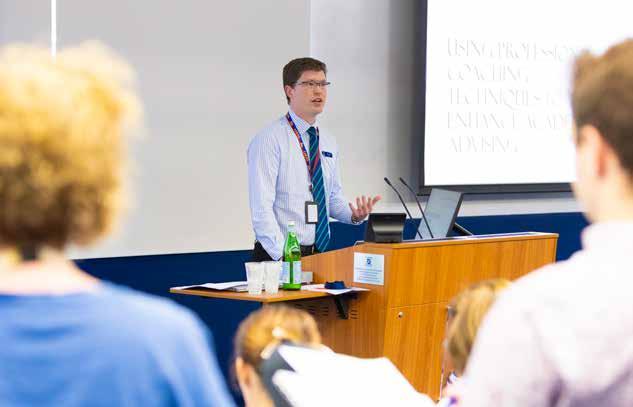
In the current education landscape, the need for continuous professional learning has never been more important. As teachers navigate evolving pedagogical research, digital innovation through generative AI, and increasingly complex student needs, meaningful professional development becomes a critical tool for enhancing both teaching practice and student outcomes. At St Margaret’s, a strong commitment to sustained, collaborative professional learning is most clearly demonstrated by the TeachMeet sessions, which are held once each term for teaching staff. Since their introduction in 2024, TeachMeets have become an integral part of our professional learning culture. In this article, I will outline the various benefits of the TeachMeet model and share some encouraging feedback already received from teaching staff.
The model
TeachMeets are concise, engaging professional development sessions, each lasting 20 minutes. Typically, five TeachMeet sessions run concurrently of an afternoon, with teaching staff able to choose which three sessions they wish to attend. This autonomy is central to the model, allowing staff to tailor their professional learning towards sessions they believe will have the greatest impact on their pedagogy or broader educational practice (Kennedy, 2016; Darling-Hammond et al., 2017). Sessions span a diverse range of topics, including pedagogy, the science of learning, technology, pastoral care, behaviour management, wellbeing, and administrative strategies (Cordingley et al., 2015). In recent times, St Margaret’s TeachMeets have adopted themes for each round (for example, artificial intelligence or academic advising), so that staff have a clear sense of direction regarding what they might gain from the PD event.
A key feature of the model is that any member of the teaching or support staff may facilitate a TeachMeet session. Staff members from all levels – including senior leaders, middle leaders, experienced and early-career teachers, and support staff – are encouraged to nominate as presenters. A selection panel which includes the Dean of Studies and Dean of Academics, will then select the successful presenters for a TeachMeet event. Facilitators typically provide a one-page summary of key points from their session to help attendees recall the main ideas and often share further reading or literature links for staff interested in exploring the topic in greater depth. Additional notes and presentation materials are also posted on our Centre for Excellence in Teaching and Learning (CeTLe) POD Page for staff to revisit later.
TeachMeets at St Margaret’s strengthen the school’s culture of professional dialogue by intentionally creating space for staff to share practice that has been tested, refined and shown to be effective in real classroom contexts. When teaching or support staff present strategies that have worked for them – whether in instructional design, assessment, or behaviour routines – they contribute to a collective pool of pedagogical knowledge that benefits the entire school.
This model reflects the findings of Hargreaves & Fullan (2012) on ‘professional capital’, who emphasise that teaching quality grows when teachers are encouraged to share what they know, observe each other, and contribute to the profession as a collective enterprise. Similarly, Wenger’s (1998) theory of Communities of Practice proposes that learning is most effective when it happens within a supportive community where members share evidence-based strategies in a
non-judgemental way. This approach encourages staff to challenge their own understanding of best practice and offers practical, straightforward suggestions for improvement. TeachMeets exemplify this principle; they create a collaborative environment where staff can share their expertise in a supportive setting, encouraging professional growth and the dissemination of best practice across the school.
By amplifying the voices and experiences of all staff, TeachMeets transform professional learning from an isolated activity into a collaborative, whole-school effort. Expertise becomes a collective asset, continually enhanced through open professional dialogue and shared practice.
Practical application in the classroom
One of the strongest indicators of TeachMeets’ impact is the immediacy with which teachers apply new strategies to their classrooms. Because TeachMeet sessions are intentionally bite-sized and highly practical, they lend themselves to rapid transfer, allowing teachers to test an idea the very next day. This aligns closely with Timperley’s (2008) Teacher Professional Learning and Development Best Evidence Synthesis, which states that professional learning is most effective when it is both relevant and actionable.
The types of strategies shared – retrieval practice routines, dual coding techniques, behaviour micro-strategies, technologybased approaches, differentiation methods, mini-whiteboard use, formative questioning techniques – are all evidencealigned practices supported in the research literature. By promoting strategies grounded in cognitive science and wellestablished educational research, TeachMeets make a tangible difference to the quality of teaching across the school. They also foster a culture of reflection, where staff are encouraged to try out new approaches, evaluate their effectiveness, and continually refine their practice. This ongoing cycle of trial, reflection, and improvement is a core aspect of the AITSL High Quality Professional Learning Cycle (2017), which forms the foundation of the St Margaret’s Professional Learning Framework (2024).
While many professional learning programs focus predominantly on pedagogy, St Margaret’s TeachMeets deliberately extend their scope to pastoral care and wellbeing. Teachers engage with topics such as building rapport, supporting anxious or disengaged students, conducting difficult conversations, and enhancing academic advising practices.
This focus acknowledges what research consistently finds: student wellbeing is inseparable from academic achievement. Noble & McGrath (2016) highlight that teacher-student relationships, clarity of communication, and emotional climate are central to creating safe and effective learning environments. Likewise, Kimber & Wyatt-Smith (2010) emphasise that schools thrive when staff are equipped with tools to support students’ social-emotional needs alongside academic ones.
By integrating wellbeing-focused sessions into TeachMeets, St Margaret’s reinforces the principle that effective teaching is holistic. Teachers become more confident in navigating challenging pastoral scenarios, contributing to a school culture where wellbeing is viewed not as an adjunct to learning but as foundational to it.
A distinctive strength of the TeachMeet model is the way it democratises leadership. Any staff member, regardless of role, career stage, or area of expertise, can nominate to facilitate a session. This creates opportunities for teachers and support staff to step into instructive leadership roles and contribute to whole-school professional growth.
This approach aligns closely with distributed leadership theory (Spillane, 2006), which argues that leadership grows strongest when spread broadly across the organisation rather than concentrated at the top. Presenting at a TeachMeet requires staff to articulate their practice, plan learning for adult audiences, and reflect deeply on the principles that underpin their presentation – skills essential for aspiring middle leaders.
Additionally, Katz, Earl & Jaafar (2009) argue that leadership is cultivated when staff are empowered to lead professional learning in authentic contexts. TeachMeets create exactly such an environment: a low-stakes, high-impact and supportive forum. They also align with Leithwood’s (2016) research showing that leadership development is most effective when embedded in day-to-day practice rather than delivered through separate or formalised programs.
Importantly, St Margaret’s recognises this leadership contribution. Presenting at TeachMeets is regularly referenced in annual professional reviews and leadership discussions, reinforcing its status as a meaningful and respected undertaking.
A recent staff feedback survey underscored the effectiveness, relevance and practical value of TeachMeets. As illustrated in Figure 1, most respondents ‘strongly agreed’ that each session offered actionable ideas they could implement immediately in their classrooms and that the format made TeachMeets well-timed and engaging. Amongst the qualitative statements collected, respondents also highlighted the wide range of topics covered and noted the clear, positive impact that evidencebased strategies have had in their classrooms. Additionally, they highly valued the opportunity that TeachMeets offer to engage in professional dialogue with colleagues and to learn from staff members with diverse areas of expertise.
Constructive feedback included suggestions to repeat some sessions to accommodate scheduling conflicts and to incorporate more role-play and practical activities. Using this data to further refine the TeachMeet model not only strengthens staff engagement but also ensures that it remains both relevant and impactful for all educators.
Conclusion
TeachMeets at St Margaret’s have proven to be a dynamic, staff-led model for professional learning, fostering collaboration, sharing of expertise and leadership development across the school. By combining practical strategies, pastoral support, and opportunities for all staff to lead, TeachMeets have strengthened teaching practice and built a culture of continuous improvement that benefits both educators and students.
References
Avalos, B. (2011). Teacher professional development in Teaching and Teacher Education over ten years. Teaching and Teacher Education, 27(1), 10–20.
Cordingley, P., Bell, M., Evans, D., & Firth, A. (2015). Developing great teaching: Lessons from the international reviews into effective professional development. Teacher Development Trust.
Darling-Hammond, L., Hyler, M. E., & Gardner, M. (2017). Effective teacher professional development. Learning Policy Institute.
Hargreaves, A., & Fullan, M. (2012). Professional capital: Transforming teaching in every school. Routledge.
Katz, S., Earl, L., & Jaafar, S. (2009). Building and connecting learning communities: The power of networks for school improvement. Corwin Press.
Kennedy, A. (2016). How does professional development improve teaching? Review of Educational Research, 86(4), 945–980.
Kimber, D., & Wyatt-Smith, C. (2010). Teacher professional learning and student wellbeing: A research synthesis. Centre for Learning Innovation, Queensland University of Technology.
Leithwood, K. (2016). Leadership and student learning outcomes: Evidencebased practices. Springer.
Noble, T., & McGrath, H. (2016). The PROSPER framework for student wellbeing. In M. Furlong, R. Gilman, & E. Huebner (Eds.), Handbook of positive psychology in schools (2nd ed., pp. 137–155). Routledge.
Spillane, J. P. (2006). Distributed leadership. Jossey-Bass.
Timperley, H. (2008). Teacher professional learning and development: Best evidence synthesis iteration. Ministry of Education.
Wenger, E. (1998). Communities of practice: Learning, meaning, and identity. Cambridge University Press.
Australian Institute for Teaching and School Leadership. (2017). High quality professional learning cycle. AITSL.
St Margaret’s Anglican Girls School. (2024). Professional Learning Framework. St Margaret’s Anglican Girls School.

This paper is a short introduction into a larger supervised research project conducted in 2025 as capstone for my Master of Educational Studies (Leadership) at The University of Queensland. Project supervisor: Jana Višňovská, Senior Lecturer in Mathematics Education at The University of Queensland.
A persistent problem in mathematics classrooms
Ask any secondary mathematics teacher to name their students’ most stubborn knowledge gap and the answer is remarkably consistent: fractions. Despite continuous instruction from Year 2 onwards, explicit re-teaching in Year 7, and sustained practice throughout secondary school, difficulty with fractions persists across schools, year levels, and student cohorts. This is not a story of lazy students or incompetent teachers. It is a story of systemic failure – of curricula and instructional approaches that have consistently prioritised algorithmic shortcuts over deep mathematical understanding.
This essay makes three interconnected arguments. First, that fractions matter enormously – not just for performance on mathematics tests, but as a gateway to proportional reasoning, which underpins virtually every domain of secondary and post-secondary mathematics and science. Second, that the way fractions are currently taught in Australia generates predictable, well-documented misconceptions that prove stubbornly resistant to correction. Third, that an alternative instructional sequence – Fractions as Measures – offers a theoretically coherent and empirically supported path forward that teachers and schools should seriously consider.
This review draws on research in mathematics education, cognitive development, and instructional design. The goal is not to be critical for its own sake, but to equip teachers with the conceptual tools to understand why their students struggle and what might genuinely help.
Why fractions matter: Proportional reasoning as a mathematical turning point
Fractions are more than a curriculum topic. They represent one of the most significant cognitive transitions in a student’s mathematical development – the shift from additive to multiplicative thinking, and from reasoning about discrete quantities to reasoning about continuous ones. Researchers describe this transition as a watershed moment: students who navigate it successfully gain access to a fundamentally different and more powerful way of thinking about mathematical relationships (Clarke & Roche, 2009).
At the centre of this transition is proportional reasoning – the capacity to understand and work with multiplicative relationships between quantities. Proportional reasoning is not simply an ability to solve ratio problems correctly. It encompasses the ability to scale quantities up and down
appropriately across diverse contexts, to understand why procedures work rather than merely how to apply them, and to move flexibly between different representational systems (Lamon, 2020). Students who develop robust proportional reasoning demonstrate a kind of mathematical fluency that makes them far more capable across disciplines.
The stakes are high. Proportional reasoning is embedded in virtually every advanced mathematical domain: algebra, geometry, trigonometry, statistics, and calculus all depend on it in fundamental ways. Beyond mathematics, it is essential for understanding rates in physics, concentrations in chemistry, scale in geography, and probability in statistics. Students who reach secondary school without well-developed proportional reasoning may compensate temporarily through procedural strategies – memorising algorithms and applying them without understanding – but this approach breaks down progressively as problems become more complex and less routine. Many students reach adulthood without ever having developed genuine proportional reasoning capability (Lamon, 2020).
Yet it is precisely the fraction years – from Year 2 through to Year 7 – that should be building this foundation. Fractions, properly understood, are not merely a difficult topic to be survived. They are the conceptual terrain on which proportional reasoning is constructed. When fraction instruction fails, proportional reasoning fails with it. The consequences ripple outward across all secondary mathematics and beyond.
One underappreciated source of difficulty is that the Australian Curriculum introduces fraction concepts before many students have developed the cognitive structures necessary to make sense of them. Early fraction instruction begins in Year 2, with fraction notation introduced in Year 3. At this stage, a significant proportion of students have not yet reached what Piaget termed the concrete operational stage – the cognitive milestone at which children can hold multiple classification schemes in mind simultaneously (Watanabe, 2001).
This matters because fractions require exactly this kind of simultaneous multi-category thinking. A student must understand that the same quantity can be represented in infinitely many equivalent forms, that the numerator and denominator are not independent numbers but are related through a specific quantitative structure, and that the size of a fraction decreases as the denominator increases – a counterintuitive relationship that runs directly against the grain of whole-number intuition. Introducing these ideas before students are cognitively ready may produce superficial compliance – students learn to repeat procedures and reproduce correct answers in familiar formats – but it does
not produce genuine understanding. Some researchers have argued for delaying formal fraction instruction until Years 3 to 5, allowing adequate time for the development of prerequisite cognitive structures (Watanabe, 2001).
Years of working with whole numbers leave students with powerful and deeply ingrained intuitions: that larger numbers represent larger quantities, that multiplying makes things bigger, that dividing makes things smaller, that there is always a next number in a sequence. These intuitions are entirely appropriate for whole numbers. For fractions, they are systematically misleading.
The result is what researchers call whole-number dominance –a persistent tendency to apply whole-number logic to fractional situations. The most common manifestation is the belief that a fraction with a larger denominator must represent a larger quantity: students conclude that one-eighth is greater than one-third because eight is greater than three. This is not a random mistake. It is a logical consequence of applying a wellestablished and usually reliable rule to a context where it breaks down. Understanding why this happens – and what would need to change instructionally to prevent it – is essential for addressing it effectively.
A related error pattern is gap thinking: judging fractions as equivalent when the absolute difference between numerator and denominator is the same. A student using gap thinking might reason that five-sixths and seven-eighths are equivalent because both are ‘one away from the whole’, failing to notice that one-sixth and one-eighth are quite different in size. This error reveals that the student is reasoning additively about fractions – attending to differences rather than to proportional relationships.
One of the most puzzling features of students’ fraction difficulties is the failure of transfer. A student may demonstrate apparently competent performance on one type of fraction task yet fail to apply the same knowledge when it is needed in a slightly different context. Students who can correctly identify equivalent fractions when shown a diagram cannot apply this knowledge when adding fractions with unlike denominators. Students who can name a fraction represented by a shaded circle cannot determine whether a given fraction is greater or less than one-half.
This transfer failure is diagnostic. It indicates that students have not developed a genuine mental model of what fractions are and how they behave. Instead, they have acquired a collection of context-specific procedures: techniques that produce correct answers in the format in which they were practised but that remain conceptually disconnected from one another. When problems present the same underlying mathematical structure in an unfamiliar form, procedural knowledge without conceptual grounding breaks down.
A further structural problem concerns the representational models that dominate fraction instruction in Australia. Nearly all textbook problems and classroom materials rely overwhelmingly on circular objects divided into shaded sectors – what might be termed the pizza model of fractions (Küchemann, 2024; Watanabe, 2001). This representation has genuine strengths for initial instruction: it is visually intuitive, it connects to students’ experience of fair sharing, and it provides a clear visual basis for introducing the numeratordenominator relationship.
However, the pizza model creates significant limitations as students progress. It works reasonably well only for proper fractions – fractions with values less than one. Improper fractions, such as seven-thirds, are inherently awkward to represent this way: how do you shade seven pieces of a circle divided into three? The model provides no natural basis for understanding fractions greater than one as coherent mathematical quantities. It also proves inadequate for understanding fraction operations, particularly multiplication and division, where the physical metaphor of slicing a circular object provides no conceptual guidance at all.
The deeper problem is what Freudenthal (2002) identified as the phenomenological restriction of the part-whole model. When fractions are introduced exclusively through partitioning a single whole, the model creates a conceptual ceiling. Students come to understand fractions only as descriptions of parts of a specific partitioned object, rather than as measures of relative size that can describe the relationship between any two quantities. This restricted understanding becomes a didactical obstacle – a conceptual foundation that initially enables learning but subsequently prevents it from advancing.
Procedural teaching without conceptual foundation
Underlying all these problems is a more fundamental issue: Australian fraction instruction overwhelmingly prioritises procedural fluency over conceptual understanding. The Australian Curriculum, and the textbooks written to implement it, devotes primary attention to teaching algorithms – the procedures for finding equivalent fractions, for adding and subtracting fractions with unlike denominators, for multiplying and dividing fractions – without adequately developing the conceptual foundations that would make those algorithms meaningful.
Hans Freudenthal (1973) called this approach didactical inversion: presenting the final, polished results of mathematical thinking before students have developed the understanding that would make those results comprehensible. From this perspective, the current curriculum parachutes ready-made mathematics onto students who have not yet developed the need for it, and who therefore cannot make sense of it. Students learn to execute procedures correctly without understanding why those procedures work or what they are actually
calculating. The result is a fragile, context-specific knowledge that collapses under anything other than routine application.
Many students, and indeed many teachers, focus on understanding how a rule works rather than why it works (Švecová et al., 2022). This is not a failing of individuals but a natural response to a curriculum that assesses procedural execution and provides little space or incentive for conceptual exploration. The problem is not that algorithms are taught –mastery of efficient procedures is a legitimate mathematical goal – but that algorithms are taught in the absence of the conceptual grounding that would make them both understandable and durable.
Two ways of thinking about fractions:
Additive and multiplicative
Understanding why current fraction instruction fails requires understanding the distinction between two fundamentally different mathematical orientations: additive thinking and multiplicative thinking. This distinction is not merely pedagogical preference. It reflects genuinely different cognitive structures with profound implications for what students can and cannot do mathematically.
Additive thinking is rooted in counting and the combination or separation of quantities. It attends to absolute differences, to numerosity, to the joining and separating of amounts. Additive thinking is the natural product of early mathematical experience with whole numbers: students learn to count, to add groups together, to subtract by taking away. This is appropriate and powerful for whole-number reasoning. The difficulty arises when students attempt to apply additive thinking to fractions, where it produces systematic errors. Whole-number dominance is an additive error: it treats numerators and denominators as independent counts rather than as elements of a proportional relationship. Gap thinking is an additive error: it attends to absolute differences between numerator and denominator rather than to relative size. The repeated addition interpretation of multiplication – treating 3 × ¼ as ‘add one-quarter three times’ – is an additive conception that provides no meaningful purchase on fraction multiplication more generally.
Multiplicative thinking involves a fundamentally different cognitive orientation. It attends to proportional relationships: to scaling, to reciprocity, to the ways in which quantities relate to one another as multiples or fractions of one another. Where additive thinking asks, ‘How many more?’, multiplicative thinking asks, ‘How many times as large?’ This shift from absolute difference to relative ratio is precisely what proportional reasoning requires. A student who can think multiplicatively about fractions understands that threequarters represents a quantity that is three-quarters as large as the reference unit – not three pieces out of four pieces, but a specific multiplicative relationship between two quantities. From this foundation, fraction operations become conceptually meaningful: multiplying two fractions involves applying one
ratio to another; division involves asking how many times one ratio is contained in another.
Current fraction instruction in Australia systematically reinforces additive thinking and undermines the development of multiplicative thinking. The part-whole model encourages students to count pieces rather than to reason about relative size. Multiplication is introduced and repeatedly reinforced as repeated addition. The curriculum provides little explicit support for the cognitive shift from additive to multiplicative reasoning that fraction understanding requires. The predictable result is that students arrive in Year 7 – and often complete secondary school – without having made this transition.
The fractions as measures sequence: An alternative starting point
What is it and where does it come from?
The Fractions as Measures (FaM) instructional sequence is a research-informed approach to initial fraction instruction developed within the Realistic Mathematics Education (RME) tradition, a sophisticated instructional design theory originating at the Freudenthal Institute in the Netherlands. RME is grounded in Freudenthal’s philosophy that mathematics is a human activity – something to be engaged in, reinvented, and discovered, rather than a body of ready-made procedures to be transmitted and memorised (Cobb et al., 2008).
RME is organised around three central principles that guide the design of instructional sequences. First, starting points must be experientially real to students – not necessarily drawn from physical reality, but genuinely accessible and meaningful, capable of eliciting curiosity and supporting mathematical engagement. Second, those starting points must be justifiable in terms of the mathematical endpoints of the sequence: the informal reasoning developed early must be capable of progressive refinement toward sophisticated mathematical practices, without creating conceptual dead ends. Third, this progression is supported by students creating and elaborating symbolic models of their own informal activity – a process through which intuitive models gradually evolve from representations of specific situations into general mathematical tools (Cobb et al., 2008; Višňovská et al., 2025).
The FaM sequence embodies these principles while addressing specifically the conceptual limitations of the dominant part-whole approach. Its theoretical grounding draws on Freudenthal’s phenomenological analysis of fractions, Cortina and colleagues’ empirical research on fraction learning, and Thompson and Saldanha’s work on multiplicative reasoning. It represents not an untested theoretical proposal but an approach that has been developed, refined, and validated through iterative classroom research across multiple contexts (Cortina et al., 2014; Cortina et al., 2015; Višňovská & Cortina, 2017).
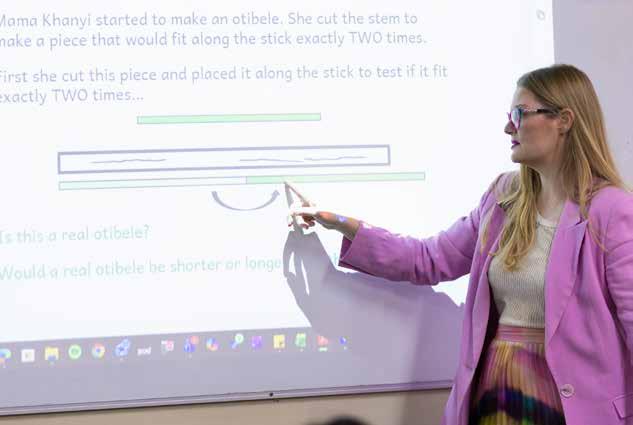
The FaM sequence begins with a fundamental shift in framing: rather than asking students to partition a single object into equal pieces, it asks them to compare the sizes of two distinct objects. Instead of ‘divide this pizza into four equal slices and shade three of them’, the instructional starting point becomes something like: ‘If this stick is our unit of length, what fraction describes the length of this straw?’ The straw and stick are physically separate objects; the task requires reasoning about how the length of one relates to the length of the other.
This seemingly modest shift has far-reaching consequences. When two separate objects are being compared, students cannot attend merely to counting pieces – there are no pieces to count. Instead, they must reason about relative size: how many iterations of the straw’s length would be needed to equal the stick’s length? If three iterations of the straw are needed, the stick is three times as long as the straw, or equivalently, the straw is one-third the length of the stick. If seven iterations are needed, the stick is seven times as long – and the straw is oneseventh the length of the stick. The fraction is understood from the outset as a measure of a multiplicative relationship, not as a count of physical pieces.
This is the heart of the FaM approach: fractions are measures of relative size. They express how one quantity relates to another, multiplicatively. A unit fraction 1/n is defined not by partitioning a whole into n equal pieces, but by the fact that n iterations of that unit are needed to equal the length of the reference unit. This definition is mathematically coherent across the full range of fractions – proper, improper, and mixed – and it positions fractions, from the first lesson, as instruments of multiplicative and proportional reasoning.
One of the most important mathematical ideas in early fraction learning is what researchers call the inverse order relationship: as the denominator of a unit fraction increases, the size of the
fraction decreases. Students who understand whole numbers intuitively expect larger numbers to represent larger quantities, so the fact that one-eighth is smaller than one-third – despite eight being larger than three – is deeply counterintuitive and persistently misunderstood.
The part-whole model addresses this by showing students increasingly fine partitions of a circle: a circle divided into eight pieces has smaller pieces than one divided into three. This provides a perceptual demonstration of the relationship, but it does not generate a deep understanding of why it must be so. Many students develop the ability to correctly order unit fractions when shown diagrams without developing a robust conceptual basis for that ordering.
The FaM sequence addresses this differently, and more powerfully. When students are working with physical objects and comparing lengths, the inverse order relationship emerges as a logical necessity. If five iterations of a small rod are needed to match the length of a reference stick, while three iterations of a different rod are also needed to match the same stick, which rod must be longer? The one that requires only three iterations – because each of its iterations must cover more distance. If more iterations are needed, each iteration must be smaller. This reasoning is not merely perceptual; it is deductive. Students are compelled to arrive at the inverse order relationship through their own reasoning about the relationship between subunit size and iteration frequency, rather than through memorising a rule that runs counter to their whole-number intuitions (Cortina et al., 2014; Višňovská & Cortina, 2017).
A critical limitation of the part-whole model is its inability to provide a coherent conceptual basis for improper fractions –fractions with values greater than one. Within the pizza model, a fraction like seven-thirds makes no sense: how can you have seven pieces when the whole only has three? Students taught exclusively through part-whole approaches often describe
improper fractions as ‘impossible’ or ‘not real fractions’. This conceptual impasse creates serious difficulties for proportional reasoning, which frequently requires working with quantities greater than the reference unit.
The FaM sequence avoids this problem entirely. Because fractions are understood as measures of relative size – defined through iteration of a unit rather than through partitioning of a single whole – there is no conceptual barrier to quantities greater than one. If seven iterations of a small rod are needed to match the length of the reference stick, then the stick is seven-fourths of the rod’s length, or seven-thirds, or whatever the appropriate unit fraction is. The fraction expresses the multiplicative relationship between the two lengths, and that relationship can take any value, including values greater than one. Improper fractions are not a special case requiring separate treatment; they arise naturally from the same conceptual framework as proper fractions.
This matters enormously for proportional reasoning. Proportional relationships frequently involve scalar operators that are not whole numbers: a map scale of 5/2, a density of 7/4 grams per cubic centimetre, a currency exchange rate of 3/2. These applications require the ability to work confidently with improper fractions as measures of relative size. Students whose fraction understanding is grounded in the FaM framework are positioned to engage with these applications from the outset; those whose understanding is grounded exclusively in part-whole thinking encounter a conceptual barrier that proves extremely difficult to overcome later.
Building multiplicative thinking from the ground up
Perhaps the most significant advantage of the FaM sequence is that it situates multiplicative thinking at the foundation of fraction learning rather than treating it as an advanced achievement to be reached after mastering procedural basics. When fractions are defined as measures of relative size and understood through iteration, multiplicative relationships are not an add-on – they are constitutive of what fractions mean.
Consider what this means for fraction operations. If a student understands three-quarters as ‘a quantity such that four iterations of it equal three reference units’, then threequarters of two-thirds is simply a matter of determining what quantity, iterated appropriately, yields a specific proportional relationship. The conceptual tools for fraction multiplication are already present in the student’s understanding of what fractions are. This stands in stark contrast to the procedural rule ‘multiply the numerators and multiply the denominators’, which produces correct answers but provides no insight into what multiplication of fractions actually means or why the procedure works.
Similarly, the critical inverse relationship between a fraction and its reciprocal – that if quantity A is 3/4 of quantity B, then quantity B is 4/3 of quantity A – is a natural consequence of the FaM framework. It emerges directly from the definition
of fractions as measures of relative size, and from the understanding that the relationship between two quantities can always be expressed from either direction. This reciprocal understanding is precisely what is required for the sophisticated proportional reasoning that underpins currency exchange calculations, scale factor problems, unit conversion, and density calculations (Cortina & Višnovská, 2016).
The Year 7 context in Australia presents a particular confluence of challenges and opportunities. Students arrive from diverse primary school backgrounds with markedly varied fraction preparation. Some have developed procedural fluency with limited conceptual understanding. Others have fragments of understanding that remain disconnected. Many have actively constructed misconceptions – particularly whole-number dominance and gap thinking – that are deeply entrenched. A significant proportion carry negative emotional associations with fractions, having accumulated years of confusing and unsuccessful experiences (Lamon, 2020).
At the same time, the Australian Curriculum requires that all four fraction operations be consolidated within Year 7 – a demanding expectation given students’ prior understanding. Teachers face the dual challenge of addressing entrenched misconceptions while simultaneously advancing students through an ambitious curriculum. Traditional approaches – re-teaching the part-whole model more carefully, drilling equivalent fractions before introducing operations, providing more worked examples and more practice – have been attempted repeatedly and have consistently proved insufficient. Much of the time, students arrive in Year 8 with the same difficulties they arrived with in Year 7.
The FaM sequence offers a different approach to this challenge. Rather than attempting to remediate procedural knowledge built on an inadequate conceptual foundation, it proposes rebuilding that foundation using a more mathematically coherent framework. This requires investment: time, professional learning, and a willingness to work differently from how most teachers were taught and from how most textbooks are written. But the evidence suggests that this investment addresses the problem at its source, rather than applying surface-level remediation to what is fundamentally a structural instructional failure.
Importantly, the FaM sequence is not designed only for advanced students or for students with strong prior mathematical foundations. Research on its implementation suggests that its measurement-based approach – using physical objects, iteration, and comparison – provides accessible entry points for all students, including those who have struggled most with fractions (Višňovská & Cortina, 2017). The sequence’s emphasis on logical reasoning rather than memorisation of counterintuitive rules means that students who have been most disadvantaged by procedural approaches – those who memorised without understanding and are left with nothing
when memory fails – may benefit most from the shift to a conceptually grounded framework.
Conclusion: What teachers can take from this
The challenges in fraction education are real, deep, and systemic. They are not the product of insufficient effort from teachers or students. They are the product of instructional approaches that, despite good intentions, have consistently failed to develop the conceptual foundations that fractions require. Understanding why this is so – and what specifically goes wrong in the cognitive development of students who are taught fractions primarily through part-whole partitioning – is the first step toward doing something about it.
The Fractions as Measures sequence offers a pedagogically principled and empirically supported alternative. Its core insight – that fractions should be understood from the outset as measures of relative size, grounded in multiplicative relationships rather than the counting of partitioned pieces – is not a minor variation on existing practice. It represents a fundamentally different approach to what fractions are and how students come to understand them.
For teachers, this has immediate practical implications. Even without wholesale curriculum reform, awareness of the distinction between additive and multiplicative fraction reasoning can shift the quality of classroom conversation. Questions that ask students to reason about relative size –‘which is bigger, and how do you know?’ – develop different and more robust understanding than questions that ask students to count pieces or apply procedures. Representations that support multiplicative reasoning – number lines, measurement contexts, comparison of distinct lengths – provide conceptual resources that pizza diagrams do not.
More ambitiously, teachers who engage deeply with the FaM sequence and the RME principles that support it have the opportunity to offer their students something genuinely different: fraction instruction that builds the multiplicative reasoning and proportional thinking that are the genuine goals of the fraction years. The evidence is clear that current approaches are not achieving those goals. Different outcomes will require different approaches; the practical question is how teachers, schools, and curriculum designers can work together to make that shift.
References
Clarke, D. M., & Roche, A. (2009). Students’ fraction comparison strategies as a window into robust understanding and possible pointers for instruction. Educational Studies in Mathematics, 72(1), 127–138.
Cobb, P., Zhao, Q., & Višňovská, J. (2008). Learning from and adapting the theory of Realistic Mathematics Education. Éducation & Didactique, 2(1), 105–124.
Cortina, J. L., & Višnovská, J. (2016). Reciprocal relations of relative size in the instructional context of fractions as measures. Proceedings of the 40th Conference of the International Group for the Psychology of Mathematics Education, (Vol. 2, pp. 179–186).
Cortina, J. L., Višňovská, J., & Zuniga, C. (2014). Unit fractions in the context of proportionality: Supporting students’ reasoning about the inverse order relationship. Mathematics Education Research Journal, 26(1), 79–99.
Cortina, J. L., Višnovská, J., & Zúñiga, C. (2015). An alternative starting point for fraction instruction. International Journal for Mathematics Teaching and Learning.
Freudenthal, H. (1973). Mathematics as an educational task. D. Reidel Publishing Company.
Freudenthal, H. (2002). Didactical phenomenology of mathematical structures. Springer.
Küchemann, D. (2024). Three-eighths or three over eight? Mathematics Teaching, 293, 37–40.
Lamon, S. J. (2020). Teaching fractions and ratios for understanding: Essential content knowledge and instructional strategies for teachers (4th ed.). Routledge.
Streefland, L. (1991). Fractions in Realistic Mathematics Education: A paradigm of developmental research. Springer.
Švecová, V., Balgová, M., & Pavlovičová, G. (2022). Knowledge of fractions of learners in Slovakia. Mathematics,10(6), 901.
Thompson, P. W., & Saldanha, L. A. (2003). Fractions and multiplicative reasoning. In J. Kilpatrick, W. G. Martin, & D. Schifter (Eds.), A research companion to principles and standards for school mathematics (pp. 95–113). National Council of Teachers of Mathematics.
Višňovská, J., & Cortina, J. L. (2017). Learning to support all students’ fraction understanding. In Proceedings of the International Symposium Elementary Maths Teaching (pp. 430–440).
Višňovská, J., Graven, M., Cortina, J. L., & Vale, P. (2025). Decolonising content narratives in Mathematics and Science education: The case of reinventing length measurement. African Journal of Research in Mathematics, Science and Technology Education, 29(1), 28–41.
Watanabe, T. (2001). Let’s eliminate fractions from primary curricula! Teaching Children Mathematics, 8(2), 70–72.

Georgi Easton Primary Teacher

Nikita Uscinski Primary Teacher
Learning occurs through alterations in long-term memory, spurred only by active student engagement and thinking.
– Daniel Willingham, 2021.
Effective pedagogy leverages the principles of Cognitive Load Theory (CLT) to optimise student engagement and participation (AERO, 2025). Within this framework, learning is not positioned merely as the temporary acquisition of facts but as a permanent alteration in long-term memory. This cognitive shift occurs only when students actively engage with, process, and manipulate the new information they are exposed to (Clark, 2024).
Willingham’s model of the mind is considered among the most practical tools for illustrating this learning process (Clark, 2024b). This model privileges the role of securing student attention in the learning environment and positions sustained focused attention as the gateway to learning (Clark, 2024c).
Similarly, consider that ‘memories are formed as the residue of thought’ (Willingham, 2021). This residue builds as information is recalled, considered, and processed. Whatever information has the most residue stored is the easiest to manipulate, apply, and revise. Simply put, what you think of the most is what you remember. Herein lies an opportunity for educators, as situations for students to collect the most thought residue, and learn the most, can be engineered through securing their attention and sustaining their focus. Educators must design and implement lessons and activities at students’ ‘desirably difficult’ task level to best secure their cognitive engagement and therefore strengthen memory retention of learning (Clark, 2024a). It is worth also considering here the parallel between this ‘desirably difficult’ task design, and Vygotsky’s Zone of Proximal Development theory. Securing students’ cognitive engagement through appropriately challenging and scaffolded activities and routines, and therefore encouraging their sustained participation, has long been considered vital in effective pedagogical practice (Woolfolk & Margetts, 2016).
‘Desirably difficult’ tasks, however, are just one component of the cognitive engagement puzzle. There are many strategies at educators’ disposal, four of which will be unpacked through the lens of implementation in Year 2 classrooms.
Effective student participation is often inconsistent in classrooms, with a visible divide between highly engaged contributors and passive observers. High levels of student participation are not the result of chance but are the direct outcome of intentional systems and routines, implemented by teachers, that deliberately engineer opportunities for all students to participate (Ryrie Jones, 2025).
These structural routines provide the necessary framework for learning and processing; however, high participation is not the only pedagogical objective. Rather, cognitive engagement and participation in learning is essential for encoding new knowledge into long-term memory (Clark, 2024). To facilitate this, teachers are challenged to move beyond superficial involvement and critically evaluate lesson planning to ensure opportunities for rigorous student thinking. In our attempts to understand theory in the context of our classrooms, we thoughtfully considered our lesson planning alongside knowledge of cognitive science, to ensure students develop deep and lasting understanding of curriculum material – this is encapsulated by Willingham (2010), who noted ‘memory is the residue of thought’.
As we continued to translate research into practice, we specified and taught specific participation routines within our classrooms, including mini-whiteboards, everyone writes, think-pair-share, and choral response. These engagement routines can be used flexibly across the curriculum and have been beneficial in fostering a more inclusive and highengagement learning environment. These strategies increase student attention while prioritising increased opportunity for active retrieval and rehearsal – necessary to mitigate cognitive load and support the transition of knowledge from working memory to long-term memory (Rosenshine, 2012). Furthermore, the consistent implementation of these strategies supports the normalisation of a classroom culture which requires deep thinking from every student and ensures cognitive demand is distributed across the classroom.
Think-Pair-Share
Students think individually about a question, discuss with a partner, then share insights with the class
Choral Response Teacher asks the whole class to respond in unison to a question or prompt
Everyone Writes Teachers pose a question to the class, provide time for students to think about and write their answer, before the teacher calls on students to share their answers and facilitates a class discussion
Mini-Whiteboards Teacher asks the whole class to respond to a question or prompt, students share responses on mini-whiteboards
Ideal for active brainstorming and as a tool to help students refine, clarify, and challenge their initial thoughts before a larger class debrief
Retrieving a learnt phrase, definition, simple answer, or practising new vocabulary
Useful at all stages of a lesson for retrieving learned information, brainstorming a new answer, and teacher formative assessment
Ensures equitable participation by granting every student time to process information independently and practise articulating ideas in a low-stakes setting
Allows teacher to diagnose and adjust for inaccuracies through low-stakes assessment
Increasing wait times improves student participation and accessibility by providing the necessary time to process questions, think deeply about the content, and independently recall information
As a manifestation of Everyone Writes, this technique is similarly useful at all stages of a lesson for retrieving learned information, brainstorming a new answer, and teacher formative assessment
In Year 2, the strategic integration of Choral Response and Think-Pair-Share has significantly optimised instructional time and student engagement. Choral response is utilised to build fluency in foundational phonics and language rules, recall mathematical facts, and rehearse shared definitions across learning areas. This is achieved through rehearsed, chunked definitions that break complex terminology into manageable segments, as well as leveraging the cognitive load benefits of memorisation to free up working memory for problem solving.
This practice is complemented by a refined Think-Pair-Share system, which employs silent thinking time, established and predictable routines for partner talk, and practice with summarising and active listening skills when sharing ideas during class discussions. Together, these strategies facilitate real-time diagnostic adjustments and promote equitable participation, ensuring that retrieval practice is both inclusive and conducive to deeper conceptual understanding.
Providing equal opportunities for active contribution fosters strong learning ownership, which boosts student motivation, attentiveness, and participation, while instant feedback allows teachers to immediately assess and address comprehension
In Year 2, the implementation of the Everyone Writes technique, especially through the Mini-Whiteboard tool, has significantly enhanced student participation. This practice can also be utilised to stimulate and connect students’ prior and new knowledge. These techniques are implemented routinely across all learning areas and support the revision of literacy and development of effective communicative skills. By requiring all students to commit their thoughts to text, the strategy effectively lowers the barrier to participation while prompting deep cognitive engagement.
For example, implementation can include students recording ideas in response to a specific prompt on a whiteboard or sticky note. This frees up working memory and provides opportunities for educators to check for understanding. Students’ individual responses can then be aggregated to create a powerful classroom display tool. This collaborative artefact serves as a permanent reference point that teachers and students can return to throughout the unit, ensuring that retrieval practice is both highly visible and conducive to building long-term conceptual understanding. Within our Year 2 context, exploring the phenomenon of day and night offered an opportunity for students to communicate their own understanding and write to accompany an explanatory diagram.
Conclusion
Translating cognitive science into the daily fabric of the primary classroom bridges the gap between educational research and instructional reality. By intentionally structuring highleverage participation routines, educators move past superficial compliance to engineer authentic cognitive engagement. Within a supportive, predictable classroom environment, these low-stakes routines successfully distribute the thinking load across the room, promoting participation and cognitive engagement. Ultimately, when we intentionally design lessons and routines that secure attention and compel active retrieval, we transform our classrooms into spaces where memories are not just encountered but permanently formed.
References
Australian Education Research Organisation [AERO], (2025). Mastery and application: Students develop and demonstrate mastery of their learning. EdResearch. https://Edresearch.edu.au
Clark, J. (2024a). Cognitive engagement: Strategies to drive thinking from everyone [Infographic]. XpatEducator. https:// jamieleeclark.com
Clark, J. (2024b). Learning and memory: Understanding Willingham’s Simple Model of the Mind [Infographic]. XpatEducator. https://jamieleeclark.com
Clark, J. (2024c). Securing students’ attention: Strip our classroom distractions and maintain cognitive focus [Infographic] XpatEducator. https://jamieleeclark.com
Rosenshine, B. (2012). Principles of instruction: Research-based strategies that all teachers should know. American Educator, 36(1), 12–19. https://www.aft.org/sites/default/files/ Rosenshine.pdf
Ryrie Jones, B. (2025). The importance of participation: Why we should involve every student in every lesson. Bronwyn Ryrie Jones. https://bronwynryriejones.com/wp-content/ uploads/2025/06/The-Importance-of-ParticipationBronwyn-Ryrie-Jones.pdf
Willingham, D. T. (2010). Why don’t students like school? A cognitive scientist answers questions about how the mind works and what it means for the classroom. Jossey-Bass.
Willingham, D. T. (2021). Why Don’t Students Like School? A Cognitive Scientist Answers Questions About How the Mind Works and What It Means for the Classroom (Second edition.). JosseyBass. https://ebookcentral.proquest.com/lib/qut/detail. action?docID=6532364
Woolfolk, A. & Margetts, K. (2016). Child and Adolescent Development and Learning. Pearson.

Elizabeth Fowler Relationships and Mentoring Manager
At a time when education is increasingly asked to justify itself in purely economic terms, Rome reminds us that some forms of value are so special that we should hold them dear … Rome remains one of the few places where observing and learning how to think still feels like the point. (Di Gregorio, 2026).
Anyone who has spent time in Rome has been instantly rapt with the beauty of the city, in awe of the history that lives around each corner. From the Colosseum to the Roman Forum, Trajan’s Market to the Circus Maximus, Rome is the epitome of living history that negates the modern world in every moment. In a city so enamoured by its rich history, humanities subjects are valued as a pivotal part of the education system and as a fulfilling element of the everyday.
Rome embodies the importance of the humanities in the very way the historical juxtaposes with the modern, the city itself a reminder of how the humanities disciplines enrich our daily lives:
When you spend your days surrounded by evidence of lives, systems and ambitions that once felt permanent and are now partial, fragmented, or repurposed, it becomes difficult to believe that your own moment is definitive. That perspective is immensely corrective. It tempers certainty (Di Gregorio, 2026).
With society, institutions and workplaces increasingly focused on AI, software and computing, the humanities – art, poetry, literature, history – are treated as mere luxuries or side passions to be pursued second to the scientific (Di Gregorio, 2026). Yet to undervalue the humanities is to diminish the plethora of pivotal skills they teach students: critical thinking, reading, and interpretation, communication, articulate synthesis of ideas, analysis, source evaluation, and so on. Di Gregorio (2026) writes about how, in 2026, Rome exemplifies what the futures of the humanities ought to be in our educational institutes, and why we should not underestimate their role in a holistic education and in tempering the certainty that can come at a quick Google search or AI summary. There is a reason that technology and finance companies globally are looking to explicitly hire those with a humanities background, solely for their creative and critical thinking capabilities and their ability to deeply question and critique (Speri, 2026).
Studying history and the humanities more broadly is pivotal in equipping students with the critical thinking skills they need to be engaged, informed and discerning global citizens, yet the perception of studying humanities subjects at schools
differs according to economic, cultural and political contexts (López-Fernándex et al., 2023). In a world in which information is readily available and not always from credible sources, and moreover, where ideological reinterpretations of history happen in public displays, it is important that students are equipped with the historical knowledge and skillset to rightly critique, understand and negate this world (Burgos-Videla, Parad-Ulloa, Martínez-Diaz, 2025). Many see these subjects as ‘easier’ than the sciences, superfluous in nature, or simply boring. It is important that the perception of the humanities be changed within the school environment.
The city of Rome reminds us why the humanities should be championed as subjects that are pivotal to shaping the future workforce – not that every child will become a historian or archaeologist, but because these disciplines will equip them with the intellectual humility and critical thinking to excel in their chosen field.
Intellectual humility is understood to be one’s capacity to actively consider alternative ideas to gain a genuine understanding of an opposing perspective, argument or opinion (Whitcomb et al., 2017). Socrates, who did not consider himself particularly wise or knowledgeable, is considered the historical paragon of intellectual humility, and has been quoted in various interpretations stating: ‘I know that I know only one thing, that I know nothing’ (or something to that sentiment) (Kindt, 2016). Socrates’ intellectual humility is a key underlying teaching of the humanities, an important aspect of shaping students to develop openness, helping them realise that their own perspective cannot and should not exist in a vacuum, and rather should be forged, developed and changed via an open dialogue with others (Robbiano & Scager, 2020).
One of the biggest grievances students have with humanities subjects is the idea that a source, argument or perspective is always ‘open for interpretation’. As opposed to the STEM subjects, wherein a hypothesis is methodically supported by data and there is a set formula to reach an (arguably) definitive answer, humanities subjects are all about an open-ended interpretation (within reason). For example, the Julius Caesar debate: was he a tyrant who destroyed the Republic as Dictator Perpetuo or was he a champion of the people? There are valid arguments on both sides of the historiographic divide. Students, therefore, need to become comfortable with Socrates’ self-assuredness in knowing that they know nothing – not in the sense that they cannot or will not arrive at an answer, but understanding that their answer may differ to their peers, based on the unique framework, methodology, and approach they bring to their interpretations of the material.

Intellectual humility as encouraged by the humanities –through source analysis, critical thinking skills, the synthesis of evidence together to craft a compelling and contestable argument – helps students value a diversity of opinions, escaping what is termed to be the ‘prison of [their] own prejudices’,’ a ‘prerequisite for being capable of embarking on interdisciplinary endeavours … and thriving in any multicultural context’ (Robbiano & Scager, 2020, p. 51).
Building intellectual humility in students, therefore, equips them with the confidence to approach a problem with an openness to interpretation, reflective thinking, and critical engagement with the problem – whether that be a novel, a historical source, or an artefact before them. Students need to be able to ‘approach [the text] with patience and read it closely, while knowing that no interpretation will ever exhaust its meaning’ (Robbiano & Scager, 2020, p. 52).
The Socratic Method
The Socratic Method, attributed again to the paragon of intellectual humility above, is a way of teaching critical thinking skills through prompted questioning and open dialogue between student and teacher (Ho et al., 2023). The critical thinking taught by studying the humanities comes via historical thinking: the use of sources, historiography, schools of thought, and debates to teach students to question sources of information, the information itself, why it was created and why it has been presented in such a way (López-Fernándex et al., 2023). Studying the humanities allows students, moreover, to understand their current social, political and cultural reality, and to question systems: why do they exist, have they always existed in this way, and what historical factors underpin the current system?
Critical thinking in the humanities, undoubtedly, is mimetic of the scientific method: a question or hypothesis is posed, evidence or data gathered in support or to dispute such claim, conclusions are drawn, and arguments are made accordingly (Franke, 2009). Yet the value placed upon both systems of enquiry is vastly different: scientific investigation is valued to be harder or more respected than that of the humanities, as the subjects are esteemed to be more intellectually challenging. Yet both rely on the same skillset of critical thinking and do not have to exist as separate entities. The Leonardo da Vinci example demonstrates the synergy between the disciplines.
Da Vinci spent time in Rome and the Vatican, a particularly formative experience for the polymath that is akin to the modern student: at their disposal, students can choose to explore physics alongside creative expression (the combination which led to da Vinci’s Ornithopter and Aerial Screw), anatomy and drawing (see The Vitruvian Man or Anatomical Studies of the Heart, Lungs and Vascular System (c. 1508)), mathematics and art (the Mona Lisa utilises the golden ratio in its proportionality and The Last Supper uses linear perspective to form the subconscious focal point (Mathnasium, n.d.).
For Leonardo,
Polarity between the humanities and the sciences simply did not exist; the tradition of critical thinking inspired new inquiry in all disciplines – though a palpable difference between humanistic and scientific critical thinking, with respect to their fields of inquiry, emerged during the Scientific Revolution (Franke, 2009, p. 16).
The humanities and sciences, therefore, should not be pitted against each other as one group of subjects that are intellectually superior to the other; they should, instead, both be celebrated for their Socratic underpinnings and how the confluence of the two has led to some of the most remarkable creations in history.
Take the following student example as vindication for the role the humanities play alongside the STEM subjects (and why Rome remains the place to study both):
I study Mechanical Engineering and Computer Science, and like many STEM students, I always viewed humanities classes as pointless busywork and overly abstract. To me, STEM courses feel practical and productive, while humanities often feel subjective and unclear in purpose. Why analyse art of history when I could focus on equations and systems? So, when I signed up for a humanities course as part of my study abroad program in Rome, I wasn’t expecting much, just another graduation requirement with little relevance to my goals. I didn’t realize how immersing myself in Rome’s art, history, and culture would transform my perspective. This experience showed me the value of humanities, not just for personal growth but for understanding how innovation and progress are shaped by culture and history (The Institute for Study Abroad, 2025).
It is important that we teach our students not to fear, oppose or dismiss the humanities for their supposed ‘easiness’ or as ‘pointless busywork’. Rather, students should be encouraged to undertake these subjects, with the skills they could teach them celebrated as equally as we celebrate scientific inquiry and rigour. We should seek to bring the Rome example into our schools. Surrounding students with historical examples of lives, systems, ambitions, ideologies, and movements that have come before that have fallen away, evolved, or changed society is imperative to tempering certainty and ensuring intellectual humility, as well as teaching students to think critically and question systems, ideologies, and ideas (Di Gregorio, 2026). These skills and attributes will only become more important as AI and misinformation continue to rise.
Rome, therefore, as well as being a fantastic holiday destination, should serve as a poignant reminder that the humanities are a vital part of a child’s education, and play a very important part in shaping global, discerning and informed citizens.
References
Di Gregorio, L. (2026, January 26). Why Rome is the Right Place to Study the Humanities Now. Wanted in Rome. https://www. wantedinrome.com/news/why-rome-is-the-right-place-tostudy-the-humanities-now.html
Franke, R. J. (2009). The Power of the Humanities & a Challenge to Humanists. Daedalus 138(1), 13-23. https://www.jstor.org/ stable/40543869.
Ho, Y-R., Chen, B-Y., Li, C-M., & Chai, E. (2023). The distance between the humanities and medicine: Building a critical thinking mindset by interdisciplinary dialogue through mind mapping.” Thinking Skills and Creativity 50, 1-16. https://doi. org/10.1016/j.tsc.2023.101420.
Kindt, J. (2016). Plato: Socrates, or Invoking the Oracle as a Witness. In J. Kindt (Ed.), Revisiting Delphi: Religion and Storytelling in Ancient Greece (pp. 87-112). Cambridge University Press. https://www.cambridge.org/core/books/revisiting-delphi/ plato-socrates-or-invoking-the-oracle-as-a-witness/ C854087C15D063CBE982CEA64197B253.
López-Fernándex, C., Tirado-Olivares, S., Mínguez-Pardo, R., & CózarGutiérrez, R. (2023). Putting critical thinking at the centre of history lessons in primary education through error- and historical thinking-based instruction. Thinking Skills and Creativity 49, 1-16. https://doi.org/10.1016/j.tsc.2023.101316.
Mathnasium. (2018, April 17). Math Hidden in the Art of Leonardo da Vinci. Mathnasium: The Math Learning Centre. https:// www.mathnasium.com/math-centers/beaumont/news/ math-hidden-in-the-art-of-leonardo-da-vinci.
Robbiano, C. & Scager, K. (2020). Cultivating Two Aspects of Intellectual Humility: Openness and Care. Teaching Philosophy 43(1), 47-69. https://10.5840/ teachphil2020116117.
Speri, A. (2026, March 11). ‘I wish I could push ChatGPT off a cliff’: professors scramble to save critical thinking in an age of AI. The Guardian https://www.theguardian.com/ technology/ng-interactive/2026/mar/10/ai-impactprofessors-students-learning.
The Institute for Study Abroad. (2025). STEM and Humanities Intersect: Study Abroad in Rome. Student Stories, IFSA. https://ifsa-butler.org/student-stories/stem-and-humanitiesintersect-study-abroad-in-rome/.
Videla-Burgos, C., Parada-Ulloa, M., & Martínez-Díaz, J. (2025). Critical thinking in the classroom: the historical method and historical discourse as tools for teaching social studies. Frontiers in Society 10, 1-15. https:// https://doi.org/10.3389/ fsoc.2025.1526437.
Whitcomb, D., Battaly, H., Baehr, J., & Howard-Snyder, D. (2017). Intellectual Humility: Owning Our Limitations. Philosophy and Phenomenological Research 94(3), 509-539. https://doi. org/10.1111/phpr.12228.
Kate Frewin Assistant Head of PrimaryCurriculum
Traditional curriculum design has long prioritised content coverage over conceptual depth. As a result, students may recall knowledge for assessment yet struggle to apply it in new or unfamiliar contexts. This is not a failure of individual students or teachers, but a structural limitation of curriculum models that equate learning with the accumulation of facts. When this happens, understanding rarely follows. The St Margaret’s Primary School has made a deliberate, research-informed decision to teach Humanities and Science differently, where the curriculum is organised around a conceptual framework that builds rich content knowledge while also developing transferable understanding.
Conceptual frameworks: Theoretical foundations
A conceptual framework organises curriculum around concepts, ideas characterised by breadth, abstraction, and transferability across time and context. Erickson (2008) defines a concept as a principle or notion that is enduring and not constrained by a particular origin, subject matter, or moment in time. Concepts such as power, systems, change, diversity, connection, responsibility, and causation function as lenses through which students engage with content.
Erickson’s three-dimensional model of curriculum design helps explain what makes concept-based teaching distinct. Most conventional approaches operate across two dimensions: building knowledge of facts and developing skills. A conceptual framework adds a third dimension – understanding: the capacity to use what students know and can do to draw conclusions that extend beyond the original context. Topics are tied to specific content, such as Federation, the Gold Rush, or the water cycle. Concepts, by contrast, are broader ideas, such as power, change, and systems and can be applied across times, places, and disciplines. For example, when students study Federation through the lens of power, they do more than learn what happened in 1901. They develop an understanding of how communities negotiate authority and make collective decisions, and they can apply that insight in any context where power is contested or shared. In this way, concept-based teaching enables students to use what they learn in one topic to make sense of others.
One of the most significant recent developments in curriculum thinking has been the narrowing of the divide between knowledge-rich and concept-based approaches. Increasingly, the old debate between knowledge and skills is being recognised as a false dichotomy. Skills build knowledge, and knowledge enables skills; critical thinking requires something to think critically about, and problem solving cannot occur in a vacuum. This convergence matters because it positions conceptual curriculum not in opposition to knowledge acquisition, but as one of its most effective vehicles.
This convergence becomes clearer when considered alongside Natalie Wexler’s critique of knowledge-poor curriculum. In The Knowledge Gap (Wexler, 2019), she argues that the shift away from content-rich curriculum has left students, particularly those from disadvantaged backgrounds, without the knowledge they need to think deeply. Wexler uses cognitive science research to show that skills like reading comprehension and critical thinking can’t be developed in isolation. They depend on knowledge. You can’t think carefully about something you know nothing about. This is backed by cognitive science and comes down to the limits of working memory. When students encounter unfamiliar content without sufficient background knowledge to contextualise it, their working memory is quickly overwhelmed, leaving little available for the higher-order reasoning that deeper learning requires. By contrast, students with rich stores of relevant prior knowledge held in long-term memory can process new information far more efficiently. As cognitive scientist Daniel Willingham observes, ‘memory is the residue of thought’ (Willingham, 2009), which is why, in the classroom, students need something substantive to think about. Facts are not the enemy of understanding; they are its prerequisite.
At first glance, Wexler and concept-based inquiry (CBI) can appear to pull in opposite directions, one centred on knowledge, the other on understanding. Examined closely, however, they are deeply complementary. Both Wexler and
CBI reject what Erickson describes as the two-dimensional curriculum of pure facts and skills (Erickson et al., 2017). CBI adds the conceptual dimension, and Wexler reinforces the knowledge dimension. Both argue against shallow, skillsdrilled learning and toward something more meaningful and transferable. Crucially, CBI’s goal of transferable learning aligns with Wexler’s central claim that background knowledge enables transfer. When students have rich knowledge of history, science, or literature, they can apply conceptual lenses such as change, power, or systems in new and unfamiliar contexts. Without that knowledge base, the concept can remain abstract and hollow.
Wexler’s argument carries moral weight when considered through an equity lens, and this dimension has direct implications for how concept-based teaching is designed and enacted. Students from advantaged home environments typically acquire broad background knowledge through reading, travel, conversation, and cultural experience outside school. Students from less advantaged backgrounds are more likely to depend on school as their primary source of that knowledge (Wexler, 2019). When schools deprioritise content in favour of abstract skill or concept instruction, it is not advantaged students who suffer most; it is precisely those students for whom a rigorous curriculum was supposed to level the playing field. Therefore, we must intentionally build background knowledge and explicitly teach key vocabulary before asking students to generalise, debate, or transfer their understanding.
What concept-based pedagogy rejects is not knowledge itself but the treatment of knowledge as an end in itself – the curriculum model that equates the accumulation of facts with the development of understanding. Within a welldesigned conceptual framework, factual knowledge is not deprioritised; it is purposefully selected, carefully sequenced, and taught with sufficient depth to make conceptual reasoning possible. Students cannot synthesise what they have not first understood. They cannot evaluate what they have not yet encountered. Wexler provides the foundation. Concept-based inquiry provides the architecture.
For educators, a conceptual framework provides a principled architecture for curriculum design that brings coherence, intentionality, and intellectual rigour to the planning process. This methodology uses Wiggins and McTighe’s (1998) backwards design: it identifies key concepts first, then determines assessment and instruction methods. At St Margaret’s, these concepts provide a shared intellectual framework that informs collaborative planning across Humanities and Science, connecting disciplinary learning and creating conditions for meaningful cross-curricular transfer.
One of the most significant features of a conceptual framework is its capacity for inclusive curriculum design. Because concepts place no ceiling on depth of understanding and no floor on accessibility, a well-designed conceptual unit can engage every student meaningfully, from those who are developing foundational understanding to those who are ready to operate at the highest levels of abstraction and critical analysis (Inspiring Inquiry, n.d.). The mechanism through which this inclusivity is operationalised in our classrooms is the deliberate layering of questions within each unit of inquiry. At St Margaret’s, teachers design both core questions and extension questions as integral components of unit planning.
Core questions are crafted to be accessible to all learners and are anchored in the specific curriculum content students are currently exploring. They are not what questions; they do not ask students to recall a fact. They are why and how questions, open and designed to invite thinking rather than trigger recall. Extension questions, by contrast, are designed to push students who are ready toward greater intellectual complexity. They demand synthesis across multiple contexts or critical interrogation of the limits and exceptions of a conceptual generalisation. Extension within this framework is not limited to harder questions. It is enacted through differentiated opportunities for students to work with greater complexity, independence, and abstraction. Students ready for extension may be asked to compare ideas across contexts, evaluate the limits of a generalisation, draw on a broader range of sources, or justify their thinking through more sophisticated written and spoken responses. In this way, extension is embedded within the conceptual design of the unit itself, allowing students to move beyond content acquisition towards deeper analysis, transfer and critical reasoning.
The conceptual framework over page (p.70) is drawn directly from a Year 4 Humanities unit taught at St Margaret’s. It illustrates how generalisations, curriculum outcomes, and layered questions work together as a coherent and rigorous design for learning. The extension questions do not simply ask for more content. Each one raises the conceptual stakes, moving students from identifying and describing toward analysing, evaluating, and comparing. Students engaging with these questions are not simply practising retrieval; they are using knowledge to interpret, compare, and reason. The framework is faithful to the Australian Curriculum while remaining intellectually ambitious. Finally, this is a framework grounded in substantive knowledge. Students must know who the First Peoples of Australia are, understand the significance of Dreaming stories, and engage with genuine content about custodianship, lore, and cultural practice. The concepts provide the organising purpose; the knowledge provides the substance through which understanding is built. Neither is optional.
Guiding Inquiry Question: Why is connection to Country central to First Nations Australian identity?
Generalisation
Connections create a sense of belonging the diversity of First Nations Australians, their social organisation and their continuous connection to Country/Place (AC9HS4K01)
Connections are forged through shared belief systems diversity of cultural, religious and/or social groups to which they and others in the community belong, and their importance to identity (AC9HS4K09)
Connection promotes responsibility sustainable use and management of renewable and non-renewable resources, including the custodial responsibility First Nations Australians have for Country/Place (AC9HS4K06)
Connection is imperative for a community to flourish
Connection grows stronger with time
Connections must be nurtured and respected
the differences between ‘rules’ and ‘laws’, why laws are important and how they affect the lives of people (AC9HS4K07)
locate, collect and record information and data from a range of sources, including annotated timelines and maps (AC9HS4S02) analyse information and data, and identify perspectives (AC9HS4S04)
propose actions or responses to an issue or challenge that consider possible effects of actions (AC9HS4S06) present descriptions and explanations, using ideas from sources and relevant subjectspecific terms (AC9HS4S07)
At St Margaret’s, our mission is to develop confident, compassionate and capable young women, prepared to contribute to a complex and changing world. That mission demands more than content coverage; it demands an education that develops every girl’s capacity to think independently, reason across unfamiliar contexts, and engage with the world with both knowledge and wisdom. The evidence from cognitive science and curriculum theory consistently indicates that learning grounded in rich content knowledge and organised around transferable conceptual understanding produces outcomes that are deeper, more durable, and more equitable. It is a considered, evidence-based commitment to the kind of excellence in teaching and learning that St Margaret’s has always stood for.
Macro Concept: Connection
Micro Concepts: Culture, Societies, Diversity, Sustainability
How do First Nations Australians differ across language groups, cultures and Country/Place?
How do Dreaming stories reflect the values and identity of different Language Groups?
How did First Nations Australians use their knowledge of Country to gather resources responsibly?
How do First Nations communities use lore to guide behaviour and maintain harmony?
How has the connection of First Nations Australians to Country been shown over time?
How can we use information from different sources to explain how Aboriginal and Torres Strait Islander cultures are recognised and respected today?
References
To what extent is connection to Country/Place enough to create belonging, and what other factors can strengthen or weaken it?
To what extent do Dreaming stories shape identity in different First Nations communities, and how might that look different across Language Groups?
How did sustainable resource management help First Nations communities maintain healthy environments over time, and what might happen when those practices are disrupted?
How is lore similar to and different from modern Australian laws in helping communities work well together?
How have different sources explained First Nations Australians’ long connection to Country, and whose perspectives are represented or missing?
How could communities strengthen the ongoing practice of Aboriginal and Torres Strait Islander cultural traditions, and how might these actions affect people and communities?
Erickson, H. L. (2008). Concept-based curriculum and instruction for the thinking classroom. Corwin Press.
Erickson, H. L., Lanning, L. A., & French, R. L. (2017). Concept-based curriculum and instruction for the thinking classroom (2nd ed.). Corwin Press.
Inspiring Inquiry. (n.d.). Concept-based learning. https://www. inspiringinquiry.com/learningteaching/conceptbased-learning
Wiggins, G., & McTighe, J. (1998). Understanding by Design. Association for Supervision and Curriculum Development.
Wexler, N. (2019). The Knowledge Gap. Avery.
Willingham, D. T. (2009). Why don’t students like school? A cognitive scientist answers questions about how the mind works and what it means for the classroom. Jossey-Bass.

Emma Greensill Psychologist
Self-esteem and academic opportunities are important for the holistic development of children to provide them with the foundations to set them up for success in school (Slade & Griffith, 2013). The philosophy of the St Margaret’s Society of the Sacred Advent aims to educate ‘the whole personality, physical, mental and spiritual, so that the girls may live to the fullest capacity’. This philosophy continues to inform the St Margaret’s approach to education, where focusing on the whole child is a priority for every student (St Margaret’s, 2024). The ‘whole child’ refers to the holistic approach to a child’s learning, which focuses attention on the child’s social, emotional, mental and physical wellbeing, in addition to their academics, to support development to their fullest potential (Slade & Griffith, 2013).
Self-esteem is a widely used concept in both psychology and everyday language, defined by the overall evaluation of an individual’s value or worthiness, and generally expressed in a positive or negative orientation towards themselves. It is a fundamental component of psychological wellbeing and plays a pivotal role in shaping an individual’s attitudes, behaviours and achievements (Minev et al., 2018). From birth, self-esteem continually changes and develops through the influence of experiences and during adolescence is correlated with both academic achievement and mental health (Minev et al., 2018).
American Psychologist Abraham Maslow (1943) portrayed self-esteem as a fundamental human motivation within his hierarchy of needs. He proposed that individuals need both appreciation from others and inner self-respect to build esteem. The development of positive self-esteem during adolescence is critical for fostering well-rounded individuals who can navigate the complexities of life with confidence, resilience and a strong sense of self-worth. Positive self-esteem is linked to resilience, motivation, and the ability to overcome challenges, which are crucial attributes for academic success (Adler & Stewart, 2004). Studies have found evidence of reduced anxiety and anxietyrelated defensive behaviour in individuals who self-reported high self-esteem (Pyszczynski, 2004), whereas adolescents with low self-esteem often report feelings of loneliness, feeling easily offended and emotionally flat, which can lead to withdrawal or negative social behaviour (Minev et al., 2018).
In the era of pervasive media influence and societal expectations, body image concerns have also become increasingly prevalent and play a large role in the development of self-esteem (Morawska, 2021). Body image, highly correlated with self-esteem, is a combination of the thoughts, feelings and attitudes that one has about their physical appearance. In fact, the National Eating Disorders Collaboration (2023) reported that more than one million Australians are living with an eating disorder, and approximately one third of Australian adolescents engage in disordered eating behaviours within any given year,
suggesting high prevalence among society. This suggests that body image satisfaction is ranked as one of the top challenges for young Australians and can be experienced by people of any age or gender.
The relationship between self-esteem, body image, and academic success is not unidirectional; rather, it forms a dynamic interplay. Positive academic achievements bolster self-esteem, which creates a positive feedback loop and reinforces feelings of worthiness. Conversely, challenges in academia may strain self-esteem, exacerbating any body image concerns or feelings of worthlessness (Levine & Smolak, 2016). These negative biases towards one’s own worthiness and body can distort perception and cognitions, leading to a cycle of dissatisfaction and distress, negatively impacting working memory and the processing of new information (McMahon, 2024).
Empirical evidence suggests that individuals with concerns about their appearance experience higher levels of stress, anxiety, and depression (D’Mello et al., 2018). These mental health challenges associated with body image fixation, such as low self-esteem, negative self-perception and body dysmorphia, may contribute to difficulties in concentration, motivation, and overall social and emotional wellbeing, all of which impact academic success. Perfectionism, a personality trait often associated with high achievement, is also identified as a risk factor for disordered eating and body image concerns, which in turn diminish self-esteem. There is also a risk that young people who experience body image concerns restrict intake, which impairs concentration and everyday functioning. Several studies have shown that individuals who experience body dysmorphic disorder present with deficiencies in memory and tend to perform poorly in tasks related to decision making, specifically those involving planning, inhibition or organisation (Dunai, et al., 2010; Patton et al., 1999). This suggests frontal lobe dysfunction and deficits in executive functioning, which are fundamental for emotional regulation and engagement in school (Li, Arizeno & Feusner, 2013; Machremi, et al., 2022).
Research conducted by the Butterfly Foundation (2023) showed that there was a relationship between social media and young people’s feelings of dissatisfaction with their bodies, including a desire to be thinner, as well as poorer body appreciation and greater life disengagement. The results from their Butterfly’s Body Kind Youth Survey also revealed that nearly half of young people aged between 12 and 18 are dissatisfied with the way their body looks and indicated that nearly two thirds of young people reported their body image stops them from engaging in activities (Butterfly Foundation, 2023). The combination of selfesteem and body image creates a lens through which students view themselves in multiple domains of their life, inclusive of social and academic settings.

Eating disorders remain more prevalent among adolescents and young people, with the average onset for eating disorders being between the ages of 12 to 25. The Butterfly Foundation released a report of their findings from their 2023 survey documenting that 27% of Australians with an eating disorder were under 19 years old, which was a significant increase from 15% in 2012 (Butterfly Foundation, 2024, p. 12). In light of these findings, changes have been made to the national curriculum to improve health and nutrition education within schools. This change advises teachers to avoid discussing Body Mass Index (BMI) and labelling foods ‘good’ or ‘bad’, instead focusing on the health benefits of all foods to help prevent disordered eating, low selfesteem and body image concerns.
With the rise of ‘skinny culture’ and pervasive societal shifts towards unrealistic body standards, it is important adults model and foster the promotion of a healthy and balanced lifestyle among young people. Some strategies to improve body image include focusing on positive qualities, skills and talents, which can help people accept and appreciate their whole self, as well as speaking positively and modelling positive self-talk, setting positive and health focused goals, and finally, avoiding comparison with others.
Conclusion
To summarise, self-esteem and academic engagement are both important for the holistic development of students. Research suggests that positive self-esteem and a healthy body image are highly correlated with self-reported happiness, motivation, concentration, self-efficacy and goal directedness, which may enhance attitude and performance academically (Lane et al., 2004; Machremi, et al., 2022). Conversely, negative self-perception and body dissatisfaction may contribute to stress, anxiety, and a diminished capacity to excel academically (Machremi, et al., 2022).
A person can experience an eating disorder at any age; therefore, early identification and intervention are crucial. If you feel that you or someone in your life may be experiencing body image or eating concerns, it is important to seek help from a health professional.
References
Adler, N., & Stewart, J. (2004). Self-esteem. Psychosocial Working Group http://www.macses.ucsf.edu/research/psychosocial/ selfesteem.php
Butterfly Foundation. (2024). Butterfly design BKYS report. Butterfly Foundation. https://butterfly.org.au/wp-content/ uploads/2024/06/24020_Butterfly_Design_BKYS-Report_ A4-300dpi-8-FA.June-2024.pdf
Butterfly Foundation (2023). Body Kind Youth Survey: Your body image, Your voice 2023 report. http://www.butterfly.org.au/ youthsurveyfindings
D’Mello, L., Monteiro, M., & Pinto, N. (2018). A study on the self esteem and academic performance among the students. International Journal of Health Sciences and Pharmacy (IJHSP), 2(1), 1-7. https://dx.doi.org/10.5281/zenodo.1156448
Dunai, J., Labuschagne, I., Castle, D.J., Kyrios, M., Rossell, S.L. (2010). Executive function in body dysmorphic disorder. Psychological Medicine. 40(9), 1541–1548.
Lane, J., Lane, A., & Kyprianou, A. (2004). Self-efficacy, self-esteem and their impact on academic performance. Social Behavior and Personality: an international journal, 32(3), 247–256. https:// doi.org/10.2224/sbp.2004.32.3.247
Levine, M. P., & Smolak, L. (2016). The role of protective factors in the prevention of negative body image and disordered eating. Eating Disorders, 24(1), 39–46. https://doi.org/10.1080 /10640266.2015.1113826
Li, W., Arienzo, D., & Feusner, J. D. (2013). Body Dysmorphic Disorder: Neurobiological Features and an Updated Model. Zeitschrift fur klinische Psychologie und Psychotherapie (Gottingen, Germany), 42(3), 184–191. https://doi.org/10.1026/16163443/a000213
Machremi, E., Bakirtzis, C., Karakasi, M., Boziki M., Siokas, V., Aloizou, A., Dardiotis, E., & Grigoriadis, N. (2022). What scans see when patients see defects: Neuroimaging findings in body dysmorphic disorder. Journal of Integrative Neuroscience, 21(2), 45. https://doi.org/10.31083/j.jin2102045
McMahon, S. (2024). Exploring the impact of cognitive biases on body image and the need for interventions. Body Matters Australia. https:// bodymatters.com.au/exploring-the-impact-of-cognitivebiases-on-body-image-and-the-need-for-interventions/
Maslow, A.H. (1943). A theory of human motivation. Psychological Review, 50(4), 430–437.
Minev, M., Petrova, B., Mineva, K., Petkova, M., & Strebkova, R. (2018). Self-esteem in adolescents. Trakia Journal of Sciences, 16(2), 114–118.
Morawska, A. (2021). How does social media affect teenagers’ mental health? The University of Queensland. https:// study.uq.edu.au/stories/how-social-media-affectsteenagers#:~:text=How%20does%20social%20media%20 affect%20teenagers%27%20mental%20health%3F,on%20 teenagers%20can%20be%20significant
National Eating Disorders Collaboration. (2023, June 15). Eating disorders in Australia. https://www.nedc.com.au/eatingdisorders/eating-disorders-explained/eating-disordersin-australia/
Patton, G. C., Selzer, R., Coffey, C., Carlin, J. B., & Wolfe, R. (1999). Onset of adolescent eating disorders: Population based cohort study over 3 years. BMJ, 318(7186), 765. https://doi. org/10.1136/bmj.318.7186.765
Pyszczynski, T., Greenberg, J., Solomon, S., Arndt, J., & Schimel, J. (2004). Why Do People Need Self-Esteem? A Theoretical and Empirical Review. Psychological Bulletin, 130(3), 435–468. https://doi.org/10.1037/0033-2909.130.3.435
Slade, S., & Griffith, D. (2013). A whole child approach to student success. KEDI Journal of Educational Policy. Special Issue, pp. 21-35

In recent years, the rapid development and application of Artificial Intelligence (AI) have significantly transformed educational environments. Driven by advances in knowledge production, digital innovation, and the growing prioritisation of technologyenhanced learning, AI tools are now widely accessed within most education institutions in the community. Alasadi and Baiz (2023) argue that AI has initiated a ‘paradigm shift in teaching and learning’, presenting both ‘unparalleled opportunities and complex challenges’ for educators and learners. As a result, students are increasingly required to develop digital literacy skills earlier than previous generations. AI technologies are commonly introduced by qualified professionals with the intention of supporting academic achievement, improving wellbeing, and preparing students for post-school pathways and employment. While concerns regarding academic integrity and learner dependence continue, research indicates that AI should be viewed as a tool to coincide rather than replace human instruction (Alasadi & Baiz, 2023). When implemented responsibly and collaboratively, AI represents a valuable addition to traditional pedagogical approaches rather than a threat to educational standards.
One of the most significant contributions of AI to education lies in the capacity to personalise learning experiences according to individual student requirements. According to Alasadi and Baiz (2023), ‘AI-driven tools can analyse individual learners’ strengths, weaknesses, and preferences, and then tailor educational content to suit their unique need’, enabling instruction to occur at an appropriate rate for each student. This level of individualisation promotes academic equity within increasingly diverse classroom settings by recognising different elements within cognitive learning, such as capability, processing speed, and the way in which a student learns. Traditional methods appear to have a set standard mode, whereas AI-supported platforms can adapt methods that will support students in accessing content through avenues that are purposeful and realistic (Alasadi & Baiz, 2023). In providing adaptive support and flexible learning routes, AI enables students to experience academic success in a structured yet supported environment. Evidence presented by Alasadi and Baiz (2023) suggests that individualised AI-supported instruction leads to ‘better educational outcomes’ through deeper engagement with learning content. Individuals who may alternatively be excluded or disinterested are encouraged to engage actively, giving them a sense of purpose and promoting inclusivity and self-worth within the learning environment. Aside from tailoring academic needs to an individual, AI provides considerable social and psychological advantages for students encountering learning difficulties or intercorrelated concerns. These benefits align with research on cognitive self-monitoring, which highlights the role of self-regulation and learner readiness in effective learning, as summarised by Schraw and Dennison (1994, as cited in Yavich, 2025).
Drawing on principles of positive psychology, Seligman and Csikszentmihalyi (2000, as cited in Jukiewicz, 2025) emphasise that this method of educational support fosters autonomy, engagement, and competence, which can significantly enhance wellbeing. When used responsibly, the positive impacts of AI in education can therefore outweigh potential negative effects by creating stable, strength-based learning environments.
AI-generated tools can assist students by simplifying complex learning tasks, offering real-time feedback, and providing accessible information, which reduces feelings of being overwhelmed from academic pressure (Alasadi & Baiz, 2023). For individuals managing challenges, such as anxiety, attention difficulties, and emotional regulation issues, AI offers consistent, unbiased support that can operate autonomously beyond time constraints and existing staff limitations within mainstream education environments supporting both psychological wellbeing and sustained academic engagement. AI-enabled technology has the capacity to provide consistent and responsive psychological assistance through structured chatbot interactions and guided digital interventions, aligning with principles of positive psychology (Seligman & Csikszentmihalyi, 2000, as cited in Jukiewicz, 2025).
While AI is not a replacement to a professional mental health approach, academic sources reveal that supportive AI-led learning environments can decrease stress linked with academic expectations (Alasadi & Baiz, 2023). More importantly, AI tools allow students to engage with assistance personally, which may be beneficial for those who are apprehensive about seeking assistance due to exclusion and the fear of been judged. By enhancing independence and selfregulation, AI reduces emotional stress and enables students to navigate learning tasks more productively and meets both their academic performance and psychological wellbeing goals.
Even though there are continuing technological developments, in some settings students can continue to experience a lack of academic support within traditional educational frameworks, largely due to greater class numbers, standard curriculum and minimal instruction, which inhibits educators accommodating individual academic needs and adapting their practices. It has become evident that, to bridge the gap in adaptable learning methods for diverse learning patterns, the effective use of AI as a virtual co-teacher can provide individualised feedback and support without replacing the role of the teacher (Alasadi & Baiz, 2023). This method would enable students to connect with difficult content in small steps, promoting understanding and minimising stress for students with poor academic performance. Although there is some apprehension around inaccurate information and heavy dependence, risks associated with the use of AI are approachable with careful oversight and ethical use, which can enhance individual thought instead of removing it, especially when educators actively supervise and integrate AI in learning context (Alasadi & Baiz, 2023).
Effective integration of AI requires targeted professional learning to ensure educators develop their own digital literacy, pedagogical understanding and ethical awareness necessary to supervise and implement AI-supported learning for preparing students for post-school pathways and equipping them with relevant and essential future-ready workplace skills (Ghislieri, 2018, as cited in Garcia-Madurga, 2024).
To optimise the positives of AI in education, cooperation between educators, institutions and academics is crucial to achieve success. The importance of a ‘thoughtful, ethical and inclusive approach’ (Alasadi & Baizm, 2023) for combining AI with traditional methods is critical, especially with issues surrounding academic integrity, inclusivity, and availability to students. Collaboration across disciplines among experts in their fields would enable the development of strategies that prioritise student wellbeing alongside academic outcomes. Objectively, the design of AI was not to diminish academic integrity but to assist learners and educators to work through more challenging educational expectations while supporting their mental health. In a wider community setting that has increasingly more mental health challenges and digital change, AI provides students with necessary skills for engaging in future learning and workplace settings by reducing pressure on educators and support services.
Incorporating AI into education indicates a major and positive rise in teaching practices and learning outcomes. By encouraging individualised teaching, creating a more equal balance, and responding to mental health and accessible needs,
AI enhances educational methods when these have been applied with care and consideration for students and educators. While concerns for elements of integrity and access exist, which require further exploration, the benefits of AI considerably outweigh the issues that AI presents. It is important to ensure that responsible, equitable models and educational oversight are in place for this method to be beneficial (Alasadi & Baiz, 2023). Instead of denying the role AI partakes in education, participants should concentrate on balancing the use of emerging AI supported resources and traditional teaching methods. This approach would promote inclusive and futureready learning environments that equip students for academic success and effective participation in a rapidly changing digital society and future workplace opportunities.
References
Alasadi, E.A., & Baiz, C.R. (2023). Generative AI in education and research: Opportunities, concerns and solutions, Journal of Chemical Education, 100, 2965 - 2971. https://doi. org/10.1021/acs.jchemed.3c00323
Garcia-Madurga, M.-A., Gil-Lacruz, A.-I., Saz-Gil, I., & Gil-Lacruz, M. (2024). The role of artificial intelligence in improving workplace well-being: A systematic review. Businesses, 4(3), 389-410. https://doi.org/10.3390/businesses4030024
Jukiewicz, M. (2025). How generative artificial intelligence transforms teaching and influences student wellbeing in future education. Frontiers in Education, 10, Article 1594572. https:// doi.org/10.3389/feduc.2025.1594572
Yavich, R. (2025). Will the use of AI undermine students’ independent thinking? Education Sciences, 15(6), Article 669. https://doi. org/10.3390/edusci15060669


Wendy Johnston Director of Marketing and Communications
When I first started working in school marketing over 22 years ago, one of the first and at that time few Australian academics dedicated to this space was Dr Stephen Holmes, who spoke about education marketing strategy in terms of the five ‘Rs’ –Recruitment, Retention, Referral, Relationships and Reputation (The 5Rs Partnership, 2026).
To this day, I use the 5Rs as a framing strategy in the marketing department, focusing primarily on the first three, which if done well will build and consolidate both relationships and reputation. Carriage of the 5Rs is not limited to the sales (admissions) and marketing arms of the school; the 5Rs are very much intertwined at all stages of the enrolment journey and beyond and across all areas of the school.
When I speak to new staff about the enrolment journey and their part in it and refer to ‘retention’, I talk about the calibre of our educators, which is the most significant factor in establishing the reputation and word of mouth that are the key drivers of enrolments and the reasons to stay.
However, retention is not the sole responsibility of the educators. The activities of mar/comms staff play an incredibly significant role, and in my 12 years at St Margaret’s, I have seen the focus on retention increasingly drive our activities.
In an era of unyielding scrutiny, it’s not enough to have an excellent product. Many parents will need regular reassurance that they have made a sound investment and see the evidence that the ‘product/experience’ they have purchased is measuring up to the perceived brand promise they signed up to. They will want to be proud to say their daughter goes here, so the brand reputation needs to be sound. They will also want to be excited about what the future holds – what will the experience be like in future years, what more will the school be offering in terms of programs and facilities, are school alumni achieving and so on.
As Bursch and Ehrlich (2026) so accurately maintain: ‘In a stressful economy, with strong public options and competing independents, the blanks often get filled with questions: Are we getting what we pay for? Do they notice our child? Are we still valued here?’
Similarly, education consultant Funmilayo Roseline Awoniyi (2026) says that once enrolled, parents ‘are paying close attention to school culture, teacher quality, learner welfare, safety, and the overall daily experience’.
While these factors appear to the domain of educators, the marketing department plays a key role in supporting them and communicating those daily experiences and helping to reflect the positive school culture.
We communicate and reinforce that the brand promise was not just an advertising campaign, and that the warm and welcoming culture they experienced on a school tour with
the admission staff or on an open day was authentic and is carried throughout the school journey. We tell positive stories (through words and/or a visual narrative of images and videos or graphics), attempting to cover as many different areas of the school as possible. We ‘co-create’ with the educators through meaningful graphic design that is just not a pretty picture but is an optimal communication piece – whether it’s a poster in a classroom (the non-negotiables), a culture piece – such as the St Margaret’s Way, a practical document – like the student diary, right through to signage, invitations, even engraving for a shovel, and so forth. As much as we might hate the word ‘elite’ the media use, our clients are paying for a premium product and it’s important that what is presented to parents is reflective of both the quality and sophistication of the brand coupled with the warmth of our community – imbued with the joy and positive energy of our students and staff.
Helping to build a sense of community through these activities also helps shore up credits for a rainy day.
Not every day is going to be a good day for every single St Margaret’s student. As intensely human places (as Principal Ros Curtis AM will often say), there are always going to be highs and lows along the way. The lows can sometimes be accompanied by highly reactive students or parents.
By being deliberate about ‘retention’, we prepare for this rainy day. Bianca Coleburn (2026) of the School Marketing Manifesto states it well:
We need to keep putting metaphorical credits in the relationship jar we have with every family so that if something goes wrong and there’s a major withdrawal from the jar, there’s enough credits in there to prevent a withdrawal of the student.
It is more costly to secure a school enrolment through marketing alone. ‘Schools that successfully build strong parent communities often grow faster through retention and referrals than through advertising alone’ (Arora, 2026).
St Margaret’s currently is interrogating our parent engagement processes. Senior staff across the leadership and marketing teams are looking at the ways we can not only streamline communication for busy parents but also refine what information they need and how they can best receive it. Effective and efficient parent communication is another key element of the matrix of building a strong community. If it’s frustrating from the outset, it can begin to erode the brand promise and nurture a negative mindset rather than a positive outlook with regards the school experience – cue parent app groups trying to curate the experience for each other rather than looking to the school for the source of truth.
This is important work in building a strategy that communicates ‘in a way that helps families feel confident, connected, and clear about the value, long after the enrolment contract is signed’ (Burch & Ehrlich, 2026).
When we ask educators for student touchpoints for a social media post or a web or magazine story or advertorial, it’s not just about optimising student acquisition; it’s also about helping to ensure students and parents are strongly motivated to stay, by supporting educators in their role, reinforcing the brand promise through storytelling, supporting buy-in of the strategic plan and also demonstrating the school’s commitment to the plan, supporting alumni connection, supporting fundraising campaigns which enable building works which further enables more capacity to deliver a premium product … the list goes on. All these activities and so much more play a vital role in the school retention piece.
References
Arora, A. (2026) Retrieved May 29, 2026, from https://www.linkedin. com/in/amolarora/
Awoniyi, F. (2026). Sustainable enrolment begins with internal improvement. Retrieved May 29, 2026, from https://www. linkedin.com/in/funmilayo-awoniyi-9071a2161/
Bursch A., & Ehrlic, L. (2026, Feb 09). Retention is what happens between the big moments. Easy School Marketing. https://www. easyschoolmarketing.com/blog/retention-is-what-happensbetween-the-big-moments
Coleburn, B. (2026, Jan 8). This is why school marketing is so important. School Marketing Manifesto. https://www. schoolmarketingmanifesto.com/smmblog/schoolmarketing-is-important-tzbw8
The 5Rs Partnership (2026). Our Proprietary 5 Step School Strategy Framework for Schools and Colleges. https://5rspartnership. com/5-step-school-strategy-framework-for-schoolsand-colleges/
Source: The 5Rs Partnership 92026). https://5rspartnership.com/about-us/

Belinda Knowles
Early Years Teacher
Queensland’s Child Safety Standards represent one of the most significant shifts in how schools approach child protection, moving us from reactive compliance to proactive, rights-based safety culture. At the centre of this framework is a powerful idea: children are the true experts on their own experience, and their voices must actively shape the environments in which they live, learn, and grow. This article traces the origins of the Standards, unpacks the Child Voice Standard in depth, and offers practical, research-informed strategies for gathering child voice across all year levels.
The Standards did not emerge in a vacuum. The Royal Commission into Institutional Responses to Child Sexual Abuse (2013–2017) exposed systemic failures across Australian institutions and made clear that good intentions are no substitute for embedded child-safe cultures (Commonwealth of Australia, 2017). In response, the Australian Human Rights Commission (2019) developed the National Principles for Child Safe Organisations, a ten-principle framework providing consistent national guidance. Queensland built upon these through its existing legislative architecture, including the Working with Children (Risk Management and Screening) Act 2000 and the Department of Education’s Child and Youth Risk Management Strategy (Queensland Government, 2021).
Underpinning the entire framework is Article 12 of the United Nations Convention on the Rights of the Child (UNCRC), which enshrines every child’s right to express their views freely in matters that affect them (United Nations, 1989). This is not aspirational language; it is a binding commitment, and Queensland’s Child Safety Standards operationalise it across ten interconnected areas, including governance, risk management, equity, and the standard most relevant to classroom educators: Child Voice
The Child Voice Standard: Why it matters
The Child Voice Standard requires schools to actively involve children in decisions, policies, and practices that affect their safety, moving well beyond occasional feedback surveys. Roger Hart’s (1992) Ladder of Participation provides a useful diagnostic: at the lower rungs, children are consulted but ignored, used symbolically, or manipulated. Genuine participation, where children initiate and share decisionmaking with adults, sits at the top. The Child Voice Standard asks us to climb this ladder.
The theoretical case is compelling. Bronfenbrenner’s (1979) ecological systems theory argues that children develop within nested systems of influence, and when schools honour child voice within the microsystem of the classroom, they foster agency, belonging, and resilience. Vygotsky (1978) reminds us that learning is fundamentally social; when children articulate their experiences and ideas, we are not just gathering safety data, we are supporting their development as thinkers and social actors.
Crucially, child voice is also a protective mechanism. Finkelhor’s (2009) research on child victimisation consistently shows that children who feel heard and respected are better equipped to identify unsafe situations, resist coercion, and disclose concerns early. When voice becomes embedded in school culture, it creates what researchers call a ‘protective interrupt’, a break in silence that enables timely intervention (Smallbone et al., 2013). Herman’s (1992) foundational trauma research adds another dimension – recovery and prevention – which depend on children experiencing voice, control, and connection. A school that honours child voice is, at its core, a traumainformed school.
Young children are entirely capable of sharing their perspectives, but need methodologies suited to their developmental stage. Clark and Moss’s (2011) Mosaic Approach gathers voice through multiple ‘windows’, observation, child-led photography, drawing, and storytelling, rather than relying on verbal communication alone. Practical strategies can include:
• Emotion check-ins: Daily visual check-ins using feeling wheels or Zones of Regulation (Kuypers, 2011) normalise emotional expression and build trust.
• Worry boxes: Simple physical boxes where children post drawn or written concerns give a low-pressure pathway for voice but must be responded to visibly to be trusted.
• Story and drawing circles: Small group circles where children draw or dramatise their experiences offer rich qualitative insight into their sense of safety and belonging.
As children move through Piaget’s (1970) stage of concrete operations, they can engage with increasingly structured participatory activities. Morrow’s (1999) research demonstrates that participatory methods like mapping and auditing not only gather data but build children’s sense of civic agency:
• Student safety audits: Guided ‘safety walks’ where students identify safe and unsafe places and situations feed directly into school improvement planning.
• Student advisory groups: Rotational, inclusive groups meeting regularly with school leadership to review policies and share wellbeing perspectives, not just elected ‘leaders’.
• Restorative circles: Drawing on Zehr (2002), regular community circles normalise dialogue and create safer spaces for raising concerns.
Erikson (1968) identified the central task of adolescence as identity formation, a process profoundly shaped by whether young people experience their environment as one where their voice matters. Mitra’s (2004) seminal research on student
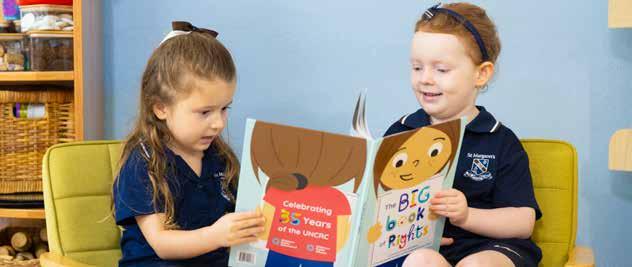
voice as a driver of school reform positions students as co-researchers rather than subjects, generating authentic data while building critical civic capacity:
• Co-design of safety policies: Invite senior students to genuinely shape school safety procedures. Their insider knowledge of social dynamics and digital spaces is irreplaceable.
• Youth-led research: Support student-designed surveys and focus groups on safety culture, with findings presented to school leadership and acted upon.
• Flexible disclosure pathways: Lamont et al. (2014) found young people disclose significantly more when processes feel safe, confidential, and consequential. Optimally, multiple options should be offered, not just face-to-face.
Implementation in the classroom
No strategy works without the right conditions. Dweck’s (2006) growth mindset research shows children participate more authentically when their contributions are valued rather than judged. Maslow (1943) reminds us that children cannot engage meaningfully with participation if their basic needs for safety and belonging remain unmet.
Child voice can be embedded across the curriculum: persuasive writing in English, civic inquiry in HASS, consent education in Health, participatory data projects in Maths, and expressive arts for children who communicate best non-verbally. The key is that it flows naturally through the school day, not just as a standalone event.
Most critically, schools must close the loop. Gathering child voice without visibly responding to it is worse than not asking at all; it teaches children that words don’t matter. Best practice follows a clear cycle: listen document respond report back. When children see their input leads to change, trust deepens and participation grows. When something can’t change, explain why honestly. Finally, ensure equity: children with disability, those from culturally and linguistically diverse backgrounds, and Aboriginal and Torres Strait Islander children may need additional scaffolding and culturally responsive approaches. Every child’s voice deserves to be heard.
Queensland’s Child Safety Standards ask us to shift from compliance to genuine rights-based practice, and the Child Voice Standard is the heartbeat of that shift. The research is clear: when children are heard, they are safer, more confident, and more connected. Every classroom strategy that invites, honours, and acts on child voice is not just meeting a policy requirement, it is honouring a fundamental human right. The children in our care are the true experts on their own experience. Let’s keep listening.
Australian Human Rights Commission. (2019). National principles for child safe organisations. Australian Human Rights Commission. https://www.humanrights.gov.au/our-work/ children/national-principles-child-safe-organisations
Bronfenbrenner, U. (1979). The ecology of human development: Experiments by nature and design. Harvard University Press.
Clark, A., & Moss, P. (2011). Listening to young children: The Mosaic Approach (2nd ed.). National Children’s Bureau.
Commonwealth of Australia. (2017). Final report: Royal Commission into Institutional Responses to Child Sexual Abuse. Commonwealth of Australia https://www.childabuseroyalcommission.gov.au
Dweck, C. S. (2006). Mindset: The new psychology of success Random House.
Erikson, E. H. (1968). Identity: Youth and crisis. W. W. Norton & Company.
Finkelhor, D. (2009). The prevention of childhood sexual abuse. The Future of Children, 19(2), 169–194. https://doi.org/10.1353/ foc.0.0035
Hart, R. (1992). Children’s participation: From tokenism to citizenship (Innocenti Essay No. 4). UNICEF International Child Development Centre.
Herman, J. L. (1992). Trauma and recovery: The aftermath of violence — from domestic abuse to political terror. BasicBooks.
Kuypers, L. M. (2011). The zones of regulation. Think Social Publishing.
Lamont, A., Mathews, B., & Della Bosca, H. (2014). Mandatory reporting of child abuse and neglect. Australian Institute of Family Studies, CFCA Paper No. 26. https://aifs.gov.au
Maslow, A. H. (1943). A theory of human motivation. Psychological Review, 50(4), 370–396. https://doi.org/10.1037/h0054346
Mitra, D. L. (2004). The significance of students: Can increasing ‘student voice’ in schools lead to gains in youth development? Teachers College Record, 106(4), 651–688. https://doi.org/10.1111/j.1467-9620.2004.00354.x
Morrow, V. (1999). ‘We are people too’: Children’s and young people’s perspectives on children’s rights and decision-making in England. The International Journal of Children’s Rights, 7(2), 149–170. https://doi.org/10.1163/15718189920494382
Piaget, J. (1970). Science of education and the psychology of the child. Orion Press.
Queensland Government. (2021). Child and youth risk management strategy: Requirements for regulated services. Department of Education. https://education.qld.gov.au
Smallbone, S., Marshall, W. L., & Wortley, R. (2013). Preventing child sexual abuse: Evidence, policy and practice. Routledge. United Nations. (1989). Convention on the rights of the child. United Nations Treaty Collection. https://www.ohchr.org/en/ instruments-mechanisms/instruments/conventionrights-child
Vygotsky, L. S. (1978). Mind in society: The development of higher psychological processes. Harvard University Press.
Zehr, H. (2002). The little book of restorative justice. Good Books.

No two students learn the same way, and yet a teacher must somehow reach all of them – every lesson, every day.
When teachers step into their classrooms in this modern age, one of the first things we notice and must consider is the diversity in front of us. There’s the obvious: students with a diagnosis and Learning Plan, students flagged as gifted or twice exceptional, their varied academic standpoints, those who identify as EALD or a part of Yalari, and – in St Margaret’s case – whether they are boarding or day students. But diversity in the classroom is not that simple – not that catering to any and all of these considerations are ‘simple’ in the first place. Nevertheless, there are also the less apparent parts of what makes our students who they are to consider: their interests and hobbies, their study habits, their home life and routines, their cultural background and influence, their ability to focus, and their motivation and ‘grit’.
Uzun acknowledges for us that ‘the contemporary educational landscape is defined by an unprecedented degree of student diversity, encompassing a wide spectrum of academic readiness, cognitive profiles, personal interests, and cultural backgrounds’ (2025). A one size fits all style of pedagogy is inappropriate – and most of all, inequitable – in today’s educational sphere. However, we can’t talk about the needs of diverse learners without acknowledging the additional demands and workload these place on teachers, which can be highly challenging.
Recent literature points to AI as a potentially game-changing solution. Differentiation perfectly aligns with the capabilities of AI to support student outcomes and also has the capacity to reduce teacher workload and support highly effective teaching.
Researchers Warrier (2025) and Uzun (2025) offer the idea that effective use of AI in differentiated learning revolves around content, process, and product, and puts student learning at the centre, rather than achievement of tasks. For example:
• Differentiating the content includes adjusting what they are engaging with (to meet the common learning goal), such as appropriately levelled reading materials, chunked information, and alternative explanations.
• Differentiating the process includes adjusting how they are accessing the common learning goal, such as the use of checklists, colour coding, graphic organisers, task-break down, visual supports for dual coding, scaffolds, and structured versus open-ended activities.
• Differentiating the product includes in what way they demonstrate the common learning goal, including tiered task options for levelled differentiation and extension, choice boards, and alternate expression.
All of this can be done quickly and effectively with AI. However, the important distinction that keeps teachers as ‘the teachers’ is that AI automates the creation of materials, but the teacher must retain critical function of pedagogical selection to deliver the materials through professional judgement. AI streamlines and supports the production of differentiated learning materials, which dramatically reduces teacher load, but to improve student support and outcomes, teachers must be the ethical decision makers (AI Differentiation in the Classroom, 2026).
For teachers who are in the beginning stages of using AI as a tool to support their teaching, Moskovitz (2025) offers the following considerations for using AI in inclusive and ethical teaching:
1. Keep your students at the centre. Start with what you want your students to learn, not with the AI tool itself.
2. Think about privacy. Different AI platforms use and store personal data differently and protecting student data is an extreme priority.
3. Use your professional judgement. AI is a timesaver and a tool, not a replacement for your expertise.
4. Watch for biases and incorrect information.
5. Start small and be specific. The more you use AI, the more comfortable you will become with it. Choose a small task to begin with and leave yourself time to become familiar with the process.
I’ve had the wonderful opportunity to work with one of St Margaret’s AI Champions, Clare Lu, on investigating and presenting our findings on this approach to differentiation for one of our teachmeets. While we discovered many valuable strategies and methods for utilising AI to support our students, the most important and consistent discovery we kept returning to related to two key messages:
• First, (and once again) that professional judgement and review was the key to effective use of AI to differentiate.
• Second, embracing AI does not diminish the role of a teacher – it adds another powerful tool to the repertoire. Used thoughtfully, it can enhance pedagogy, improve equity and curriculum access, and most importantly, help sustain the educators who make it all possible (Javed, 2024).
References
Uzun, L. (2025). The Potential of AI-Powered Educational Technologies on Differentiated Instruction and Personalised Learning In Academic Research and Studies in Educational Sciences I. Warrier, N. (2025, July 31). A Review of Artificial Intelligence-Based Educational Interventions for Students with ADHD. NHSJS https://nhsjs.com/2025/a-review-of-artificial-intelligencebased-educational-interventions-for-students-with-adhd/
Moskovitz, S. (2025, October 29). How teachers can use AI to plan for inclusive classrooms. Understood. https://www.understood. org/en/articles/how-teachers-can-use-ai-to-plan-forinclusive-classrooms
AI Differentiation in the Classroom: A Teacher’s Guide. (2026). Structural Learning. https://www.structural-learning.com/post/aidifferentiation-in-the-classroom
Javed, A. (2024). Enhancing Differentiation in the Classroom using Generative Artificial Intelligence. Victorian Academy of Teaching and Leadership. Vic.gov.au. https://www.academy. vic.gov.au/resources/enhancing-differentiation-classroomusing-generative-artificial-intelligence

Rebecca Newman Secondary Teacher
As a Visual Art teacher and artist with over twenty years of experience, I have observed a rise in students using art to express trauma, often without teachers having the training to manage such experiences safely. Without systemic support, well-intentioned educators risk unintentionally contributing to re-traumatisation (Howard et al., 2022). To promote safe student expression and teacher wellbeing, it is important to intentionally integrate Trauma-Aware Education (TAE) into arts-based education.
Despite curriculum expectations that students explore identity and emotion through creative subjects, traumaaware pedagogy remains largely absent from teacher education (Norrish & Brunzell, 2023). This leaves educators underprepared to manage emotional disclosures safely, particularly given the growing prevalence of childhood trauma (Mathews et al., 2023). At the same time, declining investment in arts education contributes to teacher fatigue, job insecurity and attrition (Thomson, 2024). This plan responds to these systemic gaps by proposing a sustainable, research-informed framework that safeguards both student and teacher wellbeing.
Research highlights that when educators are expected to facilitate emotionally charged creative tasks without therapeutic training, the teacher student relationship can blur into a therapist client dynamic, raising ethical concerns and increasing the risk of re-traumatisation (Hannigan et al., 2019). Without adequate frameworks to guide teachers in meeting curriculum demands safely, schools risk undermining both student wellbeing and workforce sustainability. Embedding a trauma-aware arts framework within school systems that is research-informed and aligns with curriculum delivery represents best practice in trauma-aware education.
Rationale
The aim is to empower teachers to facilitate safe, expressive arts learning while maintaining professional boundaries. The Australian Curriculum and QCAA frameworks both require students to interpret and communicate personal and social meaning through creative practice (ACARA, 2022; QCAA, 2025a). Such inquiry can be transformative, but without trauma-aware frameworks, this may trigger distress in vulnerable students.
Integrating principles from creative arts therapies into education can enhance inclusive practice by equipping teachers with strategies that support student regulation, reflection, and safe emotional expression (Hannigan et al., 2019). Strengthening teacher capability through targeted professional learning ensures that emotionally engaged learning occurs within predictable, safe structures. As Norrish and Brunzell
(2023) emphasise, embedding trauma-informed pedagogy in curriculum design protects students, empowers educators, and aligns with contemporary understandings of wellbeing and inclusive practice.
Curriculum alignment
Across Years 7 to 10, the Australian Curriculum positions the Arts as a vehicle for personal interpretation, emotional expression, and engagement with contemporary contexts.
Students are expected to evaluate how artists communicate meaning and to produce artworks that reflect their own perspectives and identities (ACARA, 2022). At the senior level (Years 11–12), the QCAA Visual Art syllabus requires students to ‘communicate personal thoughts, feelings, ideas, experiences and observations’ and to analyse ‘visual language, expression and meaning in artworks and practices’ across personal, cultural, and contemporary contexts (QCAA, 2025b, pp. 2–5).
These consistent expectations demonstrate that expression, identity, and meaning making are not peripheral but central to Arts education in Queensland. Each of these learning areas engages students in personal, social, and emotional exploration through creative processes, highlighting the need for traumaaware approaches across the broader Arts curriculum.
Embedding Trauma-Aware Education (TAE) principles into all Arts subjects provides a framework through which teachers can safely guide students’ creative inquiry, ensuring that emotional and identity-based learning occurs within structured, supportive environments. This alignment between curriculum intent and trauma-aware practice reinforces both student wellbeing and teacher confidence within emotionally engaged learning contexts.
Research foundation
Current educational research around TAE demonstrates both the impact of trauma on learning and the benefits of safe, creative opportunities for expression (Howard, 2022; Hannigan, 2019). The proposed framework builds on this evidence to position the arts as a structured, whole-school pathway for trauma-aware education. Within this model, trained Arts therapists lead clinical and therapeutic practice, while Arts teachers, supported through professional learning and co-design opportunities, adapt curriculum units using trauma-sensitive principles. This division of roles maintains professional boundaries, safeguards student wellbeing, and enhances teacher confidence, aligning with SAMHSA’s (Substance Abuse and Mental Health Services Administration) emphasis on safety, collaboration, and empowerment.
Research strongly supports the efficacy of such integrated approaches. Newton et al., (2024) found that trauma-informed school programs in Australia significantly improved student engagement, wellbeing, and emotional regulation. Similarly, Moula et al., (2023), in a pilot randomised control trial, demonstrated that school-based art therapy interventions improved children’s quality of life and emotional wellbeing through structured, creative processes facilitated by trained therapists. These findings validate the plan’s focus on embedding collaborative, arts-based trauma-aware practices within schools.
The importance of developing creative, system-level approaches to support students impacted by childhood trauma is well established. Data from the Australian Child Maltreatment Study (Mathews et al., 2023) indicate that more than 60 per cent of Australians report experiencing at least one form of maltreatment during childhood. This prevalence underscores the urgent need for trauma-aware education systems that equip teachers and wellbeing staff to respond safely and compassionately to students’ emotional and expressive needs.
Table 1
Prevalence of Child Maltreatment in Australia (Ages 16–65+) and Among Young People (Ages 16–24)
The implementation phase of this professional plan begins by establishing the structures and processes required for sustainable Trauma-Aware Education (TAE) across the school. The model commences with a whole school professional development program designed to build a collective understanding of trauma and its impact on learning, behaviour, and wellbeing.
A dedicated Arts TAE Working Group will be established, chaired by the author, a postgraduate-qualified educator in Trauma-Aware Education and a practising Visual Art teacher and including representatives from the Educational Leadership Team (ELT), student wellbeing staff, including psychologists, and a qualified Art therapist. This group will oversee policy development, professional learning, and curriculum alignment, ensuring a consistent, research-informed approach.
Early implementation priorities include developing two key policies:
• Role Clarity and Professional Boundaries Policy, defining the distinct responsibilities of teachers, wellbeing staff, and Art Therapists.
• Referral and Response Policy, outlining protocols for identifying, escalating, and supporting students experiencing trauma-related distress.
These documents will be collaboratively authored by school psychologists, senior wellbeing staff, the Art therapist, ELT representatives, and the TAE Lead. Joint workshops will follow, enabling teachers and Arts therapists to co-design arts-based regulation and reflection strategies aligned with curriculum outcomes. Partnerships with universities offering TAE and Arts therapy programs will strengthen professional learning pathways, supervision, and research collaboration.
This initiative recognises that trauma-aware education is an ongoing professional commitment, not a one-off training event. All staff will complete annual PD in referral processes, confidentiality, and trauma-informed responses, with system reviews and outcome evaluations conducted each year to ensure continuous improvement and accountability.
Evidence supports beginning implementation with comprehensive, school-wide professional learning. De Stigter et al. (2025) found that introducing a trauma-informed education approach across a whole school led to measurable improvements in classroom atmosphere, student trust, and resilience within the first year of implementation. These findings validate the first phase of this plan, which prioritises shared understanding and staff capability before embedding therapeutic or curricular interventions.
Note. Data adapted from The Australian Child Maltreatment Study: National prevalence and associated health outcomes of child abuse and neglect (Mathews et al., 2023).

Drawing on Newton et al. (2024) systematic review of Australian trauma-informed programs, this plan applies the SAMHSA framework as its operational model. The 4 R’s –Realise, Recognise, Respond, and Resist Re-traumatisation – are embedded through policy, pedagogy, and practice. The school must first realise the impact of trauma, through collective PD and reflection; recognise signs of dysregulation using shared language and early referral; respond by embedding trauma knowledge in curriculum design and therapeutic interventions; and resist re-traumatisation by maintaining clear professional boundaries and safe, predictable learning environments.
This structured approach positions the arts as a central vehicle for trauma-aware education that is educationally robust and therapeutically safe. By embedding SAMHSA’s six guiding principles – safety, trust, peer support, collaboration, empowerment, and cultural responsiveness – into arts practice, the plan ensures that trauma-aware education becomes part of school culture, policy, and pedagogy.
Practical application is supported by teacher guidelines adapted from Moula et al. (2023), including maintaining predictable routines, using low-stakes creative activities for regulation, encouraging expression through metaphor rather than personal disclosure, promoting empowerment through collaborative artmaking, and adhering to clear referral pathways.
Together, these practices ensure that both teachers and students can engage creatively and safely within a trauma-aware environment.
As the lead author and coordinator of this professional plan, I will chair the Arts TAE Working Group as both a postgraduate qualified educator in Trauma-Aware Education and an experienced Visual Art teacher. My role involves facilitating communication between leadership, wellbeing, and the arts department to ensure the framework is strategically embedded within policy, curriculum, and culture.
I will oversee the design and delivery of professional learning, co-develop policies on role clarity and referral pathways, and mentor arts staff in integrating trauma-aware strategies into
classroom practice. As a practicing artist and teacher, I bring both practical insight and empathy to the implementation process, modelling how trauma-aware principles can coexist with high-quality arts pedagogy.
My leadership contribution will also include collaboration with external partners such as universities offering TAE and Art Therapy programs to develop sustainable professional learning pathways and supervision structures. Through this, I aim to build workforce capacity beyond my school context, supporting a network of arts educators who feel confident, safe, and professionally valued when facilitating emotional and expressive learning.
Conclusion
This professional plan demonstrates a comprehensive, researchinformed approach to embedding Trauma-Aware Education (TAE) within independent schools through the arts. Grounded in evidence from Newton et al., (2025), the proposed model integrates the SAMHSA framework into school governance, professional learning, and classroom practice. The initiative prioritises both student safety and teacher sustainability, addressing the systemic gap in trauma-aware capability across arts education.
By establishing the Arts TAE Working Group, formalising role clarity, and embedding ongoing professional learning, the plan provides a replicable structure for independent schools seeking to align wellbeing and curriculum outcomes. Importantly, it positions the arts as a core vehicle for regulation, reflection, and resilience, rather than an ancillary subject.
As a professional educator and TAE specialist, my contribution extends beyond classroom practice to systemic change, advocating for policy coherence, workforce protection, and the recognition of creative practice as central to trauma-aware schooling. Ultimately, this initiative aims to cultivate learning environments that are safe, expressive, and inclusive, where both teachers and students can engage authentically and grow with confidence.
Table 2
Embedding Trauma-Aware Arts Practice in Independent Schools: A Framework for Safe Expression and Staff Wellbeing
SAMHSA 4 R’s Aligned Principles
Realise – Schools acknowledge the impact of trauma on learning, behaviour, and wellbeing
Recognise – Art Therapists and teachers develop shared language to identify when students need regulation, reflection, or referral
Safety and Trustworthiness /Transparency
Respond – Embed trauma knowledge into curriculum design (teachers) and therapeutic practice (Art Therapists)
Peer Support and Cultural, Historical and Gender Responsiveness
Application in School/Arts Context (Implementation Stages)
Planning Stage: Policy Development – Draft Role, Clarity and Professional Boundaries, and Referral and Response policies defining staff responsibilities and referral processes when trauma-related concerns arise. Staff Responsible: TAE working group Guidance Officer, Heads of Wellbeing, Art Therapist, Curriculum Leaders, and the author (TAE Postgraduate Lead).
In Practice Execution - Deliver whole-school TAE PD to build understanding of trauma’s impact on learning. Annual training includes referral procedures, confidentiality, and trauma-informed responses. Staff Responsible: Art Therapist, author (TAE Postgraduate Lead) all staff.
Planning Stage: Shared Understanding and Inclusion – Build a shared traumaaware vocabulary between arts teachers and Arts Therapists. Collaborate with universities offering TAE and Art Therapy qualifications to design professional learning and supervision pathways. Staff Responsible: TAE working group Guidance Officer, Heads of Wellbeing, Art Therapist, and the author (TAE Postgraduate Lead), Arts Teachers.
In Practice Execution: Validate diverse identities through inclusive artmaking and peer collaboration. Lessons use structured, metaphorical, or action-based prompts to reduce vulnerability while encouraging reflection. Students choose among personal, social, or conceptual themes. Students co-develop art project themes and exhibitions; feedback loops inform practice and review. Staff Responsible: Arts teachers, students, and the author (TAE Postgraduate Lead).
Resist ReTraumatisation –
Maintain professional boundaries and safe environments
Collaboration/ Mutuality and Empowerment, Voice and Choice
Safety and Trustworthiness /Transparency
Planning Stage: Prepare whole school TAE PD, Co-design art-based interventions between teachers and Art Therapists; develop regulation-focused creative strategies. Reflective assessment tasks encourage safe self-expression.
Staff Responsible: TAE working group Guidance Officer, Art Therapist, Arts Teachers, and the author (TAE Postgraduate Lead).
In Practice Execution: Art Therapists liaise with wellbeing teams, psychologists, and families; teachers collaborate with therapists without blurring boundaries.
In Practice Execution: Arts rooms and arts therapy spaces provide calm, sensory-regulated settings with flexible layouts.
Staff Responsible: Art Therapist, Arts Teachers, and the author (TAE Postgraduate Lead).
In Practice Execution: Evaluation and Ongoing Review – Teachers provide structured, safe content while Therapists deliver clinical interventions. Referral pathways and confidentiality protocols are monitored and reviewed annually. Data on wellbeing referrals and student outcomes are evaluated by the Arts TAE Working Group to ensure continued effectiveness and staff safety. Findings inform revisions to policy, PD content, and classroom strategies to sustain trauma-aware practice.
References
Australian Curriculum, Assessment and Reporting Authority. (2022). Australian Curriculum: The Arts – Visual Arts (Version 9.0). https://v9.australiancurriculum.edu.au
Australian Journal of Teacher Education. (2023). How is traumainformed education implemented within classrooms? Australian Journal of Teacher Education, 48(3), 96–120. https://doi.org/10.14221/ajte.2023v48n3.6
de Stigter, R. W., Nelen, W., Delsing, M., et al. (2025). Implementing a school-wide trauma-informed education approach: An evaluation of student outcomes during the first year of implementation. Journal of Child and Adolescent Trauma, 18(1), 71–85. https://doi.org/10.1007/s40653-024-00663-0
Hannigan, S. (2019). Drawing on creative arts therapy approaches to enhance inclusive school practice. Issues in Educational Research, 29(3), 771–790. https://www.iier.org.au/iier29/ hannigan.pdf
Haslam, D., Mathews, B., Pacella, R., Scott, J. G., Finkelhor, D., Higgins, D. J., Meinck, F., Erskine, H. E., Thomas, H. J., Lawrence, D., & Malacova, E. (2023). The prevalence and impact of child maltreatment in Australia: Findings from the Australian Child Maltreatment Study: Brief report. Australian Child Maltreatment Study. https://www.acms.au/findings/
Howard, J., L’Estrange, L., & Brown, M. (2022). National guidelines for trauma-aware education in Australia Frontiers in Education, 7, 826658. https://doi.org/10.3389/feduc.2022.826658
Mathews, B., Haslam, D. M., Pacella, R., Scott, J. G., Finkelhor, D., Higgins, D. J., Meinck, F., Erskine, H. E., Thomas, H. J., Lawrence, D. M., & Malacova, E. (2023). Australian Child Maltreatment Study: Summary of findings. New South Wales Government, Department of Communities & Justice. https://dcj.nsw.gov.au/documents/about-us/facsiar/facsiarpublications-and-resources/29-2023_Australian-ChildMaltreatment-Study-Summary_final.pdf
Mathews, B., Haslam, D. M., Pacella, R., Scott, J. G., Finkelhor, D., Higgins, D. J., Meinck, F., Erskine, H. E., Thomas, H. J., Lawrence, D. M., & Malacova, E. (2023). The Australian Child Maltreatment Study: National prevalence and associated health outcomes of child abuse and neglect [Supplement]. Medical Journal of Australia, 218(6 Suppl). https://doi.org/10.5694/mja2.51867
Newton, L., Keane, C. A., & Byrne, M. K. (2024). Trauma-informed programs in Australian schools: A systematic review of design, implementation and efficacy. Children and Youth Services Review, 156, 107368. https://doi.org/10.1016/j. childyouth.2023.107368
Queensland Curriculum and Assessment Authority. (2025a). Visual Arts: Standards elaborations, Prep–Year 10. https://www.qcaa. qld.edu.au/p-10/aciq/version-9/learning-areas/p-10-thearts/visual-arts/visual-arts-assessment-resources
Queensland Curriculum and Assessment Authority. (2025b). Visual Art 2025 General Senior Syllabus. https://www.qcaa.qld.edu.au/ downloads/senior-qce/syllabuses/snr_visual_art_25_syll.pdf
Substance Abuse and Mental Health Services Administration. (2014). SAMHSA’s concept of trauma and guidance for a traumainformed approach (HHS Publication No. SMA 14-4884). U.S. Department of Health and Human Services, Office of Policy, Planning and Innovation. https://store.samhsa.gov/ product/SAMHSA-s-Concept-of-Trauma-and-Guidancefor-a-Trauma-Informed-Approach/SMA14-4884
Thomson, P. (2024). Why bother with arts education in schools? The Australian Educational Researcher, 51(1), 93–108. https://doi. org/10.1007/s13384-024-00741-0
Camille Poupardin Primary Teacher
As educators, we need to be mindful that the language we use affects how we see and respond to behaviours. For Pathological Demand Avoidance (PDA), the label risks framing individuals’ behaviour as deficit-oriented, disordered, oppositional, or deliberately difficult. The behaviours associated with PDA (intense resistance to everyday demands, need for control, a drive to avoid expectations) are better understood as expressions of anxiety and an uncertainty that makes routine requests feel genuinely dangerous. Reframing PDA as an anxiety-driven response redirects attention from compliancebased approaches toward strength-based strategies that prioritise emotional regulation, safety, and relational trust.
PDA is widely recognised as a profile of autism spectrum disorder (ASD), characterised by features that extend beyond the social communication and sensory differences observed in more typical presentations of the condition (Truman, 2021). While it is not currently established as a formal diagnosis, PDA is nonetheless considered a distinct and complex profile warranting differentiated understanding within both clinical and educational contexts (PDA Society, 2025).
The primary characteristics of this profile include an anxietydriven need for control, an extreme avoidance of everyday demands and expectations (notably encompassing activities the individual may themselves desire or enjoy), and a persistent drive to retain control over immediate situations and environments – regardless of whether demands are externally imposed or self-directed (Sherwin, 2015). Individuals with PDA also tend to employ socially oriented strategies as a means of circumventing demands, present with multiple key
features simultaneously rather than one or two in isolation, and demonstrate a marked resistance to conventional approaches to parenting, education, and therapeutic support. Taken together, these features underscore the importance of moving beyond traditional behavioural frameworks to develop more nuanced, autonomy-supportive responses to this profile (Sherwin, 2015; Milton, 2013).
Reframing PDA as an anxiety-driven response, rather than a behavioural pathology, has gained traction in both critical autism studies and clinical literature. Milton (2013) proposes Rational Demand Avoidance (RDA) to explain demand avoidant behaviour as a logical response to environments experienced as stressful or unsafe, while Moore (2020) argues that avoidance in the context of debilitating anxiety should be understood as reasonable rather than pathological. Empirical research by Stuart et al. (2020) and Johnson and Saunderson (2023) further indicates that intolerance of uncertainty and anxiety are central to demand avoidance across childhood and adulthood, suggesting that such behaviour functions as a regulatory strategy in response to perceived threat, unpredictability, and loss of control.
This framing has important implications for educational practice, where demand avoidance is better understood as a protective response than as deliberate refusal. When support shifts from compliance toward safety, predictability, and collaboration, the underlying needs driving avoidance become more visible, enabling educators to create conditions that promote regulation, participation, dignity, and wellbeing. Kildahl et al. (2021) therefore call for approaches that centre
anxiety, trauma, and autistic perspectives in order to develop more nuanced and inclusive responses.
The mechanisms that maintain avoidance in PDA are both psychological and environmental, operating in ways that reinforce one another over time. Central to this is heightened anticipatory anxiety, a forward-oriented stress response in which the individual experiences significant distress in expectation of a demand, often well before any direct pressure is applied (Fricker, 2024). This anticipatory process is compounded by intolerance of uncertainty, whereby ambiguity around expectations, outcomes, or routines generates a threat response that makes engagement feel unsafe or overwhelming. Sensory overload similarly contributes to the maintenance of avoidance, as environments that are unpredictable, dysregulating, or sensory demanding amplify the individual’s overall stress load, lowering the threshold at which demands become intolerable (Truman, 2021).
Prior experiences of pressure, coercion, or distress are also significant, as repeated exposure to situations in which demands were paired with distress can condition avoidant responses through associative learning. Even neutral or lowstakes demands may come to elicit a strong avoidant reaction over time (Kildahl et. al., 2021). Critically, when avoidance succeeds in reducing distress in the short term, it becomes negatively reinforced, increasing the likelihood that it will be deployed again in similar circumstances. This reinforcement cycle can become self-sustaining, particularly in environments that continue to prioritise compliance over safety and connection (Kildahl et. al., 2021; Fricker 2024). Understanding these mechanisms underscores the importance of viewing PDA not as a fixed behavioural defect, but as a stressresponse pattern shaped by cumulative experiences of anxiety, unpredictability, and perceived threat – one that is both logical in its origins and responsive to change when the conditions around the individual are meaningfully addressed.
Supporting regulation and inclusion in practice
Supporting regulation and inclusion for individuals with PDA requires approaches that minimise perceived pressure, preserve autonomy, and prioritise relational safety. The PANDA approach (PDA Society, 2025) offers a useful framework by emphasising predictability, flexibility, and collaborative engagement. For educators and parents, demands may be reframed as low-arousal questions that reduce threat and support participation, such as offering choice, inviting timing preferences, and using indirect prompts to facilitate a sense of control.
Prioritise and Compromise or Pick your battles: Letting go of what does not matter and softening what does. Key strategies include reducing the volume and rigidity of rules, fostering a sense of agency through meaningful choice, providing transparent rationale for expectations, and holding flexibility around outcomes when full engagement is not yet within the individual’s window of tolerance.
A Anxiety Management: Lowering anxiety is the core of everything else, because for students with PDA, anxiety is the driver of demand avoidance. Reducing uncertainty wherever possible, alongside recognition of the anxiety, sensory, and social processing differences that drive avoidant responses, forms the foundation of an effective support framework. When behavioural distress does emerge, it is best understood and responded to as a panic response, met with consistent, non-punitive support throughout, and followed by a forward-focused approach that avoids post-incident analysis or consequence.
N
D
Negotiation and Collaboration: Working together builds safety and fairness; it supports finding shared solutions that respect the student’s autonomy while helping everyone get their needs met. Maintaining calm, proactively collaborating with the individual to navigate challenges, and negotiating solutions together are essential practices, underpinned always by a genuine commitment to fairness and trust, without which no strategy, however well-intentioned, is likely to take hold.
Disguise and Manage Demands: This includes softening the edges of everyday requests, as small tasks can feel huge when they come across as demands. Reframing demands in gentle, indirect ways, rather than issuing direct instructions, significantly reduces the threat response they can trigger, and continuously monitoring an individual’s tolerance for demands and adjusting expectations accordingly ensures that support remains responsive rather than rigid. Doing things collaboratively, alongside the individual rather than directing them, further softens the experience of demand and builds the relational safety that makes engagement possible.
A Adaptation: What works one day for the student might not work the next. Flexibility and adaptability are essential in supporting students with PDA. Humour, distraction, novelty, and roleplay can all serve as valuable tools for softening the experience of demand, and a willingness to be flexible reflects an understanding that rigidity only amplifies anxiety. Attending to the balance of give and take within the relationship ensures that engagement feels reciprocal rather than one-sided, preserving the trust and goodwill that sustained support depends upon.
Reframing language in PDA-informed practice involves replacing directive or compliance-based phrasing with language that is invitational, collaborative, and low-arousal (Truman, 2021). For example, requests can be softened into questions that preserve autonomy and reduce perceived pressure, thereby supporting emotional regulation and enabling greater engagement.
Instead of… Say…
‘Do this now.’ ‘I wonder if you’d be able to help me with this?’
‘Sit down.’ ‘I’m going to find a spot – you might want one too.’
‘Stop that.’
‘Do it yourself.’
‘Your turn.’
‘Answer the question.’
‘That might not be the safest idea – what else could work?’
‘I’ll start it and you can jump in whenever you’re ready.’
‘Whenever you feel like it, it’s there for you.’
‘I’m curious what you think about this – no pressure if you’re not sure yet.’
‘Join in.’ ‘We’re over here if you want to come’
‘Pay attention.’ ‘There’s something interesting coming up you might like.’
‘Start your writing.’
‘Read this.’
‘Complete the worksheet.’
‘Time to go.’
‘Pack up now.’
‘Line up.’
‘Put that away.’
‘Would you like to tell me your ideas first and we can write them together?’
‘I thought this might be interesting – want to take a look?’
‘Which part of this would you want to start with, if any?’
‘We’ll be heading off in a few minutes – just so you know.’
‘Things are winding down when you’re ready.’
‘We’re moving to the next spot – come when you can.’
‘That’ll need to be somewhere safe before we move on.’
Conclusion
Pathological Demand Avoidance (PDA) is best understood not as a fixed behavioural deficit, but as an anxiety-driven and contextually shaped response to perceived threat, uncertainty, and loss of autonomy. Reframing demand avoidance in this way enables more ethical and effective educational practices that prioritise regulation, relational safety, and student agency. Approaches such as PANDA demonstrate the value of flexibility, collaboration, and low-arousal communication in supporting meaningful engagement. Ultimately, a shift away from compliance-based models toward strength-based practice is essential to fostering inclusive environments in which learners with PDA can participate with dignity and wellbeing.
References
Fricker, E. (2024). The educator’s experience of pathological demand avoidance: An illustrated guide to pathological demand avoidance and learning (L. Kerbey, Ill.). Jessica Kingsley Publishers.
Johnson, M., & Saunderson, H. (2023). Examining the relationship between anxiety and pathological demand avoidance in adults: A mixed methods approach. Frontiers in Education, 8, 1179015. https://doi.org/10.3389/feduc.2023.1179015
Kildahl, A. N., Helverschou, S. B., Rysstad, A. L., Wigaard, E., Hellerud, J. M., Ludvigsen, L. B., & Howlin, P. (2021). Pathological demand avoidance in children and adolescents: A systematic review. Autism, 25(8), Article 13623613211034382. https:// doi.org/10.1177/13623613211034382
Milton, D. (2013). ‘Nature’s answer to over-conformity’: Deconstructing pathological demand avoidance. Autism Experts Online. PDA Society. (2025). PANDA as a way in. https://www.pdasociety.org. uk/what-helps-guides/pda-approaches/panda-as-a-way-in/
Sherwin, J. A. (2015). Pathological demand avoidance syndrome: My daughter is not naughty. Jessica Kingsley Publishers.
Stuart, L., Grahame, V., Honey, E., & Freeston, M. (2020). Intolerance of uncertainty and anxiety as explanatory frameworks for extreme demand avoidance in children and adolescents. Child and Adolescent Mental Health, 25(2), 59–67. https://doi. org/10.1111/camh.12326
Truman, C. (2021). The teacher’s introduction to pathological demand avoidance: Essential strategies and activities for the classroom. Jessica Kingsley Publishers.

School refusal affects approximately 2-5% of school-aged children and represents one of the most challenging issues facing educators, families, and mental health professionals today (Egger et al., 2003; Fremont, 2003). Unlike truancy, school refusal stems from emotional distress rather than defiance, making it a complex phenomenon that requires careful, compassionate intervention strategies.
School refusal is characterised by a child’s reluctance or complete inability to attend school due to emotional factors such as anxiety, depression, or trauma. Dr Christopher Kearney, a leading researcher in this field, defines school refusal as ‘child-motivated refusal to attend school and/or difficulty remaining in classes for an entire day’ (Kearney et al., 2004). This distinction is crucial because it highlights that these students genuinely want to succeed academically but are overwhelmed by emotional or psychological barriers.
The condition manifests differently across age groups. Younger children may experience physical symptoms such as stomach aches or headaches, while adolescents often present with more complex anxiety disorders or mood-related issues. As Kearney notes, common symptoms include ‘anxiety, depression, withdrawal, fatigue, crying, and physical complaints such as stomach aches and headaches’ (Kearney, 2001, as cited in Kearney et al., 2004). Research indicates that school refusal frequently co-occurs with separation anxiety, social anxiety, generalised anxiety disorder, and depression (Kearney & Albano, 2004; Fremont, 2003).
Importantly, function-based formulations help explain why a student avoids school. Kearney and Albano’s Cognitive Behavioural Therapy (CBT) framework emphasises four typical maintaining functions: ‘to avoid school-related situations that cause substantial distress; to escape aversive social/evaluative situations; to pursue attention from significant others; and to obtain tangible rewards outside of school’ (Kearney & Albano, 2007/2018).
Creating therapeutic environments within schools has emerged as a highly effective intervention strategy. At St Margaret’s, the implementation of a dedicated safe space in Community House, the school’s wellbeing centre, exemplifies best practice in addressing school refusal. This approach recognises that traditional disciplinary measures are counterproductive for students experiencing genuine emotional distress.
The concept of a ‘safe space’ extends beyond physical location to encompass emotional safety, predictability, and unconditional support. As a hospital-based brief for schools emphasises, ‘identifying the function of school refusal is critical because it will lead to the selection of an appropriate intervention’ (St. Joseph et al., 2022). When students know they have access to a designated area where they can retreat during
overwhelming moments, it often reduces their overall anxiety about school attendance. This preventive approach addresses the root cause rather than merely managing symptoms.
At a systems level, schools are uniquely positioned to provide integrated support: ‘Schools can be the optimal setting for the provision of psychotherapy for youth’, particularly when strategies are ‘integrated across individual, family, and school contexts’ (Simon, 2016).
Effective school refusal intervention requires a multi-disciplinary approach involving schools, families, and external health professionals. A multi-systemic lens argues for integrating interventions across home, clinic, and school ecologies to improve outcomes (Lyon & Cotler, 2009).
Family involvement is particularly crucial, as parents often inadvertently reinforce avoidance behaviours through well-intentioned attempts to protect their children from distress. As Lebowitz summarises, ‘there is consensus among experts … that family accommodation is a key aspect of child anxiety, with major impact on … clinical course, severity of symptoms … and treatment outcomes’ (Lebowitz, 2019). Professional guidance helps families understand how to provide support while encouraging gradual re-engagement with school. External health professionals, including psychologists, counsellors, and sometimes psychiatrists, contribute specialised expertise in addressing underlying mental health conditions. The American Family Physician review reinforces that ‘assessment and management of school refusal require a collaborative approach that includes the family physician, school staff, parents, and a mental health professional’ (Fremont, 2003).
The gradual return process is essential for sustainable progress. Rather than expecting immediate full attendance, successful programs implement phased approaches that might begin with brief visits to the safe space, progress to attending preferred classes, and eventually build toward full school participation. A meta-analysis concluded ‘significant effects were found for attendance but not for anxiety’, underscoring the value of stepwise re-entry and longer-term follow-up (Maynard et al., 2018). In certain contexts where treatment engagement is low, school-based ‘rapid return’ strategies have shown promising re-attendance rates, with 72% [of adolescents] resuming attendance in one study, though authors caution careful ethical consideration (Maeda & Heyne, 2019).
Evidence of success
The effectiveness of safe space interventions is supported by both research and practical outcomes. Studies show that schools implementing similar programs report significantly higher rates of successful re-integration compared to traditional approaches.

At St Margaret’s, the Community House initiative has demonstrated tangible benefits, with students gradually returning to regular classroom attendance.
Perhaps most importantly, both students and parents have reported that having access to this safe space provides what one parent described as a ’security blanket’. This psychological safety net often reduces the anxiety that perpetuates school refusal cycles. When students know they have a place to retreat if needed, they’re more willing to attempt regular attendance.
The reduced need for parents to collect their children from school represents another significant indicator of success. Previously, many families found themselves in cycles where distressed students would call home for pickup, inadvertently reinforcing avoidance patterns. The availability of an on-site safe space breaks this cycle by providing immediate support without requiring removal from the school environment.
This experience aligns with broader evidence: systematic reviews find school-involved CBT approaches to be ‘promising’ for adolescent school refusal (Fernandes et al., 2024), and multi-modal CBT programs report improved attendance and reduced anxiety/depression at follow-up (Strömbeck et al., 2021). More generally, ‘absenteeism from school is a serious public health issue’ requiring coordinated, evidence-based policies (Kearney, 2008).
Successful safe space programs require careful planning and ongoing evaluation. Key elements include dedicated staff training, clear protocols for when and how students access the space, and regular communication between all stakeholders. The physical environment should be calming and distinct from typical classroom settings, while still maintaining connection to the broader school community.
Importantly, safe spaces are not intended as permanent solutions but as stepping stones toward full classroom participation. Regular assessment of student progress ensures that the intervention continues to serve its intended purpose of facilitating gradual re-integration rather than enabling continued avoidance. As the hospital brief cautions, ‘school refusal can be a formidable obstacle … linked to academic disengagement and failure’, so schools should monitor progress closely and intervene early (St. Joseph et al., 2022).
Conclusion
School refusal represents a significant challenge that requires understanding, patience, and innovative approaches. The implementation of safe spaces like St Margaret’s Community House demonstrates how schools can effectively support struggling students while working toward sustainable attendance solutions. By combining immediate emotional support with gradual exposure and family collaboration, these programs address both the symptoms and underlying causes of school refusal.
The success of such initiatives highlights the importance of viewing school refusal through a mental health lens rather than a disciplinary one. As one review notes, ‘absenteeism… [is] associated with comorbid physical and psychiatric conditions’ and warrants comprehensive, cross-system intervention (Kearney, 2008). When schools provide appropriate support structures, students can overcome their barriers to attendance and achieve their academic potential. The investment in wellbeing-focused interventions ultimately benefits not only individual students but the entire school community by creating more inclusive, supportive learning environments.
References
Egger, H. L., Costello, E. J., & Angold, A. (2003). School refusal and psychiatric disorders: A community study. Journal of the American Academy of Child & Adolescent Psychiatry, 42(7), 797–807.
Fernandes, C.-S. F., Kannoth, S., Pendergrass Boomer, T. M., Hieftje, K. D., & Fiellin, L. E. (2024). Systematic review of interventions with some school involvement for school refusal in high school-age adolescents. Children and Youth Services Review. https://www.play2prevent.org/wp-content/ uploads/2024/06/cdae003.pdf
Fremont, W. P. (2003). School refusal in children and adolescents. American Family Physician, 68(8), 1555–1560. https://www. aafp.org/pubs/afp/issues/2003/1015/p1555.pdf
Kearney, C. A. (2008). School absenteeism and school refusal behavior in youth: A contemporary review. Clinical Psychology Review, 28(3), 451–471. https://www.researchgate.net/...
Kearney, C. A., Lemos, A., & Silverman, J. (2004). The functional assessment of school refusal behaviour. The Behavior Analyst Today, 5(3), 275–283. https://psycnet.apa.org/ fulltext/2014-44015-005.html
Kearney, C. A., & Albano, A. M. (2018). When children refuse school: A cognitive-behavioral therapy approach (Therapist guide) (3rd ed.). Oxford University Press. https://academic.oup.com/ book/1123
Lebowitz, E. R. (2019). Addressing parental accommodation when treating anxiety in children. Oxford University Press.
Lyon, A. R., & Cotler, S. (2009). Multisystemic intervention for school refusal behavior: Integrating approaches across disciplines. Advances in School Mental Health Promotion, 2(1), 20–34. https://psycnet.apa.org/record/2011-06041-003
Maeda, N., & Heyne, D. (2019). Rapid return for school refusal: A school-based approach applied with Japanese adolescents. Frontiers in Psychology, 10, 2862. https://doi.org/10.3389/ fpsyg.2019.02862
Maynard, B. R., Heyne, D., Esposito Brendel, K., Bulanda, J. J., Thompson, A. M., & Pigott, T. D. (2018). Treatment for school refusal among children and adolescents: A systematic review and meta-analysis. Research on Social Work Practice, 28(1), 56–67. https://www.resa.net/downloads/attendanceand-absenteeism/treatmentforschoolrefusal.pdf
Simon, D. J. (2016). School-centered interventions: Evidence-based strategies for social, emotional, and academic success. American Psychological Association. https://www.apa.org/pubs/ books/School-Centered-Interventions-Intro-Sample.pdf
St. Joseph, S. D., Austin, S. C., Strickland-Cohen, K., Machalicek, W., & McIntosh, K. (2022). School refusal: Assessment and intervention. Boston Children’s Hospital. https://www. childrenshospital.org/sites/default/files/2023-09/School%20 Refusal-%20Assessment%20and%20Intervention.pdf
Strömbeck, J., Palmér, R., Sundberg Lax, I., Fäldt, J., Karlberg, M., & Bergström, M. (2021). Outcome of a multimodal CBT-based treatment program for chronic school refusal. Global Pediatric Health, 8, 1–13. https://doi. org/10.1177/2333794X211002952

Nicole Walker Head of Year
Giving attention to the cognitive load of students is a key to learning success. It empowers students to connect unfamiliar information with familiar details and focus quickly on the task at hand. It’s more than a current saying; it’s empowering! As we manage the cognitive load of our students, they are positioned to engage with their learning in positive and meaningful ways to ‘optimise achievement and outcomes of learning’ (AERO, 2026). Connecting new material to prior learning enhances working memory, and as connections are strengthened, long-term memories are created. Being cognisant of this, an intentional focus on applying such approaches to the social and emotional learning of the Year 8 cohort has been undertaken. This has built on the action research project which supported their transition into secondary school in 2025.
Working memory is ‘fast and flexible’ (AERO, 2025), and as learning is gradually transferred into long-term memory, the regular focus on social and emotional learning concepts has been prioritised. Educator Zoe Benjamin (2026) explains that the modality effect encourages teachers to present information in one mode at a time so that it is understood clearly. She states that the split attention effect caused by students being unsure of information importance can be reduced when information is presented in a clear source, thereby reducing their cognitive load. With this in mind, the intentional focus on two expectations housed within the clear ‘Expectations of Students’ infographic occurred each year level assembly. This has increased student awareness and motivation to fulfil
these nine expectations, and a byproduct has been the enhanced connection within the cohort. The girls are more aware of the ‘why’ behind the ‘what’ in terms of their individual responsibilities.
By harnessing the behavioural and emotional responses in the girls’ limbic systems, long-term memories have been created through a positive, interactive approach that has also taught 21st century skills. The amygdala region of the brain has aided learning as concepts and findings have been presented in visual, auditory and kinaesthetic forms; ideas have been seen, heard and discussed via reflective activities, which have encouraged positive emotional responses (Spielman, 2014). Author Elisa Nebolsine (2021) believes that as learning is spread out, concepts are reinforced so that a process of ‘digging out a memory’ can occur as many synapses are utilised’ (p. 99). This implies that the time spent planting and nurturing the learning is vital.
Actively engaging in reflective practices each term has seen the girls work in small groups (30 groups of five to six students) to provide feedback on term highlights, challenges they have faced, helpful strategies to use, and advice moving forward. As they received the collated feedback, it has been exciting to witness the student voice championing change and sharing keys to success. These resound with maturity and were well received by the cohort as many similarities were discovered. Their collective efficacy has grown through this recurring activity, which demonstrates an adaptation of the 70/30 Rule
Create specific goals that we might struggle with but also achieve
Talk to new people
Participate in class, ask for help
Be organised - time, uniform Less screens Use alarms
Exercise, sleep/eat well
Extracurricular
Be kind, stay positive
Don’t procrastinate or overthink Use diary
Spend time with friends
Focus on wellbeing
Focus in class
Study consistently/planner
as students discuss their experiences and connect with each other (CTC Training, 2026). The responses echoed our focus on SMART goals, time management and wellbeing. This included advice to spend time with friends, talk to new people, be kind, and stay positive. Academic strategies included consistent study, interleaving, using a planner, participating in class, asking for help, being organised by using alarms and diaries, and ‘creating specific goals that we might struggle with but also achieve’. Such stretch goals (Miles, 2023) indicate that the students are embracing challenges with increased awareness and perspective. This supports author John Maxwell’s view that ‘successful people do daily what unsuccessful people do only occasionally (2018, p. 201).
Active student involvement has produced joy, positivity, and developed listening skills. It also demonstrated that the regular and systematic focus on these nine expectations has motivated the girls to support each other in their academic, wellbeing and extra-curricular pursuits. The students’ cognitive load in terms of their emotional intelligence has been lightened and their social and emotional learning deepened, to support the development of confident, capable and compassionate young women one step at a time.
References
Australian Education Research Organisation. (2025, April 30). Managing cognitive load optimises learning: Implications for policymakers. https://www.edresearch.edu.au
Benjamin, Z. (2026, April 1). Cognitive load theory: A practical guide and tips for teachers. Third Space Learning. https:// thirdspacelearning.com/blog/cognitive-load-theory/ CTC Training. (2026, April 30). What is the 70/30 rule in teaching? https://ctc-training.co.uk
Maxwell, J. C. (2018). Developing the leader within you 2.0. HarperCollins Leadership.
Miles, M. (2023, March 20). Empower your work with stretch goals (plus examples). Asana. https://asana.com
Nebolsine, E. (2021). Your amazing teen brain: CBT & neuroscience to stress less, balance emotions, and strengthen your growing mind. Instant Help Books.
Spielman, R. M., Dumper, K., Jenkins, W., Lacombe, A., Lovett, M., & Perlmutter, M. (2014, December 8). The brain and spinal cord. OpenStax. https://openstax.org


Alison Ward Head of Faculty –Global Studies
When young Australians turn 18, they are legally required to vote, and many will be called for jury service. All of them will be expected to navigate government systems, exercise legal rights, and take their place as citizens in a functioning democracy (Department of Home Affairs, 2024). These are not abstract ideals – they are real obligations that schools are uniquely positioned to prepare young people for. The question is whether we are doing that well enough.
The data says we are not. In 2024, the National Assessment Program – Civics and Citizenship (NAP-CC) found that only 28% of Year 10 students nationally met the proficient standard – a record low, and the continuation of a decline observed since 2019 (Friedman et al., 2025). The research is clear that this decline reflects a failure of how civics has been taught and resourced, rather than a failure of student interest or capacity (Brett et al., 2024; Jerome, 2024; O’Keefe et al., 2025).
This article draws on the research literature to make a practical case for two types of civics education that schools should be delivering: knowledge-based instruction that gives students a genuine understanding of how democracy works, and participatory education that gives them real experience of engaging with it. The evidence shows that neither approach works well without the other – and that together, they represent what effective civics education looks like in practice.
Why civics education matters and why the current picture is concerning Civics education is not a peripheral subject. Research consistently shows that young people with low levels of civic knowledge are less likely to vote, less able to evaluate political information critically, and more vulnerable to misinformation (Galston, 2001; Reichert, 2022). In a compulsory voting democracy, these are not minor concerns – they bear directly on the health of Australian democratic life. The Alice Springs (Mparntwe) Education Declaration commits our schools to developing young people who are ‘active and informed citizens’; however, the NAP-CC data suggests Australian schools are falling well short of this (Education Council, 2019, p. 6).
The urgency of this challenge is sharpened by the contemporary Australian context. Public trust in government and democratic institutions has declined significantly in recent years, with surveys consistently showing that Australians, and young Australians in particular, are increasingly sceptical of the institutions they are being asked to participate in (Bessant & Watts, 2025). At the same time, the influence of social media on political life has created an information environment in which misinformation circulates rapidly and the capacity to evaluate political claims critically has never mattered more (Doecke &
Huo, 2024). Civic knowledge is one of the strongest protective factors against political manipulation and disinformation (Galston, 2001). The case for strong, well-resourced civics education is therefore not simply about improving test scores; it is about equipping the next generation to sustain democratic life in conditions that are genuinely testing it.
One of the most striking findings in the research is what might be called the knowledge-engagement gap. Across multiple NAP-CC cycles, students have consistently said they want to vote, they care about their communities, and they intend to be involved in civic life; however, their assessed knowledge of how to do that has declined (Friedman et al., 2025; Reichert & Print, 2018). This gap tells us that young Australians are not disengaged; they may be under-equipped.
Two types of civics education schools should deliver
Knowledge-based civics education
Knowledge-based civics education means teaching students the content of democratic life: how Parliament works, how laws are made and challenged, what rights and responsibilities citizenship carries, and what the history and values of Australian democracy look like. It is what the NAP-CC assesses, and its decline tells us students are leaving school without the civic grounding they need.
One of the strongest predictors of students’ civic knowledge and intention to participate in civic life is structured civic learning with dedicated curriculum time, confident teachers, and coherent content (Heggart et al., 2019; Reichert & Print, 2018). Civics and Citizenship Education (CCE) has historically been treated as a marginal subject in many Australian schools (Brett et al., 2024; Joint Standing Committee on Electoral Matters, 2025), with predictable consequences for student outcomes.
Participatory civics education
Knowledge is necessary, but it is not sufficient to prepare our students for upholding democracy. A well-established framework in the civics literature distinguishes between three kinds of civic development schools can aim for (Westheimer & Kahne, 2004). The first is the personally responsible citizen, that is, someone who follows the rules, pays their taxes, and acts with integrity. The second is the participatory citizen: someone who understands how civic systems work and actively engages in them, joining community organisations, voting thoughtfully, and taking part in democratic processes. The third is the justice-oriented citizen: someone who can critically examine how power works, identify inequality, and work toward change. Most Australian civics programs have focused heavily on the first of these types and have given far less attention to the second and third (Heggart et al., 2019; O’Keefe et al., 2025). The

result, as one group of researchers put it, is a curriculum better designed to produce students who can describe democracy than students who can participate in it (Heggart et al., 2019).
Participatory civics education closes this gap by giving students genuine practice in democratic engagement while they are still at school. In practical terms, this means more than participation in student representative councils. It means classrooms where contested questions are genuinely debated and community-connected projects where students engage with real civic issues and see that their voice can have an effect (Bessant et al., 2025). These are the experiences through which the habits and capacities of democratic citizenship are built.
The evidence for this approach is strong. Jerome’s (2024) systematic review of 47 citizenship education programs across multiple countries found that programs combining content knowledge with authentic participation opportunities consistently produced better outcomes, in civic knowledge, civic attitudes, and civic behaviours than programs focused on content alone. Crucially, the review also found that participation-only programs sometimes improved students’ attitudes and intentions without lifting their knowledge.
This finding reinforces the point that the two approaches are complementary, not alternatives. Each reaches dimensions of civic development that the other cannot achieve alone.
For classroom teachers, the implication is that effective civics teaching must do both things well: build genuine content knowledge and provide structured opportunities for students to practise that knowledge through real engagement. Students must also be provided opportunities to engage in respectful debates, consideration of diverse perspectives on topical issues, and genuine governance roles. A program that does only one or the other is incomplete.
School leaders need to ask whether civics education is genuinely protected in the timetable, whether the teachers delivering it feel confident and supported, and whether the school’s broader culture, including its student governance structures, give young people authentic experiences of democratic participation.
Equity is also a leadership responsibility. Law, politics, public service, and business leadership are roles that carry
disproportionate influence over the civic and political life of the nation (Weinberg, 2022). A civics education that develops only the personally responsible citizen without cultivating the capacity to critically examine how power operates risks producing future leaders who are skilled at working within democratic systems but not at questioning whether those systems are just or inclusive. Westheimer and Kahne’s (2004) justice-oriented citizen, the type least commonly developed in Australian schools, is arguably most consequential when it is developed in those who will hold the greatest civic power.
Conclusion
The record-low civics results in 2024 are not a sign that young Australians do not care about democracy. The research suggests they do. What the data may reflect is a system that has not given them the knowledge or the practice they need to participate in civic life meaningfully. That is something educators can change. Effective civics education requires both rigorous knowledge instruction and genuine participatory experience. Schools that take both seriously are the schools most likely to produce the active, informed young citizens that Australian democracy depends upon.
References
Bessant, J., O’Keeffe, P., & Drake, M. (2025). Civics education and citizenship in the Anthropocene. Journal of Applied Youth Studies. https://doi.org/10.1007/s43151-025-00194-x
Bessant, J., & Watts, R. (2025). Young and invisible in a time of polycrisis: Reframing the problem and finding solutions. Journal of Youth Studies, 1–18. https://doi.org/10.1080/13676 261.2025.2468478
Brett, P., Casey, J., & Nicolson, L. (2024). Exploring the political frontier in Australian schools: Bernsteinian insights on civics and citizenship. Citizenship, Social and Economics Education, 23(3), 165–180. https://doi.org/10.1177/14788047241288722
Department of Home Affairs. (2024). Submission to the inquiry into civics education, engagement and participation in Australia. https:// www.aph.gov.au/Parliamentary_Business/Committees/ Joint/Electoral_Matters/Civicseducation/Submissions
Doecke, E., & Huo, S. (2024). Does the Australian school system and curriculum support young people to become active and informed citizens? Curriculum Perspectives. https://doi. org/10.1007/s41297-024-00229-y
Education Council. (2019). Alice Springs (Mparntwe) education declaration. https://www.education.gov.au/indigenouseducation/resources/alice-springs-mparntwe-educationdeclaration
Friedman, T., O’Malley, K., Schulz, W., Nixon, J., Hall, D., & Eveleigh, F. (2025). National Assessment Program – Civics and Citizenship 2024: Public report. ACARA. https://nap.edu.au/docs/ default-source/nap-sample/nap-cc-2024-public-report.pdf
Galston, W. A. (2001). Political knowledge, political engagement, and civic education. Annual Review of Political Science, 4, 217–234. https://doi.org/10.1146/annurev.polisci.4.1.217
Heggart, K., Arvanitakis, J., & Matthews, I. (2019). Civics and citizenship education: What have we learned and what does it mean for the future of Australian democracy? Education, Citizenship and Social Justice, 14(2), 101–117. https://doi. org/10.1177/1746197918763459
Jerome, L. (2024). A systematic literature review of research examining the impact of citizenship education on civic knowledge, attitudes, and behaviours. Review of Education, 12(2), e3472. https://doi.org/10.1002/rev3.3472
Joint Standing Committee on Electoral Matters. (2025). From classroom to community: Civics education and political participation in Australia. Commonwealth of Australia.
O’Keeffe, P., Bessant, J., & Drake, M. (2025). The politics of framing the student problem: Inquiries into Australian civics education, 2006–2024. The Australian Journal of Social Issues, 60(1), 42–61. https://doi.org/10.1002/ajs4.70067
Reichert, F. (2022). How do student and school resources influence civic knowledge? Evidence from three cohorts of Australian tenth graders. Asia Pacific Education Review, 23(1), 1–14. https://doi.org/10.1007/s12564-021-09698-6
Reichert, F., & Print, M. (2018). Civic participation of high school students: The effect of civic learning in school. Educational Review, 70(3), 318–341. https://doi.org/10.1080/00131911.2 017.1316239
Weinberg, J. (2022). Civic education as an antidote to inequalities in political participation? New evidence from English secondary education. British Politics, 17(2), 185–209. https:// doi.org/10.1057/s41293-021-00186-4
Westheimer, J., & Kahne, J. (2004). What kind of citizen? The politics of educating for democracy. American Educational Research Journal, 41(2), 237–269. https://doi. org/10.3102/00028312041002237