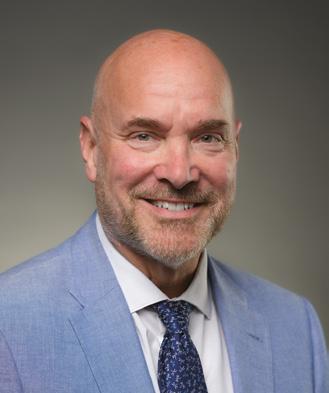
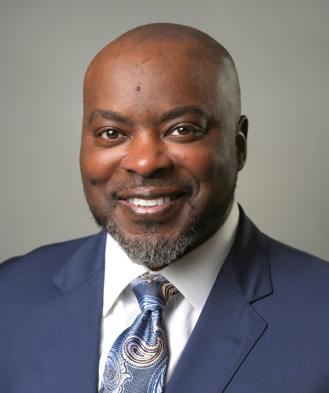
Michael Macek, Executive Director, Saint Louis Zoo; and Sabarras George, Executive Director, Saint Louis Zoo WildCare Park
We’re in an era of growth and change. Maybe you’ve noticed this, too, walking past the site of Henry A. Jubel Foundation Destination Discovery this summer. Or maybe you’ve been lucky enough to enjoy a recent happy hour event or education program at Saint Louis Zoo WildCare Park! We often say we’re best in class — in fact, we were recently voted Best Free Attraction by USA TODAY 10BEST — but being the best means to never settle. We’re building ourselves up for new chapters in our organization while honoring our 100-year history and staying true to our mission. Many of the stories in this issue highlight how we’re growing, thanks to many dedicated people.
You may have heard about our “Better Wild, Better World” campaign, which launched publicly in May. Our ultimate goals are to inspire future conservationists, save endangered species and sustain a legacy of impact. Generous donors have propelled us forward, but just under $15 million is still needed to grow the Zoo’s impact and fund Destination Discovery and WildCare Park. We think of these gifts as investments, not only in our future, but also in the economic impact of the St. Louis region.
You can help us in many ways, from donating $1 or more to spreading the word about our initiative. Learn more about the campaign in the article on page 8 or visit stlzoo.org/bwbw
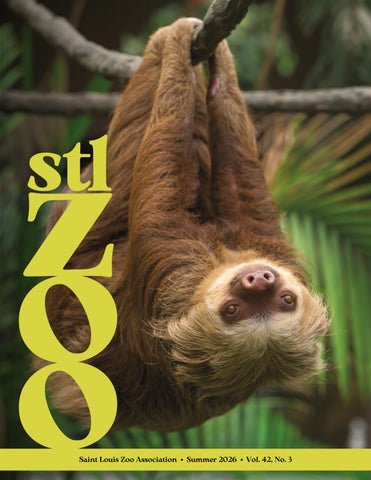
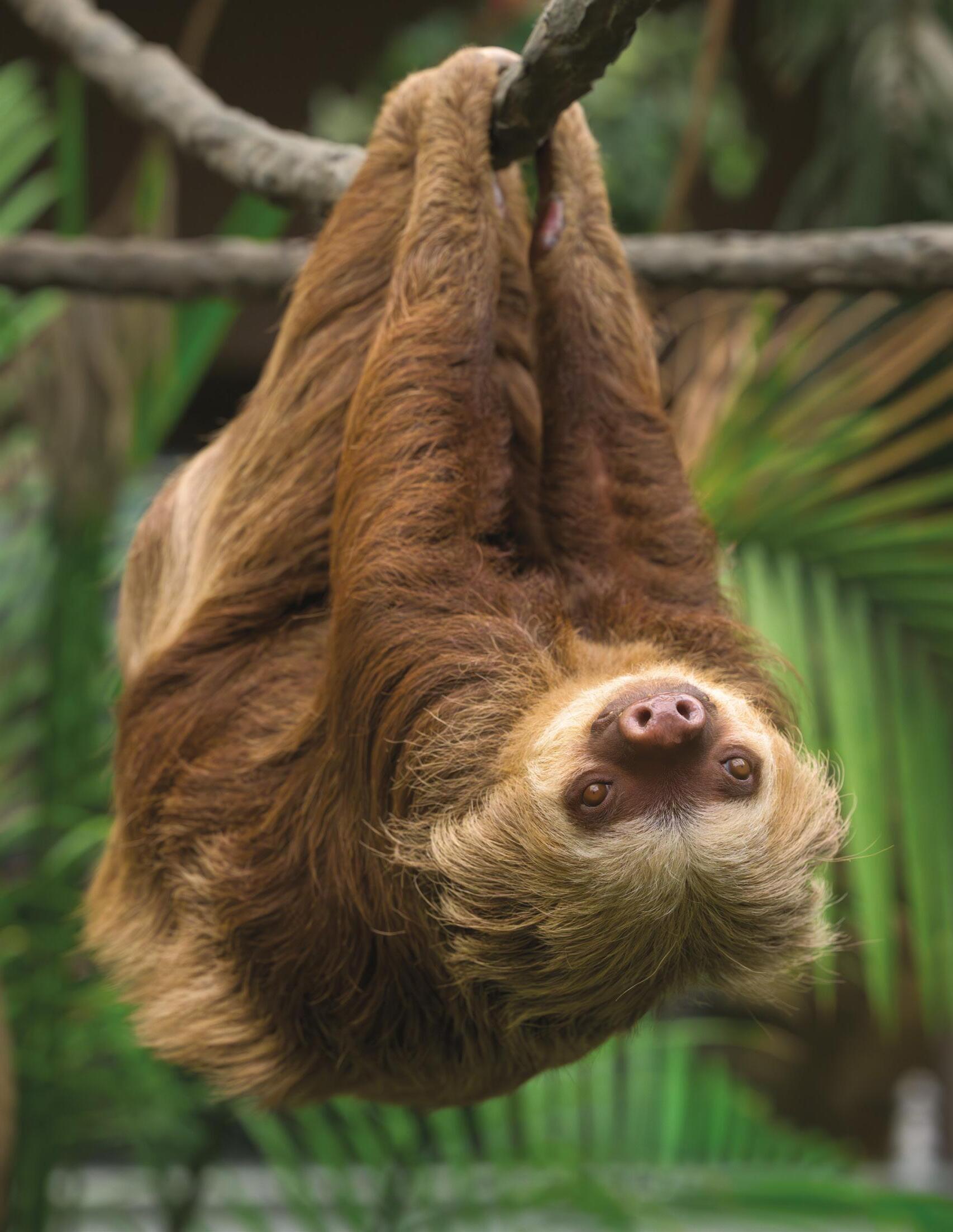
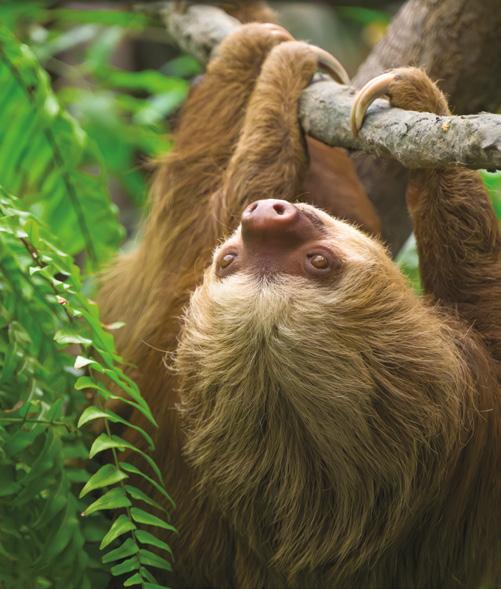
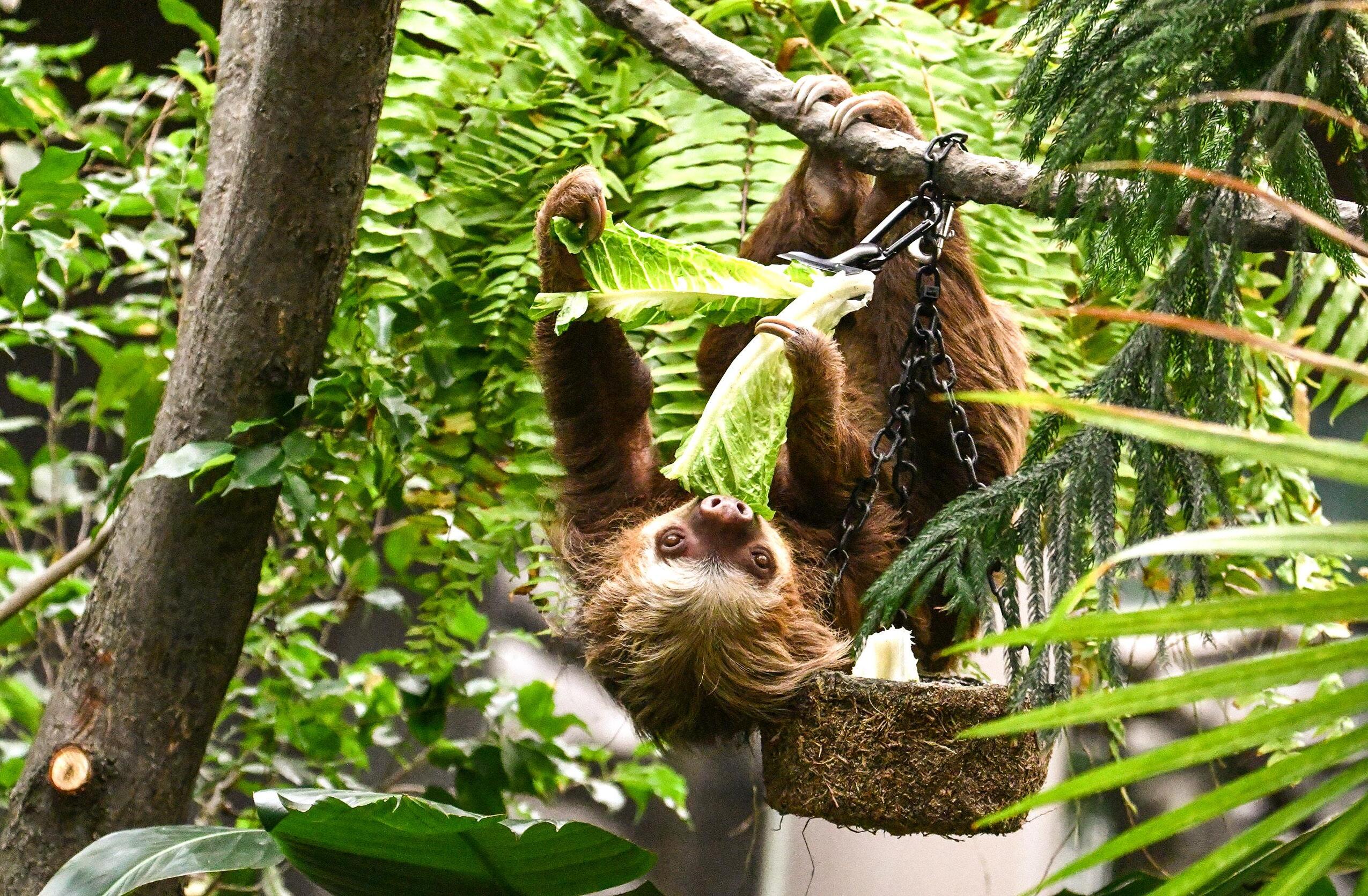
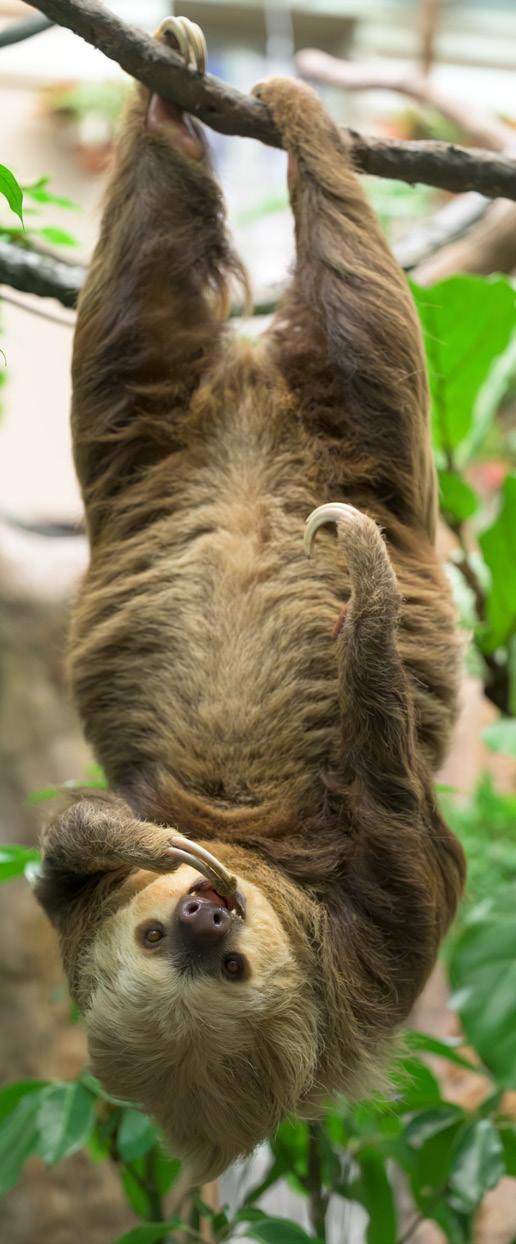
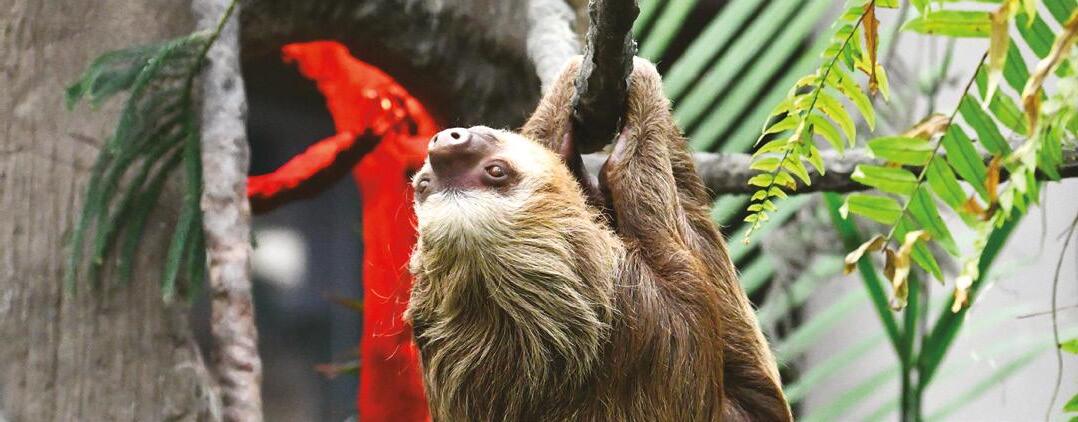
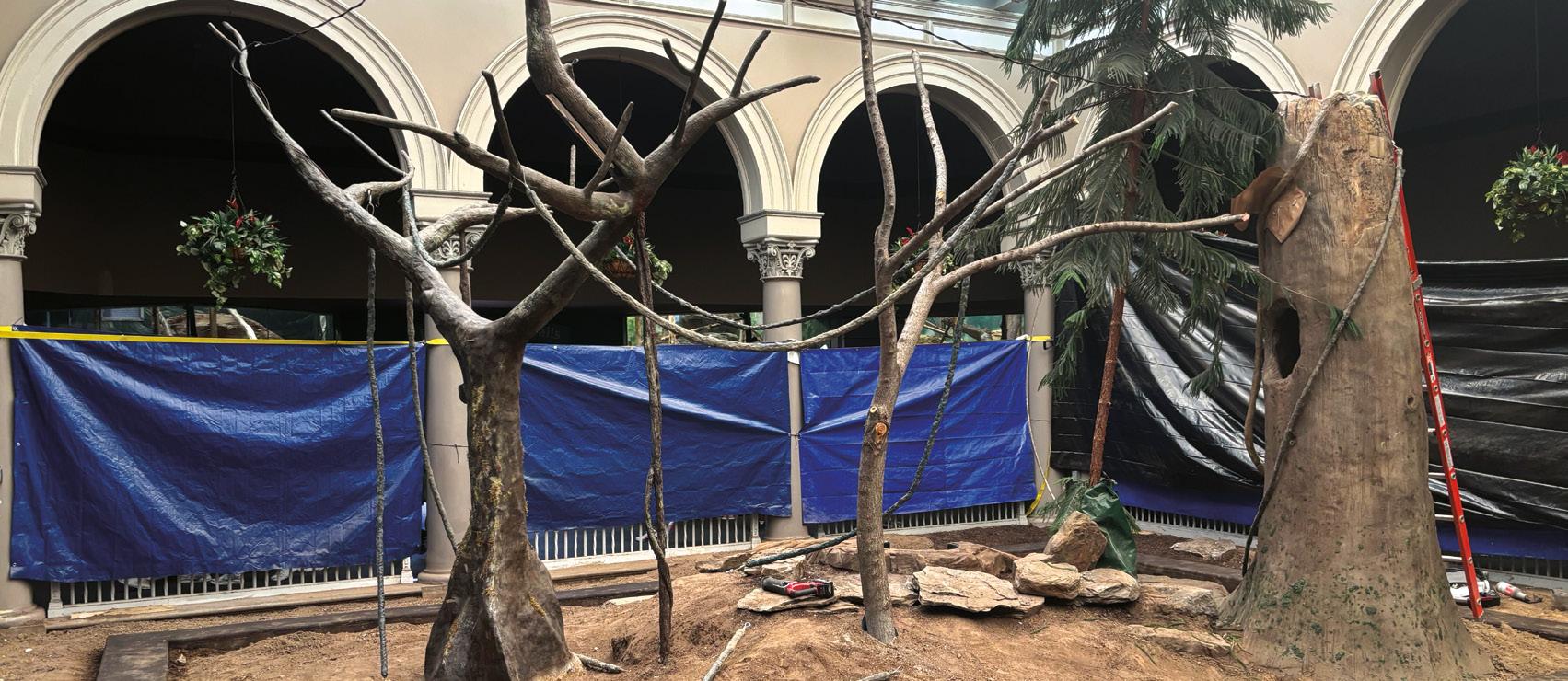
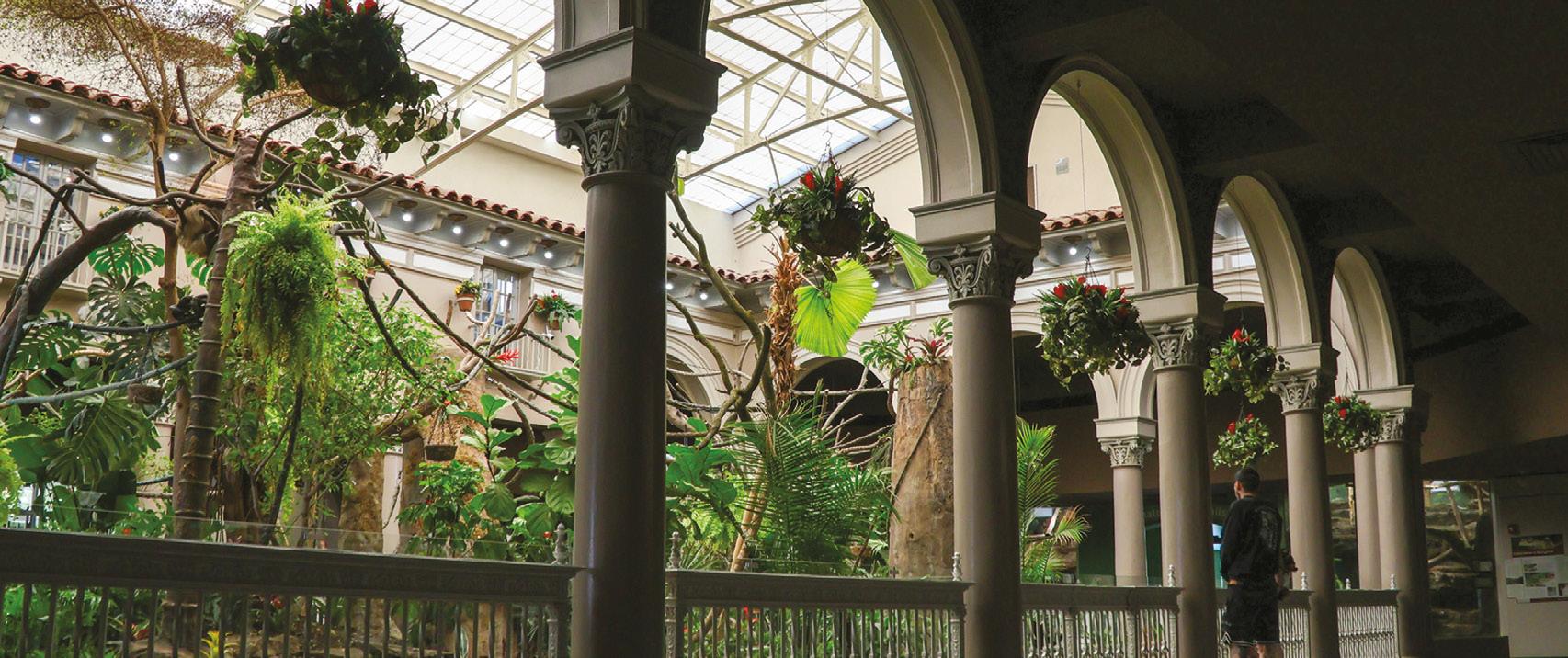
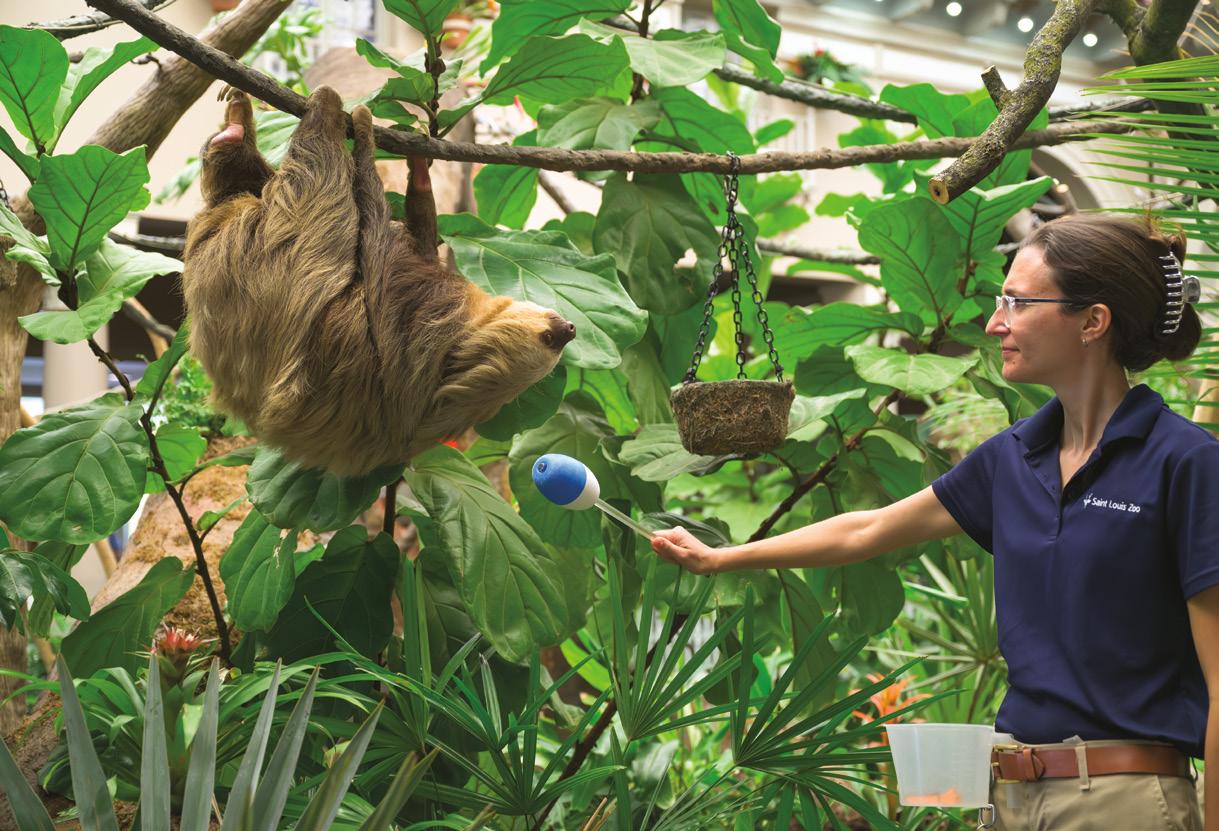
Destination Discovery and WildCare Park are enormous projects, but smaller ones can be equally as impactful. In April, we opened the Sloth Atrium in the Primate House, which Hoffman’s two-toed sloths Pancakes and Rolo now call home. This project was the product of in-house skillsets and teamwork, and it was built in just three months. We’re incredibly proud of this accomplishment, and this habitat offers the best standards in animal care while giving guests an enhanced view of these sweet sloth superstars. See how the Sloth Atrium came to life by flipping to page 14
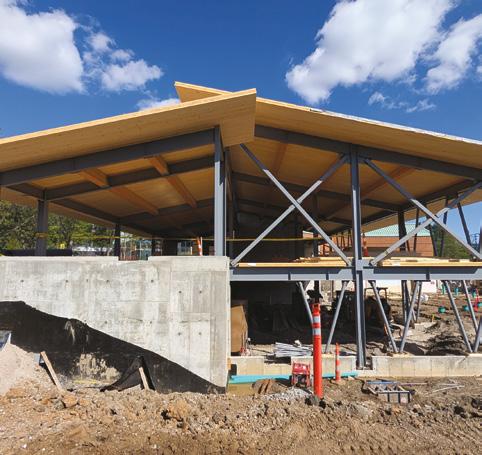
As we’re building these new experiences, we never forget that we need to “walk the walk” — if we’re encouraging sustainability, we need to be sustainable ourselves. That’s why we invest in eco-friendly building materials (like mass timber) and solutions to best manage natural resources (like conserving rainwater).
Destination Discovery sits on a foundation of “green” construction concepts, which you can see on page 18
We hope this summer finds you well and that you’re enjoying some carefree moments with family and friends (with a Zoo day on the calendar, we hope!). Listen to the nostalgic sound of cicadas, enjoy the extra hours of sunshine and take a moment to slow down and enjoy the rest of this summer. We hope to see you for a visit soon!
COMMISSION OF THE ST. LOUIS ZOOLOGICAL PARK SUBDISTRICT
Chairman
Lawrence E. Thomas
Vice Chair
Winthrop B. Reed III
Treasurer
Will R. Ross, MD, MPH
Commissioners
Vincent Bennett
Karl A. Grice
Alicia McDonnell
Dr. Fred Pestello
Neal F. Perryman
Dana Tucker Redwing
Michael W. Riney
Dr. Joyce Roberts
Chairs Emeritus
Jerald L. Kent
Steven F. Schankman
Mark J. Schnuck
SAINT LOUIS ZOO ASSOCIATION BOARD OF DIRECTORS
President Michael J. Hickey
Vice President
Linda J. Hunter
Treasurer Andrew T. Miedler
Secretary
Maria G. Taxman
Immediate
Past President
Robert B. Smith III
Executive Committee
Kathleen W. Bilderback
Frances G. Pestello
Jason D. Sapp
Robert B. Smith III
Lisa K. Sullivan
(continued in next column)
Board of Directors
Andre Alexander
Pamela Bachman, PhD
Nicholas Barto
Caroline Battles
Natalea Simmons
Beaudean
Christine Boushka
Kevin Buie, Sr.
Debbie A. Caplin
Brad M. Edwards
Kathy S. Federico
Logan W. Finerty
G. Andrew Franz
Lauren Thomas Fries
Matthew W. Geekie
Brett G. Gilliland
Janis G. Goldstein
Mark Graham
Heather Grewe
Jason Janisse
Robert F. Johnston
Annette L. Kelly
Carol S. Klein
Derek Larson, MD
Rob Leitner
James P. Leonard
Dr. Dan W. Luedke
Patrick J. Moore
Kurt Negwer
Ankit Patel
Justin Powers
Angela M. Rhone
Nolan Ruiz
Diane Saftic
James G. Sansone
Chris Schmidt
Margaret Schneithorst
Stephanie Valier Schwendinger
Rachel Kent Shlien
Torbjorn B. Sjogren
Zachary A. Smith
Rick Stevens
Steven Stone
Dianne Sutcliffe
Zachary Ungerott
Jon Vitiello
Matthew A. Wagner
Geoffrey Wilson
Erin Wright
Angela Zeng
Emerita – Emeritus
Members
James G. Berges
Marguerite Garrick
Douglas E. Hill
Joseph F. Imbs III
John K. Wallace, Jr.
Ex-Officio
Emily Carter, President, Zoo
Young Professionals Advisory Board
ZOO YOUNG PROFESSIONALS
ADVISORY BOARD
President Emily Wagner
Secretary Katie Doherty
Vice President, Education
Joe Palumbo
Vice President, Events
Devyn Yates
Vice President, Nominations
Alex Stepanek
Vice President, Volunteers
Betsey Crites
Treasurer Justin Diecker
SAINT LOUIS ZOO EXECUTIVE LEADERSHIP TEAM
Dana Brown
President & CEO
Dwight Scott
Saint Louis Zoo
Executive Director
Michael Macek, MBA
Saint Louis Zoo
WildCare Park
Executive Director Sabarras George, MS
Chief Financial Officer
Kathy Tisone
Chief Philanthropy Officer
Amy Dove
Chief Experience Officer
Kirby Meyer, MA
Chief People & Culture Officer
Dustin Deschamp, JD
6 20 18 8 14
Did you know?
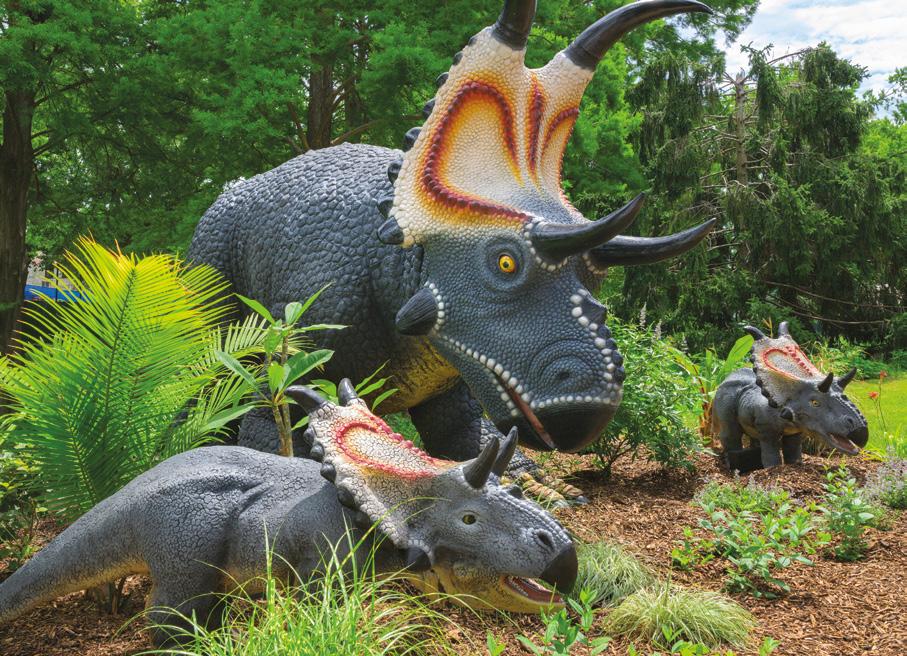
Colossal creatures have returned!
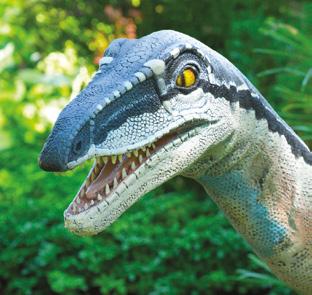
As you plan your summer adventures, be sure to see Dinoroarus at the Zoo!
The future of the Zoo grows with you
Thanks to generous donors to our Better Wild, Better World campaign, we’re strengthening our organization for future generations. But we’re not done yet. Learn how you can help!
The Sloth Atrium: How it came to life
The new Sloth Atrium is a testament to the beauty of teamwork. Get the story of how this exhibit was built in just three months!
Leading by (green) example
Sustainability and the best green practices inspired the design and construction of Destination Discovery from the start. See what eco-friendly concepts are being put into place.
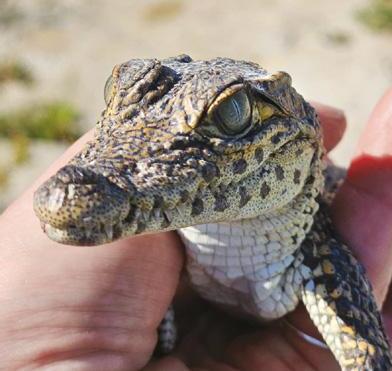
Overcoming challenges in crocodile conservation
Threats to Cuban crocodiles, a critically endangered species, are at an all-time high. See the journey Zoo team members took to Cuba to help these animals.
Hoffman’s two-toed sloth
Photo by Ray Meibaum
stlzoo is published quarterly as a member benefit by the Saint Louis Zoo Association, One Government Drive, St. Louis, MO 63110 Managing Editor: Rebecca McMiller; Editorial and Email Assistance: Billy Brennan, Jill Gordon, Erin Heffernan, Erin Krippene, Kirby Meyer and Elaine Vydra; Graphic Design: McCord Design Group; Contributing Photographer: Ray Meibaum; Contributors: Members of the Zoo staff.
At the Saint Louis Zoo, we not only care about the conservation of animals, but also about the conservation of the environment. That is why stlzoo magazine is created using FSC- (Forest Stewardship Council) certified paper with recycled materials and eco-friendly inks.
membership matters
In this section, we’ll briefly highlight top Zoo happenings in July, August and September 2026, from event and attraction updates to member-specific reminders. If you have questions about your membership, please visit stlzoo.org/membership or contact us at (314) 646-4771, option 2.
Look what’s back! Dinoroarus is now open and included in membership benefits!
Dinoroarus Returns!
As you plan for summer adventures, be sure to visit Historic Hill — or should we say Pre-Historic Hill — to meet some colossal, animatronic friends at Dinoroarus and discover some amazing connections between dinosaurs and modern-day living animals. Just as it was with our last Dinoroarus exhibit, this experience is included in your Zoo membership, perfect for the dino fans in your family! Learn more at stlzoo.org/dinos
Mark your calendars for Member Appreciation Mornings
We have two more Member Appreciation Mornings this summer: Saturday, July 25: 7-8 a.m., and Saturday, Aug. 29: 8-9 a.m. These mornings allow members at all levels exclusive one-hour access to the Zoo, before it opens to the public. Arrive during your free members-only hour, and parking is free for your whole Zoo visit! Please be sure to bring your membership card.
The Zoo is now cashless
We’re glad to announce our transition to a fully cashless payment system on our Zoo campus. This change is designed to improve your experience, making transactions faster and more secure. Only have cash? Prepaid debit card kiosks are available inside Zoo entrances and at Lakeside Cafe — and will not require a fee — allowing you to transform cash into a pre-paid Mastercard that you can use anywhere Mastercard is accepted! Learn more at stlzoo.org/cashless.
Attractions and experiences
Dinoroarus
Included in member tickets; free for children 0-23 months
Open seasonally through the end of 2027
Giraffe Feedings
$2 discount per person
The feeding schedule is 11:30 a.m. and 2:30 p.m. daily, weather and conditions permitting
Emerson Zooline Railroad
Included in member tickets; free for children 0-23 months
Open year-round, weather permitting
Mary Ann Lee Conservation Carousel
Included in premium member tickets; free for children 0-23 months
Open year-round, weather permitting
Sea Lion Show presented by Together Credit Union
Included in member tickets; free for children 0-23 months
May 25-Aug. 23 and Sept. 7 (Daily): 11 a.m., 1 and 3 p.m.; Aug. 28-Oct. 25 (Friday-Sunday only): 11 a.m., 1 and 3 p.m.
Stingrays at Caribbean Cove presented by SSM Health Cardinal Glennon Children’s Hospital
Included in premium member tickets; free for children 0-23 months
Apr. 3-Oct. 31
Wild Explorer VR Experience
$2 discount per person
Showings daily
Help Nourish a Life and Enrich Yours:
Become a Zoo Parent!
Our Zoo team delivers nutritious food to over 12,000 animals. Diet makes a di erence and is essential for animal well-being. Managing a grocery list for thousands of hungry animals is no small feat … but you can help! When you adopt an animal — or adopt for someone as a gi — your donation goes toward the animals’ care and daily feeding.
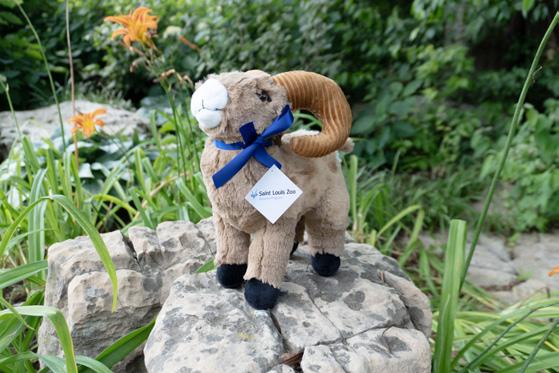
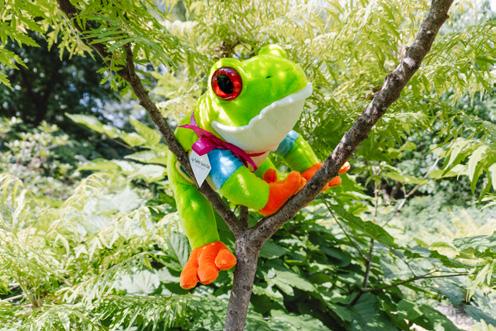
Here are two animals dopt t d
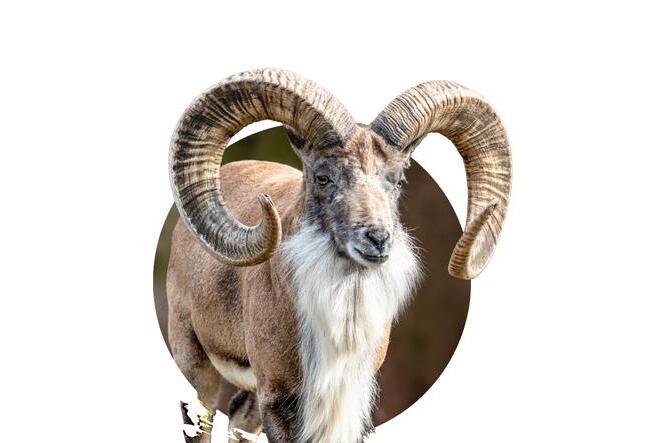
Transcaspian urial
See them in Red Rocks
These animals live in herds, typically with a dominant male and multiple females. There is a strict dominance hierarchy among rams based on their age and the size of their massive curling horns; the ram with the biggest horns is the leader.
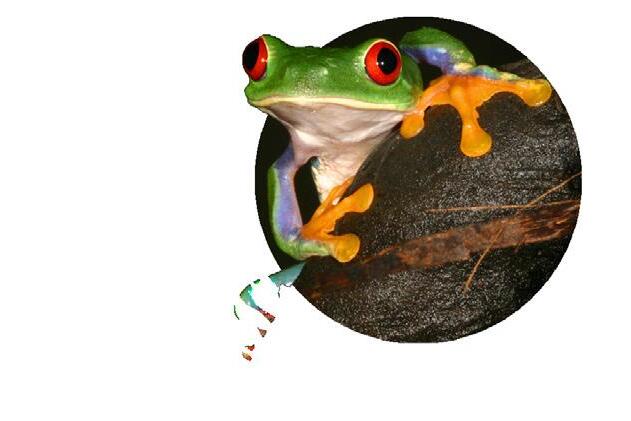
Red-eyed tree frog
See them in the Charles H. Hoessle Herpetarium Red-eyed tree frogs are nocturnal, meaning they sleep during the day and become active at night. A er dark falls, they hunt for food, feasting on insects like crickets and flies. If they feel threatened, they’ll flash their brightly colored eyes and feet, hoping to startle a predator.
We’re excited to bring you updates about Saint Louis Zoo WildCare Park, a safari park and conservation center set to open in 2027 on 425 acres near the confluence of the Mississippi and Missouri Rivers. In addition to stlzoo magazine, please follow us on social media for the latest updates about this one-of-a-kind wildlife experience.
wild
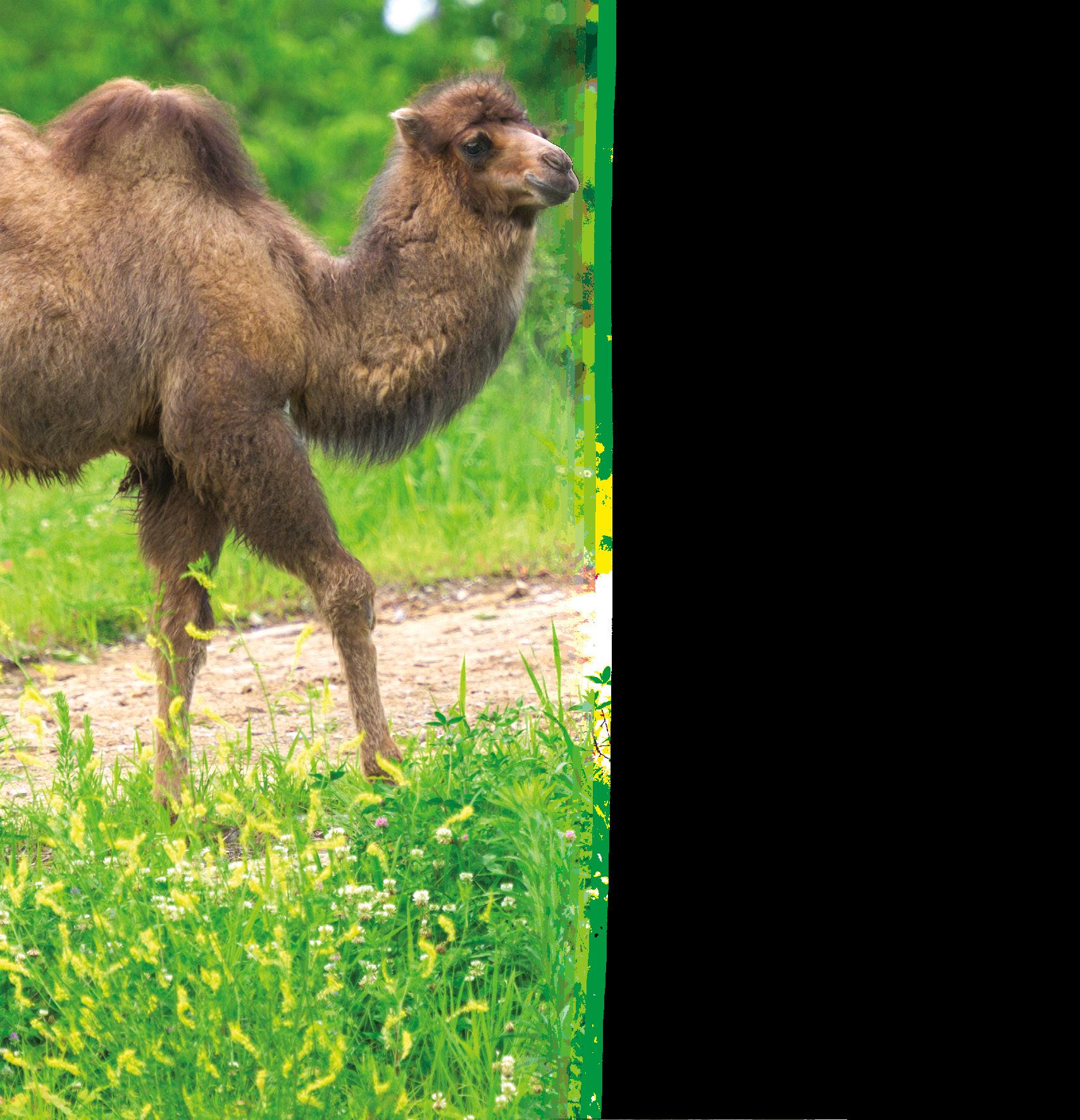
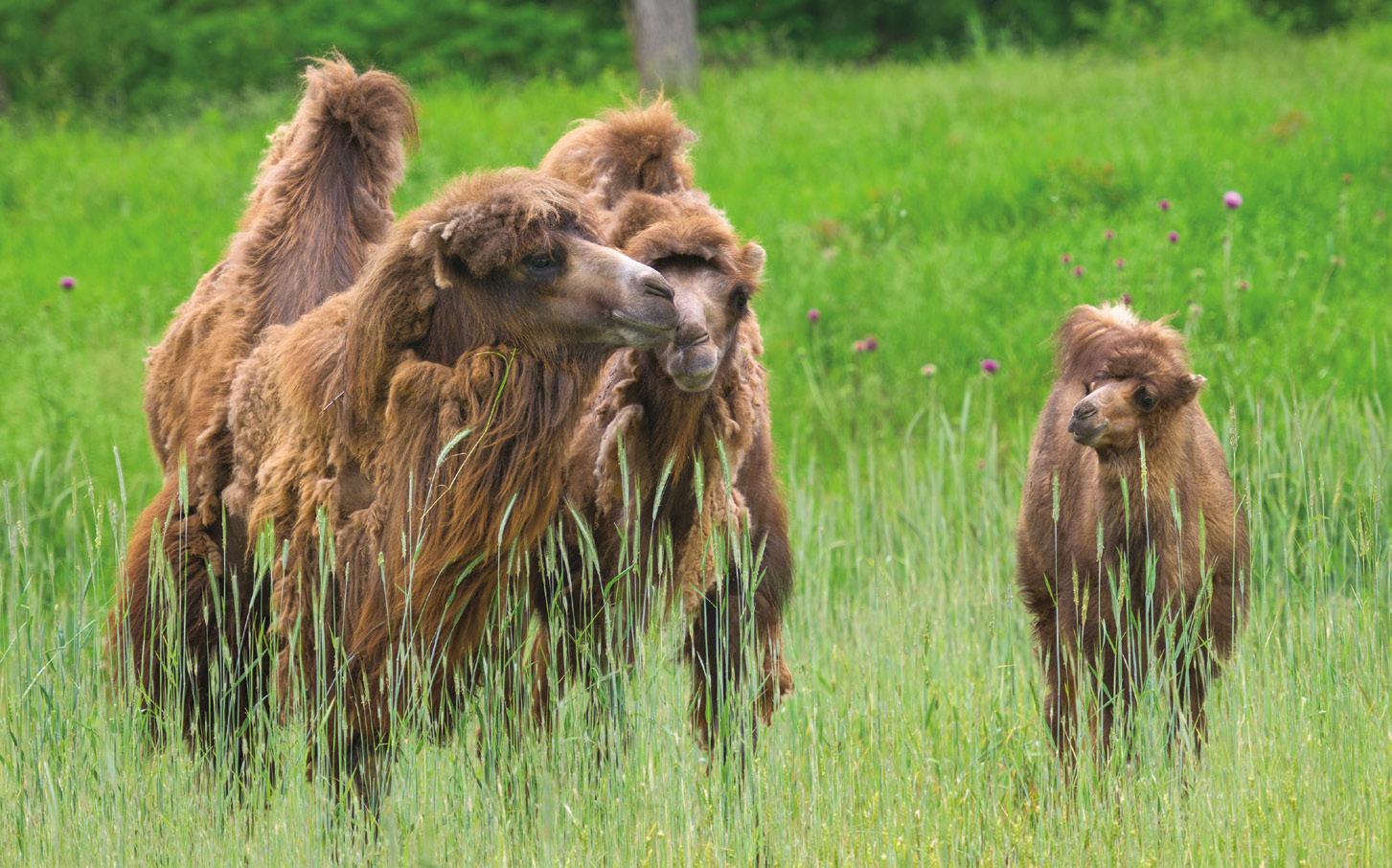
enables them to survive long periods without food. These adaptations keep the camels comfortable in each season throughout the year.
Ruby’s diet is still mostly milk, but she recently began exploring solid foods like hay and grass.
news...
She is described by Animal Care teams as curious, active and social. Like many newborns, she’s very vocal, especially around mealtimes.
Ruby and her mom are continuing to bond during these first months as Ruby gets to know her herd. As a newborn, Ruby napped a lot inside her cozy barn and looked like a curly rug while getting her rest. Her fun personality started shining early while frequently playing with her mom’s hair. Keepers would often find Sardonyx with a new hairdo each day!
When the herd is enjoying the outdoors, Ruby is eager to explore and nudge the adults to join! She loves to run in her pasture, which means mom often has to get up from lying down to follow her. Ruby may be the youngest, but she’s quickly becoming the leader of her group.
When WildCare Park opens in 2027, guests may be able to spot Ruby and the rest of the camel herd on guided safari truck tours through the Woodland Safari pasture, one of the two centerpiece safari habitats of the park.
did you
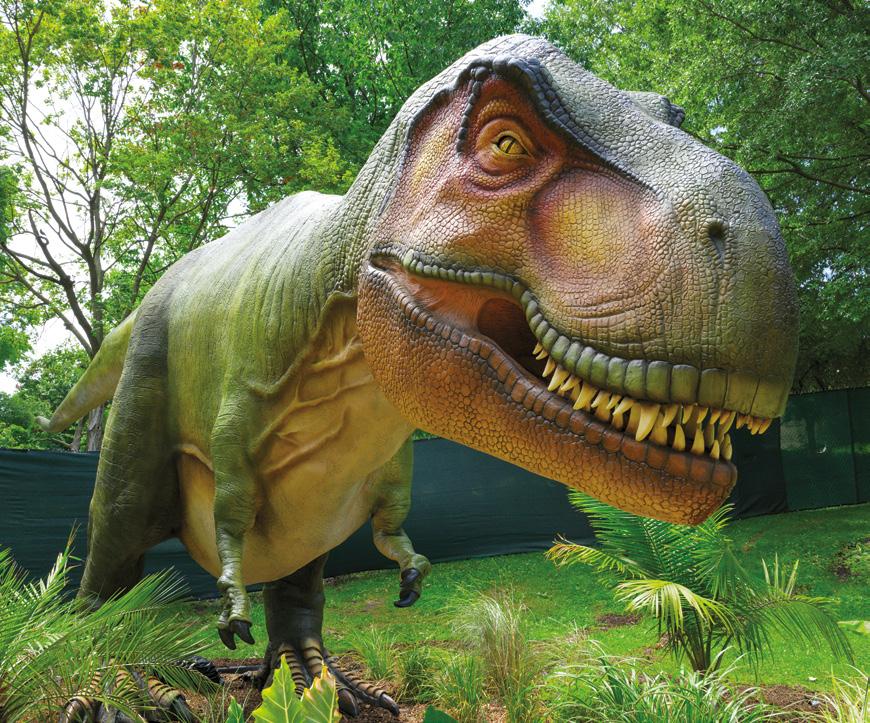
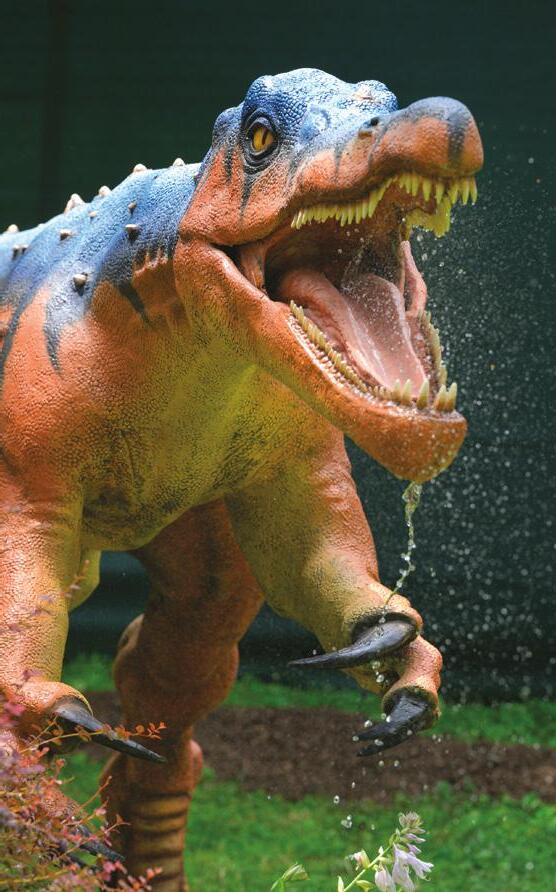
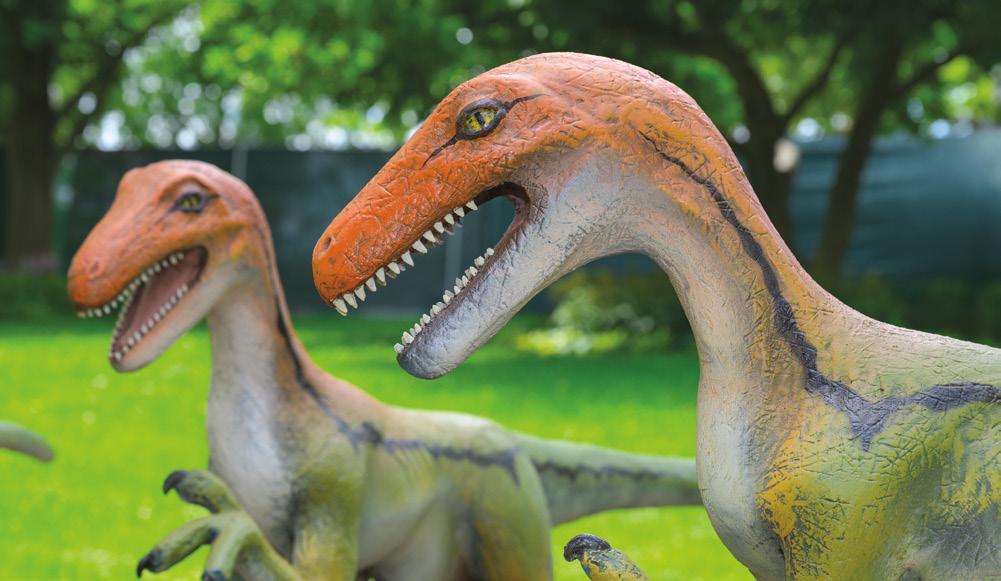
Colossal creatures and bumpy behemoths have returned to the Saint Louis Zoo! Our new Dinoroarus exhibit features different groupings of animatronic and stationary dinosaurs — colorful, prehistoric creatures that move realistically, some roaring and spitting or placidly munching on the lush vegetation. Guests of all ages will learn about what scientists can gather from fossils, theories of the dinosaurs’ mass extinction and ways we all can support wildlife today!
And, as a member, you can use your benefits for FREE admission!
Here are some more dino details...
What’s new and different about this Dinoroarus exhibit compared to the last experience at the Zoo?
This Dinoroarus exhibit is located on Historic Hill — or should we say Pre-Historic Hill — behind Judy and Jerry Kent Family Sea Lion Sound. Our last Dinoroarus exhibit was on the site of the former Children’s Zoo (now home to Henry A. Jubel Foundation Destination Discovery) from 2021 to 2023. There are 21 dinos to see, many of them new, but there are several returning favorites, like the ever-popular T-rex! The Dino Dig area has also returned, which features areas where kids can dig for pretend fossils.
know?
How long will Dinoroarus be open?
This exhibit will be open seasonally now through winter 2027. It will be part of Boo at the Zoo and Wild Lights events this year and will look magnificent!
Is there anything members should know before visiting?
Dinoroarus is included in Zoo membership benefits; you can use your member tickets for admission. Simply show your membership card at a Welcome Desk or at the Dinoroarus ticket booth to obtain your tickets. The ticket booth is located directly behind Sea Lion Sound. For non-members, the ticket price is $5.95 per person (children ages 0-23 months are free).
Stomp on over to the Zoo...
for some Jurassic fun in a different kind of park! stlzoo.org/dinoroarus
THE FUTURE OF THE ZOO GROWS WITH YOU
A Better Wild, A Better World
By Jayne Ullstrom, Manager of Stewardship & Special Initiatives
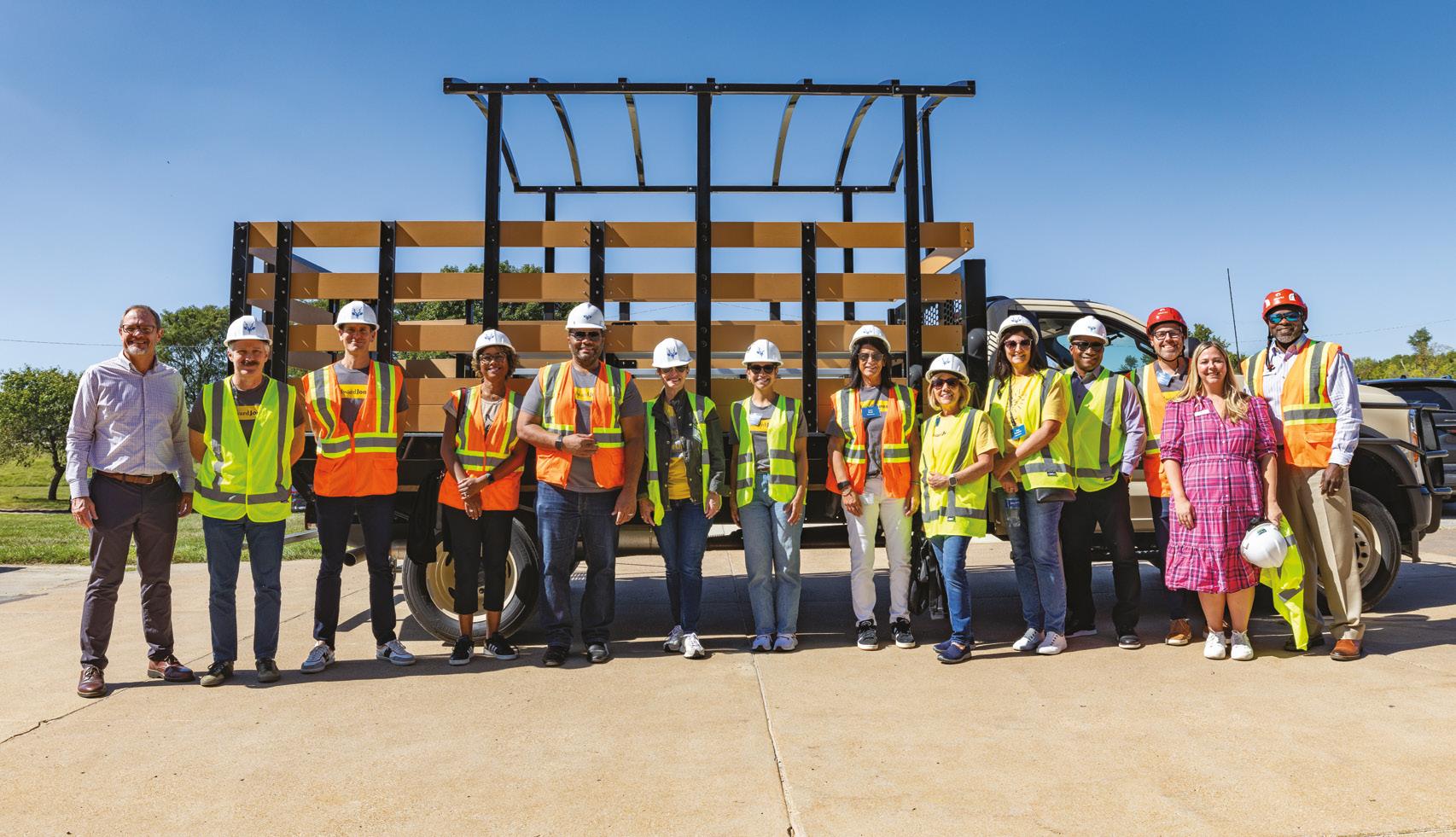
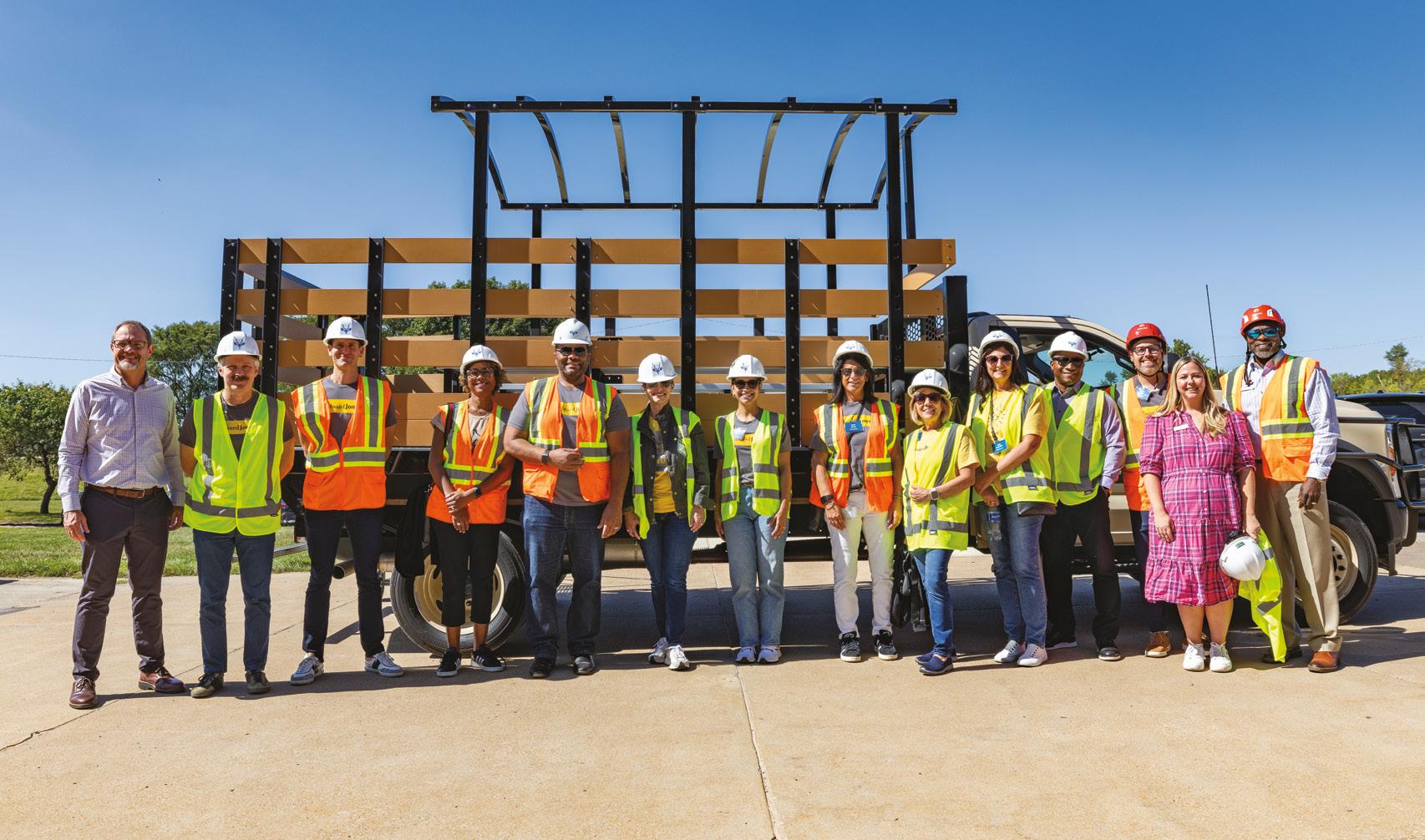
Zoo team members and partners at Saint Louis Zoo WildCare Park, in front of a future safari vehicle
Photos by Ray Meibaum
For many, the Saint Louis Zoo is more than a destination. It’s a place where memories are made: The first glimpse of a sea lion gliding effortlessly through water, the thrill of feeding a giraffe or the unmistakable sound of an elephant’s trumpet echoing across a warm afternoon. These moments stay with us. For generations, millions have shared these experiences, forming a deep and lasting connection to the Zoo.
Today, as wildlife faces unprecedented challenges, that shared commitment has never been more important. Across the globe, species are disappearing at an alarming rate. Habitats are shrinking. Ecosystems are under pressure.
At the same time, important momentum has built here in St. Louis. The acquisition of 425 acres for what is now Saint Louis Zoo WildCare Park, combined with the passage of Proposition Z in 2018 to secure additional public support, has created a strong foundation for the future. Together with community leaders, partners and supporters, the Zoo developed a strategic plan in 2019, which led to a transformative vision for the Zoo. This plan is focused on deepening connections between people and animals, expanding conservation efforts locally and globally, and creating meaningful experiences that endure for generations. New experiences that will help us accomplish these goals are Henry A. Jubel Foundation Destination Discovery and WildCare Park, slated to open in 2026 and 2027, respectively.
In 2021, the Zoo launched the quiet phase of the Better Wild, Better World campaign, the largest philanthropic effort in its history. This bold initiative represents more than $320 million in total investment, including $170 million in philanthropic support. The campaign has secured more than $155 million in private support to fund capital projects — like Destination Discovery and WildCare Park — and strengthen the Zoo’s long-term financial sustainability. The public phase of the campaign remains critical, with just under $15 million still needed to grow the Zoo’s impact.
At its heart, the campaign focuses on three interconnected priorities: Inspiring future conservationists, saving endangered species and sustaining a legacy of impact.
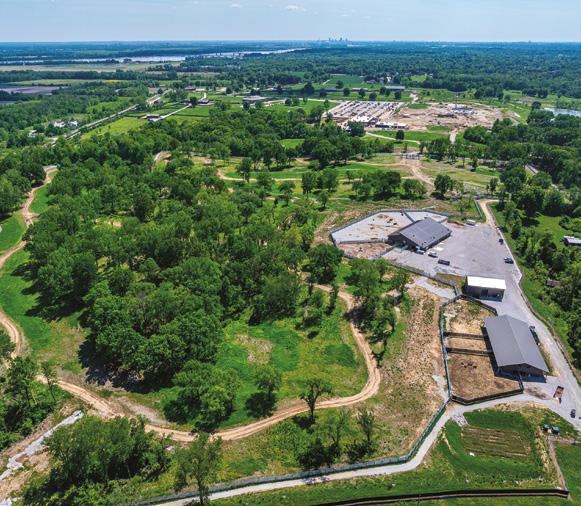
An aerial view of Saint Louis Zoo WildCare Park, with trails for safari vehicles and barns in development
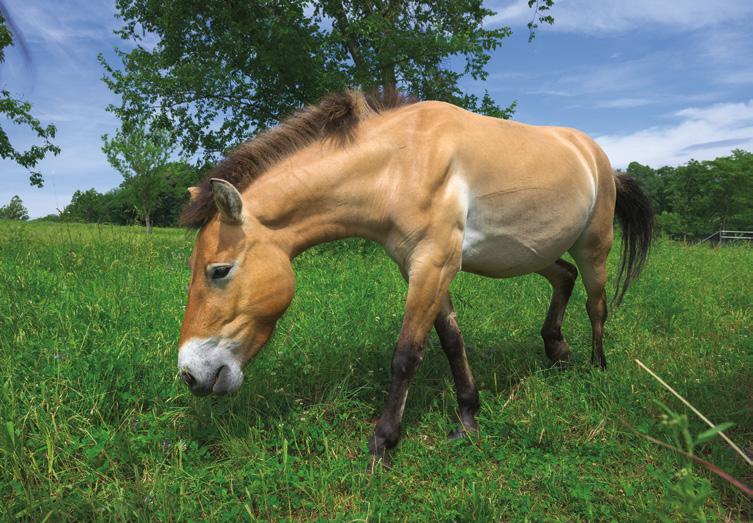
A Przewalski horse at Saint Louis Zoo WildCare Park; this species is considered the last truly wild horse on the planet
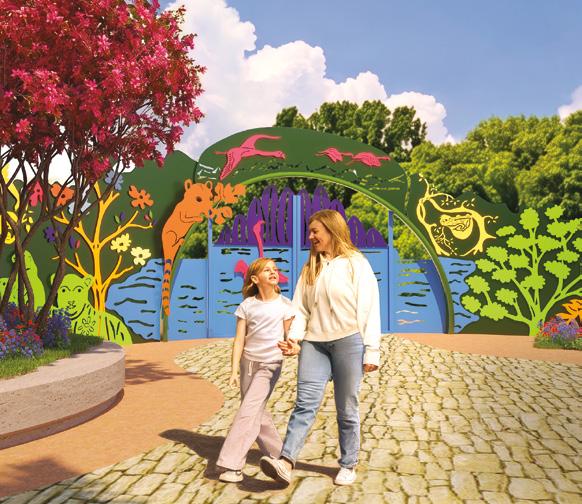
A rendering of the Henry A. Jubel Foundation Destination Discovery entrance
Henry A. Jubel Foundation Destination Discovery is one of the Zoo’s most ambitious projects to date. Far more than a redesigned children’s zoo, it’s a family-centered experience that brings nature to life through immersive environments, storytelling and hands-on exploration. Within its 2.8acre footprint, guests will journey through three themed areas — Underground Cities, Crawford Taylor Foundation Freshwater Wilderness and Forest Families — each designed to spark curiosity and reveal the complexity of animals and their habitats in engaging ways.
Children will climb, explore and interact throughout the different spaces, from watching river otters twist and dive through multi-level aquatic habitats to meeting prairie dogs at eye level in thoughtfully designed viewing spaces. Interactive elements invite imagination and discovery, allowing children to step into the role of a wildlife researcher or uncover what life is like beneath the soil.
Guests will also gain insight into animal care through training demonstrations and experiences that highlight enrichment, veterinary care and daily well-being.
Elevated walkways provide new vantage points across the habitats, offering sweeping views of animal activity while keeping guests connected to the environment around them. These perspectives are designed to create memorable “wow” moments that stay with guests long after they leave, including seeing curious coati up in the treetops. Throughout Destination Discovery, every element is built to encourage exploration and play, with indoor and outdoor spaces and seasonal activities that ensure each visit feels fresh and unique.
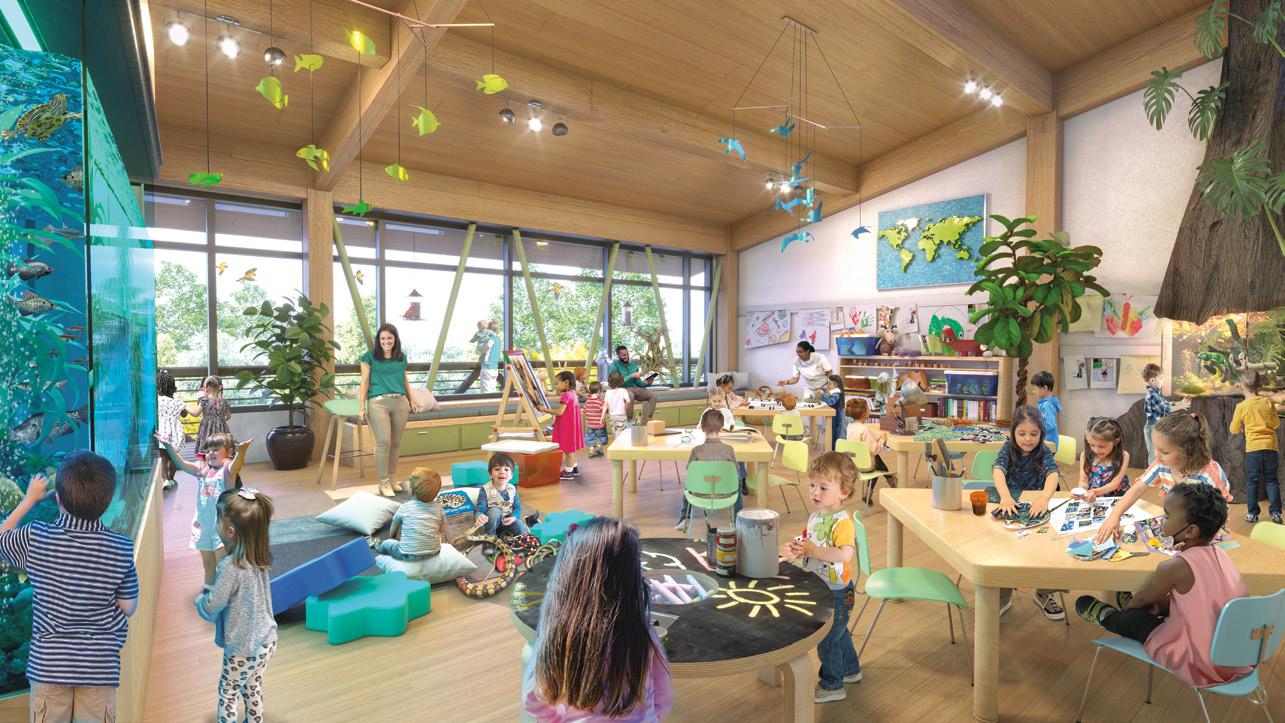
A new 15,000 square-foot, state-of-the-art Conservation Education Building will further expand the Zoo’s commitment to learning and exploration. This dynamic two-story space will serve as the cornerstone of its growing educational efforts, designed with innovation, sustainability and accessibility in mind. The lower level will feature the Nature Nook, a year-round indoor playscape centered on native Missouri wildlife, while the upper level will expand the Second Nature Zoo Preschool into full-day programming for the first time, making this highly sought-after experience available to more families.
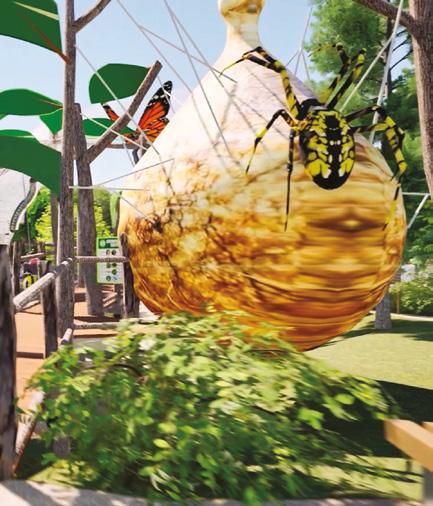
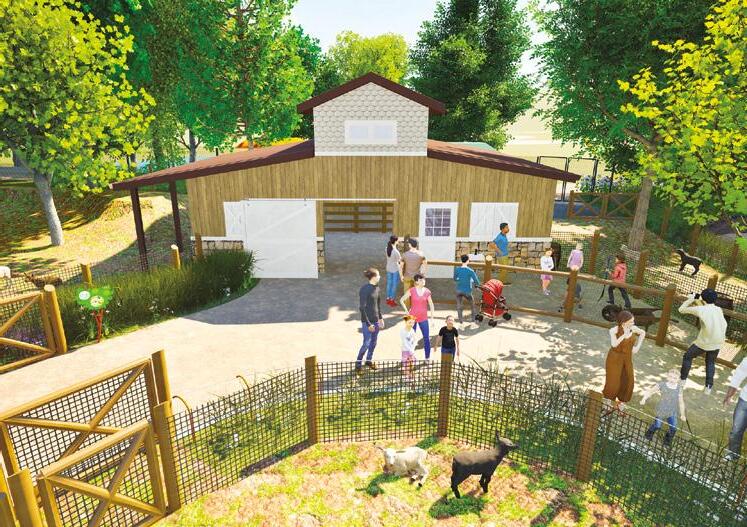
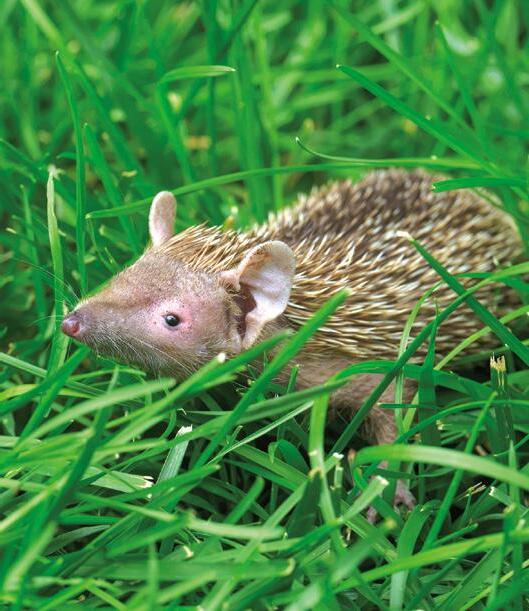
From left to right, at Henry A. Jubel Foundation Destination Discovery: A rendering of an area at the Treetop Heights boardwalk where kids can climb and explore; a rendering of the sheep barn; and a tenrec, one of the newest animals to call the Zoo home
Saving Endangered Species: WildCare Park
For decades, the Zoo has been a global leader in conservation, working to protect species both in human care and in the wild. From the Ozark hellbender in Missouri to primates in central Africa, these efforts have helped sustain vulnerable populations around the world. But to do more, especially for larger, critically endangered species, additional space is essential.
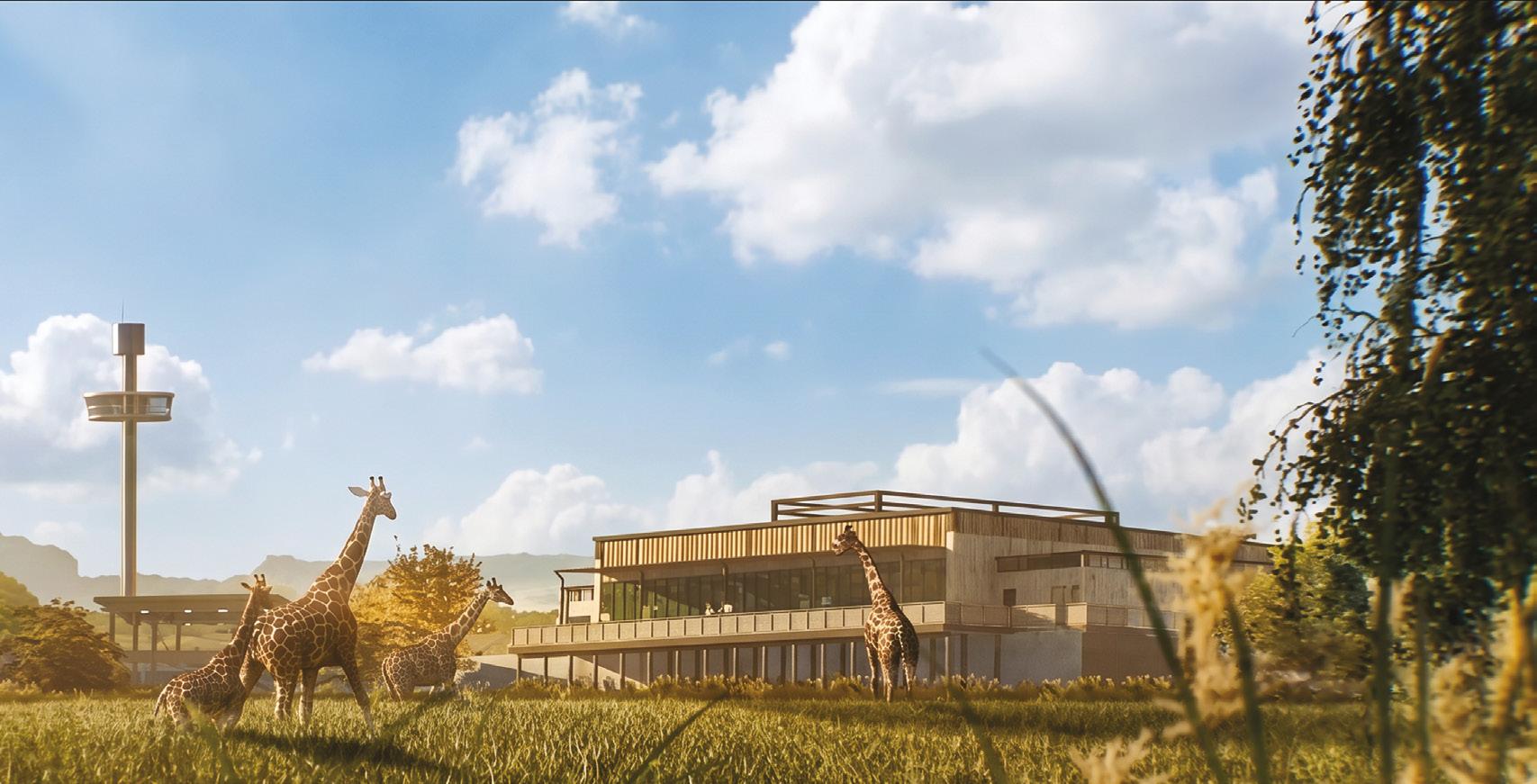
WildCare Park will more than quadruple the Zoo’s footprint in the St. Louis region, creating environments where animals can live in expansive, naturalistic habitats. With its addition, the Zoo will become one of only a small number of institutions in the U.S. accredited by the Association of Zoos and Aquariums (AZA) to operate a large-scale conservation breeding center, further strengthening its leadership in wildlife conservation. At the Kent Family Conservation and Animal Science Center, breeding programs will focus on endangered and critically endangered species, including some with the potential for reintroduction into the wild, strengthening
giraffes, white rhinos and other species moving across open landscapes. A multi-story observation tower will provide sweeping views of WildCare Park and the surrounding region, while interactive technology-based exhibits will highlight the extraordinary adaptations that allow animals to survive and thrive. Additional features, including overnight glamping, dining and event spaces, will offer one-of-a-kind experiences and help establish WildCare Park as a premier destination, expected to welcome more than 420,000 guests annually from across the region and beyond.
WildCare Park is also a significant investment in the surrounding community. Located in north St. Louis County, it’s being developed in close partnership with neighbors and stakeholders to ensure it reflects and strengthens the community it serves. Through 2034, it’s projected to generate more than $660 million in economic impact, create hundreds of jobs, and support new educational and workforce opportunities. As part of more than $1 billion in planned investment in the area, it will help drive long-term regional growth.
Located in north St. Louis County, WildCare Park is being developed in close partnership with neighbors and stakeholders to ensure it reflects and strengthens the community it serves.
A rendering of Saint Louis Zoo WildCare Park, complete with an observation tower, event spaces, and large balconies for guests to see and feed giraffes
Sustaining a Legacy of Impact: Zoo Endowment
As the Zoo grows, so too does the need to ensure longterm strength and stability. That is why the Better Wild, Better World campaign also prioritizes growing the Zoo endowment.
Established in 2004, the Zoo Endowment provides a reliable and lasting source of support, sustaining animal care, education and conservation programs. Through both current and legacy gifts, thousands of donors have contributed to this enduring resource, often creating named funds in honor of loved ones.
Expanding the Zoo Endowment ensures the Zoo remains financially strong and independent, able to adapt to future challenges while maintaining the highest standards of excellence.
It’s about the belief that wildlife matters, that conservation is urgent and that future generations deserve a world rich with biodiversity and wonder.
You Make This Vision Possible
The Better Wild, Better World campaign is a movement shaped by many hands. It’s about the belief that wildlife matters, that conservation is urgent and that future generations deserve a world rich with biodiversity and wonder.
The Zoo has always been a place where people come to connect with animals, with nature and with each other. Now, we are elevating that work, strengthening our role as a catalyst for change, a leader in conservation and a source of inspiration for years to come.
We are deeply grateful to the generous donors whose early support has helped bring this vision to life and build the momentum behind it. As the campaign moves forward, we invite all who share this vision to learn more about how they can be part of what comes next.
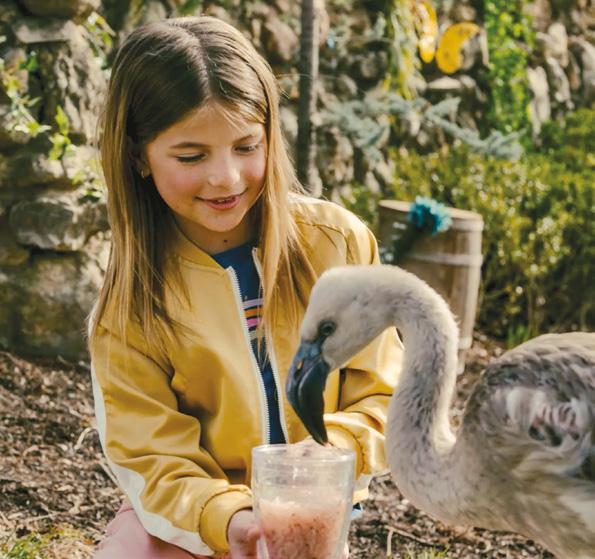
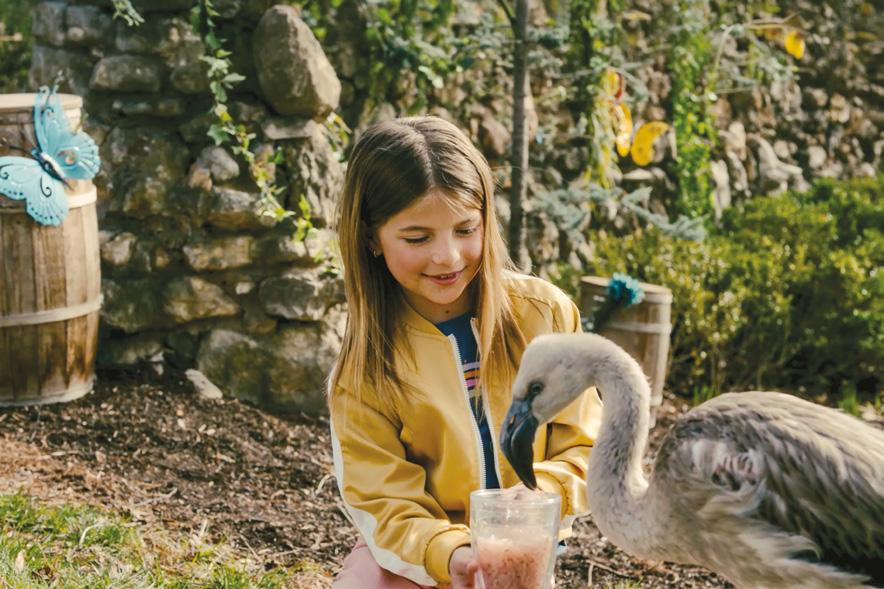
A flamingo feeding experience that guests can enjoy at Henry A. Jubel Foundation Destination Discovery
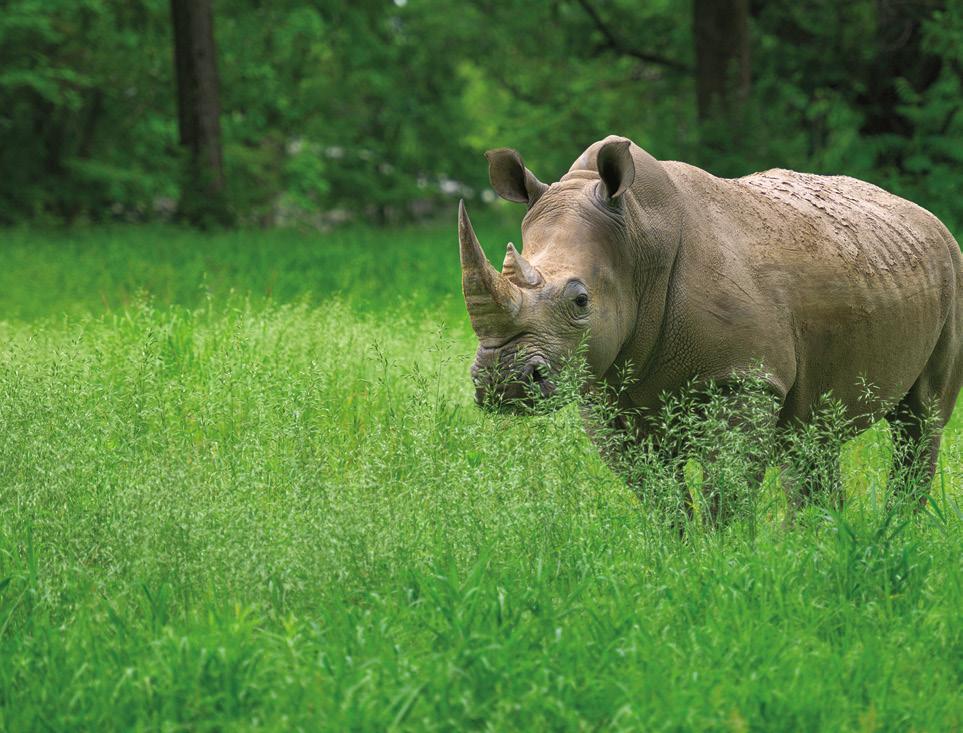
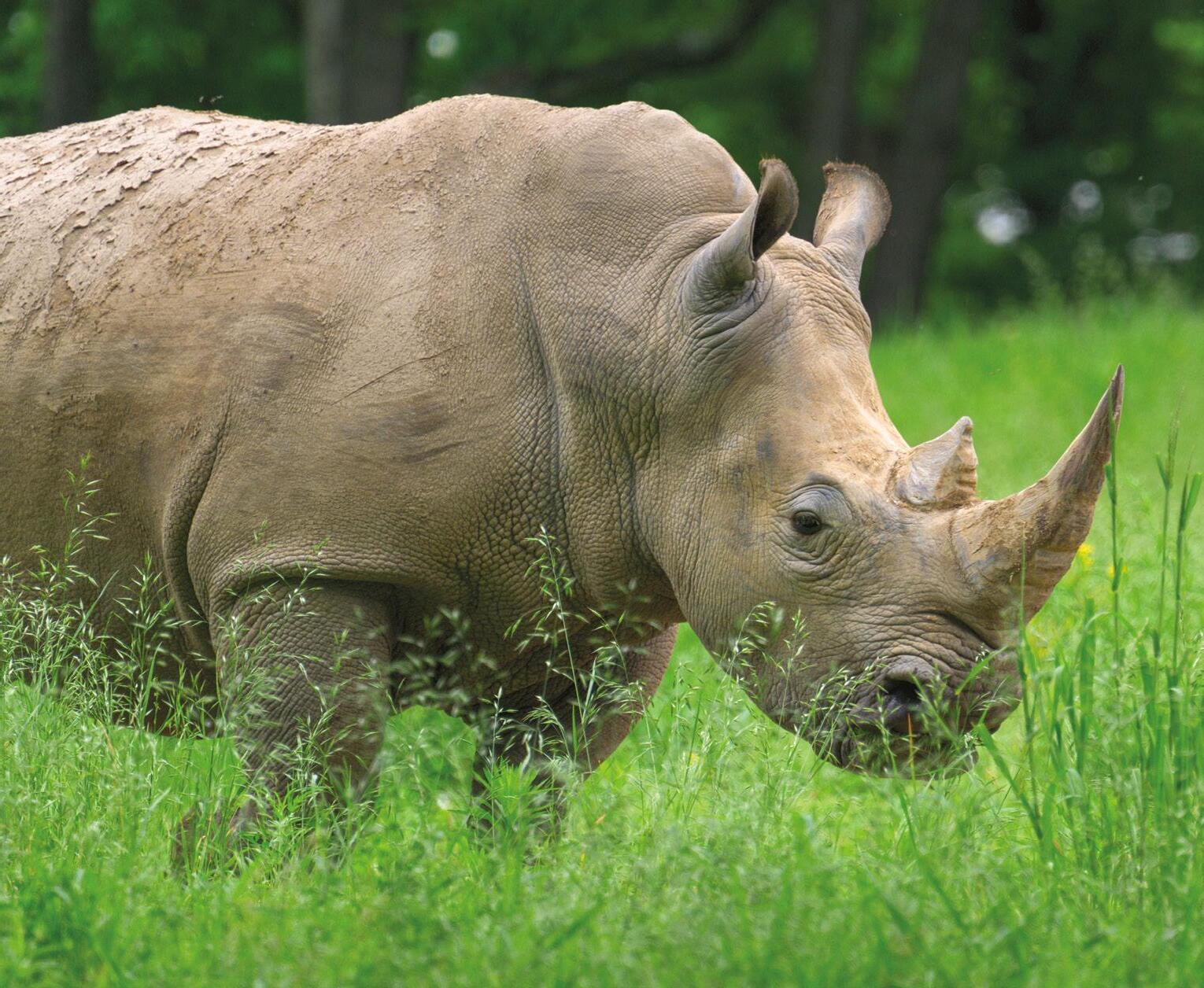
A southern white rhinoceros at Saint Louis Zoo WildCare Park
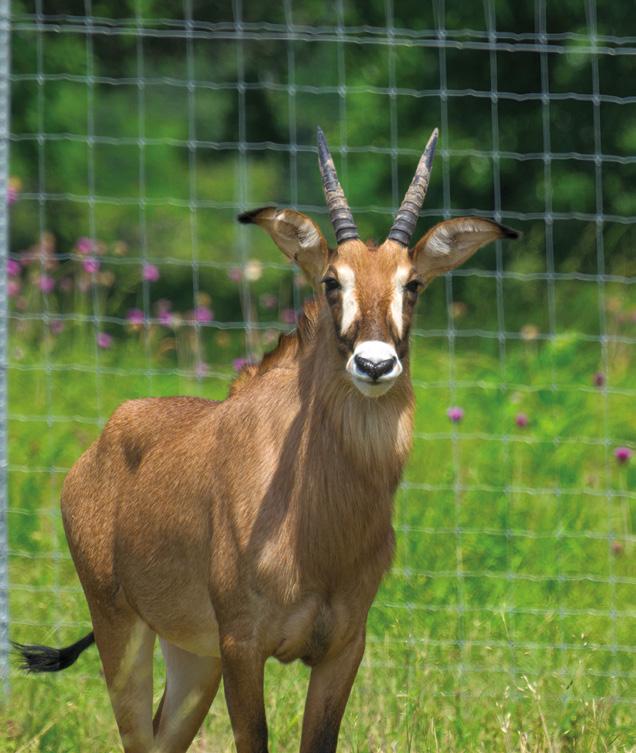
A roan antelope at Saint Louis Zoo WildCare Park
THE BETTER WILD, BETTER WORLD CAMPAIGN has secured $155 million in private support to fund capital projects and strengthen the Zoo’s long-term financial sustainability. The public phase of the campaign remains critical, with $15 million still needed to grow the Zoo’s impact and fund two transformational projects.
HENRY A. JUBEL FOUNDATION DESTINATION DISCOVERY
A dynamic 2.8-acre area designed with our youngest guests in mind, Destination Discovery will emphasize close-up encounters with animals in an immersive, kinetic and hands-on learning environment.
SAINT LOUIS ZOO WILDCARE PARK
The 425-acre WildCare Park will focus on the conservation and breeding of critically endangered species while providing a new guest experience. Through 2034, it’s projected to generate more than $660 million in economic impact, create hundreds of jobs, and support new educational and workforce opportunities.
Interested in donating or learning more?
Scan the QR code, or contact the Zoo’s Development office at (314) 646-4691 or bwbw@stlzoo.org.
THE How it Came TO LIFE Atrium . . Sloth
By Rebecca McMiller, Marketing Communications Manager PHOTOS BY RAY MEIBAUM, DEREK
STRUNK AND JO-EllEN TOLER
Like all brilliant creations, the Sloth Atrium started with an idea. The Animal Care team looked in the middle of the Primate House and thought the under-utilized space could become an incredible rainforest-like habitat for sloths, which spend most of their time in trees. It would also allow guests to see sloths like never before, allowing them to get closer looks at the animals’ sweet faces and calm demeanors. Creating such a unique
habitat, filled with water features, UV heat sources and custom-built climbing features, was an incredible feat. Thanks to the talents of the Zoo’s Animal Care and Facilities & Planning teams, the Sloth Atrium opened in April and is quickly becoming a guest favorite. It’s also a testament to the beauty of teamwork, resourcefulness and creativity, which allowed this project to come to life.
Below: The Sloth Atrium is state-of-the-art: heat lamps, pictured here; water features; and UV lights can be controlled via smart device
Construction creativity
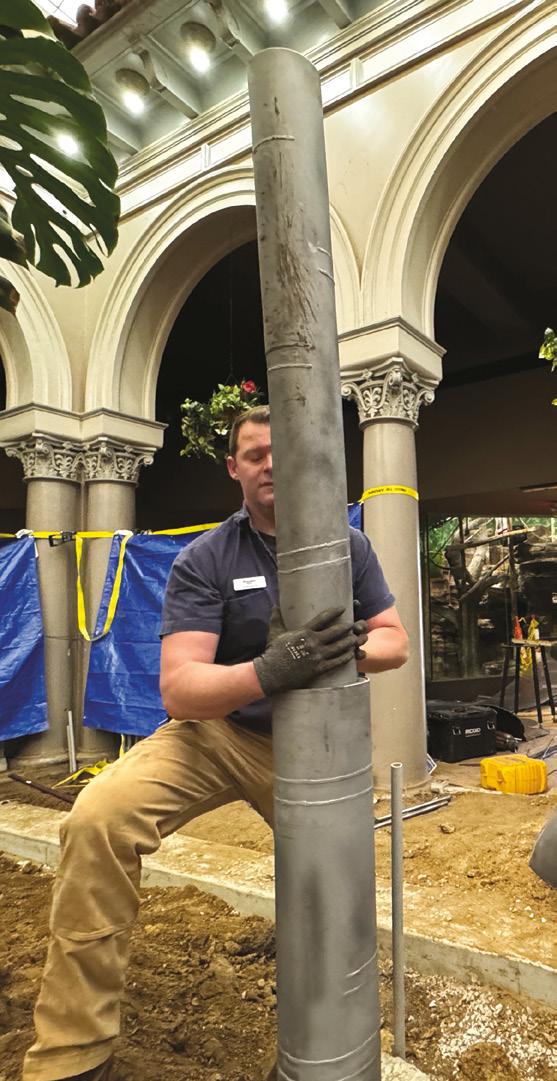
When plans were approved, it was time to transform the interior of the Primate House into an open-air habitat designed for the latest animal care standards. Coming up to the plate to begin construction was the Zoo’s Facilities & Planning division, a team of staff with specialties such as carpentry and painting, electrical, horticulture, metals and special construction, and plumbing.
A big puzzle to solve was how to get heavy-duty construction equipment inside.
“When you do construction outdoors, you have room to spread out; in this case, we only had a 1,300-squarefoot area to work in,” said Derek Strunk, Manager of Special Construction and Welding. “We had to rent specialty skid steers and excavators that could be used in this small space.”
In addition, the Primate House is nearly 100 years old, filled with architectural character that needed to be preserved. And when renovating any older space, some time-capsule gems are bound to be found.
“We had to chip away layers and layers of past work to get down to the foundation,” said Tim Forbes, Carpentry. “When we did, we found things like old coins that guests left long ago.”
The Facilities & Planning team was also tasked with building custom trees for the sloths. Strunk worked on the large center tree in the Sloth Atrium.
“It was awesome to work on,” he said. “And before we built the trees, we did miniature-scale models of them to show the Animal Care team. They were able to manipulate the branches and show us how they’d like the trees
constructed to best suit the sloths’ needs. We also designed the vines to be movable so the keepers could adjust them within the habitat, just like how surroundings change in the rainforest.”
Strunk said the Animal Care team’s expertise was invaluable to this project’s success.
“Something important they pointed out was that sometimes the sloths would be wet from their pools, waterfalls and misters,” he said. “That water needs to drain somewhere. So, in our ‘hollow tree spot,’ we made sure we slanted the floors and added drain holes so there wouldn’t be standing water in their space.”
After about three months of construction, it was time for Hoffman’s two-toed sloths Rolo (male) and Pancakes (female) to see their new home.
“This SPACE IS ABSOLUTELY BEAUTIFUL”
The Sloth Atrium opened on April 15, and guests are invited to slow down and look up to see Rolo and Pancakes. The open-air habitat is surrounded by a sleek, 3 3/4-foot-high glass barrier, which is tall enough to keep Pancakes and Rolo inside without impacting guest views.
The habitat has a discreet glass wall that divides the space into two — one space for him, one space for her. The sloths are recommended for breeding per a Species Survival Plan, but like any new relationship, Rolo and Pancakes need time to get to know each other.
“The barrier allows them to see, smell and interact with each other from a safe distance as they become acquainted,” said Primate Keeper Shannon Farrell. “Rolo is just
2 years old and needs time to mature. They’re in no rush, sloth pun intended.”
Since sloth babies aren’t in the near future for Rolo and Pancakes, they’re busy exploring their new habitat, much to the delight of their keepers.
“For sloths, they’ve been incredibly active; Rolo may be the most active sloth I’ve ever seen,” said Primate Keeper John Velasco. “They’re spending a lot of time on the ground, which is a sign that they’re comfortable in this new space. In the wild, they typically only go to the rainforest floor once a week — to poop — because being ground-level puts them at risk for predation.”
Farrell and Velasco noted that all the features of the habitat — the trees, vines, water features and lighting features — encourage the animals
to make choices, which allow them opportunities to use natural behaviors. This is essential for animal well-being.
“You can really see their personalities come out with the choices they make,” Farrell said. “Pancakes loves her water features. Also, being a little older and more methodical, she has her go-to favorite spots, like a dedicated sleeping area up in the trees.”
Velasco said Rolo is a little quirkier.
“He’s an adventurer and has more spitfire to his personality,” he said. One time, we moved vines around in a way he didn’t love, and he shook a tree until his space was just the way he wanted.”
Another benefit to the open-air space is that guests can get glimpses of training sessions that Animal Care
team members do with the sloths. The animals always have the choice whether or not to partake in a session, but with tasty treats provided at the end as positive reinforcement, they’re usually up for it.
“Training the animals to do certain behaviors ultimately allows them to participate in their care,” Farrell said. “We often work on target training, which encourages Pancakes and Rolo to go to a specific place in their habitat when prompted. This is helpful for when we do wellness checkups — we can see them up close — or grooming work like nail trims.”
Now that the habitat is finished and Pancakes and Rolo are happily acclimating to their new home, Zoo team members are taking
a step back, feeling proud about what’s been accomplished.
“This space is absolutely beautiful, and it’s so unique to our Zoo,” Velasco said. “So many people love sloths, and this allows for even more
to step inside! This is a fantastic new chapter for all of us.” And it’s a space that will be around for generations to come.
“This is a legacy project for me,” Forbes said. “One day, my grandchildren
How many pounds?
To construct the Sloth Atrium, here’s what THE Zoo’s Facilities & Planning team used:
65,000 POUNDS of concrete for foundation work
2,700 pounds of steel
20,000 POUNDS of mortar for custombuilt trees, all applied by hand
800 pounds of sculpting epoxy (a binding agent) for trees & vines
Welder Brandon Ganz adjusts a steel tree foundation
Leading by (green) example at Destination Discovery
By Wanda Kolo, Director of Sustainable Operations & Construction Management
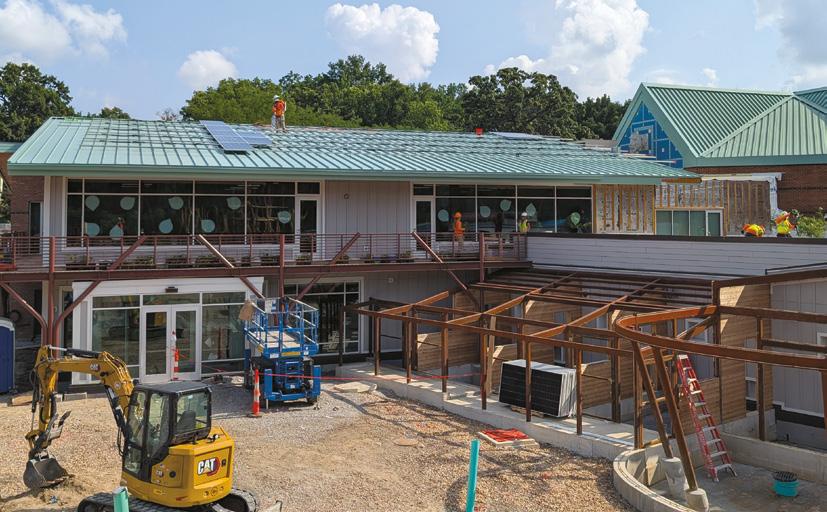
Reimagining the space that was once home to the historic Emerson Children’s Zoo provided a unique opportunity to rebuild this portion of the Saint Louis Zoo from scratch, including all underground utilities. Sustainability and the best green practices inspired the design and construction from the start.
The foundational goal of Henry A. Jubel Foundation
Destination Discovery is fostering the next generation of conservationists through close and meaningful connections with animals and nature.
Destination Discovery will also prompt guests to see tangible “green” solutions and inspire personal actions to help wildlife thrive. While they’re on this journey, they’ll be standing on a foundation of sustainable construction solutions to help bring this experience to life.
Here are just a few of the ways
Destination Discovery is best in class for sustainability:
Rainwater Management
The 3-acre site is at a low-lying point on the Zoo campus, which had historically led to flooding problems. Careful design and planning went into an innovative and holistic approach to resolve flooding while directing rainwater to flow into the Zoo’s lake system. This solution — which you may have seen in construction in the North Lot over the past few months — will protect the new development and reduce the need to fill Zoo lakes with potable water.
Managing rainwater sustainably at Destination Discovery will also be accomplished with several raingardens and extensive native plantings. Native perennial plants, which come back every year, have deeper root systems and soak up
more rainwater, which reduces runoff into storm sewers and local waterways. Native plants adapted to the Missouri climate also reduce the need for watering during hot summer months and benefit local wildlife.
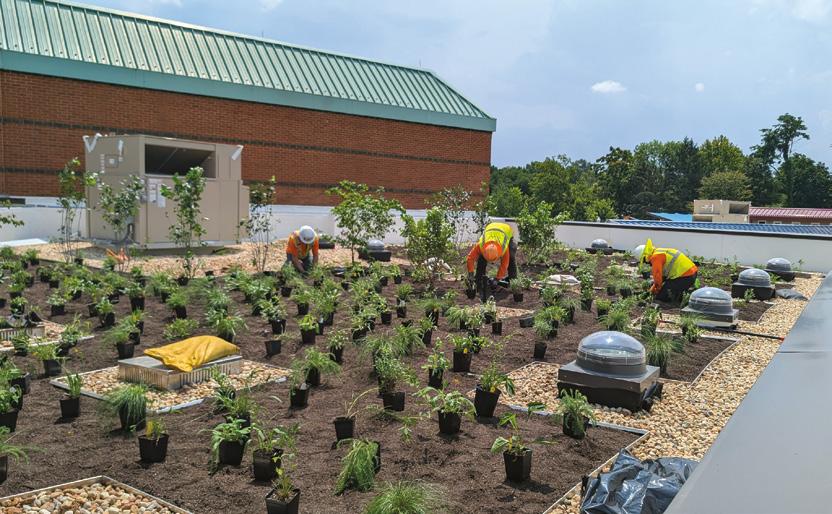
In addition, rainwater will be managed with two “green roofs,” which are covered with vegetation. These roofs have deeper soil and therefore can sustain bigger plants such as shrubs and even small trees.
The larger green roof on top of the animal ambassador building will be visible from the preschool classroom and from the Treetop Heights elevated boardwalk. The building dedicated to river otter and flamingo care has a smaller green roof. There are numerous benefits to green roofs beyond being beautiful and capturing rainwater: They provide insulation (which occupants appreciate!) and offer a habitat for wildlife.
The “green roof” atop one of the animal care buildings at Destination Discovery
Solar panel racking systems are installed on top of the Conservation Education Building
Green Energy
Green energy to power the Destination Discovery buildings and site were critical to designing a sustainable project. In accordance with the Zoo’s sustainability efforts, the decision to design an all-electric site was made at the outset of planning. Our electric energy setup is designed to reduce greenhouse gas impacts over time. Geothermal energy will provide water heating and cooling for several buildings. Fifty-seven, 500-foot-deep vertical geothermal pipes were installed under the North Lot. These horizontal pipes tie into heating and cooling equipment to support buildings as well as heating and cooling water, including the river otter and flamingo pools. Geothermal energy utilizes the constant temperature of the Earth to reduce energy use. Renewable energy at Destination Discovery also includes solar photovoltaic panels installed on the two-story Conservation Education Building, where the preschool will be housed.
Friendly Lighting
Designing for daylight inside buildings is an effective way to reduce energy and improve light quality. Ample windows were designed into all the buildings at Destination Discovery. In spaces where window placement was challenging, the design team incorporated highperformance skylights, called sun tunnels. Sun tunnels channel sunlight through highly reflective tubes to illuminate interiors.
We incorporated LED lighting, which is energy efficient and low maintenance, inside and outside on the site. Importantly, all exterior lights meet Dark Sky certification, which means that they are designed to prevent light pollution, a growing concern in cities worldwide. The color temperature is also important for exterior lights. Insects are drawn to white or blue lights (cool temperature) more than they are attracted to yellow lights (warm temperature). When insects encounter cool-temperature lights, they exhaust precious energy and can even die from the effort. Installing yellow outside lights that don’t shine upward into the sky is helpful to native insects and birds.
Mass Timber Structure
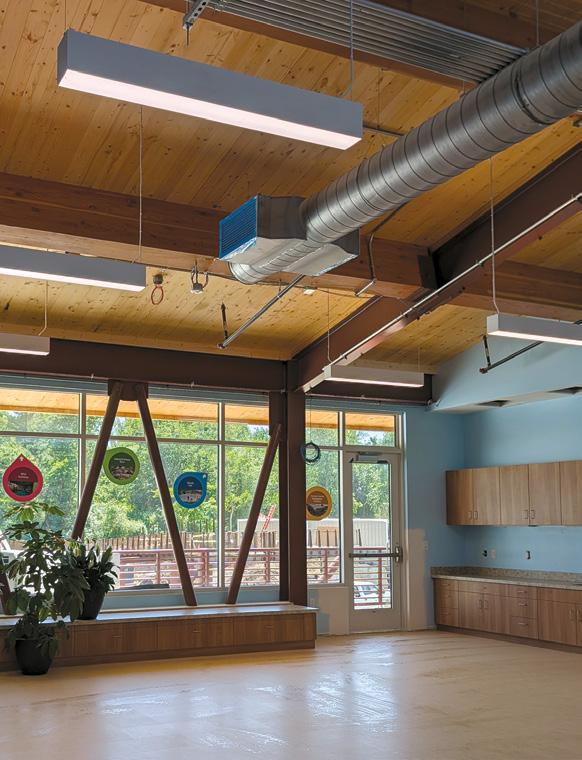
The two-story Conservation Education Building is a hybrid mass timber structure. Mass timber is more environmentally friendly than using concrete and steel because it has less embodied carbon. Incorporating natural materials like wood is also a biophilic design principle: Biophilia is the innate inclination that humans have to seek connections with nature.
As we near the opening of Destination Discovery, we’re seeking certification from Leadership in Energy and Environmental Design (LEED), a green building rating system by the U.S. Green Building Council. It provides a framework for
healthy, highly efficient and costsaving green buildings. In addition, we’re seeking SITES certification for the entire site. SITES certification is a voluntary, third-party rating system administered by Green Business Certification Inc. that evaluates and recognizes the sustainability, ecological resilience and health benefits of landscapes and outdoor spaces. This is the first SITES certification project undertaken by the Zoo.
When you visit Destination Discovery later this year, you can feel good knowing that not only are we encouraging guests to engage in wildlife-friendly practices — we’re providing a healthy foundation on which memories can be made for these next-generation conservationists.
The ceiling of Second Nature Zoo Preschool is built using mass timber structures
Overcoming challenges in crocodile conservation
By Christina Meier, Coordinator, Public Relations
As Jamie Palmer and Kathleen Apakupakul of Saint Louis Zoo Institute for Conservation Medicine (ICM) arrived in Cuba, anticipation built for the next steps of crocodile conservation. During their severalhour scenic drive to Playa Larga, they observed that they were one of the only vehicles on the road.
Threats to local Cuban crocodiles, a critically endangered species, are at an all-time high as they face increased illegal hunting, hybridization with American crocodiles, habitat degradation and climate change. With an unprecedented economic crisis causing a lack of resources for crocodile food and limited fuel for commuting, pumping water and traveling for surveys in the field, even the crocodile
farming industry is threatened. In fact, the Zoo’s partners at Zapata Crocodile Farm (ZCF) had to save enough fuel throughout the year prior for Palmer and Apakupakul’s trip in April.
The ZCF, a conservation breeding farm located on the Bay of Pigs, Cuba, maintains a genetically pure breeding population of Cuban crocodiles. The conservation group has managed breeding groups of Cuban crocodiles since the 1960s and until recently, cared for roughly 4,000 crocodiles. Some of the offspring are raised for reintroduction into protected areas of the Zapata Swamp, the largest swamp in the Caribbean.
Limited resources, including fuel for vehicles and electricity, prevent the farm from being able to properly feed
and care for all their animals. So, they must embark on a necessary step to save the Cuban crocodile: Releasing 500 juveniles into the wild.
Before the hundreds of 3- to 7-year-old crocodiles could be released, the researchers had three additional goals: Collect biomaterial from 200 juvenile Cuban crocodiles for a pathogen detection study of farmed animals, perform complete blood counts on up to 60 juvenile crocodiles, and conduct pre-release physical exams on all sampled animals.
“The overarching goal for the Zoo’s participation was capacity building of local staff in Cuba and pathogen testing as part of our crocodile health study,” said Palmer, Director of the Saint Louis Zoo WildCare Institute
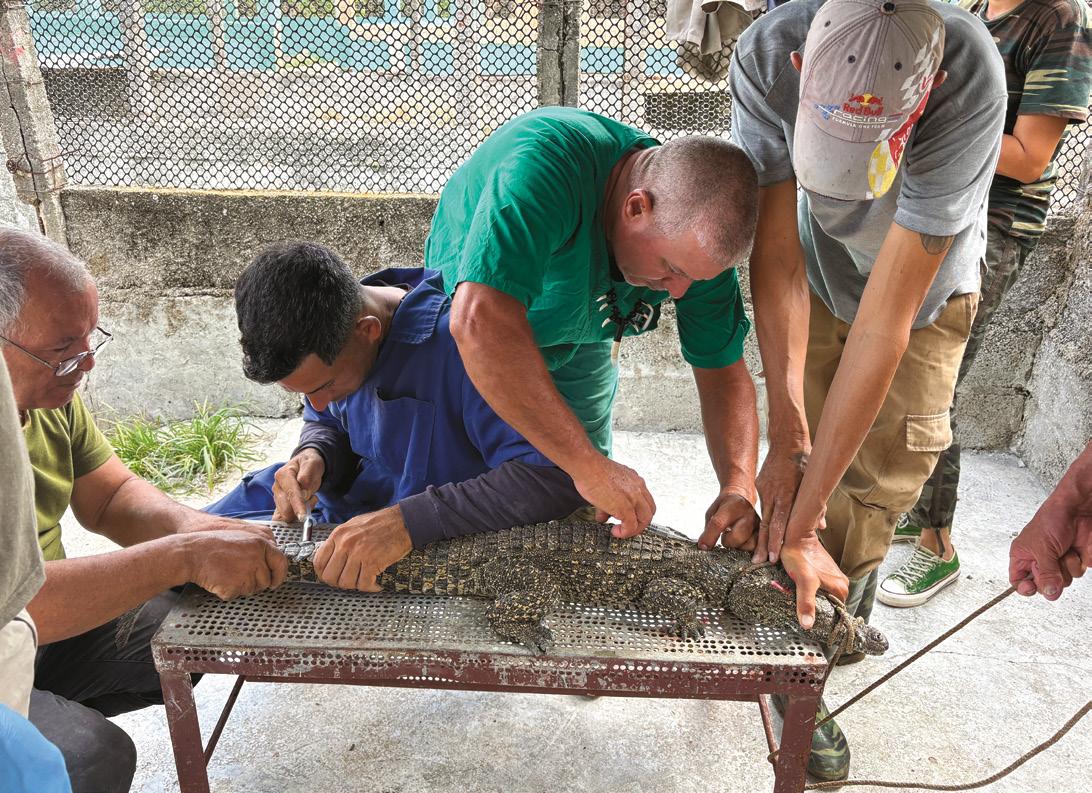
A blood draw is conducted on a juvenile Cuban crocodile
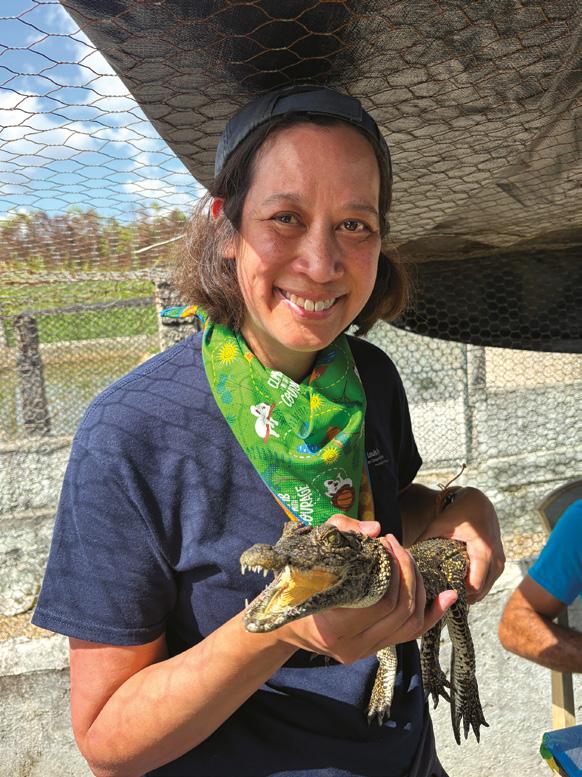
Apakupakul holds a juvenile Cuban crocodile for the first time
Crocodile Conservation and Research in Cuba program.
During Palmer and Apakupakul’s 10-day trip, the ZCF staff became proficient in collecting blood from and microchipping the crocodiles for data collection. Now, the ZCF staff have the resources to microchip all of the crocodiles when it is time to release them.
“The ZCF team is thoroughly engaged in collecting data to understand ecological aspects of Cuban crocodiles,” said Etiam Pérez, Specialist in Wildlife Fauna and Research, the Enterprise for the Conservation of Zapata Swamp. “This is crucial for developing more accurate and effective conservation strategies.”
Apakupakul noted that all the keeper staff participated in the health evaluation and sample collection. “There was a lot of interest from many to practice sample collection skills,” she said. “I think that people felt a great deal of satisfaction with being part of the project.”
The Zoo and ZCF teams are developing a health program for crocodiles in Cuba together. Partner scientists at the ZCF lead field work with free-living crocodiles, with ICM to advise and teach sample collection techniques to use in the field. Both organizations are working toward their long-term goal of expanding their group efforts and study the health of Cuban and American crocodiles.
“This trip really brought our teams together,” said Palmer. “We’ve built a solid foundation to do good work.”
Crocodiles are often identified as indicators of ecosystem health, as they are apex predators at the top of the food chain and habitat engineers that create, modify and maintain their habitats. Cuban crocodiles are understudied, and research to understand their health — including infectious disease and population health — is important when managing and releasing populations in human care into their historic range.
The ICM and WildCare Institute, all under the umbrella of the Saint Louis Zoo, are initiating several efforts to protect the Cuban crocodile and expand research of the species, including field surveys for population estimates, sample collection for pathogen detection in free-living and farmraised crocodiles, and performing pre-release health assessments.
This was Palmer’s seventh trip to Cuba, and Apakupakul’s first as she brought her expertise in molecular diagnostics and ensuring proper sampling collection in the field. The last sample collection trip was in 2019, and just like that trip, the new set of biomaterials collected will be imported and have diagnostics completed right here in St. Louis.
“It was clear how the economic crisis had affected the country,” said Apakupakul. “Despite these hardships, our partners are dedicated to saving crocodiles.”
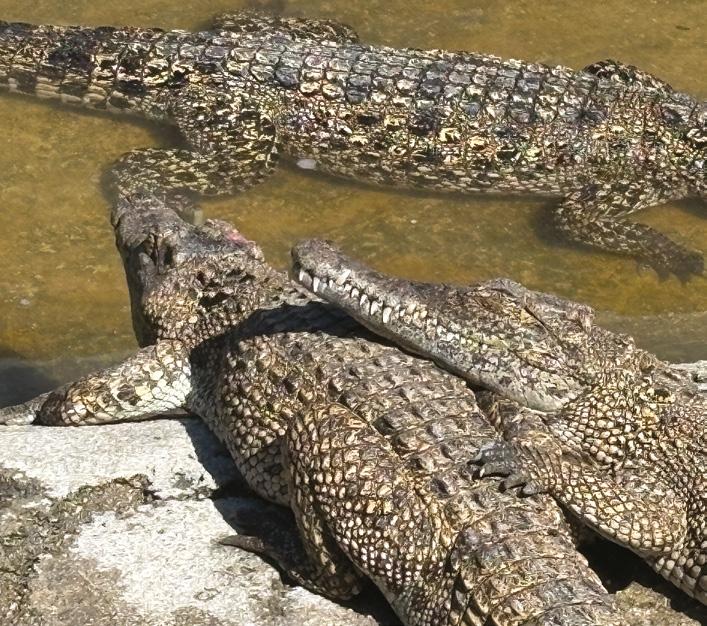
Cuban crocodiles resting at the Zapata Crocodile Farm
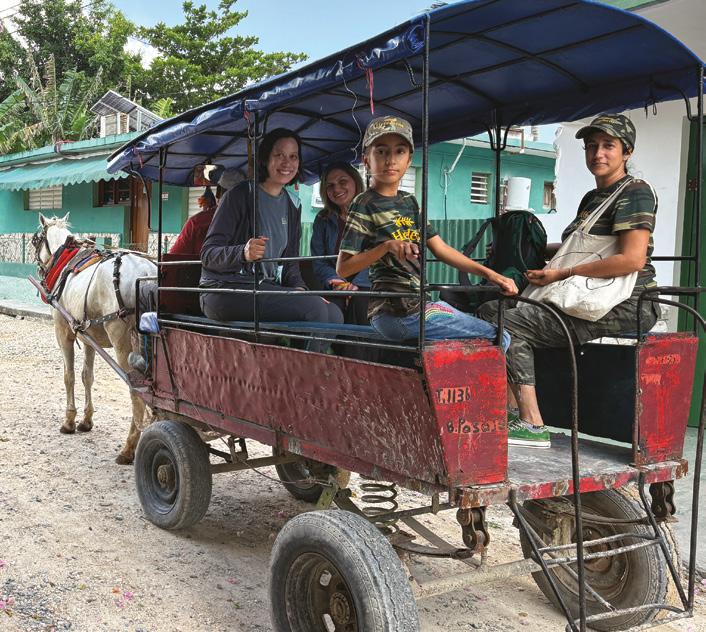
Apakupakul and Palmer get a ride from the Zapata Crocodile Farm conservation education team
Details are subject to change. See what’s new and get the latest at stlzoo.org.
Dinoroarus
Dates: Open through 2027
Member Price: Included in member tickets; Free for children 0-23 months
Back for a limited time!
Meet some colossal, animatronic friends at Dinoroarus, now located at Historic Hill. Discover some amazing connections between dinosaurs and modern-day living animals. Learn more at stlzoo.org/dinos
the happenings
July, August and September
Sea Lion Show presented by Together Credit Union
Dates and Showtimes: May 25Aug. 23 and Sept. 7, 2026 (Daily): 11 a.m., 1 and 3 p.m.; Aug. 28Oct. 25, 2026 (Friday-Sunday only): 11 a.m., 1 and 3 p.m.
Member Price: Included in member tickets; Free for children 0-23 months
Sea lion superstars will thrill you with jumps and lots of splashing!
Stingrays at Caribbean Cove presented by SSM Health Cardinal Glennon Children’s Hospital
Dates: Through Oct. 31, 2026
Member Price: Included in premium member tickets; Free for children 0-23 months
Guests can enjoy a hands-on opportunity to touch and feed these gentle ocean creatures.
Member Appreciation Mornings
Saturday, July 25, 2026: 7-8 a.m. Saturday, Aug. 29, 2026: 8-9 a.m.
These mornings allow members at all levels exclusive one-hour access to the Zoo, before it opens to the public. Fewer crowds, free parking and attraction admission, and more fun for you and your family! So grab some breakfast at Lakeside Cafe or a Starbucks at the Zoo, and enjoy a special morning, just for you!
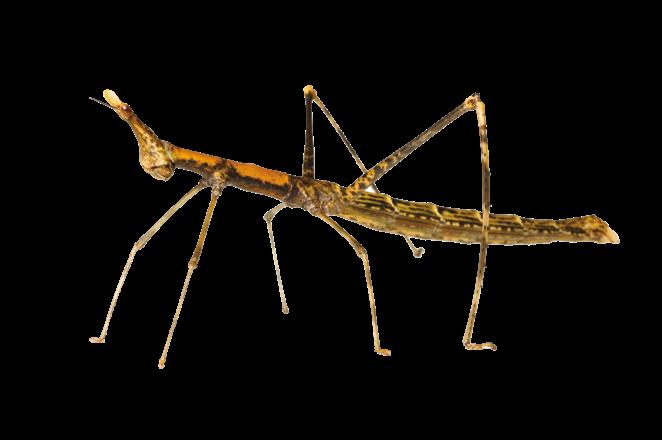
Walking stick
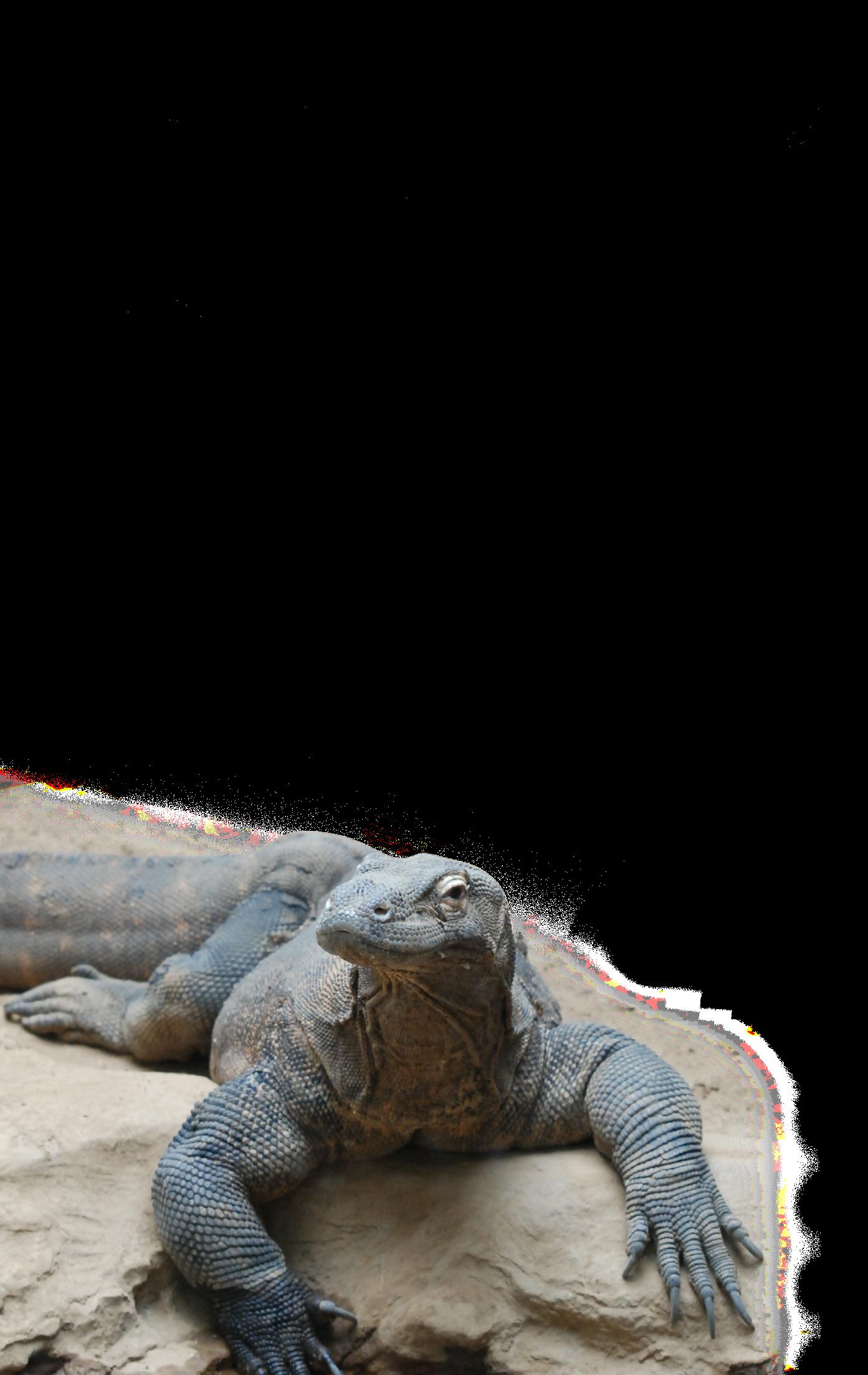
Komodo dragon
happenings
New! Extended-Hour Theme Nights
Dates: Aug. 8 and 15, and Sept. 26, 2026
Time: 5-8 p.m.
The Zoo will offer special theme nights and offer extended hours. Visit stlzoo.org/themenights to learn more.
Night at the Zoo
Date: Aug. 21, 2026
Time: 6-9 p.m.
Age: Adults 21+
Member Price: $35
Need a night out? How about a night at the Zoo? Sip and stroll through the Saint Louis Zoo after hours, without the pitter-patter of little feet (no cubs allowed)! Sit where you want on the train, have an uninterrupted conversation with your friends or significant other, and enjoy some chaos-free moments of connection with animals. Sponsored by Mid America Chevy Dealers, Coca-Cola, Urban Chestnut Brewing Company and Stone Hill Winery.
Calling all fans of fall — we’re kicking Zootoberfest off early for more “oompah” fun! Sip beer, savor German-themed cuisine and hear live music. For the kinder, there is root beer and kids’ activities.
Sponsored by Urban Chestnut Brewing Company and Mid America Chevy Dealers. PROST!
Hours
May 26 through Aug. 23, 2026
Sundays-Thursdays: 8 a.m.-5 p.m.
Fridays and Saturdays: 8 a.m.-6 p.m.
Aug. 24 through Sept. 4, 2026
9 a.m.-5 p.m.
Labor Day Weekend: Sept. 5-7, 2026
8 a.m.-6 p.m.
Sept. 8 through Oct. 7, 2026
9 a.m.-5 p.m. daily*
Last entry is 15 minutes before listed closing time.
*Friday, Sept. 11: 9 a.m.-8 p.m.
*Saturday, Sept. 12: 9 a.m.-6 p.m.
*Thursday, Sept. 17: 9 a.m.-3 p.m.
*Saturday, Sept. 19: 9 a.m.-8 p.m.
*Wednesday, Sept. 23: 9 a.m.-4 p.m.
*Saturday, Sept. 26: 9 a.m.-8 p.m.
Cheetah
education programs
NEW: Select programs are now available at Saint Louis Zoo WildCare Park! The WildCare Park programs are indicated throughout this catalog. All other programs will take place at the Saint Louis Zoo campus in Forest Park.
Early Childhood Programs
Children must be accompanied by an adult. Fees are listed per child.
All Early Childhood programs are designed for you and your child to learn about animals and explore the natural world together. We encourage you to interact with and help facilitate the learning of the registered program participant. Programs are interactive and may include songs and stories, art opportunities, role-playing games, hands-on investigations and more. In order to best serve all of our Early Childhood participants, unregistered children may not participate in the programs.
FOR CHILDREN AGES 12-24 MONTHS
Limited to 16 children. Fee: Eligible Zoo Members $28*/General Public $31.
Cubs & Pups
Prowl like a cat and pounce like a painted dog. We’ll pretend to be felines and canines as we explore wild cats and dogs and learn how they compare to our pets at home.
October 3 (Sa); 9-10 a.m.
Home Sweet Home
Animals live in different places. Some may nest in a tree, while others prefer to dig a burrow underground. We’ll explore animal homes near and far and learn how we can make our neighborhoods welcoming to animals.
November 15 (Su); 9-10 a.m.
Penguin and Puffin Pals
Dive into the wonderful world of these black and white birds. Discover what they eat, how they move and more. Then, come along on an adventure to visit Penguin & Puffin Coast. January 10 (Su); 9-10 a.m.
Romp & Stomp
Can you romp like a monkey or stomp like a rhino? We will go wild as we act like animals to explore what they do and how they move. February 6 (Sa); 9-10 a.m.
FOR CHILDREN AGES
18
MONTHS-3 YEARS
Limited to 16 children. Fee: Eligible Zoo
Members $28*/General Public $31
Nature Tots
(NEW program located at WildCare Park!)
Join us as we play in the mud, build with sticks and stumps, and learn other fun ways to explore nature at home!
September 26 (Sa); 9-10 a.m.
FOR CHILDREN AGES 2-3 YEARS
Limited to 16 children. Fee: Eligible Zoo Members $28*/General Public $31.
Bug-a-palooza
Explore the teeny tiny world of butterflies, beetles and more. We’ll visit the Missouri Meadow to look for insects and take home native plant seeds to attract bugs to our own outdoor spaces.
September 13 (Su); 9-10 a.m.
Hiss, Growl, Squawk
Roar like a tiger, squawk like a hornbill and chatter like a chimp. Animals communicate in different ways! We will explore stinky smells, bright colors and make noises as we learn how animals send each other messages.
October 17 (Sa); 9-10 a.m.
Herp, Herp Hooray
Who lives at the Herpetarium? Reptiles and amphibians galore — lizards, snakes, frogs and more! In this class, we’ll learn all about our scaly and slimy friends through sensory exploration and imaginative play.
November 7 (Sa); 9-10 a.m.
Animal Adventure
What do animals eat? Where do they live? How do we know they are healthy? We’ll explore all kinds of animals, while playing pretend and imagining ourselves as zookeepers, veterinarians, scientists and more.
December 6 (Su); 9-10 a.m.
Bear Buddies
Grizzly bear, polar bear what do you see?
Find out what it’s like to be a bear as we crawl into a bear den, forage for food, and make bear art. We’ll take a walk over to Grizzly Ridge and Polar Bear Point to see our bear buddies here at the Zoo.
January 23 (Sa); 9-10 a.m.
Tale of a Tail
Long and short, wide and thin, stripy too — tails come in all different shapes and sizes. We’ll try out different tails to discover which animals have tails and how they use them.
February 13 (Sa); 9-10 a.m.
FOR CHILDREN AGES 3-5 YEARS
Limited to 16 children. Fee: Eligible Zoo Members $30*/General Public $33.
Zootastic Zebras
(NEW program located at WildCare Park!)
Is a zebra black with white stripes or white with black stripes? What if I told you they aren’t black at all!? Come join our herd as we explore the amazing world of zebras and learn all about our striped friends!
September 12 (Sa); 9-10:30 a.m.
Antelope Antics
(NEW program located at WildCare Park!)
Explore the diverse world of our hooved and horned friends and how we care for them at the Zoo.
October 25 (Su); 9-10:30 a.m.
Swamp Life
What’s so special about a swamp? In this class, we’ll find out as we explore the features of this unique habitat and learn about the animals that live there. Weather permitting, we will visit the Cypress Swamp.
September 19 (Sa); 9-10:30 a.m.
Superhero Science
Who can fly from tree to tree? Who has super senses? Who can transform to protect themselves? We’ll conduct exciting experiments to learn more about amazing creatures. We’ll even create our own super power animals to take home.
October 25 (Su); 9-10:30 a.m.
Curled Up and Cozy
As the weather turns cooler, animals are busy getting ready for winter. Some travel long distances to warmer places, while others cozy up right here. Discover how our animal friends prepare for winter and learn how we can help them.
November 21 (Sa); 9-10:30 a.m.
Amazing Apes
Gorillas, orangutans and chimps, oh my! Join us as we learn all about these powerful primates and explore how they are a lot like us. After exploration time in the classroom, we’ll take a walk up to Fragile Forest and Jungle of the Apes to see our amazing apes in action.
December 13 (Su); 9-10:30 a.m.
Ssssnakes
Slither into the wonderfully weird world of snakes. We’ll explore the adaptations of these scaly creatures and learn where and how snakes live. Then we’ll head to the Herpetarium to look at snakes that live near us and around the world.
January 30 (Sa); 9-10:30 a.m.
Whiskers, Claws and Paws
Pounce into the world of wild cats, as we explore where they live, how they communicate and more. Weather permitting, we will visit Big Cat Country to learn all about our Zoo’s big cats!
February 28 (Su); 9-10:30 a.m.
FOR CHILDREN AGES 3-7 YEARS
Limited to 16 children. Fee: Eligible Zoo Members $33*/General Public $35.
Nature Play Morning
(NEW program located at WildCare Park!)
Do you love the outdoors? So do we! Join us for a morning of exploration as we investigate native wildlife, create with natural materials, play outside and learn more exciting ways to experience nature!
November 7 (Sa); 9-11 a.m.
FOR CHILDREN AGES 5-7 YEARS
Limited to 16 children. Fee: Eligible Zoo Members $30*/General Public $33.
Nocturnal Neighbors
(NEW program located at WildCare Park!)
Ever wonder what goes on in your yard at night? Learn how bats, owls and other nocturnal animals are adapted to life at night and ways to observe them in your own backyard. Receive your very own bat house to take home and help the bats in your own backyard!
October 23 (Fri); 6-7:30 p.m.
Zoo Builders
(NEW program located at WildCare Park!)
Rhinos, and ostrich and addax, oh my! Join us to learn all that goes in to building a Zoo. Design your own miniature Zoo and learn about WildCare Park.
November 14 (Sa); 9-10:30 a.m.
Camp Programs
SCHOOL BREAK CAMPS FOR STUDENTS IN GRADES 1-5
Participants attend these programs on their own, unaccompanied by a parent or other adult.
When school is on break, you can spend the day at the Saint Louis Zoo! Join our educators to learn about animals and conservation. Each day of camp will have crafts, games, Zoo tours and a whole lot of FUN!
Thanksgiving Break Camp: Giving Green Want to give gifts to your friends and family while also helping the planet? By using the 3 R’s (Reduce, Reuse and Recycle), we can turn trash into treasures and make great gifts. Let’s use our creativity to make eco-friendly gifts, and we’ll meet the animals we are helping along the way! Add After-Care for an additional fee.
November 25 (W); 8:30 a.m.-3 p.m.
Limited to 20 participants. Fee: Eligible Zoo
Members $66*/General Public $73
Thanksgiving Break Camp After-Care
Participants will enjoy various activities building on their camp experience. This program is for Thanksgiving Break Camp participants only. November 25 (W); 3-6 p.m.
Limited to 20 participants. Fee: Eligible Zoo Members $22*/General Public $24
Winter Break Camp: Animal Acrobatics
Whether it flies, crawls, slithers, swings or swims, animals move around in incredible ways! Campers will spend this week playing fun games, making crafts, touring the Zoo and moving like the animals do. Join us for four day of hops, skips and jumps around the Zoo. Add After-Care for an additional fee.
December 28-31 (M-Th); 8:30 a.m.-3 p.m.
Limited to 20 participants. Fee: Eligible Zoo Members $264*/General Public $292
Winter Break Camp After-Care
Participants will enjoy various activities building on their camp experience. This program is for Winter Break Camp participants only.
December 28-31 (M-Th); 3-6 p.m.
Limited to 20 participants. Fee: Eligible Zoo Members $88/General Public $96
Martin Luther King Jr. Day Camp: Animal Adventures
From the grasslands to the trees, from the desert to the seas, animals have amazing adaptations to help them survive! Campers will adventure around the Zoo, discovering how animals live in habitats all around the world. Add After-Care for an additional fee.
January 18 (M); 8:30 a.m.-3 p.m.
Limited to 20 participants. Fee: Eligible Zoo Members $66*/General Public $73
Martin Luther King Jr. Day Camp After-Care
Participants will enjoy various activities building on their camp experience. This program is for MLK Day Camp participants only.
January 18 (M); 3-6 p.m.
Limited to 20 participants. Fee: Eligible Zoo Members $22*/General Public $24
Presidents Day Camp: Keystone Critters
All animals are important, but did you know that some even shape their habitat? These incredible animals are called keystone species. From a massive elephant to a small prairie dog, campers will learn how the world would not be the same without these incredible animals. Add After-Care for an additional fee.
February 15 (M); 8:30 a.m.-3 p.m.
Limited to 20 participants. Fee: Eligible Zoo Members $66*/General Public $73
Presidents Day Camp After-Care
Participants will enjoy various activities building on their camp experience. This program is for Presidents Day Camp participants only.
February 15 (M); 3-6 p.m.
Limited to 20 participants. Fee: Eligible Zoo Members $22*/General Public $24
Spring Break Camp: Island Exploration
From the lemurs of Madagascar to the giant tortoises of the Galapagos, islands are home to incredible and unique animals. Campers will discover how islands are formed, and why they are home to animals that are found nowhere else! Join us as we go island hopping, visiting animals from different islands each day of the week. Add After-Care for an additional fee.
March 15-19 (M-F); 8:30 a.m.-3 p.m.
Limited to 20 participants. Fee: Eligible Zoo Members $330*/General Public $365
Spring Break Camp After-Care
Participants will enjoy various activities building on their camp experience. This program is for Spring Break Camp participants only.
March 15-19 (M-F); 3-6 p.m.
Limited to 20 participants. Fee: Eligible Zoo Members $110*/General Public $120
Spring Holiday Camp: Leap into Spring
One of the first signs of spring is the chirps, peeps and croaks of frogs and toads. Campers will discover how amphibians are important to wetlands and how they are a sign of a healthy habitat. Join us to play games, discover frog calls and learn all about how we can help these slimy survivors! Add After-Care for an additional fee.
March 26 (F); 8:30 a.m.-3 p.m.
Limited to 20 participants. Fee: Eligible Zoo Members $66*/General Public $73
Spring Holiday Camp After-Care
Participants will enjoy various activities building on their camp experience. This program is for Spring Holiday Camp participants only.
March 26 (F); 3-6 p.m.
Limited to 20 participants. Fee: Eligible Zoo Members $22*/General Public $24
education programs
NEW: Select programs are now available at Saint Louis Zoo WildCare Park! The WildCare Park programs are indicated throughout this catalog. All other programs will take place at the Saint Louis Zoo campus in Forest Park.
Adult Programs Ages 18
Escape the Zoo: WildCare Institute Edition
To help the Zoo save animals from extinction, you must unlock the secrets of the Zoo through a team building adventure! Race against time to complete your mission by solving a series of puzzles and finding clues hidden along the pathways. Use these clues to discover what the Zoo is all about! Build your team of up to 10 individuals ages 18 and up.
September 8 (Tu); 5:30-7 p.m.
Limited to 10 participants per TEAM. Fees are PER TEAM. Maximum of three teams per session. Fee: Eligible Zoo Members $190*/General Public $200
Escape the Zoo 2: Back to the Future Edition
Travel through history and experience the evolution of the Saint Louis Zoo. Solve the puzzles of the past to unlock the excitement of the future. It is a race against the clock, but the clock is generous, so take in the sights and sounds of the Zoo in this escape room-style adventure. Build your team of up to 10 individuals, ages 18 and up.
August 18 (Tu); 6-8 p.m.
Limited to 10 participants per TEAM. Fees are PER TEAM. Maximum of three teams per session. Fee: Eligible Zoo Members $225*/ General Public $245
The Seasons of the Zoo
Come see the Zoo throughout the year. Each tour will highlight a different area and its seasonal happenings. See what the animals are up to each season and how we adjust our care throughout the year.
October 17 (Sa); 10-11:15 a.m.
January 23 (Sa); 10-11:15 a.m.
Limited to 20 participants. Fee: $20 per person.
ADULT OVERNIGHT PROGRAMS
Adults aged 18 and up can schedule their own private group overnight on select evenings. Using the current themes, we will tailor the program to meet your needs. Fees listed are per person.
Polar Bear Plunge
Join us for this amazing opportunity to sleep inside Polar Bear Point! You will talk with Zoo staff about how we help animals all over the world and then team up to solve a scavenger hunt. After a night hike, we will end the night by laying out sleeping bags inside the underwater viewing building. You will awake with a view of the polar bear pool and hopefully with a view of Kallu! This overnight includes a catered dinner and continental breakfast.
November 7; 6:30 p.m. (Sa) – 8:30 a.m. (Su)
Limited to 20 participants. Fee: Eligible Zoo Members $77*/ General Public $85.
Family Overnight Programs
Parents and children attend these programs together. Fees are per person.
Polar Bear Plunge
For families with children ages 5 and up. Join us for this amazing opportunity to sleep inside Polar Bear Point! We will explore the Zoo at night while learning about Arctic and Antarctic animals and their unique adaptations that allow them to live in the cold. We will end the night by laying out sleeping bags inside the underwater viewing building. You will awake with a view of the polar bear pool and hopefully with a view of Kallu! The overnight includes an evening snack, a glow-in-the-dark overnight cup and a continental breakfast in the morning.
October 3; 6:30 p.m. (Sa) – 8:30 a.m. (Su) December 4; 6:30 p.m. (F) – 8:30 a.m. (Sa) March 6; 6:30 p.m. (Sa) – 8:30 a.m. (Su) Limited to 20 participants. Fee: Eligible Zoo Members $75*/General Public $83.
Teen Overnight Programs
WildCare Park Nature Race Overnight (NEW program located at WildCare Park!) Participants attend these programs on their own, unaccompanied by a parent or other adult.
For teens in 9th-12th grade. Join us for this brand new opportunity to spend the night at the yetto-be-opened Saint Louis Zoo WildCare Park, located in north St. Louis County. This program includes evening activities, a pizza snack and sleeping in single-person tents outside. In the morning, students will eat a continental breakfast and complete a Nature Race program using the knowledge they learned the night before. Each participant will also receive a glow-in-thedark overnight cup! This program was created in collaboration with north St. Louis County teens. October 9; 6:30 p.m. (F) – 11 a.m. (Sa) Limited to 25 participants. Fee: Eligible Zoo Member: $90*/General Public: $99
SCOUT SNOOZE AT THE ZOO
The Education Department offers many opportunities for scouts and other organized youth groups to enjoy the Zoo and learn about the animal world. Programs may include biofacts, activities, games, tours or crafts. We offer a variety of programs that help scouts work toward their badge requirements! Your group will have fun together while learning about animals, their habitats and conserving natural resources. Visit the website for more information about scout snooze registration. For more information, contact the Overnight Staff at overnights@stlzoo.org
Vet Science
Here at the Zoo, our animal staff is devoted to providing the best care for all of our species from our tiny ants to our huge elephants, and everything in between. But have you ever wondered how our Zoo veterinarians take care of all these different animals? Come to Snooze at the Zoo and discover the answers to this question, plus sleep at the Zoo! Scouts and adult leaders will try their hand at diagnosing and treating some simulated scenarios based on actual cases that occurred at the Zoo. Overnight evening activities will include rotations through hands-on activities, an evening pizza snack (with a soft drink) and a night hike around Zoo grounds. The morning portion of the overnight adventure includes a continental breakfast, a morning stroll around Zoo grounds, a souvenir Zoo patch and glow-in-the-dark overnight cup!
Polar bear
For Girl Scout Brownies and their adult chaperones:
November 6; 6:30 p.m. (F) – 8:30 a.m. (Sa)
January 23; 6:30 p.m. (Sa) – 8:30 a.m. (Su)
February 20; 6:30 p.m. (Sa) – 8:30 a.m. (Su)
March 5; 6:30 p.m. (F) – 8:30 a.m. (Sa)
April 3; 6:30 p.m. (Sa) – 8:30 a.m. (Su)
April 23; 6:30 p.m. (F) – 8:30 a.m. (Sa)
May 15; 6:30 p.m. (Sa) – 8:30 a.m. (Su)
For Girl Scout Juniors and their adult chaperones:
November 14; 6:30 p.m. (Sa) – 8:30 a.m. (Su)
February 5; 6:30 p.m. (F) – 8:30 a.m. (Sa)
March 13; 6:30 p.m. (Sa) – 8:30 a.m. (Su)
April 16; 6:30 p.m. (F) – 8:30 a.m. (Sa)
May 8; 6:30 p.m. (Sa) – 8:30 a.m. (Su)
For Mixed Troops Girl Scout Troops (2nd-5th Grade) and their adult chaperones:
November 21; 6:30 p.m. (Sa) – 8:30 a.m. (Su)
January 29; 6:30 p.m. (F) – 8:30 a.m. (Sa)
February 27; 6:30 p.m. (Sa) – 8:30 a.m. (Su)
March 12; 6:30 p.m. (F) – 8:30 a.m. (Sa)
April 2; 6:30 p.m. (F) – 8:30 a.m. (Sa)
May 7; 6:30 p.m. (F) – 8:30 a.m. (Sa)
For Mixed Troops Girl Scout Troops (6th-12th Grade) and their adult chaperones:
November 7; 6:30 p.m. (Sa) – 8:30 a.m. (Su)
April 9; 6:30 p.m. (F) – 8:30 a.m. (Sa)
For Cub Scouts (2nd-5th Grade) and their adult chaperones:
November 13; 6:30 p.m. (F) – 8:30 a.m. (Sa)
January 30; 6:30 p.m. (Sa) – 8:30 a.m. (Su)
February 26; 6:30 p.m. (F) – 8:30 a.m. (Sa)
March 20; 6:30 p.m. (Sa) – 8:30 a.m. (Su)
April 10; 6:30 p.m. (Sa) – 8:30 a.m. (Su)
April 30; 6:30 p.m. (F) – 8:30 a.m. (Sa)
Limited to 60 participants per session. Fee: $55 per participant.
OVERNIGHT PROGRAMS
For organized groups, adults and families ages 5 and up, you can schedule your own private group overnight on select evenings. Using the themes we are currently offering, we will tailor the program to meet your needs. Fees listed are per person.
Visit the website to complete a booking request form. For more information, contact the Overnight Staff at overnights@stlzoo.org.
Polar Bear Plunge Overnight
Limited to 20 participants, 12 participants minimum. Fee: $80 per participant.
Vet Science Overnight
Limited to 60 participants, 30 participant minimum. Fee: $55 per participant.
Private Group Night Hike Programs
For organized groups, adults and families ages 5 and up. Ever wonder what the Zoo is like after it closes? Gather some friends and join us for this amazing opportunity to explore the Zoo at night! A Zoo educator will be the guide for your group to learn more about the animals.
Tour Length: 90 minutes. Fee: $350 for your group of up to nine family members or friends. $35 per each additional participant up to a maximum of 20 family members or friends.
Career Day Programs
Youth attend these programs on their own or with an accompanied registered parent or other adult. Each child and adult must pay the registration fee. All participants must be registered. Registration is open now at stlzoo.org/tours.
A Day with the Rays
For youth entering 2nd-8th grades. A parent or adult can register to accompany the participant. Fees are per person. Note: We do not recommend this program for participants with shellfish allergies. Please mention any latex allergies at the time of registration.
Join the Saint Louis Zoo’s team of keepers by participating in A Day with the Rays! As an aquatics keeper for the day, you will jump right in to help prepare diets and maintain the habitat to keep it looking nice and the animals healthy. As the new expert, you will help guests learn about our exhibit, how to touch and feed the stingrays, and touch the sharks. Please wear a T-shirt, khaki or jean shorts, and old closed-toe shoes. Bring a bottle of water and a camera. A Saint Louis Zoo name tag, T-shirt and snack will be provided. Get wet, smell like fish and have a ton of fun with A Day with the Rays! Select dates through September 2026 9 a.m.-12:30 p.m.
Limited to four participants per session. Fees are per person. Fee: $140 per person. Visit the Tours Department website page for available dates and registration information: stlzoo.org/tours.
Advanced Day with the Rays
For youth entering 2nd-8th grades who have attended A Day with the Rays. A parent or adult can register to accompany the participant. Fees are per person. Note: We do not recommend this program for participants with shellfish allergies. Please mention any latex allergies at the time of registration. Dive deeper into the science and career of an aquatics keeper. In this second program, you will continue building your knowledge by participating in animal husbandry duties. Once the daily tasks are accomplished, you will explore fish and cephalopod biology, perform advanced marine water quality monitoring, and, of course, have some time for fun and games. It’s time to show off all that you learned from last time as well as pick up a few new tricks along the way. Please wear a T-shirt (your Day with the Rays shirt is a great choice), khaki or jean shorts, and old closed-toe shoes. Bring a bottle of water and a camera. A snack will be provided. Get wet, smell like fish and have even more fishy fun with Advanced Day with the Rays! Participants must have attended A Day with the Rays. Select dates through September 2026 9 a.m.-12:30 p.m.
Limited to four participants per session. Fees are per person. Fee: $140 per person. Visit the Tours Department website page for available dates and registration information: stlzoo.org/tours.
REGISTRATION: For more information on how to register for our programs, please visit stlzoo.org/education. *Zoo Members at the Navigator level or above are eligible for the discount. Camp programs: Registration closes three weeks before the program start date. All other programs: Registration closes two weeks before the program start date. PAYMENT: Complete payment is required at the time of registration. CANCELLATIONS: Advanced notice is required for all cancellation/refund requests. A refund minus a processing fee will be issued for all program cancellations. Three weeks’ notice is required to cancel any camp program. Two weeks’ notice is required to cancel all other programs. We reserve the right to cancel a program due to low enrollment (full refund will be issued). TRANSFERS: Transfers are subject to availability, and a processing fee will apply. Three weeks’ notice is required to transfer any camp programs. Two weeks’ notice is required to transfer all other programs. Visit the website for updated cancellation/refund and transfer fees. CONFIRMATIONS: A Registration Report will be e-mailed after your registration is processed. For more information, please contact the Education Department at (314) 646-4544, option #6
Celebrating five years of Primate Canopy Trails
By Jayne Ullstrom, Manager of Stewardship & Special Initiatives
Five years ago, thanks to the extraordinary generosity of Saint Louis Zoo members, donors and volunteers, Michael and Quirsis Riney Primate Canopy Trails opened as a transformative new chapter for the Zoo and the animals in our care. Today, we are proud to reflect on the remarkable impact your support continues to make for primates and guests alike.
Because of you, monkey and lemur species thrive in dynamic outdoor habitats designed to support their physical, social and behavioral needs. Primate Canopy Trails features 11 outdoor habitats connected by overhead transfer chutes, allowing animals to move throughout the area in ways that encourage exploration, stimulation and choice. What was once a critical need for expanded space, natural light, fresh air and enrichment opportunities has evolved into an environment that exceeds modern standards of animal well-being. The increased space and flexibility have also enabled the Zoo to care for larger social groups and strengthen participation in Species Survival Plan breeding programs that help safeguard vulnerable species for the future.
Just as importantly, your support transformed the experience for millions of Zoo-goers. Guests of all ages now
watch primates travel overhead, leap through expansive outdoor spaces and further engage in natural behaviors. For many, Primate Canopy Trails has become one of the most memorable experiences at the Zoo.
What makes this achievement even more meaningful is that much of Primate Canopy Trails was realized during the uncertainty and challenges of the COVID-19 pandemic. At a time when the Zoo, like all of us, faced unprecedented circumstances, the dedication of our community never wavered. You ensured this important vision moved forward, creating lasting change for the primates in our care.
As we celebrate this five-year milestone, we do so with deep gratitude. Your belief in this vision made Primate Canopy Trails possible, and it continues to enrich the lives of primates and guests every day.
Thank you for helping create a healthier, more enriching future for primates and unforgettable experiences for our community.
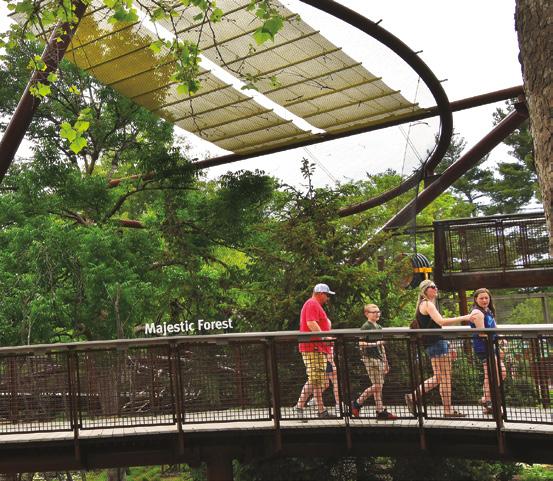
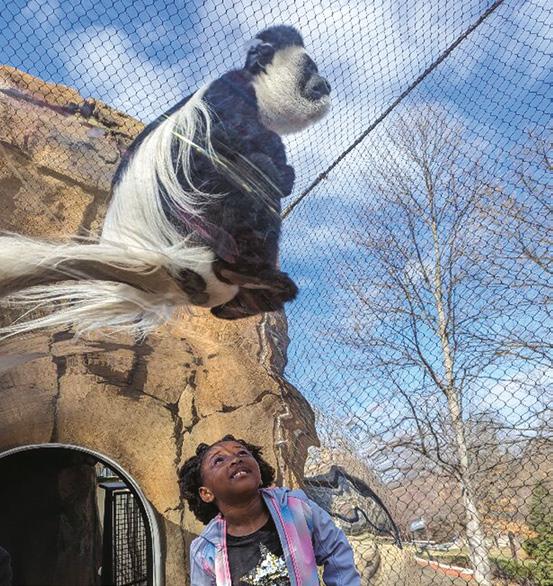
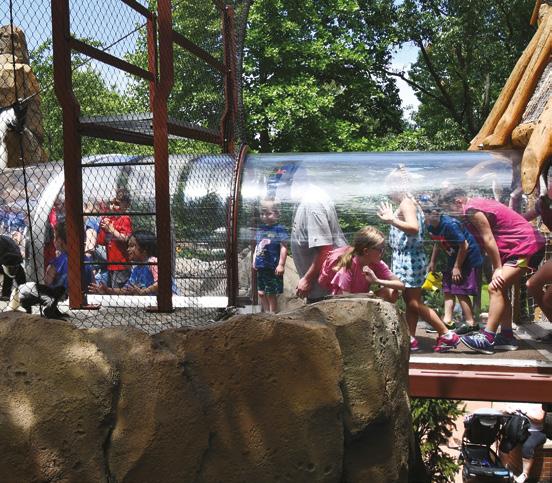
Pictured above: From walking in the treetops to seeing animals overhead in the tunnel, Primate Canopy Trails offers unique guest adventures
Flocking together for wildlife
By Liz Hickox, Corporate Partnership Manager and Hannah Stater Jensen, Partnership Marketing Coordinator
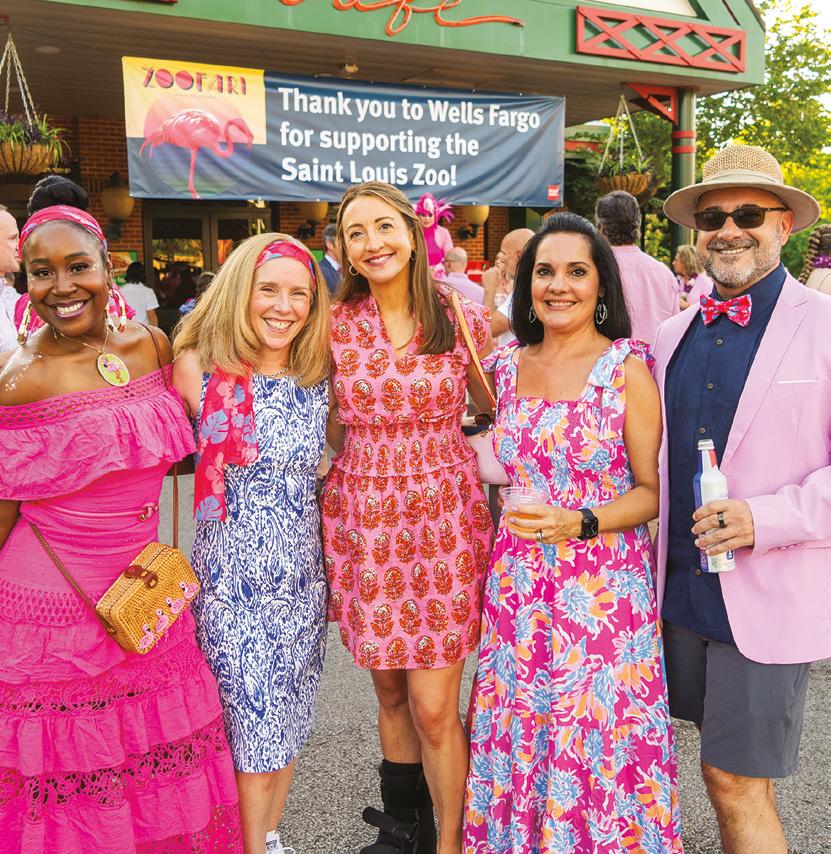
Thanks to the generous support of individual and corporate supporters, the Saint Louis Zoo raised more than $868,000 at ZOOFARI 2026 presented by Wells Fargo.
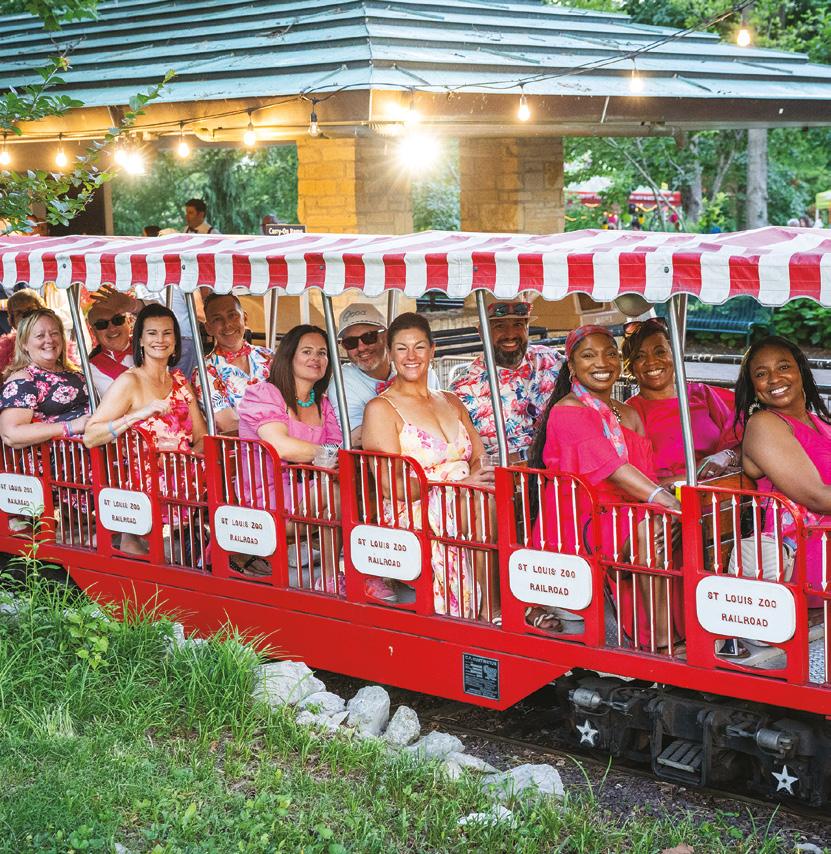
On the evening of Friday, June 12, 2026, more than 2,000 dedicated Zoo advocates, dressed vibrantly for the occasion, gathered to celebrate conservation in honor of American and Chilean flamingos. Guests enjoyed an unforgettable culinary experience featuring delectable offerings from more than 40 local restaurants and caterers, alongside exceptional creations from the Zoo’s own culinary team.
Throughout the evening, attendees rode the Emerson Zooline Railroad; took a spin on the Mary Ann Lee
Conservation Carousel; participated in special activities; and bid on oncein-a-lifetime silent auction packages, including exclusive Saint Louis Zoo WildCare Park offerings like a safari adventure and early “glamping” reservations.
As the sun set on a beautiful summer evening, guests gathered at the main stage where the nationally acclaimed cover band A-Town A-List turned the Zoo into a dance floor.
Public support, as shown at ZOOFARI, advances our mission to conserve animals and their habitats through memorable experiences and ensures the Zoo can continue to make an enduring impact on the region for many years to come.
A special thank-you goes out to the following underwriters for making this extraordinary event possible:
• Wells Fargo
• World Wide Technology
• Anheuser-Busch
• Bayer
• Mid America Chevy Dealers
• Paz Family Foundation
• U.S. Bank
Be sure to save the date for next year’s ZOOFARI on Friday, June 11, 2027!
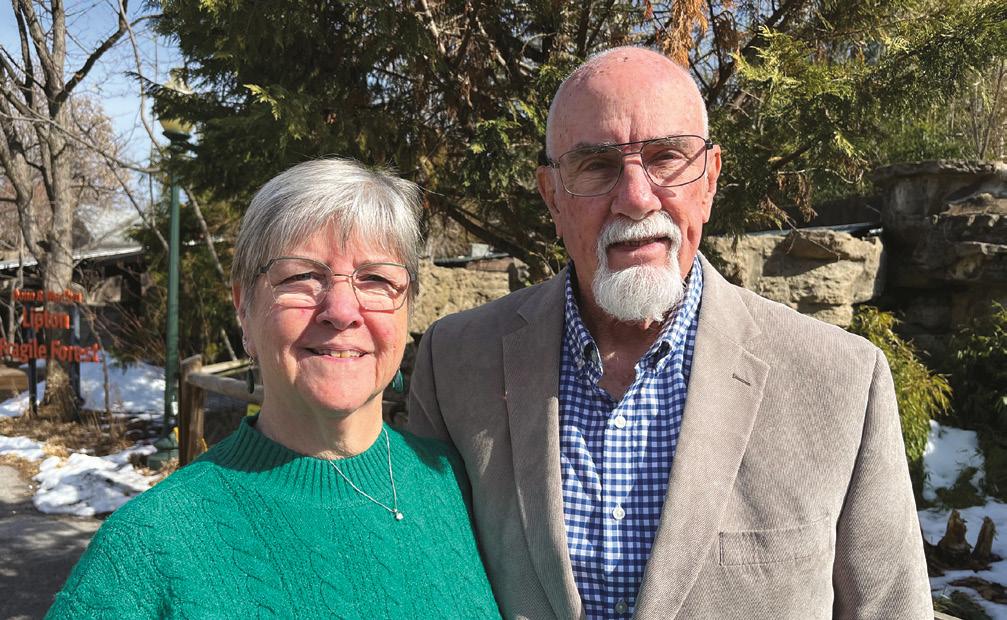
Honoring a lifetime of love for the Zoo: Lawrence P. and Alexis M. Fahle Fund
By Robin Kraujalis, Director, Major & Planned Gifts
Lawrence “Pete” and Alexis Fahle established an endowed fund to honor and carry out the wishes of Pete’s late Aunt Ruth Shirley Chase. Aunt Shirley loved the Saint Louis Zoo and sharing it with her family. For decades, she supported the Zoo as a member herself, while also gifting memberships and adopting animals each year for her nieces and nephews.
By all accounts, Ruth Shirley Chase was a remarkable woman. While attending Washington University in St. Louis, she was one of the first women recruited to train and work in aeronautical engineering in the Curtiss-Wright Engineering Cadette Program. While less known, this World War II effort was similar to the Women Airforce Service Pilots (WASP) and Rosie the Riveter campaigns that encouraged women to join the workforce while men were serving on the frontlines.
Shirley worked for Curtiss-Wright in the 1940s when McDonnell Aircraft Corporation acquired the company’s factory in St. Louis. She was hired by James S. “Mac” McDonnell, Jr. and remained at the company until she retired in 1983.
Pete also enjoyed a long career with McDonnell-Douglas, then Boeing, as a machinist, while Alexis worked at Schnucks. The Fahles credit Aunt Shirley’s generosity with making their lives more comfortable and inspiring their love of the Zoo and their philanthropy.
Alexis and Pete visit the Zoo often with their children and grandchildren. “One of my favorite memories is of our granddaughter’s Day with the Rays,” Alexis shared, “but I also enjoy just being at the Zoo with family. We want to help keep it free for all to enjoy.”
When the Fahles visited Saint Louis Zoo WildCare Park,
Pete recalled growing up in north St. Louis County and working at the nearby North Shore Golf Course one summer. “The Zoo is always continuing to improve and do more for the community and for wildlife conservation,” Pete said. “I hope WildCare Park will help save animals from extinction.”
The Lawrence P. and Alexis M. Fahle Fund provides unrestricted support for the Zoo’s operations each year. Just like Aunt Shirley, they’re sharing the gift of the Zoo with their family and generations to come.
To learn more about how you can give the gift of Animals Always and be remembered forever, please visit stlzoo.org/plannedgiving.
Alexis and Lawrence “Pete” Fahle
Ruth Shirley Chase, who inspired this endowed fund
Second Nature Zoo Preschool
2026-2027
New Full-Day Classes
Second Nature Zoo Preschool is a Reggio-inspired, nature-based program, with a strong focus on creativity, critical thinking and social and emotional learning. Students will spend at least 50% of their time outdoors.
Highlights:
Sun Bear Class
Two days: Tuesday and Thursday Ages 3-4, $1,100/month
Grizzly Bear Class
Three days: Monday, Wednesday, Friday Ages 4-5, $1,600/month
Polar Bear Class
Five days: Monday--Friday Ages 3-5, $2,600/month
• 1:6 student/teacher ratio
• NEW: all classes are full day, 8 a.m. to 3 p.m.
• New building with private outdoor play space
• Overlooks Destination Discovery
• New private entrance
• Neurodiversity a rming
Apply now and learn more
Don’t wait! School starts Sept. 8!
Marlin Perkins Society
The Saint Louis Zoo is extremely fortunate to have the support of more than 1,300 generous individuals, foundations and corporations through the Marlin Perkins Society. We welcome our newest members to the Society and thank them for joining this wonderful group of supporters. To our current members who have increased their financial support, we are pleased to recognize you as well. We are grateful for your commitment to our mission.
New Marlin Perkins
Society Members
Feb. 1 – May 31, 2026
Jessica & Ben Angelette
Daniel Aylward
Russell & Elizabeth Brightman
The Bruning Law Firm
Theresa & Jared Davis
James Deckert
Lawrence & Alexis Fahle
Mike & Victoria Freeman
Christopher & Christina Gaffney
Ryan & Colleen Ganz
Mr. Dale Hamilton & Dr. Barbara Kisakye
Sally & Jon Jonas
Jon & Linda Kessler
Ross C. Kester
Richard & Nadia LaFlam
Robert & Kristi Leitner
Kerry Lindner
Kenneth & Lois Marshall
Scott & Julie Merz
Kirby & Thomas Meyer
Julie & Andy Molnar
William Moran
Kirsten & Kurt Negwer
Lannis D. Phillips
Carol & John Shepley
Dan & Andrea Tarlas
Truck Centers, Inc.
Linda & Tom Valvo
Lisa & Joe Vonder Haar
Jeff Weitzel & Susan Wiegand
Erin & John Wright
Current Marlin Perkins
Society Members Who Have
Increased Support
Feb. 1 – May 31, 2026
Mr. & Mrs. Frank Adam III
Randy Agolia & Lilly Althaus (10)
Pat Ahrens (10)
Mary-Dale Amison & James DeWoskin
Dr. & Mrs. Harold J. Bean, Jr.
Gary & Gloria Behm (15)
Celynda Brasher (15)
Kristy Runk Bryan & Dr. Kenneth A. Hacker
Ralph & Chris Burgess (20)
Len & Barbara Campanaro
Cass Information Systems, Inc. / Cass Commercial Bank
Andy & Susie Corley
Amy & Douglas Dove
Dowd Bennett LLP (15)
Hank & Christy Ehrenreich
Mr. & Mrs. William T. Gamewell (10)
Mrs. Marguerite P. Garrick (20)
Robert & Jane Goldsmith
Kim & Joseph Gorman
Elizabeth Green (30)
The Grisham Family
Brian & Katie Haas
Mr. & Mrs. David K. Hauck
Brian & Susie Heigel
Anne & David Heilig
Jen & Matt Heisel Family
Patrick Hickey & Mary Kickham
Jerry & Rennie Hopping (15)
Tom & Karen House
International Food Products
Debra & Mark Irving
The Janes Family
John & Katherine Jenkins
Larry & Cheryl Katzenstein (20)
Philip S. Keroff
Carolyn Kindle (15)
Ashley & Sam Koplar
Patrick & Mariclaire Lane
Dr. Derek & Mrs. Stephanie Larson
Ann K. Lucas
Terry M. Lynford (10)
Deborah & Michael McEnery
Dr. Sara E. Miller (15)
Steven & Elizabeth Mills (10)
Virgil & Lily Moore
Jim & Sheila Musca
Kathleen Musca & Terrence Dearth
Prairie Farms Dairy, Inc. (15)
John & Kathleen Rainero
Kevin & Angela Saettele (10)
Mr. & Mrs. Richard E. Scheuermann (25)
Dr. Gerald C. & Denise A. Schmitz
Justin Scholz
James & Cindy Seaman (10)
Nicole Shelledy & Greg Heinz
The Smalley Family
Steve & Pam Solomon
Mr. & Mrs. John R. Sondag
Dr. John A. Sopuch (20)
Michael & Caryn St. Clair (10)
John & Kelly Stickley
Mrs. Susan C. Strus (20)
Walter A. Suhre, Jr. & Lesa Knight (25)
Ellen Walz Svenson (10)
In Memory of Patricia Swartz
Bob & Sara Tehan (10)
Cory & Kelsey Teller
Sally Terrace & Al Henneboehle (25)
Diana P. Thomas
Steven & Nikki Tudela
Thomas & Betty Tyler
Betty Rachel Varghese
Western Specialty Contractors (15)
Burke & Elizabeth Workman
Don & Kathy Zundel
(10) denotes member for at least 10 years (15) denotes member for at least 15 years (20) denotes member for at least 20 years (25) denotes member for at least 25 years (30) denotes member for at least 30 years
Please contact the Development Office at (314) 646-4859 if you:
• Would like information on how you can join or increase your support to the Marlin Perkins Society.
• Discover a discrepancy or have a question (the Zoo makes every effort to acknowledge all gifts and to maintain accurate records).
Honor Roll
The following list represents new major and planned gifts and pledges, excluding Marlin Perkins Society and other membership gifts, made to the Saint Louis Zoo Association from Feb. 1 to May 31, 2026. Donors are listed in the category of their most recent giving to the Saint Louis Zoo.
Major Gifts
$999,999 – $750,000
Donald L. Ulrich
$749,999 – $500,000
Anonymous
Frank Family
The G Andrew Franz Family
The Clarence Zacher Family:
Mrs. Beverly Zacher
Lynn Zacher-Davis & Dennis Davis
Roger & Angela Zacher
Phillip & Tiffany Zacher
Miriam & Gabe Ferguson
Christopher Zacher
$499,999 – $250,000
Laura & Mike Herring
Estate of Sandra J. Knussman
Melissa Merlin & Matt Marglous, in memory of our parents, Ray and Sharon Marglous
Berkley Shands, in Memory of Beverly Sparks-Shands, Oscar Sparks, Dorothy Sparks & George Wicks
Estate of Nancy M. Smith
William E. Weiss Foundation
$9,999 – $5,000
Anonymous
Susan M. Barrett
Louise B. & Bob Bradshaw
Mr. Lee Broughton & Ms. Chrissy Taylor
Ralph & Chris Burgess
Robert K. & Judy A. Evans
Dr. Keith C. & Mrs. Sarah A. Fischer
Carol K. Gravens
Irene & Bob Gulovsen
Estate of JoAnn Hediger
Charlie Hoessle
Husky Corporation
Estate of Ralph Korte
Drs. Dan & Susan Luedke
Megan L. & Robert D. Martin
Mr. & Mrs. Sanford N.
McDonnell Foundation
Mental Health America of Eastern Missouri
Edward H. Parker
Michael S. & Julie B. Pfister
Silent T Family Fund
Mr. Robert L. Virgil
Curtis & Melinda Voelkel
Barbara & Tim Wies
$4,999 – $2,500
Mr. & Mrs. John R. Capps
Gary A. Hansen & Linda D. Hansen
Janis E. Henry
Paul & LaDonna Hopkins
Jeffrey L. Huntington
Mr. & Mrs. Hugh B. Kaplan
Judith & Nicholas Kouchoukos
Carl & Ellen Maddox
Alan & Jeannette Nissenbaum
David & Ruth Raterman
Mr. Steven Stone
Mitchel W. Weller
Charles & Patty Wiswall
James H. Woods Foundation
$2,499 – $1,000
Anonymous
Rachel Anders
Erin & Jason Beam
Ms. Karla Carter &
Mr. Wouter Bollen
Rose Mary Dieckhaus
Dr. Sandra J. Fabrizi
FCPD Charitable Foundation
Frederick Pitzman Fund
Mr. David R. Ganz
Robert Guller & Kellie Hynes
Mr. Frank J. Guyol III
Edward & Karen Hempstead
Paul & Carole Herrmann
Wistar & Janice Holt
Jason & Malina Janisse
Mr. Vernon E. Kluge
Aurelia Konrad
Charitable Foundation
Sue & Craig Larson
Dr. William A. & Mrs. Judy M. Murphy
Melissa & Logan O’Connor
Omaha’s Henry Doorly
Zoo & Aquarium
Mrs. Marylyn A. Schiller
Mark & Kadie Schuermann
Dr. & Mrs. Henry G. Schwartz
Mrs. Sudie B. Shinkle
Estate of Daniel Singer
Dr. Elizabeth Tarpey
University City Read Foundation II
$999 – $250
Anonymous
Mr. William C. Abbott
Ernest & Barbara Adelman
Wendi Alper-Pressman & Norman Pressman
Deborah Barstow
Mary Bucknell
Robert J. Byrne
Pam Dearing
Dr. Teresa Deshields & Mr. Raymond Tait
The DuBose Foundation
D’Arcy Elsperman
Violet & Bud Floor
Mr. & Mrs. Russell H. Isaak
Rory James
Robin & Michael Kraujalis
Milton E. Mill
Dr. Gwendolyn D. Packnett & Mr. John Moten
Lannis D. Phillips
Scovill Zoo
Carol & John Shepley
Mortina J. Williams
Reilly Woodson
The Saint Louis Zoo
Development Office regrets any errors or omission of any gift. If you would like to change your honor roll listing, contact Katie Meyers at meyers@stlzoo.org.
Tribute Fund
Donors providing the Saint Louis Zoo Tribute Fund with gifts of $25 or more from Feb. 1 to May 31, 2026, to honor or memorialize events and loved ones include:
In Memory Of
Carolyn Baker
Admiral Holly & Danny Egley
Michelle Ferguson
Mr. & Mrs. Thorstein Holt
Ms. Roilynn K. Kreder
Jeanne Love
Nancy Ordway
Rosemary Schweer
Elizabeth A. Smith
Marilyn D. Baker
Peggy Baker
Richard & Pamela Bernard
Rebecca Hollenbeck
Maria & Jim Pfitzinger
Norma & Jim Schmitt
Margaret Baldwin
Alisa Goessling
Willard Bartlett
Suzanne & Dennis Barnes
Elizabeth Veraldi
Gail Bentzinger
Andrew & Judy Ackerman
Richard & Barbara Berger
Simon Dix
Mr. & Mrs. Ranney Dohogne
Michael Fishman
Lee Fox & Gail Johns
Byron & Carolyn Golfin
Bruce Hamper & Mary Beth Wilczak
Charlie Hoessle
Carol & John Mangles
John P. Nanos
Diane Wilder
Betty K. Bucknell
Mary Bucknell
Steve & Beth Ehlers
Karen & Doug Heise
Joel & Suzie Kidwell
Janis Lee
Brian Silberman
Andrea Wirth
Cynthia J. Burchfield
Stacy Zobrist
James D. Clark
William L. Price, Sr.
James F. Conway
Robert J. Byrne
Thomas Schaefer
Jill Schneider
Barbara Donovan
Paula & Timothy McCreery
John A. George
Mr. Charles H. Hoessle
Rebecca Grogan
Ruth Anderson
Terri P. Grubb
Anonymous
Robin Corzine
Donald Redford
Lola Pearl Hayes-Neudling
Ms. Teresa A. Thole
Larry Herberholt
Amy & Brian O’Connell
Georgey Herron
Irene Allen
Mrs. Carol C. Bitting
Ros Bowers
John F. Brown
Paul & Catherine Carlson
Maria Clifford & Nicholas B. Clifford, Jr.
Amy & Doug Dove
Ryan Easley
Mollie & Elliot Gray
Mr. & Mrs. Frederick O. Hanser
Jeffrey Herron
Mary Jean Herron
Susan L. Hollander
Virginia & John Howell
iSelect Fund
Charles Jones
William Lochmoeller
Sally & John McDougall
Catherine & George Meredith
Mr. & Mrs. Jules L. Pass
Lizabeth & David Schaps
Marcella & Greg Stevens
Liz Teasdale
Kate Tighe
Kenneth Townsend
Stanley J. & Karen M. Wallach
Doug Winship
David Yocom
Rene Zar
Marilyn Hoessle
Mrs. Marylyn A. Schiller
Joyce Kornblum
Bruce & Elaine Brodsky
Jacob & Carol Wishnia
Robert Edward Lee Lamkin
The DuBose Foundation
Suellen Manning
Husch Blackwell, LLP
Duncan Meier
E. William & Margaret Bergfeld
John & Eleanor Michener
Nancy L. Mitchell
Ashley Littrell
Edward H. Parker
Melyn Niewoehner
Deborah Barstow
Charlene & Michael Garcia
Bethany K. Jackson
Sharon D. Jerome
Cindy Naeger
Jennifer Ottinger
Heidi Petrakis
Mortina J. Williams
Judy Workman
Richard Plummer
Robert & Elaine Guithes
David & Elizabeth Hopkins
David & Cynthia Johnson
Jeff & Diana Stuart
Carolyn Schafermeyer
Denise R. Albrecht
Mary Ann Albrecht
Cynthia Albrecht-Tipler
Jean Diedrich
Courtney Murray
Sara K. Neuner
Marcus Rivas
Drew & Sandra Stiegemeier
Jeanne M. Shaw
Jerry & Dotty Bach
Courtney Bays
Tim Beerman
John Downs
Robert L. Fugate
Michael Grant
Donna Porter
Edward Walch
Rivie Soll
Gary A. Hansen & Linda D. Hansen
Shirley J. Stoecker
Richard & Carol Bender
Thelma P. Zalk
Mr. Jeffrey L. Huntington
In Honor Of
Ms. Karen L. Bauman
Dr. Jay S. Pepose & Ms. Susan K. Feigenbaum
Mrs. Elizabeth Mannen Berges
Dr. & Mrs. Sherman Silber
Cynthia and James Burchfield
Sherry & Erik Dessau
Pam Dauphin
Sara & Scott McLellan
Katelyn Garcia
Employee Community Fund of Boeing St. Louis
Judy Glazer
Mrs. Marylyn A. Schiller
Mr. Bradley Hoessle
Charlie Hoessle
Marty Hoessle & Brad Michaels
Charlie Hoessle
Dr. & Mrs. Nicholas T. Kouchoukos
Mr. & Mrs. Chris G. Griesedieck
Mr. & Mrs. James R. Lippert
E. Boone & Ellen Schlanker
Mr. & Mrs. Joel R. Malke
Charlie Hoessle
Merah
Jane Habbegger
Shirley J. Norris
Betty Sisco
Harvey & Leanne Schneider
Anthony & Mary Bommarito
Sandra L. Seifert
Samantha Sotheran
Lori A. Sullivan & G. Todd Rogan
Carolyn & Kevin Farrell
NamE ThaT DinO!
Dinoroarus is back at the Saint Louis Zoo, and there are 21 animatronic dinosaurs for you to meet! Before you go, discover the depth of your dino knowledge, and see if you know these dinos’ names!
Can you gure out the name of each dino from reading the fun facts? Search the word bank and write your best guess beneath each dino picture!
HinTs:
I ate greens o the ground with a powerful “beak.” 1 2 3
I lived in the wetlands of North America during the Late Cretaceous period.
This species may be a primitive ancestor of the more well-known Triceratops.
HinTs:
One Government Drive
St. Louis, MO 63110
POSTMASTER: send address changes to stlzoo, Saint Louis Zoo, One Government Drive, St. Louis, MO 63110
CHECK IF APPROPRIATE:
MY NAME IS MISSPELLED.
MY ADDRESS IS INCORRECT.
I RECEIVED MORE THAN ONE COPY.
I NO LONGER WISH TO RECEIVE stlzoo.
Please clip this address panel and mail it to us, noting your request.
Address Service Requested
stlzoo, Saint Louis Zoo, 2026
Photo by Ray Meibaum
Living Large at Saint Louis Zoo WildCare Park: The southern white rhino is the largest species of rhinoceros and second largest land mammal (elephants are largest). You can see these magnificent animals in the Woodland Safari experience at WildCare Park in 2027