St. LouiS AmericAn
Rams funds are
But the debate continues
By Sylvester Brown, Jr. and Na’Porsha Williams St. Louis American
More than a year after a powerful tornado devastated North St. Louis, the city’s decision to devote $120 million in Rams settlement money to tornado recovery and neighborhood investment is drawing praise from some residents and frustration from others who say neighborhoods hit hardest by the storm were still shortchanged.
After months of public debate, the St. Louis Board of Aldermen voted 12-3 last week to approve a $255 million spending plan directing the city’s remaining
The St. Louis Board of Aldermen voted 12-3 last week to approve a $255 million spending plan.
Rams settlement proceeds to tornado recovery, neighborhood redevelopment, infrastructure improvements, downtown revitalization and efforts to reduce vacant properties.
See Rams Funds, A10


Feeling the squeeze
Black
St.
Louisans weigh economic pressures under Trump
By Sylvester Brown Jr. St. Louis American
High gas prices. Rising grocery bills. Inflation. A war most Americans don’t want.
Those are the economic pressures weighing on working families across the country. But many Black St. Louisans interviewed by The St. Louis American said those burdens have become even heavier under President Donald Trump, pointing not only to the rising cost of living but also to administration policies they believe have disproportionately affected Black communities.
Residents interviewed for this story cited the administration’s rollback of diversity, equity and inclusion initiatives, changes in civil rights enforcement and efforts to reshape how Black history is taught in schools as part of a broader climate that has left them feeling increasingly uncertain about the future. The Black unemployment rate stands at 6.6%, compared
See Squeeze, A10
More than half of Americans said the conflict involving the United States, Israel and Iran has been harmful to the nation.



Justice and childhood
Infant’s death puts focus on Missouri juvenile law
By Sylvester Brown Jr. St. Louis American
A day after a 10-year-old boy was arrested for allegedly shooting and killing an infant girl in the city’s Baden neighborhood, juvenile authorities filed a petition alleging first-degree murder. The case raises questions about how Missouri’s legal system handles very young children accused of its most serious crimes.
Under Missouri law, children generally must be at least 12 before a judge can consider transferring them to adult court on serious felony charges.
It also comes as Missouri’s juvenile justice system continues to confront longstanding racial disparities affecting Black children. According to the Missouri Department of Public Safety’s 2023 Racial and Ethnic Disparities Action Plan, Black youth are referred to juvenile offices at a rate 2.32 times higher than White youth, are less likely to have their cases diverted from the formal court process and are certified to stand trial as adults at significantly higher rates. Reducing those disparities is one of the system’s stated priorities.
Dr. Kenya Brumfield-Young, a criminal justice associate professor at Saint Louis University, noted how quickly the 10-year-old was charged before a thorough psychological examination was conducted.
“In Missouri, first-degree murder requires that a person knowingly caused the death of another person after deliberation,” Brumfield-Young explained, adding, “with a 10-year-old, the question of intent is much deeper.
“A child may understand that something is ‘right’ or ‘wrong’ in a basic way and may even understand that death means someone is not coming back,” she continued. “But that is not the same as understanding the totality of the circumstances, the long-term consequences of the act, or the meaning of being processed through court on a homicide allegation.” According to court documents, the 10-year-old shot 7-month-old Kiyomi
See Juveniles, A10
A building at the corner of Harris and Carter, damaged by the 2025 tornado, still sits dilapidated.
Photo by Lawrence Bryant / St. Louis American
Tony Lorthridge pumps gas at QuikTrip in Berkeley as rising fuel costs continue to strain St. Louis families.
Photo by Lawrence Bryant / St. Louis American
Editorial / CommEntary
Guest Editorial
Turning back tyranny at the ballot box
“…the Fourteenth Amendment has never been interpreted to extend citizenship universally to everyone born within the United States.”
“The Fourteenth Amendment has always excluded from birthright citizenship persons who were born in the United States but not ‘subject to the jurisdiction thereof.’”
“Among the categories of individuals born in the United States and not subject to the jurisdiction thereof, the privilege of United States citizenship does not automatically extend to persons born in the United States: (1) when that person’s mother was unlawfully present in the United States and the father was not a United States citizen or lawful permanent resident at the time of said person’s birth, or (2) when that person’s mother’s presence in the United States at the time of said person’s birth was lawful but temporary…”
— Executive Order 14160
By Marc Morial
That language came directly from a White House executive order, signed last January, under the guise of protecting Americans. Its true goal, however, was to fast-track deportations by stripping citizenship from children born to immigrants who contribute to this country while pursuing citizenship themselves.
The administration has not been shy about labeling immigrants criminals, thugs and rapists. But the most offensive part of this executive order — and of Trump v. Barbara, the case taken before the Supreme Court to challenge it — is its hypocrisy.
America was founded by immigrants escaping persecution and built by enslaved people brought to this land against their will. The same enslaved people who, in addition to not being considered American citizens until 1868, were also counted as only threefifths of a person until the passage of the Fourteenth Amendment.
That amendment, that constitutional right, is what was at stake in Trump v. Barbara
erwise enact new legislation establishing exceptions to birthright citizenship for children born to foreign citizens unlawfully or temporarily in the country,” adding, “but Congress has not yet done so.”
While we applaud the Supreme Court for upholding the rule of law and recognizing the history of Black Americans in this country, we are alarmed at the future dangers posed by such a narrow decision. A court where a 5-4 decision is the barrier between who is considered American, days before the nation celebrates its 250th anniversary, is a court that risks everything this country stands for if another extremist judge is ever appointed. In fact, one justice gave this administration a pathway.
In his opinion on the ruling, Brett Kavanaugh wrote that “Congress could — consistent with the Fourteenth Amendment — amend §1401(a) or oth-
While Kavanaugh was part of the 6-3 majority that voted against the executive order, he was not part of the 5-4 majority that agreed citizenship is guaranteed under the Fourteenth Amendment. The court split 6-3 to strike down the order itself, but only 5-4 on the narrower and more consequential question of whether birthright citizenship is constitutionally guaranteed to all children born on U.S. soil. While our movement and the civil rights community celebrate this week’s victory, we have been put on notice that another assault may soon be underway. This precarious moment again underscores the power of the ballot and is another signal as to why extremist groups and elected officials are doing everything in their power to block the ballot box and shrink representation. But we are not willing to stand by and allow them to succeed. Our movement is coordinating a massive voter turnout in this year’s midterms through our Reclaim Your Vote campaign, and we are partnering with the civil rights community to remind Congress of its role in serving all Americans and moving our country forward, not back into the years before the end of slavery.
This decision, and this moment in our history as we celebrate 250 years of the American experiment, is a reminder that we all have a responsibility to this nation: to stand up in the face of tyranny and fight back with our voice and our ballot.
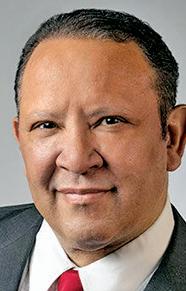
Marc Morial is president and CEO of the National Urban League.
Donald M. Suggs Publisher ADMINISTRATION
Dina M. Suggs – Sr. Vice President
Julie Erickson – Chief Operating Officer
Raven Whitener – Director, The St. Louis American Foundation and Special Events
Reba Smith –Executive Assistant-Coordinator EDITORIAL
Rod Hicks – Executive Editor
Alvin A. Reid – City Editor
Kenya Vaughn – Arts and Entertainment Editor
Earl Austin Jr. – Sports Editor
Lawrence Bryant – Visual Journalist
Sylvester Brown Jr. – Deaconess Advocacy Fellow
Na’Porsha Williams – Breaking News
Simmons – Senior Account Executive Angelita F. Houston – Classified Manager Ashley Simmons – Account Executive



Defending our rights is our duty
By Letitia James
On June 19, 1865, more than two years after the Emancipation Proclamation, enslaved Black people in Galveston, Texas, finally heard the clarion call of freedom. But that delay was not an accident; it was an active choice to deny people their humanity, even after the formal and legal end of American slavery.
And now, two and a half centuries after our nation declared independence, we are still fighting to make the promise of freedom real for every family.
Across the country, the right to vote — the right that enables every other right — is constantly under attack. In Congress, legislation threatens to dismantle modern voter registration systems. In the White House, executive orders seek to seize power that belongs to the people and the states. In statehouses across the country, extremist supermajorities pass laws to erase the political power of Black, brown, young, disabled, immigrant and low-income voters. And in the courts, decisions have weakened the protections generations fought to secure.
Enemies of democracy are running the same tired playbook. After Reconstruction, just as Black communities began to wrest equality from unwilling hands, white supremacists responded with poll taxes, literacy tests, violence and intimidation.

After the civil rights movement won the Voting Rights Act, opponents of progress searched for new ways to suppress the vote. Today, the tactics may look different, but the goal is the same: to decide whose voice counts and whose does not.
I refuse to accept that.
Time and again, my office has taken action to protect the right to vote as we defend our democracy from those who try to weaken it. New York will not stand by while bad actors try to turn the federal government against the people it is supposed to serve.
Earlier this year, I led a coalition of
Commentary Commentary
attorneys general urging the United States Senate to reject the so-called SAVE America Act. Despite its name, this bill would do nothing to save democracy. Instead, it would effectively eliminate online, mail-in and automatic voter registration across the country, creating one more barrier between millions of eligible voters and the ballot box.
My office has also gone to court to stop unlawful attempts by the current federal administration to take control of our elections. We sued to block an executive order that would upend state election systems, threaten access to mail-in voting and pressure states to rely on federal voter rolls under threat of punishment.
No president has the authority to rewrite election law by decree, and no administration has the right to sow chaos, intimidate election officials or make it harder for eligible voters to cast a ballot.
At the state level, my office wields the sword and shield of the law to defend our democracy.
Across the country, the right to vote — the right that enables every other right — is constantly under attack.
We actively enforce the John R. Lewis Voting Rights Act of New York, one of the strongest state voting rights laws in the nation. This law empowers us to confront discriminatory practices, protect against vote dilution and review certain election changes before they can harm voters. When the law was challenged, my office defended it — and New York courts upheld its constitutionality. Despite the challenges we face, I do not believe despair is an option.
Juneteenth and July 4 tell two parts of the same American story. One marks a promise declared, while the other marks a promise deferred. Our task is to deliver on the American promise of freedom and to heal the generational wounds of slavery and racism through equity and mutual understanding.
Letitia James is New York’s state attorney general. This commentary was originally published in the New York Amsterdam News
Never forget Crispus Attucks, Black patriots
By Ben Jealous
Every year, we remember Paul Revere’s ride. As we should. We should also reckon with Paul Revere’s picture.
His engraving of the Boston Massacre helped light the fire for revolution. It showed British soldiers firing into a crowd. Men fell dead in the street.
Yet the first man killed that night is hidden in plain sight.
His name was Crispus Attucks. He was a sailor of African and Native ancestry. John Adams later described the crowd as sailors, Irishmen, “negroes and mulattoes.” But Revere’s engraving did not depict Attucks as who he was. It transformed a multiracial, working-class crowd into one that appeared whiter and better dressed.
That was more than artistic license. It was a distortion that endured for generations.
It taught Americans to picture the Revolution as a struggle led and borne almost exclusively by wealthy white men with portraits, property and papers.
That was never the whole story.
Prince Estabrook was enslaved in Lexington. On April 19, 1775, he stood with his neighbors as British troops arrived and was wounded before Congress declared independence — before Thomas Jefferson wrote that “all men are created equal.”
Salem Poor bought his freedom and fought with distinction at Bunker Hill. Peter Salem also fought there. James Armistead, enslaved in Virginia, became a spy for the Marquis de Lafayette, helping gather intelligence that contributed to the British defeat at Yorktown. The First Rhode Island Regiment, made up of Black, Native and formerly enslaved soldiers, later helped hold the American line near Newport. Women were there, too. Elizabeth
Freeman, known as Mum Bett, heard the Revolution’s words and used them in court. She sued for her freedom and won. Deborah Sampson, poor and indentured as a child, disguised herself as a man and served in the Continental Army. Margaret Corbin took over a cannon after her husband was killed. That history is personal in my family. My adopted grandmother, Dr. Margaret Barnes, was an osteopath with Revolutionary roots. As a girl in the 1910s and 1920s, her father dressed her as a soldier to march in New England Fourth of July parades. When people objected, he told them not to worry. During the Revolution, some fathers knew their daughters had gone off to fight dressed the same way. He was right. History made room for daughters in uniform. Memory pushed them back out.
I still have the bow she used to teach me archery. In our family, women did not just remember courage. They passed it down.
The Revolution was not made by one class. It was sailors, servants, farmers, shoemakers, soldiers, spies, mothers, fugitives and the enslaved.
Erase Black patriots, women patriots and poor white patriots from 1776, and you shrink the nation’s image of itself.
This Fourth of July, let’s remember Revere’s ride. But let’s redraw Revere’s picture. Put Attucks back in the center. Put Estabrook on Lexington Green. Put Salem Poor and Peter Salem at Bunker Hill. Put James Armistead behind enemy lines. Put Mum Bett in the courthouse. Put my adopted grandmother in the parade, dressed as the soldier memory tried to deny. Then look again. That is America.
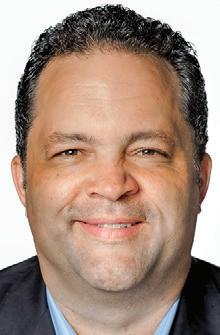
Ben Jealous is a professor of practice at the University of Pennsylvania and former president and CEO of the NAACP.
Columnist Letitia James
Columnist Marc Morial
Columnist
Ben Jealous
“Douglass’ words endure as both a mirror and a mandate, revealing uncomfortable truths while urging us to fight for an America as good as its promise.”
— U.S. Rep. Ayanna Pressley, before delivering Frederick Douglass’ “What to the Slave Is the Fourth of July?” speech

Downtown curfew gets first test over Fourth of July weekend
Police detained 41 juveniles and issued citations to their parents
By Na’Porsha Williams
St. Louis American
A new summer curfew aimed at keeping unsupervised teenagers out of downtown St. Louis faced its first test over the Fourth of July holiday weekend, resulting in 41 juveniles being detained and their parents receiving citations.
The holiday weekend marked the first enforcement period for the emergency order, and city officials said they are reviewing the results before deciding whether any adjustments are needed for the remainder of the summer.
Mayor Cara Spencer’s order took effect July 4 and remains in place through Sept. 7. It requires minors 17 and younger to leave the Downtown and Downtown West neighborhoods between 9 p.m. and 6 a.m. unless accompanied by a parent or guardian.
Police said officers recovered illegal fireworks from eight of the juveniles and made one arrest for misdemeanor theft. The youngest child detained was 13.

Police took the juveniles to a temporary reunification center, where they were released to parents or guardians or connected with nonprofit advocates who provided assistance. Parents of the detained minors received citations, as outlined in the mayor’s order.
Mayor Cara Spencer’s order took effect July 4 and remains in place through Sept. 7. It requires minors 17 and younger to leave the Downtown and Downtown West neighborhoods between 9 p.m. and 6 a.m. unless accompanied by a parent or guardian.
hoods where parents and guardians are more likely to supervise children.
“I don’t want to penalize neighborhoods that actually are looking out for their own children,” Tracy said. “They’re coming down to a business area that doesn’t have that oversight, or parents, or guardians.”
He described the curfew as “another tool in the box” to improve public safety.
The city modeled the order in part on juvenile curfew policies in other cities.
Alongside enforcement, the Office of Violence Prevention partnered with the Matthew-Dickey Boys & Girls Club over the holiday weekend to offer supervised activities, including basketball, chess, art projects through St. Louis ArtWorks and a mobile gaming truck.
Police also said most of the teenagers did not live downtown. Those detained came from the city of St. Louis, North County, the Metro East, Florissant, St. Charles and O’Fallon. Spencer announced the curfew after weeks of discussions with police over recurring summertime gatherings of unsupervised teenagers in the downtown entertainment district.
past summers,” Spencer said when announcing the order.
“This is something that we’ve been discussing with police department stakeholders, as we’ve seen teenagers coming downtown late at night, far too many times in the

She said those gatherings have created “an unsafe environment for both the community, our downtown and the youths themselves.”
Police had initially proposed an earlier curfew, while the city favored a
later start time. Spencer said the city settled on 9 p.m. because it did not want the restriction to begin while it was still daylight during the summer.
Police Chief Robert Tracy said the order focuses on the downtown business and entertainment district rather than neighbor-
“We also want to be very clear that we understand our city’s youth need to have fun things to do, and we are putting those plans together in addition to what we’ve offered for this weekend,” Spencer said.
The city plans to continue expanding youth programming while monitoring the effectiveness of the curfew throughout the summer.

Photo by Lawrence Bryant / St. Louis American
Dorothy Moore leaves lasting mark on Hillsdale
By Na’Porsha Williams and Sylvester Brown Jr. St. Louis American
Dorothy “Mama” Moore, whose outspoken leadership made her one of North St. Louis County’s best-known municipal leaders for more than five decades, died Saturday.
Moore served as Hillsdale mayor for more than 50 years, interrupted only by a one-year election defeat in the 1990s. Her cause of death was unavailable Wednesday.
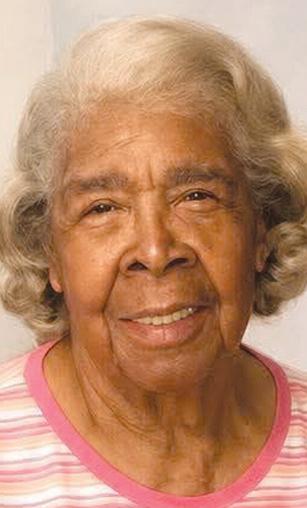
“Everything she did was good. It went towards the community,” Hillsdale resident Darnell Cline said. “It wasn’t selfish. ... She had a lot of people around, taking them from nothing to not needing anything.”
Former St. Louis County Executive Charlie Dooley said Moore believed in involving residents in government.
“She believed in shared leadership, that the only way you can have true involvement is to be
a part of the system,” Dooley said. Moore inspired both loyal supporters and outspoken critics during her career.
A 1990 St. Louis Post-Dispatch profile questioned her influence as mayor, president of the Wellston Board of Education and a Normandy Township Democratic committeewoman, while supporters praised her dedication to public service.
Longtime Fox 2 investigative reporter Elliott Davis, who frequently clashed with Moore, said she became one of the defining figures of his “You Paid For It” investigations.
Beyond politics, Moore helped teenagers find their first jobs through a summer employment program, organized holiday food and toy drives, and provided school supplies and winter coats for neighborhood children.
Jerome Ellis said that even in her 90s, Moore continued walking Hillsdale’s streets to check on residents.
Funeral services are scheduled for July 18.
News Briefs
Aldermen panel advances data center regulations
A St. Louis Board of Aldermen committee has advanced legislation that would establish the city’s first regulations for data centers, including stricter standards for larger facilities.
The proposal would require major data centers to be located farther from homes, schools and
parks, use cool or green roofs to reduce heat and transition to renewable energy over 10 years.
Supporters said the rules would help protect neighborhoods, while opponents argued they could discourage investment and jobs. The measure now heads to the full Board of Aldermen.
St. Louis County recommends $3.5 million in federal grants
St. Louis County has recommended more than $3.5 million in federal Community Development Block Grant funding for projects aimed at improving parks, streets, neighborhoods and services for low- and moderate-income residents.
The proposed awards include nearly $1.8 mil-
lion for improvements at six county parks, along with grants for organizations providing social services, including Urban Sprouts’ child care scholarships, Big Brothers Big Sisters’ youth mentoring program and Room at the Inn’s emergency shelter operations.
City rejects about 350 tornado aid applications as it screens for fraud
The city of St. Louis has denied about 350 applications for tornado repair, demolition and debris removal assistance after determining the properties were ineligible, according to city data reported by St. Louis Magazine.
Officials said the rejected applications included properties outside city limits, homes outside
the tornado damage zone, buildings condemned before the May 2025 tornado and properties purchased after the storm.
Nearly 3,000 applications have been filed, and city officials said additional reviews are continuing as they work to protect the integrity of the relief programs.
Commentary
President Trump has won nothing
By E. Faye Williams
After listening to President Donald Trump try to explain that he won in Iran — while he couldn’t explain what he won — I was confused.
I’ve figured it out. Even while he was standing with the French President and other world leaders, it was clear that he had nothing truthful to report to the American people. All he seemed to care about was what he received while spending billions of our tax dollars, witnessing the deaths of so many Iranians, and several of our own soldiers.
This was all about how much he wanted to prove that he did everything better than President Barack Obama. All intelligent people know he’s never come close to doing anything better than Obama.
standbys ready to jump when he instructs them to do so.
Can you imagine a narrow mind like his calling Justice Ketanji Brown Jackson low IQ? He’d already done that to Congresswoman Jasmine Crockett. We know them and know he doesn’t come close to their level of brilliance.
I don’t think the new Fed Chair, Jerome Warsh, made Trump by putting the interest rates on hold. Members of his own party did not accept Trump’s untruths about the Iran War.
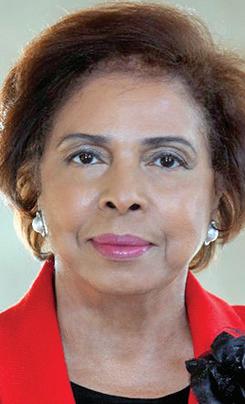
Why does he think people around him wanted to hear his message that was nothing more than a lot of confusion?
He delayed the Senate hearing for his own nominee for Intelligence director. Why?
He figured everyone already knows they can’t trust the nominee.
We know he had pressured Congress on a bill to restrict voting even more. We are facing a crisis when he uses every possible thing his little mind can do to restrict voting.
At this point, I don’t think he even trusts his MAGA folk to support him on everything as they have done in the past. I know he’s been losing a lot lately — even with his Supreme Court
Georgia refused to change its voting lines to ensure the GOP wins more House seats by gerrymandering.
As Sen. Raphael Warnock said, Donald Trump is obsessed with power. He’s still taking all he can, including money he has unfairly taken from the taxpayers for his personal aggrandizement.
Warnock reminded us amid all the confusion, embarrassment, and pain Trump has caused — not just to us as individuals, but as we, the people.
I don’t know what could make Trump more humane, but we do know we had Barack and Michelle Obama to give us a period of hope. They walked that narrow path with no scandals. Trump has tried to destroy all the good that the Obamas brought to the nation.
We do have something wonderful happening this summer. The wonderful Obama Presidential Center has opened and is greeting thousands of visitors each day.
It’s probably a lot to ask of God, but I pray the next leader of our nation will be able to bring back the hope our ancestors gave their lives to achieve.
E. Faye Williams is president of the Dick Gregory Society
E. Faye Williams
Dorothy ‘Mama’ Moore
Planting a future in East St. Louis
JJK Foundation’s agricultural center aims to grow oppotunities for youth
By Kenya Vaughn St. Louis American
Before guests even pulled into the parking lot for the ribbon-cutting ceremony, the Jackie Joyner-Kersee Foundation’s tradition of countering negative narratives about East St. Louis was already in motion. Volunteers with wide smiles waved cars into the lot and directed attendees toward the event. As guests made the short walk from the JJK Center to the new JJK Food Agriculture Nutrition
Innovation Center — known as JJK FAN — greeters stood at every turn, each welcome warmer than the last. Inside the front doors, youth wearing JJK Center T-shirts picked up where the adults left off.
“We are very excited about what is happening in the community of East St. Louis.”
– Lecia Rives JULY 9 – 15,
“Welcome to the center. Thank you for joining us,” they said, making eye contact as they guided
attendees to the auditorium.
“We are very excited about what is happening in the community of East St. Louis,” said JJK Foundation COO Lecia Rives. “I used to call this the house that Jackie built. I am now calling it the campus that Jackie and partners are building.”
What began as an idea
in a meeting room has grown into the foundation’s newest venture: the Jackie JoynerKersee Food Agriculture Nutrition Innovation Center. The project is a collaboration between the JJK Foundation, Lansdowne UP, the University of Illinois UrbanaChampaign and the Donald Danforth Plant Science Center.
“Not only did Jackie look back, but she also came back and she gives back,” said Kim Kidwell, associate chan-
Green Line advances with route approval
By Alvin A. Reid St. Louis American
Regional leaders have approved the route for a proposed Green Line bus rapid transit system, clearing the way for the project to move into engineering and environmental review as it competes for federal funding.
The East-West Gateway Council of Governments board voted 19-2 to designate an 11.5mile route through North and South St. Louis as the project’s preferred alignment. According to KSDK, the two dissenting votes came from St. Louis County Executive Sam Page and Municipal League of Metro St. Louis President David Dimmitt.
If built, the Green Line would create the city’s first new high-capacity north-south transit corridor in decades, linking neighborhoods in North and South St. Louis with downtown, MetroLink and major
See Green Line, A6

Kimbrough joins Federal Reserve Board council
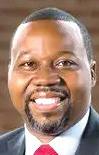
Orvin T. Kimbrough, chair and CEO of Midwest BankCentre, has been appointed to the Federal Reserve Board’s Community Depository Institutions Advisory Council, a national panel that advises the Board of Governors on economic conditions, lending and issues affecting community financial institutions.
Kimbrough’s appointment follows his recent selection as chair of the Community Depository Institutions Advisory Council at the Federal Reserve Bank of St. Louis.
SIU Carbondale adds two to alumni board
The SIU Carbondale Alumni Association has named Sean Smith and Jennifer Polk to its board of directors.


Smith, who earned a bachelor’s degree in criminal justice in 2000, is assistant principal at Thornridge High School in Dolton, Illinois. As a student, he served in undergraduate student government and led both the Black Affairs Council and Kappa Alpha Psi Fraternity, Inc.. Polk, a 2003 graduate of the College of Business and Analytics, is a managing vice president in Gartner’s Marketing and Communication Practice. She previously served as chief marketing and digital experience officer at Feeding America.
Alexander joins MU business school faculty
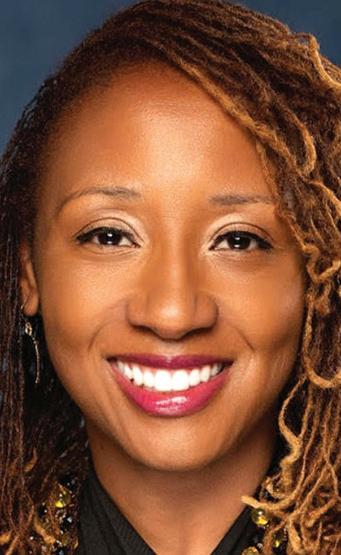
Tiffany Alexander has been appointed assistant teaching professor of marketing in the Robert J. Trulaske Sr. College of Business at the University of Missouri. Alexander will teach undergraduate marketing courses. She brings more than 20 years of experience in leadership, organizational management, corporate training and learning and development. Her previous employers include Nestlé Purina, Schnucks, BJC HealthCare and JPMorgan Chase.
Per Scholas graduate joins St. Louis staff
Brittany McNeal has joined Per Scholas St. Louis as an instructional assistant.

A graduate of the organization’s IT Support training program, McNeal will assist with instruction and student support for participants preparing for technology careers. Per Scholas officials said McNeal was recognized during her training for mentoring fellow students and explaining technical concepts to beginners.
Orvin T. Kimbrough
Photo courtesy of Bi-State Development
rapid transit system, which would connect
St. Louis with downtown along an 11.5-mile corridor.
Photo by Lawrence Bryant / St. Louis American
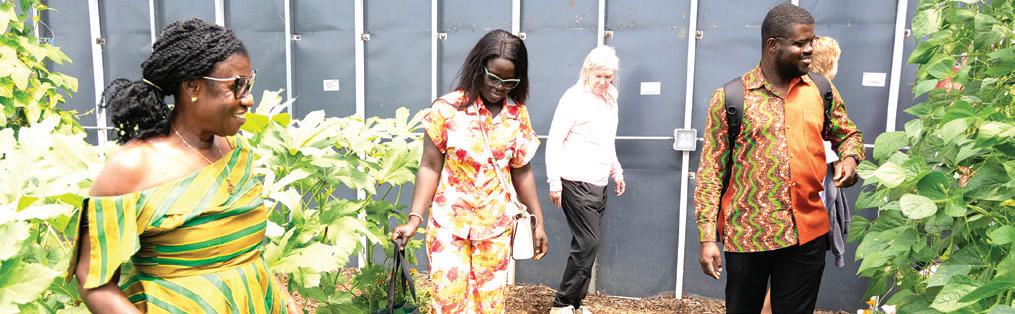
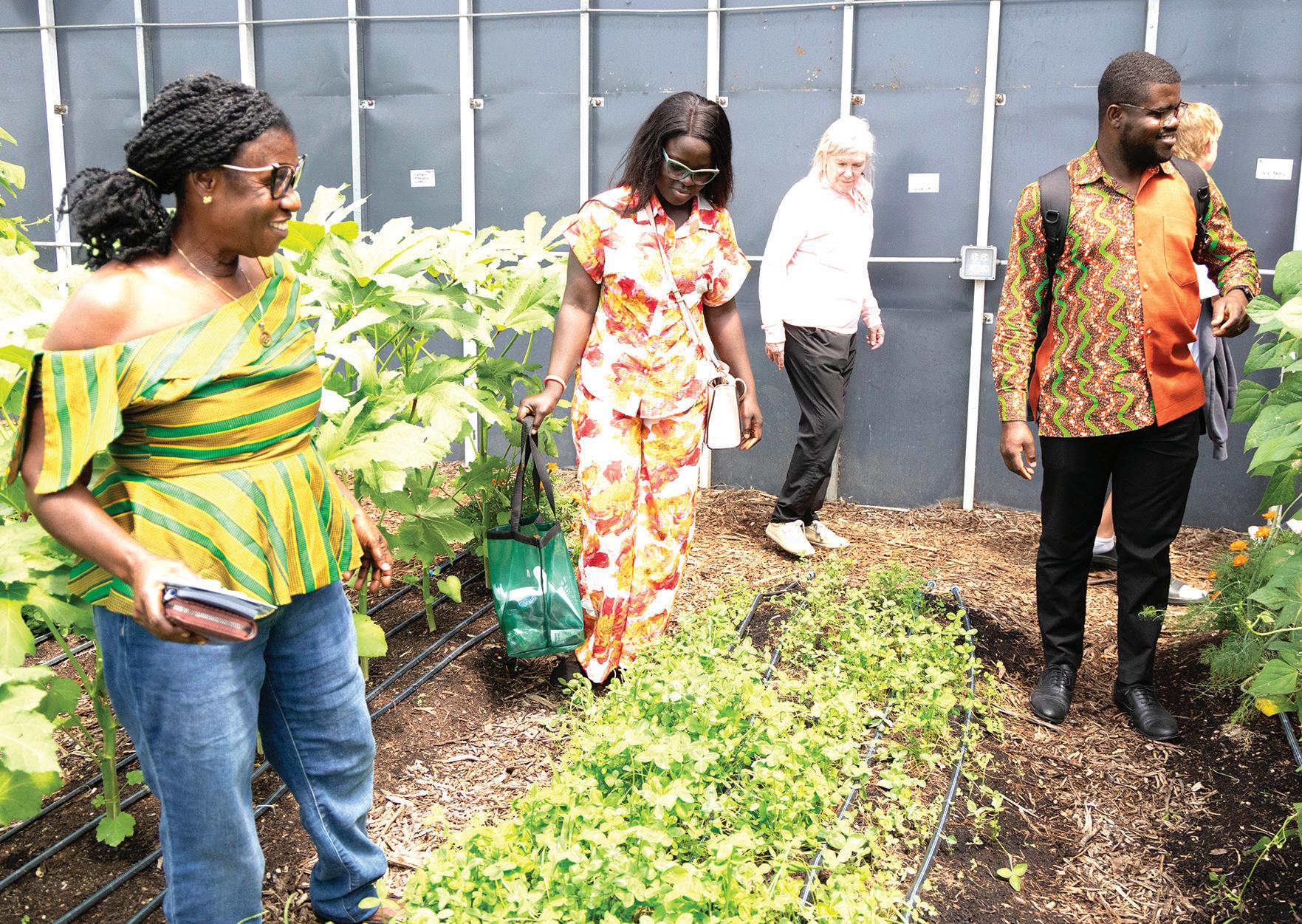
Melody Frempong, Nana Takyiwaah and Owuraku Boahen-Boahen tour the greenhouse during the grand opening of the Jackie Joyner-Kersee Food, Agriculture, Nutrition Innovation Center.
Sean Smith
Tiffany Alexander
Brittany McNeal Jennifer Polk
cellor for strategic partnerships at the University of Illinois. “She shows us the power of giving back and how it makes a tremendous difference.”
JJK FAN adds a new component to the foundation’s work by focusing on agriculture, nutrition and food technology. It also expands the foundation’s footprint dramatically. The campus has grown from 40 acres to more than 100, and facilities now total more than 95,000 square feet.
“If East St. Louis is going to thrive, which is Jackie’s dream, there have to be opportunities to work and live in this community,” said Mark Mestemacher, president of Lansdowne UP. “JJK FAN is a seed being planted for people to come back to this community and find a way to have a career.”
For Joyner-Kersee, the moment represented a dream deferred finally taking root. Years ago, the foundation leased land in North St. Louis to test whether agriculture could take hold in an urban environment. The site was surrounded by dilapidated buildings, but the team planted corn, radishes and soybeans — and saw immediate potential.
“We were really just trying to see what can grow in the inner city, and get the community to see what we were trying to do,” Joyner-Kersee said. “Just as we use sports to open the door to endless possibility, we knew through agriculture our young people can explore and do things they didn’t think they could do.”

Partners helped JoynerKersee expand that early experiment into a full-scale agricultural innovation hub in her hometown. The augmented campus now includes a fully solar-powered, professional-grade greenhouse — one of only two in North America.
chief Winning in Life officer. “It is the only one in the United States. There’s another one in Canada, but I believe that’s it.”
“You see that silver building over there? That is a fully solar-functioning professional-grade greenhouse,” said Kendall Norris, the foundation’s
Twelve-year-old Amon Frazier demonstrated that potential as he walked guests through an experiment he and older JJK youth completed. Using a handheld device, he showed how technology

can enhance the light a plant receives for optimal growth.
“I want people to know how much fun we have here,” Frazier said. “They teach us so much, but at the same time we can have fun with it. Last time we learned about pollinators and how pollen helps plants grow.”
Planters line the walkway to the greenhouse and sit behind the JJK FAN building, which faces the athletic fields.
“This is the only place on earth where you can watch a football game on Friday night standing next to a box of collards,” Kidwell said.
Inside, multipurpose rooms can host healthy cooking classes, STEM labs and hands-on science experiments focused on photosynthesis, pollination and plant growth. The goal is to build a workforce pipeline in East St. Louis
Green Line
Continued from A5
employment centers.
The route would begin near the city-county line at Goodfellow Boulevard and Natural Bridge Avenue, follow Florissant Avenue into downtown, then continue south along Jefferson Avenue to Meramec Street in South St. Louis. It would include about 23 stations and connect with MetroLink at the Civic Center Transit Center.
Mayor Cara Spencer said the route would expand access to public transportation while reaching more residents than the previous light-rail proposal.
“This BRT route will connect thousands more St. Louisans and provide a dozen more stations than the previously proposed light rail option would have, all at a lower cost and while coming downtown,” Spencer said.
“By choosing this route, we ensure high-quality transit access with frequent service for historically underserved communities, opening new doors to opportunity, enhancing safety and supporting residential and commercial growth.”
The board’s action adopts what transportation planners call the “locally preferred alternative,” the route regional leaders
— training young people in urban farming, food science and agricultural technology.
“I can say from my experience of working with many scientists that talent is universal, but opportunity is not,” said Giles Oldroyd, president of the Donald Danforth Plant Science Center. “We will not leave a scientist, an entrepreneur or an innovator behind simply because they grew up in neighborhoods that lack opportunities.”
Illinois Deputy Gov. Andy Manar praised the initiative as a model for the region.
“The Jackie JoynerKersee Food Agriculture Nutrition Innovation Center presents a powerful vision for our future — bringing together agriculture, nutrition, technology and wellness under one roof,” Manar said. “This is a space where young peo-
The route would begin near the city-county line at Goodfellow Boulevard and Natural Bridge Avenue, follow Florissant Avenue into downtown, then continue south along Jefferson Avenue to Meramec Street in South St. Louis.
have selected to pursue. That designation allows the project to move into more detailed engineering, environmental review and the next stage of seeking federal funding.
Earlier plans called for a 5.6-mile MetroLink light-rail line running primarily along Jefferson Avenue. But after additional engineering studies and rising construction costs, city officials and Bi-State Development concluded that the rail project was no longer financially feasible.
They instead proposed bus rapid transit, which they say can provide many of the benefits of light rail at substantially lower cost while serving a much larger area. The new proposal near-
ple can learn, families can thrive and future careers can begin.” He called Joyner-Kersee “the pride of both East St. Louis and the state of Illinois.”
State Sen. Chris Belt tied the mission back to health and wellness.
“Hippocrates once stated, ‘Let food be thy medicine and medicine be thy food,’” Belt said. “This is where young people will learn how to grow food — and how to properly utilize food to become the very best version of themselves.”
“I look forward to the day when the president of this country grew up in East St. Louis,” Oldroyd said. “We are committed to delivering the future scientists, future innovators and leaders. The world needs it. And those future leaders, I believe, can come from East St. Louis.”
ly doubles the corridor’s length. Project officials estimate construction would cost between $360 million and $590 million.
Unlike traditional bus service, bus rapid transit uses features intended to improve speed and reliability, including enhanced stations, faster boarding, dedicated lanes where feasible and traffic signals that give buses priority at intersections. The Green Line would operate seven days a week.
Project planners said the North Florissant alignment was selected over another option because it serves more residents who depend on public transportation, better connects downtown and reaches more neighborhoods than the previous proposal.
More than 70% of participants in public outreach conducted during the winter and spring supported the recommended route, according to project officials. Current plans call for environmental review and preliminary engineering through 2027, followed by advanced engineering before construction could begin as early as 2029. Under the current schedule, Green Line service could begin in 2031, although the timeline depends on securing federal funding and completing additional approvals.
Photo by Lawrence Bryant / St. Louis American
Vinecia Farley and Amon Frazier explain 3D models to Jackie Joyner-Kersee during the grand opening of the Jackie Joyner-Kersee Food, Agriculture, Nutrition Innovation Center.
HealthMattersHealthMattersHealthMatters
‘Taking Care of You’

Researchers at Washington University School of Medicine found that an experimental mRNA flu vaccine produced a stronger immune response than a traditional flu shot in a small study, suggesting the technology could improve future influenza vaccines.
mRNA technology
Could the next flu shot work better? WashU study says yes
By Sarah Fentem St. Louis Public Radio
Washington University researchers have found evidence that an mRNA flu vaccine could offer stronger protections against influenza than a traditional flu shot.
The research, which appears in the journal Nature Immunology, is part of a larger set of studies investigating a flu shot made with mRNA technology. Instead of using a weakened or inactive virus, mRNA vaccines teach the body to produce antibodies to develop immunity.
Drugmakers introduced the first widespread mRNA vaccines during the coronavirus pandemic.
Drugmakers introduced the first widespread mRNA vaccines during the coronavirus pandemic, and the COVID-19 immunizations remain the only mRNA vaccines currently on the market.
That could soon change, said Hanover Matz, a postdoctoral researcher at WashU who worked on a team that studied how the vaccine activated immune cells. A committee from the federal Food and Drug Administration this summer recommended the agency approve Moderna’s mRNA vaccine for older adults.
“What’s really cool about mRNAbased vaccines is they actually provide the genetic information to produce the proteins that might be a part of a
Missouri patients regain access to medication abortion
By Sylvester Brown Jr.
St. Louis American
Missourians can once again obtain medication abortions at clinics in St. Louis and other parts of the state after a Jackson County Circuit Court judge permanently blocked several abortion restrictions that had prevented providers from offering the care.
The ruling struck down numerous state abortion regulations, including Missouri’s abortion ban.
Judge Jerri Zhang’s ruling last month struck down numerous state abortion regulations, including Missouri’s abortion ban, the 72-hour waiting period, abortion facility licensing requirements, physician-admitting privileges requirements, medication abortion complication plan mandates, pathology requirements and reporting requirements.
Medication abortion is a nonsurgical method of ending an established early pregnancy, typically through 10 weeks. It uses two medications — mifepristone and misoprostol — taken over one to two days and is the most common form of abortion care in the United States. Following the ruling, Planned Parenthood resumed offering medica-
Medication abortion and Plan B
Key differences
Plan B is emergency contraception. It helps prevent pregnancy after unprotected sex or birth control failure.
Medication abortion ends an existing early pregnancy using two medications.
Pharmacy innovator honored with global fellowship
St. Louis American staff
Marcus Howard, the founder and CEO of St. Louis-based COUNSELMEDS, has been selected for the prestigious 2026 Innovative Entrepreneurs Program of Eisenhower Fellowships.
Howard is one of 27 leaders from around the world selected for the program, which was established in 1953 to honor President Dwight D. Eisenhower’s commitment to international leadership and innovation. A pharmacist and healthcare entrepreneur, Howard plans to use the fellowship to travel to
Marcus Howard is one of 27 leaders from around the world selected for the program.
India to study community-based pharmacy systems, digital health technologies and medication delivery models designed to bridge health equity gaps. Another local leader also was selected for the 2026 fellowship; Emily
Lohse-Busch, executive director of the 39 North AgTech Innovation District, will travel to Tanzania to study agricultural innovation.
“It is an incredible honor to represent St. Louis as an Eisenhower Fellow,” Howard said. “To have two entrepreneurs selected from our region reflects the strength of St. Louis’ innovation ecosystem. I look forward to learning from global leaders and bringing back ideas that expand access to
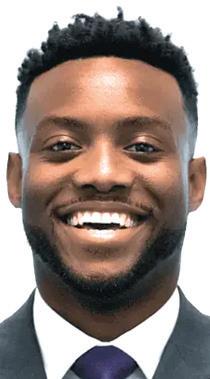
health care and create lasting impact for underserved communities.” Howard founded COUNSELMEDS to improve medication adherence and health outcomes for Medicaid patients and other underserved populations by combining digital technology with pharmacist-led care. His regional work grew out of GreaterHealth Pharmacy & Wellness, the Blackowned pharmacy he opened at Delmar DivINe
in 2023 with a mission to provide culturally responsive, community-centered care. Speaking during GreaterHealth’s 2023 grand opening, Howard said the pharmacy measures success not by the number of prescriptions it fills but by the difference it makes in patients’ lives.
“Don’t ask me what makes GreaterHealth different. Ask the senior with 90-plus prescriptions who receives counseling that makes her believe she will be well again,” Howard said. “Ask the person who can’t get out of the house who receives free prescription delivery.”
The need for that work
was recently highlighted in a peer-reviewed study he co-authored for BMC Public Health. The research revealed that 17.2% of St. Louis residents live in “pharmacy deserts,” a crisis that disproportionately impacts Black residents, who account for roughly 80% of the affected population.
Howard said he hopes the lessons he learns in India will help expand pharmacy access and improve health outcomes in St. Louis and other underserved communities.
Envato photo
Marcus Howard, founder and CEO of St. Louis-based COUNSELMEDS
See mRNA, A8
See Abortion, A8
Marcus Howard
HealthMattersHealthMattersHealthMatters
‘Taking
Care of You’

Abortion
Continued from A7
tion abortions at clinics in St. Louis, Kansas City and Columbia, restoring a service that had not been available in Missouri for years.
“Once again, the courts have affirmed
Missourians’ constitutional right to access abortion without interference or delays from their government,” said Margot Riphagen-Dunn, president and CEO of Planned Parenthood Great Rivers.
“The truth is: medication abortion is the most common form of abortion care and has been proven to be safe and effective for the
past 25 years. Yet, since Missourians voted for abortion access in 2024, it has been impossible to access the full spectrum of abortion care in our own state.
“That ends today,” Riphagen-Dunn said.
The ruling follows Missouri voters’ approval of Amendment 3 in November 2024, which

added a right to reproductive freedom to the Missouri Constitution.
Although that amendment restored abortion rights, abortion providers argued that numerous pre-existing state laws and regulations continued to prevent them from offering the full range of abortion services.
The ruling expanded clinics’ ability to provide medication abortion but did not allow fully remote telehealth abortions.
Patients must still be seen in person and receive the medication at a clinic.
Missouri also continues to require that only licensed physicians provide abortion care.
Gillian Wilcox, director of litigation at the ACLU of Missouri, called the ruling “a monumental win for reproductive freedom and abortion access.”
The decision could have a significant impact on access to care. During 2023, when abortion ser-
mRNA
Continued from A7 virus,” he said. “They give that instruction to your cells, the cells learn how to make the protein, and then they use that protein to train your immune system to fight the virus.”
The small study looked at how well the Moderna mRNA vaccine worked compared to the traditional flu shot by studying the contents of patients’ lymph nodes.
“The lymph nodes are the place where all the immune cells come together to learn how to fight the virus,” Matz said. “No matter what type of vaccine you get, it’s going to stimulate those cells to respond, and they’re going to make something called a germinal center.”
Germinal centers are sites where infection-fighting immune cells mature. In 13 people who got the mRNA flu vaccine, five developed the germinal center response in their lymph nodes. The 15 people who received the traditional flu vaccine didn’t show that response.
“And so, what we found was that the mRNA-based vaccine was very, very good at producing those germinal centers in the lymph nodes,” Matz said.
The study also indicated that immune response
vices were largely unavailable in Missouri, the state recorded just 37 abortions performed within its borders while thousands of Missouri residents traveled to Kansas, Illinois and other states to obtain abortion care.
Emily Wales, president and CEO of Comprehensive Health of Planned Parenthood Great Plains, said the ruling allows more patients to receive care closer to home.
“For too long, politicians forced patients to leave the state for an evidence-based and trusted form of abortion care,” Wales said.
Missouri Attorney General Catherine Hanaway said she will appeal the ruling to the Missouri Supreme Court.
“My heart is broken by today’s ruling. This is exactly the Pandora’s box we warned of, and the women of Missouri
from the mRNA vaccine may last longer and protect against more strains of the flu.
Influenza is an ideal candidate for an mRNA vaccine, Matz said. The flu virus is constantly evolving, and vaccine makers are consistently playing catch-up to create immunizations that best match the circulating strains.
An mRNA vaccine would allow for a more nimble response.
“If you detect that the flu virus has changed mid-season and you want to update the vaccine, it would be much easier to update an mRNA-based vaccine and deploy ... to combat that viral mismatch.”
The FDA committee’s recommendation comes during a fraught time for mRNA vaccines and immunizations in general. Health and Human Services Secretary Robert F. Kennedy Jr. has been skeptical of vaccines and has canceled hundreds of millions of dollars in research funding for mRNA research projects.
“There has certainly been some uncertainty in the past few years about the future, particularly for mRNA-based vaccines,” Matz said. “I think it’s important that we recognize that the science is out there, and that these have been proven to be effective, and certainly,
will pay the price. ... My office will expeditiously appeal this dangerous decision to the Missouri Supreme Court, and I will never stop fighting for the safety of women and children,” Hanaway said.
The legal battle is expected to continue. Missouri voters will decide in November whether to approve a constitutional amendment that would repeal the reproductive-rights protections adopted by voters in 2024.
“This decision brings compassion and common sense back to Missouri health care,” Wales said. “Now, that care is coming home and with it, we move closer to fulfilling the promise of reproductive freedom Missourians demanded.”
Sylvester Brown Jr. is the Deaconess Foundation Community Advocacy Fellow.
while improvements in that uncertainty would be great for the science community, we’re still really excited to go forward with this kind of research.”
He added he understands that some people may not be comfortable with mRNA vaccines. A KFF poll found that one in five people believe the false claim that mRNA vaccines alter a patients’ DNA.
According to the Centers for Disease Control and Prevention, mRNA vaccines “do not enter the nucleus of the cell where our DNA (genetic material) is located, so they cannot change or influence our genes.”
Public health officials have in recent years endorsed shared decision-making between physicians and patients when it comes to deciding whether or not to take particular vaccines.
“I think it’s understandable that there’s been some hesitation around this, and I think it’s important that people always consult with their primary care physician when they’re making decisions about their personal health care and vaccines,” Matz said. “[But] the research is there that shows that these are safe, they’re well-tolerated, and they can stimulate very effective immune responses.”
Marcus Howard, center, is surrounded by well-wishers during the 2023 opening of GreaterHealth Pharmacy & Wellness. Howard, founder and CEO of St. Louis-based COUNSELMEDS, has been selected for the 2026 Innovative Entrepreneurs Program of Eisenhower Fellowships.
Photo by Wiley Price / St. Louis American
Marcus Howard honored

’s ‘Morning Dew’
Beyoncé fans had an additional reason to celebrate July 4th thanks to the surprise release of a new song called “Morning Dew (Donk).” The drop was released as a gift to the “BeyHive.” It is her first new release since her Grammy-winning album Cowboy Carter in 2024. The song kicked off a 60-day countdown to Beyoncé’s birthday on September 4th. On that same day, she will re-release her second studio album, B’Day, to celebrate its 20th anniversary.
“Morning Dew (Donk)” was co-written and produced with Pharrell Williams. It was recorded years ago but never released until now. The song was originally intended for the 2006 B’Day album.

Charlie Wilson temporarily sidelined by strokes Social media influencer fatally shot on July 5
R&B legend Charlie Wilson shared that he suffered a series of strokes last year during a recent interview with veteran media personality Big Boy.
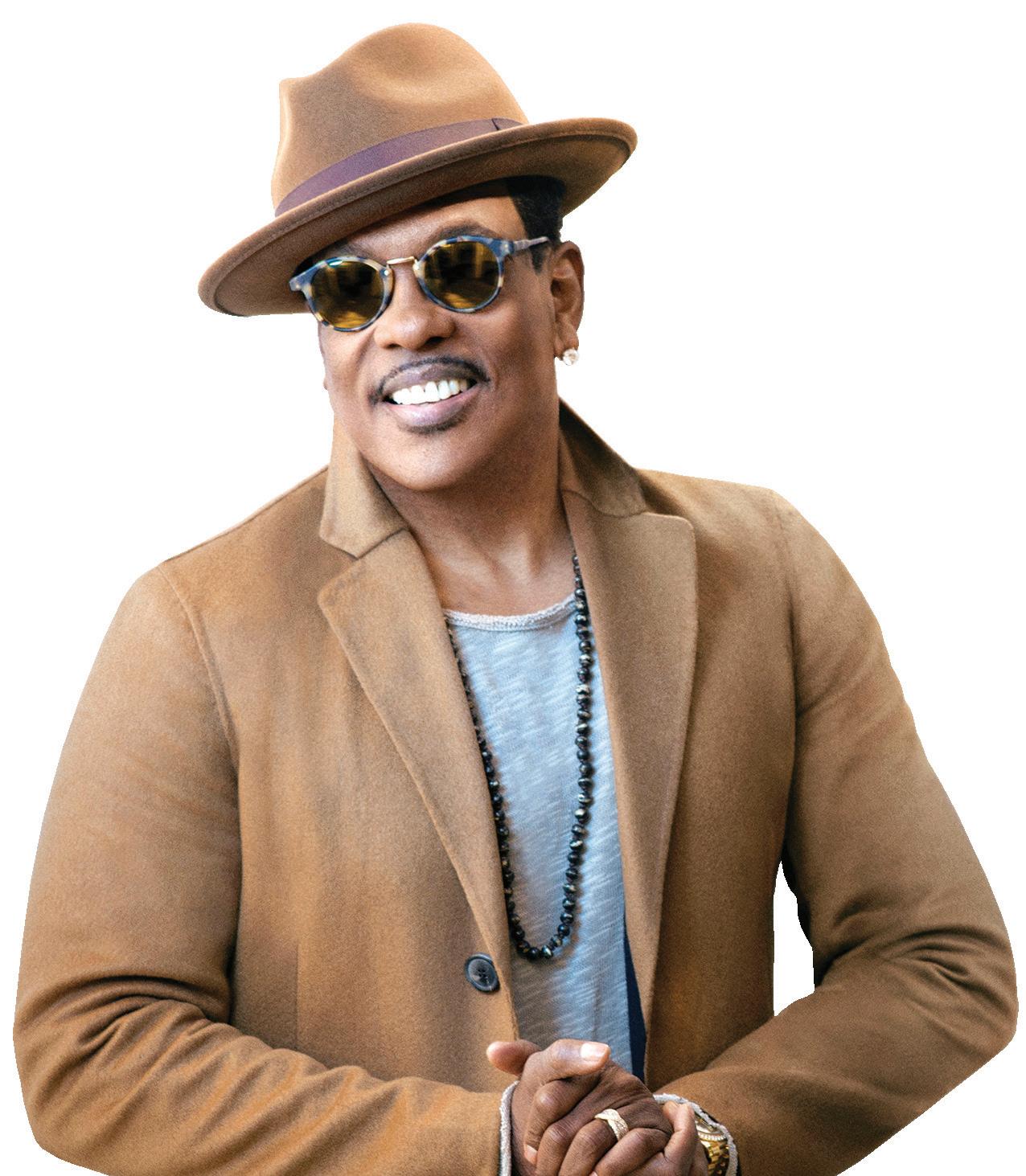
“I went to some shows, and I came back, and I was another person,” said Wilson, 73.
“My wife can catch it, just like that,” he added.
“She said, ‘Something ain’t right wth you,’ and off to the hospital we went.”
Wilson told Big Boy that was the first time he had suffered “that many strokes, at the same time.”
“I knew God was with me and I knew my wife was praying every day, every hour of the day,” he said.
Wilson also shared that he had “just learned how to walk again,” adding that it took him six months to re-learn.
“I am not finished yet, I’ve got a long way to go,” Wilson said, adding, “I’m still who I am, vocally.”
The singer recently made his return to the stage, appearing at the AFRAM music festival in Baltimore in June.
“I don’t know if y’all know what happened to me, but I had some strokes,” Wilson said during his performance, according to People.com. “Feels like God has truly, truly blessed me.”
Charlie Wilson
Brianna Johnson, a social media star known online as DreamDoll Brii, died on July 5 in a shooting in Miramar, Fla. She was 21. Johnson — who had a combined following of over 400,000 across Instagram and TikTok — was one of three people driving in a green Lamborghini on a residential road in the South Florida city who were shot at from another vehicle following them, a spokesperson for the Miramar Police Department told People. com.
Police were called to the scene at 5:33 a.m. on July 5. They discovered that the Lamborghini had crashed into a house, and all three individuals inside had been shot, the spokesperson said. The two other victims were both hospitalized, and one is in critical condition. The police spokesperson said that there is an “active investigation” into the shooting. One critical piece of evidence, the spokesperson said, is a social media post that appears to show some kind of altercation involving the green Lamborghini at a gas station before the shooting.
Danny Glover reveals Alzheimer’s diagnosis
Actor and activist Danny Glover disclosed that he has been living with Alzheimer’s disease for the past four years. Glover revealed the news in a sit down interview on “Today” with former “NBC Nightly News” anchor Lester Holt that aired Wednesday morning (July 1). He was diagnosed shortly before receiving the Jean Hersholt Humanitarian Award at the Academy’s 2022 Governors Awards.
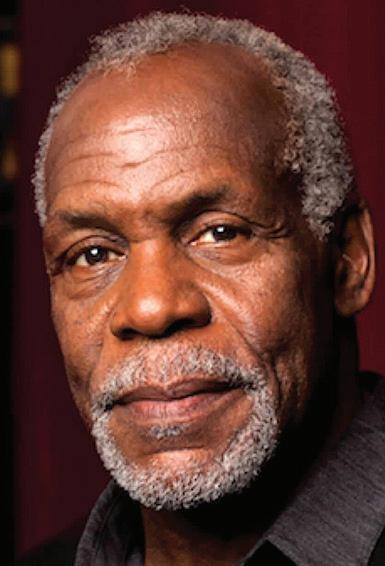
“I’m sure as it advances, things are going to be different and changing,” Glover said. Glover’s family sat with him during the interview.
“I think it’s really important for him to have control of his own narrative, of his own life story,” Glover’s daughter, Mandisa, told Holt. “That’s really important. And the time is now. What better time but now for him to speak for himself? It’s important because people ask questions sometimes, and I don’t want to be a dishonest person and say, ‘Oh, yeah, everything is all right. It’s all great,’” she added.
Hot Sheet Sources:

Beyonce
Danny Glover
Rams Funds
Continued from A1
Board of Aldermen
President Megan Green and Mayor Cara Spencer backed the legislation. Aldermen Bret Narayan, Matt Devoti and Sharon Tyus voted against it.
The final package dedicates $120 million to North St. Louis recovery and neighborhood plans; $70 million to city infrastructure, including $40 million for the city’s aging water system; $55 million for downtown redevelopment; and $10 million to reduce vacant properties.
Thousands of homes were damaged by the tornado, many residents lacked insurance and rebuilding has moved more slowly than many hoped. The final plan falls about $30 million short of what many North St. Louis residents and advocates sought, though aldermen increased funding for tornado recovery and neighborhood investment after weeks of emo-
Squeeze
Continued from A1
with 4.3% nationally, 3.8% for white workers and 5.0% for Hispanic workers.
For decades, federal employment has provided many Black families with a reliable pathway into the middle class, particularly after passage of the Civil Rights Act of 1964 and the Voting Rights Act of 1965 expanded access to government jobs.
That pathway has narrowed during the Trump administration’s workforce reductions. Bureau of Labor Statistics data shows the federal workforce has shrunk by roughly 277,000 jobs. An analysis by the Economic Policy Institute found those reductions disproportionately affected Black workers, particularly Black women, who accounted for more than 95,000 government job losses in 2025 alone.
“If the President wants to improve the Black jobless rate, he needs to stop firing federal workers,” Gbenga Ajilore, chief economist at the Center on Budget and Policy Priorities, told TheGrio earlier this month.
More than half of Americans said the conflict involving the United States, Israel and Iran has been harmful to the nation, according to a recent Brookings Institution poll. Nearly 70% of Black Americans surveyed opposed the war.
National research has
Juveniles
Continued from A1 Parker in the head June 26 inside a home in the 8400 block of North Broadway. She later died at a hospital. A 7-year-old also was inside the home.
The infant’s father, Ca’Marion Pawnell, 19, of East St. Louis, is charged with second-degree felony murder, first-degree child endangerment resulting in death and two additional child endangerment counts. According to the probable cause statement, the handgun had been stored beneath a mattress. The 10-year-old told investigators he knew where it was and had handled it before the shooting. Pawnell admitted the gun belonged to him and that he stored it beneath the mattress.
Under Missouri law, children generally must be at least 12 before a judge can consider transferring them to adult court on serious felony charges.
tional public testimony.
The vote ends years of debate over how to spend the city’s share of the Rams relocation settlement. Last year’s tornado reshaped that discussion, shifting the focus from competing ideas for one of the largest financial windfalls in city history to the urgent need to rebuild devastated neighborhoods.
Public meetings exposed deep disagreements over how much of the settlement should go to North St. Louis versus downtown redevelopment.
Members of Action St. Louis voiced some of the strongest criticism, even threatening retribution against some of the more “progressive” candidates they backed in previous elections.
“Relationships will end behind this,” Executive Director Kayla Reed warned during a nearly six-hour committee hearing in early June.
Action St. Louis organizer Malanie Marie called the final allocation a “slap in the face” to North St. Louis residents.
She noted that the St.
Louis Metropolitan Police Department will receive about $220 million under the city’s recently approved $1.4 billion budget. Marie argued city leaders had the ability to increase funding for neighborhood stabilization but chose not to.
“To see that they over-funded the police by millions from the legal baseline but refused to move funds to get us to the $150 million mark — knowing what’s needed for the neighborhood stabilization programs. It was very intentional,” Marie said. “They could have done it if they wanted to.”
Business leaders and downtown advocates argued the city also needed to invest in its economic engine.
Organizations including the Gateway Arch Foundation, Greater St. Louis Inc. and the St. Louis Sports Commission urged aldermen to preserve significant funding for downtown projects, saying investments could generate substantial economic returns through
tourism, major sporting events and expanded riverfront activities.
Charlie McDaniel, owner of the Black-owned spiritual wellness shop Lit Life Creations on North 18th Street, hopes the downtown investment improves public safety.
“Downtown has this negative connotation to it, so I would like to see some of that investment go towards having more officers walking down the street or riding bicycles so people can feel it’s safe to come down here,” McDaniel said. “I’d also like to see parking lots guarded better, you know, with all the cars being broken into.”
Green called the vote “a significant step toward addressing the unprecedented challenges facing our city.”
Spencer acknowledged the legislation reflects compromise rather than consensus.
“While this bill is not considered perfect by any stakeholder or anybody on the planet, it is something that I think the majority of us feel really good about,”
she said. Alderman Rasheen Aldridge said the final package reflects the reality that no single allocation could address every need facing the city.
“There is not enough money in this settlement that would have rebuilt Northside post-tornado.
There’s lots of needs in the city as well as infrastructure as we continue to see water main breaks.
Sometimes policy is a lot of compromise and trying to figure out how do we get it across the finish line,” Aldridge told The St. Louis American.
“I get how some people are frustrated that we didn’t reach the $150 (million), but I think we got as close as possible and there are still a lot of opportunities on the state level to hopefully help North St. Louis,” he said.
“You know, I think this is a good start.” The spending plan creates dedicated funds for each spending category but does not authorize individual projects. Many expenditures will still require contracts, budget
found that Black drivers spend a larger share of their income on gasoline than white drivers. Economists at the Federal Reserve Bank of St. Louis have also found that inflation falls hardest on lowerand middle-income households because necessities such as housing, groceries, transportation and utilities consume a greater share of their budgets, leaving less room to absorb higher prices.
Oil market volatility during the conflict briefly pushed the national average price of gasoline above $4.25 per gallon in early June. Prices in the St. Louis area have since eased to about $3.30.
“Gas prices are just too damn high,” Michael Cole said outside the Crown Mart Mobil station on North 13th Street in Old
Because the boy in this case is 10, he would likely face the first-degree murder allegation in juvenile court.
That approach reflects Missouri’s juvenile justice philosophy. The St. Louis Family Court says its system emphasizes accountability alongside rehabilitation, family engagement and repairing harm rather than punishment alone. Court officials also acknowledge racial and ethnic disparities as an ongoing challenge and say reducing those disparities remains a priority. In April, lawmakers passed and Gov. Mike Kehoe signed Senate Bill 888, a wide-ranging criminal justice measure that critics say makes it easier to try some juveniles as adults.
The new law allows prosecutors to seek hearings to transfer older juveniles to adult court, an option critics say gives prosecutors greater influence over those decisions.
House Democrats say that because prosecutors
North.
“They got that thing going on over there with the Strait of Hormuz ... my President, Mr. Obama, didn’t start that. We all know who did,” Cole said. “He’s boosted prices of everything, not just gas but food and housing, too.”
According to U.S. Department of Agriculture data, grocery prices rose 2.3% in 2025 and another 2.9% this year.
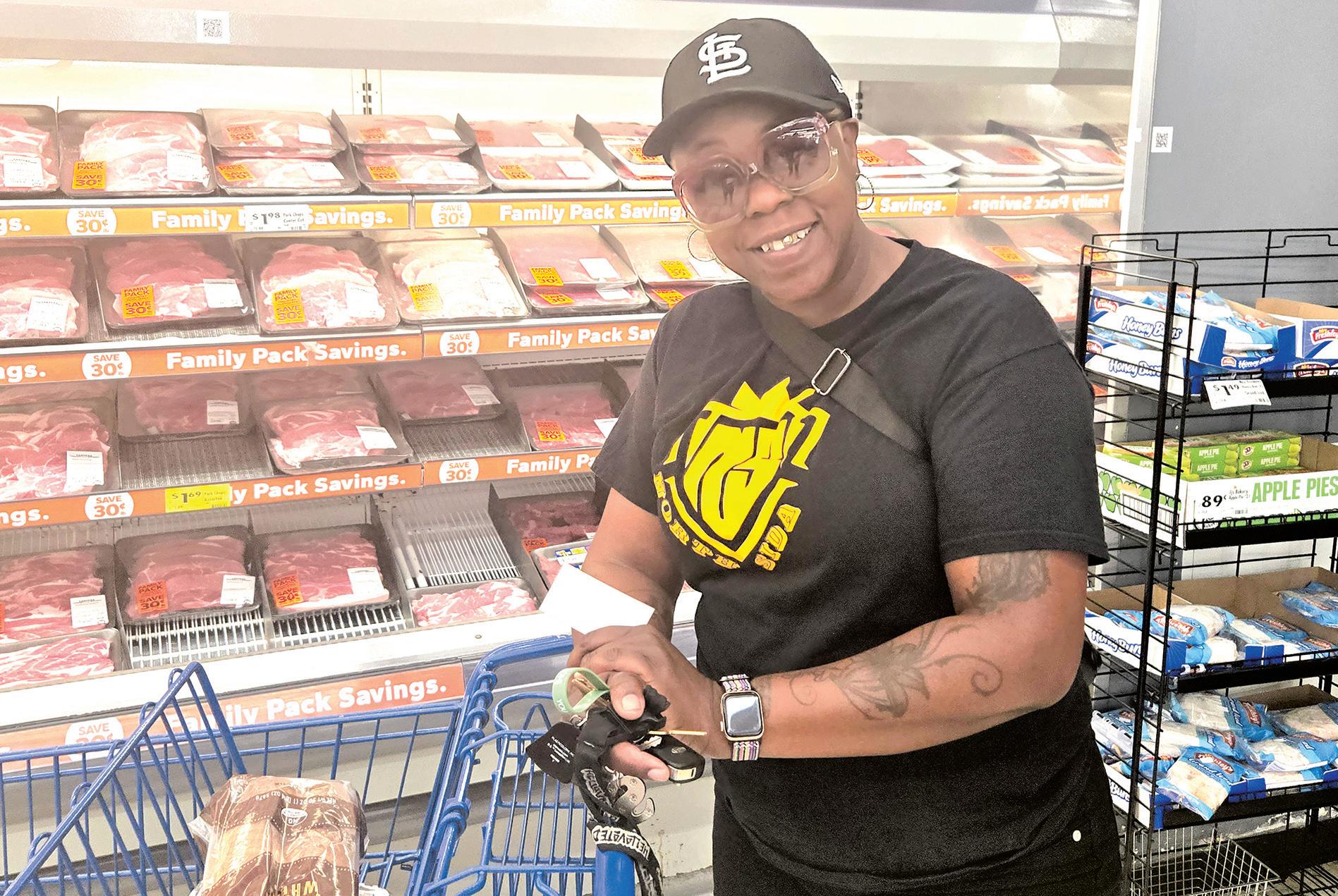
For Shea Brown, the numbers become real every time she walks into the grocery store. Standing inside the Save A Lot on Page Boulevard, Brown pointed toward a freezer case filled with chicken.
“They are ridiculous! These prices are so high, it’s impossible to shop for anything,” she said. “You used to be able to go to the store with $50 and get half
are elected officials, the law could politicize criminal cases and lead to more minors being tried as adults.
“Sometimes prosecutors, they get power hungry,” said Rep. David Tyson-Smith, D-Columbia. “They get in office and they want convictions,” Tyson-Smith said, adding that prosecutors are supposed to “seek justice, not convictions” of minors.
Rep. Michael Johnson, a Kansas City Democrat and chair of the Missouri Legislative Black Caucus, denounced the legislation.
“Public safety and accountability must always be priorities, but we cannot ignore the long-term consequences of policies that criminalize our youth instead of investing in their potential,” Johnson wrote.
In defense of the bill, Rep. Brad Christ, R-St. Louis County, described some juveniles as “very hardened criminals” who have taken advantage of what he called the state’s
a cart full of things. Now, you buy three items and that’s your $50.”
Like Cole, Brown blamed Trump for the higher cost of living. When reminded that the administration says the conflict has ended, she shook her head.
“He started it, but it’s not over,” she said. “It won’t be over until all the people he’s messed with gets their git-back.”
“What’s worse is that we have a war brewing on our home front,” Brown said. “He’s done everything in his power to pit us against them. There’s going to be a revolt and it won’t be good.”
For Kayla Boyd, 26, who works in the insurance industry, Trump represents something larger than one presidency.
“Things may have
“catch-and-release process” for minors.
Brumfield-Young unequivocally does not support charging juveniles as adults.
“That does not mean there should be no accountability, and it does not minimize the seriousness of the harm,” she said. “It means that accountability for children and adolescents should happen in a system designed around the cognitive, emotional and social development of young people.
“This is especially important when we are talking about a 10-yearold. A child that young is still very early in the developmental process, including the development of the capacities we expect adults to use when making serious decisions.”
Skyla Pawnell, who identified herself as Ca’Marion Pawnell’s cousin on Facebook, has started a Change.org petition asking “the legal system to exercise compassion and justice” for
approvals or additional action before construction begins or money reaches residents, businesses and organizations. Before the tornado, elected officials and residents floated ideas for the settlement proceeds that included child care, scholarships, public safety, neighborhood redevelopment and economic development. Then the May 16 tornado changed the debate. Green said the city’s Tornado Recovery Office has exhausted its available funding, making approval of the legislation especially urgent. The original proposal would have placed $25 million into reserves, but aldermen redirected that money after residents urged the city to prioritize neighborhoods still recovering from the storm.
The vote settles where the money will go. The next challenge will be turning those dollars into repaired homes, stronger infrastructure and neighborhoods still waiting to recover.
Shea Brown, shopping inside a Save A Lot on Page Boulevard said, “You used to be able to go to the store with $50 and get half a cart full of things. Now, you buy three items and that’s your $50.”
started with him, and I hope things end with him,” Boyd said. “But, you know, it’s much bigger than him. The problem with this country is that it started off on the wrong foundation. It started off by taking other people’s stuff and that’s the problem today.”
“You know, the question sometimes becomes, ‘Really, what can you do?’ Protest? What will that do? Getting violent only brings more violence. We all know things are really bad. We all know gas is unaffordable ... but what’s the next step? I just don’t know.”
Jayla M. Williams, 21, a recent graduate of the University of Health Sciences and Pharmacy and a St. Louis County resident, worries about what lies immediately
her cousin. The petition acknowledges that “leaving a loaded firearm accessible was certainly a mistake,” but argues the legal system has placed “the full weight” of the tragedy on Pawnell while overlooking what it describes as the “complex circumstances” surrounding the shooting.
Brumfield-Young argues that “juveniles are not monoliths” and although a 10-year-old child and a 17-year-old adolescent “are developmentally different,” neither should be treated “as though they are adults.”
“For example, California’s youth offender parole framework applies to many people who were under 26 when they committed their offense, and Vermont’s youthful offender law reaches some young people who are under 22,” BrumfieldYoung said. “Those laws do not erase accountability. They reflect the reality that there is a developmental difference between a teenager or an emerging adult and a fully mature
ahead.
“It’s scary and devastating where everything is headed,” Williams said. “You have AI taking jobs from people; you have people barely able to make enough to live a basic standard of living. I just graduated. I’m worried about what’s going to happen in the near future. Will I find a good-paying job? Will I be able to start a family with the way things are headed? Things like that.”
Back at the gas station in Old North, James, 28, watched the numbers continue climbing on the pump.
“They’re high as [expletive]!” he said. “I can barely pull off the lot before I need some more gas. They say it’s all about inflation or whatever else this country has going on, but to me, it all seems greedy.”
“Everything has gone south,” he continued. “I just think we need to get prepared ... voting, protesting ... whatever. We have to get ready.” Nearby, Darius Brown said he is especially troubled by the administration’s efforts to dismantle DEI programs and reduce Black history instruction in public schools.
“We need to get together as a community and not just as individuals,” Brown said. “We need to vote together, protest together — all of it. We need to look out for one another and do things as a whole.”
Sylvester Brown Jr. is the Deaconess Foundation Community Advocacy Fellow.
adult.” She also believes the criminal justice system isn’t equipped to punish older teens as adults. This type of prosecution, she believes, exposes young people to systems and consequences that “often make rehabilitation harder” and can lead to educational disruption, reduced access to age-appropriate treatment and lifelong collateral consequences.
“I really believe that we can hold children and adolescents accountable without treating them as adults,” Brumfield-Young said.
“In a case this tragic, we can grieve the death of the infant, support the family, take seriously the child’s behavior and mental health needs, and still recognize that a 10-year-old is not legally, developmentally or neurologically the same as an adult.”
Sylvester Brown Jr. is the Deaconess Foundation Community Advocacy Fellow.
Photo by Sylvester Brown Jr. / St. Louis American

It

‘I got so much love for the 314’
Luda shows STL love during celebrate 250 set
By Kenya Vaughn St. Louis American
ATL rap veteran Ludacris demonstrated his special relationship with St. Louis when he took the stage under the Arch as part of the entertainment lineup for Celebrate 250 on Friday, July 3. He was among the openingnight artists of a weekend celebration that included several of the biggest names in music from hip hop, reggae, pop, country and EDM. The relentless heat didn’t deter tens of thousands from rocking with the rap star for Luda’s hourlong set. His performance reminded the audience of his reach and depth as an artist in the 25 years since he broke through as a reliable hiphop star with the type of bars that can fit in just about any genre.
country to promote and sell the album.
“Three cities supported me from day one,” Luda said. “St. Louis was one of those cities. Y’all caught on early. I got so much love for the 314. Thank y’all from the bottom of my heart. If it wasn’t for y’all, I wouldn’t be here.”
The relentless heat didn’t deter tens of thousands from rocking with the rap star for Luda’s hourlong set.
He opened his set with “Number One Spot,” a 20-year-old track that proved prophetic. But before he settled into his show, he gave props to St. Louis for supporting him from the very beginning.
“Since we are celebrating a quarter-century, I gotta be honest with y’all,” Luda said. “When I first started this whole run, I put out an independent album. Way before I was signed to Def Jam or any major company, I put out an album and started selling it independently.”
He told the crowd that he went around the
It was a gesture he paid forward early on. After being signed to Def Jam and getting a distribution deal for Disturbing Tha Peace (DTP), St. Louis rap artist Chingy was one of the first acts signed to the label.
After hopping into his verse on “Holidae In,” Luda brought Chingy out to perform the song alongside him. Then the pair tag-teamed Chingy’s signature hit “Right Thurr.” The song anchored Chingy’s tripleplatinum album that he released as part of the DTP family.
See Luda, B3
Luda’s performance reminded the audience of his reach and depth as an artist in the 25 years since he broke through as a reliable hiphop star with the type of bars that can fit in just about any genre.
leads WerQfest lineup

By Kenya Vaughn St. Louis American
By the time he became an internet sensation thanks to the millions who viewed his top-tier performance on NPR’s Tiny Desk concert, Durand Bernarr was already booked to headline St. Louis’ WerQfest for 2023.
“We never imagined WerQfest would grow into something that resonates with audiences nationwide,” Tre’von Griffith said of the event he
founded with his husband Shelton Boyd-Griffith. The event celebrates the Black queer, trans and non-binary community through arts and culture.
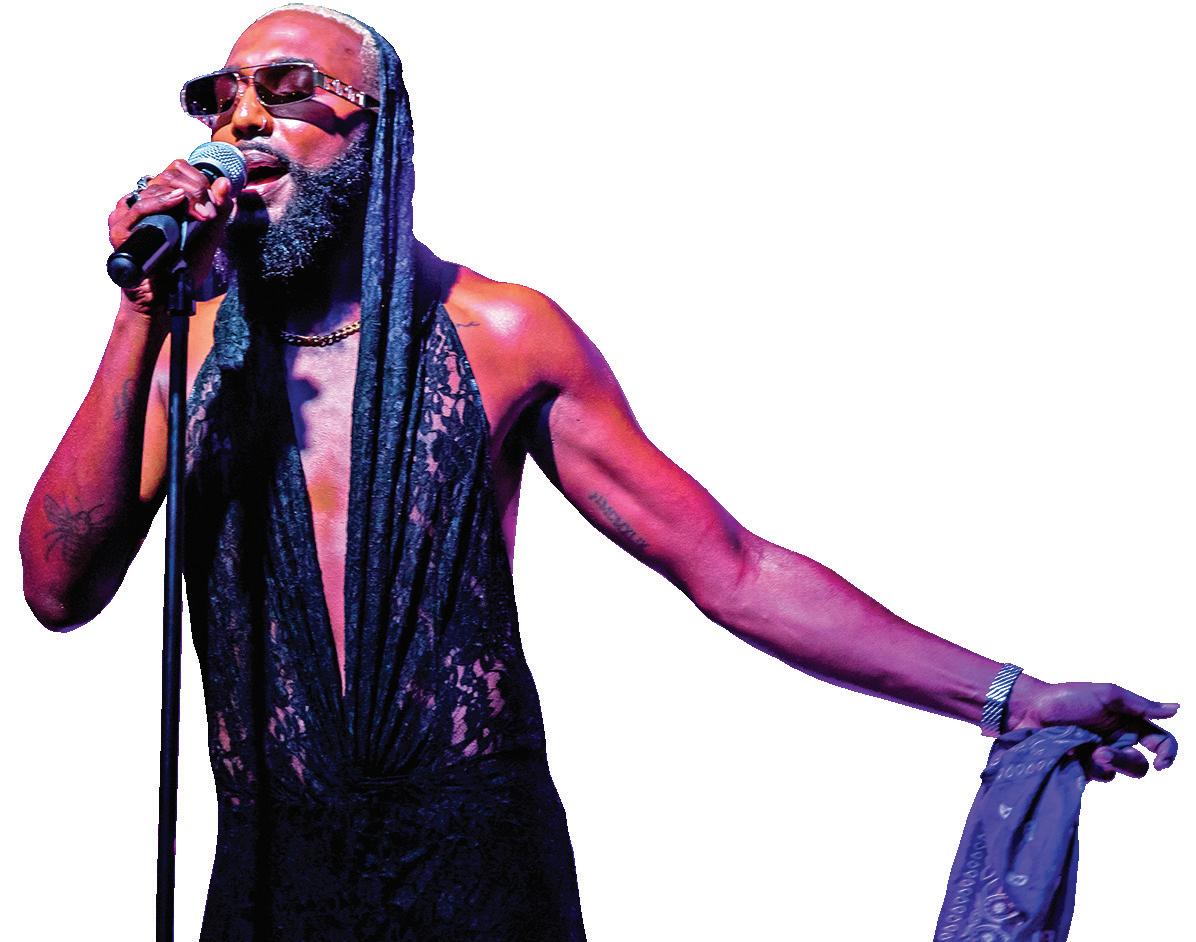
Rap star JT will headline WerQfest 2026. She will be joined by Infinite Coles, Onya Nurve and a host of St. Louis creatives on Saturday, July 11 at Atomic Pavilion.
These days Bernarr is a Grammy winner known for his unmatched vocals – and as a reliable creator of “meme-able” moments on social media thanks to his hot takes and quick wit. But before the world really knew his name, a St. Louis event that celebrates the talent and joy within the Black queer community gave Bernarr his first festival headlining gig. “That’s exactly what WerQfest is all about,” Griffith said. “We want it to be a place of discovery. Years ago, WerQfest was just an idea. Today it is a space where Black queer artists, musicians and creatives are seen and celebrated.”
This weekend WerQfest will celebrate seven years strong when it takes over the pavilion of Atomic by Jamo on Saturday, July 11. The party starts at 5 p.m. Hip hop artist JT will serve as the headliner
See WereQfest, B4
Mill Creek exhibition at History Museum closes July 12 with weekend of events
By Kenya Vaughn St. Louis American
The historically Black neighborhood was relentlessly referred to as a slum in the years leading up to it being demolished in 1959.
Archived mainstream media news clippings and footage tell one story about Mill Creek Valley. The historically Black neighborhood was relentlessly referred to as a slum in the years leading up to it being demolished in 1959. A demolition of another kind came after the buildings. It was one that attempted to wipe away the contributions of a place that had been a cultural and civic anchor for generations of Black St. Louisans. Thanks to Gwen Moore, Curator of Urban Landscape and Community Identity for the Missouri Historical Society, the St. Louis region – including former residents of Mill Creek and their descendants – had a chance to spend the past eight months learning the truth.
“Mill Creek: Black Metropolis,” the 5,000-square-foot exhibit that reminds St. Louis
Singer Golliday was among the talented artists to take the stage for WerQfest 2025 last year.
Photo by Tyler Small Courtesy of WerQfest
Photo by Lawrence Bryant / St. Louis American
CONCERTS
Thur., July 16, 7:30
p.m. MATI presents Jon Baptiste Live: A Fantastical Musical Journey, The Fox Theatre, 527 N Grand Blvd, St. Louis, MO 63106. For more information, visit www.fabulousfox.com
Fri., July 17-July 19, Music At The Intersection (MATI) 2026, various times and locations within the Grand Center Arts District. For more information, visit matistl.org.
Fri., July 17, 7:30 p.m., Avery Wilson, City Winery, 3730 Foundry Way, St. Louis, MO. For more information, visit www.citywinery.com
Tue., July 21, 7 p.m. The R&B Tour starring Usher and Chris Brown, The Dome at America’s Center. For more information, visit www.livenation. com.
Fri., July 24, 7 p.m.
doors, Buddy Guy 90 with Carlise Guy & The Nu Blu Band, The Factory, 17105 N Outer 40 Rd, Chesterfield, MO 63005. For more information, visit www.thefactorystl.com
Wed., July 29, 7:30 p.m., Babatunde: The HipHopera Tour, 3730 Foundry Way, St. Louis, MO. For more information, visit www.citywinery.com
Thurs., July 30, 7 p.m., Lil Wayne: 20 Years of Carter Classics
St. Louis American Calendar

with 2 Chainz, Hollywood Casino Amphitheater. For more information, visit www.livenation.com.
SPECIAL EVENTS
Sat., July 11, 4 p.m. (3 p.m. doors), Black Family Week 2026, keynote address by Student Minister Ishmael Muhammad, National Assistant to the Honorable Minister Louis Farrakhan. Harris-Stowe State University, 3026 Laclede.
Sat., July 11, 5 p.m. WerQfest 2026 with JT, Onya Nurve and Infinite Coles, Atomic by Jamo, 4140 Manchester Ave, St. Louis, MO 63110. For more information, visit jamopresent.com
Sun., July 12, 5 p.m. Second Sunday: R&B with a Twist: The Rodeo, Atomic by Jamo, 4140 Manchester Ave, St. Louis, MO 63110. For more information, visit jamopresent.com
July 17 – July 18, Sundiata King of Mali: Afriky Lolo 20th Anniversary Celebration, Touhill Performing Arts Center. For more information, visit www.touhill.org.
COMEDY
July 10 - 11, 7 p.m. Guy Torry, Funny Bone, 614 Westport Plaza Dr, St. Louis, MO 63146. For more information visit, https://stlouisfunnybone. com
July 17 - 19, Special Event: George Wallace,
Helium Comedy Club, 1151 St Louis Galleria St, St Louis MO 63117. For more information, visit https://st-louis.heliumcomedy.com
Sun., July 19, 7 p.m., Shama Mrema, City Winery, 3730 Foundry Way, St. Louis, MO. For more information, visit www.citywinery.com
ST. LOUIS
MUSIC SPOTLIGHT
Sat., July 11, 12 noon, City Winery St. Louis and PureSoul Presents Soul Brunch: Tribute to Al Green, Otis Redding, and the Sound

of Southern Soul, City Winery, 3730 Foundry Way, St. Louis, MO. For more information, visit www.citywinery.com
Sat., July 11, 7:30 p.m., Neo Soul Love: Erykah Badu & Jill Scott Tribute with Angelica Baylor, City Winery, 3730 Foundry Way, St. Louis, MO. For more information, visit www.citywinery.com
Sun., July 12, 5 p.m. The Chad Evans Quintet, The Dark Room, 3610 Grandel Sq, St. Louis, MO 63103. For more information, visit https://kranzbergartsfoundation.org
St. Louis’ own Guy Torry returns home for a headlining set at The Westport Funny Bone. See COMEDY for more details.
Fri., July 24, 9 p.m.
Ish Ensemble feat. Alayna Lovelyy, The Dark Room, The Dark Room, 3610 Grandel Sq, St. Louis, MO 63103. For more information, visit https://kranzbergartsfoundation.org
THEATRE
July 6 – July 12, 8
p.m. The Muny presents South Pacific, The Muny, 1 Theatre Dr, St. Louis, MO 63112. For more information, visit muny. org
July 16 – July 22, The Muny presents Disney’s Newsies, The Muny, 1
Theatre Dr, St. Louis, MO 63112. For more information, visit muny.org
July 17 - 26, 7 p.m. Disney’s The Little Mermaid, Catherine B. Berges Theatre at COCA, 6880 Washington Ave, St. Louis, MO 63130. Various showtimes, for more information, visit www.cocastl. org
Mon., July 27, 8 p.m.
The Muny presents Ain’t Too Proud, The Muny, 1 Theatre Dr, St. Louis, MO 63112. For more information, visit https://muny.org
ART
July 11, 10 a.m., CAM annual Summer Family Day. This free, drop-in event celebrates creativity, connection, and community, Contemporary Art Museum St. Louis 3750 Washington Boulevard St. Louis, MO 63108. For more information, visit www.camstl.org
Sat., July 25, 2 p.m. Urban Arts Expo, 5261 Delmar Blvd, St. Louis, MO 63108. For more information, visit https:// artbydeonne.com
Sat., July 25, 8 p.m. Art, Mimosa and Pancakes, The Hawthorn, 2231 Washington Ave, St. Louis MO 63103. For more information, visit https://ampexhibit.com/
Through Aug. 9, Teaser by Ayana Evans, Contemporary Art Museum, 3750 Washington Blvd, St. Louis, MO 63108. For more information, visit https://camstl.org

that it existed, closes on July 12 with a robust schedule of finale programming.
Lyah LeFloreItuen, who was appointed director of the Missouri Historical Society’s African American Initiative in January, is a proud descendant.
“This exhibit hits home in so many ways,” LeFloreItuen said. “I came [to the Missouri Historical Society] at a really cool time, because it’s still up. I had a chance to see where I lived for a little bit of time of my life.”
Through photographs, oral histories, home movies, business records, church programs, school memorabilia and rare archival footage, the exhibit reconstructs daily life in Mill Creek: the businesses that lined its streets, the families who built stability there, the artists and musicians who shaped its sound, and the civic leaders who organized for progress.
Moore is a daughter of Mill Creek. Her decades of research began with a simple question: why was the community she knew described so differently in the newspapers of the time?
“I have been studying Mill Creek for decades and it wasn’t a part of my assigned duties,” Moore said. “I was curious. My family is from Mill Creek, and I wanted to have a deeper understanding of why this demolition, displacement and erasure happened.”
What was written in the St. Louis PostDispatch and the St. Louis GlobeDemocrat sounded nothing like the place
Luda
Continued from B1
Luda had the audience’s full attention after his segment with Chingy, and he never let them go. As he promised when he started the show, Luda leaned on his entire catalog for his Celebrate 250 performance. He went all the way back to his major-label debut Word of Mouf with “Rollout,” “Move [bword expletive]” and “Area Codes.” He performed with the hunger of a new artist and the energy of a seasoned veteran well-versed in the
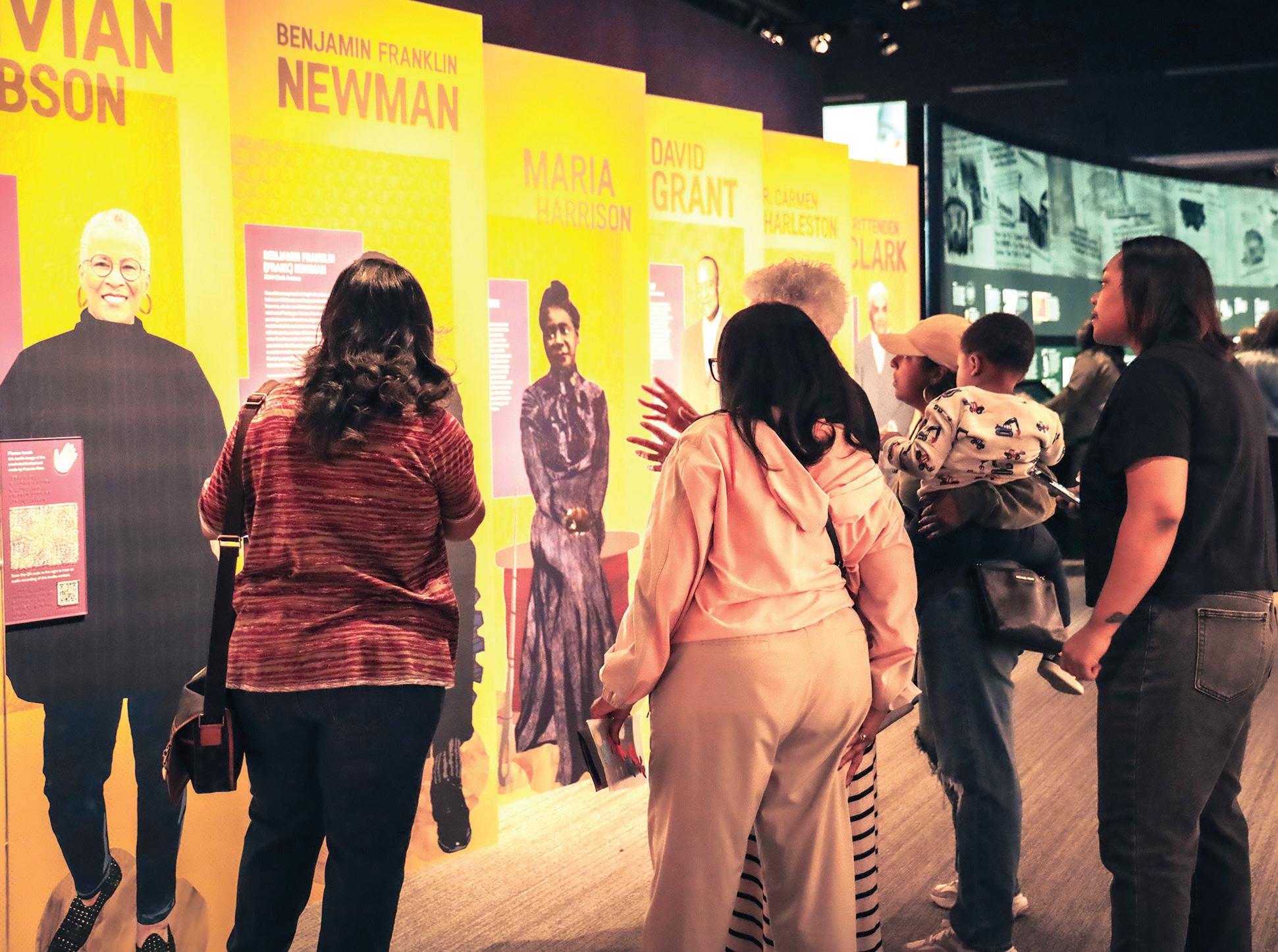
‘Mill Creek: Black Metropolis’ will close on Sunday, July 12.
cally Black community that thousands of St. Louisans
where she spent an early part of her childhood.
“They were relentless in their smearing of this community,” Moore said.
She added that in the decade between the introduction of the bond issue that resulted in Mill Creek being leveled ten years later, Mill Creek was referred to as a slum. Its residents were called slum dwellers, and the stories reflected that propaganda.
“They said there were outdoor toilets and that there were rats the size of cocker spaniels – they actually said that,” Moore said.
But what bothered her the most was how they talked about Mill Creek’s residents.
art of live hiphop performance. He worked both sides and the middle of the massive stage with bare minimum vocal-track assistance.
In addition to his new single “Pull Over,” Ludacris gave the crowd what they came for with hits like “Act a Fool” and “Throw Them Bows.”
What was most striking about his set was his highprofile features. Luda has provided verses on some of the biggest club bangers of the early 2000s — and he gave the audience a taste of how useful he was in adding his special sauce to those songs. From Usher, Justin
“They were nameless, faceless slum dwellers,” Moore said. “What occurred to me was that you are talking about my parents. You are talking about my grandparents, my aunts, my uncles and everyone that I knew.”
She was asked to curate an exhibition about segregation in St. Louis. Moore had a better idea. She would use her decades of research to highlight a segregated community –one that managed to thrive despite the systemic racism that was a part of their everyday reality.
“I’m going to tell this story from a Black lens,” Moore said. “That means I am going to tell this story from the experiences of
Bieber and Fergie, Luda has been a dependable contributor to pop music as much as he has been to hip hop.
The audience exploded when he performed his verse from the remix of Justin Bieber’s breakthrough hit “Baby.” The crowd sang along to Bieber’s prepubescent vocals.
DJ Infamous deserves a nod for keeping the energy level at a maximum for a five-minute mini-feature — probably to give Luda a chance to cool off before he closed out the highimpact show.
Infamous leaned heavily on DMX tracks before

people who lived there –the voices of the people who lived there – not those outside forces who have been describing this community.”
And she was determined not to tell the story from the vantage point of oppression, woe, sadness and trauma.
“I wanted to show a community living in a segregated society that wasn’t just sitting at home crying because they couldn’t live next to white people or couldn’t go to a white bank or white restaurant,” Moore said. “Mill Creek is an example of what Black people built. It was erased from the landscape, but it was also erased from consciousness.”
closing out with Nirvana’s “Smells Like Teen Spirit,” a risky choice for a hiphop show that paid off enormously.
But the highlight of the show was the performance of his verse from DJ Khaled’s 2010 anthem “All I Do Is Win.”
“When I step into the building, everybody’s hands go up… and they stay there,” the hook says before Ludacris launches into his explosive, unforgettable verse. And that’s exactly what they did.
“Mill Creek: Black Metropolis” was an effort to restore the legacy of this historic Black community.
LeFloreItuen feels that Moore’s work was necessary – and that the entire population is a benefactor of Moore’s hard work.
“Our history informs this world. It has global impact,” LeFloreItuen said. “And we have to continue to tell those stories and not be afraid to do exhibits like this.”
As the exhibition prepares to close, the museum will mark its final weekend with three days of programming that honor Mill Creek’s legacy. The schedule is as follows:
Friday, July 10
— A Mill Creek
Homecoming: Stories in Sound & Spirit
5–8 p.m. | Free The weekend opens with an evening of music, dance and community reflection. DJ Lamar Harris will bring the neighborhood’s sound to life, and Mademoiselle Mystique will perform a tribute to Mill Creek native Josephine Baker.
Saturday, July 11 — A Night at Peacock Alley: Mill Creek’s Musical Legacy Doors 6 p.m., Concert 7–9 p.m. Saturday’s concert celebrates Mill Creek’s reputation as the “Harlem of St. Louis.” Composer JD Parran will lead an ensemble through original works inspired by the neighborhood’s cultural life. Saxophonist Stanley Coleman will follow with an allstar quintet featuring vocalist Kim Fuller Barnes and pianist Ptah Williams.
Sunday, July 12 —
Mourning Mill Creek 2–4 p.m. | Tickets $10 | Doors 1:30 p.m. The closing event is a staged production by A Call to Conscience, written by Kathleen Gamble and directed by Fannie Belle Lebby. Set in 1958, the play centers the families who learned their neighborhood would be dismantled in the name of “urban renewal.”
Together, the threeday celebration marks the closing of an exhibition that has helped St. Louis revisit, reclaim and honor the story of Mill Creek.
For more information about “Mill Creek: Black Metropolis,” which closes July 12 at the Missouri History Museum, visit www.mohistory.org

After hopping into his verse on “Holidae In,” Luda brought Chingy out to perform the song alongside him.
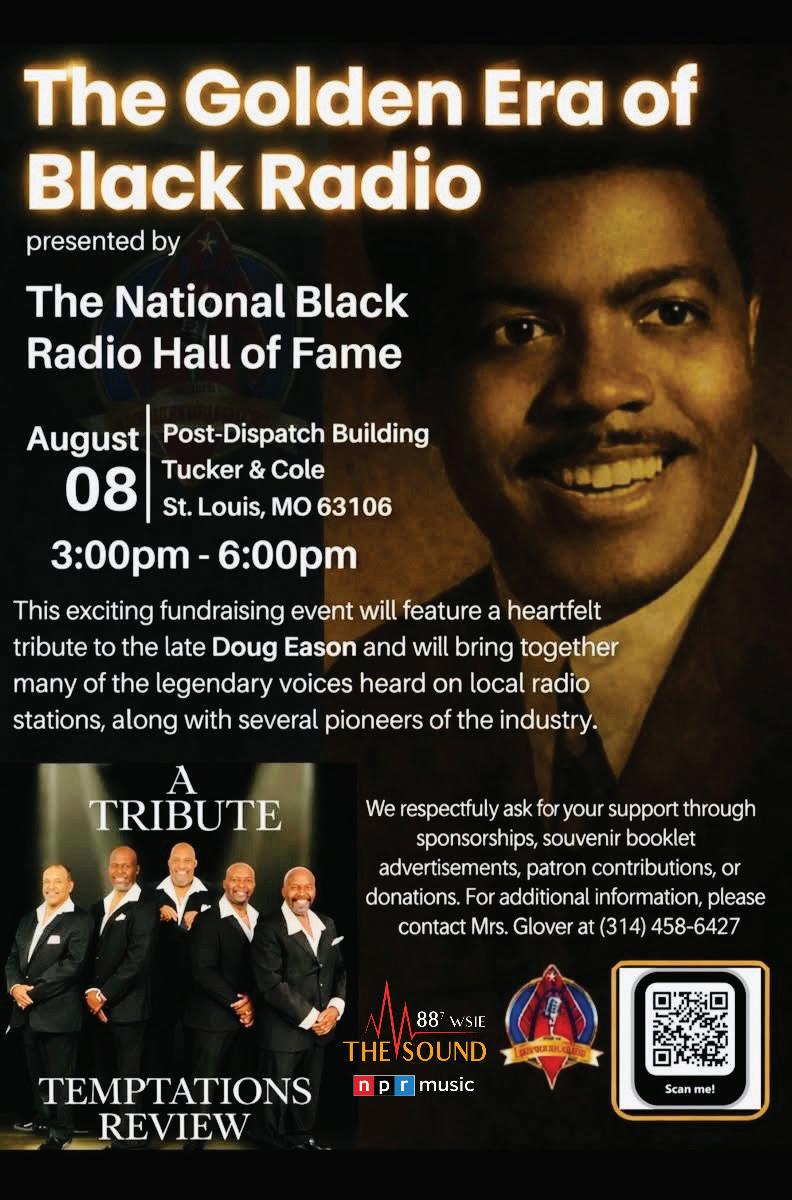
Photo by Taylor Marrie / St. Louis American
The 5,000-square-foot exhibit honoring the histori-
called home opened in November 2025.
Photo by Lawrence Bryant / St. Louis American

Luda let loose in The Lou. I know he’s been to town a few times since, but the last time I saw Ludacris light up the stage, it was at the late great Super Jam 15 years ago. Do y’all remember those big ole blow up boxing hands he had on? He was doing the most, but I got my life from that set. Anyway, why did Luda’s Celebrate 250 performance at The Arch on Friday make me feel like time has stood still for him? When I tell you he got it all the way in while letting us know he has the hits and hasn’t aged a bit! And his love for STL is as big as those inflatable arms he used at Super Jam! On Friday, he let us know before he got too deep into things that St. Lous was one of the cities who had his back when he was trying to make a name for himself. He ain’t the only one! G-Eazy, Future and a gang of other folks owe their success to our early support from our city. But anyway, back to Luda. He could have just stood there on mute after he brought my boy Chingy to the stage to perform his Disturbing Tha Peace classics “Holidae In” and “Right Thurr” and I would have given it a 10 out of 10. But Luda had the nerve to give us an hour-long set. Now keep in mind it was 126 degrees Celsius. I know he had to be rapping on that stage feeling like he was on a rotisserie rack. If I’m being honest, I didn’t realize how universally loved he was until Friday. The lumberjack looking gentleman in size 2X deer hunting camouflage gear and cowboy boots let me know what time it was. He hopped and bopped around kicking up dirt like he was at somebody’s hoedown, but knew every lyric Luda spit! Thousands of us were sizzling like we were on a QuikTrip hot dog grilling contraption, but a time was had. Thanks Luda and Ching-a-ling!
Storm chasing instead of celebrating. I had such a ball thanks to Celebrate Saint Louis that I had decided to go for a round two on Saturday. Too bad Mother Nature proved herself to be an equal opportunity offender by cutting up even worse for Celebrate 250 than she did for Black Wall Street 314. I can’t say I was looking forward to the aroma of the heat activated granola eatin’ folks that had me contemplating bringing a portable air purifier to see Stephen Marley – who is quietly my favorite of all Bob’s boys. What? Y’all know some of the reggae heads be smelling like ganja and slow cooked onions. I’m not judging. I’m just saying. I was actually hoping Michael McDonald was gonna pop out on Kenny Loggins’ Saturday set the same way Chingy hopped out with Luda on Friday. Oh, so now y’all wanna act like I’m the only thug who loves yacht rock and eighties pop? Mother nature and that hurricane dashed all my hopes and dreams of a live performance of “This Is It” and “What A Fool Believes.” I turned right around as soon as that first thunder boom hit and headed back to the house. I was told the show went on, but I didn’t want to risk catching “flumonia” from getting soaked to the bone two weeks in a row. In somewhat related news, did anyone else catch that group of poor unfortunate souls holding up traffic on Tucker near the St. Patrick Center so they could film an impromptu twerkfest on a device so tiny that it could have passed for an iPod Nano (remember them) on Friday? I was almost late to Luda because of their shenanigans. It was a mess. The only thing missing was a sign that said, “Will Twerk For Food!”
Almost MATI time! Y’all have to know that I am over the moon because I only have seven more days to wait until one of my favorite music festivals of all time gets underway. Music at the Intersection (MATI) is about to have me in those Grand Center streets getting my whole entire life from local, national and global music stars. By the time Sunday night wraps, I’m wore down in the best possible way! If I even tried to list the dozens of folks who will be taking the stages between the special show by Jon Batiste on Thursday night


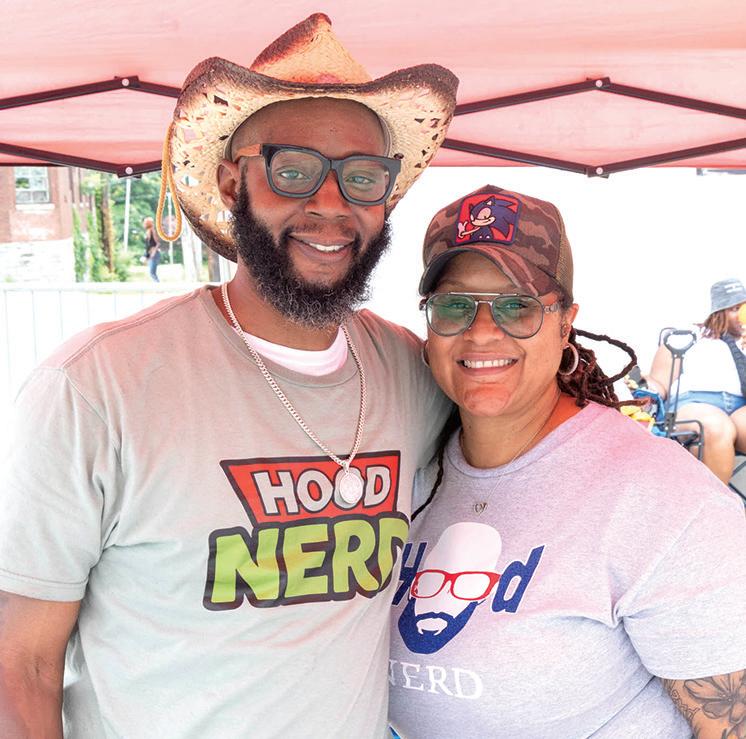

and the rest of the weekend of top tier talent, I wouldn’t be able to put anything else in Partyline. I will say that I’m looking forward to Killer Mike, PJ Morton, Wyclef and of course Keyon Harrold. And I’ve been in physical therapy since around St. Patrick’s Day to make sure this meniscus can handle Big Freedia’s show and the Mannie Fresh Block Party powered by Delux. My nephew has been helping me stay ready by randomly playing the intro to “Back That Thing Up” so that I can be ready to make my knees touch my elbows right on cue!
WerQfest
Continued from B1 for WerQfest 2026.
“WerQfest has always been about giving our community a shining night to revel in our own creativity and culture,” Boyd-Griffith said. “Every year, we raise the bar for how we celebrate our stories, our artistry, and each other.”
Last year Grammynominated Avery Wilson sang the stage to oblivion. This year hip hop will be front and center.
“I’m still pinching myself that we will be welcoming JT to St. Louis alongside an incredible roster of artists,” Tre’von said.
JT made a name for herself with rap partner Yung Miami as part of the duo City Girls nearly a decade ago. The group became an industry staple soon after their debut studio album “Girl Code” dropped in 2018. They are responsible for club anthems such as “Act Up”
JT will take the WerQfest stage alongside internationally recognized drag artist Onya Nurve (winner of “RuPaul’s Drag Race” Season 17), genre-bending hip-hop artist Infinite Coles (son of Wu-Tang Clan’s Ghostface Killah).
and “Twerk.” After three studio albums, City Girls announced that they would embark on respective solo careers in 2023.
“If you have been watching from afar, this is your sign to finally experience WerQfest,” Tre’von said.
JT will take the WerQfest stage alongside internationally recognized drag artist Onya Nurve (winner of “RuPaul’s Drag Race” Season 17),
genre-bending hip-hop artist Infinite Coles (son of Wu-Tang Clan’s Ghostface Killah).
“It’s basically a big, Black queer family reunion with joy, with fun and great entertainment,” Griffith said. “It really is just a great night of us celebrating us.”
A dynamic lineup of STL-made artists and DJs like Kristopher Lay, Nyara, Rico Steez, and LaLa Ahmir will also be gracing the WerQfest 2026 stage.
“It started off as a passion project and it really turned from that into a whole movement,” Griffith said. “I’m just so excited that the community has rallied behind it. It hasn’t been easy, but consistency, community and faith have carried us here.” WerQfest 2026 will take place on Saturday, July 11 at the Atomic Pavilion, 4140 Manchester Avenue, St. Louis, MO 63110. The party starts at 5 p.m. For more information or to purchase tickets, visit www.werqfest.com

The Reynolds family was among the thousands who filed inside Celebrate 250 at the Arch to see rap star Ludacris move the crowd Friday evening.
Photos by Lawrence Bryant / St. Louis American
Victoria was representing the red, white and blue when she came to catch Ludacris with surprise guest Chingy bring hip hop heat live at the Arch.
The Hood Nerd team were just a few of the businesses who supported Black Wall Street 314 last Saturday in the heart of Wellston.
“What is greatness to me? It’s kind of being one-of-one. That’s definitely something I want to try to achieve.”
— Darryn Peterson, No. 2 overall pick in the 2026 NBA Draft and Utah Jazz guard
Those who closely follow Major League baseball often concede that their opinion on “who is better” can differ from Wins Above Replacement (WAR), Value-Based Rating (VBR) or other analytical statistics.
Armed with those numbers as of July 6, a dose of personal “eye tests,” and injury status, I give you my 2026 All-Star Break Top 10 Black MLB Players.
Chase Burns, Cincinnati Reds P — Starting pitching is baseball’s highest-priced commodity and Burns, a 2026 National League All-Star, is among MLB’s best. He sports a 10-1 record, has a stellar 2.40 ERA and is among league leaders with 97⅔ innings pitched. Add 116 strikeouts compared to just 31 walks and a chance to win 20 games. He’s top dog.
James Wood, Washington Nationals

SportS EyE
With Alvin A. Reid
Looking at my Top 10 Black MLB players list
Black player. It’s Judge. But this is a snapshot of where we are at right now. Judge is injured with no return in sight. However, his numbers keep him on my list. In his 59 games played, Judge posted 17 home runs, 38 RBIs and a .238 batting average. He is still in the top five of all Yankees’ batting categories.
Jordan Walker, St. Louis Cardinals RF — Named an All-Star for the first time, Walker’s breakout season has been the catalyst for his team’s surprising campaign. Walker is an AllStar based on his .292 batting average, 20 home runs and 67 RBIs. Opposing runners respect his arm and Walker also has 11 stolen bases.
LF — Wood leads MLB in runs scored (77), walks (68), total bases (186), games played (90) and plate appearances (420). He’s durable and carries a .269 batting average, 23 home runs and 56 RBIs. It’s no wonder he made the NL All-Star team, and he should be a starter instead of a reserve.
Aaron Judge, New York Yankees RF — This is not a declaration of who is MLB’s best
Byron Buxton, Minnesota Twins CF — When Buxton plays, he plays great. In 2026, he avoided injury until hip soreness sat him down for a few games. He quickly returned and remains at pace to easily top the most games played in any of his 11 MLB seasons (126 in 2025.) He is hitting .271 with 25 home runs and 45 RBIs. He could finish No. 1 at season’s end.
C.J. Abrams, Nationals SS — If he were a bit better defensively, he would likely be No. 1. Abrams leads the NL in RBIs with 61 and

has socked 18 home runs with a .269 BA. Throw in 13 stolen bases and a dramatic reduction in strikeouts compared to the 2025 season when he went down via strikeout 125 times in 144 games. He is the NL starting shortstop in the All-Star Game.
Xavier Edwards, Miami Marlins 2B — Edwards’ .302 BA is a rarity in today’s game, and he is among MLB’s best second basemen defensively. He has six
home runs and 35 RBIs and is invaluable to the surprising Marlins. He has walked 49 times in 91 games compared to 47 in 139 games last year. Add 13 stolen bases to his superb season.
Michael Harris II — Atlanta Braves CF Harris is having his best MLB season by far. His center-field defense has saved the Braves runs repeatedly and his .301 BA is among league leaders. Harris has 16 home runs, 48 RBIs and
InSIdE SportS
With Earl Austin Jr.
15 walks. He is easily on pace to top his career numbers in all three categories and is instrumental in the Braves’ run to the NL East summit.
Taj Bradley, Twins SP Finally, another pitcher. Bradley is a dandy one, posting a 7-3 record in 16 starts with a respectable 3.86 ERA. The Twins are one of the AL’s offensively challenged teams and Bradley could have a few more wins if his team scored a few more runs. He has fanned 102 batters
A memorable prep sports year
It was another exciting year of high school sports in the St. Louis metropolitan area. As we always do at the beginning of the summer, we take a look back at what happened in our annual St. Louis American Prep Year in Review. This week, we look at the great teams that made this past year special.
Principia Boys Go Back to Back: The Principia boys basketball team was dominant in winning its second consecutive Class 3 state championship. The Panthers were led by 6-foot-4 senior guard Quentin Coleman, who earned St. Louis American Player of the Year honors. He concluded his career with a 50-point performance against Miller Career Academy in the state championship game. The Panthers also made a national name for themselves as they defeated some of the top teams in the country during the season. They finished third in the prestigious City of Palms Tournament in Florida in December.
East St. Louis Boys Basketball: The Flyers
won the IHSA Class 3A state championship, the second in the school’s history. East Side won 30 games during the season, ending with a 50-46 victory over Deerfield in the state championship game. The Flyers were led by 6-foot-8 senior forward Jamison White, a transfer from Chaminade, who emerged as one of the top players in the state of Illinois.
The Flyers were also led by senior guard Alex Johnson and junior point guard Phillip Jones.
Incarnate Word Wins Another Title: The Incarnate Word Academy girls continued their basketball success by winning the Class 6 state championship. It was the ninth consecutive state championship for the Red Knights under legendary coach Dan Rolfes. One of the season’s big highlights was a victory over Top 5 national power Long Island Lutheran at the Sophie Cunningham Classic in Columbia in January. The Red Knights fielded a talented lineup of seniors, all of whom are now attending NCAA Division I schools.

Principia Girls Make History: The Principia girls basketball team made history by winning the Class 3 state championship. It was the first for the girls basketball program. The Panthers survived two close contests against Highland and Centralia in the state playoffs before posting two comfortable victories in the Final Four to win the state title. Principia was led by 6-foot-2 junior forward Dasia Scott, who was the St. Louis American Girls’ Player of the Year.
Senior for-
led the East St. Louis Flyers to the Illinois Class 3A state championship.
now
Lift for Life Girls
Three-Peat: The Lift for Life girls basketball team displayed great resiliency in winning its third consecutive state championship. The Hawks defeated MICDS to win the Class 5 state championship. Lift for Life survived season-ending injuries to All-State guards Amaya and Cara Manuel. The Hawks were also without standout guard Zha Harris, who missed the first half of the season due to injury. When Harris returned, she and senior Diamond Polk led the Hawks’ surge to the
three-peat state title.
De Smet wins another state title: De Smet Jesuit has been a basketball powerhouse in the St. Louis area since the early 1970s. The Spartans won their second state title in three years by claiming the Class 6 state championship. The Spartans defeated Blue Springs South in the state championship game.
Belleville East Girls Make History: The Belleville East girls basketball program made history by advancing to the Final Four of the IHSA Class 4A state tournament for the first time. The Lancers finished third in the state tournament during their historic season. The Lancers were led by sophomore guard Hailey Gray, who emerged as one of the top young players in the state of Illinois.
Metro and Bio Science track team makes history: The Owls won the Missouri Class 3 boys state championship for the first time. The Owls won on the strength of their excellent distance runners and jumpers. Senior Owen Garrett won a pair of gold medals, including the 800-
and walked just 38. Mookie Betts, L.A. Dodgers SS — When I compile a similar list at season’s end, Betts will likely be much higher. A slow start and stint on the injured list kept his numbers down. Betts has heated up. He has 11 home runs and 29 RBIs, but three home runs and nine RBIs have come in the last 10 games. Betts smacked the 300th home run of his career on June 24 against the Twins and has 302 total.
meter run, while Maxwell McFarlane earned three All-State medals in all three jumping events.
Festus Girls Win Another Title: The Festus Tigers won the girls Class 4 state championship for the second consecutive year. The Tigers were led by splendid junior Jahmeshia Patterson, who won three state titles in the sprints and hurdles. Festus’ state title continues the strong track and field tradition in the Jefferson County area.
East St. Louis Football Makes Another State Run: East St. Louis made another run to the IHSA Class 6A state championship game, finishing as the runner-up.
Belleville West Boys Shine: The Belleville West Maroons had a great run to a second-place finish in the IHSA boys Class 3A state track and field meet.
Lift for Life Football Goes to State: The Lift for Life Hawks made history with their first appearance in the Show-Me Bowl. The Hawks were edged by state power Seneca in the state championship game.
St. Louis Cardinals right fielder Jordan Walker is celebrating his selection to the National League All-Star team. He also made columnist Alvin A. Reid’s Top 10 Black players list.
Alvin A. Reid
ward Jamison White
White is
a freshman at Saint Louis University.
Photo courtesy of Major League Baseball
Earl Austin Jr.
Photo by Lawrence Bryant / St. Louis American



Washington University in St. Louis offers rewarding opportunities in various fields at all levels, with positions in engineering, nursing and health care, research, administration, technology, security and more.
Medical Assistant Apprentice
Would you like to become a Medical Assistant and use hands-on patient care experience to make a difference, but don’t have the time or resources to attend school? WashU has a solution.
This paid apprenticeship is a full-time (40-hour/week), benefits-eligible position within our clinics across the greater St. Louis area. Participants will complete coursework during working hours (4 hours per week), at no cost to the employee.
Apprentices commit to remaining in their sponsoring department for 1.5 years. Upon completion, you will earn U.S. Department of Labor recognition as a Certified Medical Assistant, with opportunities to continue growing your career at WashU Medicine.
For program details, visit WashU Medical Apprenticeship Programs (https:// hr.wustl.edu/careers/medical-apprenticeship-programs/)
For questions, please contact: clinicalapprenticeships@ wustl.edu
WashU is committed to providing you with a comprehensive and competitive benefits package. You and your family have access to benefits and resources, such as health care coverage, employee wellness program, tuition assistance and help in establishing your financial future.
For the full job description and to apply, visit jobs. washu.edu, JR93418.
We seek people from diverse backgrounds to join us in a supportive environment that encourages boldness, inclusion, and creativity.
EEO/AA/VET/Disability Employer
LETTING NO. 8796
SEALED BIDS
Bids for REBID Renovate Interior & Exterior, Readiness Center Building, Project No. T2421-01 will be received by FMDC, State of MO, UNTIL 1:30 PM, July 30, 2026. Project information available at: http://oa.mo. gov/facilities
REQUEST FOR BIDS
The City of Flordell Hills, Missouri, is currently seeking bids from Professional Park Planners to assist in visualizing and revitalizing our community.
We invite you to visit our project sites located at the corner of Jennings Station Road and Greenhaven Drive, 63136, as well as 7001 Brandon Street, 63136.
If you are interested in this opportunity, please submit your bid by 2:00 PM on July 14, 2026. Your submission should include at least two summaries of any prior relevant projects.
Please send all submissions to cityclerk@flordell.com to the attention of Alderwoman Rhonda McQueen.
PUBLIC NOTICE
Notice is hereby given that the Metropolitan St. Louis Sewer District Requests for Quotes, Bids and Proposals are posted online for public download. Please navigate to www.msdprojectclear.org > Doing Business With Us > View Bid Opportunities Metropolitan St. Louis
District is an Equal
Employer.
SEALED BIDS
Bids received by Zion Travelers Community Involvement Association
Bids for Commercial Flat Roof Replacement Bids for A/C Units w/ Warehouse Ceiling Fans
Full Details Available At: ZTCIA.ORG
and disadvantaged business enterprises are encouraged to submit bids.
SEALED BIDS
Bids for Replace Chiller & HVAC, Headquarters & Garage Buildings, Project No. R250701 will be received by FMDC, State of MO, UNTIL 1:30 PM, August 13, 2026. Project information available at: http:// oa.mo.gov/ facilities
KITCHEN EQUIPMENT REPAIR SERVICES RFP 2026
The Saint Louis Zoo seeks bids from qualified vendors. Bid documents are available as of 7/8/26 on the Saint Louis Zoo website: stlzoo.org/vendor.
4TH STREET AND WASHINGTON AVE MULTIMODAL IMPROVEMENTS FEDERAL PROJECT NO. TAP-5436(605)
Electronic bids submitted through the Bid Express Online Portal will be received by the Board of Public Service until 1:45 PM, CT, on July 28, 2026, then publicly opened and read. Proposals must be submitted electronically using “Bid Express Online Portal” at https://www.bidexpress.com/businesses/20618/home
Plans and Specifications may be examined online through Bid Express at https://www.bidexpress.com/businesses/20618/home and may be downloaded for free.
A pre-bid conference for all contractors bidding on this project will be held July 7, 2026 at 9:00 a.m. The pre-bid conference will be held in City Hall, 1200 Market Street, Room #301, St. Louis, Missouri 63103.
The project has a DBE goal of 0%, and an On the Job Training (OJT) goal of 0 slot for 1,000 hours.
Bidders shall comply with all applicable City, State and Federal laws (including MBE/WBE policies).
All bidders must regard Federal Executive Order 11246, “Notice of Requirement for Affirmative Action to Ensure Equal Employment Opportunity”, the “Equal Opportunity Clause” and the “Standard Federal Equal Employment Specifications” set forth within and referenced at www.stl-bps.org (Announcements).

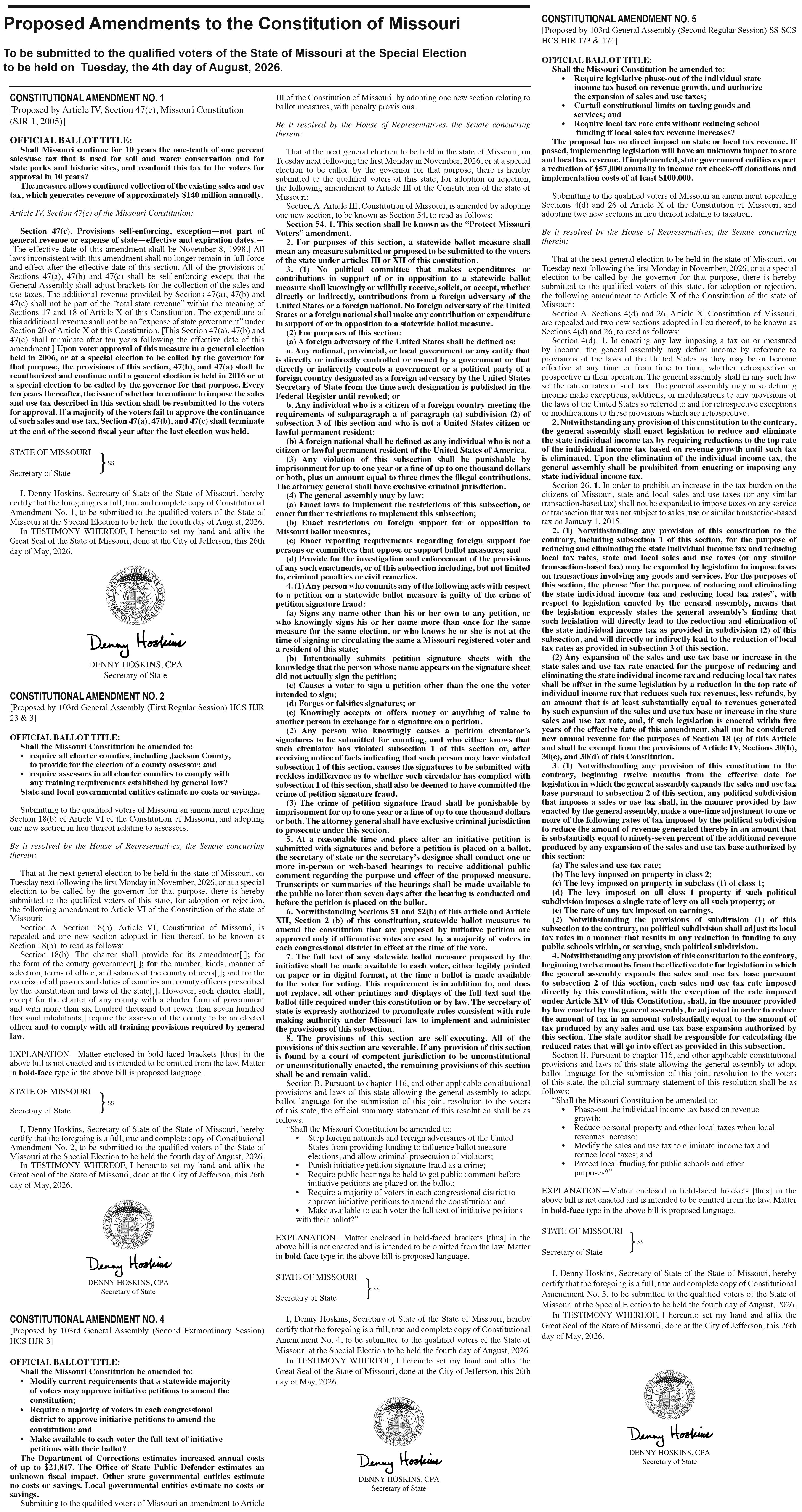
St. LouiS american Bids &
ST. LOUIS COUNTY DEPARTMENT OF HUMAN SERVICES
REVISED NOTICE OF 2026-2030 CONSOLIDATED PLAN
PUBLIC COMMENT PERIOD & PUBLIC HEARING
Persons with disabilities or who otherwise need assistance should contact the Department of Human Services at ocd@stlouiscountymo.gov or (314) 615-4405 at least 48 hours prior to the public hearing. Residents who are deaf, hard-of-hearing or have a speech disability may contact Relay Missouri at 711. Translation and interpretation services are available upon request for individuals with limited English proficiency. Requests should be made at least 48 hours prior to the public hearing.
AGENCIES
St. Louis County is the “Lead Agency” for the St. Louis County HOME Consortium (the Consortium). The Consortium is a group of contiguous units of local government that have joined together for the purpose of receiving HOME funds and administering a HOME Program as a single grantee. The members of the Consortium include St. Louis County, Jefferson County, St. Charles County, and the cities of Florissant and O’Fallon.
PURPOSE
The 2026-2030 Draft Consolidated Plan summarizes the five-year community development priorities, goals, and proposed actions of the Consortium. The Consolidated Plan includes housing and homeless needs assessment, housing market analysis, strategic priorities, and funding strategies that guide the use of the federal formula grant funding administered by the U.S. Department of Housing and Urban Development (HUD). The Plan includes the following HUD-funded programs:
• Community Development Block Grant (CDBG)
• HOME Investment Partnerships (HOME)
• Emergency Solutions Grant (ESG)
The Consolidated Plan provides information on how funding received through the CDBG and ESG programs will be spent in St. Louis County as well as information on how HOME funds will be spent in St. Louis County and in the jurisdictions of the members of the Consortium. This notice is published in accordance with HUD’s citizen participation requirements.
ACTION Notice is hereby given that the Consortium is presently seeking public input on its 2026-2030 Draft Consolidated Plan. The draft Plan may be revised prior to its submission to HUD.
PUBLIC HEARING (REVISED)
A public hearing to engage residents and stakeholders of the Consortium will be held on July 21, 2026, beginning at 4:30 p.m. at the St. Louis County Library— Clark Family Branch, Meeting Room B, at 1640 South Lindbergh Boulevard, St. Louis, MO 63131. This meeting location is physically accessible to individuals with disabilities.
COMMENT PERIOD
Now that the 2026-2030 Draft Consolidated Plan is published, there will be a 30-day comment period to allow residents and stakeholders additional opportunity to provide input; July 6, 2026, through August 4, 2026.
Comments concerning the 2026-2030 Draft Consolidated Plan can be made during the Public Hearing. Written comments will also be accepted until 4:00 p.m. on August 4, 2026, and may be submitted via email to ocd@stlouiscountymo.gov or mailed to ATTN: 2026-2030 Draft Consolidated Plan, St. Louis County Office of Community Development, 500 Northwest Plaza Drive, Suite 801, St. Ann, MO 63074.
All comments received during the public comment period will be reviewed and considered prior to submission of the Consolidated Plan to HUD. The County anticipates submitting the final 2026-2030 Consolidated Plan to HUD in August 2026.
The 2026-2030 Draft Consolidated Plan is available online at: https://stlouiscountymo.gov/st-louis-county-departments/human-services/ community-development/ Physical copies may be requested by calling 314-615-4405

ST. LOUIS HOUSING AUTHORITY SOLICITATION RD26-38
ROOFTOP HVAC REPLACEMENT James House Apartments 4310 St. Ferdinand Ave., St. Louis, MO 63113
The St. Louis Housing Authority (SLHA) seeks bids to perform the following project:
The General Scope of Work for this project consists of but is not limited to the removal and replacement of the rooftop HVAC equipment including air cooled chiller, energy recovery units, CHW pumps, air separator, expansion tanks, air handling units, pump starter, and associated piping, ductwork, and electrical work. The anticipated performance period for this project is 180 calendar days.
The pre-bid conference will be held at 10:00 AM (local time), Tuesday, July 14, 2026 at the project site.
Sealed bids are due at 1:00 PM (local time) Tuesday, August 4, 2026 via QuestCDN or hand delivered to the SLHA Main Office at 3520 Page Blvd, St. Louis, MO 63106.
Latasha Barnes Contracting Officer
AN EQUAL OPPORTUNITY EMPLOYER

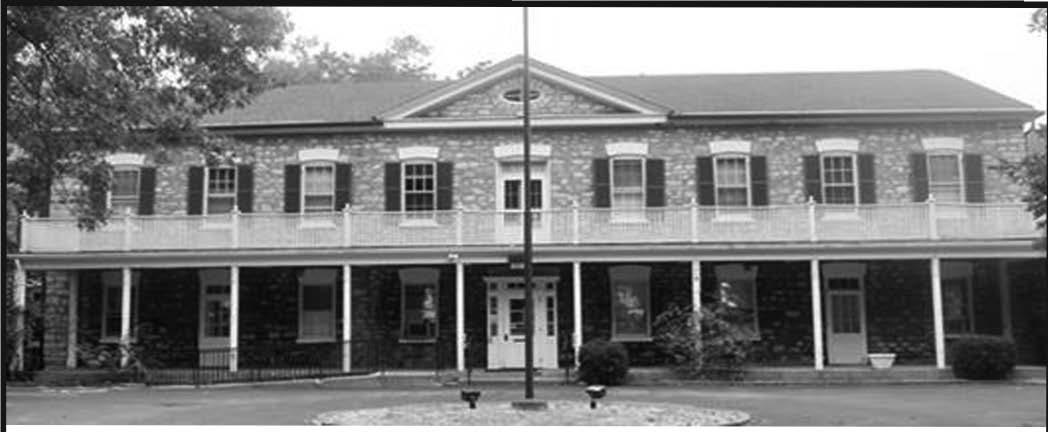




Religion
The Black church is the foundation of St. Louis history
By Rev. Anthony L. Riley
A major part of American history is St. Louis history. The city predates the nation by more than a decade and became part of the United States in 1804 through the Louisiana Purchase.
St. Louis has played a pivotal role in holding America accountable to its promises of liberty and justice for all.
St. Louis has been a battleground for equality for more than two centuries. One of the first civil rights demonstrations in American history took place on the steps of the Old Courthouse in 1819, when free Black residents and White allies protested Missouri’s entry into the Union as a slave state. The Old Courthouse was the site of the freedom suits of the 1840s, culminating in the Dred Scott U.S. Supreme Court case, often credited as inciting the Civil War.
If we are going to name, honor and exhibit the organizations that shaped this city as part of America’s origin story, we must begin with the Black church.
Black St. Louis church history is St. Louis history — and therefore American history. If we are going to name, honor and exhibit the organizations that shaped this city as part of America’s origin story, we must begin with the Black church. That is not to be
confused with churches that Black people attend. Every other organization is beautiful wallpaper. The Black church is the wall. In 1825, John Berry Meachum organized what became First African Baptist Church — now First Baptist Church City of St. Louis — the oldest Black church west of the Mississippi. Meachum purchased his own freedom through carpentry, then bought roughly 20 enslaved people, trained them in a trade and set them free. When Missouri outlawed the education of Black people in 1847, he did not close his classroom. He equipped a steamboat with a library, desks and chairs and opened the Floating Freedom School on the Mississippi River, beyond the reach of Missouri law. One of his students, James Milton Turner, founded Lincoln Institute, the first institution of higher learning for Black Missourians. Mary Meachum, his wife, helped freedom seekers cross the river at what is now called the Mary Meachum Freedom Crossing. It’s documented in the State Historical Society’s archives. The Greek word for
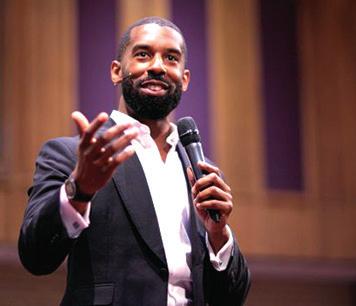
Rev. Anthony L. Riley, pastor of Central Baptist Church in St. Louis
church is ekklesia. It means “the called-out ones,” the assembly summoned for a purpose beyond itself. Ekklesia was never meant to be four walls and a steeple. Before there was a Lincoln Institute, the church was already the schoolhouse. Before there was a bar association to induct pioneering attorney and longtime Central member Margaret Bush Wilson, the church was already the only room where a Black grievance could be spoken aloud without a white offi-

cer standing watch. Quinn Chapel AME Church, Union Memorial Methodist Church, Antioch Baptist Church and Central Baptist Church — the church I now pastor — ran mutual aid societies, burial societies and benevolent funds that functioned as the first banks Black St. Louisans could trust because no other bank would have them. The sanctuary built the scaffolding the community stood on. Scripture says in Hebrews, “Do not neglect
to do good and to share what you have, for such sacrifices are pleasing to God.” That has been the Black church’s offering in this city for more than two centuries. I do not say this to diminish the contributions of other organizations. I say it because every one of them was founded by people who first learned to organize, to tithe and to trust one another with money and strategy inside a Black church. They borrowed their order of service from Sunday morn-
ing. The mutual aid society borrowed its ledger from the deacon ministry. The administration seeks to silence the prophetic voice of the Black church. Privilege has sidelined our acknowledgment, support and reverence for the Black church. Proximity has planted seeds that internalize the same oppression that mutes the liberative ethos and pathos of our work. Before and after every march, the people gathered in a Black church.
The steamboat anchored beyond the reach of an unjust law. The riverbank where a pastor’s wife pointed enslaved people toward Illinois and freedom. Before Black St. Louis had any other organization, it had a Sunday. Before it had any other association, it had a baptism. The Black church is our epicenter, our incubator, the very wall on which the wallpaper of St. Louis life and culture was raised. We have been building this city since before this city would let us own the ground we stood on. We built it with hymnals and offering plates and Sunday school rooms turned into night schools. We built it with the kind of joy the world did not give us — and the world cannot take away. If we are going to continue building, join us in church first.
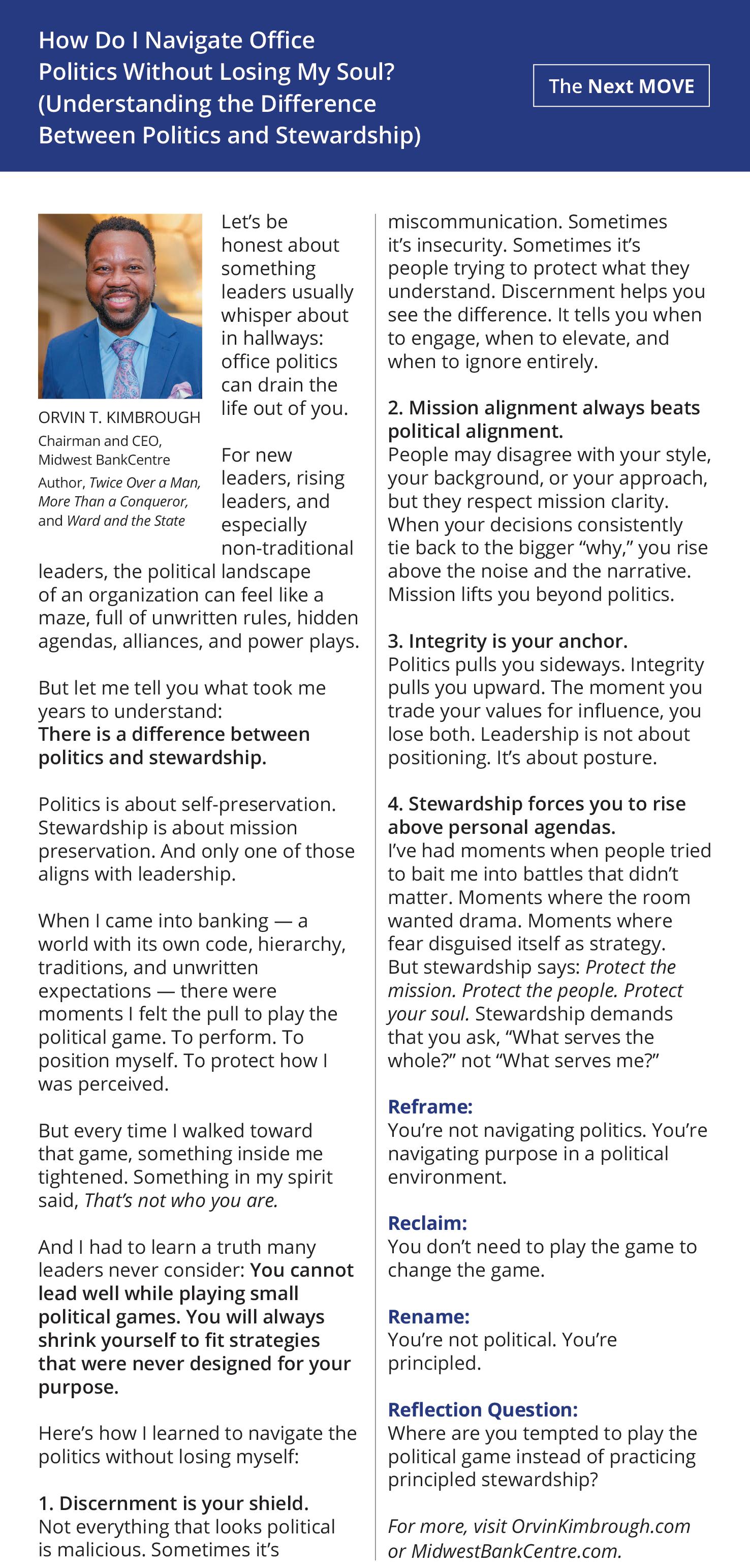
Rev. Anthony L. Riley is pastor of Central Baptist Church in St. Louis.
Courtesy photo