Your guide to the journey from Year 9 to IGCSE
Helping students and parents prepare for what’s ahead: 2026/27
Helping students and parents prepare for what’s ahead: 2026/27
The Student is a compassionate, curious, collaborative communicator who above all has the courage to be an active global citizen
to make a difference in the world.
Encouraging students to become curious, creative, lifelong learners.
Fostering a stimulating environment which celebrates the uniqueness of each student and where everyone feels they belong.
Enabling students to construct meaning for themselves and to be active in creating a better society.
Learning is the guiding light that enables students to be global citizens, driving change towards a more peaceful, inclusive and sustainable world.
The student is compassionate, empathetic and respectful: seeks to understand themselves, and others, be kind and have a positive impact on the world.
Kindness am friendly polite and considerate towards others
Respect I value the rights of others and our environment
Empathy I think about how others are feeling and consider the impact my actions can have
Helping others help others whenever I can, within and beyond our community
Balance I care for myself by looking after my physical and mental wellbeing and balancing different aspects of my life
The student is a curious and creative thinker: thirsty to learn, interested in other perspectives, open to view the world in different ways and propose innovative solutions.
Growth m ndset I believe abilities and intelligence can be developed through effort earning, and perseverance. I show commitment to growth and development
Creative I use critical and creative thinking skills to analyse, generate innovative ideas and take responsible action on complex problems.
Inquisitive I ask questions, seek understanding and explore the unknown
Open-minded am open to new ideas, perspectives and experiences. seek and evaluate a range of points of view and am willing to grow from the experience
Reflective experiences and feedback to grow and develop The student is a collaborator able to work as part of a team to achieve a greater outcome and strive for a brighter future.
Sharing ideas encourage others to contribute their perspectives, skills or knowledge
Taking responsibility complete tasks to the best of my ability and help to ensure others do the same
Influencing on the team by valuing the contributions to improve
Listening I understand that other people with their differences can also be right.
The student is a communicator: an active listener to other perspectives, with a unique voice who has the confidence to express and challenge ideas.
Active Listening I pay attention to what others are saying and respond respectfully
Unique voice I share my views and opinions with integr ty and honesty
Expressing ideas I express myself in more than one language and in a variety of ways
Challenging ideas If I disagree I do so in a respectful and constructive way
The student has courage: willing to take the lead, be independent, take risks and demonstrate resilience to overcome challenges and to be an agent of positive change.
Resilience I show determination to overcome challenges and learn from my mistakes.
Independence I use strategies to manage my learning and wellbeing
Risk Taking I am willing to step out of my comfort zone to grow and develop
Ask ng for help I seek support to overcome challenges when I need t
Leadership lead with a strong sense of fairness and ustice and with respect for the dignity of others
The student is a global citizen: acts to make a positive difference in the lives of others and in the world around us.
Valu ng equity and diversity I appreciate my own cu ture and personal history as well as values and traditions of others. I str ve to understand the world around me. I demonstrate respect for the dignity and rights of people everywhere creating a sense of belonging
Making a difference I have a commitment to service and action to make a positive difference in the lives of others and the local and global environment
Responsibi ty I exercise initiative in making reasoned, ethical decisions based on strong values and morals.
Integrity I am an upstander My actions for their consequences
Digital Cit zenship I use technology in an appropriate and responsible way
The term transition often refers to a life change that a child or young person may go through. The change from Year 9 to KS4 and step in your academic journey, bringing increased specialisation, responsibility, and exam-focused learning.
Students select subjects based on their interests and future aspirations while continuing core studies in English, Mathematics, Language and Science. The workload becomes more structured, with coursework, independent study, and formal assessments playing key role. Strong time management and revision skills are essential
post-16 education options. Beyond academics, students develop critical thinking, leadership, and global awareness.
This guide is to help you and your parents know a little bit more about your move from Key Stage 3 to KS4 and the change in curriculum to IGCSE.
The back pages include some extra help for your parents.
When choosing your IGCSE subjects, focus on what excites and inspires you. Pick subjects you genuinely enjoy, as passion fuels motivation and success. Consider your strengths, choosing subjects that align with your skills will help you thrive.
Think about how each subject is assessed; if you excel in coursework, subjects with project-based components might suit you better, while if you perform well under pressure, exam subjects time to research course content, speak to teachers, and explore career pathways linked to your choices.
Most impor tantly, choose a balance of subjects that setting the foundation for a rewarding future Meet the Options that you have chosen the subjects which are best for you.
November: Assembly to communicate to students
December: January: February:
Letter sent home alerting Year 9 parents to the IGCSE options process
H & C sessions directed by the Student Futures Team (launching Unifrog)
Parent and student information evening live presentationintroduction to the IGCSE Programme and KS4. Curriculum Handbook will be available on the website
Before the options evening, all Year 9 subjects set aside a time in lessons for the IGCSE course to be explained and for students to have an opportunity to ask questions
Assembly reminder of informed choices
IGCSE Subject Options Fair:
Students and parents meet with department what each subject offers at IGCSE and have an opportunity to ask questions. Electronic Options form shared with Parents
Following the information evening
information available to students and parents in the following ways:
School website for overview of KS4 IGCSE Curriculum Handbook - linked in the parent portal In lessons from teachers
Student Futures Team
Review choices
for submission of IGCSE option choices form (Electronic options form)
Student Futures, HoY, Dep Principal, Principal and Head review individual options decisions, where doubts exist based on the student’s up with students & parents
Compulsor y examination subjects
Mathematics
English Language
English Literature
Double Award Science
(Double Award plus Electives or Triple Award)
Por tuguese or French or German
Choose three other subjects from the list shown below.
Computer Science
Triple Award Science
Business & Enterprise
Economics
Geography
Histor y
Ar t & Design
Design & Technology
Drama
Music
Physical Education (IGCSE)
French
German
Por tuguese
The Focused Curriculum supports students in achieving at least six IGCSEs at grade C/4 or above, including Mathematics and English Language, enabling progression to KS5, academic equivalency in Portugal, and access to university foundation courses. This curriculum is for students who have been suppor ted by the school and parents in a way that recognises that a reduced number of subjects will be in the best interest of the student.
Families will be contacted by the school if we feel their child is most suited to this pathway.
A reduced number of IGCSEs
English Language & Literature + Mathematics + 4 options
From All Available Subjects including at least 1 science = Total of 7 IGCSEs (a reduction of 2)
Additional suppor t
1h30 / week
English suppor t
1h30 / week
Mathematics suppor t
1h30 / week
Science suppor t
30m / week
Learning Suppor t
Choose at least one Science from Physics, Chemistry or Biology.
Students who choose a separate science will be taught with the Triple Science students. They will receive an IGCSE grade in this science subject.
Double Science may be chosen as two options
(a combination of the three sciences leading to two IGCSEs).
An additional language is notcompulsory, but should becarefully considered depending on desired next steps.
A combination of interest and ability should be considered when choosing courses as well as potential next steps for post-16 education. Our aim is to suppor t students to achieve a set of good make the best possible step in their educational journey.
Families will receive individual advice on selecting options. All subjects will be of courses will be dependent on the ability to schedule individual combinations.
IB Programmes at St.
Students need to achieve at least 6 IGCSEs at grade C/4 or above with a C/4 in both Mathematics and English Language. For the following subjects students must have the minimum grade at IGCSE shown.
- Higher Level subjects - 6/B.
- Standard Level subjects - 4 /C.
- HL Mathematics - 8/A .
- HL Economics - 6/B in English Language.
- HL Economics - 6/B in English Language.
- HL ESS - 6/B in Biology / Geography / Double Award Science
Other international schools
Many schools require at least 6 IGCSEs at grade C/4 or above.
Portuguese schools Foundation courses
A minimum of 6 IGCSEs is needed for equivalençia. Grades are conver ted to points which enable entr y to the Por tuguese national curriculum pathway.
A number of foundation courses at universities could be open.
Is it likely that you will stay in Por tugal for university ?
Is the IB Career-related programme an option for your post-16 pathway ? Will Por tuguese language be needed for the next educational step?
Opportunities to develop the 6Cs beyond the classroom are an essential part of our holistic curriculum.
In Key Stage 4 the Wider Curriculum includes:
Physical Education All students
Curriculumn
The Enrichment curriculum consists of focused units of learning. The core components are Service Learning and Global Perspectives (covering world religions, geopolitics, and critical thinking).
Engagement
Whether your child follows the seven subject Focused Curriculum or the nine subject IGCSE standard curriculum, the Engagement Continuum is a guide to expectations around learning both at home and at school.
Disrupting the learning environment
Refusing to participate
Arguing with the teacher
Looking for ways to avoid work
Being off-task
Being unprepared
Looking for reasons to leave the room or move around the room
Trying not to be noticed
Physically separating from others
Being distracted
Putting in low effort
Doing the work
Being on task
Paying attention
Responding to questions
Asking questions about what we are learning
Understanding why our learning matters
Showing interest or curiosity in what we are learning
Enjoying learning
Setting goals for my learning
Seeking feedback to help me improve
Showing the courage to take risks in my learning
Monitoring and evaluating my progress
Arguing with peers
Trying to distract others
Off-task talking with others
Playing around with others instead of working
Working with others when directed to do so
Sharing ideas and thinking with peers
Following shared interests
Collaborating with others towards a shared goal
Challenging each other to drive improvement
St Julian’s school currently runs a “Bring Your Own Device” (BYOD) programme for all students in Years 10-13. This programme requires that all students must bring a device to school to enrich their learning and access online resources and learning environments in the classroom.
The BYOD scheme means that parents are free to choose a device for their child to bring to school.
There are some requirements to be appropriate for use in school.
The device must be able to access a WiFi network. The school has a site wide wireless network for students to use.
The device must allow the student to be able to type quickly and comfortably.
For example if a tablet device is bought then an external keyboard will be necessary.
The screen size and resolution will need to be large enough to work effectively and comfortably all day.
Should have a battery life of at least 6 hours.
The device should be portable and light enough to carry around all day.
Parents should consider the nature of the subjects being studied by the students when making choices.
Our Technology for Parents website contains a range of useful information that tells you all about the technology at the school.
In addition to the student portal we also have an intranet for students a range of information from the KS4 curriculum handbook and details about technology such as:
For any technical problem, students can always go to our friendly and helpful technicians in the IT support room through the door near the entrance gates or they can email:
At the beginning of term all students will be shown how to use our digital tools to organise their work.
This will involve:
Google Classroom To Do lists
Google Classroom To Do lists where they can see a full list of all assignments and homework that need doing.
Google Tasks
Using Google Tasks to keep track of what you need to do.
Google Calendar
Using Google calendar to view all assignments from Classroom and Tasks so they can see at a glance what they have to do during the week.
Lockers are issued to each student to keep their belongings safe.
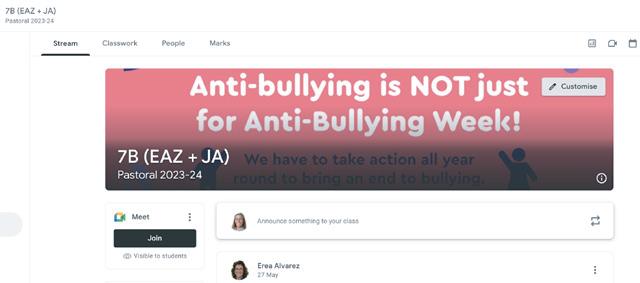
Google Classroom is our all-in-one place for teaching and learning. The easy-to-use and secure tool helps teachers manage, measure, and enrich learning experiences.
Students will be added to all of their classes by their teachers.
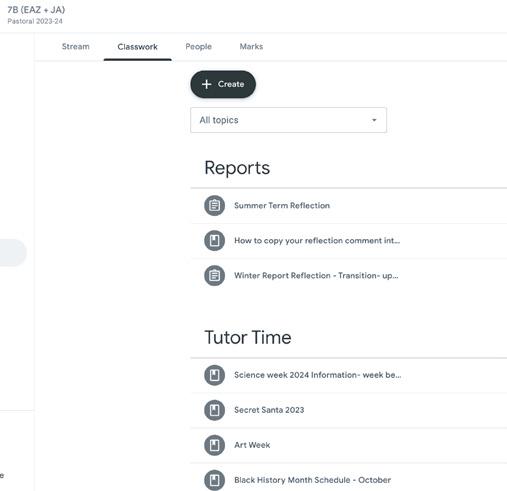
The Home Learning section in the SJS Portal App shows all the Classwork in a student’s Google Classroom across all their classes.
This provides a valuable insight into learning for parents, allowing you to:
• Participate in your child’s learning.
• Have oversight of work set in Google Classroom.
• Help your child manage deadlines.
• View the current submission status of an assignment (To-do / Overdue / Done).
Students should have 45 minutes of homework time per subject. We understand that in advance of assessments, students will themselves wish to devote more time to the revision of a subject. We are considering this fact
The Toolkit from KS3 should be used as a framework and reminder for how and why to be active in various different methods of active study.
Choose a quiet place where you can focus without distractions. Leave your phone in another room and turn off any social media on your laptop.
Ask for help if you need suppor t with independent study.
IGCSE preparations are in line with the wider mission of the school to create a happy, secure and inspiring learning environment within which all members of our community can achieve their full potential.
Assess student learning Establish learning goals Provide learning oppor tunities
Use the results
Let’s the teacher, parents and student know of developing skills, understandings and knowledge
Uses a variety of different methods and formats
Celebrates the combination of skills, content and attitude which lead to achievement in learning
Should be progressive in allowing meaningful progress of each student
Will allow teachers to plan future lessons and assessment types
Rewards
We recognise the importance of celebrating success
Merits
Teachers award merits for outstanding engagement, attainment and/or progress in class or homework. Merits are received via an email and can be followed by using the Parent and Student Portals.
Recognition Awards
These are presented during assemblies and at the end-of-year Awards Ceremony.
Dealing with unexpected behaviours
We recognise that mistakes are part of learning and use restorative practices to help positive development.
Learning and
If a student’s unexpected behaviour is causing harm to the learning or wellbeing of themself or others, teachers will issue either a Learning or Incident
indicate what the unexpected behaviour was, how it impacted on the learning or wellbeing of the individual or others and what measures were taken by the teacher to restore expected behaviours. Learning and Incident the school server, along with being shared with parents viaan ISAMS email.
Information will be provided at the start of the school year about how to access the school platforms available to parents and students.
There will also be an Information Evening in the second week of the school year where you will meet your child’s tutor and be able to ask specific questions.
The SJS Portal will be accessible via a dedicated web page and as a mobile app for both Android and iOS devices. Further details, including download instructions and a comprehensive guide, will be provided to parents.
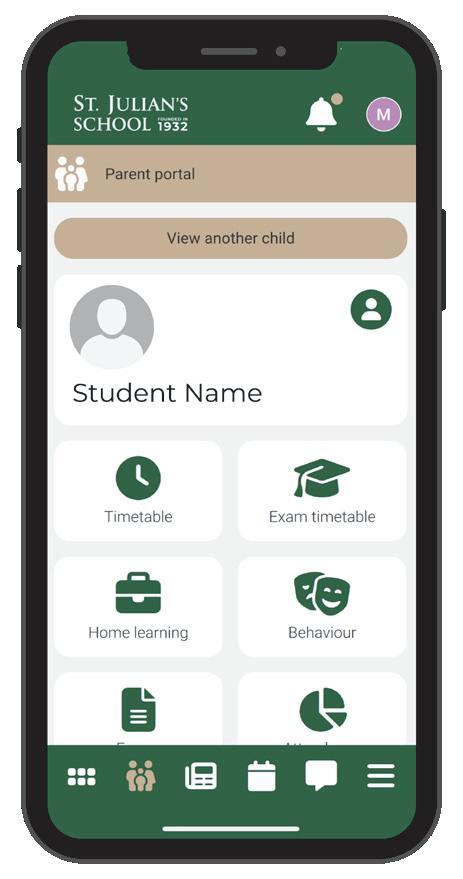

Android Or go to Google Play and search SJS Portal


Technology Guide for Parents
KS3 Curriculum website This provides an overview of the subjects taught in KS3.
iOS App Or go to App Store and search SJS Portal
Further information about the BYOD can be found here.
Creative Education Courses and webinars to learn about development and change.
The household agreement allows you to gain access.
The tutor will ensure they respond to you within 24 hours (72 hours if the communication is received on a Friday).
The KS4 Curriculum Handbook allows you to understand course content and methods of assessment in more detail.
KS4 Curriculum Handbook