

Summer
Dear Old Birkfeldian
I am always hugely proud of the College and its students, both past and present. St Joseph’s has gone from strength to strength this academic year: progress confirmed and endorsed unequivocally by record-breaking August GCSE and Upper Sixth results and destinations, its three–yearly Independent School Inspectorate inspection and the positive feedback received from the associated surveys of current parents, staff and pupils (Y4–6).
We have continued to invest in our facilities with the opening of our all-weather pitch, a new nursery sleeping room, a prep performing arts centre and sensory garden. We now hope to expand our nursery provision to even younger children. We are enthusiastically gearing up for our 40th rugby festival in October – to which you are all cordially invited and we want to see as many alumni as possible back on campus.
I am so proud that this year we are national senior debating champions, winners of the U13 ESFA national boys’ football cup and that we provide such a rich programme of trips and visits. This year alone we have taken our seniors skiing in the Alps, our prep pupils to France, mounted a cultural trip to Japan… and will be departing on a rugby tour of Fiji shortly.
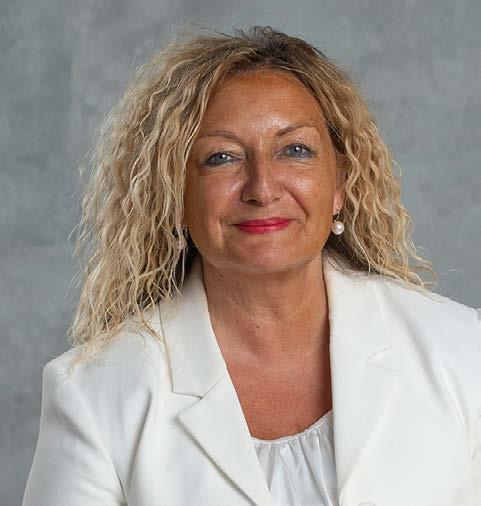
I hope you will enjoy reading this edition of the OB newsletter. Contributors include surgeon James Wimhurst and former ambassador Peter Millett, who travelled the world. You can find out more about our glamourous cover girl on page 10.
Thank you to all alumni who have supported the College in any way this year with visits, speeches, articles or financially and with our Giving Day last month. I wish all Old Birkfeldians a good summer wherever they roam and ask that as ever you stay in contact with the College and share with us your news and updates.
I wish all Old Birkfeldians a good summer wherever it takes you and ask that as ever you stay in contact with the College and share with us your news and updates.
With warm regards
Danielle Clarke, Principal
Community Steps Up for Second St Joseph’s Giving Day
Giving Day was a tremendous success this year, raising just under £12,000 in support of our school community. A heartfelt thank you to everyone who supported, attended, donated, volunteered and helped make the day such a success.
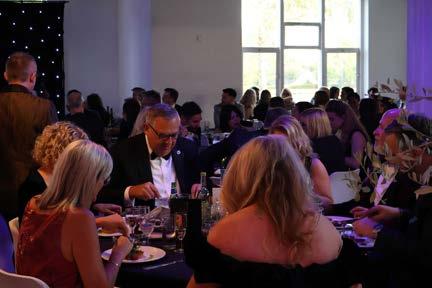
Highlights of the day included the much-loved Prep School Fête, which added real colour, energy and family spirit to the occasion, and the May Ball: the first event organised by our newly-formed Birkfield Community Team. It was a fantastic evening, full of generosity, good humour and community spirit, and a very fitting way to launch the team’s work.
Funds raised will support the development of the Prep School playground, helping us to create an improved outdoor space for the girls and boys.
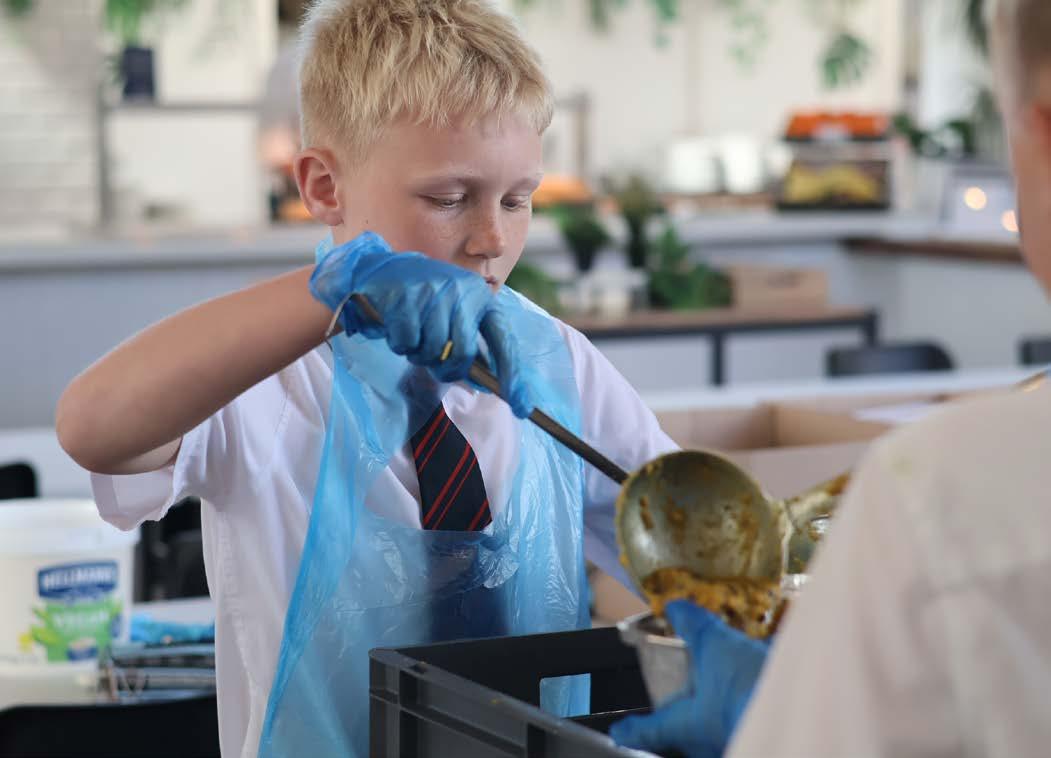
Our gratitude as well to Thomas Franks for their support in organising the joint ‘Feeding People in Need’ initiative. Through this, the wider community was served with an incredible 1,500 meals, reflecting the values of service and kindness that sit at the heart of St Joseph’s College.
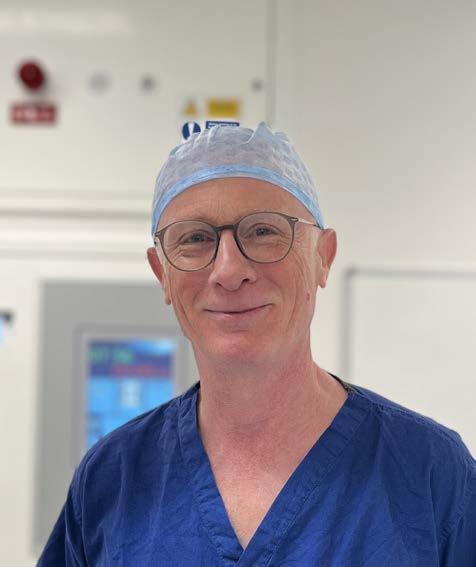
As a
specialist in hip and knee replacement surgery, James Wimhurst OB sees
‘a lot of former rugby players…’
I came up to St Joseph’s in 1979 from a small County Primary school in Felixstowe. It was quite a culture shock –a much larger school, no girls in the lower school, Catholicism at the centre of everything and no football. This last was of particular importance to me, as my main interests at primary school had been playing football and supporting Bobby Robson’s hugely successful Ipswich team. I was amazed to occasionally glimpse the great man picking up his sons from outside Birkfield House.
I had demonstrated little evidence of academic potential at primary school and I am indebted to two teachers in particular, who saw something in me that I was unaware of. Mrs Kearney expected a standard way above anything that had ever been required of me (I can still recite the Lake Isle of Innisfree) and Mr Shepherd inspired a life-long interest in biology.
Special mention should also go to two wonderful French teachers – Mrs Wilcox & Mme Baldwin. I have always regretted not exploring a way to take French A-level in addition to sciences. I think many schools are still too rigid, too early in the STEM / humanities split in this country. Duolingo is fun but my French vocabulary and grammar will never be as good as they could have been.
Rugby became a huge part of my life at St Joseph’s, inspired by Mr Hunter & Mr Rutherford, who not only coached us to success but insisted the game should be played the right way. As a small and not very quick scrum-half, I was incredibly fortunate to be surrounded by exceptional athletes like Peter Enahoro and Nigel Bevan, as well as the hugely talented Peter Jordan and Marcel Pusey. My job was simply to get the ball to them & then watch in awe as tries were scored, usually by the flying Okany brothers on the wings. I played club rugby into my thirties but never for a team as good as that 1st XV of 1985-86.
After St Joseph’s, I studied medicine at Cambridge, qualifying as a doctor in 1991. I was a junior doctor in the 1990s, when ‘resident’ meant just that. One hundred-hour weeks dictated that living in the hospital was the only practical option for the first five years of surgical training.
There followed six years of registrar training in Trauma & Orthopaedics, a lot of post-graduate exams and then a specialist hip surgery fellowship in Australia. I returned to the UK in 2003 and was appointed to a consultant post at the Norfolk & Norwich University Hospital, specialising in hip and knee replacement surgery. I see a lot of former rugby players.
I married Sarah, also a doctor, in 1998 and we have three children: one medic and one vet, but we did manage to produce one artistic child, an historian, who is now a teacher.
It is 40 years since I left St Joseph’s and my experiences at the school continue to influence my life today. I also still use the spatula I made in my first year in Mr Richardson’s woodwork class and have a painting by Ted Gentry on my living room wall.
I think what I learnt most / was instilled in me from my time at St Joseph’s was that hard work and diligence are of greater importance for most of us than natural ability, both academically and on the sports field. It is no coincidence that ‘Labore et Tenacitate’ was on the badge of our school blazers and rugby shirts.
J A Wimhurst OB, 1979-86. MChir, MA, MBBChir, FRCS (Tr & Orth)
Justin Cao OB
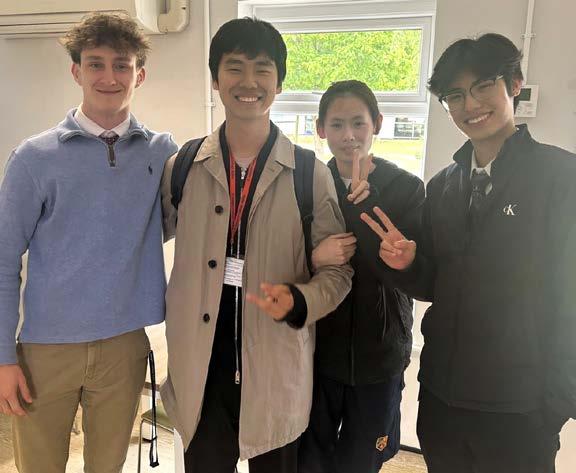
Old Birkfeldian Justin Cao, who left St Joseph’s in 2023 with straight As in Mathematics, Further Maths and Physics, visited us with his younger sister, who subsequently joined St Jo’s as a short-term boarder.
Justin is about to graduate in Electronic Engineering from Kings College and is hoping to go on to a master’s, either at Imperial College or in California. He was surprised but thrilled to see three of his younger friends from Boarding, Josh, Billy and Luping. What a super community we have in Boarding, where older students genuinely support and care for their younger colleagues.
Hey Y’All – A Hearty Thank You to Five OB Brothers for Dropping By
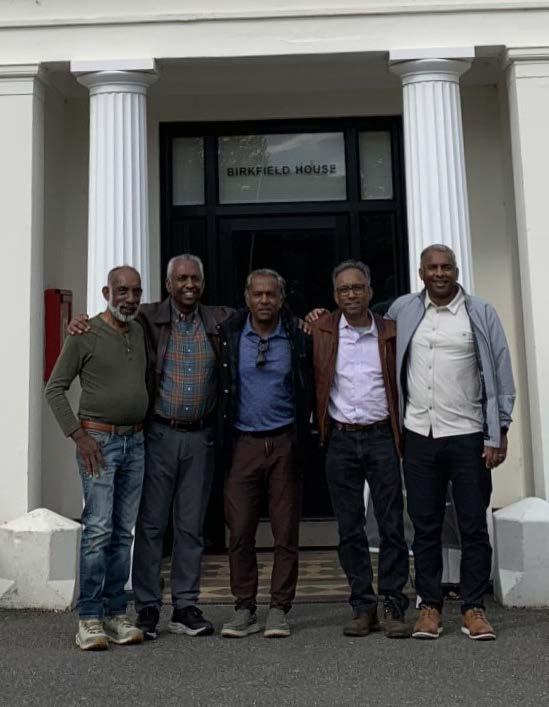
A huge thank you to the US-based Perera brothers who recently made a pilgrimage back to their old school. Unfortunately, they could only come on a Sunday so their tour was limited, but we hope the campus brought back lots of happy memories.
Mr Jonathan Sim, Head of Boarding, welcomed the group and was able to bring everyone up to date.
All five Peraras are Old Birkfeldians - though the youngest only attended Oak Hill. We are now eagerly anticipating the return of Dr Jeevan Perera, pictured centre, who very kindly hopes to speak to our students about his career at NASA and the space agency’s upcoming missions on a future trip to the UK.
A Lesser Taken Path Becoming Increasingly Popular
Committed to offering its Sixth Form students as wide a range of courses and subject options as possible, St Joseph’s College is equally broad minded when it comes to Futures advice. That trend continued at a Business Breakfast in May when local companies were introduced to the possibility of hosting Degree Apprenticeships.
While many students choose the more traditional path of going on to university, many others have been early adopters of the Degree Apprenticeship route. Past students are currently flourishing on apprenticeships with national entities such as the Bank of England and Unilever, while others are doing equally well hosted locally and regionally by firms including DS Smith (Business), DPL Group (Engineering), CBRE (Surveying), and Ensors and BDO (Accountancy).
These points were underlined at the event by OBs Alanna Demicoli-Keeling and Stan Warner, who are pursuing
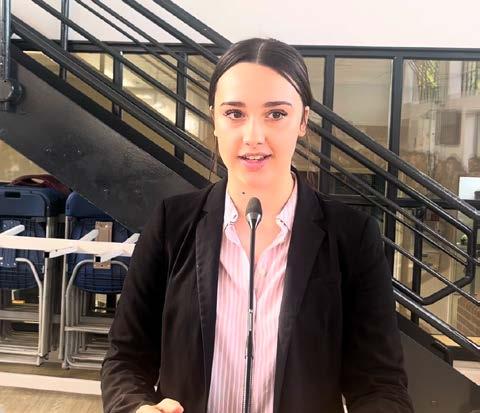
Degree Apprenticeships with Fignum and STC Teamwear respectively. Main speaker at the Business Breakfast was Tara Price, of Anglia Ruskin University, which partners with employers to deliver Degree Apprenticeship courses in the region.
Alanna is pictured earlier in her career – taking part in St Jo’s Hustings 2024 – when she showed a natural aptitude for putting across a presentation.
Ronnie Embodies Outstanding Teamwork, Sportsmanship and Adaptability
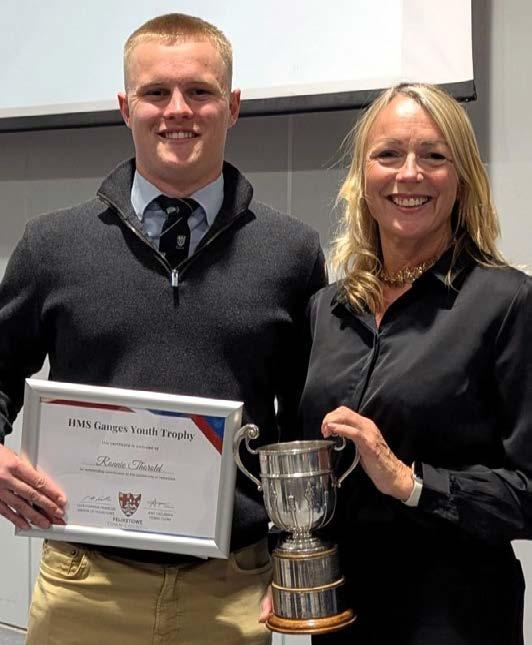
OB Ronnie Thorold has been awarded the HMS Ganges Youth Trophy by Felixstowe Town Council, recognising his outstanding voluntary contribution to the local community, most particularly to Felixstowe Rugby Club.
From joining the club as an 8-year-old back in 2013 to playing senior rugby, Ronnie has ‘always embodied the values of teamwork, respect, discipline, enjoyment and sportsmanship’.
A serious shoulder injury brought his playing career to a halt in 2024, but Ronnie threw himself into coaching the club’s minis and youth sections, and became an outstanding role model in the process.
He showed that same can-do attitude at St Jo’s –representing the school at rugby, as a prefect and in the performing arts. Following a gap year role at Orwell Park School, Ronnie is now studying Sports Performance and Coaching at Essex University.
He is photographed with his number one fan, his Mum, Jaclyn. Warmest congratulations, Ronnie, from all at St Jo’s.
From Ecuador to Libya –44 Years of Diplomacy in the Service of United Kingdom
My desire to see the world was sparked during my years at St Joseph’s (1966-73). It all started in 1967 on a trip to Loreto, Italy with the school choir. The journey by train through the Alps seemed magical, opening my eyes to the excitement of travel. My curiosity was further fuelled by the stories shared by fellow boarders, who spoke of flying home to Hong Kong, Malaya and Kenya, describing the exotic places they stopped off along the way.
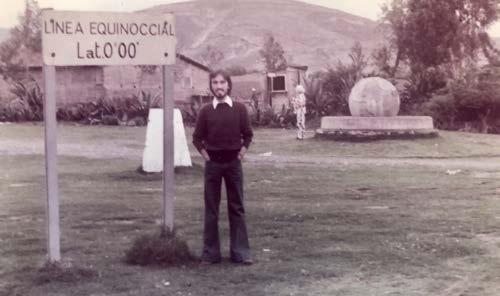
That early fascination with travel shaped my career path. I joined the Foreign and Commonwealth Office in 1974, and within two years I was posted to the Embassy in Quito, Ecuador, where I could stand with one foot in the northern hemisphere and one in the southern. From my apartment, the sheer grandeur of Ecuador’s nature was impossible to ignore. Each morning, I woke to glorious views of snow-capped volcanoes: Cotopaxi, a perfect cone; and Cayambe, the highest point on the equator.
My free time was spent exploring the Andean mountains, Pacific coastline and Amazon jungle. I would head to the bus station and take the first bus to wherever it was going, hoping to get back to Quito by Sunday night. One particularly exciting adventure involved hitching a ride with the
Ecuadorean Air Force to the Galápagos, at the time untouched by tourism and cruise ships. The return flight was overbooked, forcing me and other passengers to sit in the aisle without seat belts.
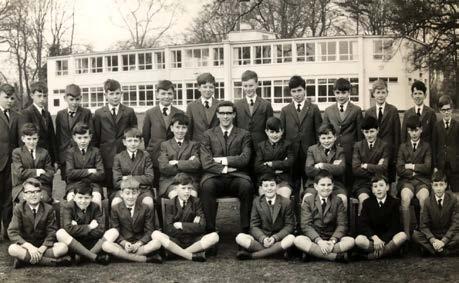
Group shot: Pictured fourth from left on the middle row is Peter with First Form classmates and teacher, Mr J. Odell.
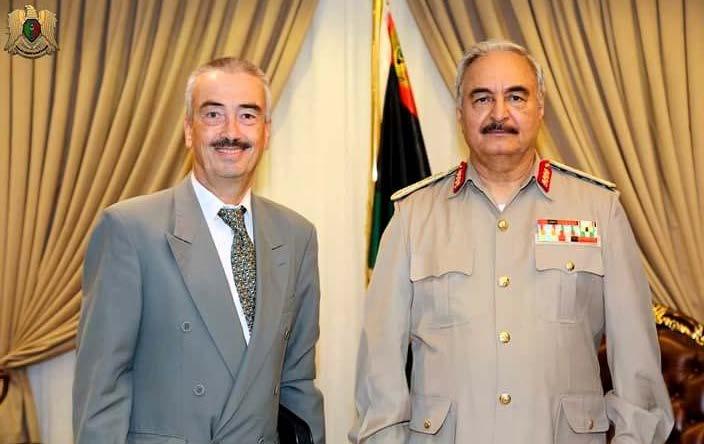
With Field Marshal Khalifi Haftar in Benghazi in 2017.
Travel continued to be an integral part of both my work and personal life. In the early 1980s, as part of a year of Arabic language training, I spent three weeks in Syria, jumping on buses and exploring the ancient cities of Damascus, Aleppo and Latakia, as well as the ancient Greco-Roman ruins of Palmyra.
These bus journeys provided an opportunity to practise my nascent Arabic with local people, many of whom were not used to meeting foreigners. While some were understandably suspicious, most were friendly and welcoming. This was an early lesson: that approaching people with openness and a genuine curiosity often leads to the most authentic experiences of local warmth and hospitality.
After nine months of studying Arabic with Lebanese teachers, I was posted to Doha, only to find that Gulf Arabic was completely different. I was now married, and this was the first of many postings that my wife and I would experience together. Luckily she shared my wanderlust. We were given an annual flight from Doha to London but could cash it in and fly round the world instead. We did this twice, exploring Southeast Asia, the South Pacific, Australia, New Zealand and America.
Looking back, it is hard to imagine that we made all the flight and hotel bookings by letter and phone call, long before the ease of Booking.com, Skyscanner or Airbnb. I remember booking the hotel in Maui, Hawaii by setting my alarm to get up in the middle of the night in Doha time so that I could call them during local business hours.
Of course, it wasn’t all about travel. There was a job to do as well. At first, as a junior official, I was issuing visas and passports and supporting trade by British companies. As my career progressed, the role became more political, with heavy responsibility to protect and promote British interests in different countries and international organisations.
The scale of that responsibility really hit home for me in 1989, when I joined the UK Representation to the European Union in Brussels. There, I was responsible
for negotiating directives and regulations relating to energy, nuclear issues and intellectual property, subjects about which I knew virtually nothing. Yet the texts we negotiated would ultimately be adopted into UK law, with potential costs for people living in Britain.
Underlying any operation abroad is security. This was brought into sharp focus during my time as Director of Security from 2003 to 2005, which coincided with the Second Gulf War and the terrorist attack on our Consulate in Istanbul that killed nine members of staff, including the Consul-General and his PA. That tragic incident revealed how vulnerable many of our missions were and led to a major campaign to protect them more effectively.
Looking after British communities was also an important part of the role. This priority is especially important when people have to be evacuated. In 2006, the Royal Navy was sent to Beirut to evacuate the British community when the city came under bombardment from Israel. The ships sailed to the port of Limassol, where my team from the High Commission received the evacuees and transferred them to RAF Akrotiri to board flights home. Initially, the Embassy in Beirut told us that around 500 Brits would need to be evacuated, but over the next three weeks, we handled over 5,000 people, turning the operation into a major logistical challenge.
Most of the people we evacuated were understandably relieved and grateful, although a few memorable exceptions stood out. One person even asked HMS Gloucester to wait for her to have her hair done; while another asked to be shown to his cabin on HMS Bulwark as though he were boarding a cruise ship.
The political dimensions of the job became even more apparent during my later postings in the Middle East, especially with the UK’s interests in the Middle East constantly in the news. As Ambassador to Jordan in 2011, I witnessed at first hand the uprisings and revolutions that threatened to destabilise the region. Jordan has very close links to the UK and its stability is vital to our interests in the region.
Bestriding hemispheres: Peter on the Ecuadorian equator in 1976.
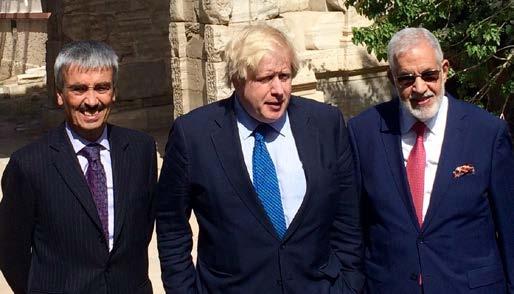
Peter pictured in the old town of Tripoli in 2017, with Boris Johnson, Secretary of State for Foreign and Commonwealth Affairs, and Mohamed Siala, then Libyan Foreign Minister.
The lessons from Tunisia and Egypt were that an Embassy needs to understand ‘the street’ – how ordinary people think and feel. The trick in Jordan was to get out of the office and travel to other towns and villages, immersing ourselves in local customs and daily life, to hear what local people were talking about. This included eating mansaf, a cooked sheep laid out whole on a bed of rice with pine nuts and hot yoghurt, which must be eaten standing up and by hand.
I experienced more of the intense security side of diplomacy during my time as Ambassador to Libya from 2015 to 2018. After the 2011 revolution, the UK had a deep interest in bringing stability to the country. However, my ability to travel was limited: wherever I went I had to be accompanied by a close protection team made up of two armoured cars and four heavily armed guards. Even so, I was able to travel to Tripoli, Benghazi, Tobruk and Misrata, and later took the then Foreign Secretary, Boris Johnson, on visits to those cities to meet the senior political and security leaders.
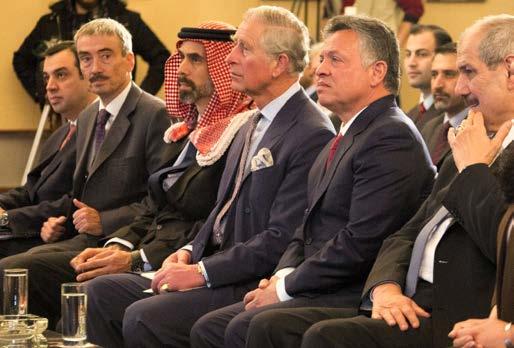
High-profile ministerial visits were one aspect of the job, but Royal visits can often be the icing on the cake of a strong bilateral relationship. I hosted Prince (now King) Charles in Jordan twice and was struck by the way he made the effort to talk to everyone and show genuine interest in their stories. In the newly-established Za’atri camp, housing over 100,000 Syrian refugees, he sat with displaced people and listened as they described fleeing the Assad regime and adapting to life in a tent. He spoke to a group of Iraqi Christians who had fled Daesh’s murderous rule in Iraq. He and Queen Camilla also spent an hour talking to every member of my staff, making each of them feel really special.
So, what have I learned from 44 years as a diplomat, most of it spent overseas?
A key lesson was the importance of getting under the skin of the country to understand how people identify themselves according to their nationality, region, ethnic
group, tribe or religion. This is not always easy, but speaking the language is a vital tool in gaining a deeper understanding of a country and its people. It is the Heineken factor that lets you reach the parts that other diplomats cannot.
I was given dedicated time to study Arabic, Greek, Spanish and French – not in the way we were taught languages at school, which was mostly written, but as a way to engage in face-to-face conversation and build trust and confidence. Even in Libya, where my protection team were reluctant to let me speak to ordinary people, some of my most satisfying experiences were sitting down in a coffee shop talking to a group of men - the culture meant that it was only men I’m afraid - about how they regarded their local political, economic and security situation.
The value of language as a window to everyday life was clear as far back as my time in Cuba in the 1970s. My neighbours lived with rationing, restrictions on what they could say and were bussed into the fields at weekends to harvest sugar cane. Yet through occasional conversations in the lift, I was able to gain insight into their daily lives and concerns.
Talking to Syrian refugees in Jordan was another eye-opening experience. They were angry and demanded that ‘The West’ bomb Assad into submission so that they could go home. Over the following months, I found them resigned to their fate and trying to adjust to their new reality. They set up businesses and the central street of the camp, known as ‘The Champs Elysees’, became lined with shops selling everything from SIM cards to falafel to wedding dresses.
Over 40 years I was able to satisfy my desire to travel, explore every continent on the planet (apart from Antarctica), meet many fascinating people and do a little bit to try to make the world a better place.
Would I do the same again? Definitely.
Ever watchful: Peter pictured with King Abdullah and King (then Prince) Charles in 2013.
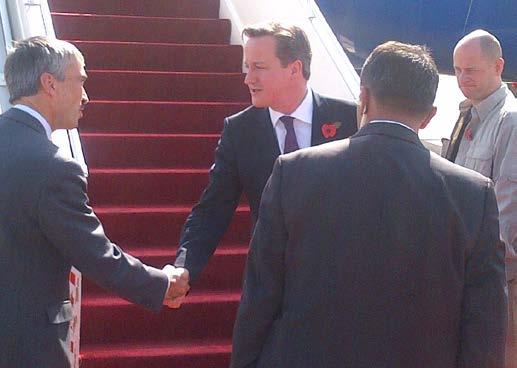
A welcoming handshake for Prime Minister David Cameron in Amman in 2012.
Fête Accompli!
Summer Gala Knocked it Out of South Park
June 6, 1959 – the anniversary of D-Day – saw the culmination of months of planning at St Joseph’s College when Hollywood glamour and star power was used to brilliant effect at the Garden Fête.
The glorious weather, an intense advertising campaign and the presence of Irish American actress and beauty, Maureen O’Hara, drew a crowd of over 6,000 visitors. Daily Express cartoonist Giles, who lived in nearby Witnesham, generously contributed a cover for the programme. (Does anyone still have this? We would love to see it!)
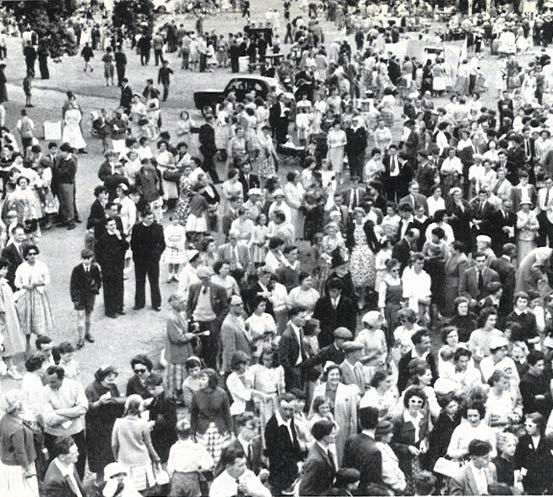
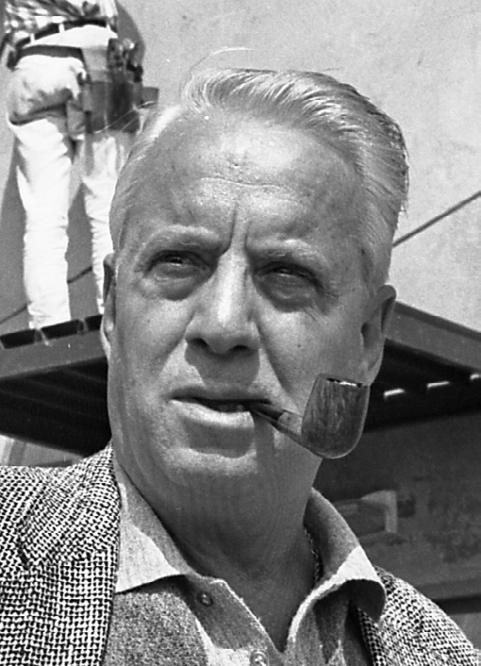
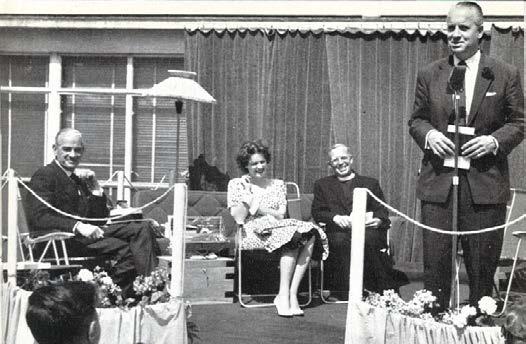
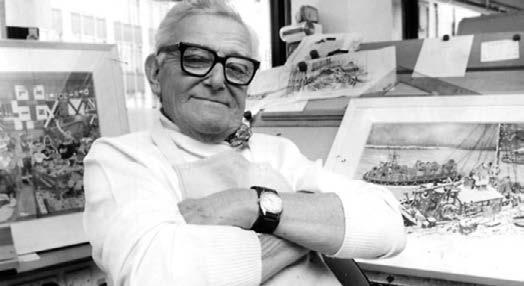
Mr M. J. (Mike) Frankovich, an American football player turned actor and producer, managing director of Columbia Pictures in Britain, opened the fête and kindly urged the ‘good people to spend, spend, spend’.
Frankovich and O’Hara were both devout Catholics, which would explain their generous visit to St Joseph’s. Surely, so too, was the presence of two students at that time, M. E. Frankovich and P. Frankovich. The former joined St Joseph’s in 1954 and left in 1959. The latter was a fine athlete, winner of the Under 16 440 - and 880-yards sprints, winner of the U16 javelin and runner-up in the U16 discus in 1959. He went on to play in the 1st XV.
Miss O’Hara charmed everyone by auctioning for £5 a straw hat autographed by ‘Mr Moonlight’, popular singer and actor, Frankie Vaughan.
After that there was a lull in the stardust and usual fete activities reigned: Drown-a-Rat, the Drive-Yourself circuit, burgers, darts thrown at playing cards and balls thrown at shies, plus beer tent and bingo. More unusually to modern ears, nails were hammered into logs, balloons were shaved and competitors bowled for a salmon.
A helicopter appeared at 4.30pm and gave an air-sea rescue display, the band of HMS Ganges played, and the St Joseph’s bicycle display troupe performed. Belstead Road experienced a monumental traffic jam.
The day concluded with a dance in the school hall and a joyful financial reckoning. The event raised the £1,000 (over £30,000 in today’s money) for building and equipping a stage at the school. Where was this please?
Birkfield Magazine reported, ‘…the real triumph lay more in the spirit shown, in the happiness and the sincerity of the willing helpers.’
Festival Almost Cancelled Before It Began
With the 40th Rugby Festival about to be staged in October, OB Benjamin Chilcott’s thoughts turned to the first year – 1987.
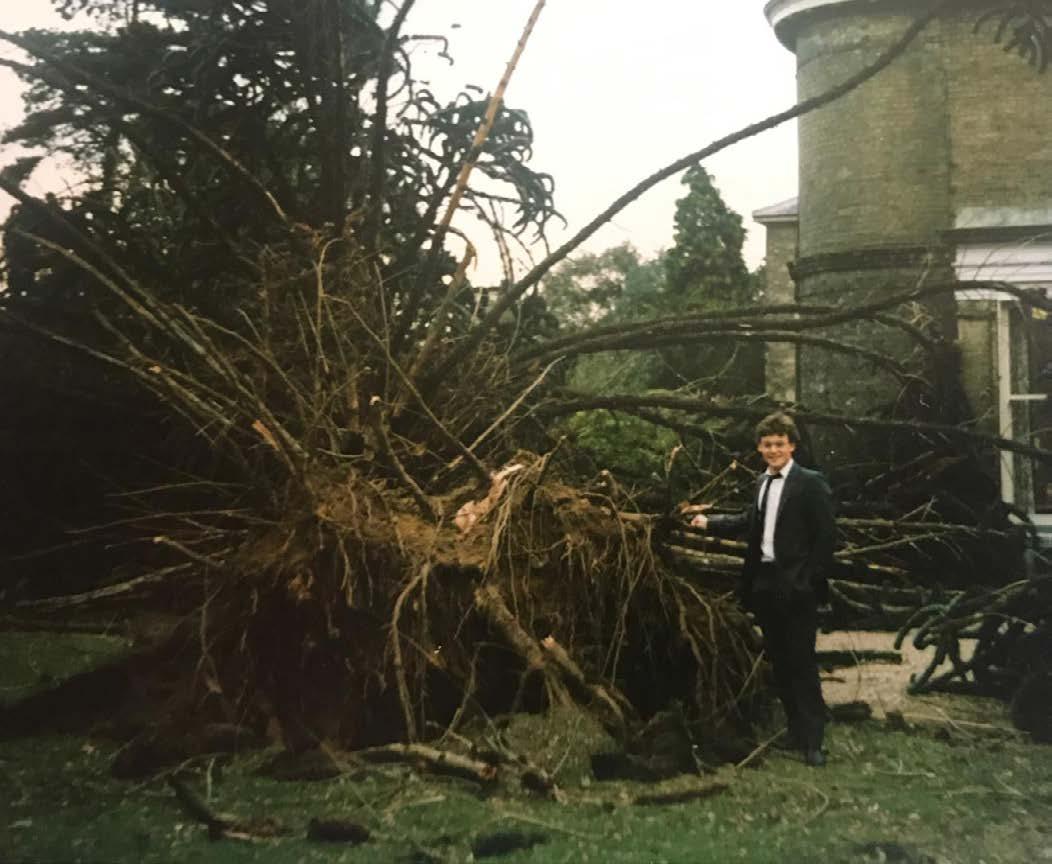
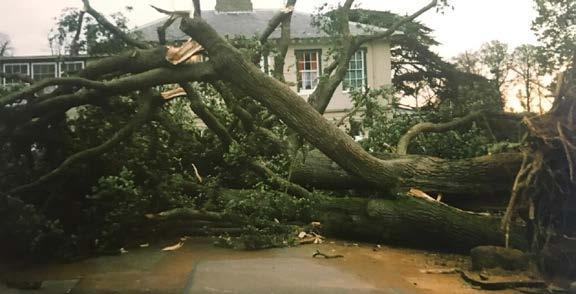
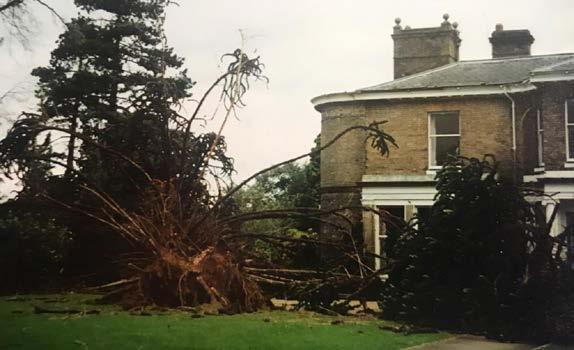
‘That massive storm nearly cancelled the first ever Festival. We spent ages clearing the pitches and moving fallen branches,’ he wrote.
‘I was the First XV captain but was injured so never played in the tournament. Which I now massively regret!’
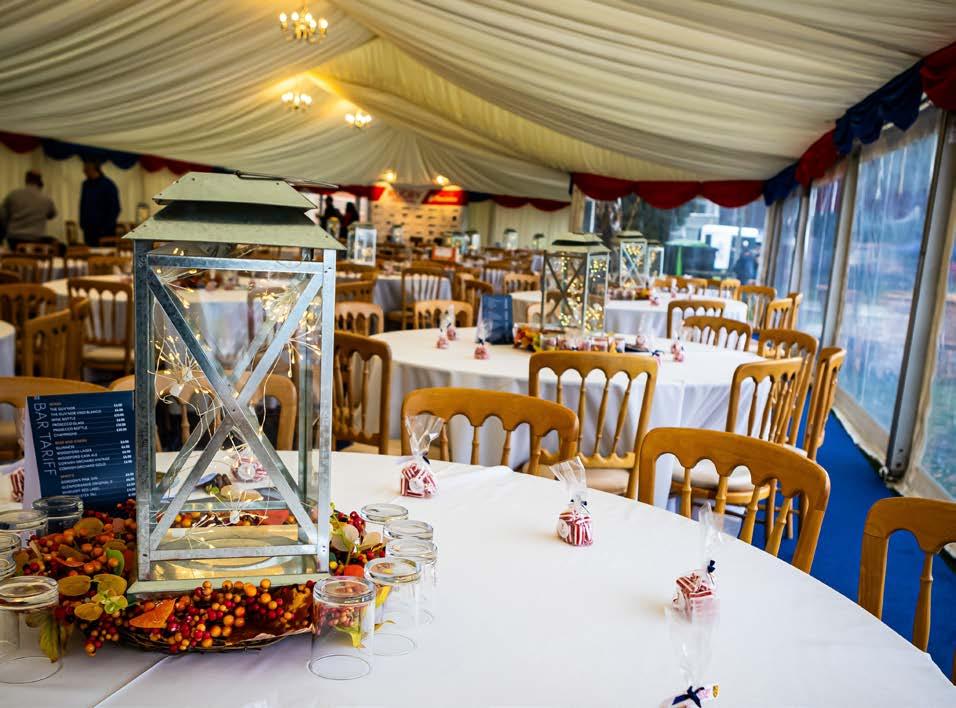
These photos, taken on the morning of the first St Jo’s rugby tournament in October 1987, give an idea of the damage wreaked. Pictured in the top image is Warren Webb OB.
Save the Date and Help Us Mark the 40th Anniversary of the Rugby Festival
‘Oh the great days, in the distance enchanted, Days of fresh air, in the rain and the sun, How we rejoiced as we struggled and panted –Hardly believable, forty years on!’
It’s the big one! The one we’ve all been waiting for! Yes, the 40th anniversary running of the National Schools Rugby Festival hosted by St Joseph’s College is right around the corner. Please save the date: Thursday 15 October to Sunday 18 October 2026.
This year as never before we are hoping for a huge turnout of Old Birkfeldians to see the games, soak up the atmosphere and reminisce. There will be so much to enjoy.
• Thursday Evening Gala Dinner
• Under 15s Festival on the Friday followed by the annual OB match
• Saturday and Sunday’s main event: the pinnacle of school rugby played out here on home turf. Plus U11s and inaugural U18 girls’ competition.
• Expect fireworks – literal and metaphoric
Arrangements are being finalised at time of going to press, but please put the weekend in your diaries. We want to see you there. As soon as tickets are available, we will send out an OB mailing. Also, please keep an eye on our social media platforms.
OB Knighthood: Arise, Sir Christopher!
It was announced in the King’s birthday honours that former Labour MP, journalist and author Chris Mullin had been conferred with a knighthood. The journalist, author and Labour politician was a widely respected MP for Sunderland South between 1987 and 2010. He is believed to have truncated his ministerial career by voting against his government on Iraq.
Long before he was elected to parliament, he gained a huge fanbase with A Very British Coup, the first of his four novels. The book was later made into a successful television series. He has also published four acclaimed volumes of diaries.
Memories Shared at the Riverside
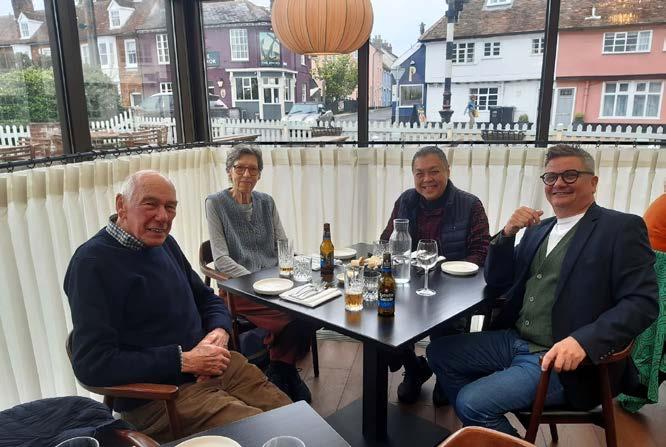
Former Governor and staff member Tony Newman and his wife had an enjoyable day with Matthew Yeoh OB when he visited last month. Stuart Saunders OB entertained the party to lunch at the Riverside Restaurant in Woodbridge, which he owns. Matthew and Stuart were at Birkfield at about the same time so had plenty of stories to share – all good !
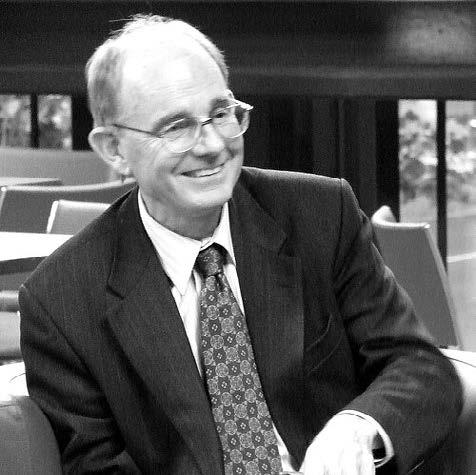
Perhaps his most significant achievement was an almost single-handed struggle on behalf of the six innocent men convicted of the 1974 Birmingham pub bombings, one of the gravest miscarriages of justice in British history. Mullins was dogged in the face of the closed ranks of the establishment and police lies.
Following his time at St Joseph’s College, Sir Christopher John Mullin studied Law at the University of Hull. He joined the Labour Party after moving to the Left in response to the Vietnam War. He and his wife, Nguyen Thi Ngoc, whom he met in Vietnam, married in April 1987, in Ho Chi Minh City. They live in Northumberland.