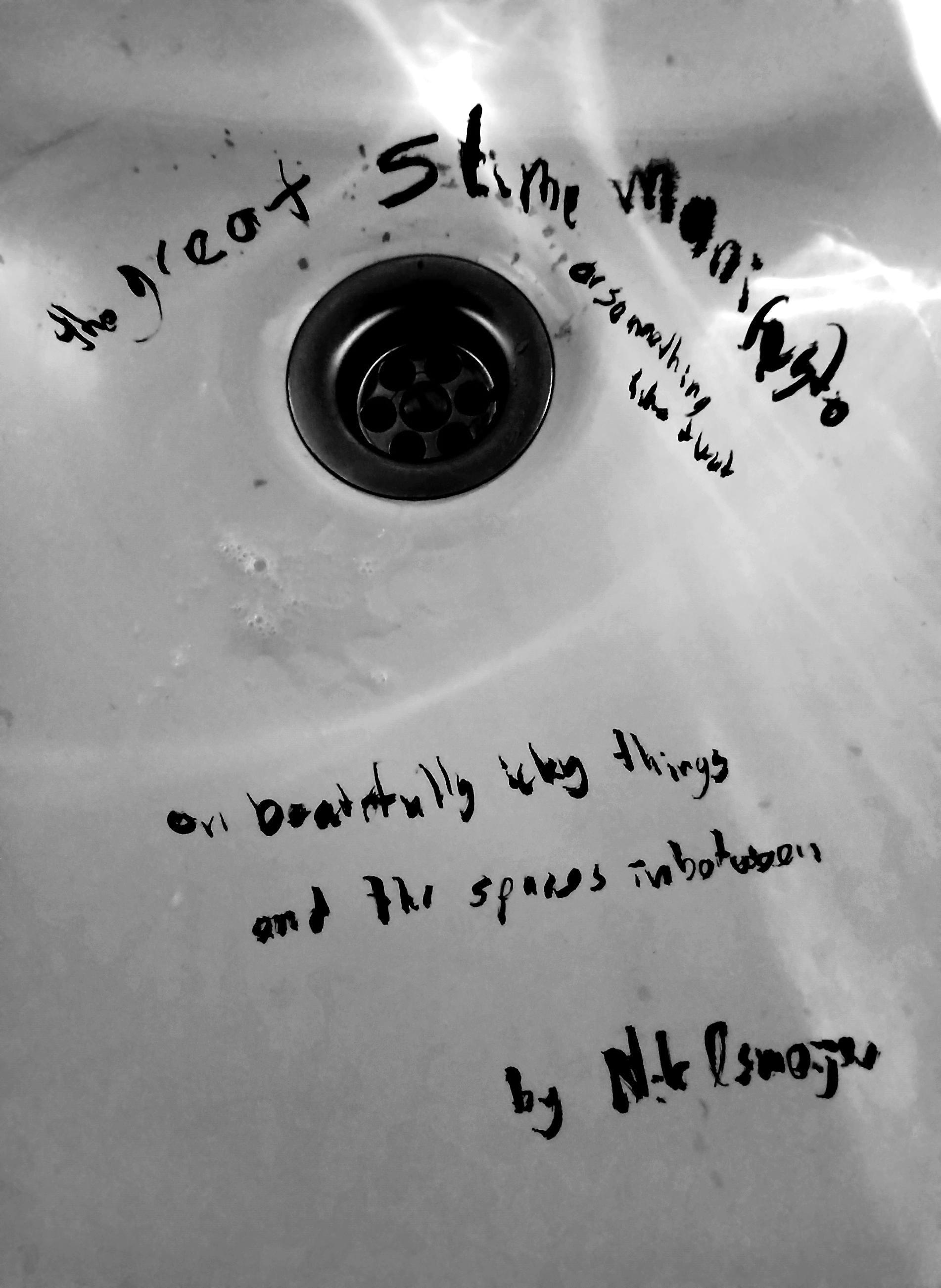
The great slime manifesto (or something like that) on beautifully icky things and the spaces in-between
Nik Esmeijer, 2026
Thesis supervisor: Stephanie Quirola
Submitted to Master Fine Arts & Design, St. Joost School of Art & Design, Avans University of applied Sciences, s’Hertogenbosch The Netherlands
In partial fulfilment of the requirements for the degree of Master of Art in Fine Art & Design s’Hertogenbosch, The Netherlands
Abstract
When investigating slime both inside and outside our bodies many questions arise about the ways we view our bodies, both as the borders of what we call ourselves and the way we think about different substances and the consequences of that. Slime being perceived as monstrous and being essential, protecting and communicative at the same time opens up many questions about safety, importance and the way western society operates, specifically regarding what is valued and what is cast out both in science and social structures. Through exploring different types and sensitivities of slime this thesis proposes a way of thinking with transformation, queerness and betweenness at its center.
To the reader
Hello, it’s good to meet you! It really is, I’m not just saying that to be nice. Selfishly I hope you like some of the things you read in this text, but it’s okay if you don’t. I won’t be there to police your feelings. When I first started to understand and think with slime, it helped me understand many things about myself and the world around us. The more I worked with slime and slimy animals the more connected I felt with them and them and the way it’s treated. The way slime is joyful, sensing, queer and monstrous resonated with me on a deeper level I hadn’t expected. I feel connected, heard, seen and felt by it. Now I hope to share this experience with whomever reads these words. Have fun and stay slimy!
Introduction
Welcome to the great slime manifesto where we talk about slimy stuff and queer rights and the nature of nature. First up, what kind of slime are we talking about? Slime in itself does not have a clear definition. In its definition slime is a substance that is slimy: one that behaves both like a liquid and a solid. In this thesis we are talking about different types of slime found in nature and our own bodies but also using slime as a concept to think about bigger issues and as a strategy to get through your head being stuck and opening up the borders of your imagination. It is about expanding, growing, transforming and contaminating. About becoming liquid without spilling out everywhere. About leaving behind parts of yourself over time, and changing with the environment. About communicating in different ways, about being sticky, dirty and disgusting and finding the beauty in that. About being between genders, genderless, or being all of them at the same time. About touching and not touching. About slugs and worms and saliva.
Since slime is so closely related to our bodies, both in the way we examine and judge it and in the way that it is a big part of how living bodies work, the chapters have been separated into body parts too. They are not written in any chronological, topological, astrological, methodological or plain logical order, so feel free to read them in whatever way you want to depending on what you want to read about most. The chapters are named after parts of a body. This body is not yours or mine, not male or female, not hard or squishy. Or maybe it is all of those things at the same time
Head - Communication and conceptualization
On our tongue being close to our brains and on how to “think with” slime.
Intestines - Safety and secretion
On the ways slime protects us and its part in necessary bodily functions, but also on the way we have stigmatized those.
Hands - Texture and contamination
On how we interact with slime and on how slime interacts with its environment.
Skin - Archiving and transformation
On the “borders” of a body, how they change and how they affect each other or themselves.
Feet - Sensitivity and exploration
On the different ways of communicating through slime, and the way that is used by slimy animals.
Chapte rs:
Intestines
Safety and secretion
Snot
Saliva and Blood cloths
Genital fluids
Mucus
Without slime we wouldn’t be able to exist the way we do. It’s slimy inside. Ever wanted to eat something? It’s nice that you don’t slice open your throat every time you do. Ever wanted to breathe? Mucus is protecting your from constantly getting infested. Ever wanted to have sex? It helps that sensitive porous types of skin are lubricated when being rubbed against. Create a point of no friction. A safe space.
Slime can be a very alienated substance. When thinking of slime your first thought might be a worm or slug or frog. Actually most “complicated” life forms produce some kind of mucus, and humans do too, yet when we think of sliminess we rarely think of ourselves. Why is it that when you brush your teeth and spit out your saliva and flush a part of yourself down the drain it doesn’t feel like a breakup? Alienation in your own body, of your own body. Our insides are filled with slime, our organs are lined with mucous membrane. Yet, there doesn’t seem to be a lot of room in our society for saliva and snot.
Slime makes its presence known in intimate moments. When we are sick or having sex, things that are supposed to be kept private in our society, things that make us feel vulnerable. (Visible) vulnerability and intimacy is something that returns in many forms or our lives. It can be found in art, in visible queerness, and sometimes just in people kissing in the park.
On the other hand slime can be a form of disrespect and resistance. When spitting on someone or something it is seen as degrading. It can be an expression of power over something or someone else. Here the same spit used for communication becomes a way to make another dirty. The duality of these expressions within the same substance underlines the complexity of the way we think about slime.
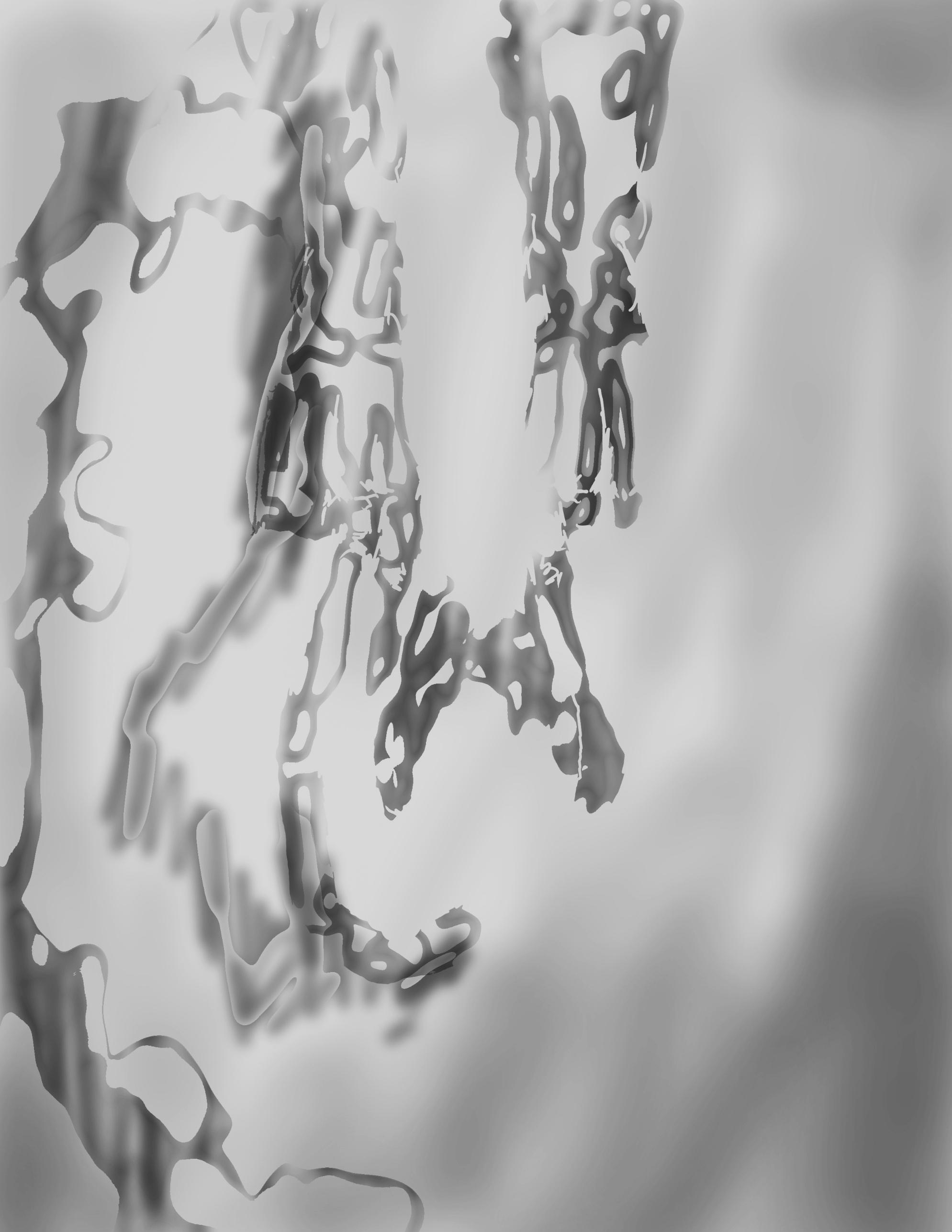
Texture and contamination
Hands
Texture and contamination
Love is slime, or the gross part of love
The physical too
We just want it all
The parameters of what is defined as slime are based on texture. Quite simply put, linguistically slime is a substance that is slimy. Something that can be sticky, between liquid and solid, smooth, shiny, thick, thin, runny, something that can be squeezed through tiny holes. Within this there are many different possible textures we all classify as slime. Within biology and chemistry slime is defined by the presence of mucins. Mucins are proteins with generally rod-like shapes that are vessels for sugar molecules. The sugar molecules attach to the side of the rod forming a brush like structure. This structure then sticks to other mucins, liquids or whatever else is around creating the slimy slippery structure (I think it’s like Velcro). Slime is produced in mucous or mucosal glands in many different bodies and places. Different types of slime structures can be used for different purposes. For example, some slugs can produce different types of slime depending on where they are going. They can produce more slippery mucous when on rough terrain, or more sticky mucous when on a slope or when they bridge gaps and need to hang on to something. One of the fastest slime-producing animals, the hagfish, who is eel-shaped and lives in water, can make about 24 liters of slime per hagfish. The hagfish uses this slime as a defense mechanism against predators. It produces so much slime that it effectively chokes any perceived threats. The slime it produces with special mucous glands in its skin has a high amount of fiber which makes the slime more durable and stretchy, which helps the slime clog the gills of predators more quickly, and if the hagfish gets eaten anyways it can ball up and use the slime as a barrier to survive the whole process.
Outside of purely biological uses, the texture of slime seems to have various effects on people ranging from curiosity and pleasure to intense disgust. When researching the origin of these emotions I found that a lot of people associate slime with being sick or sexual intercourse. These instances are the moments we get confronted with more or different slime than usual in a context outside of what we perceive as “nature”. Even though slime is not the cause of being sick, rather the solution, it does cause uncomfortability or distress which therefore gets associated with the slimy texture. On top of that, while slime has the wonderfully useful property of trapping harmful intruders and bacteria, this also means that slime can contain those things that you don’t want to be infected by. In the case of sex and genital secretions the uncomfortability or distress has a different nature. Here the slime
itself is not the cause of the stress, but rather the stigma and shame around it that the values of our society have taught us Both these associations can lead to the emotions of dirtiness and disgust that have followed slime from generation to generation. When looking at children interacting with slime, there seems to not yet be this idea of dirtiness. The stigma is something (unknowingly) taught.
On top of that, sliminess is a very unique texture that can have a more intense impact. For example, because of the stickiness of slime, while the moment of touch can be brief, the consequences can last longer. You get contaminated. The slime and its haptic sensation stay on your skin for a longer period of time than other textures. It is a contamination of feeling.
From the other side, our skin is very salty and toxic to many slimy animals. It is dangerous for them to be picked up or walk across our bodies. Before I knew this, I did an experiment where I let a worm “walk” on me for an hour. While for me this was a very interesting experience, for the worm it was harmful. At the time I was thinking about this concept called “touch care” which I read about in “Matters of care” by Maria Puig de la Bellacasa. This concept is based in the idea of touch as a way of proximal intimate knowing. As de la Bellacasa describes it: “Touch, or the haptic, could be the sensorial universe that better explores the ambivalences of conceiving caring knowledge as an intensification of involvement and proximity. Touch is also the sensorial metaphor that better exposes qualms around the materiality of thinking and its consequential effects: we think, therefore we touch.´ Lured in by the romantic nature of this deeper knowing, I tried to connect with a worm through my skin. In many ways it did give me a better understanding and relation with worms and other slimy animals, but at the same time I forced them into a destructive situation. This is something I regret and would not do again, and at the same time it reveals the danger touch can bring within itself.
When thinking with touch it is important to understand that touch is not a solitary action. When you touch a wall, the wall touches you too. It requires vulnerability from both parties, but the amount of vulnerability is almost never equal. The world of touch brings a web of power dynamics, both between humans and non-humans. The interaction I had with the worm taught me that “safe” touch requires a relationship that is built up through time, knowledge and interaction, however well the intensions may be.
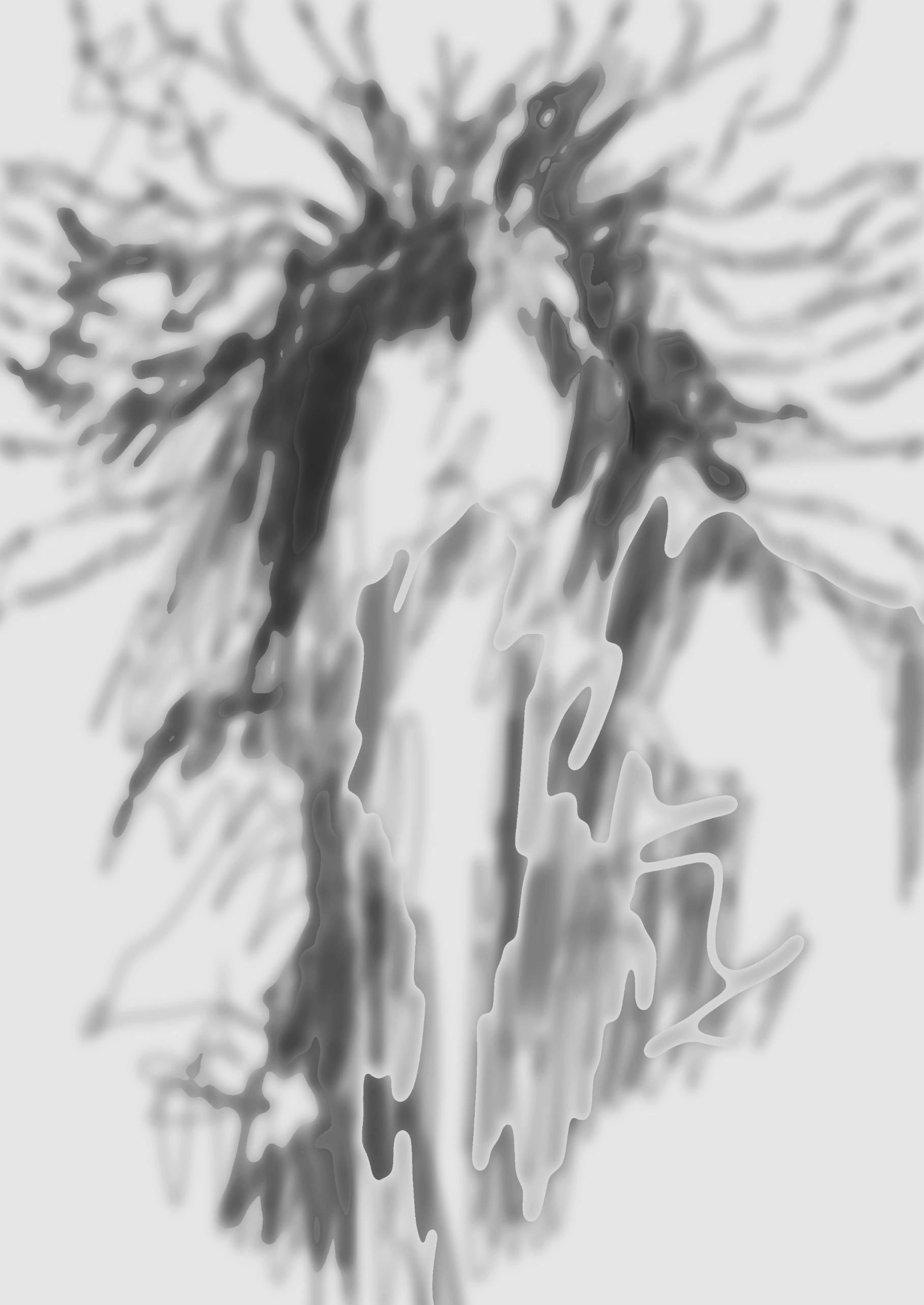
Feet
Sensitivity and exploration
Tongue is everywhere
Worms breathing through their skin
Unknown to most, slime is a very sensitive and sensing substance. While we people don’t use slime for sensing, lots of other existences do. Many mucous skinned beings use slime both as a vessel for communication and a way of sensing their surroundings. Slugs and snails ‘taste’ their way around. While they do have eyes, they are underdeveloped and instead they use their “foot” (the underside of their body) as a tongue with which they can map and navigate through their home-grounds. Chemoreception! On top of that they can recognize the slime of other slugs and snails, which they can use to find or avoid each other, or find safe paths or known places to go. They can even reuse their own or others slime path to reduce their mucus secretion, creating their own form of sensitive mapping. In a study done by Brenden Holland and two coauthors Joanne Yew and Marianne Gousy-Leblanc they found that when a snail placed on a Y-shaped branch will almost always follow the path with the trail of snail from it’s own kind. However, they also found that this became significantly less often when the slime trail was from another snail-species and snails from the same species will consistently want to follow or not follow the trails of specific other species. Snails in a forest will not simply wander round alone without ever finding each other. They even have been reported to have meetings where they all get together in a group. They can communicate through slime, make friendships, they even seem to have best friends or favourite slugs and snails they spend the most time with. We people have yet to unravel all the secrets of slime communication, and probably never will. “In inviting us to imagine these diverse worlds, Uexküll insisted that meaning cannot be reduced to language, as is so often assumed, and as such that it is not just language-using species like humans that make and exchange meanings.” (on slime communication) (Thom van Dooren-A world in a shell)
Another, more known, example of slime exploration and sentience comes from the slime mold. Slime molds are basically groups of microscopic organisms forming one cell. They communicate with all the parts of themselves through chemical signals called acrasins which makes them able to form one cell of sensing slime able to solve complex puzzles, form the most direct and safe paths and find their way around.
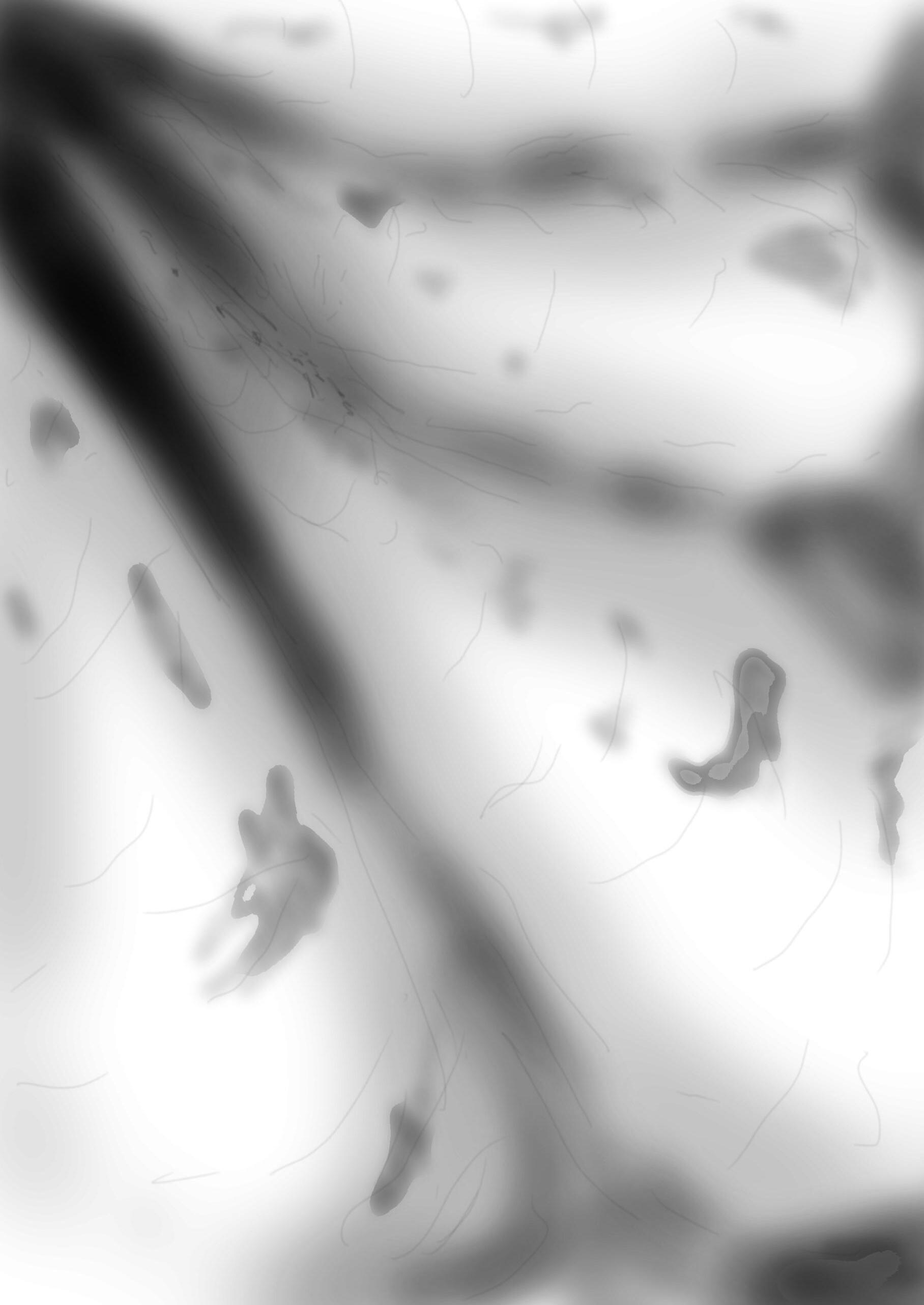
Archiving and transformation
Skin
Archiving and transformation
“It was difficult to tell where flesh ended, and slime began” Thom van Dooren-A world in a shell
Skin is lungs
Change of time
Scars that change surface tension ripples
Boundary or sack
Dissolving reforming
Spilling out everywhere
Historically in western sciences slime and slimy animals have a setback in their research compared to other animals and substances. Slime being both part of the animal and part of the environment, combined with the idea that slime is icky, means that there is a lack of research being done regarding them because they are seemingly hard to define. When colonizers came to Hawaii, an island with a historically giant snail population, they became obsessed with their shells, which became a collectable. The shell being the only ”definable” part of a snail that does not seem to be slimy. Due to habitat loss, invasive species and over collection, the population of once over 750 different established indigenous snail species has now been reduced to 53. That is an extinction rate of over 90%, and speaks volumes over the disregard for their slimy sensitive bodies. The shell collections are still there, but have lost their original colour. Even a shell is a living thing, and needs the slime to stay alive. There are old stories and songs in indigenous Hawaiian culture that speak of snails singing in the forest. These stories have now been deemed legends, making it seem like they are not based in truth. In reality it seems narrow minded to think that the only way to sing is with lungs and vocal chords. There are theories about how snails might have been caught in the wind creating a sound like a flute, but in reality we will never know because the snails don’t want to sing anymore, or we forgot how to listen.
In our society we have the unspoken theory that our bodies are easily definably ours. We individualists have a body that is ours alone. In consist of thoughts and muscles and bones and it ends with the skin. A nice, easy and strict package that separates us from the world around us. Divides us from nature. When we go to a forest we are onlookers, with a clear distance from the trees. Slime very visible blurring the boundaries between a “body” and
“environment” makes us question that. Slime as a glittery trail being left behind, not belonging to the animal anymore but also still separate from the dirt, or possibly belonging to both, is not just confined to gastropods. It is merely illuminating it. Our bodies aren’t as defined by the end of our skin either. Our complete digestive system is an open pipe tunneling through our body. Is the saliva you spit out in the sink part of you still? If not then why is the saliva in your mouth yours when your mouth is open. If you eat your own spit out saliva is it then once more a part of you? Is it more or less part of you than when you eat someone else’s saliva? Even more borderless than that, by existing and breathing air we all have our own aerobiome around us, floating particles and organisms constantly interacting and communicating and contaminating the world around us. The tree breathes us too, in a very personal way. As much as we might want to be we are in no way separate from our surroundings.
While this lack of separation might sound idealistic in some ways, it can be dangerous too. When you constantly leave behind parts of yourself, touch becomes risky. If your outside is mucous and sticky, this becomes risky for both parties. Slime is very protective when it comes to our immune systems because it traps bacteria and dust, but when exchanging slime you also exchange those that are “unwanted”. When touching a mucous animal, it is not only the slime that forms risk, but also human lack of slime. Human skin contains salt and toxins that are harmful to for example slugs and worms, and it is a texture they are not used to. This can lead to a very stressful and even deadly interactions. When connecting this to the idea of “touch-care” I read about in “Matters of care” by Maria Puig de la Bellacasa, This opens up the question of our assigned value of touch as the way of proximal intimate knowing. What different ways are there to “touch” something that is untouchable? How do you ask the question “What matters to you?” without causing harm in the process? If we are already part of the environment, what are more subtle ways to know another being and meet them at their level? Vaseline snails? How would we have to transform ourselves and each other to speak the same language?
When talking about transformation, slime is inherently connected. Both as a safeguard for growth and a form of being in the stage in between. You can think of that literally, like the transformation process of a caterpillar into a butterfly, where the creature dissolves into a soup of goo and organs to be completely rearranged. The growth that happens after reproduction both in eggs and in wombs. You can also think of that in a more open way. During the process of change there is a moment of not knowing, a moment of accepting to not be in either place or decision. A place where you are not solid anymore but still together, where you can be molded and contaminated by your surroundings and new insights. Slime is not solid and therefore ever changing.
While slime in itself just exists, and is therefore neither queer nor unqueer, the way slime is viewed and handled is very similar to queerness. Queer in the sense that it’s seen as weird, in the sense that it’s disregarded by society, misunderstood and cast out Queer in the sense
that it breaks with norms, rules and expectations. Queer in the sense that research diregards it, the same way queer people were/are not allowed to give blood, and transhealthcare is still inaccessible and biased.
Slime itself is not bound to a gender, for example most terrestrial gastropods are hermaphrodites. They can choose, they change their mind or they can have it all. During some forms of slug sex, both slugs open their bodies and get handed or hand over their sperm through a slime spiral, an external sperm exchange. Both parties can have the ability to do both, they can choose which one they want to be in the moment, be both, or sometimes they develop as only one of the sexes. Some species regularly self-fertilize. In gastropod sex the possibilities seem endless.
The slime in my body is genderless too. It changes with me and waits for my skin to catch up. Slugs don’t have bones but I do. Me and my saliva wait in anticipation together in the space in between. It doesn’t need hormones or surgery to change between bodies, it is already ready for both or either. It substantiates the possibilities our bodies have.
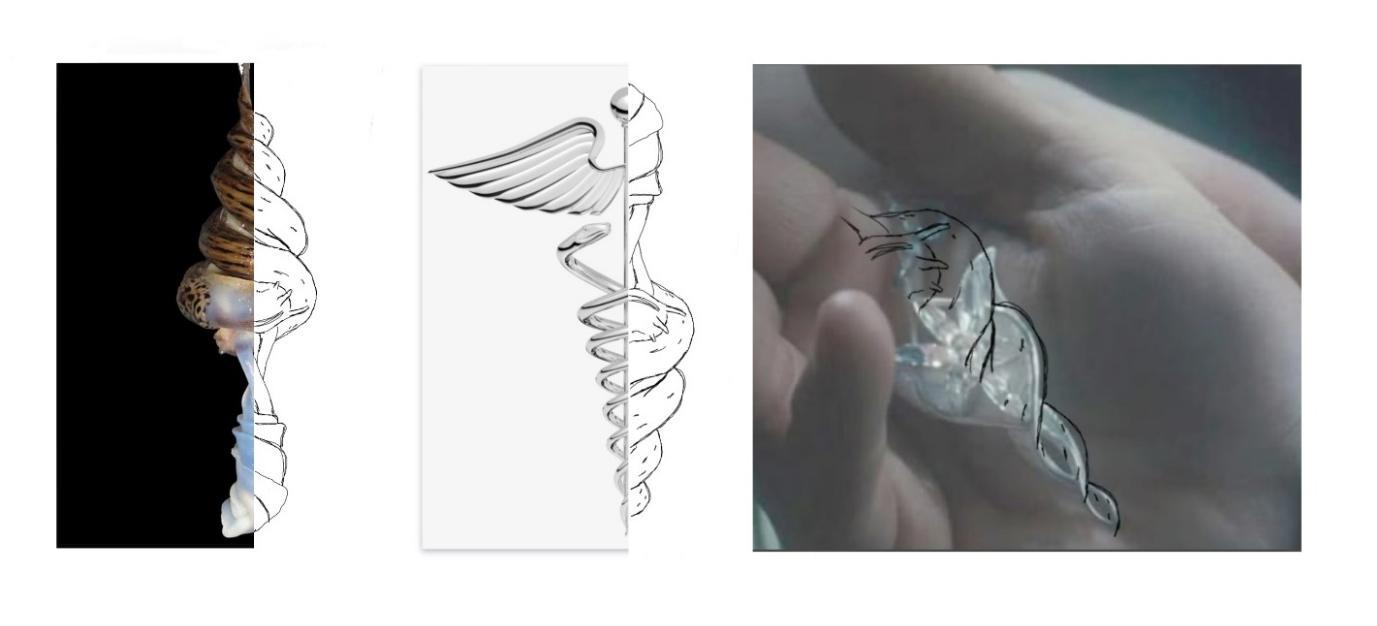
Chapter
Head
Communication and conceptualization
Head
Communication and conceptualization
Snail trails are like letters we send or initials carved into old buildings. The things you leave behind that contain meaning.
Change as concept and agency
Our tongue is close to the brain
Langue is a structure
Structurs cane melted
Trailsurgecommunistfroglingdfringeratathassesses frebruraauaytsszzxxcchctcg
“I’m your frog, kiss me better all night long” -Cavetown
The tale of the princess and the frog is a story of transformation where the handsome prince is the prize. The kissing of the frog is merely a hurdle to overcome to get to the happily ever after. It is a story of love and friendship, but these developments mostly take place while the prince is still in frog-form. The frog is the part of the story that gives it meaning. In this chapter I propose a way of thinking that focusses on the part where the prince is yet to become human, or rather on the part of transformation and connection disregarding the outcome.
Thinking with slime means opening the borders of who you are and what you are. Accepting change and not knowing. Doing things without a strategy. Accepting risk. Staying in the moment of transformation and taking that as the outcome. For me thinking with slime is finding a place to belong while changing or drifting. Rethinking what a monster is and actualizing caring about beings that fall outside of the norm. Thinking with queerness as the norm, learning to accept myself as a monster too.
When we think about slime as a concept we can expand sliminess beyond the texture or substance, but rather think of it as a place where multiples meet and dissolve into oneanother This can be in any realm: it can be the way wind licks the earths surface and picks up sand from everywhere; it can be a badly translated colloquial phrase, it can be merging of different ideas after a conversation.
The concept of intra acting (Karen Barad) is based on the fact that our actions are already entangled with many different entities instead of our actions being ours alone. The prefix
“intra” referring to within instead of “inter” which means between, lays bare our inherent connectedness. Building on this I would like to propose the concept of intra-thinking, as a way of thinking where we already assume a place within the world, within change and within thoughts and knowledges of other entities. Thinking with slime can be a way of realizing that. Accepting change and transformation as a permanent and meaningful outcome instead of a process to get through can open up ways to think with and be changed by other beings To stick and be stuck to. To change with and be part of our environment, to be inherently in-between.
Summary
Like Milne’s “notes on lichen” I too would like to make a list of some things that are conceptually slimy.
Graffiti
Funerals
Flutes (especially if they are out of tune)
Rain (but not snow or hale)
Hidden meanings in poetry
Hair dye
Wind
Circles
Confetti (Not camera’s!)
Hormone gel
Libraries
Old half-ripped-off posters
Static electricity
Caffeine
messy lists
The word “rad”
Earworms (both the insects and the annoying tunes)
Rocks
Scars
Stickers
Dust or loose sand and dirt
Fingerprints
Staring into a bright light
Bad jokes
Bibliography
Ahmed, Sara. J. S. (2001). Thinking through the Skin. Routledge
Abi-Karam, A. Gabriel, K. (2020). We want it all, an antology of radical transpoetics. Nightboat Books.
Barad, K (2007) Meeting the Universe Halfway: Quantum Physics and the Entanglement of Matter and Meaning. Durham: Duke University Press.
Catts, O. Zurr I.(2008) The Ethics of Experiential Engagement with the Manipulation of Life Cambridge, MA
Cummins, S. Degnan B. (2010) Sensory sea slugs Communicative & Integrative Biology
Curtis, V. (2011). Why Disgust Matters.
Haraway, D. J. (2007). When species meet. University Of Minnesota Press.
Haraway, D. J. (2016). Staying with the Trouble. Duke University Press.
Holland, B. S., Gousy-Leblanc, M., & Yew, J. Y. (2018). Strangers in the Dark. Invertebrate Biology
Marks, L. U. (2002). Touch: Sensuous Theory and Multisensory Media. University of Minnesota Press.
Milne, D. (2019) Noteson‘Lichen’. Textual Practice
NatureWatch. (2014). anatomy - Wormwatch. https://www.naturewatch.ca/wormwatch/how-toguide/anatomy/#
Ouellette, J. (2018). California’s Snot Snakes. Alta. https://www.altaonline.com/dispatches/a3271/snot-snakes/
Palmer, A. (2026) Slime Mother Site Gallery, Centre for contemporary art
Preciado, P.B. (2020) An apartment on Uranus, Semiotext(e)
Preciado, P.B. (2021) Can the monster speak?, Semiotext(e)
Puig de La Bellacasa, M. (2017). Matters of Care. University Of Minnesota Press.
Rashad et al. (2023) Biological activities of gastropods secretions: snail and slug slime Natural Products and Bioprospecting
Rose, D. B. (2022). Shimmer: Flying Fox Exuberance in Worlds of Peril. Edinburgh University Press.
Singer, P. (2015). Animal Liberation. The Bodley Head Ltd.
Southwood, P. (2023). Hagfish fish facts. https://a-z-animals.com/animals/hagfish/ Tongue
van Dooren, T. (2015). The Last Snail: Loss, Hope and Care for the Future. In Land & Animal & Nonanimal. Haus der Kulturen der Welt: Berlin.
van Dooren, T. (2016). Flight Ways. Columbia University Press.
van Dooren, T. (2023). A World in a Shell. The MIT Press.
van Leersum, M. I. (2024). Sentient Geographies: What methods of thinking can be accumulated to recognize the interconnectedness to compost? AKI ArtEZ.
Warren Beckwith, M. (n.d.). The Kumulipo: A Hawaiian Creation Chant. In 1951. University of Chicago Press.
Wolodzko, A. A., Potplant, Xeno, & Virus. (2022). Ars Demones *2022* Manifesto