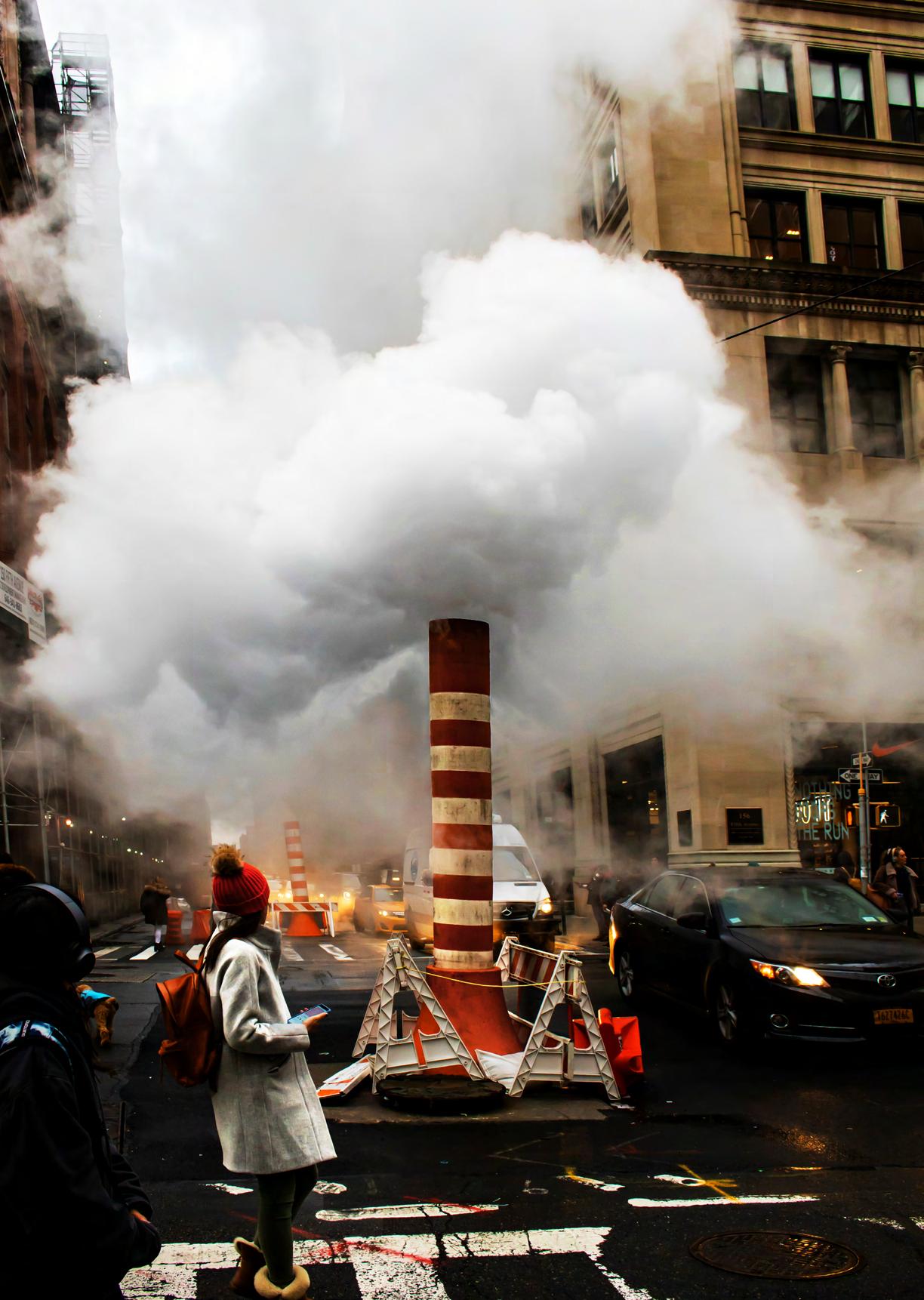
Rising temperatures. Rising stakes. Our planet. Our Responsibility.
St John’s School Leatherhead
EDITOR IN CHIEF: Ellie Wain
GRAPHIC DESIGN: Will Logan
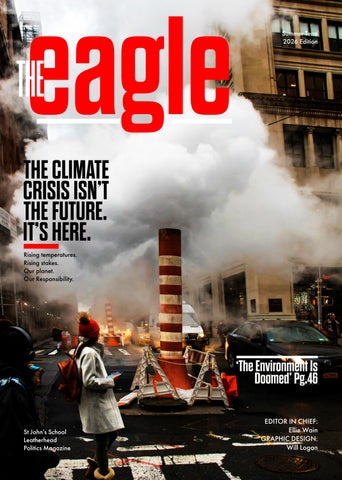
Rising temperatures. Rising stakes. Our planet. Our Responsibility.
It is with a bittersweet farewell that the summer edition of The Eagle is launched. I have read and edited a total of 64 articles this year, each one a reminder that young people care far more deeply than they are often given credit for. As someone who has always been deeply political, I can concede that what deeply offends me is when children, particularly teenagers, are presumed unaware, unwilling to learn and subservient to the adults around them. If there is one conviction I place the greatest weight on, it is this. Perhaps it is my stubborn nature which drives this philosophy, but when I am repeatedly met with articles that blow me away, it is not easy for me to subvert this belief. There seems to be a presumed convention that political consciousness comes with the ability to pay tax or vote, but I have never found this to be true. I hope this is exemplified in the contents of these pages.
The pieces I have found myself repeatedly resonating with each term are those which are more personal yet confrontational. As a past writer, I can confirm that it is easier said than done to write a piece which challenges the norms we find ourselves subject to. For this reason, I would like to bring attention to Will Britton’s piece on the normative perception of masculinity as he examines the manosphere. For his first time writing, it is a piece which rings prominent in a society which repeatedly finds itself resorting to extremism. This edition, I have found myself blown away by the breadth of articles. I know how busy the summertime gets, as admittedly, I too have become slave to the master of revision; however, I am incredibly proud to have received 20 articles this term, all of which do not turn away from difficult topics with a seriousness that demands to be taken
seriously in return.
The three sections of this edition cover ‘Power, Conflict and Governance’, ‘Identity and Society’ and finally, ‘Media, Tech and the Future’. The first sector ‘Power, Conflict and Governance’ is seemingly distant, however shapes the world we inhabit today. This section serves as a deep dive into the foundations of political life and how power is shared. Building on this, the ‘Identity and Society’ section focuses on the human dimension of politics, exploring how personal experiences, social movements and collective identities shape public life and wider accepted norms. This section considers the ways in which factors such as culture, gender, class and nationality continue to influence political participation. And to conclude the edition ‘Media, Tech, and the Future’ serves as a closer lens on what the future may look like, written by the very people who will be affected by the rise of technological advancements. At a time of accelerating technological change, these articles invite readers to question not only how politics is communicated today, but also what the future of political participation, information and power may look like in the years ahead.
One of my favourite memoirs, Azar Nafisi’s Reading Lolita in Tehran, recounts the teaching of literature to young women withing Iran under the Islamic Republic. It is a book that has reshaped the way I view the small Surrey bubble in which we have the privilege to live in, and one I will continue to buy for my friends as birthday presents (sorry Will). The quiet resilience found in the pages, through private discussions of forbidden texts, is something that I find deeply inspiring. It is a call to reality, one away from the privilege we often fail to see. The women within these
pages do not allow themselves to be defined by what is taken from them, but by what they continue to preserve internally; their curiosity and intellect. Privileges that are exhibited in the pages of The Eagle. I couldn’t launch the final 2025/6 edition of The Eagle without reminding our readers of this reflection of stability – and how easily this can be mistaken for something universal, rather than something unevenly shared.
As per usual, my greatest load of gratitude goes to the one and only, Will Logan. Mr Thomas will not be pleased with me admitting you designed this edition in only two weeks, but it is the truth, and one that deserves immense recognition. You’re truly amazing. With certainty I can claim that you could easily do my job, but I could not do yours. Thank you for bringing such passion and commitment to The Eagle this year and managing to create our magnum opus in our final edition. You have kept me sane and (relatively) motivated throughout, and I owe everything we’ve managed to achieve this year to you.
If there is any frustration that remains with me as I step away from this role, it is not directed at the writers, but at the broader tendency to overlook them. Because what I have had the privilege to oversee this year resembles anything but disinterest in politics or a lack of understanding. And whilst I have undoubtedly groaned at a to-do list filled with Eagle-revolved tasks, I have genuinely found a passion for journalism and youth engagement in politics within this role - one which I am sure will continue to shape my future career. I have seen people be unafraid to question the norms of which our own school conform to with intellectual intelligence, humour, wit, sarcasm and complexity. I entered this role believing young people are misheard and misrepresented, and I exit even more certain in this fact.
- Ellie Wain, L6 Gloucester
Admittedly, I write this on a 5-hour car journey back from a Manchester University visit, which has given me some much-appreciated time for reflection on my past year designing the Eagle. I’ve realised that while this magazine has been an all-consuming force in my life, I am truly going to miss the late nights designing these incredible articles that our contributors write. As someone who lives and breathes politics, and has always had a passion for creativity for as long as I can remember, designing and writing for the Eagle has been one of my favourite parts of St. John’s.
This issue is no exception to the testament of sheer political diversity and critical thinking that the Eagle represents within St John’s. And at least in my opinion, this has never been needed more than now. With the rise of AI, especially within educational spaces, and as a result of that, the decline in actual independent thinking skills, I have never been more proud to see such an opinionated issue.

The articles on AI have really made me think, while taking the time to design them, about the future of our world and what this might look like. Becca Towers’s article somehow managed to top her incredible article on Sudan in the last edition, this time focusing on the environmental consequences of AI, so I do truly implore you all to give that a read! One of the articles that I particularly enjoyed designing was Matty’s analysis on football and secularism in Scotland. Not only was it a very interesting read, but as someone who isn’t particularly a football fanatic (I know, shocker), it was particularly challenging to capture the essence of the tensions within the Celtic v. Rangers rivalry, so Matty, hopefully I did it justice! And it wouldn’t be right if I didn’t mention the people’s princess, Ellie Wain’s article. Her analysis of Western Liberalism really challenges you to consider a new perspective; everyone should go and read that.
This time, I think my design style has naturally turned to a more understated minimal style, which I think allows the articles to speak for themselves. Whether this is down to my progressing design prowess throughout the 3 issues or I’ve simply just become lazy, I don’t know, but either way, I do think that, at least from a skill and efficiency perspective, this issue is a testament to the growth in both my personal style and design ability.
I write this as Pride Month comes to a close, and it would be a disservice of me not to acknowledge this. Pride is so very necessary, especially at times when the trans community in particular is constantly under fire. I recently read a book called ‘Miss Major Speaks: Conversations with a Black Trans Revolutionary’, and I honestly couldn’t recommend it more. It discusses the intersectionality between identities and the experience of the Trans community through difficult times. What it really highlighted to me was the need for unconditional allyship, and from seeing recent discussions both in the US
and UK, I’ve realised that my future as a queer person is never certain, so I encourage you to show your support and love for your queer friends, not just in Pride Month but all year round. Happy Pride!
Naturally, I couldn’t write my note for our last issue without sending all my gratitude and love to the Editor-In-Chief, Ellie Wain. You have (surprisingly) managed to keep me motivated and enjoying the vast project that is the Eagle. This is almost definitely down to the fact that I have literally been doing this with my best friend, and I don’t think I would have gotten this far if it were anyone else. I honestly could not sing your praises more in the way you have been the working cogs of the magazine, and you bring such positivity to it, even when you are stuck on a Friday, P8, free editing 20 grammatically flawed articles. Your sheer work ethic and attitude inspire me so much, so thank you, thank you, thank you.
While I am sad to end my reign as the designer of the Eagle, I can’t wait to see where it goes next. I am sure that under Mr Thomas’ warm and dedicated mentorship, the Eagle will continue to soar to new heights. I am so very proud of this magazine, and I leave it with nothing but love. It has changed how I see the world, encouraged me to consider alternate perspectives, and arguably most importantly, given me a creative project which I am immensely proud of. The Eagle is a testament to the importance of young people in politics, so I can’t wait to see how it develops in the future.
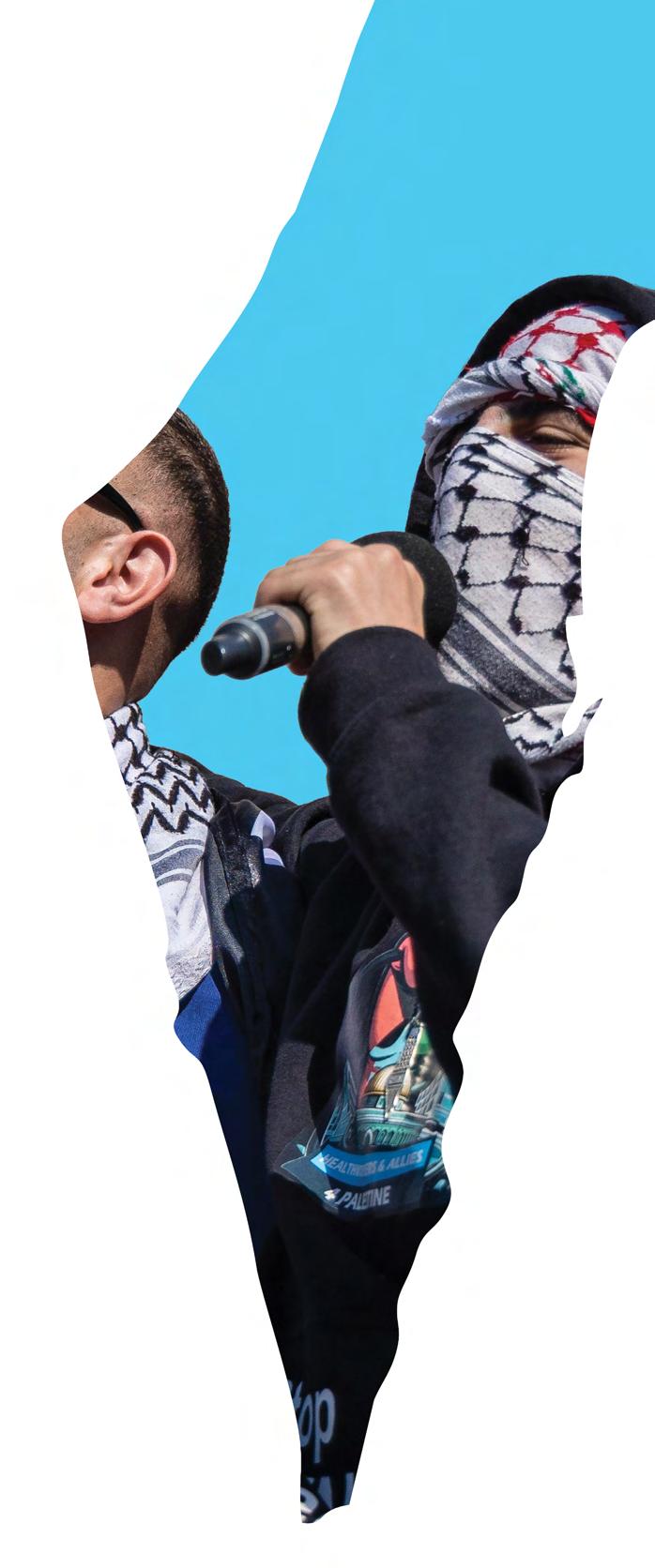
The Israel-Palestine War: Implications for International Relations and Global Politics
Megan Elliott
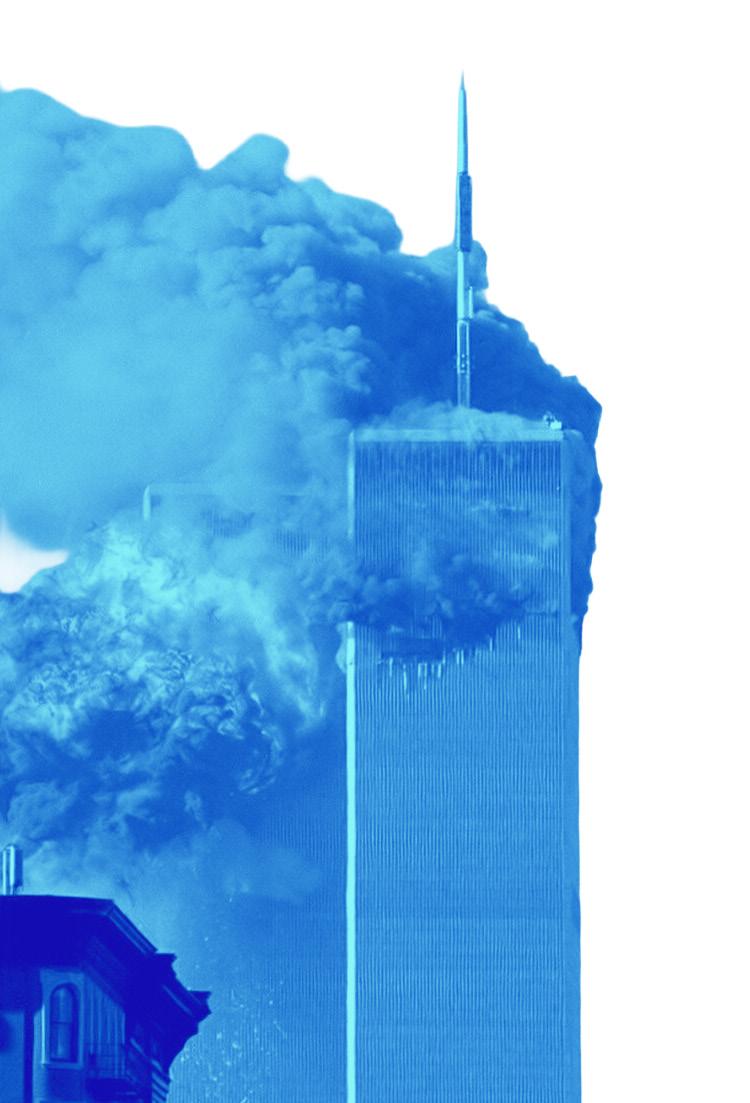
The Most Important Event of 2001 Wasn’t 9/11; Dismantling Western Liberalist ‘Truth’
Ellie Wain
Should Nations Be Ashamed of Their Histories?
Lucas Dean


Congress’ Failure to Control the President
Millie Beacham

Comparing Political Patterns: Nazi Germany and Contemporary America
Sophie Rahilly
Richard Nixon; The Most Misunderstood President?
Fred Von Kaltenborn


Football and Sectarianism in Scotland
Matty Mullen

Explaining Reform UK’s Rapid Rise in Local Elections: Insight with a Reform Councillor
Alex Carmody
Toxic Masculinity Within the ‘Manosphere’: A Modern Epidemic?
Will Britton


Beyond the Breadwinner: The Invisible Labour of the Modern Home
Annabel Cooke

Performing ‘Normal’
Issie Appadoo


Why Christianity Is Incompatible with Capitalism
Will Reed

The Political Power of the Red Carpet
Willow Wolff

Sociologically Speaking… The Zodiac Killer
Bea Moore

The Political Messages of ‘Avatar’ Felix Samuels

The Environment Is Doomed; A Debate Article
Daniyal Ansary
Is the Ease of AI Worth the Environmental Consequences?
Becca Towers


Will Artificial Intelligence Ever Equal Human Intelligence?
Aoife Barnes

If Humans Were Truly


THE ISRAEL-PALESTINE WAR: IMPLICATIONS FOR INTERNATIONAL RELATIONS AND GLOBAL POLITICS, MEGAN ELLIOTT
THE MOST IMPORTANT EVENT OF 2001 WASN’T 9/11; DISMANTLING WESTERN LIBERALIST ‘TRUTH’, ELLIE WAIN
CONGRESS’ FAILURE TO CONTROL THE PRESIDENT, MILLIE BEACHAM COMPARING POLITICAL PATTERNS: NAZI GERMANY AND CONTEMPORARY AMERICA, SOPHIE RAHILLY RICHARD NIXON; THE MOST MISUNDERSTOOD
EXPLAINING REFORM UK’S RAPID RISE IN LOCAL ELECTIONS: INSIGHT WITH A REFORM COUNCILLOR, ALEX CARMODY 8. 10. 12. 14. 16. 18. 20.
PRESIDENT?, FRED VON KALTENBORN FOOTBALL AND SECTARIANISM IN SCOTLAND, MATTY MULLEN
Conflict and the corruption intertwined in many democracies has singlehandedly redefined the way citizens view those meant to represent them. Now, more than ever, we are witnessing a participation crisis. This sector, titled ‘Power, Conflict and Governance’, explores what this means for the political future, how global politics have adapted to this new era of polarisation. The edition kicks off with Megan Elliott’s exploration of the consequences on global order because of the Israel-Palestine War. With a conflict defined by a lack of end in sight, it is more important than ever that we question what this means for stability within the middle east – and Megan studies this notion with sensitivity and intelligence. And since it is my last edition as Editor-In-Chief I thought that I should switch it up from editing, to writing. My piece explores the foreign policy made by the U.S., blinded by Western hubris, which facilitated the rise of the East. And continuing the topic of the USA, Millie Beacham criticises the failures of constitutional checks and balances with a tone so condemning it made me laugh out loud twice. One of the failures of Con-
gress to control the President lies in its funding of ICE, which Sophie Rahilly draws parallels to Nazi Germany. Her piece serves as an alert on the state of American democracy, which supposedly should be the pinnacle of Western liberalism. Fred Von Kaltenborn defends the historical instability present within this same democracy, defending the most ‘misunderstood’ President, Nixon. Exploring his damning upbringing in comparison to the success he experienced, he stabilises the stereotype of his legacy created by Watergate. And apologies for the whiplash, but Matty Mullen follows with a piece focused must more locally – Scotland. His exploration of Football teams and the legacy of Sectarianism in Scotland taught me the majority of what I know about football and is an interesting concept that provides topic variation within this edition. And to finish off this sector, Alex Carmody utilises his insight with a recently elected Reform Councillor to explain the rise of Reform which has redefined our system. Through examining the failures of Starmer’s cabinet and the local election results, he helps clarify the sudden shift in our originally 2 party system.
- Ellie Wain, Editor-In-Chief
Despite the ceasefire declared in October 2025, the vast global implications of the Israeli- Palestinian war cannot be understated for their impact on international relations and shifting global powers. The roots of the Israel Palestine conflict stretch back decades to the diaspora of the Palestinian people in 194 and the long-standing dispute over national identity and homeland. Since, the conflict has escalated dramatically, transforming the regional dispute into having worldwide diplomatic and political consequences.
This arose when on October 7th, 2023, Hamas launched a surprise attack on Israel, with hostages taken into Gaza, triggering immediate retaliation and a declaration of war. They subsequently began heavy airstrikes with escalations after Israeli troops then entered Gaza which intensified the humanitarian crisis. Despite a failed ceasefire in 2023, the conflict continued to grow with the expansion across the Middle East and increasing fears of a global conflict. Even now, after a ceasefire, fighting negotiations and humanitarian discussion are ongoing with involvement and mediation from countries across the globe being centrally held by the UN, highlighting continued instability.
The scale of human casualties and methods of war prove to blatantly violate conditions of international law sparking global outrage and discussion with a division of support across the globe. There was, and still is, a huge pressure on Western Countries and the UN to provide humanitarian aid, forcing them to pick sides and intervene in such a politically controversial conflict. Arguably, given the political nature, a precedent must be set to not support the terrorism committed but also not condone the invasion and at-
tempted erasure of a state of people
The dilemma reveals the complexity of modern international and diplomatic relations. The Middle East is central in providing global stability through resources like oil, so intervening could risk alienating allies key to their country’s economic stability. Lobbying groups have also been pushing western countries to pick sides making neutrality harder to maintain. This war is different; it is not just picking a side in a current conflict but getting involved in a decade long dispute over rightful homeland that has the power to question the legitimacy of people’s national identity.
External pressures with the rise of media pressure along with UN calls for a ceasefire and outspoken support for an end to the war transformed the political significance of the conflict. As we all know the war has unfolded through news articles and social media increasing its reach and spreading truth intertwined with political propaganda and misinformation. In countries like the UK there has been boycotts of Israeli backed businesses putting the government under public scrutiny to see their response. The war has gone beyond being a foreign policy issue and spread to being a domestic political discussion.
There has consequently been a rise in dangerous extremism and social division. Most notably in antisemitism and islamophobia across the western world showing the political and religious resonance outside the Middle East. This risks not only harming individual groups of Jews but also isolates and alienates groups that should be united against mutual ceasefire rather than propagating the tension that started conflict.
Global superpowers have in fact taken sides as a way to further geopolitical interests as the United States, despite sending aid to Palestine, have remained one of Israel’s biggest supporters. They sent $3.8 billion of defence aid to Israel a year along with sending aircraft carriers and $17.9 billion in security assistance. Contrastingly, Iran have long supported Hamas both in military and financial terms increasing fears the conflict could becoming a proxy war between the US and Iran which beings more concern given the current political involving the two. This threat of possible escalation raised serious concerns regarding global security and threatens global stability with the risk of China and Japan trying to capitalise on the weakened Western world.
China and Russia have also attempted to use the conflict to strengthen their global influence. China posi-
tioned itself as neutral with Beijing as an advocate for peace, however their belt and road initiative puts forward other motives for this. They also have strong links to Iran suggesting Palestinian sympathies which is reinforced by the lack of condemnation of Hamas and recognition of Israel’s self-defence with strong caveats of international law. China, as an upand-coming superpower, is strategically positioning itself in the centre of a huge conflict and most significantly, on an alternative side to the US mirroring their fight for power currently.
Similarly, Russia attempted to play a strong mediator role while welcoming Hamas and Iranian officials to their capital raising questions regarding its true neutrality. It is fair to speculate that their intention is to distract attention and resources from their own war with Ukraine as it relies so heavily on Western support. The Israel Palestine conflict therefore has become intertwined with wider power struggles and conflicts between major states.
Threats to domestic stability across the Middle East is arguably one of the most immediate issues regarding the conflicts effect on international relations. Countries such as Israel and Jordan criticized the campaign as a war crime and collective punishment showing the regional instability caused and risks of affecting the surrounding countries economically through trade and tourism. Concerns surrounding Palestinian refugees as well as the Palestinian support within their own country reveal the tumultuous time facing the Middle East with the additional involvement of parties such as the Iranian supported Hamas and the Lebanese Hezbollah which could further destabilise the region.
Perhaps most significantly the conflict exposed deep international divisions
due to the different responses to the accusations of war crimes and gen ocide. Spain took personal action against Israel calling for Netanyahu to be taken to International Criminal Court of which a warrant was is sued in 2024 that has still not been resolved. They also accused the EU of letting Israel getting away with genocide which showed the crit ical involvement of Europe and the world in holding these countries accountable for their actions as the risk of inaction is too great. South Africa also filed a lawsuit towards the start of the war as an accusa tion of genocide while Germany has rejected all such allegations and defended Isra el’s right to self-de fence. The divisions are not only political but also ideological and moral.
Ultimately the Israel Pal estine conflict has prov en to be far more than a modern regional conflict. It has reshaped diplomatic relation and intensified ge opolitical divisions to an ex tent that couldn’t be predicted. It highlights how modern wars no longer only effect the countries in volved but change the balance of trade, power and economics across the globe. Even with a current cease fire and continued negotiations, the long-term effects of the war are like ly to be a defining issue in global politics and diplomacy for years to come.
- Megan Elliott, L6 Haslewood
The most important event that happened in 2001 wasn’t 9/11. It was China joining the World Trade Organisation - the West just didn’t realise it. Whilst 9/11 admittedly shaped foreign policy and security, China’s entry into the WTO singlehandedly reshaped global balance, and served as the trigger for the fall of the West. It was a pivotal moment of western liberality ‘truth’ confusing reality and theory. This thinking (believing that Western democracy is inherently ‘superior’ to that of the East) is why the West’s influence seems to be falling, and the East is redefining political limits.
For context, the World Trade Organisation (WTO) is the global trade rule-setting institution with 166 members. It promotes freer trade by requiring all
members to adhere to certain principles. Bluntly put, its members are guaranteed better deals with other WTO members. In the spring of 2000, when China was trying to enter the WTO, Clinton and the U.S. voted in favour of them joining –primarily in hopes China would get on board with a USA-led liberal democratic order and move away from communism. Ironically, China’s gross domestic product soared from $1.3 trillion in 2001, to over $18 trillion. This means a 9% annual growth rate over the 2 decades. China certainly did not ‘democratise’ as a result.
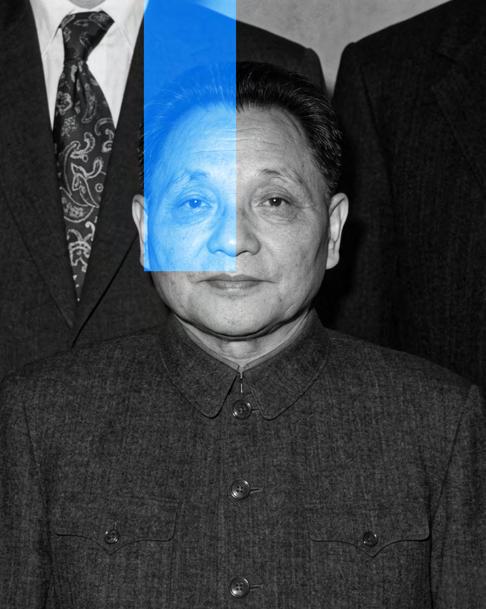
In 1980, China’s economy had been 10% of the USAs, but in 2014 China emerged as the world largest economy, 13 years after its entry into the WTO. After the Tiananmen protests, The West assumed that China would be another crumbling communist regime, however, true economic development arrived wearing boots in the early 2000s, pioneered by Deng Xiaoping’s policies. The WTO reorganised itself around China, ironically legitimising its communist governance as a result. The moment that China joined the WTO, the decline of the West began. China’s restructuring of the WTO did not reinforce American hegemony but instead distributed the power it depended on.
Yes, American consumers benefitted from China’s WTO entry because they could buy Chinese goods at lower prices (however, this only matters if you ignore the 6 million U.S. manufacturing jobs that were lost in 12 years as a result). But more importantly, this hopefulness that accepting China into the WTO would ‘democratise’ their communist nation exemplifies best how Western policy is repeatedly blinded by a historically-rooted messiah complex. Mahbubani, an ex-UN ambassador for Singapore, covers this better than I can in his book ‘Has the West Lost It?’, but I will summarise the crux of his argument. The cycle of Western domination is ending by the West’s refusal to acknowledge the East’s success meaning they keep making ignorant choices because of it. Most notably the Iraq war.
After 9/11, America acted emotionally, not rationally. The Iraq war fundamentally came from the same place of ideological arrogance we can witness within Trump’s invasion of Iran in February, or his explosive tariffs. Bush sold the invasion as ‘democracy-promoting’, implying the West are the messiah the middle east needs because its incapable of saving itself. Let’s cast our minds back to those times; who was a key middle eastern leader who opposed Osama Bin Laden? Saddam Hussein - who was eliminated by the American invasion.
The Iraq war also represented an enormous strategic distraction. Brown University’s Costs of War project estimates that post-9/11 wars cost the United States trillions of dollars over time, including military spending and longterm obligations. So whilst the USA was concentrating military power in Iraq and Afghanistan, China was expanding and integrating supply chains which solidified its economic influence following WTO accession. This difference in the two global superpowers during the 2000s destabilises the assumption that military dominance guarantees long term global dominance. 9/11 reshaped domestic culture, which would become increasingly wary of the East and security-focused, but China’s entry into the
WTO marked a new area globally.
A reoccurring theme in America’s interventionist policy seems to be the underestimation of Islam and any non-Christian religion more generally rather than hostility towards Islam itself. They associate Islam with weak societies such as Somalia or Afghanistan but again fail to see that predictions of the number of Muslims state how they may reach 3 billion by the end of this century (According to Pew Research Centre). This conflict cost $8 trillion, and it also meant China could wake from her sleep whilst America was blinded by hubris. So, was it worth it? The contrast becomes clearer when comparing outcomes. Between 2001 and the early 2020s, China’s share of global manufacturing grew to roughly one-third of world output, whilst the United States experienced long-term industrial decline and rising political polarisation.
Recently, America seems to be constantly involved in the middle east when it simply doesn’t involve them. What strikes most ironic is that when 9/11 occurred America still didn’t want to face the fact that the centuries of trampling on the Islamic world had caught up to them. 9/11 was a horrific tragedy, but so was the West’s treatment of the middle east hundreds of years preceding 9/11. To ignore that, is to accept the superiority complex the West likes to perpetuate.
It is overly simplistic to argue that China’s accession to the WTO alone causes western decline. China’s rise began with Deng Xiaoping in 1979. 9/11 did have consequences beyond international security, it transformed immigration debates and reshaped trust in government, but this does not undermine the significance of China’s WTO entry. WTO accession does symbolise a deeper historical turning point by demonstrating that economic integration did not guarantee political liberalisation, thereby exposing post-Cold War thinking.
Western liberalism is treated a universal truth. It assumes all societies want Western democracies and that modernisation equates to secularisation. If this was true;
why has China overtaken the USA’s economy under a communist government? Asia now accounts for the majority of global growth and China and India dominate world GDP. Western dominance triumphed for around 200 years, but the world is becoming multipolar due to the West inability to sustain their monopoly on power. Franic Fukuyama’s ‘end of history’ thesis assumed liberal democracy would emerge as the endpoint for political evolution; but China’s post-WTO boom destabilised this assumption.
So, why don’t we take a chapter from China’s book, and realise the only way to progress is to accept the
mind-sets of non-Western populations? Isn’t that the only way to compete with the rise of the East? Fukuyama’s thesis epitomises the hamartia in Western thinking; modernisation does not automatically produce Westernisation. We assume our way of governing is superior because historically we have been. The rise of China, catalysed by the country’s entrance into the WTO, singlehandedly proves us wrong. If we fail to recognise this, we risk entrenching the same flawed thinking that first allowed China to rise unchecked and gain the position it now holds.
-
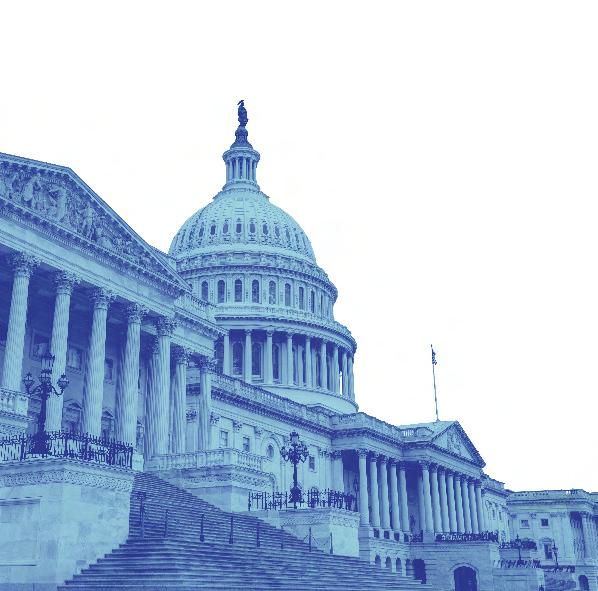
Since Donald Trump’s inauguration on the 20th of January, his levels of power have grown at a concerning rate, with Congress and the Supreme Court issuing legislation and rulings that usually favour the 79-year-old incumbent president. In comparison to his first term, Congress’ checks seem inexplicably weaker in the face of a man empowered by his own ego and group of ‘yes-men’ encouraging his disregard for the limitations of power placed upon a president by the twenty-second amendment.
enough to have initiated the impeachment process for a President seen as committing ‘Treason, Bribery, or other high Crimes and Misdemeanours.’
President Trump was put through this process on both December 18th, 2019, and January 13th, 2021(both times the House was under democratic control, unlike the current situation). Despite the fact he was never removed
their constitutionally contentious bills.
One such stunt bill being H.R.792, a bill that proposes ‘directs the National Park Service to add
bers of society or those whom the administration doesn’t feel fit into their world view. For instance, the LGBTQ community, a group that had been targeted relentlessly by the current administration, where the administration can now legally comb through their private communications to find ‘evidence’ of perceived criminality.
Amongst all of Trump’s borderline unconstitutional acts (or at least ones that do not serve the best interests of the American people, instead benefiting his own) there remains the question of ‘what is Congress doing?’ It is not to say that Congress has completely fallen to the whims of the president and no longer serves a function, but many have questioned why they’ve not stepped in, as they did in his first term. Not only was Trump put through impeachment twice but he was also restricted in his actions – something that does not seem to be happening as much this time around. In March 2020 Trump wanted to initiate military action against Iran (something he has now succeeded in) but six years ago it was not given congressional approval. On this matter, using the War Powers Act, the House voted to restrict the president’s authority, in a 227-186 vote – however it is a testament to how much control the president and republicans had even then as it only just managed to pass the Republican-controlled Senate by a 55-45 vote. Since the start of his first term, the current president has been hacking away at the control of Congress and the checks in place to avoid exactly this situation – hopefully his current tyranny over the legislative branch will be curtailed in the Midterms with a loss of control over the Senate and Congress.
Trump was apparently unwilling to
give up his aim of attacking Iran –paying homage to his predecessor George W. Bush – he claimed that Iran was on the verge of getting nuclear weapons and action was required imminently to skirt around the need for congressional approval. On 28th February 2026 the US and Israel conducted military strikes in Iran, launching the primary attack on the country, leading to the national oil crisis caused by the shutdown of the Strait of Hormuz that Iran currently controls. The use of the War Powers Act seems likely here, but a senior Trump administration official has said that since a ceasefire has been reached the act is thus useless. Entirely ignoring that days after this agreement was reached fire was already being exchanged in the Strait between the two countries. In a similar situation earlier in Trump’s term the War Powers Act was actually invoked in regard to Venezuela but ultimately led nowhere as the initial vote met a 50-50 deadlock in the Senate on a Republican motion to dismiss the bill, and was broken by Vice President JD Vance in the president’s favour.
However, even in his second term Trump is not infallible – as seen in the Supreme Court ruling 6-3 against Trump’s ‘Liberation Day’ tariffs. The Roberts Court stated that Trump exceeded his authority by invoking a law meant for emergencies to impose tariffs on foreign countries, ruling that he acted unlawfully in doing so. Chief Justice Roberts delivered the ruling, and in retaliation the President of the United States publicly criticised the court, calling it an ‘unfortunate’ and ‘terrible’ ruling. Concerningly, in this same speech he stated that ‘it will have no impact’ and he would continue his plan in ‘the other way,’ implying a disregard for the Supreme Court and their rulings, dismissing the role
of the judiciary in keeping the government balanced. He even lamented the loss of ‘$159 billion’ that the ruling mandated be repaid, unable to comprehend that the money that was unlawfully taken – stolen more accurately – needed to be given back to the people it was unlawfully levied from. Despite the Supreme Court acting as an effective check in this instance, President Trump seemed indifferent to the ruling, and unapologetic that he acted so unlawfully. Setting a precedent that the executive is above the other branches of government and can act as he wishes, unconcerned about how the other branches may act or their legal attempts to limit his power.
Ultimately, despite legal checks remaining in place and the president not being granted any unpresented new powers in the past two years, Trump has taken power at every chance he has seen, as Congress has seemingly been incapable of stopping him. The growth of his power has been exponential in Trump’s second term, unlike his first where he was limited in many ways – typical of all other presidents with a few exemptions. Since his inauguration in 2025, the president has broken down checks and balances with ease, ignoring safeguarding and the protests of the public and elected Democrats. Given the pattern we have seen, if Trump continues this trajectory his wishes of running for president 2028 may even become reality.
-
Millie Beacham, L6 Haslewood
In February 1933, the Reichstag fire marked what many believe to be the beginning of the Nazi Takeover. Now, almost a century later, we are seeing the faint echoes of patterns repeating themselves in present day America. From the populist slogan ‘Make America Great Again’, to modern American censorship and the scapegoating of minorities, I will explore the patterns in Nazi Germany that are presenting themselves in present day America.
Firstly, the scapegoating of minorities, which occurred in Nazi Germany, is presenting itself today in America. Scapegoating is the act of unfairly blaming an individual or a group for mistakes, problems or failures that
they did not cause, and, within Nazi Germany this scapegoating was specifically against the Jewish population. Scapegoating in Nazi Germany is seen clearly through the Nazi’s falsely claiming that the Jews were responsible for the German defeat in the first world war, this was known as the Dolchstoßlegende, the stab in the back myth. This is further seen in April 1933, when the local Nazi party chiefs organized the national boycott, which aimed to intimidate the Jews and discourage the German population from shopping at Jewish businesses.
But how is this scapegoating relevant in present day America? Well, the Trumpist exploitation of the border crisis in America is a clear

example of the scapegoating of minorities today. Over the past few years, President Trump has repeatedly blamed immigrants for crime, social dysfunction and economic hardship, but is this really true? An article from the Guardian stated that there is “extensive research showing irrefutably that immigrants to the US commit fewer crimes than people born there and have done so for more than a century.”
This displays that, despite Trumps’s many statements accusing immigrants of fuelling violent crime, this is wholly untrue and therefore scapegoating. In other statements Trump has referred to immigrants to the U.S as “animals” and that they are “poisoning the blood of our country”. This language echoes that of Adolf Hitler’s, almost a century ago, when he routinely referred to the Jewish community as a “virus” and a “poison”.
Secondly, the act of censorship is something that has appeared in both Nazi Germany and America today. In 1934, the Editors law or Schriftleitergesetz, was enacted, which stated that all journalists had to register with the state, and provide proof that they had no Jewish ancestry. Effectively this forced all anti-Nazi or Jewish writers out of journalism. Radio output was also strictly monitored by the Reich broadcasting corporation, and listening to foreign broadcasting stations, such as the BBC was strictly prohibited.
In America, this similar idea of
censoring TV shows and press media access has definitely been seen. An example of this was the brief suspension of the Jimmy Kimmel show after he had openly criticized Trump’s administration and made comments about Charlie Kirk’s assassination on his latenight talk show. Another example is when the Trump administration took control of the White House press pool, which upended seventy years of journalists, not government officials, deciding which rotating reporters would travel with Trump and be present at conferences in the oval office and Roosevelt room. This control of the media allows Trump, and future Presidents, to dictate whose voices and sides of the story we hear, kicking out those whose views may be more critical of Trump and allowing more access for Trump-friendly media. Whilst these attempts at censorship have ultimately not been as far reaching, they still display similar characteristics to those deployed in Nazi Germany.
Lastly, many have drawn comparisons between Nazi Germany’s Sturmabteilung, the Brown Shirts, and the U.S ICE, Immigration and Customs Enforcement. The Brown Shirts were the original paramilitary under Adolf Hitler and the Nazi party, and significantly aided Hitler’s rise to power through violent intimidation and suppression. ICE is a federal law enforcement agency under the United States, and in 2025 alone, thirty-two people died whilst in their custody. One of the more well-known ICE deaths was the killing of Renee Good, who was fatally shot by ICE in Minneapolis. Whilst both Trump and federal law enforcement officials have defended the shooting
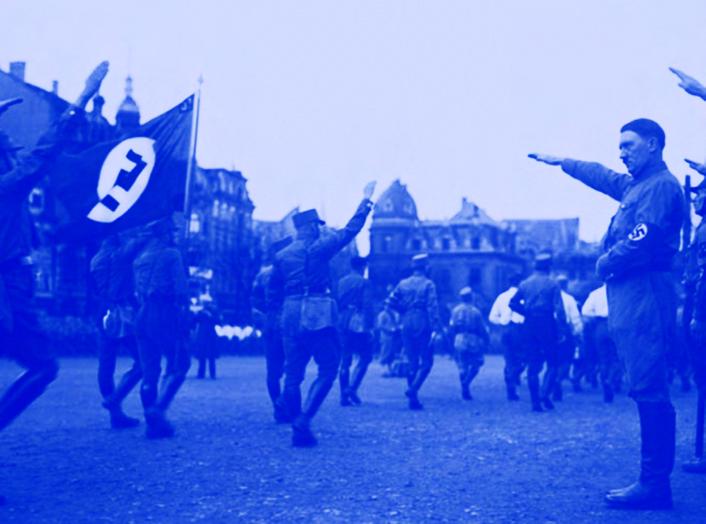
saying it was in self-defence, videos of the incident clearly show that the response of the ICE agent who shot Good, was in no way proportionate to any threat she may have posed.
So, what do ICE and the Brownshirts have in common? Well arguably both utilize fear to force compliance amongst a community. Many argue that ICE’s oversight has begun to erode, with actions such as warrantless arrests and the avoidance of judicial oversight becoming common. And the human impact ICE has had must be noted, as we continue to see families being torn apart and broader communities terrorised. All of these seem to eerily mirror the themes we once saw with the Brown Shirts, such as their use of extreme violence and fear, their unchecked policing powers and the very real human toll their actions have cost.
So, whilst I am in no way claiming that America is becoming Nazi Germany, I would still like to question the atrocities we are seeing day to day, and I would like to leave you with one question. Many millions of people gave their lives during World War Two in order to ensure that we would never again witness a repeat of the atrocities that happened, so at what point are we going stop the modern day atrocities which violate American democracy?
- Sophie Rahilly, L5 Gloucester
Despite these parallels, there are still many beacons of hope We have seen countless acts against ICE both within and outside of the communities they have affected, from celebrities simply wearing anti ICE pins, to protests and demonstrations calling ICE out for their violence. And America has built in democratic institutions that are hopefully robust enough to withstand the assaults that they are currently facing.
ichard Nixon, born January 9th, 1913, is one of the most controversial and influential U.S. Presidents of the 20th century. His involvement in the Watergate scandal changed American politics forever and his groundbreaking foreign policy relating to Maoist China is monumental in its effect, of which parallels can still be drawn to Trump’s America today. However, in this article I outline the reasons as to why this infamous and misunderstood president is actually far more deserving of our respect and appreciation than previously thought,
as well as examining his hostile and rough upbringing that would go on to influence the decisions that would lead to his eventual downfall.
he was luckily able to achieve a full scholarship at Duke University School of Law and would the go on to pass the bar exam in California in 1937.
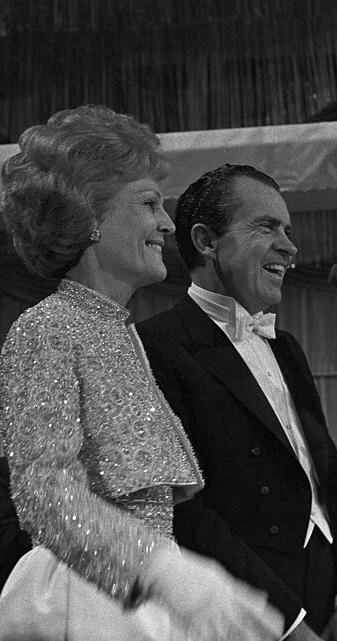
Richard Milhous Nixon was born in the small Californian town of Yorba Linda. His father ran a grocery store, and his mother was a Quaker with his father later converting to the denomination. He had a harsh upbringing. The family was exceptionally poor, and his childhood was marked by tragedy. His younger brother Arther died at age seven from tuberculosis and the family was plagued by financial hardship and health problems. He attended Whittier High School, achieving excellent grades, despite having to wake up at 4 am every morning to sell vegetables for the family. He was eventually offered a tuition grant to attend Harvard University but soon after, his other brother Harold, was diagnosed with tuberculosis and he was forced to reject the offer due to the expenses being too much for the family. However,
When reflecting on this harsh upbringing the main takeaway that would stay with Nixon for the rest of his life was the ‘us vs them’ mindset. Throughout his entire upbringing he had had to fight for everything he had achieved and often felt like he was overlooked for his impoverished upbringing especially by east coast elites such as Harvard, a chip on his shoulder that would carry on well into his Presidency As such he always maintained this narrative through his actions and policy that he was the hard-working outsider working against the privileged insider who was born with a silver spoon in their mouth. We can observe this conflict particularly when considering the 1960 Presidential Election. Nixon’s opponent was John F. Kennedy who fills the privileged insider stereotype to the letter. He was born into one of the most influential families in American politics and was groomed from a young age for high office. His maternal grandfather was a U.S. Congressman and two-term mayor of Boston, and his paternal grandfather was a Massachusetts state legislator.
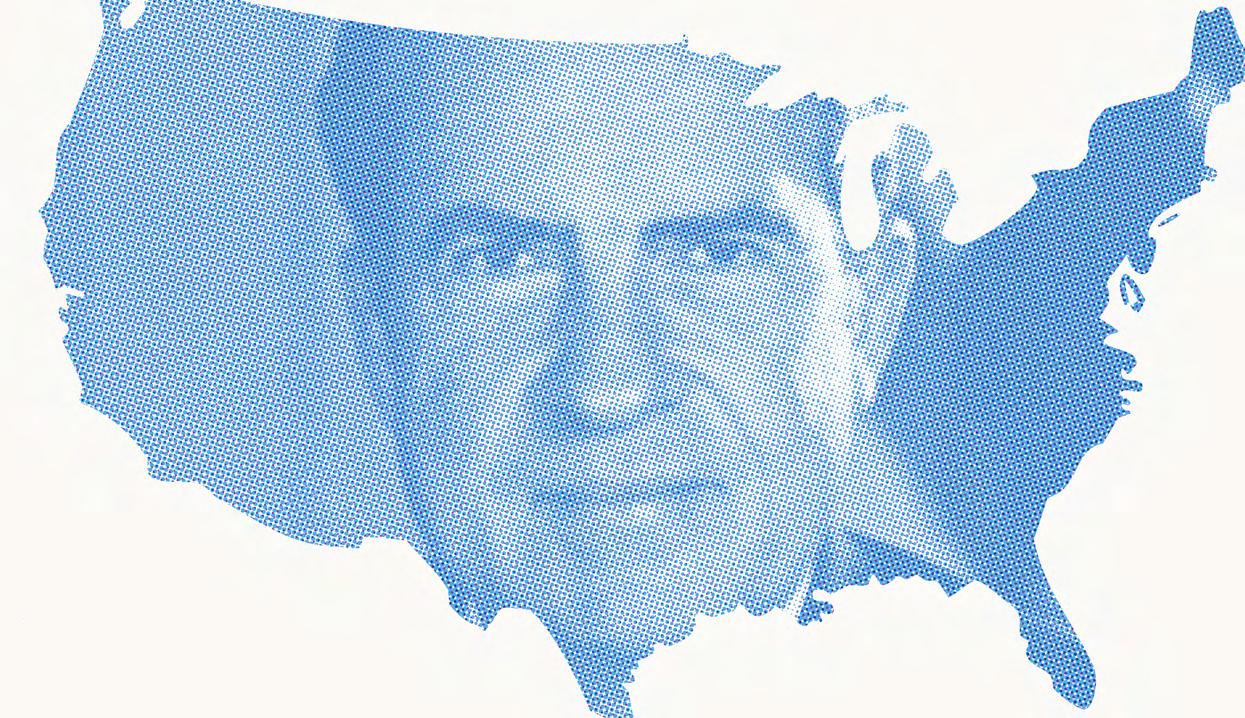
Nixon by contrast came from nothing. He was of no political pedigree, and no members of his family had even attended University let alone held a political appointment. His loss in this election further cemented him with his mindset that the establishment was against him and he developed a hatred for the rich East Coast Elites who had overlooked him so much throughout his life.
When reflecting on his Presidency and Watergate it was undoubtedly this paranoid attitude that led to the decisions he made regarding the scandal and which influenced his actions in the first place. The Scandal involved five members of Nixons re-election campaign (CREEP) breaking into the Democrat Party Headquarters at the Watergate Hotel with the intention of wiretapping and bugging the meeting rooms and phones. The five men were discovered and arrested with Nixon denying the connection to his administration live on television.
It was this blatant lie that sealed his fate and when the oval office tapes where released a few years later, heavily incriminating him, he was forced to resign.
To conclude, Richard Nixon remains one of the most fascinating and divisive figures in modern American history. While the Watergate scandal was reprehensible and rightfully tarnished his legacy, it should not completely overshadow the remarkable journey that brought him to the presidency. Unlike many of his political contemporaries, Richard Nixon rose from poverty and personal tragedy through determination, intelligence and relentless hard work. Yet the insecurity and suspicion formed during his harsh upbringing ultimately became the qualities that destroyed him. Nixon’s story is therefore deeply tragic: the very traits that enabled his extraordi-
nary rise also contributed to his downfall. Although history will always remember Watergate, Nixon should not be remembered as an evil comic villain who acted without cause or reason. He had a deeply entrenched ‘us vs them’ mindset and hatred for the societal elite who turned him away and whilst his actions on Watergate may have been awful, he should be remembered as a far more nuanced and complicated character than he is often painted out to be.
Sectarianism in Scotland, particularly Glasgow, is still one of the most persistent and controversial social issues that the country faces to this day. Though often framed, by the media or uneducated opinions, as a
relic of the past, sectarian attitudes still shape large aspects of cultural life, identity, and, most visibly, football loyalty. To understand why tensions exist today, particularly around the rivalry between Celtic FC and Rangers FC, Glasgow’s two biggest football clubs, we must look back to

forced religious and national loyalty that was translated into schools, churches, workplaces and other public institutions. Historically Scottish Protestant groups were in strong opposition to their Irish Catholic counterparts. Political organisations helped to strengthen these already extreme divisions in the city meaning, by the 20th century, sectarianism was embedded into the city of Glasgow. This influenced where people lived, worked, were educated and most obviously seen in which football team they supported.
The Troubles in Northern Ireland that commenced in the late 1960s, perfectly portrayed the sectarian divide in Glasgow at the time, a war that was beyond borders and fought through nationalism, identity and reThe conflict worsened separations within different cultures and communities in Scotland. This was mostly visible in Glasgow, where a considerable proportion of the population were linked to Catholic nationalist or Protestant unionist history.
Celtic Football Club was founded in 1888, by Brother Walfrid, in the east end of Glasgow. The club was formed as a form of financial support for food kitchens in Glasgow to be used by Irish Catholic immigrants who were in poverty because of workplace, housing and political discrimination they faced. Due to this, the club’s fans adopted strong Catholic, left-wing and nationalist views. On the opposite end of the spectrum, Rangers Football Club was founded in 1872 by four teenage boys. The club was in the Govan district of Glasgow, a particularly Protestant area of Glasgow at the time. For this reason, fans of Rangers FC assimilated strong Protestant, unionist and loyalist
views. In a working-class city, such as Glasgow, with two football clubs (Celtic and Rangers) that possess religious, political, cultural and social beliefs that are opposites, the Troubles had a detrimental impact on the hatred between the two clubs. Sectarian violence, chanting and art was, and still is, extremely common between Celtic and Rangers. Scotland’s sectarian divide is without doubt, most clear in the football rivalry between Celtic and Rangers, commonly known as the Old Firm. Although sectarianism is a historical social issue, with origins outside of football, the Old Firm rivalry has become the most visible mouthpiece for others to express sectarian identities.
Game days often intensify the tensions between the two. Chants or songs referencing paramilitary groups, Irish republican groups (such as the IRA) and anti-Catholic chants are consistent throughout. While many supporters wish to enjoy the sport of football, a minority use the game as a way of showing these sectarian values. The police force, government and clubs have previously attempted to regulate certain sectarian behaviour and have had mixed success.
Many argue that sectarianism today stems from cultural identity, rather than genuine religious divide. Research shows that younger Scots are far less likely to engage with sectarian behaviour and Glasgow’s communities are far more integrated than previously, although this does not mean that we have seen an end to sectarianism in Scotland.
While sectarianism is often viewed as a social issue based on cultural divide, it also has its place in Scotland’s legal system, political institutions and media outlets. In recent
history, the Scottish Govern ment has attempted to cre ate new policy and legisla tion in order to restrain more visible forms of sectarian behaviour. The Offensive Behaviour at Football and Threatening Communica tions Act (2012) aimed to make sectarian chanting, behaviour capable of incit ing public disorder and threatening online posts a criminal offence. Crit ics claimed that the act infringed on the human rights and freedoms, such as the freedom of speech and ex pression, of foot ball supporters in Scotland. Follow ing the repeal of the act in 2018, the extreme diffi culty of abolishing anti-social cultural behaviour without weakening civil liberties became apparent.
Education, anti-sectarian charities and community volunteering play a crucial role in tack ling the social is sue. Many schools in Scotland run pro grammes, with the aim to help young people un derstand the historical ori gins of sectarianism and to recognise its modern applications (one particularly interesting charity is Nil by Mouth, more information can be found at www. nilbymouth. org). Although sectarianism in Scotland is not as potent as it once was, it is most definitely not a trivial social issue that has been left in the past. Its persistence is clear to

see in multiple aspects of Glasgow’s culture, a vibrant and diverse city, tainted by sectarianism.
- Matty Mullen, L6 West
BY ALEX CARMODY

Most people in the United Kingdom are aware that Reform UK has experienced a dramatic rise in support since the party’s creation in January 2021, especially after its sweeping success in the recent 2026 Council elections, gaining 1,452 seats from its initial two. Whilst many people recognise Reform’s significant rise in support, some find it difficult to explain how a political party established just five years ago could possess so much patronage. For myself to also understand this major political shift, I have luckily been able to speak to a newly elected Colchester Reform Council member, who explained to me the reasoning behind his party’s surge in popularity.
One of main reasons clarified to me behind Reform’s large success is due to scepticism and distrust of the two main political parties, Conservative and Labour. Since Keir Starmer became Prime Minister, many critics have accused him of repeatedly changing his political positions and abandoning promises made to the public. During his Labour leadership campaign, Starmer introduced “10 pledges”, which included supporting the idea of abolishing university tuition fees and supporting public ownership of key industries. However, opponents argue that many of these promises were later abandoned once he became leader, causing voters to question his honesty and consistency. In addition, Labour’s decision to dramatically reduce its £28 billion green investment pledge was viewed by critics as another major political U-turn. Furthermore, Starmer’s speeches such as his recent comments regarding people attending the ‘Unite the Kingdom’ rally as “peddling hatred”, can be viewed as divisive and dismissive towards everyday people expressing their right to freedom of speech, labelling any opposing views as extremist or unacceptable. This without doubt has sparked controversy around the Labour party, causing voters to turn towards parties promoting change such as Reform UK.
Another major factor behind Reform’s growing support is because of the enor-
mous number of young people who have felt disconnected from the current and recent governments. Some key examples of this are how the current Labour government promised to improve the cost-of-living crisis, however many critics can prove how under Starmer the crisis has significantly worsened. Other of Labour’s economic policies such as supporting green transition spending will inevitably lead to higher household energy costs and taxes for nearly all households, worsening the cost-of-living crisis.
Moreover, opponents could argue that the UK job market has worsened under Kier Starmer’s Labour government. Unemployment has risen, there are fewer opportunities for young people and businesses are hesitant to hire because of economic uncertainty and increases in the minimum wage and employers National Insurance. Many critics argue that despite promising change, Kier Starmer and Labour have not focused on fixing solutions that are crucial for the younger generations of Britain, causing many young voters to feel ignored, causing them to shift to other parties such as Reform UK and the Greens who are placing young people highly on their agenda.
Another major political issue that has helped contribute to Reform UK’s rise in popularity is migration, which today is one of the most widely discussed topics in politics. Both the recent Conservative government under Boris Johnson and current government under Kier Starmer have failed to significantly reduce both legal and illegal migration levels, despite promising stronger borders. Following Brexit, it was expected that immigration into the UK would decrease, howevwer migration instead rose to record highs, including over 900,000 in 2023 which is the highest level ever officially recorded in the UK. Furthermore, illegal migration by small boat crossings has remained a major national concern that neither the Conservatives nor Labour have managed to solve. Since Kier Starmer became Prime Minister in July 2024, over 50,000 people have illegally crossed the English
Channel in small boats, despite Labour repeatedly promising to “smash the gangs” and strengthen border security. This has caused many voters to turn towards other parties such as Reform UK and Restore Britain, as they believe that these are the only parties that will take a strong stance on reducing both legal and illegal immigration.
It is also fair to argue that these high levels of migration have placed increasing pressure on housing, schools and healthcare. This will inevitably worsen many of the big economic struggles that the younger generations of Britain already face. For example, the average house price in England remains at over £290,000, whilst monthly rent prices have recently reached around £1,438 per month, making home ownership an increasing struggle for young people. Moreover, the NHS has been under significant stress with waiting lists remaining at above seven million people in recent years. Critics argue that with the UK’s current rapid population growth as well as high levels of migration, this will inescapably place more stress on the NHS.
Additionally, voters believe that Britain’s national identity and culture are changing too quickly, with growing concerns over social integration and the preservation of the core British values. Reform UK has strongly focused on these issues, addressing how they will reduce both illegal and legal migration in order to prioritise the British public and place them at the top of its agenda. Therefore, voters who have felt ignored by the current and previous governments have moved to parties such as Reform UK and Restore Britain who seem to be the only parties that are willing to address the concerns surrounding immigration, national identity and the future of Britain.
In conclusion, Reform UK’s dramatic rise in popularity can be explained by the public’s rapid growth in frustration with the current and recent governments. Furthermore, many voters agree with the idea that most politicians no longer represent the beliefs of the ma-
jority of people in the United Kingdom. Concerns around political dishonesty, the cost of living crisis and immigration have caused many voters to feel immensely disconnected from both the Conservatives and Labour. With Reform directly addressing issues that other political parties have not fixed, it has positioned them as the party that many voters believe will create the best future for the British population. Overall, Reform UK’s recent council vote success demonstrates a significant shift in British politics and highlights the growing demand for political change across the United Kingdom.

Whilst I love every article this edition, and have immense gratitude for the writers who have set aside time to write in such a busy time, my favourite addition to this edition begins this section on identity and society titled ‘Toxic Masculinity Within the Manosphere; A Modern Epidemic’ by U5th Will Britton. In addition to smashing his GCSEs (hopefully), he’s written a piece which questions where this Manosphere epidemic as come from, inspired by Louis Theroux’s new Netflix documentary. And maintaining the theme of gender, sociology student , Annabel Cooke, dismantled the gender expectations which have withheld through history. Exploring what it means to be a woman in a society fundamentally designed for men, she manages to foster important challenges on how we see the world. Lucas Dean branches out in this sector, covering whether nations should be proud of their history. Possibly more topical with the escalation of the Israel-Palestine conflict, he concludes that shame of one’s nations past does not fix it and thus can be rendered futile. Issie Appadoo shifts the tone from retrospective to deeply personal through her exploration on what to means to conform to ‘normalcy’, leaving you with the question of whether norm standards serve any benefit to society at all. Sorry for the literary whiplash, but next in the section comes Will Reed who
focuses on the compatibility ofcapitalism and Christianity. In a world which has historically been shaped by Christianity, and a world that continues to be shaped by capitalism - his analysis of the twos incompatibility, and fundamental hypocrisy which stems from this fact, serves as a reminder on the foundations of which our belief systems stand. Willow Wolff shifts the focus from economy to the financially elite figures which now define it through highlighting the importance of those celebrities in the public eye. She stresses how those in the public eye have a moral duty to help others less fortunate, especially now in an age of digital media. And finally, our returning sociological column, written by Bea Moore, covers the chilling story of The Zodiac Killer who remains a haunting reminder of how fear shapes policy and even policing. The tragedy of his serial murders are reflected on by Bea as a didactic message on the way society is shapes through public fear and herd mentality. The range found in this section, which admittedly I found difficult to link at times, serves as a testament to the variations in passions across St John’s. Whether it be gender studies, sociology or even serial killers (possibly worrying), it’s safe to say that this section serves all your sociological interests!
- Ellie Wain, Editor-In-Chief
online culture to the attention of the general public. A study done by Kings College London showed that 47% of young women find the phrase “toxic masculinity” helpful in describing some men, in comparison to considerably less young men who find the phrase helpful at 29% (37% of men aged 16 to 29 say that “toxic masculinity” is an unhelpful phrase).
the very people they are trying to attract.
BY WILL BRITTON
The idea of masculinity has existed throughout all human history. From the Spartan Agoge warrior school for young boys in Ancient Greece, to the invention of bodybuilding in the late 19th century, people have been fascinated with the male form and how it presents itself. In recent years, the limited crime series “Adolescence”, and “manosphere” social media personalities such as Clavicular (born Braden Peters), and controversial streamer Andrew Tate, have brought the notion of ‘toxic masculinity’ and hypermasculine

This leads me to my first question, are men who are perceived as overly or unpleasantly masculine aware of how their appearance is received by others? From at home peptide injections, to unregulated facial implants, the ‘Looksmaxxing’ movement, on social media apps such as TikTok, claims to aid people in becoming the best-looking version of themselves or “ascending” as people within the movement refer to it as. (While both men and women partake in looksmaxxing, I will be referring to it in the context of men for the purpose of this article). Influencers, like the ‘Clavicular’, spearheaded this movement by popularising looksmaxxing techniques such as bone smashing, where people repeatedly strike their facial bones (like the jaw or cheekbones) with blunt objects, hoping to trigger regrowth that results in a more chiselled appearance. While there are no proven benefits and lots of predictable dangers, it seems many people will stop at nothing to try and ‘ascend’. However in according to a study by scientists at the School of Psychology & Neuroscience, University of St Andrews, women found men whose faces were 32.7% more masculine than the least masculine version to be the most attractive, in comparison men predicted that women would favour male faces that were 76.5% more masculine, showing how greatly men overestimated the masculinity their female counterparts preferred. So is it possible this discrepancy between what women find attractive and what men think women find attractive has led to a hypermasculinized ideal that in the process of trying to achieve, some men end up repelling
Demna (formerly Demna Gvasalia), the new creative director of Gucci, explored this idea in his debut Fall/Winter 2026 runway. Demna chose models with exaggerated physiques and strikingly masculine features to mock the hypermasculine aesthetic. By objectifying masculinity, and subjecting it to ridicule, he seems to be commenting on the looksmaxxing culture and the blatant insecurity of it. The shiny skintight shirts and rigid fitted jeans, paired with the models create a severe almost physically repulsive look . Yet when fashion intern Ella Devi (@ellad3vi) posted this opinion on twitter (X), she was met with backlash from many right-wing men saying how “attractive” and “awesome” these looks were. This example further exemplifies how warped masculine ideals have become in some people’s eyes, with social media acting as an echo chamber that has amplified and exaggerated all of these views.
However, masculinity itself isn’t inherently bad, after all masculinity is a set of behaviours, attributes, and roles traditionally associated with boys and men, meaning it is a fluid, social construct that can transform and evolve over time. It is only the most recent iteration of masculinity that has led to this ‘toxic’ culture and even then, it appears to be a relatively isolated notion limited to social media. In the past men were often viewed as strong heroes, with admirable features, like Hercules, who was known for his bravery and cunning, but also his compassion, like when he saved Prometheus from eternal suffering or King Arthur who saved Britain from Saxon invasion. These figures demonstrated heroism at its peak, and in modern day media as well, characters like Captain America fight for the good of people around him, acting selflessly for others. Yet even with modern day role models for these positive masculine virtues, ‘toxic’ masculinity has still found a way to take root, through insecurity and selfishness.
Friedrich Nietzsche famously said “God is Dead” and while people interpret this phrase differently, I don’t believe Nietzsche was making a religious statement when he said this. Throughout much of human history people have believed in some sort of higher power, whether polytheistic or monotheistic, but this meant that people would always act
with this in mind, they might forgive someone even when they wanted to take revenge, or help someone even if they were feeling too lazy, all because they were not thinking about themselves, but instead fulfilling what they believed to be a higher purpose.
This gave people direction and meaning in their lives, but Friedrich Nietzsche believed that in a modernised world this way of life would be left behind and, in the process, so would the reasons for acting beyond oneself. Instead of acting outwards for others, he feared that the focus would turn inwards and onto us. However this focus on the individual isn’t necessarily a bad thing as self-improvement is positive in many cases, but when the focus is solely on becoming the most physically attractive version of yourself possible, this self-obsessiveness can lead to a lack of empathy and a disregard for others, leading to a distorted form of masculinity rooted in self-obsession and insecurity. As Nietzsche said “Whoever fights monsters should see to it that in the process he does not become a monster. And if you gaze long enough into an abyss, the abyss will gaze back into you.”
As previously established it appears that at its core, toxic masculinity stems from insecurity and selfishness. However, reducing the phenomenon to solely an individual’s vanity or lack of moral values risks oversimplifying why young men are so drawn towards hypermasculine ideologies in the first place. Many people argue that society sends contradicting messages to young men: to be emotionally intelligent and open, yet still expecting confidence and social dominance. In an age where traditional masculine values are often questioned and scrutinised, some young men gravitate towards hyper masculine figures, perhaps not purely out of arrogance but also out of confusion and in a desperate search for direction. Social media personalities such as Andrew Tate offer a sense of certainty, solutions to their deeply rooted insecurities and an idea of elevated status above others, making it particularly appealing to isolated or lonely young men. In some sense, hyper masculinity is not simply the cause of male insecurity in the modern world, but simultaneously a symptom of it.
While the insecurities driving hypermasculinity may not always come from malicious
intent, the behaviours that emerge from these attitudes have serious social consequences. The latest study by UN Women UK found that 97% of women had been subject to harassment, this is since certain people in our society feel entitled to sexually objectify women in public spaces. To put that statistic into perspective, that is 34 million women who have been subject to harassment. There is a stark juxtaposition between this and the number of men who have faced harassment which stands at 6.6% of men.
However misogynistic behaviours and harassment are not the only side effect of this toxic masculinity, whilst it does effect people around them, the individuals who have become subject to toxic masculine ideals face body dysmorphia, emotional repression and an inability to form relationships due to needing to be dominant. This can lead to poor mental health and coping mechanisms such as steroid abuse to try and achieve the radicalised beauty standards, with an estimated 4 million lifetime steroid users in the U.S. alone. So not only does toxic masculinity harm the people around it, especially women, but it also damages the very people who embody it.
Ultimately, modern hypermasculinity appears not as an excess of strength, but more a crisis of identity. Masculinity online appears increasingly less concerned with virtues, responsibility, or compassion, and more concerned with performance, aesthetics and self-obsession in the age of social media. So maybe hypermasculinity truly is the epidemic of our modern age, or maybe it’s simply an exaggerated internet phenomenon amplified by algorithms and online echo chambers. Either way, its influence is undeniable. When masculinity becomes detached from empathy, purpose and emotional maturity, it ceases to be empowering and instead becomes destructive, not only to the people surrounding it, but to the men attempting to embody it as well.
- Will Britton, U5 Churchill
It’s 2026 and we are supposed to be living in a “balanced” society. The old “breadwinner” (the mid-century lifestyle where one person earned the pay check while the other kept the house running and alive) is officially ending. Society has moved into a new life where the home works as system, but it honestly seems like the exhaustions never end. People are working more, managing more and somehow the “invisible labour,” the one that keeps a family’s life from falling apart has now become a full-time job.
We didn’t evolve by accident. For decades, our lives where shaped by a very rigid functionalist system. The world was designed for efficiency and that efficiency relied on the specific patriarchal system. In this time, the home only had one job: be a recovery area for the workers. It was a vertical world. The breadwinner sat on top and the domestic work (cooking, cleaning, and emotional work) was tucked below, unseen, and undervalued. This wasn’t just a social habit, but it was intertwined with the way the world worked and was part of our daily routine. We worked, we came home and we rested, but that rest was only possible if someone else was doing the work. It never stopped.
Fast forward to 2026, the new exciting word is “symmetry.” All the long vertical structures have now been swapped out for much flatter ones. On paper this looks good, couple talk about “equal weight”
and “shared roles.” This is described as the rise of symmetry. The problem is that the socalled symmetry is often just a term used on the outside to paint a positive picture. It’s simple to split the mortgages but it’s a lot harder to split the mental energy of remembering it’s “bring cookies in for the school bake sale” or that the oven is making weird noises again. Society has built a symmetric world where everyone is expected to be the breadwinner, but we haven’t figured out who is supposed to handle the work that used to be someone’s entire life.
The “symmetric home” we have designed for 2026 is full of smart tech that is supposed to help us. Yet, the constant flow of administration work for just the family has increased significantly. We all work as a team now in the household, but nobody seems to have a clear job description for the tasks like checking the children’s temperatures or giving the dogs medication. We have successfully flattened the hierarchy of who pays the bills but there is still a lopsided weight of who does what in most houses.
This is exactly when we hit something called the “stalled revolution.” We are living through a moment where the thought of progress has overtaken the reality of it. We’ve doubled the number of breadwinners in the house, but we haven’t doubled the hours in the day to support them. The revolution has stalled because we are trying to run a 2026 life on a 1950s operating system. The “functionalist” ghost is still present; our
workplace still expects the time and emotion of a person with a recovery area at home, but the area has been replaced by a second office with a never-ending pile of dirty clothes.
What could be better? To actually move forward, we must stop treating “invisible labour” as a hobby or the side effect of being a parent or partner. We need to stop pretending that symmetry is achieved the second that the bank accounts have been linked together. True symmetry requires us to look at the missing parts, the ones that don’t show up on a spreadsheet.
We need a radical shift in how our time is valued. If 2026 is going to be more than just a year of constant burnouts, we must recognise that managing a home is not just chores, it is what makes the rest of the world possible. We need to stop calling it help when a partner does the dishes, but we need to start calling it exactly what it is. Essential maintenance of the system. Until we bring the invisible work into the light and give it the same weight as the “breadwinning” work, our symmetry will remain perfectly balanced on a very shaky floor. The revolution isn’t open just because houses floor plans have opened; it’s only finished when the load is truly shared.
- Annabel Cooke, L6 Gloucester
By Lucas Dean
A nation that is ashamed of its history is a nation that, along with its people, feels a sense of guilt for actions that they have committed in the past. Whether this be the atrocities committed by imperial, the Jewish holocaust that happened while the Nazis were in power or the crimes committed by the Britain during its colonial past. It goes without saying that these nations should not at all be proud of certain aspects of their past, however, this does not necessarily mean that they should be ashamed of it. The population of Germany today should not feel personal guilt for the holocaust; however, they should accept this history and learn from it to ensure that the holocaust never happens again.
There is no sense in a country feeling guilty for actions in the past that it cannot change. No matter how guilty a Japanese man may feel about the actions of imperial Japan in Korea and China, it will not reduce the death toll or help amend the uneasy relationship that Japan has today with South Korea, the Philippines or China. The atrocities that various nations have committed are in the past and simply feeling guilty about them will not be beneficial to anyone. Instead, nations must learn from their history so ensure that events in the past do not happen. This becomes much more difficult when nations do not ac-
cept, or crucially do not teach, their history from the past.
In his book ‘What is History?’ E H Carr states that “facts speak only when the historian calls on them: it is he who decides to which facts to give the floor”. In the context of this question this quote symbolizes the absence of 20th century history in Japanese history textbooks. Japan as a nation is essentially a historian that has chosen to ignore crucial facts about its history, specifically its dark imperial past. While the Japanese should not feel ashamed personally of this history, they should learn from it, and the erasure of 20th century history in Japan prevents this from taking place. Germany, on the other hand, has learned to accept its history, especially in former West Germany. Because of this, Germans today understand the dangers of fascism, Germany has also paid reparations for its past crimes both to its former African colonies and to Israel after the events of the holocaust. Britain has reached a middle ground with its colonial past and still needs to accept responsibility for imperial atrocities such as the Amritsar massacre in 1917. These nations should not be proud of these areas of their history, instead they should accept it and learn from it to ensure it does not happen again.
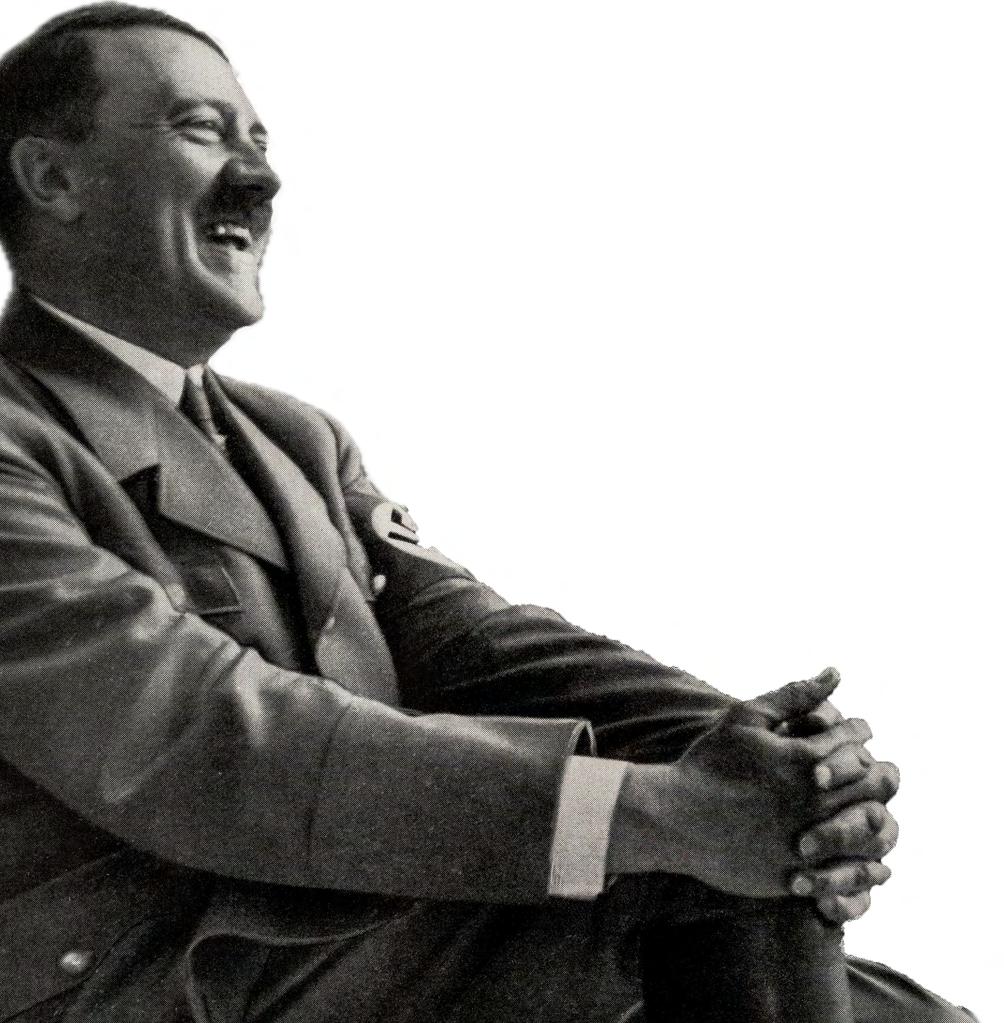
The crimes of Imperial Japan are often overlooked both in the west, and in Japan itself. During the Japanese occupation of Manchuria, the province became the sight of the brutal research unit 751. This was the major sight of Japanese biological warfare and in united 751 Chinese and Korean prisoners of war would be experimented on in various
barbaric ways often being injected with diseases such as cholera to aid with Japanese research. On top of this the Japanese military were responsible for huge numbers of civilian casualties such as in the battle of Manila, in the Philippines, where approximately 100,000 civilians died, young women experienced rape and sexual abuse and the hospitals, religious institutions and the red cross were also subject to atrocities. These events are in the past now and the current population of Japan has no involvement in any of these atrocities.
Therefore, it is unfair for them to assume the guilt of these crimes and be ashamed of them, although it does go without saying that Japanese people should not at all be proud of this history. While the Japanese population should not have to feel guilty, they should accept this history and be prepared to embrace it and learn form it. Japan is yet to do this, however. In Japan there is limited coverage of modern and contemporary history in both primary and secondary education with there being much more of a focus on ancient history in history textbooks with modern history being glossed
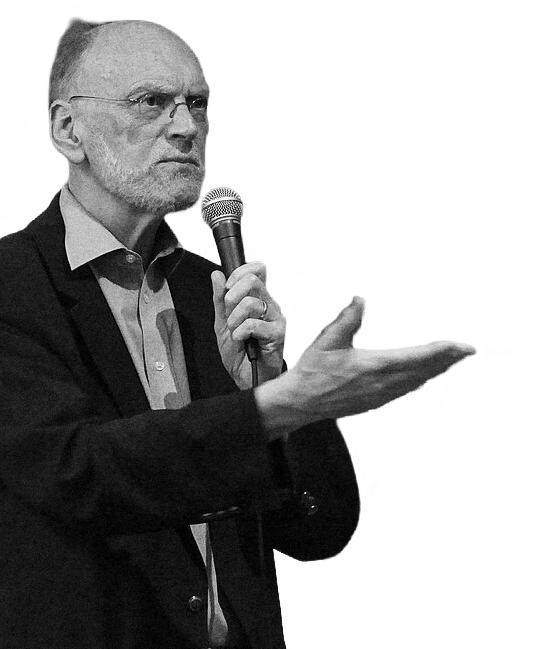
in Germany and in most of the wider world. The scale of Nazi atrocities is unlike anything else that has been seen in 20th century European history with the Nazis killing 5,728,051 Jewish people along with approximately 5 million more people from other groups including Roma and Sinti people, homosexuals, people with physical disabilities, Poles and Jehovah’s Witnesses. This is an incredibly dark time in German history, and the impacts of the holocaust still exist today through survivors of the death camps and the various memorials that exist across Germany today. Germany also has a dark colonial past such as in Namibia where Herero peoples were put in concentration camps with mortality rates up to 50%.
The difference between Germany and Japan is that Germany has come to terms with its genocidal and colonial past. The 1952 treaty resulted in Germany paying a sum of 3000 million Deutsche Mark to Israel as reparations for the holocaust. On top of this in 2021 the German government formally recognized its atrocities against the Herero people referring to it as a genocide and pledging a sum of over one billion euros in development aid for Namibia. This demonstrates how Germany has been able to accept its past wrong-doings and has also attempted to try and make it up to the victims of German colonialism and the holocaust. Germany is in no way proud of this history, but neither should it be ashamed of it. It has embraced it, learned from it and in the 21st century Germany is a liberal democracy that stands up to oppressive regimes such This emphasises that nations need not be ashamed of their history so long as they can accept and learn from it.
The final country that this article will examine is Great Britain. Great Britain has a well-documented colonial past and was also heavily involved in the transatlantic slave-
trade. The impacts of Britain’s colonial past are still very much subject to debate. Historians such as Niall Ferguson and Nigel Biggar have argued that the British empire is something that Britain should be proud of. Ferguson claims that “Without the influence of British imperial rule, it is hard to believe that the institutions of parliamentary democracy would have been adopted by the majority of states in the world, as they are today”. There is some credit to this argument although the British empire was primarily a tool for the exploitation and oppression of various territories for the benefit of Britain alone.
When looking at India, the of GDP per capita in the colonial period was very low at 0.54% from 1870-1913 and -0.22% from 1913-50. This was significantly lower to independent countries at the time, most notably Britain itself. Britain still does not accept responsibility for any of this and if anything, a large majority of the British politicians and the British public are proud of history they ought not be proud of. The fact Britain has not come to terms with the negative impacts of its colonial past has meant that its politicians have held the view of Britain being a defender of the free world. This has had disastrous consequences as British involvement in wars in Iraq and Afghanistan has resulted in huge levels of chaos and violence in both countries. It can be argued that Britain’s failure to learn from its colonial past has empowered British governments to make decisions to enter these wars. This demonstrates how the need for countries to embrace and learn from their past so that they can avoid making mistakes in the future. The British are also responsible for atrocities in the subcontinent such as the Amritsar Massacre where over 400 innocent people were killed by General Rex Dyer, who was then applauded upon return to Britain by various British politicians in the house of lords. To this day no British prime
minister has apologised directly to India for actions of General Dyer. This has been a major source of tension between modern day British Indian relations and, yet again, demonstrates the need for countries to embrace and learn from their history. This is not suggesting British people should feel ashamed. Not one British person alive today has personal guilt for the Amritsar massacre. That being said, Britain and its people certainly should not be proud of this history, and they should learn from it and embrace it as Germany has done with its colonial past.
In conclusion, countries have com plex histories and in the case of Ja pan, Britain and Germany there are plenty of dark chapters in their history books. Going back to the definition of ‘ashamed’ that was laid out at the start of this essay, this definition is built upon the idea of guilt. Therefore, countries should not be ashamed of their history as the people who live in these coun tries today have no per sonal guilt for the crimes committed by the an cestors. These countries should not be proud of this history either. Instead, they should learn to accept it, embrace it and most im portantly learn from it to ensure that this history does not repeat itself. Germany is a nation that has been able to do this exceptionally well, espe cially in the areas that are former West Germany. On the other hand, Japan and Britain have either tried to diminish the crimes they committed in the past, or, in the case of Britain, openly showed pride in their empire. This has led to various modern-day problems; be it tensions between Japan and South Korea or the British invasion of Iraq which in many ways was a manifes
tation of Britain’s colonial expansion in the past. Therefore, to answer the question, nations should neither be ashamed nor proud of their histories, instead they should accept and learn from their history to stop this history from repeating itself.
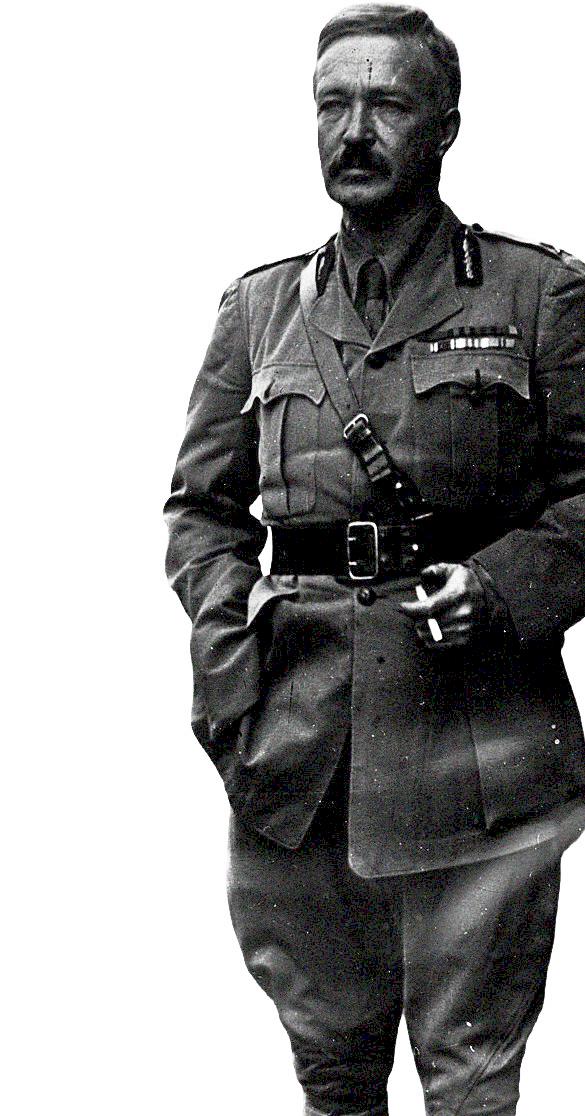
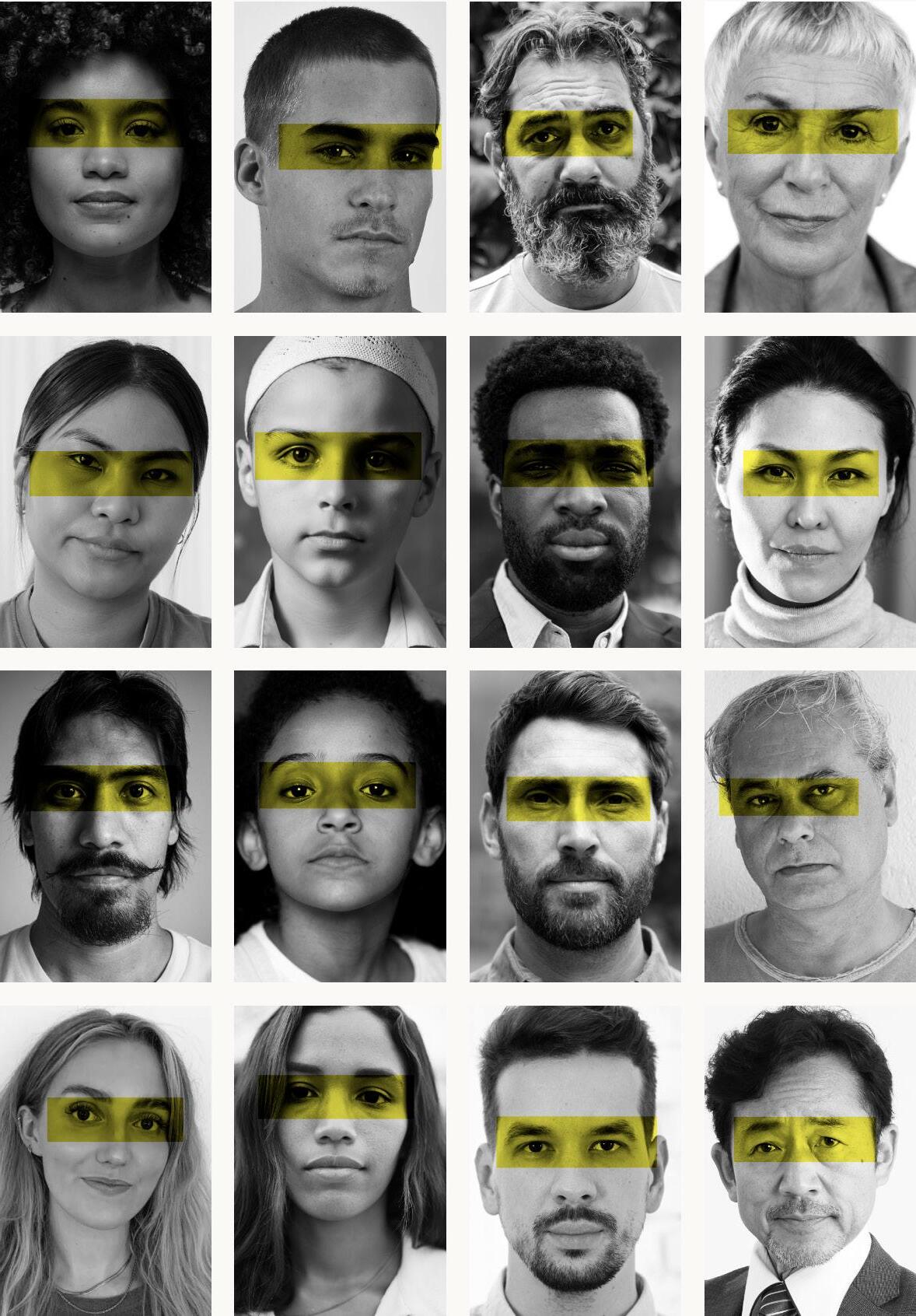
We all know that one student; the one who gets all predicted nines, the one who grasps new topics just like that. The one who understands principles that seem to bewilder everyone else.
As schools modernise, they claim more awareness, understanding and intervention than ever before. But, perhaps they still reward consistency, sociability, emotional self-management and productivity. And sure, I have just listed how the school system works; how am I supposed to argue with a foundation that has lasted us since the age of time and works? But - here’s the key question: does it work, or do we skate over the times it doesn’t? Does it support without fail, or does the distress only become legible after the performance declines?
Admittedly, it is unfair to suggest that all school environments are unwilling and unaware to help. Many schools for instance, including our own, have made genuine efforts to create more supportive environments through pastoral care, the excellent learning support and more conversations around Mental Health & Neurodiversity, such as within PSHE lessons. For many students, these systems are invaluable. And yet, at other schools, support across education is not consistent. And it is important to remember that while at our school we are incredibly lucky, other
students at other schools do not get the amount of support, care and attention they need.
Let’s go back to that student, the one from the first paragraph. The one that teachers praise for being independent. Or even the one made fun of for seeming natural and ‘too smart’. What often tends to be missed is the performance behind the performance. Because for many neurodivergent students, success isn’t easy. It’s hours of careful imitation, constant self-monitoring and adjustment disguised as a smooth composure. But that’s okay right?
Because they’re high functioning, the individual is still capable of performing normally.
And then they come home, exhausted but perhaps relieved. Everyone knows a school day can be demanding, especially after the hours of masking and confused understandings of the social realm. They’ll jump on to social media, only to see themselves misrepresented online. While social media is great at highlighting differences a lot of the time, it is not very helpful in accurate representations or neurodivergence. Instead of authentic true lives, just over half of the people online have admitted being untrue and perhaps harmful with their disingenuousness. With productivity hacks, identities and aesthetics being core factors or fabrications that seem to hinder rather than help.
No one can sustain themselves on four hours of sleep, overanalysing or scrutinizing key moments during the day. No one can continue constant self-monitoring due to the fear of slip ups. No one can continue to conform with the stereotypes our world has formed today. If someone can only be recognised as struggling once they have stopped succeeding; what exactly is it that our world today is rewarding?
- Issie Appadoo, 4F Gloucester
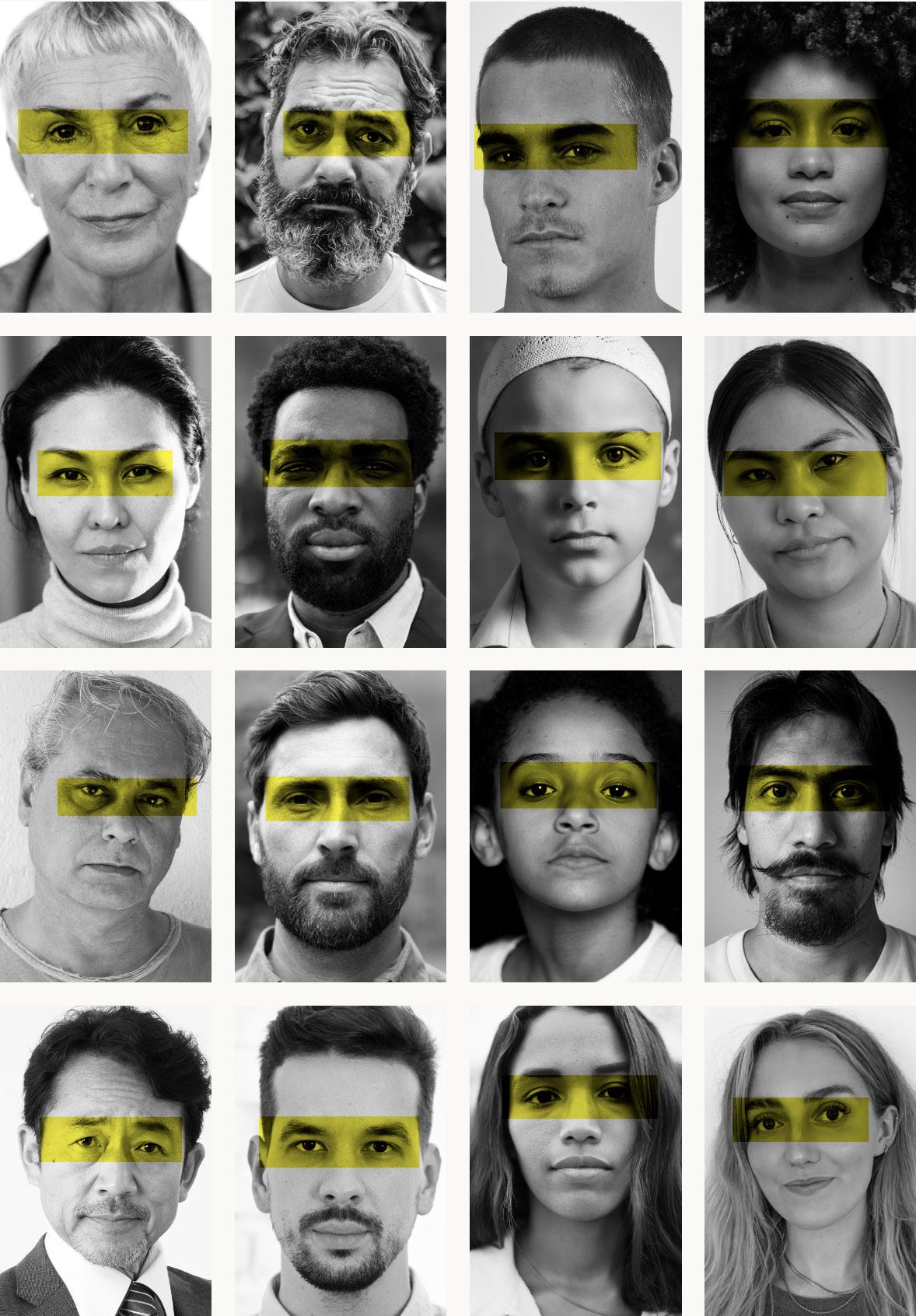
“You never judge a system by its adherents, you never judge any system by its believers, you judge it by its principles.” - KWAME TURE
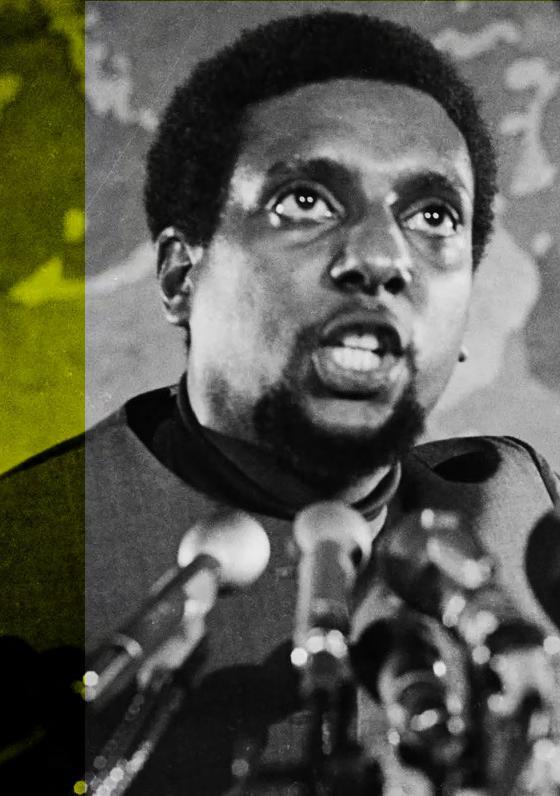
tised over individualistic pursuit. Christianity doesn’t value these beliefs and behaviours to merely regulate personal behaviour; they are there to provide an ongoing source of advice as to how to judge social arrangements by how they treat the vulnerable. Therefore, moral scrutiny and scepticism must be faced by any system that prioritises the accumulation of wealth over dignity, in the same way that such standards are applied to any faith or ideology claiming a commitment to human dignity.
such a morally flawed system rewards behaviour that undermines dignity and communal responsibility, then moral conflict is inevitable.
BY WILL REED
Christianity has consistently upheld beliefs in the moral imperative to care for the poor, to uphold human dignity, and to prioritise communal responsibility over individual profit. These ethical priorities, however, conflict with the fundamentals of capitalist economies, which prioritises profit maximisation, competitive advantage, and accumulation of wealth. This poses an essential question, which it seems has been overlooked: whether Christianity is truly compatible with capitalism, or whether the two rest on entirely antithetical moral pillars.
The overriding message and obligation of Christianity is love. Radical, transformative, persevering love for everyone - firstly God and as a result one’s neighbours. Therefore, Christian love requires active concern and care for the poor. It requires inherent human dignity, as well as moral suspicion of excessive wealth, and communal responsibility over individual enrichment. This is because Christianity demands social and economic collaboration, priori-
While most people see capitalism as an economic system based on free markets, where choice is everything, this could not be further from the truth. Capitalism is a system that incentivises certain actions and behaviours and marginalises others. By incentivising profit maximisation, cost minimisation is celebrated, leading to the dehumanisation of workers to squeeze profit out of them. In a socioeconomic system which rewards success regardless of social cost and treats moral restraint as a competitive disadvantage, people are incentivised to prioritise efficiency over compassion. After all, that’s all they’ve ever known. Capitalism evaluates humans instrumentally. In effect, capitalism reduces human value down to productivity, market demand, and cost-efficiency. But this is no accident. Capitalism requires winners and losers, hierarchies of power, and a labour surplus. It relies on the exploitation of the working classes. Poverty is not simply a failure of capitalism; it is a by-product of its success. If
Yet, even with such evidence questioning the morality and fairness of capitalism, many still vehemently defend it - proclaiming it a system of free markets and choice; a driver of economic growth and innovation. More often than not, “trickle-down economics” are cited as justification for the inequality created by capitalism. Somehow, wealth accumulation at the top is defended as socially productive. Jesus did not teach us to indirectly help the poor via means of making the rich richer. The early church did not trust in market forces. Nor did it rely on the benevolence of the wealthy. It engaged in mutual aid and communal provision. Furthermore, the early church did not treat mutual aid as charity. It treated it as a natural process of a community that had rejected the logic of individual wealth accumulation. By contrast, capitalism prevents communal gain, not because the individuals within the system are necessarily selfish, but for purely structural reasons. A socioeconomic system built upon competitive accumulation will always trample over those who prioritise communal values over personal gain. There is also an organisational clash; Christianity, in its purest form, makes the case that we should adjust our lives to care for the vulnerable. Capitalism, on the other hand, demands that we organise our lives around gaining competitive advantage.
And even bypassing the structural moral inconsistencies that lie within capitalism, its conclusions remain just as stark. The existence of individuals like Jeff Bezos, Elon Musk, John D. Rockefeller, and Jamie Dimon whose personal wealth is so vastly different to that of the ordinary person, is not an aberration of capitalism, but its highest aspiration. Christianity is inherently suspicious of the accumulation of such excessive wealth – from scriptural definitions to

Basil of Caesarea in the 4th century, the implied definition of excessive wealth can be interpreted as such: anything held beyond genuine need while others lack necessities. Capitalism celebrates this very same accumulation that Christianity looks down upon as the apex of human achievement. To put it in words that simply cannot be misinterpreted as recorded in Matthew 6:24: “No one can serve two masters. Either you will hate the one and love the other, or you will be devoted to the one and despise the other. You cannot serve both God and money.”
While there are clear contradictions between capitalism and Christianity, the illusion of the apparent compatibility between the two is still accepted by many Christians. Terms used by these people, such as charity, stewardship, and individual virtue are all Christian concepts that capitalism has adopted, absorbed and colonised throughout its development, and in the process hollowed out; becoming tools to legitimise capitalism rather than challenge it. When, as per design, capitalism produces poverty, charity addresses this symptom while leaving the cause intact: the wealthy donor remains wealthy (they also get the pleasure of feeling virtuous), the system remains unchanged, and poverty is reframed as a problem of insufficient generosity rather than structural exploitation - charity is essentially a moral deflection.
Another apparent justification is stewardship - the Christian concept of managing God’s resourc-
es responsibly has been enthusiastically absorbed by capitalism to vindicate the accumulation of wealth. “Responsible stewardship” becomes a moral façade over what is structurally just accumulation; the true concept is eroded away until it means practically the opposite of its original intent. Even if you look past the colonisation of Christian terms to suit capitalism, wealth as a divine favour is an almost perfect inversion of Christian scripture. While there is ambiguous language about wealth in the abstract throughout the bible, James 5:1–6 (among many other examples of similar validity and clarity) expresses this suspicion and discomfort in the proclamation: “Now listen, you rich people, weep and wail because of the misery that is coming on you. Your wealth has rotted... You have hoarded wealth in the last days.” Here, James condemns hoarded wealth. Wealth that is accumulated and unused while labourers go unpaid. James directly contrasts hoarded wealth, symbolic of capitalism, framing it as morally corrosive, and links wealth accumulation to exploitation. In this New Testament passage, James treats wealth accumulation as a sign of moral failure, not divine favour, once again a direct inversion of the aims of capitalism. This shows the lengths to which capitalists have gone to bend Christian moral language to fit their capitalist goals. If the New Testament’s teaching on wealth frames accumulation as exploitation, and capitalism is dependent on accumulation, then the supposed compatibility between the two
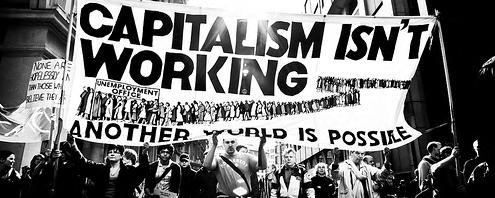
simply cannot be genuine.
For the sake of ethics, some capitalists make the case for Social Democracies - the most watered down, regulated form of capitalism. Under a Social Democracy, measures are taken to reduce suffering and soften the blows of capitalism, by introducing welfare states, labour protections, and redistributive taxation. Many Christians point to this structure as alleged proof that capitalism can be morally acceptable. But while social democracy softens capitalism’s effects, it does not change the logic of capitalism. In essence, the incentives remain: profit maximisation, competition, accumulation. Workers are still valued the same way. The deprivation of the many for the profit of the few is still structurally necessary. Christianity’s ethical expectations (care for the vulnerable, suspicion of wealth, communal responsibility) are not met by softening the edges of an inherently unjust system. Christians may live just lives within capitalism, but that does not make capitalism just. As the Black Panther leader and inventor of the ‘Black Power’ slogan, Kwame
Ture said, “you never judge a system by its adherents, you never judge any system by its believers, you judge it by its principles.”
But when we judge systems by their principles rather than their participants and lay bare the moral logic of Christianity and capitalism, the conflict between the two is not only undeniable, but also not incidental or superficial. The conflict is structural: rooted in fundamentally opposing moral beliefs. No amount of reform, regulation, or good intentions can reconcile these contradictions. Moreover, this clash is one of ethics, not economics, by how they judge society. On one hand, Christianity judges’ people by how they treat the vulnerable, while capitalism judges’ people by their ability to exploit the vulnerable. This illustrates the patent incompatibility of their respective systems’ moral frameworks. The contradiction lies not in their outcomes, but in the principles that generate those outcomes. Since its development somewhere between the 16th and 18th centuries, capitalism has been markedly successful at presenting its
values as natural and inevitable. This is a leading cause for the failure of recognising the contradictions for many Christians. The compatibility thesis survives not because it holds any shred of validity, but because capitalism shapes the moral imagination of those living within it, producing a Christian-capitalist hegemony that makes capitalism’s assumptions appear biblical - a reality that Matthew 6:21 warns against: “For where your treasure is, there your heart will be also.”
- Will Reed, L5 Surrey
n recent years, the red carpet has transformed from a parade of glamour, fashion, and photographs into a powerful political stage. Major events such as the Grammys and Met Gala have become platforms for celebrities express their political views. Acceptance speeches, bold outfit choices and social media posts are now vehicles for high profile individuals to comment on current, often contentious socio-political issues such as immigration, education and climate change. The question is whether unelected artistes should be afforded this platform? Is this an acceptable arena to raise aware ness and promote change? 2026 has already witnessed a host of ce lebrities daring to politicise the red carpet and the awards lectern.
At the 2026 Gram mys, Billie Eilish ac cepted the award for song of the year for ‘Wildflower’. She has 124 million followers on Insta gram. She chose to substitute the standard
foray of gratitude with a carefully scripted speech about immigration in America. She said,” no one is illegal on stolen land” and concluded by saying f*** ICE. Her speech was streamed to millions of people on all social media platforms. Eilish faced a huge backlash for being ‘performative and delusional.’
Even the Tongva tribe confirmed that her £14 million mansion sits on their ancestral land. Ellish fell into a media trap; she was caught between opposing borders yet manifesting her own mansion on gated land.
Latino communities. Karoline Leavitt (White House Press Secretary) criticized him for ‘trying to demonize law enforcement.’
The red carpet has traditionally been a runway for the dizzy heights of creative expression and haute couture. Secrecy, controversy and outrageousness are rife, and the common denominator is that the red carpet celebrates change.
immigrant workers have brought to American history and culture.
Celebrities are often slammed for speaking from a place of ignorance, privilege or for media publishing or content, but their words, actions and outfits are a massive megaphone for human rights, immigration and social awareness. Are the actors, models, musicians trivialising world issues? Are they abusing their media-centric platform?
believe that no publicity is bad publicity, do we really need performers to lecture on domestic and international policies? Rather, should they create, perform and entertain?
Whatever the opinion in a media driven society, one post, one outfit, one acceptance speech or song ignites global conversations in seconds. Out of conversations comes consciousness, awareness and potentially the desire to inspire change.
to.com arena to share his views
ceptance speech was entirely in Spanish. He said ‘We’re not savages, we’re not animals, we’re not aliens. We are humans and we are Americans’ followed by ‘ICE out’. His speech got a standing ovation, and Bad mended for ing

At the 2018 Golden Globes, the guests all wore black in support of the Time’s Up movement against sexual harassment. The red carpet became a sea of black; a powerful protest seen by millions of people. Notable celebrities included Margot Robbie, Angelina Jolie and Nicole Kidman with outfits from Givenchy to Prada to Dior. The 2018 Golden Globes was a catalyst for how fashion has a voice amid a media frenzy. The world of TV, film, theatre and music used the red carpet to present artists as walking symbols of solidarity and reaction.
Similarly, at the 2026 Grammys, Justin and Hailey Bieber wore ‘ice out’ badges. These are protest pins worn to condemn the United Stages and Customs Enforcement (ICE) Agency; a rare political statement from the couple shocked their fans, and with a combined Instagram following of 344.5 million followers, certainly making this a risky conscious choice. K-Pop star, Audrey Nuna wore Thom Browne Couture as a tribute to her immigrant grandfather, who worked in garment production shortly after arriving in America. Nuna told the reporter ‘Just shoutout to anyone who has ever felt outcasted because they come from a different place.’ Audrey illustrated how fashion can preserve her own history whilst also challenging the media to remind them of the value
Jeremy Irons famously wore a red folded ribbon on his lapel at the 1991 Tony Awards. I would argue that rather than performative or hollow, this symbol helped to normalize AIDS Awareness.
The red carpet is a powerful tool for change. One hopes that over-politicising does not transcend the sheer joy of the parade; a parade that is proof that fame, fashion and fancy events are not submissive to society, but have the power to change it.


BY BEA MOORE
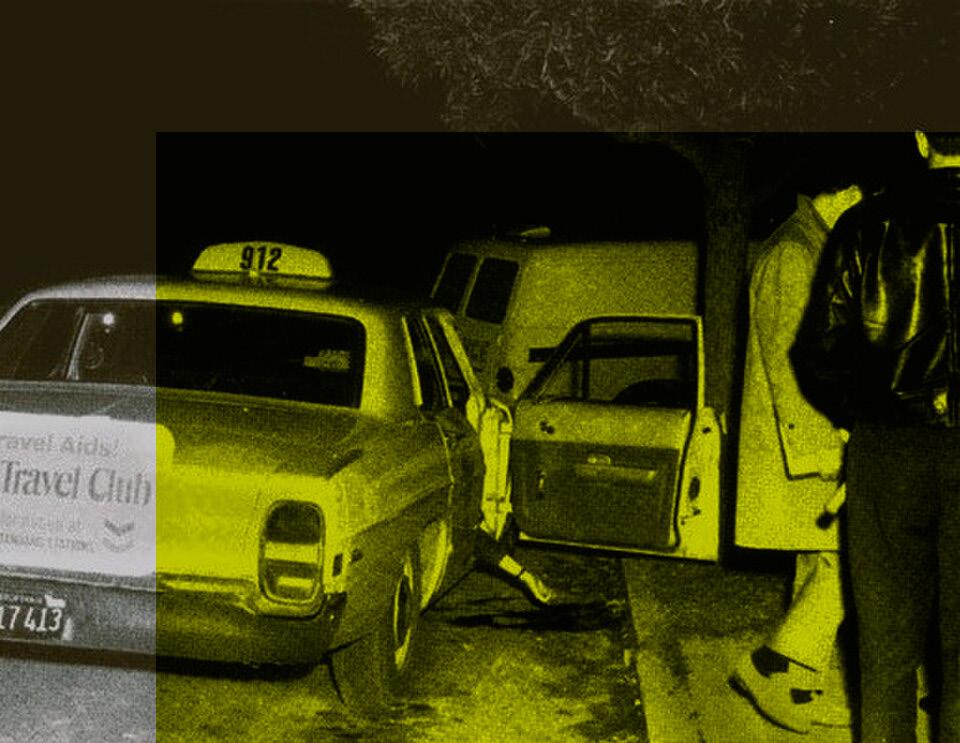
he zodiac killer was more than just a murderer. He was a symbol of fear, chaos, and psychological terror. While many killers try to hide from the police, the zodiac killer demanded their attention. He taunted investigations, terrorized the public, and turned a series of murders into horrifying public performances. Even still, decades later, the case continues to fascinate society; as to this day, their identity remains anonymous. His cryptic riddles, coded letters, and brutal attacks transformed him into
one of the most infamous criminals in American history. Sociologically, the Zodiac Killer reveals how fear can spread and infest society, how media can amplify panic, and how a nation’s social behaviour, institutions, culture, and norms and values were affected, which begs the question, how can someone so notorious remain unknown?
In the late 1960s, northern California became the hunting ground for a mysterious killer, targeting young couples and isolated victims. At first the attacks appeared random, with no clear crime or motive for what had happened, causing a wave of terror over the country. First, at Lake Herman Road, Bernicia in December 1968. A high school couple, out on their first date; David Faraday (17) and Betty Lou Jensen (16). The killer approached, shot out their car window, and attacked them as they attempted to flee the scene, killing them both.
Over half a year later, a new murder in July 1969, Blue Rock Springs Park, Vallejo. Darlene Ferrin (22) and Michael Mageau (19 were sitting in a parked car, when once again, the killer approached. This time, with a 9mm pistol and opened fire. The killer then stopped at a payphone and said ‘I want to report a murder. If you go one mile east on Colombus Parkway, you will find kids in a brown car. They were shot with a 9-milimeter Luger. I also killed those kids last year. Goodbye.’
This chilling confession shocked police and led them directly to the bodies of the two students. Ferrin was pronounced dead on scene, meanwhile Mageau miraculously survived despite gunshot wounds to the face, neck, and chest. For months, the killer remained silent. Then, on August 1st, 1969, three almost identical letters, arrived at the San Francisco chronicle, the San Francisco examiner, and the Vallejo times-herald.
In these letters, the writer confessed to the murders of the two couples, including parts of a cryptogram. He demanded these newspapers print the cryptogams on their front pages or he would “cruise around all weekend killing people”. The Zodiac’s threats were taken seriously by officials and the public. The killer knew unreleased details of the crimes, openly mocked police, and treated these gruesome murders like some sort of game, inciting immense fear in the public. This was just the beginning of a moral panic. The public recognised that the killer wasn’t hiding in fear. He was communicating directly with society. The media unintentionally gave him power by publishing his messages, proving how mass communication can spread fear faster than violence itself.
A few months after the attack on Ferrin and Mageau, the killer sent another letter, opening with the, now famous, phrase “This is the zodiac speaking”. This was the first time he had used the name ‘zodiac’, creating the terrifying identity that would dominate headlines for decades to come. Sociologically, the killer used the interactionist theory known as ‘the labelling theory’, to become known and instil fear. By labelling himself ‘the zodiac’, the killer created a social identity that the media amplified nationwide. The newspapers helped transform him from a murderer into a cultural symbol of fear.
Just a few months after this attack another occurred in Napa County 1969; Cecelia Shephard (22), and Brian Hartnell (20). Two college students relaxing on a lake shore, when a man wearing an executioner-style hood, with a white cross approached them with a gun. He then tied them up and repeatedly stabbed both, leaving them half dead. However, before he left, he wrote dates of the two previous murders on Hartnell’s car door, before calling the police from a payphone once again, stating ‘I want to report a murder. No, a double murder. They are two miles north of park headquarters in a white Volkswagen’, once again, leading the police directly to the crime scene.

Shepard died after two days in hospital, meanwhile Hartnell made a full recovery and, despite having mental and physical scars, he was able to provide police with a detailed description of their attacker. Soon after this, the zodiac mailed more letters to newspapers describing the attack in disturbing detail. His communications became increasingly theatrical and threatening. The killer seemed obsessed with controlling the narrative around his crimes. These costumes and theatrics reveal how the zodiac turned murder into a performance, demonstrating how criminals can use symbolism and media attention to gain social power. The public fear became larger than the crimes themselves.
Only two weeks after this attack, the zodiac claimed a new victim; Paul Stine (29). He was a doctoral candidate, working part time as a taxi driver to fund his studies. He picked up the zodiac as a passenger and was shot in the head after arriving at the destination. The zodiac then cut a piece of Stine’s bloodstained shirt, mailing it to
local newspapers. This murder was especially shocking to the public as it occurred in a busy urban environment, rather than a secluded lover’s lane. Along with pieces of Stine’s bloodstained shirt, newspapers were mailed letters threatening schoolchildren, describing plans to attack buses, and mocked police incompetence. One of the letters stated ‘school children make nice targets’, the fear across California intensified dramatically, demonstrating the sociological concept of social control. The public no longer trusted the police in stopping these crimes and protecting them, causing anxiety to spread throughout the nation. Parents feared for children’s safety, schools increased precautions, the zodiac had successfully destabilised public confidence in their own safety.
Even after the confirmed murders slowed, The Zodiac continued sending letters, cyphers, and threats, including bomb diagrams, references to popular culture, cryptic puzzles, and bizarre philosophical statements. One cipher, known as the ‘340 cipher’ remained unsolved for over 50 years. The zodiac appeared to enjoy psychologically manipulating the police and public.
The killer’s power came largely from publicity. Society became obsessed with decoding his identity and understanding his motives. The zodiac case became more than a murder investigation; it became a media phenomenon. The zodiac murders caused nationwide fear despite the relatively small number of confirmed victims. People changed routines, behaviour, and everyday tasks because they believed danger could appear anywhere.
The most well-known suspect in the zodiac case was Arthur Leigh Allen. Although he was never officially charged with the mur-
ders, many investigators and journalists believed he closely matched the profile of the killer. Allem first became a suspect after a former friend reported suspicious comments he had made. According to the friend, Allen spoke about wanting to kill couples at random, use a flashlight attached to a gun, and even called himself the ‘zodiac’ before the name was publicly known. Police also discovered several pieces of circumstantial evidence against him, including a zodiac-brand watch featuring the same crosshair symbol used by the killer. He lived near several crime scenes, his shoe size matched footprints found at lake Berryessa, and he was questioned by police multiple times, giving inconsistent statements each time. Perhaps the most disturbing fact is that Allen was later convicted of child molestation, reinforcing the public perception that he was dangerous and psychologically disturbed. However, despite the suspicions, all evidence was hearsay or circumstantial, DNA testing came back inconclusive, and handwriting experts could not definitively identify him as the killer. This heightened public frustration and anxiety, increasing their lack of faith in the police meant to protect them. The failure to capture the zodiac damaged trust in police and criminal justice systems. Different departments struggled to share information, exposing weaknesses in law enforcement.
While 5 deaths and 2 attempted murders are officially attributed to The Zodiac, he claimed responsibility for up to 37 murders in his letters to newspapers and police. Many investigators believe that he may be responsible for earlier unsolved murders, such as the 1966 stabbing of Cheri bates in riverside, and the deaths of Robert Domingos and Linda Edwards near Santa Barbara. However, these alleged connections remain highly contended and are not verified. Despite this, fear still wreaks havoc across these communities as his identity remains anonymous. Dead or alive, we know that the Zodiac will forever haunt America.
- Bea Moore, L6 South
At first glance, this image appears to capture nothing more than smoke rising from New York’s streets. Yet its scale and density evoke something far more unsettling: pollution, and an atmosphere under strain. By choosing an everyday urban scene, the cover reflects one of the central themes running throughout this issue; that climate change is no longer a distant threat confined to melting ice caps or burning forests. It is in the environments we inhabit every day.
The bold red pipe and stark headline reinforce the urgency of the climate crisis, contrasting against the muted greys of the smoke to create a sense of warning. The image invites readers to question what they are really seeing, mirroring the wider challenge of recognising climate change even when it unfolds in ordinary, familiar places.
I was particularly inspired by the pieces by Daniyal Ansary and Becca Towers, on the implications of environmental harm. This could not be more important, the harm on our environment is close to reaching a point of no return, with some specialists saying a critical threshold could be reached by 2035.
Climate change is often represented by melting glaciers, wildfires, or flooded coastlines. I chose to take a different approach. This cover captures an ordinary city street engulfed
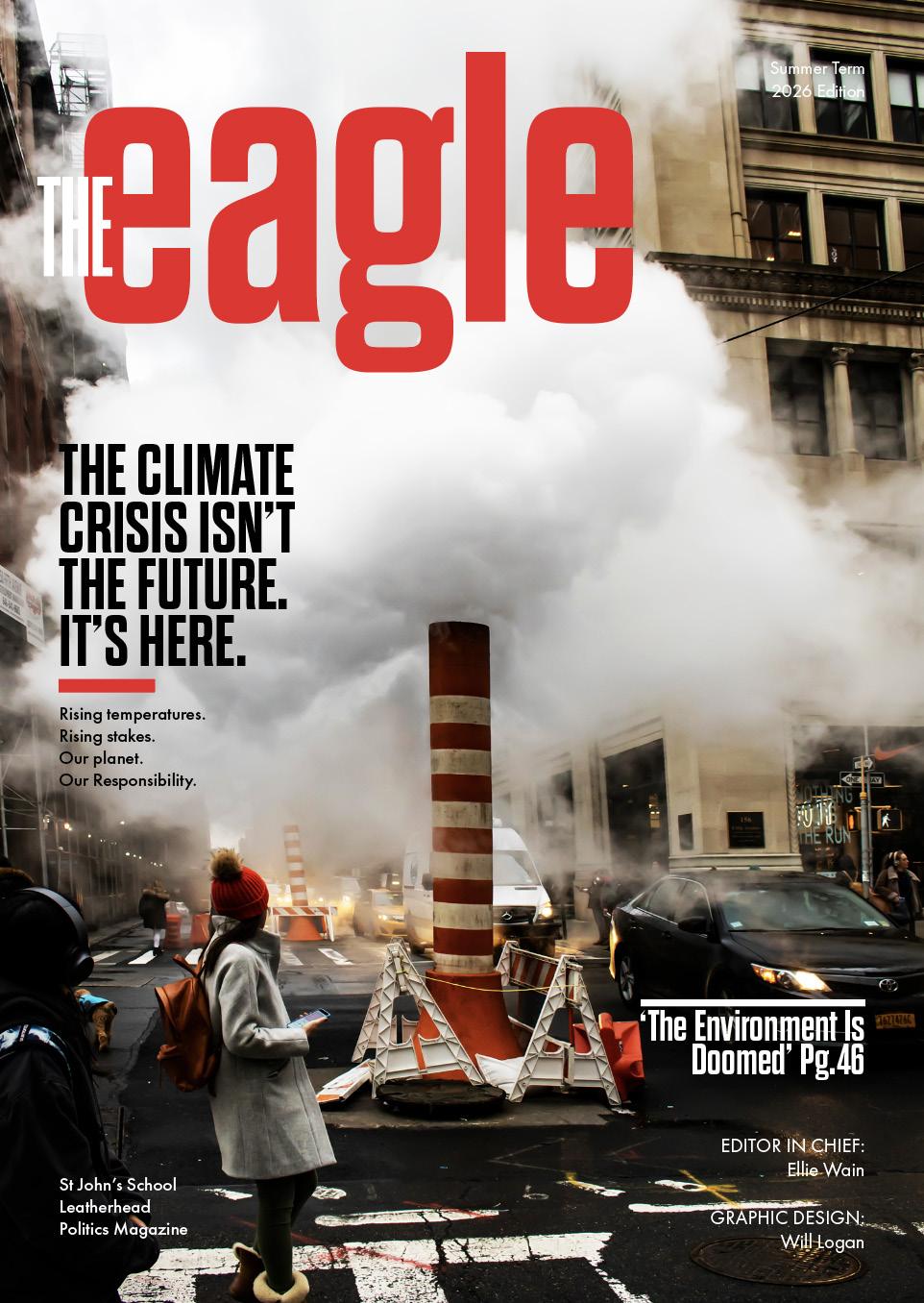
in clouds of smoke, blurring the line between everyday infrastructure and environmental crisis. The image forces us to confront how easily we overlook the visual signs of a warming, industrialised world, and how intertwined hyperindustrialisation and capitalism are with the climate crisis.
Hopefully this cover sets the tone for an issue that explores one of the defining challenges of our generation: understanding the world we have created and the choices that will shape the future.
- Will Logan, Graphic Designer
This section, ‘Media, Tech and the Future’, is one that I’m surprised hasn’t cropped up as a more prominent theme before. The dependency on AI has undoubtedly shifted the job market, and more broadly - our futures as young people. So, I wasn’t surprised when I received countless articles on the double-edged sword that is AI. And whilst there are many AI- revolved articles, rather ironically, this section begins with a political deep dive into the blockbuster which is Avatar. And whilst I’ve never seen the movie series myself, Felix Samuels’ article is an interesting read, nonetheless. The parallels he draws can be paradoxically both chilling and encouraging - I highly encourage you to read it. The beautiful landscapes found in Avatar are not too distant from some of the wonders on our Earth, which is being increasingly threatened by pollution, AI and conflict. Daniyal Ansary dissects both sides of the argument that our environment is doomed and is an optimistic testament to the bright minds which might change the conclusion that the environment is being damaged more every day. The debate on environmental sustain-
ability is maintained by upper fifth, Becca Towers, who focuses more specifically on the damaging effects of AI. It begs the question; if the rise of AI is inevitable, then can this lifestyle be sustained when it has such a consequential environmental effect. Continually, Aoife Barnes questions whether AI is even successful in replacing many human jobs, ultimately concluding that AI is incapable of replacing inherently human traits like compassion and problem solving. And finally, economist Oli Rees dissects the hypothetical ‘If humans were truly rational, would supermarkets exist in the form they do today’? As a politics student myself, economics is something I groan at within debates as I find it a vague distant concept, however, Oli’s article is an easy read with interesting concepts on what it means to be ‘rational’ more widely. And with that, this magazine comes to a bittersweet close. I hope that the sections you’ve read allow you to agree with me that the standards has been incredibly impressive across the board, from writers ranging from 13 years old to 18.
- Ellie Wain, Editor-In-Chief

James Cameron’s ‘Avatar’ is the highest grossing film of all time, generating $2.9billion globally, being nominated for nine Oscars and winning three. The story explores a paraplegic ex-marine protagonist, Jake Sully, who is sent to the far-away moon of Pandora, home to the alien species, the Na’vi. Set in the year 2154, Jake is sent by the Resources Development Administration (RDA), a mining company, to infiltrate the Na’vi by acting in an artificially made body which resembles that of the alien species, which is known as his Avatar. He is tasked with gaining their trust and persuading them to move from their home so that the RDA can mine the valuable natural resource of the planet, ‘Unobtanium’ underneath it. The film ends with Jake ‘betraying’ humanity and fighting against the RDA to protect the Na’vi and the planet of Pandora, raising many political questions. Most notably of these, the impacts of colonialism, corporate militarism, and the ethics behind the destruction of the environment. It should be noted that Avatar is an explicitly left-wing political piece of media, and this analysis engages with it on those terms.
To examine first, Avatar depicts the exact logic of colonial conquest:

invade, take what is valuable, and leave destruction when you are finished. The film mirrors the exact circumstances of colonialism throughout history. The RDA desiring to obtain the valuable resource of ‘Unobtanium’, the indigenous people with their beautiful culture and landscape, as portrayed by the stunning visuals in the film and the Na’vi’s connection with the natural world around them. Furthering this, a key characteristic is the progression from diplomacy to violence. Jake is first sent to negotiate relocation peacefully, before overwhelming military force is unleashed on the surrounding landscape and people. This exact pattern can be examined throughout history, for example, King Leopold II of Belgium claimed the Congo Free State as his personal property in 1885, framing it as a humanitarian mission to bring civilisation to a “primitive” people. A brutal rubber extraction operation ensued, where the native people were forced to extract rubber under the threat of death or mutilation. The population fell by an estimate of 10 million, completing the brutal parallel seen in the film with the slaughter of the native people during the RDA attack on the Na’vi. Avatar holds a mirror to this exact logic, take the resources, kill the people, and leave, where the language
and time may change, the rationale remains unchanged. This colonialism is a key part of what Avatar critiques, where Cameron presents how fiction can be a powerful lens to see reality clearly.
A second dimension of Avatar is how it inspects and critiques the dangers of corporate militarism, exposing how corporate power and the military can often merge. The RDA is not an all-powerful government, rather a corporation with its own private army. This is shown to be dangerous, unlike any political body; the RDA does not have to answer to an electorate, or abide by international law, rather only to its motive of maximizing profit. This danger is best highlighted in the film, when the ‘corporate administrator’, Parker Selfridge, says “killing the indigenous looks bad, but there’s one thing shareholders hate more than bad press - and that’s a bad quarterly statement.” This fusion of murderous militarism and corporate gains is perfectly delineated within this quote. It shows the danger of disregarding the interests of the inhabitants of the planet and instead focusing on ‘shareholders’ rather than ethics and morality. There have been instances of this in our reality, for example, the private military corporation Blackwater was
deployed in Iraq, operating outside normal rules of military engagement.
Famously, their contractors killed 17 Iraqi civilians in Nisour Square in 2007 when unprovoked. It took over 10 years for any form of justice to be served, where the corporation answered to a contract rather than any form of democracy or an electorate. This example delineates the danger of corporate militarism, where shareholder interests are combined with powerful military forces, chaos and destruction ensues.
Finally, Avatar presents Pandora’s ecosystem, and the beautiful nature within it as a political argument. Cameron argues through the image of the RDA destroying the environment without remorse that nature is not a resource to be extracted, but a living, interconnected system that capitalism inherently destroys. In Avatar, this message is especially powerful because of the neural network which makes up Pandora. It is explicitly stated in the film that the neural network is spiritually linked to the Na’vi’s deity, Eywa, making it alive. This makes the attempted destruction of the environment in the film even more disturbing, as the destruction of Hometree doesn’t just displace the people, it
severs their spiritual and biological connection to the planet and directly challenges the Western capitalist view of nature as a commodity. The deforestation of the Amazon could be seen as a real world parallel to this, where indigenous communities and ecosystems are destroyed for agriculture and mining profit, in the exact same fashion to how a mining company destroys Pandora. This is what Cameron is holding a mirror up to, however, he himself could be labelled as hypocritical, making this film to generate money for a corporation. Whether Avatar is genuine political critique or simply radical aesthetics produced for a profit is a question the film cannot answer and encourages those who consume this media to question what they are watching, but also who and how it was made.
Now, to conclude and open ‘Pandora’s box’ so to speak, Avatar sneaks critiques of colonialism, corporate militarism, and ecological destruction into the mainstream Hollywood cinema culture disguised as an entertainment package. Underneath the action-packed product of a film with stunning visuals and effects lies a more disturbing political message. Cameron calls into question how unchecked capitalism could look in a future world, where humanity is suffering and is forced to oppress other people and entire planets to sustain itself, revealing how these three dimensions are not separate critiques, rather all the same argument against human greed and ignorance. However, behind the surface level questions, lies a deeper argument on whether Hollywood can ever be radical in the way it critiques capitalism, given the hypocrisy of critiquing the system which it relies on.
- Felix Samuels, L6 East

When people think about the concept of the environment, many often associate it with trees, wildlife, greenery, and the general outdoors. And they are not wrong. Nature is beautiful. In its most raw and pure state, this Earth has such attractive places. Venues which are considered “national beauties” by governments and protected. Despite all of this, one would consider it to be idealistic or unpragmatic to have a future vision in the world.
Humans are flawed in their awareness of this dilemma. The minor proportion of those who do care are limited in terms of power and practicality. Anthropologists have long attempted to justify and argue the actions of humanity, often to no successful or impacting avail. 1012,000 years ago, scientists discovered that it had initially begun with agricultural intervention by mankind, when early farming and land clearing began reducing biodiversity. Then, in the past 2-8,000 years, the period known as the “Anthropogenic Era” began, with actions of deforestation, alteration of atmospheric methane production levels and ice cores. Studies regarding this lead back to the Roman and ancient times, where smelting and mining were at high rates. Essentially, humans had a greater impact on this Earth.
Finally, the industrial revolution came
from 1780-1830. The period is often cited as the start of massive fossil fuel and energy combustion, leading to significantly sustained increases in carbon dioxide and air pollution. In 1950, a process titled the “Great Acceleration” occurred in which humans exponentially and rather excessively increased their production industrially, chemical agriculture, plastic waste and nuclear debris. This resulted in irreversible changes and detrimental global dam-
Despite the negativity impacted by humankind on the geographers have argued that the basic greenhouse effect served as a partial causation for the situation we are in today From 1995, the world has become more open-minded regarding ways to not repair our planet but sustain it and prevent further damage from being inflicted. In March and April of 1995, the United Nations declared the first COP1 (Conference of Parties) meeting. It was held in Berlin, Germany and 118 nation states attended, concluding that the efforts devoted to environmental sustainability were below satisfaction. Shor tly after this, action was taken and international leadership undertook the adoption of the Berlin Mandate. It was an established voluntary target to reduce greenhouse gases. Whilst the attempt to ratify the fact that it should be a binding agreement, and a subsequent lead-into the Kyoto Protocol in COP3, no monumental actions have arguably been made.
This brings us to the modern era. Specifically, today. Take a complex case study of the Iranian conflict. It initiated in preliminary stages on the 28th of February 2026, where beforehand, the United States had condemned the actions of the Iranian government hanging and executing their people, who were innocent. Whether or not the United States conducted in the adequate manner is irrelevant to this article. We are here
to look at the aftermath. A statement made by Don Jorgensen, the European Union Commissioner for Energy which transcribed to “Europe has six weeks of commercial jet fuel remaining” and he was not wrong. The cold pragmatics of this is disturbing. A dominant region and continent falls victim to an inflated war in the Middle East.
This is not the only catastrophic effect left by this conflict. The price of vehicle fuel, such as cars in the United Kingdom has increased to a price many would disagree about. As the violence progressed, petrol reportedly went from £1.31 to £2.00 per litre. Whilst this may not seem like an immense obstruction, the realistic truth behind it is that the world is in short supply of fuel, and Iran, after closing the Strait of Hormuz, hordes large portions of oil and fuel, jointly with the United States. On the 8th of April 2026, the United States Air Force struck some of the most vital oil refinery factories in Iran. It resulted in toxic fumes being emitted in the destruction, which pollute the air. Not only this, but the oceans eventually get warmer, with more internal energy, the planet heats up. The irony of it is that we are living in an inter-glacial period, where we should be going on the other side of the spectrum, in which the Earth cools down.
Politics and Economics usually intercept each other at junctions where one needs the other to continue surviving. Nations ideally want to proliferate and disseminate their reputation globally. An example is Donald Trump. The President of the United States is an avid endorser of financial success, having once owned his own business. Of course, this comes with a highly subjective manner toward the environment, and the refusal to take substantial political action around it. On the 23rd September 2025, at the United Nations General Assembly speech, he referred to climate change and the environment as the “Greatest Con Job that ever perpetrated on the world” and subsequently dismissed concerns and inquiries regarding carbon footprint and the United States Of America’s efforts to convert into a greener form of energy, as well as their “Net Zero Tar-
gets” The major predicament here, that often troubles the United Nations, is that the United States is the most industrially, economically, militarily powerful nation state currently. Their contributions to the environment are seen as lacking, but no one seems to be opposing it.
China is another exemplar of what I believe to be a failed system in the sense of environmental protection. In some ways, the People’s Republic of China is potentially worse than the United States of America. My justification for this is that China is larger secretive and covert about their operations, often surreptitiously conducting affairs to evade justice and law. This could perhaps extend to the fact that China often lies on
official records and documented international databases. This historically has occurred in past events, such as falsifying ISO 9001 Industrial Quality certifications. The United Nations Environment Programme & World Health Organisation published an independently verified report which stated that by 2026, 30% of global carbon emissions were generated by China, and thus they were subsequently held to account.
In a conclusion to this debate article, I firmly stand with my originating point which is that the environment is doomed. Unless nations change now, they risk it being an ongoing threat to our existence on this planet. If we continue this harm to our
Earth, with no change, the results are nothing but fire and dust. However, I do have a limited fractional segment of hope that countries will bear witness to their errors and donate the necessary economic and financial aid to not repair and renovate our Earth, but to halt the damage that has already been significantly inflicted.
- Daniyal Ansary, 4F Churchill
Artificial-Intelligence has become the centre of modern internet and research. Search engines like google have become entirely AI centered, replacing typical algorithm dominance technology with machine learning and artificial intelligence. New and modern machine processing has made research far easier through cutting the corners of asking exact questions to access the precise relevant knowledge and prevent clicking endless website links to answer the questions. However, is this improved access equate to the massive environmental cost?
The most well-known environmental consequence is the drastic overuse of water. Water is required to cool the rapidly processing circuits that heat up at an expeditious rate to keep the circuits running and process the high demand for information and energy. AI uses roughly 560 billion liters of water annually and on the daily basis, AI can use up to 5 million gallons of water, equivalent to the daily use of
10,000 - 50,000 people. This water is often drawn from local streams and sources that are potentially stressed and necessary for local communities, leading to a short-term risk of drought or disease due to weak, malnourished bodies. In the long-term, this excessive use could draw water away from major water sources, risking ecosystems and large human populations, which will only be exacerbated by the growing population and higher energy demand.
A less discussed factor contributing to the slow demise of our planet is the practical manufacture of hardware and specialized processors. These devices are made from rare earth minerals and metals like lithium and silicon which require massive amounts of mining force to extract. The mining and processing of these materials not only require the typically great amount of energy used in mining but also contribute to habitat degradation and ecosystem destruction. Mining processes also heavily link to deforestation as large amounts of forest are regularly cut down to accommodate the structures built to enable mining underground and accessing these raw minerals. Deforestation can have drastic consequences to biodiversity and habitats by destroying the bases of many ecosystems and communities, as well as reducing the carbon capture through photosynthesis in areas of forest.
Energy demand is also increasing due to AI’s heavy requirements and need for immense power to continue running; a lot of these energy sources come from renewable sources such as coal, oil, and gas. In 2024, data centers accounted for roughly 1.5% of the world’s energy consumption but given the high demand of AI these numbers
are projected to double by 2030. The increase in burning of fossil fuels is greatly contributing to climate change through the increased production of carbon emissions which intensifies the effects of deforestation regarding reduced carbon capture. With fossil fuels currently supplying roughly 60% of the world’s energy resources, the high demand of AI energy is predicted to increase this percentage and pose a risk to targets of net zero, such as the target in the UK to reach net zero by 2050.
Many still argue that although AI poses detrimental risks to our planet, it also provides potential solutions to human related environmental problems. AI is predicted to discover new renewable energy sources and optimize the use of solar and wind power by presuming the best locations. It also provides climate change tracking systems to better view target progress and incoming issues.
However, AI’s so-called solutions are merely counteractions to the problems it is causing and exaggerating. Artificial intelligence has further increased carbon emissions and the risks of climate change to our planet yet has claimed to be discovering solutions to the climate crisis, when, in fact, it is only making them worse. AI has become so accessible to students, adults and everyone that the risks it poses will only continue to grow and endanger our planet. The solutions that AI claims to provide will never compare to the dangers it enacts; therefore, it is vital that individuals cut down their use of AI to attempt to reverse the damage that has already been done to our planet and prevent the climate crisis from derailing entirely.
- Becca Towers, U5 Gloucester

It is my contention that artificial intelligence will never have the same value or overall capability as the minds or abilities of humans. This is because computers and AI will never have the capacity to have the same feelings or emotions that a human can have.
However, some may disagree. Since, AI can work for hours on end without ever having to experience the feelings of extreme exhaustion, sickness or the need to take a rest. This is one of the reasons that artificial intelligence does and will have the ability to be put up against the abilities of humans. Artificial intelligence - as it improves - is being used more in different workplaces. For example, in the medical field. AI can be used to store data, medical records and family histories. It can enable patients to receive a prompt, accurate diagnosis and the correctly dosed, prescribed treatment. As a result, doctors can be much more effective and time efficient, as they are not using precious consulting hours to complete administrative tasks.
There are still flaws some may point to regarding the medical profession. For example, each week, the average doctor will spend 46-48 hours in a hospital, and nurses commonly work the 12-hour legal amount in the UK. Obviously, they will feel
signs of fatigue and need to take a break. AI on the other hand could manage ten, very risky, advanced surgeries and not even begin to feel tired. It is well known that one of the most brilliant things about the ongoing advancement of artificial intelligence is the fact that it is incredibly versatile, as AI can do many jobs at once which also helps with efficiency and time management. AI’s efficiency is revolutionary. From improving healthcare with faster diagnostics to optimizing business operations with intelligent, sophisticated technology. AI is fundamentally changing how we work and life as we know it. All these considerations as a collective make an incredibly compelling argument that may sway people’s opinions on whether AI will ever be able to be compared to the abilities of a human and their complex mind.
Contrary to these opinions, many may deem human life and the complexity of the brain too intricate to be compared to a computer which has no greater purpose or meaning than what it has been programmed to do. Those who follow a religion would believe that the human soul is sacred and unique. And for those who don’t believe, would still be of the view that everyone is different; and that people, unlike AI, have their own values, experiences and judgement. AI is never one of a kind; there will and can always be another version created, which will be an improvement on the prior version. Constantly learning to develop and keep up with the quickly adapting world. But with one big gap, the ability to adapt to feelings and emotions. As a result, some will be of the view that a computer will never be capable to feel and express the values, that are at the heart and the soul that humans apply to their daily lives.
Humans use their feelings every day at their work, however when a computer works it is solely relying on the code and program given. No personality, emotion or thought is being used - merely numbers and letters that make up code. Moreover, human instinct is a path used to direct humans into the right and wrongs of their lives. Given a computer is set with code or program to be completed, not all the time will that computer detect mistakes and errors. In most cases, this could be harmless but in other circumstances (an amputation or a cardiovascular surgery) this could be fatal and almost cost a human their life. All these points are incredibly valid and enticing which may sway many to disagree. However, I still contend that artificial intelligence will never have the same value as human life due to the lack of emotion it holds.
In conclusion, I believe that artificial intelligence will never have the same value as human life, as emotions and feelings cannot be compared, nor can the meaning and value of a life. Furthermore, even if computers eventually develop emotions as a part of their coding, it is unlikely that this would be to the same capability of a human.
If AI is the revolution of the century, the future of the planet and humanity; then I would hope that this will be based on much more than codes, programs and a keyboard. Instead, I believe that many would hope the future of the planet and humanity would not just be based on AI but with the intricacy of the human-mind, the organ of a heart and the beauty of a soul, all working simultaneously.
- Aoife Barnes, L5 South

Traditional economic theory assumes humans function as homo-economicus, Latin for the economic man. This hypothetical, perfectly rational individual always makes the right choices to maximise their self-interest and utility, relying on complete information and logic. Yet in the real world, this isn’t the case and supermarkets thrive on behaviours which contradict pure rationality thus making these features appear unnecessary. If humans were truly rational, supermarkets might still exist, but in a form far different than that of today, as much of their structure stems from capitalising upon cognitive biases and irrational impulses of humans. This article will examine rational choice theory, the behavioural design of supermarkets, how behavioural economics explains consumer behaviour, and how supermarkets would change in
a world of fully rational consumers.
What would rational consumers look like? A perfectly rational consumer would make purchasing decisions based solely on price, quality, and utility – disregarding any possible influences from societal pressures, trends, or advertisement. Consumers would plan purchases in advance, comparing price per unit, and the marginal return on goods rather than responding to discounts or promotions, and targeted branding would have no power over the subconscious mind. The Rational Choice Theory, proposed by Adam Smith (1776), posits that individuals would make decisions by weighing costs and benefits of different options to maximise their personal preferences, self-interests, and rewards, viewing choices as calculates outcomes rather than purely
emotional or impulsive.
With every action we make, there is an opportunity cost as there is always another way to allocate your resources. The rational consumer would consider this and would minimise time spent shopping because their time could be used elsewhere – thus making wandering through supermarkets inefficient. This type of individual is also known as homo-economicus. Supermarkets would lose revenue if the consumer was fully rational due to a dramatic fall in impulsive purchases, accounting for a significant proportion of sales. The current supermarket model runs on the assumption of bounded rationality, the concept that human decision-making is limited by information, cognitive capacity, and time, rather than full rationality.
Supermarkets are deliber -
ately designed to exploit and take advantage of cognitive biases. Common examples of this are essentials being conveniently placed at the back of stores as this results in more time spent around promoted goods leading to more spontaneous purchases. Eye-level shelving for high margin products, this puts profit making good in clear sight of customers, which aligns with the principle ‘Eye Level is Buy Level’. Being placed at eye level means they are easily seen, notices thus making them more likely to be picked.
Nudge theory, conceptualised by Thaler and Sunstein, says that small changes in how choices are displayed can influence decisions without tampering with freedom of choice. This carefully designed architecture also plays into default bias, which is the tendency to stick with a pre-set option
rather than making an active choice, driven by inertia and the belief that one’s default option is the best option. However, if our consumer was to be fully rational, these techniques would be ineffective They wouldn’t fall into the common trap of being drawn into products at eye level and targeted marketing strategies would be deemed as ineffective and wasteful. Without the emotional headspace of our consumer, supermarkets would need dramatically simpler designs as strategic architecture choices are to be cast aside.
Aside from just tangible designs, pricing strategies leech on human emotions. “Buy one get one free” offers exploit loss aversion (a cognitive bias whereby the psychological pain caused by loss is twice as great as the pleasure of gaining the equivalent amount)
driving the sub-conscious mind to avoid the feeling of pain. Price anchoring also seeks to exploit the human mind. This part of supermarket pricing choices is a strategy whereby which there is an initial price, often far higher than it should be, thus making nearby, lower priced substitutes (again above the standard market value) appear more attractive, which ultimately leads to a higher amount of sales than should be expected. The economic principle of fungibility states that individual units of an asset or commodity are indistinguishable, interchangeable, and hold identical value, and this is very much true for homo-economicus.
However, mental accounting, coined by Richard Thaler, argues that people treat their money differently based on its source, intended use, or location – which violates the princi-
ple of fungibility. A common example of this is windfall gains (unexpected large financial increases as a result of luck rather than direct effort) where consumers are much more likely to spend this lucky sum of money on luxuries rather than on essentials such as bills as it is deemed as ‘free money’ compared to ‘hard earned cash’ although the $100 earned from a tax rebate is equivalent to $100 earned from working gruelling late night shifts. As previously mentioned, the human consciousness is wired to make the individual feel the best they can in that moment, disregarding any obvious marketing schemes implemented by firms. Our rational consumer would recognise and dismiss these strategies making current pricing strategies ineffective ultimately leading to their collapse in a hyper-rational world.
Branding, signalling, and perceived value play central roles in supermarket compositions. For example, a common tactic used, which sounds almost counter intuitive, is to make your own brand seem less appealing. Take Sainsburys, you could buy their own-brand tortilla chips for 69p, or you could buy Doritos for and extortionate £2.65. Who in their right mind would do that?
Our irrational buyers do something known as ‘Status Consumption’, being the purchasing and displaying of goods or services to signal wealth, social prestige, and status to others. So buying the societal-
ly superior good, even as simple as tortilla chips, is a way in which humans act irrationally to appear wealthier to those around them. This also plays into the perceived quality bias where a shopper’s judgement is distorted by branding, price, and packaging. Yet in a hyper-rational reality, consumers would prioritise objective quality over brand identity making shelves more likely to be abundant with more functionally differentiated products, replacing high prestige brands.
It was the late Peter Wessel Zapffe who argued human consciousness is a ‘biological paradox’, which led to famous line spoken by Rust Cohle in the television series True Detective, ‘I think human consciousness is a tragic misstep in human evolution’. This quote is extremely prevalent in the argument of rationality. Humans, led by emotion and thoughts, rather than functionality and truth, are not rational being and act accordingly. As a society we fall victim every day to the strategic marketing choices of firms meant to induce an emotion response. Supermarkets in their current form depend heavily on predictable human irrationality. So, in a world full of rational individuals, supermarkets would only exist as distribution centres, not persuasive retail environments as a result of our homo-economicus being immune to subconscious biases.
- Oli Rees, L6 Churchill
A great, great thank you is owed to you, Mr Thomas. Thank you for trusting us two with your child (this magazine), I hope we have made you proud! Besides from having to deal with our horrible banter in politics, you have been the engine behind this machine, keeping us on top of deadlines and encouraging to make The Eagle our own this year. We wouldn’t have made it this far without you. Thank you for teaching us what running a magazine takes with such warmth and kindness, and we are excited to see who you choose to carry on the legacy next year.
- Ellie and Will
We had the huge priveledge to go to the Shine School Media awards this June, which was the 5th time the school had attended. We entered our Spring 2026 edition, and came back incredibly successful. The awards were judged by an incredible range of judges from leading media platforms, ranging from the Deputy Editor of The Observer to a Sky News anchor.
We are extremely proud to have won the categories of Best Design and Layout and Best Cover, alongisde highly commended in Best Printed Publication, Best Magazine, and Best Non-Fiction Article for Felix Samuel’s “Mamdani’s Money Pit”.
This incredible success on a national scale is a testament to what The Eagle is capable of and how incredible of an oppurtunity it is for those at St John’s, so we would encourage you to all get involved! This magazine is something we are incredibly proud of, and we cannot wait to see how far it will go in the future. We wish the best of luck to next years editorial team, we are sure you will do incredible.
- Ellie and Will

St John’s School Leatherhead



EDITOR IN CHIEF: Ellie Wain
GRAPHIC DESIGN: Will Logan