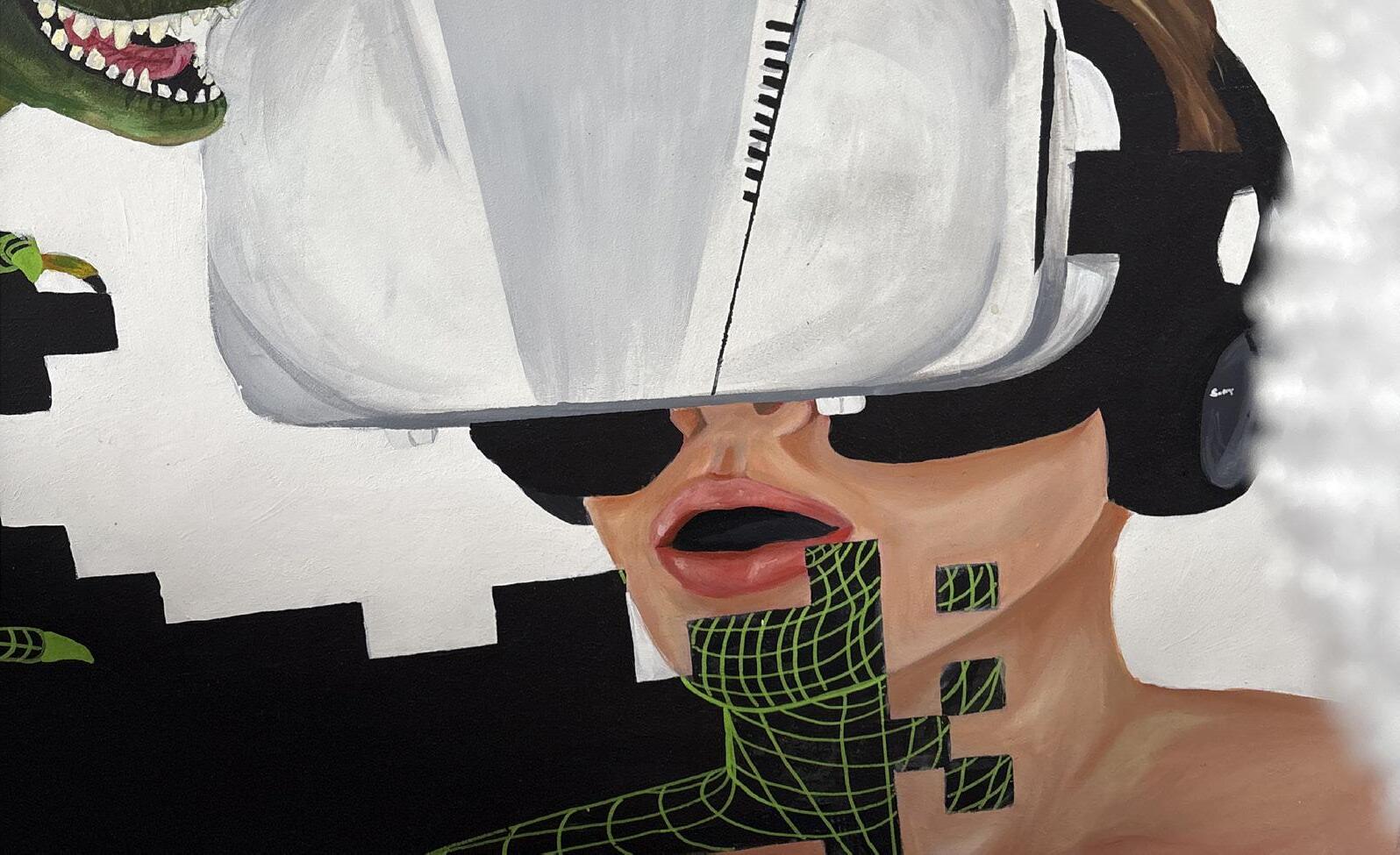
it has been a pleasure to have held the position of editor in chief for what is now three consecutive issues of our St John’s School Politics magazine, and hope that you, gentle readers, feel the vitality and investment of our writers and community in this summer edition of The Eagle. A close philosophy of mine has always been the power of the pen, and in keeping with this, I would like to use my last Editor’s notes to speak to an issue often held taboo in our society, but I feel needs addressing, which is the role of pornography in perpetuating the crisis in our country which is violence against women through
conditioning young boys. These dangerous perversions of relationships are not only reinforced by the language we use to reward others in society, adopting the semantic field of violence and destruction (e.g ‘You’re killing it’, ‘destroying it’). But is a taboo that strongly believe fundamentally underpins sexism in society from the microaggressions in class to the looks we get on trains to more overt expressions of women-hating: rape, femicide. Indeed, the entire philosophy of this magazine is fundamentally for it to act as a mouthpiece for student stories, whatever they may be, to be published, heard, and above all, spark discussion; for dialogue about difficult and intricate
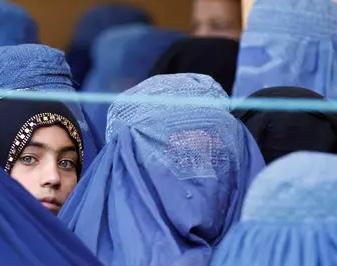
issues is paradigm in creating a better society for all. What got me thinking about this was our thematic thread of ‘rights and freedom’ that we have running through the magazine, and I look forward to expanding on this issue close to my heart under the next year’s Editorial team who are extremely promising and I am sure will not cease to impress. Again, I am blown away by the quality of writing showcased in this edition, particularly Ella Slater’s piece, ‘Clipped Wings’, nuancedly delivering the shattering realities of women in Afghanistan, poignantly next door to Sophie Perkins’ striking article looking at the language disparities between boys and girls’ uniform
regulations. I would draw attention to both of these pieces, and was struck by the unexpected poignancy of reading one after another respectively. We often think, in our first world country where the individual possesses a grassroots right to freedom of speech and expression, that the issues faced in places like Afghanistan really are alien, a million miles away. But, bringing once again my affiliation with English Literature and the dystopian genre, only by extrapolation of our current societal flaws and prejudices can we foresee how extreme issues find their roots in structures familiar to us. It is scary. And once again, I find myself writing of a volatile political landscape. The message conveyed to us by these fantastic writers together is illuminated even further by what we see in our newspapers, feeds, and screens; frankly, the descent into far-right ideology, globally, puts me greatly on edge, and I am sure many young
people like myself are feeling somewhat disillusioned at our government who seems to be melting away from their steadfast values of inclusion, instead draining into a filtrate of fascism which Donald Trump is slowly brewing in the White House. All must be vigilant in the face of what comes next, and we should not isolate ourselves so much from these issues we see across the equator that we lose sight of similar ideology being spread by Trump into our communities that are worth protecting. But it would be wrong of me to say that in the future we can only hope for change, because ‘hoping’ would be an understatement, particularly given the volition of our writers over these three issues, which I strongly believe stand as a testament to the energy and engagement of young people that will drive politics forward and to a better place.
- Bella Coombes
Shirts, Girls’ Short Skirts. - Sophie Perkins
Ella Slater
Maxine Turnball
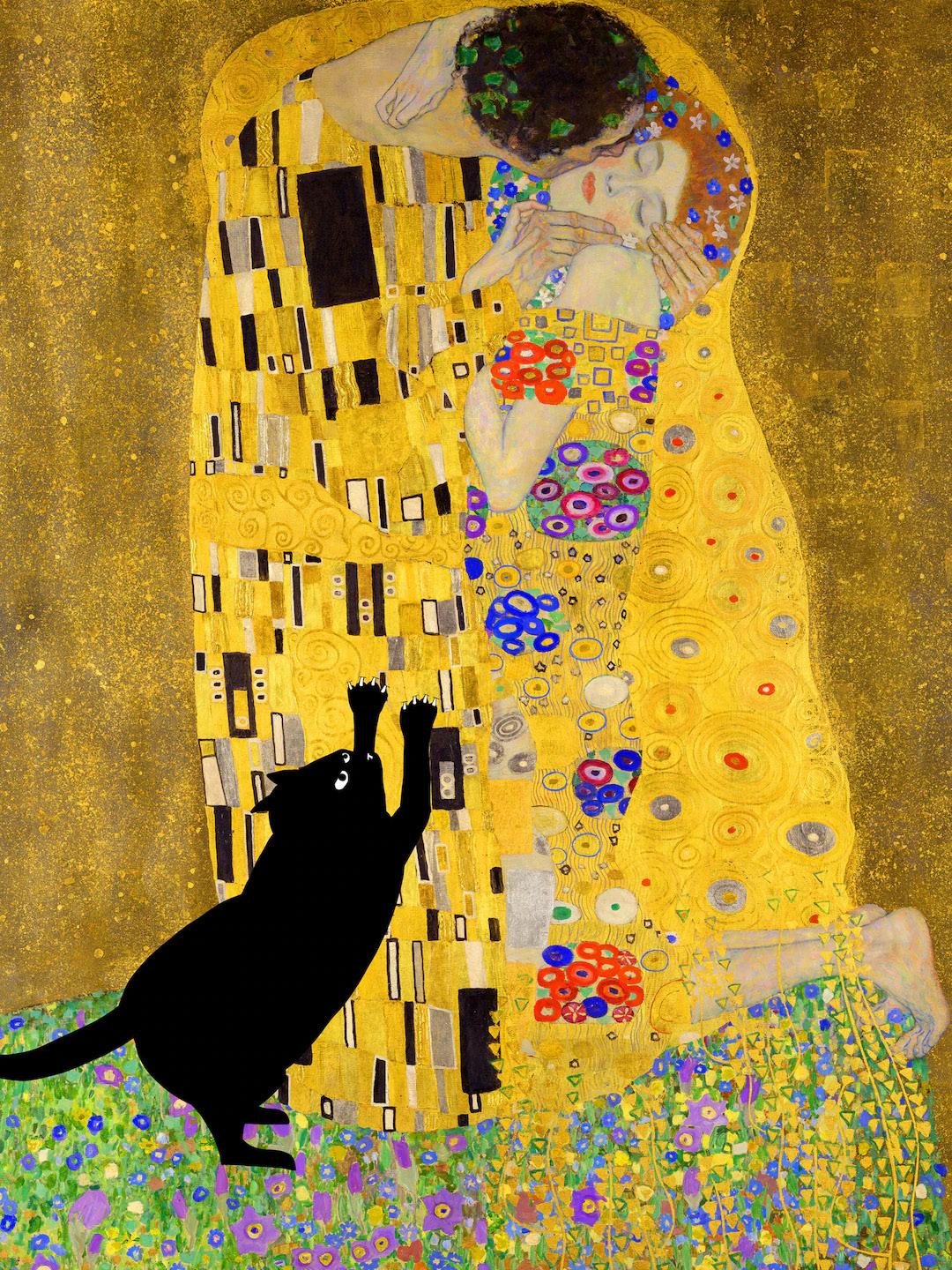
“Love Is A Social Construct”
- Ellie Wain (Proposing)
- Sam Tredwell (Opposing)
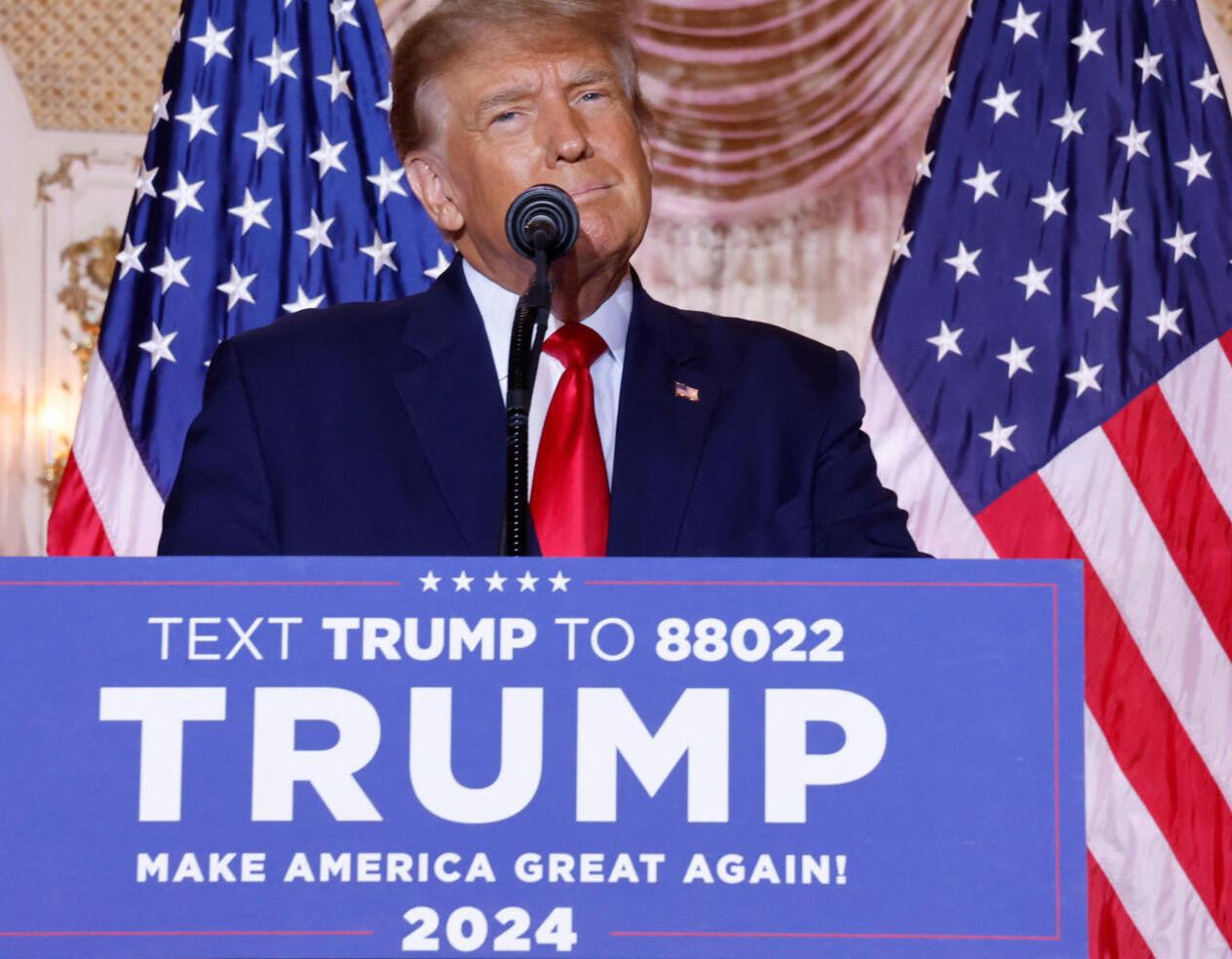
I Supported Trump In The 2024 Election
- Mark Patterson (Opinion Piece)
The cover aims to draw sensitive links between the amazing set of articles within this summer’s edition. This issue discusses matters of love, freedom and connection across a raft of social and political matters. The doves on the cover are to embody this. While free in flight the birds are confined by the corners of the page as they are cut off mid ascent. Ella Slater’s emotive symbolism of birds further reflects this theme. As the birds fly they clutch the American flag in their beaks. A stark juxtaposition between the birds’ representation of freedom and the repressive nature of current US politics;vvv highlighted fantastically in Aoife Barnes article; “Make LA Quiet Again”. The designs would not exist without the articles. So lastly, I would like to thank all of our writers aswell as our Editor in Chief, for providing such resplendent inspiration.
- Freddie Hayles
LA Quiet Again: Trumps Repressions - Aoife Barnes
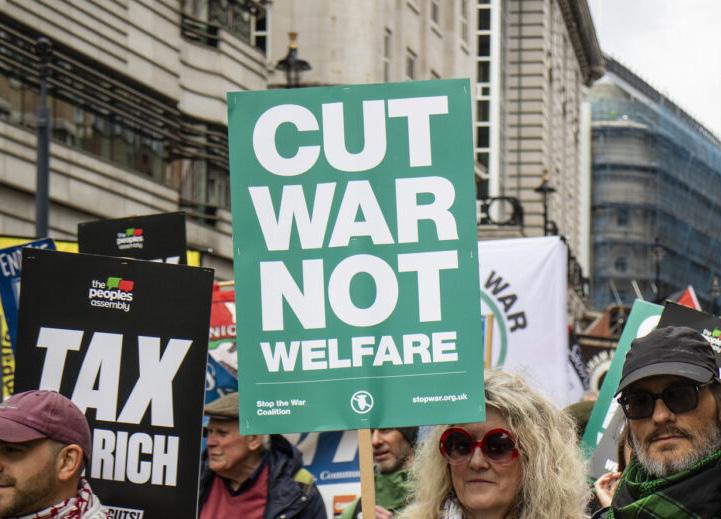
We Need Welfare Not Warfare - Jennie Walsh (Guest Article)
Charlotte Clee
Men’s shirts, girls’ short skirts.
A Look Into The Differences Between Male And Female Uniform Regulations, And What They Imply.
Dress codes which are enforced on girls are about boys, and our patriarchal beliefs surrounding them.
Research Reviewing 40 Uk Schools Found That Over 70 % Of Girls’ Uniform Policies Were:
- More expensive than boys’
- Enforced modesty only on girls
- More detailed/restrictive dress rules
for both men and women for thousands of years, they have become a point of controversy in modern workplaces and schools, particularly when it comes to determining what is considered ‘appropriate attire’ for young girls.
A short skirt has been in fashion
for a lot longer than the 21st century. Its origins go back to somewhere between 5400 to 4700 B.C., where archaeologists have found ancient Egyptian frescos depicting people in similar attire. During the warring states era of China from 476 BC to 221 BC, men wore short skirts similar to kilts. However, regardless of the skirt being a highly fashionable and practical clothing item
Upon first glance, uniform rules for men and women appear relatively similar. All shirts must be tucked in, blazers worn, no more than a single stud in each ear. However, differences do quickly emerge. Boys are required to wear a tie at all times, and if they don't, they’re told they look ‘untidy.’ Whilst girls face specific regulations around skirt length, fabric, and fit - and if these aren't followed, their uniform is deemed ‘inappropriate.’ This subtle difference in language raises the question: what does ‘inappropriate’ really mean and what message is it sending to young girls? It’s telling them that their bodies are inherently sexual and provocative. Subjecting girls to criticism about the way they dress from adolescence not only impacts how they view themselves, but it also affects how young boys begin to perceive women. It begins to foster the mindset that it is a woman’s responsibility to dress in a certain manner. This eventually contributes to societies’ victim-blaming attitude that ‘boys will be boys’ and that ‘if girls do not want to be harassed,
they must change the way that they dress’. We are placing the burden of avoiding sexualization and objectification on women, girls, rather than addressing the attitudes of men. It supports the deeply rooted idea that boys are hardwired to objectify and harass, and it is a girl’s duty to exist and act in a way that does not draw any unwanted attention.
Dress codes which are enforced on girls are about boys, and our patriarchal beliefs surrounding them. When discussing this topic, a common counterargument is ‘why would a girl want to dress that way to begin with?’ Surely girls must wake up in the morning with the male gaze in mind. A strong desire for male attention. Or could it be possible that their motives are entirely different? A woman’s outfit can be shaped by their own mood, their own desire to experiment, what makes them feel best. The concept that the way women dress is never about how they feel, and instead, always about how men will feel, denies women from having self-expression, a mind, their own autonomy.
When an institution shames a woman for presenting her body in the ‘wrong’ way, everyone, no matter the gender, learns that her body is
there to be judged, and that it is her responsibility to appear ‘modest’ to prevent others from sexualising her. So, when boys and men catcall or harass women in public (2021 UN women survey found that 70% of women aged 18-24 had experienced sexual harassment in a public space) they will say it is because she ‘provoked them’ due to the way she dressed. In policing schoolgirls’ clothing, we are conditioning them to accept or even expect others to be able to pass judgement on their clothes and bodies. It tells girls that what they look like matters more than what they say or do. In sum, the issue is not a short skirt, but the attitudes we as a society have attached to it and deemed that it implies.
- Sophie Perkins
INGS CLIPPED
To support women in Afghanistan, explore organisations such as Women for Afghan Women (WAW) Website: https://womenforafghanwomen.org
rules such as these, and instead remain mute and complying as the immoral, malevolent Taliban forces continue to destroy innocent lives, ripping
BIRD POSSESSES MORE RIGHTS THAN AN AFGHAN WOMAN.
BIRDS CAN SING, AFGHAN WOMEN CANNOT. BIRDS HAVE CONTROL OVER THEIR BODIES, AF - GHAN WOMEN DO NOT.
BIRDS CAN BE FREE, AFGHAN WOMEN ARE TRAPPED, TRANSFIXED IN AN ABOMINABLE OR- DEAL WITH NO ESCAPE. ANY MORSEL OF FREE- DOM IS BRUTALLY CRUSHED BY THE TALIBAN AUTHORITIES, AND HUMAN RIGHTS ARE A FOREIGN, UNFATHOMABLE CONCEPT. BIRDS ARE ABLE TO SPREAD THEIR WINGS AND SOAR, BUT THE WOMEN OF TODAY’S AFGHANISTAN STAY RIGID AMIDST THE UNFOLDING CHAOS: WINGS CLIPPED, UNABLE TO FLEE THE TORMENT THEY ENDURE
On the 21st of August 2024, the Taliban implemented a new law banning the sound of women's voices in public. Afghan women can no longer
sing, laugh, read aloud, or speak. Additionally, due to the severe fear of public flogging or execution, most Afghan women do not dare to even contemplate violating Taliban
secondary school girls. As a sixteen-year-old girl myself, I have never had to imagine a reality without the presence of education because thankfully, the right to schooling is so profoundly rooted into the UK’s culture. To be stripped of access to learning is such an inconceivable concept to me. Even the basic action of walking into a school building is an unobtainable dream for an estimated 2.5 million girls who, due to their gender, are prohibited to be educated.
As pupils of St John’s, most, if not all, of us have a hope for our future, no matter our differences in talents or hobbies or grades. Due to the fact we have experienced a form of education, we have the opportunity to attend university, seek employment, and earn a living. However, women residing in Afghanistan cannot even leave their house without being accompanied by a male relative and can most certainly not even entertain the thought of paving their own way economically through earning a wage. Their desire to obtain any sense of education, salary or economic freedom is, once again, slaughtered by the Taliban’s borderline femicidal, unethical behaviour.
country's rape laws and their enforcement. Violence against women is a fundamental element of Afghanistan’s society and is a prevalent monstrosity in endless women's lives. The Afghan laws blatantly refuse to protect the bodies of their women, and the consent of underaged girls for sex is not even covered by the na-
sympathy shown to rape sufferers once again exposes the pure evil rampant in the minds of the Taliban authorities.
Women create life and are thus responsible for the life of all Taliban members, so the Taliban’s excessive impulse to abuse and torment the female race in Afghanistan is bewilder-
humanity to shreds.
As of April 2023, 80% of school-aged girls and young women were out of education, including a cohort of 1.1 million
Additionally, the rape culture fostered in the nation of Afghanistan is a sickening breach of any moral conduct, and directly opposes countless human rights laws, with several human rights organisations such as the United Nations feeling obliged to criticise the
tion’s law. Rape victims face immense risks if they voice their abuse, and sufferers of rape are more stigmatised and punished than their rapist due to their female identity. Irreproachable rape victims are blamed and punished for the vile actions of their rapist, which is absurd and moronic; even within our own culture, I struggle to see how one can condemn a woman for being a victim of any form of sexual assault, let alone rape. Rather than being cared for, Afghan, female rape victims are penalised, and the inhumane lack of
ing and perplexing. However, even if the Taliban believe their repulsive discriminatory actions towards women are justified by their religious beliefs, it is worth stating the conviction that no religious ideology, or any viewpoint for that matter, can excuse their deplorable laws which they continue to enforce, which murder any form of liberty for all Afghan women.
- Ella Slater
TikTok. With 1.69 billion monthly users, this app is used by almost every teenager, every day; and 20% of teens say they feel they are on TikTok constantly. With its high relevancy and the recent boom of the “TikTok influencer”, what does this mean for the portrayal of women and femininity? And most importantly, should we be worried about the future of modern-day feminism?
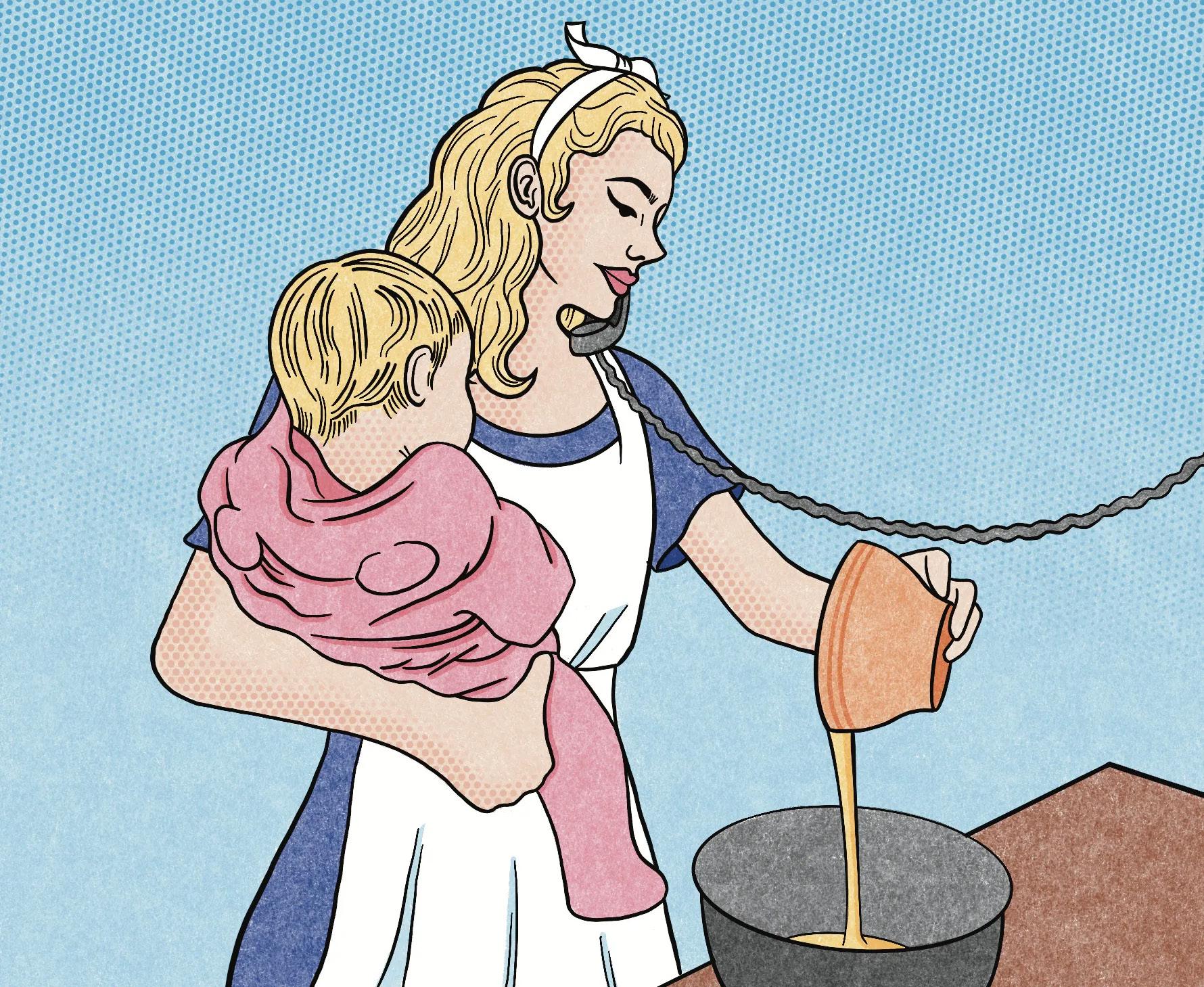
The “TikTok influencer” is a phenomenon we have rarely seen before. As TikTok’s algorithm prioritises content discovery over follower count, it allows new creators to blow up seemingly overnight, amassing numbers as high as 155 million followers. Clearly, with these high follower counts and viewerships, it is easy to see how these influencers on TikTok would have a big impact on their viewers, especially with teenage girls following female creators. Now, one could argue that not all this influence is a bad thing; many creators use their platform for good. However, the issue arises when the line of intent blurs, and these influencers start to feed off any engagement they can: positive or negative. This allows a new realm of content to be unlocked, and a scarce amount of content aligns with the modern-day feminist movement; in fact, we are seeing trends that are heavily favouring the traditional, stayat-home wife.
ARE WE GOING BACKWARDS?
The term “Trad Wife”, slang for “traditional wife”, had its genesis in 2013 through Red Pill women-dominated forums on Reddit. However, after the COVID-19 pandemic, the term transformed, and it can now be found as a term to describe a certain niche of creators on TikTok. There are many notable ‘TikTokers’ who fall under the term “Trad Wife”, the most notorious examples being Hannah Neeleman (Ballerina Farm), and Nara Smith.
Hannah Neeleman is a mother of 8 who gave up her dream of being a ballerina to become the wife of Daniel Neeleman, son of the CEO of JetBlue. Hannah's posts show her farm life, home cooking, and vintage fashion, and though not explicitly stated on her page, all her
content circulates round the belief of what it means to be a “Trad Wife”.
The issue here is not necessarily the lifestyle she chooses to live, but it is the highly damaging message it forces onto young girls. By implying that the only way for true happiness is to dispense of your career or your dreams to settle with a husband and become a stayat-home mother with a large number of children, she is indirectly sending the message that being a “Trad Wife” is the true purpose of her and other women’s lives. By playing into the rustic, vintage aesthetic, it accompanies the beliefs of the 20th century where stereotypes of women were most popularised and normalised.
As for Nara Smith, she follows a similar blueprint
when it comes to her content, idolising the idea of domestic tranquillity for women, enforcing these dangerous ideas of a subservient, motherly wife: one who should be spoken to, not heard.
But why would TikTok promote such outdated beliefs, as well as support these women as they grow to have millions of followers? It all comes down to the algorithm, which “Trad Wife” videos fit the mould for perfectly. The nostalgic visuals, the emphasis on simplicity, and the structured platform allow this content to reach these audiences of impressionable young girls, further fuelling the belief in being a “traditional wife”. The belief that oppres-
sion is empowering.
Sadly, this type of subconsciously anti-feminist content can be found in other, more dangerous places of the app. The Centre for Countering Digital Hate found that new, teenage accounts on TikTok were exposed to eating disorder content within 8 minutes of joining. These accounts would receive videos about body image every 39 seconds, and if your username shows vulnerability to these topics, you’re 3 times as likely to receive this type of eating disorder promotion content. A survey by ITV also found that 80% of eating disorder victims felt the app negatively impacts their recovery, reversing their progress. How can we sit back and
watch as this happens? By specifically targeting these young girls, TikTok is unravelling any notion of body positivity or acceptance and replacing it with something much more dark and dangerous: disordered eating. Not only does TikTok allow these posts, but they amplify them to people's ‘For You’ pages. Users with eating disorders found that their feed had 335% more dieting videos, and 4,343% more videos related to toxic eating. This shows us how the app is willing to promote any content to keep up the engagement, as they watch these impressionable young girls receive more and more harmful content. What does this mean for the Feminist movement? Well, from this evidence, we can see it's moving us backwards. The use of disordered eating content harks back to the 90s, with Kate Moss’s size 0 body being labelled “heroin chic”. Not only is this incredibly dangerous, but it goes against the very essence of what feminism stands for. With feminism, everyone is an equal, and these ideals are being burned into these young girls, beginning to think they must edit their photos to look skinnier or not wear certain clothes in fear of appearing bigger. This highlights the issues that undoubtedly remain in today’s society, and why bringing back the poisonous mantra of “nothing tastes better than skinny feels” is not only harmful to the people, specifically women, involved,
but the feminist movement as a whole: reverting us back to dangerous promotion of toxic eating that hails the return of an eating disorder culture.
So, what does this mean for the future of the modern-day feminist? Unfortunately, “trad wives” and toxic eating disorder culture aren’t the only things appearing on TikTok that impact feminism negatively. The use of derogatory language like “Feminazi” are still used often to describe feminists on the app.
Sadly, there are more low-level terms too, such as “girl dinner” and “girl math”. While these are certainly less aggressive, they are just as bad as using an aggressive term, as they subtly ingrain the idea of gender segregation based on an assumption of women’s simplicity. As well as this, the rise in misogynistic creators
continues to rampage: from Andrew Tate stating women are “intrinsically lazy” to Hannah Pearl Davis, the influx of these inherently anti-women creators will continue to influence our teenage generation, the generation who were meant to be progressive. While it might seem that the anti-feminist ideals of one teenage boy or one teenage girl will not impact the world, it is urgent for us to realise that these are the minds of people who will be running countries in the coming decades. If we start to ingrain this ideal now, feminism will continue to be scrutinised and the movement will continue to weaken until the landscape of women’s rights becomes even more deeply frightening.
“LOVE IS A SOCIAL CONSTRUCT”
PROPOSING: ELLIE WAIN
The uncomfortable, radical truth is that love isn’t real. It’s been glorified in poetry, music, and history, but underneath these idolisations. But beyond the idea of soulmates
and fate, it is simply just a social construct. Sam opposes love as a social construct and argues it is a biological force - he even goes as far as to mention ‘parental love’. He is ignorant to the fact that society has had such a heavy hand at manipulating ‘love’ into something giant corporations can benefit from. It is naïve to say that love is purely the ‘intense feeling of deep affection’, because, in today's day and age, it is more than this. Love has lost its purity and has undergone an unknown rebranding.
Firstly, I’d like to establish what a social construct is before Sam can twist my words. A social construct is a metaphysical idea that is influenced by society and culture; as I will now explain, love falls under this category.
In 2025, love has been branded and sold to us as the ultimate form of happiness. The limited-edition heart-shaped chocolate on shelves and teddy bears has shaped love into a product to be sold. Love is essentially something for us to purchase and flaunt rather than experience. Adverts of dating apps are a perfect example of this. Not only is it an example of shameless consumerism, but it also plays a role in the concept of the essentiality to find your ‘soulmate’ and ‘true love’. If you aren’t actively trying to find love on apps like these, you're
- Maxine Turnball
failing at love. The adverts for Tinder or Bumble profit off these societal pressures and single-handedly destroy love as a true concept. Individuals actively searching for love will never find it as there is no level of pure affection there. There is no innocence behind swiping right, as it frames love as something to obtain and, in a way, it objectifies romance.
As you will soon have the joy to read, in Sam’s article he argues that parental love is proof that love is not a social construct. In fact - he even uses my parents (along with their entire biological names) as an example. Supposedly, the most instinctual form of love is between a parent and their child. But even parental love is deeply shaped by culture. In different countries and communities, their version of how a parent-child loving relationship should look differs. Sam demonstrates his ‘love’ for his parents, Laura and Karl Tredwell (Sam, it’s only fair I get to bring up your parents too), differently from how you or I may demonstrate our ‘love’ for our own parents. In some cultures, affection is shown through emotional closeness and verbal affirmation; in others, it's demonstrated through discipline, sacrifice, or provision. I’m sure it is familiar to those with siblings that a parent doesn’t/shouldn’t have a favourite child - but even this is a modern concept. In older cultures, it was the norm to have a favourite child based on gender or age, etc. So, whilst Sam argues for the biological
code for a parent to nurture their child, the physical expression of parental love is undeniably influenced by the society around us. If I see other children hugging their parents, I learn that this is the norm, and thus, I will hug my parents more often to demonstrate my ‘love’ for them. By watching those around us, we learn how to express our love and therefore parental love is still influenced by society, rendering it a construct.
Let’s talk about Valentine's Day - the perfect example of love as a social construct. Originally, the holiday stemmed from the story of Saint Valentine, a Christian martyr who secretly married couples and defied Emperor Claudius II. After being arrested and executed on February 14th, the day was established to honour his actions. Over time, however, this historical significance has been lost, and the holiday has become a prime opportunity for capitalist companies to cash in. It’s no longer called Saint Valentine’s Day.
On some level, Valentine's Day offers an opportunity to reconnect with the purity of love. But the issue is that it only happens once a year. This one-day celebration ultimately undermines its authenticity by being co-opted by massive corporations that profit from it. The social expectation surrounding Valentine’s Day is that we must shower our significant other with gifts. Corporations market the “perfect gift” as if it holds the key to our emotional
worth. In this context, love isn’t real – it’s reduced to a transaction, a performance, and a prime example of love as a social construct.
The manipulation of love goes far beyond capitalist powers; society has changed the way we view relationships too. There is an immense pressure for relationships to be final, and for marriages to be perfect. Social media has catalysed this pressure. Seemingly perfect moments from people’s relationships form the ideal that any ‘valid’ and ‘happy’ relationship must be perfect 24/7. But true love is quite the opposite; I view real love as something that overcomes struggle. If there is no occasional fight in a relationship, then there is no struggle to overcome. The curated nature of social media pushes unrealistic standards and further distorts love into a social construct. Sam's insistence on love as a biological force still present in today's society ignores the pressures from these platforms.
The biological force Sam argues for has been lost in today's society. Love being untouched and our society's manipulative social structure are too intertwined for love to be real. You cannot have one without the other. If love did previously exist, it certainly doesn’t anymore. I rest my case.
OPPOSING: SAM TREDWELL
Well, that got heavy, quick. Here in the opposing camp, we are going to turn things down a notch. Before I begin, may I remind you of the prompt Ellie and I are debating, which reads: “Love is a social construct”, asserting that love, in its entirety, is a social construct, not just the consumerised version Ellie so conveniently cherry-picked as the representative for this emotion. So, for her to successfully argue in the proposal of this motion, surely she wouldn’t say that she “doesn’t claim that love as an emotion doesn’t exist”, because that would undermine the proposal. After all, a real neurological emotion can’t be a social construct.
Whoops!
Sure, love is advertised through heart-shaped chocolates, teddy bears, and dating apps, but does that invalidate genuine affection? Maybe people like getting those chocolates because it’s a little thoughtful gesture. Let’s be honest, who doesn’t like chocolate? Even crows - yes, the feathered bird - engage in the act of giving gifts. Male crows have been observed collecting shiny pieces of metal for a mate they are trying to court.
Last time I checked, crows aren't subject to advertisements that Ellie claims ‘guilt us’ into giving gifts.
I love my parents - most of the time. Parental love. Does Ellie not love Stuart and Clare Wain? The genuine connection of love we feel for our parents is not shaped by the media and those pesky capitalist corporations Ellie so vehemently rails against. How can it? When we are small and can barely walk, we haven't yet been corrupted by consumerist ideals, and yet we still feel love.
To render the relationships of those who met on dating apps as void of any level of “pure affection” is a bold move. Who are we, two secondary school students, to dictate such a thing? Why does the fact that these two loving people met on Tinder make their love any less “pure”?
I find it amusing that Ellie holds the essence of Valentine's Day as a beacon of pure love that gives us the “opportunity to reconnect with the purity of love” - especially considering her earlier assertion that love is merely a social construct. If love were solely a fabricated concept, wouldn't any attempt to celebrate it, commercialised or not, be inherently inauthentic?
Make your mind up! Given the motion we set out in the debate - that love, as in all love, is a social construct - wouldn’t the existence of pure love be
a blatant and fatal self-contradiction?
Ellie's issues with social media creating unrealistic images of relationships are shared by me. But nobody is forcing us to view these Instagram posts, or to engage with them, or to internalise that specific notion of love as the one held universally. What I’m trying to make clear is that we do not have to accept the unrealistic standards of love that we are presented with.
Since Ellie got to assert what she believes true love is, then I feel I have the prerogative to do so as well. To me, true love is whatever you think and want it to be, as long as it's healthy. It is real and human, and the essence of it cannot be changed by marketing tricks or social media posts.
So, we have now seen that love is not a social constructanimals perform acts of love! Even Ellie agrees with me, with her constant assertion that “true” and “pure” love does exist in some synthesis. I hope you have been reassured and go on about your day knowing that the love you feel for your parents is not an evil trick by the big, evil, greedy corporations.
Why I Supported
In the 2024 election
In the 2024 presidential election, I chose to support Donald Trump because I believe his leadership was best suited to address America's most pressing challenges. Under his administration the economy remained stable, businesses thrived, and inflation was kept in check. His strong foreign policy ensured peace while maintaining America’s global influence. Trump also prioritized protecting women's rights through economic opportunities, judicial appointments, and efforts to combat human trafficking. While many were swayed by political narratives, my decision to support him was based on his proven ability to keep America strong, safe, and prosperous.
One of the key reasons supported trump in the 2024 presidential election was his ability to maintain economic stability and efficiency. His policies focused on tax cuts, deregulation, and energy independence, all of which contributed to an extremely strong economy.
Tax cuts provided businesses with more capital leading to job creation and higher wages which in turn contributed to record low unemployment rates before the covid 19 pandemic. As well as this, small businesses benefited significantly from reduced government regulations as it made it easier for them to expand and hire more employees. As a result, unemployment was also reduced. This was a massive contrast to Biden’s presidency in which inflation skyrocketed hurting middle-class Americans as prices for goods and services increased throughout Biden’s presidency, meanwhile Trump’s approach to economic policy ensured financial stability. Furthermore, Trump’s focus on energy independence kept costs low and strengthened the economy as a strong energy sector created jobs and boosted economic security by reducing America’s dependence on foreign oil. This protected the US from global energy price shocks and helped the US to become a net exporter of oil and natural gas, bringing in
revenue from foreign buyers. Trump’s ‘America First’ economic approach directly benefited working class citizens and reinforced the nation's financial strength, making him the clear choice for those who valued economic stability.
Trump’s leadership on the world stage was another major reason for my support given the current geopolitical tensions surrounding the Russia-Ukraine war and the Isreal-Palestine conflict. Over the last four years the Democrats have shown incompetence when dealing with ongoing tensions around the world through their weakness in handling the Russia and Ukraine war. Under Biden, Russia invaded Ukraine in 2022, Biden’s administration failed to deter Putin despite clear warning signs of an impending invasion. Furthermore, Biden’s military aid to Ukraine prolonged the war which resulted in huge numbers of casualties on both sides as well as having significant negative economic impacts on countries all over the world. This is a stark contrast to Trump’s first term where he was the first president in the United States in decades to see no new wars started under his presidency, instead of prolonged military campaigns he has used effective economic sanctions to maintain US strength. Furthermore, Trump’s diplomatic approach not only kept adversaries in check but also fostered key peace agreements such as the Abraham Accords which significantly helped de-escalate tensions in the middle east.
Trump’s strong stance against Iran also limited the funding of terrorist organizations which has significantly reduced the likelihood of large-scale attack. Compared to Biden, who has shown weakness on the global stage and has indirectly funded terrorism by unfreezing billions in Iranian assets and easing sanctions on Iran allowing them to fund terrorist groups like Hamas and Hezbollah. Trump’s return to the office represents a shift towards stability, strength, and a firm ‘America First’ policy.
Donald Trump has proven himself a strong advocate for women’s rights, both in his first term and now in 2025. Despite media narratives suggesting otherwise, Trump’s policies have supported women’s economic empowerment, safety, and freedom. During his first term Trump championed initiatives like the Women's Global Development and Prosperity Initiative (W-GDP) which aimed to economically empower 50 million women worldwide by 2025. His administration also secured historic funding for women-owned businesses and worked to close the gender pay-gap through economic growth rather than government mandates. In 2025, Trump has continued to defend women's rights by ensuring biological women maintain fair competition in sports. For years, the radical left has been pushing to let biological men participate in women's sport, thereby making it unfair on women given the biological difference between men and women. Trump has supported policies
that prevent transgender athletes from competing unfairly in female categories. Additionally, the Trump Administration has taken a strong stance against human trafficking and have expanded law enforcement efforts to dismantle trafficking networks that disproportionately exploit women and girls. Trump has also strengthened workplace protections for women by expanding paid family leave for federal employees. While democrats often claim to be the party of women's rights, Trump has delivered tangible results in women’s safety, economic independence and fairness in society. His commitment to real actions rather than rhetoric is one reason why I supported him in the 2024 general election.
Trump’s leadership has proven effective in maintaining economic stability, strengthening America’s global influence, and protecting fundamental rights. His return to office signals renewed focus on strength, fairness, and putting America first. While I believe that all politicians are corrupt and driven by self-interest and those who are genuine can never make any real impact, Trump stands out as the best option among a flawed system. Unlike others who make empty promises, Trump’s actions in most cases have delivered real results making him the strongest choice to lead America forward.
- Mark Patterson, Opinion Piece
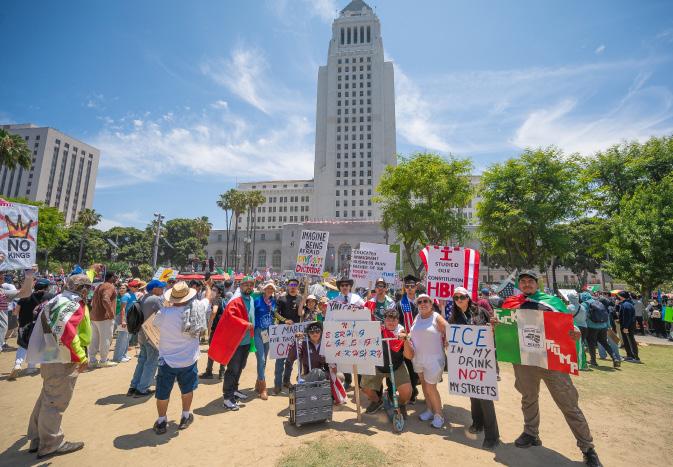
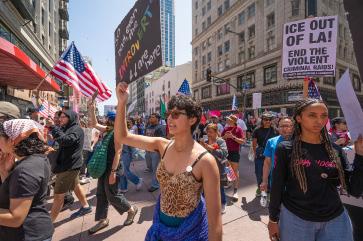
Make LA Quiet Again:
Trump’s Repressions
Currently in Los Angeles, there are protests all around the city due to Immigration and Customs Enforcement (ICE) deporting and detaining citizens with full employment and no criminal record. As a result of these actions made by ICE, citizens of LA have made their voices heard by protesting outside the Los Angeles federal building, with the hope and intent of their voices and actions being heard, as this is seen as unfair and should be put to an end.
However, just a day later, on the 7th of June, Donald Trump made the executive order to send federal troops and the marines into the protests to try and "diffuse" the situation. However, Trump was not
considering the fact that these protests started off as peaceful and harmless, with no malevolent intent, just citizens of Los Angeles trying to make their voices heard as they see a flaw in the government and orders.
A Guardian article stated that "This dramatic federal response, paired with increasingly aggressive tactics by local police, led to the protests growing larger and escalating in their intensity. They’ve begun spreading to other major cities, too." This passage from a news article, and opinions globally, have shown that Trump making the order to send marines, police, and federal troops into LA was a careless and rash decision. Not only have these actions
reflected badly on himself as president, but they have also had many negative effects on the citizens and bystanders of these protests.
It has also been shown that many troops see these actions as unnecessary and only worsening the situation at hand. Another passage from the Guardian stated, "Several service members told advocacy groups they felt like pawns in a political game and assignment was unnecessary." Trump has also taken the unusual step of ordering 4,000 National Guard members to Los Angeles without the consent of California’s governor, Gavin Newsom, saying that the city risked being "obliterated" by violent protesters without them.
However, what is being seen by Donald Trump, and many other governors, is angry protesters attempting to let democracy fall and create havoc among the state. Whereas in reality, these protests started as many brave, resilient people trying to make a stand for what they believe is right and to call out and correct the people that are wrong. Donald Trump and many other governors that stand by his order blew these protests out of proportion, not the American people. So, in many eyes, if there is anyone to blame for the potential obliteration of LA, the finger should
be pointed towards himself and not towards the citizens of LA.
These LA protests are just one example of how President Donald Trump can be seen as a controversial dictator, as his decisions, actions, and policies are sometimes seen as a choice to make himself look more powerful, influential among the American people, and a stronger leader.
An article from a website named Pew Research stated, "U.S. President Donald Trump receives mostly negative rat-
ings in a new Pew Research Centre survey of 24 nations.
More than half in 19 of these countries say they lack confidence in Trump’s leadership of world affairs. Majorities in most countries also express little or no confidence in Trump’s ability to handle specific issues, including immigration, the Russia-Ukraine war, U.S.-China relations, global economic problems, conflicts between Israel and its neighbours, and climate change."
And this just goes to show that not only do Americans lack faith in their president’s
decisions on numerous occasions, but also disagree vastly on the decisions made in Los Angeles, as many see them as selfish and rash, considering the circumstances.
- Aoife Barnes
Why we need welfare not warfare
What sort of government cuts the benefits of some of the poorest people in society to spend more on weapons and wars? The government of Keir Starmer and Rachel Reeves, that’s what sort.
That’s why the Stop the War Coalition has launched a Welfare not Warfare campaign, in response to the prime minister and chancellor’s series of announcements about huge increases in defence spending, while making swingeing cuts in welfare spending which will impact most on the disabled and vulnerable families.
Our schools, hospitals and public services are crumbling and living standards are falling further. Yet Starmer claims he is making “tough choices” in order to save £5 billion.
Reeves confirmed this cut in her March budget, announcing a freeze in Personal Independence Payments (PIP), which helps disabled people pay for support to enable them to live independent lives, and cuts to other benefits, before she moved on to the Ministry of Defence and how much more money it would be getting.
She confirmed that defence spending would increase not just by the 2.5 percent of gross domestic product (GDP) that the government had previously pledged, but to three percent –which her boss told the country a couple of weeks before was needed because of the “global situation”, a situation I’d argue is one he has created
through his drive to increased militarism.
Britain already spends over £54 billion a year on defence. It’s one of the highest military spenders as a proportion of GDP in the western world. An increase of three percent means increasing it by £6 billion each year – and then by around a further £15 billion a year after 2027.
Which the Office for Budget Responsibility has estimated is more like £17.3 billion every year spent on defence by 2029, on top of what’s already spent.
Reeves then reeled off a list of places where there’s going to be investment in the arms industry, which is of course fine for local economies and jobs where those industries exist. But there’s so much more that she could be investing in to create good, well paid manufacturing jobs, such as renewables, that don’t make the components of fighter jets and bombs and other weapons that kill innocent people.
But the government seems to be turning away from its commitment to a green economy in favour of a khaki one. Indeed, the chancellor said Britain is going to become a ‘defence superpower’.
The cost of ending the twochild benefit cap would be about £1.3b a year according to the Institute of Fiscal Studies and would lift about 10,000 children out of poverty.
That means just one year of increasing defence spending would give us 10 years of taking several hundred thousand children out of poverty.
After the budget it emerged in the small print that there would be well over 100 to 200,000 people driven into poverty as a direct result of the new fiscal measures. A direct result of spending billions a year more on defence and turning the UK into a defence superpower.
Of course, a country has the right to defend its borders, but that’s not what this is about. It’s not about having troops on the ground defending their countries from an invasion, as the popular imagination might have it. The money for defence goes mostly into private arms companies.
The weapons and components they make are sold to countries to start and pursue wars that should have nothing to do with us. The profits are made by defence companies such as BAE systems, which receives billions in subsidies from our tax pounds.
So, when politicians say that increased defence spending is good for economic growth, the question is, what kind and for whom? It’s financial gain for the shareholders of arms companies, not growth for the economy as a whole, not for ordinary working people and certainly not for those at the sharp end of welfare cuts.
An arms race is a never-end-
ing, deadly, competition. It makes the world ever more dangerous. Security and prosperity at home isn’t achieved by arming and waging more and endless wars abroad. It simply makes us all more insecure.
- Jennie
Walsh is the media officer for the Stop the War Coalition https:// www.stopwar.org.uk/
Jennie
Walsh
For as long as our world has had the death penalty, controversy regarding the act has come along with it. Whether that is about morality, deterrence, or the murder of the innocent, they all make the death penalty one of the most difficult and incredibly controversial subjects to argue.
The obvious challenge with executing people, even when they are found guilty, is the number of miscarriages of justice. What do you do when you find new evidence, new witnesses, or simply identify mistakes that were made?
A case that displays the murder of the innocent is that of Khalil Divine Black Sun Allah. Allah was a 46-year-old man who was executed by lethal injection in South Carolina, following his conviction for armed robbery and the murder of a convenience store cashier when he was only 19. The victim was a 41-year-old mother of three. Allah was convicted despite there being no forensic evidence connecting him to the crime scene; instead, the state’s evidence depended on the testimony of his friend and co-defendant, Steven Golden.
Days before his death, the key witness for the prosecution came forward and admitted he had lied at trial, and that the state of South Carolina had sentenced an innocent man to death. Steven Golden was also Khalil’s friend and was charged with armed robbery and murder. However, two days before Khalil’s execution it was brought to the state’s attention that not only had Golden lied in his police report due to being high, but he was not able to identify the “real shooter” and had instead concealed his identity. Steven Golden feared for his life and stated his fear was that “his associates might kill me”. “I don’t want Allah to be executed for something he didn’t do,” Golden wrote in his new affidavit. He also wrote, “This has weighed heavily on my mind, and I want to have a clear conscience.” Unfortunately, after everything that was presented to the state attorney, they said that Golden’s new statement was not credible and did not warrant a new trial. This meant Khalil Divine, despite having countless
The Death Penalty:
The Ultimate Price?
and was pronounced dead at 6:55 p.m. This is just one of a countless number of cases across the world where the innocent have been sentenced to death. This case alone is also a very good indicator that the death penalty should be abolished altogether, as death is an irreversible act and, when given unwarrantedly, it is completely immoral.
A good example of a miscarriage of justice is the very recent release of Peter Sullivan, who was jailed over the
on Diane and the DNA of Mr Sullivan did not match, making Peter completely innocent. This case is incredibly worrying, as if the UK did have capital punishment, there is a very high chance Peter Sullivan would not have made it out of prison. Even if he was found innocent almost 57 years later, Sullivan would have been dead. Sullivan (who is now 68 years old) is also the victim of the longest miscarriage of justice ever in the UK, and even after being released a free man - which does not pardon the
pieces of evidence proving his innocence, was refused both a new trial and a stay of execution by the state of South Carolina. He was executed on 20th September 2024
1968 killing of 21-year-old Diane Sindall. Peter Sullivan was charged with the murder and statutory rape of young Diane. However, years later, it was found that the DNA found
around the globe for cases like Mr Sullivan’s and try their very best to prevent cases like Mr Allah’s. An example of one human rights lawyer is a man named Mr Joe Midelton, who has travelled around the world preventing thousands of executions. After emailing Mr Midelton, I asked him what his most successful moment in his career was. He proceeded to state, “I was working on a death penalty case in Kenya in 2008. When the Attorney General saw which way things were going, he spoke to the president, who commuted all 4,000 prisoners on death row.” Joe Midelton is one of the many lawyers who deem the death penalty immoral and feel a life behind bars without the possibility of parole is better than no life at all.
In conclusion, I believe that the death penalty, no matter the circumstances, is never warranted, as there is no way to determine for definite whether someone is guilty or innocent. Every day, new information, witnesses and even mistakes are brought to light - unfortunately, sometimes even after a person has been executed. Life is a gift, a great one, and one that should not be taken for granted. Taking a life, no matter the story, should never be considered ‘the moral choice’, nor the fair one. British legal system for keeping him an inmate for so long.
However, on a much brighter topic, there are many committed and successful human rights lawyers who fight all
“Electric Chair” - Andy Warhol
- Aoife Barnes
The Politics in Star Wars’
Andor: Season two
The second season of Andor has been a huge success and the last eight episodes have the highest ratings for five consecutive episodes out of any show on IMDb. Showrunner Tony Gilroy has claimed that Andor is not political and has denied that the show is left-wing, stating, “I never think about it that way. I never do”. Despite him saying this, one only has to watch the show to conclude that this is almost certainly not the case.
The entire premise of Andor is a show in which a small and growing rebellion fights against the imperial fascists who are secretly building a super weapon, the Death Star, which could perhaps represent global superpowers building nuclear
the Raj could be compared to the position of Ghorman under the rule of the Galactic Empire. Throughout the series we hear about times where imperial soldiers have killed unarmed Ghormans and we also see the Imperials building a massive armoury without the consent of the Ghormans.
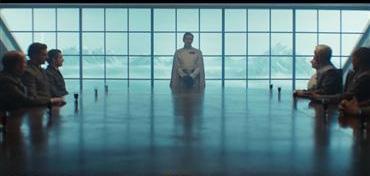
weapons. Season 2 is primarily focused on the small planet Ghorman which the empire needs in order to build the Death Star. We see a meeting headed by the Director of Advanced Weapons Research, Director Krennic, in which he tells a small number of imperial officials and Imperial Security Bureau (ISB) agents that the empire needs this planet for its natural resources and is planning to take over the planet by whatever means necessary. This is remarkably similar to many events throughout history where an empire has exploited a much smaller country, or in this case, planet, for natural resources. To compare this to a real-world example, the British Empire could be likened to the Galactic Empire and India under the control of
The example of the British Empire and its domination of the subcontinent is even more relevant when looking at the events in Episode 8, entitled ‘Who Are You’. Episode 8 is the highest ranked episode in the series and sees the events in Ghorman boil over with Ghormans marching into the central plaza to face off
against imperial soldiers as they shout nationalist chants and wave flags. This had all been part of an imperial plot to justify their control of the planet, so after an imperial sniper purposefully shoots one of his own men everything descends into chaos with imperial soldiers opening fire onto a mostly unarmed crowd which were trapped in the plaza by storm troopers which had the protestors surrounded. Chaos ensues with there being huge numbers of deaths especially after the empire unleashes their K2 droid units onto the protestors. There is a clear similarity between these events and the Amritsar massacre in 1919 when General Rex Dyer opened fire on innocent civilians who were peacefully gathering in Jallianwala Bagh. This resulted in 400 deaths including women and children. Both these events are examples of empires using brutal methods to keep control over their population and the circumstances in which both events take place are remarkably similar. It must also be considered that Cassian Andor is on the side of the
Ghorman rebels and the show is written so that the audience will inevitably sympathize with the Ghormans in their struggle against the fascist galactic empire. This would therefore mean that through watching Andor someone would also be much more likely to sympathize with the Indians in their fight for independence against the British empire. This would also apply to contemporary examples such as the Palestinian struggle against Israeli occupation forces in Gaza and the West Bank, the Iraqis in their war against the American led coalition in 2003 and the Puerto Ricans as they look for independence or statehood within the USA.
When looking at all this it can be argued that, despite the comments made by Tony Gilroy, Andor is clearly a left-wing anti-imperialist show that is highly political.
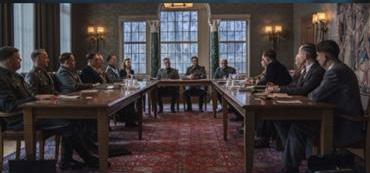
A Comparison Of Andor Scene to the Nazi Party in the 1940s
- Lucas Dean
The Poet as Preacher:
Auden's Theological Shift in "For the Time Being"
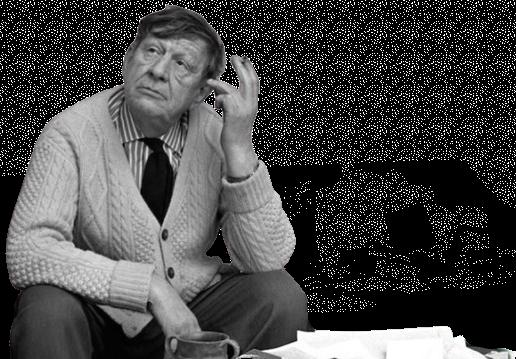
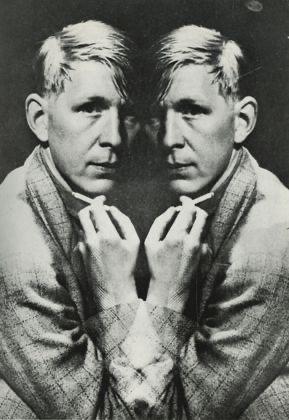
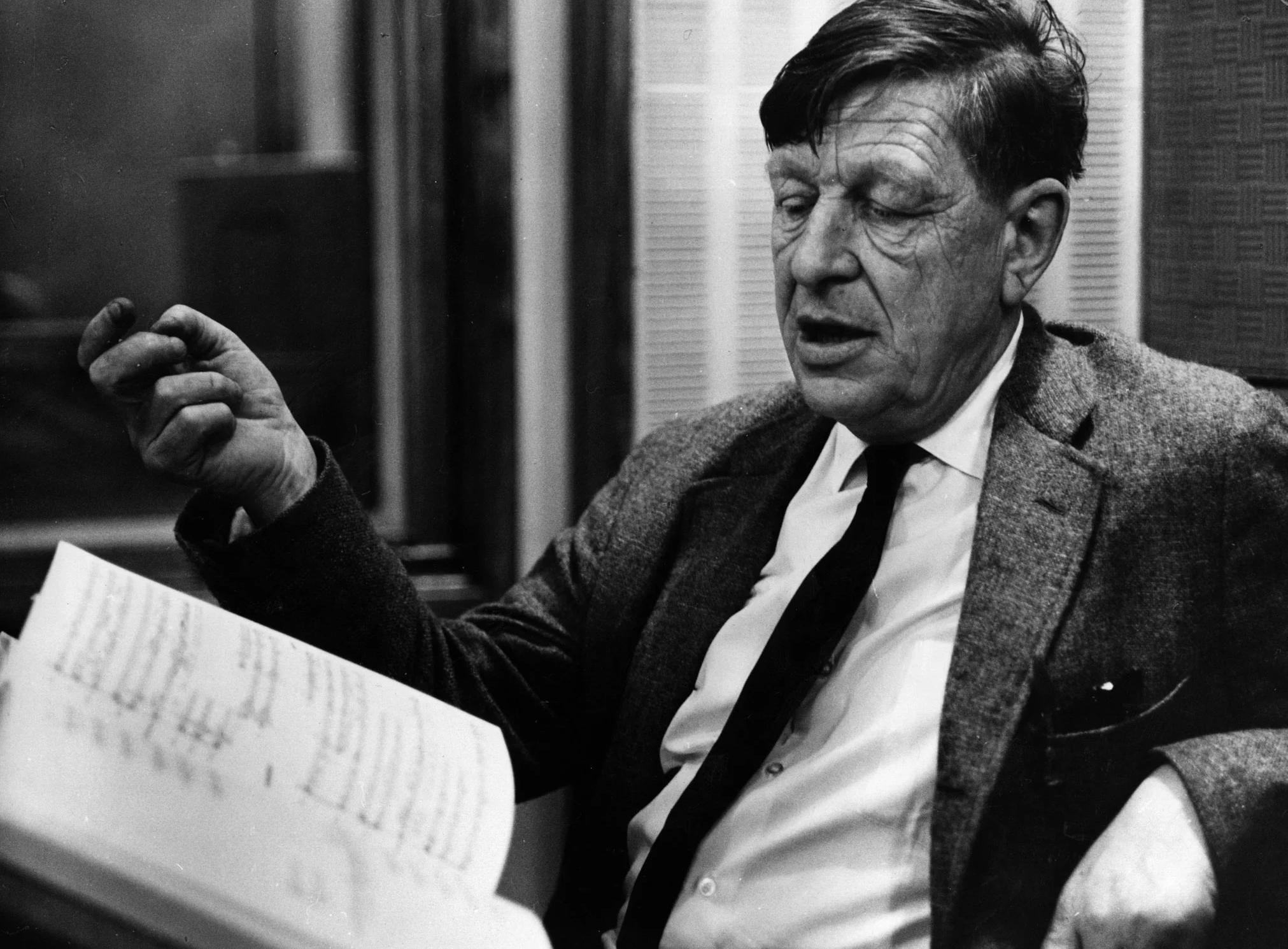
Christopher Isherwood noted Auden’s gravitation to “turn every play into a cross between grand opera and high mass.” Auden himself often drew comparisons between the development of his faith in the 1930s and theatre, describing his first mystical experience as leaving him “behaving like a ham actor in a Strindberg play.” The changing international political climate throughout the 1930s shifted Auden’s focus from left-wing politics to faith, culminating in his departure from England and enrollment in an Episcopalian church on the West Coast. Seeking the counsel of Charles Williams, he turned to existentialist theology, focusing on Kierkegaard and Tillich, marking a shift from the poet to the preacher.
Published in 1944, few of his poems represented this shift greater than For the Time Being. The title draws upon Tillich’s notion of Kairos, denoting the “appointed time”, which directly contradicts Kronos, “the ticking time”. In Interpretation of History (1936), Tillich distinguishes between the two concepts of time, arguing that time should not just represent the “mere duration”, reflected through Kronos, but should represent a transcendental moment which approaches us as “fate and decision.”
In this moment, ‘fate’ means the unaltering moment, one which cannot be wethered but must rather be responded to through the use of decisive reason, representing ‘decision’. In a debate with Barth, Tillich detailed one’s responsibility to draw “anew the eternal meaning of all time from its life and its words”, relating the concept of time to his method of correlation. It is through this moment of decision that Auden related his poem to his wider theology, drawing on Kierkegaardian notions of faith.
Auden captures the Tillichian notion of time throughout the poem, creating a sharp contrast between the present reality and eternity. Auden, by utilising the still time after Advent, can convey a sense of something new. The Narrator provides an alternative to Kronos, shifting the temporal to the eternal, by recognising that “nothing can save us” seems possible, and to achieve salvation, one must “demand a miracle.”
ture, combining “the mystery of true divine nature and true human nature in one person” (Torrance, 2009), meaning that we can only recognise the incarnation in wonder, meeting this with adoration and praise. Auden, throughout For the Time Being, deals with the Herculean struggle associated with incarnation theology through the anxiety associated with the temporal manifestation of the divine.
“Isherwood with Day-Lewis and Spender in Venice (1945)
“How could the Eternal do a temporal act, the infinite become a finite fact?” asks Auden near the conclusion of the poem, attempting to make sense of the paradox of the incarnation. The creator was able to become the crea-
By utilising contemporary scenes of daily life, Auden can relate the divine to the daily, helping one to understand the nature of the miracle. This is embodied in the following scene, where Joseph contemplates the authenticity of Mary’s claim.
All I ask is one
Important and elegant proof
That what my Love had done
Was really at your will
And that your will is Love.
GABRIEL
No, you must believe; Be silent, and sit still.
JOSEPH
W.H AUDEN
CHRISTOPHER ISHERWOOD
getic theological structure. Humans can distinguish the Biblical message through the use of philosophy, poetry, drama and psychology. Philosophical questions and their theological answers do not exist in a vacuum; rather, they are shaped by the milieu in which they are found. Humans should use cultural means, such as poetry, to instigate a “divine-human encounter” (Brunner, 1943).
The consistent presence of clocks showcases Auden’s attempt to answer the question of how the eternal commits a temporal act. In-
By approaching the nativity scene in this way, Auden relates Joseph’s approach to Kairos to the modern reader, helping one understand his use of the moment. Combining this with the wider form of the poem, one can begin to compute the significance of the eternal doing a finite act for the benefit of man. By doing so, Auden has used art in a symbolic form to present faith to the 20th-century reader, drawing upon the instruction of Tillich. In Systematic Theology (1951), Tillich argues for a reinvigoration of the eternal meaning of all time through the life and words of the time. Writing in response to the rise of atheism and secularisation, he argues for a method of correlation. There are certain existential questions of theology which can be answered through the use of an apolo-
fluenced by Niehbuhr and Williams, Auden viewed the incarnation to be the central event in Christianity, arguing that it was the most important theological moment in history. The clocks in the poem allow for Auden to look “upon Incarnation as an answer to the problem, not of the finiteness [temporal existence] of man but of his sin, not his involvement in the flux of nature, but his abortive effort to escape the flux” (M.S Pandey, 1998).
The existential anxiety which arises when one tries to reason with Kairos is explored further by Auden in The Age of Anxiety (1945). Set in a bar in New York City, Auden portrays Kierkegaardian notions of dread through four individuals, each representing one of Jung’s archetypal faculties. The “sufferers by fate” are tempted into demonic defiance, a concept borrowed from Tillich, and must overcome their vices to recognise the importance of seizing the moment. Quant, the nihilist who symbolises demonic defiance, describes the recognition of the value of the moment as: Yet this is a theatre where
thought becomes acts
And beside a sundial, in the silent umbrage
Of some dark daedal,
The ruined rebel is recreated and chooses a chosen self.
The desire to
Drawing on the distinction between Cronus and Kairus, the characters symbolise the way in which humans can get lost in the temporal, distracted from development of faith and the furthering of one’s relationship with God. To emulate the Kairus, humans should be able to defy the human condition and make the decision to focus on more substantial methods of faith, taking the leap of faith. Every person “at every moment must choose of his own free will one of an infinite number of possibilities which he forsees”, which Auden identifies as the concept of anxiety associated with commiting to Kairus. In his view, individuals must use this anxiety to remain skeptical of the human condition but should respond to faith willingly and accept God’s ability to always be in the right compared to humans.
Through Auden’s poetry, one is able to demonstrate Tillich’s method of correlation, using art to provide the theological
answer to philosophical questions. By centring the poem around what seemed to be an impossible event, the incarnation, Auden is able to raise the question of “How could the eternal do a temporal act, the infinite become a finite fact?”
By setting the nativity in the contemporary setting, Auden is able to utilise Tillich’s notion of the transcendental questions which remain consistent throughout the development of Christianity.
- Charlotte Clee
The Bishop’s Wife (1947)
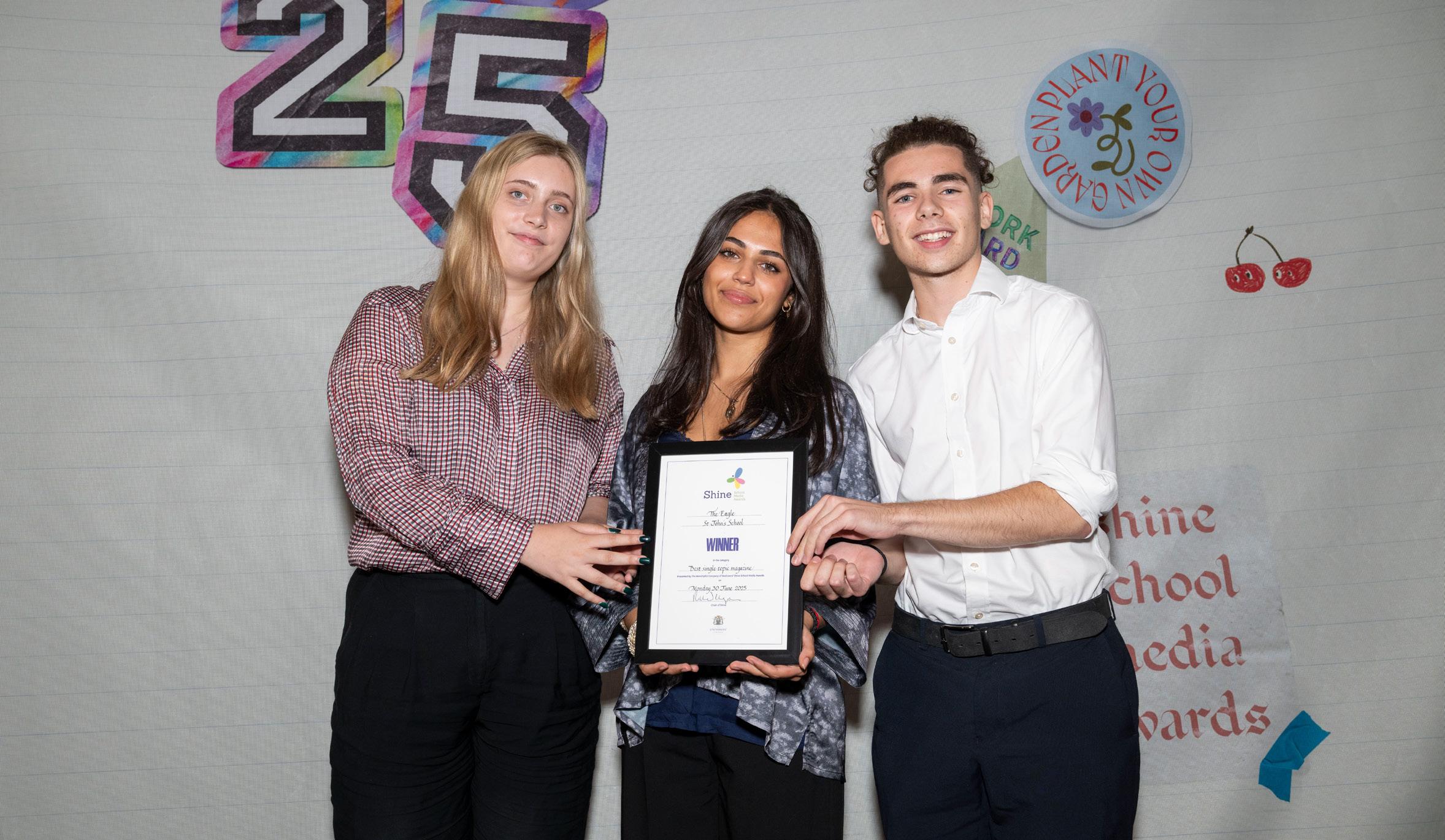
Shine Media Awards 2025
Winners of 4 awards:
- Best Single Topic Magazine - “The Eagle is an outstanding chool magazine that bravely takes the topic of politics as its sole theme and rises to the challenge of making it fascinating, fun and engaging. From the brilliant art direction to the attention-grabbing content, this is a magazine to be proud of.”
- Best Design - “The Eagle is a standout winner in a highly competitive year, thanks to its wildly original and envelope-pushing design”
- Best Illustration -Drawing titled: ‘(Vice) President’
“It really conveys the content of the article and looks like a professional illustration.”
HIGHLY COMMENDED: The Terry Mansfield CBE award for tomorrow’s talent – Bella Coombes.