THE EAGLE


The Rise Of Trump:The Second Coming :The Grey Blur:Extremist Parties:
Latin America:Chinese Marxism:
Texas Vs State:
Guantamano:
Israel and Palestine: -


Oscar Romero:Euthanasia:
UFOs or UFOEs:Generative AI:The Rise of Disposable Vapes
Israel and Palestine:The Prison System:Is it time for D.E.I to D.I.E?
DID Representation:Knife crime:Violence in MediaIn Memoriam and celebrations of Women’s history monthConversation with an RAF Intelligence officer
2024 is a big year for worldwide politics, we have at least 60 upcoming elections, with arguably the most important ones including the UK and USA, for both of us editors. Dissatisfaction, confusion, and eagerness are just three words to easily describe the current emotions which we endure, as society is slowly counting down the days for the results of each outcome.
For the first Eagle of 2024, our articles come from a wide range of opinions and a mixture of year groups, ranging from U3rd to U6th. This magazine covers topics from the discussion over Euthanasia to Trump and his possible second term, (which is not unlikely). Our writers have dedicated their time to writing about what they believe in and use the magazine to get their voices heard, many people would not have even thought about bringing up the conspiracy behind Area 51.
Our cover photo for this edition is a painting of Donald Trump, created by editor Tilly Hunt, this image reflects the high quantity of Trump-related articles that we have received, and the devil’s tail/ halo is a statement of society either love or hatred towards the former president.
The Eagle aims to inspire others and take notice of the political opinions of those around, so if you have a spare moment of your time, why not flip open a page to have a read?
Reuben Costard
Asmany people are aware, President Donald Trump will be running for the 2024 election in November. People always have differing views but why are people so tense about the elections? Why are people so concerned? Should we be wary of Trump? This article will answer common questions about the election and uncover the truth behind the controversial 2024 USA elections. The USA is currently (as many countries are) supplying money to Ukraine against Russia. The United States are also very active in attacking Houthi rebels in Yemen. But what does this mean for the elections? A lot. Donald Trump claimed he would - ‘End the war [in Ukraine] in 24 hours.’ if he became President. Sadly, many Ukrainians therefore fear that Trump would be anti-Ukraine and this very anti-Trump feeling in Ukraine. At the time of writing, the United States supplied 75 billion dollars to help Ukraine and if President Trump pulled American funding out of the Ukraine war, then this would have detrimental effects on Ukraine and could be a terrible turning point for the people of Ukraine. Donald Trump has strong plans to pull out of Nato. If Trump decides to pull out of Nato, then it will cripple an alliance that was created for stability and structure. This means that if Trump goes ahead with his plans to ‘end the war in 24 hours’ he would be able to make decisions in war without being restricted by Nato alliances. This could potentially be catastrophic. One article of Nato states that an armed attack against the European and American alliance is considered an attack against them all. This is a civilised way of having allies.

If Trump were to pull out of NATO, it is unlikely t that countries would want to support him if he went ahead with his Ukraine-Russia plan. Also, if the Israel-Gaza war were to escalate, the USA would struggle to find close allies if they pulled out of NATO which could be harmful. Trump’s referring to ending the war in Ukraine could have been a reference to his NATO plans for America. However, could be argued that Trump claiming that he could ‘End the war in 24 hours’ is a pack of lies and that he only claimed this unrealistic statement to aid his political campaign.
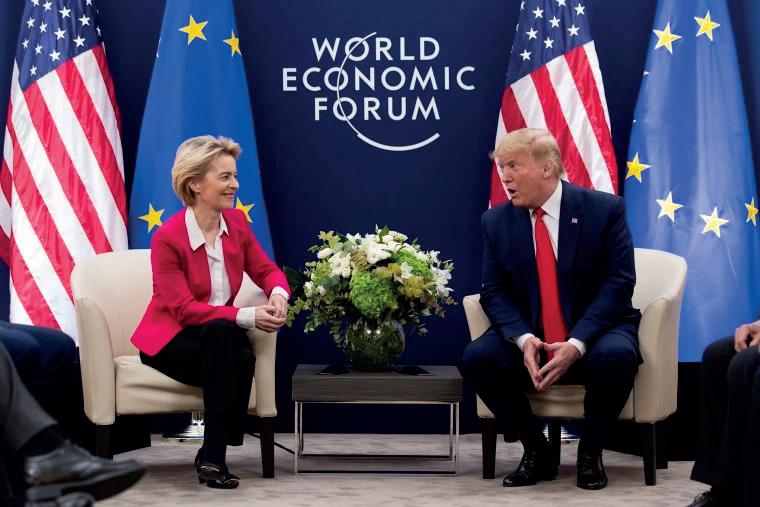
But Donald Trump’s questionable war statements are not the only thing people are concerned about. Many people have questioned the legalities of the 2020 election and fear that Trump may plot to commit actions that are illegal in his fight for power in the election of 2024. Recently, Donald Trump has been indicted four times but also has trials to come, including the legalities of the 2020 election and the Capitol riot. But Trump has also been charged with 40 criminal offences over the incorrect handling of classified documents. So why are Americans voting for him? Because he is radical and wealthy. He operates on a different wavelength to the majority (if not all) of America. His business success and net worth of 2.5 billion US dollars are highly appealing. Trump is motivated by power, wealth and fame; Trump’s main desires are for himself. the American people seem to love the idea of a person not driven for the community but for power, money and prestige. So, how and why does this concern Europe?
Well, having shown constantly that Trump has many radical ideas, Europeans are concerned because Trump has shown himself to be impulsive, a liar and highly confused about the reality of the situation that he is dealing with. Often Trump has shown that he is blinded by his desires for political gain. His lack of involvement with community affairs means that Donald Trump will seriously lack social awareness if chosen as president. His decisions will be based only on things that affect his political status or that will financially benefit him – as proven towards the end of his first term in office and the Capitol riot. Some Europeans fear his self-obsessed nature could potentially be fatal to them. However, many American people see that this is a positive because he is so economically obsessed.
To conclude, there are many reasons why many people fear the rise of Trump in Europe. His self-obsessed nature, his unpredictability, his radical statements regarding war situations and the many criminal offences he is defending are all questionable. Nonetheless, the American people seem to love Trump because of his radical thinking and constant drive for more money and power. Understandably, there is concern and questioning in Europe, but only time can tell who will win the election and whether their concerns were justified.






“You need to understand that if Europe is under attack we will never come to help you and to support you.”
- Donald Trump in conversation to Ursula Von Der Leyen at Davos 2020
Charlotte Clee
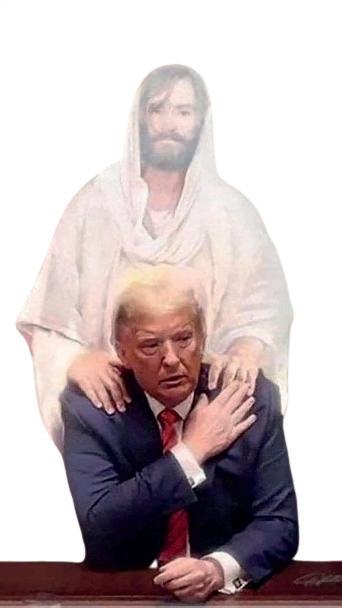
On January 7th, Donald J. Trump shared a campaign ad to his Truth Social account entitled “God Made Trump”. The video paints a messianic image of Trump, claiming that “on June 14, 1946, God looked down on his planned paradise and said, ‘I need a caretaker.’ So God gave us Trump.” This image of Trump as God’s saviour has been a common motif throughout his time in politics. In 2020, following senate debates on the closure of churches during COVID-19, Eric Trump claimed that his father had “saved Christianity” by his decision to reopen churches. Insurrectionists and devoted Trump supporters have used the persecution of Trump following the 2020 election as an echoing of the trials, such as the Sanhedrin, that Jesus Christ underwent back in 33AD. Trump shared a court sketch of himself and Jesus to Truth Social last October reflecting on their shared experiences of being on trial.
Robert Jeffress, an evangelical pastor from Dallas and ardent Trump supporter, claims that “Christians feel like they are in an existential cultural war between good and evil, and they want a warrior like Donald Trump who can win.” Mike Leake, a pastor in a Missouri Baptist Church, has claimed that Christian support for Trump only increases as he becomes more and more criticised by the socalled ‘left-wing hegemonic elite’.
Nonetheless, Trump’s Christianity seems to create a sense of distaste in the mouths of many fellow Christians. Trump’s attitudes directly mock the dedication and commitments which fundamentally underpin the Christian dogma. When asked in 2015 what his favourite book of all time was, Trump responded “The Bible, nothing beats the Bible.” Yet when this answer was followed up with a question about his favourite passage, Trump claimed he wouldn’t want to get into the specifics. His attempts at showing his adoration for the scripture were shattered even further when he was asked whether he preferred the New or the Old Testament to which he responded “Probably equal. I think it’s just incredible.”

In another instance, Trump tried to put money into the communion plate during a service in Iowa – despite having made previous claims to have frequented Eucharistic services.
During his previous campaigns, Trump used the Bible and Christian places of worship as props in a publicity campaign to attract the Christian masses. The Right Rev Mariann Budde, the Episcopal Bishop of Washington, responded to one of her churches being utilised by Trump to gain Christian support by stating that “the president just used a Bible, the most sacred text of Judeo-Christian tradition, and the churches of my diocese, without permission, as a backdrop for a message antithetical to the teachings of Jesus.” Budde raises the point of Trump as the antithesis of Jesus Christ. Much of Trump’s political ideology directly contradicts the teachings of the Saviour and the edifice of Christianity.
The first policy issue I’d like to explore is immigration. Trump’s “I’m going to build a wall” has become synonymous with his campaign. Trump warned the people of Syria that if he were to win “they’re going back” and issued Executive Order 13769 which promised to suspend immigration from “terror-prone regions.” Yet, if we look at the teachings of Jesus Christ, we can see a direct contradiction to these policies. In the parable of the Sheep and the goats, Jesus explains the course of judgement and how those who prioritise others will earn eternal life. Jesus explains that those who fail to help others will be sent “into the eternal fire prepared for the devil and his angels… love thy neighbour.
tsacrifice be held in such high regard by so many American Christianity?
I was a stranger, and you did not invite me in.” (Matthew 25:31-46). Jesus showed in this parable how one should care for their foreign neighbours to reach eternal salvation. Yet, the policies of Trump directly contradict this. Trump fails at the truest and most important ten commandment – to love thy neighbour.
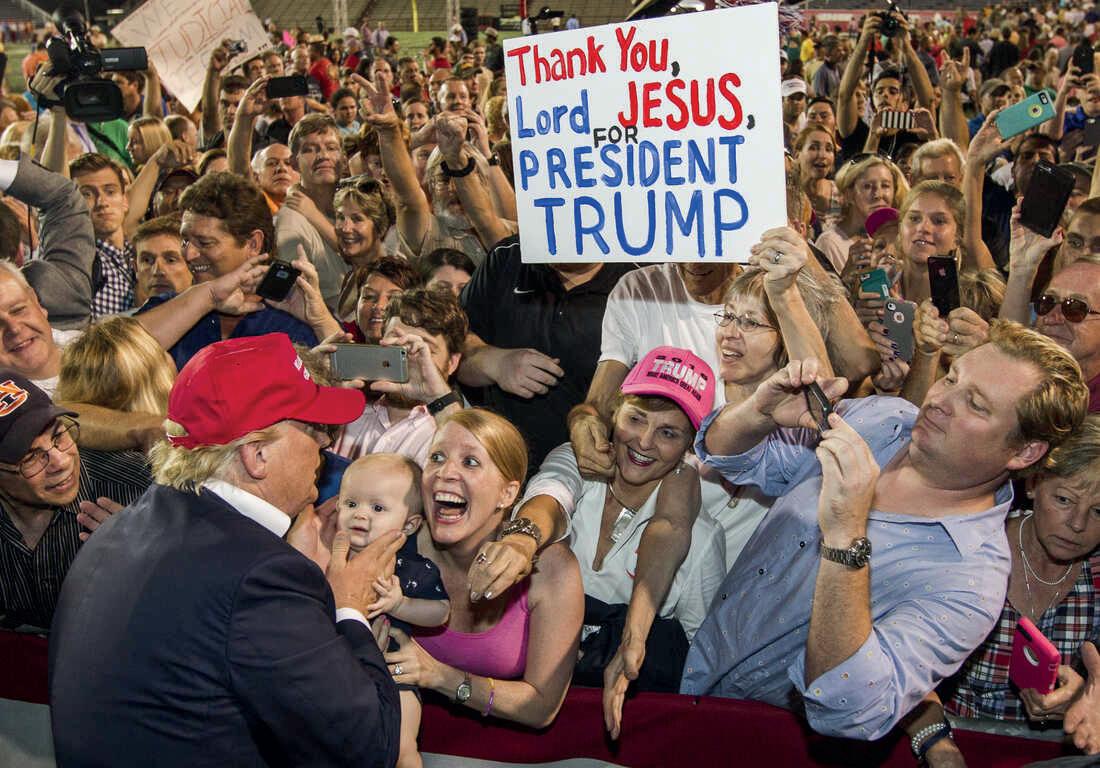
Trump has broken most of the Ten Commandments. He’s obliterated almost each one of the Beatitudes which Jesus preached in the Sermon on the Mount. The third beatitude states that “blessed are the meek, for they shall inherit the earth” yet Trump promotes narcissistic and hedonistic values directly contradicting this message. Trump once said, “Show me someone without an ego, and I’ll show you a loser”. The fifth Beatitude, “Blessed are the merciful, for they shall obtain mercy”, is another one completely disregarded by the socalled Christian hero who once said that “Torture works…would I approve of waterboarding? You bet your ass I would.”
Of course, one cannot be expected to uphold every single teaching of Jesus for we are fallible humans we make mistakes. Yet that is what repentance is for. However, Trump once begged the question “Why do I have to repent? Why do I have to ask for forgiveness?” and claimed to not be able to remember a time he has ever asked for forgiveness from God. How can someone with this much disregard for Christian tradition and Jesus’ sacrifice be held in such high regard by so many American Christianity?
20th Century theologian Dietrich Bonhoeffer explored in his work The Cost Of Discipleship the importance of faith and sacrifice to Jesus. In The Cost of Discipleship, Bonhoeffer explores the concept of faith through his idea of cheap grace as a juxtaposition to costly grace. Bonhoeffer identifies cheap grace as “the deadly enemy of the church” which is “without discipleship, grace without the cross, grace without Jesus Christ, living and incarnate.” To distinguish oneself from cheap grace and costly grace, which Bonhoeffer describes as “costly because it costs a man his life”, one must be able to follow Jesus Christ and the word of God with obedience. I believe that the difference between the two must be best understood through John 3:16, “For God so loved the world that he gave his one and only Son, that whoever believes in him shall not perish but have eternal life.” This verse best emulates the commitment and sacrifice a Christian Disciple must make to reach costly grace. Cheap grace is grace which fails to recognise the sacrifice described in John 3.16 which God made.
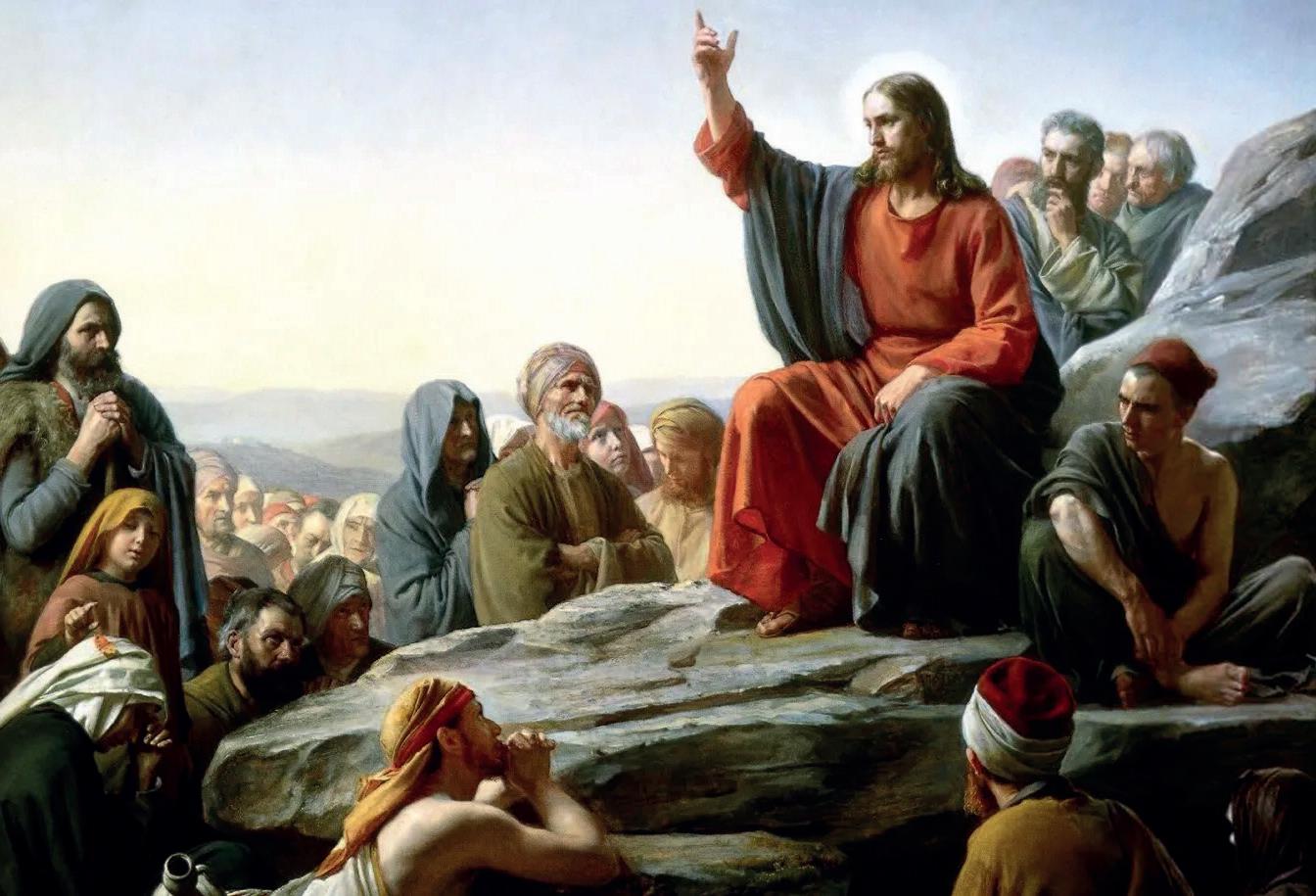
Grace ignores the crucifixion of Christ and the failure to emulate God’s will. In a similar vein to how Augustine hopes for the bridging of epistemic distance, Bonhoeffer advocates for sacrifice from Christians who regard themselves as disciples. Grace needs to be costly because it cost God his one and only son, Jesus Christ. Christians should be willing to make grace cost their lives. Sacrifice like that which Abraham was willing to make. Therefore, a true disciple of Christ is expected to make sacrifices which cost their life. Donald Trump’s Christian attitudes fall into this trap of cheap grace.
Finally, I would like to look at the comparison of Trump’s trial following the insurrection and the messiah narrative surrounding it. I believe that to understand the antithetical nature of this we must look at the Easter story. The Easter story begins with Jesus walking in the desert for 40 days and 40 nights whilst simultaneously being tempted by Satan. In Luke 4:1-13, Satan tempts Jesus with authority over all of the world to which Jesus responds with “Worship the Lord your God and serve him only.”
Yet, Trump continuously used the insurrection to attempt to gain power that directly contradicts this. Trump is accused of using hush money to change the election outcome but yet when his socalled ‘hero’ Jesus Christ faced such temptations he resisted. At the arrest of Jesus Christ, one of his disciples tried to respond with violence to the guards to which Jesus responded, “All who take the sword will die by the sword.” (Matthew 26, 26:52). Yet on January 6th, 2021, Trump encouraged those at his rally to “fight like hell, and if you don’t fight like hell, you’re not going to have a country anymore.” Therefore, Trump’s trial completely differs from the seven trials of Jesus Christ in 33AD and the comparisons made by himself and his supporters claiming that they echo one another are complete blasphemous miscalculations.
To summarise my article, German theolgian Paul Tilich summed to the sensation of politicians, such as Trump, who use religion as a basis for their political personas and campaign, as: “Politicans, dictators, and other people who wish to use rhetoric to make an impression on their audience like to use the word God in this sense. It produces the feeling in their listeners that the speaker is serious and morally trustworthy.”
Finn Haldane
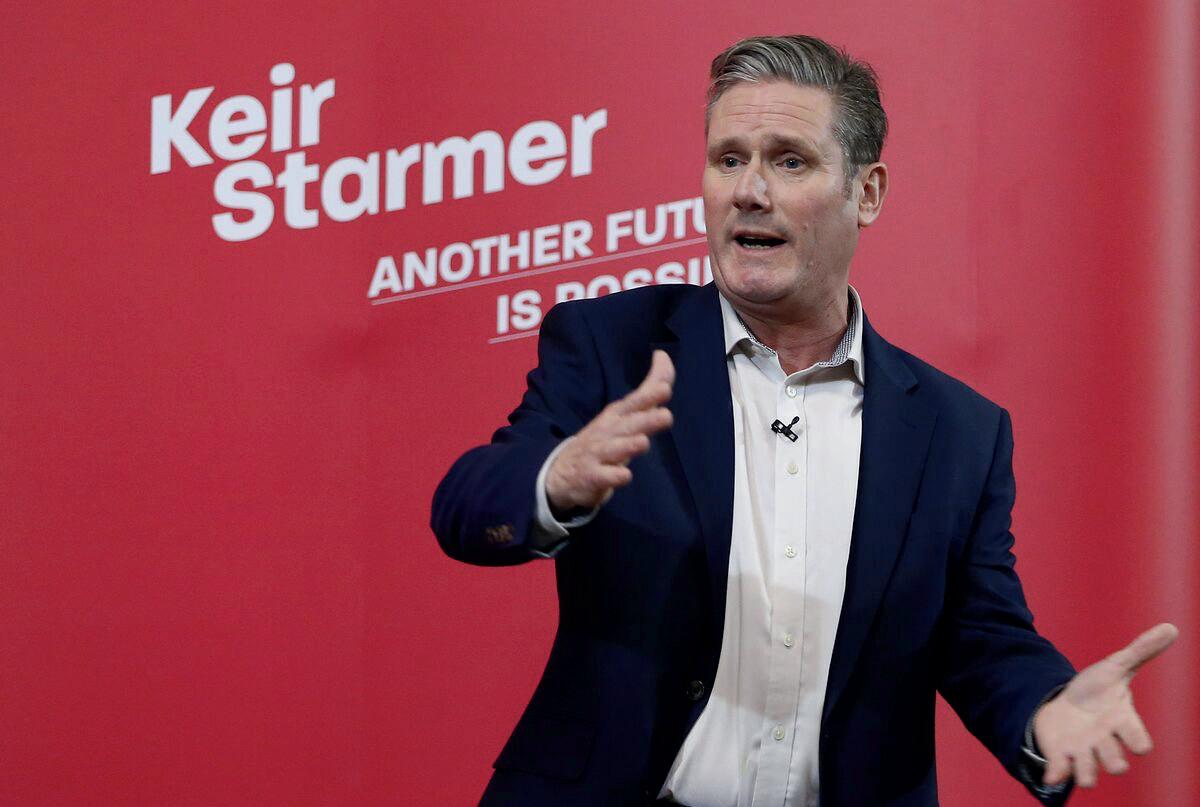
‘Is this the same man that two weeks ago told the Daily Telegraph: “I am and always have been a Conservative to the core of my being”, then one week ago he’s the heir to New Labour, and today he’s a liberal conservative – no wonder he’s against identity cards,’ were the now infamous words of Tony Blair as he addressed the then new Conservative party leader David Cameron in 2005. In the midst of a crisis of identity for the Conservative party they (and their leadership) had dissolved into disarray, desperate to rid themselves of their own party chairwoman’s label of the ‘nasty party’ under the leaderships of Ian Duncan Smith and Michael Howard, yet in doing so Cameron found himself unable to define what his party – and perhaps more prevalently he - would truly stand for. It is indeed a situation similar to that in which the current Labour leader and, for all intents and purposes, de facto Prime Minister finds himself in (and accounting more wholly the next Conservative leader). It would be apparent that the road has been paved, lined, and polished for Keir at the next election: the Tories are polling at their lowest rates since 2001, the party is catastrophically divided between the bluewall, economically stable moderates and the soon to be Farage-Braverman, anti-immigration wing, which appears to be only growing in its legitimacy within the party.
Perhaps arguably Keir has already done the hardest part of the unenviable task which he inherited: uniting the party. Setting aside my personal penchant for Corbyn, it is clear that the public were not so charmed by either him or his manifesto, Labour were – by any relevant metric – unelectable under Corbyn in 2019. Praise and little else can be attributed to Starmer for his role in the first two years of leadership, he de-toxified the party, restoring links with Jewish communities which had not just been lost but entirely severed under the previous headship, held strong on matters of the climate, and kept the genuine left and the centre-left at harmony through his equity within the shadow cabinet.
Originally his concept of Labour being the ‘repairers of Britain’ struck a chord with the public that had been untapped in the past decade, they saw finally a restorative sense of sensibility in a candidate and thus amongst a crazed political backdrop his calming and simplistic demeanour polled exceedingly. Much of this rebuild proved a great success in his first two
years, but, frankly, in the last two many such successes have rapidly become his most glaring failures.
Amid what appears now finally to be election season, the spotlight has been focused far more on the heir apparent to the Prime Ministerial throne and, as highlighted in Laura Kuenssberg’s grilling of the three main parties’ leader’s back in October, it is at least clear what Rishi Sunak and Ed Davey stand for. This interview transpired even at a time when Labour’s last few headlining policies remained on the table, Starmer has now backtracked on tuition fees, bankers’ bonuses, North Sea oil and gas, ‘GB energy’, common ownership, tax reform, and indeed the one commitment he has made has been to a watering down of their revolutionary £28 billion plan for a green economy. Starmer recently described this as a ’bullet-proofing’ of their manifesto, a way to guarantee not just victory but a landslide in the autumn.
Really? Is abandoning your main support base by promising to channel Thatcher and ‘unlock our natural entrepreneurship’ a guarantee? Is bending the knee to exploitative energy companies a surefire way of securing electoral victory? In 2024 perhaps, but beyond? It appears, with every abandoned pledge, increasingly unlikely. Faults here are transparent and numerous and seemingly increasing by the week, but can all blame truly be asserted unto Starmer? The role of shadow Chancellor Rachel Reeves, a woman who would surely under any other administration find herself a Conservative Chancellor, has been a vitality in this abdication of duty. Starmer though was the one who put her there. As so it was he who removed Lisa Nandy from her senior
shadow cabinet role to one of futility, his one serious contender for future party leadership. This incident, regrettably, has not been one of isolation but a consistent trend with Keir and his reshuffles, his senior shadow cabinet is now made up of an army of ‘nodders’, representative of only the centrist, moderate, stay-the-course, wing of the party as he has sidelined or simply got rid of those who have sought to challenge his thinking from the left.
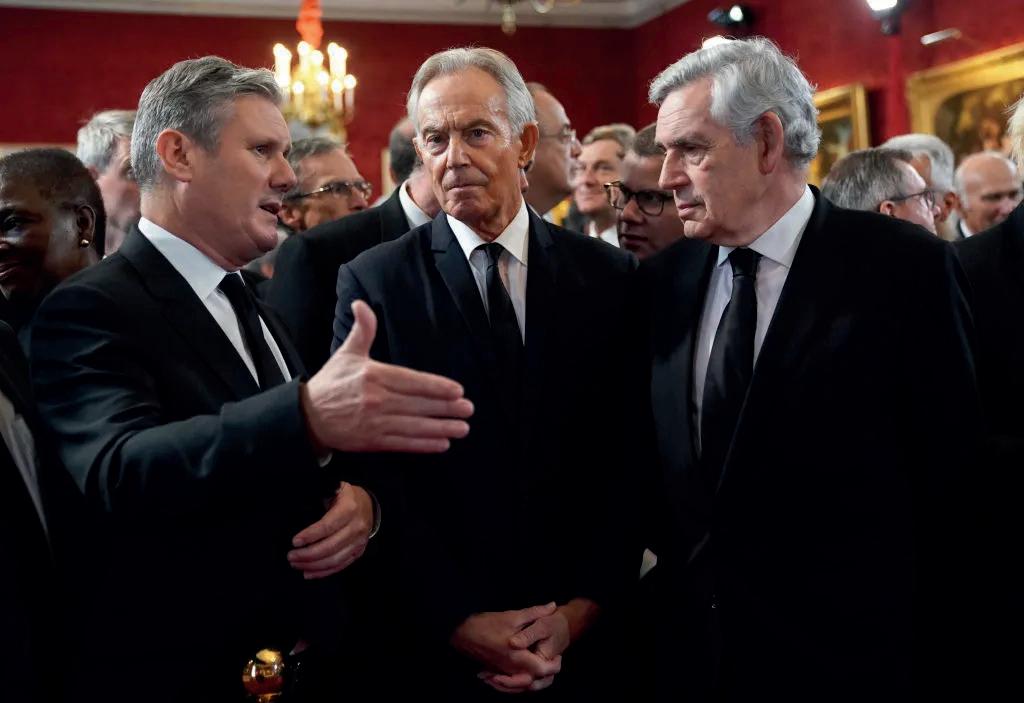
It is evident that he models himself on Blair, the great unifier (in his eyes), yet Blair was not so short-sighted, he didn’t leave himself in such vulnerability as to build an entirely one-dimensional shadow cabinet. He championed the union and working-class backgrounds of Prescott and Milburn as his gateways into effective policy making for the working-class. Sure, Blair was far more a centrist than he was anything otherwise, but he characterised himself in such a way that he seemed the more inspired and unique politician than was truly the case. One of his great attributes was his ability to conceptualise the Britain he lived in far more effectively than his present successor, he rode the now admittedly unfashionable waves of Britpop and ‘cool Britannia’ and in doing so transcended the often apathetic and mundane light in which we view our political figures in the U.K. A more diametric contrast it is difficult to imagine, Starmer is – and has done nothing to rectify or halt – the image of the commonplace bureaucrat, it is perhaps fitting that in a poll of what the British people though of potential Prime Ministerial candidates the phrase most associated with Keir Starmer was ‘don’t know.’
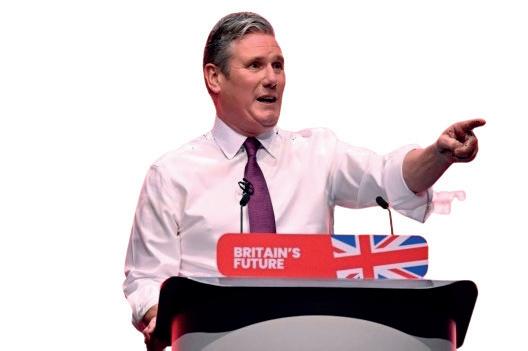
and mild-mannered approach fails, or even lacks in sufficient change for the British public, he has nowhere to turn, no card up his sleeve. The argument that he is merely playing the Biden role by presenting himself as the sensible candidate in an increasingly unintelligible political landscape, before unleashing a wave of untested and radical policies in his first six months is frankly baffling. In a country that is barrelling, with alarming speed, towards similarity with the United States it must be noted that Biden’s tactics clearly have not transpired as he may have hoped: he looks set on becoming a soon-forgotten one-term president, a hazard Starmer seems to be more than content with tripping over. With an election all but set for November, it is vital that someone remind Keir, a week is a long time in politics, but 5 years… be ready.
execute with some foresight. Whether he likes it or not Labour are not the election winners of the last
governments in the time Labour have won 6, thus,
but under self-condemned danger, if his moderate
The likelihood of any of this being an issue come the election later this year is, admittedly, minute, but if Starmer is serious about enacting change (as it’s certain that this much is a necessity) he must execute with some foresight. Whether he likes it or not Labour are not the election winners of the last century, the Conservatives have achieved 11 majority governments in the time Labour have won 6, thus, Starmer is not just susceptible at the next election but under self-condemned danger, if his moderate
Alexander Harley
As elections grow nearer all over the world, the same debate arises about whether banning political parties with extremist views infringes on an electorate’s freedom. This article will explore the issues and potential benefits of banning political parties.
On one hand, protecting the democratic process is crucial to maintaining a healthy political environment. On the other hand, the rise of extremist ideologies poses a threat to a mostly capitalist and democratic Europe. We are currently seeing the rise of extremist ideologies in major countries all over Europe: In Italy, under Giorgia Meloni, the rise of the Alternative party of Germany, and the recent success of Geert Wilders in the Netherlands House of Representatives. In the United Kingdom, discussions surrounding the potential banning of political parties with extremist views have raised concerns over the balance between protecting democratic values and ensuring the safety and well-being of the electorate.
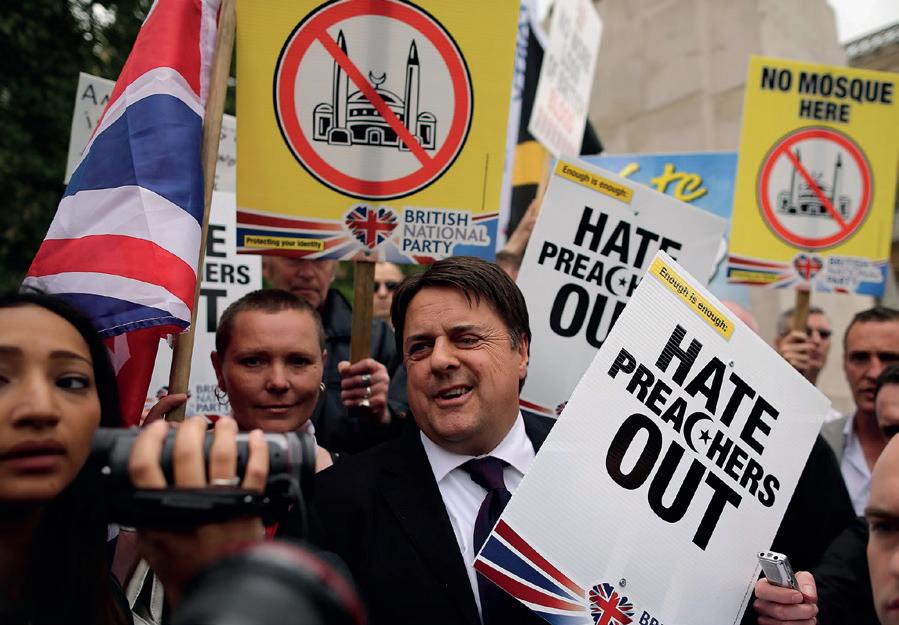
Some argue that banning political parties with extremist views is a necessary measure to protect national security and protect citizens from views and potential actions posed by radical ideologies. These parties promote violence, and discrimination, or pose a direct threat to the safety of the electorate. For example, Geert Wilders, who recently won a dramatic victory in the Dutch general election, is openly Islamophobic. In the UK, the Electoral Commission deregistered the BNP (who stand for reversing Islamisation and stopping all immigration) as a political party. The EDL (English Defence League) is well known for its xenophobic rhetoric and hold similar views to the BNP regarding migration. If these parties were allowed to participate in elections, it risks normalising these harmful ideologies and could encourage other extremist groups. These extremist groups often advocate for suppression of people’s freedom, and therefore completely undermine democracy. Some argue that Banning these parties is a necessary step to maintain our democratic institutions.
However, opposition to banning extremist political parties argue that restricting the electorate to voting for certain political parties contradicts the very essence of democracy – the voter’s right to freedom of speech and expression. They argue that a diverse political spectrum across parties, even one that includes extremist views, is required for a strong democratic nation. They also argue that allowing
extremist parties to participate in elections provides an opportunity for open debate, thereby educating citizens with appropriate knowledge to make informed decisions. The electorate should not live in a ‘Nanny state’, and they are entitled to free discussion. Many argue we should trust the intelligence of the electorate not to support these extremist views, and therefore should not limit the voting choice by banning extremist parties .
There are several examples of where governments have chosen to ban extremist parties. In 1923, under the Weimar Republic, Germany experienced extreme hyperinflation. This led to the rise of extremist groups, most notably the NSDAP, within the German political landscape. Many believe that economic decline and recession provided a platform for extremist views, due to discontent amongst a struggling voter population. In response, the German government, in 1949, allowed the banning of political parties that threatened democracy in Germany. The USA, on the other hand, takes a less restrictive approach – the First Amendment almost entirely protects political parties from being banned, as banning these parties could arguably violate their right to free speech. Therefore, in the US, it would be extremely difficult for a court to ban a political party from election participation. The question of whether it infringes on an electorate’s freedom to ban political parties with extremist views is a complex issue. Striking the right balance between protecting national security and maintaining democratic values is easier said than done. It is important to protect the electorate from these harmful ideologies, even if it comes at the expense of our democratic freedoms, and so, I believe the UK government, and all European governments for that matter, should ban all extremist parties from elections.
Mylo Cacouris
One of the defining moments in my life was moving to Rio De Janeiro in Brazil when I was eight years old. After settling into our new apartment, we hired an empregada (cleaner), a lovely lady called Marlene who lived in a favela community (informal settlement or slum) north of the city. When the 2018 Brazilian election came around, we asked Marlene who she was going to be voting for. To our surprise, she told us that she was going to vote for Jair Bolsonaro, the representative from the right-wing Social Liberal Party. I found this interesting, as I had assumed that the social safety nets promised by the Workers Party would be more attractive to the poorest people in Rio - those living in favelas and lacking in basic social services and with high levels of crime, violence, drug gangs and poverty - than the Social Liberal Party, which appeared to be predominantly supported by more affluent Brazilians. Upon asking Marlene, it became clearer why. A large part of Bolsonaro’s campaign in 2018 focused on his crackdown on gangs and crime, a prominent issue faced by favela residents. Even from our apartment, the gunshots were very audible and shootouts occurred regularly, tearing through the poorly constructed buildings. Some days, Marlene would not be able to travel to us from her home as a shoot-out had been happening all night and she was fearful to even leave her building. To Marlene, living in a safer environment without the fear of gang violence was much more compelling than the social and educational reforms that the Workers Party were offering. These promises gained the support of both the upper and working-class Brazilians and ultimately led to Bolsonaro’s win in 2018, commencing an interesting lean towards the right wing in Latin America.
Latin America has, however, long been dominated by left-wing political parties.

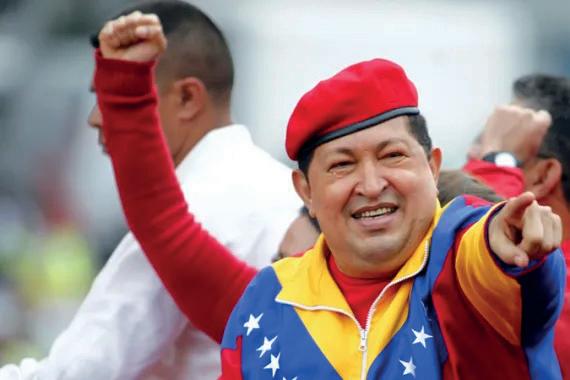
During a commodities boom in the late nineties and early 2000s, Hugo Chávez of Venezuela was elected into the presidency (1999), followed swiftly by Lula Da Silva of Brazil (2003) and Evo Morales of Bolivia (2006). The popularity of this ‘pink tide’ of leftist governments relied heavily on the commodities boom to enact their policies. A key example of this was the socialist Bolivarian government in Venezuela led by Hugo Chávez. His policies included nationalisation and social welfare programmes which resulted in high public expectations for economic growth and social services. Chávez’s social policies were emulated both by Lula Da Silva in Brazil through his ‘Zero Hunger’ programmes (2003) and by Evo Morales in Bolivia through his extensive education reforms (2007). However, as the prices of commodities lowered, the illustrious policies of these ‘pink tide’ governments began to become unsustainable.


Dilma Rousseff, the successor of the Brazilian presidency and a well-respected member of the left-wing budgetary laws and removed from office. President finally, Jair Bolsonaro was elected in 2018, providing
Chávez was the first to fall. In the late 2000s and early 2010s, the commodities boom began to recede and the lack of savings became painfully apparent. The Venezuelan citizens became more and more disillusioned as social programmes began to collapse and food shortages skyrocketed. As the people suffered, Chávez became increasingly authoritarian, perhaps as a final attempt to keep control of the country that once loved him. Following the death of Chávez in 2013, Venezuela was left without a clear leader as Nicolás Maduro did not have nearly the amount of influence as his predecessor. The situation continued to worsen and soon people were plunging into the Guaire River to fill containers with contaminated water. Venezuela was plunged into a crisis and it has still not recovered. Argentina, Brazil then Ecuador were quick to follow. In 2015, against a background of rising inflation and declining prices of exports, the leftwing Daniel Scioli was defeated by the centre-right Mauricio Macri in the general election. Shockingly, Dilma Rousseff, the successor of the Brazilian presidency and a well-respected member of the left-wing Workers’ Party was impeached in 2016 for breaking budgetary laws and removed from office. President Lenín Moreno, the former Vice-President of Ecuador, shifted his views rightward after he was elected and finally, Jair Bolsonaro was elected in 2018, providing Brazil with its most right-wing government since its twenty-year military dictatorship in the 1960s and
twenty-year military dictatorship in the 1960s and 80s.

be

right-wing governments in Latin America, but some pushed back against the trend. Over the next
This looked to be the beginning of a new wave of right-wing governments in Latin America, but some pushed back against the trend. Over the next five years, countries like Mexico,
Argentina, Peru, Chile, Honduras and Columbia saw the victory of left-wing leaders. Even Brazil followed suit with Lula returning to power in 2022 after a narrow victory against Bolsonaro. This may seem like a second ‘pink tide’ to some, but I would argue that the politics of Latin America is about to become far more complicated and far more rightward leaning than the ‘pink tide’ initially projected. By 2023, 12 of the 19 countries that make up Latin America were run by left-wing governments and represented an enormous 90% of the region’s GDP. However, due to the strength and success of the governments in power, Latin America seems to be prepared for a significantly more mixed political field.
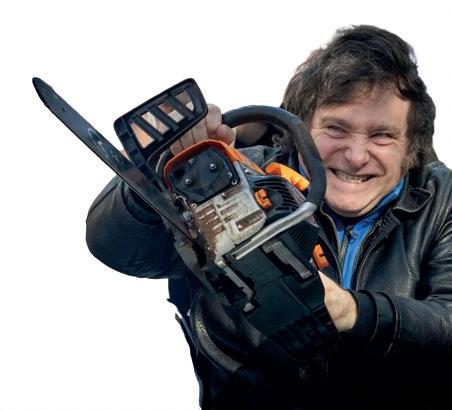
Salvadoran gang crackdown in 2022, crime rates in El Salvador have decreased to a record low below almost every other country in Latin America. Not only have these right-wing candidates skyrocketed in popularity recently, but the alternatives are not looking nearly as strong as they have in previous years. In Columbia, the government of Gustavo Petro is looking unlikely to last for more than one term, due to his unsuccessful tax, health and pension reforms. Similarly in Chile, Gabriel Boric, a social democrat, has seen his approval ratings drop because of rising crime and a weakening economy. He backed an unsuccessful attempt to change the constitution, and his presidency has ultimately been limited. So, despite the apparent resurgence of the left by the start of 2023, I believe it is clear that politics in the region is becoming far more complex than simply a ‘blue’ or ‘pink tide’. Instead, through both the strength of the governments in place and the weakness of the opposing candidates, the nation appears to be prepared for a continued rise of the right wing.
One of the key reasons for this is the meteoric rise, in Argentina, of Javier Milei. The self-described, ‘anarcho-capitalist’ made such an enormous impact on the country that even in the event of a loss, his ideas of a free market would still have upended the long-standing left-wing ideals of the Peronist movement. Milei’s victory made him the first openly libertarian President in South America, and his proposals were equally as radical, including ideas such as dollarising Argentina’s economy, slashing public spending and reducing government ministries from 18 to eight. Milei is a fascinating character due to both his extreme personality and his proposals. Impressively, he somehow managed to make free-market ideals popular in a country that was significantly socialist only 50 years prior. And Milei is not the only face of the right-wing in Latin America.
socialist only 50 years prior. And Milei is not the only face of Another extreme personality, Bukele took it upon
In 2019, El Salvador saw the victory of Nayib Bukele. Another extreme personality, Bukele took it upon himself to drastically decrease the crime rate in El Salvador, which at the time was one of the most dangerous countries in the world. Following his
dangerous countries in the world. Following his
Ewan Collingbourne
China is known for being a global leader in the world of production. Apple use them as a major part of their supply chain, along with Nike, Samsung, Sony and Adidas. This is because of their unbelievably cheap labour, often meaning that companies can reduce their costs massively and increase profit margins. There are also offers to increase productivity, as people earning a lower wage in these controlled economies will often be paid by unit produced, and so they will produce a higher output of goods. These factors work very well together in enticing companies to set up production and their supply chains in China. However, we must consider the true reasons for the low prices for labour within the country.
China is a world leader in its manufacturing output, but how does it manage this feat? The US Department of Labour’s 2020 list of goods produced by child labour or forced labour finds that China has had both child and forced labour in the production of bricks, cotton, fireworks, textiles, toys and electronics. Given that two of the top three exports of the Chinese economy includes computers ($192B) and integrated circuits ($158B), the fact that both forced, and child labour is used is deeply concerning. Furthermore, the fact that China is also the world’s biggest exporter of computers is reason to why many manufacturing plants will set up shop in China, but integrated circuits are used in modern mobile phones, and who reading can say they have never used a computer? The use of forced and child labour is a fundamental reason why costs in China can afford to get so low with their costs for manufacturing. Many companies will simply see the profit incentive in setting up within an economy with low average labour costs and will not think about why the costs are so low.
Even more so, the US Department of Labour also finds that China is a world leader in another area; The amount of goods produced through forced labour. China has a total of 18 goods that have been discovered to have been produced using forced labour. China also has the largest amount of goods produced through forced manufacturing of any nation in the world.
How does the Chinese economy give us a look at 21st century excuses for Marxism?
China has one of the highest percentages of workforce participation in manufacturing out of any country in the world, with 16.9%. This means that a considerable amount of their workforce will have lower paying jobs, and therefore will not live with exceptional comfort or happiness. Despite the incredibly low amount of poverty in China, this can be seen as merely an attempt to dissuade bad press from seeing China as a low-income country. It is harder to be seen as a developed nation with high poverty. Despite this, China can be seen as an unequal and oppressive structured economy. We can see that the GINI coefficient for China is considerably higher than that of the UK, being 0.467, whilst the UK has only 0.357. On this coefficient, a score of 1 is incredibly unequal. The UN also sets a warning level at 0.4.
Given this fact, we can see that there is a clear economic disadvantage within the Chinese economy. This means that there will be considerable wage slavery inherent within Chinese society, where workers cannot become skilled enough to move into higher paying jobs, and therefore have to work long shifts in arduous conditions in order to make enough to stay alive.
How can we read Marxism into this? Marx explicitly mentions the ideas of capitalist oppression of the working class. This is through the means of economic domination. We can see here that this is true, and Marx’s two class structure still stands strong in the working class of China. There are obvious bourgeois employers, and there are proletariat employees, and the separation of the two groups comes exclusively through economic alienation, and control of the economic power by the employers.
Furthermore, large companies coming into a nation in order to exploit the workers there because they charge a lower wage for their labour is the exact Marxist reading of a capitalist system. This is the exact definition of Marx’s ideas of economic exploitation, where the worker producing, and iPhone will never receive a fair cut of profits from the sale for the labour that was given to create it. Large companies like Apple moved their production to China for one reason, and that was to generate a larger profit margin, as can be seen with the graph.
We can see that after Apple moved their manufacturing to China post 2001, their revenue growth shot upwards. This is because whilst decreasing their costs, it gave them increased profits to expand their business manufacturing further within China, allowing them to access the cheap and forced labour in greater quantities, and bringing us further to the Marxist reality of the Capitalist System.
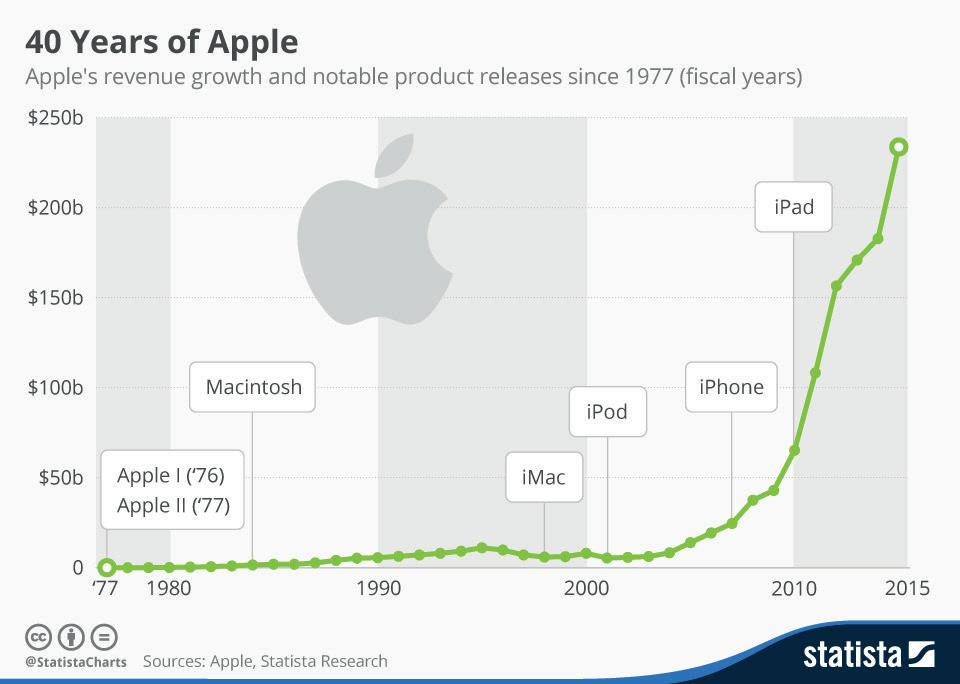
China’s success as a large-scale exporter has been exponential since 2001, as more companies have brought manufacturing to their shores since they joined the world trade organisation. This has allowed for large scale economic exploitation, as well as the cover up of the crimes committed by Chinese businesses, as larger companies put profits before people, and the Government is happy to assist them.
Alex Wilmer
One story I personally believe has gone under the radar recently follows the borderline civil war occurring in Texas in the USA. There is now a head-tohead battle between the State government of Texas and the Federal government of the United States. Governor Greg Abbott has effectively thrown down the gauntlet here and on Monday 22nd of January the Supreme Court, by a 5- 4 decision, decided that the border patrol which is inside the Department of Homeland Security which is under the Biden administration, was able to cut razor wire that had been placed by Texas officials at the border. This is one of the crossing points into Texas where a lot of migrants have been coming in and just this year 3 people have already drowned there. The place known as Eagle Pass is a public park but effectively border patrol has been shut out by Texas officials from accessing it. The Supreme Court has essentially said that border patrol can access this area and cut the razor wire to access this area. Government Abbots statement states Joe Biden has abandoned his responsibilities to the state of Texas and the State of Texas has the right to defend themselves so they will continue laying razor
wire and will continue impeding border patrol from accessing this area. Furthermore, following Abbott’s statement, he has invoked an act which will mobilise the Texas National Guard to protect itself.
The main concerns are this is what leads to civil wars and people are still waiting to see how this escalates. It has only been getting even more intense with governors from 25 republican states having released a joint statement supporting Texas’ decision to ignore the federal government to take matters into their own hands to protect their borders. Donald Trump has also commented on the situation, urging other states that support Texas to deploy their guards to the states and start removing those who entered illegally. Yet, there has not been an official response by the Biden administration which is to be expected as how they react to this needs to be carefully planned as things could go wrong very quickly leading to an escalated conflict. However, several Democrats have urged the President to take a tougher stance against Texas including people such as Congressman Greg Casar and Beto O’Rourke.
Things are still developing, and it will be interesting to see how Biden handles this situation. Will he take a firm stance and crack down on Texas which could potentially lead to conflict? Or will he back down which may lead some to question his capabilities as a President?
Natasha Khan
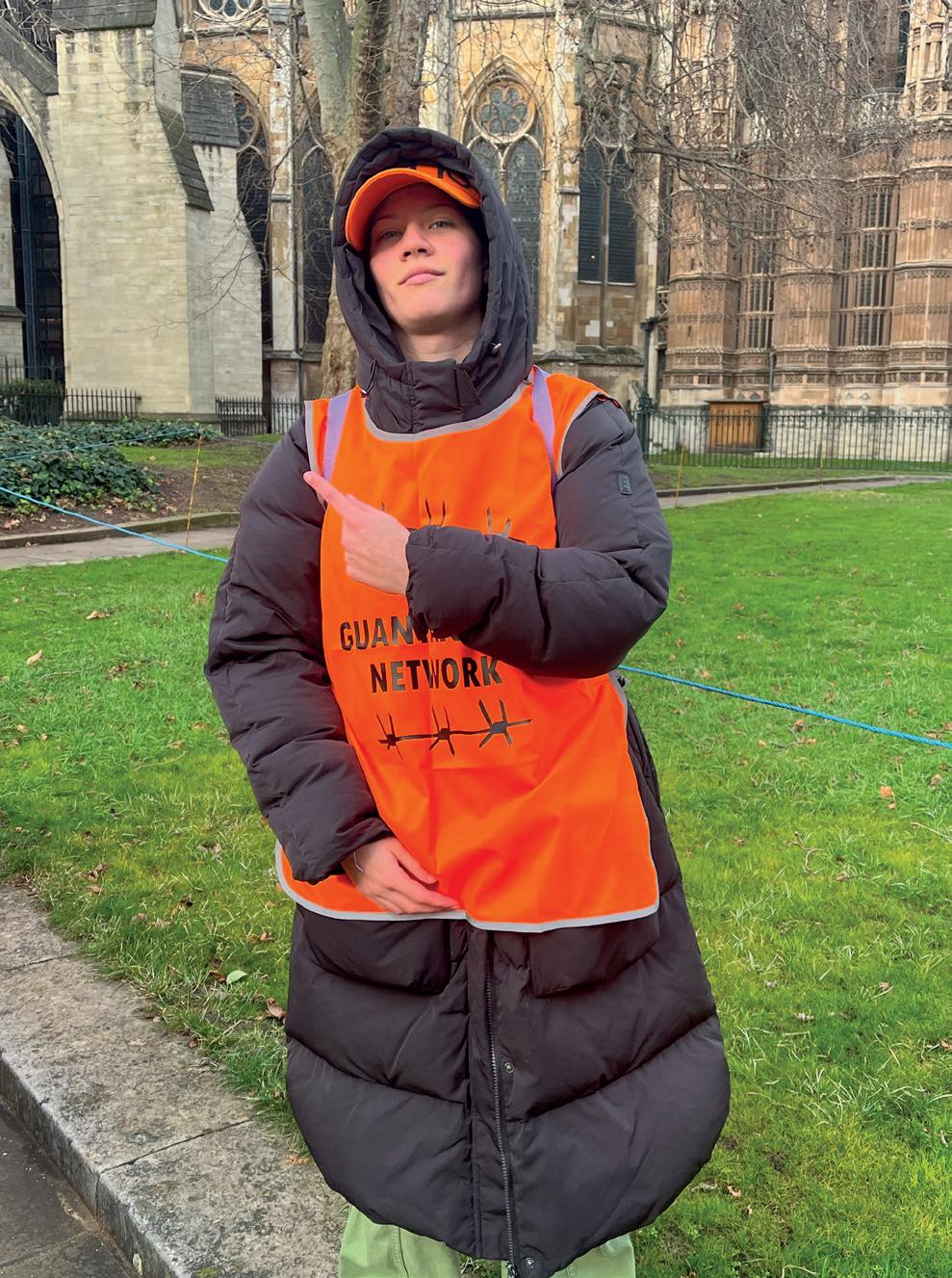
Guantanamo bay has now been open for 22 years since its official opening on January 11th, 2002.
‘But didn’t Guantanamo close years ago?’ some have asked. No, unfortunately not. Guantanamo Bay still holds 30 detainees, most of which have never been charged with any form of criminal offence, and those who have been charged, are too traumatised from the brutal torture that they have been subject to that they are not even able to go to trial.
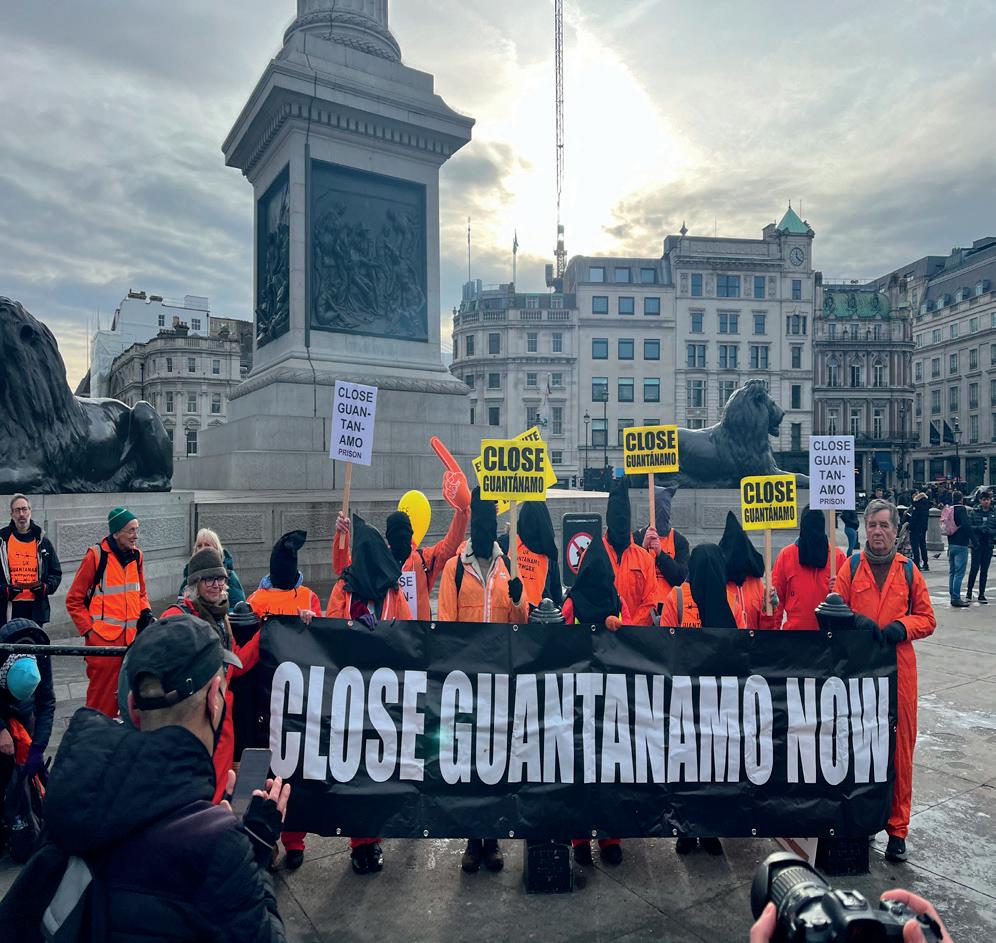
16 of the prisoners still held at Guantanamo have been officially cleared for release, however they still remain detained at the camp in Cuba. This is because many countries do not want to offer refuge for these victims, especially not the USA. And even those who have been offered refuge by countries such as Serbia and Russia, face extreme racism and social isolation, due to their history at the prison and their religious beliefs. Ravil Mingazov, a man who spent 14 years at Guantanamo, was sent back to the United Arab Emirates after his release. Whilst he was assured that he would live freely in the UAE and be rehabilitated, instead, he has been held in solitary confinement and has been severely mistreated. His son, Yusuf Mingazov in an interview with the guardian said: “comparing [Guantanamo Bay] to the UAE right now, it’s a nice place.”
Other prisoners such as Mansoor Adayfi, who now lives in Serbia, cannot find a stable job, and is completely isolated from his local community simply
due to his unfortunate background and his religion. Additionally, Mansoor has incredible difficulties when travelling, so much so that he has not seen his family in person since he was detained at the prison 22 years ago. In conversation with Mansoor, he told me that he ‘couldn’t remember what his youngest sister looks like’ because he hasn’t seen her in such a long time. Sadly, this is the reality for most of the detainees who have been released from Guantanamo Bay without a charge.
Lucas Dean
am sure everyone reading this has heard about the current war between Israel and Hamas. This is the most recent chapter of an extremely complex conflict which is like no other in the world. While the history of this conflict originally started over 100 years ago, I am going to focus on the more recent history of this conflict with the rise of the terrorist group Hamas and the devastating impact it has had on the Palestinian people.
Hamas are a terrorist group established in 1987, its origins stem from the Egyptian Muslim Brotherhood. Hamas has been responsible for countless deaths of both Palestinians and Israelis and has encouraged and glorified terrorism and violence since its creation. While there is a lot to cover about the rise of Hamas in the West Bank and the Gaza Strip, I would recommend that you all read a book called ‘Son of Hamas’ which is written by Mosab Hassan Youssef, the eldest son of Hamas co-founder Sheik Hassan Youssef. In this book, Mosab describes his life living under Israeli occupation, his father’s involvement within Hamas and their rise to becoming the currently elected government in Gaza.
When Mosab was 18 however he was arrested by Israeli forces as they had listened to a phone call of him talking about buying a gun. While in an Israeli prison, Mosab was offered the chance to work with the Shin Bet (the Israeli secret service) as a spy. He accepted the offer to try to hurt Israel from within. However, after experiencing the true violent and evil nature of Hamas from within an Israeli prison, he eventually realised how his view of Israel had been manipulated and he decided to work with the Shin Bet (Israeli secret service) in their efforts to neutralise the threat of Hamas.
Due to his father’s high-ranking position within Hamas, Mosab regularly met with the former leader of the Palestinian Liberation Organisation (PLO) Yasser Arafat. It is hard to talk about the last 30 years of this conflict and not mention Yasser Arafat. He was the first Palestinian leader to ‘accept’ Israel’s right to exist in 1988 and when the PLO officially accepted Israel’s right to exist in 1993 it was a breakthrough and led to the Oslo Accords. This allowed the Palestinian Authority to be established and have limited self-governance over the occupied territories of the
West Bank and the Gaza Strip. These talks went on until the year 2000 after Israeli Prime Minister Ehud Barak offered Yasser Arafat an independent Palestinian state consisting of all of the Gaza Strip, roughly 90 per cent of the West Bank with a capital in east Jerusalem and no illegal Israeli settlers (who I will get onto late). However, Yasser Arafat said no as he knew this would jeopardise his position of power and peace talks broke down with the start of the second Intifada.
The Israeli settlers are people from Israel who have moved to live in occupied Palestinian territories often under the belief that the land is their Holy land. However, as much as I respect religious texts and the beliefs of different religious groups these settlements are still a violation of international law (Israel has always disputed this). As of today, over 700,000 Israeli settlers are living in the West Bank in cities such as Bethlehem and Ramallah (where Mosab Hassan Youssef was born) and there have been many reports of them being violent towards Palestinians.
There used to be over 9,000 Israeli settlers living in Gaza in 2005. However, in 2005 Israeli forces completely withdrew from the Gaza Strip and all Israeli settlers left Gaza with 21 settlements being forcibly evacuated by the IDF (Israeli Defence Force). Elections were then held in Gaza which resulted in a shock win for Hamas who received 44 percent of the vote.
Hamas used Sheik Hassan Youssef, who was adored by the citizens of Gaza, as the face of their campaign. He was completely against the idea of Hamas becoming the government in Gaza. However, he was told that if he didn’t show his public support for the campaign then his son Mosab would be killed. Hamas winning these elections was disastrous for many reasons. First of all, Hamas are a terrorist group that is now responsible for the water supply, education and the other factors that a government has to control. On top of this due to the geographical location of the Gaza Strip, it is impossible to avoid negotiations with Israel and Hamas openly state they want to kill every Jewish person on the planet and do not accept Israel’s right to exist. Understandably Israel refuses to negotiate with Hamas because of this. Israelis engage with

Since Hamas came to power in 2005 (there have been no elections since). It has been constantly firing rockets into Israel and has been responsible for the loss of innocent lives of civilians in both the Gaza Strip and Israel. Hamas are funded by Iran and therefore, despite what other articles in this magazine may have suggested, they have a well-equipped military wing and have thousands of rockets as well as a 500 km long tunnel network under the Gaza strip that is reportedly larger than the London Underground and the Paris Metro combined. Something else that should be added is that elite members of the Hamas leadership such as Abu Marzuk, Khaled Mashal and Ismail Haniyeh all have a net worth of several billion dollars each which is money from foreign aid that was meant for the Palestinian people. Moreover, many the Hamas leadership do not even live in Gaza. While this is a very brief summary of the rise of Hamas as the government in Gaza I hope I have given a good insight into the true nature of Hamas before I go into the very recent chapters in this conflict that have unravelled since October 7th.
As most of you will know on October 7th Hamas terrorists broke through the border between the Gaza strip before killing over one thousand innocent civilians, raping women, and taking civilian hostages. On top of this, something that is rarely mentioned is that roughly 3000 rockets were fired into Israel on October 7th. However due to the Iron Dome, an extremely efficient and sophisticated air defence system, almost all of the rockets fired into Israel are intercepted and civilian casualties from Palestinian
rockets are always very low as a result.
After this attack, Israel declared war on Hamas to destroy every part of Hamas. This means that their military response has to be proportional to this aim subsequently Israel then cut all power and water to the Gaza Strip and demanded the return of all hostages for it to be turned back on. However, eventually due to international pressure water and power were restored. One thing that should be mentioned is that Israel has no obligation to supply electricity and water to Gaza which they often do without charge as the Palestinian Authority usually refuse to pay for it. Israel also conducted airstrikes on military targets but often these military targets are integrated with the civilian population which has caused a tragic number of civilian casualties. On top of this many rockets fired from Palestinians have been misfired and have ended up striking areas in Gaza. The most horrific example of this is a rocket that landed in the car park of the Al-Alhi hospital which killed roughly 500 civilians. This was immediately blamed on Israel by the Gaza health ministry. However, the IDF have since proved they had nothing to do with that rocket which was fired by an Islamic Jihadist group.
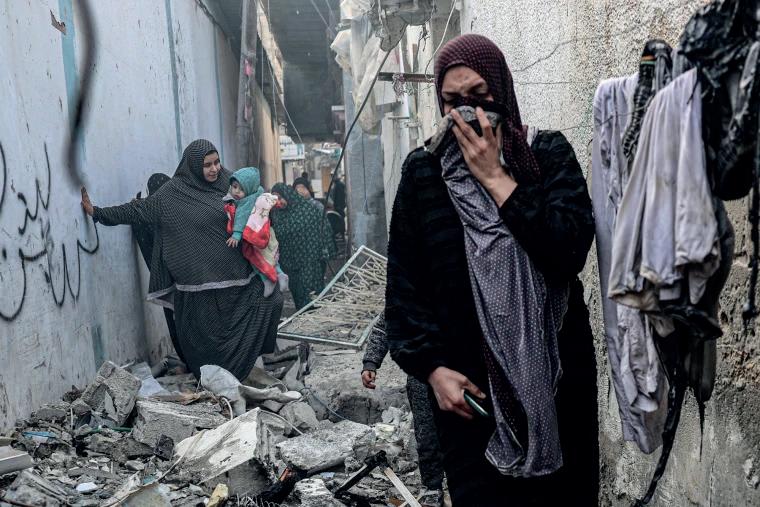
Israel has also launched a ground invasion of the Gaza Strip that started with the northern parts of Gaza. Israel told civilians that they had 24 hours to evacuate to the south of Gaza although they gave the civilians over 2 weeks which still is not a lot of time for well over a million people to evacuate their homes.
As of the 10th of January, over 9000 Hamas terrorists have been killed by Israeli forces (this number is higher however this was the most recent report). The death toll of Palestinians since October 7th released by the Gaza health ministry, who are run by Hamas, is currently 28,064 (as of 10th Feb).
Israel has also launched a ground invasion of the Gaza Strip that started with the northern parts of Gaza. Israel told civilians that they had 24 hours to evacuate to the south of Gaza although they gave the civilians over 2 weeks which still is not a lot of time for well over a million people to evacuate their homes.
As of the 10th of January, over 9000 Hamas terrorists have been killed by Israeli forces (this number is higher however this was the most recent report). The death toll of Palestinians since October 7th released by the Gaza health ministry, who are run by Hamas, is currently 28,064 (as of 10th Feb).
At this current time, the Israelis have taken control over northern Gaza and are seemingly about to enter the southern city of Rafah which is currently sheltering roughly 1.4 million displaced Palestinians. Within this number are thousands of Hamas terrorists as well as Israeli hostages. This means that the IDF have no other choice but to enter Rafah. However, they must find a way to allow the innocent civilians in Gaza to get out of harm’s way. This would be made much easier if Egypt opened their borders. However, this is not going to happen due to concerns by the Egyptians that Hamas terrorist could infiltrate their country, which is in my opinion very rational.
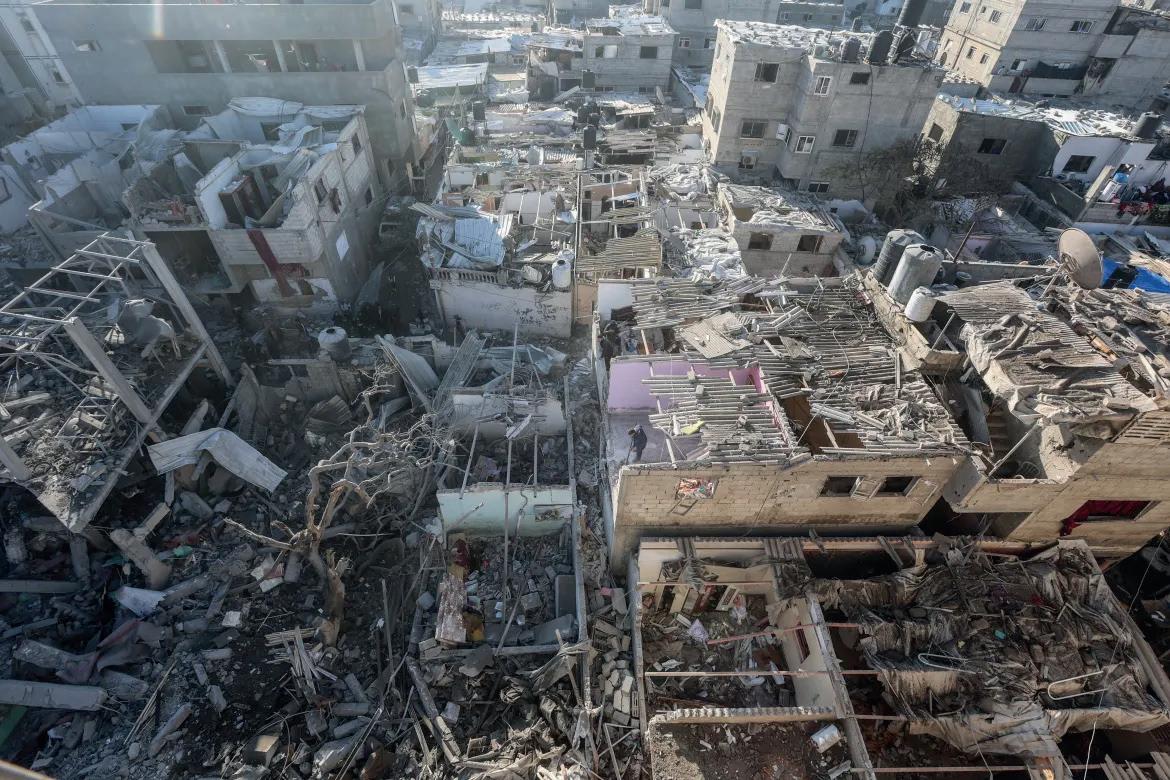
Something else that must be mentioned is the ridiculous South African case of Genocide against Israel in the International Court of Justice. The definition of genocide under international Law is an act committed with the intent to destroy, in whole, or in part, a national, ethnical, racial, or religious group. If Israel had actively tried to do this then this war would have been over months ago as the IDF had the military capabilities to completely flatten every building in Gaza. The fact that nothing like this has happened shows that this accusation is a waste of time.
On top of this, I am sure many of you have heard of the attacks on civilian ships by the Iranian-backed Houthis. What has genuinely perplexed me is the number of absolute idiots I have seen online sup-
porting these terrorists. Just so that everyone is aware the Houthis are responsible for the current civil war in Yemen that has caused: the deaths of 377,000 civilians, 4.5 million civilians being displaced and more than 2 million children who are suffering from acute malnutrition. They have re-introduced slavery and child labour in Yemen with their reportedly being over 1800 servants and slaves working for Houthi leaders. The Houthis do not exactly hide their terrorist views as their charter includes the statements; Death to America, curse the Jews and death to Israel. If you have expressed support for these terrorists and you still do I recommend you reconsider your life choices.
Finally, I hope that I have provided a basic insight into the current situation and I have tried to show both perspectives of the current conflict of Gaza. This is a very sensitive and complex issue and while everyone is free to voice their own opinion, I would urge everyone to make sure they do their own research before they talk about this conflict. On top of this my hope for this conflict is that eventually the Palestinians and Israelis and find a way to co-exist however with the current Israeli government and corrupt Palestinian leadership the prospect of a two state solution in the near future seems almost impossible but hopefully someday there can be long lasting peace between the Israelis and the Palestinians.

Charlotte Clee
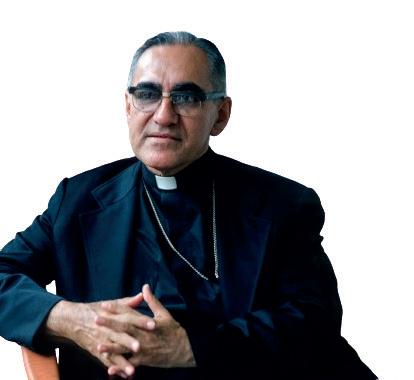
When asked to explain the phrase, ‘option for the poor’, Archbishop Oscar Romero replied by proclaiming “I offer you this by way of example. A building is on fire and you’re watching it burn, standing and wondering if everyone is safe. Then someone tells you that your mother and your sister are inside that building. Your attitude changes completely. You’re frantic; your mother and sister are burning, and you’d do anything to rescue them even at the cost of getting charred. That’s what it means to be truly committed. If we look at poverty from the outside, as if we’re looking at a fire, that’s not to opt for the poor, no matter how concerned we may be. We should get inside as if our mother and sister were burning. Indeed, it’s Christ who is there, hungry and suffering.” This analogy suffices to explain the foundations of Romero’s ministry and theological thinking.
The term ‘option for the poor’ refers to how Jesus taught that we should value the vulnerable members of society when making choices. Jesus preached that on judgement day, God will ask humans what they did to help the poor – a message which he echoes in Matthew 25:31-46. This wish by Jesus and God was personified in the form of Salvadorian Archbishop Oscar Romero. Jesus declared in his inaugural speech in Nazareth that his role is “to set at liberty those who are oppressed.” This mission was one echoed by Romero until his very last breath. Romero was shot dead whilst delivering a homily in March 1980. The homily focused on the drive that Christians should have to better the world in the way in which God hoped. He says “This is the hope that inspires us as Christians. We know that every effort to improve
society, especially when injustice and sin are so widespread, is an effort that God blesses.”
Romero’s death exemplified his devotion to the poor and oppressed led to him becoming a martyr within the liberation theology. Liberation theology aims to dress Jesus Christ in the same robes as figures such as Che Guevara, Trotsky, and Fidel Castro. It turns the communion wine into a symbol of the blood of the many who have been killed at the hands of oppressive regimes. The cross becomes a symbol for all subjected to tyranny and the Bible begins to be held in the same regard as Kapital. Jesus by his nature had more in common with the guerrillas in Cuba than the average worker for an FTSE500 company – a notion pushed by Colombian priest Camilo Torres who believed “that if Jesus were alive today, he would’ve been a guerrilla.”
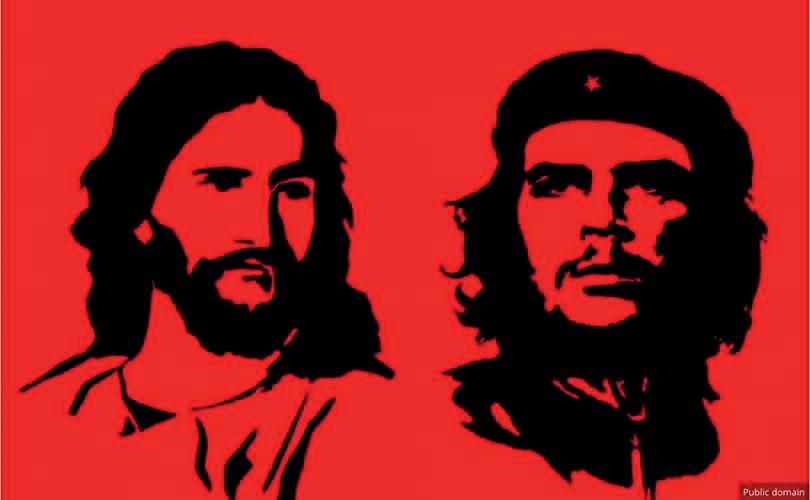
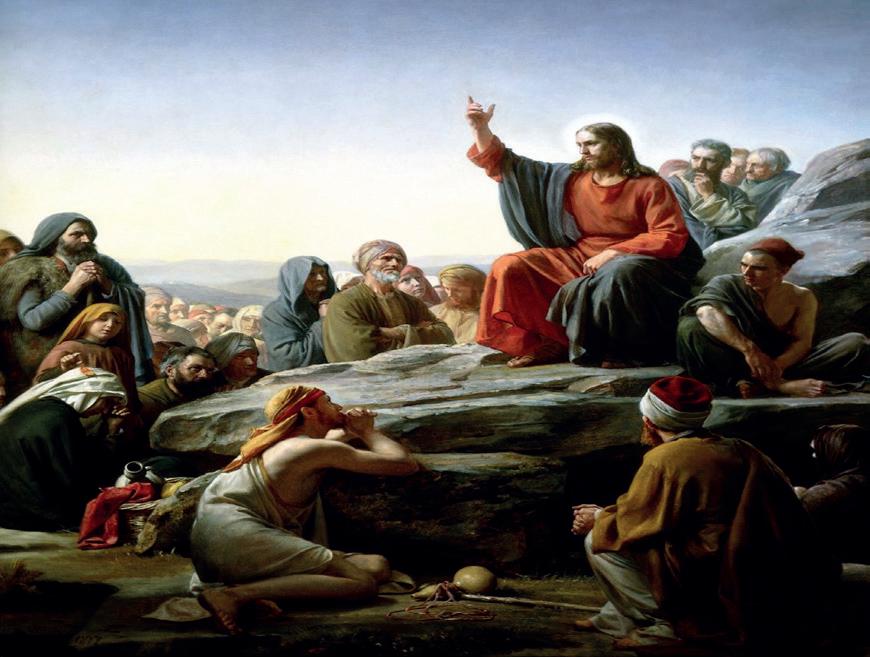
I would like to set out some instances where the so-called ‘guerrilla’ nature of Jesus was shown. To begin without Jesus, one of the biggest advocations for a socialist interpretation of the Bible is through the concept of image dei. We were all created equal by God in Genesis 1 and should therefore be treated equally, both socially and economically. In Jesus’ lifetime he preached many teachings which could now be reattributed to great socialists like Marx and
n Matthew 19, a young man comes to Jesus to ask what he must do to receive eternal life. Jesus responds by saying that one must “love thy neighbour” and that “it is easier for a camel to go through the eye of the needle than a rich man to enter the kingdom of Heaven.” This exemplifies socialist teachings of community and opposition to the love of wealth shown in capitalist societies. Jesus then advises the rich man to sell all that he has and give to the poor if he truly wants to achieve salvation. This therefore institutes a sense of socialist rhetoric within the teachings of Jesus. Jesus advises Christians to detatch themselves from infatuation with money and attachment to material goods and to divert attention to
shown in capitalist societies. Jesus then advises the if he truly wants to achieve salvation. This therefore institutes a sense of socialist rhetoric within the themselves from infatuation with money and attachGod.
In my opinion, the parable of the vineyard workers (Matthew 20:1-16) shows an account of a employer who cares for the basic needs of his employees over the monetary value of their labour. In this parable, a vineyard owner goes out to the town and requests help from workers in the town. Many people sign up throughout the day and at different times. At the end of the day when it comes time for them to collect their wages, the man gives them each an equal wage. When asked by the workers who came at earlier points within the day why he gave them the same as the others, the man responds “Don’t I have the right to do what I want with my own money? Or are you envious because I am generous?” This shows how Jesus believed that if one is wealthy they should redirect their wealth to help the less fortunate. Similarly, it also shows a sense of recognition for the basic needs of workers - such as the right to eat. This was a message directly echoed by Engels’ eulogy for Marx in 1883 which read “just as Darwin discovered the law of development of organic nature, so Marx discovered the law of development of human history: the simple fact, hitherto concealed by an overgrowth of ideology, that mankind must first of all eat, drink, have shelter and clothing, before it can pursue politics, science, art, religion, etc.”
demands a loving response. This response is given through love for human beings, and that is what we mean by a commitment to God and our neighbour.” This advocation for one neighbour manifests itself in Liberation theology. Liberation theology aims to “set at liberty those who are oppressed” in the same way in which Jesus set out to.
The Christian Socialism movement took off in 1848 after the Chartist Act was denied by Parliament. One leader behind the movement was F.D Maurice. Maurice believed that “Christianity is the only foundation of Socialism, and that a true Socialism is the necessary result of a sound Christianity.” During Maurice’s lifetime, the Anglican church rarely got involved in social issues. It refused to intervene in calls for reform. New churches were built in wealthier areas but not in the poorer areas where there were the greatest calls for them. This is an idea furthered by Charles Dickens in his oeuvre, specifically in David Copperfield. Writer G.K Chesterton described Dickens distaste for the traditions of Victorian Anglican church and their neglecting to social problems as “He had, for instance, that dislike of defined dogmas, which really means a preference for unexamined dogmas” This idea of Christian Socialism was furthered by the liberation theology which developed in the 20th century.
This means of theology justifies faith by political action rather than religious action – though they find themselves interlinked. One carries out religious action in a much more visceral way when he is following Jesus’ commands to help the needy much more so than when he follows the sacraments. Fidel Castro when asked how he would carry out the Cuban revolution if he had the chance to redo it stated “If I had to do it again, I would do it with 10 or 15 men and absolute faith. It does not matter how small you are if you have faith.” Castro stresses the importance of faith. The means of faith proposed by the liberation theologists is faith for the future. Faith drives revolution to bring about social change in favour of the oppressed mirroring the actions of Jesus. Faith that honours humanity and the future of God’s people. Faith for the people by the people.
For more on this topic, checkout the latest episode of the politics podcast ‘politicised’ where myself, Hannah Bareham and Rev. Moloney discuss the place of liberation theology in modern day politics.
Gustavo Gutierrez, the writer of the seminal work of liberation theology A Theology of Liberation, remarked that “Faith is not limited to affirming the existence of God. No, faith tells us that God loves us and
Arabelle Harding-Buck
The word euthanasia, when translated from Greek, means `good death. ` This suggests that supporting or even assisting in euthanasia is an honourable course of action but for years the act of intentionally ending a person’s life to relieve suffering has long been a subject of moral, ethical and legal debate. This begs the question can death ever really be a good thing?
The Oxford dictionary definition of euthanasia is ‘the painless killing of a patient suffering from an incurable and painful disease or in an irreversible coma. ` In the law it is further broken down as follows:
Voluntary euthanasia: When a person wishes and gives their consent to die, such as if they have a terminal illness, and they ask for a medical professional to kill them.
Non-voluntary euthanasia: A person is killed without their consent, but are unable to make their wishes known, for example, if they are an infant or in a coma.
Assisted suicide: When a person kills themselves but is watched by a medical professional.
All of these are currently illegal in the UK meaning that any type of euthanasia can lead to a murder charge. In comparison, in the UK, twenty-one dogs are euthanised daily. Vets even recommend this course of action as a compassionate deed when they see an animal in distress, yet many humans are left with huge pain and suffering at the end of their life with little relief. But is this simply cruel?
It seems the majority of the British public believe so. A survey conducted in 2020 showed that seventy-nine percent of people in the UK said that they would like to have the option of euthanasia. About two thirds (64%) said they would personally choose to have an anaesthetic at the end of life, and slightly more than half said they would potentially choose euthanasia for themselves or a family member if they had the choice. Supporters of assisted suicide believe that allowing people to ‘die with dignity’ is kinder than forcing them to continue their lives with suffering.
Although prohibited, illegal euthanasia may take place anyway. Forty-five percent of UK doctors believe that some healthcare professionals already assist their patients to end their life more peacefully, and it is estimated that around 1,000 people are helped to die every year illegally. Not only that, but at least one Brit-
ish citizen per week travels to Switzerland for an assisted suicide, which on average costs £10,000. This shows the desperation you must feel to invest such an enormous amount of money into ending your life. However, it could also create a social divide. By making the price to relieve your pain so high, you send the message that you can be liberated, but only if you have the financial means to do so.
Although the Government has taken extreme measures to ensure the prevention of euthanasia is it time for them to take another look at the statistics? Do they need to open their eyes and listen to what the majority of the public want?
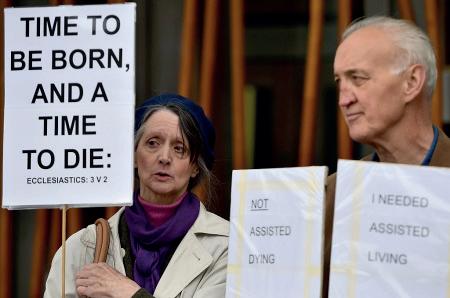
There is currently a petition circulating in the UK to push for the legalisation of Euthanasia and assisted suicide forcing the issue to be brought before Parliament again. At present the petition stands at just under 120,000 signatures, which has amassed in as little as a month. This figure rises daily, and is inspired by the story of Dame Esther Rantzen, a journalist and TV presenter who founded the charities ChildLine in 1986 and the Silver Line helpline in 2012. She is a fervent advocate for the legalisation of euthanasia and has recently expressed her wish to travel to Zurich for a peaceful death by means of an assisted suicide after a terminal lung cancer diagnosis. She is however concerned that her family will be prosecuted after her death for assisting her in her wishes, forcing her to lobby Parliament for a change in legislation.
Those who are strongly opposed to the legalisation quote a study conducted in 2012 which shows that 32% of the assisted deaths in Belgium are conducted without request. This is most commonly because the person is unable to express their preferences, but many still believe this to be murder. This argument leads to the concern that, if legalised, Euthanasia will mean
those who are older and more vulnerable, may be at risk of coercion from people who stand to gain financially from their deaths. In this country the justice system, which is already at breaking point, could not cope with the onslaught of murder convictions. Prisons are at their capacity, with a record 88,225 people currently imprisoned in the UK, with that number expected to rise to between 93,100 and 106,300 by March 2027. When there is already so much strain on the police force and courts would allowing a free opportunity for manipulation and murder open the floodgates?
Around the world euthanasia is a controversial topic, with the laws regarding it differing from country to country. Belgium has the world’s most liberal law on assisted suicide. However, it is not just offered to the terminally ill. It is offered to patients with psychiatric conditions and even children. Surveys in Belgium show overwhelming public support, and many doctors say it gives patients with constant and unbearable suffering a practical and humane way to die with their dignity intact. Belgium changed the law regarding euthanasia in 2002, and it is gradually growing in popularity. In 2022, there were 2,966 euthanasia deaths registered in Belgium, a 10% increase from the previous year.
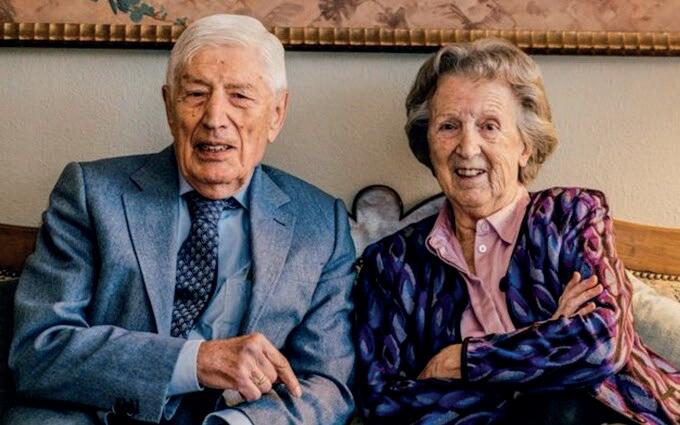
Another country where euthanasia is legal is The Netherlands. Even esteemed members of society have chosen it as their means of death, such as the former Dutch prime minster and his wife, both ninety-three, who recently died in a double euthanasia pact.
The topic of euthanasia is one that elicits strong emotions and raises important ethical questions. While proponents argue for the right to die with dignity and the relief of suffering, opponents raise concerns about the potential for abuse and the sanctity of life. Euthanasia is a complex issue that requires careful and compassionate consideration. Human rights must be at the forefront of the decision-making process in parliament as this issue isn`t going anywhere. With support growing for the right to die it seems MP`s have some big decisions ahead of them. They have the statistics. They have the public
view. But the question is – which way will they vote?
“I am an “ “I am an
“I am advocate of a change to the law. Obviously that change has to be very carefully crafted. It shouldn’t really be for the prosecutor to try and make the law work when it doesn’t really. It’d be better for parliament to actually change the law. And yes, I would be open to making time for that (as Primekk Minister).”
- Keir Starmer
Amelia Barrett
The universe is infinite therefore there must be life out there, either like us, thriving in the Goldilocks zone or they have adapted differently to us. But the question is are they on Earth with us right now? If they have the technology to get all the way to Earth, how do we know they don’t have the technology to hide among us?
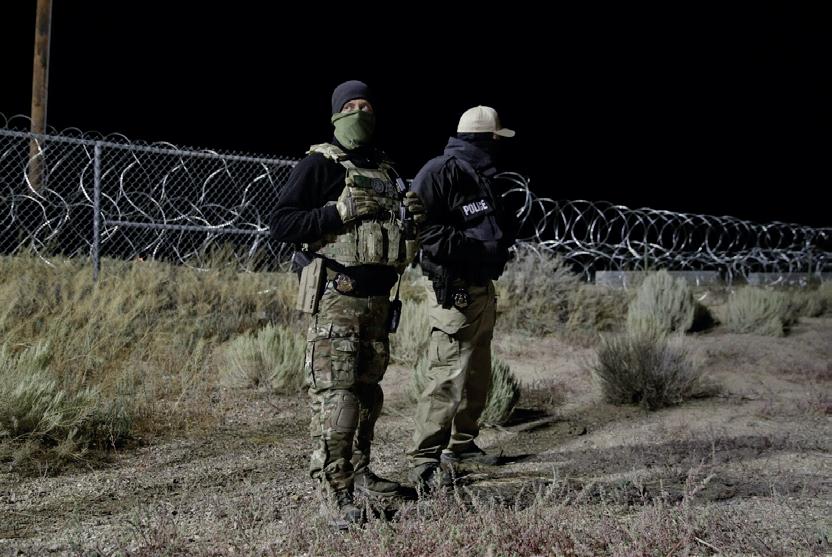
There are many theories about what may be hiding among us, hiding in plain sight, or even being hidden from us. The main theory is that the US government is hiding aliens in area 51 - a training range for the US air forces. But how much more could it be being used for? Bob Lazar is a conspiracy theorist who brought attention to alien activity in area 51, he had a UFO sighting and read into government papers to discover what he believed to have been alien involvement in human affairs. Everyone fawned over his theories once he took to the press. This created endless beliefs that the government were hiding aliens from us, and it is believed that they have already killed them. Especially after Lazar claimed to have seen alien autopsy pictures. Bob Lazar has been on countless podcasts and shares his beliefs and “findings” on social media, he is one of the few that has come forward over the years, believing sightings all over the world, most with explainable evidence but some that are completely supernatural and make us all question our beliefs.
However, most of us already believe that if there is life out there - which statistically there would be – then we may have discovered it, right? Well, one experiment explains it. The Ohio state university launched the big ear project using a radio telescope to pick up radio waves. On 15 August 1977, it picked up a powerful burst of radio waves, lasting 72 seconds, from the constellation Sagittarius, and named the Wow! signal. It is believed that this must be intelligent life from far off sending us radio signals in similar attempts to what we have been doing for years. If there is already evidence unexplainable then
who is to say that the government doesn’t hide more from us.
So, how – you may ask – is this at all political? Well, I believe that it is a political matter if the government is hiding this from us, we don’t know if there is just aircraft testing in that facility and the government is more secretive with area 51 than most other facilities. They have planted it in the middle of a dessert, a BBC article states, “Members of the public are kept away by warning signs, electronic surveillance and armed guards”. They even have a restricted air space meaning nobody can fly over it, as it is that secretive. Why do they want to hide something from us? What are they hiding? And why is nobody allowed to find out? In the past we have been outraged about governments colluding without the knowledge of the public and we have been letting this go. In 2019 there was an idea started from a 21-year-old on Facebook to “raid” area 51, about 3,000 people arrived for this gathering but most were peaceful and there were only a few arrests. So, we just let this go again?
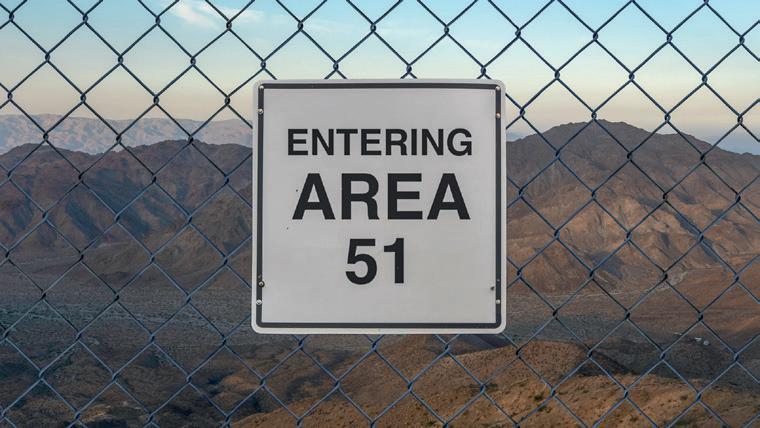
We have tussled against area 51 for years and there are minimal differences in secrecy, after 30 years all documents are able to be accessed by the public so, my question is: will we be outraged once again about area 51 after we learn what has happened recently in 20 – 30 years? Is Bob Lazar right or is he just crazy and attention seeking? And will we ever find out the truth?

Jacob Smith
On the 5th of November this year, the decision will be made as to who will become The President of The United States. The hidden threat to contenders: AI.
A mysterious robocall emerged on the 21st of January just before the US primary, attempting to discourage democrats from voting, the voice was that of President Joe Biden, but the caller remains unknown. Harnessing the power of artificial intelligence this anonymous individual subsequently convinced several voters to stay away from the polls that day.
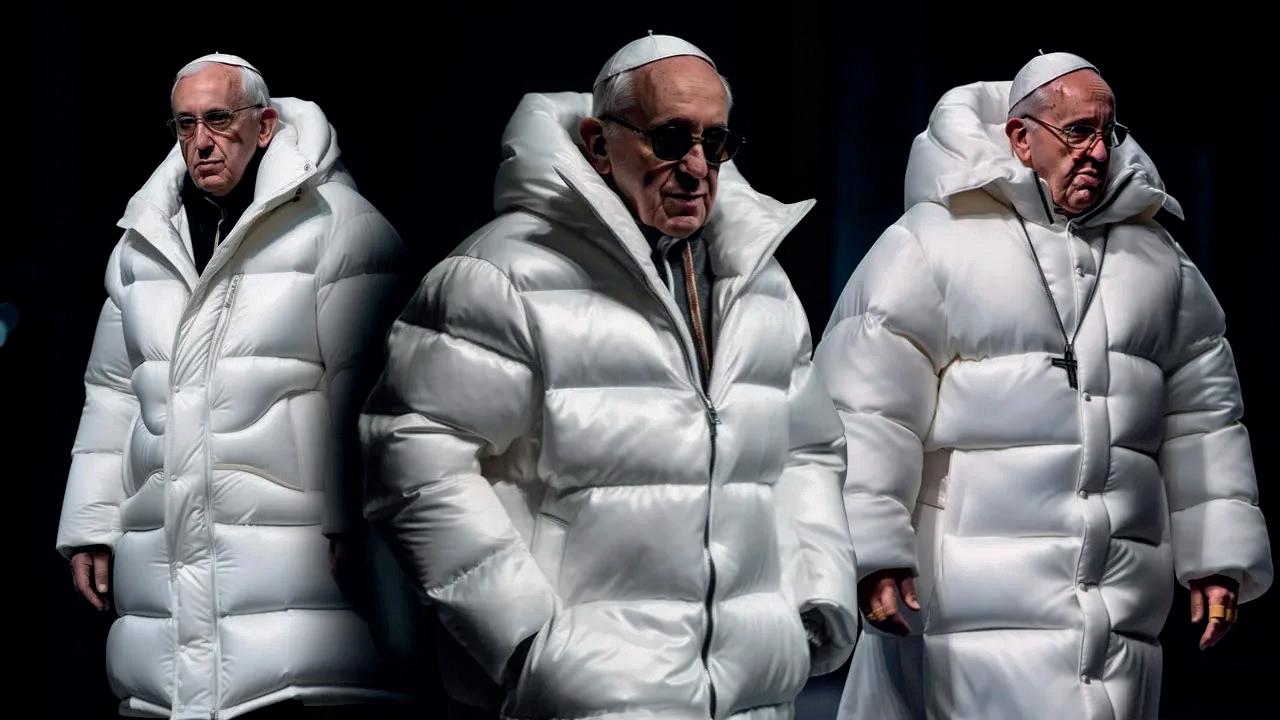
With the widespread availability of these technologies, at the tip of your fingers, with a sole Google search, a once niche issue is becoming a top security risk. The question is: “What is AI actually generating?”. The term is “Deepfake” developed in the 19th century but now more powerful than ever, and most worrying of all, more convincing. Deepfakes are synthetic media, from photos to audio or even video. Using AI deep-learning technology (layered machine processing) users can generate anything the mind can dare to dream ….
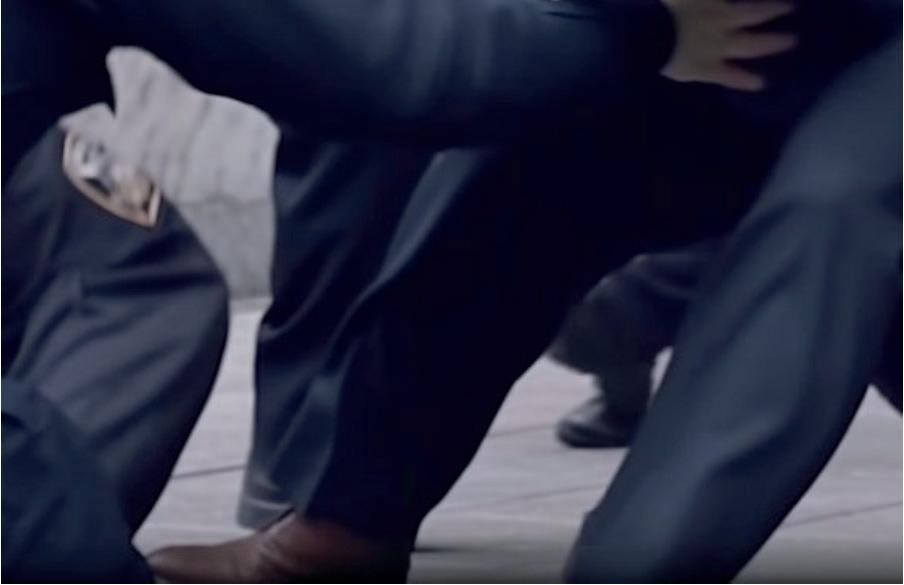
If you’ve ever seen Pope Francis in a puffer jacket, Donald Trump in a fight with the police, Mark Zuckerberg bragging about Meta, or even Queen Elizabeth doing TikTok dances, you’ve already witnessed the power of deepfakes. The more pressing issue is that it is becoming increasingly difficult to recognise these fakes.
Deepfakes unfortunately are used not just for amusing clips but are deep rooted in cybercrime. We’ve all heard of scam calls, and most of us have experienced them, but what if the voice on the phone was one you thought you knew, one that you trust. In March 2019 a German CEO made a bank transfer and was scammed out of €220,000, believing he was on the phone to his boss. Naturally, the man on the other end on the phone remains unknown, but if anything is certain, it’s that deepfake technology was used.
Despite the rapidly growing concerns for national security, the absence of federal laws specifically targeting deepfakes leaves a regulatory void, with different states in America enacting varying measures. Furthermore, the issue exists not only in America but on an international level. Disagreements continue over defining deepfakes and determining accountability. Enforcement remains challenging since perpetrators can exploit loopholes and evade detection with basic resources. Fortunately, efforts are being made by the FTC and major tech companies to combat and prevent deepfake technology becoming increasingly harmful to society. The question we should all ask ourselves is: “Should anything on the internet be trusted?”.

Samuel Cockett
In recent years, the landscape of vaping has undergone a significant transformation with the emergence of disposable vapes. These sleek, portable devices offer convenience and ease of use, but their increasing popularity raises questions about their impact, especially in regions like the United Kingdom. Not only their ease but also their appeal to children raise questions about a marketing stance with bright coloured packaging and sweet flavours like cola sweet berry or cotton candy. From regulatory challenges to environmental concerns, the rise of disposable vapes has sparked a nuanced debate about their role in the UK’s vaping culture.
Disposable vapes, also known as cig-a-likes or single-use e-cigarettes, are compact devices pre-filled with e-liquid and equipped with an integrated battery. Unlike traditional vaping devices, they require no assembly or maintenance, making them appealing to newcomers and seasoned vapers alike. Brands like Puff Bar, Blu, and Vuse have flooded the market with a variety of flavours and nicotine strengths, catering to more consumer preferences.
One of the primary reasons for the surge in disposable vape popularity is their accessibility. These devices are readily available in convenience stores, petrol stations, and online platforms, offering consumers an easy option for satisfying their cravings. Moreover, their discreet design makes them appealing to individuals seeking a more inconspicuous vaping experience. However, the widespread use of disposable vapes has raised concerns among health professionals and policymakers in the UK. Public Health England (PHE), an executive agency of the Department of Health and Social Care, has been at the forefront of promoting vaping as a less harmful alternative to smoking traditional cigarettes. While traditional vaping devices have been endorsed as alternative aids, the same cannot be said for disposable vapes.
One notable concern is the potential for youth initiation. Disposable vapes, with their appealing flavours and discreet packaging, have drawn criticism for their potential to attract underage users. In response, the UK government has implemented stringent regulations to curb youth access to vaping products. The Tobacco and Related Products Regulations 2016 restrict the sale of e-cigarettes and e-liquids to individuals under 18 years old, however, this has not stopped many children from either buying or using them. With them being sold at convenience and corner stores that have
little regulation, they offer an easy route for children these prodto get these products.With them being marketed so cheaply and often in store windows their bright packaging appeals to kids as much as the flavours. The introduction of age verification measures for online sales further reinforces these regulations however the problem still prevails. Moreover, the environmental impact of disposable vapes cannot be understated. Unlike rechargeable devices, which can be refilled with e-liquid and reused multiple times, disposable vapes are designed for single use and often end up in landfills after a brief period of use or typically just left over on the street. A video from YouTuber Oli White showed the extensiveness of the problem. Whilst walking around for an hour around a suburban city he found over 70 vapes discarded on the floor and clogging up the streets. The spread of these non-biodegradable devices contributes to electronic waste accumulation, posing a longterm threat to the environment with over 10 tonnes of lithium waste a year, enough to power over 1200 electrical vehicles.
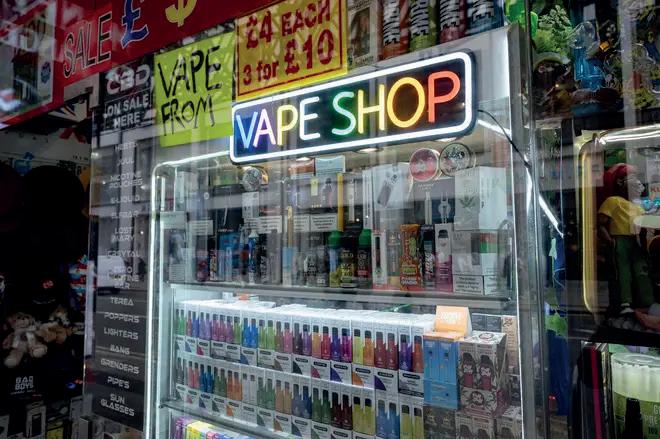
In response to these concerns, some UK-based companies are taking steps to address the environmental footprint of disposable vapes. For instance, Blu, a prominent vaping brand, has launched a recycling programme that allows customers to return their used disposable devices for proper disposal. While such initiatives represent a step in the right direction, broader industry-wide efforts are needed to mitigate the environmental impact of disposable vapes effectively. Despite the challenges posed by disposable vapes, they continue to reshape the UK’s vaping and cultural landscape. Their convenience and accessibility have made them a staple for many vapers and created terrible addictions in young people. However, the ethical and environmental implications of their widespread use underscore the importance of ongoing scrutiny and regulation. Looking ahead, policymakers, public health experts, and industry stakeholders must
adress calls for reduction and address the potential risks associated with disposable vapes. By fostering innovation in sustainable vaping technology and implementing targeted interventions to prevent youth initiation, the UK can navigate the evolving landscape while prioritising public health and environmental sustainability.
In conclusion, disposable vapes have undoubtedly made a significant impact on the UK’s vaping scene and UK culture in general, offering convenience and accessibility to consumers but also a new cultural trend for young people. However, their rising popularity raises important questions about their long-term implications for public health and the environment. As the debate continues, adopting an approach that balances harm reduction with regulatory oversight is essential to ensure a safe and sustainable future in the UK and safety and health of our younger generation.
Theo Kendall
Firstly, we need to understand why we have prisons. Their ultimate purpose is to keep the public safe from dangerous criminals. However, perhaps the most effective way of doing this is by rehabilitating the criminal to deter them from future offences rather than locking them in a cell and chucking away the key as the current system does.
Here are the simple stats as to why the current system is failing: England and Wales have the highest imprisonment rate in Europe with 142 people per 100,000 of the population. The prison population has risen by 80% in the last 30 years—and it is currently projected to rise by a further 7,400 people by the end of 2024. This places a huge burden on an already strained system. One crucial problem with UK prisons is the issue of violence. Safety in prisons has deteriorated rapidly during the last ten years with 322 people dying in prison in 2023, along with 55,264 incidents of selfharm particularly among women. Assaults on prison staff remain at historically high levels with 7,229 in the year 2022. This creates a dreadful prison environment and makes it extremely difficult for prison staff to help rehabilitate prisoners when they are more concerned about the safety of the prisoners and themselves. However, the fundamental problem with UK prisons is the issue of short-term prison sentences. This refers to sentences lasting typically less than 12 months. In 2022 over 43,000 people were sent to prison to serve a sentence, and 61% of these people had committed non-violent crimes. These are crimes such as shoplifting or taking illegal drugs. Addition-
ally, 2/5 of these people were sentenced to less than 6 months. The main issue with short-term prison sentences is that they serve no real purpose. The criminal has plenty of time for their life to be harmed, such as losing their house, relationship, job, and future job prospects. However, they don’t provide enough time to rehabilitate the criminal and attack the root causes of their offences. 1 in 4 prisoners are reconvicted of another offence within one year of release. This leads to a constant in-and-out cycle of offenders who having served one sentence soon go on to offend again and then find themselves back in prison. It’s a vicious cycle. Nothing changes. Furthermore, shortterm criminals usually cause the most violence and drug problems in the prison themselves as they are not willing to settle down into prison life due to the very limited time they are sentenced. Lastly, another paramount reason why prisons don’t get the attention required by the government is because it is politically damaging for politicians to say they want to invest in and focus on prisons. There is no political incentive as prisoners don’t get to vote, so usually it is avoided as a major talking point in campaigns.
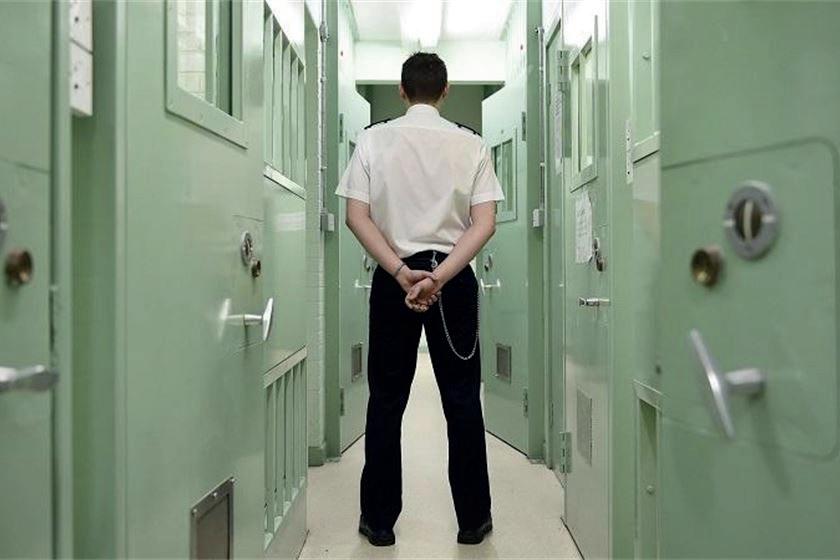
So how do we fix a broken system? One idea is from former Conservative MP Rory Stewart who served as Minister of State for Prisons. During his tenure, he suggested abolishing short-term prison sentences. His two reasons are, firstly, sending people to prison on short sentences does not have any deterrent effect at all. Secondly, it is astonishingly expensive to the taxpayer, at a time when money is incredibly tight. Some statistics suggest that it can be more expensive to pay for a prisoner to go to jail than it is to send a child to Eton. More than half of offenders serving a sentence of less than 12 months go on to commit another crime. For those serving a sentence of six months or less, it is 58%. Meanwhile, for offenders punished with Suspended Sentence Orders with requirements that are served in the community, the reoffending rate is 24%. The facts are clear; short prison sentences leave
offenders stuck in a revolving door of re-offending. Therefore, we should enhance the use of community sentences which attack the root causes of a criminal’s reasons for crime by tackling problems such as drug addictions and helping them with learning difficulties. The success of focusing on rehabilitation is highlighted through Norway’s prison revolution, where in the 1990s, Norway had a problem. Roughly 70% of all released prisoners recommitted crimes within two years of release. Norway’s government acted, completely changing the country’s prison system through community-led projects for rehabilitation. Today, Norway’s prison system has become a model for the rest of the world. Now only 20% of Norway’s formerly incarcerated population commit another crime within two years of release. Make no mistake about this, this isn’t about being soft on the criminal, it’s about protecting the public from crime which is increased through short-term sentences. There is, of course, a place for punishment in the justice system, but we must also have compassion for the criminal otherwise they will only continue to commit further crimes.
Thomas Shelly
What is DEI? Diversity, Equity and Inclusion programs are becoming increasingly predominent in the United States of America. These programmes involve quotas where ethnic minorities and LGBTQ+ members are to receive a certain number of places to high schools and colleges in order to create a more diversified community providing more opportunity to those who statistically often lack it. Although, are these programmes fair? Are they creating better students? And, are they allowing for equity of opportunity once students reach the workforce?
Are these programmes fair?
Whilst some may believe that DEI is fair due to equity, the opportunities simply do not add up. For example, 34.6% of Harvard students are white, and 71% of the US population is white. Furthermore, Harvard stated that 43% of those students are legacy, athletes, or related to donors or staff, meaning that almost half of the white student body at Harvard would not have been admitted a place if not for extra external help. Morevover, last year Harvard had 56,937 applicants apply with 1,966 admitted, where DEI was in full force. As of June 2023, Harvard’s admission rate by race was: Asian, 12.7% ; White, 15.3% ; Hispanic, 31.3% ; Black, 56.1%. This is proof of genuine systemic racism against White and Asian people, but has been labelled “Affirmative Action” by the school board. So, in short, the answer is: NO. These programmes are not fair, in
fact, they arebuilt on the basis of discrimination based on someone’s race, gender, or sexual preference, which is illegal in the US under Article 21.
Having a more diverse student body looks good from an outsider perspective to many high schools and universities/colleges. However, the statistics show that due to the increase in DEI admissions, the rate of graduation for ethnic minorities has decreased. In 2021, 76% of black men finished high school compared to 87% of white men. This is one of the main issues with DEI programmes, the lack of capability. I am not saying that some people are inherently more intelligent than others, I am stating that logically, if you are allowed to compete at the highest level for less, that will naturally result in you doing worse. For example, if there is a higher chance of someone getting into a school or university based on gender, race, or sexual identity, rather than grades and accolades, then those students will average out doing worse. If you have worse grades than your peers, but you get in because of equity, you will struggle more to work at the same level as (up to this point) you are proven to be less capable in your chosen field, which is why DEI programmes cause dropout rates to increase and graduation rates for minority groups to decrease. Therefore, DEI does not result in better students.
Does DEI allow for equity of opportunity in the future?
Here is another reason why DEI tends to ultimately fall short for the students when it comes to employment. This is because it allows the floodgates of discrimination to open up when it comes to the workforce. For example, if you had two students who had both graduated from the same university but one was white and the other was black, statistics show that the vast majority of the time employers will go for the white student as (most of the time) it takes more requirements for them to get admitted to the same school as it would the black student. This proves that DEI can directly cause equity of opportunity to decrease in the real world! Additionally, it takes away from the credibility of many students, especially those who would have been admitted without DEI, as many will undermine their achievements and blame success on equity rather than skill. This proves that not only does DEI cause systemic discrimination, it results in many minority students believing that they perhaps do not deserve admission, and thus increases the division of equity.
Dissociative Identity Disorder: a phenomenon where the people with it are superheroes with incredible powers not physically possible otherwise like the ability to crawl up walls and speak languages without ever having learnt it. It can also be a terrifying disorder that leads to a life of crime, where your other personalities will kidnap and kill people and you will have no idea it ever happened.
Except that’s not what dissociative Identity Disorder is, at least not in the real world. Dissociative identity disorder (DID) is more commonly known by the general public as multiple personality disorder (MPD). MPD was renamed to DID in 1994 to better represent what the disorder is actually about. DID is a trauma-based dissociative disorder that forms in early childhood as a defensive mechanism from severe trauma. Unsure if they will survive otherwise, the child’s unintegrated identity stays fragmented in order to split memories of trauma among different alternate identity states, called alters, so that some alters can continue to function as normal. Each alter has a different role: go to work, keep memories hidden, protect alters from dangerous situations, take care of alters when they’re upset, all sorts of different things. The point is, alters are just like any other person. People with DID are no more likely to be dangerous than any other member of society, and I don’t think I need to explain why they aren’t superheroes.
However, Hollywood doesn’t want you to think that. Hollywood takes any trope it can make a penny off and sensationalises it, or demonises it, or both, leading to misconception and fear of ordinary people.
Recently, Apple TV released a new show called ‘The Crowded Room’ starring Tom Holland. A young man called Danny Sullivan (played by Tom Holland) is arrested for an attempted shooting in New York, but he insists he didn’t do it. He claims that he and his roommate, Ariana, were only trying to scare the man, but when the police try to question Ariana, they can’t find her or the landlord they both stay with, Yitzhak. Danny claims that he went to buy a gun after Ariana told him that she knew where a man who had abused her in the past was, just to scare him into leaving her alone. Danny wouldn’t shoot, so Ariana took the gun and shot at the man, but he escaped. Following this, Danny tries to track down his father in London, where he meets an old acquaintance of his father’s called Jack. Jack tells Danny to return to New York to face the consequences of his actions, which he does, and he
is then arrested. However, a psychologist called Rya discovers that Danny has DID, and Ariana, Yitzhak, Jack and Danny’s two friends Mike and Johnny are all alters, but Danny is unaware of this and has periods where he loses time and memory of what’s happened because other alters were in control of his body.
This show was inspired by the true story of Billy Milligan, the first person to be found not guilty for reason of insanity in a court of law because they had DID. Although this is the only widely publicised case about a criminal with DID, because of the stigma surrounding DID, perpetuated by movies and TV shows, a significant number of people believe all people with DID to be dangerous criminals.
Personally, I thought The Crowded Room was one of the tamer pieces of DID media I’d seen, especially when compared with movies like Split. It got some things right, like the memory loss, that it’s caused by childhood trauma, that alters might get along or they might not, that every alter has a purpose, that new alters can be created at any time, that alters can often communicate with each other in a metaphorical space etc. I particularly liked how they portrayed Danny finding out about his alters. Danny talks to Ariana in this metaphorical space and she explains calmly how all of them, all the alters, exist to protect him and help him, which is ultimately why DID forms. Danny appears calm initially, but he is scared of it when he talks to Rya. I especially liked this bit because I felt Tom Holland (who plays Danny) was excellent at portraying the fear that many people with DID initially feel upon discovering they have DID, but also that you can have positive relationships with your alters and it’s not all bad.

However, lots of people with DID did not like this show. One of the main reasons was simply the premise. It is, once again, a show about a criminal with DID. That is the only portrayal of DID that people tend to see in the media. And, although the show did fairly well in making Danny look innocent, it still portrayed people with DID to be people to fear and that is not the truth. There were also some inaccuracies about the show that people pointed out, like the idea that alters can die, which they cannot, that would be like spontaneously killing a part of your brain. It also showed Danny physically seeing and hearing his alters, which is not the typical experience of someone with DID. Most people hear the voices of their alters like a separate stream of thoughts intruding over their own. Of course, everyone with DID is different, but most people do not physically see or hear their alters unless they have a coexisting condition like psychosis or schizophrenia. Another common issue people had was the focus on the alters as an illness, as something to get rid of, that the ultimate goal for Danny was to fuse with his alters and become one person. However, this is something that most people with DID do not want.

Whilst this ‘final fusion’ is still an option in therapy, most people with DID work toward ‘functional multiplicity’ where all alters can coexist peacefully and the amnesiac barriers are broken down to make daily life easier. My view on this, however, is that the film is set in the 1960s, when DID is first recognised as a mental disorder, so it would make sense that lots of the views in the film were portrayed as they were in the 1960s, but really, I don’t think this was necessary as the show is a piece of fiction so they could’ve just cut all the harmful stereotypes to make an enjoyable piece of content that didn’t demonise DID.
Although The Crowded Room isn’t the worst piece of media about DID to ever be produced, I think it at least deserves to be criticised and to have the misconceptions cleared up. People with DID exist and most of the time, you will not know someone has DID unless
they tell you. It is a defence mechanism, it is designed to be covert, people with DID often live-in denial of their own condition because that is how their brain is designed. It’s a lot like dealing with too many roommates with some lapses in memory and sometimes no memory loss at all. Some have daily flashbacks to traumatic events, some don’t. People with DID can have happy and productive lives and the demonisation of DID in the media is simply unacceptable.
So, if you do decide to watch The Crowded Room or any other piece of media about DID, take it with a grain of salt. At the end of the day, it’s all fiction built for entertainment, rarely education.
Amnesty is a non-profit organisation which strives for justice, fair human rights and equality for all. They fight all over the globe for causes such as the right to protest, the right to freedom of expression and many more! Amnesty is involved with both huge scale global movements, such as migrant human rights, and smaller local causes, such as the release of people who have been detained for standing up for their rights. Amnesty also offers a variety of ways in which us as pupils can help them change the world, such as fun runs and cake sales. Our school Amnesty group welcomes everyone of all year groups and host meetings biweekly in room 202!
By creating an Amnesty group at St Johns, we can come together and use our voices to educate others around us and incite change within our local communities. It is also a chance for pupils of every background and age to come and advocate for movements and causes close to their hearts and to have the opportunity to make a real difference within our community, whether it is through a bake sale raising money for a specific cause, or simply educating your peers about a movement you are very passionate about!
If you are passionate about human rights and the ways in which we can help others to attain their rights, passionate about a certain cause or just interested in giving justice to those who deserve it, then join the St John’s pupil Amnesty Group today!
If you are interested in joining the St Johns Pupil Amnesty Group, please contact either Mr Thomas or Natasha Khan (chair of the group) via teams or email.
Mia Krause
Since recovering from the pandemic in the years 2020/21 knife crime has continued to rise at rates we saw pre-Covid. The UK’s most recent statistics reveal 13,503 incidents recorded in the capital between July 2022 and June 2023, a 21% increase on the previous 12-month period with just over 19,000 cautions and convictions made for possessing a knife or offensive weapon. Knife crime includes any offence where a sharp instrument is used or possessed that would pierce the skin. It’s frustrating to define a term like this which seems so plainly unnecessary in our society, it simply has no place.
A story which awakened my scrutiny to this crime was the Nottingham attacks which occurred on the 13th of June 2023. Three people were fatally stabbed and three others were injured in three connected attacks in Nottingham by the offender. Two of these victims, Grace O’Malley Kumar and Barnaby Webber were students from Nottingham University of similar age to us whose lives were cruelly stolen in such appalling circumstances. In a city summing more than 46,000 students from The University of Nottingham and Nottingham Trent University, many of us at St John’s know someone who was there at the time, so the dismay of this event is felt among us. A student I interviewed said, “The events of that Tuesday were so deeply shocking to all of us in Nottingham.” He recently added, following news on the court case outcome of Ian Coates, Barnaby Webber and Grace O’Malley Kumar “The way it’s been dealt with sets a frightening precedent to a city with so many of us alike to Barnaby and Grace”.
Upon further analysis of their case, evidence points to multi-agency failures to prevent, investigate and punish this crime. To give context, there were six clear missed opportunities to snare Valdo Calocane (the offender who was a paranoid schizophrenic already causing danger to society) including his visiting MI5 and a cop assault before he committed his most devastating crime last June.
Additionally, families of the victims spoke out on the 22nd of February 2024 after attending a meeting in Downing Street to discuss the poor way in which the case was handled. This includes police mistakes, events in the custody suite, lack of samples being taken, the false information given to victims’ families, the CPS’s building of the case, the mental health trust and the legal and justice system. Dr Sanjoy Kumar (father) stated “Our children were failed” in response to the “incompetencies” encountered throughout the case. Furthermore, the recent (January 2024) court case
verdict sentenced the killer to an indefinite hospital order after he had pleaded guilty to manslaughter of the three people on the grounds of diminished responsibility. Family of all three victims elucidated their disappointment with the verdict feeling that justice had not been served and have welcomed a court of appeal review of the “unduly lenient” sentence. Emma Webber (mother) said she had been left so ‘dejected and let down’ as well as Ian Coates’ son who said, “This man has made a mockery of the system; he has got away with murder”.
Overall, closure is still awaited by those affected by the devastating loss of these victims. The handling of this crime insinuates to me the lack of attention and importance placed on knife crime in the UK in a case where we’ve seen the most detrimental effects of it. The multi-agency failures illustrated above are to be reviewed thoroughly to not only give closure but to also ensure the prevention of crimes like this from happening again.
Politically, how will making our streets safer in this respect play into the London Mayoral Election this May? Well, Susan Hall (Conservative Candidate) vows to crack down on knife crime and to introduce specialist units to tackle burglaries, robberies and thefts if elected. Her £200m plan – which she discussed with Home Secretary James Cleverly and London Tory MPs – would be funded by cutting staff at City Hall, scrapping £160m of free Travelcards given to 54,000 friends and family of Transport for London workers and reforming TfL pensions.
In September 2023 Labour was ‘confident’ London Mayor Sadiq Khan is tackling knife crime. Ellie Reeves, deputy national campaign coordinator for the Labour Party, has told Sky News she thinks London Mayor Sadiq Khan is focused on tackling knife crime in the capital but “needs support from the central government”.
As Zoe Garbett (Green Party Candidate) says she recognises the need to address the root causes of crime, conflict, and discrimination. “I want to tackle structural inequality and institutional discrimination and focus on ways to prevent crime.”
Despite touching only on the Nottingham case, a list of 78 other children’s victims of knife crime was published in the last 12 months evidencing that this issue is one where change in laws and enforcement is undoubtedly encouraged nationwide.
Aimee Jackson
As children we believe that bad things are exclusive to fairy tales and we will always have a Prince Charming to save us. Our parents shield us from the horrors of the world and we remain safe and sheltered, living in our bubble. But what happens as we grow up and the terrors of the world are unavoidable and all around us?
Since the early 1960s research has proposed that exposure to violence in videogames, social media, television and on the internet increases the risk of violent behaviour in the viewer. In 2010 on average people watched over 4 hours of television daily making it almost impossible to get away from the harsh nature of our world; the news spends excessive time covering the most disturbing and dangerous crimes which only boosts public anxiety and terror. Around 1/3 of all crime news stories reported are homicides which can often include horrifying stories and dehumanising photos. The next reported crimes were violent crimes – again including distressing stories adding to public unease. By learning about these crimes it can make people, especially children whose brains are not fully developed, become more likely to behave in aggressive or harmful ways towards others.
Psychologists L. Rowell Huesmann, Leonard Eron and others researched the effects violent television has on children. The study began in the 1980s and found that elementary school children who watched many hours of violence on television showed higher levels of aggressive behaviour when they became teenagers. As they developed into adults, they were more likely to be arrested and prosecuted for criminal acts.
In 2018, the FBI recorded around 2.1 million violent crimes in the United States but what drives people to commit criminal acts? Stanley Cohen developed the term “moral panic” which is a feeling of fear spread through many people that a type of evil threatens the well-being of society. This is especially common in youths as the nonconformity of young people is often exaggerated in media which creates a moral panic among others. The overemphasis on a minority of a subculture’s crimes makes people believe all people who could be identified in that subculture should be punished. This often leads to restraining the activities of these groups and they respond with violent, rebellious behaviour as they believe people have already set these low standards for them so why not live up
to them? It is undeniable that the news, true crime documentaries and video games give us the exact instructions on how to commit crimes and even teach us how to not follow the mistakes of criminals who have previously been caught. In the last few years, the morbid fascination for true crime has increased rapidly and, in some ways, it can be a positive for people. Around 73% of true crime podcast listeners are women and Kelli Boiling’s research shows that many women put themselves into the situations described but this time feel that they have complete control so listening to the experience becomes healing instead of traumatising. However, true crime also can turn killers into celebrities who become the subject of normal conversations. By sensationalising killers, we are turning them into idols encouraging more people to follow in their footsteps. The usage of media coverage of violent crimes means it is more widely known and accessible to anyone who uses the internet.
Video games are now present in 83% of homes with children. Children are at the most easily impressionable age as they lack the cognitive ability to judge, reason and use logic – they believe what they are told. By watching themselves use aggressive moves online children can think this is the correct way to act in real life as video games do not explicitly state that what is seen is wrong. It could be claimed that many killers got their first idea from seeing video games in action. By playing videogames viewers may become desensitised to awful events leading to more problems in later life such as failed relationships and failure to empathise.
Television, social media and videogames are all spreading violent and aggressive ideas but can we really stop the spread of excessive violence? Media platforms could spend time checking the facts that are often posted so carelessly online and avoid using extremely violent content on public platforms like the news. Most importantly, we must protect the youth of today from falling into another vicious circle of exposure to violence.
another

Over the past year, we’ve lost many notable figures. As editors we wanted to use this article to help show our admiration for a handful of these figures and what they meant to us.
Sinead O’Connor (1966-2023): Irish singer-songwriter Sinead O’Connor passed away last year - only a year after the suicide of her son.
Throughout her career, Sinead advocated for political issues - claiming that “I didn’t want to be a pop star, I wanted to be a protest singer.” . One of her most infamous moments was when she went on Saturday Night Live as the musical guest.
Whilst singing an acapella rendition of Bob Marley’s war, Sinead help up a photo of Pope John Paul II and ripped it in half whilst declaring that we “need to fight the real enemy.” This was an act of protest against the child sex abuse scandals which riddled the Catholic Church at the same. The next week she performed at Bob Dylan’s 30th Anniversary concert and was booed off the stage. The following guest of Saturday Night Live, Joe Pesci, claimed he would’ve slapped Sinead if he were there to which the audience cheered. This shows the threats that each woman recieves if she speaks out yet Sinead continued her career. Sinead went on stage at the Bob Dylan concert, despite almost the whole crowd booing her, and played ‘War’ again. That is what politics is for.
One of her most iconic features was her buzzcut hair. She buzz cut her hair in protest of the beauty ideals forced onto her by figures growing up. She then utilised this stance when she broke through in the music industry explaining that “I was asked one day would I grow my hair long and wear short skirts because they wanted to sell me on my sexuality.”

A mural appeared in Dublin town centre a few years ago which declared “sorry Sinead, you were right all along.” 18 years later after her SNL show, Pope Benedict XVI apologised on behalf of the Catholic Church for the abuse scandals.
I will always think about Sinead and the sentiment surronding her. She is a prime example of the marginalisation that women face on a daily basis and how the media shun out those who don’t conform to their standards. Thank you Sinead.
Pogues’ frontman Shane Macgowan passed away last November. Macgowan borrowed from the tradational Irish folk song ballads and synthesised them with punk rock lyrics which defined the genre. His chaotic, yet euphonious, voice matched politics with poetry.
The best way to understand the enamour that the music world had for Macgowan is to look at his funeral. Nick Cave performed The Pogues’ ‘Rainy Night in Soho’. Johnny Depp was a pallbearer. Bono gave a reading.
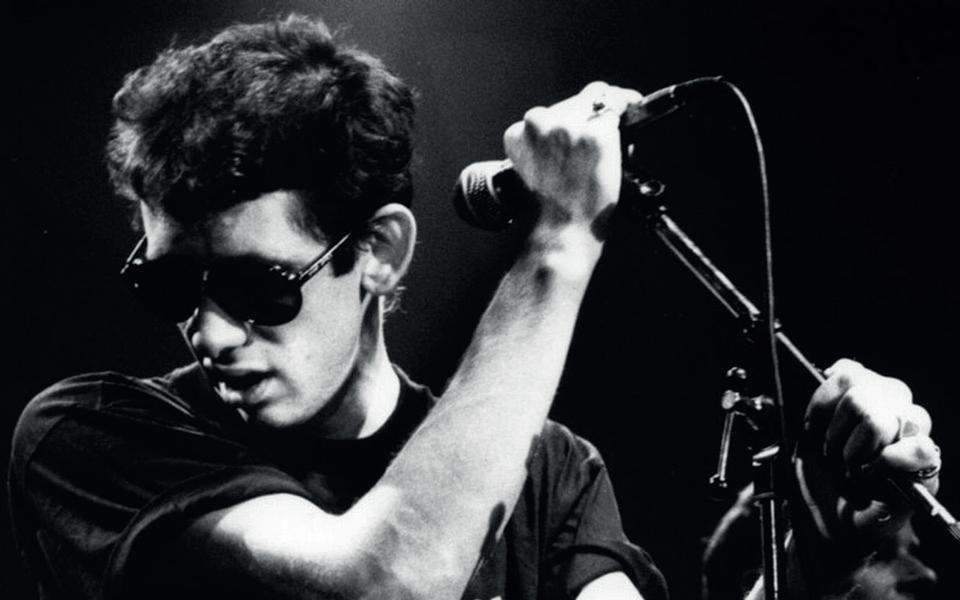
Zephaniah, Birmingham-born poet, died in December 2023. Zephaniah used poetry as a political platform. Focusing on Empire, racism and incarceration. His works include ‘refugee boy’ and ‘The British’.
One notable moment of Zephaniah’s was his turning down of honours. He publically rejected an OBE because he felt it wrong to endorse an idea (the British Empire) which he had been fighting all his life against.
Women’s History Month is a highly important time to celebrate, by all members of society, regardless of gender. This is because it provides the opportunity to highlight the achievements of women both in the past and present, who helped build the world that we live in now, this could be with, politicians and scientists for example. Most importantly, this month allows us to reflect on the work that still needs to be done to achieve full equality between genders, this is with attitudes in society regarding women, especially with sexual harassment, which still occurs. This month should be positive, and support all women, celebrating the journey in which we have gone through.
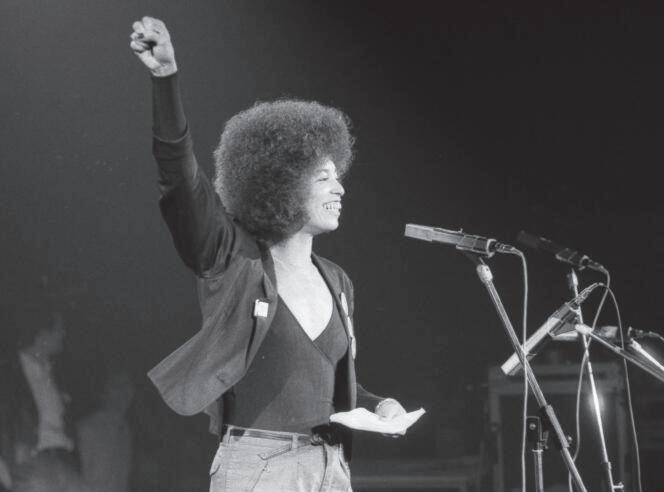
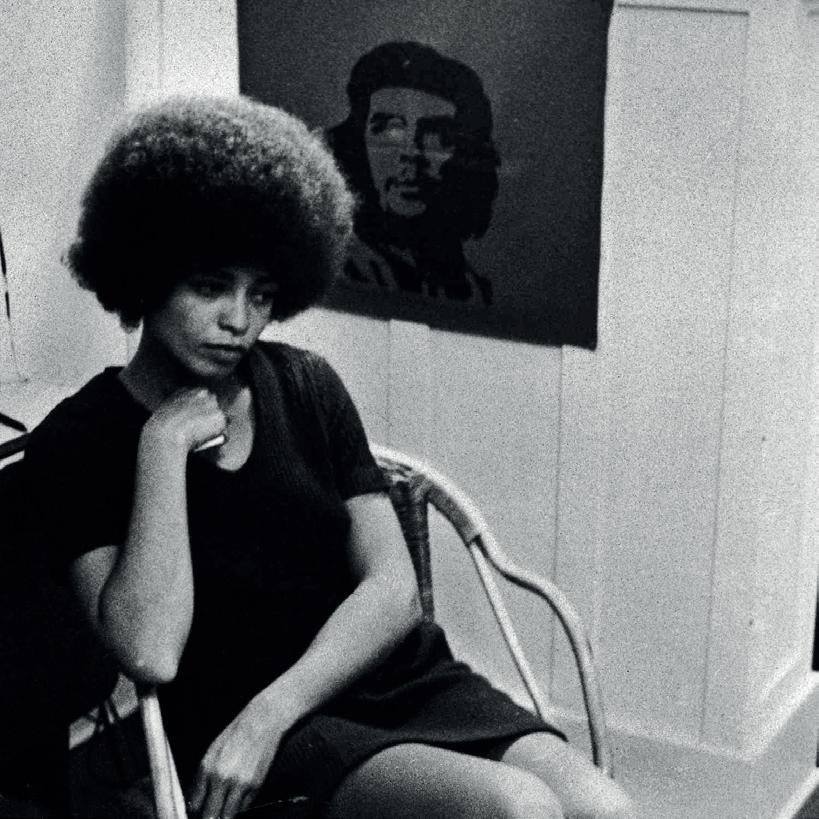
Sappho: Born in 610 BC on the Greek Island of Lesbos, Sappho is without a doubt one of the greatest poets of all time. Her poetic ouevre advocates for femininty. Often featuring a celebration of the education of girls. Plato refered to her as the “tenth muse” and was known as an ardent fan of her work. Much of her work was destroyed by the church in the 4th century due to it’s apparent homoerotic nature. In 1073, Pope Gregory VII ordered all her work to be burnt. Now only one poem remains in full and we have recovered some in fragments. Yet Sappho’s impact still remains.
Angela Davis: “You have to act as if it were possible to radically transform the world – and you have to do it all the time.” Angela Davis is one of the most prominent activists of the past century, she is one of the most key feminist intellectuals of the past century. Davis was heavily involved in the American civil rights movement. She was heavily associated with the Black Panther Party and the Communist Party. She became a fugitive from the FBI when she became supportive of the Soledad Brothers, three men (John W. Cluchette, Fleeta Drumgo and George Lester Jackson) were accused of the murder of a prison guard. Angela was charged due to her partaking in the event as the guns used were registered under her name, she was also rumoured to be in love with Lester Jackson. Davis wrote many notable books, such as: women, race, and class; are prisons obsolete and freedom is a constant struggle. Along with many more.
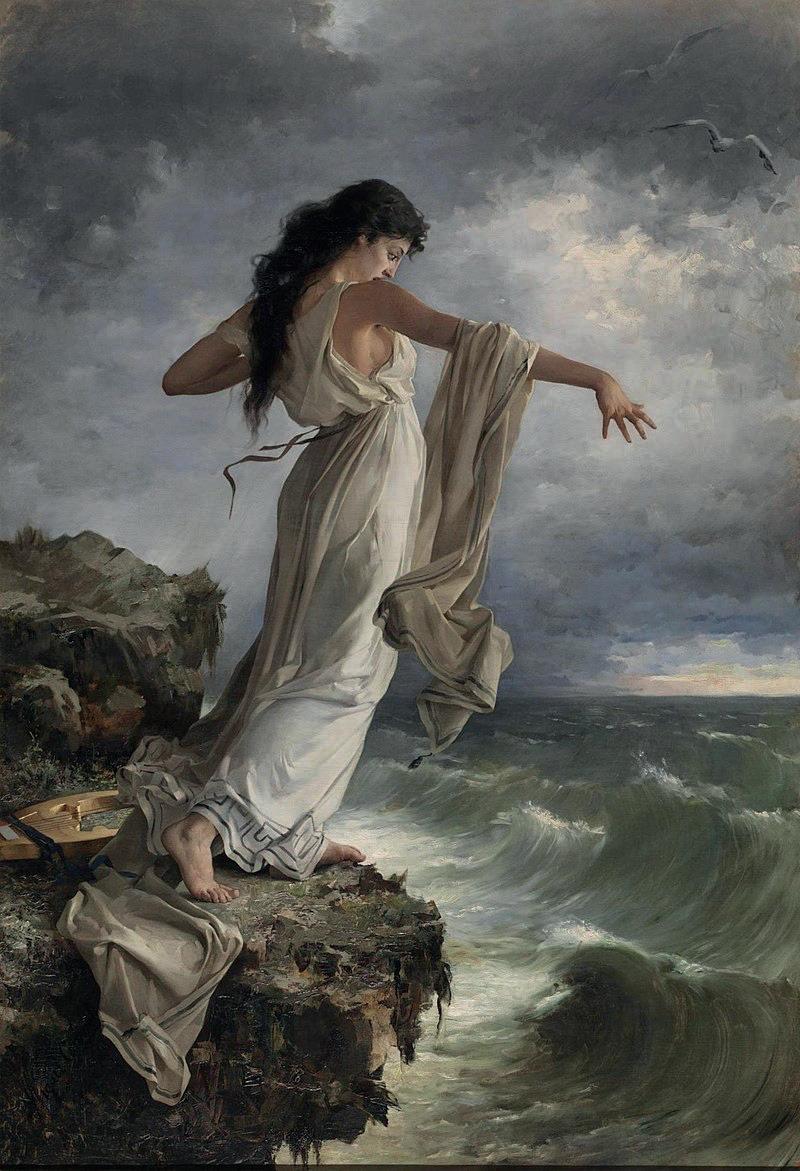


Agnes Varda: The pioneering Belgian filmmaker, known as the grandmother of the French new wave, once said that “I tried to be a joyful feminist but I was very angry.” Varda used film as an emblem of political outcry. Travelling to places like Cuba and America to document figures such as Castro and Huey P. Newton. Regarded as her magnum opus by critics, Cleo from 5 to 7, explores feminist themes such as opression and acts a cornerstone of the French new wave movement. This film in particular counters the attempts made by previous directors in the movement, in particular Godard’s Vivre sa Vie, which had failed to capture the organic elements of womanhood. Cleo from 5 to 7 focused on the overt sexual nature of societies portrayal of women and remains a poignant example of feminist filmmaking. Scorsese knew her as “the God of filmmaking.”
Catherine of Siena: Born in March 1347, Catherine of Siena held a potency within the church that very few women had during her lifetime. She was a key voice in persuading Pope Gregory XI to return the papacy back to Rome from Avignon. Catherine advocated in favour of reform to the Catholic Church, specifically on the notion of corruption. She notioned that it was against God’s vision for the Church to be selling religious positions and favours. Her work ‘the dialogue’ remains potent within the theological canon and acts as a basis for guidance on issues regarding spirituality for many Christians.

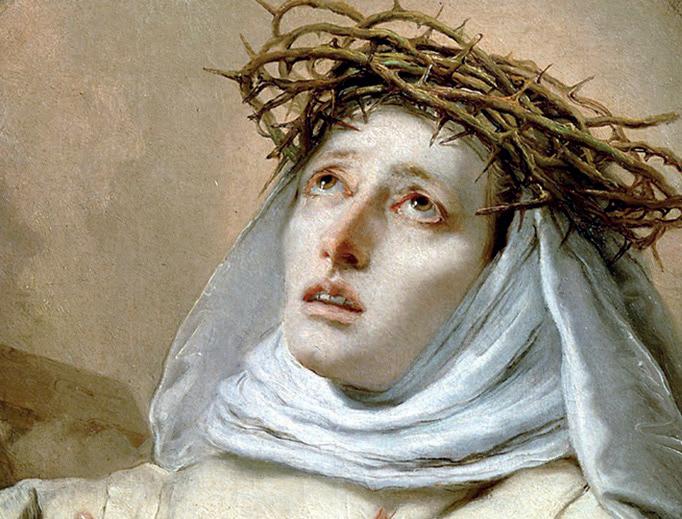
Frida Kahlo- Born in 1907, Frida Kahlo was an iconic Mexican painter, best known for her self portraits- which deal with the topic of identity, specifically hers. Kahlo is remembered for her use of bold, vibrant colours within her work, which adds a sense of uniqueness within her. Not only is she celebrated in Mexico, for her attention to Mexican and Indigenous culture, but she is also praised by feminists around the globe for her depiction of the female experience and form. Kahlo is recognised around the world today, for her continuation of work during a time where women did not require an equal quality of life compared to their male counterparts in society, as not only do her paintings reject traditional, patriarchal beliefs in society, she also promoted art in favour and of empowerment of female sexuality. This artist is still important to be learnt about in the modern day, but especially during Women’s History Month, as she represents those who pushed against boundaries regarding equality and raised awareness towards her culture.
Ethan Kellett
To preserve operational security and protect the privacy of those interviewed, certain names and details have been redacted from this interview. 11/01/24. Four RAF Typhoon FGR4s, supported by two Voyager air refuelling tankers, take off from RAF Akrotiri. They are embarking on a 3000-mile round incursion to deliver precision ordnance onto Houthi positions within Yemen, a consequence of their continued interference with international trade within the Red Sea, through which 15% of world shipping passes.
In the past 7 days at the time of writing, 3 US personnel were killed in a drone strike conducted by an Iranian-backed militia, A USAF MQ-9 Reaper drone was shot down in Iraq by an Iranian-backed militia. In the past 24 hours, the US has launched over 125 strikes on Iranian-linked militias in Iraq and Syria, killing 40.
To say that Air Force intelligence is vital in the current geopolitical climate would be a vast understatement.
Introduce yourself.
So, my name is [redacted]. I’m a squadron leader in the Air Force, a Puma helicopter pilot by background and I’m currently working in an operational headquarters as the air liaison officer providing air SME (Subject Matter Expert) advice for global operations.
To what degree would you say your day-to-day routine would be affected by current political events?
Significantly. My current job in HQ is 100% intelligence derived and we work in response to the government’s needs and wants, whether that be information finding for what’s going on in a country to give them the ground truth and then we’ll employ assets to either deliver kinetic effect (airstrikes etc) or to sort of an information gathering effect to effectively act as a military arm of the government. So that could be sending RAF aeroplanes down into the Black Sea to posture against Russia or it could be sending people to go and help countries that have had a disaster relief like Morocco and therefore we can go and help the people of that country and that looks good for UK government and is good for UK interests.
Would you say your response has a significant impact on those events?
Yes, there are probably two different types of im-
pacts. So one of them will have a direct impact. If you take, for example, the Air Force dropping bombs on Houthi positions in Yemen will have a direct impact on the attacks that are going on in the Red Sea, whereas something like the humanitarian aid delivery or posturing or showing of military presence in a different area would have a secondary impact. So depending on the response that, again, will probably be dictated by the government and then our higher military as to what the response will be or what the response is required to be, will dictate the kind of direct or secondary impacts on that event.
Especially given that it’s an election year, there’s a lot of rhetoric flying around about the military, would you say that there’s any kind of policy change recently that has affected your work, or the way you work?
I don’t think you’ll notice a change day to day in the military, but you probably will see, that when the financial pressure is tight, different equipment programs will be either deleted or slowed down. When I joined the Air Force in 2010 there was a strategic defence review which was a cost-saving measure to look at how many aeroplanes we had, what we could afford and how much money the government would give us and it was quite a lot less so we ended up deleting a lot of frontline aircraft and we ended up deleting quite a lot of the pilots that were in the training system to match what that government spending needed to be. So the kind of biggest impact that we see is all financially driven.
The only other bit that we do see is the government will ask us to do things and to respond, and it’s quite a can-do attitude in the military, so actually normally people say yes. And so quite often you’ll see morale in the military pretty low because they’re being told to deploy for six months to an operational theatre and then come back and then be told you’re going again because we haven’t got enough people or something like that. So the government can sometimes demand more of the military than it’s necessarily geared to provide in times of crisis.
Would you say that’s because of mismanagement, or budgetary reasons?
I don’t think it’s mismanagement necessarily. I think it is... Defence works pretty slowly, so to bring in a new piece of equipment, whether it be an F-35 or to train a helicopter pilot, it takes a certain number of years. And so with the normal flow of government changing, I guess every three to seven years of flick-
new government with a different defence secretary there will be different aims and so what could have been promised seven years ago could get changed when that program is still delivering. So there is quite a lot of... or not guesswork, but I guess a good, like best predictions as to what the government will require in three years. And we’re certainly, I think this year, everyone is conscious that there is potential for a change in government. Therefore, any of the programs or any decisions that are made now may get reversed in six, or eight months.
I was wondering what questions you might ask, and I was... I think it’s interesting being in the military where you might not agree with the operation you’re all being sent on. And so, whether it be the Iraq war or Afghanistan or the decision to pull out of Afghanistan. Oh were you involved in that, directly or?
Yes I flew, I did four tours of Afghanistan flying Puma helicopters. And we were due to rotate out just as there was, and it was forced upon us by the US, decision to pull out of Afghanistan. We would have been out there at that time. So they brought the pumas home and then it was then, yeah, evacuation of all sorts of Afghans and entitled personnel. I kind of had mixed feelings over whether we were doing the right thing in Afghanistan and trying to create them to be a Western nation when maybe not everyone wants to be. ... I don’t think anyone predicted it [the fall of Afghanistan to the Taliban] to happen quite so quickly. But when the Americans telegraphed and said, we are going to pull out in 12 months, yeah, probably gave the Taliban quite a good time to build up.
Why do you think we were in Afghanistan? We went there to prevent Afghanistan from being effectively a sanctuary for terrorists who could train and create expos, so external operations out of Afghanistan into the West and so they were materialized in 9-11 but had been brewing for a while, and they were able to do that in Afghanistan without anyone being able to touch them.
I think... there would be some fascinating lessons, which I don’t know whether we’ve ever learned, or you could learn about insurgencies. And I guess if you watch the Rambo films and look at the history then you’d know that the Afghan people are incredible, and they will not be conquered.
Why do you think the Houthis started attacking international shipping?
I think they started initially kind of responding to, in protest of Israel-Gaza, where I think they’re now
doing it to kind of get themselves back on the world stage and show that they can well, prove that they can combat the West.
It will be interesting to see what the UK and the US continue to do because, as you say, the amount of shipping that flows through the Red Sea, I think is down to 25% of what’s flowing through normally, shipping is going around the Horn of Africa costing a million dollars extra per tanker. And then just sort of the, I guess what the West stands up for, which is sort of free flow of waterways, is being blocked, and so there’s been some pretty tactical choice of the sites that have been the targets that have been destroyed in Yemen, and it will be interesting to see where the US goes next because I think they’re going to keep punching them in the face basically until they stop and it will be very interesting to see whether that is effective or not.
Biden is all about de-escalation, or he at least claims to be, but I don’t think you can de-escalate the Houthis. I think as long as they’re receiving money from the Iranians, and equipment and training, they will continue.
Yeah, so I think there’s a mixture of homemade USVs (Uncrewed Surface Vessels) and then quite a lot of build-your-own kits as well of different UAVs. So, whether you can actually affect the supply chain potentially, rather than destroying targets in Yemen and that would therefore stem the flow of lethal aid and therefore would prevent RSI or whether you could use politics to change it rather than using the military, which I think again probably is going to have to come into it because I don’t think you’re going to make the situation better by just blowing things up as we’ve kind of demonstrated in the last couple of years.
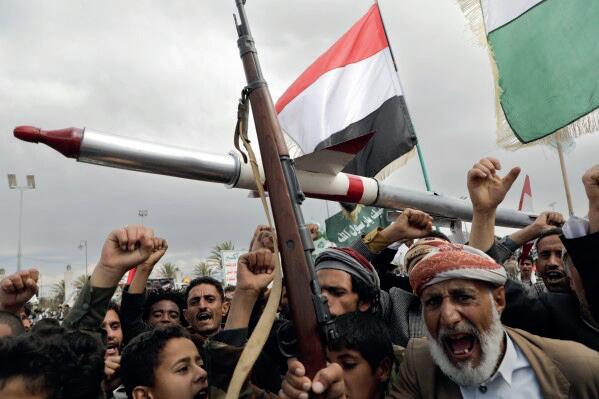
I think the strikes, though seemingly the right decision, have inflamed tensions further, and the Houthis are kind of... rallying against the West more so than before
And I think that’s probably an interesting bit for your politics lenses. Looking at how the whole of government works together on these sorts of issues and so it’s not just the military responding in one way, it will be the FCDO, the Prime Minister, the UK intelligence services, everyone together working for UK interests, again all led by UK government. So we are only a military arm of the government and we do as they will. Interesting that you’ve got a new defence secretary who has no military background, but calls all the shots for what the military will do in crisis responses.

So it’s an incredibly powerful position for Grant Shapps to be in currently. With no military background, and therefore you just have to listen to your experts who could be not necessarily telling you the truth, that’s incorrect, but yeah, will have an agenda of their own and therefore he’s got to still decide what government wants. So big decisions will go through him, but then the PM will sign off on them and so that power that the PM has is pretty impressive as to just the amount of workload and things that he has to be aware of and acknowledge and sign off with effectively very little information. So we end up, me at my desk, writing an issue into two pages, which then will get condensed into one page, which then get briefed into a paragraph and then will get briefed up the chain. And so the higher up they go the less time people will have to read the issues in detail.

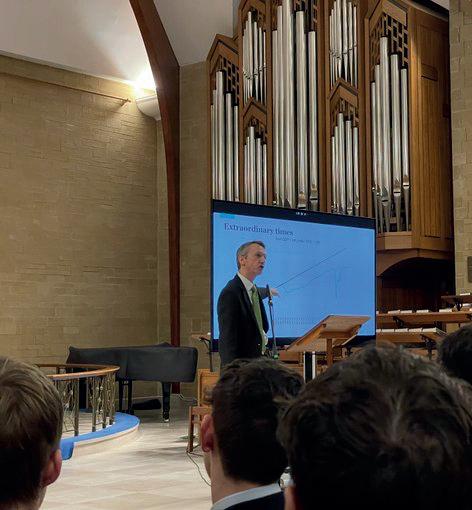

Rotary Debate
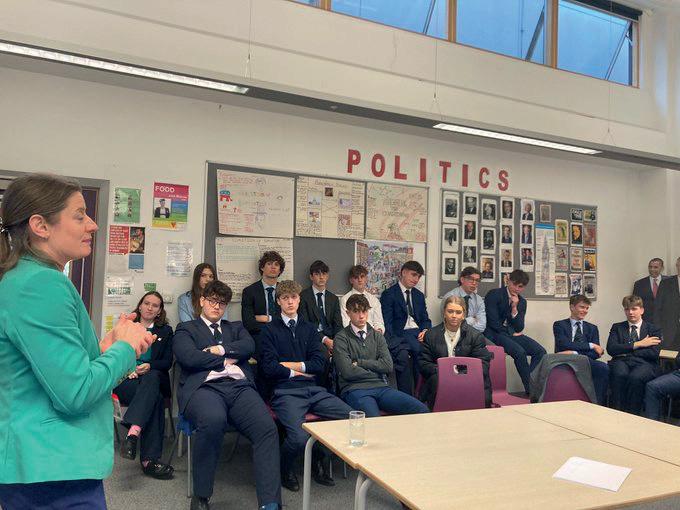
Helen Maguire (the Liberal Democrats candidate for Epsom and Ewell) spoke to senior politics students

England, students
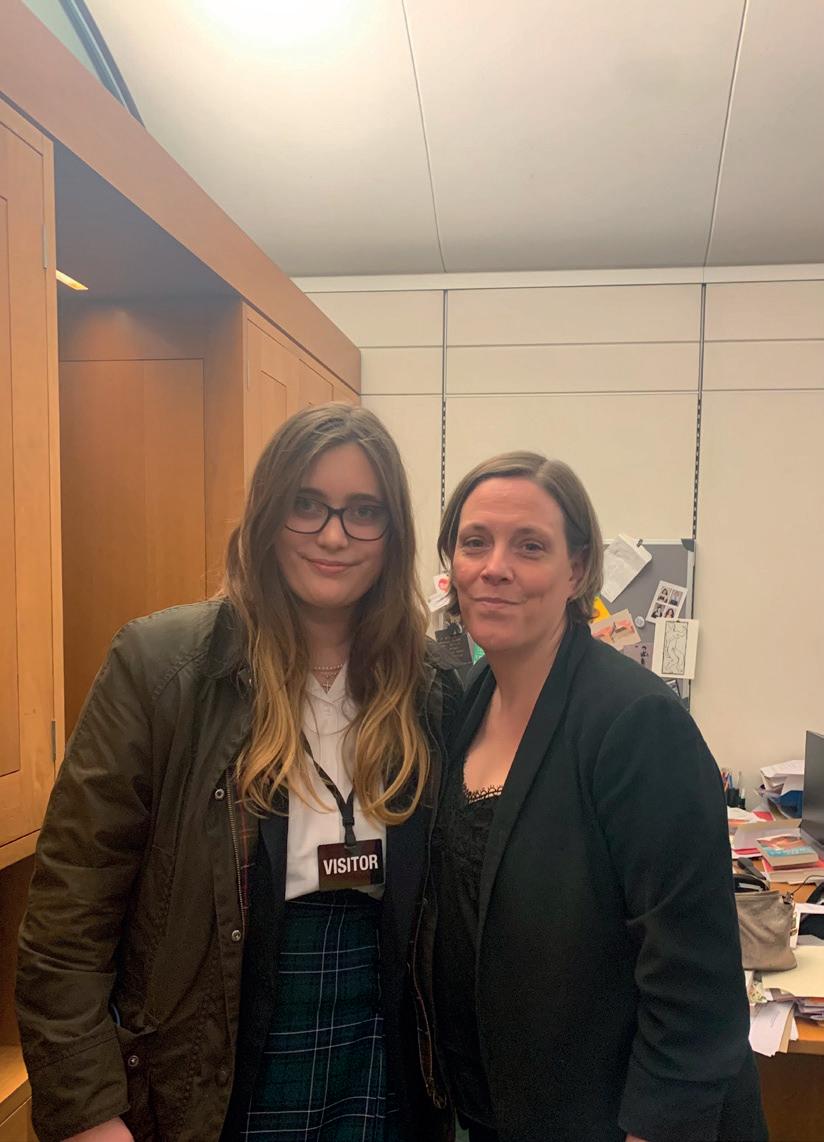
Upper Fifth Charlotte Clee interviews Jess Phillips MP (listen to the interview on Politicised)
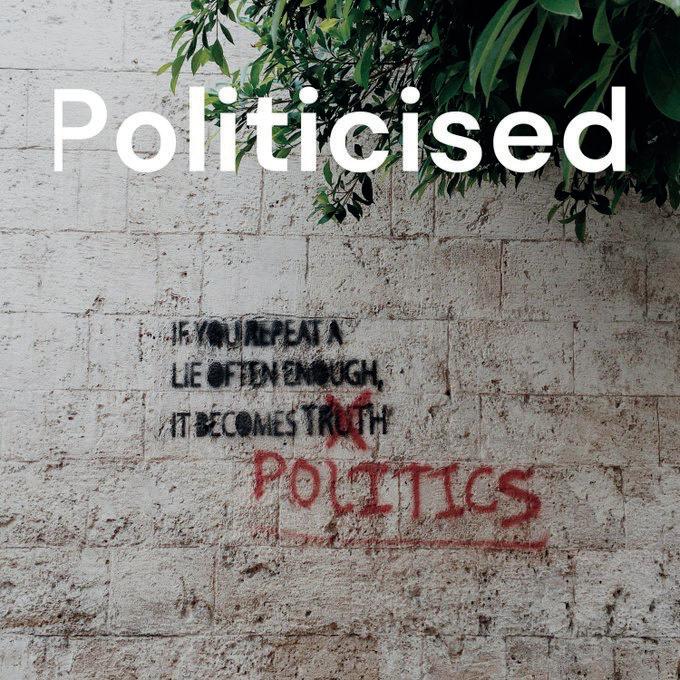
Latest episode of St John’s politics podcast on liberation theology. This features Charlotte Clee, Hannah Bearham and Rev. C.M Moloney