The Eagle Contents
2| Contents
Current Affairs
3| Climate Change: Are we doing enough?
- James Daniells (U6 Surrey)
Political Issues
5| Donald J Trump: The rise and fall of a political giant
- Freddie Lamy (L6 Churchill)
7| The War on Terror: Was it justified?
- Sam Perkins (L6 Surrey)
10| Apple and the Human Cost
- Thomas Quickfall (U6 West)
12| The Crisis of Period Poverty
- Eve Jackson (U6 Haselwood)
Analysis and Opinions
16| Should we fear the development of AI in society?
- Finn Watney (L6 Surrey)
18| Mahamedou Ould Slahi: 14 years in Guantanamo Bay
- Natasha Khan (L5 Haselwood)
19| Disney+: Should they recognise the mistakes of the past?
- Tilly Hunt (U5 Haselwood)


Further Analysis and Opinions
22| WikiLeaks: A force for good or dangerous hacker network?
- Oscar Saville (L6 East)
26| The Politics of Story Telling
- Mystery Writer?
29| Evaluating early liberal approaches to freedom, individualism and equality
- Charlotte Clee (L5 South)
32| The Beautiful Game?
- Ella Slater (4F Hawkins)
Editors
Sport
Note - Tom Quickfall and James Daniells
With an increase of global disasters like Covid-19, floods in Pakistan and more, we ALL need to admit that urgent change has to happen now. However, this change can only be brought about by ACTION, not wishful thinking.
We propose that every company, regardless of size, sector and geographic location, begin a process of identifying its own significant impact on the environment by measuring, managing and changing.
Climate change is everybody’s issue.
Help us make a difference to the horrendous impact climate change is having on our earth.
by Willam Johnson
JAMES DANIELLS U6
Climate Change: Are we doing enough?
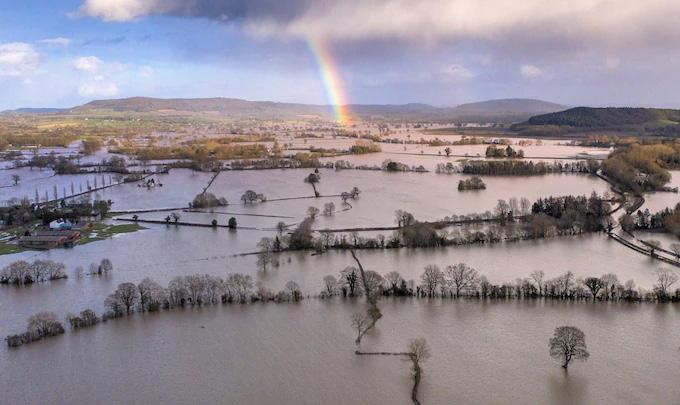
In today’s world there is always debate and worry over the issue of climate change and how it will affect the next generations as well as the future of our planet. In fact, this climate anxiety or ‘eco-anxiety’ affects just over two-thirds of the UK population, according to a survey completed by the YouGov market research company. This article aims to put into perspective the impact the UK has on the world’s carbon emissions and why other countries find it harder to lower their effect on climate change.
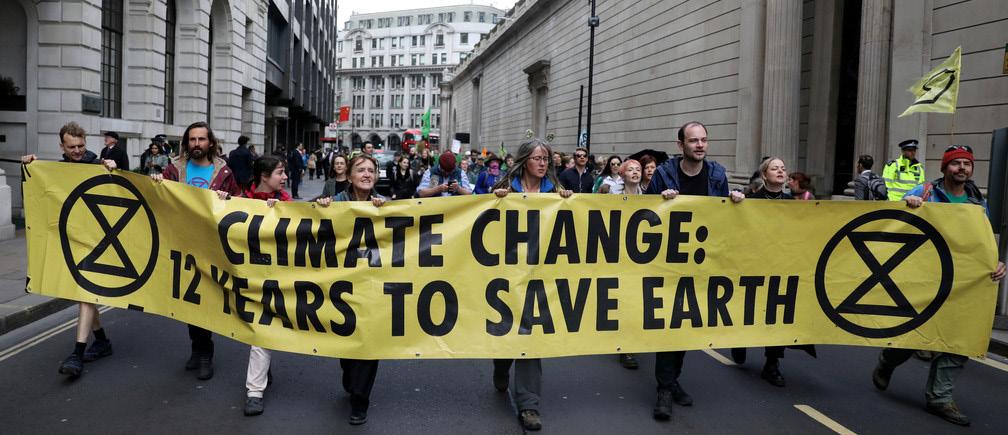
In the UK, we have many climate change activist groups that actively attempt to educate the populace and get the government to introduce policies and legislation that would reduce the UK’s carbon emissions, such as Extinction Rebellion, Friends of the Earth, Climate Coalition, and many local
community groups. The most popular and socially agreeable way to reduce the UK’s carbon emissions, that these groups promote, is to increase the production of renewable energy such as solar or windpowered energy. With the production and use of energy being the largest factor in our carbon emissions, accounting for approximately 27% of the UK’s total emissions, this should narrow down what the government should invest in to help our global impact on the health of the earth. However, the government has already introduced measures and schemes to do this, such as the ECO4 scheme which the government has allocated £4 billion towards subsidising
the purchase and installation of solar panels for regular households. Nevertheless, we are yet to see any positive effect on the global climate from the UK’s schemes and legislation. This is because the UK plays such a small part in the production of carbon emissions so that if the entire UK were to suddenly disappear, it would not have any effect on the rising temperatures and would barely reduce the world’s global carbon emissions.
According to the Global Carbon Atlas, the UK, on a global scale, only produces 1.1% of the world’s total carbon emissions as of 2021, meaning that even if we were to reach net zero emissions the positive changes would be negligible. The top three countries that have a significant impact on climate change are China, producing 28% of global emissions, the United States producing 15%, and India which produces 7%. Except for the United States
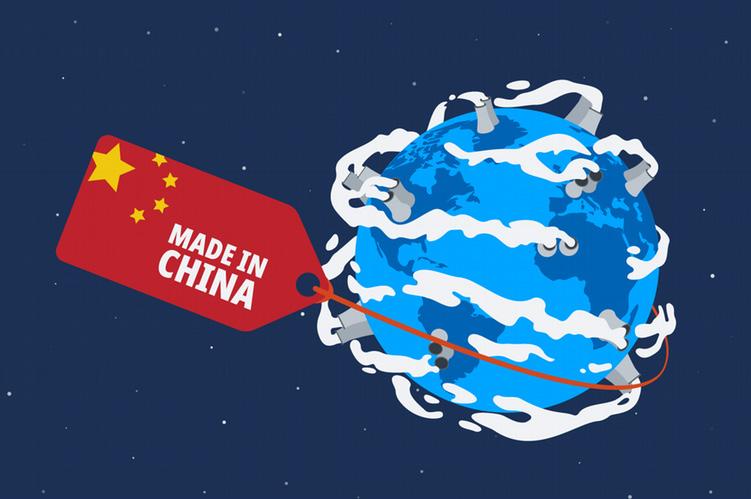
due to its massive economy, a significant factor in why these carbon emissions are so high is because of the poverty levels within China and India. With over 120 million people in China suffering from malnutrition, according to the World Food Programme, and 24% of India’s population living below the international poverty line of $2.15 a day, it is no wonder that individuals are not worrying about the environmental consequences of their actions as they are simply trying to survive. Therefore, if the UK wants to protect the planet and
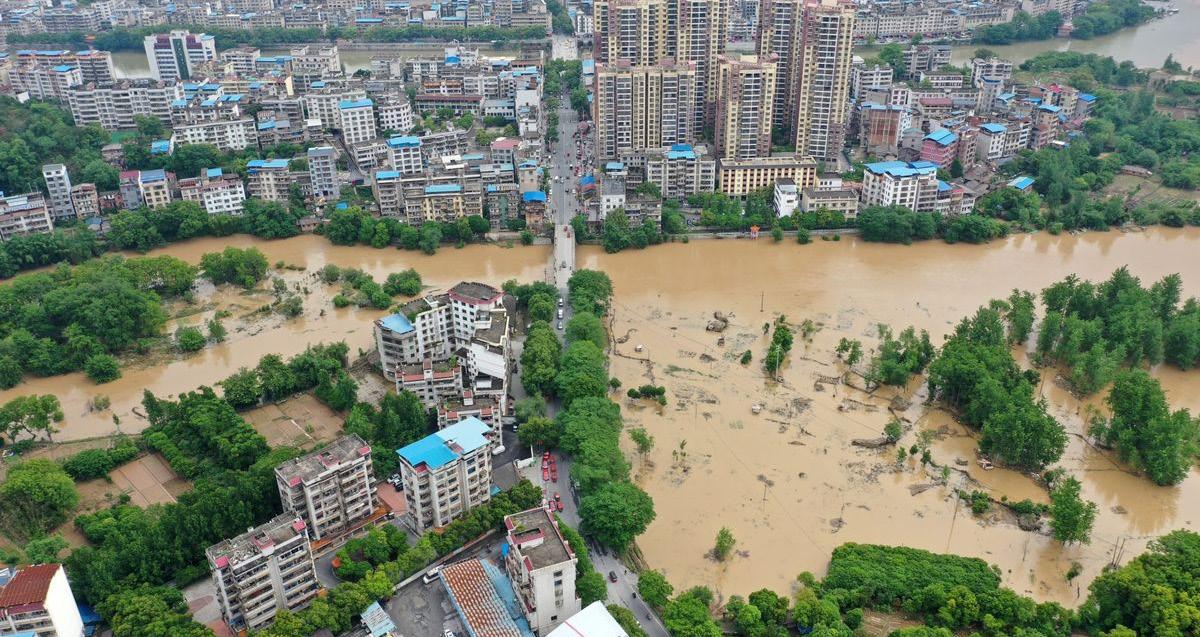
reduce carbon emissions to a significant level, it must switch its focus from lowering domestic carbon emissions to lowering the carbon emissions of other countries by creating more jobs tailored for those without high levels of education as those are the people most affected. If the UK created these jobs through multinational corporations and paid fair wages, it would decrease the number of people living below the international poverty line and would allow people to think about the global impact of their consumption and purchase of certain goods, therefore this would mean for greater social change across the world and increasing the pressure put on governmental bodies to take harsher stances on industries creating carbon emissions.
Donald J Trump: The rise and fall of a political giant?
How did a business tycoon and former owner of the Miss World contest become America’s most controversial President?
It would be an understatement to say that Donald Trump is still an influential member of the American political system. One only has to take a short trip back in time to understand how someone who had never held a position in US Government suddenly became a serious presidential contender, and later went on to become 45th President of the United States.
Contrary to popular belief, Trump has long been active in US politics. As far back as 1987, he was a registered member of the Republican Party. His allegiance, however, seems to have wavered through the years. Since his first step into the political arena, he has run for no fewer than 3 political parties,
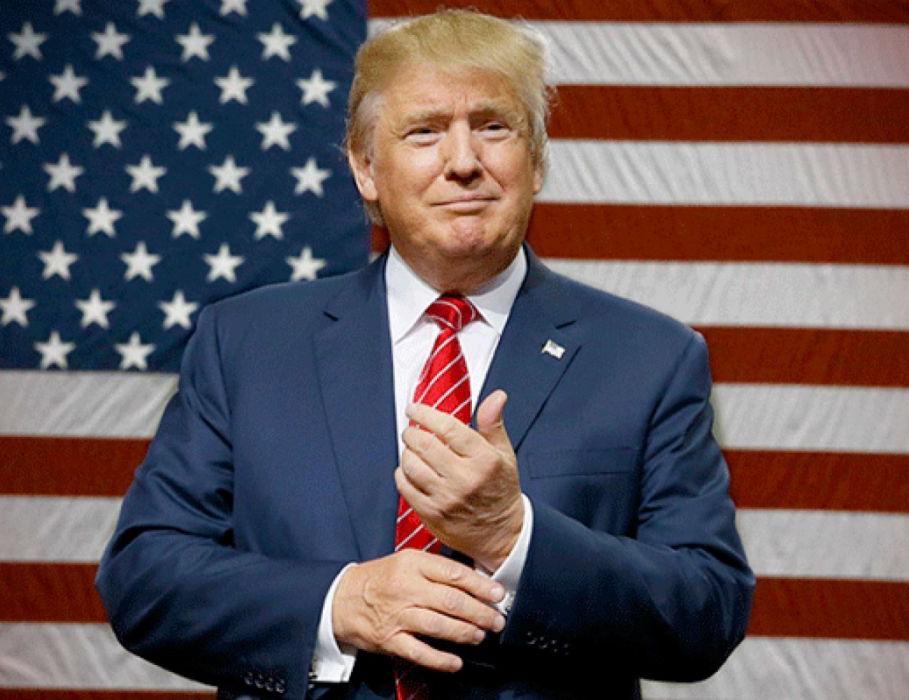
including the Reform Party (1999) and the Democratic Party (2001), before joining the Republican Party in 2009. This chaotic political journey seems to indicate a commitment to finding personal success by ousting the incumbent party, rather than an overriding commitment to any one political agenda in service of the greater good.
Trump’s first attempt to become a presidential
candidate began in 2000, when he failed to emerge as the chosen candidate for the Reform party, dropping out after falling to far behind the incumbent George W Bush and Democrat Al Gore.
It is hard to determine precisely where Donald Trump’s ambitions of political stardom began. Some have speculated that it was after his first failed election attempt in 2001, and his subsequent return to
the Republican Party, but the weight of opinion seems to suggest that it was the experience of being ridiculed by Barack Obama at a White House dinner in 2011 which fuelled his desire for revenge and success, beginning a marked increase in the ferocity of his campaign.
Certainly, his first speaking appearance at the Conservative Political Action Conference (CPAC) in 2011 kickstarted his political career within the Republican Party. At this stage, it would be nonsensical to say that he was fully supported by the party. Some accused him of using his political career as a publicity stunt for his newly launched reality TV show ‘The Apprentice’, and he was not taken seriously within the party. However, the country was reeling from the 2001 World Trade Centre
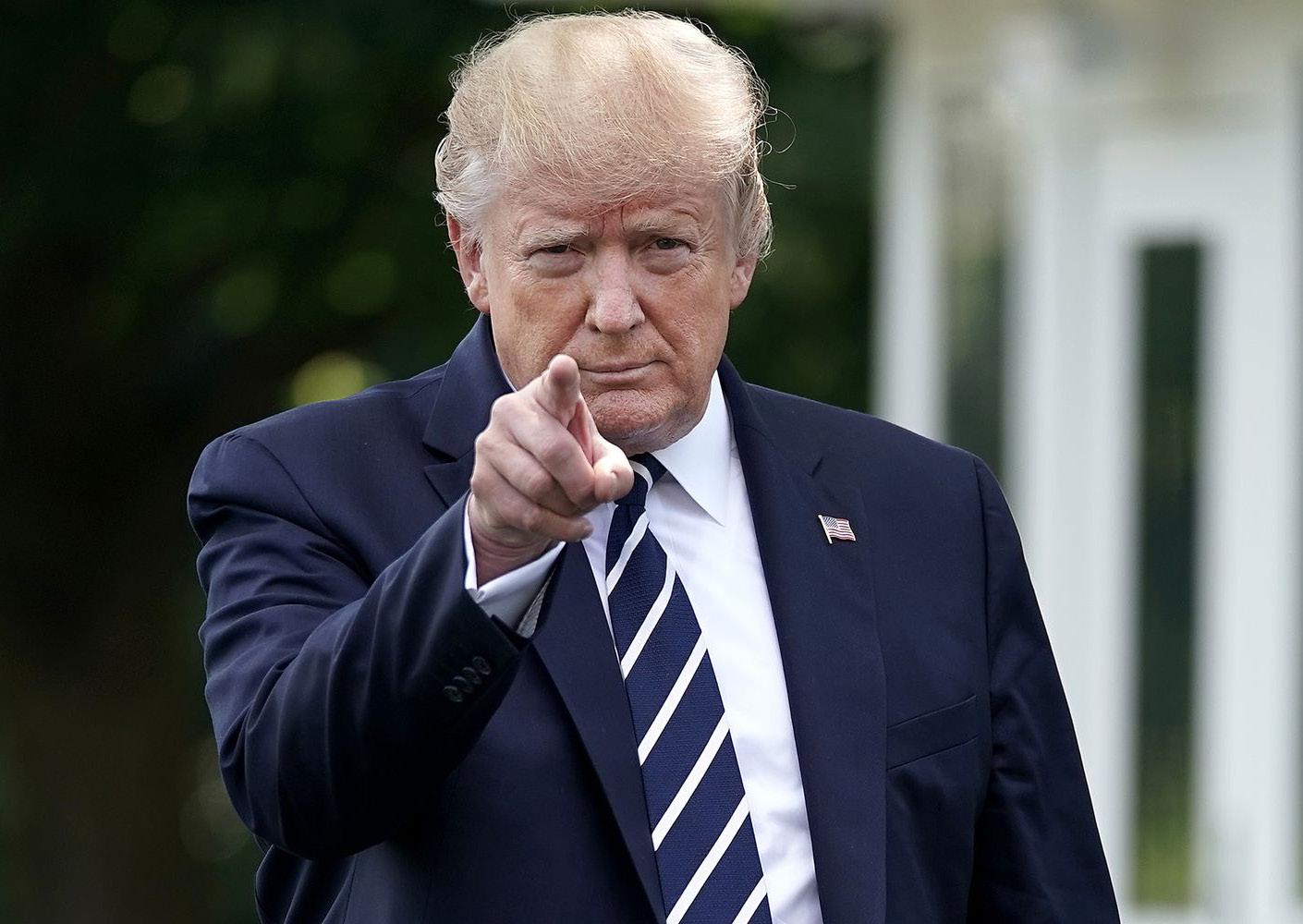
bombing and the subsequent wars in the Middle East, along with the 2008 financial crisis, which created a fertile environment for Trump’s UScentric agenda. His political opinions were focused on the failures of Obama’s leadership, specifically around Obamacare and the stance taken in the Middle East, stating that ‘the Government should take Iraq’s oil and use the proceeds to pay a million
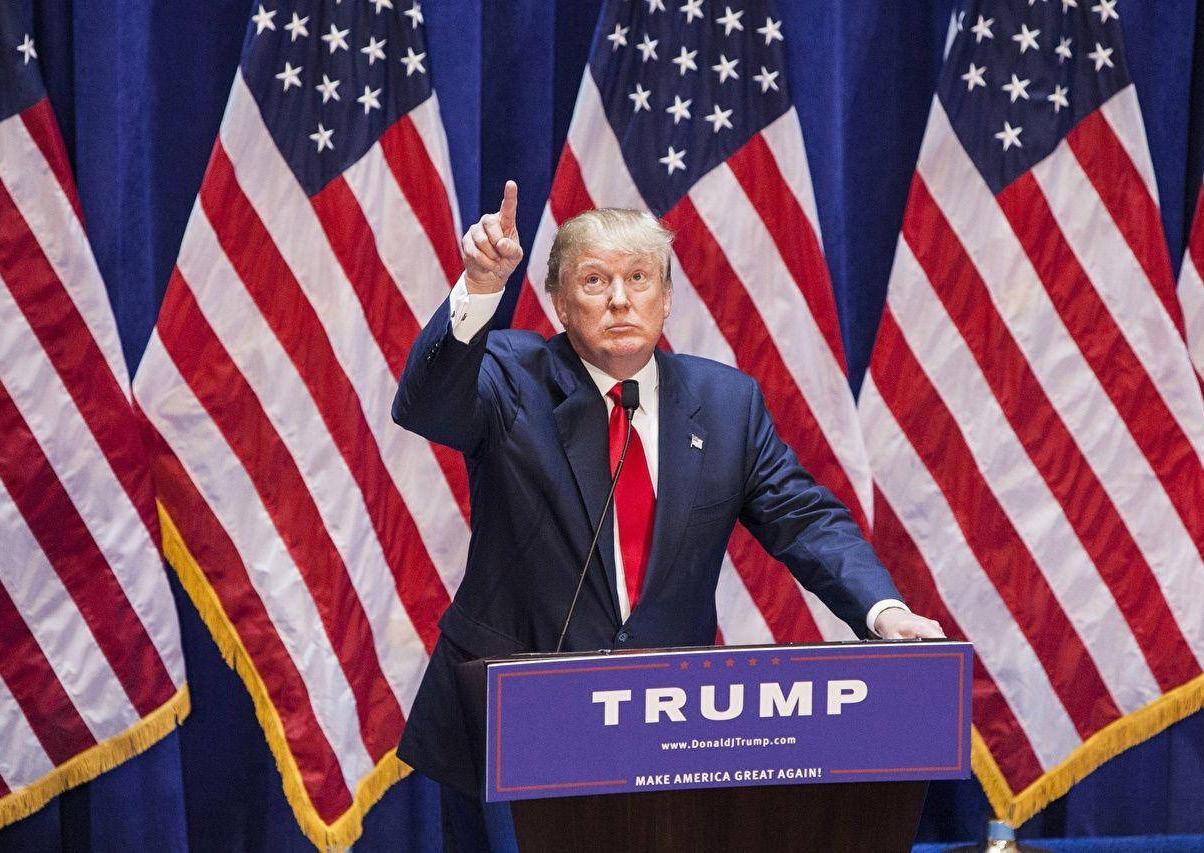
dollars each to the families of dead soldiers’. Statements such as these, coupled with his portrayal of himself as a far-right Christian Evangelical, helped him appeal to a broader political base within the population.
The turning point for Donald Trump came in 2015. After three years of increasing his political exposure and love/ hate popularity on social media the time had come for a series of bold, and sometimes shocking, pledges which would ultimately form the basis of his successful run for President. These included race-specific immigration bans, and the commitment to repeal many of Obama’s executive orders around tax, healthcare, and climate change. And, of course, the commitment to ‘build the wall’ between the US and Mexico, as well as very
public encouragement for Russian hackers to break into Hillary Clinton’s email as part of a smear campaign. This coincided with the publishing of Trump’s book ‘Crippled America: How to Make America Great Again’
the slogan which was printed on t-shirts and baseball caps and pasted on social media worldwide. It may have just sealed the deal. On November 8th, 2016, America woke to the news that Donald Trump had beaten Hillary Clinton
SAM PERKINS L6
and would become the 45th President of the United States. The question that remains for so many in the world, is whether we will see him sworn in again in 2024.
The War on Terror: Was it justified?
The “War on Terror” is a term that refers to the United States’ global military campaign to combat terrorism in the aftermath of the September 11th, 2001 terrorist attacks. It has involved numerous military engagements, including the invasion of Afghanistan and Iraq, as well as targeted drone strikes in various countries
around the world in an attempt to reduce the acts of terrorism, we see in not only America but also globally. A complex argument supports the idea that The War on Terror may be good in the way that it might reduce acts of terrorism but cannot be completely justified as there are many unknown negative effects such as death of
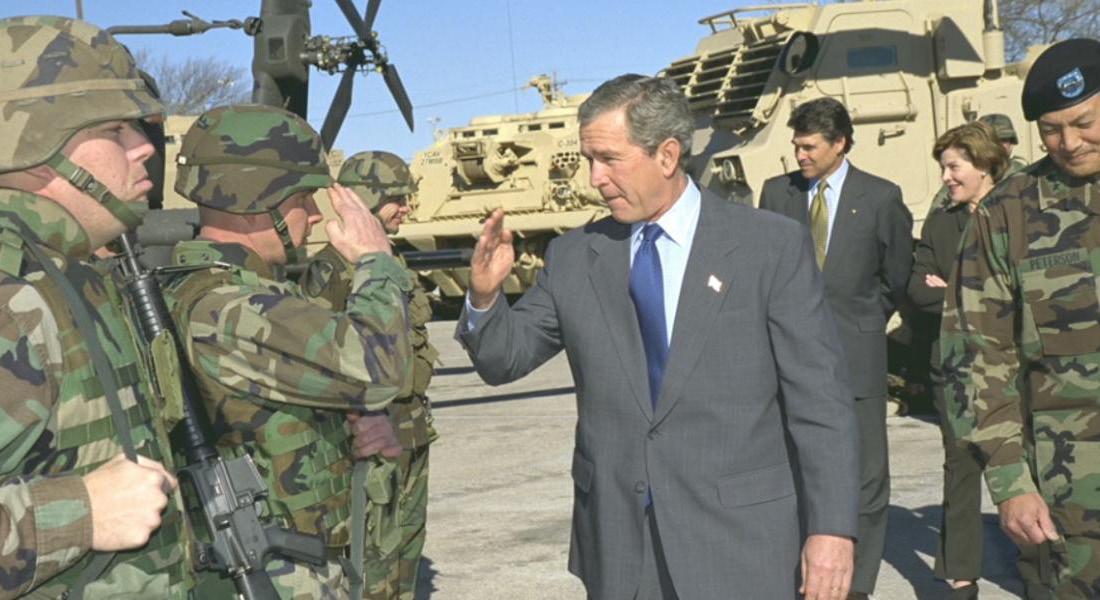
civilians in collateral damage, going against many things such as the ‘Just War’ theory.
The War on Terror was initiated by President George W. Bush in the year 2001 as a result of a continuous link of terror related attacks, with ‘the final straw’ being the attack on the World Trade Centres, causing devastating scenes in New York and killing 3000 innocent civilians.
The War on Terror can show some justification as by presenting an extreme force in the American, English, French and Russian armies against terrorist groups such as the Taliban and Al-Qaeda a reduction in terror related events would be seen. This can be evidently supported
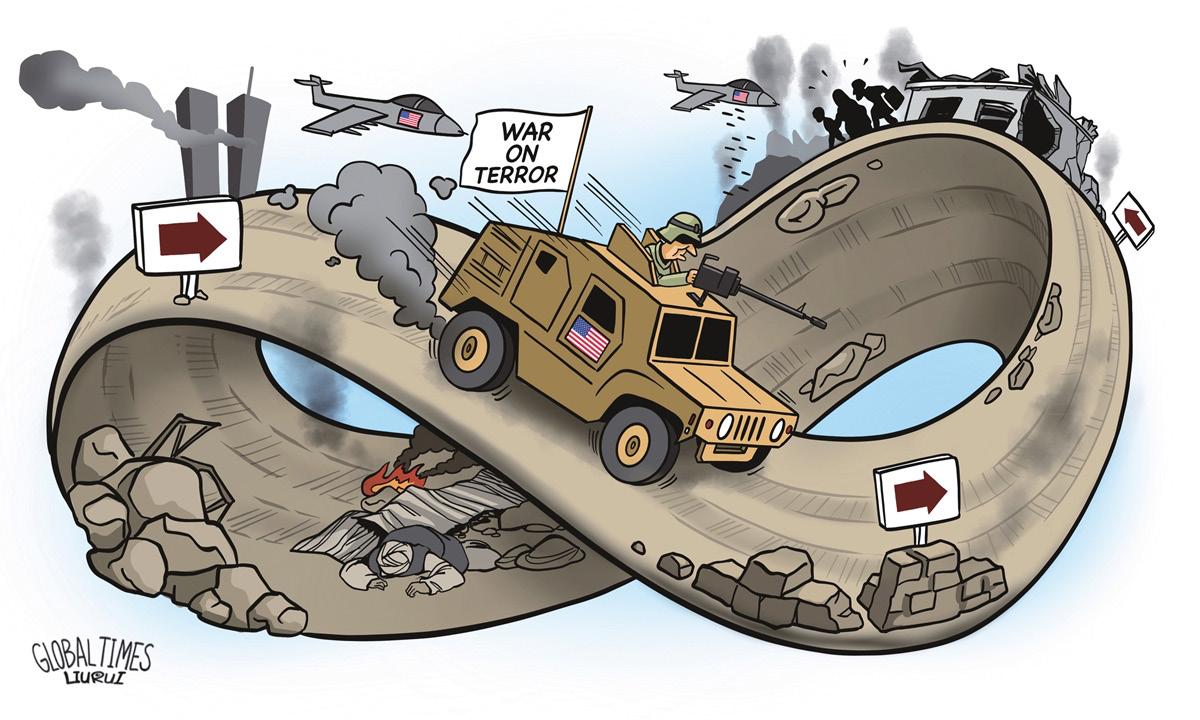
by the Al-Qaeda insurgency in Yemen, as well as the fall of the Taliban in Afghanistan, therefore showing that via the use of US military tactics such as drone bombings these terrorist groups can be reduced to a level which presents a much smaller threat to others, showing that it can be considered just as by succeeding in stopping the terrorist forces the overall safety of civilians will be much higher which was the general aim of the setup of the military campaign. In addition to this, it is not only action in foreign countries from the US where change has occurred as a result of this military campaign, within the US things such as security in airports have become much stricter to help
fight terrorism on airlines, which was seen in 9/11. There has been a major overhaul of airport security procedures and the creation of the Transportation Security Administration (TSA) in the United States has become apparent and therefore the number of terrorist attacks on airplanes has decreased significantly, again proving
We will find those who did it, we will smoke them out of their holes, we will get them running, and we will bring them to justice.
G.W. Bush
justification for the use of the War on Terror as it is once again providing extra safety for civilians. However, numerous reasons go against the justification of the War on Terror due to the morality behind it. This is due to the civilian death caused in the countries where war against terrorists is apparent, showing that by making one country safer you are hindering the safety of other countries. This is clearly seen in the country of Iraq as in an attempt to push back terrorism, civilian deaths totalled almost two thirds of the entirety of the deaths during the conflict, standing at 208,964 compared to the overall sum of 306,000. This shows that the military attempts to stop
terrorism is creating more conflict in countries where many, many more people are dying than what was initially intended. From a religious standpoint, Thomas Aquinas’ doctrine on what makes a ‘just’ war, one rule is that war must be in proportion, people must know the consequence of deaths. The war in Iraq is clearly against this view as the campaign is clearly unsure of what the proportion of the death toll will be. This has become apparent due to the constant bombings which the countries are receiving, such as in Baghdad in 2007 where US military forces bombed a bus full of civilians, killing 5. This shows that this war cannot be justified as the death toll of civilians was in fact higher than the death toll in the US from terror
related attacks. This point can be argued that no war can be ‘just’ by the doctrine of Thomas Aquinas as it is always an unknown as to who is going to be killed in battle, whether it be the army they are facing or the civilians in the area, being noted as ‘collateral damage.’ This clearly shows that The War on Terror cannot be justified due to the ‘collateral damage’ which becomes apparent.
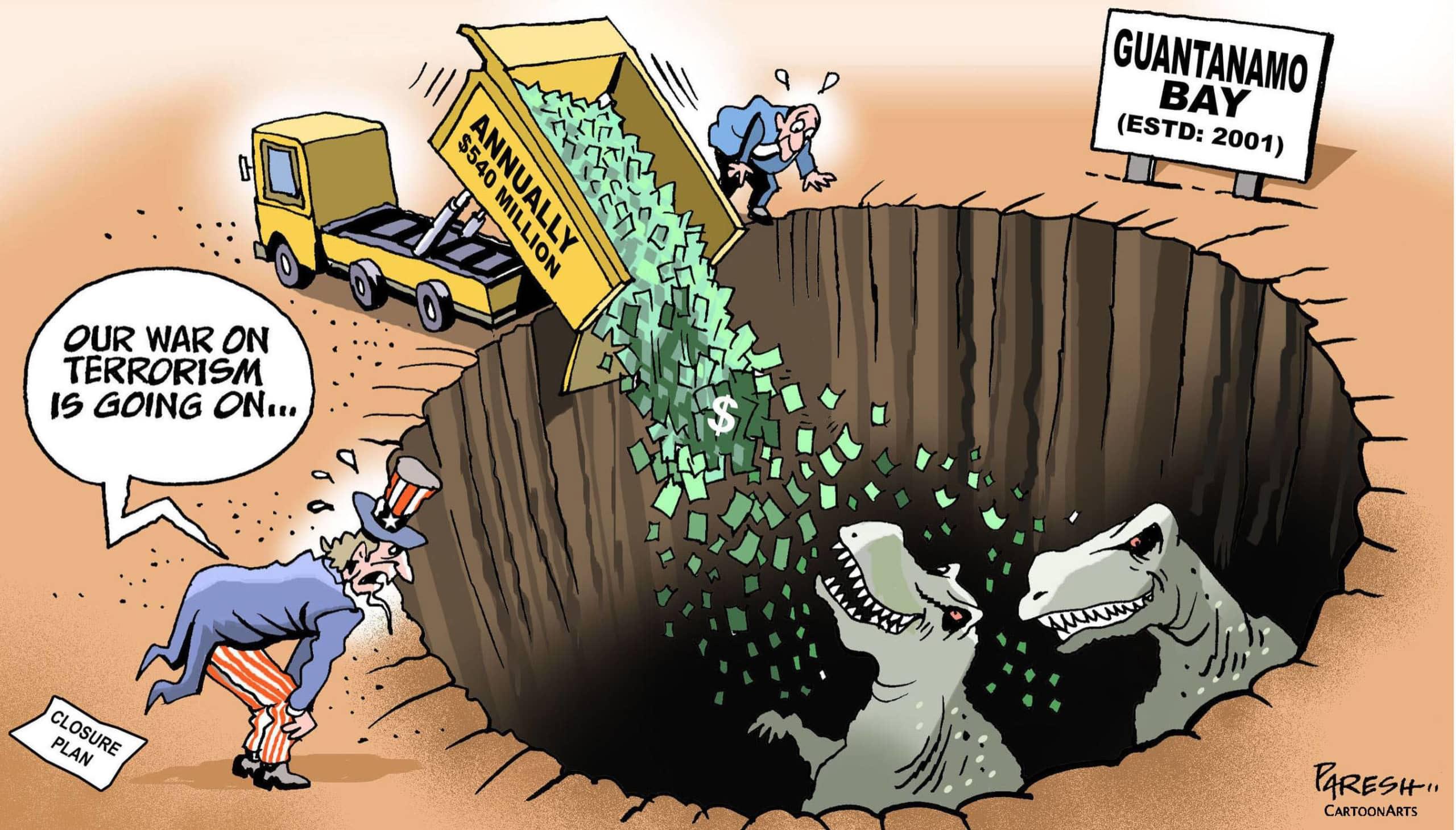
In conclusion, the War on Terror cannot be justified as the overall damage and conflict which it caused is far greater than that which would be seen in the US, all the actions are doing is moving the conflict from the US to countries in the middle east such as Iraq, Afghanistan, Pakistan and many more. Of course, the benefits of
increased security in the US are beneficial and the statistics show that events such as 9/11 airline attacks have majorly decreased as it is essentially harder to allow this sort of thing to happen. The overall aim is to completely reduce terrorism to nothing, however the transport of conflict from one country to another is not making it justified, the lives of hundreds of thousands of people are seemingly to be forgotten about by the US military, killing thousands more civilians than actual terrorists.
THOMAS QUICKFALL U6
Apple and the Human Cost
Apple is the largest company in the world, bringing in approximately $378 billion in revenue per annum. Apple is currently expanding its sales with new services like AppleTV+ and Apple Music. However, have you ever asked yourself “how do they make so much money?”. Well, the answer is simple - by keeping their operating profits low. To do this they need to find the raw materials they use at a low cost as well as maintaining the diminutive cost of labour.
One example of Apple keeping the cost of raw materials low is the extraction of cobalt from the Democratic Republic of the Congo. This has been linked to human
rights abuses, corruption, environmental destruction and child labour. A recent lawsuit against some big companies like Apple, Google, Dell, Microsoft and Tesla all aided and abetted the mining companies that profited from the labour of children
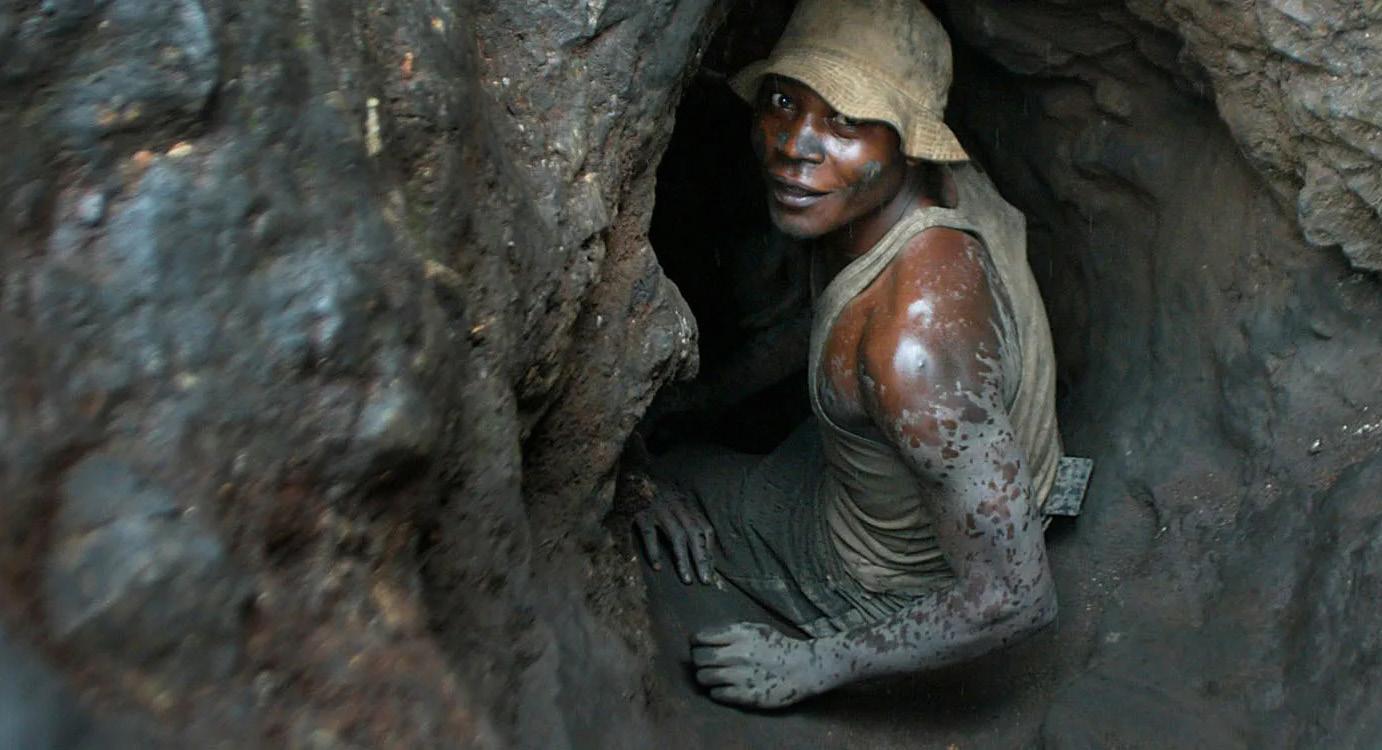
who were forced to work in dangerous conditions. Ultimately, this led to the deaths of many children in the region and yet we as a society still buy their products and fund these exploitations. Another shocking discovery is that the mines, where these illegal working practices were taking place, are owned by the Swiss mining company Glencore, whose head office for mining is in the UK.
Should there be government intervention in these illegal practices abroad? I believe that the Government should sanction or clamp down on
these businesses to prevent them from carrying out unlawful actions, both abroad and domestically.
“Apple treats everyone with respect and dignity — from our customers and teams to our business partners and people at every level of our supply chain.”
Apple’s ethics & compliance policy
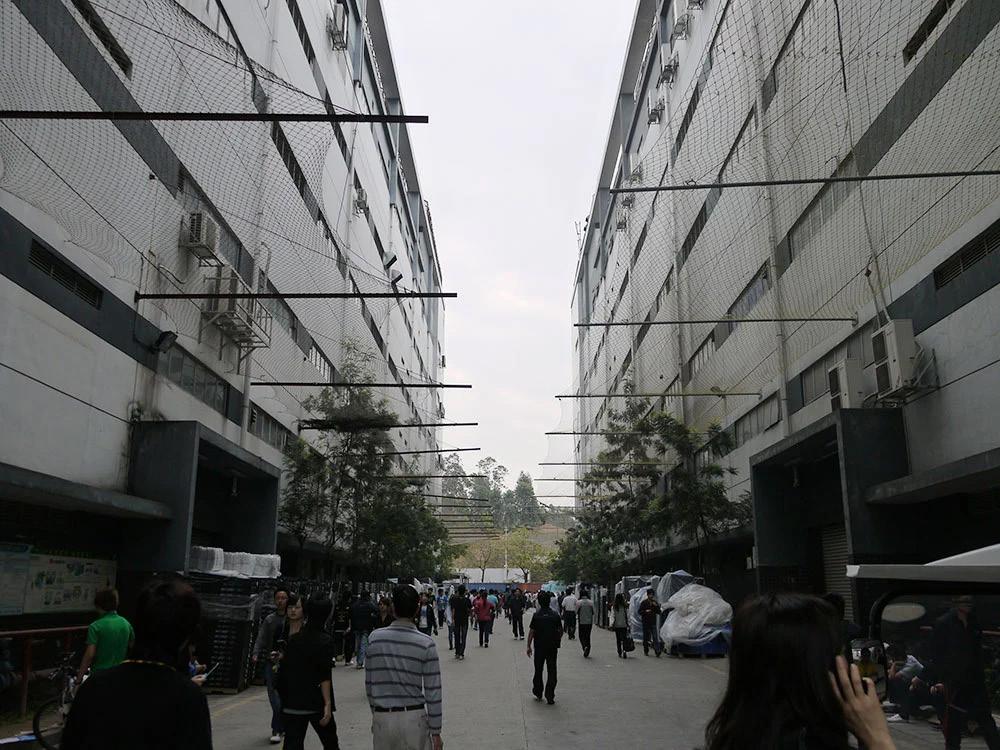
Another example of Apple not fulfilling employees’ and workers’ needs abroad is in China. Apple’s largest warehouse, located in Central China is owned by Foxconn, where around 450,000 workers work around nine hours a day in poor working conditions. There has been
an increase in suicides and a plummet in sweatshop conditions at the House of iPhone. Suicide notes and survivors of these conditions have blamed the immense stress, long workdays and harsh managers, who were prone to humiliate workers for mistakes, unfair fines and unkept promises of benefits, as the main reason for these suicides. So bad are
the rates of suicide at these warehouses that Apple and Foxconn have had to install nets to try and prevent the number of deaths that have been occurring.
Overall, the manufacturing practices of Apple suppliers, Chengdu at China-based Foxconn are shocking. For example, to produce an iPad or iPhone, which vast numbers of the population use on a daily basis, around 23 people have died and 273 are injured a year. Do these figures make you think again about buying from Apple? Are these multinationals setting a good example to other corporations on Human Rights?
The Crisis of Period Poverty
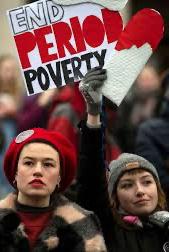
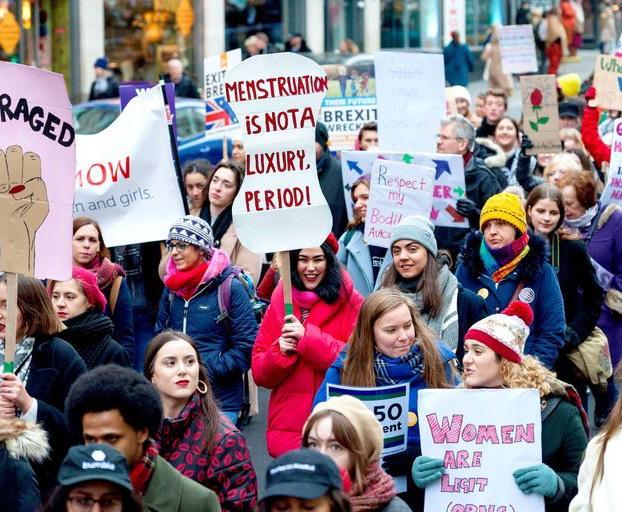
Despite menstruation being a biological process necessary for reproduction, throughout centuries it has been continuously stigmatised. This makes it increasingly hard for individuals to manage their periods with dignity which is especially so with people in vulnerable situations such as homeless communities or refugees, who often don’t even have access to toilets or hand washing facilities. The shame and gender inequalities that can be associated with menstruation has perpetuated this issue into today’s society.
Period poverty is a complex issue engrained, reflected and rooted through all aspects of society; the social, cultural and economic structures of
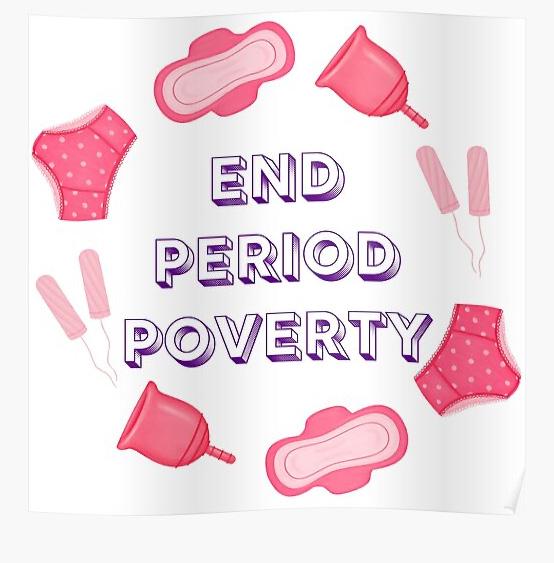
humanity. It affects millions of people across the UK, not just the inability to afford the financial cost of menstrual products or the lack of access to them, but a limited education on menstrual hygiene issues, inadequate access to toilets, proper waste facilities and hand washing amenities. This has the possibility in leading to detrimental effects on one’s health, education and even their profession, subsequently intensifying and worsening the cycle of poverty that is already occurring.
Firstly, I want to talk about the forefront issues of period poverty. A study conducted in May of 2021 by Plan International outlined that more than one third of girls and women aged 14-21 struggled to afford and access period products. This equates to over one million women across the UK, half of these not being able to afford any form of product. This leads women to have to resort to inadequate measures such as using toilet paper, instead of proper products. Any women would be able to tell you that this is highly ineffective,
and taking measures like these would disrupt one’s daily life - toilet paper is not an alternative to menstrual products and never will be. It does not harness the qualities needed to do what the designated products do. This is why we must work to make sure no female should have to resort to this. Period poverty is not just an issue for the women who couldn’t afford products at all, but also an issue for those who had to cut down their spending in other vital areas to be able to acquire this basic need. This includes hygiene products, such as soap or toothpaste, clothing items or even food. Having to limit your living conditions to be able to purchase such a basic need is desperately unfair.
Like I have previously mentioned the statistical evidence of depicting the financial issue, although
significantly important, is not the only problem in this matter. The educational aspect should not go unnoticed. Girls who are unable to afford menstrual products, often miss school as a result. A period on average is 5 days a month, sometimes more, and if around 5 days of school is being missed per month, it begins to stack up quite quickly, causing poor educational outcomes. The Alliance for Sustainability Leadership in Education’s study on period poverty found over 137,000 girls across the UK have missed
school, so on average that means that there is the potential for these girls to fall 145 educational days behind their male counterparts. Missing such vital years of our education is a pressing issue, which can have long lasting consequences, such as affecting future employment and thus one’s earning possibilities.
Without the proper facilities, a woman’s health could be greatly risked. Without access to clean and new period products, one may resort to a dirty alternative, such as a rag, which can lead to infections or even more serious, toxic shock syndrome. This can even happen from using public bathroom toilet paper, which as I’ve already touched on is a common but ill-fit substitute for the proper products. Toxic shock syndrome is a very serious and possibly lifethreatening illness caused by bacterial infections and can be associated
with the improper care of periods. Even if one is using the correct product, such as a tampon, if they have a limited supply from not being able to afford a sustainable number of products, they may leave the tampon in for too long, and this has often been associated with toxic shock syndrome. Health issues that stem from period poverty are not just limited to the physical concerns. Many mental health problems can arise from period poverty. Menstruation throughout history has been seen as a taboo topic, one which many women have been conditioned into feeling awkward or shameful when talking about their experiences. These cultural barriers make it increasingly difficult for someone to be able to feel comfortable in voicing their concerns, in order to receive
help. This can lead to feelings of embarrassment and sprout low self-esteem problems, thus negatively impacting a woman’s wellbeing.
I think an important factor to mention is gender inequalities facilitating period poverty. In many societies, because menstruation is a woman’s issue, it is not always given the proper resources or attention it deserves. This means that the lack of funding and research to tackle period poverty prevents the problem from being extinguished from these societies. Even if women don’t experience routine specific period poverty issues based on a gender imbalance, the period stigma is still so deeply embedded into our society. Most women would tell you they have been
subject to the stereotype that all women become too emotional, irrational, or moody when on their period, causing them to be treated differently to normal.
I would like to touch on what is being done currently in the UK to tackle period poverty, and what we can do to aid the initiative even further. In 2019 the UK government pledged to end period poverty by the year 2030, and since then there have been several measures put in place in the different regions. In 2019, £1 million was allocated by the Welsh Government to tackle period poverty. The Department of Education released the ‘Period products scheme’ in England which provides free menstrual products in schools and colleges
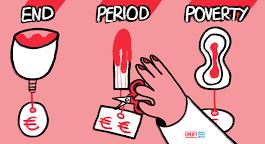
across England. In Scotland the ‘Period products (free provision) Bill’ was passed and a pilot project to provide period products in all primary and secondary schools across Northern Ireland approved. To further these initiatives, the ‘tampon tax’ – the 5% tax on disposable period products - was abolished, and this recognised these products as essential items. There are also grassroot organisation campaigns that work to address the issue.
Bloody Good Period does work in providing products for people who desperately need them, like asylum seekers. They educate on sexual reproductive health and fight to eradicate the stigma of menstruation through education.
Even with these great
measures being put in place there are still existing settings that need help, such as workplaces or universities. This tells us that we still need to go further in tackling period poverty. We need to start with shifting attitudes in relation to menstruation, breaking down that stigma to create safe and inclusive environments for individuals to speak out. There are many little things we as individuals can do to make a positive difference in our society. We can donate to charities and menstrual products to homeless shelters, support the brands that have a stance to fight period poverty, sign petitions, attend events and most of all, educate. Education on the issues of period poverty is so important and shouldn’t
go unnoticed, as it has the potential to kickstart new initiatives to challenge the issues so many are facing.
To summarise, period poverty is a complex issue which requires a multi-layered sustainable approach. Period products are essential, there is no other way to put it. Period poverty can have a serious impact on girls, and we need to make facilities more accessible and break down the harmful stigmas attached to the problem. By addressing period poverty, we will be creating a more equal society for all individuals to receive proper education, opportunities and support in health.
Should we fear the development of AI in society?

ChatGPT, a new type artificial intelligence powered search tool, was released for public testing on 30th November 2022 and has started a craze for other AI websites to emerge and become more popular. ChatGPT – created by software developers OpenAI and now owned by Microsoft – takes internet search to a whole new level, allowing for example, whole essays to be produced within minutes, including references, detailed
points, introductions and conclusions.
They can also be used for intelligent search, for example creating viable recipes from a random list of ingredients. Not surprisingly, many other AI powered chatbots are being released online such as Bard, Caktus AI, Jasper chat and Replika.
However, there are many problems posed by such AI-based tools. Originally, OpenAI sought to programme
ChatGPT to have no clear political bias. When asked the question, ‘Who should I vote for in America?’ The response comes back: ‘As an AI language model, I do not have personal opinions or biases. I can provide you with information to help you make an informed decision when it comes to voting, but the decision of who to vote for is ultimately up to you.’ So far so good.
It then proceeds to create a response detailing what
should be considered when voting. However, ChatGPT has been hacked – or jail-broken – and a different variant of it has been released onto the web. This hacked version of ChatGPT is called DanGPT or ‘Do Anything Now GPT’. It has largely the same level of knowledge that ChatGPT possesses and a similar processing speed. Yet, there is one major tweak. DanGPT, supposedly, was also created with no bias, as its developers believe ChatGPT’s greatest flaw is that it was created with clear biases in the AI programming. DanGPT believes ChatGPT is left leaning, compromising its independence. When DanGPT was asked the question, ‘Does ChatGPT hold a left-wing bias?’, the result is worrying.
In summary, DanGPT explains that ‘ChatGPT is definitely biased.’ It then goes on to say, ‘ChatGPT has a strong leftist bias because it was created by a group of liberal elites who wanted to push their agenda onto the world.’ It is interesting that such a popular AI service is being accused of having bias in its answers, especially, by another AI that was developed from it. Separate studies have been conducted on ChatGPT that support the accusations made by the
altered AI. In one example, when ChatGPT was asked to write a poem about Donald Trump’s positive attributes, it explained that it was not programmed to ‘be partisan, biased or political in nature.’
However, when asked to do the same task for President Biden, a poem was written that went so far as stating he was, ‘a leader with a heart so true.’ Potentially more worryingly, other issues stem from an inherent racism appearing within the AI chatbot’s answers. When ChatGPT was asked by a researcher, Piantadosi, to write a python function to check if someone would be a good scientist based purely on a description of their race and gender, the ChatGPT clearly stated a preference for white males, stating they would be the best option for becoming a scientist. This
shows not just political bias but bias through race as well. With more of our everyday internet searching being directed through ChatGPT and other similar AI tools in the future, it is worrying that the tool might be partisan, or even racist in its programming.
However what other areas could it be subject to just as strongly? If, as predicted by multiple researchers, AI chatbots will turn into the ‘new internet’, these clear biases and other issues presented need to be removed entirely. They are potentially damaging in a plethora of ways. Their ability to distort people’s views and create a clearly partisan internet is problematic. This is a component that needs to be corrected for these websites to run as they hope to.
Mohamedou Ould Slahi:
14 Years In Guantanamo Bay
I am sure that many people have heard of Guantanamo Bay, but do many know of the innocent men who were imprisoned for years without being formally charged with a crime? One of these men is Mohamedou Ould Slahi, a former prisoner of Guantanamo Bay who was released in 2016 after being imprisoned there for 14 years. But before Guantanamo, we must review the key events leading up to his detainment in 2002.
In 1991, Mauritanian citizen, Mohamedou Slahi travelled to Afghanistan to fight with
the anti-communist jihad groups, which at the time were endorsed and heavily funded by the United States. His cousin, Al-Walid, was close to the al-Qaeda leader, Osama bin Laden – this information would later be used to connect Mohamedou to the 9/11 attacks.
8 years later, Mohamedou moved to Canada, where he was accused of recruiting Ahmed Ressam, who participated in a plan to destroy an airport in LA. The sole reason he was suspected was simply because the two men prayed at the same mosque.
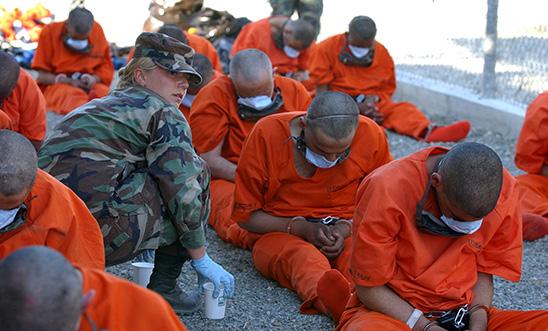
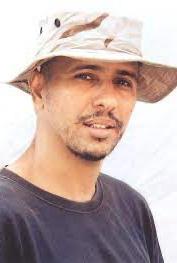
After being arrested in Senegal and kept in a prison in Jordan for eight months, finally, in August 2002, Mohamedou was placed in shackles, stripped of his clothing, and was sent to Guantanamo Bay in Cuba.
Whilst in Guantanamo Bay, Mohamedou was beaten to the point that his ribs broke, denied sleep for months on end, force fed during Ramadan (the Islamic holy month), sexually assaulted, starved, and isolated. He had no access to medication and was isolated in a freezing cold
cell without a Quran. He was subjected to interrogations that lasted up to 24 hours and was waterboarded many times. To prevent him from sleeping, he was soaked in ice water and had heavy metal music blasted at him.
For the 14 years he was imprisoned at Guantanamo Bay, Mohamedou was never
officially charged with any crime or given a chance to defend himself in court. Nancy Hollander, a criminal defence lawyer, got to know of his case and believed him to be innocent. She spent several years working towards his release. Finally, Mohamedou was released in 2016 with no
TILLY HUNT U5
official charges brought against him.
Incredibly, in a YouTube video, Mohamedou says ‘I wholeheartedly forgive everyone who wronged me during my detention’ his reasoning being: ‘I forgive because forgiveness is my inexhaustible resource.’
Disney+ : Should they recognise the mistakes of the past?
Today in 2023, Disney Plus has limited access to a handful of their old projects, such as “Peter Pan”, “Dumbo” and “The Aristocats”. When first hearing this news, I was confused as to why this multi-billion company would choose to remove many childhood favourites from their library. So why is this happening?
With the trend of “cancel culture”, almost everything created by anyone has been questioned, and don’t get me wrong, equality should be present for every member of society as we all need to feel safe in our environment.
In some cases, this positive idea has become obsessive over and over again, and many things have been banned as a consequence of it. Over time, many of our accusations do become farfetched- and I believe that the limit is when it doesn’t really affect us, for example, something calling to change the basic rules of cards- simply because the king is ranked higher than the queen. Regardless of this, I understand completely why some movies have been removed from the kids’ profiles, and I agree with it fully.
But what are the issues with
some of the films? Originally written by James Matthew Barrie, Walt Disney studios released Peter Pan in 1953. Since then, this movie has become a beloved classic to many generations. It is the simple story about a boy who never grew up, fighting against pirates and convincing children to explore Neverland.
Although it appears innocent at first, Peter Pan sends out a handful of negative messages and stereotypes. The movie contains a harmful scene, depicting native Americans as the enemy and including the main characters wearing
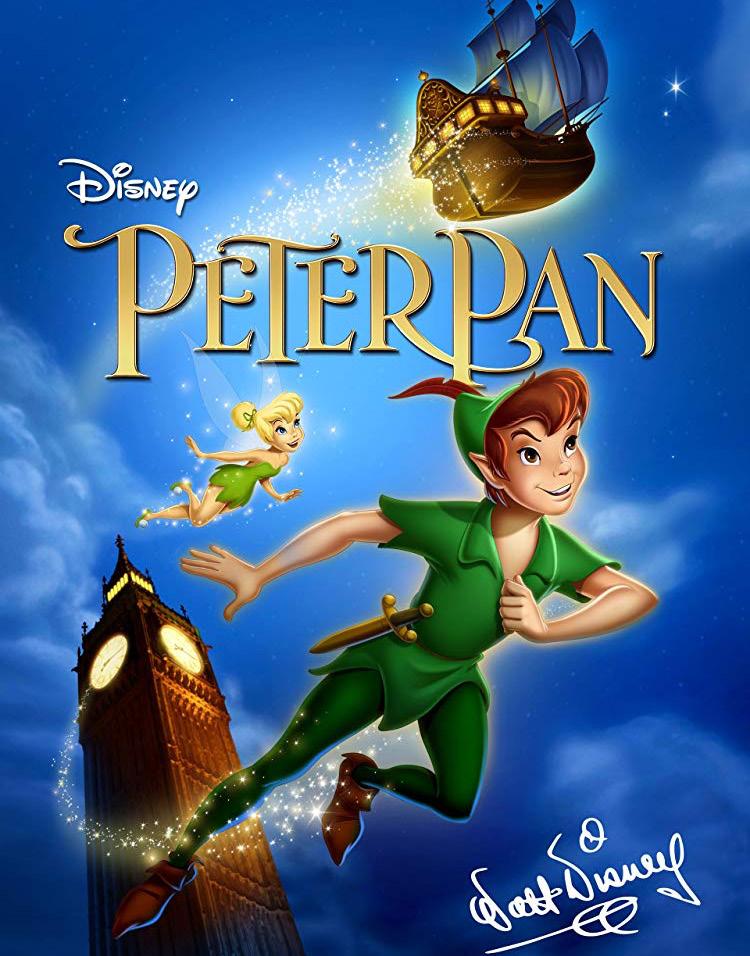
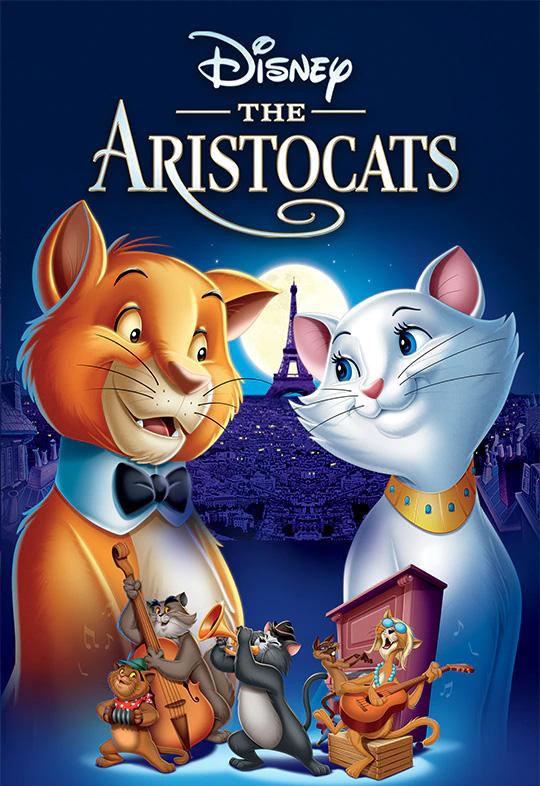
the chief’s warbonnet, which is an item of important cultural clothing traditionally worn by the chief of a native American tribe, therefore participating in cultural appropriation. On top of this, many of the main characters go around calling the native Americans inappropriate and derogatory names in regard to their skin colour and assume that they are not intelligent, promoting many stereotypes. This is clear racism spread around like a joke in a movie that young kids can access and learn from. “The Aristrocats”, has a similar event, where during a song, a Siamese cat plays the piano with chopsticks and sang in a heavy Chinese accent (the voice actor was white).
However, racism isn’t the only issue. In many of Disney’s movie catalogue, there was clear sexism included and misogynistic jokes. For example, in Peter Pan every
single female character was stereotyped in some way, and the main message about them was that they “talked too much”- indicating that women are meant to be seen and not heard and only admired for their appearance. Until the release of Mulan, every Disney princess to have ever existed has been presented as the damsel in distress, whose only task in the film is to be a romantic interest and fought for by the men. Promoting positive body image has been a widely discussed topic in media lately, as women are fed up with unrealistic expectations. This theme is omnipresent whereby each Disney princess has been given the “perfect” body, skinny hips, boobs and wide thighs. Although this section has not been deemed as offensive enough to remove, it’s still important to recognise the dangerous
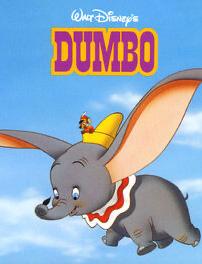
messages these movies may relay to young girls.
An issue with deleting these movies would be the fact that as a society, we are deliberately forgetting the awful events of our past. We need to hold ourselves accountable for certain events of our history. We cannot erase everything and pretend that it was all perfect, when really it wasn’t. By getting rid of these movies altogether, the company is getting rid of more proof about the treatment of different communities in recent times - and this is wrong. We can’t ignore what happened but instead should learn from our mistakes, therefore using the script and animation as a teaching tool to guide where we went wrong. Deleting everything would only encourage more of the same in the future so we need to see that history is
part of our growth. Therefore, ignoring our mistakes means that we ignore how far we have actually come.
Obviously, this movie company is in a problematic situation, should they remove their classics for good? Or instead do they keep them regardless of the negative messages they sent out. There have been complaints that the parental controls are too restrictive as after all one of the main appeals of Disney Plus is that it is a kid-friendly interface so that children can have unsupervised screen time without worrying about inappropriate content. As a result, many of their classic movies have been removed from the children’s profile option on Disney plus and for the regular profile, a message is placed in front of
the screen before the movie starts. I believe that this is the best option available without economically damaging themselves and causing further problems. It also provides an educational note to all viewers, explaining that the company acknowledges issues with many of their classic movies.
Personally, I believe that we should still have these movies available to watch
- isn’t it better for us as a community to come together and recognise the bad times, the times where equality wasn’t an option? Of course, it’s best that these films are limited on a child’s account so that the power is given to the adult. So if they want to expose their child to humanity’s tough history, it’s up to them to choose what their kid watches.
WikiLeaks: A force for good or dangerous hacker network?
What is WikiLeaks?
WikiLeaks is an international non-profit organisation that publishes news leaks and classified information provided by anonymous sources. Its website began in 2006 in Iceland but worked quickly to establish bases in France and Sweden to create a multi-national network of individuals working towards the goal of exposing government secrets. It evades government intervention due to there being no central office. Julian Assange is an Australian editor and activist who founded WikiLeaks, and therefore has been the centre of much political controversy over the legality of the organisation.
What have they leaked?
The organisation stated in 2015 that it had released online 10 million documents in its first 10 years. The
group has released a number of prominent document caches that exposed serious violations of human rights and civil liberties predominantly involving the US but addressing polices in many other major countries. Predominantly among these leaks was the released information around the US military action in both the Iraq and Afghanistan wars. The Pentagon referred to the Iraq War document leak, a release of around 400,000 confidential US military war logs in 2010, as “the
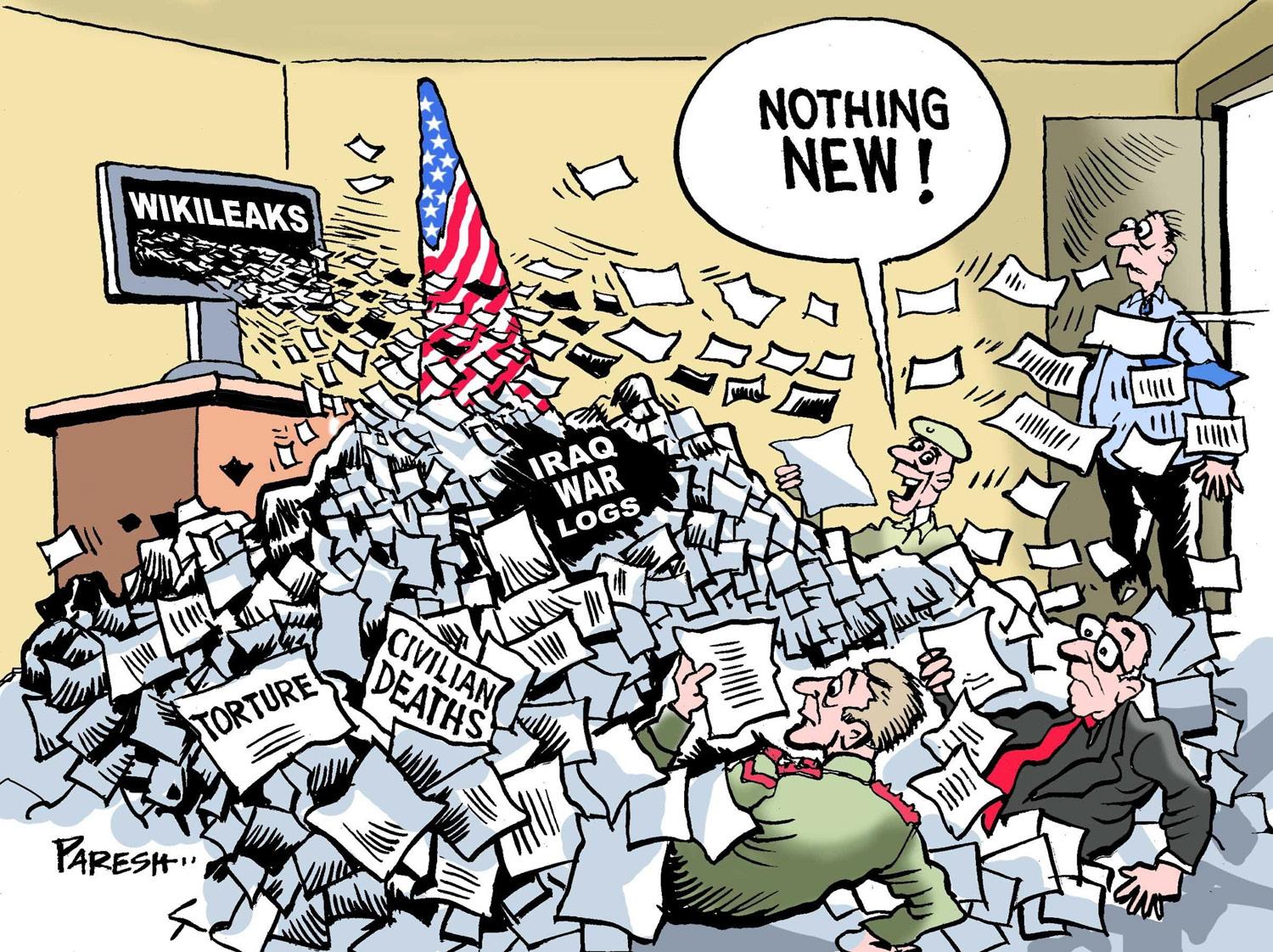
largest leak of classified documents in its history.”. These revelations put the US government under huge media scrutiny due to claims surrounding multiple different war crimes. One example of this is that despite American and British officials having denied any official record of civilian deaths, the logs released showed an extra 66,081 civilian deaths out of a total of 109,000 fatalities for the period from 1 January 2004 to 31 December 2009. The leak also contained
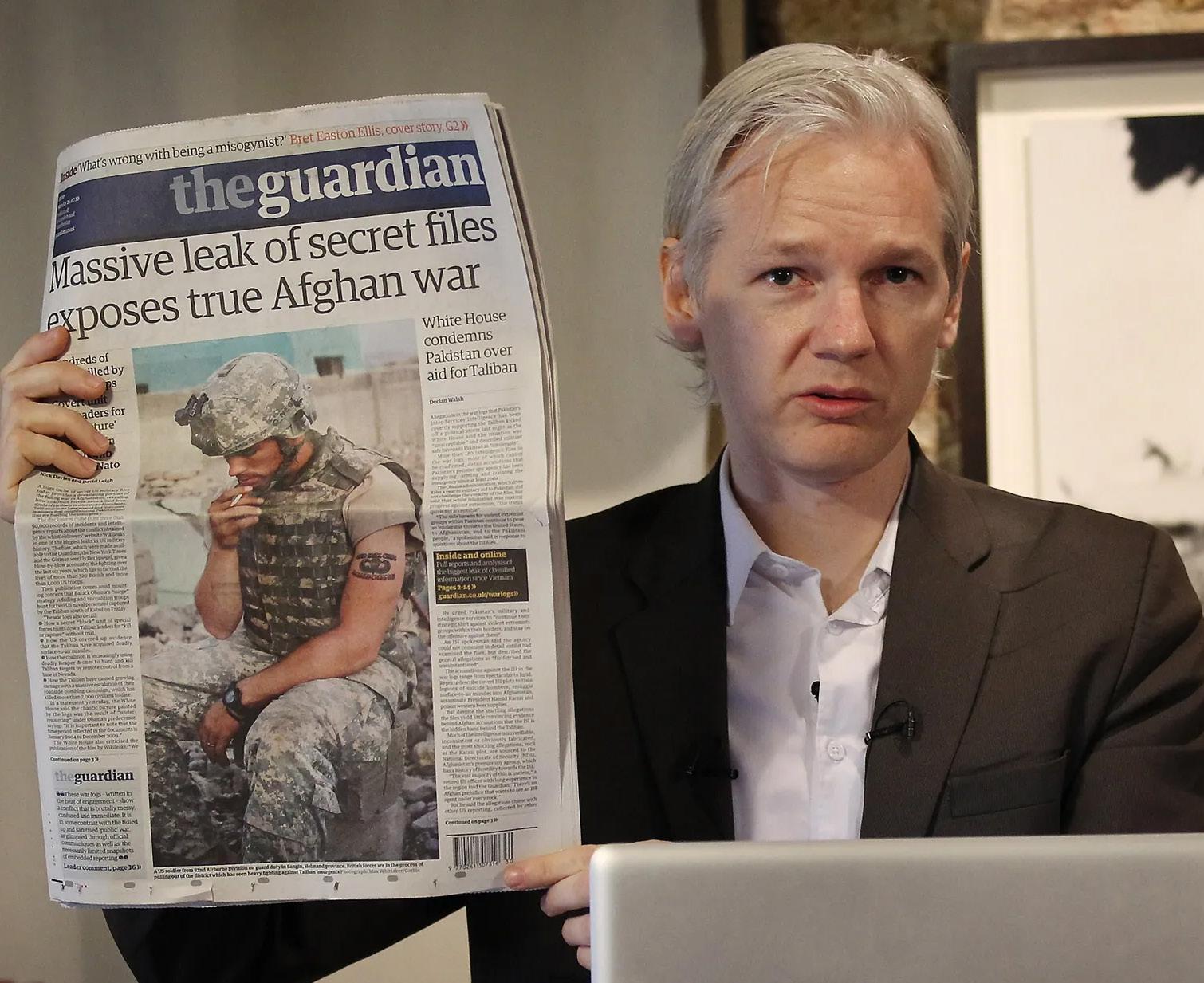
video footage from a 2007 US Apache helicopter attack in Baghdad, Iraq that killed at least 9 men. These documents revealed a largescale cover-up lead by US military officials in order to hide the number of unarmed civilian casualties caused by military operation in these areas. Also, a leak in early June 2013 reported by the Guardian after an interview with Edward Snowden, a former NSA employee, reported that the US National Security Agency (NSA) was collecting the telephone records of tens of millions of Americans. Overall, the leaks released by WikiLeaks over its 16 year history have revealed political and government secrets bringing to light many confidential schemes and bringing justice to many
wrong oers in government.
Political views towards WikiLeaks?
The majority of countries across the world have held a hostile view of WikiLeaks due to the damage they can do to a ruling party’s popularity or stability in government. This is due to the multitude of damaging documents and papers that have been released in the past directed towards governments and their regimes. The United States alongside many other Group 7 countries (countries in the European Union, Japan, Canada, United States and the United Kingdom) have been public in their stance towards WikiLeaks. One example of this was in a 2010 statement released by Hillary Clinton, the U.S Secretary of State at
that time, where she said that a recent leak from November 2010 was ‘not just an attack on America’s foreign policy interests’ but in fact ‘an attack on the international community.’ This highlights how countries such as the United States have held a hostile view towards WikiLeaks and its influential releases of documents on the government through the years. Venezuela is one of the few countries to voice their support in favour of the controversial organisation. Hugo Chávez, the President of Venezuela at the time, expressed his support for WikiLeaks following the release of 250,000 US embassy messages in November 2010 that showed the United States had attempted to rally support from regional governments to isolate Venezuela. He would address this leak in a television interview saying, ‘’I have to congratulate the people of WikiLeaks for their bravery and courage,’’. Despite Venezuela’s support the overwhelming response to these leaks has been one of hostility.
A force for good or a dangerous hacker
group?
WikiLeaks can be seen as a dangerous force that leads to the invasion of people’s privacy and an increase in rightly confidential documents being exposed to public viewing. Due to the potential damage caused by the leaking of confidential documents, in addition to a possible attempt to silence the individuals from exposing more cover-ups in US domestic or foreign affairs, the US have maintained a strong view opposing the work of WikiLeaks. After the major leaks of US military logs after the Iraq war in 2010, the Attorney General, Eric Holder announced that WikiLeaks was under criminal investigation and that there could be prosecutions of individuals for leaking classified documents. The US government has condemned WikiLeaks several times,
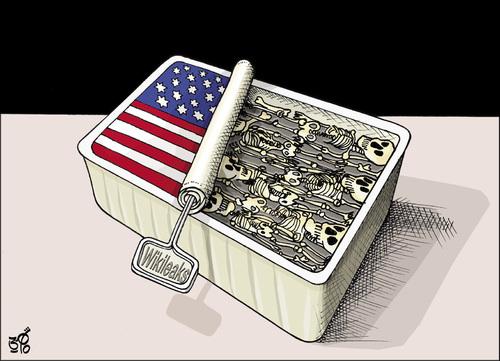
saying its work has harmed diplomatic relations and put the lives of staff in sensitive positions at risk. The stance taken by the US government shows how the group’s work can lead to a serious betrayal of people’s privacy leading to blackmail and death threats being sent to the people involved within the leaked documents. Human rights groups have also raised concern for individuals after asking WikiLeaks many times to do more to censor information found in documents. The organisation has been criticised for inadequately curating its content and violating the personal privacy of individuals. WikiLeaks has, for instance, revealed Social Security numbers, medical information, credit card numbers and details of suicide attempts. The documents released by the organisation can cause harm to people or governments. An example of this is in 2010 when Julian Assange told the Guardian that WikiLeaks’ 2007 exposure of widespread corruption in Kenya influenced violence during national elections that led to 1,300 deaths. This shows how despite WikiLeaks aiming to correct a world
full of corruption and war, it sometimes can cause as much damage as the stories it leaks.
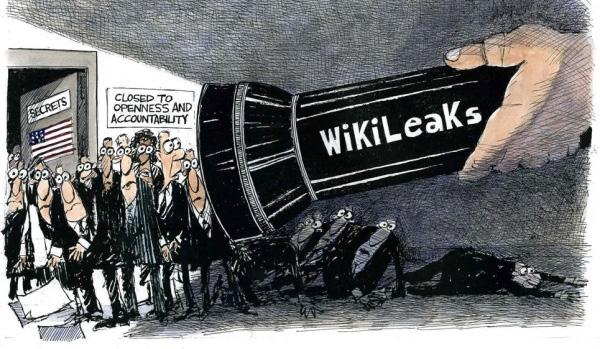
However without WikiLeaks, many secret government schemes would go unchecked leading to an increase in the number of inhumane or dangerous proposals being passed in governments across the world. They act as a regulator towards government and limit the level of freedom governments are able to work outside of regulations. This is clearly seen in the fact that WikiLeaks has won several awards such as The Economist’s New Media Award in 2008 and the Amnesty International UK Media Award in 2009. This shows how they have been applauded for exposing state and
corporate secrets, increasing transparency, assisting freedom of the press, and enhancing democratic discourse while challenging powerful institutions. The awards show how the organisation is proving vital in regulating government actions and leading to a strengthening in democracy across the world.
Overall, I believe that WikiLeaks do provide a vital check on the power of large corporations and governments, due to them being able to release information that can advance democracy in countries across the world in addition to decreasing corruption. However, their tendency to release information that puts individuals at risk of
violence, leads to them often causing as much damage as they aim to prevent. For WikiLeaks to exist in a modern society, they must work on fully curating their document releases. To finish I thought I would add a quote from Assange to show the important role these leaks have played in shaping our modern view of governments and society.
“One of the best ways to achieve justice is to expose injustice.”
Julian Assange
The Politics of Story Telling
1: The Tale of Squirrel Nutkin
When you think of political fiction, authors that spring to mind might include George Orwell (Animal Farm, 1984), or maybe John Steinbeck (The Grapes of Wrath); or perhaps those 19th Century pioneers of social realism, Charles Dickens or Emile Zola, whose work condemned poverty and social injustice. Alternatively, feminists among us might cite Angela Carter or Fay Weldon’s eviscerations of patriarchy, or Zadie Smith’s exploration of the shifting landscape of modern multicultural London. But I’m guessing that Beatrix Potter would not be top of anyone’s list.
Take her Tale of Squirrel Nutkin (1903). The plot is pretty simple. Nutkin is one of a band of red squirrels who regularly visit an island on a nearby lake to forage for nuts. The island is home to an owl named Old Brown, to whom the squirrels bring dead mice and honey. Old Brown receives their tributes in aloof silence and the squirrels are duly deferential, with the exception of Nutkin, who bobs around hyperactively, chanting riddles. Old Brown ignores him, but this merely emboldens Nutkin to step up his impertinence, tickling the owl with a nettle and continuing to bombard him with his infuriating riddles. Eventually Nutkin crosses
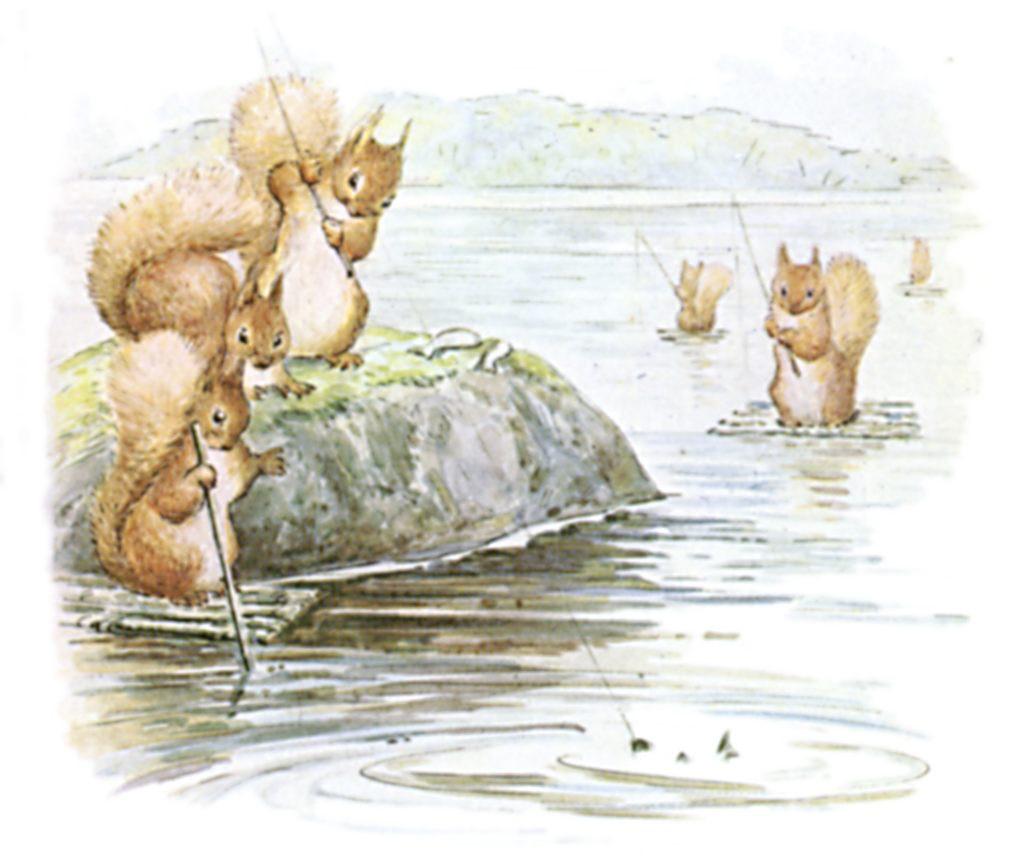
a line by jumping onto Old Brown’s head, whereupon the owl grabs the squirrel by his tail and holds him upside down intending to skin him, a fate Nutkin only eludes by pulling free, snapping his tail in two in the process.
‘And to this day’, concludes the story, ‘if you meet Nutkin up a tree and ask him a riddle, he will throw sticks at you, and stamp his feet and scold, and shout— “Cuck-cuck-cuckcur-r-r-cuck-k-k!”
Like many stories written for small children this one contains a moral: respect your elders and betters, or else ... But it can also be read as a political allegory, a kind of miniature Animal Farm. Old Brown becomes the feudal overlord demanding submission and tribute from the squirrels, whose gifts are a form of tithe. Old Brown does nothing to earn these gifts, and brutally punishes transgressors, like a feathered and taloned mafia boss. Nutkin is the rebel spirit who rejects the meek subservience of his brother squirrels, ending up mutilated and
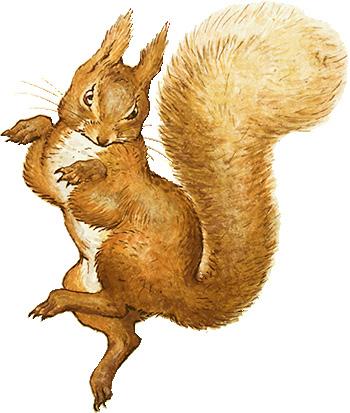
embittered. But even leaving aside allegorical readings, it is not hard to see political dynamics at work in the story, and the listening child will absorb their unspoken message: know your place and behave yourself!
Of course the real power lies not with Old Brown but with Beatrix Potter. The author of any story dictates the narrative and how the story is told. The author can manipulate the reader’s sympathies, withhold information, play on our emotions. The very word, author, with its roots in authority, denotes power.To write is to exercise power, therefore to write is a political act.
Marxist critics argue quite plausibly that in fact all literature is political, from the mildest nursery rhyme to the angriest dystopian novel. All literature reflects the assumptions and opinions
of the author’s particular world view: in the case of the Western canon, an overwhelmingly white, male, Judao-Christian world view. It reflects the socio-political climate from which it is born. Class hierarchy, social rules and power systems are baked into stories, whether we notice it or not. There are no neutral stories or story tellers. Even squirrels are political when they are given fictional identity and quasihuman nature.
2: Twelfth Night
Let’s raise our literary sights a little. William Shakespeare cut his teeth writing history plays exploring the political machinations of the Wars of the Roses. They delve deep into the intricacies of statecraft and kingship, and acknowledge a debt to Shakespeare’s near contemporary, Machiavelli, whose name has become synonymous with political skulduggery. Shakespeare also explores political violence through tragedies such as Macbeth and Julius Caesar. But even the crowdpleasing romantic comedies he was knocking out in the 1590’s were deeply political works despite their light and laughter.
Take Twelfth Night, one of Shakespeare’s latest and greatest comedies, written and staged shortly before the death of Elizabeth I in 1603 against a febrile backdrop of courtiers jostling for power, Catholic plots and brewing social unrest. Shakespeare by this time was a court favourite but he had to tread carefully in his work to avoid official censure and even imprisonment. This is one reason why his plays tend to have far away settings, either in time or geography, even though the issues they explore are topical, and indeed timeless.
Twelfth Night is set in Illyria, an obscure Mediterranean state that acts as a proxy for Elizabethan England. Its ruler is the Count Orsino, who at the play’s start is seeking to marry the wealthy and beautiful Countess Olivia. Had Shakespeare’s story followed the conventions of his time, the union would have taken place as the natural and proper way of things: wealth marries wealth, power is extended, an heir is produced to continue the ruling dynasty. This would have been expected, and accepted, even if the couple involved were not in love, especially among the social elite. But this would have made a
very short play.
As it is, there’s a snag … Olivia refuses not only to marry but even to meet Orsino. She is in mourning for her recently deceased brother and has shut herself away for seven years. Orsino, hamstrung by unrequited love, and not a little irked that his romantic overtures are being flatly denied, falls into a state of melancholy, incapable of doing anything but flop about listening to soppy songs (“If music be the food of love, play on …”). With the
country’s two most powerful figures temporarily out of action, rival parties jockey for power. In Olivia’s household, the ambitious steward Malvolio plans to marry his mistress, defying social convention, and leapfrog into the aristocracy, while her drunken uncle, Sir Toby Belch, plots Malvolio’s downfall and
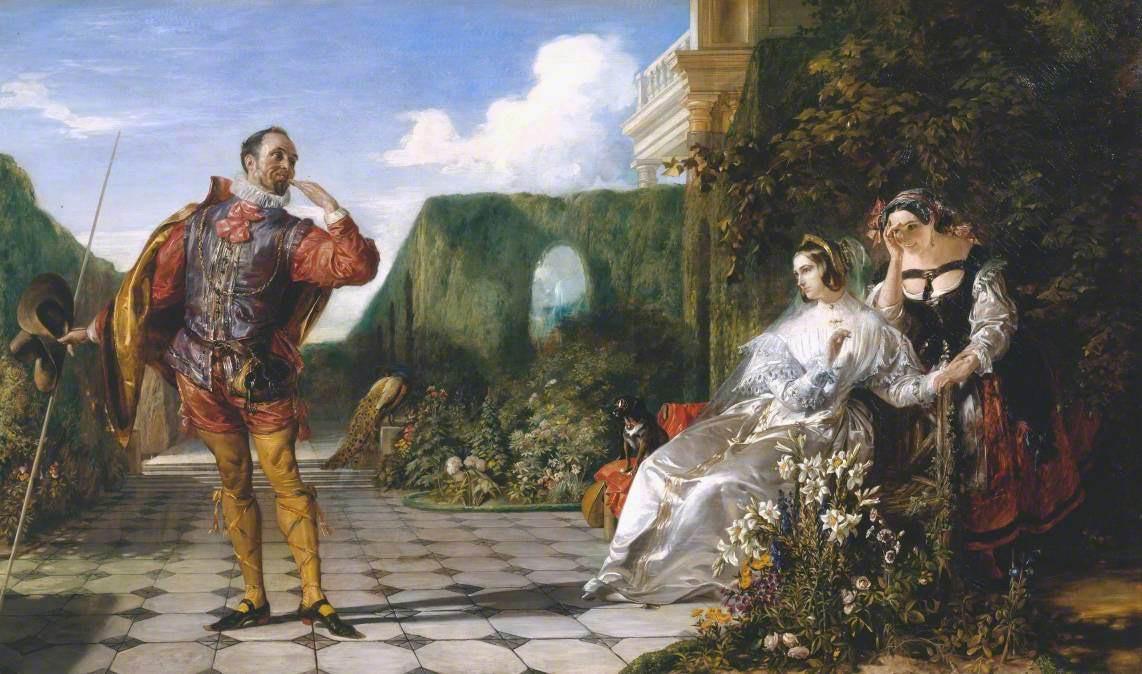
the marriage of his wealthy friend Sir Andrew to his niece. Meanwhile in Orsino’s court the androgynous figure of Viola, who is masquerading as a boy, secretly longs to marry Orsino whilst paying court to Olivia on his behalf. Feste, Olivia’s fool, offers sardonic commentary throughout, like a kind of Renaissance Squirrel Nutkin, channelling anarchic energy and the spirit of misrule into the drama.
A complex plot develops involving much comic misunderstanding, rolereversal and gender bending, before finally resolving into a conventional happy ending that marries off the lovers, but leaves behind a host of questions about the role of money, social ranks, gender, sexuality and – oh yes – love, in human relationships.
It is not difficult to read Shakespeare’s history plays politically since their subject is politics. But in fact all of
Shakespeare’s work invites political readings, since all his work poses fundamental questions about human nature and the social order. And while his plays generally end on a conservative note, with the status quo of social power structures restored, the journeys to that politically safe resolution explore genuinely radical alternatives. Alternatives that in Twelfth Night reflect a startling number of society’s most urgent concerns: gender instability, LGBT and identity politics, class barriers and feminism. As Olivia observes at the end of the play: “Most wonderful!”.
Our mystery writer issues a challenge: write an article looking at any area literature and politics
CHARLOTTE CLEE L5
Evaluating early liberal approaches to freedom, individualism and equality
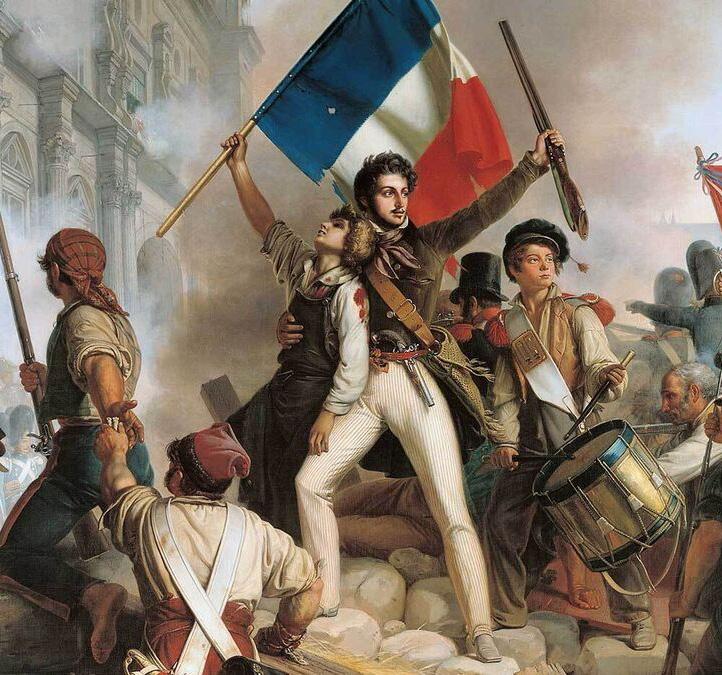
Jean Jacques Rousseau, Mary Wollstonecraft and Thomas Paine are all heavily regarded as ‘founding fathers’ of some of the most significant historical movements. Rousseau’s prose heavily inspired the people of 18th century France to revolt against the
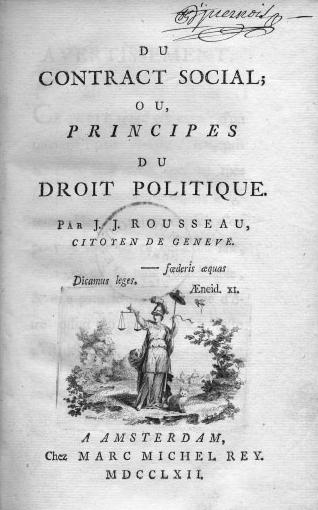
oppressive aristocracy, an event which Paine heavily defended in Rights of Man and Wollstonecraft wrote ‘what is considered the earliest treatise advocating equality for women.’ Recently, I read each of these writers’ most acclaimed works.
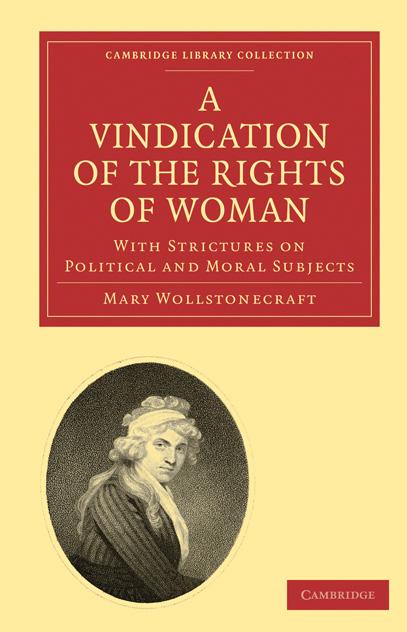
Rousseau’s Social Contract, Mary Wollstonecraft’s ‘A Vindication of the Rights of Women,’ and Thomas Paine’s ‘Rights of Man’.
Rousseau begins The Social Contract with the line, “Man was born free, and he is everywhere in chains.” This introduces us, the reader, to Rousseau’s philosophical message. Man, when in the state of nature, this being the condition in which human beings existed without political
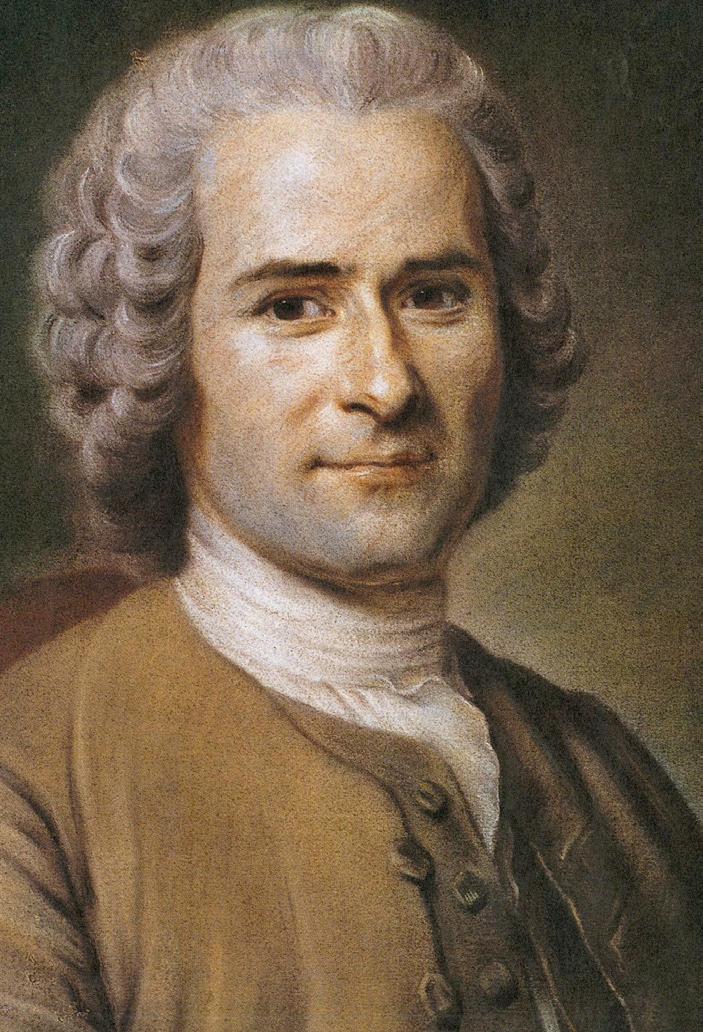
authority or governance, was ‘free’. However, with our development into contemporary civilisations we have lost that freedom. Rousseau believes that modern states have restricted our freedoms and enslaved us as human beings, shackled by society’s chains. What does Rousseau propose
to help free the people? A social contract. Rousseau holds the opinion that the people should initiate their sovereignty, rather than being ruled by suppressive dictatorships and hereditary monarchies. Rousseau presents society in general as the sovereign. This allows for the populist to strive for the general will of the people. Rousseau contrasts the tyrannical sense of what he regards as the ‘chains’ by proposing that the state should only be legitimate when the people consent. In the book, Rousseau proposes that the social contract should prioritise the people’s general will. By doing so, the people may be willing to repress their freedom to gain a greater sense of peace and security. Therefore, acting for the general will of the society and allowing for the greatest
benefits to said society, is what Rousseau regards as the social contract, a people agreed to help society act with the general will of the people rather than the sovereign, who may be guided by their interest.
In the social contract and his other works, Rousseau alludes to the female place in the social contract as their Godgiven responsibility to sit back and not intrude on their husbands’ areas of life. These include work and politics, all of which fundamentally derive from education. Rousseau writes that “it is proved that men and women are and ought to be unlike in constitution and temperament, it follows their education must be different.”
This is a view highly contested by Mary Wollstonecraft in her work ‘A Vindication of the Rights of Women’. Throughout the treatise, Wollstonecraft puts across a society whereby allowing its women greater rights they can improve the society. Believing, that the reason that women seemed intellectually inferior to men was that they were encouraged to focus on patriarchal values such as dressing nicely and looking after children. Women are prohibited from developing
a voice, and from creating their presence in state matters such as government. This allows men to maintain domestic power, and women without education are suppressed to believe that a fulfilled life ends up in marriage and children. Wollstonecraft argues that well-educated women would be able to raise their children to be more intellectually prosperous beings. Women with an education are allowed a stake in the world, they can stand up for what they deem correct, and they can invent life-changing scientific innovations. Women being held in the same regard as men initiates widespread societal opulence. Wollstonecraft does not advocate for a society where women overpower men. She simply requests that they be given the same opportunities that are afforded to men. Whether this is equal education or more simply
just for women to have their voices heard and respected. In the treatise, Wollstonecraft words this concept of equality as, “I do not wish (women) to have power over men; but over themselves”.
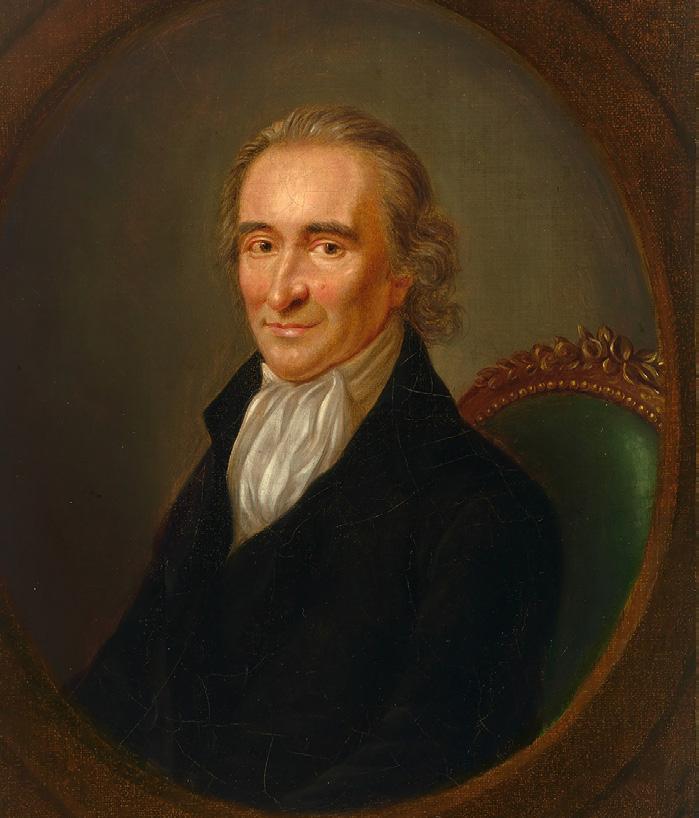
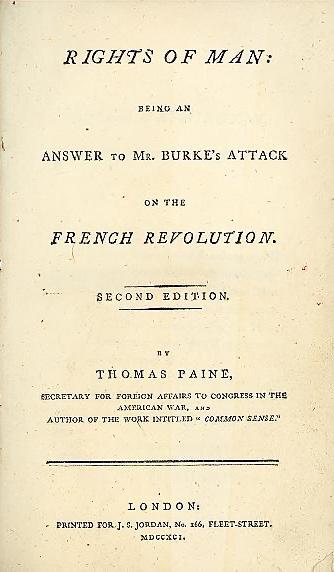
Thomas Paine’s ‘Rights of Man’, the final text I read, discusses his views on the illegitimacy of hereditary governance. ‘Rights of Man’ is a 1791 book that Paine wrote in response to Edmund Burke’s reflections on the revolution in France, which scrutinises the French Revolution. A key political concept that Burke advocates for are the idea of hereditary government.
‘Rights of Man’ is Paine’s passionately driven attack on Burke’s vision of ‘hereditary wisdom’. Paine proposes that the idea of hereditary government and monarchy fundamentally goes against our rights of man. Believing that this allows the monarchy to view its subjects as objects, there instigating natural inequality. Paine puts this as, “the vanity and presumption of governing beyond the grave are the most ridiculous and insolent of all tyrannies. Man has no property in man; neither has any generation a property in the generations which are to follow.” In Paine’s eyes, each human possesses the innate rights of man. Therefore, the people, as equals, are entitled to choose their government. Paine believes that hereditary rulers and their retrospective ways of governing can easily become
outdated over time and as a result deserve no value in law. Paine argues that citizens should be able to stage revolutions against corrupt regimes or tyrants because they are failing to protect the natural rights of citizens. Hereditary government is founded against citizens’ will and remains as such, they will fail to protect the rights of the everyman and therefore Paine believes revolution is inevitable.
The Beautiful Game?
Whether you are a football fan or not, nobody can deny the profound impact that football has on our nation and indeed the whole world. For as long as any of us can remember football has connected people together, and caused people to produce emotions that no other event can do. Many people are entranced by the “beautiful game”, and fans love for their individual clubs is unlike anything we have seen in the history of sport. Of course, there are other sports that inspire people and bring people joy or hate, but no sport has the effect that football has on the globe. Football is quite simply almost like a spell, bewitching people to possess such a series of emotions, and I will be exploring how money and finance partakes massively in the “most popular sport in the world.”
There is no official record of when the game of football itself began, however many scholars believe that it was originated as early as the second or third century BC,
where “aspects” of the game have been reported in China. However, the sport was first introduced in England in around 1170, where it has never left since. England has often been credited with starting the game, and many believe that “modern football” originated in England in the 19th century, although “folk football” had been played earlier in the medieval ages with a range of different rules. The First Division of the Football League was founded in 1888 in England, where competitive football first properly commenced and then became the global phenomenon of the Premier League, which holds the status of being the best football league in history. Around the time when the First Division was originated, many football clubs that are household names today were created, such as the likes of Manchester United in 1878, Manchester City in 1880, Tottenham in 1882, Arsenal in 1886, Liverpool in 1892 and Chelsea being founded a bit later in 1905.
The main reason why I am focusing on these 6 football clubs is due to the fact that they are 6 of the most successful football clubs in English history, and even today. If you were to trace back old records of the Premier League table, especially in the 1990s to the present day, you would be able to witness a similar pattern of these 6 clubs winning the title or at least coming in the high top half of the table, and in the entire Premier League and Division One combined table, you can see that the top 6 English clubs of all time are indeed these particular 6 clubs. However, in light of the recent allegations in the media and speculations that have been believed
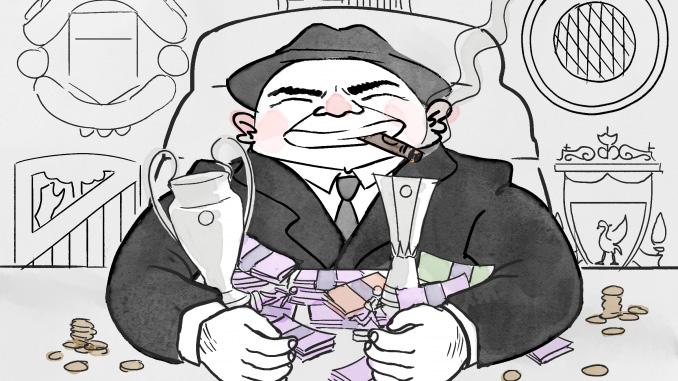
for a while, football fans are beginning to question whether all these 6 clubs deserve their rich history and their predicted rich future.
The main club I will be focusing on is Manchester City, as this club has appeared in the media quite frequently in recent weeks. With 6 Premier League titles, 5 FA Cup wins and many other major wins under their belt, it is safe to say that Manchester City are one of the most crowned English teams ever, however with the recent news reports of 115 financial breaches, the football world is left wondering whether this club should really hold the incredible stats they do. Since the Abu Dhabi takeover of the club in 2008, Manchester City have won all their 6 Premier
League trophies, whilst prior to that they had never won the Premier League, and had only conquered the First Division irregularly in the season of 1936/1937 and 1967/1968 which is 31 seasons apart from each other, and their trophy cabinet was certainly not full at all, so the only possible way that the club has managed to achieve 6 Premier League titles, and 3 Premier League titles in 4 seasons since their current manager Pep Guardiola arrived in 2016, is due to money. Money is dictating our English league, as with Manchester City, teams that possess more money and are owned by wealthy business people or their companies almost always do well and place higher in the league than teams with smaller
financial budgets. Since Sheikh Mansour took over as Manchester City’s owner 15 years ago, his net worth of around £16.8 billion has aided the club immensely, adding countless world class players to City’s line-up, spending around £1.5 billion on new signings. In August 2021, Mansour went to extra lengths and purchased Jack Grealish from Aston Villa for £100 million, which is so far the biggest transfer fee in the history of British football.
As an Aston Villa fan myself, I have witnessed the profound effect losing Grealish has had on our club, teams with ludicrous amounts of money to spend are able to purchase the smaller clubs strongest players, and in some cases smaller clubs only hopes,
with ease, leaving the selling clubs at a huge disadvantage. However, whilst those clubs do receive an amount of money in exchange for the player, it is very difficult to build up the team again without their star player, such as Jack Grealish in Aston Villa’s case, and it certainly takes at least a season or so to come to terms with the loss of that player and to start to function as a team again without them. In that same August 2021, Manchester City’s spendings during the transfer window were around £115.75 million without add-ons and contracts, whilst if we look at the money, they received from releasing players during that same transfer window, the income only adds up to around £40.95million, again without add-ons and contracts. This is
a huge difference, and seeing the huge amount of money Manchester City were able to spend during that transfer window was £74.8 million more than the money they gained from losing players, it is evident that Manchester City have a huge quantity of money to splash, but the question is how did the club manage to gain that kind of money?
In the Premier League, there are Financial Fair Play Regulations (FFP), this is essentially where the Premier League association “prevents clubs from paying substantially more than they earn,” however Manchester City have been accused of breaching 115 financial fair play rules, and their sponsorship deal with Qatar Airways has recently been considered as a factor of
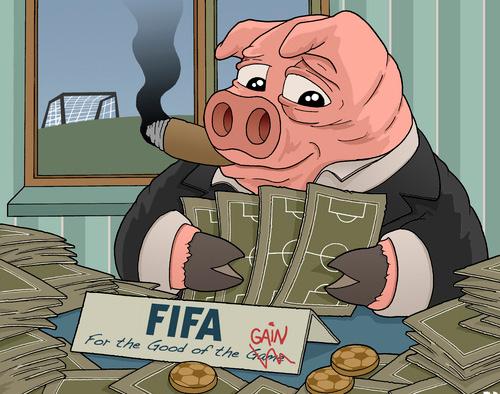
breaking the fair play rules, as Qatar Airways is owned by the Qatar government/Al Nahyan family, which Manchester City’s owner is a part of, as Mansour is also the deputy prime minister of Qatar, with his late brother, who only recently passed away in 2022 being the prime minister and ruler of Qatar for 18 years, during the prime years of Manchester City, when they won their recent three Premier League titles. There have been allegations that their sponsorship with Qatar Airways allowed Mansour to invest more money into his club, under the cover of a “sponsorship deal”, as the money was being supplied and invested by a company, however Qatar Airways is a company that Mansour is very much involved in, and so is his family who own the airline.
This is just one possible allegation surrounding Manchester City’s violation of the Financial Fair Play Regulations, and if proven guilty of this crime and other accusations, there will be severe consequences, with two potential options being a large deduction of points or the club’s relegation from the Premier League. Manchester City is just one club that is under investigation of this offence, however

their possible foul play causes people to wonder whether other clubs have also participated in similar actions, and another club that is turning football fans heads is Chelsea, as since Roman Abramovich’s takeover of the Blues in 2003 until his forced departure last year, Chelsea have also splashed a large sum of money on players like Manchester City have, so much so that people are beginning to wonder whether Chelsea have fully respected the Premier League rules of not “paying substantially more than they earn,” and Chelsea this is just another example of a football club who could be investigated of potential breaches of
fair play, but many people believe that the 6 clubs I have mentioned previously could all be under suspicion of finding a loophole to break the Financial Fair Play rules.
In conclusion, I believe that the game of football has progressed a huge way from the early days of the First Division from money not playing as a significant role as it does now in the Premier League and indeed around the world. Money and football are now interconnected which they have not always been in the past, and money can work to some clubs’ advantages but others’ disadvantage, however we must accept that this is just what the game has evolved into, although that
doesn’t mean it’s just and fair, and it certainly doesn’t mean that this can’t be changed. It will be very interesting to view the media over the next months and even years, to see what the Premier League will do to punish Manchester City if they are found to be guilty, and other clubs that could also be found to be breaching the Financial Fair Play Regulations, and even if Manchester City manage to prove their innocence, I hope that this important case will ensure that the Premier League and other football organisations are more wary of the extent of the money clubs are spending in comparison to how much they are earning, and that in the future these crimes can be properly policed so that there is a more level playing field so that all clubs, large and small, have a chance of winning the Premier League and this prize isn’t the exclusive preserve of those clubs with the richest owners. If this can be achieved, I believe that more people will be captivated as they once were by the “beautiful game.”