
Chief Editor:
THE EAGLE

Bella Coombes
Graphic Design:
Freddie Hayles
GLOBAL
10 05 15
THEORY
21
Populist Tide, Is Canada Next To Fall
24
- Louis Devrill 26
US: Dissecting the election: The key to winning - Ruben Costard
UK: An Interview with Daniel Fikelstein
– Charlotte Clee
Diamonds of Discord: How Africa’s Treasure Fuels Conflict and Corruption
- Ollie Bannerman
DEBATE: “Socialism Does Not Work”
– Sam Tredwell
- Ellie Wain
How, If At All, Can We Apply The Just War Theory To The Russia Ukraine Conflict?
- Darcey Turner
How far have we come?
-Ella Slater
CULTURE
29 31 33 46
The Impact Of Political Satire: Can Comedy Influence Real-World Politics?
– Ellie Wain
Ballroom And Vogue: The Appropriation And Significance Of Queer Black Culture. - Will Logan
The Negative Effects Of Media In A Modern-Day Society - Issie Appadoo
A Cover Up: Saudi In Sport – Jack Milton
Chief Editor: Bella Coombes
Graphic Design: Freddie Hayles
THE EAGLE

St Johns School - Leatherhead
GLOBAL
Populist Tide, Is Canada The Next To Fall?
- Louis Devrill
US: Dissecting the election: The key to winning
- Ruben Costard
UK: An Interview with Daniel Fikelstein
– Charlotte Clee
Diamonds of Discord: How Africa’s Treasure Fuels Conflict and Corruption
- Ollie Bannerman
SA South Africa Versus the UK: Two Different Parliamentary Democracies
– Sabrina Coppola Johansen
Populist Tide, Is Canada The Next To Fall?
Inmid-September, Canadian Prime Minister Justin Trudeau won a vote of no confidence put forward by Conservative party leader and Leader of the Opposition, Pierre Poilievre. A majority of 338 votes was needed, however Poilievre only achieved 121 votes, all being Conservative MPs. Trudeau was supported by the leftleaning New Democratic party (NDP) and the also, left-leaning Quebec separatist party, Bloc Quebecois, as well as Trudeau’s own Liberal party, ensuring that the next election will most likely be held next year in 2025. Whilst there was no doubt that Trudeau was going to survive this vote, it is a sign of the changing political tide in Canada, where a newly invigorated Conservative party, under a confrontational and assertive leader, will not outrightly reject progressivism, however will reject the man who has made himself the face of Canadian progressivism, Justin Trudeau, who has led the country since 2015. It is important to know why people dislike Trudeau. Trudeau and the Liberals have been in power since 2015, and they have been obvious fatigue in his rule that can be observed in any other longstanding world leader. Trudeau has faced criticism for the ongoing Cost of Living Crisis and his handling of inflation as well as the ever increasing cost of housing, which his opponents
in the Conservative party have dubbed ‘Justinflation’.
Trudeau’s climate policies have also been criticised, with his proposed carbon tax, although thought to actually help decrease carbon emissions by a significant amount, has been under fire from the Conservatives as they believe the tax will negatively harm working class Canadians, with Poilievre dubbing the next election a ‘Carbon Tax Election’. This sentiment is shared in parts of the country, such as the province of Alberta, who’s cultural identity stems from the mining of fossil fuels. It is important to note that around half the population is in favour of the Carbon Tax, however the Conservatives have made it clear that the tax would harm working-class Canadians.
Some people have also fallen out of love Trudeau’s persona, believing that his very positive attitude that he keeps is not reflective of a country that at the moment is very angry with the state that it is in, leading to a dissatisfaction in the current Canadian political leadership.
As a result of these grievances, it is incredibly likely that the Conservatives will win the next election in Canada, being the main opposition party and the only major right-wing party in the country. This Conservative tide is being led by one Pierre Poilievre. Poilievre was made Conservative
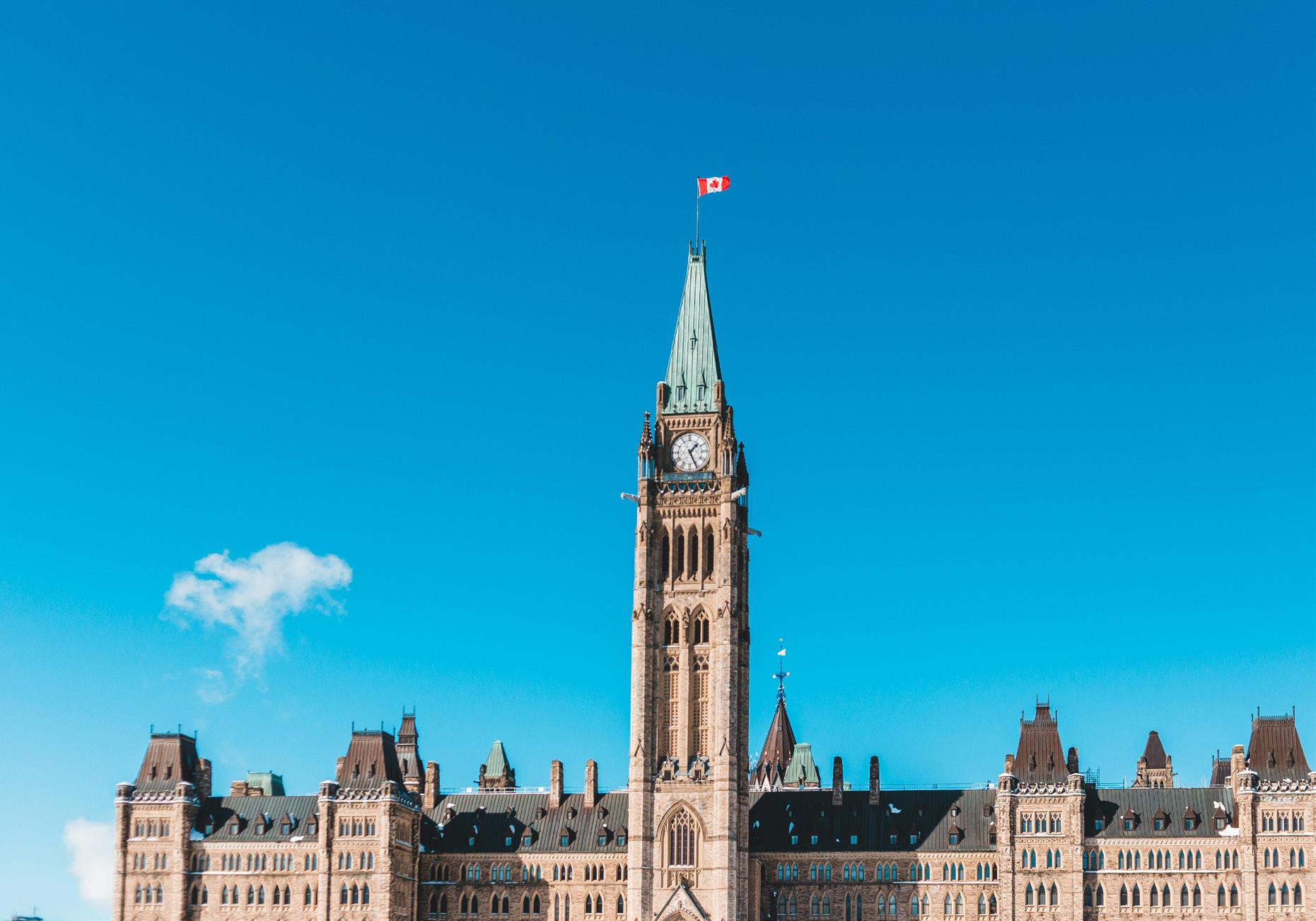
leader in 2022, and has built up a reputation for being brash when it comes to political debate. There have been quite a few times when Poilievre has been asked to leave the House of Commons for political stunts, such as recently for describing Trudeau’s policies as ‘Wacko’, and words alike to try and portray that he isn’t an ordinary politician sitting in Ottawa.
Poilievre’s behaviour has brought the media to draw comparisons to that of Donald Trump down south in the United States; a comparison that the Liberals and other left-wing parties have often used against him, also branding him a populist. However, does Poilievre really meet the criteria of being Canada’s Trump? Unlike his peers in the US and UK, Poilievre is not opposed to immigration, abortion or gay rights, in fact he is in favour of all of these issues. However Canada’s form of populism doesn’t focus on these issues (or at least the mainstream movement does), it instead focuses on issues such as institutional reform, such as making the Senate (Canadian House of Lords) an elected chamber or de-funding the CBC as Poilievre and many other conservatives believe the organisation is too left-leaning, a policy which isn’t far removed from figures on the right in the UK calling for the BBC’s de-funding. This is rooted in his distrust of the mainstream media that is shared with other populists, making him not unique in that category.
So would it be fair to call Poilievre a populist? Well he certainly isn’t right leaning enough to be considered Trump’s equal, however his more aggressive form of right-wing politics defiantly seems to disturb the usually left of centre political norm of Canada, especially his ‘common sense’ rhetoric seeming to
be an attempt to appeal to those who feel forgotten by the Liberal party, a tactic and perspective that is a trademark of populism.
While a Conservative victory in Canada next year is almost certain at the time of writing, it is very hard to say that the country is entirely enthusiastic about this. What’s more likely is that this next election result will be the result of ten years of Liberal rule, mainly from a public exhausted by the persona of Prime Minister Trudeau, and therefore will be another cycle of the tug of war style of politics that we can expect from any modern democracy, and is therefore not entirely the result of an enthusiasm for Poilievre’s brand of Canadian populism.
- Louis Devrill
Dissecting the election: The key to winning
In 2017, President Donald Trump was sworn into office as the 45th President. It was a success for the Republican Party. Trump won 304 electoral college votes. However, gradually as his Presidency continued people became suspicious of Trump. After being accused of overturning election victory this eventually led to the capitol riots. His own supporters stormed congress in anger. Despite this Trump denies claims of poof plotting to overturn election campaigns. The capitol riots resulted in a large loss of trust in the republican party and a win for the democrats – resulting in Joe Biden as President 46. However, as Joe Biden nears the end of his first term in office, Vice President Kamala Harris is running for President for the first time and Donald Trump for the second. But who will win?
The rule of Trump has been a fascinating one due to waxing and waning of support. He gained large support during his first term in office but (as previ-
ously mentioned) lost the support of many people towards the end of his campaign. Between 2021-24 Trump was convicted of 34 crimes and is now a convicted felon. This will undoubtably alter the way in which people vote and once again question their faith within the republican party. However, Trump has also had 2 assassination attempts which have failed and used these to fuel his campaign and gain support. Many people within typically republican states have even started to question support for the republicans mainly due to his criminal convictions. Trump lost many supporters after being found guilty of 34 crimes. However, why do people still vote?
Trump has a lot of experience within the office. He also uses political skill to persuade people to vote republican. For example, Trump manipulates Christianity to claim that he is going through the same experience as Jesus when he was convicted. Likewise, Trump uses the assassination attempt
survivals to portray himself as a god-like hero which appeals to many American people. Trump also attacks the lack of experience within the democratic party , claiming Kamala Harris is an unexperienced and inferior opponent. On the contrary, Kamala Harris, previously as a prosecution lawyer, is used to debating and interrogating people. In the presidential debate, Trump revealed lies of Haitians ‘eating the cats and dogs of the American people’ and Kamala Harris said that - ‘Trump has no plan for the economy.’
Trump also exposed his lack of compassion for women in America when talking about Roe v Wade. Trump claimed that the people of America want Roe v Wade overturned however polls and statistics do not match this claim. However, Harris has gained popularity very quickly, despite many Republicans claiming that she lacks experience. Election campaigns are close. There is very rarely a clear leader unitl the polls close.

Because of such a close election, this means that campaigning within the swing states is more important than ever. The swing states: Arizona, Georgia, Michigan, Nevada, North Carolina, Pennsylvania and Wisconsin are all crucial towards electoral votes. Many states are often majority Republican or Democrat however, the swing states are very unpredictable. Due to the close nature of the election, the swing states have become more important than ever. In total there are 538 electoral college votes. The swing states in total equate to 93 electoral college votes which is a substantial number. Likewise, within the key swing states of America, there are 61.3 million people. This is a significant figure meaning that both the Democrats and Republicans will be fighting to gain support of. After winning 6 out 7 of these key swing states in 2020 election the Democrats are feeling confident. However, each state has different issues and concerns and therefore different reasons for electing a president. Because there is no clear defining percentage within the polls of who is winning, this means that votes have become more important than ever. This also meant that the presidential debate became more important than ever. Kamala Harris exposed many of Trump’s mistakes. However, Trump claimed that the economy of the Democratic Party is not suitable for America. The presidential debate will undoubtably contribute towards persuading
voters and the critical states will be crucial in the president being sworn in. However, it is not just one debate which will persuade voters – especially in the key states. Key events, like Trump’s assassination, Trump’s criminal convictions and Kamala Harris’ sudden rise to power and the change in Democratic leadership could change the way people vote. However, despite the key events and key states there are of course key policies. The economic policies that both Harris and Trump propose are very similar. Harris proposes to reduce food and housing costs whereas Trump promises to end inflation. However, the biggest difference is that Trump has also promised to lower interest rates but, this is not in the power of the president. Therefore, the largest difference in their economic policies is that Kamala Harris’ promises are all achievable whereas some of Trump’s policies are out of his control. Kamala Harris aims to overturn Roe vs Wade and make abortion legal, however Trump is against this. Trump’s aim on immigration is one of his major policies. He will aim to build a wall and continue his project from when he was in presidency. However, he also promises the largest deportation of undocumented migrants in history. This will result in legal challenges for the republican party on immigration. One of the most intriguing is foreign policy. Kamala Harris vows that the USA will support Ukraine and calls for an end to the war in Gaza. However, Trump aims for a
more isolationist state. He also claims that he would end the war in Ukraine in 24 hours and therefore takes a very traditionalist approach. One of the most interesting policies is on crime. Trump aims to reduce, nay, demolish drug-cartels and crush gang-violence. However, Harris takes a different approach. She approaches the election by contrasting her personal experience with law as a prosecutor with Donald Trump being found guilty of 34 crimes. These are a few of the key policies which could change the mindset of voters in America.
To conclude, there are many factors which could change the way in which people vote.
However, the specific factors are policies, key states and major events. At the time of writing, there is no clear definite winner therefore every decision each party and each candidate make is crucial. Every vote will count.
- Ruben Costard
‘An Interview With Lord Finkelstein’
Charlotte Clee
Lord Finkelstein has played a key role in the Conservative Party for decades. Having advised David Cameron, William Hague and John Major, he provides key insights into the role of the adviser. As Director of the Conservative Research Department between 1995 and 1997, Finkelstein played a unique role in the Major government. He currently serves as Chairman of Onward and writes a weekly political column for The Times - where he also hosts the podcast ‘How to Win an Election’ with Lord Mandelson and Polly Mackenzie.
1. Your mother was a Holocaust survivor, and your father’s side of the family spent time in Stalin’s gulags, how did your family history shape you?
It did shape me quite profoundly, I suppose, in three ways. The first thing is my parent’s approach to what had happened to them was not as some people do, to find Hitler and Stalin in everything, but to see the contrast between their experiences and the country we now live in. They purposely tried to be moderate, reasonable and generous to other people, which I try to be as well. The second thing is that it made me feel very strongly about the rule of law. Thirdly, when you’ve written a book like I have, which focuses on the things that happened to your parents of extreme nature, it makes you put the political disputes you have into perspective. They don’t touch on the things which matter.
I undoubtedly ended up with a strong view that populism doesn’t work. People are very varied and have different political views. A good political system mediates between them rather than assumes it can understand the single will of the people. This makes me a liberal democrat, with a small ‘l’ and small ‘d’, and a parliamentary democrat. It also makes me feel that an economic system should have diverse property rights and a welfare state and brings home the notion that socialism doesn’t work. It always seems to end with dictatorship, and I don’t think that is an accident. It assumes that the government can assume the central wants of all people.
2. Developing this, how did these experiences shape your views of left-wing politics?
3. You originally became a member of the SDP, becoming Chair of the Young Social Democrats, what drew you initially to the party?

The SDP reflected my centrism and my view that given that my parents were immigrants to Britain, outside the political class system and without land or property, which led them to feel that they were on the centre-left. Eventually, I came to the view that the centre-left had numerous issues, and it didn’t quite reflect my politics. When it began to fail, I realised I had always tried to be a right-wing on the left. I thought that the centre-left was too gullible about the role of the state, often spending too much money, which resulted in high tax rates, and I was concerned about whether it was robust enough on foreign policy. I found in David Owen someone I did see eye to eye on a lot of issues. Yet, when this leadership came to an end, I thought of myself to be more of a conservative than on the centre left.
4. Where do you think the SDP failed as a party?
It's very interesting. The right question to ask about any political party is not just what it stands for but who it stands for. Does it stand for a big enough social grouping to form a government in a system where two big parties will dominate, and has it got concentrated support? The problem with the SDP at the time was that it ended up as a party that was intended for middle-class professionals, fighting seats that belonged to labour, and those seats were often working class. There was a big gulf between the SDP’s image and the seats it stood for. It failed because it never had a given coalition within any constituencies. This doesn’t work if your vote is distributed across a certain type of person across the country. This particularly doesn’t work in constituencies where you are fighting. It was a combination of the position that the SDP took and the seats it was fighting in.
5. Do you think the Conservative party runs the risk of losing touch with a large portion of its core audience through going more to the right?
I regard myself as a centrist conservative. I’m moderately socially conservative, and I’m very fiscally conservative. I think driving tax and spend down is very hard, but I’m in favour of trying to do that because the pressures of public spending are so great, but you can end up using a lot of working people’s money on inefficiently provided public services. I would, therefore, describe myself as a moderate conservative.
The Conservative Party is trying to change the audience to which it appears. Both candidates for the leadership appear to want a less prosperous, less urban, less educated, and more culturally conservative coalition. I think it is going to be hard to make this work whilst also being the party of lower taxation and lower spending. It is a plausible coalition; you can build a big enough coalition to win with this audience. Therefore, I think that although I might feel alienated from this coalition, this does not mean it is a coalition that cannot win.
6. How would you define your conservatism?
7. You became Director of the Conservative Research Department and advised John Major, what was it like being so close to the inner workings of the party during the major years – especially as they reached the end?
8. What was the driving principle behind the modernisation project that you led along with Osborne and Cameron?
It’s very hard to work for a political party when nobody else is voting for it except you. It seems at some times that you and the party staff, along with a few loyal supporters, are the only ones who support your stance. But that is a bit of an illusion as loads of people do vote conservative, even in 1997, but it was quite hard. You just have to keep professional and keep working at it. I had a lot of personal admiration and affection for John Major, I believed in the things we were saying, I thought that our critique of Tony Blair was reasonable, and I then later came to the view that there were things that we could do to the party to modernise it, as we did do later on.
The key thing was that I felt that the core voter in the Conservative Party had moved on, and the Conservative Party hadn’t moved with it. For example, with women voters, the Conservative party has never won an election where it was behind on women. Women voters have generally provided the Conservative party with the basis of support. The reason for this is that in 1945, the Labour Party set itself as the party of production, and after this, the Conservative Party branded itself as the party of consumers. A lot of that was led by women, and quite explicitly, a housewife movement grew up to support the party. By the time we were fighting the election in 1997, the women who were doing that were going out to work; they were in our top jobs as lawyers and doctors, and the Conservative party had not moved on to meet the way that these voters had gone. Our idea was to update Conservatism so that it represents the people that it always represented but in the way that its life had changed. The Conservative party had changed with its voters and its potential voters. We wanted to make sure the party looked less like an ideological sect and more like a government. We needed to ensure people weren’t afraid to elect a conservative government. If you make conservatism look as though it is something that people need to fear, they won’t vote for it.
At first, I think we had a real problem in that we had very little women in Parliament. The first problem we had was that we had very little of anyone in Parliament therefore, the swing that David
9. You made the point about women, but one of the main criticisms of Cameron is that there was sometimes a gap for female representation within his Cabinet, do you think this is a fair criticism?
produced in that election, although we didn’t win, was huge. We got a much bigger increase in the vote, but in that first Parliament, we didn’t have many women, so what David did was to try and address this problem. All I would say is, as a result, after Cameron, we’ve had Theresa May, Liz Truss and Kemi Badenoch. 3/5 leaders that followed Cameron have been women.
10. Why do you think it is the case that the Conservative Party has female leaders when the Labour Party fails to do so?
I think there’s one thing which is bad about it – we have gone through a lot of leaders. This means that chance has come around more often. Up to a point, it’s a question of luck. However, I think the Labour Party think it is especially superior in all respects as the party of diversity and working people, so it doesn’t need to bother having a leader from these groups.

11. Alongside George Osborne, you prepared William Hague for Prime Minister’s Question, what was this like?
Each leader has their style. William Hague was fantastic to prepare for because he was intellectual, very bright, and very witty. The sessions were very funny, and he honed in on these as the one point in the week the Conservative party could be ahead. William Hague from the opposition put a lot of effort into it. Secondly, preparing with George was great because he is very intellectually able and a great mimic, so he would impersonate Tony Blair. He would guess what Tony Blair would say and usually got it right. Rory Bremner used to say that every Wednesday, I get with my team, and we try and think about serious politics, and William Hague gets together with his team and starts to think about jokes.
12. Do you have a particular favourite line or question that you were responsible for?
When Tony Blair had this problem with Ken Livingstone at the time and in the morning meeting, it suddenly occurred to me before PMQs prep, and I slipped a piece of paper across, and you should say that “Blair should split the job of mayor into two so then Frank Dobson could be his mayor during the day, and Ken Livingstone could be his nightmare.”
13. What regrets do you have from your time as an advisor?
14. Do you think working at The Times has helped with your understanding of popular engagement with politics?
Completely. I’ve spent a lot of time reading about political science. The best place for this is the United States. There’s a huge amount of work correlating the votes to certain things. They’ve done lots of work correlating the votes to certain things. They do all these advertisements to see what messages work and what don’t. They’ve done lots of focus group work. Admittedly, these are American voters, but you can get a bit more of a view about how much of politics is demographic, how much is economics, and how much of it has to do with political argument – much less than you’d think. I’ve learned a lot more about how much people do or do not follow or grasp certain things.
16. Did your friendship with them make it easier or harder to advise them?
On the question of advice and articles, the most important thing is to only ever say one thing in all places. I would never say something in an article I would not say to somebody’s face. For example, I’m very friendly with Rishi Sunak, and there was an article in the paper about how Rishi Sunak had rung up a number of people when he had got that fine and had canvassed the question of resignation and had been talked out of doing it by various people – in which my name was created. That very day, I wrote an article recommending to him that he resigns. I never said a different thing to him on the phone than I did in public. That was a very good example of how you can end up saying two different things and be caught out doing it. The more usual thing to do would be to say in print don’t resign and in person do – I didn’t want to do that. It’s crucial to me that I’m honest with the person and honest with the readers of the times. Did the friendships get in the way? no. It just means that you are trusted and whatever you say is genuine and not out of malice.
I took too long as an advisor took too long to appreciate how little people were watching. I did not appreciate public opinion in quite the way that I should have. I probably put a lot of effort into doing things that didn’t matter. Secondly, I think that both George and I regret that we did not push for modernisation earlier with William as leader. We felt that there was not a constituency for it within the party. We did try, and I was involved with a few things of that kind, but they were mostly a disaster. Therefore, we let William run, and he decided on a platform that couldn’t hit Tony Blair in any way.
15. Did you find that your relationship with Osborne created tensions when you were writing political commentary for the Times during his time as chancellor?
Yes, that’s a very interesting question. I got this role in the Times, and four years after I got it, one of my friends became shadow chancellor and another leader of the conservative party. George was the closest of my friends, and David I was very cordial and knew him very well. I couldn’t pretend that they weren’t friends, and I wasn’t going to stop being friends with them. So, I simply chose to be frank with people about it. I let people know what my political background was, I let them know what my friendships were, and I used my knowledge to help explain it. I think some of my best columns have been explaining what Cameron thought. Not necessarily because I spoke to him directly but more because I knew what the project was. A lot of people found this quite illuminating, so I feel I contributed to the journalism about Cameron without pretending that it was without any link to them.

Charllotte Clee With Lord Finkelstein
17. Do you think the role of a political advisor has changed much since your time advising Hague and Major, especially regarding the media approach?
There’s always been a degree of coverage of the advisors. There was to Lloyd George and even Corrie and his influence on Disraeli. The various people who worked for Macmillian. This has always been a matter of comment. I think that the responsibilities of Number Ten, its leadership and the complexities of that job have increased. The need has been apparent for a long time to have a much stronger and organised centre, and the fact that we do not have one is causing problems for successive chiefs of staff. But it is also the case that Dominic Cummings, for example, has awe-inspiring insight into lots of intellectual topics, which I say without any edge. I think he is a really interesting person, but the chief of staff was not a good job for him. He has identified some incredibly important things for the government to do, and if he had gone and done those things, Britain would be better governed.
19. I was talking to Jacob Rees-Mogg about the modern one-nationism within the party, and he spoke about how Disraeli doesn’t fit within this modern view of one nation, do you find there to be truth in this?
I think Disraeli was quite a complicated figure. Most historians seem to agree that it was more the myth of Disraeli than Disraeli himself, who was a one-nation figure and had this social conservatism. One Nation conservatism doesn’t come from Disraeli but rather from the One Nation group under Butler, who tried to give the Conservative Party social policies when they previously just had foreign and military policy. It was part of the attempt to match and be able to take on Labour in the 50/51 election and the period after that. I think there’s a point in what Jacob says. For example, Disraeli had a battle with Peel over tariffs. Well, who was the one nation conservative in that tussle? I wrote an article about this once when Jacob warned Theresa May that it would be like the corn laws with what she was doing on Brexit. My thing was who was supposed to be Peel in this analogy because Peel was right.
18. You mentioned Disraeli there, what political and historical influences have there been on your politics?
I engaged in a project, which I would recommend to anybody, of reading a biography of every single Prime Minister – not in order. I might read a book of Shelbourne in the late seventeen hundreds and the next on Attlee. I picked up from this a very good framework of politics, and I made a number of observations. One of them was that every single person made mistakes in their judgements. Not all their judgements were vindicated by history. Attlee had some quite ridiculous views on the economy, for example, along with his successes. Disraeli was the same. He made a tremendous mess of his first budget and was often quite dishonest. Asquith, if you read Robert Harris’ new novel Precipice, what an incredible scandal that is, but Asquith was also brilliant. If you read these things, you get the idea that nobody was right about everything. The only person who came close to being correct from a long view on most of the big issues is one of the shortest-lived prime ministers, Goderich. He was hopeless as Prime Minister even though he had been right about everything. Jim Callaghan, I massively admire him, but when the homosexuality bill came before the cabinet, he said he had never met any gay people. Secondly, it is amazing how many people died in wars that we can hardly remember. It does make you bracing about things that you think are incredibly important issues. The other thing about it is that I think over a long period of time, Britain has developed this technique to be able to gently evolved.
-
Charlotte Clee
Diamonds of Discord: How Africa’s Treasure Fuels Conflict and Corruption
Diamonds have always been symbols of wealth and luxury, but the story behind many African diamonds tells a dark tale of conflict and exploitation. Understanding the diamond conflict in Africa requires in depth analysis into politics, economics, and geography, as they all play crucial roles in shaping some of the continents’ darkest chapters. Africa is known for having one of the largest diamond reserves globally. Since the late 19th century, countries such as South Africa, Sierra Leone, Angola and the Democratic Republic of Congo (DRC) have been mining for the gem, with the DRC being tied with Russia as the largest producer of diamonds in 2023. These nations, however, have also faced severe political instability, poverty, and violence. These issues are often exacerbated by the very diamond wealth meant to empower them. A diamond conflict, also known as the Blood Diamond Crisis, alludes to the illegal exploitation and trade of diamonds by armed groups to fund military operations. The Blood Diamond Crisis was first brought to light in the late 1990’s when certain African nations used their diamond reserves to fund brutal civil wars. Most notably, rebel groups in Sierra Leone, Angola, and the DRC seized control of their diamond mines to fund
these brutal operations. Within the mines, working conditions were extremely poor, workers were often victims of violence, force and intimidation. These poor standards lead to international disapproval and eventually, inspiring efforts to regulate the industry.
Geography plays a fundamental role in the diamond conflict. Diamond deposits are concentrated in countries with weak governance, poor infrastructure, and limited economic development. Sadly, the nature of the location of many mines, with their rural nature, makes regulation close to impossible. This allows armed militias to remain in control of these extremely valuable resources. For example, in Sierra Leone, alluvial diamonds, diamonds found in riverbeds and on the Earth's surface, are easily accessible to miners, making it possible for rebel groups to seize and mine diamonds without heavy machinery or advanced technology. This accessibility has made alluvial diamond-rich countries particularly vulnerable to conflict-driven mining. Diamonds have high economic value and are relatively easy to smuggle across borders due to their small size and high worth. This combination makes diamonds an ideal commodity for funding rebel groups. Once diamonds are mined, they are
transported to international markets, where they are often sold on to wealthy westerners. During the 1990s, diamonds were estimated to generate billions of dollars in revenue for rebel groups, significantly impacting the economies of these regions. While rebel groups saw large benefits form the conflict, the same cannot be said for the locals. Locals often faced neglect from the government in this period as they were largely focused on getting rid of such civil wars.
This lack of local development is often known as a ‘resource curse’, where valuable natural resources have led to poorer economic outcomes for the country.
Sadly, the Blood Diamond crisis emphasises the broader political challenge that faces diamond rich countries: Corruption. Officials that are part of these corrupt organizations have benefited largely from these operations. For example, Dan Gertler, an Israeli businessman, has been alleged to be part of the wide scale corruption and has therefore been sanctioned by the Biden Administration. According to BBC News, it is rumoured that Mr Gertler has paid $100m to gain complete control of the diamond mines, something Mr Gertler denies.
Can we solve the Problem?
As a result of the growing awareness of the ever-growing diamond conflict. In 2000, the UN general assembly introduced the Kimberly Process (KP). The KP aims to prevent the trade and exploitation of so-called conflict diamonds that are sold by African rebel groups. Countries that choose to comply with the KP must have their product certified to indulge in global trade of their goods. While the KP has most definitely been somewhat effective over the past two decades. Militias and rebel groups have been able to find loopholes within the regulations. One loophole found by rebel groups is to smuggle diamonds into polishing factories, as once they are polished, they are no longer considered under the KP. Additionally, the KP was somewhat criticized internationally due to the lack of focus on the human rights aspect of the Blood Diamond Crisis.
Unfortunately, the cost of this crisis does not stop with the human cost. Economically, these regions have suffered greatly. The nature of the violent conflict in the region has put off any sort of Foreign Direct Investment into the region. This has unfortunately stifled any sort of Local development, of which the potential is huge. As a result, communities are often left malnourished, lacking access to services such as healthcare and education. There is also a sizable environmental cost that has been somewhat overlooked.
The mining of diamonds often leads to deforestation, soil erosion and water pollution.
In conclusion, the Kimberley Process has made some progress in reducing conflict diamonds, but it still has its flaws. There are ongoing issues in the diamond industry that need to be addressed. To improve the situation, we need stronger regulations, more transparency about how the industry operates, and better protections for people's rights and the environment. It's also important for countries that depend on diamonds to develop other industries to create a more balanced economy. The conflicts over diamonds in certain African nations teach us that having valuable
resources can lead to problems if they're not managed well. This can result in inequality and suffering. To ensure that the diamond industry benefits African communities, everyone needs to work together, from consumers buying diamonds to companies selling them and governments creating fair policies. By doing so, we can help turn the diamond trade into a force for good rather than a source of harm.
- Ollie Bannerman

UK Versus South Africa –Two Different Parliamentary
Twodemocratic countries. One old parliament, one new. The UK versus South Africa. How do their electoral systems and governing bodies differ? Which seems to be the most effective?
First of all, what does the UK’s government look like? Parliament is made up of two main bodies: the House of Commons (with 650 MPs – each representing a constituency or seat, who debate political issues and proposals for new law) and the House of Lords (made up of 700 unelected members scrutinising work of House of Commons). The UK is a parliamentary democracy, meaning that the people vote for who they want to be their Prime Minister in the general election, as I am sure many of you reading already know. Members of the House of Lords, EU citizens in residence in the UK and anyone under the age of eighteen are not allowed to vote.
This year’s General Election results: The Labour party won in a landslide, securing 412/650 seats with a 33.8% share in the House of Commons. However, this was the most disproportional UK general election in history. In 554/650 seats more people voted for losing candidates than the winning one. This is because the UK’s electoral system runs
on ‘First-Past-the-Post’*, where the winning candidate only needs one more vote than the second candidate to win. A lot of people are unhappy with the seemingly random results thanks to our system. ‘Seats in parliament should match how we vote. We need to end these random results thrown up by our broken First-Past-the-Post system and make sure voters get the proper representation that their votes demand. Proportional Representation* is an idea whose time has come’ says ‘electoralreform.org.uk’
Now to look at South Africa. Whilst it is also a parliamentary democracy and has free elections every five years, there are many differences this newer democratic process holds. Let’s first look at the similarities. Like the UK, South Africa’s parliament is bicameral (having two chambers) the Lower House – also called the ‘National Assembly’ representing 400 seats, and the Upper House, also called the ‘National Council of Provinces’ representing 90 seats (ten members from each province). The members of the ‘National Assembly’ are voted for by the public in the general election. Although, unlike in the UK where the members of the House of Lords are unelected, the members of the NCOP are provincial delegates nominated by each provincial legislature.
South Africa’s system is based on a Proportional Representation** system – with the focus on inclusiveness, simplicity, and to encourage coalition. This means the party members that fill the seats are in direct proportion to the votes they received.
The latest results from the 2024 election gave the African National Congress (ANC) 159 seats with 40.18% of the nation’s support. This highlights how Proportional representation has a direct correlation between the seats occupied and votes received. John Stuart Mill, in ‘Considerations on Representative Government’ states: ‘the first principle of democracy is representation in proportion to numbers’ suggesting South Africa’s way of using Proportional Representation is the more 'rational’ and fair way of electing a party. So which country has the better system? In the Electoral Amendment Act passed into law on 17th April 2023 in South Africa; the participation of independent candidates in the National Assembly elections is now allowed. Their Proportional Representation system means that minorities and independent candidates have better chances of winning. The UK’s First-Pastthe-Post system is considered unrepresentative, as winners may share only a very small percentage of the votes. Proportional Representation is therefore favoured in this matter by some as fewer votes are ‘wasted’. Moreover, although absolute majority for one party won’t happen often, it warrants greater continuation of government and requires greater consensus in policy making. However, I do understand that Proportional representation does have its flaws. It allows for extremists to have ways of
entering the system, which is less likely in the First-Past-the-Post system. Furthermore, UK engage say that ‘some would say that PR produces ‘weak’ coalition governments rather than ‘strong’ majority governments, which arguably can lead to indecision, compromise and even legislative paralysis.’ And that ‘the greater complexity and choice that PR allows can put voters off voting, by requiring them to have a greater knowledge of individual and party positions.’ However, ultimately this just comes down to the willingness of the people to want to know who will govern them, not which system is more effective.
I know this has been a topical debate recently so maybe we should be asking: Could the older democracies could have something to learn from these new democracies rising up? After 317 years, maybe a change would be beneficial. The world is evolving. Should our parliamentary system be too?
- Sabrina Coppola Johansen
*First-Past-the-Post: a ballot of paper listing the candidates is given out on voting day to all those eligible to vote. Each political party will put forward one candidate. (Independent candidates are allowed to run but their chances of success are very small) Those voting simply put a cross next to their preferred candidate and all the votes are counted. This simple majority system means a candidate only needs to win by one point. The candidate with the most votes wins. Whereas they may not hold the overall majority of the seats available. For example, The Green Party received 6.8 per cent of the vote but only won four seats compared to the 44 they should have. And the party holding five seats had the third biggest vote share.
**Proportional Representation: an electoral system in which parties gain seats in proportion to the number of votes cast for them.
THEORY
How, If At All, Can We Apply The Just War Theory To The Russia Ukraine Conflict?
- Darcey Turner
DEBATE: “Socialism Does Not Work”
– Sam Tredwell - Ellie Wain
How far have we come?
-Ella Slater
Why Socialism Can And Must Work DEBATE “Socialism Does Not Work”
Ask yourself: Have you ever used or benefited from the NHS in any way? For most of us, the answer is yes. We owe the creation of the NHS to socialist thinking. As Jeremy Corbyn, former leader of the Labour Party put it, the NHS is “free at the point of use as a human right.” In the United States, which is staunchly capitalist and antisocialist, one in ten people lack access to healthcare. This, in the richest country in the world, is a clear indication of how capitalism fails to provide adequate care. Even those who have healthcare must pay vast sums for it. In the UK, we have a socialist-inspired system that ensures universal access, thanks to the socialist vision of the 20th century. Every economic system in history has evolved, undergone changes, and eventually declined. Capitalism, like all systems before it, will not escape this cycle. It has been born, developed, and, in time, it will predictably die. From the offset, there has been opposition to capitalism. The flaws of capitalism have given rise to the foundations of socialism. Despite facing
merciless repression, socialism has refused to die. Cuba is a prime example: The United States, deeply insecure in its economic beliefs, sought to destroy the Cuban experiment through an economic blockade, which is partly responsible for the hardship the Cuban people face today. Socialism is not a one-size-fitsall ideology; different cultures and nations have interpreted and implemented its ideas in various ways.
The most famous form of socialism is Marxism. While Marxism shares a historical parallel with socialism, it’s wrong to reduce socialism to this single concept. Capitalism, meanwhile, was born out of the ideals of the French and American Revolutions, with promises of equality, liberty, brotherhood, and democracy. The founders believed that capitalism’s shift from feudalism would deliver on these promises, but in reality, capitalism has failed to live up to them. Capitalism has a built-in tendency to increase inequality and is inherently unstable. According to the American National Bureau of Economic Research, capitalist
economies experience downturns approximately every 40 years. We’ve had three major downturns in the 21st century—the dot-com crash, the 2008 financial crisis, and the COVID crash—each one framed with various causes, but always rooted in the fundamental flaws of capitalism itself. Capitalism is also undemocratic. The most glaring undemocratic aspect of capitalism lies in the employeremployee relationship. The employer, whether an individual or a board of directors, holds the power. They decide what is produced, how it is produced, and where the profits go. Employees, on the other hand, have little say in these decisions, making capitalism the opposite of democracy.
In contrast, socialism has long been working to create systems that address these democratic deficits. I see three distinct forms of socialism. The first is democratic socialism, which maintains private enterprise but with heavy government regulation. It involves higher taxes and substantial investment in public services like healthcare and education—systems that exist in the UK and Scandinavian
countries today. These nations prove that socialism works because it is already in practice.
The second form is communism, which goes further than democratic socialism by taking control of industries, where the state runs the key sectors of the economy.
The third form, and my personal preference, focuses on transforming enterprises into democratic sites where every employee has a vote. Decisions about production and profit allocation would be made collectively by workers, rather than by owners. This model makes people, not profits, the priority.
I believe that this third form of socialism is essential for the survival of democracy in the modern world. Democratic socialism, as seen in Western Europe and Scandinavia, provides tangible proof that socialism can work, creating societies that prioritize human needs over profits. We are already living with some of these socialist systems— public services like the NHS, universal healthcare, and free education show that these ideas not only can succeed, but must.
- Sam Tredwell
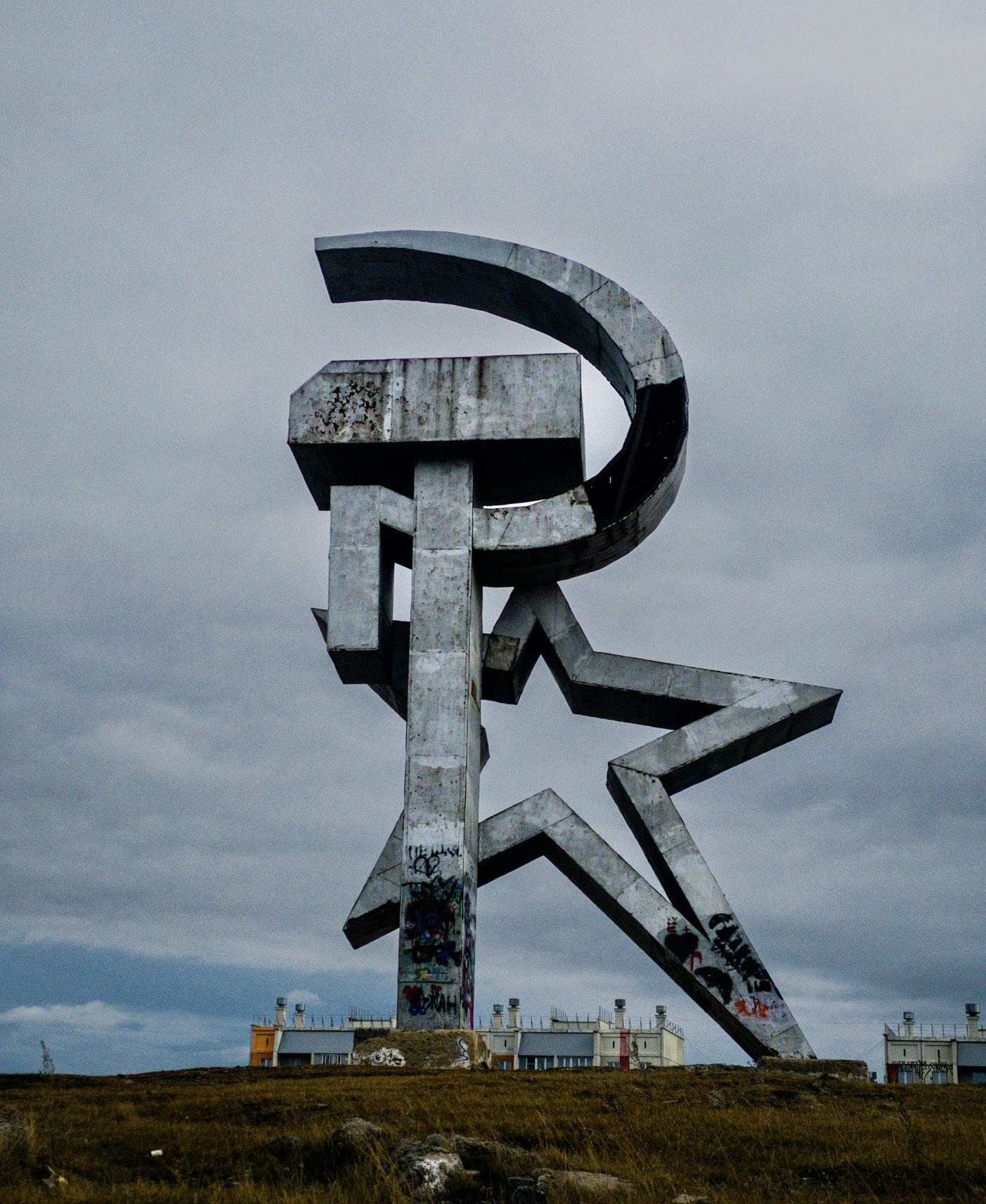
If It’s Safe, It’s Not Socialism
Thechoice between making money and letting others spend it for you or making money and keeping it. That’s what we’re discussing. In this article, I will be proposing that the problem with socialism is that you eventually run out of other people’s money. Capitalism as a system, is flawed. Having 9 zeros in your bank account can sometimes cause corruption – I accept that. But isn’t a little bit of corruption better than A LOT of global, social,
and economic catastrophe? I want to make it crystal clear, gentle readers, that I am not proposing conservative world domination. Sam might, and most likely will, try to paint me as the next Margaret Thatcher - but I propose that even that is better than being the next Joseph Stalin. ‘I have never met someone who gains more pleasure from a healthy bank balance than from listening to Beethoven or going for a walk in the country. But what is it that allows us to do these things?... it’s economic progress.’ This is
something that Daniel Hannan, an ex-conservative MP, said during his debate at the Oxford Union. If I ended my speech here and only left you with this point, I would still be confident in my argument thrashing Sam’s, because the fact that you have a dishwasher and don’t have to wash dishes by hand means you can go for that walk. If capitalism allows for this bliss, then why argue for socialism: a system where people's freedom, motivation and money is stripped away from them?
I already know that Sam wants to rebuttal this point, so let me save him the trouble. The classic socialist, ‘cliché’ rebuttal is that with their system in place everyone could have this dishwasher, and therefore everyone could have this time to fulfil things that make them happy. To this, I present; Venezuela, North Korea, Cuba, East Germany, China, the Soviet Union. I am more than happy to go on. Venezuela has the 10th most natural resources in the world at $14.3 trillion. It has the largest proven oil reserves on the globe alongside significant reserves of natural resources including iron ore, gold, hydropower, and diamonds. It should be a very rich country, but Chavez and Madura’s socialist policies have caused hyperinflation of 10 million percent, economic turmoil, and catalysed poverty levels. These policies resulted in roughly 6 million Venezuelans emigrating - fleeing socialism to get to capitalist countries. Their oil production, which they
rely on financially, dropped to only 800,000 barrels per day in 2021. I’m not declaring that with capitalism comes guaranteed economic flourishment, I’m expressing that it definitely does not cause such a fast decline in living standards. So, not only are socialist countries less free, but also less wealthy. I want to be a barrister. Sam wants to do medicine. Why would we do those things? Why would Sam study for 7 years to be a doctor if we could all be dog walkers and make a wage that we aren’t working proportionately for?
This is the hamartia with socialism.
The job system would crumble, no one would want to do neuroscience or any remotely hard job because there’s no point! There’s no reward. 8,000 medical professionals left Cuba between 2006 and 2017 alone. Socialism always fails in practice due to our human nature. To combine the thoughts of Hobbes and St. Augustine, humans are inherently selfish – alas, we hate to acknowledge it. We work with the motivation of a reward. I wouldn’t do my homework if I got told it would never be marked (sorry Mr Thomas). Socialism’s faults lie in its lack of material incentive. In a table summarising the thirty famines of the 20th century in relation to mortality rates, Cambodia and Ukraine topped the charts. Both socialist countries have an excess mortality percentage of 26.6 and 25.2. It’s no
coincidence that countries with socialist systems suffer more than capitalist ones. 4 out of 5 famines with the highest excess mortality rate are socialist. In a socialist system, collectivization is necessary, as seen in Cambodia and Ukraine, however, collectivization certainly fosters private incentives to hide food in advance of adverse conditions.
This is the very reason why 5 million Ukrainians starved in the Holodomor famine. Countries like these rely on agricultural production –socialism is a system that does not take this into account.
You can’t rely on it to protect the lives of citizens – at least with capitalism, you can rely on yourself.
Okay, let’s say you have a family on the way, and you need to move to either North or South Korea, where would you truly want to live? Might I gently remind you – there are only 18 verified haircuts in North Korea. Which one would you pick, Sam? There is no such thing as 'safe' socialism. If it's safe, it's not socialism. And if it's socialism, it's not safe. Thank you for your time. I hope comrade Sam over on the other page doesn’t brainwash you into supporting a socialist utopia, after all, we now know that socialism’s defining ethic is not equality, but rather coercion.
- Ellie Wain
How, If At All, Can We Apply The Just War Theory To The Russia Ukraine Conflict?
Is Russia-Ukraine justified? The Just War theory is the idea that if a conflict meets a certain set of principles it’s ‘just’ or morally acceptable. It was created by St. Augustine, who based this idea off of biblical teachings.
Although, there is a small problem: due to the fact that there are at least two sides to every war, one side must be unjust. Two just parties can not have a war.
There are 5 criteria that make a war ‘just’:
A Just cause
Legitimate authority
Right intention
Last resort
Likelihood of success
1. A Just Cause: The Russia-Ukraine conflict has two sides. Russia, wh wo is fighting for an unjust cause, and Ukraine, who is fighting for a just cause: their own protection and the safety of the nation. The driving cause for Russia’s invasion of Ukraine is arguably non-existent, the reasons given were to ‘denazify’ Ukraine or that they were threatened by NATO countries. Both of these reasons are false. Ukraine is protecting themselves in order to prevent extreme damage and danger to their people.
2. Legitimate Authority: This means the people making decisions are those who are actually in power and recognised by the international community as running the nations involved. Both sides of the war are being controlled by a legitimate authority in this sense, however the functionality of Russian democracy and Putin’s legitimacy could be questioned.
3. Right Intention: Russia’s intention for the attack was anything but ‘right’, with its main goal being to make Ukraine part of the Russian Federation. Ukraine’s intention is to protect its land, people and independence.
4. Last Resort: This means that all peaceful means to resolve the conflict have been attempted and exhausted. Russia has, so far made no attempts for the peaceful resolution of the conflict, and it would be difficult for Ukraine to attempt to peacefully end the conflict due to the fact they are under attack and the risks for Ukraine to attempt a non-combat response would be detrimental to their safety as a nation and as people. This means that, from both sides, the use of war is not as a last resort.
Just War Theory
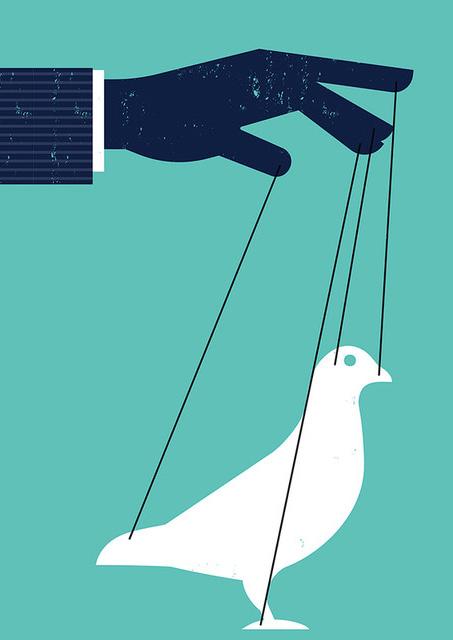

5. Likelihood Of Success. In order for a war to be waged, the side who is instigating the conflict must have a high chance of winning or reaching the goal they are aiming for. This is because it is not morally dignified to send troops to the slaughter for a hopeless and unachievable goal. The nature of Russia’s invasion was and still is achievable which means that although it was for unjust causes and wrong intentions, the war is not impossible to win.
Another aspect of just war is proportionality. However, many conflicts’ proportionality is incredibly difficult to judge due to the high subjectivity of it.
Finally, despite all of this information, many argue that the only ‘just act in’ a war is surrender and therefore, Ukraine is fighting unjustly.
In conclusion, the tragic Russia-Ukraine war meets few of the criteria for a ‘just war’ on either side, but overall evidence lends to the conclusion that Ukraine is fighting a more just war than Russia, who is not.
- Darcey Turner
How Far Have We Come?
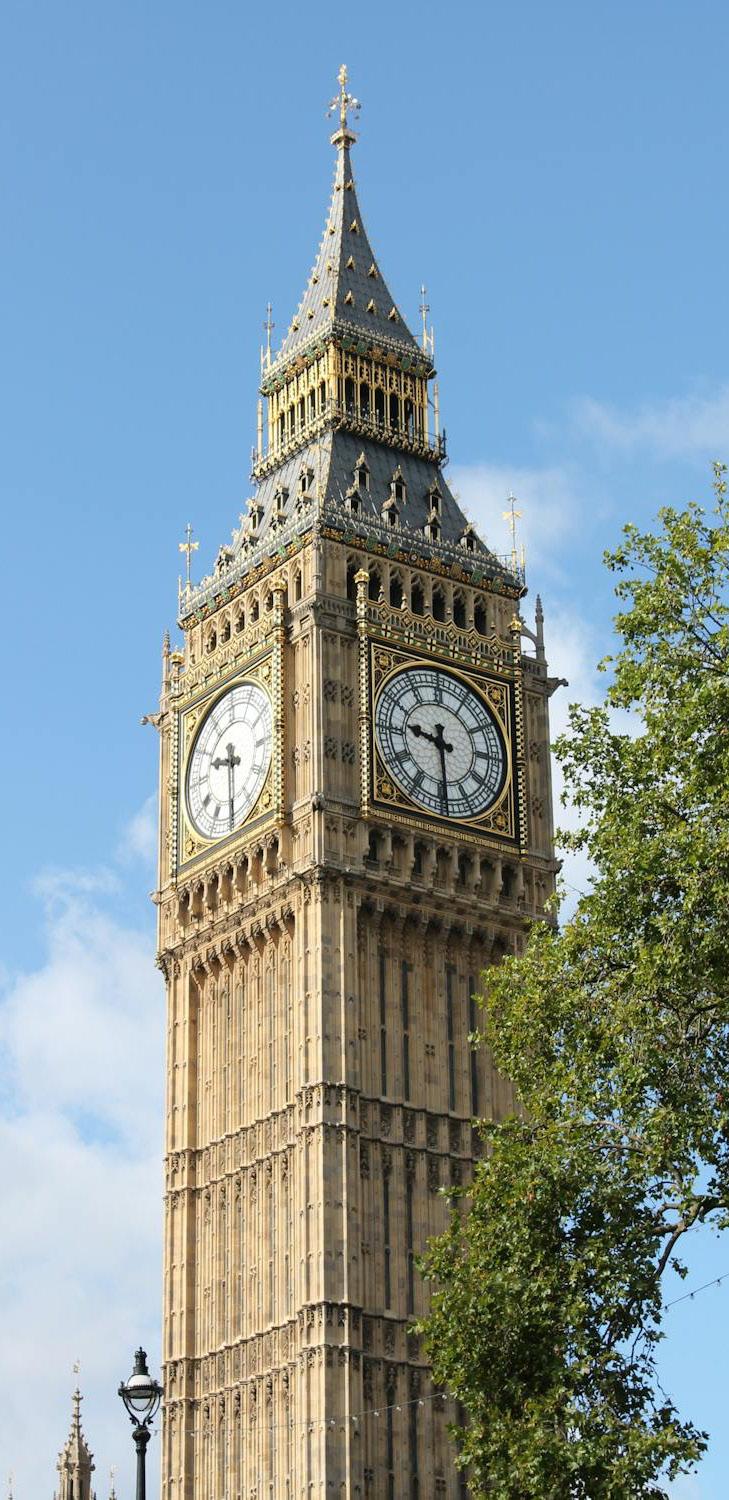
The Equality Act 2010. Aimed to legally protect every individual from discrimination in the workplace and society. The nation celebrated this momentous moment, taking pride in identifying as an egalitarian societybut just how equal can Britain claim to be? The British workplace remains a fundamentally discriminatory environment, despite multiple policies and initiatives to address the protection of various, disadvantaged groups in their individual businesses. The sectors of the population I will be focusing on, are women and black citizens within the workforce; the frequent discrimination of these two categories in the work system alone, leads me to ask the question of just how far have we come as a society?
With just 35% of Parliament members distinguished as women, how can Britain avow to uphold feminism whilst possessing a significant gender imbalance in the government, the national establishment the country is conditioned to trust? Women also make up 51% of our nation’s population, therefore the government, the organization that is supposed to accurately represent the British population, fails to reflect our society’s correct gender balance. Therefore, if our own government can’t achieve to promote gender equality, then how will the public? Existing in the twenty first century indicates that some form of gender impartiality should prevail, however with just 5.4% of women globally holding a CEO position, I believe as an international society, we must analyse how we can promote our workplaces to be just, if females are not to be continually miss out
on leadership roles. Multiple research projects also convey that at senior levels of work, women always equal or exceed the research productivity of men- this truly shows the strong, female work ethic, which leads me to feel that that females’s lack of equal opportunity must be due to a prejudiced work system. The Equality Act 2010 was designed to defend human rights, including those of women, however with over 10 million women reporting incidents of harassment in their workforces, how can society confidently state that we are living up to The Equality Act’s legal conditions. According to a TUC survey, over “79% of women do not report their experience of sexual harassment in the workplace, due to many reasons including fear of repercussions and others.” 79% of women nationally do not feel valued enough to use their voice. Due to the fear of male scrutiny and the agitation of being punished by men. Therefore, fear conquers justice, and the occurrence of discrimination and unlawful acts, despite the government pledging to end them, continue to occur in the workforce; thus, sexism remains victorious.
A severe lack of inequity is also conspicuous in the treatment of black people in society’s workplaces. According to a national poll, surveying 1,203 employees, “two thirds” of black employees experience some form of racism in their workforces. However, only “one in five” of these racial victims reported the incident to HR or senior management, and a quarter of people experiencing an incident of racism stated they “took no action following the event” due to fearing the “consequences” of speaking up. The fact that innocent victims of racial abuse don’t feel worthy and confident enough to voice an inappropriate event to staff, whose fundamental duty is to use their position of power for good is ultimately depressing, and it shouldn’t provoke feelings of pride for members of our society. How can the government advertise “justice for all” whilst turning a blind eye, and blatantly ignoring that “over a third” of people, from a national survey, feel “they’ve been turned down from a job due to some form of discrimination.”
The Race Relations Act 1965 addressed “the prohibition of racial discrimination”- with the Act banning “racial discrimination in public places” and making the “promotion of hatred on the grounds of race and colour an offence”, many people marveled at our nation’s progressive path to inclusivity. However, fifty-nine years have elapsed, and with 32% of British citizens stating that “racism is greatly present in UK society today,” I am obliged to question whether our nation can be considered to be a country built on the foundation of equality, like some believe it to be- The data I have presented clearly demonstrates that racism is embedded in our society’s culture, and despite legislation and companies’ diversity and inclusion policies, racism is still inherent and active in our current workplace. According to the government’s data, only 4.4% of working British citizens are black- therefore, if 4.4% of black people feel discriminated against in their workplaces, the rest of the 2.4 million black people living in British society must experience more frequent and harsher racist incidents, as the nation’s population of 55.99 million people exceeds any number of employees in any British workplace, therefore unfortunately meaning the probability of racism is severely increased. To conclude, whilst I recognise many elements of British society should be celebrated, such as the impressive NHS system and the bustling economy, ranking as the fifth largest globally, some aspects such as “over a third of people from minority groups, receiving racist assaults,” need to be resolved. The daily discrimination and lack of respect faced by millions of people in the workplace and public, despite being “legally protected” by the Equality Act 2010, is truly abominable, and conditions me to feel that our society hasn’t really come as far as we believe it has.
- Ella Slater
CULTURE
The Impact Of Political Satire: Can Comedy Influence Real-World Politics?
– Ellie Wain
Ballroom And Vogue: The Appropriation And Significance Of Queer Black Culture.
- Will Logan
The Negative Effects Of Media In A Modern-Day Society
- Issie Appadoo
A Cover Up: Saudi In Sport
– Jack Milton
The Impact of Political Satire: Can Comedy Influence Real-World
Politics?

Can Comedy Influence RealWorld Politics?
Over the summer, I watched season two, episode three of the science fiction show, Black Mirror. The episode titled ‘The Waldo Moment’ follows the story of a comedian who voices a cartoon blue bear (Waldo). He finds himself running for MP in High Wycombe as this character, who gains incredible popularity due to his nihilist views on politics. In interviews he highlights the twisted reality of British politics, he almost wins his constituency but ultimately loses to the conservative candidate. ‘At the moment, he's [Waldo is] anti-politics, which is a political stance itself, right?’ is a line from the episode that, in my opinion,
sums up counter-attitudinal political satire as a concept. Political satires have been influencing politics for centuries. For example,ake Animal Farm by George Orwell, The Simpsons, or even the oldest dated Menippean satire from Ancient Greece. Their purpose is to enlighten viewers/listeners on political affairs with a grain of humour, often whilst warping reality. When used to criticise politics, this can often trigger a reaction. When the satire is counter-attitudinal, it evokes an angrier reaction than proattitudinal. This idea was researched by Lee and Kwak, who said that anger is the ‘essential mediator’ between political exposure and political action. This concept is now summarised in the Orientationstimulus-Orientation response
(OSOR).
Scholars researched the idea that even less formal political views, presented on latenight shows, still help foster democratic involvement. Hoon Lee found that By watching a late-night comedy, viewers are encouraged to share their views through online and interpersonal discussions. This concept was then proven again by Hoffman and Young, as they found that people are driven through these shows due to wanting to enhance their internal selfefficacy. For Britain to maintain a functioning democracy, citizen participation is vital. Considering that voting turnout has been steadily decreasing over decades, the numbers of voters are essential, now more than ever. So, even when people criticize the idea and formality of political satire, it has one proven positive, which is that it drives political engagement further. ww Can it foster cynicism and apathy in the public? Political satire often highlights the faults and failures of the political leaders and the system. While this is important in holding figures accountable, it can raise hopelessness in the public. The constant exposure to counter-attitudinal satire plants cynicism in the minds of the public and creates the idea that all political figures are corrupt and that political efforts are futile. The view of nihilism is that the political system is irredeemable, and this view is often shared in political satire. It leads to a sinking feeling of ineffectualness, simultaneously
promoting a lack of involvement in politics. Furthermore, political satire often simplifies complicated policies or situations. Not only does this distort pivotal facts, but also leads to miscommunication as intricacies are lost. When evaluating political satire, it’s important to discuss the issue of polarization. Many satires appeal to one end of the spectrum, which therefore resonates with another end of the spectrum. This polarization reinforces partisan divides between liberal and conservative audiences, therefore amplifying political tensions. It is because of these objectives that political satire has received its critical reputation. Whilst some counterattitudinal satires promote engagement, others reverse this. This is why political satire is a mixed blessing.
Saturday Night Live (SNL) has a long history of political satire. When Trump was in office (2017-2021), SNL aired an Alec Baldwin impersonation of Trump. The video went viral and was shared to millions. The unflattering impression of Trump highlighted his disputed actions and controversial statements, which added to the negative perspective of his political career. The satire provided a platform for expressing dissenting views and debates occurred regarding his re-election campaign. However, there was a fine line between humorous debates and disrespectful debates.
SNL sparked this platform where supporters and detractors could discuss real-world politics.
It sparked political engagement. Although this can lead to disrespect, it holds the crucial role of challenging hypocrisy and holding politicians accountable whilst provoking critical thinking. SNL exemplified this. This is only a singular example of how political satire impacts politics. On social media, viewers' minds can easily be swayed. One formidable democratic TikTok can change the minds of three Republicans. Platforms like TikTok catalyse online political engagement and spark debates on current affairs. In my opinion, this is a positive thing. It allows people to use minimal effort but still be active in important conversations. The double-edged nature of political satire requires a rare balance between being a powerful device and a platform that fosters polarization. Whilst it offers opportunities for many to hold leaders accountable and raise pivotal awareness, it can also oversimplify complex issues and undermine real political messages. It can deepen political divides in the media through miscommunication if satire is not used carefully. However, despite its demises, one thing is undeniable; it advocates political engagement.
- Ellie Wain

Ballroom And Vogue: The Appropriation And Significance Of Queer Black

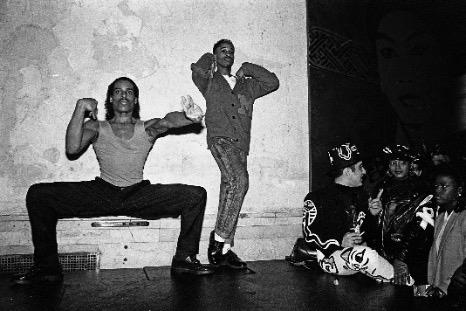
Marginalised by prejudice, violence, employment discrimination, among other burdens, trans people of colour have historically struggled to define secure and safe communities – both within LGBTQ spaces and society as a whole. In response to this, the Ballroom scene was formed - a safe space and community for LGBTQ people of colour. The cultural impact of Ballroom and Voguing is undeniable. Especially its long lasting effects on LGBTQ acceptance and bringing the queer community into mainstream media. Since its origin, it has spread worldwide, as far as Japan and the UK. However, over the years it has also been appropriated by cisgender, straight, white areas of society.
Ballroom and Ball culture started in Harlem 1970, largely credited to Crystal LaBeija – mother of the house of LaBeija. It was (and still is) a place for queer black and
brown youth to come together in order to “walk” (compete by following a specific dress code and attitude) in various categories. These categories would often comment and reflect on more mainstream culture, which queer ethnic minorities were often ostracised from. Some examples could be “femme realness,” where trans women would compete, based on how well they pass as cisgender (when your gender expression aligns with the gender you were assigned at birth). Or “banjie boy,” where gay men would adopt a more stereotypically masculine attitude, and dress in an urban way, as if they were a part of the more heterosexual dominated hip hop culture. These teenagers and young adults were often kicked out of their homes due to their parent’s homophobic, transphobic views. As a reaction to this, they often formed their own families within the ball scene - these
were known as “houses.” These houses would compete at the balls, in an attempt to bring their house name to the forefront of the scene. They provided a space for queer youth to be accepted and taken care of, as they were often overlooked by society. A House was a place where queer racial minorities could turn to when society stood against them.
On the rare occasions where Vogue and Ball culture have entered the mainstream media, it has often been done in a way which does not give credit to the queer black community which pioneered LGBTQ acceptance. For example, Madonna’s “Vogue”, a massive hit single. The music video features choreography from the House of Xtravaganza, using the dance style Voguing (named after the magazine, it was based on hitting a series of model-esque poses) alongside lyrics about Voguing and Ball culture. However, Madonna did not give nearly enough credit to the communities which created this scene and immensely helped the creation of this song. The culture in which she was heavily inspired and influenced by was stripped of its significance and continued to be supressed. She made a significant amount of money off of the song, using none of it to uplift and invest in a financially suffering community which was underfunded and suffered employment discrimination.
This is one of the many instances where ballroom has been used in the mainstream media for personal gain. Black queer culture is often appropriated and stolen; erasure in the name of capitalism, with no investment in the abolition of societal implications which limit the freedom of these silenced communities. Ballroom has been used as a way for many heterosexual, white people to express
their “creativity” and “acceptance” without ever attempting to dismantle cisgender, heteronormative standards that don’t allow the community to thrive in wider society.
In an interview, Maya Juicy Couture (mother of the House of Juicy Couture) said that “Cis people, straight people, wealthy people, even those who share some of our other oppressed identities, still desecrate our art and our community when they objectify our aesthetic, without taking accountability for the ways they benefit from the violence we face at the hands of the systems that are cutting their cheeks”. This perfectly encapsulates the idea that ball culture being used for financial or political gain is completely immoral and harms the community by not giving them support in a world of oppression.
On the contrary, a good moment for the Ball community within media was the documentary ‘Paris is Burning,’ which follows the life of Ballroom legends; Pepper LaBeija, Willie Ninja, Angie Xtravaganza, and Dorian Core. This documentary shows the struggles they faced with racism, homophobia, AIDS, and poverty at the forefront. It sheds light on the fight for freedom in a world built for the rich white man. Showing the struggle of acceptance and validation that queer people face, and the emotional distress trans people face at the
fault of society’s damaging stereotypes, laws, and standards.
In today’s political climate, I believe Ball culture as a whole, the understanding of its origin, and why it is necessary is extremely important. With political leaders who campaign against the queer community – especially transgender people – and who don’t acknowledge the struggle which black people face at the fault of the systems society is built upon, safe spaces are pivotal in the wellbeing and safety of marginalised communities. Some less accepting groups argue that Ballroom and Voguing are exclusionary and encourage segregation. However, this cannot be further from the truth. Ballroom was not created to exclude anyone, but rather encourage equal opportunity and freedom of expression, providing a safe space for members of society who feel detached from heteronormative, cisgender pressure and standards. It is an attempt to give queer racial minorities a chance to connect with others like them in a world of isolation and exclusion.
Ballroom Culture has grown a lot and is finally getting a chance to become more prominent – with shows like ‘Pose’, ‘Legendary’, and ‘Paris is Burning’ surfacing. Reclaiming the culture of the queer black community is pivotal in its development and the survival of its inhabitants. - Will Logan
The Negative Effects Of Media In A Modern-Day Society
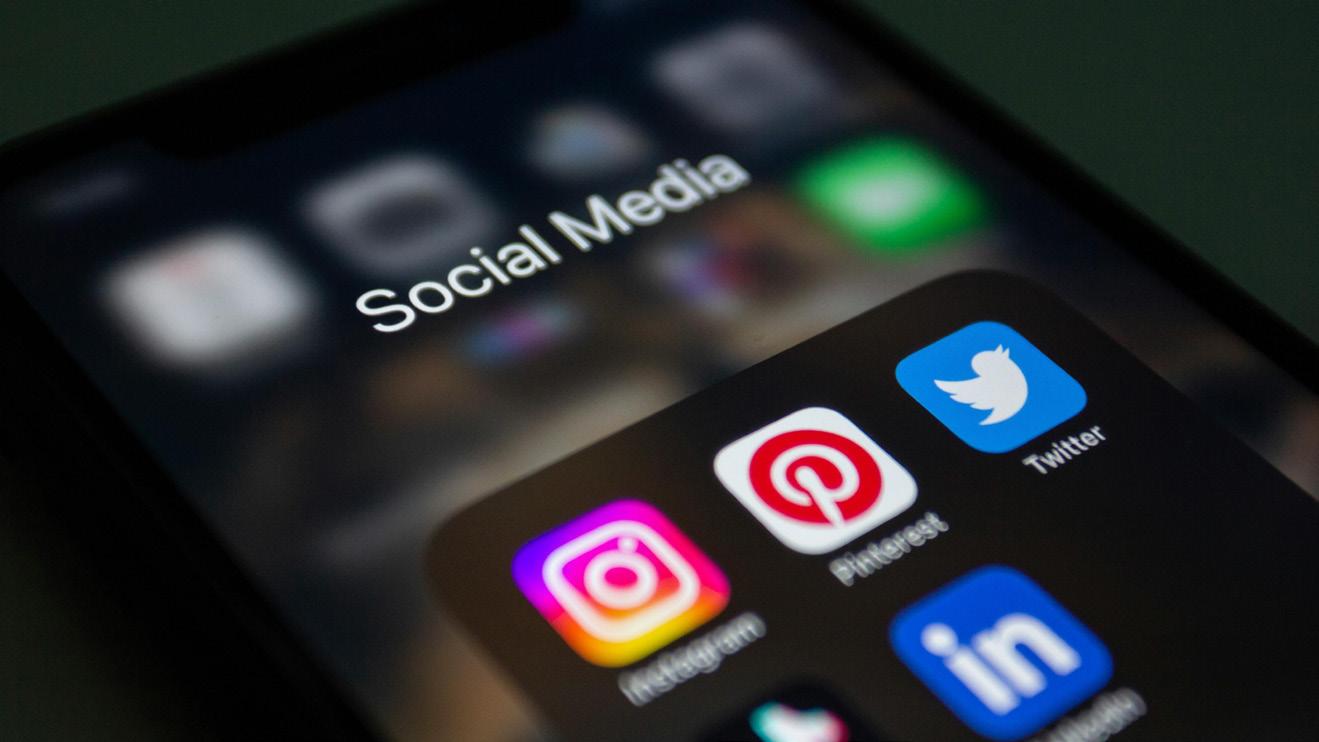
Several incidents in the media have affected many peoples’ lives and has been called a devil by many, including Howard Jacobson. The following article presents two horrendous accounts in which social media has been used inappropriately and to cause harm or spread lies deliberately.
“Honestly the media affected me more than the actual kidnapping itself.”
For instance, in July 2017, Chloe Ayling, a British glamour model, was abducted at a photoshoot in Italy. Having been accused of setting things up with the kidnappers, Lukasz and Michal Herba, she received a lot of backlasw from the media following the start of the court case which finished in June 2018. In an interview with the guardian, she said, “People didn’t believe me because I wasn’t in tears.”
In an interview on This Morning, she made the following alarming statement, “Honestly the media affected me more than the actual kidnapping itself.”
During the days of the trial, Lukasz Herba then claimed that it had all been a ‘sham’ which, as mentioned above, led to an uproar of nastiness in the media to Ms. Ayling. On another interview with Good Morning Britain, she said, “if I was just a 30-year-old woman, not a model do you think people would have the same opinions of me? I don’t think so, no.” This suggests that people were more likely to judge her because she was a model and how she presented herself. This is harmful because it could impact her mental health and could damage her self-esteem. During a TV series recently published on the BBC known as ‘Kidnapped: the Chloe Ayling case’, she says at the start of the first episode, having just done the Good Morning Britain Interview, that the reporters can’t break her.
Later on in the year, she went on a show known as Big Brother and in her leaving interview she said that the main reason she went on there was so the media could see a different side to her, rather than the one that most people were associating her with.
Therefore, we can clearly see the negative impact of media on her life and how it can shape a person’s mind. The media however, has the power to flip a situation quickly which can be both damaging and helpful at points
Secondly, Another incident can be found in the Southport riots which followed a stabbing attack which took place on the 29th of July 2024. Following multiple posts on social media holding misinformation that were quickly taken down within hours, several people came to believe that the suspect had been an asylum seeker. According to the posts, the suspect had been named falsely as Ali-Al-Shakati, a muslim who had become angry at people’s unwillingness to accept immigration and had “lashed out”. It later turned out that the suspect had been born in Cardiff and was called Axel Rudakubana.
However, even though the posts had been taken down in hours, hundreds of people had already seen them and took screenshots and reposted them. This led to many ‘vile far right riots’- says the Centre for Justice and Innovation- taking place during late July and early August. As well as this, people targeted mosques trying to damage them. These attacks are not only fuelling the fear of immigrants but also reinforcing the mindset of racism and anger towards muslims. In videos, one can see bricks and other items lit on fire being thrown at police. The rioters would sometimes pick up locals’ items left in the gardens and throw them at the police. During the riots, more than fifty police officers were injured with some officers having broken jaws, fractures, and lost teeth.
In conclusion, both of the cases have made irrevocabe damage to lives. And this is critically important because it can ruin mentality states. Sometimes peoples’ posts are biased and represented for a person’s beliefs and what they want out of it. Therefore, media is extremely dangerous and can have severe affects. Here we can clearly see that insights from the media can be so severely dangerous and harmful both mentally

and physically: so, think before you post. “The most powerful element in advertising is the truth,” - William Bernbach.
– Issie Appadoo
CANSAT
The CANSAT challenge tasks teams with designing and launching a satellite, the size of a coke can, putting STEM skills to the test in a real-world setting. Genesis’s sponsorship will play a crucial role in helping us take on this exciting challenge and push our limits as we progress through the stages of the competition.
MAGNOSAT Genesis

The St. John’s MAGNOSAT team is proud to thank Genesis for their generous sponsorship of our CANSAT project. By supporting our team, Genesis is empowering local students to pursue their passions in science and engineering. With their help, MAGNOSAT has been able to market themselves more effectively, and inspire the team’s progression in the competition.

Follow us on Instagram @MAGNOSAT and @Genesis to stay updated on our journey and see how Genesis is giving back to the community. Thank you for your support!

On the 6th of November 2022, Cristiano Ronaldo played the full 90 minutes in Manchester United’s 3-1 loss to Aston Villa. It would be his last competitive appearance for the club, following a move to Saudi Pro league side Al Nassr. Even though it was a free transfer, his wages shocked the sporting world. The five time Ballon D’or receives $548,000 every 24 hours, breaking down to $22,000 per hour. Ronaldo is not an anomaly; however, pro league sides have splashed the cash in recent years, on world class players: Mané, Benzema, and Neymar to name but a few.
However, it is not just football the Saudis are looking to take over, the recent creation of the LIV golf league further cements Saudi investment in sport. The league was formed in October of 2021, and gave the best players in the world a choice: resign their PGA tour membership and join the LIV golf league – this of course came with eyewatering signing on fees. The formation of LIV split the game of golf down the middle, some like Rory McIlroy, Tiger Woods, and Scottie Scheffler (the current world number 1 at the time of writing) remained loyal to the PGA tour; while many others, like Jon Rahm, Cameron Smith, and Dustin Johnson had no complaints and resigned from the PGA. Just put into perspective, LIV golf’s financial offering to some of the top players in world golf, Jon
A Cover Up: Saudi In Sport
Rahm was estimated to have received around about $300 million split over his 5 year contract, this money is guaranteed and does not even require him to play in a minimum number of tournaments per year. Furthermore, Rahm has won $35 million in tournament prize money on top of his lucrative contract. These figures are nothing like the ones seen on the PGA tour. For example, the winner of The Open receives $3.1 million. While this is still a hansom figure, it falls far short of the sums LIV players have been receiving.
However, this level of investment in sports raises the question of why the Saudis are doing it in the first place. In order to understand why the Saudis are looking at this scale investment in sports, we need to understand how they accrued their enormous wealth. The Saudi Arabian Public Investment Fund (PIF) is responsible for funding the investments made in the sporting world. It is almost like the savings account for the country, and the PIF has over £514 billion in it. This huge amount of money came from Saudi Arabia’s rich history of selling oil, and the work of Saudi Aramco – the state owned oil
company of Saudi Arabia. In 1932, Saudi Arabia discovered a vast quantity of oil in Bahrain (an island of the East coast) –and soon after in 1935, drilling commenced in the Saudi Arabian desert. The profits made by selling these reserves to western nations were placed in the PIF – which was controlled by the royal family, at the time of writing this means that Mohammed Bin Salman oversees activities of the PIF. Bin Salman has coined the notion of ‘Vision 2030’, which outlines his attempts at moving the economy away from the reliance on oil, by investing in other areas – for example sport or media companies in Hollywood. Thus, explaining the suddenyet planned- rise in investment in sports like football and golf.
While Bin Salman’s aims for ‘Vision 2030’ do somewhat explain the Saudi’s foray into the world of sport, it does not account for the whole story. There is in fact a deeper meaning to the spending. The term ‘sportswashing’ was coined in 2015 to describe Azerbaijan’s use of the European games, held in Baku, to distract people from its ongoing human rights violations. Much a same thing is taking place in Saudi Arabia,

and it is becoming increasingly clear that the nation is trying to hide something. Saudi Arabia has long been under attack for it human rights record, due the ideas of the absolute monarch and strict government that exists. The government frequently impedes on the citizens freedom of speech, as censorship is widespread and targets any piece that is critical of the government or Islamic law. Bloggers and social media influencers are constantly monitored, and some can face imprisonment. In June 2018, Jamal Khashoggi – a journalist critical of the government – was killed, with many believing his death was ordered by Mohammed Bin Salman. The Saudi government denies direct involvement. However, Khashoggi’s death is added to the long list of critical journalists and activists that have been detained or are facing long prison sentences. Furthermore, no form of political opposition is allowed by the government and peaceful protest is banned. Gender inequality is also a key talking point, despite Bin Salman’s ‘Vision 2030’ aiming to target discrimination in the workplace. However, society’s mistreatment of women goes well beyond the workplace. The Male Guardianship System, means that women require male permission to travel, marry, or access certain public services – and prominent women’s rights activist like Loujain al -Hathloul have not only been arrested, but tortured. Islamic law also includes
frequent capital punishment, and on March 12th, 2022, the government executed 81 men. It was the largest mass execution in the country’s history. Both the government and society have always opposed the LGBTQ+ community, with same-sex activity being illegal, and individuals who identify as LGBTQ+ are faced with harassment, potential violence, and arrest from both the state and wider society.
- Jack Milton
Cover Art By Freddie Hayles
About The Cover:
A piece reflecting the ever increasing rise in populist politicians and their subsequent influence. The piece aims to amplify the words written in articles throughout the magazine, most significantly Louis Devrill’s article entitled: ‘Populist Tide, Is Canada The Next To Fall?’ Hence the visually concrete placement of Canadian populist prospect; Pierre Poilievre, that can be perceived both as an interruption of the politically expected, or rather as an introduction into a rapidly expanding network of prominent populist figures within global politics.
Cover Art Features:
Pierre Poilievre, Donald Trump, Vladimir Putin, Boris Johnson, Viktor Orbán
The culmination and further distortion of such figures could suggest the blur forming between these very characters as well as the encapsulation of this issues chapter titles through demonstrating the erratic spill of populist influence on wider global culture. Influence that is ultimately informed and reinforced by prior theory.
A word from the Editor:
It has been a great pleasure to have worked on what is the first of three promising Eagle editions alongside my fabulous graphic designer, Freddie Hayles. I am extremely proud of this issue’s consistent quality of writing, displaying fantastic political engagement across year groups.
It is safe to say that the last few months have been filled with exciting political events, particularly the unfolding drama of the US election, where Trump’s candidacy has certainly drawn the focus of conversation towards that of populist tactics. In this issue, we extend that conversation to Canada, where our feature article, written by Louis Deverill, looks at the rise of Pierre Poilievre, offering a fascinating parallel to the populist tactics seen south of the border.
This issue displays a mixture of talent and format. We turn our attention to the theoretical, featuring a two-part debate on the future of socialism and its place – or lack thereof - in today’s political terrain. Charlotte Clee also returns with another brilliant interview, this time exploring the life and political views of conservative peer, Daniel Finkelstein. Finkelstein possesses many accolades, from advising former PM, John Major and Tory leader, William Hague, to being a regular columnist for both The Times and The Jewish Chronicle. Readers of this issue will also be fascinated by the contribution of Will Logan, who explores the fantastic world of ballroom culture, while also addressing the challenges faced by the queer black community, who are often subjected to the appropriation and discreditation of their culture.
From St. Augustine to Trump, South Africa to Saudi Arabia, this issue captures a wide range of perspectives both ideologically and geographically; it should be a delight to read. I hope you enjoy!
Bella Coombes (Editor-in-Chief)
A thank you to all Involved behind the scenes that made this issue possible:
Reprographics: Mr Williams
Head Of Politics: Mr Thomas
The Student Editorial Team
Debate: ‘Socialism Does Not Work’ – Sam Tredwell, Ellie Wain
Just War Theory – Darcy Turner
How Far Have We Come? – Ella Slater
THEORY
GLOBAL
CULTURE
The Impact of Political Satire: Can Comedy Influence Real-World Politics? – Ellie Wain
Ballroom and Vogue: The Appropriation and Significance of Queer
Black Culture – Will Logan
Negative Effects of Media in Modern Day – Issie Appadoo
A Cover Up: Saudi In Sport - Jack Milton
THE EAGLE
UK: An Interview with Daniel Finkelstein – Charlotte Clee
SA: South Africa Versus the UK: Two Different Parliamentary Democracies – Sabrina Coppola Johansen
CA: Populist Tide: Is Canada Next? –Louis Deverill
US: Dissecting The US Election: The Key to Victory – Reuben Costard
AF: Continental Crisis: How Africa’s Treasure Fuels Conflict and Corruption – Ollie Bannerman

THE EAGLE
St Johns School - Leatherhead