The Misuse of Language: The Fundamental Flaw in Philosophy
Cerys Love (U6th)
Misdiagnosis
Anonymous
LGBT Rights in Healthcare in America: A Report
Alice Dunn (U3rd)
Barbie and its Muddled Feminism
Ellie Wain (L5th)
Why Be Pro Choice?
Tilly Hunt (L6th)
Net Zero
Amelia Barrett (L6th)
Hi, I’m Nokia
Joseph Beim (L3rd)
Acknowledgements C O N T E N T S E D I T O R’ S N O T E
The Windrush Generation: A Reflection on Their Experience
Louis Deverill (U5th)
The Havana Syndrome: The Secret Espionage on U.S. Citizens
Oscar Saville (U6th), Jacob Smith (U6th)
Why the British Rail Privatisation System Failed
Alex Mallett (U6th)
An Insight into the Conservative Party Conference ‘23
Joe Noble (U6th)
Does Britain Have any Party Loyalty Left?
James Downing (L6th)
The Right Angle (Issue #1)
Thomas Shelly (L6th)
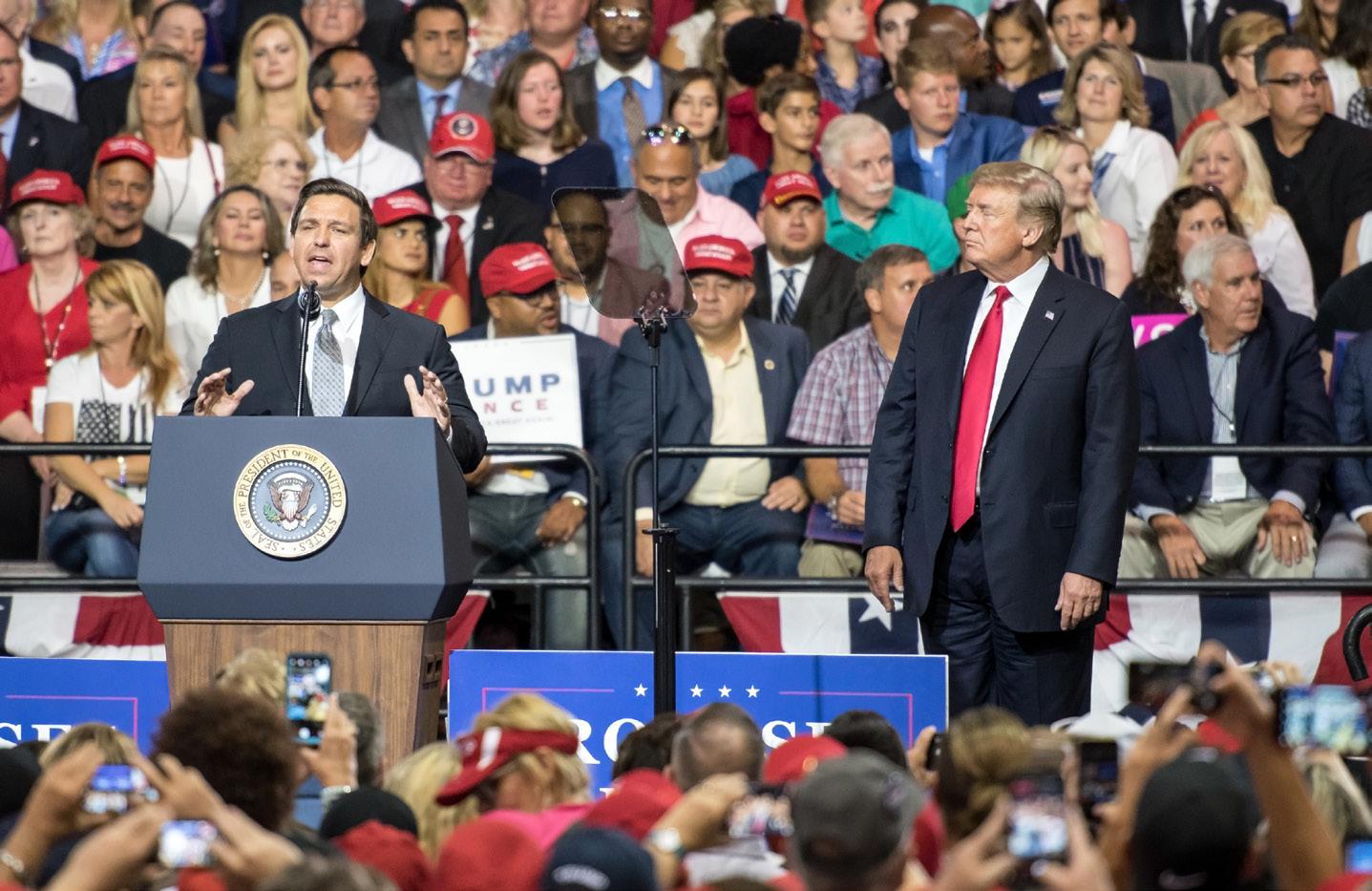
Why We’re in for Another Trump v Biden Election and Who Will Win
Theo Kendall (L6th)
Welcome to the Autumn 2023 edition of the Eagle politics magazine!
For us, this is an exciting edition, full of intelligently written articles covering every topic from pupils of all ages, from a fantastic interview with Alastair Campbell to a critique of feminism in the new Barbie movie to various accounts of current politics, including articles from our resident Sixth-form Trump supporters!
On a more serious note, the first article in this edition is a collaborative article written by us, the editors, about the current Israel-Palestine conflict. As you will discover, the goal of this article is not to spark controversy, but to encourage every reader to think critically about the conflict and not attempt to distance themselves from the humanitarian crisis in these two countries.
We encourage readers not to read looking to take sides, but to rather recognise that, regardless which side you support, civilians who did not ask for war are facing horrors that we cannot imagine; people are having their entire families wiped out in seconds, facing starvation without anywhere to run to and being kidnapped.
If you can, we encourage you to donate to humanitarian aid charities who are delivering essential supplies to those in distress and exercise empathy towards those suffering.
All that said, please do enjoy this edition. There is a wonderful mix of serious, light-hearted and informative articles for you to read, whatever you’re in the mood for, and we do hope you enjoy.
- JJ Fitzpatrick & Joe Noble
Photo source: Zoe Brown, @travelwithzoee on TikTok
Israel-Palestine: A Humanitarian Crisis
JJ Fitzpatrick & Joe Noble
In 3400 years of human history, there have only ever been a total of 268 years of world peace. Most of us have never seen world peace, the last recorded date was 11 April 1954. With the war still raging in Ukraine, many of us forget about wars that are not reported by the media, including wars in Somalia, Ethiopia, Myanmar and Yemen, just to name a few, and we are so heavily influenced by the media, that we forget that in a war, both sides suffer, not just the one we offer aid to.
At the immediate onset of the war, the vast majority of media outlets were reporting on the damage caused by Hamas (an Islamist militant group which governs Gaza), casualties in Israel and the various kidnappings by Hamas of Israeli citizens. It is important to note here that Hamas is independent of the Palestinian government. Israel then declared war on Hamas in lieu of these attacks, and began dropping bombs on Gaza, a very densely populated area in Palestine, using the excuse that a top leader
in another armed Palestinian group was hiding there. Here’s a question: if you knew there was a single criminal hiding in London, would you bomb the whole of London in the hope of killing that single criminal? That seems logical to the state of Israel, unless there was another reason they have yet to make clear.
Did Israel even have to declare war? It’s hardly a war and more of a massacre when you compare the power of Israel to Palestine. Israel has 286 helicopters, 875 combat aircraft and 84 transport aircraft. Palestine has no air force. Israel has 3 nuclear-capable Dolphin submarines, 15 combat vessels and 50 patrol craft. Palestine has no navy. Israel has 3800 tanks, Palestine has none. Israel’s army is over 8 times the size of Palestine’s. Israel has 400 nuclear, chemical and biological weapons, 150 Jericho missiles and 14 satellites.
Palestine has no nuclear, biological or chemical weapons, ballistic missiles or space technology. In 2020, Israel spent about
$20 billion USD on their military. Palestine spent $0 USD. But of course, the USA is giving $14 billion USD to support Israel’s military and the UK, Germany, France, Australia and at least 80 other countries which have spoken out in support of Israel, a number of them also pledging money to support Israel, which is clearly needed when you look at the figures. Does this really look like a war to you?
To be clear, in no way do I condone the actions of Hamas either. I believe that war in any sense is childish; if you cannot reach an agreement without using guns and bombs, you should not be in charge of a country, regardless of the reason for the conflict. No civilian should have to pay for the actions of their government. This is why we have organisations such as the UN to accommodate peace negotiations, which have been sorely needed since the formation of Israel in 1948, created by the UN. Since 1948, Israel has been slaughtering Palestinians in various conflicts, including the 50% of the Palestinian population that was ‘ethnically cleansed’ in 1948. Israel have been taking over more and more of Palestine’s land, creating a simply unmanageable population density issue in Palestine, with the UN labelling the Gaza strip ‘unliveable’ in 2017. So, I suppose asking the UN for help in this situation was futile.
Left: Children in Gaza gather near a destroyed building follwing an Israeli airstrike in the Central Gaza Strip, 1st March 2023
Source: Marwan Hamouu, Shutterstock
All these countries supporting Israel must be turning a blind eye to their war crimes; intentionally firing rockets at a civilian population in which the mean age of a person is 17, including bombing roads Israel told them to use to leave Gaza, is considered a war crime, as is using white phosphorus, a chemical weapon, against a civilian population. Israel has unlawfully killed over 5,000 civilians in Gaza, nearly half of those being children.
Regardless of which side you’re on, who you support, this is not about who’s right, who’s wrong, what’s justified, what’s not. This is about recognising that there are people suffering on both sides who did not ask to be part of this.
We should be making a humanitarian effort to support both sides, not running in circles trying to justify why we support who we do and making arguments we only half believe ourselves as to why one country and one race of people deserves aid over another.
You can watch videos of Palestinian journalists speaking the truth about the state in Gaza, available all over the internet, just to find out those journalists have also been killed. You can read about children who die of fright escaping Israeli forces, and people who have had their entirely families wiped out. You can read about the food, water and electricity supplies that have been cut off, making it impossible for survivors to live and hospitals to provide care to survivors. You can read about the kidnapped students and civilians in Israel. You can read about the suffering, but when will you
realise that it’s not about choosing sides, it’s about protecting lives.
- JJ Fitzpatrick Israel and Palestine have unfortunately entered a new period of conflict triggered in part by the events that unfolded on October 7 th when over 1400 Israelis, mostly civilians, were killed in a meticulous and pre-planned attack by Hamas who felt it was justified by years of increased Israeli settlement and fighting. Has the unfolding response from Israel been reasonable? No, over 10 times as many people, mostly innocent, have been killed in Gaza following heavy bombing from a world-renowned Israeli army. The problem is worsening, and the UN have already admitted that war crimes have likely been committed by ‘both sides’.
The main victim of the conflict thus far has been innocent civilians, regardless of borders, across the Judean desert. There is no doubt, that this should be unacceptable in the eyes of the international community, and it often is, but only for one side. Often, Islamic majority countries are in support of Palestine, as well as Russia and some South
American countries, with Bolivia recalling diplomats and severing relations. Israel is often supported by the west and its staunchest ally, the USA. Akin to the conflict in Ukraine, China is taking a cautious approach, it officially recognises Israel, and has invested billions into its economy, but is sending emergency aid to Gaza. Currently, no country seems willing to admit the likelihood that atrocities and war crimes have been committed by both sides of the unnecessary conflict.
Currently, Hamas stands accused of breaching the ‘iron wall’ on powered gliders and motorbikes and indiscriminately firing at anyone on the other side. Hamas also captured hundreds of hostages which they have taken back to Gaza, with evidence of hostages being used as body shields slowly emerging. Over 200 people remain captive in Gaza. There is also extensive evidence of Hamas firing thousands of rockets into Israel. These rockets are often crudely designed, and in one Hamas training video, made from UN donated water pipes. These rockets have no control system and are fired indiscriminate into Israel. Finally, one of the most shocking things that Hamas have been accused of is integrating civilians into its
Right: a note in the wailing (Western) wall in Jerusalem. Israel
Source: Alexandre Rotenberg, Shutterstock
warfare. Reports show the IDF located over 50 rockets found inside children’s day cares in Gaza. Likewise, the IDF accuse Hamas of running their ground operations from underneath a hospital in Gaza as protection from
Israel, however, stand accused of killing many more people. Whilst Hamas fires rockets into Gaza that they can’t control, Israel arguably does something worse, they fire high precision missiles that hit specific targets, killing innocent people along the way. Surely Israeli military commanders know that as they take out that Hamas leader, they will take out innocent people who
Furthermore, Israel has begun tightening its almost permanent siege on the Gaza strip. They control the internet, the borders, the imports, the exports, the water, electricity, the sky and sea, even controlling the number of fishermen that are allowed to fish in specified locations off the coast. Israel won’t even allow a temporary ceasefire due to the risk that Hamas will replenish their supplies. This permanent siege and lack of empathy for the innocent civilians trapped in the middle is worrying especially since this is a move backed by Netanyahu and other top officials. Given Israel have committed to controlling Gaza in the current military offensive, it can be assumed that this problem will continue to worsen, and many more innocent civilians will lose their lives. Hopefully both sides can at least agree to mini-
The aftermath of an Israeli attack on Gaza, 9th October, 2023
Source: A-One Raven, Shutterstock
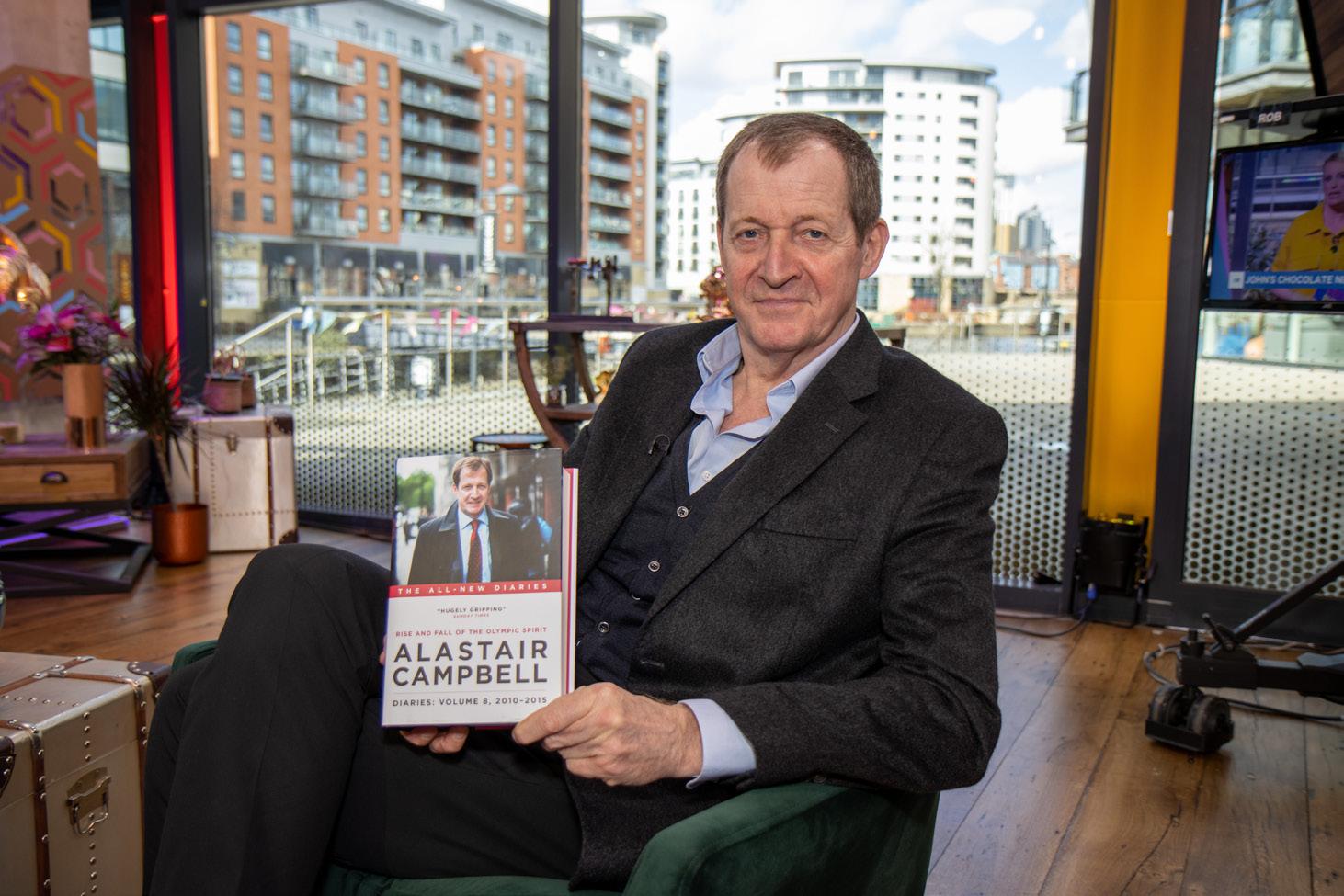
An Interview with Alastair Campbell
Charlotte Clee
Alastair Campbell was a prominent figure within the ‘New Labour’ movement. He influenced the Blairite Government in ways few have done since his tenure as Tony Blair’s press secretary and director of communication and strategy. His attitude toward the job, and life as a whole, was infamously mocked in the BBC show ‘The Thick Of It’. During his time, he advised Labour on three General Election wins, most famously the 1997 General Election, and was a key component in many of the major policies and international crises of New Labour. He continues to work hand in hand with the Labour party, as in 2015 when he championed Miliband’s campaign. Today, he is part of a podcast double act with former Conservative leadership candidate and Minister, Rory Stewart.
How do we further cross-party collaboration within modern day politics?
There is certainly a place for it. Obviously, politics is about important issues on which people often have very different views, but there is definitely a place for more constructive and co-operative debate than the bulk of what we see and hear in politics. Our motto for the podcast is “disagree agreeably” and we try to do that. I think it is one of the reasons people seem to enjoy it.
What can we do in the future to ensure that the British public does not fall for false promises set by political parties like we saw with Brexit, especially in a developing post-truth world?
It is hard, and technology is making it harder. Added to which a lot of politicians, especially the populists, see it as something to exploit rather than confront the danger. The important thing is
to be aware, to understand how and why it is happening. I worry at the lack of basic political and media education.
With the Richard Sharp BBC controversy earlier this year and Johnson being appointed by the Daily Mail as a columnist after his resignation, what tips would you give to someone to help them receive an unbalanced news feed?
Read far and wide … especially books!
What do you think journalists should do to ensure biases can be restricted? Does the Government need to introduce regulation and push OFCOM regulations harder to ensure we do not have more Jacob Rees-Mogg-type GB news shows etc?
There has always been a place for strong opinion in our media. The problem is that the division between news and comment has broken down in most of our newspapers, so people have tended to look to the broadcast media for something more balanced and impartial. But GB News challenges that and it is frankly ridiculous that OFCOM says it is not primarily a news channel and therefore not subject to the same rules as, say, the BBC or Sky. It is called GB NEWS, and the bottomless pits of money spent on getting right wing MPs to present their own programmes underlines its role in seeking to politicise all news.
What policy do you wish you would’ve pushed further for throughout your tenure within the Labour Party?
Compulsory voting, lowering the voting age, and politics on the curriculum.
You are very open about your own battles with mental health issues throughout your life, how would you advise policymakers on what to do to help push for better mental health services, especially within schools?
I fear mental health is falling down the political agenda at exactly the time it needs to be higher. I would like them to understand that in the long run we will benefit as a country, and save money, if we shift to a much more preventative approach. At the moment, we have a mental illness service, not a mental health service. I would like to see classroom assistants with training in mental health support.
Do you think Keir Starmer will be able to guide the public debate away from culture wars during the election campaign, or will we have to constantly suffer with the same irrelevant distractions from what actually is going on?
I hope he tries, but it won’t be easy given the Tories and their media supporters will prefer to focus on culture wars and distractions rather than their record or their lack of serious plans for the future.
You mention the term “Persivilience” in your new book “But What Can I Do?”, what current politician do you think this best describes, and what was your biggest “Persivilience” moment during New Labour?
Northern Ireland needed lots of persivilience. I think Joe Biden embodies it. Just keeps on keeping on.
What tip would you give to any young person aspiring to a career in front line politics?
There is no single tip, just as there is no single formula that makes a good politician. The most important thing is to hold really strong beliefs and principles and a desire to make a difference, and a belief you can.
If you could implement one new procedure onto the House of Commons and British political figures, what would that be?
Real punishment for misleading the public.
You yourself, Alastair, are a devout Burnley fan, where do you think tribalism crosses the line, both within politics and football?
I would say it is when you define support for your own side purely in relation to hatred of the other side.
Previously, you’ve mentioned that schools should teach children from young ages about politics, if you were Education Secretary what would be the introductory policy you pass to help forward this wish?
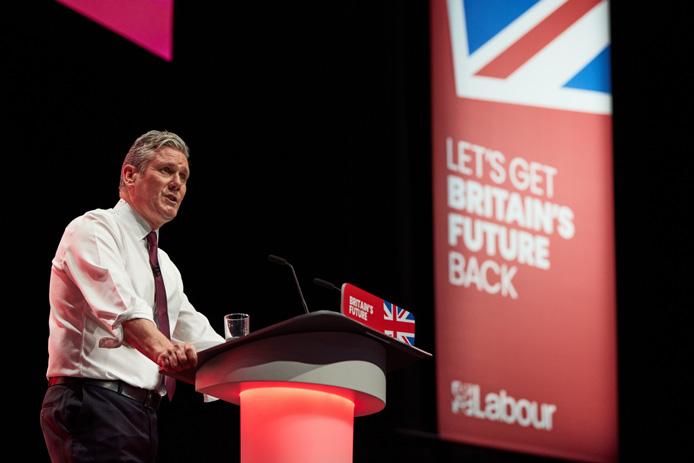
Above:current Labour Party leader Keir Starmer at the 2023 Labour Party Conference
Source: Martin Suker, Shutterstock
Basic history and how the country is supposed to work taught in primary schools.
You took a part in Labour’s campaign in 2015 with Ed Miliband, do you think if modern-day Miliband was placed in 2015 Ed’s position he would’ve won?
It is impossible to know. People change, and so do moments in history.
What is one historical figure you think would be able to fix British politics at the moment?
The problem with that is that a historical figure would not necessarily be able to understand the more modern aspects of our politics, media and tech landscape. But I am going with Abraham Lincoln or Clement Attlee.
On a final note: In 1997 we had ‘Things can only get better’. What song do you think best fits the Labour Party at the moment?
Things can only get better!!
To hear another of Charlotte Clee’s recent interviews with former Labour leader Neil Kinnock and more, search for the Politicised podcast on Spotify.
The Misuse of Language: The Fundamental Flaw in Philosophy
Cerys Love
Language, in the cultural zeitgeist, is thought to be and designed as the ultimate vessel for the translation of one’s thoughts. This can manifest in numerous modes from verbalisation to writing or even symbols. For humans, as a species and as individuals’, connection is necessary. Language, arguably as I will come to explore, affects this aim. Meaning, contentious as I will come to comment, determines the ‘success’ of this means of expression. Thus, I will endeavour to uncover how meaning is decided and the implications of the language we use in regards to the recipient. Moreover, if meaning is due to its relationship with reality or if meaning is more contingent, relative to the recipient themselves.
Logical positivism, a thought championed by Schlick and the Vienna circle, relies on the ‘principle of verification’ to evaluate if a statement has meaning. The principle states for a tautological statement to be empirically
proven, there must be a relationship with reality. This alone gives meaning to language. Language can be tested for verification using algebraic equations with different variables being ascribed to letters.
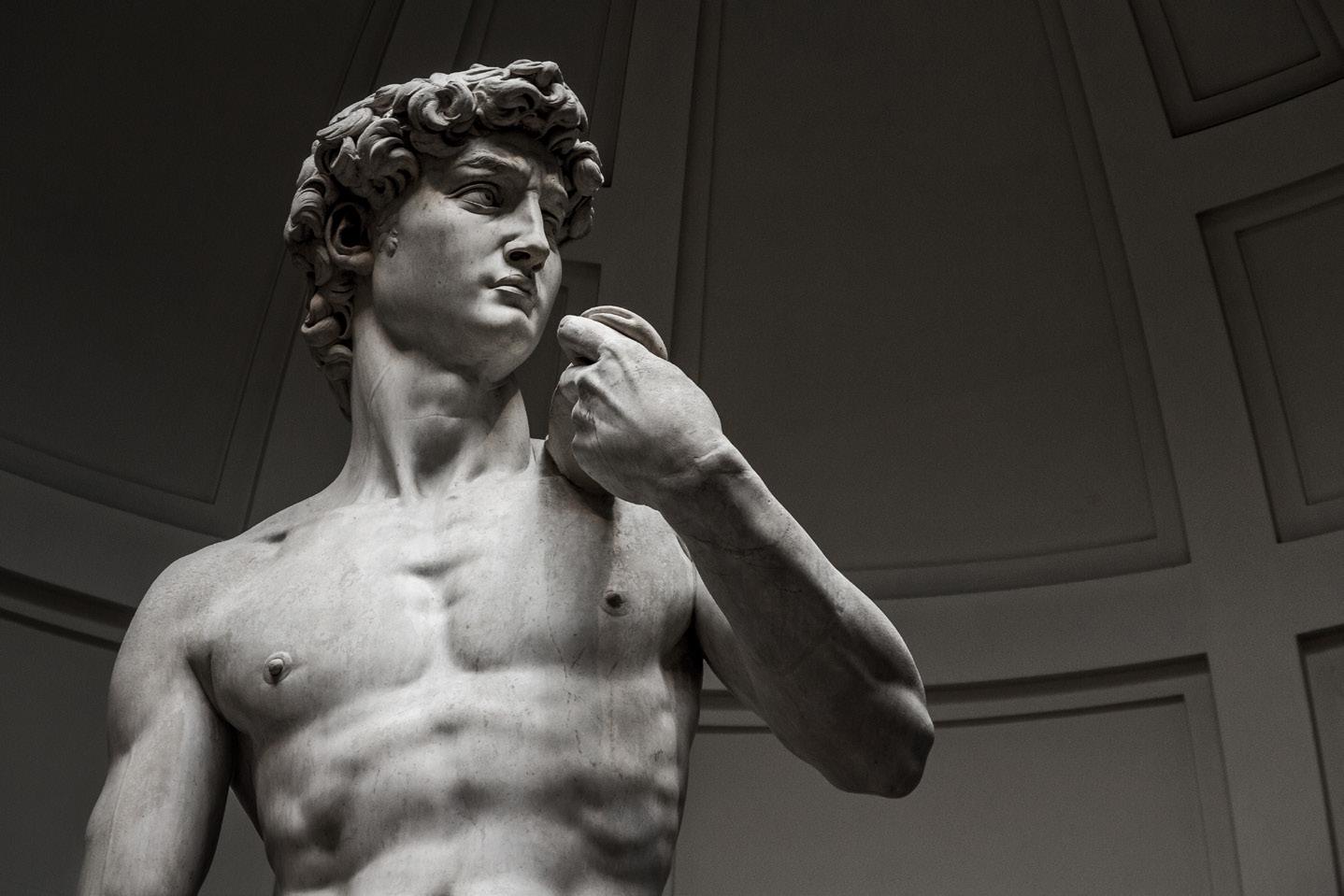
For example, one could observe Michelangelo’s David and state ‘the statue is purple’. Assume the variable ‘the statue’ is P ‘is purple’ as Q. Mathematically this can be written as PvQ (The statue (and) is purple). Both statements must be true to infer meaning. Through empirical observations, one can see David to be a white statue. Therefore, when P is true Q is not. There is no relationship between reality and statement, the observation is proven to contain a falsehood, a logical fallacy. Therefore, the statement has no meaning.
However, in acknowledging a proposition’s falsehood, would this suggest an inherent meaning? ‘The statue is purple’ is
understood though it contains a falsehood which is proven through means of verification. To disregard falsehood as it does not contain a perceived meaning would be a logical fallacy, such, as to acknowledge a false conviction; there is a recognition there was an error.
Furthermore, for progression to occur within the realms of science, there must be acknowledgement and therefore meaning found within falsehood, such as within scientific investigations have both directional and null hypothesis; a hypothesis which states a clear and null hypothesis; a hypothesis which states a clear relationship between two variables, another which doesn’t. The null hypothesis would still hold meaning as it has been empirically proven; for a falsehood to be known there must be a truth that has been verified. Therefore, for scientific progression to occur, there must be meaning found in falsehood.
Empiricism supports the view that the meaning of language is determined through the lens of verification. The genesis of this line of thought traces to the likes of AJ Ayer in the early 20th century and influenced by David Hume. Firstly, for Ayer, we are to verify one’s statement using our sense data; this in turn educates one in reality. Therefore, using information pertaining to reality, one will accumulate a sense to either verify or falsify. The criterion of fallibility is determined if a sentence, or declarative, can be considered factual; if the person Above:
David by Michelangelo, Florence, Italy
QQ7, Shutterstock
can verify said proposition to be true or false via empirical observations.
This highlights a flaw within the system of verification: the dependence on observation. This phenomenalist view tries to eliminate the notion that language is derived from the metaphysical, which speculates around notions which transcend reality, such as God or an afterlife. I shall adopt this axiom on metaphysics to critique the analytical view of language. To disregard the metaphysical arguments is to disregard the nature of language.
How can spoken word itself be verified in cases such as suggesting statements about the inner human condition, a speculative part of an individual? Logical positivism disregards discourse on non-observable, non-verifiable, and emotive statements. To attempt to grasp an individual’s human condition, one must communicate their inner thoughts such as ‘I am angry’. To support this claim, there can be physical signifiers such as a jaw being clenched or an aggressive tone, but will another know the full extent which another is feeling?
There is no empirical measure to accurately gauge how an individual is feeling. There are attempts, such as a pain scale indicator, which tries to determine how serious an injury is dependent on how much pain is suffered by the inflicted. Yet, the fundamental flaw of trying to decipher emotional intensity is that it is reliant on one’s personal experience. One can only assume the emotion or pain another is thinking by relating one’s pain to their own. Therefore, the understanding of one’s emotional
spectra is on the inter-personal experience. Furthermore, does language have meaning if the falsehood is intentional, such as ‘it’s raining cats and dogs’? The statement has an observable falsehood, yet it has meaning, it’s raining heavily, due to the statement’s specific context and being a widely understood idiom.
Chomskyan notions of language are concerned with the ability for one to produce sentences, and how accurately one conveys them; the reliance for meaning is inferred by the recipient’s mutual understanding of the language proposed by the speaker. For one to utilise language, one must acquire it, which entails the individual to having rigorous conditioning and practice to have a grasp of the conventions of language. Though childhood socialisation occurs both at home and school, this creates a collective understanding of specific convention of grammar and linguistics. Therefore, words are assumed to have specific definition and meanings. For example, if two separate children were raised to acquire the antonyms of words, such as the conventional colour white was taught to be purple. If these children were to state ‘the statue is purple,’ would this statement have meaning?
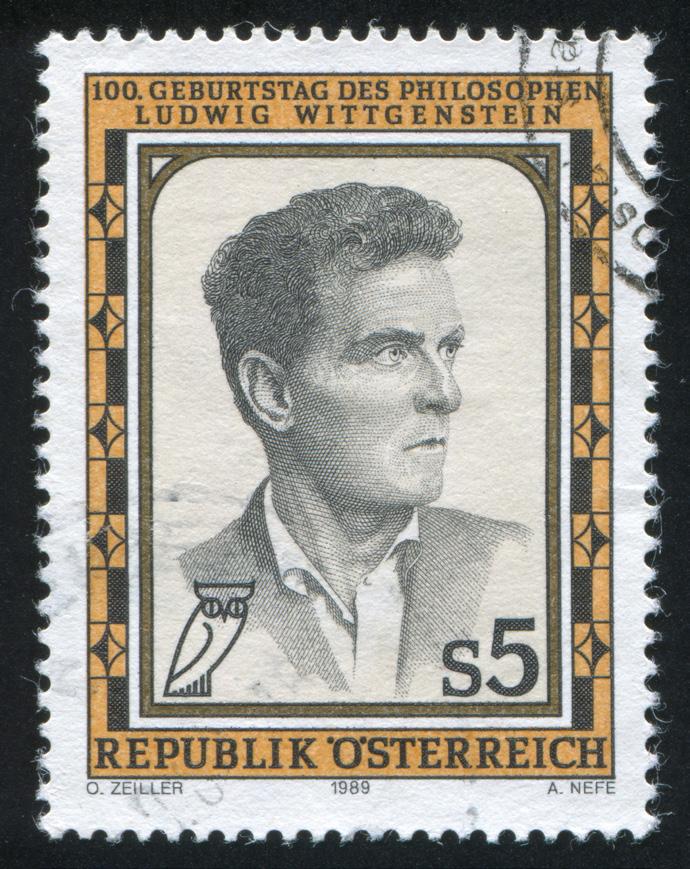
Through a later Wittgensteinian lense, this sentence could have meaning as the sentence is within the ‘language games’. The concept relates that meaning is particular to context, intent, and language. Due to the nature of words, they have the ability to be studied in both a synchronic and dichromic state. The former states that words can be studied at a specific point. For example, taking Wittgenstein’s ‘Beetle in
Above: a stamp celebrating Austrian philosopher Ludwig Wittgenstein, Austria, circa 1989
Source: rook76, Shutterstock
the box’ thought experiment: all humans have a box that contains something that is thought to be a beetle. The humans cannot look inside one another’s boxes, they must assume they were talking about the samething, they are all within the same ‘language game’. However, imagine that all humans have different objects within the box that are thought to be beetles. They are conditioned to think that within the given box, there is a ‘beetle’.
If all people were in a different language game but thought to be within the same one, misconceptions can arise. Meaning can be derived from the context. However, if words are devoid of specific context, do they still have meaning? Logical positivists suggest there is no meaning outside of observable verification, however, for falsification to occur, there must be an understanding of the statements and the words contained within them.
For one to understand a specific definition of a word, one must understand the words within the definition. If I was to ask what
the word ‘goal’ meant, one could suggest a goal where posts are erected which have a net inbetween them. Another could suggest the action of scoring in a game of football where a ball is kicked in-between the posts. Others could suggest setting a target or personal aim. Therefore, one cannot assume that words have a ‘transcendental signifier;’ they have multiple meanings which are selected for use depending on the specific ‘language game’. Thus, this is why logical positivism fails as there is a complete disregard for sociolinguistic conventions of context within specific situations.
Words, if studied in the diachronic sense, state that the interpretation of a word may change over time, such as ‘beauty’, especially from a female perspective. Through time, beauty has evolved from the renaissance era, praising full figures and pale skin as a sign of wealth for one to aspire to. In recent eras, there has been a change in definition to lean, tan silhouettes as a symbol of health which coincides with the increased public awareness of maintaining a healthy lifestyle.
For one to truly derive meaning from language, there must be the prerequisite that the individuals are communicating within the realms of the same context. If one was to try and point out a sign and stated, ‘it’s over there’, the receiver of this information would not be in the same ‘game’ as the caller if they were looking in a different direction, therefore the sentence would have no meaning as there is a lack of communication of thought between the individuals. The clashing ‘language games’ are easy to understand within the context.
Yet, within a natural setting, language games can change instantly, therefore without stating the given ‘game’ or context, misunderstandings can arise due to the changeable condition within social conversations.
The Saussurean approach is the basis for the study of sociolinguistics. Even within the same language, there are cultural and ethnic variations between nations or groups of people. This fact alone suggests that language has meaning because the speaker and recipient create the meaning of phrases in a specific context, even nonsensical ones, rather than deferring to empirical verification, such as the idiom ‘when pigs fly’. The concept of a flying pig is nonsensical, yet one can picture the idea due to the meaning behind the idiom, that something which is said will happen only if the impossible does. This creates a meaning in the public consciousness from a statement, or words, which appear seemingly unrelated to another.
To further the point, William Shakespeare proposed over 1,700 words to be utilised in the public lexicon. One such example is
‘cold-blooded’. Removing context from the word, one could imagine a reptile or fish, as empirical observation states they have naturally cold blood. However, within the context of the play King John, the word suggests that one is emotionless, ruthless or cunning. Therefore, this further highlights the reliance on context to derive meaning. In an ideal world, the notion proposed by logical positivism would be the vessel to verify meaning, especially AJ Ayer’s strong verification principle, that all meaning is derived from observable truths, would be considered the optimal approach to language. This is due to the reliance on the scientific method; this alone allows for one to verify truth from falsehood.
To conclude, due to the nature of language, it is impossible to reject a metaphysical aspect of communication, as Ayer’s utopian approach ignores the reality of how language is treated. Statements that contain an intent to be verified can be empirically tested, yet this is not the aim for the utility of language in day-today life. Language should both be viewed through an
Above: The Complete Works of William Shakespeare
Source: Ana Hollan, Shutterstock
analytical and metaphysical view as the theoretical must be married with the real. The result is that language should be judged by its intention first, then its content.
Scientific discoveries should be subject to verification as they endeavour to be verified. Language, which is expressive, metaphorical, allegorical or otherwise, not with the desire to be proven true in the same way as science, should be handled differently. Whilst language may create statements or a hypothesis, language in an emotive sense does not attempt to. There is a distinct difference in the ‘language game’ in which they operate. Therefore, the crucial factor to determine if there is inherent meaning to language is to decide on the context in which the language is used. One must use context so meaning can be determined and used.
Therefore, to reconcile the flaws of both the metaphysical and analytical, one must draw both from observations and empirical means, yet also respect the meaning of language between both the speaker and recipient as it pertains to the context in which they interact.
‘The limits of my language means the limits of my world’ - Ludwig Wittgenstein
Misdiagnosis
Anonymous
Misdiagnosis: the incorrect conclusion of a mental illness or other health issue. It is a dangerous thing and can cause lots of mental strain and consequences for a person. It affects more than a third of patients, the most commonly misdiagnosed illnesses being BPD, bipolar disorder, depression, ADHD, and PTSD. Some people are left feeling confused or distraught; for others it can lead to more extreme feelings and actions, or even eating issues. However, this problem may not just change behaviours; some people can be prescribed antidepressants or other drugs unnecessarily, which can lead these patients into a downwards spiral or addiction. I am here to spread awareness about it, and to do that, I am going to talk about my own personal experiences.
I was referred to a therapist as a result of self-harm, and contemplating ending my life. At this time, I was not in a good place mentally and began to see this therapist weekly. Talking about it was difficult; I would often
cry during these sessions. A few weeks into seeing them, they said I had depression. This had not been mentioned before and never was again. The diagnosis didn’t sit right with me. We didn’t have any conversations about how I could cope or what this meantfor me and what I had been through.
This sat with me for two years; it led me to harming myself more and had a massive impact on me mentally. I decided to ask for help and go to another professional for a different diagnosis and, as it turned out, my previous diagnosis was wrong. I had two other disorders that I didn’t even realise I had. As soon as I got this piece of information I cried. This thing had been eating away at me for a long time, this thing that had hugely reduced my quality of life was wrong.
It was extremely hard for me to ask for help, even with all that time between seeing specialists. It is something rarely ever talked about, and yet so soul destroying and impactful. I still struggle to
talk about it to people without getting upset or feeling ashamed, it is because of this that I have chosen to be anonymous. This is so I don’t have to admit this publicly, but can still educate and potentially help others. I really do encourage you to talk to someone about what you are going through. It doesn’t have to be misdiagnosis, but if you feel that what you have been told by a professional isn’t right, speak out, instigate those conversations about coping, and ask ‘why’. Because as someone who knows what it’s like to harbour something like this for so long that it makes life difficult, it really does make a difference when you get help.
Thank you.
If you’d like to talk to someone about any issue that’s upsetting you, you can call 116 123 free at any time to contact the Samaritans hotline.
LGBT Rights in Healthcare in America: A Report
Alice Dunn
Despite the fact that LGBT rights in the United States rank among the most advanced in the world, discrimination in health care settings continues to endanger LGBT peoples’ lives through delays or denials of medical attention. For example, according to Human Rights Watch News, one patient in need of HIV medication disclosed to a hospital that he was LGBT and the staff refused to provide his HIV medication. Trump and Pence are also looking to make it easier for health care providers to discriminate against the LGBT community in health care settings.
In Tennessee, lawmakers filed bills to ban gender-affirming medication for children from 2024. The law would stop all medical staff from giving children struggling with their gender identity puberty blockers. Currently,
interventions to delay puberty are especially important for the mental and physical health of many transgender people. The American Medical Association and other professional groups have strongly advised against restricting gender-affirming care for young people.
Senator Markey stated “Trans health is health, and health care is a human right. We have a moral obligation to protect, defend, and expand the fundamental right for transgender and non-binary people to get the care they need despite the tremendous legal, financial, and social barriers they too often face when accessing their health care. “There is no question that transgender and non-binary people across America are under attack just for being who they
are,” according to the Ed Markey website.
Senator Markey has recently announced a ‘bill to address health barriers faced by transgender, non- binary people.’ The Gender Affirming CARE (Care Access Research for Equity) Act would allow the appropriation of funds to the National Institutes of Health and the Centres for Disease Control and Prevention for conducting research on barriers to gender affirming health care, and the impact of those health outcomes. There is a scheduled $25 million to be distributed to the organisations over the years of 2024-2029.
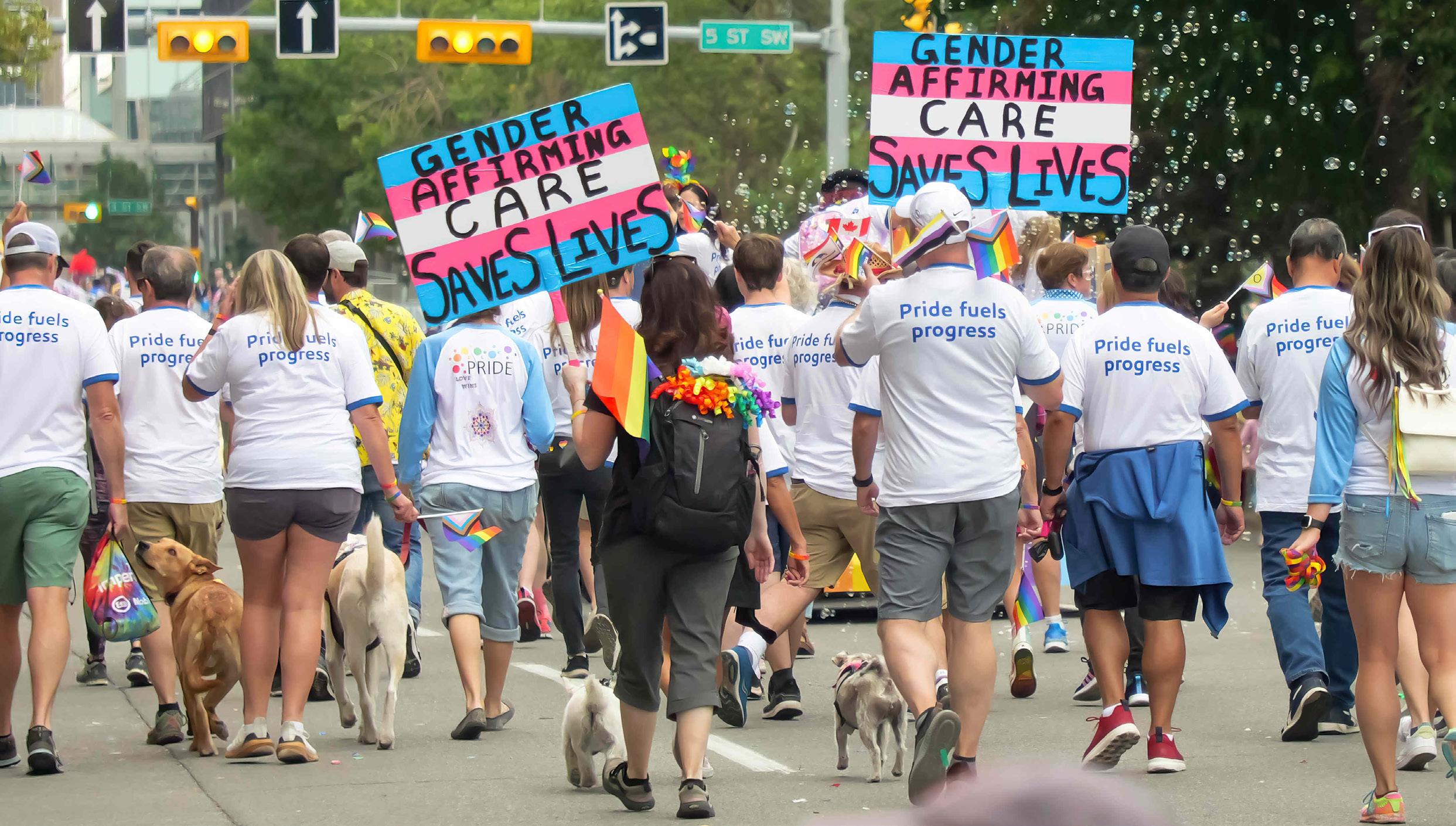
The annual Dyke and Trans March in Calgary, Alberta, Canada amid growing anti-LGBT sentiment
Source: oasisamuel, Shutterstock
Barbie and its Muddled Feminism
Ellie Wain
Barbie is a world-famous phenomenon so it’s no surprise that Greta Gerwig’s Barbie is a sensational blockbuster having made 337 million US dollars just on its opening weekend. It’s a movie that explores the history and legacy of Mattel’s Barbie doll whilst bursting with feminism. As someone who won’t usually last more than an hour when watching a film before dozing asleep, this film had so much going on that it made it impossible for me to even shut my eyes. I personally really enjoyed the film and thought that it was produced incredibly well, however I think that Gerwig had so many aims for this film that in the end many weren’t achieved effectively.
Barbie began as a page filler in a newspaper rather than a doll. A German publisher, Alex Springer, was printing a newspaper and there was a blank gap at the bottom of a page, too big to leave blank but too small for a story. Last minute he approached a cartoonist who drew up a thin white, blonde girl named ‘Lille’
who was then printed in the space. Lille was an overnight phenomenon and soon enough a doll was created of her, and she was plastered on every piece of merchandise you can think of. On holiday, Ruth Handler (The creator of Barbie) passed Lille in a shop window. Handler had been trying to create an adult doll in the States and she had stumbled across one on her holiday. Handler’s company, Mattel, however, had more resources than Lille’s manufacturer, and soon enough Barbie was born.
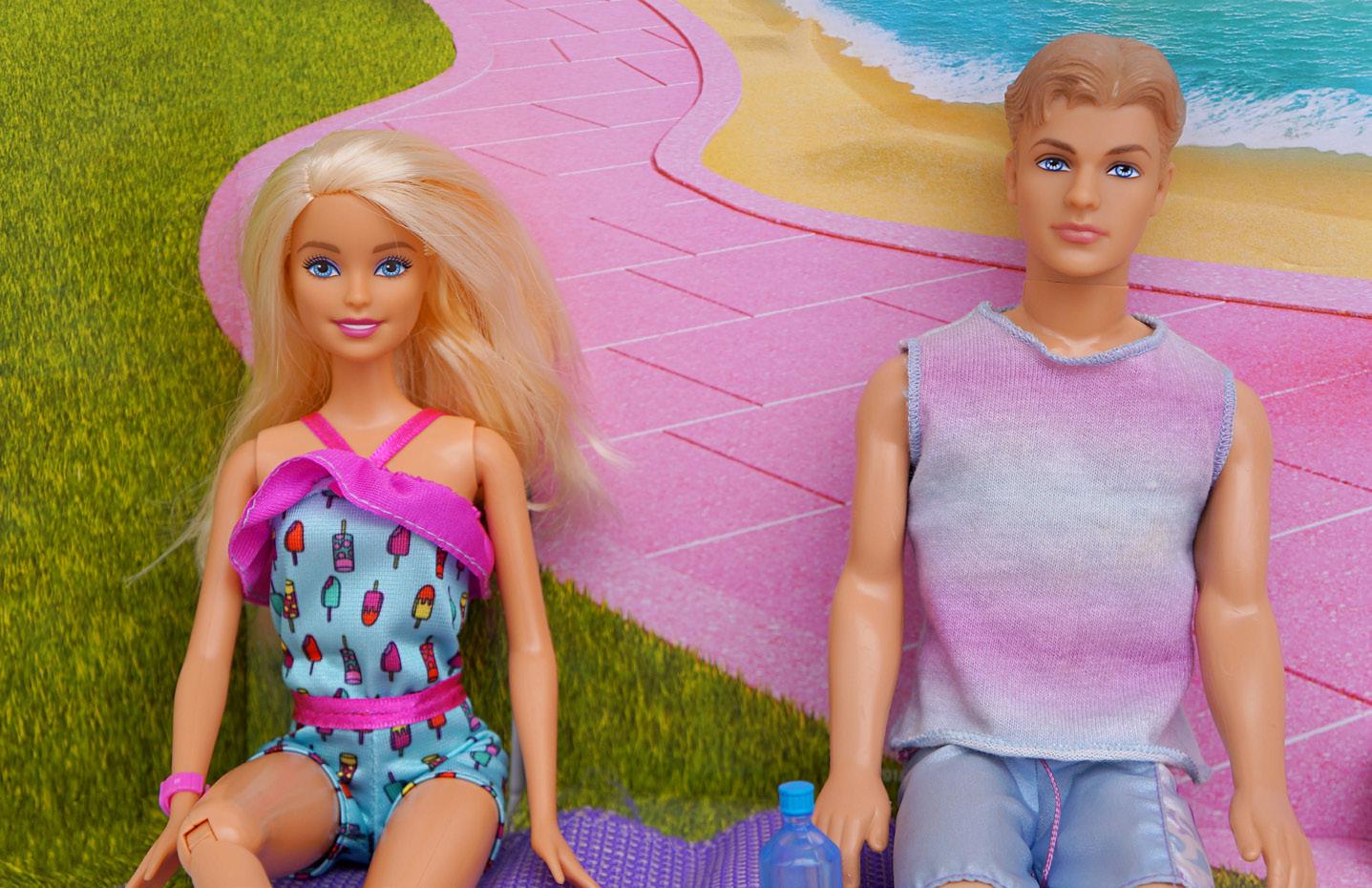
Barbie was born from a blank space and Mattel tried to keep her blank, giving her minimal personal details. She had no kids, no age, nothing that could be considered a ‘flaw’. Her name was officially Barbara Millicent Roberts, known as ‘Barbie,’ a teen model with a boyfriend called Ken Carson. She was also given three sisters and three official friends. She had no backstory and no overall story. She was simply blonde, thin, shiny Barbie. This changed in the 1980s,
however. Mattel introduced more Barbies of more ethnicities, races, hairstyles, and builds. They weren’t other characters in the Barbie universe but rather versions of Barbie herself. This development in the Mattel company was then followed by a range of careers for these Barbies. In 1984 ‘Astronaut Barbie’ was released and then ‘Doctor Barbie’ in 1987. In 1990, Barbie joined the air force and the next year she was president. In 1985, the tagline, ‘We girls can do anything,’was introduced to accompany these new Barbies. This is where the start of feminism in Barbie began.
One day we will be able to ignore gender when applauding Greta Gerwig for her achievements. Did anyone point out that Oppenheimer’s director, Christopher Nolan is doing a great job as a male director? No, they simply applauded him. The fact is, Barbie holds the title for the biggest box office debut ever for a film director by a woman.
This isn’t the first time one of Gerwig’s movies was a huge success. She directed Little Women (2019) and Lady Bird (2017), both of which were massive hits. There’s a common theme in the films she has directed which is very clear if you were to watch them back-to-back, and that theme is feminism. Take the famous scene in her Little Women remake when Amy (Florence Pugh) states her views on marriage being an economical proposition. Again, the scene in Lady Bird when Christine (Saoirse Ronan) argues against abortion being declared morally wrong. All
these examples show strong women stating their views and I think that’s what you expect when you watch a Gerwig film. So, when Gerwig approached creating the film it was expected of her to have a feminist twist, which is conveniently perfect for Barbie.
Without spoiling too much (although, if you are still reading this you should have expected spoilers), the film essentially follows the story of ‘Stereotypical Barbie,’ played by superstar Margot Robbie, in a wonderful, plastic, pink ‘Barbie Land’ where all the Barbies and Kens (and Allan) live. She lives in her Barbie dream house (of course) where she drinks out of empty cups, wakes up looking perfect, and can float down, off her top floor and into her car, rather than walking downstairs, just as if a child had picked her up, because no child realistically walks their Barbie down the stairs. She lives in a neighbourhood full of her Barbie friends such as ‘Lawyer Barbie’ (Sharon Rooney) and ‘President Barbie’ (Issa Rae), etc.
The Barbies are in charge of Barbie Land and have full authority, with an all-female congress, much unlike the real world because essentially Barbie Land is the opposite of the real world. Life is perfect for them. The Kens, however, only have good days when their Barbie looks at them and gives them attention. Their purpose is to exist for Barbie because, ‘There is no Ken without Barbie’. The ‘Main Ken’ (Ryan Gosling) has the job ‘Beach,’ which is meant to be a play on jobs in the real world for women. In the first half hour of the film, stereotypical Barbie gains thoughts of death, falls off her
balcony rather than floating down, wakes up from a nightmare rather than perfectly and, worst of all, her feet fall from a permanent position for high heels to flat. ‘Weird Barbie’ (Kate McKinnon) tells her she must go to the real world and find the person who owns her who is infecting her with these intrusive thoughts and issues as they are becoming intertwined. She then goes to the real world with Ken and, after a long journey, appears at Venice Beach in Los Angeles.
When Ken enters the real world, he suddenly feels respected and important as people are smiling at him on the street, asking him the time and he discovered the patriarchy, which absolutely delights him, as in the real world, men rule. He leaves Stereotypical Barbie and returns to Barbie Land to alert the unhappy Kens about male dominance and the patriarchy. Barbie, however, gets catcalled when walking down Venice Beach and receives aggressive stares and judgment due to her neon outfit. The doll gets a dose of reality when she realises that, in the real world, men are dominant, and that even the CEO of Mattel (Will Ferrell) is a man rather than fulfilling her expectations of him being a
woman. These moments in the film show the harsh reality of a woman being in public alone. As well as this, the contrast between Barbie Land and the real world makes the scenes in the real world seem even more negative and, in a way, exaggerated. Because of this, it makes feminism in the movie more prominent.
Back in Barbie Land, Ken manages to show the population the idea of the patriarchy, and the Kens take over Barbie Land, steal the Barbies’ houses, converting them into ‘Mojo Dojo Casa Houses,’ featuring many portraits of horses and beers. The Kens take over the Barbie–controlled congress and change the constitution to create ‘Kendom’ rather than Barbie Land. The Barbies are now acting as the Kens’ slaves. When Barbie returns to the newly renamed ‘Kendom’ with her owner and her owner’s child (Gloria and Sasha), it becomes their job to save Barbie Land and un-brainwash the Barbies.
I understand that’s a lot to keep up with and, to be honest, it’s a tad unbearable, but Gerwig’s humour propels the movie onwards, even if some of the storylines are a bit of a stretch and
Above: Greta Gerwig at the Barbie World Premiere, 9 July 2023, Los Angleles
Source: Kathy Hutchins, Shutterstock
unnecessary; it is a comedy film after all. Gerwig was ambitious when creating this film. She cast essentially solely Hollywood stars, and paid artists, such as Billie Eilish, Dua Lipa, Nicki Minaj, and Tame Impala, to create an incredible soundtrack. As well as this, she had an incredible marketing team which created additional pressure for this film to be a blockbuster.
As Barbie has no backstory, Gerwig was building a movie on nothing and had practically nothing to work with as Barbie is shallow (not as a negative comment, she genuinely just is shallow as there is not much known about the story of the doll itself). Despite having little to work with, Gerwig might have overdone it. When looking at the role of feminism in the film, it feels
as though she has done too much, which results in her saying little at all. In fact, I would consider Ken as the underdog. He had the funniest and most interesting arc rather than Barbie. Ken is the one who can’t have a real career and is sidelined for Barbie. I understand that Barbie Land is the opposite of the real world, so technically the Kens are meant to represent women in the real world, but ultimately this winds up presenting Ken as the most feminine.
I understand where Greta Gerwig was going with this storyline, but by also giving Barbie a similar arc, it undermines the point of Ken representing women in the 21 st century. As well as this, Ken is the only character to offer change after both Barbie and Ken recognise flaws in their
In the end, however, it is just a film for kids to watch and enjoy and it does promote feminism which is incredibly important. It’s a film made by a woman about women for women to change and act, so it might not be worth thinking about the deep politics of the film. I think the idea of the film was immaculate, but the execution was questionable.
Ultimately, I did enjoy the film and it is definitely a favourite. Greta Gerwig strikes again.
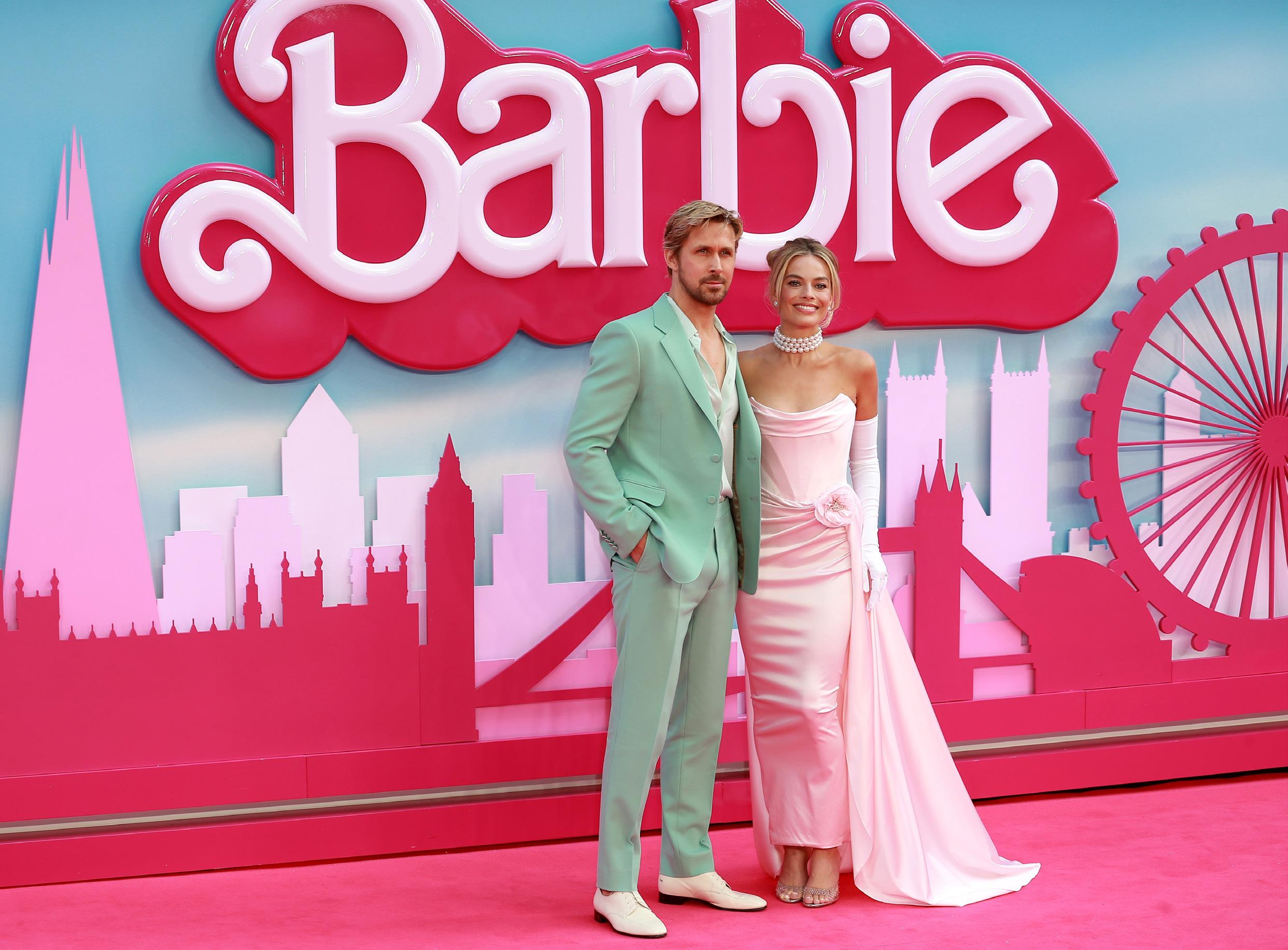
Ryan Gosling (left) and Margot Robbie (right) at the Barbie European Premiere, 12 July 2023, London
Source: Fred Duval, Shutterstock
Why be Pro-Choice?
Tilly Hunt
Throughout the past few years, arguments have sparked between members of society all over the world debating whether abortion (the act of ending a pregnancy) should be legal or not. As a feminist who holds no religious views, I believe that pro-choice is the ultimate take on this matter. However, others may believe in pro-life, the argument to ban abortions, shutting down clinics and forcing women to carry on their pregnancy.
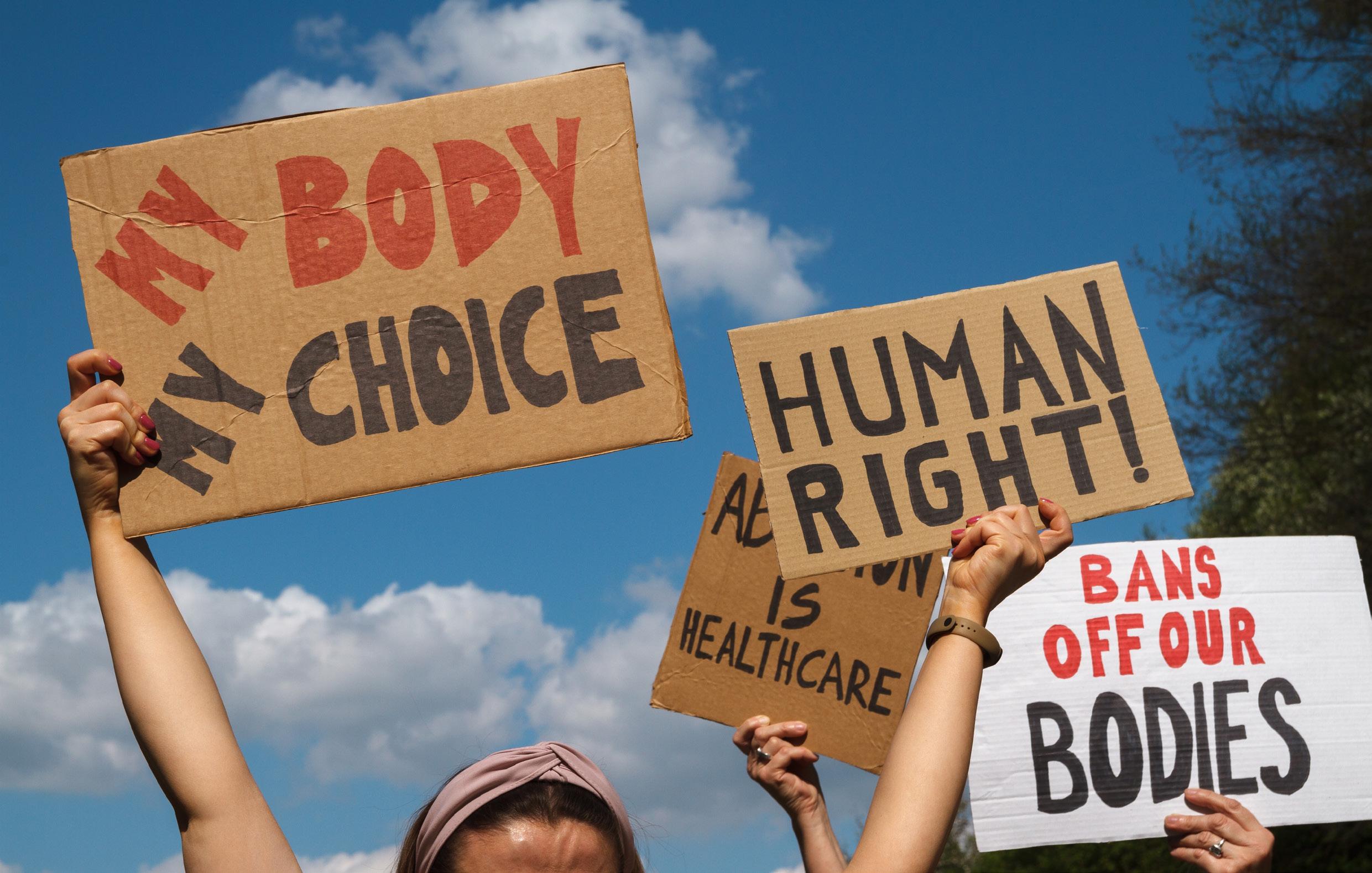
But why be pro-choice? In simple terms, pro-choice stands for women to have the right to choose if they want to have an abortion or not; they have the right to dictate their future and protect their own mental health and wellbeing. Many argue that this procedure should
remain legal for a variety of reasons. By allowing abortions, a weight is lifted off the shoulders of those who do not want a child in the near future. It means that there will be limited disruption to their lives, and they can go back to living how they were. It also protects the mental health of the possible mother, who may be suffering from physiological problems and/or can’t afford to have a baby. If abortion was deemed illegal by the government, these factors could cause a low quality of life for the child due to the parents not being ready or wanting them which could lead to a feeling of helplessness and loneliness. As a self-declared feminist in the 21 st century, I believe that women should have the right to choose what happens to their own body and that we should have the right to determine our
own future, and therefore I am pro-choice.
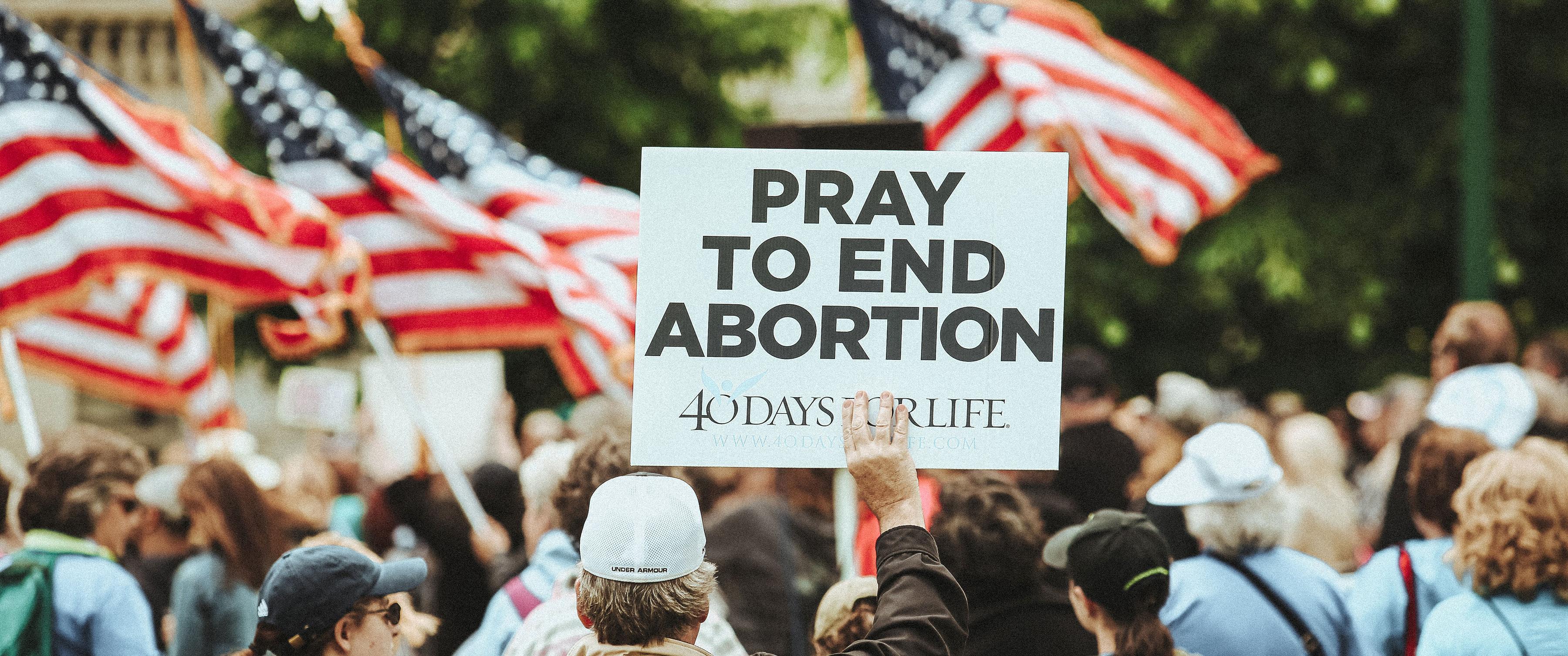
Roe vs Wade spun the world in a new direction (some could argue backwards). Last June, the Supreme Court overturned the constitutional right to an abortion in the United States. This is because, for the past 50 years, outroar has formed because of the religious and moral conflict over abortion. Since then, the terminating of a pregnancy now rests unprotected by the US Constitution, and it is up to the states to decide whether it is legal or not. The main reason for this decision is religion, especially Christianity. Religious pro-lifers believe in the sanctity of life, that God created us for a reason so we must therefore respect his decision and live our lives - there should be no deliberate death
involved, as that would be seen as a complete disregard to God’s work and power. This was why the right to our bodies was overturned.
This was why we no longer have a choice. I don’t agree with this whatsoever. In no way would I ever disrespect another religion, however the line is crossed when one group takes charge and forces their belief on others.
This is wrong. What many need to understand is that not everyone will support your view. It’s an issue that everybody in society will deal with at least once in their life, myself included. However, you should not be the person that pressures others into thinking like you do. My issue with the religious points in the argument is that not everyone abides with Christianity, and therefore this should not be the dominating factor deciding the overturning of Roe vs Wade, as this effects both religious and non-religious communities.
When talking about the act of terminating a pregnancy, we need to acknowledge the mental strength one must have to go through with this action, and why it’s traumatising enough without
having others look down on you in disgust. When undergoing the treatment, those engaging in the termination of child must make the choice if they want to do it or not; they have a huge weight on their shoulders based on a singular decision, therefore showing vulnerability to others, yet also gaining strength mentally. The dangers of actively being pro-life, especially a loud, outspoken one, can vary - by surrounding yourself in this culture, you’re encouraging the removal of women’s rights over time, encouraging the state to have control over their bodies. This view means that women struggling with this situation will no longer be able to seek support from professionals and no longer have a choice about their future, limiting their physical and mental health and their safety.
However, when being pro-choice, there should be a few precautions to take to enable a successful and safe abortion. Before the overturning of this Constitutional right, abortion was permitted until the foetus was 20 weeks (this is the average for all states, as number of weeks varied). A limit was enforced on when this could happen for the safety of the mother as the procedure
could turn costly at any time after that.
One of the main issues with abortion being limited is now the problem of illegal abortion - where termination is acted out by those untrained in the pro cedure. This is a danger to the mother, as anything could go wrong because she wouldn’t be under professional treatment. The only way that this could be stopped is with the right to havean abortion so abortion clinics can remain open and professional help can be offered.
To conclude this (very biased) essay, written by a feminist atheist, I’d argue that being pro-choice is the right way to go, as it solves the problem if a family isn’t ready for a child. I believe that abortion should be legal in all countries; it means that women have the rights to their own body and get a choice in their future. Abortion should be seen as something to appreciate when in a difficult situation, as it provides safety and a way out for those who don’t want to start a family yet, and if you are someone that doesn’t agree with this view, don’t be the fool that removes this right for others in need.
Net Zero
Amelia Barrett
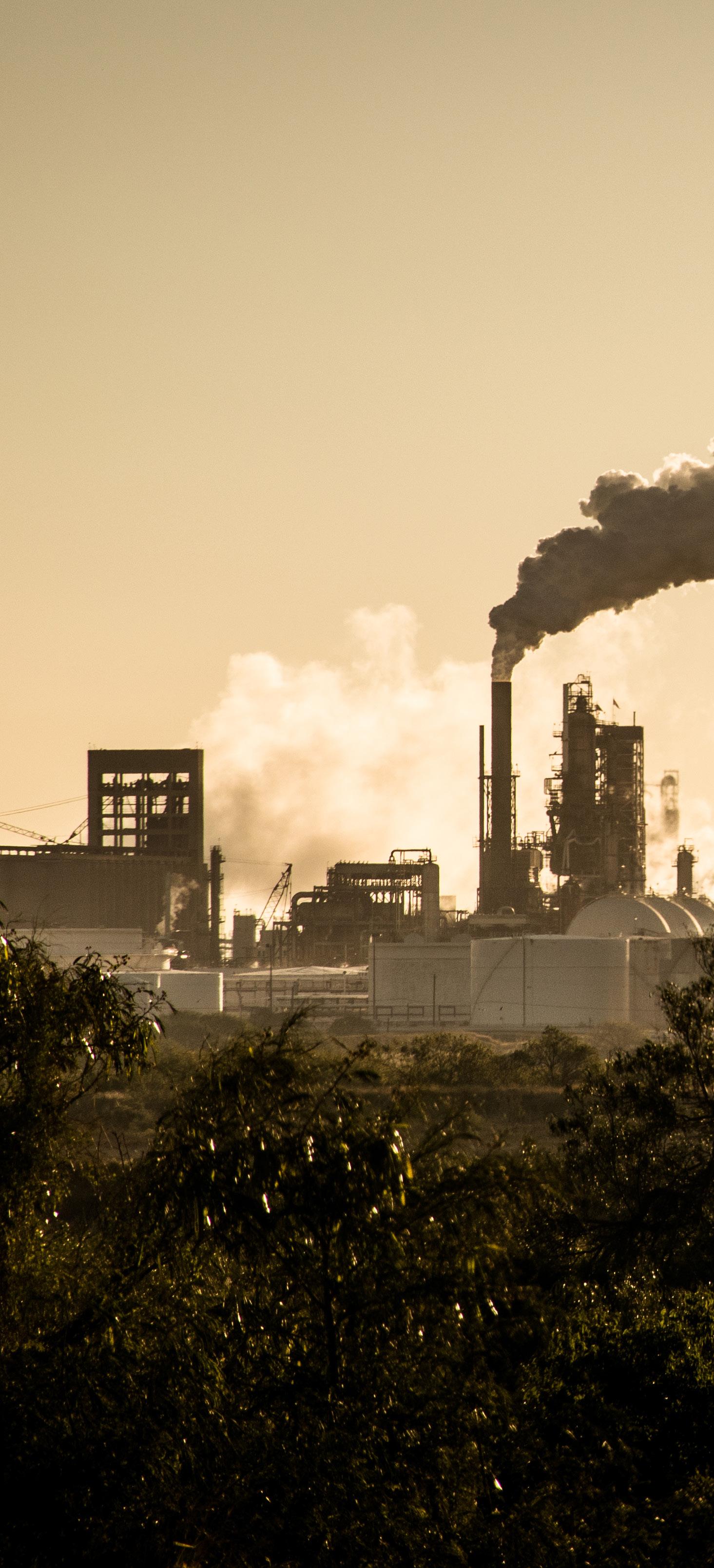
We have all heard about the benefits of going net zero, saving the planet, creating a future for our children, solving all our past mistakes. It sounds like a future with butterflies and rainbows, but there is no guarantee that even if we do go net zero the world will be fixed. We do not know if there will be any life left, let alone butterflies, or thunderstorms instead of rainbows. In this article, I will outline the ‘point of no return,’ the physical and economical costs, as well as the impacts on the world if the UK did become net zero. So, are we just throwing money onto a fire in capturing the emissions?
So firstly, is there any hope if we do go net zero? We are not past the point of no return, but it is looming. It is believed that for the earth to only warm by 1.5 °C more, we need to have cut our carbon emissions in half by 2030. It is believed by some that if we continue with our current emissions then we will hit the point of
no return by 2035.
So, now we know how much action needs to be taken, let’s look at how the government’s attempts are going.
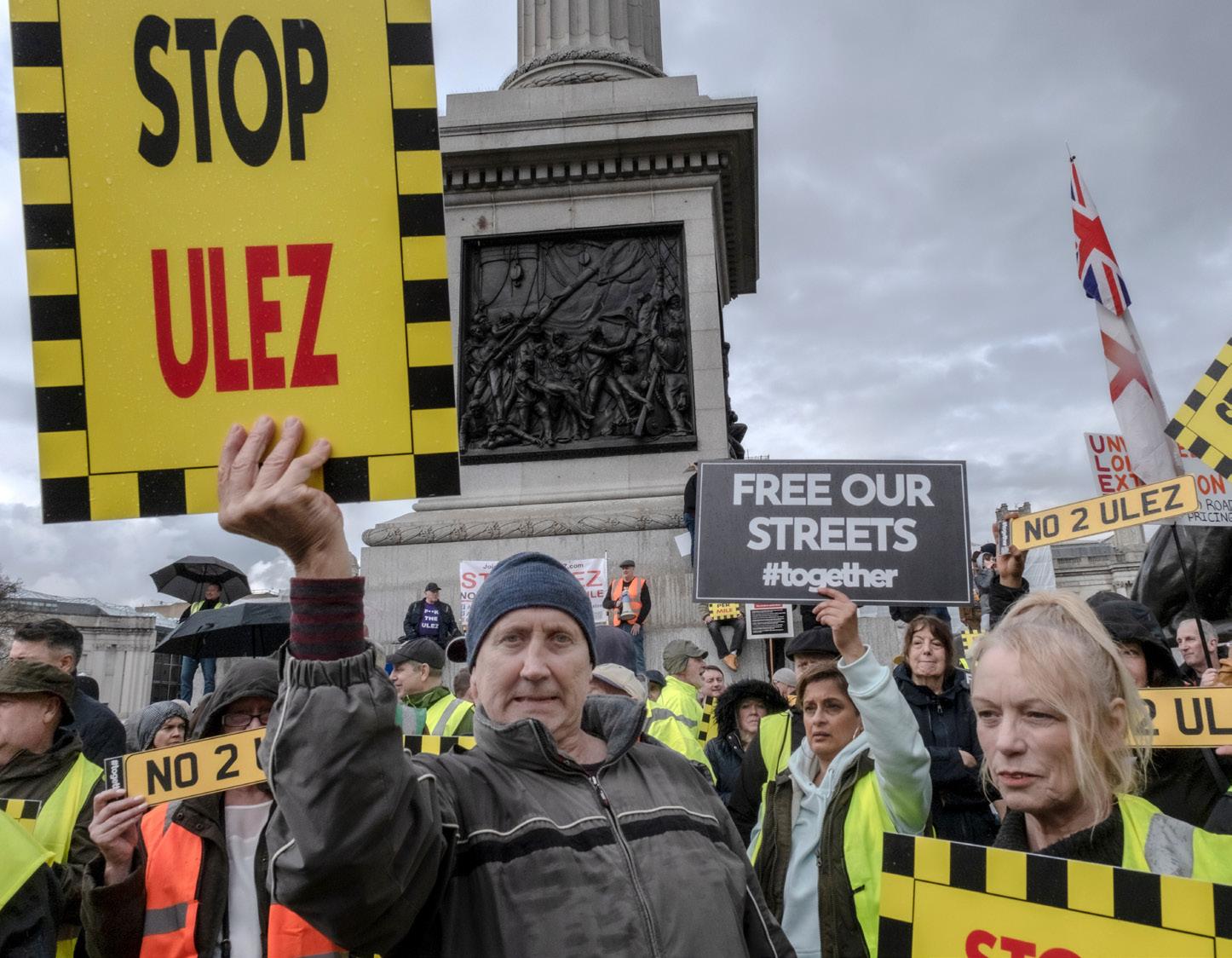
The first step in the government’s scheme to go net zero was to abolish petrol cars by 2030, yet this has been pushed back to 2035. During the wait for 2035, Sadiq Khan introduced a new ULEZ policy in places outside central London. This caused outrage. Average people, people like our parents, were protesting and vandalising ULEZ cameras everywhere. My neighbour recalled driving her son home and seeing people with explicit signs in the middle of a roundabout protesting. Yet, she did not disagree. £2000 is given to anyone with a car not conforming to ULEZ restrictions for scrappage, yet you cannot afford a new electric car with just that amount. Let alone any new car. These people are now unable to afford the costs for
them to drive to work, take their children to clubs and live their life as they used to.
The effect the 2035 deadline has had on the car manufacturing industry is even worse. Big car companies, like Honda, shut down their factories and took their business outside of England as they can no longer make money off petrol cars in England as “it really makes no industrial sense to locate in the UK” (Andrew Graves, University of Bath). Less business means less corporate tax to the government which means less funding to schools and the NHS which means poorer quality of life. The current state of the economy does not allow any room for money lost at this point.
But if we weren’t just living in a fantasy land and did manage to become net zero, what effect would it have on saving our planet and guaranteeing a future?
The UK produces around 1% of the world emissions with over 60% coming from China, India, and America. Yet, the world’s biggest polluters do not seem to be pushing for net zero as much as the UK is. It is estimated that to turn the UK completely net zero, it will cost around £321 billion; if we are already losing a market for cars and corporate tax then how are we meant to pay up the extra billions? The difference that would be made by the UK going net zero would
Left; Stop the ULEZ protest in Trafalgar Square, London, 25 February 2023
Source: Koca Vehbi, Shutterstock
be minimal, however, if the UK acts and manages net zero, all the other countries may follow. We may cause a chain reaction that could help others like China go net zero. China’s reason for not going net zero is the loss of money, however, if we prove we can have a stable economy in a zero-carbon emissions zone, then they may be influenced to do the same. We are not at a complete loss, but it is a hard decision to make.
To conclude, the UK needs to think about their own country first, granted it may have a knock-on effect, but we should not have to sacrifice everything to be the ones to do it. It should not be a race, but a team effort.
We need to ask ourselves how much we are willing to risk for an uncertain future. It may work, but it may not. It is a risk we need to take, but is the risk too big?
‘The future of humanity, and indeed all life on Earth, depends on us’
- Sir David Attenborough
Hi, I’m Nokia
Joseph Beim
Hi, my name is Nokia and let me just say straight out, I am not smart. Once upon a time, actually not too far back, let’s say 36 years ago, I was considered cool, and everyone wanted to have me. I was new and popular. Now I am considered not very useful, not smart, or cool, even outdated. This is a lesson. If you think you are cool today, in 36 years there is a high chance that you will not be cool again. Don’t worry though, that’s life.
So, you are wondering what happened to me. How did I lose my cool? Maybe you can learn from my errors and still be cool in 36 years. Well, it all happened when mobile companies decided that types like me – only plain phone types- should be made to do more. No longer was a phone good enough for just being a phone, it was like telling a bird it is not good enough for just being a bird. Phones now needed to have a camera, emails, music, they had to have a wallet, tell you how far you have walked,
how many calories you have burned, identify plants and loads of other ‘crucial’ features. Just imagine the nerve of those companies to tell a global sensation like me that I am no longer good enough. It is like saying a bird needs gills so that it can breathe underwater.
Now, even with all the new features, you may still be wondering what all the other folk who just wanted a phone that could text and call did. Well, they did this…
Those people who sit up in posh, high rise offices in London drinking Starbucks all day realised that they did not need all the added accessories, they just needed a simple phone. Think about it for a moment: do you really need snapchat or TikTok? No. People join these things, sometimes for fun, but most of the time out of fear of being left out, lost, uncool, even worse, old-fashioned. As such, I gradually became unsmart and the others were labelled smart.
Here is another piece of advice; never trust anyone that says they are smart. The so-called ‘smart phones’ have done some pretty dumb things. Next time you are on a bus, look around and notice that everyone is head down on their phones. No one talks to each other any more. Kids now spend more time on a smart phone instead of playing –something free – that’s not smart is it? Those men who walk into Starbucks with a suit on are all millionaires now, thanks to you hooking onto their ‘smart’ idea.
So here I am, Nokia, and as I said, I am not smart. But thankfully, I still have a small group of supporters who realise it is more important in life to speak and socialize with others rather than focus head down on a screen. Some people you may know that do not even own a phone include the likes of Simon Cowell, Elton John, Ed Sheeran, and Tom Cruise!
The Windrush Generation: A Reflection on Their Experience
Louis Deverill
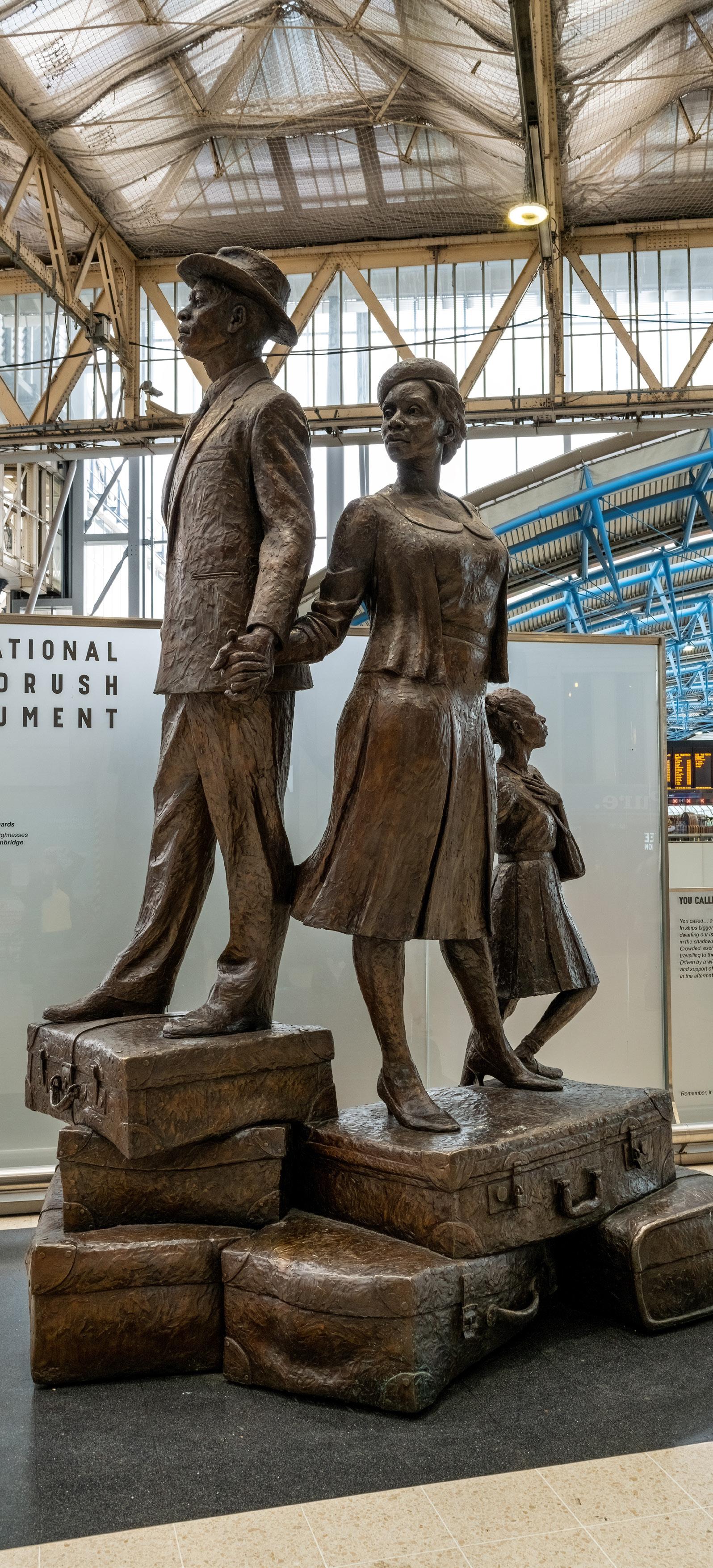
At the time of writing, it is British Black History Month and, although black people have been in Britain in some form for centuries, a key moment in the history of Black British people was the arrival of people from the Caribbean to Britain after the war, also referred to as ‘The Windrush Generation,’ from the late 40s to early 60s. As my grandparents moved to England from Jamaica during this time, and although their experience is not universal, it provides an insight to what it was like coming to this country.
Both my grandparents were born in Middle Quarters, Saint-Elizabeth, which is located on the south-east of the Island of Jamaica. It is a very rural area, and they both grew up on farms. Although they both were born a little before the Second World War, they had no idea that it was happening, due to it not affecting their lives in any way. They both went to school, where they were told that Britain or ‘The Mother country’ was the greatest country in the world, with streets made of gold, and a
land of greater opportunity. That was the common belief of young Jamaicans of the time, and messages like that is what helped to persuade people to move there.
Eventually they both got tired of rural life and decided to move into the larger cities and started a family, however, they wanted a better life for them and their children, which made them want to try to emigrate. Originally, they tried to go to Canada but got denied, however, Britain seemed desirable, due to the reasons mentioned previously, but it was too expensive to bring their children with them, so they had to leave them with the children’s grandparents.
They came to Britain at the tail end of the Windrush period; my grandfather in 1959 by boat and my grandmother in 1960 by plane. They both remarked about the weather, how cold and miserable it was, and how it made the clothes they brought over useless as they were meant for the warm Jamaican weather. They rented a room in a house
in Chiswick, which also housed seven to eight other west-Indian families and couples. Finding a place to stay was very hard as many houses with rentable rooms forbade Black people from becoming tenants. This left few places, those that did charged high rent and were in terrible conditions. Those who could not find a place to live were forced to live in slums.
It is also key to remark that not only was the weather and temperature inhospitable, but the people too. They were constantly told to go back home, as well as called racial slurs, which I assume you can imagine.
Racism, however, was always a problem for West Indians in Britain. This problem was heightened by politicians such as Enoch Powell, who gave his ‘Rivers of blood’ speech in 1968, which helped to fan the flames of racism. This continued in the 1970s, as The National Front, gaining popularity and calling for the deportation of all non-white immigrants, often used violence against Black and Asian people.
To a point, it made it difficult for them to go on the streets, as they and their children would have to be wary of potential National Front supporters. However, most discrimination would be faced in areas of everyday life such as education, where Black students were often mistreated by their Left: a young girl with a Windrush generation t-shirt at the Notting Hill Carnival, 27 August 2023
Source: Kauka Jarvi, Shutterstock
teachers and dissuaded from pursuing higher education, and employment where Black employees were treated less favourably to their White counterparts.
Despite the many setbacks, West Indian migrants managed to establish themselves, making their own communities and bringing over their unique culture over to Britain. Over time, West Indian culture has become British culture, with large parts of British culture being created by people who are descendants of those migrants. Elements of culture such as music, food and fashion have all been heavily influenced by West Indian people.
In my view, Britain is a nation of immigrants, as at some point a British person has an ancestor who came to this island; even the English originated from the Normans, Norse and various Germanic tribes who came to England after the fall of Rome. Therefore, knowing the experience of Afro-Caribbean’s coming to the UK is important, as they gave up their lives back home to come to the UK, where although faced with terrible prejudice, they managed to rise through it all. It also helps to put into perspective the frustrations of Black people in Britain today which stem from it.
Discussing issues of race in this country is a taboo topic, but it should be discussed in order to create a better country.
The National Windrush Monument in Waterloo station, London
Source: Jane Rix, Shutterstock
The Havana Syndrome: The Secret Espionage on U.S. Citizens
Oscar Saville & Jacob Smith
What is the Havana Syndrome?
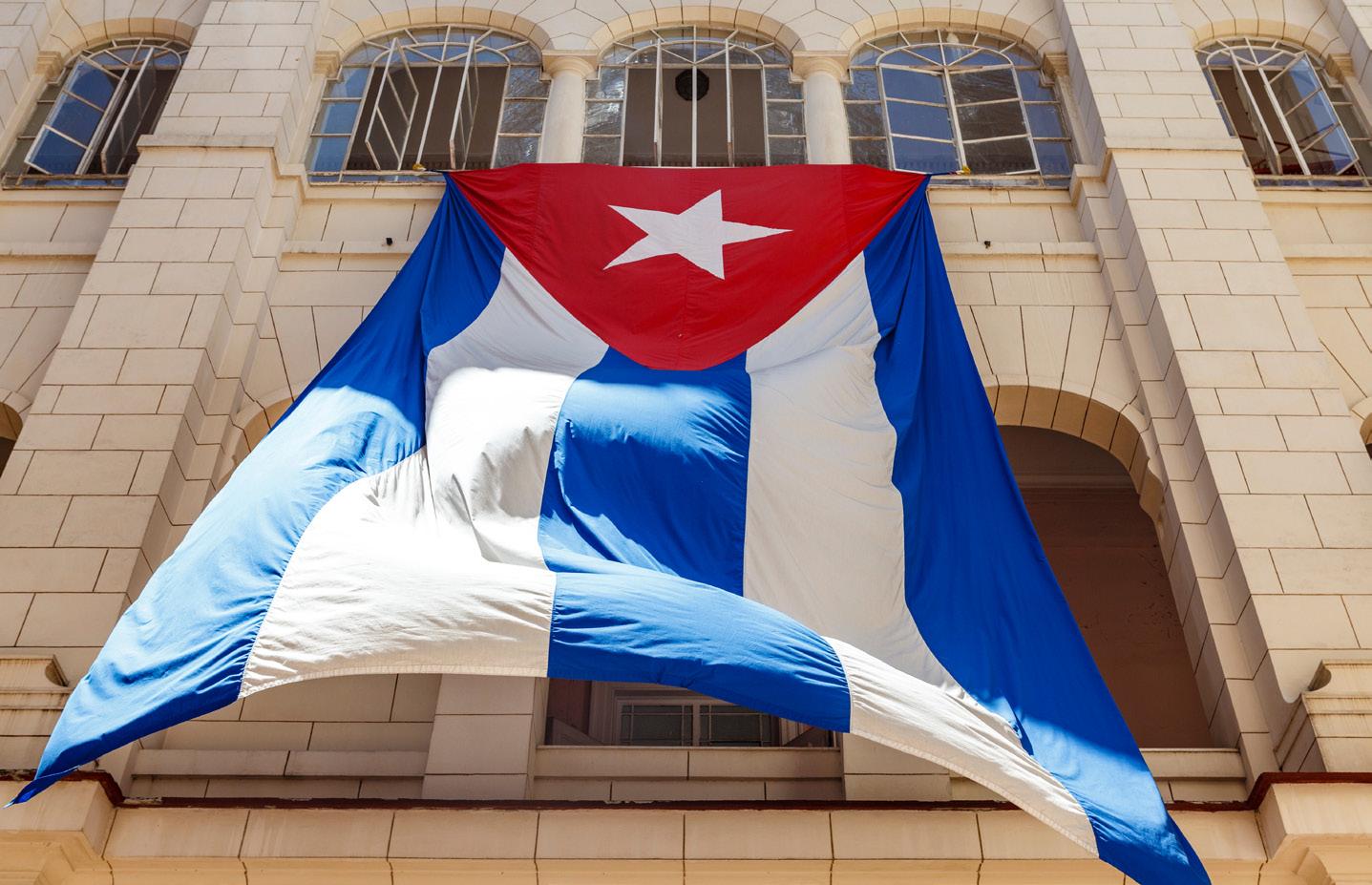
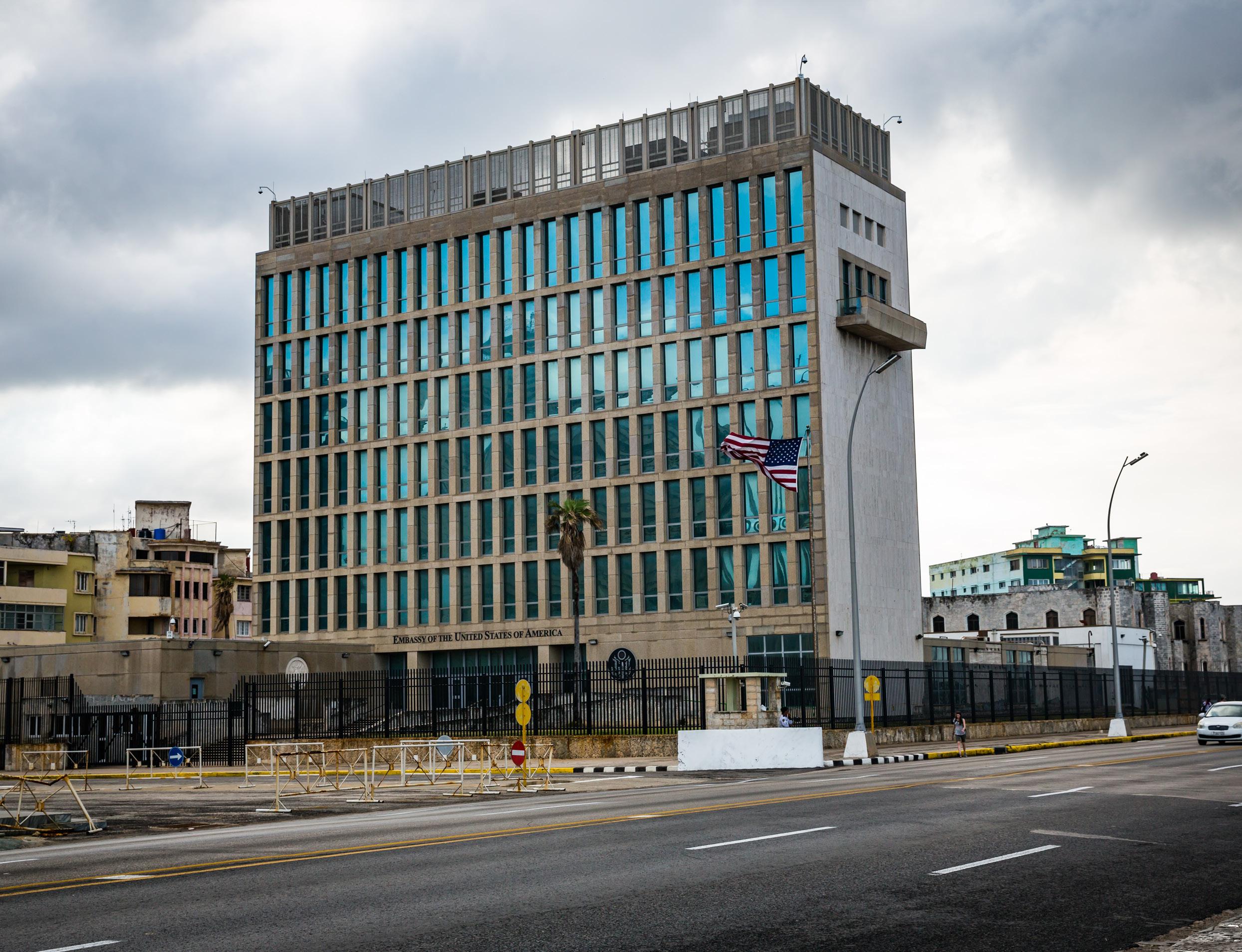
The Havana syndrome has been a phenomenon since 2016 where U.S. Government officials and military personnel have reported severe illnesses whilst in international embassies and the White House. They experienced symptoms ranging from pain and ringing in the ears to cognitive dysfunction. These symptoms were encountered by over 200 U.S. diplomats worldwide and have become a matter of international concern. Whilst they originated in the American embassy located in Havana, Cuba soon after it had been re-opened in 2015, these incidents have gone on to be reported globally, raising concern in many U.S. Government institutions like the CIA.
Events in Cuba:
After half a century of political deadlock, President Obama and Raul Castro signed a historic agreement reinstating diplomatic
ties between the two countries. This new pact included the setting up of an American embassy on Cuban soil, the first since Eisenhower severed relations in 1961.
Two years since the re-opening of the embassy in August 2017, reports began surfacing that American and Canadian diplomatic personnel in Cuba had experienced unusual, unexplained health problems dating to late 2016. As of June 2018, the number of American citizens experiencing symptoms was 26.
The original 21 diplomats in Cuba reported the illness charactering the sensation as starting with ‘’strange grating noises’’ coming from a specific direction. Some people experienced pressure, vibration, or a sensation comparable to driving a car with the window partly rolled down. These noises lasted from 20 seconds to 30 minutes and happened while the diplomats were either at home or in hotel rooms.
However, other people nearby including family members and guests in neighbouring rooms did not experience the same symptoms.
The Government response:
The U.S. State Department declared that the health problems were either the result of an attack or due to exposure to an unknown device but would not blame the Cuban government or Cuban individuals for the events.
Despite this stance of neutrality taken by the U.S. Government, in August 2017, the United States expelled two Cuban diplomats in retaliation for the perceived Cuban responsibility for this phenomenon. The next month, the U.S. State Department announced that it was removing non-essential staff from the U.S. Embassy and warned U.S. citizens not to travel to Cuba. In October 2017, President Donald Trump said he believed that Cuba was responsible for the occurrences, calling them a “very unusual attack”.
Despite the US Government’s initial hostility to the Cuban officials, when reports surrounding the event were de-classified, the Government had concluded that the “available intelligence consistently points against the involvement of U.S. adversaries in causing the reported incidents,” and that a foreign adversary’s involvement was “very unlikely”.
The reports continue:
Beginning in late 2017, similar accounts of ill health experienced by U.S. intelligence personnel were reported in an expanding set of locations around the world, including Russia, Georgia, Poland, Taiwan, and Australia.
Beginning in early 2018, U.S. diplomats in China began reporting symptoms consistent with ‘The Havana Syndrome’. The first such incident was reported by an American diplomat in China in April 2018 at the Guangzhou consulate, the largest U.S. consulate in China. He was taken back to the U.S. to undergo medical tests and examinations to help further understand the events that had become increasingly common across the world.
Whilst answering questions from the House committee on Foreign Affairs in May 2018, Secretary of State Mike Pompeo testified that U.S. diplomatic staff in Guangzhou had reported symptoms “very similar” to, and “entirely consistent” with, those reported from Cuba.
Theories towards the origin of the illnesses:
The U.S. Government’s stance has recently been reinforced concerning the causes of the mysterious ailments felt across the world.
On March 1 , 2023, the Office of Director of National Intelligence released a statement ruling it unlikely that the unexplained illness was the result of a targeted campaign by an enemy of the U.S.
However, many officials within the Government and scientists working as advisors for the Government have suggested other causes and theories since the start of the phenomenon, such as in 2018, when the Journal of the American Medical Association published its report on the results found after examining the 21 US diplomats who first reported it in Havana. The report found that targeted microwaves were “considered a main suspect” causing the incidents.
The U.S. Embassy in Havana, Cuba Source: sergemi,
Why the British Rail Privatisation System Failed
Alex Mallett
If you’ve heard anything about the UK rail system in the last few years, chances are it’s been negative. Be it consistent strike action, never-ending equipment failures and delays, it’s been rather a train wreck. But how did it get to such a dire situation? To uncover this, I will explore how the rail network has changed since the beginning of privatisation up to the current day, the issues that it has and that continues to face.
In the early 1980s, British Rail’s shortcomings were obvious. It was operating at a huge expense, an annual loss of between £244 million in the early 80s, rising to £585 million in 1989. The government was getting fed up with having to pump more and more money into the system, and so started to explore other options. As many organisations of its size do, it experienced many inefficiencies, from a massive overstaffing problem to underutilisation of key routes, coupled with years of financial mismanagement which had led to high ticket costs and poor service.
The government was looking at ways to improve the industry and the key idea was competition. As with any sector, if there is no competition, there is little reason to provide anything but the bare minimum service-wise. Therefore, Margaret Thatcher’s Conservative government decided the best way to improve the service was through privatisation. They sold off different components of British Rail, including the rolling stock, and introduced the Franchising Model.
The Franchising Model meant that companies could compete via bidding to operate specific franchises, and were encouraged to offer innovation, efficiency and improvements in service quality. They were expected to meet performance targets, and part of their revenue went to the government. Whilst on paper this seems to have the potential to be incredibly successful, unfortunately, the real-world implementation has been less so.
Firstly, the UK rail network is
extremely complicated. This has led to there being constant confusion over which Train Operating Companies (TOCs) run services and are responsible for the upkeep of stations. This leads to situations where multiple TOCs are operating on the same route, which leads to scheduling challenges and ticketing issues.
For instance, there are 3 different TOCs running services from Gatwick to London, and each one of them requires a different type of ticket and has different calling patterns. Due to the fragmentation, there is often a lack of communication and understanding between TOCs and other methods of transport. This leads to an often-disjointed passenger experience, for example, a connecting bus which may get most of the passengers from a train is operated by a separate company so would leave without those passengers. During times of disruption, there are often issues with ticket acceptance, with TOCs looking to prioritise their targets rather than help the network.
Another issue is pricing. In the UK, train tickets are significantly more expensive than in other European countries. This is due to the often-complex ticketing system, with most passengers not knowing the difference between Super off-peak and Split ticketing, leading to extortionate pricing. For instance, a return ticket from London to Brighton can cost upwards of £50 without a railcard, whereas in Germany,
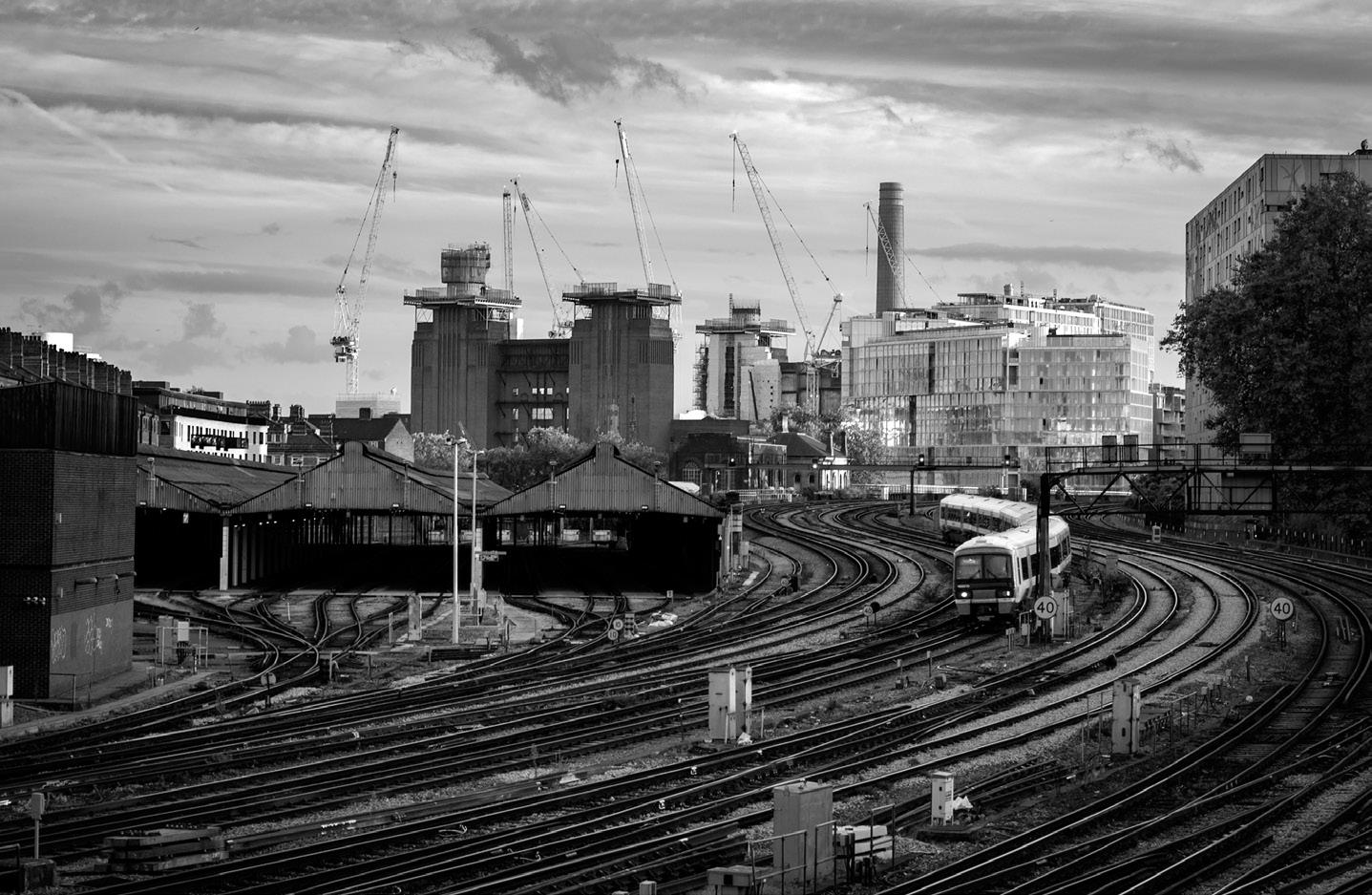
Battersea Power Station
Source: Victor Moussa, Shutterstock
you can purchase a €49 ticket which grants you unlimited travel on all but the most express services, all over the country, for a month!
The government is being rather unhelpful towards the TOCs. Rather than helping with clear policies, they have excelled at taking so many U-turns that many become dizzy, trying to keep up with the ever shifting government direction. Grant Shapps, Transport Secretary from 2019 – 2022, was synonymous with chaos. He went back on many of his key policies and refused to negotiate with unions over strike action, causing it to go on for over a year now. The action is over wages and changes to working practices. What has been mostly unseen before is how much the Department for Transport has been almost attacking rail workers for being ‘greedy’ and ‘old fashioned’ among many other things. This has been most profound in the ticket office debacle. In July 2023, the government instructed rail companies to draw up and consult on proposals to close almost every ticket office in England.
Unsurprisingly, this has been met with extreme backlash from all sectors, especially those representing people with additional needs such as boarding ramps. After the consultation closed it was revealed that over 750,000 responses had been submitted to the organisers, of which 99% were objections. On 31 October, Mark Harper, the new transport secretary, announced that he had instructed the TOCs to withdraw the proposals, sparking anger from management who had been instructed by the government to make the plans,
adapt, and defend them for months, then to be blamed for not following the instructions! Mr Harper is not shy of passing the blame!
These issues all together show that the privatisation of the rail industry has been rather a disaster, with passenger experience dropping, fares rising, and no major innovations promised at the beginning of the process. This led to Grant Shapps announcing Great British Railways, a proposed state-owned body to oversee rail transport in Great Britain, replacing the current franchise system with contracts, like how Transport for London operates.
However, I believe that this will not be able to fix the major problems suffered by our country’s transport systems. One of the biggest issues is the continued mismanagement by the government and, by being unable to set out clear, consistent plans, the TOCs are spending more time and money trying to keep up, rather than innovating and improving the system overall.
In conclusion, I believe that the way the rail system is running now is a disappointment. There is no physical barrier that is stopping us from having a network as successful as the ones seen in mainland Europe, but continued poor decisions, starting with the fragmented privatisation and continuing with little incentive for a joined-up network, have led to a situation where many people are choosing to commute by car, purely due to the unreliability and pricing of a rail service.
Unfortunately, this looks set to continue with the relevant government officials seeming to favour improving the road network and leaving the rail problems for someone else to deal with. I believe that if the government can incentivise a more joined-up network and further integration and communication, this would solve many of the issues I have discussed.
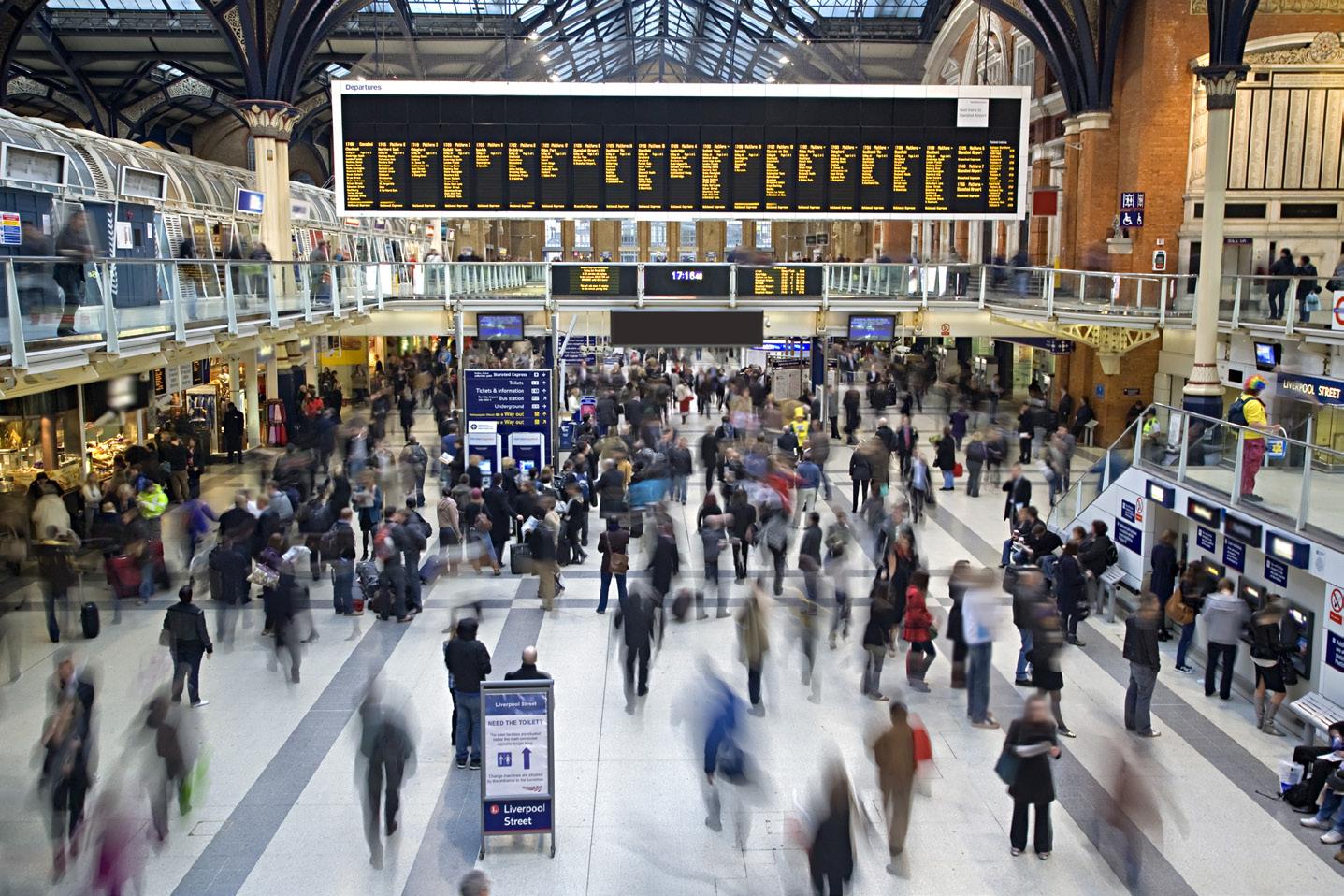
Above: Liverpool Street Station in London at rush hour Source: Keith Gentry, Shutterstock
An Insight into the Conservative Party Conference ‘23
Joe Noble
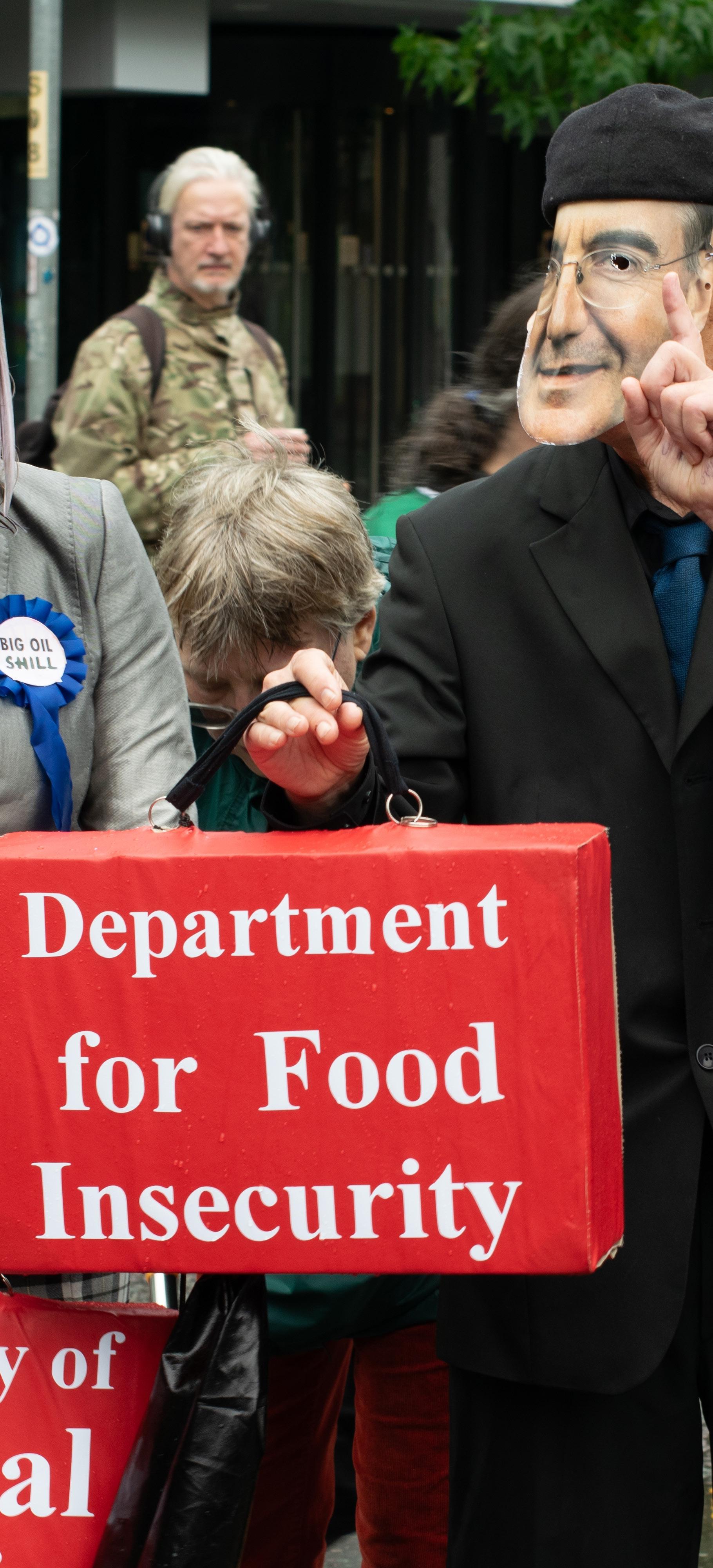
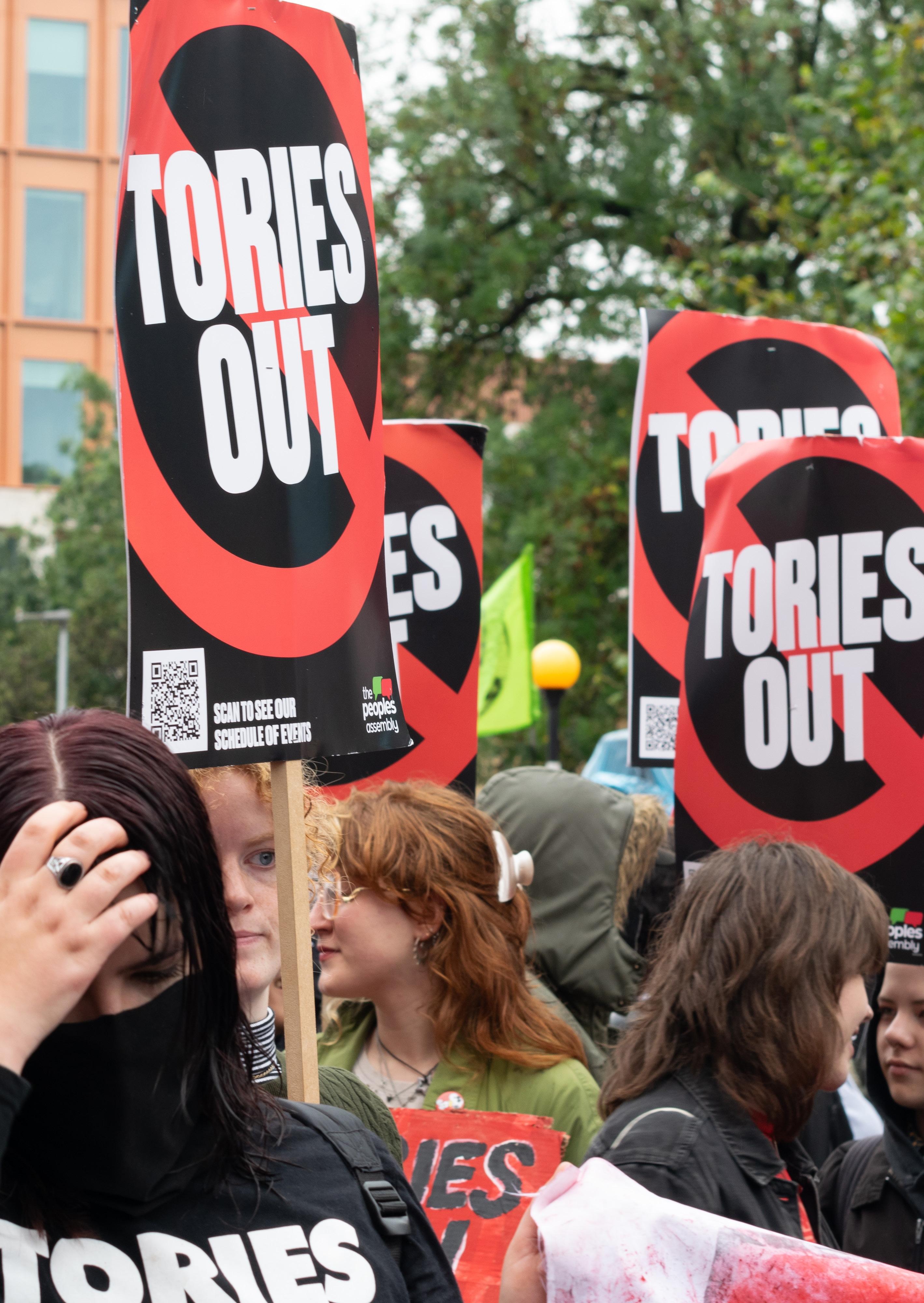
Manchester was the location chosen for the Conservative party conference ’23. This was slightly peculiar, given this was one of only a handful of places to stay red in the 2019 election. Its location was undoubtedly unfortunate, especially when Rishi Sunak cancelled the leg of HS2 that went to Manchester. Despite the extensive traffic from rail strikes, the large quantity of armed police, and the usual protestors outside, some of whom were still thinking that Brexit was top of the political agenda, I donned the pink lanyard with photo ID and constituency location, and headed through security, before standing outside the Manchester central convention complex. Once inside, there was a relaxed feeling, everyone was now safe to admit their political affiliation, without receiving condemning looks from people living in the area that is often perceived to have the safest Labour seats in the country.
I personally thought that the venue was grand, but I heard someone mention that this year
was less than ‘half’ of what was on offer at Birmingham the previous year. Maybe the organiser had decided to make some changes for the leaner years ahead.
Nevertheless, there was lots of activity and an endless stream of journalists and media centres, with Sky, GB, BBC & Bloomberg news all in attendance, as well as LBC and others. As I walked the length of the venue, one thing I noticed was the sheer diversity of industries which had pitched a stall. There were, as expected, many charities, from Alzheimer’s society to guide dogs. As well as the expected media bases, there were also lots of companies looking to offer their products or services. INEOS Grenadier brought their hydrogen test 4x4 and Chester Zoo brought animal bones and talk of new developments.
When Rishi Sunak was questioned about whether Nigel Farage would be allowed back into the Conservative party, he said that the Conservatives were
a ‘broad church’, and this was highlighted by the number of stands from different factions of the party. I was approached by someone with a leaflet, asking me if I could make a talk from the ‘new Conservatives,’ a faction of the party that had support from Jacob Rees-Mogg and others who were more senior who I was expressly told not to name...
The reason I had chosen to enter the conference centre was because at 4 o’clock I had an opportunity to be involved in a Q&A with the Prime Minister. After waiting in line, I was let into a very small conference room where organisers hurriedly handed out t-shirts, caps and banners before everyone gathered in a circle.
After some introductions from the self-proclaimed ‘Ant and Dec’ of the party, who I believe were the MP for Ipswich and Deputy Chairman of the Party, there was a detectable air of excitement as a small wait began before the Prime Minister’s entry. Fifteen minutes later, with music blasting, the Prime Minister emerged from one end of the room, flanked by bodyguards, and after some handshaking and greeting, made his way onto the stage.
He started with an introductory talk on his pledges for the following year and his success thus far. It was a particularly impressive speech which he delivered with a relaxed approach, yet it still came across as thoughtful and serious. The speech itself delivered
The Conservative Party Conference 2023
Source: Joe Noble, U6th
on all the humorous cues and had an expected sprinkling of opposition put-downs. After this, he offered to take questions from the crowd and I liked how he wanted to be asked questions on the spot, not just to read a list of prearranged answers. Again, he answered and spoke with confidence and purpose, if somewhat repetitive. Some of the questions were particularly challenging, such as ‘How is AI going to reduce waiting lists, specifically at Royal Sussex County Hospital in Brighton?’, but nevertheless each question had an articulated answer.
One particularly divisive question that came from an elderly lady was ‘when are you going to cancel HS2 and what will you do with the money?’. A flash of panic spread across his face, as he headed for a drink of water. The crowd’s reaction to the question was particularly interesting. There was a seemingly equal number of cheers and boos, demonstrating the divide that HS2 was threatening to crack open within the party. Using the crowd’s unruly reaction as a starting point he politely declined to answer that question, before wrapping up his time with a 360-degree wave and he almost sprinted out the room, as no less than 10 bodyguards appearing seemingly out of nowhere.
As Sunday afternoon wound down, I headed back outside the conference centre, taking note of the very obvious signage reminding people to not wear their lanyards outside the venue. Stepping past the armed police, I noticed that the protesters had grown in decibel volume, possibly emphasising their point to the now streams of people leaving
I found it slightly bizarre that their protests were so centred around Brexit, given this was something that wasn’t really mentioned inside the conference venue at all. Likewise, whilst Keir Starmer may want closer relations with the EU, he is not disputing the result of the vote. Nevertheless, the protests continued, under the watchful eye of the police.
Early the following morning, I was back inside the conference venue. Whilst yesterday afternoon had given me a brief overview of the runnings, I wanted to get a sense as to some of the public policy being discussed. Therefore, I headed into a panel discussion about how the state and private sector can work together to ensure the top quality of education. This discussion also had the head of Manchester Grammar School voicing his opinion as a guest. This discussion was interesting to hear, especially because there were many people on the panel who weren’t afraid to ask big questions or voice opinions that were contrary to many people in the convention centre.
After this, I went for another walk around the hub of the convention, passing by all the stalls. Monday brought all the white-collar workers, presumably on behalf of their respective companies, and it brought a corporate feel to the event, whereas Sunday had a more relaxed feeling as only the die-hard supporters were out in numbers.
Nonetheless, as I walked past Patrick Christys outside GB news, I noticed someone whom I hadn’t expected to attend: Nigel Farage. Fresh from the front pages of all the newspapers, he had returned to the conference for the first time in 27 years under GB news, although he seemed more interested in taking questions from a growing crowd than performing his media duties.
After seeing the BBC’s current political editor, Chris Mason, as well as ITV’s Robert Peston, I and many others headed across the road into a nearby hotel to hear the day’s main talk from Liz Truss, Jacob Rees-Mogg and Suella Braverman.
The Conservative Party Conference 2023 Source: Joe Noble, U6th
Inside the venue was somewhat stereotypical when considering Conservative policy making. Corporate individuals sitting and drinking, rubbing shoulders with politicians. This idea was cemented with the endless supply of screeching Range Rovers transporting MP’s to and from the event.
However, the event ran very smoothly, and was extremely busy with everyone wanting to get a look into the speech of the day. After this, I had to leave the conference centre for the final time and, after passing Graham Brady, I reflected on the atmosphere of the event. Certainly from the very top, there was an endless stream of optimism for the upcoming election but, down the pecking order somewhat, there was an atmosphere, not of counting winnings, but consolidating losses.
Nevertheless, the event was still an interesting insight into meeting some of the characters running the government of today.
‘We rise to challenges, we will meet them... and we’ll emerge on the other side stronger’
- Rishi Sunak
A protester with a Jacob Rees-Mogg mask on outside the Conservative Party Conference, Manchester, 1 October 2023
Source: John B Hewitt, Shutterstock
Source: John B Hewitt,
Does Britian Have Any Party Loyalty Left?
James Downing
The 2019 General Election saw an enormous shock to the British political establishment with the red wall being knocked through and thousands of traditionally Labour supporters voting blue in the wake of Boris Johnson’s enormous election campaign. In the run up to the 2024 General Election, the same question can be asked as to whether traditionally Conservative voters will be turning to Labour. Therefore, the question is whether Britain is voting for parties anymore, or if it’s started voting for policy.
On the one hand, it’s arguable that the UK has a ‘partisan identity,’ meaning that voters identify by party more than anything else, however, on the other hand the UK may be ‘rational agents’ who are policy driven and willing to vote with whoever’s policy aligns with their thoughts.
The argument for ‘rational agents’ is that in 2019, the
Conservatives won 13,966,454 votes and the Labour party won 10,269,051 votes, with the Conservatives gaining 48 more seats and Labour losing 60 seats. This demonstrated a clear change in party allegiance towards a party whose policy resonated better with the electorate: getting Brexit done, while the Labour party were still arguing about whether they could find a way out of it with another referendum.
Johnson embraced Brexit and sold it to the country as well as his party in a high risk, high reward strategy. And the risk paid off: following two prime ministerial resignations over Brexit and Johnson’s immediate strides towards success, he managed to rally the country and secure a majority of 80 seats.
However, the argument for a ‘partisan identity’ is best found with the over 300 safe seats in the UK. In 2010, 382 out of 650
seats were considered safe but after the 2019 election, Labour lost roughly 20% of their safe seats in the red wall. The enormous number of safe seats and UK’s general willingness to vote based on tradition rather than current standing demonstrate a clear argument for Britain voting based on party.
It is difficult to say that the UK has definitively started voting for party policy, because a huge number of British voters will continue to vote for the traditional party, even if it is just in spite of the opposing parties but, following Brexit, it is clear to see that the UK does not view its parties in the same way anymore.
After the Conservative Party split down the middle, with the remain side campaigning to traditional middle-class voters, and the leave side campaigning to the previously inconceivable working-class, it became much more difficult to recognise the Conservative’s traditional views which the ‘partisan identity’ voters would have voted for. Instead, people did not know what to expect from the party and started being more dependent on policy then party history.
With the Labour party, a complete disconnect appeared where Labour tried to sell ‘remain’ to their working-class electorate, who turned around and voted the opposite way, causing further confusion in national politics, as working-class voters became more aligned with rightist Conservatives while the middle-class
Above: Boris Johnson (left) and Ursula von der Leyen (right) at the EU headquarters, Brussels, Belgium, 9 December 2020
Source: Alexandros Michailidis, Shutterstock
became more aligned with the liberal and centrist Conservatives and Labour. Thus, following this upheaval of party politics, people felt insecure voting for their traditional party as they had diverged over a huge matter, and so they turned away from the party as its own entity and towards the senior members of the party and their policies.
This is best seen with Boris Johnson’s staunch attitude to Brexit which strongly appealed to working-class, ‘leave’ voters who would come to support him en masse in the general election. This shows that the UK is a sensible country who will vote for a party when they strongly agree on the matter, but are also willing to fall back to the comfort of their traditional party and voting pattern. Therefore, while Britain’s parties wrestle to realign themselves with their voters, the electorate will turn to whoever pleases them the most, with the possibility of returning to a near completely partisan electorate almost infeasible because of the lasting upheaval from Brexit which will still be felt coming into the 2024-25 election season, even if we see a realignment of traditional voters to their former parties.
Subsequently, the question must have a mixed answer: the electorate vote for whomever they want to, and if there is a substantial policy or disagreement over a major matter, then they will abandon comfort and vote for what they agree with otherwise; there is safety in familiarity.
Left: ballot forms for voting in the local and general election, Basingstoke, May 2015
Source: Basphoto, Shutterstock
Friday 20th October 2023
The Right Angle
The Trump Misnomer
Thomas Shelly
How does ‘the most divisive President in history’ stand a chance at victory in the next election?
What we were told:
Trump is a ‘Nazi’ (fun fact, Trump has been called a Nazi more than any other leading politician apart from The Nazis). Hillary Clinton claimed that Trump would ‘initiate’ World War 3 and cause economic collapse in the US.
Comparisons:
War:
On the topic of World War 3, Trump is the only president in the last 5 where no international wars were started under his leadership (Reagan being the last). Moreover, the Abraham Accords Peace Agreement (the one of the few peace agreements ever accepted in the middle-east) was initiated and agreed upon through the Trump administration at the White House.
Furthermore, under Trump, Russia ceased to start a new attack on anyone. Whereas, under Obama, Russia attacked Crimea, and under Biden, Russia invaded Ukraine (which is a war occurring to this day).
The Economy:
Trump caused the middle-class in the US to expand faster than ever before in U.S. history. This expansion ensued with an expansion in average net worth per person and an increase in the number of people in the middle-class in just his first 3-years as President (meaning many people were able to rise from low socioeconomic status to the middle-class).
In Obama’s 8-year administration, the average middle-class net income per family went up $1,100 total. Compared to Trump where (in his first 3 years in power) the average middle-class net income per family went up by $4,144 according to the New York Post. This means that in the first 3 years of the Trump administration, they achieved almost 4 times more in this sector than what the Obama administration achieved in 8 years.
When Joe Biden got into power, part of his promise was to allocate 1 million COVID-19 vaccines per day to help lift the restrictions. Although, thanks to Operation Warp Speed (under Trump), the vaccine was created in only 108 days! this may sound like a while, however this is almost the fastest a vaccine has ever been created. As a result of this incredible achievement for the Trump administration, on the day of Biden’s inauguration, 1.1 million people received the vaccine, meaning that Biden’s goal had already been achieved!
In conclusion, whilst we are told by the mainstream media that the “base” is wrong for having such a delusional devotion to Trump, in fact, real delusion stems from casting false beliefs or judgements, despite incontrovertible evidence to the contrary, the evidence is exhibited above. So, after reading my article, tell me, who is the delusional one?
Above: Donald Trump, Source: aaronschwartzphoto, Shutterstock
Above: a Trump rally, 2018 Source: Brandon Stivers, Shutterstock
Donald
Matt Smith Photographer,
Why We’re in for Another Trump v Biden Election and Who Will Win
Theo Kendall
The 2024 election campaigns are already underway with plenty of Republican hopefuls going for the GOP (a nickname for the Republican party) nominee. However, realistically none of them stand a chance against Trump.
Recent polling shows Donald Trump has almost a 46-point lead over his nearest rival, Florida governor Ron DeSantis. This all but guarantees his GOP nomination. Many people will be wondering how Trump is easing his way to the GOP nominee despite the controversy and charges surrounding him. However, all these charges do is give him more publicity which consequently further boost his popularity. Furthermore, many Republicans were hoping that DeSantis would pose a threat to Trump’s nominee due to his successful and competent governance of Florida.
However, his campaign so far has been very disappointing with many less known GOP candidates, such as former North
Carolina Governor Nikki Haley and 38-year-old entrepreneur Vivek Ramaswamy, following closely behind him in the polls. The GOP debates have also been overshadowed by Trump’s rival events which have shifted views from the debate, further damaging DeSantis’ campaign.
Many people will be wondering how the US citizens could possibly be contemplating electing Trump again. Here are a couple of reasons why; he is a phenomenal communicator. Trump has a straightforward and simple way of conveying his messages. He often uses plain and simple language and avoids complex terminology, making his messages accessible to a wide range of Americans. He utilises simple and catchy slogans such as “Make America great again” and “Build the wall,” which resonate well with voters as they see a transparency not often associated with politicians. Additionally, Trump uses social media very effectively and can resonate intimately with
his supporters and other voters. However, perhaps Trump’s most significant quality is his wit and humour.
Love him or loathe him, Trump is undeniably funny. His hyperbolic language, such as using words like “tremendous”, make him sound unique compared to other politicians and, as a result, increases his popularity. Trump’s wit is also crucial to his popularity. When debating or performing public speeches, Trump has the ability think quickly on his feet and produce witty lines boosting his media attention and emphasising his charisma. All these factors will lead to his inevitable run for presidency. His slogan will be short, simple, and catchy: “Make America great again”.
Moving onto to Trump’s inevitable competitor, incumbent President Joe Biden. Like Trump, many will be wondering how on earth Biden could be considering the presidency in 2024, acknowledging he would be 86 years old at the end of his second term if elected. President Biden’s age and mental agility has come under significant scrutiny, with some observing Biden’s increasing slowness in responding to media questions and looking like he is permanently lost. His clarity in his voice is often lost through his mumbles and stuttering. stuttering. So why is he the inevitable Democrat nomination?
The first reason is simple, he is the incumbent president. It is extremely rare for the president’s party not to support him for the
Above: Ron Desantis (left) and Donald Trump (right) at a rally in Florida, July 2018
Source: jctabb, Shutterstock
next election if he is running for a second term with the advantages of a record to defend, media attention and simply sounding presidential.
The second and most fundamental reason is that there are simply no other viable candidates to challenge Biden. Big names such as socialist Senator Bernie Sanders and California Governor Gavin Newsom have displayed support for Biden despite speculation they might challenge him. Many people had the idea that Vice President Kamala Harris would take the reins from Biden for 2024, however this idea has become a total fantasy with 49% of Americans having a negative view on the Vice President with only 32% a positive one. Reasons for this are debatable, but regardless, she cannot run. This leaves the inevitable candidacy of Biden.
The impending Trump v Biden showdown leaves everyone wondering, who is going to win? With opinion polls suggesting Trump is narrowly ahead 46% to 43%, no one really knows. Opinion polls aren’t a great reflection of what could happen as they have proven to be unreliable in the past, as seen in the 2016 election where Hilary Clinton led significantly. If I had to place a bet on it, I would say Donald Trump will be back in the White House by 2025. What we do know is that this presidential showdown will be as fierce and ferocious as the last, with each candidate ripping into each other with plenty of insults, likely providing great entertainment.
Trump v Biden 2024, here we go again.
Acknowledgements
Thank you to all our talented writers who continue to show interest and passion in a vast variety of topics in politics, whether they be politics students or not. Their contributions make this magazine possible.
Secondly. thank you to Natasha Khan who provided many artistic shots of the Palestine march she attended, including one on the cover, the shot opposite the contents page and the shot below.
On that topic, thank you to Zoe Brown who kindly gave us permission to use her photos from the various Palestine marches she attended; there were so many, it was difficult to choose just a couple to use in this edition, including the background of the contents page and the shot on the second-to-last page of the Israel-Palestine article. You can find more of her footage and photos @travelwithzoee on Tiktok.
As always, thank you to Mr Thomas for all his help setting up editorial meetings, ensuring articles are submitted on time, ensuring we meet deadlines and spreading this magazine to the wilder school community. Without him, this magazine would not be here.
And finally, thank you to the readers who support the magazine and create possibility for light-hearted discourse, positive change and sharing of opinions, all through this magazine.
That’s it for the Autumn 2023 edition of the Eagle politics magazine. We do hope you enjoyed it and hope to see you again for the next edition.
Cover; Demonstration in Tel Aviv, Israel, 25th March 2023, source: Noa Ratinsky, Shutterstock Opposite; Flags of Palestine and Israel, source: Leonid Altman, Shutterstock