Welcome to The Episcopal Church
Information for Prospective Members of St. Michael’s Episcopal Church in Colorado Springs, CO
About The Episcopal Church The Episcopal Church strives to live by the message of Christ, in which there are no outcasts and all are welcome. Walking a middle way between Roman Catholicism and Protestant traditions, we are a sacramental and worship-oriented church where people are striving to discover what God is calling us to do and be, as followers of Christ. The Episcopal Church is also a member of the Anglican Communion, a fellowship of over 78 million people worldwide, comprising the third largest Christian body. All members of the Anglican Communion can trace their history to the Church of England. The Bishops, Priests, and Deacons of the Anglican Communion can even trace the authority of their ministries back to the original Apostles, and thus to Jesus Christ himself. What it Means to be an Episcopal Parish Episcopalians gather in communities, most of which are called parishes. A geographic grouping of communities is called a diocese, each of which is led by a bishop – episcopus in Latin – which gives us our name. In the American Episcopal Church there are more than 100 dioceses who are all members of the national convention of The Episcopal Church. The Presiding Bishop, as the name implies, presides over the national convention and acts as the chief leader and pastor for the entire Episcopal Church. The Diocesan Bishop of Colorado is the chief pastor of the parishes of this diocese. The organization and governing principles of the Church are patterned on the principles of representative government, separation of authority, and balance of power that guided the formation of the American civil government which was founded around the time the Episcopal Church was established.
Washington National Cathedral
Boston’s Old North Church
Provinces and Dioceses of the Episcopal Church
What Episcopalians Believe THE HOLY SCRIPTURES Episcopalians believe that the Holy Scriptures (the Bible) contain all things necessary to salvation. The public reading of scripture in corporate worship is a distinctive mark of liturgy in The Episcopal Church. Private reading is strongly encouraged. We are taught to "read, learn, mark, and inwardly digest" the words of scripture with the intention that they may lead us "to embrace and ever hold fast the hope of everlasting life". Although the study of scripture is often viewed as a very complicated task requiring professional skills, Episcopalians, believe that scripture is a gift to the Church and all its members. According to the Catechism (Book of Common Prayer, p. 854), Episcopalians "understand the meaning of the Bible by the help of the Holy Spirit, who guides the Church in the true interpretation of the Scriptures."
THE SACRAMENTS The Episcopal Church is a sacramental church. The sacraments are outward and visible signs of inward and spiritual grace given by Christ as sure and certain means by which we receive that grace. The two great sacraments given by Christ to His Church are Holy Baptism and the Holy Eucharist. Holy Baptism is the sacrament by which God adopts us as His children and makes us members of Christ's Body, the Church, and inheritors of the kingdom of God. The Holy Eucharist is the sacrament commanded by Christ for the continual remembrance of His life, death, and resurrection until His coming again. Episcopalians believe that Christ is personally and actively present in the consecrated elements of bread and wine; thus they are called "the body and blood of Christ given to His people, and received by faith." The benefits we receive in the Holy Eucharist are the forgiveness of our sins, the strengthening of our union with Christ and one another, and the foretaste of the heavenly banquet that is our nourishment in eternal life. When we come to the Eucharist, it is required that we should examine our lives, repent of our sins, and be in love and charity with all people. Because the two great sacraments are means by which we initiate and then sustain and deepen our relationship with Christ, they are treated with utmost reverence and respect. Other sacramental rites evolved in the Church under the guidance of the Holy Spirit. They include confirmation, ordination, holy matrimony, reconciliation of a penitent (confession), and unction (anointing of the sick). Although these sacramental rites are means of grace, they are not necessary for all persons in the same way that Baptism and the Eucharist are. God is not limited by these rites; they are patterns of countless ways by which God uses material things to reach out to us. CREEDS Episcopalians affirm two historic creeds that are statements of our basic beliefs about God. The Apostles' Creed (Book of Common Prayer, p. 96) is the ancient creed of baptism and it is used in the Church' s daily worship to recall our Baptismal Covenant. The Nicene Creed is the creed of the universal Church and is used at the Eucharist (Book of Common Prayer, p. 358). Both have trinitarian structure, based upon the fundamental Christian conviction that the Trinity is one God: Father, Son, and Holy Spirit.
ETHICS Episcopalians believe that in the Ten Commandments (Book of Common Prayer, p. 847) we have a basic summary of our duty toward God and our neighbors. WORSHIP AND PRAYER Episcopalians believe that prayer is responding to God by thought and by deeds, with or without words. Episcopalians believe that prayer is deeply personal. Although prayer is unique to each person, a shared faith in Christ expressed through liturgical worship is also an essential component of the Christian life. Liturgy refers to a public service of worship that expresses the common faith of the Church. Episcopalians believe that in corporate worship we unite ourselves with others to acknowledge the holiness of God, to hear God's Word, to offer prayer, and to celebrate the sacraments. The administration of the sacraments, and other rites and ceremonies of the Church are contained in The Book of Common Prayer, 1979. The Book of Common Prayer is a hallmark of worship in The Episcopal Church. Many Episcopalians find comfort, encouragement, and great challenge in the worship and teaching it contains. The cadence of its language and the value of repetition assist us in keeping a continual remembrance of those great things God has done for us. INTO ALL THE WORLD While individual Episcopalians have many different perspectives on the problems that beset our communities, nation, and world, none can escape the clear teaching that "we respect the dignity of every human being" and that we are sent "to love and serve the Lord." A long tradition of social witness is rooted in the Anglican conviction that Christ has come to save and preserve our "bodies and souls." Episcopalians care deeply about the causes of personal and systemic evil and are prepared to join others in the cause of justice and peace. Episcopalians tolerate and encourage dialogue and even disagreement on social matters in the hope that common engagement will lead to lasting and real solutions.
What it Means to be Anglican The Episcopal Church, having its roots in the Church of England, is also an Anglican Church. Like all Anglican churches, the Episcopal Church is distinguished by the following characteristics: PROTESTANT, YET CATHOLIC Anglicanism stands squarely in the Reformed tradition, yet considers itself just as directly descended from the Early Church as the Roman Catholic or Eastern Orthodox churches. Episcopalians celebrate the “Mass” in ways similar to the Roman Catholic tradition, yet do not recognize a single authority, such as the Pope of Rome. WORSHIP IN ONE’S FIRST LANGUAGE Episcopalians believe that Christians should be able to worship God and read the Bible in their first language, which for most Episcopalians is English, rather than Latin or Greek, the two earlier “official” languages of Christianity. Yet the Book of Common Prayer has been translated into many languages, so that those Episcopalians who do not speak English can still worship God in their native tongue. THE BOOK OF COMMON PRAYER Unique to Anglicanism, though, is the Book of Common Prayer, the collection of worship services that all worshipers in an Anglican Church follow. It’s called “common prayer” because we all pray it together around the world. The first Book of Common Prayer was compiled in English by Thomas Cranmer in the 16th Century, and since then has undergone many revisions for different times and places. But its original purpose has remained the same: To provide in one place the core of the instructions and rites for Anglican Christians to worship together.
The present prayer book in the Episcopal Church was published in 1979. Many other worship resources and prayers exist to enrich our worship, but the Book of Common Prayer is the authority that governs our worship. The prayer book explains Christianity, describes the main beliefs of the Church, outlines the requirements for the sacraments, and in general serves as the main guidelines of the Episcopal life. PERSONAL PRAYER The Book of Common Prayer is meant to complement daily individual prayers, not replace them. Every service in the book includes time for personal prayer requests, either silent or aloud. Prayers from your heart and mind and of your own words and thoughts are the most important prayers SCRIPTURE, TRADITION, AND REASON The Anglican approach to reading and interpreting the Bible was first articulated by Richard Hooker, also in the 16th Century. While Christians universally acknowledge the Bible (or the Holy Scriptures) as the Word of God and completely sufficient to our reconciliation to God, what the Bible says must always speak to us in our own time and place. The Church, as a worshiping body of faithful people, has for two thousand years amassed experience of God and of loving Jesus, and what they have said to us through the centuries about the faith is critical to our understanding it in our own context. The traditions of the Church in interpreting Scripture connect all generations of believers together and give us a starting point for our own understanding. Episcopalians believe that every Christian must build an understanding and relationship with God’s Word in the Bible, and to do that, God has given us intelligence and our own experience, which we refer to as “Reason.” Based on the text of the Bible itself, and what Christians have taught us about it through the ages, we then must sort out our own understanding of it as it relates to our own lives.
Frequently Asked Questions about The Episcopal Church Q: What are the Holy Scriptures? A: The Holy Scriptures are those works commonly contained in the Old and New Testaments of the Bible. The Old Testament contains the record of the preparation of the world for Christ and the New Testament contains the teachings of Christ Himself and the witness of those Apostles who were trained by Him. These Testaments are “given by inspiration of God, and are profitable for doctrine, for reproof, for correction, and for instruction in righteousness” (2 Tim. 3:16). The Aprocrypha, which is an additional set of books, are thought to be applicable only for the edification of the individual and not for doctrine. Q: Does the Episcopal Church baptize infants? A: Yes. We believe that God’s grace is for everyone. Therefore, the Sacrament of Baptism is not reserved only for “informed believers.” Infants are baptized so that they can share citizenship in the Covenant, membership in Christ, and redemption by God. Q: When may I or my child receive communion? A: In the Episcopal Church any baptized person may receive communion. We do not believe that a certain understanding of the proceedings is necessary for the sacrament to be valid. Therefore, the decision of when to take communion is left up to the child and his/her parents. Q: What is grace? A: Grace is God’s unmerited favor towards us, unearned and undeserved. By grace God forgives our sins, enlightens our minds, stirs our hearts, and strengthens our wills. Q: Does the Episcopal Church believe in Purgatory? A: During the Protestant Reformation the Church of England rejected the idea of purgatory since it is not found in Scripture. The Episcopal Church, not wishing to depart significantly from the doctrine of the Church of England, retained this idea. Q: Why do we pray for the dead? A: We pray for the dead because we still hold them in our love, and because we trust in God’s presence those who have chosen to serve Him will grow in His love, until they see Him as He is.
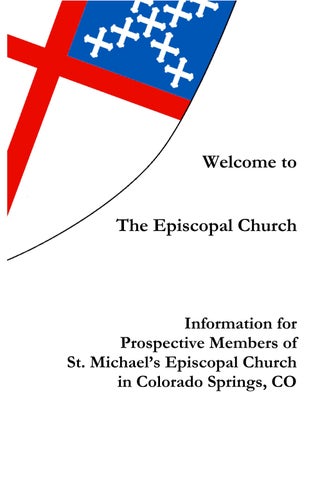
Q: Isn't it true that the Church of England was founded by Henry VIII? A: Not entirely. While Henry VIII's desire for an annulment of his marriage to Catherine of Aragon was a turning point in the history of the church, the trend toward separation from Rome had been building for quite some time in England, which had never fully embraced the rule of the papacy. Of course after Henry VIII, Mary Tudor brought the English Church back under the control of Rome. The last separation from the Roman Catholic Church occurred under Elizabeth I who instituted her famous Elizabethan Settlement. Q: Isn't the Archbishop of Canterbury the Anglican Pope? A: No, the Anglican Communion does not have a pope. The Archbishop of Canterbury is the spiritual leader of the Church of England and is considered "first among equals" by the rest of the Anglican Communion. He is highly respected, but he does not have the same authority over the other provinces of the Anglican Communion that the Pope has over the Roman Catholic Church. Q: What is the significance of the Episcopal Seal ("The Shield") and Flag? A: This symbol, which you will see at virtually every Episcopal Church and website, is the official "logo" of ECUSA and depicts our history. It is red, white, and blue for the colors of both the U.S. and England. The red Cross of St. George on a white field is symbolic of the Church of England. The blue field in the upper left corner represents the Episcopal Church of the U.S.A. It features a Cross of St. Andrew in recognition of the fact that the first American bishop was consecrated in Scotland. This cross is made up of nine crosslets, which represent the nine dioceses that met in Philadelphia in 1789 to form the Protestant Episcopal Church of the U.S.A.
Becoming a Member at St. Michael’s If you are considering becoming a member of St. Michael’s, please know that, whether you are a member or not, you are more than welcome to fully participate in all the activities of the church. However, in order to be eligible to vote at the annual parish meeting or at other times, or to be a member of the vestry, you will need to be a member in good standing. In order to become a member, or just to be on our mailing list, please begin by filling out the visitor card found on the back of your pew and indicate you are interested in becoming a member. The next step would be to fill out our membership information sheet which will be mailed to you by the church office. FOR THOSE WHO ARE ALREADY EPISCOPALIANS If you are already a member of another Episcopal Church, we will make sure your membership is transferred from that parish. Simply indicate the name of your former parish on our Membership Information Sheet. FOR THOSE WHO ARE NOT YET EPISCOPALIANS Baptism The first step for membership is baptism. Baptism is the sacrament by which God adopts us as his children and makes us members of Christ’s Body, the Church, and inheritors of the kingdom of God. Baptism is open to anyone from a newborn infant to an adult. In order to be baptized, one of the clergy will need to speak with you and may recommend a course of study or preparation for the event. If you have already been baptized in another Christian denomination then you will not need to be re-baptized, as the Episcopal Church recognizes all Christian Baptism.
Confirmation The next step for membership is confirmation. Confirmation is the rite in which we express a mature commitment to Christ, and receive strength from the Holy Spirit through prayer and the laying on of hands by a bishop. St. Michael’s is a part of the Diocese of Colorado. Although there are other opportunities to be confirmed outside of St. Michael’s, normally this is done by Bishop O’Neill at during his annual visitation. Individuals prepare for confirmation by taking a confirmation course in which participants receive Bishop Robert O’Neill instruction about the Christian faith and what it means be an Episcopalian. This course is open to any baptized person, eighth grade and up, who wishes to be confirmed. However, if you have already been confirmed in the Roman Catholic Church or Eastern Orthodox traditions you will not need to be confirmed again. Instead you may be received into the church by the bishop.
Links to Episcopal and Anglican Church Sites: St. Michael’s Episcopal Church: http://www.stmikeschurch.com The Episcopal Church: http://ecusa.anglican.org The Anglican Communion: http://www.anglicancommunion.org
Famous Episcopalians and Anglicans Did you know that more than one-fourth of all American presidents and more than half of all Supreme Court justices and members of congress have been Episcopalian.
Material for this booklet was compiled and modified from a number of sources including: The Episcopal Church The Book of Common Prayer, 1979 All Saints Episcopal Church, Appleton, WI St. Luke’s Episcopal Church, Durham, NC Grace Episcopal Church, Fairfield, CA