THE Summer/Fall 2026
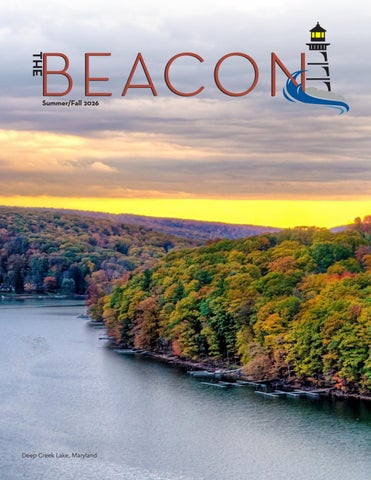
Deep Creek Lake, Maryland 1
THE BEACON
In this Issue Connie Phillips Insurance . . . . . . . . . . . . . . . . . . . . 2 Presidents Message . . . . . . . . . . . . . . . . . . . . . . 4-5 Congratulations Valerie Lykins . . . . . . . . . . . . . . . . . 5 Welcome New Members . . . . . . . . . . . . . . . . . . . . . 6 Reserve Advisors . . . . . . . . . . . . . . . . . . . . . . . . . 7 When The Customer Isn’t Right . . . . . . . . . . . . . . . 8-9 CAI National Conference . . . . . . . . . . . . . . . . . . . . 10 2026 Annual Symposium & Expo Attendees . . . . . . . . . 11 Pinnacle Financial Partners . . . . . . . . . . . . . . . . . . . 12 2026 Delmarva Expo . . . . . . . . . . . . . . . . . . . . . . . 13 Understanding Invisible Disabilities . . . . . . . . . . . . . 13-14 Members in the News . . . . . . . . . . . . . . . . . . . . . . 14 Thank You to Our Annual Sponsors . . . . . . . . . . . . . . 15 CRCCAI & WMCCAI Joint Chapter Event . . . . . . . . . . 16 2026 Delmarva Expo . . . . . . . . . . . . . . . . . . . . . . . 17 Building a Respectful Workplace . . . . . . . . . . . . . . 18-19 PMDP . . . . . . . . . . . . . . . . . . . . . . . . . . . . . . . . 19 SI Restoration . . . . . . . . . . . . . . . . . . . . . . . . . . 20 Beacon Advertising . . . . . . . . . . . . . . . . . . . . . . . . 21 Deeley Insurance Group . . . . . . . . . . . . . . . . . . . . . 21 June 16th Annual Golf Outing . . . . . . . . . . . . . . . 22-24 Western Alliance Bank . . . . . . . . . . . . . . . . . . . . . .25 Navigating Human Resource Challenges . . . . . . . . . 26-28 Annual Social Save the Date . . . . . . . . . . . . . . . . . . 28 Minkoff Company . . . . . . . . . . . . . . . . . . . . . . . . .29 HUD Makes Changes to Emotional Support Animals Accomodations . . . . . . . . . . . . . . . . . . . . 30 Tools That Turn Good Service to Great . . . . . . . . . . . . 31 RoofPRO . . . . . . . . . . . . . . . . . . . . . . . . . . . . . .32 Community Spotlight . . . . . . . . . . . . . . . . . . . . .33-34 Residental Realty Group, Inc. . . . . . . . . . . . . . . . . . .35 Crab Feast . . . . . . . . . . . . . . . . . . . . . . . . . . . . .36 North Arundel Contracting . . . . . . . . . . . . . . . . . . .37 Ruth Eason School Clean Up . . . . . . . . . . . . . . . . . 38 McFall & Berry Landscape Management . . . . . . . . . . 38 Kevin Davis Insurance Services . . . . . . . . . . . . . . . . 38 Nagle & Zaller, P.C. . . . . . . . . . . . . . . . . . . . . . . . .39 Calendar of Events . . . . . . . . . . . . . . . . . . . . . . . 40
EXECUTIVE BOARD President
President-Elect Vice-President Secretary Treasurer
DIRECTORS
Beth Bencivenni, RestoreCore Rebecca Clemson-Petrik, CMCA, AMS, PCAM, FirstService Residential Cynthia McKoin, Potomac Ridge Condominium Michele Nadeau, CMCA, AMS, PCAM, Legum & Norman, An Associa Company
COMMITTEE CHAIRS & VICE CHAIRS Communications
Delmarva
Education
Expo
Golf
Legislative
Magazine
Chesapeake Region Chapter of CAI
Valerie Lykins, Executive Director Angela Marsh, Marketing and Events Manager Mahogani Brevett, Administrative Specialist René Flores Jr., Administrative Assistant PO Box 6838, Columbia, MD 21045 • www.caimdches.org Office Line: 410-348-1534 • Membership Line: 410-505-8746 Office: contact@caimdches.org • Membership: membership@caimdches.org This publication attempts to provide CAI’s membership with information on community association issues. Authors are responsible for developing the logic of their expressed opinions and for the authenticity of all presented facts in articles. CAI does not necessarily endorse or approve statements of fact or opinion made in these pages and assumes no responsibility for those statements. This publication is issued with the understanding that the publisher is not engaged in rendering legal, accounting or other professional services. If legal advice or other expert assistance is required, the services of a competent professional should be sought. Permission to reprint articles in Beacon may be granted only after receiving prior written approval from the CED of CRC/CAI.
Gary Saylor Atlantic Maintenance Group Michelle Jones, CMCA, AMS, PCAM, LSM Lake Linganore Association B.K. Swartwood, CMCA, AMS, PCAM Montego Bay Civic Association Hillary Collins, Esq. Rees Broome, PC Ashley Zayas, CMCA, AMS Tidewater Property Management
Membership Engagement Outreach
Social
Mariana Teran, Chair Rees Broome, PC Allie Garza, Vice-Chair Duradek MidAtlantic Lisa Meck, CMCA, AMS, PCAM, Chair Carl M. Freeman Companies Melissa Esham, CMCA, AMS, PCAM, Vice-Chair Deeley Insurance Stephan Kaganzev, CMCA, AMS, PCAM, Chair DelMar Community Association Management & Consulting Adena Mansback, Vice-Chair BankUnited Ellen Throop, Esq., Chair Rees Broome, PC Dani Bressler, CAS, EBP, Vice-Chair Toepfer Construction Co., Inc. Chase Hudson, CIRMS, CISR, EBP, Chair Sahouri Insurance T.J. Socks, Vice-Chair Becht Engineering BT Karen Fooks, CMCA, AMS, PCAM, Chair Community Management Corporation/Associa Renee Dubois, Vice-Chair Village of River Hill Jedd Narsavage, LEED AP, Chair GreenSweep, LLC Jennifer Melson, CMCA, AMS, Vice-Chair Sullivan’s Landscaping & Maintenance Jennifer Melson, CMCA, AMS, Chair Sullivan’s Landscaping & Maintenance Wendy Whittam, CMCA, AMS, Vice-Chair Premier Community Association Management Jeff Cheney, Chair CWR Brittany Doster, CMCA, AMS, Vice-Chair Lake Linganore Association Eddie Ramos, Chair Atlantic Maintenance Group Mindy Shifflett, Vice-Chair Duradek MidAtlantic
PRESIDENT’S MESSAGE Show Up. Stand Together. Leave the Trail. As summer begins to wind down and we head into one of the busiest stretches of the year, I find myself reflecting on everything our Chesapeake Region Chapter has accomplished over the past few months. One thing continues to stand out above all else: We show up. Time and again, our members demonstrate what makes this chapter so special: a willingness to connect, contribute, and support one another. This summer was a perfect example. Our Annual Golf Outing once again brought members together for a tremendous day of networking, camaraderie, and a little friendly competition. Our sold-out Annual Crab Feast was another memorable gathering, filled with great food, great conversations, and the relationships that make CAI feel like a community rather than simply an organization. We also continued our commitment to giving back through the Ruth Parker Eason & Monocacy Battlefield clean-up initiatives, where our members rolled up their sleeves and made a tangible difference in the
4
neighborhoods and communities we serve. In addition, we joined forces with our friends from the Washington Metro Chapter for a successful Joint Chapter Event, strengthening existing relationships, creating new connections, and reminding us that some of our greatest opportunities come when chapters work together. And speaking of growth, we are excited to officially welcome the West Virginia Chapter to the CAI family. It is inspiring to see our organization continue to expand, creating even more opportunities for education, collaboration, and connection throughout our region. We look forward to building new relationships, supporting one another, and discovering what we can accomplish together. Welcome to the CAI family, West Virginia. The journey is just beginning, and the future is bright. Yet all of these events, partnerships, and milestones represent something far greater than a full calendar, they are about people.
THE BEACON
They are about building relationships, creating opportunities, serving our communities, and remembering why CAI is such a unique organization. Whether you are a community manager, homeowner leader, business partner, volunteer, committee member, or chapter leader, each of us contributes to making this chapter stronger.
organization around you, and creating a path for those who follow.
That is what Unity in the Community looks like.
I am incredibly proud of what we have accomplished together, but I am even more excited about what lies ahead.
And we’re not slowing down. Our Fall Expos are right around the corner, providing another opportunity to learn, connect, exchange ideas, and continue building the relationships that define the Chesapeake Region Chapter. As we move into the final months of 2026, I challenge each of you to keep showing up. Attend an event you’ve never attended before. Introduce yourself to someone new. Join a committee. Mentor a new member. Volunteer in your community. Find one way to leave CAI stronger than you found it. Because leadership is not about a title. It’s about choosing to step forward when others step back. It’s about helping others succeed, strengthening the
Be the Bison. Stand together. Protect the herd. Push through the storm. And when you move forward, leave a trail that others can follow.
Let’s finish 2026 the same way we started it:
CHESAPEAKE STRONG. ONE CHAPTER. ONE COMMUNITY. ONE HERD. See you at the Expo!
Gary Saylor
Gary Saylor President, CAI Chesapeake Chapter President, Atlantic Maintenance Group
This select committee of CEDs focuses on chapter governance, member engagement and strategic planning. The appointment
to
is recognition of Valerie’s dedication, vision, and performance she consistently gives to Chesapeake and CAI. The Chapter thanks you for your excellence, passion,
Chesapeake Chapter Executive Director (CED), on her appointment to the
CAI Chapter Leadership Committee for the term July 1, 2026 - June 30, 2028!
S5U MME R/FA L L 20 26
and leadership. This is an honor to be appointed and an exciting career milestone. Congratulations to our CED; and thank you for sharing your expertise and grace at the National level!
THE BEACON5
Mr. Kenneth Thomas Sr. CBW Mechanical
Welcome new members Rebecca Green Airbnb
Mr. Fred Wetzelberger II Charles II, Inc T/A Paradise Realty
Mrs. Crislyn Minnel American Community Management
Ms. Janice Smith Clagett Enterprises, Inc.
Deven Hankins Comsource Management, Inc.
Mr. Christopher Lamb Indurate Property Management LLC
Mr. Norman Coleman Dulaney Towers Maintenance Corporation
Mr. Jack Levering Mallard Landing Council of Unit Owners
Mrs. Glenda Carroll Huntington National Bank
Ms. Susan Sullivan Mallard Landing Council of Unit Owners
Ms. Colette Trohan Leisure World Community Corporation
Ms. Jeanne Webb Mallard Landing Council of Unit Owners
Mr. Rob Cernak Ocean Hideaway
Ms. Jennifer Antonelli Mediacom Premier Communities
Mr. Gary Olsen Ocean Hideaway
Ms. Barbara Ann Shaffer MRA Property Management, Inc.
Ms. Estella Santos Ocean Hideaway
Angela Vermillion River Run Condominium I
Thomas Gump Penthouse Condominium
Mr. James Focht Seagrove Community Association
Ken Baden Potomac Custom Remodeling Inc.
Mrs. Cynthia Ryan Seagrove Community Association
Mr. Hogan Allen Quality Elevator
Mr. Timothy Salerno Seagrove Community Association
Mr. Michael Arida Silo Point Condominium
Mr. Peter Vatalaro Seagrove Community Association
Jimmy Lawrence Silo Point Condominium
Mr. Neal Richard SeaScape Property Management
Scott Messing Silo Point Condominium
Ms. Brittney Kendall Sentry Management, Inc.
Simon Moskowitz Silo Point Condominium
Brian Brubaker Villages at Herring Creek
Mr. Jerry Pech Silo Point Condominium
Ms. Eileen Hagerty Villages at Herring Creek
Ms. Melanie Chamberlain Thomas Stroschein
Dr. Anne Lara Villages at Herring Creek
Dr. John Gardener Thomas Stroschein
Nancy Rouse Villages at Herring Creek
Thomas Stroschein Thomas Stroschein
Andy Sims Villages at Herring Creek
Jennifer Napoli Treover, A Condominium, Inc.
Nicole Wright
Michelle Nelson Treover, A Condominium, Inc.
6
Mark Plum
Dave MIller Bay Crossing Homeowners Association Inc. Cathy Schlossnagle Bay Crossing Homeowners Association Inc. Hilary Felinski Bayshore Property Owners Association Nicole Mckenzie Big Stuff Inc Andy Morsberger BmorePromo Joseph Francis Brandywine Park Condominiums Mr. Scott Mahoney Brandywine Park Condominiums Ms. Mary Marinari Brandywine Park Condominiums Ms. Nancy Merette Brandywine Park Condominiums Ms. Ingrid Reckard Brandywine Park Condominiums Kim Ruby Carroll Vista Community Association Lisa Quill Cheseldine Management Consulting, LLC Mr. Morton Gibbons-Neff IV Chester River Landscaping Mr. Jashirr Garcia Community Association Services, Inc. Mr. Michael Villatoro Community Association Services, Inc. Mr. Cadeem Walcott Community Association Services, Inc. Jason Feaga DCF Contracting Constantine Tsamouras Gussies Mr. James Barrett Legum & Norman Slava Gurdzhi Panda Exteriors Annie Keen Tidewater Property Management
THE BEACON
NSOR PLATINUM SPO SHOWCASE
S U MME R/FA L L 20 26
7
The adage “The customer is always right” has been a staple of customer service for generations. However, for managers, board members, and vendors serving community associations, this golden rule is not always applicable. In fact, according to Colby Phillips, CMCA, AMS, PCAM, LSM, Senior General Manager of Captain’s Cove Golf & Yacht Club in Greenbackville, Virginia, there are critical situations where adhering to it could put the association, its members, or staff at risk– or even violate established legal and ethical guidelines. “When a customer or member’s request conflicts with the association’s governing documents, legal requirements, fiduciary responsibilities, or the rights of other members, our role [as managers] is to balance individual desires with what’s best for the community as a whole.” Phillips goes on to elaborate, “A homeowner may want an exception to a rule or immediate action that benefits them personally, but managers and boards have an obligation to make decisions that are fair, consistent, and in the association’s best interests. Sometimes the most professional response isn’t saying ‘yes’—it’s explaining why the answer has to be ‘no,’ while helping the member understand the reasoning behind that decision.”
8
To be successful, community associations must operate within an established framework defined by state laws, governing documents, and other legal forces. These rules are not arbitrary; they exist to provide structure, ensure fairness, and protect the rights and responsibilities of everyone involved. When a request directly contradicts these rules, managers, board members, and vendors have a duty to uphold the association’s legal and ethical obligations. “Our responsibility is to be both professional and firm. The goal is never to simply tell someone ‘no,’ but to explain the reasoning behind the decision, communicate with respect, and help them understand the obligations the association must follow. People may not always agree with the outcome, but they are far more likely to accept it when they feel they have been heard and treated fairly.” Regardless of how insistent a member may be, when safety issues arise, customers cannot always be accommodated. For example, requests to circumvent fire codes, security protocols, or general safety regulations must be denied. Protecting the well-being of all residents and staff must always take precedence over satisfying a single individual’s demand.
THE BEACON
“A common example we encounter is when a member wants an exception to a rule prohibiting glass containers on the pool deck. I understand that from their perspective, it may seem harmless, especially if they’re hosting family or friends. However, if a glass container breaks, it can create a serious safety hazard for everyone using the facility and may require the pool to be closed until the area can be thoroughly inspected and cleaned,” explains Phillips. “In situations like these, managers and board members must prioritize the safety of the entire community over the convenience of one individual or group. Our responsibility is to enforce rules that protect residents, guests, and staff, even when those decisions may be unpopular.” Phillips is quick to point out that rejecting a customer’s request does not mean abandoning good customer service. Phillips says, “This is actually a time for you to show that you can accommodate in other ways, sometimes just providing background information about why their request cannot be fulfilled is enough. People often just want to be heard.” During challenging moments, professionalism and diplomacy matter most. Effective communication is key: explain the rationale behind the decision, referencing the
relevant laws or governing documents. Listen attentively to the customer’s concerns, acknowledge their feelings, and show empathy, even when you cannot provide the outcome they desire. When the customer isn’t right, it is still possible—and essential—to treat them with respect and courtesy. By maintaining transparency, demonstrating a willingness to help within the association’s boundaries, and offering alternative solutions, when possible, professionals can often defuse tension and even turn a difficult interaction into a positive one. Ultimately, the real golden rule for community association professionals is to balance the needs and concerns of individuals with the obligations and safety of the entire community sphere. Upholding the association’s rules and values, while providing excellent service, is the hallmark of true professionalism—even when the customer isn’t right. Written by: Julia Knopf, CMCA Community Relations Director, Captain’s Cove Golf & Yacht Club, Inc. jknopf@captscove.com
CAI NATIONAL CONFERENCE Our Chapter members, Board of Directors, and Chapter Executive Director had a fantastic time attending the CAI National Conference in June in Hollywood, Florida. The conference provided valuable opportunities to network, celebrate accomplishments, and exchange ideas with fellow CAI Chapters from across the country. It was an inspiring experience that strengthened relationships and reinforced our commitment to serving our members and communities.
S U MME R/FA L L 20 26
9
2026 Annual Symposium & Expo AI IN COMMUNITY ASSOCIATIONS: FROM HELPFUL COPILOTS TO TRUSTED DIGITAL WORKFLOWS
Monday, October 5, 2026 • Maryland Live! Casino, Hanover, MD WHO SHOULD ATTEND: All stakeholders within community associations—board members, residents, community managers, management companies, and the full network of professionals and partners who support their communities “AI in Community Associations: From Helpful Copilots to Trusted Digital Workflows” is a strategic and practical program designed for board members, community managers, management companies, attorneys, and business partners navigating the growing role of artificial intelligence in community association operations. This full-day program will explore how AI can support communication, resident service, document review, meeting follow-up, maintenance workflows, compliance support, and decision-making. Attendees will learn where AI is already creating value, what risks must be managed, and how associations can adopt AI responsibly, with the appropriate privacy, security, legal, and governance guardrails in place. Through a keynote presentation and interactive panel discussion, attendees will gain practical insight into how AI can help associations communicate better, respond faster, and govern with more confidence — while keeping human judgment and accountability at the center.
KEYNOTE SPEAKER: James Basilico, Data & AI Solutions Engineer, Microsoft
SCHEDULE OF THE DAY 5:00-7:30 am – Exhibitor Setup
*Exhibitors MUST BE set up by 7:30 am or you will not be able to participate in the Expo
8:00-9:30 am – Breakfast/Morning Expo 9:45-10:15 am – Introductions and Announcements (featuring Dawn Bauman, CAI National)
10:15-12:15 pm – Keynote Presentation 12:15-2:00 pm – Lunch/Expo 2:15-3:15 pm – Afternoon Session #1:
“AI in Community Associations: Practical Uses, Real Risks, and What Comes Next”
3:30-4:30 pm – Afternoon Session #2:
“Maryland Legislative Update”
AFTERNOON SESSIONS “AI in Community Associations: Practical Uses, Real Risks, and What Comes Next”
Speakers: James Basilico, Data & AI Solutions Engineer, Microsoft Eric Postow, Co-Founder, Managing Partner, Chief Strategy Officer, Holon Law Partners Gail Windisch CMCA, AMS, PCAM, Senior Director of Operations, Tidewater Property Management Our panel will explore how AI is transforming community association operations by reducing manual work and enhancing productivity through chat-based tools. The discussion will also address legal risks associations must manage, emphasizing responsible use and the continued importance of human review.
“Maryland Legislative Update”
Speaker: Scott J. Silverman, Esq., Senior Associate Attorney, Nagle & Zaller, PC What you need to know and what to expect in Maryland legislation.
All attendees must sign the Chapter’s suitcasing policy on their registration form
EARLY BIRD RATES ARE AVAILABLE!
10 Don’t Miss Out!
Scan to Register
THE BEACON
DIAMOND SPONSOR SHOWCASE
Pinnacle Financial Partners takes joy in helping people, businesses, and communities thrive. We make an impact by: • • •
Creating a place where our associates love to work. Providing distinctive service our clients can’t get anywhere else. Delivering effective personal and business financial advice that spurs growth.
This is our brand promise in all areas of our firm. Why should I bank my communities with Pinnacle Financial Partner? Find a financial services partner. Someone who answers your calls, listens to your goals and questions, and offers to help you every step of the way. Someone as experienced with deposit accounts as they are with loan applications and accounting software. An advisor who can connect you with other areas to be sure they are meeting all of your needs. Work with community association experts to grow your business, keep up on industry changes, and take better care of your clients. We only hire associates with 10+plus years of industry experience, which gives our associates a consultative perspective when discussing your banking needs. We can help be a resource for your clients and meet with them to discuss investments, loans, and other resources. Find a financial institution that can provide all banking needs for your clients and your company. We offer credit cards for you and your communities, mortgages and automobile loans for your employees, acquisition and equipment financing, and captive insurance for your business, and more Our Community Association Program is specifically designed to help you navigate the numerous challenges you face in today’s fast-paced world. We have banking solutions and long-standing relationships with industry service providers that can help now and in the future. Contact Noni Roan at 301-639-5503 or Noni.Roan@pnfp.com
Partner with us to achieve goals for yourself, your business, AND your community. S U MME R/FA L L 20 26
PNFP.com/CAP
11
2026DELMARVA EXPO FROM RULES TO RESILIENCE: The Community Leadership Summit
Know the Rules. Manage the Risk. Lead with Confidence.
Friday, November 13, 2026 • 8:00 am – 2:45 pm This comprehensive summit brings together professional expertise in legal, insurance, and legislation to provide practical guidance on Fair Housing, due process, governance policies, emergency response planning, state-specific insurance responsibilities, and Maryland and Delaware legislation initiatives. Speakers: • Hillary Collins, Rees Broome, PC • Christopher J. Curtin, Common Interest Community Ombudsman • Gail Launay, CMCA, GET Property Management LLC • Chad Toms, Esq., WHITEFORD AFTERNOON BREAKOUT SESSIONS 1 & 2: (choose one)
Maryland Insurance Speakers: • Melissa Esham, PCAM, CMCA, AMS, Deeley Insurance • Trish Walsh, CISR, NFP, an AON company
Delaware Legislation Speakers: • Christopher J. Curtin, Common Interest Community Ombudsman • Chad Toms, Esq., WHITEFORD AFTERNOON BREAKOUT SESSIONS 3 & 4: (choose one)
Delaware Insurance Speakers: • Melissa Esham, PCAM, CMCA, AMS, Deeley Insurance • Trish Walsh, CISR, NFP, an AON company
Maryland Legislative Update Speakers: • Igor Conev, CMCA, AMS, PCAM, CIRMS, Mann Properties, Inc., AAMC • Ellen Throop, Rees Broome, PC
Managers can earn four continuing education credits for attending the Expo!
12
Rehoboth Beach Convention Center (Expo location)
229 Rehoboth Ave • Rehoboth Beach, DE 19971
Coast Rehoboth Beach (Hotel Room Block)
123 2nd St Sussex, Rehoboth Beach, DE 19971
Guests may visit the booking link below for the CAI block scheduled November 12-13, 2026, at a rate of $135 Single/Double occupancy +11% tax. The group cut-off date is October 15, 2026. Reservations made after the cut-off date will be based on room and rate availability.
Join us for Happy Hour Thursday evening at Sirocco Food & Drink located at the Coast Rehoboth Beach! Tickets - $50 123 2nd St Sussex, Rehoboth Beach, DE 19971
SCHEDULE OF THE DAY Thursday 1:00 – 3:00 pm – Exhibitor Set-up 4:00 – 6:00 pm – Happy Hour at Sirocco Food & Drink Friday 6:30 – 7:45 am – Exhibitor Set-up 8:00 – 9:00 am – Breakfast/Registration/EXPO 9:00 – 9:15 am – Opening Comments 9:15 – 11:15 am – Morning Session 11:15 am – 12:30 pm – Lunch/EXPO 12:30 – 1:30 pm – Afternoon Breakout Sessions 1 & 2
Early-bird registration is available! Don’t miss out!
Reg istra tion is N ow Ava ilabl e!
1:30 – 1:45 pm - Break
SCAN ME
1:45 – 2:45 pm – Afternoon Breakout Sessions 3 & 4 THE BEACON
Understanding Invisible Disabilities
IN RESIDENTIAL COMMUNITIES AND THE WORKPLACE When people think of disabilities, normally they think of mobility impairments. However, many individuals live with “invisible disabilities,” conditions that are not immediately apparent but can significantly affect daily life at home and at work. Invisible disabilities include a wide range of physical, neurological, and mental health conditions, such as chronic illness, migraines, hearing loss, anxiety, depression, and attention-related disorders. While these conditions may not be outwardly visible, their impact is very real in both residential communities, including condominiums and homeowners’ associations (HOAs), and in workplace settings. Why Awareness Matters For community managers, board members, engineers, and building operators, awareness of invisible disabilities is an important part of creating functional and supportive environments. Buildings are more than structures; they are places where people live, work, and interact every day. Residents and occupants with invisible disabilities may experience challenges such as: • Sensitivity to lighting, noise, or temperature • Difficulty concentrating or processing information • Fluctuating energy levels or chronic fatigue • Discomfort in crowded or overstimulating environments Because one cannot “see” these challenges, individuals may hesitate to request help or an accommodation because they may be misunderstood when they do. In
S U MME R/FA L L 20 26
community settings, this can sometimes be interpreted as noncompliance or unusual behavior, when it may instead be related to an underlying condition. Thoughtful design and building operations can make a meaningful difference in both residential and workplace environments. While not every need can be anticipated, practical considerations can improve comfort and accessibility for a wide range of occupants. Consider the following: • Lighting: Reduce glare and provide adjustable lighting where possible, particularly in common areas and amenity spaces • Acoustics: Minimize background noise to support those with sensory sensitivities or hearing challenges • Wayfinding: Use clear signage and logical layouts in buildings, garages, and shared spaces • Flexible spaces: Provide quiet or low-stimulation areas when feasible • Indoor air quality: Maintain proper ventilation and reduce pollutants These are strategies that support broader universal design principles and enhance the overall experience for everyone. In residential communities, policies and communication also play a key role. Boards and management teams may receive requests related to parking, noise, pets, or access to amenities. Recognizing that some requests may stem from invisible disabilities allows for more thoughtful and informed responses.
13
Organizations and community leaders can support inclusivity by: • encouraging clear, respectful communication • Responding to accommodation requests with consistency and professionalism • Providing flexibility where feasible within governing documents and regulations • Promoting awareness among staff, board members, and residents A balanced approach that considers both community standards and individual needs helps build a more cooperative and supportive environment. As our understanding of health and accessibility continues to evolve, so should the way we design and manage both residential communities and workplaces. Recognizing invisible disabilities is not about meeting minimum requirements; it is about creating environments that better serve the people who rely on them. By combining thoughtful design, practical operations, and a culture of awareness, we can create spaces that are more inclusive, adaptable, and effective for everyone. Written by: Elisabeth Kirk, EBP Director of Marketing & Business Development ekirk@trc-engineering.com
MEMBERS IN THE NEWS! Celebrating 5 Years of Carlson Structural Engineering, Inc. Carlson Structural Engineering, Inc. is proud to celebrate five years in business! In that time, we have grown to four staff members, completed 415 projects, and provided over 630 proposals Our work has included houses of worship, schools, apartments, condominiums, HOA’s, historic buildings, commercial office buildings, parking structures, retaining walls, and expert witness assignments. Thank you to our clients, partners, colleagues, and friends for your trust, referrals, and support. We are blessed to reach this milestone and look forward to continuing to serve as Your Structure Pros.
14
THE BEACON
Many Thanks
TO OUR ANNUAL SPONSORS! S!
2026 DIAMOND SPONSORS Atlantic Maintenance Group CWR Four Twelve Roofing Hann & Hann Construction Services MillerDodson Associates, Inc.
2026 PLATINUM SPONSORS
Minkoff Company
Community Association Underwriters of America
Nagle & Zaller, P.C.
Duradek MidAtlantic
North Arundel Contracting, Inc.
EJF Real Estate Services
Park Heights Roofing
Palmer Brothers Painting & General Contracting
Pinnacle Financial Partners
Reserve Advisors
Rees Broome, PC
SI Restoration
Sahouri Insurance
Structural Restoration Services, Inc.
The Falcon Group Engineers, Architects & Reserve Specialists
Western Alliance Bank
Tidewater Property Management, Inc., AAMC
WHITEFORD
WPM Real Estate Management
2026 Gold Sponsors Becht Engineering BT Condominium Venture, Inc. Connie Phillips Insurance Construction Systems Group FirstService Residential Kevin Davis Insurance Services / Amwins Company McFall & Berry Landscape Management SmartStreet Banc of California
S U MME R/FA L L 20 26
15
We had a great day on Thursday, August 13th at the Joint Chapter Event with the Washington Metro Chapter!
Many thanks to our Sponsors! Atlantic Maintenance Group Bopat Electric Co., Inc. CWR Dragonfly Pond Works Exterior Medics Katchmark Construction McFall and Berry Landscape Management Ruff Roofers Standard Paving and Concrete Thomasville Restoration Western Alliance Bank
16
THE BEACON
2026DELMARVA EXPO FROM RULES TO RESILIENCE: The Community Leadership Summit
Know the Rules. Manage the Risk. Lead with Confidence. Friday, November 13, 2026 • 8:00 am – 2:45 pm This comprehensive summit brings together professional expertise in legal, insurance, and legislation to provide practical guidance on Fair Housing, due process, governance policies, emergency response planning, state-specific insurance responsibilities, and Maryland and Delaware legislation initiatives.
Rehoboth Beach Convention Center (Expo location) 229 Rehoboth Ave • Rehoboth Beach, DE 19971
Coast Rehoboth Beach (Hotel Room Block)
123 2nd St Sussex, Rehoboth Beach, DE 19971
Guests may visit the booking link below for the CAI block scheduled November 12-13, 2026, at a rate of $135 Single/ Double occupancy +11% tax. The group cut-off date is October 15, 2026. Reservations made after the cut-off date will be based on room and rate availability.
Sirocco Food & Drink (Happy Hour Thursday)
123 2nd St Sussex, Rehoboth Beach, DE 19971
SCHEDULE OF THE DAY
BOOTHS AND SPONSORSHIPS
1:00 – 3:00 pm – Exhibitor Set-up
BOOTHS: $750 – includes two tickets to Happy
4:00 – 6:00 pm – Happy Hour at Sirocco Food & Drink Friday 6:30 – 7:45 am – Exhibitor Set-up 8:00 – 9:00 am – Breakfast/Registration/EXPO 9:00 – 9:15 am – Opening Comments 9:15 – 11:15 am – Morning Session 11:15 am – 12:30 pm – Lunch/EXPO 12:30 – 1:30 pm – Afternoon Breakout Sessions 1 & 2 1:30 – 1:45 pm – Break 1:45 – 2:45 pm – Afternoon Breakout Sessions 3 & 4 S U MME R/FA L L 20 26
ARE NOW AVAILABLE!
Hour on Thursday evening at Sirocco Food & Drink located at the Coast Rehoboth Beach!
(Additional Happy Hour tickets may be purchased for $50 each).
Space is limited! SCAN ME
Thursday
Exhibitor Booths
Reserve your Booth or Sponsorship today! Sponsorships
17
Building a Respectful Workplace: Small Choices, Lasting Culture
Culture is what happens when no one is watching. It isn’t defined by mission statements or posters in the break room. It’s built, moment by moment, through how colleagues talk to each other, how leaders respond to feedback, and whether people feel safe enough to speak up. A respectful workplace doesn’t happen by accident; it’s the sum of countless small, deliberate choices.
Impact vs. Intent
Why It Matters
Accountability looks different. It sounds like: “I hear that my comment affected you negatively. Help me understand so I can do better.” It’s rooted in curiosity instead of defensiveness, and it builds trust through genuine repair rather than justification.
When respect is the norm rather than the exception, something measurable shifts. People feel valued and heard. Misunderstandings become less frequent because communication is more thoughtful. And critically, a culture of respect acts as a safeguard, reducing the risk of harassment, discrimination, and bullying by creating an environment where those behaviors have no room to take root.
The Power of Position Not all words carry equal weight. Authority amplifies impact: a comment from a manager lands very differently than the same comment from a peer. Unequal power dynamics shape how feedback is received, and what feels casual or offhand to someone in a position of authority may feel uncomfortable or even threatening to an employee. Building psychological safety, where people can speak up, admit mistakes, challenge decisions respectfully, and raise concerns without fear of retaliation, requires intentional effort from those who hold more power in the room.
18
One of the most important shifts in respectful communication is separating what someone meant from what someone else experienced. “I didn’t mean it that way” doesn’t erase harm, and defensive responses like “you’re too sensitive,” “I was just joking,” or “that’s not what I meant,” tend to shut conversations down rather than resolve them.
A few practical habits reinforce this: pausing before responding in emotionally charged moments, using “I” statements (“I felt concerned when...” rather than “You always...”) and asking clarifying questions instead of making assumptions.
Language Evolves Words carry history, and some everyday phrases carry more baggage than most people realize. Expressions like “grandfathered in,” “sold down the river,” or “off the reservation” trace back to painful chapters in history: voter suppression, slavery, and the displacement of Indigenous peoples, respectively. Terms like “spirit animal” or “tribe” repurpose culturally specific or sacred language casually. None of this means intent was malicious; it means language shifts over time, and what was once commonplace can now cause real harm. THE BEACON
The goal isn’t linguistic perfection, but rather an awareness and a willingness to adapt. Alongside that awareness comes a broader cultural sensitivity: recognizing that “normal” isn’t universal when it comes to names, appearance, holidays, food, or communication style, and choosing to ask rather than assume.
Professionalism and Boundaries The workplace is a professional environment, and it is important to distinguish between collegiality and personal friendships. Effective collaboration does not depend on close personal relationships. Maintaining appropriate professional boundaries means recognizing that employees have different comfort levels with personal interactions. Organizations should be mindful of workplace dynamics that can unintentionally create perceptions of favoritism, exclusion, or cliques, as these can undermine trust, collaboration, and team cohesion. Safeguards need to be implemented to ensure individuals’ privacy is respected and that participation in social activities outside of work remains entirely voluntary. When professional boundaries are crossed, addressing the situation respectfully, directly, and without judgment helps reinforce a positive and respectful work environment. A clear statement such as, “I prefer to keep our relationship professional,” can effectively communicate expectations while preserving mutual respect.
Culture Is a Daily Choice Ultimately, a respectful workplace is built by everyone, not just leadership. However, leadership modeling matters enormously, and organizations need clear policies, accessible reporting mechanisms, and real consequences to back up their values. Day-to-day, culture shows up in smaller ways: how you greet colleagues, whether you let others finish speaking, whether you give credit or take it, and whether you speak up when you witness disrespect. Respect is contagious. Modeled consistently, it spreads — one interaction, one choice, one conversation at a time. Written by: Swafia Ames Managing Director, Organization Effectiveness & Inclusion, Brighter Strategies swafia@brighterstrategies.com & Kia Scipio Founder, ISEE Creative LLC Kia@Brighterstrategies.com Managing Director, Organizational Effectiveness & Inclusion
2026 Professional Management Development Program (PMDP) For more information and to visit the list of courses offered in 2026 visit here: https://www.caionline.org/ education-for-managers/ Or scan here
S U MME R/FA L L 20 26
19
NSOR PLATINUM SPO SHOWCASE
20
THE BEACON
Don’t miss out on 2026 Beacon Advertising opportunities!
COMMUNITY ASSOCIATION
INSURANCE EXPERTS We insure more than 550
Associations and Condominiums! Join us at CAI’s Delmarva Expo on Nov. 13 in Rehoboth Beach, DE
Meet The Best Agent from The Best Agency!
Melissa Esham
Deeley's Melissa Esham will be co-presenting breakout sessions on MD and DE insurance responsibilities for Associations and unit owners.
• 8-Person, In-House, Dedicated Community Association Team • Best-in-Class Board Member and Unit Owner Support: - We attend Board Meetings and Annual Homeowner Meetings - We Audit Your Existing Policies Against the Governing Documents
• Seamless Claims Processing • Extensive Experience with Coastal Property and Difficult-to-Place Risks
S U MME R/FA L L 20 26
Visit deeleyinsurance.com Call or Text 410-213-5600
21
We had a Great day at our Annual Golf Outing on Tuesday, June 16th!
MANY THANKS TO OUR 2026 GOLF OUTING SPONSORS! American Pool
Kolb Electric
Ruff Roofers
Atlantic Maintenance Group
LakeSource LLC
Sahouri Insurance
BoPat Electric
MillerDodson Associates, Inc.
SBC Outdoor Services
Clean Advantage
Minkoff Company
ServPro of Rockville-Olney
Complete Landscaping Service
Nagle & Zaller
SI Restoration
CWR, Inc.
North Arundel Contracting
Standard Paving & Concrete
Fellner Legal Services
NV Roofing
Structural Restoration Services
Four Twelve Roofing
Palmer Brothers
The Falcon Group
Greenlink, Inc.
Park Heights Roofing
The Witmer Group
Hann & Hann Construction Services
Pinnacle Financial Partners
Thomasville Restoration
Hawkins Electric Services
Pro Painting & Contracting
Tidewater Property Management, Inc., AAMC
Katchmark Construction
Raine & Son
Toepfer Construction Co., Inc.
Knott Mechanical
Rees Broome, PC
WPM Real Estate Management
22
THE BEACON
MANY THANKS TO OUR 2026 GOLF COMMITTEE! Chase Hudson, Chair, Sahouri Insurance
Matthew Merckel, SBC Outdoor Services
Thomas (T.J.) Socks, Vice-Chair, Becht Engineering BT
Chris Miles, First National Bank
Rebecca Clemson-Petrik, Board Liaison, FirstService Residential
Ed Mueller, First Real Estate Management
Claire Donohue, SI Restoration
Gary Saylor, Atlantic Maintenance Group
Ian Douglas, WHITEFORD
Linda Sheets, Bopat Electric
Scott Duke, The Witmer Group
Carol Shenk, First Citizens Bank
Laurel Farmer, Hann & Hann Construction Services
Judy Walters, RoofPro
Jason Kingan, Atlantic Maintenance Group
S U MME R/FA L L 20 26
23
CONGRATULATIONS TO OUR 2026 GOLF WINNERS! FLIGHT #1 – First Place: Justin Lewis, Larry Edmonds, Ryan Bates, AJ Glascock Second Place: Jack Rogers, Matt Rogers, Matt Baldwin, Joe Cox Third Place: Marc Longenecker, Nick Cole, Andrew Spencer, Brett Hoagland FLIGHT #2 – First Place: John Tsikerdanos, Gene Stevens, Joseph Peterson, Steve Strickman Second Place: Tom Cullop, Justin Moore, Keenan Wilkinson, Andrew Edland Third Place: Matt Driscoll, Nicole Malise, Jason Lewis, Justin Matto Straightest Drive – Men: Luc Vermuelen Straightest Drive – Women: Christina Combs Longest Drive – Men: Matt Baldwin Longest Drive – Women: Olivia Hancock Closest-to-the-Pin – Women: Michele Nadeau Closest-to-the-Pin – Men: Joe Cox Closest-to-the-Pin – Women: Adena Mansbeck
24
THE BEACON
PLATINUM SPONSOR SHOWCAS E
Association Banking
Industry-experienced bankers providing tailored solutions to help your management company thrive. Solve today. Succeed tomorrow.
TM
High-touch service backed by powerful technology. With firsthand industry experience, our bankers understand your needs and deliver customized solutions and high-touch service supported by advanced technology.
WA ConnectLive1 Software Integration ePay Portal for Homeowners Connect Portal with SSO Access Deposit & Investment Solutions2 No-Fee Lockbox Services3 Lending Solutions4
Connect with a community association banking expert. Mac Staples Vice President (301) 524-9744 mac.staples@westernalliancebank.com
Ken Sonner Managing Director (301) 943-5632 ken.sonner@westernalliancebank.com
1. The ability to integrate with WA ConnectLive may depend on the accounting software used. Services and integration tools may differ by software. 2. Refer to the disclosures provided at account opening and the Schedule of Fees and Charges for additional information. 3. Funds deposited through the Lockbox will follow Western Alliance Bank’s funds availability policy as outlined in the Deposit Account Agreement Disclosure. 4. All offers of credit are subject to credit approval, satisfactory legal documentation and regulatory compliance.
westernalliancebank.com/associations S U MME R/FA L L 20 26
Western Alliance Bank, Member FDIC.
25
NAVIGATING HUMAN RESOURCE CHALLENGES IN COMMUNITY ASSOCIATIONS: Best Practices for Boards, Managers, and Business Partners
Human resource management in community associations is among the most operationally complex and high-risk areas of governance. Unlike traditional corporate environments, community associations operate at the intersection of private residential living, corporate management, and multi-jurisdictional employment law. Whether managing a large-scale master-planned development, a high-rise condominium, a garden-style community, or a self-managed neighborhood, understanding sound HR practices is essential to mitigating liability, preserving property value, and maintaining organizational stability. Across the Chesapeake region, encompassing Maryland, Washington, D.C., Virginia, and Delaware, associations face a patchwork of local, state, and federal labor laws. While legal counsel must always evaluate jurisdiction-specific requirements, adhering to Community Associations Institute (CAI) best practices provides a clear framework for sound HR decision-making.
1
Defining the Employment Relationship: Who Is the Employer? One of the most common HR pitfalls in community associations is blurring the lines among direct employment, management company employment, and independent contracting. • Direct Association Employees: In self-managed communities or large-scale associations that employ onsite maintenance, administrative, or lifestyle staff directly, the association board serves as the employer’s governing body. The board bears direct legal responsibility for payroll, worker classification, safety, and benefits. • Management Company Personnel: When an association contracts with a professional management firm, the community manager and administrative staff are typically employees of the management company, not the association. Board members must respect this administrative boundary; providing dayto-day direction, setting work hours, or disciplining
26
management personnel can inadvertently create a “joint employer” liability standard. • Independent Contractors: Using service vendors or specialized contractors requires a clear demonstration of independence under local wage-and-hour laws. Misclassifying an individual as an independent contractor rather than an employee, especially for regular maintenance or janitorial roles, can trigger significant penalties from tax and labor regulators.
2
Standardizing Policies Through Modern Handbooks and Job Descriptions Ambiguity is the enemy of effective workforce management. CAI guidelines strongly emphasize written operational procedures for all direct employees and clear contractual expectations for service providers. • Comprehensive Employee Handbooks: Every association with direct staff must maintain a regularly reviewed employee handbook. This document should clearly outline attendance standards, PTO accrual, social media protocols, and zero-tolerance policies on harassment and discrimination.
THE BEACON
• Objective Job Descriptions: Accurate, written job descriptions establish baseline performance expectations and serve as essential defense documentation in wage, duty, or disability accommodation disputes. • Consistent Performance Reviews: Annual written performance evaluations tied to explicit job descriptions help ensure objective oversight, document continuous growth, and provide necessary evidentiary support should termination become unavoidable.
3
Navigating Regional Compliance in the Chesapeake Area Operating across the Chesapeake region requires awareness of varying legal environments. While federal statutes such as the Fair Labor Standards Act (FLSA), Americans with Disabilities Act (ADA), and Occupational Safety and Health Act (OSHA) apply broadly, state and local mandates create distinct compliance requirements: Rather than tailoring policy on an ad-hoc basis, associations should establish baseline HR protocols that align with the strictest applicable standard in their operating area, developed in consultation with specialized legal counsel.
and address employee harassment, including harassment originating from homeowners or board members. Boards should adopt formal anti-harassment policies that clearly outline escalation pathways and enforcement mechanisms. Workplace Safety and OSHA Compliance From maintenance staff handling chemicals at a highrise pool to property teams operating equipment in garden-style communities, safety standards must be non-negotiable. Associations must provide appropriate Personal Protective Equipment (PPE), conduct routine safety training, and maintain up-to-date Safety Data Sheets (SDS) for all chemicals on property. Comprehensive Insurance Coverage Every association, regardless of size, should maintain comprehensive insurance coverage to address potential employment claims: • Workers’ Compensation Insurance: Mandatory in virtually all scenarios where direct staff exist and strongly recommended as a backup policy even for associations that rely solely on independent contractors. • Employment Practices Liability Insurance (EPLI): Protects the association and its board from claims of wrongful termination, discrimination, harassment, or failure to promote.
5
Fostering Professional Retention and Healthy Culture High turnover among community managers, onsite engineers, and administrative staff destabilizes communities, raises recruitment costs, and disrupts long-term capital projects. Creating an environment that attracts and retains qualified professionals requires deliberate strategy:
4
Protecting Personnel: Harassment, Safety, and Risk Mitigation Onsite staff, community managers, and service partners frequently work directly with residents, exposing them to unique workplace dynamics. CAI best practices underscore the board’s fiduciary duty to maintain a safe, respectful work environment. Preventing Harassment from Residents Volunteers and residents are not permitted to verbally abuse, intimidate, or harass association staff or contractors. Under Fair Housing Act guidelines and occupational safety standards, associations have an affirmative duty to investigate
S U MME R/FA L L 20 26
1. Competitive Compensation Benchmarking: Regularly audit compensation packages against regional standards to ensure that wages, benefits, and professional development support remain competitive. 2. Support for Professional Designations: Encourage and budget for staff to pursue industry credentials (such as CMCA, AMS, and PCAM certifications). Investing in professional development improves retention and delivers superior operational results. 3. Respect for Operational Boundaries: Empower managers and staff to execute board policy without micromanaging. A clear separation between legislative board functions and administrative management execution is the single greatest factor in preventing professional burnout.
27
Conclusion: A Proactive Path Forward Managing human resources in a community association requires balancing administrative discipline, legal awareness, and practical empathy. By establishing clear employment classifications, maintaining up-to-date policy handbooks, enforcing strict safety and anti-harassment standards, and respecting professional boundaries, boards and management teams can minimize liability while building a thriving, resilient operational structure for the community. When complex HR questions arise, consulting experienced community association attorneys and credentialed industry partners remains the gold standard for protecting the community’s long-term interests. Written by: Chris Petrik, CMCA, AMS, PCAM, LSM (Candidate) General Manager, Bulle Rock Community Association/ FirstService Residential Chris.Petrik@FSResidential.com
Save the Date
for our Annual Social! Thursday, December 3, 2026 Rolling Road Golf Club, Inc. • Catonsville, MD Time: 3:00 – 7:00 pm
Don't be a Grinch—(actually, do!) Come dressed in your best Grinch-inspired outfit and spread some holiday cheer (or mischief).
Additional registration and sponsorship information to follow!
28
THE BEACON
ND OR DIAM NDOSPONS DIAMO OR ONSCASE SP SHOW SHOWCASE
When Disaster Strikes, Experience Matters!
Minkoff Company is Proud to Support CRCCAI as a Diamond Sponsor!
• Water Extraction • Mold Remediation • Full-Scale Reconstruction • Structural Drying & Dehumidification • Board up and Building Stabilization • Multi-Family Restoration Specialist • 24 Hour Emergency Services • Fire Watch 1 1 7 1 6 B a l t i m o r e Av e n u e , B e l t s v i l l e , M D 2 0 7 0 5 1 - 8 0 0 - M I N K O F F • M I N K O F F. C O M S U MME R/FA L L 20 26
We Respond, We Restore 29
HUD MAKES CHANGES TO EMOTIONAL SUPPORT ANIMAL ACCOMMODATIONS On May 22, 2026, the Department of Housing and Urban Development (HUD) issued a memorandum titled “Enforcement Guidance – Assessing Requests for the Use of an Animal as a Reasonable Accommodation Under the Fair Housing Act.” The memo provides guidance on how HUD will now enforce requests for emotional support animals (ESAs) as reasonable accommodations under the Fair Housing Act. The memo is available here: https://dredf.org/wpcontent/uploads/2026/05/ESA-Enforcement-Memorandum-wAppendix-05.22.2026-SIGNED-Incomplete-Access-Pass.pdf Previously, HUD took the position that both trained service animals and untrained ESAs are not considered pets, and, therefore, housing providers had limited ability to deny requests to maintain such animals or charge pet fees. This position was contained in guidance issued by HUD in both 2013 and 2020. However, HUD has now rescinded that stance, taking the position that the prior guidance created confusion in evaluating requests to maintain ESAs, encouraged abuse through online ESA certification services, and effectively imposed obligations on housing providers without formal rulemaking. In the memo, HUD specifically notes a recent court decision it believes support this revised enforcement approach. Accordingly, as of the effective as of the date of the memo, HUD will evaluate service animals and ESAs the same by looking to the Americans with Disabilities Act (ADA) definition of a “service animal” as a guide in fair housing enforcement cases for ESAs. Under the ADA, a service animal is “individually trained to do work or perform tasks for the
30
benefit of an individual with a disability, including a physical, sensory, psychiatric, intellectual, or other mental disability.” Accordingly, in fair housing cases, HUD will also specifically focus on whether the animal is trained to perform a task directly related to the person’s disability, even for ESAs, which typically have no training. In other words, emotional support, comfort, companionship, or general well-being alone will not be sufficient for HUD and HUD no longer expects housing providers to categorically extend accommodations granted for trained assistance animals to untrained ESAs. While the memo is a remarked shift in how requests for ESAs will be evaluated by HUD in fair housing enforcement cases, there is still a robust body of jurisprudence through case law, statutes, and regulations that attorneys will continue to look to when formulating advice for community association clients. This HUD action does not supersede existing case law and has no bearing on the application of state and local fair housing laws. HUD also acknowledges that individuals may still pursue private lawsuits under the Fair Housing Act. Finally, we can expect to receive more concrete regulations from HUD, as the memo announces HUD’s intention to undertake future notice-and-comment rulemaking to develop updated standards for animal-related accommodations. The bottom line is that associations should continue to consult with legal counsel on specific fair housing matters. Written by: Leslie Brown Shareholder, Rees Broome, PC LBrown@reesbroome.com
THE BEACON
“Tools That Turn Good Service to Great”
Education Seminar and Happy Hour
On May 13, 2026, Chesapeake Chapter’s Social and Education Committees hosted the second Education Seminar and Happy Hour at Doubletree by Hilton Hotel BWI. Michelle Jones, CMCA, AMS, PCAM, LSM, coordinated the crucial-topic seminar on Customer Service in community management, “Tools That Turn Good Service to Great”. The event included pre-seminar Sponsor exhibits and the post-seminar Happy Hour. The Customer Service speakers were large-scale community managers from South Carolina and Virginia: Peter Kristian, CMCA, PCAM, LSM, General Manager Hilton Head Plantation POA; Christina Kristian CMCA, AMS, PCAM Community Manager of Lifestyle Services Hilton Head Plantation POA, and Colby Phillips, CMAA, CMCA, AMS, PCAM, LSM, Senior General Manager of Captain’s Cove Golf & Yacht Club - Chesapeake’s Community of the Year 2025. The Kristians have presented at CAI. Ms. Phillips has been published in CAI’s Common Ground magazine. Customer Service continues to be a critical skill for managers, homeowners, and business partners. The speakers shared seminal service concepts and personal
experiences as tools to enhance customer satisfaction by all stakeholders. Key takeaways to be the First Choice Every Time included: • Customer Service is Communication in Action • Key actions include Communication , Problem solving, Timeliness • It includes All Stakeholders (managers and supervisors, support staff, boards and owners/residents, guests, business partners, self) • It begins with Setting expectations… and continues by Meeting—and Exceeding--them • Infused through every day with every interaction is Sincerity, Expertise, and Grace The accompanying graphic was created by Communications Committee to summarize salient points of the seminar. Written by: Cindy McKoin Homeowner Board Director, Chesapeake Chapter Board President, Potomac Ridge Condominium, Inc. c.mckoin@myactv.net
CHESAPEAKE REGION CHAPTER CAI EDUCATION SEMINAR OVERVIEW ervice!
Tools that turn Good Service into Great S
Communication, Problem solving, Timeliness
Set Expectations, Communicate, Meet Set Expectations, Problem-Solve, Receive all Feedback
What
How
Who
Where
Why
All Stakeholders:
Every Position at Every Level of an Organization
To Be the First Choice Every Time
Homeowners, Managers, Management Companies, Business Partners, Support Staff, Self
At Its Heart Customer Service is Communication in S U MME R/FA L L 20 26
action!
Special Thanks to: Peter Kristian CMCA, PCAM, LSM Christina Kristian CMCA, AMS, PCAM Colby Phillips CMAA, CMCA, AMS, PCAM, LSM Coordinator Michelle Jones CMCA, ASM, PCAM, LSM
31
32
THE BEACON
Community Spotlight
Bishop’s Landing From Transition to Transformation: How Bishop’s Landing Built a Culture of Excellence Through Leadership, Partnership, and Vision
who shared its expectations for professionalism, responsiveness, accountability, and long-term stewardship.
By nearly every measure, community transitions are defining moments. They bring new opportunities, fresh challenges, and important decisions that shape an association for decades to come.
That commitment to excellence continued in November 2025 when FirstService Residential assumed management responsibilities for the community.
For Bishop’s Landing in Millville, Delaware, that defining moment became an opportunity to reimagine what community management could accomplish. Located just minutes from Delaware’s award-winning beaches, the 834-home community has steadily developed over the past 12 years. While the developer completes the final phase of infrastructure improvements including significant roadway enhancements during one of the busiest tourism seasons on the Delaware coast the association itself has been focused on something equally important: building a strong operational foundation for the future. Rather than simply managing the transition from developer control, the Board of Directors chose to lead it. Working closely with an experienced onsite management team, the Board evaluated every aspect of the Association’s operations with one goal in mind: creating a sustainable, professionally managed community that delivers exceptional value to its homeowners. Raising the Standard One of the Board’s earliest initiatives was a comprehensive review of service providers. Every major contract was evaluated through a competitive Request for Proposal (RFP) process, allowing the Association to select partners
S U MME R/FA L L 20 26
The impact was immediate. Daily operations have become more proactive. Communication with homeowners became more transparent. Community standards were consistently enforced, and customer service evolved into a relationship-focused experience built on responsiveness and trust. Most importantly, homeowners began seeing visible progress throughout the community. Looking Beyond the Numbers One accomplishment extended beyond Bishop’s Landing itself. Although the Association did not initially satisfy the traditional metrics used to classify a Large-Scale Community within Community Associations Institute (CAI), the onsite manager recognized that the complexity of the community told a different story. With numerous amenities, diverse operational responsibilities, and sophisticated management requirements, Bishop’s Landing functioned much like communities traditionally recognized within CAI’s largescale category. After collaborating with CAI National and presenting the community’s operational profile, Bishop’s Landing 33
was ultimately recognized as qualifying under the Large-Scale Community designation—a meaningful achievement that better reflects the complexity of the community while creating professional development opportunities for future onsite managers. Turning Deferred Projects into Visible Results While improving daily operations, leadership also focused on projects that had remained on the community’s wish list for years. Sports courts were restored. A prominent vehicle bridge received aesthetic improvements. Landscape berms were enhanced to improve both appearance and functionality. Each completed project reinforced homeowner confidence while demonstrating careful planning, fiscal responsibility, and disciplined project management.
Collaboration between residents, management, and the Board strengthened. Hybrid meeting technology expanded access for both yearround and seasonal homeowners, allowing more residents to participate in community governance regardless of where they were located. The result has been a more informed, connected, and engaged membership. Sustainability with Purpose Environmental stewardship has also become part of Bishop’s Landing’s evolving story. Through numerous successful state grant awards, the Association expanded its tree canopy and enhanced community green spaces.
Perhaps even more impressive, many initiatives were completed under budget while maintaining high-quality standards.
In the year proceeding the community completed LED lighting upgrades throughout the clubhouses and sports court facilities reduced energy consumption, lowered operating costs, and demonstrated that sustainability and fiscal responsibility can work hand in hand.
Stewardship Beyond the Budget
Looking Ahead
For Bishop’s Landing, financial success wasn’t simply about reducing expenses—it was about maximizing value.
Today, as Bishop’s Landing approaches the completion of its transition to full homeowner governance, the community represents far more than a successful turnover.
Through strategic vendor negotiations, thoughtful budgeting, and operational efficiencies, the Association generated measurable savings while maintaining exceptional service levels. Leadership also leveraged internal financial expertise to optimize reserve fund investments, increasing interest earnings and strengthening the Association’s long-term financial position. Every dollar saved or earned represented another investment in the community’s future. Building Community Alongside Infrastructure Physical improvements were only part of the transformation. Equally significant was the renewed focus on homeowner engagement. Committee participation increased.
34
It demonstrates what is possible when engaged volunteer leaders, professional management, trusted business partners, and committed homeowners work toward a common purpose. The journey is ongoing, but the foundation is firmly in place. For communities preparing for transition—or simply striving to elevate their operations— Bishop’s Landing serves as a compelling reminder that transformational change begins with leadership, succeeds through partnership, and endures through a shared commitment to excellence. Written by Stephan C Kaganzev, CMCA, AMS, PCAM Owner/Manager, DelMar Community Association Management & Consulting Stephan@delmarcmac.com
THE BEACON
A Great day at our Summer Crab Feast
2026 Many Thanks to our Sponsors! American Pest Association Navigator Atlantic Maintenance Group Dragonfly Pond Works Hawkins Electric Service Inc. Katchmark Construction McFall and Berry Landscape Management National Cooperative Bank North Arundel Contracting PTG Enterprises Inc. Ruff Roofers Sahouri Insurance Vantaca
36
Many thanks to our Social Committee for putting this event together! THE BEACON
DIAMOND S PONSO SHOWCASE R
S U MME R/FA L L 20 26
37
to all the volunteers who came out on Friday, August 14th to help with the Ruth Parker Eason School Clean-Up!
R
GOLD SPONSO SHOWCASE
Community Association Insurance Experts Trusted for over 25 years
Dawn R. Sall, CIRMS Business Development Manager / Underwriter
T 213.833.6138 dawn.sall@amwins.com kdisonline.com
38
THE BEACON
DIAMOND S PONSO SHOWCASE R
ATTORNEYS REPRESENTING COMMUNITY ASSOCIATIONS
Assessment Collection Contract Drafting and Review
Document Review & Amendment Construction Defect Litigation Maintenance Responsibility Rules Development & Enforcement Architectural Control Litigation Annual Meetings/Elections Opinion Letters Fair Housing Issues Insurance Issues ADA Issues Incorporation Email: lawyers@naglezaller.com
7226 Lee Deforest Dr. Suite 102 Columbia, Maryland 21046 Columbia/Balt. (410) 740-8100 D.C. Metro (301) 621-6500 S U MME R/FA L L 20 26
39
CHESAPEAKE REGION CHAPTER OF CAI
2026 EVENTS JANUARY
AUGUST
THURSDAY, JANUARY 15TH (VIRTUAL) CHARTING YOUR COURSE | 9:30 – 10:30 AM
THURSDAY, AUGUST 13TH
JOINT CHAPTER EVENT | 3:00 – 6:00 PM THE MARYLAND JOCKEY CLUB, LAUREL, MD
TUESDAY, JANUARY 27TH (VIRTUAL)
HOMEOWNER HUDDLE WEBINAR | 7:00 – 8:30 PM “Planning or Paying: What Maryland’s New Reserve Law Means for Your Community”
FRIDAY, AUGUST 14TH VOLUNTEER DAY | 9:00 – 12:00 AM RUTH PARKER EASON SCHOOL, MILLERSVILLE, MD
FEBRUARY
FRIDAY, AUGUST 28TH VOLUNTEER CLEAN -UP | 9:00 – 12:00 AM MONOCACY BATTLEFIELD, FREDERICK, MD
WEDNESDAY, FEBRUARY 18TH (VIRTUAL) BREAKFAST WEBINAR | 9:30 – 11:30 AM
“What’s All that Racket?! How to Handle Nuisance in the Community Webinar”
OCTOBER MONDAY, OCTOBER 5TH
ANNUAL SYMPOSIUM & EXPO | 8:00 AM – 4:00 PM “AI in Community Associations: From Helpful Copilots to Trusted Digital Workflows”
MARCH WEDNESDAY, MARCH 11TH BREAKFAST SEMINAR | 8:30 – 11:30 AM
“The Legal Tightrope: Managing Compliance, Liability, and Resident Expectations in the Age of Instant Feedback” TEN OAKS BALLROOM, CLARKSVILLE, MD
MARYLAND LIVE! CASINO & HOTEL, HANOVER, MD
WEDNESDAY, OCTOBER 14TH (VIRTUAL) HOMEOWNER HUDDLE WEBINAR | 7:00 – 8:30 PM
“Watershed Assistance Grant Program”
APRIL FRIDAY, APRIL 10TH
DELMARVA BREAKFAST SEMINAR | 8:30 – 11:30 AM “Beyond the Pavement: Safety, Parking & Infrastructure Responsibilities in Community Associations”
MONDAY, OCTOBER 26TH OCEAN CITY BEACH CLEAN-UP | 9:00 – 12:00 AM OCEAN CITY, MD THURSDAY, OCTOBER 30TH
BOARD LEADERSHIP DEVELOPMENT WORKSHOP
BAYSIDE RESORT GOLF CLUB, SELBYVILLE, DE
LOCATION AND TIME TBD
MAY
NOVEMBER
MONDAY, MAY 4TH
THURSDAY – FRIDAY, NOVEMBER 12TH & 13TH DELMARVA HAPPY HOUR | 4:00 – 6:00 PM SIROCCO FOOD & DRINK AT THE COAST REHOBOTH BEACH HOTEL EXPO | 8:00 AM – 3:00 PM
DELMARVA GOLF OUTING | 9:00 AM
BEAR TRAP DUNES, OCEANVIEW, DE WEDNESDAY, MAY 13TH
EDUCATIONAL SEMINAR & HAPPY HOUR | 1:00 – 5:30 PM “Tools That Turn Good Service into Great Service”
“From Rules to Resilience: The Community Leadership Summit”
DOUBLETREE BY HILTON HOTEL BALTIMORE - BWI AIRPORT
REHOBOTH BEACH CONVENTION CENTER
JUNE
DECEMBER
TUESDAY, JUNE 16TH GOLF OUTING | 9:00 AM TURF VALLEY RESORT, ELLICOTT CITY, MD
THURSDAY, DECEMBER 3RD ANNUAL SOCIAL | 3:00 – 7:00 PM ROLLING ROAD GOLF CLUB, CATONSVILLE, MD
JULY
WEDNESDAY, DECEMBER 9TH
BREAKFAST SEMINAR & ANNUAL MEETING | 8:30 – 11:30 AM “Living Structures - The Anatomy of Your Building”
WEDNESDAY, JULY 8TH (VIRTUAL) MANAGER HUDDLE | 12:00 PM
“Maryland Benchmarking & BEPS Compliance: What Community Associations Need to Know”
TEN OAKS BALLROOM, CLARKSVILLE, MD
THURSDAY, JULY 23RD CRAB FEAST | 3:00 – 7:00 PM KURTZ’S BEACH, PASADENA, MD
CHAPTER BOARD AND COMMITTEE MEETINGS Board of Directors Communications Committee Delmarva Committee Education Committee Expo Committee Golf Committee
First Wednesday at 9:00 am Fourth Tuesday at 10:00 am Third Wednesday at 9:00 am Second Thursday at 9:30 am Third Tuesday at 9:30 am Second Friday at 9:30 am
Legislative Committee Magazine Committee Membership Engagement Committee Outreach Committee Social Committee
Second Thursday at 4:00 pm First Thursday at 10:00 am Third Tuesday at 3:00 pm Second Tuesday at 10:30 am Fourth Thursday at 11:00 am