Increasing the Competitiveness of South Dakota Grown Specialty Cut Flowers through Season Extension
South Dakota’s Floral Calendar
a study by Stems LLC with support from USDA through the Specialty Crop Block Grant Program*
Floral Calendar Study Overview
Increasing the Competitiveness of South Dakota Grown Specialty Cut Flowers through Season Extension
In South Dakota, the standard growing season limits local specialty cut flower producers from capitalizing on the top 5 flower-giving holidays in the United States. This study aimed to extend the growing season from 5 to 9 months using various season extension techniques and varied plant selections to include 3 identified major holidays.
The knowledge gained from this study is being shared to help South Dakota flower farmers tap into this demand by extending their growing season beyond May to September, capturing major floral holidays like Mother’s Day, Easter, and Thanksgiving which together account for over 40% of annual holiday flower sales in the United States.
Identified Floral Holidays
01 02 03 04 05
Comprises 30% of consumer purchases of fresh flowers and plants. Number one ranking for United States holidays.
Number 2 holiday ranking for consumer purchases of fresh flowers and plants. 26% of purchases.
Third highest ranking holiday for consumer purchases of fresh flowers and plants in the United States at 26%.
Number 4 holiday ranking for consumer purchases of fresh flowers and plants. Comprises 9% of purchases.
Comprises 8% of consumer purchases of fresh flowers and plants. Number five ranking.
Last Frost to First Frost
The average first frost typically arrives in late September to Early October, signaling the end of the growing season for most flowers. The average last frost occurs in early May, marking the beginning of the planting season. Traditionally, these frost dates play a crucial role in determining the timing of planting and harvesting for local growers.
Cut flower growers in South Dakota can capitalize on season extension techniques to prolong their growing season and maximize yield, profitability, and competitiveness. The use of high tunnels and caterpillar tunnels provides protection from harsh weather and allows for earlier spring planting and later fall harvest. Row covers and frost cloth can shield delicate plants from frost damage during colder months. Plastic, ground cover, and compost can heat the soil more quickly in the Spring. Implementing a combination of these strategies can enable meaningful season extension.
SPRING SEASON GOAL BLOOMS
VALENTINE’S DAY
#1 FLORAL HOLIDAY
#2 FLORAL HOLIDAY
#4 FLORAL HOLIDAY
MOTHER’S DAY EASTER AVERAGE LAST FROST
Season Extension Strategies
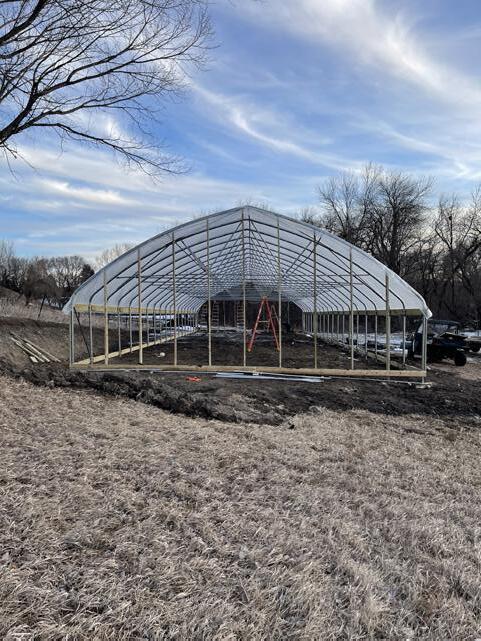
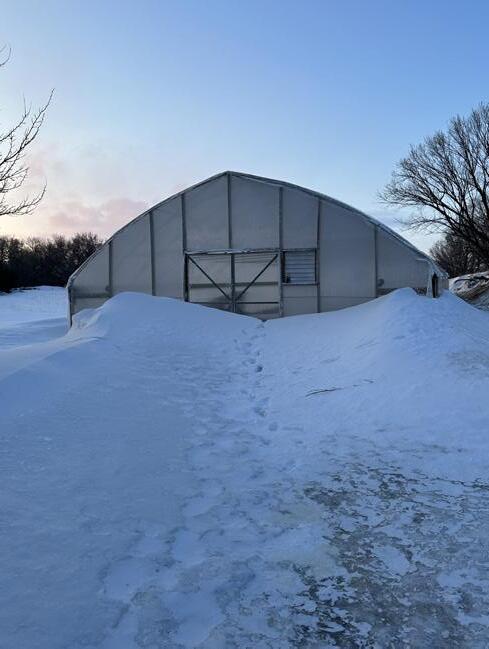
High tunnels and hoop houses provide protection from weather and allow for earlier planting and later harvest.
SOUTH DAKOTA GROWERS
BASELINE BLOOMS
Caterpillar tunnels are more affordable, smaller structures, but were not able to hold up in the SD winds as well.
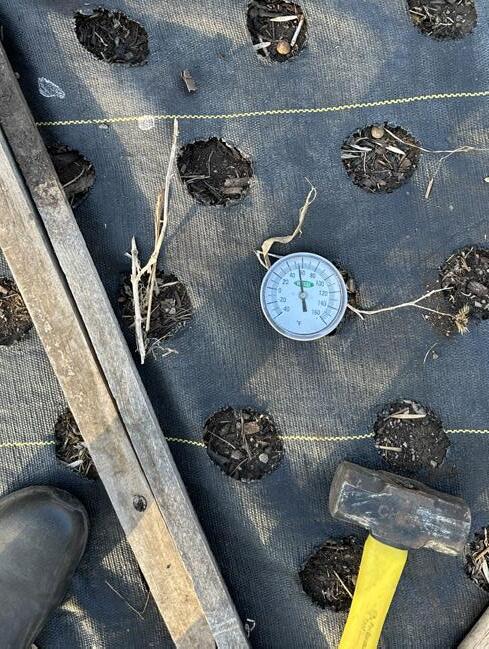
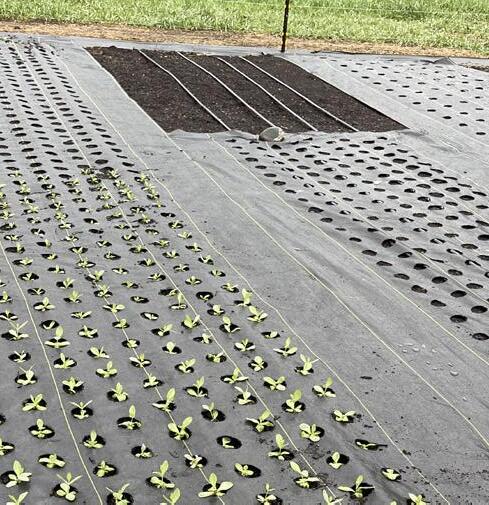
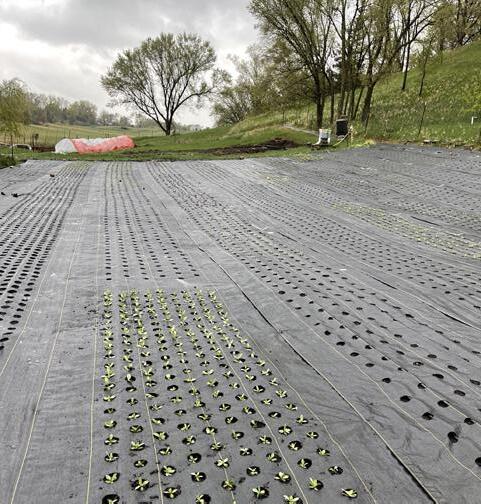
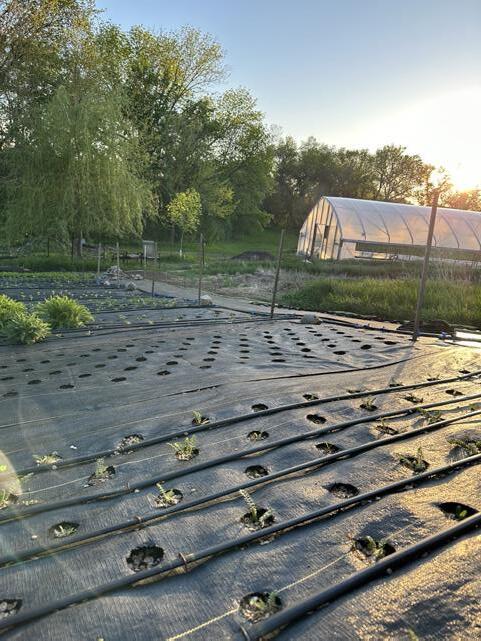
Black plastic is a cost effective way to increase soil heating and also doubles as a weed reducer and spacial organizer.
Compost can increase soil temperatures and improved drainage to quicken spring planting.
Frost protection cloths are effective, but require a lot of time and labor to place and remove each day and night.
FALL SEASON GOAL BLOOMS
THANKSGIVING
High Tunnel Analysis
Extensive research indicated that high tunnels would be a great investment for season extension, but the reality fell short of expectations. While it effectively shielded plants from harsh winds, its insulative properties proved insufficient at night and failed to retain enough heat to prevent frost damage. The outside first frost occurred on October 6th and inside the high tunnel, a majority of plants froze by October 18th so it only gained us about 1/2 of a month of added frost protection instead of the goal of 2 months postsummer season. Additionally, the daytime temperatures inside the high tunnel were often much warmer than the outside temperature which became detrimental to the growth of the flowers. Plants became difficult to keep watered and cooled enough to put on flower growth. The challenges highlighted the limitations of relying solely on a high tunnel for season extension in South Dakota’s unpredictable climate prompting me to continue to explore alternative strategies to maximize the season.
The combination of black plastic in addition to the high tunnel structure was likely not helpful to the hot, dry conditions during the summer months. Caterpillar tunnels were experimented with in conjunction with the high tunnel, but were not insulative enough at night and were too hot during the day. Securing and covering each night followed by daytime uncovering and venting became unsustainable. Germination of seeds with the daytime highs was nearly impossible and large crop failures resulted from this issue.
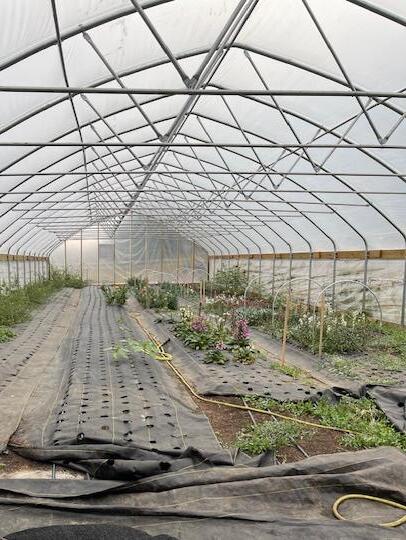
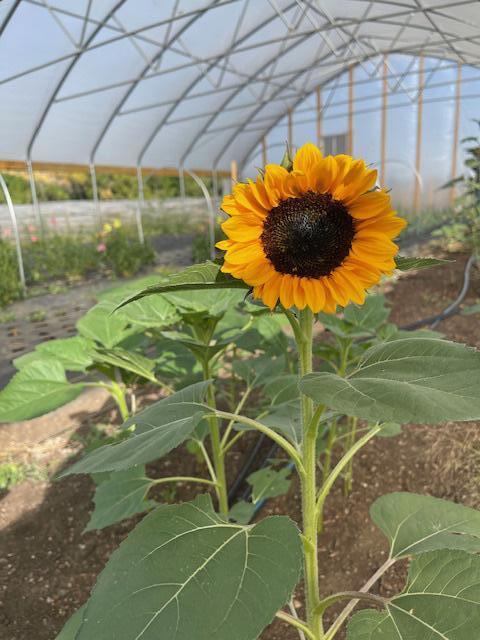
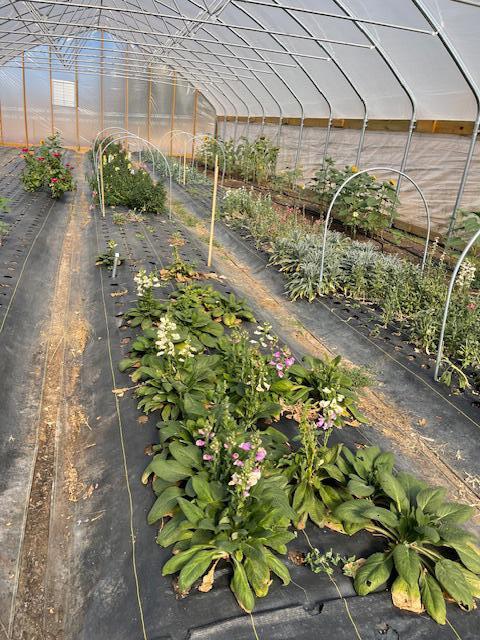
Poor germination (left) and struggling flowers (right) in the high tunnel, early fall.
Minimal germination of fall flowers to bloom.
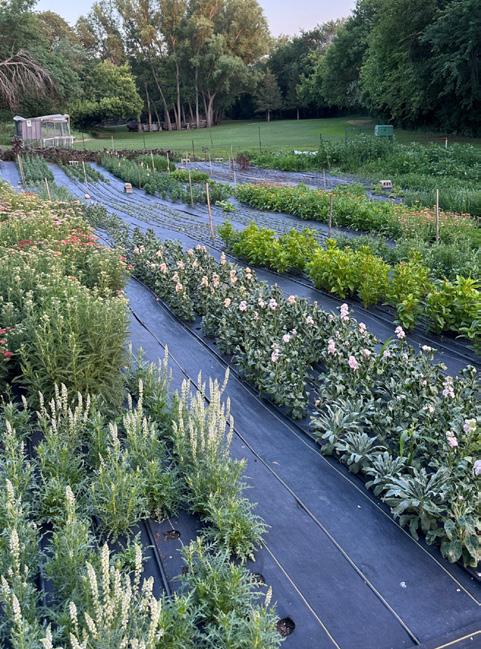
Flowers in the high tunnel surviving past the outdoor first frost.
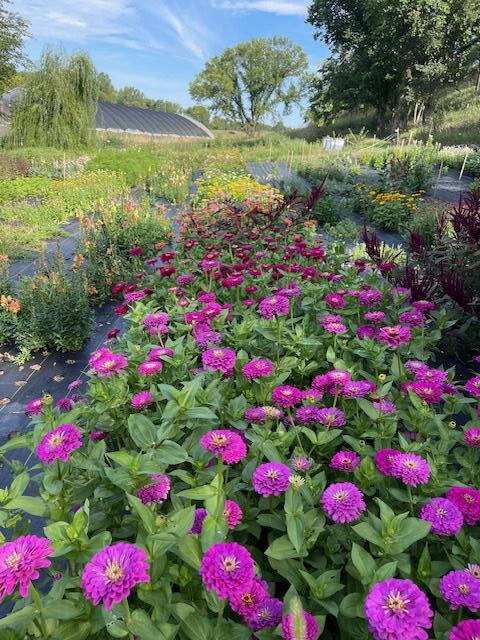
Flowers thriving early fall in the field.
HIGH TUNNEL
Fall 2022 Analysis
The “High Tunnel Highs”show that daytime highs soared above the temperatures outside into well over 100 many days.
The “High Tunnel Lows” often were not much higher than the Outside Temperatures.
10/6/2022 OUTSIDE FF 10/18/2022 HIGH TUNNEL KILLING FROST
9/1/2022 9/3/2022 9/5/2022 9/7/2022 9/9/2022 9/11/2022 9/13/2022 9/15/2022 9/17/2022 9/19/2022 9/21/2022 9/23/2022 9/25/2022
The “High Tunnel Lows” had a period of time in March where they hovered above the “Outside Lows” likely during a sunnier portion of the Spring.
Spring 2023 Analysis
The “High Tunnel Lows” were very similar to the “Outside Lows” in April and May when planting was possible.
5/3/2023 LAST FROST BOTH OUTSIDE AND IN HIGH TUNNEL
2/19/2023 2/21/2023 2/23/2023 2/25/2023 2/27/2023 3/1/2023 3/3/2023 3/5/2023 3/7/2023 3/9/2023 3/11/2023 3/13/2023 3/15/2023 3/17/2023 3/19/2023 3/21/2023 3/23/2023 3/25/2023 3/27/2023
4/10/2023 4/12/2023 4/14/2023 4/16/2023 4/18/2023 4/20/2023 4/22/2023 4/24/2023 4/26/2023 4/28/2023 4/30/2023 5/2/2023 5/4/2023 5/6/2023 5/8/2023 5/10/2023 5/12/2023 5/14/2023 5/16/2023 5/18/2023 5/20/2023 5/22/2023 5/24/2023 5/26/2023 5/28/2023 5/30/2023
2/19/2023 2/21/2023 2/23/2023 2/25/2023 2/27/2023 3/1/2023 3/3/2023 3/5/2023 3/7/2023 3/9/2023 3/11/2023 3/13/2023 3/15/2023 3/17/2023 3/19/2023 3/21/2023 3/23/2023 3/25/2023 3/27/2023 3/29/2023 3/31/2023 4/2/2023 4/4/2023 4/6/2023 4/8/2023 4/10/2023 4/12/2023 4/14/2023 4/16/2023 4/18/2023 4/20/2023 4/22/2023 4/24/2023 4/26/2023 4/28/2023 4/30/2023 5/2/2023 5/4/2023 5/6/2023 5/8/2023 5/10/2023 5/12/2023 5/14/2023 5/16/2023 5/18/2023 5/20/2023 5/22/2023 5/24/2023 5/26/2023 5/28/2023 5/30/2023
High Tunnel Analysis
During an analysis of the high tunnel temperatures during the Spring, it was observed that the high tunnel lows hovered slightly higher than the outside lows during some periods of time, but ultimately did not consistently stay above freezing enough to protect from frost damage. A complete crop failure of spring ranunculus resulted from frost even with high tunnel protection, compost and frost cloth usage.
A few other notable observations from high tunnel usage. 1) Stems grown within the high tunnel compared to stems outside in the wind and elements were notably thinner in diameter likely due to less wind “conditioning” for strength. 2) Although keeping plants alive longer was possible due to the added frost protection, I question whether the plants with cold temperature stress would continue to set new blooms or if it was simply a matter of retaining existing blooms. 3) Planting started seedlings into a high tunnel setting was far more superior to trying to start plants by direct seeding due to the difficulty maintaining moisture for germination. 4) Irrigation by well water only is noted to be sub-par to receiving natural rainwater which is not possible in the high tunnel. 5) Plants did not self-seed in the high tunnel setting like they do outside due to zero soil moisture in the freezing months: no natural rain/snow and no manual irrigation due to hoses being frozen/irrigation not running.
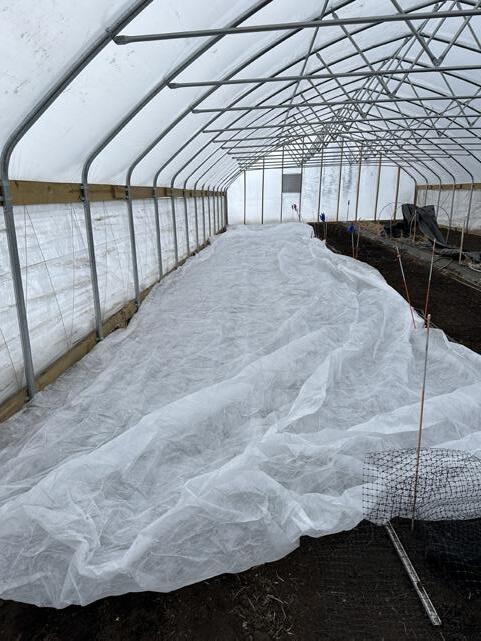
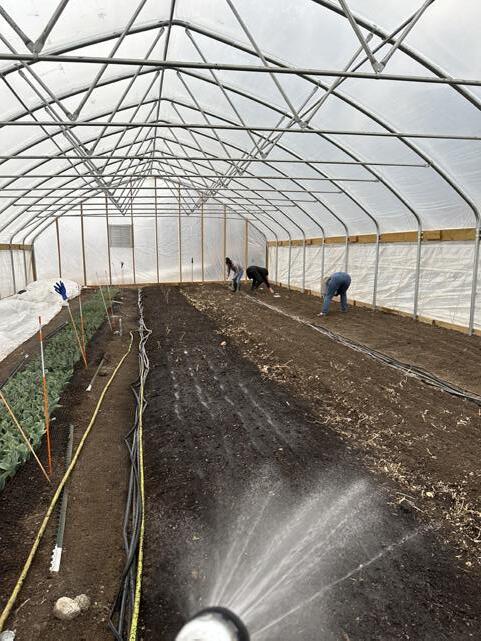
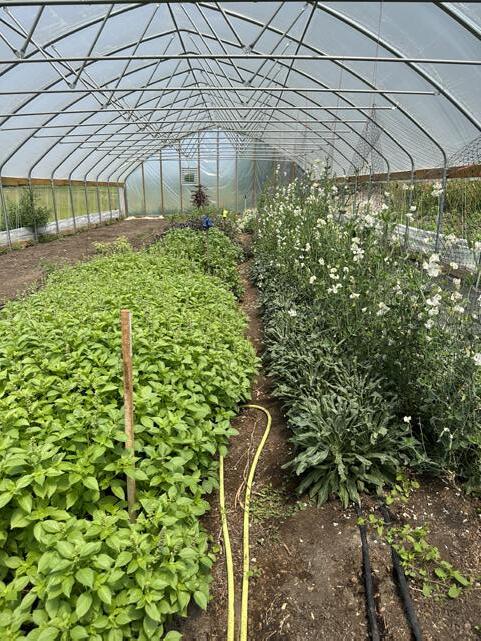
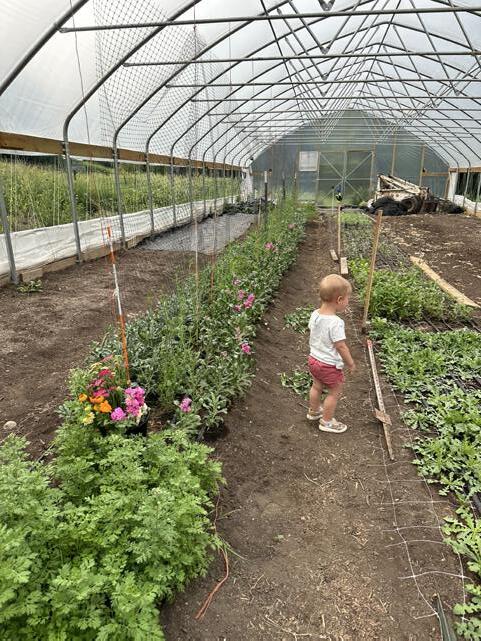
Hand watering multiple times/day to maintain germination moisture.
Plants in the high tunnel with various empty spots due to freeze/poor germination.
No black plastic. Crops spaced with netting.
Spring ranunculus - Spring crop failure in the tunnel with frost cloth.
HIGH TUNNEL
Caterpillar Tunnel Analysis
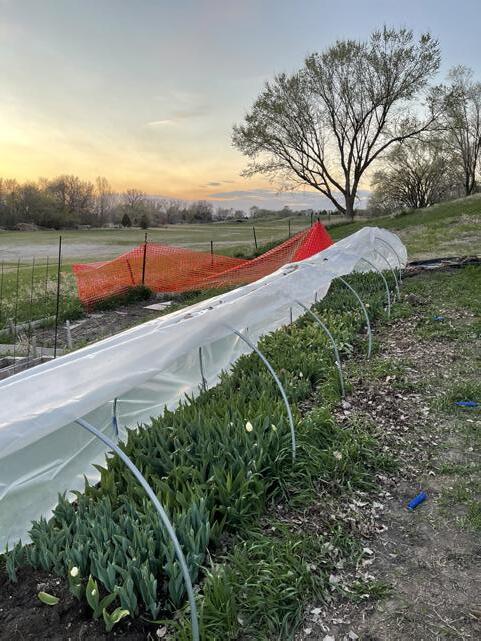
As touched on above, caterpillar tunnels were explored both in conjunction with the high tunnel structure and as a stand-alone frost protection measure. Caterpillar tunnels were viewed as a very affordable and entry-level approach to protection from frost. They would require much less initial overhead and no costly machinery to utilize or assemble.
Inside the high tunnel, the caterpillar tunnels did not achieve the desired affect because they had to be disassembled each day to ventilate the plants and reassembled each night in order to protect from low nighttime temps. A caterpillar tunnel is really only truly insulating if it is tightly secured so this became very laborious and not sustainable.
Out in the open field, the caterpillar tunnels did not stand a chance against the South Dakota winds in the fall months. They were heavily damaged by the wind and plant damage subsequently occurred due to the plastic whipping around.
In summary, caterpillar tunnels were explored as an affordable frost protection measure, but proved ineffective when used with high tunnels due to the need for daily disassembly for ventilation. Additionally, they were unable to withstand winds in the open fields.
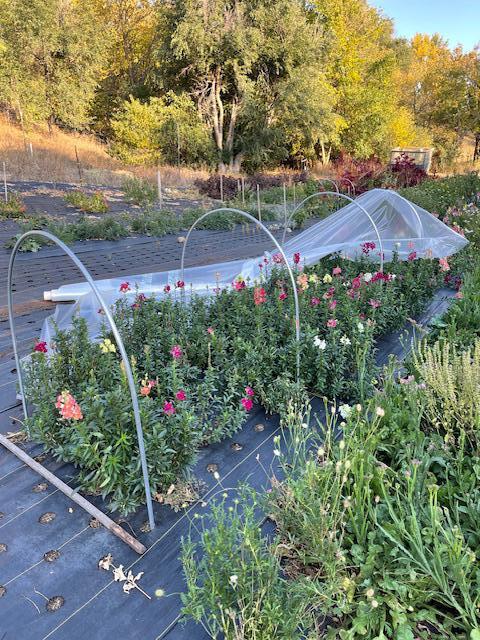
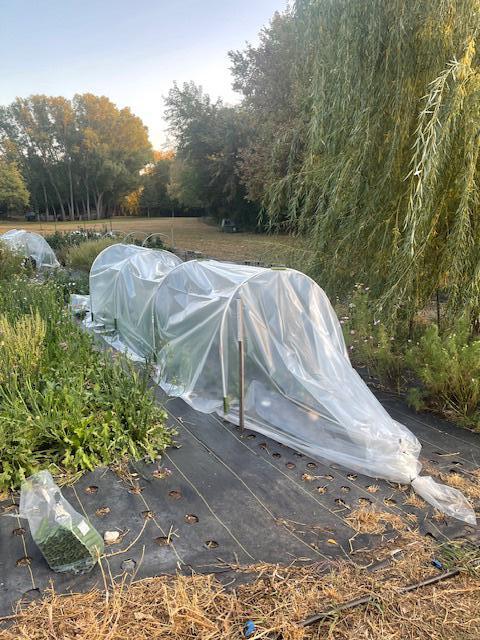
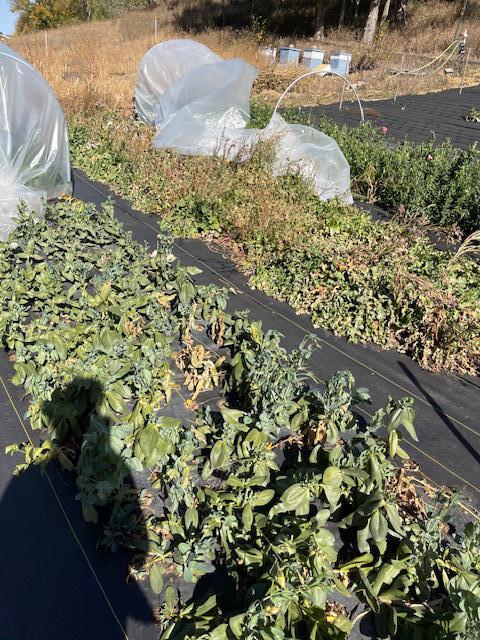
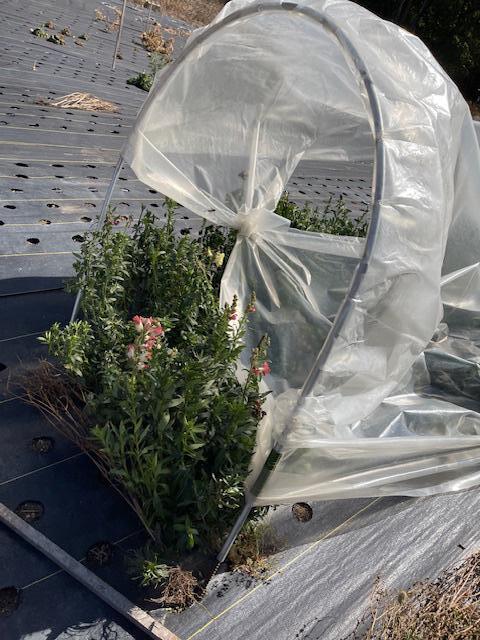
Caterpillar tunnel in place. Caterpillar tunnel damaged by wind. Flowers damaged by wind and whipping caterpillar tunnel plastic.
Placing a caterpillar tunnel over snapdragons prior to frost.
Temperature differences were more notable in spring which is when it matters most.
Soil Warmth Analysis
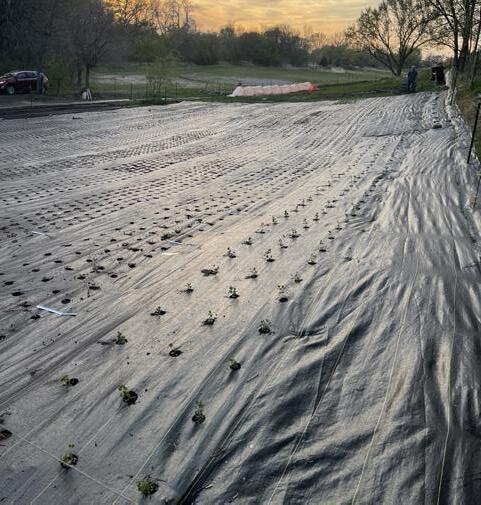
Black woven plastic was investigated as a method to heat the soil in the shoulder seasons of spring and fall. This material has the added benefits of helping create consistent spacing and acting as a weed barrier surrounding planted flowers.
This method proved effective over the seasons of study. We were able to plant earlier in May in the high tunnel than in the field - with temperatures hovering at times more than 10 degrees F above exterior bare soil. The spring temperatures for planting were most crucial and also had higher temperatures comparably. The fall temperatures were less crucial and also seemed to resemble more closely the outside temperatures. This method overall seemed to work great for increasing soil warmth in order to plant seedlings earlier in the season and get a jump on early blooms.
Temperature differences were less notable in the fall seasons, but this time was less crucial.
Soil Temperatures
6/1/2022 7/1/2022 8/1/2022 9/1/2022 10/1/2022 11/1/2022 12/1/2022 1/1/2023 2/1/2023 3/1/2023 4/1/2023 5/1/2023 6/1/2023 7/1/2023 8/1/2023 9/1/2023 10/1/2023 11/1/2023 12/1/2023 1/1/2024 2/1/2024 3/1/2024 4/1/2024 5/1/2024 6/1/2024
Compost Analysis
Compost not only enriches the soil with nutrients, but it also can heat up the soil in several ways.
As organic matter continues to break down, microbes decompose the material and their activity generates heat. A thick layer of compost also acts as an insulating blanket over the soil which can help retain heat and reduce heat loss. During cooler months, this helps retain the warmth of the soil and can make for more stable soil temperatures. Compost is light and loose and can hold moisture and nutrients well. This soil structure can retain heat better than compacted soils or poorly structured soil.
Compost proved to be a good investment and a successful heat insulating material. When it came time in the spring to plant our earliest crops like ranunculus and anemones, the compost-insulated ground was much easier to work than the surrounding compacted (non-composted) soil. Compost also was used to mound the tulip beds so that tulips could be planted later in the fall in a no-till, mounded method.
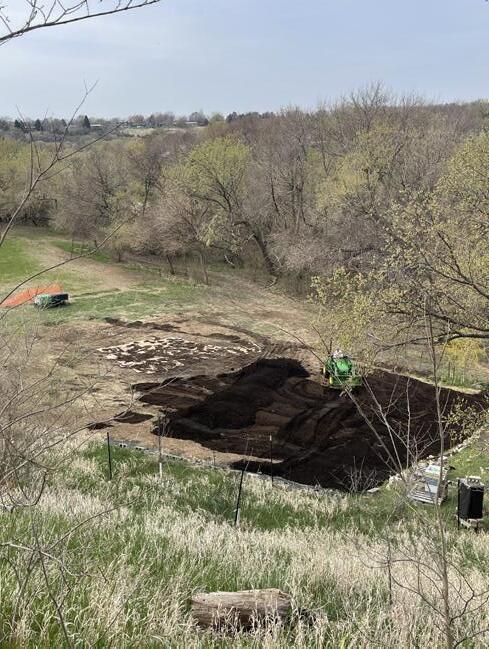

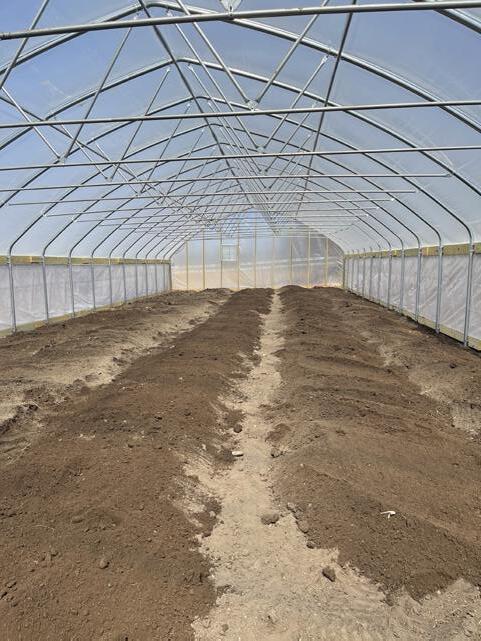
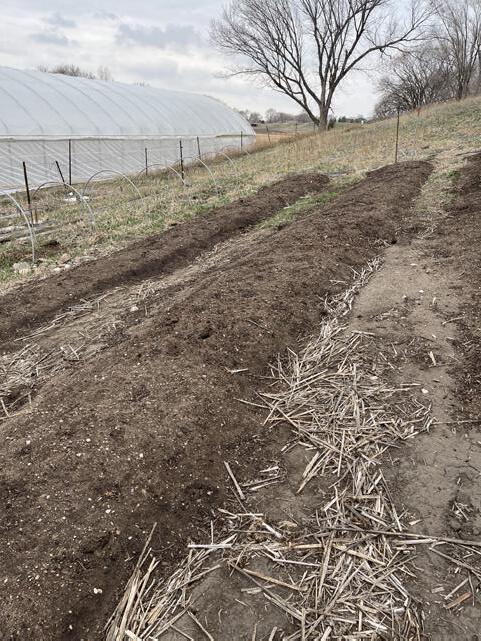
Placing compost. Compost in mounded beds in high tunnel. Compost mounds over fallsown no-till tulip beds.
Six inches of compost over the entire field.
Frost Protection Analysis
Frost protection cloth comes in a variety of weights and can be used to help insulate plants in the cold or shade plants in the heat. For this study, we used them for their insulative purposes while trying to grow plants beyond the standard growing season. A lightweight and medium/heavyweight frost cloth were used for this study both separately and together. On the coldest nights, we utilized layers of both fabrics to really try to insulate the plants.
0.5oz/sq yd is the lightest version of Frost Protection Cloth and is good for light insulation while allowing in sunlight and ventilation. It provides 85% light transmission and can protect plants by 1°-2° F.
1-2oz/sq yd is a heavier cloth that is designed for more severe frost protection. The light transmission of this cloth is only 70% so removing when temps allow is important for plant growth. The frost protection of this fabric is 5°-7°F.
The benefits of the cloth are an obvious insulative property. The downfall of the cloth is that is has to be placed and removed frequently which can be labor intensive. It also maxes out at about 7°-8° F of protection. If you look back at temperatures in the previous pages, you can see that temperatures were in the 20°s even into April at times so this cloth unfortunately didn’t provide total protection even when used properly. An entire ranunculus crop was lost even with the use of cloth inside the high tunnel.
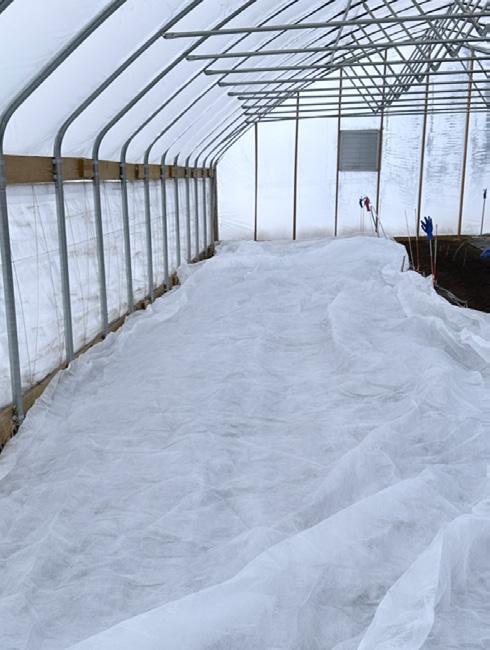
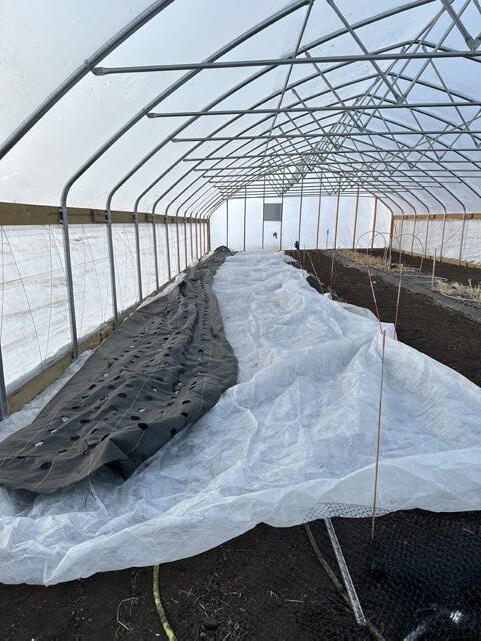
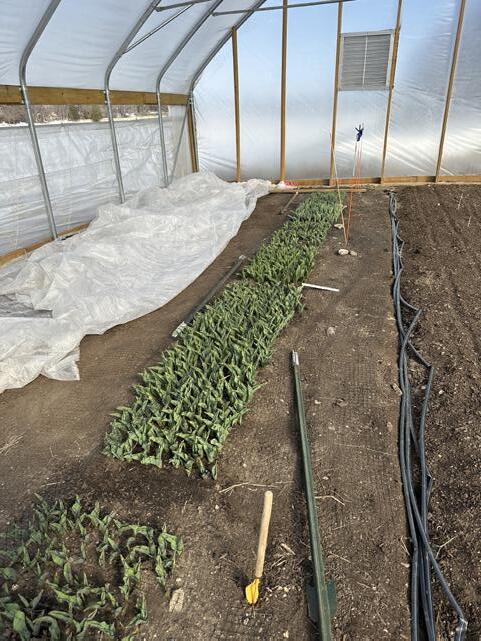
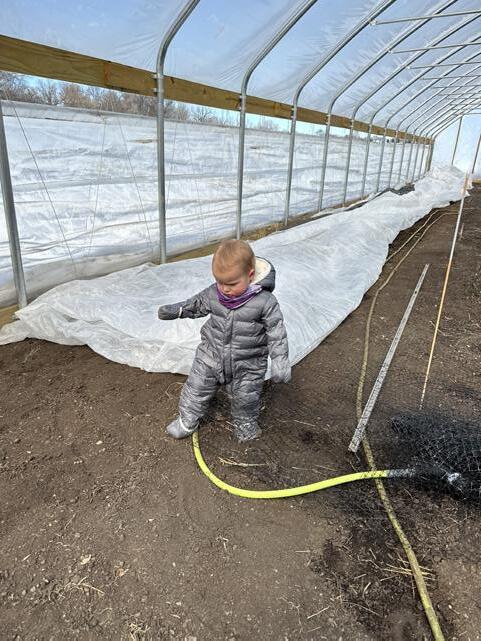
Plantings covered. Ranunculus covered, tulips uncovered during the day.
Covering and uncovering plantings (with a helper). :-)
Tulips and ranunculus under two layers of frost cloth.
Monthly Cut Flower Guide
The following comprehensive guides for planting cut flowers in South Dakota can be used to help figure out what the best flower varieties are for our region and when to plant them. Whether you are a seasoned gardener or just starting out, these monthby-month planting guides will help you cultivate vibrant blooms beyond the standard summer months of growing.
In South Dakota, the fluctuating weather patterns present a unique challenge for gardening enthusiasts. To navigate these variations successfully, we’ve studied season extension techniques and have tailored our planting guides to provide specific recommendations for each month of the year.
This guide is designed to be flexible and adaptable, but can be used as a reference and a guide to help you make the most of South Dakota’s growing season and extend the season beyond what may be considered the “typical growing season”!
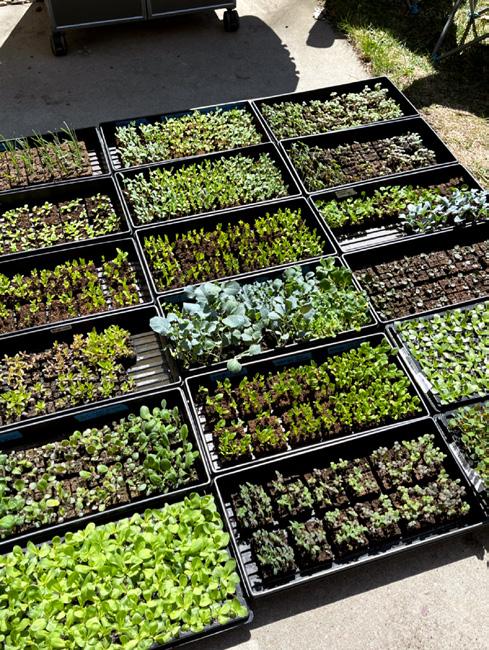
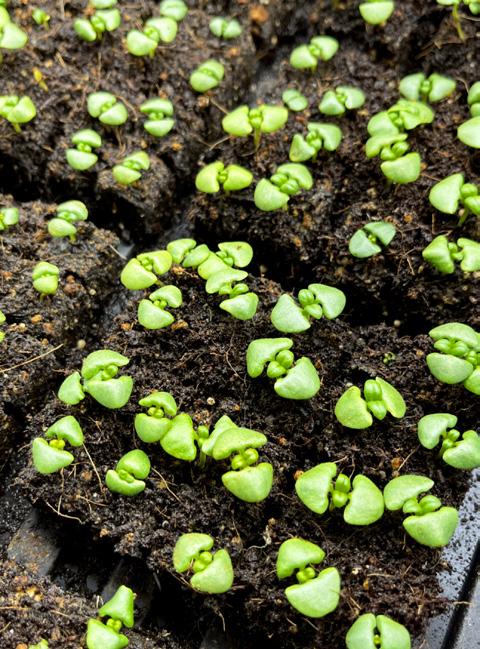
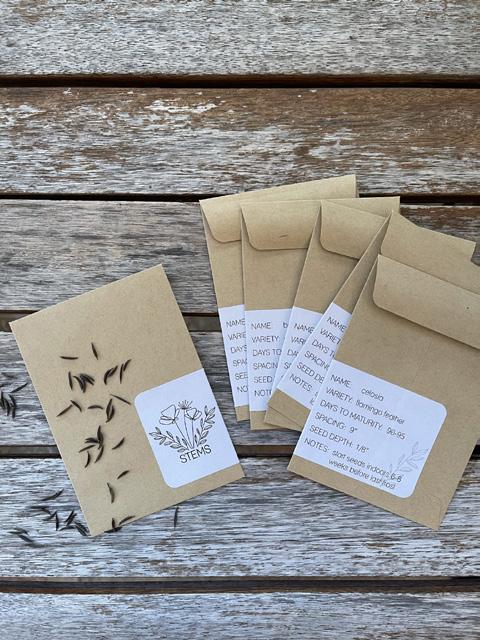
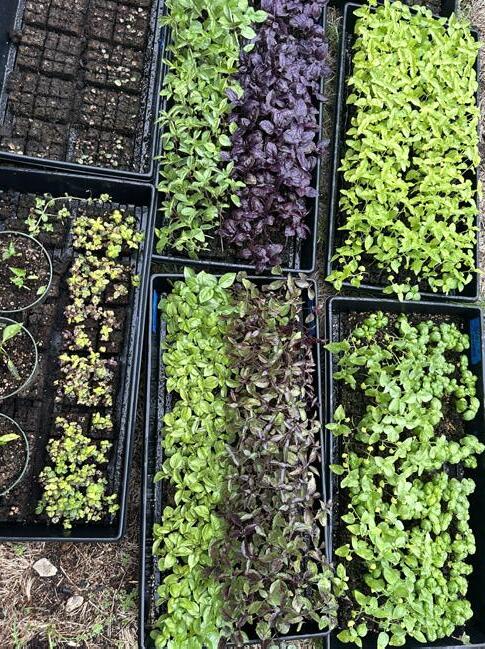
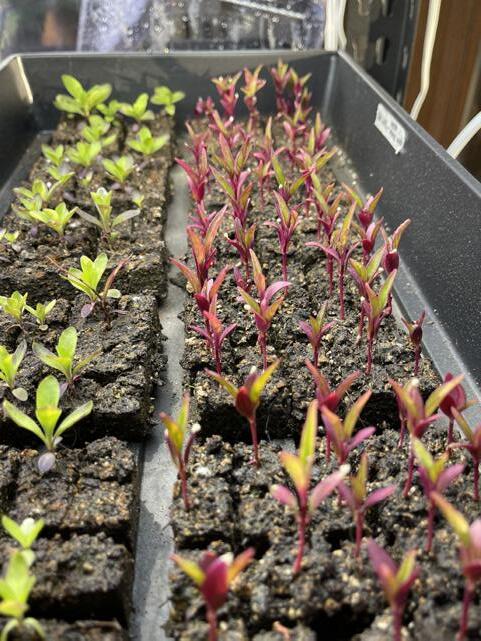
Basil seedlings in soil blocks. Seeds labeled with important sowing information. Seed trays ready to be transplanted. Seedlings “hardening off” in the sunlight outside.
CUT FLOWERS TO PLANT IN Month
Reference what month you are in and what you can be planting this month in South Dakota. You may want to reference the upcoming month too in case preparation or materials are needed.
START SEEDS
TRANSPLANT
DIRECT SEED
Here you’ll find what seeds you can be starting this month indoors in soil blocks or seed trays. Remember that some seeds need special preparation so check your seed packets beforehand! Xxxxx, Xxxxx, Xxxxx Xxxxx, Xxxxx, Xxxxx Xxxxx, Xxxxx, Xxxxx
These are the seedlings that you’ve already started or purchased that you’ll want to transplant outside. Remember to harden off seedlings to reduce the shock of going from inside to out in the elements!
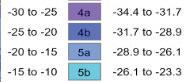
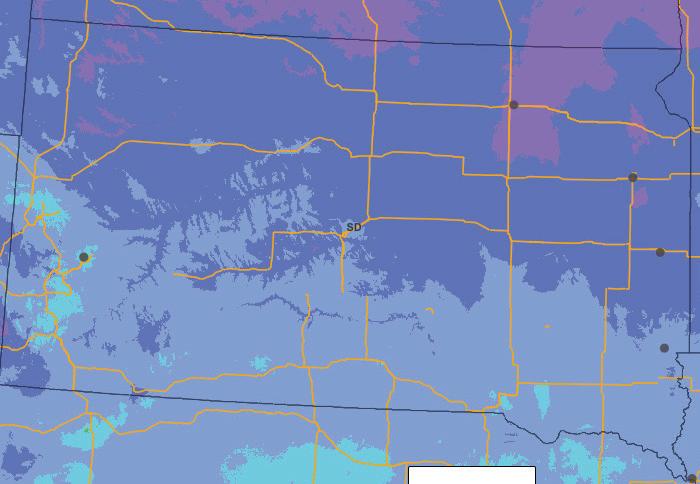
Reference the USDA Plant Hardiness Zone Map to tailor these guides to your specific region.
Seeds that can be directly planted in the ground will be listed here.
Other notes are here for what you can be doing this month or certain cultivars that we have found to be winners!
a study by Stems LLC with support from USDA through the Specialty Crop Block Grant Program*
CUT FLOWERS TO PLANT IN January
START SEEDS
Agrostemma, Amaryllis, Aster, Bee Balm, Bupleurum, Coleus, Craspedia, Delphinium, Echinacea, Eucalyptus, Foxglove, Lisianthus, Snapdragon, Sweet Pea, Sweet William
TRANSPLANT
DIRECT SEED
Bachelor’s Buttons, Bells of Ireland, Calendula, Cress, Orlaya, Sweet Rocket
This month, you may want to start sanitizing your seed trays and acquiring all your seed starting materials in preparation for the coming months. We like to mix our own seed starting mix instead of purchasing it to make sure that it has the right properties for tiny seedlings with quick, healthy growth.
There are a lot of ways to sanitize. Our preferred method is equal parts water and vinegar sprayed onto the trays, let it sit for 10 minutes and then rinse thoroughly and let it dry.
Helping your seedlings get a good, healthy start will allow you to push the confines of what a typical growing season might allow. Look into purchasing seedlings that you don’t get started in time or that have long growing periods like lisianthus and eucalyptus.
a study by Stems LLC with support from USDA through the Specialty Crop Block Grant Program*
CUT FLOWERS TO PLANT IN February
START SEEDS
(Reference guide for full listing.)
Ageratum, Alchemilla, Ammi, Calendula, Celosia, Cosmos, Dusty Miller, Feverfew, Gomphrena, Gypsophilia, *Herbs, Hollyhock, Grasses, Rudbeckia, Scabiosa, Statice, Stock, Zinnias
TRANSPLANT
DIRECT SEED
Agrostemma, Bachelor’s Buttons, Bells of Ireland, Cress, Larkspur, Money Plant, Orlaya, Phlox, Poppy, Queen Anne’s Lace, Sweet Rocket, Sweet William, Yarrow
We soil block all of our seedlings. There is a lot of new technology for super efficiency so check out your options if you’re going largescale. We use a 3/4” soil blocker that makes blocks of 20. We can fit 240 seedling onto 1 tray.
Our favorite seed starting mix recipe is by Eliot Coleman (The New Organic Grower). (10 quart bucket)
3 buckets peat moss 1/2 cup lime
2 buckets sand or perlite
3 cups base fertilizer (equal parts blood meal, colloidal phosphate, greensand)
1 bucket garden soil
2 buckets compost
add 1 part water to 3 parts mix to the consistency of wet cement
a study by Stems LLC with support from USDA through the Specialty Crop Block Grant Program*
CUT FLOWERS TO PLANT IN March
START SEEDS
Amaranth, Basil, Dahlia, Feverfew, Gomphrena, Hollyhock, Mah.
Hibiscus, Mignonette, Orlaya, Grasses, Phlox, Queen Anne’s
Lace, Sage, Salvia, Scabiosa, Shasta Daisy, Strawflower, Sweet
Pea, Sweet Rocket
TRANSPLANT
Agrostemma, Anemone, Foxglove, Ranunculus, Snapdragon, Stock, Sweet William
Amaranth cultivars we love: Coral Fountain
Green Cascade
Red Spike Hot Biscuits
Love-Lies-Bleeding
Snapdragon cultivars we love: Madame Butterfly Potomac Rocket
Stock cultivars we love: Iron & Katz
DIRECT SEED
Agrostemma, Ammi, Bachelor’s
Buttons, Bells of Ireland, Chamomile, Cress, Foxglove, Larkspur, Marigold, Money Plant, Orlaya, Phlox, Poppy, Queen
Anne’s Lace, Rudbeckia, Sweet William, Wheat, Yarrow
Rudbeckia hirta cultivars we love:
Indian Summer
Prairie Sun
Cherokee Sunset
Prairie Glow
Cherry Brandy Maya
a study by Stems LLC with support from USDA through the Specialty Crop Block Grant Program*
CUT FLOWERS TO PLANT IN April
START SEEDS
Amaranth, Dahlia, Mignonette, Oregano, Orlaya, Phlox, Queen Anne’s Lace, Sage
(And anything from March for a later transplant date!)
TRANSPLANT
Alchemilla, Ammi, Aster, Bee Balm, Bupleurum, Calendula, Coral Bells, Cosmos, Delphinium, Dusty Miller, Hollyhock, Lisianthus, Oregano, Rosemary, Sage, Salvia, Scabiosa, Snapdragon, Statice, Sw. Peas, Rocket & William
DIRECT SEED
Lots of seeds can still be started in April (anything listed in Feb or March) but it will just have a little later transplant timeframe. Don’t get discouraged if you feel “behind” on seed starting! There’s still time!
Some plants might be easier to source than start for transplants like Alchemilla, Coral Bells, Dusty Miller, Oregano, Rosemary, Sage, Salvia, etc. You could start some and if they don’t germinate well then have a back-up plan!
Check specifics on seeds. Some seeds like Ammi and Rudbeckia require cold stratification (chill outside or in a refrigerator) before planting out.
Agrostemma, Ammi, Bachelor’s Buttons, Campanula, Chamomile, Cress, Foxglove, Hollyhock, Marigold, Poppy, Rudbeckia, Shiso, Wheat, Yarrow a study by Stems LLC with support from USDA through the Specialty Crop Block Grant Program*
CUT FLOWERS TO PLANT IN May
START SEEDS
*Herbs that are great for cut flower growing include, but are not limited to: Basil, Mint, Mountain Mint, Lavender, Oregano, Sage, Salvia, Rosemary, Dill, Fennel, Bee Balm, and Feverfew.
TRANSPLANT
Alchemilla, Amaranth, Ammi, Basil, Celosia, Coleus, Dahlia, Echinacea, Feverfew, Gomphrena, *Herbs, Mah. Hibiscus, Mignonette, Orlaya, Grasses, Phlox, Geranium, Sedum. Sh Daisy, Strawflower
DIRECT SEED
Ageratum, Basil, Campanula, Celosia, Chamomile, Cosmos, Cress, Delphinium, Dill, Hollyhock, Marigold, Mint, Rudbeckia, Sage, Salvia, Scabiosa, Shiso, Snapdragon, Sunflowers, Sweet Peas, Zinnias
Some plants might be easier to source than start like Dahlias, Scented Geranium, and Sedum.
Sc. Geranium cultivars we love: Lemon Fizz, Chocolate Mint, Ginger, Attar of Rose, Orange Fizz
Celosia cultivars that we love: Bombay Series
Sunday Series
Sylphide
Flamingo Feather
Celway Series
a study by Stems LLC with support from USDA through the Specialty Crop Block Grant Program*
CUT FLOWERS TO PLANT IN June
START SEEDS
TRANSPLANT
DIRECT SEED
Basil, Celosia, Chamomile, Cosmos, Cress, Dill, Echinacea, Feverfew, Gomphrena, Gypsophilia, Marigold, Mint, Ornamental Kale, Sage, Salvia, Scabiosa, Sunflowers, Zinnias
It is important to have greens, foliage, and fillers to complement your beautiful flowers.
Some of our favorite light and airy fillers are from the Umbellifer family: Fennel, Orlaya, Ammi, Queen Anne’s Lace, Dill** **always be careful foraging as many Umbellifers are poisonous
Other favorites include: Scented Geranium, Alchemilla, Bells of Ireland, Cress, Flax, Basil, grasses, Amaranth, Coral Bells, Bupleurum, Wheat, Dill, Shiso, Dusty Miller, Mint, Mountain Mint, Sweet Pea vines
Grass and grain cultivars we love: Bunny Tails
Fiber Optic Orach Jewels of Opar
a study by Stems LLC with support from USDA through the Specialty Crop Block Grant Program*
CUT FLOWERS TO PLANT IN July
START SEEDS
TRANSPLANT
Feverfew, Orlaya, Ornamental Kale, Snapdragon, Yarrow
July is a crucial month for irrigation. Make sure your irrigation system is working and take time to fix any leaks and clean filters to keep your water pressure up.
We found that drip irrigation underneath our black woven fabric works best to water our plants at the roots and reduce evaporation, but it was too hard to fix leaks. We’ve opted to move the irrigation lines above the fabric and pin them in place. Though we may lose some water to evaporation, we will likely save more by being able to see and fix major leaks.
DIRECT SEED
Top tip: invest in an irrigation faucet timer. They are not prohibitively expensive (start around $30) and it will save you a high water bill when you forget to turn the hose off!
a study by Stems LLC with support from USDA through the Specialty Crop Block Grant Program*
Sunflowers
CUT FLOWERS TO PLANT IN August
START SEEDS
TRANSPLANT
One of the easiest ways we have found to plant sunflowers is with a walk-behind seeder like EarthWay.
You can plant hundreds (or thousands) of seeds quickly.
The seeders allow you to adjust the depth of seeding and the space between seeds and space between rows. If you use the sweetcorn plate with the seeder, I find that the spacing works well.
DIRECT SEED
Sunflower cultivars we love:
ProCut White Lite
ProCut Red
Gypsy Charmer
ProCut Plum
ProCut Orange Excel
ProCut White Nite
a study by Stems LLC with support from USDA through the Specialty Crop Block Grant Program*
Sunflowers
CUT FLOWERS TO PLANT IN September
START SEEDS
A few flower varieties will self-seed or overwinter and come back each year. Know where you plant these so that you don’t dig them up or plant over them.
TRANSPLANT
Feverfew, Orlaya, Ornamental Kale, Snapdragon
Some of these include: Bachelor’s Buttons, Chamomile, Mignonette, Cosmos, Larkspur, Amaranth, Celosia, Dill, Calendula, Cosmos, Snapdragon, Sweet Rocket, grasses, Poppy
DIRECT SEED
Bachelor’s Buttons, Calendula, Chamomile, Sunflowers, Yarrow
Perennials: Alchemilla, Echinacea, Coral Bells, Sweet Williams, Sedum, Yarrow, Rudbeckia, Sea Holly, Foxglove, Delphinium, Bee Balm, Phlox, Salvia, Veronica, Feverfew
a study by Stems LLC with support from USDA through the Specialty Crop Block Grant Program*
CUT FLOWERS TO PLANT IN October
START SEEDS
Amaryllis, Paperwhite
Amaryllis and Paperwhites are two bulb varieties that you can start and “force” indoors for seasonal sales. They would be great for winter holidays such as Thanksgiving and Christmas or Hanukkah.
TRANSPLANT
Feverfew, Orlaya, Snapdragon
Some varieties can be planted in the fall. Give them enough time to take root before cold weather hits so that they can overwinter and start growing right away in the spring.
DIRECT SEED
Bachelor’s Buttons, Calendula, Chamomile, Daffodil, Poppy, Sea
Holly, Tulips, Vernonica, Yarrow
Yarrow cultivars we love:
Sassy Summer Sunset
Terracotta
Summer Pastels
Paprika
Red
a study by Stems LLC with support from USDA through the Specialty Crop Block Grant Program*
CUT FLOWERS TO PLANT IN November
START SEEDS
November is a slower month on the flower farm. Take time to source what you need for the coming season including black plastic, compost, seeds, seed starting tools and materials.
TRANSPLANT
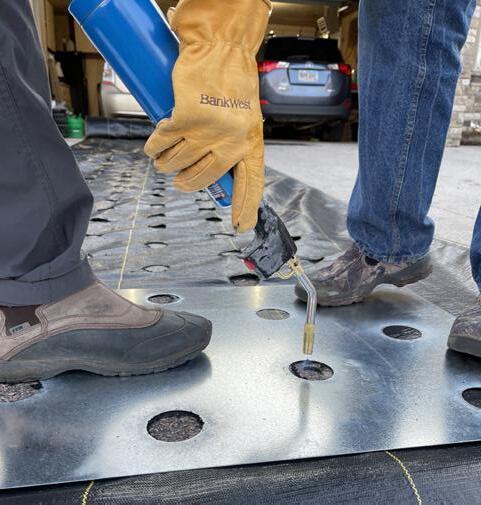
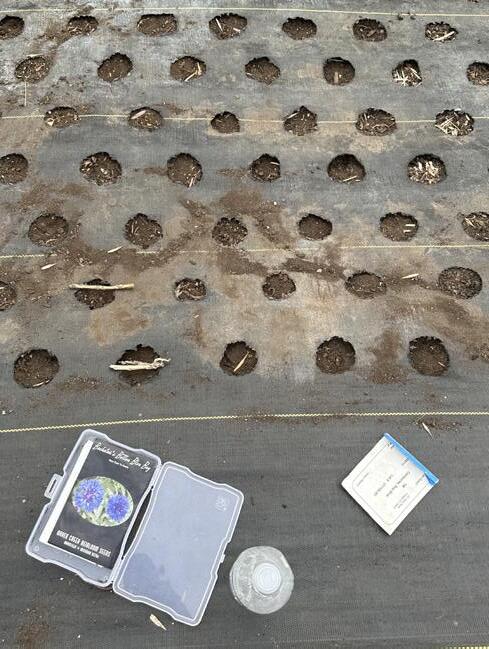
Using a metal template and a propane hand torch, we were able to template all of our black plastic with precise spacing. We have 3 different spacing set-ups. 6x6, 9x9, and 12x12
DIRECT SEED
Performing regular maintenance and repairs to your high tunnel, caterpillar tunnel, frost protection cloth, and other season extension tools will help with their function and longevity.
a study by Stems LLC with support from USDA through the Specialty Crop Block Grant Program*
Amaryllis, Paperwhite
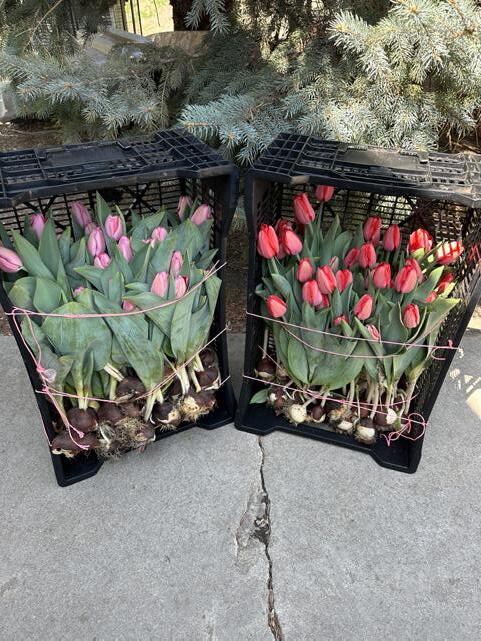
Daffodil, Poppy, Sea Holly, Tulips
CUT FLOWERS TO PLANT IN December
START SEEDS
Amaryllis, Paperwhite, Delphinium, Eucalyptus, Lisianthus
I encourage you to research notill mounded beds for planting tulips (Jennie Love: Love N Fresh Flowers).
Using compost and a “raised bed” type mindset, you are able to plant a large amount of tulips with ease.
TRANSPLANT
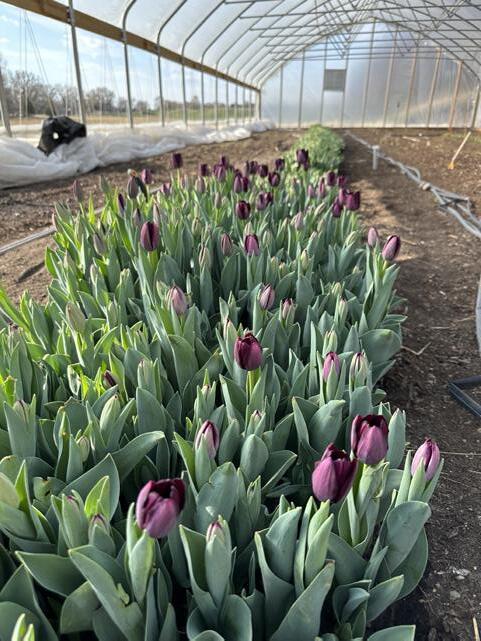
We have found that tulips grow sooner in the spring in the high tunnel, but the quality suffers due to the lack of “cold days” that the bulbs get and the lack of winter moisture that the bulbs receive.
DIRECT SEED
Daffodil, Tulips
Tulip varieties that we love:
Seadov
Kingsblood
Dordogne
Big Smile
Queen of Night
Apeldoorn
a study by Stems LLC with support from USDA through the Specialty Crop Block Grant Program*
JAN FLOWERS
ageratum
agrostemma
alchemilla
amaranth
amaryllis
ammi
anemone
aster
bachelor’s buttons
basil
bee balm bells of ireland
bupleurum
calendula
campanula
celosia
chamomile
coleus
coral bells
cosmos
craspedia
cress
daffodil
dahlia
delphinium
South Dakota: Season Extension Floral Planting Guide
dill
FLOWERS
dusty miller echinacea
eucalyptus feverfew
foxglove gomphrena
gypsophilia
hollyhock
larkspur
lisianthus
mahogany hibiscus
marigold
mignonette
mint
money plant
mountain mint
oregano orlaya
ornamental grass
ornamental kale paperwhite
phlox
poppy
queen anne’s lace
South Dakota: Season Extension Floral Planting Guide
JAN
JAN FLOWERS
ranunculus
rosemary
rudbeckia
sage
salvia
scabiosa
scented geranium
sea holly globe thistle
sedum
shasta daisy
shiso
snapdragon
statice
stock
strawflower
sunflowers
sweet peas
sweet rocket
sweet william
tulips
veronica
wheat
xeranthemum
yarrow
zinnias
South Dakota: Season Extension Floral Planting Guide
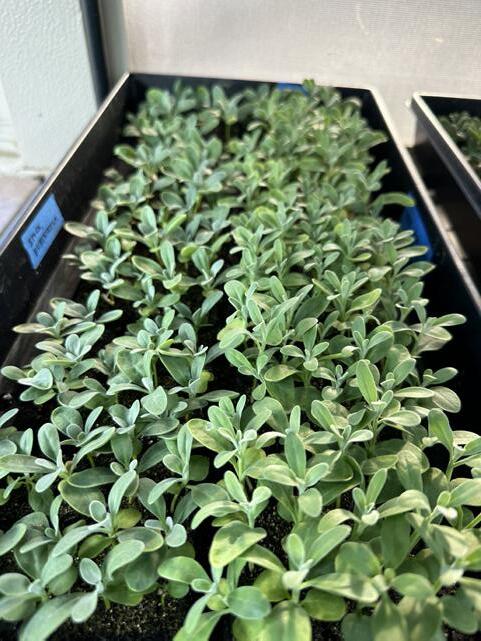
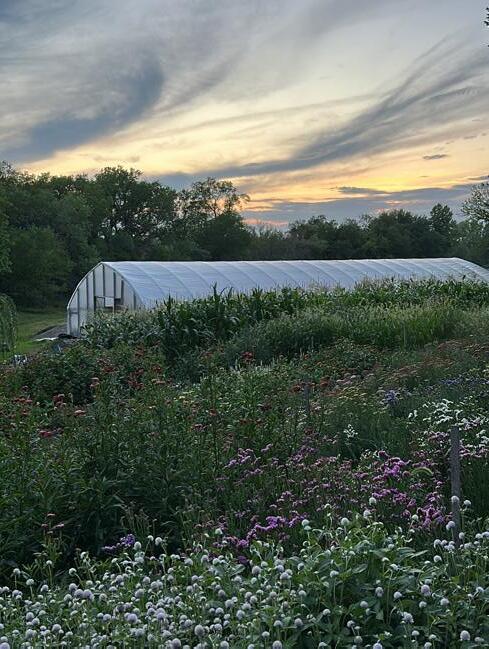
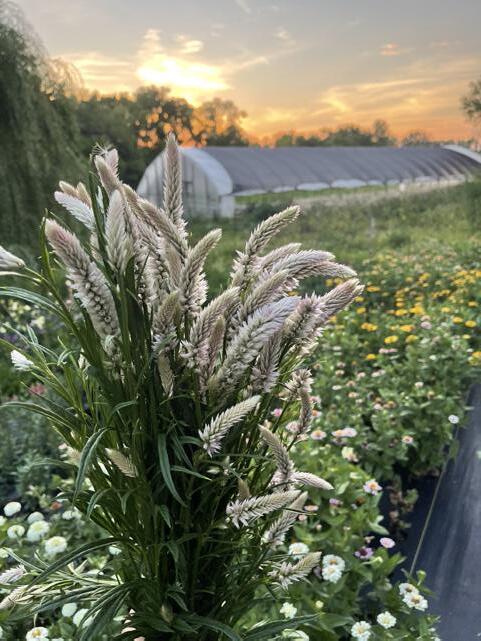
*Funding for Increasing the Competitiveness of South Dakota Grown Specialty Cut Flowers through Season Extension was made possible by the U.S. Department of Agriculture’s (USDA) Agricultural Marketing Service through grant agreement 2021STEMS05. Its contents are solely the responsibility of the authors and do not necessarily represent the official views of the USDA.
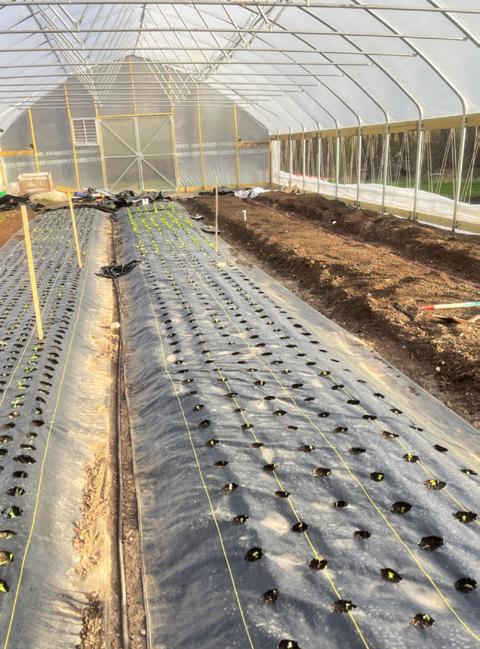
Key Takeaways
HIGH TUNNEL
Do some cost-benefit analysis before investing in a high tunnel. Make sure that the season extension outweighs the upfront cost and operating costs. Make sure you can get water to your high tunnel and that you have maintenance costs included in your analysis.
PUSH THE LIMITS!
One of the best things I have learned from this study is to *push the limits* of what the research says to do and to try new things. Plant double the snapdragons you think you will need. Transplant a tray 2-3 weeks earlier than you normally would. If it freezes, you have backup. If it survives, you have an earlier crop and more flowers!
MULTI-FUNCTION
Black woven plastic was investigated as a method to heat the soil. This material has the added benefit of creating consistent spacing and acting as a weed barrier. Find investments that serve multiple functions for you at once!
SEASON EXTENSION
Using season extension significantly boost productivity and profitability, crucial to carefully evaluate the methods that best specific needs and resources. my key takeaways.
FEEDBACK LOOP
Use technology such as app-controlled temperature sensors to check on the effectiveness of your choices. Knowing the outputs of your efforts (temperature gains versus hours spent moving frost protection cloth) can help factually inform you of the benefits of your choices.
SEASON EXTENSION
extension techniques can your flower farm’s profitability, but it’s evaluate and select best align with your resources. Here are takeaways.
INVEST IN COMPOST!
Compost overall is a low input with a big payoff. It helps your overall soil structure and helps insulate the soil for planting earlier in the season. It’s like a mini version of raised beds. Look into what a local hauler charges to deliver bulk loads instead of using bags.
KNOW THE COMMITMENT
Caterpillar tunnels and frost protection cloth are great tools to utilize, but they are very time intensive. Weigh the commitment of time that you will need when choosing to utilize these methods against the ultimate benefit.