
EXECUTIVE ADVISORY BRIEF
EXECUTIVE ADVISORY BRIEF
Preventing Escalation on Complex Capital Projects
A Practical Framework for Proactive Project Leadership



Owners do not lose control of capital projects because of a single failure.
They lose control gradually through misalignment, unclear authority, and decisions that come too late.
Over the past two decades, we have seen this pattern repeat across projects of every scale and sector. The common thread is not technical complexity. It is how the project is structured, led, and governed from the outset.
At Group PMX, we believe risk is not something to react to it is something to design against.
The framework outlined in this Executive Advisory reflects that belief. It is grounded in a simple idea: when alignment, organizational structure, and performance visibility are intentionally designed from day one, risk becomes visible earlier and manageable before it escalates.
This is not a theoretical model. It is a practical approach we apply alongside owners to bring clarity to decision-making, strengthen accountability, and create the conditions for predictable performance.
Capital projects are too important and too complex to leave outcomes to chance.
They require intentional leadership.
We hope this perspective proves valuable as you plan, launch, or stabilize your next initiative.

Michael Giaramita CEO & Co-Founder Group PMX

Capital projects rarely fail because of technical failure.
They drift when authority is unclear, decision pathways are fragmented, accountability is diluted, and the delivery organization is not intentionally structured to support performance. In complex environments, small gaps in governance and organization magnify over time.
Escalation is not random. It is structural.
When teams operate within poorly defined organizational frameworks without clear ownership of decisions, aligned incentives, and integrated reporting risk compounds quietly until correction becomes disruptive and expensive.
The most effective owners recognize this dynamic before a project even begins. They design the delivery organization deliberately clarifying authority, aligning stakeholders, and establishing structural accountability from the outset.
This Executive Advisory presents a framework for doing exactly that: structuring projects around intentional alignment, a purpose-built delivery organization, and integrated performance data.
When the right structure is in place from day one, risk becomes visible sooner and controllable before it escalates.
FRAGMENTED DELIVERY: RISK MULTIPLIES
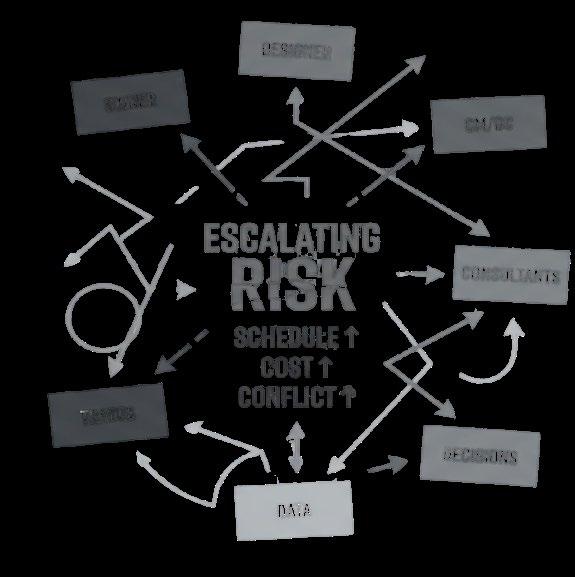
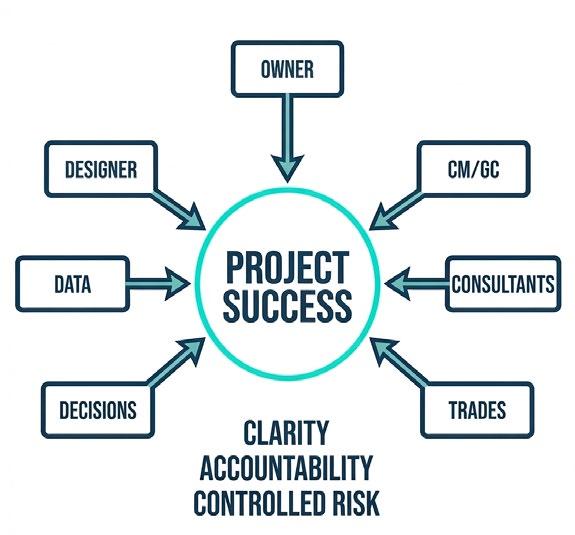
Poor structure doesn’t create noise. It creates risk.
A Structural Framework for Predictable Capital Delivery
Preventing escalation requires intentional design.
Group PMX’s One Team. Shared Success. framework is built on three integrated pillars that shape how a project is aligned, organized, and managed from the outset.

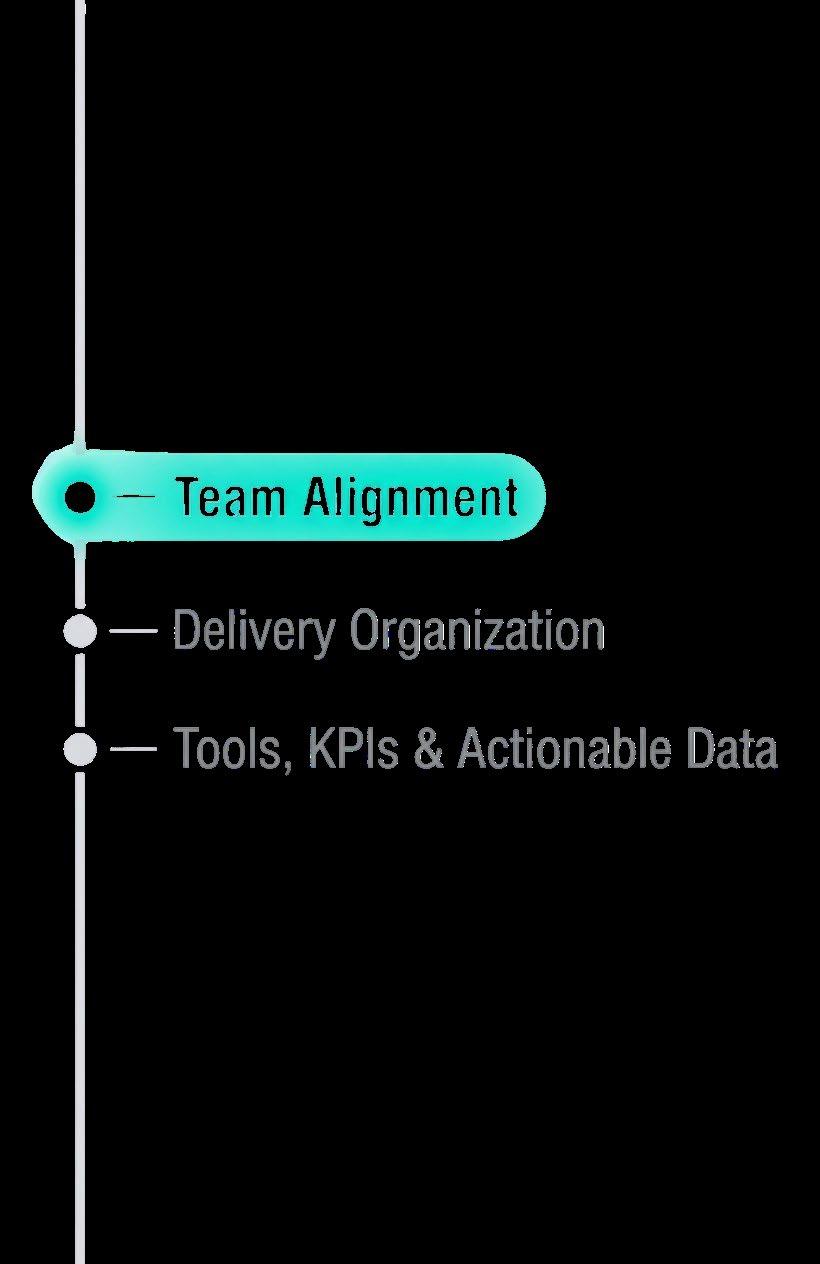
TEAM ALIGNMENT
Align Before You Execute
Establish one shared definition of success before the project begins. Ensure stakeholders operate with common priorities and clear expectations from day one.
EXECUTIVE IMPERATIVES:
• Define success early.
• Align incentives to outcomes.
• Reinforce project-first expectations at the leadership level.

DELIVERY ORGANIZATION
Structure Determines Performance
Design a delivery organization that clarifies authority and simplifies decision-making. Center execution within the operating model and remove unnecessary silos.
EXECUTIVE IMPERATIVES:
• Establish decision rights early.
• Integrate oversight within the delivery structure.
• Ensure accountability is clear and consistent.
One Operating Model. Designed for Control.

TOOLS, KPIS & ACTIONABLE DATA
Create one integrated schedule and budget as a single source of truth. Use forward-looking indicators to surface risk early. Visibility Before Consequence
EXECUTIVE IMPERATIVES:
• Define leading KPIs and KRIs.
• Require reporting to drive decisions.
• Intervene early when indicators shift.
Align the Team Before Execution Begins
Project performance depends on unified direction.
When stakeholders operate from competing priorities, unclear expectations, or misaligned incentives, friction increases and decisions slow.
Preventing escalation begins with alignment.
Owners who establish a shared definition of success and reinforce a project-first objective create the conditions for coordinated decision-making and sustained performance.
• Define a clear, measurable definition of project success.
• Establish shared priorities across internal and external stakeholders.
• Align incentives to project outcomes.
• Set expectations for collaborative decision-making.
• Reinforce a project-first operating mindset at the leadership level.
• Stakeholders operate with shared priorities
• Trade-offs are evaluated against project outcomes
• Conflicts resolve through structured dialogue
• Decision discussions focus on solutions rather than positions
Result: Coordinated execution rather than competing agendas.
Design the Organization for Delivery
Structure Determines Performance
Project outcomes reflect organizational design.
When authority is unclear or decision pathways are fragmented, accountability diffuses and issues escalate.
Intentional structure creates the conditions for consistent performance.
• Establish a project-first operating mindset.
• Design the delivery organization before mobilization, do not allow it to form by default.
• Define decision rights and formal escalation pathways.
• Integrate QA/QC and commercial oversight within the delivery structure.
• Eliminate redundant reporting lines that dilute accountability.
• Reinforce executive sponsorship that prioritizes clarity, speed, and performance.
• Decision authority is visible across the team
• Approvals follow predictable pathways
• Oversight functions support delivery
• Issues resolve at the appropriate level early
Result: Structural control rather than reactive correction.

Turn Visibility Into Control
Visibility Prevents Escalation
Projects drift when performance data lacks clarity or arrives too late.
Fragmented schedules and retrospective reporting obscure emerging risk.
Disciplined visibility allows risk to surface while it is still manageable.
• Establish one integrated schedule and budget baseline.
• Define leading KPIs and KRIs tied to accountability.
• Require a single source of truth across stakeholders.
• Set a disciplined reporting cadence.
• Intervene early when indicators trend off course.
• Teams review the same schedule and budget baseline
• Variances are surfaced early
• Stakeholders focus on corrective action
• Data informs decisions not explanations
Result: Proactive control rather than reactive recovery
The most common risks on complex capital projects are organizational not technical.
Misalignment, unclear authority, fragmented oversight, and delayed decisions create conditions where small issues escalate. Structure determines whether performance holds under pressure.
Owners define that structure.
Misalignment, unclear authority, fragmented oversight, and delayed decisions create conditions where small issues escalate. Structure determines whether performance holds under pressure
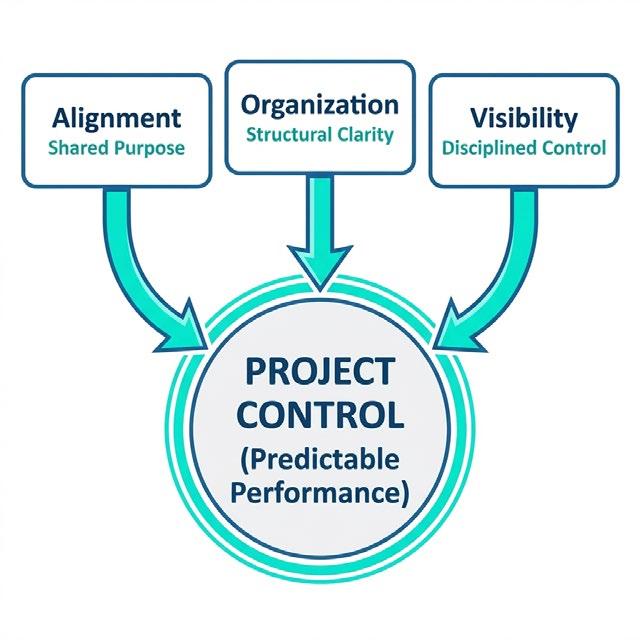
The three pillars operate as one integrated model:
• Alignment establishes shared purpose.
• Organization provides structural clarity.
• Visibility delivers disciplined control.
Applied together, they replace reactive management with intentional leadership.
Escalation is not inevitable. It is structural.
This framework is not theoretical.
It can be applied at project launch, during transition phases, or across multi-year capital programs. The objective is consistent: establish the structural conditions that prevent escalation before it disrupts schedule, cost, or quality.
Owners who design alignment, organization, and visibility early gain:
• Earlier identification of emerging risk
• Faster, more predictable decision-making
• Clear accountability across stakeholders
• Greater control over delivery outcomes
The result is not simply fewer surprises.
It is disciplined, predictable performance.
Predictable performance is designed – not managed.
Preventing escalation begins with intentional design.
Whether you are launching a new capital program, stabilizing an active project, or evaluating organizational structure, the framework outlined in this Executive Advisory can be applied immediately.
Group PMX partners with owners to:
• Earlier identification of emerging risk
• Assess alignment across stakeholders
• Evaluate delivery organization structure
• Clarify decision authority and governance
• Strengthen performance visibility and reporting
If you would value a strategic discussion about how this framework applies to your capital program, we welcome the conversation.
Farid Cardozo | President 914.733.2293 | fcardozo@grouppmx.com
Michael Giaramita | CEO 516.509.8222 | mgiaramita@grouppmx.com grouppmx.com