

While every project has a team, not all team members are always the same side. Throughout the project lifecycle teams manage many, oft conflicting, relationships among owners, CM/GCs, designers, subcontractors, and vendors – all of whom have a stake in the project
This responsibility can thrust the team into compromising situations as th work to build a project and satisfy varying stakeholders What’s more distressing, misaligned goals and conflicts can cause the team to underperform and fail to meet project objectives. Most troubling is cost overruns and litigation that result from improperly aligned teams and delays. Below are some of the biggest challenges that derail project delivery:

We don’t have to accept these challenges as potential outcomes during the lifecycle of a complex project. There is a way to avoid (or overcome) the challenges listed above At Group PMX, we created an approach that will prevent misalignment and course-correct a failing project. A cross section of multiple projects have contributed to the creation of this methodology across all markets sectors including infrastructure, buildings and energy. CEO, Michael Giaramita, and our team have refined this approach and are ready to support you as you tackle your project’s toughest challenges
Explore the following pages to find out we can do for your project.

The ‘One Team. Shared Success.’ approach can be applied to any delivery method to optimize project performance outcomes. The approach establishes the culture of the project delivery team to focus on producing the best value for the owner and serving the project’s best interests without conflicting priorities. It leverages what differentiates Group PMX our team-building expertise, proactive approach to technical services, and deep knowledge of the complexities of construction projects.

How does it work? Well, project delivery is a people business Individuals and relationships play a crucial role in project delivery and significantly impact costs, schedules, and quality. The stronger the relationships, the better the project performance outcomes This is the foundation for the approach and the impetus for positive change. It’s all about your team – one team, shared success.
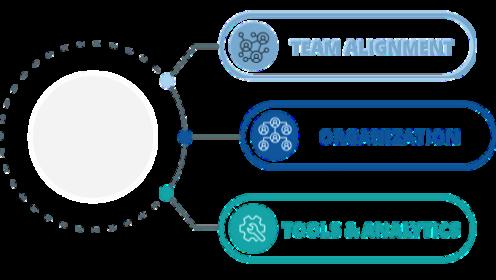
First, we start with three core areas of focus: Team Alignment, Organization, and Tools & Analytics.
Each area develops and promotes a project culture grounded in Project-First Thinking, collaboration, contribution, communication, and commitment. The approach manages relationships, defuses conflicts in the project environment, and enhances adherence to budget, schedule, and quality, including coordinating with and taking guidance from the CM/GC and project stakeholders. On the next few pages, we will walk you through the three core focus areas and how they are critical to driving success into project delivery.

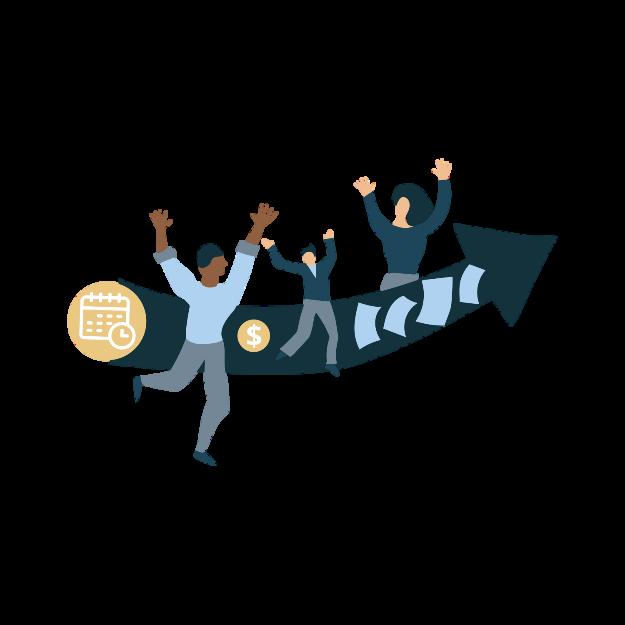
This area of focus transforms your team into one integrated team of Project-First Thinkers aligned around one common, primary purpose – project delivery. It establishes clearly defined goals and objectives focused on delivering a successful project, not individual interests All team members share responsibility and are held accountable for removing obstacles to progress, which encourages best practices, means, and methods
Key tactics to apply to the team environment:
▪ Build one integrated team of Project-First Thinkers.
▪ Identify ways to strengthen the team.
▪ Establish clearly defined goals for the project.
▪ Promote accountability
▪ Motivate the team to do what it takes.
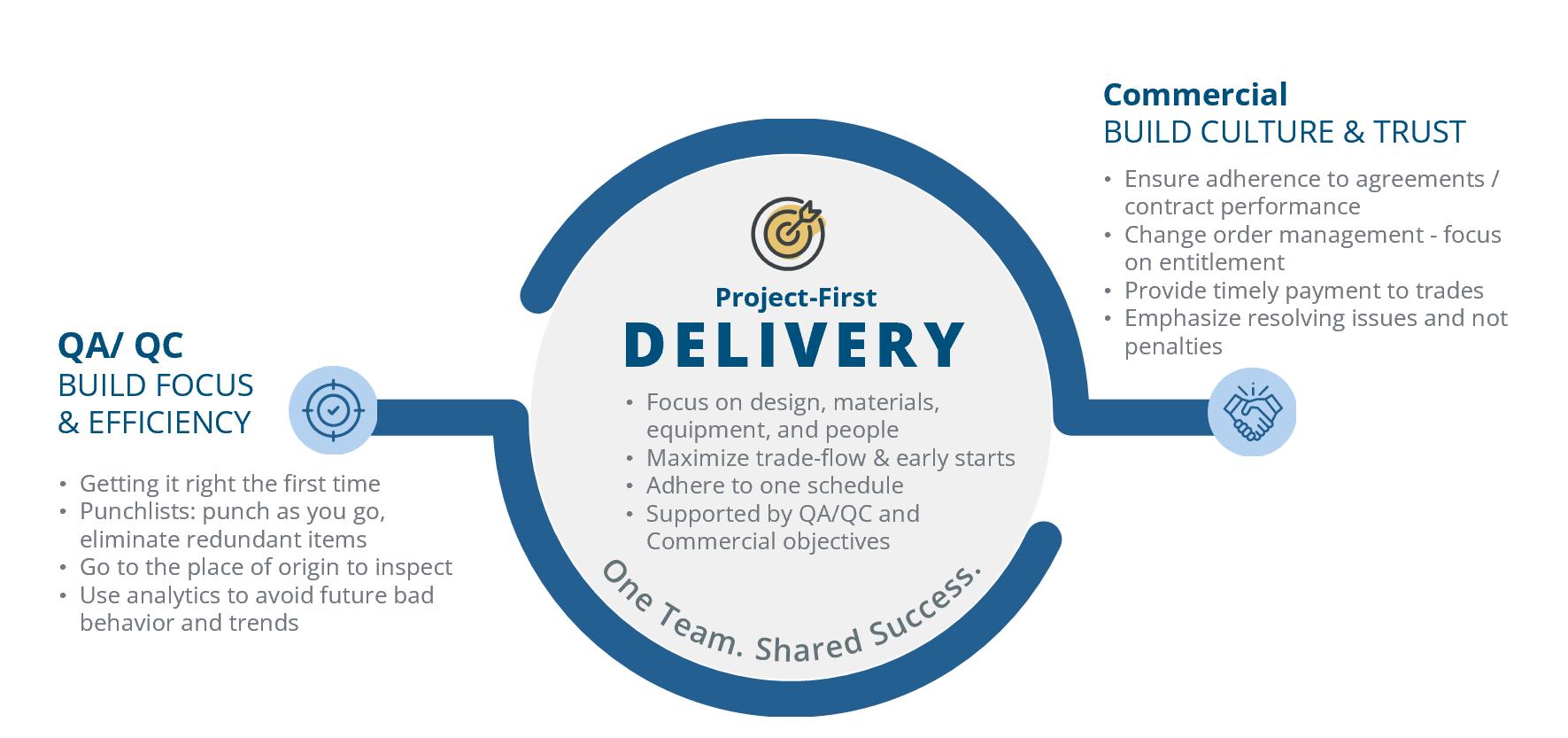
Project Delivery is central to the organization – it’s the lens that guides decision-making and promotes Project-First Thinking at every turn. This area of focus develops an integrated delivery organization, removing traditional silos to maximize speedy decision-making, responsiveness, and issue resolution.
The established team of Project-First Thinkers is aligned and serves this seamless, delivery-based organization, which is supported by QA/QC and Commercial The team is motivated to define goals and expectations, remove obstacles, and create transparency – and most importantly, to share resources. This dedication to achieving the goals of the project injects the rigor and coordination needed to build as fast as possible
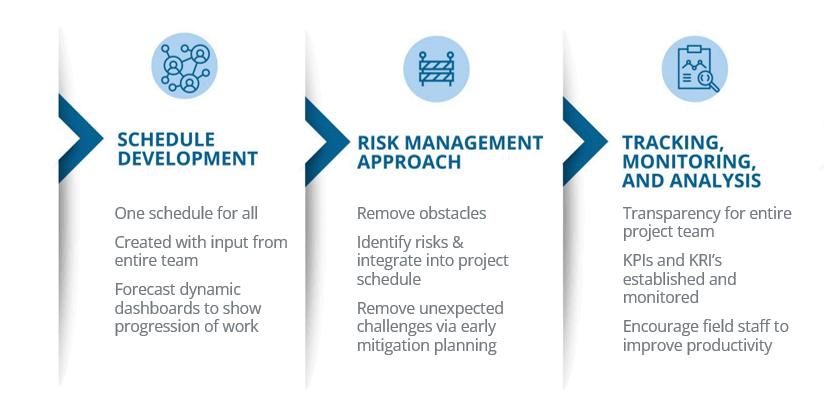
Lastly, tools and analytics play a crucial role in communication and transparency for your team and the stakeholders involved The approach deploys tested and validated tools to drive on-time, on-budget project delivery – which reinforces Project-First Thinking.
For example, how do we create project-first delivery when multiple schedules and individual tasks cloud issue resolution? The standard practice of multiple schedules can and will derail achieving milestones, so it is crucial to establish a primary schedule and budget. Creating one schedule for your project drives the team to focus on the goals of the whole project, not just their individual scope This tactic also creates efficiencies that realizes considerable cost savings.
When your team has clarity and a full understanding of “one” schedule, tracking and monitoring tools, risk management procedures and performance reporting measures the project-first delivery culture is reinforced and celebrated as milestones are achieved.
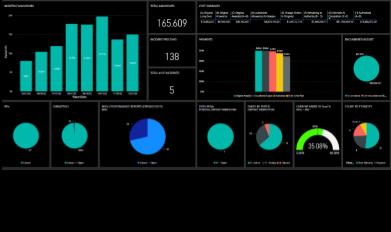
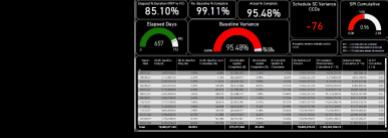
Comprehensive dashboards provide real-time data for swift decision-making. Relevant Key Performance Indicators (KPIs) and Key Risk Indicators (KRIs) are created to provide insights on project performance, promote accountability, and mitigate behavior to achieve best value outcomes
Example KPIs:
▪ Planned/Actual Trade Manpower
▪ Manage to Early Start Dates
▪ Worker Safety
▪ QA/QC - Design Compliance
▪ Operational Effectiveness
Example KRIs:
▪ Schedule Delays
▪ Cost Overruns
▪ Quality Issues
▪ Safety Incidents
▪ Contract Disputes
▪ Changes in Scope
▪ Weather Events
▪ Material Shortages
▪ Labor Disputes
Stronger, More Focused and Efficient Project Team
▪ Sets clearly defined expectations and goals, promoting transparency and accountability
▪ Improves team relationships, preserving CM/GC relationships with subcontractors/consultants
▪ Fosters post-project relationships among project team members and future opportunities with the owner.
Optimized Project Delivery Process
▪ Enables the CM/GC to focus on their core strengths (construction, logistics, safety), introducing improvements in other areas (e.g., scheduling, cost management).
▪ Provides continuous monitoring for early risk detection and management.
Enhanced Project Delivery Outcomes
▪ Delivers the project as fast as possible, on budget, without sacrificing quality
▪ Produces a quality project, not just on the day of closeout, but for the entire building lifecycle.
▪ Ensures the owner pays a fair price for services delivered.
▪ Reduces costs to the owner - eliminates duplication of resources and everyone participates in value-add activities
Our team of seasoned project executives, commercial and QA/QC taskmasters and project controls experts are ready to dig in and support you Group PMX will rise to the challenge and partner with you to build a culture of Project-First Thinkers. Learn more about what we can do for you.




More than 45 years of experience contributed to the creation of this approach. The following three projects are the most significant influencers to the best-practices presented.
TXDOT Southwest Freeway, Houston, TX
High Occupancy Vehicle lane project
Collaboration and everyday successes achieved the impossible.
Challenges
▪ Largest, most congested TX freeway
▪ Increase from 3 to 7 lanes
▪ 14 new bridges
▪ All other past TXDOT projects resulted in delays and claims
▪ Fast-track schedule
Critical Actions Taken
▪ Brought together GC’s
▪ Negotiated directly
▪ Provided scheduling personnel to them at my cost
▪ Developed CPM scheduling system
▪ Encouraged healthy competition
▪ Provided expertise to remove obstacles
▪ TXDOT shared the vision of a great and successful project
▪ Owner team played a leading role in establishing the project culture
▪ Four GCs worked in unison
▪ Schedule = common denominator
▪ Completed in 20 mths faster
▪ $50M under original budget
▪ No claims
▪ <1% in change orders
Columbia University, New York, NY
Campus improvements for multiple
graduate school facilities
Data driven team = decisive decision making
Challenges
▪ Large 25-person Program Management team working on multiple projects
▪ Various internal and external stakeholders
▪ Critical schedule milestones tied to academic calendar
Critical Actions Taken
▪ Established ‘one team’ to improve performance and delivery
▪ One-on-one team member guidance to affect positive change
▪ Created accountability measures to promote productivity
▪ New executive information system (EIS) for real-time project decision-making
▪ One Scheduling System managed early and late finish dates
▪ One team culture
▪ Every project was delivered on time, on budget and to scope
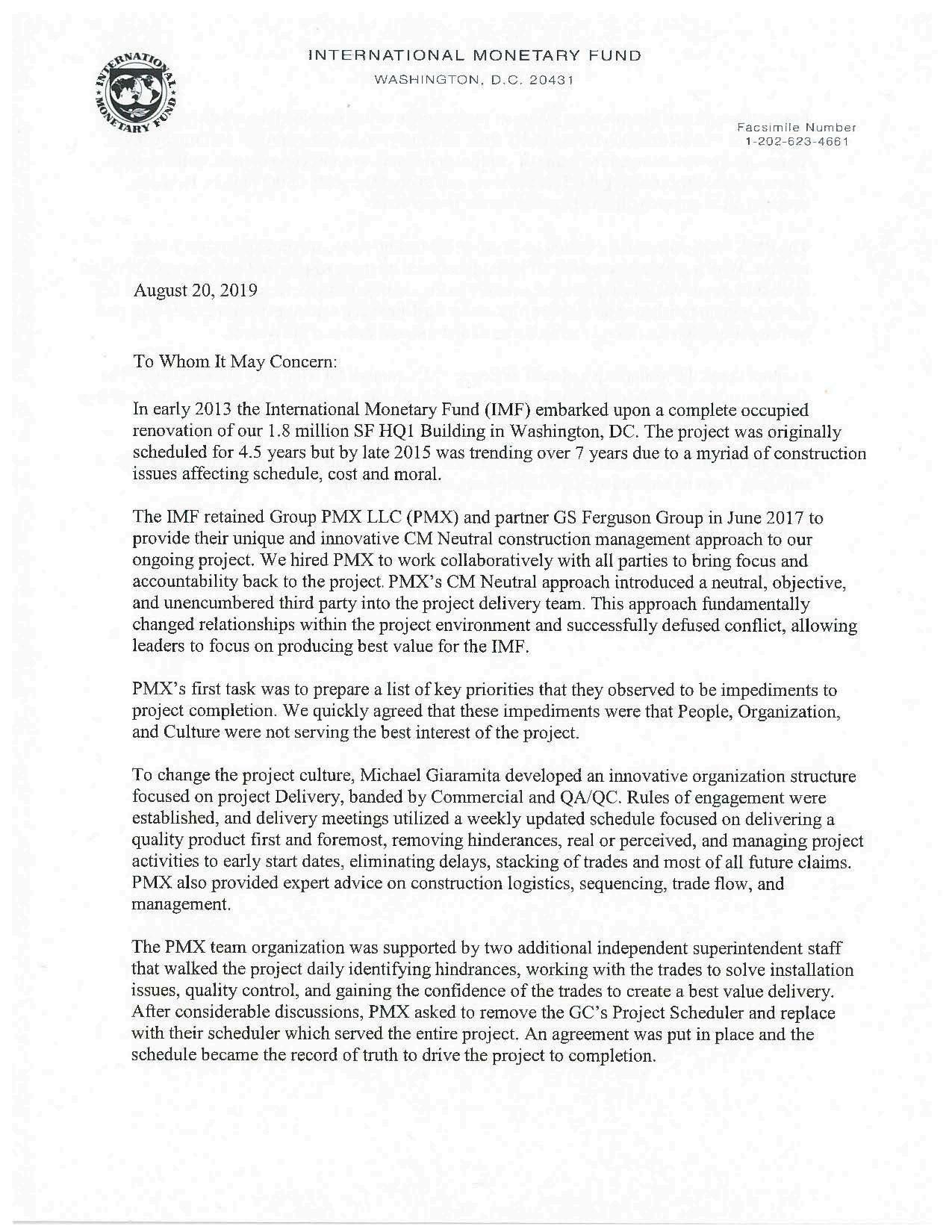
International Monetary Fund HQ1, Washington, DC
Interior gut renovation of 1.4 M SF
occupied building
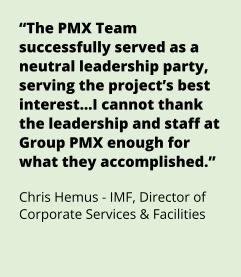
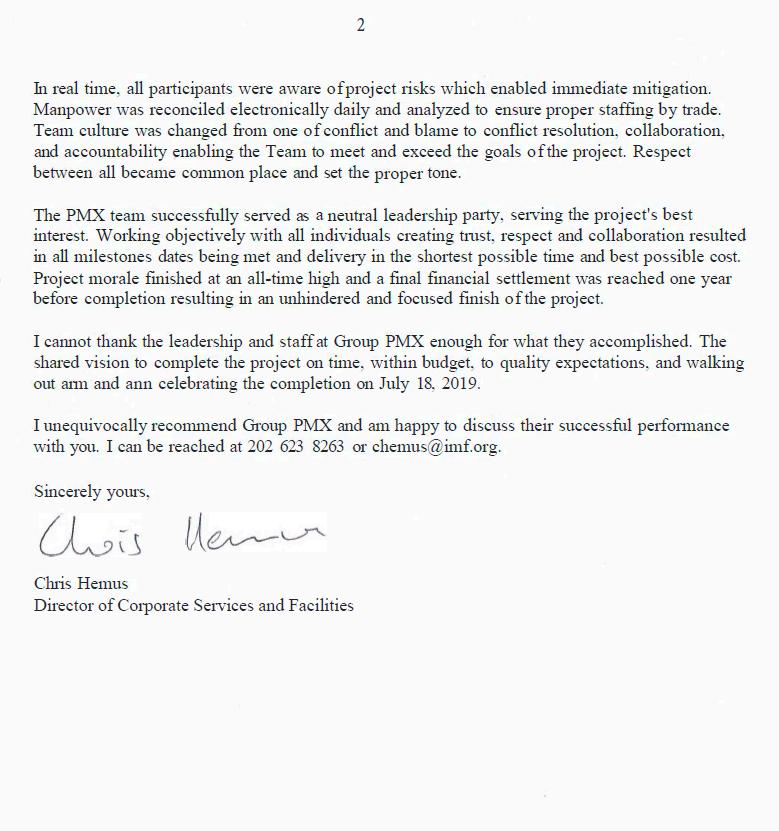
Changed the culture from combative to collaborative.
Challenges
▪ 50% complete
▪ 4 years behind schedule
▪ Strained Budget ($80M in changes)
▪ 50,000 open punch lists
▪ Outstanding claim of $50MM
▪ Hostile culture – team members did not get along
Critical Actions Taken
▪ Re-organization of CM & IMF
▪ Bring on qualified people
▪ Require ‘one’ schedule adherence
▪ Alignment of trades
▪ Design team engagement
▪ Settled fairly with contractor
▪ Shared leadership & accountability
▪ Delivery focused, backed by QA/QC
▪ Commercial issues became nonexistent
▪ Observed and resolved hindrances immediately
▪ Shaved 2 years off schedule
▪ Completed remaining scope in 2 years
▪ 1st project of this magnitude completed on time in TXDOT history
▪ All stakeholder expectations were met
▪ Enabled subs to get paid and the job to progress
▪ Saved $27 million in final settlement