When Winter Strikes: What the Recent Northeast Freeze Means for Your Car
This winter has been one for the books. From early deep freezes to nights that barely crawled above zero and blizzard-like storms that blanketed the Northeast, many of us have been digging our cars out more often than not. While we all can laugh nervously about frostbitten fingers and missing gloves, your vehicle isn’t laughing. Extreme cold weather places serious stress on car systems, and the effects ripple from batteries to tires to engines.
If you’ve noticed your ride acting a little… off lately, you’re not imagining things. In this article, we’ll walk through how winter weather impacts cars, the common symptoms of mechanical stress or failure in cold weather, and most importantly what you can do about it. And for those of you in Queens, NY, we’ll also touch on how local pros like a car repair shop Astoria Queens, New York can help keep your vehicle in top shape all winter long.
Why Extreme Cold Weather is Hard on Cars
Winter seems innocent at first — icy roads, a little frost on the windshield. But once temperatures drop below freezing for extended periods and wind chills plummet, several things start to go wrong under the hood. The pros at Steinway Auto Repair, an experienced auto mechanic Astoria, point out the following that happen to cars during extreme cold.
1. Batteries Take a Beating
Cold weather drastically reduces battery capacity. At 32°F, a car battery can lose up to 35% of its power; at 0°F, it can lose more than half. That’s why a perfectly good battery in fall can struggle to crank the engine in January.
2. Oil Thickens
Engine oil is designed to lubricate moving parts. In cold weather, oil becomes more viscous (thicker), making it harder for your engine to turn over and get all those critical parts protected quickly.
3. Fluids Freeze or Slow Down
Transmission fluid, brake fluid, power steering fluid they don’t freeze solid, but they do move more slowly. That puts extra stress on mechanical systems that rely on fluid pressure.
4. Tires Lose Pressure
Cold air shrinks, and so does the air in your tires. For every 10°F drop in temperature, your tire pressure can fall about 1–2 PSI. Underinflated tires wear unevenly and grip poorly on slick surfaces.
5. Rubber and Plastic Parts Become Brittle
Belts, hoses, and seals are flexible in warm weather. In freezing temps, rubber becomes brittle and cracks easily, leading to leaks or part failure. So, what might that look like on your daily drive?
Common Symptoms of Winter-Related Car Issues
If your car’s been struggling this season, here are some telltale signs you might be facing a winter-induced mechanical issue — and what those
symptoms usually point to:
Slow or No Start
Likely causes: Weak battery, thick oil, poor battery connections. If you turn the key and hear a slow crank or nothing at all, it’s often the battery struggling. You might also hear a “click” when starting — that’s a sign the starter isn’t getting enough juice.
Dashboard Warning Lights
Likely causes: Low battery voltage, poor fluid levels, sensor issues due to extreme temp swings.
Lights like the check engine, battery, or ABS light might pop on when traction and electrical systems are stressed.
Reduced Heater Performance
Likely causes: Low coolant, thermostat failure, clogged heater core. If you’re blasting the heat and still cold, your engine may not be reaching proper operating temperature a sign your coolant system needs attention.
Squeals and Groans
Likely causes: Stiff belts, hardened hoses, low fluid. Belts that run fine in warmer months can chirp loudly in the cold. Ignoring them risks a belt breaking and leaving you stranded.
Tire Slippage or Vibration
Likely causes: Under-inflation, uneven wear, cold-related rubber hardening.
If your car feels floaty or shaky, check your tire pressure and condition. Winter temps can make tires lose grip faster than you’d expect.
Brake Issues
Likely causes: Moisture in the ABS system, low brake fluid, worn pads. Brakes might feel sluggish or grabby in ice and snow — sometimes a
normal traction response, but sometimes a signal your braking system needs service.
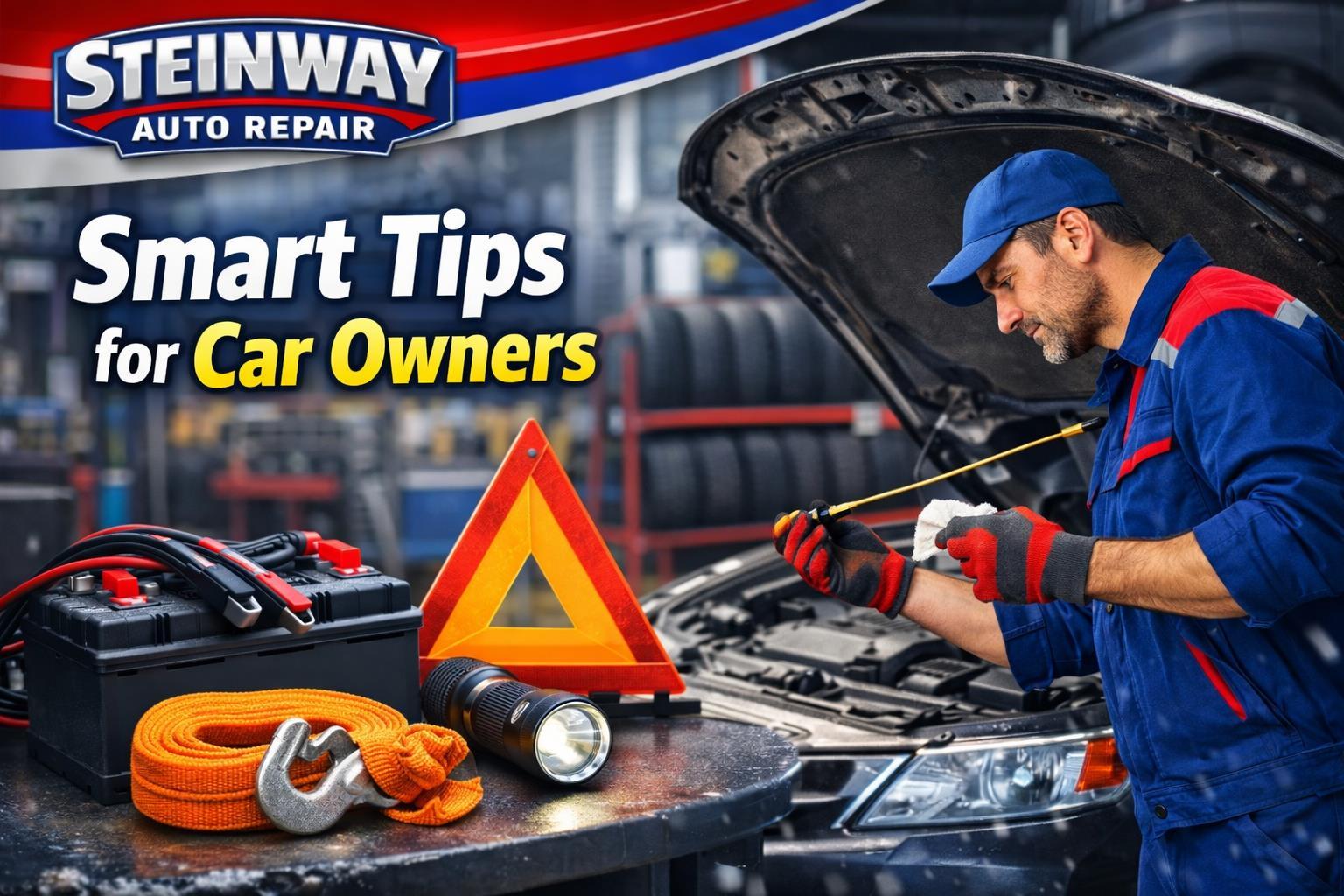
The good news? Many cold-weather issues are preventable with a little proactive care. Below are easy-to-follow tips to help your vehicle weather the winter storms, compiled by Stein Auto Repair, a leading mechanic shop for Auto Repair Queens.
1. Keep Your Battery Healthy
• Test your battery before temperatures consistently drop below freezing.
• Clean corrosion from the terminals and ensure tight connections.
• If your battery is more than 3–4 years old, consider replacement before it leaves you stranded.
2. Use the Right Oil
Check your owner’s manual for recommended oil viscosity for winter. Thinner winter-grade oil makes it easier for your engine to turn over when
it’s cold.
3. Maintain Proper Tire Pressure
• Check tire pressure monthly (or more often in cold snaps).
• Adjust to the manufacturer’s recommended PSI this figure is usually on a sticker inside the driver’s door.
4. Keep Fluids Topped and Winter-Ready
• Use windshield washer fluid rated for freezing temps.
• Make sure coolant/antifreeze is at the right level and mixed properly for sub-zero weather.
• Check brake fluid and transmission fluid at service intervals.
5. Protect Belts and Hoses
Have them inspected before the deep freeze sets in; replacing them early can prevent breakdowns in the worst weather.
6. Give Your Car Warm-Up Time
A minute or two of warm-up helps circulate oil and fluids. Just don’t leave the car idling unattended it’s a safety and legal issue in many areas.
7. Keep an Emergency Kit
Your winter kit should include:
• Blanket
• Jumper cables
• Ice scraper
• Shovel
• Flashlight + extra batteries
• Snacks and water
If you’re stuck somewhere cold, these basics make all the difference.
What Local Mechanics Can Do for You
While you can do a lot yourself, some jobs are best left to the pros — especially when the weather piles on stress like this winter did. That’s where trusted local service providers like Steinway Auto Repair, experienced pros for auto repair Astoria Queens, come into play.
Here’s how local mechanics help when winter hits hard:
Full Vehicle Inspections
A professional mechanic can perform a cold-weather checkup, testing battery health, inspecting belts and hoses, and verifying all essential fluids are where they should be.
Battery
and
Mechanics can:
Electrical System Service
• Load-test batteries and charging systems
• Replace old or weak batteries before a breakdown
• Diagnose parasitic drains that runaway colder months can reveal
Heating and Cooling System Repairs
Whether it’s a stuck thermostat, low coolant, or a failing heater core, these systems are critical for passenger comfort and engine performance.
Brake System Maintenance
Cold weather can expose worn brake pads or low fluid levels. A shop visit can spot worn components before they become unsafe.
Tire and Alignment Work
Local shops often offer winter tire swaps, pressure checks, and alignment services that keep your vehicle handling safely on ice-and-snow-covered roads.
Wrapping Up: Winter Doesn’t Have to Win
This winter has been relentless — there’s no sugarcoating that. But with a little know-how and the right care, you can help ensure your car doesn’t fall victim to the cold. From keeping up with fluid levels and checking tire pressure to recognizing early warning signs like slow starts and squealing belts, your vigilance pays off in reliability and safety.
And when you need help beyond DIY, remember that there are trained professionals in your community ready to lend a hand like an experienced auto mechanic Queens NY who knows how to diagnose the subtleties of winter wear and tear.
Here’s to warmer days, safer drives, and cars that start on the first try even when it’s 10 degrees below zero.
The above content does not constitute advice for your individual vehicle, but is presented for informational purposes only. If your vehicle is having any issues, then seek the help of a professional mechanic.