Known Issues with
BMW Braking Systems: What Owners Should Watch For
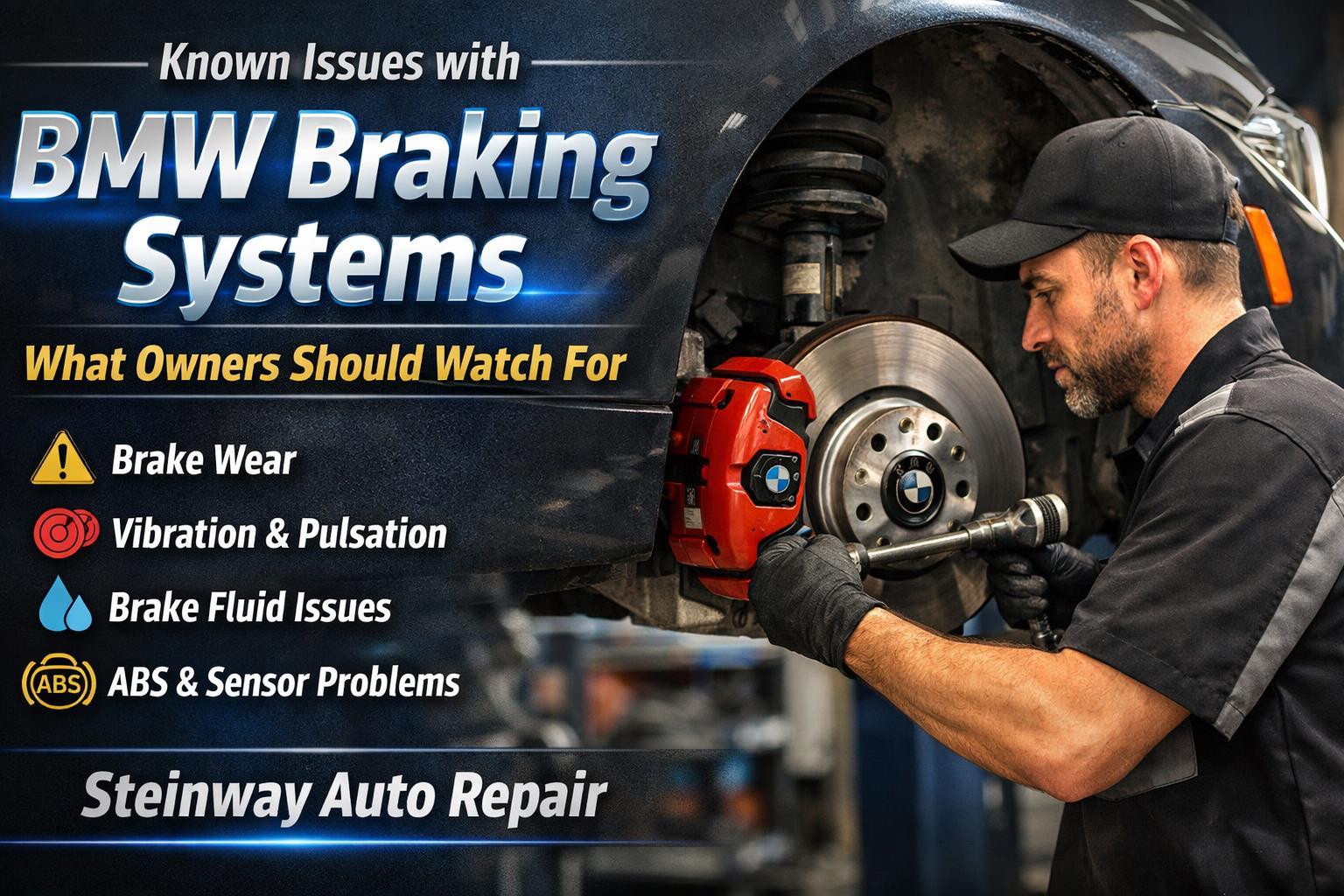
BMW has built its reputation on performance, precision engineering, and driving dynamics. A big part of that driving experience comes from the braking system. BMW vehicles are designed with powerful, responsive brakes that allow for confident stopping at high speeds and during spirited driving. However, like any high-performance component, BMW braking systems have several known issues that owners commonly encounter over time. Understanding the symptoms, causes, and solutions can help BMW owners maintain safe and reliable braking performance.
This guide explores some of the most common braking issues seen in BMW vehicles, what to look for, and how they can be addressed before they turn into larger problems.
Brake Pad and Rotor Wear
One of the most common issues BMW owners experience is accelerated
brake pad and rotor wear. Compared to many other brands, BMW vehicles tend to go through brake components more quickly.
This is not necessarily a defect but rather a result of BMW’s braking philosophy. BMW prioritizes braking performance and feel over longevity. The brake pads used in many BMW models are softer, high-friction compounds that provide strong stopping power and smooth engagement. The tradeoff is faster wear.
Symptoms
Drivers may notice several indicators that the brake pads or rotors are wearing down:
• Squealing or grinding noises when braking
• A vibration felt through the steering wheel while braking
• Reduced braking responsiveness
• A brake warning message on the dashboard
• Visible brake dust accumulating quickly on wheels
BMW vehicles are equipped with electronic brake wear sensors that trigger dashboard alerts when the pads are approaching the end of their service life.
Remedy
Brake pads should be replaced once they approach the minimum thickness recommended by the manufacturer. Ignoring worn pads can damage the rotors, increasing repair costs.
During a brake service, it is common practice to replace both the pads and rotors together on BMW vehicles. Because BMW rotors are typically designed with less excess material, they are often replaced rather than resurfaced.
Using high-quality OEM or equivalent brake components is important to maintain proper braking feel and performance.
At Steinway Auto Repair, our professional mechanics regularly do brake service as part of our BMW Maintenance Astoria Queens, NYC.
Warped Brake Rotors
Another issue that many BMW drivers report is brake rotor warping or uneven rotor surfaces, which can develop over time with normal use. Despite the term “warped,” the issue is usually caused by uneven pad material transfer onto the rotor surface rather than the rotor physically bending. This can happen when brakes are subjected to repeated high heat cycles.
Symptoms
The most common sign of rotor issues is vibration during braking. This vibration is typically felt through the steering wheel or brake pedal, especially when braking at highway speeds.
Other symptoms may include:
• Pulsation in the brake pedal
• Steering wheel shaking while slowing down
• Uneven braking feel
These symptoms often become more noticeable during moderate to heavy braking.
Remedy
If rotor thickness allows, the rotors may sometimes be resurfaced. However, many BMW rotors are replaced instead due to their thinner design.
Replacing both rotors and pads together ensures even contact surfaces and prevents the problem from recurring quickly. Proper bedding of new brake pads after installation also helps ensure even material transfer and smoother braking.
Brake Fluid Contamination
Brake fluid condition is frequently overlooked but plays a critical role in braking performance. BMW vehicles rely on hydraulic pressure to transfer force from the brake pedal to the calipers.
Over time, brake fluid absorbs moisture from the air. This is a natural process because brake fluid is hygroscopic. As moisture accumulates, the fluid’s boiling point decreases and its effectiveness declines.
Symptoms
Drivers may experience several warning signs when brake fluid becomes contaminated:
• A soft or spongy brake pedal
• Reduced braking responsiveness
• Brake fade during prolonged braking
• Warning lights related to stability or braking systems
In severe cases, braking performance can drop significantly under high heat conditions.
Remedy
BMW typically recommends replacing brake fluid every two years regardless of mileage. A brake fluid flush removes old fluid from the system and replaces it with fresh fluid.
This process restores proper hydraulic pressure and protects internal components from corrosion.
Regular brake fluid service also helps maintain the proper function of safety systems such as ABS and stability control.
Sticking Brake Calipers
Brake calipers apply pressure to the brake pads to slow the vehicle. Over time, calipers can develop issues where they fail to release properly after braking.
This condition may be caused by corrosion, worn seals, or contamination within the caliper assembly.
Symptoms
A sticking caliper often produces noticeable symptoms while driving:
• The vehicle pulling to one side during braking
• A burning smell near one wheel
• Uneven brake pad wear
• Excessive heat from one wheel after driving
Drivers may also notice reduced fuel efficiency because the brake remains partially engaged.
Remedy
If caught early, the caliper may be cleaned and lubricated. However, in many cases the caliper needs to be rebuilt or replaced.
When replacing a caliper, it is important to inspect the associated brake hose and hardware to ensure the entire braking assembly functions properly.
Proper lubrication of caliper guide pins during brake service can help prevent this issue from developing.
Our professional mechanics for BMW Repair Astoria Queens, NYC often encounter BMWs with sticking calipers and are able to clean and lubricate them if caught early enough.
ABS Wheel Speed Sensor Failures
Modern BMW braking systems rely heavily on electronics. One component that commonly fails over time is the wheel speed sensor used by the ABS system.
These sensors monitor wheel rotation and send signals to the vehicle’s computer to regulate braking force during sudden stops.
Symptoms
A failed sensor can trigger several warning lights on the dashboard, including:
• ABS warning light
• Traction control warning
• Stability control warnings
Drivers may also notice that traction control or stability assistance stops functioning properly.
In some cases, the vehicle may enter a reduced safety mode where advanced braking functions are disabled.
Remedy
Diagnosing the issue typically involves scanning the vehicle for fault codes to identify which sensor is malfunctioning. Replacing the faulty wheel speed sensor usually resolves the problem. It is also important to inspect the wiring harness near the wheel hub since road debris and corrosion can damage these components.
Electronic Parking Brake Problems
Many newer BMW models use an electronic parking brake instead of a traditional mechanical lever.
While this system provides convenience and automatic engagement features, it can occasionally develop faults related to the electronic actuators.
Symptoms
Drivers may experience several signs of electronic parking brake issues:
• Parking brake warning messages on the dashboard
• The parking brake failing to engage or release
• Grinding or unusual noises from the rear brakes
• The parking brake becoming stuck
Sometimes the system may also refuse to disengage if it detects a malfunction.
Remedy
Diagnosis usually involves scanning the parking brake module for stored
error codes.
Depending on the cause, the solution may involve recalibrating the parking brake system, replacing worn actuators, or addressing electrical faults.
During rear brake service on vehicles with electronic parking brakes, the system must often be placed in a service mode to prevent damage to the actuator motors.
Brake Noise and Excessive Brake Dust
Many BMW owners notice large amounts of brake dust accumulating on their wheels. This is particularly common on performance-oriented models.
BMW brake pads often contain compounds designed to maximize friction and braking power. While effective, these compounds produce significant brake dust and sometimes create squealing noises.
Symptoms
Typical indicators include:
• Black brake dust building up on wheels
• Squeaking or squealing sounds during light braking
• Noise when brakes are cold
Although these symptoms can be annoying, they do not necessarily indicate a safety issue. Our professional mechanics for BMW Service Astoria Queens, NYC encounter this issue on many BMW cars and are able to clean the dust and get the brakes back in good condition.
Remedy
Regular cleaning of wheels helps prevent dust buildup. Some owners choose to install low-dust aftermarket brake pads. While these pads reduce dust and noise, they may slightly change braking feel compared to factory components.
Proper brake pad installation and lubrication of contact points can also minimize brake noise.
Preventative Maintenance for BMW Brakes
Preventative maintenance is the best way to avoid major brake system issues. BMW owners who stay ahead of service intervals typically experience fewer braking problems.
Recommended practices include:
• Inspecting brake pads and rotors during routine maintenance
• Replacing brake fluid every two years
• Addressing warning lights immediately
• Avoiding prolonged heavy braking when possible
• Using high-quality replacement components
Routine inspections help catch problems early before they lead to more expensive repairs.
Final Thoughts
BMW braking systems are engineered for performance, precision, and driver confidence. The same characteristics that make these systems effective can also lead to faster wear and certain recurring issues over time.
By understanding the common symptoms of brake system problems such as vibration, noise, warning lights, or changes in braking feel BMW owners can address issues early and maintain the high level of safety and performance their vehicles are designed to deliver.
Regular inspections, proper brake service, and attention to warning signs will go a long way toward keeping a BMW’s braking system operating smoothly for years to come.
If you are in the New York City area and need a professional mechanic for any issue or maintenance such as an oil change in Astoria then check out Steinway Auto Repair in Astoria Queens NY.

The above content does not constitute advice for your individual vehicle, but is presented for informational purposes only. If your vehicle is having any issues, then seek the help of a professional mechanic.