458 SOCOM GUIDE
HISTORY OF THE 458 SOCOM
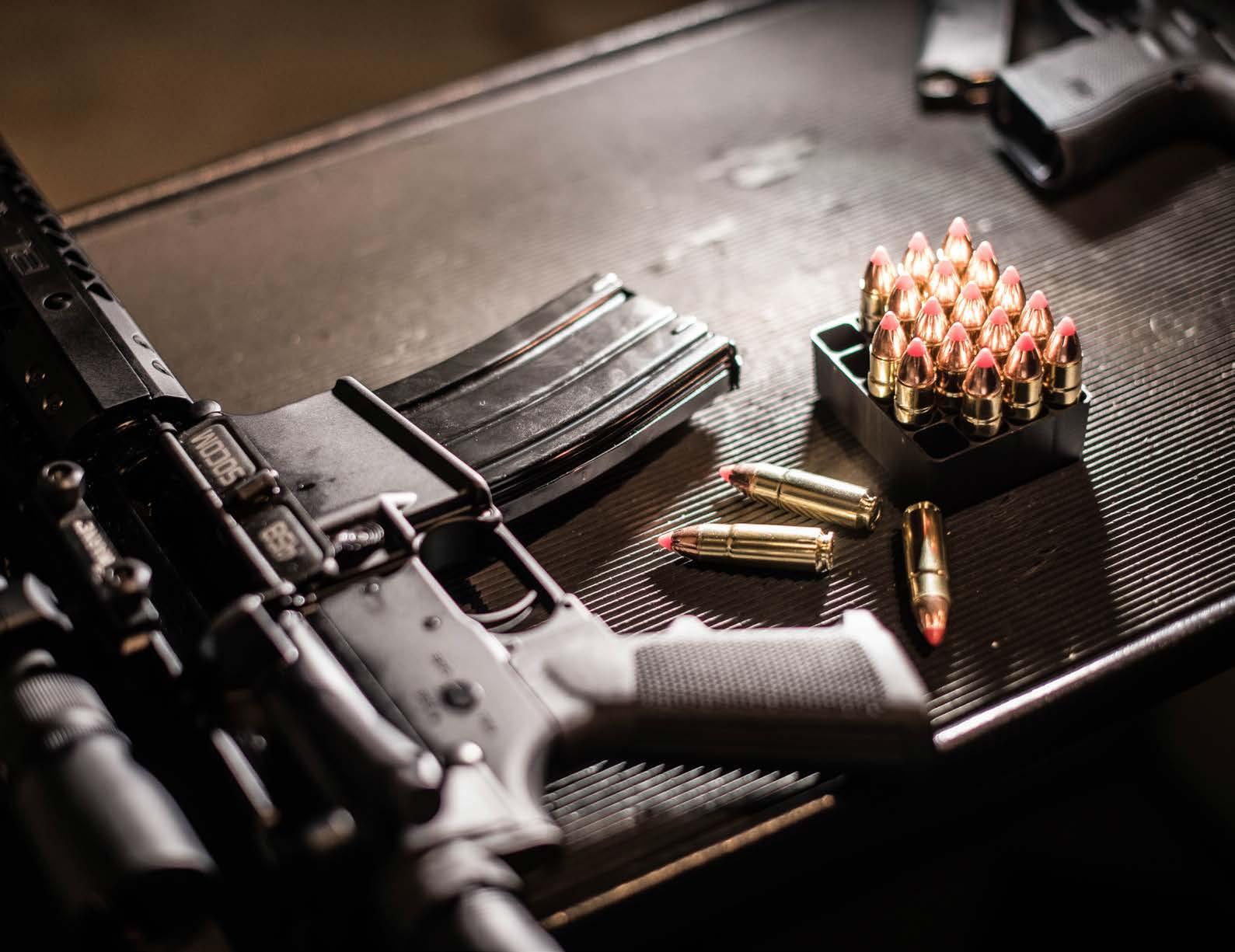
A Task Force Ranger introduced the idea for an AR-15 based caliber with considerably more stopping power than the standard 5.56. As the story goes, this Ranger asserted that stopping power was lacking from the ubiquitous 5.56 while in Mogadishu, Somalia. After the R&D was provided by Marty ter Weeme, founder of Teppo Jutsu; and the first rifles were manufactured by Tony Rumore, founder of Tromix™ - a slowly rising star was born in 2001. The end result was a 50 AE based case, with a rebated 308 Winchester™ rim that was necked down to accommodate 45 caliber rifle bullets (.458”).
458 SOCOM USES
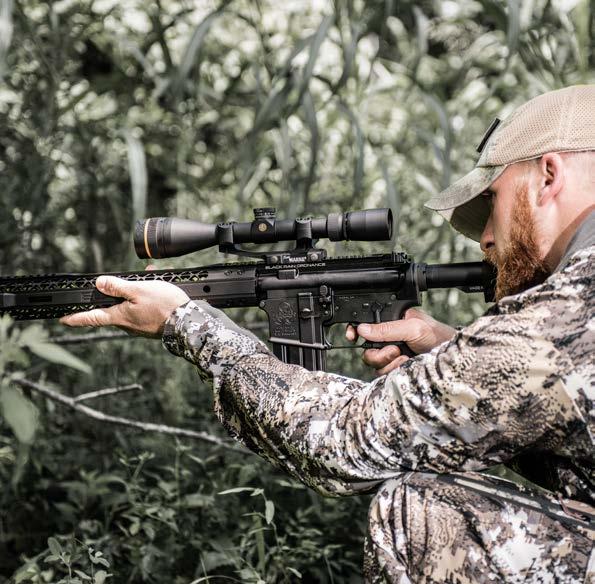
The 458 SOCOM shines in a number of applications, both tactical and hunting- at distances within approximately 200 yards. Practical bullet weights range from 250 to 500 grains, with the latter excelling at subsonic duties. Current bullet technology like Solid Copper Hollow Points, available from companies such as Barnes™ and Maker Bullets™, take full advantage of an already big bore diameter and stretch the limits of expansion on targets of all sizes. Standard cup and core bullets such as the 300 grain Hornady™ or Speer™ JHPs also offer effective terminal ballistics for shooters looking for more economical projectiles.
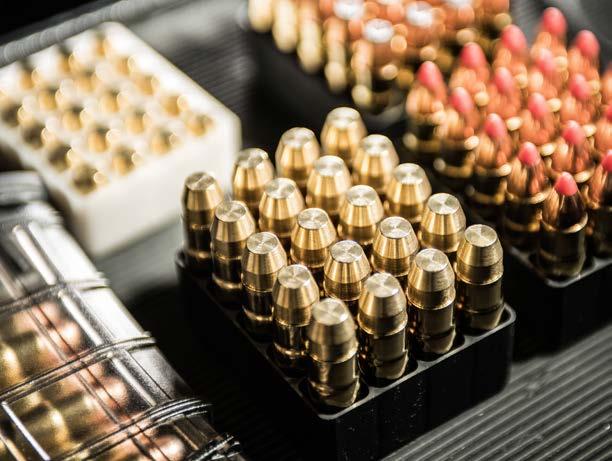
STEINEL’S APPROACH TO 458 SOCOM
Steinel offers a few distinct loads for 458 SOCOM enthusiasts.
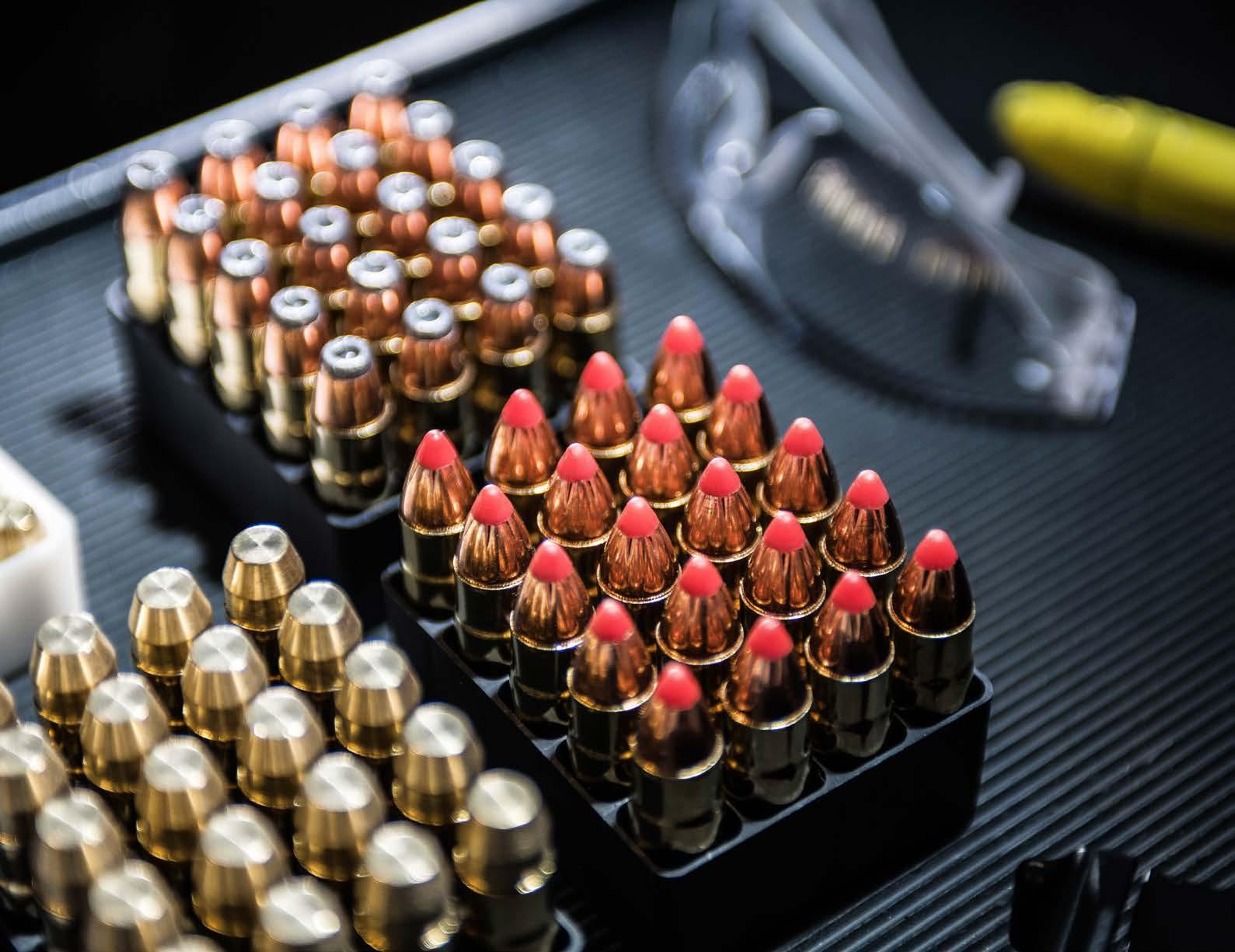
Two traditional jacketed hollow point loads are offered: A 300 grain JHP is the most popular and is considered by more and more customers as the best value in 458 SOCOM.
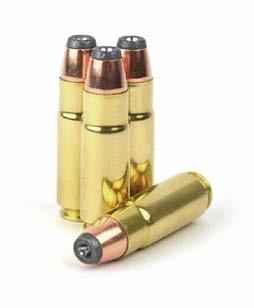
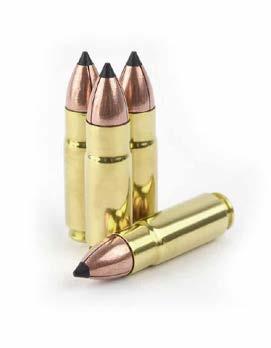
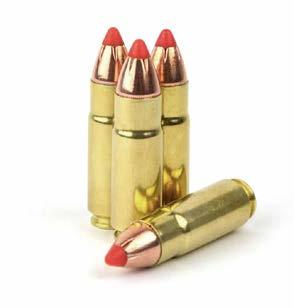
The second traditional bullet used is a 325 grain ballistic tip hollow point. This load offers similar terminal performance to other high quality cup and core bullets but features a spire point.
This 325 grain Hornady™ FTX consistently groups between 1” and 1.5” at 100 yards, from a variety of different SOCOM uppers.
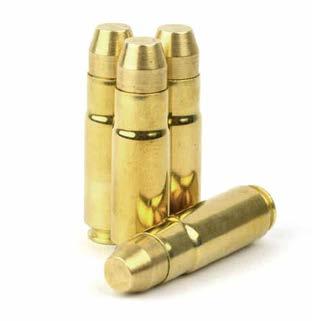
For those looking for extreme penetration, Steinel offers a solid brass bullet load as well. This is a flat point bullet, designed completely in-house, which resembles many of the flat point bullets found in larger 45 caliber hunting rifles such as 45/70 and 458 Winchester™ Magnum. This bullet features a wide meplat and a flat point which help drive through bone and tissue, while greatly minimizing bullet deflection.
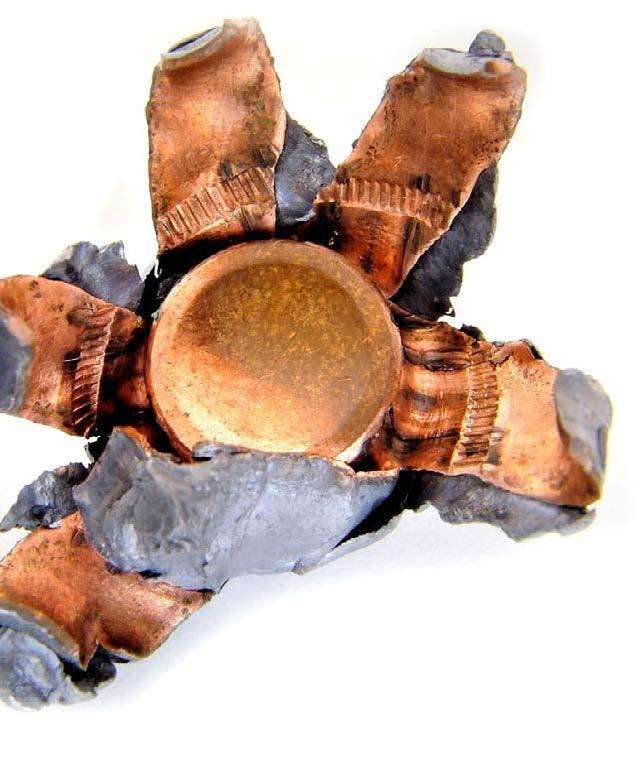
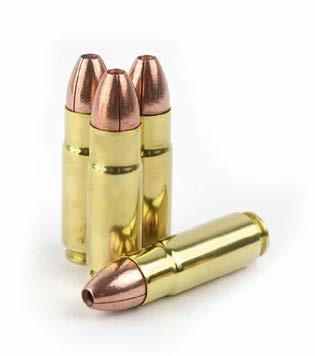
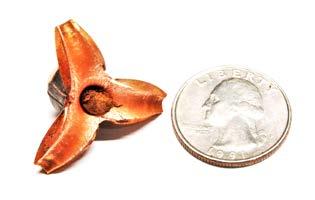
Steinel also offers a 250 grain solid copper hollow point for hunters looking for industry-leading terminal ballistics and expansion. This is also popular among California hunters or anyone else seeking lead-free options. This 250 grain SCHP features a 3 petal design and these petals effectively peel back to nearly 90 degrees even at impact distances of 100 yards (using 16” barrels).
CONCLUSION
For those looking at big bore options from an AR platform, there are more and more options cropping up today. 50 Beowulf, 450 Bushmaster, 458 HAM’R, 450 Raptor, and now the king of the hill, the 500 Auto Max are all available with varying levels of modifications necessary. The 458 SOCOM offers impressive ballistics with relatively little effort. An AR-15 lower coupled with a new BCG, barrel, and a modified ejection port (to accommodate the 50 AE- based case) will get you in the game with the 458 SOCOM. Standard magazines feed adequately while optimal results are achieved with slightly modifying your follower for such a large case, or by obtaining purpose-built 458 SOCOM mags. While ammunition is markedly more expensive than bulk 5.56/.223, you get what you pay for: Steinel’s most popular load launches a 300 grain bullet nearly 1,900 feet per second and produces north of 2,300 ft-lbs of energy. This requires a large, thick case, a large charge of powder, and a big, heavy projectile.
While this cartridges has not yet been adopted by SAAMI, rumors are circulating that it is only a matter of time. For the reasons outlined above, the 458 SOCOM’s popularity is reaching new heights. This can be seen by the number of manufacturers offering SOCOM upper receivers as well as factory-loaded ammunition. We feel that this caliber isn’t going anywhere for a while and continue to enjoy the bark and bite of this big bore cartridge.
What does Dedicated to Every Round™ mean?
Steinel Ammunition Co. is a premium manufacturer of self-defense, hunting, and target ammunition. While other manufacturers may have a specific product line designated as “match” or “premium,” at Steinel—premium ammunition is all we do.
When you use Steinel pistol or rifle ammo, you can be sure that countless hours of research and testing have gone into every round. Each recipe, component, and assembly is designed to provide you with optimal performance.
Our passion for precision, repeatability, accuracy, and reliability drives our pursuit of perfection. Let our attention to every technical detail provide you with the ammunition you and your gun deserve.
We stand by our products 100% with a Satisfaction Guarantee return policy.
Reliability
Our network of partners provides access to hundreds of firearms ranging from 25 ACP to 50 BMG. Testing through a wide variety of test guns, helps us ensure that our ammunition will function flawlessly in the vast majority of makes and models.
During production, we perform a battery of tests to ensure that only the highest quality product reaches your firearm. The frequency with which we halt production to perform this battery of tests would put most manufacturers to shame. This battery includes primer seating depth, overall cartridge length (or ogive to rim base where applicable), powder charge, crimp diameter, shoulder bump (where applicable), and the always-critical case gauge. Depending on the caliber, we may check as frequently as every 20 rounds! Lastly, our tolerances are incredibly tight. This allows us to make any necessary press adjustments while rounds are still within SAAMI spec.
Accuracy
Pistol cartridges intended for self-defense are tested at 21 feet. Rifle cartridges intended for hunting, tactical applications and target shooting are tested at a minimum of 100 yards. Pistol cartridges used primarily for hunting are tested at 50 yards.
Penetration And Expansion
At Steinel, we do not test penetration by shooting through water jugs, newspaper, or phone books. We take the time and expense to prepare proper ballistics gel with Type A Ordnance Gelatin. We also take the time to calibrate each batch to ensure that the standard FBI density is achieved. When loading our ammunition into your self-defense or hunting firearm, rest assured that the product you are touching has passed OBJECTIVE, STANDARDIZED, and MEANINGFUL tests on both penetration and expansion. After all, either someone’s life (self-defense) or a humane kill (hunting) depends on this performance.
Velocity And Pressure
Any old combination of powder, bullet, case, and primer will not suffice. Consistent, clean powders with optimal burn rates make up each load, along with tried and trusted bullet weights for each caliber. When it comes to very heavy-for-caliber or light-for-caliber bullet weights, we would rather follow the guidelines established originally by those who designed each caliber.
For any of our new caliber introductions, we leverage available reference material by trusted sources—primarily Hornady, Speer, Lyman, Nosler, Alliant, and Hodgens. SAAMI specs are treated as gospel, and our chronographs are used extensively. Average, standard deviation, extreme spread, and minimum and maximum velocities are closely monitored throughout testing. Our team has the experience with both statistics and Six Sigma techniques to draw meaningful conclusions on test data.