

State of Black Business
MARCH 2021 REPORT



“It is an African American perspective that is shared in the interest of creating inclusive prosperity as a matter of good business for Arizona.”
State of Black Business
Investing in Black Arizonans is critical to the future of Arizona’s economy. The Grand Canyon State cannot reach its full growth and development potential without understanding and acting upon the merits of inclusive prosperity. Such a forward focus would leverage emerging trends and address well-documented economic disparities rooted in multigenerational policies and practices. Today, Black/African Americans have the highest percentage growth rate in the state, but entrepreneurship and investments in Blackowned businesses have failed to keep pace with demographic growth trends. Gathering data and strengthening businesscommunity connections are critical steps in identifying and
pursuing inclusive strategies that address the challenges facing entrepreneurs of color.
Few successful business ventures start without a strong foundation. Entrepreneurs or business owners are required to understand the market and effectively leverage both social and economic capital. Black/ African Americans face unique barriers to entrepreneurship. To help grow entrepreneurship and investment in Black businesses, we must better understand the social and economic experiences and perspectives of Black entrepreneurs and create datadriven solutions.
By knowing little about the growing state of Black business,
Arizona communities are missing opportunities to become more resilient, invigorate economic development and tap the power and innovation of entrepreneurialism. Investing in Black business through communitydriven policies and practices that remove barriers to full participation in the larger economy, including access to capital and systemic inequity, is sound, comprehensive economic and community development strategy.
This State of Black Business report begins to fill in the knowledge gap about Arizona’s diverse economy. It is an African American perspective that is shared in the interest of creating inclusive prosperity as a matter of good business for Arizona.

Introduction
Black Arizonans are employers, innovators, consumers, and taxpayers who contribute to Arizona’s culture, growth and economy. The Black/African American population in Arizona is a relatively small percentage of the overall state population, but it is also one of the fastest-growing populations. It shows significant growth in economic contributions and purchasing power.
“Black Arizonans are employers, innovators, consumers, and taxpayers who contribute to Arizona’s culture, growth and economy.”
Arizona has seen a steady migration of African Americans who are attracted to opportunities in the Grand Canyon State. During the last
two decades, Arizona has added roughly 100,000 Black residents per decade. By comparison, Arizona added 50,000 Black residents between 1990 and 2000. This migration in itself adds interesting nuance and context to aggregate data in several categories.
This report uses several key metrics and data sources to evaluate the state of Arizona’s Black/African American economy. The population and labor force data was obtained from the U.S. Census Bureau’s American Community Survey (ACS) 1-year estimates and Economic Modeling LLC (Emsi). Data on business ownership was obtained from the U.S. Census Bureau’s Economic Census and Annual Business Survey (ABS). Data on buying power was obtained from the Selig Center for Economic Growth’s 2019 report titled The
Multicultural Economy. Data on entrepreneurship rates and startups were obtained from the Kauffman Foundation’s 2019 Early-Stage Entrepreneurship in the United States report and Crunchbase’s Diversity Spotlight initiative.
This report utilizes several common economic indicators to evaluate the state of Arizona’s Black economy. Definitions are provided below:
Labor force participation rate:
The percentage of residents aged 16 and older that are actively employed or seeking employment.
Household income (HHI):
The income of the householder and all other people aged 15 years and older in the household, regardless of whether they are related to the householder.
Buying power:
The after-tax personal income of residents that is available to spend. Does not include borrowed or saved funds and is not intended to be used as a measure of overall wealth.
Per capita buying power:
The total buying power of a population demographic divided by the total number of people in the population demographic.
Entrepreneurship rate:
The percentage of people in a population or demographic that start a business.
Opportunity share:
The percent of the total number of new entrepreneurs who were not unemployed and not looking for a job as they started a new business.
“I
believe some of the best natural entrepreneurs in the United States are in underserved urban communities. I call them hustlers — visionary risk-takers who seize the opportunity to move product and turn a profit. They have the God-given skills, attributes and talents of an entrepreneur, but they lack key resources needed to create sustainable businesses that benefit the broader community. I am here for them.”

Oye Waddell CEO Hustle PHX
Established in 2014
Demographics
Nationally, the U.S. population is estimated at 328 million people, with nearly 42 million (12.8%) identifying as Black/African American. In Arizona, Black/ African Americans have the fastestgrowth rate by percentage of any demographic, growing by 33% since 2010, compared to a statewide growth rate of 13%. Arizona has a total population of about 7.2 million people as of (2019), 343,729 Arizonans identified as Black/ African American, accounting for 4.7% of the state’s population.
Black/African Americans have the fastest-growth rate by percentage of any demographic in Arizona


Labor Force
Arizona has a fast-growing Black labor force. It has increased by more than 59,000 since 2010, a growth rate of 49% compared to statewide labor force growth of 16%. This growth coincides with high rates of migration to Greater Phoenix.
Arizona’s Black labor force continues to see strong, steady growth
Source: U.S. Census ACS 1-year estimates; Tucson data not available for 2012-14, 19
The size of Arizona’s Black labor force is reflective of the broader population demographic, comprising 5.1% of the state’s labor force. In 2019, Arizona had 179,756 Black/African Americans in the labor force a participation rate of 68%, compared to a statewide rate of 60%. A vast majority (89%) of the state’s Black labor force resided in the Phoenix (143,042) and Tucson (17,295) metro areas.
Black and African Americans represent a small percentage of Arizona’s labor force
Source: U.S. Census ACS 1-year estimates; Tucson data not available for 2012-14, 19
Although Black/African American workers are under-represented in most industries in Arizona, industry distribution mirrors that of the nation. Healthcare and Administrative Services account for over 30% of Arizona’s Black workforce while Retail Trade, Accommodation and Food Services account for another 17%. The largest distribution disparities between Arizona and the U.S. are in the Finance and Insurance, Government, and Administrative Services sectors.
“The size of Arizona’s Black labor force is reflective of the
broader
population
demographic,
comprising 5.1% of the state’s labor force.”
Black Labor Force Proportion, 2019
Arizona’s Black labor force is concentrated in certain industries
Black Labor Force Industry Distribution, 2019
Healthcare & Social Assistance Government
Admin., Support, Waste Management... Retail Trade
Accommodation & Food Services
Finance & Insurance
Transportation & Warehousing Manufacturing
Professional, Scientific & Technical Services
Educational Services Construction
Wholesale Trade
Other Services (except Public Admin.)
Real Estate, Rental, Leasing Information
Arts, Entertainment, Recreation
Management of Companies & Enterprises
Source: Emsi 2020 Q4

Dr. Michael Hervey II, OB/GYN
Income & Buying Power
In 2018, the median household income (HHI) in Arizona was $50,068 for Black households, 15% or nearly $9,200 less than the statewide median of $59,246. The income gap is especially evident in the highest and lowest income
earners in Arizona. In 2018, 25.5% of Black households earned under $25,000, compared to 19.1% of all households in Arizona. 18.8% of Black households earned over $100,000, compared to 25.7% of all households in Arizona.
Arizona’s Black median household income continues to lag the rest of the state
$70,000
$60,000
$50,000
$40,000
$30,000
$20,000
Overall, Black households are over represented in the lowest income earning brackets in the state.
“Overall, Black households are over represented in the lowest income earning brackets in the state.”
The income gap is more pronounced in the Phoenix metropolitan area, where the median HHI for Black households is $51,148 21% or nearly $13,300 less than the median HHI of $64,427 for Greater Phoenix. However, the income gaps for both Greater Phoenix and Arizona remain smaller than those in the U.S., where the Black median HHI is $41,511 — 33% lower than the nationwide median of $61,937.
Source: U.S. Census ACS 1-year estimates
Arizona Median Household Income, 2014-2018

Greater Phoenix and Arizona also reflect a quicker narrowing of the HHI gap than does the nation over the past five years. Arizona Black HHI grew by $10,004 between 2014 and 2018, compared to statewide HHI growth of $9,178. In Greater Phoenix, the Black/African American and statewide median HHI grew
in tandem, adding an additional $11,000 each. Although the gaps remain substantial, they stand in contrast to the U.S., which saw its income gap widen in the same time frame. Between 2014 and 2018, nationwide Black HHI grew by just $6,030 compared to total national HHI growth of $8,280.
There are multiple potential contributing factors to the income gap that warrant further analysis, including a tightening labor market, rising wages, and an influx of skilled Black/African Americans moving to Arizona.
Arizona’s Black buying power lags most of the Mountain West states
Market Share of Buying Power, 2019
Source: Selig Center for Economic Growth, University of Georgia
The growth of Arizona’s Black consumer base is outpacing both those of neighboring states and the nation: since 2010, Black buying power in Arizona grew by 78.6% compared to 40.1% nationally. A fast-growing Black population means Black buying power is expected to continue outpacing that in other major markets. Arizona’s Black population has grown 33% since 2010 compared to a nationwide growth rate of 8%. Arizona’s Black
buying power is expected to grow by 41.3% over the next five years vs. 26.5% growth nationwide.
Black and African Americans comprise 4.7% of Arizona’s population, and they account for 3.9% of total buying power in the state $11.6 billion in 2019. These rates fall far below national levels, where Black and African Americans account for 12.6% of the population and 8.9% of total national buying power.
Arizona is more proportional than the rest of the nation when comparing population percentage and buying power percentage. The difference between Arizona’s Black population proportion and buying power share is 0.8% compared to a US difference of 3.7%. However, Arizona’s proportion gap of 0.8% has remained unchanged over the last three decades whereas the U.S. has closed its gap by 0.7% in the same time span.
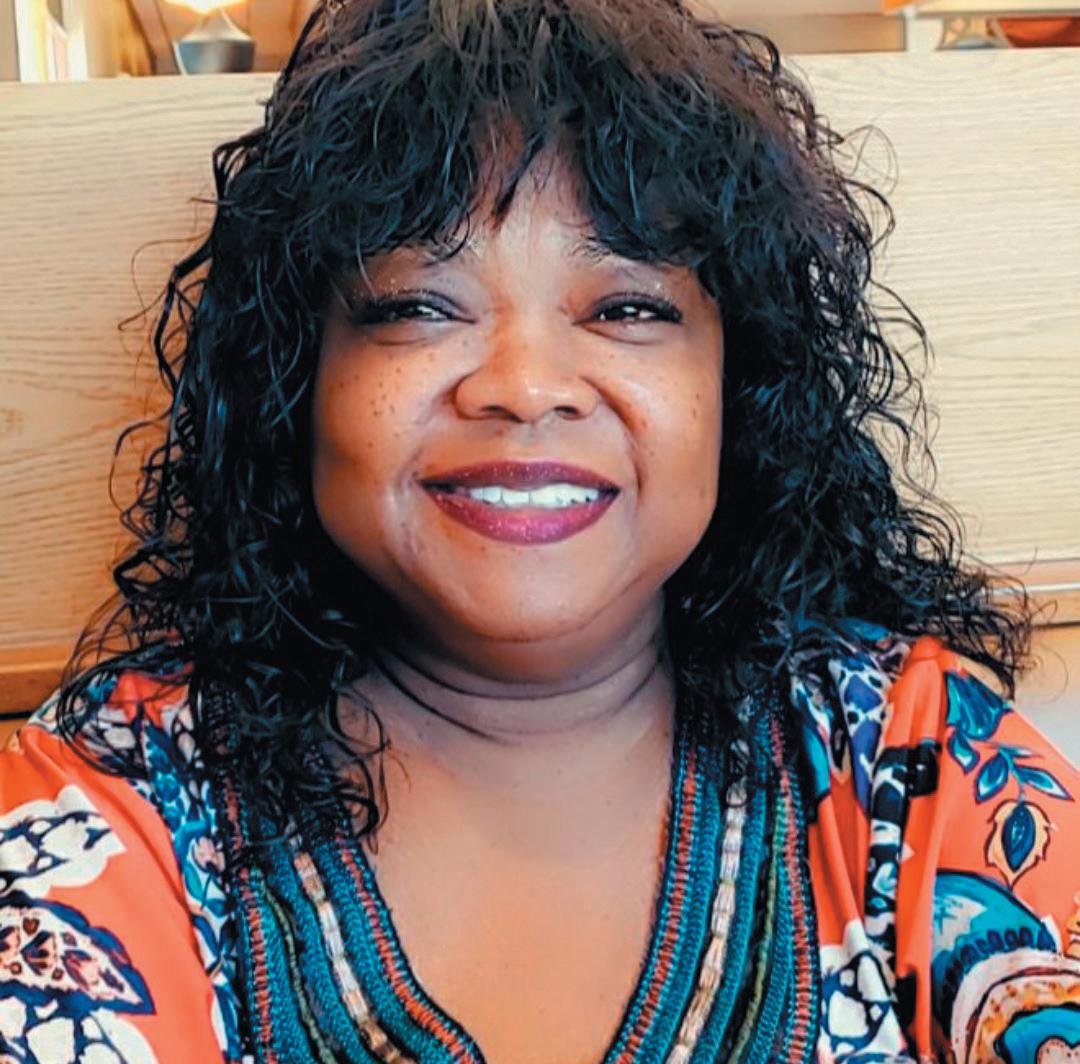
“Having my own business allows me the opportunity to be a blessing to my community, because I can hire according to the potential that I see in a person. Potential that others might not take the time to develop.”
Kim Dartez CEO, Compass Dartez LLC (construction), Family Tree Healthcare (health clinic) Established in 2007
$60,000
$50,000
$40,000
$30,000
$20,000
$10,000
Per capita, Arizona’s Black buying power struggles to catch up with the rest of the state
Source: University of Georgia Selig Center for Economic Growth, University of Georgia; U.S. Census ACS 1-year estimates; dollar amounts are adjusted for inflation
Per capita buying power is calculated by dividing the total buying power in the state by the total population. Doing so allows us to look at buying power while accounting for population size. Looking at per capita buying power, Black Arizonans still lag significantly behind the state, although the gap is less
pronounced than at the national level. Still, Black Arizonans have significantly less purchasing power than their national counterparts.
Buying power grew across all demographics nationwide over the last decade, but Black consumers have not seen the
same growth as the broader population. If this problem is not addressed, racial economic inequality will only grow larger.
“If this problem is not addressed, racial economic inequality will only grow larger.”
Per Capita Buying Power, 2019
Change in Per Capita Buying Power, 2010-2019
Business Ownership
In 2017, there were 1,195 Blackowned employer firms in Arizona, making up just 1% of all employer firms in the state. A large majority (79%) are in Greater Phoenix. Arizona Black-owned businesses employed 11,958 workers, generated $1.4 billion in revenue, and accounted for $397 million in payroll.
The average Black-owned employer firm in Arizona had 10 employees, generated $1.1 million in revenue, and contributed $331,983 in payroll. By comparison, all employer firms statewide averaged 23 employees, $5.4 million in revenue, and $1 million in payroll.
Nearly 60% of Arizona’s Black-owned employer firms are under 6 years old
Arizona Employer Firms by Age of Firm
One contributing factor for this disparity is that most Black-owned firms are less than 6 years old. Firms that have been in business for more than 15 years make up just 12% of Black-owned employer firms compared to 27% of all firms in the state. On the positive side, this could indicate a developing positive trend as more Black entrepreneurs are entering the market. On the negative side, this could be indicative of systemic barriers to growth for Black businesses.
Of the 1,195 Black-owned firms in Arizona, the healthcare and social assistance and professional services industries make up 42.3% and 17.3%, respectively. These proportions reflect the national distribution, the top three of which are healthcare (32%), professional services (13.2%) and administrative support (8.2%).
Arizona Black-owned employer firms are highly concentrated in certain industries
Arizona Black-Owned Employer Firms by Industry
Healthcare & Social Assistance
Prof., Scientific & Technical Services
Retail Trade
Transportation and Warehousing
Admin., Support, Waste Management...
Construction
Accommodation and Food Services
Other Services (except Public Admin.)
Arts, Entertainment, Recreation
Wholesale Trade
Finance and Insurance
Real Estate, Rental, Leasing
Educational Services
Information
Source: U.S. Economic Census 2012 2017
Between 2012 and 2017, Arizona added 351 new Black-owned employer firms, growing by 42.8% compared to a statewide growth rate of 7.5%. Arizona Black-owned businesses also added 4,592 jobs and contributed an additional $199 million in payroll. Of these new businesses, 221 were created in Greater Phoenix, which saw its Black-owned businesses
grow by 34.2% in the same time frame, outpacing Greater Phoenix’s total business growth rate of 10.9% and the national Black-owned business growth rate of 13.5%.
The healthcare and social services sector topped the list in terms of growth, accounting for 48.7% of new Black-owned employer firms and
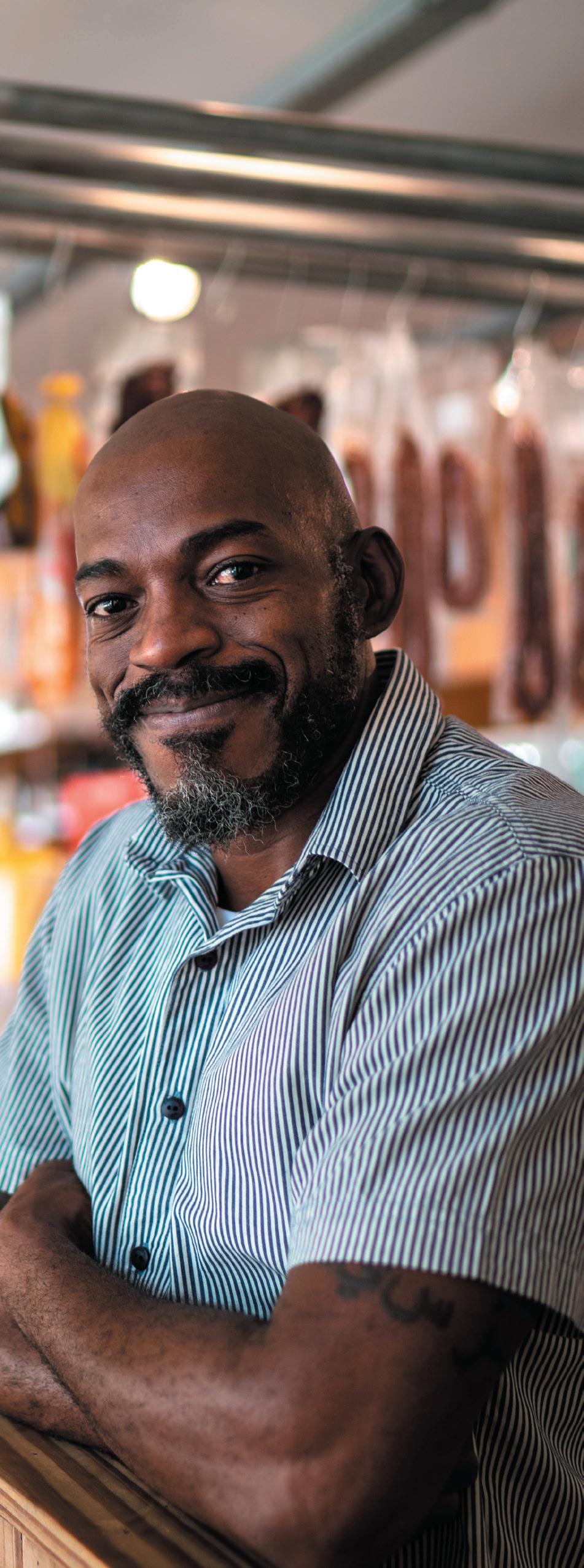
“In order to be effective in the delivery of high-quality services, I believe that our staff and clinicians must represent the communities in all aspects of diversity necessary to help our patients alleviate any barriers, pain, or suffering.”
Justin Bayless Chief Executive Officer
Bayless Integrated Healthcare Established in 1982

nearly 4,000 jobs. The radical growth in this sector can be partly attributed to a large presence of healthcare and biomedical firms in Greater Phoenix. However, there may be other factors at play that are worth exploring.
High concentration of Black-owned businesses in certain sectors is attributable to various social and economic factors including a lack of access to investment capital. Interestingly, there were virtually no Black-owned businesses in manufacturing and utilities, two sectors that require substantial startup capital.
Entrepreneurship
Black people are overwhelmingly under-represented in U.S. entrepreneurship. As of 2019, they have the lowest entrepreneurship rates of any single race and ethnicity in the U.S., averaging just 0.23% since 1996 compared to 0.39% of Hispanic Americans and 0.30% of White and Asian Americans. Similarly, Black entrepreneurs have the lowest opportunity share meaning they are more likely to start a business out of necessity (i.e., unemployment) rather than opportunity of any single race or ethnicity.
“Given the lack of funding for Black-owned businesses and startups, there is an opportunity for Greater Phoenix to grow in this space.”
Data indicates that Black entrepreneurs also have less access to capital and are more likely to rely on personal savings to fund their entrepreneurial endeavors. Among a sample of 4,475 venture capitalbacked startups founded between 2013 and 2017, just 1% of founders were Black, compared to 77% White and 18% Asian.
An analysis of Crunchbase data shows 1,077 Black-founded startups receiving funding since 1996, totaling over $9 billion in equity. Just 50% of companies had reported funding, but the average funding amount of these businesses was $16.9 million, with the largest valuation surpassing $1.5 billion. Over 35% of these funded companies are based in California and another 20% are in New York. Just four of these 1,077 companies are based in Arizona and their funding amounts were not reported.

The COVID-19 pandemic has revealed many systemic barriers and disparities that Black-owned businesses face. It is estimated that 41% of Black-owned businesses closed between February and April 2020, compared to 22% of all businesses.1 Black-owned businesses were especially vulnerable to pandemic effects because they typically had less cash reserves and were more likely to be in an area with high COVID-19 infection rates. Additionally, weaker relationships with banks meant that Black-owned businesses were less likely to obtain federal Payroll Protection Program (PPP) loans.
Given the lack of funding for Blackowned businesses and startups, there is an opportunity for Greater Phoenix to grow in this space. The region has a highly connected business community and a culture of

“As a black business owner, I feel a responsibility to my family as a provider and to my community as an employer and a role model.”
Lewis Green Business Owner
inclusion. Business leaders can make a concerted effort to draw venture capital funding in from outside the state, making capital more accessible to Black business owners.
1 Federal Reserve Bank of New York. Double Jeopardy: COVID-19’s Concentrated Health and Wealth Effects in Black Communities. August, 2020.
Dickey’s Barbecue Pit Established in 2019
Expanding Opportunities
The State of Black Arizona is committed to expanding opportunities for Black entrepreneurs and businesses. The nonprofit organization, established in 2015 to increase awareness of an underrepresented community, recognizes that the right business ecosystem can mitigate or negate the effects of structural obstacles facing black business owners. That requires changes in thinking and institutional practices to address inequalities in business ownership revealed by data. Closing disparity
gaps will provide expanded opportunities that will grow Arizona’s economy as a whole.
• Leverage research or conduct a study on the viability and retention of Black-owned businesses: Identify the challenges, needs, trends, and opportunities for African American entrepreneurs and business owners. The study should work to identify systemic barriers to capital and opportunities that impact the

success of Black ownership/ businesses. Phoenix and Tucson metro areas should analyze and emulate successful programs in other regions to aid underserved businesses and communities.
• Leverage regional connections to drive internal and external investment: The local startup community would benefit from coordinated efforts at promoting Phoenix and Tucson metro area startup scene and targeted attraction of out-of-state
venture capital firms. Similarly, Community Development Financial Institutions (CDFIs) are local mechanisms for regional leaders to support Black-owned businesses.
• Increase support for Blackowned businesses: This includes access to capital and direct financing pathways, startup resources, education, collaborative research, and assistance identifying and navigating business opportunities.

• Design comprehensive statewide directory of Black-owned businesses: Develop and invest in a comprehensive digital resource guide that tracks statewide Blackowned businesses. The digital directory should create network opportunity between established Fortune 500 companies and Blackowned businesses. The directory should include data on key economic measurements, such as revenues, growth margins, industry affiliation, number of employees, years of operation, etc.
Acknowledgments
The State of Black Arizona is committed to increasing awareness through providing trusted data to expand opportunities for Black entrepreneurs and businesses. We want to thank everyone who contributed time, energy and resources to make this report a reality. In particular we would like to ackn owledge the following:
State of Black Arizona Board of Directors:
Dr. Felicia Ganther Vice Chancellor of Student Affairs
Maricopa Community College District
Willard James II Executive Corporate Strategy Centene Corporation
Darnika Riley Operations Manager –Planning & Product Line Management Intel Corporation
Garry Walters Retired Community Advocate
Greater Phoenix Economic Council (GPEC):
Chris Camacho President & CEO
Board of Directors
See website for full listing State of Black Business Steering Committee:
Teniqua Broughton
Executive Director State of Black Arizona
Drew Callow Research Analyst GPEC
Ian Dowdy Director, Progress Meters Center for the Future in Arizona
Sharon Hwang
Chief Operating Officer GPEC
May Mgbolu
Assistant Director of Policy and Advocacy Arizona Center for Economic Progress
Robin Reed
President & CEO Black Chamber of Arizona
Kristen Stephenson
Senior Vice President, Research & Analytics
GPEC Graphic Design Layout:
Stefanie Carson Senior Graphic Designer + Photographer
GPEC
Marketing and Communications:
Bethany Bennick
Senior Manager, Domestic & International Engagement GPEC
Nicole Buratovich
Senior Director, Investor Strategy & Engagement GPEC
Colleen Schwab Senior Vice President, Marketing & Communications GPEC
Managing Editors:
Teniqua Broughton
Executive Director
State of Black Arizona
Drew Callow
Research Analyst
GPEC Copy Editing:
Jennifer Dokes
Founder JDD Specialties
Special Thanks to --
Tonya Norwood
Co-Chair of Black Philanthropy Initiative
Eric Sperling, Moderator
Managing Director
Social Television Network
SPOTLIGHTING BLACK BUSINESSES AND
Entrepreneurs in Arizona

Shatera Williams Owner
Balaros Hair Salon
Established in 1994
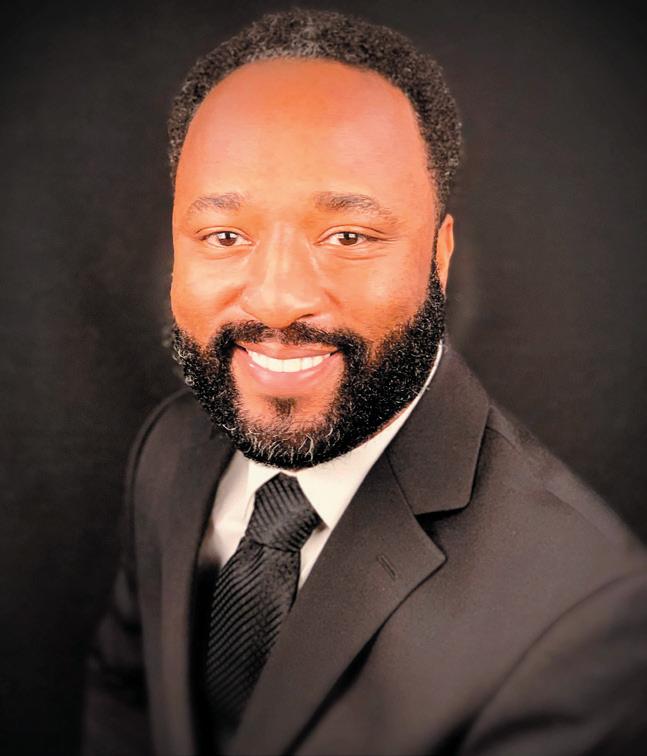
Jason Borum Principal
Jason E. Borum, P.E.
Established in 1998

Darius Green Founding Member
Keyser
Established in 2012
Sean and Vanessa Swaringer Owners
Cryoworld Therapy
Established in 2015

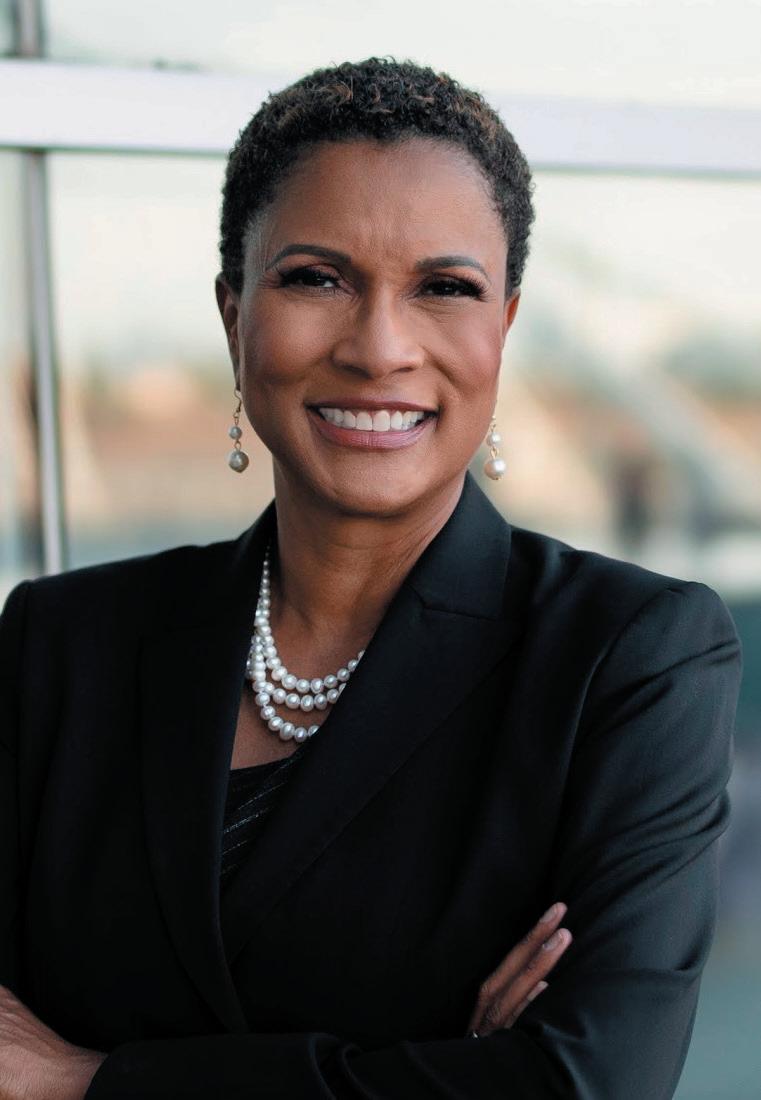
Rachel Frazier Johnson Managing Attorney
RFJ Law, PLLC
Established in 2013
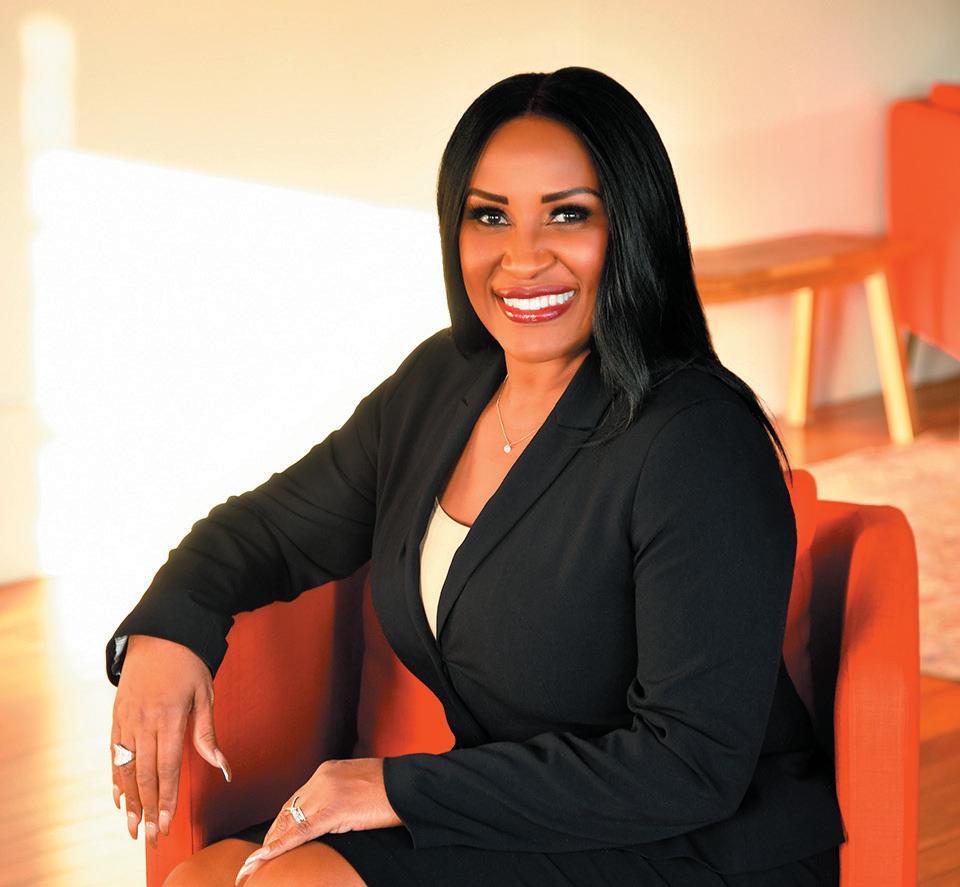
Dr. Tanae Morrison Founder & CEO
Sun Valley Academies
Established in 2009