One Trust, One Family A great education has the power to transform lives
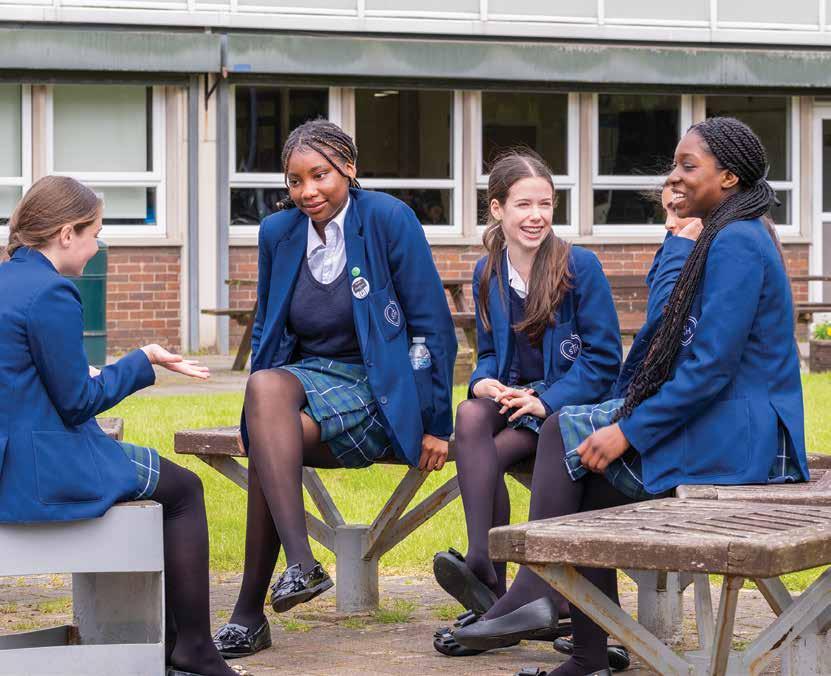
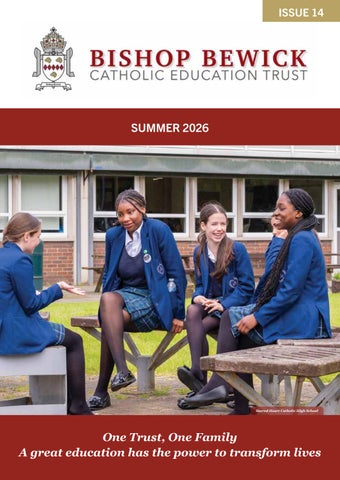
Sacred Heart Catholic High School
One Trust, One Family A great education has the power to transform lives
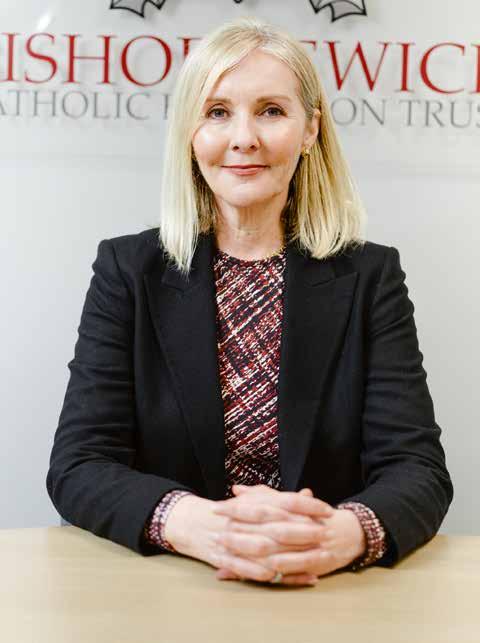
As we come to the end of another academic year, it seems like a natural time for reflection and thank you. On a personal level, this is even more fitting as my time in education ends this summer and I retire after 38 years in this wonderful profession of education. Working in schools with children is a vocation. It is a privilege to walk beside our pupils and students as they journey through their young lives preparing for the next stage, and I feel very blessed to have done so in schools across our region.
Teaching and Leading can be tough sometimes, but I am always so happy to be approached by an ex-student who tells me all about what they are doing now, it makes my day, makes my heart sing with joy. I wish all the staff in our Trust the joy of teaching and supporting students in whatever role they play, I hope their future careers are full of fantastic memories of what they have achieved.
I have so enjoyed the past six years since the start our Trust, Bishop Bewick. Undoubtedly, working with headteachers and governors has been one of the biggest highlights. Headteachers undertake a remarkable job, and I have been humbled by the talents, dedication and work of the leaders within BBCET. It is clear to see how much they care for their children and communities and go far beyond what is expected of them to ensure our pupils have the best life opportunities possible. Governors, too, represent their schools with such pride and give their time and expertise freely and generously. I am particularly grateful to them for trusting us in 2019 to bring together all 39 schools into one Trust, for their wisdom and courage to take that leap of faith and create what we have today.
As a parent myself to two adult children, I know how simultaneously brilliant and terrifying it can be to raise a family. Thank you to the parents of Bishop Bewick schools for your support and involvement with your children’s schools, for the lifts
to events, attendance at parents’ evening and meetings, for all you do to encourage your children to make the most of the great gift that is education.
And finally, thank you to our children, past and present. You bring so much laughter, happiness and hope for the future. You are why we all do what we do every day.
Thank you to Mrs Nicola Taylor as she retires from her position as Trust Lead for SEND across the Trust. She once spoke of the need to be wholehearted in all she does, and she has truly lived this out in her work as she has transformed the way we support our children with additional needs and their families over the past four years. Her expertise in this vital area has so improved the way we approach this vital work. Her development of provision in Speech and Language has had a huge impact on children and their staff in schools. Also, her work with SENCos and Teaching Assistants has led to great developments for these essential professionals, providing support, development, and confidence. Mrs Taylor is also responsible for developing leadership training within our Trust that has been transformational for so many
leaders and more latterly sixth form students through the Future Leaders programme. The legacy of what she has left will be felt for many years to come and all who have worked with her have loved her dearly and will miss her very much indeed.
“Nicola’s positive attitude always brings out the best in everyone around her. She is a fantastic leader, with such knowledge and passion for what she does. Her calm, strong and thoughtful presence will continue to inspire us, and we wish you all the happiness in your next chapter.”
Gemma, Nicola and EllenBBCET Speech and Language Team
“It has been a privilege to work with Nicola whose expertise in SEND is matched only by her passion for ensuring every child receives the support they deserve. Nicola has had a relentless drive to strengthen provision across the Trust, always placing the child at the centre of everything she does. We have learnt so much from working with such an exceptional and inspirational leader.”
Abbie and Nichola –Trust Primary and Secondary SENCo Support.
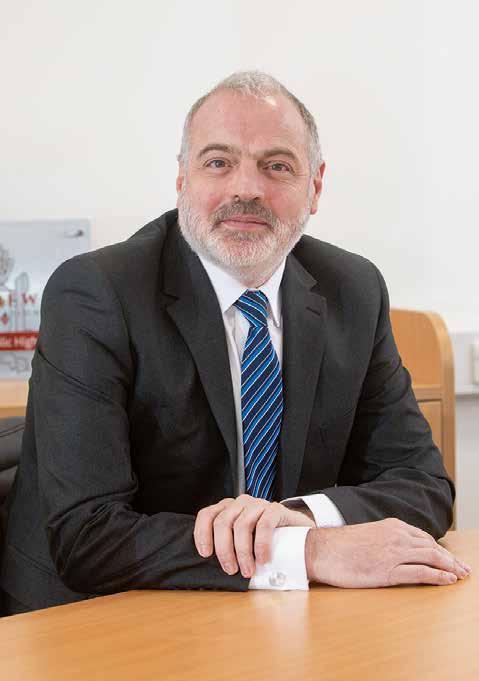
A message from our
Retirement can be one of life’s most difficult decisions. It often involves practical considerations: how much money you will need, where you might live, but the deeper questions are often left unexplored: when the time is right, and what you will do next. Without careful reflection on these questions, retirement can feel overwhelming, even forced upon us by stress or unforeseen circumstances.
grown from nothing in 2019 into what it is today. In the beginning, there was no blueprint for how an Academy Trust should function. Anita, working alongside the Trust Board, Headteachers, Governors and staff, carved out a clear vision, forging values, inspiring creativity, and building the relationships needed to generate momentum for a project of this scale. Anita’s unwavering passion and ambition for young people have made her a truly formidable leader. Over her many years in education, from English teacher to Headteacher, and ultimately CEO, she has often described her career as “the best job in the world.” It has been a privilege, as Chair of the Trust, to witness her leadership style built on her faith, humility, humour, honesty, and thoughtful communication, combined with a wonderful sense of humour and a seemingly effortless ability to unite people around a shared purpose. Above all, what stands out most is her unwavering commitment to the most vulnerable pupils, a commitment defined by both compassion and absolute resolve.
In Romans 12:2, Paul writes, “Be transformed by the renewing of your mind.” The Greek word for “transformed” is metamorphosis, the same word used to describe a caterpillar becoming a butterfly. This transformation of the mind creates space for a new perspective, a new view on the world, sometimes likened to a contemplative practice.
When we truly begin to see the world differently, retirement is no longer an ending, but simply a new stage of life, like a promotion.
Through this renewal, we come to realise that it is not the job itself that has changed, but our relationship with it. The people, the environment, the purpose may remain the same, yet something within us has shifted, preparing us to move forward.
As mentioned previously, Anita Bath, our Chief Executive Officer, will be retiring this year. It is this very transformation that has enabled her to reach such a significant decision. It is no small step, particularly for someone who has been so instrumental in shaping our Trust, a Trust that has
Six years ago, Anita lit the spark of something extraordinary. She moved mountains that began our journey to provide an ambitious and inclusive education for every pupil in our care. While her achievements are too numerous to list, one lasting legacy is the introduction of the ‘Living Leader’ programme, which has profoundly shaped leadership across our Trust. Only last week, a Headteacher spoke to the Board of the transformative impact it has had personally and within their school.
Letting go of such a profound sense of purpose and achievement is never easy. Yet, while Anita may not miss the sleepless nights and relentless demands of leading a large Trust, her spirit will endure. It is no surprise that her extraordinary contribution and service to education was marked this year with an OBE. Of course, she will be deeply missed but her influence will continue to be felt across our schools and in the way we work together, holding fast to the principle that “the way we do things” truly matters. On behalf of the Board, I would also like to extend our heartfelt thanks and warmest wishes to Nicola Taylor, our Trust Lead for SEND, who is also retiring. Nicola has transformed SEND provision across our Trust, and her impact will be felt for many years to come.
To both Anita and Nicola, thank you, and we wish you a long, fulfilling, and joyful retirement.
The Department for Education is releasing further information about the reforms to the SEND system. In this piece, I have taken key parts of the relevant documents to try and provide some simple explanations of what lies ahead.
‘We’re re-shaping the SEND system to make all mainstream early years settings, schools and colleges truly inclusive. We’re investing billions of pounds to adapt classrooms and corridors, train teachers, educators and assistants, and bring experts like speech and language therapists into settings.’
(DfE, ‘What parents of children with SEND need to know’).

What does this mean for my child in a mainstream school?
‘Every mainstream setting will be expected to deliver a strong universal offer – high-quality, inclusive teaching for all children. Children who need additional help will be able to access three flexible layers of support – Targeted, Targeted Plus and Specialist – on top of the universal offer. Children will be able to easily move between layers as needs are identified and develop, they are not sequential.’
Will SEN Support Plans change?
Yes, children with SEN will all have an Individual Support Plan (ISP). This looks like it will be a digital plan which will have the same format whichever school your child is in. Parents and schools will work together on what needs to go in the ISPs, and they will review them together regularly.
Is it true that there will be fewer places in special schools?
There are no plans to reduce the number of special school places, but more children with more complex needs are expected to be able to stay in their local mainstream schools with enhanced support. ‘Schools will all have ‘inclusion bases’ (Enhanced Provisions), spaces designed for children with SEND where they can receive targeted interventions and support or spend time to help them regulate and access their education. This will support more children to receive specialist and targeted support whilst being part of their local school, and the intention is that fewer will require special schools.
However, these settings are vital for children and young people with the most complex needs. Our investment will increase the number of special school and alternative provision places available for children who need them.
What’s happening to EHCPs?
‘EHCPs will be retained and improved. They will give a legal entitlement to more intensive or complex support than mainstream education settings can routinely provide. New EHCPs will be based on new Specialist Provision Packages, putting an end to the postcode lottery in support. Changes to EHCPs will move in lockstep with radical improvements to SEND support in mainstream nurseries, schools, and colleges, which means more children will get SEND support including more involvement of healthcare professionals like speech therapists and experts like educational psychologists. These changes will be phased. For children and young people with an existing EHCP, transition to the new system will begin from 2030, once the new inclusive mainstream system has been fully built.’
Will EHCPs and ISPs be legally binding?
Yes. EHCPs will continue to provide statutory protection for complex needs. Individual Support Plans will be a legal obligation for schools and colleges.
Might we still need to go to tribunal if we are not happy with the provision for our child?
2030...The tribunal system is overrun. ‘School complaints systems will be updated so complaints about SEND are heard by a panel including a SEND expert independent of that school. For children with EHCPs or applying for a needs assessment the tribunal will remain as an important backstop, and we will improve mediation and dispute resolution so more disagreements can be resolved without lengthy legal processes.’
For now...It is important to keep in mind that the new system will not be fully functioning until 2030. That is when we expect the legal duties on schools to change. For now, things remain as they are and we encourage you to continue to work together with your child’s school to ensure that their needs are well understood and met.
As a Trust, we will continue to support our schools by providing Speech and Language Therapists, a specialist central team, networks to share best practice and training and advice and guidance. We will be working together to make sure that required changes are introduced as smoothly as possible. Please speak to your school if you have any questions about how this might affect your child in coming years.
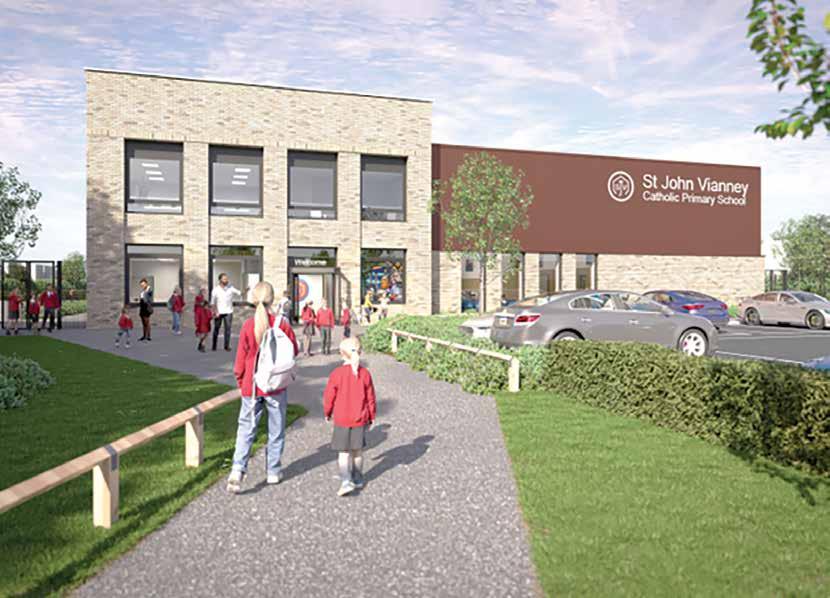

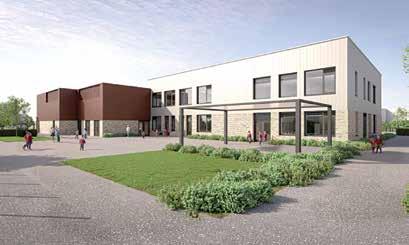
St John Vianney Catholic Primary School is set to undergo a radical transformation, with work due to start on the construction of a new, state-of-the-art school building, under the Department for Education’s national School Rebuilding Programme.
The investment follows the earlier identification of Reinforced Autoclaved Aerated Concrete (RAAC) in the original school building meaning the school is currently housed in temporary accommodation on site.
The multi-million pound investment will support the long-term future of St John Vianney and will provide high-quality facilities for all the children.
A two form entry school, designed to accommodate 420 primary pupils and 52 nursery places. There will be no change to staff and pupil numbers as a result of the proposals. The new buildings will be eco-friendly and meet the latest environmental standards, using low carbon and renewable energy solutions such as solar roof panels and air source heat pumps.
The high-end facilities will include classrooms, group learning areas, school hall, library, chapel, additional SEN support spaces, meeting rooms and staff work areas. Outside, pupils will benefit from improved hard and soft play areas, a redesigned forest school and upgraded playing fields - creating accessible, engaging spaces that support outdoor learning and play for all ages.
Headteacher Allyson Thorpe welcomed the news: “We are all excited about the next stage of the redevelopment programme, which will provide us with a modern, eco-friendly, and sustainable school building to support generations of learners to come. It is a wonderful opportunity to have designed a new school with many bespoke and specialist learning areas which all serve to promote the ethos and learning environment we want for our children of the future.” Mrs Thorpe added, “The staff and children are looking forward to seeing the new school take shape over the coming months, it will be so exciting for the children to see the building and upgraded outside space take shape in front of their eyes.”
Construction of the new building will be delivered by Galliford Try Construction Ltd on behalf of the DfE, with the work planned to ensure the school can continue to operate safely throughout the project.
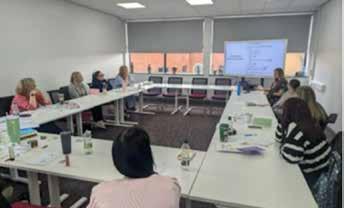
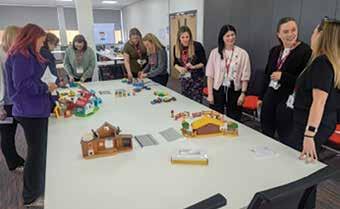
Gemma East, Speech and Language Therapist, and Susan Mulholland and Danielle Slader, Writer and Facilitators.
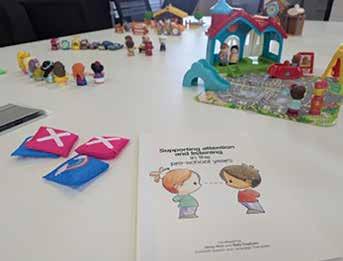
This term sees the start of an exciting series of four new Narrating Play workshops available to all Trust Early Years staff, with venues in North Tyneside, Northumberland and Newcastle.
Research evidence suggests that the quality of conversation matters most, not just the quantity (EEF, Improving early education through high-quality interactions, Sep 2025).
A large focus of the project is emphasising the power of adultchild interactions and encouraging staff to lean into their own creativity to enhance the play within our settings. Establishing these skills from a young age supports children to have the best possible start.
We have 45 participants signed up and we look forward to welcoming more of our staff over the coming sessions.
The DfE have published new guidance which became statutory on 29th June 2026 and must be followed in all schools from 1st September 2026.
‘All schools should be mobile phone-free environments by default; anything other than this should be by exception only.’
What do these changes mean for our schools?
All schools should develop a mobile phone policy that prohibits the use of mobile phones throughout the school day, including during lessons, the time between lessons, breaktimes and lunchtime.
You may have seen in the media that how schools plan to manage this varies greatly. Schools may have special lockers for mobile phones, others have sealed pouches, some are allowing ‘brick’ or ‘dumb’ phones which can only be used to call or text and have no internet access. Other schools have invested in magnetically locking pouches, which can be expensive.
Regarding Sixth Form students, the rules can be slightly different. The government suggests KS5 students can be allowed access to their mobile phone ‘at certain and limited times and locations’, reflecting their stage and age, with increased independence and responsibility. Sixth formers should not be allowed to use their phones in front of younger students; hence schools should limit their use to the common room.
Exceptions to the rule
In cases where students need access to their phones during the day for medical reasons, such as to control an insulin pump, schools will need to have a bespoke, individual solution.
The thinking behind the ban
It is hoped that banning phones will minimise classroom disruption, improve student behaviour, tackle bullying and protect young people’s wellbeing. The overarching goal is to ensure phones “have no place in the classroom” so students can stay engaged in learning. It is also hoped the ban will encourage more conversation between students, that it will be a real positive, giving students the opportunity to have conversations and learn real-world communication skills. It may also be a good way for students to think more for themselves, form their own opinions, and not overly rely on the internet, Google and Chat GPT.
There are also some rules for teachers in the government’s guidance too. It says that school staff should not use their own phones for personal reasons in front of students throughout the school day. This is to “empower staff” to better challenge students to meet the school expectations.
It also sets out when it might be appropriate for teachers to use a mobile phone in school, such as to ‘issue homework, rewards and sanctions, or to log in to secure accounts using two-step verification.’
The government has made it clear that headteachers know their own schools and students best, so can choose a way of delivering a phone ban that works for them. BBCET secondary headteachers have worked together and shared draft policies ready for September.
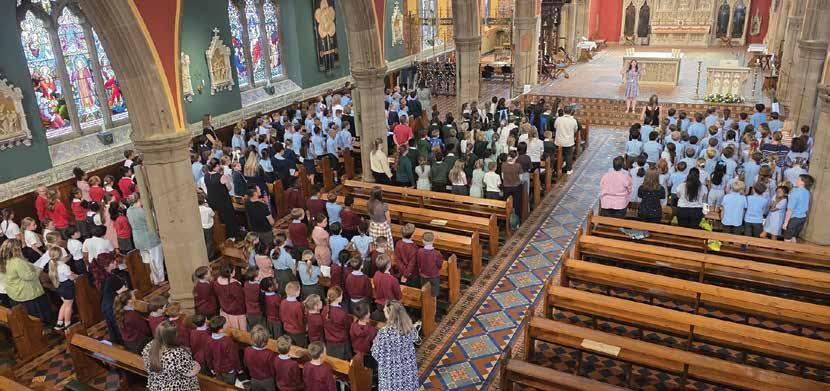
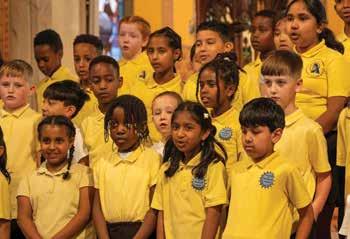
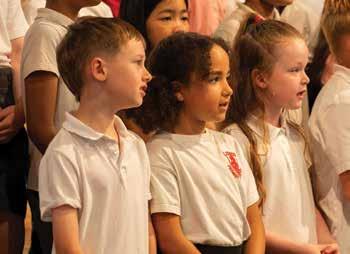
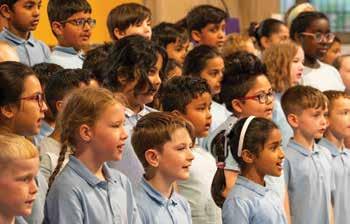
On the 23 and 24 June, over 720 pupils from ten BBCET primary schools gathered at the Cathedral Church of St Mary for Cantate, a joyful celebration of singing.
Since last September, these pupils have been working with Choral Director Eimear Hurley through weekly singing sessions. In these 30-minute sessions, Lower KS2 pupils develop core musical skills including pulse, pitch, rhythm, notation and singing technique, all while learning a mix of sacred and secular repertoire.
The programme is funded by, and modelled on, the National Schools Singing Programme, which operates across Catholic and Anglican dioceses throughout the UK. It places music, faith and community at the heart of school and diocesan life.
The Cantate events were the culmination of the successful first year of the Diocesan Singing Programme, reflecting a deep commitment to enriching the musical, spiritual, and cultural life of our children, schools, Trust and Diocese. Each participating school prepared and performed a song for an audience of their peers from other schools, parents and family members, and representatives from the Trust, Diocese and the National Schools Singing Programme. The hundreds of children then joined their voices in harmony to sing ‘Musica, Dei’.
While Cantate gave all children involved in the programme the opportunity to sing in our beautiful Cathedral, 22 children have been recruited through the Singing Programme to join the very first Diocese of Hexham and Newcastle Children’s Choir. Rehearsing weekly at the Cathedral, this choir is becoming an important part of the musical life of the Diocese, singing at 9.30am Sunday Masses and other celebrations and events throughout the Diocese.
We are delighted that the Programme will continue in partner BBCET schools in 2026-27 and look forward to seeing its continued growth in the years ahead.
More information on the Singing Programme is available on the Diocesan website: diocesehn.org.uk/education/schools-singing-programme.
Schools involved in the programme are: St Bernadette’s
St
St Teresa’s share some highlights from this academic year...
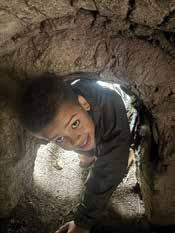
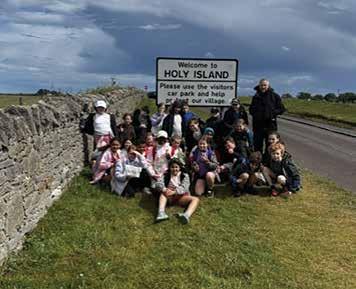
Year 4 recently enjoyed a wonderful residential trip to the SVP Camp on Holy Island, where they stayed for two nights. Although the weather was a little wet at times, this certainly didn’t dampen spirits! The children (and staff!) thoroughly enjoyed exploring everything this magical island has to offer.
Some of the highlights included climbing up (and racing back down!) Devil’s Drop sand dune, paddling in the North Sea, playing hide-and-seek in the Lime Kilns, taking part in an island treasure hunt, and an exciting game of laser tag. There was plenty of laughter and adventure throughout the trip.
The sun made a welcome appearance on the second day, giving everyone the perfect opportunity to sample some of Holy Island’s famous gelato — a definite favourite!
During their visit to St Aidan’s Church, the children were fascinated to hear stories about St Aidan and St Cuthbert from a
camp volunteer. They also took part in a special liturgy, reflecting on how they can follow the example of these northern saints as they prepare to make their First Holy Communion.
One particularly special moment came as the children watched the sun setting while the tide came in, covering the causeway — a truly memorable way to end such a fantastic trip.
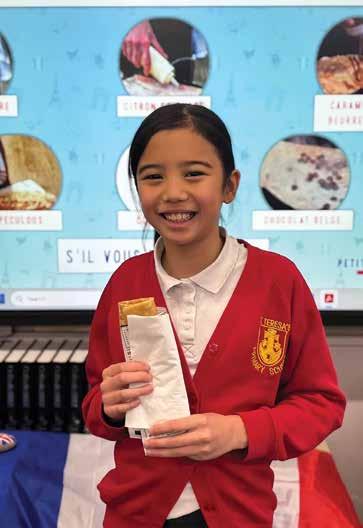
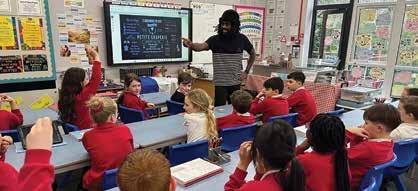
One of the highlights of the Year 5 calendar took place during Language Week, as pupils enjoyed a fantastic French-themed experience.
The event included a special visit from a guest at Petite Crêperie, who brought French language and culture to life in a fun and engaging way.
Pupils learned a range of simple French phrases and practised speaking them out loud, helping to build confidence and spark curiosity about learning a new language. The interactive session kept everyone involved and excited throughout.
The live crêpe-making demonstration was a clear highlight. Pupils watched as authentic French crêpes were prepared in the classroom, with the delicious smell adding to the experience. Tasting the freshly made crêpes was a favourite moment for many.
The day successfully combined learning with enjoyment, giving pupils a meaningful insight into French culture and leaving them eager for more experiences like this.
The visit brought learning to life, deepening pupils’ understanding of language, culture and the wider world, while creating lasting memories. School
Eco-club leads the way with award-winning sustainability efforts
This academic year, Miss Kemp, Ms Bell and Eco-Club members have led an impressive programme of sustainability and environmental action.
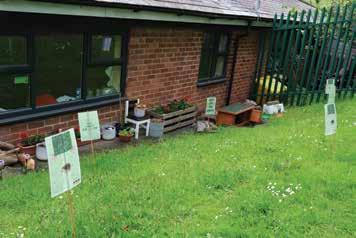
Together, they created a sensory garden and wildlife garden, launched a Hedgehog Society and achieved Gold Hedgehog Friendly Campus Status—an outstanding achievement for Year 3 and 4 members. Their work also earned city-wide recognition, including the Net Zero Hero Initiative Award and hosting a regional Newcastle Sustainability Schools Network meeting.
Through the WOW initiative, the school reduced traffic around the gates while encouraging walking, cycling and scootering, with pupils even enjoying a surprise visit from Strider.
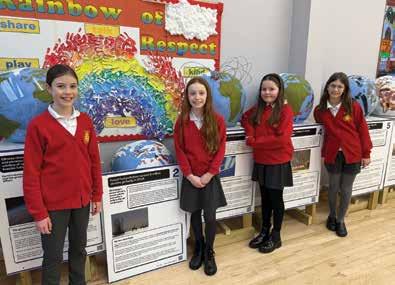
The school also promoted community engagement through events such as the 9 Earths Exhibition, a Sir David Attenborough-themed bake sale raising over £239 for WWF, and One Tree Day fundraising.
The sustainability journey continues with plans to achieve The Better School Award and host a Key Stage 2 upcycling fashion show. These achievements highlight pupils’ passion and the powerful impact young people can have on their school, community and wider world.
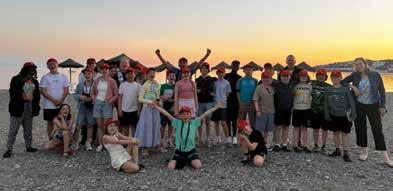
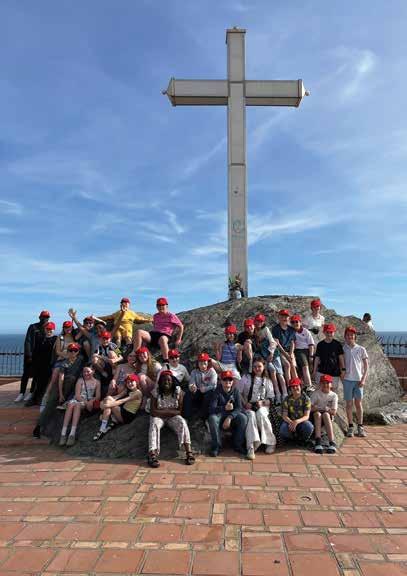
With support from Turing Scheme funding, 28 Year 6 pupils and five staff enjoyed an unforgettable visit to Almuñécar, Granada, from 18–22 May. The trip combined language learning, cultural immersion and international friendship.
Pupils practised Spanish, sampled local cuisine and built confidence in a new environment. A key highlight was visiting partner school Colegio Río Verde, where they met pupils they had previously connected with through letters and videos. Together, they took part in sports, dancing and creative activities, forming strong cross-cultural friendships.
They also experienced a flamenco workshop, explored the prehistoric Nerja Caves and visited Málaga, including the Alcazaba and OXO Video Game Museum, while enjoying local food such as churros.
Throughout the week, pupils showed maturity, independence and enthusiasm. As one pupil said, “The trip was amazing – full of adventure, historic buildings and statues, and beaming sun.”
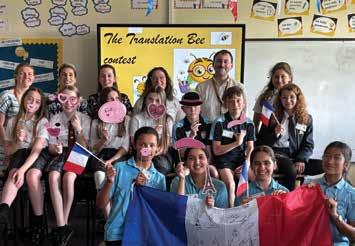
On the 25th June St Thomas More Catholic High School hosted its first French Translation Bee. We were joined by students and staff from St Mary's and Sacred Heart for the morning in a competition to see who could use the French we have learned in Year 7 most accurately. St Thomas More's team was made up of Ellie Chapman, Jessica Oughton, Isabelle Nott and Ruby Reynolds.
Although we had some great prizes, it wasn't supposed to be a very serious competition and all the rounds were varied. We started with an icebreaker activity so that the participants could get to know each other. Sometimes students had to come up in front of our panel of judges and on other occasions the students worked in pairs.
The closest round was the Read Aloud Task. All of the students' pronunciation was so good that the judges thought that we could have been in a French school. We finished the morning off by giving out prizes to all of the participants. Sacred Heart won the overall competition and received Amazon Vouchers as first prize. Our last activity was a Polish lesson given by Maja Maduzia and Daria Kurozcz in Year 10. They made amazing teachers and we all learned how to give our opinions. Next year we are hoping to make the Translation Bee bigger with teams from all the secondary schools in the Trust.
I participated for St Thomas More in the contest. I found the morning very fun and enjoyable, we did lots of rounds where we got to hear the amazing French accents of our fellow competitors. In the middle we had a break and delicious biscuits.
Ellie Chapman
We had five rounds with a mixture of describing ourselves, reading aloud, describing a friend, translating into French and adjective pairs, which we found the hardest. I found all of it "vraiment amusant".
Jessica Oughton
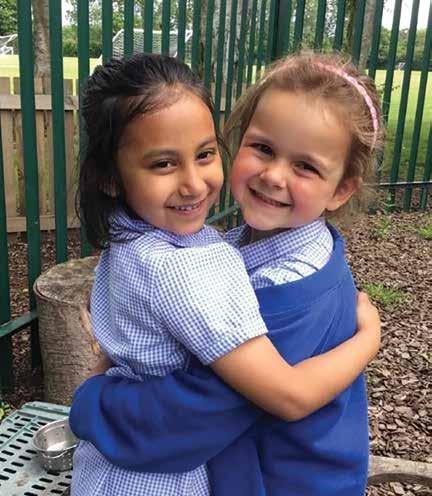
There was great excitement at St Oswald’s Catholic Primary School when staff, children and governors learned that the school had been awarded the Inclusion Quality Framework (IQF) Award by Newcastle City Council.
The award celebrated the school’s commitment to ensuring inclusion is at the heart of everything it does.
During the assessment process, visitors spent time speaking with children, staff and governors, gaining a real insight into life at St Oswald’s.
The school proudly showcased its inclusive practice in many ways. Visitors saw how adaptive teaching, personalised learning and a range of support provisions help meet the needs of all children.
They also learned about the school’s strong universal offer, ensuring every pupil feels valued, supported and able to succeed.
Most importantly, the visitors experienced the warm and welcoming atmosphere that makes St Oswald’s so special.
Children spoke confidently about being themselves, feeling safe and being encouraged to achieve their personal best.
Receiving the IQF Award was a proud moment for the whole school community and a wonderful recognition of the dedication, care and teamwork that help every child flourish at St Oswald’s Catholic Primary School.
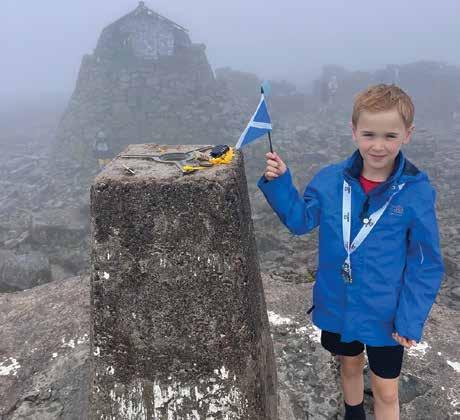
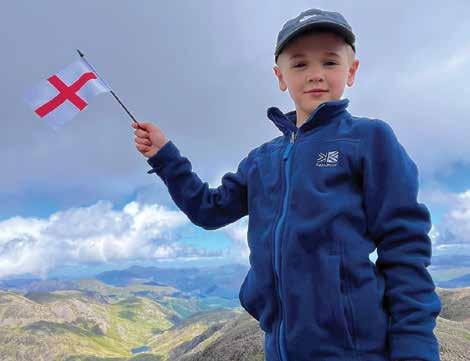
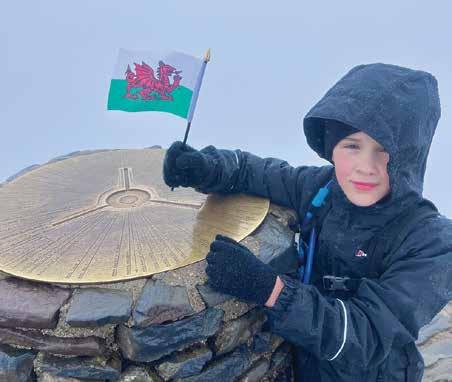
A remarkable young adventurer from St Paul’s Catholic Primary School has demonstrated our R.E.S.P.E.C.T. values in spectacular fashion by successfully completing the National Three Peaks Challenge at the age of just eight. Throughout the challenge, he demonstrated exceptional resilience when faced with difficult terrain and challenging weather conditions, while maintaining a positive attitude from start to finish.
William recently summited Ben Nevis (1,345m), Scafell Pike (978m) and Snowdon (1,085m) – the highest mountains in Scotland, England and Wales – in an extraordinary test of endurance, determination and character. The challenge was far from easy. William faced some of the toughest conditions the British mountains could offer, including zero visibility, sideways rain and relentless storms.
The steep paths to each summit were demanding and the weather was unforgiving, yet William continued step by step with quiet determination, resilience and an infectious cheerfulness that inspired everyone around him.
William covered an estimated 42 kilometres across the three climbs. He achieved a total ascent of more than 3,000 metres and accumulated an astonishing 120,000 steps throughout the challenge.
William was thrilled to receive a signed photograph and merchandise from The Mission: Everest team, who acknowledged his impressive efforts and determination. He has also recently been awarded a Blue Peter badge.
Everyone at school is incredibly proud of William and the example he sets for others.
To complete the National Three Peaks Challenge at just eight years old is an outstanding achievement and a testament to his perseverance, courage and positive mindset.
Congratulations, William – a truly inspirational achievement!
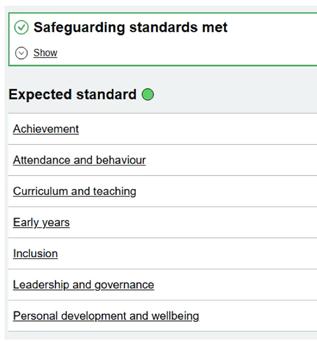
Pupils progress well across the curriculum from their starting points. Pupils with special educational needs and/or disabilities make secure progress throughout the curriculum because staff match adaptations closely to their needs.
Attendance has improved over time and is now well above national averages for all pupils, including pupils with special educational needs and/or disabilities (SEND) and disadvantaged pupils.
Leaders have an accurate understanding of the curriculum.
The revised curriculum is well sequenced across subjects and year groups, so pupils build knowledge step by step.
Staff deliver the phonics programme expertly, and pupils move through the programme at pace to become fluent early readers.
Warm, caring relationships between staff and children create a strong foundation for learning.
Leaders make sure all pupils are included fully in school life at St Bede’s. They know pupils and their families well.
The school’s well-planned approach to personal development and wellbeing begins in the early years. The inclusive approach is rooted in the school's values and its comprehensive personal, social and health education curriculum.
Pupils are proud to be part of the community of learning at St Bede's.
Leaders have high expectations of all pupils.
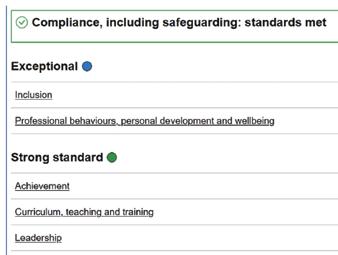
Leaders offer notably high levels of support and care to its trainees.
Robust systems exist through which additional needs and barriers are swiftly identified. This enables leaders to put highly effective support in place, which often has a transformational impact on trainees’ ability to complete the programme successfully.
Leaders’ careful consideration of curriculum design and sequencing prepares trainees very well for the workplace. Almost all trainees complete both the programme and the postgraduate certificate in education successfully. Many trainees secure a teaching post before the end of the programme.
Leaders draw on ‘experts’ to deliver various aspects of the curriculum. Over the course of the programme, trainees have multiple opportunities to observe expert practice.
Trainees have a rich, deep knowledge of relevant educational theories and their specialist subjects. As a result, trainees achieve very strong outcomes.
Leaders have designed a carefully structured and ambitious initial teacher education (ITE) curriculum that meets statutory expectations and is robustly informed by relevant research and professional guidance.
Leaders, including those with oversight of the programme, articulate a clear and ambitious vision for the secondary phase, placing pupils’ education and wellbeing at the heart of the trainees’ development.
A strong culture of professional respect characterises the partnership. Staff are positive and supportive, fostering an environment where trainees thrive. Trainees benefit from studying with a provider that gives very high levels of consideration to any additional needs or barriers they may have. Leaders have created a highly inclusive culture.
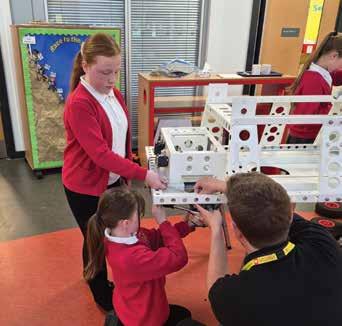
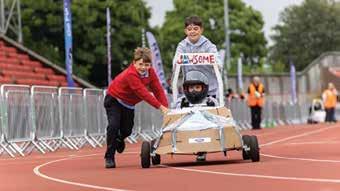
The Greenpower Goblins Challenge gives young people the opportunity to design, build and race their own electric kit cars, developing teamwork, creativity and practical engineering skills along the way. The 2026 Gateshead race day brought together 16 teams from schools and community groups across the North East to compete in slalom, drag and sprint events.
A standout performance came from St Stephen’s Catholic Primary School, Longbenton, whose vehicle impressed judges with its speed, reliability and consistency throughout the competition, securing the overall win. The achievement reflected months of hard work by pupils and support from Greenpower Ambassador Rowland Hingston and Siemens STEM volunteer George Wright.
Speaking after the victory, Mr Baines from St Stephen’s said: “Taking part has been an incredible experience for our school. The competition was a fantastic day regardless of the result, but yesterday’s success made it extra special for our pupils.”
The event highlighted the value of hands-on STEM learning, inspiring young people to build confidence, solve problems and explore future careers in engineering and technology. newcastlemagazine.com/young-engineers-shine-at-greenpowergoblins-race-day-in-gateshead
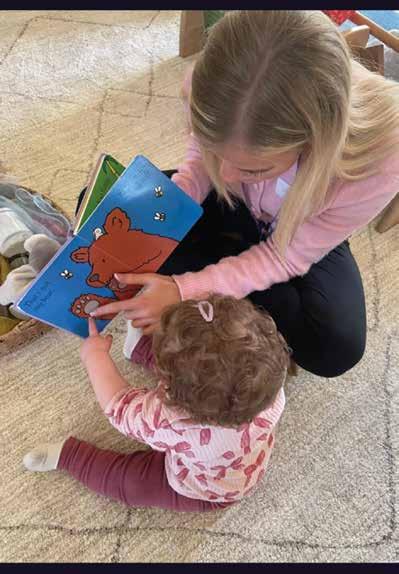
Sixth form students from St Benet Biscop Catholic Academy visited Little Angels Nursery in Bedlington to help inspire a love of reading among young children. Ten Year 12 and 13 Social Sciences students took part as part of their studies in Health and Social Care, Early Childhood Development and Psychology.
During the visit, students read stories to children aged 0–5 and observed early years activities, gaining valuable handson experience. The initiative, organised by Social Sciences Lead Natalie Jewitt, also aimed to build links for future work experience opportunities.
Students found the visit rewarding, with Ruby praising the children’s independence and Tilly highlighting their confidence in interacting with new people.
Mrs Jewitt commended the students’ professionalism, describing them as positive role models who showed care, respect and enthusiasm. The visit marked a successful first outreach event, strengthening community links while promoting a lifelong love of reading.
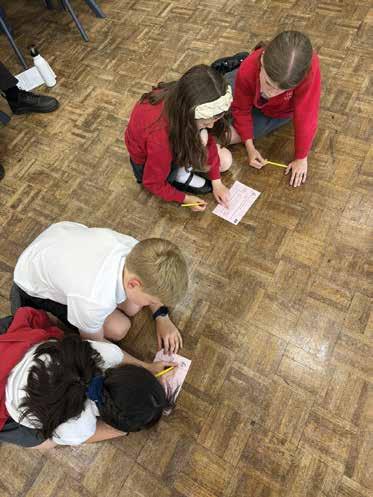
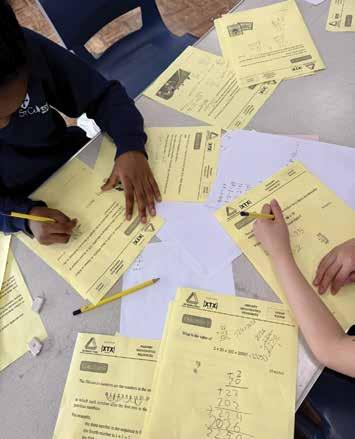
On Friday 12 June, we were delighted to welcome Year 5 pupils from across the Trust to our annual Year 5 Maths Challenge. Each school was represented by a team of four budding mathematicians, who spent the day tackling a range of exciting and demanding mathematical challenges.
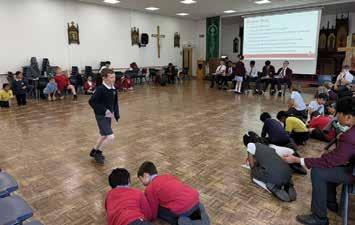
The competition began with a collaborative group round, where teams could choose their own strategy for answering 15 questions. This was followed by a challenging cross number puzzle before pupils took on the popular shuttle round, requiring excellent teamwork as pairs built on each other's answers to solve a sequence of linked problems. After lunch, the competition continued with a logic round, several rounds of the fast-paced 'Make a Number' challenge and, finally, the eagerly anticipated relay, where speed, accuracy and communication were all put to the test.
Our Year 10 Maths Ambassadors played an important role throughout the day, supporting the running of the event, helping to supervise activities and encouraging the younger pupils. They were excellent role models and represented the school brilliantly.
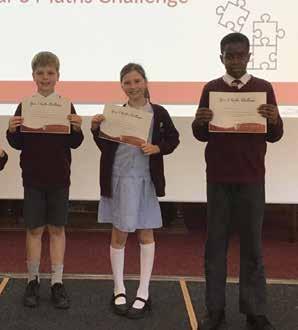
The standard throughout the day was exceptional, with the final scores incredibly close. Congratulations to our joint third-place teams, St John Vianney and St Cuthbert's (Walbottle), second place Sacred Heart Team 1, and this year's overall champions, St Charles’.
A huge well done to every pupil who took part to demonstrate outstanding mathematical thinking, resilience and teamwork throughout a fantastic day of competition. We look forward to welcoming next year's Year 5 mathematicians for another exciting Maths Challenge.
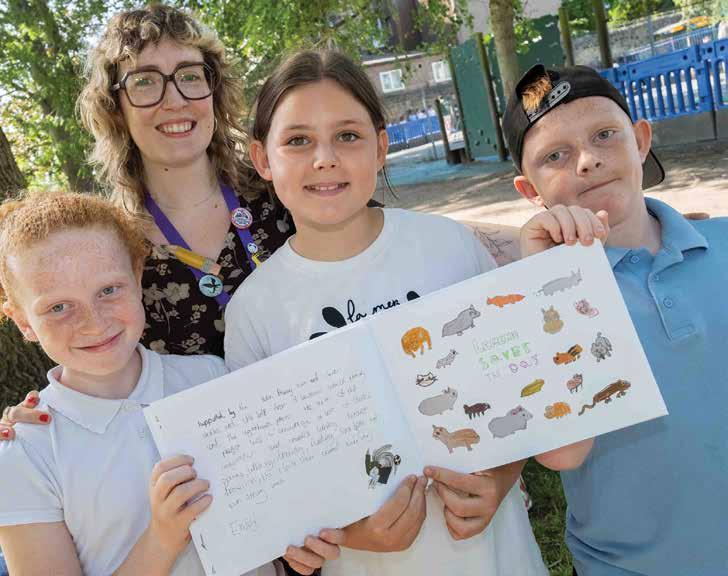
Year 5 pupils at St Lawrence’s Catholic Primary School are celebrating a major achievement after becoming published authors through a three-year creative writing project with Seven Stories, funded by the Helen Bailey Trust.
The programme has seen pupils work closely with Seven Stories’ Daisy Fitzpatrick. Meeting twice a month, the children explored a wide range of books and genres, developed their vocabulary and storytelling skills, and collaborated to create an original story.
After a class vote, pupils chose an adventurous tale featuring Newcastle United footballer Anthony Gordon and his pet hamster, Legend. The story follows the pair as they are sucked into a black hole, transported to Antarctica and eventually find their way to St James’ Park after a series of exciting adventures. Head of School, Charlotte Robson, praised the project for helping children see themselves as writers and showing them that their voices and ideas matter. The pupils also shared their success by reading their published book to younger children in Reception, Year 1 and Year 2. The project will continue into Year 6, helping to build creativity, confidence and a lifelong love of reading as part of the National Year of Reading.
To keep up to date with what is happening at Bishop Bewick schools please follow us on our social media pages
X: @bbcet
YouTube: @bbcet
Instagram: @bishopbewick


Facebook: Bishop Bewick Catholic Education Trust
LinkedIn: Bishop Bewick Catholic Education Trust
Bluesky: bishopbewickcet