FAITH IN LEARNING
OUR MISSION OUR VALUES
To serve the Catholic and wider community by providing sixth form education of the highest quality and to act in the spirit of the Gospel believing that every person is loved by God and has a unique value.
OUR ETHOS

St Brendan's aims to be a welcoming and transformative Sixth Form College where every member of our community flourishes and achieves their full potential.
Ethos is a distinctive way we live out our College mission and it can be experienced:
Through our relationships with each other (staff and students)
Through the participation in community life of the College
Following policies & practices that reflect and embody the teachings of Jesus and Catholic Social Teaching
With guidance from our Governing Body
Modelled by all staff in College
Through high quality pastoral care, support and guidance
Through personal witness to the St Brendan's values
Through the provision of Chaplaincy and core RPE
At St Brendan’s Sixth Form College, our aim is to serve the Catholic and wider community by providing sixth form education of the highest quality. A Sixth Form College with excellent results, we offer a wide range of Level 3, A level and BTEC courses as well as Level 2 courses for 16-19 year olds.

St Brendan’s is welcoming and transformative community built on Catholic values. We celebrate diversity, focus relentlessly on embedding knowledge and building our students motivations, independence and self-belief. We warmly welcome students from all faiths, cultures and backgrounds.
We deliver excellent student progress from each individual’s unique starting point. Quality teaching and an enriched educational experience provides our students with the freedom to learn in their own way, underpinned by the support of our excellent teachers and experienced pastoral, welfare and careers teams.
WHY A CATHOLIC COLLEGE?

From the foreword of Christ at the Centre, 2012,
“At the Baptism of their children, parents promise to bring them up in the practice of the faith by loving God and their neighbour. The Church assists them in fulfilling this solemn commitment in two ways, by providing catchesis in our parishes and by establishing Catholic Schools.”
The identity of a Catholic College is to educate and transform the person. A relationship with faith, culture and values
FUNDAMENTAL ATTRIBUTES OF CATHOLIC COLLEGES
Catholic colleges should exhibit the following characteristics:
A commitment to the education of the whole person who is made in ‘the image and likeness ‘of God’ (Genesis 1:26)
Promoting The Common Good (whatever is needed for each and every person to flourish), so that young people may attain a greater sense of responsibility and right use of their personal freedom
Enable a synthesis of culture and faith
Encourage solidarity and collaboration with others
MEET OUR CHAPLAIN
Marek Czapiga (pictured)
ST BRENDAN’S PRAYER
Lord, I will trust You, Help me to journey beyond the familiar and into the unknown. Give me the faith to leave old ways and break fresh ground with You.
Christ of the mysteries, I trust You to be stronger than each storm within me.
I will trust in the darkness and know that my times, even now, are in Your hand. Tune my spirit to the music of heaven, and somehow, make my obedience count for You.
Amen

ST BRENDAN’S TRUSTEES
In 1992, Parliament passed the Further and Higher Education Act, as a result of which, St Brendan’s Sixth Form College, as a former Voluntary-aided Sixth Form College, was given ‘designated’ status within the Further Education sector in April 1993.
The Board of Governors became incorporated under section 143 of the Learning and Skills Act 2000. Under the 2009 Apprenticeships, Skills, Children and Learning (ASCL) Act, Sixth Form Colleges became a separate legal entity for the first time and thus St Brendan’s is now a corporate Sixth Form College with its ‘voluntary aided’ nature accepted and maintained. The College is an exempt charity for the purposes of the Charities Act 2011.

As a designated institution, St Brendan's Sixth Form College operates under a Trust Deed established by the Roman Catholic Diocese of Clifton.
Under the terms of the Trust, the Trustee (the Bishop) owns, with absolute discretion, the buildings and land curtilage. On 1 April 1993, all other buildings, property and land previously owned by the local education authority were transferred on trust to the Diocese. The deed of transfer was conditional on the land and property being used in the interests of the College.
In September 2007, the Diocesan Trustees confirmed their intention that the site should continue to be used for its present purpose and that, subject to this, the College's use of the premises was secure for the next forty years. The Board of Governors of the College acts for all practical purposes, for and on behalf of the Trustee, but it does not, unlike most other corporations in the sector, own in itself any of the Trust assets. This ownership lies exclusively with the Trustee of the Diocese.
WHO WAS ST BRENDAN?
St Brendan of Clonfert (c.484-577 AD) was an early Irish monk, priest and abbot. Born in County Kerry, he became one of the Twelve Apostles of Ireland, a group of key monastic founders educated by St Finian. He is best known for his legendary sea voyage, which made him one of the most famous Irish saints in medieval Christendom The Feast Day is the 16th May
“THE NAVIGATOR”
Brendan became known across Europe because of the Navigatio Sancti Brendani (“The voyage of St Brendan”), a 9th century text describing his extraordinary journey by sea. According to the tradition, Brendan:
Built a currach (a leather covered wooden boat)
Sailed with a group of monks for seven years
Sought the “Isle of the Blessed” or Promised Land of the Saints
Encountered symbolic and mystical adventures - islands of fire, great sea creatures, angelic beings and floating mountains.
Some historians believe his voyage may reflect real early exploration of the North Atlantic, perhaps reaching Iceland or even North America, centuries before the Vikings.

St Brendan is widely revered as a model of:
Courage: He set out into the unknown, trusting completely in God
Faith and Discernment: His voyage symbolise the Christian journey of searching, listening, and being led by the Spirit.
Leadership and Community: He travelled with monks, emphasising teamwork, discipline and shared purpose.
Adventure and learning: Brendan embodies curiosity, exploration, resilience - perfect for a Sixth Form College community.

OUR COLLEGE VALUES
JUSTICE
Supporting a determination to give everyone everything that is rightfully theirs, helping to fight injustice, and recognise how we can be more for others.
We aim to be people of Justice “Blessed are those who act justly who always do what is right” psalm 106:3
DIGNITY
Knowing that every person is made in the image and likeness of God, loved infinitely, deserving of our respect.
Act with Dignity in all we do and say “Do not fear, for I have redeemed you; I have called you by name, you are mine” Isaiah 43:1
INTEGRITY
Aiming to share the best parts of ourselves, striving to be better for others, helping those around us to flourish.
Do any action and thought with Integrity “May integrity and uprighthness protect me because my hope, Lord, is in you” Psalm 25:21
SERVICE
Putting the needs of others before our own and making a difference to everyone we meet.
Through Service to all we encounter “Through love, serve one another” Galatians 5:13
FORGIVENESS
To believe in fresh starts, reconciliation when things do not always work out, realising that relationships are important to help us thrive.

COMPASSION
Showing love to yourself and others in our local and global community.
Practice Compassion to ourselves and others “Be kind and compassionate to one another, forgiving each other, just as in Christ God forgave you” Ephesians 4:32
TRUTH
Seek to be witnesses to truth, speak and uphold this truth in all our encounters, respect others when they share their truth.
Be beacons of Truth to light the way
“I am the way, the truth and the life” John 14:6 11

LDIFFERE
A NT LL LOVE
COLLEGE VALUES
VALUES IN ACTION
As a Catholic sixth form college, our values are not abstract ideals but principles that shape daily life, professional practice and the experiences of our students. At a stage where young people are forming their identity, values and sense of responsibility, we seek to model these virtues consistently through our curriculum, our pastoral care, our collective reflection and spiritual life, and our relationships with one another. We do that by:

FORGIVENESS
Sacrament of Reconciliation, Advent and Lent.
Holocaust Memorial Day, termly Student Voice surveys, Student Union, Interfaith group.
JUSTICE INTEGRITY DIGNITY
Pastoral support and wellbeing initiatives for all students and staff.
TRUTH
Mission & Ethos Day, Quarterly Inset Day. These activities link to our commitment to Catholic Social Teaching.
CATHOLIC SOCIAL TEACHING
In 1891, Pope Leo XIII issued the first encyclical (Papal document) on Catholic Social Teaching. It is called Rerum Novarum (Of New Things) and has been updated and nuance multiple times over the years.
SEVEN MAIN PRINCIPLES:
1. THE DIGNITY OF EACH PERSON
Made in the image and likeness of God, each person’s dignity must be upheld and respected from conception to natural death.
2. SOLIDARITY
We stand in solidarity with everyone for the betterment of humanity. We belong to each other and with each other.
3. STEWARDSHIP OF THE EARTH
Earth is a gift from God, and we are to protect it.
4. A PREFERENTIAL OPTION FOR THE POOR
No one is left without the help they need.
5 DIGNITY OF WORK
“The dignity of work is to be found in the fact that a human being is doing the work” Laborem Exercens 1981
6. SUBSIDIARITY
Decisions must be made at the level of authority closest to the resolution
7. RIGHTS AND RESPONSIBILITIES
Human dignity can be protected and a healthy community can be achieved only if human rights are protected and responsibilities are met.
WHAT DOES THE CATHOLIC CHURCH SAY ABOUT OTHER RELIGIONS?
“The Catholic Church rejects nothing of what is true and holy in (world) religions. She has a high regard for the manner of life and conduct, the precepts and doctrines which, although differing in many ways from her own teaching, nevertheless often reflect a ray of truth which enlightens all humanity.”
Nostra Aetate, 1965
“What God wants is fraternity among us; we must not be frightened by difference.”
Pope Francis, 2019
CATHOLIC LIFE AND ENRICHMENT
Amongst the extensive Enrichment provision in the College, there are also opportunities for students to respond to the call of Catholic Social Teaching through the St Brendan’s Chaplaincy.
The Chaplaincy runs many groups which students can join to enrich their St Brendan’s experience and also boost their CV. Students can explore their faith, meet new people, learn new skills and help make a difference to those in need across the globe and in the local community
Chaplaincy / Catholic Student Leaders
Students help shape the spiritual life of the college through leadership, service and supporting liturgies, assemblies and acts of charity.
St Brendan’s Choir
A welcoming choir open to all students, leading music for college liturgies, celebrations and community events.
CAFOD Action Group
A student‐led group taking practical action for global justice through campaigns, fundraising and awareness‐raising inspired by Catholic Social Teaching.
CAFOD & Community Volunteering Programme
Opportunities for students to serve others locally and globally through regular volunteering, social action and partnership projects.
Multi‐Faith in Action Group
A space for students of all faiths and none to explore beliefs, build understanding and work together on peace and community initiatives.
Chaplaincy Charity Campaigns
College-wide charitable projects supporting those in need, especially during Advent and Lent, through fundraising, advocacy and acts of service.
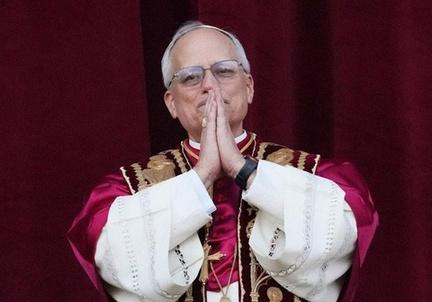
“True education trains both the intellect and the heart, directing them towards what is good”
Pope Leo
Pope Leo XIII reminds us that education is far more than the transmission of information or the pursuit of high grades - shaping the kind of people we become When he speaks of training both the intellect and heart, he is pointing to a deep truth at the centre of Catholic Education: knowledge without goodness is incomplete, and skill without character is fragile.
In a College community, this quote becomes an invitation; to think well, to feel deeply, to act with purpose; to let our learning enrich not only our own lives but the wider world: to become people whose inner compass points toward truth, dignity and compassion. This is the heart of Catholic education - forming young people who are not only capable; but good; not only skilled but wise; not only knowledgeable, but wholehearted
CHECKLIST FOR TEAMS
Each year, all teams review how their work supports the Catholic Life and Mission of the college. This checklist highlights the key themes to reflect on when completing your Self‐Assessment Review (SAR). Use it to identify strengths and to shape actions within your Improvement Plan.
1. Formation of the Whole Person
Supporting students’ spiritual, moral, intellectual, emotional and social growth.
Examples:
• Tutor reflections on wellbeing or identity.
• Lessons building character, critical thinking or ethical understanding.
2 Respect for Dignity, Equity & Inclusion
Showing dignity, compassion and fairness; creating a welcoming, inclusive culture.
Examples:
• Accessible and inclusive resources.
• Restorative approaches and positive relationships
3. Living Out Our Values & Catholic Social Teaching
Displaying Gospel values and St Brendan’s Values in actions and curriculum. Examples:
• Charity, social action or sustainability initiatives.
• Subject links to justice, dignity, stewardship or solidarity.
4. Service, Vocation & Using Gifts for Others Encouraging students and staff to use their gifts in service and see life as vocation.
Examples:
• Students as mentors, leaders or volunteers.
• Projects with real‐world impact that benefit others
5. Curriculum Opportunities for Spiritual Development Providing moments for reflection, big questions and exploring meaning.
Examples:
• Stillness, reflection or prayer in tutor/assembly time.
• Lessons exploring wonder, ethics, identity or purpose.
6. Collaboration, Community & Leadership Culture Working with trust, humility and shared purpose; contributing to Catholic Life.
Examples:
• Tutors attending assemblies/liturgies with groups.
• Cross‐department projects or partnerships for community good.