How to Stay Safe When Your Car Breaks Down on a Busy Highway A car breakdown on a busy highway can become dangerous within minutes because vehicles are moving at high speeds around you. Staying calm and making safe choices is more important than trying to fix the car immediately. If you need a towing service in Austin, TX, contacting a professional provider can help you get the assistance you need while minimizing your exposure to passing traffic. Moving away from traffic, making your vehicle visible, and getting professional help can protect you and other road users while you wait for assistance. Your safety should always come first.
Move the Car Away From Traffic If your vehicle is still able to move, steer it toward the shoulder or another safe area away from moving traffic. Turn on your hazard lights as soon as you notice a serious problem. Do not stop in a traffic lane unless the vehicle has completely lost power and cannot move.
Once you reach a safer position:
Put the transmission in park.
Apply the parking brake.
Keep your hazard lights on.
Stay aware of approaching traffic.
Even a small amount of extra space between your vehicle and passing traffic can reduce the danger.
Decide Whether You Should Stay Inside Whether you should remain inside the vehicle depends on where the car has stopped and the surrounding conditions. If your car is safely on the shoulder and leaving it would place you closer to fast-moving traffic, staying inside with your seat belt fastened may be safer. If the vehicle is in an active traffic lane and you can safely reach a protected location away from traffic, follow local safety guidance and move to that location. Never stand behind or directly in front of your disabled vehicle. A passing driver may not see you in time to react.
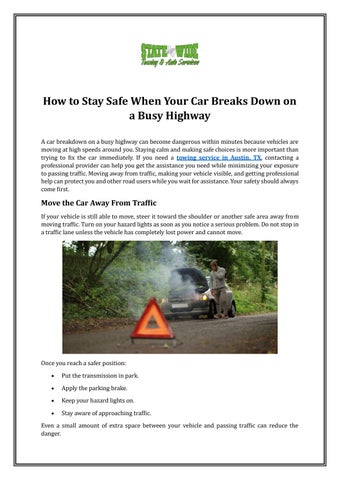
Make Your Vehicle Easy to See A disabled vehicle can be difficult for other drivers to notice, especially at night, during heavy rain, or around a highway curve. Keep your hazard lights flashing. If you have warning triangles or emergency markers and can place them safely without walking into traffic, use them according to their instructions. Avoid standing outside the vehicle simply to signal drivers. Your personal safety is more important than trying to direct traffic yourself.
Do Not Attempt a Risky Roadside Repair A highway shoulder is not the same as a safe garage or driveway. You may be able to identify a flat tire, overheated engine, or dead battery, but attempting a repair beside fast-moving traffic can expose you to serious danger. It is usually better to call a professional if:
The engine has stopped suddenly.
Smoke is coming from the vehicle.
The car has been involved in a collision.
You smell fuel.
The vehicle cannot be moved safely.
You are unsure what caused the breakdown.
Professional assistance can diagnose the problem or move the vehicle to a safer location.
Call for Roadside Assistance Once you and your passengers are in a safe position, contact a roadside assistance provider or towing company. Give the dispatcher clear information, including:
Your highway name or number
Direction of travel
Nearest exit or landmark
Your vehicle's make and model
The type of problem, if known
Your exact location from a navigation app
If you need a towing service, providing accurate location details can help the driver find you more quickly. Do not simply say that you are "on the highway." Large highways can stretch across many miles, and the wrong location can delay assistance.
Be Careful When Sharing Your Location Modern smartphones can make it easier to share your position with a towing provider. Use your navigation app to identify your location and check the highway direction before giving the information to the dispatcher. If possible, mention a nearby:
Exit number
Mile marker
Service area
Rest stop
Major intersection
These details are often more useful than a street address when your vehicle is on a highway.
Keep Passengers Away From Traffic If you have passengers with you, especially children or older adults, keep everyone calm and away from moving traffic. Do not allow passengers to walk along the highway looking for help or attempt to cross traffic lanes. If the weather is hot or cold, use the vehicle's climate system only if it is safe to run the engine. If there is smoke, a fuel smell, or another sign of fire risk, turn the engine off and move to a safer location when possible.
What If Your Car Is Blocking a Lane? A vehicle stopped in an active lane creates a much more serious situation. Turn on your hazard lights immediately and call emergency services or highway assistance. Do not try to push the vehicle yourself, especially on a busy road. Stay inside with your seat belt fastened if leaving the vehicle would expose you to traffic. If you can safely reach a protected area away from traffic, follow local emergency instructions. The main goal is to prevent a second collision.
What to Tell the Towing Company Before the tow truck arrives, explain whether your car has special needs. For example, tell the provider if:
The vehicle has all-wheel drive.
The car is electric or hybrid.
The wheels are damaged.
The vehicle is very low to the ground.
The car is carrying heavy equipment.
You need transportation for passengers as well.
This information allows the company to send suitable equipment. When arranging a towing service, clear communication about the vehicle's condition can help prevent delays when the tow operator arrives.
Avoid Accepting Help From Unknown Drivers Most people who stop may be trying to help, but you do not need to accept mechanical assistance from strangers. If someone offers to tow your vehicle, ask whether they are an authorised roadside assistance or towing provider. Keep your doors locked and avoid giving personal information to people you do not know. Waiting for the professional service you contacted is generally the safer choice.
Prepare Before a Breakdown Happens You cannot predict when a vehicle will fail, but you can prepare for the possibility. Keep these useful items in your vehicle:
Phone charger or power bank
Flashlight
Reflective safety vest
First-aid kit
Drinking water
Basic emergency supplies
It is also useful to save the contact details of a reliable towing provider before you actually need one. Having a plan can make it easier to stay calm when something goes wrong.
After the Vehicle Is Towed Once the tow truck arrives, explain the symptoms you noticed before the breakdown. Details such as unusual sounds, warning lights, overheating, or loss of power can help a mechanic identify the problem. If the vehicle is being taken to a repair shop, confirm the destination and remove important personal belongings before leaving. Keep records of the towing service and any repairs performed. These records can be useful if the same problem returns later.
Final Thoughts A breakdown on a busy highway is stressful, but quick and careful decisions can reduce the danger. Move away from traffic when possible, use hazard lights, avoid risky repairs, keep passengers safe, and contact professional roadside assistance. Give the towing provider clear information about your location and vehicle so help can arrive prepared. If you need a towing service in Austin, TX, choosing a dependable provider can make the experience safer and less stressful while your vehicle is moved to a secure location.
FAQs 1. What should I do first if my car breaks down on a busy highway? Turn on your hazard lights, stay calm, and move your vehicle to the shoulder if you can do so safely. If possible, park as far from moving traffic as you can. 2. Should I stay inside my car after it breaks down on the highway? If your vehicle is safely on the shoulder, staying inside with your seat belt fastened is often safer than standing near traffic. Avoid exiting the vehicle unless there is an immediate safety risk or you need to move away from danger. 3. Who should I call when my car breaks down on a highway? Call roadside assistance, a tow truck service, or the appropriate highway emergency service. Tell them your exact location, direction of travel, nearby exits or landmarks, and what happened to your vehicle. 4. What if my car stops in a traffic lane and I cannot move it? Turn on your hazard lights and remain inside with your seat belt fastened if it is safer than exiting. Call emergency services or highway assistance immediately and clearly explain that your vehicle is blocking traffic. 5. What information should I give the tow truck driver? Provide your location, direction of travel, nearest exit or mile marker, vehicle make and model, and the type of breakdown if known. Mention if the car is blocking traffic or has any other safety concerns.
Contact Details Phone: 512-828-6999 Email: hit@statewidetx.com Website: https://maps.app.goo.gl/H1vWvYiwfZ6tTfEZA