Do You Need Towing or Vehicle Recovery? A Simple Guide When your vehicle stops working or gets stuck, choosing the right service can save time, money, and stress. Vehicle recovery in Austin helps drivers handle situations that go beyond a simple vehicle tow. But when should you request recovery instead of towing? Understanding the difference can help you make a quick decision when you face a breakdown, accident, flat tire, or difficult roadside situation.
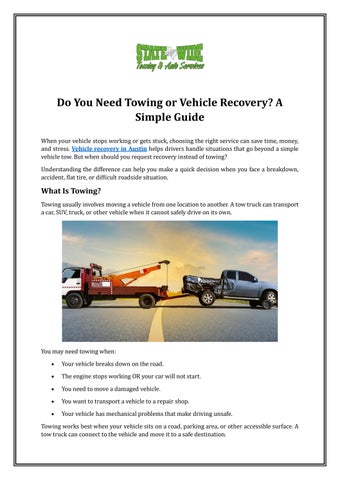
What Is Towing? Towing usually involves moving a vehicle from one location to another. A tow truck can transport a car, SUV, truck, or other vehicle when it cannot safely drive on its own.
You may need towing when:
Your vehicle breaks down on the road.
The engine stops working OR your car will not start.
You need to move a damaged vehicle.
You want to transport a vehicle to a repair shop.
Your vehicle has mechanical problems that make driving unsafe.
Towing works best when your vehicle sits on a road, parking area, or other accessible surface. A tow truck can connect to the vehicle and move it to a safe destination.
What Is Vehicle Recovery? Vehicle recovery covers more challenging situations. Recovery services help retrieve vehicles from places where a standard tow may not work easily. You may need vehicle recovery when your vehicle:
Gets stuck in mud, sand, loose ground OR slides off the road.
Slides off the road.
Becomes trapped in a ditch OR gets stuck on uneven terrain.
Suffers damage after an accident.
Needs specialized recovery equipment.
Sits in a difficult or unsafe position.
Recovery often requires more planning and specialized equipment. The recovery provider first assesses the vehicle and its surroundings. Then, the team chooses a safe method to move the vehicle.
Towing vs. Vehicle Recovery: Key Differences Although people often use the terms interchangeably, towing and recovery serve different needs.
Towing
Moves a vehicle from one accessible location to another.
Works well for standard breakdowns.
Often takes the vehicle to a mechanic or safe location.
Usually involves a tow truck and standard towing equipment.
Vehicle Recovery
Retrieves vehicles from difficult locations.
Handles stuck, overturned, or hard-to-reach vehicles.
May require specialized recovery equipment.
Focuses on safely freeing the vehicle before transporting it.
The easiest way to decide involves looking at the vehicle's position. If your vehicle sits safely on a normal road but cannot drive, towing may meet your needs. If the vehicle sits somewhere difficult or unsafe, recovery may offer the better solution.
How to Choose the Right Service Ask yourself these simple questions before calling for help: 1. Can my vehicle safely sit where it is? If yes, standard towing may work. If the vehicle sits in a dangerous position, consider recovery. 2. Can a tow truck easily reach my vehicle? Limited access may require recovery equipment. 3. Is my vehicle stuck? Mud, sand, ditches, or uneven ground can turn a normal towing job into a recovery job. 4. Did an accident change the vehicle's position? A collision may require recovery before towing. 5. Can the vehicle move normally? If it cannot move safely, explain the situation clearly when requesting assistance. Giving the service provider accurate details can help them send the right equipment.
Why Quick Assistance Matters A disabled or stuck vehicle can create serious roadside risks. Traffic, poor visibility, weather, and an unsafe vehicle position can increase the danger. Calling a professional service quickly can help you:
Move away from dangerous traffic.
Reduce the risk of further vehicle damage.
Get the vehicle to a repair facility.
Avoid attempting unsafe DIY recovery.
Restore safer travel conditions.
If you need vehicle recovery, describe your location, vehicle type, condition, and the problem when you call. These details help the recovery team understand what the job requires.
Final Thoughts Towing and recovery solve different roadside problems. Towing usually moves accessible vehicles, while recovery helps retrieve vehicles from difficult or unsafe locations. Knowing the difference helps you request the right assistance and avoid unnecessary delays. When your vehicle gets stuck or suffers a serious roadside problem, vehicle recovery in Austin can provide the specialized help needed to move it safely.
FAQs 1. Do I need towing or recovery if my car breaks down? You usually need towing if your car sits on an accessible road and cannot drive. Recovery may become necessary if the vehicle sits in a ditch, mud, or another difficult location. 2. Can a tow truck pull my car out of a ditch? Some tow trucks can handle minor situations, but a vehicle deep in a ditch may require specialized recovery equipment. Tell the provider exactly where the vehicle sits. 3. What should I tell the recovery company? Share your exact location, vehicle type, vehicle condition, and what happened. Mention if the vehicle sits in mud, sand, a ditch, or an area with limited access. 4. Does an accident always require vehicle recovery? No. A vehicle that remains accessible and stable may only need towing. However, a vehicle that leaves the road or sits in a difficult position may require recovery first. 5. Can vehicle recovery prevent further damage? Professional recovery can reduce the risk of additional damage when the team uses the right equipment and recovery method. Avoid trying to pull out a badly stuck vehicle yourself. 6. Is recovery more complex than regular towing? Often, yes. Recovery can involve difficult terrain, restricted access, vehicle damage, or specialized equipment. The provider needs to assess the situation before choosing the safest approach.
Contact Details Phone: 512-828-6999 Email: hit@statewidetx.com Website: https://maps.app.goo.gl/H1vWvYiwfZ6tTfEZA