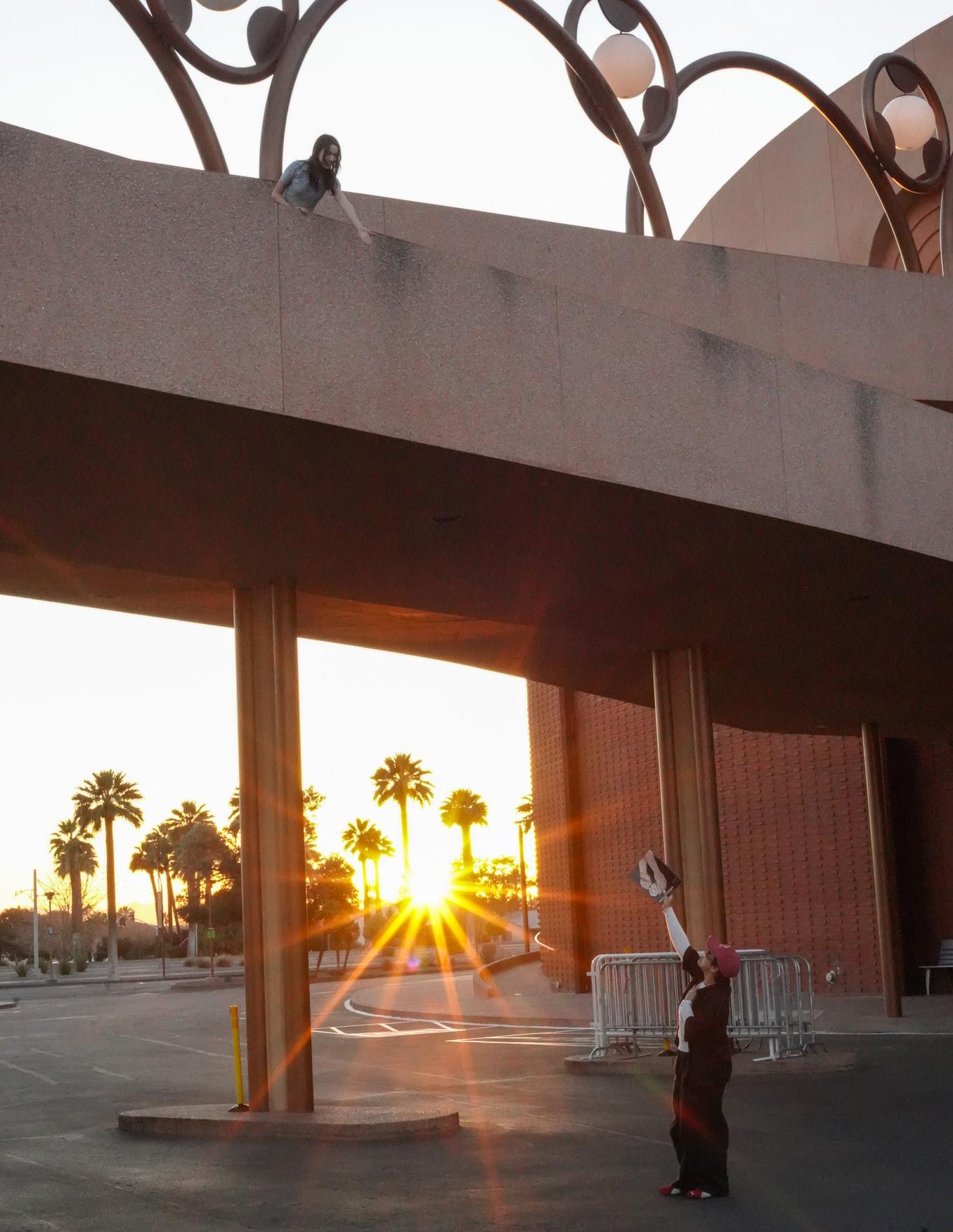
PHOTO BY WENDY MADDOX
EXECUTIVE EDITOR
Katrina Michalak
EDITOR-IN-CHIEF
Leah Mesquita
MANAGING EDITORS
Abigail Wilt
Natalia Jarrett
DESIGN EDITORS
Lavanya Paliwal
Paulina Soto
ENGAGEMENT EDITOR
Wendy Maddox
WRITERS
Jude Banihani
Carsten Oyer
Aleisha Paulick
Keyanee Walls
Lucia Zettler
ILLUSTRATOR
Kormac Moore
PHOTOGRAPHER
Liam Gigsy Gajotan
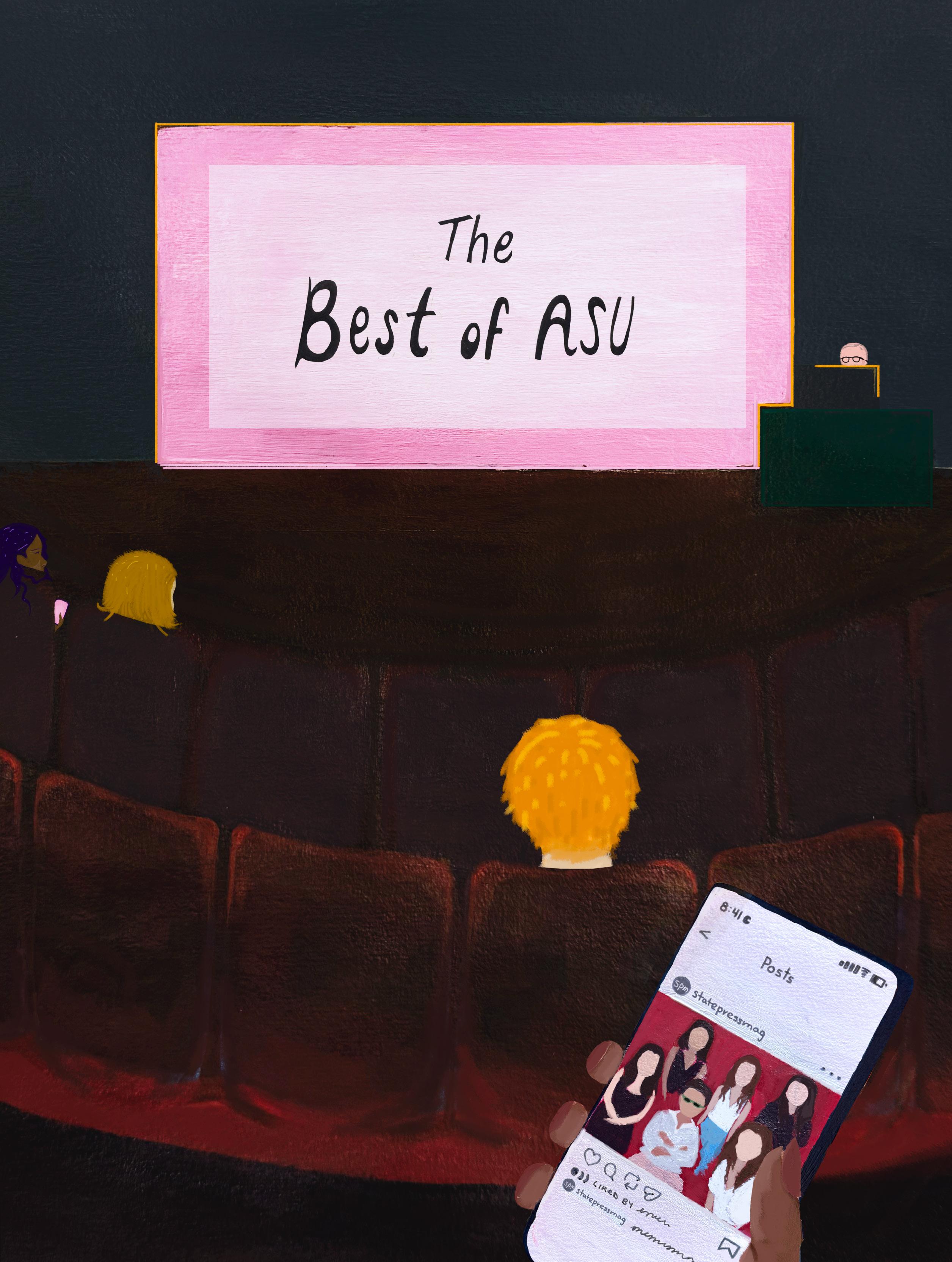
COVER BY: Paulina Soto
Editor’s letter
In the past, The Best of ASU has been an opportunity for writers to dissect our University for what it excels in — and where it falls short. For the final issue of Volume 26, carrying this longstanding tradition of examining our community, our peers and our authorities felt like the perfect closure to another year of ‘bold, risk-taking and provoking’ work. We hope this magazine allows you to reflect on the pressing matters around us as we navigate this current day and age.
Reporters spread far and wide in their coverage of this issue. Some examined the University’s history, both politically and architecturally. One writer highlighted an ASU icon’s legacy, while another satirized a prominent aspect of student-life. Other stories delved into heavier topics, like strides toward innovation and the campus’ online dating scene. Our feature story investigates the frustrations and obstacles animation majors are facing.
By Lucia Zettler
Wilt,
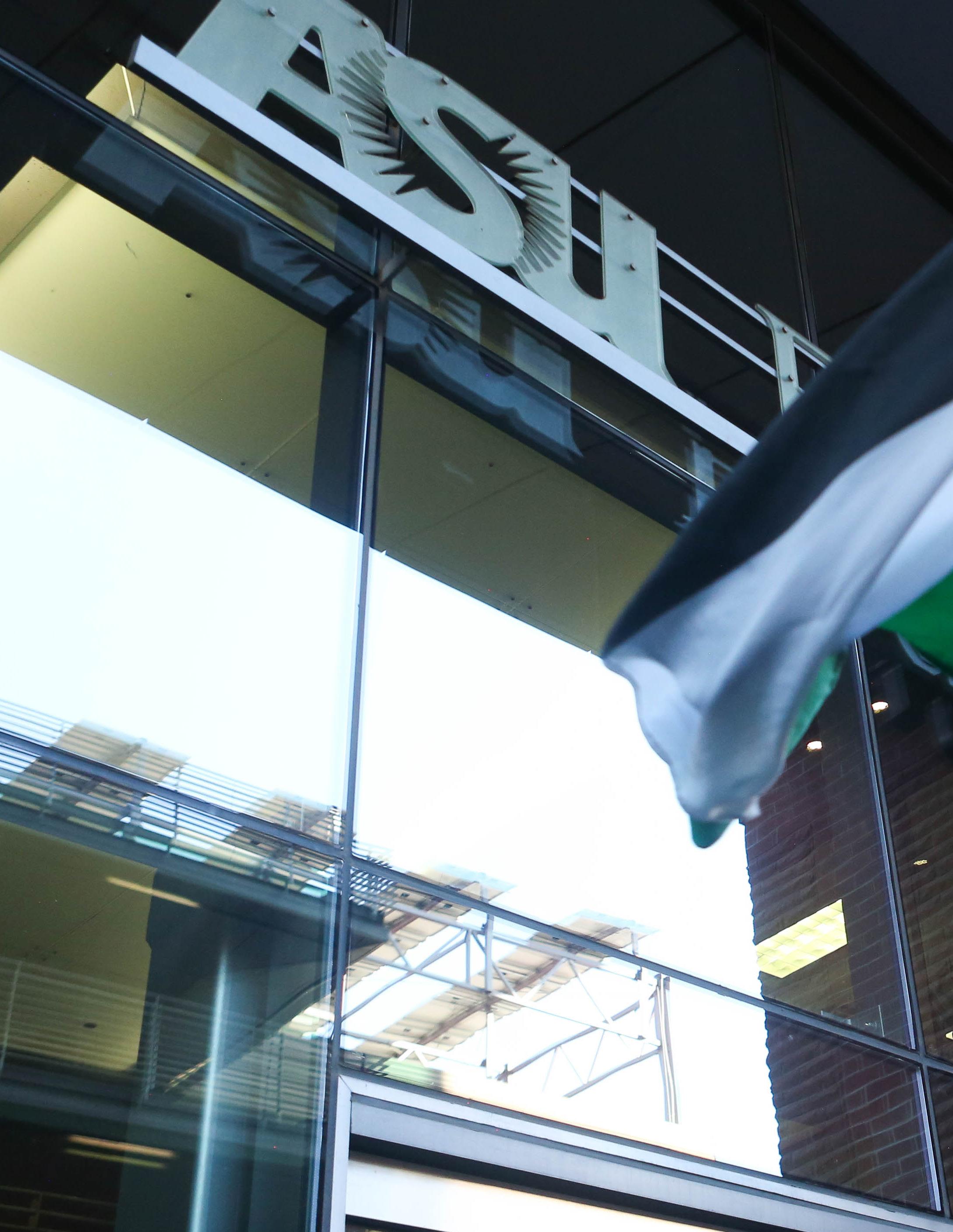
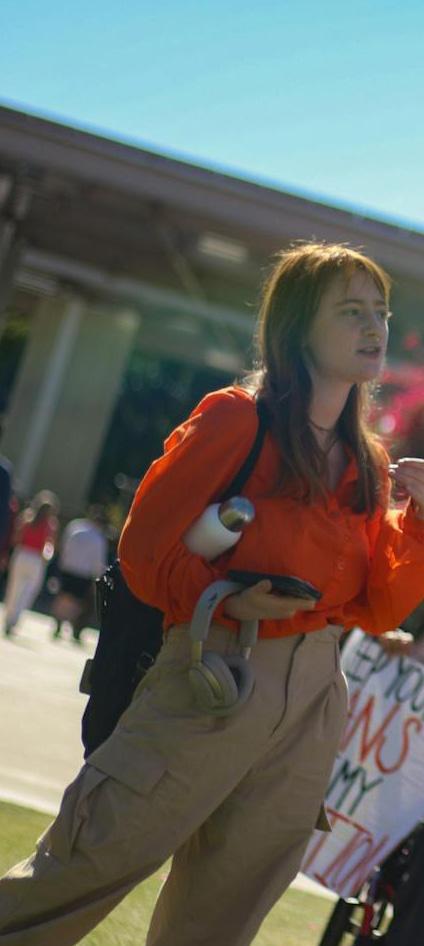
It’s a Tuesday. Hot. I’m walking to the Hayden Library when I pass a protest. They’re holding signs and carrying megaphones, their voices cutting through the air. A bead of sweat rolls down my back as I turn the music in my headphones up, put my head down and try to slip past unnoticed.
Protests like these are commonplace at ASU — so much so that they can fade into the noise of everyday life — but their role is pivotal in shaping our campus’ culture.
Historically, ASU students have been seen as uninterested in politics. In a 2007 article by the Phoenix New Times, ASU earned the nickname “Apathetic State University,” which described students as only being interested in politics when it came to high-profile individuals or media-focused events.
Despite these claims, ASU has a rich history when it comes to politics. In 1969, amid growing opposition to the Vietnam War and the draft, 22 students were involved in a three-day hunger strike to protest the presence of the Reserve Officers Training Corps on campus. These students endured intimidation from supporters of the program, and ten of them were ultimately arrested. This protest marked
a defining moment in ASU’s political history, carrying students into the race riot of 1989, demonstrations against the United States Customs and Border Protection recruitment in 2019 and the significant labor and anti-war protests of today.
The University’s extensive past, along with the increased visibility and accessibility from the expansion of social media, has helped fuel the growing political community at ASU. From online engagement to protests gathering over 1,000 people, ASU continues to fight the “apathetic” stereotype.
Jack Hinrichs, a junior studying politics and the economy, finds that more students are beginning to engage with politics. As the president of the Politics and Leadership club, he has noticed that more people are showing an interest in attending. Through this club, Hinrichs is able to facilitate an environment where students can share their beliefs in a space without judgment. Although the club is non-partisan, it seeks to inspire students to advocate for the policies they believe in, encouraging open conversation.
“One of the things that we seek to drive home is that you have a lot more
in common with different people than you think,” he said.
Kyah Antolos, a sophomore studying psychology, finds that these face-toface interactions play an invaluable role in facilitating activism.
“At the end of the day, it’s still important for students to continue communicating and spreading their opinions and their voices about things in person to other students,” Antolos said.
Through her role in the Student Worker Alliance club at ASU, Antolos uses informational meetings and study groups to connect students with resources to make their voices heard.
“I definitely think that students at ASU, they do care about things going on, and they do care about wanting to make a change, but a lot of them just don’t know how to get involved or what they can do to have their voices heard,” she said.
Aside from her role in SWA, Antolos is very active in other forms of activism. During her time protesting on campus, she has found that optimism plays a titular role in fueling her drive to engage. For her, some of the most meaningful moments while protesting come from watching students realize
their collective power, and that their voices can make a difference.
“People [that have] those moments where they realize that they are able to make change and that there is truly an ability for a better world to exist as long as people really fight for it,” Antolos said.
She pointed to a recent example where ICE had been invited to attend a career fair in Downtown Phoenix, sparking protests.
“I believe a day or two later, ASU announced the fact that ICE was no longer going to be coming to that career fair,” Antolos said. “That’s just one instance [of] the power that students can hold when they’re able to use their voices to speak out against the issues that they face on campus.”
Hayden Nguyen, a junior studying business, built on this idea, believing that protests aren’t only about visible change. For him, they represent a change in consciousness as people gain an understanding of the powerful role politics play in shaping our lives.
In the broader landscape of American politics, Hinrichs argues that the true power of protests lies in consistency and sustained collective action.
“The effectiveness of protesting isn’t from

one individual protest, from one spectacular march or one especially moving speech. It’s from the sheer weight of all of them combined,” he said.
“It’s in the aggregate. It’s telling the people in power that we’re not going to take it and we’re going to stand on the street corner every day until you change whatever it is you’re doing that we’re not satisfied with.”
Despite this, protesting consistently and showing up can be challenging. Antolos finds that many people don’t attend protests because they don’t think it will result in real change.
“To those students, I would encourage them just to come out to a protest and to see how it makes them feel, even if there isn’t an immediate change in policy or immediate change in conditions,” Antolos said. “Protesting is an amazing way to bring people together and to use your voices in a way to uplift hope for the future and hope for our communities.”
Throughout his experiences protesting at ASU, Nguyen has found that the campus is much more politically active than people perceive. Rather than an indifferent student body, he describes a community that consistently shows up and is passionate about making a difference.
“ASU is my favorite place to have a pro-
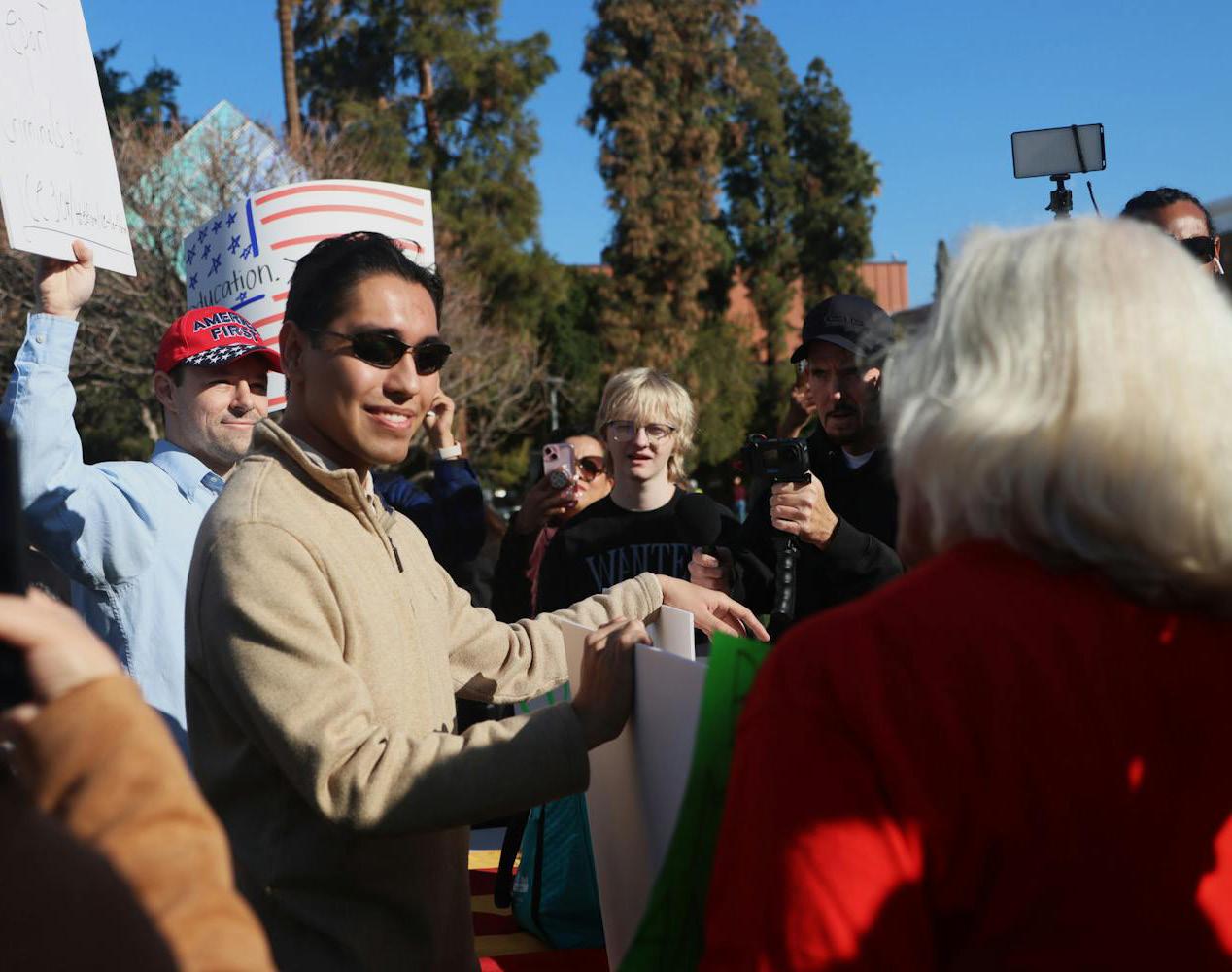


test, because every time I have a protest at ASU, it disproves what we’re told about ASU,” Nguyen said. “ASU is not an unserious school. It’s not a conservative school … ASU is a vibrant community where people are ready to act.”
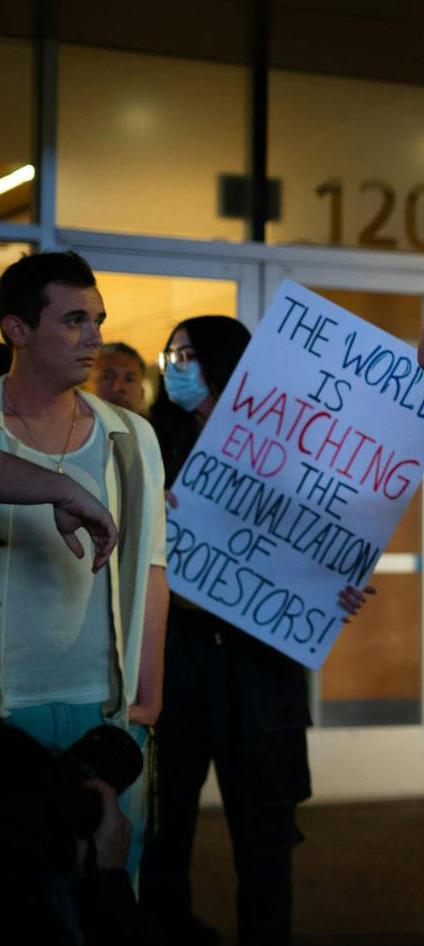
Some students, however, find the rules associated with protesting on campus to be repressive. Nguyen notes that at many protests he has attended, the ASU Police Department has threatened to arrest attendees. During a pro-Palestine protest in April 2024, 72 people were arrested for failing to adhere to campus rules regarding encampments, with 20 of those individuals being students. Those students also faced an academic suspension that barred them from things like attending classes and prevented seniors from attending graduation ceremonies.
On the other hand, Nguyen argued that these sanctions are not applied evenly, pointing to events where more controversial demonstrations led by non-students were allowed to continue freely.
“I don’t understand why they believe that it’s acceptable free speech to have somebody, multiple times a semester, holding up a sign that says women are property in the middle of Palm Walk.” Nguyen said, “When we have someone out there ... advocating for their own communities, that is unacceptable.”
‘Tweets to Streets’
As social media grows, its role in activism is ever-evolving. Social media is one of the easiest and most accessible ways for people to engage with politics, giving it a unique role in developing our political landscape. Shirven Zeinalzadeh, a graduate student studying political science, explores this topic in his study called “Tweets to Streets.”
In it, he explores the role social media plays in fueling protests, finding that simply engaging with political topics on social media can be as powerful as physical participation.
“Protest in this day and age, particularly in the digital era, can be something as simple as liking a tweet [and] clicking the heart sign ... If you click that ‘like’ button, technically, that’s a form of protest. You’ve agreed with a statement that can be deemed to be a form of protest,” Zeinalzadeh said.






By engaging with a post, you are effectively sending a message. Zeinalzadeh described these new kinds of protests on a sliding scale, ranging from liking or reposting something, to actually showing up.
“It doesn’t have to be arming yourself with pitchforks and burning torches and then setting fire to a house. It can be as simple as agreeing with something,” he said.
One of the most prominent examples of this was displayed during the #MeToo movement, where social media allowed individuals to share their experiences. As more information was shared, the movement began to snowball, creating an online protest.
“[For] people clicking ‘like,’ it’s not necessarily ‘liking’ the fact that she’s [a female #MeToo member] come out, but they’re ‘liking’ the fact that it’s publicized, and they are protesting against the perpetrators of these crimes,” he said. “That sends a signal saying we have identified this victim, we’re with that person and we support this movement.”
However, for Hinrichs, activism on social media is insufficient, saying that real work occurs on the picket lines.
“Ultimately, it’s [social media] just a bunch of zeros and ones in a database somewhere. And so in that way, all social media activism — when performed alone — is performative,” he said.
Despite this, the role of social media in shaping our political landscape is profound. The largest change Zeinalzadeh has noticed is how momentum on social media can mobilize a movement more quickly than in the past.
“You used to have to pin a notice up on the town notice board to say there’s a protest. Now we can see that a protest can be organized, executed and broadcast instantly,” he said.
Through his research, Zeinalzadeh explores the motivations behind protesting. He has found that it takes a deep, underlying belief for an individual to engage in a topic. The importance of that belief will determine the risks that people are willing to take to defend it, ranging from simply
liking a post to being willing to put their lives on the line.
“There has to be an underlying cause of belief that people are passionate about,” Zeinalzadeh said. “So there are plenty of protests taking place around the world at the moment, but for people to actively engage with it, it takes something to spark that interest.”
As the popularity of social media rises, it is beginning to take a more formative role in inspiring and fueling these strong beliefs. Zeinalzadeh describes how the algorithms on social media often lean toward extreme content, because that is what makes users stop scrolling. As a result, content that evokes a strong reaction can play a major role in whether someone feels compelled to engage.
In addition, algorithms on social media can lead to the creation of an “echo chamber,” where users are constantly exposed to information that aligns with their beliefs. This reinforcement can encourage participation, especially when people see others engaging. Zeinalzadah equates this to a form of peer pressure driven not only by people, but by social media platforms as well.
“Peer pressure comes not necessarily from the people that you hang around with or who you believe in the same cause as, although that’s a major part, but it’s also being contributed [to] now by the fact that social media clicks work out what you’re interested in, and try to flood you with more,” Zeinalzadeh said.
As the social media manager for Students for Justice in Palestine, Nguyen finds online platforms to be a powerful and crucial tool in furthering the club’s goals.
“Its role when it comes to protests is to allow people to understand where we’re coming from, even if they’re on the fence,” Nguyen said. “Social media serves the purpose of being there, to be the force that encourages people to come out.”
Whether it’s through social media or on the picket line, it’s clear that protesting at ASU isn’t going anywhere anytime soon.
“In the arc of history, we’re always fighting for justice, and justice is always achievable,” Nguyen said.
Exploring Donald Johanson’s impact on ASU and the world of science
By Jude Banihani
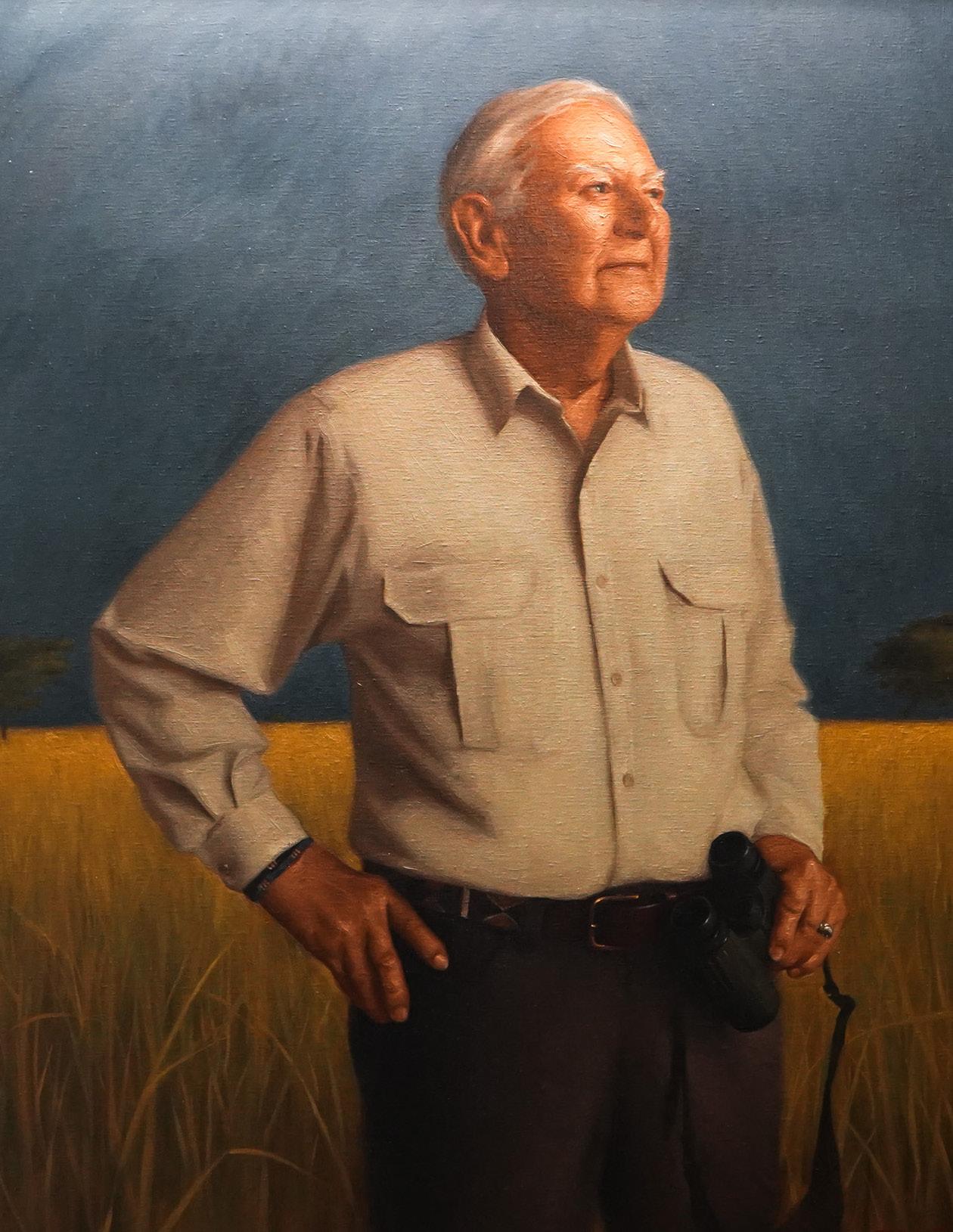
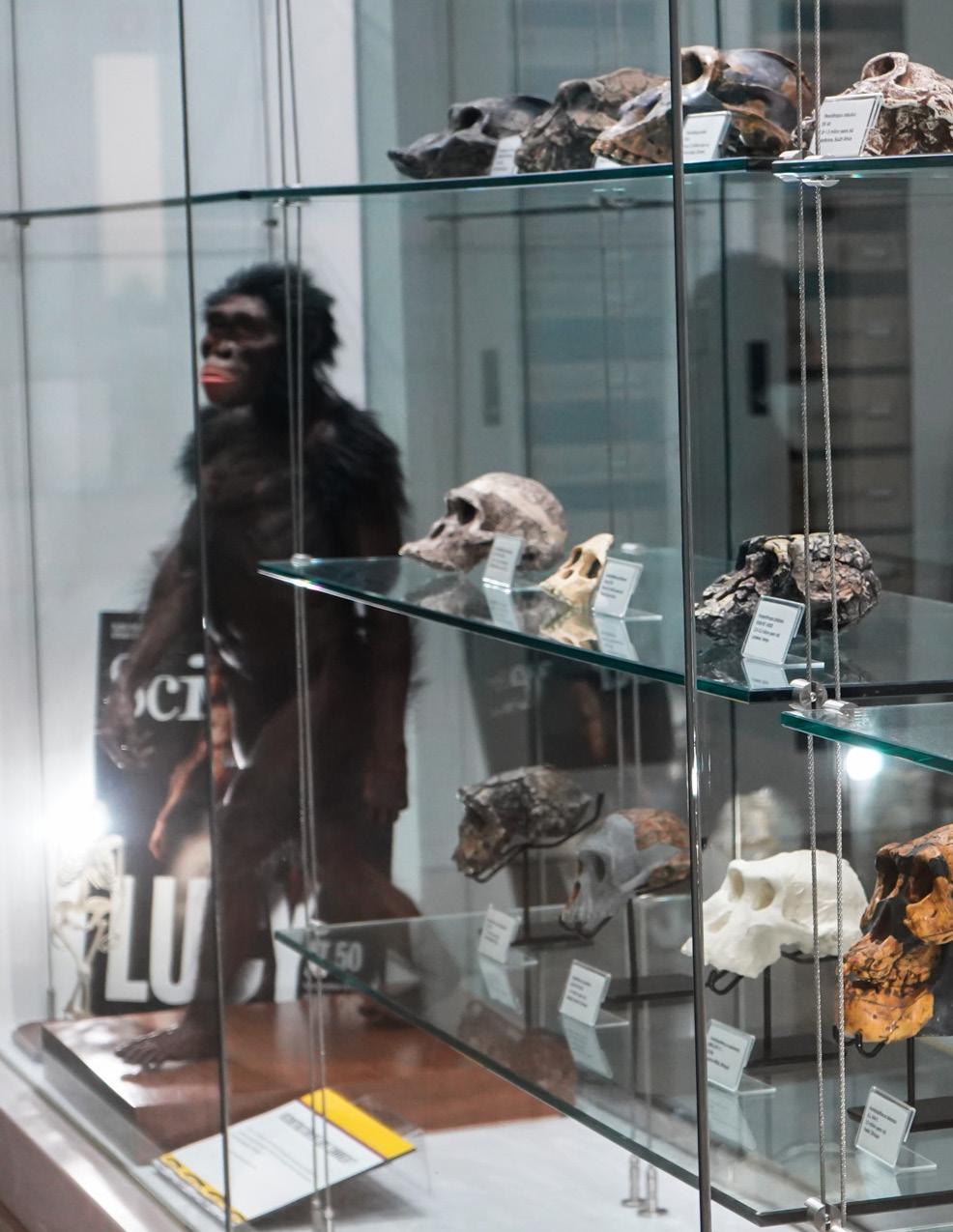
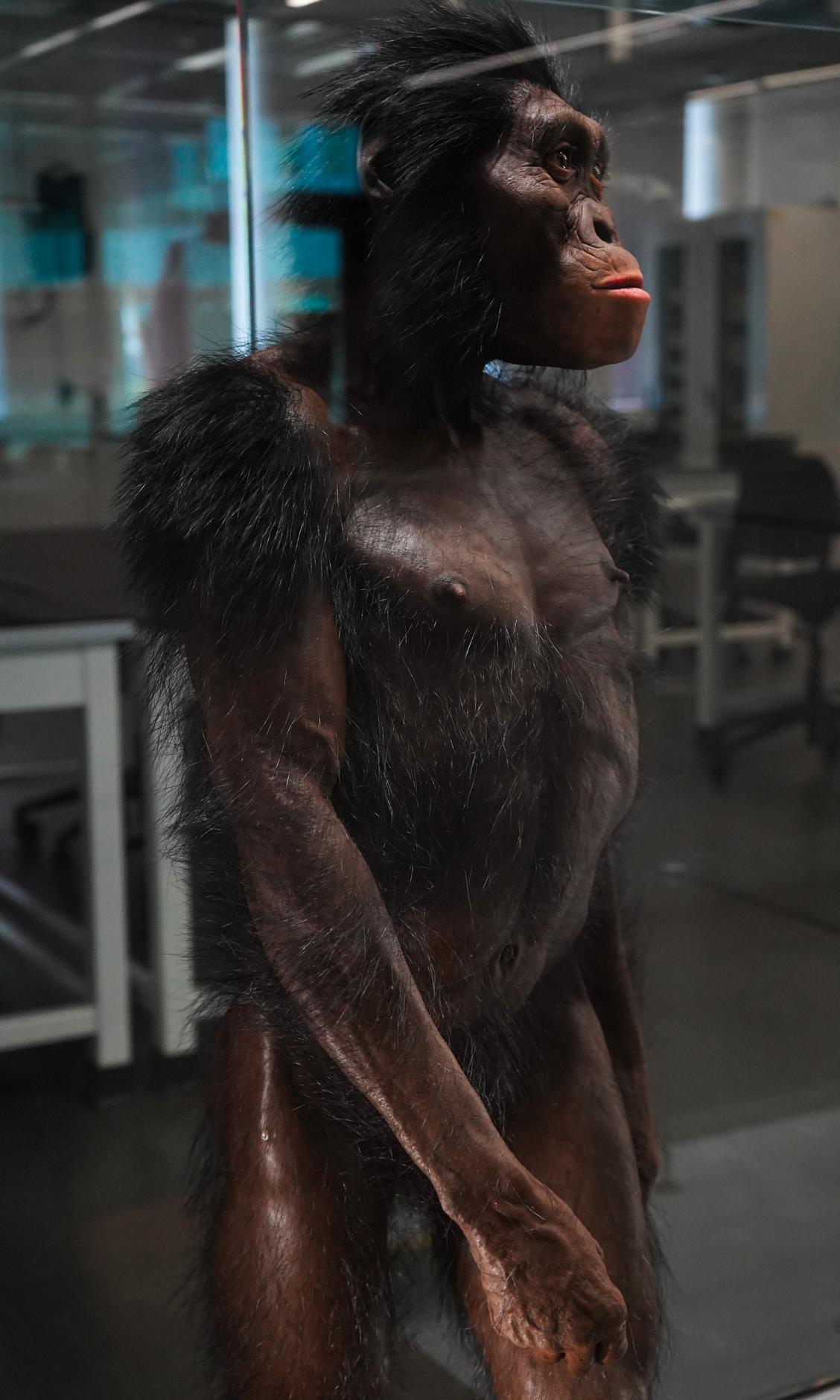
On Nov. 24, 1974, in the Hadar Triangle, located in Northeastern Ethiopia, a 31-year-old Donald Johanson made a discovery that changed human history forever.
As lunch time came around and the temperature reached 120 degrees, a team of paleoanthropologists were convinced they had seen all there was to see in the area. They’d been out since the early morning, surveying the land. As they headed toward their Land Rovers to leave for lunch, Johanson caught a glimpse of something over his right shoulder — a fragment of an elbow.
Johanson thought this could have been a monkey bone, but as he got closer and picked up the fragment, he realized it belonged to a human ancestor.
After a few minutes, he found more bone fragments belonging to a human. Their lunch plans quickly changed as Johanson went back to the camp and announced his discovery. The team rushed down to the site, and the partial skeleton was brought back to camp.
The discovery was monumental, but was only the beginning for the team. There were questions to be asked: Was it a “he” or a “she?” If it was a she, who was she? How old was she? Did she have babies?
“We were listening to a Beatles tape, and ‘Lucy in the Sky With Diamonds’ was playing,” Johanson said. A member of the expedition named Pamela suggested the skeleton be named Lucy, since they were sure she was a female. Once a name was suggested, you couldn’t change it. So the Lucy we know today came to be.
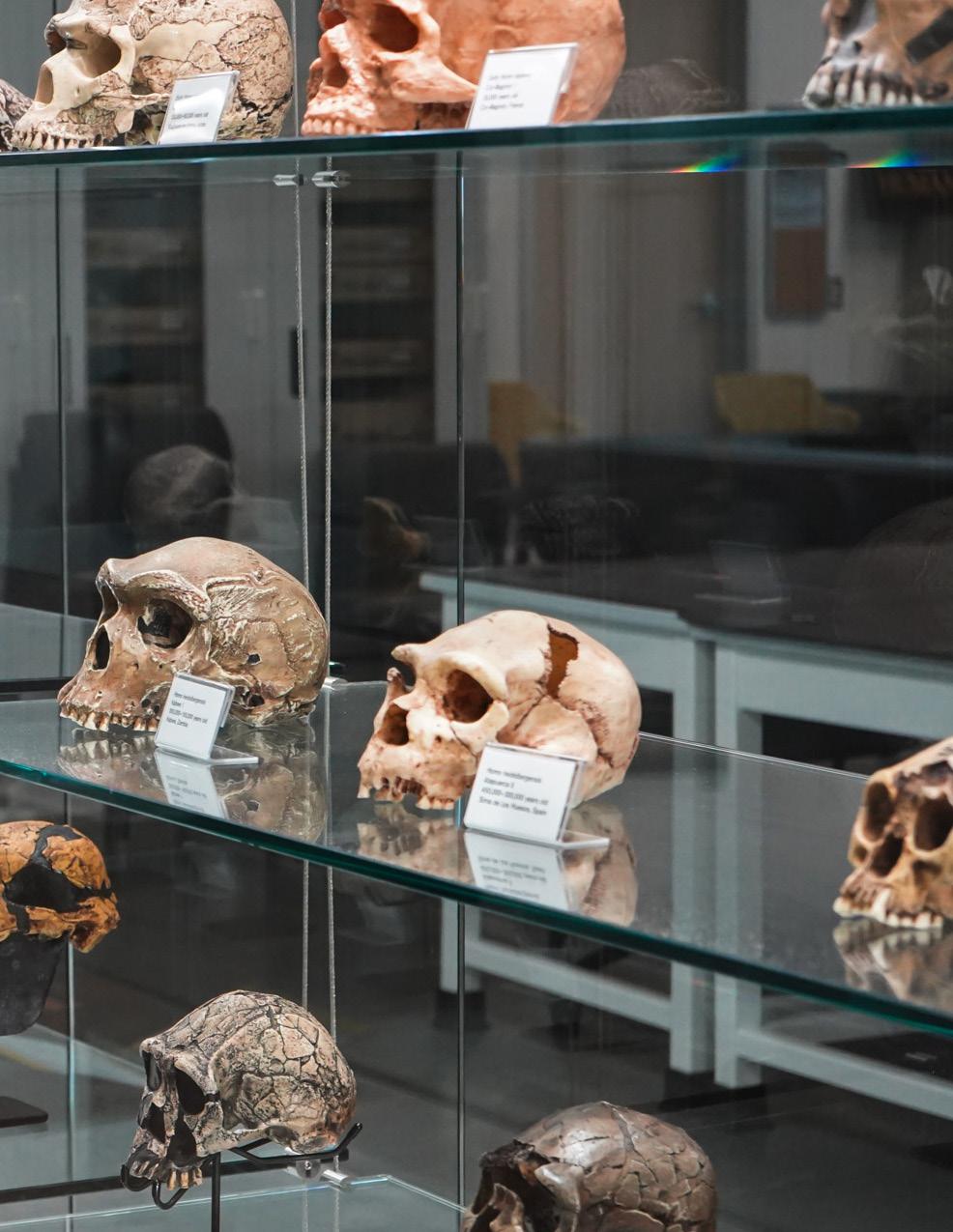
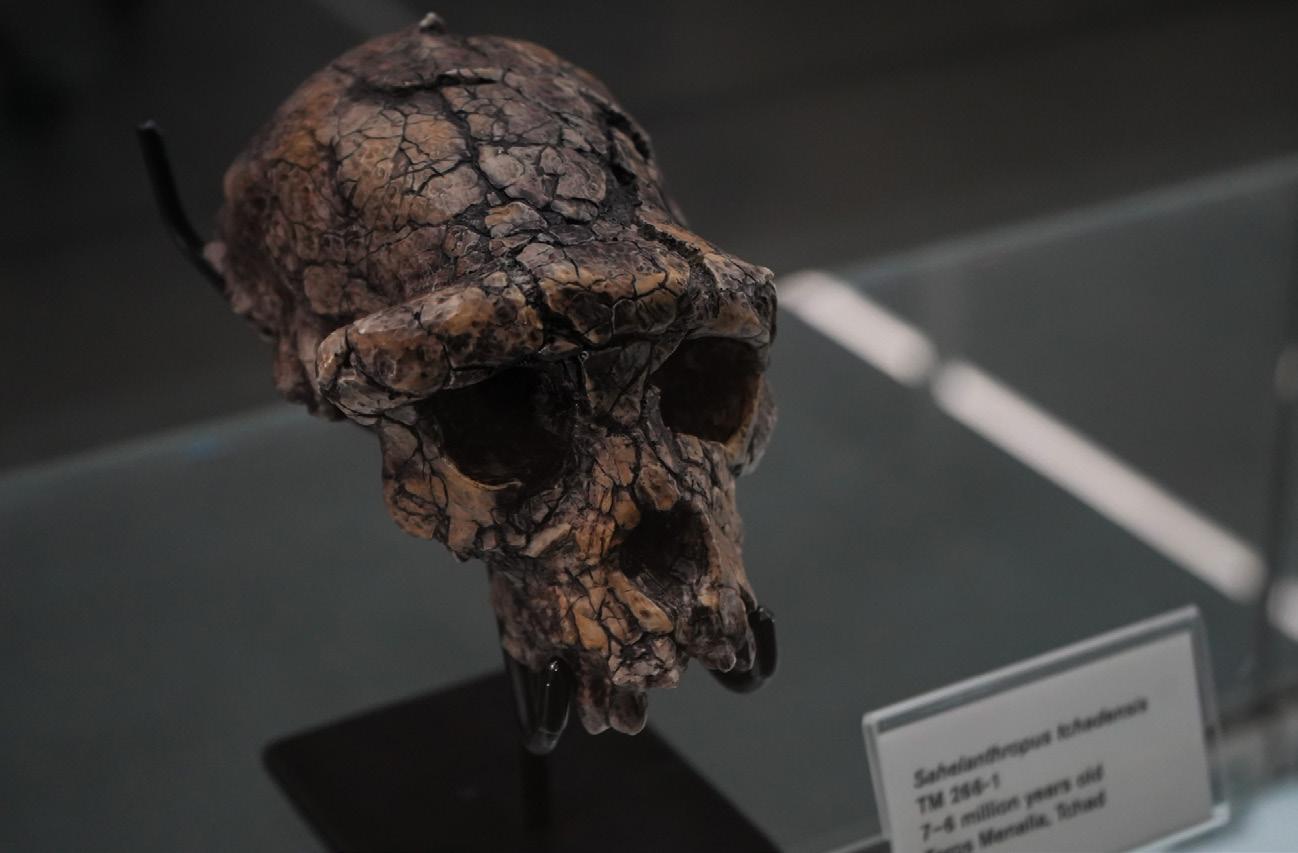
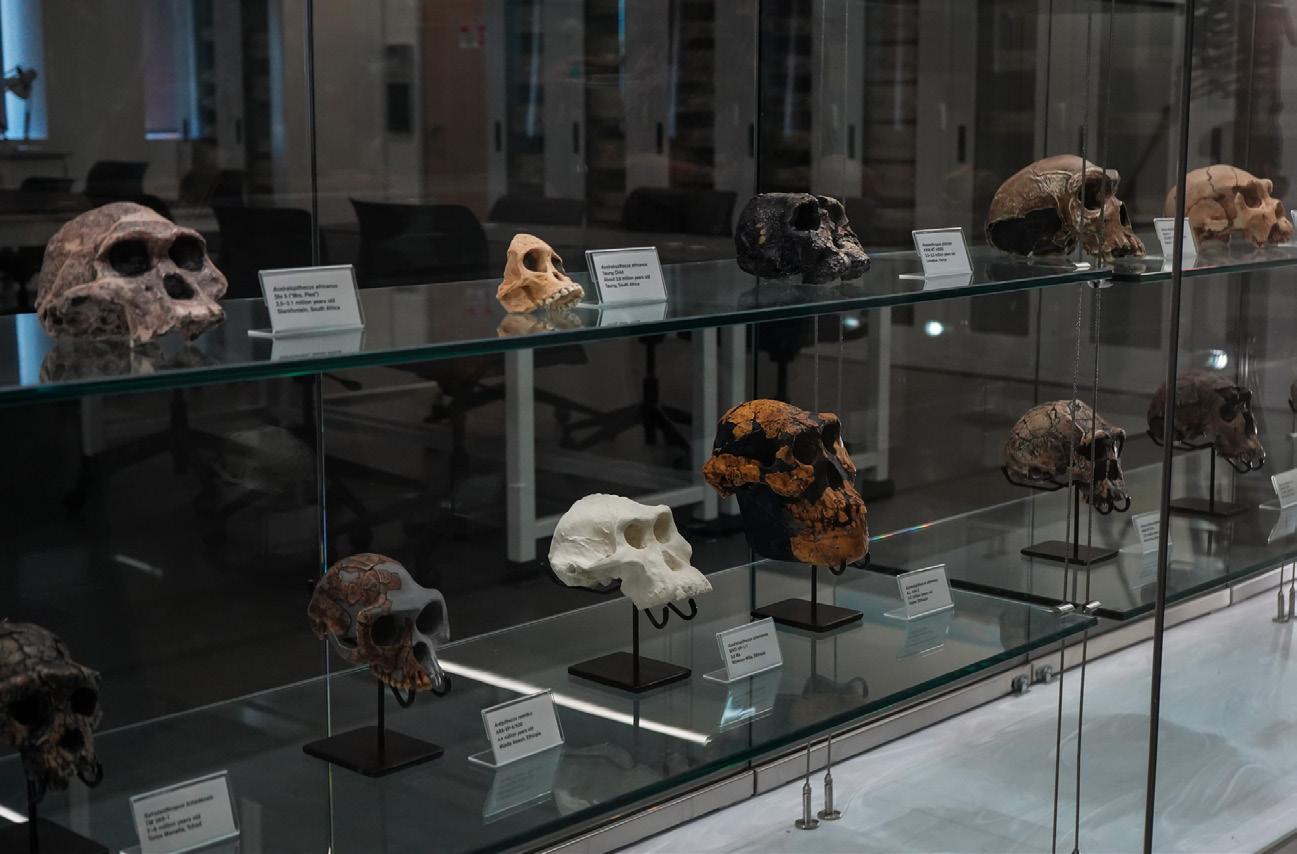
Her skeleton, and the other human fossils found on the site, had unique features in their teeth, jaws, bones and brain sizes that were distinct from any other known Australopithecus — a family of extinct primates, closely related to human beings.
Johanson’s discovery has paved the way not only for science, but also for the ASU community. When Johanson founded The Institute of Human Origins and later brought it to the University, he marked his legacy as a
scientist who contributed to the training of a new generation of paleoanthropologists and made science more accessible to everyone.
What brought Johanson to the Afar region?
To understand why Johanson ended up in a remote part of Northeastern Ethiopia, we need to go back to his first expedition to the country. As a graduate student, Johanson was working in southern Ethiopia. He met up with colleagues from Paris, France, who were there to study different fossils from various animals, including elephants and rhinos.
While in Paris, a young geologist named Maurice Taieb showed Johanson an envelope with photos of fossils over 3 million years old that had been found at the Hadar Triangle. Johanson was stunned, as these fossils were in more complete pieces from this time period than any he had previously seen. This led him to the Hadar Triangle to continue the search for more of these fossils.
Lucy was significant because she was found to have lived between 3 and 4 million years ago. At the time of her discovery, in the 1970s, the Australopithecus Africanus from South Africa was thought to be the common ancestor that led to later humans. But Lucy’s discovery meant that the Australopithecus Afarensis was the new common ancestor, reshaping the family tree.
Now, given Lucy’s status as a brandnew human ancestor, she needed a scientific name. Johanson, wanting to honor the local people and region of Afar, named her Afarensis. “In 1978, she was published as a new species, a new kind of human,” Johanson said.
In 1981, Johanson founded The Institute of Human Origins in Berkeley, California. The IHO is a non-profit organization meant to research early human ancestors and promote scientists through public outreach. IHO became internationally recognized and moved to ASU in 1997 with the goal of training the next generation
of scientists.
Yohannes Haile-Selassie, a world-renowned paleoanthropologist with a PhD from the University of California, Berkeley, became the director of the IHO in 2021. He then worked at the Cleveland Museum of Natural History as a curator of physical anthropology for 20 years. Haile-Selassie then came to ASU as a professor for the School of Human Evolution and Social Change, as well as the director of IHO.
Haile-Selassie described one of his professional goals as mentoring and training the next generation of paleoanthropologists. In the early days of the IHO, much of the research focused on fossils and archeology, or “bones and stones,” as Haile-Selassie said. However, since the IHO moved to ASU, its focus became more interdisciplinary. Rather than just focusing on ancient fossils and tools, research has expanded to anything relevant to understanding humans, including biology, culture and genetics.
When Haile-Slassie first assumed his role as director, he wanted to showcase the interdisciplinary research of the IHO. He broke down the 18 tenured research scientists into three different groups: one group would focus on paleoanthropology, the core of the IHO; another would focus on culture, evolution and human behavioral ecology; the third group would study evolutionary genetics.
Each group had anywhere from 5-10 researchers, and this new approach changed how the scientific community viewed the IHO. It was no longer a small institution, but a large one putting out research on all aspects of human origins.
Haile-Selassie emphasized the importance of making research relevant to society. For example, researchers at the IHO study ancient diseases, which allows them to understand how these diseases affected populations millions of years ago, and how we can eradicate them today. Some researchers go to Tanzania and Uganda to study chimpanzees, not just to understand human origins but also for conservation projects.

IHO researchers go nearly everywhere in the world, from South America to Europe, Africa and all over the United States. There are still active projects going on in Hadar, Ethiopia, where Lucy was discovered. Haile-Selassie emphasized how interconnected the world is and how conservation is vital for protecting every one of us.
“We are combining our past with the global future,” Haile-Selassie said. A core mission at the IHO is connecting the past to the future for the benefit of humanity. Sustainability and global futures are emphasized at the core of research.
She also believes that public outreach is an important part of paleoanthropology and the IHO. Under his leadership, the IHO prioritizes training graduate students to effectively communicate scientific discoveries to those with non-scientific backgrounds.
PhD students at the School of Human Evolution and Social Change receive their degrees from the school while conducting training and research under the IHO. There are currently over 30 graduate students training at the institute, and some undergraduate students even do work studies at the IHO.
By studying how plants and animals reached that change, researchers can be better prepared for the current period of global warming we are in. What happened on Earth, even 3 million years ago, can teach us all a valuable lesson about our present and our future.




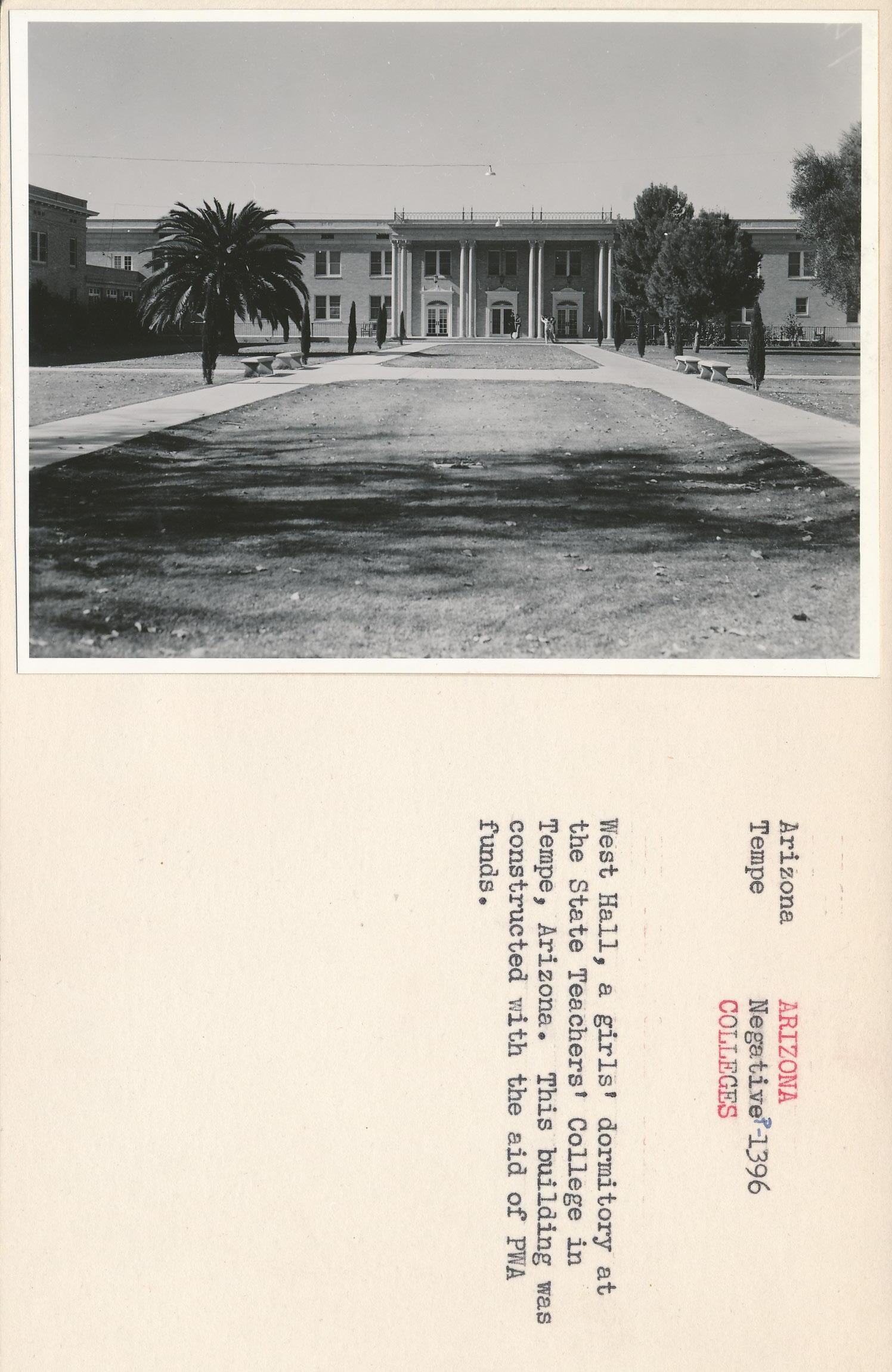
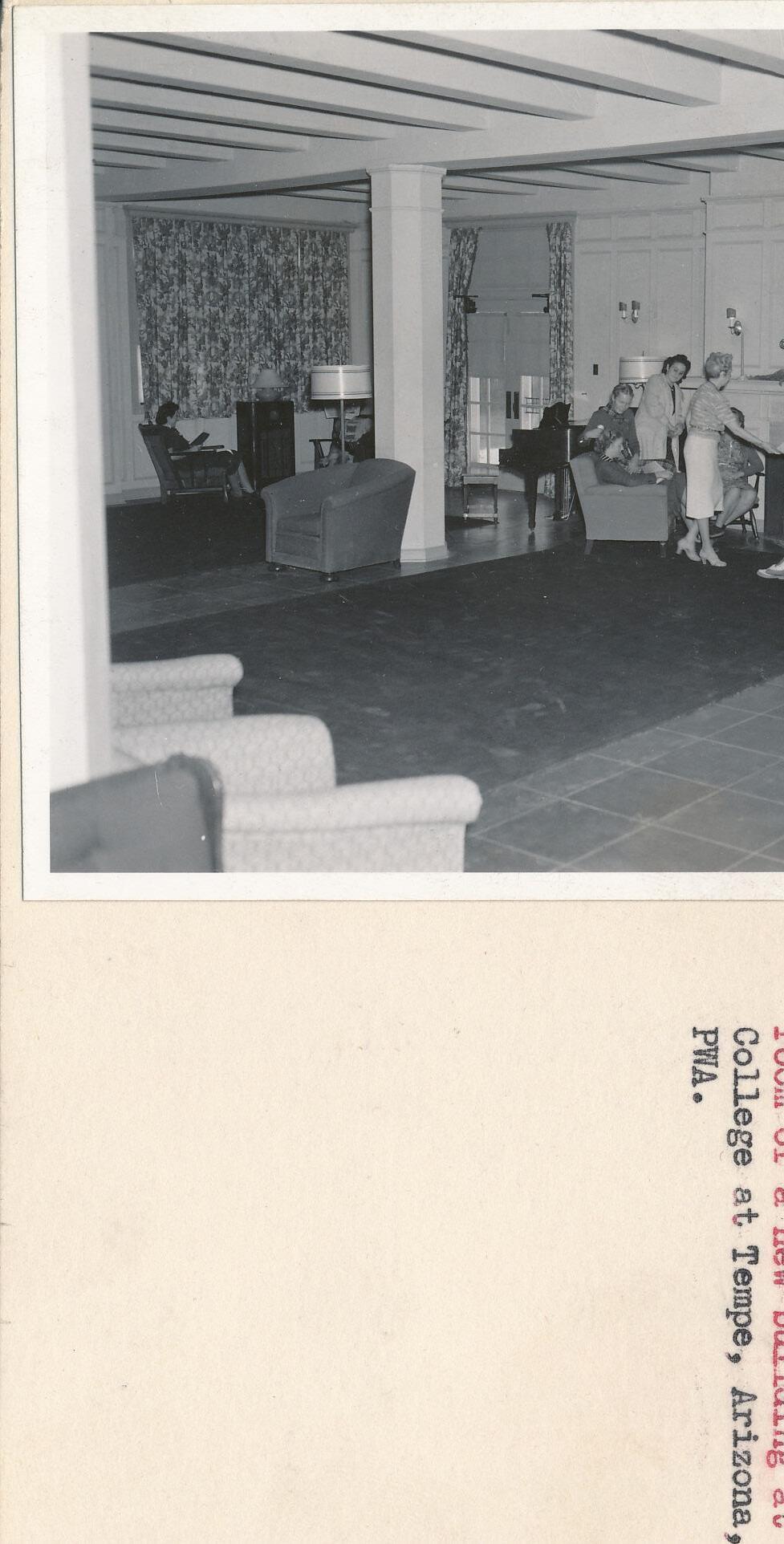

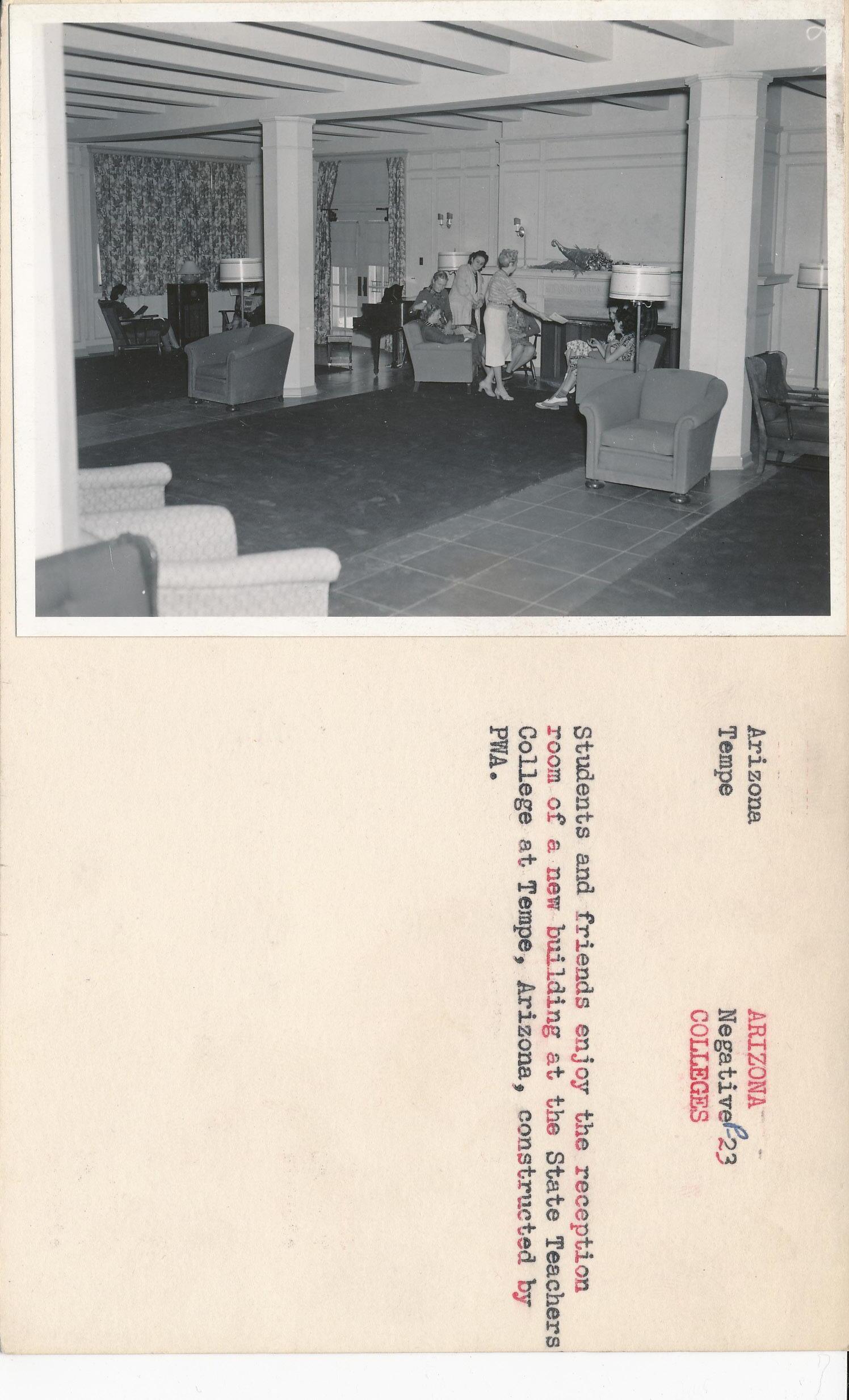
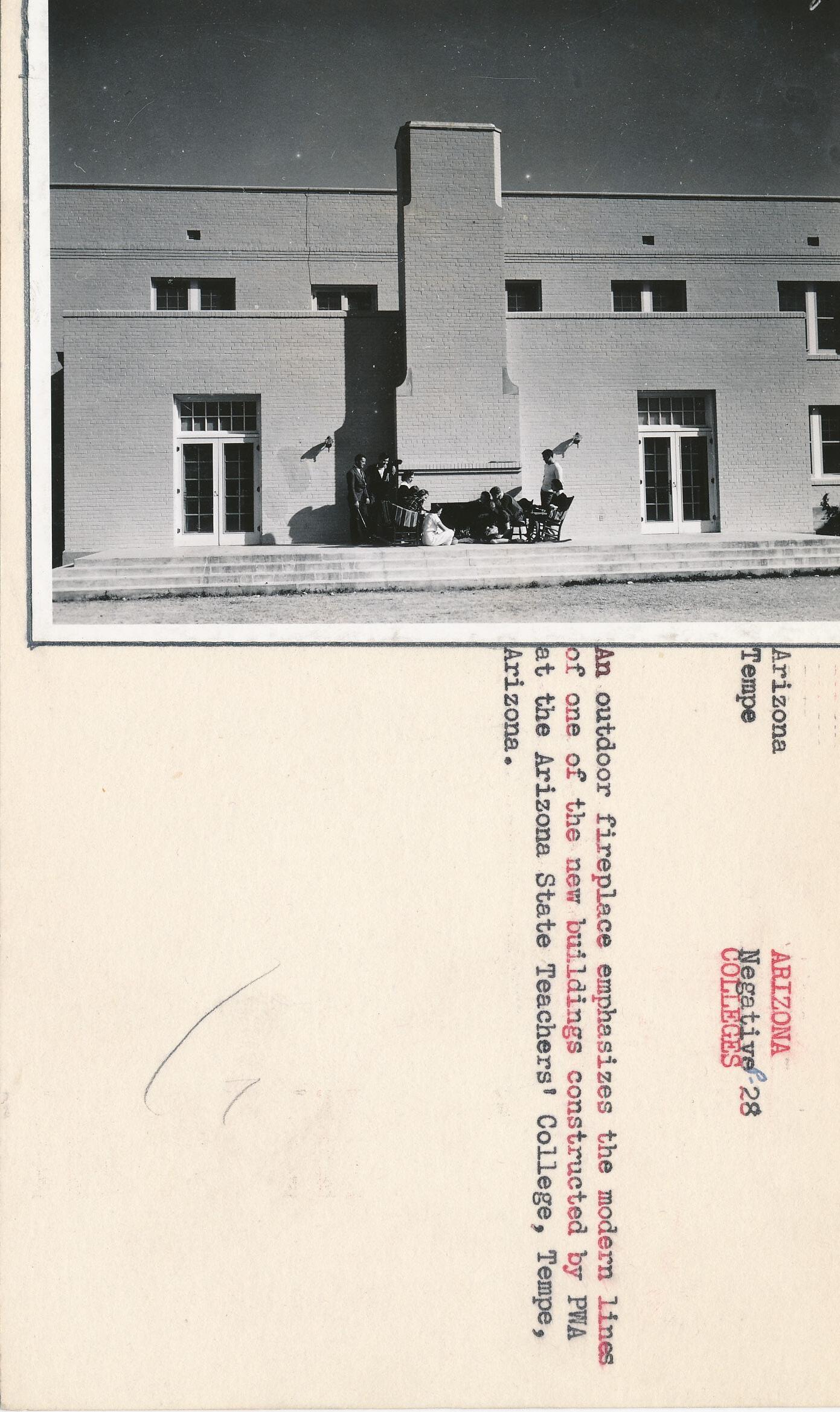
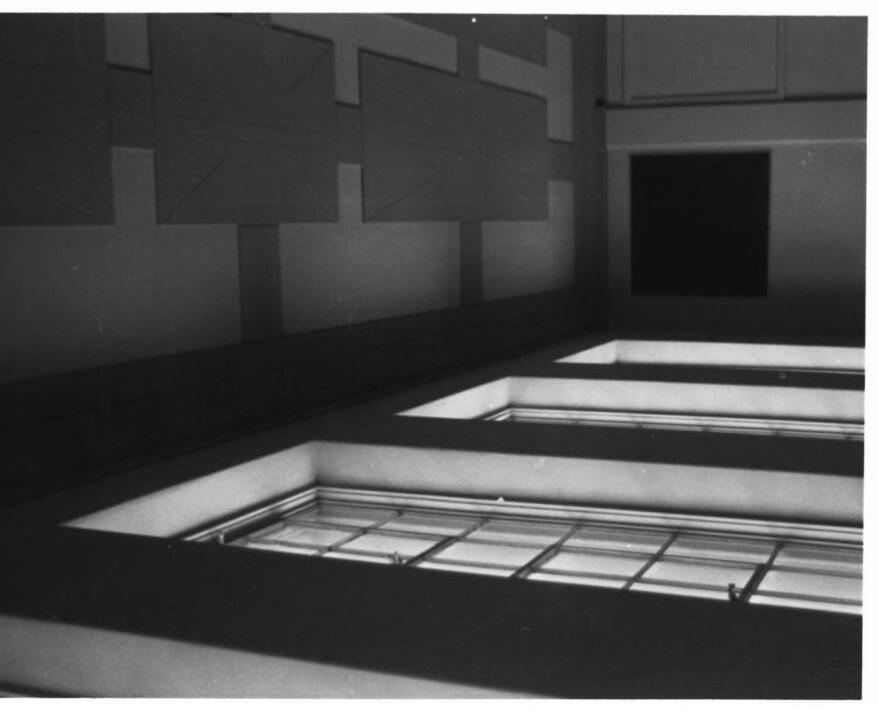

Buildings on the Tempe campus serve as reminders of a bygone era
By Carsten Oyer
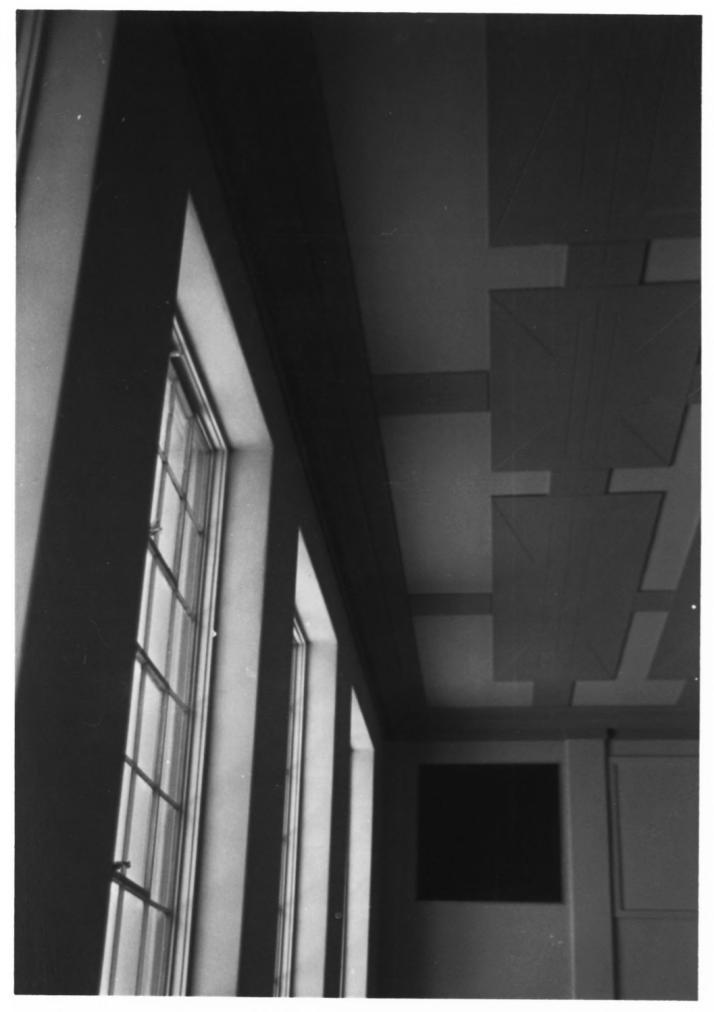
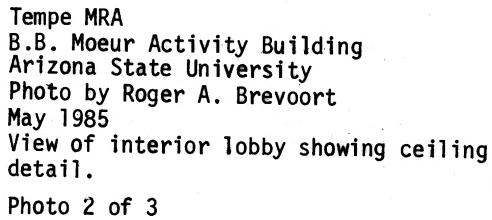
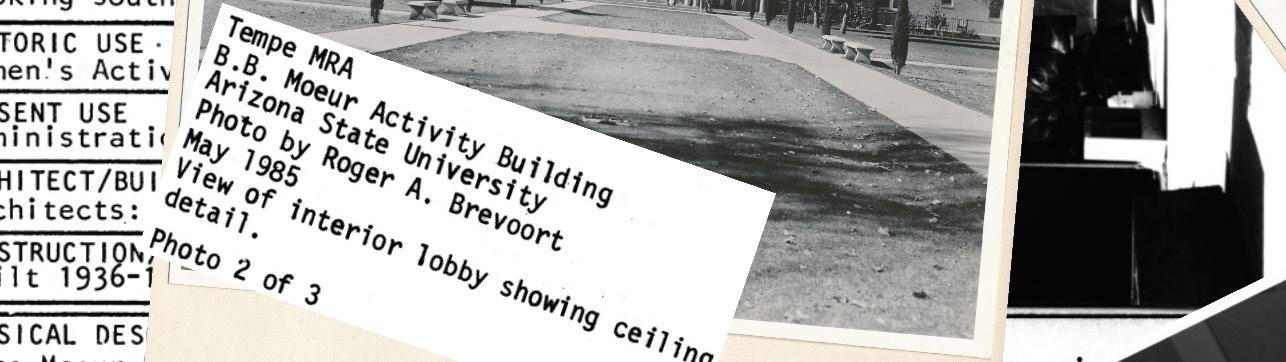
I’ve passed the B.B. Moeur Activity Building on ASU’s Tempe campus hundreds of times. It never stood out to me. In view of the concrete and glass facade of Coor Hall or the iconic circular form of the Music Building, it’s simple by comparison. But hidden under its plain adobe walls, the Moeur Building is a piece of University — and American — history.
According to a 1982 Arizona State Historic Property Inventory form, the building, completed in 1939, is the “largest structure of its kind to be built in Arizona by the labor of the Work Projects Administration.” Its combination of earthly materials and Federal Moderne style make it unique, both on campus and in the state. And ever since the construction workers set down their shovels and moved on to the next project, the Moeur Building has witnessed decades of growth and change.
If only walls could talk.
The Moeur Building is one member in a cohort of buildings on campus erected by the New Deal, a set of programs in which the U.S. government worked to resolve the troubles of the Great Depression. In the process, federal agencies created over 10 million jobs and built public works across the country. The WPA also constructed West Hall, Irish Hall and the Center for Family Studies.
Over 80 years after the WPA came to campus, though, preserving the heritage of the New Deal at the University has been a difficult task. Irish Hall is being torn down and replaced, and students are working to maintain the Center for Family Studies to protect it from a similar demise.
Since discovering the history of the New Deal on campus, I’ve found myself wandering around campus like a ghost. My fixation has taken me to unexpected places: sitting in the famous Secret Garden during midday heat, staring at mundane brick patterns amid the bustle of student activity and asking my fellow students to join me on an architectural odyssey they didn’t
ask for.
Bob Leighninger, a retired ASU faculty associate from the sociology program, is a New Deal scholar and board member for Living New Deal, which maintains an archive of sites built by New Deal programs and works to advocate for its vision of government programs serving the country.
“The New Deal was probably the most creative outpouring of public policy in our history,” Leighninger said. “In terms of public works, that all went on within seven years, between 1933 and about 1939. The agencies lasted until the early 40s — they were winding down by then. But in that time, they produced a vast amount of our cultural and physical infrastructure.”
Leighninger said he always had an interest in architecture. Challenges to President Bill Clinton’s long-range public investment programs during the early 1990s led him to study the New Deal in the first place. Since the end of the programs, he said, the capacity for government to get things done has been limited by both the political right and left.
“People like [then-Republican Senate Leader] Bob Dole were saying there’s no such thing as long-range public investment,” he said. “I thought, wait a minute, I’ve seen a lot of cornerstones, a lot of plaques. I know there are public buildings that go back to the 1930s. So, I started thinking about that and looking around.”
Today, infrastructure and buildings like schools — construction that was the focus of agencies like the WPA — are decaying, Leighninger said. It’s a far cry from the accomplishments of the New Deal, which produced a vast amount of public works with minimal corruption.
“We are going to need to realize that we can build things on a large scale, and we can do it without the customary problems associated with public administration,” he said.
In Tempe, I saw what appeared to be a large-scale project of its own. This one, however, was the precise opposite of construction.
Irish Hall, completed by the WPA in 1940, sat in front of me beside a mound of wrecked stucco and metal that hadn’t been there a week before. Hayden Hall, one of the dormitories making up a block of student housing alongside Best Hall and Irish Hall, was being brought to the ground.
This is soon to be the fate of Irish Hall, too. According to the University’s capital improvement plan for the 2027 fiscal year, the three dormitory compounds will be demolished to make way for Center Complex, a $400 million structure that will provide roughly 2,000 to 2,500 beds for students.
I anticipated that Irish Hall’s end would be met by feelings of “good riddance” from students. After all, it’s old. It certainly did not have some of the amenities of newer constructions.
However, online forums show mostly positive reviews of living in Irish Hall. Former residents frequently acknowledged its age and lack of certain niceties, but praised its quiet atmosphere, room layouts, natural light and shady courtyard.
Luis Encinas, a senior studying marketing, lived in Irish Hall from August 2023 to May 2024. While the dorm wasn’t the most luxurious, Encinas said it felt like a community.
“I still thought it was very enjoyable, and I did like living there for that year,” he said.
Residents could see Irish Hall’s signs of age, but Encinas said amenities remained functional and up-to-date. In fact, its distinctive features — including what Encinas called “submarine-like doors” and the building’s unique exterior — were part of the charm. Not even the communal bathrooms could damage his appreciation for the building.
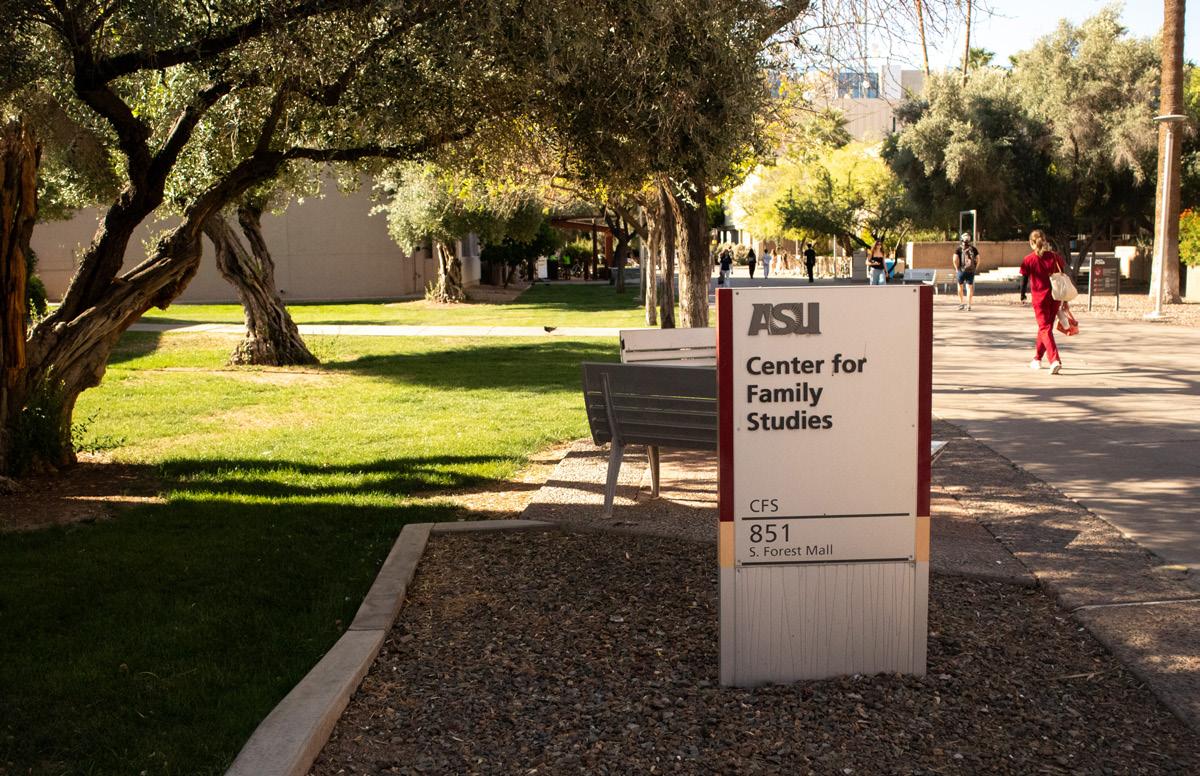
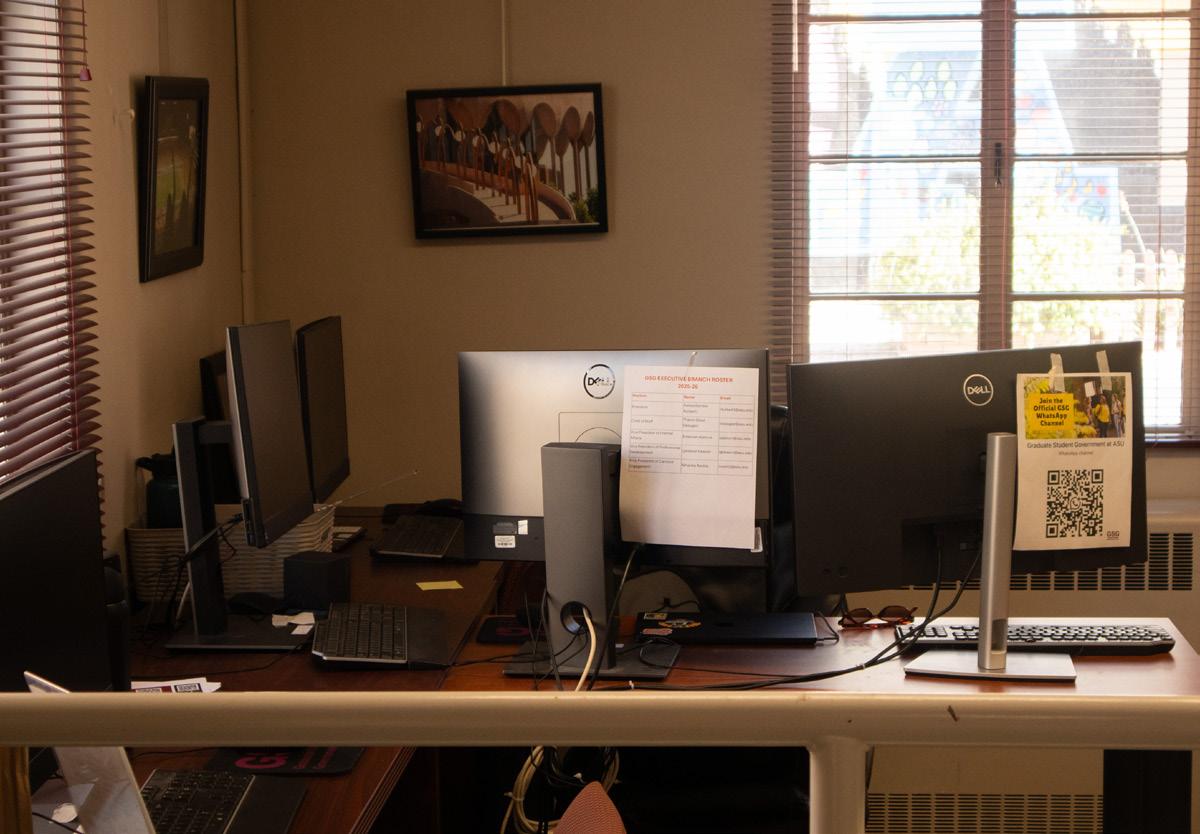
More than its age or history, though, Encinas said he was attached to the memories he made in Irish Hall. It was his first dorm, his first time living away from home and the place where he met his first girlfriend.
In a written statement, a University spokesperson said ASU regularly evaluates campus facilities to make sure students’ safety, accessibility and modern living needs are met. The Center Complex will offer better residences, amenities and environment. Still, the spokesperson acknowledged the feelings Encinas expressed.
“Arizona State University understands buildings like Irish Hall hold meaning and memories for generations of Sun Devils,” the spokesperson said in the statement.
The physical footprint of the New Deal isn’t the only way the era has gone by the wayside. Students, even those who spend time around the buildings, don’t know they were built by the WPA.
I talked to Bronwyn Courtney, a senior studying aerospace engineering, as she walked out of the Moeur Building one afternoon. Courtney said she has a class in the building and is there two to three times per week.
Courtney said she works mainly in its basement, so she doesn’t pay particular attention to the building as a whole. She didn’t know the building was built by a New Deal era program.
“I personally don’t really know anything about it, so it is interesting to learn about, but I don’t know what to do with that without looking it up myself,” Courtney said.
I stood outside West Hall for at least five minutes, my head cocked and my eyes scanning the tops of the columns. Each one is capped with a Corinthian-style capital, a form of elegant, classical ornamentation. The three doors at the front of the building were designed in a Palladian style. Arched windows perch above the entryways, a signature feature originating in the Renaissance and deriving inspiration from ancient Greece and Rome, according to a blog post published by the Madison Trust for Historic Preservation.
Frankly, the beautiful columns and doors look out of place. Birds have begun nesting between the tops of the columns lining the wall, which offer visual interest, but not significant support. They are, in effect, pretenders.
I had to know why West Hall’s architects insisted on including those features. Thankfully, there was a history lesson for that, too.
Leighninger described the style of New Deal era architecture with three terms: “stripped down classicism,” “starved classicism” and “Greco deco.” They all describe a movement that incorporated neoclassical facades and simplified them with the materials and embellishments of 1930s art deco.
“Some of these buildings that were done in this style are, I think, quite handsome,” he said.
This style became a signal of New Deal construction because it was popular among architects at that time, Leighninger said. The classical columns, Palladian doors and plain brickwork are thus a remnant of what was in vogue when West Hall was built.
Still, Leighninger said there was variation in the ways architects designed their buildings at the time, including regional differences.
“They don’t bear enough resemblance to one another to remind us that they’re New Deal buildings,” he said.
Preserving what remains
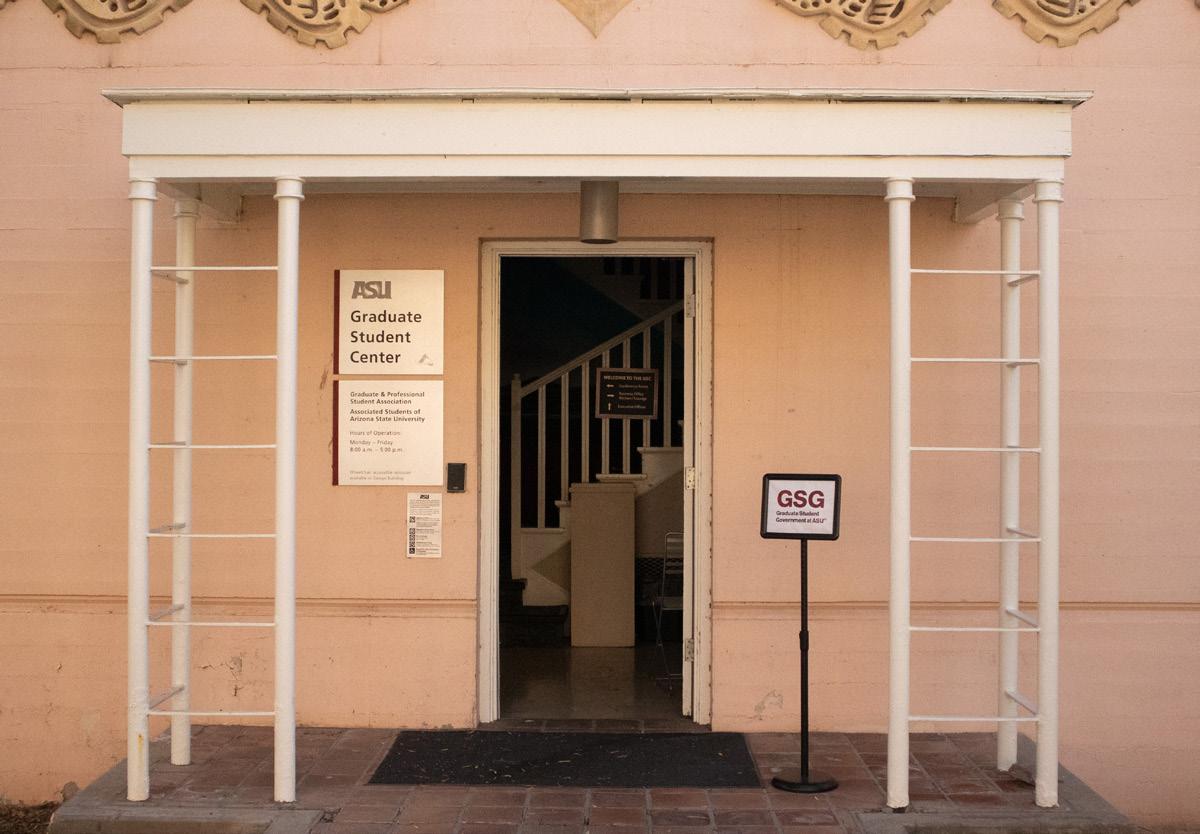
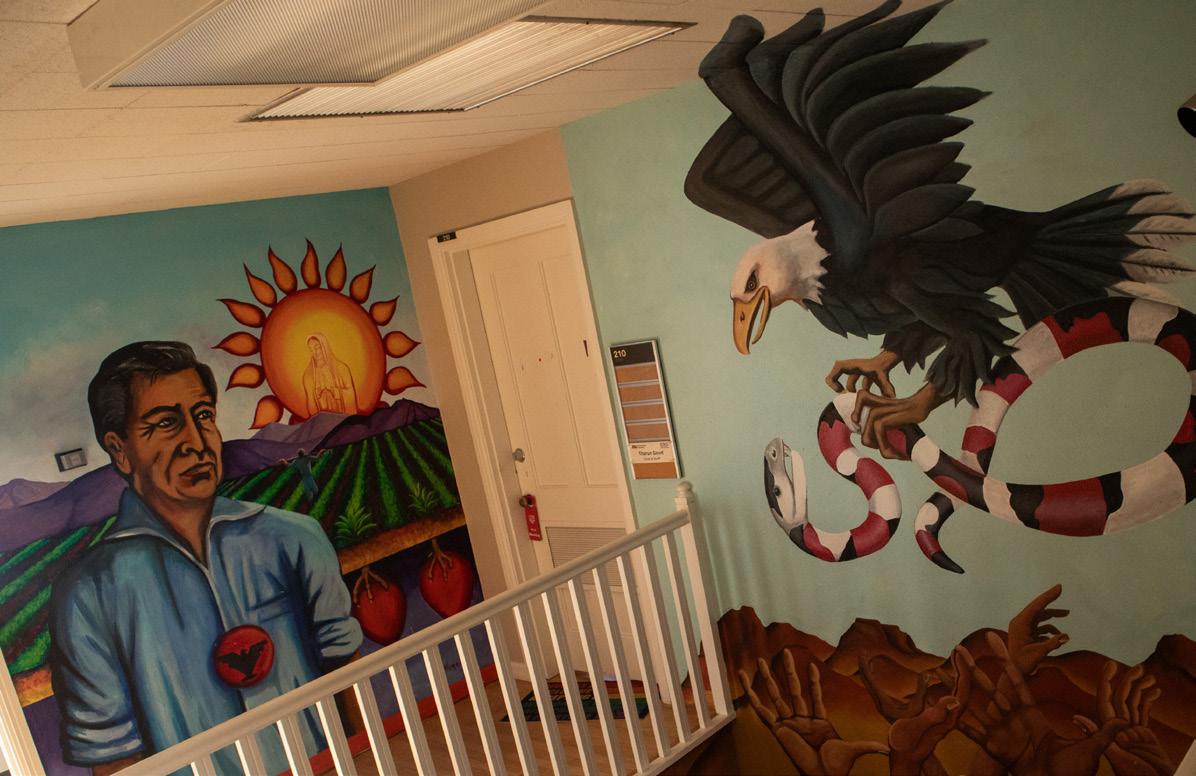
On the northwest side of campus sits the Center for Family Studies, which was also built in 1940, according to the capital improvement plan. While it now serves as the Tempe Graduate Student Center and a space for the Graduate Student Government, it was once the Home Management House and Nursery School, according to a GSG resolution. Efforts to preserve the structure have run headfirst into layers of bureaucracy that could eventually be the building’s downfall, GSG
officers said.
It’s cozy, complete with a small kitchen for public use, meeting spaces and offices. Although the walls show some signs of their age, the rooms are uncluttered and homey. It’s a third space for many graduate students to access resources and gather together, GSG Assembly Speaker Cole Cloyd said.
“It’s a historical landmark,” Cloyd said. “It’s something that we have to be stewards of [for] our graduate student community, but also the history of the campus, of the state in general, and that’s something we try to communicate with folks.”
Richard Robert Reithal, the GSG parliamentarian and a graduate student studying engineering, said the way the building was constructed makes it unique on campus. The WPA built it out of thick concrete that increases insulation for temperature control. Most buildings of its size and age were built out of wood, Reithal said.
Cloyd and Reithal said GSG is working to spend $250,000 on renovations they said were needed to preserve and improve the structure. For one, they want to replace its single-pane windows, which leak heat into the building. It is running against simultaneous challenges: a deadline of May 8 to spend the money before it vanishes and difficulties getting things done with the University bureaucracy. Officers have been meeting with University staff and other stakeholders to assign the funding to projects before the deadline.
Cloyd said it is important to hold onto
historic spaces that are integral to the University’s identity, including the Center for Family Studies. Reithal echoed him.
“Do we really need another building full of glass and steel towering over campus?” Reithal said. “These things add character, right?”
As for Irish Hall, Encinas said he isn’t necessarily excited for Center Complex, but he is intrigued to see what is done with the space. Still, he wished the University would have preserved the building instead of tearing it down and replacing it.
“Those buildings, you can tell their age just from their design alone,” Encinas said. “They don’t look anything like a [Hassayampa]. They don’t look anything like an Adelphi. They don’t look like the new buildings over with the arts at Herberger. They’re really unique. I don’t think there’s another dorm that really looks like them, at least from the exterior.”
Ultimately, the end of Irish Hall means looking back on his freshman year and being unable to point to an important physical part of that experience. Following its demolition, he will lose a piece of personal history in the same way the University is losing part of its architectural history.
“Obviously it is a little sad for me that it’s not going to be there anymore,” Encinas said. “It’s going to be a ghost story in maybe 10, 20 years when I have kids of my own, and I’m like, ‘Oh yeah, I lived at these dorms, but they’re not there anymore.’”




A look at ASU’s developing animation program
By Aleisha Paulick
Imagine you are a first-year student and your professor gives you a project typically meant for a senior. You have two semesters to complete it — or you’ll fail, but you don’t have the skills or experience needed to complete the project. This is what Ruth Berkowitz, an ASU alum who graduated in 2024, and her team experienced throughout their capstone project.
Berkowitz and her group unveiled “Maria” at the Spring 2024 animation showcase — a short animated horror film meant to retell the Virgin Mary’s pregnancy. Rather than portraying the beauty typically associated with pregnancy, this project intended to show the unspoken aspects, such as unpleasant bodily changes and how motherhood can transform an individual. Instead, the team lost this symbolism as they were forced to reduce their production from five to three minutes.
Berkowitz’s team went into their capstone project with no experience in production or skills in industry-level software. As a result, they were simultaneously learning these pipelines while completing their film in two semesters. Berkowitz said they worked whenever they could, even during their winter break, to ensure they’d meet their deadline.
“We didn’t have the time, we didn’t have the knowledge, we were stressed out,” Berkowitz said. “We couldn’t really make the film as deep or provocative as it could be.”
When she initially enrolled at ASU in 2019, there wasn’t an animation program yet, but she attended due to affordability, proximity and based on her research, she felt the school would provide her with an adequate education for her aspirations. She later switched into animation once ASU introduced the degree program in 2020. Instead of graduating prepared for the industry, she felt she was left “high and dry.”
“I wanted to graduate with a degree in animation,” Berkowitz said. “But despite being an animation major, I do not know how to animate.”
In the initial creation of the program, it represented roughly 200 students and had limited resources, such as a single computer lab. It also lacked professors who had adequate animation experience who could teach area-specific classes. Shawn Lawson, the former director, said that due to the rapid student growth, efforts were made to improve the program, making it more rigorous.
“When I was hired, I thought it would be a very low number of students taking some animation classes,” Lawson said. “We didn’t realize we were going to have this rapid growth and need to kind of build things up this way.”
Lawson said the program has finally stabilized in enrollment and faculty hire and they’re now transitioning their focus to developing the curriculum and classes such as electives. He also said the department is working on building an overall identity for the program.
Despite these strides toward improvement, current and past students at ASU are still questioning the program’s ability to prepare them for professional animation careers.
Before purchasing her own graphic tablet, Sarah Pedrini, an ASU alum who graduated from the animation program in 2025, recalled the singular computer lab as unfortunate, especially when learning about the professional software and technology used for animation. Even when she had access to this facility, there were technical issues such as defective tablets, missing styluses or lagging systems. She said that during professors’ tutorials, these setbacks caused her to fall behind.
“It took a while to get the tablets or PCs up and running because they’re so slow,” Pedrini said. “There’ll be missing styluses or something else, so I’d have to move around or sometimes I just wouldn’t have access to a tablet that day.”
During Pedrini’s first couple of semesters, she experienced frequent curriculum and course requirement changes, as she said the program would have students take a class, ask for feedback and then change it based on the responses. These changes agitated Pedrini because there were instances where she planned to take certain classes, but then had to reconsider or find other courses. To ensure this did not affect her when she graduated, she overloaded on general studies credits.
“If there were any more shifts like in my core animation classes, I’d still have wiggle room to adjust,” Pedrini said. “If I didn’t do that, then it would have been a massive concern.”
Although Pedrini went into her capstone with separate experience in each phase of the planning and production, she’d never worked the entire process of creating a short animated film altogether. Because of that, she said time management became her team’s weakness. For her specifically, she struggled with animating quickly, as she said she could animate 15-20 seconds per week — with the final production being two minutes and 30 seconds. She compared that to a previous class’s final project, where she had three weeks to animate 10-15 seconds.
While Pedrini and her team felt satisfied once they debuted their short
animated film, “Lost on Delivery,” it still did not remove the feeling that there could have been a better outcome if they had been prepared. Pedrini described the production process as “emotionally and physically exhausting” because the final months consisted of waking up, attending class and rushing home so she could work on the animations while still finding time to sleep.
“Already knowing how to manage that pipeline and our programs, all while taking other classes would have been a lifesaver,” Pedrini said. “I wish [the junior projects] was encouraged or even required for us, or that our other classes have projects or assignments that prepared us for making a short film.”
As a result of this sentiment, Alex Lee, the animation program coordinator, said the junior projects became mandatory to provide students with experience before the capstone project. The junior projects are a two-semester- long project, where animation students form groups and create a short animated film between 60 and -90 seconds long. The first semester is the pre-production phase, which involves conceptualizing ideas, storyboarding and creating elements to use. The following semester is the production and post-production where the art and story become animated.
“Before junior projects, the majority of students weren’t really prepared for the amount of work necessary for a capstone-level project,” Lee said. “Many were making mistakes, unprepared or underestimated what it took to create a competitive capstone.”
This change is one example of how the program is trying to accommodate its growing student body, which currently sits at roughly 480 students, according to Lee. In addition, Lawson said ASU hired 14 new faculty members with extensive experience to bolster the program. They also added specialized classes like 2D and 3D animation. The program’s growth required more classroom space and facilities, and they acquired it with the construction of the University Gateway Building
in Tempe.
“I’m quite surprised that we have as many students as we do,” Lee said. “Many of the previous programs I have taught or have been in have no more than 30 majors at a given time.”
Lee formerly taught at Clarkson University, a private university located in New York, where the 2025-2026 base tuition cost for full-time students is about $60,000 per year. In comparison to ASU’s program, whose 2026-2027 base tuition is roughly under $15,000 for in-state students, it also did not implement classes in drawing, or 2D and 3D animation, alongside general studies. In addition, capstones were mainly experimental rather than character-driven animated shorts.
“Student access to the quality and amount of facilities and resources of ASU are incredible,” Lee said. “This is the advantage a large R1 affords and I don’t think a lot of students take full advantage of [it] whilst they are here.”
Students who focus on 3D animation currently have access to industry-standard programs like Autodesk Maya, Adobe Substance, Zbrush, a stop-motion software called Dragonframe and a 3D open source called Blender. As for 2D, Berkowitz said she initially learned to animate on Adobe Photoshop and eventually industry-level software like Toon Boom Harmony during her senior year.
Pedrini also had access to Toon Boom Harmony, but it is currently unavailable to ASU students. Lee said this is due to the advanced versions’ licensing costs in comparison to the program’s student capacity and that it tends to be unstable or crashes frequently.
The program had Adobe Animate for 2D animation; however, in early 2026, Adobe announced that this software would enter maintenance mode, meaning that it would still be accessible, but it would no longer receive updates. Lawson said that the program will continue implementing this software and open source alternatives in their labs, as it won’t immediately affect students. Lee said they’re currently addressing this by trying to obtain 2D software licenses.
“Adobe Animate being phased out [has] caught us with our pants down, and [it] looks like Adobe is pivoting on AI integration,” Lee said. “Moho could be a viable option [but] we’re actually meeting with the Toon Boom rep soon to see if we can negotiate a deal.”
One concern that Leo Sukenick, a transfer animation student, said is that he feels like he’s left to teach himself. One factor is the online courses and resources, which he said are typically video tutorials or lectures and discussion boards for critiquing other students’ work. While he said it can be convenient at times, it’s not the same as being fully immersed.
“When you’re learning alongside your peers and everyone’s asking questions, everyone is voicing their opinions,” Sukenick said. “You have like an exponential growth in what you’re capable of learning from the one class alone.”
His previous school, the Pratt Institute in New York, only had in-person classes. Although Sukenick withdrew from Pratt between 2018 and 2019 due to personal reasons and enrolled at ASU for convenience, he said that the professors were in-depth with teaching and often stayed behind after classes. While he understands that he’s only in his first semester and that he’s aware of the resources, such as tutors, he said it’s difficult as he lives off-campus.
Insufficient amount of time for class work is another concern that Sukenick initially had, as Pratt has customary three-hour lectures. At ASU, classes
such as live model drawing are typically one hour and 15 minutes, yet after the professor provides the class expectations, he’s given less than an hour. To resolve this, his live model drawing professor granted him permission to stay through their next class after Sukenick expressed concern with the lack of time. As a result, that professor opened their classes to any student wanting additional time.
“I know me and one or two other students do extra sessions now,” Sukenick said. “I feel like our work has benefited tremendously from just taking a second class, which stretches the one hour to like two and a half hours.”
Lee said he hears both sides of this argument; students who feel the work is not challenging enough or is excessive. For in-person classes, he said faculty aim for about eight hours of work per week — including both in-class and out-of-class assignments — whereas for hybrid, the workload is three hours. In any case, he said students are invited to meet with him or any other faculty member via office hours.
Since Sukenick lives off-campus, he said it’s difficult to find support and network; clubs such as Untitled Animation have provided these opportunities. Kendra Montes Cardenas, the club’s president, said she, along with two other students, co-founded the organization due to a lack of a present community. Although Lemon Tree Animation and Women in Animation are two

but is now studying computer science with a focus in software engineering, said Untitled’s focus is creating an online presence to include both off-campus and online students.
“I’m a commuter and it feels very isolating,” Montes Cardenas said. “I want to connect with others, just like I connected with Grace [another Untitled co-founder]. She was on campus and even as an on-campus student, didn’t feel like there were that many animation networking opportunities.”
Untitled often holds open drawing sessions on Magma, where students are able to freely draw together without judgment. However, students seeking feedback, support or simply wanting to view other students’ art are able to in specific club channels. In addition, Sukenick said that he’s spoken with professionals, gotten portfolio reviews and even gained additional live model drawing sessions. However, he said these opportunities should be offered by ASU, rather than clubs that don’t have an extensive budget.
“The clubs themselves are amazing, like there are so many animation clubs and those guys have been a tremendous source of resources,” Sukenick said. “The clubs are doing so much of the footwork for ASU, for creating a sense of community and for creating a way for all of us in our disjointed, digital world.”
Editor’s Note: Sarah Pedrini previously worked at The State Press





By Keyanee Walls


You never want to wake up in a room like this.
My eyes peel open as every one of my senses are assaulted. The air is dense and almost palpable, with a cold, lingering must. All I have is a sheet and a deflated, yellowing pillow for support, and as I look around the bare (yet somehow disheveled) room, I notice an old Taco Bell bag lying next to me.
I grab the receipt: three Doritos Locos Tacos Combo, Nacho Fries, a Beefy 5-layer Burrito and a large Mountain Dew Baja Blast. Who the hell is this guy?
I stumble out of the twin XL bed and make way for the nearest bathroom, but with every step I feel something is off. I slowly turn the doorknob and creak open the door, searching in the darkness for a light switch.
As I flip the switch, the bright fluorescent lights beat down on my eyes. I close them for a second, and finally look — Oh my God. It’s me. I am him!
My eyes light up as the reality of what has happened sets in. I jolt back into the room and stop dead in my tracks, staring at the large flag with fraternity letters above the bed.
It finally happened. I am an ASU frat boy!
I run down the stairs like a kid on Christmas morning, and meet my brothers all waiting for me in the kitchen. “Good morning!” they say in unison. I dap each of them up, every meeting of our hands more natural than the last.
The boys are making protein shakes and more eggs than any normal person should consume. One passes me a shake. “What time is class?” I ask. They all laugh.
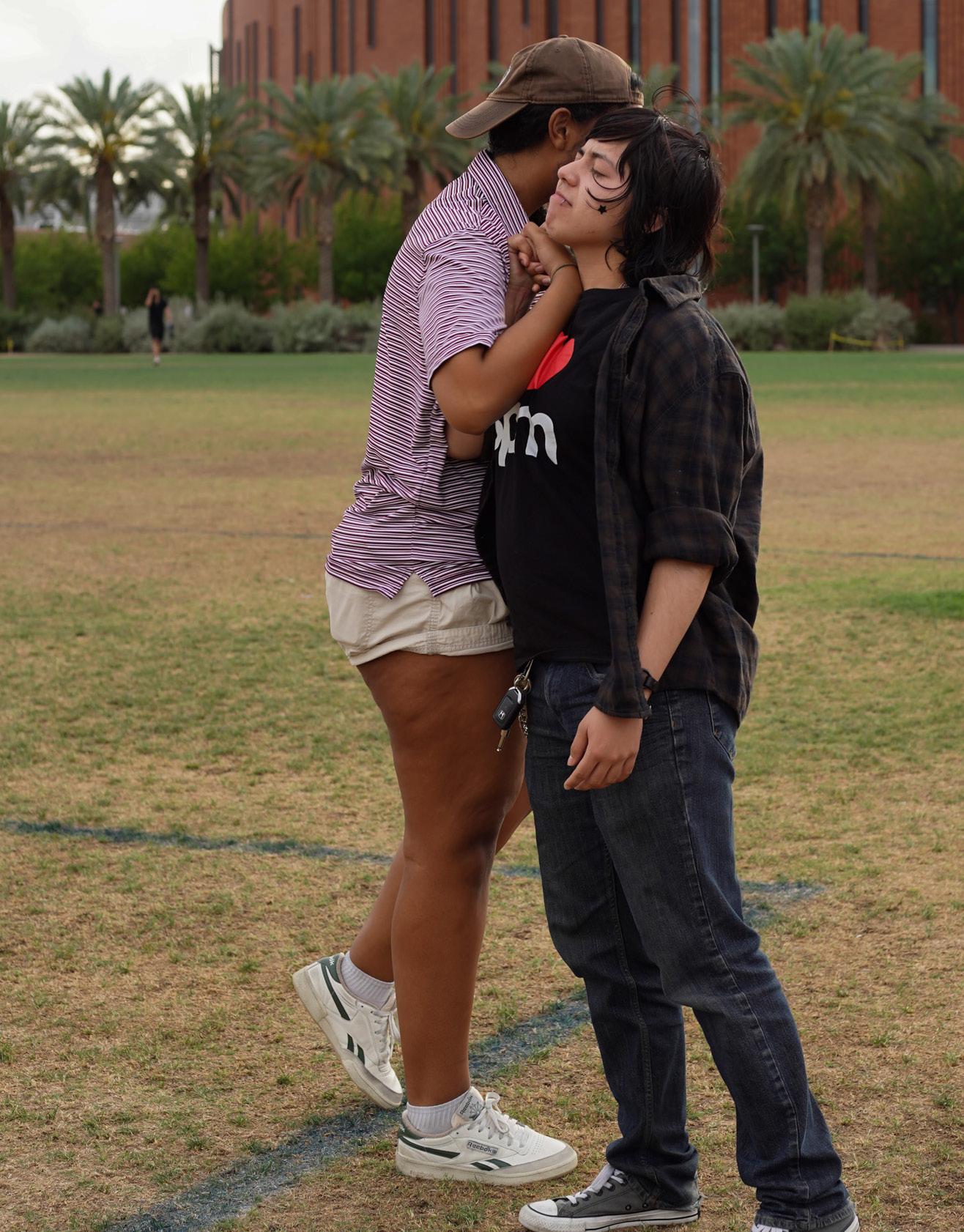
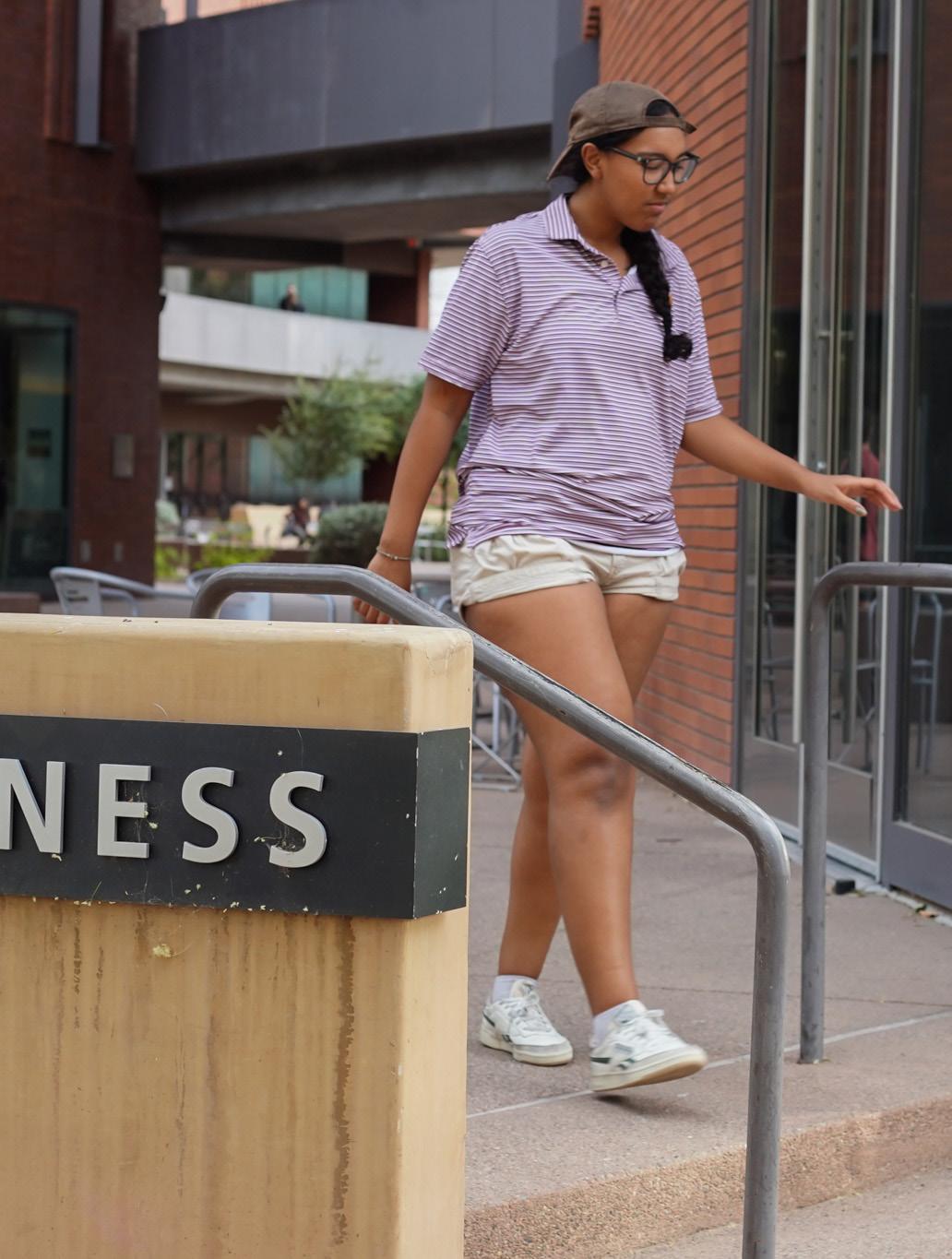
I head back upstairs to my room and pick my outfit for the day: a polo, khaki shorts that cut off mid-thigh, Birkenstock Boston clogs (with no socks) and a baseball cap.
As I head out the door, I notice a full gallon jug of water sitting on the counter. Something tells me that I need to grab it.
I start my day at the Tempe campus Sun Devil Fitness Center and walk through the doors with no fear, feeling at home. I sit at one machine for hours just because I can. Before I go, I take low-exposure, delicately posed photos of my gains in the mirror for half an hour.
Back at the Greek Leadership Village, I indulge in a game of Spikeball with my boys as the sun shines down on our glistening tan abdomens. I’ve never played this game before, but I found my footing pretty quickly. I spike the winning hit and my teammate daps me up, “That was so ferda, bro,” he says. “Preesh, bro,” I chime.
Once the game is over, we go back inside to change and get ready for a big night out. Soon after, I hop in the Fetii and head down to Mill Ave for a night of bar hopping. Somewhere in between my C.A.S.A. bucket and a round of Natty’s, I meet a sorority Touse Stacy and her friend. My brother and I decide to host a postgame back at the GLV with our new two-man.
When we get back to the house, I take out my at-home DJ kit and force the girls to sit through the shittiest set they’ve ever heard. Once they’ve had enough and bounce, I realize the night is still young! My brother and I head out to the house we’re renting for our frats’ “Soviet hoes and capitalist bros” themed party.
On the way there, my brother asks how my day went. Truthfully, this has been the best day of my life, but I know I can’t just say that. “Chill,” I replied, nonchalantly.
“What are we doing tomorrow?” I ask. “We start again, bro,” he says. As we approach the house, I can’t help but smile. I can’t believe this is my life!
The rest of the night is a blur of flicking my hand in the air and kicking girls out for absolutely no reason and soon after, I pass out.
I wake up the next morning at the same house, in a bathtub. I pull myself up and beeline for the mirror. You’re kidding me. I frown at my reflection — I’m me again. I decide to get out of the house as quickly as possible, and mope all the way home.
I get back to my place and open my phone to missed calls and texts from my friends, family and my boss. I realize I must have no-call, no-showed work yesterday and frantically open my boss’s message — I have been terminated. At that moment, I remember I actually did have class, so I shakily cracked open my laptop to peek at my Canvas grades.
My wrist goes limp and my head falls. After just one day of ignoring my responsibilities, I am fired and failing school. It’s so over.
How does ASU foster an entrepreneurial environment?
By Jude Banihani
Illustration by Paulina Soto
If you’ve ever driven around Phoenix, these mottos are likely etched in your brain:
“No. 1 in the U.S for innovation.”
“ASU ahead of MIT and Stanford.”
It’s even become a bit of a joke on campus, as students try to understand how innovation can be measured across other universities, but when it comes to breakthroughs in business, ASU’s success is certainly notable.
Eric Heimbecker, the assistant director for special projects at the J. Orin Edson Entrepreneurship and Innovation Institute, said entrepreneurship and innovation are “primary design principles of the University.”
Edson EI serves as a strategic connector that builds entrepreneurial ecosystems in both the ASU community and communities across different states and countries. They aim to empower and give access to entrepreneurs who are interested in building businesses, non-profits and social enterprises in an inclusive way.
“Entrepreneurs can be artists, they can be scientists, they can be all kinds of people as long as they are bringing an idea out of their head and into reality,” Heimbecker said.
Edson EI hosts events for entrepreneurs, such as Demo Day, a bi-annual pitch competition for ASU and Maricopa County Community College students. The institute provides capital to student entrepreneurs looking for investment in their business.
Students across ASU use the vast amount
of resources provided to kick-start their entrepreneurial journeys and build skills, make connections and utilize resources to grow their careers — all of which might contribute to the University’s innovative reputation.
There’s always something new
As assistant director of special projects, Heimbecker works to create, pilot and launch new innovative initiatives and programs at Edson EI.
“I also do a lot of our global work. We are a great expression of the ASU charter. Everywhere ASU has a presence we take our program to,” he said.
Heimbecker believes ASU goes “above and beyond” when it comes to prioritizing entrepreneurship. “It’s a mindset, a skill set that you can leverage in anything that you are doing,” he said.
ASU’s program, Blackstone LaunchPad, works to foster entrepreneurial skills with students who can be successful in more traditional careers. Venture Devils is another program offered by Edson EI where ASU students can pitch their ideas to judges in an effort to win funding.
Heimbecker encourages every student to try out entrepreneurship or come to an entrepreneurial event. “Use some of these tools, and you would be blown away by how powerful and how flexible they are,” he said.
Chase Winkelmann is a junior studying mechanical engineering with a minor in business. Winkelmann began
his entrepreneurial journey alongside his younger brother. Together, they own a car detailing business named Winks Washes, where they provide various car detailing services.
“We do everything from interior details to paint corrections, ceramic coatings, waxes, pet hair removal, stain removal, the whole nine yards,” Winkelmann said.
Wanting to make some extra cash on weekends, Winks Washes started out of Winkelmann’s Honda Accord and with about $1,000 worth of supplies.
As a first-generation business owner, Winkelmann expressed the journey as “treacherous” at the start. “We researched a bunch, what we thought was a bunch, but really it wasn’t enough,” he said.
After doing research on various detailing services, Winkelmann invested in supplies and began detailing the cars of friends and family for free in order to gain experience and build rapport. Once they established themselves they advertised their business on Facebook and Instagram.
“We did not pay ourselves, me and my brother, for 16 months,” Winkelmann said. “It was all sent back to the business, every penny we made.” The discipline and investment paid off when Winkelmann was able to invest in a van to help grow the business.
But growing the business is not the Winkelmann brothers’ only priority. They pride themselves on being a Hispanic and family-owned business. “I wouldn’t want to do business with any-
one else other than family,” he said.
Giving back to the local community is also important to Winks Washes. They even use a portion of their revenue to fund a scholarship called “The Pursuit of Knowledge Scholarship.”
“I don’t see any benefit of running a business that is strictly for profit,” Winkelmann said. “If you don’t have any aspirations other than solely making money, that business, in my mind, it’s doomed to fail.”
Similarly, Stephen Ebersole, a junior majoring in finance, also started a car detailing business.
“We had a whole bank account and
everything, but I think we got too ahead of ourselves,” he said. When the pair caught up with academic and social commitments, they wound down. But over the summer break, Ebersole reignited his entrepreneurial spirit.
“I’ve always had that entrepreneurial mindset. Growing up, I was that kid with the lemonade stand, I walked dogs around the neighborhood, I made flyers, I did house-sitting,” he said.
While building his own car and adding modifications to it, Ebersole realized that it was hard to find genuine reviews for companies that sold the parts he needed. Even with thousands of vendors and reviews online, he didn’t know where to look.
Together with his uncle, a web developer, he created an online website called Autoficial, where users could compare different companies that sold modified car parts.
“It was a live site, functioning in under a year, and then I started getting some affiliate sponsorships,” he said.
Autoficial reviews what Ebersole calls “seven key policies of the brand.” These include shipping time, return policies, guaranteed fit, warranty and more.
Ebersole believes resources such as those provided by Edson EI can be really helpful for students looking to build businesses. While many entrepreneurs may feel determined to

“make it on their own,” having mentors and experienced entrepreneurs to guide you through the roadblocks can be pivotal to your journey.
Juanxi Wu is a junior studying supply chain management. In 2024, Wu founded the Student Entrepreneurship Organization at ASU, whose mission is to help students understand what entrepreneurship looks like in real life.
“We’re not trying to teach people the entrepreneurship mindset,” he said. “We’re trying to show them how the work looks and how a real startup is operating, what is the problem that will occur at every startup and how the founders solve those problems.”
Wu said he believes that the core of any entrepreneurship venture starts
with finding a real problem and creating a real solution for it. Many startups lack this core foundation, leading to a short life span. “When you’re not solving a real problem, when you’re not creating a value to a problem, no one’s going to pay for you and you’re not going to find your customers,” Wu said.
SEO sees the AI boom as a way to further inspire and help entrepreneurs begin their ventures.
“When AI was coming, we saw a freak out. Everyone was like, ‘OK, am I really going to lose my job or not?’ We [SEO] see another potential where AI can help students to [overcome] their learning curve,” Wu said.
Many startup founders choose to find partners who diversify the company’s set of skills and talents. With AI, founders can learn more skills at a faster pace than ever before.
Wu said ASU fosters more of an entrepreneurial spirit than most other universities. With an alumni network of over 600,000 people, Edson EI and millions of dollars in funding, ASU encourages students to use its resources to embark on an entrepreneurial path.
However, despite an abundant amount of resources, Wu noted one significant problem with them: a lack of connection.
“They [different founders] always say that if you’re a business student, you will get connected with a new ventures program. But, you might not be made aware of other resources that are also hosted by different organizations,” Wu said.
For example, a business student


might come across Venture Devils, but they may be left in the dark about other resources like Sky Song or Edson EI. Students in the engineering school may participate in a mentorship program for engineers, but they might not be connected with business school students who could join in their startup.
“Students aren’t aware of all the resources at ASU. If you compare it to other universities, they also have different colleges that host different programs, but somehow they are organically connected,” Wu said.
The business entrepreneurship major
ASU’s W.P. Carey School of Business offers a business entrepreneurship major where students are “prepared to identify, evaluate, and develop entrepreneurial opportunities in existing companies or through new ventures.”
Rivadavia Drummond is a professor in the Department of Management
and Entrepreneurship. Drummond spent much of his career working for multinational companies before he started his entrepreneurial journey.
“I decided to quit and get together with some old friends, and I started a business. I tried 11, 12 times. None of the companies worked. We failed miserably. But then I got together with some other folks I met called Anima. This company worked after a lot of hardship and struggles,” Drummond said.
Anima is an educational organization listed on the B3 Stock Exchange under the name “ANIMA3.SA.”
Drummond’s experience with entrepreneurship allowed him to leave students with many lessons learned through trial and error. For example, he urges all business partners, even family or friends, to draft a business contract before starting any venture.
Drummond takes on a unique classroom formula where he tries to foster
innovation in his students. First, he assigns students various readings. Then, they come to class where he does a mini lecture on his applied experience before they do a case study on a specific topic. Lastly, he has his students do field work, and they are required to make two pitches in the classroom each semester.
Drummond said he believes entrepreneurship requires discipline, something he instills in his students through required reading, attendance and an on-time class start requirement.
He said that too often, students start with solutions before they’ve even identified a problem. For example, many will build an app before they’ve even done research on the problem their app is meant to solve.
“So there’s a methodology, and that’s a lean innovation process they have to follow. So never start with the solution,” Drummond said.
What a new AI powered platform says about the state of online dating on ASU campus
By Keyanee Walls
courtesy of Keyanee Walls
Swipe left. Swipe right. Pause, scroll, read, swipe left again. It’s a tedious and oftentimes unnerving routine — yet I keep going back.
My presence on dating apps began as a game. Who will I match with? How many likes did I get? For a long time, chasing these questions was pretty entertaining; however, at some point the swiping, liking and futile conversations made these apps feel like a chore.
This fatigue is common among many
in the future of online dating and the overall impact technology has on interpersonal connections within college campuses.
The new platform’s unique interface initially caught my eye. To join the program, users send a text message through a link on the Ditto website. The entirety of the matchmaking process is conducted through your phone’s messaging app.
be able to sift through discrepancies between profiles.
By asking what facial features a user likes, but not asking questions about the user’s own features, the AI behind the platform is presumably responsible for analyzing physical and emotional attributes for potentiavl matches.
For example, when users are prompted to describe the ideal “vibe” of their partner, and enter something along the lines of “granola” or “indie,” it is
of my peers, and as a result, these apps have started to lose their grip on college students around the country. Through this opening in the market, a new kind of online dating platform has emerged — Ditto.
I, admittedly, was an immediate skeptic. But my hesitations were not based on any of the typical issues you may find with dating apps. With Ditto, there is no swiping or liking, or even really any talking. This platform relies entirely on artificial intelligence and intricate algorithms to find you a “perfect match.”
The introduction of an application like this on ASU’s campus led me to question what kind of role AI can play
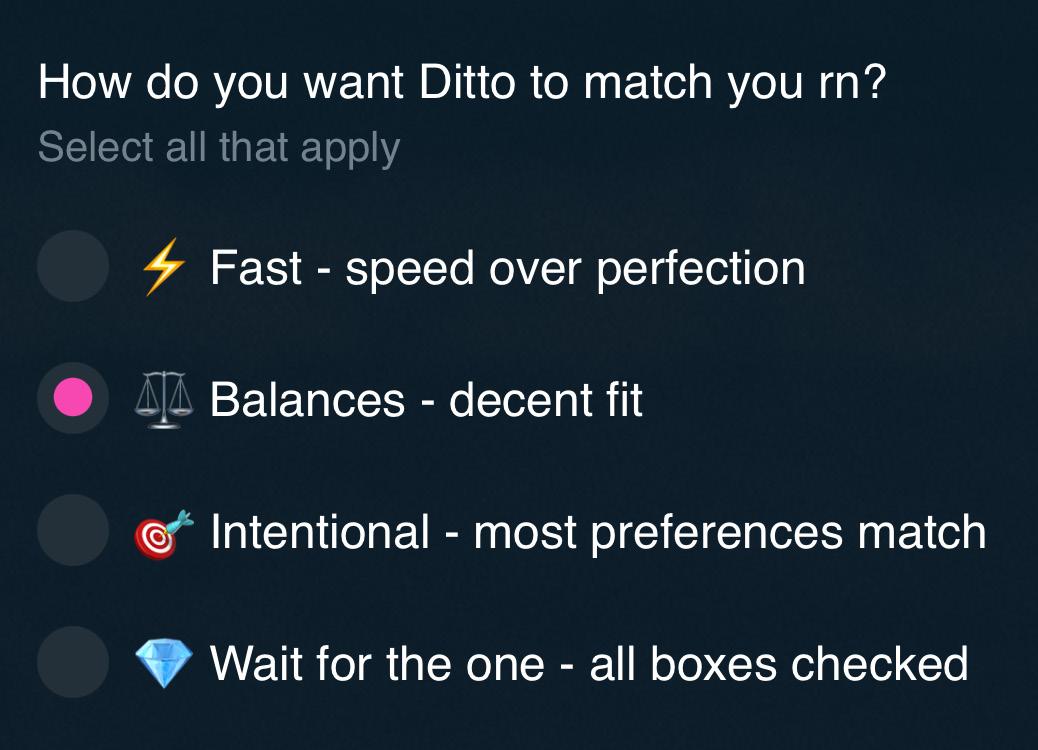
By texting the number, users open a conversation with an AI chatbot that sends them a link to fill out basic information. The first tier of questions centers the user and their type on paper, with basic “get to know you” questions about background, interests, dating goals, and ideal physical and emotional attributes in a partner.
Users are then given several options: receive the quickest possible match, a decent fit, an intentional match (where most preferences fit) or to “wait for the one,” with all boxes checked.
Every prompt in this questionnaire is optional, including adding photos of yourself. Because of this, I began to wonder how the program would
solely up to AI to discern what or who falls under those styles or ways of life. Why should users trust Ditto to make those kinds of categorical decisions?
Later on, users are able to answer a second tier of questions. This “indepth” section asks what green or red flags users look for, what activities they’d prefer on a first date, and what their political and religious beliefs are.
This line of questioning (while also voluntary), raises even more questions about the optional nature of the platform’s surveying and how matches are created if certain information is omitted.
The
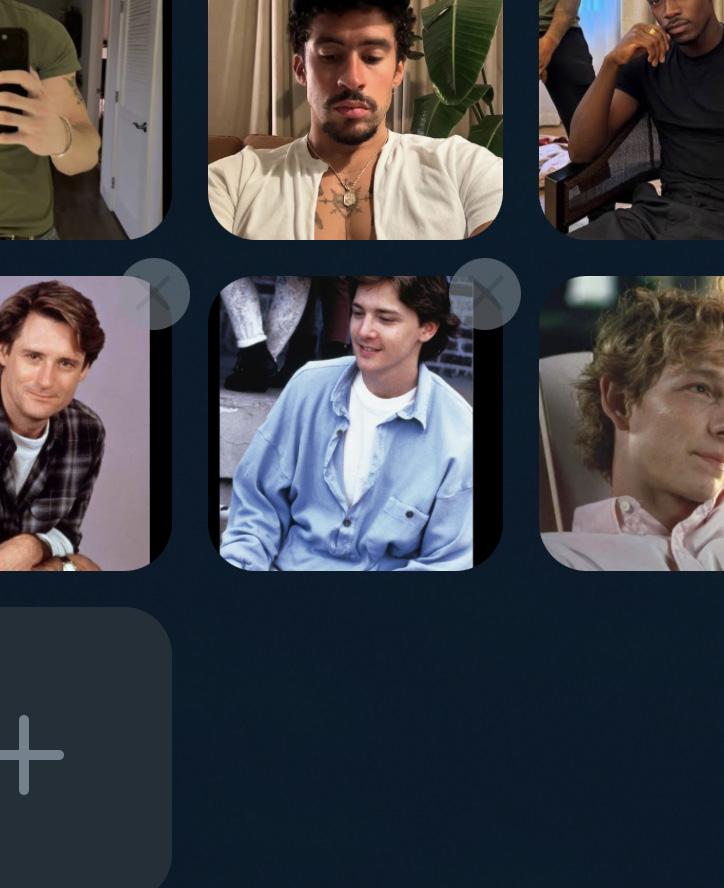
process is the “ideal look” section. In this tier, users upload photos of their celebrity crushes and other figures who have the “look” of their ideal partner.
Once the profile is complete, all users have to do is sit back and wait for Wednesday to roll around when Ditto sends them their match for the week. Once they receive a match, they are provided with some photos and basic information about the person and their interests.
Ditto then sends a link to a calendar where users can enter their availability for a date, planned by Ditto. The planning of this date seemingly takes into account the general interests of both matches, starting with a “main event” and providing a supplemental list of different activities to do as the date progresses.
At this point, users still do not have any contact with their match, and could only know their first name and what they look like (if they provided photos). It is only once both parties confirm availability for a date that Ditto reveals their phone numbers and users are able to contact their match.
Although I refrained from continuing the experience up to this point, I was generally disappointed in the platform as a whole. Since joining the app, I have received three matches, with curated date ideas for each. My first option was a coffee date at a local cafe, and the supplemental ideas included vinyl store browsing or dinner and a movie. While very cute ideas, I couldn’t help but feel underwhelmed by the simplicity of them. For a platform that prides itself on intricate connections and unique experience, with the scope of AI at its helm, the series of ideas it shelled out were pretty lackluster — and this feeling permeated throughout most of my time on the platform.
Ditto, developed by two University of California, Berkeley dropouts, launched in 2025. Creators Allen Wang and Eric Liu rolled out the platform for students at San Jose State University, UC Berkeley and University of California, San Diego students, as an alternative dating program for easier connections.
Through provocative marketing on UC campuses, student mixer events and a persistent online presence, Ditto has entered scattered conversations among college students wondering: What is this?
Many of their advertisements have not ailed this curiosity, but they have certainly succeeded in garnering public
Earlier this year, Ditto launched a collaboration with popular anonymous student platform Yik Yak, giving students the opportunity to find platonic or romantic matches based on a 30-question survey. Over the course of three weeks, students across the country opted into the experience.
The introduction of an AI-forward platform like Ditto on college campuses has sparked thoughts on the encroachment of AI in everyday life and the depth of the role it can play in fostering human connection.
“I don’t know what a computer could tell me about someone that I couldn’t figure out on a first date,” Piper Kvanvig, a senior studying communications, said when asked whether there is a place for AI in the realm of online dating.
attention. Flyers on the University of California, Santa Barbara campuses read, “Matthew cheated on me. Here’s proof,” as onlookers were prompted to open an attached QR code that led them straight to the Ditto website.
Other ads made references to the “Hang the DJ” episode of the TV show “Black Mirror,” which follows a couple who rebelled against an AI system that pairs people together for a limited time.
The platform has since expanded across the country, debuting at ASU in March as part of a 2026 expansion, according to Business Insider.
Some of the most popular dating apps among college students are Tinder and Hinge, both platforms with wildly different interfaces and approaches to connections than that of Ditto.
What sets Ditto apart from these apps is not only its interface, but also how it bypasses communication barriers that often hinder connections on alternative platforms. Users don’t have to speak to their match at all, leading up to their first scheduled date, and they don’t even have the option to until both parties have confirmed their availability for the preplanned outing.
This incredibly unique matching process is the essential basis of the platform’s creation. Wang stated in an X post from 2025 that he and his co-founder developed Ditto to “kill Tinder with AI.”
Ditto intends to accomplish this through the elimination of swiping, scrolling and communication in the matchmaking process. Competing platforms are
almost all based on user-driven engagement — the more you swipe, the more visibility you have and the more matches you get.
The first obstacle that Ditto aims to hurdle is the first date. For many online daters, it can be difficult to get the relationship from the screen to an in-person meeting. According to Liesel Sharabi, an associate professor at the Hugh Downs School of Human Communication, “There’s the process leading up to meeting, where people flake, and they ghost and dates drop off. And that can be really frustrating for people.”
For Ditto users, this issue is largely solved. The program itself curates the date for you, and the day and time can be agreed upon without a single word between either party.
“There’s not an algorithm out there that’s able to just immediately identify your ideal partner,” Sharabi said. “Otherwise, the market would be cornered, everybody would use that app. But with AI, I think there’s a lot of possibility.”
Sharabi has conducted research on communication technologies and their impacts on relationship development in modern romance. “The big question is how this kind of technology can be used as an introduction service [and] how it can introduce people so that they can go on to have successful face-to-face dates and face-to-face relationships,” Sharabi said.
In examining how the emergence of this technology in online dating reflects trends in younger generations, Sharabi highlighted a growing attitude among Gen Z in their dating aspirations – striving for authenticity and quality connection.
While acknowledging the ever-lingering presence of hookup culture, especially among college students, Sharabi noted an increasing interest in relationships and genuine connections within this demographic. “You see apps like Hinge and some of these other platforms that are more centered around relationships,” she
said. “That’s another way that Gen Z and young people have started to kind of shift the culture a bit.”
A major concern for online dating among college students is discerning the intentions of potential matches. Although many apps offer users a space to make their aspirations clear, there is still space for misunderstanding and crossed signals.
“It’s very hard to distinguish what that person wants until after something happens, and with Hinge, or literally any dating app, you can put what you’re actually looking for, and maybe some people are not honest on that part, but it just definitely gives you some type of range of what that person may want. And you don’t have to go through all those hoops,” Madeleine Hazzard, a sophomore studying nursing, said.
Kvanvig expressed similar thoughts, highlighting how overwhelming presence on these apps can be. “It’s also important to know what you’re wanting out of it when you go into it, just because it is so vast [and] the decision fatigue factor of trying to do online dating is kind of crazy,” she said.
Ditto’s interface takes a similar approach to its competitors in this regard, having one section for users to express what they are looking for, with the option to select multiple answers.
Hazzard also expressed initial hesitance toward being active on dating apps. “[But] once I got comfortable with the app, texting people [and] went on a few dates, I definitely felt a little more comfortable. But some of those dates have gone pretty bad, or just not comfortable enough for me to keep going,” she said.
Cassandra Cotton, an assistant pro -
fessor at the Sanford School, touched on a significant finding in her research, in that many younger people have grown to treat dating apps like games, or something to mindlessly scroll through at the end of a long day.
According to Cotton, the gamification of online dating reflects a greater detachment among young people.
“A lot of people were telling us stories [where] they would reach out to someone, and then the texting back and forth would just be endless, like it would never lead to a real, in-person connection,” she said. “[It] makes it easier to emotionally detach, because you don’t necessarily know if it will go anywhere.”
Cotton began collecting data on relationship aspirations among young people, primarily ASU students, in February 2025. With the help of over 25 sociology capstone students, she has overseen in-depth interviews centering around the concerns, ambitions and trends that come with dating.
According to Cotton, online dating can feel like work for many young people, and large amounts of time spent curating profiles has the potential to give way to fatigue and feelings of inauthenticity.
“Some of the apps ask lots of detailed questions, and so they spend a lot of time making an answer, testing it out with their friends, getting someone to take the perfect photo of them. And so it ends up being a lot of time investment,” she said.
Ditto’s interface certainly addresses many of these concerns and mindsets when it comes to online dating. By removing the user-engagement aspect of dating apps, users no longer have the responsibility of sifting through hundreds of profiles, and this kind of emotional detachment is less of an issue.
However, because users are unable to speak with their matches until further
along the process, there is space for a different kind of detachment, where the match only exists as a photo and an AI summary, and not a person you can build a connection with.
Another point of contention among students on these apps is the paywalls behind certain features or extensions. Hazzard commented on this issue, saying, “Because the goal is to try to find someone, I don’t think we should have to pay to have these extra things.”
On Tinder and Hinge, users have the option to purchase tiered subscriptions that give them access to view the profiles that “like” them, offer increased customization of their profiles and the profiles that they see, provide unlimited “likes” and more. On the other end, Ditto’s platform is currently free, which is a definite appeal for college students and supports a mission that solely prioritizes making connections (over profit), although Wang and Liu are considering future monetization possibilities, according to Forbes.
On campus, algorithms reflect the varied desires students have in their romantic connections, as well as a general culture that is popular among students. According to Kvanvig, “[Dating apps] definitely feed into the hookup culture, because it [provides] easy, [accessibility] to people who also want to hook up.”
Sharabi also noted the role dating apps and their algorithms play in the expansion of dating pools, “Algorithms are being used to sort, filter and narrow down your pool, so your romantic prospects are dependent on non-human judgment. For that reason, they’re really significant, and something that people don’t often think a whole lot about.”
Ditto’s approach to online dating alleviates many prominent concerns among college students, while also leaving many questions unanswered. While there is certainly space for improvement within the internet dating realm, it remains unclear the extent to which an AI-first platform will meet these needs.

By Leah Mesquita
As I reflect on this past year at State Press Magazine, I am overwhelmed with absolute pride and contentment. Reporters remained on top of it, pushing past any obstacles that came their way with utter determination. The multimedia staff curated incredible statements, crafting some truly vivid and emotive designs. To say that I loved my time at this newsroom would be an understatement.
When people ask what initially drew me to magazines, the answer is almost always a loaded one. It may have been my obsession with Tiger Beat and J-14 in the 2010s, my intense collection of National Geographic magazines from middle school or my fascination with the DIY zine scene in high school that piqued my interest — but that’s not what got me here.
My true affinity for long-form happened only after I was approached by SPM my freshman year, and I was immediately enthralled by the world of print journal ism. Words poured out of me like water, flooding pag es with stories that analyzed my identity, unmasked Sparky and even revived a TikTok trend (accidental ly). Writing became an extension of myself — some thing I was able to lean on throughout my unpredict able, erratic college career.
It was here that I found a passion, I became adaptable and I learned how to serve my community, all because I said yes to something four years ago. As this small but notable chapter comes to a close, I am thankful for all of my experiences, especially the chance to have led such brilliant, ambitious writers.
Keyanee Walls’ stories were always poignant and steadfast in boldness, while Aleisha Paulick stayed consistent, gracing us with dynamic characters
throughout each issue. I greatly enjoyed reading Evan Silverberg’s powerful pieces, all of which have cemented SPM’s ‘risk-taking’ legacy for years to come. Jude Banihani took this year to captivate readers with her unique and clever voice, seemingly touching on even the furthest of the ASU community’s corners. When Lucia Zettler joined us last semester, we were amazed by the sheer talent and journalistic drive she unleashed, growing with each new story. Although I only caught a glimpse of Liam Gigsy Gajotan’s work,

The tenacity and focus Natalia Jarrett held was inspiring to us all, carving a path that will guide the magazine into the future. I am lucky to have had her by my side.
And of course, a very special thank you to our readers who rely on our pages to stay informed. Not only is your attention keeping physical media alive for young journalists, but your unwavering trust in our organization made Volume 26 possible. We wouldn’t be here without you.
Very sincerely,


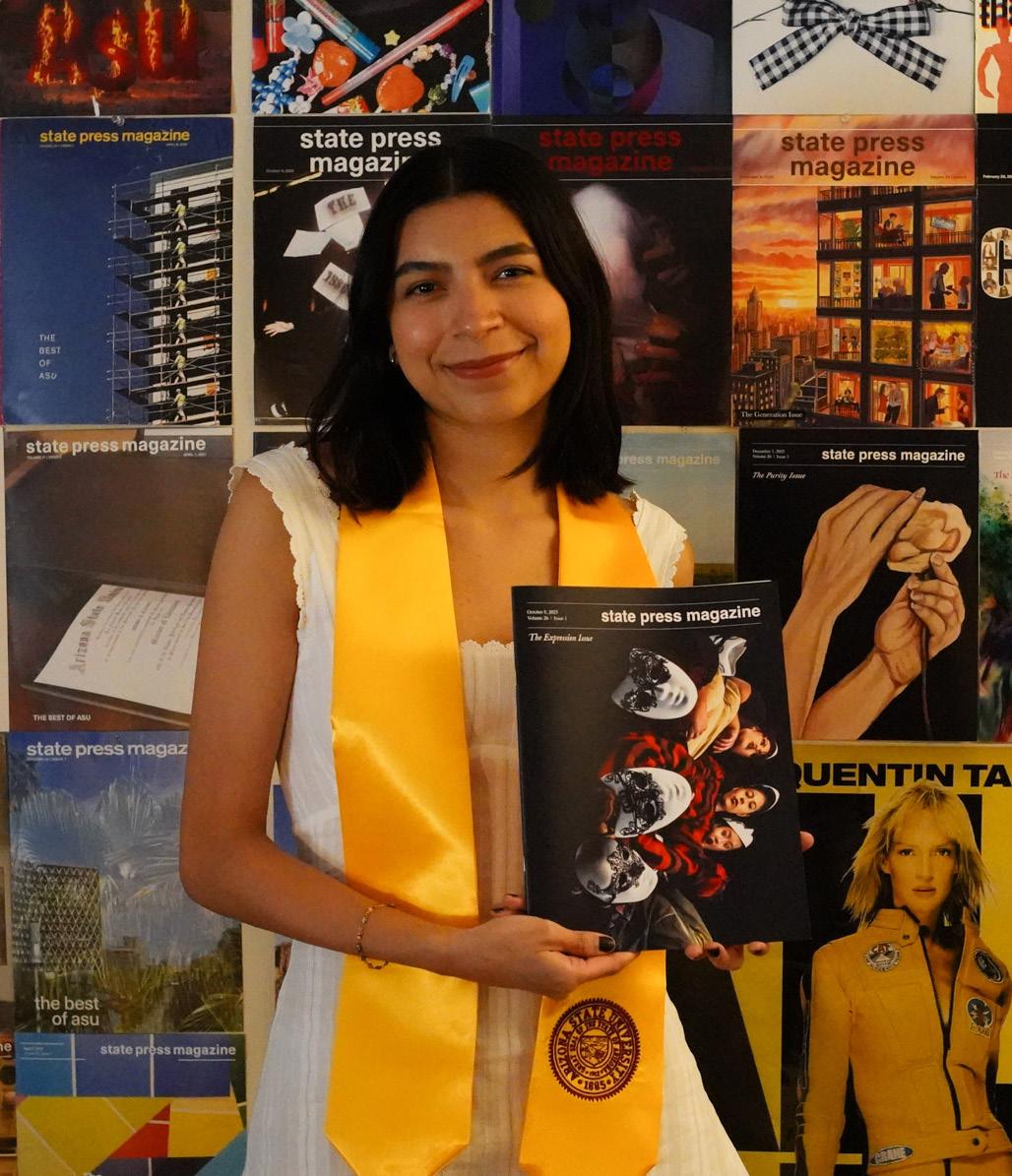




At Vero, residents enjoy studio, 1 & 2 bedroom apartments in Tempe, AZ, designed with updated interiors, open layouts, and easy access to local dining, shopping, and entertainment Each home balances comfort and functionality, creating an experience that is equal parts high-tech and high-touch, while offering an inviting community atmosphere for every lifestyle