WHITE PAPERS FOR A GREEN TRANSITION
WATER
NON-REVENUE WATER
Reducing urban water losses Meeting future water demands with holistic non-revenue water planning and intelligent technologies
INSIDE THIS WHITE PAPER A successful approach for reducing water loss Identifying barriers to non-revenue water reduction Benefits of building a smart water system
Connect. Inspire. Share. Think Denmark
stateofgreen.com
COLOPHON
REDUCING URBAN WATER LOSSES Meeting future water demands with holistic non-revenue water planning and intelligent technologies Version 4.0 December 2025
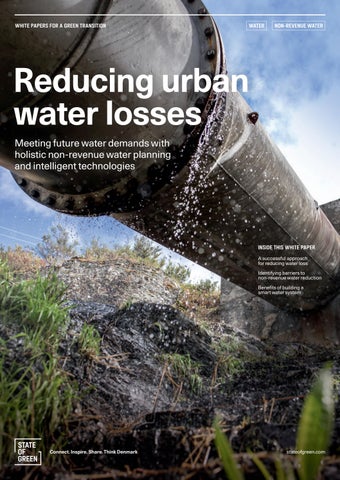
FRONT PAGE PHOTO Adobe Stock / ADDICTIVE STOCK Editing: Henrik Wedel Sivertsen
EDITOR IN CHIEF Victoria Kimberly Kristensen, State of Green, vkk@stateofgreen.com
TECHNICAL EDITORS Envidan, Jacob K. Jørgensen, jkj@envidan.dk NIRAS, Klavs Høgh, kvh@niras.dk
CONTRIBUTORS Aarhus Vand, Christian Schou, christian.schou@aarhusvand.dk AVK, Michael Ramlau Hansen, mrh@avk.dk DHI, Anne Mette Holt, amho@dhigroup.com Envidan, Jacob K. Jørgensen, jkj@envidan.dk Grundfos, Morten Riis, m.riis@grundfos.com Kamstrup, Mette Poulsen, metp@kamstrup.com NIRAS, Klavs Høgh, kvh@niras.dk State of Green, Silje Poulsen, spo@stateofgreen.com VCS Denmark, Magnus Ørum Harkjær, mah@vandcenter.dk
DOWNLOAD THIS WHITE PAPER Download the white paper and other related publications at stateofgreen.com/publications
FOR MORE INFORMATION To order copies of this white paper or receive information about other related publications, please contact State of Green at info@stateofgreen.com
COPYRIGHT NOTICE © Copyright State of Green 2025
REDUCING URBAN WATER LOSSES
Executive summary Efficient management of non-revenue water is crucial to secure future water supply and protect resources while strengthening utility finances and supporting climate goals. As demand grows and climate risks increase, high water losses directly threaten the reliable delivery of clean water needed by communities and industries.
In many cities, 25-50 percent of water never reaches end users, eroding supply security and leaving systems vulnerable to droughts and extreme weather. Without decisive action, global freshwater demand could exceed supply by 40 percent as early as 2030. Reducing NRW is essential to safeguard water resources and maintain stable services. Strategic planning for long-term resilience A strong NRW programme starts with system audits and a clear master plan that pinpoint losses and guide interventions and investments. By targeting leakage control, advanced metering and pressure management, utilities can decrease losses while maximizing return on investment. Frameworks for water losses prioritize efforts where they most effectively secure long-term reliability.
and valves, acoustic sensors and remotely read meters enable rapid leak detection, stable pressure and fewer disruptions. High-quality products and focus on total cost of ownership further strengthen dependable water delivery with reduced losses. Reducing losses to secure supply By reducing losses, utilities not only bolster supply security but also delay costly expansions, cut energy use and increase revenues. Yet many still face barriers from lack of strategic focus to unreliable data. This white paper outlines how holistic planning, innovative technologies and integrated management can reduce urban water losses and build secure, resilient water systems for the future.
Keeping NRW low demands integration into daily operations. Dividing networks into district metered areas and implementing smart technologies such as intelligent pumps 3
FOREWORD
Water security begins with every drop saved BY DURK KROL, EXECUTIVE DIRECTOR OF WATER EUROPE
Reducing urban water losses is one of the most immediate and effective measures for ensuring long-term water security for households, communities and economies. In a changing climate with growing cities and competing demands, Non-Revenue Water (NRW) is more than an operational inefficiency. It is a direct risk to supply resilience, financial sustainability and climate goals. Every drop saved strengthens our capacity to deliver safe, affordable water for people, industry and nature. This white paper showcases Denmark’s impressive track record in NRW reduction, achieved through strong gover nance, targeted investment and innovation. Bringing losses to some of the lowest levels in the world is not just a technical achievement. It reflects a culture of valuing water, rigorous data use and inclusive stakeholder engagement. These lessons are highly relevant for the broader European and global water community. At Water Europe, we see NRW reduction as a cornerstone of our vision for a Water-Smart Society. This is a society that fully recognises water’s value, manages all sources sustainably, closes loops in a circular economy, and unites innovation, governance, technology and people to build resilience. It works to prevent loss and ensure long-term sustainability and efficiency for all. In this society, water
Durk Krol Executive Director of Water Europe
4
security is achieved not only by increasing supply but also by unlocking the full potential of efficiency, reuse, digitalisation and cross-sector collaboration. This vision is fully consistent with the new EU Water Resilience Strategy, which calls for strengthening supply resilience, enhancing infrastructure performance and optimising water use efficiency. Reducing NRW delivers on all three fronts. It is as much a climate and energy strategy as it is a water strategy. It lowers greenhouse gas emissions, reduces operational costs and helps defer costly new infrastructure by making better use of existing resources. The Danish experience illustrates what can be achieved when governance, technology and public awareness are aligned. From advanced leak detection to performance-based targets, the approaches outlined here can be scaled and adapted worldwide. By embedding NRW reduction into investment frameworks, regulatory systems and city planning, we can accelerate progress towards a climate-resilient and water-secure future. Water scarcity is a shared challenge, but so too is the opportunity to act. Let us draw inspiration from Danish excellence and work together across sectors, borders and disciplines to make every drop count and secure water for generations to come.
FOREWORD
Reducing water loss is essential to securing the future BY MAGNUS HEUNICKE, DENMARK’S MINISTER FOR ENVIRONMENT AND GENDER EQUALITY
Access to clean and reliable drinking water is a global challenge. As cities grow and climate change intensifies, drinking water is becoming an increasingly scarce resource. The need to ensure resilient water supply systems is more critical than ever. Globally, as much as 30 to 60 percent of treated water is lost before reaching the consumer. These losses not only waste a vital resource but also the energy used in its production, putting pressure on utilities, public access to water, and the environment. With global freshwater demand predicted to exceed supply by 40 percent in 2030, reducing water loss is essential to securing a resilient drinking water supply. With the right combination of technology, regulation, prio ritisation, and long-term planning, we can protect our water resources and manage drinking water in the most effective and sustainable way. In Denmark, we took early action to address non-revenue water. Since 1994, our regulatory framework has required water utilities with a water loss of more than 10 percent to pay a penalty fee to the state. This regulation has created a strong economic incentive to minimise non-revenue water
and pushed innovation forward, placing Denmark at the forefront of managing water loss. By systematically measuring and registering water loss data nationwide, it is possible to find even the smallest leaks in the distribution network. Today, Danish utilities operate with some of the lowest water loss levels in the world – below 10 percent. This is made possible through strategic planning, digital monitoring, leak detection, and active pressure management. Reducing water loss is not only important for the economy and environment, but also key to securing our future water supply. In Denmark, the water sector has set an ambitious goal of becoming climate neutral by 2030 and keeping non-revenue water levels low play a crucial role in that transition, as it reduces both emissions and energy use. This white paper presents a series of best practice examples for reducing non-revenue water. By taking a holistic approach to water loss it showcases Danish and international cases that demonstrate practical approaches to leakage detection, pressure management, and system optimisation. The insights and cases are applicable in a global context and aim to support improved water efficiency worldwide.
Magnus Heunicke Danmark’s Minister for Environment and Gender Equality
5
REDUCING URBAN WATER LOSSES
Index
Chapter 1: The importance of reducing NRW
8
Chapter 2: A successful programme for reducing NRW: Holistic planning and prioritising
10
Chapter 3: Keeping NRW levels low during operations
14
Chapter 4: Smart water systems for smarter leakage detection
18
Chapter 5: Barriers to successful water loss reduction
22
Chapter 6: The importance of public awareness and political targets
24
Chapter 7: Reaping the benefits of reduced water losses
26
Chapter 8: Securing future developments in NRW reduction
30
Chapter 9: Tap into Danish water expertise
34
7
CHAPTER 1
The importance of reducing NRW In many cities, 25-50 percent of the distributed water is never invoiced to the customers. For growing cities, this is particularly problematic as expanding the water distribution networks without reducing urban water losses effectively means expanding a cycle of inefficiency, thereby increasing the risk of water stress for entire communities.
Humanity’s demand for water keeps growing. Global pressure on freshwater is projected to increase by more than 40 percent by 2030, which will lead to an even greater supply gap for countries already facing water stress. To meet future demand for drinking water, it is therefore necessary to prioritise efficient NRW management to control water losses. While global averages remain high, few countries like Denmark have demonstrated that NRW can be reduced to a level of 6-8 percent using the right combination of political regulation, technical innovation and utility management. NRW is the difference between the amount of water supplied into a distribution system and the amount of water that is billed. There are three main categories of NRW. Apparent losses are caused by inaccurate metering, data handling errors, theft and unknown connections. Real losses cover leakages from all parts of the system and overflows at storage tanks. Real losses are caused by poor operations and inadequate maintenance, combined with deteriorating underground assets. Lastly, unbilled authorised consumption is water used for flushing and firefighting, as well as water provided for free to certain customer groups.
8
The International Water Association’s Water Balance schema provides a more comprehensive description of each component of NRW. Reducing losses promote revenue and protects resources Huge volumes of drinking water are never invoiced due to leakages, deteriorating infrastructure, inaccurate billing systems, deficient customer registration, inaccurate metering, reservoir overflow and illegal connections. In the long run, neglecting to reduce NRW poses a threat to the development of the entire water supply system. High levels of NRW will have a serious impact on the financial viability of water utilities and entire communities due to revenue losses and unnecessarily high operating costs. NRW thus directly affects the ability of water utilities to fund necessary service expansions, conduct proper maintenance and invest in new technology. In general, reducing NRW by half within two to four years is an achievable target for most water utilities with water losses above 20 percent. This entails an assumption that both a strategic focus and required funding are present.
REDUCING URBAN WATER LOSSES
Water Balance schema Billed Metered Consumption
Billed Authorised Consumption
Billed Unmetered Consumption
Authorised Consumption
Unbilled Metered Consumption
Unbilled Authorised Consumption System Input Volume
Apparent Losses
Revenue Water
Unbilled Unmetered Consumption Unauthorised Consumption Consumer Meter Inaccuracies and Data Handling Errors
Water Losses
Non-Revenue Water
Leakage on Transmission and Distribution Mains Real Losses
Leakage and Overflows at Storage Tanks Leakage on Service Connections up to point of Consumer Meter Source: International Water Association
A reduction at that level will generate a considerable increase in annual income from billing, as well as reduced costs for water production. In addition to simply running a good business, reducing NRW is also a fundamental public service responsibility and a vital component in reaching the UN Sustainable Development Goal on Clean Water and Sanitation (SDG 6). As water resources face growing pressure from climate change, urbanisation and rising demand, ensuring a stable and reliable water supply is more critical than ever. Reducing NRW helps safeguard the security of supply by minimising losses, increasing system resilience and supporting longterm resource planning. Securing water supply is not just a technical goal, but a foundation for sustainable development and public well-being. A wide range of value adding benefits Reducing NRW unlocks a range of additional benefits for utilities and their customers. Beyond easing water stress, improving financial viability and strengthening security of
supply, an effective NRW programme brings several key advantages: • A more stable water supply, as improved performance will provide pressure balancing 24 hours a day, seven days a week. • Reduced energy consumption for abstraction, treatment and distribution, while still meeting the same demand for water, as pressure is adapted to demand and lower volumes of water will need to be treated and distributed. • Improved water quality due to optimised water distribution, as chlorine content in the distributed water will be better controlled and the risk of pollution related to cloudbursts and periods with low pressure or vacuum will be reduced. • A firm basis for setting up a long-term rehabilitation and investment plan for the network. • Strong support for data-driven decision-making due to new management systems.
9
CHAPTER 2
A successful programme for reducing NRW: Holistic planning and prioritising The first steps in reaching low NRW levels and ensure longterm success should be to conduct a water audit and develop an NRW master plan for upcoming investments and their projected returns. For this to become a reality, aspects such as initial planning, day-to-day operations, use of high-quality installations, good workmanship and introduction of new technology need to be addressed.
It is crucial that a strategic NRW reduction programme is managed and understood from the highest level of the organisation to the lowest. NRW reduction must be an agreed strategy for the entire organisation, based on a holistic NRW master plan. The first step is to conduct a water audit that includes an assessment and analysis of the performance of the water distribution system as well as identifies and quantifies areas for improvement. The outcome of the water audit is then used as essential input for the following steps of the NRW master plan that will serve as the basis for expansions, rehabilitations and investment plans as well as their projected returns. The most important outcome of the water audit is the component analysis of the International Water Association’s Water Balance (see chapter 1), setting a baseline for the NRW level. The analysis details the magnitude of each component that make up the total NRW divided into real losses and apparent losses. Implementing the NRW master plan The water audit should be implemented as a recurring (annual)
10
event to continuously quantify the effects of the implementation of the NRW master plan on the water balance, and consequently enable the utility to add any required modifications or corrective actions to the master plan. Once completed, the NRW master plan will provide the following information: • A prioritised list of activities and investments to strengthen the NRW reduction programme. • Calculation of the Economic Level of Leakage (ELL) based on cost-benefit calculations. • Mapping of root causes for real losses and apparent losses respectively with a clear distinction between the sub-strategy, activities and targets for each. • Activities developed based on cost-benefit calculations such as active leakage control, district metering, pressure management, meter replacement etc. • A strategy for the implementation and application of ICT systems including GIS, SCADA, modelling tools and management systems.
REDUCING URBAN WATER LOSSES
• Design and implementation of pressure managed areas and district metered areas based on advanced hydraulic modelling. • Budgets for the NRW reduction activities, the financial benefits and specific return on investment (ROI). Using the right KPIs for NRW NRW is commonly indicated and reported in high-level reporting as a percentage of system inputs into the system. This approach is acceptable for NRW levels above 20 percent, as the NRW will be high no matter how it is measured. However, NRW as a percentage is primarily a financial indicator that can be affected by many factors and parameters, so it does not give an accurate picture of system performance. For the water utility staff charged with implementing NRW reducing strategies and activities, the NRW and leakage levels should be reported by specific indicators using cubic meters/ kilometres of pipe/day and cubic meters/connection/day.
The International Water Association has further defined the Infrastructure Leakage Index (ILI), which reports actual real losses against expected unavoidable real losses for the system. This is calculated by taking the service pressure, the number of connections and the length of the pipeline into account. By using these additional performance indicators, the utility can target NRW reducing activities far more effectively to physical areas and water balance components with the shortest and highest payback. Ensuring the highest return on investments The key is to identify where the ROI will be highest. Utilizing the ELL framework, which is calculated as part of the master plan, will provide the answers. It considers cost-benefit analyses relating to each element of NRW, as provided from the water audit. It also considers the forecasted influence of the reduction in NRW on future investments in treatment plants, raw water abstraction, pumping stations etc. as well as the potential effects on revenue generation and energy savings.
11
CASE
Photo credit: NIRAS
Using smart metering data for water loss management The City of Fort Worth in Texas, with a population of nearly one million, has invested significantly in smart water metering technologies to aid in address high levels of NRW. In 2022 alone, the city reported water losses of around 6.54 billion gallons. Although an advanced metering system was in place, the utility faced challenges in using the high-resolution automated meter reading data to produce reliable water loss calculations. The inconsistencies stemmed from data noise, operatio nal complexities and unmeasured activities dominated by routine flushing of the network. To support Fort Worth’s Water Department, Danish consultancy NIRAS conducted a feasibi lity study focused on the Turtle Creek DMA, a low-density area requiring frequent flushing to maintain water quality requirements. The analysis revealed that inaccuracies in flushing data - both from overactive auto-flushing and unmetered manual flushing - were distorting water loss figures. NIRAS developed and demonstrated a methodology to integrate advanced metering infrastructure consumption data with work orders and operational records, before applying outlier filtering to improve data accuracy and water balance assessment combined with a dynamic rolling averaging to trigger leak alarms. Additionally, customer-level demand data was used to build a detailed water quality model to optimise flushing based on targeted water age. The approach enabled Fort Worth to improve the accuracy of its water loss reporting and identify opportunities for operational savings. The city estimated that flushing volumes could be reduced by up to 20 percent, supporting both resource efficiency and long-term water quality objectives.
12
CONTRIBUTORS NIRAS
LOCATION Fort Worth, Texas, USA
CASE
ILI 2.5
2.0
1.5
1.0
0.5
2019
2018
2017
2016
2015
2014
2013
2012
2011
2010
2009
2008
2007
2006
2005
2004
2003
2002
2001
2000
1999
1998
1997
1996
1995
0.0
Dedicated network and system efforts lead to impressive NRW results In the city of Odense, water utility VCS Denmark has been supplying the city with clean drinking water since 1853. VCS Denmark operates five waterworks, eight wastewater treatment plants and 3,400 kilometres of pipeline networks. VCS Denmark realized early that the utility faced the challenge of reducing NRW and maintaining the integrity of an ageing distribution system. Therefore, in the early 1990’s, a complete pipeline renovation program was launched.
CONTRIBUTORS VCS Denmark
LOCATION As a result of this, VCS Denmark has for the past 20 years maintained a NRW level of approximately 5 percent and an annual average of 80 pipe bursts across its 1,000 kilometres water distribution network. This consistently low level has been achieved through robust asset management practices, covering both operations and maintenance, and long-term planning.
Odense, Denmark
The first completed DMA included 6.3 kilometres of main pipes and 529 service connections. Half of all main pipes and service connections were replaced with a fully welded HDPE system. After the replacements, NRW was below 5 percent and in zones with full replacement, there were no leakages detected. These results demonstrate VCS Denmark’s commitment to operational excellence and its ability to deliver reliable, efficient and sustainable water services.
13
CHAPTER 3
Keeping NRW levels low during operations After implementing the NRW master plan, ongoing maintenance and operational efforts are essential. With the right technologies, utilities can maintain low NRW levels while also achieving energy savings, improved water quality and higher customer satisfaction.
Best practice NRW management is based on the principle of breaking down the distribution system into smaller and more manageable units known as District Metered Areas (DMAs), where the flow balance can be monitored for each DMA. Ideally, a hydraulic model is used to optimise the design of the DMAs where several considerations are applied such as minimum detectable leakage volume, pressure balancing across the DMA, grouping of customer categories and security of supply. This can be done in each DMA or in groups of DMAs by clustering the DMAs into Pressure Managed Areas (PMAs). Pressure management is a core pillar of active leakage management. However, long-term and ongoing control is necessary, and integrating NRW efforts into day-to-day operations is key to success. Aside from conducting annual water audits to identify potential areas for improvement to be included in the NRW master plan, focus during the operational phase should continuously be on: • Regular analysis of the NRW level based on the water balance in each DMA. • Optimisation of the DMA performance based on ILI and ELL for each DMA. • Installation of new technological advances to ensure a continuous improvement and expansion of reliable data from the distribution system. Smart pressure management A smart water system consists of multiple components such as intelligent pumps, intelligent valves, smart meters, deployed noise loggers, acoustic leak detection and much more. As an example, pressure management is implemented via the use of intelligent pumps or intelligent valves, depending on whether the specific PMA or DMA is to be subject to a pressure increase or a pressure reduction. In extreme cases, some areas
14
may be subject to a combined solution to cater for all operational scenarios. As the demand for water varies widely throughout the day, controlling the inlet pumps or valves supplying the individual area will reduce the existing background leakage, frequency of new pipe bursts and optimise energy usage. This is implemented by regulating the pressure supply to a level that secures the minimum guaranteed pressure at the critical point, thus securing an adequate pressure at each customer connection throughout the day. High-quality materials ensure a long lifespan PE pipelines with an estimated durability of 80–100 years are used for all new water distribution networks and service pipes in Denmark. Once equipment has been installed below ground as part of the distribution system, it is very difficult to control the valves, pipes or other installations. Therefore, it is important that all equipment and installations are of high quality to ensure that they will function properly for many years. In addition, welding and making joints of the PE pipes must be carried out by welleducated staff in accordance with quality standards to ensure a correspondingly long network lifespan. To achieve the optimal conditions for NRW reduction, only quality products with a long warranty, reliable and durable function should be selected. Rather than choosing products simply based on the on the initial purchasing price, products should instead be chosen based on the principals of Total Cost of Ownership. A generally accepted norm is that the purchasing cost for a pump is only 5 percent of the total cost of the pump’s lifetime, where 10 percent accounts for maintenance cost and the remaining 85 percent goes to energy costs related to operating the pump. Similarly, by choosing shut-off valves of high quality, leakages from the valve itself can be avoided and gate valves with high-quality rubber gaskets ensure that the valves are 100 percent drop tight.
CASE
ILI 6
5
4
3
2
1
0 Dec. 1st 2019
Dec. 23rd 2019
Jan. 14th 2020
Feb. 5th 2020
Feb. 27th 2020
Mar. 20th 2020
Fast track to successful NRW reduction The City of Larvik has a customer base of 39,000 people. Larvik is also a popular holiday destination. Larvik has several pressure zones, gravity supply reservoirs and pumping stations. The distribution system has eight major districts, subdivided into 20 DMAs with 35 district meters. During the summer of 2018, the municipal water treatment plants had difficulty meeting demand.
CONTRIBUTORS
The city decided to implement KeyZones monitoring system that consists of intensive data collection and systematisation of data. Operational within six weeks, the system gathered metered data from the past two years for reference for initial analysis of the KPIs. At the handover of the KeyZones system, initiatives and methods for active NRW optimisation were highlighted and suggested based on the DMAs with the highest potential for NRW-reduction.
LOCATION
Envidan
Larvik, Norway
A 20-25 cubic metres/hour leak with six months runtime was found after one week. Another leak of 35-40 cubic metres/hour with five months runtime was also identified and consequently repaired. The investment costs for implementing KeyZones were, despite the low water price, recouped through the repair of those leaks. Further initiatives such as changes to pressure zones were implemented, enabling Larvik to reduce the ILI from 5.0 to 2.5 within six months.
15
CASE
Photo credit: AVK
Efficient water supply management reduces critical water losses Georgian Water and Power (GWP), serving over 500,000 customers in the mountainous city of Tbilisi, faced substantial water losses of around 70 percent. The city’s complex water distribution network spans 3,600 kilometres and five vertical pressure zones, creating significant operational challenges. High elevation differences led to excessive pressure in the system, resulting in frequent pipe bursts, leakages and inefficient use of energy and water. Reducing NRW and optimising electricity consumption became a priority for the utility. To improve system performance, GWP partnered with Danish valve manufacturer AVK to install 500 high-quality pressure-reducing valves (PRVs) throughout the network. These valves help manage pressure from elevated reservoirs and prevent damaging water hammer events. By adjusting the pressure across different zones, GWP aimed to create a more stable and efficient water supply. After installing the first 235 valves, the utility began to see notable improvements in system performance and resource efficiency. Initial results showed a 10 percent reduction in electricity consumption and a decrease in pumped water volumes by 27.7 million cubic metres per year. This corresponds to a 50 percent reduction in NRW. In addition to these savings, the PRVs also lowered operational and maintenance costs and reduced pipe bursts by approximately 25 percent, contributing to a more resilient and cost-effective water supply for Tbilisi.
16
CONTRIBUTORS AVK
LOCATION Tbilisi, Georgia
CASE
Photo credit: Grundfos
Optimising water pressure management in Naples In the district metering area of Villa Albertini in Naples, Italy, high water losses, pipe failures and excessive energy consumption were straining local water infrastructure. Due to fluctuating and often excessive water pressure, the network suffered from frequent breakdowns and inconsis tent service delivery. These challenges limited the utility’s ability to operate efficiently while also pursuing environmental and cost-saving goals.
CONTRIBUTORS Grundfos
LOCATION To improve performance, local utility Gori implemented Grundfos’ Demand Driven Distribution, a smart pressure management system. The solution combines pressure control valves, real-time monitoring via IoT sensors and SCADA integration, and predictive algorithms that adjust water pressure based on current demand. This allowed the network to maintain more stable pressure levels and prevent overloading of pipelines, thereby reducing strain on both assets and energy use.
Naples, Italy
Within a short period, the results were measurable. Water volume injected into the network was reduced by 30.5 percent, while pipe failures dropped by 51.3 percent, lowering maintenance needs. Energy efficiency improved by 43.9 percent, leading to both environmental benefits and operational savings. Uniform pressure also ensured a more reliable water supply for end users.
17
CHAPTER 4
Smart water systems for smarter leakage detection The latest technological advances within communication platforms and smart devices have opened the door to a new generation of innovative tools and techniques that set new standards for NRW management and water loss control. The implementation of these technologies can assist in NRW monitoring, detection and reporting.
Today, most water utilities in Denmark are highly digitalised, meaning that key administrative, planning and operational systems are digitised and - most importantly - the data is stored in open (non-proprietary) databases. As of 2024, more than 80 percent of meters in Denmark are remotely read including both drive-by and fully smart systems. This means that the data can be utilised across the water utility to increase the level of knowledge of performance. In addition, a massive development of new communication platforms has taken place recently, and smart devices such as automated meter reading, deployed noise loggers and acoustic leak detection mean that more data is being collected than ever before. As a result, many utilities are now well placed to operate as smart water networks. The principles of SWAN The Smart Water Networks Forum (SWAN) has defined a five-layered model that describes best practice for any water utility seeking to transform into a smart water network leading to improved efficiency, durability and reliability of the physical distribution network. The basis of a smart water system is made up by:
18
• Deciding on physical assets: selecting the core infrastructure components such as pumps, pipes, valves and reservoirs that will form the foundation of the smart water network. • Enhancing the sensing and control layer: integrating smart devices like flow meters, pressure sensors, water quality monitors and remotely operated valves to enable real-time data capture and control. • Upgrading data collection and communication: implementing technologies that facilitate reliable, two-way data transmission between field devices and central systems using cellular, radio or fixed networks. • Expanding data management and display: scaling up vi sualisation platforms such as SCADA and GIS to manage and interpret growing volumes of data while integrating cybersecurity and support systems. • Introducing data fusion and analysis: establishing an advanced analytics layer that consolidates data across systems, enabling predictive maintenance, automated decision-making and digital twin simulations.
REDUCING URBAN WATER LOSSES
The top layer includes advanced data analytics that utilize historical as well as real-time data to conduct advanced reporting, forecasting and optimisation of the operations. Various algorithms (including artificial intelligence and machine learning) aid in providing input for data-driven decision-making, improving drinking water distribution and reducing water and energy consumption. Building a smart water system Several Danish water utilities have implemented integrated information and communication tools to support strategic rehabilitation planning of the transmission and distribution network. These tools use input from all available systems to support water utilities in executing long-term investment planning and updates on budgets, continuous overview of rehabilitation projects and prioritisation of rehabilitation activities. In particular, they enable cost-optimised sequen cing of rehabilitation efforts and provide full documentation of progress. Using a combination of spatial data analysis, machine learning and cost optimisation enables water utilities to establish a long-term holistic plan for their NRW interventions and
improvement initiatives. The effects of these are conti nuously monitored and reported back to the operational management and used for prioritising the ongoing active leakage control activities in the network Tools for leakage monitoring and control Using online water meters - more commonly known as smart meters - at customer level means that the operators can monitor the water balance for each DMA with a much higher frequency and much more precisely compared to the traditional setup with manual monthly or annual readings of customer meters. In Denmark, water utilities that have implemented smart customer metering are experiencing significant benefits, including shorter response times for leak detection and repairs, a lowered administrative workload for meter reading and invoicing, and increased customer satisfaction due to easily accessible water consumption data. Water utilities serving areas with vulnerable pipes that are especially prone to bursts are adding permanently deployed acoustic noise loggers with automated data collection as an additional technology that allows pipe burst to be registered, reported and localised within 24 hours.
19
CASE
Photo credit: Kamstrup
Saving water, money and time with digital smart meters In the mountainous municipality of Vacarisses near Barcelona, the local water utility faced mounting challenges due to aging infrastructure, recurring drought conditions and widespread leakages. With 40 percent of water consumption lost through leaks - many from unknown parts of the network - and mechanical meters aged between 20 and 30 years, the system lacked both accuracy and efficiency. Manual meter readings across the municipality’s 100 kilometre network across 17 towns took 21 days to complete. In 2022, Spanish authorities mandated supply cuts due to drought, prompting Vacarisses Municipality to take action.
CONTRIBUTORS Kamstrup
LOCATION Vacarisses, Spain
Following a market study, Vacarisses Municipality selected Kamstrup’s flowIQ® 2200 smart water meters with integrated acoustic leakage detection. These meters were installed to replace the outdated mechanical models, aiming to reduce water loss, lower costs and streamline operations. The implementation included Kamstrup’s READy mobile reading app, which helped field teams locate and document old meters with photos and readings, facilita ting smooth integration with the new smart meters. Plans are underway to implement a fixed network to provide real-time consumption tracking and leak alerts for end users. Just three months after installation, the municipality began to see results. A major leak was quickly identified and repaired, saving EUR 5,600 annually. Overall meter reading time dropped from 21 days to under five hours. Additional leaks representing 15 percent of consumption were located, contributing to total savings of over EUR 70,000 per year.
20
CASE
Photo credit: Anne Mette Holt/DHI
Digital monitoring to identify leak-prone areas Rajasthan, India’s largest and driest state, faces acute water scarcity, particularly in its north-western desert regions. Rapid urbanisation over recent decades has strained already fragile infrastructure. A study covering 222 towns conducted by the Danish technology and advisory company DHI showed that water supply systems were found to be inefficient and intermittent, often failing to deliver water at adequate pressure. High head losses caused by friction in outdated pipelines, combined with low terminal pressure, meant that water could not reliably reach many consumers. Leakages and poor pressure management contributed significantly to water loss across the network.
CONTRIBUTORS DHI
LOCATION Rajasthan, India
To address this, a detailed benchmarking and hydraulic analysis was conducted using MIKE+, DHI’s digital water modelling platform. The study involved building and calibrating hydraulic models using data from thousands of network assets, terrain conditions and supply patterns. The software enabled detailed mapping of low-pressure zones and high-risk leakage points, allowing for targeted analysis and simulation. Based on these insights, new pipeline layouts and network loops were proposed to reduce head loss and boost terminal pressure, thus improving both efficiency and reliability. The study resulted in nearly 3,000 calibrated models across the 222 towns. These digital models identified bottlenecks and leak-prone areas, supporting more informed investment decisions. The approach offered both immediate solutions and a scalable model for water loss control, leakage detection and long-term water security planning across Rajasthan and potentially other water-stressed regions in India.
21
CHAPTER 5
Barriers to successful water loss reduction NRW is a challenge most water utilities understand excellently, but only a few are successful in reducing it. Much of the failure is due to an underestimation of the technical difficulties and the complexity of NRW management combined with undervaluing the potential benefits of taking action. When NRW reduction is treated as a continuous process rather than a one-off project, utilities are better positioned to reap long-term benefits.
22
REDUCING URBAN WATER LOSSES
Reducing NRW should have the highest priority for every water utility, however it can seem that there exists a state of inertia in many water utilities despite high NRW levels. Some of the most common reasons for this situation and lack of action might be:
Lack of political awareness In many places, the value of drinking water is taken for granted, resulting in a lack of political attention and prioritisation. Water is often priced well below its true cost because governments subsidise it either directly or indirectly, for instance through low energy prices. With lowered energy prices, the cost of pumping, treating and distributing water is also reduced. This in turn masks the true value of water, discouraging investments in sustainable water infrastructure. Inaccurate data Having access to reliable data is crucial, as inaccurate meter readings can lead to poor decision-making across the utility’s operations. Without a clear understanding of where and how water losses occur, utilities may struggle to prioritise interventions, allocate resources efficiently or track progress over time. This is especially problematic when estimating real losses versus apparent losses, calculating the water balance or setting targets as part of the NRW reduction strategy. Focus on purchasing price rather than TCO Tenders and purchasing decisions focus solely on the acquisition price of e.g. new equipment rather than looking at the Total Cost of Ownership throughout the lifespan of the products. This will often result in poorer solutions and increase the need for replacements relatively quickly. NRW is not connected to overall sustainability goals In many cases, NRW management is treated as a technical or financial issue, rather than being recognised as a key component of broader sustainability and climate strategies. As a result, there is often little perceived connection between reducing water loss and achieving the utility’s overall environmental goals, such as reducing energy use, cutting greenhouse gas emissions or increasing climate resilience. This disconnect can lead to missed opportunities. For example, lowering NRW levels not only conserves water but also reduces the energy needed for treatment and distribution, thereby supporting both mitigation and adaptation efforts. When NRW reduction is not embedded into the utility’s sustainability planning, it risks being under-prioritised, poorly funded or excluded from cross-sectoral initiatives that could amplify its impact. Employee performance discourages transparent reporting Admitting to high levels of NRW can be seen as a reflection of poor performance, which may discourage water distribution managers from reporting data accurately. When employee performance appraisals are not aligned with NRW reduction goals, there is little motivation to improve transparency or pursue corrective actions. Instead, staff may focus on maintaining favourable metrics rather than addressing underlying issues, potentially hindering the utility’s ability to make meaningful progress. Insufficient training limits results Reducing NRW is not just a technical task, it requires committed management and skilled staff. Without proper training in tools like GIS, hydraulic modelling, leakage detection equipment and smart meters, utilities risk falling short. Training should involve all staff levels, from planners to field technicians, to ensure that consistent procedures and quality assurance are followed.
$
Corruption leads to inefficient NRW projects Corruption at multiple levels, spanning procurement processes, contractor selection and project implementation, can significantly compromise the effectiveness of NRW reduction efforts. In such cases, considerable financial resources may be allocated to pipe replacement or infrastructure upgrades without yielding meaningful improvements in NRW levels. When project priorities are determined by vested interests rather than objective assessments or technical data, the result is often inefficiency, misallocation of funds and a failure to address the root causes of water loss. This not only hinders operational performance but also weakens institutional credibility and public trust, ultimately delaying progress toward sustainable and accountable water service delivery.
23
CHAPTER 6
The importance of public awareness and political targets Awareness of water’s true value varies greatly, often leading to underpriced water that fails to cover actual costs. By combining regulation, economic incentives, public awareness and transparent benchmarking, it is possible to reduce consumption and losses. These measures help ensure reliable, efficient water systems.
The awareness and understanding of the value of water va ries from country to country. Often, the price of water does not cover the actual investment and operational costs necessary to treat and deliver clean drinking water. Political focus and priority from government institutions is necessary to make consumers aware of the value of having a stable supply of clean water. In many places, the apparent losses pose the biggest challenge and require a change in consumers’ mindsets to bring it down. NGOs and anthropologists can be involved in changing people’s mindset and behaviour when it comes to drinking water as well as their understanding of how consumer payment for water is necessary to ensure sufficient funding for the development of a sustainable water supply with clean and safe water. Public awareness and economic incentives to reduce NRW Denmark has shown that economic growth and decreasing resource consumption are not mutually exclusive; they can in fact go hand in hand successfully. Over the past 30 years, Denmark’s GDP has increased by 75 percent while the water consumption has decreased by 40 percent. The Danish approach consisting of continuous public awareness concerning the importance of saving water together with economic incentives has resulted in water consumption figures that are acknowledged worldwide.
24
Politicians and decision makers in Denmark have understood that public regulation and taxes are important and effective tools for behavioural change. In 1996, a general requirement was introduced for the installation of water meters at the consumer level in Denmark, giving private households access to their water consumption data. Furthermore, Danish authorities impose an annual penalty on water utilities that do not maintain their NRW level below 10 percent through extra taxes on lost water. In 2024, the total price for water supply and wastewater treatment was an average of EUR 11.01 per cubic metre. The same year, water consumption in Denmark per capita was on average 97 litres/day, showcasing that the price of water can serve as a strong incentive for the public to reduce consumption. The national average for NRW has been reduced to 7.5 percent due to the long-term intervention. Moreover, government regulations have motivated water utilities and technology providers to develop new, cost-efficient leakage monitoring technologies and leakage management systems. The highly efficient Danish water distribution system can also be reflected in the fact that the average ILI has remained below 1.0 for many years. Benchmarking for efficiency and constructive competition Benchmarking serves as a valuable tool for water utilities to assess performance and enhance operational processes.
REDUCING URBAN WATER LOSSES
Water consumption in Denmark, 1976-2024 m3/person/year
Action plan: Aquatic Environment I
Charge on emitted wastewater from WWTP
Action plan: Aquatic Environment II Requirement for water meters
Charge on piped water
120
Action plan: Aquatic Environment III
Contribution to the protection of drinking water
Water Sector Reform Act
Municipal reform
90
60
30
1976 1977 1978 1979 1980 1981 1982 1983 1984 1985 1986 1987 1988 1989 1990 1991 1992 1993 1994 1995 1996 1997 1998 1999 2000 2001 2002 2003 2004 2005 2006 2007 2008 2009 2010 2011 2012 2013 2014 2015 2016 2017 2018 2019 2020 2021 2022 2023 2024
0
Households
Business (industry)
Institutions
Holiday homes
The Danish Water and Wastewater Association (DANVA) annually collects and publishes performance data from participating utilities. This systematic approach fosters transparency and continuous improvement across the sector.
Water losses (NRW)
Source: DANVA - Water in Figures 2024
WATER IN FIGURES 2025 DENMARK
As of the latest available data, 78 drinking water companies and 91 wastewater companies participated in DANVA's benchmarking program, contributing data for the year 2024. These companies serve approximately 60 percent of the Danish population with drinking water and treat wastewater for about 90 percent of the population. The benchmarking process enables utilities to compare KPIs, identify areas for improvement, and implement strategies to reduce water loss and enhance efficiency. Denmark's benchmarking framework introduces a dimension of transparency and perhaps even constructive competition. Utilities are not only encouraged to improve their own operations but are also motivated by peer comparison to adopt new technologies and optimise performance. Public visibility of benchmarking outcomes reinforces a culture of accountability and innovation, helping to drive sector-wide efficiency improvements.
STATISTICS & BENCHMARKING
Download the latest report here: www.danva.dk/waterinfigures
25
CHAPTER 7
Reaping the benefits of reduced water losses Reducing water losses brings multiple benefits as it can delay costly expansions by serving more people with existing resources, cuts energy use and boosts utility revenues by minimising losses. Effective NRW management also strengthens water supply security, ensuring reliable access for growing cities, businesses and communities.
There are many benefits to be reaped from adopting and successfully implementing an NRW reduction programme. Reducing urban water losses can delay the need for additional water resources in cities with a growing population, as up to 30 percent more inhabitants can potentially be served from an existing resource by making distribution systems more efficient. Any investments in the utility’s water supply, including new intake and treatment plants, should therefore be considered as opportunities to reduce NRW down to the ELL. Considerable energy savings Climate change mitigation and reduction of CO2-emissions is increasingly attracting political attention across the globe. It therefore makes sense to address reduced energy consumption as a positive spillover effect of NRW reductions when considering the efforts and expected results of an NRW programme. If 25–50 percent of the water produced is lost through leakages and never reaches end users, the energy used to abstract, treat and distribute that water is also wasted. In systems with high levels of NRW, energy inefficiency becomes a hidden but significant cost driver, as utilities are often forced to operate pumps at higher pressures or for longer durations to maintain service levels. Reducing NRW not only conserves water but also unlocks substantial energy savings. A typical NRW reduction programme leads to more stable and optimised pressure
26
across the distribution network, which in turn improves the overall efficiency of the pumping system. With more consistent operating conditions, it becomes possible to reduce peak energy demand, optimise pump performance and lower the energy intensity per cubic metre of water supplied. Higher revenues It is estimated that the apparent losses caused by inaccurate metering and data handling errors typically makes up 25–75 percent of the total amount of NRW, which can seriously affect the financial viability of water utilities as a result of lost revenues. The cost savings and increased revenues gained from reducing NRW through efficient management can therefore be transformed into larger working funds for the utility, securing its future efficiency and development for the benefit of the surrounding region. Stronger supply security through effective NRW management Reducing NRW plays a vital role in strengthening the longterm security of supply. By minimising avoidable losses and stabilising system operations, utilities are better equipped to maintain a continuous and reliable flow of water, even during droughts, peak demand periods or climate-related disruptions. This is essential not only at the large scale where entire communities depend on consistent access to clean water, but also at the small scale where industries and businesses rely on stable supply to maintain operations and productivity. In this way, NRW management supports water supply security.
CASE
Photo credit: Grundfos
Subverting the water-energy nexus with intelligent pressure management systems In the growing Chilean suburb of Tejas Verdes, located 250 kilometres from Santiago, rising population and prosperity were putting increasing pressure on the local water supply. Originally home to just 1,000 people, the area had expanded to around 10,000 residents, significantly increasing water demand. The water distribution system struggled to keep pace with fluctuating pressure leading to frequent pipe damage, water losses and insufficient supply for households. At the same time, the local water utility faced rising operational costs due to high energy use for pumping.
CONTRIBUTORS Grundfos
LOCATION Tejas Verdes, Chile
To address these challenges, the water utility turned to Grundfos’ Demand Driven Distribution system. The solution uses battery-powered pressure sensors installed throughout the network to monitor consumption and adjust pumping pressure in real-time. Data is transmitted daily and used to automatically regulate the pumping station. This approach ensures that water is delivered in line with actual demand, minimising energy use and reducing water loss from leaks and system stress. Eighteen months after implementation, Tejas Verdes saw energy consumption drop by 32 percent. In the first six months alone, NRW losses decreased by 3.3 percent. The system also improved operational reliability by enabling preventative maintenance, reducing pipeline breakdowns and associated costs. For residents, this translated into consistent water availability and improved pressure, two key benefits in a region facing increasing water scarcity.
27
CASE
Photo credit: NIRAS
Reducing energy use and water loss through smart pressure management In Kuala Lumpur, Malaysia, rising water demand and growing urban populations have placed increased pressure on the regional water utility, Pengurusan Air Selangor Sdn Bhd. With large volumes of water being pumped through the system, significant losses due to leaks and bursts have contributed to high volumes of NRW. At the same time, pumping operations account for the majority of the utility’s energy consumption, adding financial and environmental costs. Faced with challenges related to water scarcity, inefficiencies and escalating operational expenses, the utility sought solutions to reduce both water loss and energy use.
CONTRIBUTORS NIRAS
LOCATION Kuala Lumpur, Malaysia
To address these challenges, NIRAS conducted a feasibility study focused on optimising pressure in the water distribution network. Using online hydraulic modelling, 25 pressure zones were analysed to assess the potential for pressure and energy optimisation. Ten priority locations were then selected for detailed site surveys and operational assessments. The hydraulic models acted as a digital twin for forecasting of demand and energy prices, allowing pumping operations to be timed for maximum efficiency. Reducing excess pressure in the system was a key strategy to reduce energy use, lower leakage and prolong asset lifespan. The study showed that NRW could be significantly reduced by optimising pressure, with some DMAs potentially achieving pressure reductions of up to 48 percent. Potential energy savings of up to 25 percent and cost reductions of 30 percent were also identified, supporting both water conservation and long-term energy efficiency goals across the water network.
28
CASE
Photo credit: Kamstrup
Ultrasonic meters improve network efficiency In the French part of the Eastern Pyrenees, prolonged drought has severely strained water resources, prompting urgent action from the local water utility, Eau Agglo Perpignan Méditerranée. With rainfall at historic lows, the region faced increasing pressure to secure a reliable water supply. One key challenge was water loss in the distribution network, compounded by outdated mechanical water meters that had become unreliable over time. Improving metering accuracy and overall network efficiency became critical to safeguarding the region’s water security.
CONTRIBUTORS
To address these challenges, the utility initiated a large-scale replacement of mechanical meters with Kamstrup’s flowIQ® 2200 ultrasonic smart water meters. These meters offer precise, long-term measurement and are equipped with integrated acoustic leakage detection, allowing for proactive identification of leaks. After extensive quality testing, Eau Agglo Perpignan Méditerranée confirmed the meters met performance expectations and committed to deploying over 100,000 units across the network.
Perpignan, France
Kamstrup
LOCATION
By early 2024, 40,000 households had been equipped with the new meters. Within just a few months, 120 previously undetected leaks were located, marking a substantial improvement in network insight and response. The leak detection success rate increased from 60 percent to over 75 percent, with an ambitious goal of reaching a network efficiency rate above 89 percent. This strategic investment has already strengthened the resilience and reliability of the region’s water supply.
29
CHAPTER 8
Securing future developments in NRW reduction State-of-the-art technology and best available solutions are continuously being developed based on product innovation, smarter ways of working and better system integration. New innovations can contribute to lowering NRW and improving the efficiency of water distribution.
In Denmark, great emphasis is placed on research and innovation programmes to ensure continuous improvements in NRW projects. Companies working in the water sector, water utilities and research institutes are encouraged to work together on developing new and innovative technologies and solutions for both the Danish and the international market. Experience shows that innovation is best achieved when the competencies of different stakeholders are exploited in a close interplay between companies with complimentary products or services as well as researchers and water utilities. Bringing different stakeholders together in binding strategic partnerships has therefore boosted the innovation within the Danish water sector. Strong tradition for collaboration across the water sector Danish water utilities actively participate in innovation projects to improve their performance and become more efficient in delivering fresh drinking water to their customer. As a result, they are generally very open to cooperating with other stakeholders in the water sector on developing new and improving existing practices and technologies. This could for instance include advanced use of software, data collection and communication technology combined with smart meters to collect important information about consumption to optimise their water supply to the network and save energy. One example of this type of technological development is the case of Danish water utilities that are implementing smart
30
water meters and noise logging tools to collect more reliable data from the distribution system and thereby manage their NRW even better. The data from the smart meters, which is collected both at the customer end and at strategic locations in the distribution system, provide water utilities with more accurate daily NRW levels in each DMA, enabling them to optimise their NRW activities on a daily basis. The use of AI, machine learning and Big Data technology has started a revolution in data collection and analysis that may assist in predicting pipe leaks or bursts and helps localise them, allowing for leaks to be repaired within a shorter time frame. Financing NRW projects through publicprivate partnerships One of the most important barriers to starting up a new NRW programme is often securing funding for the programme in its initial phase until the expected ROI is realised. Many water utilities around the world are not able to overcome the initial investment, even though the business case shows a payback time of just two to three years for some of the investments. A proven solution can be to arrange a public-private partnership (PPP) between the utility and private sector companies. The PPP can be set up in different ways, e.g. between the water utility and the contractor on behalf of a group of suppliers to the programme, or by using a performance-based contract (PBC or ESCO) where the contractor is paid based on the savings and increased income the project has generated for the water utility. Danish companies are often open to such arrangements.
CASE
Photo credit: Aarhus Vand
Training leak detection skills to reduce water loss globally Aarhus Vand utility has established a dedicated leak detection training field in Viby J, Denmark. As part of the Water Living Lab, the initiative addresses the need for skilled operators who can detect leaks efficiently under real-world conditions. Utilities, educational institutions and companies are invited to train at the site, where challenges such as unknown pipe locations, various pipe materials and leak types are simulated under different pavements including grass, gravel, asphalt and tile.
CONTRIBUTORS Aarhus Vand AVK HeyPipe Kamstrup Water Valley Denmark
The field allows operators to practice using a range of tools, from acoustic sensors and correlators to gas tracing and pipe-locating technologies. The setup integrates Danish water technologies, including valve sensors from AVK, leak detection meters from Kamstrup and digital documentation via the HeyPipe platform. This combination of practical training and innovation not only enhances leak detection skills but also serves as a demonstration site for smart water solutions.
LOCATION Viby J, Denmark
Building on the Danish model, Aarhus Vand is expanding internationally with a new training field underway at the Ghana Water Institute where water loss averages 50 percent. By providing hands-on education and access to tested technologies, the initiative strengthens global capacity to reduce water loss, improve network efficiency and secure more reliable water supply systems.
31
CASE
Economy
Water Sample
GIS
Asset Management
Smart Meter
MIS
CIS
Hydraulic Model
Pump
Valve
SCADA
Noise Logger
32
REDUCING URBAN WATER LOSSES
Strategic water partnership to stop water losses through system integration and holistic monitoring Nine Danish partners formed a consortium with the objective of demonstrating the use and effect of integrated high-end solutions within water loss control based on Danish technologies and know-how. The nine partners included leading technology providers, consultants, water utilities and the Technical University of Denmark. Known as the LEAKman Project, its aim was to deliver a sole, holistic NRW management system.
CONTRIBUTORS AVK DTU – Technical University of Denmark Grundfos HOFOR – Greater Copenhagen Utility Kamstrup
Demonstration of a combined leakage management approach Initiated in 2016, the five-year project that was financed under the auspices of the Environmental Technology Development and Demonstration Programme that is supported by the Ministry of Environment, had an overall budget of EUR 5.7 million. The project included several central aspects such as economic analysis of the ROI, the EEL, selecting appropriate KPIs for monitoring the status and effect of different leakage management solutions as well as the implementation of interfaces between systems. The approach integrated the four key elements of leakage management: pressure management, active leakage control, pipeline management and rehabilitation as well as speed and quality of repairs.
Leif Koch NIRAS Novafos Schneider Electric
LOCATION Zealand, Denmark
Two large-scale demonstration facilities were established at the Danish water utilities Novafos and HOFOR. The implementation included installation and use of intelligent valves, pumps, deployed noise loggers, smart meters, smart inspections, SCADA, online hydraulic modelling (Aquis), GIS and a holistic management information system (HOMIS) configured for automated calculation, display and reporting of selected key performance indicators. Integration and connectivity are key Many of these components are generally already in use at water utilities, however, they are often installed as part of separate projects, with only little or inefficient interface between the different components. Consequently, the full potential of the entire system is never reached. The LEAKman Project combined several smart systems and seamlessly integrated and monitored them holistically, thereby connecting the entire water distribution network. The result of the LEAKman Project was the development of an integrated solution that facilitates water loss reduction to less than 20 percent for any system within just a few years with possible reductions to below 10 percent. In 2020, upon completion of the demonstration facilities, the pressure was reduced by 16 percent in the first demonstration area. An additional reduction of 15 percent is planned. Consequently, a corresponding decrease in leakage level and burst frequency is expected.
33
CHAPTER 9
Tap into Danish water expertise In Denmark, we value our water. We care for how we extract it, use it and release it back to nature. We consider water a valuable resource in the circular economy and a contribution to reaching our energy and climate goals. Above all, we value water for its potential to improve lives.
Let’s protect our drinking water Everyone deserves water that is clean and safe to drink. In Denmark, our drinking water is sourced entirely from groundwater. Our strategy is to protect our groundwater resources and in return, our drinking water only receives minimal treatment. Most waterworks simply pump, filtrate and distribute it to the consumers. We monitor it carefully and work to secure clean groundwater for future generations.
Let’s use our wastewater as a resource Wastewater should no longer be thought of as a problem. Instead, let’s turn our wastewater treatment plants into energy and resource recovery facilities, where we can extract phosphorous and produce organic fertiliser and biogas. In Denmark, we also aim to utilise wastewater even further up the value chain to produce products such as biofuels and bioplastics.
Let’s care for every drop Water is a scarce resource – and every drop counts. We must make the most of the water we have. In Denmark, we have low levels of water consumption. Benchmarking measures performed by DANVA based on major water utilities in Denmark show that the average Dane consumes just 97 litres a day, our water losses are below 8 percent and our industries are increasingly focusing on water efficiency and reuse in their production. The price is based on full cost recovery, which ensures a reliable and efficient water supply 24 hours a day. Now let’s fight to make every drop count worldwide.
Let’s move towards an energy and climate neutral water sector Water plays a key role in creating a sustainable world. It is important to make sure our water management is sustainable as well. In Denmark, we use a minimum of energy to pump and treat water. We work continuously to be energy efficient, and we contribute to a greener and more flexible energy system by producing energy from wastewater. In fact, some facilities are now producing more electricity than they consume. By 2030, the Danish water sector aims to be energy and climate neutral across the entire water cycle.
34
REDUCING URBAN WATER LOSSES
Let’s use rainwater to create resilient and liveable cities Rainwater can improve urban life if it is managed wisely. In Denmark, we store and delay rainwater and stormwater in parks, streets and football fields to create both resilient and liveable cities for a growing population. By doing so, we adapt to the changing climate and weather patterns as well as increase our biodiversity. Let’s swim in our city harbours Water can be used actively in urban development. Waterfront areas and blue-green infrastructure can transform neighbourhoods and create economic growth. By treating our wastewater and managing our stormwater in underground basins, we have transformed polluted inner-city harbours into urban oases, so that when the weather permits, you can go swimming in the harbour in Danish many cities.
Let’s collaborate and solve the global water challenges We want to connect, inspire and learn from each other in global partnerships – and work together to contribute to a more sustainable world. Water is one of our most valuable resources and it plays into many other agendas such as adapting to and mitigating climate change and increasing biodiversity. Through national and global partnerships across sectors, we can deliver on the UN Sustainable Development Goals on water and sanitation, affordable and clean energy, sustainable cities and communities and life on land and under water. Water is life. And with the right care for water, we can make better lives.
From water treatment and supply to wastewater management and environmental conservation, the Danish water sector encompasses it all. Dive into our digital visualisation of Denmark’s water value chain and discover companies and organisations that specialise in water-related technology, research and innovation.
35
Learn more about Danish water solutions, find more cases from around the world and connect with Danish water experts at:
stateofgreen.com
STATE OF GREEN IS A NOT-FOR-PROFIT, PUBLIC-PRIVATE PARTNERSHIP FOUNDED BY: