Georgia Garden is published three times per year by the State Botanical Garden of Georgia and the Friends of the Garden.
The State Botanical Garden of Georgia is a public nonprofit educational organization within the Office of Public Service & Outreach at the University of Georgia.
DIRECTOR
Jennifer Cruse-Sanders
ADMINISTRATIVE
Susana Alvarado
Laurel Clark
Sheri Dorn
Chris Humble
Heather Schwartz
SERVICES
Tina Christie
Jennifer Denson
Kimberly Futrell
Jessie Penouilh
Adam Stewart
Shené Stroud Sara Zerkel
DEVELOPMENT
Kathy Adams
EDUCATION
Cora Keber
Audrey Mitchell
Emory Perry
HORTICULTURE
Jason Young
Alex Ankirskiy
Emily James
Katie McCollum
Eli McKinney
Zoë Prince
Ken Duffey
Sheldon Jones
Carol Dyer McKeen
Jim Moneyhun
Brian Santos
Samantha Simmons
SCIENCE & CONSERVATION
Heather Alley
Erin Gorman
Shanna Lee
Will Rogers
Stacey Swann
Winter/Spring 2026
Jennifer Ceska
Emily Laske
Emory Moser
Rachel Smith
Zachary Wood
VISITOR SERVICES & FACILITIES
Daun Fest
Tripp Dukes
Noel Fortunato
Adam Lowe
Andrea Fischer
Oliver Hirt
Grace Moorman
Happy New Year! Each year, we eagerly await the exciting events and changes the garden will bring. As we close out 2025 and welcome 2026, thank you to every one of our Friends, volunteers and supporters for making 2025 a banner year at the garden.
There is so much to look forward to this year. This spring, we will break ground on the Gateway to the Garden project. By creating an enlarged and updated entrance way, we will be able to welcome more visitors to the garden to enjoy our collections and trails, and engage in our impactful lineup of programming.
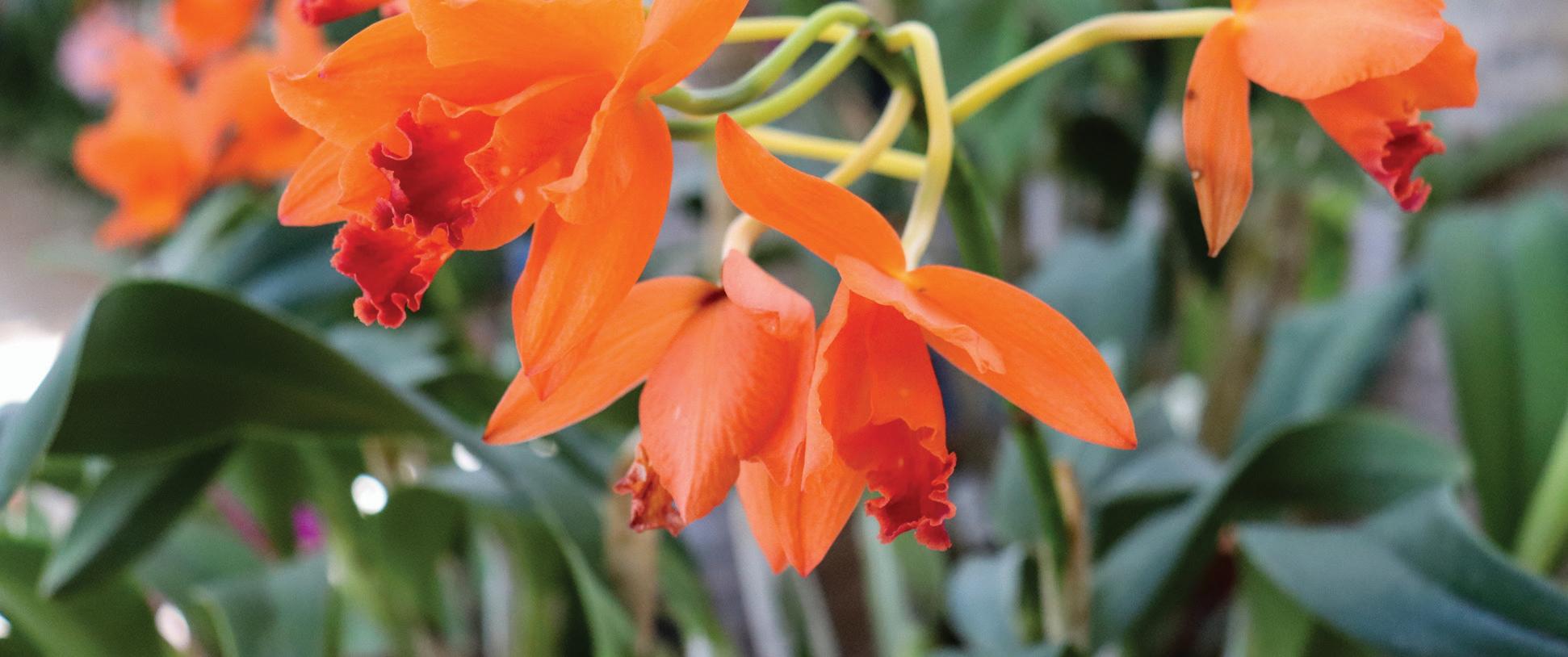
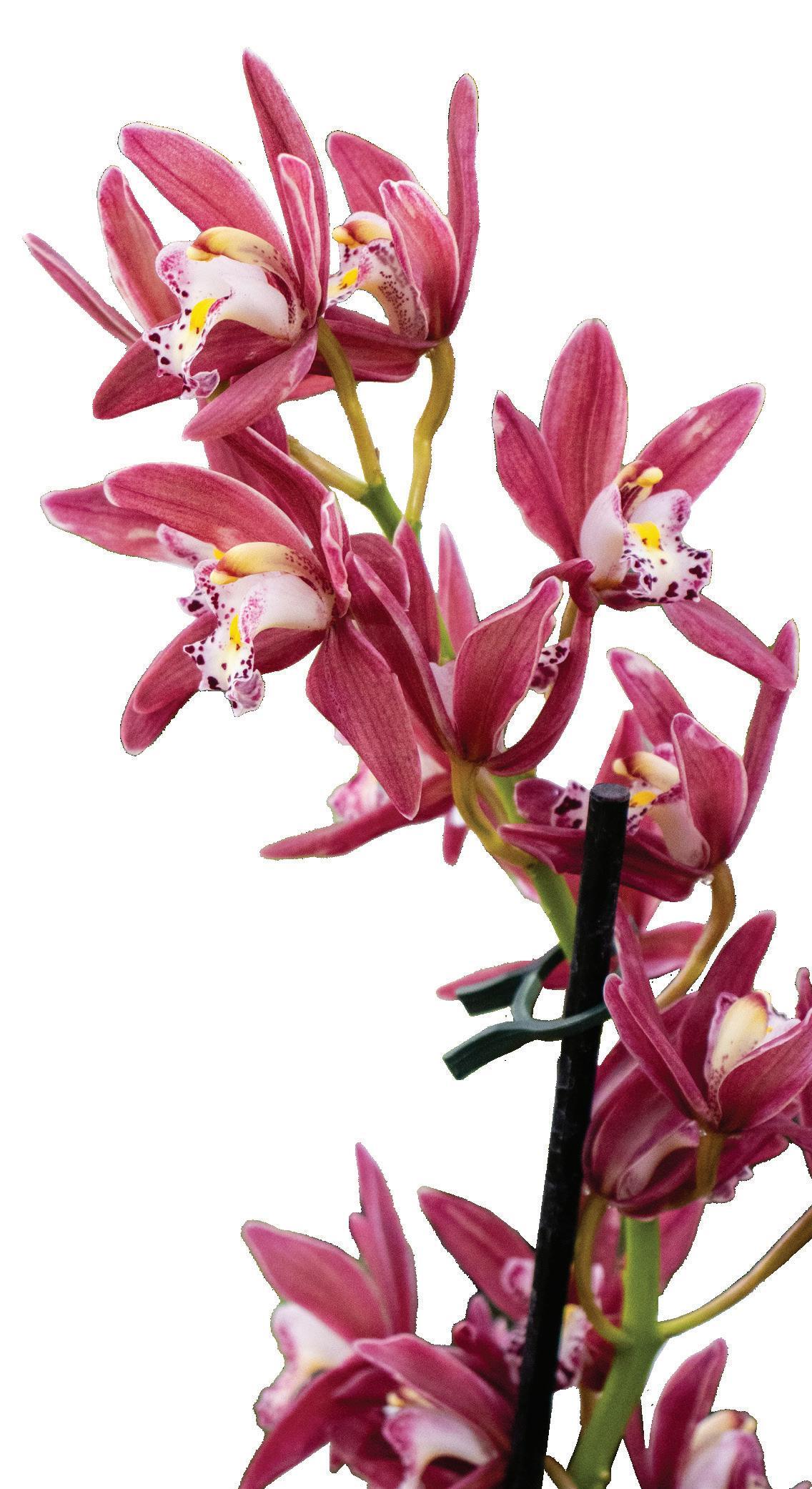
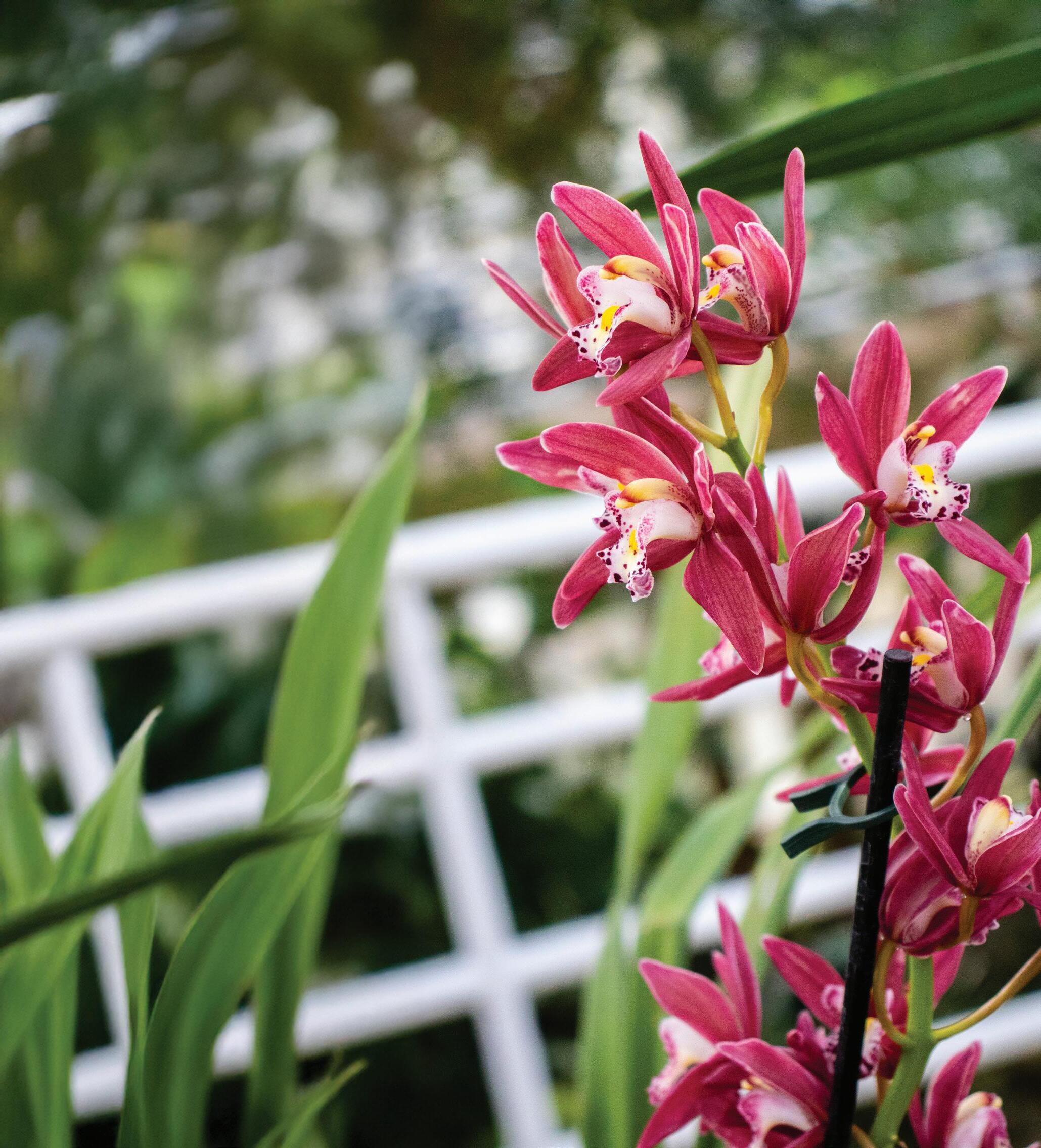
Our annual Orchid Madness events in February will include a piano concert, a chocolate tasting and demonstration, a flower arranging class and an orchid repotting class, allowing our visitors to engage with this beautiful species in several different ways.
March brings the start of children’s programming for the year with our annual spring family festival, Georgia Questival, and the weekly Sweet Pea Club for our youngest garden explorers. We always
look forward to the Friends Annual Meeting in March for a chance to connect with our Friends members and thank them for their support of the garden.
We are especially excited to add a new program to our lineup of spring events this year, an opera in our Flower Garden in partnership with the UGA Opera Theatre and the Hugh Hodgson School of Music. The State Botanical Garden’s Flower Garden in spring will be the perfect backdrop for a presentation of Jonathan Dove’s witty, romantic chamber opera adapted from Jane Austen’s “Mansfield Park.”
We invite you to engage with the garden this spring, whether it be through our programming, becoming a Friend of the Garden, volunteering with us, or simply enjoying the beauty of the garden as spring blossoms with daffodils, tulips, hyacinths and more! I look forward to seeing you in the garden this spring.
Jennifer Cruse-Sanders, director
Employee Spotlight
Johnathon Barrett
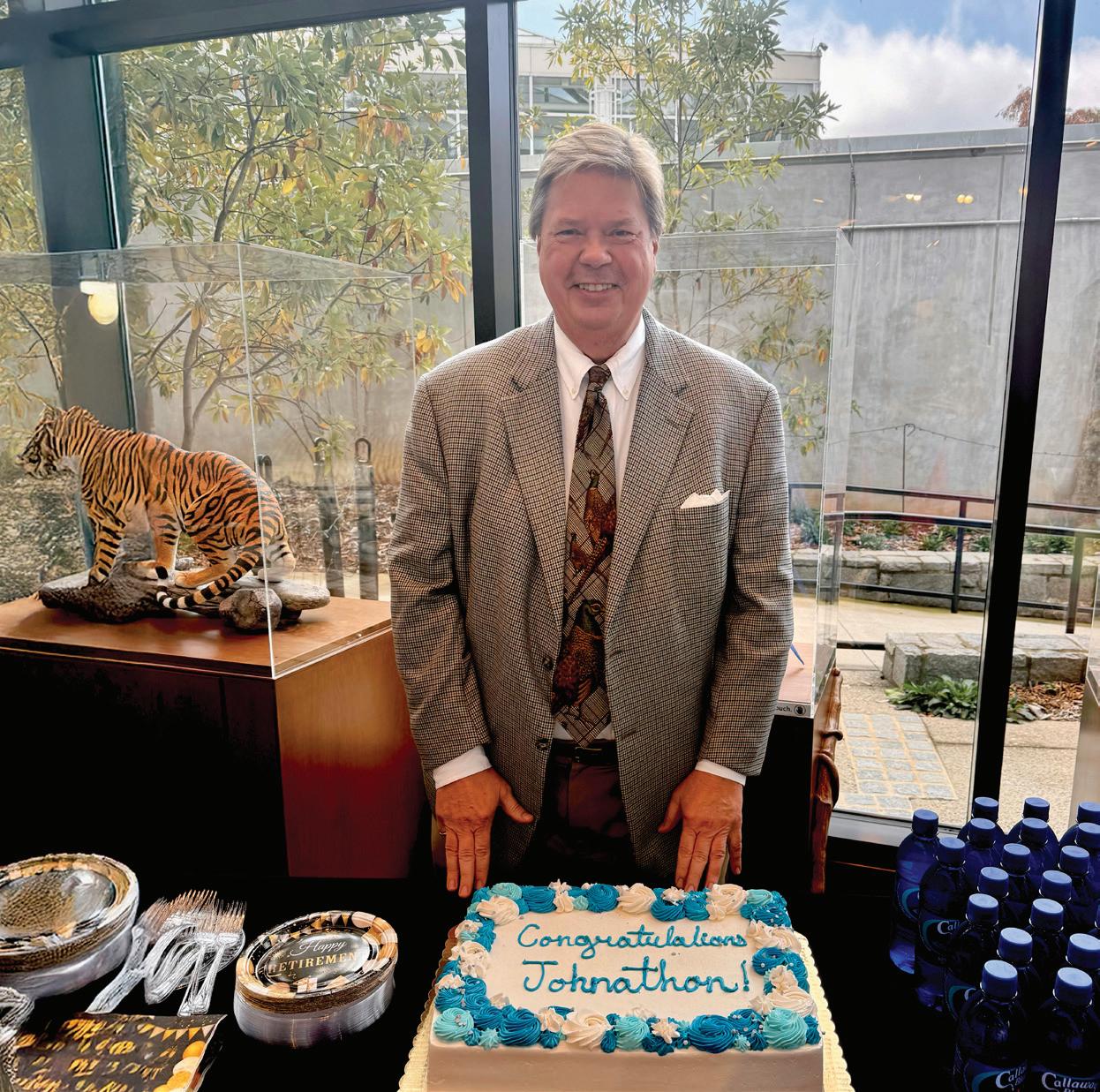
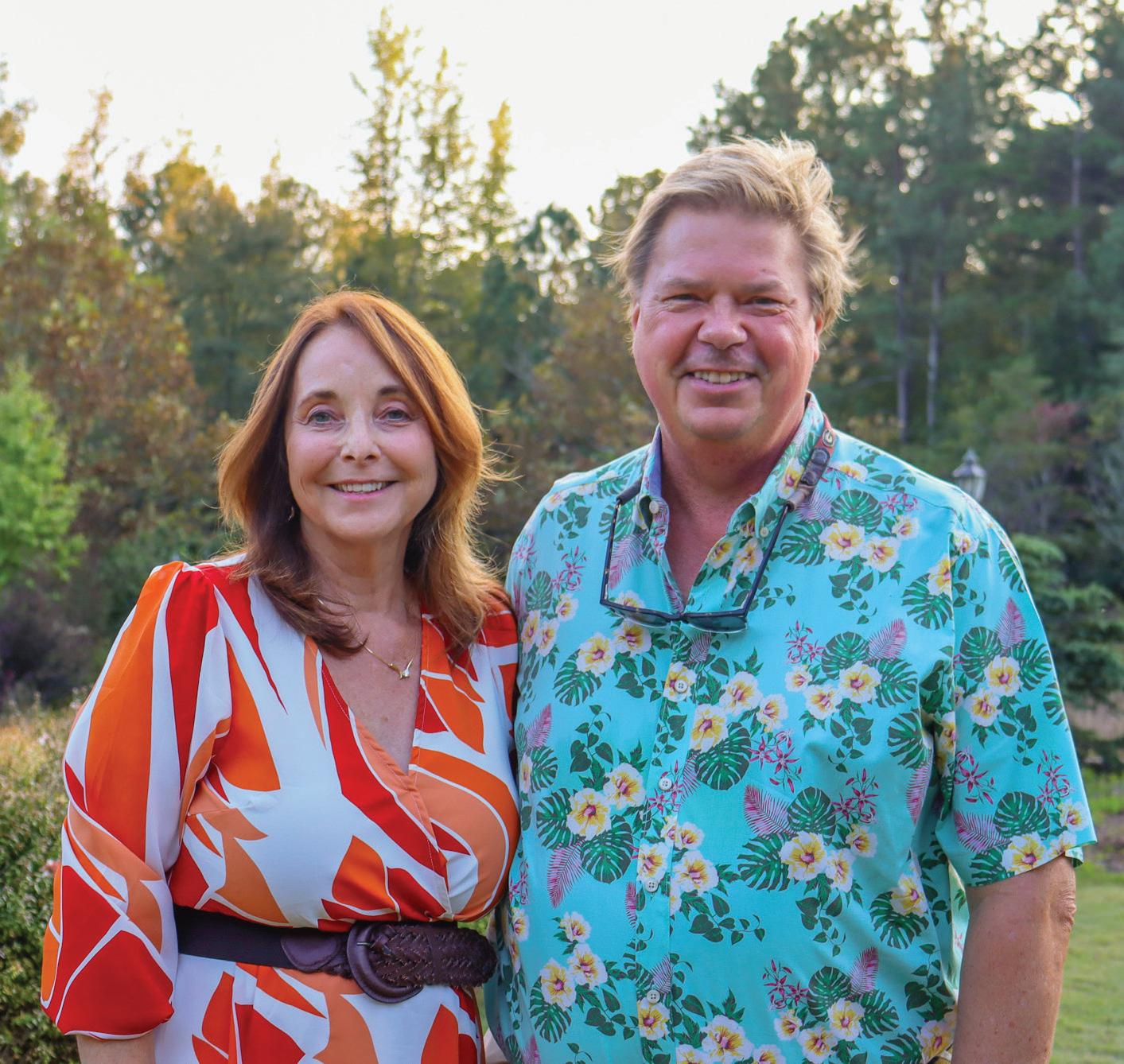
We would like to congratulate Director of Development Johnathon Barrett on his recent retirement. Johnathon joined the State Botanical Garden in 2022 and has been integral in securing sponsorships for Winter WonderLights and in raising a significant amount for the garden’s new entrance through fundraising efforts such as the Gardens of the World Ball. We are sad to see Johnathon go, but are so happy for him
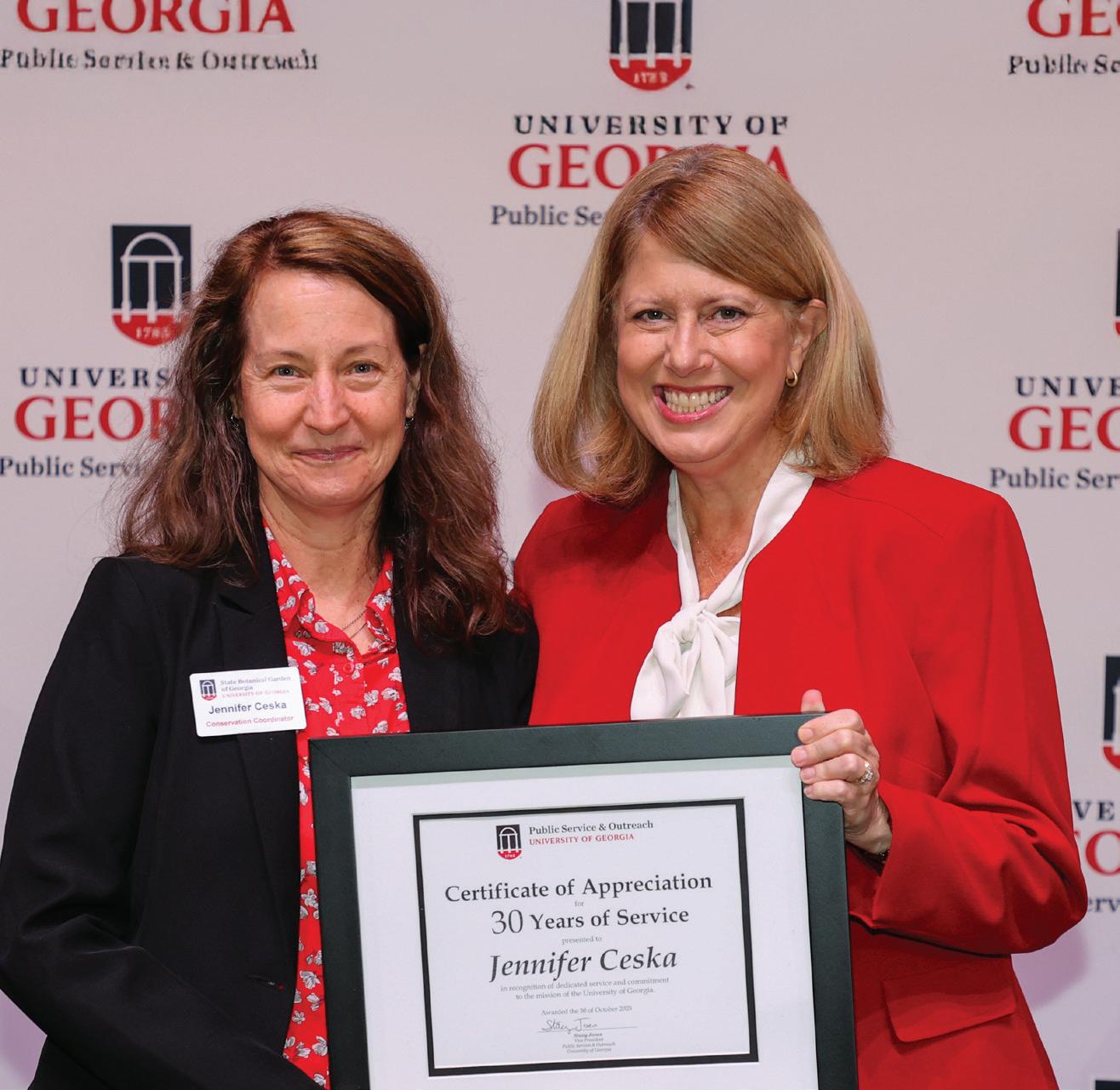
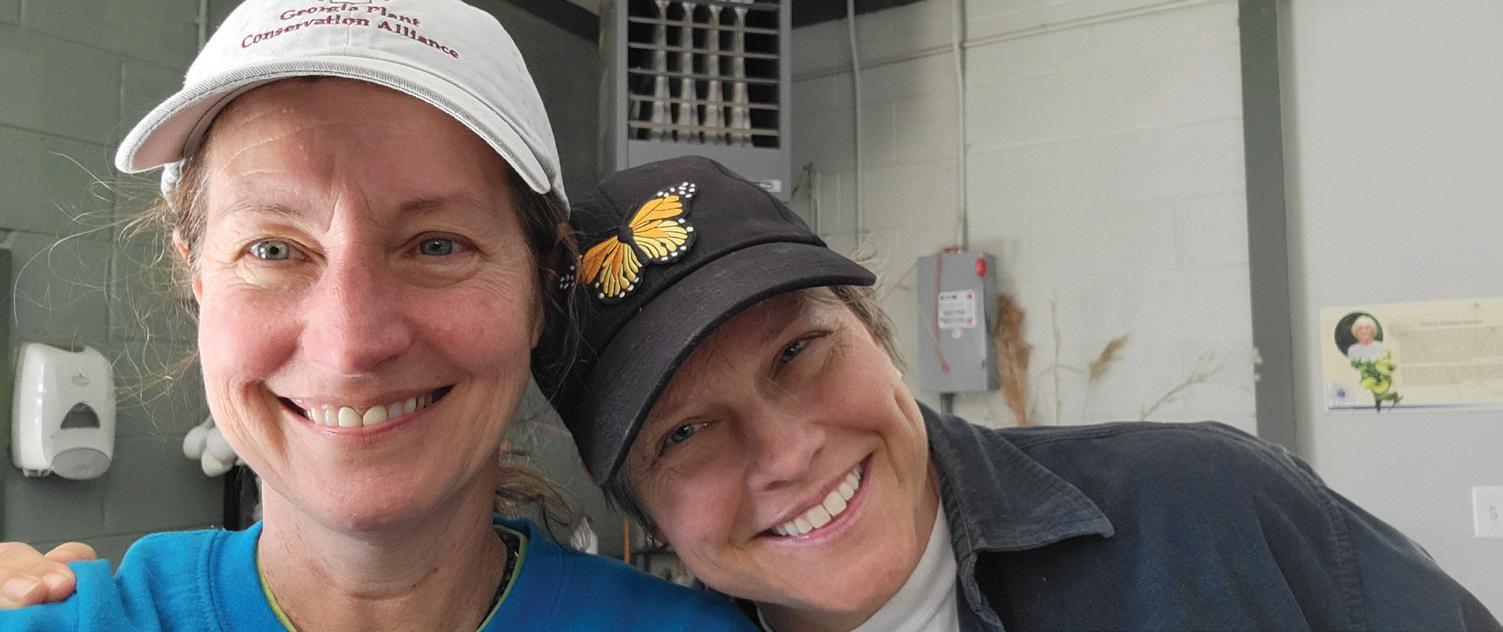
Conservation Coordinator Jennifer Ceska was recently recognized for 30 years of service at UGA in Public Service and Outreach. Jennifer is the coordinator for the Georgia Plant Conservation Alliance, a network of over 100 partner organizations working to conserve imperiled plant species. Thank you for your many years of service, Jennifer.
Congratulations to Director of Education Dr. Cora Keber for successfully defending her dissertation in UGA’s College of Agriculture and Environmental Sciences, Department of Agricultural Leadership, Education, and Communication. Her dissertation was titled “Supporting Career Readiness Competency Development in University Students Through Experiential Learning, Leadership Development, and Intentional Mentorship.”
Dr. Cora Keber
Jennifer Ceska
New Garden Staff
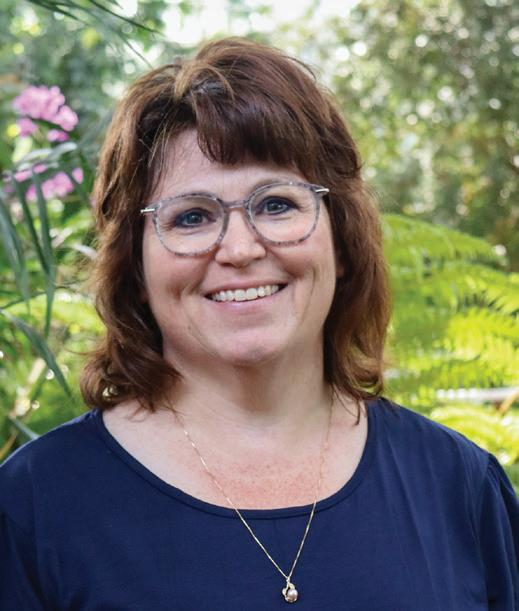
We are excited to welcome Dr. Sheri Dorn to the State Botanical Garden of Georgia staff! Sheri is an assistant professor of sociohorticulture and horticultural therapy in the Department of Horticulture in the College of Agricultural and Environmental Sciences (CAES) at UGA. Her position is shared between the garden and CAES, and Sheri will be working to create a horticultural therapy program through the joint position. Sheri received her PhD in horticulture from UGA and has been the state coordinator for the Master Gardeners program since 2012. Sheri is excited to begin working on a horticultural therapy program and engaging UGA students in this work. Outside of work, Sheri enjoys gardening, crafting of all kinds, reading and cooking.
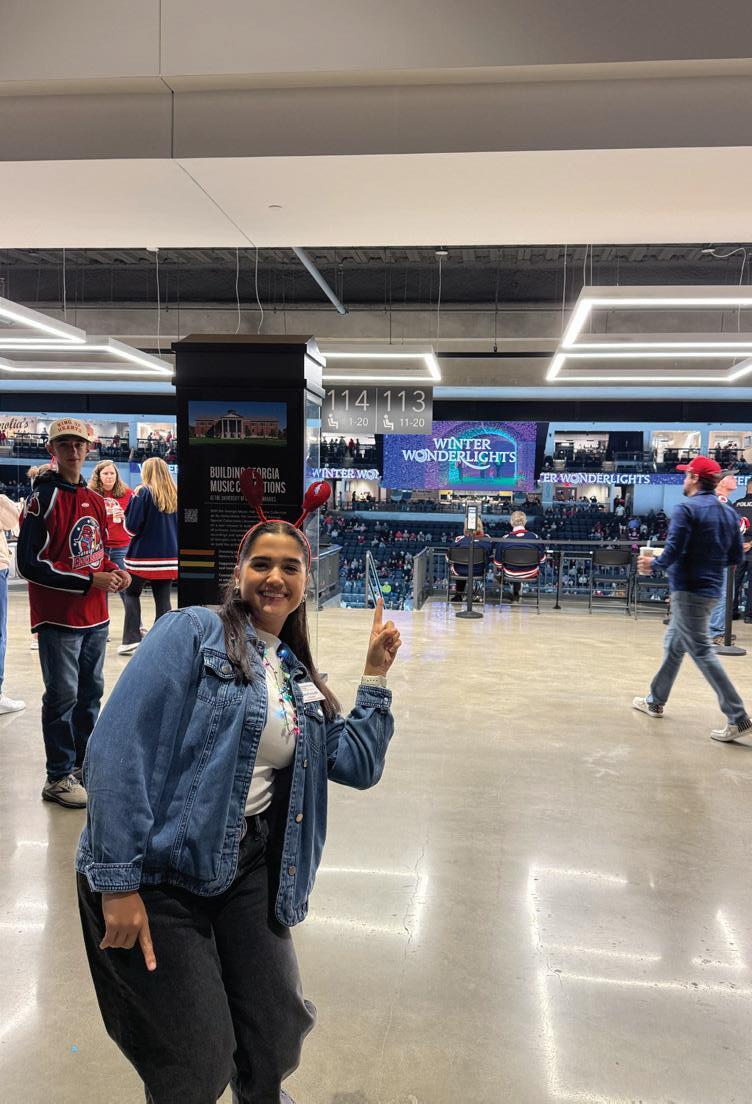
Also joining the garden staff is Tripp Dukes, the garden’s Winter WonderLights manager. Originally from Kennesaw, Georgia, Tripp has had a career in retail, where he served as a manager at CarMax for 20 years. Tripp has also worked for a nonprofit organization and in construction sales. His favorite part about working at the garden is the beautiful surroundings and the support and teamwork he feels from the garden staff in helping put on Winter WonderLights. Outside of work, Tripp enjoys going to sporting events, trying new Athens restaurants and live music.
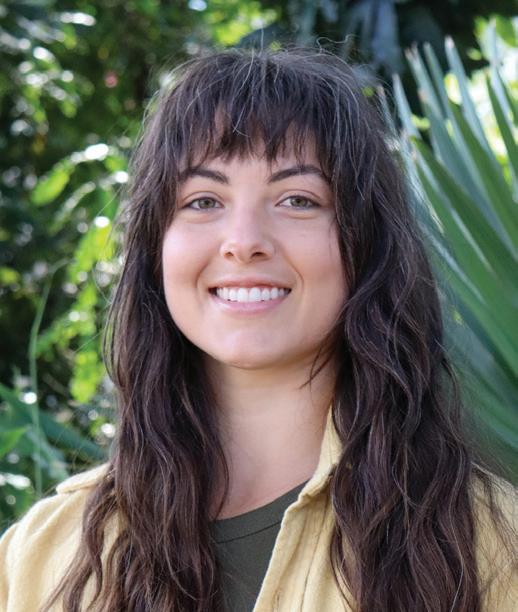
Erin Gorman also recently joined the State Botanical Garden of Georgia staff as a field technician with the Georgia Native Seed Network. Erin graduated with a degree in ecology from the University of Georgia and first fell in love with native plants when she took a class at the garden’s Mimsie Lanier Center for Native Plant Studies. At the time, she thought it would be wonderful to work at the garden, which represents a full circle moment now that she’s joined the garden’s native seed network team. She said she loves working on a team with people who love plants, and she learns so much from being around them. Outside of work, Erin enjoys spending time with her cat, cooking, yoga, basket weaving and foraging.
Sheri Dorn
Erin Gorman
Tripp Dukes
Science & Conservation
Unintended consequences of insecticides
By: Heather Alley, conservation horticulturist Jennifer Ceska, conservation coordinator
We have been preaching the merits of native plants for over two decades. The native plant movement is not new, dating back over a century, but its dire importance has become more common knowledge somewhat recently.
Our Connect to Protect program, as a gardening philosophy and action, is backed by current science as an impactful way to support wildlife. We have researched and tested the best native plants for gardening in Georgia. We have shared our top recommended species with you, along with information on where to purchase them, all on our website. This way, you
can incorporate keystone native plants of Georgia into your spaces.
We teach that spaces can be many types of gardens, including window boxes, pots, formal and informal in-ground gardens and pocket prairies (perennial borders). However, there is still essential work to be done and more to consider as you maintain these native plantings to support Georgia’s wildlife. These are actions we incorporate into our daily lives. We hope you will join us. Gardening with natives and maintaining your environment with an ecological mindset is a form of conservation in action. And wildlife in Georgia needs your help.
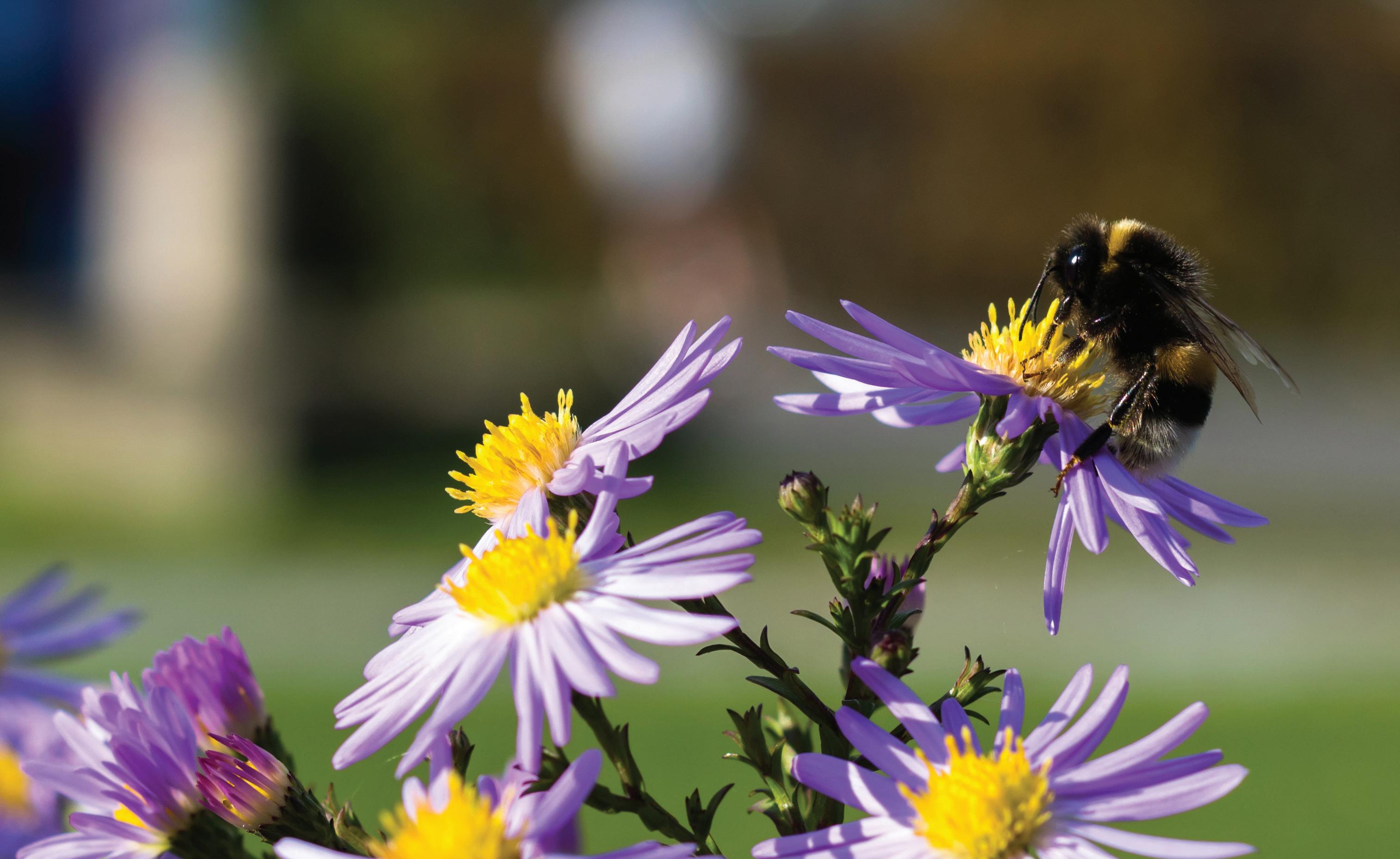
While we provide food sources and nesting habitats for native bees and all wildlife by landscaping with native plants, it is also important to refrain from using pesticides in our yards, as well as encouraging neighbors and local municipalities to do the same. Bumblebees forage up to a mile radius, so their health depends
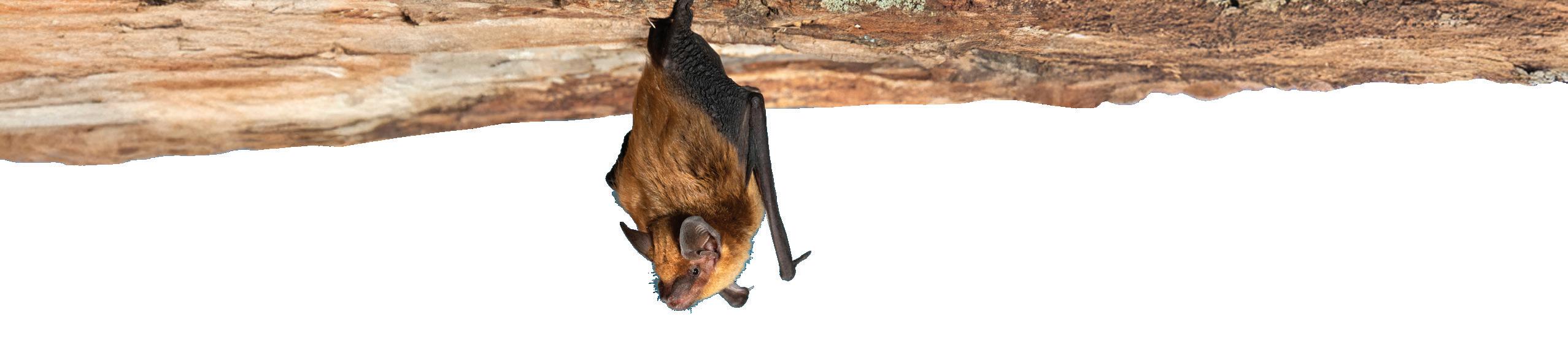
There are 16 species of bats in Georgia, and over half of them are in decline. Georgia bats eat insects. We helped develop a recommended plant list of native plants that attract insects that feed bats, which in turn eat mosquitoes once they are present in the area. You can find these details here, gabats.org. We must remain mindful of the chemicals we use for treating annoying insects, ensuring they do not harm wildlife.
on community-wide protections. Local entomologists in suburban Athens are concerned that bumblebees are in alarming decline, based on observations over the last seven years. This past fall at the botanical garden, the number of bumblebees on our abundant fall wildflowers was scarce.
There is mounting concern that the wellintentioned application of broad-spectrum insecticides in mosquito fog is collaterally decimating native bees and other beneficial insects. Some studies have found that our native bumblebees, which are critical pollinators, are even more sensitive to insecticides than honeybees. Further, it has been documented that broadcast insecticidal fogging indirectly harms birds by removing their protein food source.
The Southeast Bumble Bee Atlas is a great way to contribute to community science and knowledge of bee diversity in Georgia. Look for trainings throughout Georgia with our partners and through our Certificate in Native Plants program. You can sign up for training and events at bumblebeeatlas.org.
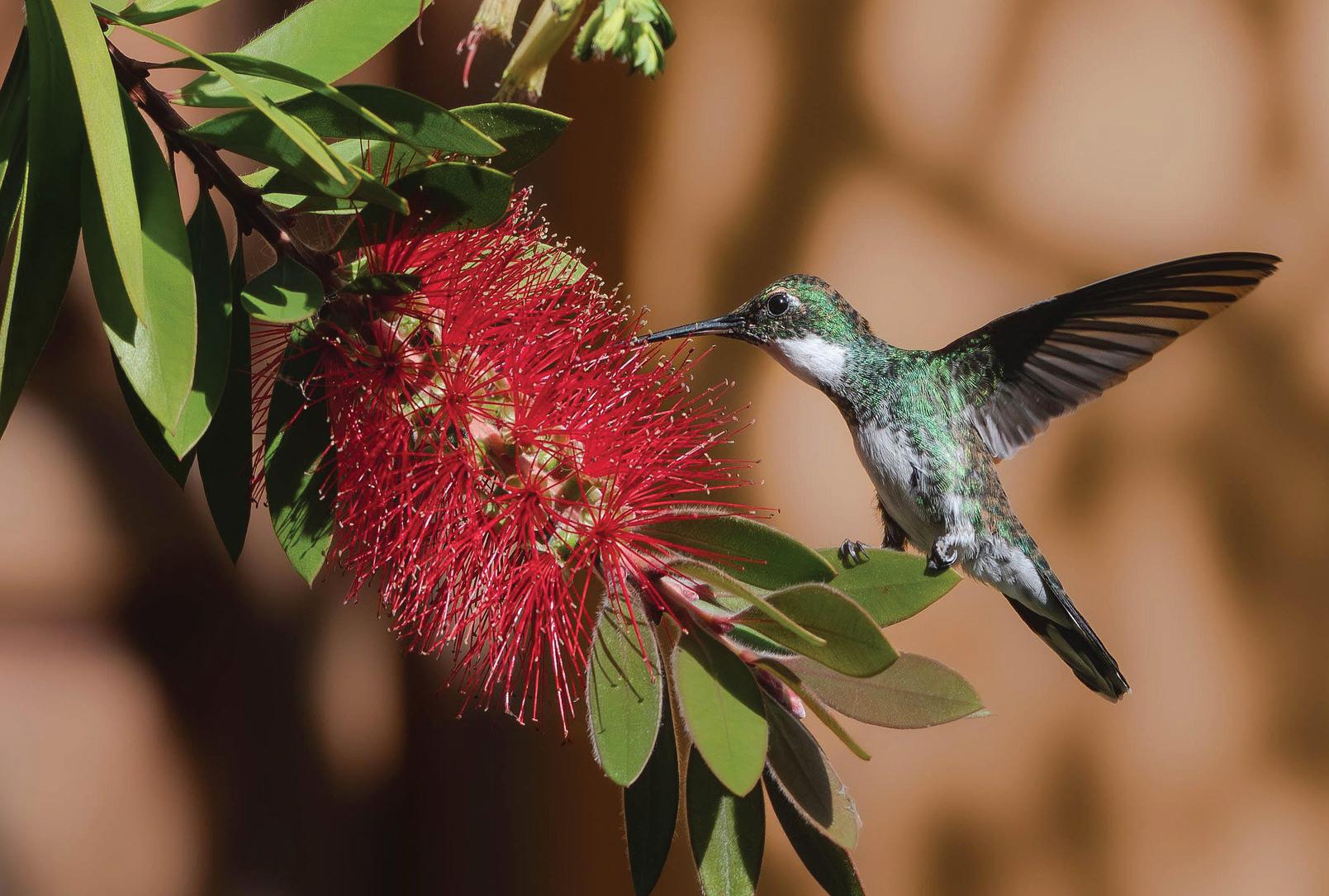
According to an article by Choose Natives, most (80%) of a hummingbird’s diet consists of small insects like mosquitoes. To feed hummingbirds the insects they need, besides tubular nectar-producing plants, add native plant species that
There are less harmful and more effective methods for controlling mosquitoes. Fogging does not eliminate larval mosquitoes; it only targets adult mosquitoes in the air and only provides temporary relief. Meanwhile, fogging poses significant lasting threats to pollinators by poisoning their flower food sources.
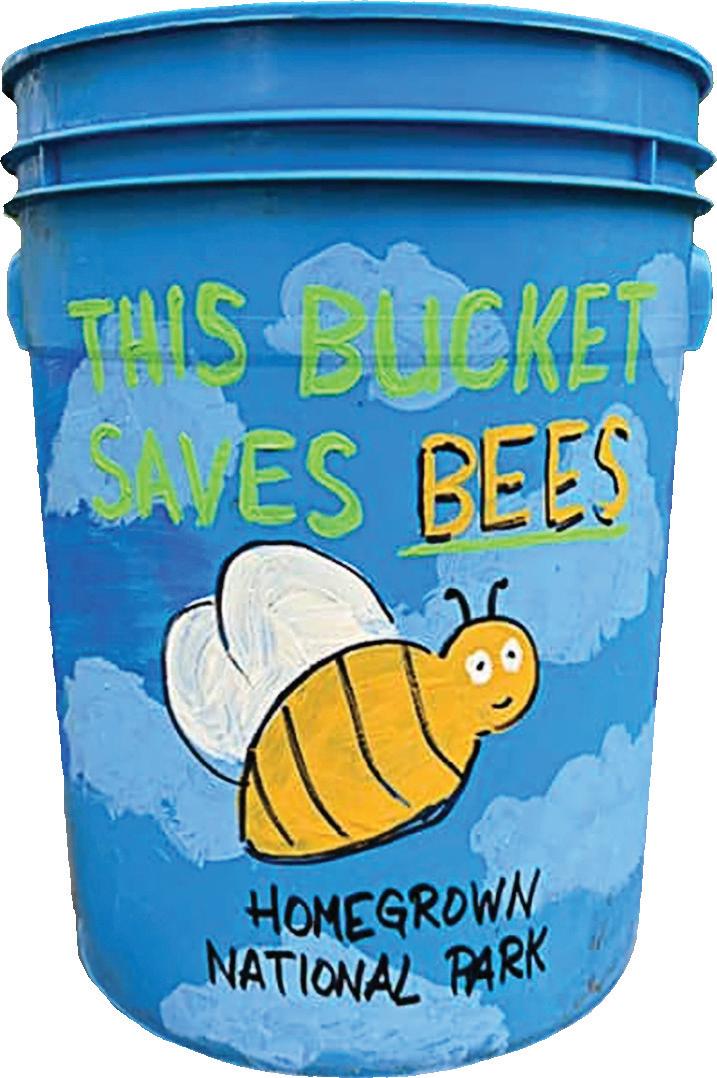
Mosquito buckets and mosquito dunks kill larval mosquitoes before they become flying (and biting!) adults. You can learn all about this on the Homegrown National Park website. While you are there, you can register your native plantings, contributing to the footprint metrics of native plants of Georgia. For mosquito buckets, you will need a deep bucket, some water, straw or dead leaves, a “rescue stick” or metal mesh covering to help wildlife that might visit your bucket, and mosquito dunks containing Bacillus thuringiensis israelensis (Bti). This method is harmless to beneficial insects, wildlife and humans.
Other ways to reduce mosquito populations in your area
• Remove English Ivy
• Unclog gutters
• Address all containers, toys, garden art and sagging tarps that hold even shallow water
• Refresh bird baths regularly
• Check your site for standing water during rainy periods
Help contribute to bumble bee monitoring
Education
Design first, plants second: The Certificate in Sustainable Landscape Design
By: Emory Perry, adult program coordinator
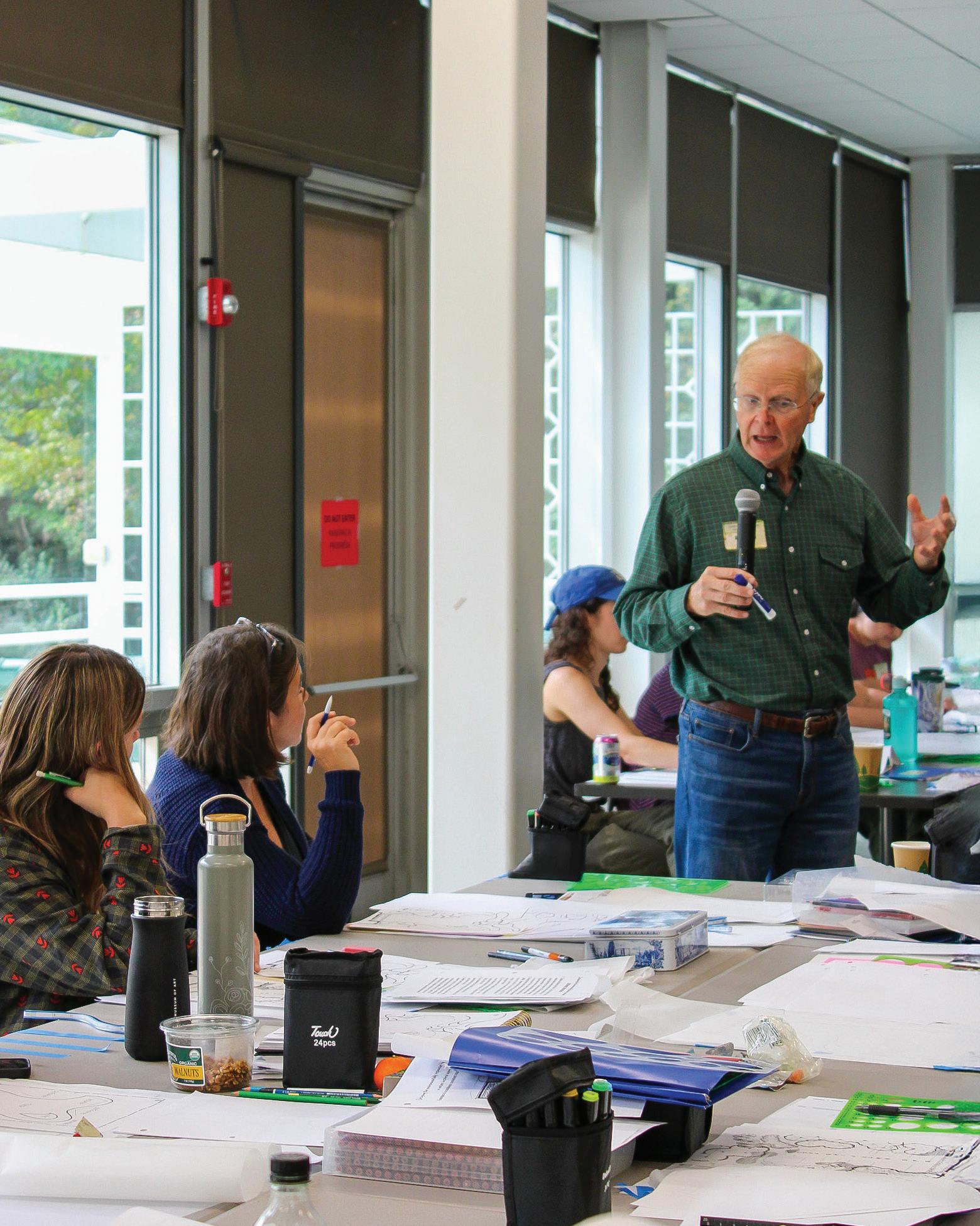
When it comes to landscape design, many are quick to start buying plants. However, the key to designing an extraordinary and environmentally friendly landscape is patience and careful planning. The Certificate in Sustainable Landscape Design at the State Botanical Garden of Georgia teaches exactly that by providing hands-on instruction in the design and implementation of sustainable and stunning residential designs.
The program began at the garden as an elective course within the popular Certificate in Native Plants program in 2022. After receiving strong interest, the program officially launched as a full certificate offering in 2024. Since then, three cohorts have completed the program, with a total of 74 graduates.
Participants progress through the program as a cohort, completing four full-day, immersive courses that are designed to build both confidence and skill. Each session offers straightforward, practical design strategies. The curriculum is structured to build knowledge sequentially, beginning with design graphics and advancing through spatial composition, sustainable design concepts and planting design.
The series begins with Fundamentals of Design Graphics, which provides intensive, applied instruction in design illustration and communication. Next comes Creating the Ultimate Landscape Design, focusing on design theory. The third course, Designing the Environmentally Responsive Landscape: a Nature-Inspired Approach, interlaces ecologically sound concepts into traditional residential designs. Finally, the program concludes with Planting Design for the Sustainable Landscape, emphasizing the
effective use of diverse plant materials in design.
Courses are taught by Richard Ludwig, PhD, who brings over 40 years of experience in developing and teaching curriculum for the green industry. A former host of PBS TV’s “GardenSmart” and a past garden specialist for Southern Living magazine, Ludwig holds a bachelor’s degree in horticulture and a doctorate in adult professional continuing education from the University of Georgia, as well as a master’s in agricultural education from Colorado State University.
His combination of technical expertise and facilitation skill creates an engaging, informative and highly interactive learning environment. Students benefit from his approachable teaching style, detailed feedback and the extensive resources he shares throughout the program.
“This program was very hands-on and supplied all the materials needed to be successful. The instructor was engaging and knowledgeable, and because the class was spread over four sessions, we really got to know one another and became friends by the end. The program did an excellent job of breaking down the steps to landscape design and gave me confidence to go out and do this on my own.” -Program Graduate
Program participants consistently praise the program’s hands-on instruction, from drawing ideas on paper to conducting mock client interviews. They also appreciate the confidence they gain throughout the program in doing design work. However, one of the greatest benefits of the program cited by participants is forming relationships with other students by seeing their work and assisting each other with design decisions.
The Certificate in Sustainable Landscape Design now offers two cohorts each year, one in the spring and one in the fall. If you are passionate about creating beautiful and sustainable landscapes, this might be the perfect program for you! Learn more and sign up for the program on our website, botgarden.uga.edu.
Rooted in connection: How Georgia’s Connect to Protect gardens bring art, community and pollinators together
By: Jason Young, director of horticulture and grounds
At first glance, a mural on a downtown wall or a sculpture at a school entrance might not seem like a home for bees, butterflies and hummingbirds. But across Georgia, the State Botanical Garden’s Connect to Protect program is reimagining how art, ecology and community can take root together — one native plant at a time.
For years, the State Botanical Garden of Georgia has been cultivating more than just flowers. Through Connect to Protect, the program’s mission extends beyond garden gates and into cities, towns and schools, where native plant pollinator gardens are transforming ordinary spaces into living, breathing ecosystems. Each garden not only supports pollinators essential to Georgia’s landscapes but also helps people see — and feel — their connection to nature.
Two gardens, in particular, tell the story of how powerful this connection can be.
Bringing the longleaf pine savanna to life
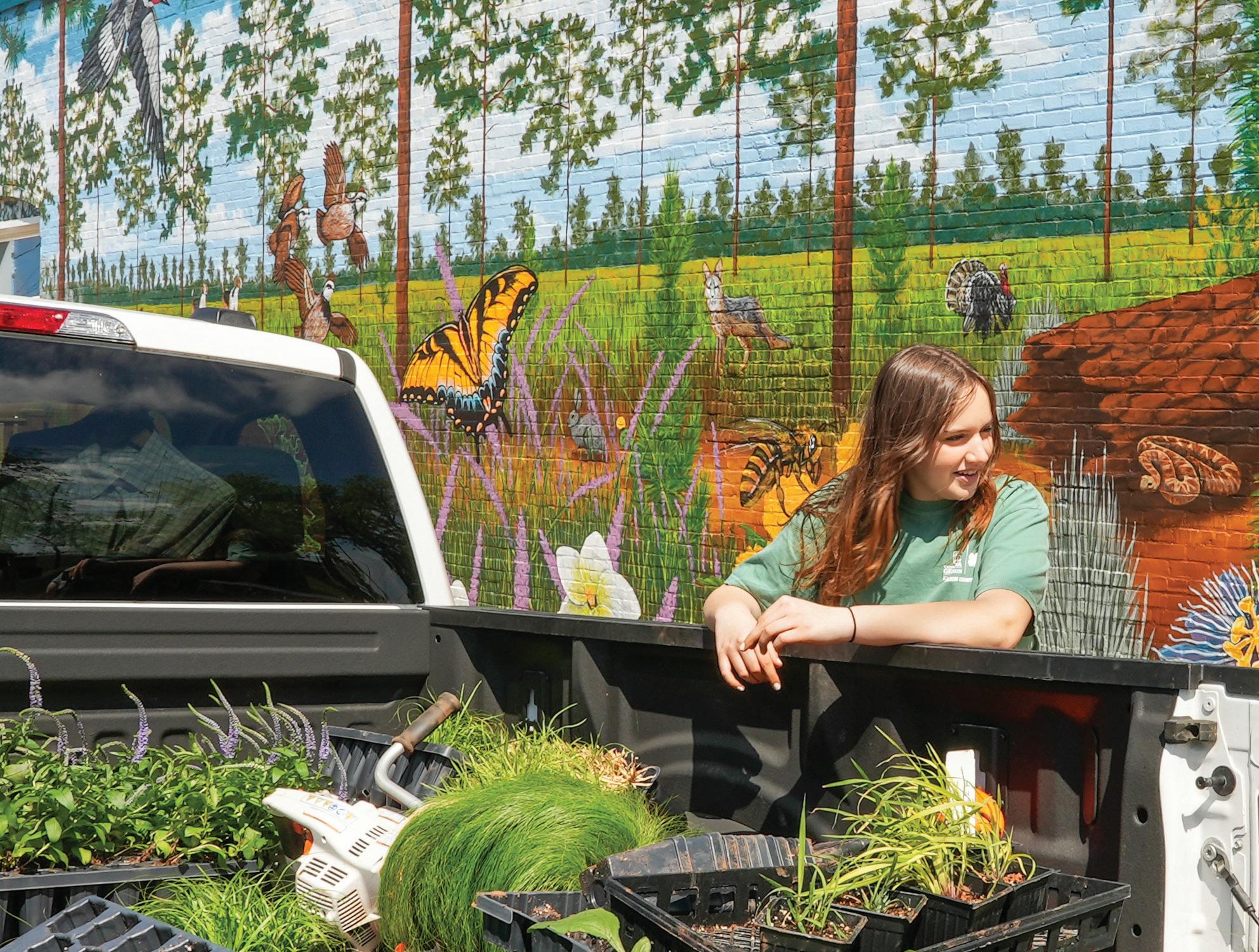
In Buena Vista, Georgia, a vibrant mural of the longleaf pine savanna stretches across a building wall. The artwork alone is striking — tall pines, waving grasses and the soft hues of
native wildflowers. However, the Connect to Protect team saw an opportunity to take it a step further, to bring the painted landscape to life.
Beneath the mural, they planted a living extension of the scene — native grasses, butterfly milkweed, black-eyed Susans and other species found in the longleaf pine ecosystem. Together, these plants created a seamless transition from the two-dimensional mural to a thriving three-dimensional garden.
For visitors and locals alike, the garden offers more than beauty; it’s a piece of Georgia’s natural heritage reborn in an urban setting. The longleaf pine savanna, once covering millions of acres across the Southeast, now exists only in fragments. But in this small corner of Buena Vista, its colors, textures and life are alive again.
And for the pollinators, from native bees to swallowtail butterflies, it’s an oasis amid pavement and buildings.
Art that blooms at school
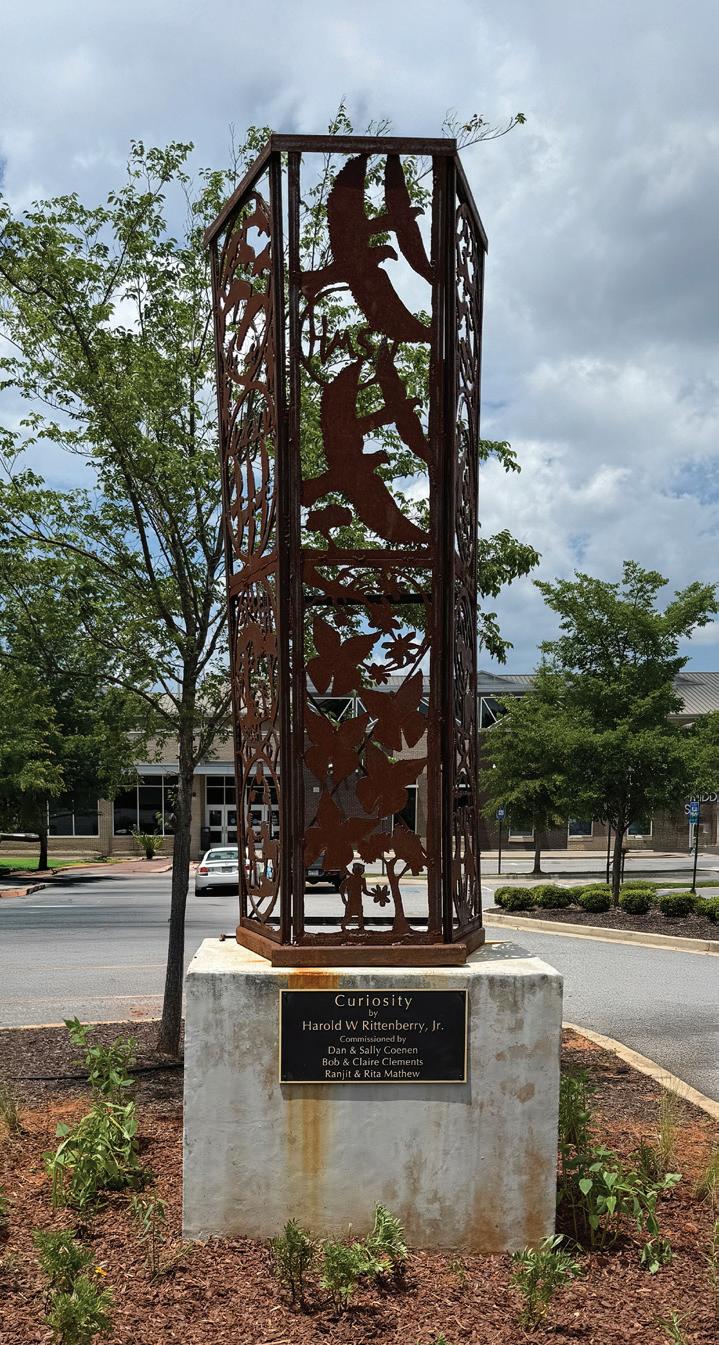
Across the state in Athens, another garden took shape at Hilsman Middle School, where a striking outdoor sculpture stands as a centerpiece. While the artwork already sparked curiosity and conversation, the space around it felt bare — until the Connect to Protect team stepped in.
Working with volunteers and school administrators, they designed a native plant garden to “ground” the sculpture, weaving the metal and stone into its natural surroundings. Now, after being planted by school students, the milkweed, beebalm, annual flowers and muhly grasses frame the artwork, softening its edges and tying it to the living landscape around the school.
Both gardens, the mural in Buena Vista and the sculpture in Athens, illustrate how Connect to Protect does more than install plants. These projects elevate art while grounding it in the environment, making public spaces feel more alive, rooted and connected.
While the aesthetic transformation is clear, the ecological one may be even more profound. Native plants are the cornerstone of healthy ecosystems, supporting the insects that sustain birds, small mammals and countless other species. When pollinators visit these community gardens, they carry energy and life outward — to trees, gardens and wild areas beyond.
In that sense, the gardens ground not just the artwork, but the entire food web. Bees, butterflies and beetles become unwitting collaborators in the artistic vision, moving between petals and paint, steel and stem.
Cultivating connection
What makes Connect to Protect powerful isn’t just its focus on pollinators; it’s how it invites people to participate in the story of conservation. By planting native species in visible, everyday places, the program helps communities understand that supporting wildlife doesn’t require vast, wild lands. It can start with a mural, a sculpture or a single school garden.
Each planting becomes a message: beauty and biodiversity belong everywhere — in art, in cities, in classrooms and in our own backyards. And just as the flowers bloom and fade, only to return the next season, the connections these gardens spark — between people, art and nature — continue to grow.
For more information on Connect to Protect and how to start your own native pollinator garden, visit botgarden.uga.edu.
Adult Programs
Athens Beginners Beekeeping Seminar
• Saturday, Jan. 31
• 9 a.m.-3:30 p.m.
• Eastern Piedmont Beekeepers Association
• UGA Bee Lab
• Garden Club of Georgia, Terrace Room
• Fee: $65 (includes lunch)
• https://tinyurl.com/yc4trbye
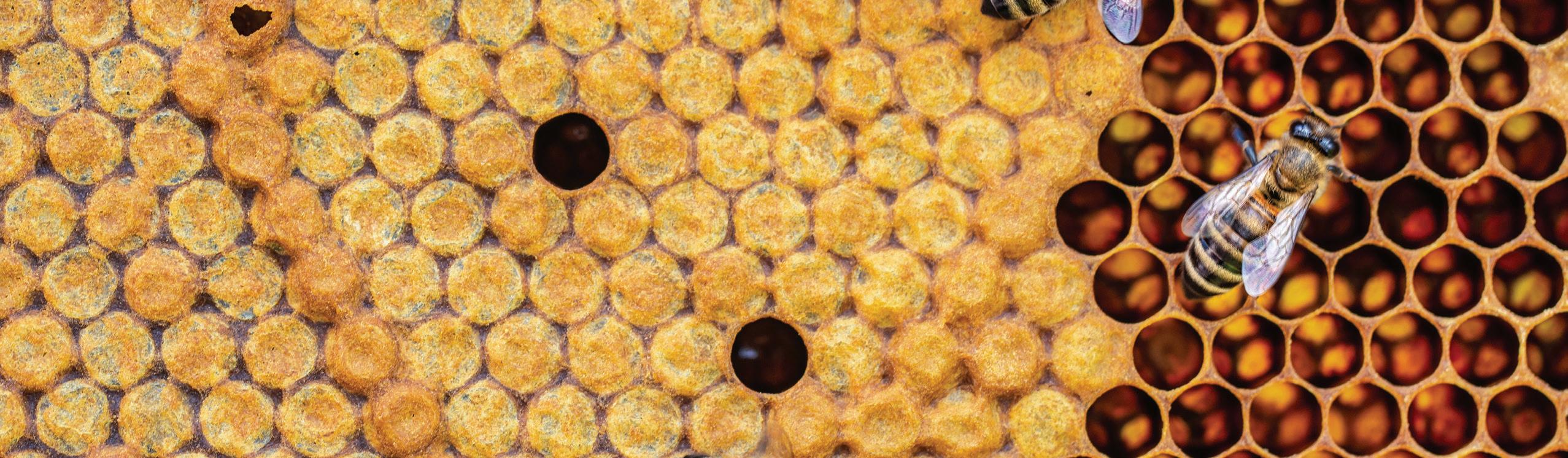
Beekeeping is a complex and fascinating pursuit with plenty to learn and sweet rewards! If you are interested in becoming a beekeeper yourself, this comprehensive seminar featuring Georgia Master Beekeepers and industry professionals will prepare you to establish and manage a successful apiary. This workshop will guide you through understanding the honeybee as well as the steps to obtain your bees, tools and hives. This program will also cover harvesting, various hive products and how to use them. Participants will also learn about proper care and some of the common challenges facing beekeepers today.
Each participant will receive a box lunch, a copy of “First Lessons in Beekeeping,” and a one-year membership to the Eastern Piedmont Beekeepers Association. As a bonus, all participants will have the opportunity to participate in a follow-up, hands-on class at a nearby apiary on March 21.
Learning by Leading™ Spring Informational Session
• Wednesday, Jan. 21
• 5:30-7 p.m.
• Virtual
Are you a student interested in working at the botanical garden alongside other students and staff to address important environmental issues? The State Botanical Garden of Georgia Learning by Leading™ program provides students a combination of leadership skills and real-world experience with education, conservation and horticulture through hands-on experiential projects. Interested students are welcome to learn how to get involved in this student engagement program and receive experiential learning credits. RSVP at uga.givepulse.com
Native Plant Symposium
• Wednesday, Feb. 25
• 9 a.m.-3:30 p.m.
• Garden Club of Georgia, Terrace Room
• Fee: $80 (lunch included)
• https://t.uga.edu/6wn
Growing and protecting native plants is important for many reasons: they celebrate our state and region, they are well-suited to our region’s growing conditions, and they are the foundation of the complex ecosystem that supports insects, birds, reptiles, amphibians and mammals. Native plants can be tough, yet beautiful additions to your home landscape, as well as delicate harbingers of the changing seasons. Join us for this year’s Native Plant Symposium to explore the beauty of native plants. Please see the complete agenda on the garden’s website, botgarden.uga.edu.
Learning by Leading™ End of Semester Spring Showcase
• Thursday, April 23
• 6-8 p.m.
• Porcelain & Decorative Arts Museum, classroom
UGA students are working alongside staff at the State Botanical Garden of Georgia to help address important environmental issues and develop hands-on horticulture skills. Learning by Leading™ provides students a combination of leadership skills and realworld experience with education, conservation and horticulture through hands-on experiential projects. This event will allow students to share what they have been working on throughout the semester.
Certificate in Native Plants
REQUIREMENTS
Four core courses (8 hours each): 32 hours
Six electives (4+ hours each): 24 hours
Two field trips (4+ hours each): 8 hours
Volunteer service: 16 hours
Total 80 hours
The Certificate in Native Plants offers committed individuals a comprehensive series of short courses in identification, cultivation, propagation, ecology and conservation of native Georgia plants. With an emphasis on participatory learning, the short courses are designed to provide a supportive and challenging learning atmosphere. Participants will gain a greater appreciation and understanding of native plants in a broad context.
The certificate program is appropriate for home gardeners, garden club members, native plant enthusiasts, green industry professionals, conservationists and others interested in the study of native plants. The program is also designed to appeal to professionals working in land, resource and park management, including natural resource agencies and private conservation programs. Knowledge and skills gained can be applied to both volunteer and professional services in the fields of conservation, horticulture, landscape design, land management and environmental education. One of the program’s goals is to have certified students participate in ongoing public and private efforts to preserve and restore Georgia’s flora and natural habitats. For a complete course listing, visit botgarden.uga.edu.
• Saturday, Feb. 7
• 9 a.m.-1 p.m.
• Linda Chafin, botanist
• State Botanical Garden Visitor Center, classroom 2
• https://t.uga.edu/7ve
Native Plant Propagation (elective)
• Friday, Feb. 13
• 9 a.m.-1 p.m.
• Emily Laske, assistant conservation horticulturist, State Botanical Garden of Georgia
• State Botanical Garden, Mimsie Lanier Center
• https://t.uga.edu/7vh
Plant Taxonomy: The Identities of Plants (core)
• Online course content available March 4
• Saturday, March 28, 10 a.m.-noon or 1-3 p.m. lab session (limited to 15 each)
• Monday, March 30, 6-8 p.m. Zoom lab session
• Tuesday, March 31, 6-7 p.m. Zoom Q & A
• Sabrina Sewell, botanist
• Virtual program
• https://t.uga.edu/6Pa
Trees may be most beautiful in the winter, when they are stripped down to their basic architecture. But can we know them without their leaves? In this class, students will learn the basics of identifying trees in winter by studying twigs, bark, leaf scars, fruits and tree form. Students will learn to use a hand lens and a simple key for woody plants to identify species. Class time will be divided between classroom exercises and a field trip to the deciduous woods at the State Botanical Garden.
Learn the basics of propagating native wildflowers! The class will primarily focus on how to grow native perennials from seed, including seed dormancy classifications and treatments, as well as germination and early life care. We will also review and practice dividing perennials, and, time permitting, overview and practice rooting woody cuttings. Participants will leave with perennial divisions as well as several types of seeds to propagate at home. Time and weather permitting, we may walk around the Mimsie Lanier Center to collect woody cuttings and/or herbaceous perennials to divide, so please dress for the outdoors.
Taxonomy is the fundamental branch of science that names and classifies all elements of the world around us, including living things. A plant taxonomist specializes in determining groupings, relationships and ultimately, the names and identities of plants. This process utilizes pertinent data such as phylogenetics, phytogeography and phenology, but most essentially, plant morphology — the forms of plant parts. In this multi-session virtual course, students will focus on the diverse morphological characteristics of plants (including descriptors of leaves, flowers, roots, etc.) and their utility in identifying unknown plants. Students will also survey the history, principles and practices of plant taxonomy as a discipline and be guided through the process of plant identification via dichotomous keys. It is recommended, but not necessary, that students take Basic Botany before this class.
Course Structure:
This class consists of four elements: a series of pre-recorded introductory videos; at-home exercises exploring plant anatomy, collecting and dichotomous keys; an in-person lab session or virtual lab session; and a wrap-up discussion session through Zoom.
Part 1: Introductory Video Lectures – content released March 4
Part 2: At-Home Exercises – content released March 4
Part 3: Plant ID Lab – choice of in-person session March 28, 10 a.m.noon or 1-3 p.m. OR virtual session March 30, 6-8 p.m.
Part 4: Online Discussion Session – Zoom, March 31, 6-7 p.m.
Winter Tree Identification (elective)
Certificate in Native Plants (continued)
Soils of the Georgia Piedmont and Beyond (elective)
• Saturday, March 7
• 9 a.m.-1 p.m.
• Mac Callaham, research ecologist, U.S. Forest Service
• State Botanical Garden Visitor Center, classroom 2
• https://t.uga.edu/7vk
In this course, we will discuss the history of our Georgia Piedmont soils, the history of public land in Georgia, and general soil ecology and biology. What is soil? What factors affect soil properties? These are a couple of the questions we will address in this class, which will include a lecture as well as a lab portion where we will explore soil in nature. Prepare to get a little dirty and discover the fascinating, mysterious world beneath your feet.
Spring Wildflowers of Upland Deciduous Forests of Georgia (elective)
• Saturday, March 21
• 9 a.m.-1 p.m.
• Melanie Flood, special project botanist, North Carolina Natural Heritage Program
• State Botanical Garden Visitor Center, classroom 2
• Davidson-Arabia Mountain Nature Preserve, Stonecrest, GA
• https://t.uga.edu/9yv
The cool, moist forests of the Piedmont’s ravines and slopes support a wealth of spring wildflowers. Students will learn the botanical terminology to identify and describe plants and will learn a variety of tools to identify spring-blooming plants. We will then visit the Dunson Native Flora Garden and learn about a number of spring ephemerals and other earlyblooming plants.
Georgia is home to 90% of the Southeastern Piedmont’s granite outcrops, one of the most endangered and botanically interesting natural communities in the U.S. Students will be introduced to the ecology, habitats and plant communities of the granite outcrop ecosystem during an interpretive hike. As the mountain wakes up from a long, cold winter, we will celebrate spring wildflowers on the outcrop and learn more about their life histories, adaptations and resiliency as they survive and thrive in this challenging yet beautiful place. This will be an entirely field-based course on a multi-hour hike. Please note that this course is located outside of the Athens area.
Entomology for Gardeners: Identifying & Understanding Common Backyard Arthropods (elective)
• Saturday, April 18
• 9 a.m.-1 p.m.
• Scott Clem, PhD, assistant professor, Illinois State University
• Virtual program
• https://t.uga.edu/9ze
In this course, you will learn how to identify common arthropods (i.e., insects and arachnids) that are commonly encountered in Georgia gardens. This class will equip you with the necessary knowledge and tools for distinguishing beneficial insects from those that are potentially harmful to the local ecosystem. As a participant in this course, you will also learn about common invasive and introduced arthropods as well as simple methods for improving arthropod biodiversity. Please note that this course also provides credit for the Plants & Pollinators Specialization.
Ethnobotany of Native Plants: Through the Eyes of Native Americans (elective)
• Thursday, May 7
• 9 a.m.-1 p.m.
• Mark Warren, author and owner, Medicine Bow Wilderness School
• Medicine Bow Wilderness School, Dahlonega, GA
• https://t.uga.edu/8wz
This workshop will provide an ethnobotanical journey through a Southern Appalachian forest and field site to discover the gifts of nature that allowed the Native American society to flourish in this region. To understand that the forest offered everything that the Native Americans needed is to grasp the essence of precontact Native American life, and at the same time, truly appreciate the individual parts of Participants will explore the crafts and lore of Native American life, including their use of wild plants for food, medicine, repellents and everyday tools. These resources and cultural practices still exist today and continue to be useful to those who follow in the footsteps of the first inhabitants of Katuah, the land we now known as Southern Appalachia. Class time will be spent mostly outdoors, so come prepared for the weather that day. Please note that this course is located outside of the Athens area.
Spring Wildflowers of the Granite Outcrops of Georgia (elective)
• State Botanical Garden Visitor Center, classroom 2
• https://t.uga.edu/9AC
This course will focus on the most common and garden-worthy ferns typically found in the Piedmont and mountain regions of Georgia. We will begin with an introduction to the biology and morphology of ferns, especially those features that will help you identify the different species. We will also look at and compare the habitats where these ferns are found. We will examine each species through a presentation, some actual examples in pots, and an outdoor venture to see many of these plants in person in the Dunson Native Flora Garden. Following the field time, we will examine the samples under magnification when we return indoors. The primary focus of the course is to learn to recognize and appreciate these beautiful and fascinating native plants, and to encourage participants to incorporate them into their gardens. There will also be a discussion of invasive non-native ferns.
Introduction to Graminoid ID (elective)
• Saturday, May 30
• 9 a.m.-1 p.m.
• Melanie Flood, special project botanist, North Carolina Natural Heritage Program
• State Botanical Garden Visitor Center, classroom 2
• https://t.uga.edu/9Az
The term “graminoids” refers to three types of monocots — grasses, sedges and rushes. In this course, students will learn the basic morphological differences between graminoids and how to identify some larger genera within each family. The class will begin indoors to learn about the families and examine plant specimens up close under a microscope. Then, we will take our newfound knowledge outside to the trails of the State Botanical Garden to observe these differences among living plants.
Certificate in Sustainable Landscape
Bundle cost: $490
Register at: https://t.uga.edu/9xZ
Richard Ludwig, PhD, former host of PBS TV’s “GardenSmart,” past garden specialist for Southern Living
• State Botanical Garden Visitor Center, gardenside room Fundamentals of Design Graphics
• March 4
• 9 a.m.-4:30 p.m.
Creating the Ultimate Landscape Design
• March 25
• 9 a.m.-4:30 p.m.
• State Botanical Garden Visitor Center, gardenside room
Design
The Certificate in Sustainable Landscape Design provides hands-on instruction in the design and implementation of sustainable and stunning residential designs. Participants will work through four full-day, participant-centered classes that offer straightforward, practical design strategies. The series takes a step-by-step approach, starting with design graphics and moving through spatial composition, sustainable design principles and planting design.
This course provides intense, hands-on instruction in design illustration and graphics. The full-day workshop offers participants bold yet efficient strategies to effectively communicate design concepts on paper. This course is recommended for participants who wish to improve their design communication and drawing skills. All drawing supplies and course materials are included.
This course is developed for participants to enhance their design philosophy and create plans that are stunning, unified and functional. The class takes an architectural approach and emphasizes topics such as form composition and lines of force. This hands-on workshop provides extensive training in design theory, moving from a basic understanding to creating a master plan in just one day. Improve your skills as you create beautiful, practical, sustainable design solutions.
Designing the Environmentally Responsive Landscape: A Nature-Inspired Approach
• April 15
• 9 a.m.-4:30 p.m.
• State Botanical Garden Visitor Center, gardenside room
This full-day, hands-on workshop is designed for participants who wish to create stunning, earth-friendly landscape designs. This course focuses on weaving ecologically sound concepts into traditional residential design. Additionally, this class offers basic graphics instruction to effectively and boldly convey ideas on paper. By centering around an in-depth, hands-on understanding of curvilinearbased drift designing, this class will prepare you to create native plant displays and gardens that are both visually pleasing and environmentally conscious. All drafting equipment and supplies are included.
Planting Design for the Sustainable Landscape
• May 6
• 9 a.m.-4:30 p.m.
• State Botanical Garden Visitor Center, gardenside room
This workshop focuses on the effective use of all types of plant material. This full-day workshop takes an artistic approach centering on how to combine form, texture and color. How to create and manipulate visual energy is a central theme as well. Students will use the paradigm of block design to create stunning combinations. The course also teaches how to draw in a realistic elevation view to help communicate your ideas. Finally, the workshop provides researchbased knowledge on soil preparation for herbaceous and woody plants.
Evening/After Hours
Full Moon Hike Series
• Sunday, Feb. 1, 7-8:30 p.m.
• Tuesday, March 3, 8-9:30 p.m.
• Wednesday, April 1, 8-9:30 p.m.
• State Botanical Garden education staff
• Meet at the fountain in front of the Visitor Center
• Fee: $5/person, pre-registration required
• https://tinyurl.com/4aan34me
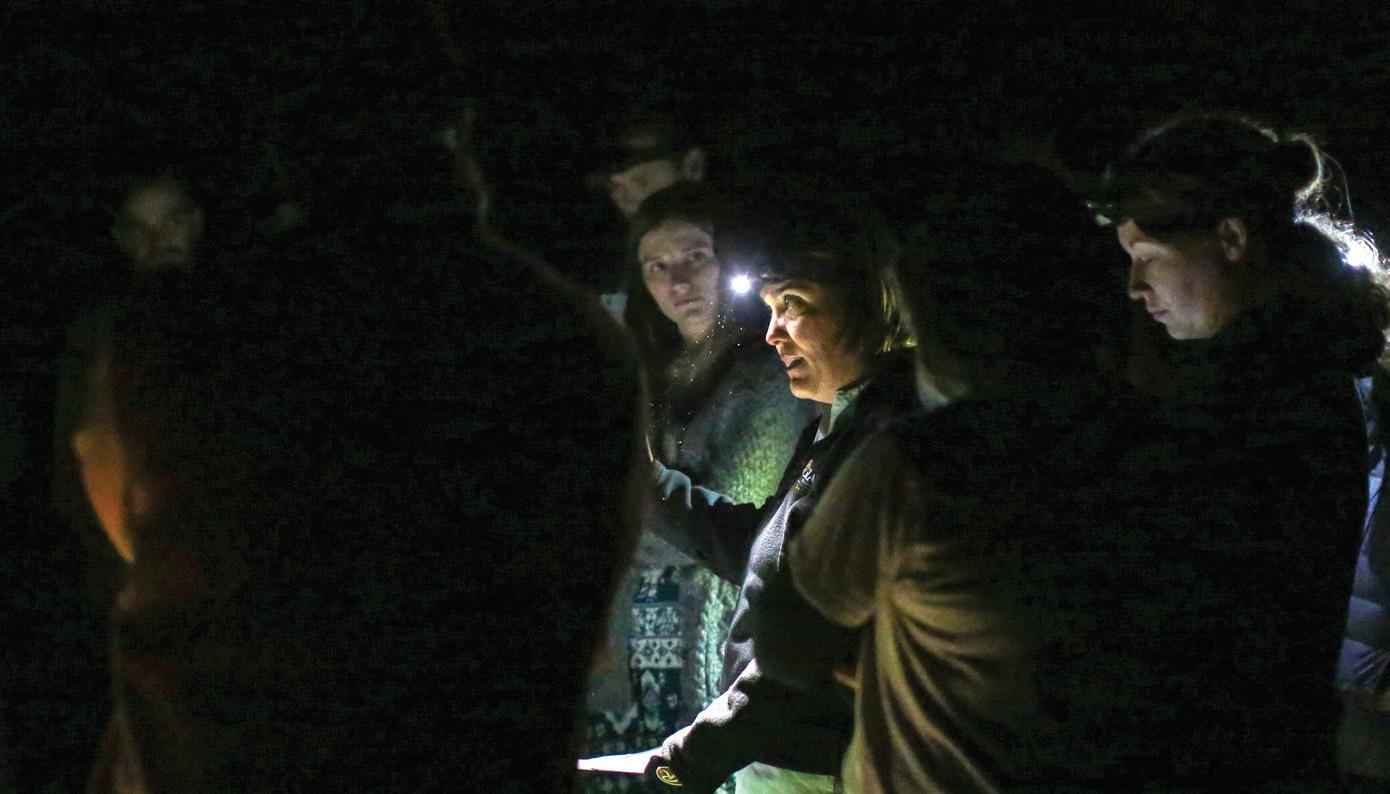
See the garden come alive at night! Join our monthly Full Moon Hikes to enjoy the State Botanical Garden after hours and hear discussions on nocturnal plants and animals, the changing seasons and moon folklore. Be prepared to hike up to 1 mile on our wooded trails and in the garden, where visibility may be low at times. If you have young children or infants, a backpack carrier is suggested. Pre-registration is required.
Rambles
Nature Ramblers
• Thursdays, March 5 through Nov. 19
• 9 a.m. (each ramble lasts about 90 minutes)
• Leaders rotate among a group of local naturalists and biologists, featuring guest guides
• Meet at Children’s Garden arbor
Spring Bird Rambles
• 8 a.m.
• See State Botanical Garden of Georgia website for dates
• Oconee Rivers Audubon Society
• Upper Parking Lot
• Free and open to the public
Come join the Oconee Rivers Audubon Society (ORAS) for a morning bird walk at the garden. Look and listen for our fall migrants. First time birding? No problem. ORAS members will help you spot and identify the feathery creatures. All birding levels are welcome. Bring binoculars if you have them. For more information, visit www.oconeeriversaudubon.org.
Join the Nature Ramblers to learn more about the natural areas, flora and fauna of the State Botanical Garden while making new friends and enjoying the fresh air. Rambles start with an inspirational reading by a nature writer such as Annie Dillard, John Muir or Janisse Ray. Ramblers are encouraged to bring their own nature writings or favorite poems and essays to share with the group. This is a ramble, not a hike; stopping to view interesting plants, insects, butterflies and mushrooms, etc., along the way is part of the experience each week. You can join for just one or all sessions. These informal rambles are free, but donations are accepted in the garden’s donation box in the lobby of the visitor’s center. To get a feel for what these rambles are like, visit https://naturerambling.org/.
Children & Family Programs
Sweet Pea Club
• Every Thursday, April 2 through Oct. 29
• 10:15-11 a.m.
• Theater-in-the-Woods
• Fee: $3 per class
• Ages: 3-5
The State Botanical Garden of Georgia education team offers Sweet Pea Club at the Alice H. Richards Children’s Garden every Thursday morning from 10:15-11 a.m. Families join one another for a program of engaging activities in the garden, which can include songs, puppets, stories, hikes and games. Each week focuses on a different theme, such as busy bees, pollination, decomposers, all about animals, plants we eat and more. The Sweet Pea Club program is an informal way to give young naturalists a better understanding of the importance of our shared earth. This program is designed for children ages 3-5. Please note that this program typically takes place outdoors, and the location may change depending on the weather conditions. Registration is required for each participating child and can be found on our website.
Field Trips at the Garden
• Tuesdays-Fridays
• 9:30-11:30 a.m.
• State Botanical Garden education staff
• Children’s classroom, gardens and trails
• Fee: Varies with program, $5-$8 per student
• Ages: Varies with program, preK-grade 12
Adventure Packs
• Available times between 9 a.m.-3 p.m.
• Self-guided
• Fee: $20 for materials for up to 20 participants
• Ages: Pre-K–grade 12
Birthday Parties at the Garden
• Saturdays & Sundays
• 9 a.m.-noon or 1-4 p.m.
• State Botanical Garden education staff
• Visitor Center, children’s classroom
• Fee: $350 for up to 40 guests
• Ages: 5-10
Georgia Questival
• Sunday, March 22
• 11:30 a.m.-3:30 p.m.
• State Botanical Garden education staff and partners
• Fee: $5 per individual, $20 per family and children 2 and under are free
Bring your students to the garden to learn about natural ecosystems near and far. Each field trip program includes hands-on learning through our gardens and trails, and a chance to connect with nature. For more information, please contact sbgeduc@uga.edu
Explore the State Botanical Garden and its trails on a self-guided adventure. Each pack contains maps and supplies for handson science activities, plant hunts and forest explorations to be completed throughout different areas of the garden. Bring your family or students to enjoy activities and games that introduce you to our shared earth at your own pace. For more information, contact sbgeduc@uga.edu.
Are you looking for a memorable and magical kid-friendly birthday? Look no further! The State Botanical Garden of Georgia offers a variety of birthday programs from September through May. You can choose from Animal Encounters, Critter Catchin’, Forest Treasure Hunt and more. Each party includes one hour of guided activities in our conservatory or forest trails and use of the children’s classroom for a total of three hours. Parents or chaperones must accompany all children for the duration of the program and are included in the participant numbers. For more information, contact sbgeduc@uga.edu
Join the State Botanical Garden of Georgia staff, volunteers and community partners for our spring family festival, Georgia Questival. Participants of all ages will embark on an educational quest showcasing Georgia’s natural history and resources throughout the Alice H. Richards Children’s Garden and beyond. Enjoy performances, games, activities and more!
Alice H. Richards Children’s Garden Performance Series
• Every third Saturday of the month, April through August
• 9:30 and 11 a.m. show times
• Theater-in-the-Woods
• Free and open to children of all ages
Every third Saturday of the month, April through August, enjoy a variety of engaging shows taking place on the Theater-in-theWoods stage in the Alice H. Richards Children’s Garden. Experience music, laughter and connection in nature as our artists bring excitement to your weekend. All performances will take place at 9:30 a.m. with a second showing at 11 a.m.
Summer Camps
Available by week June-July • 9 a.m.-4 p.m. • Fee: $300 • Ages: 5-10
The State Botanical Garden’s education department offers six different week-long summer camps for children ages 5-10. Each week focuses on a different outdoor theme to inspire fun and to connect with nature. Registration for all camps is available online through the State Botanical Garden of Georgia website.
June 1-5: Georgia Critters
Learn to bound like a deer, sneak like a fox and build a home like a beaver. Georgia is full of many fascinating creatures that we can discover all around us. From turkeys to snakes, mayflies to owls, we will meet a variety of creatures that call Georgia “home” and learn what they need to survive in their habitats. Come to this week of camp and leave as a Georgia animal expert.
June 8-12: Aquatic Adventurers
Want to meet creatures that can change colors, breathe through their skin and have their stomachs on their feet? Explore the wacky world of water. Catch salamanders and crayfish in our stream, play water games that leave you soaked and learn what you can do to keep our water clean. This week of camp is sure to cool you down and excite your imagination.
June 15-18:* Forest Explorers
The environment changes across the globe, and so do the ways people interact with it. In this week of camp, we will travel the world to discover the different ways humans have used the natural world throughout history. Try your hand at various historical practices in farming, eating, social gathering and survival. We have a world of fun during this week of community-building and exploration. *Please note that there will be no camp on June 19 in observance of the holiday, and the camp fee is prorated to reflect this.
June 22-26: Environmental Sciences Camp, in partnership with Summer Camp Academy
• 9 a.m.-4 p.m.
• Ages: 11-14
• Registration is through the Georgia Center for Continuing Education
Learn about different fields of study in environmental sciences from professionals in horticulture, conservation, botany and more! Explore careers in these fields through hands-on experiential learning and interactions with experts. Have fun exploring the State Botanical Garden grounds and learning about the diverse ecosystems in the Georgia Piedmont and your backyard.
July 6-10: Aquatic Adventurers
Please be advised that this week’s schedule replicates the first week of Aquatic Adventurers camp. We ask that campers join only one of these duplicate weeks to allow space for others.
July 13-17: Bee Smart, Eat Smart
The Bee Smart, Eat Smart camp introduces campers to gardening, nutrition and cooking by discussing the connection between nature and our food. Campers will have the opportunity to try various fruits and vegetables throughout the week, and the final project will include a Chef Day in which kids will work under the close supervision of camp counselors to create two healthy, kid-friendly recipes for all to try.
July 20-24: Nature Rangers
Join the Nature Rangers for a week packed with outdoor exploration. Campers will participate in various exciting games and adventurous activities showcasing Georgia’s natural history and resources. From mountains to coast, see what makes our great state unique.
Art Exhibits
Featured Artists in the Conservatory
Judy Hammond
Jan. 18-Feb. 22
Judy Hammond is a self-taught artist who credits her father with inspiring and introducing her to drawing. Her father retired at a very young age due to health issues and afterwards spent a great deal of time painting. Hammond watched and learned and started drawing (usually horses) at a very early age and has never really stopped, only slowing down a bit due to other life responsibilities.
Even though art has been her goal, life had other plans. Earning several college degrees along the way while working and raising a family, Hammond found very little time to paint. She worked in marketing and advertising, then spent 27 years in education, and recently ended an 18-month position as gallery director at the Winterville Cultural Center Gallery.
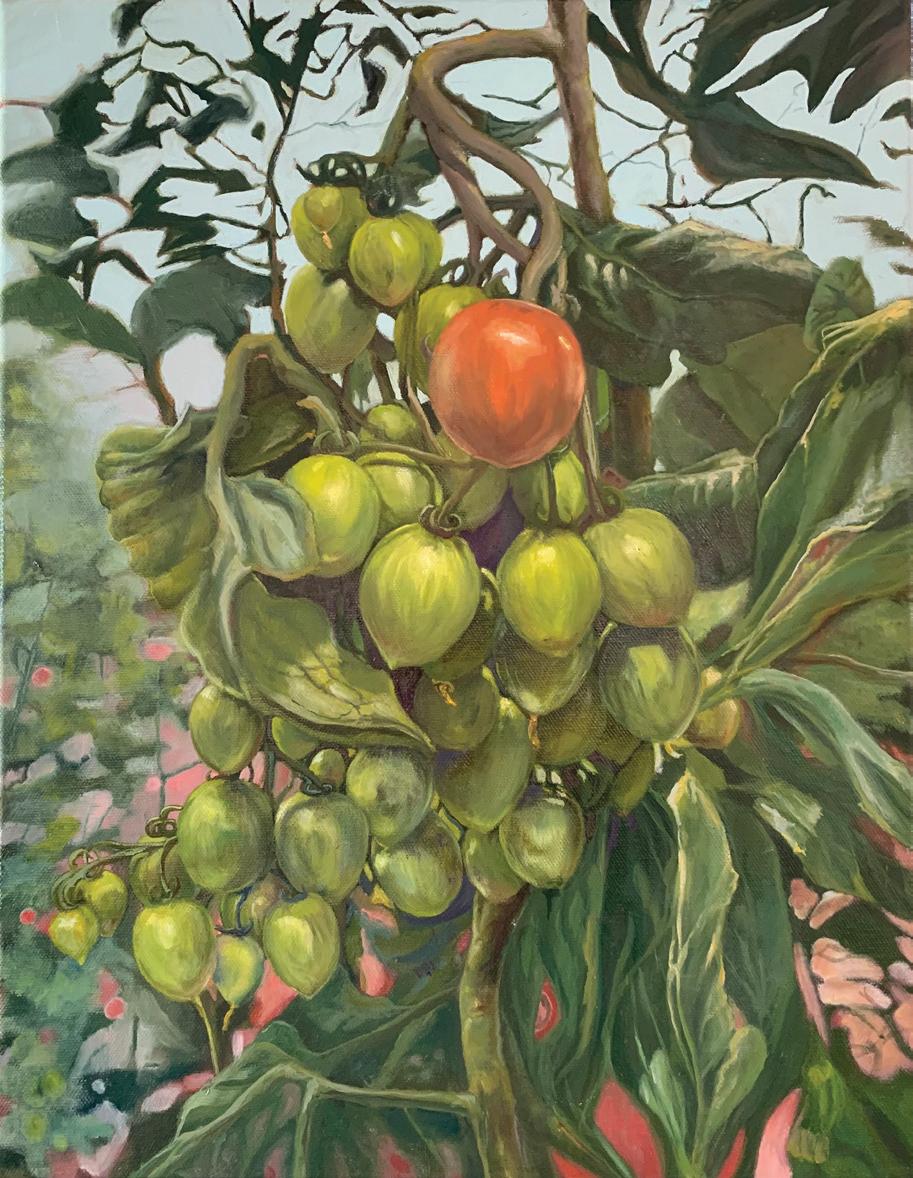
Hammond is now ready to make painting a priority. She painted with acrylic and pastel until recently, when she decided to try oils. The oils have enabled Hammond to take her art to the next level. She continues to use acrylic and pastels, but the oils are by far her favorite medium.
March 1-April 25
Jackie Dorsey is a self-employed artist based in Athens, Georgia. Her specialty is watercolor on paper, with a focus on portraiture and still life. Dorsey’s work has been juried into local, state, national and international shows.
Dorsey is a signature member, former board member and former president of the Georgia Watercolor Society. She has attained signature membership in several art societies, including the American Watercolor Society and the National Watercolor Society. Dorsey left careers in academia and teaching to pursue a full-time career as an artist. Whether portraiture or still lifes, she is passionate about capturing the spirit and story as well as a likeness of her subjects.
Jackie Dorsey
Friends First Friday
First Friday each month • 9-10:30 a.m. • Fee: $12 general admission, $10 for members • Pre-registration is required
Jan. 9 - State of the garden
Join the Friends as we welcome Jenny Cruse-Sanders, director of the State Botanical Garden, to provide an update on the current state of the garden. Cruse-Sanders has served as director of the garden since February 2017. Before accepting the director’s position here, she served as vice president for science and conservation at the Atlanta Botanical Garden.
The State Botanical Garden of Georgia is constantly changing and growing. Cruse-Sanders will give an update on current and future plans that will make the garden even more exciting and welcoming for our visitors.
Feb. 6 - Conservation is the key
Since 1995, Jennifer Ceska has served as conservation coordinator at the State Botanical Garden of Georgia. She is recognized for establishing project-driven professional networks and spearheading initiatives for the conservation and recovery of endangered species. Ceska is the coordinator for the Georgia Plant Conservation Alliance, a network of over 100 organizations and private companies dedicated to ecological land management, native plant conservation and the protection of rare and endangered plants.
Everyone who knows Ceska recognizes her passion for connecting people and plants. She and her colleagues have partnered to develop educational programs for schools, home gardens, public landscapes and natural areas, such as Connect to Protect, building gardens and habitats for Georgia native plants and the animals that rely upon them for survival.
March 6 - The American Chestnut, in a nutshell
Join Ryan McNeill for “The American Chestnut, in a Nutshell,” a concise overview of the species’ phylogeny, its historical importance and uses in North America, its decline from introduced diseases and current efforts to breed disease-resistant genotypes for restoration.
McNeill is superintendent of the UGA Durham Horticulture Research Farm in Watkinsville and holds both a master’s degree and PhD in horticulture. His research centers on improving somatic embryogenesis in American chestnuts. McNeill has been active in the Georgia chapter of the American Chestnut Foundation for more than 15 years, including service on the board.
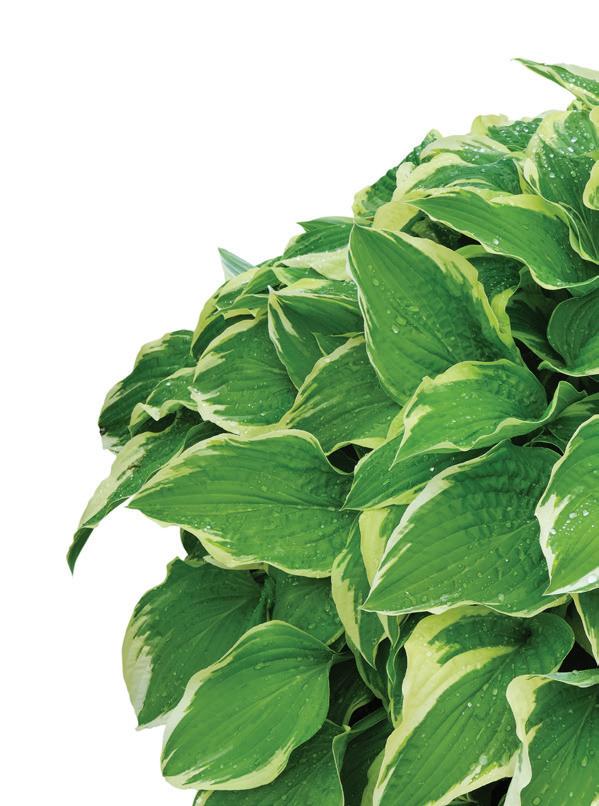
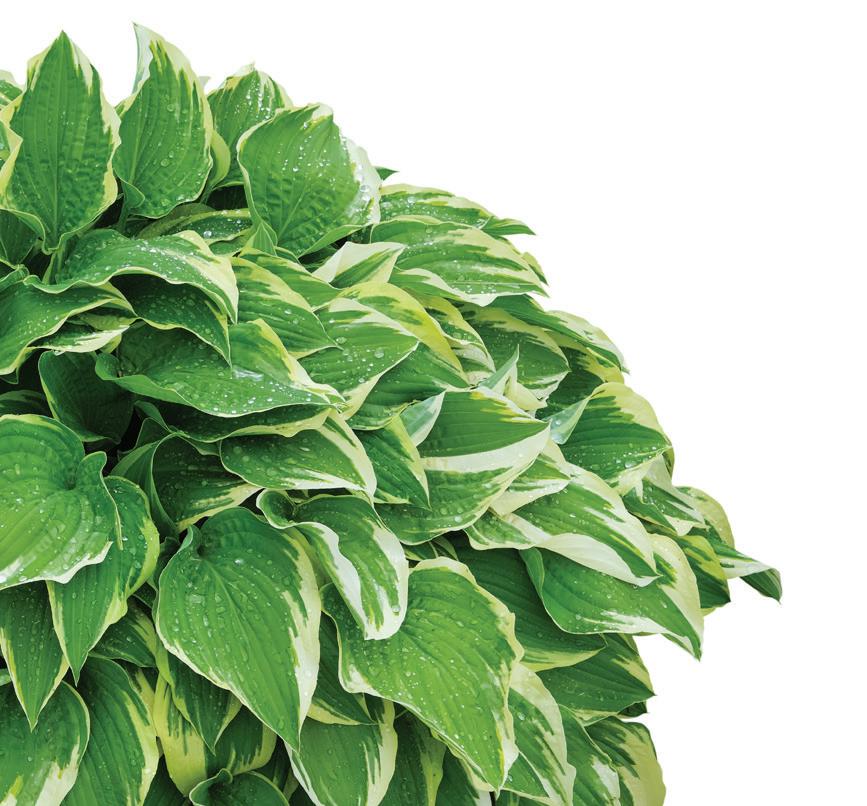
May 8 - Hostas for your garden
April 3 - Composting: Turning waste into resource
Join Suki Janssen, director of the Athens-Clarke County Solid Waste Department, for a brief presentation on how composting turns organic material into a valuable soil amendment that supports healthy gardens and sustainable communities. She will highlight local composting efforts, tips for starting your own system and how diverting food scraps and yard waste reduces landfill use and greenhouse gas emissions.
Whether you’re new to hostas or an experienced grower, this program with Pat Brussack will offer practical guidance on cultivating these versatile plants. She’ll cover key cultural practices, pest and disease management, and top-performing varieties for Georgia, along with recommended sources. After the talk, registrants are invited to visit Brussack’s garden — less than five miles from the State Botanical Garden — to evaluate more than 300 named hostas.
Dear Friends,
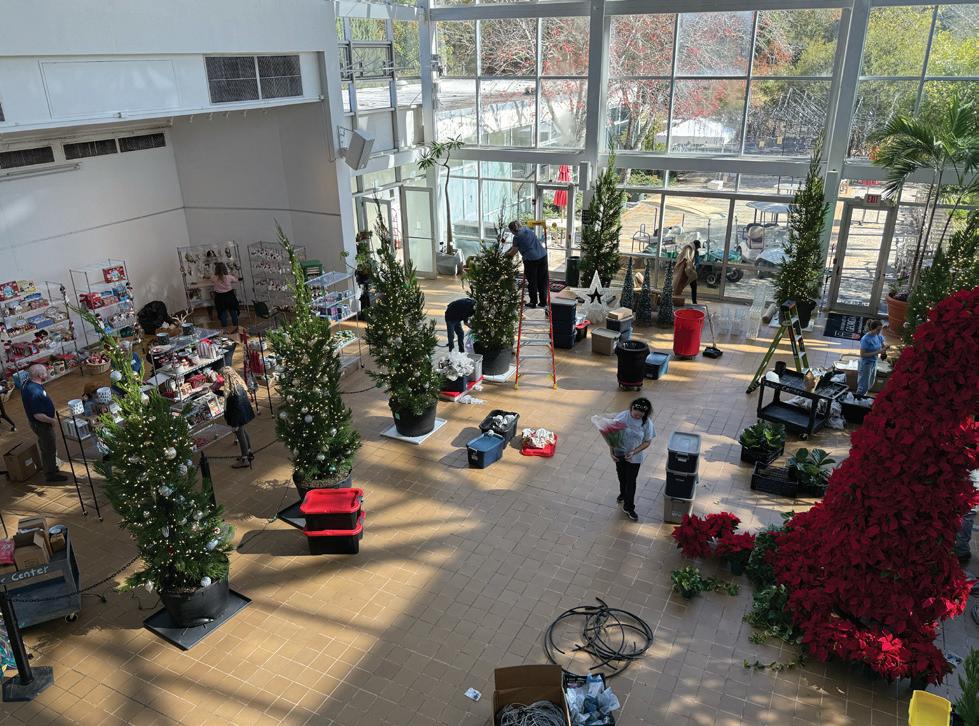
Winter is a wonderful time to experience the garden! Between the vibrant lights, cheery winter blooms and engaging educational programming, there truly is something for everyone to enjoy. This year, we are excited to celebrate five spectacular years of Winter WonderLights, a holiday experience that has quickly become a winter tradition for our entire community.
Looking back at the fall, our Conservation and Horticulture teams successfully held the Annual Fall Native Plant Sale. I am thrilled to say we sold over 5,500 plants, bringing more than 700 visitors to the Mimsie Lanier Center for Native Plant Studies. Among those visitors were many of our Friends, both familiar faces and new members.
We will kick off the new year with a special Friends First Friday session led by Garden Director Jenny Cruse-Sanders. Other First Friday events throughout the winter and spring will feature a diverse lineup of expert speakers covering a variety of topics, including conservation, composting, chestnuts and so much more.
As we usher in the new year, I want to formally invite you to the Friends Annual Meeting on Friday, March 13. Our 2026 annual meeting speaker will be Jenks Farmer, author of “Secrets of Southern Gardening.” The annual meeting is a special opportunity for us to gather and celebrate all that your generous support makes possible here at the garden.
I hope the new year brings you an abundance of joy and peace. The garden is incredibly grateful for your support, and your dedication helps us achieve our mission every day. Thank you for all that you do, and I encourage you to make 2026 a year filled with many visits to the garden!
Jessie Penouilh, Friends Membership Coordinator
Friends Annual Meeting
Friday, March 13
State Botanical Garden of Georgia Visitor Center
Speaker: Jenks Farmer, author of “Secrets of Southern Gardening”
President
Karen Radde
Vice President
Pamela Bracken
Secretary Kay Petroff
Treasurer
Dennis Calbos
Immediate Past President
Eileen Hale
Endowment Trustees
Mercer Brockenbrough
James L. LaBoon III
John V. Quackenbush
Ellen Wilkens Wiley
Members at Large
Shirley Berry
Nancy Black
Ann Davis
Betsy Ellison
Juli Fields
Celia Fowler
Susie Haggard
Taylor Jenkins
Shelly Prescott
John V. Quackenbush
Anne Walker
William A. “Bill” Walker
Orchid Madness
Orchid Madness is an annual event that raises money for the horticulture department at the State Botanical Garden of Georgia. Tickets for each event can be purchased online at botgarden.uga.edu, with a $5 donation automatically included in the ticket price.
Botanic Musicale
• Friday, Feb. 6, 6-8 p.m.
• The Day Chapel
• $30 per person
The Botanic Musicale piano concert will feature internationally acclaimed musical artist Liza Stepanova and include a champagne meet-and-greet reception. This is the 19th year for Botanic Musicale, a concert series funded in honor of Neva Fickling, a former Miss America and longtime member of the Board of Advisors for the State Botanical Garden of Georgia.
Orchids and Chocolates
• Tuesday, Feb. 17, 5:30-7 p.m.
• Porcelain and Decorative Arts Museum – Classroom
• $60 per person
Galentine’s Flower Arranging
• Friday, Feb. 13, 6-8 p.m.
• Visitor Center and Conservatory
• $50 per person
Collection & Herb and Physic Garden curator, will lead you step by step in creating a stunning arrangement to take home — vase included. All supplies are provided, and guests can also enjoy drinks and light appetizers.
Orchid Repotting Class
• Saturday, Feb. 21, 9-11 a.m.
• Horticulture Greenhouse
• $30
six 20-minute sessions. Please only bring one orchid and a pot for repotting. An orchid repotting kit is also offered for an additional $25 and includes extra media for future repotting and a small pot.
SPRING PLANT SALE
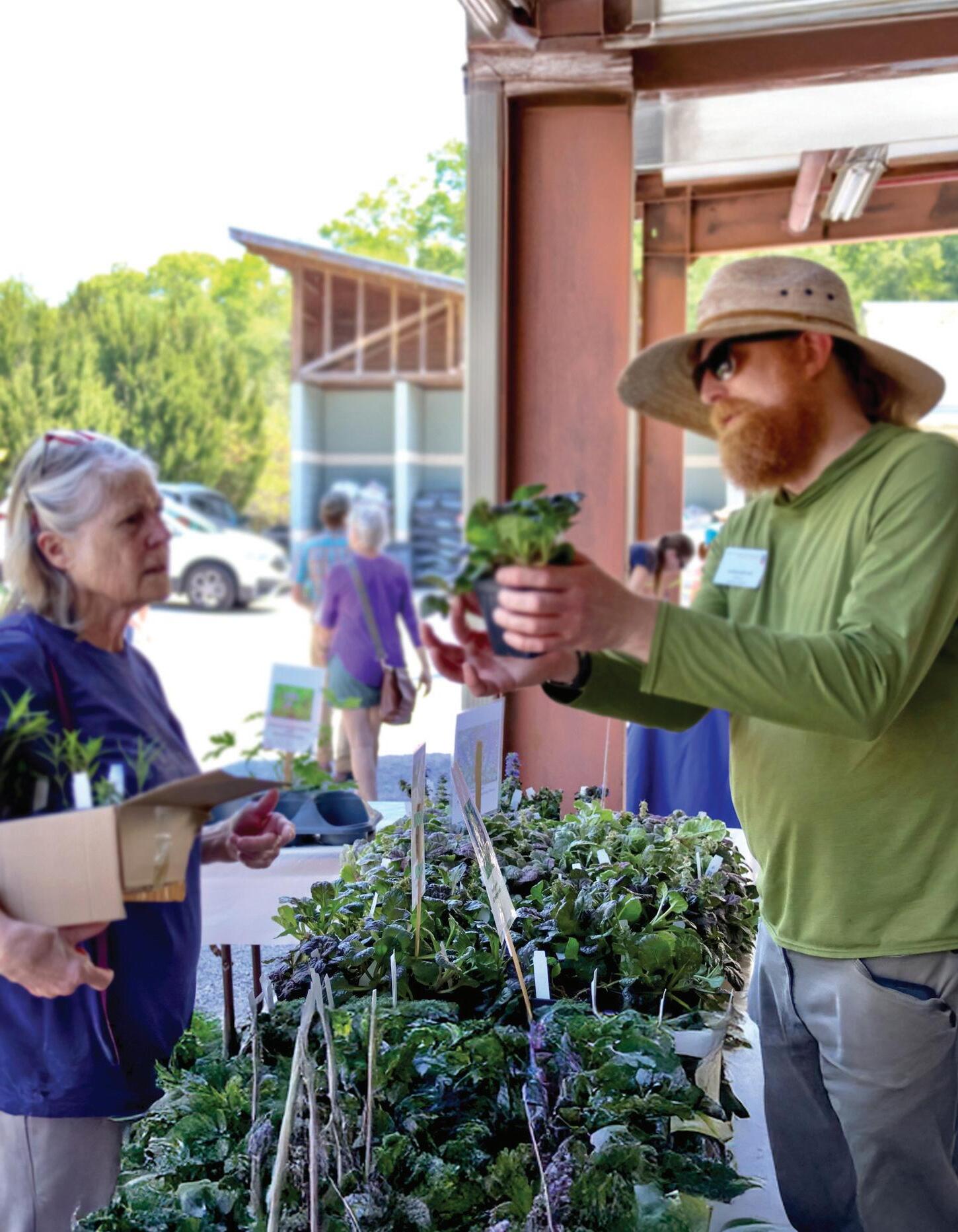
The spring plant sale is a great way to get wonderful plants, receive expert advice and support the garden. Staff from the horticulture and conservation departments will be at the plant sale, along with Master Gardeners, to help answer gardening questions and make recommendations for your specific needs.
All proceeds from the April plant sale go directly to the operational costs of the horticulture and conservation departments. With these
Thursday, April 16, is the preview sale for Friends of the Garden members only. Members of the Friends of the Garden will receive a 10% discount and get to shop early.
Community in action:
Restoring Georgia’s native grasslands
By: Robin Hargett, communications student assistant
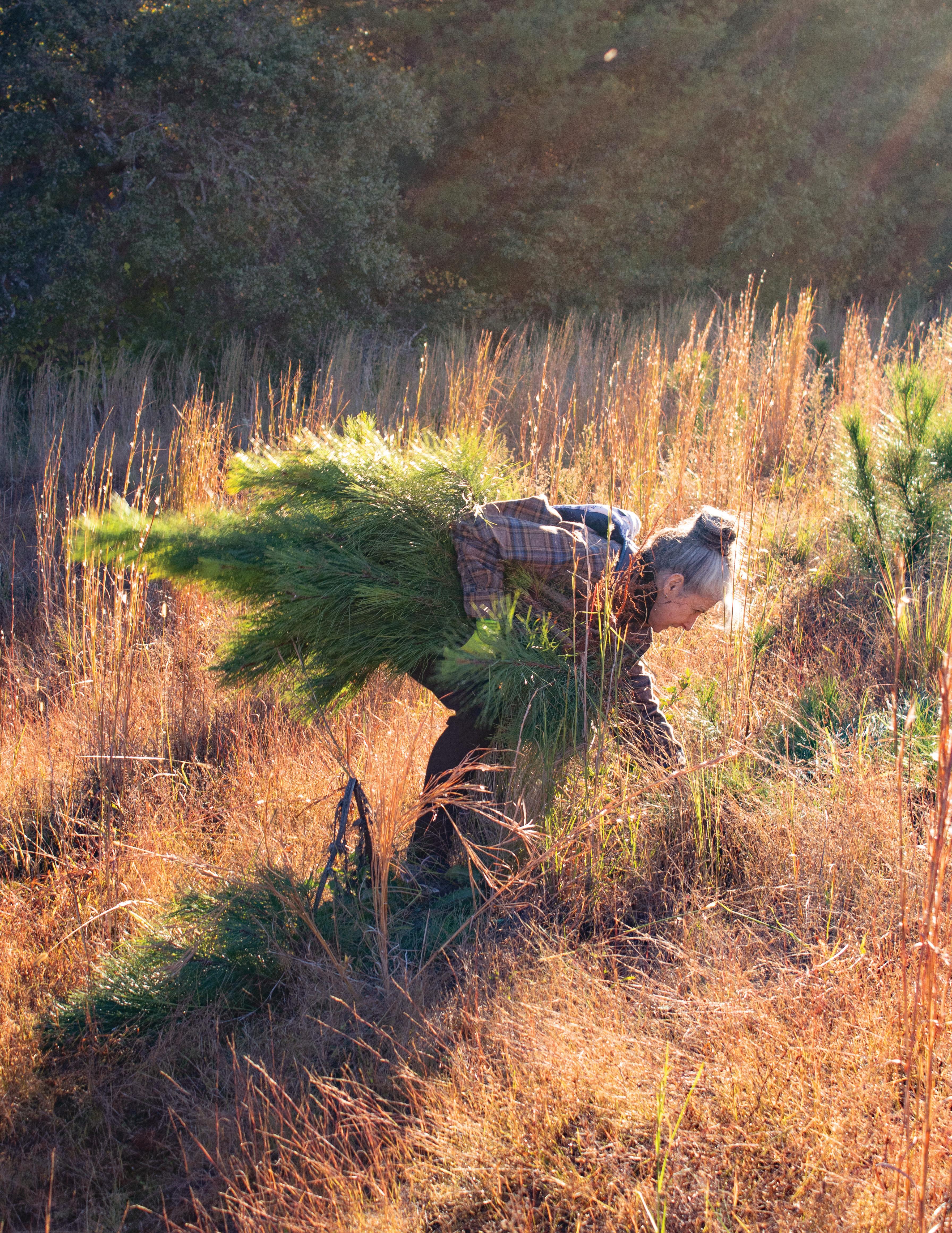
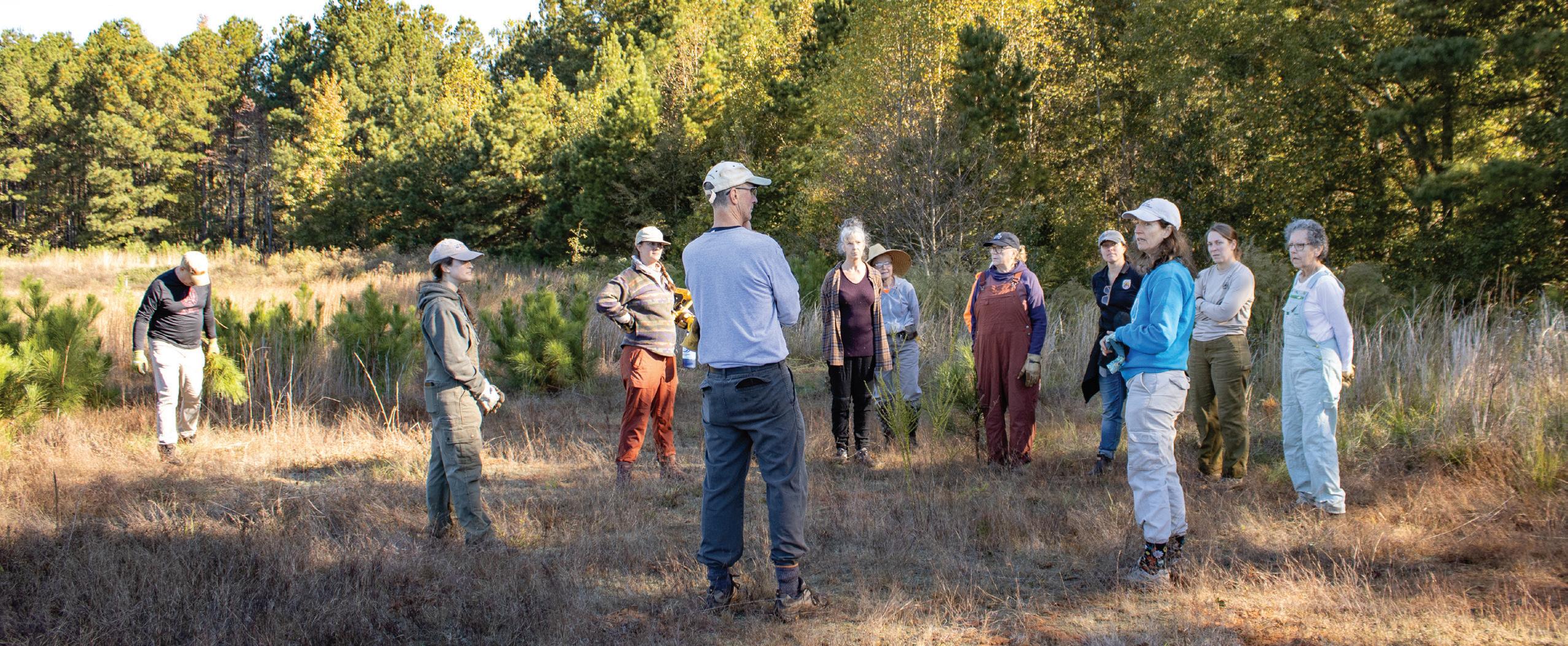
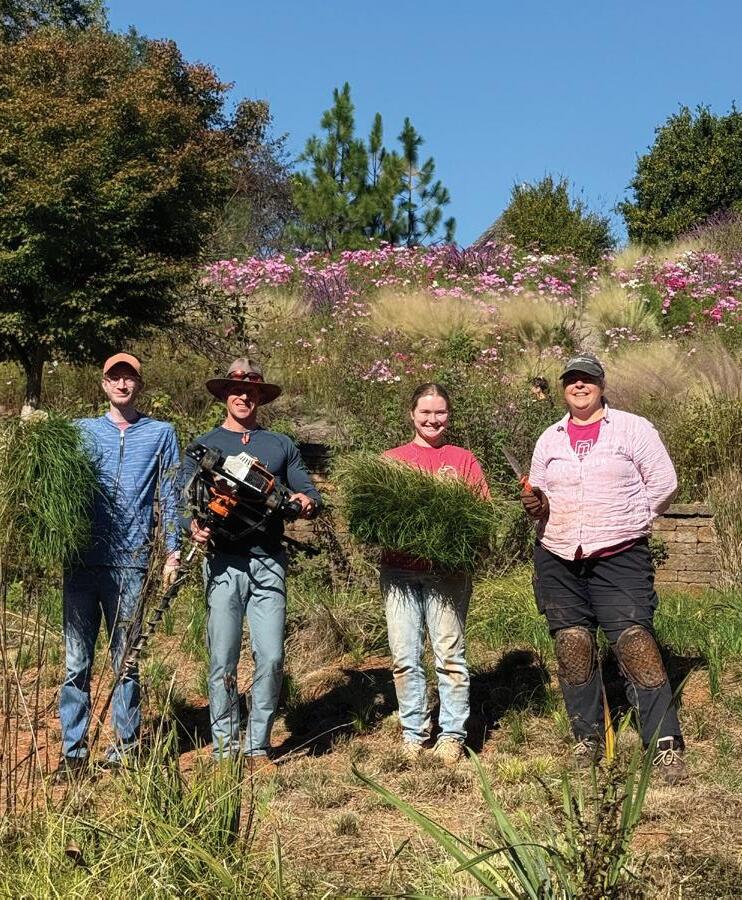
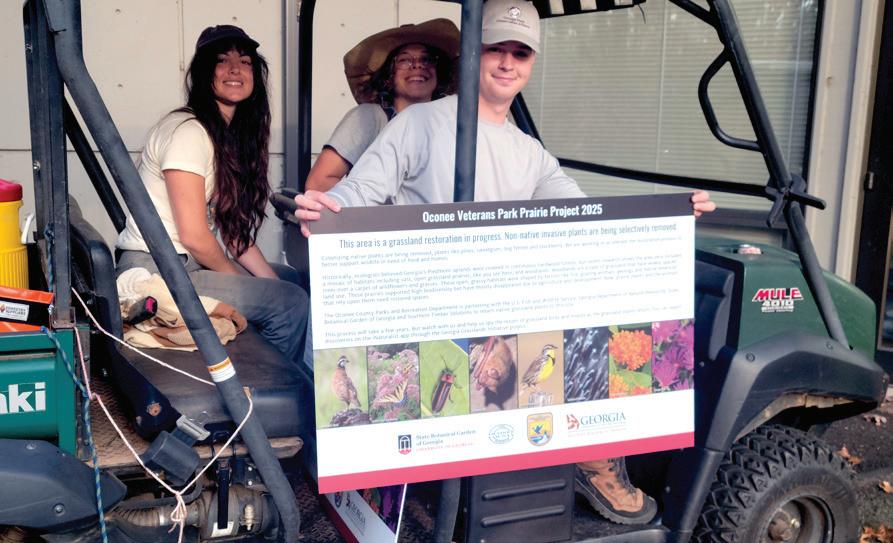
It was a chilly October morning when 17 volunteers joined the State Botanical Garden of Georgia at Oconee Veterans Park for a pine removal event. Led by conservation coordinator Jennifer Ceska, the group spent the day removing invasive pine seedlings, taking small but significant steps in restoring the park’s native grassland habitat.
The project to restore the site’s native grassland habitat is a partnership between the State Botanical Garden, the U.S. Fish and Wildlife Service, the Georgia Department of Natural Resources and the Oconee County Parks and Recreation Department. The event was part of a larger effort to reestablish Georgia’s grasslands, a once widespread and ecologically rich landscape that has declined rapidly over the past century. Grasslands are critical habitats that support pollinators, birds and other wildlife, and also improve soil health and water quality, said Ceska.
In many parts of Georgia, natural grasslands have been taken over by forests of loblolly and other pines that crowd out native grasses and wildflowers. Removing these invasive seedlings is a crucial step in restoring the ecosystem’s balance.
“It turned out that it’s a lot harder to pull these things up than we initially thought,” said Gary Crider, invasive plant control technician at the State Botanical Garden of Georgia. “We were surprised at how locked-in they seem to be; that could be because the conditions have been so dry lately, locking the roots into the clay soil. Even though the seedlings are shallow-rooted, it’s tough work.”
Despite the physical challenge, volunteers were committed and enthusiastic throughout the morning. Working together, community members learned firsthand how small, coordinated efforts can make a meaningful difference in ecological restoration.
“The contribution from volunteers is going to be a huge help with labor-saving in terms of getting the pines out of here,” said Crider. “The other big part of this work is introducing the public to the concept and teaching them what needs to be done to create and preserve the grassland.”
This event captures the State Botanical Garden’s broader mission of conservation, education and community engagement. The garden regularly partners with local and state agencies to restore native habitats, from longleaf pine forests to piedmont prairies. By involving volunteers, these projects build awareness and foster stewardship for Georgia’s landscapes.
Ceska emphasized that this pine removal marks only the beginning of a long-term restoration process.
“One of the things we’re really looking forward to is planting and seeding high-performing native plants,” she said. “We call them keystone or workhorse species, grassland Piedmont prairie plants like those in the genus Monarda and Pycnanthemum (mountain mints), as well as asters, black-eyed susans and other showy, happy plants like blue mist.”
These native species will enhance the beauty of the grassland and provide essential food and habitat for pollinators, birds and other wildlife.
Through efforts like these, the State Botanical Garden and its partners are not only restoring an ecosystem but also helping the community reconnect with Georgia’s natural heritage.
For more information about the State Botanical Garden of Georgia and its conservation efforts, visit botgarden.uga.edu
UGA Opera in Bloom:
“Mansfield Park” comes to the State Botanical
Garden of Georgia
This April, Jane Austen’s world bursts into life with “Mansfield Park,” Jonathan Dove’s witty, romantic chamber opera. In celebration of Austen’s 250th birthday, we have partnered with the UGA Opera Theatre and the Hugh Hodgson School of Music to present this evening picnic event under the open sky in our flower garden.
Follow the quietly brilliant Fanny Price as she navigates a tangle of romance, loyalty and mischief in this sparkling adaptation of Austen’s beloved novel. With Dove’s elegant four-hand piano score, an immersive, site-specific experience and the golden glow of a spring sunset, this will be Austen as you’ve never heard — or seen — before. Don’t miss this enchanting springtime journey — where music and nature intersect!
Two nights only! March 31 & April 1
Tickets: $25
Purchase tickets at botgarden.uga.edu
Johnstone Lecture
From Georgia to the World: William Bartram’s Botanical Legacy
Featuring Dorinda Dallmeyer
Tuesday, March 3, 6:30 p.m.
Visitor Center and Conservatory Free, registration required
During his five-year botanical journey through the Southeast, William Bartram documented 42 plant species new to science — 15 of them in Georgia. His explorations ranged from the sea islands and the Blue Ridge mountains to the St. Mary’s, Savannah and Chattahoochee rivers. This lecture will highlight five of Bartram’s Georgia discoveries that still captivate us 250 years later.
Dorinda G. Dallmeyer holds geology degrees (B.S., M.S.) and a J.D. from the University of Georgia. After a long career in research and teaching, she retired in 2018 as director of UGA’s Environmental Ethics Certificate Program and is the immediate past-president of the Bartram Trail Conference.
An accomplished naturalist and writer, Dallmeyer received the 2005 Phillip D. Reed Memorial Award for Outstanding Writing about the Southern Environment. Her works include “Bartram’s Living Legacy” (Mercer University Press, 2010; 2nd ed. 2019), which pairs Bartram’s 1791 classic with essays by 17 contemporary Southern nature writers. She has also edited and contributed to other anthologies on Southern environmental history.
Most recently, she served as executive producer and screenwriter for the award-winning documentary “Cultivating the Wild: William Bartram’s Travels”, which premiered nationally on public television in 2020 and remains available on PBS.
Her upcoming book, “Bartram’s Travels Illustrated,” coauthored with Harriet H. Langford, will be published by the University of Georgia Press in fall 2026.
A light reception will follow the lecture.
Student Spotlight
Jamie Fjelstul
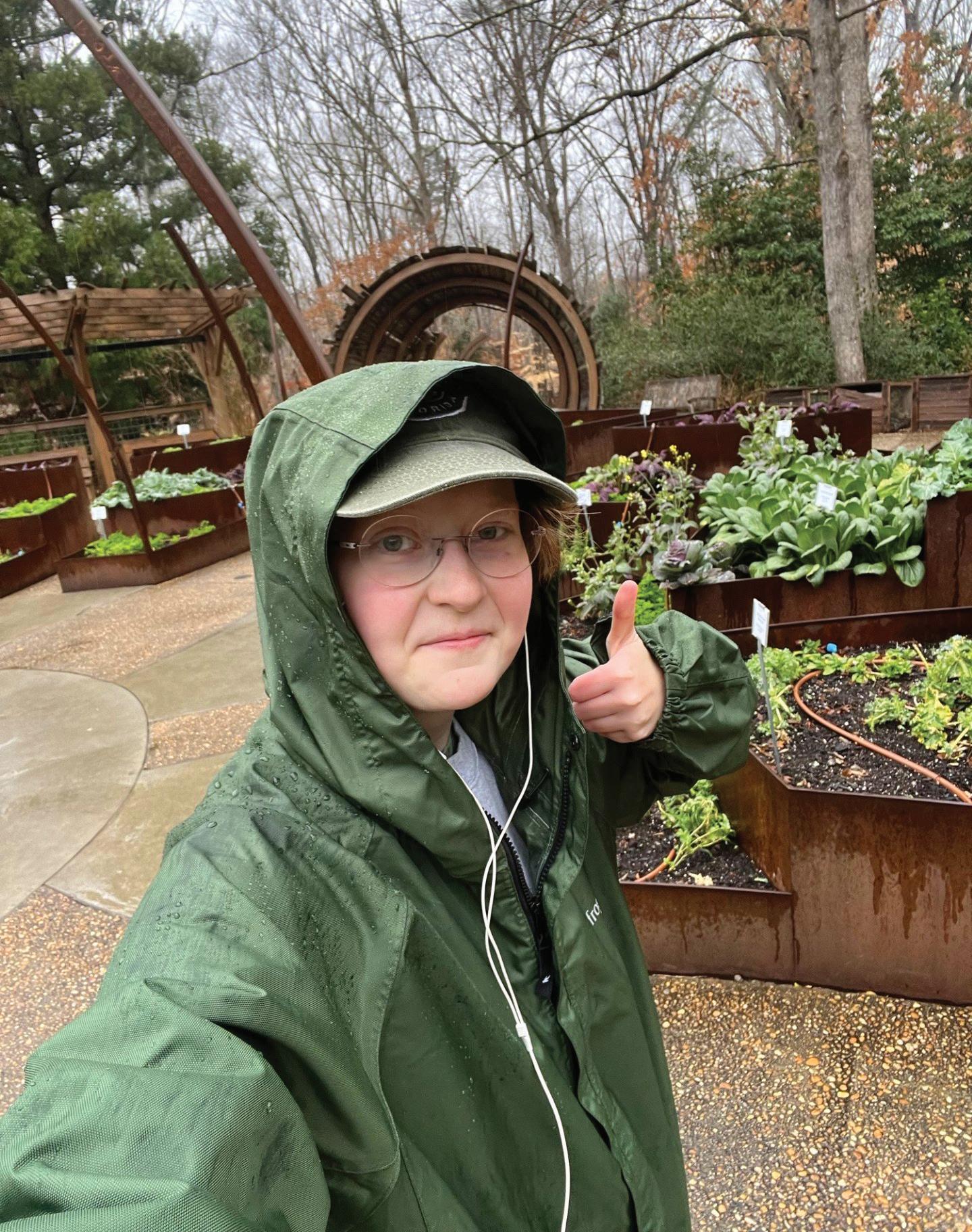
Jamie Fjelstul graduated from the University of Georgia with a bachelor’s degree in ecology and anthropology in May 2025 and is now in their first year as a master’s student in natural resources. They are interested in learning about natural infrastructure and understanding how policy and engineering can work with natural systems to solve problems. They hope to be able to implement this in their future career.
Fjelstul has been working as a garden and ground assistant in the Children’s Garden, the Herb and Physic Garden and the Visitor Center for the past year and a half. They get to help with things like watering, weeding and planting. They love seeing the garden change throughout the year and learning more about the plants and critters that inhabit it. Fjelstul really enjoys working in various parts of the garden because every day is different. Their favorite part of working at the garden overall has been getting to know the curators and other part-time staff they interact with.
Gideon Tanner
Gideon Tanner has worn more than one hat in his four years of working at the State Botanical Garden of Georgia. Most recently, he served as Weekend Manager for Visitor Services before transitioning into the role of Manager on Duty for Winter WonderLights. He graduated in December with a bachelor’s degree in journalism from the University of Georgia’s Grady College of Journalism and Mass Communication.
Tanner has always had a love for the outdoors and jumped at the opportunity to work in an environment that prioritizes conservation while strengthening his communication skills through event services.
Even before accepting his initial position as a member of the event staff team, Tanner was no stranger to the State Botanical Garden. He recalls the many brisk mornings spent exploring the gardens with close friends — making sure the group had enough coffee and homemade biscuits to last until the afternoon.
In those days, the smiles of groundskeepers, volunteers and visitor center employees were just that — smiling faces that gave the gardens an extra-special charm. Now, those faces are his friends. Some of his favorite moments at the garden include helping with the Sunflower Concert Series, attending the annual Volunteer Chili Cook-Off, and witnessing the joy that Winter WonderLights brings to the community.
Tanner is grateful to have met lifelong friends during his time at the garden and looks forward to his next adventure.
PRESENTING SPONSOR
PREMIUM SPONSORS RADIANT SPONSORS
GLOWING SPONSORS
MARY BESS AND JEFF COLE
CHRIS AND LANSE LEACH
NANCY AND GLENN BLACK
CREATURES STIRRING SPONSORS
BETSY AND MARK ELLISON
CYNTHIA WILLETT
BETSY BARGE
COFER’S HOME & GARDEN
MELISSA AND GEORGE FONTAINE
VISIT ATHENS
SNOWY NIGHT SPONSORS
SANDY AND JIM BOYLES
JOANNE AND ROBERT HECHT
JUNIOR LADIES GARDEN CLUB TRUIST
GEORGIA UNITED CREDIT UNION
WHITWORTH LAND CORPORATION
TERRELL FAMILY FOUNDATION
PAULA AND MARK HENNESSY
FAROLYN AND PATRICK MOBLEY
HERITAGE GARDEN CLUB
SOUTHEASTERN GROWERS, INC.
ROSE AND DAHLIA GARDEN CLUB FRIENDS OF LELE GRINER
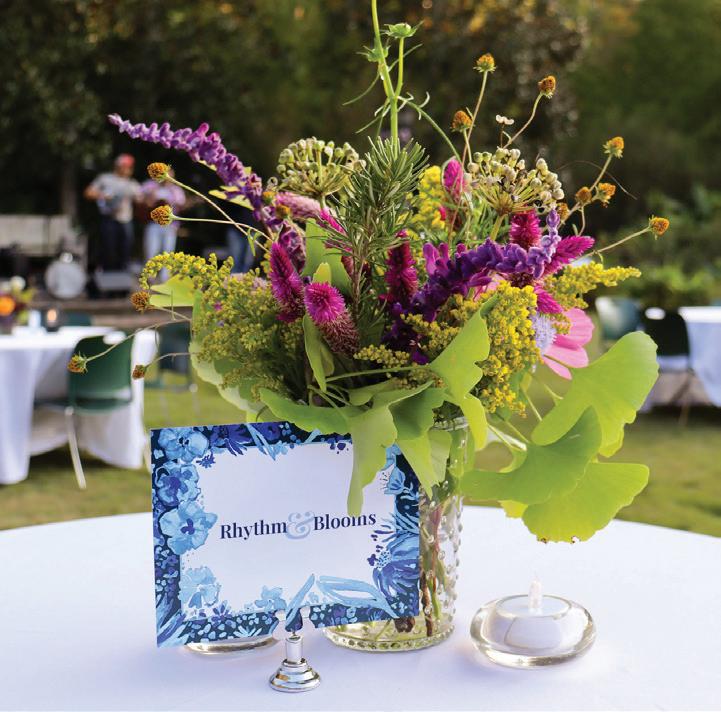
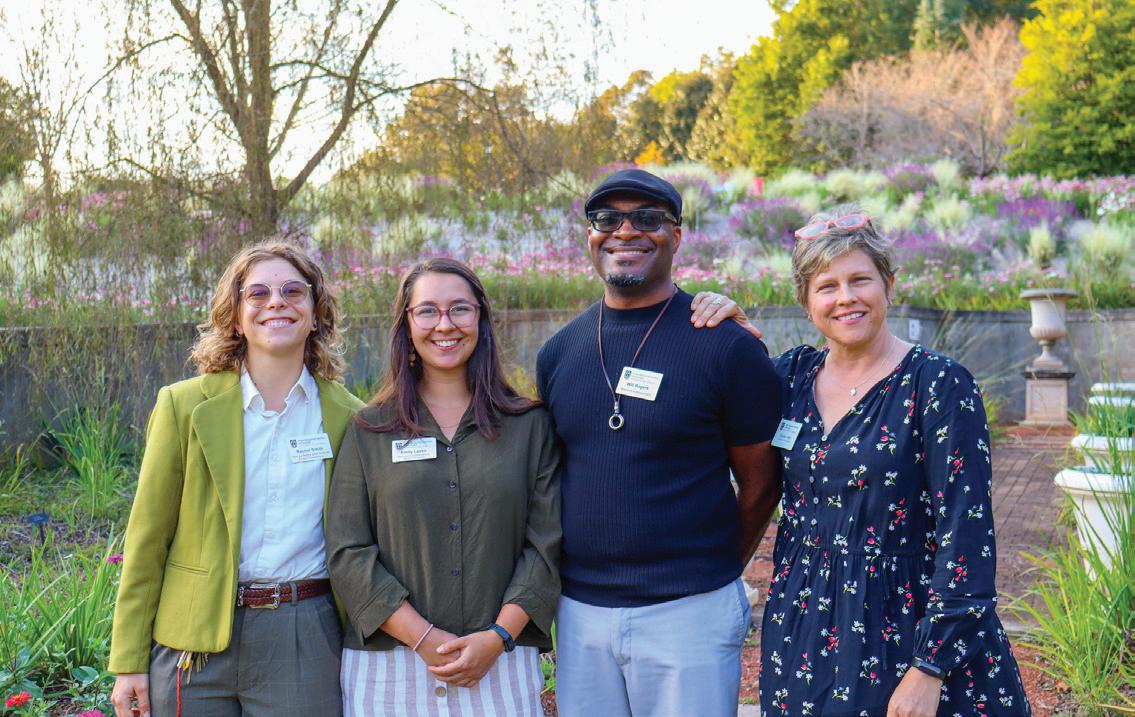
On Oct. 9, 2025, the State Botanical Garden of Georgia hosted Rhythm & Blooms on the Flower Garden lawn. Guests enjoyed live music, local food and lively conversation, all in support of the garden’s conservation endowment.
More than just a festive evening, the event helps fund native plant cultivation, habitat preservation and resource stewardship across the Southeast.
Royal Copenhagen Figurines
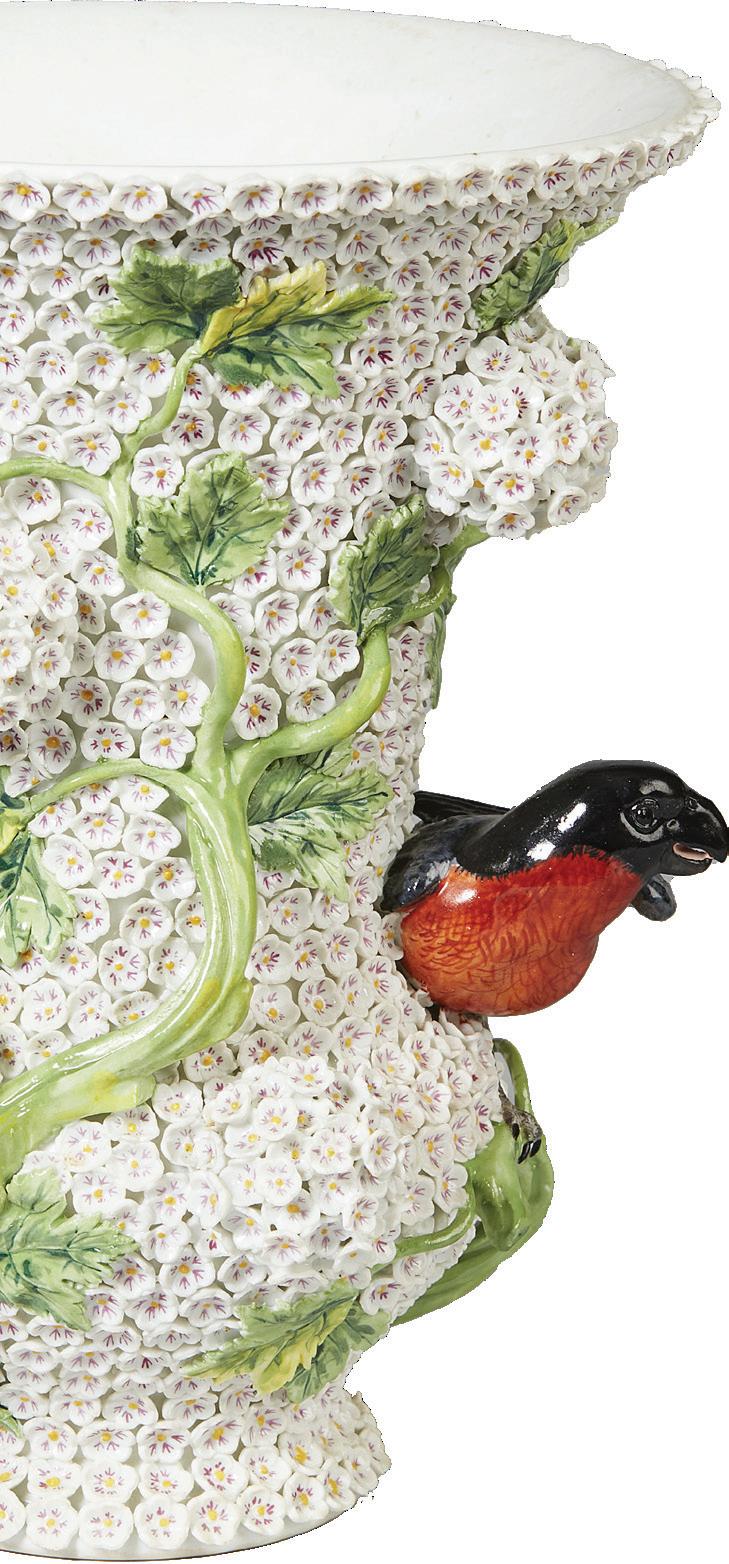
Schneeballen “Snowball Blossom” Vases
New acquisitions in the Porcelain and Decorative Arts Museum
By: Grace Moorman, Porcelain and Decorative Arts Museum curator
The Porcelain and Decorative Arts Museum has been gifted a selection of objects from generous donor Deen Day Sanders. Mrs. Sanders initially supported the building of the museum and its collections, and she has maintained her connection with the museum by donating select pieces to complement the already significant collection. Each of these donations furthers the celebration of art and nature, which Mrs. Sanders maintains is a critical teaching element of the museum.
These magnificent vases, dating from around 1850 to 1870, were produced by the renowned porcelain manufacturer Meissen. Schneeballen (German for “snowballs”) refers to the Snowball Blossoms design. Johann Joachim Kändler, artist director and master modeler for Meissen, created this design based on the common snowball (Viburnum opulus flower in 1739. Each flower is shaped, placed and painted by hand, making the completion of these pieces incredibly timeand labor-intensive.
The vases also have a unique provenance. They were purchased in 1987 by Mrs. Deen Day Sanders and belonged in Iris Court, her one-time home. She later sold the house and the art collection, but repurchased these two vases when they appeared at auction in 2025. They were purchased with the direct intention of donating them to the museum to further round out the exceptional collection of Meissen porcelain.
Mrs. Sanders gifted six pieces of Tucker porcelain to ensure that American porcelain was well-represented in the museum. The Tucker manufactory was founded in 1826 by William Ellis Tucker (1800-1832). Started in Philadelphia, this manufactory was the first to successfully produce hard-paste porcelain made entirely of American materials. Investors were required to maintain the high quality of production, and several, including Federalist politician Joseph Hemphill (1770-1842), invested thousands of dollars to help keep the company afloat. When William Tucker died in 1832, his brother, Thomas Tucker, assumed management of the factory. Unfortunately, the factory stopped production in 1838. Because of their relatively short production time, pieces of Tucker porcelain are rare.
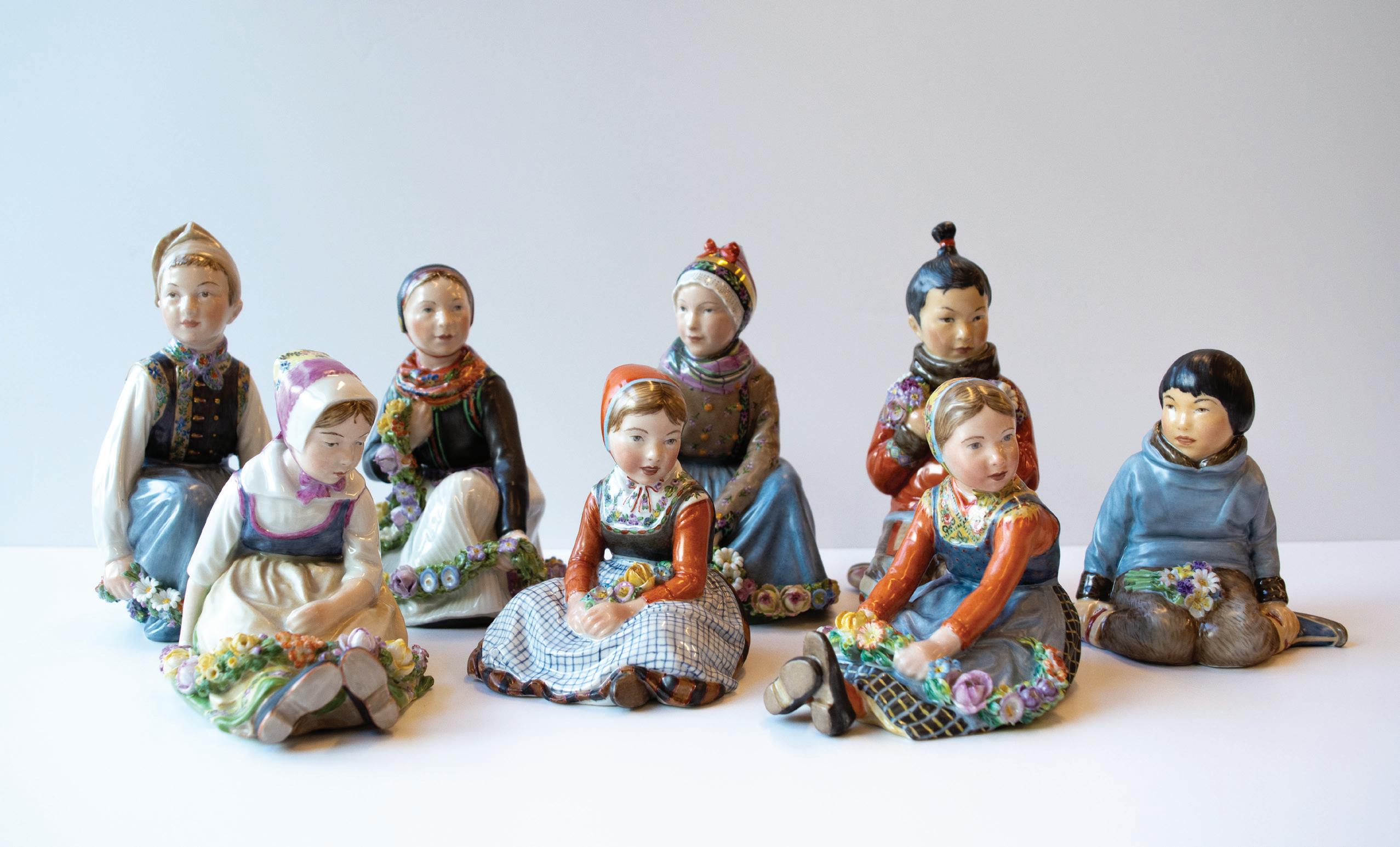
Between 1922 and 1923, Carl Martin-Hansen (1877-1941), a modeler for Royal Copenhagen, designed a series of 10 figurines featuring children in the historic dress of various Danish regions. When added to the museum’s collection of Royal Copenhagen Flora Danica porcelain, the figurines serve as a reminder that the initial goal of the Flora Danica project was to catalog plants across all Danish regions. This included lands that were not part of the Danish mainland, like Greenland and the Faroe Islands. In the 18th and 19th centuries, botanists recorded plant records for the Flora Danica and occasionally had to travel thousands of miles to reach distant regions. The places highlighted by these figurines help visualize the range of cultures, geographies and — by extension — diverse plant life associated with this large kingdom.
This Chinese Export Porcelain plate dates to around 1737 and depicts the familial coat of arms of Francis I (1737-1765). During his lifetime, Francis I carried the title Holy Roman Emperor, Archduke of Austria and Duke of Lorraine, among others. He was the father of Marie Antoinette (1755-1793), the last queen of France before the French Revolution and a monarch who famously loved flowers.
At the Petit Trianon, the queen’s private residence on the grounds of Versailles, she remodeled the extensive surrounding garden area to fit her tastes. In 1784, she ordered more than 2,000 dog roses (Rosa canina) to be planted at Trianon. She was also a patron of the decorative arts, and many of the pieces that she commissioned were decorated with floral motifs. Moreover, she was a patron of the renowned floral artist Pierre-Joseph Redouté (1759-1840), whose original watercolors are featured near this new installation.
Plate from the Marly Rouge Dessert Service
Mrs. Sanders also gifted an exquisite plate from the Marly Rouge dessert service. The service was commissioned by French emperor Napoleon Bonaparte (1769-1821). The 256-piece set was completed by the French Sèvres porcelain manufactory and delivered to the Palace of Fontainebleau in October 1809. During his month-long stay at Fontainebleau, the emperor announced his divorce from his wife, Josephine (1763-1814). Their marriage failed to produce a son and heir.
Josephine’s influence on botanical art and gardens is also celebrated in the museum. She was an avid botanist and kept gardens and a large collection of exotic plants at her home, Malmaison. Many of these plants were delivered to her after expeditions to colonized places such as Australia, South Africa and Chile. She introduced numerous plants to France, including 250 new varieties of roses, and like Marie Antoinette, Josephine was a great patron of Pierre-Joseph Redouté. The plate from the Marly Rouge service reminds us of how often nature was brought into the home through decorative arts.
Tucker Porcelain
Royal Copenhagen Figurines
Plate with Arms of Francis I
Postcards from the Garden
706.542.1244 . botgarden.uga.edu . garden@uga.edu
Garden Gift Shop
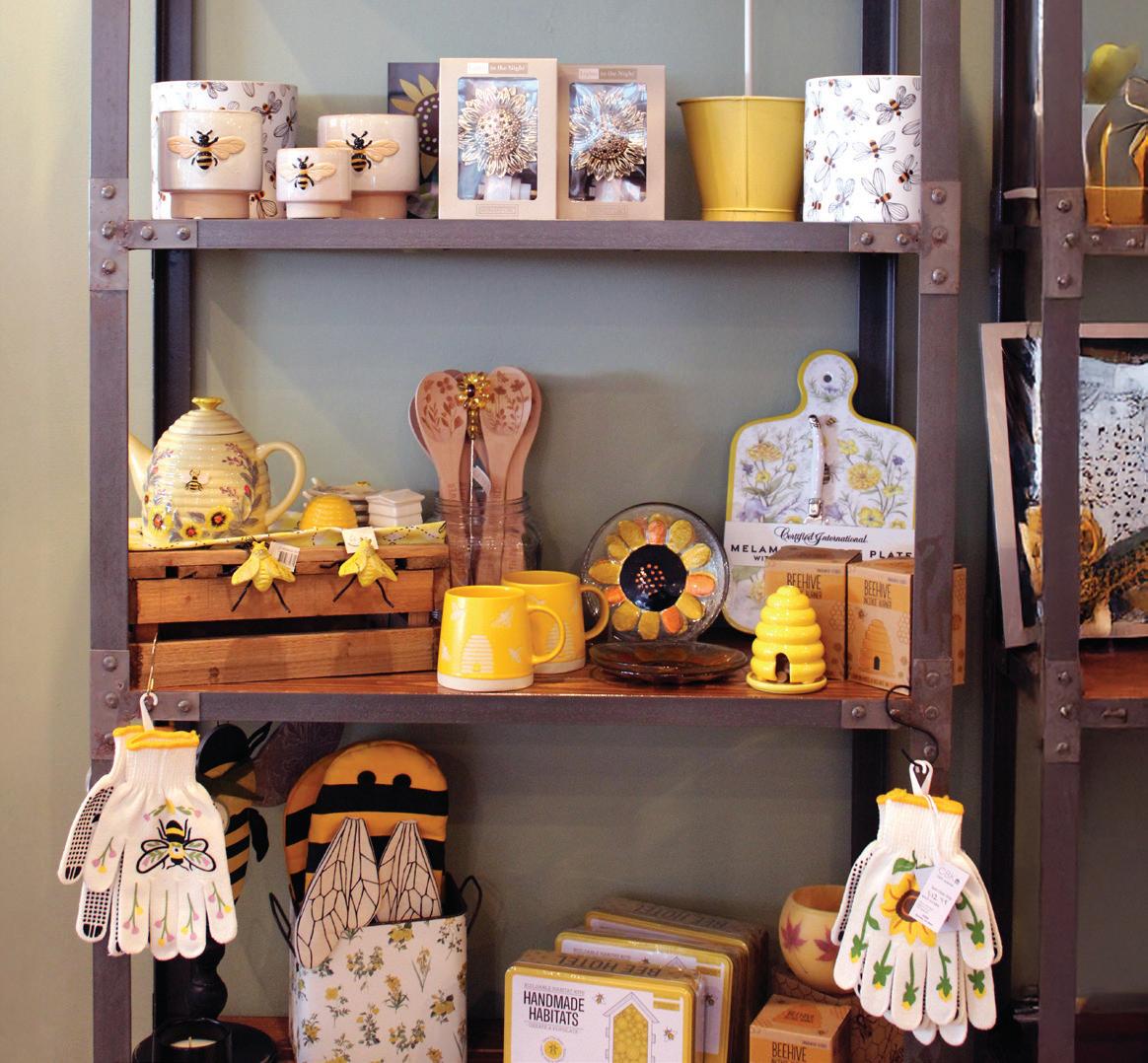
As the chill of winter melts away and the world bursts into bloom, spring is the perfect time to celebrate renewal, color and connection. Whether you’re shopping for Easter surprises, Mother’s Day treasures, or a simple “thinking of you” gift, our shop is blooming with inspiration.
From wind chimes and rain chains to festive planters and garden-inspired home decor, each piece captures the joyful spirit of the season. Fresh arrivals feature soft hues, nature motifs and sustainable materials — perfect for welcoming spring into your home or sharing a bit of sunshine with someone special.
Stop by the gift shop this spring and discover gifts that make every day a little brighter — because new beginnings deserve to be celebrated beautifully.