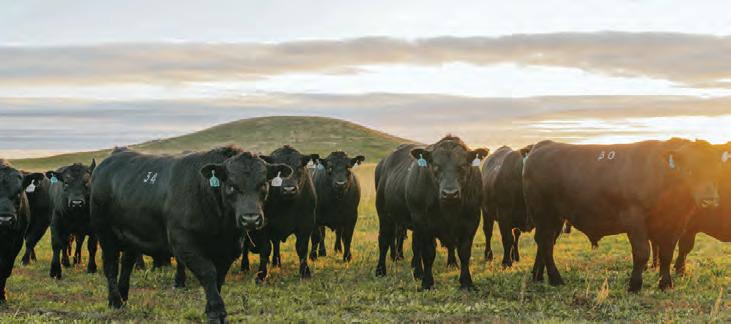
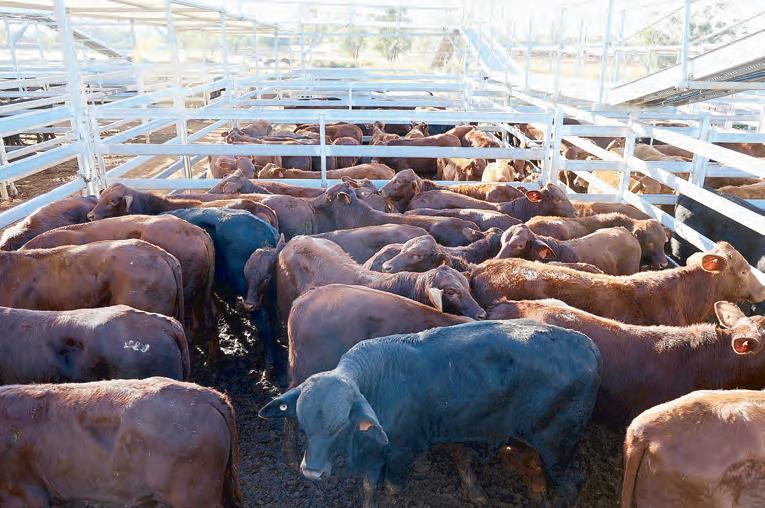
Regional Queensland producers have made a solid start in the 2026 RNA Paddock to Palate competition, dominating the opening weight gain phase at JBS Australia’s Beef City feedlot near Toowoomba.
Top-performing operations included Simon and Myriam Daley of Beilba, Russell Pastoral Operations from Blackall, Kireina Wagyu at Burncluith and LA & DL Henschell from Moola.
All delivered standout results across multiple classes.
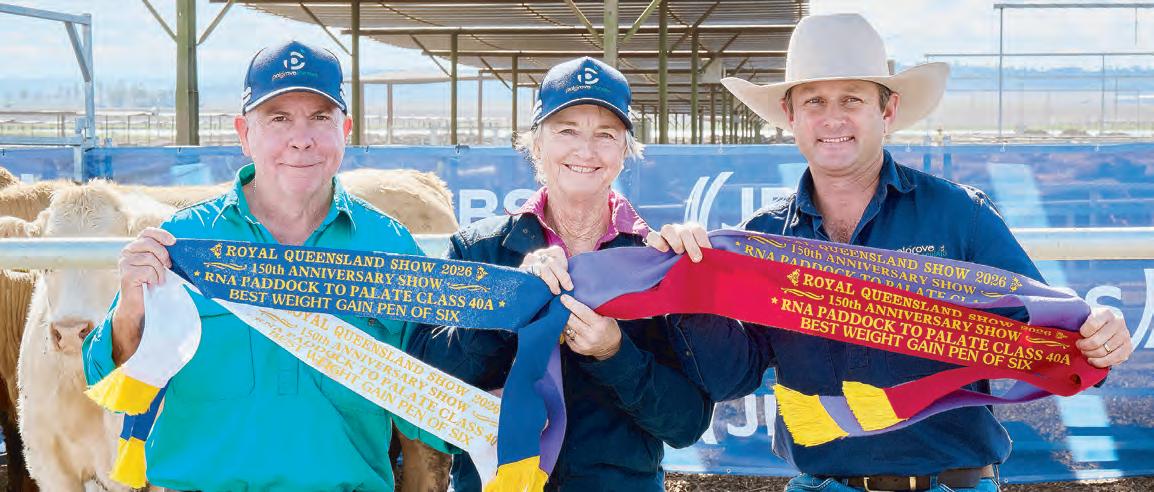
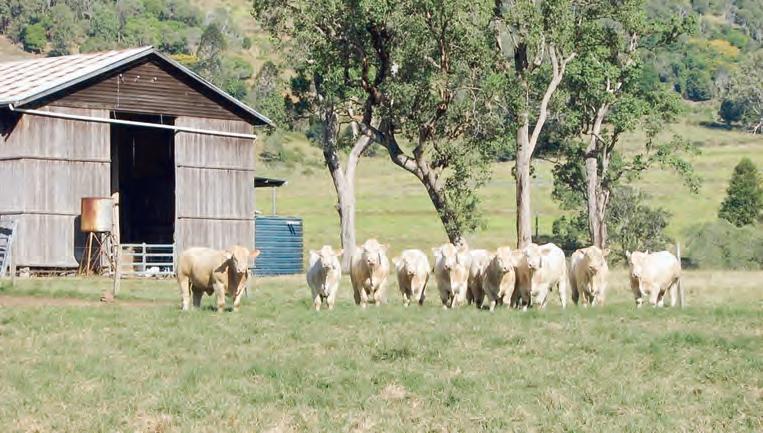
The Daley family, who are commercial breeders, led the charge in the 120-day export categories, winning Class 37 with a pen of Charolaiscross cattle achieving an average daily gain (ADG) of 3.03kg.
They also secured first place in the HGP-free Class 40 with an ADG of 2.4kg, alongside a third placing in the same class with 2.24kg.
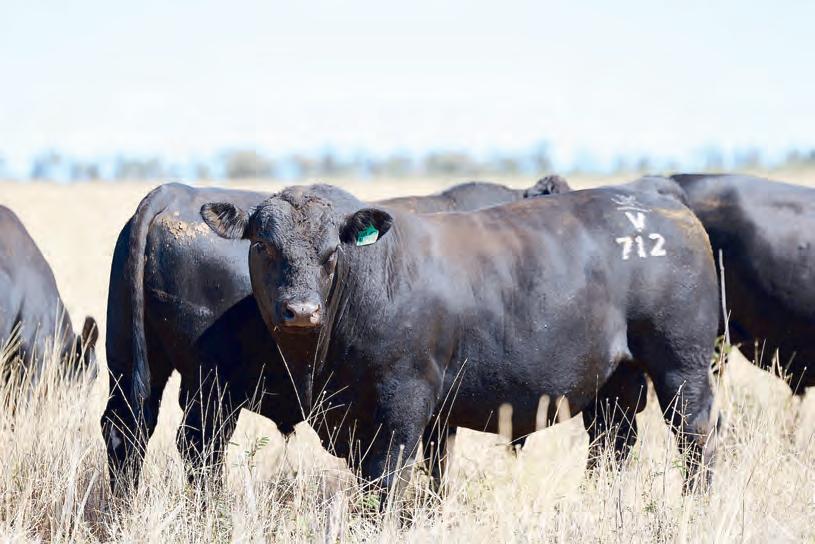
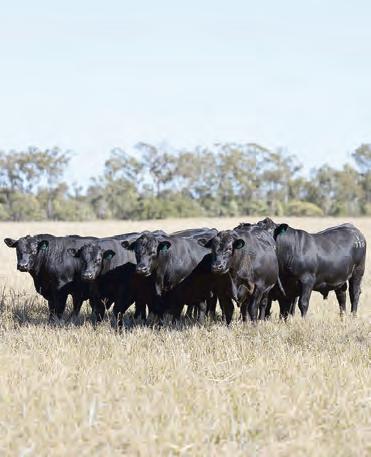
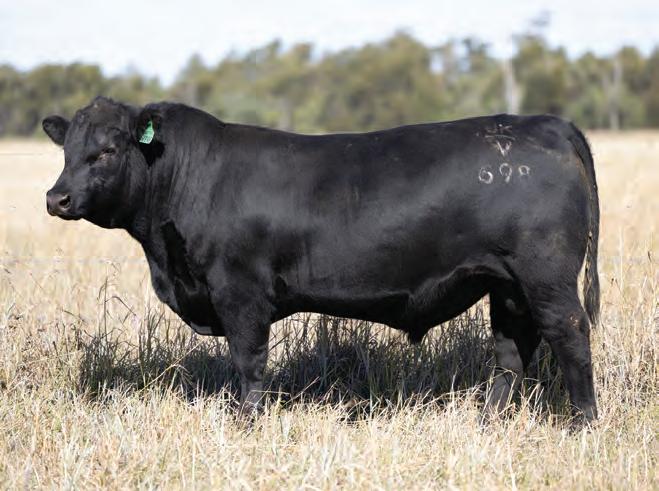
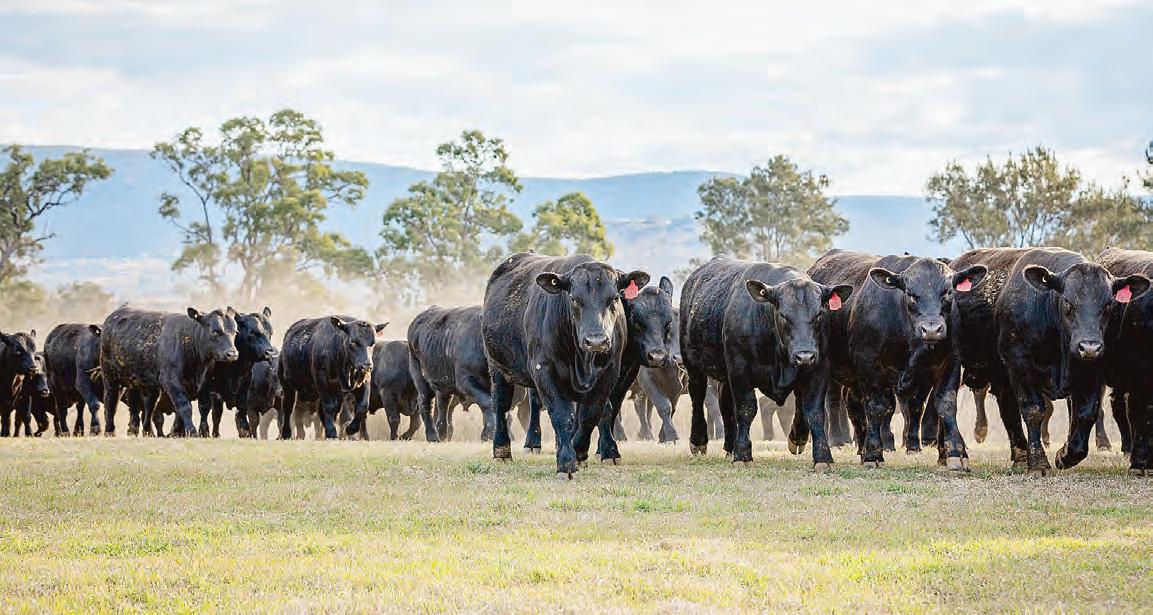
Russell Pastoral Operations also impressed, winning Class 38 (100-day trade) with Anguscross cattle recording an ADG of 2.69kg.
The operation also achieved the highest individual weight gain in Class 37 with an ADG of 3.43kg and placed second in the same class with 2.98kg.
Meanwhile, in the Wagyu categories, Kireina Wagyu claimed top honours in Class 41 (crossbred Wagyu 380-day), with their composite Wagyu x F1 entry recording an ADG of 1.33kg.
They also secured the highest individual weight gain in the class at 1.50kg.
LA & DL Henschell won Class 39 (fullblood purebred Wagyu 380-day), with their pen averaging 1.15kg ADG and also achieved the highest individual gain in the class at 1.439kg.
This year’s competition has attracted a record 1358 head of cattle, representing a 25 per cent increase on 2025 and underlining the growing importance of the program within the beef industry.
RNA Beef Committee Chair Gary Noller said the competition continued to deliver measurable value for producers.
“For seedstock producers, it translates to
Palate for success
higher averages at their bull sales, with standout exhibitors in the competition achieving results above breed averages,” he said.
“On the commercial side, producers are using the competition to prove their genetics and confirm they are making the right decisions in their selection of bulls and females at home.”
Mr Noller said participation continued to grow as more producers recognised the benefits of benchmarking performance through the competition.
“Every year we see new exhibitors take part in the competition, as they recognise that strong results in Paddock to Palate can give them a clear point of difference in the market,” he said.
He also acknowledged the significance of this year’s operational milestone.
“I would like to sincerely thank our competition presenting partner JBS Australia, who expanded
their support to include the Wagyu classes at Beef City, with all classes now hosted at the feedlot.”
Classes 37, 38 and 40 will be judged across three phases, including weight gain, carcase performance and MSA eating quality.
The Wagyu Challenge classes (39 and 41) include an additional phase, culminating in a “beef taste-off“ assessed by leading Queensland chefs.
With almost $65,000 in prize money offered, overall winners will be announced at the Paddock to Palate Awards Dinner at the Brisbane Showgrounds on Thursday, 6 August, during Ekka Beef Week.
A range of industry partners support the competition including JBS Australia, Zoetis, Coopers Animal Health, the Australian Wagyu Association, Queensland Country Life, Zee Tags, Thompson Longhorn, Black Box Co and Thynne and Macartney.
RESULTS
Class 37A Best Weight Gain for Pen of Six, 120 Day Grain-Fed Steers
• 1st - Simon and Myriam Daley, ADG: 3.03kg, Charolais Cross, Beilba QLD
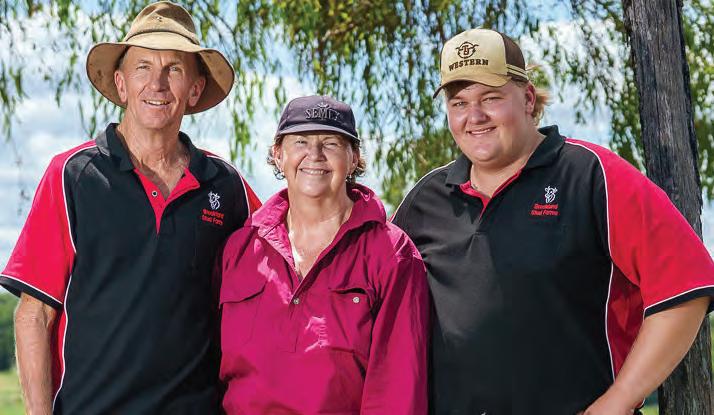
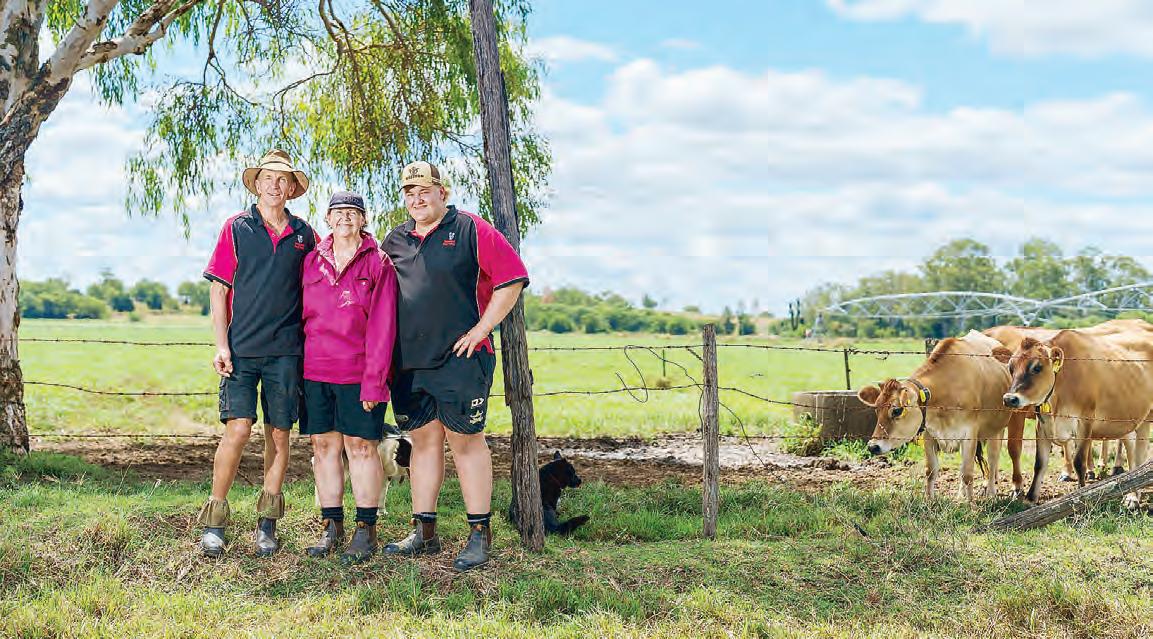
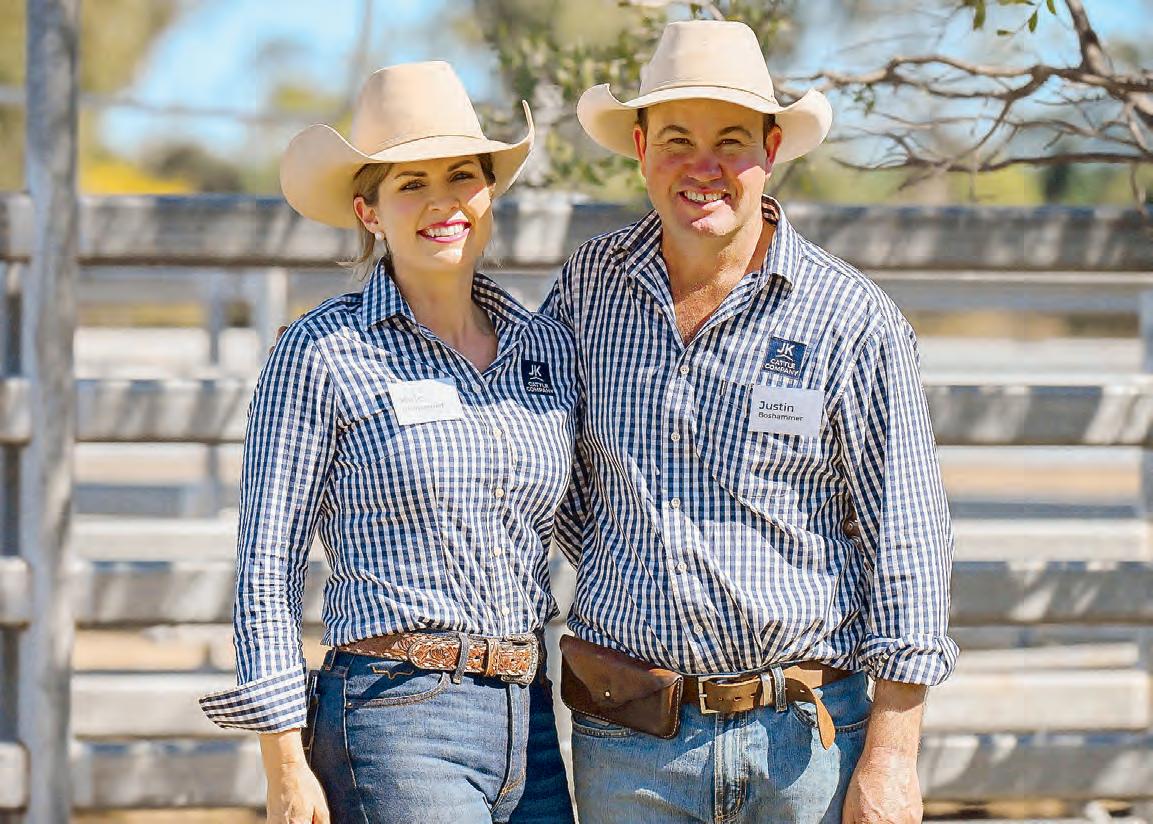
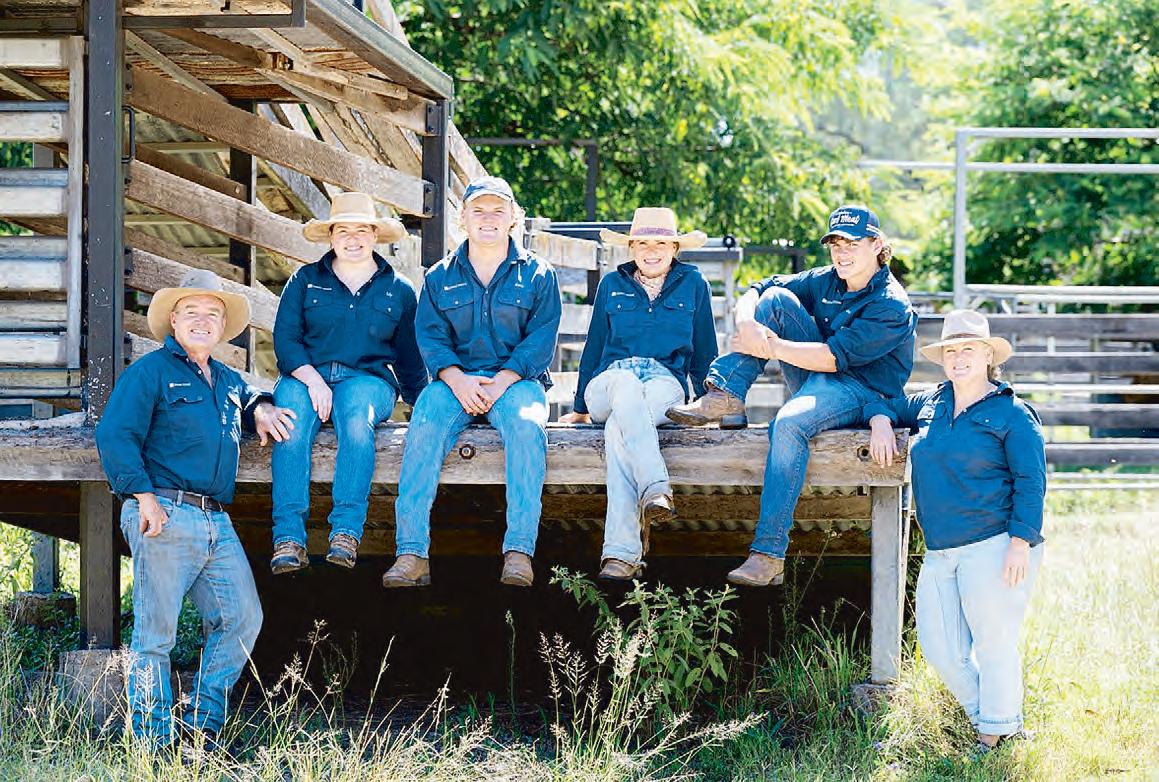
Major winners at last week’s RNA Paddock to Palate Beef Competition in Toowoomba were Simon and Myriam Daley and Ben Noller (right). (Supplied)
Gundy Cotton goes for gold in 2032
Goondiwindi has banded together in a bid to bring the bush to Brisbane in 2032.
DAM LEVELS
CONTACT US
Address: 154-156 Haly Street
Kingaroy 4610
Telephone: 07 4182 0450
Website: QueenslandFarmerToday.com.au
CONTACT US
Editorial: Fiona Gowers Editor
E: fiona.gowers@QueenslandFarmerToday.com.au
Advertising: Lynda Crombie Sales & Marketing
E: lynda.crombie@QueenslandFarmerToday.com.au
P: 0407 152 967
David Moon Sales & Marketing
E: david.moon@BurnettToday.com.au
P: 0408 813 296
Jemma Wilson Sales & Marketing
E: jemma.wilson@BurnettToday.com.au
P: 07 4182 0458
Gayle Hopes Sales & Marketing
E: gayle.hopes@TodayNewsGroup.com.au
P: 0421 655 138
Queensland Farmer Today is published monthly and part of the Today News Group. Published by South Burnett Today Pty Ltd ACN 641 796 349.
Publisher: Daniel Pelcl
P: 0408 956 830
Managing Director: Daniel Pelcl.
All material is copyright to South Burnett Today Pty Ltd.
All significant errors will be corrected as soon as possible. For our terms and conditions please visit QueenslanFarmerToday.com.au/terms-and-conditions/
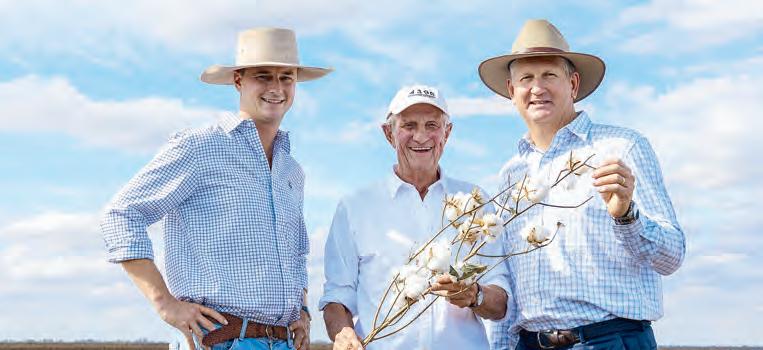
Multi-generational family business Goondiwindi Cotton has lodged a formal bid to supply uniforms for volunteers and officials at the 2032 Olympic Games.
The campaign “Goondiwindi Goes For Gold” , which also has the backing of Mayor Lawrence Springborg, will look to test the promise that the games will go beyond Brisbane.
Preliminary economic forecasting predicts that a winning bid for Goondiwindi Cotton would mean an economic output boost of more than $40 million over five years to the community, contributing to both job creation, brand awareness and regional spending.
Goondiwindi Cotton founder Sam Coulton said a formal expression of interest (EOI) lodged this week will help organisers and the state government fulfill their promise of making 2032 a “Games for all of Queensland“.
“We want to bring the bush to Brisbane in 2032,” Mr Coulton said.
“My family has been proudly farming this land for a very long time. We’ve been trusted for more than 100 years to feed and clothe people in Australia and around the world, so it would be our honour to be selected as a supplier for the hardworking volunteers.
“This is bigger than our family business. We want to put our whole region on the world stage, and we’ve got the capacity and drive to do it.”
Mr Coulton founded Goondiwindi Cotton in 1992 to help reduce impacts from the boom-andbust cycles of farming and forged a successful fashion business that now sells in more than 200 retailers Australia-wide, owns its own e-commerce platform and a flagship store in Goondiwindi.
His grandson Harry Coulton, who helps run the business, said the bid aimed to show the Games’ legacy would be about more than infrastructure.
“If we win this bid, we’ll be able to continue supporting jobs across our beautiful region and create a high-quality uniform that will last long after the closing ceremony,” he said.
“Giving back and supporting our community is very important to us, and the provenance of our cotton grown from local soil runs deeply through everything that we do.
“This is bigger than just one familyowned business. We want to put our region on the world stage, and we’ve got the capacity and drive to do it.”
Mayor Lawrence Springborg said the Goondiwindi region was supporting the bid to put a
Palate for success
From page 1
• 2nd - Russell Pastoral Operations, ADG:
2.98kg, Angus Cross, Blackall QLD
• 3rd - Hinz Grazing, ADG: 2.96kg, Shorthorn Santa X, Miles QLD
Class 37A Highest Individual Weight Gain
• Russell Pastoral Operations, ADG: 3.43kg, Angus Cross, Blackall QLD
Class 38A Best Weight Gain for Pen of Six, 100 Day Grain-Fed Steers
• Kireina Wagyu, ADG: 1.50kg, Composite Wagyu x F1 Wagyu, Burncluith QLD
“Gundy“ business in the spotlight.
“Regional businesses can deliver world-class outcomes, and Goondiwindi Cotton is proof of that,” Cr Springborg said.
“This bid is not just for Goondiwindi Cotton; it’s a bid for all of the Goondiwindi region.
“This will help the Government deliver on its promise to see the Games ‘reach beyond Brisbane’ and ‘present legacy options for all of Queensland’
“Now is time to go for gold and bring the bush to Brisbane in 2032.”
Relief still a long way off While reports of a ceasefire between the United States and Iran may offer a sense of global stability, Australian farmers, according to the experts, should not expect immediate relief.
Fuel and fertiliser markets, which surged during the height of tensions, are only beginning to ease... and from historically high levels.
For many producers, the damage has been done. Higher diesel and input costs have eroded margins, forced tighter budgeting and, in some cases, led to reduced cropping programs across key agricultural regions.
Experts caution that supply chains will take time to normalise. Shipping routes, insurance costs and global input supply remain sensitive to disruption, meaning any meaningful return to pre-crisis pricing may take months, not weeks.
For Queensland growers, this creates a challenging outlook heading into planting and harvest decisions. Many are deciding whether to commit fully to input-intensive crops or adopt more conservative strategies to manage financial risk.
The uncertainty is not just about price but confidence.
The broader impact of the conflict has highlighted just how exposed Australian agriculture remains to global geopolitical shocks. It has also reinforced the importance of resilience, both on-farm and across supply chains.
Governments have a role to play in accelerating recovery. Targeted input relief, investment in domestic fertiliser production and improved freight infrastructure may help reduce long-term vulnerability.
For now though, while global headlines may point to peace, the reality on the ground is that cost pressures for farmers will linger well beyond the ceasefire.
- Fiona Gowers
Goondiwindi Cotton have lobbed a historic bid to be the official uniform supplier of volunteers and officials at the 2032 Olympic Games. (Supplied)
Farmland growth steadies
By Fiona Gowers
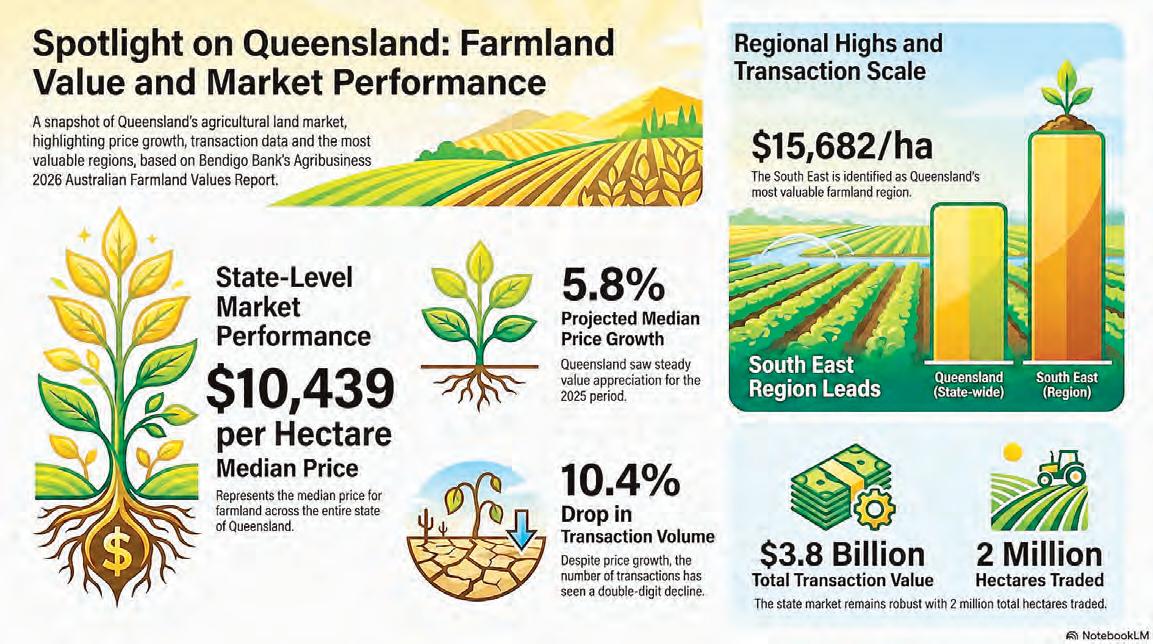
Queensland’s farmland market has remained resilient, with values rising 5.8 per cent in 2025, but new data shows the pace of growth is beginning to slow as producers face a more cautious operating environment.
The Bendigo Bank Agribusiness 2026 Australian Farmland Values Report found national farmland prices lifted 2.8pc to a record median of $10,516 per hectare, with Queensland outperforming the national average amid steady demand and favourable seasonal conditions.
Bendigo Bank Agribusiness Regional Manager QLD & NT Elisha-Vi Barker said 2025 had delivered another strong year across the state.
“Growth was seen across most regions, supported by rallying cattle markets and multiple interest rate cuts, which improved buyer capacity,” Ms Barker said. “Favourable seasonal conditions also dampened selling appetite, which meant transaction volumes were lower.”
Despite continued growth, the report points to a shift in market dynamics, with buyers becoming more selective after several years of rapid price gains. Bendigo Bank Agribusiness Senior Manager Industry Insights Eliza Redfern said improved conditions in the second half of the year had lifted confidence, but the market was no longer seeing uniform growth. “Buyers are now more discerning, prioritising asset quality, water security and long-term returns,” Ms Redfern said.
This trend is particularly evident in Queensland, where demand remains strongest for well-developed, productive properties, while interest in more marginal country has softened.
Looking ahead, conditions are expected to tighten as cost pressures and seasonal uncertainty weigh on decision-making.
Ms Barker said 2026 was shaping as a more volatile year. “Many eyes are on the dry weather outlook, the cash rate and higher input costs for direction on price and sales volume,” she said.
Ms Redfern agreed that a more challenging growth environment was emerging.
“A dry seasonal outlook and higher operational costs are putting pressure on margins,” she said. “With the added prospect of rising interest rates impacting borrowing capacity, we expect to see continued buyer caution.”
While Queensland’s farmland market remains strong, the outlook suggests a shift towards stability over rapid growth, as producers and investors adjust to a more conservative phase.
Australian Farmland Values National
• Median price per hectare of farmland lifted by a modest 2.8pc in 2025 to a record $10,516/ha.
• This was the 12th consecutive year of growth, though the 2.8pc rise represents the lowest yearly increase recorded across the entire 12year period.
• A notably subdued market presented across the first half of the year, driven by mixed seasonal conditions and the lingering effects of 2024’s cash rate rises. This was followed by a period of more sustained growth.
• Over a longer time horizon, the national median price of Australian farmland has a 20-year CAGR of 7.2pc, which compares favourably across a range of asset classes.
• From a supply perspective, the 2025 farmland market remained tightly held, with the 6823 recorded sales the second lowest total on record.
• Current settings for key drivers of the Australian farmland market suggest a less favourable environment for growth in 2026.
Queensland State
• Queensland’s median price per hectare of farmland experienced an increase of 5.8pc, attaining a new benchmark high of $10,439/ha in 2025.
• This was the sixth consecutive year of increas-
ing land value at a state level.
• From a supply perspective, the number of farmland sales at the state level reached a historical low, dropping by 10.4pc to 1541 transactions.
• Stronger cattle prices, good seasonal conditions and succession planning decisions supported demand across much of the state although a decline in sugarcane prices was detrimental for operators looking to expand.
• Growth across Queensland’s regions was consistent, with the median price per hectare rising across six of the state’s eight regions in 2025.
Regions
• Central Queensland saw a continuation of higher quality properties coming to market, alongside stronger commodity prices, underpinning the strength in the Central region’s median price in 2025, which lifted to a new record at $1,252/ha.
• Central Highlands median price per hectare across the region lifted 6.3pc to $6,879/ha.
• The Far North stabilised following the large decline recorded in 2024. The median price of farmland in the region remained almost unchanged at $14,509/ha. The market was char-
acterised by contrasting fortunes across the two major agricultural sectors that operate within the region.
• The North region’s median price per hectare saw a 7.2pc decrease to $13,465/ha in 2025. The regions five and ten-year CAGR remain below the state average at 8.6pc and 9.0pc.
• The South East regions median price per hectare had a stable year, recording a 2.0pc increase to $15,682/ha.
* Farmland within the South East region remains the highest valued across all of Queensland. Southern Coastal recorded its seventh consecutive year-on-year increase with the median price per hectare lifting 14.5pc in 2025 to $10,067/ha.
• The West region sat almost unchanged in 2025 with the median price per hectare of farmland dipping 1.0pc to $255/ha. Poor seasonal conditions hindered financial positions and tempered the growth.
• Western Downs farmland market was shaped by a mix of favourable commodity prices, poor seasonal conditions and a reduction in carbon farming demand with the median price per hectare largely stable at $4,472/ha.
ROD LYNCH TYRES
16.9-30 (14) ..............................$880
18.4-30 (14) ............................$1020
23.1-30 (14). ...........................$1450
18.4-34 (14) ............................$1060
23.1-30 (14). ...........................$1450
825-20 (14) ..............................$289
750-20 (8) ................................$220
900-20 (16)..............................$320
1000-20 (16) ............................$345
1100-R. 20 WANL .................$250 1400 x 20 (20) .......................$800
Queensland’s report card. (Oppidanus Digital Marketing)
Open to new approaches
Changing farming practices and introducing more innovation will help lift productivity and reduce pressure from rising costs, volatile weather conditions and global uncertainty, Australian farmers say.
Research conducted by Harvard University and the Commonwealth Bank reveals that farmers are increasingly turning to new land and business practices as they seek to improve the longterm financial resilience of their farms.
Commercial returns and profitability are seen as stronger drivers for change than regulatory requirements or consumer pressure; however, farmers are still being held back by complexity, lack of time, paperwork and access to finance, all of which are slowing the pace of adopting innovation.
These challenges sit alongside a backdrop of persistent cost pressures, weather volatility and heightened geopolitical risks.
Rising input costs were the most cited immediate concern, with 47 per cent of farmers listing it as their biggest worry, followed by extreme weather and natural disasters at 41pc.
Profit expectations remain cautious. Around half of farmers expect profitability to remain stable over the next five years, while around one in four expect profits to fall, outnumbering those who expect an increase.
The findings have emerged from the inaugural Farms in Focus survey, developed by Harvard University in collaboration with CommBank and supported by the National Farmers’ Federation and the Australian Farm Institute.
The study engaged farmers across all states and territories to understand the challenges facing Australian agriculture and how farmers are responding.
“Australian farmers are facing major challenges associated with input costs, energy prices, access to export markets and growing risks from climate change and extreme weather,” said Harvard research leader, Professor Michael Hiscox.
“What stands out is how strongly farmers are responding by adopting new approaches and technologies – some of which can also deliver environmental benefits.
“Rates of adoption are already quite high and many farmers are planning to do more over the next couple of years. They are making deliberate, commercial decisions to protect productivity and manage risk.”
Adoption is already strong, with more to come In a strong counterpoint to the pressures they are currently facing, farmers are increasingly open to change, especially in the areas of crop and livestock management, land management, energy and water use.
Almost half of graziers surveyed (46pc) have fully or partially adopted rotational grazing, with a further 47pc planning to adopt it. Further, 43pc of the surveyed croppers have made a start on using variable rate spraying and 31pc are incorporating biofertilisers at some level.
Smaller farms are often leading in adoption, with higher implementation of rotational grazing (47pc) and renewable energy (48 pc).
Nonetheless, the findings reflect an increasingly complex environment that farmers are navigating, said CommBank Executive General Manager for Regional and Agribusiness Banking Kylie Allen.
“The margin for contingency has narrowed considerably for many farmers,” Ms Allen said. “We’ve seen ongoing conflict in the Middle East significantly impact diesel and fertiliser costs, compounding pressure on input prices at a time when cash flows are already tight.”
While intent is strong, the research highlights barriers standing between plans and implementation. Nearly half (49pc) of farmers cited administrative complexity as a major challenge, pointing to opportunities for simpler processes and paperwork.
Additionally, 43pc cited obtaining financing for the transition as a barrier alongside access to expertise.
More than 30pc of the farmers said they needed clearer information on which practices to adopt and the returns they could expect.
“Farmers are already thinking carefully about how to improve resilience and productivity, but many are operating with limited cash flow buffers and rising costs,” Ms Allen said.
“Research like this helps the sector better understand where farmers are feeling the strain, how they are responding and where targeted support – particularly around finance and extension – can make the biggest difference.
“Despite the current challenges, the results clearly show practice change is now a business
decision, with many of these innovations having positive environmental co-benefits.
“Farmers need added support for tailored implementation and clearer line-of-sight on business returns, including more insights, trusted advice and more flexible funding.
“Building that confidence is critical to helping accelerate adoption across the sector.”
About the report
More than 500 farmers engaged in the survey, with 348 providing complete responses used in the analysis. The survey was conducted between 16 November 2025 and 16 March 2026 and included farmers engaged in all types of farming, across all Australian states and territories. The research was led by Harvard University, in collaboration with Commonwealth Bank of Australia, the National Farmers’ Federation and the Australian Farm Institute.
Fast Facts
• Rising input costs and extreme weather are farmers’ main immediate and long-term concerns, contributing to cautious profit expectations over the next five years.
• Productivity and cost management are the primary drivers of changing farming practices, as farmers seek to strengthen long-term business resilience.
• Around two-thirds of farmers who have adopted, or plan to adopt, new practices expect those changes to deliver a positive return on investment.
• Almost half of farmers who have not adopted new practices cite complexity and insufficient support as major barriers, alongside paperwork, uncertainty around returns, and access to finance.
• Adoption or intent to adopt new approaches sits between 40 and 50 per cent, with strong uptake already evident in livestock systems and a significant pipeline of future adoption in cropping.
CQ farmer’s practical approach to decision-making
Matthew Peart is a fourth-generation farmer in Central Queensland’s Carnarvon Range, northwest of Brisbane.
He and his wife Maryellen run Expedition Enterprises: a 9000-hectare organic beef cattle operation there, as well as a 40ha avocado enterprise inland from the Gold Coast.
“I like the wholesomeness of food that’s been produced in an ethical way, with the whole of the environment in mind,” Mr Peart said.
After assuming part of the family business in 2007, the Pearts continued reshaping how the operation was run, building on ideas Mr Peart was first exposed to in the early 1990s around grazing management and business performance.
The shift in approach was driven by a problem that had been building over decades.
“There was a term called pasture rundown and small areas started to bear off and grow no grass at all and those areas gradually got bigger,” he explained.
“This is a problem that took 40 years to create. It wasn’t something you saw overnight, it was a very slow progression downwards.“ Visibility underpins everything Mr Peart said the first real step wasn’t changing the land but understanding the business itself.
“Nobody particularly liked the bookkeeping, but once we computerised the accounts, we could actually see what was making money and what wasn’t and that got the ball rolling,” he said.
“That visibility underpins everything... know where the cash is, know your cost of production, know your environmental position. You need that foundation before you move forward.
“You also need a clear vision or goal to move toward, of how you want your land, business, people, animals and environment to be. This clarity helps guide decision making - does it bring you closer to that vision or further away?”
Mr Peart’s experience reflects one of the central findings of the inaugural Farms in Focus report, a survey of hundreds of Australian farmers conducted by Harvard University and the Commonwealth Bank.
The report shows that farmers are increasingly turning to new land and business practices as they seek to improve the long-term financial
(Supplied)
resilience of their farms.
The Pearts’ transition to a new system wasn’t straightforward and often meant pushing against established practice.
“New ideas are great until someone actually has to implement them, then people are not so sure,” said Mr Peart.
“It was a bit of a lonely journey at times but there are good educators and like-mindeds out there. We did a lot of our own research, monitoring what we were doing and working it out as we went.”
Over time, the Pearts moved from set-stocking to a rotational grazing system, fundamentally redesigning how the property operates.
“We went from about 10 paddocks to more than 70 and put in a significant water system to support that,” Mr Peart said.
“Rotational grazing is really about planning grazing and monitoring for full recovery – deciding what you’ll do, doing it and then seeing what actually happened.“
Almost half of graziers surveyed for Farms
in Focus (46pc) have fully or partially adopted rotational grazing, with a further 47pc planning to adopt it.
For the Pearts, one of the earliest signs the change was working came from the cattle.
“The effect on the animals was pretty immediate, they got very keen on fresh pasture every few days, their behaviour changed quickly,” said Mr Peart.
That shift has translated into measurable gains for the business over time.
“We were running about 22 adult equivalents per hectare per 100 millimetres of rain and we’re around 36 long-term now – so there’s been about a 50 per cent lift in productivity,” he said.
“Our costs largely came down and our beef production gradually went up. That’s been the outcome over time.”
He said the gains weren’t about producing bigger animals but improving the overall system.
“We’re producing more kilos per hectare than we did before, even though the individual
animal is smaller,” he said.
Not what you should add, but what you should stop
Mr Peart said the experience had changed how he thinks about decision-making on farm.
“Don’t be led by the shiny things, focus on where your returns are actually coming from, what’s really driving your business,” he said.
“Often it’s not about what you should add, but what you should stop doing - what’s actually hurting you, even if it’s widely accepted.”
For farmers considering a similar transition, he acknowledges the process can feel complex, but says progress comes step by step.
“The education part is important and you must make time for that. It’s a journey and every step is a step in the right direction... so for other farmers considering it I’d just say keep going.”
Looking ahead, he sees both challenges and opportunities for the sector, particularly as global demand and environmental pressures grow.
“It’s a strong time to be in food,” Mr Peart said.
“The world’s population has to eat, productive land is under pressure and the weather is becoming more variable - it all puts a premium on getting this right.”
Matthew Peart is a fourth-generation farmer in Central Queensland’s Carnarvon Range, north-west of Brisbane.
Matthew and his wife Maryellen run Expedition Enterprises, which is a 9000-hectare organic beef cattle operation, as well as having a 40-hectare avocado enterprise inland from the Gold Coast.
Research reveals that farmers are increasingly turning to new land and business practices as they seek to improve the long-term financial resilience of their farms. (Supplied)
Rising costs start to bite as farmers look to...
Innovate for survival
By Fiona Gowers
Rising input costs and volatile conditions are forcing Australian farmers to rethink how they operate, with new research revealing innovation is key to staying viable.
Changing practices and adopting new technologies are becoming critical for producers as they navigate rising costs, extreme weather and global uncertainty, according to new research from Harvard University and the Commonwealth Bank.
The inaugural Farms in Focus survey found that while farmers are actively seeking ways to improve productivity and long-term financial resilience, many are being held back by cost pressures, time constraints and limited access to capital.
Professor Michael J Hiscox, who led the research, said the findings provided a clear snapshot of the challenges facing the sector.
“We wanted to do a survey of farmers in which they could tell us what their main concerns were,” Professor Hiscox said.
“Overwhelmingly, over 50 per cent of farmers listed rising input costs as their main concern.”
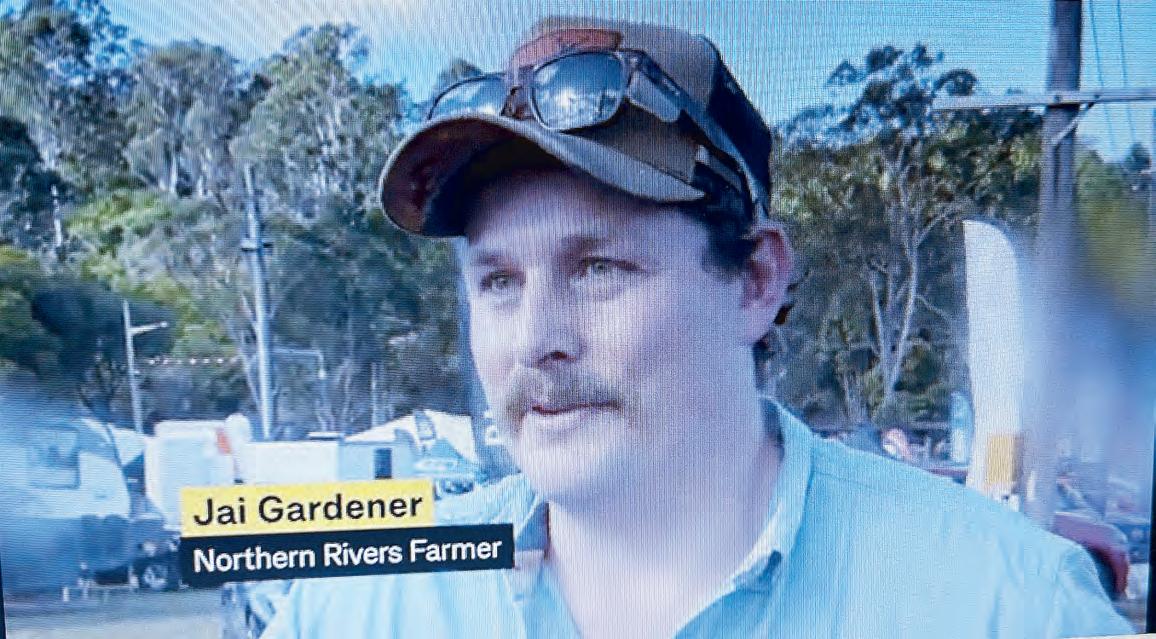
That pressure is being felt on the ground, with Northern Rivers farmer Jai Gardener describing the past 12 months as a constant balancing act.
“In the last year it’s probably been a battle between changes in input prices as well as managing the weather,” Mr Gardener said.
“We’re also going to face increases in water pricing soon, which is going to make it a little bit tougher to get by.”
The survey found 47pc of farmers identified rising input costs as their biggest immediate concern, followed by extreme weather and natural disasters at 41pc.
For many producers, fertiliser and fuel prices are among the most significant burdens.
“Fertiliser has increased by more than 100pc in the last three to four months,” Mr Gardener said.
“We fortunately bought at the right times to help avoid those jumps, but if we need to buy any more now it’s going to cost us an astronomical amount.”
Amy Kermode of Red River Rural said fuel costs were also having a ripple effect across the supply chain.
“Fuel prices have a big impact on us and obviously have a big impact on our consumers,” Ms Kermode said.
“With the current rise, people are struggling to justify the essentials.”
Despite these pressures, the research shows farmers are actively exploring new approaches to improve efficiency and reduce costs.
“What we see in the data are farmers adopting new approaches, including new technologies, to try to boost productivity and reduce costs,” Professor Hiscox said.
Mr Gardener said his operation had begun investigating alternative fertiliser methods to reduce input use.
“We’ve been looking at using foliar fertilisers as opposed to granular fertilisers in the paddock to reduce rates,” he said.
“But at the moment we haven’t invested in anything yet, probably due to the cost of having to buy that infrastructure with already increased costs.”
That hesitation reflects broader industry
trends, with the survey highlighting several barriers to innovation.
“When we ask farmers what’s standing in the way, roughly around 40pc listed a lack of specific information about the return on investment associated with new approaches or technologies,” Professor Hiscox said.
Access to time and resources is also a major constraint.
“There’s just not enough hours in the day for that sort of thing,” Ms Kermode said.
“And, just the resources.”
Mr Gardener agreed, saying tight margins made it difficult to invest in change.
“With the increased cost of labour, fuel and fert, it’s hard to generate enough free cash to invest in those sorts of things,” he said.
CommBank Executive Manager for Agri Sustainability Carmel Onions said understanding these challenges was critical to supporting the sector.
“Producers sit across a wide spectrum in terms of the way they’re farming and leaning into challenges and opportunities,” Ms Onions said.
“Staying close to customers and understanding their realities is really important.”
While the outlook remains uncertain, the survey found around half of farmers expect profitability to remain stable over the next five years, while more expect a decline than an increase.
Even so, Ms Kermode said demand for agriculture would remain strong.
“Our business is always going to be required, it’s an essential service,” she said.
“The world needs feeding, the world needs meat. There’s always going to be demand, but it’s going to be pretty interesting for us.”
As Australian farmers continue to navigate a complex and shifting landscape, the message from the Farms in Focus report is clear: Innovation will play a key role in building resilience, but only if the barriers to adopting it can be addressed.
Amy Kermode of Red River Rural.
Professor Michael J Hiscox.
Northern Rivers farmer Jai Gardener. (Supplied)
CommBank Executive Manager for Agri Sustainability Carmel Onions.
Downs a protein epicentre
By Fiona Gowers
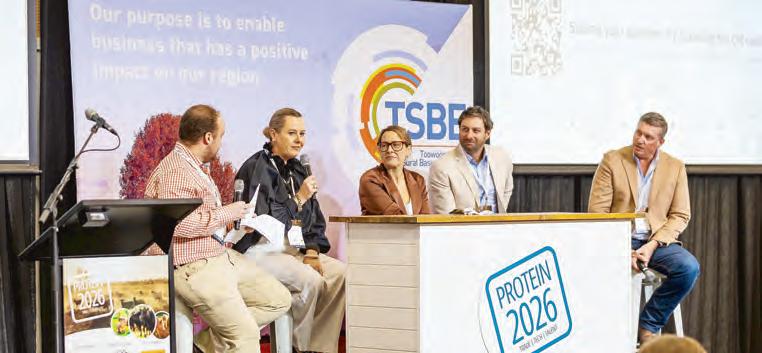
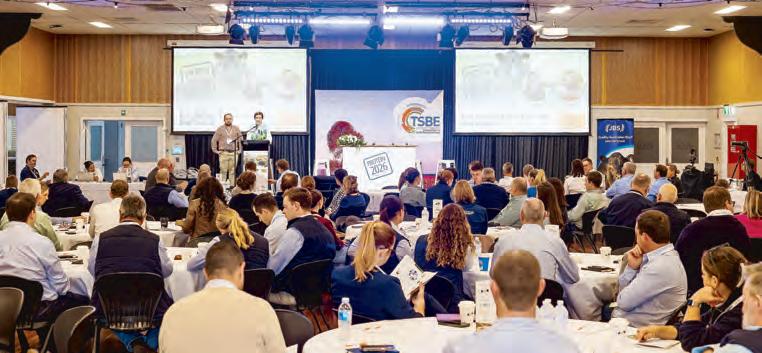
Industry leaders have reinforced the Western Downs’ role as a powerhouse of Australia’s food production, with key challenges and opportunities exposed at the Toowoomba and Surat Basin Enterprise (TSBE) Protein 2026 conference.
Uniting voices from across the protein and agriculture supply chain, the conference highlighted strong ongoing global demand for Australian protein, but warned the operating environment is becoming increasingly complex.
Panellists across trade, technology and workforce discussions pointed to rising geopolitical pressures, tariffs and intensifying international competition as factors driving greater market volatility.
In response, industry leaders stressed the importance of diversifying export markets and strengthening supply chains to safeguard longterm growth.
A clear and consistent theme throughout the conference was the need for greater investment in regional infrastructure.
Limited housing, high water and energy costs and inefficiencies in transport and export logistics were identified as major constraints on expansion, particularly in high-growth regions such as the Western Downs.
Workforce challenges also remain front of mind, with the focus shifting beyond labour shortages to a widening skills gap. Businesses are finding it increasingly difficult to fill leadership, technical and specialised roles in regional areas.
To address this, companies are investing in workplace culture, building clearer career pathways and offering greater flexibility, while recognising that younger workers are placing increasing value on purpose, lifestyle and community connection.
Technology is delivering measurable productivity gains across the sector, with innovations such as virtual fencing enabling producers to better manage land and livestock.
However, adoption remains inconsistent, with many producers citing complexity, lack of integration and time constraints as barriers.
Industry leaders agreed that for technology to gain broader traction, it must be simple, practical and deliver clear on-farm value.
Despite the challenges, the conference reinforced the strength of the Western Downs as a leading food and fibre region.
Speakers warned, however, that maintaining global competitiveness will depend on continued investment in people, infrastructure and innovation.
Overall, the message was clear: the region’s future remains strong but action is needed to unlock its full potential.
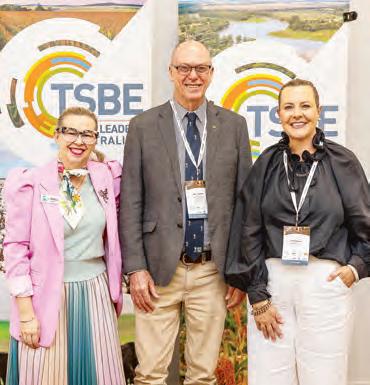
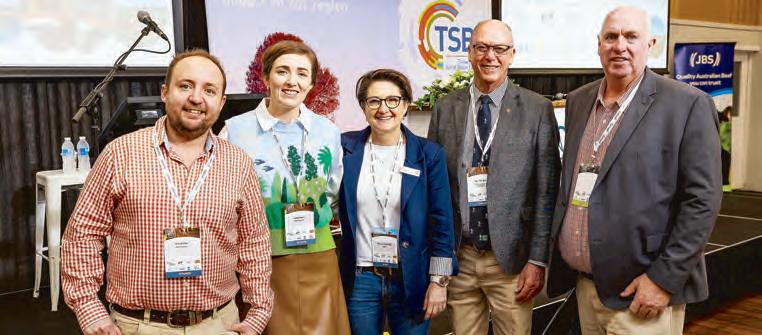
MCs Eric Baker and Lydia Burton with TSBE’s Rowie Beveridge, Pat Weir and Western Downs Regional Councillor George Moore.
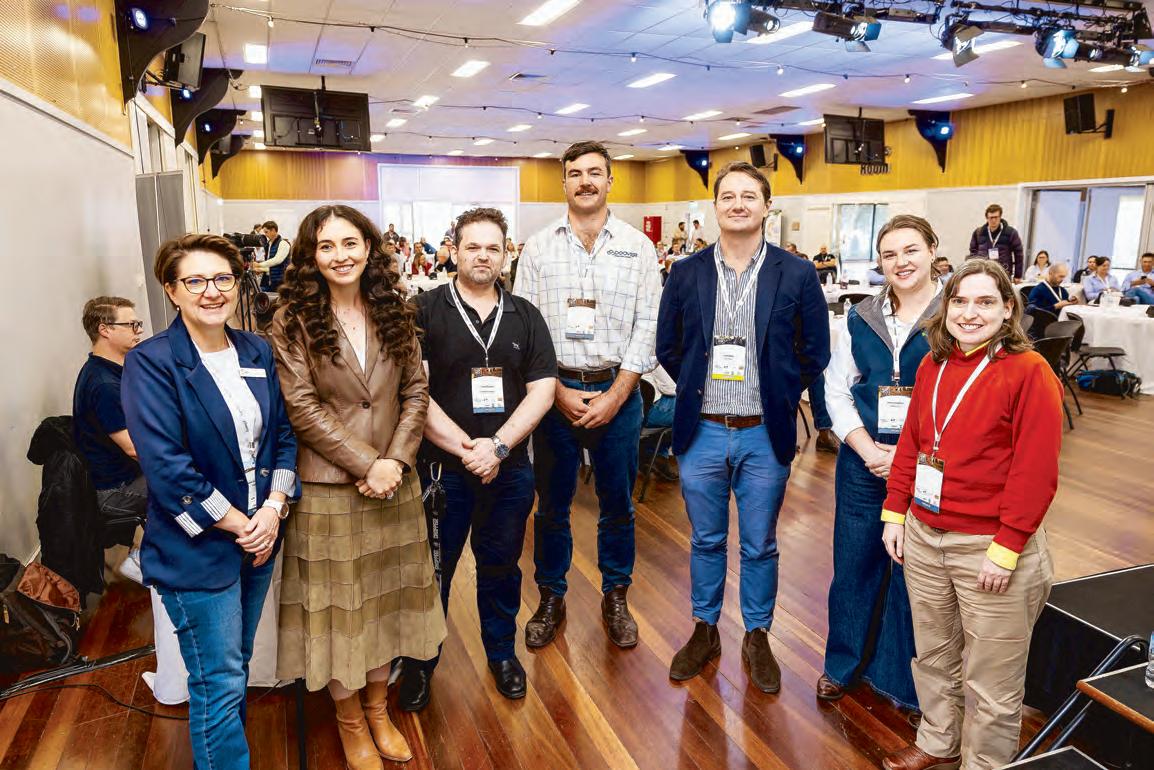
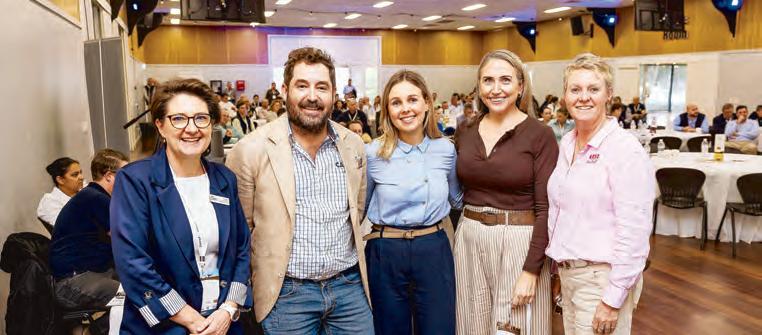
Protein 2026 Talent Panellists, Rowie Beveridge, Bryce Camm, Lauren Roellgen, Kelli McDougall and Karen Penfold.
The Protein 2026 Tech Panel, Rowie Beveridge, Emily Coggan, Jason Spectre, Jarrod Jackson, Will Onus, Meg Lovegrove and Associate Professor Cheryl McCarthy. (Supplied)
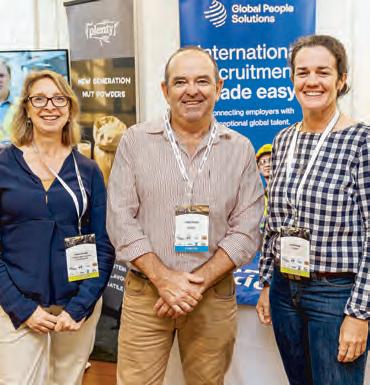
Cr Melissa Taylor, Pat Weir and Kellie Banditt at Protein 2026.
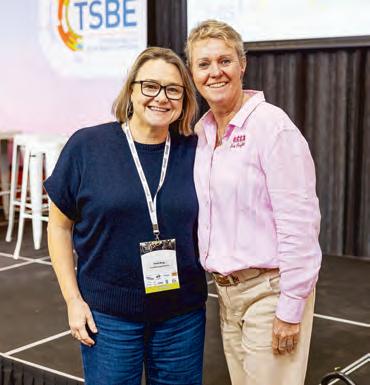
Merri King and Karen Penfold at Protein 2026.
Karen George, Justin Heaven and Jane Barker at Protein 2026.
First panel discussion around trade at Protein 2026.
Industry leaders gather at the Toowoomba and Surat Basin Enterprise (TSBE) Protein 2026 conference.
Strength, safety...
As Australian producers look to maximise efficiency and complete infrastructure upgrades before the end of the financial year, reliable fencing equipment is once again in the spotlight.
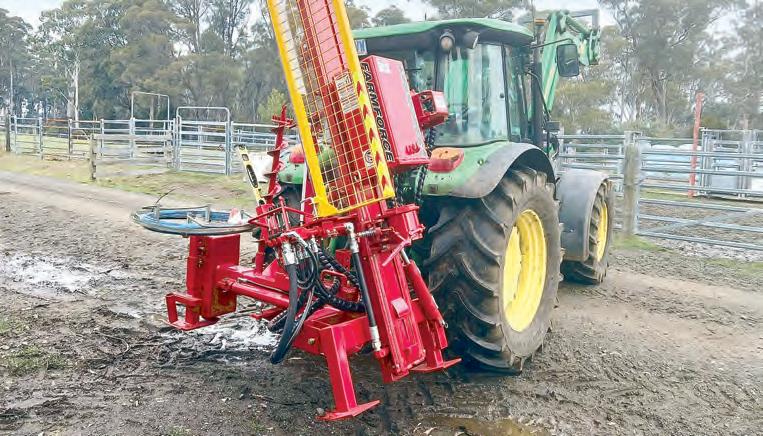
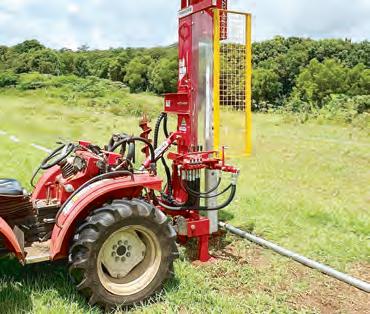
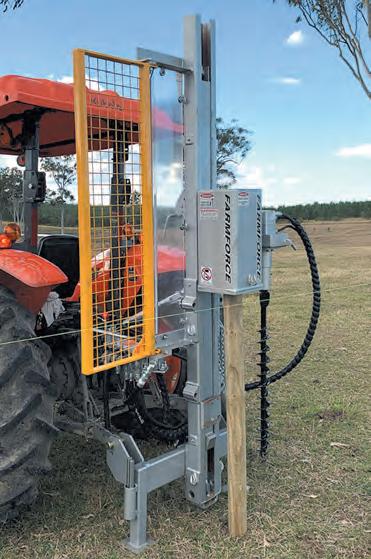
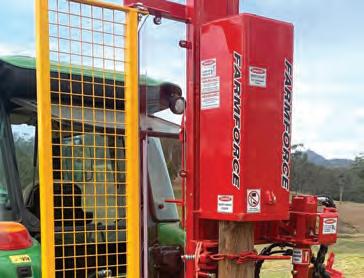
For more than 45 years, Farmforce Post Drivers have been helping farmers and fencing contractors complete fencing projects faster, safer and with significantly less physical strain.
Proudly Australian made, the Farmforce range has built a strong reputation across rural Australia for durability, heavy-duty construction and versatility across a wide range of applications.
With labour shortages continuing to challenge the agricultural sector, more producers are recognising the value of investing in machinery that allows them to undertake fencing work themselves, when and where they want rather than relying on contractor availability.
Farmforce post drivers were developed through decades of collaboration with farmers, fencing contractors, agricultural engineers to create machines capable of handling Australian conditions.
The company offers an extensive range of hydraulic operated post drivers designed to suit everything from small hobby farms through to large commercial grazing operations.
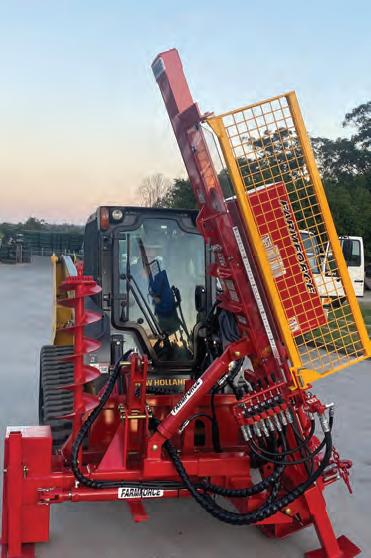
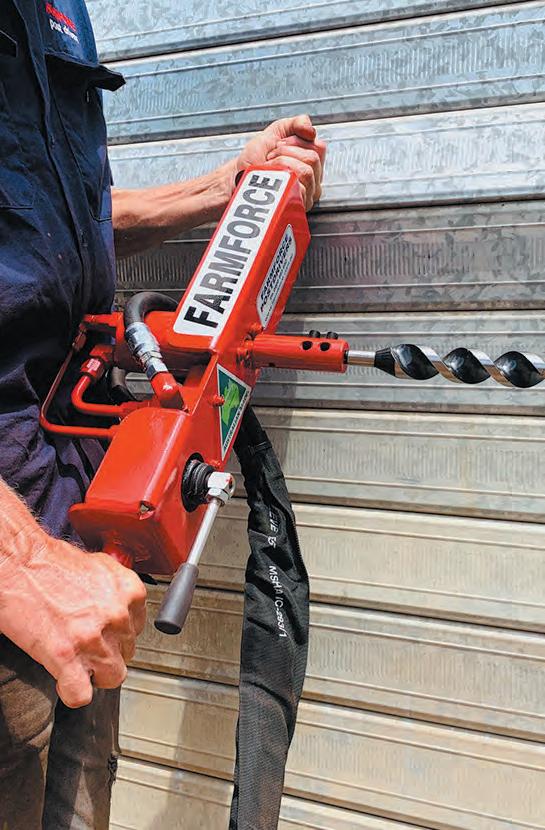
Models vary from medium-duty to heavy-duty, with varying lift heights and hammer weights as well as side shift, post cap and auger attachment options, ensuring producers can match a machine to their individual fencing requirements.
Whether installing split timber posts, steel posts, strainers, railway iron, coppered poles or star pickets, the Farmforce range is engineered to provide consistent driving power while reducing the physical demands traditionally associated
with fencing work.
Occupational health and safety has also become a major consideration for farming businesses, particularly as producers seek to reduce injuries and long-term strain from repetitive manual labour.
Farmforce highlights that all of its post drivers comply with Australian OH&S standards, with approved risk assessments available upon request.
Mechanised post driving allows operators to complete fencing projects from the safety and comfort of machinery, greatly reducing physical fatigue and the risk of injury.
The time-saving benefits are equally important. Efficient fencing systems allow producers to rapidly repair damaged fences, subdivide paddocks and establish rotational grazing systems without extended delays. For many operations, being able to complete fencing work in-house can dramatically reduce labour costs over time.
Farmforce notes that investment in a quality post driver can “dramatically reduce the cost of fencing” for both small and large properties.
The heavy-duty design of the Farmforce range is another major attraction for producers seeking long-term value.
Manufactured using certified Bluescope steel
and built to high Australian standards, the machines are designed to withstand many years of demanding rural use.
Farmforce backs its products with a three-year structural warranty across much of the range. With end-of-financial-year purchasing decisions now underway, Farmforce is encouraging producers to take advantage of current EOFY opportunities across selected post driver models and attachments.
EOFY can provide an ideal time for farming businesses to invest in productivity-enhancing equipment while also benefiting from potential tax advantages associated with asset purchases prior to June 30.
For Australian farmers seeking a safer, faster and more efficient way to tackle fencing projects, Farmforce Post Drivers continue to offer a proven solution backed by decades of field experience and Australian manufacturing expertise.
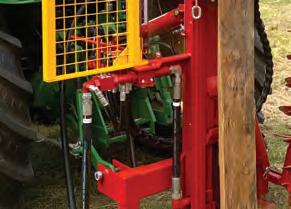
With labour shortages continuing to challenge the agricultural sector, more producers are recognising the value of investing in machinery. (Supplied)
Farmforce backs its products with a three-year structural warranty across much of the range.
Art prize honours legacy
By Fiona Gowers
A major new art prize has been launched to honour the life of Queensland painter John D. Bowe, while also supporting vital services delivered by the Royal Flying Doctor Service (Queensland section).
The $50,000 John D. Bowe Art Prize will be awarded to the artwork that best captures the character, resilience and spirit of Queensland and its people.
Artists from across the state - regardless of experience or background - are being encouraged to enter, with a focus on reflecting life in Queensland and the connections that bind its communities.
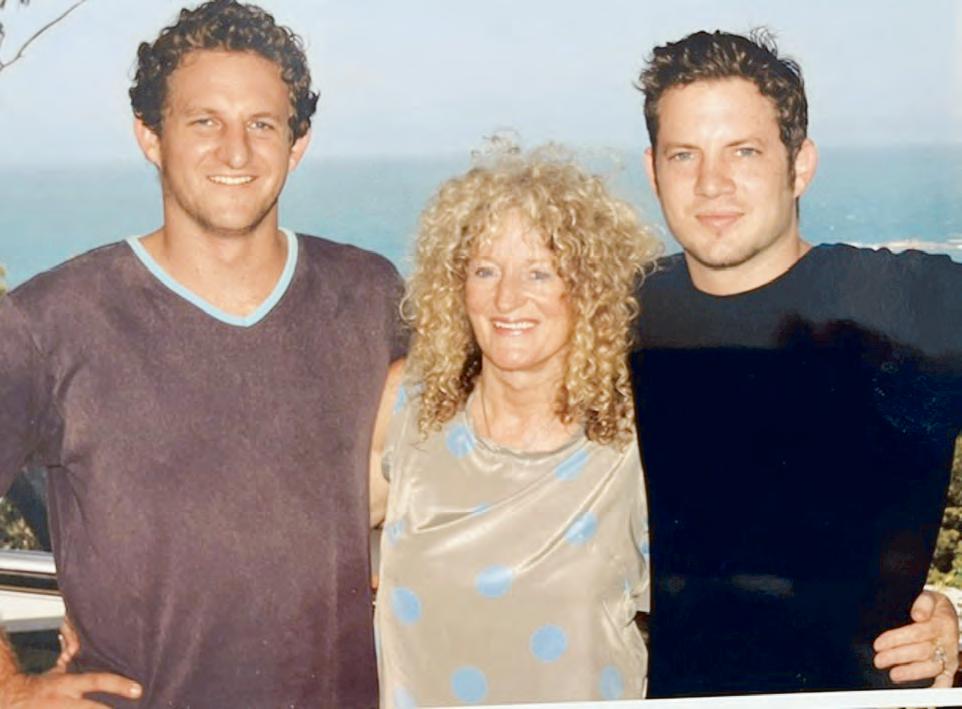
The prize has been established by Anne Carne in memory of her son John, continuing a longstanding and deeply personal connection between her family and the Flying Doctor.
Mrs Carne said the initiative was about creating something meaningful from personal loss.
“This prize began with John, but it isn’t only about him – this is an invitation to artists everywhere in Queensland to share in the landscapes, the communities, the stories, the resilience, the everyday moments and the shared experiences that bind people across this great state,“ she said.
Her support of the RFDS also honours her other son, Rod, who was a pilot. While he never flew for the service, Mrs Carne said the link between aviation and healthcare made the organisation a fitting tribute.
“The RFDS became part of our family’s story in a way I could never have anticipated and their care for Queenslanders has stayed with me ever since.“
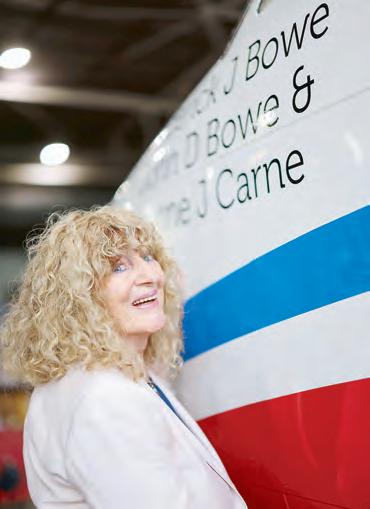
An RFDS aircraft now carries the family name in recognition of her contribution.
For Mrs Carne, the art prize brings both sons’ passions together - aviation and art - into one legacy supporting regional and remote communities.
“Honouring John through this prize, in support of the Flying Doctor, feels like the most authentic show of our family’s appreciation,“ she said.
“It’s a way of carrying on the memory of both of my boys into something that gives back to the state they loved.“
Royal Flying Doctor Service (Queensland Section) General Manager Major Relationships Heather Stott said the organisation was proud to be part of the initiative.
“Anne’s support of the Flying Doctor is some-
thing we treasure and the John D. Bowe Art Prize is a beautiful continuation of that relationship,“ she said. “And through it art is now saving lives.
“The prize isn’t ours – it belongs to Anne, to John’s memory and to the artists who take part –but we’re honoured that it has been built in support of the work we do across regional and remote Queensland.
“Anne is providing a remarkable gift that not only celebrates her son’s legacy but also helps the Flying Doctor support Queenslanders in their hardest moments.“
The RFDS delivers more than 200 occasions of care each day across Queensland, providing emergency retrievals as well as primary healthcare, mental health services, dental care and telehealth to rural and remote communities.
In a move aimed at ensuring access for regional artists, all entries will be submitted and judged digitally, allowing participants from even the most remote areas to compete on equal terms.
A panel including Today Show correspondent Anthea Crothers will judge the entries, with further panel members to be announced.
Submissions close on 12 July, with shortlisted works to be exhibited in Brisbane from 27 to 31 July.
Rural doctors key to closing ADHD care gap
By Fiona Gowers
New training program aims to ease pressure on regional health services as demand for ADHD support grows.
Rural Australians continue to face significant barriers to ADHD diagnosis and care; long wait times, travel costs and limited access to specialists create ongoing challenges for regional communities.
The Australian College of Rural and Remote Medicine (ACRRM) says growing demand for ADHD services is placing increased strain on rural health systems, while highlighting the expanding role of Rural Generalists in delivering frontline care.
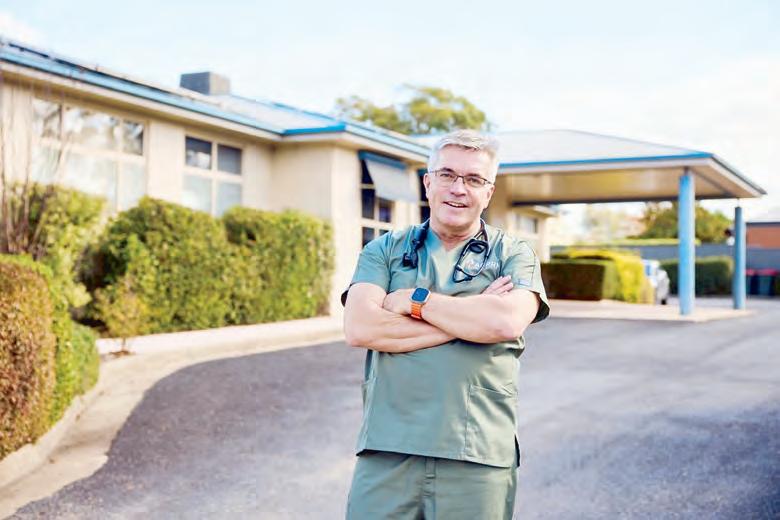
ACRRM President Dr Rod Martin said many patients in regional and remote areas struggle to access timely support.
“Across rural and remote Australia, many patients wait months to access ADHD assessment or ongoing support,” Dr Martin says.
“In many communities, specialist services are limited or unavailable, meaning Rural Generalists are increasingly becoming frontline clinicians in ADHD care.”
In response, ACRRM has launched a new
online course, ADHD: Assessment and Management for Rural Generalists, aimed at equipping doctors with the skills to assess and help manage the condition closer to home.
The program includes practical clinical guidance, case-based learning and state-specific regulatory information tailored to rural practice.
Dr Martin said Rural Generalists are well placed to take on a greater role in ADHD care due to their broad scope across mental health, paediatrics and chronic disease.
“ADHD sits naturally within the broader scope of comprehensive rural medicine,” he says.
However, ACRRM is also calling for more nationally consistent approaches to ADHD assessment and prescribing, warning that regulatory differences between states add further complexity.
“The current regulatory environment differs significantly between jurisdictions, creating challenges for both clinicians and patients,” Dr Martin says.
“Where a person lives should not determine whether they can access timely assessment, treatment and ongoing support.”
Anne with the Royal Flying Doctor Service plane that was named after her family following the passing of her first son, Roderick. (Supplied)
One of John’s artworks - his self-portrait.
Anne Carne with both of her sons Roderick and John.
Delivering the Barlil Weir to increase water security
•Delivering a bike safety track and cross country trail at Ramsay State School
•Improving the multipurpose court at Jondaryan State School
•Delivering equipment for Dalby Child
•Delivering a new Toowoomba Hospital
Find out what else we’re delivering for you.
As well as delivering the Barlil Weir to increase water security, here are some of the ways the new Queensland Government is delivering for the Darling Downs:
•Upgrading Cherbourg Town Hall with security, disability access and kitchen renovations
•Building a new Equestrian Centre of Excellence for 2032 and beyond
•Upgrading Tanduringie Creek Bridge
•Delivering three new early intervention and rehabilitation programs in Toowoomba.
Future-proofing dairy
By Fiona Gowers
Scenic Rim dairy farmers Stewart and Dylan Conochie have significantly strengthened their drought preparedness.
Their efforts have boosted silage production and improved herd welfare through targeted infrastructure upgrades backed by the Queensland Rural and Industry Development Authority (QRIDA).
Operating “Brookland Stud Farms“ at Kalbar, the third and fourth generation producers have combined a Farm Business Resilience Plan, grant funding and a concessional loan to offset rising input costs while positioning their business for increasingly variable seasons.
“Anybody who’s thinking about getting ready for drought – look at QRIDA,” Stewart said.
“They have amazing assistance and amazing people there to help you with any application and progress your business to be better prepared.“
As Queensland faces the prospect of a warm, dry winter, the Conochies’ approach highlights how proactive planning and government-supported investment can deliver both productivity gains and long-term resilience.
QRIDA Regional Area Manager for South East Queensland and the Lockyer Valley, Brian Coe, said the first step for producers was completing a Farm Business Resilience Plan (FBRP), which underpinned access to drought preparedness funding.
“In the process of applying for a Drought Preparedness Grant, the first thing a producer must do is complete a Farm Business Resilience Plan (FBRP) or equivalent. The FBRP covers everything from drought, fire, flood and risk management,” Brian said.
With support from eastAUSmilk, the Conochie family developed their plan and identified key infrastructure priorities, including improved irrigation capacity.
“We used a QRIDA Drought Preparedness Grant to install a centre pivot irrigator,” Stewart said.
The irrigator has expanded the farm’s productive capacity, enabling more efficient water use across cropping areas and delivering a substantial lift in fodder output.
“The Conochie family can now more efficiently water approximately 20 acres (eight hectares) of double cropping, which means about an extra 600 tonnes of silage for their livestock,” Brian said.
Drought Preparedness Grants of up to $50,000 are available to eligible Queensland producers, covering up to a quarter of infrastructure costs aimed at improving drought resilience.
“Drought Preparedness Grants can cover up to 25 per cent of the costs of purchasing, upgrading and installing permanent capital infrastructure to improve drought resilience,” Brian said.
To complete the project, the Conochies accessed a QRIDA Sustainability Loan, funding the
construction of a compost feed shed designed to improve efficiency and animal comfort.
“QRIDA’s concessional Sustainability Loans of up to $1.3 million can help primary producers fund a wide-range of on-farm activities, and for Stewart and Dylan, this was the installation of a compost feed shed,” Brian said.
Dylan said the new facility had made a noticeable difference for the farm’s 170 Jersey cows, particularly during hot weather.
“The shed has added comfort for the cows with the soft bedding, along with being able to bring feed directly to them and it being cooler for the cows, especially on the hotter days,” Dylan said.
The family connected with QRIDA after researching drought support options and working closely with their regional manager throughout the application and delivery process.
“Brian’s always been helpful,” Stewart said. He’s attended the farm many times, inspected what we were doing and helped with the paperwork and the whole process, making it much easier to manage.“
Their focus on preparedness is grounded in experience, with the 2014 drought serving as a turning point for both the family and the broader region.
“The serious drought we had, probably about
Charlie Mort joins Rural Aid to support Australian farms
Queensland agribusiness leader Charlie Mort has been appointed a patron of Rural Aid, joining existing patron Gina Rinehart in supporting the organisation’s work with farming communities nationwide.
Mr Mort is executive chairman of Mort & Co, one of the state’s most prominent agribusinesses.
Established in 1997 as a custom-feeding operation for cattle producers, the company has grown into Australia’s largest privately-owned lotfeeding business and a key player in the national beef supply chain.
His appointment comes at a time when many producers face a complex mix of seasonal, financial and global pressures, increasing demand for practical support services across regional Australia.
Mr Mort said he was proud to formalise his support for Rural Aid and contribute to an organisation working directly with farmers on the ground.
“Australian farmers have always operated under the pressure of climate variability, rising costs and global market uncertainty,” said Mr Mort.
“What we are currently experiencing as a result of the war in Iran, with fuel and fertiliser shortages, is just one example of how agricul-
tural businesses are often forced to adjust and innovate simply to remain viable, regardless of global volatility.
“Rural Aid plays an important role in stepping in when communities are facing challenges.
“I’ve always admired their on the ground, practical support and I am pleased to be able to support that work and the people behind it.”
Rural Aid chair Alex Hutton said the appointment strengthened the organisation’s leadership at a time of sustained need across rural Australia.
“Charlie brings deep experience across the agricultural sector and a clear understanding of the realities facing farming communities,” said Mr Hutton.
“His appointment strengthens Rural Aid’s capacity not only to support farmers on the ground but also to continue building strong advocacy for rural communities at a national level.”
Mr Mort’s addition as patron brings together two of the country’s most influential agribusiness figures in support of Rural Aid, reinforcing growing industry backing for the organisation’s work delivering assistance and advocacy for farmers across Australia.
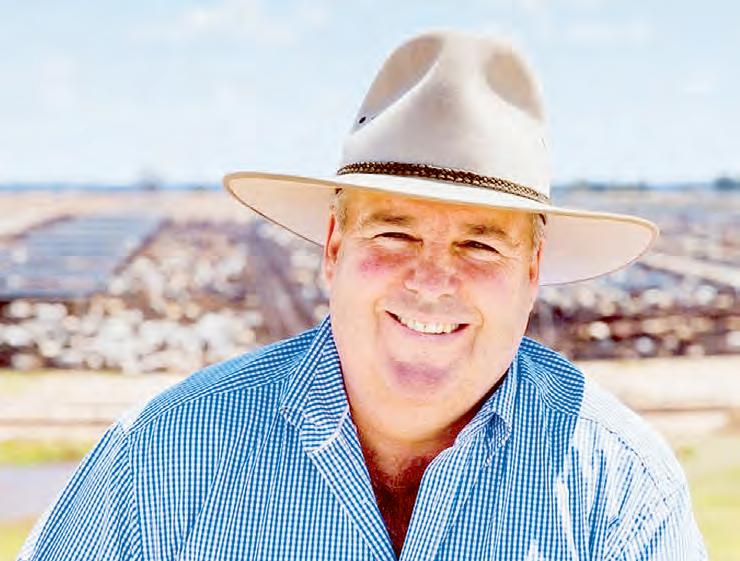
Queensland agribusiness leader Charlie Mort. (Supplied)
10 years ago, was just a real wake-up call, not only for us but a lot of the area,” Dylan said. With upgraded infrastructure now in place,
the Conochies are better equipped to manage seasonal volatility while maintaining production and animal welfare standards.
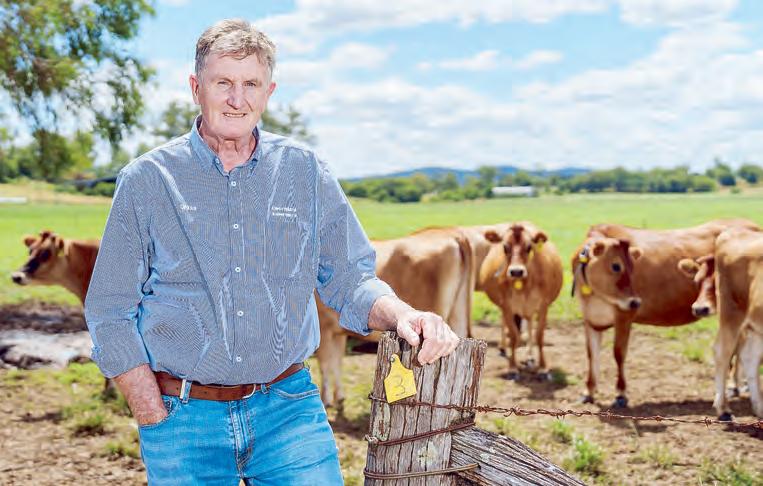
The Conochie family. (Supplied)
QRIDA Regional Area Manager for South East Queensland and the Lockyer Valley, Brian Coe.
RELIABLE PRODUCTS ...
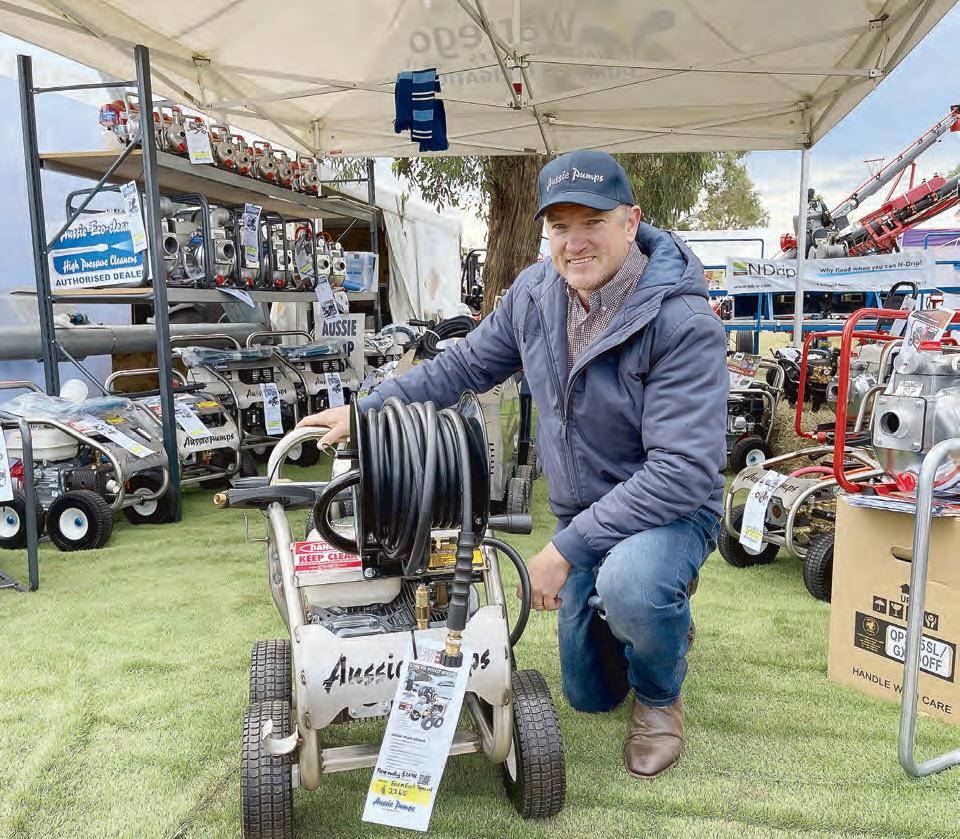
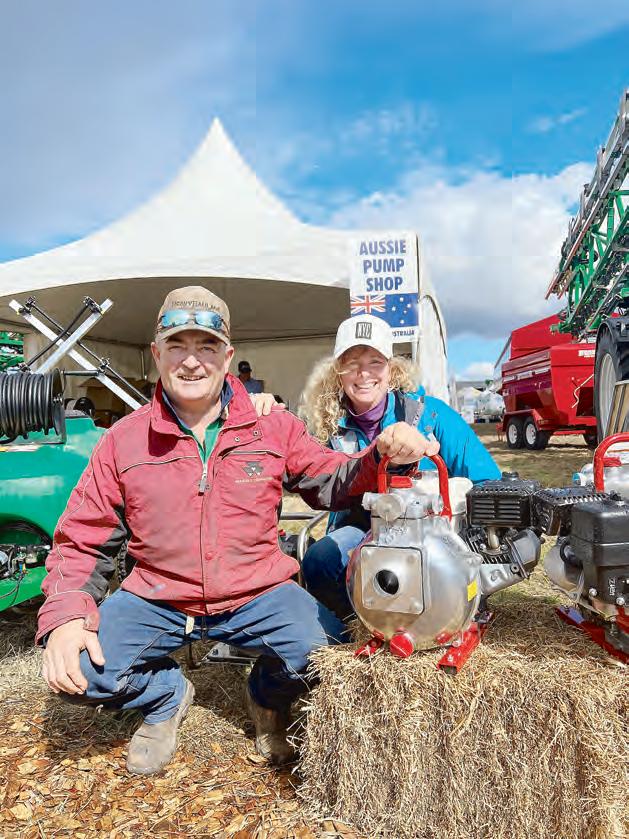
Aussie’s field day fever
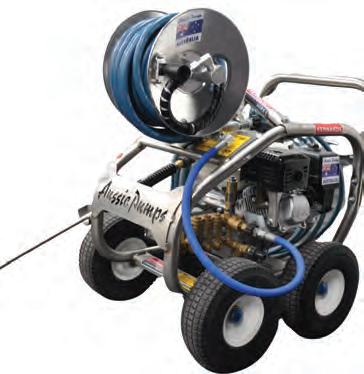
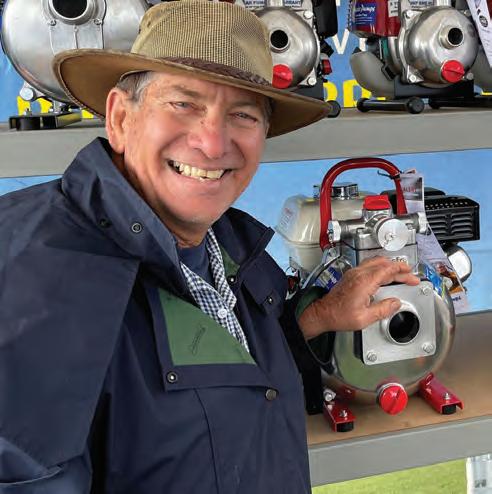
Farmers and regional “townies” love a field day! They get to see all types of wonderous machines. They talk to dealers and manufacturers and get ideas but give them back in equal measure! Aussie Pumps, Australia’s leading innovative pump and pressure cleaner manufacturer, get most of their development ideas from field day patrons.
“We know farmers like to see the latest in machinery, comment on it, and generally pause for a ‘bit of a yarn” , said Aussie’s Pump Divisional Manager, Craig Bridgement.
Many new products are introduced and available at key regional field days. Special deals are aimed to entice farmers to try something different than products they have been using for decades.
“A classic example of this is our Aussie Fire Chief fire pump” , said Craig. “It is regarded as the world’s best lightweight portable fire pump. We know that there are farmers who for generations have gone with old brands. We respect those companies but acknowledge they have been corporatized over the years. That big company approach can have a stultifying effect on innovation and product development,” he said.
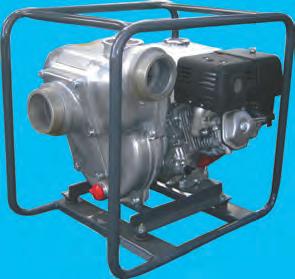
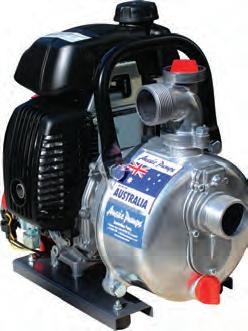
Aussie designed the pump to produce better performance than competitors (25% more performance than equivalent competitors) and put it on the market at what they regard as being a fair and reasonable prices. The company only uses genuine Honda engines, not only for the Fire Chief, but for their complete range of pressure cleaners, trash and transfer pumps as well!
“Our Aussie first world quality products are backed up with a five-year warranty on the wet end of all our QP branded pumps” , said Craig.
AG CHEM SUCCESS
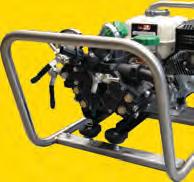
The company pioneered the use of 30% glass filled polyester Honda powered self-priming pumps to both batch mix and fast fill sprayers with liquid fertilisers. These compact highly efficient pumps perform perfectly first time, every time. Best of all, the company is continuing to research and develop pumps that are completely compatible with liquid fertilisers and other agricultural chemicals, but with larger volumes.
IRRIGATION PUMPS TOO
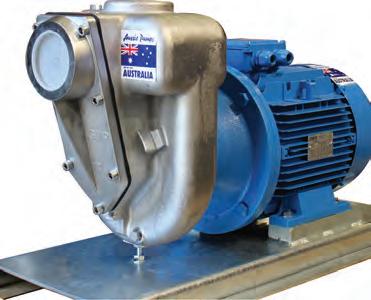
Aussie is already famous for its big portable 3” and 4” Honda engine powered transfer pumps. They now have a range of self-priming centrifugal
semi trash pumps that offer heads as high as 75 m.
The Aussie GMP range of pumps can be placed beside a dam, creek or river, and set up with floats for automatic operation. The high head versions of the same semi trash designed pump can also provide pressures up to 100 psi, adding a new dimension of performance.
“Customers love the front opening port. That means if you get a choke, you can clean out the pump bowl without undoing pipework or hoses” , said Craig.
NEW IDEAS COMING FAST … TRY JETTERS FOR EXAMPLE
Aussie is excited about the increased interest in drain cleaning Jetters for farm use. Australian Pump was the first Australian company to develop engine drive high pressure drain cleaning Jetters. Although they were originally designed for the plumbing industry in urban areas, the company sees them going to dairies, abattoirs and other areas where pipes can block up easily
but need to be cleared promptly.
“Imagine cleaning out pipes in a piggery with an electric eel” , said Craig. “It’s dirty job and the Aussie Jetter will do it in a fraction of the time with zero pain and suffering” , he said.
AUSSIE’S DIESEL DEMON BLASTER
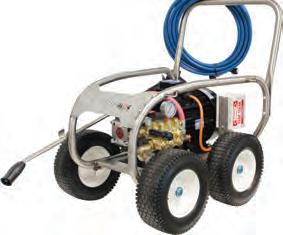
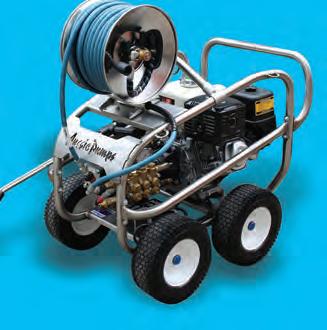
It’s well known that the Aussie AB30 3,000 psi ‘Pocket Rocket’ is by far the best direct drive pressure cleaner of its kind. Farmers love the stainless-steel frame and hose reel. Aussie’s engineering team have now developed a Yanmar diesel drive version of this popular model.
“The new “Diesel Demon” is an idea that came to us from an aboriginal community. We were working with some guys up in north-western Australia who wanted a pressure cleaner that wasn’t too expensive for cleaning down their trucks and earthmoving gear. We built a diesel protype and to our surprise, it ran smooth as silk” , said Craig.
The community bought the machine off the
plan before the team at Aussie had even finalised the prototyping. The Diesel Demon is now available and is in full production. It also has a stainless-steel reel option with 30 metres of highpressure hose. It’s for farmers who wash down heavy machinery.
GREAT LOCAL SUPPORT
Aussie products are available in regional Australia through a support network called the “Aussie Gold Distributor” network. Gold Distributors carry good stock and are trained in pump applications, aftermarket support, replacement parts and product features.
It’s that in depth product knowledge that they can apply the task that brings real benefits to the customer. By understanding the requirements, the customer gets the best advice and a reliable great Aussie product at a fair price.
Further information is available from Aussie’s Gold distributors or visit aussiepumps.com.au and check out our full product range of pumps and pressure cleaners.
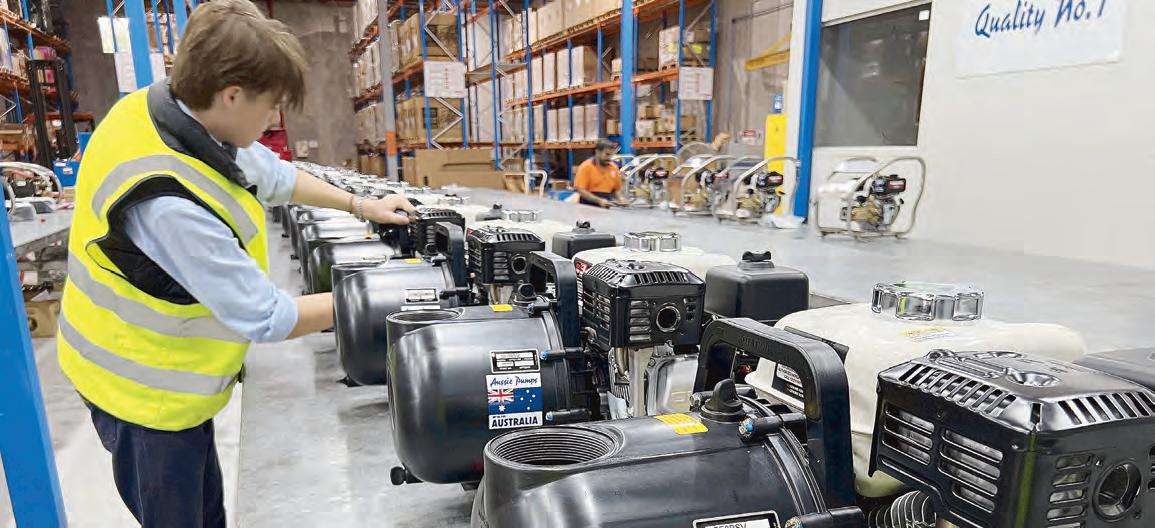
Aussie bumped Fert pumps production to keep up with demand. (Supplied)
Field Days are on – get your farming gear ready.
Power Your Farm with Reliable Aussie Pumps.
Something about the Mary
By Erle Levey
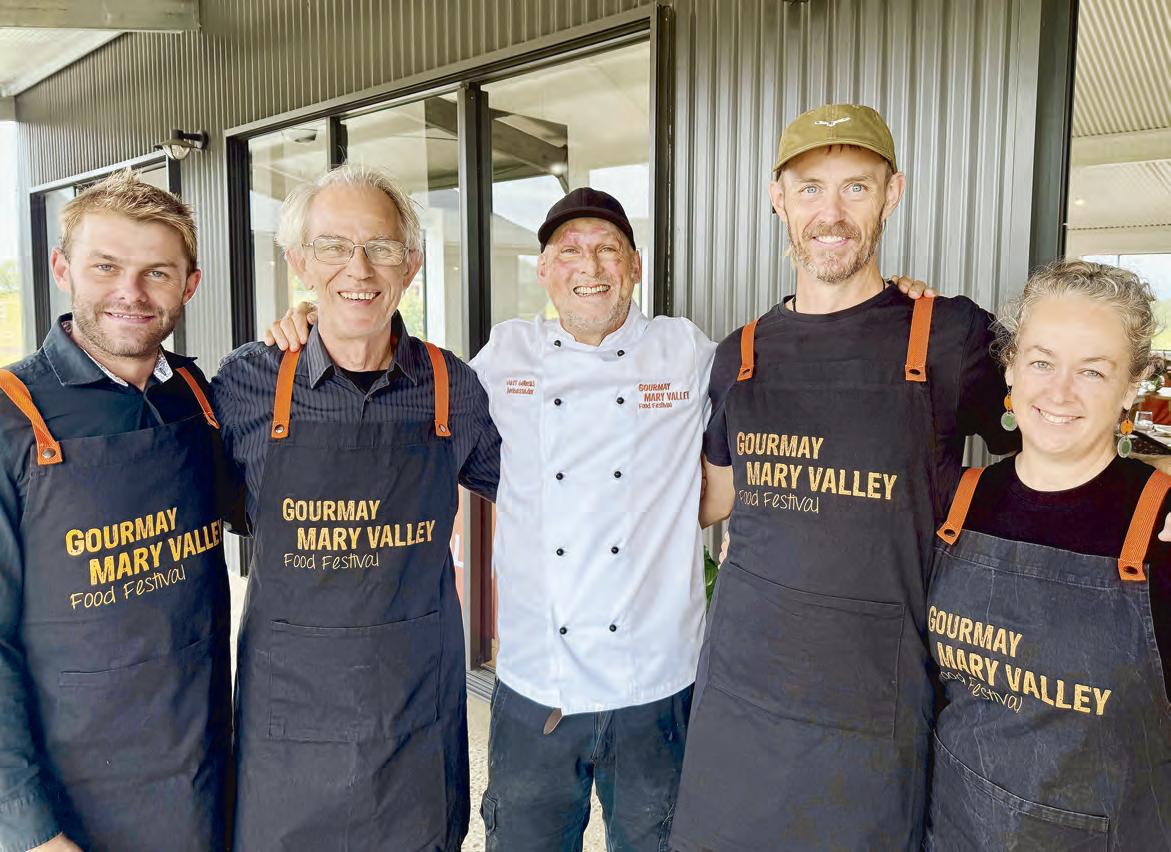
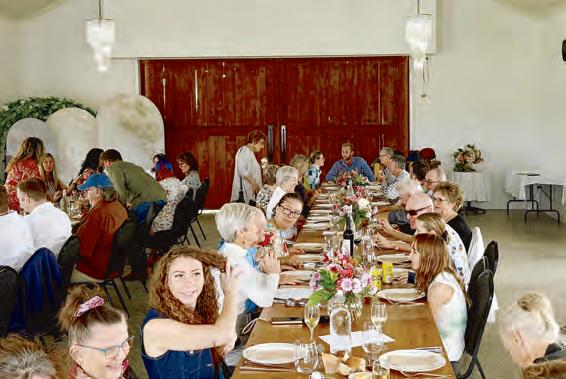
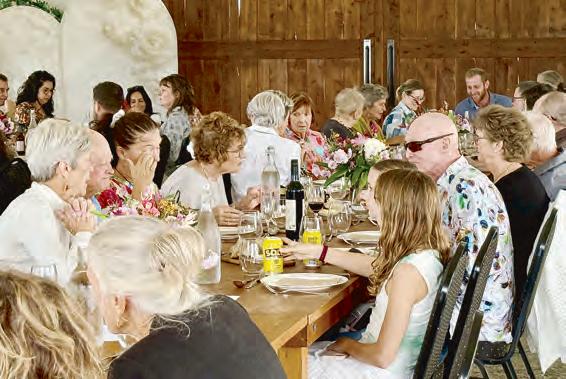
It was a challenge celebrity chef Matt Golinski could not refuse … to create a six-course menu plus a selection of cheese with all ingredients coming from the Mary Valley.
At the 100 Percent Mary lunch at Stockyard Valley in Coles Creek, Matt and fellow chef Glenn Barrett produced the goods.
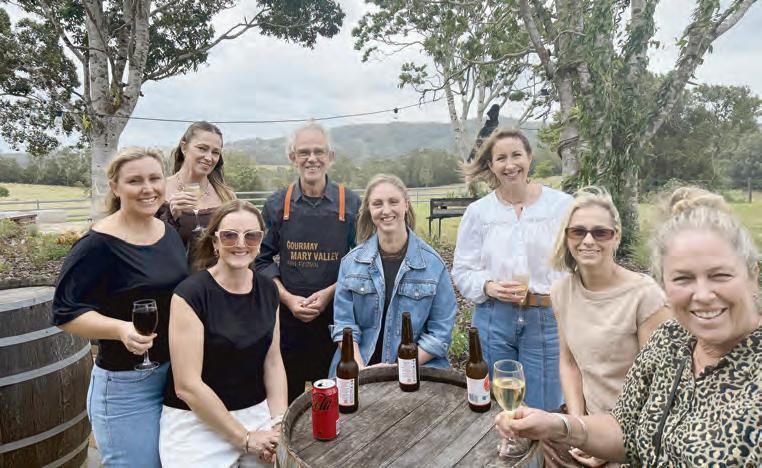
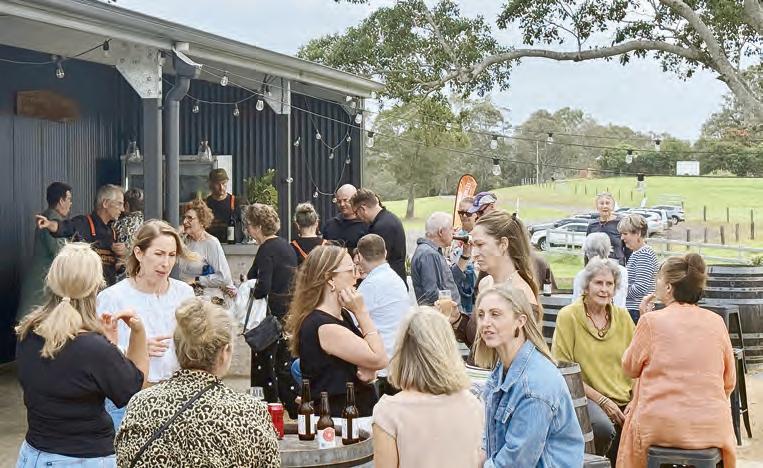
The lunch was a sell-out event as part of GourMay, the month-long celebration of food in the Mary Valley.
It showed that the region has what it takes when talking about good, healthy and nutritious food.
It’s something that GourMay director Malcolm Oakley cooked up as an idea, Matt Golinski said. That the food needed to be 100 percent grown and produced in the Mary Valley.
As it turned out, even the flowers on the tables were Mary Valley grown - from Amamoorish Native Limes in Blackgate Rd, Amamoor.
“Malcolm made me do it,’’ Matt laughed. “At first I was starting to beat myself up a bit.
“But by taking it easy and looking around, one of the hardest things was to shop around and make sure it was 100 percent real.’’
While the cream for the hand-made butter came from Maleny, the primary headwaters of the Mary River are in the Conondale Range. The salt and the flour had to be sourced separately.
The long lunch was a rolling feast of platters that were brought to the tables.
“It’s been a real journey,’’ Matt said. “I’ve met some new farmers along the way.
“At times I’ve had to pinch myself the way we work together. I found myself saying: ’You pull those leeks out of the ground while I pick some cumquats.’
“So you write down a list of what’s available, then you try and work them into a menu that’s memorable.
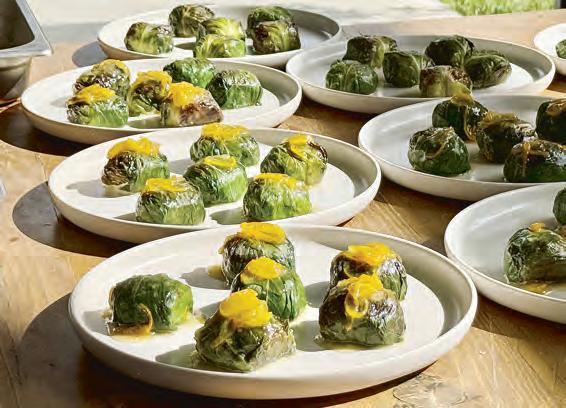
The menu started with sweet corn fritters topped with avocado and finger lime; Jeremiah‘s Crust sourdough with home-made butter.
“The sweet corn fritters are a good example of what comes from the Mary Valley,’’ Matt said. “They’re from Mary Valley Country Harvest, who have a cooperative at Dagun and a stall at Pomona Market each Saturday.
“Fuerte avocados come from John Tidy Organics at Amamoor. They are hand-picked by John and chosen because of their taste and thin skin.
“I reckon they’re the best tasting in the world.
“The coriander is from John Brady in Amamoor, and the eggs to bind it are from Forage Farms at Kybong.
“The butter has been hand-made from Maleny cream. I churned it myself.’’
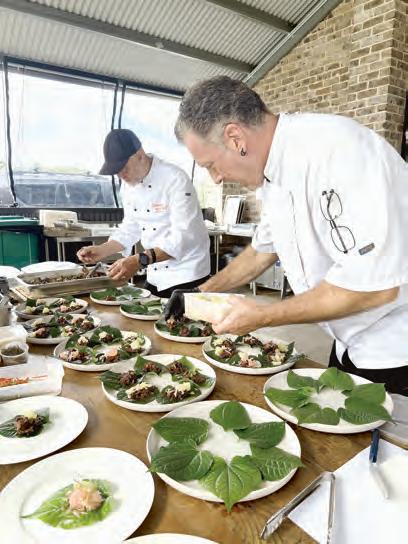
The sticky oxtail was served on betel leaf with pomelo, ginger, chilli, lemon myrtle and crispy shallots.
Oxtail has long been a favourite in farmhouse kitchens and in recent times has evolved from a budget-friendly butcher’s cut into a world-wide delicacy.
Working-class communities transformed this cut into nourishing, slow-cooked meals.
From K2 Beef in Kandanga, the beef is certified organic and entirely grass-fed. The beef is braised slowly for more than eight hours with lemongrass, ginger and garlic, then reduced.
It was served sitting on the spicy-flavoured betel leaf from the Mary Valley, pomelo’s from John
of lychees, and offers a more musky, honey-like,
dishes and sauces, sweets, or drinks.
used in Italian cuisine. Grown as a leaf vegetable and usually has colourful, white-veined leaves that form a head - similar to cabbage or brussel sprouts. It has a bitter and spicy taste that mellows if it is grilled or roasted.
“This was such a joy to make,’’ Matt said. “I feel like wanting to cry just thinking about it.
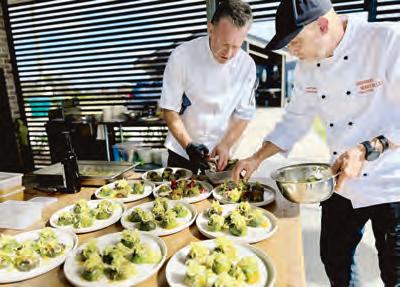
“I went out to Mitchell Creek Market with Kylie Cowling, and she had all these random things that you don’t often see. That’s when we picked the leeks out of the garden and the cumquats from the trees.
“The ricotta was made from the milk from Kenilworth Dairies, which was baked.
“We sliced the cumquats, shaved the fennel buds - it’s such a beautiful thing to put together.
“Knowing I had all of those things to put together was ridiculous. The radicchio was slightly bitter - like endives - and the fennel and cumquat syrup was perfect to balance it.’’
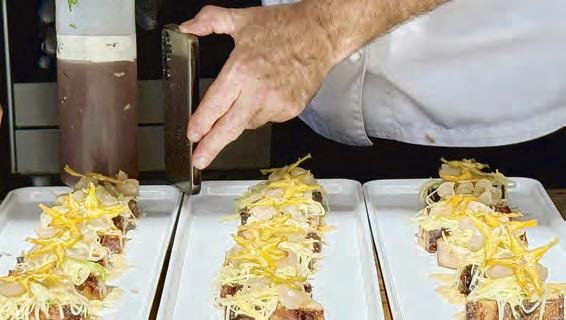
The crispy pork belly was served with green papaya, longans, carambola, aniseed myrtle, honey and lime.
The pork belly came from Forage Farms, the green papaya and longans from John Brady - carambola as well, which is a star fruit.
It made an interesting dish. Longans are closely related to lychees, and are native to South east Asia as well as Southern China.
The flesh is firmer, more translucent than that
at Mitchell Creek. The honey came from the hives at John Tidy’s organic avocado orchard, and the lime from John Brady to make a sauce to go on top.
Continuing the freshness and quality of the Mary Valley was rib eye, Jerusalem artichokes, cherry tomatoes, baby leeks and smoked bacon.
“The rib eye is from K2 Organic Beef,’’ Matt said, and he complimented Tim and Amber Scott on the quality as well as consistency of product from their Kandanga farms.
“The Jerusalem artichokes are not a globe artichoke but a tuber from a plant that’s almost like a sunflower.
“Then onions, garlic butter, Forage Farm’s eggs and milk are used to make a custard to pour that in the tray and then bake it.
“The cherry tomatoes are from John Brady, the smoked bacon from Forage Farms and golden beets from Kylie at Mitchell Creek. I just took the leaves from the top.’’
Dessert was yuzu and yoghurt panna cottathat wonderful Italian milk custard - served with native raspberries, dragon fruit sorbet, and elderflower fritter.
Yuzu is a highly aromatic East Asian citrus fruit - very popular in Japan for both cooking and as a natural therapy.
A cross between a tart lemon, a tangy mandarin orange, and a slightly bitter grapefruit. Both the juice and the zest are used to add bright, complexity to a variety of culinary applications - savory
morning.
“The dragon fruit came from John Brady - we blended them up and made it into balls of sorbet.
“There were heaps and heaps of elder trees at Woollahra Homestead at Traveston Crossing, so I called Hayley Deans this week to get some flowers to be deep fried.’’
To finish there was Kenilworth 18-month vintage cheddar served with guava paste and crostini - the guava paste made from fruit at Matt’s place in Kin Kin and which he declared to be richer in flavour than quince paste.
Refreshments included wines from Nuova Scuola from Redgate in the South Burnett, and Dingo Creek Vineyard at Traveston.
There was Diablo ginger beer from Gilldora, and Noosa Hinterland Brewing at Cooran who had included a yuzu sour beer utilising fruit from Mary Valley Yuzu.
The level of engagement and conversation as well as the appreciation of the menu should ensure the 100 Percent Mary will become a regular feature of GourMay.
It certainly highlighted the quality of fresh healthy food that the region is becoming known for.
Not only that, it showed how sourcing fresh, nourishing food can be part of the experience, and provided inspiration to simply get out and experiment with the food that is - in a way - at our fingertips.
Brady, and coconut yoghurt on top.
Chef Matt Golinski with the GourMay hospitality team at Stockyard Valley for the 100 Percent Mary long lunch. (555265)
Chefs Matt Golinski and Glen Barratt prepare the sticky oxtail served on betel leaf with pomelo, ginger, chilli, lemon myrtle and crispy shallots. (555265)
Chefs Glen Barratt and Matt Golinski prepare radicchio, ricotta, fennel and candied cumquats. (555265)
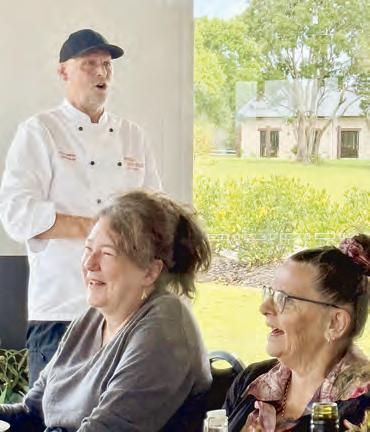
Celebrity chef Matt Golinski introduces the menu for the GourMay 100 Percent Mary long lunch. (555265)
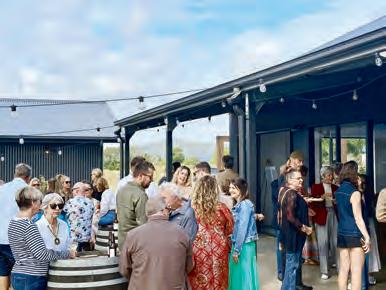
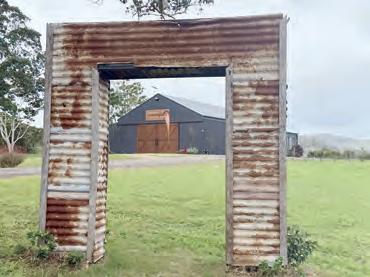
Stockyard Valley at Coles Creek. (555265)
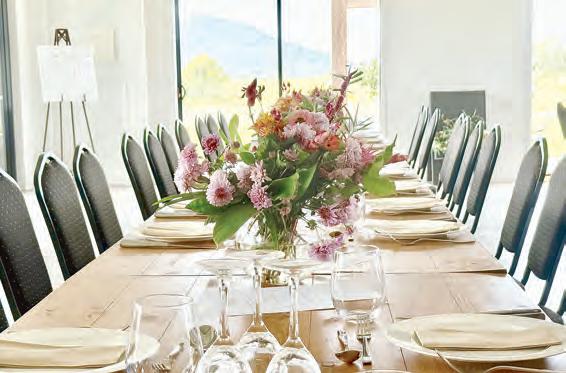
The table setting at Stockyard Valley for the 100 Percent Mary long lunch as part of GourMay.(555265)
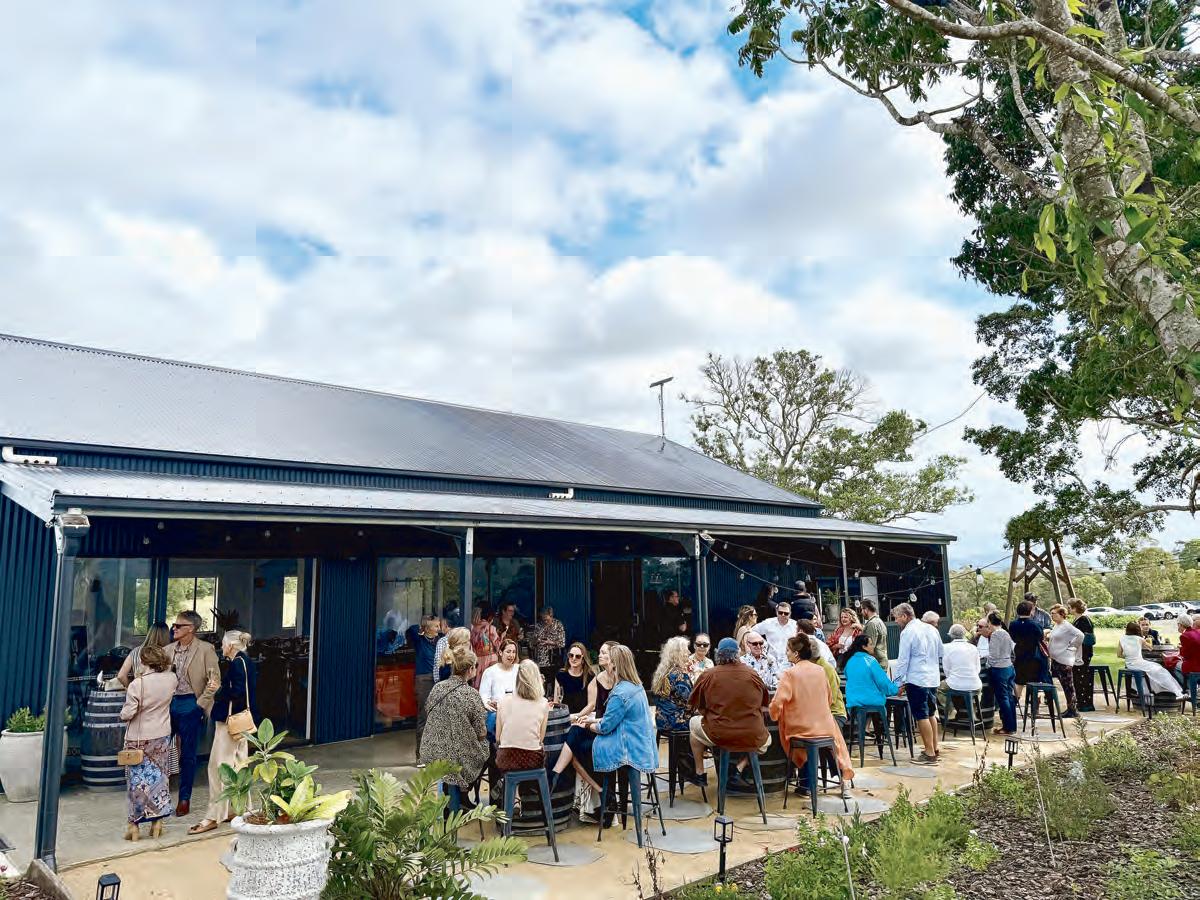
The Stockyard Valley setting for the GourMay 100 Percent Mary long lunch. (555265)
The Stockyard Valley setting for the GourMay 100 Percent Mary long lunch. (555265)
The crispy pork belly was served with green papaya, longans, carambola, aniseed myrtle, honey and lime. (555265)
The stand-out features
Elders FarmFest 2026, held from 2-4 June at Kingsthorpe Park near Toowoomba, delivered a massive surge of confidence to Queensland’s agricultural sector. Welcoming over 37,000 visitors and featuring more than 750 individual exhibitors, the event highlighted massive advancements in efficiency, automation, and livestock production.
The stand-out features and special highlights that dominated the 2026 field days included the following:
1. Dedicated Drone Demonstration Area
AgTech took center stage this year with a brandnew, designated drone demonstration area that quickly became a crowd favorite. Driven by the need to combat soaring input costs, exhibitors showcased high-capacity robotics aimed at hyper-accurate spraying and spreading.
Live Flights: Companies like XAG Australia ran continuous daily live demonstrations of flagship heavy-payload units, such as the XAG P150 Max, showing off real-world dynamic mapping and variable-rate applications.
2. Next-Gen Machinery & Eco-Friendly Fleet Trends
Heavy machinery displays covered a massive footprint of the 26-hectare site. High fuel and fertilizer costs caused a noticeable shift toward precision tech and fuel-efficient power platforms.
Electric Side-by-Sides: All-electric ATVs turned a lot of heads, notably the fully electric Tuatara steel-built utility vehicles, highlighting a major push toward reducing diesel reliance onfarm.
Earthmoving & Land Prep:** Hastings Deering debuted an impressive lineup of heavy-duty performers, including the advanced tech-integrated Next Gen 140 Grader and the powerful D7 Dozer.
3. The “Big Red“ Elders Tent & Rural Press Club Debut
The massive Elders pavilion functioned as the educational and social heart of the event, offering tailored panel discussions and daily Q&As.
Keynote Networking: For the very first time, FarmFest hosted a premier Rural Press Club of Queensland lunchtime event. The ticketed panel featured industry pioneers from Agworld and DataFarming discussing the tangible future of Australian ag-technology.
Community Connection: Panels like Motherland’s “Finding Your Village“ addressed crucial social issues, exploring how rural mothers can stay digitally and emotionally connected across remote locations.
4. Premier Livestock Competitions & Feature Breed
The livestock precinct drew massive crowds for some of Queensland’s largest cattle events, notably the Led Steer and Heifer competitions, alongside the “Battle of the Bulls“.
Traditional Simmental Fleckvieh: This highly adaptable, dual-purpose breed was the official 2026 feature breed. The showcase successfully spotlighted their high-yielding meat capabilities alongside high-volume milk production systems.
5. Practical Innovations in Fly Control
With the recent APVMA removal of popular Diazinon-based chemical treatments from the Australian market, beef cattle producers flocked to alternative animal health solutions. Highly requested displays featured automated, self-oiling paddock back-rubs designed to let cattle selftreat against devastating buffalo fly infestations seamlessly in the pasture.
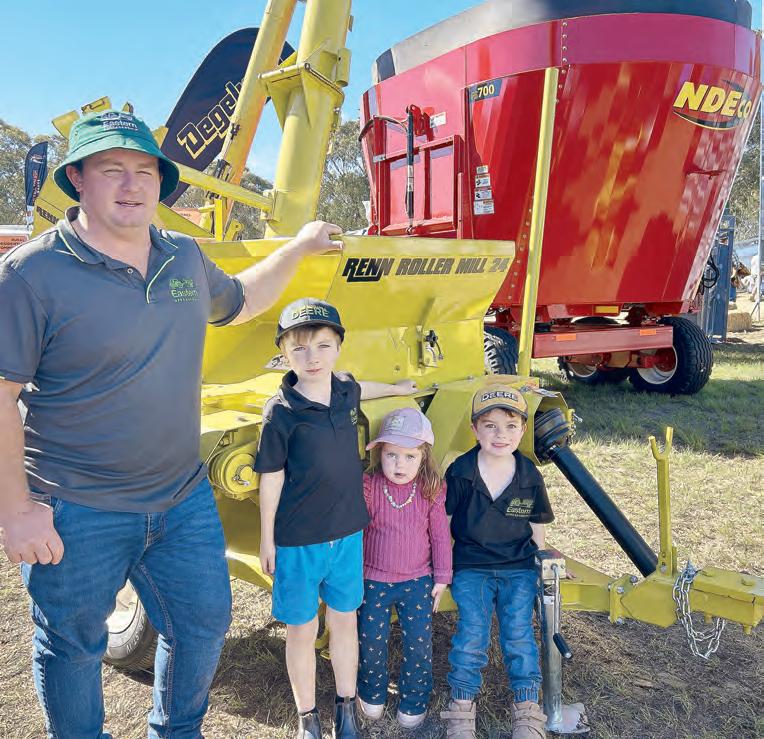
Rodney, Dusty, Roree and Jed Sitters showing off the latest in the Renn Roller Mill from Eastern Spreaders. (560387)
Event for the whole family
While Elders FarmFest was widely recognised as a powerhouse for commercial agriculture and cutting-edge farming technology, it earned an equally massive reputation as a vibrant country field day designed for the entire family. Held at the 26-hectare site at Kingsthorpe Park near Toowoomba, the event transformed into a bustling hub where multi-generational farming families, rural-lifestyle enthusiasts, and curious visitors gathered to connect. The event was intentionally structured to ensure that while producers talked serious business, families had an abundance of interactive experiences, entertainment, and educational activities to enjoy together.
Shopping and Style at the Lifestyle Pavilion
Away from the heavy machinery grids, the Lifestyle Pavilion served as a primary attraction for those looking to experience the best of regional culture and country living. This massive, undercover hub was packed with diverse market stalls showcasing premier Australian country clothing, rugged footwear, artisan homewares, and unique gifts. It was also a haven for food lovers, offering a wide array of gourmet regional delicacies, local produce tastings, and boutique treats that highlighted the rich agricultural bounty of the Darling Downs and beyond.
Up-Close Encounters in the Livestock Precinct
The livestock precinct was consistently a major drawcard for children and animal lovers. The area provided a fantastic educational space where families walked through the pavilions and got up close to some of the country’s finest livestock. Spectators soaked up the authentic agricultural show atmosphere by watching the prestigious Led Steer and Heifer competitions or looking at the impressive Battle of the Bulls. It also offered a firsthand look at unique livestock heritage, such as the grand, dual-purpose Simmental Fleckvieh
cattle that took centre stage as the official feature breed.
High-Tech Action and Live Demonstrations
Visitors did not need to be primary producers to appreciate the sheer spectacle of modern engineering in motion. FarmFest featured dedicated live demonstration zones that offered plenty of excitement for tech-savvy kids and adults alike. The newly introduced drone demonstration areas showcased massive, high-tech agricultural drones performing precision flight manoeuvres overhead. Nearby, the static machinery displays allowed children to see towering next-generation tractors and earthmovers up close, while crowds gathered to watch agile, all-electric side-by-side utility vehicles put through their paces.
Country Hospitality and Seamless Access
A family day out is only as good as its convenience, and FarmFest was highly geared towards visitor comfort. The grid featured numerous community food stalls, local catering vans, and shaded family eating zones serving up classic country hospitality, from fresh scones to premium steak sandwiches. Navigating a 26-hectare site with young children can be challenging, which was why organisers provided free, hop-on-hop-off shuttle buses and people-movers that roamed continuously between the parking lots and the main exhibits, making it easy to give tired legs a rest.
To make the event even more accessible for young families, FarmFest offered budget-friendly family pass bundles alongside completely free entry for all children aged 11 and under. Whether visitors were looking to invest in their next piece of farm machinery, upgrade their country wardrobe, or simply give the kids a fun, educational day out in the fresh air, FarmFest delivered a complete, welcoming celebration of Australian rural life.
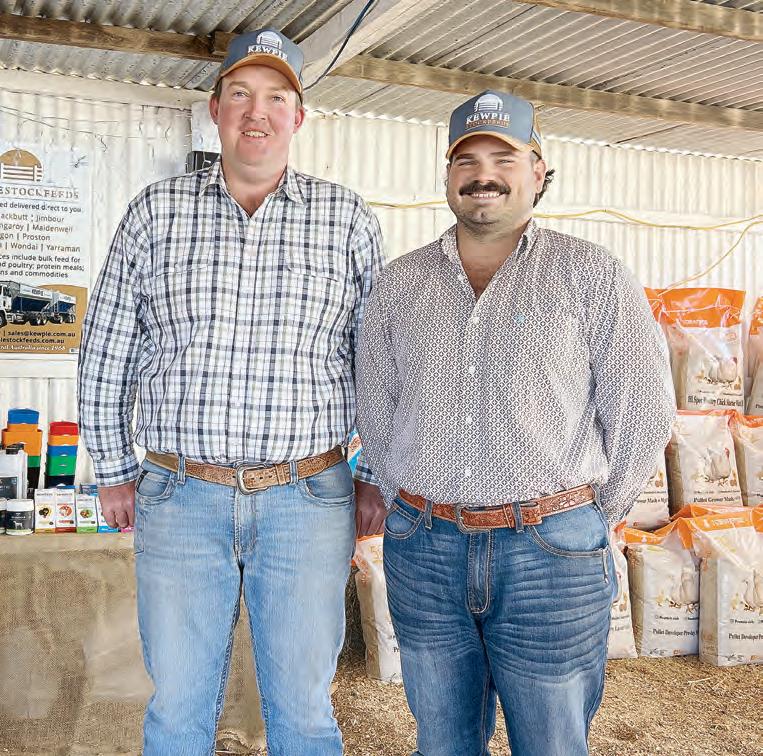
Andrew Stumer and Levi Floyd manning the Kewpie stand at FarmFest. (Jane Lowe: 560387)
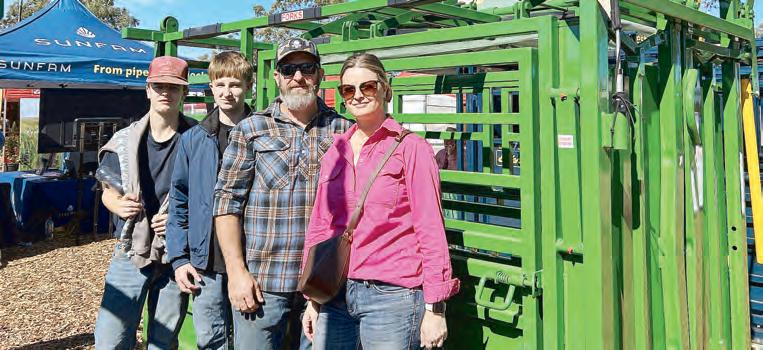
Grantham Hobby farmers Harry, Josh, Daniel and Tamlyn Ray looking over the Leicht CIA, Stockman Crush. (560387)
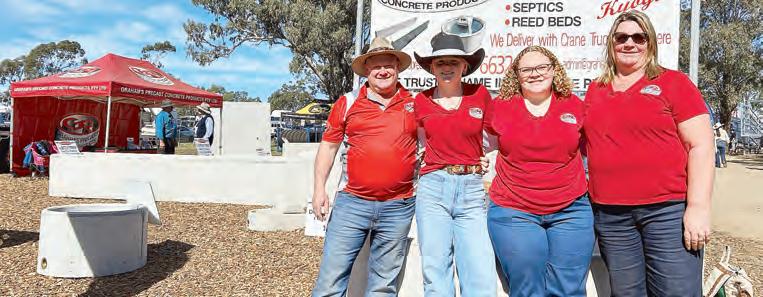
Peter, Amber, Jasmine and Jo Green with their business Grahams Concrete enjoying the fantastic weather at FarmFest. (560387)
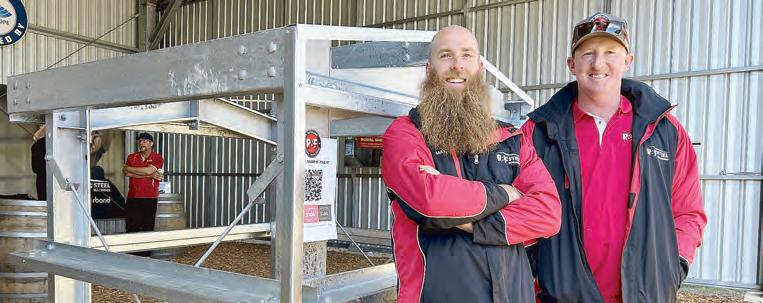
R&F Steel Sheds representative Matt Wilkin Toowoomba and Matt Hunt Dalby. (560387)
By Fiona Gowers
AgriFutures Australia has unveiled its 2026 Horizon Scholarship cohort, with 18 high-performing university students selected to help shape the future of Australian agriculture.
Now in its 16th year, the AgriFutures Horizon Scholarship supports students in the final two years of a full-time undergraduate degree, building the skills, networks and industry understanding needed to strengthen the long-term success of the sector.
Since launching in 2010, the program has supported more than 259 students, playing a key role in addressing workforce challenges and fostering the next generation of industry leaders.
Many past scholars have established their own agricultural ventures.
Backed by industry sponsors, the scholarship is designed to translate academic study into realworld impact. It focuses on developing leadership capability, encouraging innovation and aligning graduate skills with workforce needs across rural industries.
Each scholar receives a $5000 annual bursary, tailored professional development, an industry placement aligned to their field of study and opportunities to build networks through national events and industry connections.
The 2026 cohort reflects the breadth of modern agriculture, with students studying across grains, fibres, horticulture, poultry, aquaculture, livestock, marine bioproducts, agricultural economics, plant and soil science, genetics, veterinary science and emerging areas such as agtech and sustainable production systems.
AgriFutures Australia Managing Director Brianna Casey AM said the latest cohort highlighted the strength of emerging leaders entering the sector.
“The AgriFutures Horizon Scholarship is a long-term investment in people, building the capability, leadership and industry connection to support strong and sustainable sectors,” Ms Casey said.
“These scholars are developing the skills that matter but, just as importantly, they are building relationships with industry that will carry through their careers.
“That connection ensures their knowledge is applied on farm, in businesses and across supply chains.
“It’s this combination of capacity building and connection that underpins the long-term success of our rural industries and the communities that support them.”
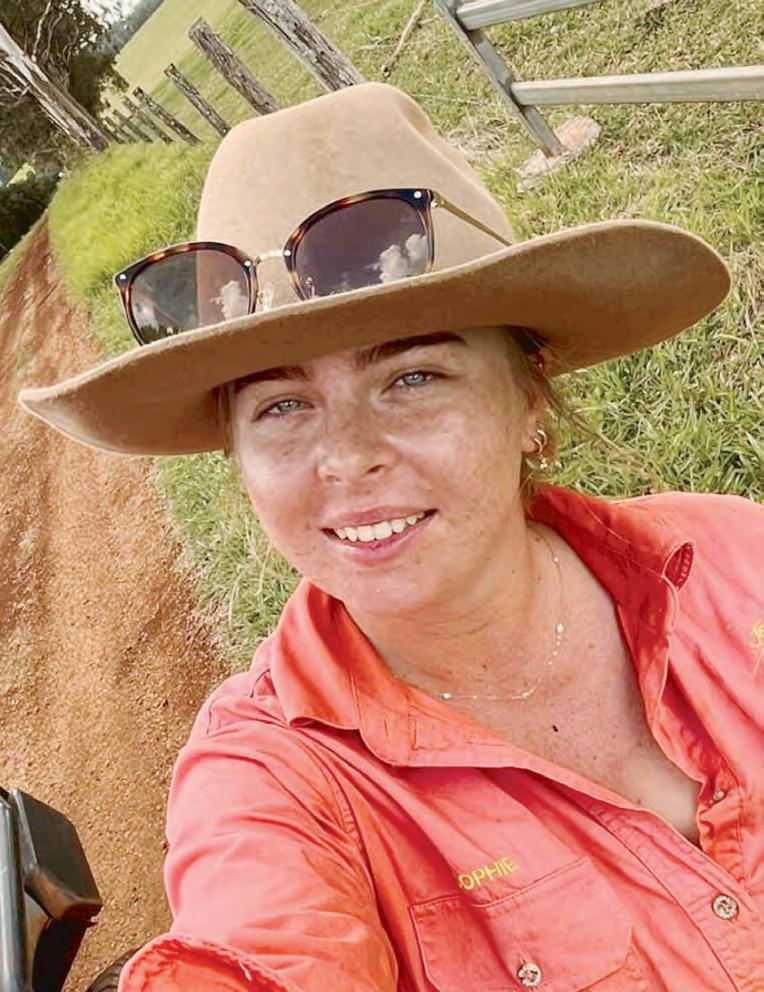
Sophie Jonsson
“Completing a placement in Western Australia showed how climate and soil variability shape onfarm decision-making,” she said.
“It reinforced the value of practical, sustainable solutions that are grounded in industry needs.”
A scholar in 2025, Grace Hoey said industry placements provided valuable insight into how research translated into practice across different environments.
Women on the land are redefining what it means to farm Future ag leaders cohort
A new Adelaide University study is challenging long-held assumptions about women in agriculture, revealing that many Australian women involved in farming businesses do not identify with the traditional ‘farmer’ label, despite playing critical roles in the success of modern farms.
Published in the Journal of Rural Studies, the research found that while some women strongly embrace the title, others are rejecting it, wanting to be recognised for their business and professional skills.
Author Dr Emily Buddle, from the School of Agriculture, Food and Wine, said the findings highlighted the growing complexity of contemporary farming businesses and the need to rethink how women’s work in agriculture was recognised.
“When we talk about women’s role in farming businesses in Australia, the default assumption is often that they simply want to be recognised as farmers in their own right,“ Dr Buddle said.
“My research suggests the reality is much more nuanced. Many women are not seeking the title of farmer. Instead, they want recognition for the important and often highly specialised work they contribute to farming businesses.“
The study involved focus groups with 27 women from South Australian farming enterprises and identified a spectrum of identities, ranging from women who saw themselves as ‘big-F Farmers’ to those who described themselves as ‘little-f farmers’ or rejected the label altogether.
Women who identified as ‘big-F Farmers’ typically undertook day-to-day paddock work and saw farming as central to their sense of self.
Others felt their primary contribution lay elsewhere, managing administration, finance, compliance, human resources and business operations.
Several participants described these responsibilities as running the farm’s ‘control room’ , work that is increasingly essential as farming businesses become larger, more complex and more heavily regulated.
“The nature of farming has changed dramatically over recent decades,“ Dr Buddle said.
“As farms have grown in size and become more reliant on global markets, the demands of administration, risk management, compliance and employment have also increased.
Many women are bringing professional skills developed in other careers to help run multimillion-dollar businesses.“
Sophie Jonsson is studying a Bachelor of Agronomy at the University of Queensland, with a focus on crop production, soil health and sustainable farming systems. Growing up across mixed farming enterprises, including avocado, grain and cattle operations, has shaped her strong connec-
tion to agriculture and practical understanding of on-farm challenges. Sophie has a particular interest in crop nutrition and soil management to improve productivity and sustainability. As a 2026 AgriFutures Horizon Scholar, supported by CRDC and GRDC, she is looking forward to contributing to research and innovation that strengthens Australia’s cropping industries.
Maeve Lowe
Maeve Lowe grew up in Tully, Far North Queensland, where her family produces bananas and cane, shaping her strong connection to agriculture and regional industries. She is currently studying a Bachelor of Agricultural Science at the University of Queensland, Gatton. Maeve has a particular interest in genetic advancements across both animal and horticultural industries and is passionate about advocating for agriculture and inspiring the next generation. As a 2026 AgriFutures Horizon Scholar, she is looking forward to connecting with peers and industry leaders and gaining exposure to opportunities that support innovation and long-term sustainability in Australian agriculture.
Historically, women often balanced domestic responsibilities alongside farm work. Today, many are managing sophisticated business functions that underpin farm productivity and profitability.
“While women have long been responsible for the control room of the farm, the control room itself has changed,“ Dr Buddle said.
“No longer are women simply milking cows, preserving produce, raising children and completing the tax return. They are helping to manage complex businesses, yet much of that work remains unseen, unremunerated and underappreciated.“
The research also found that women overwhelmingly rejected the term ‘farmer’s wife’ , with participants expressing frustration at being defined by their husband’s occupation rather than their own contributions.
Dr Buddle said the persistence of the label reflects broader social expectations that continue to shape life in regional Australia.
“Many women have their own professional identities, skills and expertise, yet the ’farmer’s wife’ trope remains surprisingly strong,“ she said.
“The women in our study wanted to be recognised as individuals contributing to the suc-
cess of their farming businesses, not simply as supporters standing beside a farmer.“
According to Dr Buddle, the findings have important implications for creating a more inclusive agricultural sector.
She argues that recognising women solely through the farmer lens risks overlooking the diversity of roles they perform and the different ways they experience life within farming businesses.
“The image of a farmer remains strongly associated with traditional symbols such as tractors, Akubras and paddock work,“ Dr Buddle said.
“Many women don’t see themselves reflected in that image, even though they are essential to the operation of the business.
“If we want a more inclusive agricultural sector, we need to move beyond a one-size-fits-all understanding of what it means to contribute to farming.
“Recognition should reflect the diverse skills, expertise and identities that women bring to Australian farming businesses.“
The study, Little-f farmer, big-F Farmer, or not at all? Questions of identity amongst Australian farming women, is published in the Journal of Rural Studies.
QUEENSLAND’S ONLY MONTHLY NEWSPAPER FOR WOMEN IN AGRICULTURE
Sophie Jonsson, University of Queensland. (Supplied)
Maeve Lowe, University of Queensland.
Jo Sheppard to lead TSBE
By Fiona Gowers
Toowoomba and Surat Basin Enterprise (TSBE) has appointed a well-known agricultural and regional leader as its new chief executive officer, as the organisation transitions into its next phase as an independent body.
Jo Sheppard will assume the role, bringing extensive experience across the agriculture, regional development and membership sectors, along with strong ties to the Darling Downs and Surat Basin.
Incoming TSBE chair Ian Macfarlane said the appointment marked an important step forward for the organisation and its members.
“Jo is an outstanding appointment for TSBE,“ he said. “She knows the organisation and the region and brings the leadership, networks and regional understanding needed for this next phase.”
Ms Sheppard previously served within TSBE as general manager of Food Leaders Australia and is currently chief executive officer of the Queensland Farmers’ Federation, where she has built strong networks across agriculture, energy, water and infrastructure.
Her background also includes local government leadership as former mayor of Paroo Shire Council, alongside roles across industry bodies including AgForce, the Toowoomba Chamber of Commerce and Momentum Mental Health.
“Jo also has extensive experience in membership organisations, having held senior roles with QFF, the Toowoomba Chamber of Commerce, Momentum Mental Health (formerly the Toowoomba Clubhouse), AgForce and TSBE,“ Mr Macfarlane said.
“That experience will be invaluable as we sharpen our focus on member value, advocacy, partnerships and regional growth.“
Ms Sheppard said she was looking forward to returning to TSBE and working closely with industry and community stakeholders across the region.
“I am honoured to be appointed to the role of CEO and appreciate the opportunity to contribute, not only to the future of TSBE, but to work to deliver for the members and the region more broadly,” she said
“The Toowoomba and Surat Basin is without doubt one of Queensland’s most exciting regions underpinned by diverse economic foundations enhanced by a forward-thinking, innovative, opportunity-focused business community.”
“I look forward to working with the TSBE board and team to connect members with opportunity and to continue to build a strong future for the organisation and the region.”
Outgoing chair April Cavanagh said the appointment would provide continuity and confidence during a key transition period.
“Jo is a highly respected regional leader who will bring focus, stability and strong stakeholder confidence to TSBE at an important point in its evolution,“ she said.
“She is exceptionally well placed to lead the team, work with our members and partners and continue TSBE’s strong advocacy for the Darling Downs and Surat Basin.
“I also want to acknowledge and thank the TSBE team. Their professionalism, energy and commitment have been critical throughout this
transition and have positioned the organisation strongly for the future.”
Ms Sheppard’s appointment comes as TSBE separates from Toowoomba Regional Council, marking a new chapter for the organisation under an independent structure.
The transition will be supported by incoming chair Ian Macfarlane, alongside new board mem-
bers Michael McNab and Emily Pullen.
“With Jo as CEO and with Michael and Emily joining the Board, TSBE is well placed to continue championing the Darling Downs and Surat Basin and delivering for our members and stakeholders,” Mr Macfarlane said.
Ms Sheppard will commence full-time with TSBE on 13 July.
Farmer Today welcomes seasoned media specialist
By Fiona Gowers
Queensland Farmer Today is proud to welcome a highly respected name in rural media, with Lynda Crombie joining the publication’s sales and marketing team.
With more than 25 years in the newspaper industry, Ms Crombie brings experience and a deep understanding of regional communities and the agricultural businesses that underpin them.
Raised in the Redlands after moving from Sydney as a young child, Ms Crombie has spent more than five decades connected to the same close-knit coastal community.
“It’s a bit like a village,” she said.
“My boys are now 27 and 30 and they’re still friends with the people they went to preschool with.”
Ms Crombie’s media career began in 1992 on the press floor in Cleveland, where she worked on publications including Queensland Country Life, The Trading Post and major metropolitan mastheads.
“It was a very different time,” she said.
“We were putting newspapers together by hand.”
At one stage, a team of 34 women worked rotating shifts assembling papers through the night, an environment Ms Crombie said was both demanding and uniquely supportive.
“We’d start at 10pm and finish at 1am, so it worked really well around family life,” she said.
After 16 years on the press, she transitioned into the classified advertising department in 2006, beginning a 20-year career working closely with rural clients and gaining a front-row seat to the changing dynamics of agricultural media.
It was during this time that she witnessed a defining shift in the industry.
However, despite emerging challenges such as digital advertising, floods, droughts and export, Ms Crombie said the relationships she built over two decades remained the most rewarding aspect of her career.
“You’re part of people’s lives,” she said.
“You hear about their kids growing up, wed-
dings, tough times, good seasons, it’s more than just business.”
Now stepping into her new role with Queensland Farmer Today, Ms Crombie is excited to reconnect with long-standing clients and build new relationships across the sector.
“(In client meetings) it’s more about asking, ‘What do you need from us’ and working together from there.”
With a notebook full of ideas and a renewed sense of energy, Ms Crombie said she was eager to contribute to the publication’s rapid growth.
“I come in each morning with my coffee and just think about what more we can do,” she said.
With a career spanning from the press floor to the front line of agricultural advertising, Ms Crombie brings both perspective and passion to Queensland Farmer Today and she is keen to strengthen its commitment to supporting rural Queensland through trusted media.
Please contact Lynda Crombie on 0407 152 967 or lynda.crombie@queenslandfarmertoday. com.au
Lynda Crombie has joined Queensland Farmer Today’s sales and marketing team. (Supplied)
Incoming Toowoomba and Surat Basin Enterprise (TSBE) chief executive officer Jo Sheppard. (Supplied)
Men don’t talk face to face, they talk shoulder to shoulder
Where hidden talents shine
By Fiona Gowers
Tucked away in the close-knit rural town of St George, a group of men are quietly crafting more than just timber furniture and metalwork, they’re building friendships, purpose and a sense of belonging.
Established on 6 August 2011, the St George Community Men’s Shed has grown steadily from its original 14 members to 18 today.
For President David Hill, a retired farmer who recently moved into town after decades on the land near Thallon and Nindigully, the shed has become an important part of life in this new chapter.
“I had friends who kept telling me, ‘You’d better come into the shed,’” Mr Hill said. “Once I moved to town, I took the opportunity up and it’s been good for me.“
The shed officially opens twice a week but, in reality, it’s a place that’s rarely quiet. Members often drop in outside scheduled days, drawn by ongoing projects or simply the chance to spend time together.
Inside, the workshop hums with activity. Members restore furniture, craft tables and chairs, turn timber into finely finished pieces and complete metal work projects.
One of their most ambitious projects is the restoration of an old truck, which is a long-term project that will eventually become a mobile showcase for the group’s work.
“It’ll be painted in our colours and have our badge on the doors,” Mr Hill said. “We want to take it to shows and display what we make, for example chairs, tables, cutting boards... you name it.”
While the shed relies largely on word of mouth for community support, locals regularly bring in items for repair, trusting in the members’ skills and craftsmanship.
And it’s those skills that continue to surprise.
“You see these guys and never realise how talented they are,” Mr Hill said. “Working with wood and metal, you do find out a whole new side to people.”
Mr Hill speaks with pride about the quality of the work produced, pieces crafted from materials such as oak and red cedar that rival anything found in retail stores.
“Some of the things these blokes make, you don’t even see in the shops here,” he said. “People ask where it came from and we say, ‘Well, it didn’t come from overseas. It came from the shed’!”
For many members - most of whom are retired - the shed is more than a workshop. It’s a place to share stories, swap knowledge and stay connected.
“We’ve all had long working lives, whether it be farming, council work, running businesses,” Mr Hill said. “You could say we’ve got hundreds of skills between us.”
Sometimes the focus at the St George Community Men’s Shed is on projects; other days, it’s simply conversation.
“Sometimes we just sit and chat,” Mr Hill said. “The stories might get repeated but that doesn’t matter.”
Beyond craftsmanship and camaraderie, the shed also plays a role in promoting wellbeing.
The group hosts health awareness sessions in partnership with local medical services, offering checks such as blood pressure monitoring, a vital initiative in regional communities.
“We’d love to see them come along,” he said. “It’s a great way to meet people and be part of the community.”
Despite its strong membership, the group is keen to grow. Mr Hill says there are many men moving into St George who could benefit from getting involved.
Indeed, the shed grounds themselves reflect the group’s unique character. Alongside the workshop sits a thriving vegetable garden, tended by one of the members — a feature Mr Hill believes is uncommon among similar sheds.
The shed is also open to women, with one active female member already contributing to the woodturning section and the door is firmly open for others.
For Mr Hill, it’s also a reminder that even after a lifetime of work, there is always more to discover, especially in each other.
“You think you know people well,” he said. “But then you come here and you realise how talented and loyal your friends really are.“
At its heart, the St George Community Men’s Shed is about connection between people, skills and stories.
St George Community Men’s Shed members David Hill (left) and Peter Goodwin are pictured at the Men’s Shed trade display at a St George QCWA Wellbeing Forum in 2025.
The only female member of the St George Community Men’s Shed, Elaine Symonds who specialises in woodwork and vegetable garden guru Peter.
St George Community Men’s Shed members Peter North (left) and David Hill with a friend who has completed many Black Dog Rides.
St George Community Men’s Shed Treasurer David Jamieson at the work table.
A bench seat made for the St George Hospital.
A special gift... The plaque on the bench seat made for the St George Hospital.
Display cabinets made by the St George Community Men’s Shed.
All hands on deck at the St George Community Men’s Shed where members are dismantling a donated truck for restoration.
Timber ready for milling at the St George Community Men’s Shed.
A diverse range on offer
JK Cattle Company’s on-property bull sale at Condamine on Monday 3 August presents an outstanding opportunity for producers to secure top-quality bulls bred through a commercially focused program.
With 105 bulls on offer across the Angus, Brangus and Ultrablack breeds, the sale caters for a wide range of production goals and customer requirements, underpinned by the fundamentals of the JK program.
This year’s sale presents a broader and more diverse genetic offering, featuring an exciting new suite of A.I. and homebred reference sires, along with the first two-year-old progeny from the 200 Angus stud females purchased from leading southern studs in 2024.
For Justin and Kate Boshammer, producing functional, fertile, efficient cattle with high eating quality is at the heart of their operation. Over the past 20 years, they’ve developed their herd from the ground up – ensuring their seedstock operation has required a commercial focus.
Fertility remains a cornerstone of the program, reinforced by practices like yearling mating, short joining periods on grass, and providing dam fertility data. Buyers can evaluate three generations of maternal fertility data on all bulls in the sale catalogue.
Beyond fertility, the JK program places high value on performance, constitution, adaptability, and customer satisfaction. The bulls are developed and presented in a way that is conducive to a long working life, and are backed by extensive objective data.
The bulls have genomically enhanced EBVs, are DNA sire verified, semen motility and morphology tested, and independently structurally assessed. They are blooded for tick fever, tested free of pestivirus, and vaccinated for 7 in 1, 3 day and vibrio. Free delivery is provided across Queensland.
Justin and Kate are known for their commitment to quality and customer service, and are always willing to answer questions or provide personalised bull recommendations for their clients’ requirements.
For those who can’t attend the sale, online bidding will be available on Stocklive, with lot videos and comments provided. The Open Day on Friday 10 July will provide an ideal opportunity to inspect the bulls ahead of sale day.
The Open Day will also feature industry speakers Ross Newman, Andrew Byrne and Roger Sneath, who will provide valuable insights on improving productivity and efficiency, across topics of tropical pasture management, genetics and cattle nutrition. For full details of the program and to confirm your attendance, please visit www.jkcattleco.com.au.
Fertility remains a cornerstone of the program, reinforced by practices like yearling mating, short joining periods on grass, and providing dam fertility data. (Supplied)
Kate and Justin Boshammer owners and manager of JK Cattle Company’s.
With 105 bulls on offer across the Angus, Brangus and Ultra Black breeds, the sale caters for a wide range of production goals and customer requirements.
Bursary backs future docs
By Fiona Gowers
Eleven medical students from across Australia will gain work experience in the bush, after being named the inaugural recipients of a new bursary supporting extended rural and remote clinical placements.
The Royal Australian College of General Practitioners (RACGP) and Rural Doctors Association of Australia (RDAA) Medical Student Bursary will provide each recipient with $1000 to help offset the cost of living for up to 12 months in rural or remote communities.
The funding is designed to ease the financial burden often associated with extended placements, covering expenses such as fuel, travel, accommodation, meals, clinical clothing, textbooks and even childcare.
The bursary has already attracted strong interest, with about 220 applications received for the inaugural round, highlighting growing enthusiasm among medical students for rural medicine and longer-term placements outside metropolitan areas.
RDAA President Dr Sarah Chalmers said the initiative was already proving valuable in encouraging students to immerse themselves in rural practice.
“We are delighted to be partnering with the RACGP to offer this important bursary to help medical students undertake longer-term clinical placements in rural and remote locations,“ she said.
“We have been thrilled with just how awesome they tell us their placements have been so far.”
Dr Chalmers said extended placements offered students a deeper understanding of rural healthcare and the communities they serve.
“Longer placements enable them to truly experience the wide range of presentations we see in rural and remote practice – in primary care, at the local hospital and in other care settings –while also embedding themselves in the local community, and getting to see how rewarding it can be to work and live in a rural or remote community.”
RACGP Rural Chair Associate Professor Michael Clements said financial pressures remained a key barrier preventing many students from pursuing rural placements.
“Often a big limiting factor in a medical student being able to attend a longer-term rural or remote placement is the cost of getting there and staying there,“ he said.
“In an era when more people are going back to uni to study Medicine in their 20s, 30s and 40s, it can also be about giving up that part-time work
while you’re on placement, as well as affording childcare in your placement location.
“The evidence shows medical students who take rural placements are far more likely to work in rural communities in their career.
“These bursaries are a valuable investment in our future rural medical workforce. We’re excited to follow these students on their rural placement journeys and see the impact they’ll make in communities across Australia.”
The initiative is expected to play a key role in strengthening the pipeline of future rural doctors, as workforce shortages continue to challenge regional and remote healthcare systems. The recipients of this year’s Bursary (and their placement locations) are:
• Phoebe Doohan, the Australian National University: Third year medical student, placement in Gundagai NSW (40 weeks – January to
December 2026).
• Ebony Higson, Charles Sturt University: Third year medical student, Lake Cargelligo NSW (four weeks across July to October).
Ebony comes to medicine after working for more than nine years as a paramedic in rural and remote NSW, including in remote towns such as Walgett and Brewarrina. She is continuing to work as a paramedic while undertaking her medical studies.
• Zoe Burns, Deakin University: Fourth year medical student, Apollo Bay Victoria (five weeks from April to May 2026).
• Lauren Navarrete, Flinders University: Third year medical student, Palmerston NT (20 weeks in first semester 2026).
Lauren comes to medicine with a background in midwifery and public health.
• Tayla Roberts, Flinders University: Third year
medical student, Port Lincoln SA (10 months from January to October 2026).
• Maeve Mitchell-Weir, Flinders University NT Medical Program: Third year medical student, Katherine NT (six months – June to November 2026).
• India Petherick-Cocking, James Cook University: Sixth year medical student, Thursday Island QLD (10 weeks – March to June 2026)
• Filbert Christone, the University of Adelaide: Fifth year medical student, Port Augusta SA (full 2026 academic year).
• Keara Fitzgerald, the University of Queensland: Fourth year medical student, Charleville QLD (8 weeks – May to July 2026)
• Georgia Masters, the University of Western Australia: Third year medical student, Karratha WA (with rotations to Roebourne and Onslow). Full 2026 academic year.
• Angus Johnston-Walker, the University of Western Australia: Third year medical student, Port Hedland WA (40 weeks – January to November 2026).
Keara Fitzgerald, the University of Queensland
“My placement in Charleville is helping me progress my long-term goal of becoming a Rural Generalist. My first placement here provided invaluable hands-on experience in assessing and managing a broad range of conditions commonly seen in rural practice, as well as complex cases and unique presentations. During this second placement, I want to further develop my skills, including in managing complex cases, stabilising patients for retrieval, preventative medicine, and providing culturally safe healthcare for Aboriginal and Torres Strait Islander patients. An equally important part of the placement is the opportunity to engage with the Charleville community! Charleville is an eight hour drive from home in Toowoomba, so the Bursary is making the placement much more affordable in terms of fuel costs.”
Heart truck brings vital health checks to Condamine
Rural health will take centre stage in Condamine next month, with free heart health checks to be offered as part of a new partnership between Rabobank’s Rabo Community Fund and Heart of Australia.
The initiative will see Heart of Australia’s mobile “Heart Truck” attend the Condamine Cods Rugby Club Ladies Day on Saturday, 4 July, delivering basic health screenings to the local community.
Rabobank State Manager for Queensland Polly Saraiva said the partnership reflected a shared commitment to improving wellbeing in rural and regional Australia.
“The Rabo Community Fund is focused on supporting meaningful grassroots initiatives that champion health and wellbeing in rural and regional communities, in addition to initiatives that help build industry capacity, access to agricultural education and strengthen the ruralurban connection,” Ms Saraiva said.
“The significant work carried out by Heart of Australia sees specialist services and testing offered in rural, remote and First Nations communities, where access to healthcare is often restricted due to geographic distance.”
Since partnering with Heart of Australia in 2022, the Rabo Community Fund has supported 515 health checks across regional communities, including 36 conducted at the recent Winton Rodeo and Show.
Founded in 2014, Heart of Australia has treated more than 20,000 patients and regularly services close to 60 communities.
Its fleet of eight purpose-built Heart Trucks — mobile clinics designed to deliver specialist
care — has also saved patients an estimated 54 million kilometres of travel for appointments.
Heart of Australia founder and cardiologist Dr Rolf Gomes said:
“Over the past few years, we’ve been proud to work alongside Rabobank to deliver preventative health services to rural communities where there are greater barriers in place to accessing medical care.
“Our collaboration is a practical example of what’s possible when organisations work to-
gether to make essential health services easier to reach for country Australians,” he said.
Condamine Cods Rugby Club sponsorship coordinator Angus Smith said the annual Ladies Day match is one of the club’s biggest events.
“Having the Heart Truck on-site for one of our major days gives the community a valuable opportunity to take a moment and check their health,” Mr Smith said.
“The club is grateful to have the support of a lot of young men and women, as well as the
broader Condamine community and partnering with the Heart Truck and offering free health checks is a great chance to give something back.”
Mr Smith said the club was proud to support initiatives that improve rural health outcomes.
“The club is very grateful for the Heart of Australia and Rabobank backing our event in Condamine and are proud to be helping to potentially save lives in our community,” he said.
The Rabo Community Fund, launched in 2021, has invested more than $4 million into grassroots initiatives aimed at addressing key agribusiness and community challenges.
Ms Saraiva said Rabobank’s cooperative roots underpin its long-standing commitment to rural communities.
“And now, thanks to the Rabo Community Fund, the bank is making an even bigger impact in the communities where its clients live,” she said.
“From supporting health checks in remote areas to providing agri-educational resources for schools and hosting succession planning workshops for over 810 farmers, the impact has been far-reaching.”
The Heart Truck will be located at “The Fish Tank” , 99 Tiereyboo Street, Condamine, from 8.30am to 2.30pm on Saturday, 4 July, 2026.
The free preventative health checks take around 15 minutes and include blood pressure measurement and a blood test assessing glucose and cholesterol levels, helping provide an overview of heart health.
Appointments can be booked via the Heart of Australia website.
The Heart of Australia’s mobile “Heart Truck” will attend the Condamine Cods Rugby Club Ladies Day on Saturday, 4 July.
Keara Fitzgerald of the University of Queensland is enjoying her placement in Charleville.
Angus Johnston-Walker, of the University of Western Australia, is a third-year medical student. He is pictured in Port Hedland, WA.
Smart play in tough season
In the cattle industry, a challenging season has a way of separating promise from performance.
When pastures thin out and the weather refuses to cooperate, producers don’t just need cattle that look good on paper, they need livestock built to endure.
That is exactly the philosophy driving Choice Angus Stud at Upper Horton. As a family-owned and operated operation, they understand firsthand the pressures facing modern producers.
While this year has thrown its fair share of curveballs at the agricultural sector, the Choice Angus herd has quietly done what it does best: thrived.
Renowned for their exceptional doing ability on grass, these cattle have a proven track record of holding condition all year round, proving that elite genetics can withstand tough environmental realities.
The Yearling Advantage: A Strategic Investment
For commercial producers looking to navigate current economic pressures, the upcoming sale offers a highly effective strategic pivot: investing in yearling bulls.
While some traditionally lean toward older sires, integrating yearling bulls into a breeding program is a proven method for cutting operational costs while accelerating genetic gain.
Because they enter the herd younger, they allow producers to fast-track the latest, most advanced genetics into their calves a full year ahead of schedule.
Furthermore, their lighter weight provides a critical welfare advantage, protecting young heifers from mating injuries and ensuring higher long-term herd productivity.
The dividends of this breeding philosophy are already paying off across the borders.
Producers throughout Queensland and the North have reported outstanding success with Choice Angus genetics.
Feedback highlights a consistent theme: these bulls possess the resilience to handle the harsh northern shift, maintaining their condition and delivering high conception rates where it counts.
[ Choice Angus Stud Breeding Focus ]
• Docile Temperament
• Heavy Weaning Weights
• Calving Ease
• (Lower stress, better meat quality)
• (Explosive early growth)
• (High safety for young females) Temperament Meets Performance
Beyond structural soundness, Choice Angus places an uncompromising emphasis on docility. These bulls are quiet, easy-handling, and thoroughly exposed to dogs and horses, ensuring stress-free stock handling from day one. It is a focus backed by sound science and commercial reality: quiet cattle experience less stress, which directly translates to faster weight gain, quicker recovery times, and ultimately, superior meat quality.
This year’s draft of 65 yearling bulls represents a powerhouse lineup of industry-leading genetics.
The sire list reads as a roll-call of excellence, featuring highly anticipated progeny from:
• Poss Rawhide
• Moogenilla Quinella Q33
• Millah Murrah Nectar N334
• Knowla So Right S48
• Ben Nevis Tribune T302
• Circle 8 T119
The resulting calves hitting the ground look incredibly promising, blending high-safety calv-
ing ease with explosive early growth and heavy weaning weights. It is the definition of commercially viable breeding—producing cattle with excellent depth, length of body, strong bone structure, and the essential softness required for the premium grid.
Ready to Work
Producers can buy with absolute peace of mind. Every bull in the draft will be fully vet-checked, vaccinated, and semen-tested, meaning they are ready to walk straight out of the crate and into the herd to do their job.
Consistency and quality remain the bench-
marks for this family operation, who credit their growing, loyal client base for driving their rigorous breeding objectives forward year after year.
Save the Date: Prospective buyers and looking to secure their next herd sire are invited to attend the on-property inspection day on Wednesday, 28 August from 10:00 am to 4:00 pm at “Coolowie“, 2208 Eulourie Rd, Pallal, NSW.
With the full sale catalogue and online bidding details dropping closer to the date, now is the time to benchmark your herd’s future against a stud that delivers resilience when the season demands it most.
This year’s draft of 65 yearling bulls represents a powerhouse lineup of industry-leading genetics.
Choice Angus places an uncompromising emphasis on docility. (Supplied)
Producers throughout Queensland and the North have reported outstanding success with Choice Angus genetics.
Learning skills that stick
By Fiona Gowers
Boarding students from regional Australia are gaining hands-on skills with direct relevance to life on the land through a practical training program on the Gold Coast.
At TAFE Queensland’s Ashmore campus, students from The Southport School (TSS) are undertaking an Introduction to Welding course designed to equip them with foundational skills widely used across agricultural enterprises.
Now in its fourth year, the program focuses on real-world applications, ensuring students can return home better prepared to contribute to farm operations.
“We’re proud to be working with The Southport School to develop a course that equips students studying here on the Gold Coast with practical skills that directly meet the needs of the rural communities they come from,” said TAFE Queensland’s General Manager of the Gold Coast
region, Robert Petherbridge.
“Over the eight weeks, students develop a strong foundation in practical trade skills, from workplace safety and workshop procedures through to hands-on experience in stick, MIG and TIG welding, which they can take straight home and put into practice.
“It’s a program we’ve been running for a long time now in partnership with TSS.“
Among the participants is year 11 student Walter Webster, who lives on a 5665-hectare cattle property an hour west of Goondiwindi. For Walter, the course offers an opportunity to better support day-to-day operations at home.
“My parents and I both thought it would be a great idea to help out on the farm,“ he said.
“A couple of our workers are always busy and it’d be really handy for me to have the experience to go and do some more jobs.
“Just last holiday we were welding together
some gates just because some of the fences were getting quite old.
“A fair bit of welding for me these holidays!”
Fellow student Will Box, in year 12, comes from a 7284ha cattle property between Roma and Taroom, running 2000 head of steers.
He said the skills learned during the course are immediately applicable during busy periods on the property.
“We’re pretty busy on the holidays,“ Will said.
“It’s always good to go back and get some work done - help out Dad with a bit of welding.
“We do a fair bit of MIG (welding) at home, mostly just welding together some gates and cattle rail.“
Looking ahead, Will hopes the training will support his transition into the workforce within the northern cattle industry.
“I’m hoping to go up north, just work on a cattle station,“ he said. “These skills will definitely
help me get up there and definitely look good on the resume.“
The evening course is currently attended by 12 students, all from regional and rural backgrounds, reinforcing the importance of practical education pathways for the next generation of producers.
“Supporting regional and remote communities is part of TAFE Queensland’s DNA,“ Mr Petherbridge said.
“Programs like this give students the opportunity to learn valuable practical skills here on the Gold Coast and take that knowledge back to their local communities and properties.“
TAFE Queensland continues to work closely with schools across the region, partnering with about 60 institutions and supporting some 1800 students in gaining hands-on experience across a wide range of industries, including those with strong links to agriculture.
Final call to help out farmers in The Great Shout
By Fiona Gowers
Queensland farmers are being urged to support a final fundraising push as The Great Shout campaign enters its last days for 2026, with donations set to go even further for drought and flood-affected communities.
The initiative, led by Great Northern Brewing Co, will match donations to Rural Aid dollar-fordollar up to $100,000 from Thursday, 28 May to Sunday, 31 May - or until the matching pool is exhausted - in a last call to support primary producers doing it tough.
Launched during the NRL’s Magic Round earlier this month, the campaign has already generated strong backing across Queensland, with funds directed toward on-the-ground assistance for farming families facing seasonal and financial pressures.
Australians are being encouraged to “shout a farmer a beer” by making a $10 online donation to Rural Aid, with every contribution matched by Great Northern to maximise the impact for rural communities.
In its second year, The Great Shout is aiming to raise more than $600,000 - double the amount collected in 2025 -as demand for support services continues across regional areas.
Fundraising has extended beyond online donations, with Great Northern supplying around 500 kegs of Great Northern Super Crisp to more than 200 pubs and clubs across Queensland, where a portion of proceeds has been directed to Rural Aid.
An additional 50 cents from every Great
Giles said early support for the campaign had been encouraging.
“We saw significant support in participating pubs and at Suncorp stadium in the first
weekend of The Great Shout and now we are doubling down on ensuring we deliver the most funds possible to Rural Aid as we close out the initiative in 2026,” he said.
“Throughout the last fortnight, I have spent time in Cairns, Townsville and Brisbane speaking with farmers who had travelled in from surrounding rural communities after being affected by drought, flood and fire.
“It’s clear that the support from Rural Aid makes a real impact.
“That’s why we are so proud of this partnership and the efforts tied to The Great Shout.”
Rural Aid CEO John Warlters said the funds raised would play a vital role in supporting Queensland farming communities under pressure.
“Farmers across rural Queensland are dealing with recent flooding, ongoing dry conditions and higher operating costs and it’s putting real strain on farm businesses and household budgets,“ he said.
“The Great Shout gives Australians a way to support farmers, and these funds will help deliver practical and emotional support to those communities who are facing tough times.
“It has been great to see the support from people across the country, particularly at Magic Round, since ringing the bell across Queensland to kick off the 2026 program.
“Be part of the Great Shout now to see your donation doubled by Great Northern.
“There’s never been a better time to get involved.”
Northern Super Crisp schooner sold at Suncorp Stadium during Magic Round has also been donated.
Great Northern Brewing Co spokesman Ian
John Walters (Rural Aid) and Ian Giles (Great Northern) are ringing in support to meet the $600,000 donation target. (Supplied)
Students from The Southport School (TSS) are completing an Introduction to Welding course at TAFE Queensland’s Ashmore campus. (Supplied)
TAFE Queensland’s General Manager of the Gold Coast region, Robert Petherbridge.
Charolais & Charbray Stud
A testament to excellence
The Australian beef industry is built on resilience, adaptability, and genetic excellence qualities deeply embedded in Kandanga Valley. Established formally in 1988 with the founding of both its Charolais and Charbray studs, Kandanga Valley’s roots run back to 1973, when John’s parents, Kev and Joan, introduced the first Charolais cattle to the family herd.
John and Roz purchased the foundational property, Warravale at Kandanga, from his parents in 1986. Over the decades, they expanded their operations across Central Queensland, Gympie, and Tansey. Recently, they consolidated their grazing country, securing a premier property at Moonie on the Western Downs where the majority of their Charolais females now thrive. With recent adjoining land acquisitions, the operation has grown to manage over 1,900 stud cattle. Throughout this journey, family remains at the core; John and Roz have raised four children Wade, Kate, Nick, and Brooke and are now proud grandparents to a growing family.
Genetic Innovation and Environmental Adaptation
Kandanga Valley runs its stud females under strict commercial conditions, culling poor performers quickly to ensure elite fertility, milk, growth, and muscling. This rigorous selection allows them to breed heavy muscled, soft fleshed French type Charolais tailored to perform in tough Queensland environments.
Their entry into Charbray breeding began in 1979 at the Nahrunda Stud dispersal. The tremendous growth, easy doing ability, and natural tick resistance of those first cattle proved that Charbrays offer unmatched profitability and market flexibility. Today, the stud heavily emphasizes generation bred (purebred) Charbrays to ensure superior consistency in progeny.
The 23rd Annual Mid Year Sale Line up
The upcoming July sale showcases the culmination of these decades of selection, presenting a high quality lineup built for structural correctness, masculinity, and longevity.
Breed on Offer Total Bulls Polled/Scurred Key Genetic Highlights
• Charolais, 75, 75 percent, on offer, (12 Homozygous) Deep muscle, explosive growth, low birth weights
• Charbray, 50, 22, on offer, Tidy sheaths, heavy bone, strong breed character
The Charolais catalog features powerful lines
backed by strong EBV figures. Key sires include Ascot Quorum (P) for explosive growth and sheer power; Moongool Mr S116 (PP) and Violet Hills Steve (PS) for low birth weights and heavy weaners; and Moongool Qadir (P) for long bodied structural soundness. The offering includes a robust group of two and half year old, fully blooded bulls ready for immediate, heavy paddock work.
The Charbray offering delivers exceptional muscle and impeccable feet and leg structure. Standout sires include Kandanga Valley Silverado (P), throwing heavy bone and tidy sheaths; Kandanga Valley Supadoopa (P) for early performance; Kandanga Valley Lachie and Quilpie (P)
for maximum carcass weight; and Trifecta Prince (PS) for smooth heifer joinings.
The Kandanga Valley Difference
Unlike operations that over feed bulls for temporary sale day appearance, Kandanga Valley prepares its sale bulls on a balanced, cool ration. They show off their genetic potential without losing their ability to forage. Sleek coats are heavily selected for heat tolerance. As a result, clients consistently report that Kandanga Valley bulls are the first ready to go back to work for their critical second joining.
Bred Constitution + High Fertility + Sensible Preparation = More Calves = More Dollars.
The upcoming July sale showcases the culmination of these decades of selection, presenting a high quality lineup built for structural correctness, masculinity, and longevity.
Kandanga Valley runs its stud females under strict commercial conditions. (Supplied)
Soil carbon pioneers highlight opportunity to be...
Smarter on environment
Award-winning organic beef producers Grant and Carly Burnham are demonstrating how modern farming can deliver both strong production and meaningful environmental outcomes and want Federal environmental laws to better recognise and support that work.
The Burnhams run one of Australia’s largest soil carbon projects and are calling for the implementation of recent changes to the Environmental Protection and Biodiversity Conservation (EPBC) Act to reflect the role landholders play in building healthier, more resilient landscapes.
Changes to the Act have introduced additional assessment requirements for projects that would improve ground cover, soil carbon and water infiltration, placing sustainable farming practices within the same regulatory frameworks as large-scale developments such as housing and mining.
Grant and Carly Burnham, who operate Bonnie Doone at Monto, said the legislative requirements must recognise how farmers care for and manage their land.
“There’s a wide spectrum of practices and beliefs among graziers and farmers, but at their core, everyone loves their patch of land and we’re all trying to do the best that we can,” Ms Burnham said.
“Having more documentation and stressful legislation imposed on us makes it so much harder to do what we’re good at, which is managing the landscape.”
The Burnhams’ operation centres on their beloved 8000-hectare property in Central Queensland that supports organic beef production, Australia’s first and largest soil carbon sequestration project, an agro-forestry plantation and their bespoke farmstay accommodation, Bloodwood Cabin, which is built with natural hardwood timber from the property.
“We operate a diverse business, but organic beef is our core,” Ms Burnham said.
“Our beef is processed locally at our butcher in Monto and sold directly to customers in Central Queensland, as well as on the domestic and export markets.
“We’re ecological graziers and our philosophy is that nature comes first in all of our decisionmaking.”
The Burnhams began using regenerative management practices on their land in 2010, with clear benefits for both their operation and the environment.
“The main change we’ve implemented is transitioning from rotational grazing to quite intensive cell grazing,” Ms Burnham said.
“That has required a lot of water and fence infrastructure improvements and we’ve developed our property from about 30 paddocks to more than 100 now.
“Even though it sounds negative when we say intensive grazing, it’s actually allowing the pasture to rest and puts a greater focus on soil health.”
They’ve also changed how they approach vegetation management.
“We harvest sustainably for timber use and we thin appropriately to keep about 40 or 50 per cent canopy cover, which we’ve found is optimal for the pasture growth in our grazing system,” Carly said.
The result is increased productivity of the land, allowing the Burnhams to run more cattle, and enhanced biodiversity across their property.
Legislation that inhibits their ability to manage their land in an appropriate and ecological way risks decreasing the productivity of their enterprise and has potential implications for soil carbon sequestration.
Australia’s largest soil carbon project In 2016, the Burnhams took a leap of faith and implemented a soil carbon sequestration project under the guidance of Dr Terry McCosker OAM.
“The results have been extremely positive and we now know through our grazing system that strategically pulse grazing and resting the pasture increases infiltration of the water, speeds up the nutrient cycle and enhances biodiversity,” Mr Burnham said.
“These regenerative practices also reduce emissions and we were able to sequester more than 120,000 tonnes of carbon dioxide equivalent into our soils between 2016 and 2021.” Increasing regulatory burden inhibiting sustainability efforts The ‘incredible potential’ to both increase
productivity and deliver positive environmental outcomes through sustainable and regenerative farming practices is where the focus should lie, the Burnhams believe.
“We really wish the government would work on increasing investment in these kinds of projects in a broader way in Australia, rather than focusing on decreasing the opportunities for graziers to develop their landscapes,” she said.
As organic certified producers and overseers of a soil carbon project, the Burnhams are no strangers to paperwork, but they said adding
another layer of administration to routine management practices is a poor use of farmers’ time and expertise.
“When cattle depart our property, we provide 13 different pieces of paper to declare that we’ve applied no chemicals or treatments to our land or our cattle, and while it costs us thousands of dollars every year, we value that level of integrity in our product,” she said.
“It’s frustrating that the EPBC Act reforms will require us to jump through more hoops to improve the land when we’re already ecological graziers.”
The Burnhams believe farmers should be part of the reform process, rather than having reforms imposed upon them.
“If I were sitting across from Environment Minister Murray Watt, I’d invite him to our property so he can feel and experience what it means to work in rhythm with an ecological farming environment,” she said.
“I think we need to have more on-ground, very practical input about how these legislations and Act changes truly impact us.”
Stock at Bonnie Doone. Grant Burnham.
Grant and Carly Burnham and family, who operate Bonnie Doone at Monto.
Help reduce fuel costs
Queensland producers will gain access to discounts on ground and aviation fuels and lubricant services through a new partnership between AgForce and Lowes Petroleum aimed at helping reduce operating costs and improve on-farm efficiency.
Recognising primary producers are operating in challenging economic conditions, the partnership reinforces ongoing support for regional businesses across Queensland.
Lowes Petroleum Head of Sales and Marketing Sharon White said AgForce members would have access to technical expertise within the company, including tribology specialists who can help improve machinery performance and manage operating costs.
“With machinery costs accounting for a growing share of farm expenditure, anything that helps improve reliability, reduce downtime and extend equipment life is worth examining,” Ms White said.
“Practical initiatives such as fuel savings, lubricant optimisation and operational efficiencies are key areas of focus for producers.”
AgForce General President Shane McCarthy welcomed the Lowes Petroleum partnership.
“Lowes Partnership team’s commitment to supporting farmers aligns with AgForce’s focus on representing its grassroots members,“ Mr McCarthy said.
“We place great value on our corporate partnerships, and this collaboration boosts support for our members at a time when they’re contending with rising costs to produce food and fibre.“
Lowes Petroleum said a key focus of the partnership would be helping producers review lubricant use across machinery fleets, with potential benefits including improved efficiency, reduced
oil consumption and longer drain intervals, resulting in fewer oil changes and reduced downtime.
“Many businesses could achieve efficiencies through better lubricant management and product selection,” Ms White said.
“Tribologists can optimise a surprising range of machinery. Machinery reliability and maintenance costs will continue to be significant considerations for farming businesses.
“It’s a primary producer’s nightmare to have a machine go down in the middle of a crucial period like harvesting.
“Our team works directly with customers to assess lubricant usage, identify opportunities to simplify product ranges and improve equipment performance.
“In many cases, that can contribute to reduced downtime, longer equipment life and lower operating costs.“
The partnership also extends into aviation through Lowes Air, providing fuel and support services for producers operating helicopters and fixed-wing aircraft.
These services support essential agricultural activities including mustering, aerial spraying, fertiliser spreading and broader property management.
Lowes said the aviation offering formed part of a broader, integrated solution for regional producers requiring both ground and aerial operational support.
Under the partnership, AgForce members will also have access to discounts through the Lowes bp+ fuel card network, alongside fuel, lubricant and aviation support services provided by Lowes Petroleum and Lowes Air.
Rethink required on changes to disaster funding
By AgForce General President, Shane McCarthy
AgForce is joining calls for the Federal Government to rethink its proposed changes to Disaster Recovery Funding Arrangements.
As we see it, these changes risk doing real harm to communities that are already doing it tough.
The plan to move to a 50/50 funding split between the Commonwealth and the states might sound reasonable on paper.
But in practice, it’s a significant reduction in federal support at a time when disaster events are becoming more frequent and more severe.
In Queensland, the timing could not be worse.
Many of our farming communities are still recovering from flooding just months ago, coupled
with the impact of the fuel and fertiliser crisis.
Recovery from such widespread events is not fast and nor is it cheap.
Under the changes, the commonwealth will no longer fund things such as sandbagging or evacuation centres.
Some categories of relief funding will be scrapped altogether.
The government talks about resilience. Profitable farmers are already resilient. What we need is to lessen inputs by cutting green and red tape.
Let these communities build the infrastructure that will allow them to stand on their own.
Disaster recovery doesn’t happen in a vacuum, but against a backdrop of rising costs and ongoing uncertainty, especially for producers.
That’s why it was so disappointing that the government rejected an application for a restocking allowance for flood-stricken producers in Queensland’s north without explanation.
When you add this to the proposed funding
cuts, it starts to feel like these communities are being asked to carry more of the burden themselves.
That’s something they can’t afford.
AgForce doesn’t oppose reform and welcomes efforts to simply funding arrangements and invest in disaster resilience.
But reform should not come at the cost of the very real communities it’s meant to support.
Recovery is not just about infrastructure.
It’s about families, businesses and entire communities trying to get back on their feet.
That’s why AgForce stands with the Local Government Association of Queensland to advocate for certainty in disaster funding.
We owe it to the people who produce our food and fibre and the regional communities they live in to get this right.
Shane McCarthy, AgForce General President. (Supplied)
Tribologist James Riley. (Supplied)
French-born Victoire Alran grew up riding horses in eventing - dressage, cross-country and show jumping. ERLE LEVEY found that by travelling half-way around the world she has discovered endurance horse riding and found her passion as well as her home near Gympie.
At home among the gums
What do you do to find a change in life? Travel to the other side of the world and explore a landscape totally different to the one you left behind.
For French-born Victoire Alran that has meant leaving the manicured rural countryside of Europe for the rugged outback landscapes of Australia.
It is here that she has followed her passion for horses and is establishing a career in riding as well as a trainer.
I met Victoire - just call me Vic - at Stirling’s Crossing Equestrian Centre at Imbil in 2021 at the Queensland Endurance Riders Association (QERA) State Titles.
At the time she was with Clare Fleming and John “Davo’’ Davidson from Flemingo Endurance Arabians at Inverell in Central New South Wales.
Vic was riding Flemingo’s Duray Spartakos, and you could tell from that moment that Vic had a good understanding of horses.
Born in Toulouse in the south of France, Vic has been riding since the age of five.
It was something she felt right at home with and soon progressed to eventing - where horse and rider compete across the three disciplines of dressage, cross-country, and show jumping. This saw her follow eventing throughout France.
At the same time Vic attained a masters degree in events and media, and another masters degree in sport management.
That was at Bordeaux yet she had always wanted to see what was out there in the world ... and what better place to go to seeking adventure than Australia.
A completely different landscape and lifestyle to that of France. And she couldn’t be happier.
I’m speaking with Vic at the 16-acre property she shares with partner Stuart Carroll, just north of Gympie.
You can hear her “two boys’’ Earl and Giacomo. They are galloping around in the paddock.
In my career as a journalist it has always been about the person I am telling the story about. Not this time. Not when you come face to face with a horse called My Name Is Earl.
Sure, the spelling of our names might be slightly different - Erle and Earl - but there is so much to appreciate about this nine-year-old endurance horse.
Earl is Vic’s buddy, her inspiration - an 11-year-old Arabian gelding. Giacomo - Prosze Al Maas - is a four-and-a-half-year-old gelding. Both stand 15.1 hands high.
To see Giacomo galloping in the paddock as a free spirit is just a delight.
In the background Earl, as the older statesman, goes to “hide“ among some trees.
It’s interesting to see how friendly they are towards each other.
At the moment Vic is recovering from a bruised knee, an injury that often comes with the territory.
Vic was able to do the Far-A-Way at Easter, and the Australian Endurance weekend at Kilkivan.
People say it’s just a horse. That horse is a best friend, a teacher, and one of the best things that has ever happened to me.”
The aim is to have Earl ready for the 2026 Tom Quilty Gold Cup, regarded as Australia’s premier endurance ride and to be held this July at Stirling’s Crossing.
The ride of 160km is to be completed within a day - 24 hours - and the appeal is the experience in completing the course.
Held in Australian states on a rotational basis, the Quilty is held under the auspices and rules of the Australian Endurance Riders Association (AERA). As such there are heavyweight, middleweight, lightweight and junior divisions.
“I’ve started getting him into condition,’’ Vic said.
“The 2023 Tom Quilty at Imbil was my first Quilty and I came 10th lightweight on him. I was pretty happy ... very proud of him.’’
Landing in Sydney in February 2019 with 11kg in her backpack, Vic’s first work as part of the visa requirement was at Mandurah to the south of Perth.
So she set off in a Mitsubishi Outlander ... straight across the remote areas of New South Wales to Broken Hill.
From there it was through South Australia and across the Nullarbor - the straightest road in the world.
“People thought I was crazy but I had a jerry can and planned my trip as to where I would stop.
“I could sleep in the back of the car, but for the first couple of nights I stayed at motels
“Some days I would wonder what I’m doing and other times I would think, how lucky am I?’’
It took the best part of a week but Vic was enthralled by the sense of space ... and the wildlife.
The work on the property with race horses didn’t work out, so Vic switched to pruning vines at Margaret River for a large winery.
That meant wonderful picnics watching the sun set in the west over the ocean. And the whales, the sea eagles, the small sharks feeding on fish in the shallows.
“My work at Mandurah was crazy. It was what you hear about. We were paid poorly and did hours you cannot imagine.’’
At Margaret River she met up with some other French travellers who were planning a trip up to Darwin and then across to Cairns, so they teamed up.
They spent three months on the road - right up the West Coast and exploring all of the national parks.
They saw the red soil against the beautiful blue water at Broome, Shark Bay and Ningaloo Reef, then Kakadu National Park.
“It’s wonderful. You wake up on the beach every morning and see the wildlife. It’s so much better to listen to the birdlife than to hear cars.
“We had to stop at times because there was a thorny devil (lizard) on the road and you’d think, this is so amazing.’’
After picking bananas on the Atherton Tableland to earn some money Vic returned to Sydney. In May 2020 she worked at Clare’s Flemingo Endurance at Inverell with their horses, but needed to complete her two 40km endurance training rides with Peter Toft of Toft Endurance near Brisbane.
It’s a requirement of endurance that riders record their experiences in a log book showing they can progress to longer distances.
While horses were an early part of Vic’s life in France, it was all about eventing.
“I was a tiny little thing and would go to lessons at stables.
“My mother was into horses and I was into animals, so they thought maybe riding horses would be something I would like.
“That was the best decision they made.
“Since that day, I cannot remember a day that I wasn’t riding or going to stables to help.
“I have always been around horses - the three disciplines of eventing - but I loved the crosscountry part. That was my favourite.’’
“After my studies in Bordeaux I did a year in Paris as I wanted to organise horse-riding competitions. That was my dream.
“Once my studies were finished I needed to travel because I felt it would be now or never.
“I’m not a city person and I needed to discover a bit more … to see the world.’’
Vic didn’t want to see a country close to home, instead looking to go far away and push herself to the limit.
Victoire Alran and My Name Is Earl, with Today’s Erle Levey. (515343)
Making friends. (540701)
A window view of Kalbarri National Park in W.A. (540701) Birthday cake for Earl. (540701)
Vic with Flemingo Saphire at Inverell. (540701)
So she just booked a ticket to Sydney, got a visa and told her mother she was leaving in one month.
“I’m a big nature person and Australia is a kind of nature country, with all those animals.
“I wanted an English-speaking country to continue to learn the language, and had heard that Australia’s a pretty chilled place, so thought why not?
“I like the heat and wanted to enjoy it, and I’m not scared of spiders and snakes. I don’t want to be bitten but was confident it was not going stop me.
“If you know what you’re doing, you’re perfectly fine.
“You have got crocodiles, jellyfish and sharks … you’ve got this, you’ve got that.
“If you stop because you have this, this and this you will do nothing in life.
A flight home to France for three weeks over New Year saw Vic back to Australia just before the Covid pandemic.
While other travellers decided to leave the country, Vic chose to stay.
“That was one of the best decisions I made. I told Mum that I was staying but needed to get out of the city.’’
Vic found an ad from Clare at Flemingo and got the job after another backpacker went home.
“Clare is a wonderful person… I went up there and her and Davo looked after me during Covid like I was their daughter.
“To me, they are like my adoptive parents in Australia and they will always be part of me.
“They taught me so much, especially about endurance. It’s what I am today because of them.’’
Clare and Davo realised Vic was a good rider and let her ride Duray Spartakos at Stirling’s Crossing in what was her first 80km.
Her second 80km was on Flemingo Saphire, and her third 80 was going to be at the 2021 Bullio Cup in New South Wales but it turned out to be a 120km.
“I asked Clare if she was sure. But we finished fifth lightweight.
“After that, we rode everywhere. Every second weekend we went somewhere for a ride.
“I finished second lightweight in Australia for distance with nearly 2000km completed.
“We would travel as far south as Tumut, in the foothills of the Snowy Mountains. That was my first 160km ride and the toughest I’ve ever done.
“But I finished it in 17 hours 19 minutes and third lightweight. After that, obviously Clare wanted me to do a lot more rides.
“She trusted me with horses, including those that had never done a 160.
“With Clare, I’ve never had a vet-out on a 160 … we’ve completed every ride. And that’s the aim of endurance - care for the horse.’’
In December 2021 Vic moved to Stirling’s Crossing at Imbil because the work visa regulations require changing locations. She completed a year and a half there as rider and stable manager, which included training horses.
That’s where she met her partner Stuart Carroll, who is a diesel mechanic in Gympie.
Stuart’s parents are on the south coast of New South Wales and he used to have horses there.
“He helps me at the bigger competitions. He looks after the saddles and helps with the horses when they have to be washed and fed.’’
Together they embarked on a six-month backpacking journey through South-east Asia - Thailand, Laos, Cambodia, Vietnam, Philippines, Malaysia, Indonesia and Singapore.
It was quite something to see those countries and understand some of the culture.
“I like the fact that when you push yourself to your limits you always find a solution,’’ Vic said.
“You never give up. You can choose to give up or you can push through it and find yourself at another level.
“Always find a solution. You might not know where you’re going to sleep that night but you will find a solution.’’
After South-east Asia they stayed at Stuart’s parents place in NSW and Vic helped people who had issues with their horses.
She then worked for Amanda Kettlewell at OSO Arabians at Table Top Mountain, near Albury, as a trainer and rider - but the weather was too cold.
Another trip home to France meant being able to spend time with her grandparents.
“They were fascinated by what I was doing but also sad because I was so far away
“Yet they were proud of what I have done.’’
Being away from home and prepared to travel so much on her own was not an easy decision but Vic is happy to have done it and would redo it the same.
After a spell working at restaurants in Hastings Street at Noosa Heads, Vic started working with horses again - this time at Imbil with Saasha Grogan.
That’s when Earl became a part of her life.
“I bought him from Clare. He followed me
ever ywhere - at Stirling’s, at Oso and at Stuart’s parents place.
“We have a very special connection. When I arrived at Clare’s, Earl was injured and he was the first horse I asked about.
“Davo said they would bring him back into training soon, but he also said Earl was a bit difficult.
“I wanted to ride him. I watched and I thought - he’s a bit weird but I’ll be fine.’’
Vic’s first ride of the horse was without incident.
“He was perfect. He was soft. He was quiet.’’ Clare said she had never seen that horse behave so well.
It was simply a matter of: You look after him. You take him to competition. I think you have that connection.
Earl got injured again so Vic spent weeks and weeks treating him.
It was 2021 and they progressed from 80s through 120s to Vic’s first 160km ride on him, which was at Tooraweenah, in the central west of New South Wales.
“It was the Tom Quilty pre-ride. He did everything for me.
“Earl lost a shoe but Davo fixed that. It’s a matter of never give up. I’m just so proud of that horse.’’
How he was named was simple. The original owner liked the television show My Name Is Earl. Vic has completed four 160s on him and he’s never failed to complete.
She rates the 2023 Tom Quilty at Imbil as her most satisfying ride, finishing 10th lightweight.
Continued page 30
Vic Alran at the 2025 QERA State Championships at Stirling’s Crossing on My Name Is Earl - equal third lightweight with Clare Fleming. (Sarah Sullivan Photography: 540701)
Karijini National Park in the Hamersley Range of Western Australia. (540701)
The Tropic of Capricorn, south of Newman in Western Australia. (540701)Vic Alran at the 2023 Tom Quilty Gold Cup at Stirling’s Crossing with My Name Is Earl. (Sarah Sullivan Photography: 540701)
A young Victoire Alran showjumping in France. (540701)
Home among gum trees
From page 29
“It was one of my biggest achievements. I finished it and my horse was just perfect all the way. He did everything for me. We had that connection.
“I just want Earl to do the Quilty this year, and after that we will start the young one with some 40s. That will be for me this season.
“I think Giacomo’s a good horse. He’s a Moondarra horse, from near Marburg, and will be fast as well as having a good heart rate.’’
Another good ride was the 2022 NSW State Championships near Orange, finishing ninth lightweight on Earl.
Then in 2025 she was third lightweight on Earl in the 2025 Queensland State Championships at Stirling’s Crossing.
Having a history of working with horses, Vic has started her own business as a trainer.
“I love to learn with horses. You learn every day - there is never a day of feeling I know everything.
“So I decided to start this business - Vic’s Equine Services - so people can understand their horses better and build that bond between them.
“It’s a matter of helping people who have trouble with horses. There is never a problem. There is always a solution.
“I want to help them to understand each other, and obviously to get the best out of each other.
“I’m happy to give lessons to build confidence in their riding - go to the property to provide the ground work that the horses need.
“I work with the owner to make sure they have the knowledge and then after that they don’t need me.
“I don’t like to work in fear. I like to work in trust.
“For me, a horse needs to trust you before they can do anything.
“Once they trust you, they will do everything in their heart. That’s what I want to see.’’
Vic paid tribute to Davo as being a very good mentor. Someone who has so much knowledge and is prepared to share it.
“I learned a lot when I was with him. Now I know more.
“He taught me things I could not quite understand, but now I do.
“That comes from his life, working with all sorts of horses - Australian stockhorses and Arabians.
“Everything is connected. For example, Dave and Clare balance each other.’’
Another side of Vic’s business is helping owners who want their horses to be ridden for exercise and to increase distance levels.
newsdesk@queenslandfarmertoday.com.au
40,000 readership per month
Inserted into the following newspapers: • South Burnett Today
Lynda Crombie 0407 152 967
E: lynda.crombie@queenslandfarmertoday.com.au
Daniel Pelcl 0408 956 830
E: daniel.pelcl@burnetttoday.com.au
Sharon Jones P: 07 4182 0451
E: sharon.jones@burnetttoday.com.au
• Central & North Burnett Today • Warwick Today • Stanthorpe Today • Leader Today • Jimboomba Today
Vic Alran at the 2023 Tom Quilty Gold Cup at Stirling’s Crossing with My Name Is Earl. (Sarah Sullivan Photography: 540701)
Vic’s first ride on Earl at Flemingo Endurance, Inverell. (540701)
She is also happy to help with the handling of the young horses.
“They are so curious. When they are weaned from their mother, that is the best time to build trust and start teaching them.
“You will have better results for the future. You are like a substitute mother for them.’’
The satisfaction Vic gets out seeing a happy horse and to make people happy is all that is needed.
“I want people to be happy with the outcome. Happy horses, happy people.
“There have been times I’ve not known what to do with horses and wished there would be someone to provide me with that support.
“To remind me that it’s just been a problem with communication. You may not have given them the right direction, so you try another way and it might work.
“My business is to see people understand their horse and be happy - not struggling.
“For me, happiness is enjoying my horses, my life and to be healthy.
“Life is short so take the bits and pieces and appreciate them.’’
After all her travels Vic believes that Australia is where she belongs.
“I wouldn’t go back to France. Obviously my family belong there, but I found that since I was young, I was always looking for something.
“Challenges in life will show who you really are.’’
Life has been a journey for Vic and it hasn’t always been easy, but she wouldn’t change anything.
The challenges will only make you stronger, she insists.
“There are times in your life when you step up to challenges. You’re not sure how it will go - but they have all paid off.
“Life is not to pass you by. It’s there to be lived.
“Every mountain you have to climb is there for a reason. Everything I’ve been through has helped build me to who I am now.
“I never give up - that’s very much a part of me. Persistence and patience.
“So often you have to be stronger for everyone else.
“If you have an easy life, there is not as much room for growth.
Victoire Alran’s life is all about endurance: Resilience in life, patience with horses.
“People say it’s just a horse. That horse is a best friend, a teacher, and one of the best things that has ever happened to me.
“That horse is my life. No matter what, it’s not just a horse. It’s a part of me and made me who I am today.’’
Vic Alran at the 2025 QERA State Championships at Stirling’s Crossing on My Name Is Earl - equal third lightweight with Clare Fleming. (Sarah Sullivan Photography: 540701)
Cape Peron on Cockburn Sound in Western Australia. (540701)
Vic Alran with Flemingo Bomsaway and Duray Spartakos at Stirling’s Crossing in July 2021. (242829)
Tale of two horses: Vic with My Name Is Earl and Giacomo. (540701)
Vic Alran with My Name Is Earl and Giacomo. (540701)
Vic with mother Sophie and sister Sarah in France. (540701)
Victoire Alran. (540701)
On the beach ... south coast of New South Wales. (540701)
The big garden reset
The Queensland Garden Show is to celebrate the rise of edible balconies, indoor jungles and lowmaintenance gardens as younger Australians reinvent gardening for modern life.
The iconic Australian backyard may be shrinking, but a new generation of Australians is proving you don’t need a quarter-acre block to become a gardener.
With rising living costs, smaller homes and changing lifestyles reshaping the way Australians live, younger generations are increasingly turning balconies, courtyards, indoor plants and micro food gardens into thriving green spaces of their own – and many are doing it with plants their grandparents would never have heard of.
Ahead of this year’s Queensland Garden Show from 10 to 12 July, chief executive officer of Greenlife Industry QLD Colin Fruk said the traditional idea of gardening was undergoing a major shift.
“Australian homes are increasingly being built on smaller blocks, with Australian Bureau of Statistics data showing average lot sizes in Greater Brisbane shrank by 20 per cent between 2012 and 20211, a trend that appears to be continuing as demand for housing surges,” Mr Fruk said.
“But while backyards may be getting smaller, Australians’ connection to gardening and plants certainly isn’t. Younger Australians are embracing indoor plants, vertical gardens, edible gardening and smaller, more manageable green spaces that better suit modern lifestyles and higher-density living. We’re also seeing growing interest in unusual and statement plants, with many younger gardeners treating their homes and balconies as an extension of their personal style.
“Gardening today is as much about wellbeing, creativity and sustainability as it is about plants, and Australians are proving you can create your own green sanctuary almost anywhere.”
Recent research from The Australian Institute2 found almost four in five Australians aged 18 to 39 are interested in growing their own food, despite many identifying limited space as the biggest barrier. The research also found 45 per cent of Australians already grow some of their own food, with small urban spaces increasingly being transformed into productive gardens.
Alexander Marques from the family-owned Rumbalara Nursery in Glass House Mountains, who will attend this year’s Queensland Garden Show as an exhibitor, said cost-of-living pressures and the faster pace of life were changing the way Australians viewed their gardens and outdoor spaces.
“From a very early age, I spent my time playing in muddy fields, working on the family farm in Glass House Mountains, and selling strawberry and other seedling plants at the Caboolture and Yandina markets on the weekends to people who had bigger gardens and more time to maintain them,” Mr Marques said.
“Mowing the lawn and tending your quarteracre garden was how most people spent their weekends - after all, having a home with a nice big garden was the Australian dream. But these days, life is much busier and as the cost of living continues to escalate, young people are opting for smaller gardens that are more manageable, and often also far more curated and productive.
“We’ve seen a noticeable shift towards edible gardening, low-maintenance spaces and ornamental plants that bring colour and personality
into smaller homes and apartments. They’re often inspired by what they see on social media and love sharing their own results too.
“The biggest demand we see right now is for productive plants – vegetable seedlings, potted fruit and veggie, culinary and therapeutic herbs, edible flowers, mini vegetables – all allowing individuals to be the masters of their own food security and personal health journey in much smaller spaces. Plant selection and breeding, together with inventive container design, are helping people make smaller spaces highly productive.”
Mr Fruk said Greenlife’s recent Industry Snapshot 2024-25 reinforced what growers and retail nurseries across the country were already experiencing firsthand.
“The broader greenlife industry now injects around $3.49 billion into the Australian economy, producing more than 2.1 billion plants annually and supporting more than 22,000 jobs,” Mr Fruk said.
“The upcoming Queensland Garden Show provides a fantastic opportunity to showcase the strength and diversity of our industry, with 55 wholesale and retail nurseries sharing their expertise and offering visitors access to more than 60,000 plants a day – including everything from seedlings and productive fruit trees to rare collector plants, exotic ornamentals and native favourites – as well as a fully planted kitchen garden for inspiration.
“The Show also features Australia’s largest gardening speaker program, including favourites
like ABC Gardening Australia’s Sophie Thomson and Jerry Coleby-Williams, acclaimed horticulturist Graham Ross AM, and several new speakers attending the event for the first time. We look forward to sharing our full program in the coming weeks, with a few surprises in store too!”
The program will also include hands-on workshops and cooking demonstrations by some of the region’s most impressive chefs, alongside the event’s more than 360 exhibitors showcasing everything people need to create their ideal green space - from seedlings, tools and garden art through to water features, outdoor products and ride-on equipment.
Designed to appeal to everyone from firsttime plant owners and apartment gardeners through to serious collectors and seasoned green thumbs, the three-day event also offers free entry for children aged 15 and under and a range of activities aimed at inspiring the next generation of gardeners.
The 2026 Queensland Garden Show will be held from 10 to 12 July at the Nambour Showgrounds on Coronation Avenue, Nambour, with gates open daily from 8am to 4pm.
For more information and to purchase tickets online, visit www.qldgardenshow.com.au.
Alexander Marques from the family-owned Rumbalara Nursery in Glass House Mountains. (558992)
Emma Court, Rocky Creek Mushrooms. (558992)
Phil Dudman. Photo: Gardening Australia. (558992)
ABC Gardening Australia’s Jerry Coleby-Williams. (558992)
Graham Ross of Better Homes and Gardens. (Jeremy Greive: 558992)
ABC Gardening Australia’s Sophie Thomson. (558992)
One Pan Nasi
Goreng Tray Bake
Prep time: 40 mins
Serve: 4 people
Ingredients:
· 4 eggs
· 2 tbsp vegetable oil
· 500g chicken thigh fillet, cut into 4cm pieces
· 1 brown onion, halved lengthways, thinly sliced
· 2 garlic cloves, crushed
· 2 tbsp kecap manis (sweet soy sauce)
· 1 tbsp salt-reduced soy sauce
Method:
1. Preheat oven to 180°C. Heat oil in a large ovenproof frying pan over a medium heat. Add chicken and cook for 10 minutes or until well browned. Add onion and garlic and cook for 3 minutes or until softened. Add kecap manis, salt-reduced soy sauce, chilli sauce, sambal oelek and rice. Stir until well combined. Pour in stock and bring to the boil.
2. Remove from heat and cover with foil. Place ovenproof pan
· 1 tbsp sweet chilli sauce
· 1 tsp sambal oelek
· 2 cups long-grain rice
· 4 cups (1L) chicken stock
· 12 medium green prawns, peeled, deveined
· 2 green onions, thinly sliced
· 1 large Lebanese cucumber, thinly sliced diagonally
· 250g cherry tomatoes, halved
· 2 tbsp roasted peanuts, roughly chopped
· Coriander sprigs, to serve
in oven and bake for 20 minutes.
3. Add prawns to the mixture. Then make 4 indentations into the rice and break an egg carefully into each indent. Cover with foil again and bake for a further 10 minutes or until the egg whites are just cooked. Remove from oven and rest, covered, for 10 minutes. Top with onion, cucumber, tomatoes, peanuts and coriander to serve.
Pumpkin and pecan brownies
Prep time: 15 mins
Cook time: 30 mins
Makes: 9 pcs
Nuts Per Serve: 30g
Ingredients:
· 200g dark chocolate
· 3 eggs
· 1/4 cup olive oil
· 1/4 cup honey, plus 1 tbsp extra
Method:
· 250g pumpkin, grated
· 1 1/3 cups (180g) almond meal
· 1 tsp ground cinnamon
· 1 tsp ground nutmeg
· 1 tsp ground all-spice
· pinch of salt (optional)
· 1/3 cup Dutch cocoa
· 3/4 cup pecans, roughly chopped
· 1 orange, zested and juiced
· 6 dates, pitted and roughly chopped
1. Preheat oven to 160°C. Line a 20cm square baking pan.
2. Melt chocolate in a heatproof bowl over a saucepan of simmering water. Meanwhile in a separate bowl, whisk together eggs, olive oil and ¼ cup honey.
3. Remove melted chocolate from the heat and combine with the egg mixture. Fold in the pumpkin, almond meal, cinnamon, nutmeg, allspice, pinch of salt (if using), cocoa and 1/2 cup of pecans.
4. Pour batter into the lined tin. Bake for 25-30 minutes or until an inserted skewer comes out clean. Allow the brownies to cool slightly before turning out and cutting into 9 pieces.
5. Meanwhile, add orange juice, zest and 1 tablespoon of honey into a small pot and bring to the boil. Reduce heat to a simmer and allow the juice to reduce by half. Set aside to cool.
6. In a small bowl, add dates and cooled orange syrup. Stir to combine.
7. Serve brownies topped with dates, orange syrup and remaining 1/4 cup of chopped pecans.
Note:
· When folding nuts into mixtures and batters, you can opt for raw nuts as they will crisp up during the baking process.
Recipe developed by Sprout (sprout.edu.au) for Nuts for Life
Recipe courtesy of Australian Eggs
National decline in supply
Cattle
• Report Date: 17/06/2026
• Saleyard: Casino
With the rain easing Casino Agents combined to yard 2,250 head. Approx 600 cows offered with 30 bullocks, 32 bulls with the balance being vealers and yearlings. The quality of the yarding was not as good as the previous sale which reflected in the market.
Vealer steers under 200kg sold from 332c to 614c/kg to restockers. Vealer steers 200 to 280kg also sold well to make 612c/kg to restockers. Vealer steers 280 to 330kg made from 486c to 537c/kg to restockers.
Vealer heifers under 200kg sold from 310c to 514c/kg to restockers. Vealer heifers 200 to 280kg sold from 450c to 498c/kg to restockers. Vealer heifers 280 to 330kg sold to 408c to restockers and 466c/kg to Lot Feeders.
Yearling steers 200 to 280kg made from 316c to 520c/kg to backgrounders. Yearling steers 280 to 330kg with the restockers making from 442c to 524c/kg. Yearling steers 330 to 400kg sold from 478c to 536c/kg to Lot Feeders.
Yearling heifers under 200kg sold to 476c to average 432c/kg to backgrounders. Yearling heifers 200 to 280kg selling from 268c for the plainer types to 440c/kg to backgrounders. Yearling heifers 280 to 330kg with the restockers to 432c and from 360c to 474c/kg to Lot feeders. Yearling heifers 330 to 400kgvwith the Lot Feeders making to 430c and restockers to 458c/kg.
Grown steers up to 400kg sold to 402c/kg. Grown steers over 600kg sold to 448c/kg to processors. Grown heifers over 540kg topped 432c/kg to processors.
Lessor numbers of cows penned and could not sustain the levels of the previous sale. The 3 score cows over 520kg topped 396c/kg to processors. The 2 score cows 400 to 520kg sold from 220 to 338c/kg to processors. Bulls over 600 sold to 397c/ kg to processors. Market reporter David friend Report Date: 17/06/2026
• Saleyard: Dalby
The national trend of a decline in supply continued at Dalby with agents penning 2,155 head less at 5,874. Cow numbers still remained relatively high at 1,400 head along with 369 bulls. A good panel of export buyers were in attendance and operating however not all the regular feed and trade buyers were present. A good lineup of restocker buyers were active in the market.
Light weight yearling steers to restockers averaged 10c/kg better and more in places. Yearling steers to feed for the domestic market experienced some improvement in price however heavy weights sold to firm demand. Light weight yearling heifers returning to the paddock received only quality related price changes. Yearling heifers to feed hovered around the previous weeks level. Bullocks to export processors averaged 7c/kg better. Cows experienced a mixed trend with medium weight plain condition lines fully firm however the better conditioned heavy weight classes averaged 7c to 13c/kg less. Heavy weight bulls continued on an upward trend to be over 30ckg better.
Light weight yearling steers returning to the paddock made to a top of 600c with a large sample averaging from 541c to 545c/kg. Medium weight yearling steers to feed made to 560c and averaged
from 528c to 552c/kg. Heavy weight yearling steers to feed made to 548c with most around 527c/kg. Light weight yearling heifers to restockers made to 504c with most sales from 451c to 463c/kg. Medium weight yearling heifers to feed made to 518c to average 477c/kg. Heavy weight yearling heifers to feed also averaged 477c and made to 528c/kg.
A fair selection of bullocks made to 486c and averaged 465c/kg. Grown heifers to export processors sold to 466c/kg. Medium weight 2 score cows averaged 344c and made to 365c/kg. Heavy weight 3 score cows averaged 381c and the best of the cows made to 406c to average 402c/kg. Heavy weight bulls made to 488c to average 446c/ kg some returning $5,143/head. Market Reporter, Trevor Hess.
• Report Date: 16/06/2026
• Saleyard: Roma
Numbers eased to 8,450 head of cattle for the Roma store sale this week. Cattle were drawn from the usual supply area and included some very good quality runs of yearlings from western and north west Queensland.
Orders heading every direction saw light weight restocker steers under 200kg selling to 626.2c and those 200 to 280kg lifted 10c to a top of 602.2c to average 570c/kg. Steers 280 to 330kg made to 590.2c to average 550c and restockers dominated steers 330 to 400kg topping at 600.2 with the average lifting by 7c to 551c/kg. Steers over 400kg to feed continued to strengthen lifting by up to 14c making to 554.2c to average 540c/kg.
Competition from interstate buyers held prices firm for ‘c’ muscle light weight restocker heifers 200 to 280kg with an exceptional run of British heifers selling to 570.2c with most around 494c, while secondary lines averaged 408c/kg. Heifers 280 to 330kg also made to 570.2c to average 499c/ kg. Feeder buyers continued to pay a premium for preg tested empty heifers with those over 400kg selling to 542.2c to average 470c/kg.
Grown steers were few and far between and rates eased by 12c for steers 500 to 600kg selling
to 444.2c to average 434c while good numbers of prime heavy heifers over 540kg saw prices lift by 5c to a top of 458.2c to average 435c/kg.
A large percentage of the cow yarding were in store condition and most categories of cows to the processor eased by 20c on last week. Restockers were active on store cows with those under 540kg to 352.2c averaging 315c while those over 540kg made to 362.2c to average 345c/kg. Medium weight 3 score cows under 520kg sold to 380.2c to average 360c, 3 score cows over 520kg topped at 388.2c to average 378c and heavy prime 4 score cows eased 15c to a top of 410.2c to average 401c/ kg. Heavy bulls bucked the trend lifting by 10c selling to 468.2c to average 420c/kg.
Large numbers of cows and calves were on offer with the top pen selling to $2475/unit. Market reporter, Sam Hart.
• Report Date: 16/06/2026
• Saleyard: Warwick
Young cattle dominated the selling pens in a slightly larger yarding. Only a small number of heavy steers to export slaughter were penned and virtually no bullocks. Buyer attendance was not as strong as previous sales and values eased for a number of classes. Calves to restockers and vealer steers and heifers went against the downward trend and sold to within a few cents of the previous weeks level. However yearling steers to feed lost 10c to 20c/kg from the high-level experienced the previous sale. Export grades fell a further 2c to 3c/kg.
Calves to restockers made to 243c with a fairly large sample averaging 229c/kg. A few vealer steers ideally suited to the butcher trade made to 249c, while most sold to restockers at 221c/kg. Vealer heifers to the trade, restockers and feeders generally sold in the early 200c/kg range and a selected few to local butchers made to 233c/kg. Medium weight yearling steers to feed mostly sold in the mid 180c range while only well bred grades made to 215.2c/kg. Heavy yearling steers to feed averaged in the early 170c range with some to 184c/kg.
Lightweight yearling heifers to restockers averaged 190c and a small selection of medium weights to the trade made to a top of 214c/kg.
A handful of heavy steers to export slaughter averaged 166c and made to 167c/kg. Most of the cows penned sold to restockers in a range from 128c to 150c/kg. Medium weight 2 score cows to processors averaged 121c, and 3 scores 133c and a handful of medium weight 4 scores averaged 142c/ kg. Heavy bulls made to 150c/kg.
The supply of stock at Warwick increased to 763 lambs and 673 grown sheep. The overall yarding contained excellent runs of well finished trade lambs which sold to dearer trends along with the heavy mutton. Young store lambs in short supply and received very strong competition from the restockers.
Young lambs in the 12-16kg range to restockers sold from $120 to $148/head. Young lambs in the 16-18kg range to the butcher trade sold from $170 to $183/head. Older lambs in the 18-20kg range to the butcher trade sold from $201 to $239/head. Lambs to the wholesale meat trade sold from $220 to $299/head. Lambs to processors sold from $256 to $331 with the best heavy lambs at $356/head. Hoggets to processors sold from $180 to $271/ head. Light dorper ewes to restockers sold from $136 to $152/head. Heavy crossbred ewes to processors sold from $152 to $255/head. A large run of merino wethers to restockers sold from $154 to $176/head. Heavy wethers to processors sold from $211 to $250/head. Ram lambs to processors sold from $181 to $271/head. Meat rams sold from $154 to $190/head. Ewes and lambs to restockers sold to $314/unit. Market Reporter Errol Luck.
• Report Date: 15/06/2026
• Saleyard: Dubbo
• Total Yarding: 24494 (+8869) | Sheep Yarding: 8092 (+3487) | Lamb Yarding: 16402 (+5382) Lamb numbers lifted and there was an improvement in the quality. There were fewer store lambs and good runs of trade and heavy weights. Extra heavy lambs were still in short supply. Merino lambs improved in both weight and condition. The market was stronger on the lambs under 20kg but softened on the trade and heavy lambs. The store lambs were stronger with pens of mixed sexed light weights selling from $120 to $251/head. Light ewe lambs sold from $242 to $261 and bare shorn joinable 2nd cross lambs sold from $364 to $385/head. Trade weights ended $4 to $6 cheaper and sold from $230 to $293/head and ranged from 1160c to 1200c/kg. lambs 24 to 26kg sold from $280 to $318/head or 1195c/kg and heavy weights sold from $290 to $354/head averaging 1140c/kg. Extra heavy lambs sold between $325 and $400/head and averaged 1065c/kg. Merinos reached $298/head and sold out to 1140c/kg. Mutton numbers lifted and quality was plainer but prices were stronger. Merino ewes with around 50mm of skin length sold to a top of $374/head and crossbreds reached $361 and heavy Dorpers $350/ head. Most of the mutton ranged between 900c and 1000c/kg cwt.
Roma saleyards.
Rugby’s economic boost
By Fiona Gowers
Roma will again host top-level rugby this spring, with the Santos Festival of Rugby returning on 18-19 September, bringing elite competition and community engagement to the Maranoa.
Now in its third Roma appearance, the festival will feature a full program of interstate clashes between the Queensland Reds and NSW Waratahs, alongside a new free community event on the Friday.
The shift to a spring timeslot marks a significant change, with Super Rugby AUS competition points to be contested in Roma for the first time, adding further intensity to the traditional Queensland versus New South Wales rivalry.
The headline men’s fixture will be played at Gallas Fox Park on 19 September, kicking off at 5:45pm, following a Super Rugby Women’s exhibition match between the Reds and Waratahs.
The event will also showcase women’s rugby sevens matches, an Under 19s clash, a classic Wallabies kids’ clinic and a Vintage Reds versus Vintage Waratahs Rugby 10s match, delivering a full day of rugby for the community.
Santos managing director and chief executive Kevin Gallagher said community sport played a vital role in regional areas.
“We’re proud to bring the Santos Festival of Rugby back to Roma and share in the passion this community has for the game, while giving regional Australia a chance to experience first-rate rugby in their own backyard,” he said.
“At Santos, we believe in the power of sport to inspire, connect and strengthen the communities in which we operate. Events like these also create a ripple effect – with the benefits flowing onto local businesses, tourism and the broader economy.
“This is a celebration of rugby. A celebration of community. We’re looking forward to seeing Roma once again full of people excited to be here.”
Queensland Rugby Union Chief Executive David Hanham said the return to Roma was a highlight for players and staff.
“The Queensland Reds represent our entire state every time they take the field, whether playing in Roma, Brisbane, Lautoka or Belfast!“ he said.
“To have the chance to return to Roma and celebrate the passion for Rugby in the Maranoa is something our players and staff always love and we’re so grateful to Santos for bringing the Festival of Rugby to life.
“This is the best community rugby activation in Australia and one of the best annual regional sports engagements seen in Australia.”
Previous festivals in Roma have delivered significant economic benefits, injecting an estimated $2 million into the local economy and attracting more than 6000 visitors.
Queensland Reds player Tom Lynagh said the event provided a valuable opportunity to connect with regional communities.
“Santos does a great job of creating a festival atmosphere,” he said.
“There’s a good mix of men’s and women’s games. It’s a great experience to meet people in the community, get outside the bubble of professional sport and amongst grassroots footy to inspire country kids.”
Tickets will go on sale via Ticketek in August, with proceeds supporting grassroots rugby programs, ensuring the benefits of the event continue to flow through regional communities.
2026 Santos Festival of Rugby Schedule
Friday, 18 September
Free Community Event – Details TBC Saturday, 19 September
• 9:30am: Queensland vs. New South Wales (Women’s 7s) Game 1
• 10:00am: Queensland vs. New South Wales Under 19s
• 12:00pm: Queensland vs. New South Wales (Women’s 7s) Game 2
• 12:30pm: Classic Wallabies Clinic
• 1:30pm: Queensland vs. New South Wales (Women’s 7s) Game 3
• 2:00pm: Vintage Reds vs. Vintage New South Wales (10s)
• 3:30pm: Queensland vs. New South Wales (Super Rugby Women’s Exhibition)
• 5:45pm: Queensland vs. New South Wales (Super Rugby AUS).
Reds fullback Jock Campbell in action at the 2024 Santos Festival of Rugby in Roma. (Evan Sieff: Rugby Australia) Reds women’s sevens player Zoe Waters (back right) and NSW Waratahs lock Angus Blyth with Roma rugby juniors at the Santos office in Roma. (Evan Sieff: Rugby Australia)
From back left: Councillor Peter Flynn, Maranoa Regional Council, Queensland Reds squad prop Kingsley Uys, NSW Waratahs lock Angus Blyth and Reds sevens player Zoe Waters with Roma rugby juniors at the Santos office in Roma. (Evan Sieff: Rugby Australia)
The Reds men’s and women’s teams in Roma at the 2024 Santos Festival of Rugby. (Stephen Tremain)