Moreton BorderNews














Grandchester joins ‘fun on wheels’ fest
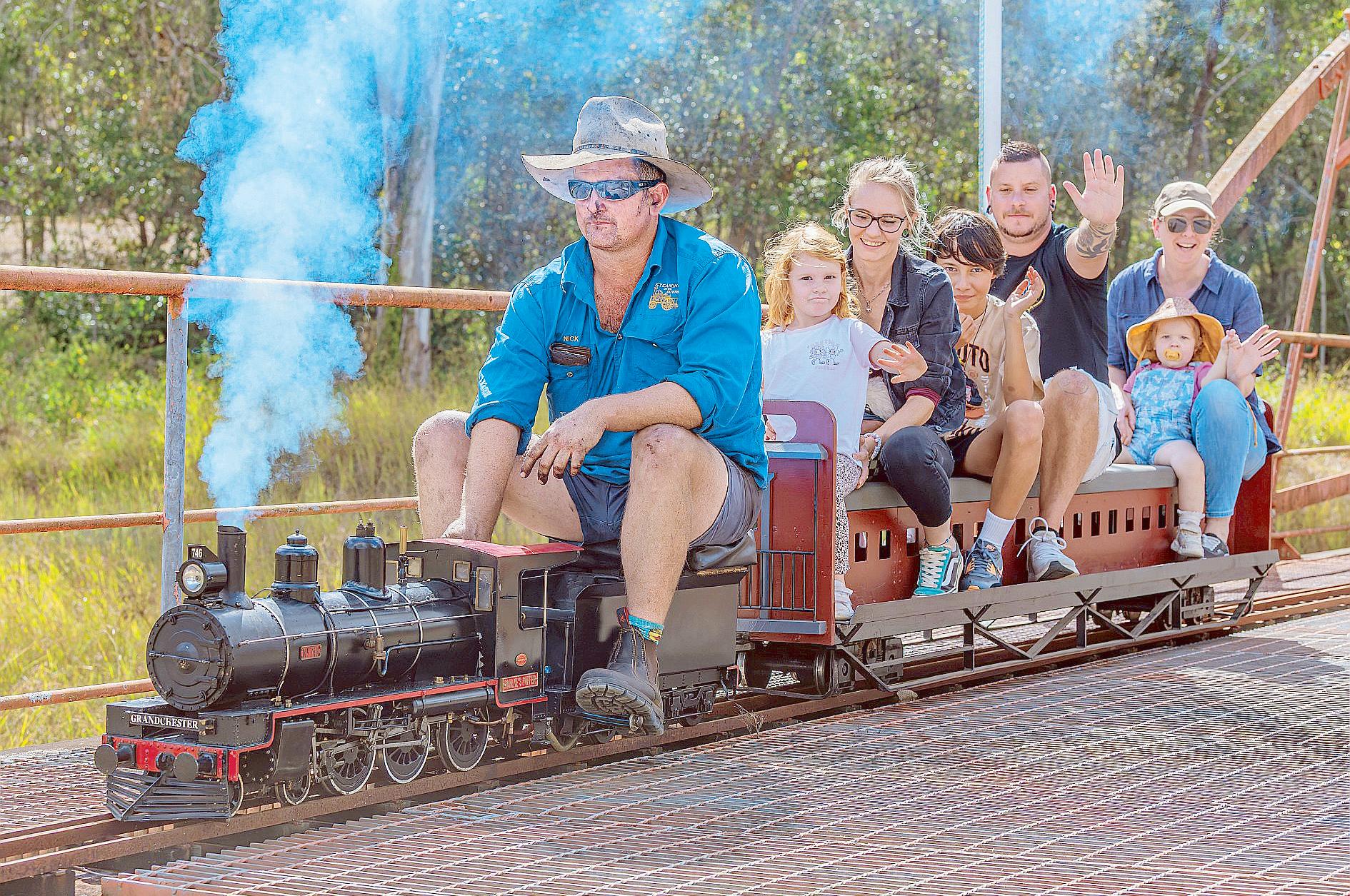
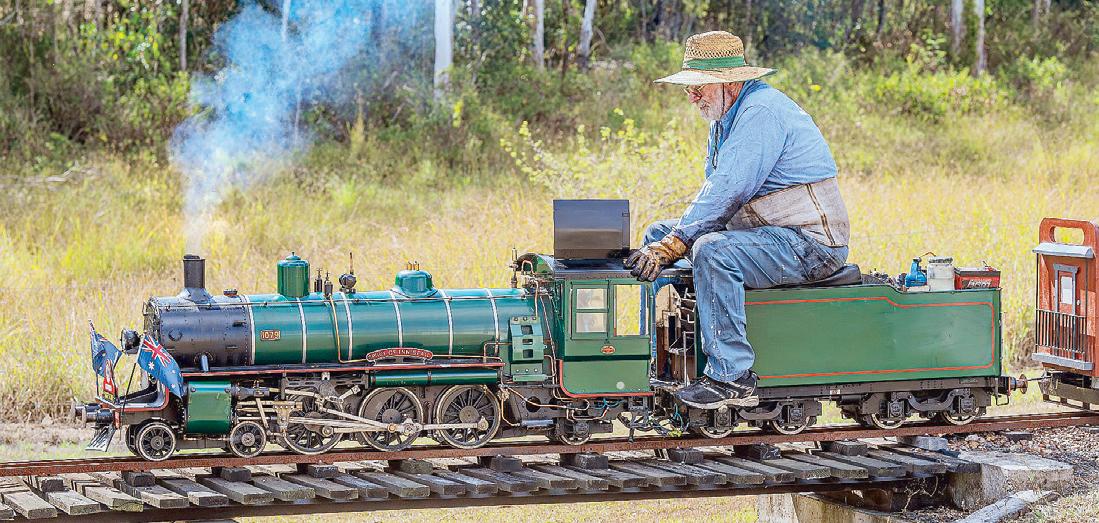
The Grandchester Model Live Steam Association starred in the 2026 Planes Trains and Autos Festival. Nick Geraghty (pictured) helped to drive it on. (Lyle Radford: 550940) STORY PAGE 6




Grandchester joins ‘fun on wheels’ fest
The Grandchester Model Live Steam Association starred in the 2026 Planes Trains and Autos Festival. Nick Geraghty (pictured) helped to drive it on. (Lyle Radford: 550940) STORY PAGE 6
By LARA HART
MORETON Border News pho-
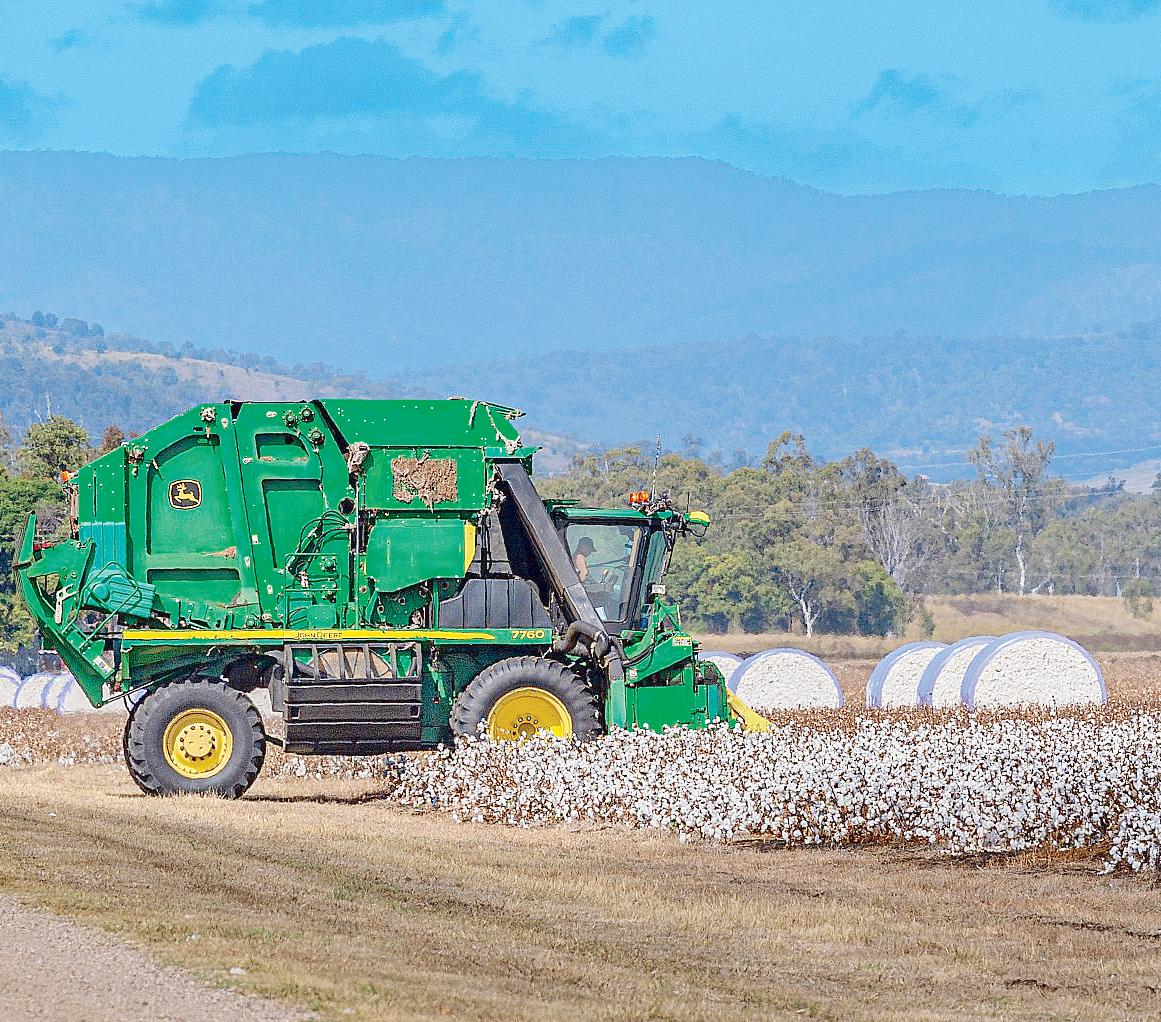
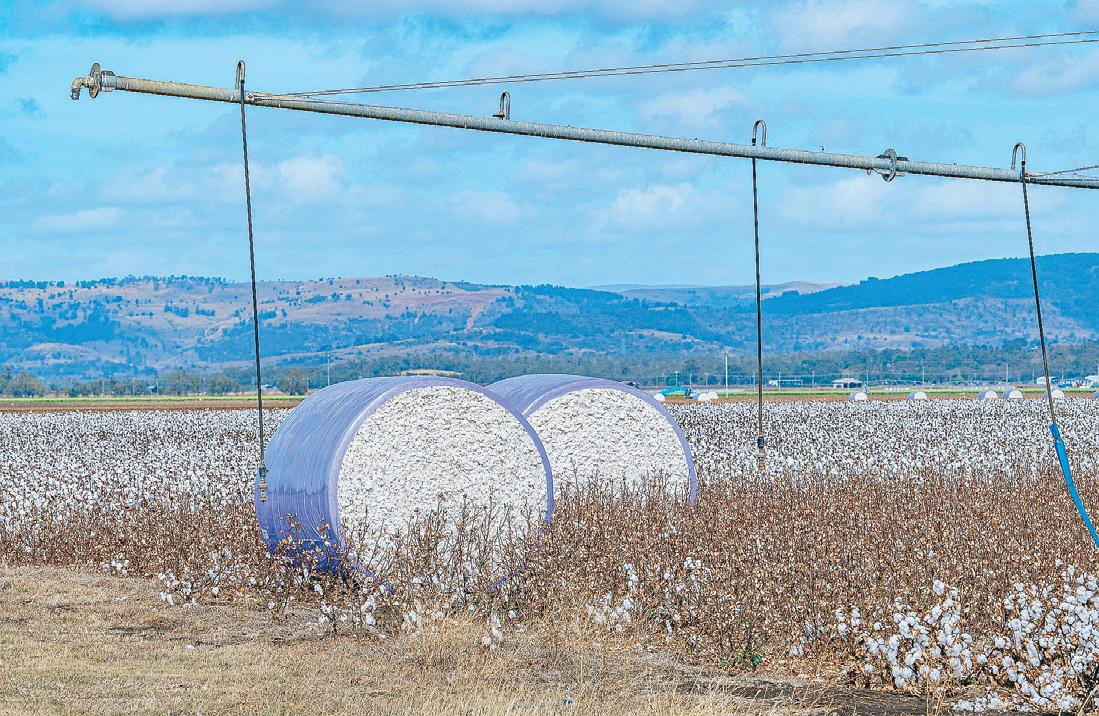
tographer Lyle Radford was driving through Forest Hill when he came across an unusual sight ... cotton being harvested.
Because it’s not something you see everyday in these parts, Lyle snapped some photographs and
we are very glad he did.
The history of cotton growing around Forest Hill in the Lockyer Valley is relatively niche but quite distinctive and marked by early pioneering efforts, a mid–late 20th century boom, a decline, and a recent revival.
Before cotton, Forest Hill was already a major agricultural hub.
By the early 1900s, it had become one of Queensland’s largest produce loading centres, shipping crops via rail to Brisbane.
The fertile black soils and irrigation potential of the Lockyer Valley later made it suitable for more diverse crops—including cotton.
This journalist has inter-

viewed members of the Brimblecombe family, who are widely credited with planting the first cotton crops in this area, in the 1950s.
Mitch Brimblecombe referred to cotton crops as white gold, and is rightly proud of his family’s positive, multi-generational impact on the cotton industry.
IT was wonderful to see the Grandchester Model Live Steam Association take part in the Trains, Planes and Autos exhibition.
We’ve published many articles about the association’s volunteers who work hard behind the scenes to bring railway history and entertainment to the public.
There are also some lovely photographs in this issue that Lyle Radford took during the Kalbar Sunflower Festival.
The festival was held over three days and attended by thousands of people, many of whom came from towns that border the Scenic Rim, like Rosewood, Walloon and Marburg.
When a Landcare member discovered rabbits on his property, he took action and has organised a rabbit education event that will be held on a private farm in Tallegalla.
And Dairy Australia chair Paul Roderick explains the effect the war in Iran is having on his industry and why access to urea is so important.
Thanks for reading - Lara Hart

By LARA HART
IT’S the household staple we use without much thought and typically, first thing in the morning.
Milk in its many brands is poured into coffee, tea and onto cereals everywhere.
Dairy is our cream, ice-cream, butter and cheese, it matters enough that consumer understanding how the war in Iran is impacting that industry, is important.
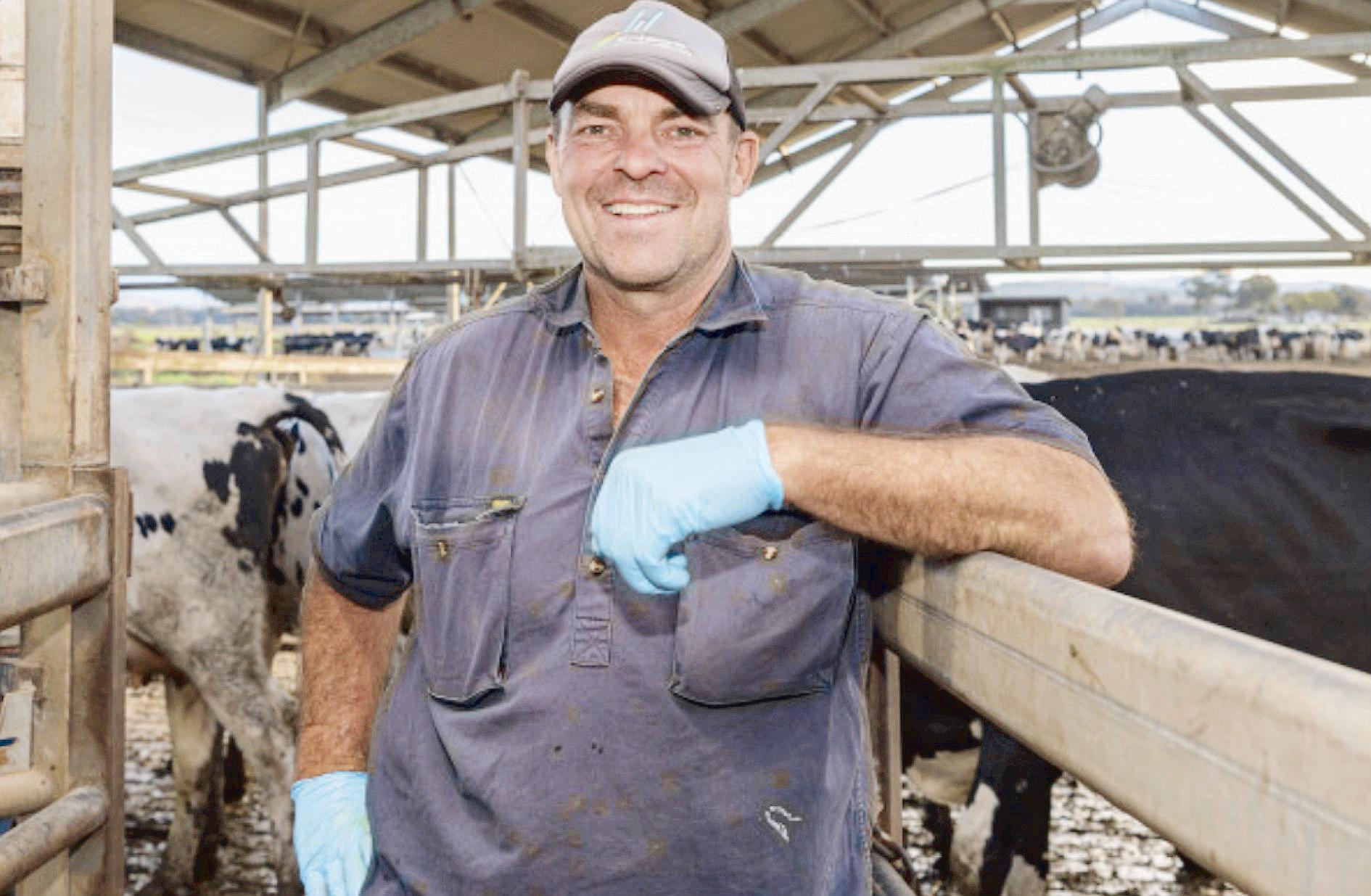
The Moreton Border News spoke to Harrisville dairyman and Dairy Australia chair Paul Roderick about the impact of the war in Iran on his industry.
“We are still able to get fuel but it’s straight urea as an input that has been more problematic,” he explained.
“Most farmers, including ourselves, were able to get some to start the season and with dairy, most of our urea and fertiliser use is over winter and spring.
“While we have been able to get some and access some more blended fertiliser, access to urea is probably going to be limited.
“That’s a little concerning when you trying to grow pasture, which is the cheapest source of feed.”
Much of the world’s fertiliser supply is tied to regions affected by conflict, and disruptions have forced Australian farmers to either pay more or go without.
For dairy producers like Paul, this means reduced pasture growth and a greater reliance on purchased feed, another cost that has climbed sharply.
Grain markets have also been volatile.


Wars impacting major exporting nations have tightened global supply, pushing up prices for feed such as wheat and corn.
For dairy farmers, who depend on consistent, affordable feed to maintain milk production, this has created a difficult balancing act between output and expense.
“There will be people who can’t grow enough pasture, and that will be replaced by silage or hay, if they have those reserves,”
Paul said.
“It is a bit like a drought where you lean back on your reserves, but it is concerning from a national and state level that farmers will need to start replacing pasture or are making silage in the spring.
“It is also concerning because the replacements are going to be
quite expensive to buy and we are dealing with a price shock with fuel and fertiliser along with a dry start to the winter planting.
“We have seen a large spike in grain prices that could come off quite quickly if we were to get some widespread rain, but that hasn’t happened yet.”
Because dairy farmers have to feed their cattle, those with limited resources will need to make decisions around stocking rates.
“From our perspective, we have a reasonable amount of feed and reserves that we can go through as a risk management tool,” he said.
“It was there for dry times and we never thought we wouldn’t be able to get fertilizer.
“The question is how long is [the war] going to go on for?
“I think we will see lasting implications because we are not at the end and don’t know when that will be.”
Paul said milk processors had lifted their prices with the majority lifting it to the farm gate by about 5c a litre, which is roughly a five or six percent increase.
“What is encouraging is we’ve seen retailers lifting their milk price at the store by 20c a litre across all their generic milk products, this will allow the branded products and other dairy processors to lift their price as well,” he said.
“That should help some of that money to flow back to the farm gate.
“The whole supply chain needs an injection because just like everything else, everything is going up.”
MONDAY - PUB CLASSICS $20 – 200g Rump, Chicken Schnitty or Grilled Barra, all served with chips and salad (Dinner only)
TUESDAY - TWO FOR ONE – Purchase two mains off our selected menu and receive the lesser value meal for free (Dinner only)
WEDNESDAY - PARMY PARTY $20 – Your choice of 6 different Parmy’s served with chips and salad. (Dinner only)
THURSDAY – BLACK ANGUS $20 – 250g Black Angus rump served with chips, salad and sauce. (Dinner only)
FRIDAY/SATURDAY/SUNDAY – ALL DAY DINING LUNCHES FROM $15 MONDAY-FRIDAY LUNCHES FROM MONDAY-FRIDAY


THE Australia Government is continuing to back journalism and publishers that keep our local communities in Ipswich and the Somerset Region informed and engaged, thanks to the News Innovation Fund.
Applications for the $31.5 million NIF are now open, supporting news producers to innovate and adapt to the evolving media landscape.
Grants will range from $10,000 to $9 million for projects that help Australian newsrooms to grow their audience, expand their revenue streams and build organisational capability.
Blair MP Shayne Neumann said the Australian Government supported a strong, diverse and sustainable news sector.
“This is because local news outlets keep Ipswich and the Somerset Region informed, connected and engaged,” Mr Neumann said.
“We need Australians telling Australian stories and that can’t happen without backing Australian journalists in our communities.
This week’s news is on the back of the Australian Governments Journalism Assistance Fund, which is delivering $67.6 million of support to more than 2,000 journalists across 185 Australian news publishers.
As part of this, Ipswich Media Pty Ltd, which publishes the Ipswich Tribune Today and Moreton Border News mastheads has received a $273,000 grant to support the ongoing employment of seven journalists.
It is part of The Star News Group, which is one of more than



90 regional media organisations to receive funding, with $1.6 million to support 52 journalists.
The group produces trusted local newspapers for more than 20 suburban and regional communities across Queensland and Victoria.
These initiatives are part of the Government’s broader $153.5 million investment in the News Media Assistance Program, which supports public interest journalism and media diversity.
It also follows the release this week of draft legislation to establish a News Bargaining Incentive, which would encourage large digital platforms operating sig-
nificant social media or search services to enter commercial deals with eligible news publishers.
Deals will strengthen the ability of news publishers to work with digital platforms to ensure Australian journalism is accessible to Australians and will allow the platforms to meet their obligations under the incentive.
Platforms who elect not to do commercial deals with news publishers will need to pay a charge as a proportion of their revenue, with any charges collected to be distributed back to the news media sector to support the employment of journalists in the cities
and the regions.
Mr Neumman said Australia’s news media sector faces significant pressures.
“We are investing more than $150 million to keep journalists in their jobs, support media literacy and help the sector innovate, delivering for their local communities in a rapidly changing media environment.
“I encourage all local media outlets here in Ipswich and the Somerset Region to apply for funding through the Australian Government’s NIF.
Visit business.gov.au/grantsand-programs/news-innovationfund

















































By LARA HART
WHEN Kevin Lewis discovered rabbits on his property, he took action and organised a rabbit education session on a private farm in Tallegalla.
Mr Lewis is the president of the West Moreton Landcare Group.
“I thought rabbits were not present on our farm, I had observed several hares, but no rabbits,” he explained.
“I decided to check and contacted the Darling Downs Moreton Rabbit Board where I spoke with the compliance coordinator, Nathan Ring who happened to be in the area at the time.
“We walked 30 meters up the driveway and came across evidence that rabbits were present.
“The further we walked around our farm, more evidence was found that a few rabbits were here, not a lot, because the soil type was not suitable, but evidence that they had been here. “



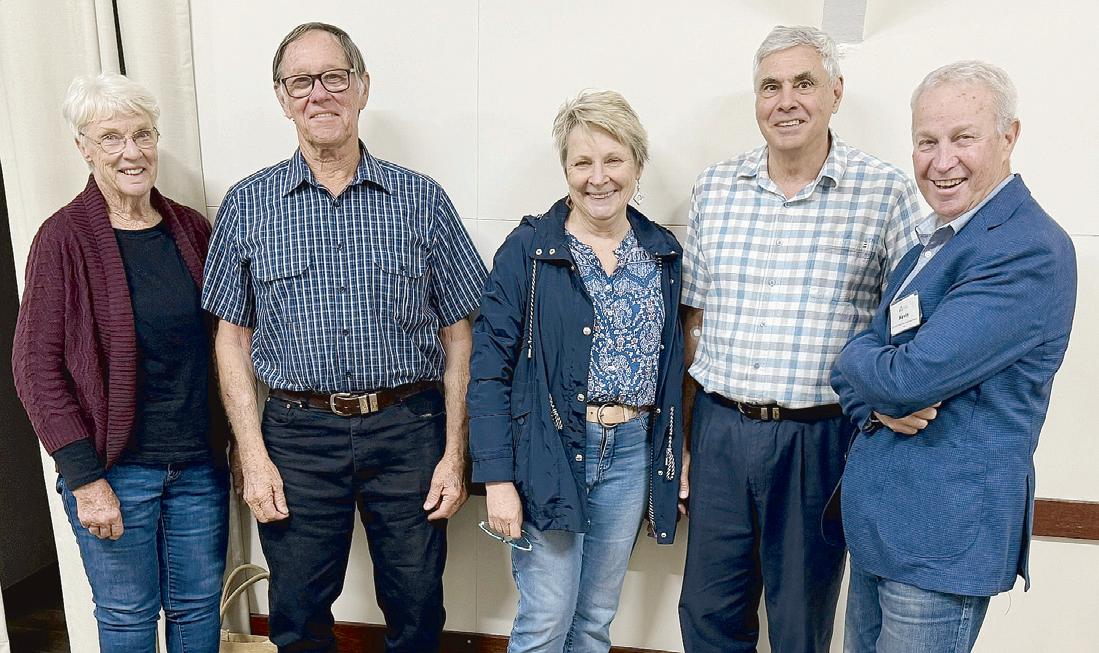
Landcare executive committee members are working hard to educate the public about pest plants and animals like rabbits. Rabbits have been found in the districts surrounding Rosewood, and strong and immediate action is needed to keep the numbers manageable.
Mr Ring also pointed out the places where rabbits had tried to burrow but were unsuccessful.
“This visit was an eye opener for me and just because you do not see rabbits, does not mean theyarenotthere,”MrLewissaid.
“As president of the West Moreton Landcare Group Inc, I think that an opportunity exists to hold a rabbit education event,



which the wider community can attend.”
In December 1859, 24 European rabbits were introduced into Victoria, Australia.
With their population growth unchecked, their spread caused ecological destruction, a loss of natural vegetation and soil erosion across Australia.
Eventually, deep ripping, ex-
clusion fencing, trapping and poisoning were tried, but with little effectiveness.
“In the 1950s a biological control virus was introduced, however, a natural immunity to viruses developed which allowed rabbit numbers to once again increase,” Mr Lewis explained.
“Over time new viruses have been developed and in 2017, K5 (RHDV1) virus was released.
“This proved very effective in keeping rabbit numbers under control, however history tells us that the efficacy of biological control measures can wane with time and we must remain vigilant to observe the presence of rabbits on our properties.”
The rabbit education event is on Thursday 14 May from 10am to 12pm.
A fee of $10 is charged to nonLandcare members to cover personal liability insurance.
Contact Chris Rinehart on 0432 650 033.






















By LARA HART
THE sights, sounds and stories of transport history were brought to life at the sixth annual Trains, PlanesandAutosexhibition,with most of the action this year based at the Workshops Rail Museum in Ipswich.
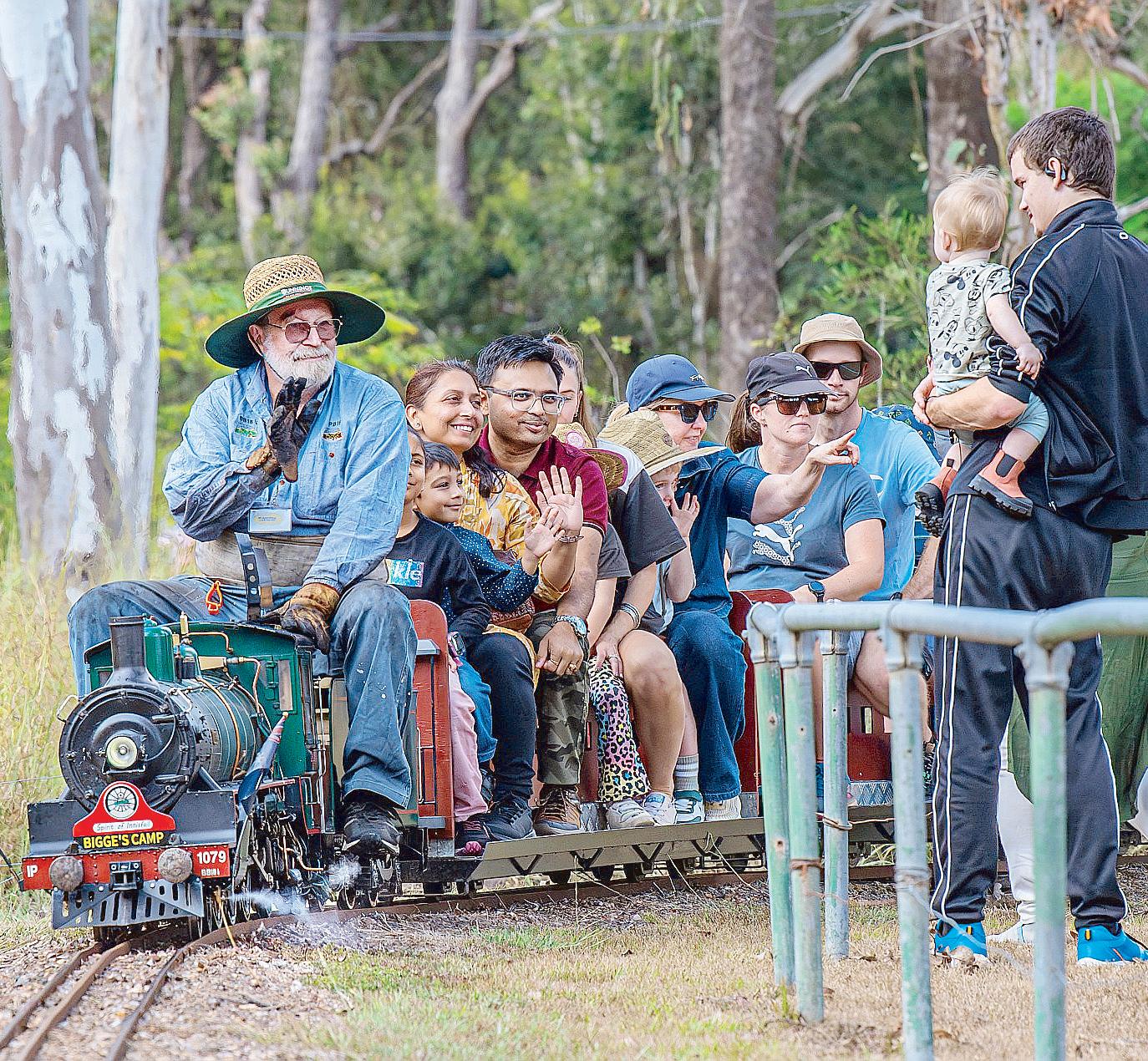
But playing their part were the engines belonging to members of the Grandchester Model Live Steam Association.
The association is in its 28th year and a lot of work goes into keeping their attraction at Bigge’s Camp viable.
The association’s members are enthusiastic in their love for the small but mighty engines and spend a lot of time keeping the venue in good nick and engines working.
As the city swallowed some of the attractions, the countryside welcomed the public to its slice of paradise.
Now, at Bigge’s Camp, visitors climb board in the shadow of the original signal cabin from Yarongmulu – a town on the Little Liverpool Range between Laidley and Grandchester circa 1866.
And so as train drivers stoked coal in Ipswich and Grandchester, the crowds gathered.
Overall, the Planes Trains and Autos show is increasingly popular, with aerobatic displays above, brass bands below and the key part played by the steam machines that helped to shape the state.
In the air, the pilots were from the Freedom Formation and from Matt Hall Racing, featuring Kris Sieczkowski.


For younger visitors, there were interactive elements designed to spark curiosity, while long-time rail fans appreciated the attention to historical detail and preservation.
With a mix of nostalgia and discovery, it was an experience that proved transport history is far from stationary.












































•50c fares made permanent



























•Delivering a new grandstand for Ipswich State High School
•Delivering a second Ipswich Central river crossing
•Upgrading Marburg SES training facilities

•Delivering grandstands at Ipswich Musketeers Baseball Club
Delivering for Queensland














Find out what else we’re delivering for you.




























As well as installing a new playground and shade sails at Ipswich North State School, here are some of the ways the new Queensland Government is delivering for Ipswich:
•Delivering more classrooms for Haigslea State School
•Delivering more homes for vulnerable women with The Lady Musgrave Trust
•Upgrading facilities at Norths Tigers Rugby League Club
•Upgrading Rosewood Showgrounds with new lighting.
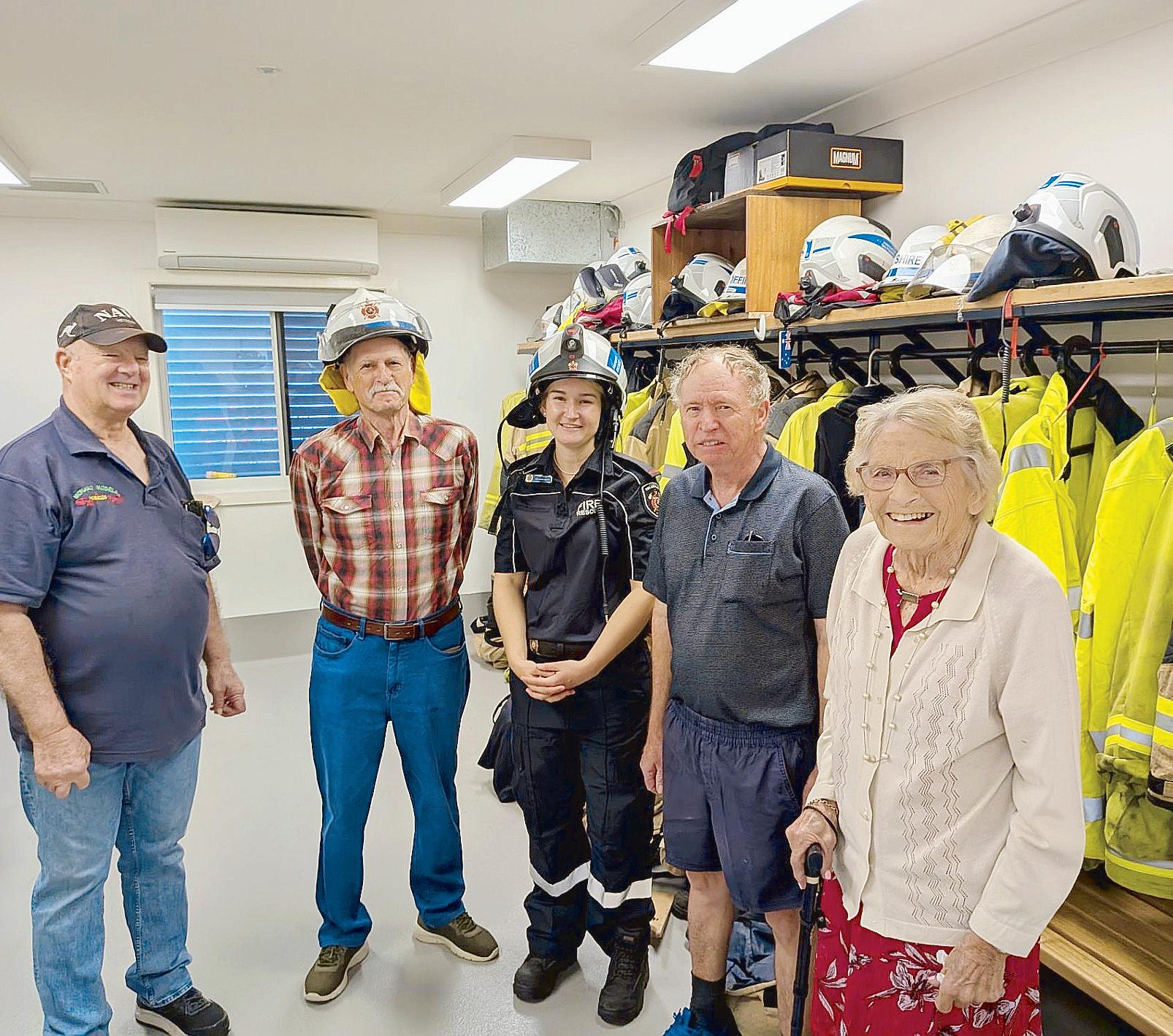
ON Tuesday 5 May, 23 members of the Rosewood Seniors Group enjoyed a special visit to the Rosewood Fire Station, gaining a behind-the-scenes look at the vital work carried out by local firefighters. Firefighter Fleur Noll andAtlantaBynonweregenerous with their time hosting a wonderful morning for the local seniors.
The visit included a guided tour of the station, an information session and a lively questionand-answer discussion. Firefighters shared practical advice on home fire safety, fire prevention, and the best ways to respond in an emergency. Seniors also learned what daily life is like for firefighters and how crews prepare for a wide range of emergency situations.
A key topic discussed was the statewide smoke alarm legislation, which will be fully enforced from 1 January 2027, requiring all dwellings to be compliant. Firefighter Fleur Noll highlighted the importance of community
education.
“It was great to have the seniors group visit us today. To have the chance to answer their questions and have opportunity educate them on home fire safety . This is especially important with the changes to smoke alarm legislation that has had a stagged rollout from 2017 to be in full affect for all dwelling by the 1st Jan 2027,” she said.
On behalf of the visitors, Mark Strong said it was great to see so many taking part. “We learnt so much about what the fire crews go through to keep our community safe,” he said.
The morning concluded with a delicious morning tea and friendly conversation. CommunityProjectWorkerTiaLancaster (RADSc) thanked the firefighters for their ongoing support, calling the visit a valuable and memorable opportunity.
By Wendy Creighton
THE Walloon property is dissected by a zoning border – it is part rural and part residential –and it is the latter part that a developer wants to subdivide.
The northern portion of the 4.68ha block off 15 Elm Road is zoned rural and falls into a rural living precinct.
That portion of the property, to use the planning jargon, is constrained by a number of overlays - biodiversity (regulated vegetation intersecting a watercourse), waterway corridor and wetland (minor waterway), and water resource catchment (minor waterway).
Developer, P2 Walloon Pty Ltd, has plans to capture all the rural portion in a 2.1 hectare block.
The southern portion is zoned ‘low density residential’ with the added rider, ‘large lot precinct’.
That rider and the site’s building height and density overlay
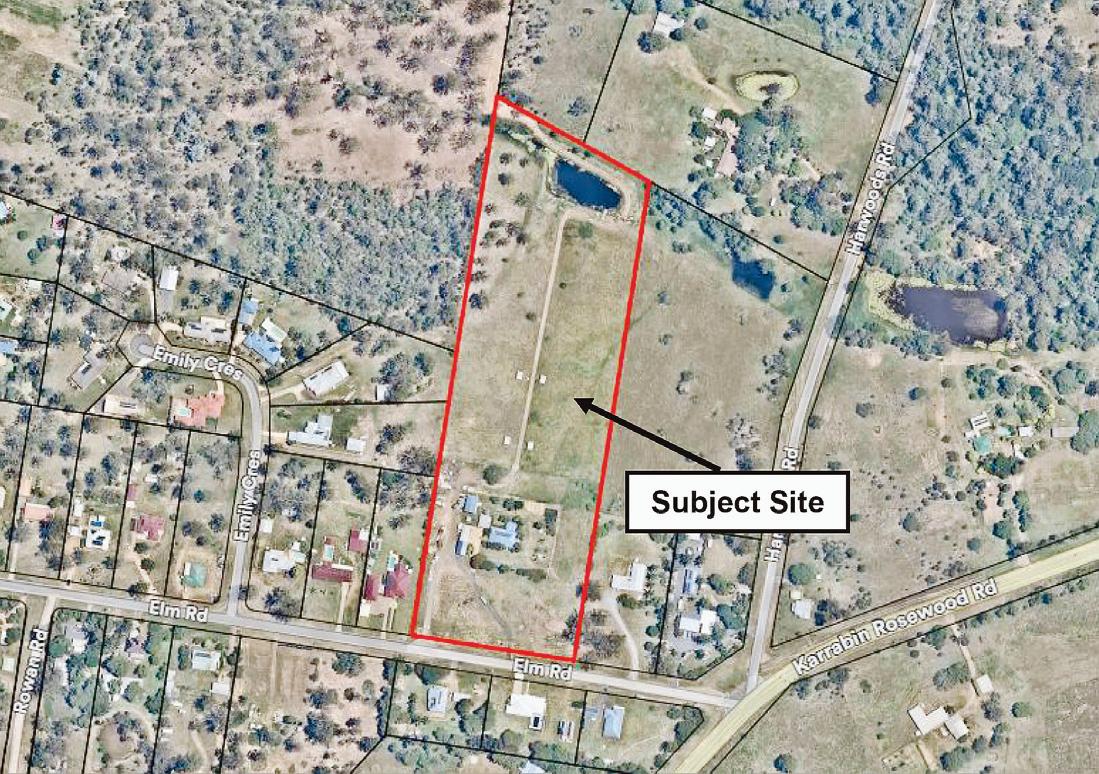
means, according to the council’s planning scheme, the ‘indicative lot size is between 4,000sqm and 6,000sqm’.
However, the developer is hoping to subdivide the residential portion into 10 allotments ranging in size from 2,069sqm to 2,249sqm.
Plans accompanying the subdivision proposal lodged with the
Ipswich City Council last week, indicate the proposed rectangular allotments are large enough to cater to treated wastewater disposal on site.
And, according to the reports commissioned by the developer … “each proposed lot contains more than 1,100sqm of unconstrained developable area outside of the on-site wastewater treatment disposal areas, suitable for a
building platform located beyond the standard front boundary setback and capable of accommodatingadetacheddwellinghouse, ancillary structures, private open space [and] parking.”
The developer has argued that the lot sizes support the intended function and character of the precinct by providing ample room for wastewater disposal which doesn’t impinge on the home, outbuildings and open space.
“All proposed residential lots satisfy the minimum lot size anticipated by the precinct, thereby maintaining a spacious, lowintensity residential pattern consistent with an urban fringe and township setting where an open, landscaped character predominates,” the developer’s town planning agents noted.
Each of the 11 proposed allotments is to be serviced by an internal street accessed off Elm Road.
Council’s town planners are currently reviewing the application.

By LARA HART
THERE’S a moment in life when the tables quietly turn.
You don’t notice it at first, it sneaks up on you somewhere between still feeling 25 in your head and realising your knees disagree.
For me, it arrived in the form of a teenager at a checkout.
“Here you go, love.”
Love.
I did what any reasonable person would do in that situation, I smiled politely, walked away, and then spent the next 15 minutes internally spiralling.
Love? Love? Since when did I become a ‘love’?
Now, don’t get me wrong. I’ve got no issue with a well-placed love or dear.
When it comes from someone older, a person who has clearly lived through at least three economic crises, raised four children and survived dial-up internet — I’ll take it.
Wear it like a badge of honour, even.
It feels warm, earned and like I’ve been gently welcomed into a club I’m not entirely qualified for, but grateful to be near.
But when it comes from someone young enough to still get asked for ID at the bottleO?
That’s where it stings because it’s not just a word, it’s a subtle shift in status.
It says ‘you are no longer one of us’.
You’ve crossed over into that mysterious category of older person, the one who gets called love, dear, darl, and occasionally, if things really escalate, ma’am.
Ma’am is the final boss, by the way.
There’s no coming back from ma’am.
The thing is, I don’t feel old.
I still know song lyrics from the early 2000s.
I can text without looking at the keyboard.
I understand memes (mostly) and surely that still counts for something?

But to the youth behind the counter, I am no longer a peer. I am a ‘love’.
And it’s happening more often.
At the cafe: “What can I get you, darl?”
At the servo: “Pump three for you, love?”
At the bakery: “Thanks, dear.”
It’s relentless and a nationwide campaign, apparently, to gently nudge me into accepting my place in the generational hierarchy.
What’s worse is that I can’t even be properly annoyed about it because they’re being nice.
That’s the trap, you can’t snap back with, “I beg your pardon, I am still young and vibrant,” without sounding like someone who definitely deserves to be called love.
So instead, I nod. I smile. I accept my bread, my petrol, my coffee and my slow descent into
linguistic maturity.
And yet, give me the same word from someone older, and I melt.
“Here you go, love,” says a woman with silver hair and sensible shoes.
Suddenly it’s comforting, endearing ... a verbal cup of tea even.
Because when it comes from her, it doesn’t feel like I’ve aged out, it feels like I’ve been folded in.
Maybe that’s the difference.
From the young, it feels like a label and from the old, it feels like belonging.
So yes, I’ll accept it. I’ll smile. I’ll take my coffee and my quiet identity crisis and move on.
But just know this, if a teenager calls me sweetheart, I will need to sit down.
Possibly with a cup of tea.
Because apparently… that’s who I am now.

































AUSTRALIA’S primary producers have new guide to navigate the shift in energy systems, with national research outlining the practical pathways available.
The Agriculture, Fisheries and Forestry Energy Transition Roadmap (2026–2036), released by AgriFutures Australia, provides a system-wide view of how agriculture, fisheries and forestry can adapt to changing energy markets and technologies while maintaining productivity.
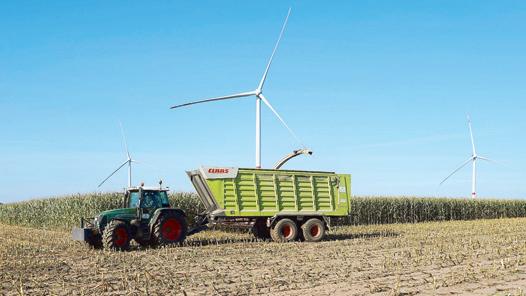
The Roadmap builds on AgriFutures Australia’s broader research program examining how changes across energy markets and regulation are affecting primary production businesses, including forthcoming work on how tax settings interact with emerging activities and income streams.

Managing Director, Brianna Casey AM, said the impact of the ongoing conflict in the Middle East was only the latest example of energy costs becoming harder to manage, and supply becoming less certain.






“Energy is no longer just an input cost, it is shaping decisions about investment, diversification, expansion and how primary production businesses stay productive into the future,” Ms Casey said.
The research shows that many of the enabling conditions required for large-scale change are
not yet in place. Constraints in regional infrastructure, grid capacity, supply chains, policy settings and workforce capability mean producers are currently managing muchofthecomplexityassociated with the transition.
Future research will examine barriers to producing biofuels at scale in Australia, including regulation, transport, feedstocks and investment.
The 2026-2036 roadmap is available via agrifutures.com.au
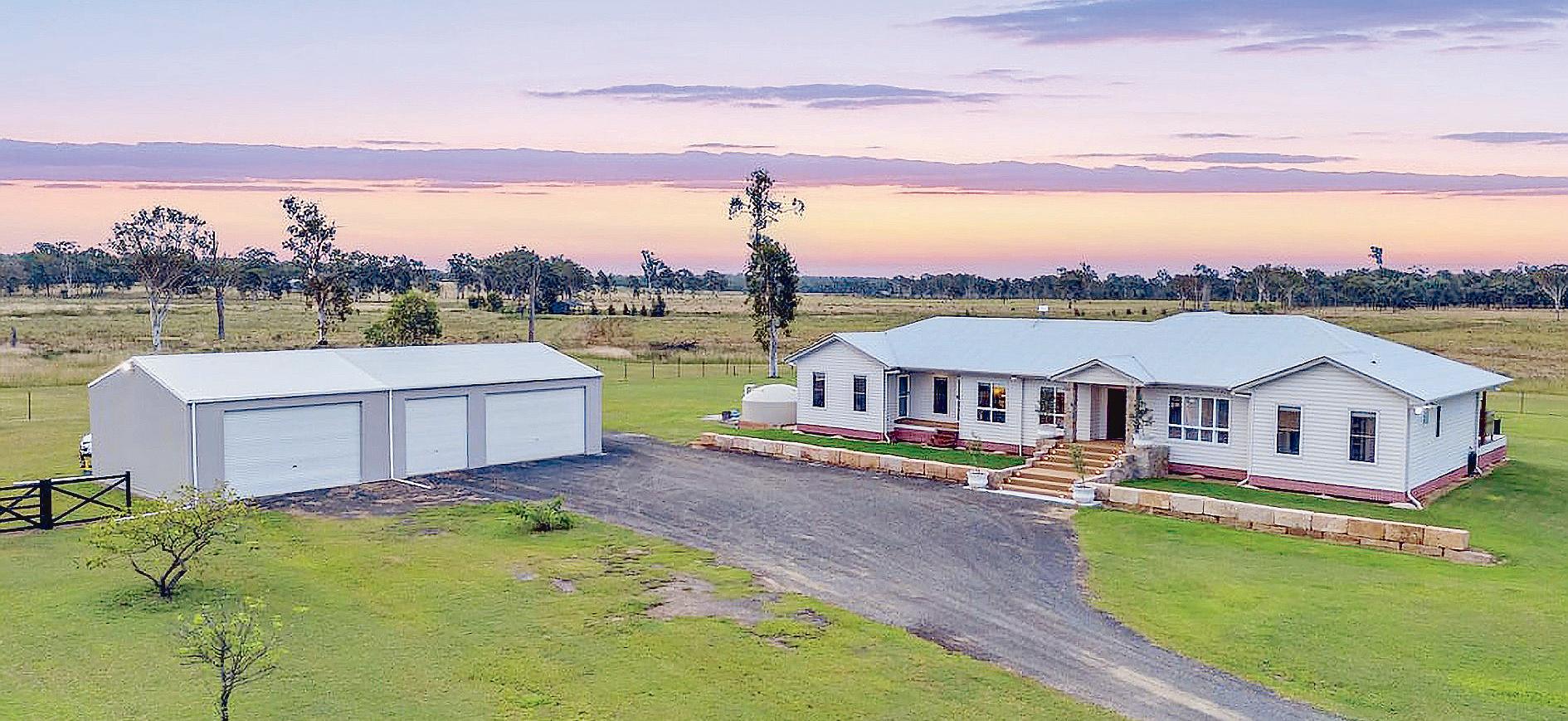
A Purga home built eight years ago on almost 31ha, sold last month for $2.44 million.
The Steve Parcell-built executive homestead and grazing property in Strathmore Lane is described as ‘delivering the perfect balance of luxury living, usable acreage and exceptional privacy, all within easy reach of major amenities’. Electric remotecontrolled entry gates open to a long gravel driveway leading to the home.
The interior features four built-in bedrooms, two with ensuites, a separate study and family bathroom and two living areas, all serviced by ducted airconditioning.
The kitchen has quality fittings and a fully equipped butler’s pantry.
It overlooks the large entertainment area, the in-ground pool and sweeping views.
The home has two distinct wings, allowing one section of the residence to be completely closed off.
This wing has its own access to both the front and rear decks and a kitchenette.
Purga Creek runs through the property, and towards the rear the creek widens where there’s a roofed fishing shack and entertainment deck.
The property also features a
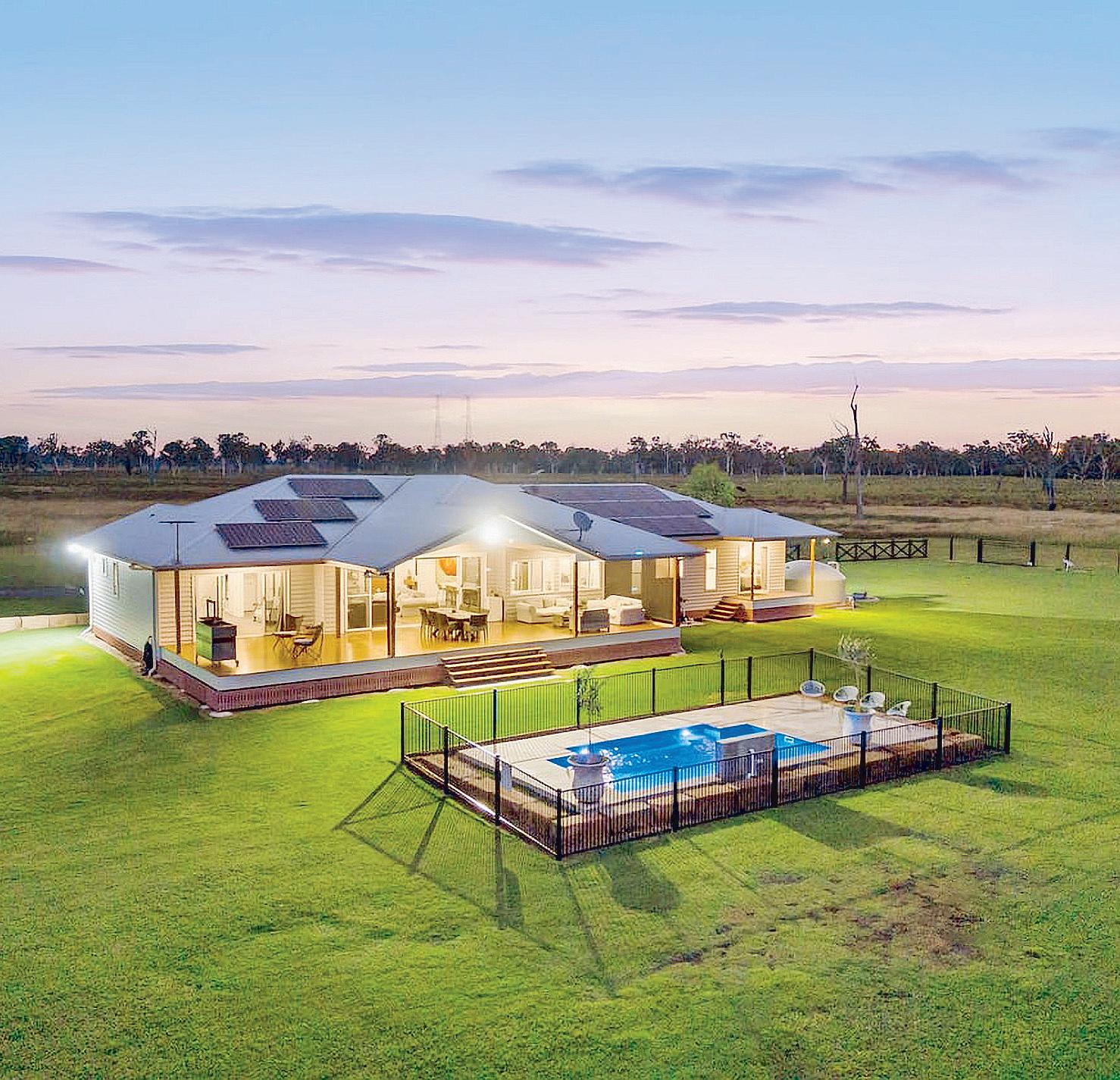




mately
The property last sold in 2003 for $75,000.


By Lara Hart
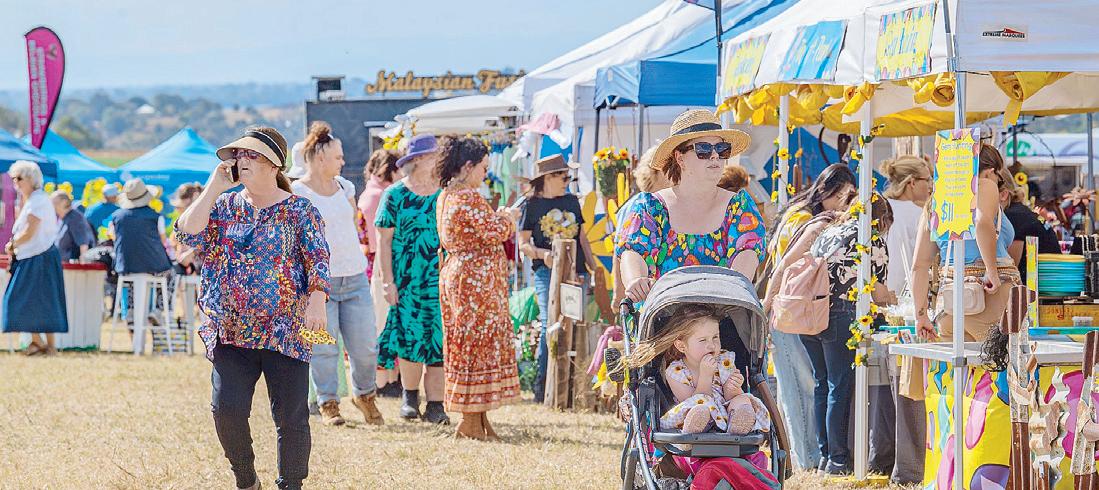
KALBAR’S three-day Sunflower Festival was a popular destination at the wekend.
Every year, the festival is a vibrant hub of colour, music and community spirit.
OrganiserJennyJennerusesthe festival to raise funds for the Mater Foundation, West Moreton Health Foundation, Ipswich Hospice and other healthcare providers.
She also partners with The Al-

lison Baden-Clay Foundation and Lisa’s Lunches.
Last year Mrs Jenner and her helpers raised $160,000 through sunflower sales, raffles, the Devonshire Tea and a sunflower rock memorial.
The Mater Foundation was given $100,000 to support a cancer care co-ordinator at Mater Hospital Springfield.
Doing good never looked so beautiful with the event held against a backdrop of more than a
million blooming sunflowers.
It once again proved a major drawcard for locals and tourists, with families, photographers and day-trippers streaming through the gates.
Visitors were treated to a packed program of entertainment, including live music, food stalls, market vendors and crowd-favourite attractions such as the giant sunflower globe installations and a spooky maze.
A highlight for many was the
paddock experience, where festival-goers wandered through rows of towering sunflowers, snapping photos and soaking in the rural charm that has become synonymous with the event.
Children enjoyed a range of activities, while food lovers lined up for everything from gourmet street eats to classic country fare.
The festival has continued to cement its place as a key event on the region’s calendar, supporting local businesses and boosting tourism.

By LARA HART
A grade competition leaders, the Fassifern Bombers Rugby League Club is preparing to mark a major milestone, with celebrations underway for its 50th anniversary.
Founded in the mid-1970s, the Bombers are cornerstone of rugby league in the region, building a proud legacy both on and off the field.
From humble beginnings, the club has grown into a thriving community hub, developing generations of players, volunteers and supporters.
“It was a rep weekend this week and quite a few of us were
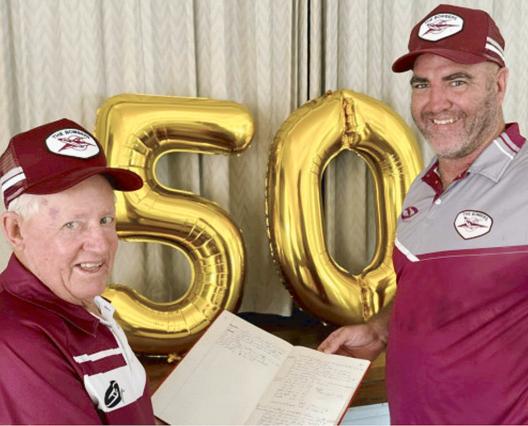
Craig (pictured) said rugby league in the Fassifern district started around the late stages of the First World War, featuring local sides such as Harrisville, Peak Crossing, Boonah, Kalbar and Milbong.
working at the sunflower festival as a club fundraiser,” Fassifern Bombers senior club president Paul Roderick said.
“We did the rubbish collection over the three days and helped Don Young and the Fassifern Lions with the fast food.
“There was a mixture of our regular volunteers and players from the men and women’s sides, and we are reimbursed through the Fassifern Lions.”
The club’s five decades have been documented by life member and historian Craig Harsant.
Craig has compiled valuable research that highlights the club’s foundation, successes and community spirit.
He’s also been a player, trainer, coach and coaching director at the Bombers juniors for more than 40 years.
“I’ve always had an interest in the history of the football club and I did a lot of writing in a book on the history of the seniors years ago,” he said.
“It encourages me to keep track of things and record things.
He said rugby league in the Fassifern district started in the late stages of the First World War, featuring local sides such as Harrisville, Peak Crossing, Boonah, Kalbar and Milbong.
The 50th anniversary of the football club will be celebrated with a footy carnival on the 23 May including a lunch, guest speakers and a band or DJ in the evening.
By CLANCY NUGENT
IN representative rugby league at the weekend, the Ipswich Diggers men’s side chalked up a smashing 48-12 win over Brisbane Red, but then fell in a heartbreaking loss to the Gold Coast
It was the Chair’s Challenge SEQ carnival and the loss saw this year’s title slip through their fingers.
Having claimed maximum points for the thumping win over the Brisbane side, Ipswich started well.
It was 12-all at halftime in what was essentially the grand final against the Gold Coast side that defeated Brisbane White the day before.
Although Ipswich defended well in the second half, the Gold Coast found their way over the line for a try that decided the competition.
Captain and star halfback Henri Stocks said after the game that it was an honour to represent Ipswich rugby league alongside the best players in the region.
“It’s a blessing; the coaches really brought a really good bunch of boys together and with the standards they have set, everybody’s just bought in to what they brought to the table,” Stocks said.

The inspirational captain also gave a heartfelt speech to his teammates.
“We represent our home; some of our kids are going to grow up here, they are going to call it home and their kids as well,” Stocks said.
“Irrespective of the result we did ourselves proud and we can hold ourselves high.
In the women’s competition,
the Diggers struggled to replicate their 2025 title win.
They went down to the Gold Coast on night one, losing 16-0 before succumbing to the eventual champions, Brisbane, the following day in a very short turnaround.
Against Brisbane, they were in the contest early. They had good field position, but but failed to capitalise and Brisbane made them pay.