Australia’s National Local Government Newspaper
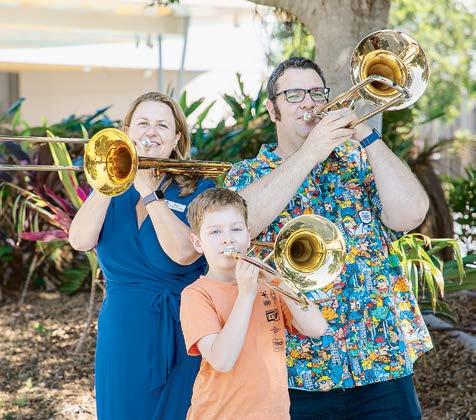
Ipswich is calling for 400 trombonists of all ages and abilities to help make history with a bold attempt to break the Guinness World Record for the largest trombone ensemble.
The record attempt will take place on Sunday 12 July at Tulmur Place in the Nicholas Street Precinct, as part of the 2026 SPARK Ipswich Arts Festival.
Ipswich Mayor Teresa Harding said the event was an exciting addition to this year’s SPARK Festival, which celebrates the city’s people, places, arts and culture.
“Ipswich is home to a vibrant creative and cultural scene, and I can think of no better place to bring the brass together in a bid for world record glory,” Mayor Harding said.
“The current Guinness World Record for the largest trombone ensemble stands at 368 musicians, set in Washington DC in 2012.
“We are going big and bold by inviting 400 members of the community to pick up a trombone and join us for this historic event, right here in the city heart.”
The event is being organised by Ipswich City Big Band Music Director Matt Chambers, who said the record attempt was about bringing people together through the shared joy of music.
“We welcome people of all ages and abilities to be part of the world record attempt, which will see us play the iconic piece 76 Trombones,” Mr Chambers said.
“Whether you’re a beginner or an experienced player, we’ll have music suited to different skill levels and plenty of support in the lead up.
“This is a once-in-a-lifetime opportunity to attempt this world record, have fun and put local musicians on the world stage.”
Registrations are now open to participants of all ages, with players required to bring their own trombone to take part.
For more information or to register, visit the Ipswich World’s Largest Trombone Ensemble World Record Attempt page.
The Australian Federal Budget needs to back Australians where they’re hurting – that is the message from Australia’s local government peak body.
The budget will be handed down by Treasurer Jim Chalmers on Tuesday, 12 May and ALGA is calling on the Government to “deliver real budget relief to councils struggling to support communities through the combined impacts of the fuel and inflation crises”.
ALGA President Mayor Matt Burnett said the group wanted to see the Federal Budget, the first since their 2025 put local communities first by backing councils to deal with spiralling costs across every area of service delivery.
Mayor Burnett said fuel costs were biting deep for communities also struggling under multiple interest rate rises and unchecked inflation.
“Every year, we put out the same call for councils to be fairly funded, but this year the situation for local governments is critical,” Mayor Burnett said.
“Councils are counting every dollar right now, trying to make sure they can still cover essential services, while watching costs outstrip their budgets. Every decision is now a trade-off between maintaining roads, funding services or investing in future growth.
“Budgets were already stretched to the limit, but the cost of fuel impacts every area of service delivery, and there is no relief in sight. Without
additional support, councils will be forced to delay construction and maintenance, scale back services or pass costs on to their communities.
“Ratepayers are already facing cost increases from the extra burden the Fair Work Commission’s fuel cost recovery order puts onto local government.
“Councils are at breaking point. We have zero room to move.”
ALGA recognises the Federal Government is working hard to minimise economic damage to Australia through the fuel crisis, including today’s announcement by the Prime Minister of Budget measures aimed at improving fuel and fertiliser security.
But Mayor Burnett said councils needed targeted Budget relief as they faced mounting costs.
“Tuesday’s Budget is an opportunity for the Federal Government to back Australian communities with funding injections for housing infrastructure, roads and natural disasters,” he said.
ALGA’s Federal Budget submission called on the Government to recognise that councils are critical partners in delivering national priorities, but are being asked to do more with less.
“Backing local government means backing
local communities,” Mayor Burnett said.
“This Budget needs to help keep services accessible and infrastructure on track. Australian communities are resilient, but right now we’re seeing them struggling.
“At a time like this, communities need certainty, and that starts with giving councils the support they need to keep delivering for the people they serve.”
ALGA’s Budget asks included:
· Housing-enabling infrastructure: ALGA is calling for $1.1 billion per year in sustained funding for housing-enabling infrastructure, including local roads, water and stormwater systems and community facilities, to unlock supply and support delivery of the national target of 1.2 million homes.
· Community infrastructure: ALGA is seeking $500 million per year to invest in local community infrastructure such as libraries, recreation facilities and community hubs to ensure growing populations are supported by the services and amenities that make communities liveable, connected and economically active.
· Safer local roads: ALGA is calling for $600 million per year in dedicated funding for safer roads, including targeted investment in safety
upgrades and local government capability, to address rising road trauma and the growing backlog in maintenance across the network that carries the majority of Australia’s traffic and freight.
· Disaster resilience and emergency management: ALGA is seeking $900 million per year in long-term, formula-based funding for disaster resilience, mitigation and local capability, to shift Australia’s approach from reactive recovery to proactive risk reduction and better protect communities facing more frequent and severe natural disasters.
· Climate adaptation: ALGA is calling for $400 million per year to support local climate adaptation and resilience, enabling councils to plan for and respond to the impacts of climate change through place-based solutions that protect infrastructure, communities and local economies.
· Financial sustainability (Financial Assistance Grants): ALGA is urging the Federal Government to restore Financial Assistance Grants to one per cent of Commonwealth taxation revenue, providing councils with a stable, untied funding base to support core service delivery, infrastructure investment and long-term financial sustainability.
Saddened to hear that the much-lauded Inland Rail is currently looking to be a very long-term project. Growing up in Western NSW it was a rite of passage to make the train journey to Sydney or to wait at the railway station for an order to be unloaded from the train. The station master was one of the important leaders in the community. And while those days are gone with the price of petrol and the pressure on our road systems surely it still makes sense to have a strong rail link across the country.
- Tania Phillips, Editorial Coordinator Local Government Focus
PEAK BODIES page 4
STAFF .......................................page 6
GOOD OIL page 8
FUEL STORIES page 9
ADMINISTRATION, MANAGEMENT SYSTEMS AND CUSTOMER SERVICE page 10
ADVERTORIALS ................page 11
RURAL AND REGIONAL.................. pages 12-13
METRO AND SUBURBAN................pages 14-15
SPORT page 16
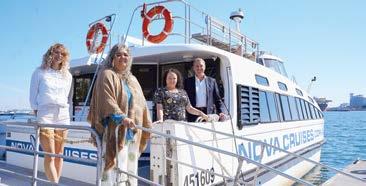
ACityofNewcastleprogram,whichisdesignedtodevelop andpromotenewtourismproducts,hashelpedtwolocal operators create a new First Nations experience for women.
Moon Woman Gathering on Water (Gilayn Galbaan Yalawanyi Bathuga) is a two-hour cruise on the Hunter River at Carrington, under a full moon, that invites women to reconnect with the rhythms of moon, tide and Country through cultural teaching, reflection and guided practice.
Passionate Warrimay Nyuragil woman, Aunty Theresa Dargin, was selected to be part of the 2025/26 Product Mentoring Development Program to learn from the expertise of past participants such as Natalie Kelly from Nova Cruises.
Australia’s National Local Government Newspaper
Website: LGFocus.com.au
Noosa Office:
Telephone: (07) 5455 6946
Address: 36 Mary Street, Noosaville Qld 4566
Pakenham Office:
Telephone: (03) 5945 0666
Address: 10 Army Road, Pakenham VIC 3810
Network with LG Focus twitter.com/@LGFocusau facebook.com/LocalGovernmentFocus
Editorial:
E: editorial@LGFocus.com.au
Advertising:
E: advertising@LGFocus.com.au
Classifieds:
P: 1300 666 808
E: sales@NetworkClassifieds.com.au
EDITORIAL
Tania Phillips Journalist
E: tania.phillips@StarNewsGroup.com.au
ADVERTISING
Jacqueline Trewin Sales Executive
E: jacqueline.trewin@NoosaToday.com.au
P: 07 5292 5307
M: 0497 621 843
Michelle Gibson Sales Manager
E: michelle.gibson@StarNewsGroup.com.au
P: 07 5292 5304
M: 0413 608 678
Published
Their collaboration led to the development of Moon Woman Gathering on Water (Gilayn Galbaan Yalawanyi Bathuga), with the first cruise taking place on Friday 17 April.
Aunty Theresa said she’s was looking forward to providing a culturally grounded experience for visitors and community alike.
“As a Warrimay Nyuragil woman, lore woman and cultural knowledge holder, it is important to me that these experiences are shared respectfully and create opportunities for deeper connection to place and story here in Newcastle,”
Aunty Theresa said.
“I’m grateful to be part of the Product Development Program and to be working with the team to continue developing meaningful visitor experiences that honour Country and culture.
“I’m also thankful for Natalie and the Nova Cruises team for their openness and collaboration in bringing this initiative forward.”
City of Newcastle Executive Manager Media
Engagement Economy and Corporate Affairs
Nick Kaiser said the Product Mentoring Development Program helps local businesses develop and promote bookable experiences.
“We want to increase the appeal of Newcastle as a tourism destination by adding to the number and diversity of available products,” Mr Kaiser said.
“Businesses take part in workshops, receive mentoring from previous participants and six months of ongoing business support.
“We’re excited to see this new collaboration between Aunty Theresa and Nova Cruises, and what other ideas come out of the program in the future.”
Natalie Kelly from Nova Cruises said they love collaborating with other local businesses to create new tourism products.
“When we met with Aunty Therese Dargin the initial idea was helping Spiritual Waterways offer on-water experiences to schools,” Ms Kelly said.
“From there we discussed creating a tourism product for Newcastle and Moon Woman Gathering on Water (Gilayn Galbaan Yalawanyi Bathuga) was the result.”
“We’re very proud to be part of this bespoke Indigenous tourism offering in Newcastle.”
Applications for City of Newcastle’s next Product Development Mentoring Program will open later this year.
Carnarvon is set to take centre stage this May with the launch of the Gnulli Festival, a new cultural event celebrating community, culture and Country from Friday22MaytoSunday24May2026.
Held on Yinggarda Country, the Gnulli Festival, meaning ‘All of Us’ or ‘Two of Us’, celebrates the collaboration between Yinggarda and Baiyungu people, the two Aboriginal language groups of the region.
The festival brings together locals and visitors for a weekend of immersive cultural experiences, including a street festival, cultural workshops, live performances, a community concert and a large-scale drone show.
The Gnulli festival has been developed in partnership between the Shire of Carnarvon, Baiyungu Aboriginal Corporation and Yinggarda Aboriginal Corporation, with Chevron Australia supporting the festival as the principal sponsor.
The festival will be delivered as a pre-conference experience ahead of the WA Tourism Conference, taking place in Carnarvon from 25–27 May 2026.
Shire President Eddie Smith said the introduction of the Gnulli Festival reflects both
Queensland Disaster Management Conference 27-29 May
Rydges Southbank, Brisbane
In partnership with the Queensland Police Service, Queensland Fire Department, Queensland Reconstruction Authority and O ice of the Inspector-General Emergency Management, planning is underway for what is set to be another not to be missed event. One of the largest Disaster Management Conferences, this opportunity is dedicated to supporting our members and their key partners from both government, industry and nongovernment organisations, to strengthen the critical relationships, to partner, share insights and generate ideas as we face more frequent and intense severe weather seasons.
June 24-27 Canberra
Register now for the 2025 National General Assembly, incorporating the Regional Forum, in Canberra from 24-27 June, with a theme of National Priorities Need Local Solutions .
The 2025 NGA 2025 will provide a great opportunity to help shape a newly-elected government or refocus a returned government on the needs of councils across Australia. Council s 2025 NGA motions should be lodged on the ALGA Website before 31 March.
NSW Destination and Visitor economy conference 26-28 MAY 2025
Tweed Shire
The 2025 Destination and Visitor Economy Conference will be held in the Tweed Shire, with destination host being Tweed Shire Council.
For those who wish to speak at the 2025 conference, please contact the Events Manager at events@lgnsw.org.au or call 9242 4000 (Option 3 for Events) to express your interest.
Interesting in partnering? Please email sponsorship@lgnsw.org.au.
NSW Executive and Administrative Assistant s Conference
19-20 June 2025
Swissotel Sydney
After the incredible success of the 2024 conference, this highly anticipated event returns to inspire, educate, and empower professionals in executive and administrative support roles within local government.
a celebration of culture and a strategic opportunity for the region.
“The Gnulli Festival is a significant and proud moment for the Shire of Carnarvon,” Cr Smith said.
“It provides an opportunity for our community to come together and celebrate the strength of our cultures, while also welcoming visitors to experience something truly unique ahead of the WA Tourism Conference.
“With up to 90 per cent of visitors to Western Australia expressing interest in Aboriginal tourism, yet only a fraction engaging in those experiences, there is a clear opportunity for regions like Carnarvon and Coral Bay to lead in this space.
“This festival allows us to showcase our culture in an authentic and meaningful way, while also supporting local artists, businesses and tourism operators and contributing to the long-term economic growth of our region.”
IPWEA International Public Works Conference
Sydney
25-28 August
IPWEA invites the submission of abstracts to be considered for presentation at the next International Public Works Conference (IPWC), the largest public works Conference held in Australia. Running at the International Convention Centre Sydney from August 25 to 28, 2025.
Contributed abstract presentations are an integral part of the IPWC program. Offering delegates the chance to hear from local practitioners on innovative, creative, and relevant projects, that will expand their thinking on a variety of issues within the conference theme: ‘Shaping Tomorrow’s World’.
GavinMorrishasbecomethe16thLordMayorofNewcastlefollowingthedeclarationoftheby-electionresultsfrom 18April.
The NSW Electoral Commission made the announcement on 5 May.
The by-election was triggered by the resignation of former Lord Mayor Ross Kerridge in February after 17 months in the role.
Gavin Morris will officially take the affirmation of office on Tuesday 12 May in Council Chambers at the City Administration Centre.
Mr Morris will then chair the Development Application Committee Meeting, the first formal meeting of his term.
“This is an exciting time, and I look forward to leading this fabulous city, working with Councillors, staff, and the community,” Mr Morris said.
“I believe we can create an incredible future together.”
City of Newcastle CEO Jeremy Bath said the NSW Electoral Commission had to receive all postal votes before they could recognise the result today.
“Gavin Morris becomes Newcastle’s 16th Lord Mayor, following the Electoral Commission’s declaration of the results,” Mr Bath said.
“Staff have appreciated Gavin’s collaborative comments since winning the election and look forward to working with him as we continue to make Newcastle an even better city to live and work in.
“With the by-election result being finalised, Charlotte McCabe has finished in the acting role, and we’ve greatly appreciated her leadership over the last six months and the positive
impact her calm demeanour has had on staff and Councillors.”
Deputy Lord Mayor Charlotte McCabe reflected fondly on her time representing Newcastle during the period while the office of Lord Mayor was vacant.
“I’m proud to have had the opportunity to take on the responsibilities of Lord Mayor over the last six months and help steer the elected Council through a period of uncertainty,” Cr McCabe said.
“The collaboration shown by those in the chamber meant we were able to continue operating effectively and without disruption to the community.
“I’m looking forward to continuing to represent Newcastle through my role as Deputy Lord Mayor, and Councillor for Ward One.”
The final cost of the by-election to City of Newcastle is $1,107,777.
The by-election was not anticipated when the budget was adopted by Council in June 2025, which forecast a surplus of $258,000.
Therefore, the cost will be added to the 2025/26 budget position when it is reviewed by Council in May.
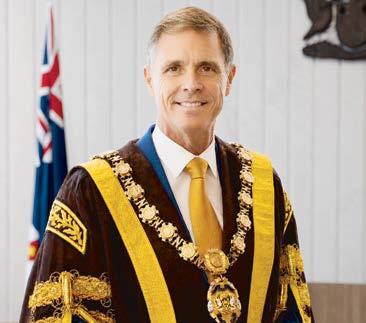
Newcastle’s 16th Lord Mayor Gavin Morris. (Supplied)
The Federal Government’s decision to consolidate the Inland Rail project by completing construction between Beveridge in Victoria and Parkes in New South Wales by the end of 2027 has been met by disappointment by councilsfurtherinland.
This will enable double-stacked freight trains to travel between Melbourne and Perth, via Parkes.
Mayors from further north including those from Narrabri, Moree Plains, Toowoomba and Narromine were all disappointed by the Government’s announcement to shelve their plans for further major work following independent cost assurance work completed by ACIL Allen Pty Ltd.
ACIL Allen’s report confirmed the cost estimate now exceeds $45 billion to deliver the full Inland Rail project from Melbourne to Brisbane - more than three times the current budget allocation and this work also confirmed that the project cannot be delivered until at least 2036.
Dr Kerry Schott AO’s 2023 independent review of Inland Rail found that the estimated cost of delivering Inland Rail had increased from $16.4 billion in 2020 to at least $31.4 billion in 2022 with very little certainty on the actual cost to deliver the project, primarily due to delays and immature preliminary designs. Dr Schott therefore recommended the appointment of an independent value engineer to further assess the cost estimate.
The Inland Rail works north of Parkes are set focus on preservation of the rail corridor, as well as protecting sites for future Inland Rail intermodal terminals in Queensland.
Narrabri Shire Council has expressed deep disappointment with the decision to withdraw funding for the remaining northern sections of the Inland Rail project beyond Parkes.
“Funding for this project was announced nearly 10 years ago right here in Narrabri,” said Narrabri Shire Mayor Darrell Tiemens.
“Billions of dollars have already been committed by businesses that would have played a role in its delivery and long-term operation. To walk away now represents an extraordinary waste of opportunity and investment.”
He said the Narrabri community had long supported Inland Rail, with Council investing significantly in the project, including the purchase of 240 hectares of land earmarked for the proposed Northern NSW Inland Port. Despite the setback, Mayor Tiemens said Narrabri Shire Council would continue to focus on
economic growth opportunities and advocating for critical infrastructure investment.
“We will continue to advocate strongly for projects that strengthen inland Australia, improve freight connectivity and support future generations,” the Mayor said.
“This project represented jobs, investment, freight efficiency, road safety and long-term economic growth for inland communities like ours.
Moree Plains Mayor, Cr Susannah Pearse said “this will be concerning for residents and businesses in the Moree Plains, who see the real benefit of moving produce from road to rail and have been huge supporters of the project.”
“We currently have one 23km section awaiting completion. This section connects the two already constructed sections and provides the critical infrastructure to link our grain and fibre handling facilities to port.”
Mayor Pearse noted that council had a productive meeting with Inland Rail executives in the last two weeks, who explained that the remaining section has recently received all state and federal government approvals. With design work underway, Australian Government funding is the last remaining hurdle.
“A decision to not proceed with the 23km remaining section in the Moree Plains would not only leave our businesses and people behind, but also our $1bn of agricultural production per year.”
Toowoomba Mayor Geoff McDonald said Inland Rail had long been positioned as a nation building project capable of transforming freight movement, strengthening supply chains, and delivering long term economic benefits across regional Australia.
“Communities across Queensland were told Inland Rail would deliver faster, more efficient freight connections, reduce pressure on our road networks, and support industry growth,” Mayor McDonald said.
“For the Toowoomba Region, it represented a once in a generation chance to leverage our strategic location as a major logistics hub.
“Toowoomba’s strategic advantages extend well beyond freight, given our region is within a 12-hour flight to 50 per cent of the world’s population and within a 24-hour drive to 85 per cent of Australia’s population, reinforcing our role as a critical gateway for trade and investment.”
Narromine Shire Council Mayor Cr Ewen Jones said the decision would impact the future of the Narromine Region. Inland Rail was expected to deliver investment, jobs and economic growth. Narromine Shire Council, local businesses and the community have supported the project for many years, with the expectation it would be completed. Changing direction now creates uncertainty and undermines confidence in major infrastructure commitments.
“We need direction on the future of this project. Council and the business community have invested a lot of time, money and trust into Inland Rail and our region deserves to know exactly what comes next,” he said.
He said there was a lot of frustration following years of delays, changes to the construction timelines and uncertainty, particularly for communities directly affected by Inland Rail planning and works.
The Council is calling on the Federal Government to clearly outline the next steps and how regions like Narromine and the infrastructure already planned will be supported.
However Federal Minister for Infrastructure, Transport, Regional Development and Local Government Catherine King said the Government would continue prioritising investments that deliver resilience, reliability and productivity to the ARTC’s existing rail freight network in line with industry expectations.
“The Albanese Government’s $1.75 billion investment in the ARTC network will shift more freight onto rail and protect this network for decades to come,” she said.
“This is critical funding that follows decades of underinvestment in the network by the former Coalition Government.
“The 2023 independent review found major deficiencies in the governance and delivery of Inland Rail by the Liberals and Nationals. We
are taking sensible decisions to realign the future of Inland Rail and build a safe, efficient and reliable network for the future.”
She said the further $1.75 billion investment would improve the productivity, resilience and reliability of Australia’s freight rail network, alongside a $55 million incentive scheme to get more freight moving by rail and sea.
“This builds on the Albanese Government’s existing $1.04 billion commitment to upgrade the Australian Rail Track Corporation’s (ARTC) network, taking the total investment in the Network Investment Program to almost $2.8 billion,” she said.
“This record investment in the ARTC’s existing network will enable more freight to move via rail, with important upgrades to be delivered where they are needed most.
“The works will involve upgrades to improve the efficiency of the East Coast network, including track renewal works, passing loop extensions, improved signalling to remove key speed restrictions, improve transit times, support larger trains and enhance service reliability and safety.
“Works will also include resilience upgrades in high-risk flood-prone sections particularly along the East-West Corridor, which has faced many multi-week closures over the last decade following downpours in central Australia.”
Alongside these upgrades, the Government is establishing a new $55 million program to incentivise more freight to move via trains and cargo ships. The Commonwealth, state and territory infrastructure and transport Ministers agreed in November 2025 to identify opportunities to move more freight by rail.
The Transport Resilience And Capacity Kickstart (TRACK) pilot program will support more fuel-efficient freight movements across Australia, which is especially relevant while the conflict in the Middle East continues to affect global fuel supply.
This work will also include the establishment of a coordinator within the ARTC to identify and implement improvements to rail operations in conjunction with other rail infrastructure managers.
The peak body for councils across New South Wales has launched a detailed action plan to address the growing healthcarecrisisinrural,regionalandremotecommunities.
The launch of the plan, held in conjunction with the annual LGNSW Rural and Regional Summit, marks the beginning of a campaign from Councils across NSW to demand action on regional health in the lead up to the March State Election.
Mayor Darcy Byrne, President of LGNSW, said the “Caring for our Regions” action plan clearly lays out six key steps that would begin to address the growing inequity in access to healthcare services.
“Today Councils from across NSW are sending a message that the crisis in regional health must not be ignored and that we demand action to fix it,” said Mayor Byrne.
“Our Councils are working at the coalface in the bush, seeing how the gaps in health services are growing and becoming more dangerous by the day.
“Towns without GP’s, mothers having to travel for hours to give birth, pensioners without access to aged care beds – these are all symptoms of the crisis and cannot be ignored.
”Shamefully, life expectancy for people living in these communities is about 3 years less than metropolitan areas.
“Multiple inquiries have repeatedly found that citizens in rural, regional and remote parts of NSW have poorer health outcomes and face significant challenges in accessing health and
hospital services compared to people living in metropolitan areas2.
“Today we are speaking with one voice to say that the time for inquiries is over and that we demand action to fix the inequities in our health system.
“It is completely unacceptable that someone’s postcode will determine their access to essential healthcare services and we won’t stand for this crisis being allowed to fester and continue to grow.
“This Caring for our Regions action plan, is informed by councils’ real experiences on the ground; listening to their communities, feeling the impact and in many cases stepping in to fill the void.
“For too long, councils have been bridging the gaps in access to appropriate healthcare for their communities and we invite the State and Federal Governments to partner with us in implementing these six key actions.”
1. Strengthen the regional health workforce
The NSW Government must establish a Regional Health Workforce Investment Package, with $440 million over four years, to address systemic workforce shortages across general practice, specialist care, nursing, allied health and particularly mental health services in rural,
regional and remote NSW.
2. A GP guarantee
In a country as wealthy as ours, it is unacceptable that in parts of rural, regional and remote NSW accessing a GP is nearly impossible. A GP guarantee is needed, requiring targeted investment in regional training pathways and recruitment and retention incentives, and long-term workforce sustainability. LGNSW calls for a $200 million investment over four years to expand regional GP training, support recruitment in hard-to-fill locations, and ensure consistent access to primary care in under-serviced communities.
3. Reimburse councils for filling the health gaps
The NSW Government must establish a rural, regional and remote health reimbursement scheme to compensate councils for costs incurred in supporting access to local healthcare. LGNSW calls for a $20 million program over four years to reimburse councils that are forced to redirect funding from core infrastructure and community services to support access to local healthcare.
4. Fund patient transport as core health infrastructure
The NSW Government must recognise patient transport as core health infrastructure. LGNSW
calls for a $150 million investment over four years to provide sustainable funding for community transport services and integrated health and transport planning to improve access to care across rural, regional and remote NSW.
5. Safe, local maternity care
The NSW Government must reverse the decline in rural birthing services and restore safe, local maternity care. This requires targeted investment of $120 million over four years to protect and rebuild rural birthing units and expand midwife-led continuity of care and culturally safe maternity models, including for Aboriginal women and communities
6. Invest in community-based aged care and ageing in place
The NSW Government needs to work with the Commonwealth to establish a Rural and Regional Aged Care Transition Fund, with $250 million over four years, to:
· Expand council-delivered supports for ageing in-place, including in-home care and community-based services in under-serviced regions;
· Support transitional care models that reduce hospital discharge blockages; and enable faster delivery of residential aged care infrastructure in high-need communities.
FairWorktransportordertohitcouncilsand communitieswithnewcostsaccordingtothepeakbodyforNSW Councils.
Local Government NSW warns the Fair Work Commission’s Road Transport Contractual Chain Order will impose significant new costs on councils, with flow-on impacts for communities across NSW.
LGNSW Vice-President Cr Khal Asfour said the Order would add further strain to councils already under intense financial pressure.
“Councils are working hard to protect essential services amid rising fuel costs and supply uncertainty. This decision risks adding yet another cost burden at the worst possible time and we call on the Federal Government to assist councils and their communities to make sure services can continue to be provided,” Cr Asfour said.
“We acknowledge the vital work the transport sector performs. This is an issue where we both need more support from the government. This Order will mean that the cost burdens of rising fuel prices will be substantially borne by councils – and our communities - at
the end of the contractual supply chain.
“We support the Australian Local Government Association’s calls for greater engagement and consideration of the impact of these types of decisions on councils and urge the State Government to respond to our call for financial support for councils.
“We also need the NSW Government to guarantee fuel supplies for council waste and recycling services, and to ensure councils are supported to meet rising fuel costs. One practical solution is to reinvest waste levy funds to offset these increases.
“Councils and landfill operators will pay almost $900 million in waste levies this year, yet these funds currently go into consolidated revenue.
“Reinvesting this money back into the system would help ease the impact of escalating fuel costs on councils and their communities,” he said.

Morethan 100 leadersfromindustry,councils,theNSWgovernmentandthecommunity have joined forces at the WesternSydneyLitterSummittoaddressoneofthatregion’smostpersistent,costlyandpreventableenvironmental challenges—litter.
The Summit was called after the revelation that Litter was costing Western Sydney ratepayers more than $31 million each year.
Convened by the Western Sydney Regional Organisation of Councils (WSROC), the Summit brought together senior representatives from the quick-service restaurant sector, supermarkets, service stations, shopping centres, transport authorities, councils, NSW Government agencies and environmental organisations.
Held at Novotel Sydney West HQ in Rooty Hill on Thursday 30 April, the event focused on practical, cross-sector solutions to stop litter before it enters the environment.
“WSROC’s latest regional litter assessment shows the costs of litter to western Sydney councils have surged to $31 million annually — more than double since 2016/17,” said WSROC President, Councillor Brad Bunting.
“This is a growing financial and environmental burden, but it’s also entirely preventable.”
Participants explored a range of solutions, including better bin infrastructure, targeted education campaigns, and corporate-led initiatives to influence consumer behaviour through packaging design, in-store messaging and business practices.
The event also strengthened partnerships between councils, corporations and government agencies, identifying new opportunities for shared responsibility and long-term collaboration.
“Councils are working with a number of businesses and organisations to collaborate on preventative litter actions, and we encourage the participation of major retailers and land managers across Western Sydney,” said Councillor Bunting.
Clean Up Australia Chair, Pip Kiernan highlighted the power of collective action, reflecting on the 36-year success of Clean Up Australia Day in mobilising communities nationwide.
NSW Member for Liverpool, Charishma Kaliyanda MP, reinforced the importance of collaboration across government, industry and the community to address litter at its source.
The Summit marked a shift from reactive clean-up to proactive prevention, with a strong focus on the role businesses can play at scale.
“From packaging and store design to transport and operations, businesses have a powerful influence on whether litter is created in the first place,” Councillor Bunting said.
“Simple actions — like reducing unnecessary packaging, improving bin access and embedding clear messaging — can make a significant difference.”
“If we reduce litter, we can redirect millions of dollars into community infrastructure like playgrounds, footpaths and local facilities.”
Delivered on behalf of seven Western Sydney councils — Blacktown, Cumberland, Fairfield, Hawkesbury, Liverpool, Parramatta and The Hills Shire — the Summit forms part of WSROC’s Western Sydney Regional Litter Prevention Program, brought to you by the NSW Government through the NSW Environment Protection Authority Litter Prevention Program.
“The Western Sydney Litter Summit is an important step toward a cleaner, greener future,” said Councillor Bunting.
“With strong collaboration and a shared vision, our region is well placed to lead litter prevention efforts across NSW.
“Keeping Western Sydney clean is everyone’s responsibility — and together, lasting change is within reach.”
Localgovernmentsplayacriticalroleinshapingthefutureofcommunitysport,recreationandactiveliving.
From planning and investing in facilities, to maintaining sports grounds and delivering programs that drive participation, councils sit at the centre of creating healthier, more connected communities.
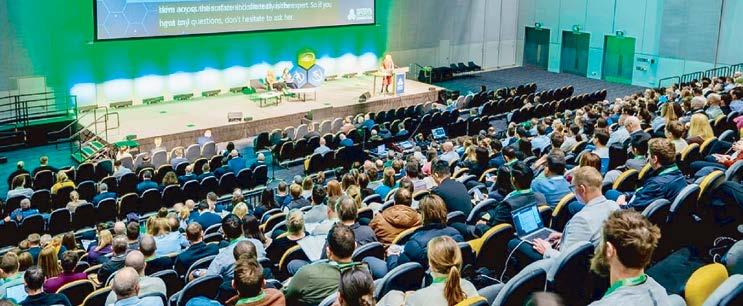
The National Sports and Physical Activity Convention (NSC), taking place on 1–2 July 2026 in Melbourne, brings together the full ecosystem that supports this work – and for local government professionals, it offers a highly relevant and practical opportunity to learn, connect and benchmark.
A key focus of NSC26 is the future of sports facilities, sports grounds and aquatics. Across dedicated conference streams, councils will gain insights into planning and designing facili-
ties for long-term community impact, innovative funding and procurement models, sustainable surface solutions, and strategies to maximise utilisation and participation.
Sessions will explore how to create multiuse, inclusive environments, future-proof infrastructure to meet changing community expectations, and leverage data and technology to support smarter decision-making and asset management.
The program is strengthened by international perspectives, with experts such as Darryl Condon (hcma architecture plus design), Pavit Singh (Ileseum Clubs), Sarah Murray (Recreation Aotearoa) and Mark Bowater (World Urban Parks) sharing global insights and practical
Asthesafetycrisisinearlychildhoodeducation andcarecontinuestogrow,expandingsafeand high-qualitycouncil-runservicescanbetheantidoteto unsafepracticesaccordingtoLocalGovernmentNSW.
Revelations in early April that multiple childcare operators have been shut down due to safety concerns, prompted the body to renew calls for council-run childcare to be supported as the best and safest provider in NSW.
LGNSW President Mayor Darcy Byrne said councils provided more than 300 early childhood education and care services across NSW and had a vastly superior record of safe and high-quality services in comparison to private and for-profit centres.
“The closure of these centres will be very concerning for the families that use them, compounded by the fact the closures were the result of serious safety concerns,” said Mayor Byrne.
“Many families across NSW struggle to find appropriate childcare and when they do, they want to know that their little ones are safe and cared for. It’s that safe and trusted environment that council-run centres are renowned for.”
“Councils in NSW have consistently demonstrated a strong record of providing safe and more affordable services for families.”
“We call on the NSW and Australian Governments to set up a dedicated Local Government funding stream to further expand council ser-
vices which are the best and safest in the early education and care sector.”
Figures from a report by the Australian Children’s Education and Care Quality Authority published in February 2026 show that a greater proportion of council-run ECEC services exceed the National Quality Standards than for-profit services.
Specifically, 38 per cent of state/territory and local government-managed services are rated as “exceeding” the National Quality Standards, compared to 10 per cent for private for-profit services.*
“Local Government is one of the largest early education providers in the country, often providing a service in childcare ‘deserts’ – communities in desperate need where other providers have exited the market.”
“Without more NSW Government support for council-run centres, there’s a real risk that families simply won’t have access to a safe and affordable service for their children.”
*Australian Children’s Education and Care Quality Authority – NQF Snapshot Q4 2025 (published February 2026).
case studies.
With over 150 speakers, 50 plus sessions and more than 30 international experts, alongside a large-scale industry expo, NSC provides a unique platform to connect with solution providers, explore new ideas and build partnerships that can be applied locally.
For councils looking to deliver better outcomes from their facilities, grounds and aquatic centres, NSC26 is a valuable opportunity to gain practical insights and be part of the conversations shaping the future of the sector.
National Sports Convention - National Sports Convention



ByronBayhaswelcomedtoitsnewestCouncillorPeterDoherty.
Peter Doherty from Bangalow was elected to Byron Shire Council with the NSW Electoral Commission making the announcement in late April after a countback of votes from the 2024 Local Government Election.
“This is a great honour and privilege, and I am very excited to step into this role,” Mr Doherty said.
Byron Shire Mayor, Sarah Ndiaye, welcomed Mr Doherty to the Council.
“On behalf of the Councillors and staff I extend my warmest congratulations to Peter on his election and I hope he finds public office as rewarding as I do,” Mayor Ndiaye said.
“I know Peter has been in our public gallery
The election of Mr Doherty followed the resignation of Councillor Asren Pugh in March this year.
before so the meeting process won’t be entirely new and daunting and staff will make sure he has all the support he needs for his new role,” she said.
Council staff will start briefing Mr Doherty on Council processes and procedures.
He will take an oath, or affirmation, prior to the start of his first meeting, which could be as early as next Thursday, 30 April.
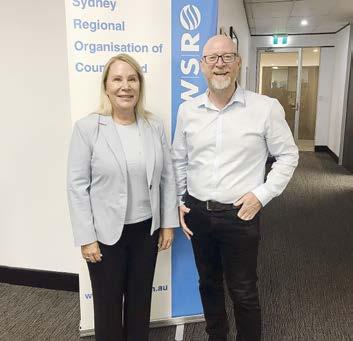
Western Sydney Regional Organisation of Councils (WSROC), the peak body representingcouncilsinGreaterWesternSydney,hasappointedMsFrancineBinns asitsnewChiefExecutiveOfficer(CEO).
WSROC president Councillor Brad Bunting said Ms Binns was a highly experienced executive leader with a career spanning government, aviation, infrastructure, education and membership-based organisations.
“We are very pleased to welcome Ms Binns as CEO,” he said.
“She brings more than 15 years’ experience leading complex, member-focused organisations, with deep expertise in advocacy, strategy, stakeholder engagement and delivering outcomes for members.
“The breadth of Ms Binns’ experience equips her to navigate complex policy environments, build strong multi-stakeholder partnerships, and deliver meaningful outcomes for councils and communities.
“Ms Binns will hit the ground running, with a strong track record of delivering strategic priorities, strengthening organisational performance and ensuring members receive real value. This will be critical as we continue to support our councils and advocate for Western Sydney.”
Over the past year, WSROC has maintained its focus on delivering for members during a period of transition following the passing of former CEO Charles Casuscelli.
“The organisation has continued to deliver high-quality programs, policy and advocacy during the interim period. It is fantastic to now have dedicated leadership in place to guide WSROC’s next phase and ensure we continue to strengthen into the future,” Cr Bunting said.
Ms Binns said she was looking forward to working closely with member councils and stakeholders.
“I’m delighted to join WSROC and work closely with our member councils to support the people and communities of Western Sydney.
“This is a region growing and changing rapidly, and local government is at the
forefront of delivering the services and infrastructure communities rely on,” Ms. Binns said.
“WSROC has a strong record of practical collaboration and effective advocacy. I look forward to building on that foundation—
bringing councils together, strengthening partnerships, and delivering outcomes that matter to our region.”
Ms Binns took up her appointment as WSROC’s CEO on 20 April.
It was with great sadness that we learned that former Blacktown City Deputy Mayor and Councillor Chris Quilkey has passed away.
First and foremost, our thoughts are with Chris’s family, friends and all those who knew him.
Chris was first elected to Blacktown City Council in 2016 and served for two terms, including as Deputy Mayor and, for a period, as Acting Mayor.
A resident of Quakers Hill, he served the community he loved with energy and commitment. An engaged and energetic presence at Council, he focused on representing residents and supporting the City during a period of growth.
Chris had a long record of public service. He worked in policy and legislative roles across the NSW public sector, including in Corrective Services NSW, the Crown Solicitor’s Office and the Attorney General’s Department.
He was also active locally as a junior sports coach and trainer.
Chris made a strong contribution to Council’s work through several committees, including as Chair of the Companion Animals Advisory Committee. He also represented Blacktown at a regional level through the Western Sydney Regional Organisation of Councils (WSROC).
A passionate advocate for Blacktown City, he believed strongly in the role of local government to improve people’s lives. He recognised the diversity of our city and the importance of supporting a growing population.
He focused on practical improvements that mattered to residents, including local infrastructure such as bus shelters that support everyday life.
Those who worked with Chris knew him as someone who understood people. He valued the connections that bring a place like Blacktown City together and the role Council plays in supporting them.
TheCityofJoondaluphasappointedCraigLloydasitsnewChiefExecutiveOfficerfollowinganextensivenational recruitmentprocess.
Mr Lloyd has served as CEO of the City of Whittlesea in Victoria since 2020, leading one of Australia’s fastest growing municipalities through significant organisational reform, major infrastructure delivery and strengthened community engagement.
Mr Lloyd began his career as a police officer in the United Kingdom before moving to Victoria in 2003, where he has worked for more than two decades across local and state government, emergency management and community services.
Prior to joining the City of Whittlesea, Mr Lloyd was Chief Executive Officer at Murrindindi Shire Council and held senior executive roles in Victoria with the City of Greater Bendigo, Metropolitan Fire and Emergency Services Board and the Department of Justice and Community Safety.
He is recognised for his collaborative leadership style, strong governance focus, and com-
mitment to building high performing, community centred organisations.
His experience includes emergency management leadership, digital transformation, customer service improvement and organisational performance.
Joondalup Mayor Daniel Kingston said the Council was united in its decision to appoint Mr Lloyd, who brings experience, values and leadership to guide the City into its next chapter.
“Craig is a highly respected and accomplished local government leader with a proven record of strong organisational performance and positive community outcomes,” Mayor
Kingston said.
“Craig’s experience leading complex organisations, combined with his commitment to innovation, transparency and community engagement, makes him an excellent fit for the City.
“We are entering an exciting period of opportunity and we’re confident Craig will provide
the strategic leadership needed to support our community, our staff and our long term aspirations.”
Mr Lloyd said he was honoured to be appointed as CEO and excited to make the move to Western Australia.
“Joondalup is a vibrant, diverse and forward thinking city and it is a privilege to step into the role of Chief Executive Officer,” Mr Lloyd said.
“I’m excited to build on Joondalup’s strong foundations and work closely with our Elected Members, staff and the community to deliver what matters most to our residents.
“As the gateway to Perth’s northern suburbs, Joondalup plays a vital role as a regional city and economic hub and I look forward to the opportunities ahead as we continue to shape a sustainable and prosperous future together.”
Mr Lloyd will start on 25 May, with the City’s Director Infrastructure Services Nico Claassen to continue as temporary CEO until then.

Around90percentofAustralia’smedicalequipmentneedsareimported,andbyfarthebiggestpurchasersarethe federalandstategovernments,byvirtueofthepublichospitals.We’retalkingsyringes,surgicalequipment,pacemakers, incubators,implants,testingandmonitoringequipmentetc.Theannualmarketisaround$15billion.
The medical equipment suppliers are mostly US, German, Swiss, Italian, Japanese and now Chinese multinationals, and they have local sales operations clustered around our hospitals and research laboratories viz. Sydney’s north shore, Parkville, Clayton and pockets of Brisbane, Perth, Adelaide etc. Some of these operations also manage R&D projects between our researchers and the parent company overseas.
The national shame relates to our failure to commercialise our research and development generally, and specifically in medical research where we have world-class capability. It’s been put in the too hard basket because of perceptions that our local market is too small, our labour costs are too high, and the multinationals have the market cornered.
The last effort was 30 years ago In the 1990s, the federal industry department dipped its toe in the water. Tariff protection was being phased out, and other means of supporting local industry were being investigated. So, the Department commissioned Price Waterhouse (Canberra) to identify the size and nature of medical equipment imports, the suppliers and how the procurement market worked.
It was a first-class report, and it provided the platform to get agreement with the state governments to introduce a national offsets program. It would require overseas suppliers to ‘offset’ 30 per cent of their sales to the government market with R and D or exports. For example, if say Johnson and Johnson sold $100 million into the public hospital market, they’d be required to undertake $30 million worth of local industry support.
It was envisaged that this offsets program would be similar to programs Australia already had in respect of defence, IT, aviation, heavy engineering etc., and where the overseas suppliers were willing to comply.
But medical equipment was a whole new field. The European and Asian suppliers were relatively silent, but the Americans were not used to governments flexing their purchasing power on them. Indeed, I was invited at the time to explain to the Medical Industry Equipment Association how the
ROD BROWN
programwouldwork.Thevenuewasalecturetheatre on the Macquarie University campus. There were about 150 industry executives crammed in, and the US company executives were baying for my blood. I told them that even the redoubtable Bronwyn Bishop (then a shadow Minister) was a strong supporter of the proposed program, although for dubious reasons.
The end of offsets
We pushed on, and there was lots of support from our state equivalents. Then our Minister John Button, who’d make his mark in trying to restructure Australia’s steel and car industries, lost interest. I am reliably informed that the CEO of a major US medical equipment company flew into Canberra to explain to Button that only Third World countries ran offsets programs! This untruth, together with wider US government threats that Australia’s offsets program was in breach of World Trade Organisation rules, began the slide. Treasury and the Productivity Commission, who had constantly argued against industry policies, reinforced the trend to the point that Australia now has very weak industry policies.
Implications for councils
The reality is that there is no one championing the local manufacture of medical equipment, or indeed pharmaceuticals, its sister industry. The way forward is arguably to identify market niches and specific overseas suppliers that would be open to joint ventures with Australian firms or investors. It might involve local manufacturing, R and D or product testing. The next step would be to for-
mulate how a large tender arrangement – say for x-ray machines, incubators or even hospital beds - could be developed via collaboration across say 30-40 hospitals.
Theimpetuscouldbeginwiththelocalcouncils where the multinationals are concentrated. The Northern Sydney ROC or the City of Melbourne might be interested in undertaking some mapping of overseas and local suppliers, and progress to commissioning work on market niches, as above. This process should also identify champions for the issue, and galvanise state governments. The City of Playford (northern Adelaide) might also be a candidate given it track record in manufacturing. Similarly, the councils involved in Brisbane’s emerging manufacturing hubs.
Please contact me for further information. Buddy Franklin dazzles his hometown AbeautifulstoryhasemergedfromtheWAWheatbelt. It involves the Dowerin Football Club (DFC) which had a funding submission knocked back for lights on their footy oval.
After much time and effort in preparing the submission, the locals were dumbfounded at the runaroundtheyendured.So,theytookmattersinto their own hands and enticed ex AFL player Buddy Franklin to return to his hometown from the Gold Cost for a charity match.
Now Buddy is not your average player - he’s an 8 time All Australian, the star full-forward at HawthornandthentheSydneySwans,indigenous,and married to Jesinta Campbell (former Miss Universe Australia). Although he’s now retired and 39 years old, the 3,500 spectators got their money’s worth and by all accounts it was a truly happy and memorabledayforthetown’spopulationof715andothers across the famous Wheatbelt.
The takings from the match were an outstanding $250,000, so I rang Tracy Jones from the DFC who kindly explained that the main revenue sources were AIA Australia (life insurance), local sponsors including $38,000 worth of grain from a grower (love it!) catering and entry fees.
ImulledoverwhethertheDFCcouldnowleverage their new funds into a state or federal program
to upgrade other aspects of the club, but without the aggravation it experienced earlier.
Hopefully I’m not dreamin’.
BuddyhasputDowerin,andindeedtheWheatbelt on the map. While it’s a massive producer of grains, sheep, wool and minerals, few people recognise it has significant social, wealth distribution and lifestyle problems caused by declining population. This stems from four factors - farm mechanisation, the agglomeration economies in Perth, the rise of external (often overseas) buyouts of surrounding farms, and the use of Perth-based contract labour.
It therefore behoves WA and federal agencies to improve their roles in delivering financial and other support for the Wheatbelt’s 40 LGAs and many small towns acting as service centres for the agriculture and mining sectors.
In brief
There are signs that PM Albanese is being dragged into reform agendas by certain of his Ministers. He recently indicated that he was keen for a third term.
Treasurer Chalmers meanwhile waits quietly. Albanese’srulingoutofa25percentexporttax on existing gas contracts - because it might alienate our trading partners who we rely on for diesel and petrol - is a massive and pathetic misstep.
And Senator David Pocock’s recent observation that Australia raises more tax from beer than from offshore gas is not only brilliant politics, but it puts a permanent stake in the ground.
The uptake of renewables means that it now accounts for 51 percent of electricity generation in Australia Meanwhile 360,000 households have installed a home battery over the last 10 months. Pauline Hanson calls renewable energy a scam, while the Liberals continue to push for seven nuclear energy plants.
Go figure.
Rod Brown is a Canberra-based consultant and lobbyist specialising in industry/regional development · Email apdcockatoo@iprimus.com.au
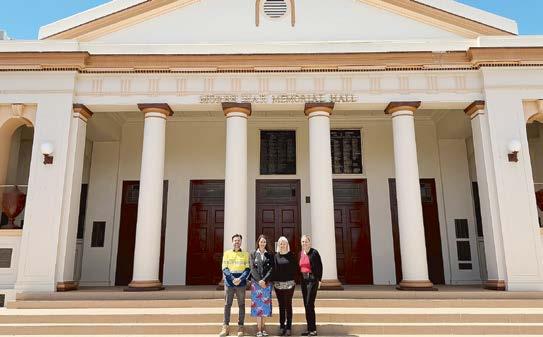
Moree Plains Mayor Susannah Pearse paid tribute to Moree’s grand old dame, the 103-year-old War Memorial Hall, when it was reopened to the public on Anzac Day, 25 April as part of the Moree RSL Sub-branch’s official commemorations.
First unveiled in April 1923, the Hall’s second coming includes multi-million-dollar upgrades for a new acoustic ceiling, fresh paint, all-new air conditioning, a levelled stage, a refurbished kitchen and bathrooms, accessibility and fire safety improvements, chairs and installation of state-of-the-art audiovisual system.
As the town’s dedicated war memorial, it was once called by local media a “Memorial of Freedom” and cost the princely sum of 13,000 pounds to build under the War Precautions regulations at the time.
Mayor Pearse said, “We are delighted to final reopen our iconic Moree Memorial Hall”.
“It is not just a vital community asset but a renowned part of our main street landscape and it will be wonderful to see it filled with people once again,” the Mayor said.
“It was fitting this beloved facility was reopened on ANZAC Day, honouring our war history while opening the doors to a vibrant new era for public arts, culture and community events.
She said the reopening was supported by a soon-to-be-released diverse events program which would bring the space to life over the next 12 months, including comedy, children’s theatre, live music, wrestling, expos, movie screenings, a community showcase and more.
BurdekinShireCounciliscloselymonitoringthedevelopingsituationintheMiddleEastandpotentialimpactstofuel suppliesacrossAustralia,workingproactivelytoprotectessentialservicesandsupportthecommunity.
In mid April the Council’s Crisis Management Team (CMT) met to consider the current situation and ensure Council is well positioned to respond should conditions change.
At this time, Council services remain unchanged, with essential services continuing as normal.
Burdekin Shire Council Chief Executive Officer Mr Matthew Magin said Council relies on
fuel to support day to day operations and critical community services and is planning ahead to manage potential impacts thoughtfully.
“Services such as waste collection, water and sewerage, road maintenance and community facilities are fundamental to daily life in the Burdekin, and Council remains committed to delivering these services responsibly,” Mr Magin said.
“As part of Council’s proactive approach, we are taking sensible steps such as being mindful of fuel use and planning ahead for the possibility of temporary fuel supply constraints. This includes early preparation for how essential services would be maintained if fuel availability became limited.
“These measures help ensure Council remains operationally and financially responsible. Taking a measured approach now ensures Council is prepared should circumstances change.”
To help support our community during this time, Council has added a Fuel Supplies tab to the Burdekin Disaster Dashboard. This provides a central, reliable place for residents to access fuel related updates such as price, without needing to search across multiple sources.
TheCityofCockburnhastakendecisivestepstoplanforbusinesscontinuityasfuelsecurityinWesternAustralia continuestobethreatenedbyongoingconflictintheMiddleEast.
At its 14 April Ordinary Council Meeting, Cockburn Council gave its CEO authority to manage services, projects and facilities in line with the City’s business continuity approach for 2026 fuel supply stocks, until 31 July or a further Council decision.
City of Cockburn Mayor Logan Howlett said the City began investigating potential disruptions to City operations due to current pressures on global oil supply chains, including rising diesel and petrol price rises, in March.
“The CEO has now established a Continuity Management Team (CMT) to develop, oversee and implement a plan if required,”
Mayor Howlett said.
“While rising fuel prices are costing the City an extra $60,000 per month, our fuel supply is currently stable and it remains business as usual at the City.
“The City retains access to fuel supplies and has sufficient fuel reserves to maintain normal operations for two weeks, or longer if operations or services need to be reduced.
“While the situation remains volatile, the City expects fuel supply to remain constrained and prices to remain high for an extended period.
“This is why we have enacted a CMT,
AnewtoolisnowavailabletoTownsvilleresidentstohelp them better understand fuel availability across the local governmentarea.
Townsville’s Emergency Management and Disaster Dashboard has introduced a Fuel Supplies section, allowing users to easily see the Queensland Government’s Fuel Prices API overlaid on a map of Townsville.
Once users click on the Fuel Supplies tab, each clickable icon on the map provides information on fuel availability, including whether fuel is available at petrol stations, how much it costs and when the information was last checked.
Mayor Nick Dametto said the addition to the dashboard would help residents make informed decisions about their fuel use.
“Fuel price and availability is at the forefront of everyone’s minds. It’s an essential part of modern life no matter whether it’s for getting to work, dropping the kids at school, or running
your own business,” Cr Dametto said.
“The reality of the current global fuel crisis is that some areas are facing fuel shortages, but by providing an easy-to-use map for residents we can alleviate some of these fears and reduce panic buying.
“The new Fuel Supplies tab on the dashboard lets you see which petrol stations have fuel as well as prices, so driving from station to station trying to find the most affordable fuel becomes a thing of the past.”
The information is automatically provided from the Queensland Government’s Fuel Prices API and is currently in a trial phase. The information may be affected by environmental conditions, technical limitations or delays in data transmission.
which will enable the City to monitor expenditure in the context of rising fuel costs, and ensure value for money. We will look at service and project adjustments if needed.”
Mayor Howlett said the City recognised it was a challenging time for the community.
“We can reassure the community that the City is working closely with the WA Local Government Association and the State and Federal governments to stay informed and responsive to what is an unpredictable situation,” Mayor Howlett said.
“The City will be primarily guided by State and Federal decixsions in relation to implementing its business continuity re-

sponse. However, changes to supply, pricing, contractor availability or other situations may require the City to act.
“This Council decision ensures the CEO has authority to change service levels and frequencies, including changes to operations and opening hours, such as partial closures, and shifting work locations.
“The CEO’s primary consideration will remain compliance with State and Federal mandates, community safety and the ongoing wellbeing of the City as an organisation, and its community.”













PortWakefieldiscelebratingthesuccessfuldeliveryofamajorsuiteofinfrastructure projects designed to attract visitors off the Augusta Highway while enhancing local amenitiesforresidents.
Known collectively as Port Wakefield’s Cultural Connection, the $2.819 million program of works was guided by community feedback and the staged delivery recommendations of the Port Wakefield Masterplan, transforming key public spaces and reinforcing the town’s cultural identity.
The projects include a significant upgrade of Edward Street and the establishment of a clearly defined town centre ($1.644 million), dredging of the tidal pool ($200,000), replacement of the tidal pool footbridge ($625,000) and establishment of the Indigenous Art Trail ($350,000).
Wakefield Regional Council contributed $700,000 toward the overall program, leveraging substantial external funding support.
This included $500,000 from the State Government’s Open Spaces and Places for People program, $1,000,000 from the Department of Primary Industries’ Enabling Infrastructure program, and a further $619,000 from the Federal Government’s Local Roads and Community Infrastructure Program.
Council Mayor Rodney Reid said the Cultural Connection projects represent a strategic investment in Port Wakefield’s long-term future.
“These projects respond directly to what the community told us they wanted, while also positioning Port Wakefield as a place people want to stop, explore and experience,” he said.
“By improving public spaces, enhancing cultural storytelling and strengthening the town centre, we’re supporting local businesses and building civic pride.”
A signature feature of the Indigenous Art Trail is Winda the Owl, a large-scale sculpture now installed on the corner of Port Wakefield Highway and Edward Street.
The sculpture was designed and constructed by leading Indigenous artist Harley Hall and South Australian artist Mike McInerney, who have collaborated on numerous projects across metropolitan and regional South Australia, including the Minlacowie Water Tank on Yorke Peninsula and the Morphett Road and Anzac
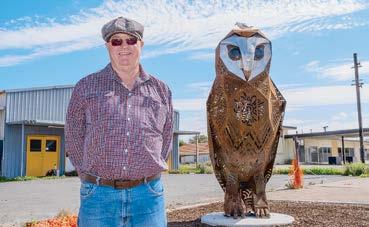
Highway tram bridge.
Mr Hall is a proud Ngarrindjeri, Kokatha and Wirangu man, with strong Kaurna and Narungga bloodlines.
Winda is drawn from a Narungga dreaming story, originating from the cliffs north of Ardrossan, which are visible across Gulf St Vincent from Port Wakefield.
The sculpture also incorporates materials and design elements that reflect Port Wakefield’s layered history.
Winda’s beak is made from copper, and its excavator bucket feet reference the town’s role as a working port that exported copper mined from Burra.
Headlight-style eyes acknowledge Port Wakefield’s motorsport heritage, including the 1955 Australian Formula 1 Grand Prix and the influence of Possum Kipling through the Redex
Round Australia Trials.
Feathers crafted from reclaimed windmill blades sourced from a Yorke Peninsula farm pay tribute to the region’s agricultural origins.
Mayor Reid said Winda the Owl is already becoming a recognisable landmark.
“Winda brings together Narungga culture and Port Wakefield’s working history in a way that is striking, meaningful and uniquely local,” he said.
“It’s a strong first step in what will become an engaging Indigenous Art Trail through the town.”
Further artworks are planned along the remainder of Edward Street as part of the art trail, including smaller sculptures at key intersections and a large mural on the former CFS station opposite the Rising Sun Hotel.
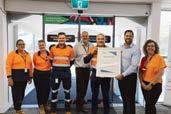
Recognitionofexcellenceinworkplacehealthandsafetyhasbeenacknowledged withtheCityofGreaterGeraldtonbeingawardedaTier3SilverDiligenceinSafety Certificate,thehighestlevelattainableundertheThreeStepstoSafetyProgram.
Delivered by LGIS, the WA local government mutual insurer, the Program helps councils build long term safety performance through system assessments, continuous improvement and by meeting higher maturity and compliance expectations.
Under the program, councils are assessed across six core elements: management commitment, planning, consultation and reporting, hazard management, training and supervision, and volunteer management.
Strong results were demonstrated in management commitment, reflecting closer collaboration between senior leaders and the Workplace Health and Safety (WHS) team.
Significant improvements were also shown in training, supervision and hazard management, with employees taking a more active role in risk assessments and targeted learning opportunities.
The City’s volunteer management practices were also acknowledged whereby volunteers are supported to work safely and meet legislative requirements.
Recognition was also given to the dedication of the City’s WHS and Human Resources teams in driving these outcomes, supported by strong executive leadership, ensuring safety remains a priority across all levels of the organisation.
TheShireofThree Springs,inWestern Australia,continues tostrengthenits administration, managementsystems andcustomerservicein waysthatarepractical, proportionateand responsivetothe realitiesofasmall regionalcommunity.
Over the past year, the Shire has focused on streamlining internal processes to improve efficiency, accountability and consistency. This includes refining workflows, clarifying delegation and reporting arrangements, and making targeted use of digital systems to reduce duplication and administrative burden. The emphasis remains on “right sized” systems that support staff to work effectively without unnecessary complexity.
Customer service is a core priority. In a small community, service delivery is inherently relationship based. The Shire prioritises accessibility, responsiveness and clear communication with residents, ratepayers and local businesses. Staff are encouraged to take a solution focused approach, using plain language and timely follow up to maintain community confidence and trust.
Like many regional councils, the Shire is actively managing the impacts of rising fuel prices through a range of mitigation strategies. Works programs are carefully scheduled to minimise travel distances, reduce repeat site visits and maximise efficiency when plant and vehicles are mobilised. Tasks are grouped geographically where possible to ensure fuel use is both purposeful and cost effective.
Fleet management practices have been reviewed, with preference given to fuel efficient vehicles for administrative and inspection roles and close monitoring of heavy plant use to ensure deployment only where operationally necessary. Idle time is actively discouraged through staff awareness and supervision.
Fuel costs are closely monitored against budget, with price volatility factored into forward financial planning. The Shire is also exploring shared procurement and local supply arrangements to reduce exposure to price fluctuations. Staff are encouraged to reduce unnecessary travel and use remote meetings where appropriate.
Housing remains an ongoing challenge, and the Shire continues to advocate for increased regional investment while exploring innovative service delivery models, including partnerships and social enterprises, to improve outcomes without increasing pressure on rate revenue.
Localgovernmentsareincreasinglybeingaskedtorespondtomorecomplexcommunityneeds,particularlywhere accesstoservicesisinfluencedbydistance,costandtime.
ByMayorRuthButterfield
In Armadale, this has prompted a more deliberate look at how existing services and assets can be adapted to better support the community in practical ways.
The Armadale University Study Hub is one example of this approach.
Located within a repurposed City building in the Armadale city centre, the facility provides free access to study spaces, meeting rooms,
internet, printing and kitchen facilities. It also offers extended hours access for registered users, alongside onsite support from a Centre Manager and Student Support Officers. While the physical space is important, the service model has been the key focus.
The Hub has been designed to provide practical support to students who may not otherwise have easy access to tertiary education, whether due to travel constraints, financial
pressures or competing work and family commitments.
From a delivery perspective, the project brought together multiple parts of the organisation, including infrastructure, operations, community services and communications. It also demonstrates how existing buildings can be adapted to meet current needs, rather than relying solely on new infrastructure.
This type of model reflects a broader shift
in how local governments are thinking about service delivery. There is increasing value in approaches that are place based, responsive and designed around how people actually access and use services.
As demand continues to evolve, initiatives like the Study Hub provide a practical example of how councils can test and implement new service models, while making better use of the assets and systems already in place.
For many Australian councils, grant funding has become a cornerstone of community investment, from upgrading aging infrastructure to delivering new health and recreation services. But as funding opportunities grow, so does the complexity of managing them. More grants means more deadlines, more compliance obligations, more stakeholders, and more risk that something will fall through the cracks.
The challenge is rarely about intent. Councils want to deliver on their grant commitments. The problem is operational. When grant management is spread across shared drives, spreadsheets, and the institutional memory of a few key staff members, scaling up creates compounding risk. A single missed acquittal, an overlooked reporting deadline, or inconsistent milestone tracking can damage relationships with funding bodies and jeopardise future funding rounds.
This is a pattern playing out across local government nationally. Regional councils in particular are navigating a difficult tension: increasing pressure to pursue external funding to offset budget constraints, while working with lean administrative teams who are already stretched.
Dan Pritchard, CEO of SurePact, sees this firsthand.
“Councils often come to us after a difficult experience, a compliance issue, a failed acquittal, or simply the realisation that they’ve grown their grants portfolio to a point where their existing systems can’t keep up. The ambition is there. The tools haven’t kept pace,” he said.
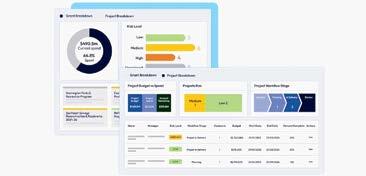
The answer isn’t to pursue fewer grants. It’s to build the administrative infrastructure to manage more of them, confidently. That means moving away from fragmented, manual processes toward a centralised approach where obligations, milestones, and reporting requirements are visible across the whole portfolio, not just to the grants officer, but to senior leadership.
Visibility is the critical word here. When councils have a clear, real-time picture of every active grant, what’s due, what’s been delivered, what still needs to be evidenced, they shift from reactive to proactive. Reporting stops being a last-minute scramble and becomes a straightforward reflection of work already documented.
There’s a reputational dimension to this too. Funding bodies notice when councils report with clarity and consistency. Over time, that track record builds trust and trust translates into stronger relationships, faster approvals,

and genuine competitive advantage when new rounds open.
Purpose-built grant management platforms like SurePact are helping councils make this shift without adding headcount. By consolidating grant data, automating reminders, and standardising reporting workflows, councils can absorb more funding opportunities without absorbing more administrative risk.
The councils managing grants well aren’t necessarily the biggest or the best-resourced. They’re the ones that have treated grants management as a strategic capability and invested accordingly.
To learn more about how councils are streamlining grant management and improving visibility of impact, visit SurePact.com.
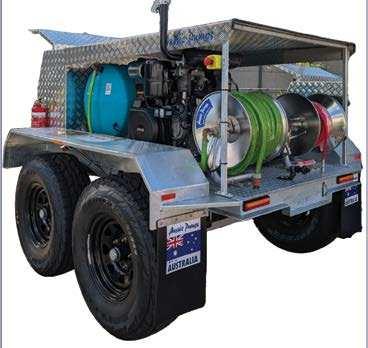
Aussie Pumps are building the most advanced drain cleaners in the world. They supply them for clearing blocked domesticdrains,butalsoformunicipalsewersaswell.
Aussie Pumps new Python Deluxe Jetter offers more capability for local councils in clearing blocked drains.
The new version, powered by Honda’s high tech iGX800 engine delivers more flow.
The Python Deluxe offers the capability to clean up to 9” diameter pipes. Capability is based on 31 lpm flow. The pump, a ‘Big Berty’ Bertolini heavy duty gearbox drive unit, can operate a maximum pressure of 4,200 psi (290 bar).
“It’s that combination of pressure and flow that clears bigger blocked drains fast”, Aussie Pumps Chief Engineer, John Hales said.
The machine completes Aussie’s comprehensive range of Deluxe Jetters.
“By Deluxe we mean we have brought to the market the very best machines you can get.”
The Aussie Python in the new version, comes mounted on hot dipped galvanized trailer, set up with optional 200- or 300-liter tanks. It’s also available in sculpted stainless-steel heavy-duty frame on a truck van or utility vehicle.
It has a 30-litre stainless steel break tank with cut off float and low water cut out pump
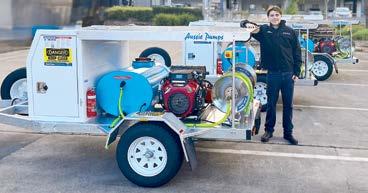
protection. The machines all come with two stainless steel reels, one for keeping the tank filled with a water supply, and the other being the high-pressure hose.
and Nozzle Box with a range of high-pressure
are all included.
“Best of all, export sales have driven big runs of the new Python Deluxe. Which means increased volume provides the opportunity for cost reduction. We pass that to the customers including Local government. Councils love them and we are also very strong with Indigenous communities where, the necessity for supply of clean water and effective sanitation is paramount! Supporting community health and wellbeing is our priority. That’s how we got into this game in the first place”, said Hales.
Free Safety Training
Hales stresses the machine is a Class B unit that requires operator certification. High pressure water blasting and Jetting can be dangerous if operators aren’t properly trained.
Aussie provides a free online training course for users of Class A machines. Aussie’s full information pack on Class A and Class B certification and about Aussie’s free Safety Training Program are readily available from aussiepumps.com.au. For further information, contact Aussie Pumps to get drains cleared faster with the Aussie Python.
WangarattaArtGalleryhaswonsmallprojectoftheyearatthe2026VictorianMuseumsandGalleriesAwardspresented onTuesday28AprilinMelbourne.
The Gallery won the award for their exhibition Overland by Wangaratta born artist Matthew Harris.
Wangaratta Art Gallery secured the win in a highly competitive category, ahead of six other shortlisted projects, including major institutions such as the State Library of Victoria.
The Awards judges noted the exhibition’s significance to Wangaratta, commenting on the Gallery’s win.
“Presented in his hometown, Matthew Harris’s first solo exhibition challenged prevailing historical narratives and marked the first time artworks addressing the Oxley Plains massacre – located just kilometres from Wangaratta – were shown locally. The judges commend the project’s sensitive approach, including accessible programming for children and young people that supported broad community engagement. They applaud such an ambitious and brave undertaking.”
Wangaratta Art Gallery Director, Rachel Arndt, said they were honoured and humbled to receive the award.
“The development and delivery of Matthew Harris’s exhibition, and the presentation of thought-provoking work of this nature, is a significant way for the gallery to honour and respect cultural knowledge, strengthen relationships, address historical injustices, foster trust and create a more equitable community moving forward,” she said.
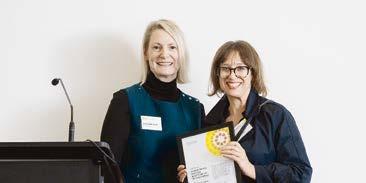
“As evidenced by the strong visitation and by the profound visitor feedback we received this exhibition had real impact within our community. We are thrilled that this has been acknowledged and for the broader recognition of our work.”
The exhibition, Overland was presented at the Gallery between 25 October 2025 - 18 Janu-
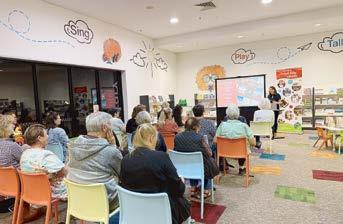
LockyerValleyLibrarieswelcomesbackauthorStella QuinnAuthorStellaQuinnwaswarmlywelcomedback toLockyerValleyLibraries–hersecondvisitinasmany years.
Stella was on hand to discuss her new title, Rain on a Hot Tin Roof, a funny and heartwarming new romance about one derelict farm, two broken hearts and a town that can’t help meddling.
Lockyer Valley Regional Council Libraries and Galleries Portfolio Councillor Julie Reck said it was great to see so many people take the opportunity to turn a page with the renowned author.
“Stella is certainly becoming a regular at our Libraries and it’s always our pleasure to host an author of this calibre.
“You could tell how much the audience enjoyed meeting Stella and discussing the stories, people and places that inspire her writing.
“Stella is at ease talking to her readers and it was great to have her share some behind-the-scenes insights into how the characters and stories come together.
“We’re always looking to host such talented authors and create spaces where readers can connect, be inspired and celebrate the joy of reading.
“This is another great way for the community to enjoy the library as a social space, come along with your friends or your book club and get to know other fellow book lovers
“It was also clear how much our audience enjoyed the evening author talk and rest assured, we will keep this in mind as we continue planning our events for the second half of the year,” Cr Reck said.
ary 2026 was the first solo hometown exhibition of nationally acclaimed artist Matthew Harris and offered visitors a unique opportunity to experience the work of the Wangaratta-born talent.
The Melbourne-based artist creates thoughtprovoking works in painting and sculpture that critically examine social power structures and
historical narratives.
His exhibition, Overland unpacked the lasting impact of colonisation on the Wangaratta region and its First Peoples, presenting a new series of paintings informed by historical documents.
Alongside a new body of work, Overland featured With a Warm Embrace, 2023, a textile sculpture held in the Wangaratta Art Gallery collection.
Created in tribute to Harris’ grandmother, who spent her working life at the Wangaratta Woollen Mills, the sculpture is inspired by her original design for a pair of koala toys handmade from her husband’s clothes and remnant wool. Harris reimagines this familial object using recycled felt and acrylic yarn sourced from the mills, honouring both personal memory and local industry.
The 2026 Victorian Museums and Galleries Awards were announced at a gala ceremony held on Tuesday 28 April at the Australian Centre for Contemporary Art (ACCA), hosted by Janty Blair – a proud Butchulla, Mununjhali and Woppaburra woman, artist, comedian, and playwright. Now celebrating their 32nd year, the Awards acknowledge and highlight outstanding achievements across the museum, gallery, and community collecting sector.
The Mossman Library celebrated its 20th anniversary on Monday 27 April, marking two decades since the muchloved facility opened its doors and replaced the original 1977libraryonMillStreet.
Douglas Shire Mayor Lisa Scomazzon said although parts of the original building remain, the major upgrade in 2006 transformed the library into the modern community space it is today.
“Libraries are such a big part of any regional town,” she said.
“They’re a place where people come together and learn, connect, or just to enjoy a bit of quiet. It really is a space for everyone.”
Miallo resident Judy Coulthard, who worked at the library when the new building opened, said the upgrade came at exactly the right time.
“Libraries were changing fast. They weren’t just places where people borrowed books anymore — we needed to introduce programming like Baby Rhyme Time, story sessions and holiday activities. The old library was only about
200 square metres, so we simply didn’t have the space,” Judy said.
“The new library was around 600 square metres, and that extra room meant we could finally offer the programs people were starting to expect. People could use computers; children could take part in activities — it was a big shift from just borrowing books to something much more.”
Mayor Scomazzon said the library’s role during Cyclone Jasper was a reminder of how important these spaces are.
“After Jasper, the library became emergency place of refuge and it still forms part of our disaster planning,” she said.
“It shows just how trusted and essential this place is for our community.”
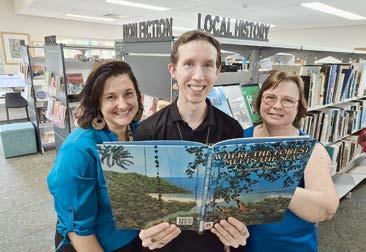
Kingstonresidentsareinvitedtorolluptheirsleevesand getplanting,withourpopularautumnnativeplantgiveaway returningthisMay.
Across four events, locals can collect up to five free native tube stock plants per household, helping to create greener gardens and a healthier urban environment.
Mayor Cr Georgina Oxley said the initiative plays an important role in strengthening Kingston’s natural landscape.
“Boosting our tree canopy and increasing biodiversity across Kingston is a key priority for Council,” Cr Oxley said.
“These plant giveaways are a simple but powerful way our community can be part of that effort, whether it’s adding shade, supporting local wildlife, or simply creating a more inviting
outdoor space at home.
“We know our community values green spaces, and this is a great opportunity to take that one step further in your own backyard, without having to dip into your pocket.”
The program complements Council’s broader work to enhance Kingston’s urban forest, alongside largescale planting, community partnerships, and education initiatives.
No bookings are required, residents can simply attend one of the sessions below and bring proof of address (such as a driver’s licence, rates notice or utility bill). Around 1,000 plants will be available at each event.
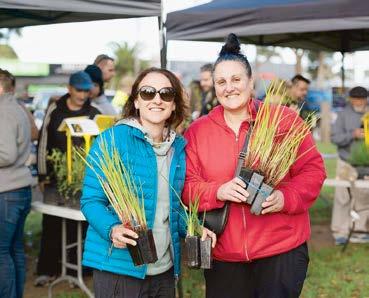
TweedShireCouncil’sIndustryCentralLandSwapatSouthMurwillumbahhasbeenacknowledgedasafinalistin the2026FloodplainManagementAustralia(FMA)ExcellenceAwardsforFloodRiskProjectoftheYear.
The award, sponsored by Insurance Australia Group (IAG), recognises national leadership in major flood risk management initiatives across Australia and New Zealand.
Developed after the devastating 2017 flood caused by ex Tropical Cyclone Debbie, the Industry Central Land Swap addressed long standing flood exposure faced by businesses in the South Murwillumbah industrial area.
Through an innovative land swap model, Tweed Shire Council acquired 14.02 hectares of higher ground industrial land with NSW Government financial support, enabling businesses to relocate away from high risk flood areas.
The project reduced long term flood risk while delivering safer employment land, improved insurance outcomes and stronger economic resilience for the Tweed in the face of climate change.
Local businesses played a central role in shaping the project through a comprehensive expression of interest process, ensuring strong governance, economic sustainability and long term commitment to growth within Tweed Shire.
As the climate changes local businesses are being encouraged to plan for extreme weather events, with a practical workshop in Wangaratta in May, focused on businesscontinuityandemergencypreparedness.
The free Prepare Your Business for Extreme Weather workshop will be held on Thursday, 21 May, from 7am to 10am at the Wangaratta Performing Arts Centre.
Storms, heatwaves, bushfires, and flooding are becoming regular challenges across the region, as climate change increases the frequency of such extreme weather events, often disrupting operations with little warning. The workshop aims to help businesses identify risks early and put in place clear, workable plans before disruption occurs.
Participants will be guided through the key elements of an Extreme Weather Preparedness Plan, with Program facilitator, Sam Hicks, a small business advisor to businesses across North East Victoria. Sam encourages small businesses to join as:
“Strong local businesses build strong communities; it’s as simple as that. These workshops are about supporting our local businesses to be better prepared, not just understanding business continuity but also starting their own plan.”
Mayor Irene Grant said preparation was key to business stability during weather-related disruption.
“Severe weather is part of operating a business in our region. A clear continuity plan helps businesses protect staff, manage disruption, and make informed decisions when conditions change.”
The workshop will also feature short presentations from guest speakers with local and industry experience, including emergency services, insurance specialists, and regional business operators. Speakers will remain involved throughout the session to provide practical input as participants develop their plans.
Guest speakers include: Glenn Mercer, Community Resilience Coordinator North East, SES; Amanda Smith, Community Engagement Coordinator, CFA; Stacey Higgins, Account Manager North East Victoria, Community Insurance Solutions; Greg Croke, Managing Director, Ellerslie Hop and Clem Briggs, Risk and Safety Manager, Brown Brothers.
The workshop is free, but registrations are required. Places are limited. To register or for more information, visit www.investwangaratta. com.au/
The Industry Central Land Swap has been recognised by all levels of government as an innovative and cost effective flood risk management solution that significantly reduces flood exposure, damage costs and disruption to both business operations and essential Council services.
Tweed Shire Council General Manager Troy Green said being a finalist in the award recognised a step change in how flood risk can be managed.
“Recognition as a finalist in this prestigious award acknowledges a project that goes beyond traditional flood mitigation to deliver real, long term resilience for our community and economy,” Mr Green said.
“By relocating businesses and essential Council services out of high risk flood areas, we have reduced future damage, protected livelihoods and made a strategic investment in
the Tweed’s economic future.”
Tweed Shire Mayor Chris Cherry said the project demonstrates how communities can respond proactively to climate risk.
“This project is about protecting people, jobs and the places that matter to our community,” Cr Cherry said.
“We know floods will continue to affect the Tweed, but this national recognition shows that with the right partnerships and long term thinking, we can reduce risk and build a safer, more resilient future for generations to come.”
The council was also a participant in the land swap, relocating its works depot to a new site within the Industry Central development. The new depot represents an intergenerational investment in resilience, delivering a critical asset that supports continuity of essential services during future flood events.
CircularHeadCouncilwillhostaDrySeasonReadiness Roadshow in May 2026, bringing farmers, industry expertsandsupportservicestogethertohelpprepare fordryconditionsandbuildlong-termfarmresilience.
The roadshow will travel from Marrawah to Smithton to Forest over two days, with practical, informal sessions focused on drought preparedness, seasonal risk and farmer wellbeing. It’s about good food, real conversations, and farmers learning from each other.
Farmers will hear directly from other producers who’ve lived through dry conditions, including King Island farmers sharing their experience from the 2023–2024 drought.
Local veterinarian Neil Leighton and other industry experts will also provide practical advice and support.
Circular Head Mayor Gerard Blizzard said the roadshow is about backing local farmers and strengthening connections across the region.
“Our farmers are the backbone of this region and a key part of Tasmania’s food bowl,” the Mayor said.
“This is about sharing knowledge, building resilience, and making sure people know what support is out there before conditions get tough.”
Circular Head sits within one of Tasmania’s most productive agricultural regions, the Cradle Coast, with around 16 per cent of the state’s farmland producing about 41 per cent of agricultural output and 51 per cent of Tasmania’s dairy production.
Mayor Blizzard said the program responds to local needs.
“Research shows our region has lower drought resilience than other parts of Tasmania,” he said.
“This is about practical support, real conversations, and helping farmers stay ahead of dry conditions.”
The roadshow is supported by the Tasmanian Regional Drought Resilience Grant Program and aligns with the North-West Tasmania Regional Drought Resilience Plan. Farmers, agricultural businesses and rural landholders are encouraged to attend.
Sessions are informal, practical and focused on real experience and useful information.
PenrithCityCouncilhascompletedessentialupgradestothenorthernfieldsatMulgoaRiseinGlenmorePark,delivering improvedturfqualityandbetterfieldperformanceforlocalfootballplayers.
Mulgoa Rise is one of the most heavily used venues in the Nepean Football Association’s 32-club competition. The removal of existing turf, enhancing soil quality and installation of new turf are essential upgrades to sustain the facility’s intensive use.
Penrith Mayor Todd Carney welcomed the completion of the works and said the improvements will benefit the community for years to come.
“The upgrades at Mulgoa Rise are vital to support the continued use of the fields at such a high frequency,” Cr Carney said.
“Maintaining high-quality playing surfaces at Mulgoa Rise ensures athletes can train
and compete safely, while keeping the venue ready to meet the needs of our growing community.”
The project was proudly funded by Penrith City Council in association with the NSW Government.
Member for Badgerys Creek Tanya Davies said the completed Mulgoa Rise field upgrades would deliver lasting benefits for the local community.
“I’m pleased to have supported Council’s Local Small Commitments Allocation grant program application for the renovation of the sports field surfaces at Mulgoa Rise and am thrilled that this project has come to fruition,”
Ms Davies said.
“It supports our community’s competitive and leisurely use of the fields and meets the high-quality standard that our locals deserve.”

InthenorthwestpocketofBaysideCityCouncil’smunicipalboundary,somethingveryspecialishappening.
Yalukit Willam Nature Reserve is a transformative project. The former golf course-to-nature reserve conversion is a significant addition to the local open space network.
Through returning the land to be more reflective of its original natural state, the reserve is creating a refuge and place of tranquillity for both wildlife and people.
The 2.5km network of paths meander through the reserve, enabling visitors to explore the unique reserve elements. Wildlife sightings are frequent, with increased migratory small bush bird stopover-times already being observed.
The Grassy Woodlands is a terrestrial habitat, dominated by Eucalyptus canopy over an open grasslands’ understorey with clustered shrubs, providing important foraging, nesting, breeding, and roosting habitat for a wide range of woodland birds, insects, and small reptiles.
The Wildflower Meadow incorporates more than 18 wildflower and 20 indigenous grassland species. Designed in collaboration with Melbourne University’s School of Design and School of Ecosystem Sciences, seasonal
changes bring contrasting colours and abundant insect activity.
The expanses of open water flowing through the Chain of Ponds mimics the natural cycle, receding in summer and filling again in autumn and winter. The ponds, billabong, soaks and aquatic planting attract water and amphibious life, and insects to bolster the food source for wildlife.
The tranquil and stunning urban Wetland sits on 40 per cent of the southern reserve area, and will provide critical habitat for wild-
LatrobeCityMayorhasurgedstateandfederalgovernments toputoilfrombrowncoalbackontheagenda.
Mayor, Councillor Sharon Gibson, has urged both the Victorian Government and Federal Government to put the prospect of producing oil from brown coal back on the political agenda as one possible solution to the nation’s current fuel crisis.
“There is strong community backing for new energy opportunities in the region, and we have the natural resources and existing skilled workforce for this kind of innovation,” the Mayor said.
“Latrobe City, with its long-standing expertise in energy production, existing infrastructure for carbon capture and ample brown coal reserves, stands ready to mobilise key stakeholders to get the conversation started.”
The call comes as Australians continue to face high fuel prices at the bowser and political leaders grapple with finding a long-term solution to the nation’s fuel security problem.
The Mayor said with the right support, the Latrobe City region could help Australia achieve energy independence and fuel self-sufficiency which would bolster the nation’s sovereign capabilities.
The concept of converting brown coal into oil is not new, having been explored by big business in Latrobe Valley several decades ago before ultimately being abandoned as it was uneconomic at the time and lacked government support.
“With current fuel shortages and price increases impacting on families, farmers and industries, it’s time to revisit this opportunity with fresh eyes,” the Mayor said.
The Mayor said the immediate focus for all levels of government must be on practical, scalable solutions.
“Producing oil from brown coal presents a real opportunity to address the nation’s fuel crisis while at the same time boosting our regional economy which will come under even further strain with the impending closure of the power stations in a few years’ time,” she said.
“With no clear end to the fuel crisis in sight, both state and federal governments need to open their minds to exploring innovative approaches.”
“Exploring the opportunity of producing oil from brown coal doesn’t mean abandoning sustainability goals. Rather, it would be a commitment by all levels of governments to exploring innovative and diverse solutions to help shore up our nation’s fuel security for the long-term future.”
life, and new vegetation habitat zones. Recently, Bayside City Council started releasing water into the remarkable urban wetland. With Elster Creek’s water flow restored, specialist horticulturalists are busy planting the reserve’s approximate 200,000 new terrestrial and aquatic plants, and 1,900 trees.
The wetlands act as a flood retarding basin helping to reduce flood risk, while naturally filtering pollutants and sediments from stormwater. By integrating sustainable water management practices, water quality is improved before its reuse within the reserve, irrigation for the adjacent sports fields, or release into Port Phillip Bay.
When the wetlands are holding adequate water levels, the beautifully designed cascades will create a waterfall between the two wetland ponds.
The wetland islands further support the reserve’s biodiversity, providing new habitat and refuge areas for local and migratory wildlife, including aquatic bird species most vulnerable to larger threats.
Works have recently commenced on the construction of a visitor centre (the Gateway
Building) The visitor centre will include an exhibition space, a community room and cafe and kitchen facilities, with visitor information guides, interpretive signage landscaping and connectivity to the wider reserve.
Positioned as the major symbolic entry into the reserve, the Gateway Building visitor centre will provide a threshold as visitors move from the busy Nepean Highway into the unique tranquillity of the urban oasis.
Designed to be a welcoming meeting point and gathering space (and conveniently close to various public transport options), the innovative three-part pebble-like building design integrates the surrounding flora and fauna, and the sensitive ‘Caring for Country’ design signifies two key themes in the masterplan: ecology and connection.
The Wetland and Gateway Building projects at Yalukit Wilam Nature Reserve are led by Bayside City Council. The Australian Government is providing $10,000,000 towards the design and construction of the Gateway Building visitor centre.
For more information about the transformation, visit Bayside City Council’s project page.
Following its success as the 2025 national winner of the Keep Australia Beautiful Tidy Towns Awards, Launcestonisproudlyhostingthe2026AustralianTidy TownsAwardsDinner–andlocalcouncils,community groups and commercial operators have been invited tojointhecelebrations.
The prestigious 2026 Awards Dinner will be held at the historic Albert Hall on Saturday 16 May 2026 from 6pm to 10pm.
It forms the centrepiece of a three-day national event that will bring together sustainability leaders, state and territory finalists, and some of Australia’s brightest minds in environmental stewardship, waste diversion, the circular economy, resource recovery and recycling.
Attendees will have the rare opportunity to network with national changemakers, hear inspiring stories from across the country, and celebrate the communities leading the way in local pride and environmental innovation.
City of Launceston Mayor Matthew Garwood said the event would be a must-attend for any organisation passionate about sustainability.
“Hosting the national Tidy Towns Awards Dinner is a huge honour for Launceston, and a great opportunity to show off what makes
our city special while connecting with people doing great work right across the country,” Mayor Garwood said.
“Whether you’re a council leading smart environmental projects, a community group getting stuck in on the ground, or a business pushing into the circular economy, this is a great night to celebrate, swap ideas and make some really valuable connections.”
Keep Australia Beautiful CEO Val Southam said it was exciting to be bringing the national awards presentation to Northern Tasmania.
“Keep Australia Beautiful is delighted to host the 2026 National event in Launceston, the previous national award winner for the Australian Tidy Towns Sustainability Awards,” Ms Southam said.
“We look forward to bringing national representatives together in Launceston to demonstrate, celebrate and share community sustainability initiatives.”
CityofParramattahasbeenrecognisedasaGoldPartnerofSustainabilityAdvantage,thefirstcouncilinSydneyto reachthisstatus,settingthebenchmarkforoutstandingleadershipandachievementsinenvironmentalpractices.
Theprogram,deliveredbytheNSWDepartment of Climate Change, Energy and the Environment and Water (DCEEW), supports medium to large organisations on initiatives that make a positive impact to the community.
City of Parramatta Lord Mayor Cr Martin Zaiter said Council’s environmental initiatives make sure the community and environment remains top of mind.
“We’re proud to set the gold standard in sustainability, not only within our community but in our day-to-day practices and services at Council,” Cr Zaiter said.
“As we grow into a global City, we need to make sure we are building infrastructure and creating resilient communities, not only now, but for future generations to come.”
“This is why we created our Environmental Sustainability Strategy, to help us respond to potential challenges and opportunities for urban resilience.”
Council has committed to a 75 per cent reduction in corporate and community carbon emissions by 2038.
Cr Zaiter said the City of Parramatta was the first council in Western Sydney to achieve carbon-neutral certification in 2023.
“We’ve worked hard to reduce our carbon footprint across our City with our libraries, community centres and carparks increasingly powered by solar energy,” Cr Zaiter said.
“The iconic PHIVE building in Parramatta Square, which also achieved a 6-Star Green Star rating, is completely powered by renewable energy and is an example of Council’s leadership in sustainable infrastructure.”
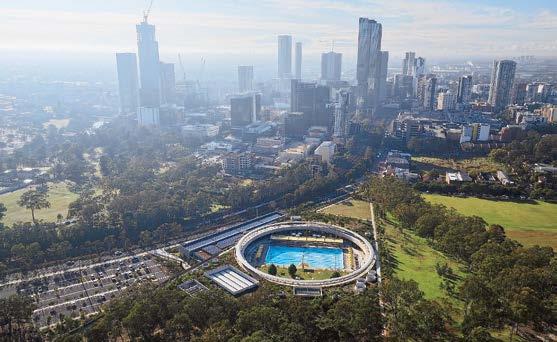
theair.
RedlandsCoastbusinessesandindustryleadershavecometogetherataspecialeventinAlexandraHillstoshare ideas,networkandforwardplanfortheBrisbane2032OlympicandParalympicGames.
The event, which also marked the start of Queensland Small Business Month, was hosted by Redland City Council with support from the Redlands Coast Chamber of Commerce.
Mayor Jos Mitchell said helping local businesses get Games ready now would ensure they were well positioned to capitalise on future opportunities.
“We are now well and truly on the runway to the Brisbane 2032 Olympic and Paralympic Games, making this an important time to work collaboratively and think strategically about how we can make the most of this unique opportunity,” the Mayor said.
“As a Co-Host City, the aim is to ensure the benefits flow through the local economy and into our businesses not just before and during the Games, but also well after 2032.”
Special guest speakers at the event in-
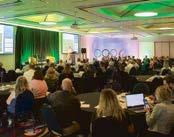
cluded Dominique Lamb, Director of Community Affairs from the Brisbane 2032 Olympic and Paralympic Games Organising Commit-
tee, and Dyan Currie AM from Torch Advisory Group.
As well as having the opportunity to hear insights from these industry leaders on emerging opportunities associated with the Games, attendees were invited to share their ideas and priorities to help inform Council’s Redlands Coast 2032 Draft Legacy Roadmap.
“This roadmap is currently being developed by Council with the Redlands Coast 2032 Legacy Working Group and is aimed at amplifying the social, economic, cultural, environmental and other benefits of the Games,” the Mayor said.
“We want to ensure the roadmap is a representation of our city’s collective goals and aspirations, which is exactly why the legacy group has been canvassing insights and ideas from key stakeholders across a broad range of

sectors.”
With the event also being held during Queensland Small Business Month, the Mayor thanked the Redlands Coast Chamber of Commerce for its support along with small and family operators for their ongoing contributions to the city and the local economy.
“Collaboration remains key in the lead up to the Games and I thank the Redlands Coast Chamber of Commerce for its support to deliver this event,” the Mayor said.
“Local businesses play an important role in attracting investment into our city, employing local people, and producing the goods and services our growing city needs.
“As a small business friendly Council, we remain committed to making it easier to start, run and grow a business here on Redlands Coast – both now and into the future.”
Australia’smostsuccessfulWinterOlympian,JakaraAnthonyOAM,hasbeenpresentedwiththeinauguralGeelong MedalbyMayorStretchKonteljOAMatanofficialceremonytoday.
A resident of Barwon Heads, Anthony won the dual moguls final at Milano Cortina 2026, becoming the only Australian Winter Olympian to win two gold medals. She won her first gold medal in the moguls event at Beijing 2022.
Achieving gold in the dual moguls event at Milano Cortina was a strong comeback following adversity and an eighth-place finish in the previous moguls event.
The new Geelong Medal is awarded by the Mayor of the City of Greater Geelong to recognise the extraordinary achievements of a local resident.
Presented at Wurriki Nyal, the medal was awarded in the presence of councillors, local members of parliament, and other local dignitaries.
Mayor Stretch Kontelj OAM said Anthony was a fitting recipient for the medal.
“Our City couldn’t be prouder of Jakara Anthony,” Mayor Kontelj said.
“She has shown an incredible level of dedication to the sport of freestyle skiing, and her efforts have now been recognised twice on the world stage.
“Like many Geelong residents, I was cheering Jakara on live in February; she is an inspiration to us, and reflects everything that the new Geelong Medal stands for.”
Jakara Anthony OAM said returning to Greater Geelong was a great feeling.
“It’s been really exciting to get home post Olympics and share the medal with everyone and come to events like this, receiving the Geelong Medal...it’s super special,” Ms Anthony said.
“What’s cool about the Greater Geelong region for young athletes is just how active the
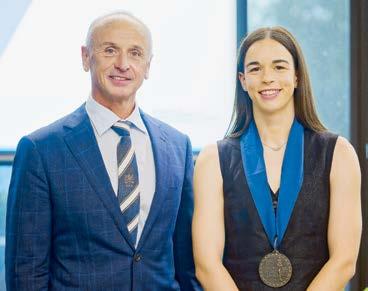
lifestyle is down here, and how many sporting opportunities you have, all the kind of same opportunities you would have in a bigger city, but you’ve also got the coast just half an hour away, or for some people living right on it.
“I’ve been living down this way since I was
about three years old...getting to live that coastal lifestyle with such great people around, even though I spend most of my life at the snow, it’s a bit of a contradiction, but I wouldn’t have it any other way.”
Anthony’s advice to young people was

to take opportunities and try many different things.
“Whether that’s sport, whether it’s school, you don’t know when you’re going to find that one thing, that you truly love and that you decide you want to pursue,” she said.
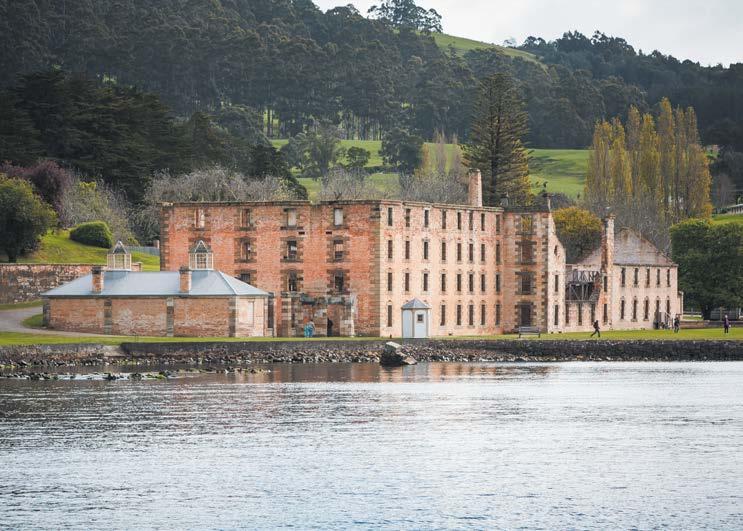
Local Government Focus is a highly regarded, independent national newspaper and website reporting on the key issues that impact this vital sphere of government. Have the Digital Edition sent to your device every month... It’s FREE