





















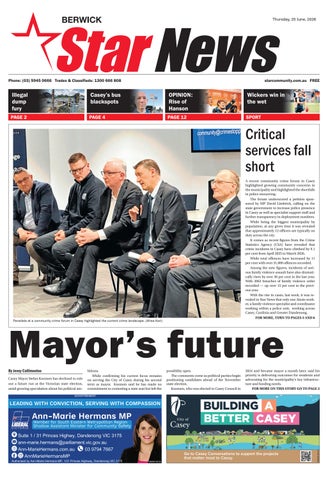
A recent community crime forum in Casey highlighted growing community concerns in the municipality and highlighted the shortfalls in police resourcing.
The forum underscored a petition sponsored by MP David Limbrick, calling on the state government to increase police presence in Casey as well as specialist support staff and further transparency in deployment numbers.
While being the biggest municipality by population, at any given time it was revealed that approximately 12 officers are typically on duty across the city.
It comes as recent figures from the Crime Statistics Agency (CSA) have revealed that crime incidents in Casey have climbed by 9.1 per cent from April 2025 to March 2026.
While total offences have increased by 11 per cent with over 31,000 offences recorded.
Among the new figures, incidents of serious family violence assault have also dramatically risen by over 30 per cent in the last year. With 3963 breaches of family violence order recorded — up over 15 per cent to the previous year.
With the rise in cases, last week, it was revealed to Star News that only one Alexis worker, a family violence specialist and coordinator working within a police unit, working across Casey, Cardinia and Greater Dandenong.
FOR MORE, TURN TO PAGES 3 AND 6
By Jensy Callimootoo
Casey
2024 and became mayor a month later, said his priority is delivering outcomes for residents and advocating for the municipality’s key infrastructure and funding needs.
FOR MORE ON THIS STORY GO TO PAGE 2






By Violet Li
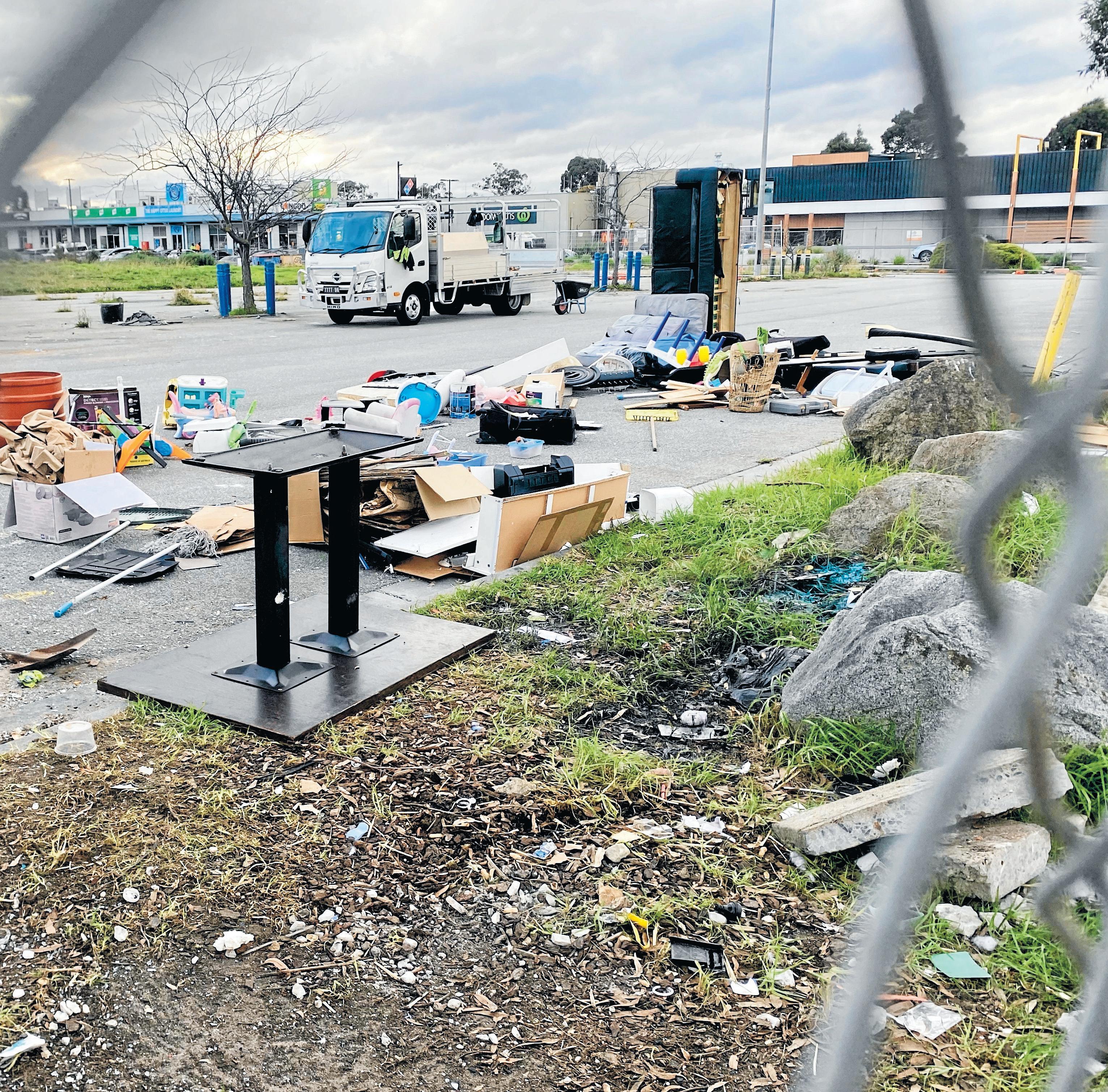
Hampton Park residents and traders are frustrated at the regular illegal rubbish dumping at their business centre.
The issue was highlighted at the June Casey Community Meeting by Mayor Cr Stefan Koomen when a new Hampton Park Central Development Plan was endorsed. He noted community concerns about rubbish dumping and unsightly private land in the Hampton Park Centre, and he called on landowners in the centre to maintain their properties.
Casey Council has advised that illegal rubbish dumping concerns have largely been linked to clothing donation bins previously located at the Hallam Road frontage of the old Coles site (65 Hallam Road), on private land near McDonald’s.
These bins attracted large volumes of donated items, as well as other household goods, which continued to be left behind even after the bins were removed.
Local resident John Butterworth said the dumping had become more frequent over the past six months.
“It’s definitely an eyesore. It’s not a good look for the community, and us as locals, we don’t appreciate this sort of stuff,” he said.
“People need to take their rubbish with them, be responsible and respectful to other people in the community.”
Mr Butterworth said he believed the rising cost of disposing of bulky items was one reason people were dumping waste illegally.
“I think a lot of it’s to do with the costs of removing things like concrete. Even a mattress or something is like $50 to take to the local tip now,” he said.
“People just can’t afford it. It’s economics. It’s a sign of the times. People are battling a bit more financially.”
However, he said the waste created safety concerns, especially for children walking through the area.
“You could get anything, like needles, and you don’t know what’s amongst this,” he said.
“I’ve got three daughters, and they regularly walk around this area. It’s a central area, so from a security point of view and just so they are safe physically, it’s a concern.”
Chingu Cafe owner Sangkyu, who has been running his business in the centre for about five months, said rubbish had been appearing regularly near the site.
“Probably twice a week, three times a week. A lot,” he said.
He said customers had also raised concerns about the condition of the area over the past two months.
“Our regular customers are all from the neighbourhood. They all know each other, so they just kept on mentioning it,” he said.
Sangkyu said the dumping was not limited to one spot, with people also using shop skip bins in the area.
He said more action was needed to stop illegal dumping.
“Council should actually take action,” he said. “Someone who does it in the wrong way has to cop a hefty fine.”
Mayor Cr Koomen visited the old Coles site during the week of 15 to 19 June, and he said he was very disappointed by the amount of dumped rubbish.
But he noted that following the notices to comply, fencing had now been installed, and the rubbish had been removed.
Mayor Cr Koomen said Council had also received complaints about rubbish left at other parts of the shopping centre, including near the
Salvos, where dumped items could block access.
“It can actually impact residents,” he said.
“There’s a gentleman, Peter, who has a wheelchair, and he can’t get through because of that.
“Creating a better Hampton Park Central requires a shared effort, and Council is calling on property owners to take greater responsibility for maintaining clean, safe and welcoming spaces.”
Sandra Le, the landowner of the old Coles site, said she had acted after becoming aware of the dumping and had spent close to $10,000 cleaning the site.
She had contacted the Council to ask whether any support was available because she paid rates on the land but was told the rubbish was on private commercial land.
She said the high cost of rubbish disposal was contributing to illegal dumping.
“When you make it too expensive, where are people going to dump the rubbish?” she said.
Ms Le said she had always complied with Council notices when they had been issued.
“They have to give you a Notice to Comply. That’s how the process is. If I don’t comply with it, then they can give me a fine,” she said.
“But every time they have given me a Notice to Comply, obviously because I’m not down there all the time, when I do get a Notice to Comply, I have always complied.
“It’s costing me thousands and thousands of dollars to rectify these problems. I want to keep the place clean too.”
Ms Le said fencing would remain around the area while she worked through planning matters for the site.
She said she had already received a planning permit but was now seeking to amend it, including for another fast-food business, after construction costs increased.
She said the earlier endorsed permit process
had taken about 10 months, which she believed was too long.
“We’re in the process of lodging that amendment, and now let’s wait and see how long that’s going to take for them to issue that permit,” she said.
Council has advised its Litter Enforcement and Local Laws teams were aware of litter hotspots across Casey and used a range of approaches to address illegal dumping, including proactive patrols, covert cameras and witness statements.
Council encouraged residents to manage waste responsibly at home, including by donating good-quality items through appropriate channels and disposing of excess clothing correctly.
Residents are encouraged to report littering or illegal dumping via Snap Send Solve or through the Council’s online reporting form at: casey.vic. gov.au/litter.
By Jensy Callimootoo
Casey’s mayor Stefan Koomen has responded to state-election candidacy rumours, telling Star News that he is focused on his second term as mayor and representing the City of Casey as a councillor.
While he dismissed the whispers, he did say that if an opportunity arose to participate in the upcoming election, he may consider it.
The growing speculation comes as Labor is lining up possible candidates in the region.
The current Narre Warren South MP Gary Maas recently announced he would not recontest the seat in the next election for various reasons, including his commitment to his two daughters.
Koomen ran for councillor as a self-described
independent in 2024.
At the time however, he was transparent that he had been a longtime Labor member and previously worked with Dandenong MP, Gabrielle Williams, now Minister for Transport Infrastructure and Public and Active Transport.
Shortly following Koomen’s election win for the Waratah ward, Koomen was unanimously voted into the position of the first Mayor in over four years. In 2025, he was again voted in for his second term as mayor by all 11 councillors.
A central aspect of his campaign was his advocacy to save and revitalise the Doveton Pool. An achievement he continues to take pride in.
Maas has held the seat for two terms since 2018. Prior to that, since 2002, the seat has been a Labor stronghold.

When Star News enquired about his possible successor following his resignation, Maas said he had his suspicions of the possible candidate but “didn’t know for sure”
“But look, whoever it is, I will be there,” he said.
“Whoever the party selects, I will be there supporting them and helping them to win Narre Warren South.”
While Koomen reiterated to Star News that there was no weight to whispers of him running as a candidate for the upcoming state election, he did emphasise the importance of local representation in Parliament.
He stated that it was crucial that a candidate understood the region as well as addressing what mattered to the community they represent.
“They [the candidate] need to be a voice for residents, “ he said.
Five months out until the November election, despite the building anticipation, Labor is yet to announce official candidates for the region.

By Afraa Kori and Jensy Callimootoo
A petition calling for greater police resources in the City of Casey has been sponsored and is now seeking further community backing amid growing concerns about crime.
Sponsored by MP David Limbrick, the petition calls for an increase in police presence in Casey as crime numbers have spiked 9.1 per cent compared to the previous year with 23,284 criminal incidents reported from April 2025 to March 2026.
The petition calls on the Victorian Government to “substantially” increase the number of police officers and specialist support staff deployed in Casey.
This would work to level the number of working officers to align with Casey’s population size and crime rate.
It also asks for a public report on minimum deployment levels.
While crime numbers are rising at a slower rate than previous years in Casey, according to the petition, the Police Service Area across the city has operated with as few as 12 officers on duty at any one time.
It comes as the police force in Victoria continues to grapple with staffing shortfalls, reporting vacancies of 1500.
At a Libertarian Crime forum that took place in Casey on Monday 22 June, Casey Residents and Ratepayers (CRRA) president, Anthony Tassone said that police visibility and resources have not kept pace with the growth of crime.
Calls for additional safeguards for the community come at a time of heightened concern, as Clyde North Police Station remains closed to the public.
The long-debated facility opened up late last year, and while officers are deployed from the station, the community is advised to attend the neighbouring Cranbourne Police Station.
“CRRA has been raising this since the station first opened. Our position has not changed: residents were promised a working police station, not
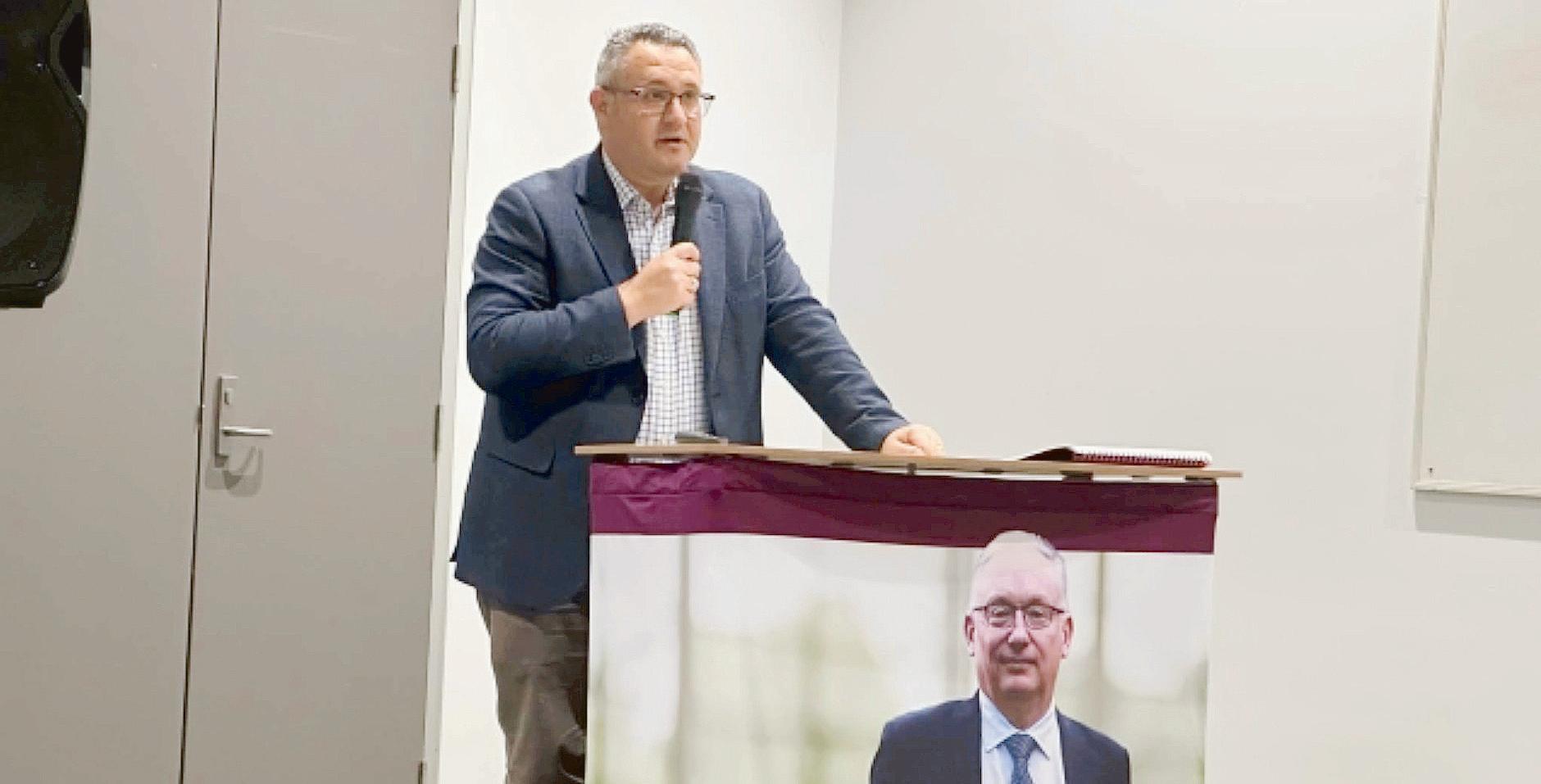
just a building with a closed door,” Tassone said.
“This has never been about politics. It’s about a fast-growing community getting the level of policing presence and access it was promised.”
Newly released crime data revealed that Clyde North is among Casey’s top five suburbs for crime incidents in the last year.
Cranbourne, Narre Warren, Berwick and Hallam are also included in the top five.
The figures also revealed that motor vehicle theft, family violence incidents, including serious assault, as well as ‘other thefts’ are some of the top crimes in Casey.
Prior to the release of crime statistics and a parliamentary petition, a VicPol member revealed at last month’s council’s crime forum, that there are only 12 police officers available on shift to cover the City of Casey.
The “shocking” figures were shared in front of local traders, community safety officers from the council, Neighbourhood Watch and Crime Stoppers representatives.
Other attendees included Federal Bruce MP Julian Hill, Berwick MP and Shadow Minister for Police and Corrections Brad Battin, and Libertarian MP David Limbrick.
“I was rather shocked…The idea that there are only 12 police officers there just seems incredible to me,” Mr Limbrick said.
“To put that in context, one of the things they said was that the population of the City of Casey is not far different to that of the entire state of Tasmania.
“A lot of them (retailers) said people (offenders) would just come in, especially to liquor shops, steal their products and walk out the door. They do not care that there are CCTV cameras there.
“They know that the police will not turn up in time. It is too dangerous for the staff to intervene.”
Victoria Police declined to comment on local police numbers. The petition is at parliament.vic. gov.au/get-involved/petitions/increase-policedeployed-in-the-city-of-casey
By Violet Li
Casey’s crime rate has surged by 9.1 per cent, defying Victoria’s first overall drop in crime in the past four years.
Burglary and break-ins jumped by 53 per cent in Berwick, and theft surged by 44 per cent in Hallam, as Casey’s latest crime figures show crime pressures spreading across major suburbs.
The latest Crime Statistics Agency Victoria figures for the year ending March 2026 have shown that Berwick recorded one of the most striking rises with burglary and break-ins up 53 per cent compared with the previous year, from 219 to 335.
Among its offence subgroups, the number of residential aggravated burglaries has increased by 113.6 per cent from 59 to 126, and non-residential non-aggravated burglaries by 80 per cent from 50 to 92.
The suburb also recorded a 22 per cent increase in theft, driven largely by motor vehicle thefts and thefts from motor vehicles.
Hallam also stood out in the latest figures, with theft rising by 44 per cent, with thefts from motor vehicles and thefts from a retail store accounting for much of the rise.
In Narre Warren, theft rose by 27.2 per cent, and in Cranbourne, 14.8 per cent.
Statewide, Victoria Police noted that aggravated home burglaries have steadily declined by 19.9 per cent.
However, they remain well above traditional levels for the State (23 per cent increase over the past three years).
Car thefts have stabilised year-on-year with only one per cent increase statewide, but the Victoria Police stated that the overall number is far too high (24,424) and is more than double what it was four years ago.
Berwick MP and Shadow Police Minister Brad Battin noted that there was a 9.1 per cent increase in crime in Casey and a 25 per cent increase in theft from a motor vehicle.
“People talk to me about this every day. They are concerned about vacancies on the police rosters, no police at the Clyde North Police Station, and the general feeling of a less safe place to live,” he said.
Mr Battin said if the Liberals are elected in the upcoming November State Election, they will deliver 3000 more police, break bail, face jail and real consequences for offenders.
“We will always put the victims’ rights first. Our plan will reduce crime,” he said.
The latest figures also show a broader increase in breaches of orders across Casey’s top five crime suburbs: Cranbourne, Berwick, Narre Warren, Hallam and Clyde North. In Cranbourne, the breach of orders soared by 61 per cent from 262 to 422.
Clyde North has seen a 50 per cent increase in the same category from 132 to 199.
According to the Victoria Police, breaches of orders can include offences such as breaches of bail conditions, family violence contraventions and other court-imposed orders.
Victoria Police said breaches of orders were one of the top three contributors to overall crime across the state in the year to March 2026, alongside theft from motor vehicles and assaults.
Police said the increase in breaches of orders reflected, in part, proactive police intervention, including the detection of bail breaches and family violence contraventions.
The statewide figures showed more than 625,000 criminal offences recorded in the 12 months to March 2026, a slight decrease of 0.2 per cent.
The Crime Statistics Agency (CSA) has released its quarterly figures for the year ending in March 2026 with crime in Casey rising by 9.1 per cent.
The newly released data covers the period of 1 April 2025 to 31 March 2026.
There were 23,284 criminal incidents in Casey, with the top offences being stealing from a motor vehicle, criminal damage, breach of family violence order and motor vehicle theft.
While the numbers have risen, the rate of criminal incidents has risen more slowly than the
previous 12 months, which rose by 22 per cent.
Over 58 per cent of incidents remain unsolved, 15.6 per cent have no charges laid and 26.1 per cent have charges laid.
While ‘other theft’ is one of the most common crimes, these types of incidents have decreased from 2138 in the year to March 2025 to 2035 in 2026.
The most common crime areas were houses, driveways or public areas such as the street, footpath or lanes and shopping centre complexes.
Top suburbs are Cranbourne, Narre Warren, Berwick, Clyde North and Hallam.
Hallam recorded 1311 criminal incidents in 2026, taking the place of Hampton Park.
Serious assaults during family violence incidents have risen to 763 cases. Along with incidents of common assault to 1148.
Motor vehicle theft has risen from 1272 incidents in 2025 to 1545 incidents in 2026.
Theft from a motor vehicle has significantly increased by over 20 per cent to 4475 incidents.
The crime rate, which takes population growth into account, fell by 1.9 per cent to 8690.8 offences per 100,000 people.
However, Victoria Police said overall crime remained 26 per cent higher than three years ago, with cost-of-living pressures, recidivism, organised crime, drugs and technology-enabled offending continuing to drive crime.
Minister for Police Anthony Carbines said there’s more work to do, but crime is down, youth offending is down, and more people are being jailed, not bailed.
“We give police what they need to keep Victorians safe – more powers, tougher laws and stronger consequences,” he said.

By Violet Li
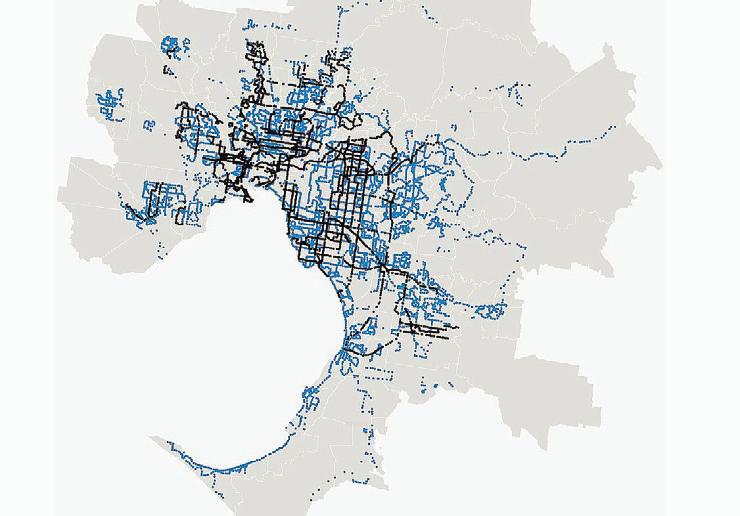
Only about one in 10 Casey residents live within 800 metres of a high-quality metropolitan bus service, a new Auditor-General’s report has found.
The Victorian Auditor-General’s Office (VAGO)’s latest independent report on Improving Bus Services looked at the transport conditions of five outer metropolitan councils, including Casey.
The report has found that Casey has roughly about 80 per cent of residents within 400 metres of a metropolitan bus service, but only around 9 to 12 per cent within 800 metres of a high-quality metropolitan bus service or high-quality public transport service.
In the report, a high-quality bus service is defined as a bus route that runs at an average frequency of 20 minutes, or better, between the hours of 6am and 8pm Monday to Friday, until at least 9pm Monday to Friday, and on both Saturday and Sunday.
High-quality public transport is a train, tram or bus service that runs every day, with services until at least 9pm on weekdays and an average frequency of 20 minutes or better between 6am and 8pm.
Among the five outer-growth councils examined, Hume performed best, with about a quarter of its population living within 800 metres of a high-quality metropolitan bus service or high-quality public transport service.
Whittlesea followed, with almost one in five residents within 800 metres of a high-quality metropolitan bus service. Wyndham recorded the lowest access to high-quality bus or public transport services, with fewer than one in 10 residents within 800 metres of a high-quality metropolitan bus service.
Across Melbourne, 87 per cent of house-
holds were within 400 metres of a bus service, but only 26 per cent were within 800 metres of a high-quality bus service.
“Communities without nearby access to tram or train services rely heavily on bus services to get them to work, education, community and social activities. When their bus service is of poor quality, it limits transport options for young people, the elderly, people with disabilities, or those who cannot afford to run a car,” the VAGO report states.
Public transport advocate and former Department of Transport bus planner Peter Parker said the audit was a fair description of Casey’s bus network and its lack of access to frequent services.
“Yes, the audit fairly calls out the lack of access to frequent bus services in the Casey area,” he said.
“Better route directness, frequency, operating hours and coverage are all essential to a high-quality network.”
Mr Parker said bus service levels varied greatly across Casey, with parts of Cranbourne and Hampton Park receiving a relatively high level of service, including some routes running every 20 minutes seven days a week.
However, he said established suburbs such as Narre Warren South, Narre Warren and Berwick were served by a complex network of indirect and infrequent routes.
“Forty-to-60-minute gaps between buses are common, operating hours can be limited, and there may not be easy access to key employment areas such as Dandenong South,” he said.
He said Fountain Gate was a major seven-day destination, but still lacked a single all-week frequent bus route.
Mr Parker said its route to Endeavour Hills ran infrequently on weekdays only, while the connection to Belgrave operated on weekends only, with some Friday evening services.
“These network shortcomings, which have ex-
isted for years, make Fountain Gate less accessible by public transport than similarly sized shopping centres in other parts of Melbourne,” he said.
Mr Parker noted there had been significant recent investment in buses for Clyde North through growth-area funding, but many routes remained infrequent, overlapped with each other or stopped short of major destinations.
He said there was still no direct bus route between Cranbourne and Berwick stations, no direct bus connection between Hampton Park and Dandenong South, and limited connections from Fountain Gate to destinations such as Endeavour Hills and Belgrave.
He noted the State Government had announced a proposal in the May 2026 State Budget to upgrade, extend and realign bus services across Botanic Ridge, Casey Fields, Clyde, Junction Village and Devon Meadows, but said full details were yet to be released.
Mr Parker said the State Government’s first priority should be improving frequencies and operating hours on existing direct routes, particularly on weekends.
“This would improve connections to major destinations in Casey, such as Fountain Gate, as well as to the wider PT network,” he said.
“Many such upgrades are possible by working the existing bus fleet harder all week.
“Because it connects people to Fountain Gate and many jobs in the south-east, I would nominate a seven-day Route 828 as top priority, closely followed by improvements to other routes such as 791, 841, 893 and 926.
“Also desirable would be the introduction of simpler and more frequent routes in the Hampton Park/Narre Warren/Berwick area, as these areas have gone years without a bus network review, yet travel needs have changed. The work here could possibly be done alongside the bus network review proposed for Clyde.”
Mr Parker said better public transport could
improve access to jobs and opportunities and help households avoid the cost of buying an additional car.
“Households who can delay buying an additional car for a year have an extra $10,000 in their pocket due to foregone car running expenses,” he said.
Public Transport Users Association (PTUA) spokesperson Daniel Bowen said the latest report is a reminder that while most of Melbourne has public transport, many of the routes in the outer suburbs, including around Casey, are not high-quality, frequent services that make it convenient for people to switch from driving.
“People who are within walking distance of a station generally have a pretty good service. But for most other areas, it’s buses only, and most bus routes run infrequent services. Nobody wants to wait 30 or 40 minutes or even longer for a bus, but this is the only public transport option for most people in Casey,” he said.
“Lack of good public transport means most people are stuck with driving, stuck in the traffic and at the pointy end of high fuel prices.
“The State Government should be upgrading more routes to run every 20 minutes or better, cutting waiting times and providing better connections to train services.
“At present, most people moving into the area will look at their options and conclude that a car is the only viable way to get around. More and better public transport, along with better walking and cycling options, is key to providing more locals with real options.”
The findings came as Casey Council’s 2026 State Election advocacy campaign, Building a Better Casey, calls for $50 million to investigate and improve bus services. Among the commitments the Council is seeking are more frequent bus services to reduce waiting times and improve reliability, including increased service frequency on Route 828 and 893.
The State Government announced several upgrades for Casey’s bus network in the 2026-27 Budget. The $23 million funding would allow Route 795 to directly serve Junction Village and Botanic Ridge, with services increasing from five buses a day to hourly. A new Route 896 would connect parts of Cranbourne East, including the Livingston and Mayfield estates, to Cranbourne Station, while Routes 888 and 897 would be extended further south into Clyde.
Route 888 is also expected to receive a major frequency boost, moving from 60-minute services to every 20 minutes during weekday daytime hours.
The Department of Transport and Planning is expected to consult the public before the changes are introduced. The reforms are expected to benefit more than 132,000 residents and improve links to train stations, shopping centres and Federation University.
By Violet Li
Consultant fees at the Casey Council are set to more than double in the 2026-27 financial year, with the council to roll out a major new technology system.
The Council’s 2026-27 budget, which was endorsed at the June Council Meeting, shows that consultant costs are expected to rise by 124.2 per cent to about $19 million, mainly driven by “higher expected costs for consultants reflecting continued progression through the implementation stages of the enterprise resource planning system”
Casey Council has advised that it is moving its operating systems to TechnologyOne’s OneCouncil platform, an enterprise resource planning (ERP) system designed for local government.
The implementation is being delivered in two phases. Phase 1 was completed on 1 July 2025, while Phase 2 is underway and expected to be completed in 2027.
An ERP system is a large integrated technology platform that brings together core business functions into a single system, such as finance, HR, payroll, supply chain management, and asset management.
Council has also advised that the new platform will replace fragmented legacy systems and reduce manual processes, resulting in more streamlined operations.
The new system will create a single, consistent source of information across council services, allowing for faster decision-making, more efficient service delivery and improved visibility of works and programs.
The system will also include a new customer
portal, which Council says responds to community feedback calling for more self-service options and easier ways for residents to interact with Council at times that suit them.
City of Casey chief executive officer Glenn Patterson said external consultants were needed because of the scale and complexity of the project.
ERP consultants are usually brought in to help design, configure and test the system, migrate data from old platforms, connect different council functions, train staff and troubleshoot problems during the rollout.
“ERP implementations are complex, largescale, multi-year programs that require special-
ised technical and configuration expertise,” Mr Patterson said.
“External consultants have been engaged to provide some of that specialist expertise and additional delivery capacity, augmenting Council staff project resources who focus on designing the system to meet current and future service and community needs.
“The increase in consultant costs reflects the intensive delivery phase of the ERP program.
“As implementation is completed in late 2027 and the system transitions to business-as-usual operations, our engagement of external consultants will decrease.”

A Clyde North man has died following an alleged serious assault last week on Friday 12 June.
The 63-year-old was allegedly assaulted by two men on Straithaird Reserve in Narre Warren South about 3:15pm.
A 21-year-old man of no fixed place of address and a 22-year-old man from Narre Warren South were charged on Monday 15 June and Saturday 13 June respectively.
Both were charged with recklessly causing serious injury.
Following the assault, the victim was transported to hospital with critical injuries. He died on the morning of Thursday 18 June.
The investigation remains ongoing with both men in custody.
Detectives from the Homicide Squad will assume primacy of the investigation and will consider alternate charges following the results of a post-mortem.
Police believe the parties involved were known to each other.

Summerset Cranbourne North is redefining retirement living.
This is a village designed to help you get the most out of the years to come, with the reassurance that there is a residential aged care home onsite, if you need it.
Live independently in a thoughtfully designed two or three bedroom villa with spacious open-plan living and built-in safety features for peace of mind.
Our assisted living apartments offer the perfect balance of independence and support - ideal for those who value their autonomy but appreciate a helping hand.
Residents in our residential aged care home can enjoy comfort, privacy, and a true sense of community in thoughtfully designed care suites.
With independent and assisted living, as well as residential aged care suites all available now,* there has never been a better time to visit the village.
Join us at our next open day - we’d love to show you around.
Love the life you choose.
Thursday 2 July, from 10am to 2pm
Summerset Cranbourne North 98 Mannavue Boulevard, Cranbourne North 03 7068 5642 | cranbourne.sales@summerset.com.au
By Afraa Kori
The Liberal and Labor parties have not, as of yet, committed to additional Alexis workers ahead of the state election, as rising family violence offences pressure frontline services across Melbourne’s south-east.
New data from the Crime Statistics Agency shows Casey recorded 3,963 breaches of family violence intervention orders and 6,796 family violence incidents in the year ending March 2026.
In Greater Dandenong, there were 2,132 breaches of family violence orders and 2,984 family violence incidents.
Cardinia Shire recorded 1,268 breaches of family violence orders and 2,011 family violence incidents.
Additionally, police responded to 161 callouts over a seven-day period in April, including 85 in Casey, 45 in Greater Dandenong and 31 in Cardinia.
The investigation unit arrested 95 alleged perpetrators, and charged 58 of them with 290 family violence offences.
More than half of the offences (57 per cent) related to perpetrators breaching family violence intervention orders and 26 per cent related to assaults against victims.
The latest data comes as police reveal just one specialist family violence support worker is assisting victim-survivors across Casey, Cardinia and Greater Dandenong.
“One person dealing with three LGA areas is just not enough,” Family Violence Investigation Unit officer-in-charge Jason Iles said.
“We have an embedded Alexis worker at our office who is invaluable, and we would love to have another 10 of them.”
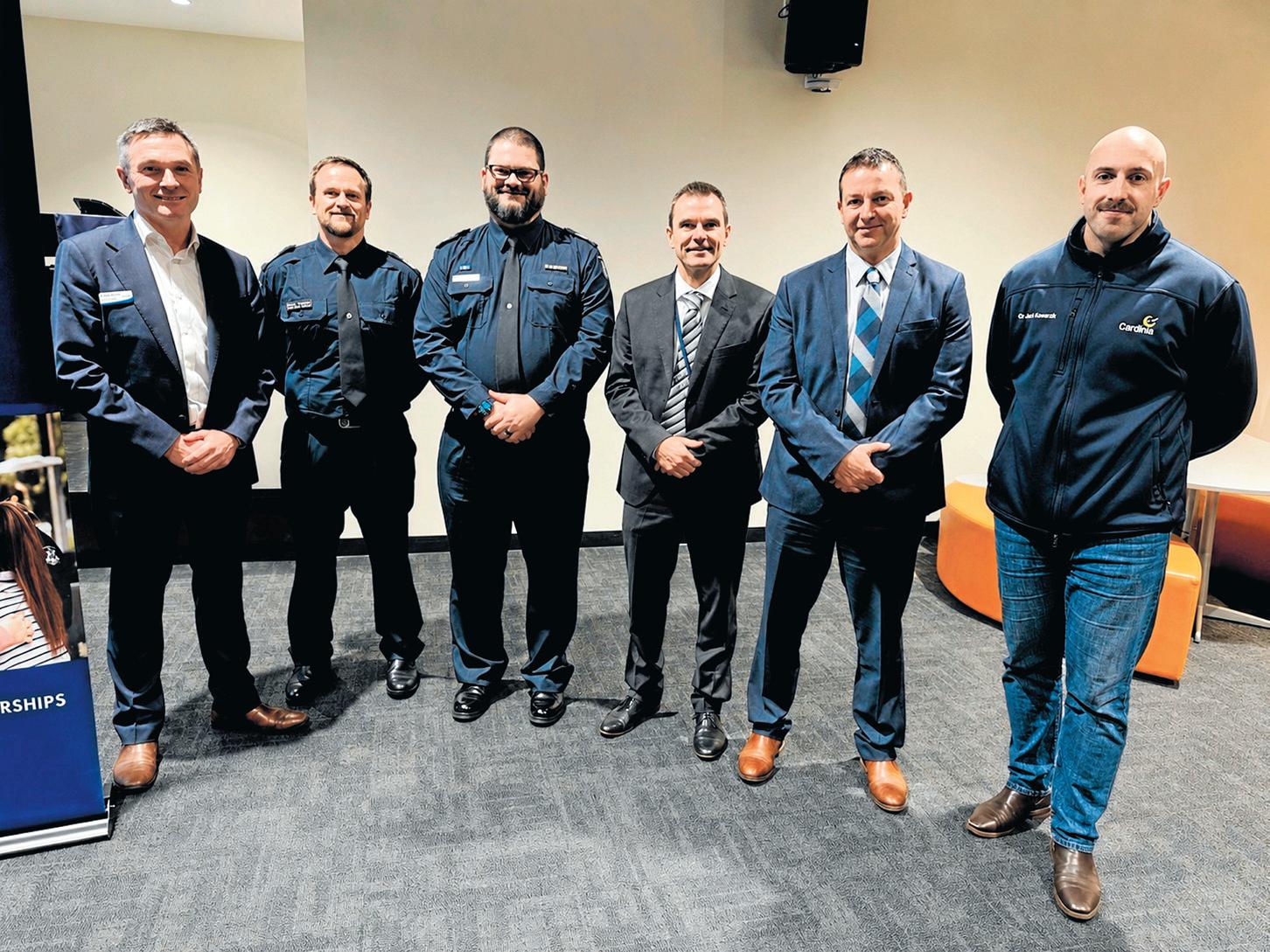
At the crime forum earlier this month, Cardinia Shire Councillor Jack Kowarzik ques-
tioned why three growing municipalities share a single embedded specialist worker, given family violence remains the most commonly reported offence category.
Sen Sgt Iles responded that funding constraints were the key barrier.
“We’re obviously trying to get more than one,” he said.
“It’s not a lack of trying that we haven’t got any. That comes back to dollars and cents.
“Which is unfortunate, because it shouldn’t but that’s what it does. That’s what it boils down to.”
The 2026–27 State Budget has not outlined additional funding for more Alexis workers in the south-east LGAs.
When asked if a re-elected Liberal government will commit to increasing Alexi workers, Shadow Minister for the Prevention of Family Violence, MP Eildon Cindy McLeish said the Labor government “spruiked” that the program “embeds two” specialised family violence workers in these units and therefore “needs to come through on this commitment”
However Ms McLeish only reassured that they have “a clear commitment” to community safety, pledging to recruit an additional 3,000 frontline police officers across Victoria to help restore police numbers, reopen stations operating on reduced hours and ensure communities receive the response they deserve.
“The feedback that I’m getting from those working in the sector suggests the Alexis Family Violence Response Model is making a real difference,” she said.
“Where the model is operating, it is widely regarded as an example of the benefits that come from closer collaboration between police and specialist services.”
Labor Government was contacted for a comment.
By Afraa Kori
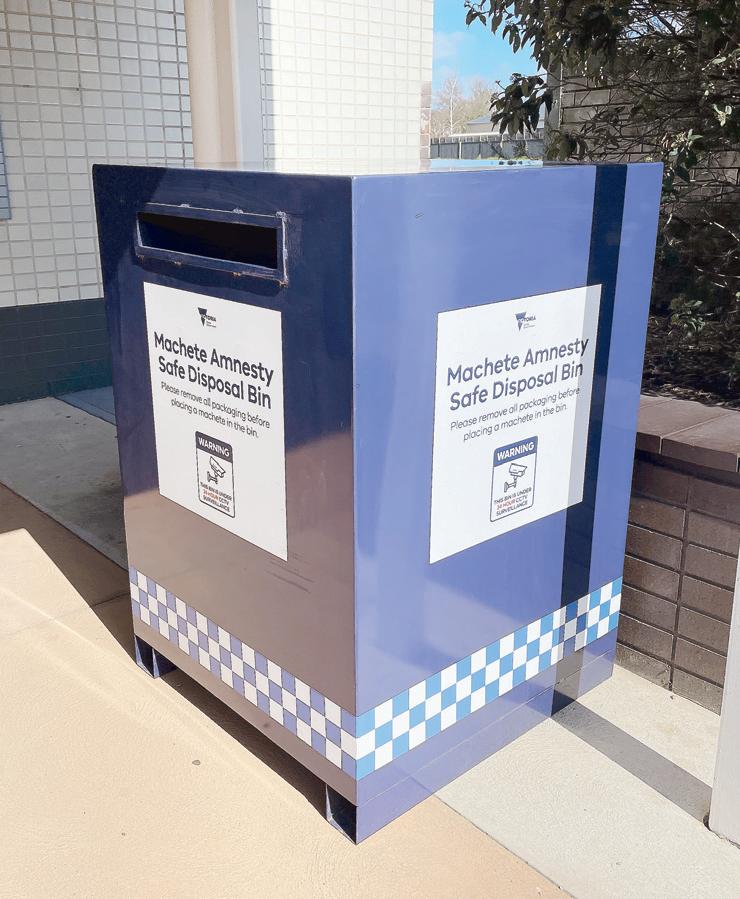
Premier Jacinta Allan’s $13 million machete bins are under fresh scrutiny, with new data showing weapon offences are still rising in Melbourne’s south-east.
Last year, the Labor Government announced a suite of measures aimed at tackling knife crime, including a push for a national ban on the sale and possession of machetes and the rollout of machete disposal bins across the state.
Failure to comply with the laws carries a maximum penalty of two years’ imprisonment or a fine exceeding $47,000.
Minister for Police Anthony Carbines previously said the machete ban is “working to dry up the supply of these dangerous weapons on our streets”.
However, Crime Statistics Agency (CSA) data released last week, suggests weapon offending has not eased locally.
Casey recorded an increase in weapons and explosive offences, rising from 790 in 2025 to 851 in March 2026.
Cardinia offences also increased from 294 to 302 over the same period.
Knife crime remains a key concern for police and the community, following several incidents and tragedies reported across Melbourne.
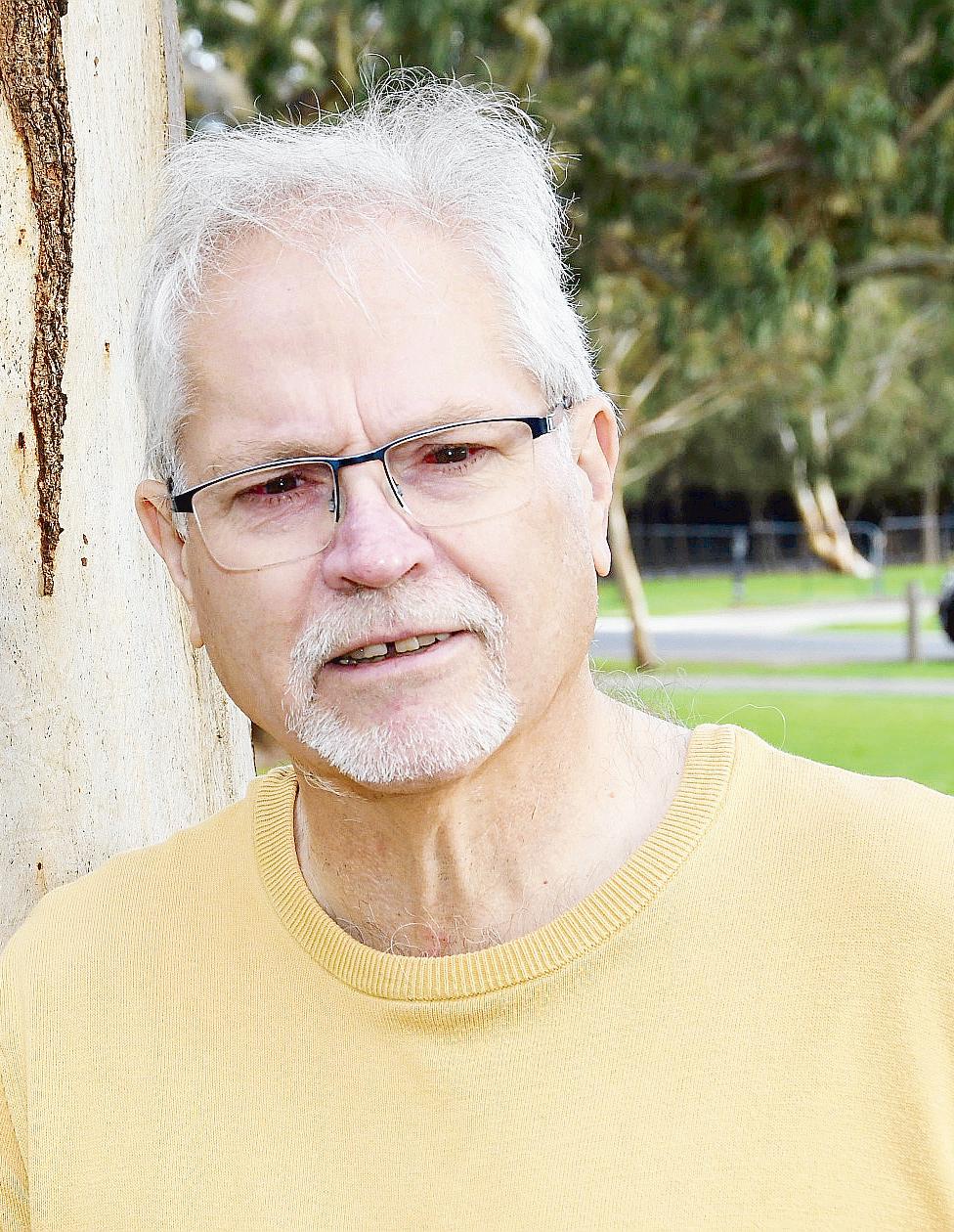
Casey-based Bail Justice Wayne Smith said he continues to see aggravated burglary and machete cases coming before him despite the government’s crackdown.
“The machete stuff really does concern me,” he said.
“That’s been reflected in what you hear (for example, in the media). I’m seeing it on the ground. Unfortunately, it’s still there.”
Mr Smith said young offenders often admit to carrying machetes but insist they would never use them.
“As much as they say to me, I would never use it, I can’t accept that,” he said.
“You can say that you wouldn’t. I’d hope you wouldn’t, and you probably hope you wouldn’t.
“If push comes to shove – if you’re caught, threatened and confronted.
“To protect yourself to get out of there, you (offenders) would use it. I truly believe that.”
He said the presence of a machete can quickly escalate offending, particularly during aggravated burglaries when residents unexpectedly confront intruders.
“As soon as they break in and there’s someone in the house, that’s aggravated very quickly,” he said.
“So it escalates it to the highest level.”
He said, “fortunately” most offenders committing aggravated burglaries are not confronted in the act and are only caught afterwards, usually through CCTV.
Asked what he enjoyed most about being a bail justice, Mr Smith said he believed he was playing a role in “keeping the community safe”.
“I do about 200 hearings a year and I might grant bail in less than 5 per cent of cases,” he stressed.
“The majority of people we see are remanded. I don’t have a guilty conscience about it at all. I am tough, but I’m only applying the law.
“If I can do my bit to keep someone off the street and out of harm’s way, I’ll do it. But I do it knowing the powers are limited to one night.”
He added that many offenders and their families have later thanked him for keeping young people in custody.


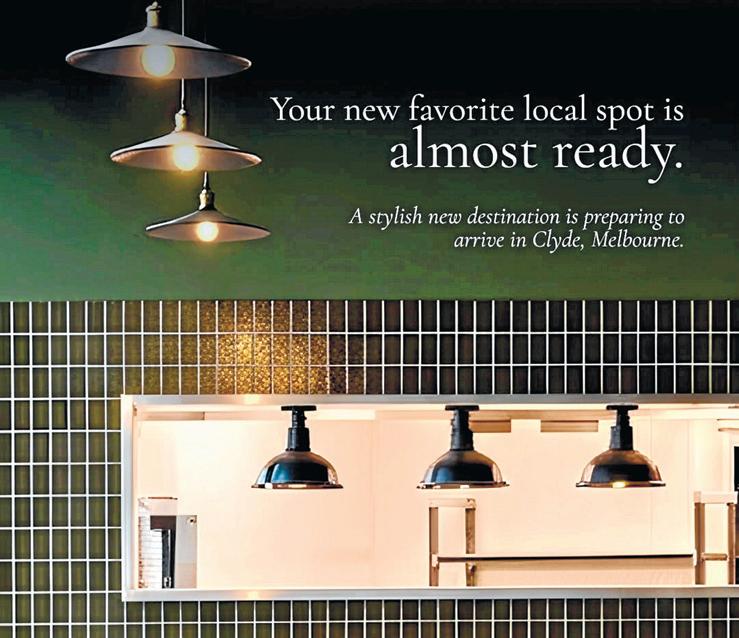
For the past decade, Shopping on Clyde has been more than just a convenient retail stop at 280 Berwick-Cranbourne Road; it has grown into the very heartbeat of our local community. To mark this incredible 10-year milestone, the precinct is throwing an unforgettable birthday bash packed with family-friendly entertainment, giveaways, and major town announcements.
The celebration spans from early July, kicking off with an impressive lineup of free school holiday fun.
Families can look forward to meeting an animatronic dragon, alongside dedicated dragon crafts for kids and vibrant face-painting sessions.
If you are feeling lucky, the “Lucky Spinning Wheel” will be active from Wednesday to Saturday across consecutive weeks, giving shoppers the chance to win a slice of over $1,500 worth of voucher giveaways. Additionally, a free-to-play soccer kick-off competition will keep the energy high.
The atmosphere will be further elevated by a curated selection of roving entertainers. From

balloonists and stilt-walkers to live jazz and musical duos, there is something to capture everyone’s attention. Shoppers can also take home a piece of the milestone with free calico shopping bags distributed during select peak hours.
Beyond the anniversary festivities, the precinct is looking firmly toward a vibrant future with three major additions anchoring its newest development phase. Health and wellness enthusiasts can look forward to the opening of Anytime Fitness Clyde, a premier 24/7 fitness facility. Right inside the new building is Tigo (sports bar and restaurant) a wonderful place to experience delicious food, good vibes, and great company.
Located on the ground floor is Kesari restaurant offering a delicious range of Indian food in a large spacious environment. This powerhouse combo promises to elevate both the lifestyle and social landscape of the area.
Whether you are coming down for the dragon, the music, or the chance to score a voucher, join us in celebrating a decade of local business, community spirit, and exciting new beginnings. Here’s to the next ten years!







































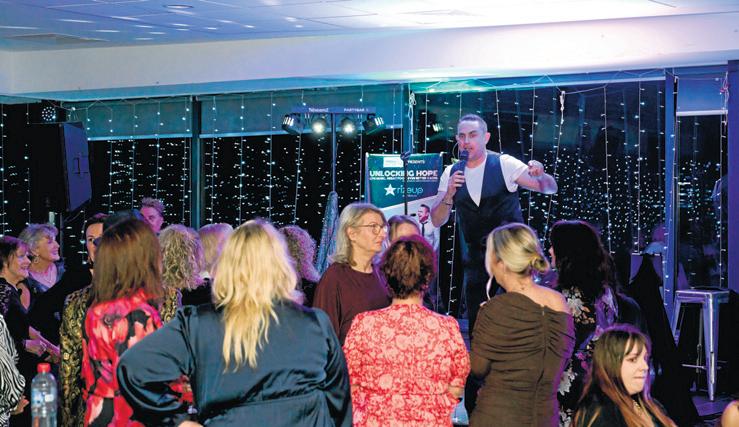
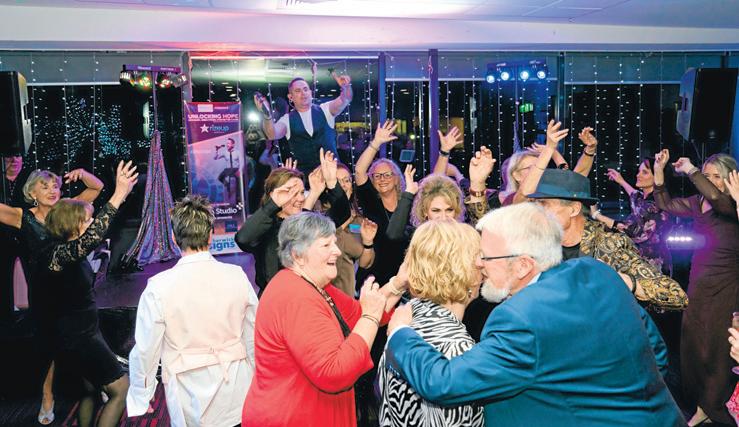
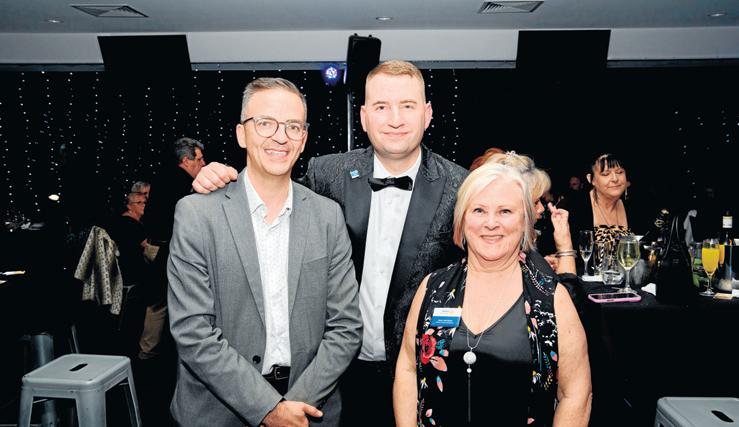
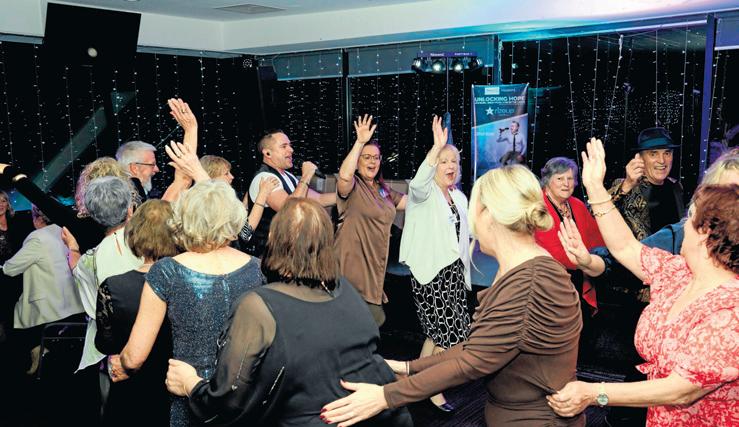
The Casey community has demonstrated its commitment to supporting families affected by domestic violence, with the Rotary Club of Casey raising more than $18,000 at its inaugural ‘Unlocking Hope’ fundraising event.
More than 150 guests attended the event at The Beaconsfield Club on Saturday night (20 June), including Berwick MP Brad Battin, Casey Mayor Stefan Koomen, Deputy Mayor Michelle Crowther and representatives from local Rotary clubs, businesses and community organisations.
The funds raised will support RizeUp Australia, a charity dedicated to helping women and children escaping domestic violence rebuild their lives through practical assistance and support.
Rotary Club of Casey President Jean Harrison said the overwhelming response from the local community highlighted the compassion and generosity that exists throughout the region.
“The generosity of our guests, sponsors, prize donors and volunteers made this event possible and will help make a real difference to families experiencing domestic violence,” Ms Harrison said.
“Every dollar raised helps provide practical support and hope to those who need it most.”
A moving highlight of the evening was a presentation from domestic violence survivor and




advocate Simone O’Brien, who travelled more than three hours each way to share her story.
Guests heard first-hand about the challenges she faced and the crucial role RizeUp played in helping her rebuild her life and create a brighter future for her family.

Entertainment was provided by local performer Paul Hogan, whose lively performance helped create a positive and uplifting atmosphere throughout the evening.
The success of the fundraiser was also made possible with the help of more than 50 local

businesses and community members who contributed through sponsorships, donations and volunteer efforts.
With final fundraising figures still being calculated, organisers expect the total amount raised to increase further.











Toprovideindividualised,comprehensive supportthatpromotesoverallwell-being andempowerseverystudenttothrive.We celebrateneurodiversity,supportdiverse learningstyles,anddelivervocational, career,andlife-pathwaylearning opportunitiesthatbuildconfidence, capability,andpositivefutures.




“Children’s theatre doesn’t get any better than this. This inspired array of Italian and Aboriginal artists is the perfect fusion of dance, art and breathtaking digital design.” - “Sunday Mail”
Looking for a school holiday experience that will spark your child’s imagination, curiosity and creativity?
Saltbush is a captivating interactive theatre experience that invites children and their families on an unforgettable journey across Australia’s diverse landscapes and First Nations Countries. Combining storytelling, dance, music and cutting-edge digital technology, Saltbush transforms young audience members from spectators into active participants.
Saltbush follows the adventures of two friends and their spiritual guide, as they travel on foot across First Nations Countries, passing rivers, cities, desert, and the sea.
Using innovative sensors and infrared technology, children can move, play and interact directly with the performers and digital environments, creating a truly immersive experience unlike any other.
Performer Luke Currie-Richardson says one of the most rewarding aspects of the show is watching young audience members embrace the experience.
“I’ve been lucky to have a 15-year performance career that has taken me across the world and for me there’s nothing more rewarding than sharing Saltbush with the children of the world and teaching the next generation a tiny bit of Aboriginal culture and methodology. The openness and imagination our children have, allows them to embrace our culture and helps with reconciliation.”
Beautiful, engaging and inspiring, Saltbush is a theatre experience that will leave children talking long after the curtain falls. Only showing at Bunjil Place these school holidays.


Tickets: FREE, All Ages
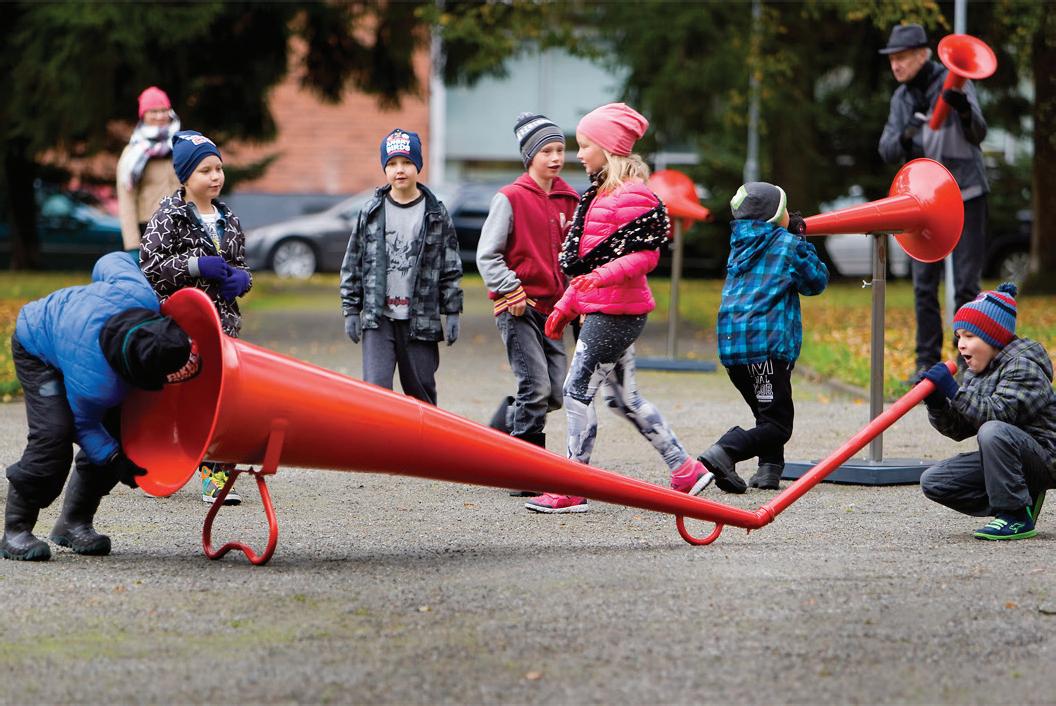
Across the school holidays, The Megaphone Project at Bunjil Place on Sat 27 June. Our Plaza will come alive with 25 megaphones for kids of all ages to explore, play and discover. Each megaphone has something different to hear – what will you learn?
Explore the full program of locations and dates across Casey on our website.


How
cat purred and how the witch grinned, as
The team behind The Gruffalo and The Gruffalo’s Child

Families seeking an exciting and supportive school holiday experience can discover the perfect mix of adventure and inclusion at Clip ‘n Climb Berwick’s specialised holiday program.
A key feature of the program is the high level of support provided to participants. Participants are supported by Therapy Assistants at a ratio of two participants to one Therapy Assistant, as well as two qualified Occupational Therapists supervising each session. This personalised approach helps children build confidence, develop social skills and enjoy a fun, active day in a safe environment.
The program is also claimable through the NDIS, making it an accessible option for many families during the school holidays.
As Australia’s largest Clip ‘n Climb venue,
Clip ‘n Climb Berwick is home to an incredible range of world-class attractions designed to keep children active, engaged and entertained for hours. With climbing challenges, adventure activities and interactive experiences, there is something for every interest and ability.
Running from 9am to 3pm, the holiday program is packed with exciting activities including Clip ‘n Climb wall challenges, SkyTrail, SkyRail, the Leap of Faith, Giant Drop Slides, Spider Tower games and interactive GameWall experiences. Children will also enjoy an epic Nerf battle, pizza-making activities, craft creations and a fun game of Climb Cluedo.
Activities are adapted to suit different ages and abilities, ensuring every participant can get involved.

As families prepare for the winter school holidays, St Germain Central is excited to bring a unique wildlife experience to the local community with a free Reptile Encounters Stage Show and Wildlife Meet and Greet.
Taking place on Monday 29 June from 10am to 12pm, the event promises an engaging and educational morning for children and adults alike. Designed to entertain while inspiring curiosity about Australia’s incredible wildlife, Reptile Encounters offers visitors the chance to learn from experienced wildlife educators and meet some remarkable animal ambassadors up close.
Guests will enjoy an interactive stage show featuring fascinating native animals, while learning fun and informative facts about reptiles and wildlife conservation. Following the presentation, families will have the opportunity to participate in a meet and greet experience, providing a rare chance to get closer to these creatures in a
safe and supervised environment.
At St Germain Central, creating memorable community experiences is an important part of what we do. Events such as Reptile Encounters not only provide free entertainment during the school holidays but also encourage learning, exploration, and family connection.
With many families seeking affordable activities during the holiday break, this free event offers the perfect opportunity to enjoy a fun day out while supporting local retailers and businesses throughout the centre.
Whether your child is a budding wildlife expert or simply loves animals, Reptile Encounters is sure to be a highlight of the school holidays. We invite the community to join us on Monday 29 June from 10am to 12pm and experience the wonder of Australia’s wildlife right here at St Germain Central.





























Melbourne families are set to embrace the magic of winter when FROSTED – A Winter Spectacular arrives in Narre Warren this June and July, transforming the south-east into a festive wonderland unlike anything seen before. Running from June 19 to July 19 under the heated Big Top opposite Westfield Fountain Gate, the event promises a month of entertainment, creativity, and unforgettable family memories.
Designed especially for young families and children aged 10 and under, FROSTED brings
together the enchantment of Christmas and the excitement of winter in an immersive indoor experience. Guests will step into a frost-filled world featuring interactive attractions, live performances, themed activities, and plenty of opportunities to create lasting memories.
Among the highlights are PAW Patrol character meet-and-greets, live shows featuring favourite characters, winter-themed mini golf, an artificial ice-skating rink, inflatable play zones, creative craft activities, and the chance to meet


families can enjoy a range of winterinspired food and drinks throughout the venue.
With general admission, VIP experiences, and family ticket packages available, the event has been designed to make the magic accessible to everyone. Organisers say the spectacular aims to deliver a heartwarming escape from the winter chill, combining festive fun with a unique indoor environment where imagination can flourish.


As Melbourne settles into the colder months, FROSTED offers a welcome opportunity for families to come together, celebrate the season, and enjoy a magical winter adventure close to home. Whether it’s skating, crafting, meeting beloved characters, or simply soaking up the atmosphere, visitors can expect an experience that truly captures the wonder of winter.
Find us on social media @frosted_awinterspectacular and secure your bookings now at www.frostedawinterspectacular.com.au




At the National Press Club, Senator Pauline Hanson declared that Australia should be a “monocultural” rather than multicultural society.
Truth be told... we’re not entirely sure which Australia she is talking about.
Because the Australia most of us live in is wonderfully messy, diverse and interconnected.
The doctor treating your child may have trained in India.
Your local cafe may be run by a Greek, Vietnamese or Lebanese family.
Your children’s classmates may speak another language at home.
Your neighbours may celebrate Eid, Diwali, Lunar New Year or Christmas.
And on Anzac Day, they all stand side by side, wearing a sprig of rosemary and remembering those who served this country.
That is Australia.
The problem with this debate is that people often confuse ‘multiracial’ and ‘multicultural’ as though they are the same thing. They are not.
A multiracial society simply means people from different racial and ethnic backgrounds live in the same country.
A multicultural society means those people are also able to maintain and express aspects of their cultural heritage while participating fully as Australians.
Australia is already multiracial. That ship sailed a long time ago.
The real question is whether we become fearful of our diversity or intelligent in how we manage it.
Because monoculturalism sounds simple until you actually ask what it means.
Whose culture exactly?
First Nations culture?
British culture?
Irish culture?
Italian culture?
Greek culture?
Post-war Australian culture?
Modern Australian culture?
Australia has never been one thing. We’ve always been evolving.
Our food, music, sport, language and traditions have all been shaped by wave after wave of migration, adaptation and contribution.
It is easier to find the best Banh Mi as opposed to a good meat pie these days (though we

still swear by our Balfours).
Even Christmas, now considered quintessentially Australian, looks very different here than it does in England.
Culture evolves. That’s what cultures do.
The answer is not to pretend difference doesn’t exist.
The answer is to create belonging that is bigger than our differences.
This is also where we often confuse assimilation with integration.
Assimilation expects people to abandon or forget their own culture and adopt one dominant way of being.
Integration is different. It means participating fully in Australian life, learning English so we can communicate effectively, respecting our laws and democratic values, and contributing to society, while still being able to celebrate and maintain aspects of our cultural heritage.
Australia has never asked people to stop being Greek, Italian, Chinese, Sikh or Sudanese. It has asked them to become Australian too.
The Socceroos showed us exactly what that looks like.
The squad includes players from refugee backgrounds and families originating from all corners of the globe.
Some have parents born overseas. Some speak more than one language. Some practise different faiths.
Yet when they wear the green and gold, nobody asks where their grandparents came from.
Nobody questions whether they are Australian enough. The nation simply cheers.
Why?
Because they belong.
They represent something bigger than themselves.
Perhaps that is the lesson our politics keeps missing. Unity does not require uniformity. In
fact, trying to force uniformity often creates exactly the divisions we claim to fear.
The more we insist that everyone must fit one mould, the more people retreat into their own corners and become defensive of their identity.
Fear creates division. Belonging creates unity.
This is why values-based education matters so much.
We spend enormous amounts of time teaching literacy and numeracy, yet very little time teaching young people how to live together in increasingly diverse societies.
How to disagree respectfully. How to navigate difference. How to build trust.
How to develop pride in being Australian while also appreciating the stories that have shaped their families.
Programs like Belonging in Casey are small but important examples of what this can look like.
The Casey-wide competition invites young people to explore what belonging means to them and to celebrate both their diversity and their shared identity as Australians.
Because the future of Australia will not be determined by whether we celebrate our different cultural or religious festivals.
It will be determined by whether we can celebrate these things while still feeling part of this great nation.
The challenge before us is not choosing between multiculturalism and national identity.
The challenge is creating a stronger Australian identity that has room for all of us.
A confident nation does not fear diversity. A confident nation knows exactly who it is.
Perhaps the conversation Australia really needs is not whether we are multicultural.
That debate was settled generations ago. The real conversation is how we intentionally create belonging, civic responsibility and pride in being Australian.
Because truth be told... Australia’s greatest strength has never been that we all look the same or celebrate the same things.
Our greatest strength is that despite our different stories, cultures and journeys, we still choose to stand under one flag and call ourselves Australians.
Our greatest strength is that somehow, despite all our differences, we still call ourselves Australians.
By Dalal Smiley, chief executive of Wellsprings for Women
Senator Pauline Hanson’s recent National Press Club address was a stark reminder of how easily fear can be weaponised in politics.
And how urgently Australia needs leadership grounded in human rights, racial equity, and social justice, not division.
Her speech attacked multiculturalism, dehumanised and demonised Muslim communities, dismissed transgender Australians, and framed migrants as a “crisis”
It represents a worldview fundamentally at odds with the inclusive, pluralistic nation we aspire to be.
But the problem on that stage did not begin and end with Senator Hanson.
It was compounded by the failure of the National Press Club and the journalists present to challenge, interrogate, or contextualise her most inflammatory claims.
In a moment that demanded moral clarity and journalistic courage, the questions at the Press Club failed to hold her to account and did not go far enough.
Senator Hanson’s speech did more than express an opinion.
It deployed a familiar and dangerous political tactic of othering.
By framing migrants, Muslims, and transgender people as threats to “Australian values,” she positions entire communities as problems to be solved rather than people deserving dignity and rights.
The National Press Club is not just a venue.
It is an institution that claims to uphold the highest standards of public interest journalism.
Yet during Hanson’s speech, those standards were conspicuously absent.
By giving Senator Hanson an unchallenged national platform, the Press Club allowed harmful narratives to be broadcast with the veneer of legitimacy.
A platform is not neutral; it confers authority.
Journalists had the opportunity to interrogate her claims about migrants, Muslims, and transgender people.
Instead, the questions largely skirted the harmful impact of her rhetoric.
When racism and dehumanisation go unchallenged, they are normalised.
The Press Club could have pressed Hanson on how her call for a “monocultural” Australia aligns with international human rights obligations.
It did not.
Silence in the face of discriminatory rhetoric is not impartiality; it is complicity.
This is not an isolated incident.
Australian media has a long history of amplifying divisive voices under the guise of “balance” or “free speech”
But free speech does not mean freedom from
I am writing in response to the recent opinion piece regarding Pauline Hanson and One Nation (Australia must denounce Pauline Hanson’s toxic politics — and demand better from its press, Star News, 19 June).
While the article argues that the political press and the public need to firmly reject her platform, it completely misses the broader context of why a growing number of Australians feel compelled to support One Nation in the first place.
The reality is that the political pendulum has been swung incredibly far to the left by activist groups, mainstream media narratives, and major political parties.
For many everyday Australians, the traditional centre no longer feels like the centre.
When mainstream political discourse continuously alienates working-class citizens by prioritising niche ideological debates over practical economic and social issues, people feel completely abandoned.
Many voters do not support One Nation out of “toxic” malice, but rather because they feel left with no other choice.
When the political left pushes policies and cultural changes too far and too fast, a corrective pushback is inevitable.
Dismissing or censoring this political movement as purely harmful completely ignores the genuine frustrations of everyday people who feel locked out of the current political consensus.
If we want a better press and a better political landscape, we need to stop ignoring the reasons why voters are turning to alternative parties.
Rather than simply denouncing One Nation, the media should look more closely at how the excesses of the far-left have created the very environment they are criticising. Ragnarr Rasmusson Dandenong
****
I am writing to respond to the recent opinion piece on Australian identity. (One race? One culture? One Australia?, Truth Be Told, 18 June)
Your article highlights the confusion surrounding what “Australian culture” actually means today.
But to understand why people are turning to One Nation, we need to look at how drastically our cultural landscape has been artificially shifted.
Many of us remember a pre-Kevin Rudd Australia where identity was simple and unifying.
Growing up, we were explicitly told that it didn’t matter where you or your parents came from once you were here, we were all the same.
We were all Australians.
scrutiny.
Journalism’s role is not to provide a megaphone; it is to provide context, challenge misinformation, and protect the public from harm.
Human rights frameworks, from the Universal Declaration of Human Rights to Australia’s own anti-discrimination laws, are built on the idea that every person is equal in dignity and worth.
Senator Hanson’s speech violates the spirit of these principles by suggesting that some cultures, religions, or identities are less legitimate than others.
But when the press fails to challenge such rhetoric, it undermines these principles too.
Human rights are not upheld only by courts and parliaments. They are upheld by public discourse, by the media, and by the willingness of institutions to call out injustice.
We deserve leaders who build bridges, not walls. And we deserve journalists who hold them to that standard.
Senator Hanson’s speech may resonate with those who feel unheard or frustrated, but it offers no real solutions.
Instead, it deepens divides and undermines the shared values that allow us to live together with respect.
But the media’s failure to challenge her rhetoric is equally concerning.
Democracy depends on a press willing to confront harmful ideas, not simply broadcast them.
Australia can choose a different path, one rooted in justice, empathy, and human rights.
An Australia where we are mature enough as a nation to recognise and honour the unique status of First Nation People, the contributions of waves of migrants to this country, and the dignity of all creation.
That is the Australia worth defending.
In school, everyone brought a different packed lunch reflecting their heritage, but the curriculum focused on what brought us together.
We were taught to love our country, love each other, and focus on our shared future, not our different pasts.
Today, that unifying message has been completely flipped.
Everywhere you look, people’s differences are put front and centre.
The modern system makes a point of categorising and treating people differently based on their race, sex, or orientation under the guise of progress.
This constant hyper-focus on division is exactly why so many earlier migrants are now voting for One Nation.
They came here to integrate into a cohesive, fair society, and they are completely baffled by the current climate.
Recent arrivals who expect society to bend to their grievances don’t understand the Australia that came before them.
The deep division we see today wasn’t caused by malice; it was caused by a system trying to do too much “goodwill” , leaving cultural destruction in its wake.
If people today don’t know what true Australian culture looks like, it isn’t their fault.
The systems of today have actively dismantled it.
People are voting for One Nation because they want to return to an Australia where we are individuals united under one flag, rather than factions divided by identity politics.
Ragnarr Rasmusson Dandenong
By Violet Li
Casey Council will review its own land for potential affordable housing sites by the end of November, under a strengthened policy designed to turn housing promises into measurable action.
At the 16 June Casey Council Meeting, councillors unanimously endorsed a new Affordable Housing Policy with an amendment by Cr Lynette Pereira.
The amendment requests that an Affordable Housing Implementation Plan be developed for the Council by 30 November 2026, including actions to increase affordable housing supply, opportunities to secure affordable housing through the planning system, consideration of social and crisis housing needs, and clear annual targets, performance measures and reporting arrangements to track progress in increasing affordable housing supply in Casey.
Councillors will also be briefed by the same date on council-owned land that may be suitable for affordable housing or partnership opportunities.
Cr Pereira said the focus on council-owned land and partnership opportunities was ‘groundbreaking’
“The fact of the matter is, people need housing, and not everyone can afford to just go into the open market. People can find themselves losing a job and being evicted, or being victims of family violence, all sorts of things,” she said at the meeting.
“It can happen to anyone. You can find yourself homeless at any time.
“We’re going to have increasing numbers of people who need homes. They’ve got to live somewhere. We’ve got to help alleviate this problem.
“And it’s not even going to be acceptable to not have these houses. We have to do it. We can’t have people living on the street and in parks.”
Mayor Cr Stefan Koomen also showed his support for identifying council-owned land for potential affordable housing.
“We have a lot of land, and this is not about giving land away. It’s a lot of land that’s just not

used and hasn’t been used for so many years,” he said.
“The opportunity to utilise that in the short term and make the most of it and give to good without giving up the land, I think, is a great opportunity.”
A Community Engagement Summary Report on the draft policy also shows that about 66 per cent of the respondents supported the use of council lands.
A council officer report notes that the Council’s preferred approach for using its land would be through long-term leases, allowing the Council to retain ownership and reduce future financial risk.
Any proposed use of council land would still be subject to detailed financial assessment.
The amendment further requires six-monthly updates to councillors throughout the life of
the policy, including progress on the implementation plan, housing outcomes achieved through planning, partnerships and council-led initiatives, and key opportunities, constraints and risks affecting delivery.
Cr Pereira said she added the amendment to make the policy “more robust”
She was concerned policies could otherwise “sit on a shelf” without a clear framework to drive action.
“I’m fearful that we’ve had policies in the past, and while it’s stated in the policy that work will be done, unless you have a proper framework around it, it’s a bit wishy-washy,” she said at the meeting.
“So, as a council, I want to make sure that we are progressing. We have proper reporting back, and we see progress. And at the end of all this, we actually see numbers of affordable housing,
By Jensy Callimootoo
A community leader from Casey, Corina Dutlow, has used her international address at the 2026 Filipino Diaspora Summit to issue a key goal to Filipino organisations worldwide to involve more young people in shaping the future of the global Filipino community.
Speaking in Pasay City during a panel session dubbed ‘Igniting the Passion: Engaging Filipino Youth and the Young Diaspora’, Dutlow shared her personal journey as a second-generation Filipino with numerous cultural identities including Romanian and Australian.
She also highlighted the role of Australian-Filipino Community Services (AFCS) in helping young Filipinos connect with their heritage and develop leadership skills.
“Let’s make sure our young people are part of the conversation,” she told the room of more than 350 delegates, noting that only a handful of overseas attendees at the summit appeared to be under the age of 35.
Dutlow, chief executive at AFCS, described how the organisation has evolved from a community support service into a hub for youth engagement, cultural connection and leadership development.
AFCS, which was founded in the City of Casey and has since expanded into New South Wales, serves Filipino families across generations through social services, aged care, cultural programs and youth initiatives.
A key focus of her presentation was the organisation’s youth engagement model, built around three pillars, including, engagement, celebration and experience.
These include community festivals celebrating Filipino culture, a youth development program, and the Experience Filipino cultural immersion initiative, which takes young Australian-Filipinos to the Philippines to strengthen their understanding of their roots.
Dutlow said AFCS deliberately frames leadership as an outcome of service rather than an end goal.
“First serve, then lead,” she said, explaining the philosophy behind the organisation’s

youth programs.
Dutlow’s leadership has recently received significant recognition in Australia.
In March 2026, she was named Citizen of the Year by the City of Casey, while AFCS was awarded Community Group of the Year for its contribution to multicultural families and community wellbeing.
To go along with her speech, Dutlow gave the audience a 10 minute teaser of a youth-led documentary which will soon be released.
not just a tokenistic sort of couple of things.
“I want to see the growth. I want to see us reaching our targets.”
Cr Kim Ross, who voted for the entire policy, was the only councillor opposing the amendment itself.
She believed that the policy was already robust and that many outcomes would depend on partnerships and state government advocacy.
“There’s a lot of work that needs to be done prior to any actual homes being built,” she said at the meeting.
“I’m just a little bit concerned we’re raising expectations of residents in the short term above what we’ll be able to provide in the short term.”
Speaking later on the broader policy, Cr Ross said Casey’s biggest housing challenges included transitional housing for family violence victim-survivors, including young adults who could not live at home, insufficient housing stock for one- or two-person households, and social housing.
“In addressing this wicked problem, we do need partnerships. We need collaboration, not just with all levels of government, but with the private sector, superannuation, and private individuals,” she said.
The updated Affordable Housing Policy comes as Casey continues to grapple with worsening housing affordability.
A council officer report notes that the proportion of private rental properties affordable to low-income households had fallen to 28 per cent in December 2024, about one third of the level recorded in June 2020.
The report also says only 2.5 per cent of properties for purchase were affordable to low-income households in December 2024.
In 2021, an estimated 7421 Casey households had an unmet need for affordable housing, up from 5655 households in 2016.
Cr Dave Perry said the policy is just the first step, and implementation is much more important.
He said the implementation plan should be a public document and should include input from residents and community service organisations.
A man has been charged over two alleged attempted carjackings and one carjacking across the South East this month.
The alleged carjacker, 30, of no fixed address, allegedly opened the rear passenger door of a Hyundai Sante Fe and demanded the driver hand over the keys on High Street, Cranbourne about 4pm on Thursday 18 June.
The 45-year-old male driver refused the demand and was reportedly assaulted by the attempted carjacker.
He suffered non-life-threatening injuries.
The would-be carjacker then allegedly fled on foot.
A short time later, he allegedly entered the front passenger door of a Nissan Qashqai and again demanded the keys on New Street, Dandenong.
The driver, a 32-year-old woman, exited the vehicle before the man fled in the Qashqai.
Police will allege he then left the vehicle at a car park on McCrae Street before fleeing on foot.
During a patrol, officers located and arrested the man on Clow Street.
The documentary follows the importance of language to diasporas in Australia specifically among the Filipino community and the discovery of identity.
Concluding her address with farewells in Filipino, Romanian and Australian vernacular, Dutlow left delegates with a clear message; the future strength of the Filipino diaspora depends on ensuring young voices are not only represented but empowered to lead.
Police will allege the man also stole a set of car keys from a man at a car park on McCrae Street on Tuesday, 9 June.
Officers have been told the man demanded vehicle keys from a 35-year-old man as he exited a nearby gym.
He then fled on foot.
Greater Dandenong CIU detectives interviewed and charged the man with offences, including attempted carjacking and carjacking. He was remanded to appear at Dandenong Magistrates’ Court on Friday 19 June.
By Cam Lucadou-Wells and Afraa Kori
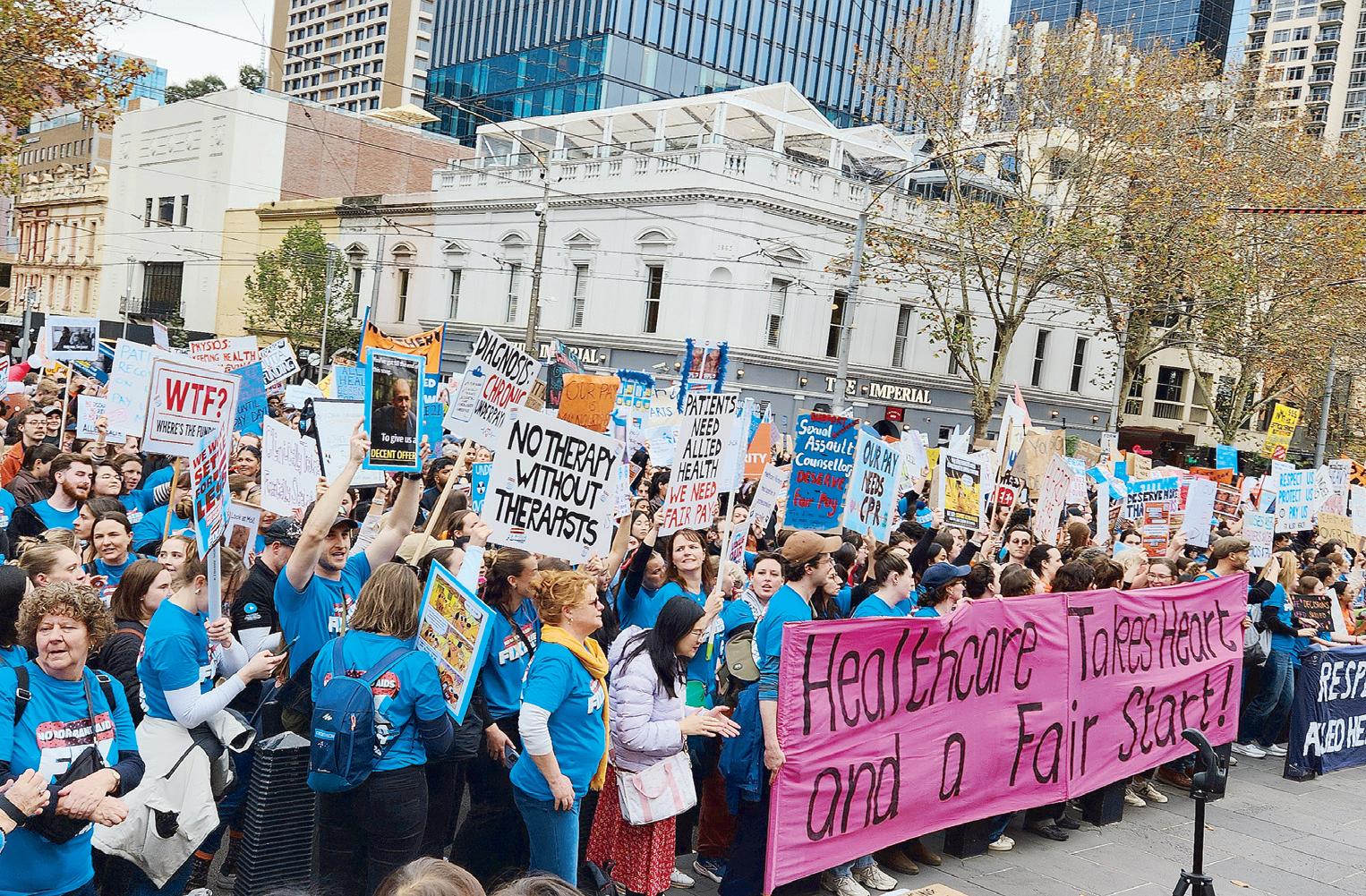
Monash Health workers were among an estimated 4000 allied health professionals at a public rally for better pay and conditions in Melbourne’s CBD on Tuesday 16 June.
Medical scientists, hospital pharmacists, psychologists, dietitians, radiographers and occupational therapists from across two unions went out on strike, seeking at least a 28 per cent wage rise over four years.
According to the HSU Victoria No.3 and No.4 union branches, it was the first time that the state’s allied health workforce had taken 24-hour strike action.
Hundreds of staff from the Monash Health network, including hospitals in Casey and Dandenong, reportedly joined the rally.
On display, were an array of witty placards and slogans such as “no more band aids: fix allied health” and “worked to the bone”
It follows a smaller rally of about 1000 members marching in a stop-work protest rally on 1 April.
Casey pharmacist delegate Chris Sharp said the second protest was necessary because the workforce had “completely lost trust” in the government’s willingness to treat them “fairly or take them seriously”
“After the April 1 action, we were strung along with ‘any day now’ promises every week for nine weeks,” he said.
He said workers were frustrated that a deal remained “six months overdue” , and disappointed that a post-April 1 offer had failed to meet expectations.
He said it ignored professional development costs, excluded proper reproductive health leave, and attempted to strip back long-standing weekend penalty arrangements.
“There is also hurt at being undervalued, bal-
anced by optimism and determination as I watch this dispute bring my colleagues closer together,” Mr Sharp said.
“I expect my Government to treat us better than the worst cliche of a used-car salesperson.”
Most hospital pharmacists are women, and his members have been negotiating from an inappropriately low base rate since 2018 “simply because of their gender” , he said.
“The ‘for women’ Allan Government needs to actually act on its stated values.”
An HSU Victoria No.3 branch member from the South East said “hospitals are being plastered
with posters and writings on walls to bring attention to our cause”
She said the 24-hour stop work was designed to disrupt non-urgent patient services, such as imaging, physio, occupational therapy and social work.
“We are in a tricky situation as health professionals.
“We are bound to cause minimal disruption to patients and there are plenty of exempt groups we have to keep seeing.”
Up until that point, work bans had included not scheduling patients, wearing union protest

merchandise, and billing disruptions to “spread the word for our campaign”
The workers were part of either Health Services Union Victoria No.3 branch – otherwise known as Victorian Allied Health Professionals Association (VAHPA) – and the HSU Victoria No.4 branch comprising Medical Scientists Association of Victoria, Victorian Psychologists Association and Association of Hospital Pharmacists.
VAHPA Executive Officer Andrew Hewat said allied health professionals were the “engine room of our public hospitals”
“They test, treat, scan, diagnose, rehabilitate, and discharge patients. Yet, we remain the largely forgotten workforce.
“The Allan Government has offered nothing to address critical workforce shortages, dangerous workloads, or the years of gender undervaluation identified by the Fair Work Commission.”
Monash Health did not respond to Star News’s enquiry.
A Victorian government spokesperson reportedly told other media outlets that negotiations between the parties were continuing in good faith.
By Jensy Callimootoo
A Berwick teacher says Victorian public school staff are at risk of burnout unless workload and wellbeing concerns are addressed, after union members rejected the state government’s latest pay and conditions offer.
The teacher, who requested anonymity, said he was not surprised that members of Australian Education Union (AEU) Victoria voted down the proposed agreement despite the pay rise on offer.
“I’m not surprised it didn’t get up as it didn’t look like a good deal for Education Support staff, and there’s been a couple of groups pushing the no vote,” he said.
The AEU Victoria branch announced on Friday 19 June that a majority of members voted to reject the Victorian Government’s latest offer of a 28 to 32 per cent pay rise over four years. On the basis that it did not adequately address excessive workloads facing teachers, education support staff and school leaders.
While the majority of the teacher’s own col-
leagues supported the offer, ultimately, he says the concerns about working conditions outweighed the wage increases for many educators.
“Most concerns are with conditions, class sizes, school funding, work-home balance. I spent many hours at home doing reports,” he said.
“They can pay as much as they want, but if they don’t improve conditions then they risk
burning education staff out. There’s also the problem of teacher wellbeing, which wasn’t addressed.”
AEU Victoria branch president Justin Mullaly said members had sent a clear message to the government.
“Victorian public school teachers, education support employees, and school leaders are undervalued and overworked, averaging 12 unpaid hours per week, and our public schools are the lowest funded in Australia,” Mullaly said.
“AEU members have sent a clear message to the Premier and her government that the inprinciple agreement and current levels of public school funding do not go far enough to address their concerns,” he said.
The Berwick teacher said he had ultimately voted in favour of accepting the agreement, largely because of concerns about prolonged negotiations and the possibility of dealing with a new government after the next state election.
“That was mainly because of concerns with potentially negotiating with a new government and losing public support by refusing what, to
Some of us catch public transport for a footy game or a night out. For many others, it’s an essential part of our daily commute. But what do we do when the buses and trains we depend on are no longer safe?
Crime on public transport hit a 10-year high with criminal offences rising by 13 per cent in just the last year according to the latest data from the independent Crime Statistics Agency.
You may be tempted to brush this off and say that this only happens in the city.
Unfortunately, you would be very wrong.
Earlier this year, a local contacted me about a terrifying experience, involving an assault on a bus which resulted in a head injury.
The reality is that I hear these kinds of stories all the time now. Since Jacinta Allan became Premier in September 2023, crime on public transport has doubled in our local area. The number of criminal offences have shot up by over 56 per cent in Casey and over 47 per cent in Cardinia.
At recent crime forums in the City of Casey, it also became apparent that nearly half of the crimes befalling are currently not being reported as people feel it is futile to contact police. However, police have urged residents to report all crimes to increase local resources. People can also call Crime Stoppers on 1800 333 000 if they wish to remain anonymous in their report.
Under Labor, we have less police, less PSOs at
train stations and reduced hours at police stations. It’s not rocket science – if there are fewer police on the beat, crime will increase. This is no way to keep our community safe.
That is why, if elected in November the Liberals and Nationals will:
· Deliver 3,000 more police
· Reopen police stations
· Recruit 200 additional PSOs So that every person gets home safely every day. Ann-Marie Hermans MP, State Member for South Eastern Metropolitan Region Shadow Assistant Minister for Community Safety
outsiders, looks like a great deal,” he said.
Despite that position, he said conditions remained the key issue.
“I don’t see class sizes changing. If we reduced class sizes by three, we’d need another 10 or so classrooms to cope, as well as more teachers,” he said.
“But there are other ways of reducing the load.”
The AEU Joint Primary and Secondary Council will now meet to determine the next steps in its campaign for improved pay and conditions, including how to secure a funding agreement between the state and federal governments that would fully fund Victorian public schools.
With the offer rejected, further industrial action is considered likely. However, the approaching Victorian state election places pressure on both the union and government to reach a resolution.
“My personal feeling is that I’m tired and want it over; however, I do support the majority and will continue,” the Berwick teacher said.


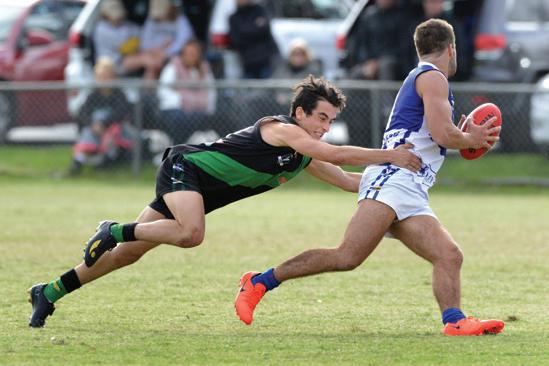

























































made for review of a decision on the application.
The Responsible Authority will not decide on the application before:













1300 666 808 (Open 8.30-5pm Mon-Fri)
Email: sales@networkclassifieds.com.au (include your name, address and phone number)






Rose Pruning Workshop
Hands-on workshop where you’ll learn the best times and techniques for pruning your roses. Practical tips on tackling pests and diseases. For beginners and green thumbs alike.
• Thursday 25 June 10am-12pm at Old Cheese Factory, Homestead Road, Berwick; $5. Bookings: events.humanitix.com/old-cheese-factoryrose-pruning-workshop Neighbourhood BBQ
Come along and bring a neighbour or two to our family friendly evening. Have fun and connect with others in a casual setting. Free sausage sizzle (halal options available) and free kids’ activities.
• Thursday 25 June 4pm-6pm at Autumn Place Community Hub, Autumn Place, Doveton; free event.
FIFA World Cup at Bunjil Place
Screened live on the Bunjil Place outdoor screen in all weather. Bring your own seating, rugs, and/ or picnic. No alcohol.
• daily until Sunday 19 July at Bunjil Place, Narre Warren; free entry. No registration required. Details: bunjilplace.com.au/news/fifaworld-cup-on-big-screen
First-time Dads Catch-up
For all first-time fathers who have a baby under 6 months of age. A great way to ask questions, get some inside tips, and find out that what you are going through is pretty normal.
• Saturday 27 June 9.30am-11am at Orana Community Place, 1 Fresco Place, Clyde North; free event. Bookings: eventbrite.com. au/e/dads-group-community-catch-up-coffee-dads-playground-city-of-casey-tickets1986393387093?aff=erellivmlt
Oracle Bone Script and Calligraphy
Learn about Oracle Bone Script, one of the earliest known forms of Chinese writing. You will also explore the history and the art of calligraphy with hands-on practice. All resources supplied. For ages 16-plus.
• Saturday 27 June 1pm-3pm at Cranbourne Library, Casey Complex, 65 Berwick-Cranbourne Road, Cranbourne; free event. Bookings: events. connectedlibraries.org.au/event?id=190169


The Megaphone Project
Twenty-five giant megaphones in a range of shapes and sizes will be travelling across Casey. Visitors are invited to explore, play and interact with the installation.
• Saturday 27 June - Sunday 12 July, 10am4pm at various locations. Details: casey.vic.gov. au/events/megaphone-project Drag Bingo
Put on your glitter and sparkles and join us for some sassy and hilarious bingo fun with fabulous hosts Della Katessen and Miss Bobbee Pinn.
• Saturday 27 June, 6.30pm-9.30pm at Clyde Public Hall, 30 Railway Rd, Clyde; $5. Bookings: trybooking.com/events/landing/1566512
Light Up the Lane: Under the Neon Sea
Smiths Lane is transformed into an immersive underwater world of neon light, a live mural, music, food and drinks.
• Saturday 27 June, 6pm-8pm at Banjo Park, 20I Grazing Way, Clyde North; free event. Bookings: eventbrite.com.au/e/lightup-the-lane-under-the-neon-sea-tickets1989188770159?aff=oddtdtcreator
Crafty Creatures - Night Events
Family-friendly celebration of Aussie wildlife, craft, cubby houses, hands-on reptiles and live music. Cafe and sausage sizzle.
• Saturday 4 and 11 July, 5.30pm-8.30pm at Wilson Botanic Park Berwick; $8pp, children under 2 free. Bookings: events.humanitix.com/ crafty-creatures-night-events
Yarning By The Fire
Acclaimed musicians Mark Atkins and Erkki Veltheim bring Mungangga Garlagula (Yarning by the Fire). Music, sound and storytelling inspired by the landscapes of Western Australia.
• Saturday 4 July, 7pm-8.10pm at Bunjil Place, Narre Warren; tickets on ‘pay what you can’ basis. Bookings: tickets.bunjilplace.com. au/11357/11358
Crafty Creatures - Daytime Sessions
Creative craft stations, large-scale animal lanterns, immersive bush soundscapes and a fossil dig sandpit.
• Daily from 4 July-11 July, 9am-2pm at Wilson Botanic Park Berwick; $8 for ages 2-17,



$2 supervising adults. Bookings: events.humanitix.com/crafty-creatures-night-events
Clyde North Dad Squad
Soccer World Cup fun for dads, grandfathers, father figures and their children (under 7 years of age).
• Sunday 5 July, 11am-12.30pm at Orana Community Place, 16-18 Playwright St, Clyde North; free event. Bookings: trybooking.com/DLFWJ Casey Demons Community Round Free entry to Casey residents for VFL and VFLW double-header of Casey Demons v Port Melbourne. VFLW kicks off at 11am, VFL at 1.30pm. Features an AFL Victoria activation with handball and kicking games, and free giveaways.
• Sunday 5 July, 11am-4pm at Casey Fields, 160 Berwick-Cranbourne Rd, Cranbourne East. To obtain free entry, download a flyer at casey. vic.gov.au/media/6366.
NAIDOC Week - art for kids
Cultural Nature art and storytelling for kids, led by Skyla Lauch (Living Culture).
• Tuesday 7 July, 10.30am-12pm (art) and 1pm-3pm (storytelling) at Royal Botanic Gardens Cranbourne kiosk; free event.
NAIDOC Week - Yidari and dance
Performance by world-renowned yidaki player
Ganga Giri with the Djarlo Dance Group. Also drop-in kids craft activities from 10.30am.
• Wednesday 8 July, 10am at Royal Botanic Gardens Cranbourne, Ian Potter lawn precinct; free event
NAIDOC Week - Dance Workshop
Indigenous Outreach Projects Hip-Hop (IOP) presents an interactive dance workshop.
• Wednesday 8 July, 2.30pm at Royal Botanic Gardens Cranbourne, Ian Potter lawn precinct; free event
NAIDOC Week - Bushfood Walking Tour
Hudson Fraser from Living Culture will lead a guided walk through the Australian Garden, highlighting native plants that are important sources of bushfood for our First Peoples.
• Thursday 9 July, tours at 11am-12.30pm and 1.30pm-3pm at Royal Botanic Gardens Cranbourne; free event. Bookings essential at rbg. vic.gov.au/cranbourne-gardens/whats-on-cran-
bourne/naidoc-celebrations/
NAIDOC Week - Bushfood Truffles
Join First Peoples artist Sammy Trist to make some delicious bushfood inspired no-bake truffles. A family-friendly, kids activity.
• Thursday 9 July, drop-in sessions 10am11am, 11.30am-12.30pm, 1pm-2pm at Royal Botanic Gardens Cranbourne kiosk; free event. Berwick District Woodworkers exhibition
Annual expo marking the club’s 40th anniversary, including a biennial exhibition of the Australian Scroll Saw Network in the Hayshed Studio. Woodworking demonstrations, timber sales, a chainsaw artist demo, farmers market and kids’ corner.
• Friday 10 July, 5pm-8pm; Saturday 11 July, 9am-5pm; and Sunday 12 July, 9am-5pm at Old Cheese Factory, Homestead Road, Berwick; free event.
Berwick Farmers Market
A no craft market – only farm fresh fruit and veggies, open range ethical eggs, honey, baked goods, artisan breads, vegetable seedlings, ethically raised meats, jams and preserves, dairy, wine, nuts, ready to eat goods.
• Saturday 11 July, 8am-12pm at Old Cheese Factory, Homestead Road, Berwick; gold coin entry.
Casey’s Got Talent
People of all ages take to the stage to share music, comedy, dance, spoken word, party tricks, and the “we-didn’t-see-that-coming” moments. Hosted by CityLife Church. Food available for purchase on the night.
• Saturday 11 July 5pm-8pm at Waverley Christian College, MPC Building, 20 College Dr, Narre Warren South; free event.
Playdaze
Families with children 0-5 years are invited to join us for free, fun playgroup activities, including Butterfly Adventures and Bubble Fun with Dr Hubble.
• Thursday 16 July 10am-11.30am at Fleetwood Primary School, 97 Fleetwood Drive, Narre Warren; free event.





















By Justin Schwarze
Berwick’s guns were blazing at Belgrave South Reserve as the Wickers came out victorious in a shootout in round 10 of the Eastern Premier Division.
Ben Devenish got things underway, somehow finding his boot under heavy pressure and the ball sailed through for a goal in the opening two minutes.
Roger Mazzone fired back for South Belgrave with a perfectly-guided set shot from the pocket.
Berwick then charged on the rebound out of halfback and found Jack Lawrence in space, where he used it to great effect and put it through on the run.
Lewis Hill then scooped up a loose footy in close proximity and dribbled it home, followed by Tahj De La Rue sneaking a soccer kick over the line.
The Saints hit back on a lightning-quick counter, chaining it down the line to Tim Smith, who handed it off to Baron Grant to walk it in.
Berwick was unfazed, winning the next centre clearance and a long Ashton Williamson kick got out the back for Devenish to pick it up and put through his second from close range.
And suddenly it was a goal frenzy as South Belgrave took off from the next ball up, kicking long where Taylor Garner was waiting out the back of a pack.
In a nearly identical goal to the one previous, he was first to the footy and kicked truly.
Superstar Smith then guided his set shot perfectly from the boundary, which was answered by Luke Nelson’s snap bouncing through.
And the Wickers kicked their seventh of the opening term when Williamson gathered it cleanly off hands and belted one from distance well over the goal umpire’s head.
The hosts were able to wrestle momentum in the second and boot six goals, including three of the last four to end the half and pull within nine points as Berwick led 11.7 (73) to 10.4 (64) as the players headed for the rooms.
With the first half being high-scoring, freeflowing and end-to-end, the second half was a stark contrast.
It was contested, high-pressure and an armwrestle around the ball to the point that the clock ticked late in the third and neither team had found the goals in the quarter.

The Wickers broke the drought with Devenish burying a set shot, before Jaxon Binns marked 50 out from goal on an angle and opted to back himself.
It was a great choice as the ball easily made the journey and split the middle, but South Belgrave had the last laugh of the third as Garner marked and snapped home with under a minute remaining.
At three-quarter time, Berwick held a 13.12 (90) to 11.7 (73) buffer.
The visitors fired the first shot of the fourth with Luke Nelson drilling a long set shot home to extend the margin to 24 points.
After a number of behinds, Calvin Daraio burst from a stoppage and unloaded a bomb from
distance to keep the Saints in it.
Very late in the game they got even closer with a Mitchell Grant snap bending through, but the Wickers held on for a 14.18 (102) to 13.12 (90) victory.
“It was one of those games where we had to work our way through it and try and move the ball as efficiently as we could to get our forwards mobile, that was pretty important for us,” Berwick senior coach Andrew Williams said.
“We had more of a contest and pressure game.
“We were hoping to get some loose balls and get our smaller forwards dangerous, which turned out well for us with Devenish kicking three and Lewis Hill kicking a couple.
“We gave ourselves some really good opportunities.
“We’re a good side when we’re able to use our legs and distribute the footy and get out forwards some room to move.
“At times we just needed to find different ways of moving the ball and keep our forwards in the game.
“The clearance part of it was pretty important.
“It was a really telling thing, if the ball got cleared and went forward, both sides looked dangerous.
“They have a really good ruck and some good key forwards while Tim Smith was getting really busy around the ball, so we just had to close a few of those things down.
“We had to be a bit smarter with our ball use and ramp up our pressure around the ball and create a few more stoppages.
“It was one of those games where we just had to grind it out.”
The Wickers are now 5-5 on the season, sitting in sixth place on the table.
A huge test awaits in round 11 with a trip to Zerbes Reserve to take on third-placed Doncaster East.
But for now, Williams is pleased with his side but still thinks there’s plenty of room for improvement.
“There’s so much upside, there’s so much growth in this group,” he said.
“This week I felt like we controlled most of the game and we had a margin most of the day and they kept challenging us.
“We were able to keep responding and I think that’s a sign of growth in a young group.”
By David Nagel
The defensive line coaches of both Beaconsfield and North Ringwood will be treading a little nervously this week after the Saints defeated the Eagles by 50 points in a high-scoring shootout at Quambee Park.
For the first time this season in Eastern Division 1, both teams scored 100 points or more; with North Ringwood winning 23.12(150) to 15.10(100) to cement their place at the pointy end of the ladder.
The Saints booted their highest score of the year and had more scoring shots than any other game this season; kicking 10.3 to 2.3 in the opening term to take a stranglehold on the match.
Midfielder Kieran Rice started the onslaught for the Saints, drifting forward to take a mark after just a minute of first-quarter play.
Talented youngster JayDe Varlet quickly answered for the Eagles, before the Saints turned on the boosters and went into full on attack mode.
The home side kicked the next five goals of the match, before Cooper Shipp provided a brief reprieve for the visitors after some slick hands from Patrick Ward.
But the Saints just dialled things up even further, kicking the last four goals on the opening term to take a 48-point lead to quarter time.
Luke Sinn gave the Saints the rare and exquisite thrill of a 10-goal quarter with a deadly kick after the siren.
Beaconsfield did match it at times with the ladder leaders, particularly early in the second term, with star forward Kobe Shipp providing the impetus.
He first set up Sam Merrick for the opening goal of the second, before kicking three of his own in a stellar eight-minute spell.
Kobe’s first came after a kick out from full
back from skipper Jake Bowd, who found Ali Zijai on centre wing with the assistance of a stiff breeze on a very tiny ground.
Zijai then pumped it forward, with Shipp outmanoeuvring his opponent and racing into an open goal.
He then nailed a difficult set shot from the right forward pocket; before repeating the dose from the left.
The Eagles had closed to 26 points after their
most fruitful period of the match.
But, courtesy of their first-quarter assault, the Saints still had a match-winning buffer and steadied with goals of their own.
The Eagles kicked 13.7 to 13.9 after quarter time…but the damage was already done.
Kobe Shipp ended the day with four majors for the visitors, while Zijai and Corey Brown kicked two each for the afternoon.
Midfielders Devon Smith, Hayden Brown
and Zijai were effective contributors for the Eagles, who tightened up significantly all over the ground after the first-quarter blast from their hosts.
Key-position players Ben Schultze and Charlie Muley were also important for the visitors, joining Kobe Shipp on a classy list of best players. Ben Livingstone slotted six goals for the winners, and Jackson Braunthal four, while Aiden Begg and Aaron Fenton were key instigators in the early carnage.
Beaconsfield will be fired up for a big performance this week; hosting Boronia in front of a Past Players Day crowd at Holm Park Reserve, while North Ringwood heads to Park Orchards for a massive clash between first and third on the ladder.
•
Beaconsfield Goals: Kobe Shipp 4, Corey Brown 2, Ali Zijai 2, Marley Appleyard, Sam Merrick, Jesse Morton, Connor Mouat, Charlie Muley, Cooper Shipp, JayDe Varlet. Best: Kobe Shipp, Devon Smith, Hayden Brown, Benjamin Schultze, Charlie Muley, Ali Zijai.
RESULTS R10: Bayswater 5.4(34) def by Montrose 25.19(169), Boronia 8.5(53) def by Mitcham 16.11(107), Park Orchards 18.14(122) def Norwood 9.9(63), Wantirna South 12.5(77) def by Mooroolbark 11.12(78).
LADDER: North Ringwood 36, Mitcham 32, Park Orchards 32, Wantirna South 28, Montrose 24/ Mooroolbark 16, Boronia 16, Beaconsfield 12, Norwood 4, Bayswater 0. FIXTURE R11: Beaconsfield (8) v Boronia (7), Mitcham (2) v Bayswater
Park Orchards (3) v North Ringwood
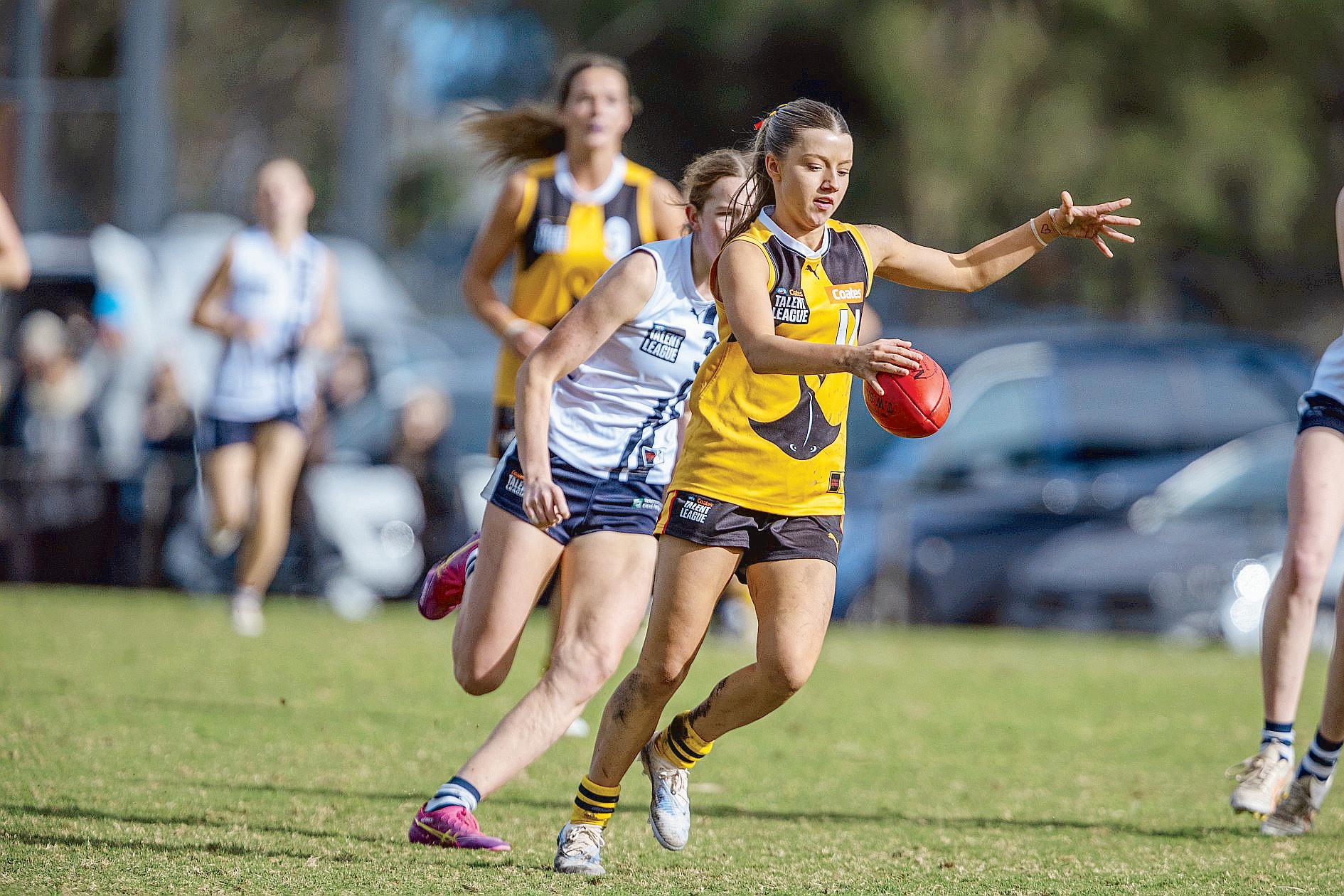

By Blair Burns
It was a strong day for Dandenong Stingrays as the girls continued their brilliant undefeated season in the Talent League, winning easily against Geelong Falcons 12.9 (81) to 3.5 (23).
The Stingrays are second on the ladder after 12 rounds and Nathan Boyd has the side playing a really good brand of footy.
The side welcomed back a number of girls from the Vic Country side for the game, with a week off, before the Championships resumes this Sunday.
From the outset, it was clear that Dandenong was a class above as they applied pressure across the entire ground in the first quarter and won the midfield battle.
The Stingrays had all of the play and struck early in the match through star midfielder Jasmine Whitten, who after a brilliant end-to-end play which started with Ella Bologa off half-back, slotted the set shot.
Across the next five minutes, the home side had three shots on goal but only managed three behinds before Hannah Griffiths gave the team 15-0 lead.
At quarter time, the Stingrays were up 22-1
with Lily Brittain also hitting the scoreboard - the start of what would be a massive game for her.
Showing the class of their side, Dandenong came out in the second quarter and picked up where they left off.
The likes of Molly Reimers (28 disposals, eight tackles) and Zoe Zach (25 disposals) were brilliant in the middle and got great service from bottom-age ruck Shiloh Little (12 disposals, 23 hitouts).
The Stingrays extended the half-time lead out to 36-9, before they produced a memorable premiership quarter.
The struggling Falcons had worked hard for a half to no avail but had run out of legs and Dandenong made the most of its run.
The Stingrays kicked five goals to none in the quarter as they set up a huge victory, with Brittain adding two goals in the term, as well as Annie Clish, who now has 14 this year.
16-year-old Misha Simmons was exceptional in just her second Talent League match, kicking three goals.
While Geelong outscored the home side in the fourth quarter, the damage was done as the Stingrays won by 58 points.
Brittain had a standout game with 19 disposals and four goals, while Bologa had eight rebound50s and created plays out of defence.
Captain Marlee Black was also one of her team’s best on the day with 18 disposals, five tackles and six inside-50s.
BOYS
The boys are also in a really good spot at this time of year, sitting fourth on the ladder after another good win over the Falcons, 13.9 (87) to 3.10 (28).
While the Stingrays were the better side, the extent of the final margin ultimately came down to goalkicking accuracy and taking their chances better than the visitors.
It was a Ben Carroll legacy game as he amassed 34 disposals in the midfield and hit the scoreboard with two goals, also registering eight inside-50s.
It was the perfect start to the game for Dandenong when Narre Warren product Mitch Toner used his strength at a forward-50 stoppage to break away from a tackler and slot a goal running towards the boundary.
Just more than 60 seconds into the contest, and the Stingrays had already hit the scoreboard.
The pressure was immense from the
home side and less than 60 seconds later, they had another goal as Caiden Styles snapped truly.
When Jai Bedson took the advantage a few minutes later and ran into the open goal, Dandenong was up 18-0, the perfect start.
Geelong fought back throughout the day, but the most pleasing thing for Nick Cox would’ve been the four-quarter effort from his group.
The Rays kept the visitors goalless after half time and consistently built on their lead throughout the day to win by 59 points.
There was no shortage of standout performers with captain Gus Kennedy putting together one of his best this season with 22 disposals, two goals and eight marks.
Mitch Toner (21 disposals, three goals) and Clancy Stuart (29 disposals, five tackles) were good again.
But it was the defensive efforts from four Vic Country players down back which helped the Stingrays attack from their back half with Kennedy, Darcy Szerszyn, Wil Antrobus and Cooper White all performing well.
Dandenong Stingrays will be back at Shepley Oval on Saturday as both sides take on the GWV Rebels.
By Blair Burns
Gippsland Power had the top-10 rated players on the ground at La Trobe University, Bundoora on Sunday as they thumped Bendigo Pioneers by 118 points in the Talent League Boys competition, 21.20 (146) to 4.4 (28).
The damage wasn’t too bad for the Pioneers in the first and fourth quarters, but they were absolutely smashed in the middle two periods, outscored 15 goals to two.
It was a strong percentage-booster for Kris Pendlebury and his side as they look to surge up the ladder in the back end of the season, currently sitting nicely at sixth.
With the return of stars like Wil Malady, Marlon Neocleous, Judd Burgiel and Leo Stephenson from APS school footy commitments, this team will only get much stronger.
Bottom-age star Oscar Henwood was outstanding in the victory, causing some problems for Bendigo through the midfield with 33 disposals, six inside-50s, six tackles and five marks. Henwood’s stocks are rising every week and the 17-year-old has captured the attention of many AFL recruiters this season.
Co-captain Cody Templeton, who missed the first U18 Champs game for Vic Country with a foot injury, made his successful return with a 20-disposal, four-goal performance.
While Ash Mounsey got busy inside-50 to score 4.3 from eight marks and 13 disposals.
Charlie Fischer, Will Burgiel and Cohen
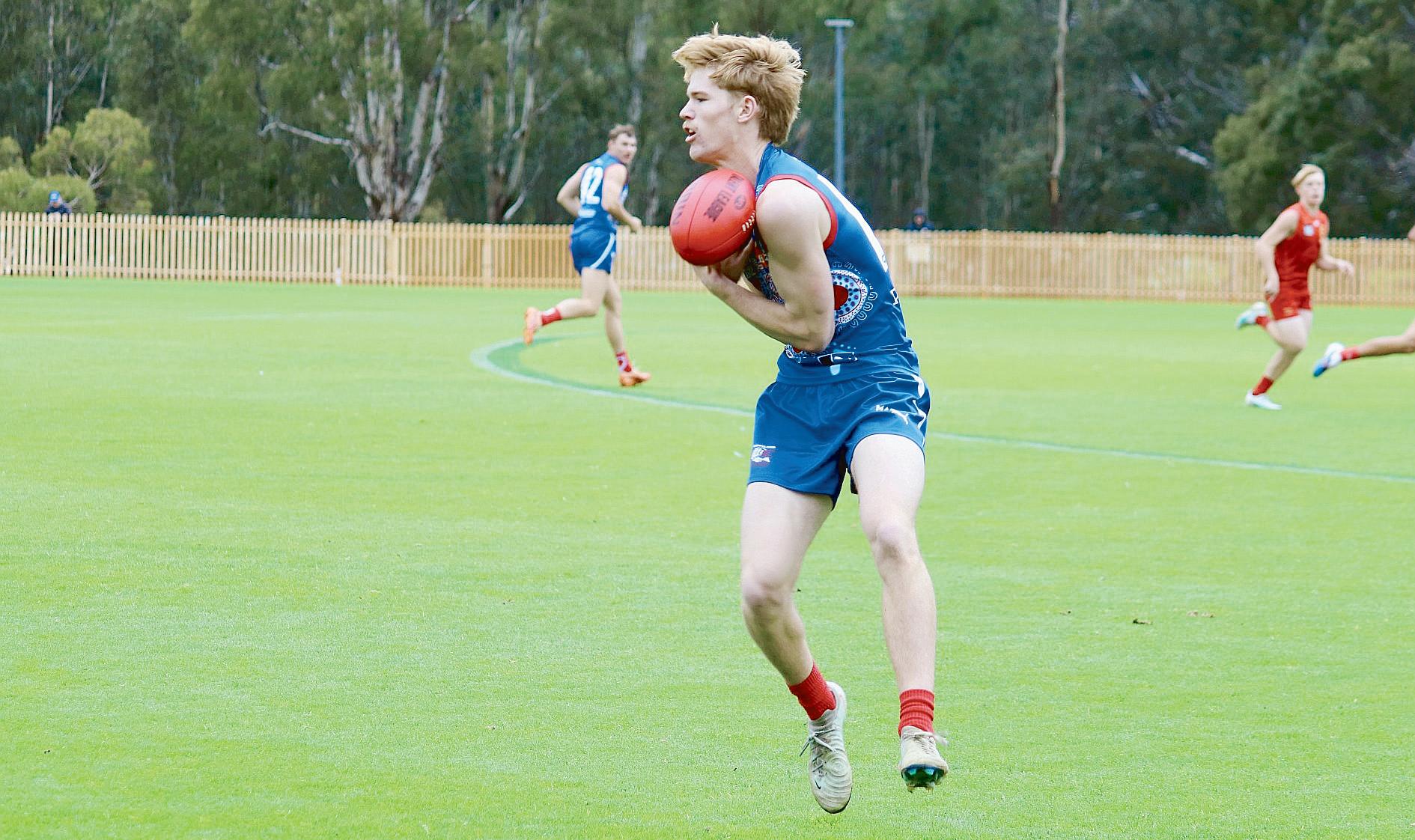
Dent were other players to kick multiple goals with two each, while the Power had seven other players kick one.
Dent’s development as the team’s main ruck and one of the best tap ruckmen in the Talent League has been exciting for Pendlebury and the side this season.
The Warragul-Industrials bottom-ager, who stands at 209cm, has continued to work on be-
ing a forward threat and has now kicked a goal or two in four of his last five matches.
It was a dominant performance with the team generating 64 inside-50s for the game and also winning all of the other KPIs.
Bottom-age Vic Country midfielder Olivia Holmes returned from a very successful first game at the U18 Champs to guide Gippsland
Power home to a 8.16 (64) to 0.3 (3) win against Bendigo Pioneers on Sunday.
Holmes had a day out as she surged the footy forward at every opportunity to finish the day with 32 disposals, seven inside-50s, six tackles and 121 ranking points.
At half time, inaccuracy had cost the Power from racing out to an unassailable lead with 2.10 on the board at half time to no score.
Coach Michael Farmer would’ve been hoping his team could clean up its use going inside-50 and capitalise on forward entries, they did that.
In the second half, Gippsland kicked 6.6 to 0.3 with the midfield and the half backs holding up really well all day, only conceding 12 inside50s for the whole match, with 46 at the other end.
Captain Lily Milner (24 disposals, one goal, six tackles) led from the front with another complete performance, while Elizabeth Sowden led the scoring with three goals, midfielder Grace Dillow with two.
Acacia Sutton (27 disposals) found plenty of the ball, while Summer Elliott and Milly Hoghton worked well together as they split the ruck duties.
It was just the second time that Power have tasted victory this year, as they moved their season record to 2-7, hoping to continue the momentum into this weekend’s clash against Geelong Falcons.