

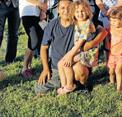














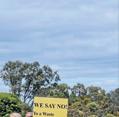








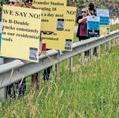





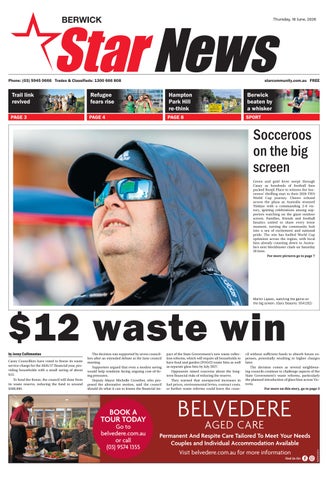
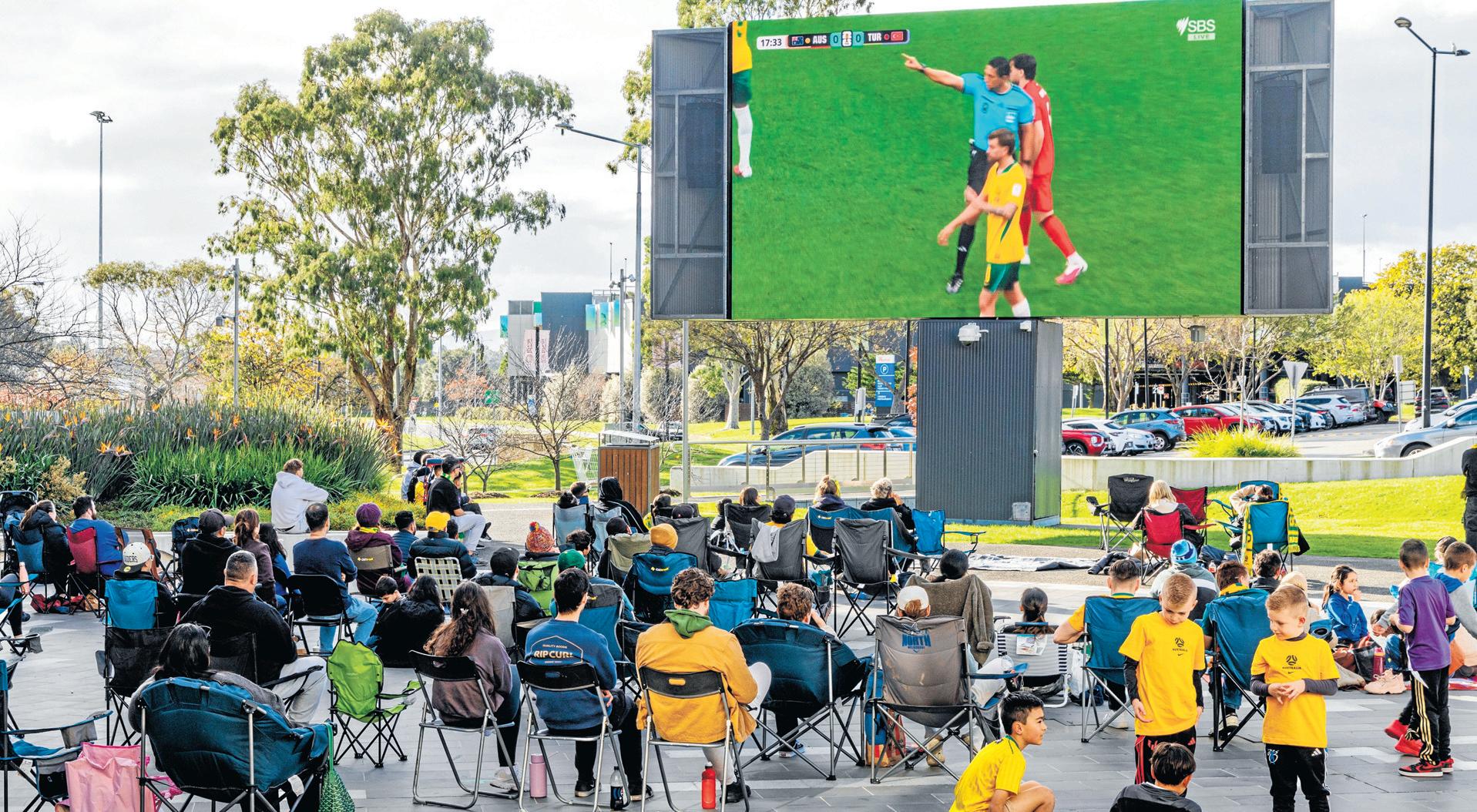
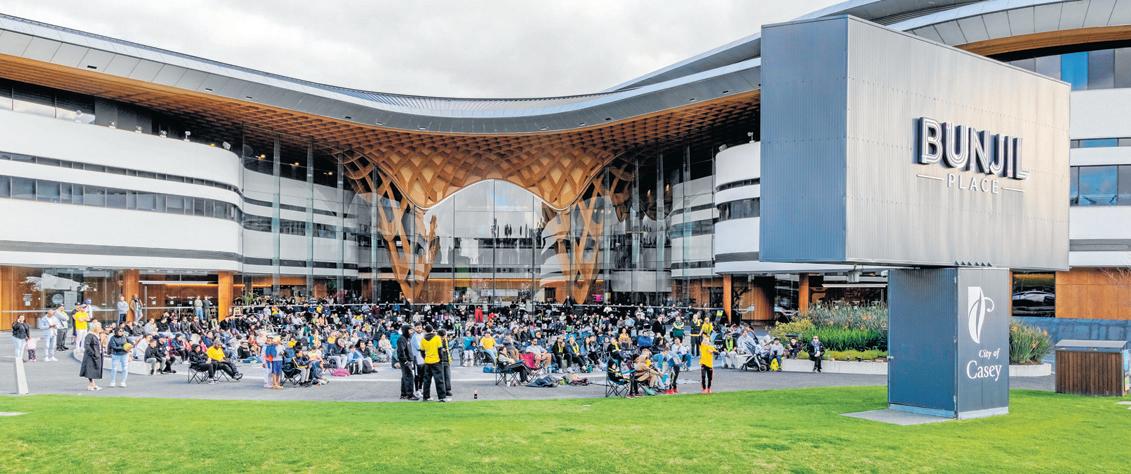
Green and gold fever swept through Casey as hundreds of football fans packed Bunjil Place to witness the Socceroos’ thrilling start to their 2026 FIFA World Cup journey. Cheers echoed across the plaza as Australia stunned Türkiye with a commanding 2-0 victory, igniting celebrations among supporters watching on the giant outdoor screen. Families, friends and football fanatics united to share every tense moment, turning the community hub into a sea of excitement and national pride. The win has fuelled World Cup optimism across the region, with local fans already counting down to Australia’s next blockbuster clash on Saturday 20 June.
For more pictures go to page 7
by Jensy Callimootoo
Casey Councillors have voted to freeze its waste service charge for the 2026/27 financial year, providing households with a small saving of about $12.
To fund the freeze, the council will draw from its waste reserve, reducing the fund to around $300,000.
The decision was supported by seven councillors after an extended debate at the June council meeting.
Supporters argued that even a modest saving would help residents facing ongoing cost-of-living pressures.
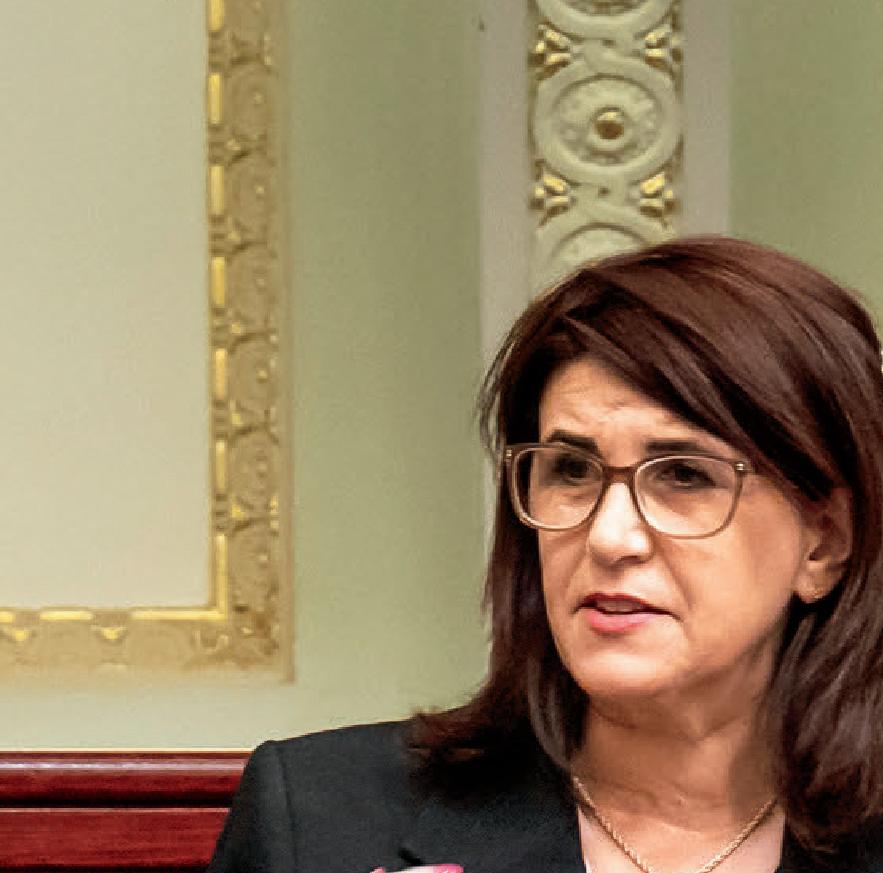
Deputy Mayor Michelle Crowther, who proposed the alternative motion, said the council should do what it can to lessen the financial im-
pact of the State Government’s new waste collection reforms, which will require all households to have food and garden (FOGO) waste bins as well as separate glass bins by July 2027.
Opponents raised concerns about the longterm financial risks of reducing the reserve.
They warned that unexpected increases in fuel prices, environmental levies, contract costs, or further waste reforms could leave the coun-
cil without sufficient funds to absorb future expenses, potentially resulting in higher charges later.
The decision comes as several neighbouring councils continue to challenge aspects of the State Government’s waste reforms, particularly the planned introduction of glass bins across Victoria.
For more on this story, go to page 3
By Jensy Callimootoo
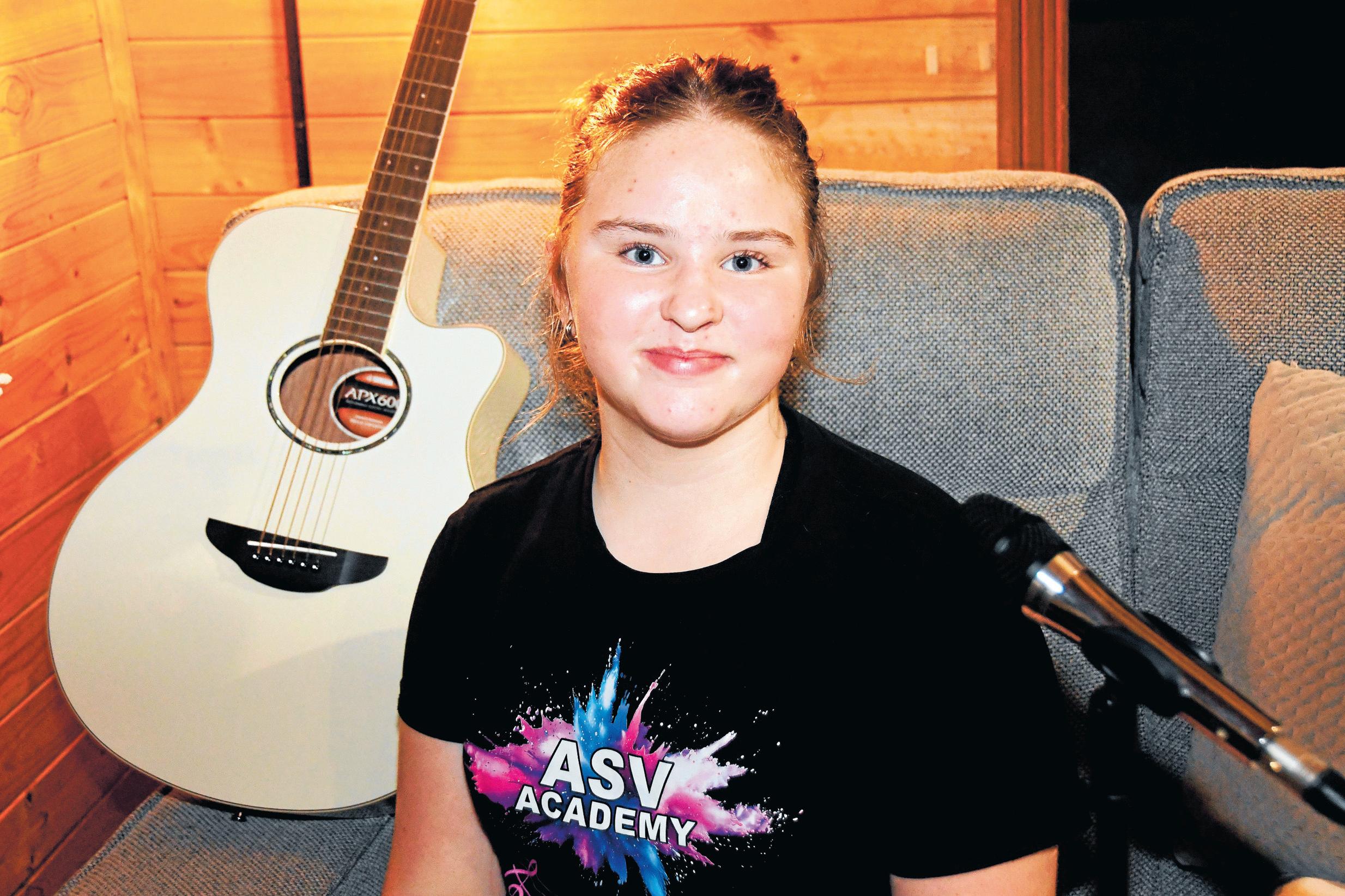
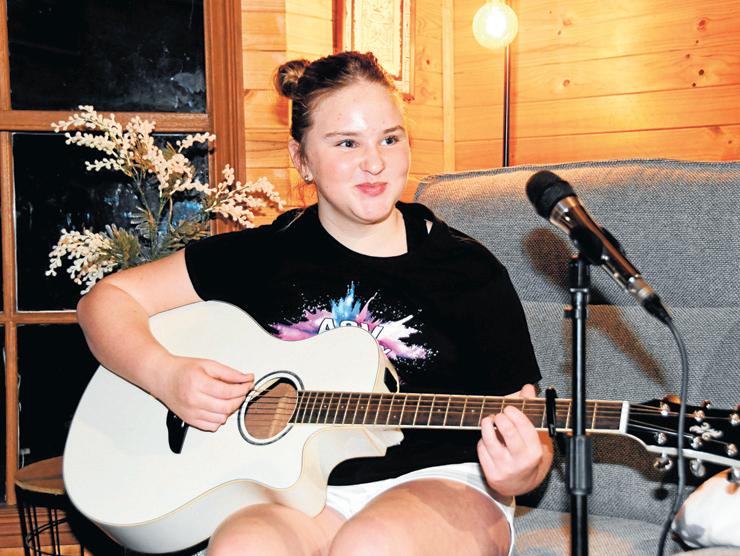
At just a young age, singer-songwriter Blair Ilic, who attends school in Berwick, is already making waves in the local music scene.
At only 12 years old, Blair has captivated audiences with her powerful vocals, heartfelt songwriting and love of performing.
While many children are still discovering their interests, she’s been immersed in music for years.
According to her mum, Kerry, her passion for singing became obvious from an early age, noting that Blair began singing before speaking.
“We noticed she could already memorise melodies from songs on the radio when she was very little,” Kerry said.
“Mostly Adele songs. She’d be singing along and then putting on little concerts for the family at home. We thought we’d encourage her and started her singing lessons.”
Since then, Blair’s confidence and talent have flourished.
She has been taking singing lessons since she was eight years old, regularly performing in concerts, school events and assemblies.
This week, she is preparing to perform at her school’s winter concert, another opportunity to share her love of music with an audience.
One of Blair’s standout achievements came when she won a grand final performance competition with her rendition of House of the Rising Sun.
“They’d seen a version performed on The Voice that had a more jazzy feel to it,” Kerry explained.
“They thought Blair’s voice would really suit that style, so they worked on it together. That’s the song she performed when she won the grand final.”
Like many young singers, Blair draws inspiration from some of music’s biggest names.
“I really love Adele and Michael Jackson,” she said.
Her admiration for the King of Pop has expanded recently after watching the new Michael Jackson movie, sparking what her mum jokingly describes as a family-wide obsession.
But Blair is no longer just performing the songs of others. Earlier this year, she took on the challenge of writing and recording her own original music.
Her debut song ‘Echoes’ , explores the emotions surrounding friendships and learning to let go when relationships are no longer healthy.
“She wanted the song to inspire other people her age,” Kerry said.
“It’s about friendship, the end of friendships and finding a way to move forward.”
The songwriting process began in February
and March after Blair announced one day that she wanted to write a song.
With encouragement from her singing teachers, she developed the idea further, writing the lyrics and creating the chord progression herself through her guitar studies.
She later collaborated with a guitarist from her singing school to refine the melody and complete the finished track.
Recording the song proved to be a valuable learning experience.
“It was a really good experience,” Blair said.
“It was very fun. It was a lot of hard work, but we got there.
The recording process took approximately eight hours, including separate sessions to re-
vate the
“It was a really big learning curve,” Kerry said.
Blair says she feels completely at home when she steps onto a stage.
“When I get up there, I just forget it all and sing,” she said.
With a growing list of performances, competition successes and now original music under her belt, Blair is already building an impressive musical journey.
And when asked whether she hopes music will remain part of her future, her answer was immediate.
“Definitely,” she says.
By Afraa Kori
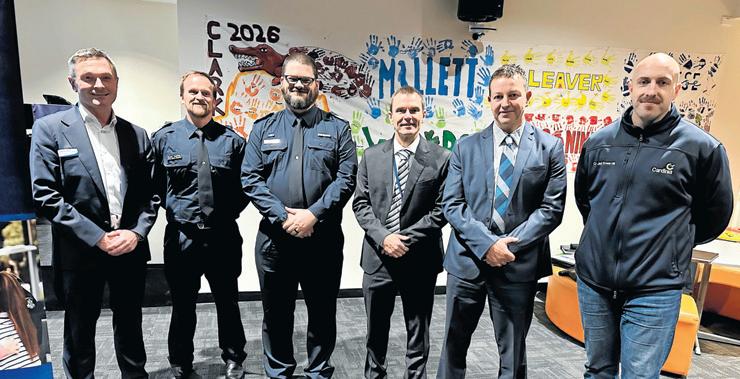
Police have revealed just one specialist family violence support worker is helping victims and survivors across Casey, Cardinia and Greater Dandenong.
Family Violence Investigation Unit officer-in-charge Detective Senior Sergeant Jason Iles said the single worker was supporting one of Victoria’s fastest-growing regions.
“One person dealing with three LGA areas is just not enough,” he said.
“We have an embedded Alexis worker at our office who is invaluable, and we would love to have another 10 of them.”
Based in Dandenong, the Family Violence Investigation Unit covers the three neighbouring councils and triages all reported family violence incidents, managing the most serious and complex cases.
The unit consists of one detective senior sergeant (Illes), three detective sergeants, 20 detectives, three intelligence analysts and one Alexis worker.
The worker is part of the Alexis Family Violence Response Model, which embeds specialist family violence practitioners within police units to provide immediate support to victim-survivors and help connect them with services such as emergency accommodation, financial assistance, security upgrades and other support.
Due to the shortage of alexi-workers, Sergeant
Iles said police depend on external services to help victim-survivors escape cycles of violence, particularly where housing, financial hardship or other complex issues were involved.
The demand on external agencies was placing additional strain on an already stretched system.
“Other services are being understaffed and under-resourced, because we rely upon them a lot,” he said.
Recent data highlights the scale of demand across the region.
According to the Crime Statistics Agency, family violence remains unchanged in Cardinia, with 1,983 incidents and 1,251 breaches of orders reported in December 2025.
In contrast, Casey recorded a 8.3 per cent in-
crease, with family violence incidents rising to 6,735, alongside 3,846 breaches of intervention orders.
Greater Dandenong also saw family violence incidents increase by 6 per cent or 22,184 reports, while 1,947 breaches of intervention orders were recorded.
During the recent crime forum, Cardinia Shire councillor Jack Kowarzik questioned why the three LGA’s shared only one Alexis worker, given family violence remains the most common crime.
“We’re obviously trying to get more than one,”
Sergeant Iles fired back at the councillor.
“It’s not a lack of trying that we haven’t got any. That comes back to dollars and cents.
“Which is unfortunate, because it shouldn’t but that’s what it does. That’s what it boils down to.”
The gap has drawn criticism despite the Labor Government last year announcing a $1.5 million expansion of the Alexis Family Violence Response Model, part of its broader investment to embed specialist workers alongside police in Victoria Police Family Violence Investigation Units.
Sergeant Iles said Good Shepherd was one of the few organisations he knew of with two Alexi’s in the Southern Division core.
In order to better support victims and back police efforts in south east, he advised councils, those working in the family violence sector, and the wider community to advocate with external agencies.
Works have started on the $280 million major expansion of the emergency department at Casey Hospital, says the state government.
Once complete, the expansions will include 15 new fast track spaces, 30 new emergency care cubicles, 20 new short stay beds and 7 new resuscitation bays.
It will also include new consultation rooms, a mental health zone and a specifically designed children’s ED zone.
According to the Victorian Government, the extensions will allow the ED to care for an additional 52,000 patients every year.
The projects will also create approximately over 1000 jobs and support additional medical jobs once opened.
Minister for Health Infrastructure, Melissa Horne said that the new additions will help local families “get the emergency care they need, right on their doorstep”.
South-Eastern Metro MP, Michael Galea echoed this statement.
“We’re investing in the hospitals our growing communities can rely on, so locals can access faster care without having to travel far from home,” he said.
The construction is expected to be completed in 2027.
By Jensy Callimootoo
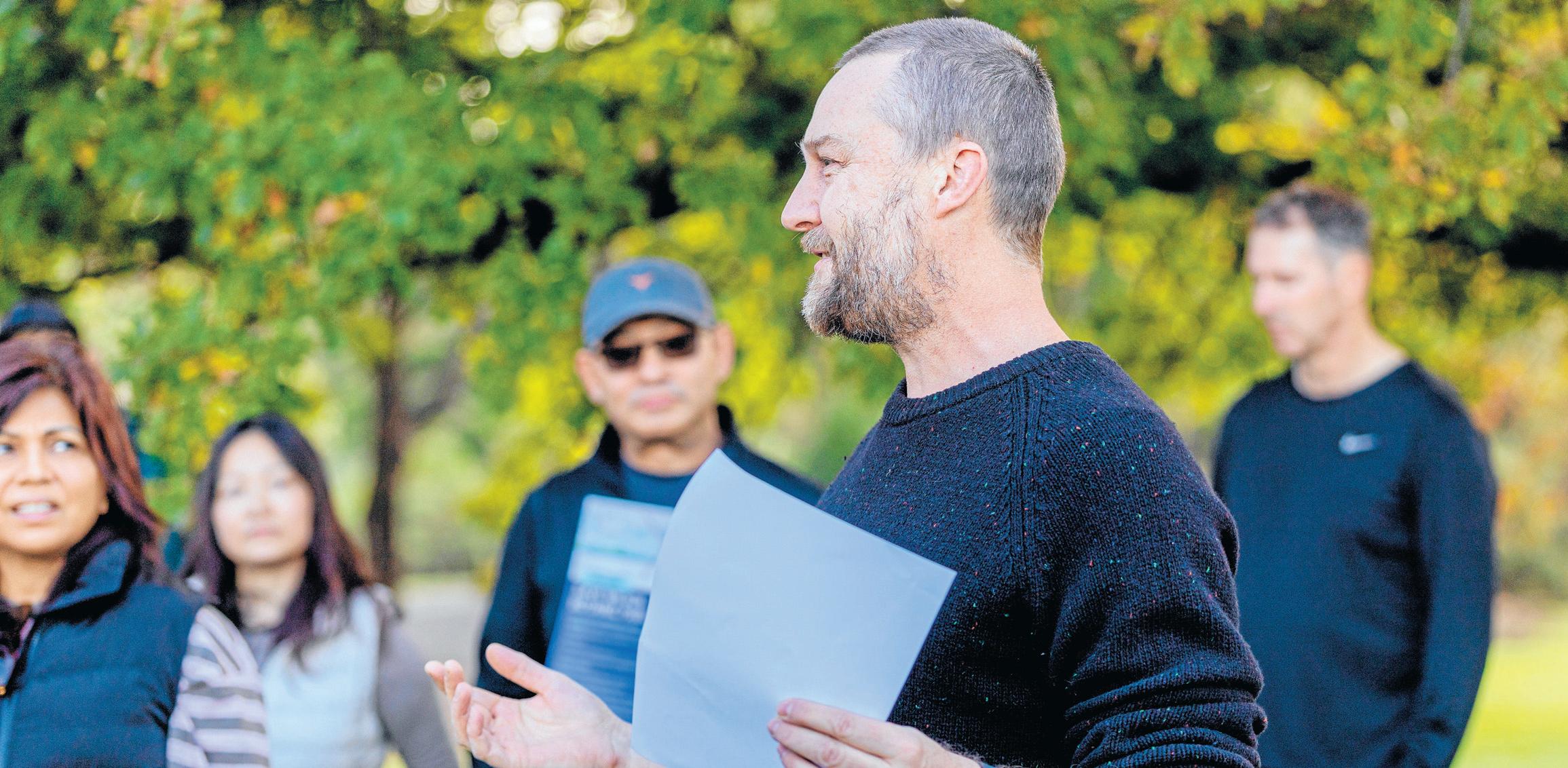
Three non-urgent capital works projects at Wilson Botanic Park will be put on hold following a successful budget amendment passed during council deliberations on the 2026/27 budget and 10 year financial plan.
Put forward by Grevillea Ward Councillor, Dave Perry aimed to remove funding from the projects at Wilson Botanic Park until council has considered the strategic direction of the park’s masterplan and completed an updated version of the document.
Under the amendment, funding allocated to a $105,000 visitor centre pathway will be cancelled from the 2026/27 Capital Works Program.
A $200,000 Renewal of the fountain, retaining Wall and canal at the park entrance as well as the bulk material storage and site modification works associated with the depot upgrades project costing $310,000 will be cancelled.
Speaking in support of his amendment, Cr Perry said the current master plan should be updated to better reflect the community’s beliefs before major investment decisions are made.
“The current master plan should be updated to reflect community wishes and values,” Cr Perry said.
He added that future consideration of capital works projects at Wilson Botanic Park, including the proposed Kramer Drive overflow car park, should be informed by the outcomes of the revised master plan.
He also foreshadowed a future notice of motion related to the long discussed overflow car park that he will introduce at the July council
meeting.
An additional motion was moved by River Gum Ward Councillor Lynette Pereira, incorporating amendments relating to capital works projects within her ward alongside the Wilson Botan-
ic Park changes. Following debate, the amended motion was carried by council.
Cr Pereira, Mayor Stefan Koomen, Cr Kim Ross, Cr Jeniffer Dizon, Cr Shane Taylor, Cr Me-
By Jensy
Casey Council will dip into their waste reserve to freeze ratepayer’s waste charges, saving households approximately $12.
During a lively debate at the June Council meeting, nine councillors voted for an alternative motion that would hold off on raising the waste service charge for the 2026/27 financial year.
In addition to the original council offset of $3 million, the freeze will reduce the current waste reserve from $1.7 million to $300,000.
The decision follows the state’s initiative to reform waste collection, mandating FOGO bins and a new glass-bin for all Victorians households. Councils are required to comply with these reforms by July 2027.
Deputy Mayor Michelle Crowther, introduced the notice of motion, arguing that “every dollar counts”
“The government has introduced unprecedented kerbside waste reforms this year and we need to help our community to counteract these costs,” she said
“As councillors we were very disappointed that we couldn’t revoke these kerbside costs, but what we can do is reduce the financial impact on our community in this upcoming year.”
Those who supported the waste charge freeze highlighted the impacts of cost of living to households, arguing that no matter how little the savings was, it was an opportunity to help residents now when they need it the most, they said.
Others, such as Cr Scott Dowling labelled the freeze as a “modest short term savings”

Four additional councillors, Cr Kim Ross, Cr Anthony Walter, Cr Gary Rowe and Cr Carolyn Eaves voted against the motion.
All cited the prospective concerns of shouldering more costs to ratepayers in the following financial year if circumstances were to change.
This includes geopolitical impacts to fuel costs, potential increase in EPA levies, contractual changes or further state reforms.
According to the chief financial officer, Melissa Baker, if this was the case, due to the waste charge freeze, the council would not have the sustainable reserve to buffer costs for ratepayers as they’ve done in the past.
Meaning additional costs to ratepayers may incur in the following financial year to recoup these unforeseen costs.
Cr Ross argued that supporting the freeze was ultimately an act of “tokenism” with attempts to amass “headlines” by making a political statement.
“Losing the buffer would be very poor financial management. Dipping into our current reserves would be like using your savings account to pay for your groceries on a weekly basis,” Cr Ross said.
Despite voting for the motion, Cr Pereira emphasised her concerns of a “possible double
hit” to ratepayers, arguing that the council was “capitulating” to external pressure regarding the reforms backlash.
She also cited the uncertainty surrounding the Hallam Road landfill in Hampton Park and how the future landfill levies will impact the council’s waste services.
It comes as neighbouring councils continue to take major steps to push back on the state’s waste reforms despite the looming mandate date.
Greater Dandenong Council, are among the 30 councils to call for a review of the glass-bin rollouts.
With councillors voting in favour of pushing back on the mandate and risking a state-instated fine of over $97,000.
Similarly, Cardinia Shire continues to push the State Government to explore expanding the Container Deposit Scheme (CDS) to accept more varieties of glass such as wine and spirit bottles.
Cardinia also called on the government to release the glass bins’ business case to councils.
Anthony Tassone, President of Casey Residents and Ratepayers Association (CRRA) said that he welcomed the decision made by the council.
“$12 might seem modest, but every dollar during a cost of living crisis counts for some households and the principle behind the decision matters,” he said.
“Rather than retaining ratepayer funds in reserve where there is capacity to provide relief, Cr Crowther’s motion reflects a straightforward philosophy that, where possible, money should remain in residents’ pockets.”
By Cam Lucadou-Wells
Casey Council has taken steps to purchase land for a long-sought ‘missing link’ trail in Narre Warren North – nine years after the landowner defied the council in scenes reminiscent of The Castle.
In 2017, John Foy fought off Casey’s attempt to compulsorily acquire his 12 hectares of home, gardens and habitat wetland at 191-195 Belgrave-Hallam Road for a planned soccer complex and shared-use trail.
But according to Casey, the land’s “owner” has recently approached the council to sell the land at “market value”
This time, the council is no longer interested in the whole site, nor in building sports
fields there.
It has instead proposed negotiating for a 7.5-hectare portion of the site to secure the last ‘missing piece’ of a continuous shared-use trail alignment from Doveton to Lysterfield Park along Eumemmerring Creek.
For 20 years, the council had progressively acquired other land along the creek for the proposed trail, which would create a cycling, running and walking link into Lysterfield’s popular mountain bike trails and lakeside picnic areas.
Mr Foy’s flood-plain site - which abounds with kangaroos and waterbirds - is also seen as a crucial biodiversity corridor and important for water management.
On 16 June, councillors unanimously en-
dorsed putting the proposed acquisition out to community consultation – with some commenting that it had been a “long time coming”
There were more dramatic scenes at a council meeting in February 2017 when Casey Council sensationally backed down from a plan to compulsorily acquire the property.
Backed by a 9000-strong petition, media coverage and viral social media outrage, Mr Foy’s victory had shades of the famous movie The Castle.
By that stage, even local soccer members were lobbying on the then-78-year-old widower’s behalf.
Casey’s then mayor Sam Aziz announced the council would “forever” abandon its plans.
“If you were my father or grandfather, I certainly wouldn’t want you to be in this position.
“I wanted to ensure that you were given free passage to go home and sleep peacefully, to know this is off the books and your property is not in our plans.”
Up to that point, Casey Council had been inquiring about Mr Foy’s property since 2002. At one stage, he said he knocked back a council offer of $1.45 million for his land, insisting on protection of his pet dog cemetery and “all the little critters” inhabiting the wildlife lake and gardens he created over the past 35 years.
Star News understands that Mr Foy has been living in aged care since last November.
By Cam Lucadou-Wells
Refugee and migrant communities are reporting rising anxiety due to the highly charged political debate on migration.
In April and May, migrant settlement agency AMES Australia surveyed 35 community leaders in 21 migrant and refugee groups about the rising anxiety levels.
In response, 91 per cent of the leaders thought the political narrative was fueling the fear.
The Middle East conflict (82 per cent), cost of living (71 per cent), finding meaningful work (42 per cent) and housing (46 per cent) were other factors.
Communities from Africa, China and the Middle East were the most worried about the political debate, AMES reported.
Most leaders reported higher anxiety levels than the general community, but on the other hand, their community members were generally happy with their lives in Australia.
South Sudanese community leader ‘Elizabeth’ , who responded to the AMES survey, said the migration debate was “scary”
“When we hear politicians talking about migrants in negative ways, we worry that we will not be welcome here in Australia,” she said.
“The rising cost-of-living is also a big issue in my community. And the rise in fuel prices has made this worse.”
AMES chief executive Melinda Collinson said the survey results showed the need to protect social cohesion and build relationships between communities.
“It’s clear there is stress building in some of our newest communities because of these factors.
“We all need to recognise this and do all we can to make sure everyone in Australia feels welcome and supported.”
In recent months, some political parties have blamed migration rates for greater road congestion, unaffordable housing and stagnating wages.
United Australia Party has pledged “zero immigration” (but for family reunions or workers for nationally-significant projects).
“We cannot take more people without collapsing our economy and social infrastructure” , its
campaign material states.
One Nation has vowed to cut immigration by 570,000 people, and the Liberal-National Coalition has also promised to cut numbers.
At the same time, the Coalition and One Nation have pledged to restore temporary protection visas and to deport “illegal migrants”
The Coalition plans to refuse or cancel visas for people failing to uphold “Australian Values”
The Federal Government argues that it has reduced net overseas migration by more than 45 per cent since a post-Covid peak in 2022.
During Refugee Week, AMES has released a list of ‘10 facts about refugees you should know’ It states that refugees contribute more to Australia’s economy than they receive from services.
Success stories include
“While there are upfront settlement costs, over time this fuels growth, stimulates local economies, and helps offset the impacts of an aging population. More than half are employed after one year, 70 per cent after four years.
‘Refugees are twice as likely to start a business than locally born people.”
They also fill labour shortages in the care industry, manufacturing, retail, hospitality, transport, tourism and education.
Australia accepts 20,000 refugees a year – one of the highest per capita in the world.
“They come to Australia not to take jobs and housing but because life in their homelands is untenable,” AMES stated.
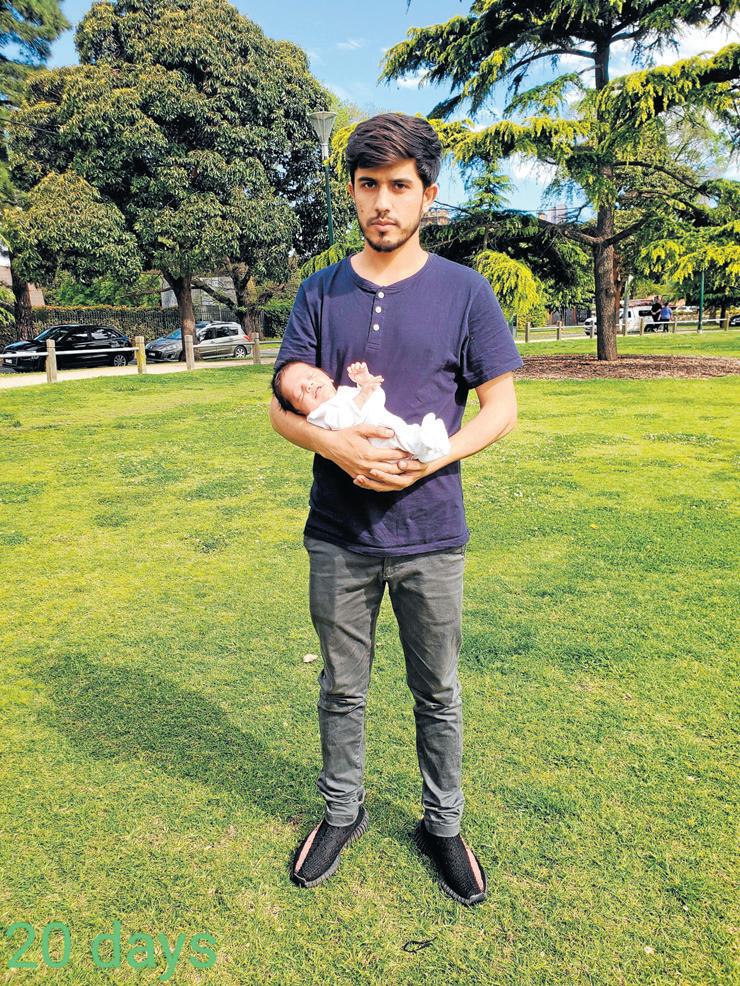
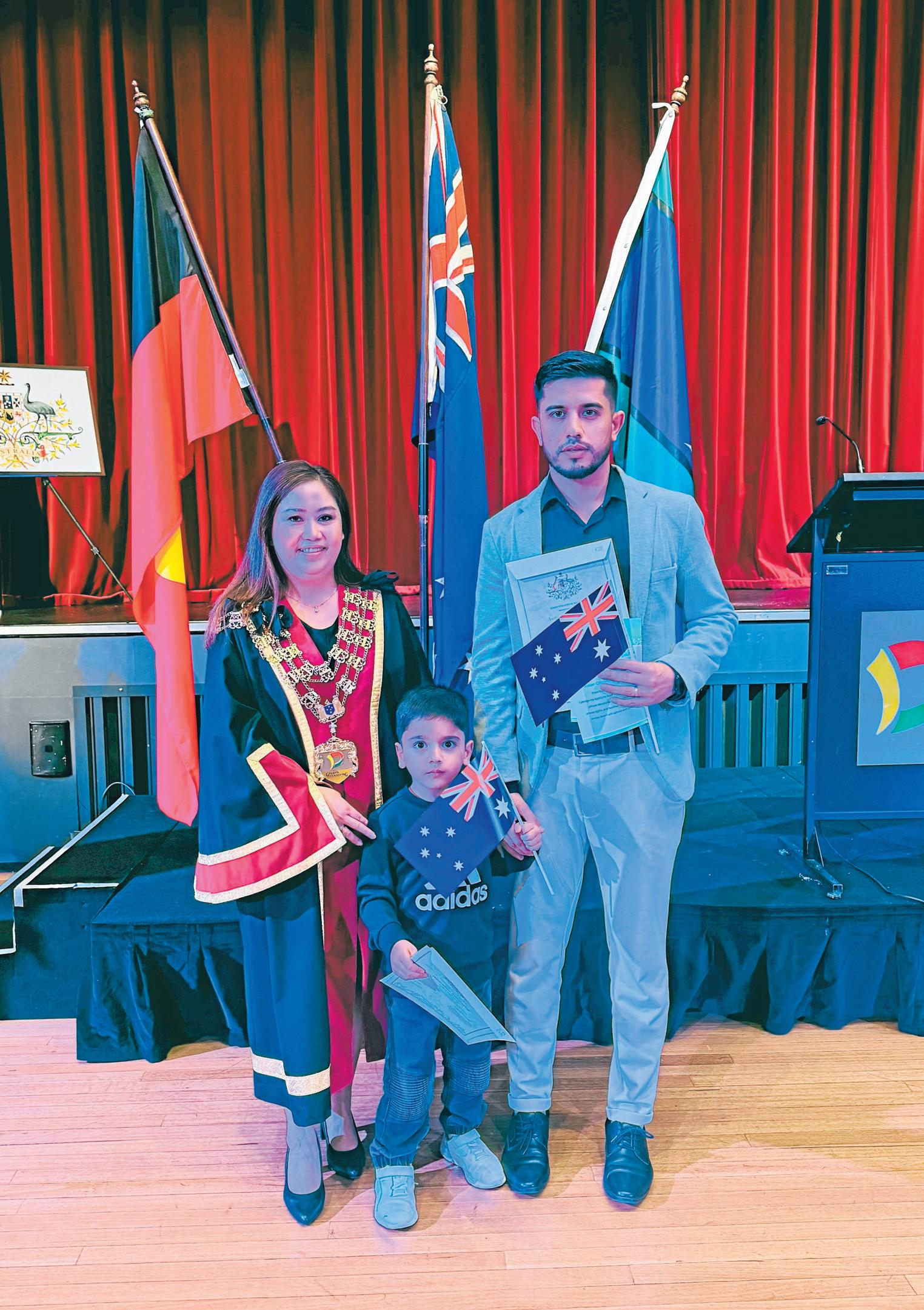
The first baby born among the cohort of Afghan refugees who were airlifted out of Kabul and resettled in Australia following the return to power of the Taliban in 2021 has become an Australian citizen.
Ibrahim, now almost 5, and his family, recently became citizens at a ceremony in Springvale.
His father Shafiq said it was a privilege for his family to become Australian citizens.
“We are very happy to become citizens of Australia. This country has given us new lives, and we want to show our gratitude,” Shafiq said.
He said the citizenship ceremony was life-affirming.
“It was a great experience. We now feel like Aussies,” he said.
Shafiq said he was also happy about the opportunities Ibrahim and his sister Mahsa, 2, would have in Australia.
“My son and daughter will be able to have a good education and follow their dreams while also contributing to Australian society,” he said. Ibrahim was born just a week after his parents arrived in Australia.
“Life is good for us in Australia. We are safe and healthy and doing well. Everything is OK,” Shafiq said.
Shafiq is working as a travel agent but hopes to resume his career in water engineering.
“I am working towards getting an engineering job but in the meantime, we are doing OK,” he said.
Ibrahim was born prematurely but safely in Melbourne’s Royal Women’s Hospital in September 2021 after his parents Shafiq and Amira made a short 2am dash to the hospital from their temporary accommodation in the inner city.
Shafiq recalled the drama of Ibrahim’s birth.
“It was 2am and we went to the hospital in a taxi. Ibrahim was premature but everything was OK. The Royal Women’s Hospital staff looked after us. We were very happy with the result,” Shafiq said.
Shafiq and Amira were among more than 120,000 people evacuated by military aircraft from Kabul International Airport between August 13 and 30 2021.
Led by the US, the operation also included the air forces of the UK, Australia, Germany, Canada, Korea, India and a host of European nations.
The couple spent a night at the Australian camp at the airport in Kabul before being flown to Dubai, where they spent a week. After two weeks of hotel quarantine in Brisbane, they arrived in Melbourne on September 13.
“We heard that there was a strong Afghan community he Melbourne, so we decided to
come here,” Shafiq said.
Shafiq said getting out of Afghanistan was a frightening ordeal.
“It was very scary getting out of Kabul. My wife, who was eight months into her pregnancy, fell into a drain outside the airport as we were trying to get in,” he said.
“I worked on contracts for the Australian Government. I was a site engineer with a logistical company that worked on projects for the embassy – doing work on septic tanks and repairing sewage infrastructure.
“Because of this we were in danger, and we were worried that if we stayed, the Taliban would come for us.
“I had applied for a visa and when it came by email, there was also a notification to come to the airport.
“We were told to go to the A/B gate. But it was very difficult. There were thousands of people trying to get in. It was very difficult for my wife; she fell into the drain water. I was very worried about her.
“But we were actually lucky because it only took us six or seven hours to get in – for most people it was two, three or four days. We were also lucky because the Australian soldiers helped us and checked everything,” Shafiq said.
“We heard that there was a strong Afghan community in Melbourne, so we decided to come here,” he said.
By Jensy Callimootoo
Pressure is mounting on the state government to reform Victoria’s Upper House voting system, as concerns grow over the potential exploitation of preference deals.
Renewed calls for Upper House electoral reform have been made after a popular far-right commentator from Berwick announced plans to register a ‘Free Palestine Party’ and direct its preferences to conservative parties, highlighting concerns about the state’s group voting ticket (GVT).
Victoria is the only state parliament in Australia still using the GVT and the conversation surrounding its efficiency has long been discussed.
The GVT comes into play when a voter votes ‘above the line’ in the Upper House ballot, which allows the party they have voted for to allocate their preferences according to the registered list.
According to the Victorian Electoral Commission (VEC), in 2022 state election, 90.5 per cent of Upper House formal ballots were completed above the line.
The system prompts controversy as it typically allows for micro-parties to influence the subsequent election of candidates with very low primary votes.
For example, in 2022 Animal Justice Party’s Georgie Purcell was able to gain a seat despite obtaining only 1.51 percent of first preference votes.
Most recently, a far-right extremist, with close to 1 million subscribers, revealed to his YouTube subscribers that he would use this very system to help garner votes for One Nation.
Australian-Israeli, Avraham Yemini applied to register a ‘Free Palestine Party’ from a Berwick address, in order to redirect progressive votes to the party, taking inspiration from anti-lockdown and anti-vaccine campaigner, Monica Smit’s ‘Save the Environmental Party’
Despite attempting to take advantage of the system, in the same YouTube video shared in April, Yemini critiques the GVT, arguing that La-

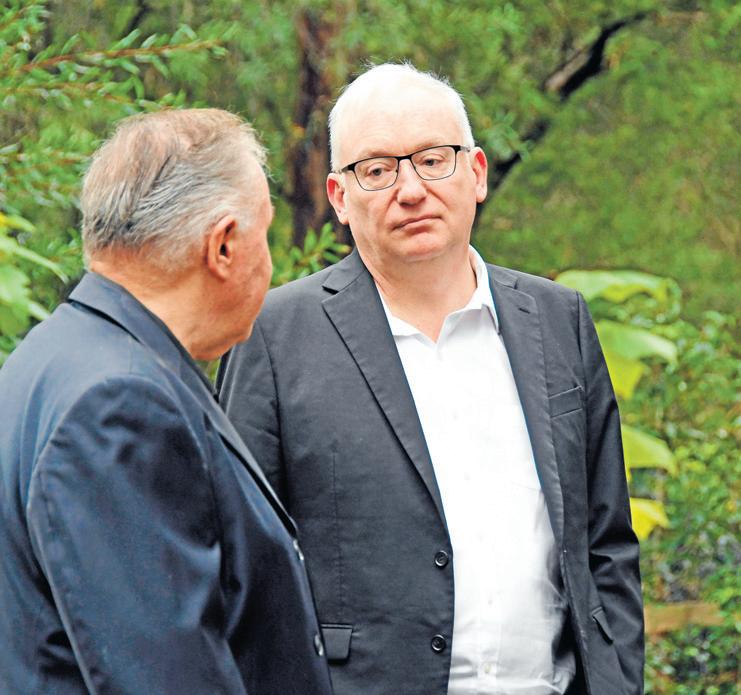
bor may abolish the system after the November election following the apparent exploitation of the system.
Amanjit Gill, founder of City of Casey Transparency Advocate says the act of intentionally misleading voters is “totally indefensible”
“Regardless of where anyone sits politically, left or right, I don’t think it’s okay to trick people, even if you disagree with them, even if you think they deserve it,” said Gill.
She also states that Yemini’s point of “trying to highlight the flaws” in the preferential voting system is an objective that she “does not buy”
“I think that’s a really flimsy excuse. I think that what he’s doing is actually undermining the democratic process,” she said.
“I’m pretty firm in my view that every person, no matter what side they’re on politically, is entitled to whatever information they need to be to make an informed decision at the ballot box.”
Monash University political expert, Zareh Ghazarian says that it’s possible these public tactics aim to intentionally force the state to eliminate the GVT before the November election.
Which in turn, may help conservative parties

garner more seats — but also other minor parties.
“Whether they are intentional, whether they are trying to agitate for change… I think it does give us an indication that this is a live debate, this is something that people have been thinking about,” Ghazarian said.
“I think what we have seen in recent months and weeks across Australia really is a growing appetite by voters to support non-major parties like never before.
“Changing the voting system may not necessarily impact what people are thinking and in fact the current system may actually provide opportunities for smaller parties who could potentially not win a seat in other circumstances to win a seat.”
Rachel Payne, MP for South-Eastern Metro said that while she supports reforms to the current voting system in Victoria, there also needs to be broader amendments to the allocated eight voting regions.
“Only abolishing the GVTs without also reforming the regions is only doing half of the job of voting reform,” said the Legalise Cannabis MP.
“It will create confusion for voters and likely disadvantage smaller political parties, even though in 2022 minor parties received nearly a third of the first-preference vote in the last election.”
Matthew Kirwan, lead Greens candidate for the South-Eastern Metro region in the upcoming election said that he would like to see changes to the voting process before November, describing the GVT as a way to “rig the system”
“The group voting ticket system has led to the election of candidates with primary votes of as little as 1 per cent at the expense of parties that have over 8 per cent primary vote, just because a backroom deal has been made, rather than the voter actively choosing who to support,” he said.
Similarly, Libertarian MP, David Limbrick who gained a seat with 3.56 per cent of primary votes last election said he supports broad reforms to the Upper House voting system.


Including a referendum to help Victorians decide and work in “conjunction with the 2028 local government election”
In response to Yemini’s attempt to harvest votes, Payne is confident ‘dummy parties’ like the ‘Free Palestine Party’ , will not receive VEC approval.
“My advice to voters is to always do your research and look into what policies each political party and candidate offer,” she said.
“There is no denying the system is broken and needs to be fixed, but rushing through partial reform to suit the needs of the major parties, I would argue, is not appropriate.
“Let the voters decide.”









































































































By Dr Jamel Kaur Singh and Dya Singh
On Sunday arvo, Australia came together. Millions of Australians cheered as the Socceroos took on Turkiye.
Living rooms were packed. Pubs were overflowing. Social media was awash with green and gold.
For a few brief hours, politics disappeared. Race disappeared. Religion disappeared.
We were simply Australians backing our team. What many people may not realise is that the Socceroos squad itself tells the story of modern Australia.
Of the 26-player squad, four are refugees. Twenty-three have at least one parent born overseas. Some have roots in Europe, others in Africa, Asia and the Middle East.
Different faiths. Different languages. Different histories.
Yet not one person watching cared where their grandparents came from.
Why?
Because when they wear the green and gold, they belong.
Truth be told... perhaps that is the conversation Australia should be having.
Instead, we seem trapped in a never-ending argument about “immigrants”
The problem is that most people no longer know what that word means.
An international student paying full university fees is not the same as a refugee arriving through a humanitarian program.
A skilled surgeon recruited to fill a workforce shortage is not the same as an asylum seeker.
A second, third or fourth-generation Australian whose family migrated decades ago is not the same as someone who arrived six months ago.
Yet increasingly, public debate lumps everyone together into one convenient category. Immigrant.
And if we’re being completely honest, what many people really mean is “someone who doesn’t look like me”
That should concern all of us.
Because once we stop talking about policy and start talking about appearances, we’ve left the realm of problem-solving and entered the realm of prejudice.
Take the Indian community as an example.
Indians arriving in Australia do so as skilled migrants or full-fee-paying students. They receive little to no government support. They are doctors, engineers, IT specialists, accountants, nurses and business owners. They fill workforce shortages, pay taxes and contribute billions to the Australian economy.
Yet they are increasingly being portrayed as part of a broader migration “problem”
The facts tell a different story.
Victoria’s prison population is approximately 7,000 inmates. Indian-born prisoners account for only 0.003% of that number.
Yet scroll through social media and you would think entire communities are responsible for the state’s crime issues.
This is what happens when anecdotes replace evidence.
It is also what happens when politicians find it easier to sell fear than facts.
Let’s be clear. Australians have every right to be concerned about housing affordability, infrastructure pressures and the cost of living. They have every right to ask whether migration numbers are sustainable and whether governments have planned adequately for growth.
Those are legitimate policy questions.
But they are very different from blaming people because of the colour of their skin.
Over the past decade Australia has become increasingly comfortable talking about immigration, yet increasingly uncomfortable talking about belonging.
And the two are not the same thing.

Citizenship should mean something. So should commitment to Australia.
Work hard. Pay your taxes. Respect our laws. Contribute to your community. Participate in society. Leave the old conflicts behind and help build something better.
That is what Australians have always expected.
What frustrates us is that while politicians endlessly debate people arriving, very few talk about the people leaving.
Last year alone, hundreds of thousands of people departed Australia. Among them were doctors, engineers, nurses, teachers, data analysts and other highly skilled professionals.
People with options. People who looked at rising taxes, housing costs, crime concerns, declining education standards and declining social cohesion and decided their future might be elsewhere.
That should worry us far more than where somebody’s grandparents were born.
Because talent is mobile.
And if Australia becomes less attractive, the people we desperately need will simply leave.
Two years ago, while running for Casey Council elections, somebody wrote across one of my election signs: “Go back to your own country.”
I’ve often reflected on that comment.
Which country exactly?
England, where I was born?
Malaysia, where Dad was born?
Australia, where I’ve lived since I was four years old?
Australia, where I served in the Defence Force, pay taxes, raise my children and contribute to my community?
The truth is they weren’t talking about nationality.
They were talking about appearance.
And that is precisely why this conversation matters.
Because Australia is better than that.
The Australia I know is the Australia I saw on Sunday arvo.
An Australia that proudly backs a football team made up of refugees, migrants and multi-generational Australians without caring where any of them came from.
An Australia that judges people by their contribution, not their complexion.
Political parties have been successful in tapping into genuine frustration around housing, cost of living and social change.
Those frustrations are real. But frustration should never become an excuse for division. Nor should we confuse political slogans with practical solutions.
The answer to Australia’s challenges will not be found in turning neighbour against neighbour. It will not be found in reducing people to labels or blaming entire communities for systemic failures.
It will be found in better policy. Better planning. Better leadership.
And perhaps most importantly, a renewed commitment to what it actually means to be Australian.
Because truth be told... if we can stand shoulder to shoulder behind the green and gold, surely we can learn to stand shoulder to shoulder with one another.
By Andrew Gai
As Refugee Week begins, few stories capture its spirit better than that of Nestory Irankunda.
On Sunday afternoon, Irankunda scored the opening goal in the Socceroos’ 2–0 victory over Turkiye, helping Australia make a memorable start to its 2026 World Cup campaign.
It was a proud moment not only for the young footballer but for many Australians who saw their own journeys reflected in his success.
Born in a refugee camp in Tanzania after his family fled civil war in Burundi, Irankunda arrived in Australia as an infant.
Today, he wears the green and gold with pride, representing the country that gave his family safety, opportunity and a future.
Recently, I came across a social media post claiming that Irankunda’s story is not a refugee story but simply an Australian story. In my view, it is both.
Like the stories of thousands of refugees who now call Australia home, Irankunda’s
journey is one of resilience, hope and the pursuit of a better future.
It reflects the courage of families who have overcome extraordinary challenges in search of safety and opportunity.
At the same time, it is undeniably an Australian story.
Australia provided the environment in which a young boy born in a refugee camp could grow, thrive and ultimately represent his adopted nation on the world’s biggest sporting stage.
That is something worth celebrating during Refugee Week.
This World Cup also highlights another defining feature of modern Australia: our multiculturalism.
Australia is one of the world’s most successful multicultural nations.
People from more than 200 countries and cultural backgrounds have helped shape the country we know today.
Our diversity can be seen in our workplaces, schools, communities and, increasingly, in
our national sporting teams.
The current Socceroos squad is perhaps the clearest reflection yet of contemporary Australia.
Players with migrant and refugee backgrounds are helping drive the team’s success, bringing together different cultures, languages and experiences under one flag.
Their diversity is not a weakness to overcome; it is a strength to embrace.
Yet as we celebrate these achievements, it is impossible to ignore the increasingly negative rhetoric surrounding migration in some areas of public debate.
Too often, migrants and refugees are discussed as problems to be managed rather than people who contribute enormously to Australia’s success.
The reality is that migrants and refugees strengthen our nation every day.
They serve as doctors and nurses in our hospitals, care workers in our aged care facilities, teachers in our schools, business owners in our communities and volunteers in count-
less local organisations.
Like every nation, Australia faces challenges.
But migrants and refugees are not separate from those challenges – they are part of the solutions.
The Socceroos remind us of that. Their success demonstrates what is possible when talent, opportunity and belonging come together.
They are representing not only Australia on the world stage but also the values that have helped make Australia one of the most successful multicultural societies in the world.
The Socceroos have already made us proud.
They have shown determination, courage and the willingness to have a crack – the qualities Australians have long been admired for.
As their World Cup journey continues, one thing is certain – the nation is behind them. Go Socceroos.
- Andrew Gai is a community advocate, recipient of a 2020 Holt Australia Day Award and a 2022 Victorian Refugee Achievement Award.




By Jensy Callimootoo
Gold and green scarves, camping chairs and warm blankets dotted the viewing area at Bunjil Place as Casey residents came together on Sunday 14 June to watch the Socceroos open their 2026 FIFA World Cup journey.
The community screening attracted football fans of all ages, with families and friends settling in to cheer on Australia as they faced Turkey in Vancouver, Canada.
While temperatures reached a balmy 27 degrees in Vancouver, the winter chill in Melbourne did little to dampen spirits. Supporters rugged up and gathered around the big screen, creating a lively atmosphere throughout the match.
The crowd erupted in the 27th minute when rising star Nestory Irankunda found the back of
the net, giving Australia an early lead and sparking celebrations across the viewing area.
Turkey continued to apply pressure, keeping fans on the edge of their seats, but Australia’s defence remained resolute. The Socceroos sealed the result with less than 20 minutes remaining when Connor Metcalfe finished off a swift counterattack to take it to 2-0.
With excitement building across the country, here in Casey, football fans will have another opportunity to back the Socceroos when they take on the United States in Seattle on Saturday, 20 June. This will stream at 5am local time.
Bunjil Place will once again host a free live screening of the match, giving residents the chance to come together and support Australia on football’s biggest stage.

If you’re experiencing foot pain, there’s a good chance you’ve been diagnosed with a condition such as plantar fasciitis, Achilles tendinopathy, bunions, bursitis, arthritis, Morton’s neuroma, heel pain, or flat feet. While these conditions are common, they are also frequently misdiagnosed or mismanaged.
According to Dr. Paul Dowie, one of Australia’s most experienced musculoskeletal podiatrists with more than 25 years of experience treating foot, knee, and leg conditions, inaccurate diagnoses and ineffective treatment plans can significantly delay recovery.
Dr. Dowie highlighted 3 common reasons foot pain can persist:
1. Diagnostic Scans Are Misinterpreted
Changes or irregularities seen on imaging scans are commonly misunderstood. For example, thickened tissues are often mistaken for inflammation, which can lead to treatments that target the wrong problem.
2. The Symptoms Are Treated, Not the Cause
Many treatments focus solely on relieving pain rather than identifying why the pain developed in the first place. Without addressing contributing factors, relief is often temporary and the condi-

tion can return or continue to progress.
3. Biomechanics inexperience
The foot and lower limb are complex structures, so a thorough understanding of lower limb biomechanics is often critical to achieving lasting results, and this requires extensive studies and/or experience in this area.
Dr. Dowie believes it is important for people to know that most foot and leg conditions can be improved, including many complex, chronic, arthritic, and degenerative problems.
“Too often people are told that their pain is simply a result of ageing or wear and tear, and
that they must learn to live with it,” says Dr. Dowie. “Others are led to believe that anti-inflammatory medications, cortisone injections, arthroscopies, or surgery are their only options. In many cases, that simply isn’t the case.
The key is identifying what’s really driving the pain and then developing a treatment approach that addresses those underlying issues.”
If foot, ankle, knee, or leg pain is limiting your daily activities, you can consult Dr. Dowie at Foot and Leg Pain Clinics locations throughout Melbourne, including Berwick. For appointments, call 1300 328 300.



By Violet Li
The controversial Hampton Park Hill Development Plan will be reviewed and audited by the end of 2026.
At the 16 June Casey Council Meeting, Casey councillors unanimously endorsed the municipality’s 2026-2029 Land Use Strategy Work Plan, which sets planning-policy priorities for the next three years.
The strategic planning work for the Hampton Park Hill precinct has already been listed as one of the priorities, but Cr Lynette Pereira added an amendment to require the Council to establish the project with “appropriate governance, including staff and councillor representatives, to establish the outcomes sought, scope of work, ensure transparency and accountability, and monitor progress”
The amendment also directs the project to focus, in the first instance, on a review and audit of the Hampton Park Hill Development Plan, Planning Scheme Amendment C294, Section 173 agreements and planning permits within the precinct to determine whether the current planning settings are still appropriate.
The amendment also asks the Council to consider options to “re-set and establish a new vision” for the precinct.
Council officers are required to report back to the Council by the end of 2026 with updates and recommendations.
Cr Pereira said at the meeting that Hampton Park Hill is a uniquely complex precinct that has had various long-term visions over the years, including from the original Parklands vision.
“It currently represents an intersection of economic infrastructure, industrial legacy and long-established residential neighbourhoods. Because this housing is well established, our primary responsibility is to ensure that the surrounding strategic settings are fully aligned with contemporary urban planning standards,” she said.
“Over time, we’ve seen growing complexity
in balancing the operational realities of the site with modern expectations regarding community amenity and environmental health. “Managing an area with established residential borders under legacy controls can create friction.
“And it has become clear that a thorough review is now needed to determine if our current strategic direction reflects that up-to-date thinking.”
Hampton Park Hill includes the Hallam Road landfill and is bound by Ormond Road and Central Road to the north, the transmission line easement to the east, Glasscocks Road to the south, and Hallam Road and the South Gippsland Highway to the west.
The current version of the Hampton Park Hill Development Plan was endorsed at the July 2023

Council Meeting by the then-administration-led council, despite significant community objection.
The plan serves as a framework to guide land use and development proposals in the precinct. It allows for the continuing operation of the existing landfill, future waste and resource recovery activities, public open spaces, and light industrial activities in the designated area.
For many nearby residents, the plan became another flashpoint after years of concern about odour and amenity impacts from the neighbouring Hallam Road landfill.
At the time, the draft Development Plan attracted 1068 submissions in 2022, and a Community Engagement Summary Report noted that 99 per cent of the submissions objected to the
draft with key areas of concern including odour hazards, truck and traffic hazards, loss of property values, landfill buffer impacts, inadequate community consultation, and Council’s previous empty commitment to restore the area to parkland.
In November 2024, shortly before elected councillors returned to Casey, Council approved under delegation a planning permit for a $27 million waste transfer station in the north-western part of the Hampton Park Hill, about 250 metres from the nearest residential dwelling.
The facility, proposed by Hallam Road landfill operator Veolia, would have accepted about 550,000 tonnes of municipal residual waste, construction and demolition waste, and commercial and industrial waste from the south east.
According to the Council, the permit application was assessed against the Hampton Park Hill Development Plan.
City of Casey chief executive officer Glenn Patterson told Star News then that they understood that the local community might be disappointed by the decision, but the Council’s role was to consider planning permit applications against relevant policies, development plans and legislation.
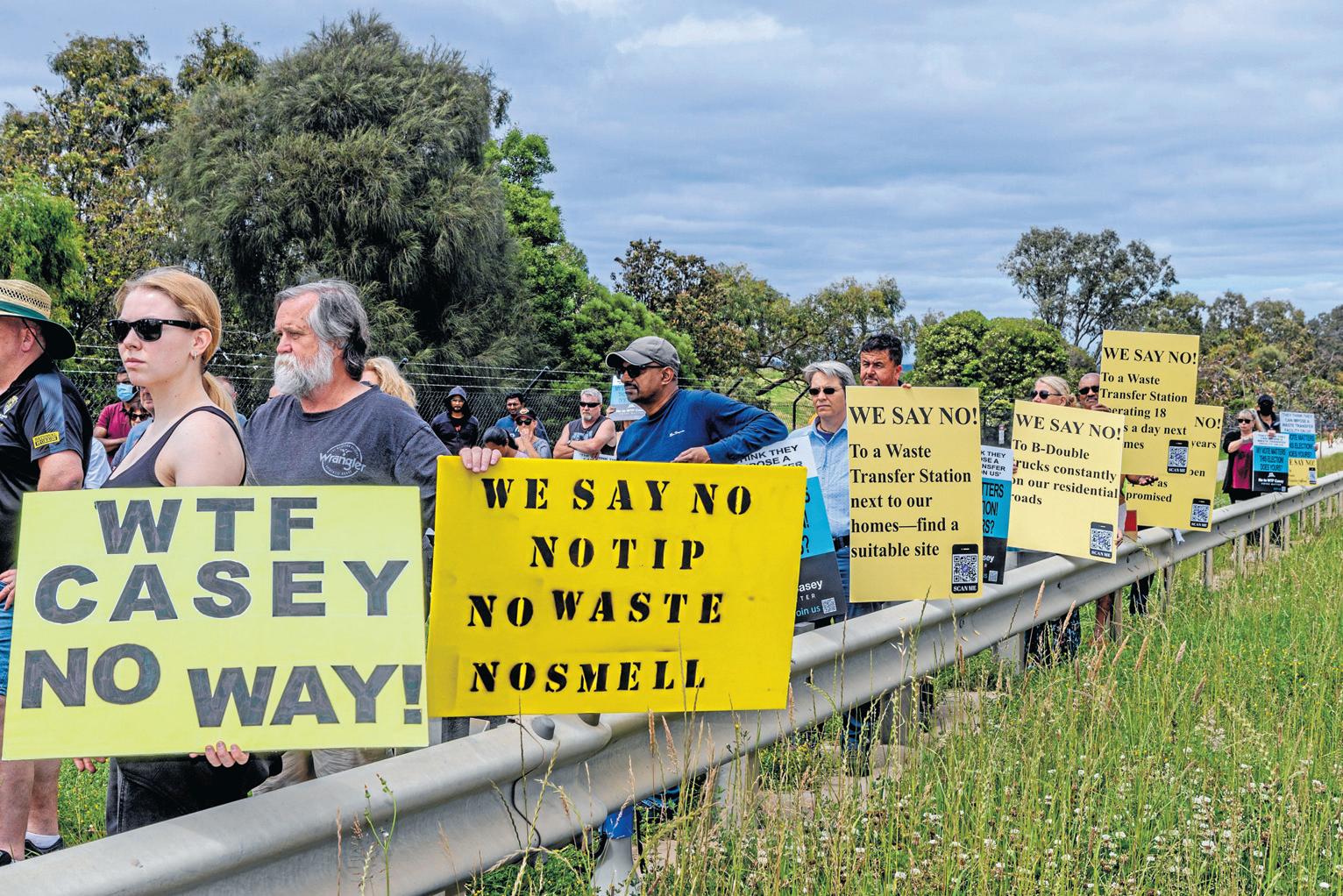
The community continued to fight the proposal, lodging more than 700 objections to the EPA Victoria during its assessment of Veolia’s development license application, which led to its rejection.
Residents had three rallies against the proposed facility, including one outside the State Parliament before a debate initiated by local Opposition MP Ann-Marie Hermans opposing the project.
Veolia later took the matter to VCAT, and VCAT eventually rejected the proposal in April this year.
Cr Pereira said that the review of planning work for the Hampton Park Hill precinct would examine whether legacy frameworks, including older development plans and associated agreements, remained appropriate, legally robust and aligned with current state and local planning policies, as well as community expectations.
Edrington Park Retirement Living is a thriving community set on prestigious gardens and home to a heritage-listed community centre.
Enjoy easy access to shops and public transport, and sought after facilities, including gym and hair salon as well as an active social calendar.
Don’t miss out on low-maintenance retirement living, enjoying spacious, modern villas with private courtyard gardens and 24/7 emergency call systems.
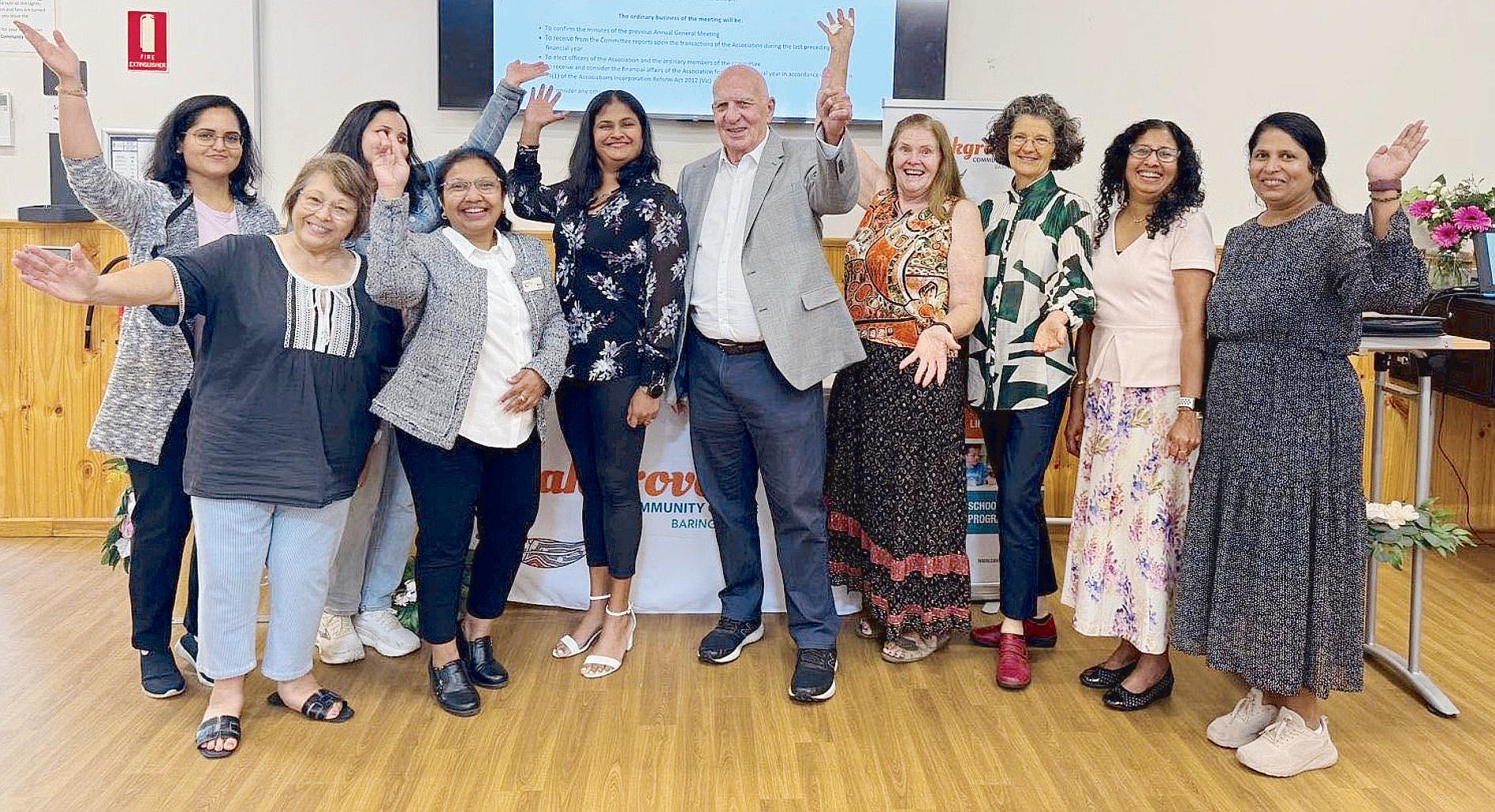
The Oakgrove Community Centre Board of governance, volunteers and staff are pleased to invite residents, families, carers, and community members to attend the Oakgrove Wellness Expo on:
Date: 27 June 2026. Time: 12:00 pm – 3:00 pm
Venue: Oakgrove Community Centre
This special event will bring together a range of health, wellness, and community service providers, offering valuable information, resources, and support to help individuals lead healthier and more fulfilling lives.
Attendees will have the opportunity to:
• Meet local health and wellbeing professionals
• Explore community support services
• Attend informative presentations and guest speaker sessions
• Access health and wellness resources
• Connect with local organizations and community groups
Whether you are seeking information for yourself, a family member, or someone you care for, the Oakgrove Wellness Expo offers a welcoming environment to learn, connect, and discover services available within our community.
Admission is free and all community members are welcome.
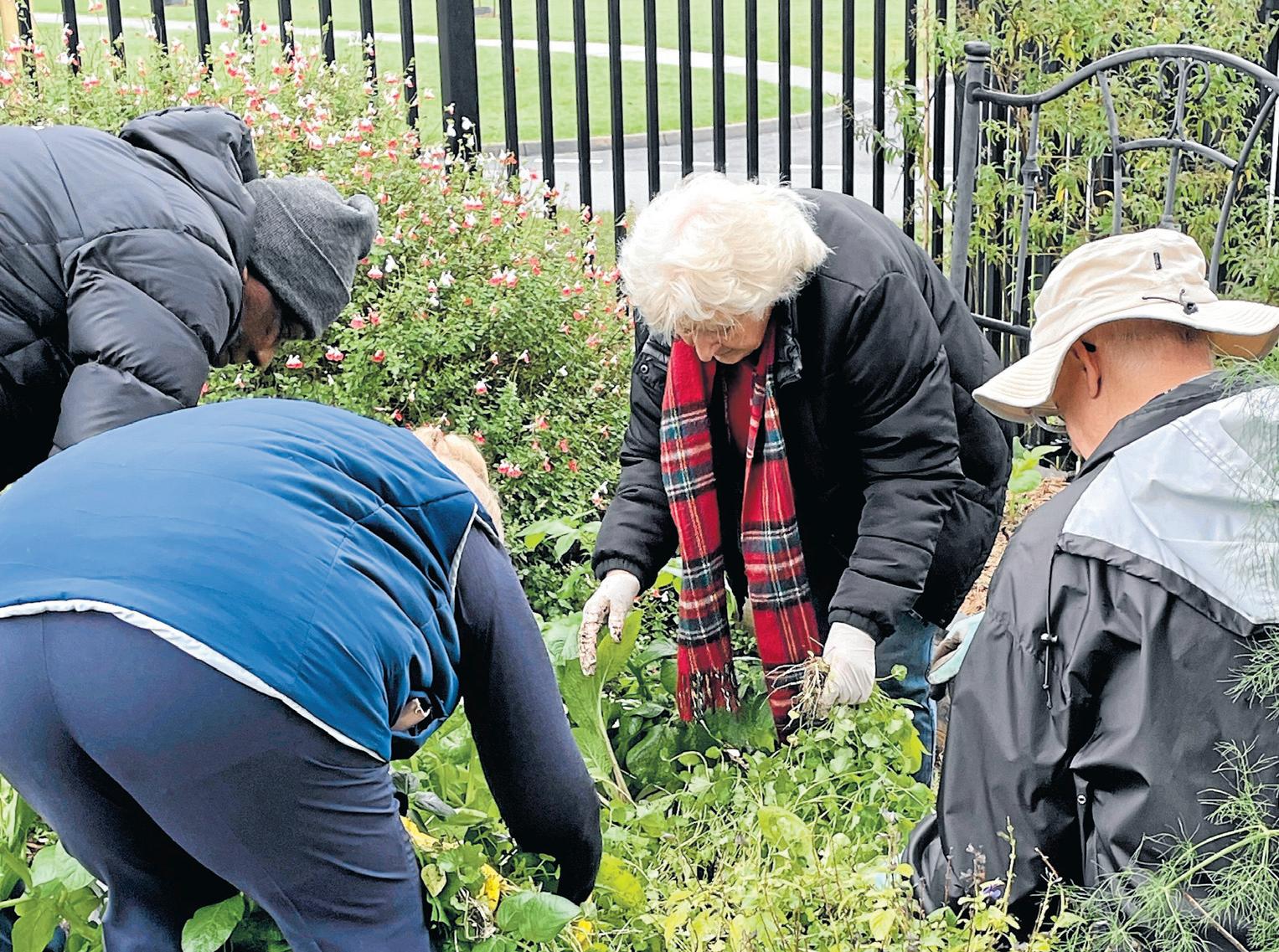
The Berwick Neighbourhood Centre is a welcoming, engaging community hub located across two locations in Berwick at 112 High St and Timbarra Way.
Offering an array of activities and programs for children to adults, catering for their needs and interests.
Feel free to reach out to the friendly staff, who can let you know more about what’s on offer which includes adult craft, exercise, gardening, social groups, information sessions, events, playgroups and childcare.
There is always something going on at the centre for you to explore. Come along and check out the Berwick neighbourhood centre to find, fun, friendship and belonging in your community.
Save the date for our upcoming community market on Thursday June 25th and our Enormous morning tea on the 27th August. Both will be great events.
For more details contact the centre on 9704 1863 or email admin@berwicknc.com.au We look forward to seeing you soon.
The Berwick
560292_01
Saturday 27th June 12pm to 3pm










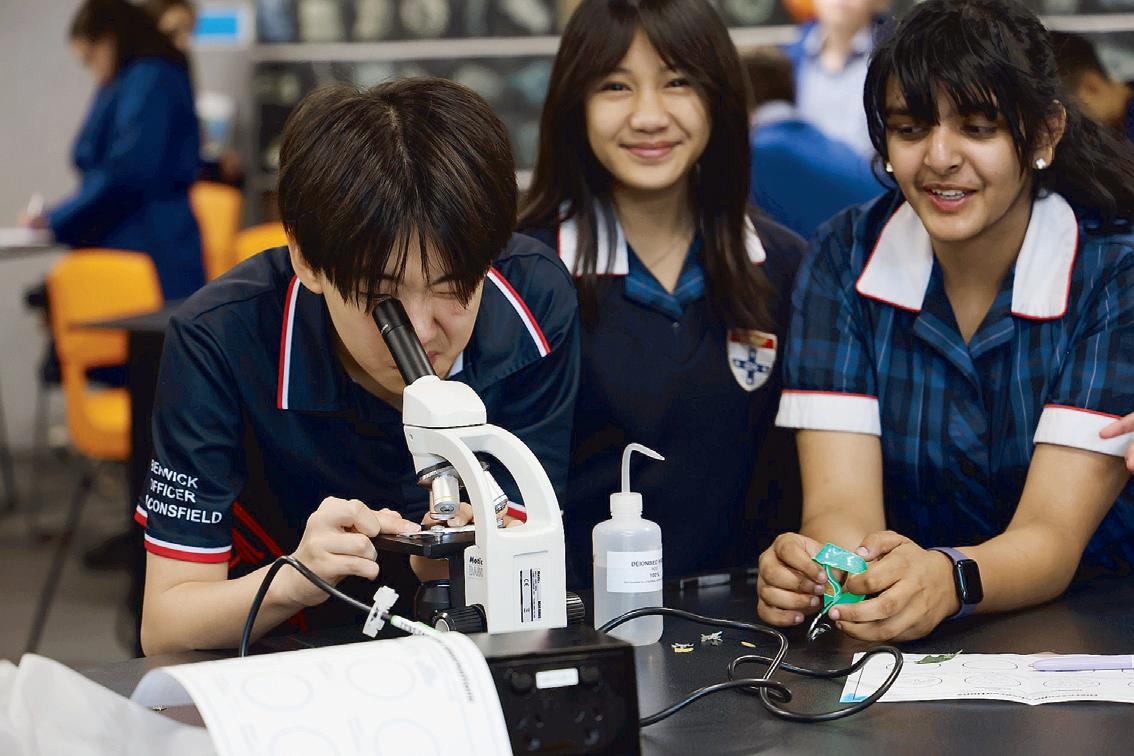
At St Francis Xavier, we believe every child deserves a pathway to success, confidence, and a bright future. As a Catholic school, we are guided by values of care, respect, and service, creating a welcoming environment where students are supported to grow academically, socially, and personally.
We know that every child is unique, with different strengths, interests, and aspirations. That is why we offer a pathway for every child, helping each student to discover their potential and develop the skills they need to thrive. Through a broad range of learning opportunities, we aim to inspire curiosity, build resilience, and encourage a love of learning.
With an extensive range of extracurricular activities and competitions to take part in, we believe that students thrive when they can extend themselves beyond the classroom and pursue unique interests and new skills. Through, sports, performing arts, community and academic clubs, students can grow in confidence as they explore their interests.
Our dedicated staff work in partnership with families to ensure each child feels known, valued, and encouraged along the way. Whether a student needs extra support, opportunities for enrichment, or a place to explore their talents and leadership, St Francis Xavier provides a nurturing environment where they can flourish.
At the heart of our community is a strong sense of belonging and purpose. We strive to help students become compassionate, capable, and confident young people, ready to make a positive difference in the world.
Enrolments for Year 7, 2027 and beyond are now underway, and we invite families to discover what makes St Francis Xavier a special place for learning and growth.
If you are looking for a school where there is a pathway for every child, we would be delighted to welcome your family.


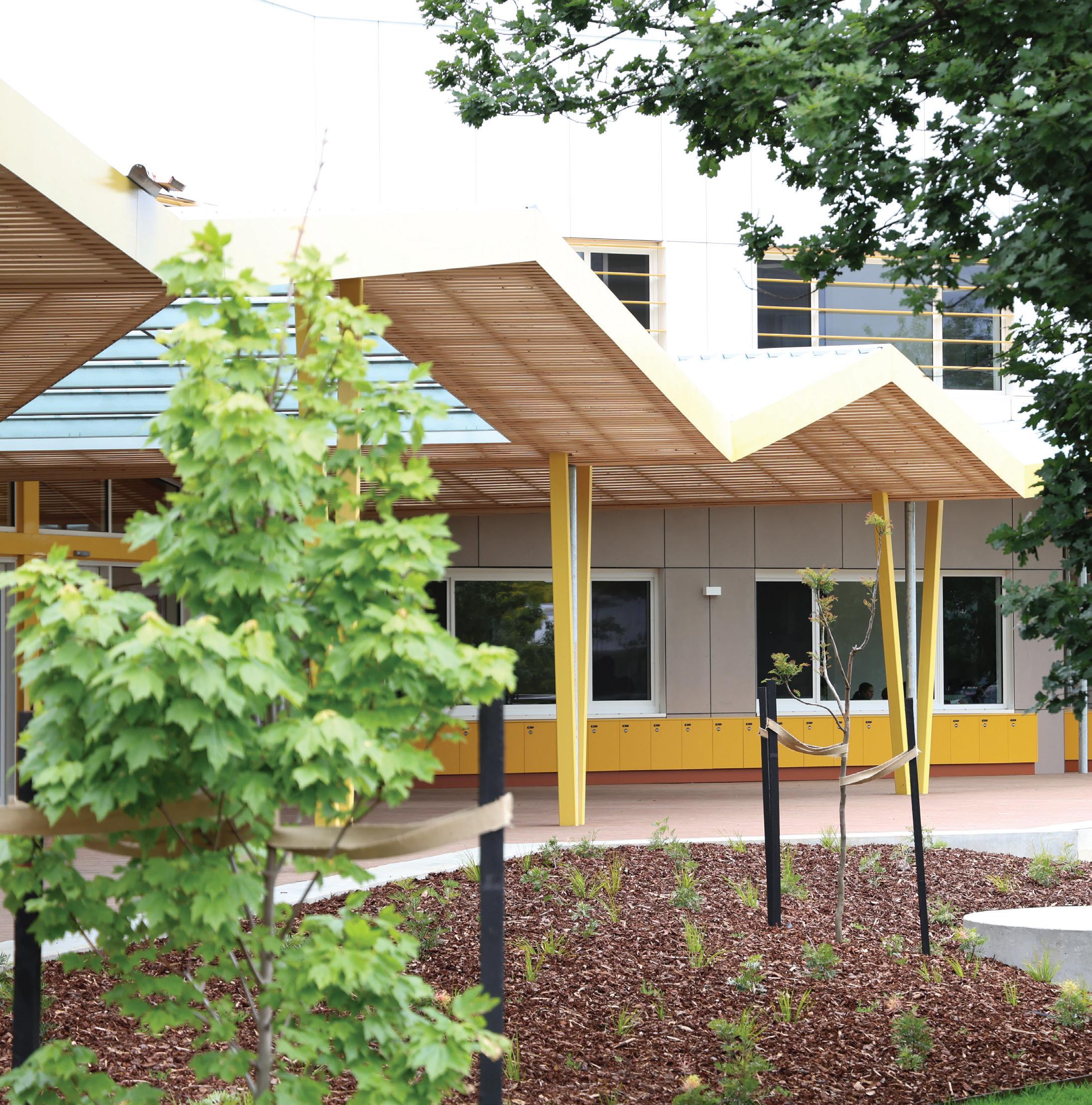
In an increasingly digital age, the importance of teaching students handwriting skills may seem diminished. However, the art of handwriting holds significant value that extends beyond mere practicality. The following explores the enduring importance of teaching student’s handwriting skills and highlights the cognitive, educational, and personal benefits associated with this fundamental form of communication.
Cognitive Development
Handwriting engages various cognitive processes, contributing to the development of fine motor skills, hand-eye coordination, and spatial awareness. The intricate movements required for forming letters and words stimulate neural connections in the brain, enhancing cognitive development. Research suggests that handwriting improves memory retention and information processing, as the physical act of writing reinforces learning and comprehension.
Communication and Expression
Handwriting offers a unique form of selfexpression and personal connection. It allows individuals to convey their thoughts, emotions, and ideas in a distinct and tangible manner. Handwriting can be more personal and intimate than typed text, as it reflects an individual’s personality, style, and individuality. The act of physically writing helps individuals connect with their thoughts, fostering creativity and a deeper understanding of the content being written.
Cognitive Engagement and Retention
Writing by hand enhances cognitive engagement and information retention. The physical act of writing engages multiple senses, including touch, sight, and kinesthetic awareness, resulting in a more immersive learning experience. Studies have shown that students who take notes by hand demonstrate improved comprehension and re-

call compared to those who rely solely on digital devices. Handwriting promotes active thinking, criticalanalysis,andtheorganisationofthoughts, leading to more effective learning and long-term memory retention.
Teaching handwriting skills is closely linked to
literacy development. As students learn to write, they simultaneously reinforce their reading skills, phonemic awareness, and understanding of language structure. Handwriting helps students recognise letter forms, letter-sound relationships, and word formation, ultimately supporting their overall literacy skills. It serves as a foundational step towards proficient reading and writing abilities.
Handwriting carries historical and cultural significance. It connects us to our past, allowing us to decipher historical documents, letters, and manuscripts that were handwritten. By teaching students handwriting, we ensure the preservation of this valuable heritage. Handwriting enables individuals to appreciate the artistry and personal touch behind handwritten artifacts, fostering an understanding and respect for our shared history.
While digital technologies have become pervasive, there are still situations where handwriting remains practical and necessary.
Not all environments or circumstances allow for the use of digital devices, and being able to communicate effectively through handwriting ensures individuals can adapt to various situations. Handwritten notes, letters, and forms remain prevalent in many areas of life, such as personal correspondence, legal documents, and signatures.
Despite advancements in technology, teaching students handwriting skills remains essential for their cognitive, educational, and personal development. Handwriting engages cognitive processes, enhances communication and expression, promotes cognitive engagement and retention, supports literacy development, preserves historical and cultural connections, and maintains practical applications. The art of handwriting holds timeless value, fostering creativity, critical thinking, and a deeper connection to our thoughts and ideas.
By teaching handwriting, we equip students with a valuable skill that transcends the digital realm, empowering them to communicate effectively and express themselves authentically in an ever-evolving world.








Six years ago, Principal Leanne Evans stood at the school gate, welcoming Clyde Grammar’s first Foundation students. This year, those students are now the inaugural Year 6 class, having grown alongside their school, each flourishing under Mrs Evans’ steady guidance.
As Clyde Grammar prepares to open its next major facility in preparation for their Senior School launch, Mrs Evans reflects on a journey marked by vision, heart, and a thriving school community.
“This is such a special year,” says Mrs Evans. “We are celebrating our first Year 6 cohort while being just months away from opening our Collaborative Learning Centre. These milestones are a testament to the strong community we’ve built together.”
The new centre will include classrooms, and a fully equipped gymnasium providing two full-sized courts, and a large assembly space. It’s a key piece of infrastructure supporting the school’s evolution, with planning for more state-of-the-art facilities currently underway.
Through this growth, Mrs Evans stays closely connected to students. Each fortnight, one student from the top scoring House has their name drawn at random and is invited to share lunch, a chat, and a card game with her.
“It’s a small but meaningful way to celebrate their efforts,” she says. “I love taking the time to chat to them, and learn what they are passionate about.”
With a strong focus on building resilience, Mrs Evans and her team encourage students to try new things, and to see mistakes as valuable learning opportunities. “That’s where the real growth happens,” she says.

As the school continues to evolve, she remains committed to nurturing learners who are confident, capable, and ready for life beyond the classroom.
110 Smiths Lane, Clyde North 3978
Reception: 03 8903 4500
enrolments@clydegrammar.vic.edu.au








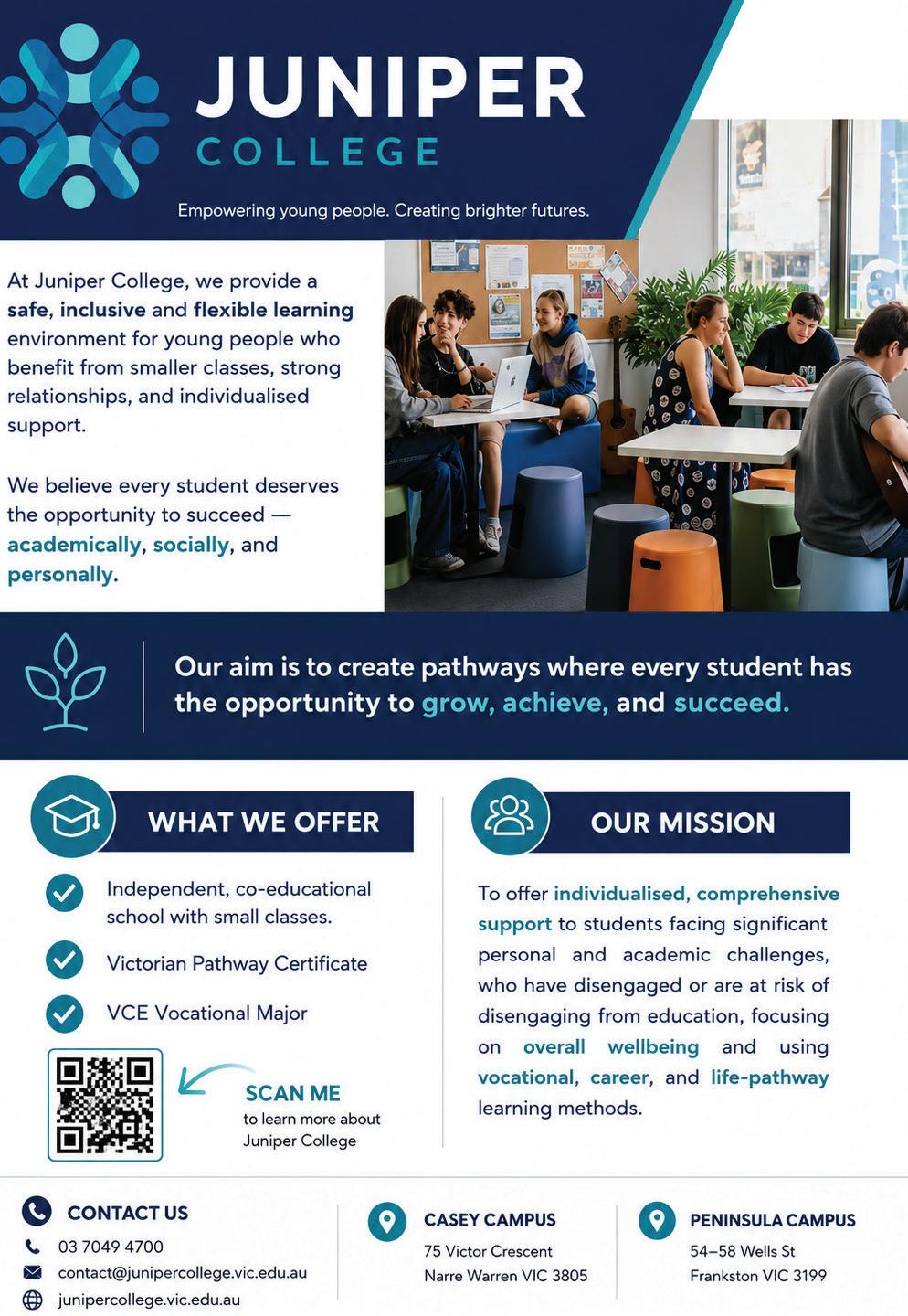
Juniper College is proud to open its brand-new campus on Victor Crescent, Narre Warren creating a purpose-built learning environment designed specifically for young people aged 15 to 19 who are seeking a different pathway to success.
Juniper College supports students who may have found mainstream schooling challenging or who are at risk of disengaging from education altogether. Many of our students come to us after experiencing barriers to learning, interruptions to their education, or circumstances that have made it difficult to thrive in a traditional school setting. At Juniper College, we recognise that every young person’s journey is unique, and we believe that past challenges should never define future opportunities.
Our college offers both the Victorian Certificate of Education Vocational Major (VCE VM) and the Victorian Pathways Certificate (VPC), providing practical, flexible and engaging pathways that focus on real-world skills, personal development and future employment or further training opportunities. These programs are designed to help students build confidence, develop independence and gain the knowledge and skills needed to transition successfully into adulthood.
The new Victor Crescent campus reflects our commitment to creating an environment where students feel welcome, valued and supported. The modern facilities have been thoughtfully designed to foster engagement and connection, with contemporary classrooms, collaborative learning spaces, technology-rich environments and dedicated wellbeing areas. The campus also provides flexible spaces that support different learning styles and encourage students to take ownership of their educational journey.
At Juniper College, relationships are at the heart of everything we do. We understand that students learn best when they feel safe, re-



spected and connected. Our staff take the time to build strong, positive relationships with students, helping them develop trust, confidence and a sense of belonging. We celebrate progress in all its forms and focus on recognising each student’s strengths and potential.
Our educational approach combines academic learning with practical experiences and vocational opportunities. Students participate in community projects, workplace learning and industry-focused activities that help them connect their education to meaningful future pathways. We place a strong emphasis on developing employability skills, communication, teamwork, problem-solving and resilience— qualities that will support students long after they leave school.
The name Juniper represents resilience, growth and the ability to flourish despite challenges. Like the juniper tree, which can thrive in difficult conditions, our students demonstrate remarkable strength and determination as they work towards their goals. Our role is to provide the support, encouragement and opportunities that allow them to grow and succeed.
The opening of the Victor Crescent campus marks an exciting milestone for our community. It represents more than a new building; it is a place of hope, opportunity and possibility. Juniper College is a place where young people can reconnect with education, build confidence in themselves and create positive futures. We are proud to provide a learning environment where every student is seen, supported and empowered to achieve success on their own terms.
For further information contact Juniper College 03 7049 4700 and junipercollege.vic. edu.au
Casey Campus, 75 Victor Crescent, Narre Warren Peninsula Campus, 54-58 Wells Street, Frankston

Extracurricular activities play a crucial role in the holistic development of school students. These activities, which encompass a wide range of interests and passions beyond the traditional academic curriculum, offer students numerous benefits that extend far beyond the classroom walls.
From boosting academic performance and fostering social skills to nurturing personal growth and building character, participation in extracurricular activities equips students with essential life skills and helps shape them into wellrounded individuals.



This article explores the transformative power of extracurricular activities and highlights the manifold advantages they provide to school students.
Contrary to popular belief, engaging in extracurricular activities can have a positive impact on academic performance.
Research indicates that students involved in extracurriculars often exhibit higher levels of motivation, better time management skills, and improved organisational abilities.
Participation in activities such as debate clubs, science fairs, or mathematic competitions stimulates intellectual curiosity and enhances critical thinking and problem-solving skills. Students who engage in extracurriculars are more likely to develop discipline and perseverance, attributes that contribute to academic success.
These activities provide a practical application of concepts learned in the classroom, reinforcing academic knowledge and deepening understanding.
Extracurricular activities can also offer opportunities for mentorship and access to resources that extend beyond the school environment, further enriching the learning experience.
Extracurricular activities provide an ideal platform for students to develop crucial social skills that are essential for their personal and professional lives.

instrument, extracurriculars provide a creative outlet for self-expression, fostering a sense of fulfillment and purpose. Furthermore, these activities teach students resilience and perseverance, as they often face challenges and setbacks along the way.
Through practice, dedication, and the pursuit of excellence, students develop a growth mindset, embracing failure as an opportunity to learn and grow. Extracurricular activities also instil important values and virtues such as discipline, integrity, and teamwork. In sports, for example, students learn the value of fair play, respect for opponents, and the importance of teamwork to achieve common goals. In clubs and organisations, they learn to navigate responsibilities, manage time effectively, and develop organisational skills. These activities provide a platform for students to learn from mentors and role models, who impart valuable life lessons and guide them towards ethical decision-making.

Toprovideindividualised,comprehensive supportthatpromotesoverallwell-being andempowerseverystudenttothrive.We celebrateneurodiversity,supportdiverse learningstyles,anddelivervocational, career,andlife-pathwaylearning opportunitiesthatbuildconfidence, capability,andpositivefutures.
Through teamwork, collaboration, and interaction with peers who share similar interests, students learn to communicate effectively, resolve conflicts, and build relationships. Whether it’s participating in team sports, joining a music ensemble, or working on a community service project, students gain exposure to diverse perspectives, fostering empathy and cultural sensitivity.
These activities also promote leadership skills, as students often assume roles of responsibility, such as team captains, club presidents, or project coordinators. By engaging in extracurricular activities, students develop self-confidence, assertiveness, and the ability to adapt to different social contexts, qualities that are vital for success in the future.
Extracurricular activities serve as fertile ground for personal growth and character building. These activities encourage students to explore their interests, discover their passions, and develop a sense of identity. Whether it’s pursuing a hobby like painting or learning a musical
Beyond the school years, the skills and values gained through extracurricular activities contribute to college admissions and career success. Participation in these activities demonstrates a commitment to personal growth, a willingness to step outside one’s comfort zone, and the ability to manage multiple responsibilities simultaneously.
Extracurricular activities offer students a myriad of benefits that extend far beyond the academic realm. From enhancing academic performance to fostering social skills and nurturing personal growth, these activities play a pivotal role in shaping well-rounded individuals. By participating in extracurriculars, students develop skills and qualities that prepare them for the challenges of the future, both academically and personally. It is imperative for educational institutions and parents alike to recognise and encourage the power of extracurricular activities, ensuring that students have ample opportunities to explore their interests, pursue their passions, and grow into confident and capable individuals.
By Violet Li
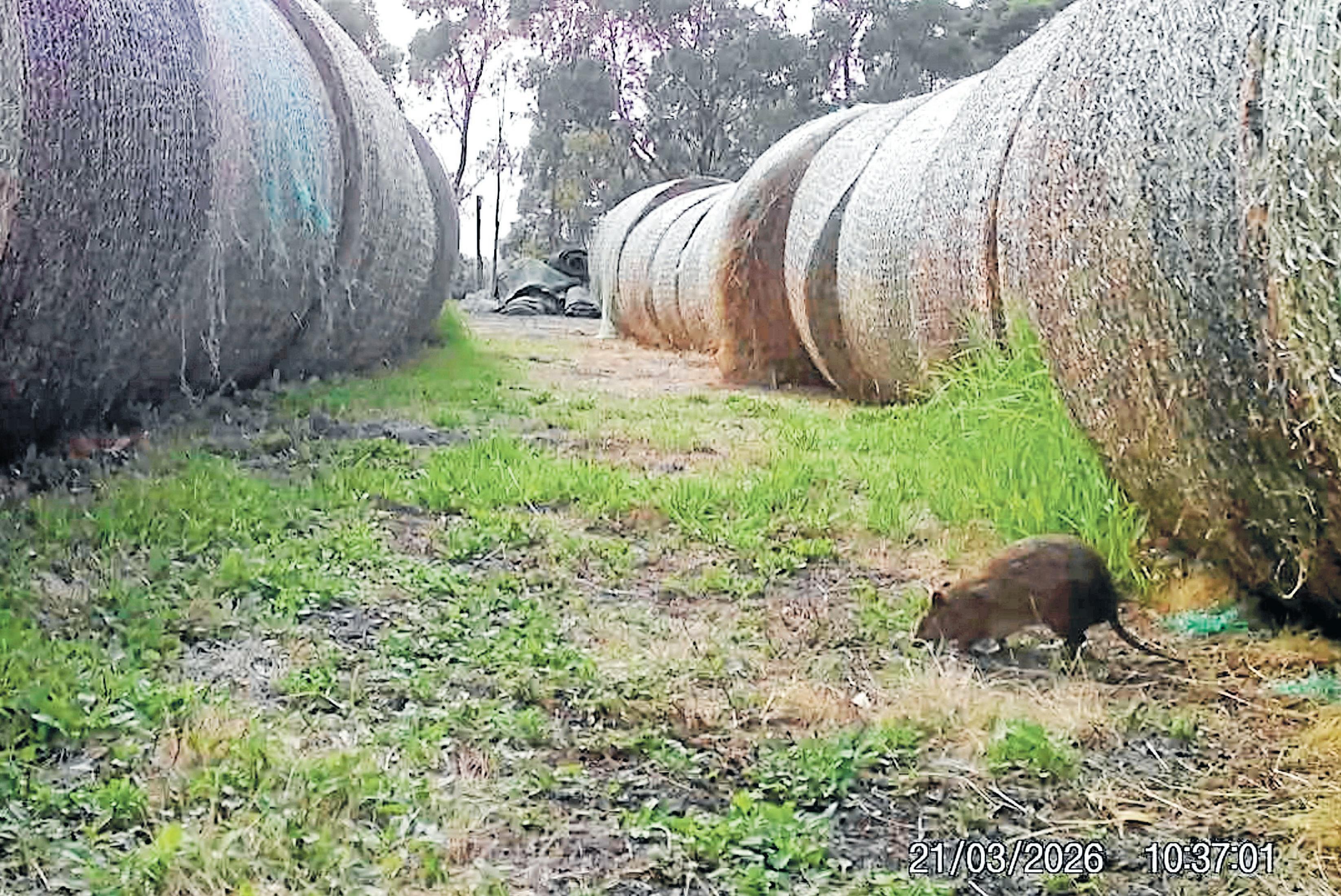
A community wildlife camera project in Casey South has detected the threatened Southern Brown Bandicoot on just three properties, while recording thousands of rabbits and hundreds of foxes.
The Bandicoot Buddies project, delivered by the Western Port Catchment Landcare Network (WPCLN) as part of the City of Casey’s Climate Action Living Lab, used wildlife cameras on 18 private properties and roadside reserves to better understand where the threatened species remains.
The project targeted properties between Cranbourne Botanic Gardens and the top of Western Port Bay, including areas around Pearcedale, Devon Meadows, Tooradin and Warneet, where there have been past bandicoot sightings.
WPCLN facilitator Janelle Cadd said the project was about connecting residents with the threatened species living in their own backyards.
“It was all about getting residents connected to the threatened species in their backyards and


highlighting the importance of understanding the nature, both the vegetation and the threatened species,” she said.
Across the monitoring period, cameras recorded 37 Southern Brown Bandicoot detections.
Ms Cadd said bandicoots were found on three properties, with activity mainly around Warneet and areas connected to Cranbourne Botanic Gardens.
She said the results showed how important a suitable habitat was for the species.
“They need little shrubs and grasses,” she said.
“If they don’t have homes, then they’ll be eaten by predators.”
The project also recorded 2202 rabbit detections across every monitored property and 482 fox detections across the majority of properties.
Ms Cadd said the figures showed the scale of the pest animal problem facing local wildlife.
“When you’ve got 482 foxes, it’s very hard to live an abundant life,” she said.
Ms Cadd also said that habitat destruction was another factor that led to the decline in the number of Southern Brown Bandicoots in the region.









“Some farmland can support if there is vegetation on the property. But, essentially, if you put a housing estate there, then they’re gonna struggle,” she said.
“You can modify areas with housing. A lot of bandicoots will actually live underneath houses if they’re on the stumps.”
Other wildlife detected included swamp rats, juvenile goshawks, copperhead snakes and deer.
Ms Cadd said all fauna records would be submitted to the Victorian Biodiversity Atlas, which is used by government agencies for biodiversity planning and environmental decision-making.
The project also involved three primary schools, with nearly 250 students taking part in classroom-based environmental education sessions. Students learned about Southern Brown Bandicoots, their habitat, food and shelter needs, and used remote sensing cameras as part of hands-on activities.
Ms Cadd said participating landholders would be connected with Casey Council biodiversity officers to support habitat improvements.
The project, which lasted a year and a half, received $20,000 funding from the City of Casey.
By Early Learning Victoria
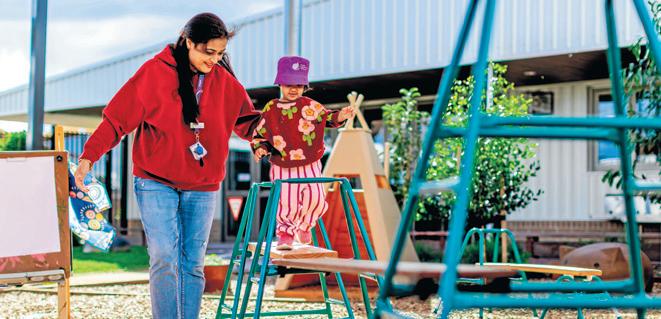
Early Learning Victoria Laak is hosting an open day on Saturday 20 June, 9.30am–11.30am at 36 Harmer Road, Hallam (co-located with Hallam Primary School).
Our open day will provide an opportunity to tour the centre and meet our skilled and experienced educators.
If you are looking to enrol your child, you can find out more about Early Learning Victoria’s high-quality childcare and integrated kinder programs.
If you are looking to grow your career as a qualified, skilled or new early learning or support professional by working in an organisation where children’s needs come first, you can speak to our friendly team to learn more.
Government-run, Early Learning Victoria Ngalambi offers welcoming and inclusive spaces that support learning and development for all. We can’t wait to meet you and show you around! Find out about enrolling your child at earlylearning.vic.gov.au/laak
Learn more about working with us at earlylearning.vic.gov.au/jobs
If you have any questions, call Early Learning Victoria’s general hotline at 03 9057 4444 or email elv@education.vic.gov.au (for workforce enquiries, general hotline option 2 or elv.workforce@education.vic.gov.au).




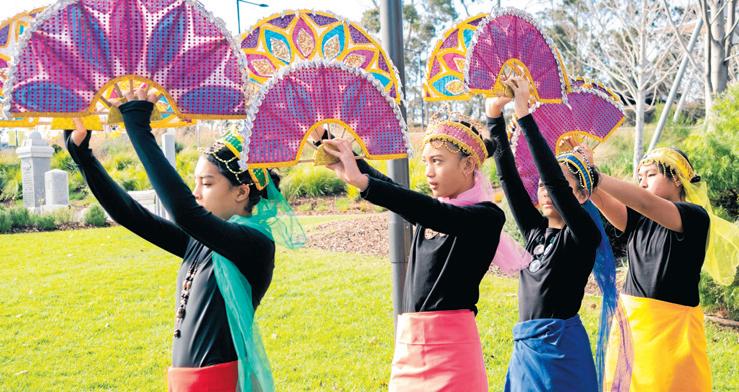
Many members of the Filipino and broader community gathered at Bunjil Place on 12 June for a vibrant and meaningful celebration of the 128th Philippine Independence Day and flag raising ceremony.
Hosted by the Australian Filipino Community Services (AFCS), the annual event highlighted several significant milestones, including 128 years of Philippine independence, 80 years of Australia–Philippines diplomatic relations, and AFCS’s 35 years of dedicated community service.
FIFA World Cup at Bunjil Place
Screened live on the Bunjil Place outdoor screen in all weather. Bring your own seating, rugs, and/ or picnic. No alcohol.
• daily until Sunday 19 July at Bunjil Place, Narre Warren; free entry. No registration required. Details: bunjilplace.com.au/news/fifa-world-cup-onbig-screen
Biodiversity Day at Myuna Farm
Come and celebrate International Day for Biodiversity. A train ride to wetlands, where you can meet flying foxes and watch them fly out at sunset. Frog calls and water bugs activities.
• Thursday 18 June, 4.30pm-6.30pm at Myuna Farm, Kidds Road, Doveton; free event. Bookings: trybooking.com/DLBDC
Gardening Together
Free gardening fun for dads, grandfathers and their children. Grow vegetables to eat, learn about insects, and have fun in the kids’ play garden. Bring hats, sunscreen and water bottles. All gardening tools and resources provided.
• Saturday 20 June 10am-11.30am at Old Cheese Factory, Homestead Road, Berwick; free event. Bookings: trybooking.com/DIZAQ The Swinging 60s
The choir Voices of Casey presents songs from the 1960’s. With guest singers from the Vocal Performance School. Elaborate afternoon tea included.
• Saturday 20 June 1pm at Hampton Park Baptist Church, 1 Orient Place, Hampton Park. Details: voicesofcasey@gmail.com
Family violence fundraiser
Rotary Club of Casey presents Unlocking Hope—a special fundraising event in support of RizeUp and their vital work empowering families impacted by domestic and family violence. Delicious food, with drinks at bar prices. Live music from guest artist Paul Hogan, lucky door prizes and silent auctions. Dress code: cocktail.
• Saturday 20 June, 7pm-11pm at Beaconsfield Club, Holm Park Reserve, 100 Beaconsfield-Emerald Road, Beaconsfield; $65pp. Bookings: trybooking.com/events/1564861/sessions/6350052/ sections/3013983/tickets
The celebration also coincided with Purple Ribbon Day, raising awareness of World Elder Abuse Awareness Day and reinforcing the importance of supporting and protecting older members of the community.
The ceremony brought together community leaders, distinguished guests, families, and supporters in a display of patriotism, gratitude, and unity.
Cultural pride was evident throughout the day
Coastal Villages Dads Group
Catch-up with other dads, father figures and their kids. Just drop by to let your children play on the playground and have a chat with other local dads.
• Sunday 21 June 9am-11am at Pelican Cafe, 85 South Gippsland Highway, Tooradin; free event. Register at trybooking.com/DINTR International Yoga Day
Presented by Saathi Multicultural Association Of Australia. All levels are welcome.
• Sunday 21 June 2pm-3pm at Lynbrook Community Centre, 2 Harris Street, Lynbrook; free event. Bookings: trybooking.com/DKXUN
Prepare for an emergency
Learn practical tips to stay informed and prepared. Includes local emergency risks, how to access warnings and information, and emergency planning tools with a focus on accessibility and disability needs. Hosted by City of Casey’s emergency management team. Light refreshments provided.
• Wednesday 24 June, 6pm-7pm at Lynbrook Community Centre, 2 Harris Street, Lynbrook; free event. Bookings essential by Tuesday 23 June at trybooking.com/events/landing/1591918
Rose Pruning Workshop
Hands-on workshop where you’ll learn the best times and techniques for pruning your roses. Practical tips on tackling pests and diseases. For beginners and green thumbs alike.
• Thursday 25 June 10am-12pm at Old Cheese Factory, Homestead Road, Berwick; $5. Bookings: events.humanitix.com/old-cheese-factory-rosepruning-workshop Neighbourhood BBQ
Come along and bring a neighbour or two to our family friendly evening. Have fun and connect with others in a casual setting. Free sausage sizzle (halal options available) and free kids’ activities.
• Thursday 25 June 4pm-6pm at Autumn Place Community Hub, Autumn Place, Doveton; free event. First-time Dads Catch-up
For all first-time fathers who have a baby under 6 months of age. A great way to ask questions, get some inside tips, and find out that what you are going through is pretty normal.
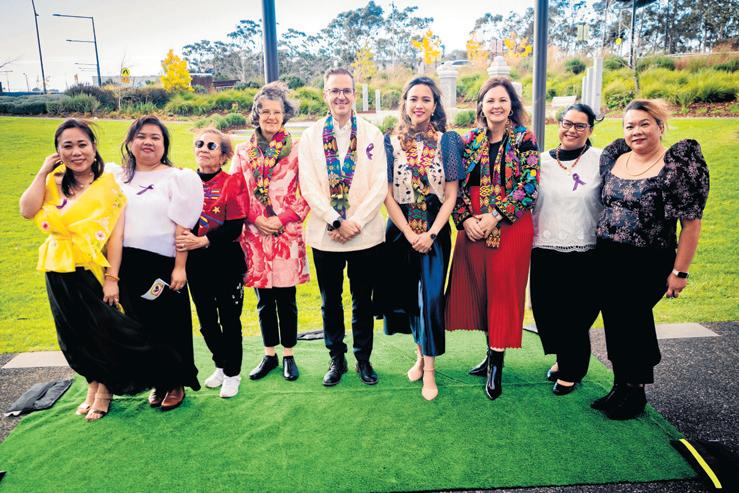
Many local community members and politicians also joined
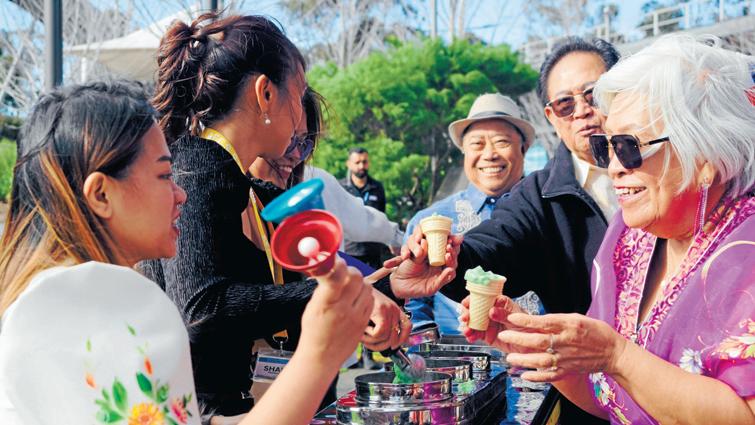
Cultural food, dancing and community conversations were highlights of the day.
as attendees reflected on the enduring friendship between Australia and the Philippines and the valuable contributions of the Filipino-Australian community.
AFCS expressed its sincere appreciation to everyone who attended and contributed to the success of the event.
Organisers described the celebration as a powerful reminder of the values of service, generosity, and community spirit.
• Saturday 27 June 9.30am-11am at Orana Community Place, 1 Fresco Place, Clyde North; free event. Bookings: eventbrite.com. au/e/dads-group-community-catch-up-coffee-dads-playground-city-of-casey-tickets1986393387093?aff=erellivmlt
Oracle Bone Script and Calligraphy
Learn about Oracle Bone Script, one of the earliest known forms of Chinese writing. You will also explore the history and the art of calligraphy with hands-on practice. All resources supplied. For ages 16-plus.
• Saturday 27 June 1pm-3pm at Cranbourne Library, Casey Complex, 65 Berwick-Cranbourne Road, Cranbourne; free event. Bookings: events. connectedlibraries.org.au/event?id=190169
The Megaphone Project
Twenty-five giant megaphones in a range of shapes and sizes will be travelling across Casey. Visitors are invited to explore, play and interact with the installation.
• Saturday 27 June Sunday 12 July, 10am-4pm at various locations. Details: casey.vic.gov.au/ events/megaphone-project
Drag Bingo
Put on your glitter and sparkles and join us for some sassy and hilarious bingo fun with fabulous hosts Della Katessen and Miss Bobbee Pinn.
• Saturday 27 June, 6.30pm-9.30pm at Clyde Public Hall, 30 Railway Rd, Clyde; $5. Bookings: trybooking.com/events/landing/1566512
Light Up the Lane: Under the Neon
Sea Smiths Lane is transformed into an immersive underwater world of neon light, a live mural, music, food and drinks.
• Saturday 27 June, 6pm-8pm at Banjo Park, 20I Grazing Way, Clyde North; free event. Bookings: eventbrite.com.au/e/light-up-the-lane-under-theneon-sea-tickets-1989188770159?aff=oddtdtcreator Crafty Creatures Night Events
Family-friendly celebration of Aussie wildlife, craft, cubby houses, hands-on reptiles and live music. Cafe and sausage sizzle.

The event marked the 128th year of independence for the Phillipines.
• Saturday 4 and 11 July, 5.30pm-8.30pm at Wilson Botanic Park Berwick; $8pp, children under 2 free. Bookings: events.humanitix.com/ crafty-creatures-night-events
Yarning By The Fire
Acclaimed musicians Mark Atkins and Erkki Veltheim bring Mungangga Garlagula (Yarning by the Fire). Music, sound and storytelling inspired by the landscapes of Western Australia.
• Saturday 4 July, 7pm-8.10pm at Bunjil Place, Narre Warren; tickets on ‘pay what you can’ basis. Bookings: tickets.bunjilplace.com. au/11357/11358
Crafty Creatures Daytime Sessions
Creative craft stations, large-scale animal lanterns, immersive bush soundscapes and a fossil dig sandpit.
• Daily from 4 July-11 July, 9am-2pm at Wilson Botanic Park Berwick; $8 for ages 2-17, $2 supervising adults. Bookings: events.humanitix.com/ crafty-creatures-night-events
Clyde North Dad Squad
Soccer World Cup fun for dads, grandfathers, father figures and their children (under 7 years of age).
Sunday 5 July, 11am-12.30pm at Orana Community Place, 16-18 Playwright St, Clyde North; free event. Bookings: trybooking.com/DLFWJ
NAIDOC Week art for kids
Cultural Nature art and storytelling for kids, led by Skyla Lauch (Living Culture).
• Tuesday 7 July, 10.30am-12pm (art) and 1pm3pm (storytelling) at Royal Botanic Gardens Cranbourne kiosk; free event.
NAIDOC Week Yidari and dance
Performance by world-renowned yidaki player Gan-
ga Giri with the Djarlo Dance Group. Also drop-in kids craft activities from 10.30am.
Wednesday 8 July, 10am at Royal Botanic Gardens Cranbourne, Ian Potter lawn precinct; free event
NAIDOC Week Dance Workshop
Indigenous Outreach Projects Hip-Hop (IOP) presents an interactive dance workshop.
• Wednesday 8 July, 2.30pm at Royal Botanic Gardens Cranbourne, Ian Potter lawn precinct; free event












































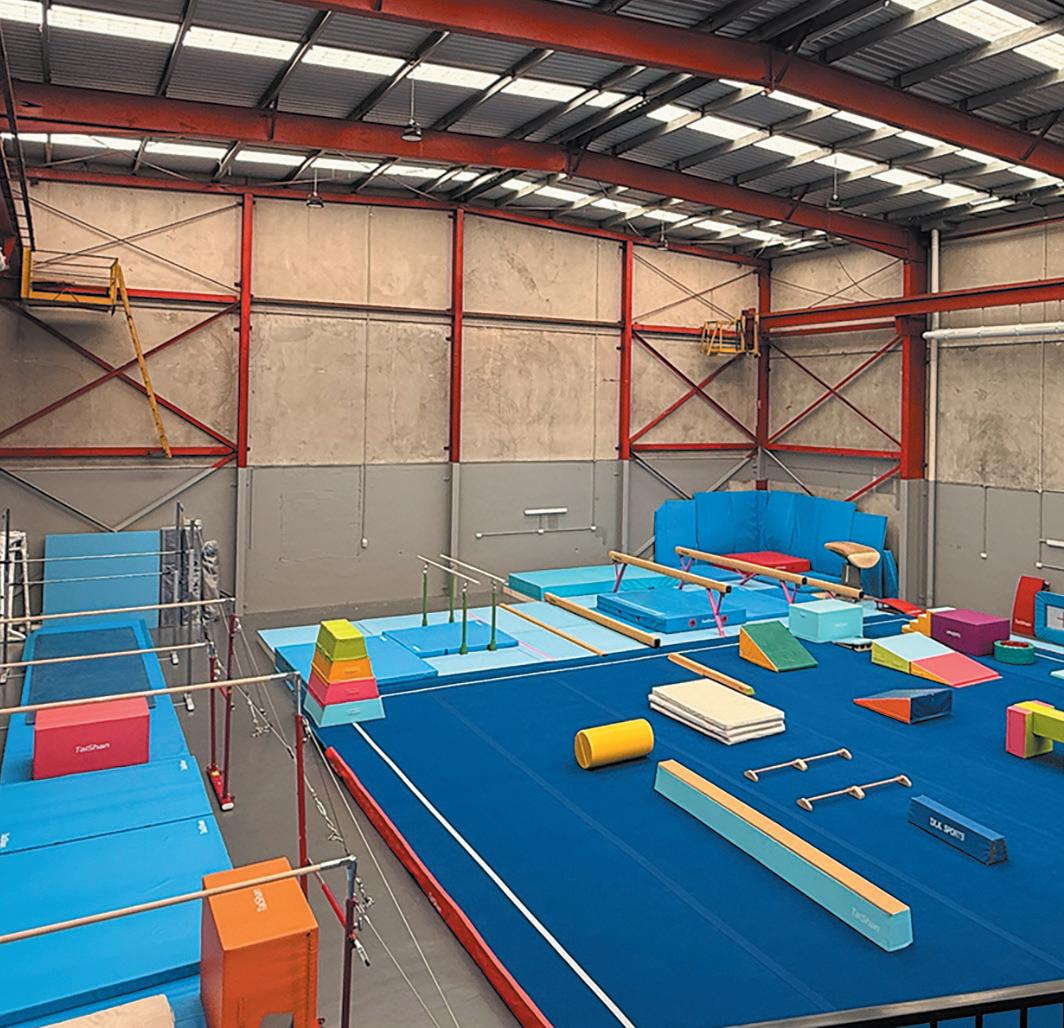














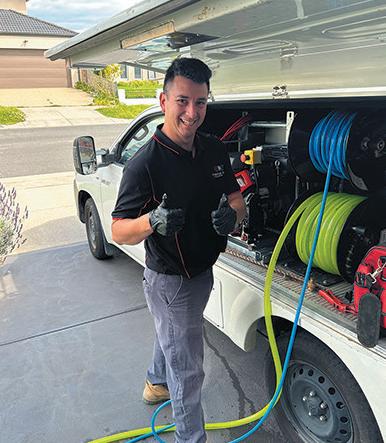

























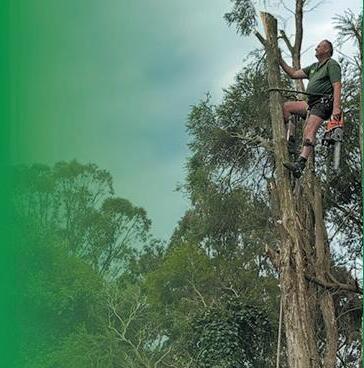





















By Justin Schwarze
A wet and wild day at Edwin Flack Reserve saw Berwick defeated by Vermont in a classic finish in round nine of the Eastern Premier Division.
The game felt like an eight-pointer with both teams coming in 4-4 on the season and desperate to continue on their promising starts.
But the Eagles were red hot, having won four out of five after starting 0-3, and it was clear why in the first quarter.
Berwick booted the first with Luke Nelson intercepting a handball in the middle of the ground and popping the ball over the top to Jai Neal, who was free in the forward 50.
Neal collected the footy and used a paddock of space to stroll in and put it through.
Vermont responded with the next two, starting with Noah Bourke using great physicality to body his defender and mark before nailing his set shot.
Tairon Ah-Mu followed suit, taking a strong mark before making no mistakes.
Neal then hit Sam Woodward on the chest for a major to hit back, but again the visitors had the answer.
Bourke marked right on 50 and opted to back himself, a decision that no one questioned as the ball sailed over the goal umpire’s head from distance.
Josh Spencer then slotted a pearler on the run from the left pocket and the Eagles had jumped out to a 4.5 (29) to 2.1 (13) quarter-time lead.
The Wickers put the first of the second quarter on the board with a beautiful piece of transition play resulting in a Dylan Linden set shot goal.
A few minutes later, Jesse Cirulis won it out of the ruck and gave a handpass to Ben Todd in space, and Todd used it to great effect as he belted the footy home from 50.
Vermont’s only goal of the second came from Ayhan Bajramov placing it beautifully into the wind in the left pocket and guiding it through.
Harry Canning then added another for Berwick, pushing his defender off the ball before running onto the footy and dribbling it home on the run.
At halftime, the Wickers had brought it right back but still trailed 5.7 (37) to 5.2 (32).
The hosts hit the front early in the third as Wal WuolfoundWoodwardforhissecondouttheback.
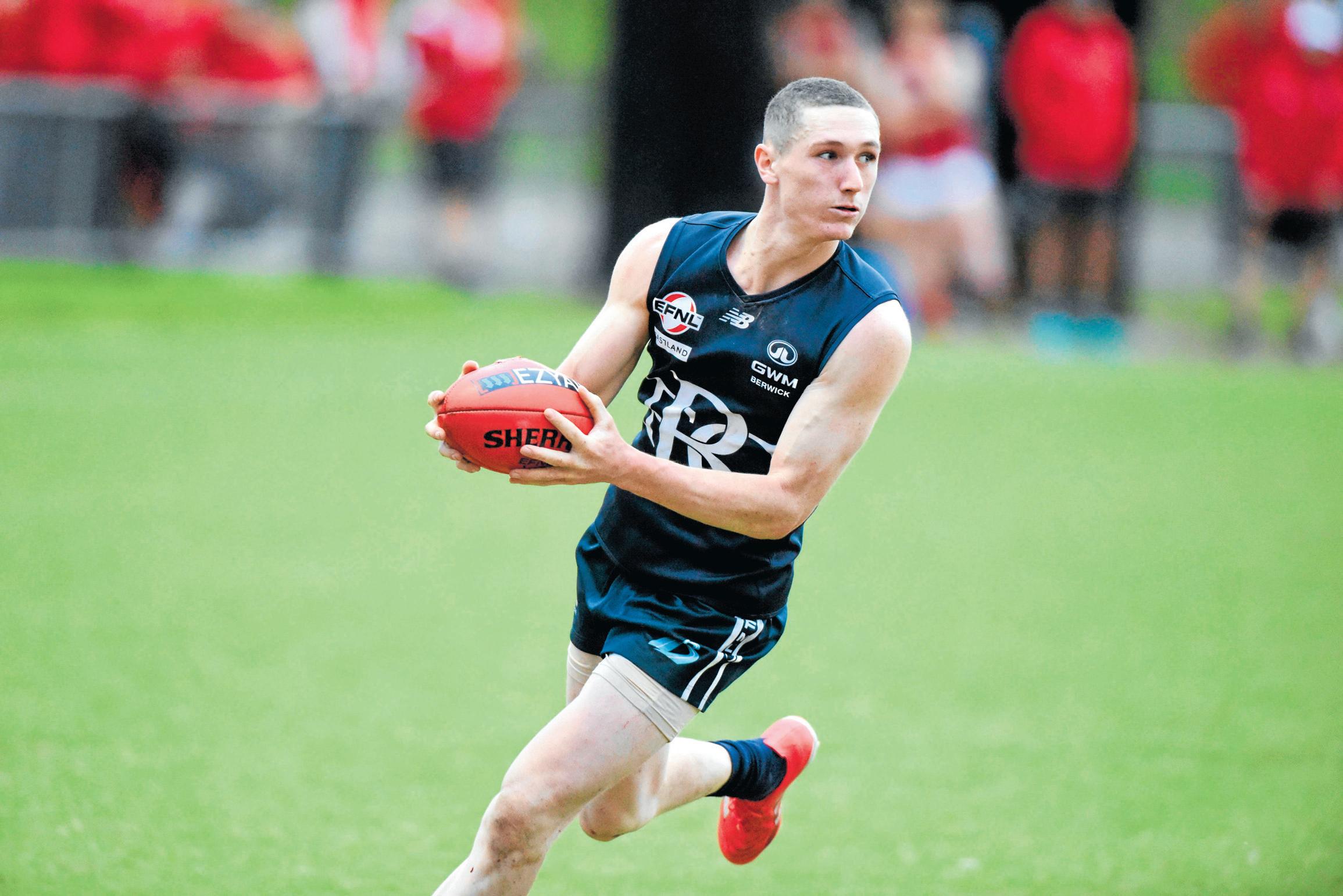
Joseph Fisher then received a free kick and converted for Vermont, followed by Tahj De La Rue crumbing the footy and snapping over his head at the other end.
Fisher then sourced another goal from a free kick and Bajramov gave the visitors all the momentum with a major just before three-quarter time off the back of a 25-metre penalty.
The Eagles had their noses in front 8.9 (57) to 7.2 (44) at the final change.
Bourke bagged his third in the opening 90 seconds of the final term with a combination of great physicality and a fortuitous bounce as the ball got
over the top and he walked it in.
But it was far from the sealer as Todd produced another highlight, bending through a checkside on the boundary in the left pocket.
Berwick then had a plethora of chances that went begging as Linden missed a set shot following a free kick and Lewis Hill couldn’t convert on a snap.
But the high-level pressure paid off as Cirulis was awarded a free kick from a rucking contest and he drilled his set shot to make it a three-point ball game.
Luke Nelson was then hit high in a contest 20
out from Berwick’s goal to steal the game, but he missed to the right in the downpour.
The siren went minutes later and Vermont had escaped with a 9.9 (63) to 9.7 (61) victory. Todd and Woodward each booted two for the Wickers, while skipper Will Arthurson was best on in his 100th senior game.
Sam Frangalas, Noah Cannon, De La Rue and Hill were among the other standout performers in defeat.
Berwick will look to square up its record with a trip to ninth-placed South Belgrave on the cards for round 10.
By David Nagel
Facts and figures would suggest that Beaconsfield is set for a ‘middle of the road’ season in Eastern Division 1 football after the Eagles fell short of the ‘finals’ mark against Montrose on Saturday.
This was the perfect test at the perfect time for the Eagles, with the Demons sitting just one game clear in fifth position on the ladder.
A victory would secure a fourth win for the Eagles, propelling them into a tie with Montrose and sixth-placed Boronia and set up a great battle for the last remaining finals berth.
But, despite being competitive at times, Beaconsfield was outplayed by its hosts; particularly in the second and fourth quarters…eventually going down 17.16(118) to 11.8(74) on the tiny deck at Montrose.
The Eagles were more than competitive in the opening exchanges, with dangerous forward Kobe Shipp giving Montrose defender Liam Bowden all sorts of headaches early.
Shipp missed the first set shot of the match, but soon made amends after marking a scrappy incoming ball from Charlie Muley.
Shipp then turned Bowden inside out, capitalising on a quick entry on turnover from Devon Smith to make it 13-0 after six minutes of play.
The scores were Montrose 0…Kobe Shipp 13! Tyron Galbraith finally broke the ice for the home side, but when Myles Currie replied with a quick answer; the Eagles were still looking good.
Montrose kicked the last two of the opening stanza to take a one-point lead to the break.
The teams went goal for goal in the early stages of the second, with goals to Ali Zijai, and a third to Shipp, keeping things tight as the contest headed towards half time.

Kobe Shipp was once again the standout performer for Beaconsfield, booting five goals in a 44-point loss to Monbulk. (Rob Carew: 556447)
But four unanswered goals in eight minutes opened up the game for Montrose, before Shipp kicked his fourth of the first half…and possibly his best.
Shipp spotted the potential for a turnover, intercepting a defensive switch from Fraser Smith and running into an open goal to cut the margin to 21 points at the main interval.
The teams again went goal for goal early in the third, before Montrose kicked four on the trot, either side of three-quarter time, to take a comfortable eight-goal lead.
Beaconsfield had a brief rally in the last, including a fifth goal to Shipp, but the damage had been done.
Shipp was the clear standout for the Eagles,
adding significantly to his highlight reel with five goals, while Ali Kara, Ethan Winterton, Jack Hilton and Connor Mouat joined ruck Ethan Winterton on a gallant list of best players.
The Eagles will need to dg deep this week, facing the imposing challenge of taking on ladder leaders North Ringwood on its home deck on Saturday.
In other round nine highlights, Norwood chalked up its first win of the season with a 16-point triumph over Bayswater, while Mitcham sent Wantirna South toppling from first to third with a 29-point win at Mitcham.
Shipp has now kicked 28 goals for the season and sits just one behind North Ringwood forward Ben Livingstone on the league goalkicking list.
•EASTERNDIVISION1
Beaconsfield Goals: Kobe Shipp 5, Myles Currie 2, Sam Merrick, Charlie Muley, Ali Zijai. Best: Kobe Shipp, Ali Kara, Devon Smith, Ethan Winterton, Jack Hilton, Connor Mouat.
RESULTSR9: Mitcham 11.11(77) def Wantirna South 7.6(48), Mooroolbark 8.7(55) def by Park Orchards 10.13(73), North Ringwood 17.13(115) def Boronia 7.3(45), Norwood 6.17(53) def Bayswater 5.7(37).
LADDER: North Ringwood 32, Mitcham 28, Wantirna South 28, Park Orchards 28, Montrose 20/ Boronia 16, Beaconsfield 12, Mooroolbark 12, Norwood 4, Bayswater 0.
FIXTURER10(Saturday20June): North Ringwood (1) v Beaconsfield (7), Bayswater (10) v Montrose (5), Boronia (6) v Mitcham (2), Park Orchards (4) v Norwood (9), Wantirna South (3) v Mooroolbark (8).
By David Nagel
The champion team of the South West Gippsland Dart League (SWGDL) has been decided after Predators scored a nail-biting 8-6 victory over Cheers in the Summer Season grand final at the Nar Nar Goon Hotel.
The headquarters of SWGDL darts was rocking on grand final night with a large crowd of competitors from across the league turning up to offer their support.
Both teams put on a spectacular display of darts, proving exactly why they earned their place on the biggest stage of the season.
It was a grand final worthy of the occasion, with quality darts, determination, and sportsmanship on show throughout the night.
Cheers tried valiantly to defend their crown, but some high-pressure finishing from the Predators squad of Ryan Russell, Etty, Shane Van Eyk, Jordan Gray, Nathan Button, Chris Shannon and Steve Powell got the new champs across the line.
Grand final evening was a busy occasion with the final of the Don Brown Memorial Shield, for teams that finished from fifth to eighth on the ladder, also taking place on the night.
The ultimate underdogs, Dart Vaders, defied the odds just to reach the grand final, winning the preliminary final the previous week with only four players available.
That victory secured them the golden ticket to the big dance, where they faced a strong Mud Rats outfit that had been one of the standout teams all season and entered the match as favourites.
Mud Rats once again produced the high standard of darts they have displayed throughout the season, but on this occasion Dart Vaders found a way to get the job done, securing an 8–6 victory and etching their names into SWGDL history.
SWGDL representative Shane Barnett, who played for Cheers on the night, said the entire finals series was one the competition should be proud of.
“Congratulations to all teams who made the finals series; every side played exceptionally well and represented their teams with pride,” Barnett posted.
“You played hard, showed determination

when it mattered most, and well played to Predators and Dart Vaders for earning the right to be crowned SWGDL Summer Season 2026 Champions.”
The SWGDL was thrilled with the big turn out on the night.
“A special thank you also goes to the players from non-competing teams who attended the grand finals to support their fellow league members.
“We may be a small league, but nights like these show the strength of our darting community. “Supporting one another, whether you’re playing or cheering from the sidelines, is what makes the SWGDL such a great league to be part of.”
The SWGDL will now have a small break before the 2026 Winter Season begins on Tuesday 30 June.
By Blair Burns
It was a great week for Casey Cannons as the women’s hockey sides won four out of their five matches in Pride Round.
While the Women’s Vic League (WVL1) team was convincingly beaten by Toorak East Malvern, Rebecca Wagg managed to create a special moment as she scored the Cannons’ only goal of the game, with the team eventually going down 5-1.
But Casey found plenty of success across the weekend with the WVL1 Reserves defeating Toorak East Malvern 2-0.
Jessica Rowland continued her strong season with the Cannons as she snuck one past the goalie to put her side in a winning position.
Rowland has now scored 16 goals across her 14 matches this season and is one of the most exciting players at the club.
Ellie Gallus was the other goalscorer for the Cannons, making sure of the 2-0 victory for her team.
In the Pennant D South East competition, the Cannons prevailed 2-0 in the top-of-the-table clash against Waverley.
Jane Gipp and Clare Robson were at their attacking best with a goal each, helping their formidable side maintain its spot in first position.
A comprehensive 3-0 win in the Pennant E South East competition sees Casey sitting in third position on the ladder after nine rounds.
Cannons captain Fiona Young led from the front and set the tone with a goal, and her team followed suit.
Jessica Hogan and Kayleigh Looby both had big moments throughout the match, each hitting the scoreboard.
Casey Cannons produced a brilliant upset

against Cardinia in the Metro South 1 competition as they won 4-2.
Celeste Mui was on fire with two goals, while Jessica Hogan and Charlotte Whitney rounded out the scorers.
The men’s sides weren’t so lucky on the weekend as both the MVL1 and MVL1 Reserves were beaten by Toorak East Malvern 2-1.
Ryan Pruscino and Jean Blignaut produced highlights despite the overall results.
The Men’s Metro South team was outclassed 5-0 against Dandenong and will be looking to bounce back this weekend.

By Blair Burns
Cardinia Storm closed out the weekend of senior hockey action with a draw and a loss despite two really competitive performances.
In the Men’s Metro 1 South competition, the Storm took on Glen Eira in a battle that promised a thriller with the sides sitting fourth and fifth on the ladder respectively.
The game delivered exactly that as the sides couldn’t be split at the final whistle, with a 2-2 draw.
In true winter conditions of wind and rain, Cardinia was determined to get a win to celebrate Daniel Albrecht’s 50th game in style.
The Storm started with the ball and drew first blood as first-year player Mitchell Whiting produced a moment of brilliance, scoring his first-ever goal.
Glen Eira soon responded to tie the scores at 1-1 and it was game on at Brighton Secondary College.
Ayush Wahi looked like he could be the hero for Cardinia as he found the back of the net on a short-corner conversion, putting the Storm up 2-1.
But in the dying stages of the match, Glen Eira held its nerve and scored a clutch equaliser to secure a draw.
It will be a big test for Cardinia this weekend when it takes on the top side, CollegiansX.
In the Women’s Metro 1 South competition, the Storm surged and gave themselves a shot at victory, but it wasn’t to be as they went down 4-2.

It was a local clash as Cardinia took on Casey Cannons at Berwick, and it was the Storm who had some good early attacking forays, but Casey’s defence held up well and kept the ball out.
Casey made life hard for first-game goalie Jennifer Fallu early as the Cannons converted on a couple of short corners, but her confidence grew as the game went on. Fallu was able to reduce Casey’s scoring with some good saves, using both her feet and the stick.
Teagan Peterson was a workhorse for the entire game and gave the Storm some good movement across the field, while Lilly Kelly and Alana Nancarrow also covered plenty of ground trying to shake a couple of heavy tags. Each of them hit the scoreboard with a goal each, but it wasn’t enough to get a comeback win as the Cannons held on 4-2.