












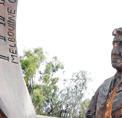










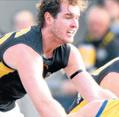






Eight heroes who have made a difference in the South East have been recognised in the King’s Birthday Honours List.
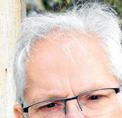
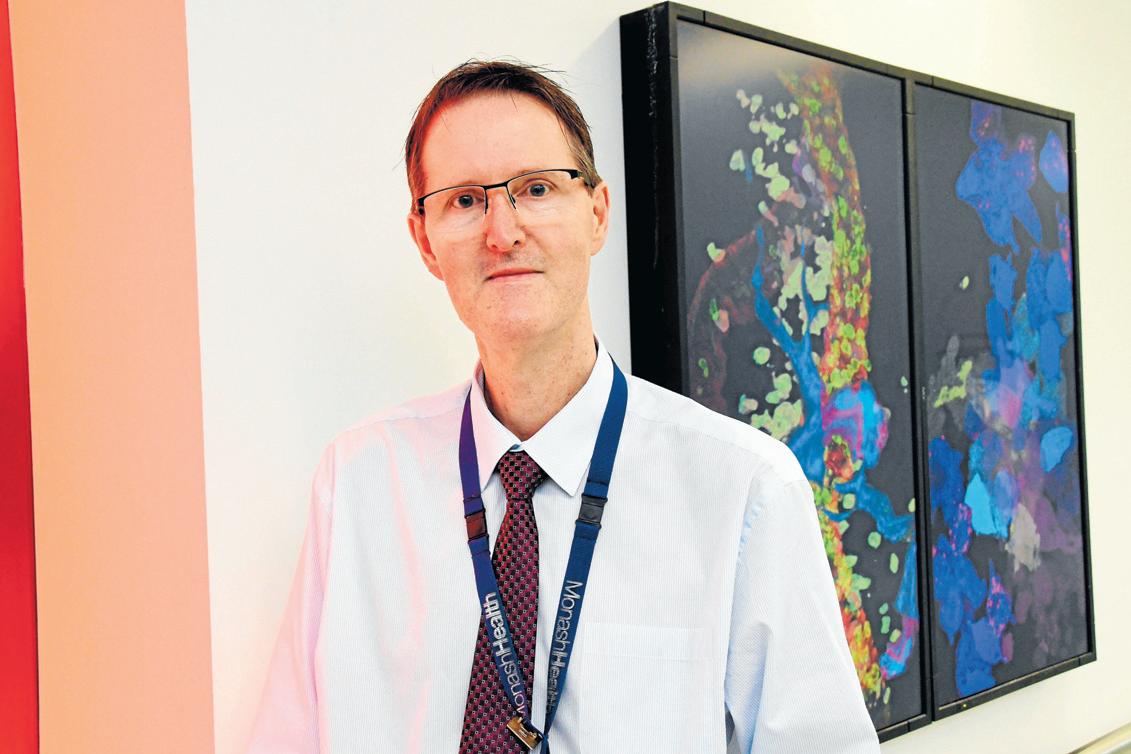
Among the honorees are Noble Park-raised and decorated medical scientist Alex Laslowski OAM, who has remained ever-inquisitive.
“I was born in Dandenong Hospital, which is ironic because that’s where my first job was in a laboratory,” he said.
“I’ve always had an aptitude, a desire to work in a hospital laboratory. That was sort of my dream job when I was growing up.”
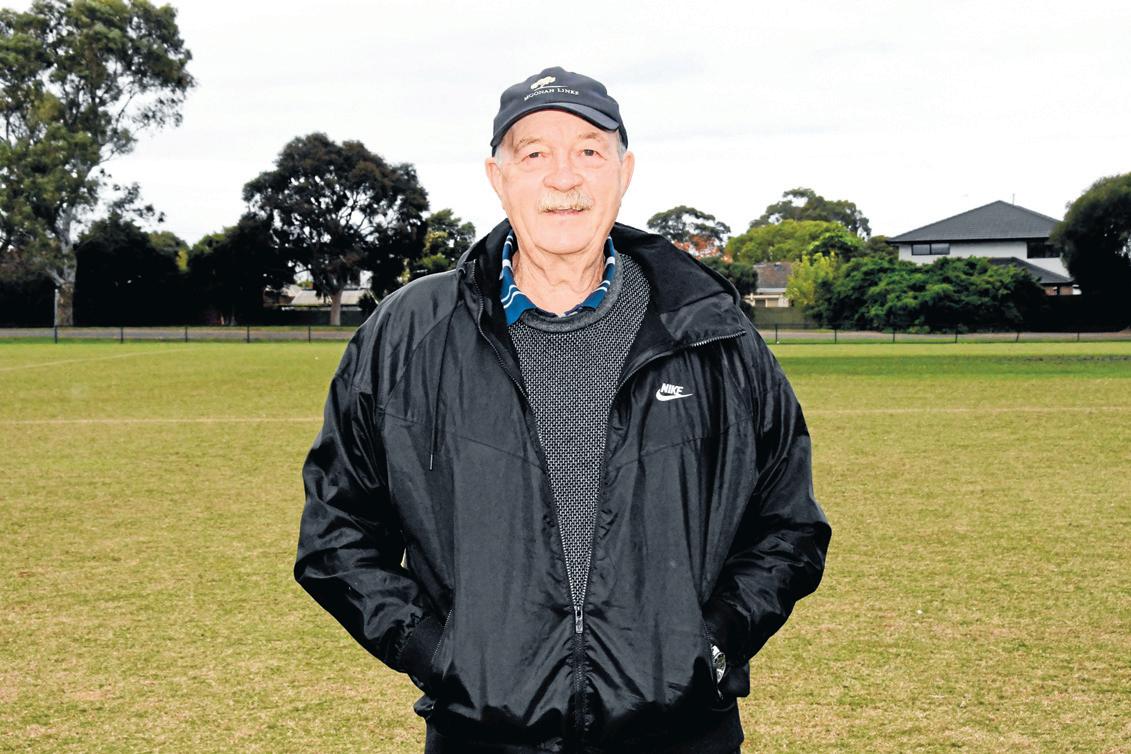
Dandenong District Cricket Association’s long-time president Mick Hawking OAM, oversaw profound change, including a successful academy for junior cricketers.
“Junior development is the cornerstone to a club’s longevity.
“If you don’t pursue that, you’re playing a deadly game for your future.”
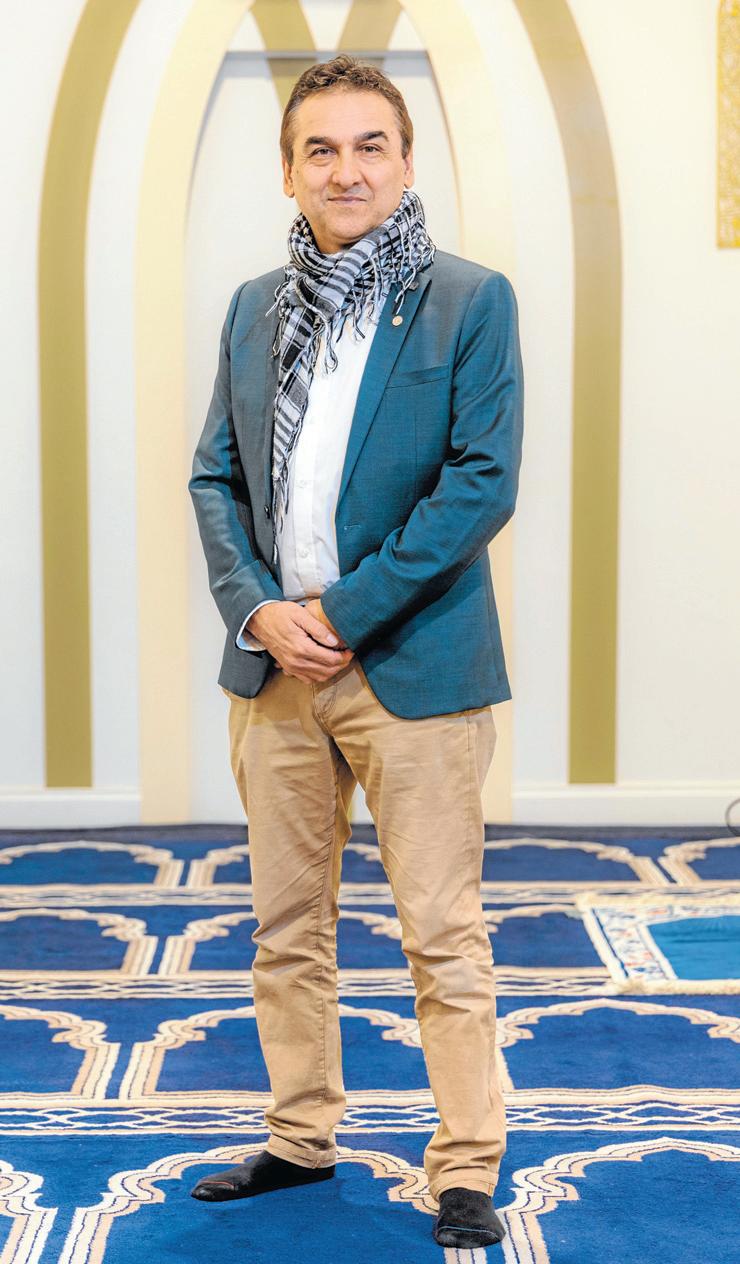
Endeavour Hills teacher and social justice advocate Kuranda Seyit OAM has worked to improve relations between the Muslim and wider communities.
“We have to remain hopeful,” he said.
“Australia is a beautiful country because of its diversity. The different cultures here enrich the fabric of society.”
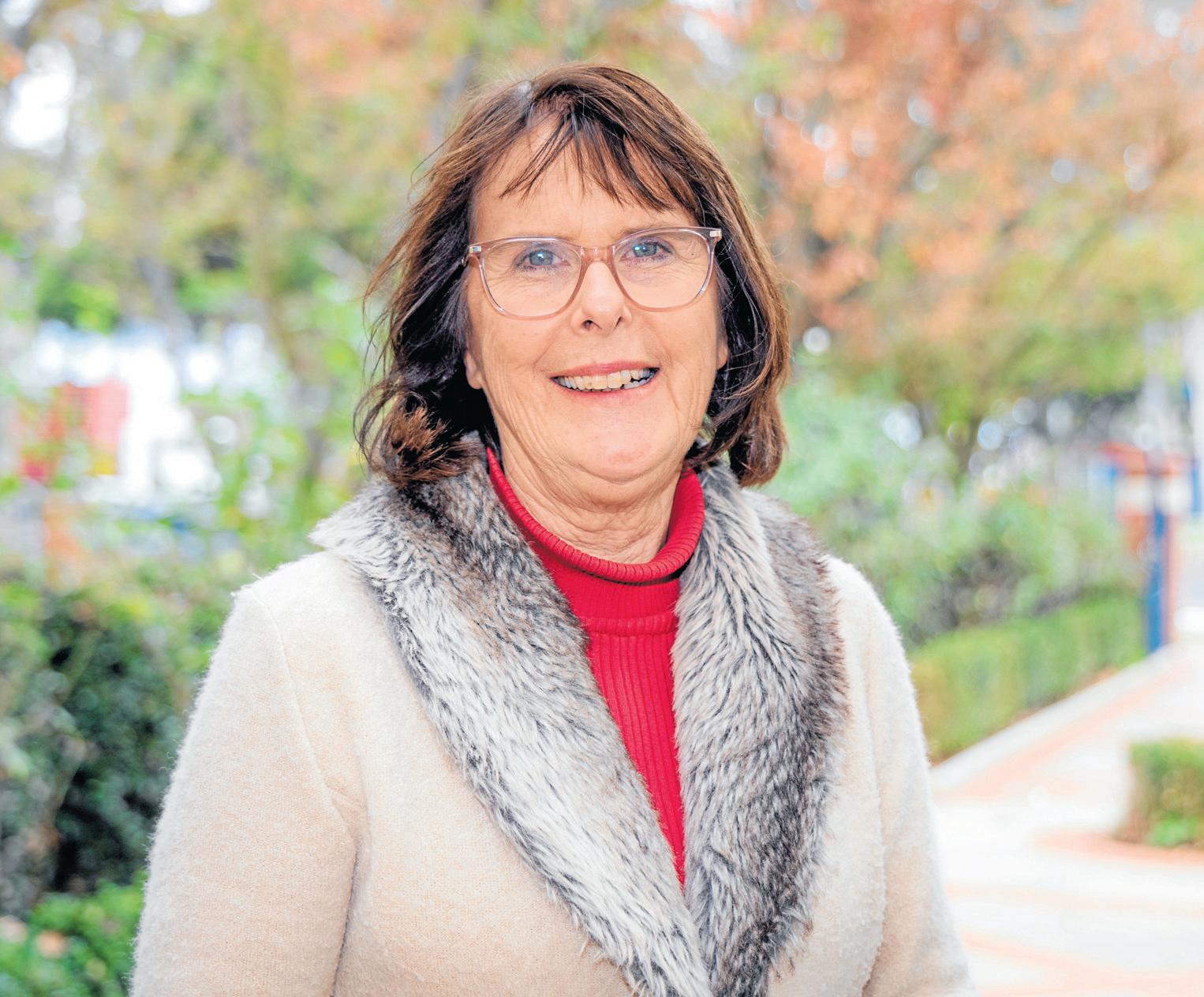
Dandenong North Primary School’s former vice-principal Jenny Mackay OAM pioneered literacy programs for refugee students and extended support for their families.
“The Afghani wave of new arrivals awakened me - it’s not just teaching them English - you have to embrace people or they will become alienated in society.
“You can’t have people feeling alienated. It leads to a disconnect, resentment, and changes how our area of Dandenong could have been.”
Springvale little athletics and netball volunteer Sue Springfield OAM, and Monash Health’s former chief executive Professor Andrew Stripp AM were also recognised.
Homicide Squad police officer Detective Inspector Dean Thomas, formerly of the Greater Dandenong and Casey CIUs, was named as an Australian Police Medal recipient.
World-renowned Wing Chun Kung Fu instructor Dr Anne Pang, who took free self-defence classes for migrant and refugee women in Dandenong last year, also received an OAM. More on their stories, turn to pages 2 and 3






By Cam Lucadou-Wells
A humble, tireless doyen of district cricket has been named as a Medallist of the Order of Australia (OAM) in the King’s Birthday Honour List.
Mick Hawking, 74, of Narre Warren, a life member, long-time volunteer and leader at Dandenong District Cricket Association, said he was trying to absorb the new recognition.
“You never consider you’ll be one of those people. I don’t know how it sits with me.
“I’m not sure if I’m that pretentious to add the letters OAM after my name.”
DDCA life member Hawking was recently installed as a Legend in the association’s hall of fame – a rare, fitting accolade for its president of 18 years up until 2023.
He served on the DDCA executive committee for 28 years, including as vice president, chair of the association’s senior rules and permit committee and chair of the competition match committee.
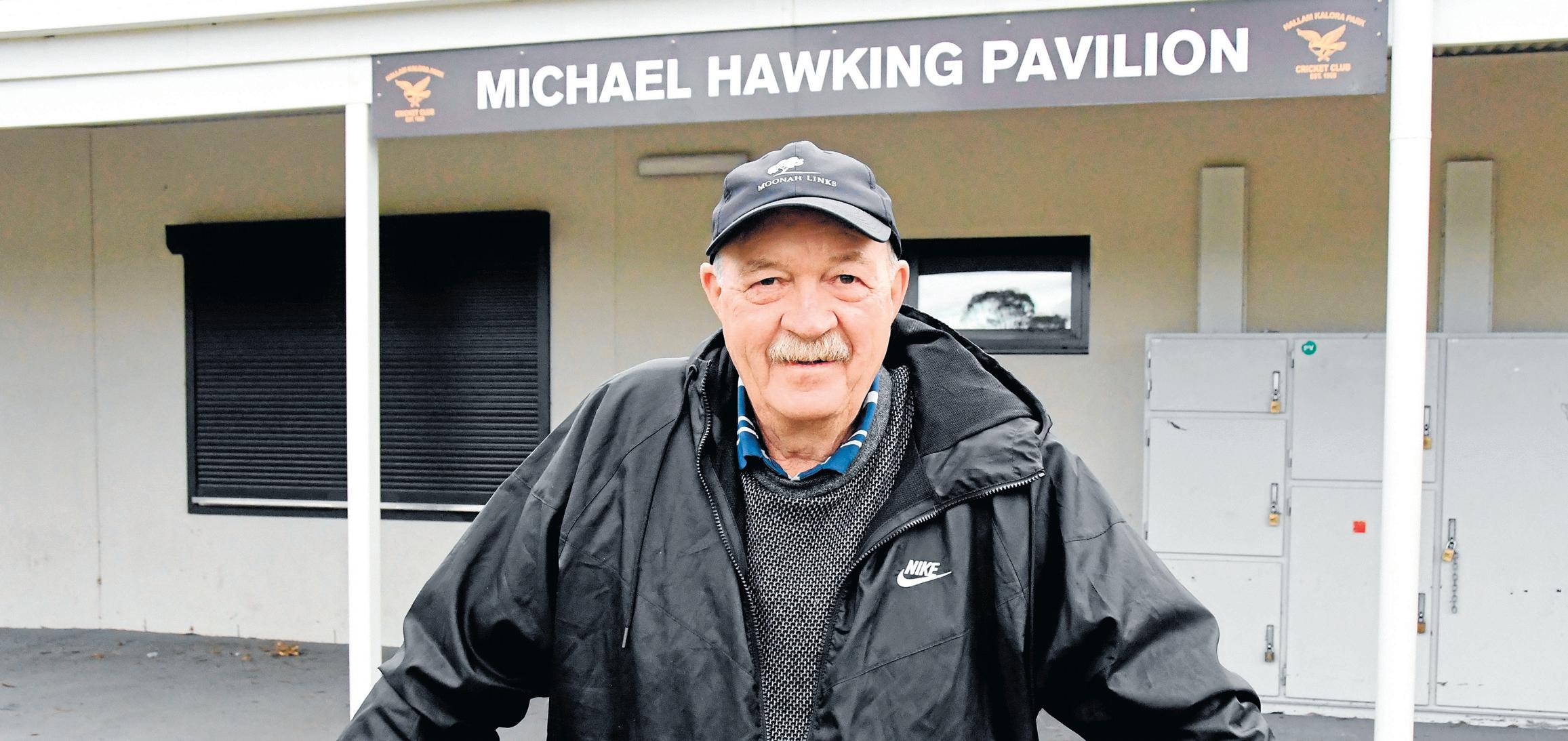
Hawking was also a renowned fast bowler and servant of Hallam Kalora Park Cricket Club, where he was a Team of the Century member, life member, coach, president and chairman of selectors.
This year, his name was bestowed on the club’s pavilion at its Frawley Road home ground.
Being a cricket administrator has given Hawking many headaches, but also led him to work with great, talented people.
“Because you like the game so much, you like to continue in some capacity off the field.
“It’s all about the camaraderie and the people you work with and the achievements along the way.”
Some tough decisions had to be made – such as reducing Turf 1 and Turf 2 leagues from 12 teams to eight. It was done to ensure all teams played each other twice in a fairer competition.
“I can’t say it’s without stress. You’ve got to make a lot of decisions and try to ensure your decisions are for the whole association, not one or two clubs.
“That doesn’t satisfy everyone. Clubs are very parochial for their own outcomes.”
Hawking also introduced a ‘points’ system that rewarded teams that developed their own talent rather than poaching from overseas or other local clubs.
The DDCA also set up a junior academy, with a coaching panel tutoring 130 kids for eight weeks.
Some of the famous products included Test pace-bowling brothers James and Darren Pattin-
son from Doveton.
There’s also Victorian and Dandenong batting legend Warren Ayres and international bowler/ commentator Damien Fleming from Springvale South.
“Junior development is the cornerstone to a club’s longevity. If you don’t pursue that, you’re playing a deadly game for your future.”
He’s also proud of the DDCA introducing womens and girls competitions in DDCA. “It wasn’t easy at the start, but it was something we really wanted to happen. And it’s really paid off for us.”
In his time, Hawking has been a fierce advocate for local leagues, including the need for funding and support.
“Grass-roots cricket exists without anybody else, but Cricket Victoria or Cricket Australia don’t exist without grass-roots cricket.
“Where else are they going to get their players from?”
Cricket has been Hawking’s most enduring sports pursuit. But as a youth, football was his main priority.
At 17, the young centre-half-forward was re-
cruited from home town Rutherglen by North Melbourne in the VFL.
Later he played as a fly-in for Penguin Football Club in north-west Tasmania and for Caulfield in the VFA.
Hawking was also coach and a football manager at VFA club Dandenong.
But when Dandenong “unjustifiably” lost its licence to compete in the VFA, that virtually ended his football involvement, he says.
“Dandenong spent a lot of money winning its 1991 premiership and it got into debt.
“So when the licences got handed out in the (restructured) VFA, we got squeezed out.”
Since the mid-1990s, Dandenong - once the mighty Redlegs - has only survived as the Under 18s franchise, the Stingrays.
As a cricketer, Hawking was happy to ply his craft at local level while pursuing a professional football career.
Even in the 1970s, football matches began encroaching on the start of cricket training – meaning it was difficult to play both at the highest level.
“At that stage, cricket was an enjoyable hobby. I just loved playing the game, loved the people I
met, made lifelong friends.”
He most enjoys Test cricket, and hopes T20 is no more than a short-lived “trend” that is kept in its current place.
“I don’t know if T20 does much for the future of the game. It’s very popular with young kids and drives them to the sport.
“I just hope it doesn’t spell the end of Test cricket.”
He mused on the announced merger of Melbourne’s two BBL T20 sides, the Stars and the Renegades, with the possible sell-off of the spare franchise to Indian buyers. Putting on his hat as a forward-thinking administrator, he said it was a “reasonable idea”
“You can imagine how much of the Indian population would follow it.”
In 2000, Hawking was awarded an Australian Sports Medal. He is also a life member of Casey Radio, where he co-presented football and cricket shows for 30 years.
He remains on the board of Victoria Metropolitan Cricket Union and as vice-president at Dandenong Club.
By Afraa Kori
A Noble Park-raised medical scientist with 30 years’ experience, has received a Medal of the Order of Australia (OAM) as part of the King’s Birthday Honours.
Mr Alex Laslowski, now of Berwick, said the honour was a complete shock but a pleasant surprise.
“I was quite honoured and happy,” he said.
“It was a lot of hard work, a lot of hours and years put into the field. It was just the love of the job that led to this moment.”
Despite the recognition, he said the award also reflected the sacrifices made by his family throughout his career.
“I’m a beautiful workaholic and my family has missed out on my time,” he said.
“My wife is my rock because she’s always steered the ship straight at home. I owe a lot to her and her support through the years.”
While the OAM is his highest honour to date, Mr Laslowski has built a long record of recognition across his career.
He previously received the George Milsom Memorial Award, Jim Davis Memorial Award and Fellowship in Anatomical Pathology at the Australian Institute of Medical Scientists.
He said it was a significant milestone when he became only the third person in anatomical pathology in around 30 years to achieve the fellowship.
Born and raised in Noble Park, he attended a state secondary school before completing a Bachelor of Medical Laboratory Science in Histopathology at RMIT.
He later had a full-circle moment when he began his career in the same hospital where he was born.
“I was born in Dandenong Hospital, which is ironic because that’s where my first job was in a laboratory,” he said.
“I’ve always had an aptitude, a desire to work in a hospital laboratory. That was sort of my dream job when I was growing up.”
Mr Laslowski describes himself as inquisitive by nature, with an investigative mindset and a strong eye for quality and detail.
These traits have driven his career in medical science and anatomical pathology.
“I’m always pushing the envelope to try and get the best out of everything we do, and there’s always continual improvement you can implement,” he said.
“I started off inquisitive. Over the years, I developed that knowledge, built on that knowledge, demonstrated that knowledge and shared that knowledge.”
Mr Laslowski worked at Monash Health since 1994, progressing from junior roles to senior Scientist and now Principal Scientist in Anatomical Pathology.
His career has included serving on patient safety advisory boards in America, mentoring future scientists, and marking professional examinations.
He is currently an examiner with the Australian Institute of Medical and Clinical Scientists, a technical assessor with the Royal College of Pathologists Australasia, and an assessor with the National Association of Testing Authorities.
He has also worked as an educator at RMIT, and served as an editor and committee member with Histology Group Victoria and the Victorian Perinatal Autopsy Services.
He has authored and co-authored several publications focused on reducing patient safety risks in pathology laboratories, improving laboratory testing methods, and developing new approaches in histology practices.
Furthermore, he has delivered presentations at state and national seminars and conferences, covering topics including laboratory processing, quality control and stain identification in pathol-
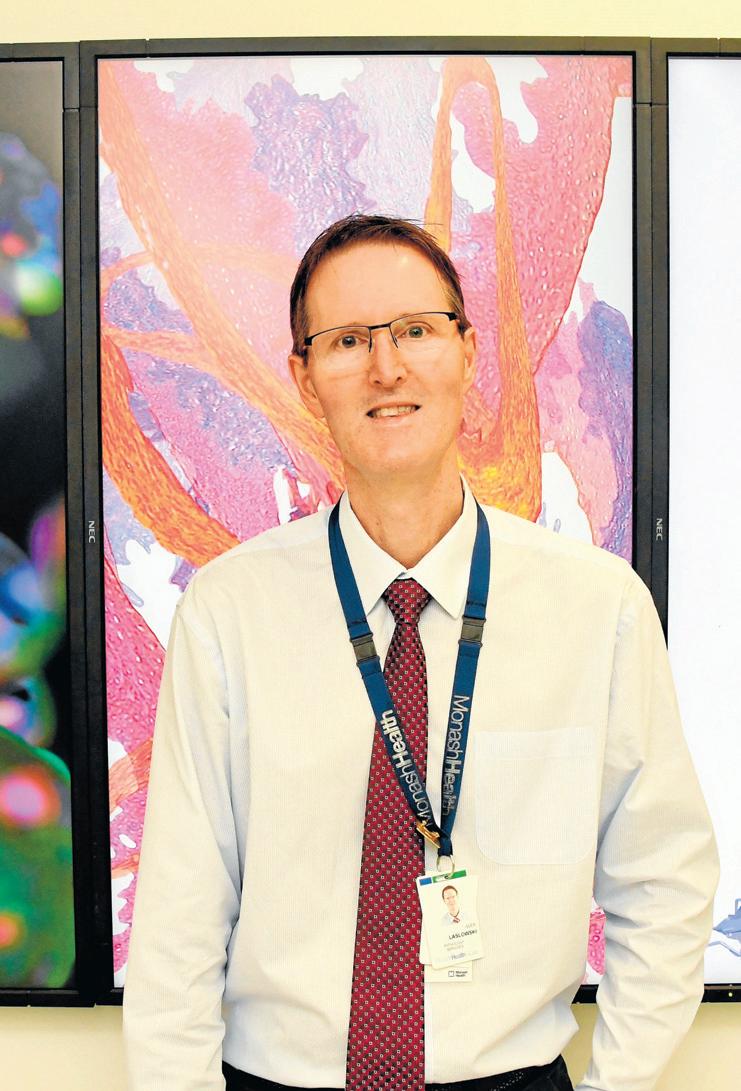
OAM recipient Alex Laslowski, recognised for 30 years of service to medical science. (Stewart Chambers: 557771)
ogy.
For more than 20 years, he has worked as a data assessor, accrediting laboratories across the country to ISO 15189 health standards.
Much of his work has centred on challenging long-standing practices to improve patient outcomes.
“It’s changing a preconceived idea — how something has always been done for the past 40 to 60 years,” he said.
“How do you change people’s vision and change it for the better to make it safer for the patient?”
He said there has been considerable success in doing so, with a clear understanding of the benefits often emerging once the reasoning is explained.
Among the biggest changes he has witnessed in the field are improvements in companion diagnostic testing and digital pathology.
The only gap that remains is the workforce, as community needs continue to grow and the volume of work increases, making it difficult to keep pace.
Looking ahead, he hopes to continue improving patient safety through digital pathology while also raising awareness of the critical role medical scientists play behind the scenes in hospitals.
“We are the people doing the testing that provides pathology results,” he stressed.
“We are the people who do cross matching when patients come into hospital.
“We do their micro testing, biochemical and anatomical pathology testing. It is the doctor who then delivers the results to patients.”
Mr Laslowski hopes to leave a legacy where people feel empowered to push boundaries and try new things.
While he understands times can be tough, he encourages others to follow their dreams.
Outside of work, he values his downtime, enjoying simple things like coffee and cake at a cafe.
He also has a passion for travel and exploring different cultures, tying back to his “inquisitive nature”
He has travelled extensively across Asia, Europe and the United States for both work and personal reasons.
Countries visited include Vietnam, Thailand, Indonesia, the United Kingdom, France, Italy and Germany, with plans to travel to South America next year.
By Sahar Foladi
Cranbourne educator Jennifer (Jenny) Mackay, who created a system to transform the lives of thousands of students and their families, has been recognised with a Medal of the Order of Australia (OAM).
From her debut as a teacher in 1986 to assistant principal at Dandenong North Primary School (DNPS), where she served an incredible 36 years, she herself was confronted with a unique challenge at the school.
But now she says her “real OAM moment” came from the school’s achievement.
“When we got our first waves of Afghani refugees, I had to understand what they’re going through before you start to teach them.
“That really changed my outlook on how we could ensure not just a successful education but successful lives.
“Part of that became being involved with the family, understanding their stories, the difficulties they faced. Children go home to families - we need to ensure everything’s working for them,” she says.
“The Afghani wave of new arrivals awakened me - it’s not just teaching them English - you have to embrace people or they will become alienated in society.
“You can’t have people feeling alienated. It leads to a disconnect, resentment, and changes how our area of Dandenong could have been.”
By that time, the English as Additional Language (EAL) program was in full swing, but it wasn’t working because it wasn’t “rigorous enough”
The school developed three key programs, Reception, Transition and EAL, based on the students’ needs and not on the general EAL program.
With the amazing staff and teachers onboard, it worked.
“We had to be fairly innovative, we had to
have more wellbeing people aligned with EAL and classroom teachers.
“Even though it was a small class, there were so many levels of language capability. I kept thinking this child’s been in EAL for five years, when will they access the mainstream curriculum? We have to hasten this.
“So, I thought if we had the new arrivals, who had no English, reading or writing, in an intensive program two hours a day, that would make a difference.”
Understanding the trauma, lack of facilities, education, and so much more, the school started a two-week introduction and tour for the student and their families about how to play on the playground, playground rules, games, and simple activities to assess the students’ capabilities.
In its reception and transition phases, students are taught terminology, foundational skills and other basic skills in literacy and mathematics that are also linked to their classroom activities to bring them up to speed with their level of work.
This led Ms Mackay to set up a rigorous evaluation program of each student, which proved the methods were working. In some cases, it also identified students with intellectual disabilities.
Prior to this data, students’ lack of academic growth was blamed on English language.
“What we found was the programs were so effective, the students were making such improvement, that when we left (retired), we were the only school that had 100 per cent of our students achieving well above in their learning growth in all levels.
“That’s huge when you consider many of the kids didn’t go to school. That was my OAM really, to see that’s what we’ve done.”
Ms Mackay, the teachers, staff and wider school community also embraced the wave of African refugees, who had a similar sense of trauma but were different in many respects. Such as involving mothers who arrived as refu-
By Jensy Callimootoo
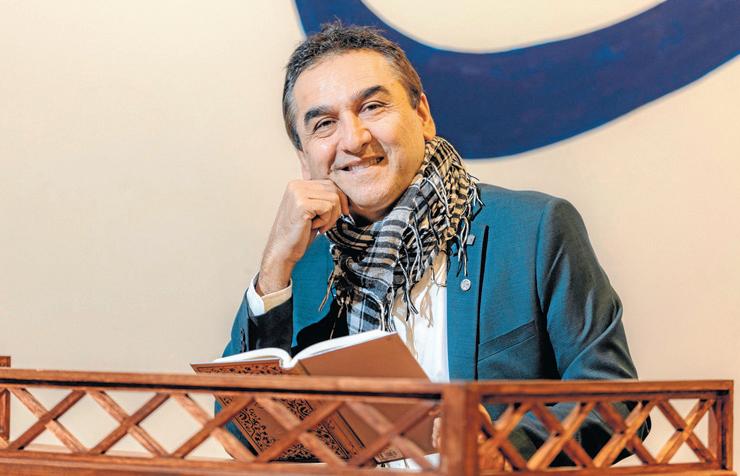
When Kuranda Seyfettin Seyit received a call from Canberra earlier this year, he assumed it was a routine call.
Instead, the call brought unexpected news, he had been selected to receive the Medal of the Order of Australia (OAM), recognising decades of service to multicultural communities in Victoria.
“I was very surprised,” he said.
“I thought maybe I hadn’t been successful because I’d heard nothing for so long. It was a pleasant surprise.”
While the honour acknowledges a remarkable career of community advocacy, leadership and social justice work, he is quick to shift the focus away from personal recognition and towards the people and causes that have shaped his journey.
Growing up as a young Muslim in Australia in the 1980s, Kuranda experienced firsthand the challenges faced by culturally diverse communities seeking acceptance.
Those experiences fostered a lifelong commitment to social justice, beginning with advocacy for refugees during Australia’s heated debates over asylum seekers in the early 2000s.
“We were going to Parliament House, meeting politicians and advocating for refugees,” he recalled.
“That was really where it all started.”
Following the September 11 attacks, his work took on renewed urgency.
As public scrutiny of Muslim communities intensified, he became a prominent voice promoting understanding and challenging stereotypes.
“I made it my goal to build better relationships between Muslims and the broader Australian community,” he said.
One of his most significant achievements emerged from that mission.
In 2002, he helped establish the Goodness and Kindness campaign, bringing together Muslims, Christians and Jews to foster interfaith understanding in schools across Australia.
Thousands of students participated, learning about common values shared across faith traditions.
The initiative culminated in a powerful visual statement: a giant patchwork quilt featuring messages of kindness written by schoolchildren.
The quilt was later draped across the front of Parliament House.
“That’s definitely one of the highlights of my
gees without their husbands because of the war and traumatic situations.
The reception program also supported students’ families through their wellbeing team. More mothers reached out to connect with support services, as they trusted the school environment.
At one point, the school community would take students to their medical appointments and set up a Mother’s Group to help inform and educate mothers on how to expressively read to their children, only to find out that some mothers couldn’t read or had limited reading skills.
Ms Mackay and her husband Kevin - who also has an OAM - served at DNPS for 36 years and 39 years respectively, their teaching careers spanning 45 years and 60 years.
Whilst they’re retired, Kevin Mackay works at Emerson School Dandenong and Ms Mackay at Dandenong High School. She is implementing a similar method for teenagers as the school gains large influxes of teenagers without any English or with limited English as the Noble Park English Language School is at capacity.
“In Prep, children are messing their mums, but over here, suddenly adults aren’t important and it’s more about fitting in the peer groups.
“That’s an eye opener, they lost their old friendship group so they have to form a new one.”
Even in her new role at the high school, she encounters many of her ex-students who are excited to see her and sometimes, ask her for one of her handmade birthday cards.
“I just love education. I can’t just switch off, I feel I have a bit more to give.
“We have students, who have lost so much learning.
“If they’re coming in with no English in the first and second year, they struggle in maths because they don’t understand the instructions.
“By the time they understand they missed on the foundational skills, we’re patching them up with that.”

community work,” he said.
Over the years, his focus expanded to mentoring the next generation of leaders.
Through leadership programs, international exchanges and youth development initiatives, he has worked with hundreds of young Australians, many of whom now occupy influential roles in law, community services and advocacy.
“There’s something very fulfilling about seeing young people develop into leaders who are making a positive contribution,” he said.
Today, he continues that work through leadership programs in Melbourne and through humanitarian initiatives that take young Australians overseas to participate in aid projects.
His recently established charitable branch, Islamic Care Global Aid, combines practical assistance with leadership development, helping participants gain a deeper understanding of global inequality and human suffering.
“We want young people to see these realities for themselves and develop empathy,” he said.
Despite ongoing challenges, including rising socialtensionsandIslamophobia,heremainsoptimistic about Australia’s future.
“We have to remain hopeful,” he said.
“Australia is a beautiful country because of its diversity. The different cultures here enrich the fabric of society.”
For Kuranda, the OAM is not the culmination of a career but a reminder of the work still to be done.
His focus remains unchanged, nurturing ethical leaders, breaking down misconceptions and building bridges between communities.
“Ultimately, it’s about creating a better society for everyone,” Kuranda says.



Land: 681m2 • Parking: 1 garage space and 2 off-street parks • Bedrooms: 3 Toilets: 3 – There is no bathroom in the house
Ray White Dandenong is proud to present this exciting opportunity to
Ideal for renovators, handymen, and savvy investors, this property is ready for a makeover. Roll
Offering three spacious bedrooms, a generous living area, and a separate dining space adjoining the well-appointed kitchen. A central toilet, 3 toilets in total, and a dedicated laundry complete the practical and functional interior of this home.
Step outside from the laundry to discover a huge, low-maintenance backyard, offering the perfect setting for entertaining family and friends all year round. With plenty of space for outdoor gatherings, children to play, or simply to relax, this impressive outdoor area can be enjoyed regardless of the season.
Features of this home include: dual occupancy potential (STCA), three spacious bedrooms, high ceilings, a well-equipped kitchen featuring a gas cooktop, electric oven, double sink, and tiled splashback, plus a single-car garage with multiple additional offstreet parking spaces. Offering comfort, functionality, and future potential, this property has plenty more to impress. When it comes to location, it doesn’t get much better than this. Just minutes away, you’ll find Dandenong Plaza and the bustling Dandenong Market, offering endless shopping, dining, and fresh produce options. Public transport is easily accessible with Dandenong Station and several bus routes nearby, while major roads such as Princes Highway and EastLink provide easy connectivity. The area is also well-serviced by quality schools, local parks, medical centres, and community facilities, making it a highly convenient and family-friendly location.
Don’t miss this chance to renovate, reap the rewards, and make it your own.
By Afraa Kori
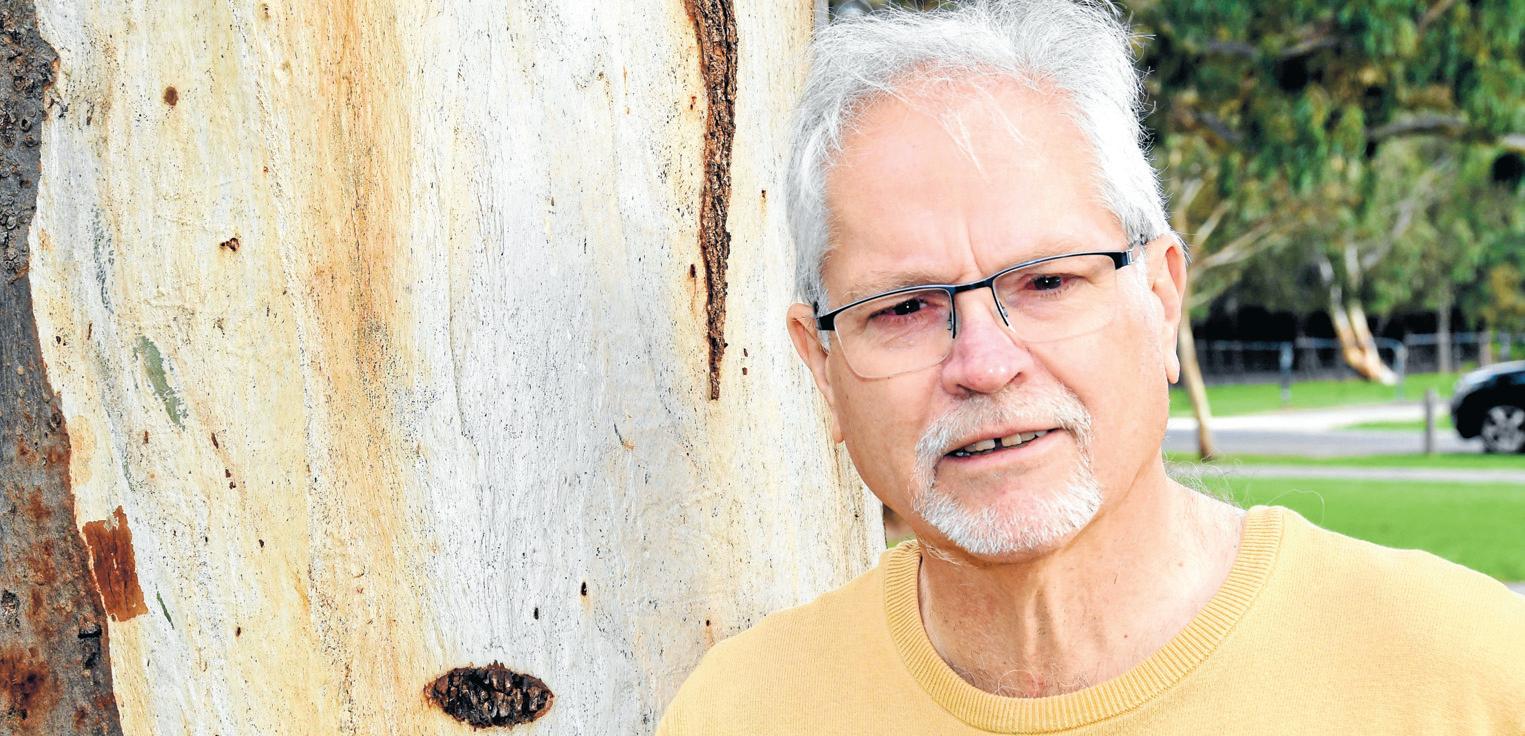
When most Victorians are asleep, Bail Justice Wayne Smith is often awake making decisions that can have life-changing consequences.
For the past 22 years, the Casey resident has served as one of Victoria’s busiest bail justices, acting as an after-hours decision-maker when courts are closed and police need an urgent ruling on whether an accused person should be released or remanded in custody.
His hearings can take place anywhere across the state between 4pm and 5am.
“A bail justice is effectively an after-hours magistrate,“ Mr Smith said.
“I’m not deciding whether someone is guilty or innocent. My role is to decide whether they’re entitled to bail.“
When police call him in, he knows it’s a very serious offense.
“I don’t see the average everyday criminal,“ he said.
Instead, he deals with some of Victoria’s most serious and complex cases, including alleged murders, aggravated home burglaries, child pornography, sexual abuse, kidnappings, shootings, machete attacks, domestic violence and breaches of intervention orders.
He also encounters young offenders linked to organised criminal networks involved in the current tobacco, alcohol and pub-related wars.
In one case, a youth allegedly stole almost $7,000 worth of alcohol before selling it for only a few hundred dollars.
“They’re usually being paid what they see as big money, but it’s not worth the risk they’re taking,“ he said.
“He wasn’t doing it for the money. He wanted to impress the gang and be accepted by them.”
Mr Smith says one of the biggest misconceptions is that bail justices are routinely releasing offenders.
“I do about 200 hearings a year and I might grant bail in less than 5 per cent of them,“ he stressed.
“The reality is that we don’t. The majority of people we see are remanded.
“I don’t have a guilty conscience about it at all. I am tough, but I’m only applying the law.
“I’ve had offenders who I have remanded thank me afterwards. I’ve also had parents and families of young people I have remanded, thank me because they knew where their child was.
“They need support, but they also need tough love.”
Mr Smith said police have told him he is effective at explaining his decisions to young people, a skill he attributes to his background in teaching. He believes much of the public frustration and media narratives directed at bail decisions is misplaced.
“The magistrates have got a bit more leeway, discretion and knowledge,” he explained.
“Sometimes a magistrate can make a different decision than a bail justice. That’s often where the controversy comes from.
“The magistrates and the government’s got to get serious in terms of punishments. I don’t think
there’s enough incentive for the kids to stop doing it.”
Just the other day, police called him regarding a repeat offender seeking their eighteenth grant of bail.
“I said to them, ’You’re asking me to give you your eighteenth bail. The other 17 haven’t worked so obviously I didn’t give bail,” he recalled.
Another recent case involved a young girl who allegedly breached an intervention order, broke into her mother’s home and set it alight.
“She told the police she would do it again,“ he said.
“I couldn’t take that risk and refused her bail.“
He also clarified that not everyone appearing before a bail justice is seeking release.
Mr Smith estimates about one in 15 accused people decline to apply for bail altogether.
“Often they’re homeless,“ he said.
“They’ve got nowhere to go.“
For some, a night in police custody is luxury: provides shelter, safety and a meal.
In addition to his work as a bail justice, Mr Smith also volunteers as an independent witness during police interviews with young offenders.
He says it is often the most heartbreaking part of his work, as it exposes broken relationships between parents and children.
In many cases, parents refuse to attend police interviews, cannot be contacted, or turn off their phones after repeated police callouts about their child’s offending.
“They’re sick of being called. They turn their phones at night,” Mr Smith said.
“I’ve some pretty horrific stories where families at night just turn their phone off because they know their kids are out there doing bad stuff so they just don’t cope with it.”
Among thousands of cases, one remains particularly difficult to revisit.
As an independent person assisting during a police interview, Mr Smith sat beside a teenage boy who had been travelling in a stolen vehicle when it crashed, killing one of the occupants.
The teenager being interviewed did not yet know his friend had died.
Police wanted to complete the interview to
grab crucial information before breaking the news.
When officers later prepared to tell the boy, Mr Smith insisted his parents be present however they turned their phones off.
“I told them to visit the family home and bring them in,“ he said.
“It was one of the saddest things I’ve witnessed. Very emotional.“
Mr Smith believes Victoria’s justice system faces several significant challenges beyond offending itself.
Among them is a growing shortage of bail justices.
“There are fewer of us doing the work,“ he said.
“The government hasn’t funded training for new bail justices for a couple of years.“
He claims approximately five bail justices are now carrying much of the workload across the state.
“We’re volunteers. We don’t get paid,“ he said.
“We were hoping the latest budget would include funding for training, but it didn’t.“
Another major concern is access to legal representation after hours.
“I get really upset when people can’t get hold of a lawyer or legal aid,“ he said.
“At three in the morning, it’s incredibly difficult.“
Mr Smith believes legal aid should be available 24/7 to match a justice system that operates around the clock.
When the accused often appears without legal advice, he voluntarily steps in to help ensure a fair hearing.
He also noticed that Aboriginal people also remain reluctant to access free legal services due to concerns about privacy and distrust of sharing personal matters outside family or clan/mob.
He sympathises with police dealing with repeat offenders, supports tougher accountability where appropriate, and believes intervention programs remain essential.
“A lot of these kids need someone who takes an interest in them,“ he said.
“They need support, but they also have tough love.”
By Cam Lucadou-Wells
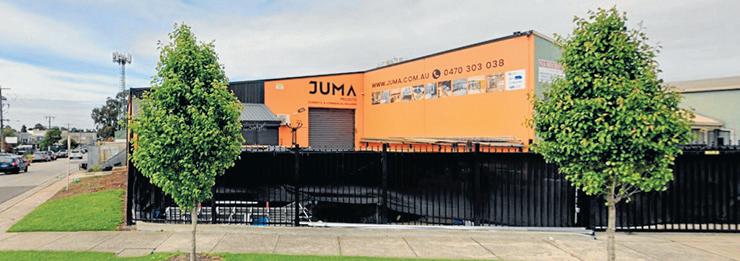
A kebab shop in a shipping container has been approved on a nature strip in a Dandenong industrial estate, despite opposition from Greater Dandenong Council.
The takeaway outlet was proposed by the owner of Juma Projects, which operates a warehouse on the same site on the corner of Wauchope Lane and Attenborough Street.
The container would be installed in a threemetre-wide space between the warehouse’s western wall and a narrow footpath.
On 3 June, VCAT member Seuna Byrne ordered a planning permit, dismissing the council’s concerns about waiting customers blocking the footpath.
The council argued that customers may “spill out” on the road and create a traffic hazard for large numbers of heavy vehicles from a concrete batching plant.
The 1.1-metre footpath was too narrow for a
wheelchair to pass or to support low volumes of pedestrians, the council stated.
However, Ms Byrne found there was no supporting evidence that the shop would generate unacceptable congestion.
Any queues would be “uncommon” and of short duration, she stated.
“Pedestrians will be able to ‘pass through’ waiting customers. It contributes to the vitality of the streetscape.”
She said the server window would introduce surveillance and activation to Wauchope Lane.
By Cam Lucadou-Wells
Two men have faced sentence over a rort to sell-off rare, expensive wine stock owned by their Dandenong South employer.
Aspiring pro-golfer Trevor Payet, 35, pleaded guilty at the Victorian County Court to obtaining a financial advantage by deception in 2023 and 2024.
His co-worker Delmate Taputoa, 26, pleaded guilty to theft.
Over a 14-month period, Payet made more than $177,000 from selling the wine online. The funds have not been recovered.
At the time, Payet was a transport coordinator at Bam Logistics Victoria, which was owned by Joval Wine Group.
As a direct supervisor, he “manipulated” the storeman/loader Taputoa to assist in stealing the stock, sentencing judge Arushan Pillay said.
Payet affixed false labels on the stock, arranged for a delivery driver to take them to his own house and put them online for sale.
The proceeds were banked into the account of Payet’s ill father-in-law, who was unaware of the fraud, then transferred to Payet’s own account.
Taputoa was paid between $100-$200 each time he helped Payet.
The jib was up when CCTV footage uncovered the pair loading stock into the delivery van in the early morning on December 2024.
In sentencing on 1 June, Judge Pillay said Payet claimed the funds were used for household expenses, especially for his two newborn children.
However, he had also racked up debts of about $80,000 in his quest to become a pro golfer – liabilities that he sought to hide from his wife.
“Your motivation for this decision-making and deception was financial gain.
“As a mature adult you chose to: incur the debts you did, not disclose them or seek help, and instead, decided to embark upon this scheme of deception.”
A psychologist reported that Payet’s offending was “out of character” and not a high risk of reoccurring.
The judge found Payet had “good” rehabilitation prospects, though he showed little evidence of remorse, a repayment plan or a letter of apology.
Payet was “quite willing to sacrifice” the junior worker and father-in-law in the “quite elaborate” scheme, Judge Pillay stated.
A community correction order alone would send an “entirely incorrect message to others in a position of authority”.
However, jail would be also onerous due to Payet’s PTSD and type-1 diabetes, he noted.
Meanwhile, Taputoa played a “small part” in Payet’s scheme, being young and “largely subject to (his supervisor Payet’s) control”, the judge found.
He had received “extraordinarily minor” reward – up to $3500 spent on living expenses.
Taptuoa was “entirely remorseful” and willing to assist Joval and police in uncovering the deception, Judge Pillay noted.
Payet was jailed for four months followed by a two-year CCO, including mental health treatment and 100 hours of unpaid work.
“I am persuaded the installation of a re-purposed shipping container on an otherwise underutilised part of the land is an interesting and innovative design approach.”
Ms Byrne also dismissed concern over the container’s “blank façade” to Attenborough Street, which would be softened behind shrubs and grasses.
She also disagreed with the council’s argument that the proposal would remove landscaping opportunities on the nature strip.
The 56-centimetre setback from the shop to the footpath was “not discordant” with the “robust built environment”
There was not a strong landscape character in the “robust built environment” , Ms Byrne stated.
“In any event, the proposed use (in the industrial 1 zone) does not require planning permission.”
Ms Byrne ordered for the proposed waste storage area to be either inside the abutting warehouse or the warehouse’s hardstand area.
Taputoa received a 12-month good behaviour bond without conviction.


By Jensy
A Berwick commentator has put forward a ‘Free Palestine’ Party, in a self-confessed bid to funnel progressive votes to far-right parties such as One Nation, with objectors calling the tactic undemocratic.
The Victorian Electoral Commission (VEC) announced on Tuesday June 2 that applicant, Avraham Yemini (Avi Yemini), a popular online conservative commentator had made an application to register the party for the upcoming November state election.
In late April, Yemini told his nearly 1 million YouTube subscribers that his scheme would work to capitalise on voters from the left and those from migrant backgrounds.
“What is the one issue that unites useful idiots from the far left to the fringe right, to certain immigrant cultures that have imported their hate… Free Palestine,” he said on the YouTube video.
The goal for the proposed party would be to “redistribute leftist votes back to conservative
parties” , said Yemini.
At the time, Yemini made a public callout to his subscribers, asking for at least 750 members to register interest in the party. VEC regulations require a party to provide a list of at least 500 eligible members, including names and an enrolled Victoria address.
The Australian-Israeli commentator and contributor to Rebel News, a Canadian far-right media and social commentary website, argued that the tactic was taken “right out of the leftist playbook’
Referencing the group voting tickets (GVT), Yemini says that the current preferential electoral system in Victoria is why Labor has “retained power for so long”
Condemning Yemeni’s scheme, Cr Rhonda Garad from Greater Dandenong Council, who has long vocalised her condemnation of the war in Gaza and Palestine, said that it was an attack on democracy.
“I can’t think of enough words to condemn this. It’s disingenuous,” she said.
“If they’re going to get there through deception and trickery, clearly they have no integrity.
“It’s a form of democratic corruption and I think it’s really dangerous for our democracy, and I think it should be condemned.”
While the application for registration of the political party has been put forward, objections to the proposed registration can be submitted to the VEC in writing by Thursday 2 July 2026.
Valid reasons for objections can be made on the basis that the proposed party is not an eligible political party under the Electoral Act 2002, inclusive of Section 45 and 47.
Section 47, outlines restrictions to the application if the name of the party is considered obscene or is the name, abbreviation or acronym of another political party.
Objections can be made to rppregistration@ vec.vic.gov.au or posted to the VEC, Level 11, 530 Collins Street, Melbourne VIC 3000.
Objections must be signed and include the objector’s address. Details of any objections will be made available to the applicant.
Artificial intelligence is already helping Australian businesses improve customer service, lift productivity and support workers, but leaders say success depends on building confidence in how the technology is used.
At CommBank’s Accelerate AI event in Sydney, CEOs and founders said AI was moving from experimentation to practical use, with benefits emerging across retail, technology and professional services.
Bunnings is one example. Earlier this year, the retailer launched Buddy, an AI shopping assistant that helped 25,000 customers with DIY projects in a single week. It has also rolled out an AI chatbot for 50,000 staff across 400 stores nationwide.
Chief customer officer Rachael McVitty said Bunnings had taken a simple approach to building trust: customers always know when they are interacting with AI, the tool uses verified information, and people can still speak to a team member when needed.
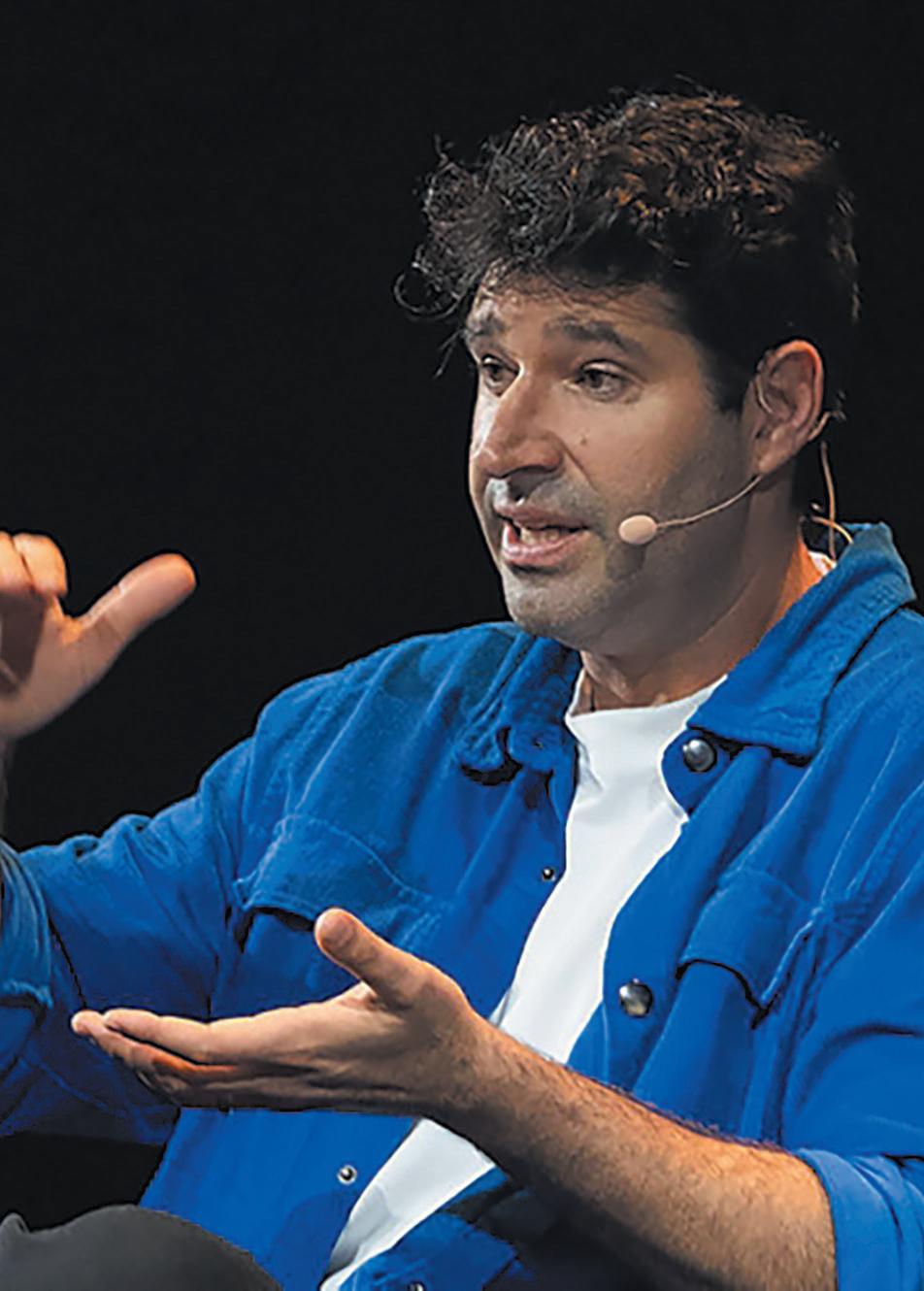
At Canva, co-founder Cliff Obrecht gave ChatGPT an unorthodox test shortly after it launched: plan a global camel delivery service, including logistics, routing and turnaround times.
The model produced a complete operational
plan, despite the abstract challenge Obrecht expected would break the technology. At that moment, he knew what needed doing.
“If we weren’t going to disrupt ourselves, we were going to be disrupted,” he said of Canva’s approach to implementing AI into its operations.
While speakers pointed to growing use of AI across Australia, some noted the technology remains in its infancy.
“If the ultimate measure is impact, we are less than one per cent of the way in,” Seek founder and technology investor Paul Bassat said.
But that doesn’t mean people should wait for the technology to mature before adopting it.
“If you don’t adopt AI, almost certainly you will lose market share. And ultimately, you will go out of business.”
Read the full story at CommBank Newsroom. https://www.commbank.com.au/articles/newsroom/2026/05/australias-ai-moment-opportunity-in-front-of-us.html?utm_ term=External&utm_medium=Native&utm_ source=Star&utm_campaign=weekone&utm_ content=accelerate
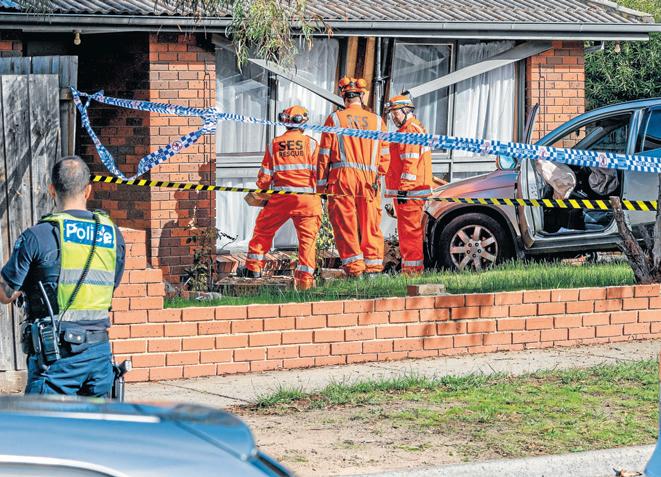
A man has been charged by police over two alleged stabbings in Epping and Dandenong North on Sunday 31 May.
Police say that a silver Honda CRV wagon deliberately crashed into a house on Exner Street in Dandenong North about 10.15am on 31 May.
The male driver allegedly got out of the vehicle and stabbed the 34-year-old female occupant of the property, who is known to him, according to police.
It is alleged the offender earlier stabbed a 40-year-old man at a property on Bradman Terrace in Epping about 7.30am.
Both victims were transported to hospital with non-life-threatening injuries.
On the morning of Tuesday 2 June, police detectives arrested a 27-year-old Epping man in Epping.
He was charged with offences including aggravated burglary, two counts of intentionally causing serious injury, and reckless conduct endangering serious injury.
He was set to face Melbourne Magistrates’ Courtonthesamedayforaremandapplication.

By Sahar Foladi
The deeply layered history of Braeside Park is set to be celebrated in a combined effort from the Braeside schools, local groups and organisations.
What set out to be the centenary celebration of the legendary Phar Lap racehorse turned out to be the celebration of the 312-hectare’s rich history from grazing property, racehorse training complex, sewage treatment plan and now a fully protected park.
President of the Friends of the Braeside community group, Judith Sise OAM is proud to show off the park as an example of the ability to revegetate the area.
“It’s remarkable to keep that history.
“Scattered in the park are farming equipment, ones they used behind the horses. During the gold rushes (in the 19th century), people needed food and obviously, our area is good for growing vegetables.
“Now housing has gone all over the top of it. Where once we had market gardening, flowers, poultry, you name it, it was grown there to go to the Dandenong or Melbourne Market,” she says.
“Now we’ve closed them all down.”
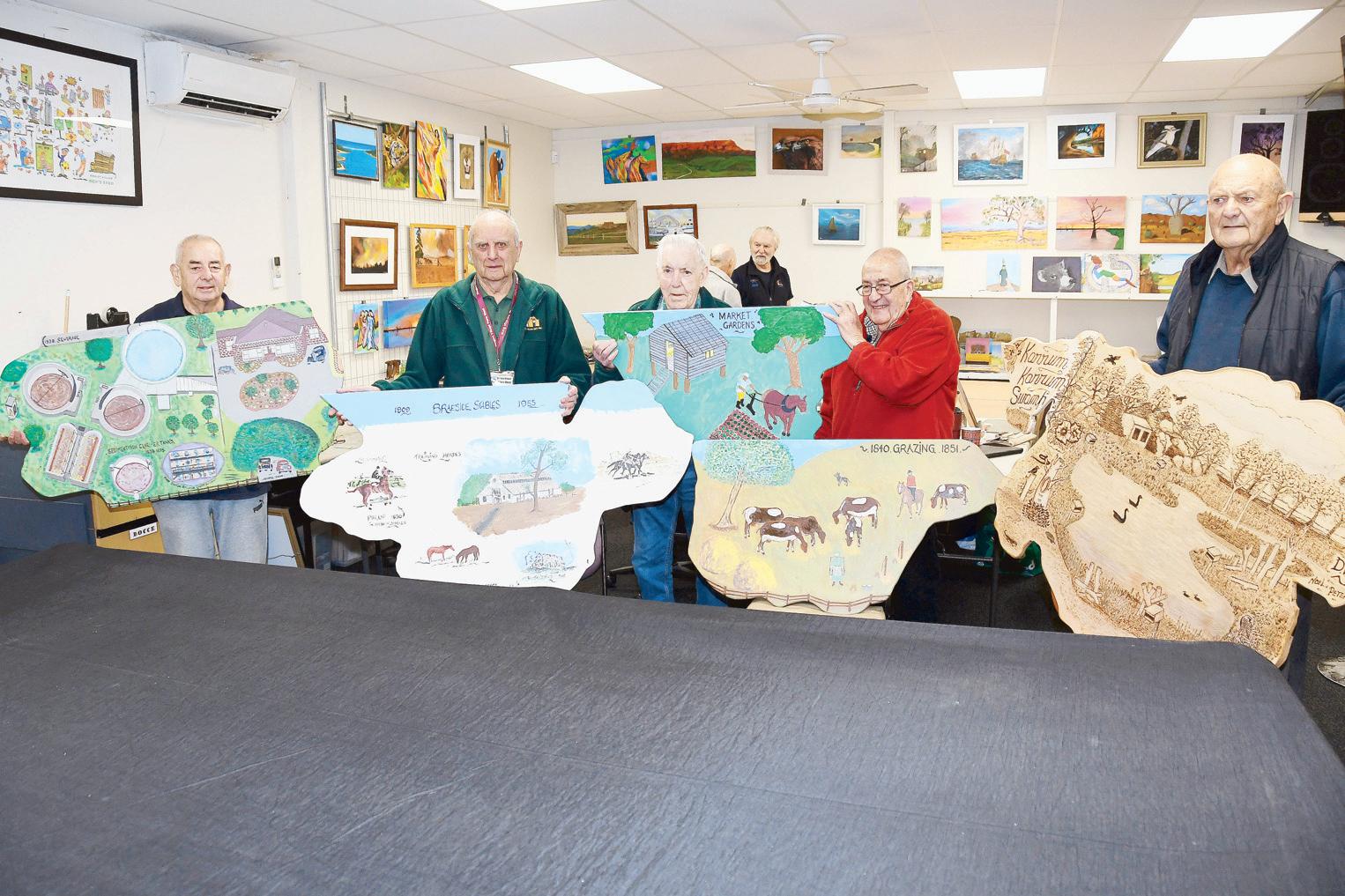
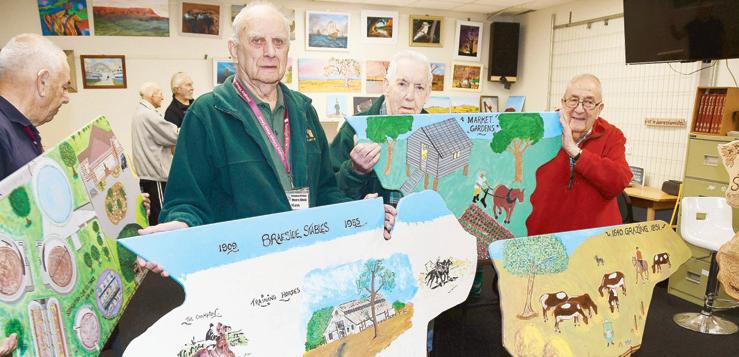
As part of its celebration, the Dingley Village Men’s Shed, Kilbreda College Mentone and U3A Dingley Village art group are painting a series of panels depicting rich historical aspects of the park.
The panels will be a permanent “stump gallery trail” along the area’s Cypress Drive.
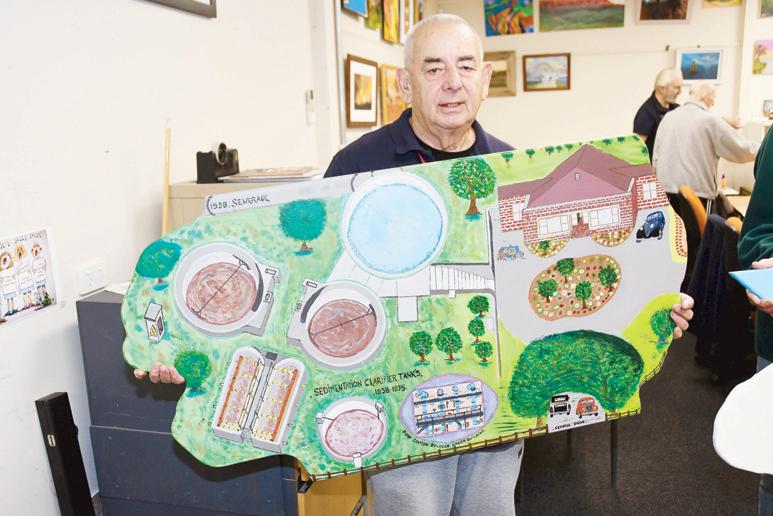
The seven panels reflect seven stages in the park’s story: swamp, grazing land, market gardens, racing stables, sewerage works, today’s parkland, and finally a vision for the future.
The Men’s Shed not only painted the panels but also carried out a great deal of research, with help from the Dingley Historical Association, which provided historical photos.
The celebration will be held on Saturday 1 August 2026 — Phar Lap’s official 100th birthday, as all racehorses share the birthday date of 1 August.
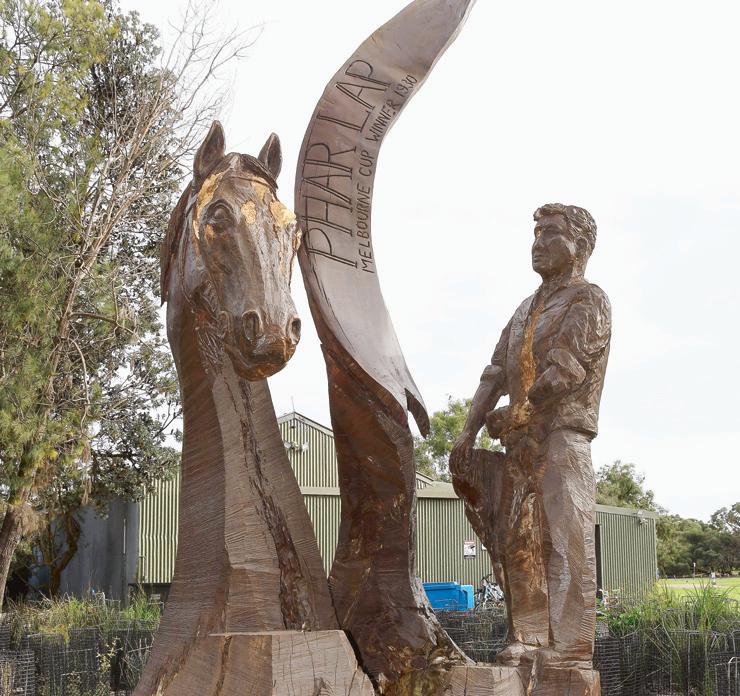
A standout of the park’s rich history is the training of Phar Lap (1926-1932), a New Zealand-bred, Australian trained thoroughbred at Braeside.
Phar Lap was widely celebrated, with a 14-successive-win streak including the 1930 Melbourne Cup, while trained by Harry Telford.
His performance was so captivating that he became a national hero during the tough times of the Great Depression, becoming a symbol of hope for many.
The area hosted a sewerage depot, operating from 1940 until it was decommissioned in 1975 and sewers were diverted to the South Eastern Trunk Sewer complex at Carrum.
Today, the park is protected and managed by Parks Victoria. But at the time, it was also left to community groups like Friends of Braeside, rangers and the Men’s Shed to help put the park together again.
“It’s gone a full circle. There’s still remnants of its history in the park. We like to keep those remnants,” Sise says.
“It’s been 50 years since we went from a sewerage plan. When they stood at the office, you could see the roads, there was very little vegetation.
“We had to put our wetlands back because they had drained them all.
“We completely changed the way that land operated. It’s always hard to restore it when you do
that much damage.”
Sise says Braeside Park is an example of how it’s possible to restore degraded ecosystems.
“You can’t get it back to the normal stage but you can do a good damn job at it.
“It’s more about alerting people to the history of Braeside Park, to value it as somewhere that has evolved from a swamp and returning it to Nature, as it once was - and to stop the government putting housing all over it.”
Friends of Braeside Park is planting as many indigenous plants as possible and maintaining them to attract wildlife as suburbia closes in.
“Here is the joy of kids of riding their bike on the tracks, walking around,” Sise says.
“Some people say it’s like being in the bush. It is bush in the city and I think that’s something special that we should keep.”
On 1 August, a sculpture of Phar Lap will be unveiled by Meng Heang Tak MP with opportunities to view the seven panels, a historical display on the local racing industry, walks in Phar Lap’s hoof prints, and a musical afternoon tea.
By Cam Lucadou-Wells
A large super-clinic proposed for a residential neighbourhood in Noble Park has been knocked back by the Victorian Civil and Administrative Tribunal.
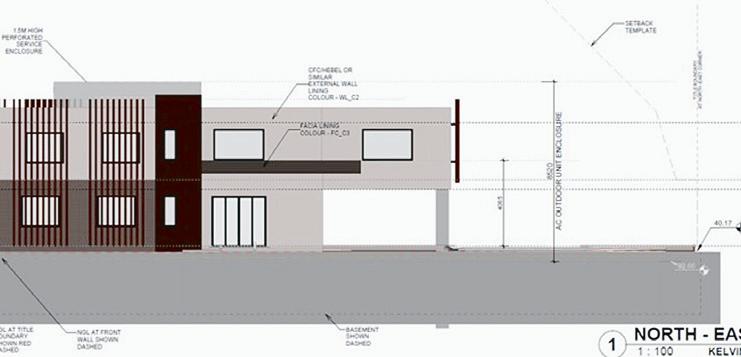
VCAT senior member Margaret Baird rejected the planning permit application for the two-storey clinic at 126-128 Kelvinside Road for its unreasonable impact on neighbourhood amenity. The site, while being on a “collector road” , was also on the corner of a short cul-de-sac, namely Trainor Court.
Up to six practitioners, including a dentist, physiotherapist and pathologist, were to be based at the centre for 7 days a week, including 7am9pm on weekdays.
The plan included 20 car spaces on the
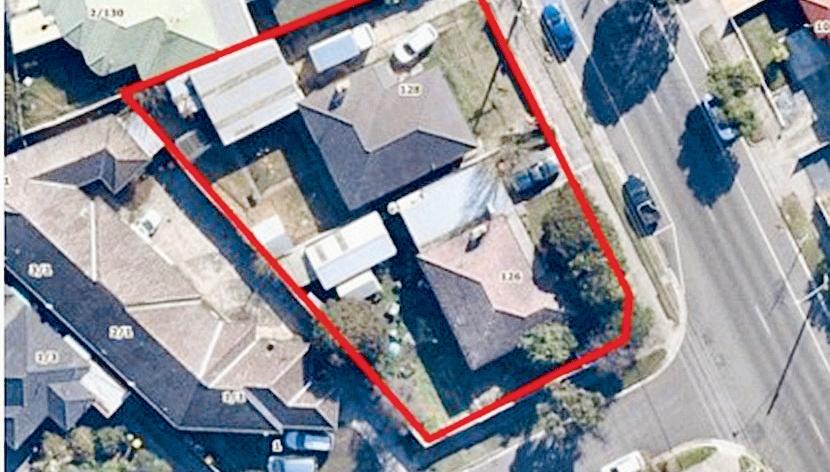
1230-square metre double lot, currently occupied by two detached, single-storey dwellings.
Ms Baird noted that a medical clinic would be

expected to “serve local needs”
They were allowed as an “as of right” land use in general residential areas, if their buildings don’t exceed 250 square metres.
But the proposed floor area was more than twice that – at 507 square metres.
She ruled that the centre would “bring significant pedestrian and vehicle activity from early morning through to evenings all weekdays and weekends”
“The scale of the facility and the resultant intensity of the use … are a material impost and unacceptable in this location.
“I am also not persuaded that adverse amenity impacts would be sufficiently mitigated by adopting some reduced operating hours on weekends.”
Ms Baird also ruled against the dominant amount of paving, the lack of landscaping near


neighbouring properties and the visual impact of a 2.4 metre high acoustic fence.
The applicant Gary Hayman had sought a VCAT review, after Greater Dandenong Council had rejected a permit on 12 grounds.
Ms Baird agreed with the council that the medical clinic was better located at a commercial or mixed-use setting.
The council also argued against the loss of potential housing in a residential zone.




Retirement is a chapter in life filled with possibility, and with nine villages across Melbourne, Geelong and Ocean Grove, Ryman is here to help you make that chapter the best it can be. That’s why our villages offer living options to suit everyone, so you can choose the lifestyle that’s the best fit for you.

Whether you are looking for a low-maintenance lifestyle, a vibrant community or a li le extra support - we’ve got it covered.
Plus, we also have aged care options including low care, high care, and specialist dementia care on site.




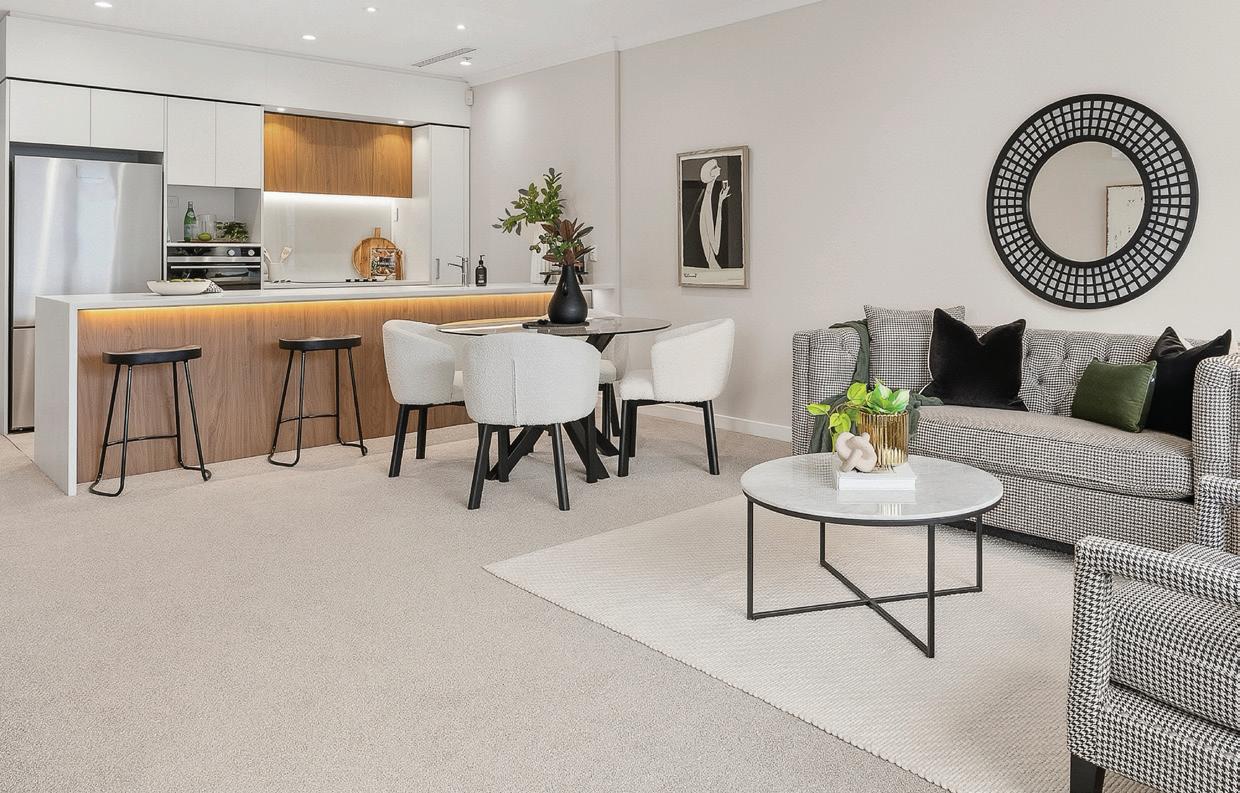
Enjoy the best of retirement living in a thoughtfully designed villa or apartment.
Elegant and easy to maintain with everything you need, giving you more time and energy to do the things you love, whether it’s a quiet night in or hosting family or friends for dinner.

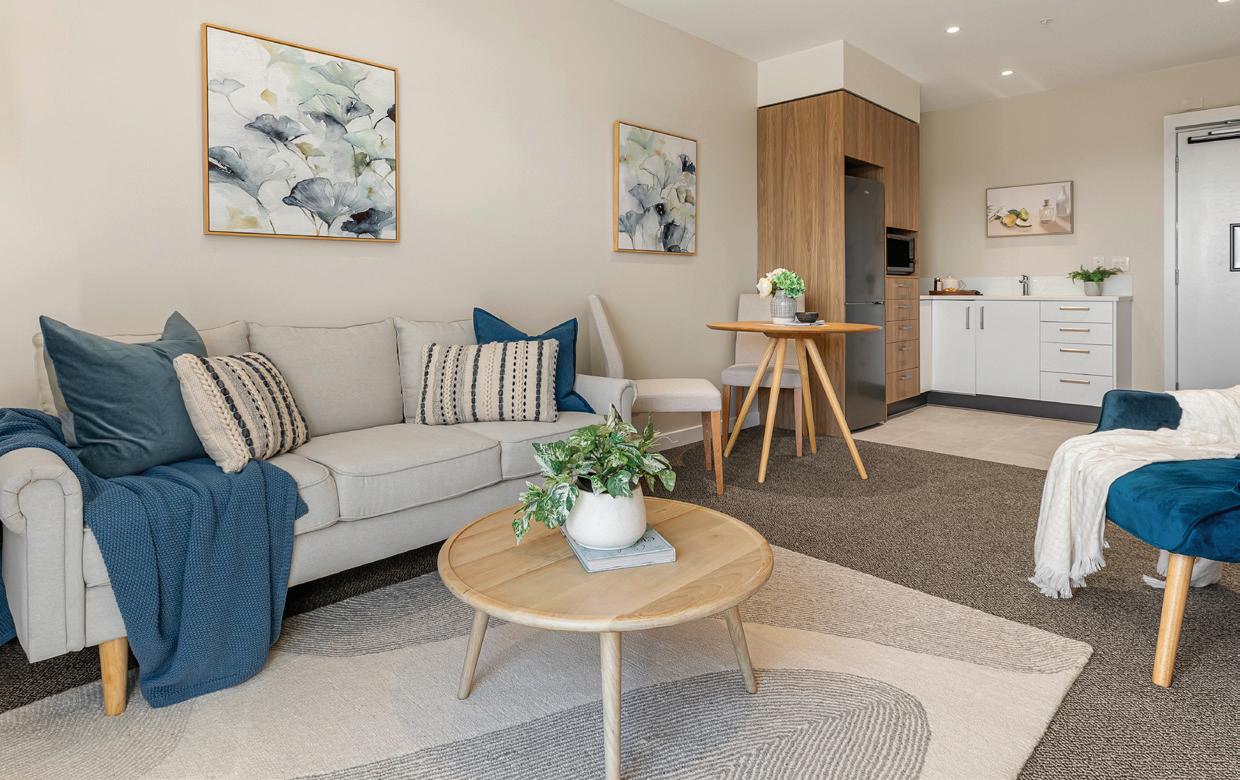
Enjoy the freedom and comfort of assisted living in a serviced apartment.
These one bedroom apartments come with daily support to make life easier, including housekeeping and a delicious chef-prepared meal every day.
Located in the heart of the village, our serviced apartments give you easy access to all the amenities right on your doorstep.


As some of you know, I ran for Casey Council elections as part of the research component of my doctorate.
What began as an academic exercise quickly became something much deeper.
It gave me a genuine sense of what everyday Victorians are worried about and, more importantly, what they feel politicians are no longer listening to.
To this day, people still stop me in shopping centres, community events and cafes wanting to talk politics.
Interestingly, during the council elections, most of the concerns people raised were not actually council issues at all. They were State Government issues.
Crime. Housing. Health. Education. Cost of living.
And truth be told… people are worried. Not just financially. Emotionally and socially too.
Victoria’s debt is now projected to push toward $200 billion in coming years. Put simply, that is roughly the equivalent of close to a million dollars an hour in interest and debt servicing.
Regardless of whether you are Labor, Liberal or somewhere in between, that should concern all of us.
Especially when Victorians are already among the most heavily taxed in the country.
At the same time, our hospitals are overwhelmed, ambulance wait times remain under pressure, housing affordability is worsening and communities across Melbourne’s outer suburbs increasingly talk about feeling unsafe.
Crime statistics tell part of the story. Social media pages in local communities are now flooded daily with CCTV footage, break-ins and neighbourhood alerts.
But perhaps the bigger issue is not simply crime itself.
It is the lack of accountability. It is the feeling of instability.
Because when people stop feeling safe - economically, socially or physically - fear begins shaping public behaviour and political decisions. And fear changes democracies.
At the same time, Australia’s migration debate has become far too simplistic and emotionally charged.

We keep lumping all migrants into one category as though they are all arriving under the same circumstances, with the same obligations and the same contributions.
That is simply not true.
International students, skilled migrants, refugees and asylum seekers all enter under completely different frameworks.
Most skilled migrants and international students receive very little government support.
They pay taxes, contribute economically, often pay significantly higher education fees and help sustain critical sectors of the economy.
Many work in healthcare, engineering, IT, aged care, construction and hospitality - industries Australia desperately needs.
Yet Australia lost hundreds of thousands of residents overseas in recent years, including highly skilled professionals relocating to places like Dubai, Singapore and elsewhere across Asia where taxes are lower, housing is more affordable and social cohesion often feels stronger.
Why?
Because talented people have options.
And if Australia becomes too expensive, too divided and too unstable, they leave.
That should concern us enormously.
Contrary to political slogans, migration itself is not the problem.
Poor planning is.
Weak infrastructure planning. Weak housing policy. Weak integration policy. Weak long-term thinking.
Citizenship and English fluency, however, should always be prominent criteria.
Not just access to Australia - commitment to Australia.
Work hard. Pay taxes. Participate. Integrate. Belong.
That social contract matters deeply because
successful multicultural societies only work when people feel they are contributing to something larger than themselves.
This is where politics becomes complicated. Many Victorians feel politically homeless.
They are frustrated with the Government and Victoria’s growing debt, exhausted by bureaucracy and worried about crime and infrastructure pressure.
But they are equally uncomfortable with divisive grievance politics and simplistic blame narratives.
And this is where parties like One Nation gain traction.
Truth be told… Pauline Hanson taps into real frustrations many Australians are genuinely feeling around housing, cost of living, migration and social cohesion.
Ignoring those concerns entirely would be intellectually dishonest.
But there is also an enormous difference between rhetoric and voting records.
When you actually examine parliamentary voting behaviour, the contradictions become harder to ignore.
Despite presenting itself as the voice of “ordinary Australians,” One Nation has repeatedly voted against policies relating to housing affordability measures, workers’ protections and industrial reforms.
Hanson opposed aspects of the Help to Buy housing scheme aimed at assisting first-home buyers.
One Nation has also voted against legislation relating to casual workers transitioning to permanency, industrial manslaughter protections and various workplace reforms designed to strengthen worker security.
Yet much of the public narrative suggests they are uniquely defending “working Australians”
That contradiction matters.
Because politics today has become increasingly performative.
Strong sound bites. Viral social media clips. Outrage-driven headlines.
But far less public attention is paid to how politicians actually vote when legislation reaches parliament.
And perhaps that is one of the biggest failures in modern democracy.
By Dalal Smiley, chief executive of Wellsprings for Women
Australians have just experienced and participated in a National Reconciliation Week.
Wellsprings for Women staff, its board and volunteers were involved in learning about our role in reconciliation guided by our Reconciliation Action Plan - Reflect.
The article “Are we teaching cultural safety… or cultural fear?” (published in Star News) on Aboriginal and Torres Strait Islander patient engagement argues that specialised cultural training fosters “social anxiety” and “fear of offence” among non-Indigenous health practitioners.
They advocate for replacing distinct First Nations cultural safety frameworks with universal emotional intelligence and communication skills.
The core argument of the article shifts the focus of healthcare delivery from the safety of vulnerable patients to the emotional comfort of the dominant workforce.
Through an anti-racist lens, this framing prioritises white fragility over clinical safety.
In a colonised healthcare system, the discomfort of learning about privilege is a necessary part of unlearning bias.
Equating the discomfort of the practitioner with the structural harms experienced by First Nations patients minimises ongoing racial trauma.
True reconciliation requires strong relationship-building based on trust.
Trust cannot be established if practitioners refuse to confront the power imbalances and racial biases that directly impact patient care. The article suggests that specialised First
Nations healthcare training should be replaced by generic, universal life skills.
This argument relies on a colourblind approach that erases the unique political, historical, and legal status of First Nations people.
Treating cultural safety as generic communication overlooks specific issues such as intergenerational trauma, stolen generations, and institutional distrust caused by colonisation.
Universalism assumes an equal playing field, which directly undermines the concept of equity — providing specific resources and tailored care to meet specific needs.
The article argues that cultural safety training is an unnecessary barrier to human connection.
By advocating for a universalist approach, minimising documented institutional bias, and prioritising practitioner comfort, the article protects existing colonial structures.
Authentic reconciliation requires moving past universal “niceness” to actively dismantle institutional racism through specific, accountable, and self-determined First Nations cultural frameworks.
Effective healthcare requires recognising that intergenerational trauma, stemming from historical institutional control, profoundly impacts current patient experiences and health outcomes.
A universal approach to communication is insufficient, as specialised training is necessary to prevent re-traumatisation and address the systemic distrust caused by historical injustices.
Owning our history as a nation, regardless of how long we have been in this country, means acknowledging past injustices and how they continue to impact on the present as evidenced in the disparity of health outcomes for First Nation people.
Reconciliation Week is an invitation to all of us to pause and think about what is still happening in this country at a community and institutional level that is hampering the equitable health outcomes for communities at risk of exclusion. And why?
People are increasingly voting emotionally rather than structurally.
The increase in independent candidates reflects this frustration too.
Many Australians are searching for alternatives outside the major parties.
We are now even seeing discussions about independent “teal” MPs potentially banding together more formally because isolated independents often struggle to influence systemic change alone.
That is the reality of parliamentary politics.
An independent can advocate strongly, but without broader party support, they often become negotiators rather than decision-makers.
Policy becomes transactional - “you support this, and we support that”
Real structural reform usually requires numbers, organisation and influence within government itself.
Which is why many good people avoid politics altogether.
They do not want the scrutiny. The racism. The judgement. The toxicity.
So instead, they sit at dinner tables and complain while poorer-quality leadership fills the vacuum.
And perhaps that is the real danger.
Dad often says healthy societies are built when ordinary people still feel responsibility toward the collective whole.
That idea feels increasingly rare today.
Modern politics has become deeply individualistic. My taxes. My mortgage. My grievance. My identity. My fear.
But democracy cannot survive long-term if everyone votes purely for self-preservation.
Strong societies require something larger. Shared responsibility. Shared values. Shared belonging.
Not blind nationalism. Not identity politics. Not endless outrage.
Just competent leadership, honest conversations and a genuine commitment to building a safer, fairer and more cohesive Victoria for everyone.
Because truth be told… the state of our State will not improve until politics becomes less about performance and more about stewardship.
Last week’s results: Should the current Dandenong Oasis be sold for housing?

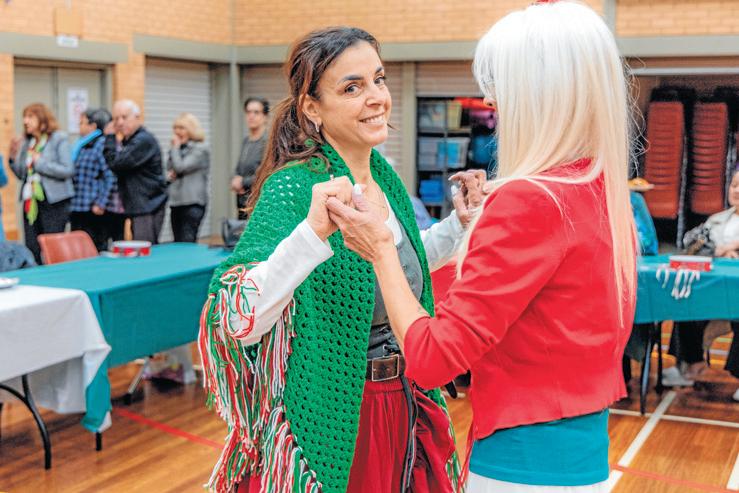
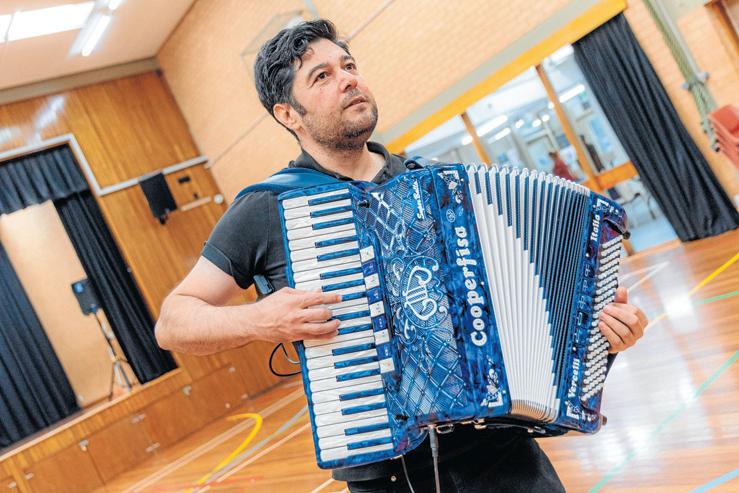
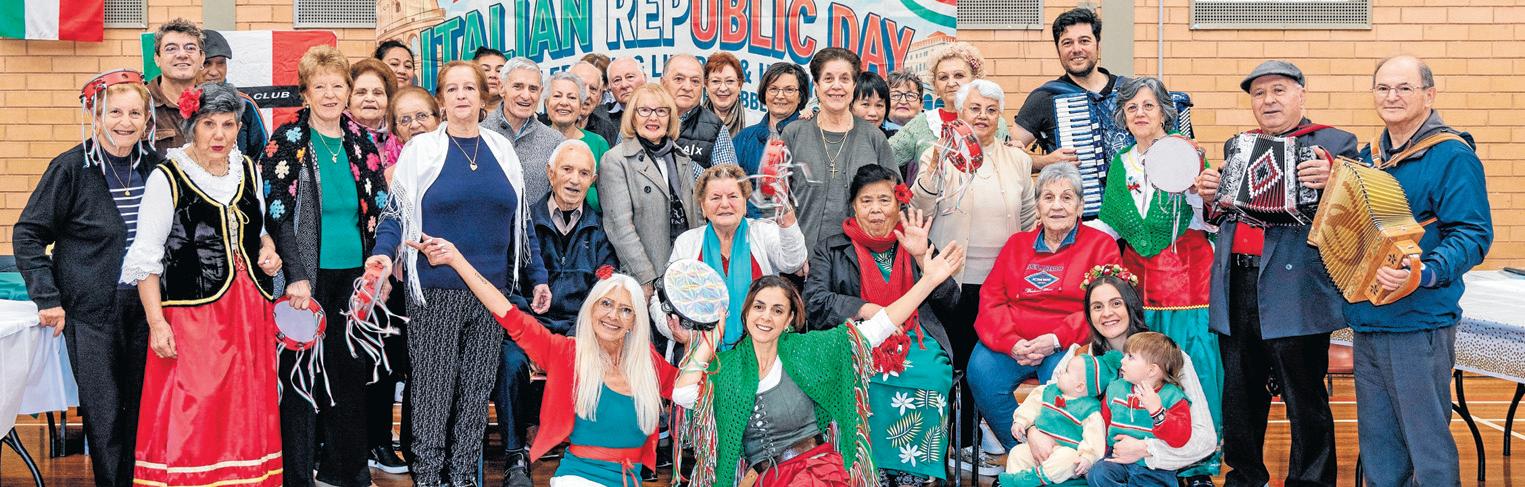
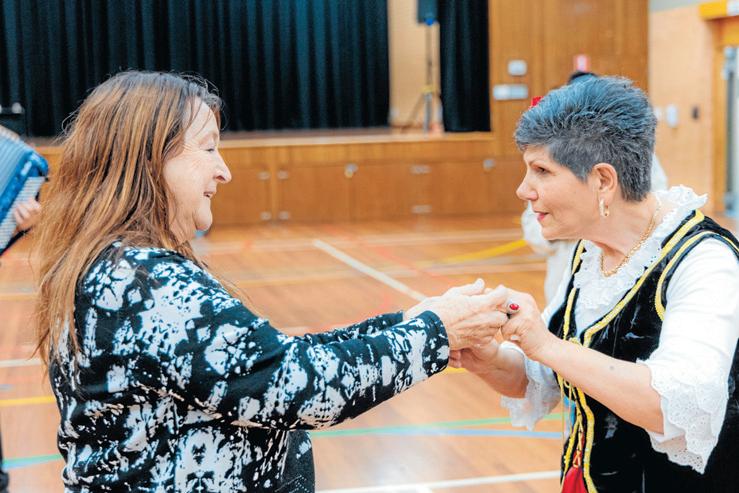
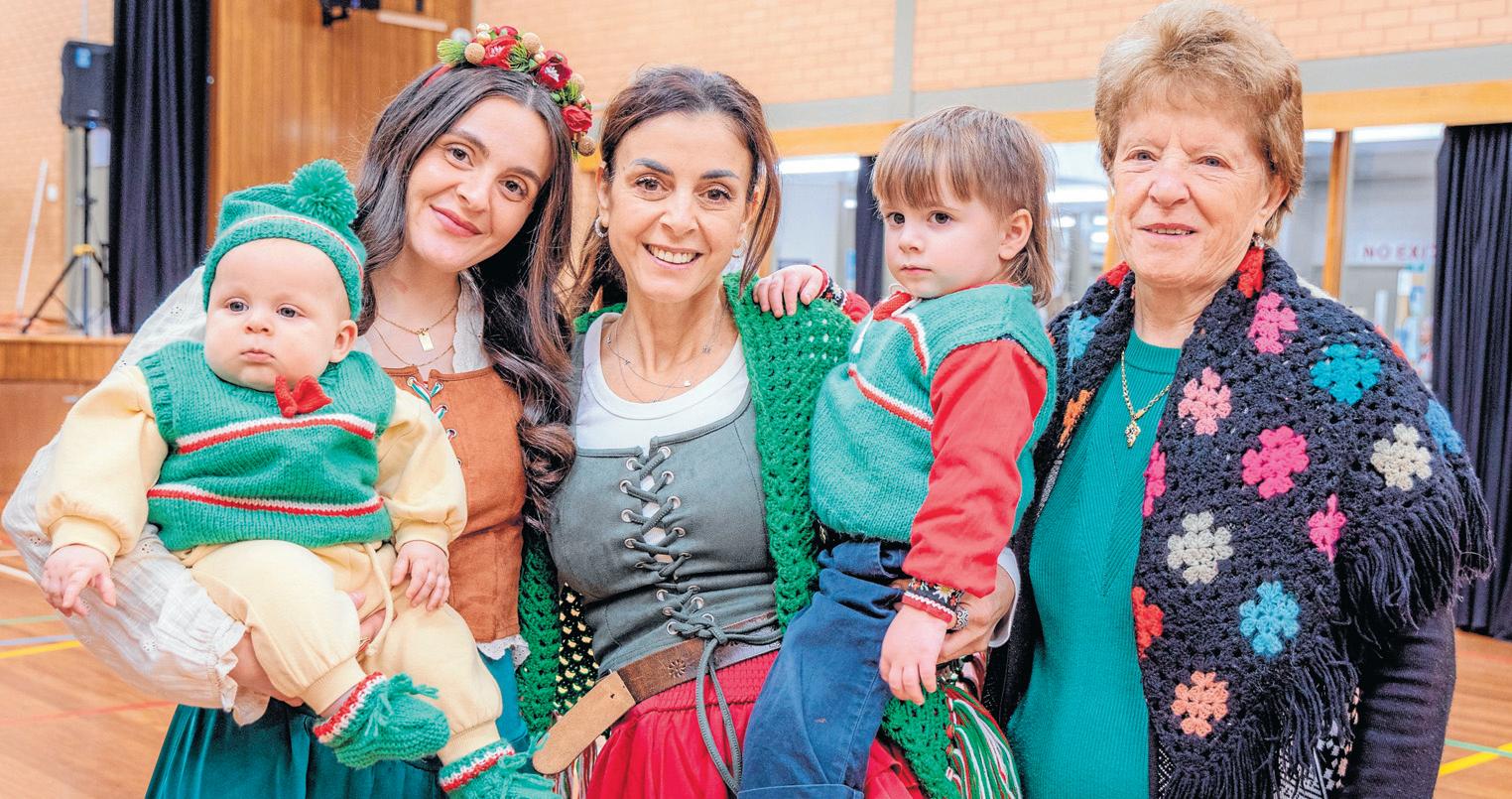
Italian Republic Day was marked with dance, costumes and organetto music at Noble Park Community Centre on Wednesday 3 June.
The Italian Elderly Citizens Club of Noble Park celebrated with entertainers Mimma and members from Organetto in Tavola.
“This was a truly wonderful day,” club president Leena Sedia Mondalbano said.
“We ate, danced, laughed in our traditional clothing and stepped back in time to respect the history as it became.”
It has been 80 years since a republic was declared in Italy on 3 June 1946.
Mondalbano said the country’s first republic “set Italy on a trajectory towards democracy, economic prosperity and cultural vibrancy”
“(It) stands as a testament to the resilience and adaptability of the nation recovering from the devastation of war and emerging as a global powerhouse.”
The elderly citizens club meets twice a week for cards, bingo, rumikup, dancing and Italian-
100 years ago
10 June 1926
ABOUT THE MARKET
No time was lost by the Dandenong Council in carrying into effect the resolution passed at the meeting on Tuesday, that the engineer be instructed to take immediate steps for the dismantling of the market in Lonsdale Street. By Wednesday, a large number of men was on the job with all the necessary appliances for “wrecking”, also horses and drays for removing the material and sheds, yards and pens to Clow Street. All the material was in splendid order, and declared by experts to be better than that which could be obtained from the mills now, being well preserved and seasoned. Water troughs, piping and fittings have also been removed and carefully stacked at Clow Street.
50 years ago
7 June 1976
Aurora ‘dry’ for 2 weeks
The Southern Aurora Hotel in Dandenong has been ordered to close by the Liquor Control Commission. The hotel must close its doors from midnight June 14 to midnight June 27. The Commission ordered the closure for breaches by the hotel of the Liquor Control
language lessons.
“Most of all we make some beautiful friendships and get to chat and enjoy each other’s company,” Mondalbano said.
The club is at Noble Park Community Centre on Wednesdays and Fridays, 11.30am-3pm. Coffee and biscuits provided.

Act. It is believed to be the first time a local hotel has had its licence suspended for breaches of the Act. Evidence heard by the Commission alleged the hotel had breached the Liquor Control Act “by allowing drunken persons on the premises and sales of liquor to under-age persons”. The license was renewed for the coming year, but after hearing the evidence, the two-week suspension was imposed.
20 years ago 5 June 2006
Super school plan falls foul of Hydro sale flop
The proposed amalgamation of Dandenong High School and Cleeland and Doveton secondary colleges will be delayed after the sale of the Snowy hydro-electric scheme fell through. The $20 million ‘cluster school’ project, the biggest amalgamation of schools in Victoria’s history, was expected to be completed by 2009, with funding from the sale of the Snowy. However, Victoria and New South Wales were forced to pull out of the sale after the Federal Government decided not to sell its 13 percent share. A spokesman for the Education Department said: “It will still go ahead over a longer process”. Under the proposed merger, Doveton Secondary College will close, with the new ‘super school’, to be built on the corner of Ann and Herbert streets, expected to have about 2,100 students. Dandenong High School council president, Alan Collier, welcomed the amalgamation.
“We’ve been working on this for 18 months. All the schools’ facilities are getting old.” He said the state-of-the-art complex would offer more subjects and would pool resources.
5 years ago 8 June 2021
Men urged to stand up “Stand up. Speak out”
The message is simple, because it is more than footy and always will be. The Doveton Football Netball Club continues its support for White Ribbon – a cause working to marginalise domestic violence – and the Doves held its annual game against Pakenham in the fight to raise awareness last month. Doveton president John Stapleton spoke about the importance of raising awareness at a function last Saturday. “Today is a really special day and we have struck a White Ribbon Cup to be presented after the game. Pakenham - who we always play on this day, came in along with our players.” Doveton’s number one ticket holder, Gabrielle Williams MP said: “In a room that is so male-dominated, to have this discussion so openly and with great passion is one of our best tools, and in 10, 20 or 30 years somebody might not be here telling horrific stats. A woman a week dies at the hands of a partner, family violence being the major cause of death and disability for women aged between 15 and 44. But at its core is a culture that is endorsing this violence - we need our whole community to be committed to ending this.”
By Rev. Eseta
“It is within us that the roots of wickedness are to be found” (Flahault;
However, the lesson of continuing, persistent trust and conviction through a time of testing and pain can be resolved through wisdom and alertness.
That a situation that seems to be against us, we can accept and embrace, turn it around and use it for the benefit of our well-being.
That when we get knocked down by insults and circumstances, we get back up.
When we are told to go away, we get down on our knees and beg.
To go about our everyday activities offering


whatever we can where we can, in the knowledge that some are much worse off than us.
Today, we continue to see pictures of public disobedience, both in the media and in our own communities.
Where families are abused physically and their properties stolen from under their eyes, and we clearly see the anger and the desperation of
police officers, the rising number of teenagers and children suffering from depression and mental illnesses, the disarray of community life, and the continuing flouting of the rules of authorities.
Added to these is the strong sense of loss, loss of loved ones, loss of jobs, loss of future plans, loss of the ability to think clearly because life seems to have become a dark hole into which most of us are thrown and we don’t know how to climb out.
These situations create feelings of deep grief, deep fear, and deep anger; feelings that will stay with us for a long, long time to come.
How much more can we take?
To those of us who are watching helplessly, we can pray that as the people in Ukraine look through the ashes and the rubbles of explosions and graves, and bury the bodies of loved ones in their backyard.
And look at the faces of people around us who do not know how they can continue to pay for food and rent.
And as people clean up the flood waters in their backyards.
And whatever else may be causing us deep grief at this time… that we may have the grace to recognise something in the chaos.
A remnant of a memory, a picture, a piece of jewellery, a spoon, or hear the cry of a new-born baby, and in these, see hope.
Enquiries regarding the Interfaith Network, City of Greater Dandenong: administration@interfaithnetwork.org.au Visit interfaithnetwork.org.au/



There were plenty of calories on offer for sweettooths to burn away the wintry chills at Dandenong Market on Saturday 6 June.
He may not be a firefighter, paramedic, or police officer, but Ray O’Leary certainly has an important role to play in society… putting a smile on your dial, after all laughter is the best medicine Ray was able to spare some time from his busy tour schedule to chat with reporter Nick Sinis (a big fan of Ray’s) about his upcoming show at Bunjil Place, as well as the ins and outs of being a comedian.
After almost a decade of being in the industry, Ray had quite an unlikely start.
“I used to work for New Zealand’s Department of Corrections. I had a day job and I was just very… I guess unfulfilled or frustrated,” he said.
“I didn’t enjoy waking up early in the morning to an alarm and going and doing this job.
“I did always harbour the dream to do it and eventually I got to try at some point and I signed up for an open mic and have been gigging nonstop since then.”
Ray described his journey as a ‘career like anything else’ , starting out in open mics throughout Wellington and New Zealand.
Moving to Auckland would further solidify his rise, leading to an award and TV appearances. But Australia would become home to much bigger opportunities.
“It’s a lot easier to tour around Australia, there’s just a lot more cities you can go to,” he said.
“I’ve also recently started to do more in the UK as well, I toured there earlier this year which was fun.”
As a nosey reporter, Ray was asked how he comes up with material and inspiration for his shows.
“I guess the answer is you sort of go around and live your life; someone will say something to you or you’ll see something and you get a spark of an idea,” he said.
“I like to work on a laptop and try write out as many thoughts on this idea you just had.
“A lot of it comes from real-world observations and situations, but then you have to hone it and go on stage and present it and see if they find it funny.”
Ray is also very meticulous about how he analyses his material, keeping it all in a spreadsheet and ‘rating’ how well each joke did.
“I record it and listen back. I keep the strong ones and cut the weak ones, so you sort of do a performance review and see which jokes are hitting the KPIs,” he said.
“A friend of mine once said it was good because I was trying to be as scientific as I could about art or I was taking as much of the art out as I could of doing an art.
the market.

“You do have to be a tough critic of yourself if you want to be a successful comedian.” Ray is a familiar face on – Have You Been Paying Attention?, Thank God You’re Here, and
By Jensy Callimootoo
Gary Maas MP has announced he will not re-contest the seat of Narre Warren South at the November 2026 Victorian state election.
The MP, who has represented the electorate for the past eight years, said he informed Premier Jacinta Allan of his decision on Thursday, 4 June, citing “various reasons” for stepping aside. His announcement marks the first formal declaration by a sitting MP in the South-Eastern Metropolitan region regarding their intentions for the upcoming state election.
In a statement released on Friday, 5 June, Maas described his time in Parliament as “rewarding” and thanked Premier Jacinta Allan and former Premier Daniel Andrews for their support during his tenure.
He said he takes “great pride” in the improvements delivered to public transport, roads, schools, hospitals and other public infrastructure projects across the region.
Following the announcement, Premier Allan praised Maas for his contribution to the Labor movement.
“Gary has worked tirelessly for the labour movement,” she said.
“He understands the difference public education, secure work and fairness can make in the lives of working families.
“He’s been a strong voice for one of our state’s great multicultural communities – and for the schools, clubs, faith groups and organisations that help make it strong.
“I want to thank Gary for his service to the Victorian Government, the Parliament, the labour movement and the community of Narre Warren South.”
Maas said he is looking forward to spending more time with his daughters.
“The role of an MP is rewarding, but it also means a lot of time away from family,” he said.
“I’ve co-parented my daughters, Audrey and Harriet, as a single father for the past 12 years.
“They are my greatest achievement, and I need to continue to be present in their lives — something I am realising even more as they move into adulthood.”
Maas was first elected to Parliament in 2018 and was re-elected in 2022.
Before entering Parliament, he spent 16 years working with the National Union of Workers, now part of the United Workers Union.


























Play in the Plaza
Join the Festive Tribe for free fun, creative play every Tuesday, Friday and Saturday until 27 June. Includes an MO-scape and outdoor play zone. Ideal for young children, including preschoolers.
• Tuesdays, Fridays and Saturdays until 27 June at Palm Plaza, McCrae Street, 10am-2.30pm; free event. No bookings required.
Photography workshop Fun, welcoming workshop for beginners with Renan Melo. Learn to see light, shape, stories, explore creative perspectives and connect through hands-on shooting, group discussion and live photo editing.
• Tuesday 9 June, 6:30pm-8pm at Dandenong Library, 225 Lonsdale Street, Dandenong; free event. Registration required at greaterdandenong-events.bookable.net.au/#!/event-detail/ ev_7bb021253e09415e974585e2698e51
ba
Denim Tote Bag making
Turn old denim into something amazing in this fun beginner-friendly class. Includes a hands-on intro to sewing machine basics. For ages 16 and older.
• Thursday 11 June, 1pm-4pm and 5.30pm8.30pm at Springvale Library, 5 Hillcrest Grove, Springvale; free event. Registration required at greaterdandenong-events.bookable. net.au/#!/event-detail/ev_84e40d2c2a6543 b2ae0cb3c9875f6ee5
Batik workshop
Dive into the world of textile art with this Batik workshop led by multidisciplinary artist Fathiah Raihan. For ages 16-plus.
• Thursday 11 June, 6.30pm-8pm at Springvale Library,5HillcrestGrove,Springvale;freeevent. Registration required at greaterdandenongevents.bookable.net.au/#!/event-detail/ev_ b681398240d84d029b1e257816dcdd66
Lexington Gardens Market Day
Indoors market of homemade baked goods, jams and relishes, jewellery, knitwear, wooden toys made by our own men’s shed, handstitched items, bags and purses and more. Cash only stalls, free entry.
• – Friday 12 June, 10am-1pm at Lexington Gardens Retirement Village, 114 Westall Road, Springvale.
Mens Fitness Boxing
Prioritise your health and try a beginner boxing class at the Library during Men’s Health Week 2026. Bring a towel and water bottle. Suitable for ages 18-plus, no boxing experience necessary.
• – Saturday 13 June, 11.30am-12.30pm at Bunjil Place Library, 2 Patrick Northeast Drive, Narre Warren. Bookings: events.connectedlibraries.org.au/event?id=220519
Native Wildlife for kids
Young learners are introduced to Australia’s native creatures in a safe, engaging and interactive way. Presented by WildlifeXposure. For ages 7-12.
• Saturday 13 June, 2.30pm-3.30pm at Springvale Library, 5 Hillcrest Grove, Springvale; free event. Registration required at greaterdandenong-events.bookable.net.au/#!/event-detail/ ev_ea4e27ac40f94ae3999840d71c0532ee
Poetry Open Mic
Perc.U.lations is a welcoming, community-led poetry space that celebrates the voices of local writers and spoken word performers.
• Saturday 13 June, 2.30pm at Dandenong Library, 225 Lonsdale Street, Dandenong.
Glass Gardens workshop
Discover the art of creating delicate miniature gardens inside glass vessels. All materials supplied.
• Sunday 14 June, 1pm-3pm at Keysborough Community Hub, Community Room 2, 10 Villiers Road, Keysborough; free event. Bookings required at greaterdandenong-events.bookable.net.au/#!/event-detail/ev_90386c228b 804e74b670a27727e9e35c
Mandala Painting
With Phil Martin. Create intricate patterns using bold colours, leave with an impactful piece of art.
• Friday 19 June, 9.15am at Noble Park Community Centre, Memorial Drive, Noble Park; $5. Bookings essential at socialplanet.com.au/ activity/view?id=50704
Extraordinary Stories
Showcasing treasured objects, artworks, and recorded stories from the Greater Dandenong Civic and Cultural Collection. It highlights Greater Dandenong’s past and present while revealing its evolving community identity. Opening event on Thursday 18 June, 12pm-12.45pm registrations required.
• Wednesdays and Thursdays 10am-2pm (until 27 August) at Heritage Hill Museum and Historic Gardens, 66 McCrae Street, Dandenong; free event.
Microwave Bowl Cosy workshop
Start with a hands-on intro to sewing machine basics, then create your own microwave safe bowl cosy, perfect for handling hot dishes with ease. For ages 16 years and older.
• Thursday 18 June, 1pm-4pm or 5.30pm8.30pm at Springvale Library, 5 Hillcrest Grove, Springvale; free event. Registration required at greaterdandenong-events.bookable. net.au/#!/event-detail/ev_618a6726e4ba4e 8a95806a25cfc8917c
Glass Art workshop
Beginner-friendly glass painting workshop introduces you to working with transparent colours. For ages 16-plus.
• Thursday 18 June, 6.30pm-8pm at Dandenong Library, 225 Lonsdale Street, Dandenong; free event. Registration required at greaterdandenong-events.bookable.net.au/#!/event-detail/ ev_dc1b86327cf7405eb877fb6cba03b16c
Meditation for Beginners
Learn to relax your neck and shoulder muscles, along with the Miracle of Mind meditation. No previous experience is needed. Please bring yoga mat and comfortable clothing.
• Saturday 20 June, 10am-10.45am at Keysborough Community Hub, 10 Villiers Road, Keysborough; free activity. Registrations essential at online4.sadhguru.org/program-finder/aumel/beginner%20program
Springvale Winter Fest
Springvale transforms into a magical winterthemed carnival and multicultural food festival.
• Sunday 21 June 11am-6pm at Buckingham Avenue, Springvale; free event.
Yoga for Wellbeing (beginners)
Learn simple and helpful movements to support your body, gentle arm movements to loosen your joints and muscles, and Yoga Namaskar, a basic yoga practice that helps keep your body strong, especially your back and spine. Suitable for ages 7 and over. Children must attend with an adult.
• Sunday 21 June, 1pm-2pm at Keysborough Community Hub, 10 Villiers Road, Keysborough; free event. Registrations essential at
online4.sadhguru.org/program-finder/aumel/ beginner%20program
International Yoga Day
Presented by Saathi Multicultural Association Of Australia. All levels are welcome.
• – Sunday 21 June 2pm-3pm at Lynbrook Community Centre, 2 Harris Street, Lynbrook; free event. Bookings: trybooking.com/DKXUN Thoppukarnam
Also known as Super Brain Yoga, stretches the spinal cord, activates the brain, balances the right and left sides of the brain, and exercises the body. Helps with mild depression and anxiety. Beneficial for children, especially those with disabilities like autism, dyslexia, ADD, and adults with Alzheimer’s disease. Suitable for ages 7-plus. Children must attend with an adult.
• Sunday 21 June, 2.30pm-3pm at Keysborough Community Hub, 10 Villiers Road, Keysborough; free event. Registrations essential at online4.sadhguru.org/program-finder/aumel/ beginner%20program
Neighbourhood BBQ
Come along and bring a neighbour or two to our family friendly evening. Have fun and connect with others in a casual setting. Free sausage sizzle (halal options available) and free kids’ activities.
• – Thursday 25 June 4pm-6pm at Autumn Place Community Hub, Autumn Place, Doveton; free event.
Gouache Painting
Using oil pastel and paper, learn how to use texture and vibrant colour to create a unique art piece to take home. For ages 12-25, all skill levels.
• Monday 29 June, 2.30pm-4pm at Springvale Library, 5 Hillcrest Grove, Springvale; free event. Registrations required at events.humanitix.com/winter-chills-july-school-holidays Ice Skating
Embrace the winter chill with ice skating at O’Brien Icehouse. For ages 12-25, and beginners to confident skaters alike. Skate hire included. Bus pickup/drop-off points at Dandenong, Noble Park and Springvale.
• Tuesday 30 June, 12.30pm-2pm at O’Brien Ice Skating House, 105 Pearl River Road, Docklands; $20. Registrations required at events. humanitix.com/winter-chills-july-school-holidays












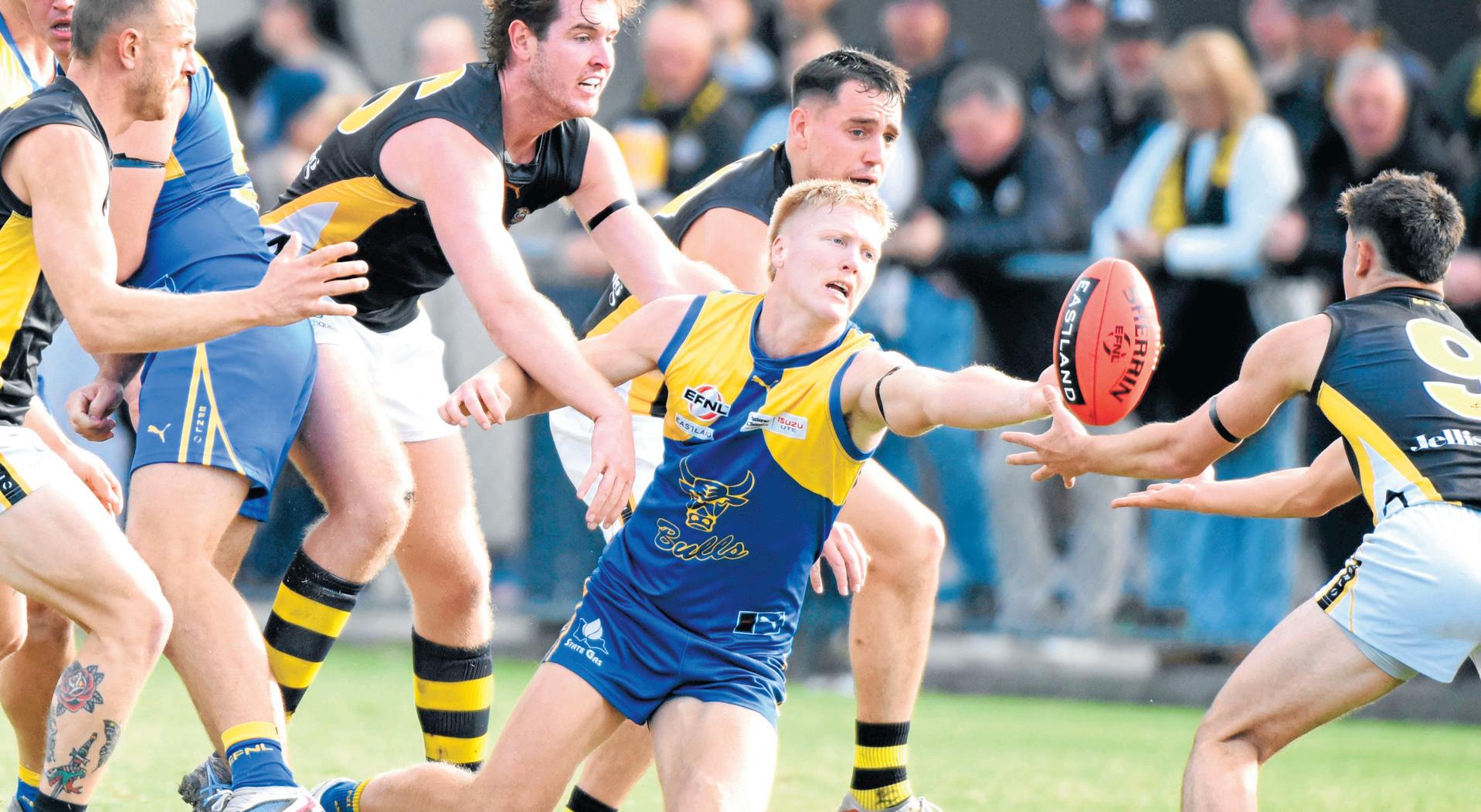
By David Nagel
Noble Park’s long and fruitful existence in Eastern Premier Division football will hinge on its next three weeks of results after the Bulls remained winless with a 28-point loss to Balwyn on Saturday.
All eyes were focussed on Pat Wright Oval, with the Bulls hosting the Tigers in a standalone game; the only match played across the King’s Birthday weekend.
The Bulls challenged the Tigers until late in the third term, before three unanswered goalseither side of three-quarter time - led the visitors to a hard-fought 10.13(73) to 6.9(45) success that keeps them firmly entrenched in fourth place on the ladder.
The news is not so good for the Bulls, the only winless team in the competition; that now faces a crucial run of matches in a three-team relegation battle with South Croydon (8th) and South Belgrave (9th).
The Bulls host South Croydon this Saturday, before a tough match-up with near-neighbours Rowville in round 10.
It’s then back to Pat Wright Oval for a round-11 clash with South Belgrave.
If the Bulls lose both - against the Bulldogs and
Saints - they can kiss their long-held Premier Division status goodbye.
Win one and they’re very much in the battle, while if they win both things are very much looking forward towards a positive outcome.
The Bulls began well on Saturday, with Jordan Marson piercing the big sticks after a down-thefield free kick.
The Bulls had a clear focus on maintaining possession, with lots of short kicks on a 45-angle.
Balwyn broke a 16-minute arm-wrestle when Isaiah Markovsky kicked a lovely goal on the run, but the Bulls took a six-point lead to quarter time after co-captain Lachie McDonnell kicked a clever one from stoppage.
Steven Slimming kicked a brilliant crumbing goal for Balwyn to open the second term, before the Marson brothers - Ben and Jordan - provided the highlight moment of the quarter.
Ben tapped a boundary throw-in straight into the hands of Jordan, who quickly snapped off his right boot to give the Bulls back the lead.
But Balwyn took a three-point lead to the major break after big-man Jack Boyd found himself way too loose inside forward 50.
The Bulls began the third quarter well, with Lachie Quaife finding Jordan Marson on the lead
with a sizzling pass off his left boot.
Marson went back and converted, before Nathan Oakes answered for the Tigers just a minute later.
This one looked like going all the way down to the wire when Kevin Kean landed a big blow for Noble at the 13-minute mark of the third.
Kean’s brilliant kick from the boundary had seen the lead change three times in the third quarter alone.
But that would be Noble’s last six-pointer for 30 minutes of play as the Tigers gradually took control of the contest.
Goals to Harry Wood and Elliot Carlin gave the visitors the only back-to-back goals, to that point; and a handy eight-point lead.
The Bulls were still right in the mix, but late third-quarter goals to Kaleb Djordevic and Oakes; after the siren, saw the Tigers take a 20-point lead to the final change.
Any hopes of a Bulls revival were quickly squashed in the last, with Jack Tillig delivering a hammer-blow from close range.
Sam Glyde gave the Bulls a glimmer of hope before Wood kicked the sealer with a goal out the back of a pack.
The Bulls were super-competitive but had once again fallen short.
Jordan Marson was the Bulls only effective forward, ending the day with three; half of his team’s total, while McDonnell, Mitch Riordan and Nick Eynaud were rock-solid performers through the middle of the ground.
Callum Morgan was frugal in defence, while the Bulls would have been in all sorts of trouble early if not for the intercept marking of Jacob Noble at centre-half-back.
The Bulls have no choice but to lick their wounds and get busy on the track; with a crucial three weeks set to decide their fate.
Noble Park in the second-tier of Eastern…it just doesn’t sound right at all!
• EASTERNPREMIER
LADDER: East Ringwood 32, Rowville 24, Doncaster East 24, Balwyn 22, Berwick 16/ Blackburn 16, Vermont 16, South Croydon 6, South Belgrave 4, Noble Park 0.
FIXTURER9: Noble Park (10) v South Croydon (8), Berwick (5) v Vermont (7), Balwyn (4) v Rowville (2), Blackburn (6) v South Belgrave (9), East Ringwood (1) v Doncaster East (3).
By Blair Burns
Mordialloc remained undefeated in the Southern Division 2 competition as the Bloods thumped a young Keysborough side by 127 points at Rowley Allan Reserve, 23.15 (153) to 4.2 (26).
The Bloods moved to 9-0 after an impressive start to the season while they heaped more pain on the lifeless Burra, who along with East Brighton and Caulfield Bears are in the relegation battle - all with just one win this year.
Chris Smith’s side almost won the fourth quarter in what was a small positive on the day as both sides kicked three goals, but the damage was done.
Mordialloc was ruthless and from the outset, it looked like it would be a long day for the home side.
The Bloods were too strong and experienced in the contest and outclassed their opposition on the outside with plenty of run.
At half time, the margin was out to 52 points, but the third quarter was the toughest on the day for Keysborough with Mordialloc scoring 11.7 to no score as the result got ugly.
Reef White kicked two goals for the Burra, while Joseph Bekierz worked hard all day.
The result was much the same for Doveton as the Doves were beaten by 115 points against Highett, who is also one of the contending sides this year in Division 2.
The Doves had their chances in the opening
quarter and were unfortunately unable to capitalise on six shots on goal, kicking 1.5.
Meanwhile, the Bulldogs slotted four goals and took a 29-11 lead into the quarter-time break.
It was a solid hit-out for Doveton early, but Highett soon flexed its muscles as it added six goals to two in the second term.
The second half continued in that direction as the margin grew out to triple figures and the Doves had no answers.
Nikolas Hibbert and Daniel Zajac kicked two goals each for Doveton, while Archie Grikis (five goals) and Sam Jackson (four goals) gave the Doves defenders headaches.
Bailey Mayne continued his work in the ruck for the visitors, named his team’s best despite the heavy loss - Joshua Gorman was Highett’s best.
• SOUTHERN2
OTHER RESULTS: Frankston Dolphins 15.9 (99) def Caulfield Bears 13.16 (94), Chelsea Heights 19.13 (127) def East Brighton 8.4 (52), East Malvern 14.15 (99) def Hampton 4.7 (31).
LADDER: Mordialloc 36, East Malvern 32, Highett 28, Frankston Dolphins 24, Chelsea Heights, Hampton, Doveton 16, Caulfield Bears, Keysborough, East Brighton 4.
FIXTURE R10: East Malvern v Mordialloc, Caulfield Bears v Chelsea Heights, Frankston Dolphins v Hampton, Doveton Doves v East Brighton, Keysborough v Highett.
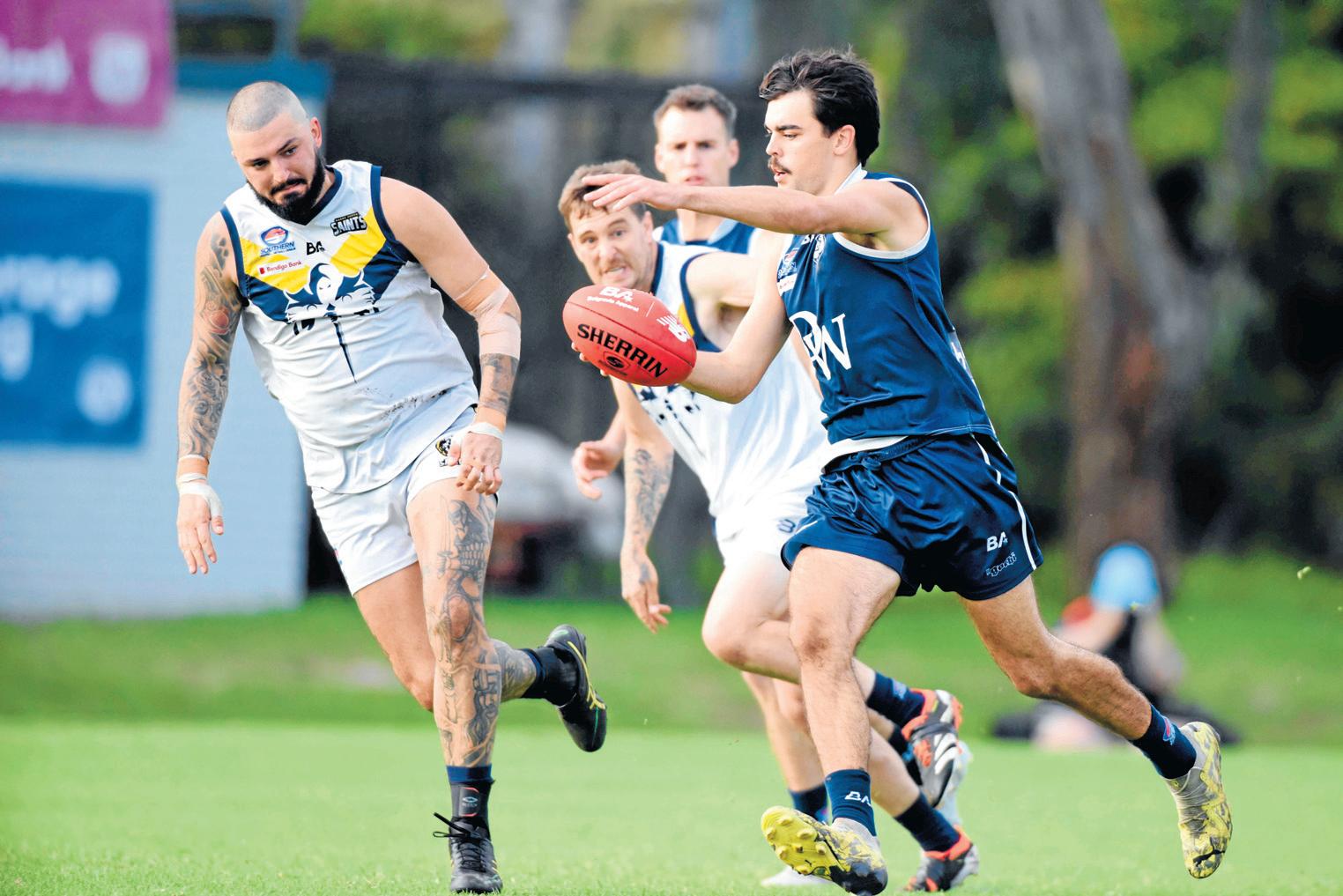
By Justin Schwarze
St John’s Old Collegians will have to buy a lottery ticket after a ridiculous second-consecutive draw, this time against Lyndale, in round nine of Southern Division 4.
With that being said, the JOCs would definitely be happy salvaging two points after clawing their way back from 37 points down midway through the third quarter.
After Brett Tosh goaled for Lyndale to make it 62-25 in favour of the Pumas at the beginning of the second half, the JOCs booted six unanswered goals before Timothy Edwards missed late in the game, scoring a behind to draw level.
Harvey Emery’s late goal brought him to a bag of three amidst a best on ground performance, headlining the St John’s scoring 9.11 (65) to 10.5 (65).
Mitchell Gibson and Ahmed Kandakji slotted four goals each for Lyndale.
Dandenong West flexed its muscles and kept Narre South goalless in the first half to post an imposing 19.15 (129) to 2.4 (16) victory.
The Westerners jumped into first on the ladder despite having more losses than the JOCs, led by six majors from Coren Giliam and four from Michael Dolan.
Doveton Eagles were no match for premiership contender Ashwood at Power Reserve, being downed 18.17 (125) to 6.4 (40).
Skipper Leigh Tannahill was a standout for the Eagles with a pair of goals and being named among the best.
Clayton picked up its third win on the trot by comfortably defeating Moorabbin 19.9 (123) to 12.8 (80).
Jackson Pasara was the main avenue towards goal for Clayton as he kicked four in the win.
• SOUTHERN4
RESULTSR9: St John’s Old Collegians 9.11 (65) drew with Lyndale 10.5 (65), Dandenong West 19.15 (129) def Narre South 2.4 (16), Doveton Eagles 6.4 (40) def by Ashwood 18.17 (125), Clayton 19.9 (123) def Moorabbin 12.8 (80).
LADDER: Dandenong West, St John’s Old Collegians 32, Ashwood 24, Clayton 20, Narre South 18, Lyndale 10, Doveton Eagles, Moorabbin 4.
FIXTURE R10: Doveton Eagles (7) v St John’s Old Collegians (2), Ashwood (3) v Dandenong West (1), Moorabbin (8) v Lyndale (6), Narre South (5) v Clayton (4).
SOUTHERN3
Endeavour Hills returned to the winner’s list after a few weeks of inconsistent form by thumping South Mornington in round nine.
The Falcons trailed by eight points at quarter time at Citation Oval but rallied in the second to boot five goals to one to swing into the lead at halftime.
And the visitors had a massive chance to take a firm grip of the contest in the third but wayward kicking kept the door slightly ajar for the Tigers with a margin of 35 points.
But a good defensive effort from Endeavour Hills made up for the poor accuracy, allowing just one goal in the fourth term to win 14.18 (102) to 8.7 (55).
Jarrod Marolla slotted three majors for the
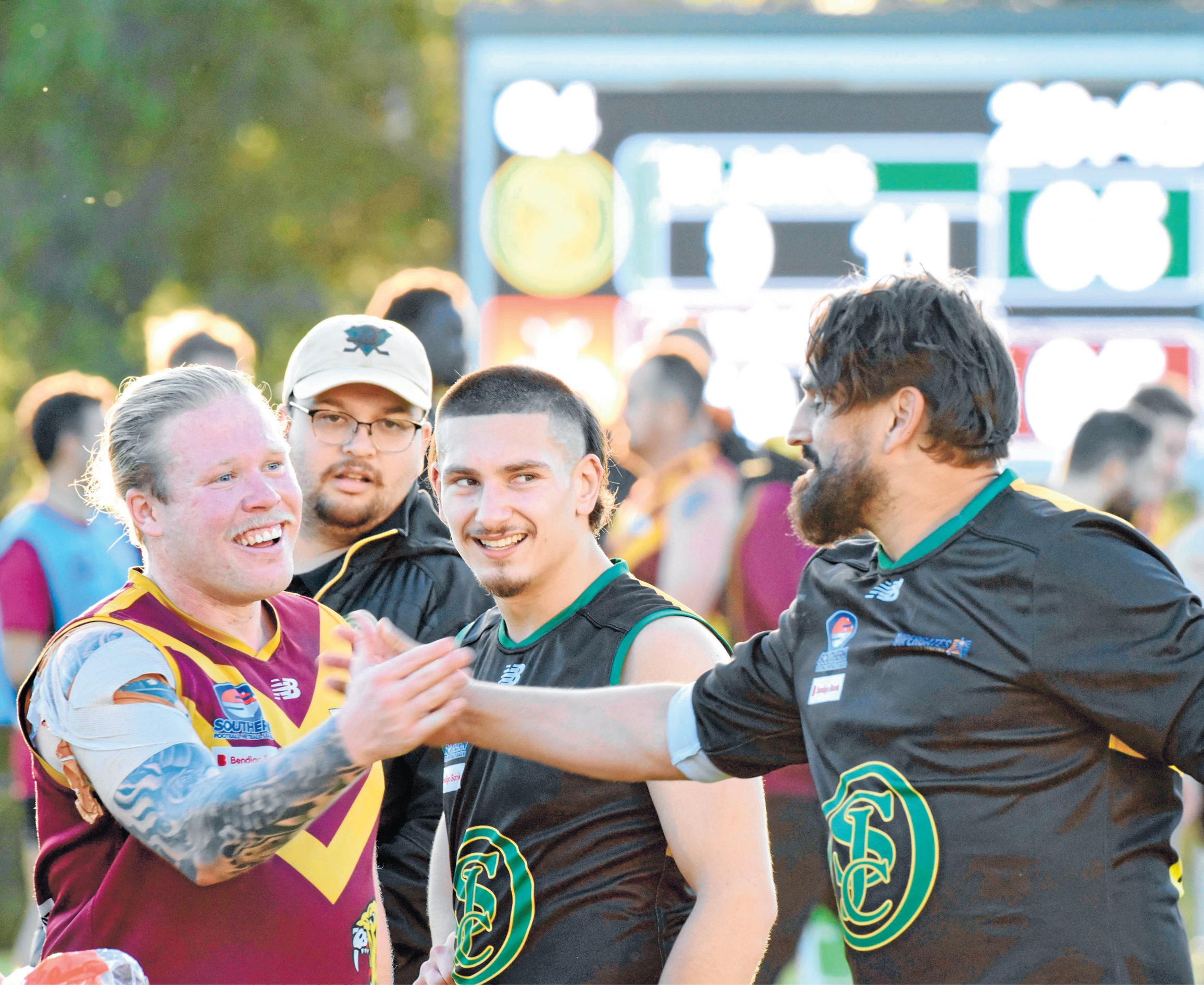
Falcons while Joel Nelthropp’s two-goal haul and effort around the ground saw him recognised as best on ground.
Lyndhurst was left heartbroken as Skye completely stole the game at the death with a late match-winning goal at Carrum Downs Reserve.
The Lightning fired out to a 16-point halftime buffer before the third belonged to the Bombers.
Skye took a one-point advantage into the final change on the back of sharpshooting kicking at 10.1, before it seemed the game had one more final twist as Lyndhurst sprung back into the lead with a behind at the 20-minute mark.
But there was in fact yet another twist, with Bradley Dyer showing ice in his veins to kick truly in the final moments, helping the Bombers to a famous 13.3 (81) to 11.10 (76) triumph.
Noah East managed a trio of goals for Lyndhurst.
Berwick Springs was absolutely blitzed and left in the dust in the first half against Black Rock.
The Jets kicked 18 goals in the opening two quarters on their home deck, including 10 in the second alone, to open up a 67-point lead at the main break.
Black Rock continued to hum in the second half despite both teams scoring freely, ultimately winning 27.15 (177) to 14.9 (93).
Aaron Cloke and Jack Gibson booted bags of five each for the Jets, while Ty Ellison brought up the same number for the defeated Titans.
Hallam showed fight but the class of St Kilda City was too much at Peanut Farm Reserve.
The winless Hawks kept in touch of the premiership hopeful Saints in the first half, trailing by just 22 points before the hosts went up a gear in the second half.
St Kilda City piled on seven goals to two in the final two terms, securing victory 15.11 (101) to 7.3 (45).
Heatherton put an end to Carrum Patterson Lakes’ hot form by banking the four points 15.14
(104) to 12.11 (83) at Roy Dore Reserve. Superstar Joel Cusack put through six for the visitors, bettering a five-goal effort from the Lions’ Matthew Baxter.
• SOUTHERN3
RESULTSR9: South Mornington 8.7 (55) def by Endeavour Hills 14.18 (102), Skye 13.3 (81) def Lyndhurst 11.10 (76), Black Rock 27.15 (177) def Berwick Springs 14.9 (93), St Kilda City 15.11 (101) def Hallam 7.3 (45), Carrum Patterson Lakes 12.11 (83) def by Heatherton 15.14 (104).
LADDER: Heatherton 32, Black Rock 28, St Kilda City 24, Carrum Patterson Lakes,
Springs, Skye 20, Endeavour Hills 16,
12, South Mornington 8,
0. FIXTURER10: Lyndhurst