
PROBATE GUIDE BOOK





PROBATE GUIDE BOOK
Real Estate Sales / Property Consulting
Real Estate Law / Estate Planning
Property Insurance
Mortgages / Home Equity Loans
Estate Sales / Cleanouts
Sales / House Cleaning
Dreiske Moving & Storage
HVAC
Electrical
Plumbing
Carpentry
Flooring
Painting
Drywall & Taping
Roofing
Interior
Exterior
Landscaping
Tree Service
Locksmith (New Locks)
Asphalt Services
Floor / Carpet Cleaning
Pest Control
Appliances / Repair
Home Inspection
New Construction / Additions / Remodeling
Septic & Sewer
Well Service
Construction Management
Fix & List
Investor Partners
Cash Offers (I Buy)
Inheritance Funding (Cash Advance)
Weekly Updates
*This information may vary from state to state.
READS YOUR WILL
• Expedites your burial instructions
• Meets members of your family and other interested parties who desire aid and information, confers with your attorney who drew the Will and persons familiar with your financial affairs.
SAFEGUARDS YOUR ASSETS
• Takes such immediate protective measures as are desirable prior to appointment as executor.
• Looks to insurance and protection of both real and personal property.
• Secure knowledge of ongoing business interests.
• Examines all your books and files.
• Gives notice of your death to banks, safe deposit companies and others.
PETITIONS THE COURT FOR PROBATE OF YOUR WILL

• Obtains proof of heirship; locates witnesses; through the attorney for estate, petitions for probate of Will, and from time to time, applies for all necessary court order in administration of estate; an appointment as executor, files oath of office.
ASSEMBLIES AND INVENTORIES ALL OF YOUR ASSETS
• Takes proper steps to collect policies of life insurance. Secures tax waivers and collects all cash.
• Inventories and appraises household goods and effects, removing valuables to vault.
• Presses all claims for amounts due, locates evidence and witnesses on contested claims.
• Arranges proper supervision and management for your ongoing business interests.
• Obtains custody of securities. Collects all interest and dividends.
• Inspects condition, leases, taxes and mortgages of real estate, and arranges for management.
PROCURES APPRAISAL OF ALL YOUR ASSETS
• Gathers complete and satisfactory evidence of the value of all assets at the date of your death.
ADMINISTERS YOUR ESTATE
• Governed by the wishes expressed in your Will, the requirements of your estate, and the local probate law.
• Gives special study to valuable collections, determines method and time for sale for articles not bequeathed; makes a careful estimate of amount of cash to be raised for payment of taxes, legacies, and expenses of administration and of probate net estate for distribution.
• Gives exhaustive study to your business interests and determines policy of continuance, liquidation, or sale with due regard to expressions in your Will. Carries out or adjusts incomplete contracts.
• Makes comprehensive review of market conditions for each security to decide which should be sold first, if necessary to meet taxes, expenses, claims, and specific bequests.
• Investigates all real estate from standpoint of earnings, market, and desirability in case circumstances require its sale.
MAKES ALL YOUR TAX RETURNS
• An intricate and involved procedure in which particular forms of information and return must be prepared and filed with each taxing body. Pays your income taxes.
• Pays your inheritance and estate taxes.
• Attends to Income Tax for part of year prior to your death.
• Files return and pays tax for part of year after your death.
• Ascertains and pays inheritance in state of residence; obtains waivers for transfer of securities.
• Arranges for necessary proceedings to release securities of property located in other states.
• Makes careful survey of all possible tax claims to see that no further liability exists upon review by the government. Files preliminary notice, prepares return, and pays both State Inheritance and Federal Estate Tax.
SETTLES ALL PROPER CLAIMS
• Publishes notice to creditors; obtains all available evidence regarding propriety of each claim filed, resists all improper claims; pays out of estate funds all approved and allowed claims.
DISTRIBUTES YOUR PROBATE ESTATE
• Prepares data for final account showing in detail all receipts and disbursements; notifies interested persons of hearing on account after settlement of account by court, distributes remaining property of your estate as directed by court.
OBTAINS FINAL DISCHARGE
• After final payment and distribution to legatees and devisees, secures final discharge as an executor.
Prepare and File Petition for Probate 1-2 months
Court hearing on the Petition for Probate 2-3 months
The following are issued: Letters of Administration/Testamentary, Orders for Probate, and Duties and Liabilities, Issues Bond (if ordered) 2-4 months (if not contested)
Notice to Creditors 2-4 months
Inventory and Appraisement 4-8 months
Pay State and Federal Taxes (if necessary) 6-12 months
Allow or Reject Creditor Claims
Possible Preliminary Distributions
Notice to Department of Health Services (if deceased received medical)
Notice to the State Tax Board (if heir is out of state)
Claim of Exemption (if assets transfer to a minor) 6-15 months
Receive Final Tax Letter from State and Federal (if appropriate) 6-18 months
File Petition for Final Distribution and Accounting 8-16 months
Hearing on Petition for Final Distribution and Accounting
Order Approving Final Distribution and Accounting
Distribution of Assets to Heirs 9-17 months
Final Discharge Order (indicates close of probate case) 9-18 months
Final Distribution of Funds 9-18 months
**All information is based on National average
Probate is the official way that an estate gets settled under the supervision of the court. A person, usually a surviving spouse or an adult child, is appointed by the court if there is no Will, or nominated by the deceased person’s Will. Once appointed, this person, called an executor or Personal Representative, has the legal authority to gather and value the assets owned by the estate, to pay bills and taxes, and, ultimately, to distribute the assets to the heirs or beneficiaries.
The purpose of probate is to prevent fraud after someone’s death. Imagine everyone stealing the castle after the Lord dies. It’s a way to freeze the estate until a judge determines that the Will is valid, that all the relevant people have been notified, that all the property in the estate has been identified and appraised, that the creditors have been paid and that all the taxes have been paid. Once all of that’s been done, the court issues an Order distributing the property and the estate is closed.
Not all estates must go through probate though. First, if an estate falls below a certain threshold, it is considered a “small estate” and doesn’t require court supervision to be settled.
Second, not all assets are subject to probate. Some kinds of assets transfer automatically at the death of an owner with no probate required. The most common kinds of assets that pass without probate are:
Joint Tenancy assets-when one joint tenant dies, the surviving joint tenant becomes the owner of the entire asset, without the need for a court order. This is called “right of survivorship.” For example, if a house is owned this way, “Jane Sage and John Sage, as joint tenants,” and Jane dies, John owns the entire house.
Tenancy by the Entirety or Community Property With Right of Survivorship-these are forms of property ownership that function like joint tenancy, in that the survivor owns the entire property at the death of the other tenant, but are only available to married couples.
Beneficiary Designations-retirement accounts and life insurance policies have named beneficiaries. Upon the death of the account or policy owner, these beneficiaries are entitled to the assets in the account or the proceeds of the policy.
Payable on Death Accounts/Transfer on Death Accounts-bank and brokerage accounts can have designated beneficiaries, too. The account owner can fill out forms to designate who should receive the account assets after their death.
Third, if a decedent had created a Living Trust to hold his or her’s largest assets, than that estate, too, won’t go through probate, unless the assets left outside of the trust add up to more than Illinois’s small estate limit. That, in fact, is why that Living Trust was created, to avoid probate after the death of the trust’s Grantor.
But for estates in Illinois that exceed the small estate’s threshold, and for which there is either no Will, or a Will (but not a Living Trust), probate will be required before an estate can be transferred to the decedent’s heirs or beneficiaries.
The general procedure required to settle an estate via probate in Illinois is the following:
The Will must be filed in the county where the decedent lived.
The Will must be filed within a reasonable amount of time.
A Petition for Probate must be filed as well. This requests the appointment of an executor. If there is no Will, the Court will appoint someone to serve as the Personal Representative of the estate. Notice must be given to all heirs and beneficiaries, as required by the court.
Once the Petition for Probate is filed, a notice must be published in a newspaper where the decedent lived. This is to notify potential creditors of the proceeding. Creditors have six months to make a claim.
The Court will issue “Letters of Office” to the Executor/Personal Representative -- this gives the executor legal authority to act on behalf of the estate.
An inventory of the estate’s assets must be filed with the court
Once all of the creditors and taxes have been paid, a Petition to close the probate must be filed with the court.
The Court will issue an Order, distributing the estate’s property to the beneficiaries.
The executor is entitled to reasonable fees for their services, but since such fees are subject to income tax (which inheritances aren’t, unless Illinois has an inheritance tax), many executors forgo the fees. As of 2024, estates worth more than $4 million are subject to Illinois estate tax. This exemption amount is not indexed to inflation, unlike the federal estate tax exemption of $13.61 million, which is indexed. The top tax rate is sixteen percent (16%). Illinois, unlike the federal government, does not permit “portability,” which allows the surviving spouse to use their deceased spouse’s unused exemption amount at their death.
Surviving spouses or civil union partners are exempt from this tax.
Information is deemed reliable, but not guaranteed.





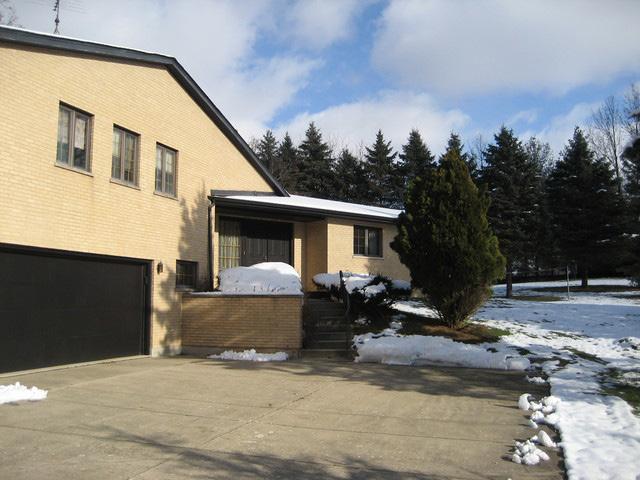



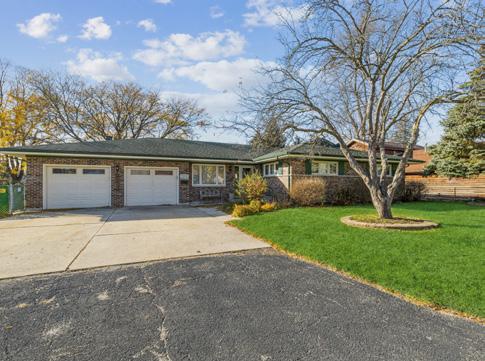





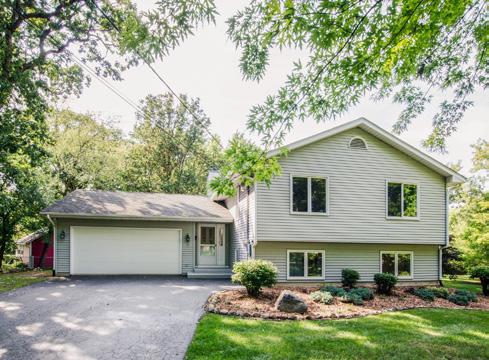




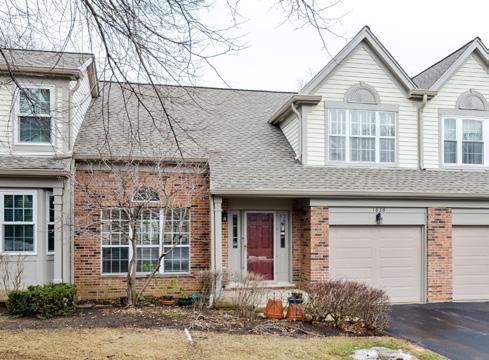
“Asyoucantellbymyanswersweweretotallypleased with Josh. He more than delivered what was discussed at thebeginningandourpropertygotanofferandwassold afteronlyacoupleofdaysonthemarket.”
—Walter & Beth J.
“JoshHasprovidedexcellentHelpthroughouttheprocess andbeyond.Hehasevenbeenabletolineupcontractors forusforremodelingwork!”
—K. Anderson
“We worked with Josh to sell our home in Illinois while livinginHawaii.Joshhasatremendousworkethic,pays attentiontodetails,withgreatfollowthrough.”
—Walter & Jennifer R.
“Veryhappy,reliableandfriendly.Alwaysavailablefor questionsevenafterhours,100%recommended.We’lldo businesswithJoshagainsoon!!!”
—Fernando & Nikki M.
“Ihaveworkedwith10realtorsovertheyears.Joshisthe best!Hegivesgreatcustomerservice.Iappreciatedhis attentiontodetailsandquickresponsestoquestions.”
—Jean S.
“Leavingourparentsfamilyhometosellwhilelivingoutof statewasabitstressfulforus.Joshwasamazing&went overandabovetohelppullitalltogether.”
—Kevin & Tracey A.
“IhighlyrecommendJosh!Hetrulycaresabouthisclients andisextremelyknowledgeable.Hehasbeennothing buthelpfulwitheverythingwehaveneedalongtheway. Thankyousomuch.”
—Jennifer L.
“IwilluseJoshagaintosellmy2ndhome.ThankyouJosh forajobwelldone!”
—L.G.
“Joshisaknowledgeableandexperiencedrealestate agent.Hecaresabouteachclientheworkswith, focusingontheirneedsandfacilitatingthebestpossible outcome.”
—Elizabeth P.
“Joshwashelpfulandrespondedveryquicklythroughout thewholeprocess.”
—Nick L.
“JoshwasveryhelpfulwithanyquestionsoranythingI needed.Hehelpedmegettingintomynewspacewould highlyrecommendhim.”
—Tom M.
“IwouldrecommendJosh.Heisveryprofessional,agreat communicator,hegoesaboveandbeyondforyou,and looksoutforyourbestinterests.”
—Diane K.
“I’ve worked with Josh on a number of real estate deals andhe’sdoneagreatjob.Iwouldrecommendhimifyou arelookingforacontractor.”
—Chris S.
“Veryknowledgeableandexcellenttoworkwith.Things gosmoothlywhenyouworkwithJosh.”
—Eric Z.
“Joshdidanamazingjob!Ourclosingwasquickand everythingwentsmooth.Couldbehappierwithhowitall playedout.”
—Jeffrey C.